This chapter is about a line from our family that was filled with much mystery and drama. Our research has cleared away many myths…
Preface
In 1936, our mother, Marguerite Lulu (Gore) Peterman Bond eloped with a young man named Clarence Arthur Peterman, Jr., and they married in Ripley, Chautauqua County, New York. The state of New York was chosen because they could travel there by car in one day, and it had laws that allowed a young woman of 16 years to get married without parental permission. Most importantly, even though the marriage was not a successful one, Marguerite had three children with “Art” — James, Jo Ann, and John. Their family lines are documented within this blog, we thought it essential to document the Peterman family line for the future benefit of our many nieces and nephews, and their descendants.

(Image courtesy of Sanderus Antique Maps & Books).
Rhineland-Pfalz, or the Rhineland-Palatinate
The Peterman family is first encountered in the Rhineland-Pfalz (Rhineland-Palatinate), located in the southwestern area of Germany. In those times, this small section of what would later become Germany, was very close to the borders of both France and Belgium. From Britannica.com “Rhineland-Palatinate has had a long history of division and possession by foreign powers…” and,“The Reformation of the 16th and 17th centuries saw further territorial divisions that originated in the conflicts of Protestantism, Roman Catholicism, and Calvinism and led to the Thirty Years’ War (1618–48). Foreign countries and principalities—particularly Bavaria, Spain, Austria, Sweden, and France—determined the political development of Rhineland. In the 17th and 18th centuries the Palatinate had close political and cultural ties with France.” Essentially, the area was one of shifting borders, changing political alliances, and religious conflict. (1)

The Peterman Line Begins in Bavaria
The oldest surviving records for the Peterman line begin with the birth of Hanns Velti Petermann I in 1615. He lived his life in the small village called Wollmesheim, located adjacent to the city of Landau, in the Rhineland-Palatinate. He died on March 24, 1692. Depending upon who recorded the information and when, records may also list Bayern (Bavaria), and Deutschland (Germany).
We don’t know what he did for a living, but we do know he married a woman named Agnes (maiden name unknown) Petermann who was born circa 1623, also in Rhineland-Pfalz, Germany. She died on April 20, 1701 at the same location. There are two recorded dates for their marriage, one in 1643, and another in 1658, but we cannot confirm which date is the actual year they married. What we did observe is that both of their sons were born after the 1658 date.
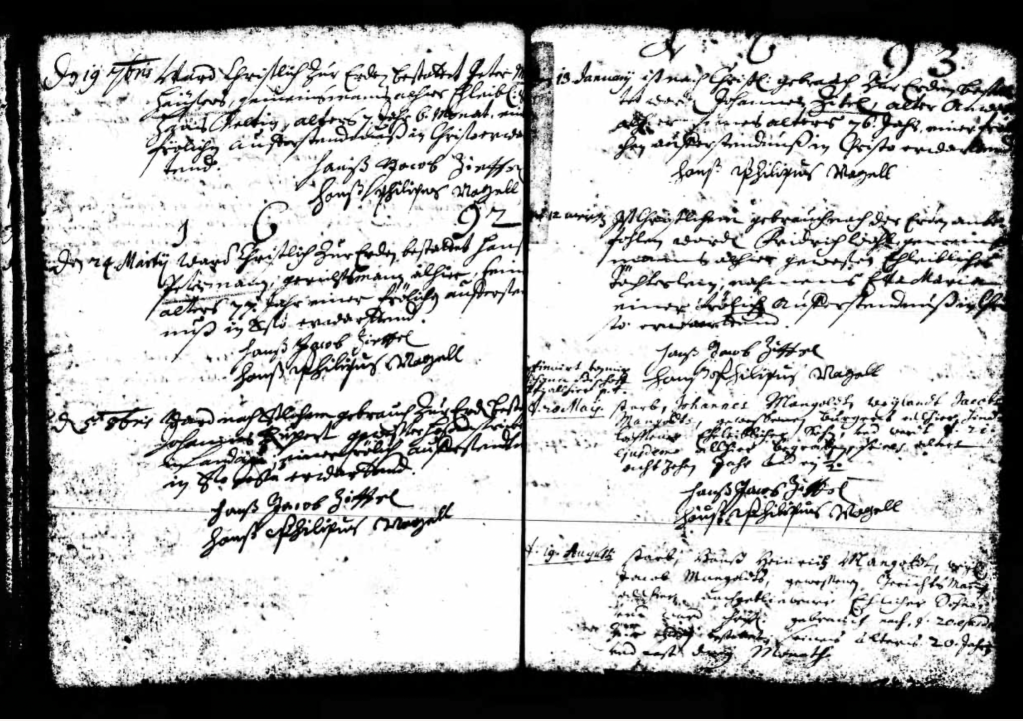
The oldest surviving son from the marriage of Hanns Velti Petermann I and Agnes, is their son who was named after his father: Hanss Velten Petermann II. We have learned that he was born in 1659, in Mörzheim, Landau, Bayern, Germany, his death date is unknown. His wife named Margaretha Kuhn. She was born in 1670 in Baden, Preuben, Germany. She died in 1743 at the same location. Hanns II and Margaretha had 7 children. Their oldest son continued the line.
As what seems to have been a strong family tradition with the naming oldest sons, Hans Valentin Petermann III was born on June 4, 1692 in Mörzheim, Stadt Landau, Rhineland-Palatinate, Germany. This was only a few months after his grandfather Hans I had died. He married Anna Elisabeth Barbara (Liebeta) Matthessin, who was born on December 24, 1702, in Odernheim, Bayern, Germany. They married in 1718 and had 12 children, all of whom were born in Mörzheim, Stadt Landau, Rhineland-Palatinate, Germany.

The area that they lived in continued to have much volatility. From britannica.com, “During the War of the Grand Alliance (1689–97), [also known as the Nine Years War] the troops of the French monarch Louis XIV ravaged the Rhenish [Southeastern Germany] Palatinate, causing many Germans to emigrate. Many of the early German settlers of America (the Pennsylvania Germans, commonly called the Pennsylvania Dutch) were refugees from the Palatinate.” (2)
The Harrowing Journey on the Osgood
Wikipedia writes that “Gottlieb Mittelberger (1714 – 1758) was a German author, schoolmaster, organist, and Lutheran pastor. He was best known for his work Journey to Pennsylvania (1756). Mittelberger’s travelogue provides a firsthand historic account of the misery and exploitation of German immigrants during the US colonial period... [He] wrote a two-part travelogue about his voyage and experiences in colonial America... Observing from the perspective of a ship passenger aboard the Dutch vessel Osgood, Mittelberger documented the harrowing experiences of the 400 impoverished European immigrants making the transatlantic voyage from Rotterdam to Philadelphia. The majority of the passengers were representative of the influx of Germans to America from Baden, Württemberg, and the Palatinate.”

As it happens, in 1750, the family immigrated to the American British Colonies, on the same ship, the Osgood. An account of the harrowing passage, including reference to (Johan) Michael Peterman has survived at: http://susanleachsnyder.com/Genealogy/TheOsgoodShip1750.html
(Please see the footnotes section at the end for a complete transcription).
They passed through ports in Holland, and arrived in Philadelphia—but, settled in the town of York, in the newly established (1749) York County, in the Pennsylvania Colony. Their new home was a community of people who, like them, had left Europe behind. Perhaps they were seeking a new start in a place less burdened by tradition, with less strife from wars. This move afforded their children a chance at new lives, in a new world.
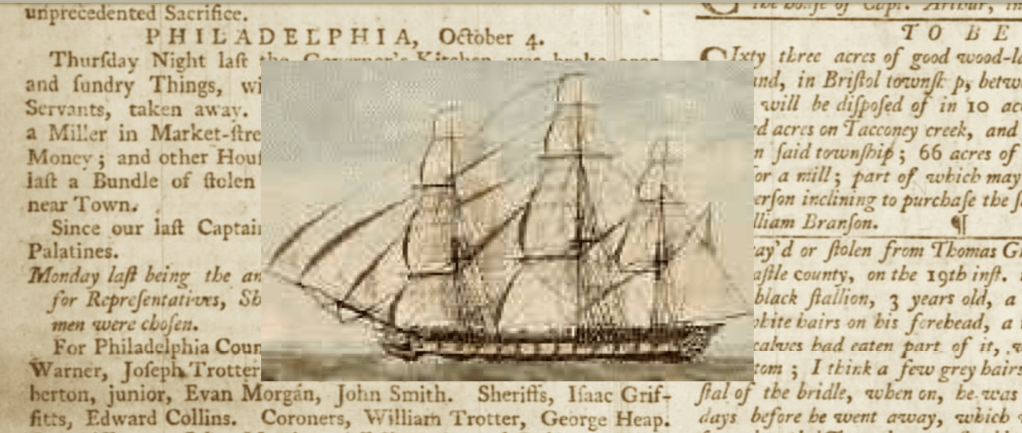
Hans III died in York, Pennsylvania Colony, on September 26, 1782. He and Ana Elizabetha may have had 12-13 children. Their son Johan Michael Petermann, carried the family line forth in America. (3)
Life in the British Colony of Pennsylvania
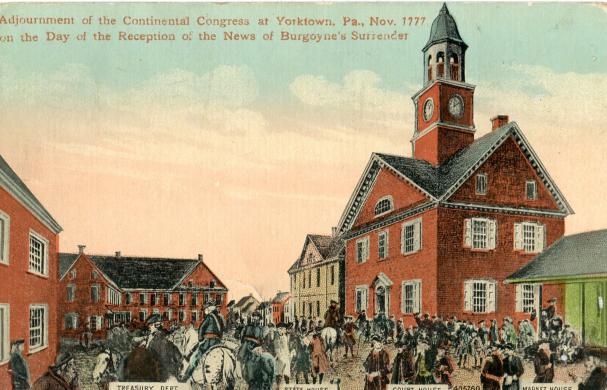
Their choice of settling in York, Pennsylvania was a prodigious one. It was laid out as a city in 1741, so they were among the very first settlers. After our ancestors were well established, the city became very famous for being the temporary Capitol of the United States, for the Continental Congress during the Revolutionary War. (1775-1783)
“The City of York, Pennsylvania – named for York, England – was part of the building of our nation, … [the]City was the birthplace of the Articles of Confederation and it was here that the words ‘The United States of America’ were first spoken.”
“The Articles of Confederation and Perpetual Unionwas an agreement among the 13 original states of the United States of America that served as its first frame of government. It was approved after much debate (between July 1776 and November 1777) by the Second Continental Congress on November 15, 1777, and sent to the states for ratification. The Articles of Confederation came into force on March 1, 1781, after ratification by all the states.
A guiding principle of the Articles was to establish and preserve the independence and sovereignty of the states.” Between 1787-1789, the Articles of Confederation were superseded by the present Constitution of the United States, our main governing document which is still in use to this day.
In this new country, Johan Michael Peterman, his wife Anna Maria Wegener, and their children prospered. He had been born on March 15, 1727 in Mörzheim, Stadt Landau, Rhineland-Palatinate, Germany. He died on October 11, 1784 in Windsor, York County, Pennsylvania, United States. His wife Anna Maria Wegener, had been born in the British Colonies in York, Pennsylvania in 1734, and died November 15, 1810 in Baytown, Lancaster County, Pennsylvania.
They married in 1755 in York, Pennsylvania Colony and had 11 children. From this large family, it was their son George Michael Peterman who is our ancestor. (4)
The Family Name is Shortened by One Letter
It is interesting to note that about this time in this generation, the family surname was shortened by dropping the last letter “n”. From this point forward, the family name was simply spelled as Peterman. With this, George Michael Peterman now had an American name. George was born on September 3, 1763 in Windsor, York County, Pennsylvania (colony), and died on August 20, 1853 in Stoystown, Somerset County, Pennsylvania (state). George was a farmer his entire life.
In 1785, he married Anna Maria Frey in Stoystown, Pennsylvania. She was born on December 18, 1789 in Washington, Franklin County, Pennsylvania and together they had 9 children, all born in Pennsylvania. Anna Maria died in March 9, 1853 in Somerset, Pennsylvania. It is their eldest son, John George Peterman, who carried our family line forward. (5)
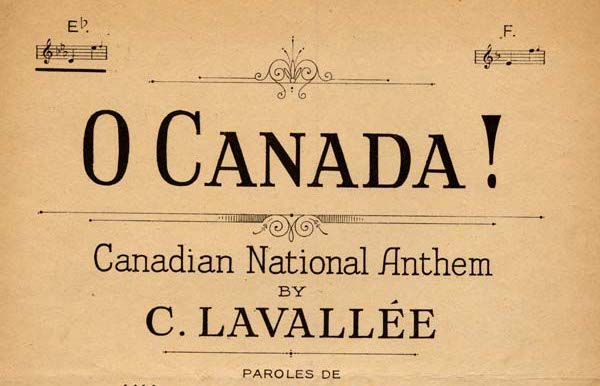
O Canada!
John George Peterman was born on May 9, 1785 in Hooverville, Shade Township, Somerset, Pennsylvania. He was the only member of his family who relocated to Vaughn Township, Ontario, Canada. John George, preferred the name “George” and used it throughout his life. He married Susanna Sell in Somerset, sometime before 1812. She was born in Washington, Franklin County, Pennsylvania on December 18, 1789. It seems that George and Susannah moved to Vaughan, Ontario, soon after they were married. Their first child, a daughter, was born in 1813 in Vaughan Township, which was located just north of Little York (Toronto).
We don’t have direct evidence of why they moved to Canada, but we can make observations about the times they lived in. The country of Canada was loyal to the British Crown. Perhaps (John) George Peterman was a Loyalist and thought that he would prosper in a place that was under British rule? It could also be that he was tired of the conflicts generated by the American Revolution, and the approaching War of 1812.
At the time, Canada’s boundaries were in flux:
“In 1786, Lord Dorchester arrived in Quebec City as Governor-in-Chief of British North America. His mission was to solve the problems of the newly landed Loyalists. At first, Dorchester suggested opening the new Canada West as districts under the Quebec government, but the British Government made known its intention to split Canada into Upper and Lower Canada. Dorchester began organizing for the new province of Upper Canada, including a capital. Dorchester’s first choice was Kingston, but he was aware of the number of Loyalists in the Bay of Quinte and Niagara areas, and he chose instead the location north of the Bay of Toronto, midway between the settlements and 30 miles (48 km) from the US.”
“Dorchester intended for the location of the new capital to be named Toronto. Instead, Lieutenant Governor Simcoe ordered the name of the new settlement to be called York, after the Duke of York, who had guided a recent British victory in Holland. Simcoe is recorded as both disliking aboriginal names and disliking Dorchester. The new capital was named York on August 27, 1793… [named so from 1793 -1834]… To differentiate it from York in England and New York City, the town was known as Little York.”
In America, York County, Pennsylvania, had been important to their family’s history. So, it is very interesting to observe that now there was a place rich with opportunities in Canada which was also called York:
“The Battle of York was an easy win for Americans as they eyed expansion into Canada in the first years of the War of 1812. On April 27th 1813 in York, Ontario, now present-day Toronto, 2,700 Americans stormed Fort York, defeating the 750 British and Ojibwa Indians defending what was at the time the capitol of Upper Canada…”
American strategy at the beginning of the War of 1812 was one
The American Battlefield Trust
of a young country looking for room to grow.
Seeing the rivers and lakes to the North as key routes for trade
and transportation, Americans attempted, unsuccessfully at first,
to gain control of Canada.”
Perhaps they moved to Canada because they had friends and acquaintances who had already relocated there, and they saw a farmland opportunity as advantageous. He was starting a new family and maybe he wanted a fresh start.
“Despite the hardships of pioneer life, settlers came to Vaughan in considerable numbers. The population grew from 19 men, 5 women, and 30 children in 1800 to 4,300 in 1840. The first people to arrive were mainly Pennsylvania Germans, with a smaller number of families of English descent and a group of French Royalists.” “The first settlers to arrive were Pennsylvanian Germans from the United States, but the influx of homesteaders was a mere trickle at first. In 1800, there were a mere 54 people in all of Vaughan Township. After the war of 1812, however, a massive wave of British migrants flooded the area.”

Canada conducts a census every ten years, beginning in the year 1851. On that census, (John) George’s occupation is listed as farmer.
He and Susanna had nine children, all born in Canada. He died on August 16, 1871, in Vaughan Township, York, Ontario, Canada. Susanna died on January 25, 1866 in the same location. They are buried in the Zion Lutheran Church Cemetery in Vaughan, Ontario. Their last child, a boy named John Peterman, is the next ancestor of whom we will write about.
John George Peterman, Jr. was born on October 20, 1814 in Vaughan, York, Ontario. On May 6, 1834, he married Susan Robins in the Vaughan Township, York, Ontario, Canada of Ontario. She was born on October 1, 1814, location unknown. Between 1886 and the 1900 United States census, John Jr. and Susan had relocated to Cheboygan, Cheboygan County, Michigan. She died there on November 20, 1892. John Jr. had a long life — he died in Cheboygan on January 16, 1911. They had eight children, but one record indicates that perhaps there were two more, for ten total. Their oldest son, George Alfred Peterman, continues the narrative.

George Alfred Peterman was born on October 30, 1832 Vaughan, York, Ontario. He died in the small lake town of Innisfil, Simcoe County, (north of Toronto), on December 20, 1927. He worked as a farmer his entire life. On January 22, 1853, he married Charlotte Elizabeth Shuttleworth in York, Ontario. Charlotte was from Lancashire, England, United Kingdom. She died on January 1, 1911 in Bradford, Simcoe, Ontario.
They had four children, and their second son was William Albert Peterman (Sr). He is the one who continues our narrative. It appears that succeeding generations of the family eventually settled in the nearby town of Newmarket.
William Albert Peterman (Sr.) was a new year’s baby, born on January 1, 1857 in Vaughan, York, Ontario, Canada. He married Mary Strasler in Scott Township, Ontario, on February 8, 1881. Mary was born on November 13, 1858 in Ontario, and both of Mary’s parents, Henry Strasler and Susanna (Meyer) had been born in Switzerland.
On the 1901 Canada Census, all four children are living at home. William lists his occupation as a carpenter. He identifies their “Race or Tribe” as German, their nationality as Canadian, and their religion as Methodist. Interestingly, on this census they identify their “Race or Tribe” as Dutch*, not German, and their nationality as Canadian. William is listed as a Cabinetmaker who works for himself.
*Could they have been confused about their family’s earlier generations having lived among a Dutch population in Pennsylvania, or perhaps, the family’s passage through Holland
Observations after reviewing documents
on the way to the American Colonies?
William Albert Peterman died on April 17, 1926 in Newmarket, York County, Ontario, Canada. Mary died on May 5, 1938 in the same location. Of their four children, Clarence Arthur Peterman (Sr.) continues the history. (6)
A Man Shrouded in Mystery
Clarence A. Peterman (Sr.) was born in Newmarket, York County, Canada on May 26, 1894. He has been shrouded in mystery over the years and was not on the 1911 Canadian census with his parents. He would have been 17 in 1911 and he may have already left home. The next record we found for him is dated June 5, 1917. He was living in Minneapolis, Minnesota and had filed a US registration card, presumably for World War I. The registration information indicates that he was working as a mechanic for the Oakland Motor Company and that he was a Registered Alien in the US because he was still a Canadian citizen. Information on the card indicates he is 23 years old, single, and had no dependents. He is described as “short, slender, brown eyes, and black hair”.
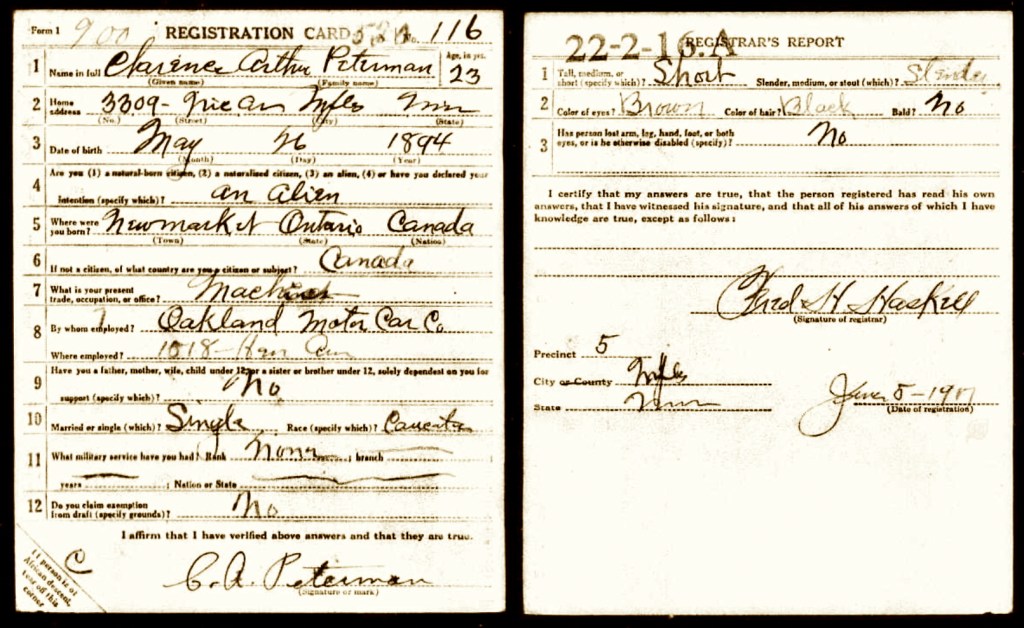
Clarence also filed a second WW I registration card. This one was for the British Expeditionary Force of the Royal Flying Corps based in Toronto, Canada. His involvement (or job) in the Corps is unknown. Perhaps he worked as a mechanic. There is no indication that he was a pilot, or that he left Canada to fight in WW I.
It seems that while he was in Toronto Clarence Arthur Peterman met, or knew, Elizabeth Patten Hines. At that time, she went by the name Bessie. Later in her life, she was known as Betty Lemr. On August 23, 1918, she gave birth to a son, Clarence Arthur Peterman, Jr. Two weeks later, on September 6, 1918, she and Clarence Sr. were married. On their marriage certificate his occupation is listed as soldier. Bessie returned to York to live with her parents, and Clarence returned to Toronto. The separation may have been because of his service in the Royal Flying Corps, or because they did not intend to live together.
Eighteen months later, in January 1920, Clarence Sr. is living in Indianapolis, Indiana. This information comes from the 1920 United States census. On the census it specifies he is single, age 26, and is an Alien (Canadian) working in the United States. (29) Since Clarence specified he was single, we looked for a record of a separation or divorce from Bessie (Hines) Peterman. To date, a document has not been located. Therefore, it is possible they were still married, but not living together. On the 1921 Canadian census, Bessie and her two year old son, Clarence Peterman Jr., are living with her parents, George and Olivia Hines in Toronto, Canada.
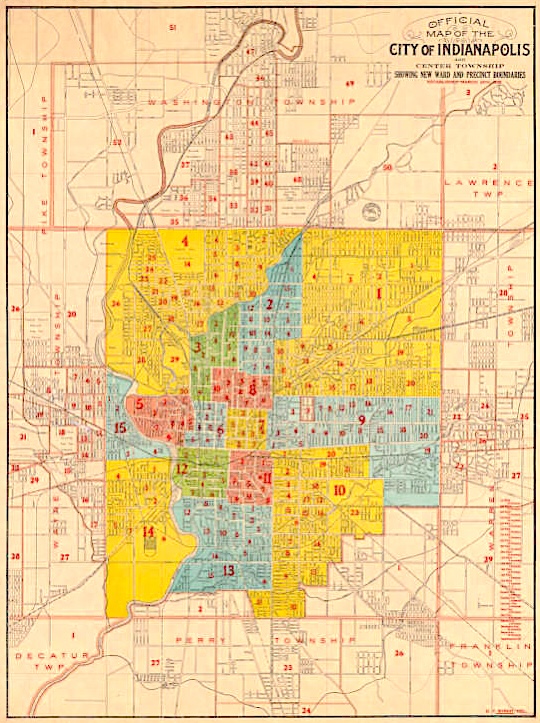
In 1920, Clarence is living as a boarder in the William Stroud home. William is a superintendent in the auto industry and Clarence is working as a mechanic in the same industry. Looking closely at the census, the family he is living with is from Minnesota, where Clarence had previously lived. It’s possible there was a connection in Minnesota. In addition to William Stroud, the other family members are his wife Lydia, age 28, son William, age 10, daughter Doris, age 8, and William’s mother Anna, age 72. The importance of this information will follow.
As stated earlier, Clarence A. Peterman Sr. had been shrouded in mystery over the years. What was his relationship with his son? Why didn’t he remain in Canada and live with his wife and son? One important story has been that he was involved with a woman and wanted to marry her. We know he died young, age 31 on October 16, 1925. The following story in The Indianapolis Times newspaper dated October 17, answers the questions about Clarence Arthur Peterman Sr. – or perhaps creates new ones.
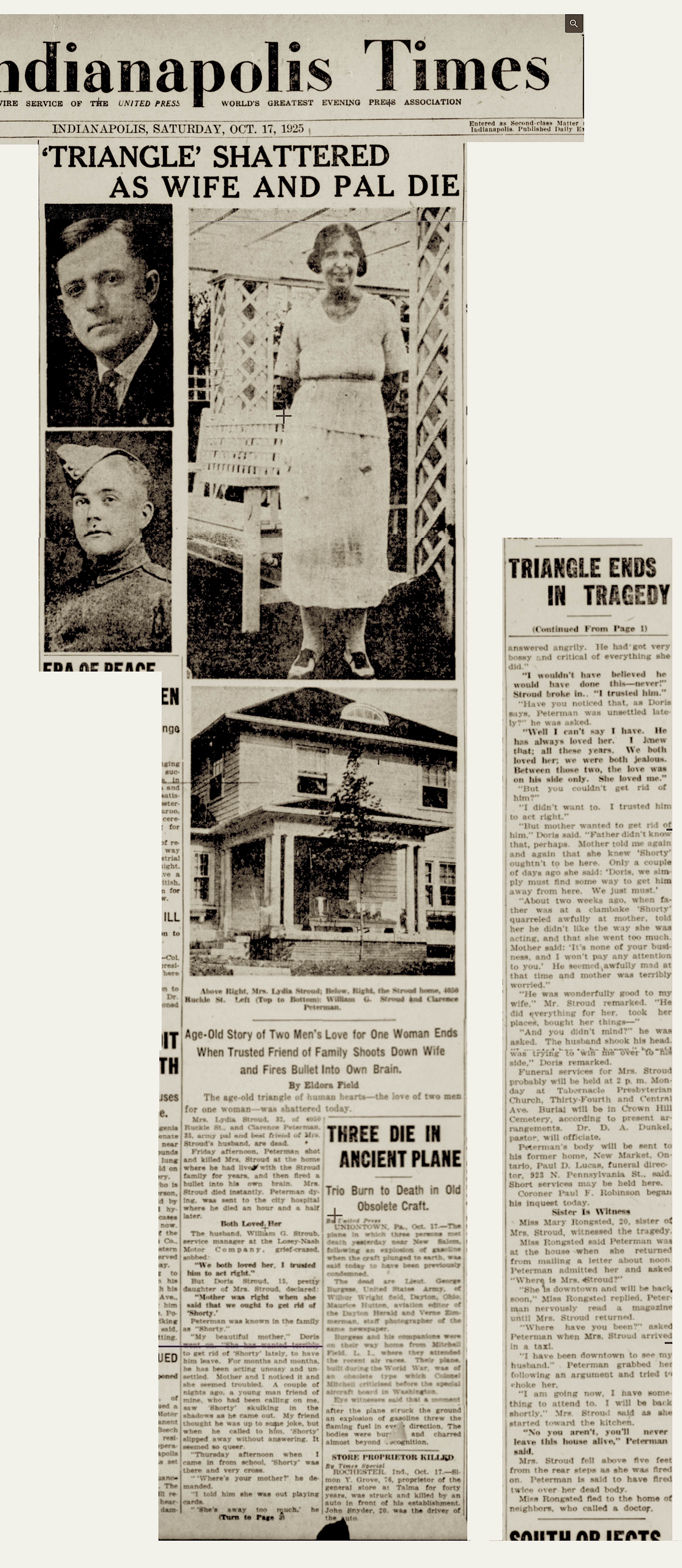
The tragic newspaper account above indicates that on October 16, 1925 he died in a murder/suicide with a gunshot wound to his head. His death certificate indicates that he was married, but with no information about a wife. (Recall, that on the 1920 census he registered as single.) The death certificate is signed by William Stroud, the man in whose home he was boarding.
Clarence Arthur Peterman, Sr. was buried on October 20, 1925 in Newmarket Cemetery, Newmarket, York, Ontario, Canada. He preceded his parents in death. Even though his life ended sordidly, Clarence Arthur Peterman Sr. did have a son with Bessie Hines, who was named after him and is important to the rest of our narrative.
For more information on the Hines family, see The Hines Line, A Narrative. (7)
Building a Nest… or Two
We continue with the childhood of Clarence Arthur Peterman, Jr. He was referred to by the name of “Art” most of his life, so to distinguish him from his father, we will refer to him by that name.
Art was born in Toronto, York County, Ontario on August 23, 1918 and he died on May 10, 1994 in Johnstown, Cambria County, Pennsylvania. His story in Ohio begins when he first entered the United States on January 3, 1924. His mother, Elizabeth “Bessie” (Hines) Peterman crossed into the United States with her 5 year old son Art, through Buffalo, New York. Her destination was Cleveland, Ohio to visit her sister, Emma (Hines) Wright, for three weeks.

It’s unknown how long he remained in the United States. One story is that he was raised by his maternal grandmother, Olivia Hines, in Toronto, Canada. This may be true because his mother Bessie married Frank Lemr in 1929, in Cleveland, Ohio. On the 1930 United States census, Art is not living with them. He cannot be found on either the 1930 United States census, nor the 1931 Canadian census.
As stated in the introduction, in 1936, just after his 18th birthday, he eloped with Marguerite Lulu Gore and they married in Ripley, Chautauqua County, New York on September 19, 1936. Marguerite was born in Russell Township, Geauga County, Ohio on June 28, 1920, and was the only daughter, and the youngest sibling with two older brothers.
Comment: Their trip to a legal marriage was the absolute shortest path possible, so they plotted well (as some teenagers do).The town of Ripley is just over the border from Pennsylvania, so literally their journey was 120 miles — a small jaunt across northeast Ohio, then a short section of Pennsylvania, and then voilà, they were in Ripley. They did this trip in one day — they drove there, got married, drove home, and then told the parents.

They had married quite young and they had a fractious marriage. He was barely 18, and she was 16 — it’s likely that they both thought they were older than their years. Being married was probably quite fun at first, but very quickly, a baby was on the way (!)
Art and Marguerite had three children. James Elwyn Peterman was born on June 26, 1936 in the evening, at Bedford, Cuyahoga County, Ohio. From the very moment he was born, he had severe medical problems with his heart, and also his lungs. We were told that he was a blue baby, which is a condition caused when there is a shortage of oxygen in the baby’s blood. He lived for a few hours and died early in the morning on June 27, 1936 of respiratory failure. The next day, Marguerite turned 17. He is buried in Briar Hill Cemetery (Riverview) in Russell Township, Geauga County, Ohio.
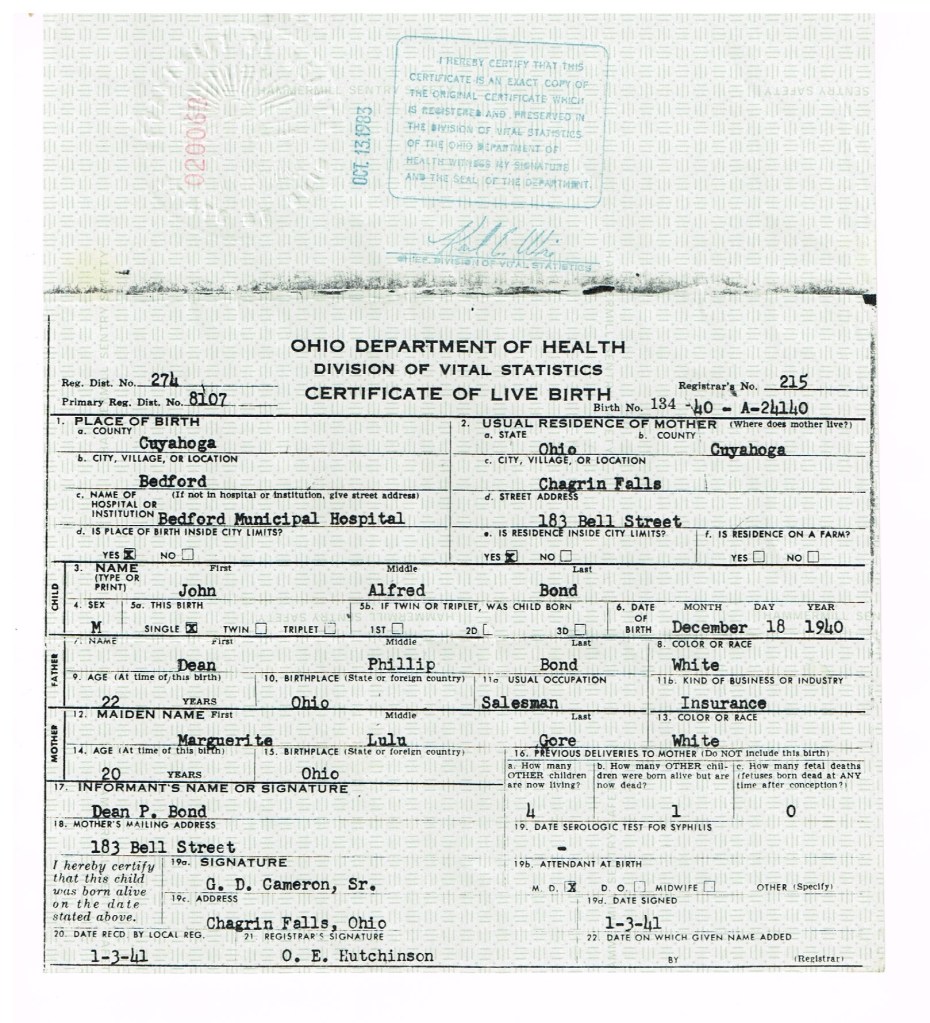
In 1939, Marguerite and Art welcomed their daughter Jo Ann (Peterman) Bond White into their family. She was born on May 9, 1939 in Bedford, and died August 6, 2010. She is buried at the Western Reserve Memorial Gardens in Chesterland, Geauga, Ohio. On December 18, 1940, they also celebrated the holidays with the arrival of their last child, John Alfred (Peterman) Bond, who was also born in Bedford, a few days before Christmas.
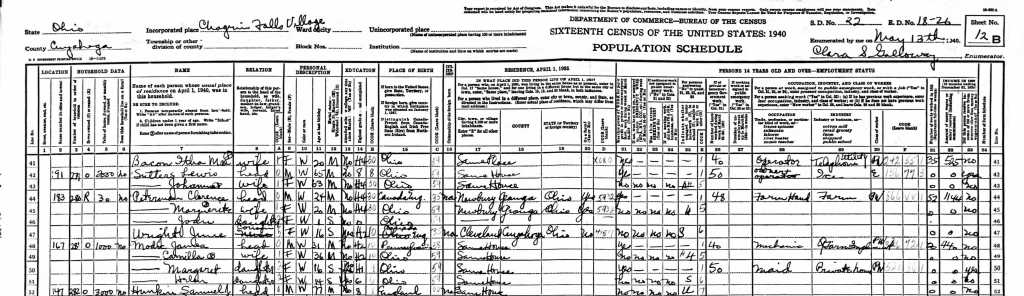
The 1940 Census contains quite a bit of information about their life together. One of the questions asked was where had they lived in 1939? The answer given was Newbury, Geauga, Ohio. It is reasonable to assume they were living with Marguerite’s parents, Harley and Lulu Gore. Art’s job is listed as farm hand. Harley was quite ill and not able to work the farm — his son Leland Gore was operating his father’s farm, as well as his own. Art was most likely working on one, or both of the farms.
By May 1940, Art and Marguerite were living in a house in nearby Chagrin Falls, Ohio. Listed in the home are (Clarence) Art, age 24 [his correct age is almost 22], Marguerite, age 20 (pregnant with son John), Jo Ann, (age one), and June Wright, age 16. June Wright was Art’s cousin and attending Chagrin Falls High School. Art and June are listed as non US citizens, both born in Canada. Also in 1940, Art registered for the WW II draft. He indicates that he is working for City Ice and Fuel, in Cleveland, Ohio. (8)
Clarence Arthur Peterman Jr. Becomes a Naturalized Citizen
To become a United States citizen one needed to complete several documents. In 1941, Art Peterman completed a Petition for Naturalization. He is identified as being 5’6″ tall, weighs 145 pounds, and has brown eyes and dark brown hair. Interestingly, he states his Race as French and his Nationality as Great Britain. Canada was still part of the British Empire at the time, but his nationality should have been Canadian. Why he listed his Race as French is a mystery because the family’s history is German and English, not French.

There are two additional documents. An Affidavit of Witness on which two witnesses said they were acquainted with him since August 1938. A third document is the Certificate of Arrival. This document tells us that Art first entered the United States with his mother, Bessie (Hines) Peterman, on January 3, 1924 when he was five years old. They entered the United States in Buffalo, New York on the Michigan Central Railway. Clarence Arthur Peterman became a Naturalized United States Citizen on June 12, 1942.
On November 24, 1941 Harley Gore, Marguerite’s father, died of heart disease. By this time Marguerite and Art had endured a very difficult marriage and had grown apart. After her father’s death, Marguerite and the children, Jo Ann and John, moved into her mother’s home in Newbury, Ohio. By May of 1942, Art and Marguerite Peterman were divorced. On his Order of Admission form dated June 12, 1942, Art Peterman was living in Cleveland, Ohio.
By then the United States was deeply involved in WW II. In October 1942, Clarence Arthur Peterman Jr. joined the United States Coast Guard – Merchant Marines. From 1942 to 1945, he served on ships that transported vast quantities of war materiel, supplies, and equipment needed to fight the war between the United States and parts of Europe. (9)

(Image courtesy The National WWII Museum, New Orleans).
Life After World War II
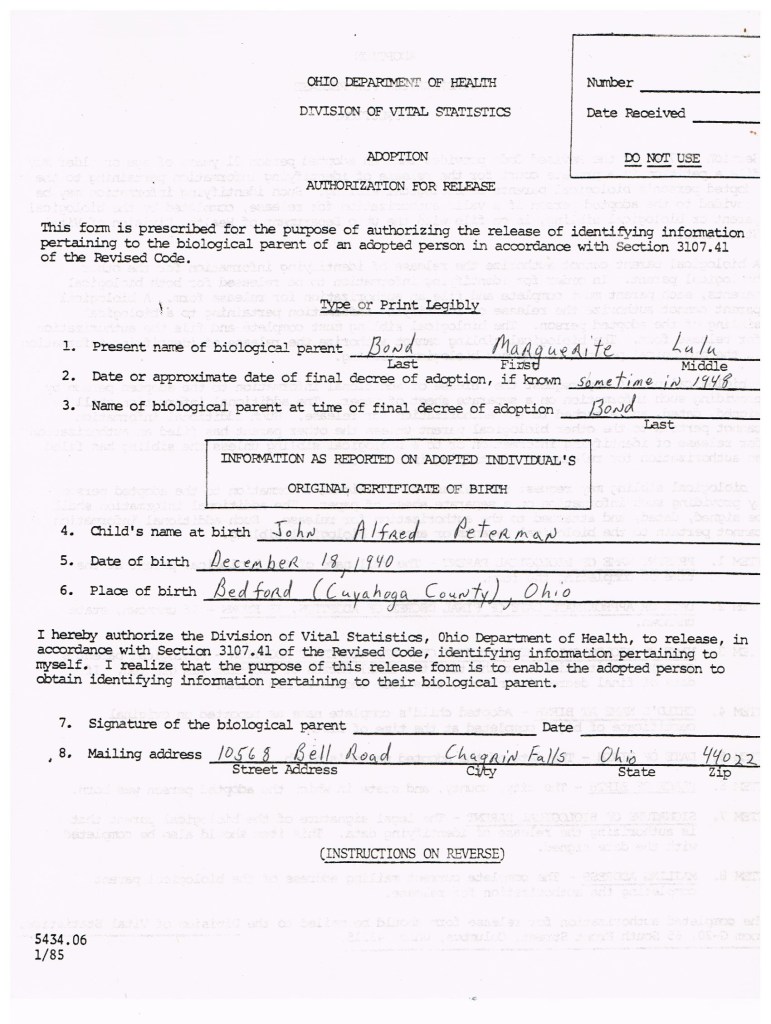
Art was discharged from the Coast Guard in 1945 at the end of the war. He and Dorothy Weyant were married, date unknown. On July 19, 1946, their only child, Dennis A. Peterman, was born in Lorain County, Ohio. Also in 1946, Marguerite (Gore) Peterman married Dean Phillip Bond. At the time of Dean and Marguerite’s marriage, Art asked Dean if he would legally adopt his children, Jo Ann and John. The adoption went forward and thereafter, Jo Ann and John’s legal last surname became Bond, and they were raised by Dean.(See footnotes).

At some point, Art and Dorothy Peterman moved to Johnstown, Pennsylvania. Their son Dennis married Madeline S. Koot on June 17, 1967 in Windber, Pennsylvania. Five years later, Dennis Peterman, aged 32, died on March 23, 1979, cause unknown, in Lorain County, Ohio. His mother Dorothy’s memorial on findagrave.com mentions her daughter-in-law Madeline (Koot) Peterman-Teli, her grandchildren, and her great-grandchildren.
Art Peterman died on May 10, 1994 in Johnstown, Dorothy J. (Weyant) Peterman died on March 19, 2013. Art, Dorothy and Dennis are buried in Richland Cemetery, Richland Township, Cambria County, Pennsylvania. (10)
Following are the footnotes for the Primary Source Materials,
Notes, and Observations
Please note: Ancestry.com and FamilySearch.com were used extensively in researching information for The Peterman Line, A Narrative blog post. We observed that each site had both strengths and weaknesses with regards to correct information. Errors are mostly due to data entry errors by other people. It is important to look for other supporting evidence (when possible) to document correct genealogical histories.
Preface
and
Rhineland-Pfalz, or the Rhineland-Palatinate
(1) — two records
Sanderus Antique Maps & Books
Rheinland-Pfalz by Gerard de Jode, 1593
https://sanderusmaps.com/our-catalogue/antique-maps/europe/germany/old-antique-map-of-rheinland-pfalz-by-de-jode-5335
Note: Palatinatus Rheni & Circumiacentes Regiones, Alsatica, Witebergica, Zweibruckselis
Rhineland — Palatinate
https://www.britannica.com/place/Rhineland-Palatinate
Note: For the historical description.
The Peterman Line Begins in Bavaria
(2) — eleven records
[Author’s note: While researching material for this blog post, we have observed that some of the files on ancestry.com are messy and can lead the viewer down false trails. We include these links only for the interesting details found within them. However, the files found at family search.com are extensive and much more accurate in diagramming this family lineage. For an example, see * below in the section Life in the British Colony of Pennsylvania].
Hanns Velti Petermann I
https://www.ancestry.com/family-tree/person/tree/28909926/person/420055862058/facts
and here:
https://mccurdyfamilylineage.com/ancestry/p11007.htm
Agnes Petermann
https://www.ancestry.com/family-tree/person/tree/28909926/person/420055862121/facts
and here: https://www.ancestry.com/discoveryui-content/view/3654225:9868?s
and here:
https://mccurdyfamilylineage.com/ancestry/p52.htm
Hans Petermann
in the Germany, Lutheran Baptisms, Marriages, and Burials, 1500-1971
Electorate of Bavaria > Wollmesheim > Taufen, Heiraten, Tote, Konfirmationen U Konfirmanden 1685-1839
https://www.ancestry.com/search/collections/61229/records/4032763?tid=&pid=&queryId=f2f7fd6c-6b73-4542-a70a-eb37ac8b6d84&_phsrc=yYL3&_phstart=successSource
Digital page: 279/347
Hanns Velten Petermann II
https://www.ancestry.com/family-tree/person/tree/28909926/person/420055861093/facts
Margaretha Kuhn
https://www.ancestry.com/family-tree/person/tree/28909926/person/420055861221/facts
Hanns Valentin Petermann III
https://www.ancestry.com/family-tree/person/tree/28909926/person/420055860569/facts
Anna Elisabeth Matthessin or Liebeta
https://www.ancestry.com/family-tree/person/tree/28909926/person/420055860596/facts
Nine Years’ War
https://en.wikipedia.org/wiki/Nine_Years’_War
Note: For the Equestrian portrait of Louis XIV (1638–1715) by René-Antoine Houasse. The Sun King was the most powerful monarch in Europe.
The Harrowing Journey on the Osgood
(3) — two records
Gottlieb Mittelberger
https://en.wikipedia.org/wiki/Gottlieb_Mittelberger
Notes: See the section on the Journey to Pennsylvania book and the Dutch vessel the Osgood.
From Gottlieb Mittleberger —
Journey to Pennsylvania in the Year 1750 and Return to Germany in the Year 1754, trans. Carl Theo Eben (Philadelphia: John Jos. McVey, n.d.), as excerpted from:
http://susanleachsnyder.com/Genealogy/TheOsgoodShip1750.html
Here is the transcription about travel on The Osgood Ship:
A German immigrant by the name of Gottlieb Mittelberger, who arrived along with Michael Peterman in Philadelphia in 1750 on the ship Osgood, gave us a vivid account of his crossing to America.
Both in Rotterdam and in Amsterdam the people are packed densely, like herrings so to say, in the large sea-vessels. One person receives a place of scarcely 2 feet width and 6 feet length in the bedstead, while many a ship carries four to six hundred souls; not to mention the innumerable implements, tools, provisions, water-barrels and other things which likewise occupy such space.
Both in Rotterdam and in Amsterdam the people are packed densely, like herrings so to say, in the large sea-vessels. One person receives a place of scarcely 2 feet width and 6 feet length in the bedstead, while many a ship carries four to six hundred souls; not to mention the innumerable implements, tools, provisions, water-barrels and other things which likewise occupy such space.
On account of contrary winds it takes the ships sometimes 2, 3, and 4 weeks to make the trip from Holland to . . England. But when the wind is good, they get there in 8 days or even sooner. Everything is examined there and the custom — duties paid, whence it comes that the ships ride there 8, 10 or 14 days and even longer at anchor, till they have taken in their full cargoes. During that time every one is compelled to spend his last remaining money and to consume his little stock of provisions which had been reserved for the sea; so that most passengers, finding themselves on the ocean where they would be in greater need of them, must greatly suffer from hunger and want. Many suffer want already on the water between Holland and Old England.
When the ships have for the last time weighed their anchors near the city of Kaupp [Cowes] in Old England, the real misery begins with the long voyage. For from there the ships, unless they have good wind, must often sail 8, 9, 10 to 12 weeks before they reach Philadelphia. But even with the best wind the voyage lasts 7 weeks.
But during the voyage there is on board these ships terrible misery, stench, fumes, horror, vomiting, many kinds of sea-sickness, fever, dysentery, headache, heat, constipation, boils, scurvy, cancer, mouth rot, and the like, all of which come from old and sharply salted food and meat, also from very bad and foul water, so that many die miserably.
Add to this want of provisions, hunger, thirst, frost, heat, dampness, anxiety, want, afflictions and lamentations, together with other trouble, as . . . the lice abound so frightfully, especially on sick people, that they can be scraped off the body. The misery reaches the climax when a gale rages for 2 or 3 nights and days, so that every one believes that the ship will go to the bottom with all human beings on board. In such a visitation the people cry and pray most piteously.
Children from 1 to 7 years rarely survive the voyage. I witnessed . . . misery in no less than 32 children in our ship, all of whom were thrown into the sea. The parents grieve all the more since their children find no resting-place in the earth, but are devoured by the monsters of the sea. That most of the people get sick is not surprising, because, in addition to all other trials and hardships, warm food is served only three times a week, the rations being very poor and very little. Such meals can hardly be eaten, on account of being so unclean. The water which is served out of the ships is often very black, thick and full of worms, so that one cannot drink it without loathing, even with the greatest thirst. Toward the end we were compelled to eat the ship’s biscuit which had been spoiled long ago; though in a whole biscuit there was scarcely a piece the size of a dollar that had not been full of red worms and spiders’ nests. . .
At length, when, after a long and tedious voyage, the ships come in sight of land, so that the promontories can be seen, which the people were so eager and anxious to see, all creep from below on deck to see the land from afar, and they weep for joy, and pray and sing, thanking and praising God. The sight of the land makes the people on board the ship, especially the sick and the half dead, alive again, so that their hearts leap within them; they shout and rejoice, and are content to bear their misery in patience, in the hope that they may soon reach the land in safety. But alas!
When the ships have landed at Philadelphia after their long voyage, no one is permitted to leave them except those who pay for their passage or can give good security; the others, who cannot pay, must remain on board the ships till they are purchased, and are released from the ships by their purchasers. The sick always fare the worst, for the healthy are naturally preferred and purchased first; and so the sick and wretched must often remain on board in front of the city for 2 or 3 weeks, and frequently die, whereas many a one, if he could pay his debt and were permitted to leave the ship immediately, might recover and remain alive.
The sale of human beings in the market on board the ship is carried out thus: Every day Englishmen, Dutchmen and High-German people come from the city of Philadelphia and other places, in part from a great distance, say 20, 30, or 40 hours away, and go on board the newly arrived ship that has brought and offers for sale passengers from Europe, and select among the healthy persons such as they deem suitable for their business, and bargain with them how long they will serve for their passage money, which most of them are still in debt for. When they have come to an agreement, it happens that adult persons bind themselves in writing to serve 3, 4, 5 or 6 years for the amount due by them, according to their age and strength. But very young people, from 10 to 15 years, must serve till they are 21 years old. Many parents must sell and trade away their children like so many head of cattle; for if their children take the debt upon themselves, the parents can leave the ship free and unrestrained; but as the parents often do not know where and to what people their children are going, it often happens that such parents and children, after leaving the ship, do not see each other again for many years, perhaps no more in all their lives. . .
It often happens that whole families, husband, wife and children, are separated by being sold to different purchasers, especially when they have not paid any part of their passage money.
When a husband or wife has died a sea, when the ship has made more than half of her trip, the survivor must pay or serve not only for himself or herself but also for the deceased. When both parents have died over half-way at sea, their children, especially when they are young and have nothing to pawn or pay, must stand for their own and their parents’ passage, and serve till they are 21 years old. When one has served his or her term, he or she is entitled to a new suit of clothes at parting; and if it has been so stipulated, a man gets in addition a horse, a woman, a cow. When a serf has an opportunity to marry in this country, he or she must pay for each year which he or she would have yet to serve, 5 or 6 pounds.
Life in the British Colony of Pennsylvania
(4) — seven records
*Peterman Family Tree https://www.familysearch.org/tree/pedigree/landscape/KGM5-1LD
Palatinate
https://www.britannica.com/place/Palatinate
City of York — The First Capital of the United States
https://www.yorkcity.org/about/history/
Articles of Confederation
https://en.wikipedia.org/wiki/Articles_of_Confederation
Continental Congress Court House, circa 1777 https://www.theconstitutional.com/blog/2021/11/15/articles-confederation-are-approved-day-history-november-15-1777
Johan Michael Petermann
https://www.ancestry.com/family-tree/person/tree/167237401/person/132268324400/facts?_phsrc=qGQ3719&_phstart=successSource
Anna Wegener
https://www.ancestry.com/family-tree/person/tree/28909926/person/420170158952/facts
The Family Name is Shortened by One Letter
(5) — two records
George Michael Peterman
https://www.ancestry.com/family-tree/person/tree/106211067/person/410051838340/facts?_phsrc=OiU1&_phstart=successSource
Anna Maria Frey
https://www.ancestry.com/family-tree/person/tree/106211067/person/410051838414/facts
O Canada!
(6) — eighteen records
John George Peterman
https://www.ancestry.com/family-tree/person/tree/106211067/person/412295018122/facts
Susanna Sell
https://www.ancestry.com/family-tree/person/tree/85179543/person/332249664555/facts
The Town of York (Toronto)
https://en.wikipedia.org/wiki/Name_of_Toronto
The Battle of York
https://www.battlefields.org/learn/war-1812/battles/york
Vaughn
https://en.wikipedia.org/wiki/Vaughan
History of Vaughan
https://www.yorkregion.com/community-story/1440030-history-of-vaughan/
George and Susanna Peterman
https://www.ancestry.com/mediaui-viewer/tree/88380732/person/202318621457/media/fe04da88-3f41-4405-a5ee-c7206d4f485b?_phsrc=bEu2&_phstart=successSource
Collection and Analysis of Rediscovered Urban Space
Psychogeography Portrait 32, First Ten Blocks — Toronto 1793 — 2021
http://urbansquares.com/17PsychoPortraits/32blocks1793.html
Note: For the illustrative map of 1834 York (Toronto).
George Peterman
in the 1851 Census of Canada East, Canada West, New Brunswick, and Nova Scotia
Canada West (Ontario) > York County > Vaughan
https://search.ancestry.com/cgi-bin/sse.dll?indiv=1&dbid=1061&h=485128&tid=&pid=&queryId=79bb7547fae894a71cdcace7810e25e4&usePUB=true&_phsrc=bEu1&_phstart=successSource
Book page: 237, Digital page: 238/363, Right page, entry line 20.
Death record for John George Peterman in Canada
(lower section, center)
https://www.familysearch.org/ark:/61903/3:1:S3HT-DCJZ-9K?i=357&cc=1307826&personaUrl=%2Fark%3A%2F61903%2F1%3A1%3AJK7R-C6R
Book page: 274, Digital page: 358/823, Right page, left entry 019266
Susan Peterman
https://www.findagrave.com/memorial/77871502/susan-peterman
John Peterman
https://www.findagrave.com/memorial/77871467/john-peterman
John Peterman
https://www.ancestry.com/family-tree/person/tree/179335275/person/412334572905/facts
George Alfred Peterman https://www.familysearch.org/tree/pedigree/landscape/KJKR-9JT
Charlotte Elizabeth Shuttleworth https://www.familysearch.org/tree/pedigree/landscape/KJKR-9JT
Mary Strasler death certificate (indicating a Switzerland birth for her parents)
York > 1938 https://www.ancestry.com/imageviewer/collections/8946/images/32917_258645-00024?pId=4033340
Digital page: 8436/9437
1901 Census of Canada for Mary Peterman (William Albert Peterman family)
Ontario > Ontario (West/Ouest) > Newmarket (Town/Ville)
https://www.ancestry.com/imageviewer/collections/8826/images/z000089759?pId=14023400
Book page: 6, Digital page: 43/54, Entry lines 20 through 25.
William Albert Peterman
in the Ontario, Canada, Deaths and Deaths Overseas, 1869-1950
York > 1926
https://www.ancestry.com/discoveryui-content/view/566882:8946?tid=&pid=&queryId=dcf0ea00cd45e80ecacfa68f5ca452e2&_phsrc=PNe3&_phstart=successSource
Book page: 229, Digital page: 2555/3077, Top right corner, entry 038864.
A Man Shrouded in Mystery
(7) — eleven records
Clarance Arthur Peterman [Sr.]
in the Ontario, Canada, Marriages, 1826-1942
York > 1918
https://www.ancestry.com/discoveryui-content/view/404477:8838
Note: His birth registration.
Clarence Arthur Peterman [Sr.]
in the U.S., World War I Draft Registration Cards, 1917-1918
Minnesota > Minneapolis City > 08 > P
https://www.ancestry.com/discoveryui-content/view/29980070:6482?tid=&pid=&queryId=90b71dec2673e1d027ba03d3a24b4370&_phsrc=PNe6&_phstart=successSource
Digital page: 82/415
Clarance Arthur Peterman
in the UK, Royal Air Force Airmen Records, 1918-1940
U.S., Residents Serving in the British Expeditionary Forces, 1917-1919 https://www.ancestry.com/discoveryui-content/view/11190:9178
Note: This file is only visible with a Fold3 membership.
Clarance Arthur Peterman
in the Ontario, Canada, Marriages, 1826-1942
York > 1918
https://www.ancestry.com/discoveryui-content/view/2504323:7921?tid=&pid=&queryId=530df812fc8e99ece1eb40d6f4399dd6&_phsrc=PNe13&_phstart=successSource
Digital page: 7830/11343
Note: 1918 Marriage Certificate for Clarence Arthur Peterman (Sr.) and Bessie Hines.
Arthur C Peterman
in the 1920 United States Federal Census
Indiana > Marion > Indianapolis Ward 4 > District 0085
https://www.ancestry.com/discoveryui-content/view/24261493:6061?tid=&pid=&queryId=6161fb8f8410a6ba915a94a4e7c7194f&_phsrc=PNe19&_phstart=successSource
Book page: 5B, Digital page: 10/24, Entry lines 51 through 55.
Note: He is living as a boarder in the Stroud home.
George Hines
in the 1921 Census of Canada (for Bessie Peterman)
Ontario > York South > Sub-District 67 – Toronto (City)
https://www.ancestry.com/imageviewer/collections/8991/images/1921_101-e003054608?treeid=&personid=&rc=&usePUB=true&_phsrc=qGQ3756&_phstart=successSource&pId=2919208
Book page: 2, Digital page: 3/28, Entry lines 19 through 25.
Note: Bessie (Hines) Peterman’s name is listed as Mary on line 24. (Why is that?)
Indiana State Library Digital Collections
Map of Indianapolis and Center Township, 1926
https://indianamemory.contentdm.oclc.org/digital/collection/p15078coll8/id/3448/
Hoosier State Chronicles, The Indianapolis Times, Volume 37, Number 145, Indianapolis, 17 October 1925
https://newspapers.library.in.gov/?a=d&d=IPT19251017

Indiana, U.S., Death Certificates, 1899-2017 for Clarence A Peterman
Certificate > 1925 > 13
https://www.ancestry.com/imageviewer/collections/60716/images/44494_350087-02432?treeid=&personid=&hintid=&queryId=49919fcad6448d7bd33fcd8713da65e6&usePUB=true&_phsrc=PNe23&_phstart=successSource&usePUBJs=true&_ga=2.40688994.1134371682.1650726185-619480823.1591804932&_gac=1.119736698.1648412315.CjwKCAjwloCSBhAeEiwA3hVo_bgMqECwam6dNLYf4c_0Pfwew1zw4GSdvSWgH-yRu8jLAIbooiaoYhoCw0MQAvD_BwE&pId=4832838
Digital page: 2433/2504
Note: His correct death age is 31 years, not 34 as recorded.
Clarence Arthur Peterman
in the Canada, Find a Grave Index, 1600s-Current
https://www.ancestry.com/discoveryui-content/view/143951153:60527?tid=&pid=&queryId=0dd6fd84bb13adb2b9ff80de372085d0&_phsrc=PNe26&_phstart=successSource
and
Clarence Arthur Peterman
https://www.findagrave.com/memorial/179669956/clarence-arthur-peterman
Building a Nest… or Two
(8) — twelve records
The information provided in this link is the only document we have found that lists both his birthdate and location. https://www.familysearch.org/tree/person/details/GQY6-FT4
Clarence Arthur Peterman (Jr.) Pennsylvania,
U.S., Veterans Burial Cards, 1777-2012
Series 3 (Miscellaneous WWII, Korea, and Vietnam) > Peterman-Pierce
https://www.ancestry.com/discoveryui-content/view/1194755:1967?tid=&pid=&queryId=445cfaa448c7b6cff599077cd830a34c&_phsrc=PNe44&_phstart=successSource
and here:
Clarence A Peterman
in the U.S., Find a Grave Index, 1600s-Current
https://www.ancestry.com/discoveryui-content/view/139853205:60525
and here:
Clarence A Peterman
https://www.findagrave.com/memorial/175180409/clarence-a-peterman
New York, Northern Arrival Manifests, 1902-1956 https://www.familysearch.org/ark:/61903/1:1:Q23H-BVVP
Betty Peterman
Ohio County Marriages, 1789-2016
https://www.familysearch.org/ark:/61903/1:1:2Q72-BS9
Book page: 344, Digital page: 483/922, Left page, second from the bottom.
Note: Application # 243219.
Marguerite Gore in the New York State, Marriage Index, 1881-1967
1936 > Marriage
https://search.ancestry.com/cgi-bin/sse.dll?indiv=1&dbid=61632&h=4705770&tid=&pid=&queryId=f5855cd416ad05e5d2312ba1f6b65641&usePUB=true&_phsrc=PNe56&_phstart=successSource
Book page: 1758, Digital page: 1788/2587, Entry #44279.
Note: Click on the document, then forward click until page 1788 of 2587).
Curtis Wright Maps
Nickel Plate Road
https://curtiswrightmaps.com/product/nickel-plate-road/
Note: For map image documenting the distance between Chagrin Falls, Ohio and Ripley, New York.

James Elwyn Peterman
Death – Ohio, Deaths, 1908-1953 https://www.familysearch.org/ark:/61903/1:1:XZNY-D86
Digital page: 1337/3301
James Elwyn Peterman (gravesite)
https://www.findagrave.com/memorial/98032182/james-elwyn-peterman
Clarence Peterman [Jr.]
in the 1940 United States Federal Census
Ohio > Cuyahoga > Chagrin Falls > 18-26
https://www.ancestry.com/discoveryui-content/view/30275103:2442?tid=&pid=&queryId=d1a16d76e7790fad9be9bf7e1c754141&_phsrc=AHL41&_phstart=successSource
Book page: 12B, Digital page: 24/28, Entry lines 44 through 47.
Clarence Arthur Peterman [Jr.]
U.S., World War II Draft Cards Young Men, 1940-1947
Ohio > Paterson-Predmore > Petering, Williams-Peters, Ralph
https://www.ancestry.com/discoveryui-content/view/199441456:2238
Digital page: 152/2292
Note: He indicates that he is working for City Ice and Fuel, in Cleveland, Ohio.
Clarence Arthur Peterman (Jr.) Becomes a Naturalized Citizen
(9) — four records
Clarence Arthur Peterman [Jr.],
In the Ohio, U.S. Naturalization Petition and Record Books, 1988-1946
Northern District, Eastern Division > ALL > 083146-083641
https://search.ancestry.com/cgi-bin/sse.dll?indiv=1&dbid=2363&h=218674&tid=&pid=&queryId=87b55d9605ea14b8ea8fb76f5b605e64&usePUB=true&_phsrc=ksu3&_phstart=successSource
Digital page: 1511/1921, Petition #83536.
Clarence Arthur Peterman [Jr.],
Ohio, U.S., Naturalization Petition and Record Books, 1888-1946
(Affidavit of Witnesses)
Northern District, Eastern Division > ALL > 083146-083641
https://www.ancestry.com/imageviewer/collections/2363/images/m1995_0209-01547?treeid=&personid=&hintid=&queryId=87b55d9605ea14b8ea8fb76f5b605e64&usePUB=true&_phsrc=ksu5&_phstart=successSource&usePUBJs=true&_ga=2.247939265.798631884.1650234939-1046850128.1650234939&pId=218676
Digital page: 1512/1921
Note: This file is the reverse side of the above document: Clarence Arthur Peterman [Jr.], In the Ohio, U.S. Naturalization Petition and Record Books, 1988-1946, Northern District, Eastern Division > ALL > 083146-083641.
Clarence Arthur Peterman [Jr.],
Ohio, U.S., Naturalization Petition and Record Books, 1888-1946
(Certificate of Arrival)
Northern District, Eastern Division > ALL > 083146-083641
https://www.ancestry.com/imageviewer/collections/2363/images/m1995_0209-01545?treeid=&personid=&hintid=&queryId=d087ef2db97004f293ef70ef41176e03&usePUB=true&_phsrc=ksu7&_phstart=successSource&usePUBJs=true&_ga=2.247521345.798631884.1650234939-1046850128.1650234939&pId=218672
Digital page: 1510/1921
U.S., Naturalization Records Indexes, 1794-1995
(“Date of order of admission record”)
Ohio > Cleveland > Pawski-Pirnat
https://www.ancestry.com/discoveryui-content/view/1010151:1192?tid=&pid=&queryId=c8ae2251068e0f9fbe01545c4a31b050&_phsrc=ksu34&_hstart=successSource
Digital page: 1373/3336, Record #5624013
Supplying Victory: The History of Merchant Marine in World War II
https://www.nationalww2museum.org/war/articles/merchant-marine-world-war-ii
Note: For the poster, Let’s Finish The Job!
Life After World War II
(10) — twelve records
Clarence A Peterman [Jr.],
Migration – New York, New York Passenger and Crew Lists, 1909, 1925-1958
https://www.familysearch.org/ark:/61903/1:1:2H36-HPB
Book page: 185, Digital page: 416/772
Note: The ship name: William D Moseley — List or Manifest of Aliens Employed on the Vessel as Members of Crew.
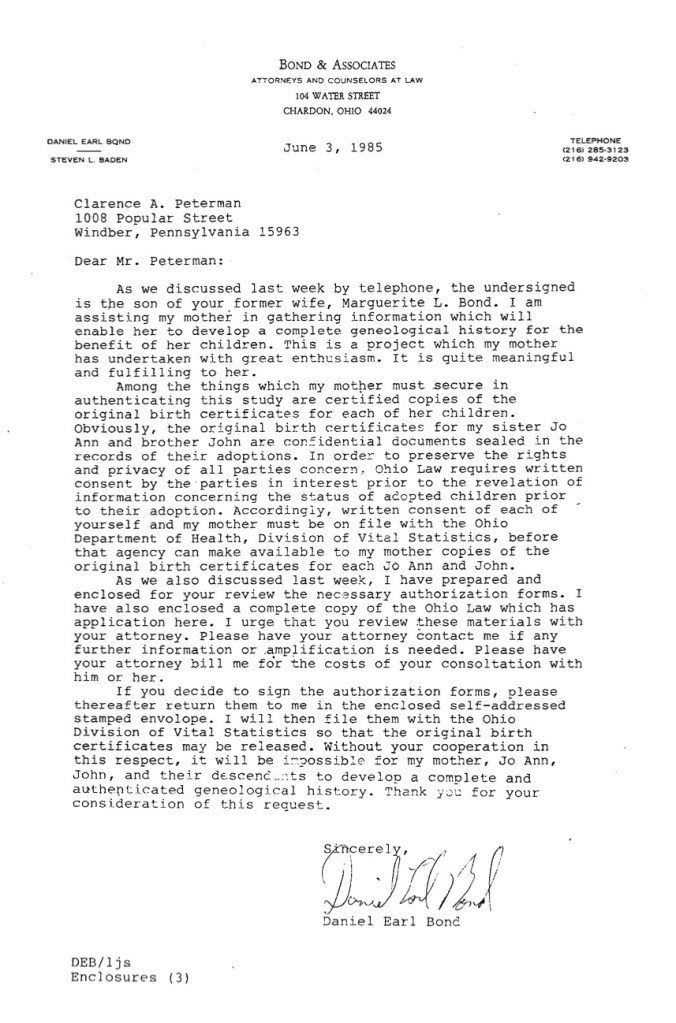
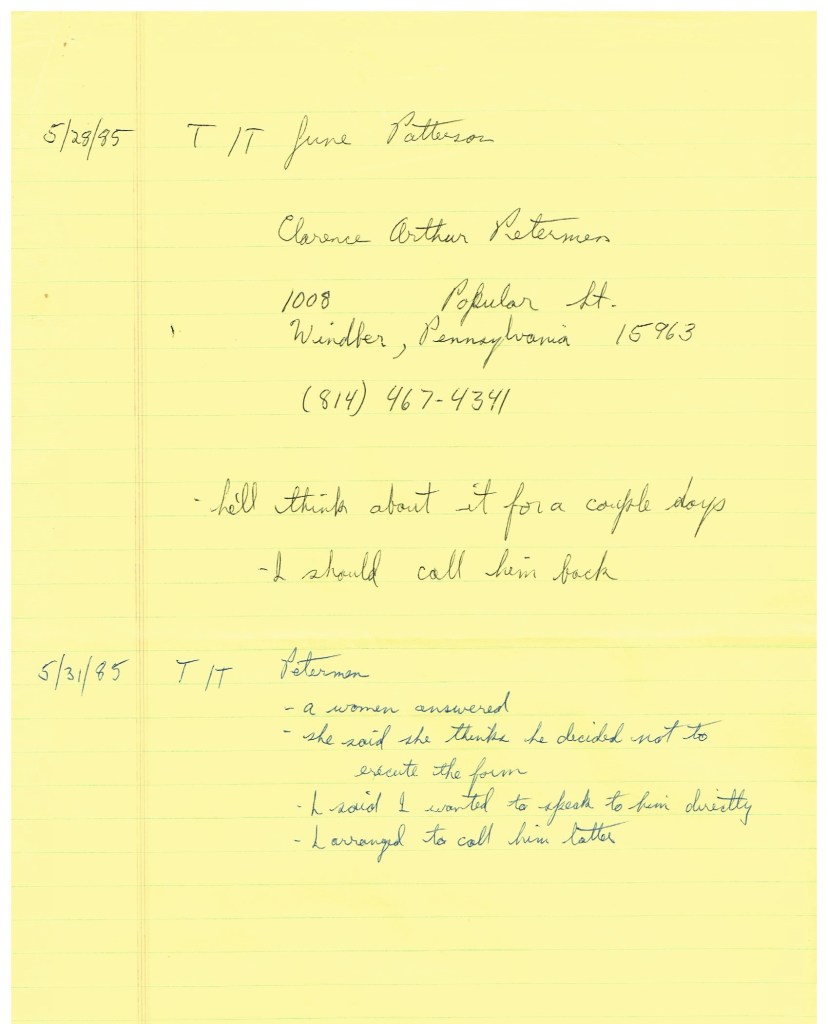
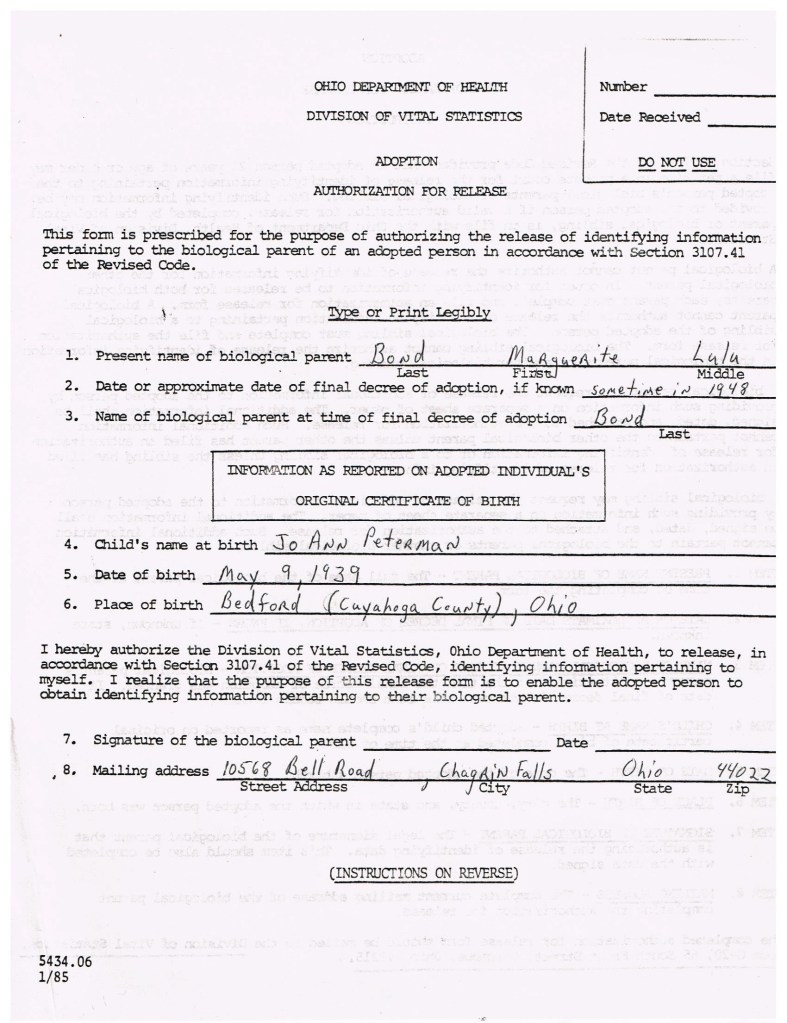
The following six documents are related to the adoption of Jo Ann (Peterman) Bond White, and John Alfred (Peterman) Bond by Dean Phillip Bond in 1948. The original documents were lost and in 1985, duplicate documents were sourced.

Dennis A Peterman
Marriage – Pennsylvania, County Marriages, 1775-1991
https://www.familysearch.org/ark:/61903/1:1:Q285-VPXW?from=lynx1UIV8&treeref=G7S2-TC8
Book page: 162, Digital page: 96/473, Left page.
Dennis A Peterman
Vital – Ohio, Death Index, 1908-1932, 1938-1944, and 1958-2007
https://www.familysearch.org/ark:/61903/1:1:VKGQ-HTT?from=lynx1UIV8&treeref=G7S2-TC8
Clarence Arthur Peterman [Jr.],
in the U.S., Department of Veterans Affairs BIRLS Death File, 1850-2010
https://www.ancestry.com/discoveryui-content/view/11977388:2441?ssrc=pt&tid=108215774&pid=402131733477
Clarence A Peterman [Jr.],
https://www.findagrave.com/memorial/175180409/clarence_a_peterman
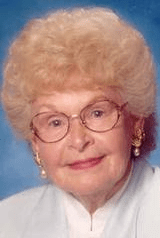
Dorothy J. Peterman
https://www.findagrave.com/memorial/112661672/dorothy-j-peterman
From the Associated Press: “WINDBER — PETERMAN – Dorothy J., 90, Windber, went home to be with the Lord March 19, 2013. Born March 25, 1922, in Windber. Dorothy lived in Windber for most of her years prior to moving to Richland and recently resided at Church of the Brethren Home. Dorothy graduated from Windber Area High School in 1941 and was a member of Trinity United Methodist Church Scalp Level. She completed her studies in cosmetology and received her license in l961 after which she opened and operated Dorothy’s Beauty Salon in Scalp Level for more than 20 years. She also was a member of Anna L. Windolph Chapter 495 Order of the Eastern Star, Johnstown. Dorothy was a strong, kind-hearted, loving mother and grandmother. Despite her recent set backs, she remained high-spirited. She devoted her life to her family, especially her grandchildren and great-grandchildren who will miss her dearly.
Survivors include her brother, Charles J. Weyant, Richland; daughter-in-law, Madeline (Koot) Peterman-Teli; grandsons, Jason Peterman and Ryan Peterman; and great-grandchildren, Nadine and Caden Peterman, all of Ohio; and her ‘living guardian angel’, Bonnie Ott from Windber. Also survived by several nieces and nephews. Preceded in death by parents, Leslie and Margaret (Shearer); husband, Clarence ‘Art’ Peterman; son, Dennis A. Peterman; brother, Donald Weyant; and devoted friend, Robert ‘Bob’ Caldwell…”

 Our Ancestors, Our Narratives