This is Chapter Four of seven: Our intrepid predecessors, moved to Holwood Manor — then to London — and then to the British Colonies in America.
A Pre-Scientific World
In the The Bond Line, A Narrative — One, we discussed the historical evolution of heraldry, and how that proved useful to our ancestors for ordering their lives. This set of “identities” developed and changed over time as societies evolved. Communities became less centralized, individual family surnames became more important, people moved around a little more. However, our ancestors were still living in a pre-scientific world in which religion was still the dominant player.

That perspective might be a little hard for those of us in the modern world to understand. Before us, people didn’t have the perspective to comprehend things which we take for granted: stars and planets, germ-theory, equal opportunity, democratic rule, freedom of religion, etc.
New worlds were being discovered, but their world was still the Britain of their ancient forebears. What was ahead was a century of continued ongoing conflict in which royalty and the church were pitted against each other for control of the English people. (1)
The Italians Were Winning The Renaissance Footrace
“The English Renaissance was a cultural and artistic movement in England from the early 16th century to the early 17th century. It is associated with the pan-European Renaissance that is usually regarded as beginning in Italy in the late 14th century. As in most of the rest of northern Europe, England saw little of these developments until more than a century later. Renaissance style and ideas, however, were slow to penetrate England, and the Elizabethan era in the second half of the 16th century is usually regarded as the height of the English Renaissance.
The English Renaissance is different from the Italian Renaissance in several ways. The dominant art forms of the English Renaissance were literature and music. Visual arts in the English Renaissance were much less significant than in the Italian Renaissance. The English period began far later than the Italian…”
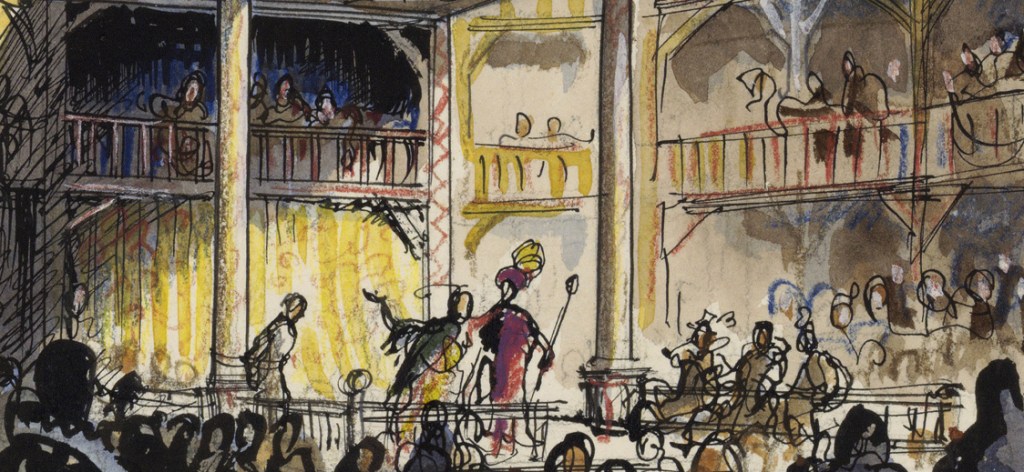
(Image courtesy of the Folger Shakespeare Library).
To understand how much change was a foot in the world — here are just a few of the people who were alive during the century of 1530-1630 outside of England — artists, scientists, philosophers: Michelangelo, Copernicus, Galileo Galilei, René Descartes. Inside of England, it was a virtual hit parade of politicians, but also some explorers and writers: Henry VIII, Elizabeth I, Mary Queen of Scots, Sir Francis Drake, William Shakespeare, Walter Raleigh, Oliver Cromwell. (2)
Dramatic Religious and Military Upheaval
It was always a challenge with English history to figure out where your family fits in, much less what was their religious philosophy. For everyday Englishmen, the times of the Tudors and the times of the Stuarts were especially rough. Looking back on this period, it’s a bit of a paradox . England was entrenched in various religious persecutions, as if their old worldview was clashing with the newly emerging one. Geographic boundaries expanded —the world had entered an age of discovery. Inner boundaries shifted — the age of enlightenment was at hand, which would bring great change to our ancestral family.

(Image courtesy of Wikimedia Commons).
“On October 31, 1517, Martin Luther, that strong willed German monk, posted his 95 arguments against the Catholic Church, ushering in the Reformation. Declaring Faith and Scripture alone as necessary for Christian salvation, Luther’s rejection of papal authority opened the floodgates for an increasingly varied array of personal revelations and Christian beliefs… Aided by the newly emergent printing press, and a growing humanist unease at the worldly ambitions of Renaissance popes, Luther’s ideas quickly spread.” Most Christian rulers strongly condemned these heretical Lutherans; rightly fearing that…”
…if the Pope’s supremacy could be toppled,
Candis Murray, Ph.D.
what would stop a king’s subjects from someday condemning their own divinely crowned ruler?
Chaos, anarchy, and civil war would surely follow.
writing for the Shaker Heritage Society
Before 1534, England was Roman Catholic; Wales and Ireland were Roman Catholic as well, but Scotland was largely Pagan. (3)
The Tudor Family Put the ‘fun’ in Dysfunctional
1534 marks the date when Henry VIII wished a divorce, so he split with the Roman Catholic Church (during the Reformation) to create the Church of England with himself [as] head instead of the Pope. His three successors in 1547-1603 varied between Catholic and Protestant, with each successive monarch trying to purge the country of the opposite religion.
1547: Henry VIII dies, and is succeeded by his son Edward VI.
1585: The Roanoke Island colony, the first English settlement in the New World, is founded by English explorer Sir Walter Raleigh.

Painting of Elizabeth I of England, attributed to George Gower, circa 1585.
(Image courtesy of WorldHistory.com).
1603: Following Queen Elizabeth I’s death, the Venetian ambassador writes that the “late queen had ruled over five different ‘peoples’ – English, Welsh, Cornish, Scottish, and Irish”.
Protestant James I’s reign (1603-1625) culminated with the start of the cataclysmic Thirty Years War (1618-1648) which raged throughout central Europe primarily between Protestants and Catholics, with 1643-1647 being an English Civil War.

The Miseries of War; No. 11, The Hanging, or Les Miseres et les Mal-Hevrs de la Guerre
by Jacques Callot, between 1632 and 1633. (Image courtesy of Art Gallery NSW).
To put this time period into perspective: Thus, religious intolerance was extreme for the entire century… with much bloodshed and deep-seated hatred between those of different views. The end of the Thirty Years War (no victors; it ended by treaty), did not ring in a period of tolerance for all religions.
To our good fortune, the Bond family lines passed through this period without much turmoil. This was likely due to being far removed from much of the conflicts due to their estates being in Cornwall. (4)
London Calling — Living Near the Fulham Palace
Thomas Bond, first of Erth and Holwood, relinquished Holwood to his young son, William, and moved on to Fulham, a hamlet of London. We speculate that his wife Jone remained at Holwood to raise their son “The Court Rolls show that Thomas Bonde held property in several parts of Fulham…” In 1566, he and some others were “fined 12 pence because he had no bows...” The Court inflicted this fine under a statute passed in the reign of Philip and Mary.
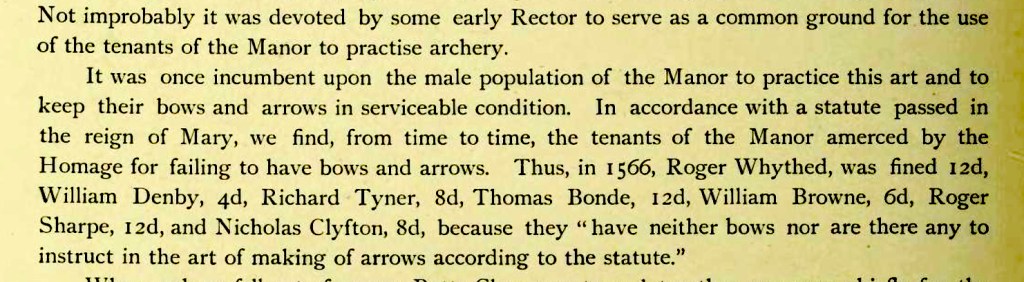
Fulham Old And New: Being An Exhaustive History Of The Ancient Parish of Fulham, Volume II, page 254.
From the above record, we have inferred that Thomas either lived in, or lived adjacent to the manor-house, or palace of Fulham. It had been, from a very early period, the principal summer residence of the Bishops of London. The renowned gardens at Fulham “first became remarkable in the time of Bishop Grindall, who was one of the earliest encouragers of botany, and the first person who imported the tamarisk-tree into this country, about the year 1560. His grapes, at Fulham, were esteemed of that value, and a fruit the Queen stood so well affected to, and so early ripe, that the Bishop used every year to send her Majesty a present of them.”


Fulham Old And New: Being An Exhaustive History Of The Ancient Parish of Fulham, Volume I, Page 236.
A very remarkable memorial tablet to Thomas Bonde, dated 1600, is described in the book Fulham Old And New: Being An Exhaustive History Of The Ancient Parish of Fulham, Volume II (page 235). His will is dated 20 March 1599, (old calendar). The memorial tablet is dated March 1600, (also old calendar where the new year began 25 March). Thus he died between 25 and 31 March 1600.

shown in four quadrants for the following:
Upper left: Bonds of Erth, Upper right: Erth, Lower left: Maynard (of Easton, Essex)
Lower right: Coryton. These families are written about in The Bond Line — A Narrative, Three.

Fulham, London (Borough of Hammersmith and Fulham, Greater London), England. If you look carefully at the top portion, there is marshalled heraldry for— Upper left: Bonds of Erth, Upper right: Erth, Lower left: Maynard (of Easton, Essex) Lower right: Coryton.
The poem on the memorial plaque reads:
“At Earth in Cornwall was my firste beginnings
From Bonde’s and Corringstone (Coritons), as it may apere;
Now to Earth in Fulham God disposed my endinge
In March, the thousand and six hundred yere,
Tyll both in body and soul I shall be fully blest.”
Thomas Bonde, obit A Aetatis Sure 68 (68 years old)
We are not sure how Thomas made his fortune(s), but he must have been a man of some prominence. His Will, dated March 20, 1599/1600 and proved April 18, 1600: He left “Margaret Meridith, a widow, a piece of farm land and arranged for 20 shillings to be paid yearly forever to the officers of the poor unless the field was given for the use of the poor.” (This is the first time we see the name Margaret Meredith , a widow, in connection to Thomas Bond. We have not located records as to what their relationship was.) For the transcribed Will with annotations giving us an idea of Thomas’s generosity, see the footnotes.
Observation: 1620: The Mayflower is on route to America with the Pilgrims. (5)
The William and Alice (Hall) Bond Family
William Bond son of William Bond and Wilmot (Haughton) Bond, was born in 1608 at Holwood Manor, County Cornwall, England. He died in England, but the exact date is unknown. Other family records determine that his death was likely after 1643, and before 1659. William was born in Cornwall in 1608 and thus a descendant of the Bonds of Erth and Holwood. Was he taken to London about 1620 to learn the mariner’s trade? He could have been sponsored by his grandfather, Thomas Bond, then living in Fulham, or by half-brother Thomas Bond, a member of Parliament and the Virginia Company.

Tower Hamlets, St Dunstan and All Saints, Stepney, 1609-1632.
The above original document is a record of the marriage for Alice Hall and William Bond on September 21, 1630 in St. Dunstan, Stepney, London, England. William’s church was St. Botulphs Without Bishopsgate. Wikipedia tells us that Bishopsgate was one of the eastern gates in London’s former defensive wall. The gate gave its name to the Bishopsgate Ward of the City of London. The ward is traditionally divided into Bishopsgate Within, inside the line wall, and Bishopsgate Without, beyond it. Bishopsgate Without is described as part of London’s East End. In the marriage record William is identified as a Mariner.
Alice Hall was the daughter of Captain Henry Hall, Jr. and Elizabeth Martin. She was christened April 12, 1615 in St. Dunstan, Stepney, London. At the time they married Alice was only 15 years old and William was 22 years old. Alice (Hall) Bond died in London, aged 44. She was buried 22 March 22, 1659 in St. Olave Churchyard, Hart Street, London, England, as shown in the record below, (noted as Alce Bond). Her husband, William, had died before her, because she is listed as a “widdowe” (widow).
Observation: Was there an illness circulating in London at this time? The Great Plague was still five years in the future… The year 1659 saw the following deaths in the Alice (Hall) Bond family: Elizabeth (Martin) Hall, her mother, died on February 3, with burial on February 4. Alice herself died and was buried on March 22 (as noted above). Her father, Henry Hall, Jr. died on March 31, 1659. Three deaths in quick succession is startling, but no evidence of the cause of their deaths has been uncovered.

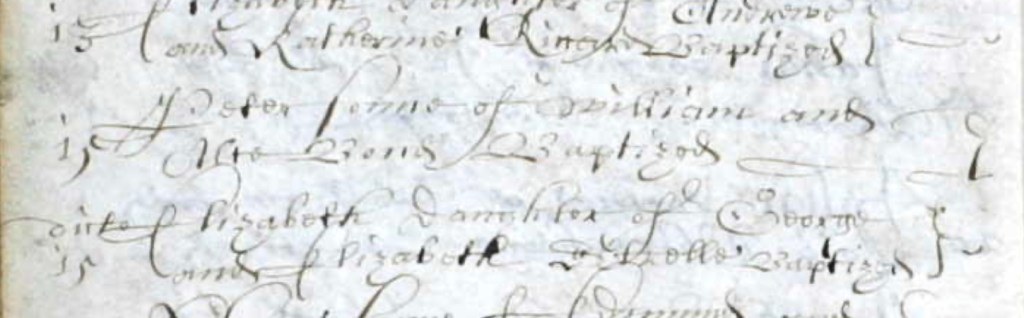
William and Alice had six children. Sarah Bond was christened September 2, 1632 in St. Botolph, Bishopsgate, London, England. The other five children were all christened at St. Olave, Hart Street, Stepney, London. John Bond was christened October 18, 1635. Ann Bond was christened March 18, 1638.
Peter Bond was christened March 15, 1640. (We are descended from Peter.) William Bond Jr. was christened 22 Aug 1641. Finally, Christopher Bond was christened 21 Dec 1642. (6)
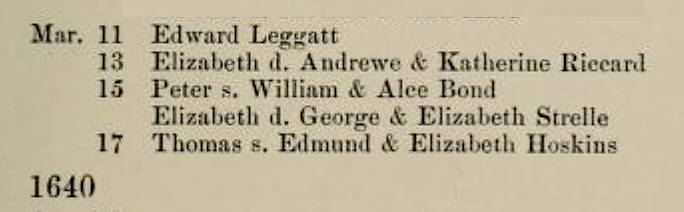
The family may have lived in Whitechapel, an east suburb of Old London about a mile from the now famous London Tower. It is evident that although William was most likely away, Alice with her children, stayed in the area of London where she was born.
The Commonwealth Period
At the time of Charles I’s beheading Peter Bond was nine years old. The English government became the Commonwealth run by Oliver Cromwell and his son Richard from 1653-1659. In May 1660, the House of Stuart was restored.
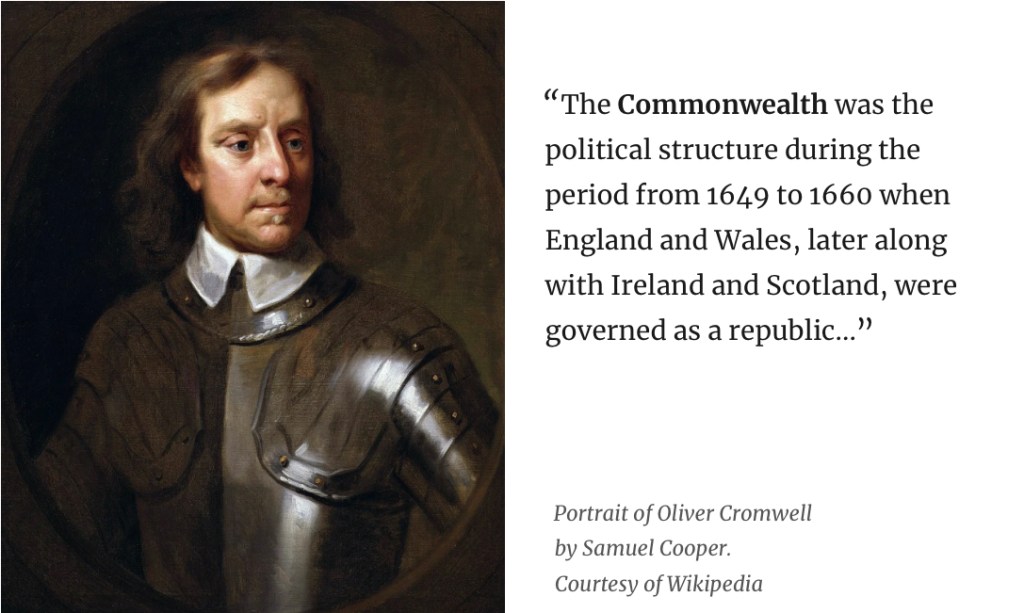
“In retrospect, the period of republican rule for England was a failure in the short term. During the 11-year period, no stable government was established to rule the English state for longer than a few months at a time. Several administrative structures were tried, and several Parliaments called and seated, but little in the way of meaningful, lasting legislation was passed. The only force keeping it together was the personality of Oliver Cromwell, who exerted control through the military…Not only did Cromwell’s regime crumble into near anarchy upon his death and the brief administration of his son, but the monarchy he overthrew was restored in 1660, and its first act was officially to erase all traces of any constitutional reforms of the Republican period. Still, the memory of the Parliamentarian cause, [would] eventually result in a constitutional monarchy.” (Wikipedia)
Our direct ancestor, Peter Bond, lived in London during this period before departing for the British Colonies in North America. (7)

“Terra Maria” in the British American Colonies
“In 1608, Captain John Smith thought there was ‘no place more perfect for man’s habitation’ than the Chesapeake Bay. [Maryland] Fur trader William Claiborne thought so, too, and set up a fur trading post on Kent Island in 1631. This was the first English settlement in the upper Chesapeake.
Maryland began as a colony when King Charles I promised George Calvert, the first Lord Baltimore, a colony north of Virginia. Before he could visit the colony, George Calvert died. His son, Cecilius, became the second Lord Baltimore and the Lord Proprietor of Maryland. He named his colony ‘Terra Maria’, or ‘Maryland’ in honor of the king’s wife, Queen Henrietta Maria. Because Cecilius Calvert had to remain in England, he sent his younger brother, Leonard, to accompany the colonists and to be the first governor.”
It is recorded that Peter Bond arrived in Maryland in 1660, aged 20 years old. Having been born and raised in London, he was witness to the chaos and ineffectiveness of the Commonwealth government run by Cromwell. Also, his mother Alice (Hall) Bond and both of her parents, had died the year before he left, as well as his father’s unknown death date. The aftermath of the English Civil War of his childhood, (1642-1651) had left the economy severely depressed. We wonder if these many events had anything to do with his leaving for America? As a young man, perhaps he just wanted a fresh start? (8)
Most importantly for us, our path was headed to the New World in the West.
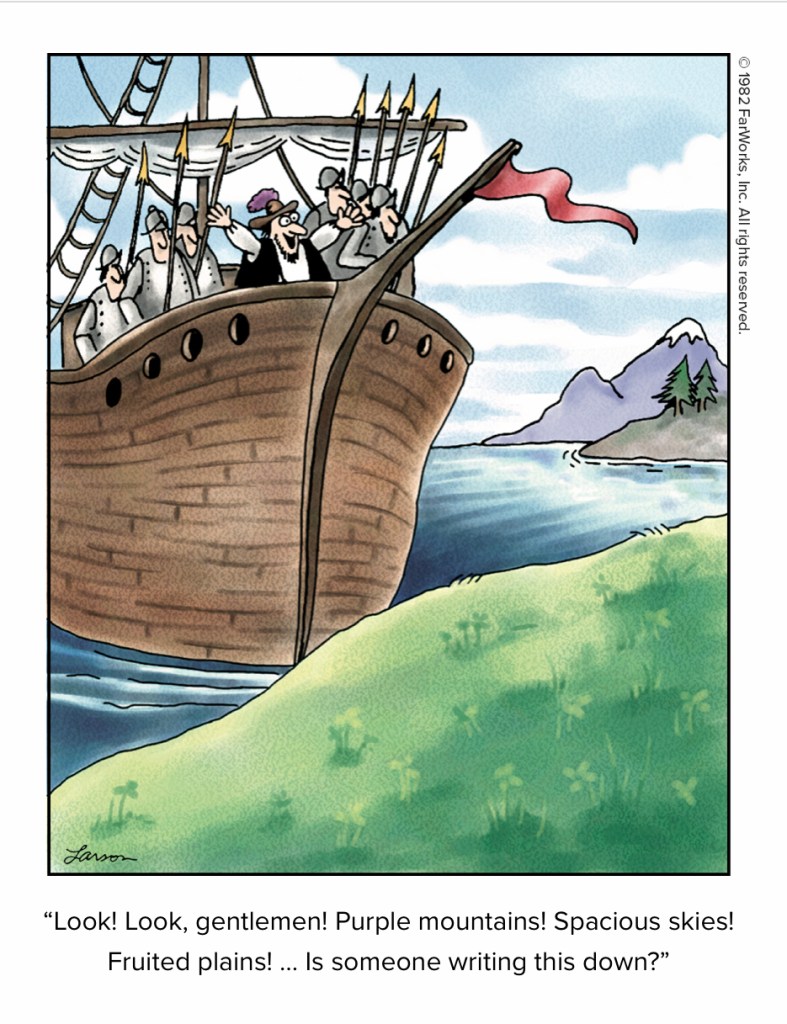
Copyright 2019-2022 by FarWorks, Inc. Thanks Gary!
Bubonic Plague and The Great London Fire
About five years after Peter Bond left for the Maryland colony, central London was devastated by two disasters. Plague returned in 1665, killing one-quarter of the population. The next year, 1666, The Great Fire completely destroyed everything in central London that was enclosed by the ancient Roman walls.
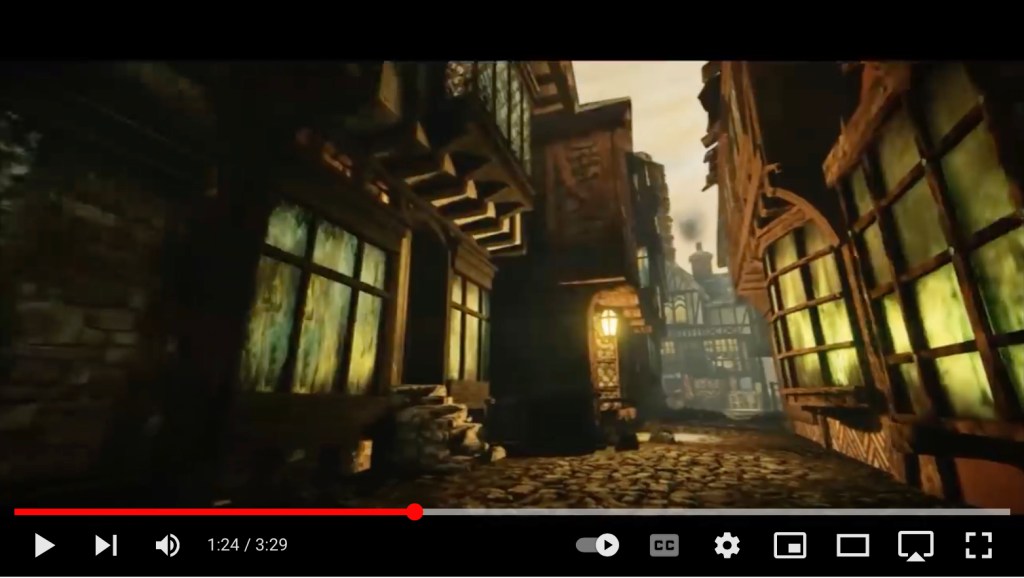
https://www.youtube.com/watch?v=SPY-hr-8-M0
This amazing short 3-1/2 minute video by six students from De Montfort University (taking part in the Crytek Off the Map project), have built a virtual 3D representation of 17th century London before The Great Fire of 1666. (9)
With Bubonic plague and fires burning down everything around you — what our ancestors really needed was for James Bond 007 to step in and just fix things with a couple of fabulous martinis.
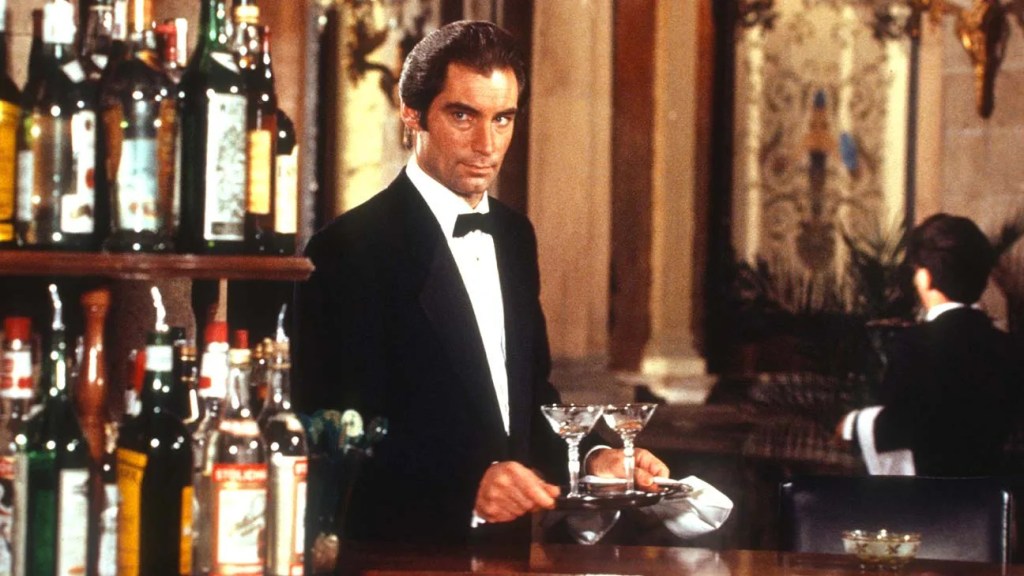
Since you asked, we can certainly state with conviction: Martinis always soothe the nerves.
(Image courtesy of The Hollywood Reporter).
Following are the footnotes for the Primary Source Materials,
Notes, and Observations
A Pre-Scientific World
(1) — one record
Galileo Galilei at His Trial by the Inquisition in Rome in 1633,
i.e. Galileo pushes away the Bible.
Courtesy of The Wellcome Collection via Wikimedia Commons
https://commons.wikimedia.org/wiki/File:Galileo_Galilei_at_his_trial_Wellcome_V0018717.jpg#/media/File:Galileo_Galilei;_Galileo_Galilei_at_his_trial_at_the_Inquisi_Wellcome_V0018716.jpg
The Italians Were Winning The Renaissance Footrace
(2) — two records
English Renaissance
https://en.wikipedia.org/wiki/English_Renaissance
Folger Shakespeare Library
Stage setting design drawing
by Cyril Walter Hodges
https://www.folger.edu/blogs/shakespeare-and-beyond/playhouses-closed-shakespeare-distance-performance/045736-sm/
Note 1: For the drawing.
Note 2: Found as ART Box H688 no.1 pt.4
Dramatic Religious and Military Upheaval
(3) — three records
Luther Posting His 95 Theses
by Ferdinand Pauwels
https://commons.wikimedia.org/wiki/File:Luther95theses.jpg#file
Note: For painting.
Shaker Heritage Society
For God, King, & Country: Why the Shakers Irritated England
by Candis Murray, Ph.D
https://home.shakerheritage.org/god-king-country-shakers-irritated-england/
Note: For the quote.
Art Gallery NSW
The Hanging, or Les Miseres et les Mal-Hevrs de la Guerre
from the suite The Miseries and Misfortunes of War, 1633
by Jacques Callot
https://www.artgallery.nsw.gov.au/collection/works/DO10.1963.11/
The Tudor Family Put the ‘fun’ in Dysfunctional
(4) — three records
World History Encyclopedia
Elizabeth I Armada Portrait
https://www.worldhistory.org/image/12284/elizabeth-i-armada-portrait/
Note: For her portrait.
IntoCornwall.com
Cornwall History Timeline
https://www.intocornwall.com/features/cornwall-history-timeline.asp
History.com
This Day In History
1590, Roanoke Colony Deserted
https://www.history.com/this-day-in-history/roanoke-colony-deserted
London Calling — Living Near the Fulham Palace
(5) — nine records
BHO | British History Online
Fulham
https://www.british-history.ac.uk/london-environs/vol2/pp344-424#p29
Layers of London
Engraving — Fulham Palace
https://www.layersoflondon.org/map/records/engraving-fulham-palace
Note: The engraved image is circa 1795.
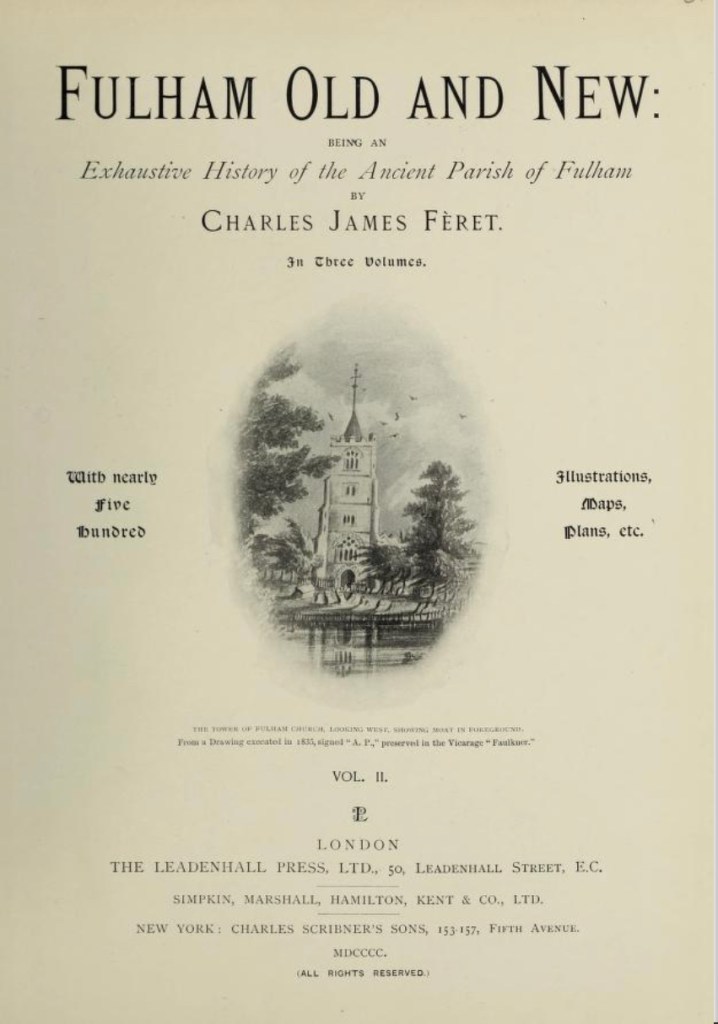
Fulham Old And New: Being An Exhaustive History
Of The Ancient Parish Of Fulham
Volume II
For a description regarding bows and arrows:
https://archive.org/details/b29010433_0002/page/254/mode/2up
Book page: 254, Digital page: 254/311
and
Fulham Old And New: Being An Exhaustive History
Of The Ancient Parish Of Fulham
Volume I
For a description regarding tree trimming:
https://archive.org/details/b29010433_0001/page/236/mode/2up
Book page: 236, Digital page: 236/350
and
Fulham Old And New: Being An Exhaustive History
Of The Ancient Parish Of Fulham
Volume I
For a mention of his Will, and his cemetery monument:
https://archive.org/details/b29010433_0001/page/234/mode/2up?q=Bonde
Book page: 235, Digital page: 234/350
Thomas Bonde
https://www.findagrave.com/memorial/64029140/thomas-bonde
Note: For the memorial plaque image.
The Story of The Bonds of Earth
by Allen Kerr Bond
https://archive.org/details/storyofbondsofea00bond/mode/2up
Book page: 37-47, Digital page: 36-46/299
Note: The Will of Thomas Bonde (as transcribed below by Susan Bond), is from source material originally found on Rootsweb.com, a company which was then subsequently acquired by Ancestry.com. The original digital transcription file is referenced online, but cannot now be located, likely due the business merger.
(Our observations are in bold italic).
Thomas Bond 1599/1600 Will
In the name of God Amen The Twentieth day of March in the Two and Fortieth [42nd] year of our Sovereign Lady Elizabeth by the grace of god Queen of England France and Ireland defender of the … and in the year of our Lord god One thousand five hundred ninety nine. [20 March 1600 new calendar]
I Thomas Bond of Fulham in the county Middlesex gent [gentleman] although weak of bodies yet perfect mind and memory thanks be to god do make and ordain this my perfect testimony conveying therein my last will in manner and form following that it to say finite and principally & command my soul into the hands of Almighty god my creator. And I also trust my Redeemer and Savior by the merit of what death and passion I trust that my sins are forgiven me and that in the resurrection of the righteous I shall be made perfect of the joys eternal prepared for the faithful and elected [chosen] children. Amen
My body to be buried at the discretion of my Governor and overseers hereafter named. And as to the disposition of all my goods & chattels, lands & cenemente [?] what serve my mind & will is in manner & form following:
Item: I give and bequeath to Mary Meredith, widow, my two acres and a rood [a measure of land area equal to a quarter of an acre] of Freehold Land I have in a … field in Fulham called Anscens Field with the appurtenances [accessories] to have and to hold the said two acres and a rood land with the appurtenances unto the said Margaret Meredith and her heirs and fignes [?] for over conditionally that the said Margaret Meredith and her heirs shall yearly pay to the collectors or other officers for the poor in the same parish for the time being and their …to the use of the poor of the same parish for … Twenty Shillings [= 1 Pound] of good and lawful money of England Balse [?] nearly by porcine [in person]… that if the said Margaret Meredith or her …. shall …or deme [deny] to pay the said some of Twenty Shillings in manor and form of ore [?] said being lawfully demanded, then my will and mind is that from and asce [after? anie?] …Two acres and a rood of land with appurtenances shall … remain and to be churchwardens of the said parishes for the time being and their … forever to the rest of the poor people of the same parish of Fulham to be distributed amongst them upon the day of my funeral by the discretion of my Governor and… Twenty Shillings …
Item: I give and bequeath to every one of William Arnold’s children being seaven(?) Twenty Shillings a piece Bequeathed 7 Pounds
Item: I give and bequeath to every one of Mathew Robyn’s children being Four-Twenty Shillings a piece Bequeathed 4 Pounds
Item: I give and bequeath to every one of Margaret Meredith’s children being Four-Twenty Shillings a piece. Bequeathed 4 Pounds
Item: I give and bequeath to Robert Wardon – Son of Sable Wardon my wife’s daughter Twenty Shillings Bequeathed 2 Pounds
Item: I give and bequeath to each one of John Chandlehill’s children being Two Twenty Shillings a piece Bequeathed 2 Pounds
Item: I give and bequeath to my goddaughter Cathorin Weimall Twenty Shillings Bequeathed 1 Pound
Item: Whereas I am behind and unpaid one yearly annuity of Twenty Shillings from the decease of William Bond my oldest brother somet mes [?] of Earth in the county of Cornwall bc gentleman, by virtue of one writing or deed …the hand and seal of the said William bearing date the eight day of December in the First year of the reign of our late Sovereign Lady Queen Mary (1553) as by the same deed more at ardge [?] appeared.
I do give and bequeath to Roger Bond my brother & Elizabeth Jackman my sister, if they be living the said yearly, annuity of Twenty Shillings [1 Pound] and the armories thereof behind together with the said deed & all my estate and intoees [?] which I have orchad [?] in the same or anie of them to have and to hold to the said Roger and Elizabeth if the be living and to the survivor of them to their own proper use forever.
Bequeathed 1 Pound each x 2 people for the rest of their lives
Item: I do give and bequeath to William Wrennolle my first gown and my best gown a woolen snit-x waistcoat and my service books
Item: I do give and bequeath to Latherin Arnold the wife of William Arnold holder my best gold ring
Item: I do give and bequeath to Ronny Francis my godson my best satin doublet.
Item: I do give and bequeath to Ellyn Robin of Rown To Mary Idlott of old as Branitford & Ellin Donbee of ntuvy(?) to each of them a smock and one apron of my wife’s
Item: I do give and bequeath to John Bond four Pounds and eleven Shillings which he owed me and I give and bequeath to him more five Pounds & one Shilling of lawful money of England to make it. Bequeath = 10 Pounds
Item: I do give and bequeath to Johan (Jone) (blank space), widow, my servant, forty Shillings if she happen to dwell with me at the time of my death.
Bequeathed 4 Pounds
Item: I do give and bequeath to Elizabeth and Blanse my servant and John Ronney my countryman if they marry together my best mattress a feather bolster a coverlet the brought with herself a pair of Heels, a plain bedstead, a brass pot, broad mouthed and peered in the brime and forty Shillings of lawful money of England The residue of all goods moveable and unmovable my debts paid and legacies performed.
Bequeathed 4 Pounds
I give and bequeath to Richard Rawles my nephew whom I make my sole governor of my will and I do ordain and make my loving friends master… Edward person of Chelsey and Ronney Thorneton of Fulham my overseers
And I do give and bequeath to each of them forty Shillings towards their [?] anies herein to be taken Provided always that if my said governor shall refuse to be ordered and directed by my said overseers or the survivor of them and that testified under their hands and seals in writing them my will and mind is that from and after such certificate his interest of governorship aforesaid shall cease and be void.
Bequeathed 4 Pounds each = 12 Pounds total
And that then and from thence forth my said brother Roger shall be my governor and pay and do as is aforesaid In witness whereof I have hereunto set my hand & seal the day & year above said this will be subscribed sealed & acknowledged for his last will the day and year above said in the presence of us
Thomas Burton John Burtons msc. Thomas Burton Smith
Thomas Bond A short paragraph written in Latin
The will is dated 20 March 1599, (old calender). The memorial tablet is dated March 1600, (also old calender where the new year began on 25 March). Thus he died between 25 and 31 March 1600.
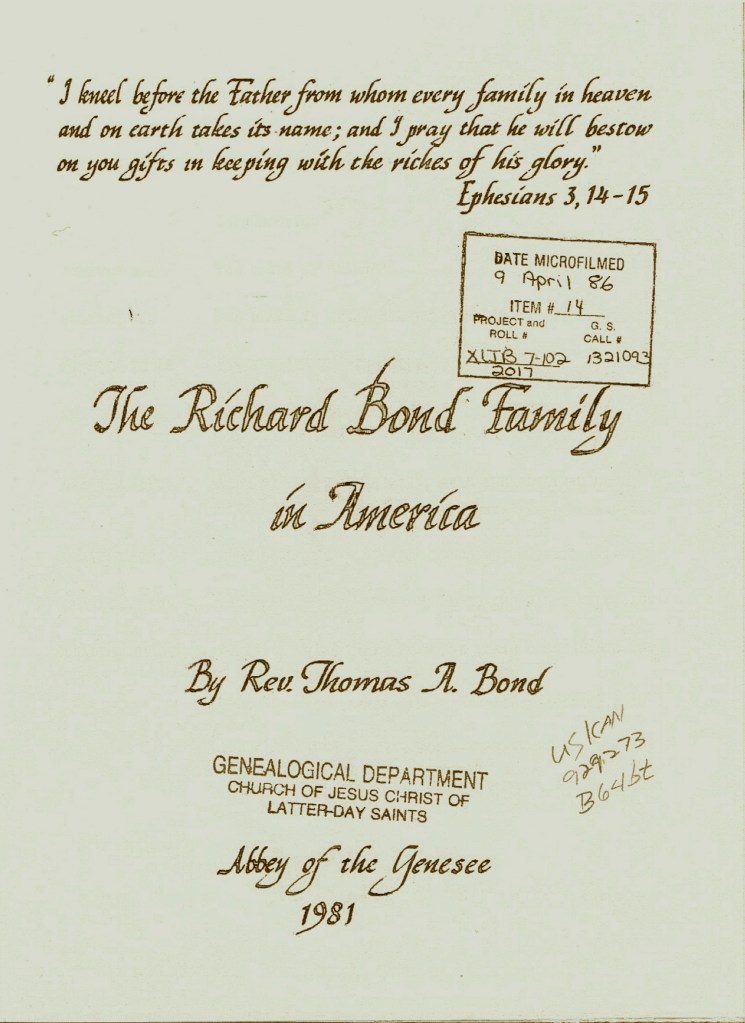
The Richard Bond Family in America
by Rev. Thomas A. Bond, Abbey of the Genesee, 1981
Microfilmed by the Genealogical Department of the Church of Jesus Christ of Latter-day Saints on April 9, 1986
(Item 14, Project and Roll XLIB 7-102 2017, G.S. Call 1321093)
The William Bond and Alice Hall Family
(6) — eight records
William Bond
in the London, England, Church of England Baptisms,
Marriages and Burials, 1538-1812
Tower Hamlets > St Dunstan and All Saints > Stepney, 1609-1632
https://www.ancestry.com/discoveryui-content/view/1098358:1624
Digital page: 131/140, Left page, entry for September 21, 1630.
Note: Peter was actually christened in 1640, not 1639.
Bishopsgate
https://en.wikipedia.org/wiki/Bishopsgate
Elizabeth Martin
https://www.ancestry.com/family-tree/person/tree/166487322/person/422244353591/facts
Henry Hall, Jr.
https://www.ancestry.com/family-tree/person/tree/166487322/person/422244353564/facts
Peter Bond
in the London, England, Church of England Baptisms,
Marriages and Burials, 1538-1812
City of London > St. Olave, Hart Street > 1631-1707 https://www.ancestry.com/imageviewer/collections/1624/images/31281_a100776-00011?pId=4754774
Note 1: Digital page: 10/75, Entry for March 15 (left page and very faint).
Note 2: The Church was using the old calendar where the new year began on March 25. This later changed, so therefore, we believe that his baptism was actually on March 15, 1640.

The Registers of St. Olave, Hart Street, London, 1563-1700
by Bruce W. Bannerman, 1862-1933
https://archive.org/details/registersofstola46stol/mode/2up
Note 1: For Peter Bond’s christening. see book page 49. Digital page: 48/362.
Note 2: Asserted in the footnote above, The Church was using the old calendar where the new year began on March 25. This later changed, so therefore, we believe that his baptism was actually on March 15, 1640.
Note 3: For Alice Bond’s burial, see book page 192. Digital page: 192/362.
Richard Bond and desendents [sic]
https://www.ancestry.com/mediaui-viewer/tree/10403921/person/6979535919/media/5f0ecfd9-3dd2-4c1a-a1ab-bfb0e84b19f6?_phsrc=qGQ3868&_phstart=successSource
Birds-Eye View of Westminster, London in the 16th Century
https://www.istockphoto.com/vector/birds-eye-view-of-westminster-london-in-the-16th-century-gm1136341577-302600877
The Commonwealth Period
(7) — two records
Commonwealth of England
https://en.wikipedia.org/wiki/Commonwealth_of_England
Portrait of Oliver Cromwell
by Samuel Cooper
https://en.wikipedia.org/wiki/Oliver_Cromwell#/media/File:Oliver_Cromwell_by_Samuel_Cooper.jpg
“Terra Maria” in the British American Colonies
(8) — one record
Maryland Office of Tourism
The First Marylanders — Native Americans and The First Colonists
https://www.visitmaryland.org/info/first-marylanders
Note: For the reference, “He named his ‘Terra Maria’, ‘Maryland’ in honor of the king’s wife, Queen Henrietta Maria.”
Bubonic Plague and The Great London Fire
(9) — two records
Pudding Lane Productions, Crytek Off The Map
A virtual recreation of 17th century London…
https://www.youtube.com/watch?v=SPY-hr-8-M0
The Hollywood Reporter
How ‘Licence to Kill’ Put the James Bond Franchise on Ice
by Phil Pirelli
https://www.hollywoodreporter.com/movies/movie-features/how-licence-kill-almost-killed-james-bond-franchise-1224180/
Note: For the Timothy Dalton image.

 Our Ancestors, Our Narratives


