This is Chapter Five of eleven. In 1939, Winston Churchill was giving a radio address when he coined a phrase that ended up becoming an idiom. He said, “It is a riddle wrapped in a mystery inside an enigma, but perhaps there is a key”. When it comes to “a riddle wrapped in a mystery”… well, that seems to aptly sum up what we came up against with this chapter on the Devoes.
Preface — Sometimes Family Stories Are Just Plain Wrong
Tracing the history of our 4x Great Grandfather Martinus Devoe has been frustrating, difficult, and challenging. Our troubles began with his son, Peter M. Devoe (our 3x Great Grandfather), who was an enigma to us. We knew when he was born, we knew whom he married, we knew when he died, but beyond that… c r i c k e t s . We couldn’t be sure of exactly who his parents were. It didn’t help that our Grandmother Lulu (DeVoe) Gore, and our Mother (Lulu’s daughter) Marguerite (Gore) Bond, weren’t comfortable discussing him. It seems they thought he had turned his back on the American Colonies and made his way to Canada. (What?! This was news to our ears.)

at home circa 1954. (Family photograph).
Hearing something like that raised even more questions and it opened up a lot of mysterious doors for us as we did our research. It turns out that they were incorrect in their understanding of the actual family history for both Peter M. Devoe and his father Martinus Devoe. It’s quite likely that they had heard family stories, and as families do over time, they knitted something together which made sense for them. Whatever they thought they knew, it wasn’t an accurate history. However, there were some clues here and there…
Very little evidence about Martinus Devoe, prior to the 1780s, has survived and now we know why. There was a war and the Devoes lived right in the midst of it. We’ve finally unwrapped the riddle, having solved what really happened in the story of Martinus Devoe (this generation) and the one which followed (his son Peter M). It’s actually quite an interesting account.

and the Province of Quebec, by Claude Joseph Sauthier, and Matthäus Albrecht Potter
Published in Augsburg, 1777.
The focus of this chapter is specifically on the period of the Revolutionary War when the Devoe family and their extended clan were living in different communities along the Hudson River Valley. Martinus Devoe’s family was centered around Halfmoon and Albany, but some of the story also unfolds just across the border within Canada.
Of special note: In this era, the Hudson River waterway was the superhighway of its time and led directly north from the Atlantic Ocean at Manhattan, all the way up to Lake Champlain and Canada.
The map above, which was printed in Europe in 1777, show how the borders of the American Colonies were still in flux. Vermont does not yet exist, the border with Canada was somewhat permeable, New Jersey was misspelled as New-Yersey, many Native American tribes lived in their own ‘country’, and the mapmakers colorfully described one section as The Endless Mountains. (1)
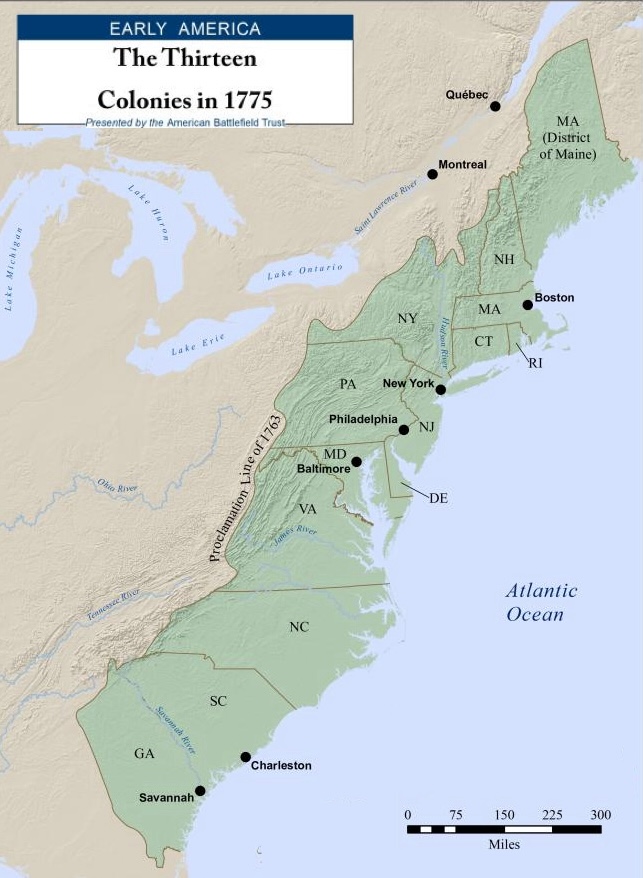
Note how New York State contained an area which eventually became Vermont.
Much of what eventually became the United States was still held by other interests.
(Image Courtesy of The American Battlefield Trust).
The Patriots, The Loyalists, and The Fence-Sitters
In the midst of the Revolutionary War, the population of the British Colonies of North America could be divided into three groups. Those who wanted the War of Independence to succeed were called The Patriots. On the other side of the coin were The Loyalists who felt much more comfortable staying aligned with Great Britain and the interests of King George III. Between them were The Fence-Sitters. No matter which side you were on, there was much colorful language used all around to describe those on the other side, but we will keep things polite, and generally use: Patriots and Loyalists.
The Patriots
We all know who the Patriots were — a veritable cascade of famous names from American history: George Washington, John Adams, Thomas Jefferson, Benjamin Franklin, Paul Revere, Betsy Ross, etc. Besides being the winners of the war, they got to write The History. This means, as it always has with the victors of any conflict, that they could shape the history of those who lost in whatever form they wanted.

Benjamin Franklin’s 1754 cartoon “Join Or Die” depicted the original 13 American colonies.
Later, the Colonists repurposed it as a symbol of their unity against British rule.
What we never really learn about when studying American history, is what it was like for the people on the other side, or even more so, for those who were in the middle. It always seems to be a binary choice: The Patriots are usually given many virtues, and The Loyalists are dismissed as being unworthy traitors and losers. For our family, especially those living in the Hudson River Valley, the truth was not so black-and-white. There are many more shades to consider when writing about the character of —
The Loyalists
From the book, Loyalism in New York During The American Revolution by Alexander Clarence Flick, Ph.D., —“The loyalists were Americans, not Englishmen… Most American historians have characterized them as unprincipled royal office-holders, scheming political trimmers, a few aristocratic landlords and merchants, who were fearful of losing their wealth and indifferent to the rights of man…”, but there was actually more to this…
Flick continues, “Thus it appears that the loyalists of New York had within their ranks persons of all social positions from that of the poor emigrant but recently come to America; to the oldest and wealthiest family in the colony; from the ignorant agriculturist to the president of the only college in the province; from the humble cobbler and blacksmith to the most celebrated lawyer and physician in the metropolis…
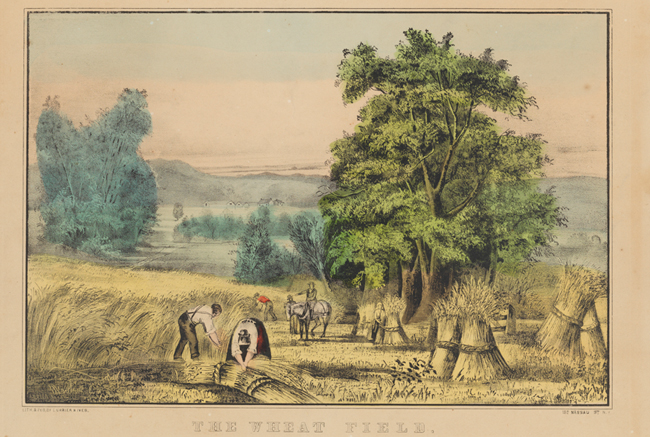
New York: The Original Breadbasket of America, by Museum of the City of New York.
[There were many] conservative farmers in all parts of the colony, but especially in Queens, Kings, Richmond, Westchester, Albany and Tryon counties. They were happy and prosperous under the old regime. They did not feel the burdens complained of by the revolutionists, and consequently, had no sympathy with whig [Patriot] principles. But when their incomes were injured by the edicts of congress and committees and by war, their eyes turned toward the king’s army to restore their former peace and security”.
The Fence-Sitters
These people were the ones caught in the middle. The neighbor on this side could be an excitable Patriot (!), and the neighbor on that side could be an excitable Loyalist (!), and what was one to do (?) when the crops needed to be tended to, the children fed, etc.
In actuality, there was a third group that very nearly made
From Loyalists vs Patriots: America’s Revolutionary Divide
up the majority of the populous. Nearly 40% of the colonists were neither Patriot nor Loyalist, but neutral. These people
were the type that were either pacifists, recent immigrants,
or simply apolitical. They simply had no interest in the matter
or committing to either cause.
Another term for this group was ‘fence-sitters’.
History In Charts
The Wikipedia article Loyalists Fighting In The American Revolution states: “The Loyalists were as socially diverse as their Patriot opponents but some groups produced more Loyalists. Thus they included… many tenant farmers in New York and people of Dutch origin in New York and New Jersey. Loyalists were most often people who were conservative by nature or in politics, [and who] valued order…”
Finally, again from Wikipedia: “The great majority of Loyalists never left the United States; they stayed on and were allowed to be citizens of the new country. Some became nationally prominent leaders…”
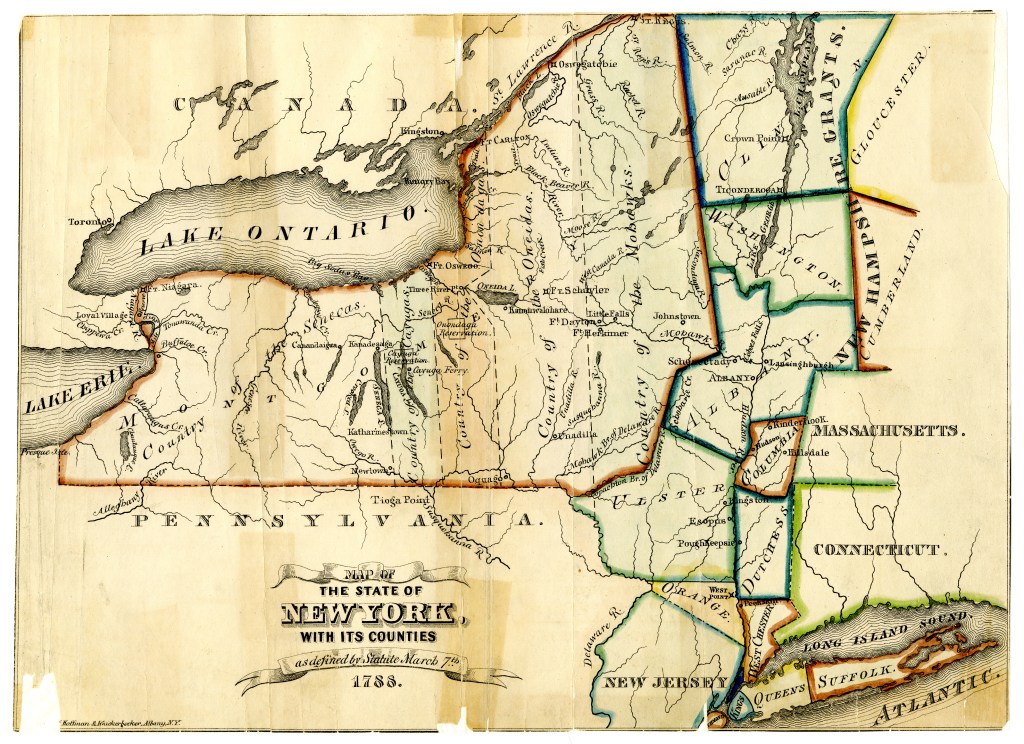
Although this map is from five years after the end of the American War for Independence,
it delineates the ten counties and Native Peoples territories which existed in 1788.
(That is the year that New York became a State).
Creating A Continental Army
Initially in this era, being a soldier was not a full time job for many recruits. That might seem odd today, but back then a soldier would sign up for a term of work and then be relieved when he had to attend to farm duties, or if there were acute and pressing needs for his family.
In the archive of the Library of Congress: “In order to ‘preserve a good army’, one had to be created in the first place. It was a long and difficult road from the Continental Congress’s edict designating the militia around Boston as a Continental Army and creating such an army in fact. Although many colonials had had some military experience in the French and Indian War, most had served in militia units, a far cry from service in a regular European-style army.”
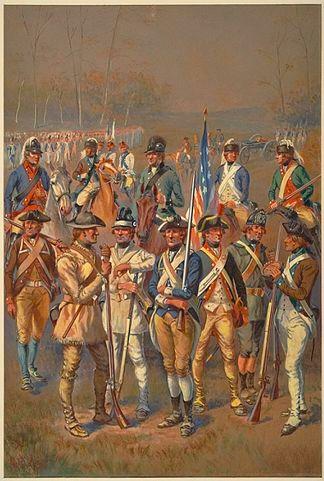
“Prior to 1777, enlistment in the Continental Army was of various durations but generally for a year of service. After 1778, Congress changed the rules and men served for either three years or the duration of the war. In some cases, bounties were paid to entice men to enlist or for men who chose to serve longer. Bounties could consist of additional money, additional clothing, or land west of the Ohio River, where many veterans would settle after the war.
Life in the Continental Army was difficult. It was mundane and monotonous. Generally, when not engaged in combat, soldiers in the Continental Army served three duties: fatigue or manual labor, such as digging vaults (latrines), clearing fields, or erecting fortifications. They also served on guard duty and drilled daily with their musket and in marching formations.”
— The Fighting Man of the Continental Army, Daily Life as a Soldier
Jacobus Van Schoonhoven’s Regiment of Militia,
and the 12th Albany County Militia Regiment
We believe that our 4x Great Grandfather Martinus Devoe was a Patriot, because we can document that part of his history, starting in 1777. Of the Devoes listed below, Isaac Devoe, Jr. is likely his brother, and some of the others are cousins.
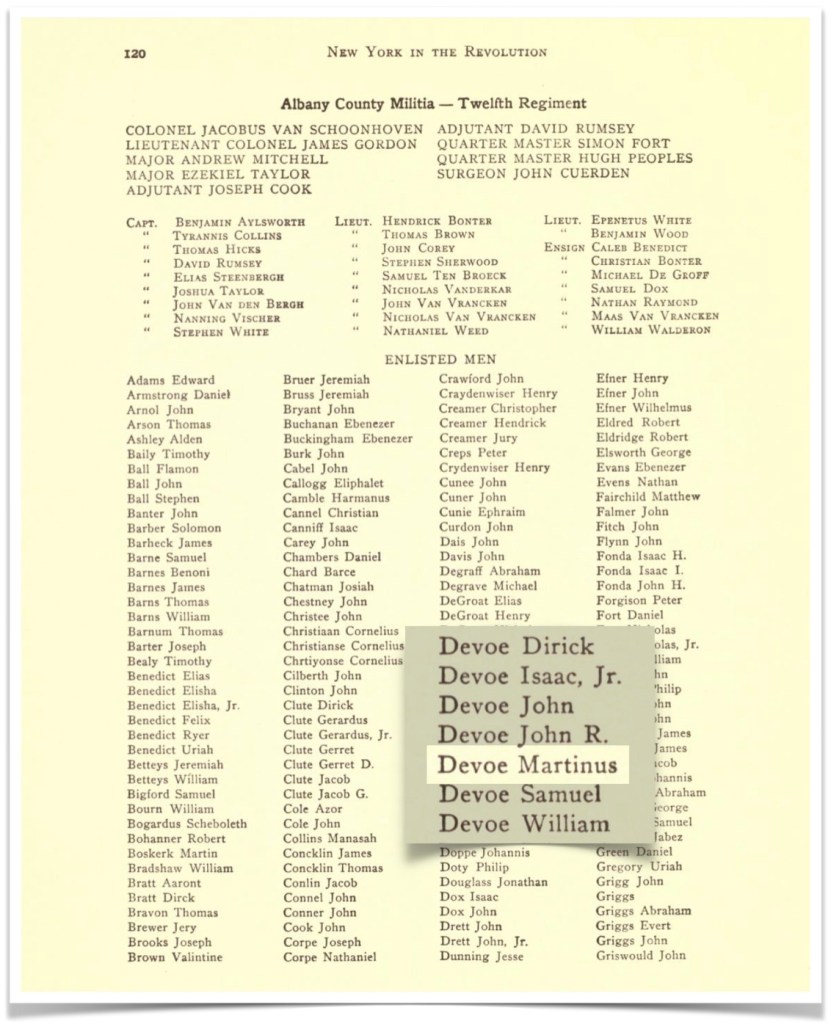
From Wikipedia, “The Van Schoonoven’s Regiment of Militia, also known as the 12th Albany County Militia Regiment, was called up in July 1777 at Halfmoon, New York, to reinforce Gen. Horatio Gates’s Continental Army during the Saratoga Campaign. The regiment served in Brigadier General Abraham Ten Broeck’s brigade.” The Saratoga Campaign was a resounding success for the Patriots in the war. (See The Saratoga Campaigns below).
When a young person is taught about the advent of the American Revolutionary War, the events are typically described almost as a level of mythos, (a body of interconnected myths or stories, especially those belonging to a particular religious or cultural tradition.) The midnight ride of Paul Revere, the Boston Tea Party, Patrick Henry’s Give Me liberty, or give me death! — Americans are taught about the battles of Lexington and Concord, since they are the initial (1775) incidents… but the fact is, New York State was the scene of many terrible, epic battles. These events greatly affected our family. (3)
Pressed From All Sides: New York State in the Revolution
When the invasion of New York City was imminent, George Washington, as Commander of the Continental Army, wanted to burn The City to the ground, rather than allow that to happen. Congress disagreed and let it be invaded. In August 1776, British forces attacked Long Island in southern New York and within days, took over control of Manhattan Island for the duration of the war, (1776 to 1783). Due to the fact that much property was owned there by British occupants (Tories) and Loyalist sympathizers, Manhattan was never directly bombed by the British navy.

Note: Observe how Lake Champlain leads directly to Albany, New York as the Sauthier / Potter map (from above) indicates. (Image courtesy of wikipedia.com).
Written below are very brief notes about a few of the nearby battles.
The Saratoga Campaign
North of New York City, as the Hudson River moved north toward Lake Champlain, our ancestors were living in the area of Albany and Halfmoon. (Albany was just south of the area where the Battle of Saratoga took place, and Half Moon was slightly west). The Saratoga Campaign, which was actually two major battles in that area, was a complicated situation. Pressed from the north by the British forces from Quebec, who were moving south along Lake Champlain, and pressed from the south by the British forces around Manhattan who were moving north along the Hudson River, our ancestors were caught right in the middle.
Ultimately, the Patriots prevailed in the Saratoga Campaign and several important things resulted for the American Cause. The British learned that ‘the Rebels’ could be fierce fighters even with the haphazard state of the Continental Army at that time. In addition, the country of France decided to support the Americans (likely because they despised the British and hoped to make money and ruin England at the same time).
The Battle of Oriskany
From Wikipedia, “The Battle of Oriskany was a significant engagement of the Saratoga campaign of the American Revolutionary War, and one of the bloodiest battles in the conflict between Patriot forces and those loyal to Great Britain”. It took place in the Mohawk Valley on the Mohawk River which joins the Hudson River just above Albany. (This would be near the area of Halfmoon).

(Image courtesy of the public library of Utica, New York).
“The battle also marked the beginning of a war among the Iroquois, as Oneida warriors allied with the Patriot cause, as did the Tuscarora. The Mohawk, Seneca, Cayuga and Onondaga allied with the British. Each tribe was highly decentralized, and there were internal divisions among bands of the Oneida, some of whom became allies of the British. The battle location is known in Iroquois oral histories ‘A Place of Great Sadness. ’ ”
Wikipedia — The Battle of Oriskany

The Battle of Klock’s Field
Our 4x Great Grandfather Martinus Devoe, could have participated in The Battle of Klock’s Field which occurred in 1780 on the north side of the Mohawk River. (It is likely that other members of his family did). Some regiments from Albany County were called up to fight, but we cannot verify conclusively whether-or-not he was there, because very soon after this battle, he and his cousin William were kidnapped by the British. (This would also be near Halfmoon). (4)
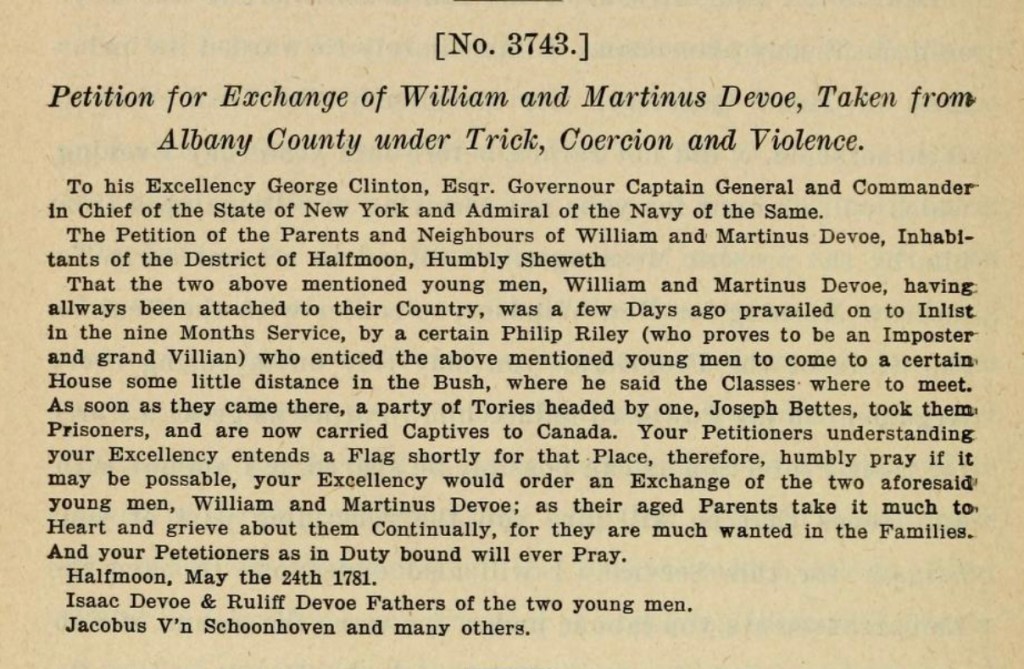
1777-1795, 1801-1804… This is the key document that helped us trace what happened to Martinus Devoe in Canada during a portion of the Revolutionary War.
Taken From Albany County Under Trick, Coercion and Violence
When we discovered the bit of evidence about Martinus Devoe’s life, it was the exciting key catalyst that helped us learn much more about him. When we analyzed it carefully, we learned that:
- It confirmed that Isaac Devoe is indeed his father
- Isaac Devoe’s brother Ruliff (Roelof), is the father of William Devoe
- Martinus and William are therefore cousins
- Martinus and William align with The Patriots
- Joseph Bettes (Bettys) is their kidnaper
- This petition was filed with George Clinton, Governor of the Province of New York
- It was either filed with, or recorded on the date: May 14, 1781
- The leader of their Albany regiment, Jacobus Van Schoonhoven (who was retired at this time), signed the petition along with “many others”
The Devoe families of Martinus and William were hopeful for a prisoner “exchange”, but this did not happen. Unbeknownst to them at the time, this type of complicated arrangement was only (and rarely) done for members of the Continental Army who were officers. Martinus and William never rose above the rank of Private. Additionally, The British were reluctant to recognize prisoner exchanges because that would have meant that they recognized The American Rebels as a sovereign state.
Observation: Martinus had indeed gone to Canada, not as someone who chose to be there, but as a kidnaping victim. We realized that this document confirmed what our mother and grandmother certainly did not know — that this part of the story was new information. They thought that Martinus’s son, Peter M. Devoe, had gone to Canada, and they likely didn’t seem to even know who Martinus was.
We had always wondered what the “M” stood for in Peter M. Devoe’s name, and now we think it possibly could have stood for Martinus, or Martin. It now made sense that over the generations as people shared stories, any mention of Canada just automatically came to mean that that person was a Loyalist “traitor”. Now we understand that perhaps Marguerite and Lulu had some familial self-imposed shame with this matter.

Joseph Bettys, Professional Scoundrel
The man who had arranged for the kidnapping to happen was one Joseph Bettys. A local man from Albany County known as “a renowned kidnapper of patriots in upstate New York with St. Johns, Canada as his base”. (McBurney, see footnotes) In writing about him, Wikipedia states: “He joined the Patriot forces and was made a Sergeant. He was said to be courageous, but intolerant of military discipline, for which he was demoted. In the summer of 1776 he was again promoted, and transferred to the fleet on Lake Champlain commanded by Benedict Arnold.

in the town of Ballston, New York, 1782, United States Magazine, 1857, p. 569.
On October 11, 1776 he distinguished himself in the Battle of Valcour Island, but was captured by the British and taken as a prisoner to Canada. In 1777, during his captivity, he changed sides, joining the British forces as an ensign. He served as a spy and messenger for the British; at one point he was captured, but was freed due to influence of family and friends. He rejoined British service and began recruiting soldiers among the population of Saratoga County[at that time still Albany County], raiding, burning farms and taking captives or killing Patriots”.
Observation: Joseph Bettys may have indeed “recruited” some people to the Loyalist side, but those words sound to us more like a euphemism for forced servitude.
In 1782, Bettys was captured and sent to Albany, where that year on the orders of General George Washington, he was tried and executed by hanging. Actually — after the noose was around his neck, he jumped down and died from the choking while falling. (We wonder if they kicked him when he was down).

Anchored In The East River New York During The Revolutionary War
Wood Engraving American 1838.
The British Prison Ships
It was not that uncommon for soldiers, and especially for sailors, to be kidnapped and forced to serve for the opposing side. The worst possible fate that could befall someone in that situation would be that they were classified as a traitor to Great Britain, and be sent to rot in one of the many prison ships which were located in New York harbor… Wikipedia confirms the cruelty shown The patriots: “King George III of Great Britain had declared American forces traitors in 1775, which denied them prisoner-of-war status. However, British strategy in the early conflict included [the] pursuit of a negotiated settlement, and so officials declined to try or hang them, the usual procedure for treason, to avoid unnecessarily risking any public sympathy the British might still enjoy.”
History.com writes, “Most of the young Americans knew what imprisonment would mean. Colonial newspapers had reported on the horrific conditions and brutal treatment aboard the prison ships from the beginning…” And from the George Washington Presidential Library: “Though estimates vary, between eight and eleven thousand American prisoners (or perhaps higher) died in British custody in New York. These deaths were not caused by a deliberate policy, but rather through poor or indifferent planning and care”. [Read: cruelty, disease, pestilence, and indifference] (5)
Following the Breadcrumbs That Led Us to Canada
Early on, we first came across a record of a Martin Dafoe [Martinus Devoe?] in an ancestry.com file. His was a name at that point which we had never heard of, and the file was a puzzling record stating “War Office Records: Monthly Return of Loyalists coming in from the Colonies to Lower Canada, from Halfmoon”. Much later we then came then across this record:

We learned that in Canada, the name Devoe was frequently spelled as Dafoe in record-keeping, and we uncovered a name for something called the King’s Rangers. Suddenly, the bread crumbs that we had already found were starting to point us into a direction where everything was new. Long story short: many months later we eventually came upon a resource which pulled everything together: A Short Service History and Master Roll of James Rogers’ 2nd Battalion, King’s Rangers, by Gavin K. Watt.
From Watt’s book: “Some of the best known Loyalist names that have ties to the King’s Rangers include Bell, Brisco, Dafoe, Kemp, Pringles, and of course Rogers.” We found our ancestor (!) listed there:
Dafoe, Martin
Alternate spellings of surname: Dave, Devore, Dave, Devon
Alternate spellings of given name: Martin, Martinne, Martain
Rank: Private
Enlistment date: November 18, 1780
Company: Captain Azariah Pritchard’s
Age: 29 [This is incorrect — he was closer to 26.]
Height: 5 feet, 6 inches
Place from and trade: Albany City, New York, and farmer
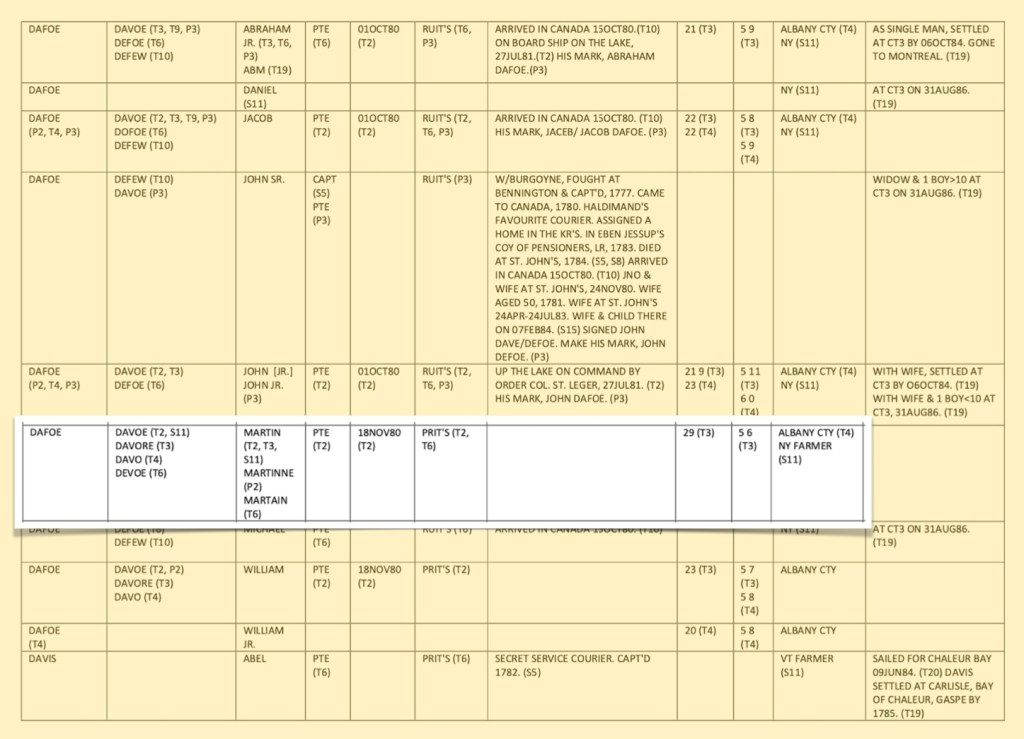
Something was puzzling about the entry. His arrival date in Canada was listed as November 18, 1780? Earlier we had assumed that if he was in Canada the arrival date should correspond to something closer to the date noted on the Petition to Governor Clinton of New York. That date was May 15, 1781, fully six months later… what was going on? It now makes sense that the families of Martinus and William, were probably beside themselves with worries. It would have required much time and difficult logistics for the petition to be drafted, to gather multiple signatures, to present it to the Governor, etc. All of this while the War was raging all around them — that is why we believe that the 1781 date is likely the recording date.
Some of the other names we saw on this roster confirmed other data we had previously collected. The William Devoe who arrived on “18 Nov 80” was likely his cousin William, a fellow kidnap victim. Observe the names of the brothers Abraham and Jacob Dafoe, sons of John Ernst Devoe from a different Devoe line. The arrival dates for Abraham and Jacob are the same “01 Oct 80”, having arrived about six weeks earlier. There is a notation that Abraham arrived via boat. There is another record of Jacob Defoe dated 1782- 1783, recorded near the end of the War (see footnotes). John Ernst DeVoe and his sons were Loyalist during the Revolutionary War. After the war the family remained in Canada. We even came across one of Abraham’s payroll sheets. Conversely, if Martinus and William were ever paid for their time in the KIng’s Rangers, those records have not been found. (6)

Image courtesy of A Short Service History and Master Roll of James Rogers’ 2nd Battalion,
King’s Rangers, by Gavin K. Watt, page 18.
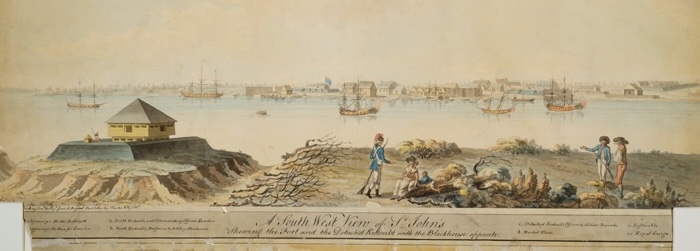
Fort St. Jean, now known as Fort St. John
The operational center for the King’s Rangers was Fort St. Jean, Quebec. Martinus and William were fortunate enough* that they ended up at Fort St. Jean — which was just across the border from New York Province in Quebec. (See map at the top of this chapter). In fact, this fort was exactly 207 miles directly north from Albany City, New York, where they were likely ensconced until taken to Canada.
*If they had been P.O.W.s, they could have been sent to the death ships in New York Harbor. Since they were kidnapped and forcibly recruited, they were probably assigned with tasks like cleaning horse stables, and digging latrines, etc. We conjecture that they kept their heads down and decided to lay low. We observed on The Old United Empire Loyalists List from above, that William Devoe had deserted, but we do not know when this happened.
There were those in the fledgling United States who believed that it was their right to annex portions of Canada as new territories.
The Siege of Fort St. Jean
From the Siege of Fort St. Jean… article in the Revolutionary War Journal — “By late summer, 1775, the American Second Congress was determined to bring Canada, the British 14th colony in America, into the fold of rebellion along with the other thirteen colonies. Two small American armies would advance into Canada. The larger, commanded first by Major General Phillip Schuyler and later by General Richard Montgomery, would push up Lake Champlain and the Richelieu River into Canada. They would quickly capture Montreal. Then head northeast, down the St. Lawrence River to join the other American force approaching Quebec through Maine, led by Colonel Benedict Arnold. Together, the two factions would claim the crown of the Canadian colony; Quebec City’s Citadel”.
Ultimately, even though the Americans had prevailed at first, many of their soldiers grew sick over the winter. When reinforcements from Great Britain arrived six months later, the Americans withdrew and returned to the Colonies. (7)

(Image courtesy of Bibliothèque et Archives Canada).
The King’s Rangers, also known as The King’s American Rangers
There were many companies on both sides of the war which used the word Rangers in their name. Our research has shown that our ancestors were part of the King’s Rangers, which is sometimes also referred to as The King’s American Rangers.
“In September 1779, the Second Battalion of King’s Rangers were garrisoned for a time at Fort St. Johns on the Richelieu River (now Saint Jean, Quebec). In October of 1780, a detachment of the Second Battalion took part in raids by Major Christopher Carleton into the Champlain Valley and the attacks on Fort Anne and Fort George NY. When rebels surrendered at Fort Anne, the King’s Rangers took advantage of an easy opportunity: they recruited 16 of the enemy prisoners into their own relatively small ranks.
There was, however, another side of the war. The Second Battalion was involved in the business of spying for the British. One of the more interesting missions was when James Breakenridge, Jr. of the King’s Rangers accompanied another loyalist carrying a secret proposal from Vermont’s Governor Thomas Chittendon and Ethan Allen regarding negotiations for Vermont to become a Canadian province. [In other words, similar to the earlier ambitions of the American Second Congress regarding Canada, both sides wanted more territory]. Known as The Vermont Negotiations, Major James Rogers was reportedly heavily involved in correspondence and face to face meetings with Allen and his associates”.
— Excerpted from History of the King’s Rangers, via James Breakenridge’s Company of the King’s Rangers
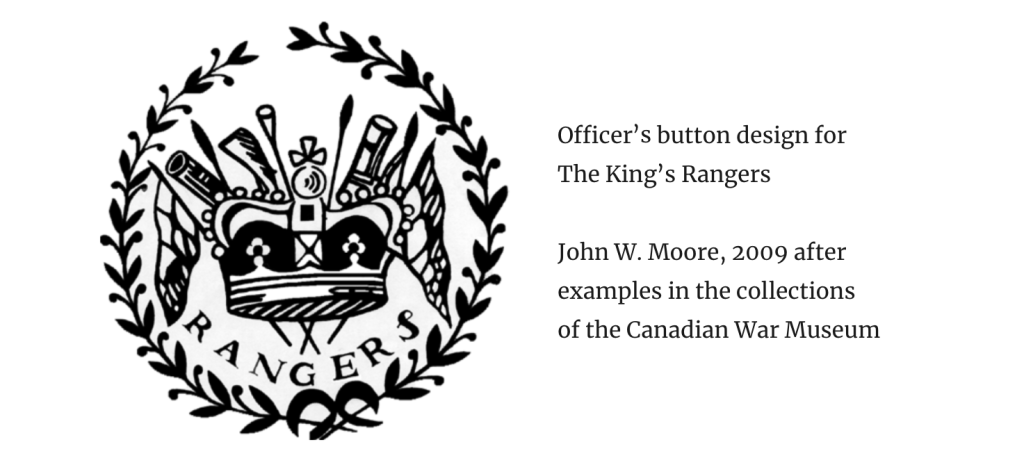
From Wikipedia, “Despite recruitment issues being faced by the Rangers, the second battalion was active in scouting and recruiting along the frontiers of New York, Lake Champlain and the area that was to later become Vermont. They also engaged in the taking of Patriot prisoners of war… Due to the relatively small size of the Rangers, [they were] restricted [in] their operational capabilities to conducting reconnaissance for other corps, constructing fortifications, executing general garrison duties, assisting refugees in Quebec, aiding the escape of Loyalist families, and guarding prisoners of war”. (8)

Artwork by artist Don Troiani.
The Winding Down of The War, and The Treaty of Paris
The American War for Independence formally ended with the signing of the Treaty of Paris in 1783. From the National Archives: “The American War for Independence (1775-1783) was actually a world conflict, involving not only the United States and Great Britain, but also France, Spain, and the Netherlands. The peace process brought a nascent United States into the arena of international diplomacy, playing against the largest and most established powers on earth”.

Perfected Treaties, 1778 – 1945, General Records of the United States Government,
Record Group 11, National Archives Building, Washington, DC.
“The three American negotiators – John Adams, Benjamin Franklin, and John Jay – proved themselves ready for the world stage, achieving many of the objectives sought by the new United States. Two crucial provisions of the treaty were British recognition of U.S. independence and the delineation of boundaries that would allow for American western expansion”.
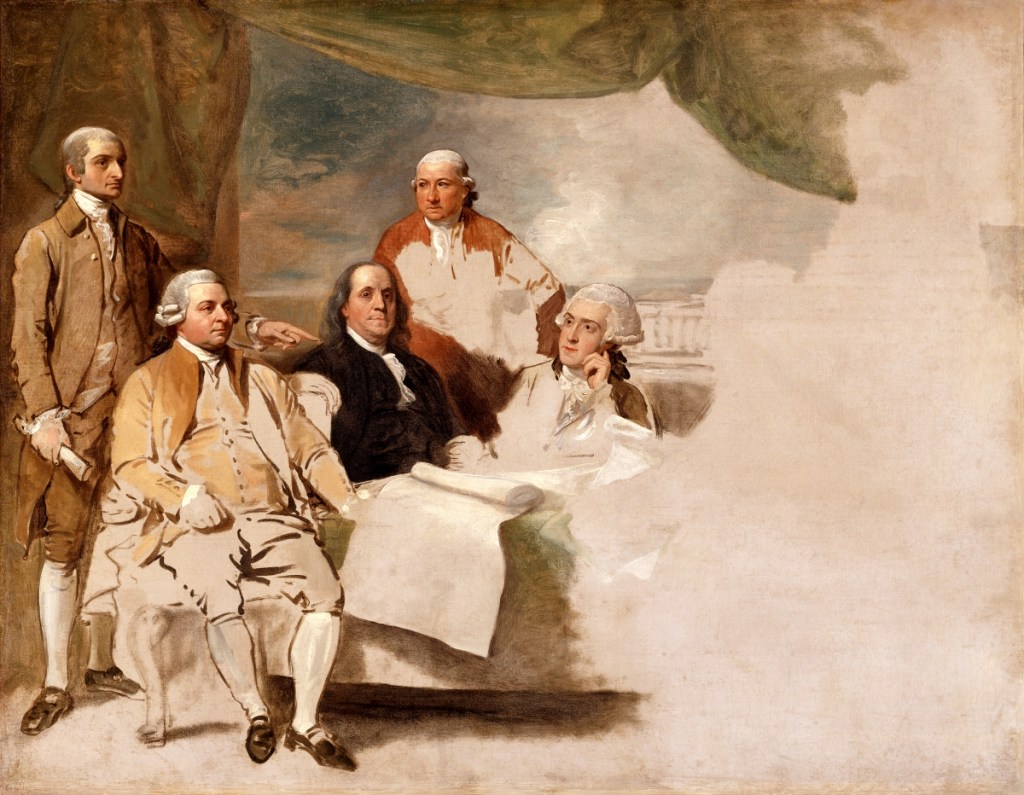
London, England, by Benjamin West
(oil on canvas, unfinished sketch), Winterthur Museum, Winterthur, Delaware
From left to right: John Jay, John Adams, Benjamin Franklin, Henry Laurens, and William Temple Franklin. The British commissioners refused to pose, and the picture was never finished.
As a perfect bookend to where our search for Martinus Devoe began, we came across the file that is the Canadian record for when he returned to New York State. “Martin Dafoe” returned from Fort St. Jean in Canada sometime in 1782-1783. We conjecture that is was likely 1783 after the Treaty of Paris had been signed. The record reads: Memorandum — of the names of the whole 245 Persons of the King’s Rangers — collected from the Muster Rolls and paylists of Maj. Rogers’s, Capn. Pritchards and Capn. Ruiters Co. in the years 1782-83″
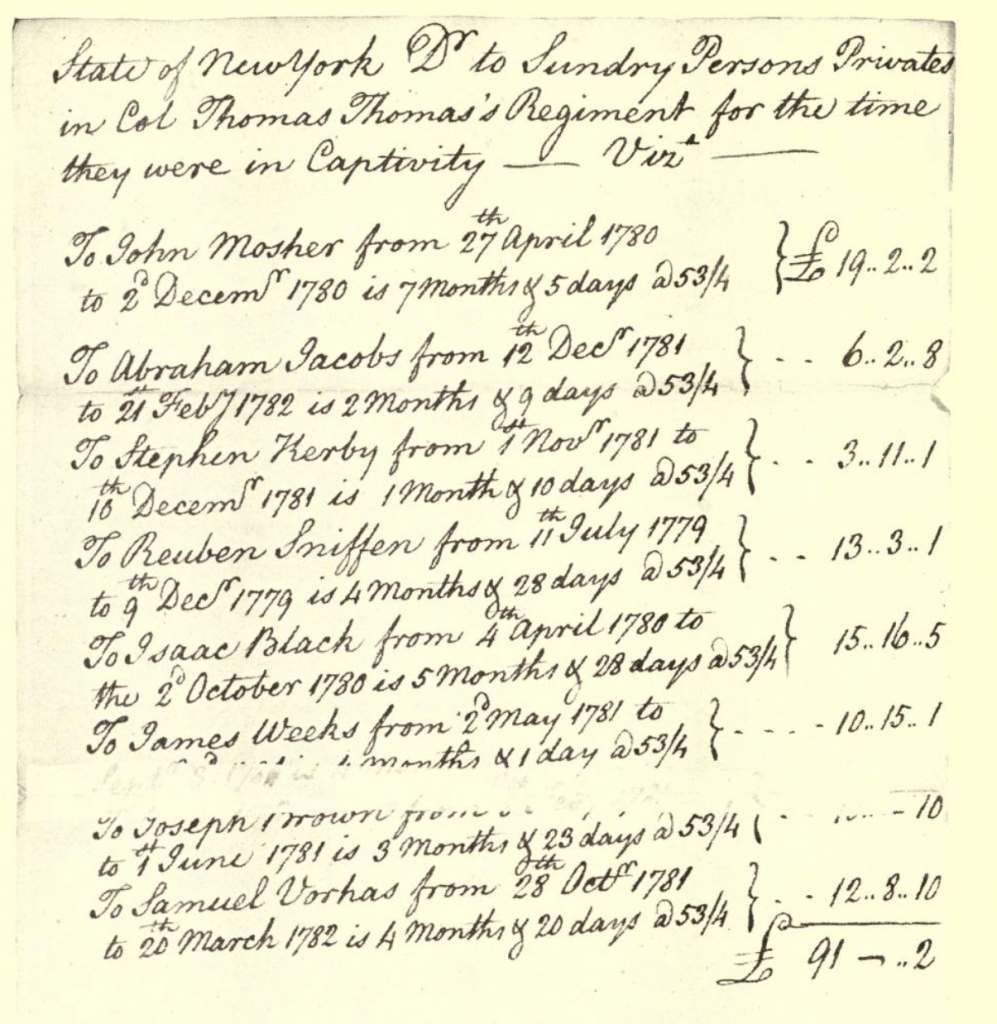
The above document is a record of payment found in The George Washington Presidential Library at Mount Vernon. It was payment given to troops that were held as prisoners-of-war in Virginia. We have not been able to locate a similar payment record for Martinus which records him as a prisoner-of-war. This confirms our belief that, unlike Abraham Devoe, he may not have been paid due to his forced servitude.
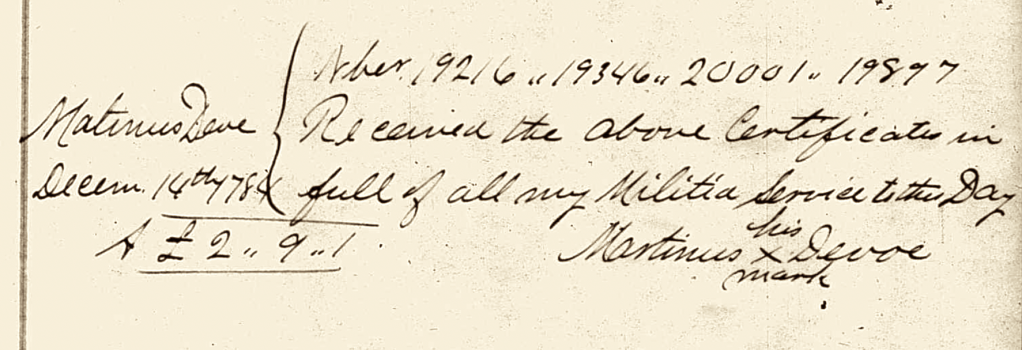
However, our 4x Great Grandfather Martinus was indeed paid for his service in the Continental Army. On the above record, the four sets of numbers correspond to certificates that all soldiers and sailors were given. It is interesting and a bit ironic to see that the records are in (£) British Pound Stirling . English Sterling was the money standard until after the Revolution. Money was scarce, with only two to three million pounds in circulation. (Hammersley) The newly formed USA did not have much cash money on hand, but it made promises, i.e. some soldiers received land in newly opening areas such as the Ohio Valley to the west.
Our next chapter will discuss Martinus’s life in Halfmoon, New York, his marriage, and his rather large brood of children, from which, our 3x Great Grandfather Peter M. Devoe emerges. (9)

The work appeared in Harper’s Monthly in December 1901.
Following are the footnotes for the Primary Source Materials,
Notes, and Observations
Preface — Sometimes Family Stories Are Just Plain Wrong
(1) — one record
“a riddle, wrapped in a mystery, inside an enigma”
https://idioms.thefreedictionary.com/a+riddle%2C+wrapped+in+a+mystery%2C+inside+an+enigma
The Patriots, The Loyalists, and The Fence-Sitters
(2) — nine records
Library of Congress
A Map of the Provinces of New-York and New-Yersey, with a part of Pennsylvania and the Province of Quebec
by Sauthier, Claude Joseph and Lotter, Matthäus Albrecht, 1741-1810
Published in Augsburg, 1777.
https://www.loc.gov/item/74692644
Note: For the map image.
The American Battlefield Trust
American Revolution Facts
https://www.battlefields.org/learn/articles/american-revolution-faqs
History.com
How Benjamin Franklin’s Viral Political Cartoon United the 13 Colonies
https://www.history.com/news/ben-franklin-join-or-die-cartoon-french-indian-war
Note: For the drawing.
Loyalism In New York During The American Revolution
by Alexander Clarence Flick, Ph.D.
https://archives.gnb.ca/exhibits/forthavoc/html/NYLoyalism.aspx?culture=en-CA
Loyalists Fighting in the American Revolution
https://en.wikipedia.org/wiki/Loyalists_fighting_in_the_American_Revolution
Loyalist (American Revolution)
https://en.wikipedia.org/wiki/Loyalist_(American_Revolution)
The Wheat Field, by Currier & Ives.
Reproduced from the article, New York: The Original Breadbasket of America, by Museum of the City of New York
https://www.mcny.org/story/new-york-original-breadbasket-america
Note: For the farming image.
Loyalists vs Patriots: America’s Revolutionary Divide
https://historyincharts.com/patriot-and-loyalist-support-for-the-american-revolution/
New York State Archives Partnership Trust
Map of the State of New York, 1788
1788 Map of New York State showing native lands and ten counties, printed by Hoffman & Knickerbocker, Albany, N.Y.
https://www.nysarchivestrust.org/education/consider-source/browse-primary-source-documents/indigenous-history/map-state-new-york-1788
Note: For the map image.
Jacobus Van Schoonhoven’s Regiment of Militia,
and the 12th Albany County Militia Regiment
(3) — six records
Library of Congress
Creating a Continental Army
https://www.loc.gov/classroom-materials/united-states-history-primary-source-timeline/american-revolution-1763-1783/creating-a-continental-army/
The American Battlefield Trust
The Fighting Man of the Continental Army, Daily Life as a Soldier
https://www.battlefields.org/learn/articles/fighting-man-continental-army
Van Schoonhoven’s Regiment of Militia
https://en.wikipedia.org/wiki/Van_Schoonhoven%27s_Regiment_of_Militia
Jacobus Van Schoonhoven
https://en.wikipedia.org/wiki/Jacobus_Van_Schoonhoven

New York In The Revolution as Colony and State
A Compilation of Documents and Records From the Office Of the State Comptroller
https://archive.org/details/newyorkrevolution01statrich/page/120/mode/2up?view=theater
Book page: 120, Digital page: 120/534
Pressed From All Sides: New York State in the Revolution
(4) — five records
The George Washington Presidential Library at Mount Vernon
British Occupation of New York City
https://www.mountvernon.org/library/digitalhistory/digital-encyclopedia/article/british-occupation-of-new-york-city/#:~:text=Five%20days%20later%2C%20an%20expeditionary,the%20City%20of%20New%20York.
Battles of Saratoga
https://en.wikipedia.org/wiki/Battles_of_Saratoga
Saratoga Campaign
https://en.wikipedia.org/wiki/Saratoga_campaign
Battle of Oriskany
https://en.wikipedia.org/wiki/Battle_of_Oriskany
Battle of Klock’s Field
https://en.wikipedia.org/wiki/Battle_of_Klock’s_Field
Taken From Albany County Under Trick, Coercion and Violence
(5) — nine records
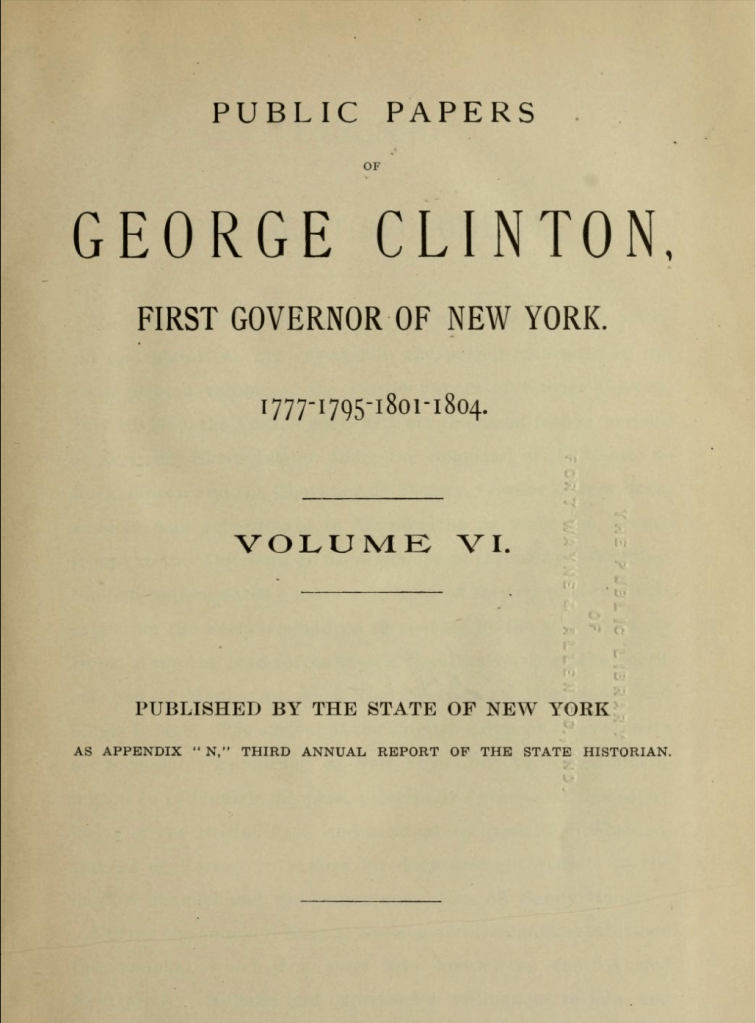
Petition for Exchange of William and Martinus Devoe, Taken from Albany County under Trick, Coercion and Violence
from the Public Papers of George Clinton,
First Governor of New York, 1777-1795, 1801-1804 …
by New York (State). Governor (1777-1795 : Clinton)
https://archive.org/details/publicpapersofge06innewy/page/906/mode/2up
Book page: 906, Digital page: 906/918
Early New Netherlands Settlers
David <?> Du Four, (Rn=25344)
https://freepages.rootsweb.com/~rclarke/genealogy/page1/dufour.htm
Note: Information about Isaac, Roelof, and William Devoe.
George Clinton
by Ezra Ames, circa 1814
https://en.wikipedia.org/wiki/File:George_Clinton_by_Ezra_Ames_(full_portrait).jpg
Note: For his portrait.
Journal of The American Revolution
What do you think was the strangest or most unconventional moment, battle or event of the Revolution?
https://allthingsliberty.com/2017/01/weirdest-moment/
“I would have to pick the antics of Joseph Bettys, a Tory who became a renowned kidnapper of patriots in upstate New York with St. Johns, Canada as his base. In the Great Kidnapping Caper of 1781, the British Secret Service at St. Johns planned for eight parties of kidnappers to attempt abducting upstate New York patriots at the same time so as to keep the element of surprise. The leader of one of the bands, Joseph Bettys, was charged with kidnapping a Patriot in Ballstown, New York. Bettys had a crush on a local young woman. Amazingly, he left his band in the lurch and went off to persuade her to run off with him, which she did. Her outraged father, even though he was a Tory, went to the local Patriot committee, called the Albany County Commissioners for Detecting and Defeating Conspiracies. This alerted Patriots the entire kidnapping plot. None of them succeeded, but Bettys did successfully bring his girlfriend to Canada. Later, after succeeding in kidnapping some Patriots, Bettys was captured and hanged”. –Christian M. McBurney
The Capture of Joe Bettys
United States Magazine, 1857, p. 569.
https://en.wikipedia.org/wiki/Joseph_Bettys#/media/File:The_Capture_of_Joe_Bettys.png
Note: For the Bettys illustration.
Prisoners of War in the American Revolutionary War
https://en.wikipedia.org/wiki/Prisoners_of_war_in_the_American_Revolutionary_War
History.com
The Appalling Way the British Tried to Recruit Americans Away from Revolt
https://www.history.com/news/british-prison-ships-american-revolution-hms-jersey
The George Washington Presidential Library at Mount Vernon
Prisoners of War
https://www.mountvernon.org/library/digitalhistory/digital-encyclopedia/article/prisoners-of-war/
Following the Breadcrumbs That Led Us to Canada
(6) — five records
Martin Devoe
in the Canadian Immigrant Records, Part One
War Office Records: Monthly Return of Loyalists coming in from the Colonies to Lower Canada, from Half Moon
https://www.ancestry.com/discoveryui-content/view/118848:3795?tid=&pid=&queryId=35bfa0c6-6799-4cd1-8778-623c4e66d6b6&_phsrc=Fpd49&_phstart=successSource
National Archives of Canada:
Microfilm Reel No. B-2867 (MG 11 W.O. 28/10), page 118
The Old United Empire Loyalists List (Supplementary List, Appendix B)
https://www.ancestry.com/imageviewer/collections/48267/images/OldEmpireLoyalists-006200-293?treeid=&personid=&queryId=f6d5dc2a-b2db-4138-8a89-4648724a3b67&usePUB=true&_phsrc=Rlk7&_phstart=successSource&pId=273793&rcstate=OldEmpireLoyalists-006200-293:180,1134,275,1159;279,1135,411,1161;180,1164,274,1191;290,1453,429,1480;180,1071,275,1097;180,1103,275,1129
Book page: 293, Digital page: 297/339

A Short Service History and Master Roll of James Rogers’ 2nd Battalion,
King’s Rangers
By Gavin K. Watt
Published by Global Heritage Press, Milton, 2015
ISBN 978-1-77240-029-8
https://globalgenealogy.com/countries/canada/loyalist/resources/101044.htm
Note: Digital edition, .pdf download for purchase. Page 50/85 is the roster page which contains Martinus Devoe’s information.
The five listings below are the specific information for each transcription from the above reference, for the roster records for Martinus Devoe:
(P2)
Return of a Detachment of the King’s Rangers Commanded by Major James Rogers, in Canada, for which he is entitled to the King’s Bounty, at five Dollars pr. Man. St. John’s, 10th January 1782. AO, HO, AddMss21827, 296-97.
(S11)
E. Keith Fitzgerald, Loyalist Lists: Over 2000 Loyalist names and families from the Haldimand papers (Toronto: Ontario Genealogical Society, 1984) transcribed from the LAC transcript, MG21, B166, ff154-56. (AddMss21826) circa 1783.
(T2)
Muster Roll of a Detachment (three companies) of the King’s Rangers Commanded by Major James Rogers, St. John’s 27th July 1781. Horst Dresler research. LAC, W028/4/96-98.
(T3)
A Return of the Names, Cuntry [sic], Age, size and tim [sic] of service of a Detachment of the Kings rangers quartered at St. Johns — 1st January 1782. Braisted research. LAC, W028/10-142-43.
(T6)
Nominal Rolls of the King’s Rangers, 27th January, 1784. LAC, HP, B160 (AddMss21820) 153-56. Transcribed in H.M., Rogers’ Rangers, A History (Toronto: self published, 1953) 187-202.
Jacob Dafoe
in the Canadian Immigrant Records, Part Two
https://www.ancestry.com/discoveryui-content/view/1648:3798?ssrc=pt&tid=14402677&pid=427511048
Early New Netherlands Settlers
David <?> Du Four, (Rn=25344)
https://freepages.rootsweb.com/~rclarke/genealogy/page1/dufour.htm
Note: Reference for information about the various DeVoe’s: William, Abraham, and Jacob Devoe.
Fort St. Jean, now known as Fort St. John
(7) — four records
Siege of The Fort Saint-Jean, circa 1775
Watercolor by James Peachey (d. 1797) https://en.wikipedia.org/wiki/Fort_Saint-Jean_(Quebec)#/media/File:FortStJeanPeachey1790.jpg
Note: For the fort image.
Siege of Fort St. Jean, September 17 – November 3, 1775
https://revolutionarywarjournal.com/siege-of-fort-st-jean-september-17-november-3-1775/
Fort Saint-Jean (Quebec)
https://en.wikipedia.org/wiki/Fort_Saint-Jean_(Quebec)
[Plan of Fort St. Jean in Quebec, Canada, circa 1775]
Plan des redoutes érigées à Saint-Jean lors de l’été 1775. Bibliothèque et Archives Canada, NMC-2771
https://en.wikipedia.org/wiki/Siege_of_Fort_St._Jean#/media/File:Redoutes_Sud_et_Nord_1775.jpg
The King’s Rangers, also known as The King’s American Rangers
(8) — three records
James Breakenridge’s Company of the King’s Rangers
History of the King’s Rangers
http://www.kingsrangers.org/history.php
Pinterest, King’s Royal Regiment of New York
by Don Troiani
https://fi.pinterest.com/pin/483362972507218407/
Note: For the King’s Ranger’s uniforms.
The Winding Down Of The War, and The Treaty of Paris
(9) — nine records
National Archives, Milestone Documents
Treaty of Paris (1783)
https://www.archives.gov/milestone-documents/treaty-of-paris
American Commissioners of the Preliminary Peace Agreement
with Great Britain, 1783-1784, London, England, by Benjamin West
(oil on canvas, unfinished sketch), Winterthur Museum, Winterthur, Delaware
From left to right: John Jay, John Adams, Benjamin Franklin, Henry Laurens, and William Temple Franklin.
https://en.wikipedia.org/wiki/Treaty_of_Paris_(1783)#/media/File:Treaty_of_Paris_by_Benjamin_West_1783.jpg
Note: The British commissioners refused to pose, and the picture was never finished.
Martin Dafoe
in the Canadian Immigrant Records, Part Two
https://www.ancestry.com/discoveryui-content/view/1650:3798?tid=&pid=&queryId=76c7720d-1bb8-48a9-af88-2ad63bd07ae4&_phsrc=Fpd55&_phstart=successSource
Transcribed from original documents held in the collection of the
National Archives of Canada [Ottawa]: RG 19, vol. 4447, file 36.
Prisoners of War in the American Revolutionary War
https://en.wikipedia.org/wiki/Prisoners_of_war_in_the_American_Revolutionary_War
The George Washington Presidential Library at Mount Vernon
Prisoners of War
https://www.mountvernon.org/library/digitalhistory/digital-encyclopedia/article/prisoners-of-war/
New York. Military Records 1775–1783
https://www.familysearch.org/ark:/61903/3:1:3QS7-89WB-8Z7H?view=index&action=view
Digital page: 125/691
and
Martinus Deve
in the U.S., Compiled Revolutionary War Military Service Records, 1775-1783
New York > Van Schoonhoven´s Regiment (Albany County), Militia > A – Z
https://www.ancestry.com/search/collections/1309/records/218144?tid=&pid=&queryId=47f4707e-798a-418b-83ac-3a4bb9d45038&_phsrc=dxF1&_phstart=successSource
Digital page: 380-381/1593
The History of Waterford, New York
by Sydney Ernest Hammersley, 1957
https://archive.org/details/historyofwaterfo00hamm/page/n5/mode/2up
“Tory Refugees on the Way to Canada” by Howard Pyle.
https://en.wikipedia.org/wiki/Loyalist_(American_Revolution)#/media/File:Tory_Refugees_by_Howard_Pyle.jpg
Note 1: For the illustration.
Note 2: The work appeared in Harper’s Monthly in December 1901.

 Our Ancestors, Our Narratives
.jpg)

#/media/File:FortStJeanPeachey1790.jpg)

#/media/File:Treaty_of_Paris_by_Benjamin_West_1783.jpg)
#/media/File:Tory_Refugees_by_Howard_Pyle.jpg)