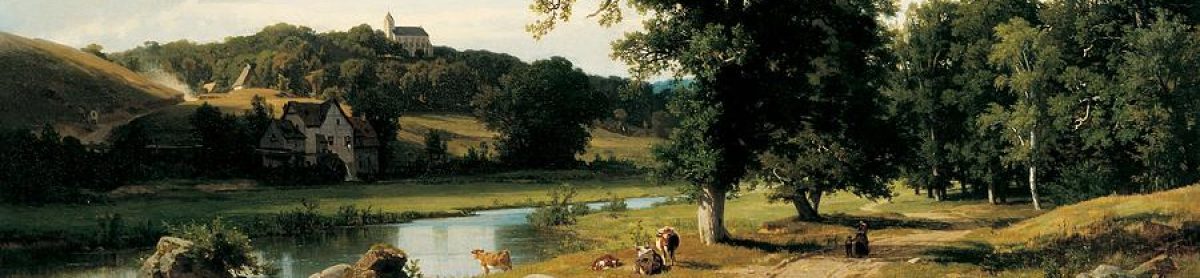
This is Chapter Three of eleven. When generational family names repeat, we made the decision long ago, that the best way to keep people sorted was to number them in this circumstance. Accordingly, please meet 7x Great Grandfather John Devoor (1), and his son, 6x Great Grandfather John Devoe (2). The family surname in these generations has evolved from Du Four to Devoor to DeVoe.

(Image courtesy of the New Amsterdam History Center).
David Du Four’s Oldest Son, John DeVoor
John DeVoor (1), born about 1651, Sedan, Provence du Picardie, France — died before April 1724, Bloemendaal, (New York City), British American Colonies, at 73 years of age.
He married first, Jannetje (Van Isselteyn) DeVoor, born about 1656 at Leyden, South Holland, Netherland — died after May 1701 at 45 years of age. They married July 5, 1676, Bloemendaal, (New York City), British American Colonies. They had twelve children, all born in Bloemendaal (New York City), British American Colonies:
- Marritje (DeVoor) Van Der Werken, born 1677, and married Gerrit Van Der Werken
- John DeVoor (2), born May 1680 — died July 27, 1746. He married Catharina (Van Der Werken) DeVoor in 1706. (We are descended from John 2).
- Margrietje (DeVoor) Pier, born November 1681, and married Teunis Pier
- David DeVoor , born 1683, and married Anna (Wakefield) Van Bremen/DeVoor
- Peter DeVoor, born February 1686, and married Annatje (Bisset) DeVoor
- Rachel (DeVoor) Grootvelt, baptized February 23, 1687, and married Hendrik Hendrikszen Grootvelt in 1706
- Arriantje (DeVoor) Vanderbeek/Montayne, born November 1688 and married Conradus Vanderbeek, and Jacob Montayne
- Jannetje (DeVoor) Bisset, baptized February 28, 1690, and married Andrew Bisset in 1712
- Elizabeth (DeVoor) Michielszen, born May 13, 1693, and married Michiel Michielszen
- Teunis DeVoor, born 1696, and married Gertie (Barheyt) DeVoor and Sarah (Van Oblinus) DeVoor
- William DeVoor, born about 1698, and married Charity (Conklin) DeVoor
- Abraham DeVoor, baptized May 11, 1701
After his first wife’s death, he married second, a widow, Marritje (Von Woggelum) Hendrickson/DeVoor. They married March 7, 1705, at the home of her father Pieter Von Woggelum in New York City, New York, British American Colonies. They had no children.

by Archibald Robinson, circa 1798 (Image courtesy of Wikimedia Commons).
Observation: ( Please see the footnotes)
Where John DeVoor (1) died is now a vanished area of Manhattan, New York City: In February 1667, the first land grant was issued for a section of Manhattan, which today is the Upper West Side (and Harlem). The Dutch called the area, Bloemendaal, (Bloomingdale) which translates to ‘Valley of Flowers’ (after Holland’s tulip region), as the area was once a rural home to many farms and forests.
From the History of Harlem book, “John Devoor, [whom we refer to as John 1] born during his father’s sojourn at Sedan, married, in 1676, a Leyden girl, Jannetie, daughter of Jan Willems Van Isselsteyn, otherwise called Tan of Leyden. He bought a farm at [Bloemendaal] Bloomingdale, where he died, leaving a widow, Mary. She was daughter of Capt. Peter Van Woglum, of Albany.
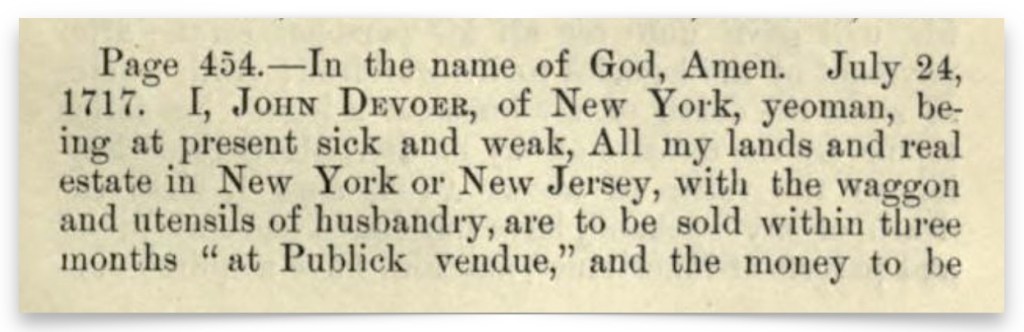
John Devoor (1) left a Will, the content of which is cited in the records of the New York Historical Society, “In the name of God, Amen. July 24, 1717. I, John Devoer, of New York, yeoman [farmer], being at present sick and weak, All my lands and real estate in New York or New Jersey, with the waggon and utensils of husbandry, are to be sold within three months “at Publick vendue,” and the money to be paid into the hands of Johanes Jansen, Esq., and Philip Minthorne, whom I make executors.
I give to my eldest son John [John 2], £3 for his birthright, and after that he shall share with the rest. I direct that my daughter, Rachel Devoer, shall have from my executors one English shilling, wherewith I cut her off and utterly debar her for her undutifulness, from demanding any more. I leave to sons Peter, David, William, Teunis, and Abraham, each a milk cow. To my sons William and Teunis each £7, 10s. To my daughter Ariantie, wife of Jacobus Montanye, one cow. To my daughter, Elizabeth Devoer, my painted cupboard. My executors are to punctually observe all the articles contained in a certain indenture made before my last marriage, between Peter Van Weglum, my wife, and myself.
I leave to my wife Mary one quarter of the winter wheat and rye. I leave all the rest to my children, John, David, William, Teunis, Peter, Abraham, Greetie, wife of Teunis Pier; Araintie, wife of Jacobus Montanye, Jannette, wife of Andrew Bisset, and Elizabeth, and to the children of my daughter Mary, wife of Geritt Roelofsen.”
“Witnesses, Geraldes Comfort, Jan Van Hoorne, Maximus Reolofsen. [sic]
Proved, April 13, 1724.”
Observation: Unfortunately, it’s quite obvious that he had some type of serious disagreement with his daughter Rachel, which he took right up to his grave. (Talk about trying to have the last word!) (1)
The Family From Bloemendaal

The opening image at the top of this page shows a remarkably painted view of Manhattan in 1660, but as cinematic as it looks, the reality of the times are a bit more humble. Around the time that John Devoor (2) was born in 1680, things were much more rustic.
Our ancestor, John Dufour/Devoor/DeVoe (2), born May 1680, Bloemendaal, (New York City), British American Colonies — died July 27, 1746, Halfmoon, Albany County, New York, British American Colonies, at 66 years of age.

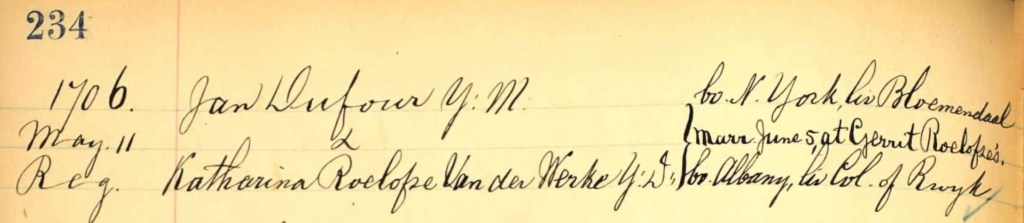
He married Catharina (Van Der Werken) DeVoe, at Albany on June 5, 1706. She was born January 12, 1687 at Albany, British American Colonies — died July 1, 1746, at 59 years of age in Halfmoon, Albany, New York. They were initially buried at “Reformed Dutch Church graveyard” in Albany. (See footnotes).
They had eleven children. All of the children were baptised in the Dutch Reformed Church in Albany, New York, British American Colonies:
- John Devoe (3), born February 1707, and married Fytje (Van Der Werken) DeVoor
- Geertruy Devoe, baptized September 26, 1708, and died young
- Geertruy (Devoe) Doxie, baptized November 5, 1710, and married Peter Doxie in 1736
- Roelof Devoe, baptized April 19, 1713
- Jannetje Devoe, baptized December 25, 1714, and died young
- William Devoe, born September 1716 — married Sara (Van Vorst) DeVoor
- Marritje (Devoe) Van Der Kaar, baptized August 3, 1718, and married Abraham Van Der Kaar
- Isaac Devoe, born December 11, 1720, and married Marritje (Van Olinda) DeVoe, (We are descended from Isaac).
- Jannetje Devoe, baptized January 20, 1723
- [Twin daughters] Catherine (Devoe) Quackenbush, born September 26, 1725, and married Gerrit Quackenbush, February 6, 1750
- Arriantje Devoe, born September 26, 1725

We believe that John DeVoe (2), although he had been living in Bloemendaal, New York City, he relocated to Albany when he married Catharina (Van Der Werken) DeVoe. This is supported by the records that all of his children were baptized at the Dutch Reformed Church in Albany, starting with his oldest son John (3). [Who was born almost exactly nine months after his parents married]. (See footnotes).

At the time, Albany was (essentially) the northernmost outpost on the Hudson River. The area was still very rough, but their timing was fortuitous, because in the coming decades, the location was to develop into a place to prosper and raise a family. After a number of years living in Albany, they moved to the Halfmoon community (sometime between 1720/1724, and 1746 — we don’t know exactly when). From the History of Harlem book by James Riker, “…John [2], eldest son, married, in 1706, Catharine, daughter of Roelof Gerrits Vander Werken, of Half Moon, to which place he removed [we just don’t know exactly when this move was], and, on April 1, 1724, sold his interest in his father’s farm to his brothers David and William. He died in 1746, and his descendants are called De Voe.” (2)
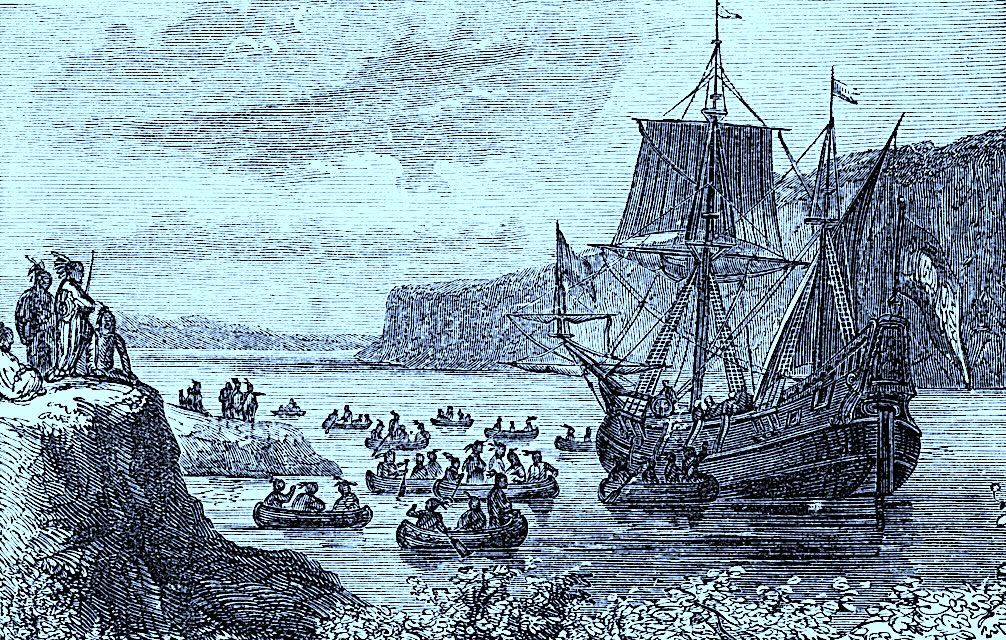
Henry Hudson
John Devoe (2) and his wife Catharina took up residence in Halfmoon, New York, north of Albany, after their marriage. Halfmoon was settled where the delta of Hudson River and the Mohawk River meet, in the more northerly part of the Hudson River Valley. The town name came from the ship: The Halve Maen, which was Henry Hudson’s ship.
Comment: You might be asking — Why’ re so many things named Hudson This, or Hudson That in New York state? It turns out that the first European person to discover the area was Henry Hudson, and even though there were Native Peoples already living there, it was his name that was placed on maps made for the Dutch and British merchants.

Wikipedia records, “Henry Hudson was an English sea explorer and navigator during the early 17th century, best known for his explorations of present-day Canada and parts of the Northeastern United States... In 1609, he landed in North America on behalf of the Dutch East India Company [his employer, even though he was English] and explored the region around today’s modern New York metropolitan area. Looking for a Northwest Passage to Asia on his ship Halve Maen (“Half Moon”), he sailed up the Hudson River, which was later named after him, and thereby laid the foundation for Dutch colonization of the region.
On his final expedition, while still searching for the Northwest Passage, Hudson became the first European to see Hudson Strait and the immense Hudson Bay. In 1611, after wintering on the shore of James Bay, Hudson wanted to press on to the west, but most of his crew mutinied. The mutineers cast Hudson, his son, and six others adrift; the Hudsons and their companions were never seen again.” (3)
The Land Grant Process
In the current day, we tend to think of the word patent as applying to an invention, such new type of component for a computer. For our ancestors in this early era, the word patent meant something quite different. It meant land, and land meant wealth and prosperity.
From the article, New York Land Grants: Some History Until The American Revolution, the author Richard Williams writes: “Land policy in colonial times in what is now New York State favored nobility and prominent men with connections to the Crown. This involved several countries (The Netherlands, England, and France), several explorers, several early pioneers, and appointed officials who oversaw the disbursement of land by land grants or patents.
Patents are land and privileges granted to one or more persons by the British crown or, later, by the state of New York. Proprietors were joint owners of a patent, who then often surveyed, subdivided and sold individual allotments.” In other words: Patents were issued by the governor as the representative of the Duke of York, who in turn represented the King of England.
Observation: This was pure Imperialism in the age of Colonialism.
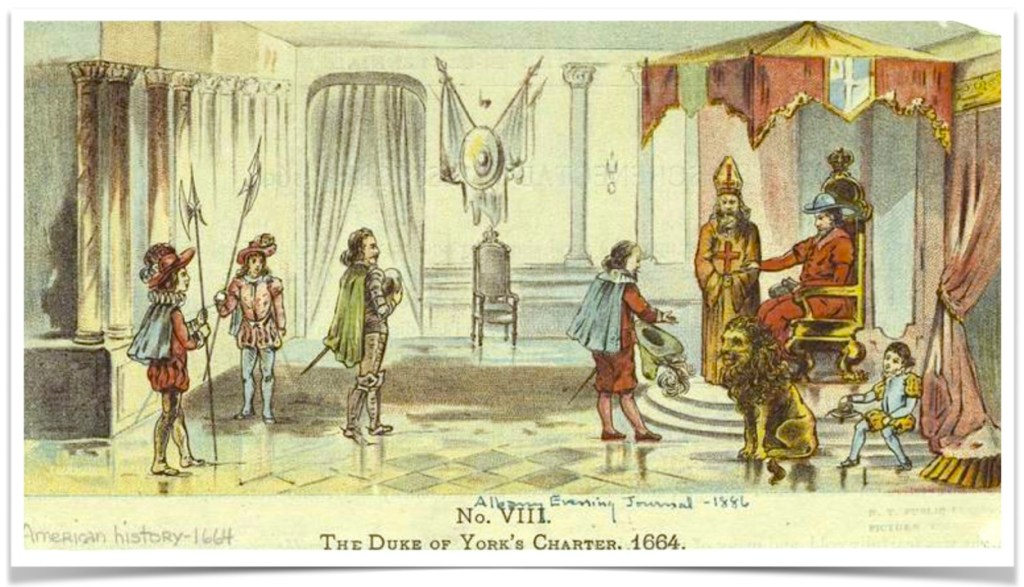
In early New York, “Settlement was not initially important and trading with Indigenous people was prohibited reserved to the [Dutch West India] Company, but from the earliest settlements along the Hudson and Mohawk Rivers many freemen turned from farming to the fur trade...In New Netherland the Dutch had a great port and a long navigable river, the Hudson River, to move into the Indigenous territory, particularly important in the absence of roads in the 16th and 17th centuries. In 1624, 18 Walloon families arrived in at Fort Orange (Beverwyck, now Albany), adjacent to old Fort Nassau, and the prominent Dutch soon established manors..”
“After the English took over the New Netherland colony and renamed it New York, a fundamental principle of English law applied: that the King is the original owner of all lands in his realm, including the colonies, and that title to that land may be received only from the crown through the colonial governor.” (4)
The Community of Halfmoon, in Albany County
Several generations of our DeVoe ancestors lived in, or adjacent to this Albany County community in New York. The town was known as Halfmoon for much of its history, but in 1816, a southern section where many of our ancestors lived, cleaved off to became a new town named Waterford. (Twenty five years prior to that, both towns had left Albany County when Saratoga County was formed in 1791).
Only two old maps of the Halfmoon / Waterford community before this split have survived. The first, the Lands Sold by Annetie Lievers to Roelof Garrets… map shown below on the right. This is referred to as Map 3 from the book, The History of Waterford, by Sydney Ernest Hammersley. It shows the various delta islands where the Mohawk and Hudson rivers met; the spaces between them were eventually filled in. The second map by Simeon DeWitt, to this day is the only map which documents Halfmoon in Saratoga County, before the Waterford split. [For more about the DeWill map, see The DeVoe Line, A Narrative — Six].

As Hammersley’s book describes it, “This map valuable, until 1844 when civilizations, canal and railroads were added to it, shows the Village of Waterford, part of the Town, and fourteen islands once in the Mohawk delta. The map maker took pains to show the direction of the Mohawk’s flow through its four branches… This map was obtained from virtually the last, local Vanderwerken…” which loosely translates from Dutch to mean for the workers.

5th Colonial Governor of New York from 1683-1688.
The land which eventually became Halfmoon was granted as follows, cited from the Sylvester’s History of Saratoga County, New York, “The boundaries of a certain parcel of land in the county of Albany, confirmed unto Anthony Van Schaick, by Governor Thomas Dongan, 31st May, 1687.
A certain parcel of tract of land, and being to the north and above the town of Albany, and is commonly called and known by the name of the Half-Moon, which stretches up alongst the North river, from a certain place where are several streams of water, to a creek or kill, where there is a fall of waters, which, running into the land, hath its course into the North river; the said creek, or kill, and fall being by the Indians called Tieuwenendahow; and from thence runs up the Maquas kill westward, to a place called Dowailsoiaex, and so strikes presently eastward up along by the said stream, and then to the North river aforementioned. A true copy, taken from the original by Philip Livingston.”

So let’s take a look at where John Devoor (2) actually owned property. We know that he was one of the original freeholders of land in 1720. Hammersley writes, “The title of ‘Freeholder’ dates back to the 1600’s in England. Such were persons, responsible in character and frequently the recipients of land grants. They possessed almost as much authority as the nobles in Europe. These attributes were certainly well diluted by the characteristics of settlement living in the Precinct of Halfmoon.” We interpret the author to mean: as a community of farmers, our ancestors had long surrendered any pretensions of nobility.
John DeVoe (2) had been living in Albany before he was in Halfmoon. By 1720, he was free to either be a landlord from Albany by leasing his land to others in the Halfmoon community, or he was free to farm the land himself. At some point, he permanently relocated his family from Albany to Halfmoon. We know that he and his wife Catharina (Van Der Werken) DeVoe both died in Halfmoon in 1746. (5)

“Let’s All Be Dutch!” Begins Evolving to “Let’s All Be American!”
From the article, River People in Early Albany, we learn that, “Following three decades of peace on the northern frontier, geographically huge Albany County began to fill out as its population rose from just 2,273 in 1703 to 10,634 in 1749.
The descendants of Albany’s founders already had established satellite settlements [for example Halfmoon] at the most advantageous regional locations, and the Van Rensselaers, Livingstons, and Albany-based landholders now were ready to exploit their large estates in the lands beyond Albany city. To do this, upriver developers first persuaded some overflow native sons and one-time garrison soldiers from Albany and New York that farming represented a viable first step forward. But increasingly, landholders sought out more available German and Scots-Irish immigrants to join sons and soldiers in farming fertile valley lands as tenants.
“The names of the 1720 Halfmoon Freeholders show the almost complete domination of the Dutch inhabitants. In the same area,
The History of Waterford, New York
70 years later, the Dutch preponderance had been reduced
by English, Irish and Scotch people to 20 per cent of the original Dutch figure.”
by Sydney Ernest Hammersley, 1957
By mid century, Albany County and Ulster and Dutchess as well had become agricultural dynamos as many new hands cultivated and harvested fields and forests to produce large surpluses that would be much in demand in New York and across the British empire.
After 1750, another new group of Albany river people emerged to follow on the heels of the Hudson River transporters. Unlike traditional merchants and skippers, they did not share New Netherland roots. Even though they sometimes married into the region, they were much less able to call on established kinship networks for clients. These comparative newcomers were able to gain a toehold in the carrying trade [shipping on the Hudson River] because of the increased demand for transport and a leveling of opportunity, as colonial New York was becoming more populous and more diverse. As such, they were in the forefront of the transition between old Dutch New York and a more Anglo-American New World.” (6)
In the next chapter, we follow the family life of our 5x Great Grandfather Isaac DeVoe and his wife Marritje Van Olinda in their small community of Halfmoon, New York.
Following are the footnotes for the Primary Source Materials,
Notes, and Observations
David Du Four’s Oldest Son, John DeVoor
(1) — eleven records
New Amsterdam History Center
Mapping New York | Encyclopedia, Place: New Amsterdam, New Netherland
Manhattan 1660
by Leo Tantillo
https://encyclopedia.nahc-mapping.org/place/new-amsterdam-new-netherland
Note: For the illustration.
Early New Netherlands Settlers
David <?> Du Four, (Rn=25344)
https://freepages.rootsweb.com/~rclarke/genealogy/page1/dufour.htm
Hudson-Mohawk Genealogical and Family Memoirs
Cuyler Reynolds, 1866-1934, ed
https://archive.org/details/hudsonmohawkgene00cuyl/page/1670/mode/2up
Book page: 1670, Digital page: 1670/1843
Note: on page 1670, see the entry for DeVoe.
Revised History of Harlem (City of New York): Its Origin and Early Annals
by James Riker
https://archive.org/details/revisedhistoryh00unkngoog/page/n12/mode/2up
Book pages: 409-410, Digital page: 408/410
Note: For general biographical information.
Jannetje Van Esselstein
in the Web: Netherlands, GenealogieOnline Trees Index, 1000-2015
https://www.ancestry.com/discoveryui-content/view/11366826:9289
and
Jannetje Janse Van YSSELSTEYN
in the Geneanet Community Trees Index
https://www.ancestry.com/discoveryui-content/view/6993373989:62476
*Observation: “Where John DeVoor died is now…”
Bloemendaal notes: The image and text was extracted from these four articles:
Unearthing Bloemendaal, The Upper West Side in Historical Context
https://cooperatornews.com/article/unearthing-bloemendaal
and
My Walk In Manhattan
Day Eighty-One: Walking the Avenues of Manhattan Valley (the Bloomingdale District) from West End Avenue to Manhattan Avenue from West 110th to West 96th Streets July 31, 2017
https://mywalkinmanhattan.com/tag/manhattan-valley/
and
File:Collect Pond-Bayard Mount-NYC (cropped).jpg
https://commons.wikimedia.org/wiki/File:Collect_Pond-Bayard_Mount-NYC_(cropped).jpg
Note: For the image.
and
Bloomingdale District, Manhattan https://www.cityneighborhoods.nyc/bloomingdale-district
Collections for The Year
by New-York Historical Society, John Watts De Peyster publication fund series
Abstracts of Wills — Liber 9
https://archive.org/details/collectionsforye26newyuoft/collectionsforye26newyuoft/page/286/mode/2up
Book pages: 287-288, Digital pages: 286-288/505
Note: For the Will of John Devoor (1)
The Family From Bloemendaal
(2) — eighteen records
View of Lower Manhattan, Showing the Church Within the Fort
by Jaspar Danckaerts, 1679-1680
https://hsny.localarchives.net/?a=d&d=A1628-LiberA-bk1-final.1.41&e=——-en-20–1–txt-txIN|txTA|txCO|txTY|txTI|txRG|txSG|txSE|txSB|txCT|txIE|txIT|txTE|txLA|txSU|txSP|txDS|txAD|txPR|txTR|txFI-John+Devoor———-
Note: For the image.
Year Book of the Holland Society of New York, 1905
https://www.familysearch.org/library/books/viewer/34846/?offset=0#page=30&viewer=picture&o=info&n=0&q=
Book page: 6, Digital Page: 30/38
Note: The correct title page is found on page 2/381.
Jean Devoor
https://www.ancestry.com/family-tree/person/tree/48708924/person/12923080708/facts
Note: This file contains excellent sourcing information for the baptisms of the children. However, some of the other information found here is not correct: For example, the name of his wife is incorrect.
Catharina Roelof van der Werken
https://www.ancestry.com/family-tree/person/tree/197844427/person/352602749157/facts?_phsrc=ZOm1179&_phstart=successSource
Note: General biographic information.
Catharina Roelofse Van DE Werken
in the Geneanet Community Trees Index
https://www.ancestry.com/discoveryui-content/view/4439049971:62476
and
Catharina Roelofse Van De Werken
https://gw.geneanet.org/willypaans2?n=van+de+werken&oc=&p=catharina+roelofse&_gl=1*10cttgu*_gcl_au*MjA1NTM1OTYxOC4xNzE2MTQ4NTk2*_ga*MTU4MTY5MjA2NC4xNjkwOTIzNzM2*_ga_LMK6K2LSJH*ZTRhZjBhZDYtYmJmYy00ZmVkLThiMWUtMGM5Mjg4ZmU3NTFhLjE3MC4xLjE3MjA0NzA0MzMuMC4wLjA.
Note: For her birth information.
U.S., Dutch Reformed Church Records in Selected States, 1639-1989 for Jean Du Four
New York > Albany > Albany, Vol II, Book 2
https://www.ancestry.com/imageviewer/collections/6961/images/42037_2421401574_0611-00122?pId=219449
Book page:117, Digital page: 121/308, Entry 3 from the page bottom.
Note 1: John (2) DuFour/Devoor/DeVoe
Note 2: For baptism in Dutch Reformed Church, Albany, New York on February 19, 1707.
Katharina Roelofse Vander Werke
in the U.S., Dutch Reformed Church Records in Selected States, 1639-1989
New York > Albany > Albany, Vol II, Book 2
https://www.ancestry.com/discoveryui-content/view/2220244:6961
Book page: 234, Digital page: 238/308, Left page, entry 1.
Note: For her marriage.

The Quackenbush Family in Holland and America
by Adriana Suydam Quackenbush Andrew, 1871
https://archive.org/details/quackenbushfamil00andr/page/58/mode/2up?view=theater
Book page: 58, Digital page: 58/193
Note: This confirms the marriage date of February 6, 1750 for Gerrit Quackenbush and Catherine DeVoe.

Contributions for The Genealogies of The First Settlers of The Ancient County of Albany, From 1630 to 1800
by Jonathan Pearson, 1813-1887
https://archive.org/details/contributionsfor00pearuoft/contributionsfor00pearuoft/
Book pages: 41-42, Digital pages: 40-42/144
Isaac De Voy
U.S., Dutch Reformed Church Records in Selected States, 1639-1989
New York > Albany > Albany, Vol III, Book 3
https://www.ancestry.com/discoveryui-content/view/150162502:6961?ssrc=pt&tid=48708924&pid=240082063566
Book page: 85, Digital page: 89/506, Entry 4.
Revised History of Harlem (City of New York): Its Origin and Early Annals
by James Riker
https://archive.org/details/revisedhistoryh00unkngoog/page/n12/mode/2up
Note: For general biographical information —
Book page: 410, Digital page: 410/907
Genealogy of the De Veaux Family
Introducing the Numerous Forms of Spelling the Name by Various Branches and Generations in the Past Eleven Hundred Years
by Thomas F. De Voe
https://archive.org/details/genealogyofdevea00devo/page/20/mode/2up
Book pages: 19-22, Digital page: 19-22/302
Notes: For John Devoor, and the marriage date and spouse of Geertruy (Devoe) Doxie.
Hendrik Hendrikszen Grootvelt
in the New York City, Compiled Marriage Index, 1600s-1800s
https://www.ancestry.com/discoveryui-content/view/403970:7854?tid=&pid=&queryId=a483c3bc-9664-40c5-b214-1c92db84d8ad&_phsrc=IrT12&_phstart=successSource
Note: For the marriage record of Rachel Devoor Grootvelt
Genealogical Notes of New York and New England Families
by Sebastian Visscher Talcott
https://archive.org/details/genealogicalnote00talc/page/454/mode/1up
Book page: 454, Digital page: 454/747
Note: From page 454 —They were initially buried at “Reformed Dutch Church graveyard” in Albany, and “Copy of a book kept by Barent Bradt of the burials in the Reformed Dutch Church graveyard and under the church in the city of Albany, from 1722 to 1757 inclusive.”
and here:
Genealogical Notes of New York and New England Families
by Sebastian Visscher Talcott
https://archive.org/details/genealogicalnote00talc/page/467/mode/1up
Book page: 467, Digital page: 467/747
Notes: Page 467 indicates the interment dates of July 1 for the “wife of Jan de Voe” and then the following July 27, for “Jan de Voe”.
Jan De Voe
https://www.findagrave.com/memorial/84357455/jan-de_voe?_gl=11o6jga0_gcl_auOTQ4MDE0MjY5LjE3MjAyNjUxNTQ._gaMTA1Mzc0MTAxMi4xNzIwMjY1MTU0_ga_4QT8FMEX30M2UyYTE2NDktOTdkOC00NmFkLWE2NmMtYWIwNjc3NTU2OTVmLjEuMS4xNzIwMjcxMTU1LjM2LjAuMA.._ga_LMK6K2LSJH*M2UyYTE2NDktOTdkOC00NmFkLWE2NmMtYWIwNjc3NTU2OTVmLjEuMS4xNzIwMjcxMTU1LjAuMC4w
Note: For cemetery location.
Comment: Despite what it says on the Find A Grave website link, this may or may not be the final location for where John DeVoe (2) is actually interred. Our research has shown that he was relocated perhaps two times.
John Miller Plan of Albany in 1695
by James Eights, after John Miller
https://www.albanyinstitute.org/collection/details/john-miller-plan-of-albany-in-1695
Note: For the map image.
Henry Hudson
(3) — three records
File:Half Moon in Hudson.jpg
Henry Hudson’s Half Moon sailing ship — the Halve Maen
https://commons.wikimedia.org/wiki/File:Half_Moon_in_Hudson.jpg
Note: For the ship image.
Henry Hudson
https://en.wikipedia.org/wiki/Henry_Hudson
Famous Explorers
Henry Hudson – Discovery of Hudson Bay and Hudson River
http://www.famous-explorers.com/famous-english-explorers/henry-hudson/
Note: For historical information and his portrait.
The Land Grant Process
(4) — three records
New York Almanck
New York Land Grants: Some History Until The American Revolution
https://www.newyorkalmanack.com/2023/12/new-york-land-grants-history/
New York State Archives
New York State Department of State Bureau of Miscellaneous Records Letters Patent > Administrative History
https://www.archives.nysed.gov/research/res_tips_011_land_patents.shtml
The New York Public Library Digital Archives
The Duke of York’s Charter, 1664
https://digitalcollections.nypl.org/items/510d47e0-f3e2-a3d9-e040-e00a18064a99
Note: For the image of The Duke of York’s charter.
The Community of Halfmoon, in Albany County
(5) — ten records
A Map of the State of New York, 1804
Simeon DeWitt (1756-1834)
https://artsandculture.google.com/asset/a-map-of-the-state-of-new-york/gQG44G8fdQpGwQ?hl=pt-PT
Note: For the map image.
The History of Waterford, New York
by Sydney Ernest Hammersley, 1957
https://archive.org/details/historyofwaterfo00hamm/page/n5/mode/2up
Inserts: Maps #1 and #3 from the pocket at the back of the book. Indicated on Digital page: 400, for all map descriptions by author
Digital page: 404, Van Schaik Patent Map 1762-1767 (Map 1)
Digital page: 408, Lands Sold by Annetie Lievers to Roelof Garrets… (Map 3)
Book pages: 41-42, Digital page: 42/408 for the chart, “The 1720 Freeholders…”
Thomas Dongan, 2nd Earl of Limerick
https://en.wikipedia.org/wiki/Thomas_Dongan,_2nd_Earl_of_Limerick#
Waterford Historical Museum and Cultural Center
https://waterfordmuseum.com/hammersley-history-of-waterford-ny-maps/
Note: For inset image of “Map 3, Lands Sold by Annetie Lievers to Roelof Garrets, Dated February 4, 1686…”
Hudson-Mohawk Vernacular Architecture
— Formerly The Dutch Barn Preservation Society (DBPS)
https://hmvarch.org/dbps-news.html
Fall 2006 link > https://hmvarch.org/dbps-news/2006-fall-dbps-news.pdf
Note: The bottom of page 2 in this document further explains the history of land ownership within Halfmoon at the time of this narrative The DeVoe Line, A Narrative, — Three.
“Let’s All Be Dutch!” Begins Evolving to “Let’s All Be American!”
(6) — two records
River People In New York
by Steve Bielinski
https://exhibitions.nysm.nysed.gov/albany/art/art-rpea.html
History of Saratoga County, New York, with Biographical Sketches of Some of its Prominent Men and Pioneers
by Nathaniel Bartlett Sylvester, 1878
https://archive.org/details/cu31924028833064/page/n7/mode/2up
Book page: 76, Digital page: 76/514

 Our Ancestors, Our Narratives
.jpg)
