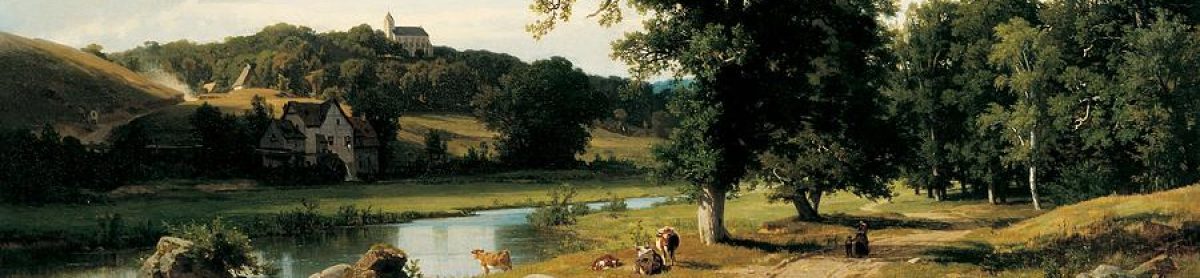
This is Chapter Three of seven. So many of our ancestors came to British North America through the classic New England colonies: Massachusetts, Vermont, New York. In this chapter we learn about one place which is new to our history — New Hampshire Province.
People Were Hearing Stories About America…
What was pulling Presbyterians from Scotland and the Ulster, Ireland plantations to New Hampshire in British North America? “In the early 1700s, however, [the English] Parliament imposed strong restrictions on trade, which caused severe problems in both Irish and Scottish commerce. This in turn led to more conflict between the Irish and the Scots settlers over rapidly dwindling resources, made especially urgent by a harsh winter in 1717...”

The situation was dominated by the Ulster-Irish / Ulster-Scots Presbyterians and their sympathizers in Scotland. “New England was being touted as a paradise of opportunity, cheap land, and religious tolerance – things very much lacking in Ulster at this point – and in 1718 a petition was signed by over 300 Ulster Scots families to ask the governor of Massachusetts for land. Rev. William Boyd undertook the long journey from Ulster to Boston to give the petition to Gov. Samuel Shute, who was amenable to the idea. Between 1718 and 1755, what is known as the Great Migration took place, with hundreds of thousands of Scots travelling across the Atlantic to Massachusetts, Pennsylvania, and Virginia.” (Worcester Historical Museum Library and Archives)
Across the ocean in the British Colonies of North America, “In 1679 King Charles II separated New Hampshire from Massachusetts, issuing a charter for the royal Province of New Hampshire, with John Cutt as governor. New Hampshire was absorbed into the Dominion of New England in 1686, which collapsed in 1689. After a brief period without formal government (the settlements were de facto ruled by Massachusetts) William III and Mary II issued a new provincial charter in 1691. From 1699 to 1741 the governors of Massachusetts were also commissioned as governors of New Hampshire.
The province’s geography placed it on the frontier between British and French colonies in North America, and it was for many years subjected to native claims, especially in the central and northern portions of its territory. Because of these factors, it was on the front lines of many military conflicts, including King William’s War, Queen Anne’s War, Father Rale’s War, and King George’s War. By the 1740s most of the native population had either been killed or driven out of the province’s territory.
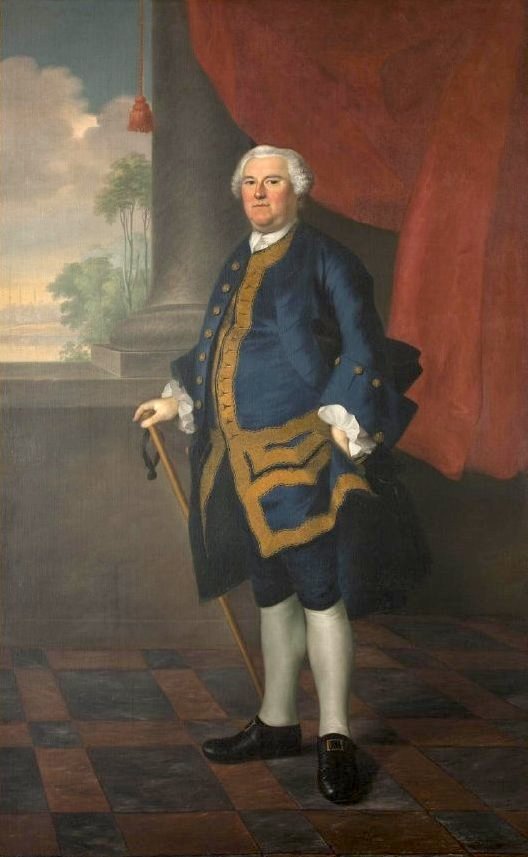
(Image courtesy of Wikimedia Commons).
Since the political powers in Massachusetts had been used to running things in New Hampshire, there were many disputes about borders which were not resolved until 1741. “Benning Wentworth in 1741 became the first non-Massachusetts governor since Edward Cranfield succeeded John Cutt in the 1680s”. (Wikipedia) (1)
The Province of New Hampshire
“New Hampshire has been known as the Province of New Hampshire, the Upper Province of Massachusetts, the Upper Plantation of Massachusetts, and New Hampshire Colony”. (American History Central)
Notice in the very old, (very brown) 1757 map of the New Hampshire Province below, that most of the settlement is located in the southeastern corner. These communities are not far from the location of the port of Portsmouth, and also hug the northern Massachusetts border. This map doesn’t yet delineate a true shape for the state.

by Samuel Langdon, circa 1757. (Image courtesy of the Library of Congress).
The Massachusetts Colony had been settled much earlier, and the terrain was a far more friendly environment for farming and settlement. New Hampshire was mountainous and the soils were more like what was found back in Scotland.
“The terrain of New Hampshire Colony was rough and covered with forests, rivers, plateaus, and mountains. The soil was rocky, which made it difficult for farmers to cultivate fields and raise certain crops. The plentiful forests provided access to timber. New Hampshire features around 1,300 lakes and ponds, plus 40,000 miles of streams… Access to rivers and the coast made fishing and whaling popular. The thick forests provided wood that was used for timber, including masts for ships. The forests were also full of animals that provided valuable furs for trade”. (American History Central) (2)
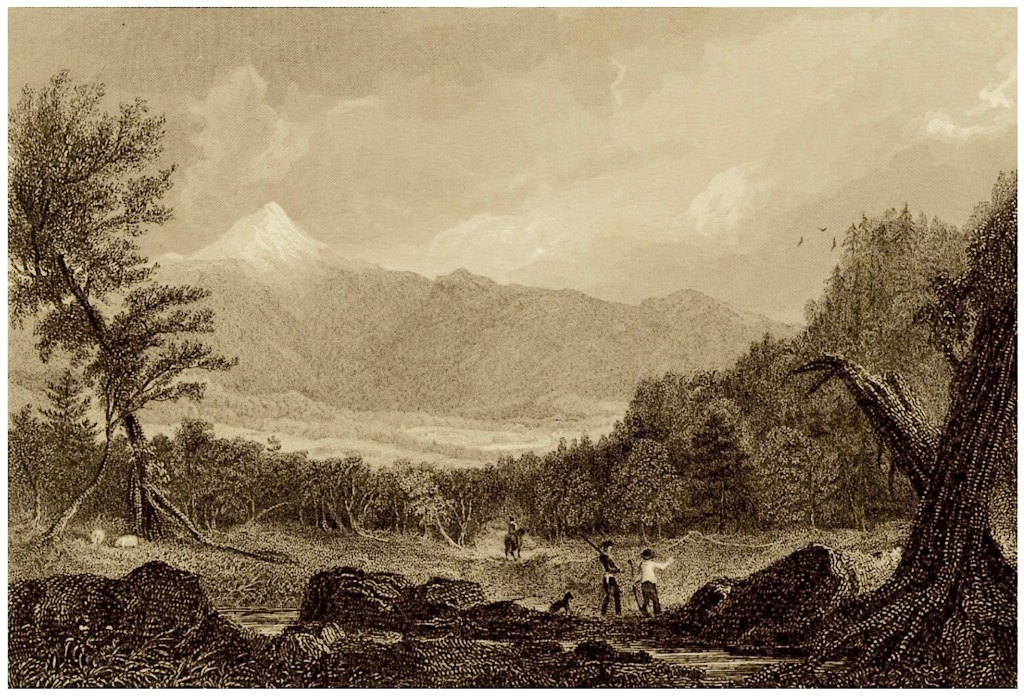
(Image courtesy of the Syracuse University Art Museum).
The Scotch Range of New Hampshire
Four travelers — Michael McClintock and his wife Margaret; William McClintock and his wife Agnes — immigrated to the Province of New Hampshire around 1731. From William Copley’s book, Scotch-Irish Settlers in New Hampshire, 1719-1776, we learned that the “date and place of first mention of residence in the New World” is 1731. This date is “Extracted from several sources, mainly New Hampshire Provincial Deeds, 1641-1771,” and it implies that they had the resources to acquire property. They arrived either in 1731, or shortly before that time.
They had left the Scottish Belt (Glasgow) behind and moved to what was known as the Scotch Range in New Hampshire. “The southernmost towns in New Hampshire… town names like Londonderry, Antrim, Bedford” were brought over from Scottish and Irish locations (Quora). Additionally, “The Scotch-Irish settlements, like Londonderry, were Presbyterian”. (American History Central)
The Copley book record (cited above) is conclusive for us because it documents two records for each couple, both of which agree in the details: dates, spouses, and family surname spellings. The book, History of Old Chester, from 1719 to 1869, by Benjamin Chase, also contains information about our family, but importantly, the surname is oddly recorded as McClento. This matches up like a hand and glove to the Copley book for their journey, along with land records.
From this point forward, unfortunately, there isn’t really any history about their wives. This often happens with ancestral lines.

Due to their arrival date (1731 or earlier) in the Colonies, we believe that it is certainly plausible that the four traveled together. Very few ship records exist from that time period, but it is likely that they ventured from the port at Glasgow, Scotland to the port at Portsmouth, New Hampshire Province. It’s also interesting to note that as twins, both men would have been 22 years old, which means that they had reached their age of majority in Scotland.
In the Old Chester book, Chase further records: “The first [settlement] in that part of Chester was by William and Michael McClento. Michael was in Londonderry and bought land there in 1731, and 1733. He is in Chester in 1744. William McClento of Kingstown [Kingston] bought of Thomas Packer of Dracut, 1 lot in the 3d range in ‘Tyngstown,’ in June, 1739.* So they probably settled there under a claim from Tyngstown, about 1740. But so far as Chester was concerned, they were squatters.”
*Tyngs Township was one of the early names for Derryfield. The name was changed in 1751.

“The Proprietors sued them, and a verdict was rendered in favor of the defendants, Dec. 8, 1743, and appealed. The land on which they settled was not lotted until 1745. They came up from Londonderry on foot with their effects. [That is a distance of up to 120 miles]. It is said by some that Michael settled on No. 1, 4th D… William with his pack, and his wife with a ‘bairn’* in her arms, forded the brook some distance below the present road, with the water to their “haunches”, and erected a hut [log cabin] near the river, but afterwards built at the Huse place, on lot No, 4. William’s wife was Agnes”.
*Bairn is a Northern England-English, Scottish-English and Scots term for a child. It originated in Old English as bearn, becoming restricted to Scotland and the North of England c. 1700. (Wikipedia)
“Michael McClento had a daughter Nancy. He used to buy thread and perhaps fine linen cloth, and he and his daughter would take each a pack, and carry it to Boston to sell, taking from four to six days, and sometimes netting them three pounds”. (3)
The Mt. Desert Widow Book Half-Problem
There has been much confusion between the histories of the McClintock family and the Gamble family and we would like to address this. We know that the McClintock families and the Gamble families knew each other because they lived in the same communities.
William McClintock had a son named Alexander McClintock who was born about 1738. In 1760, he married a woman named Janet Gamble, and in 1895 a book titled The Mt. Desert Widow: Genealogy of the Maine Gamble Family from First Landing… by Greenleaf Cilley and Jonathan Cilley was published. This is where the troubles began.

At the end of the 19th century, it was very popular to publish family histories that were essentially vanity publications. These sources can be invaluable for genealogy research, but they can also be problematic unless they are very, very carefully reviewed. Sometimes materials that were submitted to the authors were not well vetted. (This is a problem created by families where stories get repeated over time until someone writes them down, and then storytelling becomes a fact, when [ha!] in fact, it is nothing like that.)
It seems as if someone blended together the history of another William McClintock family who are Irish, and immigrated from Ireland… (There was a William McClintock family from Ireland living in Portsmouth, New Hampshire during this period, but this is not our family.) Our William McClintock family is from Scotland — and our family never lived in Ireland. As we said, no one thought to look carefully at the history…
Parts of the McClintock family history, such as the towns where they lived: Londonderry, Derryfield, Hillsborough, are certainly true, and the stories of the bridges which they built, are likely true. However, other parts of the Gamble / McClintock history are completely wrong.
The Mt. Widow book had wrong arrival dates, direct statements that Michael and William were father and son, it cites Ireland as their origin location, etc., but none of this is true. What we do know is that William Gamble was born in Derry, County Cavan, Ulster, Ireland, and that he came to New Hampshire in 1736, after our ancestors were already there. We looked at his birth information, along with his Will, his marriages, and estate probate records to verify his information. It’s unfortunate that in the present day, so many tree-makers cite a record like the Mt. Widow book, but for our family, it is quite simply not accurate.
One last thing, we discovered is a book titled (the) History of Manchester, formerly Derryfield, in New-Hampshire… by Chandler Eastman Potter, which was published in 1856 — 40 years earlier that the Mt. Widow book. The story in the Mt. Widow book was lifted almost word-for-word from the previous book, and it still reads like family apocrypha. (See footnotes).
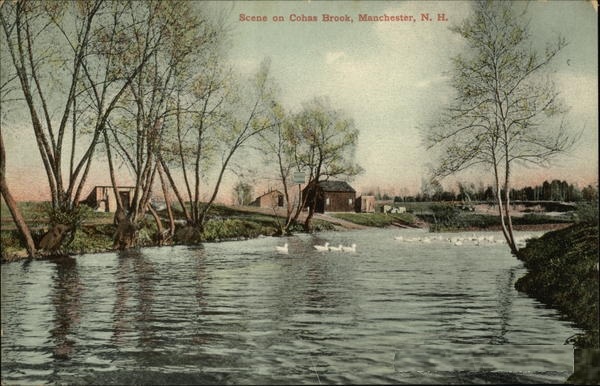
As problematic as some of the information is, it is plausible that the information about the bridges which the McClintocks built is accurate, because it does describe where they were living. (We are taking it as anecdotal evidence because this is the only place where we have seen this information). “They were industrious, thriving people and… built the first bridge across the Cohas, and also another across the little Cohas on the road from Amoskeag to Derry. These bridges were built in 1738… The McClintocks were voted 20 S. [shillings] a year for 10 years for the use of the bridges. The McClintocks moved to Hillsboro, N.H., where their descendants yet reside”. (Note: Hillsboro is also spelled as Hillborough, and the spelling in old documents varies). (4)
Polyonymous: Which Means — Known By Several Different Names
This area of New Hampshire Province where they lived went through name changes during their lifetimes. In 1722, a man named John Goffe settled in Old Harry’s Town, in the British Province of New Hampshire. (Even so, this was never an official name for the place). Five years later in 1727, Tyngstown (or Tyng’s Township) was established. The McClintock’s were in the area by 1731.

Some sources indicate that their community was sometimes referred to as Nutfield because of the Chestnut trees, and in 1751, Tyngstown was rechartered as Derryfield, which was created from carving out sections from portions of the other surrounding communities, such as Chester.
From the book, the Early Records of Derryfield: Now Manchester, N.H., “…As this territory was not deemed of sufficient size to make a ‘respectable township’, enough was taken from the adjoining towns to make up the desired area… Thus the Derryfield charter covered about thirty-five square miles of coimtry [a colonial word for country > meaning, land] from the following sources: eight square miles of Tyng township, nine square miles of the northwestern portion of Londonderry, formerly Nutfield, and seventeen and three-fourths square miles of Chester, erstwhile called ‘the chestnut country’. The name of Derryfield is claimed to have originated from the practice of stock [sheep and cattle] owners of Londonderry in allowing their herds to graze on the clearings within its limits, and arising from the term ‘Derry’s field’.”

(Image courtesy of Grogan & Company, see footnotes).
So then, the question becomes, did they move from Chester to Derryfield, or did Derryfield come to them? It seems that Derryfield came to them.
On June 21, 1788, after the American Revolution, the Province of New Hampshire becomes the State of New Hampshire. In 1810, long after both William and Michael had passed on, Derryfield was renamed Manchester and remains named that to this day.
Comment: Since various record writers have used town names from different eras in a mix-n-match fashion, the proper sequence is this: Harry’s Town, circa 1722 > Nutfield (unofficial) > Tyng’s Township, circa 1727 > Derryfield, circa 1751 > Manchester, circa 1810. (5)
The Family of William McClintock
William McClintock, who along with his twin brother Michael, was born on September 18, 1709, in Glasgow Scotland, the son of Thomas and Margarit (Gilhagie) Mclintoch. William married Agnes (last name unknown) before 1731, in Scotland.

We’ve uncovered records that William and Agnes had at least five children, all born in the Province of New Hampshire. The first three children were likely born in Chester; the last two, in Tyngstown, (all locations eventually becoming Derryfield > Manchester).
- William Jr., about 1736 — death date unknown
- Alexander, about 1738 — death date unknown
- Mary (McClintock) Starrett, September 29, 1739 — December 19, 1785
- Janet (McClintock) Dickey, about 1742 — June 11, 1811
- John McClintock, about 1744 — October 9, 1803,
(We are descended from John).
We believe that William and his brother Michael made their livings in agriculture, through farming and some animal husbandry. Even though this was not their background in their younger lives in Glasgow, Scotland, it was the primary occupation of their community in New Hampshire. Even with that, both of them, but especially William, were deeply involved in the local government through various activities. In the book index for the Derryfield History, there are almost one hundred entries for ‘Sergeant’ William McClintock alone. In addition, his brother Michael, his sons William Jr., Alexander, and John are all also indexed with numerous entries. (6)
In the next chapter, we will explore the life of this family during the years before, and during the Revolutionary War, as well as their lives within the community.
Following are the footnotes for the Primary Source Materials,
Notes, and Observations
People Were Hearing Stories About America…
(1) — five records
Worcester Historical Museum Library and Archives
The Water is Wide: Scottish Journeys to Ireland and New England, 1603-1718
https://worcesterhistorical.com/worcester-1718/the-water-is-wide-scottish-journeys-to-ireland-and-new-england-1603-1718/
Note: For the text.
History of New Hampshire
https://en.wikipedia.org/wiki/History_of_New_Hampshire
Note: For the text.
Timeline of New Hampshire History
https://www.nhhistory.org/Timeline?id=1676.1
Note: For the data.
Benning Wentworth
by Joseph Blackburn, circa 1760
https://commons.wikimedia.org/wiki/File:Governor_Benning_Wentworth.jpg
Note: For his portrait.
New Hampshire Colony Facts, 1622–1761
https://www.americanhistorycentral.com/entries/new-hampshire-colony-facts/
Note: For the data.
The Province of New Hampshire
(2) — one record
Library of Congress
An accurate map of His Majesty’s Province of New-Hampshire in New England…
by Samuel Langdon, 1723-1797
https://www.loc.gov/resource/g3740.ar086900/?r=0.343,0.005,0.964,0.464,0
Note: For the map image, which is circa 1757.
The Scotch Range of New Hampshire
(3) — eleven records
Book, not available online:
COPELY, WILLIAM. Scotch-Irish Settlers in New Hampshire, 1719-1776.
In Historical New Hampshire (New Hampshire Historical Society, Concord), vol. 50:3/4 (Fall/Winter 1995), pp. 213-228.
“Date and place of first mention of residence in the New World. Extracted from several sources, mainly “New Hampshire Provincial Deeds, 1641-1771,” which is on microfilm at the New Hampshire Historical Society”.
Note: For the data.
Michael McClintock
in the U.S. and Canada, Passenger and Immigration Lists Index, 1500s-1900s
https://www.ancestry.com/discoveryui-content/view/1609990:7486
Note: Page 222, His wife Margaret is with him. This is the record of their New Hampshire residency in 1731.
and
Michael McClento
in the U.S. and Canada, Passenger and Immigration Lists Index, 1500s-1900s
https://www.ancestry.com/discoveryui-content/view/1612648:7486?tid=&pid=&queryId=8a6a4302-ef12-4ec3-bf2f-96f04e36caf7&_phsrc=PXe49&_phstart=successSource
Note: The McClento surname agrees with the history in Chester book, (see below).
William McClintock
in the U.S. and Canada, Passenger and Immigration Lists Index, 1500s-1900s
https://www.ancestry.com/discoveryui-content/view/1610051:7486
Note: His wife Agness is with him. This is the record of their New Hampshire residency in 1731.
and
William McClento
in the U.S. and Canada, Passenger and Immigration Lists Index, 1500s-1900s
https://www.ancestry.com/discoveryui-content/view/1612649:7486?tid=&pid=&queryId=47d1a30e-7c5b-4b2d-a03b-10ed68419e19&_phsrc=PXe43&_phstart=successSource
Note: The McClento surname agrees with the history in Chester book, (see below).
Note: For the data.
History of Old Chester, from 1719 to 1869
Chapter XVII : A Notice of the Early Settlers, or the Genealogical and Biographical History of Chester
https://www.ancestry.com/imageviewer/collections/23246/images/dvm_LocHist008953-00319-1?ssrc=&backlabel=Return&pId=573
Book page: 558-559, Digital page: 573-574/713
Note: Fully transcribed record. The family name is recorded here as McClento.
and
History of Old Chester [N. H.] from 1719 to 1869
by Benjamin Chase 1799-1889
https://archive.org/details/historyofoldches00chas/page/558/mode/2up
Book page: 558-559, Digital page: 558-559/702
Note: For the data.
Quora reference about The Scotch Belt of New Hampshire
https://www.quora.com/Why-did-the-Scotch-Irish-leave-Scotland-and-Ireland-What-were-their-reasons-for-coming-to-America
Note: For the data.
Syracuse University Art Museum
White Mountains, New Hampshire (engraving)
Thomas Cole, circa 1831
https://onlinecollections.syr.edu/objects/29389/white-mountains-new-hampshire
Note: For the landscape image.
Boston Rare Maps
A View of Portsmouth in Piscataqua River
(Lovely Aquatint View of Portsmouth, New Hampshire
from The Atlantic Neptune, circa 1781)
by J.F.W. Des Barres
https://bostonraremaps.com/inventory/atlantic-neptune-portsmouth-new-hampshire-1781/
Note 1: For the landscape image.
Note 2: These comments were attached at the file source — Lovely Aquatint View of Portsmouth, New Hampshire, from The Atlantic Neptune, circa 1781)
Bairn
https://en.wikipedia.org/wiki/Bairn#:~:text=Bairn%20is%20a%20Northern%20England,the%20word%20Bain%20is%20used.
Note: For the data.
The Mt. Desert Widow Book Half-Problem
(4) — seven records
Agnes
in the North America, Family Histories, 1500-2000
The Mount Desert Widow: Genealogy of the Maine Gamble Family from First Landing : On the Coast of Mount Desert Down to the Present Day
(From the Knox County Historical and Genealogical Magazine, August 1896)
Article by Greenleaf and Jonathan P. Cilley
https://www.ancestry.com/discoveryui-content/view/3949974:61157?ssrc=pt&tid=18269704&pid=635978908
G > Gamble > The Mt Desert Widow : Genealogy of the Maine Gamble Family…Book page 192, Digital page: 198/207
and
The Mount Desert Widow: Genealogy of the Maine Gamble Family from First Landing : On the Coast of Mount Desert Down to the Present Day
https://archive.org/details/mountdesertwidow1895cill
Book page 192, Digital page: 192/196
Note: For the data.
William Gambell
in the New Hampshire, U.S., Wills and Probate Records, 1643-1982
https://www.ancestry.com/discoveryui-content/view/128905:8996?tid=&pid=&queryId=f8150094-67fe-4e60-a4a6-0db37ffebc35&_phsrc=cMr5&_phstart=successSource
Note: For the data.
William Gamble
in the U.S. and Canada, Passenger and Immigration Lists Index, 1500s-1900s
https://www.ancestry.com/discoveryui-content/view/1611488:7486?tid=&pid=&queryId=9f251364-4870-42e0-b43f-def86aefbdc2&_phsrc=xam12&_phstart=successSource
Note: For the data.
William Gamble
in the Geneanet Community Trees Index
https://www.ancestry.com/discoveryui-content/view/6737731216:62476
Note: For the data.

History of Manchester, formerly Derryfield, in New-Hampshire : including that of ancient Amoskeag, or the middle Merrimack Valley, together with the address, poem, and other proceedings of the centennial celebration of the incorporation of Derryfield at Manchester, October 22, 1851
by C. E. Potter, (Chandler Eastman)
https://archive.org/details/historyofmanches00pott
Book page: 184, Digital page: 184/763
Note: For the text.
Cohas Brook, Manchester, New Hampshire (postcard)
High-Resolution Image File – 600 DPI Scan #419277
https://www.cardcow.com/stock-photo/419277/
Note: For Cohas River image.
Polyonymous: Which Means — Known By Several Different Names
(5) — five records
Merriam-Webster dictionary
Polyonymous
https://www.merriam-webster.com/dictionary/polyonymous
Note: For the data.
Timeline of Manchester, New Hampshire
https://en.wikipedia.org/wiki/Timeline_of_Manchester,_New_Hampshire
Note: For the data.
Early Records of the Town of Derryfield: Now Manchester, N. H.
1751 — 1782, Volumes I and VIII
by George Waldo Browne
https://archive.org/details/earlyrecordstow01nhgoog/page/n4/mode/2up
Book page: 8-10, Digital page: 13-15/407,
Note: For the town map and Derryfield naming information.
Note: For the data.
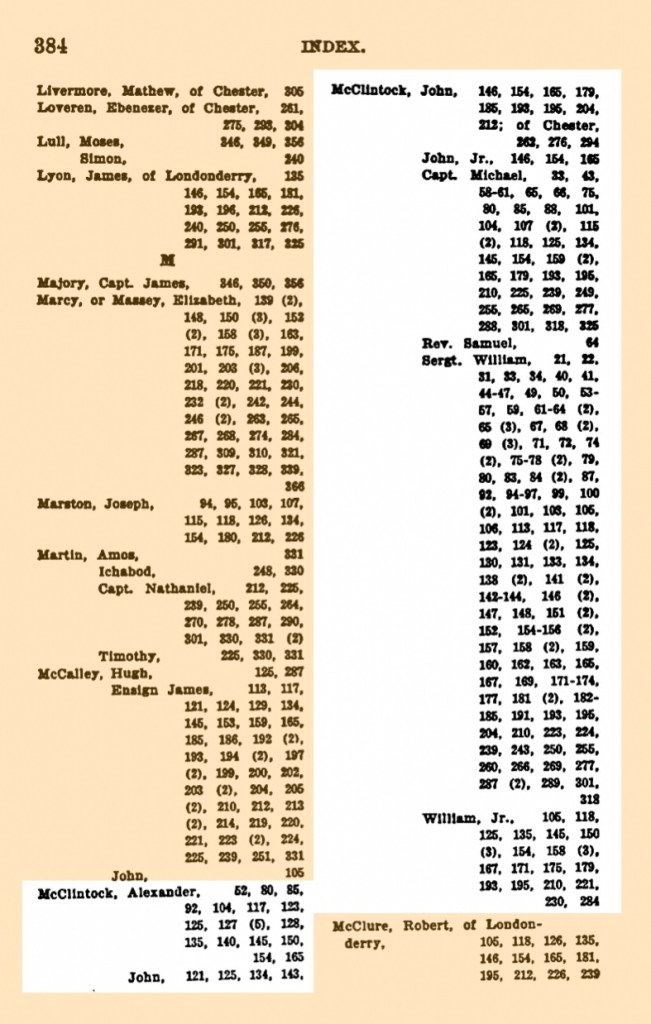
Index page from the Derryfield book, as shown above:
Early Records of the Town of Derryfield: Now Manchester, N. H.
1751 — 1782, Volumes I and VIII
by George Waldo Browne
https://archive.org/details/earlyrecordstow01nhgoog/page/n390/mode/2up
Book page 384, Digital page: 391/407
Note: For the data.
Defunct Placenames of New Hampshire
https://en.wikipedia.org/wiki/Defunct_placenames_of_New_Hampshire#cite_note-Fogg-1
Note: For the data.
The Family of William McClintock
(6) — six records
Cows Grazing Under The Oaks
by Edward Mitchell Bannister, circa 1893
https://www.groganco.com/auction-lot/edward-mitchell-bannister-american-1828-1901_2524D4E929
Note: For the pastoral landscape image.
Mary M. Starrett
in the U.S., Find a Grave Index, 1600s-Current
https://www.ancestry.com/discoveryui-content/view/88923493:60525?ssrc=pt&tid=18269704&pid=643749176
and
Mary M. McClintock Starrett
https://www.findagrave.com/memorial/7624518/mary-m.-starrett
Note: For the data.
Colonial Gravestone Inscriptions in the State of New Hampshire
Alphabetical List of Towns and Cemeteries > New Boston
https://www.ancestry.com/imageviewer/collections/48183/images/GravestonesNH-006438-102?pId=232883
Book page: 102, Digital Page: 102/160
Note: The exact text reads, “DICKEY, Janet, d. June 11, 1811, ae. 69 yrs.”
The Peale Family
by Charles Willson Peale, circa 1771–1773
Collection of the New-York Historical Society.
from The American Yawp, 4. Colonial Life
https://www.americanyawp.com/text/04-colonial-society/
Note: For the family portrait image.

 Our Ancestors, Our Narratives
