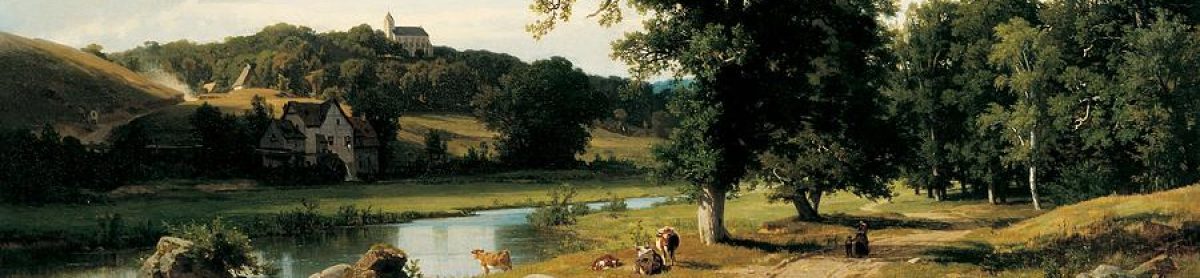
This is Chapter Two of seven. During his lifetime in America, George Soule was known as both a farmer, and for animal husbandry (animals raised for products such as meat, milk, fibers for cloth, etc.). This was a typical profession of the time, if one was to survive in a far off colony, and pay off your debts to the English underwriters. (1)
For a Time, An Indentured Servant
As we learned in previous chapters, George was an indentured servant to the Edward Winslow family. This means that he responsible for contributing to the success of the Winslow family for a period of several years, and until he had achieved the age of 25 years, he could not be released from this condition. Elias Story his fellow travelers with the Winslow family on the Mayflower, was of the same status.
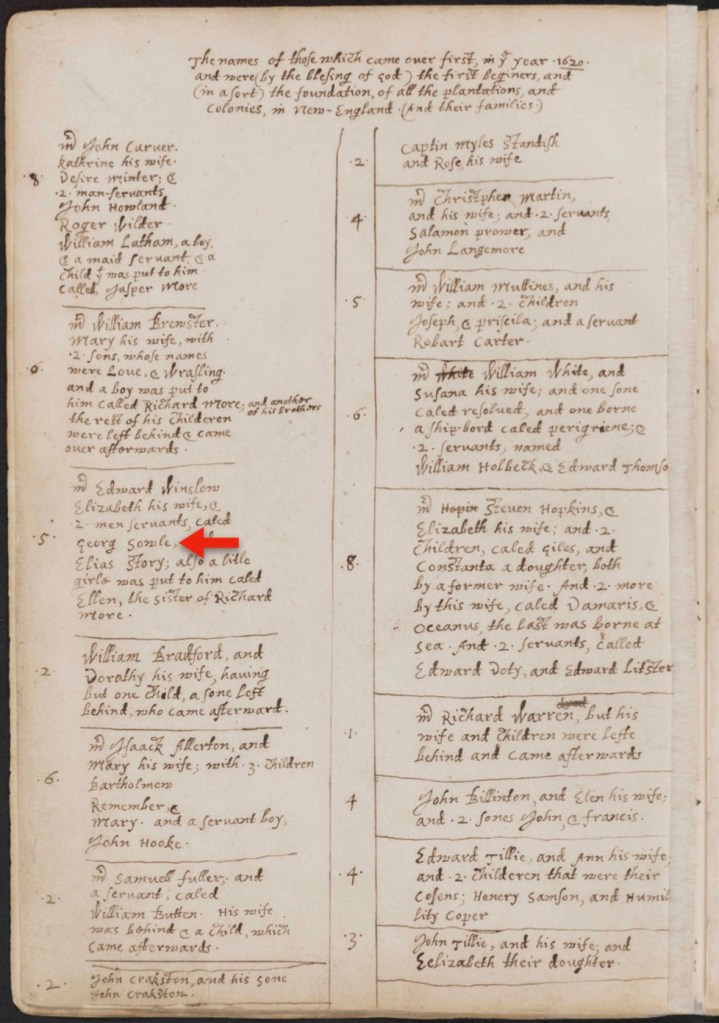
They arrived in Plymouth at the onset of a terrible winter and were woefully unprepared for their new environment. Within three months half of the people who had sailed, had died. Of the Winslow traveling group, Elias Story and Ellen More died first, and then Edward Winslow’s wife Elizabeth died. She was the last person to pass away in what colony Governor William Bradford called The Great Mortality.
The colony went through many struggles in the first year, but they received much help from the Native Peoples. This was especially true of the Wampanoag Confederacy who helped the settlers adapt and thrive in this new place. (2)

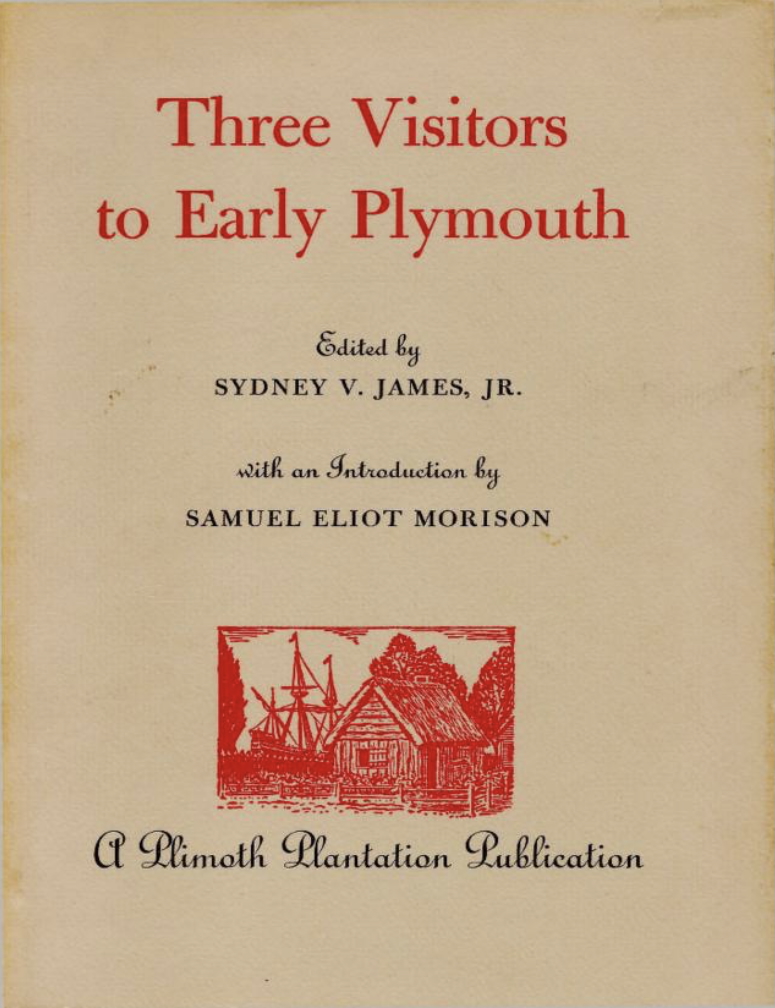
of early New England, including most of the settlements that began in 1623.
(Image courtesy of the Internet Archive).
The Common Cause of Labor
“Working communally — also known as the “common course of labor” — was a key part of the business model planned for Plymouth Colony. In the original terms and conditions for funding and planting the colony, all the colonists agreed to work together for seven years at commercial fishing, trading, and farming “making such commodities as shall be most useful for the colony.” At the end of the seven years, the terms and conditions dictated that the colonists would receive a share of the common stock including land and livestock.
After three years, Plymouth Colony’s governor William Bradford ended communal work as related to farming, because it caused too much internal conflict and resulted in poor corn harvests. Without a good corn harvest to feed the colony and without regular supplies from England, the colony would not survive. It is interesting to note, however, that this injunction affected only grain and other field production. All other group work — hunting, fishing, trading and defense – continued as before and seemingly without tension.” (Plimoth Patuxet)
George continued to do his work for the Winslow family as part of his commitment to the greater good. However, as one of the original settlers (the old-comers) within the Plymouth Colony, he was entitled a certain privileges which this status afforded him. One of these was the right to have land tenure.

“In 1623 a parcel of land was allotted to each man to till for his family and to maintain those who were exempt from agricultural employment because of other duties. Each family was given one acre per family member. In abandoning the “common course and condition” everyone worked harder and more willingly. The food problem was ended, and after the first abundant harvest under individual cultivation, the Pilgrims did not have to endure the meager rations of the first years. The plots assigned them permanently in 1624 became privately owned in 1627.” (Images of Old Hawaii)
“The people mentioned in the Division of Land came on the Mayflower (1620), the Fortune (1621), and the Anne (1623). A couple may have arrived on the Swan (1622) or the Little James (1623), but these were small ships carrying mostly cargo. The Division of Land is recorded in Volume XII of the ‘Records of the Colony of New Plymouth’ ” (The Plymouth Colony Archive Project – TPCAP)
At this time, one acre of land was distributed to each family member. George Soule received one acre of land “between the property of ‘Frances’ Cooke and ‘Mr. Isaak’ Allerton”, as he was a single man. (Wikipedia) (3)

(Image courtesy of Wikimedia Commons).
About The Division of Cattle
Th next thing we learn about George is gained from what is known as The 1627 Division of Cattle. “In the 1627 Plymouth division of cattle George Sowle, Mary Sowle, and Zakariah Sowle were the eleventh, twelfth and thirteenth persons in the ninth company.” (American Ancestors) From this we learn that George has married a woman named Mary and that they have a son whom they have named Zachariah. In total, as a family they received 3 cows and 2 goats.
So, who is Mary and where did she come from? (4)

The Arrival of The Anne and The Little James
It turns out Mary had been in Plymouth since 1623. George’s wife Mary presumably landed at Plymouth on the ship The Anne, on July 10, 1623. She leaves very few historical records. “Mary has been identified by many writers as Mary Buckett of the 1623 land division on that basis that no other Mary was available in the limited Plymouth population of the earliest years).”
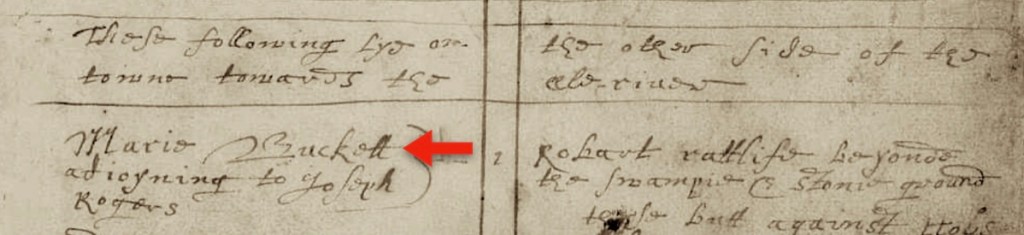
The “Anne and Little James [with about 90 new settlers] were the third and fourth ships financed by the London-based Company of Merchant Adventurers to travel together to North America in support of the Plymouth Colony, following Mayflower in 1620 and Fortune in 1621. Anne carried mostly passengers, while the much smaller Little James carried primarily cargo, albeit with a few passengers as well. Soon after arrival, the crew of Anne went to work loading whatever timber and beaver skins could be provided as cargo and sailed straight back across the Atlantic to home on September 10, 1623, carrying Edward Winslow on the first of several voyages back to England.” (Wikipedia, and the Mayflower Quarterly Magazine, Fall 2022)
It is interesting to note that Edward Winslow chose to return to England in 1623, after having left there fearing the wrath of King James I. It seems like Edward probably figured that he was no longer threatened. By this point in time King James “was often seriously ill during the last year of his life. He suffered increasingly from arthritis, gout, and kidney stones. He also lost his teeth and drank heavily. He died in Hertfordshire on March 27, 1625…” (Wikipedia)

Research has determined that Mary Buckett, was likely born “Mary Beckett of Watford, Hertfordshire, was baptized on 24 February 1605, the daughter of John and Ann (Alden) Beckett. It was hypothesized that Mary came on the ship Anne in the care of the Warrens, and that explains George and Mary Soule’s apparent association with the Warren family in the 1627 Division of Cattle. The Warren family was also from Hertfordshire.

(See footnotes).
Her father John Becket died in 1619, and no further record “of this Mary Beckett was located in Watford or any of the surrounding parishes; combined with the death of her father in 1619 and non-remarriage of her mother (still a widow in 1622), this further suggests custody of her was transferred to another family and she left the area.” (Caleb Johnson, Soule Kindred in America)
If you know Mayflower Pilgrim names and were wondering…
Researchers have not been able to yet connect her mother’s family surname of Alden, to the John Alden family of Plymouth.
Observation: With grandparents from this far back in time, we are grateful to know what we do know. Their birth records are highly probable, but not specific. We do know when they arrived at the Plymouth Colony, and we do know when they likely passed on. For now, we shall focus next on their family. (5)
Since These Beginnings…
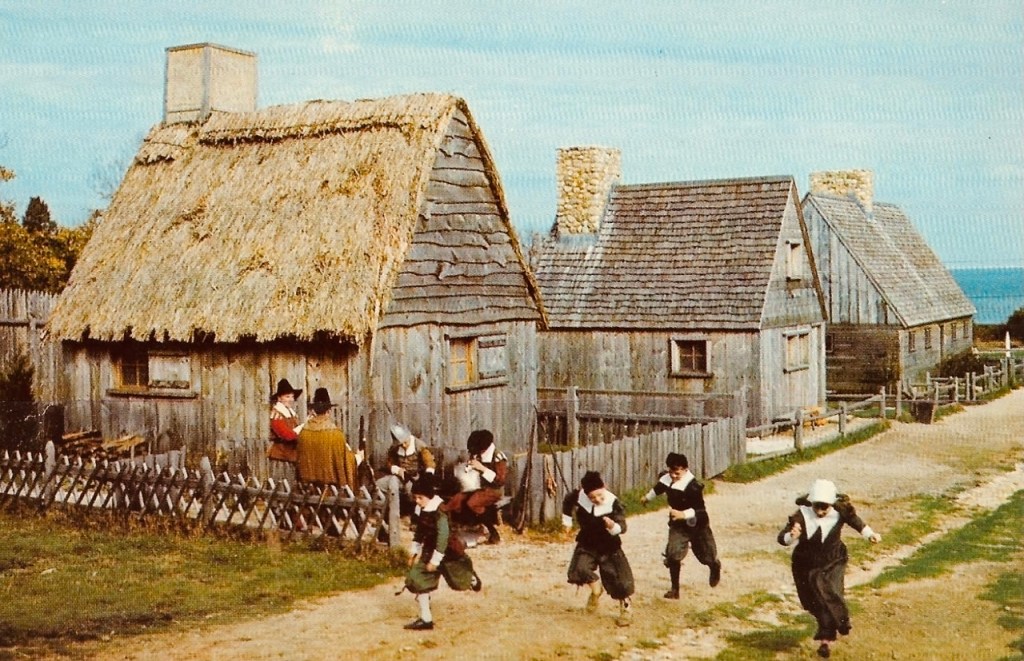
George and Mary had at least nine children over a period of about 24 years. The first three children were born at Plymouth:
- Zachariah Soule, born by 1627 — died before December 11, 1663. He was married before 1663 to Margaret Ford, who was possibly the daughter of William Ford. “He died during the 1663 Canadian Expedition [fighting Mohawk Indians] and his estate went to his brother John.” There were no children.
- John Soule, born March 8, 1631/32 — died before November 14, 1707 at Duxbury. Married first circa 1656 to Rebecca Simmons; they had nine children. Married circa 1678 second to Esther Delano Samson; they had three children.
- Nathaniel Soule, born circa 1637 — died at Dartmouth before October 12, 1699. Married circa 1680 to Rosamund Thorn.
The following six children were born at Duxbury:
- George Soule, born about circa 1639 — died before June 22, 1704. He married circa 1664 Deborah _____, who was possibly surnamed Thomas; they had eight children.
- Susanna Soule, born circa 1642 — died date unknown. She married circa 1661 to Francis West.
- Mary Soule, born circa 1643 — died at Plymouth after 1720. She married John Peterson by 1665; they had nine children.
- Elizabeth Soule, born circa 1644 — died at Middleboro, date unknown. She married Francis Walker by 1668.
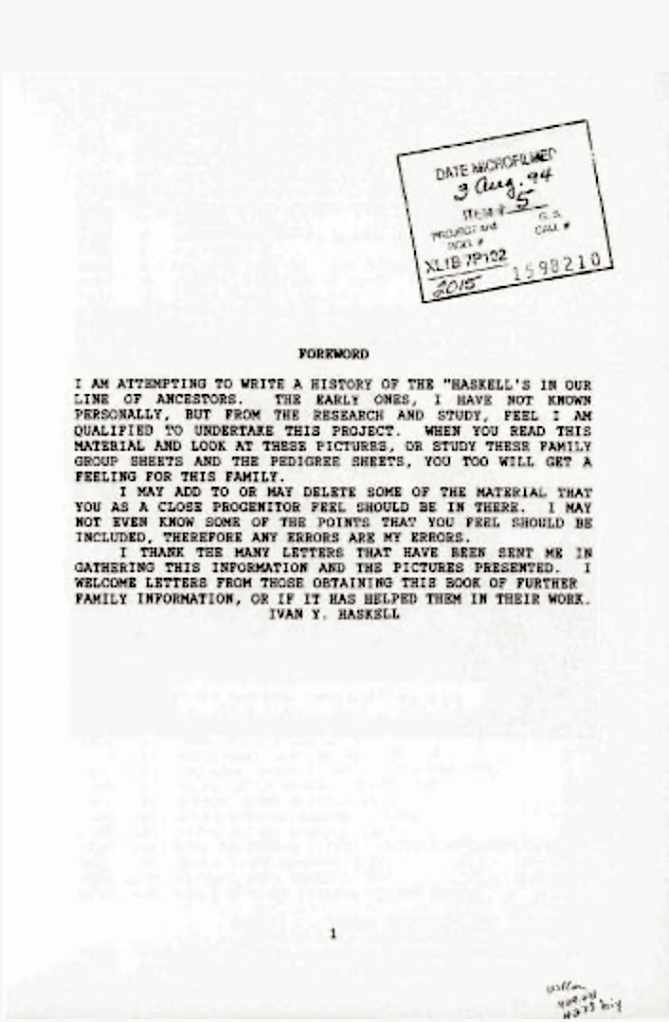
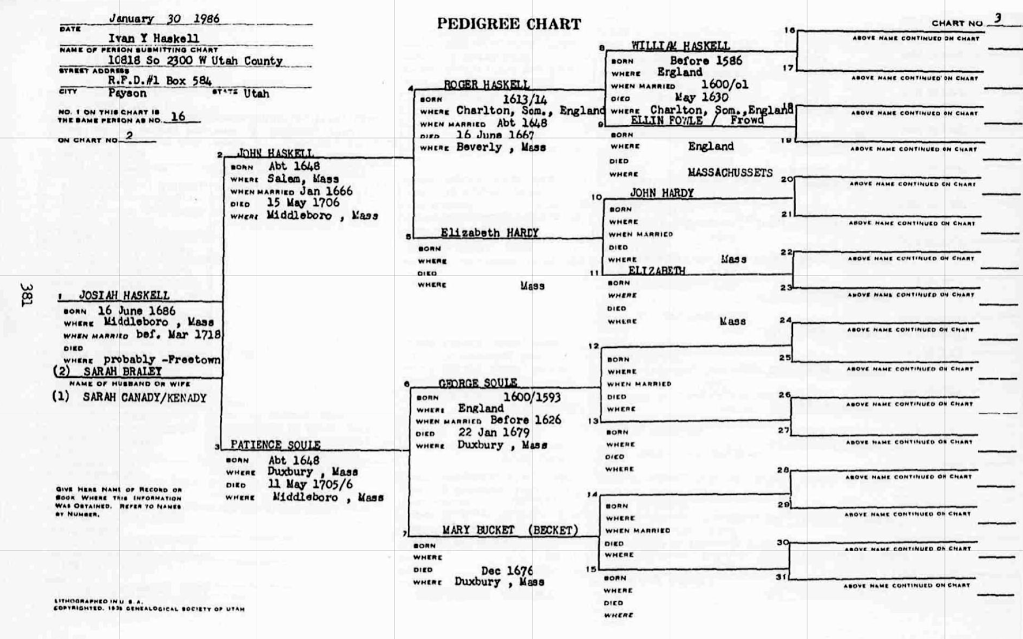
- Patience Soule, born circa 1648 — died at Middleboro, March 11, 1705/06. Married circa 1666 John Haskell in Middleboro; they had eight children. (We are descended from Patience).
- Benjamin Soule, born circa 1651 — died at Rhode Island, March 26, 1676, during King Phillip’s War. (6)
Duxbury / Ducksburrow / Duxbarrow
From Wikipedia, “Historic records indicate Soule became a freeman prior to 1632/33 (Johnson) or was on the 1633 list of freemen, [and that in 1633/34, he] “was taxed at the lowest rate which indicates that his estate was without much significance.” We read this to mean that he and Mary were doing fine, but that comfort and prosperity was still not yet achieved. At this point, they had a couple of children, a small amount of acreage for farming, some animals, and certainly, a vegetable garden. George and Mary Soule took their family and moved slightly north of the Plymouth Colony because this new area offered a chance at more prosperity. Nevertheless, George remained involved in the civic life of Plymouth.

If you recall from The Common Cause of Labor above, the “financial backers in London, [had] required [for the settlers] live together in a tight community for seven years. At the end of that term in 1627, land along the coast was allotted to settlers for farming. Thus, the coastline from Plymouth to Marshfield, including Duxbury, likely named after Myles Standish’s ancestral home of Duxbury Hall in Chorley, was parceled out, and many settlers began moving away from Plymouth.

From the mid-1630s forward, a series of small pieces of property were (mostly) granted to him, but there was also a sale completed by 1639. “The 1638 land records note that ‘one acre of land is granted to George Soule at the watering place…and also a parcel of Stony Marsh at Powder Point, containing two acres.’ The land at the ‘watering place’ in south Plymouth was sold the next year, possibly as he was living in Duxbury at that time and did not need his property in south Plymouth. In 1640 he was granted a meadow at Green’s Harbor—now Marshfield.” (Several sources, see footnotes).

“The General Court voted 5 March 1639/40 to pay these ‘Purchasers or Old Comers’ for the surrender of their [original land] patent. George’s interests in Old Dartmouth originated in 1652/3, when Plymouth Colony assigned ‘over one hundred thousand acres’ along Buzzards Bay to significant old-comers (i.e., persons ‘who arrived at Plymouth before 1627’), among them George.
This large coastal area, organized as Old Dartmouth in 1664, comprises today the towns of ‘Dartmouth, New Bedford, Westport, Fairhaven, and Acushnet, Massachusetts, and a strip of Tiverton and Little Compton, Rhode Island.’ Assignments were made shortly after 29 Nov 1652, the date on which the indigenous leader Wesamequen and his son Wamsutta ‘sold’ the land to William Bradford, Myles Standish, Thomas Southworth, John Winslow, John Cooke ‘and their associates, the purchasers or old-comers.’
Interests were then assigned to thirty-six old-comers, 7 Mar 1652/3, including George, who received an undivided one thirty-fourth share of the lands.‘As [the assignees] all had their residences in other parts of the colony, it was not expected that they would remove to this territory. It was merely a dividend in land, which cost them nothing to buy and [for a time] nothing in taxes to hold.’ George never settled in Old Dartmouth, but his sons George and Nathaniel did.” (WikiTree)
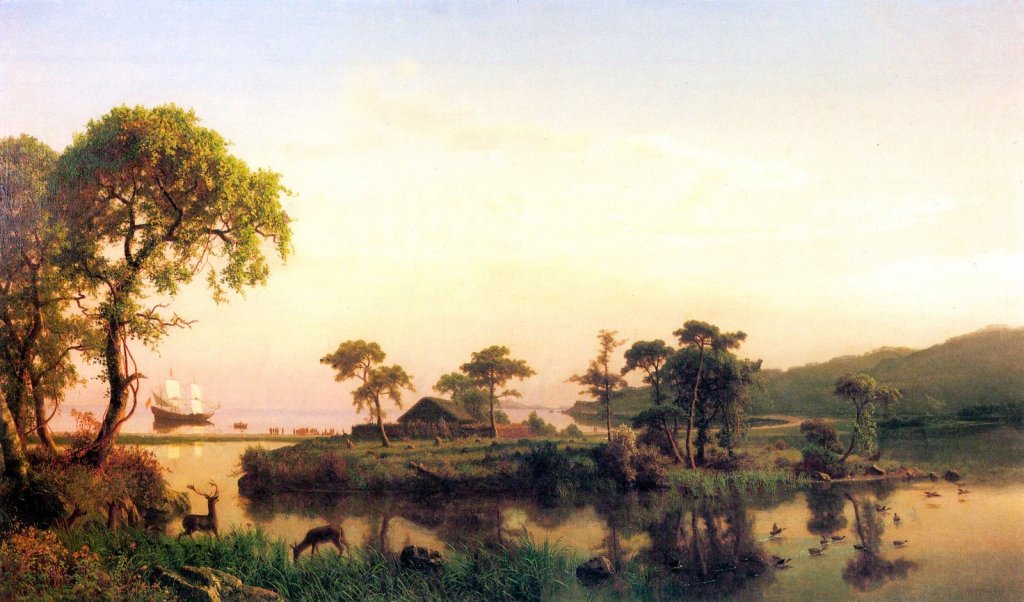
By the end of his life, his land holdings included property in several towns, those being Bridgewater, Dartmouth, Duxbury, Marshfield, Nemaskett, (i.e. Middleborough), and Plymouth. He distributed much of this land among his children during the last twenty years of his life. (7)

George’s Role In The Civic Life of The Plymouth Colony
“On 27 September 27, 1642 he appeared before the General Court as one of two ‘Deputies’ or representatives from Duxbury, Plymouth Colony having established representative government in 1639 after finding it no longer practicable to have all the colonists participate as individuals. The representatives were limited to terms of one year and denied the right of succession so we find George Soule serving each alternate year for many years, concluding in June 1654.”
“First in 1642 and last in 1662, he was assigned to at least five grand and petty juries.” George also served on important committees: one for granting land, in 1640 and 1645, a committee on magistrates and deputies in 1650, and another on boundaries in 1658.
We thought that this was curious. “On 20 October 1646 Soule, with Anthony Thatcher, was chosen to be on a ‘committee to draw up an order concerning disorderly drinking (smoking) of tobacco.’ The law, as drawn up, provided strict limitations on where tobacco could be smoked and what fines could be levied against lawbreakers.” (George was ahead of his time!)

As a defender of the colony —
In the 1630s, southeastern New England was rocked by the conflict of the Pequot War. We will be writing about this in the next chapter, but we note it here because George volunteered for Pequot War on June 7, 1637 as one of 42 men under Lieutenant William Holmes and Reverend Thomas Prence as chaplain. Despite this, “when they were ready to march . . . they had word to stay; for the enemy was as good as vanquished and there would be no need.” His name appears on “the 1643 Able to Bear Arms List, with George and his son Zachariah (listed as ‘Georg’ and ‘Zachary’). They appear with those bearing arms from Duxbury (written as ‘Duxbarrow’).” When his estate was evaluated, a gun was listed in the inventory valued at 15 shillings. (Several sources, see footnotes).
In the next chapter, we will take a look at George’s estate, his Will, and the behavior of some of his and Mary’s children. New England was changing with many more people pouring into the area whose aims were different from those of the Pilgrims. The character of some of these new immigrants contributed to tense circumstances, which then lead to ongoing wars with the Native Peoples. (8)
Following are the footnotes for the Primary Source Materials,
Notes, and Observations
(1) — one record
Animal husbandry
https://en.wikipedia.org/wiki/Animal_husbandry
Note: For the data.
For a Time, An Indentured Servant
(2) — three records
State Library of Massachusetts Digital Collections
Of Plimoth Plantation: manuscript, 1630-1650
https://archives.lib.state.ma.us/items/db0e9f79-477c-4a4c-979b-359c2be1d4ad
The actual page 530 is here:
https://archives.lib.state.ma.us/server/api/core/bitstreams/4d69e338-cc1b-4eda-b2ff-57bfbbb5c6ed/content
Note 1: For the original document on which George Soule is listed as a passenger on the Mayflower.
Note 2: The document is digitized and available as a .pdf download at the above link, file name: ocn137336369-Of-Plimoth-Plantation.pdf
Digital page: 530/546. First page, left column at center, with the Edward Winslow family.
Three Visitors to Early Plymouth
by Sydney V. James, Samuel Eliot Morison, Isaack de Rasieres; John Pory; Emmanuel Altham
https://archive.org/details/plymtuxet005/plymtuxet005_epub/
Digital page: 2/133
Note: For the map image.
The Common Cause of Labor
(3) — six records
Plimoth Patuxet Museums
As Precious As Silver
https://plimoth.org/yath/unit-3/as-precious-as-silver
Note: For the text.
Dividing the Land and Development of Towns
https://imagesofoldhawaii.com/wp-content/uploads/Dividing-the-Land-and-Development-of-Towns.pdf
Note: For the text.
Plymouth Colony 1623 Division of Land document
Massachusetts, Land Records, 1620-1986 > Plymouth > Deeds 1620-1651 vol 1
https://www.familysearch.org/ark:/61903/3:1:3QS7-89Z7-5Z3H?i=7&wc=MCBR-538%3A361612701%2C362501301&lang=en
Note 1: One acre of land for George Soule, as an unmarried man.
Note 2: This file is available at two locations. As indicated above, and also here:
https://www.familysearch.org/ark:/61903/3:1:3QS7-89Z7-5Z3H?i=7&wc=MCBR-538:361612701,362501301&lang=en
Digital page: Image 8 of 239, Lower portion of page.
The Plymouth Colony Archive Project
Plymouth Colony Division of Land, 1623
http://www.histarch.illinois.edu/plymouth/landdiv.html
Note: For the text. Additionally, “In 1623, the Pilgrims divided up their land. The people mentioned in the Division of Land came on the Mayflower (1620), the Fortune (1621), and the Anne (1623). A couple may have arrived on the Swan(1622) or the Little James (1623), but these were small ships carrying mostly cargo. The Division of Land is recorded in Volume XII of the ‘Records of the Colony of New Plymouth’, and reprinted in the ‘Mayflower Descendant’, 1:227-230. Each family was given one acre per family member.”
George Soule (Mayflower passenger)
https://en.wikipedia.org/wiki/George_Soule_(Mayflower_passenger)
Note: For the text.
About The Division of Cattle
(4) — three records
Animals Resting in the Pasture
by Paulus Potter, circa 1650
File:Paulus Potter – Animals Resting in the Pasture.jpg
https://commons.wikimedia.org/wiki/File:Paulus_Potter_-_Animals_Resting_in_the_Pasture.jpg
Note: For the painting image.
American Ancestors 2020
George Soule
https://mayflower.americanancestors.org/george-soule-biography
Note: For the text.
Plymouth Colony 1627 Division of Cattle
Massachusetts, Land Records, 1620-1986 > Plymouth > Deeds 1620-1651 vol 1
https://www.familysearch.org/ark:/61903/3:1:3QS7-89Z7-5ZQL?i=33&wc=MCBR-538:361612701,362501301&lang=en
Book page: 56, Digital page: Image 34 of 239, Upper portion of page.
Note: For the image.
The Arrival of The Anne and The Little James
(5) — seven records
The Plymouth Colony Archive Project
Plymouth Colony Division of Land, 1623
http://www.histarch.illinois.edu/plymouth/landdiv.html
Note: For the text.
Plymouth Colony 1623 Division of Land document
Massachusetts, Land Records, 1620-1986 > Plymouth > Deeds 1620-1651 vol 1
https://www.familysearch.org/ark:/61903/3:1:3QS7-99Z7-5ZZ1?i=10&wc=MCBR-538%3A361612701%2C362501301&lang=en
Digital page: Image 11 of 239, Lower portion of page.
Note: One acre of land for Marie Buckett.
Mayflower Quarterly Magazine ( Vol 88 No 3) Fall 2022
by General Society of Mayflower Decendants
https://archive.org/details/mayflower-quarterly-magazine-vol-88-no-3-fall-2022/page/20/mode/2up
Book pages: 20-23, Digital pages: 22-24/28
Note: For the text.
Continuation of Research into the Origin of Mary Buckett,
early Plymouth colonist and wife of Mayflower passenger George Soule
By Caleb H. Johnson, With English research assistance from Simon Neal
Funded by the Soule Kindred in America, 2015
https://www.sherylaperry.com/histories/Caleb%20Johnson%202016%20Research%20Summary%20on%20Mary%20Bucket.pdf
Note: For the text.
James VI and I
https://en.wikipedia.org/wiki/James_VI_and_I
Note: Foe the text regarding the death of King James I.
Vital – England, Births and Christenings, 1538-1975
Mary Becket
https://www.familysearch.org/ark:/61903/1:1:J973-XY2?lang=en
The actual Watford Parish record is here:
https://www.familysearch.org/ark:/61903/3:1:33SQ-GRQK-16Z?i=72&lang=en
Film # 004946648
Digital page: 73/610, The entry is located on the right page, left column, in about the center.
Note: This document is very difficult to read.
Since These Beginnings…
(6) — seven records
Hip Postcard
Massachusetts, Plymouth – Children In Pilgrim Costume – [MA-786]
https://www.hippostcard.com/listing/massachusetts-plymouth-children-in-pilgrim-costume-ma-786/29106265
Note: For the image.
For their childrens’ birth, death, and marriage records, we combined data from these two sources:
The Mayflower Society
The Soule Family, Passenger Profile
https://themayflowersociety.org/passenger-profile/passenger-profiles/the-soule-family/
Note: Note that the birth information for George Soule Sr., on this file is now considered out of date due to Y-DNA data research.
and
American Ancestors 2020
George Soule
https://mayflower.americanancestors.org/george-soule-biography
Note: For the text regarding his childrens’ births, and deaths, and marriages.
Notes for the next two entries below:
There are strong arguments based upon the evidence, that Patience Soule’s likely birth year is actually 1648. (See WikiTree and the FamilySearch Library footnotes).
WikiTree
George Soule Sr (abt. 1601 – bef. 1680)
https://www.wikitree.com/wiki/Soule-33
Note: For the text about Patience Soule’s probable birth year.
“Birth — Arriving at an estimated birth year, is not an exact science. At some times in the past Patience, the daughter of George Soule and Mary Bucket, has been placed earlier in the birth order of George’s children, hence 1630 in Plymouth. An article on John Haskell her husband in the American Genealogist also says born 1639-1640, but if you take the statement that she died in 1706 after 40 years of marriage, that makes her married about 1666. If she were married at 18, she would have been born in 1648. The newer Mayflower Society publications have Patience listed as the next to last child, and born about 1648. Her last child was born 1691, making her aged 43 at this birth [a usual age for birth of last child–after a long series of children].”
FamilySearch Library
400 Years With Haskells
by Ivan Youd Haskell
https://www.familysearch.org/library/books/records/item/559000-redirect#page=1&viewer=picture&o=info&n=0&q=
Notes: Family Search Identifier #692782, for the text and chart.
Patience (Soule) Haskell (abt. 1648 – 1706)
https://www.wikitree.com/wiki/Soule-82
Note: Referenced for information about Patience Soule’s birth year.
Westernlady’s Weblog
Our Pilgrim Ancestor George Soule
https://westernlady.wordpress.com/2012/11/11/our-pilgrim-ancestor-george-soule/
Note: For the text regarding Zachariah Soule’s death on the 1663 Canadian Expedition.
Duxbury / Ducksburrow / Duxbarrow
(7) — nine records
George Soule (Mayflower passenger)
https://en.wikipedia.org/wiki/George_Soule_(Mayflower_passenger)
Note: For the text.
Records of the Colony of New Plymouth in New England
by New Plymouth Colony; Nathaniel Bradstreet Shurtleff, David Pulsifer
https://archive.org/details/recordsofcolonyo0102newp/page/n5/mode/2up
Book page: 3-4, Digital pages: 24-26/432
Note: ‘George Sowle’ listed as being a Freeman
Duxbury, Massachusetts
https://en.wikipedia.org/wiki/Duxbury,_Massachusetts
Note: For the text.
Plymouth Colony July 1639 Soule Duxbury property
Massachusetts, Land Records, 1620-1986 > Plymouth > Deeds 1620-1651 vol 1
https://www.familysearch.org/ark:/61903/3:1:3QS7-99Z7-5CYK?i=71&wc=MCBR-538:361612701,362501301&lang=en
Digital page: 72/239, Top of page.
Note: For the record of 22 property deeds during his lifetime.
WikiTree
George Soule Sr (abt. 1601 – bef. 1680)
https://www.wikitree.com/wiki/Soule-33
Note: For the text about the Old Dartmouth property and the deed image.
Old Dartmouth
https://en.wikipedia.org/w/index.php?title=Old_Dartmouth&oldid=1253342937
Note: For the 1652 deed image.
Gosnold at Cuttyhunk, 1602
by Albert Bierstadt
File:Gosnold at Cuttyhunk.jpg
https://commons.wikimedia.org/wiki/File:Gosnold_at_Cuttyhunk.jpg
Note: For the painting image.

The New England Historical and Genealogical Register
Sketches of the Early History of Middleborough (Specific chapter)
by Waters, Henry Fitz-Gilbert Watres), and the New England Historic Genealogical Society, 1848
https://archive.org/details/newenglandhistor001wate/page/334/mode/2up
Book page: 335, Digital page: 334/456
Note: For the excerpted book text.

Mayflower Deeds and Probates, 1600-1850
Mayflower Deeds and Probates
https://www.ancestry.com/search/collections/3223/records/13373
Book page: 406, Digital page: 418/671
George’s Role In The Civic Life of The Plymouth Colony
(8) — four records
George Soule (Mayflower passenger)
https://en.wikipedia.org/wiki/George_Soule_(Mayflower_passenger)
Note: For the text.
Raleigh’s First Pipe in England
by Artist unknown, circa 1859
File:Raleigh’s first pipe in England.jpeg
https://commons.wikimedia.org/wiki/File:Raleigh%27s_first_pipe_in_England.jpeg
Note: For the image, “An illustration included in Frederick William Fairholt’s Tobacco, its history and associations”.
American Ancestors 2020
George Soule
https://mayflower.americanancestors.org/george-soule-biography
Note: For the text.
Westernlady’s Weblog
Our Pilgrim Ancestor George Soule
https://westernlady.wordpress.com/2012/11/11/our-pilgrim-ancestor-george-soule/
Note: For the text.

 Our Ancestors, Our Narratives


