This is Chapter Six of nine. The settlement of the Isaac Doty family in Oyster Bay, Long Island was the first step in their journey away from the Plymouth Colony. Time brought even more change… In this chapter we will be focusing on the son Joseph Doty Sr. and his wife Sarah (whose last name is unknown), and their family.
Seascape
In the same way that a wave returns the borrowed grains of a sandcastle back to their beach — once gone, we only see the newly smoothed surface. And like that, we know very little about the life of our ancestor Joseph Doty Sr., because records about his life are very scant, or perhaps, they have not yet been discovered.
Despite this, we do know a few things about his lifetime: He lived his entire life in Oyster Bay, Long Island, the Province of New York. He married a woman named Sarah (maiden name unknown), and he was the father of four children. Joseph died remarkably young, probably around the age of 36. When he died, his wife Sarah was pregnant with their fourth child. We know these things from the only meaningful record we have from this portion of his life — his 1716 Will.
Author Ethan Allan Doty tells us in his book, The Doty-Doten Family in America,
“His will is recorded at Jamaica, Queens Co., N. Y. , signed Joseph Doughty of Oyster Bay, made July 7, 1716, and devises his estate to his eldest son Joseph, to his son Isaac, to his daughter Sarah, and to his wife Sarah, and provides for a child in case his wife be with child.” It seems likely that his Will was written in haste, so something must have been going on with either his health or perhaps he’d been in a life threatening accident. We do not know.
We can infer from this document that his children were all born in Oyster Bay, and that their names are:
- Sarah Doty, born about 1706, “She married John Jackson, probably the son of James Jackson and Rebecca Hallett.”
- Joseph Doty Jr., born about 1708,
(We are descended from Joseph Jr.). - Isaac Doty, born 1711, and who probably died young
- Elizabeth Doty, born about 1716, most likely after Joseph Sr.’s death. “[She] Married there 1730, Daniel Dunning (or Downing). Marriage license issued to Daniel Dunning and Elizabeth Doty of Queens County,
N. Y., August 4, 1730”.
Interestingly, the document also mentions receipts, which are “When an executor or administrator paid debts owed by the estate and collected money from those who owed the deceased person, receipts were issued which were filed with the annual accounting and final settlement. Among these will be receipts signed by the heirs as they receive money from the estate”. (Family Search)
- His widow Sarah, received receipts for her share of above, January 29, 1717. From this date it is safe to assume that Joseph Sr. most likely died shortly after writing his Will.
- Sarah (Doty) Jackson, wife John Jackson, received receipts May 7, 1724.
- Joseph Doty Jr. receipts for 178£*, in full. May 6, 1729.
- Elizabeth Doty received receipts for her share, July 24, 1736.
*Observation: It is certain that Joseph Jr. received this money from his late father’s estate around the time of his 21st birthday. The value of 178£ calculates to over $44,500 dollars in today’s currency, (see footnotes). Cha-ching!
It also seems that property Joseph Sr. owned in Oyster Bay was eventually sold, about two years after he died. On “July 30, 1718, Jervis Mudge, Thomas Cirby and Joseph Carpenter, executors of Joseph Doty, deceased, sell to Isaac Doty, Jr., certain land at Oyster Bay, which is an equal one-third of land given by their father, Isaac Doty, Sr., to his three sons, Joseph, Jacob and James.” (1)

Manhattan Calling
We know that Joseph Jr. was soon living in Manhattan, and that he didn’t have to travel very far to get there. Why was he there? Of course, we don’t know for certain. Nevertheless, receiving the equivalent of $44,500 plus dollars when you are aged 21 years in Colonial America, certainly eased this transition.
In those days, despite the Dutch having first colonized the area, the population was a mixture of many different types of people. The English population eventually came to dominant governance. Wikipedia tells us, “By 1700, the Lenape population [Native Peoples]of New York had diminished to 200. The Dutch West Indies Company transported African slaves to the post as trading laborers used to build the fort and stockade, and some gained freedom under the Dutch. After the seizure of the colony in 1664, the slave trade continued to be legal. In 1703, 42% of the New York households had slaves; they served as domestic servants and laborers but also became involved in skilled trades, shipping and other fields. Yet following reform in ethics according to American Enlightenment thought, by the 1770s slaves made up less than 25% of the population”.
It was into this colonial admixture of European Dutch and English immigrants, and enslaved peoples, that Joseph Jr.had moved. (2)
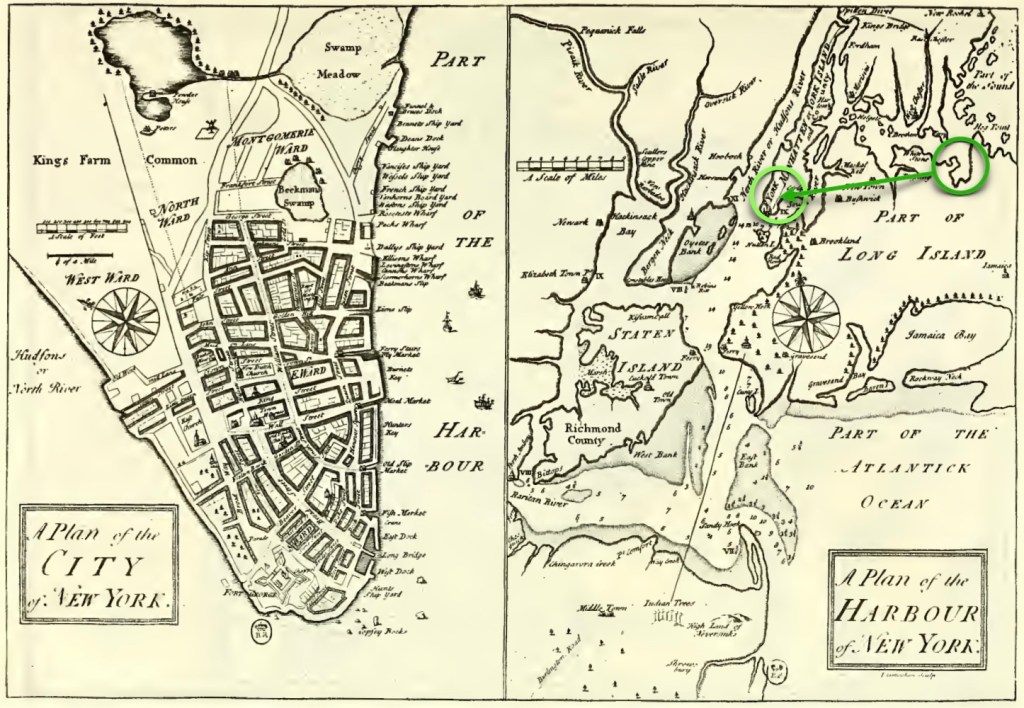
Plate 27-A from, A Plan of the City of New York (and) A Plan of the Harbour of New York
by Author unknown, circa 1730-35, from Bibliotheque Nationale, Paris, Print Department.

by David Grim, circa 1742-44, from from The New York Historical Society.
All three map plates shown above are derived from the book, The Iconography of Manhattan Island, Volume 1, by I. N. Phelps Stokes, circa 1915.
The Burgher Guards
The Burgher Guard of Manhattan, also known as the Burgher Militia, was a citizen militia organized by the Dutch West India Company in 1640 to protect New Amsterdam (Manhattan) from external threats. These local militias were utilized to supplement the presence of the Dutch garrison, and were known as the Burgher Guards. These citizen-soldiers, composed of adult male residents, were responsible for maintaining order and defending the colony. Membership in the Burgher Guard was a sign of citizenship and was initially restricted to certain residents, excluding indentured servants and enslaved Africans.
After the English takeover in 1664, the Burgher Guard was eventually absorbed into the English colonial militia system, with the burgher class-right transitioning to the English concept of freemanship. (3)
Captain Charles Laroex’s Company of New York City Militia in 1738
The world of 1730s Manhattan was still a far-flung New England outpost of the British Empire, and despite a century of colonization, the English were still trying to figure out how to appropriately govern the area. With regard to defense, it was not practical for England to maintain standing armies throughout the colonies. So, it makes sense that they carried over one of the same systems that they already knew —that of forming local militias.
These groups were a community-based force, with Companies drawn from specific geographic areas within towns. They varied in size, with a minimum of 24 men to form a company and larger companies including officers like captains, lieutenants, and sergeants. Their main function included maintaining order, providing local defense, and assisting in emergencies. The militias also played a role in town governance, with records of town meetings reflecting militia-related concerns such as fence heights, road maintenance, and care for the poor.
When we discovered that our 6x Great Grandfather Joseph Doty, Jr. had been cited repeatedly by other researchers as being a private in Captain Charles Laroex’s Company of New York City Militia in 1738, but no one had provided any support for this intriguing fact. We searched high-and-low to verify this. A big concern was the fact that the 1911 fire at the State Library in Albany, New York had destroyed many colonial era records. “The English volumes of Colonial Manuscripts included censuses, assessment lists, muster rolls, and other items useful to genealogists, almost all of which were destroyed by the fire.” (See footnotes, NYG&B) However, despite our concerns, diligence finally paid off.

We first found confirmation that the Laroex Company did indeed exist. It is mentioned in an August 19, 1917 The Sun newspaper article, “…But the old burgher spirit could not be ‘snuffed out’, and as late as 1738 the Independent companies in this city were almost exclusively Dutch American. They were Beekmans’s, Laroex’s, Stuyvesant’s, Richard’s, Van Horn’s and Cuyler’s and the Blue Artillery”. (The Sun) Digging further, we found a book at the Library of Congress, published in Amsterdam in 1850, titled Breeden Raedt Aen De Vereenighde Nederlandsche Provintien. (It had been translated from the original Dutch). This book contained many records of 1738 Manhattan, as well as the full rosters the various militia companies. (4)

The Fires and Riots of 1741...
As we had written about the population of enslaved people in Manhattan at that time, “By the 1740s, 20% of the residents of New York were slaves, totaling about 2,500 people… After a series of fires in 1741, the city panicked over rumors of its black population conspiring with some poor whites to burn the city. Historians believe their alarm was mostly fabrication and fear, but officials rounded up 31 black and 4 white people, who over a period of months were convicted of arson. Of these, the city executed 13 black people by burning them alive and hanged the remainder of those incriminated.”

Comment: That text about the 1741 riots and lynch mobs is difficult to read, but sometimes we see that there is much cruelty in history. We don’t know if Joseph Doty was still involved with the Laroex Company militia at that time, or quite honestly, if he even was still living in Manhattan by 1741. If he was there, we wonder if perhaps these events influenced his decision to leave the city? (5)
In due course, he moved up the Hudson River to the community of Nine Partners — in the Crum Elbow Precinct of Duchess County, and by 1744 he was married.
Before we leave Manhattan and the Oyster Bay area, we thought it would be very interesting to take a look at the history of oysters in New York Harbor. It’s not with every ancestor that you get to delve into something so unique!

Oysters and New York’s Past
It might seem obvious, but why was the town which Isaac Doty and his family lived in called Oyster Bay?
In 1609, when English explorer Henry Hudson sailed into the harbor of what later became known as New York City, he “could not have seen… [that there] were 220,000 acres of oyster beds below the surface on the harbor floor, constituting nearly half of the oysters in the entire world”. Later in time, on nearby Long Island, the early Dutch settlers referred to the area as Oyster Bay due to the vast number of high-quality oysters native to the region. Oysters became a staple of the colonial New York diet. (Untapped New York)
It was the Lenape people [Native Peoples] who showed the settlers how to harvest oysters from the harbor. “The local Lenape had been living off the reefs for generations. They would open the oyster shells by wrapping the entire oyster in seaweed before tossing them into the fire”.

“Oysters were always popular and in high demand. Literal tons of oysters were eaten everyday. Worried that the supply might not last, the local government introduced a conservation law in 1715, banning the harvest of oysters during the months without an R, which lasts from May to August. The popularity of New York oysters [continued to] spread across the nation and to Europe, where large shipments of oysters were being sold. In order to meet the demand, the conservation law from 1715 was lifted in 1807, prompting the unsustainable harvesting of the oyster reefs. The supply was still not enough to meet the demand, and so oysters from Long Island, Connecticut, and New Jersey were brought into New York. These oysters were able to be sold as New York oysters because they were in the harbor for a short amount of time”. (Untapped New York, and the Billion Oyster Project)
Historically, oysters were deeply woven into the life of East Coast cities, as Charles Dickens described enthusiastically in his 1842 travelogue American Notes. He then “describes cellars serving oysters, pretty nigh as large as cheese-plates”. (BBC)
Eventually, pollution in New York Harbor decimated the viability of the oyster harvest. Recent efforts to revitalize the harbor and bring back the native oysters is ongoing. “That thriving population of oysters is long gone. But over the past 10 years, one of New York’s most ambitious rewilding projects has sought to revive its once-famous oysters, adding 150 million larvae across 20 acres of harbour since its beginnings. The goal: restoring the city’s coastal habitat, improving water quality and educating the public.” (BBC) (6)

and the Province of Quebec, by Thomas Pownall, and Samuel Holland, circa 1776.
(Image courtesy of the Library of Congress).
This map documents the family’s transition from Oyster Bay, Long Isand, to the Crum Elbow Precinct in Dutchess County, to the hamlet of Lansingburg Village in Rensselaer County.
Saying Farewell to Oyster Bay
When you eat a well prepared fresh oyster it should taste a bit like the sea… just a bit salty (and delicious!) We say this because, when we have been researching out ancestral lines, occasionally we come across an intriguing bit of family folklore that sometimes leads us down a new and exciting path. However, sometimes a fanciful story can lead us down a rabbit hole. Such is the story with a legend we encountered in the Doty-Doten book (DDFA) , and this story must be taken with a very large grain of salt. Like your food, you can immediately tell when it is just too salty.
Wikipedia tells us that “To take something with a ‘grain of salt’ or ‘pinch of salt’ is an English idiom that suggests to view something, specifically claims that may be misleading or unverified, with skepticism or not to interpret something literally. In the old-fashioned English units of weight, a grain weighs approximately 65 mg, which is about how much table salt a person might pick up between the fingers as a pinch.

The phrase is thought to come from Pliny the Elder’s Naturalis Historia, regarding the discovery of a recipe written by the Pontic King Mithridates to make someone immune to poison. One of the ingredients in the recipe was a grain of salt. Threats involving poison were thus to be ‘with a grain of salt,’ and therefore, taken less seriously.”
Ethan Alan Doty had written this:
“The legend in the family was that Elsha Van Schaick was daughter and sole heir of an Amsterdam banker, and that she eloped with Francis De Long, who was a French officer. This story made it difficult to obtain full items [property?] of some branches, who were suspicious that they were to be defrauded of their share of valuable estate.”
Comment: What a great story! Even so, it’s just not true. We extensively researched the Van Schaick family. The closest this branch ever came to anything to do with banking was long after Lucretia’s lifetime. Another branch of the family is actually featured in a prestigious vanity book from 1881 titled, Contributions to the History of Ancient Families of New Amsterdam and New York, by Edwin R. Purple.* We suspect that this book was printed for Gilded Age Manhattan families who swirled on dance floors in New York High Society circles.
* The perfect name for a writer of that genre. See “Quote or No Quote?” in the footnotes at the end of this chapter.
The Van Schaicks were indeed very early in New Amsterdam, and then Manhattan. Some branches of the family went into the Hudson River Valley, therefore the history truly develops from what branch of the family you belong within. Then, what was going on with this tale of a banking heiress and a French army officer? We came upon a well researched file about Lucretia’s father Frans DeLang, which covers this family legend. It states:
“In discussing the marriage of Joseph Doty and Geesje (Lucretia) De Long, the Doty Genealogy gives her parents as Frans and ‘Elsha’, the latter an obvious error and presumably confusion with Maritje’s youngest daughter Egge or Echa.” Lucretia’s mother was named Maritje Van Schaick.
“The story is also another of the 19th century attempts to assign a French heritage to a Dutch family. Frans was not a French officer, he was born to Dutch parents and in the new world. I doubt if Claas Van Schaick was an Amsterdam banker before emigration, and Maritje was not likely his sole heir.”
“An even more inane version appears in the History of Danby (Vermont) which says Lucretia Doty was daughter of ‘Hielcha DeLong, the wife of Francis DeLong, a French officer. They say she let herself down from a two story building in Amsterdam in 1780, came to America, and settled on Long Island.’ So this puts American-born Frans in Amsterdam and eloping at the age of 99! I hope he didn’t hold her ladder.”
For an extensive history of the De Lange /De Lang / De Long family, please see the footnote for Frans DeLang at the end of this chapter. It is written by Delong family descendant Roy Delong, basing his observations on, “…the following notes from the late John D. Baldwin (50+ year Delong researcher). (Note various spellings of surname in this text…”). (7)
In the next chapter, we follow the Joseph Doty Jr. as he leaves Manhattan, and first ventures forth into Dutchess County. Then with his new wife Geisje ‘Lucretia’ De Long and their family, they settle in the oddly-named Crum Elbow Precinct in Dutchess County. Eventually, Life then takes them still further in their northward trek up the Hudson River Valley, and finally into Rensselaer County.
Following are the footnotes for the Primary Source Materials,
Notes, and Observations
Seascape
(1) — seven records
Fine Art America
Seascape Near Heijst
painting by Willem Roelofs, 19th century
https://fineartamerica.com/featured/seascape-near-heijst-willem-roelofs-1822-1897.html
Note: For the seascape image.
(DDFA)
Doty-Doten Family in America
Descendants of Edward Doty, an Emigrant by the Mayflower, 1620
by Ethan Allan Doty, 1897
https://archive.org/details/dotydotenfamilyi00doty/page/500/mode/2up
Book pages: 501, Digital pages: 500 /1048
and
https://archive.org/details/dotydotenfamilyi00doty/page/504/mode/2up?view=theater
Book pages: 505, Digital pages: 504 /1048
Note: For the texts.
U.S. Probate Records Class Handout
Under the subtitle: Distributing the Estate
https://www.familysearch.org/en/wiki/U.S._Probate_Records_Class_Handout
Note: To explain the role of receipts in a Colonial American Will.

Pounds Sterling to Dollars: Historical Conversion of Currency
https://www.uwyo.edu/numimage/currency.htm
Note: For the calculation of the inheritance value for Joseph Doty, Jr. from his late father’s estate when he was 21 years old.
Joseph Doty
in the Mayflower Births and Deaths, Vol. 1 and 2
https://www.ancestry.com/search/collections/3718/records/37992?tid=&pid=&queryId=ab22e56d-3bb2-4c0f-b15c-cffa1c314979&_phsrc=ylI10&_phstart=successSource
Book page: 422, Digital page: 434/537
Note: For confirmation of birth date and his Will date.
Joseph Doty
in the U.S., Find a Grave Index, 1600s-Current
https://www.ancestry.com/search/collections/60525/records/137781328
and
Joseph Doty
in the Global, Find a Grave Index for Burials at Sea and other Select Burial Locations, 1300s-Current
https://www.ancestry.com/search/collections/60541/records/182712503
Joseph Doty
https://www.findagrave.com/memorial/172015138/joseph-doty
Note: For the data.
Manhattan Calling
(2) — four records
A Panoramic View of New York Harbor As Seen From Long Island, 1727
by Henry Popple, and originally engraved by William Henry Toms
(who also signed it) & R.W. Seale, issued in 1733
https://en.wikipedia.org/wiki/History_of_New_York_City#/media/File:New_York_Harbor_Waterfront_1727_panorama_map.jpg
Note: This is an inset from A Map of the British Empire in America with the French and Spanish Settlements adjacent thereto…
History of New York City
https://en.wikipedia.org/wiki/History_of_New_York_City
Note: For the text.

The three map plates in this chapter are derived from the book,
The Iconography of Manhattan Island, Volume 1
by I. N. Phelps Stokes, circa 1915 —
Plate 27-A
Bibliotheque Nationale, Paris, Print Department
A Plan of the City of New York (and) A Plan of the Harbour of New York
by Author unknown, circa 1730-35
https://upload.wikimedia.org/wikipedia/commons/8/84/IA_Query_”sponsor-(Sloan)_date-(1000_TO_1925)_publisher-((New_York)_OR_Chicago_OR_Jersey_OR_Illan)”_(IA_iconographyofman01stok).pdf
Book pages: 260-261, for map explanation
Note: For the map.
Plate 32-A
from The New York Historical Society
A Plan of the City and Environs of New York [Grim’s General Plan]
by David Grim, circa 1742-44
https://upload.wikimedia.org/wikipedia/commons/8/84/IA_Query_”sponsor-(Sloan)_date-(1000_TO_1925)_publisher-((New_York)_OR_Chicago_OR_Jersey_OR_Illan)”_(IA_iconographyofman01stok).pdf
Book pages: 270-271, for map explanation
Note: For the data.
The Burgher Guards
(3) — one record
New Amsterdam Stories
What happened to the burgher right after the English invasion in 1664?
https://newamsterdamstories.archives.nyc/english-invasion#:~:text=The burgher right continued to, a sign of municipal identity.
Note: For research on the text.
Captain Charles Laroex’s Company of New York City Militia in 1738
(4) — four records
Journal of the American Revolution
Colonial Militia on the Eve of War, Prewar Conflict (< 1775)
by Michael Cecere
https://allthingsliberty.com/2025/04/colonial-militia-on-the-eve-of-war/
Note: For research on the text.
(NYG&B)
New York Genealogical & Biographical Society
The 1911 State Library Fire And Its Effect On New York Genealogy
by Harry Macy, Jr.
https://www.newyorkfamilyhistory.org/knowledgebase/1911-state-library-fire-and-its-effect-new-york-genealogy
Note: For the text.

August 19, 1917 edition of The Sun newspaper.
NYS Historic Newspapers
The Sun, 19 August 1917
Article: Great War Marks End of Burgher Guards
https://www.nyshistoricnewspapers.org/?a=d&d=suna19170819-01.1.72&e=——-en-20–1–txt-txIN———-
Newspaper page: 10, Filmstrip pdf page: 72
Note: For the specific page reference.
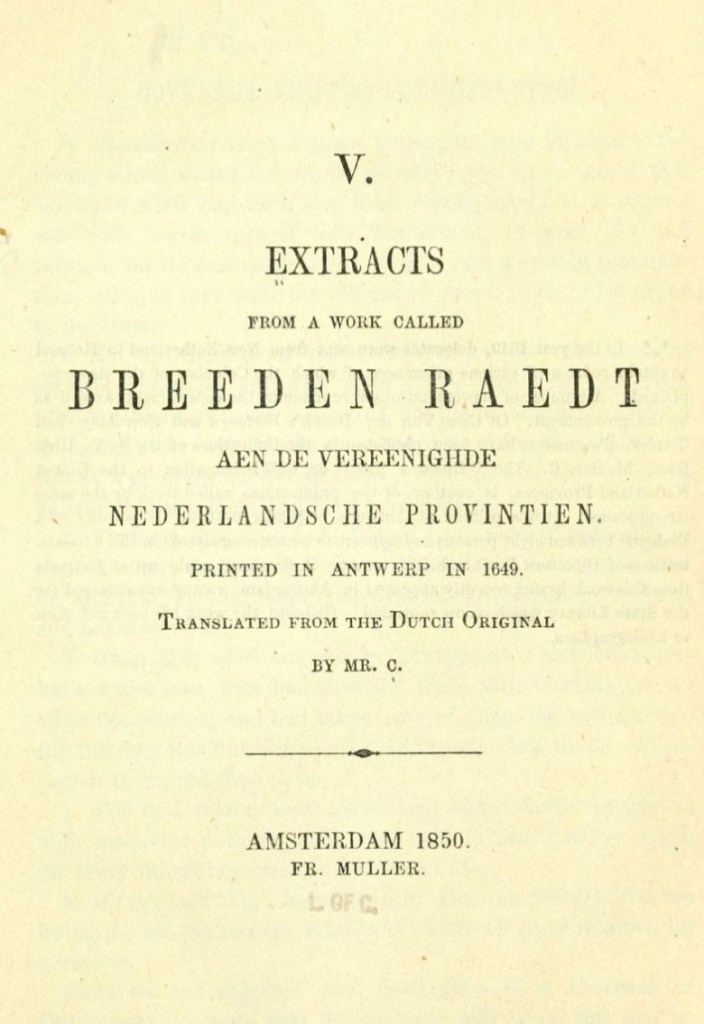
V. Extracts From A Work Called Breeden Raedt Aen De Vereenighde Nederlandsche Provintien. Translated From The Dutch Original by Mr. C.
A List of the Company [of Militia]
Belonging Under the Command of Capt. Charles Laroexs
https://tile.loc.gov/storage-services/public/gdcmassbookdig/extractsfromwork00mely/extractsfromwork00mely.pdf
Book page: 213-214
Note: For the listing of Joseph Doty in the 1738 New York City Militia Company of Captain Charles Laroexs.
The Fires and Riots of 1741...
(5) — two records
History of New York City
https://en.wikipedia.org/wiki/History_of_New_York_City
Note: For various texts.
The Historical Society of New York Courts
The Evolution of Slavery, Abolition in NY, and the NY Courts,
The Lemmon Slave Case
by Hon. Albert M. Rosenblatt
https://history.nycourts.gov/wp-content/uploads/2020/05/20200420-Lemmon-Slave-Case-Slide-Presentation.pdf
Note: For the images.

Oysters and New York’s Past
(6) — six records
Fine Art America
Slurp
painting by Pam Talley
https://fineartamerica.com/featured/slurp-pam-talley.html?product=poster
Note: For the oyster painting..
Untapped New York
Aw Shucks: The Tragic History of New York City Oysters
by Thomas Hynes
https://www.untappedcities.com/history-new-york-oysters/
Note: For the text.
History of New York Harbor
https://www.billionoysterproject.org/harbor-history
Note: For the text.
The Oysters of New York’s Past
by Wenjun Liang
https://storymaps.arcgis.com/stories/1ce158b2123a4c9c9898278e98f015d5
Note: For reference.
The New York Public Library Digital Collections
Mine oysters – Dredging boats in the Chesapeake
from Harper’s Weekly magazine, March 16, 1872
https://iiif-prod.nypl.org/index.php?id=4018402&t=v
Note: For the 1872 image of the oyster farmers.

BBC
Oysters as large as cheese plates:
How New Yorkers are reclaiming their harbour’s heritage
by Anna Bressanin
https://www.bbc.com/future/article/20241118-how-new-yorkers-are-reclaiming-their-harbours-heritage
Note: For the text.
Saying Farewell to Oyster Bay
(7) — eight records
Library of Congress
The Provinces of New York and New Jersey;
with part of Pensilvania, and the Province of Quebec.
by Thomas Pownall, and Samuel Holland, circa 1776
https://www.loc.gov/resource/g3800.ar104500/?r=0.402,1.183,0.673,0.371,0
Note: For sections of the map which document this family’s journey from Oyster Bay, Long Island to Rensellaer County, the Province of New York.
Encyclopædia Britannica
Pliny the Elder
https://www.britannica.com/biography/Pliny-the-Elder
Note: For the portrait.

Made In Chicago Museum
Morton Salt Company, est. 1848
https://www.madeinchicagomuseum.com/single-post/morton-salt-co/
Note: An advertisement from 1917/1918, featuring the original iteration of the Morton Salt Girl and the “It Pours” slogan on the blue can.
“A grain of salt”
https://en.wikipedia.org/wiki/A_grain_of_salt
Note: For just a pinch of the text.
(DDFA)
Doty-Doten Family in America
Descendants of Edward Doty, an Emigrant by the Mayflower, 1620
by Ethan Allan Doty, 1897
https://archive.org/details/dotydotenfamilyi00doty/page/504/mode/2up?view=theater
Book pages: 505-506, Digital pages: 504-506 /1048
Note: For the text.
Contributions to the History of Ancient Families of New Amsterdam and New York
by Edwin R. Purple, circa 1881
https://archive.org/details/ldpd_6499396_000/page/n11/mode/2upBook page: 9, Digital page: 30/164
Note: For the text.
Professor Buzzkill podcast
Quote or No Quote? Who Said,
“If you don’t have anything nice to say, come and sit here by me”?
https://professorbuzzkill.com/2023/11/29/quote-or-no-quote-who-said-if-you-dont-have-anything-nice-to-say-come-and-sit-here-by-me/
Note 1: For the text.
Note 2: Gilded Age Society has some interesting stories —
“If you don’t have anything nice to say about someone, come sit here by me,” It was originally said by Alice Roosevelt, the eldest daughter of President Theodore Roosevelt. [From the Oyster Bay, New York social circles…]
By the time her father ascended to the Presidency, Alice Roosevelt was a prominent writer and well-known socialite in New York and Washington. According to the most solid evidence we have, what Alice said (or, more accurately, what she had embroidered on a couch pillow) was ‘If you can’t say something good about someone, sit here by me.’
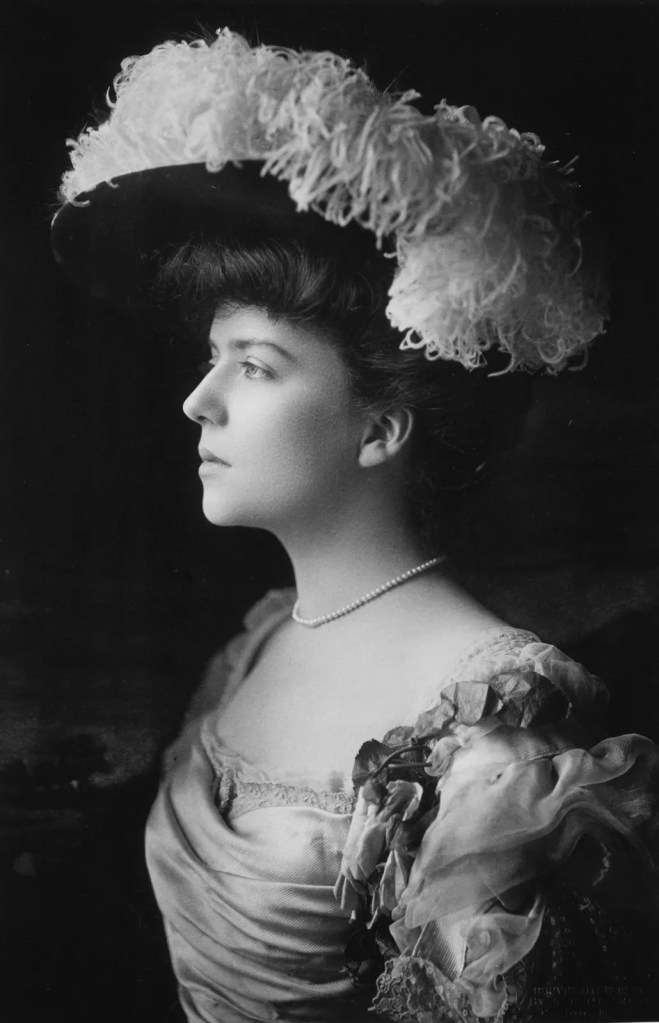
From all accounts, Alice Roosevelt was vivacious, intelligent, curious, and constantly in motion. She was known to come into the President’s office, unbidden, several times a day, to offer her thoughts and suggestions on politics and to make comments on social affairs. Apparently, this frustrated the President greatly. So much so, in fact, that, after multiple ‘Alice interruptions’ one morning, Teddy Roosevelt turned to an advisor and said, ‘I can either run the country, or I can attend to Alice, but I cannot possibly do both.’”
Frans DeLang
https://www.findagrave.com/memorial/103424712/frans-delang?_gl=1*1hxjf0b*_gcl_au*MTM3MTk4NzE2Mi4xNzQ5MDYwMjEx*_ga*MTAxNTA3NTUwNi4xNzMyMjExNDYx*_ga_4QT8FMEX30*c2M1ZjIzNmVmLTZkNDEtNGRhYS05ZGEyLTQ1OTBlY2Q0OTZkOSRvNjkkZzEkdDE3NTQ3Njk1MzkkajM0JGwwJGgw*_ga_LMK6K2LSJH*c2M1ZjIzNmVmLTZkNDEtNGRhYS05ZGEyLTQ1OTBlY2Q0OTZkOSRvNjgkZzEkdDE3NTQ3Njk1MzkkajM0JGwwJGgw
Note 1: For three quotes from the text.
Note 2: The content of this extensive history is researched and excerpted from
“…the following notes from the late John D. Baldwin (50+ year Delong researcher). (Note various spellings of surname in this text…”.

 Our Ancestors, Our Narratives
