The Doty Line, A Narrative — Nine

This is Chapter Nine of nine. This the last chapter of our narrative about the Doty Line, hence, we are writing about the marriage and family of Orman Shaw and his wife Elizabeth. In the last chapter (Eight), the Doty name gave way to the Shaw surname, and in this chapter, the Shaw surname gives way to the DeVoe surname.

This chapter covers the years from when Orman and his wife Elizabeth were born, from the years after the American Revolution, up the time of the American Civil War. We came across this distinctive bit of history, and feel that because it is unique, that perhaps we should share it. We reminds us of how life was so different for these generations, as compared to how we live today.

So, let’s take a look at the very last soldiers of the American Revolution.
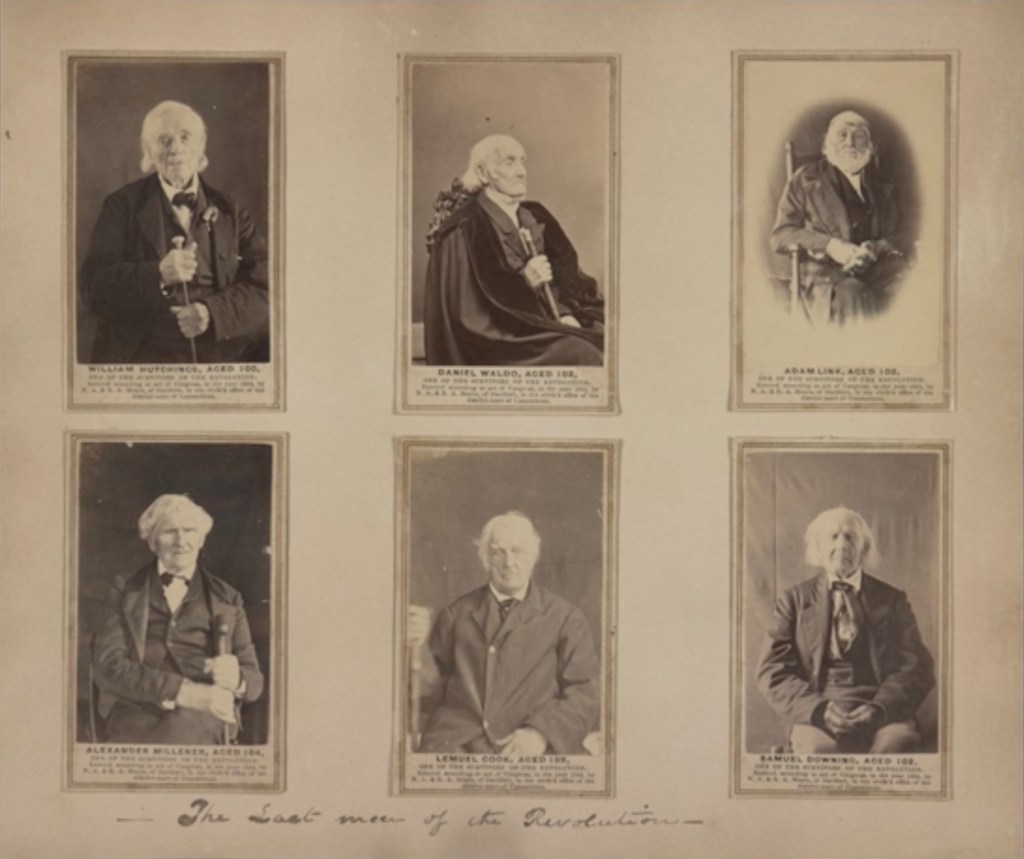
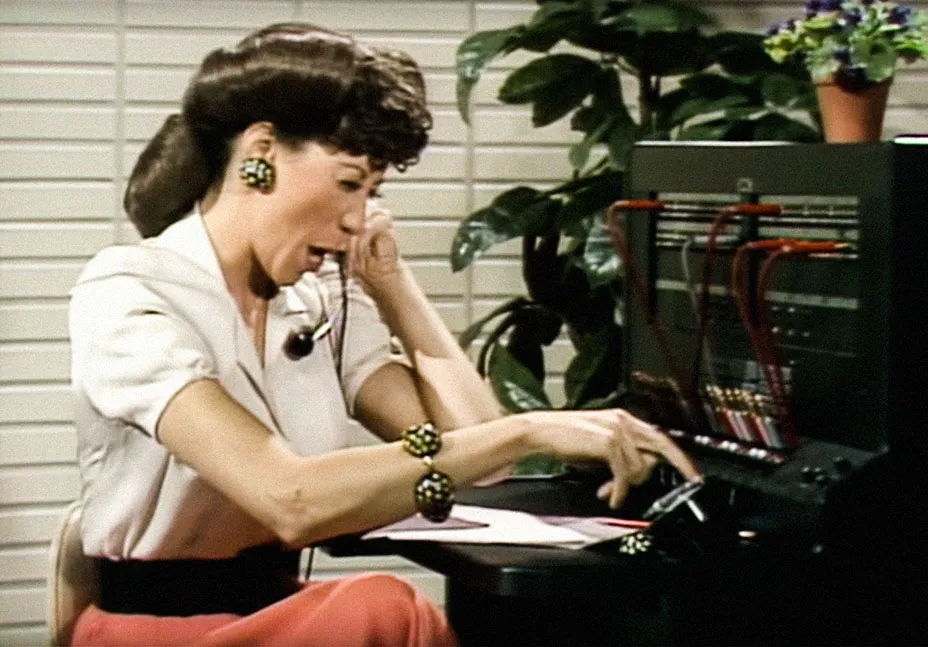
Image capture from the BBC video America’s Last Revolutionaries: Rare Photos of US patriots. (See footnotes).

The Last Six Men of the American Revolution

These men had lived their lives through a period when the United States as we have come to know it, first came into being. The BBC (isn’t that a bit ironic?) has created a celebrated video where we learn about these men who fought in the American Revolutionary War, and lived lifetimes that were so long — the end of their lives generally coincided with the end of those of our ancestors. To see the video (about 8 minutes in length), click on the link below:
https://www.bbc.com/reel/video/p0kh0k3v/america-s-last-revolutionaries-rare-photos-of-us-patriots (1)

A World That Seeks Balance

The young United States which Orman and Elizabeth Shaw were born into, was a world of variability. As such, they grew up in a young country that was trying to figure out how to govern itself, how to pay its debts from The War, how to establish a currency, how to unite the different states into a functioning Republic…

The PBS television program American Experience, aptly describes it this way in their program After The Revolution —
“The period following the Revolutionary War was one of instability and change. The end of monarchical rule, evolving governmental structures, religious fragmentation, challenges to the family system, economic flux, and massive population shifts all led to heightened uncertainty and insecurity. 

Although the states had united politically under the Articles of Confederation in 1777, they did not yet exist as a united nation. Each state retained individual sovereignty and operated under its own constitution. Congress struggled to hold the states together, and interests often clashed.”
The Articles of Confederation ended in 1789, and were then replaced with The Constitution.

Saratoga County New York, by Burr, 1866.
(Image courtesy of Maps Of The Past)

In other chapters we have described how local borders always seemed to be in flux — as described by Wikipedia, “When counties were established in the Province of New York in 1683, the present Saratoga County was part of Albany County. This was an enormous county, including the northern part of New York, as well as all of the present state of Vermont and, in theory, extending westward to the Pacific Ocean. This large county was progressively reduced in size by the separation of several counties until 1791, when Saratoga County and Rensselaer County were split off from Albany County.”

This family stayed local, living their 24 years first in Rensselaer County, and then moving one county westward to the community of Halfmoon in Saratoga County, where they put down deeper roots. The 1855 New York State Census tells us they relocated circa 1835. The Shaws were self sufficient farmers, likely making many of the things they needed, as their forebears had done across generations.
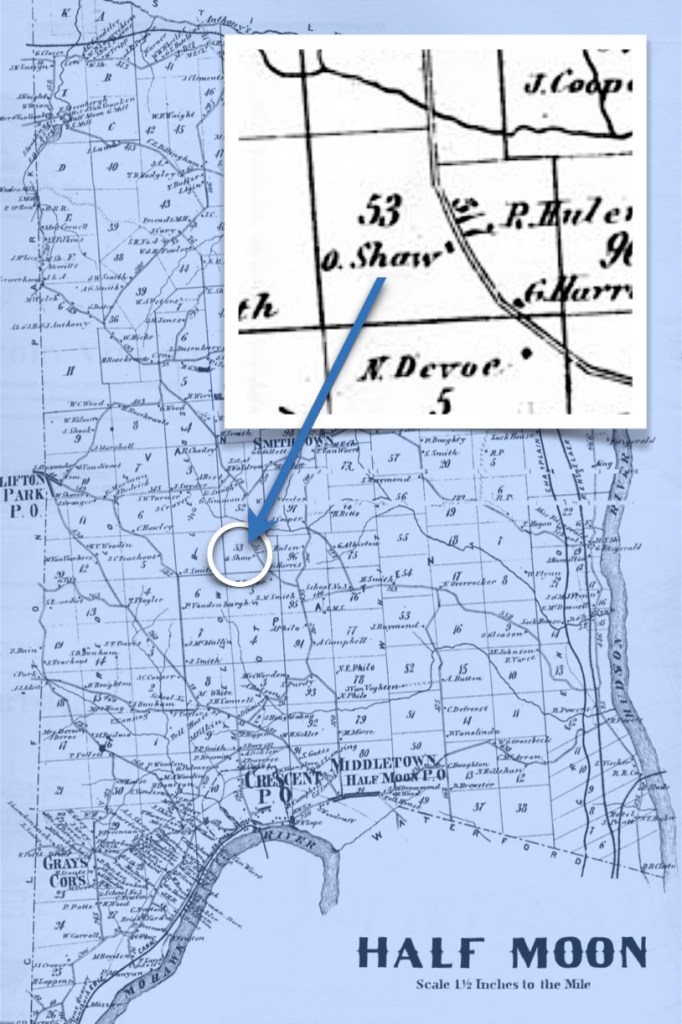
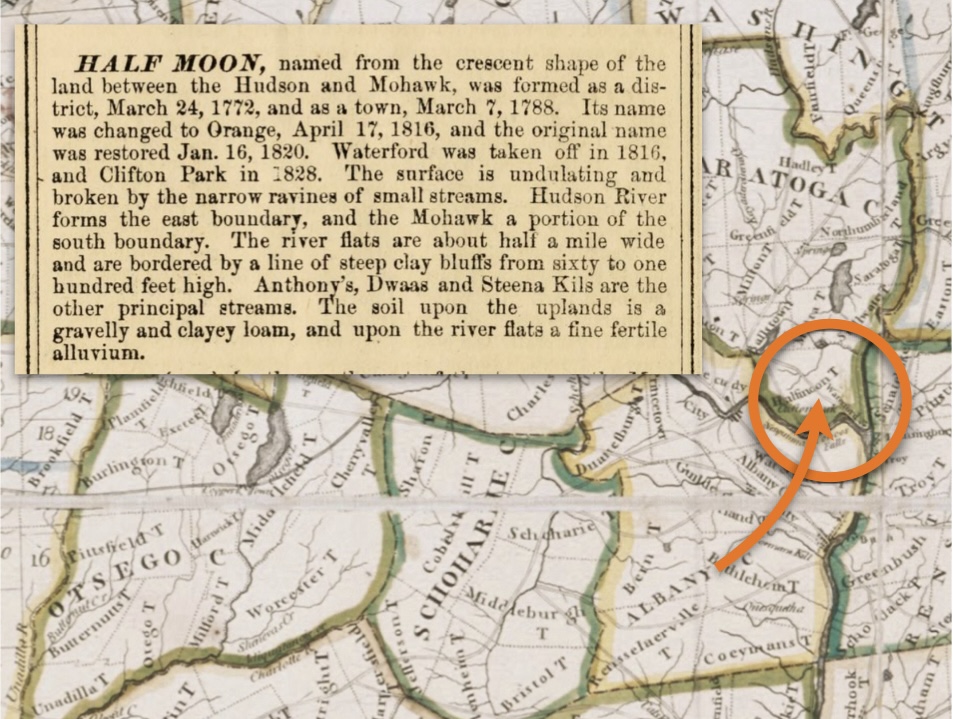
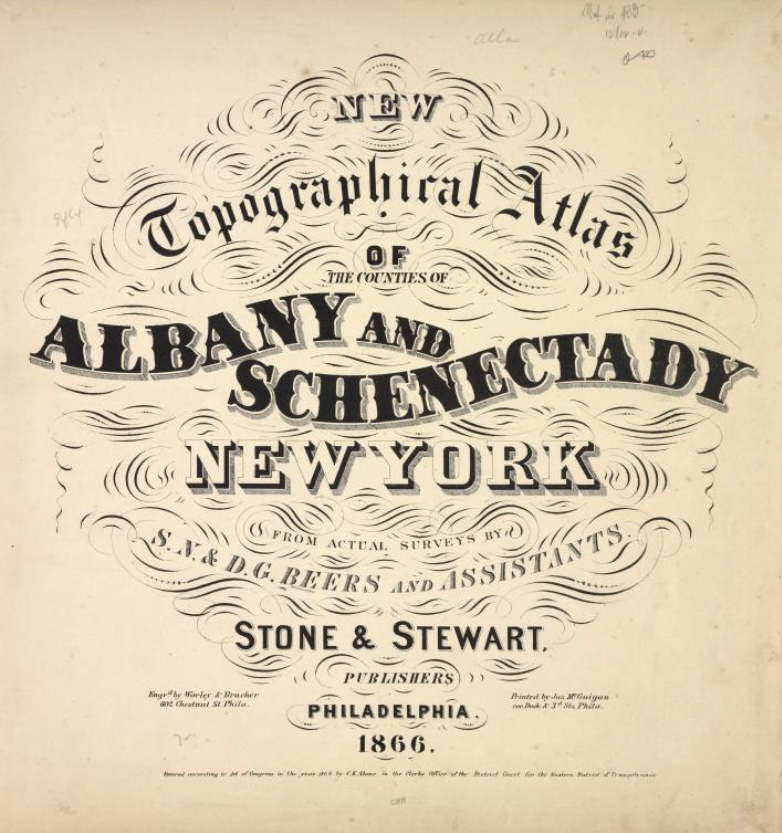
Orman Shaw’s Lot 53 property, where he had his farm. Shown on a map of the Town of Half Moon,
from the New Topographical Atlas of Saratoga County, New York, circa 1866

Even though this family had been born into an era of much change after the Revolutionary War, and there was much instability, things did evolve. The central government had become strong enough that a war with Great Britain had become inevitable for many reasons, but the basis of this new War was autonomy, and economics for the young United States. (2)

The War of 1812,
and Colonel William Knickerbocker’s 45th Regiment

“The tensions that caused the War of 1812 arose from the French revolutionary (1792–99) and Napoleonic Wars (1799–1815). During this nearly constant conflict between France and Britain, American interests were injured by each of the two countries’ endeavours to block the United States from trading with the other. American shipping initially prospered from trade with the French and Spanish empires, although the British countered the U.S. claim that ‘free ships make free goods’ with the belated enforcement of the so-called Rule of 1756 (trade not permitted in peacetime would not be allowed in wartime).” (Encyclopædia Britannica)

Orman Shaw served in the War of 1812 as a Private, in Captain Samuel Strom’s Company. That group was part of the larger brigade and regiment — the Schaghticoke brigade of Colonel William Knickerbocker’s 45th Regiment, of the New York Militia. They participated in the Plattsburgh Campaign.

At Left: Soldier Dress & Uniform in the War of 1812. (Image courtesy of the Pritzker Military Museum & Library). At Right: Macdonough’s Victory on Lake Champlain and Defeat of the British Army at Plattsburg by General Macomb, September 11, 1814, by Engraverː Benjamin Tanner, after painting by Hugh Reinagle. (Image courtesy of the Lake Champlain Maritime Museum Collection via Wikipedia).

As described in an article titled, Bicentennial of the Battle of Plattsburgh, on the blog History of the Town of Schaghticoke —
“According to a 1936 article in the Albany “Evening News”, the call for the draft went out; the men assembled at Henry Vandercook’s Inn and put slips of paper with their names in a hat. Every fourth slip of paper drawn was opened, and the man whose name appeared [was] drafted for service. I do not know how accurate this account is, as much of the rest of the story was not, but in any case, the 2,200 men began to march north on September 13, first goal Granville. Three solid days of rain ensued, with the march halted at Speigletown.

The newspaper account stated [that] they reached Granville two weeks later. [However…] they reached Granville on September 18. Whatever the case, the battle had occurred on September 11. As soon as that word reached the Brigade at Granville, it was disbanded and the men [were] sent home.”

1857 Pension claim for his service in the War of 1812, for Orman Shaw.
Excerpted from the New York, War of 1812 Certificates and Applications of
Claim and Related Records, 1858-1869. (See footnotes).

So we do not know if Orman actually experienced any other battles, since it seems he was certainly soaked to the bone with the rain and fatigued from the long march to Plattsburgh.

An eventual benefit of that experience was that he was eventually paid (43 years later!). He did qualify for a pension for his war service. The 1857 record for this is shown above, indicating that even at this very late date, he was compensated for costs that initially came out of his own pocket. (Notice that, like many other people of his era, he signed his name with an X). The amount was $54.25, which in today’s time is equal to about $2014.00. His wife Elizabeth was the designated heir for any further pension benefits. (See footnotes). (3)
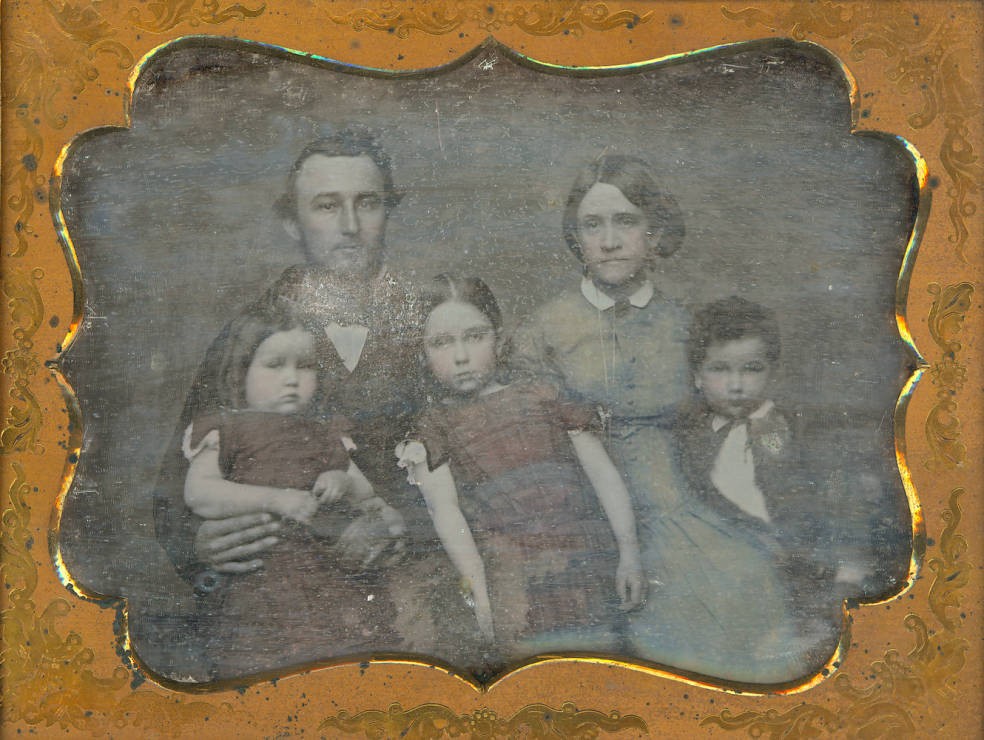
Just to be quite clear — this is not our 4x Great Grandfather Ormand Shaw’s family from long-ago New York State. Be that as it may, this is still a wonderful image — that of an unknown Ohio family, circa 1855, which we are using to ‘stand-in’ for Orman and Elizabeth’s family, [if only we had a daguerreotype of them!]. Image courtesy of Ohio Memory.

One interesting aspect of this time period, is that early forms of photography were starting to emerge as the world moved into the modern era. Some examples of this new photography are: heliography, calotypes, ambrotypes, tintypes, daguerreotypes, and albumen prints.

The Seven Shaws of Saratoga County

All birth and deaths took place in New York State, unless noted otherwise. Some county names did change over time — Albany County was reformed to be Rensselaer County, in 1791. So, before 1791 > Albany County, and after 1791 > Rensselaer County. Furthermore, when a county name changes, such as in a record for a marriage or a death, we have noted this.

We believe that in about 1811, Orman Shaw, married Elizabeth ________ (last name unknown) in Rensselaer, New York. He was born on March 3, 1790 in Pittstown, Albany County* — died August 13, 1842, Halfmoon, Saratoga County.
*Albany County became Rensselaer County in 1791.

His wife Elizabeth ________, was born May 1795 (location unknown) — died April 2, 1876 in Saratoga County. She is buried in the Crescent Cemetary, Crescent, Saratoga County.

They had five children, who are listed below. The first four children were born in Rensselaer County; youngest daughter Emeline was born in Saratoga County.

  • Elida (Shaw) DeVoe. (Who was sometimes recorded as Olive). She was born April 10, 1812 in Rensselaer County — died February 17, 1896, in Easton, Washington County. She married Peter M. DeVoe on January 22, 1829. Please refer to the chapter, The DeVoe Line, A Narrative — Eight, for the history of their family. (Note: Elida’s name is sometimes spelled Alida, and she is also occasionally written about with the nick name ‘Olive’ on documents).
    We are descended from Elida and her husband Peter M. DeVoe.
Marriage records excerpted from the U.S., Dutch Reformed Church Records in Selected States, 1639-1989, New York > Bought > Bought, Book 6. (See footnotes).
  • Elizabeth (Shaw) DeVoe Smead. She was born February 12, 1814 in Rensselaer County — died March 29, 1901 in Stillwater, Saratoga County. She was married two times: first to Cornelius DeVoe on October 7, 1830, he died in 1844; second (after) 1844, to Elihu Smead, he died in 1895. It is interesting to note that Elizabeth and her older sister Elida both married men from the DeVoe family, at the Boght-Becker Dutch Reformed Church, Colonie, Albany County.
  • John W. Shaw. He was born in 1825 in Rensselaer County — died March 8, 1915 in Daytona Beach, Volusia County, Florida. He married Sarah E. ________ (last name unknown). She was born in 1827.
  • Luzern Shaw. He was born in 1830, in Rensselaer County — died March 13, 1876, in Cohoes, Albany County. He married Julie Furman about 1855. She was born in April 1837, in either Dutchess or Green County — died December 6, 1838, in Halfmoon, Saratoga County.

    Luzern’s death is written about in the March 1876 edition of The Troy Daily Times under the section called: “Cohoes – Temperance Address — St. Patrick’s Day — Sudden Death: Luzern Shaw, an old resident of the first ward, died very suddenly last night. Heart disease is supposed to be the cause of his death.” They had three children, one of whom (Norman) died by suicide. (See footnotes).
  • Emeline (Shaw) Devine. She was born in 1838, in Saratoga County. She married Michael Devine, and died after 1868, likely in Malta, New York. (4)

Bringing The Farm to The Market

Sometimes we have the opportunity to understand more about the everyday lives of our ancestors when we come across documents which inform us about how they earned their livelihoods. Some pursed being merchants, one was a silversmith, several were painters, and many, many were farmers. For Orman Shaw, we have what are known as Agricultural Assessments from the Federal government in 1850 and 1860, as well as one from New York State in 1865. These reports help to paint a picture of what products he had brought to the market.

Sunday, a watercolor painting by Myles Birket Foster, of the English School.
This image demonstrates well the types of products which were produced on Orman Shaw’s farm in the 19th century: grain crops such as wheat farming, and raising livestock, in an area similar to the upper Hudson River Valley. (Image courtesy of Meisterdrucke).

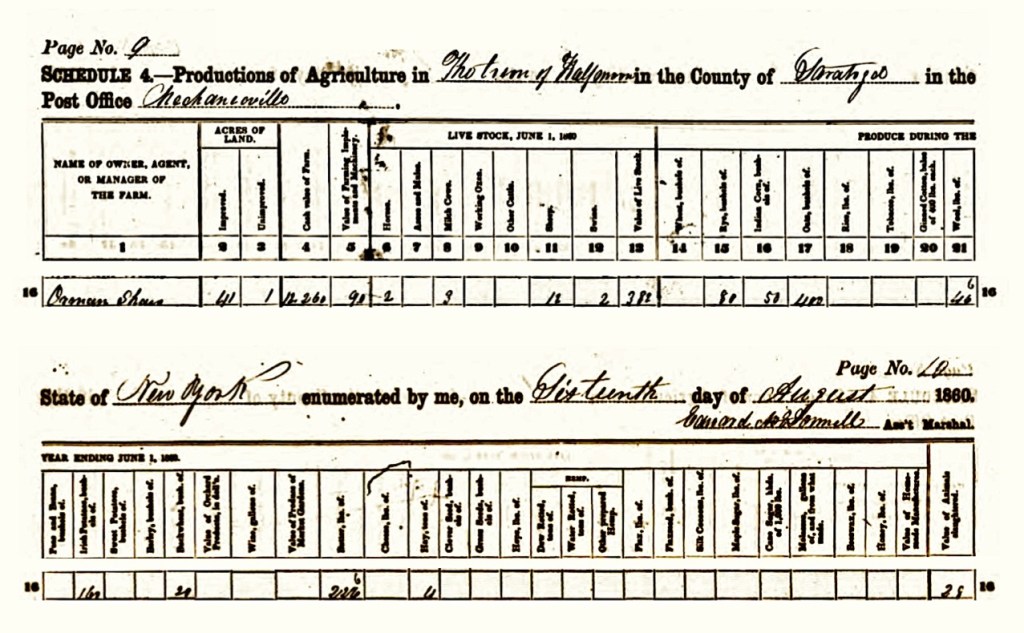
From those documents, and selecting 1860 as an example report, we learned some interesting things. Instead of being a farmer who grew crops, (but not corn, which seems to be stuck in our mind’s eye…) — he grew Irish potatoes, buckwheat, and hay. He raised swine, which were market animals. There were dairy cows, so he had fresh milk with which he made and sold butter. He was selling the wool from his sheep, likely to the newly developing area woolen mills that were opening in nearby counties.

In 1850, he reported his farm as having 211 improved acres, and 8 unimproved acres. The value of the farm was about $1200. Ten years later in 1860, it was clear to us that he had sold much land because his acreage was reduced to 41 acres, but the cash value of his property had increased to over $12,000. It seems that since he was in his 60s by then, he must of felt that having money in the bank was a prudent choice. That makes sense since this is what had been going on in America of the 1850s—

“The Panic of 1857 was a significant economic crisis that began in August 1857, stemming from a combination of agricultural and financial instabilities. The aftermath of the Crimean War reduced European demand for American crops, particularly affecting land speculators in the U.S. Meanwhile, the financial infrastructure was already overextended, and the failure of the Ohio Life Insurance and Trust Company sparked widespread panic. Following this, a series of bank failures in New York led to a loss of public confidence in the banking system, exacerbated by the sinking of the Central America steamer, which carried crucial gold reserves.” (Ebsco)

Excerpts from pages 9 and 10 for Orman Shaw in the U.S., Selected Federal Census Non-Population Schedules for 1860.

The New York State assessment of 1865 actually sought out much more data than the previous Federal assessments in 1850 and 1860. (The amount of questions and the categories actually doubled). Since the survey was done in 1865, this period of time coincided with the end of the American Civil War. We evaluated the data in 1865, it looked remarkably like the data from 1860. The questions then became for us, How did the Civil War affect things for New York farmers by the last assessment of 1865, which occurred soon before Orman’s death? (Technically, the War ended in 1865ish when there was a general cease of hostilities, see below).

“The conclusion of the American Civil War commenced with the articles of surrender agreement of the Army of Northern Virginia on April 9, at Appomattox Court House, by General Robert E. Lee and concluded with the surrender of the CSS Shenandoah on November 6, 1865, bringing the hostilities of the American Civil War to a close. Legally, the war did not end until a proclamation by President Andrew Johnson on August 20, 1866, when he declared “that the said insurrection is at an end and that peace, order, tranquillity, and civil authority now exist in and throughout the whole of the United States of America”. The Confederate government being in the final stages of collapse, the war ended by debellatio, with no definitive capitulation from the rapidly disintegrating Confederacy; rather, Lee’s surrender marked the effective end of Confederate military operations.” (Wikipedia)

Center image, Lee’s Surrender, Peace in Union by Thomas Nast.
The surrender of General Lee to General Grant at Appomattox Court House, Virginia, April 9, 1865.
(Image courtesy of http://www.granger.com via Wikipedia). The United States Flag and The Confederate States Flag images are courtesy of Google Images.

Unlike the American Revolutionary War and the War of 1812, no major battles for the Civil War were fought on the soil of New York State. Be that as it may, there were still riots and some fires south of Saratoga County in Manhattan. Perhaps this explains the relative equanimity that we perceive between the 1860 to 1865 surveys. If anything, farmers like Orman Shaw of Saratoga County were more appreciated. “New York boasted the nation’s most valuable farm land both before and after the Civil War. New York City was the nation’s biggest commercial, manufacturing and financial center during Reconstruction. [i.e. after the War] (PBS, American Experience)

Traveling On The Erie Canal, published in the 1825 edition of The Northern Traveler by Theodore Dwight. (Image courtesy of 40 x 4 x 28, see footnotes).

One thing to understand about this period, is that these years marked a transition between farming for one’s own subsistence, to one where many products could now be transported for sale to a larger market. Starting in the 1820s, New York State had built canals, such as the Erie Canal, and they were innovative for transporting goods to market. During the 1850s, new railroad lines were being built (practically everywhere it seems), and they were achieving even greater success with the timing and volume of goods moved. (NY State Canal Commission) (5)

Seen This Way, The Past Isn’t Finished

As we surmised from reviewing the various agricultural assessments, Orman Shaw seems to have been a sensible and thoughtful man. To that end, he thought about his own end long before it happened, creating his Will many years before it was actually needed. It is a very straightforward document, leaving much of his estate to his wife Elizabeth, but also providing for his children. (See footnotes).

First page of the 1868 Probate Notice, for the December 1858 Will of Orman Shaw.
Excerpted from the New York, U.S., Wills and Probate Records, 1659-1999,
Saratoga > Wills, Vol 021. (His complete Probate and Will is in the footnotes).

The Dotys > the Shaws > and the DeVoes had been making their homes in the New Amsterdam / New York area for many, many years. As an example, while the Dotys began in the Plymouth Colony, our ancestor David Du Four (DeVoe) was also living in Manhattan as a Walloon emigrant from the Southern Netherlands. For the generation that was to follow this one, this statement was prophetic. “Saratoga County was also a gateway for the westward migration of many settlers, as the Mohawk River provided a natural passageway through the Appalachian Mountains. Both the historic Champlain Canal, located on the Hudson River, and the Erie Canal, located on the Mohawk River, operated in this county.” (Town of Saratoga)
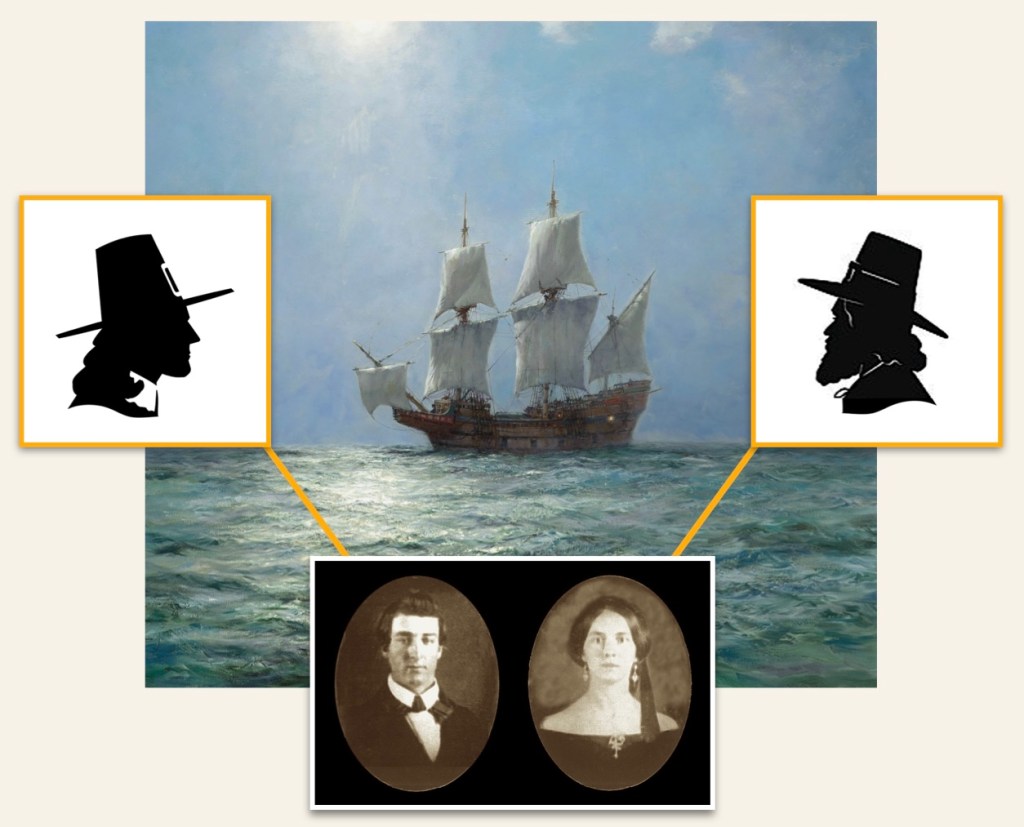
We are descended from two of the original Plymouth Pilgrim families, from the 1620 voyage
of the Mayflower. Both of these lines meet with our 2x Great Grandparents, through
the marriage of Peter A. DeVoe (for Edward Doty), and Mary Ann Warner (for George Soule).
Background image, Isolation: The Mayflower Becalmed on a Moonlit Night, by Montague Dawson.

This then brings us full circle to Generation 8 in America — to Elida (Shaw) DeVoe’s son, Peter A. DeVoe, who is our 2x Great Grandfather. He is the direct descendant of Mayflower passenger, Pilgrim Edward Doty. When he married our 2x Great Grandmother Mary Ann Warner, she was the direct descendant of Doty’s fellow Mayflower passenger, Pilgrim George Soule. Their union connected the Doty and Soule lineages from the Mayflower.

You can read about Elida (Shaw) DeVoe’s life with her family and the subsequent generations, starting in The DeVoe Line, A Narrative — Eight.

We look backward, in order to look forward.
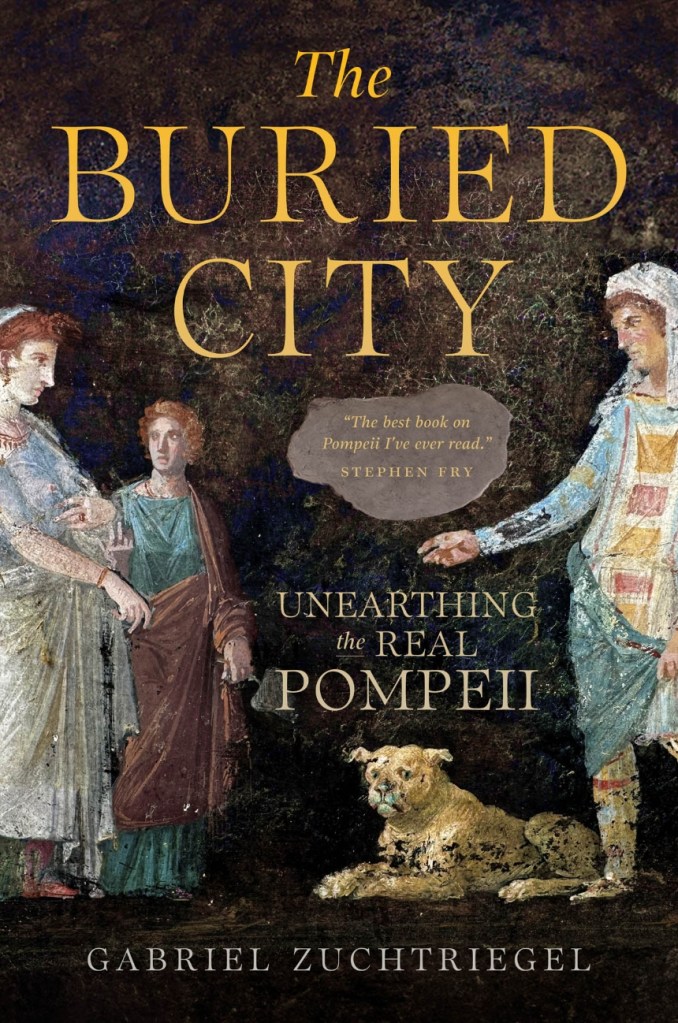
Sometimes we ponder if the genealogy work that we enjoy doing, is similar in a way to the type of work which archeologists do. In a passage found in a recent fascinating book about Pompeii, written by the director of the Pompeii Archaeological Park, Gabriel Zuchtriegel, we felt that his words captured our similar point-of-view very well:

“We must realize that we’re the product of the past, the decisions people have taken, sometimes centuries ago, but also that the decisions we make about telling history
in a particular way constructs the present and the future. Seen this way, the past isn’t finished. We, who keep telling and discovering the past, are in the middle of it.”
— excerpted from
The Buried City, Unearthing the Real Pompeii
by Gabriel Zuchtriegel, and Jamie Bulloch (translator] (6)

Following are the footnotes for the Primary Source Materials,
Notes, and Observations

The Last Six Men of the American Revolution

(1) — two records

BBC
America’s Last Revolutionaries: Rare Photos of US Patriots
https://www.bbc.com/reel/video/p0kh0k3v/america-s-last-revolutionaries-rare-photos-of-us-patriots
Note: For the video link.

The original book upon which the video is based:
The Last Men of the Revolution : A Photograph of Each From Life,
Together With Views of Their Homes Printed in Colors: Accompanied by
Brief Biographical Sketches of The Men

by E. B. Hillard, circa 1864
https://archive.org/details/gri_33125012930976/page/n7/mode/2up
Note: For the data.

A World That Seeks Balance

(2) — four records

PBS
American Experience
After the Revolution
https://www.pbs.org/wgbh/americanexperience/features/midwife-after-revolution/#:~:text=The%20period%20following%20the%20Revolutionary,to%20heightened%20uncertainty%20and%20insecurity.
Note: For the text.

Saratoga County, New York
https://en.wikipedia.org/wiki/Saratoga_County,_New_York
Note: For the text.

Maps Of The Past
Historic County Map — Saratoga County New York
by Burr, 1866
https://mapsofthepast.com/products/historic-county-map-saratoga-county-new-york-burr-1866-23-x-26-38-vintage-wall-art?srsltid=AfmBOoriJTM18WF7QhJ6QUHVM9PG1DdHHVq2Ji6H_5h-tjaPtL8_cO9X
Note: For the map image.
New Topographical Atlas of Saratoga County, New York,
from Actual Surveys by S. N. & D. G.
by Beers and Assistants, Stone & Stewart Publishers, Philadelphia, 1866
Town of Half Moon
http://aleph0.clarku.edu/~djoyce/gen/saratoga/HalfMoon.html
Note: For the map image.

The War of 1812,
and Colonel William Knickerbocker’s 45th Regiment


(3) — eight records

Encyclopædia Britannica
War of 1812, United Kingdom-United States history
https://www.britannica.com/event/War-of-1812
Note: For the text.

Orman Shaw
in the New York, U.S., War of 1812
Payroll Abstracts for New York State Militia, 1812-1815
https://www.ancestry.com/search/collections/5370/records/40678?tid=&pid=&queryId=c54e6ca0-5bf6-48b1-b11e-3f621985e820&_phsrc=XgW11&_phstart=successSource
Digital page: 746/1026
Note: For the form and data.

Pritzker Military Museum & Library
Soldier Dress & Uniform in the War of 1812
https://www.pritzkermilitary.org/soldier-dress-uniform-war-1812
Note: For soldier and sailor uniforms for the War of 1812.

Battle of Plattsburgh
https://en.wikipedia.org/wiki/Battle_of_Plattsburgh
Note: For the naval battle image.

History of the Town of Schaghticoke
Bicentennial of the Battle of Plattsburgh
https://schaghticokehistory.wordpress.com/tag/war-of-1812/
Note: For the text.

Orman Shaw
in the New York, War of 1812
Certificates and Applications of Claim and Related Records, 1858-1869
https://www.ancestry.com/search/collections/61602/records/1892
Note: For the form and data.

Orman Shaw
in the U.S., War of 1812
Pension Application Files Index, 1812-1815
https://www.ancestry.com/search/collections/1133/records/12473?tid=&pid=&queryId=67ee574a-c0de-4bba-a7f3-604dc04b1412&_phsrc=XgW8&_phstart=successSource
Note: For the form and data.

CPI Inflation Calculator
https://www.in2013dollars.com/us/inflation/1857?amount=54.25

The Seven Shaws of Saratoga County

(4) — eighteen records

Ohio Memory
The Father of Commercial Photography
by Lily Birkhimer
https://ohiomemory.ohiohistory.org/archives/901
Note: For the image of the hand-tinted daguerreotype showing an unknown Ohio family in 1855.

Ormon Shaw
in the U.S., Find a Grave Index, 1600s-Current
https://www.ancestry.com/search/collections/60525/records/64818874?tid=&pid=&queryId=f3dee6ae-c8db-4089-a5d2-9496668ef966&_phsrc=XgW1&_phstart=successSource
and
Ormon Shaw

https://www.findagrave.com/memorial/92469264/ormon-shaw
Note: For the data.

Elizabeth Shaw
in the U.S., Find a Grave Index, 1600s-Current
https://www.ancestry.com/search/collections/60525/records/64818889?tid=13457304&pid=122242335478&ssrc=pt
and
Elizabeth Shaw
https://www.findagrave.com/memorial/92469282/elizabeth-shaw
Note: For the data.

Peter Devoe
in the U.S., Dutch Reformed Church Records in Selected States, 1639-1989

New York > Bought > Bought, Book 6
https://www.ancestry.com/discoveryui-content/view/216615:6961
Book page: 13, Digital page: 59/105, Entry 1.
Note: For the marriage dates of Elida Shaw and her sister, Elizabeth Shaw.

The New York Times
Suicide of a Boy — A Threat Carried Out
https://www.nytimes.com/1870/08/20/archives/suicide-of-a-boya-threat-carried-out.html
Note 1: 1870 Death notice for Norman Shaw, the son of Luzern Shaw and Julie (Furman) Shaw.
Note 2: The online link is for New York Times subscribers.

Research Note — We have included all Census information we were able to locate for this family, from 1810 through 1865.

O Shaw
in the 1810 United States Federal Census
New York > Rensselaer > Schaghticoke
https://www.ancestry.com/search/collections/7613/records/319074?tid=&pid=&queryId=1c086b73-fe18-43fd-973f-86393d43093a&_phsrc=XgW14&_phstart=successSource
Book page: 64, or 435 (handwritten), Digital page: 1/10, Upper portion, entry #19
Note: For the data.

1810 Census Records
https://www.archives.gov/research/census/1810
Note: For the data.

Ormand Shaw
in the 1820 United States Federal Census
New York > Rensselaer > Schaghticoke
https://www.ancestry.com/search/collections/7734/records/504125?tid=&pid=&queryId=5410cdcd-49a1-4779-b96f-4c5ad74bb3a9&_phsrc=XgW10&_phstart=successSource
Digital page: 7/9, Upper portion, entry #7 (below his father Daniel Shaw)
Note: For the data.

1820 Census Records
https://www.archives.gov/research/census/1820
Note: For the data.

Orean Shaw
in the 1840 United States Federal Census
New York > Saratoga > Half Moon
Book page: 4 or 5, Digital page: 13/34, Upper portion, entry #5
Note: For the data.

1840 Census Records
https://www.archives.gov/research/census/1840
Note: For the data.

Orman Shaw
in the 1850 United States Federal Census
New York > Saratoga > Halfmoon
https://www.ancestry.com/search/collections/8054/records/8325089?tid=&pid=&queryId=b5d111be-0778-4a9b-9b32-0d9a0f10ea2f&_phsrc=GES1&_phstart=successSource
Digital pages 28-29/67, Lines 41, 42, (on page 28), Lines 1, 2 (on page 29)
Note: For the data.

1850 Census Records
https://www.archives.gov/research/census/1850
Note: For the data.

Norman Shaw
in the New York, U.S., State Census, 1855
Saratoga > Halfmoon > E.d. 1
https://www.ancestry.com/search/collections/7181/records/1653051873
Digital page: 19/22
Note 1: This census lists a granddaughter named Elizabeth Shear living in the home, who we believe could be a daughter of Elizabeth (Shaw) Smead. (We are still researching this relationship. Observe the difference in the surname spelling). Additionally, in Orman Shaw’s 1858 Will there is a minor boy listed named Norman Shear, who is likely her brother.
Note 2: This census also indicates that they have been living in Halfmoon for 20 years. That means that they relocated there circa 1835. Thus, Emeline is their only child born there.

New York Genealogical & Biographical Society
1855 New York State Census
https://www.newyorkfamilyhistory.org/subject-guide/new-york-state-census-records-online
Note: “The 1855 New York state census is notable because it was the first to record the names of every individual in the household. It also asked about the relationship of each family member to the head of the household—something that was not asked in the federal census until 1880.”

Orman Shaw
in the New York, U.S., State Census, 1865
Saratoga > Halfmoon
https://www.ancestry.com/search/collections/7218/records/1039871?tid=&pid=&queryId=6799a95f-ba3d-474c-b989-2cb60c663a84&_phsrc=XgW18&_phstart=successSource
Book page: 37, Digital page: 19/62, Right page, line 14
Note: For the data.

New York Genealogical & Biographical Society
1865 New York State Census
https://www.newyorkfamilyhistory.org/subject-guide/new-york-state-census-records-online

Bringing The Farm to The Market

(5) — twelve records

Meisterdrucke
Sunday
Watercolor painting by Myles Birket Foster, circa 1861
https://www.meisterdrucke.uk/fine-art-prints/Myles-Birket-Foster/66821/Sunday.html

Orman Shaw
in the U.S., Selected Federal Census Non-Population Schedules, 1850-1880
— for 1850
New York > Agriculture > 1850 > Saratoga > Halfmoon
https://www.ancestry.com/search/collections/1276/records/4678711?tid=&pid=&queryId=7ec47de9-f45e-4860-bfae-001c1dda8dad&_phsrc=gDu9&_phstart=successSource
Digital page: 2/6, Line 39
and
https://www.ancestry.com/search/collections/1276/records/4678711?tid=&pid=&queryId=7ec47de9-f45e-4860-bfae-001c1dda8dad&_phsrc=gDu9&_phstart=successSource
Digital page: 3/6, Line 39

Orman Shaw
in the U.S., Selected Federal Census Non-Population Schedules, 1850-1880
— for 1860
New York > Agriculture > 1850 > Saratoga > Halfmoon
https://www.ancestry.com/search/collections/1276/records/4516098?tid=&pid=&queryId=fe821526-8e41-485d-96a7-9c17a3008267&_phsrc=gDu11&_phstart=successSource
Book page: 9, Digital page: 6/7, Line 16
and
https://www.ancestry.com/search/collections/1276/records/4516098?tid=&pid=&queryId=fe821526-8e41-485d-96a7-9c17a3008267&_phsrc=gDu11&_phstart=successSource
Book page 10, Digital page 7/7, Line 16

Ebsco
Panic of 1857
https://www.ebsco.com/research-starters/history/panic-1857
Note: For the text.

Arman Shaw
in the New York, U.S., State Census, 1865
(The file is mislabled. This is actually an Agricultural Assessment.)
– for 1865
Saratoga > Halfmoon
https://www.ancestry.com/search/collections/7218/records/2880127?tid=&pid=&queryId=45bdb53a-b9b7-4bfa-8ee3-f3d512ba51f2&_phsrc=gDu19&_phstart=successSource
Book page: 56-59, Digital page: 29-31/62, Line 7
Note: This is a multipage form with many more data points.

Conclusion of the American Civil War
https://en.wikipedia.org/wiki/Conclusion_of_the_American_Civil_War
Note: For the text.

Lee’s Surrender, Peace in Union by Thomas Nast
[www.granger.com via Wikipedia]
https://commons.wikimedia.org/wiki/File:General_Robert_E._Lee_surrenders_at_Appomattox_Court_House_1865.jpg
Note: For the painting.

PBS
American Experience
Reconstruction: The Second Civil War
State by State — New York, Union State
https://www.pbs.org/wgbh/americanexperience/features/reconstruction-states/
Note: For the text.

40 x 4 x 28
(Historical Landscapes of The Erie Canal)
Navigating The Noses
Traveling On The Erie Canal, circa 1825
by Henry Inman (painter) and Peter Maverick (engraver)
https://40x4x28.com/category/the-noses/
Note: For the image.

NY State Canal Commission
The Dream of The Erie Canal
https://www.canals.ny.gov/About/History
Note: For the data and the image.

Seen This Way, The Past Isn’t Finished

(6) — four records

First page of the December 1868 Probate Notice
for the December 1858 Will of Orman Shaw, page 495.
Second page of the December 1868 Probate Notice
for the December 1858 Will of Orman Shaw, page 496.
Third page of the December 1858 Will of Orman Shaw, page 497.

Orman Shaw
in the New York, U.S., Wills and Probate Records, 1659-1999
https://www.ancestry.com/search/collections/8800/records/9143519?tid=&pid=&queryId=dfe2db3c-1d4c-4bdb-b0b1-0c88cfc683fc&_phsrc=XgW6&_phstart=successSource
Book pages: 495-497, Digital pages: 271-272/401
Note: For the document [3 pages total] and data.

Town of Saratoga
County of Saratoga History
https://www.saratogacountyny.gov/departments/county-clerk/historian/county-history/
Note: For the text.

Isolation: The Mayflower becalmed on a moonlit night
by Montague Dawson, (British, 1890-1973)
https://www.mutualart.com/Artwork/Isolation–The-Mayflower-becalmed-on-a-m/FD8D6C1A6976C620
Note: For the image of the Mayflower painting.
The University of Chicago Press
The Buried City, Unearthing the Real Pompeii
by Gabriel Zuchtriegel, and translated by Jamie Bulloch
https://press.uchicago.edu/ucp/books/book/chicago/B/bo246710287.html
Note: For the pull quote excerpted from the text.

The DeVoe Line, A Narrative — Seven

This is Chapter Seven of eleven parts. An unusual circumstance has required an unusual chapter for our DeVoe family history. We’ve created this unique chapter to address both the scarcity of records on this branch of the family, and to document our insights about working through a knotty challenge like this.

Ballston Spa was the “Center” of Saratoga County

Saratoga County Courthouse, built 1819. From the Saratoga Today newspaper article
How Ballston Spa Became the County Seat, published April 1, 2021.

If you give a couple of ne’er-do-well convicts a lighted candle, they just might burn the jail down — and this is exactly what happened. According to the newspaper, Saratoga Today
“Fire broke out in the courthouse in the middle of the night on March 23 [1816]. Two prisoners, Fones Cole of Northampton (held on a forgery charge) and Peter Drapoo (a horse thief) used a candle they purchased from the jailor (reportedly for playing cards) to set fire to their cell and escape. Two other prisoners also escaped during the fire but a fifth prisoner, George Billings, was chained to the floor and perished in the flames.”

After the drama of that event, for three years, different interested Saratoga County towns vied for the new courthouse to be built in their community, but when all was said and done, the new courthouse stayed in Ballston Spa, opening in 1819. “The style of the building was essentially the same as the original building on Courthouse Hill, though they built this one out of brick.

At the time of this chapter in our family history, the Surrogate of the County of Saratoga was George Palmer, esq., and he was working from this new courthouse. (1)

Our Dilemma With Peter M. DevoeThat “M” is Pretty Important!

In our search for our 3x Great Grandfather, Peter M. Devoe — as sometimes happens in genealogy research, you find yourself tracing a relative who has a rather common name. In this part of the world at that time, there were many, many Devoe(s) living in New York State. Also, the first name of Peter was (and stilll is!) quite popular. Occasionally we might luck out and see a middle name initial: Peter D., Peter J., etc., but without that special “M” nothing could be certain we had the right person.

And then there’s the surname. The Holland Society records these variants for the Devoe surname: De Voew, De Vous, Devoe, Du Fou, Du Voe, D. Fou, d. Fou, D. Vou, De Voe, Devou, De Vous, Vous, Du Vou. In a preliterate world, we find many of these spellings on census records, court records, correspondence… you name it!

We found his 1829 marriage record to Alida Shaw, and we will be writing about his and his family’s life together in the next chapter. The only other document we have located, where we are certain that it is him, is the Last Will and Testament of Elias Devoe. This 1832 Will is a treasured document from our research, — it is the only document that captures the name of Peter M. Devoe, and lists all the people who are his likely siblings. Being a rare item, we feel that it is important to explain to readers exactly how we came to these conclusions. (2)

Reading The Will by David Wilkie, 1820. (Image courtesy of Wikimedia Commons).

The Enigmatic Last Will and Testament of Elias Devoe

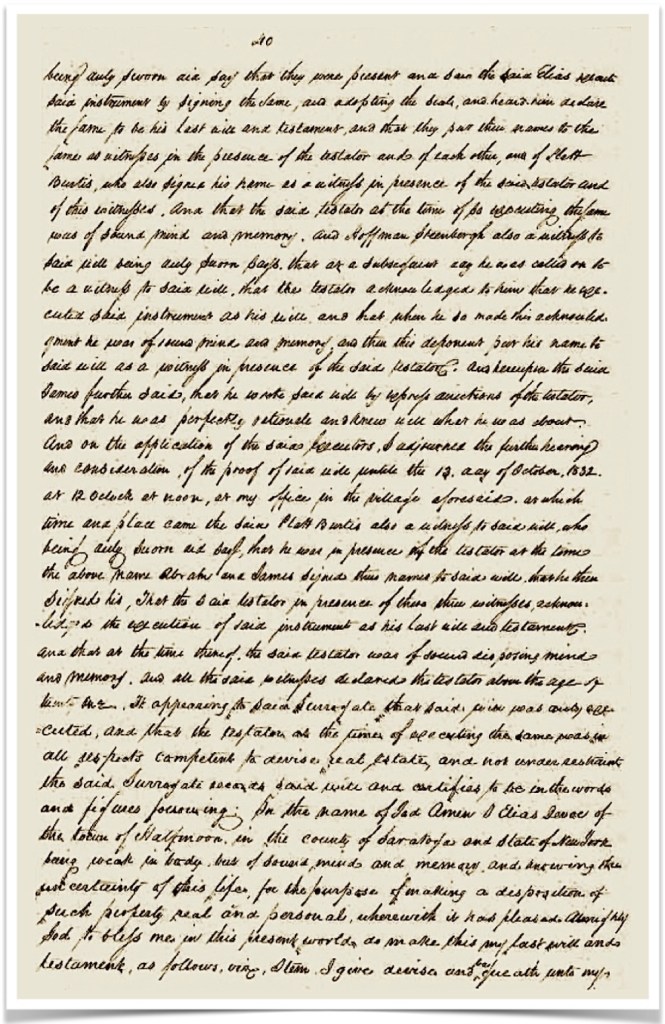
We are presenting the actual pages of Elias Devoe’s will as written on July 17, 1832, and probated on October 8, 1832. Each page has the actual words, first shown in the court copy, with a transcription following.

Last Will and Testament of Elias Devoe, page 1.

“Be it remembered that on this 8 day of October 1832, came before me George Palmer, Surrogate of the county of Saratoga, at my offices in the village of Stillwater Maria Devoe and Hoffman Steenburgh executors named in the last Will and Testament of Elias Devoe late of the town of Halfmoon in said County deceased and showed to said Surrogate that they and duly cited and notified Isaac M. Devoe, Peter M. Devoe, Maria Devoe, Elizabeth Quackenbush, Getty Gray, Catherine Vandekar, Alida Devoe, Anna Quik, Martin Van Curen and Asahel Philo Guardian to Maria Van Curen and Alida Van Curen minors, being the heirs at law and next of kin of the said deceased that they would on the said 8 day of October, at the place aforesaid present said will to the said Surrogate to be proved and allowed as a will of real a personal estate, and also on Cornelius Devoe, also an heir and next of kin of the said deceased to the same effect.

An example of American mourning artwork, circa 1830.
(Image courtesy of herald net.com).

And leave being given to the said Maria and Hoffman they then and there produced to said Surrogate a certain instrument in writing purporting to be the last Will and Testament of the said Elias bearing date the Seventeenth day of July in the year of our Lord, one thousand, Eight hundred and thirty two and that then and there introduced Abram Van Wart and James McNiece who”

Last Will and Testament of Elias Devoe, page 2.

“being duly sworn did say that they were present and saw the said Elias _____ said instrument by signing the same, and adopting the seal and heard him declare the same to be his last Will and Testament and that they put their names to the same as witnesses in the presence of the testator and of each other, and of Platt Burtis, who also signed his name as a witness in presence of the said testator and of this witnesses. And that the said testator at the time of so executing the same was of sound mind and memory, and Hoffman Steenburgh also a witness to said Will being duly sworn says that at a subsequent day he was called on to be a witness to said Will, that the testator acknowledged to him that he executed said instrument as his Will and that when he so made his acknowledgement he was of sound mind and memory and then this deponent put his name to said Will as a witness in presence of the said testator. And hereupon the said James further said that he wrote said Will by actions of the testator, and that he was perfectly rational and knew well what he was about. And on the application of the said executors, I adjourned the further hearing and consideration of the proof of said Will until the 13th day of October, 1832 at 12 O clock noon, at my office in the village aforesaid, at which time and place came the said Platt Burtis also a witness to said Will, who being duly sworn and said that he was in presence of the testator at the time the above named Abram and James signed their names to said Will, that he then signed his, that the said testator in presence of these three witnesses acknowledged the execution of said instrument as his last Will and Testament and that at the time thereof, the said testator was of sound disposing mind and memory. And the said witnesses declared the testator above the age of twenty-one. It appearing to said Surrogate that said Will was properly executed, and that the testator at the time of executing the same was in all respects competent to devise real estate, and not under restraint, the said Surrogate records said Will and certifies to be in the words and figures following: In the name of God, Amen. I, Elias Devoe of the town of Halfmoon, in the county of Saratoga and State of New York being weak in body, but of sound mind and memory, and knowing the uncertainty of this life, for the purpose of making a disposition of such property real and personal, wherewith it has pleased Almighty God to bless me in this present world do make this my last Will and Testament, as follows, viz: Item. I give devise, and bequeath unto my”

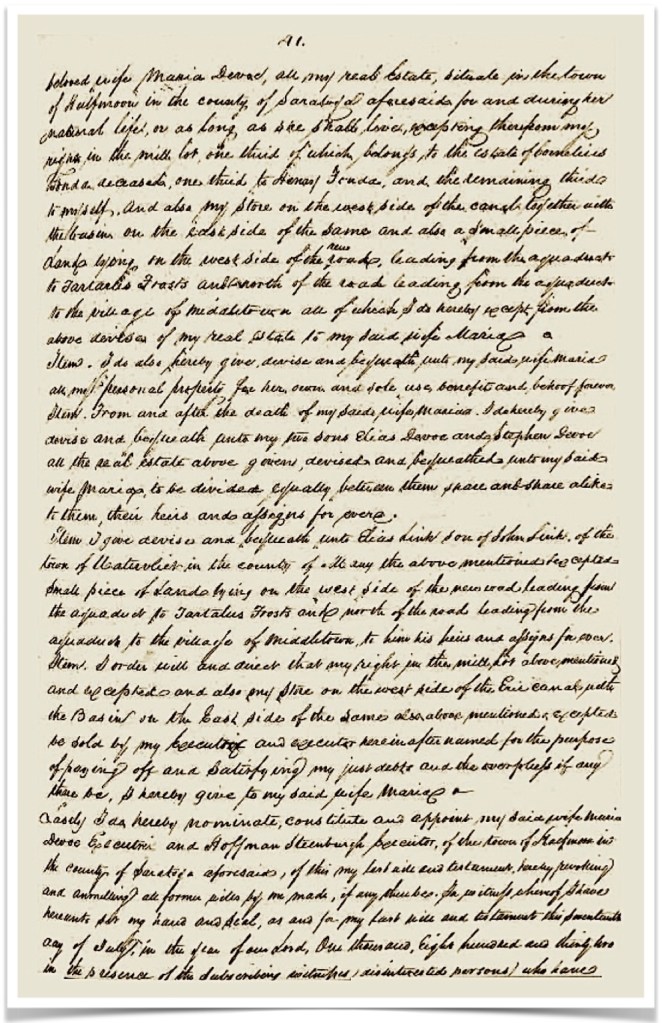
Last Will and Testament of Elias Devoe, page 3.

“beloved wife Maria Devoe all my real estate, situate in the town of Halfmoon in the county of Saratoga aforesaid for and during her natural life, or as long as she shall live excepting therefrom my right in the mill lot, one third of which belongs to the estate of Cornelius Fonda, Deceased, one third to Henry Fonda, and the remaining third to myself, and also my store on the west side of the canal together with the basin on the east side of the same and also a small piece of Lands along the west side of the new roads, leading from the aquaduct [sic] to Tartalus Frosts and north of the road leading from the aquaduct [sic] to the village of Middletown all of which I do hereby except from this above devise of my real estate to my said wife Maria. Item. I do also hereby give, devise and bequeath unto my said wife Maria all my personal property for her own and sole use, benefit, and behoof forever. Item. From and after the death of my said wife, Maria, I do hereby give devise and bequeath unto my two sons Elias Devoe and Stephen Devoe all the real estate above given devised and bequeathed unto my said wife Maria to be divided equally between them share and share alike to them, their heirs, and assigns forever. Item. I give devise and bequeath unto Elias Link son of John Link, of the town of Watervliet in the county of Albany the above mentioned excepted small piece of land lying on the west side of the new road leading from the aqueduct to Tartalus Frosts and north of the road leading from the aqueduct to the village of Middletown, to him his heirs and assigns forever. Item. I order will and direct that my right in the mill lot above mentioned excepted be sold by my executrix and executor hereinafter named for the purpose of paying off and satisfying my just debts and the overflows if any there be, I hereby give to my said wife Maria. Lastly, I do hereby nominate, constitute and appoint my said wife Maria Devoe executrix and Hoffman Steenburgh Executor of the town of Halfmoon in the county of Saratoga aforesaid, of this my last will and testament, hereby revoking and annulling all former wills by me made, if any therebe. In witness whereof I have hereunto in my hand and seal, as and for my last will and testament this seventeenth of July, in the year of our Lord, One thousand Eight hundred and thirty two in the presence of the subscribing witnesses disinterested persons who have”

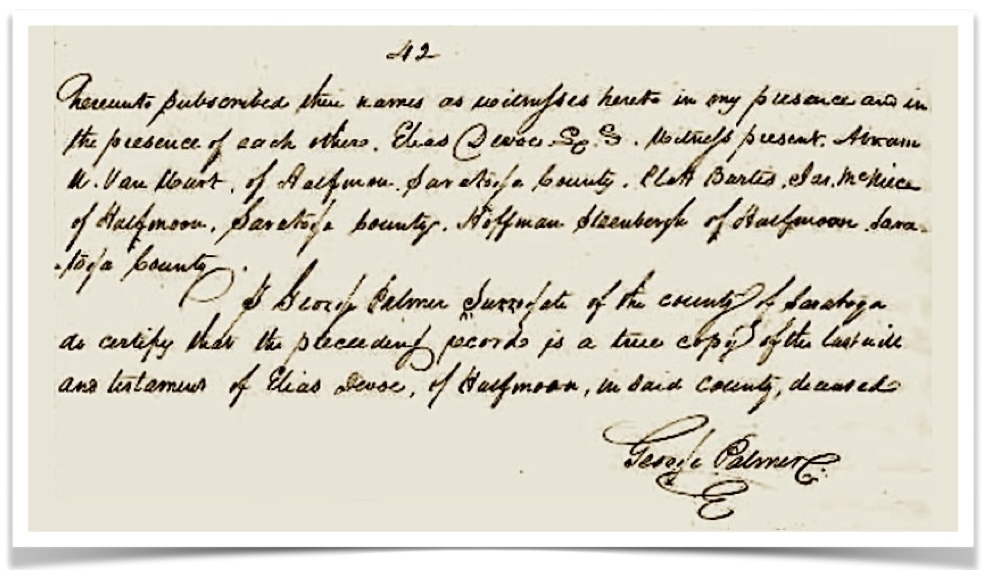
Hereunto subscribed their names as witnesses hereto in my presence and in the presence of each other. Elias Devoe, SS. Witnesses present Abram M. Van Wart of Halfmoon, Saratoga County. Platt Burtis, Jas. [or Jan] McNiece of Halfmoon, Saratoga County. Hoffman Steenburgh of Halfmoon, Saratoga county.

I, George Palmer, Surrogate of the county of Saratoga do certify that the preceding record is a true copy of the last Will and Testament of Elias Devoe, of Halfmoon, in said county, deceased.

George Palmer, esq.” (3)

Further Notes Regarding Elias Devoe’s Estate

In an earlier era of America, when someone died, if their estate had any debts such as unpaid bills, mortgages which were not yet completed, etc., the courts required that their assets be evaluated for sale to satisfy the debts owed. This was very difficult for some families.

An example of 1830 American currency.

Some of the other Surrogate Court documents which follow from the Probate of the Will, are shown with a transcription, or are simply described:

March 11, 1833
Further notes regarding Elias Devoe’s estate: This is a public notice for people to appear before the court Surrogate George Palmer on April 27, [1833], is they have concerns about property being sold to pay off debts from the estate.

April 27, 1833
Further notes regarding Elias Devoe’s estate: Land surveying is described.

July 19, 1833
Further notes regarding Elias Devoe’s estate: George Palmer is acknowledging that some property has been sold.

October 12, 1832
This notice regards the documentation that the Van Curen children are heirs to the Will of Elias Devoe.

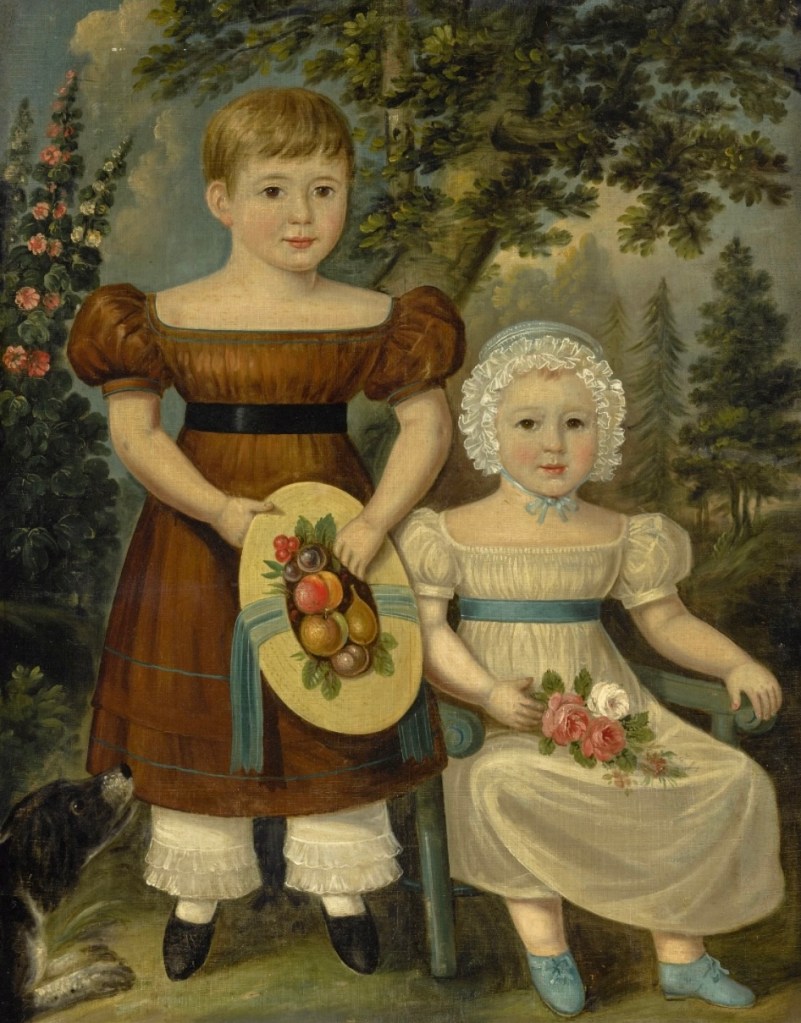
Portrait of Two Children, circa 1830, American School.
(Artwork courtesy of Mutual Art).

“ Asahel Philo, Esq. Is appointed special guardian to Maria Van Curen and Alida Van Curen infant heirs and ___ next of kin of Elias Devoe late of Half Moon deceased, for the sole purpose of appearing for and taking care of this interest under an application of Maria Devoe and Hoffmann Steenbergh executors named in the last will of the said deceased to have the same ____ __recorded as a ____ of __ formal estate. George Palmer, esq.”

October 21, 1833
This notice describes guardianships for both the Devoe and Van Curen children who are mentioned in Elias Devoe’s Will.

“Asahel Philo is appointed guardian to Elias Link and to Stephen Devoe & Elias Devoe; and also Maria Van Curen & Alida Van Curen infant heirs as days [daughters], of Elias Devoe late of Halfmoon deceased, to take care of the interest of said infants under the application of Hoffman Steenbergh one of the executors of said Elias for the authority to mortgage, base or __ so much of the residue os his real estate as said be moneys [?] to pay the balance of his assets. George Palmer, esq.”

December 2, 1833
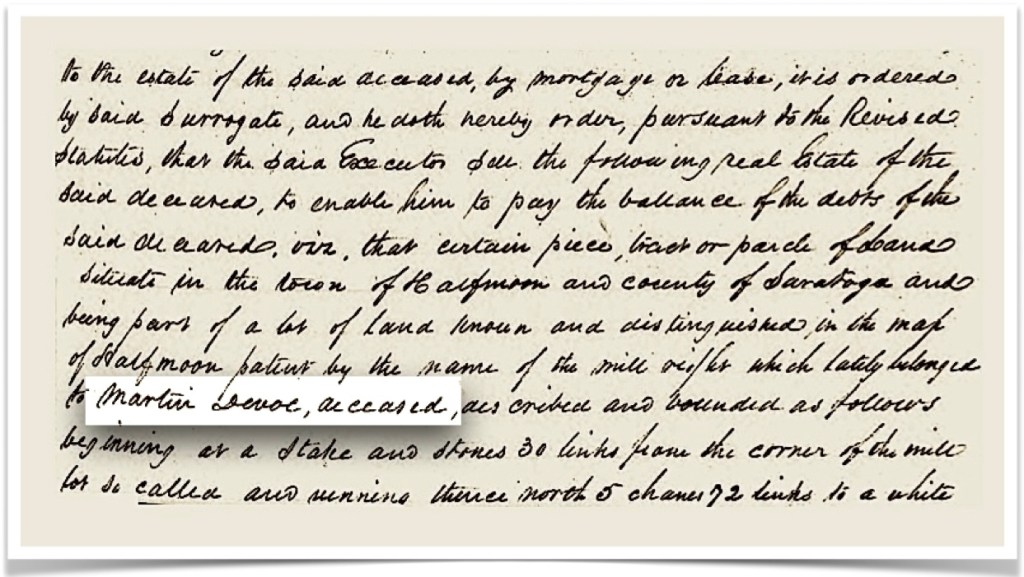
Further notes regarding Elias Devoe’s estate: It seems that at this point Elias Devoe had enough debts that what was sold previously, did not fulfill the obligations to pay off all of his estate debts. More land was to be sold and very specific descriptions of the property dimensions are specified.

Note: As stated in the chapter The DeVoe Line, A Narrative — Six, this Probate document is where we learned of the death of our 4x Great-Grandfather, Martinus Devoe.

“…to the estate of the said deceased, by mortgage or lease, it is ordered by said Surrogate, and he doth hereby order, pursuant to the Revised Statutes, that the said Executor Sale the following real Estate of the said deceased, to enable him to pay the balance of the debts of the said deceased, vis, that certain piece, track or parcel of land situated in the town of Halfmoon and county of Saratoga and being part of a lot of land known and distinguished in the map of Halfmoon patent by the name of the mill rights which lately belonged to Martin Devoe, deceased, described and bounded as follows…”

February 20, 1834
Further notes regarding Elias Devoe’s estate: Confirmation for the land sale to Joseph Knights in the amount of $130.88 on “first Monday of December last” — (December 2, 1833). (4)

What Do We Know About Elias Devoe, Outside of His Death?

Compiled sample, Index — United States, New York Land Records,
1630-1975, page 584. (For the year 1830).

There just aren’t a lot of records… but, there are tax records for his land holdings in the Halfmoon / Waterford community, so we believe that he was a farmer like many of his other relatives. Shown above is a representative sample of a land sale he did with his father Martin Devoe in 1830. In this case, Martin as the Grantor, was transferring ownership of a portion of his land to the Grantee, his son Elias DeVoe.

When he was a teenager, we know that Elias DeVoe served in the 2nd Regiment of Varian’s New York Militia in the War of 1812. His commander was Lieutenant Colonel Jonathan Varian of Westchester County. In the years after the war, there are no records of a pension being drawn for his service. (5)

To Sum Up, Who Were These Ancestors?

From our family stories, we knew that Canada was somehow involved in the story of Peter M. Devoe’s father, but the information was (to be polite) rather cloudy. The story about Canada found its resolution in the chapter: The DeVoe Line, A Narrative — Five. We had also heard that there were up to twelve children in this family, which made us conclude that inherited resources were apt to be thinly spread. That realization supported our idea as to why some of the descendants of these Devoe siblings eventually emigrated west to the northeast Ohio frontier.

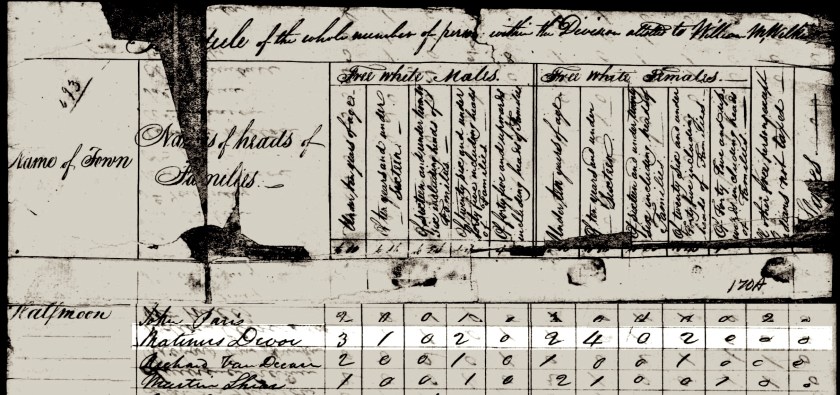
When looking at the various censuses in the previous chapter, we were especially interested in the 1810 census — this seemed to represent the largest number of people who were living together. Since records no longer exist, we really had no idea of the actual names for some of the household occupants, but now we think we know. The Will of Elias DeVoe was the key document which helped us solve this riddle. In 1810, including Martinus, listed are 14 people total:

  • 2 woman 26 to 45 years old: the mother Maria, and daughter Marytje
  • 3 boys under 10 years old
  • 1 boy 10 to 16 years old
  • 2 men from 26 to 45 years old: Martinus – the Head of Household and one more
  • 2 girls under 10 years old
  • 4 girls 10 to 16 years old
Compiled image for the 1810 United States Federal Census
for Halfmoon, Saratoga County, New York.

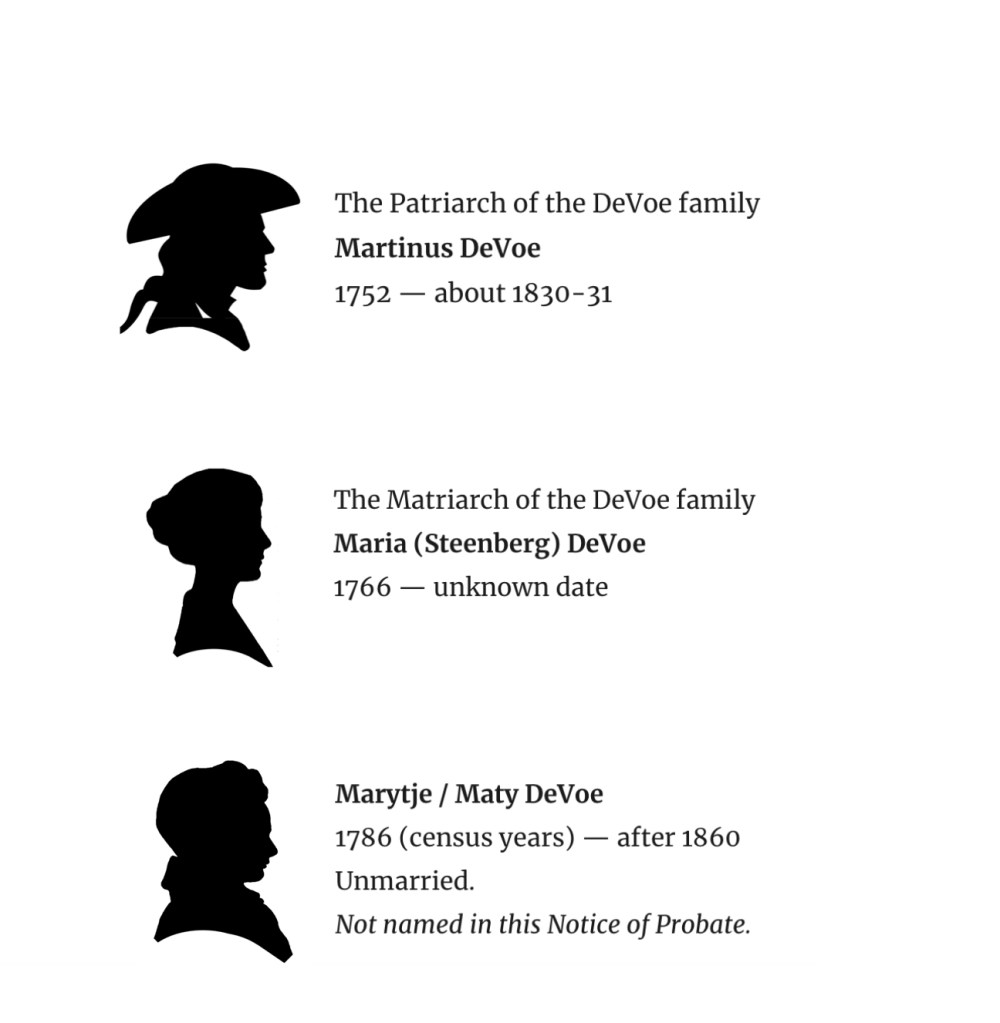
It took many hours of research, but we were able to correlate the next of kin from this Will, the Notice of Probate, one birth record, and several census records. Now we finally have the identities of all of the siblings of our 3x Great Grandfather Peter M. Devoe. Listed in the chart below are the immediate family — only the parents, Martinus and Maria (Steenbergh) Devoe, and their children.

Now that we have resolved the enigma of this era of our family’s records, let’s move on to the life of our 3x Great Grandfather Peter M. Devoe and his family. (6)

Following are the footnotes for the Primary Source Materials,
Notes, and Observations

Ballston Spa was the “Center” of Saratoga County

(1) — one record

Saratoga Today [newspaper article]
How Ballston Spa Became the County Seat, published April 1, 2021
https://saratogatodaynewspaper.com/history/item/13327-how-ballston-spa-became-the-county-seat

Our Dilemma With Peter M. Devoe — That “M” is Pretty Important!

(2) — one record

Records of the Reformed Dutch Church of Albany,
New York, 1683–1809

Excerpted from Year Books of the Holland Society of New York
http://aleph0.clarku.edu/~djoyce/gen/albany/part3.html
Note: Listed under “D” in the Preface to The Index at the bottom of the scrolled file.

The Enigmatic Last Will and Testament of Elias Devoe

(3) — four records

New York Probate Records
https://www.familysearch.org/en/wiki/New_York_Probate_Records
“Probate is the “court procedure by which a will is proved to be valid or invalid” and encompasses “all matters and proceedings pertaining to the administration of estates, guardianships, etc.” Genealogists often refer to ‘Probate Records’ as “All records which relate to the disposition of an estate,” whether the person died leaving a will (testate) or not (intestate).”

Reading The Will
painting by David Wilkie, 1820
https://commons.wikimedia.org/wiki/File:Wilkie,_David_-_Reading_the_Will_-_1820.jpg
Note: For the genre painting.

Elias Devoe
in the New York, U.S., Wills and Probate Records, 1659-1999

https://www.ancestry.com/discoveryui-content/view/6723613:8800?tid=&pid=&queryId=88d79b36-b6ab-407f-9e67-eda45e0e1fb4&_phsrc=dYM5&_phstart=successSource
October 8, 1832
The Last Will and Testament of Elias Devoe.
Book pages: 39-42, Digital Pages: 402-404 /538

This mourning picture from about 1830 sold for over $22,000
https://www.heraldnet.com/life/this-mourning-picture-from-about-1830-sold-for-over-22000/
Note: This is an example image from the period and not related to our specific family.

Further Notes Regarding Elias Devoe’s Estate

(4) — five records

Image of Currency from 1830
Philadelphia, Bank of the United States, December 2, 1830
https://www.currencyquest.com/item.php?item_id=2475

Mutual Art
Portrait of Two Children, circa 1830
American School, 19th Century
https://www.mutualart.com/Artwork/Portrait-of-Two-Children/A0CFE61DF82FAAD6
Note: For their portrait.

Elias Devoe
in the New York, U.S., Wills and Probate Records, 1659-1999

Saratoga > Minutes, 1832-1842
https://www.ancestry.com/discoveryui-content/view/8359086:8800?tid=&pid=&queryId=3f388875-8429-4056-b4e4-a90559098290&_phsrc=Teb3&_phstart=successSource
Book page: 17, Digital page: 16/538
Note 1: October 12, 1832, This notice regards the documentation that the Van Curen children are heirs to the Will of Elias Devoe.
Note 2: The date on this Ancestry file is not correct.

New York, U.S., Wills and Probate Records, 1659-1999 for Elias Devoe
Saratoga > Minutes, 1832-1842
https://www.ancestry.com/discoveryui-content/view/8359187:8800
October 21, 1833
Book page: 45 , Digital page: 30/538
Note: This notice describes guardianships for both the Devoe and Van Curen children who are mentioned in Elias Devoe’s Will.

New York, U.S., Wills and Probate Records, 1659-1999 for Elias Devoe
Saratoga > Minutes, 1832-1842
https://www.ancestry.com/discoveryui-content/view/8359187:8800
Book pages: 55-56 , Digital pages: 35-36/538
Note: December 2, 1833, This Probate document describes additional land sales to satisfy the debts of Elias Devoe’s estate. Most importantly it states, “the mill rights which lately belonged to Martin Devoe, deceased…”

What Do We Know About Elias Devoe, Outside of His Death?

(5) — six records

Pritzker Military Museum & Library
Soldier Dress & Uniform in the War of 1812
https://www.pritzkermilitary.org/soldier-dress-uniform-war-1812#:~:text=Soldiers%20wore%20a%20single%2Dbreasted,wools%20were%20used%20as%20well.
Note: For soldier uniform images.

Elias Devoe
in the U.S., War of 1812 Service Records, 1812-1815

https://www.ancestry.com/discoveryui-content/view/351001:4281?tid=&pid=&queryId=179239cb-6fcf-484d-8ac2-0f12cfd342cc&_phsrc=mAt30&_phstart=successSource
and here:
Elias Devoe
Military – United States, War of 1812 Index to Service Records, 1812-1815

https://www.familysearch.org/ark:/61903/1:1:Q29K-9VCL
Digital page: 1,429/2,229

New York State Militia Index, as of 4 July 1812
Gary M. Gibson, ed.
Derived primarily from the Military Minutes of the Council of Appointment
of the State of New York 1783-1821,

Volume II (Albany: James B. Lyon, 1901) pp.1400-1409
https://www.napoleon-series.org/military-info/Warof1812/2018/Issue28/NewYorkStateMilitiaIndex.pdf

Elias DeVoe
Index to Land – United States, New York Land Records, 1630-1975

https://www.familysearch.org/ark:/61903/1:1:DCPC-2Q2M
Book page: 584, Digital page: 142/627
Note: For 1830.

Grantor Vs. Grantee: What Do They Mean In Real Estate?
https://www.forbes.com/advisor/mortgages/real-estate/grantor-vs-grantee/#:~:text=What%20Is%20a%20Grantor%3F,their%20property%20to%20someone%20else.

To Sum Up, Who Were These Ancestors?

(6) — eight records

Elias Devoe
in the New York, U.S., Wills and Probate Records, 1659-1999

Saratoga > Wills, Vol 0007-0009, 1791-1836
https://www.ancestry.com/discoveryui-content/view/6723613:8800?tid=&pid=&queryId=88d79b36-b6ab-407f-9e67-eda45e0e1fb4&_phsrc=dYM5&_phstart=successSource
Book pages: 39-42, Digital Pages: 402-404/538
Note: October 8, 1832, The Last Will and Testament of Elias Devoe.

Town of Half Moon Cemeteries
West Cresent Cemetery, Town of Half Moon Saratoga Co NY
https://www.ancestry.com/imageviewer/collections/16573/images/dvm_LocHist004233-00071-1?ssrc=&backlabel=Return&pId=69
Book page: (SAHM 18) or 2, Digital page: 72/76
Note: For Elizabeth (DeVoe) Quackenbush marriage to Isaac Quackenbush

Town of Half Moon Cemeteries
West Crescent Cemetery, Town of Half Moon Saratoga Co NY
https://www.ancestry.com/imageviewer/collections/16573/images/dvm_LocHist004233-00071-1?ssrc=&backlabel=Return&pId=69
Book page: (SAHM 18) or 2, Digital page: 72/76
Note: For Gitty (DeVoe) Gray marriage to James Gray
and
Gitty Gray
in the U.S., Find a Grave Index, 1600s-Current

https://www.ancestry.com/search/collections/60525/records/25706499?tid=&pid=&queryId=a224a20b-c0af-4610-9121-3d82a76423d0&_phsrc=UnS7&_phstart=successSource

Headstone DeVoe Elida wife of Issac
https://www.ancestry.com/mediaui-viewer/collection/1030/tree/81477860/person/320109355934/media/84c3c62d-6fc3-4895-a264-272f2b4f5d47?queryId=ff05a863-5bc7-4690-ae93-4ad0f7355844&_phsrc=sRF2&_phstart=successSource
Note: For confirmation of her marriage to Isaac M. Devoe.

Town of Half Moon Cemeteries
Union Cemetery Crescent Town of Half Moon Saratoga Co NY
https://www.ancestry.com/imageviewer/collections/16573/images/dvm_LocHist004233-00066-1?ssrc=&backlabel=Return&pId=64
Book page: (SAHM 17) or 2, Digital page: 67/76
Note: We believe that the death dates for the wives are in error.

Martin Devoe
https://www.findagrave.com/memorial/95514353/martin-devoe?_gl=1*1y0v87m*_gcl_au*NjkzNDQwODk0LjE3MDMyMzUyNDU.*_ga*MzQ2NDI3NzguMTcwMzIzNTI0Nw..*_ga_4QT8FMEX30*MGI0MjUzNzYtMWEyZi00ZDdmLTlmNGItMWEzMTc1ODQxM2FhLjEwLjEuMTcwMzY5Njg3Ny41OS4wLjA.*_ga_LMK6K2LSJH*MGI0MjUzNzYtMWEyZi00ZDdmLTlmNGItMWEzMTc1ODQxM2FhLjEwLjEuMTcwMzY5Njg3Ny4wLjAuMA..
Note: This record is for Elizabeth (West) DeVoe, the wife of Martin DeVoe.

Peter Devoe
in the U.S., Dutch Reformed Church Records in Selected States, 1639-1989

New York > Bought > Bought, Book 6
https://www.ancestry.com/discoveryui-content/view/216615:6961
Book page: 13, Digital page: 59/105, Peter M. DeVoe, entry 1 / Cornelius DeVoe, entry 3.
Note: For the marriage dates both men.

The DeVoe Line, A Narrative — Four

This is Chapter Four of eleven. We are very lucky to have so many interesting ancestors whose history we are able to trace (for the most part!). There are some unexpected discoveries in this chapter as we learn about our Great Grandparents of nearly 400 years ago.

Preface: It’s Finally Settled!

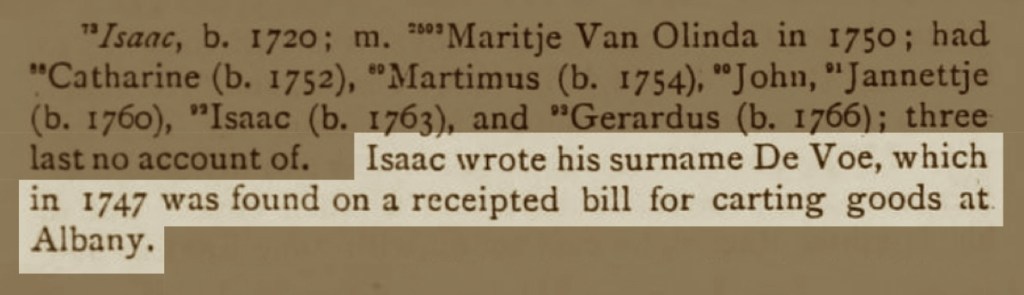
In the book, the Genealogy of The De Veaux Family, we came across an rare anecdote about our Grandfather Isaac. This little tidbit has finally settled (when) the surname spelling of our branch of the DeVoe family name, became what it is today. (1)

This anecdote was found on page 20 of the Genealogy of The De Veaux Family. (See footnotes).

What Was Attractive to Our Ancestors in This Part of New York State?

We can thank the last ice age for the rich farming country that exists in both the Hudson River Valley and the Mohawk Valley —exactly the areas our ancestors were drawn to in this era. From the history of the Town of Colonie, we learned, “The lowland areas of the Hudson and Mohawk Valleys are characterized by long alluvial flats [deposition of sediment at riverbanks]. These were the first lands selected by both the Indians and the early colonists, since the continual flooding created fertile soils for agriculture. The alluvial flats along the Mohawk River near the Mohawk View area was designated by the Indians as ‘Canastagione’, a name that had many spellings, and eventually became Niskayuna.

‘Canastagione’ referred to the Indian corn fields on the Mohawk.”

The landscape painting below starts to allude to this perspective. The riverbanks are low and fertile, the forest is crowded with life, the water is fresh and abundant. One can see clearings in the distance that our ancestors likely embraced for their farm fields.

Mohawk River, New York, by Albert Bierstadt, 1864 (Image courtesy of the Portland Art Museum).

At a time when there were few roads, the Hudson River waterway was a super-highway for people to travel by ship up the Hudson from Manhattan to the outpost of Albany. Near this place, the Mohawk River branched off from the Hudson, and at this delta, our ancestors also lived in Halfmoon. For the most part, they were all farmers, but at least once, a “tailor, and sometime fur trader” has turned up. (2)

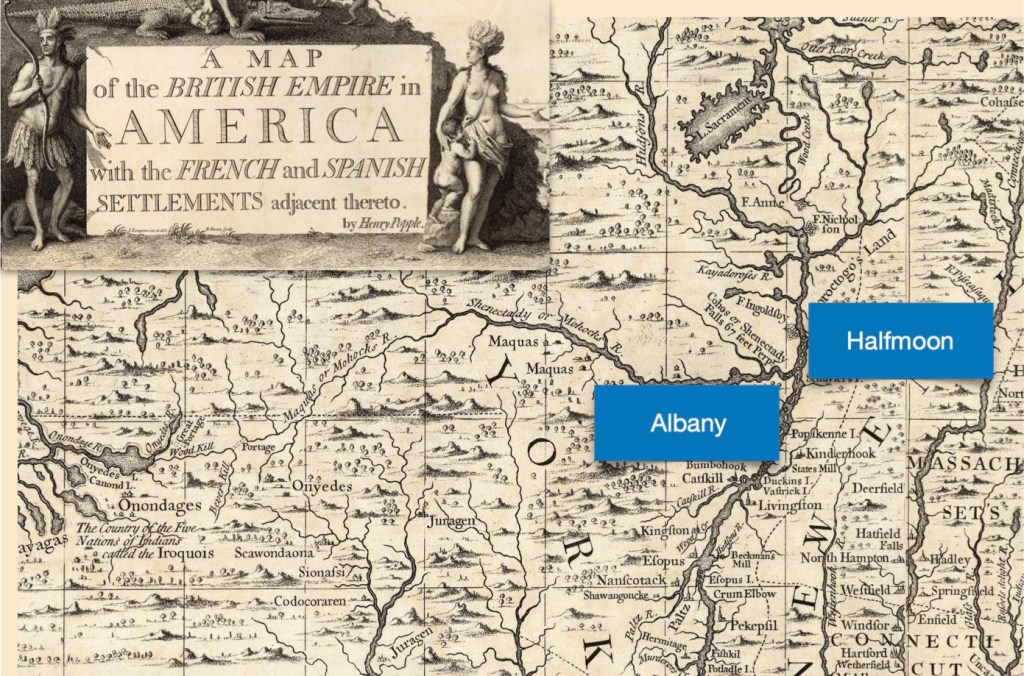
This is the composite map of the British Empire in America, 1733, by Henry Popple. Up to this time, New York had been settled mostly along the Hudson River. Observe in the lower left corner all of the still-existing nations of Native Peoples., which were sometimes referred to as the Iroquois Confederacy. (Image courtesy of the David Ramsey Map Collection).

Life in Albany and Halfmoon Before The Revolutionary War

It was still a dangerous time to leave the relatively protected area like Manhattan and move to a new area. From American History Central, “The conflicts between Britain and France for control over North America often took place in the frontier between New York and New France [the St. Lawrence River, Newfoundland, Nova Scotia, expanding to include much of the Great Lakes], and both nations sought to secure the support of the Iroquois Confederacy. Due to their control of the Fur Trade and influence in Western New York, the Iroquois skillfully manipulated the English and French, pitting them against each other to serve their own interests.”

The Houses of Stuart and Orange: King William III (reigned 1689 – 1703), Queen Anne (reigned 1702 – 1707), and then she continued as Queen under The House of Stuart, (reigned 1707 – 1714), The House of Hanover, George II (reigned 1727 – 1760).

“The first three Anglo-French conflicts — King William’s War (1689–1697), Queen Anne’s War (1702–1713), and King George’s War (1744–1748) — had significant consequences in North America due to: destruction of frontier settlements, disruption in the fur trade, and [an] increased importance of New York in the effort to remove France from North America. During the French and Indian War (1754–1763), most of the major battles on the mainland took place north of Albany, which is where the final invasion of Canada was launched. Albany became the focal point for mainland operations, and the French were finally driven out of North America in 1763.” (3)

Illustration of First Dutch Reformed Church building, Albany, NY,
built in 1715 and replaced in 1789. It was demolished in 1806. (Public domain).

Isaac DeVoe, Marytje Van Olinda, and Their Children

Isaac DeVoe, was baptized December 11, 1720, in the Dutch Reformed Church of Albany, New York, British American Colonies — death date unknown. On August 19, 1750 he married Marytje (Van Olinda) DeVoe in the Dutch Reformed Church, also in Albany. She was baptized on April 27, 1729 also at the same location. Her death date is unknown.

Dutch Reformed Church records for the birth of Isaac DeVoe, December 11, 1720.
Dutch Reformed Church marriage record for Isaac DeVoe and Mareytje Van Olinda, our 5x Great Grandparents on August 19, 1750.
Dutch Reformed Church baptismal record for Mareytje “Maria” Van Olinda, for April 27, 1729.
Entry from Genealogies of the First Settlers of Albany, via American Ancestors. (See footnotes).

Together, they had six children, all of whom were born in Albany, Albany County, New York, British American Colonies, and baptized at the Dutch Reformed Church in the same location.

  • Catarina (DeVoe) Quackenbosch, baptized December 24, 1752 — death date unknown. She married February 3, 1776, Jacob Quackenbosch.
  • Martinus DeVoe, baptized December 22, 1754 — died 1831-32. He married March 18, 1786, Maria (Steenbergh) DeVoe. (We are descended from Martinus).
  • Jan (John) DeVoe, baptized November 20, 1757 — death date unknown. He married September 10, 1778, Annatje (Conover) DeVoe.
  • Jannetje DeVoe, baptized November 9, 1760 — death date unknown
  • Isaac DeVoe (2), baptized June 5, 1763* — death date unknown
  • Gerardus DeVoe, born April 19, 1766 — death date unknown. He married September 1, 1795, Annatje (Merkel) DeVoe.

    *as per Dutch Reformed Church records: Isaac DeVoe (2) was four weeks old when he was baptized, and Gerardus DeVoe’s birthdate is listed as being April 19, not April 14, as per the American Ancestors record.
Birth record for Martinus DeVoe, our 4x Great Grandfather. (See footnotes)

Finding actual records on our 4x Great Grandfather Martinus is a cause for celebration (!) because there just isn’t much out there on him that has survived. That being said, tenacious as we are — we dug in and found enough information about his life to craft an excellent history about his interesting life. We document his family thoroughly during the Revolutionary War and into the years following, in: The DeVoe Line, A Narrative — Five, Six, and Seven. (4)

When Did the DeVoe(s) Relocate to Halfmoon?

This is a funny question to resolve absolutely… Here’s what we do know, along with what we cannot know—

Isaac DeVoe’s father John (2) was born in 1680 in the Bloemendaal section of Manhattan, New York. For reasons we cannot explicitly explain John (2) chose to move to the Albany area up the Hudson River. He married Catharina VanderWerken in 1706 in Albany, and by the early date of 1720 he was a Freeholder in Halfmoon. They had eleven children between 1707 and 1725, all born in Albany. Did the whole family live live in Halfmoon that early, when the community would have been rather rough?

Their eighth child, Isaac DeVoe, was born in 1720 in Albany. He married Marytje Van Olinda in 1750 in Albany and had six children with her. Did Isaac’s wife Marytje and some of the children stay in Albany until things were more stable in Halfmoon?

The two communities were not that far from each other, but this was still an early period of settlement and the infrastructure (roads) were very poor to non-existent, and things were rather unsafe. During this time frame there were two major wars: King George’s War (1744–1748), and the French and Indian War (1754–1763). (From Life In Albany… above) “…most of the major battles on the mainland took place north of Albany, which is where the final invasion of Canada was launched.” After this period, there continued to be many conflicts leading up to the American Revolutionary War (1775–1783). So the question is: If you were a parent, would you want your kids living safe in the Albany stockade, or exposed in the unprotected Halfmoon farm fields?

Isaac and wife Marytje (Van Olinda), married in Albany in 1750. All of their children baptized at the Dutch Reformed Church in Albany, New York. This location most likely was chosen because her side of the Van Olinda family lived in Albany and had and had ties to that church.

The background is A Map of the State of New York, 1804 (inset portions),
by Simeon DeWitt — the only known map that shows Halfmoon before there were boundary and name changes soon after 1804. When our family first moved there, Saratoga County did not yet exist until 1791. The inset panel is a description from an 1871 Gazetteer and Business Directory of Saratoga County. (Background image courtesy of Google Arts & Culture).
Plan, of the City, of Albany, in the Province of New York, by Thomas Sowers, 1756, (Image courtesy of the Norman B. Leventhal Map and Education Center at the Boston Public Library).

In 1756, about six years after Isaac and Marytje were married, the City of Albany looked like this — basically a small fortress still surrounded by an outer wooden stockade. (One wonders if Halfmoon is just a backwoods hamlet at this point, even though there are people living there. We covered the development of Halfmoon in the previous chapter, The DeVoe Line, A Narrative — Three).

Early American Colonial City: AlbanyAlbany 1770, by Robert Yates. (Image courtesy of The Urban Anecdotes).

After twenty years of marriage, there are some changes. It’s interesting to see that by 1770, Albany has grown some. The biggest change is that the outer wooden stockade has been removed, which opens things up a lot.

The only documents we can access for this period which give us clues about where his family was living are the 1790 Census and some tax records. The Isaac DeVoe who is our 5x Great Grandfather would have been about 70 years old at this point— he may have no longer been living. In fact, he could have lived his entire life without being recorded in a discernible way either by a Census, or by tax records. We have located only one Isaac DeVoe living in Halfmoon at that time, and it could possibly be his son (also named Isaac, born 1763).

1790 United States Federal Census, Halfmoon, Albany County, New York.

1790, the first census
The first census of the United States, which started on August 2, 1790 and lasted for several months. In addition to “this particular” Isaac, there are 7 people total living in the home. Censuses done during this era have an inherent problem, in that they are very limited, (in other words little information is provided). We will never know, but at 70 years of age, it is unlikely that this is our Grandfather Isaac because of the ages of the people living in the home.

  • 3 free white persons – males 16 and over
  • 2 free white persons – males under 16
  • 2 free white persons female

The 1786-1788 Tax Records
The earliest Halfmoon tax records we have located are for 1786 and 1788. From those we see taxes being paid in both years by what are presumably two sons of Isaac DeVoe: his son John (born 1757) and his namesake son, Isaac (2). Here are the records for Isaac (2) in 1786:

Halfmoon tax roll for 1786, New York State Archives Digital Collections.

It appears that many people in the community were a little slow, or reluctant, (or both!) to pay their taxes. By 1788, the local Powers That Be posted a rather cranky notice to the villagers, most of whom could not read and had to get someone kind to inform them.

Halfmoon tax roll for 1788, “Hereof you are not to fail at your Peril” cranky notice,
New York State Archives Digital Collections.

What we do know is this: Isaac’s son, Martinus DeVoe was living in Halfmoon by 1790 because we have both the 1790 Census and 1802 tax records to support this view. (See The DeVoe Line, A Narrative — Six.)

So the point of all this is to demonstrate that we really don’t know exactly when Isaac and Marytje were living in Halfmoon. We know that several of their children took up residence there, and it is plausible that if they lived into their elder years, perhaps they were living with one of their children. (5)

When People Had Free Moments…

All of these territory conflicts were serious matters, but not everything in life is serious…

The writer Lindsay Forecast, in the article Leisure Activities in The Colonial Era, states, “The amount of time devoted to leisure, whether defined as recreation, sport, or play, depends on the time available after productive work is completed and the value placed on such pursuits at any given moment in time. There is no doubt that from the late 1600s to the mid-1850s, less time was devoted to pure leisure than today. The reasons for this are many – from the length of each day, the time needed for both routine and complex tasks, and religious beliefs about keeping busy with useful work. There is evidence that men, women, and children did pursue leisure activities when they had the chance, but there was just less time available.”

The Soldier’s Wife by George Smith, (Cropped image, courtesy of Gallerix.org).

“Before the revolution, one’s station in life tended to determine how one would spend one’s leisure. For the cultured elite, the necessity of sharpening social skills to an acceptable level occupied many hours and eventually many years of one’s life. Chances for social interaction outside the towns of colonial America included the quilting and sewing bees organized by women to provide company in what otherwise could become a too-cloistered environment. Most men were also required to attend periodic militia drills. As the individual aged, what was considered leisure activities changed with them.”

Quill pen writing illustration courtesy of The Paul Revere House, (Public domain).

Quilting Bees, Sewing Bees —Just Wondering If They Ever Had Spelling Bees…
We have commented in other chapters about how for many people at this time, spelling was more of a phonetic adventure, rather than a disciplined practice. Here is an example: We once read a colonial era letter that, in addition to having to discern quill pen calligraphy (our nemesis), some of the words had what appeared to be idiosyncratic spellings. One word was “yfe” which we could not figure out.

It turns out that it was a clever phonetic spelling for the word wife. (6)

The Van Olinda Family Were Early Pioneers

One thing that we took note of with this family line, is that the name of a female Van Olinda ancestor was quite present in the documents which have survived. This is a bit unusual, and not typical of the histories we encounter from this era — but we applaud it. Frequently, her name appears in treaties and real estate documents.

This 1866 map from two centuries later, shows the area being described as “purchased by Alice van Olinde in 1667 from the Mohawk natives.” Of note is the small hamlet of Boght Corners in the lower portion. In 1829, “Alice’s” 4x Great Grandson Peter M. DeVoe, was married at the Dutch Reformed Church located there. (Image courtesy of the New York Public Library Digital Archives).

Here is an example from Wikipedia, “Boght Road, which was once called Cohoes Road and Manor Avenue, was the northern boundary of the Manor of Rensselaerswyck. North of the Manor was purchased by Alice van Olinde* in 1667 from the Mohawk natives, and the van Olinde family then sold and leased out farms to potential settlers. Loudon Road (today US 9), named in honor of Earl Loudon was built in 1755 for the purpose of bringing provisions north from Albany to Lake George and Fort Ticonderoga.”

*We were intrigued. Who is this Alice van Olinde? It turns out her real name was slightly different than this. Further on, see our Observation at the end of the section below, subtitled The Legacy of Our Grandmother… (7)

The Legacy of Our Grandmother — Hilletje (Van Slyck) Van Olinda

The dictionary defines the word apocryphal as being of questionable or doubtful authorship or authenticity — and so it is when it comes to some research in genealogy. Usually we refer to these items as family stories, but when the passed-on information gets to be very, very old, it can become apocryphal. It’s almost like the game of telephone: stories > told > again > and > again > become > altered.

To recount the history of the Van Olinda branch of the family forces us to confront a bit of this, and make some decisions. We know that our 8x Great Grandmother in this line is named Hilletje (Van Slyck) Van Olinda and that she was half Mohican. Her history is quite compelling, which we will get to in a moment, but first we need to address the issue of who her mother was, or was not. There is much information out there about her, with some researchers claiming that her name was Ots Toch Owisto’k, and that Hilletje’s father was a French fur trader named Jacques Hertel. The problem with this specificity is that there is no direct evidence to support it. In fact, there is no indirect evidence either. [We prefer to see some form of evidence to support claims.] Apocryphal stories which are put out there without supporting evidence are a genealogist’s version of the game of telephone.

“The practice of historians is to treat legends as meritless unless merit can be demonstrated. A rule of thumb that some historians apply to oral traditions is that after 200 years they have lost any reliability they might have had at the beginning.”

Jacques Hertel in Legend And History II
by Genealogical Researcher Cynthia Brott Biasca

Genealogical Researcher Cynthia Brott Biasca does a remarkable investigation and refutation into the many claims of Hilletje’s parentage. We observed that the overall problem lies with the notions of writers from the 18th and 19th centuries, (and then the unquestioned adoption of that information by later writers). Unlike the world today, where we are marinated in media, back then writers only had the power of words to intrigue and impress their readers. It was natural to freely embellish histories with opinions, prejudices, half-truths, (and an occasional Indian Princess). When we first encounter our Grandmother Hilletje, this is how she is described in the book, The Mohawk Valley : Its Legends and Its History

“She was born of a Christian father (Van Slake) and an Indian mother of the Mohawk tribes. Her mother remained in the country and lived among the Mohawks, and she lived with her the same as Indians live together. Her mother would never listen to anything about Christians, as it was against her heart from an inward unfounded hate. As Hilletie sometimes went among the whites to trade, some of the Christians took a fancy to the girl, discovering more resemblance to the Christians than the Indians, and wished to take her and bring her up, but her mother would not let her go. The little daughter had no disposition to go at first, but she felt a great inclination and love in her heart to those who spoke to her about Christ and the Christian religion. Her mother observed it and grew to hate her and finally drove her from her forest home. She went to those who had solicited her to come so long. She had a particular desire to learn to read and finally made her profession and was baptized.” (This was written in 1901, by Reid. See footnotes).

Left to right: The Mohawk Valley : Its Legends and Its History by W. Max Reid, 1901. Journal of Jasper Danckaerts, 1679-1680, and a Dutch Bible from 1782. (See footnotes).

Much of this is derived from three chapters of an earlier book written in Dutch in the late 17th century and titled [the] Journal of Jasper Danckaerts, 1679-1680. It was discovered > and translated about 80-90 years later in the 18th century >, then continually edited > again and again > for other editions. It is the closest we get to the actual description of the woman Hilletje. However, Danckaerts was a missionary, and it is through his lens that we see her —

“While we were there, a certain Indian woman, or half-breed, that is, from a European and an Indian woman, came with a little boy, her child, who was dumb, or whose tongue had grown fast. It was about four years old; she had heard we were there, and came to ask whether we knew of any advice for her child, or whether we could not do a little something to cure it. We informed her we were not doctors or surgeons, but we gave her our opinion, just as we thought. Sanders told me aside that she was a Christian, that is, had left the Indians, and had been taught by the Christians and baptized… She had said all this with a tender and affectionate heart, and with many tears, but tears which you felt proceeded from the heart, and from love towards God. I was surprised to find so far in the woods, and among Indians — but why say among Indians? among Christians ten times worse than Indians — a person who should address me with such affection and love of God; but I answered and comforted her. She then related to me from the beginning her case, that is, how she had embraced Christianity. She was born of a Christian father and an Indian mother, of the Mohawk tribes. [text continues as per Reid above, word-for-word]… She had especially a great desire to learn to read; and applied herself to that end day and night, and asked others, who were near her, to the vexation and annoyance of the other maids, who lived with her, who could sometimes with difficulty keep her back. But that did not restrain her ; she felt such an eagerness and desire to learn that she could not be withheld, particularly when she began to understand the Dutch language, and what was expressed in the New Testament, where her whole heart was. In a short time, therefore, she understood more about it than the other girls with whom she conversed, and who had first instructed her…” Finally, she made her profession, and was baptized.” (This was written by Danckaerts in the late 17th century and translated much later.)

*Observation: The genealogy game of telephone (before there were real telephones!) was actively being played soon after Hilletje met Jasper Danckaerts. This became apparent as we were sorting through the many variations of her first name.

We have no record of her given Mohawk name. Jasper Danckaerts in 1680 wrote her name in Dutch, which was then translated about 80 years later into the first English edition as: Aletta. Most of the time we see spelling variations that are: Hilletje (which is a Dutch name equivalent for Hilda). If the name is pronounced with a silent ‘H’ it is possible to sound a bit more like Aletta. However, the Dutch language name equivalent for Alice is: Aaltje, or Aeltje. (Google search) So it seems some contemporary writers have just selected Alice.

The Lake of the Iroquois by L. F. Tantillo. The artist writes, “Lake of the Iroquois depicts two Mohawk tribesmen crossing an Adirondack lake in a time frame after contact with Europeans, circa 1640. The canoe is based on period accounts of native vessels constructed of elm bark. The musket in the canoe was a common trade item at that time.”

The Southern Border of the Mohawk Nation
The map below shows the community of Schenectady, which is slightly northwest of Albany. This area and the Rensselaer Manor adjacent to the south, is where most of the Van Olinda families were initially granted land patents. The areas west of here were still Native People areas, called the Country of the Five Nations of Indians (also sometimes referred to as the Iroquois Confederacy) — and the aptly named Mohawk River, represented the southern border of the more northerly Mohawk Nation. During an era of many conflicts between Dutch and English Colonists with the Native Peoples and also the French — this border community was evolving from a dangerous area to a somewhat settled area in which to live.

A Plan of Schenectady from A History of The Schenectady Patent in The Dutch and English Times, page 317. In Hilletje’s life, this area would have been much less settled. (See footnotes).

So what do we know about her life?
From Greene’s book on the Mohawk Valley (see footnotes), her father, “the original Van Slyck, was Cornelis Antonissen Van Slyck, meaning ‘Cornelis, the son of Antonis of Slyck.’ The Dutch immigrant Antonissen Van Slyck, (alias ‘Borer Carnelis’ by the natives)” is noted as her father in Hudson-Mohawk Genealogical and Family Memoirs, Vol. II, and that she was born circa 1640s.

From Stefan Bielinski, Historian for the Colonial Albany Social History Project at the New York State Museum, we learned regarding Hilletje, “By the 1670s, this legendary historical character had become the wife of Albany businessman and regional property holder Pieter Danielse Van Olinda and the mother of several of his children.”

Map from page 58 of A History of The Schenectady Patent in The Dutch and English Times:
Being Contributions Toward a History of The Lower Mohawk Valley
, by Jonathan Pearson.

“Well known in the country west of Albany, Hilletie’s special talent was that of the interpreter. In 1667, she is said to have been given five islands in the Mohawk at Niskayuna in payment for her services. During the 1690s and possibly afterwards, she was paid by the provincial government as the ‘interpretess to the Indians at Albany.’ She was able to secure a number of parcels of land in the region in payment for her work as interpreter. A number of visitors mentioned her in their narratives.” (Bielinski)

Remember this word from the Introduction? “Canastagione” referred to the Indian corn fields on the Mohawk.” (Colonie) “Their lifestyle included farming on cleared flats near the river and hunting over a vast forested area. Their small villages were moved as necessary to preserve their way of life.” (Town of Halfmoon website) These islands were considered ideal locations for the growing of corn, and in a sense, show how esteemed Hilletje must have been by the Mohawks to have received such valuable areas as gifts.

Indian Deed to Hilletie Van Olinda, October 6, 1704. Note the Native American pictorial glyph signature alongside the wax seals. (Image courtesy of the New York State Archives Digital Collections)
Dutch Reformed Church 1707 death record for Hilletje Van Olinda.

We know that Hilletje was married to Pieter Danielse Van Olinda and that they had several children. She died on February 10, 1707. Her husband Pieter, outlived her and “was a farmer, tailor, and sometime fur trader… He has been identified as one of the original patentees of Schenectady. In 1674, he was among those invited to the funeral of the director of Rensselaerswyck — where he held property… he filed a Will in August 1715 (died 1716)Much of this real estate came to him through the work of his wife, the then late Hilletie Van Slyck… (Bielinski)

Which children eventually lead to Marytje (Van Olinda) DeVoe?
As per American Ancestors (see footnotes) for our family, we are descended from the Van Olinda family as follows:

  • Antonis of Slyck, Dutch immigrant father of Antonissen Van Slyck
  • Antonissen Van Slyck was the father of a (half Mohawk) daughter, Hilletje Van Slyck
  • Hilletje (Van Slyck) Van Olinda — married Pieter Danielle Van Olinda. She died February 10, 1707. They had a son named…
  • Daniel Van Olinda, named as the eldest son in the Will of his father Pieter, continued the family line in the community of Halfmoon where he lived. Daniel Van Olinda married Lysbeth (Kregier) Van Olinda on June 11, 1696. They had a son named…
  • Marten Van Olinda, married Jannetie Van Der Werken on April 8, 1724. They had a daughter named…
  • Marytje [Maria] (Van Olinda) DeVoe, who became our 5x Great Grandmother (8)

In the next chapter, we feature our 4x Great Grandfather Martinus DeVoe, and his life during the Revolutionary War. It was one of the most complicated chapters of the DeVoe Line to write (truly and actually) because of the game of > telephone >> and >>> family >>>> stories.


Just ask Ernestine. We’re sure that she knows all about our history.

Following are the footnotes for the Primary Source Materials,
Notes, and Observations

Preface: It’s Finally Settled!

(1) — one record

Genealogy of The De Veaux Family : Introducing the Numerous Forms of Spelling the Name by Various Branches and Generations in the Past Eleven Hundred Years
by Thomas Farrington De Voe, 1811-1892
https://archive.org/details/genealogyofdevea00thom/page/n7/mode/2up
Book page: 20, Digital page: 20/302
Note: For the anecdote about Isaac DeVoe and the receipted bill.

What Was Attractive to Our Ancestors in This Part of New York State?

(2) — three records

Town of Colonie, Town Historian
The Early History of Colonie
https://www.colonie.org/departments/historian/early-history

Mohawk River, New York
by Albert Bierstadt, 1864, oil on canvas – Portland Art Museum – Portland, Oregon – DSC08750.jpg
https://commons.m.wikimedia.org/wiki/File:Mohawk_River,_New_York,_by_Albert_Bierstadt,_1864,_oil_on_canvas_-_Portland_Art_Museum_-_Portland,_Oregon_-_DSC08750.jpg
Note: For the landscape image.

David Ramsey Map Collection
Composite (map): British Empire in America, 1733
by Henry Popple
https://www.davidrumsey.com/luna/servlet/detail/RUMSEY~8~1~887~70081:-Composite-Map-of–A-Map-of-the-Bri
Note: For the map image.

Life in Albany and Halfmoon Before The Revolutionary War

(3) — five records

Britannica
Iroquois Confederacy, American Indian confederation
https://www.britannica.com/topic/Iroquois-Confederacy

American History Central
New York Colony 1524 – 1763
New York Colony, the Iroquois, and New France
https://www.americanhistorycentral.com/entries/new-york-colony/

List of English Monarchs
Houses of Stuart and Orange
https://en.wikipedia.org/wiki/List_of_English_monarchs
Note: For their portraits.

[Queen Anne]
File:Dahl, Michael – Queen Anne – NPG 6187.jpg
https://commons.wikimedia.org/wiki/File:Dahl,MichaelQueen_Anne-_NPG_6187.jpg
Note: For her portrait.

King George II
https://commons.wikimedia.org/wiki/File:King_George_II_by_Charles_Jervas.jpg
Note: For his portrait.

Isaac DeVoe, Marytje Van Olinda, and Their Children

(4) — fifteen records

Illustration of First Dutch Reformed Church building, Albany, NY
https://en.wikipedia.org/wiki/First_Church_in_Albany_(Reformed)#/media/File:1715_Dutch_Reformed_Church,_Albany,_NY.jpg
Note: For the church building image.

First Church in Albany (Reformed)
https://en.wikipedia.org/wiki/First_Church_in_Albany_(Reformed)

Albany County, New York: First Settlers, 1630-1800 (Archived1)
https://www.americanancestors.org/databases/albany-county-new-york-first-settlers-1630-1800-archived1/image?volumeId=63472&pageName=42&rId=10007842425
Book page: 42, Digital page: 42/182

Isaac De Voe
in the U.S., Dutch Reformed Church Records in Selected States, 1639-1989

New York > Albany > Albany, Vol I, Book 1
https://www.ancestry.com/discoveryui-content/view/40264:6961?ssrc=pt&tid=48708924&pid=240082063566
Book page: 95, Digital page: 99/368, Right page, entry 2 from the top.
Note: For marriage information. Hand transcription      

Genealogies of The First Settlers of Albany
https://www.americanancestors.org/databases/albany-county-new-york-first-settlers-1630-1800-archived/image?rId=6526998&volumeId=7370&pageName=129&filterQuery=
Book page: 129
Note: See left column entry for Van Olinda, and follow:
Pieter/Hilletie > Daniel/Lysbeth > Marten/Jannetie > Maria

Maritje Van Olinda
https://www.ancestry.com/family-tree/person/tree/6000267/person/252272497714/facts?_phsrc=wfr1&_phstart=successSource
and
Part 4, 1750–1764, Holland Society of New York (1907)
Records of the Reformed Dutch Church of Albany, New York, 1683–1809
http://aleph0.clarku.edu/~djoyce/gen/albany/part4.html#marriage
Note 1: Click on this link: Marriages, 1750 to 1762, then see entry for August 19, 1750.
Note 2: Both entries are for marriage records.
Note 3: We have not been able to discern what the notation “with pardon” means in this context. It is interesting to look at the other notations: “2 living at the Half Moon, born at Nistigoenen, live near Schaghticoke”.
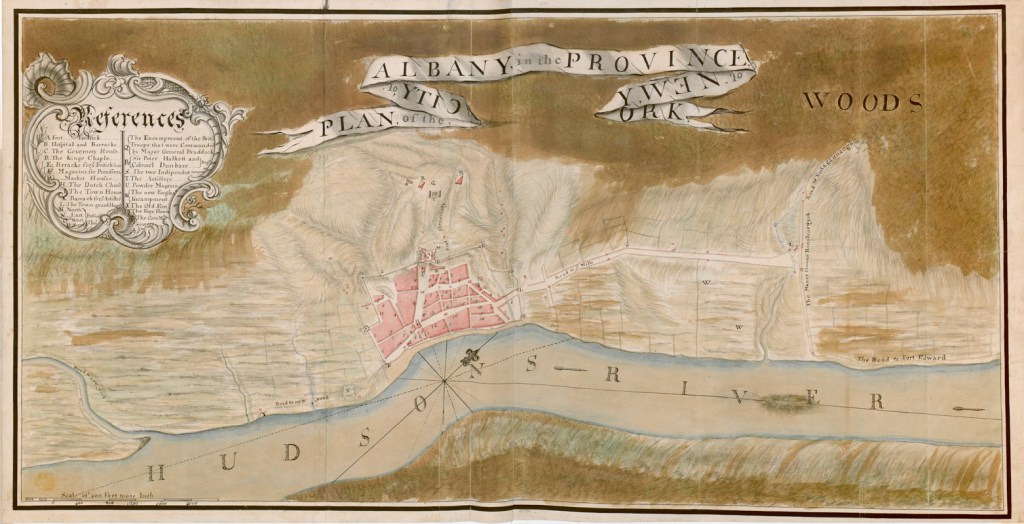
U.S., Dutch Reformed Church Records in Selected States, 1639-1989
New York > Albany > Albany, Vol I, Book 1
https://www.ancestry.com/discoveryui-content/view/39413:6961?tid=&pid=&queryId=c38b5d34-11bb-42af-a384-6478a5a4718a&_phsrc=yJB1&_phstart=successSource
Book page: 268, Digital page: 272/368
Note 1: Birth record for Marytje Van Olinda.
Note 2: The entry is noted under April 20, 1729, with the indication of d7 — that it is 7 days after is her actual birthday (d7 equals April 27).
Note 3: This is the same location that all of their children were baptized.

Records of the Reformed Dutch Church of Albany, New York, 1683–1809
(Excerpted from Year Books of the Holland Society of New York, 1907)
DRC of Albany Baptismal Record, 1789 to 1809
http://aleph0.clarku.edu/~djoyce/gen/albany/refchurch.html
Note: We have itemized each individual record for their children which are found in three links, as directed below.

Here are the individual records for the first 4 children of Isaac DeVoe and Marytje (Van Olinda) DeVoe —
Catarina, Martinus, Jan (John), and Jannetje are found at this link,
Baptismal Record, 1750 to 1762:
http://aleph0.clarku.edu/~djoyce/gen/albany/part4.html#baptismal

> [page 31] 1752
1752, Dec. 24. Catarina, of Isaac De Voy and Maritje V. drlinden. Wit.: Isaac Vosburg, Geerteruy Van de Linden
and here also:
Isaac De Voy
in the U.S., Dutch Reformed Church Records in Selected States, 1639-1989
New York > Albany > Albany, Vol III, Book 3
https://www.ancestry.com/discoveryui-content/view/150162502:6961?ssrc=pt&tid=48708924&pid=240082063566
Book page: 64, Digital page: 268/506
Note: Hand transcription.        Left page, fourth entry from the top

> [page 44] 1754
1754, Dec. 22. Martinus, of Isak Du Foe and Marytje Van der Linde. Wit.: Martinus V. d. Linden, Elisabeth Doxs.

> [page 57] 1757
1757, Nov. 20. Jan (John), of Isaac Devoe and Maria Van Olinde. Wit.: Jan Dox, Maria Coerteny.

> [page 71] 1760
1760, Nov. 9. Jannetie of Izak De Voe and Marytje V. der Linde (Van Olinde). Wit.: Daniel V. der Linde (Van Olinde), Elisabeth Bekker.
and here also:Izak De Voe
in the U.S., Dutch Reformed Church Records in Selected States, 1639-1989
New York > Albany > Albany, Vol III, Book 3https://www.ancestry.com/discoveryui-content/view/150163354:6961?ssrc=pt&tid=48708924&pid=240082063566
Book page: 186, Digital page: 190/506
Note: Hand transcription.        Left page, fifth entry from the bottom

Isaac is found at this link: Baptismal Record, 1763 and 1764:
http://aleph0.clarku.edu/~djoyce/gen/albany/part4.html#baptismal2
> [page 93] 1763
1763, June 5. Yzaac (Isaac) of Yzac (Izak) de Foe (de Voe) and Maria V. d. Linde. Wit. Cornelis V. d. Berg, Claartje Knoet. Note: Four weeks old.
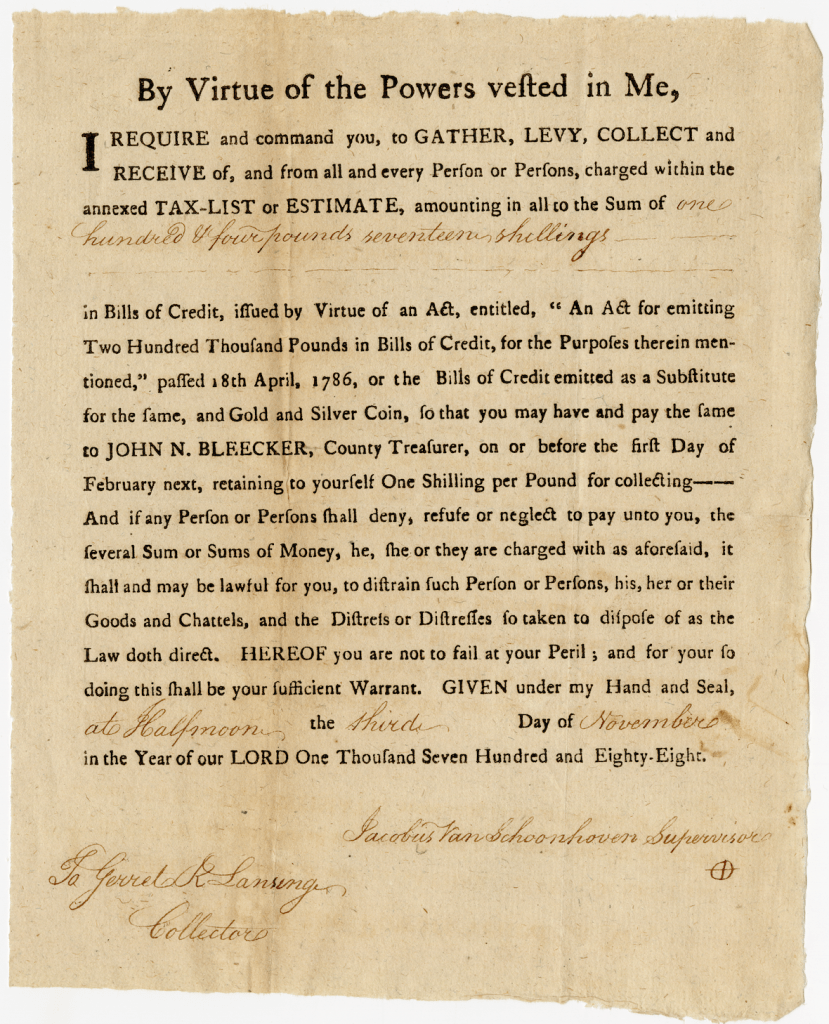
Gerardus is found at this link: Baptismal Record, 1765 and 1771:
http://aleph0.clarku.edu/~djoyce/gen/albany/part5.html#baptismal
> [page 19] 1766 (bo = born on)
bo. Apr. 19. Gerardus, of Yzaac du Voe and Marytje V. Olinde. Wit.: Gerardus V. Olinde, Lena du Voe.

Early New Netherlands Settlers
David <?> Du Four, (Rn=25344)
https://freepages.rootsweb.com/~rclarke/genealogy/page1/dufour.htm

When Did the DeVoe(s) Relocate to Halfmoon?

(5) — nine records

Gazetteer and Business Directory of Saratoga County, N.Y.,
and Queensbury, Warren County,
for 1871
https://archive.org/details/gazetteerbusines00chi/page/92/mode/2up?view=theater
Book page: 92, Digital page: 92/303

A Map of the State of New York, 1804 (cropped portion)
Simeon DeWitt (1756-1834)
https://artsandculture.google.com/asset/a-map-of-the-state-of-new-york/gQG44G8fdQpGwQ?hl=pt-PT
Note: For map image.

Boston Public Library
Norman B. Leventhal Map and Education Center
Plan, of the City, of Albany, in the Province of New York (map)
by Thomas Sowers, 1756
https://collections.leventhalmap.org/search/commonwealth:hx11z365w

The Urban Anecdotes
Early American Colonial City: Albany
Albany 1770 (map)
by Robert Yates
https://www.the-urban-anecdotes.com/post/early-american-colonial-city-albany
Note: For the map image.

The George Washington Presidential Library at Mount Vernon
First United States Census, 1790
https://www.mountvernon.org/library/digitalhistory/digital-encyclopedia/article/first-united-states-census-1790/#:~:text=The%201790%20census%20was%20the,of%20national%20prosperity%20and%20progress.

American Revolutionary War
https://en.wikipedia.org/wiki/American_Revolutionary_War#:~:text=The%20American%20Revolutionary%20War%20(April,and%20commanded%20by%20George%20Washington

Isaac Devoe
in the 1790 United States Federal Census

New York > Albany > Half Moon
https://www.ancestry.com/discoveryui-content/view/234148:5058?tid=&pid=&queryId=47cac8d0-7968-4a12-b3a0-4d1b0ec73750&_phsrc=nLK2&_phstart=successSource
Book page: Noted as 322, Digital page: 1/4, Left column, entry 25 from the bottom of the page.

New York State Archives Digital Collections
Halfmoon tax roll, 1786
https://digitalcollections.archives.nysed.gov/index.php/Detail/objects/57252
Note: There are 16 downloadable files.This is the relevant file: NYSA_A1201-78_1786_Albany_Halfmoon_p04.tiff

New York State Archives Digital Collections
Halfmoon tax roll, 1788
https://digitalcollections.archives.nysed.gov/index.php/Detail/objects/95585

When People Had Free Moments…

(6) — three records

The Revere House Gazette, Spring 2016
Leisure Activities in The Colonial Era
by Lindsay Forecast
https://www.paulreverehouse.org/wp-content/uploads/2016/06/PaulRevereHouse_Gazette122_Spring16.pdf

The Soldiers Wife (image cropped)
by George Smith (1829-1901)
https://gallerix.org/storeroom/1073111432/N/718/
Note: For the image of the children playing.

Quill Pen Writing and Drawing illustration
https://www.paulreverehouse.org/event/quill-pen-writing-and-drawing-aug2023/
Note: For the illustration.

The Van Olinda Family Were Early Pioneers

(7) — three records

History of the Mohawk Valley: Gateway to the West 1614-1925,
Volume 1

Nelson Greene, editor
https://www.schenectadyhistory.org/resources/mvgw/history/022.html
Book pages: 326-351
Note: Chapter 22: Settlers at Schenectady, 1661-1664

Watervliet, New York (map)
New Topographical Atlas of the Counties of Albany and Schenectady New York
https://digitalcollections.nypl.org/items/510d47e3-72e9-a3d9-e040-e00a18064a99/book?parent=76f52680-c5f6-012f-6a69-58d385a7bc34#page/17/mode/2up
Book page: 31
Note 1: For the map image.
Note 2: Known in the present day as the town of Colonie.

Boght Corners, New York
https://en.wikipedia.org/wiki/Boght_Corners,_New_York
Note: For the mention of “was purchased by Alice van Olinde in 1667 from the Mohawk natives…”

The Legacy of Our Grandmother  — Hilletje (Van Slyck) Van Olinda

(8) — eighteen records

Apocryphal [definition]
https://www.merriam-webster.com/dictionary/apocryphal#:~:text=apocryphal%20implies%20an%20unknown%20or,itself%20is%20dubious%20or%20inaccurate.

Jacques Hertel in Legend And History II
by Cynthia Brott Biasca
https://www.familysearch.org/memories/memory/134755036

The Mohawk Valley: Its Legends and Its History
by W. Max Reid, 1901
https://ia600507.us.archive.org/13/items/mohawkvalleyitsl00reid/mohawkvalleyitsl00reid.pdf
Book pages: 156-160

1782 BÍBLIA ENCADERNADA DE COURO com FECHOS BIBLIA SACRA
antiga na Holanda Holandesa
[1782 LEATHER BOUND BIBLE with LOCKS Antique HOLY BIBLE in Dutch Holland]
https://www.ebay.com/itm/364780333183?norover=1&mkevt=1&mkrid=711-167022-160074-6&mkcid=2&itemid=364780333183&targetid=296633477513&device=c&mktype=pla&googleloc=9197425&poi=&campaignid=20741944936&mkgroupid=158218881347&rlsatarget=pla-296633477513&abcId=&merchantid=5300591862&gad_source=1&gbraid=0AAAAAD_QDh_LgbL-MlCni_jX5IWQJNcW7&gclid=Cj0KCQjwkdO0BhDxARIsANkNcrdM9VcKURsHWIfTYIAb3fyHXC8OqZt0uH34KI6nRzdABQ_ESrxluZMaArrcEALw_wcB

Smithsonian Libraries
Journal of Jasper Danckaerts, 1679-1680,
These three chapters: The Story of Aletta, The Indian, The Story of Wouter, Aletta’s Nephew, Interview With Aletta and Wouter
https://library.si.edu/digital-library/book/journalofjasper00danc
Book pages: 201-211, Digital pages: 200-210/313

Mohawk Village, 1780
A Mohawk Native American village in central New York, c1780.
Engraving, 19th century
https://www.mediastorehouse.com/granger-art-on-demand/mohawk-village-1780-mohawk-native-american-7505681.html
Note: For the village illustration.

Hudson-Mohawk Genealogical and Family Memoirs, Vol. II
Hudson-Mohawk Family Histories
by Cuyler Reynolds (editor)
https://www.ancestry.com/imageviewer/collections/48324/images/HudsonMohawkII-002620-704?ssrc=&backlabel=Return&pId=291902
Book page: 704, Digital page: 221/465

The Fine Art of Historical and Marine Painting
Lake of the Iroquois
Two Iroquois in the Adirondacks, circa 1640

by L. F. Tantillo
https://lftantillo.com/native-americans-in-new-york/lake-of-the-iroquois.html

A History of The Schenectady Patent in The Dutch and English Times: Being Contributions Toward a History of The Lower Mohawk Valley
by Jonathan Pearson, and Junius Wilson MacMurray
https://archive.org/details/historyofschenec00pearuoft/historyofschenec00pearuoft/page/n7/mode/2up
Note 1: For the Bouwlands map, Book page: 58, Digital page: 86/514
Note 2: For the Schenectady map, Book page: 317, Digital page: 349/514

History of the County of Schenectady, N. Y., from 1662 to 1886…
by John H. Munsell , George Rogers Howell
https://archive.org/details/historycountysc00howegoog/page/n30/mode/2up
Book pages: 15-16, Digital pages: 31/254

A Brief History of Early Halfmoon
by The Town of Halfmoon, New York
https://www.townofhalfmoon-ny.gov/historian/pages/a-brief-history-of-early-halfmoon

New York State Archives Digital Collections
Indian Deed to Hilletie Van Olinda, October 6, 1704
https://digitalcollections.archives.nysed.gov/index.php/Search/objects?search=Van+Olinda
Description of the document:
“Indian deed to Hilletie van Olinda, accompanying a petition for a patent for a tract of woodland, known by the Indian name of Dewaethoeiacocks, lying on the south side of the Maquase river, being bounded on the north side by Killian Van Ransleaer’s patent; on the west by the patent of Peter Hendrick de Haes; easterly down along the said river, by the Kahoos or Great falls, containing about 400 acres.”

U.S., Dutch Reformed Church Records in Selected States, 1639-1989
New York > Albany > Albany, Vol III, Book 3
https://www.ancestry.com/imageviewer/collections/6961/images/42037_1521003239_0772-00018?ssrc=&backlabel=Return
Book page: 13, Digital page: 17/506, last entry before November 4, 1710.
Note: 1707 death record for Hilletje Van Olinda

Pieter Danielse Van Olinda
by Stefan Bielinski
https://exhibitions.nysm.nysed.gov/albany/bios/vo/pdvolinda.html

Calendar of wills on file and recorded in the offices of the Clerk of the Court of Appeals, of the County Clerk at Albany, and of the Secretary of State, 1626-1836
Berthold Fernow, 1837-1908
https://archive.org/details/calendarwillson00appegoog/page/449/mode/2up
Book page: 449 Digital page: 449/657, Left page, middle.
Note: For Peter van Olinda 1715 Will.

Albany County, New York: First Settlers, 1630-1800 (Archived1)
https://www.americanancestors.org/databases/albany-county-new-york-first-settlers-1630-1800-archived1/image?volumeId=63472&pageName=42&rId=10007842425
Book page: 42, Digital page: 42/182

We present this family tree for information purposes only, since some of the information is unsourced. Be careful!
https://www.familysearch.org/tree/pedigree/landscape/LDHG-GMP

The Hollywood Reporter
Laugh-In’ Tribute Set at Netflix With Original Star Lily Tomlin
https://www.hollywoodreporter.com/tv/tv-news/laugh-tribute-set-at-netflix-original-star-lily-tomlin-1191978/