This is Chapter One of eight. When it came to our mother, she used to say that her roots, were from a “proud, noble people”. We were never quite sure about what she was getting at specifically, but in her mind’s eye, she probably pictured history similar to the way that mid-century Hollywood movies portrayed it.

We do know that she was quite the enthusiast for her genealogy studies, as was her mother before her. Their time existed before online research was possible, so it limited what they were able to achieve. As we all know, the world has changed a lot, and we have taken up the mantle to continue in our own way, with what they started. (1)
Sometimes Our Ancestral Grandmothers Are More Interesting
Than Our Ancestral Grandfathers
Human societies weren’t always male-dominated. The switch came when we became farmers — about 12,000 years ago in the Mesopotamian region. That was a long time ago, and the transition from egalitarian family unit to a patriarchal family structure was not something that happened overnight.
After years of researching our family lines, we have most often dealt with the histories of men. This is due to the fact that the men are the ones whose stories were / are often recorded, and most of the time we don’t hear the stories about the women. When we do find their stories, they tend to be within the last few hundred years, but generally speaking, they are rare.

From ‘Opus Ruralium Commmodorum’ (1471), Vollbehr Collection, Rare Book Collection
(Image courtesy of The Library of Congress.
Interestingly, in genealogy a woman’s name can provide a valuable link to an entire family history that had remained hidden. So it is with our 20x Great-Grandmother Lady Elyanor Comyn. She lived circa 1355, and was married to Richard Gower. Her life provides the foundational link that connects our family to Scottish Royalty and the Noble Class from that part of the world. We write about her influence in The Gore Line, A Narrative — Two.
We will commence with the history of her forefathers, but remember, the foremothers are quietly there too. (2)
What’s in a Name?
For this blog chapter, we are presenting a deep history of the Scottish Kings and Rulers to provide historical context. Eventually, we will relate this to the Comyn Family and our own history.
Note: Many of the personal names and place names written in this history are difficult for the modern reader to read and pronounce. Don’t worry about it. These names are from very old languages: Scots, and Scottish Gaelic. Just let the names wash over you as you read the history —it’s more fun that way!
The Kingdom of The Picts… The Kingdom of Alba… The Kingdom of Scotland
The Kingdom of the Picts just became known as the Kingdom of Alba in Scottish Gaelic, which later became known in Scots and English as Scotland; the terms are retained in both languages to this day. By the late 11th century at the very latest, Scottish kings were using the term rex Scottorum, or King of Scots, to refer to themselves in Latin.
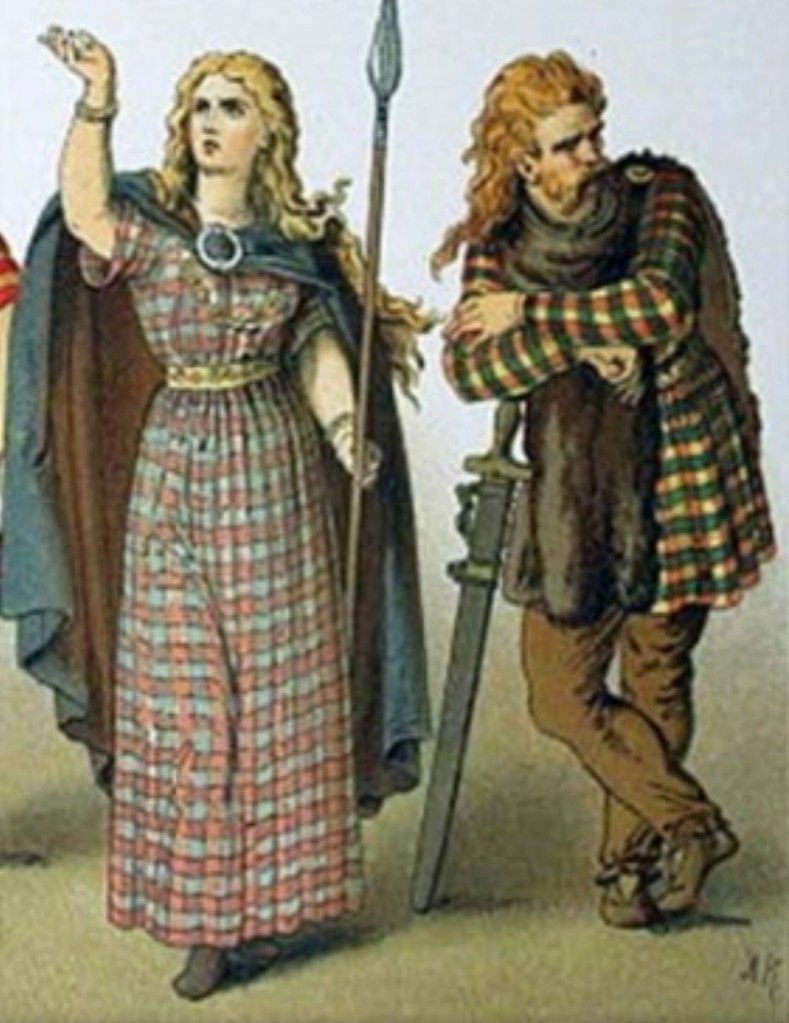
(Image courtesy of Merlin’s Tales of Britannia Wiki).
“Pictish kingship didn’t pass from father to son but from relative to relative through choice. Some scholars have speculated that royal blood wasn’t patrilineal for the Picts, but matrilineal, meaning that the women of the clan (sisters, nieces, etc.) were the only ones who could give birth to kings.
Matrilineality allowed the Picts a larger pool of kingly candidates to choose from, as opposed to one or two sons of a single monarch. Although scholars aren’t completely sure exactly how the Picts chose their kings, it’s worth noting that if power passed through the mother’s bloodline, this didn’t necessarily mean that women were given more power in society.”
The reign of Kenneth MacAlpin begins with what is often called the House of Alpin, an entirely modern concept. The descendants of Kenneth MacAlpin were divided into two branches; the crown would alternate between the two, the death of a king from one branch often hastened by war or assassination by a pretender from the other. [Note: This is important to understand, that these two intertwined lines give us the early Kings of Scotland. We have documented Elyanor Comyn’s line through direct descendancy as much as possible.]

Note: All births and deaths are in Scotland, unless noted otherwise.
Alpín macEchdach
From wikipedia.com: Alpín macEchdach, born 778 at Dunollie Castle, Argyll – died (unknown date). He was a supposed king of Dál Riata, an ancient kingdom that included parts of Ireland and Scotland. Alpín’s mother was the sister and heiress of Causantín macFergusa, King of the Picts. Alpín married a ‘Scottish Princess’, and fathered two sons: Domnall mac Ailpín and Kenneth MacAlpin.
Alpín macEchdach, born (date unknown) – died in July or August 834, when he was either killed while fighting the Picts in Galloway, or beheaded after the battle. He was succeeded by his son Cináed Mac Ailpin, i.e. Kenneth macAlpin.
(Image courtesy of britroyals.com).
Kenneth macAlpin, Cináed macAilpin, born 810 on the ‘Scottish’ Isle of Iona – died February 13, 858, in Forteviot, Perthshire. Kenneth I is traditionally considered the founder of Scotland, which was then known as Alba, although like his immediate successors, he bore the title of King of the Picts. The name of his wife is unknown, but they had four children:
- Causantín macCináeda, Constantine I, King of Alba
- Áed of the White Flowers macCináeda, King of Alba
- Unknown daughter; she married Rhun ab Arthgal
- Máel Muire ingen Cináeda; she married Áed Findliath
Succession in the kingdom was carried out in the form of tanistry* so Kenneth’s successor was his brother Donald, rather than his eldest son. After the death of Donald I (Domnall MacAilpín), the sons of Kenneth I — Causantín macCináeda and Áed macCináeda, inherited the crown. The Alpínid dynasty, which ruled Scotland until the beginning of the 11th century, was formed during this period.
*Tanistry is a Gaelic system for passing on titles and lands. In this system the Tanist is the office of heir-apparent, or second-in-command, among the (royal) Gaelic patrilineal dynasties of Ireland, Scotland and Mann.

(Image courtesy of The National Galleries of Scotland).
Donald I, Causantín macCináeda
He inherited the throne upon the death of his uncle Donald I (Domnall MacAilpín), April 13, 862. Often known as Constantine I, born circa 862 – died in 877, possibly in Fife, Scotland. At the time, his Kingdom was battling the Vikings. The name of his wife is unknown, but they had a son: Donald II (Domnall macCausantín), King of the Picts of Alba.
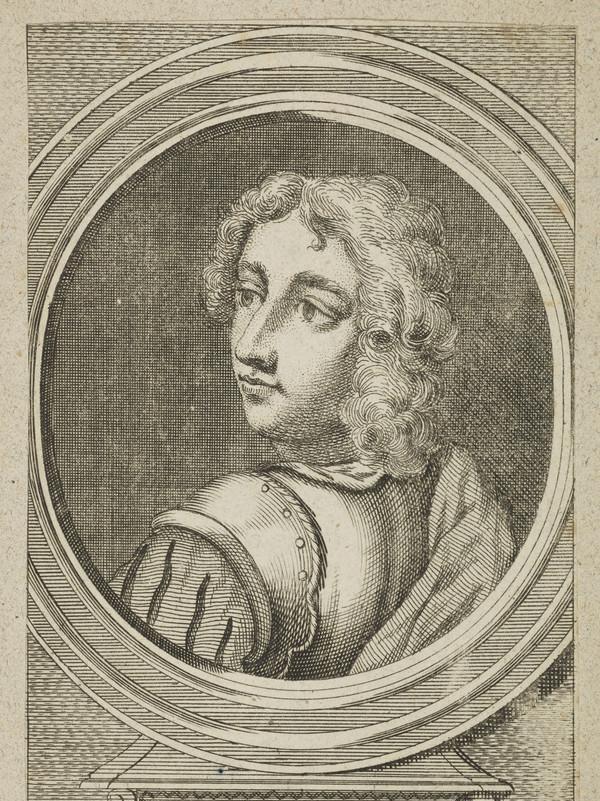
(Image courtesy of The National Galleries of Scotland).
Donald II, Domnall macCausantín
Donald II, King of The ‘Scottish Picts’ of Alba, born 862 Forres, Moray – died in the same location in 900, in a battle with invading Dane Tribes. His death in 900 marks the transition for the use of Picts as a title, to Scots as a title. He married circa 887 Lady Sigurd Orkney (location unknown). They had one son: Máel Coluim macDomnaill. The Chronicle of the Kings of Alba has Donald succeeded by his cousin Constantine II.

(Image courtesy of http://www.britannica.com).
Malcom I King of Alba, Mael Coluim macDomnaill was the son of Donald II. Born October 5, 887, Auchencairn, Kirkcudbrightshire – died December 3, 954, at Dunnottar Castle, Fordoun, Kincardineshire. He became king when his cousin Constantine II abdicated the throne to become a monk. Like the generations before him, he also died a violent death in battle. The name of his wife is unknown, but they had two children: Dubh mac Mhaoil Chaluim (Dub), King of Alba (Scotland), and Kenneth II, King of Alba (Scotland), Cináed macMaíl Coluim.

(Image courtesy of Hulton Archive/Getty Images).
Kenneth II King of Alba (Scotland), Cináed macMaíl Coluim, born (unknown date) – died 995, was King of Scots from 971 to 995. The son of Malcolm I, he succeeded King Cuilén (Cuilén mac Iduilb) on the latter’s death in 971. The name of his wife is unknown.
According to John of Fordun (14th century), Kenneth II Alba (Scotland) attempted to change the succession rules, allowing “the nearest survivor in blood to the deceased king to succeed”, thus securing the throne for his own descendants. He reportedly did so to specifically exclude Constantine (III) and Kenneth (III), called Gryme in this source. The two men then jointly conspired against him, convincing Lady Finella, to kill the king. She reportedly did so to achieve personal revenge, as Kenneth II had killed her own son. Again, we don’t have a record of his wife’s name, but we know that he had at least one son, Máel Coluim macCináeda, Malcom II of Scotland.

(Image courtesy of scotclans.com).
Malcolm II of Scotland, Máel Coluim macCináeda
Malcolm II of Scotland was the last king of the House of Alpin. Born circa 954 (location unknown) – died November 25, 1034 in Glamis. The name of his wife is unknown.
He demonstrated a rare ability to survive among early Scottish kings by reigning for 29 years. He was determined to retain the succession within his own line, but since Malcolm II had no son of his own… He strategically undertook to negotiate a series of dynastic marriages of his three daughters, to men who might otherwise be his rivals, while securing the loyalty of the principal chiefs, their relatives. His daughters were:
- Bethóc ingen Maíl Coluim meic Cináeda, married Crínán of Dunkeld, mother of his successor, Duncan I.
- Donalda, married Findláech of Moray, mother of Macbeth, King of Scotland
- Olith, married Sigurd Hlodvirsson, Earl of Orkney, mother of Thorfinn the Mighty
In his reign, Malcom II successfully crushed all opposition to him and, having no sons, was able to pass the crown to his daughter’s son, Duncan I, Crínán of Dunkeld, who inaugurated the House of Dunkeld.

(Image courtesy of http://www.whobegatwhom.co.uk)
Bethoc Beatrix, Bethóc ingen Maíl Coluim meic Cináeda
Sometimes referred to as a princess of Scotland, this mother of the future Duncan I of Scotland, Donnchad Mac Crínáin, was the daughter of Malcolm II of Scotland. She was born circa 984 in Perth, Perthshire – died circa 1045 in the same location. She was married to the Crínán of Dunkeld, who was also known as Crinan de Mormaer.
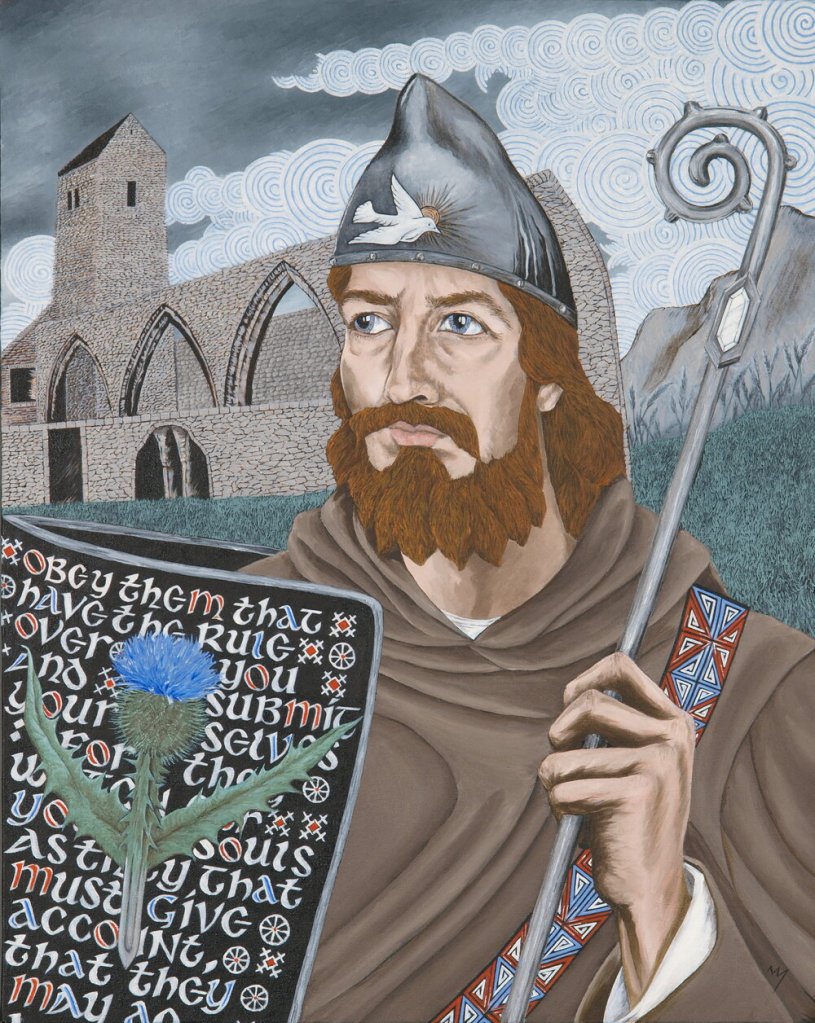
(Artwork: Abbott Crinan of Dunkeld by Netanel Miles-Yepez, 2006, from the artists’s website)
Crínán of Dunkeld, born circa 976/980 (unknown location) – died 1045 (unknown location) was the hereditary abbot of the monastery of Dunkeld, and perhaps the Mormaer of Atholl. Crínán was progenitor of the House of Dunkeld, the dynasty which would rule Scotland until the later 13th century. He was the son-in-law of one king, and the father of another.
The House of Dunkeld (in Scottish Gaelic: Dùn Chailleann) is a genealogical construct to illustrate the clear succession of Scottish kings from 1034 to 1040 and from 1058 to 1286. The line is also variously referred to by historians as ‘The Canmores’ and ‘MacMalcolm’.
Bethoc Beatrix and Crínán of Dunkeld had two sons: Duncan I of Scotland, Donnchad Mac Crínáin, (as mentioned above) and Maldred mac Crínán, Earl of Dunbar, Lord of Cumbria & Allerdale, born 1015 – died 1045.

(Image courtesy of ancestry.com).
Duncan I of Scotland, Donnchad mac Crinain, born circa 1001 (unknown location) – died August 14, 1040 in Bothnagowan. He was king of Scotland from 1034 to 1040. He married Sibylla of Northumbia (anglicized as Sibyl Fitzsiward), born circa 1009/1014 (unknown location) – died 1070 (unknown location). They had three children:
- Malcolm III of Scotland, also known as Máel Coluim mac Donnchada and Malcolm Canmore, died 1093
- Donald III of Scotland, also known as Domnall Mac Donnchada and Donalbain
- Máel Muire, Earl of Atholl, also known as Melmare
He is the historical basis of the ‘King Duncan’ in Shakespeare’s play Macbeth. The early period of Duncan’s reign was apparently uneventful, perhaps a consequence of his youth. His cousin Macbeth (Mac Bethad mac Findláich) is recorded as having been his dux, today rendered as ‘duke’ (and meaning nothing more than the rank between prince and marquess) — but then still having the Roman meaning of ‘war leader’. This suggests that Macbeth may have been the power behind the throne.
In 1039, Duncan led a large Scots army south to besiege Durham, but the expedition ended in disaster. Duncan survived, but the following year he led an army north into Moray, Macbeth’s domain, apparently on a punitive expedition against Moray. There he was killed in action, at the battle of Bothnagowan, by the men of Moray led by Macbeth, probably on August 14, 1040. He is thought to have been buried at Elgin, before later relocation to the island of Iona. (3)
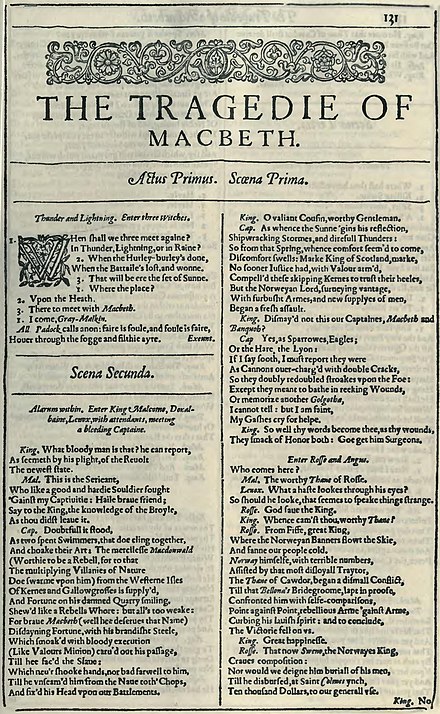
(Image courtesy of wikipedia.com).
Let’s Talk About William Shakespeare for a Moment
All of us are familiar with the name Macbeth from the writings of William Shakespeare. Even though it is a beautiful work of fiction, it is rather intriguing to know that it involves (in name only) some of the people from the Gore family line.
From IPL, the Internet Public Library:
“William Shakespeare’s play, Macbeth, turned what people knew as Scottish history into a powerful act of betrayal; a madman murdering a good king out of greed. Shakespeare wrote Macbeth for [the] reigning king of England, King James I of England (James VI of Scotland) who had a strong belief in all things dark and supernatural, like witches.
Macbeth includes multiple historical characters, all previous kings of Scotland; but why? Shakespeare uses the characters King Duncan, King Macbeth, and King Malcolm to explore the royalty of Scotland throughout time and to appease the king with a dark story about history.”

Attributed to John Taylor, 1600 – 1610.
(Image courtesy of Wikipedia, via The National Portrait Gallery).
Furthermore, why did Shakespeare pick a real Scottish King to be the protagonist of his play Macbeth and then not use his actual history?
Because he was forced to.
Joseph Langford, author of
Shakespeare was commissioned to write a play for James I, who incorrectly believed that he was descended from Banquo.
Of course, Banquo is a fictional character.
He had to write a play about what happens to someone who kills a king, or what James I believed should happen to someone who kills a king. After all, the Catholics had unsuccessfully plotted to kill him [in the Gunpowder Plot].
Macbeth – Chapters Unspoken at My House
Observation: Shakespeare wrote the play Macbeth in 1606, about 600 years after Duncan I of Scotland, Donnchad Mac Crínáin was born. For perspective, we are yet another 400+ years distant from Shakespeare. (4)
Kings and Queens, Princes and Princesses, Lords and Ladies
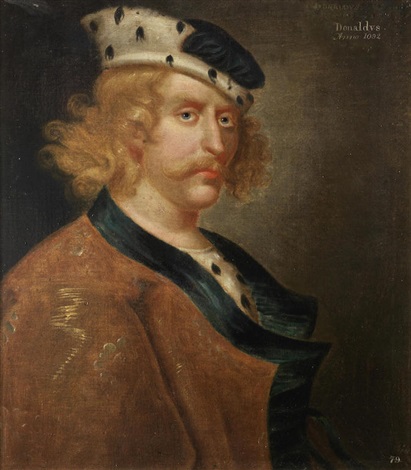
(Image courtesy of wikipedia.org).
Donald III of Scotland
The second son of Duncan I of Scotland, and Sibylla of Northumbia, Sibyl Fitzsiward, was Donald III of Scotland also known as Domnall mac Donnchada and Donalbain (now that’s a mouthful!). He was born circa 1034, Atholl, Perth – died 1099, Rescobie {prison], Angus. In 1059, he married Hextilda fitz Andlaw of Perth in Rescobie, Angus. She was born in 1040, Perth – died 1100, in Argyll (unknown date). They were the parents of one daughter: Bethoc Ingen Domnail Bane, Princess of Scotland.
Following his father’s death, Donald went into hiding in Ireland for 17 years, for fear that he would be killed by Macbeth. It was during this time that Malcolm’s grandfather, Crinan of Dunkeld, who was married to Malcolm II’s daughter, was killed fighting Macbeth. The minor character of Donalbain in William Shakespeare’s play Macbeth represents Donald III.
1072: William The Conqueror invades Scotland. This forced the Royal Court of Malcolm III to sign the Treaty of Abernethy. The extended result was that Scotland became a liege state (subordinate) to William the Conqueror’s England.
(Image courtesy of Alamy.com).
Bethoc Ingen Domnail Bane, Tynedale, Princess of Scotland, born 1087, Morayshire, Scotland – died 1160 Perthshire, Scotland. She married Uchtred de Tyndale, Lord of Tynedale, about 1121, in Morayshire, Scotland. They were the parents of at least four sons and one daughter:
- Ranulf of Tynedale, born 1113
- Simon of Tynedale, born 1115
- Adam of Tynedale, born 1117
- Robert Untried de Tynedale, born 1120
- Hextilda of Tynedale, 1122 – 1182
Through Hextilda’s marriage, we will meet the very powerful Comyn family of medieval Scotland. Although Hextilda was not a ruler, in this line she is the first iconic and significant Grandmother we have found. This echos our premise from the introduction, that “sometimes Our Ancestral Grandmothers are more interesting than our Ancestral Grandfathers”. (5)
All Things in Comyn: The Origins of the Clan Comyn in England and Scotland
The Comyn surname is of Norman origin. It is either a place-name possibly derived from Comines, near Lille, in France, or possibly derived from Bosc-Bénard-Commin, near Rouen in the Duchy of Normandy.
This clan is believed to descend from Robert de Comyn, (or Comines, or Comminges), a companion of William the Conqueror who accompanied him in his conquest of England in the year 1066. Shortly after his participation in the Battle of Hastings, Robert was made Earl of Northumberland, and when David I came to Scotland to claim his throne, Richard de Comyn, the grandson of Robert, was among the Norman knights that followed him.
This grandson, Richard de Comyn, quickly gained land and influence in Scotland through an advantageous marriage to the granddaughter of the former Scottish King Donald III, Hextilda of Tynedale. She was a Princess of Scotland.
(Image courtesy of Shutterstock.com).
Hextilda of Tynedale Countess of Atholl, born 1122, Tindale, Northumberland, England – died 1182, Moulin, Perthshire. She married Richard de Comyn, born 1115 in Northalteron, Morayshire – died 1179, Altyre, Morayshire. The Justiciar of Lothian in 1145, Badenoch, Invernesshire, Scotland. The Justiciars of Lothian were responsible for the administration of royal justice in the province of Lothian. They had at least seven children:
- Idonea de Comyn, born 1148
- Odinel (Odo) de Commi, born 1150
- John de Comyn, 1146 – 1152/1159
- Christien, born 1160
- Simon, born 1161
- William Comyn, Earl of Buchan, Lord of Badenoch, born 1163 – died 1233
- Ada, born – (unknown dates)

The Clan Comyn was very successful for centuries in Scotland, and it has been confusing to keep the names, titles, descendants, etc., properly sorted and noted for this blog chapter. This account from Electric Scotland has great merit for providing a credible record of their times. We cover their history up until the time of Elyanor Comyn and Richard Gower. (6)
The Clan Comyn
THERE WAS NO GREATER NAME in Scotland towards the end of the thirteenth century, than that of Comyn. With their headquarters in Badenoch the chiefs and gentlemen of the clan owned broad lands in nearly every part of Scotland, and the history of the time is full of their deeds and the evidences of their influence.
Writers who seek to derive this clan from a Celtic source cite the existence of two abbots of lona of the name who held office in the years 597 and 657 respectively. The latter of these was known as Comyn the Fair, and from one or another of them the name of Fort Augustus, “Ku Chuimein,” was probably derived. Another origin of the family is recounted by Wyntoun in his Cronykil of Scotland. According to this writer, there was at the court of Malcolm III, a young foreigner. His occupation was that of Door-ward or usher of the royal apartment, but, to begin with, he knew only two words of the Scottish language, “Cum in,” and accordingly became known by that name.
He married the only daughter of the king’s half-brother Donald, and his descendants therefore represented the legitimate line of the old Celtic kings of Scotland, as against the illegitimate line descending from Malcolm III. The Comyns themselves claim descent from Robert de Comyn, Earl of Northumberland, who fell along with Malcolm III, at the battle of Alnwick in 1093. That Robert de Comyn, again, claimed descent, through the Norman Counts de Comyn, from no less a personage than Charlemagne. The probability appears to be that a scion of the house of Northumberland came north in the days of Malcolm III, and obtained lands in the county of Roxburgh, where one ‘of the name’ is found settled in the reign of Malcolm’s son, David I.

(Image courtesy of wikipedia.com).
A few years later, in the reign of Alexander III, there were in Scotland, according to the historian Fordun, three powerful Earls: Buchan, Menteith, and Atholl, and no fewer than thirty-two knights of the name of Comyn. There was also Comyn, Lord of Strathbogie. As Lords of Badenoch they owned the formidable stronghold of Lochindorb in that district, and a score of castles throughout the country besides. Stories of their deeds and achievements well nigh fill the annals of the north of that time.
In the boyhood of Alexander III, when Henry III of England was doing his best by fraud and force to bring Scotland under his power — it was Walter Comyn, Earl of Menteith, who stood out as the most patriotic of all the Scottish nobles to resist the attempts of the English king.
When Henry, at the marriage of his daughter to the boy-king of Scots, suggested that the latter should render fealty for the kingdom of Scotland, it was probably Walter Comyn who put the answer into Alexander’s mouth “That he had come into England upon a joyful and pacific errand, and would not treat upon so arduous a question without the advice of the Estates of his realm”. And when Henry marched towards the Scottish Border at the head of an army, it was Walter Comyn who collected a Scottish host, and made the English king suddenly modify his designs. Alas! at the very moment when he seemed to have achieved his purpose, when the English faction had been driven out, and Alexander and the Comyns, with the queen-mother, the famous Marie de Couci, had established a powerful government in Scotland, the Earl of Menteith suddenly died.

(Image courtesy of findagrave.com).
William Comyn, Earl of Buchan, Lord of Badenoch
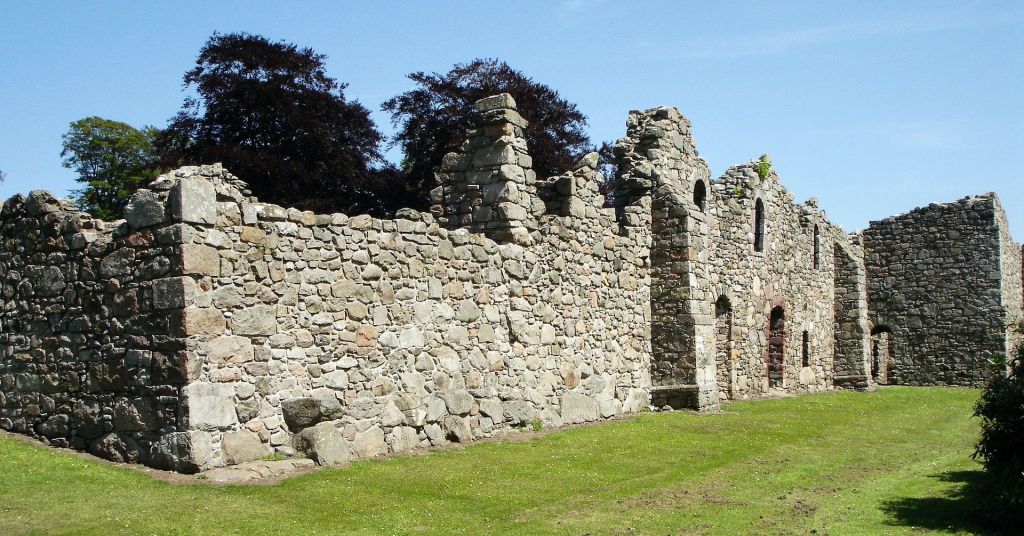
William Comyn was Lord of Badenoch and Earl of Buchan. He was born 1163, in Altyre, Moray – died 1233 in Buchan, Moray, where he is buried in Deer Abbey.
William made his fortune in the service of King William I of Scotland fighting rebellions in the north. William witnessed no fewer than 88 charters of the king. and he was sheriff of Forfar (1195–1211). Between 1199 and 1200, he was sent to England to discuss important matters on King William’s behalf with the new king, John.
William was appointed to the prestigious office of Justiciar of Scotia, the most senior royal office in the kingdom, in 1205. Between 1211 and 1212, William, as Warden of Moray (or Guardian of Moray) fought against the insurgency of Gofraid mac Domnaill (of the Meic Uilleim family), whom William beheaded in Kincardine in 1213. Upon finally destroying the Meic Uilleim(s) in 1229, he was given the Lordship of Badenoch and the lands it controlled.
William Comyn married two times. His first wife Sarah Fitzhugh (aka Sarah filia Roberti) born 1155/1160 – died 1204, married 1193. Their children are:
- Walter, Lord of Badenoch, born 1190 – died circa 1258,
married Isabella, Countess of Menteith - Richard, Lord of Badenoch, born 1194-died 1249,
married Eve Amabilia de Galloway - Jardine Comyn, Lord of Inverallochy, born 1190 (or before)
- Johanna (aka Jean), born 1198 – died 1274,
married 1220, Uilleam I, Earl of Ross - John Comyn, Earl of Angus, born – died (unknown dates),
married Matilda, Countess of Angus (aka. Maud) - David Comyn, Lord of Kilbride, born (unknown date) – died 1247,
married Isabel de Valoigne
William’s second wife and family are:
Marjory (aka. Margaret), Countess of Buchan (aka Margaret Colhan of Buchan), born circa 1190/1194 — died 1244. They married circa 1209/1212.
- Idonea (a.k.a Idoine), born circa 1215/1221 -died (unknown date),
married 1237, Gilbert de Haya of Erroll - Alexander, Earl of Buchan, born 1217 – died 1290,
married, Elizabetha de Quincy - William, born 1217
- Margaret, born 1215 – died (unknown date),
married Sir John de Keith, Marischal of Scotland - Fergus, Lord of Gorgyn, born 1219– died 1260,
married 1249 to (unknown wife) - Elizabeth, born 1223 – died 1267,
married Uilleam, Earl of Mar - Agnes, born 1225 (unknown location) – died (unknown date),
married 1262, Sir Philip de Meldrum, Justiciar of Scotia
(Image courtesy of Etsy.com).
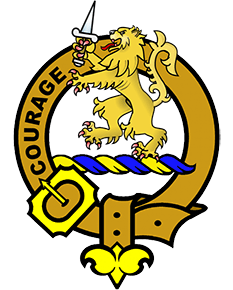
Richard Comyn, Lord of Badenoch, the eldest son of William Comyn and Sarah Fitzhugh, is unique. There is little information about his life which has yet come to light. He appears to have continued the tradition of managing his family’s extensive landholdings and estates in England and South Scotland. When his brother Walter died in 1258, he was also bestowed the title Earl of Menteith.
He was born 1194, in Aberdeenshire, Scotland – died 1249, in the same location, and is buried in Kelso Abbey. He married Eve Amabilia de Galloway, born 1215, Ayr, Ayrshire, Scotland – died 1280, (unknown locations). They had three sons:
- Sir John I, The Red, Comyn, Lord of Badenoch
- William Comyn, born 1227 – died 1258
- Richard Comyn, born (unknown date) – died 1264
(Image courtesy of Scots Connection).
Sir John Comyn I Lord of Badenoch, was a land Baron known as Rufus and the Red Comyn, a nickname more commonly applied to his grandson, John Comyn III. He was born 1215 – died 1274.
The Comyn family were important and powerful in Scotland when Alexander III of Scotland was a minor, and John was one of those with court influence. He was an ambassador from Alexander II of Scotland to Louis IX of France in 1246. On the death of his uncle Walter Comyn in 1258, he received all of Walter’s titles (as the new Lord of Badenoch) and estates, and became the head of his family. He was appointed justiciary of Galloway in March 1258 – 1259. John Comyn I was entrusted by Alexander III of Scotland with the defence of Scotland’s northern territories from invasion by the Vikings and the Danes.
His first wife was called Eve Stewart, born 1224 – died (unknown date);
married 1240 (unknown location). They had seven children:
- John of Badenoch, who succeeded his father
- William of Kirkintilloch, born 1240 – died (unknown date);
married Isabella Russell, daughter of John Russell and Isabella, Countess of Menteith - Alexander, married Eva, widow of Alexander Murray.
- Marian, married Richard Siward
- a daughter, married Geoffrey Moubray
- a daughter, married Alexander of Argyll
- a daughter, married Sir Andrew Moray
His second wife was Lady Alice de Roos (possibly Lindsay), born (unknown date) – died April 29, 1286; married circa 1260. They had four children:
- John ‘le jeon’ born 1260 – died (possibly) 1279
- Robert, married Margaret Comyn (a cousin), daughter of William Comyn of Lochaber
- a daughter, Alice
- an unknown daughter, married Sir William Galbraith, 4th Chief of that Ilk, Lord of Kyncaith
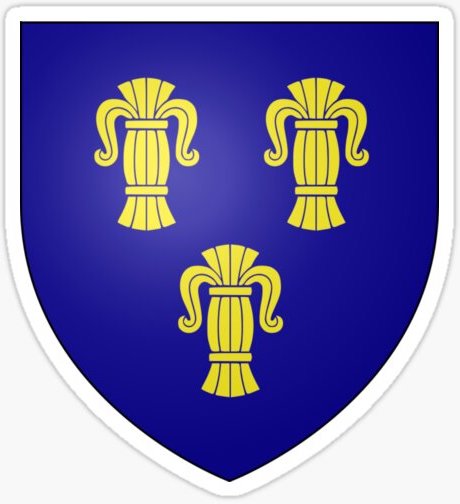
(Image courtesy of Scotclans).
John ‘le jean’ Comyn II of Badenoch, nicknamed the Black Comyn, was a Scottish nobleman; a Guardian of Scotland. He was born 1215 (unknown location) – died 1302, Inverness, Scotland.
In 1284, he joined with other Scottish noblemen who acknowledged Margaret of Norway as the heir of King Alexander. John Comyn is credited with the building of several large castles or castle houses in and around Inverness. Parts of Mortlach (Balvenie Castle) and Inverlochy Castle. As his father before him, he was entrusted by Alexander III of Scotland with the defence of Scotland’s northern territories from invasion by the Vikings and the Danes.
Again, from Electric Scotland — On the death of the Maid of Norway, the infant queen of Scotland, in the year 1290, John Comyn, Lord of Badenoch, known popularly as the Black Comyn, was one of the twelve claimants to the Scottish throne, and the tradition of the marriage of the young Comyn of Malcolm III’s time with the daughter of Donald, King Duncan’s legitimate son, is proved to be authentic by the fact that the Lord of Badenoch’s claim to the throne was based upon that descent. He was among the knights who supported King John Baliol against Edward I’s invasion in 1297, but was one of those forced to surrender in the castle of Dunbar after the defeat of the Scots at that place.

(Image courtesy of Wikipedia.com).
Comyn married Eleanor (Alianora) de Balliol, born 1245 (unknown location) – died 1302 in Badenoch, Inverness, Scotland, at his castle of Lochindorb. She was the daughter of John I de Balliol of Barnard Castle, sister of King John of Scotland.
They were the parents of at least one son: John Comyn III of Badenoch.

found in a boggy field in Kinross. (Image courtesy of The Jordan Family, see footnotes).
John Comyn III of Badenoch, nicknamed the Red, was born 1274 (unknown location) – died February 10, 1306, at Greyfriars Church, Dumfries.
He was a leading Scottish baron and magnate (a man of higher nobility) who played an important role in the First War of Scottish Independence. He served as Guardian of Scotland after the forced [1296] abdication of his uncle, King John Balliol (reigned 1292–1296), and for a time commanded the defence of Scotland against English attacks. At this time there were 12 or 13 contenders for the throne of Scotland through different birth lines: John Comyn III and Robert The Bruce among them. There was much tension in the air…
John Comyn III of Badenoch, married Lady Joan de Valence of Pembroke, born 1230 – died after September 20, 1307, (locations unknown) daughter of William de Valence, 1st Earl of Pembroke, who was the half-brother to Henry III of England, and uncle of Edward I of England.

Bruce and Comyn met to discuss their differences on February 10, 1306 at the Church of the Grey Friars in Dumfries, leaving their swords outside the church. An argument between the pair ensued and Bruce drew his dagger in anger and stabbed Comyn in front of the high altar of the church. He then fled the church, telling his followers outside what had occurred. Sir Roger Kirkpatrick went back inside and finished off the seriously wounded Comyn, and also slew his uncle, Sir Robert Comyn, who tried to save John. A letter from the English court to the Pope stated –
‘Bruce rose against King Edward as a traitor and murdered Sir John Comyn, Lord of Badenoch, in the church of the Friars Minor in the town of Dumfries, at the high altar, because John would not assent to the treason which Bruce planned… to resume war.. and make himself king of Scotland.’
It is unlikely that Bruce had gone to the meeting with the intention of murdering Comyn in a church. However, the deed was done and there was no going back. He proceeded to attack the strongholds of the Comyns in Southern Scotland. The Bruce confessed his crime to his supporter, Robert Wishart, Bishop of Glasgow, and received absolution, on condition that as King, he would be respectful of the church, he was, nonetheless, later excommunicated by the Pope for the act.
On March 25, 1306, Robert the Bruce, was crowned Robert I, King of Scots at Scone. John (III) the Red Comyn’s only son, died at the Battle of Bannockburn, while fighting on the English side. After the Battle of Bannockburn, the estates of the Scottish Clan Comyn were distributed to other families. (7)
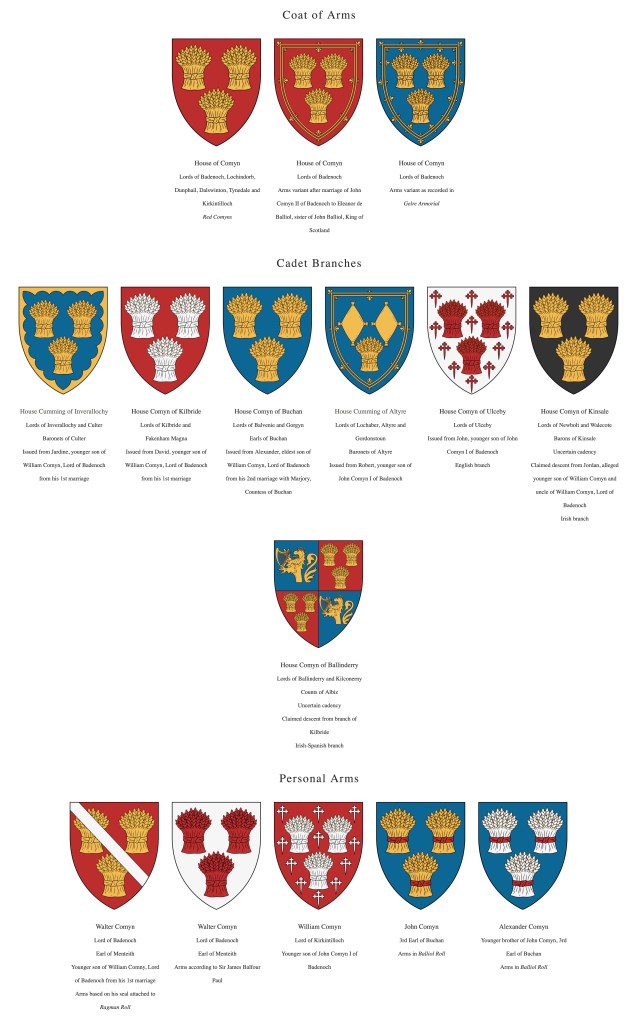
Let’s Learn About The Irish Comyns
Parallel to the busy marriages, alliances, fighting, murdering, etc., that was going on with the Comyn families in England and Scotland, it seems that there is another aspect to this family which needs to be explained. There were also Comyn(s) living in Ireland.
From the journal article, The Early Irish Comyns, the author wrote: “There is little reason to doubt that the ancestors of the various Anglo-Irish families of Comyn (Cumin) in Ireland came to this country in the wake of John Comyn, the first Anglo-Norman archbishop of Dublin. John Comyn became archbishop in 1182 and died in 1212. No Comyns are known in Ireland before this time.”
He wrote further: “There is little doubt that a family contemporary with him, that of Comyn of Newbold Comyn, Warwickshire, Walcott, Wiltshire and Kinsaley, County Dublin* was closely related to him. It has been suggested that his family was ultimately the same as the great Scottish house of that name.”

(Image courtesy of wikipedia.com).
Comment: We researched the Irish branch of the Comyn family and the history of Newbold Comyn, because we have come across files on several genealogy websites which purport to record that Lady Elyanor Comyn’s father was named Newbold Comyn. When studying these files, there is no documentation whatsoever to support this viewpoint. Additionally, this error keeps being repeated again-and-again by other would be tree-makers.
*David Comyn, the author of Notes On The Comyn Pedigree, wrote: “These land holdings came into the Comyn family through the marriage of Elias Comyn to the heiress Johanna, the heiress of Newbolt and Walcott in Warwickshire. In about 1293 he [Elias or Helias] was granted the lands of Kinsale by the Abbot of The Holy Trinity, Dublin to Elias Comyn circa 1281.” It seems however, the Elias’s older brother John was the first trustee of these holdings. We found the record of an agreement from 1246 – 1247, between John Comyn and Geoffrey de Semele, allowing the Comyn’s “the right to fish in the River Leam” at Newbold Comyn.
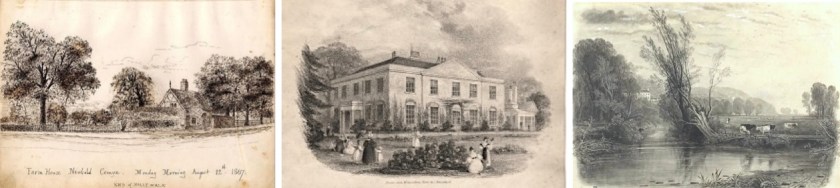
Our research has determined that Newbold Comyn, on the Eastern edge of Leamington Spa, Warwickshire, England, has never been a person’s name. It is the location of a very old estate. From the Leamington History Group: “Newbold Comyn, in [the] Domesday [Book] is recorded as having 5 Hides of land (1 Hide is generally thought to be sufficient land to support 1 family). Newbold was divided between two landlords: 3 Hides were held by Malmesbury Abbey, the gift of the former owner Wulfwine, to enable him to retire to the Abbey as a monk. The remaining 2 were held by the Count of Meulan, a major landowner in Warwickshire”. (8)

Land of Malmesbury (St Mary), abbey of.., Warwickshire folio 3, page 3.
Newbold [Comyn], 25 households

Land of Count of Meulan, Warwickshire folio 6, page 6.
Newbold [Comyn], 25 households
Kith, Kin, and Clan
Your kith are the people you know very well, but who aren’t related to you. If you’re asking all of your best friends over for dinner, you can say that you’re inviting your kith. Your kin are “family or relatives”. Call them what you will, but you’re stuck with those people related to you by blood or marriage. It is a bit old-fashioned now, but when when someone refers to their kith and kin, they mean their friends and family.
A clan is an extended family. Your clan might include your parents and siblings, but also your cousins, and second cousins, aunts and uncles, and grandparents. Families that are related to each other, whether through marriage or as distant cousins, are members of the same clan. If you get together with a big family group every summer, you can say [that] you vacation with your clan. In Scotland, a person’s clan has a specific name, like “Clan Comyn”. The word comes from the Gaelic clann, “family or offspring”’ with the Latin root planta, “offshoot”.
Truthfully, we have not been able to determine exactly which specific branch of the Clan Comyn, Lady Elyanor Comyn emerged from. Her family represented lines of people from Flanders, Scotland, England, and Ireland — areas which came to be very important for our family history.
Sadly, the names of many, many daughters were not recorded and in a sense, they become submerged by recorded history. What we do know about our 20x Great-Grandmother is that she married Richard Gower. From their union, the Gore family line from which we descend, came to be. Her life provides the foundational link that connects our family across England in The Gore Line, A Narrative — 2. (9)
Following are the footnotes for the Primary Source Materials,
Notes, and Observations
(1) — two records
What Does Take Up the Mantle Mean?
https://writingexplained.org/idiom-dictionary/take-up-the-mantle
Note: For the data.
Warner Brothers
Plymouth Adventure > Gallery
https://www.warnerbros.com/movies/plymouth-adventure
Note: For the film still and the movie poster.
Sometimes Our Ancestral Grandmothers Are More Interesting
Than Our Ancestral Grandfathers
(2) — four records
Library of Congress
Farmers Harvesting Crops
by Pietro de Crescenzi
From ‘Opus Ruralium Commmodorum’ (1471),
Vollbehr Collection, Rare Book Collection
https://mercantile.palouseheritage.com/blog/2020/4/3/the-cerealization-of-europe
Note: For the artwork.
New Scientist
Society
The origins of sexism: How men came to rule 12,000 years ago
by Anil Ananthaswamy and Kate Douglas
https://www.newscientist.com/article/mg23831740-400-the-origins-of-sexism-how-men-came-to-rule-12000-years-ago/
Note: For the text.
Ranker
14 Facts About The Picts, A Scottish Tribe That Gave The Roman Empire Hell,
under the subhead: They Might’ve Chosen Royalty Through Female Bloodlines
by Carly Silver
https://www.ranker.com/list/ancient-pict-facts/carly-silver
Note: For the text.
Scots language
https://en.wikipedia.org/wiki/Scots_language
Note: For the data.
The Kingdom of The Picts… then The Kingdom of Alba… then Scotland
(3) — thirty records
List of Scottish monarchs
https://en.wikipedia.org/wiki/List_of_Scottish_monarchs
Note: For the data.
Fandom: Merlin’s Tales of Britannia Wiki
Clothing and fashion,
under the subhead: Clothing
https://merlins-tales-of-britannia.fandom.com/wiki/Clothing_and_fashion
Note: For the image.
The Stone of Scone in the Coronation Chair at Westminster Abbey (engraving)
by Artist unknown
https://commons.wikimedia.org/wiki/File:Coronation_Chair_and_Stone_of_Scone.jpg
Note: For the illustration.
Alpín mac Echdach
https://en.wikipedia.org/wiki/Alp%C3%ADn_mac_Echdach
Note: For the data.
Kenneth MacAlpin
https://en.wikipedia.org/wiki/Kenneth_MacAlpin
and
Britroyals
King Kenneth MacAlpin
https://britroyals.com/scots.asp?id=kenneth1
Note: For the text and his portrait.
Constantine I of Scotland
https://www.wikidata.org/wiki/Q317457#/media/File:Constantine_I_of_Scotland_(Holyrood).jpg
and
National Galleries of Scotland
Constantine I of Scotland
https://www.nationalgalleries.org/art-and-artists/104719/constantine-i-d-879-king-alba
Note: For the text and his portrait.
Causantín mac Cináeda
https://en.wikipedia.org/wiki/Causant%C3%ADn_mac_Cináeda
and
National Galleries of Scotland
Donald II Legendary King of Scotland
https://www.nationalgalleries.org/art-and-artists/104734/donald-ii-legendary-king-scotland
Note: For the text and his portrait.
Family History of Philip Wilson
Donald KING OF SCOTLAND (c. 860-900)
Donald II, King of the Picts of Alba
https://www.whobegatwhom.co.uk/ind1996.html
Note: For the text and his portrait.
Monarchy of Britain Wiki
Malcolm I, King of Scotland
https://monarchy-of-britain.fandom.com/wiki/Malcolm_I,King_of_Scotland?file=Malcolm_I_of_Scotland%2528Holyrood%2529.jpg
and
Britannica.com
Malcolm I of Scotland
https://www.britannica.com/biography/Malcolm-I
Note: For the text and his portrait.
Scotclans
Kenneth II (971-995)
https://www.scotclans.com/pages/kenneth-ii-971-995
Note: For the text and his portrait.
Kenneth II of Scotland
https://en.wikipedia.org/wiki/Kenneth_II_of_Scotland
Note: For the data.
Scotclans
Malcolm II (1005-1034)
https://www.scotclans.com/pages/malcolm-ii-1005-1034
Note: For the text and his portrait.
Malcolm II of Scotland
https://en.wikipedia.org/wiki/Malcolm_II_of_Scotland
Note: For the data.
Genealogy Online
Family tree Cromer/Russell/Buck/Pratt » Dunegal (Duncan) Eryvine (988-1040)
https://www.genealogieonline.nl/en/family-tree-cromer-russell-buck-pratt/P23383.php
Note: For the data.
Family History of Philip Wilson
Bethoc ( – )
https://www.whobegatwhom.co.uk/ind1991.html
Note: For the portrait image of Bethoc (Beatrix) of Scotland.
Bethóc
https://en.wikipedia.org/wiki/Bethóc
and
Genealogy Online
Bethoc (Beatrice) Macalpine, Princess of Scotland
https://www.genealogieonline.nl/en/family-tree-cromer-russell-buck-pratt/P23371.php
Note: For the data.
Abbot Crinan of Dunkeld
http://netanelmy.com/saints-and-exemplars/br36kw39ac1qagidmytj1aqm3ni72r
Note: For the portrait image of Abbot Crinan of Dunkeld.
Crínán of Dunkeld
https://en.wikipedia.org/wiki/Cr%C3%ADnán_of_Dunkeld
and
Genealogy ‘The Thane’ Grimus of Dunkeld
https://www.genealogieonline.nl/en/family-tree-cromer-russell-buck-pratt/P23371.php
Note: For the data.
Saints and Exemplars — Netanel Miles-Yépez
Abbott Crinan of Dunkeld
by Netanel Miles-Yépez (2006)
https://netanelmy.com/saints-and-exemplars/br36kw39ac1qagidmytj1aqm3ni72r
Note: For the portrait Abbott Crinan of Dunkeld, (Crínán of Dunkeld).
Britroyals
King Duncan of Scotland
https://britroyals.com/scots.asp?id=duncan1
Note: For his portrait.
Duncan I of Scotland
https://en.wikipedia.org/wiki/Duncan_I_of_Scotland
and
Genealogy Online
Duncan I ‘The Gracious’ King of Scotland
https://www.genealogieonline.nl/en/family-tree-cromer-russell-buck-pratt/P23284.php
and
Duncan of Scotland I
https://www.ancestry.com/family-tree/person/tree/47708080/person/382110416930/facts
Note: For the text and his portrait.
Suthen Sibylla of Northumbria
https://www.geni.com/people/Suthen-Sibylla-of-Northumbria/6000000000424732452
Note: For the data.
Let’s Talk About Shakespeare for a Moment
(4) — five records
IPL
Shakespeare’s Macbeth-Changes In The Name Of History:
An Exploration Into The Historical Characters of Shakespeare’s Macbeth
https://www.ipl.org/essay/Historical-Events-In-Macbeth-FJE9G8ERU
Note: For the data.
Macbeth
https://en.wikipedia.org/wiki/Macbeth
Note: For the text.
Chandos portrait of William Shakespeare
Attributed to John Taylor., 1600 – 1610.
https://en.wikipedia.org/wiki/Chandos_portrait
Note: From Wikipedia via the National Portrait Gallery.
Quora
Why did Shakespeare pick a real Scottish King to be the protagonist of his play Macbeth and then not use his actual history?
https://www.quora.com/Why-did-Shakespeare-pick-a-real-Scottish-King-to-be-the-protagonist-of-his-play-Macbeth-and-then-not-use-his-actual-history
Note: For the text.
Gunpowder Plot
https://en.wikipedia.org/wiki/Gunpowder_Plot
Note: For the data.
Kings and Queens, Princes and Princesses, Lords and Ladies
(5) — seven records
Donald III of Scotland
https://en.wikipedia.org/wiki/Donald_III_of_Scotland
and
Genealogy Online
Donald III ‘The White of Fair’ King of Scotland
https://www.genealogieonline.nl/en/family-tree-cromer-russell-buck-pratt/P23318.php
Note: For the text and his portrait.
Alamy
Thistle flower and ornament round leaf thistle,
The Symbol Of Scotland
https://www.alamy.com/thistle-flower-and-ornament-round-leaf-thistle-the-symbol-of-scotland-image372999310.html
Note: For the artwork.
Tyndall
https://en.wikipedia.org/wiki/Tyndall#William_Tyndale
Note: For the data.
Hextilda fitz Andlaw of Perth
https://ancestors.familysearch.org/G8N5-3RG/hextilda-fitz-andlaw-of-perth-1040-1100
Note: For the data.
Bethoc Ingen Domnaill Bain
https://ancestors.familysearch.org/en/GDBS-1JV/bethoc-ingen-domnaill-bain-1087-1160
Note: For the data.
Waltheof, Earl of Northumbria
https://www.englishmonarchs.co.uk/normans_13.html
Note: For the data. ‘Uchtred of Tynedale married Bethoc…’ within text 1050 – 31 May 1076 at (3)
All Things in Comyn: The Origins of the Clan Comyn in England and Scotland
(6) — nine records
Clan Cumming
http://www.1066.co.nz/Mosaic%20DVD/whoswho/text/Clan_Cumming[1].htm
Note: For the text.
Clan Cumming
https://www.wikitree.com/wiki/Space:Clan_Cumming
Note: For the text.
Shutterstock
Scottish thistle .Symbol of Scotland. Vector
https://www.shutterstock.com/pt/image-vector/scottish-thistle-symbol-scotland-vector-1325362010
Note: For the artwork.
Genealogy Online
Hextilda of Tynedale, Countess of Atholl
https://www.genealogieonline.nl/en/family-tree-cromer-russell-buck-pratt/P17126.php
and
Hextilda of Tynedale
https://ancestors.familysearch.org/en/9MT8-HNV/hextilda-of-tynedale-1122-1182
Note: The references for their children: confuse the possible children from her first marriage to Richard de Comyn, and her second marriage to Máel Coluim, Earl of Atholl.
Note: For the data.
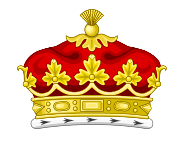
Peerage of Scotland
https://en.wikipedia.org/wiki/Peerage_of_Scotland
Note: For the data and the artwork.
SVG Scottish Thistle Cutout for popular cutting and engraving machines or other graphic design uses
https://www.etsy.com/uk/listing/1240021840/svg-scottish-thistle-cutout-for-popular
Note: For the thistle artwork.
Richard Comyn
https://en.wikipedia.org/wiki/Richard_Comyn
Note: The file references for their children are credible
and
Genealogy Online
Richard de Comyn, Justiciar of Lothian, Lord of Tyndale…
https://www.genealogieonline.nl/en/family-tree-cromer-russell-buck-pratt/P17125.php
Note: For the data.
The Clan Comyn
(7) — twenty three records
Clan Comyn, Cumming
https://electricscotland.com/webclans/atoc/cumming2.html
File:Scotland grevskap.png
Note: For the text and artwork.

forgottenbooks.com/en/download/TheHighlandClansofScotland_10863025.pdf,
or:
TheHighlandClansofScotland_10863025-2.pdf
Book pages: 59-66, Digital Pages: 104-115/384
Note: For the data.
William Comyn, Lord of Badenoch
https://en.wikipedia.org/wiki/William_Comyn,_Lord_of_Badenoch
and
Genealogy Online
Sarah Fitzhugh…
https://www.genealogieonline.nl/en/family-tree-cromer-russell-buck-pratt/P15279.php
and
William Comyn
https://www.findagrave.com/memorial/98653470/william-comyn
Note: For the map, various texts and data.

Deer Abbey
https://en.wikipedia.org/wiki/Deer_Abbey
Note: For the text and image of Deer Abbey.
The Hennessee Family Genealogy Pages
Richard Comyn, of Badenoch
http://www.thehennesseefamily.com/getperson.php?personID=I45621&tree=Hennessee
and
Lord of Badenoch Richard Comyn
https://www.findagrave.com/memorial/226086011/richard-comyn
and
Eve Amabilia de Galloway Comyn
https://www.findagrave.com/memorial/227331245/eve-amabilia-comyn
Note: For the data.
Scotclans
Clan Cumming Crest & Coats of Arms
https://www.scotclans.com/blogs/clans-c2/clan-cumming-crest-coats-of-arms
Note: For the Coat-of-Arms.
John Comyn
https://www.wikitree.com/wiki/Comyn-32
and
Lord of Badenoch John “The Red” Comyn I
https://www.findagrave.com/memorial/226086500/john-comyn
and
Lady Alice de Ros (second wife)
https://www.findagrave.com/memorial/106529821/alice-de-ros
Note: For the data.
John Comyn II of Badenoch
https://en.wikipedia.org/wiki/John_Comyn_II_of_Badenoch
and
Alianora Balliol
https://www.wikitree.com/wiki/Balliol-3
and
https://www.geni.com/people/Alianora-de-Baliol/6000000000337440467
Note: For the data.
Scots Connection
Cumming Clan Crest
https://www.scotsconnection.com/clan_crests/cumming.htm
Note: For the image of the crest.
Inverlochy Castle
https://en.wikipedia.org/wiki/Inverlochy_Castle
Note: For the data and castle artwork.
Wappen Wiki
House of Comyn — Coat-of-Arms, Cadet Branches, and Personal Arms
https://wappenwiki.org/index.php/House_of_Comyn
Note: For the artwork. (Much more detail can be observed here).
Album
Comyn Stabbed By Bruce (illustration)
by Patten Wilson (1902)
https://www.album-online.com/detail/fr/MTYzYzVmMA/comyn-stabbed-by-bruce-1902-john-iii-red-lord-badenoch-alb3910464
Note: The artwork was published in a 1902 edition of A Child’s History of England by Charles Dickens.
An American Quilt
https://www.anamericanquilt.com/red-comyn.html
Note: For the image of the John The Red Comyn badge (The Jordan Family).
John Comyn the Red, Lord of Badenoch
John Comyn [III] the Red, Lord of Badenoch
https://www.englishmonarchs.co.uk/bruce_7.html
Note: For the data.
Let’s Learn About The Irish Comyns
(8) — eight records
JSTOR
The Early Irish Comyns
E. St. John Brooks
The Journal of the Royal Society of Antiquaries of Ireland
Vol. 86, No. 2 (1956), pp. 170-186 (17 pages)
https://www.jstor.org/stable/25509253
Note: For the text.
John Comyn (bishop)
https://en.wikipedia.org/wiki/John_Comyn_(bishop)
Note: For the text.
Swords Castle [in 1792]
https://en.wikipedia.org/wiki/Swords_Castle#/media/File:Swords_Castle_(Co._Dublin).jpg
Note: For the image of the castle, circa 1792.
Open Domesday
Newbold [Comyn]
https://opendomesday.org/place/SP3365/newbold-comyn/
Note: For the data and the text images.
Leamington History Group
Newbold Comyn
https://leamingtonhistory.co.uk/newbold-comyn/
Note: For the data and two artworks: Farmhouse, Newbold Comyn, by W. Colliss, and Newbold Comyn, Home of Miss Walker.
Mutual Art
Newbold Comyn, 19th century
by John Rawson Walker, 1855
https://www.mutualart.com/Artwork/John-Rawson-Walker-1855—Newbold-Comyn/0603E2489773D39C9ED437D7963E949E
Note: For the artwork.
Newbold Comyn
https://en.wikipedia.org/wiki/Newbold_Comyn
Note: For the data.
Notes on the Comyn pedigree
http://www.limerickcity.ie/media/nmas%2003%2001,%2002%20Notes%20on%20the%20Comyn%20pedigree.%20By%20David%20Comyn.pdf
Note: For the data.
Warwickshire County Record Office
Heritage and Culture Warwickshire
Warwickshire’s Past Unlocked
02123 – WILLES FAMILY OF NEWBOLD COMYN – 12th century-20th century
…fishing rights…
https://archivesunlocked.warwickshire.gov.uk/CalmView/Record.aspx?src=CalmView.Catalog&id=02123%2f2%2f1%2f21%2f5%2f1&pos=165
Note: For the data.
Kith, Kin, and Clan
(9) — three records
Definitions from vocabulary.com:
kith
https://www.vocabulary.com/dictionary/kith
kin
https://www.vocabulary.com/dictionary/kin
clan
https://www.vocabulary.com/dictionary/clan
 Our Ancestors, Our Narratives

.jpg)

.jpg)