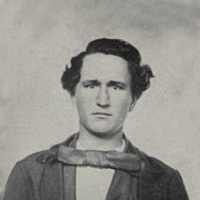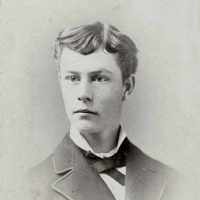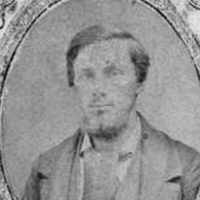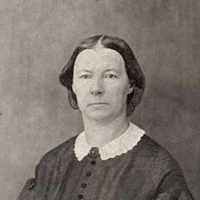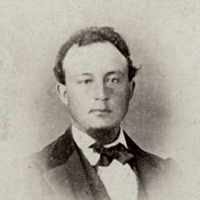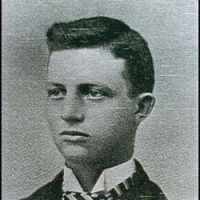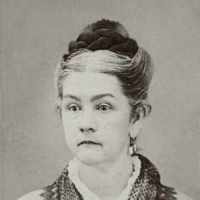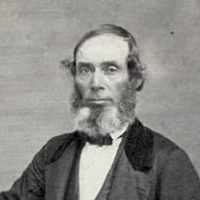
The McClintock Line, A Narrative — Six

This is Chapter Six of seven. In this chapter, our ancestors who have been in New Hampshire since it was a Province and part of British North America, made the major decision to move Westward. They packed their belongings and left New Hampshire and headed to New York State.
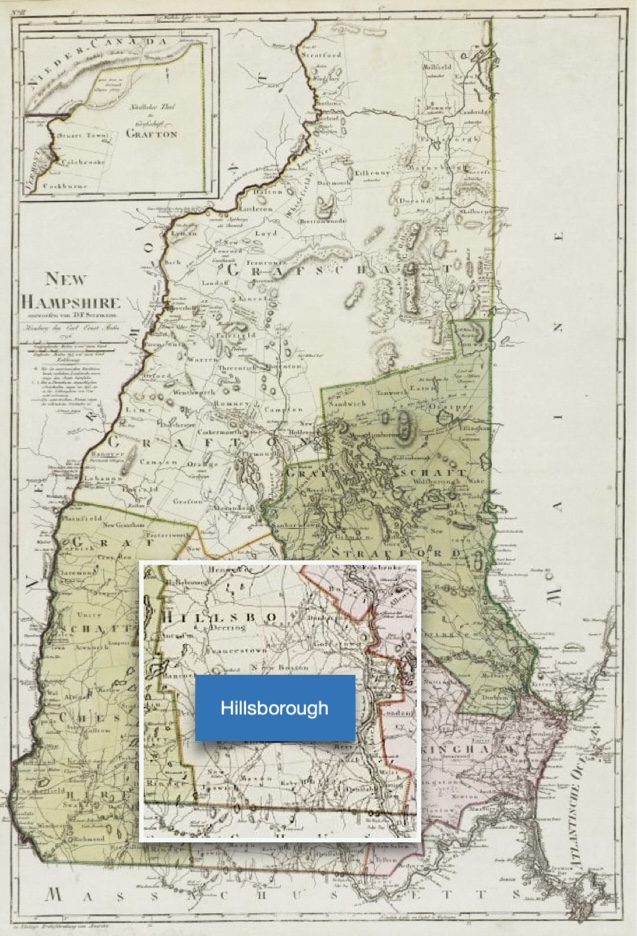
The Sotzmann-Ebeling Map of New Hampshire, Circa 1796.
(Image courtesy of Boston Rare Maps).

Be Fruitful and Multiply

James McClintock, (Sr.), born January 3, 1778 in Hillsborough (town), New Hampshire Province – died September 1845 in Bainbridge, Geauga, Ohio. He married Hephzibah Jones in circa 1803, in New Hampshire. She was born in 1784, in New Hampshire Province – died July 13, 1871 in Laingsburg, Shiawassee, Michigan. They had nine children. The first five were born in Hillsborough (town), Hillsborough, New Hampshire.

  • Thirza (McClintock) Taylor, born about 1807 – died June 25, 1893 in Cuyahoga, Ohio.
  • Mahala L. (McClintock) Short, born about 1808 – died June 29, 1827 in Phelps, Ontario, New York
  • Dr. Freeman Brazilla McClintock, born October 28, 1811 – died March 18, 1882 in Laingsburg, Michigan
  • Sarah (McClintock) Short, born about 1812 – died August 10, 1872 in Solon, Cuyahoga, Ohio
  • Joshua John McClintock, born about July 29, 1814 – died July 23, 1892 in Solon, Cuyahoga, Ohio

    The next four were all born in another county and at the same (new) location, but the location names evolved. Initially the area was Ontario County, New York State, then it became Wayne County, New York in 1823. *Additionally, the town of Arcadia was formed from the Town of Lyons in 1825.
  • James McClintock (Jr.), born about 1818, Phelps – died January 1, 1854, Bainbridge, Geauga, Ohio
  • Dexter McClintock, born August 15, 1819, Phelps – died April 12, 1899, Chagrin Falls, Cuyahoga, Ohio
    (We are descended from Dexter.)
  • William McClintock, born August 13, 1821, Lyons* – died July 6, 1893, West Union, Fayette, Iowa
  • Louisa M. McClintock, born about 1827, Arcadia*- died after 1870 location unknown (1)
A View of Manchester, N.H. — A lithographic print by J.B. Bachelder, 1855.
(Image courtesy of the Library of Congress).

The Censuses of 1800 through 1830 and Their Differences

These censuses are the second, third, fourth, and fifth that the United States had completed. Each year the government was learning a little more about what data it needed to know in able to run the country, and also some new questions to ask. Unfortunately, when we analyze these forms today, we still see many tic marks, but not much detail.

For the 1800 census, James McClintock was unmarried. We do not know with whom he was living in 1800. We are sure in was in Hillsborough, New Hampshire.

The 1810 Census in New Hampshire
Then in 1810, we first encounter the James McClintock family when he and his wife Hephzibah (Jones) McClintock were married and had children living in their home. They were still residing in Hillsborough, New Hampshire where both of them had grown up.

1810 Census excerpt, Hillsborough, New York
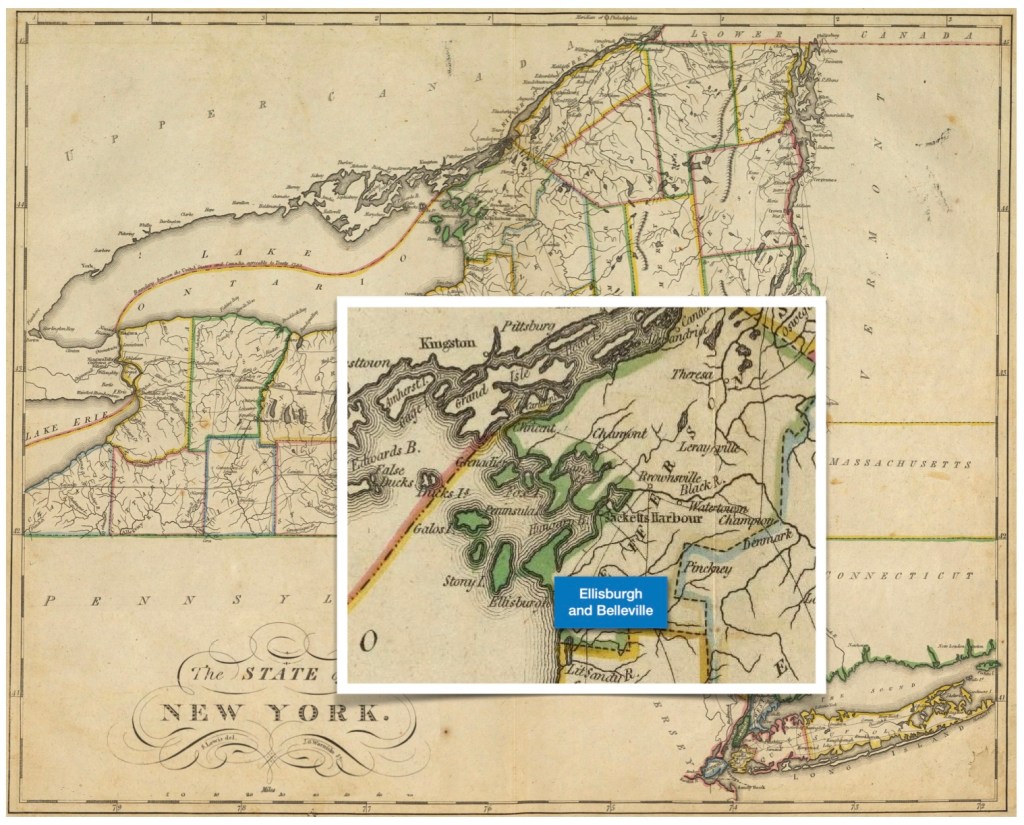
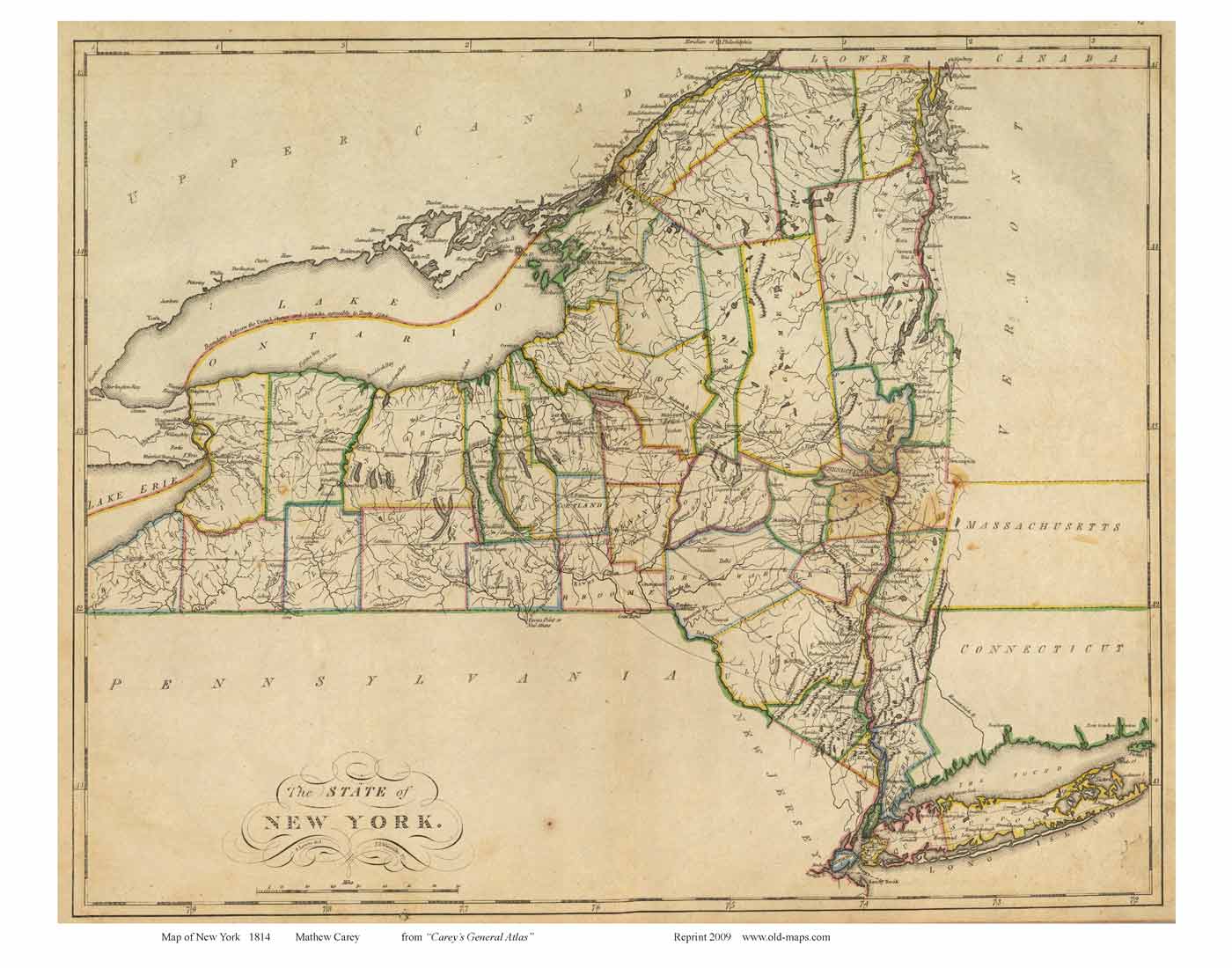
Map Of The State Of New York, Published by A. Finley Philadelphia,1824. The yellow circle indicates the area within which they lived during the 1820s. (Image courtesy of the Internet Archive).

The 1820 Census In New York
By 1820, they have more children and have left New Hampshire behind them. They are now living in the town of Phelps, Ontario County, New York. The reasons that they left New Hampshire are unknown, but there was a large westward migration already occurring in this era. Perhaps they were seeking additional farmland because arable land meant prosperity to farmers. James’s brother Samuel either came with them, or he was already in New York State, which may be one reason why they moved there — there was a family connection.

1820 Census excerpt, Phelps, New York. Note James as entry #738, and his brother Samuel as entry #739.

The 1830 Census In New York
It appears that the family has moved locally from the town of Phelps in Ontario County, to the town of Arcadia, just slightly north in the new (April 1823) Wayne County. This is the first Federal census we see where there is an actual printed form for the census taker to utilize for consistency. Prior to this, many census takers just made up their own forms trying to adhere to guidelines they were given.

1830 Census excerpt, Arcadia, New York. We overlaid it on an 1830 period accurate template for category clarity.

From the 1899 obituary that was published for Dexter McClintock in the Chagrin Falls Exponent newspaper, we learned this about his father James McClintock Sr. —
“His father, James McClintock [Sr.], migrated from Massachusetts* to New York, in 1803, where they lived until 1812, when his father struck out to seek his fortune in what was then considered the far west, and after overcoming the many almost insurmountable difficulties, he arrived at what was then called the little pond, now Geauga lake, where he purchased a large tract of land on which to settle with his family, a part of said land, being now owned by Captain C. E. Henry”.

*We believe that this 1899 newspaper account is not correct in several important points, as follows:

  • This family is very well documented as living in New Hampshire for several previous generations, since the 1730s. They did not live in Massachusetts.
  • The 1810 Census shows them living in New Hampshire, as do the birth records for their children born during this period there.
  • The 1820 Census shows them living in New York, as do the birth records for their children born during this period there. Additionally, three siblings were involved through marriages with the local Short family of Phelps, New York.
  • It is possible that the father James Sr. could have acquired land in the area, but we do not have records for this. If true, he had done this as an investment, but he was definately not residing in Ohio at that time.

The 1830s
We also know that by this time, that Samuel, [the brother of the father James Sr.] had already left New York state and moved further west to the Ohio Country, where he was paying property taxes as early as 1831 in what is now Solon, Ohio. We believe that it’s plausible that he was the first member of the McClintock branch of our family to arrive there. There was a court case involving Samuel and his brothers which is analyzed in the next chapter, The McClintock Line, A Narrative — Seven, where we explain what was going on.

We also understand that he was quite the drinker… (2)

1831 Property tax record for Samuel McClintock in Solon, Cuyahoga, Ohio.

Let’s Pause A Moment for Some Refreshment, Shall We?

As we learned from the census, for a portion of the 1820s and at the beginning of the 1830s, the James McClintock Sr. family lived in New York State. We came across an interesting account of what it was like to live in Arcadia, New York during this period —

“Up to 1830 the state of temperance was bad enough. Within a distance of three miles along Mud creek there were four distilleries, operated by Harrison, Luce, Sherman, and Mansfield. Whisky was sold as low as twenty-five cents a gallon, and was drank on all occasions. Whether at general training, Fourth of July, logging-bee, raising, or harvesting, the liquor was freely used. It stood upon the sideboard to treat the casual visitor and teacher, doctor, and preacher were alike accustomed to potations from the cup. Ladies met to help along a quilting, and the ‘sling’ imbibed made conversation spirited. If any failed to provide this stimulus it was made a subject of sharp comment. As years went by, a feeling prevailed that this system should be broken up. A preacher found intoxicated was dismissed, and in the county medical society a member accustomed to using liquors to excess was expelled. Still, tippling was common in taverns and in groceries.”
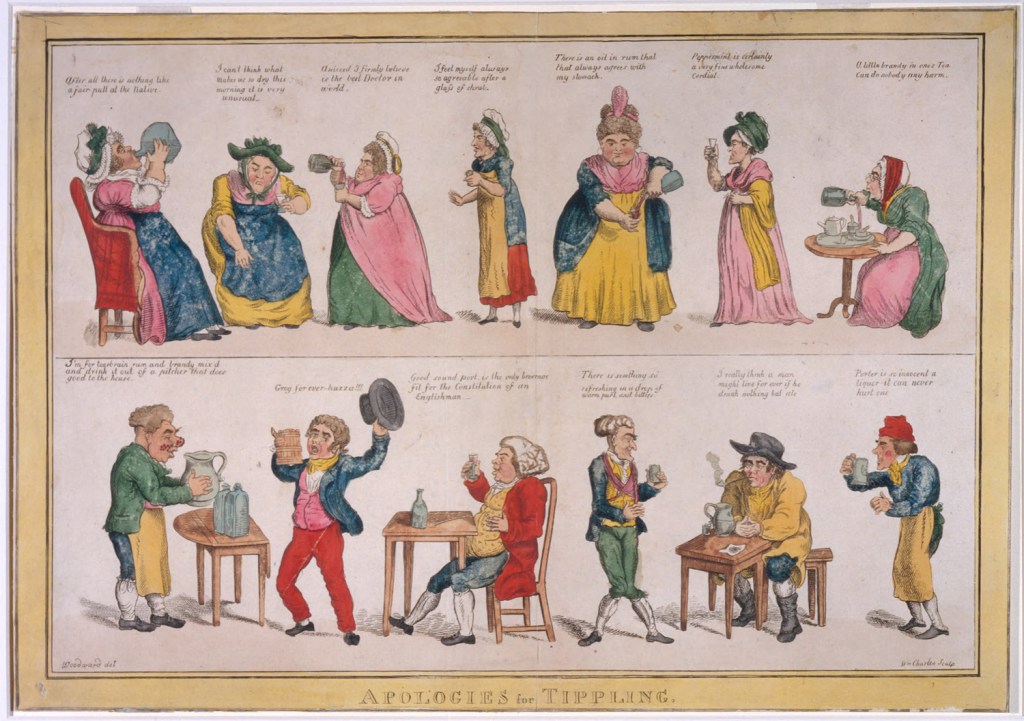
“Apologies for Tippling” by William Charles and George Moutard Woodward, circa 1800. This political cartoon shows some of the many reasons people found for tippling or drinking excessively. (Image courtesy of the Library Company of Philadelphia).

Some of our ancestors were Pilgrims, some were Quakers, some were Presbyterians, some were Catholics — and some were, …non-conformers.

“For the colonists of the 1600s and 1700s much of daily life was filled by tiring drudgery, but throughout the long hours of the work day, beer, cider, rum, and other intoxicating beverages provided a dependable source of comfort. Each day was supplemented by a generous allotment of alcoholic beverages imbibed from their waking hours all the way through the late evening. As author Corin Hirsch states in Forgotten Drinks of Colonial New England, ‘From breakfast cider to afternoon beer to evening flips, toddies and glasses of Canary wine, alcohol lubricated almost every hour of every day’. Drinking accompanied a diverse range of occasions that often took place in taverns, or during meals, work breaks, business meetings, weddings, funerals, trials, and legislative sessions. Daily, day-long ‘tippling’ was simply a fact of life in the colonial period.

While this behavior may be frowned upon in the modern era, colonials viewed the constant intake of liquor as a necessary and beneficial practice. Despite a lack of scientific understanding, the early settlers of North America knew that drinking from certain water sources could make a person deathly ill. Without proper sanitation practices or a way of discerning contaminated water from clean, they largely avoided it, instead seeking hydration from beverages unintentionally sanitized through the processes of fermentation and distillation. Alcohol was not only potable, but also was seen as a healthy, invigorating substance, which was even used in the treatment of disease. While the relatively staid puritan communities of New England such as Windsor admonished drunkenness, they hailed alcohol as the ‘good creature of God’.” (Windsor Historical Society)
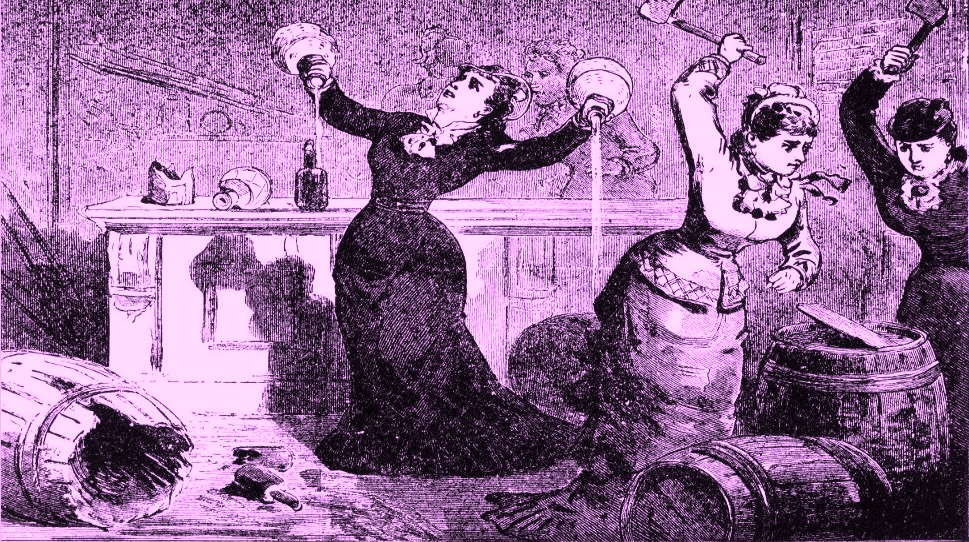
“A woman’s liquor raid – How the ladies of Fredericktown, Ohio, abolished the traffic of ardent spirits in their town”. (Line engraving courtesy of The Police Gazette, see footnotes)..

Observation: James McClintock Sr.’s 2x Great Grandfather Thomas Mclintoch of Glasgow had been a Maltman (a brewer), and his Grandfather William McClintock was fond of his homemade ‘rhum’…so, it seems like tippling probably ran through the veins of the McClintock family. Despite this, Freeman McClintock maintains in his biographical profile that his “parents instilled into the minds of their children principles of morality and religion”. Perhaps his uncle Samuel never got that family message.

It’s compelling to ponder about how many of our ancestors were likely tipplers, and how over the decades, this behavior paved the way for future temperance movements. (3)

And Back to The Census…

The 1840 Census in Ohio
After decades of censuses in other locations, the McClintock family has immigrated in en masse to the Western Reserve of Ohio. We’ve been able to determine through tax records (starting in 1833) that along with James and his wife, most of their adult children also relocated to this area of northeast Ohio.

1840 Census excerpt, Bainbridge, Ohio.

The census above is for the father James McClintock, Sr. who was living in Bainbridge township at the time of the census. On another 1840 census his son James Jr. and other siblings lived in Solon township. (4)

Map of the Western Reserve Including the Fire Lands 1826. On this map, Geauga County is still combined with the future Lake County and Solon and Bainbridge townships are colored yellow. (Image courtesy of Wikimedia Commons).

The Western Reserve of Ohio

In the early part of the 18th century, the Ohio Country was frequently referred to as the West, and from the perspective of New Englanders who settled there, it was indeed pioneer country. By the 1830s and 40s, the Western Reserve wasn’t thought of as a frontier anymore, but actually, it still was in many ways.

The Western Reserve area of northeastern Ohio, was originally established as The Firelands of Ohio, created by the Connecticut legislature in 1792 to help compensate her citizens for their losses when some of the towns were ravaged during the Revolutionary War. Connecticut had a history of belief that her manifest destiny was the inherent right of their northern and southern borders to extend from New England all the way to the Pacific Coast. This area was chartered and land sales were managed by the Connecticut Land Grant Company. The company eventually failed, and Connecticut yielded on their idea of manifest destiny, but the Western Reserve endured. Ohio became a state in 1803.

For all of our many ancestors from here, we believe that this is very true — ”“Following the Revolutionary War, for the next 25 years, Ohio became the primary destination of westward bound pioneers because of the fertile farmland in the Ohio River Valley. Some families stayed for the remainder of their lives.” (Family Search) For the James McClintock Sr. family, when his children were seeking prosperity for their own future families, owning land in Ohio beckoned. (5)
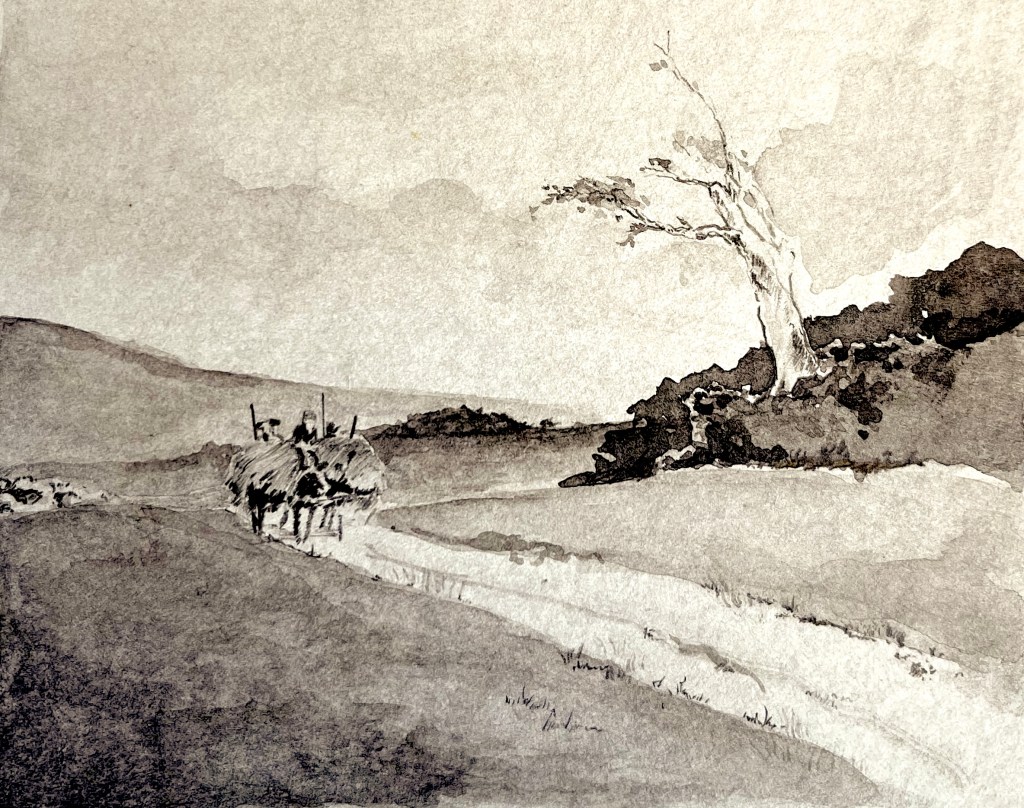
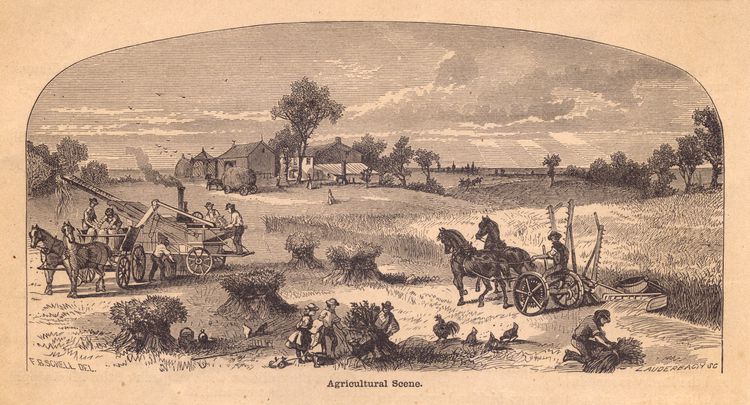
This is a small pen and ink sketch of farmers in the Western Reserve,
which I did in the Spring of 1980. (Thomas)

The Settling of Solon Township, Ohio

Wikipedia informs us that, “In 1820, the first settlers arrived from Connecticut… The township was named after Lorenzo Solon Bull, who was the son of Isaac Bull, one of the first settlers. Purportedly, the selection of young Lorenzo’s middle name was due to its derivation from the ‘father of democracy’, Solon, the lawmaker of Ancient Greece. The early settlers faced challenges common to pioneers, but in Solon, drainage and wetlands issues complicated settlement and agriculture. Overcoming these obstacles, Solon Township became an arable farming area, producing corn and wheat crops and supporting dairy farms…”

The vast majority of the McClintocks were farmers, with the notable exception of two people, the siblings: Dr. Freeman McClintock, and William McClintock. Although Freeman farmed in Solon, Ohio for a few years, he eventually gave it up and went on to do many remarkable things throughout North America. “The first man who built a house at the Center [of Solon Township] was Freeman McClintock, who located there in 1832 or ’33. He resided there in his log cabin two or three years before any joined him.”

Ohio Log Cabin and Farm, (Image courtesy of Granger Art on Demand).

We find this historical anecdote to be interesting, but not completely accurate. We know that his uncle Samuel was already living there. Freeman’s wife Lydia came with him, and his parents arrived in October 1833. Many of his siblings were also leaving New York on the canal boats, schooners, and wagons headed his way. We determined these things based upon his biography and the county tax records. (See footnotes).

William McClintock preferred the legal profession. He was a lawyer, having been admitted to the Ohio Bar in 1849. Eventually he moved his family west to Iowa and became the founder and publisher of a newspaper. (Both brothers have interesting biographical links in the footnotes). (6)

“..Nothing Can be Said to be Certain, Except Death and Taxes…”

We know that the McClintocks had arrived in Ohio by 1831, because there are property tax records in Cuyahoga County which support this. When we analyzed the years 1833 through 1844, we saw some interesting patterns. It appears that in most years, James Sr. either owned most of the land, or was paying most of the taxes for some reason. For example in 1836, James Sr., was paying everyone’s property tax even though some of that land belonged to some of his children. (Gee, thanks dad!)

McClintocks listed in the Cuyahoga County 1852 landownership map index

James Sr. died in September 1845, but the exact date was not recorded.

Later in that same month, there are record documents from a future court case, which state “James Jr., sold the real estate to Dexter McClintock [our ancestor] for $1,125 on September 25, 1845” and that “James Jr. died in 1849[*] and there was considerable dispute among his heirs and the heirs of James Sr., as to the ownership of the property.
*Correction: James Jr.’s correct death date is recorded as January 1, 1854. He died of typhoid fever, leaving behind a wife and several small children: wife Betsey, and children, Orvil, Antionette, Seth, Edith, and James. (7)

We will be covering this court case in the next chapter, The McClintock Line, A Narrative — Seven). The case caused quite a stir, and involves land, alcoholism, temperance societies, gold, and lots of ruffled feathers.

Following are the footnotes for the Primary Source Materials,
Notes, and Observations

Be Fruitful and Multiply

(1) — thirty two records

Boston Rare Maps
The Sotzmann-Ebeling Map of New Hampshire, Circa 1796
https://bostonraremaps.com/inventory/sotzmann-ebeling-new-hampshire-1796/
Note: For the map image.

James McClintock Sr
in the U.S., Find a Grave Index, 1600s-Current

https://www.ancestry.com/discoveryui-content/view/58353478:60525?ssrc=pt&tid=75768616&pid=42330432184
Note: Birth and death dates
and
James McClintock Sr.
https://www.findagrave.com/memorial/95744747/james_mcclintock
and
Ohio Cemetery Records
Gravestone Inscriptions in Old Southwest Burying Ground, Bainbridge, Geauga Co., OH
https://www.ancestry.com/imageviewer/collections/48347/images/OHCemeteryRecords-000382-157?ssrc=&backlabel=Return&pId=304646
Book page: 157, Digital page: 167/506, Lower section, entry 3 from the bottom of the page.
Note: For the data.

Hephzibah ‘Hepsie’ Jones McClintock
https://www.findagrave.com/memorial/92303259/mccl
Note: For the data. There are some minimal family records.

Hepzidah McClintock
in the Michigan, U.S., Death Records, 1867-1952

https://www.ancestry.com/discoveryui-content/view/1403875:60872?tid=&pid=&queryId=78c1cb54-4fc6-46dd-897e-ede148c8d4b1&_phsrc=orQ32&_phstart=successSource
Book page: 203, Digital page: 590/651, Left page, entry 636.
Notes: The information for her parents, and the county name, are incorrect on this file (transcription errors?). She appears to have been living with her son Dr. Freeman McClintock, who died in Michigan.

Thirza Taylor
in the Ohio, U.S., Wills and Probate Records, 1786-1998

Cuyahoga > Estate Files, Docket 34, Case No 9031-62092, 1813-1913
https://www.ancestry.com/discoveryui-content/view/6426020:8801
Digital pages: 2 through 7/209
and
The Connection: When Thirza’s younger brother James Jr. died on January 1, 1854, his wife Betsey McClintock remarried eight months later (on August 10, 1854), to Tirza’s son Philonzo Taylor Jr. (Thirza lost a brother and gained a daughter-in-law). Here is the 1850 census to document the Taylor family —
Thirza Taylor
in the 1850 United States Federal Census

https://www.ancestry.com/discoveryui-content/view/13469152:8054?tid=&pid=&queryId=0d8c99c5-6e9b-49d3-af1f-1446805483c0&_phsrc=IPg31&_phstart=successSource
Digital pages: 9-10/30, Entries 38-42, and 1-4 (next page top).
and
The August 10, 1854 remarriage:
Betsey Ann McClintock
in the Ohio, U.S., County Marriage Records, 1774-1993

Geauga > 1841 – 1854
https://www.ancestry.com/discoveryui-content/view/900862477:61378?tid=&pid=&queryId=7b4f7af5-2a9c-4c25-a297-4327d843e3c4&_phsrc=IPg6&_phstart=successSource
Digital page: 412/437, Left page, entry 2.

Mahala Short
in the U.S., Find a Grave Index, 1600s-Current

https://www.ancestry.com/discoveryui-content/view/26447561:60525?tid=&pid=&queryId=ce7d9371-67a5-4f32-b666-460c32adfea5&_phsrc=Lml7&_phstart=successSource
and
Mahala Short
https://www.findagrave.com/memorial/53699209/mahala-short
Notes: We connected her husband Shubal Short through her residence with her family who lived in Phelps, Ontario, New York and this lawsuit, where her husband is named: https://www.ancestry.com/imageviewer/collections/28306/images/dvm_LocHist012267-00246-1-0?ssrc=&backlabel=Return&pId=400
Notes: The McClintock family is connected to the Short family of Phelps, Ontario County, New York through 3 marriages:

Dr Freeman McClintock
in the U.S., Find a Grave Index, 1600s-Current

https://www.ancestry.com/discoveryui-content/view/86876122:60525?tid=&pid=&queryId=2b92d9cc-fbdc-4124-862f-bcb7bc69167a&_phsrc=aWz3&_phstart=successSource
and
Dr Freeman McClintock
https://www.findagrave.com/memorial/33127439/freeman-mcclintock
Note 1: For the data on birth and death dates.
Note 2: The McClintock family is connected to the Short family of Phelps, Ontario County, New York through 3 marriages:

  • Sarah McClintock, married Sidney Smith Short about 1831
  • Mahala McClintock, married Shobal Pula Short Sr. about 1826
  • Freeman Brazilla McClintock, Lydia A. Short, on November 27, 1831, as identified in American Biographical History of Eminent and Self-made Men : Michigan volume, The Sixth Congressional District

Dr. Freeman McClintock led a dynamic life and was profiled in this book — American Biographical History of Eminent and Self-made Men: Michigan volume, The Sixth Congressional District
https://www.ancestry.com/imageviewer/collections/25026/images/dvm_LocHist010122-00622-0?pId=704
Book pages: 50-51, Digital pages: 797-798/984
Note: For the text.

image4
Handwritten note, Ancestry gallery image for Joshua John McClintock
https://www.ancestry.com/mediaui-viewer/collection/1030/tree/1173647/person/-1913123119/media/11ee9170-8904-4927-9240-ed38c9b3fa82?queryId=8f38b5df-7553-47d9-b0ec-1f41dd4ae931&_phsrc=xAm11&_phstart=successSource
Notes: Below is the handwritten document, that also provides information about his wife Lucy Seward. His birth location is incorrect being listed as Manchester. The family never lived in Manchester, but in the nearby town of Hillsborough, where  his other siblings from the same timeframe were likely born.

Handwritten document posted on Ancestry.com. (See comments above).

J J McClintock
in the Ohio, U.S., Wills and Probate Records, 1786-1998
Cuyahoga > Will Records, Vol X-Y, 1892-1893
https://www.ancestry.com/discoveryui-content/view/13657472:8801?tid=&pid=&queryId=1dbe9c61-e191-4563-aedd-fb10ce11e962&_phsrc=AKd1&_phstart=successSource
Digital page: 206/682
Note: For death date.
and
will [of JJ McClintock]
https://www.ancestry.com/mediaui-viewer/collection/1030/tree/1173647/person/-1913123119/media/7a207c15-7b42-4acf-b42b-b3fc2648f551?galleryindex=1&sort=-created
and
will p2
https://www.ancestry.com/mediaui-viewer/collection/1030/tree/1173647/person/-1913123119/media/54bd5581-d1fe-4174-90d8-1993a9606f73?galleryindex=2&sort=-created
Note: There are two pages to this hand drafted document as indicated by the two links above. The Will is found in an ancestry.com photo gallery.

James McClintock [Jr.]
https://www.findagrave.com/memorial/53699189/james_mcclintock
Note: For his birth and death dates.

Dexter McClintock
in the Web: Ohio, Find A Grave Index, 1787-2012

https://www.ancestry.com/discoveryui-content/view/7887384:70559?ssrc=pt&tid=18269704&pid=635845738
and
Dexter McClintock
https://www.findagrave.com/memorial/19154853/mccl
Note: For the data.

William McClintock
https://www.findagrave.com/memorial/108474075/william_mcclintock
Notes: For his birth and death dates.

Observation: Not to be outdone by his older brother Freeman, it appears that William McClintock was also a very accomplished man. A newspaper he started named the Fayette County Union was published continuously until 1944.

Portrait and Biographical Album of Fayette County, Iowa.
Containing Full Page Portraits and Biographical Sketches of Prominent and Representative Citizens of the County
by Lake City Publishing Company
https://archive.org/details/portraitbiogra00lake/page/272/mode/2up?view=theater
Book page: 273, Digital page: 272/698
and a transcribed copy —
Fayette County, Iowa
Biography Directory
Portrait & Biographical Album of Fayette County Iowa
Containing Full Page Portraits and Biographical Sketches of Prominent and Representative Citizens of the County
Lake City Publishing Co., Chicago, March 1891
https://iagenweb.org/fayette/bios/1891/373b.htm

Library of Congress
Fayette County Union (West Union, Iowa) 1866-1944
https://www.loc.gov/item/sn83025183/
Note: For the data.

Louisa McClintock
in the 1870 United States Federal Census

Michigan > Shiawassee > Sciota
https://www.ancestry.com/discoveryui-content/view/27514564:7163?tid=&pid=&queryid=2efdaa07-be2b-4470-a5cc-681975d47192&_phsrc=dPv25&_phstart=successSource
Book page: 2, Digital page: 2/32, Entries 12 and 13.
Notes: For the data. Louisa’s birthdate is inferred from this record. In 1870, she is living in Michigan taking care of her mother, who died there the next year.

The Connection: Throughout the 1850s and 186os she is making property tax payments in Solon, Cuyahoga, Ohio. The last record for Ohio is:
Louisa M McClintock
in the Cuyahoga County, Ohio, U.S., Tax Lists, 1819-1869
1865
https://www.ancestry.com/discoveryui-content/view/1320613:2100?tid=&pid=&queryid=8220d991-1796-464a-8766-f71723b626c5&_phsrc=FPj1&_phstart=successSource
Book page: 26, Digital page: 500/558
Note: For the data.

Wayne County, New York
https://en.wikipedia.org/wiki/Wayne_County,_New_York
Note: For founding date.

Library of Congress
A View of Manchester, N.H.
by J.B. Bachelder, 1855
https://www.loc.gov/resource/cph.3g08323/
Note: For the landscape painting.

The Censuses of 1800 through 1830 and Their Differences

(2) — twelve records

The National Archives
The 1810 Census
https://www.archives.gov/research/census/1810
Note: “The census began on Monday, August 6, 1810, and was finished within 9 months…” and for the form questions: 
https://www.archives.gov/files/research/genealogy/charts-forms/1810-census.pdf

James McClintock
in the 1810 United States Federal Census

New Hampshire > Hillsborough > Windsor
https://www.ancestry.com/discoveryui-content/view/187893:7613?ssrc=pt&tid=18269704&pid=635866414
Digital page: 2/2, Entry 16.
Note: For the data.

Map Of The State Of New York
Published by A. Finley Philadelphia,1824
https://archive.org/details/dr_map-of-the-state-of-new-york-published-by-a-finley-philada-1824-copy-ri-2587002
Note: For the map image.

The National Archives
1820 Census Records
https://www.archives.gov/research/census/1820
Note: “The census began on Monday, August 7, 1820, and was finished within 6 months…” and for the form questions:
https://www.archives.gov/files/research/genealogy/charts-forms/1820-census.pdf
Note: For the data.

James McClintock
in the 1820 United States Federal Census

New York > Ontario > Phelps
https://www.ancestry.com/discoveryui-content/view/567539:7734?ssrc=pt&tid=18269704&pid=635866414
Digital page: 10/12, Entry 11.
Note: He is entry #738 and the next entry #739, is his brother Samuel.

D. McClintock 1899 obituary
Chagrin Falls Exponent newspaper
https://www.ancestry.com/mediaui-viewer/collection/1030/tree/198643829/person/292609290256/media/e1a020c0-adb6-4ce0-8bf8-3a1d4785e51e?galleryindex=3&sort=-created
Note: April 20, 1899 issue, page 5.

The National Archives
1830 Census Records
https://www.archives.gov/research/census/1830
Note: “The census began on Tuesday, June 1, 1830, and was finished within 6 months,…” and for the form questions:
https://www.archives.gov/files/research/genealogy/charts-forms/1830-census.pdf
Note: For the data.

James McClintick
in the 1830 United States Federal Census

New York > Wayne > Arcadia
https://www.ancestry.com/discoveryui-content/view/163551:8058
Digital page: 35/48, Entry 17.
Note: For the data.

Samuel McClintock
in the Cuyahoga County, Ohio, U.S., Tax Lists, 1819-1869

1831-1833
https://www.ancestry.com/discoveryui-content/view/1665566:2100?tid=&pid=&queryid=c0b09afb-af21-4cc1-ae13-d957d6a769a8&_phsrc=NeN1&_phstart=successSource
Digital page: 194/636, Last entry.
Note: For the data.

Let’s Pause A Moment for Some Refreshment, Shall We?

(3) — three records

History of the Town of Arcadia
https://wayne.nygenweb.net/everts/arcadiaeverts.html
Note: For the data.

Windsor Historical Society
Colonial Boozing
https://windsorhistoricalsociety.org/colonial-boozing/
Note: For the text.

Medium
The Temperance Movement Was Totally Badass
https://medium.com/@benfreeland/the-temperance-movement-was-truly-badass-dfeaed03a3e0
Note: For temperance illustration of Fredericktown, Ohio reformers.
You go, girls!

And Back to The Census…

(4) — three records

The National Archives
1840 Census Records
https://www.archives.gov/research/census/1840
Note: “The census began on Monday, June 1, 1840, and was finished within five months…” and for the form questions:
https://www.archives.gov/files/research/genealogy/charts-forms/1840-census.pdf
Note: For the data.

James Mcclintock
in the 1840 United States Federal Census

Ohio > Geauga > Bainbridge
https://www.ancestry.com/discoveryui-content/view/2629792:8057?ssrc=pt&tid=18269704&pid=635866414
Digital page: 9/14, Entry 3.
Note: For the data.

The Western Reserve of Ohio

(5) — four records

Western Reserve Including the Fire Lands 1826
https://commons.wikimedia.org/wiki/File:Western_Reserve_Including_the_Fire_Lands_1826.jpg
Note: On this map, Geauga County is still combined with the future Lake County and Russell township is not yet named.
Note: For the map image.

History of the Firelands
https://lymevillage.org/history-of-the-firelands/
Note: For the text.

United States Migration to Ohio, Northwest Territory, Southwest 1785 to 1840 – International Institute
https://www.familysearch.org/en/wiki/United_States_Migration_to_Ohio,Northwest_Territory,_Southwest_1785_to_1840-_International_Institute
Note: For the text.

Connecticut Western Reserve
https://en.wikipedia.org/wiki/Connecticut_Western_Reserve
Note: For the map of “Connecticut’s land claims in the Western United States.”

The Settling of Solon Township, Ohio

(6) — three records

Solon, Ohio
https://en.wikipedia.org/wiki/Solon,_Ohio
Note: For the text.

Granger Art on Demand
Ohio Log Cabin and Farm
by Artist unknown
https://grangerartondemand.com/featured/ohio-log-cabin-farm-granger.html
Note: For the cabin image.

History of Cuyahoga County, Ohio …
With Portraits and Biographical Sketches of its Prominent Men and Pioneers
by Crisfeld Johnson
https://archive.org/details/historyofcuyahog00injohn/page/516/mode/2up?q=“McClintock”
Book page: 517, Digital page: 516/534
Note: For the data.

“Nothing Can be Said to be Certain, Except Death and Taxes…

(7) — seven records

Death and Taxes [idiom]
https://en.wikipedia.org/wiki/Death_and_taxes_(idiom)#:~:text=%22Death%20and%20taxes%22%20is%20a,certain%2C%20except%20death%20and%20taxes.
Note: For the data.

James Mcclintock
in the Cuyahoga County, Ohio, U.S., Tax Lists, 1819-1869
1833-1835
https://www.ancestry.com/discoveryui-content/view/1651638:2100?ssrc=pt&tid=18269704&pid=635866414
Digital page: 65/658, Entries 8 through 17 (based upon name).
Note: For the data.

James McClintock
in the Cuyahoga County, Ohio, U.S., Tax Lists, 1819-1869
1835-1837
https://www.ancestry.com/discoveryui-content/view/1647946:2100?ssrc=pt&tid=18269704&pid=635866414
Digital page: 487/648, Entries 7 through 18 (based upon name).
Note: For the data.

James McClintock
in the Cuyahoga County, Ohio, U.S., Tax Lists, 1819-1869

1842-1843
https://www.ancestry.com/discoveryui-content/view/1607066:2100?ssrc=pt&tid=18269704&pid=635866414
Digital page: 537/686, Entries 10 through 14 (based upon name).
Note: For the data.

James McClintock
in the Cuyahoga County, Ohio, U.S., Tax Lists, 1819-1869

1844-1845
https://www.ancestry.com/discoveryui-content/view/1195813:2100?ssrc=pt&tid=18269704&pid=635866414
Digital page: 303/682, Entries 12 through 17 (based upon name).
Note: For the data.

Listed in the Cuyahoga County 1852 landownership map index
https://www.ancestry.com/imageviewer/collections/21248/images/dvm_LocHist007250-00029-1?ssrc=pt&treeid=18269704&personid=635866414&usePUB=true&pId=52
Digital page: 54/107, Entry 20.
Note: For the data.

Annals of Cleveland.
Vol. II. Abstracts of the records of court cases in Cuyahoga County
https://www.ancestry.com/imageviewer/collections/28306/images/dvm_LocHist012267-00246-1-0?ssrc=&backlabel=Return&pId=400
Book page: 111-112, Digital page:: 470-471/3048
Note: For the data.

The DeVoe Line, A Narrative — Seven

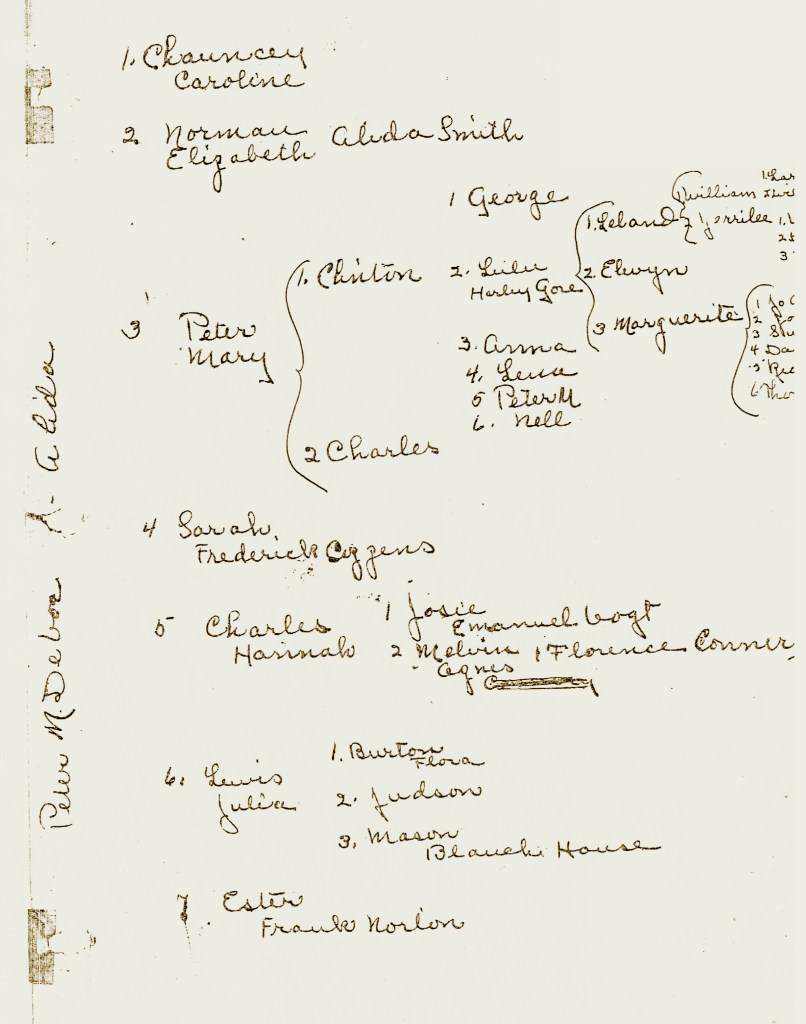
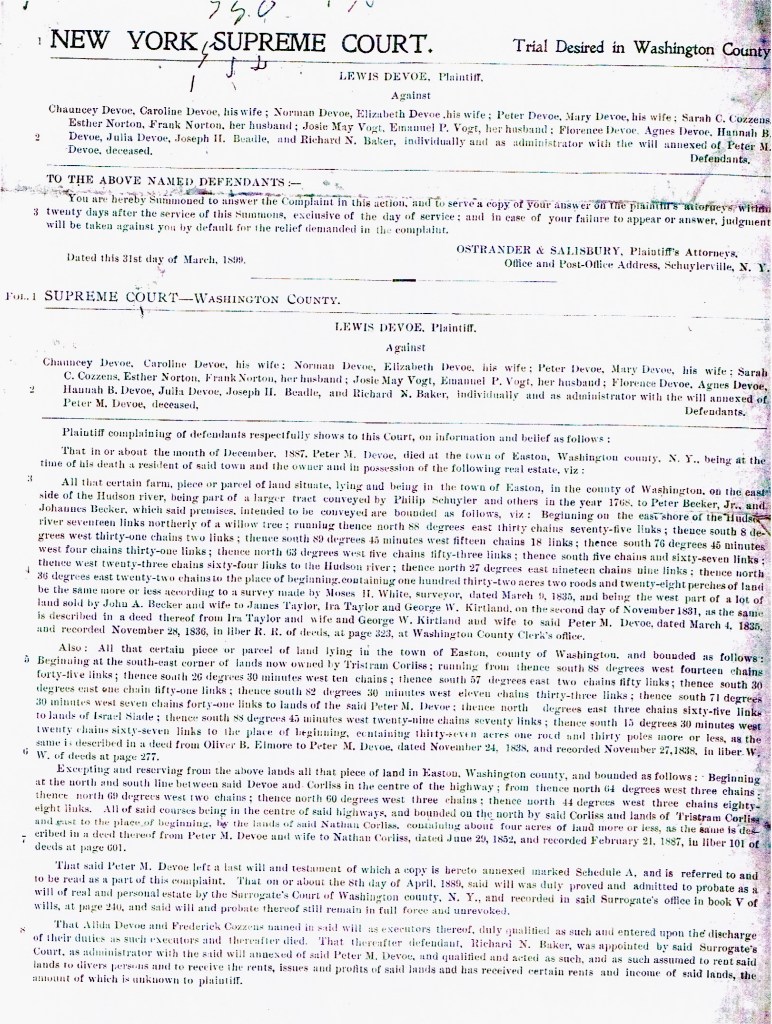
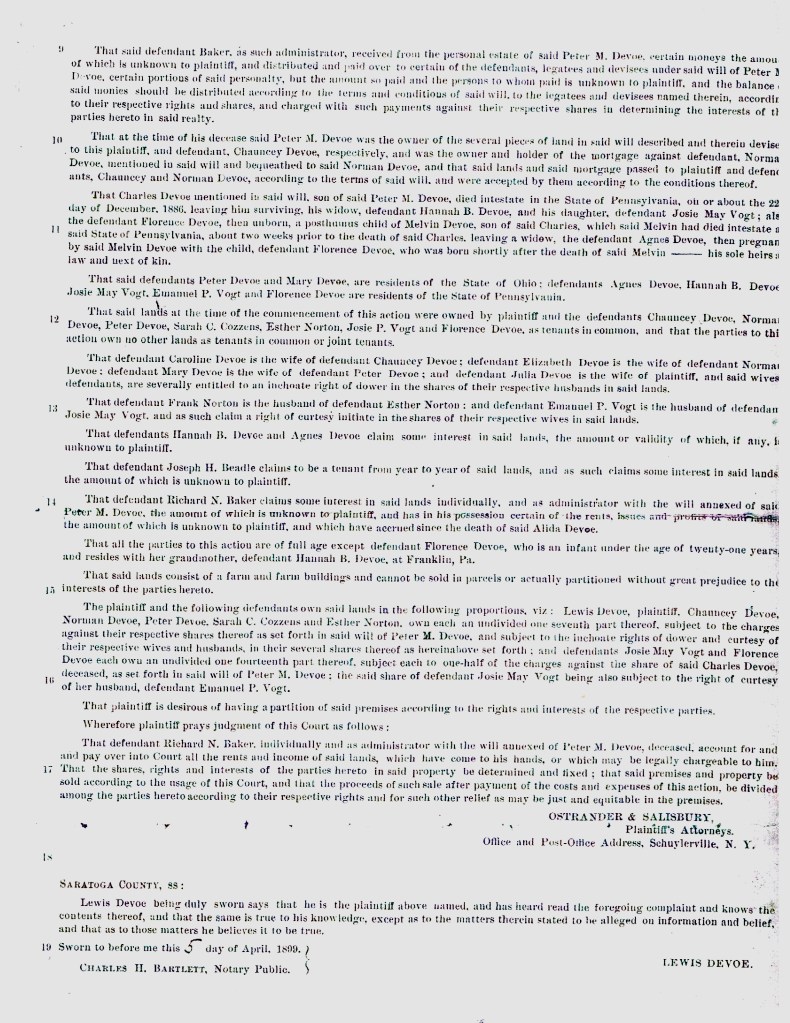
This is Chapter Seven of eleven parts. An unusual circumstance has required an unusual chapter for our DeVoe family history. We’ve created this unique chapter to address both the scarcity of records on this branch of the family, and to document our insights about working through a knotty challenge like this.

Ballston Spa was the “Center” of Saratoga County

Saratoga County Courthouse, built 1819. From the Saratoga Today newspaper article
How Ballston Spa Became the County Seat, published April 1, 2021.

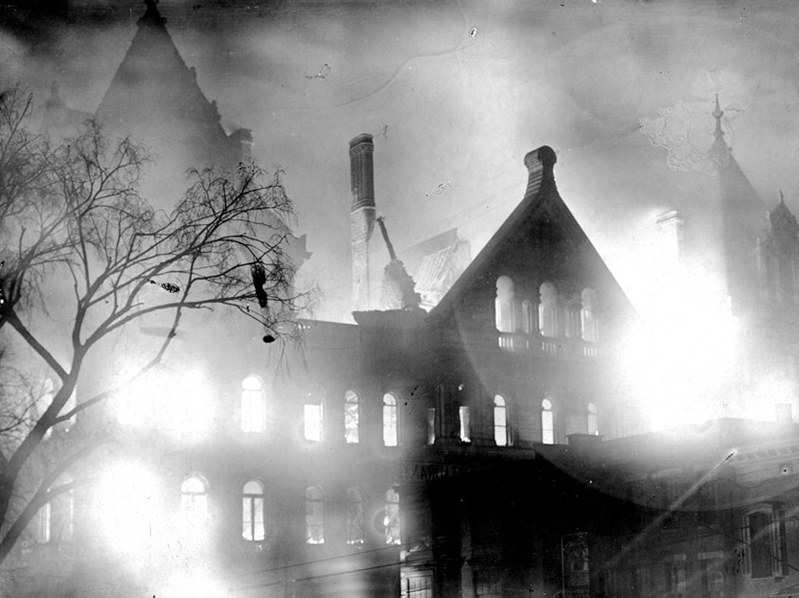
If you give a couple of ne’er-do-well convicts a lighted candle, they just might burn the jail down — and this is exactly what happened. According to the newspaper, Saratoga Today
“Fire broke out in the courthouse in the middle of the night on March 23 [1816]. Two prisoners, Fones Cole of Northampton (held on a forgery charge) and Peter Drapoo (a horse thief) used a candle they purchased from the jailor (reportedly for playing cards) to set fire to their cell and escape. Two other prisoners also escaped during the fire but a fifth prisoner, George Billings, was chained to the floor and perished in the flames.”

After the drama of that event, for three years, different interested Saratoga County towns vied for the new courthouse to be built in their community, but when all was said and done, the new courthouse stayed in Ballston Spa, opening in 1819. “The style of the building was essentially the same as the original building on Courthouse Hill, though they built this one out of brick.

At the time of this chapter in our family history, the Surrogate of the County of Saratoga was George Palmer, esq., and he was working from this new courthouse. (1)

Our Dilemma With Peter M. DevoeThat “M” is Pretty Important!

In our search for our 3x Great Grandfather, Peter M. Devoe — as sometimes happens in genealogy research, you find yourself tracing a relative who has a rather common name. In this part of the world at that time, there were many, many Devoe(s) living in New York State. Also, the first name of Peter was (and stilll is!) quite popular. Occasionally we might luck out and see a middle name initial: Peter D., Peter J., etc., but without that special “M” nothing could be certain we had the right person.

And then there’s the surname. The Holland Society records these variants for the Devoe surname: De Voew, De Vous, Devoe, Du Fou, Du Voe, D. Fou, d. Fou, D. Vou, De Voe, Devou, De Vous, Vous, Du Vou. In a preliterate world, we find many of these spellings on census records, court records, correspondence… you name it!

We found his 1829 marriage record to Alida Shaw, and we will be writing about his and his family’s life together in the next chapter. The only other document we have located, where we are certain that it is him, is the Last Will and Testament of Elias Devoe. This 1832 Will is a treasured document from our research, — it is the only document that captures the name of Peter M. Devoe, and lists all the people who are his likely siblings. Being a rare item, we feel that it is important to explain to readers exactly how we came to these conclusions. (2)

Reading The Will by David Wilkie, 1820. (Image courtesy of Wikimedia Commons).

The Enigmatic Last Will and Testament of Elias Devoe

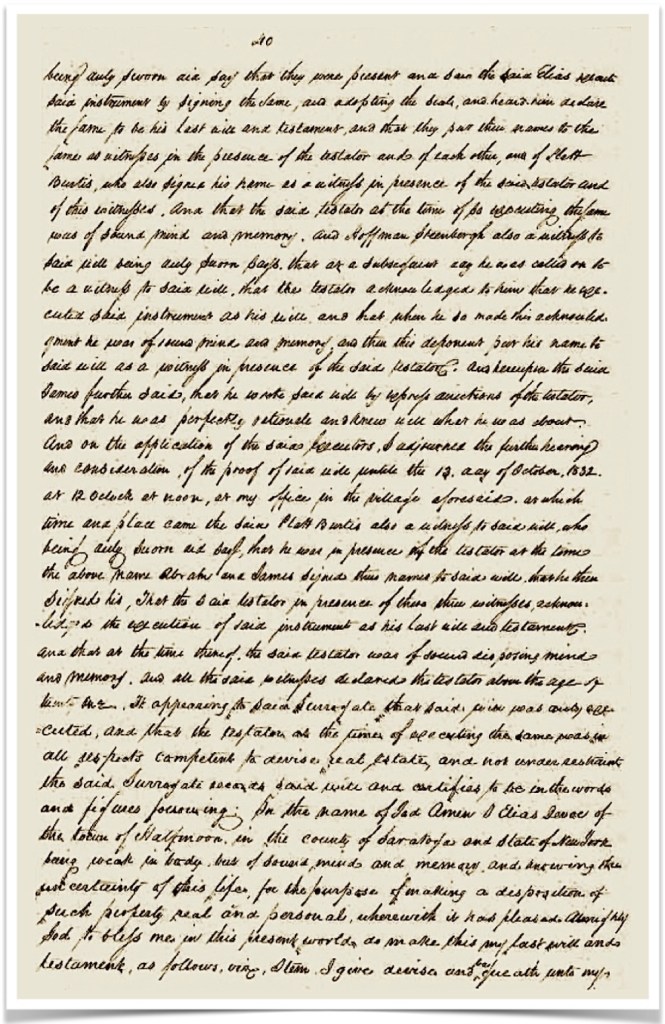
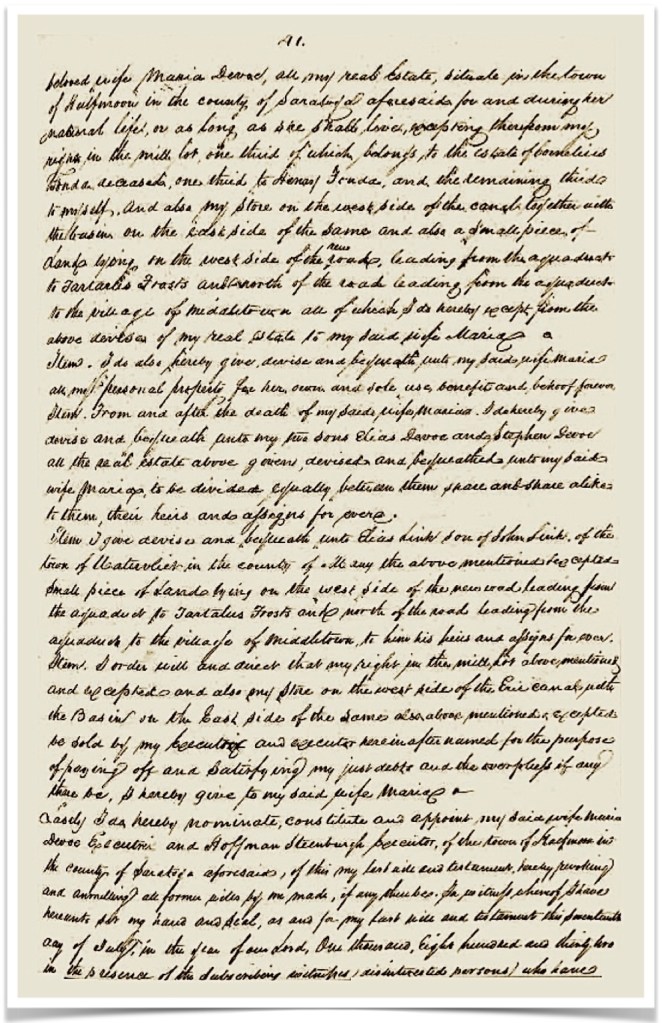
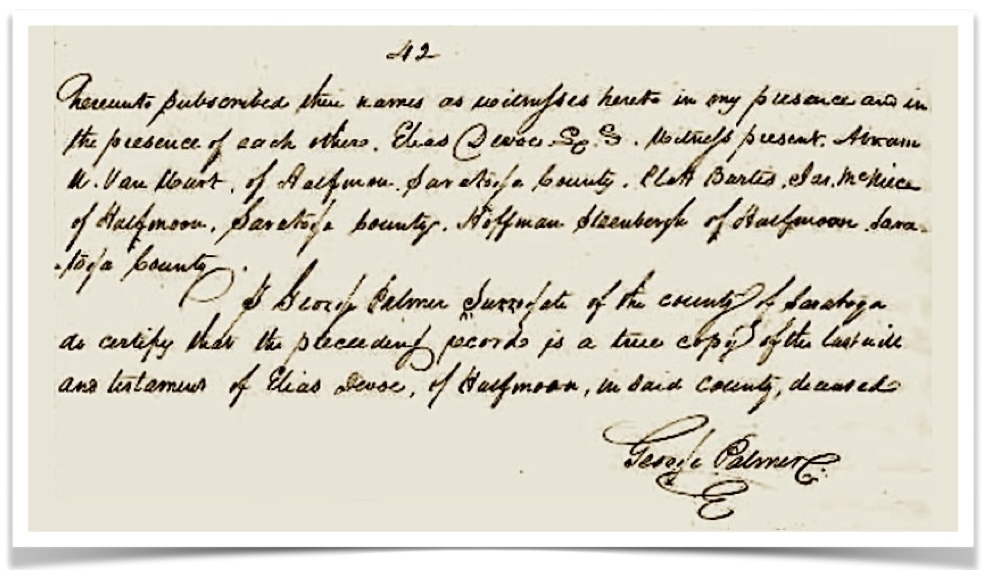
We are presenting the actual pages of Elias Devoe’s will as written on July 17, 1832, and probated on October 8, 1832. Each page has the actual words, first shown in the court copy, with a transcription following.

Last Will and Testament of Elias Devoe, page 1.

“Be it remembered that on this 8 day of October 1832, came before me George Palmer, Surrogate of the county of Saratoga, at my offices in the village of Stillwater Maria Devoe and Hoffman Steenburgh executors named in the last Will and Testament of Elias Devoe late of the town of Halfmoon in said County deceased and showed to said Surrogate that they and duly cited and notified Isaac M. Devoe, Peter M. Devoe, Maria Devoe, Elizabeth Quackenbush, Getty Gray, Catherine Vandekar, Alida Devoe, Anna Quik, Martin Van Curen and Asahel Philo Guardian to Maria Van Curen and Alida Van Curen minors, being the heirs at law and next of kin of the said deceased that they would on the said 8 day of October, at the place aforesaid present said will to the said Surrogate to be proved and allowed as a will of real a personal estate, and also on Cornelius Devoe, also an heir and next of kin of the said deceased to the same effect.

An example of American mourning artwork, circa 1830.
(Image courtesy of herald net.com).

And leave being given to the said Maria and Hoffman they then and there produced to said Surrogate a certain instrument in writing purporting to be the last Will and Testament of the said Elias bearing date the Seventeenth day of July in the year of our Lord, one thousand, Eight hundred and thirty two and that then and there introduced Abram Van Wart and James McNiece who”

Last Will and Testament of Elias Devoe, page 2.

“being duly sworn did say that they were present and saw the said Elias _____ said instrument by signing the same, and adopting the seal and heard him declare the same to be his last Will and Testament and that they put their names to the same as witnesses in the presence of the testator and of each other, and of Platt Burtis, who also signed his name as a witness in presence of the said testator and of this witnesses. And that the said testator at the time of so executing the same was of sound mind and memory, and Hoffman Steenburgh also a witness to said Will being duly sworn says that at a subsequent day he was called on to be a witness to said Will, that the testator acknowledged to him that he executed said instrument as his Will and that when he so made his acknowledgement he was of sound mind and memory and then this deponent put his name to said Will as a witness in presence of the said testator. And hereupon the said James further said that he wrote said Will by actions of the testator, and that he was perfectly rational and knew well what he was about. And on the application of the said executors, I adjourned the further hearing and consideration of the proof of said Will until the 13th day of October, 1832 at 12 O clock noon, at my office in the village aforesaid, at which time and place came the said Platt Burtis also a witness to said Will, who being duly sworn and said that he was in presence of the testator at the time the above named Abram and James signed their names to said Will, that he then signed his, that the said testator in presence of these three witnesses acknowledged the execution of said instrument as his last Will and Testament and that at the time thereof, the said testator was of sound disposing mind and memory. And the said witnesses declared the testator above the age of twenty-one. It appearing to said Surrogate that said Will was properly executed, and that the testator at the time of executing the same was in all respects competent to devise real estate, and not under restraint, the said Surrogate records said Will and certifies to be in the words and figures following: In the name of God, Amen. I, Elias Devoe of the town of Halfmoon, in the county of Saratoga and State of New York being weak in body, but of sound mind and memory, and knowing the uncertainty of this life, for the purpose of making a disposition of such property real and personal, wherewith it has pleased Almighty God to bless me in this present world do make this my last Will and Testament, as follows, viz: Item. I give devise, and bequeath unto my”

Last Will and Testament of Elias Devoe, page 3.

“beloved wife Maria Devoe all my real estate, situate in the town of Halfmoon in the county of Saratoga aforesaid for and during her natural life, or as long as she shall live excepting therefrom my right in the mill lot, one third of which belongs to the estate of Cornelius Fonda, Deceased, one third to Henry Fonda, and the remaining third to myself, and also my store on the west side of the canal together with the basin on the east side of the same and also a small piece of Lands along the west side of the new roads, leading from the aquaduct [sic] to Tartalus Frosts and north of the road leading from the aquaduct [sic] to the village of Middletown all of which I do hereby except from this above devise of my real estate to my said wife Maria. Item. I do also hereby give, devise and bequeath unto my said wife Maria all my personal property for her own and sole use, benefit, and behoof forever. Item. From and after the death of my said wife, Maria, I do hereby give devise and bequeath unto my two sons Elias Devoe and Stephen Devoe all the real estate above given devised and bequeathed unto my said wife Maria to be divided equally between them share and share alike to them, their heirs, and assigns forever. Item. I give devise and bequeath unto Elias Link son of John Link, of the town of Watervliet in the county of Albany the above mentioned excepted small piece of land lying on the west side of the new road leading from the aqueduct to Tartalus Frosts and north of the road leading from the aqueduct to the village of Middletown, to him his heirs and assigns forever. Item. I order will and direct that my right in the mill lot above mentioned excepted be sold by my executrix and executor hereinafter named for the purpose of paying off and satisfying my just debts and the overflows if any there be, I hereby give to my said wife Maria. Lastly, I do hereby nominate, constitute and appoint my said wife Maria Devoe executrix and Hoffman Steenburgh Executor of the town of Halfmoon in the county of Saratoga aforesaid, of this my last will and testament, hereby revoking and annulling all former wills by me made, if any therebe. In witness whereof I have hereunto in my hand and seal, as and for my last will and testament this seventeenth of July, in the year of our Lord, One thousand Eight hundred and thirty two in the presence of the subscribing witnesses disinterested persons who have”

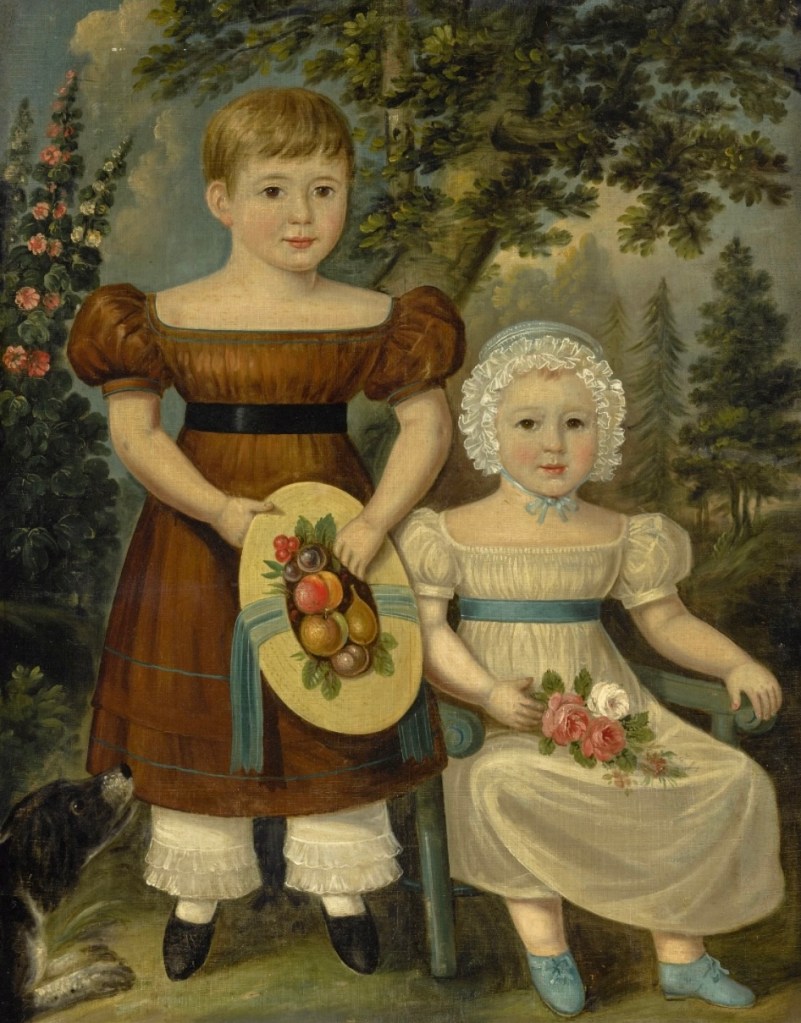
Hereunto subscribed their names as witnesses hereto in my presence and in the presence of each other. Elias Devoe, SS. Witnesses present Abram M. Van Wart of Halfmoon, Saratoga County. Platt Burtis, Jas. [or Jan] McNiece of Halfmoon, Saratoga County. Hoffman Steenburgh of Halfmoon, Saratoga county.

I, George Palmer, Surrogate of the county of Saratoga do certify that the preceding record is a true copy of the last Will and Testament of Elias Devoe, of Halfmoon, in said county, deceased.

George Palmer, esq.” (3)

Further Notes Regarding Elias Devoe’s Estate

In an earlier era of America, when someone died, if their estate had any debts such as unpaid bills, mortgages which were not yet completed, etc., the courts required that their assets be evaluated for sale to satisfy the debts owed. This was very difficult for some families.

An example of 1830 American currency.

Some of the other Surrogate Court documents which follow from the Probate of the Will, are shown with a transcription, or are simply described:

March 11, 1833
Further notes regarding Elias Devoe’s estate: This is a public notice for people to appear before the court Surrogate George Palmer on April 27, [1833], is they have concerns about property being sold to pay off debts from the estate.

April 27, 1833
Further notes regarding Elias Devoe’s estate: Land surveying is described.

July 19, 1833
Further notes regarding Elias Devoe’s estate: George Palmer is acknowledging that some property has been sold.

October 12, 1832
This notice regards the documentation that the Van Curen children are heirs to the Will of Elias Devoe.

Portrait of Two Children, circa 1830, American School.
(Artwork courtesy of Mutual Art).

“ Asahel Philo, Esq. Is appointed special guardian to Maria Van Curen and Alida Van Curen infant heirs and ___ next of kin of Elias Devoe late of Half Moon deceased, for the sole purpose of appearing for and taking care of this interest under an application of Maria Devoe and Hoffmann Steenbergh executors named in the last will of the said deceased to have the same ____ __recorded as a ____ of __ formal estate. George Palmer, esq.”

October 21, 1833
This notice describes guardianships for both the Devoe and Van Curen children who are mentioned in Elias Devoe’s Will.

“Asahel Philo is appointed guardian to Elias Link and to Stephen Devoe & Elias Devoe; and also Maria Van Curen & Alida Van Curen infant heirs as days [daughters], of Elias Devoe late of Halfmoon deceased, to take care of the interest of said infants under the application of Hoffman Steenbergh one of the executors of said Elias for the authority to mortgage, base or __ so much of the residue os his real estate as said be moneys [?] to pay the balance of his assets. George Palmer, esq.”

December 2, 1833
Further notes regarding Elias Devoe’s estate: It seems that at this point Elias Devoe had enough debts that what was sold previously, did not fulfill the obligations to pay off all of his estate debts. More land was to be sold and very specific descriptions of the property dimensions are specified.

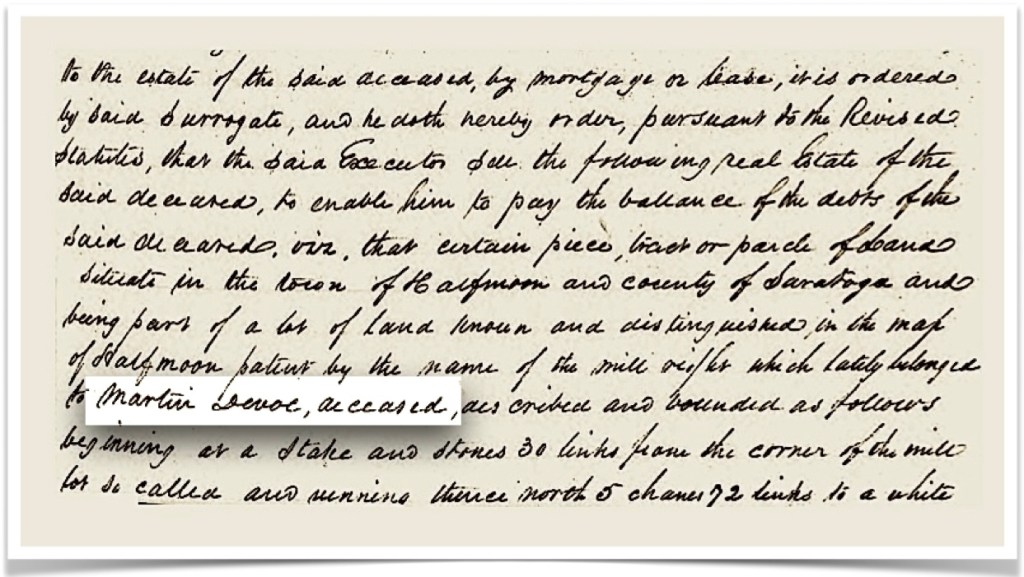
Note: As stated in the chapter The DeVoe Line, A Narrative — Six, this Probate document is where we learned of the death of our 4x Great-Grandfather, Martinus Devoe.

“…to the estate of the said deceased, by mortgage or lease, it is ordered by said Surrogate, and he doth hereby order, pursuant to the Revised Statutes, that the said Executor Sale the following real Estate of the said deceased, to enable him to pay the balance of the debts of the said deceased, vis, that certain piece, track or parcel of land situated in the town of Halfmoon and county of Saratoga and being part of a lot of land known and distinguished in the map of Halfmoon patent by the name of the mill rights which lately belonged to Martin Devoe, deceased, described and bounded as follows…”

February 20, 1834
Further notes regarding Elias Devoe’s estate: Confirmation for the land sale to Joseph Knights in the amount of $130.88 on “first Monday of December last” — (December 2, 1833). (4)

What Do We Know About Elias Devoe, Outside of His Death?

Compiled sample, Index — United States, New York Land Records,
1630-1975, page 584. (For the year 1830).

There just aren’t a lot of records… but, there are tax records for his land holdings in the Halfmoon / Waterford community, so we believe that he was a farmer like many of his other relatives. Shown above is a representative sample of a land sale he did with his father Martin Devoe in 1830. In this case, Martin as the Grantor, was transferring ownership of a portion of his land to the Grantee, his son Elias DeVoe.

When he was a teenager, we know that Elias DeVoe served in the 2nd Regiment of Varian’s New York Militia in the War of 1812. His commander was Lieutenant Colonel Jonathan Varian of Westchester County. In the years after the war, there are no records of a pension being drawn for his service. (5)

To Sum Up, Who Were These Ancestors?

From our family stories, we knew that Canada was somehow involved in the story of Peter M. Devoe’s father, but the information was (to be polite) rather cloudy. The story about Canada found its resolution in the chapter: The DeVoe Line, A Narrative — Five. We had also heard that there were up to twelve children in this family, which made us conclude that inherited resources were apt to be thinly spread. That realization supported our idea as to why some of the descendants of these Devoe siblings eventually emigrated west to the northeast Ohio frontier.

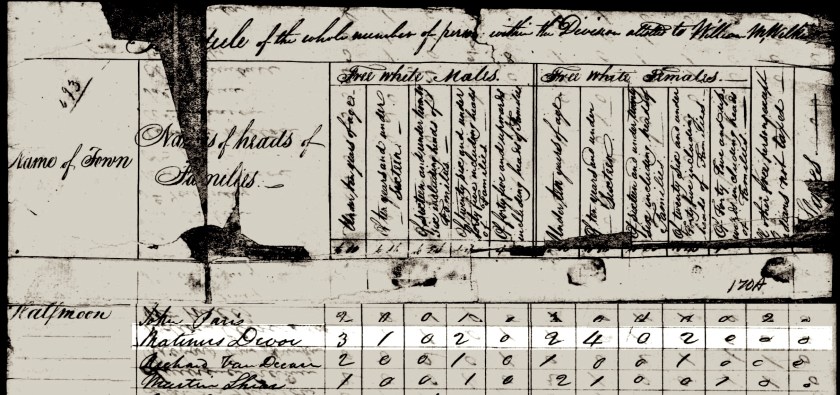
When looking at the various censuses in the previous chapter, we were especially interested in the 1810 census — this seemed to represent the largest number of people who were living together. Since records no longer exist, we really had no idea of the actual names for some of the household occupants, but now we think we know. The Will of Elias DeVoe was the key document which helped us solve this riddle. In 1810, including Martinus, listed are 14 people total:

  • 2 woman 26 to 45 years old: the mother Maria, and daughter Marytje
  • 3 boys under 10 years old
  • 1 boy 10 to 16 years old
  • 2 men from 26 to 45 years old: Martinus – the Head of Household and one more
  • 2 girls under 10 years old
  • 4 girls 10 to 16 years old
Compiled image for the 1810 United States Federal Census
for Halfmoon, Saratoga County, New York.

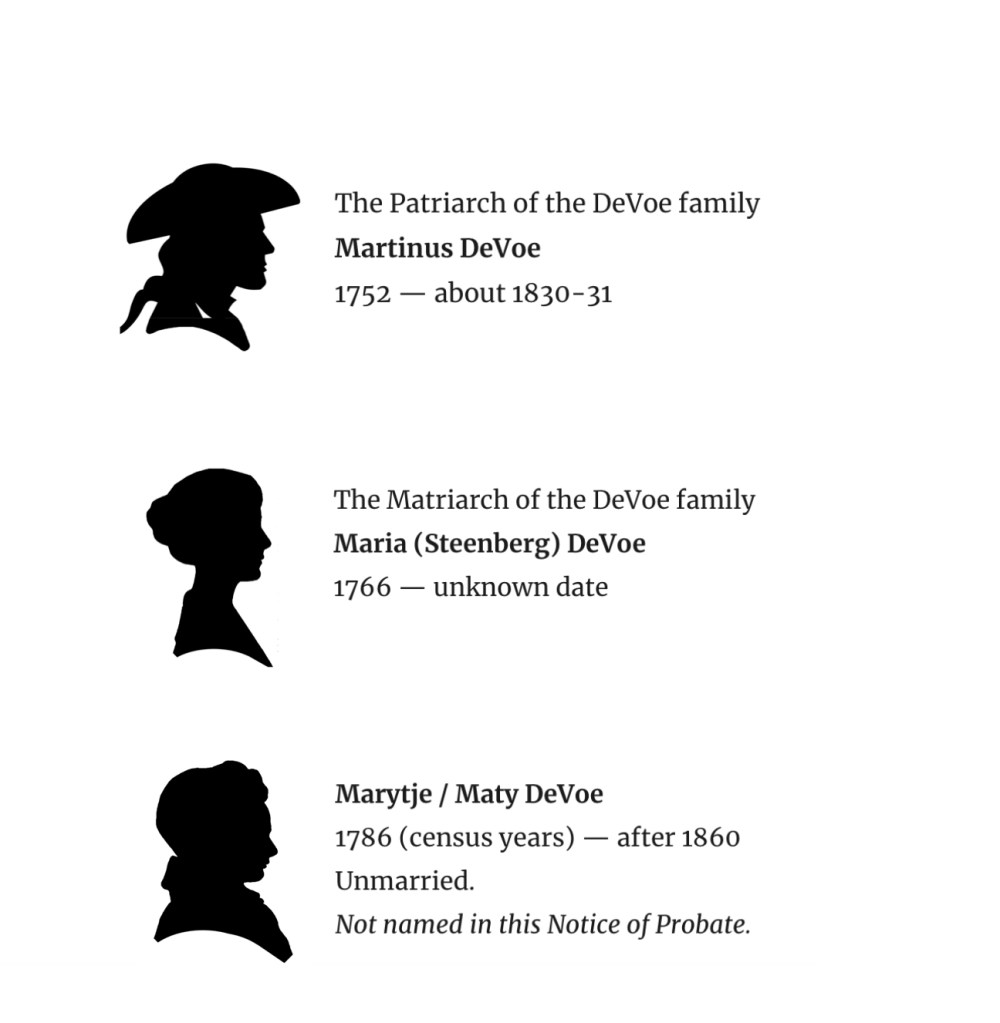
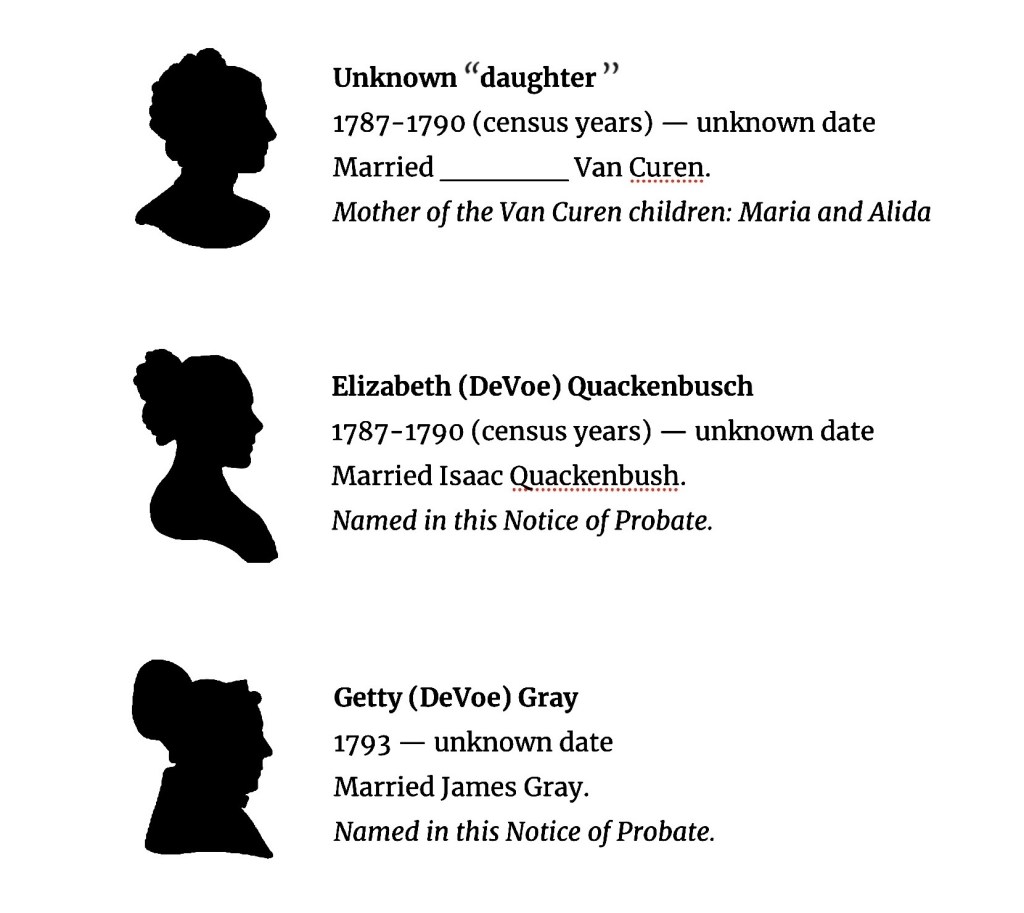
It took many hours of research, but we were able to correlate the next of kin from this Will, the Notice of Probate, one birth record, and several census records. Now we finally have the identities of all of the siblings of our 3x Great Grandfather Peter M. Devoe. Listed in the chart below are the immediate family — only the parents, Martinus and Maria (Steenbergh) Devoe, and their children.

Now that we have resolved the enigma of this era of our family’s records, let’s move on to the life of our 3x Great Grandfather Peter M. Devoe and his family. (6)

Following are the footnotes for the Primary Source Materials,
Notes, and Observations

Ballston Spa was the “Center” of Saratoga County

(1) — one record

Saratoga Today [newspaper article]
How Ballston Spa Became the County Seat, published April 1, 2021
https://saratogatodaynewspaper.com/history/item/13327-how-ballston-spa-became-the-county-seat

Our Dilemma With Peter M. Devoe — That “M” is Pretty Important!

(2) — one record

Records of the Reformed Dutch Church of Albany,
New York, 1683–1809

Excerpted from Year Books of the Holland Society of New York
http://aleph0.clarku.edu/~djoyce/gen/albany/part3.html
Note: Listed under “D” in the Preface to The Index at the bottom of the scrolled file.

The Enigmatic Last Will and Testament of Elias Devoe

(3) — four records

New York Probate Records
https://www.familysearch.org/en/wiki/New_York_Probate_Records
“Probate is the “court procedure by which a will is proved to be valid or invalid” and encompasses “all matters and proceedings pertaining to the administration of estates, guardianships, etc.” Genealogists often refer to ‘Probate Records’ as “All records which relate to the disposition of an estate,” whether the person died leaving a will (testate) or not (intestate).”

Reading The Will
painting by David Wilkie, 1820
https://commons.wikimedia.org/wiki/File:Wilkie,_David_-_Reading_the_Will_-_1820.jpg
Note: For the genre painting.

Elias Devoe
in the New York, U.S., Wills and Probate Records, 1659-1999

https://www.ancestry.com/discoveryui-content/view/6723613:8800?tid=&pid=&queryId=88d79b36-b6ab-407f-9e67-eda45e0e1fb4&_phsrc=dYM5&_phstart=successSource
October 8, 1832
The Last Will and Testament of Elias Devoe.
Book pages: 39-42, Digital Pages: 402-404 /538

This mourning picture from about 1830 sold for over $22,000
https://www.heraldnet.com/life/this-mourning-picture-from-about-1830-sold-for-over-22000/
Note: This is an example image from the period and not related to our specific family.

Further Notes Regarding Elias Devoe’s Estate

(4) — five records

Image of Currency from 1830
Philadelphia, Bank of the United States, December 2, 1830
https://www.currencyquest.com/item.php?item_id=2475

Mutual Art
Portrait of Two Children, circa 1830
American School, 19th Century
https://www.mutualart.com/Artwork/Portrait-of-Two-Children/A0CFE61DF82FAAD6
Note: For their portrait.

Elias Devoe
in the New York, U.S., Wills and Probate Records, 1659-1999

Saratoga > Minutes, 1832-1842
https://www.ancestry.com/discoveryui-content/view/8359086:8800?tid=&pid=&queryId=3f388875-8429-4056-b4e4-a90559098290&_phsrc=Teb3&_phstart=successSource
Book page: 17, Digital page: 16/538
Note 1: October 12, 1832, This notice regards the documentation that the Van Curen children are heirs to the Will of Elias Devoe.
Note 2: The date on this Ancestry file is not correct.

New York, U.S., Wills and Probate Records, 1659-1999 for Elias Devoe
Saratoga > Minutes, 1832-1842
https://www.ancestry.com/discoveryui-content/view/8359187:8800
October 21, 1833
Book page: 45 , Digital page: 30/538
Note: This notice describes guardianships for both the Devoe and Van Curen children who are mentioned in Elias Devoe’s Will.

New York, U.S., Wills and Probate Records, 1659-1999 for Elias Devoe
Saratoga > Minutes, 1832-1842
https://www.ancestry.com/discoveryui-content/view/8359187:8800
Book pages: 55-56 , Digital pages: 35-36/538
Note: December 2, 1833, This Probate document describes additional land sales to satisfy the debts of Elias Devoe’s estate. Most importantly it states, “the mill rights which lately belonged to Martin Devoe, deceased…”

What Do We Know About Elias Devoe, Outside of His Death?

(5) — six records

Pritzker Military Museum & Library
Soldier Dress & Uniform in the War of 1812
https://www.pritzkermilitary.org/soldier-dress-uniform-war-1812#:~:text=Soldiers%20wore%20a%20single%2Dbreasted,wools%20were%20used%20as%20well.
Note: For soldier uniform images.

Elias Devoe
in the U.S., War of 1812 Service Records, 1812-1815

https://www.ancestry.com/discoveryui-content/view/351001:4281?tid=&pid=&queryId=179239cb-6fcf-484d-8ac2-0f12cfd342cc&_phsrc=mAt30&_phstart=successSource
and here:
Elias Devoe
Military – United States, War of 1812 Index to Service Records, 1812-1815

https://www.familysearch.org/ark:/61903/1:1:Q29K-9VCL
Digital page: 1,429/2,229

New York State Militia Index, as of 4 July 1812
Gary M. Gibson, ed.
Derived primarily from the Military Minutes of the Council of Appointment
of the State of New York 1783-1821,

Volume II (Albany: James B. Lyon, 1901) pp.1400-1409
https://www.napoleon-series.org/military-info/Warof1812/2018/Issue28/NewYorkStateMilitiaIndex.pdf

Elias DeVoe
Index to Land – United States, New York Land Records, 1630-1975

https://www.familysearch.org/ark:/61903/1:1:DCPC-2Q2M
Book page: 584, Digital page: 142/627
Note: For 1830.

Grantor Vs. Grantee: What Do They Mean In Real Estate?
https://www.forbes.com/advisor/mortgages/real-estate/grantor-vs-grantee/#:~:text=What%20Is%20a%20Grantor%3F,their%20property%20to%20someone%20else.

To Sum Up, Who Were These Ancestors?

(6) — eight records

Elias Devoe
in the New York, U.S., Wills and Probate Records, 1659-1999

Saratoga > Wills, Vol 0007-0009, 1791-1836
https://www.ancestry.com/discoveryui-content/view/6723613:8800?tid=&pid=&queryId=88d79b36-b6ab-407f-9e67-eda45e0e1fb4&_phsrc=dYM5&_phstart=successSource
Book pages: 39-42, Digital Pages: 402-404/538
Note: October 8, 1832, The Last Will and Testament of Elias Devoe.

Town of Half Moon Cemeteries
West Cresent Cemetery, Town of Half Moon Saratoga Co NY
https://www.ancestry.com/imageviewer/collections/16573/images/dvm_LocHist004233-00071-1?ssrc=&backlabel=Return&pId=69
Book page: (SAHM 18) or 2, Digital page: 72/76
Note: For Elizabeth (DeVoe) Quackenbush marriage to Isaac Quackenbush

Town of Half Moon Cemeteries
West Crescent Cemetery, Town of Half Moon Saratoga Co NY
https://www.ancestry.com/imageviewer/collections/16573/images/dvm_LocHist004233-00071-1?ssrc=&backlabel=Return&pId=69
Book page: (SAHM 18) or 2, Digital page: 72/76
Note: For Gitty (DeVoe) Gray marriage to James Gray
and
Gitty Gray
in the U.S., Find a Grave Index, 1600s-Current

https://www.ancestry.com/search/collections/60525/records/25706499?tid=&pid=&queryId=a224a20b-c0af-4610-9121-3d82a76423d0&_phsrc=UnS7&_phstart=successSource

Headstone DeVoe Elida wife of Issac
https://www.ancestry.com/mediaui-viewer/collection/1030/tree/81477860/person/320109355934/media/84c3c62d-6fc3-4895-a264-272f2b4f5d47?queryId=ff05a863-5bc7-4690-ae93-4ad0f7355844&_phsrc=sRF2&_phstart=successSource
Note: For confirmation of her marriage to Isaac M. Devoe.

Town of Half Moon Cemeteries
Union Cemetery Crescent Town of Half Moon Saratoga Co NY
https://www.ancestry.com/imageviewer/collections/16573/images/dvm_LocHist004233-00066-1?ssrc=&backlabel=Return&pId=64
Book page: (SAHM 17) or 2, Digital page: 67/76
Note: We believe that the death dates for the wives are in error.

Martin Devoe
https://www.findagrave.com/memorial/95514353/martin-devoe?_gl=1*1y0v87m*_gcl_au*NjkzNDQwODk0LjE3MDMyMzUyNDU.*_ga*MzQ2NDI3NzguMTcwMzIzNTI0Nw..*_ga_4QT8FMEX30*MGI0MjUzNzYtMWEyZi00ZDdmLTlmNGItMWEzMTc1ODQxM2FhLjEwLjEuMTcwMzY5Njg3Ny41OS4wLjA.*_ga_LMK6K2LSJH*MGI0MjUzNzYtMWEyZi00ZDdmLTlmNGItMWEzMTc1ODQxM2FhLjEwLjEuMTcwMzY5Njg3Ny4wLjAuMA..
Note: This record is for Elizabeth (West) DeVoe, the wife of Martin DeVoe.

Peter Devoe
in the U.S., Dutch Reformed Church Records in Selected States, 1639-1989

New York > Bought > Bought, Book 6
https://www.ancestry.com/discoveryui-content/view/216615:6961
Book page: 13, Digital page: 59/105, Peter M. DeVoe, entry 1 / Cornelius DeVoe, entry 3.
Note: For the marriage dates both men.

The DeVoe Line, A Narrative — Five

This is Chapter Five of eleven. In 1939, Winston Churchill was giving a radio address when he coined a phrase that ended up becoming an idiom. He said, “It is a riddle wrapped in a mystery inside an enigma, but perhaps there is a key”. When it comes to “a riddle wrapped in a mystery”… well, that seems to aptly sum up what we came up against with this chapter on the Devoes.

Preface — Sometimes Family Stories Are Just Plain Wrong

Tracing the history of our 4x Great Grandfather Martinus Devoe has been frustrating, difficult, and challenging. Our troubles began with his son, Peter M. Devoe (our 3x Great Grandfather), who was an enigma to us. We knew when he was born, we knew whom he married, we knew when he died, but beyond that… c r i c k e t s . We couldn’t be sure of exactly who his parents were. It didn’t help that our Grandmother Lulu (DeVoe) Gore, and our Mother (Lulu’s daughter) Marguerite (Gore) Bond, weren’t comfortable discussing him. It seems they thought he had turned his back on the American Colonies and made his way to Canada. (What?! This was news to our ears.)

From left to right, Marguerite (Gore) Bond, Richard and Daniel Bond, Lulu (De Voe) Gore,
at home circa 1954. (Family photograph).

Hearing something like that raised even more questions and it opened up a lot of mysterious doors for us as we did our research. It turns out that they were incorrect in their understanding of the actual family history for both Peter M. Devoe and his father Martinus Devoe. It’s quite likely that they had heard family stories, and as families do over time, they knitted something together which made sense for them. Whatever they thought they knew, it wasn’t an accurate history. However, there were some clues here and there…

Very little evidence about Martinus Devoe, prior to the 1780s, has survived and now we know why. There was a war and the Devoes lived right in the midst of it. We’ve finally unwrapped the riddle, having solved what really happened in the story of Martinus Devoe (this generation) and the one which followed (his son Peter M). It’s actually quite an interesting account.

A Map of the Provinces of New-York and New-Yersey [sic], with a part of Pennsylvania
and the Province of Quebec
, by Claude Joseph Sauthier, and Matthäus Albrecht Potter
Published in Augsburg, 1777.

The focus of this chapter is specifically on the period of the Revolutionary War when the Devoe family and their extended clan were living in different communities along the Hudson River Valley. Martinus Devoe’s family was centered around Halfmoon and Albany, but some of the story also unfolds just across the border within Canada.

Of special note: In this era, the Hudson River waterway was the superhighway of its time and led directly north from the Atlantic Ocean at Manhattan, all the way up to Lake Champlain and Canada.

The map above, which was printed in Europe in 1777, show how the borders of the American Colonies were still in flux. Vermont does not yet exist, the border with Canada was somewhat permeable, New Jersey was misspelled as New-Yersey, many Native American tribes lived in their own ‘country’, and the mapmakers colorfully described one section as The Endless Mountains. (1)

This contemporary map, shows the constraints of the 13 American Colonies in 1775.
Note how New York State contained an area which eventually became Vermont.
Much of what eventually became the United States was still held by other interests.
(Image Courtesy of The American Battlefield Trust).

The Patriots, The Loyalists, and The Fence-Sitters

In the midst of the Revolutionary War, the population of the British Colonies of North America could be divided into three groups. Those who wanted the War of Independence to succeed were called The Patriots. On the other side of the coin were The Loyalists who felt much more comfortable staying aligned with Great Britain and the interests of King George III. Between them were The Fence-Sitters. No matter which side you were on, there was much colorful language used all around to describe those on the other side, but we will keep things polite, and generally use: Patriots and Loyalists.

The Patriots
We all know who the Patriots were — a veritable cascade of famous names from American history: George Washington, John Adams, Thomas Jefferson, Benjamin Franklin, Paul Revere, Betsy Ross, etc. Besides being the winners of the war, they got to write The History. This means, as it always has with the victors of any conflict, that they could shape the history of those who lost in whatever form they wanted.

Any early example of viral media meme that existed centuries before the internet,
Benjamin Franklin’s 1754 cartoon “Join Or Die” depicted the original 13 American colonies.
Later, the Colonists repurposed it as a symbol of their unity against British rule.

What we never really learn about when studying American history, is what it was like for the people on the other side, or even more so, for those who were in the middle. It always seems to be a binary choice: The Patriots are usually given many virtues, and The Loyalists are dismissed as being unworthy traitors and losers. For our family, especially those living in the Hudson River Valley, the truth was not so black-and-white. There are many more shades to consider when writing about the character of —

The Loyalists
From the book, Loyalism in New York During The American Revolution by Alexander Clarence Flick, Ph.D., —“The loyalists were Americans, not Englishmen… Most American historians have characterized them as unprincipled royal office-holders, scheming political trimmers, a few aristocratic landlords and merchants, who were fearful of losing their wealth and indifferent to the rights of man…”, but there was actually more to this…

Flick continues, “Thus it appears that the loyalists of New York had within their ranks persons of all social positions from that of the poor emigrant but recently come to America; to the oldest and wealthiest family in the colony; from the ignorant agriculturist to the president of the only college in the province; from the humble cobbler and blacksmith to the most celebrated lawyer and physician in the metropolis…

The Wheat Field, by Currier & Ives. Reproduced from the article,
New York: The Original Breadbasket of America, by Museum of the City of New York.

[There were many] conservative farmers in all parts of the colony, but especially in Queens, Kings, Richmond, Westchester, Albany and Tryon counties. They were happy and prosperous under the old regime. They did not feel the burdens complained of by the revolutionists, and consequently, had no sympathy with whig [Patriot] principles. But when their incomes were injured by the edicts of congress and committees and by war, their eyes turned toward the king’s army to restore their former peace and security”.

The Fence-Sitters
These people were the ones caught in the middle. The neighbor on this side could be an excitable Patriot (!), and the neighbor on that side could be an excitable Loyalist (!), and what was one to do (?) when the crops needed to be tended to, the children fed, etc.

In actuality, there was a third group that very nearly made
up the majority of the populous. Nearly 40% of the colonists were neither Patriot nor Loyalist, but neutral. These people
were the type that were either pacifists, recent immigrants,
or simply apolitical. They simply had no interest in the matter
or committing to either cause.
Another term for this group was ‘fence-sitters’.

From Loyalists vs Patriots: America’s Revolutionary Divide
History In Charts

The Wikipedia article Loyalists Fighting In The American Revolution states: “The Loyalists were as socially diverse as their Patriot opponents but some groups produced more Loyalists. Thus they included… many tenant farmers in New York and people of Dutch origin in New York and New Jersey. Loyalists were most often people who were conservative by nature or in politics, [and who] valued order…

Finally, again from Wikipedia: “The great majority of Loyalists never left the United States; they stayed on and were allowed to be citizens of the new country. Some became nationally prominent leaders…

Map of the State of New York, 1788 via the New York State Archives Partnership Trust
Although this map is from five years after the end of the American War for Independence,
it delineates the ten counties and Native Peoples territories which existed in 1788.
(That is the year that New York became a State).

Creating A Continental Army
Initially in this era, being a soldier was not a full time job for many recruits. That might seem odd today, but back then a soldier would sign up for a term of work and then be relieved when he had to attend to farm duties, or if there were acute and pressing needs for his family.

In the archive of the Library of Congress: “In order to ‘preserve a good army’, one had to be created in the first place. It was a long and difficult road from the Continental Congress’s edict designating the militia around Boston as a Continental Army and creating such an army in fact. Although many colonials had had some military experience in the French and Indian War, most had served in militia units, a far cry from service in a regular European-style army.

This watercolor by Charles M. Lefferts shows the wide variety of soldiers who made up the Continental Army. (Courtesy of Wikimedia Commons).

“Prior to 1777, enlistment in the Continental Army was of various durations but generally for a year of service. After 1778, Congress changed the rules and men served for either three years or the duration of the war. In some cases, bounties were paid to entice men to enlist or for men who chose to serve longer. Bounties could consist of additional money, additional clothing, or land west of the Ohio River, where many veterans would settle after the war.

Life in the Continental Army was difficult. It was mundane and monotonous. Generally, when not engaged in combat, soldiers in the Continental Army served three duties: fatigue or manual labor, such as digging vaults (latrines), clearing fields, or erecting fortifications. They also served on guard duty and drilled daily with their musket and in marching formations.
— The Fighting Man of the Continental Army, Daily Life as a Soldier

Jacobus Van Schoonhoven’s Regiment of Militia,
and the 12th Albany County Militia Regiment

We believe that our 4x Great Grandfather Martinus Devoe was a Patriot, because we can document that part of his history, starting in 1777. Of the Devoes listed below, Isaac Devoe, Jr. is likely his brother, and some of the others are cousins.

New York in the Revolution, page 120.

From Wikipedia, “The Van Schoonoven’s Regiment of Militia, also known as the 12th Albany County Militia Regiment, was called up in July 1777 at Halfmoon, New York, to reinforce Gen. Horatio Gates’s Continental Army during the Saratoga Campaign. The regiment served in Brigadier General Abraham Ten Broeck’s brigade.” The Saratoga Campaign was a resounding success for the Patriots in the war. (See The Saratoga Campaigns below).

When a young person is taught about the advent of the American Revolutionary War, the events are typically described almost as a level of mythos, (a body of interconnected myths or stories, especially those belonging to a particular religious or cultural tradition.) The midnight ride of Paul Revere, the Boston Tea Party, Patrick Henry’s Give Me liberty, or give me death! — Americans are taught about the battles of Lexington and Concord, since they are the initial (1775) incidents… but the fact is, New York State was the scene of many terrible, epic battles. These events greatly affected our family. (3)

Pressed From All Sides: New York State in the Revolution

When the invasion of New York City was imminent, George Washington, as Commander of the Continental Army, wanted to burn The City to the ground, rather than allow that to happen. Congress disagreed and let it be invaded. In August 1776, British forces attacked Long Island in southern New York and within days, took over control of Manhattan Island for the duration of the war, (1776 to 1783). Due to the fact that much property was owned there by British occupants (Tories) and Loyalist sympathizers, Manhattan was never directly bombed by the British navy.

The Saratoga Battles: Burgoyne’s March on Albany June-October 1777.
Note: Observe how Lake Champlain leads directly to Albany, New York as the Sauthier / Potter map (from above) indicates. (Image courtesy of wikipedia.com).

Written below are very brief notes about a few of the nearby battles.

The Saratoga Campaign
North of New York City, as the Hudson River moved north toward Lake Champlain, our ancestors were living in the area of Albany and Halfmoon. (Albany was just south of the area where the Battle of Saratoga took place, and Half Moon was slightly west). The Saratoga Campaign, which was actually two major battles in that area, was a complicated situation. Pressed from the north by the British forces from Quebec, who were moving south along Lake Champlain, and pressed from the south by the British forces around Manhattan who were moving north along the Hudson River, our ancestors were caught right in the middle.

Ultimately, the Patriots prevailed in the Saratoga Campaign and several important things resulted for the American Cause. The British learned that ‘the Rebels’ could be fierce fighters even with the haphazard state of the Continental Army at that time. In addition, the country of France decided to support the Americans (likely because they despised the British and hoped to make money and ruin England at the same time).

The Battle of Oriskany
From Wikipedia, “The Battle of Oriskany was a significant engagement of the Saratoga campaign of the  American Revolutionary War, and one of the bloodiest battles in the conflict between Patriot forces and those loyal to Great Britain”. It took place in the Mohawk Valley on the Mohawk River which joins the Hudson River just above Albany. (This would be near the area of Halfmoon).

Patriot General Herkimer at the Battle of Oriskany by Frederick Coffay Yohn.
(Image courtesy of the public library of Utica, New York).

“The battle also marked the beginning of a war among the Iroquois, as Oneida warriors allied with the Patriot cause, as did the Tuscarora. The Mohawk, Seneca, Cayuga and Onondaga allied with the British. Each tribe was highly decentralized, and there were internal divisions among bands of the Oneida, some of whom became allies of the British. The battle location is known in Iroquois oral histories ‘A Place of Great Sadness. ’ ”
Wikipedia — The Battle of Oriskany

Hand-drawn map indicating specific points at The Battle of Klock’s Field. Note that the city of Albany is shown on the right-hand side, on the Hudson River.

The Battle of Klock’s Field
Our 4x Great Grandfather Martinus Devoe, could have participated in The Battle of Klock’s Field which occurred in 1780 on the north side of the Mohawk River. (It is likely that other members of his family did). Some regiments from Albany County were called up to fight, but we cannot verify conclusively whether-or-not he was there, because very soon after this battle, he and his cousin William were kidnapped by the British. (This would also be near Halfmoon). (4)

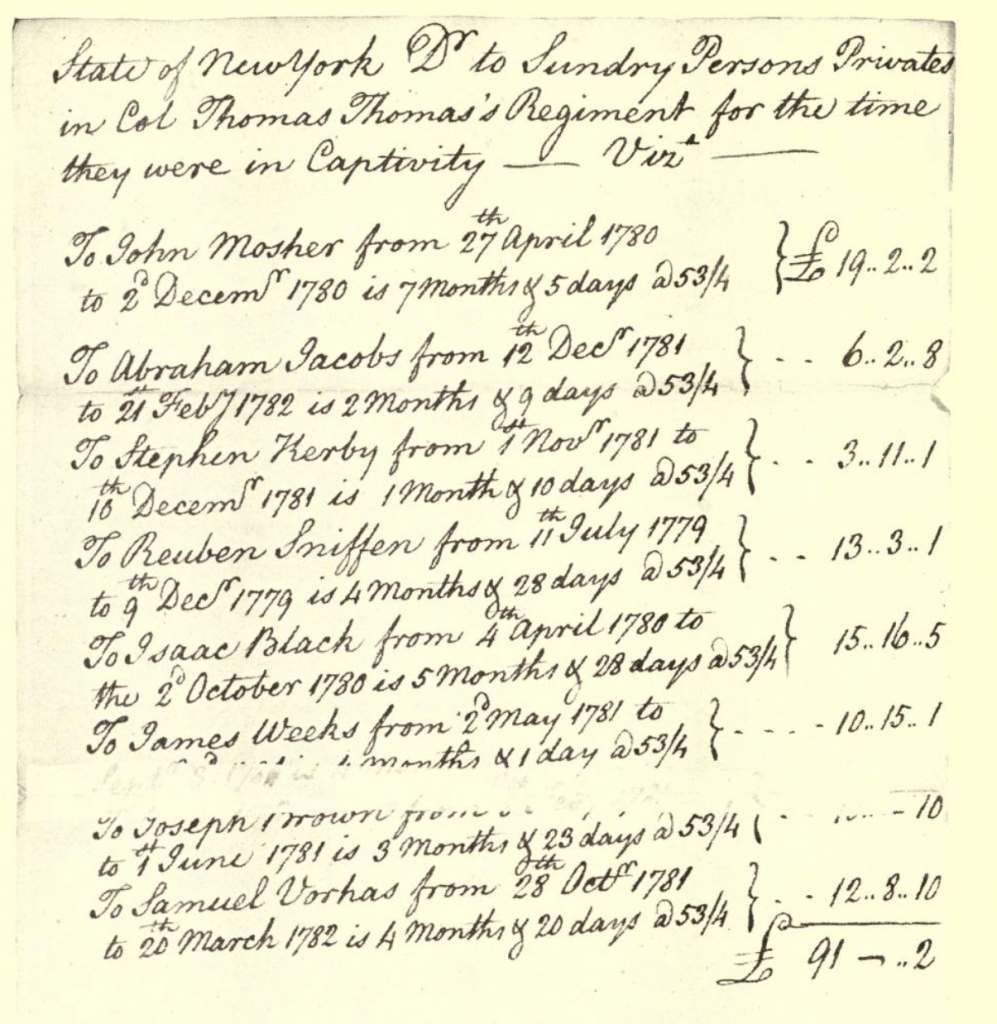
Excerpted from the Public Papers of George Clinton, First Governor of New York,
1777-1795, 1801-1804… This is the key document that helped us trace what happened to Martinus Devoe in Canada during a portion of the Revolutionary War.

Taken From Albany County Under Trick, Coercion and Violence

When we discovered the bit of evidence about Martinus Devoe’s life, it was the exciting key catalyst that helped us learn much more about him. When we analyzed it carefully, we learned that:

  • It confirmed that Isaac Devoe is indeed his father
  • Isaac Devoe’s brother Ruliff (Roelof), is the father of William Devoe
  • Martinus and William are therefore cousins
  • Martinus and William align with The Patriots
  • Joseph Bettes (Bettys) is their kidnaper
  • This petition was filed with George Clinton, Governor of the Province of New York
  • It was either filed with, or recorded on the date: May 14, 1781
  • The leader of their Albany regiment, Jacobus Van Schoonhoven (who was retired at this time), signed the petition along with “many others”

The Devoe families of Martinus and William were hopeful for a prisoner “exchange”, but this did not happen. Unbeknownst to them at the time, this type of complicated arrangement was only (and rarely) done for members of the Continental Army who were officers. Martinus and William never rose above the rank of Private. Additionally, The British were reluctant to recognize prisoner exchanges because that would have meant that they recognized The American Rebels as a sovereign state.

Observation: Martinus had indeed gone to Canada, not as someone who chose to be there, but as a kidnaping victim. We realized that this document confirmed what our mother and grandmother certainly did not knowthat this part of the story was new information. They thought that Martinus’s son, Peter M. Devoe, had gone to Canada, and they likely didn’t seem to even know who Martinus was.

We had always wondered what the “M” stood for in Peter M. Devoe’s name, and now we think it possibly could have stood for Martinus, or Martin. It now made sense that over the generations as people shared stories, any mention of Canada just automatically came to mean that that person was a Loyalist “traitor”. Now we understand that perhaps Marguerite and Lulu had some familial self-imposed shame with this matter.

George Clinton, by Ezra Ames, circa 1814.

Joseph Bettys, Professional Scoundrel
The man who had arranged for the kidnapping to happen was one Joseph Bettys. A local man from Albany County known as “a renowned kidnapper of patriots in upstate New York with St. Johns, Canada as his base”. (McBurney, see footnotes) In writing about him, Wikipedia states: “He joined the Patriot forces and was made a Sergeant. He was said to be courageous, but intolerant of military discipline, for which he was demoted. In the summer of 1776 he was again promoted, and transferred to the fleet on Lake Champlain commanded by Benedict Arnold.

Illustration of the capture of British Loyalist spy Joseph Bettys
in the town of Ballston, New York, 1782, United States Magazine, 1857, p. 569.

On October 11, 1776 he distinguished himself in the Battle of Valcour Island, but was captured by the British and taken as a prisoner to Canada. In 1777, during his captivity, he changed sides, joining the British forces as an ensign. He served as a spy and messenger for the British; at one point he was captured, but was freed due to influence of family and friends. He rejoined British service and began recruiting soldiers among the population of Saratoga County[at that time still Albany County], raiding, burning farms and taking captives or killing Patriots”.

Observation: Joseph Bettys may have indeed “recruited” some people to the Loyalist side, but those words sound to us more like a euphemism for forced servitude.

In 1782, Bettys was captured and sent to Albany, where that year on the orders of General George Washington, he was tried and executed by hanging. Actually — after the noose was around his neck, he jumped down and died from the choking while falling. (We wonder if they kicked him when he was down).

British Prison Ship 1770s, Five Americans Escaping From The British Prison Ship Jersey
Anchored In The East River New York During The Revolutionary War
Wood Engraving American 1838.

The British Prison Ships
It was not that uncommon for soldiers, and especially for sailors, to be kidnapped and forced to serve for the opposing side. The worst possible fate that could befall someone in that situation would be that they were classified as a traitor to Great Britain, and be sent to rot in one of the many prison ships which were located in New York harbor… Wikipedia confirms the cruelty shown The patriots: “King George III of Great Britain had declared American forces traitors in 1775, which denied them prisoner-of-war status. However, British strategy in the early conflict included [the] pursuit of a negotiated settlement, and so officials declined to try or hang them, the usual procedure for treason, to avoid unnecessarily risking any public sympathy the British might still enjoy.”

History.com writes, “Most of the young Americans knew what imprisonment would mean. Colonial newspapers had reported on the horrific conditions and brutal treatment aboard the prison ships from the beginning…” And from the George Washington Presidential Library: “Though estimates vary, between eight and eleven thousand American prisoners (or perhaps higher) died in British custody in New York. These deaths were not caused by a deliberate policy, but rather through poor or indifferent planning and care”. [Read: cruelty, disease, pestilence, and indifference] (5)

Following the Breadcrumbs That Led Us to Canada

Early on, we first came across a record of a Martin Dafoe [Martinus Devoe?] in an ancestry.com file. His was a name at that point which we had never heard of, and the file was a puzzling record stating “War Office Records: Monthly Return of Loyalists coming in from the Colonies to Lower Canada, from Halfmoon”. Much later we then came then across this record:

Excerpted from The Old United Empire Loyalists List, (Supplementary List, Appendix B).

We learned that in Canada, the name Devoe was frequently spelled as Dafoe in record-keeping, and we uncovered a name for something called the King’s Rangers. Suddenly, the bread crumbs that we had already found were starting to point us into a direction where everything was new. Long story short: many months later we eventually came upon a resource which pulled everything together: A Short Service History and Master Roll of James Rogers’ 2nd Battalion, King’s Rangers, by Gavin K. Watt.

From Watt’s book: “Some of the best known Loyalist names that have ties to the King’s Rangers include Bell, Brisco, Dafoe, Kemp, Pringles, and of course Rogers.” We found our ancestor (!) listed there:

Dafoe, Martin
Alternate spellings of surname: Dave, Devore, Dave, Devon
Alternate spellings of given name: Martin, Martinne, Martain
Rank: Private
Enlistment date: November 18, 1780
Company: Captain Azariah Pritchard’s
Age: 29 [This is incorrect — he was closer to 26.]
Height: 5 feet, 6 inches
Place from and trade: Albany City, New York, and farmer

Excerpted from A Short Service History and Master Roll of James Rogers’ 2nd Battalion, King’s Rangers, page 50/85. Please see the footnotes for the explanation of codes.

Something was puzzling about the entry. His arrival date in Canada was listed as November 18, 1780? Earlier we had assumed that if he was in Canada the arrival date should correspond to something closer to the date noted on the Petition to Governor Clinton of New York. That date was May 15, 1781, fully six months later… what was going on? It now makes sense that the families of Martinus and William, were probably beside themselves with worries. It would have required much time and difficult logistics for the petition to be drafted, to gather multiple signatures, to present it to the Governor, etc. All of this while the War was raging all around them — that is why we believe that the 1781 date is likely the recording date.

Some of the other names we saw on this roster confirmed other data we had previously collected. The William Devoe who arrived on “18 Nov 80” was likely his cousin William, a fellow kidnap victim. Observe the names of the brothers Abraham and Jacob Dafoe, sons of John Ernst Devoe from a different Devoe line. The arrival dates for Abraham and Jacob are the same 01 Oct 80”, having arrived about six weeks earlier. There is a notation that Abraham arrived via boat. There is another record of Jacob Defoe dated 1782- 1783, recorded near the end of the War (see footnotes). John Ernst DeVoe and his sons were Loyalist during the Revolutionary War. After the war the family remained in Canada. We even came across one of Abraham’s payroll sheets. Conversely, if Martinus and William were ever paid for their time in the KIng’s Rangers, those records have not been found. (6)

Corporal Abraham Defoe’s sheet from the Pay Roll of Ruiter’s Company.
Image courtesy of A Short Service History and Master Roll of James Rogers’ 2nd Battalion,
King’s Rangers
, by Gavin K. Watt, page 18.
Siege of The Fort Saint-Jean, circa 1775, Watercolor by James Peachey (d. 1797)

Fort St. Jean, now known as Fort St. John

The operational center for the King’s Rangers was Fort St. Jean, Quebec. Martinus and William were fortunate enough* that they ended up at Fort St. Jean — which was just across the border from New York Province in Quebec. (See map at the top of this chapter). In fact, this fort was exactly 207 miles directly north from Albany City, New York, where they were likely ensconced until taken to Canada.

*If they had been P.O.W.s, they could have been sent to the death ships in New York Harbor. Since they were kidnapped and forcibly recruited, they were probably assigned with tasks like cleaning horse stables, and digging latrines, etc. We conjecture that they kept their heads down and decided to lay low. We observed on The Old United Empire Loyalists List from above, that William Devoe had deserted, but we do not know when this happened.

There were those in the fledgling United States who believed that it was their right to annex portions of Canada as new territories.

The Siege of Fort St. Jean
From the Siege of Fort St. Jean… article in the Revolutionary War Journal — “By late summer, 1775, the American Second Congress was determined to bring Canada, the British 14th colony in America, into the fold of rebellion along with the other thirteen colonies. Two small American armies would advance into Canada. The larger, commanded first by Major General Phillip Schuyler and later by General Richard Montgomery, would push up Lake Champlain and the Richelieu River into Canada. They would quickly capture Montreal. Then head northeast, down the St. Lawrence River to join the other American force approaching Quebec through Maine, led by Colonel Benedict Arnold. Together, the two factions would claim the crown of the Canadian colony; Quebec City’s Citadel”.

Ultimately, even though the Americans had prevailed at first, many of their soldiers grew sick over the winter. When reinforcements from Great Britain arrived six months later, the Americans withdrew and returned to the Colonies. (7)

Plan of Fort St. Jean in Quebec, Canada, circa 1775.
(Image courtesy of Bibliothèque et Archives Canada).

The King’s Rangers, also known as The King’s American Rangers

There were many companies on both sides of the war which used the word Rangers in their name. Our research has shown that our ancestors were part of the King’s Rangers, which is sometimes also referred to as The King’s American Rangers.

“In September 1779, the Second Battalion of King’s Rangers were garrisoned for a time at Fort St. Johns on the Richelieu River (now Saint Jean, Quebec). In October of 1780, a detachment of the Second Battalion took part in raids by Major Christopher Carleton into the Champlain Valley and the attacks on Fort Anne and Fort George NY. When rebels surrendered at Fort Anne, the King’s Rangers took advantage of an easy opportunity: they recruited 16 of the enemy prisoners into their own relatively small ranks.

There was, however, another side of the war. The Second Battalion was involved in the business of spying for the British. One of the more interesting missions was when James Breakenridge, Jr. of the King’s Rangers accompanied another loyalist carrying a secret proposal from Vermont’s Governor Thomas Chittendon and Ethan Allen regarding negotiations for Vermont to become a Canadian province. [In other words, similar to the earlier ambitions of the American Second Congress regarding Canada, both sides wanted more territory]. Known as The Vermont Negotiations, Major James Rogers was reportedly heavily involved in correspondence and face to face meetings with Allen and his associates”.
— Excerpted from History of the King’s Rangers, via James Breakenridge’s Company of the King’s Rangers

From Wikipedia, “Despite recruitment issues being faced by the Rangers, the second battalion was active in scouting and recruiting along the frontiers of New York, Lake Champlain and the area that was to later become Vermont. They also engaged in the taking of Patriot prisoners of war… Due to the relatively small size of the Rangers, [they were] restricted [in] their operational capabilities to conducting reconnaissance for other corps, constructing fortifications, executing general garrison duties, assisting refugees in Quebec, aiding the escape of Loyalist families, and guarding prisoners of war”. (8)

These illustrations represent descriptions of the uniforms worn by The King’s Rangers.
Artwork by artist Don Troiani.

The Winding Down of The War, and The Treaty of Paris

The American War for Independence formally ended with the signing of the Treaty of Paris in 1783. From the National Archives: “The American War for Independence (1775-1783) was actually a world conflict, involving not only the United States and Great Britain, but also France, Spain, and the Netherlands. The peace process brought a nascent United States into the arena of international diplomacy, playing against the largest and most established powers on earth”.

Page one of twelve pages for the Treaty of Paris; September 3, 1783,
Perfected Treaties, 1778 – 1945, General Records of the United States Government,
Record Group 11, National Archives Building, Washington, DC.

“The three American negotiators – John Adams, Benjamin Franklin, and John Jay – proved themselves ready for the world stage, achieving many of the objectives sought by the new United States. Two crucial provisions of the treaty were British recognition of U.S. independence and the delineation of boundaries that would allow for American western expansion”.

American Commissioners of the Preliminary Peace Agreement with Great Britain, 1783-1784,
London, England, by Benjamin West
(oil on canvas, unfinished sketch), Winterthur Museum, Winterthur, Delaware
From left to right: John Jay, John Adams, Benjamin Franklin, Henry Laurens, and William Temple Franklin. The British commissioners refused to pose, and the picture was never finished.

As a perfect bookend to where our search for Martinus Devoe began, we came across the file that is the Canadian record for when he returned to New York State. “Martin Dafoe” returned from Fort St. Jean in Canada sometime in 1782-1783. We conjecture that is was likely 1783 after the Treaty of Paris had been signed. The record reads: Memorandum — of the names of the whole 245 Persons of the King’s Rangers — collected from the Muster Rolls and paylists of Maj. Rogers’s, Capn. Pritchards and Capn. Ruiters Co. in the years 1782-83″

The above document is a record of payment found in The George Washington Presidential Library at Mount Vernon. It was payment given to troops that were held as prisoners-of-war in Virginia. We have not been able to locate a similar payment record for Martinus which records him as a prisoner-of-war. This confirms our belief that, unlike Abraham Devoe, he may not have been paid due to his forced servitude.

Martinus Devoe’s payment for Revolutionary War service. Payment date is December 14, 1784.

However, our 4x Great Grandfather Martinus was indeed paid for his service in the Continental Army. On the above record, the four sets of numbers correspond to certificates that all soldiers and sailors were given. It is interesting and a bit ironic to see that the records are in (£) British Pound Stirling . English Sterling was the money standard until after the Revolution. Money was scarce, with only two to three million pounds in circulation. (Hammersley) The newly formed USA did not have much cash money on hand, but it made promises, i.e. some soldiers received land in newly opening areas such as the Ohio Valley to the west.

Our next chapter will discuss Martinus’s life in Halfmoon, New York, his marriage, and his rather large brood of children, from which, our 3x Great Grandfather Peter M. Devoe emerges. (9)

“Tory Refugees on the Way to Canada” by Howard Pyle.
The work appeared in Harper’s Monthly in December 1901.

Following are the footnotes for the Primary Source Materials,
Notes, and Observations

Preface — Sometimes Family Stories Are Just Plain Wrong

(1) — one record

“a riddle, wrapped in a mystery, inside an enigma”
https://idioms.thefreedictionary.com/a+riddle%2C+wrapped+in+a+mystery%2C+inside+an+enigma

The Patriots, The Loyalists, and The Fence-Sitters

(2) — nine records

Library of Congress
A Map of the Provinces of New-York and New-Yersey, with a part of Pennsylvania and the Province of Quebec
by Sauthier, Claude Joseph and Lotter, Matthäus Albrecht, 1741-1810
Published in Augsburg, 1777.
https://www.loc.gov/item/74692644
Note: For the map image.

The American Battlefield Trust
American Revolution Facts
https://www.battlefields.org/learn/articles/american-revolution-faqs

History.com
How Benjamin Franklin’s Viral Political Cartoon United the 13 Colonies
https://www.history.com/news/ben-franklin-join-or-die-cartoon-french-indian-war
Note: For the drawing.

Loyalism In New York During The American Revolution
by Alexander Clarence Flick, Ph.D.
https://archives.gnb.ca/exhibits/forthavoc/html/NYLoyalism.aspx?culture=en-CA

Loyalists Fighting in the American Revolution
https://en.wikipedia.org/wiki/Loyalists_fighting_in_the_American_Revolution

Loyalist (American Revolution)
https://en.wikipedia.org/wiki/Loyalist_(American_Revolution)

The Wheat Field, by Currier & Ives.
Reproduced from the article, New York: The Original Breadbasket of America, by Museum of the City of New York
https://www.mcny.org/story/new-york-original-breadbasket-america
Note: For the farming image.

Loyalists vs Patriots: America’s Revolutionary Divide
https://historyincharts.com/patriot-and-loyalist-support-for-the-american-revolution/

New York State Archives Partnership Trust
Map of the State of New York, 1788
1788 Map of New York State showing native lands and ten counties, printed by Hoffman & Knickerbocker, Albany, N.Y.
https://www.nysarchivestrust.org/education/consider-source/browse-primary-source-documents/indigenous-history/map-state-new-york-1788
Note: For the map image.

Jacobus Van Schoonhoven’s Regiment of Militia,
and the 12th Albany County Militia Regiment

(3) — six records

Library of Congress
Creating a Continental Army
https://www.loc.gov/classroom-materials/united-states-history-primary-source-timeline/american-revolution-1763-1783/creating-a-continental-army/

The American Battlefield Trust
The Fighting Man of the Continental Army, Daily Life as a Soldier
https://www.battlefields.org/learn/articles/fighting-man-continental-army

Van Schoonhoven’s Regiment of Militia
https://en.wikipedia.org/wiki/Van_Schoonhoven%27s_Regiment_of_Militia

Jacobus Van Schoonhoven
https://en.wikipedia.org/wiki/Jacobus_Van_Schoonhoven

New York In The Revolution as Colony and State
A Compilation of Documents and Records From the Office Of the State Comptroller
https://archive.org/details/newyorkrevolution01statrich/page/120/mode/2up?view=theater
Book page: 120, Digital page: 120/534

Myth
https://en.wikipedia.org/wiki/Myth#:~:text=Because%20%22myth%22%20is%20sometimes%20used,particular%20religious%20or%20cultural%20tradition.

Pressed From All Sides: New York State in the Revolution

(4) — five records

The George Washington Presidential Library at Mount Vernon
British Occupation of New York City
https://www.mountvernon.org/library/digitalhistory/digital-encyclopedia/article/british-occupation-of-new-york-city/#:~:text=Five%20days%20later%2C%20an%20expeditionary,the%20City%20of%20New%20York.

Battles of Saratoga
https://en.wikipedia.org/wiki/Battles_of_Saratoga

Saratoga Campaign
https://en.wikipedia.org/wiki/Saratoga_campaign

Battle of Oriskany
https://en.wikipedia.org/wiki/Battle_of_Oriskany

Battle of Klock’s Field
https://en.wikipedia.org/wiki/Battle_of_Klock’s_Field

Taken From Albany County Under Trick, Coercion and Violence

(5) — nine records

Petition for Exchange of William and Martinus Devoe, Taken from Albany County under Trick, Coercion and Violence
from the Public Papers of George Clinton,
First Governor of New York, 1777-1795, 1801-1804 …
by New York (State). Governor (1777-1795 : Clinton)
https://archive.org/details/publicpapersofge06innewy/page/906/mode/2up
Book page: 906, Digital page: 906/918

Early New Netherlands Settlers
David <?> Du Four, (Rn=25344)
https://freepages.rootsweb.com/~rclarke/genealogy/page1/dufour.htm
Note: Information about Isaac, Roelof, and William Devoe.

George Clinton
by Ezra Ames, circa 1814
https://en.wikipedia.org/wiki/File:George_Clinton_by_Ezra_Ames_(full_portrait).jpg
Note: For his portrait.

Journal of The American Revolution
What do you think was the strangest or most unconventional moment, battle or event of the Revolution?
https://allthingsliberty.com/2017/01/weirdest-moment/
I would have to pick the antics of Joseph Bettys, a Tory who became a renowned kidnapper of patriots in upstate New York with St. Johns, Canada as his base.  In the Great Kidnapping Caper of 1781, the British Secret Service at St. Johns planned for eight parties of kidnappers to attempt abducting upstate New York patriots at the same time so as to keep the element of surprise.  The leader of one of the bands, Joseph Bettys, was charged with kidnapping a Patriot in Ballstown, New York.  Bettys had a crush on a local young woman.  Amazingly, he left his band in the lurch and went off to persuade her to run off with him, which she did.  Her outraged father, even though he was a Tory, went to the local Patriot committee, called the Albany County Commissioners for Detecting and Defeating Conspiracies.  This alerted Patriots the entire kidnapping plot.  None of them succeeded, but Bettys did successfully bring his girlfriend to Canada.  Later, after succeeding in kidnapping some Patriots, Bettys was captured and hanged”. –Christian M. McBurney

Joseph Bettys
https://en.wikipedia.org/wiki/Joseph_Bettys#:~:text=Joseph%20Bettys%20(%22Joe%22),a%20British%20Spy%20in%201782.&text=Joe%20was%20born%20and%20grew,Town%20of%20Ballston,%20New%20York.

The Capture of Joe Bettys
United States Magazine, 1857, p. 569.
https://en.wikipedia.org/wiki/Joseph_Bettys#/media/File:The_Capture_of_Joe_Bettys.png
Note: For the Bettys illustration.

Prisoners of War in the American Revolutionary War
https://en.wikipedia.org/wiki/Prisoners_of_war_in_the_American_Revolutionary_War

History.com
The Appalling Way the British Tried to Recruit Americans Away from Revolt
https://www.history.com/news/british-prison-ships-american-revolution-hms-jersey

The George Washington Presidential Library at Mount Vernon
Prisoners of War
https://www.mountvernon.org/library/digitalhistory/digital-encyclopedia/article/prisoners-of-war/

Following the Breadcrumbs That Led Us to Canada

(6) — five records

Martin Devoe
in the Canadian Immigrant Records, Part One

War Office Records: Monthly Return of Loyalists coming in from the Colonies to Lower Canada, from Half Moon
https://www.ancestry.com/discoveryui-content/view/118848:3795?tid=&pid=&queryId=35bfa0c6-6799-4cd1-8778-623c4e66d6b6&_phsrc=Fpd49&_phstart=successSource
National Archives of Canada:
Microfilm Reel No. B-2867 (MG 11 W.O. 28/10), page 118

The Old United Empire Loyalists List (Supplementary List, Appendix B)
https://www.ancestry.com/imageviewer/collections/48267/images/OldEmpireLoyalists-006200-293?treeid=&personid=&queryId=f6d5dc2a-b2db-4138-8a89-4648724a3b67&usePUB=true&_phsrc=Rlk7&_phstart=successSource&pId=273793&rcstate=OldEmpireLoyalists-006200-293:180,1134,275,1159;279,1135,411,1161;180,1164,274,1191;290,1453,429,1480;180,1071,275,1097;180,1103,275,1129 
Book page: 293, Digital page: 297/339

A Short Service History and Master Roll of James Rogers’ 2nd Battalion,
King’s Rangers

By Gavin K. Watt
Published by Global Heritage Press, Milton, 2015
ISBN 978-1-77240-029-8
https://globalgenealogy.com/countries/canada/loyalist/resources/101044.htm
Note: Digital edition, .pdf download for purchase. Page 50/85 is the roster page which contains Martinus Devoe’s information.

The five listings below are the specific information for each transcription from the above reference, for the roster records for Martinus Devoe:
(P2)
Return of a Detachment of the King’s Rangers Commanded by Major James Rogers, in Canada, for which he is entitled to the King’s Bounty, at five Dollars pr. Man. St. John’s, 10th January 1782. AO, HO, AddMss21827, 296-97.
(S11)
E. Keith Fitzgerald, Loyalist Lists: Over 2000 Loyalist names and families from the Haldimand papers (Toronto: Ontario Genealogical Society, 1984) transcribed from the LAC transcript, MG21, B166, ff154-56. (AddMss21826) circa 1783.
(T2)
Muster Roll of a Detachment (three companies) of the King’s Rangers Commanded by Major James Rogers, St. John’s 27th July 1781. Horst Dresler research. LAC, W028/4/96-98.
(T3)
A Return of the Names, Cuntry [sic], Age, size and tim [sic] of service of a Detachment of the Kings rangers quartered at St. Johns — 1st January 1782. Braisted research. LAC, W028/10-142-43.
(T6)
Nominal Rolls of the King’s Rangers, 27th January, 1784. LAC, HP, B160 (AddMss21820) 153-56. Transcribed in H.M., Rogers’ Rangers, A History (Toronto: self published, 1953) 187-202.

Jacob Dafoe
in the Canadian Immigrant Records, Part Two

https://www.ancestry.com/discoveryui-content/view/1648:3798?ssrc=pt&tid=14402677&pid=427511048


Early New Netherlands Settlers
David <?> Du Four, (Rn=25344)
https://freepages.rootsweb.com/~rclarke/genealogy/page1/dufour.htm
Note: Reference for information about the various DeVoe’s: William, Abraham, and Jacob Devoe.

Fort St. Jean, now known as Fort St. John

(7) — four records

Siege of The Fort Saint-Jean, circa 1775
Watercolor by James Peachey (d. 1797) https://en.wikipedia.org/wiki/Fort_Saint-Jean_(Quebec)#/media/File:FortStJeanPeachey1790.jpg
Note: For the fort image.

Siege of Fort St. Jean, September 17 – November 3, 1775
https://revolutionarywarjournal.com/siege-of-fort-st-jean-september-17-november-3-1775/

Fort Saint-Jean (Quebec)
https://en.wikipedia.org/wiki/Fort_Saint-Jean_(Quebec)

[Plan of Fort St. Jean in Quebec, Canada, circa 1775]
Plan des redoutes érigées à Saint-Jean lors de l’été 1775. Bibliothèque et Archives Canada, NMC-2771
https://en.wikipedia.org/wiki/Siege_of_Fort_St._Jean#/media/File:Redoutes_Sud_et_Nord_1775.jpg

The King’s Rangers, also known as The King’s American Rangers

(8) — three records

James Breakenridge’s Company of the King’s Rangers
History of the King’s Rangers
http://www.kingsrangers.org/history.php

King’s Rangers
https://en.wikipedia.org/wiki/King%27s_Rangers#:~:text=The%20King’s%20Rangers%2C%20also%20known,during%20the%20American%20Revolutionary%20War.

Pinterest, King’s Royal Regiment of New York
by Don Troiani
https://fi.pinterest.com/pin/483362972507218407/
Note: For the King’s Ranger’s uniforms.

The Winding Down Of The War, and The Treaty of Paris

(9) — nine records

National Archives, Milestone Documents
Treaty of Paris (1783)
https://www.archives.gov/milestone-documents/treaty-of-paris

American Commissioners of the Preliminary Peace Agreement
with Great Britain, 1783-1784, London, England, by Benjamin West
(oil on canvas, unfinished sketch), Winterthur Museum, Winterthur, Delaware
From left to right: John Jay, John Adams, Benjamin Franklin, Henry Laurens, and William Temple Franklin.
https://en.wikipedia.org/wiki/Treaty_of_Paris_(1783)#/media/File:Treaty_of_Paris_by_Benjamin_West_1783.jpg
Note: The British commissioners refused to pose, and the picture was never finished.

Martin Dafoe
in the Canadian Immigrant Records, Part Two

https://www.ancestry.com/discoveryui-content/view/1650:3798?tid=&pid=&queryId=76c7720d-1bb8-48a9-af88-2ad63bd07ae4&_phsrc=Fpd55&_phstart=successSource
Transcribed from original documents held in the collection of the
National Archives of Canada [Ottawa]: RG 19, vol. 4447, file 36.

Prisoners of War in the American Revolutionary War
https://en.wikipedia.org/wiki/Prisoners_of_war_in_the_American_Revolutionary_War

The George Washington Presidential Library at Mount Vernon
Prisoners of War
https://www.mountvernon.org/library/digitalhistory/digital-encyclopedia/article/prisoners-of-war/

New York. Military Records 1775–1783
https://www.familysearch.org/ark:/61903/3:1:3QS7-89WB-8Z7H?view=index&action=view
Digital page: 125/691
and
Martinus Deve
in the U.S., Compiled Revolutionary War Military Service Records, 1775-1783

New York > Van Schoonhoven´s Regiment (Albany County), Militia > A – Z
https://www.ancestry.com/search/collections/1309/records/218144?tid=&pid=&queryId=47f4707e-798a-418b-83ac-3a4bb9d45038&_phsrc=dxF1&_phstart=successSource
Digital page: 380-381/1593

The History of Waterford, New York
by Sydney Ernest Hammersley, 1957
https://archive.org/details/historyofwaterfo00hamm/page/n5/mode/2up

“Tory Refugees on the Way to Canada” by Howard Pyle.
https://en.wikipedia.org/wiki/Loyalist_(American_Revolution)#/media/File:Tory_Refugees_by_Howard_Pyle.jpg
Note 1: For the illustration.
Note 2: The work appeared in Harper’s Monthly in December 1901.

The DeVoe Line, A Narrative — Four

This is Chapter Four of eleven. We are very lucky to have so many interesting ancestors whose history we are able to trace (for the most part!). There are some unexpected discoveries in this chapter as we learn about our Great Grandparents of nearly 400 years ago.

Preface: It’s Finally Settled!

In the book, the Genealogy of The De Veaux Family, we came across an rare anecdote about our Grandfather Isaac. This little tidbit has finally settled (when) the surname spelling of our branch of the DeVoe family name, became what it is today. (1)

This anecdote was found on page 20 of the Genealogy of The De Veaux Family. (See footnotes).

What Was Attractive to Our Ancestors in This Part of New York State?

We can thank the last ice age for the rich farming country that exists in both the Hudson River Valley and the Mohawk Valley —exactly the areas our ancestors were drawn to in this era. From the history of the Town of Colonie, we learned, “The lowland areas of the Hudson and Mohawk Valleys are characterized by long alluvial flats [deposition of sediment at riverbanks]. These were the first lands selected by both the Indians and the early colonists, since the continual flooding created fertile soils for agriculture. The alluvial flats along the Mohawk River near the Mohawk View area was designated by the Indians as ‘Canastagione’, a name that had many spellings, and eventually became Niskayuna.

‘Canastagione’ referred to the Indian corn fields on the Mohawk.”

The landscape painting below starts to allude to this perspective. The riverbanks are low and fertile, the forest is crowded with life, the water is fresh and abundant. One can see clearings in the distance that our ancestors likely embraced for their farm fields.

Mohawk River, New York, by Albert Bierstadt, 1864 (Image courtesy of the Portland Art Museum).

At a time when there were few roads, the Hudson River waterway was a super-highway for people to travel by ship up the Hudson from Manhattan to the outpost of Albany. Near this place, the Mohawk River branched off from the Hudson, and at this delta, our ancestors also lived in Halfmoon. For the most part, they were all farmers, but at least once, a “tailor, and sometime fur trader” has turned up. (2)

This is the composite map of the British Empire in America, 1733, by Henry Popple. Up to this time, New York had been settled mostly along the Hudson River. Observe in the lower left corner all of the still-existing nations of Native Peoples., which were sometimes referred to as the Iroquois Confederacy. (Image courtesy of the David Ramsey Map Collection).

Life in Albany and Halfmoon Before The Revolutionary War

It was still a dangerous time to leave the relatively protected area like Manhattan and move to a new area. From American History Central, “The conflicts between Britain and France for control over North America often took place in the frontier between New York and New France [the St. Lawrence River, Newfoundland, Nova Scotia, expanding to include much of the Great Lakes], and both nations sought to secure the support of the Iroquois Confederacy. Due to their control of the Fur Trade and influence in Western New York, the Iroquois skillfully manipulated the English and French, pitting them against each other to serve their own interests.”

The Houses of Stuart and Orange: King William III (reigned 1689 – 1703), Queen Anne (reigned 1702 – 1707), and then she continued as Queen under The House of Stuart, (reigned 1707 – 1714), The House of Hanover, George II (reigned 1727 – 1760).

“The first three Anglo-French conflicts — King William’s War (1689–1697), Queen Anne’s War (1702–1713), and King George’s War (1744–1748) — had significant consequences in North America due to: destruction of frontier settlements, disruption in the fur trade, and [an] increased importance of New York in the effort to remove France from North America. During the French and Indian War (1754–1763), most of the major battles on the mainland took place north of Albany, which is where the final invasion of Canada was launched. Albany became the focal point for mainland operations, and the French were finally driven out of North America in 1763.” (3)

Illustration of First Dutch Reformed Church building, Albany, NY,
built in 1715 and replaced in 1789. It was demolished in 1806. (Public domain).

Isaac DeVoe, Marytje Van Olinda, and Their Children

Isaac DeVoe, was baptized December 11, 1720, in the Dutch Reformed Church of Albany, New York, British American Colonies — death date unknown. On August 19, 1750 he married Marytje (Van Olinda) DeVoe in the Dutch Reformed Church, also in Albany. She was baptized on April 27, 1729 also at the same location. Her death date is unknown.

Dutch Reformed Church records for the birth of Isaac DeVoe, December 11, 1720.
Dutch Reformed Church marriage record for Isaac DeVoe and Mareytje Van Olinda, our 5x Great Grandparents on August 19, 1750.
Dutch Reformed Church baptismal record for Mareytje “Maria” Van Olinda, for April 27, 1729.
Entry from Genealogies of the First Settlers of Albany, via American Ancestors. (See footnotes).

Together, they had six children, all of whom were born in Albany, Albany County, New York, British American Colonies, and baptized at the Dutch Reformed Church in the same location.

  • Catarina (DeVoe) Quackenbosch, baptized December 24, 1752 — death date unknown. She married February 3, 1776, Jacob Quackenbosch.
  • Martinus DeVoe, baptized December 22, 1754 — died 1831-32. He married March 18, 1786, Maria (Steenbergh) DeVoe. (We are descended from Martinus).
  • Jan (John) DeVoe, baptized November 20, 1757 — death date unknown. He married September 10, 1778, Annatje (Conover) DeVoe.
  • Jannetje DeVoe, baptized November 9, 1760 — death date unknown
  • Isaac DeVoe (2), baptized June 5, 1763* — death date unknown
  • Gerardus DeVoe, born April 19, 1766 — death date unknown. He married September 1, 1795, Annatje (Merkel) DeVoe.

    *as per Dutch Reformed Church records: Isaac DeVoe (2) was four weeks old when he was baptized, and Gerardus DeVoe’s birthdate is listed as being April 19, not April 14, as per the American Ancestors record.
Birth record for Martinus DeVoe, our 4x Great Grandfather. (See footnotes)

Finding actual records on our 4x Great Grandfather Martinus is a cause for celebration (!) because there just isn’t much out there on him that has survived. That being said, tenacious as we are — we dug in and found enough information about his life to craft an excellent history about his interesting life. We document his family thoroughly during the Revolutionary War and into the years following, in: The DeVoe Line, A Narrative — Five, Six, and Seven. (4)

When Did the DeVoe(s) Relocate to Halfmoon?

This is a funny question to resolve absolutely… Here’s what we do know, along with what we cannot know—

Isaac DeVoe’s father John (2) was born in 1680 in the Bloemendaal section of Manhattan, New York. For reasons we cannot explicitly explain John (2) chose to move to the Albany area up the Hudson River. He married Catharina VanderWerken in 1706 in Albany, and by the early date of 1720 he was a Freeholder in Halfmoon. They had eleven children between 1707 and 1725, all born in Albany. Did the whole family live live in Halfmoon that early, when the community would have been rather rough?

Their eighth child, Isaac DeVoe, was born in 1720 in Albany. He married Marytje Van Olinda in 1750 in Albany and had six children with her. Did Isaac’s wife Marytje and some of the children stay in Albany until things were more stable in Halfmoon?

The two communities were not that far from each other, but this was still an early period of settlement and the infrastructure (roads) were very poor to non-existent, and things were rather unsafe. During this time frame there were two major wars: King George’s War (1744–1748), and the French and Indian War (1754–1763). (From Life In Albany… above) “…most of the major battles on the mainland took place north of Albany, which is where the final invasion of Canada was launched.” After this period, there continued to be many conflicts leading up to the American Revolutionary War (1775–1783). So the question is: If you were a parent, would you want your kids living safe in the Albany stockade, or exposed in the unprotected Halfmoon farm fields?

Isaac and wife Marytje (Van Olinda), married in Albany in 1750. All of their children baptized at the Dutch Reformed Church in Albany, New York. This location most likely was chosen because her side of the Van Olinda family lived in Albany and had and had ties to that church.

The background is A Map of the State of New York, 1804 (inset portions),
by Simeon DeWitt — the only known map that shows Halfmoon before there were boundary and name changes soon after 1804. When our family first moved there, Saratoga County did not yet exist until 1791. The inset panel is a description from an 1871 Gazetteer and Business Directory of Saratoga County. (Background image courtesy of Google Arts & Culture).
Plan, of the City, of Albany, in the Province of New York, by Thomas Sowers, 1756, (Image courtesy of the Norman B. Leventhal Map and Education Center at the Boston Public Library).

In 1756, about six years after Isaac and Marytje were married, the City of Albany looked like this — basically a small fortress still surrounded by an outer wooden stockade. (One wonders if Halfmoon is just a backwoods hamlet at this point, even though there are people living there. We covered the development of Halfmoon in the previous chapter, The DeVoe Line, A Narrative — Three).

Early American Colonial City: AlbanyAlbany 1770, by Robert Yates. (Image courtesy of The Urban Anecdotes).

After twenty years of marriage, there are some changes. It’s interesting to see that by 1770, Albany has grown some. The biggest change is that the outer wooden stockade has been removed, which opens things up a lot.

The only documents we can access for this period which give us clues about where his family was living are the 1790 Census and some tax records. The Isaac DeVoe who is our 5x Great Grandfather would have been about 70 years old at this point— he may have no longer been living. In fact, he could have lived his entire life without being recorded in a discernible way either by a Census, or by tax records. We have located only one Isaac DeVoe living in Halfmoon at that time, and it could possibly be his son (also named Isaac, born 1763).

1790 United States Federal Census, Halfmoon, Albany County, New York.

1790, the first census
The first census of the United States, which started on August 2, 1790 and lasted for several months. In addition to “this particular” Isaac, there are 7 people total living in the home. Censuses done during this era have an inherent problem, in that they are very limited, (in other words little information is provided). We will never know, but at 70 years of age, it is unlikely that this is our Grandfather Isaac because of the ages of the people living in the home.

  • 3 free white persons – males 16 and over
  • 2 free white persons – males under 16
  • 2 free white persons female

The 1786-1788 Tax Records
The earliest Halfmoon tax records we have located are for 1786 and 1788. From those we see taxes being paid in both years by what are presumably two sons of Isaac DeVoe: his son John (born 1757) and his namesake son, Isaac (2). Here are the records for Isaac (2) in 1786:

Halfmoon tax roll for 1786, New York State Archives Digital Collections.

It appears that many people in the community were a little slow, or reluctant, (or both!) to pay their taxes. By 1788, the local Powers That Be posted a rather cranky notice to the villagers, most of whom could not read and had to get someone kind to inform them.

Halfmoon tax roll for 1788, “Hereof you are not to fail at your Peril” cranky notice,
New York State Archives Digital Collections.

What we do know is this: Isaac’s son, Martinus DeVoe was living in Halfmoon by 1790 because we have both the 1790 Census and 1802 tax records to support this view. (See The DeVoe Line, A Narrative — Six.)

So the point of all this is to demonstrate that we really don’t know exactly when Isaac and Marytje were living in Halfmoon. We know that several of their children took up residence there, and it is plausible that if they lived into their elder years, perhaps they were living with one of their children. (5)

When People Had Free Moments…

All of these territory conflicts were serious matters, but not everything in life is serious…

The writer Lindsay Forecast, in the article Leisure Activities in The Colonial Era, states, “The amount of time devoted to leisure, whether defined as recreation, sport, or play, depends on the time available after productive work is completed and the value placed on such pursuits at any given moment in time. There is no doubt that from the late 1600s to the mid-1850s, less time was devoted to pure leisure than today. The reasons for this are many – from the length of each day, the time needed for both routine and complex tasks, and religious beliefs about keeping busy with useful work. There is evidence that men, women, and children did pursue leisure activities when they had the chance, but there was just less time available.”

The Soldier’s Wife by George Smith, (Cropped image, courtesy of Gallerix.org).

“Before the revolution, one’s station in life tended to determine how one would spend one’s leisure. For the cultured elite, the necessity of sharpening social skills to an acceptable level occupied many hours and eventually many years of one’s life. Chances for social interaction outside the towns of colonial America included the quilting and sewing bees organized by women to provide company in what otherwise could become a too-cloistered environment. Most men were also required to attend periodic militia drills. As the individual aged, what was considered leisure activities changed with them.”

Quill pen writing illustration courtesy of The Paul Revere House, (Public domain).

Quilting Bees, Sewing Bees —Just Wondering If They Ever Had Spelling Bees…
We have commented in other chapters about how for many people at this time, spelling was more of a phonetic adventure, rather than a disciplined practice. Here is an example: We once read a colonial era letter that, in addition to having to discern quill pen calligraphy (our nemesis), some of the words had what appeared to be idiosyncratic spellings. One word was “yfe” which we could not figure out.

It turns out that it was a clever phonetic spelling for the word wife. (6)

The Van Olinda Family Were Early Pioneers

One thing that we took note of with this family line, is that the name of a female Van Olinda ancestor was quite present in the documents which have survived. This is a bit unusual, and not typical of the histories we encounter from this era — but we applaud it. Frequently, her name appears in treaties and real estate documents.

This 1866 map from two centuries later, shows the area being described as “purchased by Alice van Olinde in 1667 from the Mohawk natives.” Of note is the small hamlet of Boght Corners in the lower portion. In 1829, “Alice’s” 4x Great Grandson Peter M. DeVoe, was married at the Dutch Reformed Church located there. (Image courtesy of the New York Public Library Digital Archives).

Here is an example from Wikipedia, “Boght Road, which was once called Cohoes Road and Manor Avenue, was the northern boundary of the Manor of Rensselaerswyck. North of the Manor was purchased by Alice van Olinde* in 1667 from the Mohawk natives, and the van Olinde family then sold and leased out farms to potential settlers. Loudon Road (today US 9), named in honor of Earl Loudon was built in 1755 for the purpose of bringing provisions north from Albany to Lake George and Fort Ticonderoga.”

*We were intrigued. Who is this Alice van Olinde? It turns out her real name was slightly different than this. Further on, see our Observation at the end of the section below, subtitled The Legacy of Our Grandmother… (7)

The Legacy of Our Grandmother — Hilletje (Van Slyck) Van Olinda

The dictionary defines the word apocryphal as being of questionable or doubtful authorship or authenticity — and so it is when it comes to some research in genealogy. Usually we refer to these items as family stories, but when the passed-on information gets to be very, very old, it can become apocryphal. It’s almost like the game of telephone: stories > told > again > and > again > become > altered.

To recount the history of the Van Olinda branch of the family forces us to confront a bit of this, and make some decisions. We know that our 8x Great Grandmother in this line is named Hilletje (Van Slyck) Van Olinda and that she was half Mohican. Her history is quite compelling, which we will get to in a moment, but first we need to address the issue of who her mother was, or was not. There is much information out there about her, with some researchers claiming that her name was Ots Toch Owisto’k, and that Hilletje’s father was a French fur trader named Jacques Hertel. The problem with this specificity is that there is no direct evidence to support it. In fact, there is no indirect evidence either. [We prefer to see some form of evidence to support claims.] Apocryphal stories which are put out there without supporting evidence are a genealogist’s version of the game of telephone.

“The practice of historians is to treat legends as meritless unless merit can be demonstrated. A rule of thumb that some historians apply to oral traditions is that after 200 years they have lost any reliability they might have had at the beginning.”

Jacques Hertel in Legend And History II
by Genealogical Researcher Cynthia Brott Biasca

Genealogical Researcher Cynthia Brott Biasca does a remarkable investigation and refutation into the many claims of Hilletje’s parentage. We observed that the overall problem lies with the notions of writers from the 18th and 19th centuries, (and then the unquestioned adoption of that information by later writers). Unlike the world today, where we are marinated in media, back then writers only had the power of words to intrigue and impress their readers. It was natural to freely embellish histories with opinions, prejudices, half-truths, (and an occasional Indian Princess). When we first encounter our Grandmother Hilletje, this is how she is described in the book, The Mohawk Valley : Its Legends and Its History

“She was born of a Christian father (Van Slake) and an Indian mother of the Mohawk tribes. Her mother remained in the country and lived among the Mohawks, and she lived with her the same as Indians live together. Her mother would never listen to anything about Christians, as it was against her heart from an inward unfounded hate. As Hilletie sometimes went among the whites to trade, some of the Christians took a fancy to the girl, discovering more resemblance to the Christians than the Indians, and wished to take her and bring her up, but her mother would not let her go. The little daughter had no disposition to go at first, but she felt a great inclination and love in her heart to those who spoke to her about Christ and the Christian religion. Her mother observed it and grew to hate her and finally drove her from her forest home. She went to those who had solicited her to come so long. She had a particular desire to learn to read and finally made her profession and was baptized.” (This was written in 1901, by Reid. See footnotes).

Left to right: The Mohawk Valley : Its Legends and Its History by W. Max Reid, 1901. Journal of Jasper Danckaerts, 1679-1680, and a Dutch Bible from 1782. (See footnotes).

Much of this is derived from three chapters of an earlier book written in Dutch in the late 17th century and titled [the] Journal of Jasper Danckaerts, 1679-1680. It was discovered > and translated about 80-90 years later in the 18th century >, then continually edited > again and again > for other editions. It is the closest we get to the actual description of the woman Hilletje. However, Danckaerts was a missionary, and it is through his lens that we see her —

“While we were there, a certain Indian woman, or half-breed, that is, from a European and an Indian woman, came with a little boy, her child, who was dumb, or whose tongue had grown fast. It was about four years old; she had heard we were there, and came to ask whether we knew of any advice for her child, or whether we could not do a little something to cure it. We informed her we were not doctors or surgeons, but we gave her our opinion, just as we thought. Sanders told me aside that she was a Christian, that is, had left the Indians, and had been taught by the Christians and baptized… She had said all this with a tender and affectionate heart, and with many tears, but tears which you felt proceeded from the heart, and from love towards God. I was surprised to find so far in the woods, and among Indians — but why say among Indians? among Christians ten times worse than Indians — a person who should address me with such affection and love of God; but I answered and comforted her. She then related to me from the beginning her case, that is, how she had embraced Christianity. She was born of a Christian father and an Indian mother, of the Mohawk tribes. [text continues as per Reid above, word-for-word]… She had especially a great desire to learn to read; and applied herself to that end day and night, and asked others, who were near her, to the vexation and annoyance of the other maids, who lived with her, who could sometimes with difficulty keep her back. But that did not restrain her ; she felt such an eagerness and desire to learn that she could not be withheld, particularly when she began to understand the Dutch language, and what was expressed in the New Testament, where her whole heart was. In a short time, therefore, she understood more about it than the other girls with whom she conversed, and who had first instructed her…” Finally, she made her profession, and was baptized.” (This was written by Danckaerts in the late 17th century and translated much later.)

*Observation: The genealogy game of telephone (before there were real telephones!) was actively being played soon after Hilletje met Jasper Danckaerts. This became apparent as we were sorting through the many variations of her first name.

We have no record of her given Mohawk name. Jasper Danckaerts in 1680 wrote her name in Dutch, which was then translated about 80 years later into the first English edition as: Aletta. Most of the time we see spelling variations that are: Hilletje (which is a Dutch name equivalent for Hilda). If the name is pronounced with a silent ‘H’ it is possible to sound a bit more like Aletta. However, the Dutch language name equivalent for Alice is: Aaltje, or Aeltje. (Google search) So it seems some contemporary writers have just selected Alice.

The Lake of the Iroquois by L. F. Tantillo. The artist writes, “Lake of the Iroquois depicts two Mohawk tribesmen crossing an Adirondack lake in a time frame after contact with Europeans, circa 1640. The canoe is based on period accounts of native vessels constructed of elm bark. The musket in the canoe was a common trade item at that time.”

The Southern Border of the Mohawk Nation
The map below shows the community of Schenectady, which is slightly northwest of Albany. This area and the Rensselaer Manor adjacent to the south, is where most of the Van Olinda families were initially granted land patents. The areas west of here were still Native People areas, called the Country of the Five Nations of Indians (also sometimes referred to as the Iroquois Confederacy) — and the aptly named Mohawk River, represented the southern border of the more northerly Mohawk Nation. During an era of many conflicts between Dutch and English Colonists with the Native Peoples and also the French — this border community was evolving from a dangerous area to a somewhat settled area in which to live.

A Plan of Schenectady from A History of The Schenectady Patent in The Dutch and English Times, page 317. In Hilletje’s life, this area would have been much less settled. (See footnotes).

So what do we know about her life?
From Greene’s book on the Mohawk Valley (see footnotes), her father, “the original Van Slyck, was Cornelis Antonissen Van Slyck, meaning ‘Cornelis, the son of Antonis of Slyck.’ The Dutch immigrant Antonissen Van Slyck, (alias ‘Borer Carnelis’ by the natives)” is noted as her father in Hudson-Mohawk Genealogical and Family Memoirs, Vol. II, and that she was born circa 1640s.

From Stefan Bielinski, Historian for the Colonial Albany Social History Project at the New York State Museum, we learned regarding Hilletje, “By the 1670s, this legendary historical character had become the wife of Albany businessman and regional property holder Pieter Danielse Van Olinda and the mother of several of his children.”

Map from page 58 of A History of The Schenectady Patent in The Dutch and English Times:
Being Contributions Toward a History of The Lower Mohawk Valley
, by Jonathan Pearson.

“Well known in the country west of Albany, Hilletie’s special talent was that of the interpreter. In 1667, she is said to have been given five islands in the Mohawk at Niskayuna in payment for her services. During the 1690s and possibly afterwards, she was paid by the provincial government as the ‘interpretess to the Indians at Albany.’ She was able to secure a number of parcels of land in the region in payment for her work as interpreter. A number of visitors mentioned her in their narratives.” (Bielinski)

Remember this word from the Introduction? “Canastagione” referred to the Indian corn fields on the Mohawk.” (Colonie) “Their lifestyle included farming on cleared flats near the river and hunting over a vast forested area. Their small villages were moved as necessary to preserve their way of life.” (Town of Halfmoon website) These islands were considered ideal locations for the growing of corn, and in a sense, show how esteemed Hilletje must have been by the Mohawks to have received such valuable areas as gifts.

Indian Deed to Hilletie Van Olinda, October 6, 1704. Note the Native American pictorial glyph signature alongside the wax seals. (Image courtesy of the New York State Archives Digital Collections)
Dutch Reformed Church 1707 death record for Hilletje Van Olinda.

We know that Hilletje was married to Pieter Danielse Van Olinda and that they had several children. She died on February 10, 1707. Her husband Pieter, outlived her and “was a farmer, tailor, and sometime fur trader… He has been identified as one of the original patentees of Schenectady. In 1674, he was among those invited to the funeral of the director of Rensselaerswyck — where he held property… he filed a Will in August 1715 (died 1716)Much of this real estate came to him through the work of his wife, the then late Hilletie Van Slyck… (Bielinski)

Which children eventually lead to Marytje (Van Olinda) DeVoe?
As per American Ancestors (see footnotes) for our family, we are descended from the Van Olinda family as follows:

  • Antonis of Slyck, Dutch immigrant father of Antonissen Van Slyck
  • Antonissen Van Slyck was the father of a (half Mohawk) daughter, Hilletje Van Slyck
  • Hilletje (Van Slyck) Van Olinda — married Pieter Danielle Van Olinda. She died February 10, 1707. They had a son named…
  • Daniel Van Olinda, named as the eldest son in the Will of his father Pieter, continued the family line in the community of Halfmoon where he lived. Daniel Van Olinda married Lysbeth (Kregier) Van Olinda on June 11, 1696. They had a son named…
  • Marten Van Olinda, married Jannetie Van Der Werken on April 8, 1724. They had a daughter named…
  • Marytje [Maria] (Van Olinda) DeVoe, who became our 5x Great Grandmother (8)

In the next chapter, we feature our 4x Great Grandfather Martinus DeVoe, and his life during the Revolutionary War. It was one of the most complicated chapters of the DeVoe Line to write (truly and actually) because of the game of > telephone >> and >>> family >>>> stories.


Just ask Ernestine. We’re sure that she knows all about our history.

Following are the footnotes for the Primary Source Materials,
Notes, and Observations

Preface: It’s Finally Settled!

(1) — one record

Genealogy of The De Veaux Family : Introducing the Numerous Forms of Spelling the Name by Various Branches and Generations in the Past Eleven Hundred Years
by Thomas Farrington De Voe, 1811-1892
https://archive.org/details/genealogyofdevea00thom/page/n7/mode/2up
Book page: 20, Digital page: 20/302
Note: For the anecdote about Isaac DeVoe and the receipted bill.

What Was Attractive to Our Ancestors in This Part of New York State?

(2) — three records

Town of Colonie, Town Historian
The Early History of Colonie
https://www.colonie.org/departments/historian/early-history

Mohawk River, New York
by Albert Bierstadt, 1864, oil on canvas – Portland Art Museum – Portland, Oregon – DSC08750.jpg
https://commons.m.wikimedia.org/wiki/File:Mohawk_River,_New_York,_by_Albert_Bierstadt,_1864,_oil_on_canvas_-_Portland_Art_Museum_-_Portland,_Oregon_-_DSC08750.jpg
Note: For the landscape image.

David Ramsey Map Collection
Composite (map): British Empire in America, 1733
by Henry Popple
https://www.davidrumsey.com/luna/servlet/detail/RUMSEY~8~1~887~70081:-Composite-Map-of–A-Map-of-the-Bri
Note: For the map image.

Life in Albany and Halfmoon Before The Revolutionary War

(3) — five records

Britannica
Iroquois Confederacy, American Indian confederation
https://www.britannica.com/topic/Iroquois-Confederacy

American History Central
New York Colony 1524 – 1763
New York Colony, the Iroquois, and New France
https://www.americanhistorycentral.com/entries/new-york-colony/

List of English Monarchs
Houses of Stuart and Orange
https://en.wikipedia.org/wiki/List_of_English_monarchs
Note: For their portraits.

[Queen Anne]
File:Dahl, Michael – Queen Anne – NPG 6187.jpg
https://commons.wikimedia.org/wiki/File:Dahl,MichaelQueen_Anne-_NPG_6187.jpg
Note: For her portrait.

King George II
https://commons.wikimedia.org/wiki/File:King_George_II_by_Charles_Jervas.jpg
Note: For his portrait.

Isaac DeVoe, Marytje Van Olinda, and Their Children

(4) — fifteen records

Illustration of First Dutch Reformed Church building, Albany, NY
https://en.wikipedia.org/wiki/First_Church_in_Albany_(Reformed)#/media/File:1715_Dutch_Reformed_Church,_Albany,_NY.jpg
Note: For the church building image.

First Church in Albany (Reformed)
https://en.wikipedia.org/wiki/First_Church_in_Albany_(Reformed)

Albany County, New York: First Settlers, 1630-1800 (Archived1)
https://www.americanancestors.org/databases/albany-county-new-york-first-settlers-1630-1800-archived1/image?volumeId=63472&pageName=42&rId=10007842425
Book page: 42, Digital page: 42/182

Isaac De Voe
in the U.S., Dutch Reformed Church Records in Selected States, 1639-1989

New York > Albany > Albany, Vol I, Book 1
https://www.ancestry.com/discoveryui-content/view/40264:6961?ssrc=pt&tid=48708924&pid=240082063566
Book page: 95, Digital page: 99/368, Right page, entry 2 from the top.
Note: For marriage information. Hand transcription      

Genealogies of The First Settlers of Albany
https://www.americanancestors.org/databases/albany-county-new-york-first-settlers-1630-1800-archived/image?rId=6526998&volumeId=7370&pageName=129&filterQuery=
Book page: 129
Note: See left column entry for Van Olinda, and follow:
Pieter/Hilletie > Daniel/Lysbeth > Marten/Jannetie > Maria

Maritje Van Olinda
https://www.ancestry.com/family-tree/person/tree/6000267/person/252272497714/facts?_phsrc=wfr1&_phstart=successSource
and
Part 4, 1750–1764, Holland Society of New York (1907)
Records of the Reformed Dutch Church of Albany, New York, 1683–1809
http://aleph0.clarku.edu/~djoyce/gen/albany/part4.html#marriage
Note 1: Click on this link: Marriages, 1750 to 1762, then see entry for August 19, 1750.
Note 2: Both entries are for marriage records.
Note 3: We have not been able to discern what the notation “with pardon” means in this context. It is interesting to look at the other notations: “2 living at the Half Moon, born at Nistigoenen, live near Schaghticoke”.

U.S., Dutch Reformed Church Records in Selected States, 1639-1989
New York > Albany > Albany, Vol I, Book 1
https://www.ancestry.com/discoveryui-content/view/39413:6961?tid=&pid=&queryId=c38b5d34-11bb-42af-a384-6478a5a4718a&_phsrc=yJB1&_phstart=successSource
Book page: 268, Digital page: 272/368
Note 1: Birth record for Marytje Van Olinda.
Note 2: The entry is noted under April 20, 1729, with the indication of d7 — that it is 7 days after is her actual birthday (d7 equals April 27).
Note 3: This is the same location that all of their children were baptized.

Records of the Reformed Dutch Church of Albany, New York, 1683–1809
(Excerpted from Year Books of the Holland Society of New York, 1907)
DRC of Albany Baptismal Record, 1789 to 1809
http://aleph0.clarku.edu/~djoyce/gen/albany/refchurch.html
Note: We have itemized each individual record for their children which are found in three links, as directed below.

Here are the individual records for the first 4 children of Isaac DeVoe and Marytje (Van Olinda) DeVoe —
Catarina, Martinus, Jan (John), and Jannetje are found at this link,
Baptismal Record, 1750 to 1762:
http://aleph0.clarku.edu/~djoyce/gen/albany/part4.html#baptismal

> [page 31] 1752
1752, Dec. 24. Catarina, of Isaac De Voy and Maritje V. drlinden. Wit.: Isaac Vosburg, Geerteruy Van de Linden
and here also:
Isaac De Voy
in the U.S., Dutch Reformed Church Records in Selected States, 1639-1989
New York > Albany > Albany, Vol III, Book 3
https://www.ancestry.com/discoveryui-content/view/150162502:6961?ssrc=pt&tid=48708924&pid=240082063566
Book page: 64, Digital page: 268/506
Note: Hand transcription.        Left page, fourth entry from the top

> [page 44] 1754
1754, Dec. 22. Martinus, of Isak Du Foe and Marytje Van der Linde. Wit.: Martinus V. d. Linden, Elisabeth Doxs.

> [page 57] 1757
1757, Nov. 20. Jan (John), of Isaac Devoe and Maria Van Olinde. Wit.: Jan Dox, Maria Coerteny.

> [page 71] 1760
1760, Nov. 9. Jannetie of Izak De Voe and Marytje V. der Linde (Van Olinde). Wit.: Daniel V. der Linde (Van Olinde), Elisabeth Bekker.
and here also:Izak De Voe
in the U.S., Dutch Reformed Church Records in Selected States, 1639-1989
New York > Albany > Albany, Vol III, Book 3https://www.ancestry.com/discoveryui-content/view/150163354:6961?ssrc=pt&tid=48708924&pid=240082063566
Book page: 186, Digital page: 190/506
Note: Hand transcription.        Left page, fifth entry from the bottom

Isaac is found at this link: Baptismal Record, 1763 and 1764:
http://aleph0.clarku.edu/~djoyce/gen/albany/part4.html#baptismal2
> [page 93] 1763
1763, June 5. Yzaac (Isaac) of Yzac (Izak) de Foe (de Voe) and Maria V. d. Linde. Wit. Cornelis V. d. Berg, Claartje Knoet. Note: Four weeks old.

Gerardus is found at this link: Baptismal Record, 1765 and 1771:
http://aleph0.clarku.edu/~djoyce/gen/albany/part5.html#baptismal
> [page 19] 1766 (bo = born on)
bo. Apr. 19. Gerardus, of Yzaac du Voe and Marytje V. Olinde. Wit.: Gerardus V. Olinde, Lena du Voe.

Early New Netherlands Settlers
David <?> Du Four, (Rn=25344)
https://freepages.rootsweb.com/~rclarke/genealogy/page1/dufour.htm

When Did the DeVoe(s) Relocate to Halfmoon?

(5) — nine records

Gazetteer and Business Directory of Saratoga County, N.Y.,
and Queensbury, Warren County,
for 1871
https://archive.org/details/gazetteerbusines00chi/page/92/mode/2up?view=theater
Book page: 92, Digital page: 92/303

A Map of the State of New York, 1804 (cropped portion)
Simeon DeWitt (1756-1834)
https://artsandculture.google.com/asset/a-map-of-the-state-of-new-york/gQG44G8fdQpGwQ?hl=pt-PT
Note: For map image.

Boston Public Library
Norman B. Leventhal Map and Education Center
Plan, of the City, of Albany, in the Province of New York (map)
by Thomas Sowers, 1756
https://collections.leventhalmap.org/search/commonwealth:hx11z365w

The Urban Anecdotes
Early American Colonial City: Albany
Albany 1770 (map)
by Robert Yates
https://www.the-urban-anecdotes.com/post/early-american-colonial-city-albany
Note: For the map image.

The George Washington Presidential Library at Mount Vernon
First United States Census, 1790
https://www.mountvernon.org/library/digitalhistory/digital-encyclopedia/article/first-united-states-census-1790/#:~:text=The%201790%20census%20was%20the,of%20national%20prosperity%20and%20progress.

American Revolutionary War
https://en.wikipedia.org/wiki/American_Revolutionary_War#:~:text=The%20American%20Revolutionary%20War%20(April,and%20commanded%20by%20George%20Washington

Isaac Devoe
in the 1790 United States Federal Census

New York > Albany > Half Moon
https://www.ancestry.com/discoveryui-content/view/234148:5058?tid=&pid=&queryId=47cac8d0-7968-4a12-b3a0-4d1b0ec73750&_phsrc=nLK2&_phstart=successSource
Book page: Noted as 322, Digital page: 1/4, Left column, entry 25 from the bottom of the page.

New York State Archives Digital Collections
Halfmoon tax roll, 1786
https://digitalcollections.archives.nysed.gov/index.php/Detail/objects/57252
Note: There are 16 downloadable files.This is the relevant file: NYSA_A1201-78_1786_Albany_Halfmoon_p04.tiff

New York State Archives Digital Collections
Halfmoon tax roll, 1788
https://digitalcollections.archives.nysed.gov/index.php/Detail/objects/95585

When People Had Free Moments…

(6) — three records

The Revere House Gazette, Spring 2016
Leisure Activities in The Colonial Era
by Lindsay Forecast
https://www.paulreverehouse.org/wp-content/uploads/2016/06/PaulRevereHouse_Gazette122_Spring16.pdf

The Soldiers Wife (image cropped)
by George Smith (1829-1901)
https://gallerix.org/storeroom/1073111432/N/718/
Note: For the image of the children playing.

Quill Pen Writing and Drawing illustration
https://www.paulreverehouse.org/event/quill-pen-writing-and-drawing-aug2023/
Note: For the illustration.

The Van Olinda Family Were Early Pioneers

(7) — three records

History of the Mohawk Valley: Gateway to the West 1614-1925,
Volume 1

Nelson Greene, editor
https://www.schenectadyhistory.org/resources/mvgw/history/022.html
Book pages: 326-351
Note: Chapter 22: Settlers at Schenectady, 1661-1664

Watervliet, New York (map)
New Topographical Atlas of the Counties of Albany and Schenectady New York
https://digitalcollections.nypl.org/items/510d47e3-72e9-a3d9-e040-e00a18064a99/book?parent=76f52680-c5f6-012f-6a69-58d385a7bc34#page/17/mode/2up
Book page: 31
Note 1: For the map image.
Note 2: Known in the present day as the town of Colonie.

Boght Corners, New York
https://en.wikipedia.org/wiki/Boght_Corners,_New_York
Note: For the mention of “was purchased by Alice van Olinde in 1667 from the Mohawk natives…”

The Legacy of Our Grandmother  — Hilletje (Van Slyck) Van Olinda

(8) — eighteen records

Apocryphal [definition]
https://www.merriam-webster.com/dictionary/apocryphal#:~:text=apocryphal%20implies%20an%20unknown%20or,itself%20is%20dubious%20or%20inaccurate.

Jacques Hertel in Legend And History II
by Cynthia Brott Biasca
https://www.familysearch.org/memories/memory/134755036

The Mohawk Valley: Its Legends and Its History
by W. Max Reid, 1901
https://ia600507.us.archive.org/13/items/mohawkvalleyitsl00reid/mohawkvalleyitsl00reid.pdf
Book pages: 156-160

1782 BÍBLIA ENCADERNADA DE COURO com FECHOS BIBLIA SACRA
antiga na Holanda Holandesa
[1782 LEATHER BOUND BIBLE with LOCKS Antique HOLY BIBLE in Dutch Holland]
https://www.ebay.com/itm/364780333183?norover=1&mkevt=1&mkrid=711-167022-160074-6&mkcid=2&itemid=364780333183&targetid=296633477513&device=c&mktype=pla&googleloc=9197425&poi=&campaignid=20741944936&mkgroupid=158218881347&rlsatarget=pla-296633477513&abcId=&merchantid=5300591862&gad_source=1&gbraid=0AAAAAD_QDh_LgbL-MlCni_jX5IWQJNcW7&gclid=Cj0KCQjwkdO0BhDxARIsANkNcrdM9VcKURsHWIfTYIAb3fyHXC8OqZt0uH34KI6nRzdABQ_ESrxluZMaArrcEALw_wcB

Smithsonian Libraries
Journal of Jasper Danckaerts, 1679-1680,
These three chapters: The Story of Aletta, The Indian, The Story of Wouter, Aletta’s Nephew, Interview With Aletta and Wouter
https://library.si.edu/digital-library/book/journalofjasper00danc
Book pages: 201-211, Digital pages: 200-210/313

Mohawk Village, 1780
A Mohawk Native American village in central New York, c1780.
Engraving, 19th century
https://www.mediastorehouse.com/granger-art-on-demand/mohawk-village-1780-mohawk-native-american-7505681.html
Note: For the village illustration.

Hudson-Mohawk Genealogical and Family Memoirs, Vol. II
Hudson-Mohawk Family Histories
by Cuyler Reynolds (editor)
https://www.ancestry.com/imageviewer/collections/48324/images/HudsonMohawkII-002620-704?ssrc=&backlabel=Return&pId=291902
Book page: 704, Digital page: 221/465

The Fine Art of Historical and Marine Painting
Lake of the Iroquois
Two Iroquois in the Adirondacks, circa 1640

by L. F. Tantillo
https://lftantillo.com/native-americans-in-new-york/lake-of-the-iroquois.html

A History of The Schenectady Patent in The Dutch and English Times: Being Contributions Toward a History of The Lower Mohawk Valley
by Jonathan Pearson, and Junius Wilson MacMurray
https://archive.org/details/historyofschenec00pearuoft/historyofschenec00pearuoft/page/n7/mode/2up
Note 1: For the Bouwlands map, Book page: 58, Digital page: 86/514
Note 2: For the Schenectady map, Book page: 317, Digital page: 349/514

History of the County of Schenectady, N. Y., from 1662 to 1886…
by John H. Munsell , George Rogers Howell
https://archive.org/details/historycountysc00howegoog/page/n30/mode/2up
Book pages: 15-16, Digital pages: 31/254

A Brief History of Early Halfmoon
by The Town of Halfmoon, New York
https://www.townofhalfmoon-ny.gov/historian/pages/a-brief-history-of-early-halfmoon

New York State Archives Digital Collections
Indian Deed to Hilletie Van Olinda, October 6, 1704
https://digitalcollections.archives.nysed.gov/index.php/Search/objects?search=Van+Olinda
Description of the document:
“Indian deed to Hilletie van Olinda, accompanying a petition for a patent for a tract of woodland, known by the Indian name of Dewaethoeiacocks, lying on the south side of the Maquase river, being bounded on the north side by Killian Van Ransleaer’s patent; on the west by the patent of Peter Hendrick de Haes; easterly down along the said river, by the Kahoos or Great falls, containing about 400 acres.”

U.S., Dutch Reformed Church Records in Selected States, 1639-1989
New York > Albany > Albany, Vol III, Book 3
https://www.ancestry.com/imageviewer/collections/6961/images/42037_1521003239_0772-00018?ssrc=&backlabel=Return
Book page: 13, Digital page: 17/506, last entry before November 4, 1710.
Note: 1707 death record for Hilletje Van Olinda

Pieter Danielse Van Olinda
by Stefan Bielinski
https://exhibitions.nysm.nysed.gov/albany/bios/vo/pdvolinda.html

Calendar of wills on file and recorded in the offices of the Clerk of the Court of Appeals, of the County Clerk at Albany, and of the Secretary of State, 1626-1836
Berthold Fernow, 1837-1908
https://archive.org/details/calendarwillson00appegoog/page/449/mode/2up
Book page: 449 Digital page: 449/657, Left page, middle.
Note: For Peter van Olinda 1715 Will.

Albany County, New York: First Settlers, 1630-1800 (Archived1)
https://www.americanancestors.org/databases/albany-county-new-york-first-settlers-1630-1800-archived1/image?volumeId=63472&pageName=42&rId=10007842425
Book page: 42, Digital page: 42/182

We present this family tree for information purposes only, since some of the information is unsourced. Be careful!
https://www.familysearch.org/tree/pedigree/landscape/LDHG-GMP

The Hollywood Reporter
Laugh-In’ Tribute Set at Netflix With Original Star Lily Tomlin
https://www.hollywoodreporter.com/tv/tv-news/laugh-tribute-set-at-netflix-original-star-lily-tomlin-1191978/

The DeVoe Line, A Narrative — Eight

This is Chapter Eight of eleven. This chapter of our family’s history takes place almost entirely within Saratoga County and the adjacent Washington County in New York State. Our 3x Great Grandparents Peter M. Devoe and Alida Shaw had a large family and much prosperity during a period of time which saw the advent of The Civil War.

Introduction — A Family of the 19th Century

Some of our ancestors didn’t move around very much. This is likely due to the fact that many of them were farmers and they owned land. Peter and Alida lived most of their lives within (no more than) a thirty mile radius (48 km) of where they were born.

Excerpt showing Saratoga and Washington counties, from
the Atlas & Asher New Topographical Gazetteer of New York, circa 1871.

When they married, our ancestors lived in Halfmoon — but were married in the Dutch Reformed Church located in the nearby hamlet of Boght “Some of the earliest European settlements in Albany County were located in the general Boght Corners area [a hamlet of the present-day town of Colonie, New York],which is usually cited as ‘The Boght’ or ‘The Boght of the Kahoos’ in early colonial documents. ‘Boght’ is a corruption of the Old Dutch word for “bay” or “bend” referring to the bend in the Mohawk River... While hamlets in New York do not have specifically demarcated borders, the corners in the name itself is from the four corners created by the intersection of Boght Road and [present-day]US Route 9.

The first church in this area, the Reformed Dutch Church of the Boght, was established in 1781. The church, which was the first north of the city of Albany, was established on petition from the citizens of that city. The church was an offspring of the Niskayuna Reformed Church due to the common pastorate; this union of the two churches ended in 1803. The church worship was conducted in the Dutch language until the first decade of the 19th century. (Wikipedia) (1)

Peter M. Devoe and Alida Shaw Marry

Marriage of Peter M. Devoe to Alida Shaw, 1829, (This is a 20th century transcription due to being a typewritten entry). Bought U.S. Dutch Reformed Church, Boght, Albany, New York
Background image: Middle Dutch Church, New York City, by William Burgis.
(Courtesy of wikimedia.org).

Peter M. DeVoe was the eleventh of twelve children in the family, born at home in Saratoga County, New York on March 1, 1807. He died on December 26, 1888 in Easton, Washington County, New York. Peter M. Devoe married Alida [or Elida] Shaw on January 22, 1829 in Boght, Albany County, New. York at the Dutch Reformed Church. She was born on April 10, 1812, in Rensselaer County, New York, the daughter of Orman Shaw and Elizabeth ________ (Last name unknown). Alida died on February 17, 1896, in Easton, Washington County, New York. We observed that in some documents, she is also named as Olive, which may have been a nick name.

They had eight children:

  • Clarissa (DeVoe) Doty, born May 1, 1830 — died December 14, 1865
  • Lewis DeVoe, born May 31, 1831 — died January 26, 1901
  • Norman DeVoe, born 1832 — died October 16, 1900
  • Peter A. DeVoe, born June 23, 1834 — died October 31, 1909
    (We are descended from Peter A.)
  • Charles DeVoe, born 1837 — died December 22, 1886
  • Chauncey DeVoe, born 1838 — died November 7, 1902
  • Esther (DeVoe) Norton, born 1840 — died date unknown
  • Sarah C. (DeVoe) Cozzens, born December 25, 1842 — died March 5, 1911

We have not delineated the marriages for all of these siblings, but in the footnotes for this section we have included a chart created by our Grandmother Lulu Mae (DeVoe) Gore, where she has noted the spousal names and some of their children. This chart is also found in the footnotes for The DeVoe Line, A Narrative — Eleven. (2)

The Hudson River Valley near Hudson, New York, ca. 1850.
(Image courtesy of Media Storehouse).

Putting On Our Detective Hats When Looking at the Early Census Materials

As we have done research on our family lines, we have always found census material to be helpful, but also sometimes problematic. Early Federal census material lacks much information and as just discussed, we end up having to put on our detective hats to take a look at what was likely going on.

After we were able to solve the mysteries of the parent’s names and the names of all the siblings through our analysis of the Will of Elias DeVoe… We continued to be confounded by a lack of many surviving early records which mention Peter M. Devoe. For a time, we even made comments about him just magically appearing in 1829 to marry Alida Shaw.

The 1840 United States Federal Census
The sixth Federal Census of the United States was done in 1840. The census began on June 1, 1840, and lasted six months. We did locate this particular census record, which shows him already living in the community of Easton, Washington County, New York.

Compiled sample for Peter M. Devoe — United States Federal Census of 1840.

From this Federal census we can learn that including him, listed are 10 people total:

  • 2 boys under 5 years old: Charles, Chauncey
  • 3 boys from 5 to 10 years old: Lewis, Norman, and Peter A.
  • 1 man from 30 to 40 years old: Peter M. — the Head of Household
  • 1 man from 50 to 60 years old: unknown male, perhaps Maty?
  • 1 girl under 5 years old: Esther
  • 1 girl 10 to 15 years old: Clarissa
  • 1 woman 20 to 30 years old: the mother Alida

Here is an example where we have to interpret data: The general guidance on census information is this: you don’t know who answered the questions… you don’t know who was at the door… you don’t know what they knew or didn’t know… you don’t know if perhaps they were guessing, in a hurry, etc., etc.

Author Thomas Halliday describes this type of analysis, when he writes —

“Everything that we will see is nonetheless grounded in fact, either directly observable… [or] strongly inferred, or, where our knowledge is incomplete, plausible based on what we can say for sure.”

Thomas Halliday,
from his book “Otherlands, A Journey Through Earth’s Extinct Worlds”

We see that there is a girl under 5 years old living in the home, yet we have no record of a daughter (Esther) being born until the next year (1841). Yet it makes the most sense to us that this is the daughter Esther — even though some later records say 1841 is her birth year. Since we do not have an actual birth record for her, it’s more than likely that she was born in 1840, perhaps late in the year.

The Consequences of the 1911 New York State Fire
New York State conducted their own census every five years, starting in 1825. However, we learned from the New York Genealogical and Biographical Society that: “The first three state censuses for New York are difficult to access and largely unavailable online…” (1825, 1835, and 1845) “Most records have been lost—due to the 1911 State Capitol fire, all copies of this state census held by New York at that time were completely destroyed.

On March 29, 1911, the collections of the New York State Library,
Manuscripts and Special Collections, Albany, New York, burned entirely. State census records from 1825, 1835, and 1845 were lost.

The 1850 Federal Census
By the 1850 Federal Census, (the seventh census) we are able to account for one additional daughter: Sarah, born in December 1842. Being pretty good detectives, we also started to notice something unusual in the census material starting around 1850. We noticed that a Matey Devoe is listed as being age 60, and a male. We had no accounting as to who this person was.

1850 United States Federal Census — Line 17, Matey (male)
Note: The age is noted incorrectly as 60, (the actual age is 65).

The 1855 New York State Census
We learn (again) from the New York Genealogical and Biographical Society that: “The 1855 New York state census is notable because it was the first to record the names of every individual in the household. It also asked about the relationship of each family member to the head of the household—something that was not asked in the federal census until 1880. The 1855 New York state census also provides the length of time that people had lived in their towns or cities as well as their state or country of origin—this is particularly helpful for tracing immigrant ancestors.”

Extract from the New York State Census of 1855

What caught our attention were two notes listed on line 15, next to the name Maty Devoe — this description noted Maty as being 70 years old, and also a hermaphrodite (known today as intersex), and as a brother to Peter M.

Detail from line 15 of the New York State Census of 1855.

This was a surprise, but a pleasant one and after we spent much time talking about it, it made sense. We had always wondered who this person was and why their name had different spellings and genders in various documents over time.

Marytje Defoe’s birth record in the
U.S., Dutch Reformed Church Records in Selected States, 1639-1989,
Schenectady, Berne, and Schaghticoke, Book 5 (hand transcription).

We believe that Maty is Peter M. Devoe’s oldest sister Marytje, who was born on April 17, 1786. (Please see The DeVoe Line, A Narrative — Six). Also, we have come to believe that Marytje Devoe / Maty Devoe never married and lived their life in the home of relatives. It seems that at first Marytje lived with her parents Martinus and Maria Devoe of Halfmoon, until they passed away in the 1830s. From the 1840s onward, as Maty Devoe, they lived in the home of Peter M. Devoe and his wife Elida in Easton.

The 1860 Federal Census
The eighth census of the United States took place on June 1, 1860 and took five months. We noticed several important changes in the home — Peter M. and his wife Elida still lived there. Their son Norman also lived there along with his wife Julia. Peter and Elida’s daughters Sarah (aged 17), and Elida (aged 3), were still at home.

Extract from the United States Federal Census of 1860.

Of note, it appears that Marytje / Maty is still living in the home, but now is identified as being named Mita… [Is this a phonetic spelling? One thing to interject here is that census takers were often wrong in how to spell someone’s name.] Interestingly, they are listed with a small ‘f’ for female gender, when five years earlier in the New York State Census of 1855, they were listed a hermaphrodite, and a brother. Perhaps the federal form (and/or the census taker) had no way to reconcile hermaphroditic, intersex information?

This is the last record we see of Marytje /Maty/ Mita, since they are not on the 1865 New York State Census. We believe that they must have passed on before 1865, having lived a long life. (3)

Intersex and Hermaphroditic People

Please note that this section contains an image of sensitive historical medical photography.

We were curious about how our intersex ancestor would have been perceived and how they would have lived during a much earlier era. It seemed to us, even though we cannot document this, that we observed Marytje /Maty as being loved by their family — certainly through the fact that they were always part of either their parent’s, or their brother’s homes.

From the John Hopkins University Press we read: “In early America, there was no surgery to “correct” genital anomalies; people lived with whatever bodies they were born with, in whichever gender that most suited them—though not without worry that their difference would be found out, particularly if they sometimes crossed the gender divide in their daily lives.”

Hermaphrodite (Nadar) is a series of medical photographs of a young intersex person, who had a male build and stature and may have been assigned female or self-identified as female.
Photo taken by the French photographer Nadar (real name Gaspard-Félix Tournachon) in 1860.
(Image courtesy of wikipedia.org).

Having focused on the word “hermaphrodite” found in the census material, we came to understand the need for a more contemporary term. From Wikipedia: “Terms used to describe intersex people are contested, and change over time and place. Intersex people were previously referred to as “hermaphrodites” or “congenital eunuchs”. In the 19th and 20th centuries, some medical experts devised new nomenclature in an attempt to classify the characteristics that they had observed… terms including the word “hermaphrodite” are considered to be misleading, stigmatizing, and scientifically specious in reference to humans… Some people with intersex traits use the term “intersex”, and some prefer other language.” (4)

Peter and Alida Devoe Owned Much Property

The last census in which we see Peter M. Devoe is the Federal Census from 1800. We observe that he and his wife Elida are the only ones living at home, but his son Chauncey and wife Calpurna appear to be living next door. Both men are noted as Farmers, and both women are Keeping house.

Extract from the United States Federal Census of 1880.

When Peter M. Devoe died on December 26, 1888, he had left a Last Will and Testament*, with both monies and land distributed to his wife Alida and amongst his various children. We noticed that he had to sign his Will with an “X” which indicated that he had not received any formal education. His Will was dated June 29, 1881, and probated on August 16, 1889 — (Please see the footnotes).

We found the following map, which is the only resource we have located, which shows Peter M. Devoe’s properties in Easton, Washington County, on the Hudson River. We know that he also owned property in Halfmoon, Saratoga County which was right next door.

Inset detail indicating the two properties owned by Peter M. Devoe in the 1850s in Easton, Washington County, New York. (Image courtesy of the Library of Congress).
Map of Washington County, New York
by Morris Levy, James D. Scott, Robert Pearsall Smith, Published in Philadelphia in 1853.

Being a farmer, it seems that he left a substantial estate. For example: In the Will he left his son Norman the oddly particular amount of $2,763 dollars. Today, that dollar value would be $91,345 — and Norman was just one of many people named… Lands were also distributed and the eventual administration of these ended up figuring into a lawsuit which the oldest son, Lewis Devoe, brought to the New York Supreme Court ten years later in 1899.

We cannot verify if Peter M. Devoe had received any property from his father Martinus Devoe, when Martinus died circa 1831-32, but… We do know from Lewis’s court paperwork that Peter M. was already acquiring land starting in the 1830s, and that he held on to that land for fifty years.

Sample document which shows the values of Peter M. Devoe’s land holdings in Washington County, New York, as of June 3, 1880.

Many years later our generation heard family stories, in which it was rumored that Peter M. Devoe had much money — but — he also had a lot of children. So when it came down to our 2x Great Grandfather, Peter A. Devoe, there weren’t many resources left. It seems that this doesn’t ring quite true because Peter A. received $1,150 in cash when his father died, which was a substantial amount at that time ($38,019 today). Peter A. also received property even though he had relocated to Ohio decades earlier. (5)

The Lewis Devoe New York State Supreme Court Case

What we have been able to discern from these documents from over 100 years ago, is that Lewis was looking into the records about how different pieces of his family’s land were being assessed in Washington County, New York. It is interesting to note that this occurred nearly ten years after his father Peter M. Devoe had passed away, and also after his mother Alida had passed in 1896.

Compiled Excerpt from the Washington Grantee index 1891-1900 vol 7. 

Observation: Perhaps the death of his mother brought new information to light? Apparently Lewis had strong concerns about what he learned, because he then brought a suit against his siblings that went all the way to the New York State Supreme Court. The gist of all this brouhaha was this: It seems that he was quite upset that properties had been rented to tenants, then monies collected, and… well… Where was the accounting of this? Where did the money go to? To the children of the siblings?

Exterior folder, Page One for the documents relating to the 1899 Lewis Devoe lawsuit.
(Family documents, — please see the footnotes).

What was the outcome of this case? To be certain, we haven’t been able to locate documents which provide resolution, but it is quite likely that it was settled amongst the various family members.

Except for the two siblings who had died in earlier years: Clarissa (DeVoe) Doty, who passed away in 1865, and Charles Devoe, who passed in 1886 — most of the children of Peter M. and Alida Devoe all passed away in the course of the next twelve years. As follows: Lewis (1901), Norman (1900), Peter A. (1909), Chauncey (1902), Esther (unknown), and Sarah (1911).

The Will Found, painting by George Smith, 1868
(Image courtesy of MutualArt).

In the next chapter we will be writing about our 2x Great Grandfather, Peter A. DeVoe, and his life in Ohio. He was very important and influential in the life of our Grandmother Lulu Mae (DeVoe) Gore. (6)

Following are the footnotes for the Primary Source Materials,
Notes, and Observations

Introduction — A Family of the 19th Century 

(1) — three records

Boght Corners, New York
https://en.wikipedia.org/wiki/Boght_Corners,_New_York

Watervliet (town), New York
https://en.wikipedia.org/wiki/Watervliet_(town),_New_York
Note: Watervliet is now known in the present day as Colonie.

Cover page for Atlas & Asher New Topographical Gazetteer of New York, circa 1871

Atlas & Asher New Topographical Gazetteer of New York, circa 1871
https://digitalcollections.nypl.org/items/510d47e3-1c74-a3d9-e040-e00a18064a99/book?parent=49161ec0-c5f6-012f-15b7-58d385a7bc34#page/2/mode/1up

Peter M. Devoe and Alida Shaw Marry

(2) — fourteen records

Maps of Antiquity
1871 – Warren, Washington, and Saratoga Counties – Antique Map
https://mapsofantiquity.com/products/warren-washington-and-saratoga-counties-asher-and-adams-nyo523
Note: For the map image.

Peter Devoe
in the U.S., Dutch Reformed Church Records in Selected States, 1639-1989

New York > Bought > Bought, Book 6
https://www.ancestry.com/discoveryui-content/view/216615:6961
Book page: 13, Digital page: 59/105, Entry 1.

Middle Dutch Church, New York City, by William Burgis
https://commons.wikimedia.org/wiki/File:Middle_Dutch_Church,_New_York_City,_by_William_Burgis.jpg
Note: For background image.

Clarissa Doty
https://www.findagrave.com/memorial/117887685/clarissa-doty?
and
Claracy Devorux
in the New York, U.S., County Marriage Records, 1847-1849, 1907-1936

https://www.ancestry.com/search/collections/61377/records/900482362?tid=&pid=&queryId=b5d3795d-78f4-416b-8f9f-b43b80be9baa&_phsrc=UnS9&_phstart=successSource
Washington > 1841-1908
Digital page: 41/428, Left column, entry 1.

Doty-Doten Family in America
Descendants of Edward Doty, an Emigrant by the Mayflower, 1620

by Ethan Allan Doty, 1897
https://archive.org/details/dotydotenfamilyi00doty/page/562/mode/2up
Book pages: 562, Digital pages: 562 /1048
Note 1: Clarissa DeVoe is also recoded in this history which has been used frequently in our history of The Doty Line — A Narrative. She and her husband Jacob N. Doty are listed in entry 7401.
Note 2: The book index has her listed as entry 7403, which is an error.

As explained by Susan Deanna Bond in an email dated August 9, 2025:

Lewis DeVoe
https://www.findagrave.com/memorial/120850897/lewis-devoe

Norman Devoe
https://www.findagrave.com/memorial/95566454/norman-devoe

Peter A. DeVoe
Note: We have written extensively about the life of Peter A. DeVoe in the next chapter. (Please see The DeVoe Line, A Narrative — Nine).

Charles DeVoe
in the U.S., Find a Grave Index, 1600s-Current

https://www.ancestry.com/discoveryui-content/view/133711122:60525?tid=&pid=&queryId=0630ab78-d8a5-459e-b4a6-5124ba69049a&_phsrc=FsV3&_phstart=successSource
and
Charles Devoe
https://www.findagrave.com/memorial/163938371/charles-devoe

Chauncey DeVoe
https://www.findagrave.com/memorial/179186338/chauncey-devoe

Esther DeVoe
Census – New York State Census, 1875
https://www.familysearch.org/ark:/61903/1:1:VNVQ-CT8
Book page: 10, Digital page: 141/488 Entry line 10
Note: We know her married name is Norton through Peter M. Devoe’s Will.

Sarah C. DeVoe Cozzens
https://www.findagrave.com/memorial/84524682/sarah-c-cozzens

Media Storehouse
The Hudson River Valley Near Hudson (Looking Toward Albany, New York)
by Unknown Painter, American School, circa 1850
https://www.mediastorehouse.com.au/heritage-images/hudson-river-valley-near-hudson-new-york-ca-19843763.html
Note: For the landscape image.

Lulu Mae Devoe Gore’s handwritten genealogy notes as she diagrammed her family relationships. (Family epherma).

Putting On Our Detective Hats When Looking at the Early Census Materials

(3) — eleven records

The National Archives
1840 Census Records
https://www.archives.gov/research/census/1840

Peter M Daves
in the 1840 United States Federal Census

New York > Washington > Easton
https://www.ancestry.com/discoveryui-content/view/1616065:8057?tid=&pid=&queryId=326ef017-2790-44e9-921e-30cf4aca7577&_phsrc=Zxc2&_phstart=successSource
Book page: 142 (or 266), Digital page: 31/40, Entry 12 from the bottom.

Cover for the book Otherlands by Thomas Halliday.

Otherlands, A Journey Through Earth’s Extinct Worlds
or
Otherlands, A World in the Making
by Thomas Halliday, 2022
ISBN-10: ‎ 0593132882, ISBN-13: ‎ 978-0593132883

Fire at the New York State Library
https://www.newyorkfamilyhistory.org/blog/fire-new-york-state-library

Peter M Devoe
in the 1850 United States Federal Census

https://www.ancestry.com/discoveryui-content/view/8764443:8054?tid=&pid=&queryId=d9214997-668a-4c15-919e-cc751384d5b2&_phsrc=Rxw29&_phstart=successSource
Book page: 364, Digital page: 37/77, Entries 8 through 18.
Note: Entry 18 lists a 24 year old woman named Mary Augen, from Ireland. We believe that she may have been a servant girl.

The New York Genealogical and Biographical Society
New York State Census Records Online — 1855 New York State Census
https://www.newyorkfamilyhistory.org/subject-guide/new-york-state-census-records-online#:~:text=1825%2C%201835%2C%20and%201845%20New%20York%20State%20Censuses&text=In%20some%20cases%2C%20counties%20may,by%20checking%20with%20county%20repositories.

Peter M Devoe
in the New York, U.S., State Census, 1855

https://www.ancestry.com/discoveryui-content/view/1654641341:7181?tid=&pid=&queryId=202e327c-c66c-478c-9b6b-4ba4ad93da39&_phsrc=Rxw12&_phstart=successSource
Digital page: 4/32, Left page, entries 7 through 15.
Notes: Of particular importance is entry 16 — Maty Devoe, listed as a brother of Peter M. Devoe, aged 70 years, and who is noted as an hermaphrodite.

Martynus Devoe
in the U.S., Dutch Reformed Church Records in Selected States, 1639-1989

New York > Schaghticoke > Schenectady, Berne, and Schaghticoke, Book 5
https://www.ancestry.com/discoveryui-content/view/150048134:6961
Book page: 393, Digital page: 118/209, Entry 4 from the page bottom.
Note: The record for their daughter Marytje, born on April 17, 1786.
and here:
Records for 1786
Holland Society Archives > 10 Research Collections > 4 Collegiate / Dutch Reformed Church Collections > 3 Dutch Church Records, 42037 > Book 05 – Schenectady Berne Schaghticoke
https://hsny.localarchives.net/?a=d&d=A-RG10-SG04-S03-Bk-05-Schenectady-Berne-Schaghticoke.1.153&e=——-en-20–1–txt-txIN%7ctxTA%7ctxCO%7ctxTY%7ctxTI%7ctxRG%7ctxSG%7ctxSE%7ctxSB%7ctxCT%7ctxIE%7ctxIT%7ctxTE%7ctxLA%7ctxSU%7ctxSP%7ctxDS%7ctxAD%7ctxPR%7ctxTR%7ctxFI-Schenectady———-
Book page: 393, Digital page: Image 153, Entry 4 from the page bottom.

The United States Census Bureau
1860 Census: Population of the United States
https://www.census.gov/library/publications/1864/dec/1860a.html

Peter M Devoe
in the 1860 United States Federal Census

New York > Washington > Easton
https://www.ancestry.com/discoveryui-content/view/48630571:7667?tid=&pid=&queryId=35ec4bd5-43de-42e5-bb2e-505bfa1707e1&_phsrc=Rxw27&_phstart=successSource
Book page: 160, Digital page: 28/80, Entries 23 through 29.

Intersex and Hermaphroditic People

(4) — three records

Intersex People In The Past and Present:
Contemporary Advocacy in Historical Context
by Elizabeth Reis, Macaulay Honors College, City University of New York
https://www.press.jhu.edu/newsroom/intersex-people-past-and-present-contemporary-advocacy-historical-context
Note: Ms Reis is the author of Bodies In Doubt, An American History of Intersex

Intersex
https://en.wikipedia.org/wiki/Intersex

Self portrait in Smock Félix Nadar, photographer,
(Image courtesy of The Getty Center via commons.wikimedia.org).

Hermaphrodite (Nadar)
1860s medical photography by Nadar
https://en.wikipedia.org/wiki/Hermaphrodite_(Nadar)

Peter and Alida Devoe Owned Much Property

(5) — five records

Map of Washington County, New York Copy 1
by Morris Levy, James D. Scott, Robert Pearsall Smith
Published in Philadelphia in 1853
https://www.loc.gov/resource/g3803w.la000573/?r=0.043,-0.261,1.472,0.74,0
Note: At this link the map is zoomable for more detail.

Peter Devoe
Census – United States Census, 1880
https://www.familysearch.org/ark:/61903/1:1:MZNZ-9DY
Digital page: 141/898, Entries 27 through 30.

Peter M Deroe
in the New York, U.S., Wills and Probate Records, 1659-1999

Washington > Wills, Vol V-W, 1888-1892
https://www.ancestry.com/discoveryui-content/view/4806965:8800?tid=&pid=&queryId=5ac78e48-6b64-4511-8d11-0221dae472df&_phsrc=BYb9&_phstart=successSource
Book pages: 240-244 , Digital pages: 130-132/663
Notes: This record appears to be a handwritten transcription from the original document. Below is a typed transcription of the Will from the above file:
__________________________________________

I, Peter M. Devoe, of the town of Easton, in the County of Washington, State of New York, being of sound mind and memory, do make ordain, publish and declare this to be my last will and testament, that is to say:

FIRST — After all my lawful debts are paid and discharged, I give, devise and bequeath to my beloved wife, Alida Devoe, in lieu of ___r, the sole use and control of my homestead farm, with all the appurtenances thereto, including Stock, Horses, Wagons, Plows and all the farming implements, together with all the household furniture, Beds, Bedding, &c., during her natural life.

2nd — I give devise and bequeath to my grand-daughter, Anna Doty, one hundred (100) dollars.

3rd — After the death of my said wife, Alida. I give devise and bequeath to my sons Lewis, Norman, Peter, Charles, and Chauncey and to my daughters, Esther Norton and Sarrah C. Cozzens, and to their heirs, all the residue of my estate, both Real and Personal in whatever it may consist to be divided between them equally, share and share alike, including the several sums or portions heretofore Paid or given to them, which sums are as follows, viz: I have given to Lewis, fifteen hundred and fifty (1550) dollars, to Norman, twenty-seven hundred and sixty three (2763) dollars. For fifteen hundred (1500) Dollars of which I had a mortgage against him, which said mortgage I direct my executors to cancel and discharge after my death, without interest. To Peter, eleven hundred and fifty (1150) Dollars. Charles, three hundred (300) Dollars. To Chauncey, fourteen hundred and seventy (1470) dollars, and to my daughter, Sarah C. Cozzens two hundred (200) Dollars.

4th — I further direct that the premises known as the “Hemlock Grocery.” situated on the Champlain canal, between Schuyler Ville and Cove Ville, shall be included in the portion of Lewis, at the price of six hundred (600) dollars, and hereby give, devise and bequeath same unto him.

5th — 1 further direct that my farm of Forty (40) acres, situated in the town of Halfmoon and known as the “John Simmons” Farm shall be included in the portion of Chauncey, at the price of one thousand (1000) dollars, and I hereby give, devise and bequeath the same to him.

6th — I further direct that the income derived from all Moneys [sic], Notes, Bonds or other indences of debt of which I may be possessed at my death, shall be at the disposal of my said Wife, Alida, if she shall need the same for her support or comfort, and if the same shall not be needed by her as above stated, then I direct that my executors place the same at interest in some safe place, or invest in some safe securities to be accounted for at her decease.

7th and lastly —I further direct that no interest shall be charged on any of the sums paid or given to any my children above named.

Likewise, I make, constitute and appoint my said Wife Alida Devoe, and my son-in-law, Frederick Cozzens, at Easton and Greenwich, in Washington county respectively residing, to be executrix and executor of this my last Will and Testament. hereby revoking all former Wills by me made.

In Witness Whereof, I have hereunto subscribed my name and affixed my seal the 29th day of June in the year of our Lord one thousand eight hundred and eighty-one (1881).

PETER M.  X   DEVOE [his mark]

Witness to mark, J. T. Smith
The above instrument consisting of one sheet, was at the date thereof subscribed by Peter M. Devoe, in the presence of us and each he at the time of making such subscription, acknowledged that he made the same, and declared the said instrument so subscribed by him to be his last Will + Testament. Whereupon we then and there at his request and in his presence and in the presence of each other subscribed our names as witnesses hereto.

J. T. SMITH, residing at Schuyler Ville, N. Y.
Thomass Toohey, residing at Schuyler Ville, N. Y.

__________________________________________

Peter M Deroe
in the New York, U.S., Wills and Probate Records, 1659-1999

Washington > Minutes, Vol W-X, 1889-1891
https://www.ancestry.com/discoveryui-content/view/1724296:8800?tid=&pid=&queryId=78260969-514b-4129-bba5-ddbee3a9efea&_phsrc=BYb13&_phstart=successSource
Digital pages:
Note 1: Peter M. Devoe’s Will was entered into Probate until August 16, 1889. Note 2: Leading up to this there were additional notices filed with the Court on the following 1889 dates: January 14, February 18, April 8, August 16.

“$1 in 1888 is worth $33.06 today…”
https://www.in2013dollars.com/us/inflation/1888

The Lewis Devoe New York State Supreme Court Case

(6) — two records

Land – United States, New York Land Records, 1630-1975
Washington Grantee index 1891-1900 vol 7 

https://www.familysearch.org/ark:/61903/3:1:3QS7-89WC-KCWH?i=121&cc=2078654&personaUrl=%2Fark%3A%2F61903%2F1%3A1%3AC33P-G4PZ
Book page: 216, Digital page: 122/531
Note: Categorized as Land Assessment and Deed Records

Exterior folder, Page One for the documents relating to the 1899 Lewis Devoe lawsuit,
(Family documents).
Page Two for the documents relating to the 1899 Lewis Devoe lawsuit,
(Family documents).
Page Three for the documents relating to the 1899 Lewis Devoe lawsuit,
(Family documents).

MutualArt
The Will Found, by George Smith, 1868
https://www.mutualart.com/Artwork/THE-WILL-FOUND/A5D86394FC8B44A0
Note: For the genre painting.

The Gore Line, A Narrative — Five

This is Chapter Five of eight. In this chapter we will be writing about how our ancestors migrated first into New York State, and then how the next generation spread into other states and territories to the west, outside of New England. This was an era of much conflict with the French and Indian War, the War for Independence, and the War of 1812.

When we were younger, our Grandmother Lulu Gore lived near us for much of our childhood years. As a creative, can-do type of Grandma, she inspired us with her gardens, her interesting holiday decorations, and her interest in family history. We lived in a rural Ohio area, and Lulu was the wife of our Grandfather Harley Gore. He had passed away years before we were born. However, before his death she helped him begin his Gore genealogy work. Toward the end of his life in 1941, as he was dying of heart disease, he asked his wife if she could begin the story of his family’s origins. The work was never finished, (as genealogy work never is…) However, we feel honored to continue what she began.

Grandma Moses Certainly Knew How to Paint The Rural Life

Anna Mary Robertson Moses, also known as Grandma Moses was a prolific American painter of the last century. From Wikipedia: “Moses painted scenes of rural life from earlier days, which she called ‘old-timey’ New England landscapes. Moses said that she would ‘get an inspiration and start painting; then I’ll forget everything, everything except how things used to be and how to paint it so people will know how we used to live.’ ” Grandma Moses artwork has appeared in museums and galleries the world over, and often, she painted scenes of New England life.

Moving Day on the Farm, circa 1951.
Anna Mary Robertson Moses, known as ‘Grandma Moses’
(Courtesy of wikiart.org).

We know that our ancestors didn’t live in a pastoral, problem-free world, but the work of Anna May Robinson Moses inspires us to reconnect with our many ancestors who lived before our time. (1)

Elijah Gore Sr., and Desire Safford Have a Big Family

As the third son of Samuel Gore (3) and Desire (Safford) Gore, Elijah Gore Sr., was born on February 11, 1743 in Norwich, Connecticut Colony – died about 1794, probably in Halifax, Windham, Vermont. He married Sarah Little December 11, 1767 in Voluntown, Connecticut Colony, when he was 24 and she was 18. She was born September 5, 1749 in Sutton, Worcester, Massachusetts Colony – died August 26, 1805 in Halifax, Windham, Vermont, aged 60.

*see The 1790 “Census” of Vermont (below)

The birth registrations for Sarah Little and her older brother Moses.
Massachusetts, Town Clerk, Vital and Town Records, 1626-2001.

Sarah (Little) Gore was the daughter of Ezekiel and Margret (Fitts) Little. She is buried at Stafford Cemetery in Halifax , and it is assumed that Elijah is buried next to her, even though there is no headstone, nor record of his death.

Before 1779, Elijah Gore Sr. and his family left Connecticut for Vermont. They settled in Halifax, Windham (county), Vermont. Here he owned land located on Vermont’s southern border with Massachusetts. As is often the case, as pioneers moved from place to place they named their new towns and counties after the places they had previously lived. As a result, Windham County is in both Connecticut, and Vermont. Some of their family records also cite the adjacent location of Guilford township, which borders Halifax on its eastern side.

McClelland’s Map of Windham County, Vermont, circa 1856.
Inset image: Halifax and Guilford townships from Vermont’s southern border.
(Image courtesy of the Library of Congress).

Elijah and Sarah Gore had ten children. Their first born, Elijah Jr., was born in Killingly, Connecticut Colony, the next four were born in Voluntown, Connecticut Colony, and the rest in Halifax, Vermont Colony. (2)

  • Elijah Gore Jr., born (Killingly, Connecticut Colony), September 5, 1768 – died 1798
  • Ezekiel Gore, born November 20, 1770 – died May 14, 1847 in Bernardston, Franklin, Massachusetts
  • Margaret (Gore) Stafford, born February 10, 1773 – died March 10, 1864 in Monroe, Franklin, Massachusetts
  • Samuel Gore (4), born, April 10, 1775 – died August 10, 1815 in Belleville, Jefferson, New York (We are descended from Samuel 4).
  • Obadiah Gore born November 20, 1777 – death date unknown
  • Hannah (Gore) Starr, born September 1, 1779 – died 1819 in Halifax, Windham, Vermont
  • Lucy (Gore) Bennett, born May 21, 1781 – death date unknown
  • Daniel Gore, born October 30, 1783 and died April 10, 1859 in Monroe, Franklin, Massachusetts
  • Desire (Gore) Bixby, born November 8, 1786 – died December 8, 1833 in Guilford, Windham, Vermont
  • Sarah (Gore) Slater, born August 12, 1789 and died September 19, 1858 in Chardon, Geauga, Ohio

The French and Indian War

Like the previous narrative, The Gore Line — Four, wars were an elemental part of history in the new American Colonies. In 1666, France claimed ‘Vermont’ as part of New France. From Wikipedia: “French explorer Samuel de Champlain claimed the area of what is now Lake Champlain, giving the name, Verd Mont (Green Mountain) to the region he found, on a 1647 map”.

British forces under fire from the French and Indian forces.

“The French and Indian War (1754–1763) was a theater of the Seven Years’ War, which pitted the North American colonies of the British Empire against those of the French, each side being supported by various Native American tribes. At the start of the war, the French colonies had a population of roughly 60,000 settlers, compared with 2 million in the British colonies. The outnumbered French particularly depended on their native allies. French Canadians call it the guerre de la Conquête  — ‘War of the Conquest’.”

“Following France’s loss in the French and Indian War, the 1763 Treaty of Paris gave control of the whole region to the British... The end of the war brought new settlers to Vermont. The first settler of the grants was Samuel Robinson, who began clearing land in Bennington in 1761.. In the 28 years from 1763 to 1791, the non-Indian population of Vermont rose from 300 to 85,000”.

The Elijah Gore Family were living in a territory that was a disputed frontier, likely quite rugged, and similar enough to other areas their forebears had lived in — that it was filled with opportunity. Indeed, this family was living in ‘Vermont’ before Vermont was Vermont. (3)

Many People Had Tried to Claim Land in Vermont

It’s a complicated situation which played out over several decades and involved different English monarchs, Colonial Governors and various legal representatives, as the borders of Vermont were always in dispute — not only with the French, but also with the neighboring colonies, whose settlers seemed to continually want to expand their land holdings. Some of our ancestors probably got up in the morning and thought to themselves, “I feel a bit betwixt and between — wonder who is in charge today?

From Wikipedia, on the History of Vermont: “A fort at Crown Point had been built in 1759, and the road stretched across the Green Mountains from Springfield to Chimney Point, making traveling from the neighboring British colonies easier than ever before. Three colonies laid claim to the area. The Province of Massachusetts Bay claimed the land on the basis of the 1629 charter of the Massachusetts Bay Colony. The Province of New York claimed Vermont based on land granted to the Duke of York (later King James II & VII) in 1664. The Province of New Hampshire, whose western limits had never been determined, also claimed Vermont, in part based upon a decree of George II in 1740”.

Engraving depicting Ethan Allen at the Capture of Fort Ticonderoga in 1775.
(Image courtesy of Wikipedia.org).

There was a lot of acrimonious behavior: “In 1770, Ethan Allen—along with his brothers Ira and Levi, as well as Seth Warner—recruited an informal militia, the Green Mountain Boys, to protect the interests of the original New Hampshire settlers against the new migrants from New York… The American Revolution changed the face of these various conflicts after the battle of Bennington, Vermont became important. ‘The battle was a major strategic success for the American cause…’ ”

In Guilford, the township adjacent to Halifax, we learn from the website, We Are Vermont: “There was so much controversy between Yorkist and Vermont factions at the beginning of the Revolutionary War that 2 sets of officials were fighting for control in Guilford. The fighting escalated to a point where, in 1783, the Vermont government sent Ethan Allen with a Militia to the town to enforce martial law and collect taxes. This was known as the ‘Guilford War’ and eventually those who opposed Vermont’s laws moved to settle in New York.” (4)

*The ‘Census’ of Vermont

According to the National Archives: “Vermont became a state on March 4, 1791, [as the 14th state] so the census was taken in Vermont in 1791…” Specifically, “The Census was taken in Rhode Island on 7-5-1790 and in Vermont on 3-2-1791 [March 2, 1791], after they ratified the constitution.” [USGenWeb] Even though Vermont had a census, it was after everyone else’s census, and it continues to be mistakenly referred to as the “1790” census.

Our research has concluded that our ancestor Elijah Gore, even though we do not know his exact death date, was still alive after March 1791. We analyzed the census and believe this for the following reasons:

Heads of Families first Vermont census, Page 50, conducted on March 2, 1791.
  1. Their son Elijah Jr. married Susannah Barney on August 17, 1789, in nearby Guilford, so he was likely no longer living with his parents. (When the census was done, it would be highly improbable that his household numbers could match up with the 1791 census data.) Even though he has the same name as his father Elijah Sr., there is only one listing for a man with this name in Halifax Town, Windham County, Vermont, at this time.
  2. The Free White Males of 16 years and upward including heads of families would be Elijah Gore Sr., our grandfather, and his son Ezekiel, age 20 years.
  3. The categories show only one Free White Males under 16 years living in the home. That would likely be our ancestor Samuel Gore (4), who was 15 at the time.
  4. The Free White Females including heads of families indicates one person, who is likely our grandmother Sarah Little.
  5. All other free persons are everyone else who was living in the home. That number is 8, which corresponds exactly to everyone else, from Margaret through Sarah.
  6. Lastly, there are no slaves listed. We would expect this from people who identified as Puritans.

Unfortunately, there is scant evidence on the life activities of this ancestor. Elijah’s occupation is unknown, but it’s very likely, he was a farmer. (5)

Two Locations in Windham County?

This branch of the Gore family, owned land in Windham county in two adjacent townships: Halifax and Guilford. (This explains why family records intermix the two locations). The Official History of Guilford, Vermont, 1678-1961, cites the sale of land in Guilford, as illustrated below.

Note that Lot 168 is mentioned as being “on the Halifax line”. It also appears that Elijah Gore may have also owned a portion of Lot 167.

A plan of Guilford, drawn by Nathan Dwight, surveyor, in 1765, showing the original 50-acre and 100-acre lots. The names of many of the earliest settlers have been added, according to the best information available in existing records. From the Official History of Guilford, Vermont, 1678-1961, Digital pages, Inset: 309/585 and for Map: 396/610.

Even though these two townships are next door neighbors, because they were in disputed areas, the records are a bit complicated. Initially, the Royal Governor of New Hampshire, Benning Wentworth, was in charge of the area. From Wikipedia: “Halifax was the second town chartered, west of the Connecticut River on May 11, 1750 by New Hampshire Governor Benning Wentworth, meaning Halifax is the second oldest town in the state after Bennington…” and also, Guilford was “Chartered as Guilford New Hampshire in 1754… chartered [again] as Guilford, Vermont in 1791” when Vermont became an official state. Additionally, Guilford is “the most populous town in Vermont from 1791-1820”.

This may also help explain that our research turned up that Elijah Gore Sr. is recorded as having served in the American Revolutionary War, under the banner of Captain Samuel Fillbrick’s Company in (oddly enough) New Hampshire. From the Official history of Guilford, Vermont, 1678-1961, page 135:

This puzzled us at first, but it makes sense that some militias would be organized under the names of other Colonies, since Vermont did not technically exist until after the war, in 1791. (6)

Samuel Gore (4) and Rebeckah Barney Marry

Our ancestor, Samuel Gore (4), born April 10, 1775 Voluntown, Windham, Connecticut Colony – died August 10, 1815 in Belleville, Jefferson County, New York. He married Rebeckah Barney on February 22, 1798, in a ceremony at Halifax, Vermont, officiated by Darius Bullock. She was born April 6, 1782 Guilford, Windham, Vermont – died October 26, 1860 in Belleville, Jefferson, New York. They likely met socially through family or friends because their home townships, Halifax and Guilford, were adjacent to each other.

Rebeckah was the daughter of Deacon Edward Barney, who was a physician and Baptist Deacon. He was born August 18, 1749 in Rehoboth, Bristol, Massachusetts Colony – died August 9, 1839 in Ellisburg, Jefferson, New York. Rebeckah’s mother was Elizabeth Brown, born October 3, 1750 in Middletown, Middlesex, Connecticut – died March 5, 1793 in Guilford, Windham, Vermont. Elizabeth died in childbirth with her 12th pregnancy at the age of 42 — her newborn infant daughter Mabel was buried with her. [William Barney and Familysearch.com footnotes] Together the Barneys had twelve children, with Rebeckah being the 7th child.

Our 4x Great-Grandmother, Rebeckah (Barney) Gore.

Samuel (4) and Rebecca had seven children. The first five were born in Halifax, Windham, Vermont and the youngest two were born in Belleville, Jefferson County, New York.

Observation: Quite notable about this family group, is that these are the first ancestors of whom we have photographic portraits! We’ll meet their children in just a moment, but first, we need to discuss this newly invented portraiture… (7)

The Waking Century — The Advent of Portrait Photography

Suddenly, a new age was upon us…

“Getting painted portraits done used to be exclusive to families in the upper classes of society. That all changed when photography came into existence. In 1839, Robert Cornelius shot the first successful portrait, a self-portrait (a selfie, no less), using the venerable daguerreotype. Cornelius took advantage of the light outdoors to get a faster exposure. Sprinting out of his father’s shop, Robert held this pose for a whole minute before rushing back and putting the lens cap back on”.

“You see, shooting with the daguerreotype required between 3 to 15 minutes of exposure time depending on the available light — making portraiture incredibly impractical if not impossible.” [Soriano, A Brief History of Portrait Photography]

Robert Cornelius’s Self-Portrait, 1839.

Did you ever wonder why the ancestors in many old photographs are not smiling, which is our custom today? From Time Magazine: “Experts say that the deeper reason for the lack of smiles early on is that photography took guidance from pre-existing customs in painting—an art form in which many found grins uncouth and inappropriate for portraiture. Accordingly, high-end studio photographers would create an elegant setting and direct the subject how to behave, producing the staid expressions which are so familiar in 19th century photographs. The images they created were formal and befitted the expense of paying to have a portrait made, especially when that portrait might be the only image of someone. Indeed, these are the scant few images we have of these ancestors…

Observation: It is quite notable that this generation, born after the Revolutionary War, began heading west and moved into new states and territories: Iowa, Minnesota, New York, Ohio, and Wisconsin — none of them died in Vermont.

Shown below are each of the Samuel and Rebeckah Gore children, with their families and respective portraits.

Gratia (Gore) Cook, born September 27, 1800, Halifax, Windham, Vermont – died, February 16, 1876, Winneconne, Winnebago, Wisconsin.
Left to right: Gratia (Gore) Cook; her sons Eugene Kincaid Cook, and Malcolm G. Cook.

Hart Gore [twin of Clark], born December 13, 1802, Halifax, Windham, Vermont – died February 11, 1892, Rushford, Fillmore, Minnesota.
Top Row, left to right: Hart Gore, his wife Miranda Goodenough, their son Leslie Gore, Bottom row, left to right: Their son Charles W. Gore, his wife Martha E. (Bartley) Gore, and their daughter Mary Jeanette (Gore) Valentine.

Clark Gore [twin of Hart] born December 13, 1803 in Halifax, Windham, Vermont. He married Lydia Burge and they had three children: Martha Lydia Gore, Myron Gore, and Alice Gore.

Luke Gore, born April 1, 1805, Halifax, Windham, Vermont – died October 2, 1868, Newbury, Geauga, Ohio (We are descended from Luke.)
Top Row, left to right: Luke Gore, his second wife, Electa (Stanhope) Gore (our grandmother). Milan R. Gore,* Bottom row, left to right: Crockett Gore*, his wife Lois (Haven) Gore, and Crockett’s son Dana D. Gore.
*Milan and Crockett are the children of Luke Gore and his first wife: Mila Gore. She was born in 1813 in Halifax, Windham, Vermont – died September 29, 1848 in Newbury, Geauga, Ohio. Luke and Mila were first cousins.

Belinda (Gore) Barton, born July 15, 1807, Halifax, Windham, Vermont – died August 15, 1900, Madison, Lake, Ohio
Top row, left to right: Belinda (Gore) Barton, her husband Horace Barton, and their son Hanford Barton. Bottom row, left to right: Their daughter Frances (Barton) Cook, and her husband Eugene Kincaid Cook. Note: Frances (Barton) Cook married her first cousin Eugene Kincaid Cook [see Gratia (Gore) Cook above].

Susan (Gore) Bishop, born February 27, 1812, Belleville, Jefferson, New York – died August 15, 1897, Jefferson County, New York.
Left image: Susan (Gore) Bishop and Center image: Her daughter Emogene Matilda Birdy Bishop.

Mary Genette (Gore) Brayman, born June 18, 1814, Belleville, Jefferson, New York – died February 28, 1891, Farmington, Van Burn, Iowa.
Top Row, left to right: Mary Genette (Gore) Brayman, her daughter Victoria Icebenda (Brayman) Goodenough, and Victoria’s husband Gilbert Clark Goodenough. Bottom row, left to right: The Brayman children — their sons Andrew Jackson Brayman, Edward Barney Brayman, and their daughter Flora Arabella (Brayman) Orr. (8)

Ellisburgh, and Belleville, Jefferson County, New York

After his wife Elizabeth died in 1793, Deacon Edward Barney eventually remarried. He and his second wife Phebe Bennett had six more children. They also moved from Vermont to New York just after the turn of the 19th century.

From the book, The Growth of A Century: “Deacon Edward Barney came from Guilford, Vermont, about 1803 and settled in the town of Ellisburgh. He was a physician and farmer. He died in 1835, aged 86 years. Three of his sons, substantial business men, settled and raised families in that town, and were foremost in efforts to repel invasion during the War of 1812, especially in defence of Sackets Harbor”. [More on this area below.]

So, it’s clear that he relocated his family to New York State, and it was quite a move(!) They relocated up near the border with Canada at the eastern edge of Lake Ontario. Apparently, Samuel Gore (4) and his wife Rebeckah also followed sometime between 1807 when Belinda was born in Vermont, and 1812 when Susan was born in New York.

Ellisburgh and Belleville are located at the eastern edge of Lake Ontario, as indicated by
the inset image. Map of New York 1814 by Mathew Carey from “Careys General Atlas”
(Image courtesy of Old-maps.com).

We often wondered what made them decide to emigrate to a new area after spending generations in New England. The article The Coming of the Pioneers from newyorkgenealogy.org helped explain what had been in the air: “By 1800 the tide of immigration towards Northern New York had definitely set in. The lure of cheap lands in a new country brought settlers by the hundreds from the New England states and the still new settlements in the vicinity of Utica. Marvelous tales were told there of the fertility of the lands in the Black River Country, of corn planted in the ground without plowing growing to over eleven feet in height and of wheat yielding from twenty-five to thirty-five bushels to the acre. A traveling missionary commenting on the universal contention of the pioneers in their new homes along the Black river said that he had not “seen an unhappy person for 90 miles on that river.”

“These tales and others brought sturdy, young men and their families from Vermont and Plattsburgh over the woodland trail into Chateaugay and finally to the infant settlements springing up along the St. Lawrence, the Grass and the St. Regis rivers. They brought others, their household goods laden on crude wood sleds, drawn by oxen, up through the trackless woods of the Black River Country…

To this day, according to Wikipedia, Ellisburgh, New York is still considered a village, and Belleville, (just north of Ellisburgh even smaller), is considered a hamlet. Most of our ancestors who were there, left the area, or didn’t stay there for very long. The only exception was Susan (Gore) Bishop, who was a lifelong resident. (9)

The War of 1812

Like his father Elijah before him, Samuel Gore (4) participated in the new country’s war efforts, as a private in Captain Jonathan Scott’s Company of Colonel Anthony Sprague’s Regiment Jefferson County Militia, New York. (Curiously, his wife Rebeckah never claimed his war pension, likely because he survived unhurt: “All pensions granted to veterans of the War of 1812 and their surviving dependents before 1871 were based exclusively on service-connected death or disability”.)

We had always thought that the War of 1812 was fought because England was rather cranky and upset that they had lost the American Revolutionary War a generation earlier. [Honestly, it just wasn’t deemed to be that important in American high school history classes.] However, there was much more to the conflict.

From the USS Constitution Museum.org: “The War of 1812 pitted the young United States in a war against Great Britain, from whom the American colonies had won their independence in 1783. The conflict was a byproduct of the broader conflict between Great Britain and France over who would dominate Europe and the wider world.” If you recall, in The Gore Line, A Narrative — Four, we had commented on the fact that England had crafted an economic model that benefited them by extracting resources from their Colonies. This changed after the War For Independence, and was aggravated further when President Jefferson passed the Embargo Act of 1807 in retaliation for what was happening to America’s ships and sailors at sea. The embargo was hard on American farmers because it reduced the market for their products, but they weathered the storm, so to speak.

“In Britain’s effort to control the world’s oceans, the British Royal Navy encroached upon American maritime rights and cut into American trade during the Napoleonic Wars. In response, the young republic declared war on Britain on June 18, 1812. The two leading causes of the war were the British Orders-in-Council, which limited American trade with Europe, and impressment, [read as: kidnapping and forced servitude] the Royal Navy’s practice of taking seamen from American merchant vessels to fill out the crews of its own chronically undermanned warships. Under the authority of the Orders in Council, the British seized some 400 American merchant ships and their cargoes between 1807 and 1812”.

It’s hard to believe this today, but in the expansionist era our ancestors lived in, and with everything else that was going on… There were many Hawks in the Continental Congress who believed, The War would allow them to expand American territory into the areas of Canada, which were defined as Upper Canada (essentially Ontario), and Lower Canada (present day Quebec).

The acquisition of Canada this year, as far as the neighborhood of Quebec, will be a mere matter of marching; and will give us experience for the attack of
Halifax the next, and the final expulsion of England from
the American continent.

Thomas Jefferson to William Duane, 4 August 1812

According to the National Park Service: “…many Americans assumed that the Canadian population would welcome the arrival of American forces. In reality, the inhabitants of Canada—a mix of French settlers, American loyalists who had fled north during the War of Independence, and a growing population of ambivalent American transplants – had little reason to embrace an incursion from the south”.

Indeed, “Jefferson also overestimated the readiness of the American armies. Optimists assumed that the U.S. army could be effective as an invading and occupying force… Jefferson also misjudged the effectiveness of the British army. Their own success fighting and defeating the British redcoats during their War of Independence proved a deceptive lesson. Unlike the British troops Americans faced during the Revolution, the British army that arrived in Canada was better led and battle-hardened by twenty years of experience fighting against Napoleonic France”.

However, with our ancestors living where they lived, it was a prime area for much conflict. “Jefferson County early became the theater of active military and naval operations. Sackets Harbor was then the most important point on Lake Ontario. It was made the headquarters of the northern division of the American fleet, and here were fitted out numerous important expeditions against the British in Canada”. [RootsWeb, Child’s Gazetteers 1890]

Furthermore, “The war started in 1812 and lasted until 1815, though a peace treaty had been signed in 1814. Over 2200 US soldiers died and over 1600 British. Jefferson County played a central role in the war, from beginning to end. It was the headquarters of Commodore Isaac Chauncey and the US Navy of the Great Lakes. Six armed engagements were fought in Jefferson County during the war, more so than any other county on American soil. The successful campaigns against York and Niagara (1813) were launched from Sackets Harbor, as were the not so successful campaigns on Montreal and Niagara (1814). Perry’s victory on Lake Erie was also directed from Jefferson County under the command of Isaac Chauncey.” [Jefferson County NY Wiki]

As far as we know, it’s a miracle that none of our family members in this line, died during this time. In Part Six we are writing about our ancestor Luke Gore and his family, as they move west from New England — perhaps following other family members who led the way. (10)

Following are the footnotes for the Primary Source Materials,
Notes, and Observations

A Special Note About This Chapter
There is a wealth of well done documentation completed by other fellow researchers about this family line, in the Familysearch.org website. We would like to bring this work to your attention, as follows:

Note 1: For an excellent traditional muti-generational classical family tree which includes names, dates, marriages, and children, see —
https://www.familysearch.org/tree/pedigree/landscape/LQ5C-1D1

Note 2: The research also contains a robust amount of detail and source information for those researchers who would like to research their ancestors beyond the classical family tree level.

Note 3: Here is an example — again from this link: https://www.familysearch.org/tree/pedigree/landscape/LQ5C-1D1 , then click on the name Samuel Gore found within the center screen block above his wife’s name, Rebeckah Barney. This will open a biography box on the right side of your screen.

From there, click on the PERSON box, just below Samuel’s birth and death information. This will open a new window which displays useful links such as Details, Sources, etc.

Here is the path: Pedigree landscape view (classical tree) > Samuel Gore biography page > PERSON link > Useful links

Grandma Moses Certainly Knew How to Paint The Rural Life

(1) — two records

Moving Day on the Farm
Painting by Anna Mary Robertson Moses, known as ‘Grandma Moses’
https://www.wikiart.org/en/grandma-moses/morning-day-on-the-farm-1951

Grandma Moses
https://en.wikipedia.org/wiki/Grandma_Moses

Elijah Gore Sr., and Desire Safford Have a Big Family

(2) — eight records

Elijah Gore
Birth – Connecticut Births and Christenings, 1649-1906
 https://www.familysearch.org/ark:/61903/1:1:F74J-LJY
Note: This is his christening record, one week after his birth.

Sarah Little
Vital – Massachusetts, Town Clerk, Vital and Town Records, 1626-2001

https://www.familysearch.org/ark:/61903/1:1:F4FR-L9K
Book page: 117, Digital page: 65/544.    Right page, last entry.
Note: For her birth registration.

Elijah Gore and Sarah Little marriage
Marriage – Connecticut, Vital Records, Prior to 1850

https://www.familysearch.org/ark:/61903/1:1:QPQ7-57TX
Digital page: 8822/10,566
Note: For the data.

Sarah Little Gore
https://www.findagrave.com/memorial/57390841/sarah-gore
Note: For the data.

Elijah Gore
in the Connecticut, U.S., Town Marriage Records, pre-1870 (Barbour Collection)

Voluntown Vital Records 1708-1850
https://www.ancestry.com/discoveryui-content/view/225419:1062?tid=&pid=&queryId=1d2415c4e44686d563db8be245d11749&_phsrc=DZs10&_phstart=successSource
Book page: 180, Digital page: 52/122, Lower portion of page.
Note: For the Gore family children born in Voluntown, Connecticut.

The Descendants of George Little Who Came to Newbury, Massachusetts, in 1640, from the American Genealogical-Biographical Index (AGBI)
by George Thomas Little, A.M., 1892
https://www.ancestry.com/imageviewer/collections/10376/images/dvm_GenMono000214-00002-0?ssrc=&backlabel=Return&pId=2000000000
Book pages: 53-54, Digital pages: 73-74/664 Under Entry 200
Note: This file lists a Joseph Gore born 1797, a child which we have not included because we believe that it is an error.

Elijah Gore
in the Geneanet Community Trees Index
https://www.ancestry.com/discoveryui-content/view/6873371156:62476
Note: This file lists a Joseph Gore born 1797, a child which we have not included because we believe that it is an error.

Library of Congress
McClellan’s Map of Windham County, Vermont
by J. Chace, C. McClellan & Co.
https://www.loc.gov/resource/g3753w.la001192/?r=-0.491,0.249,1.604,0.777,0
Note: For map image.

The French and Indian War

(3) — three records

History of Vermont
https://en.wikipedia.org/wiki/History_of_Vermont
Note: For the data.

French and Indian War
https://en.wikipedia.org/wiki/French_and_Indian_War
Note: For the data and illustration.

We Are The Mighty
Today in Military History: George Washington spills first blood of French and Indian War
https://www.wearethemighty.com/articles/today-in-military-history-george-washington-spills-first-blood-of-french-and-indian-war/
Note: For the illustration.

Many People Had Tried to Claim Land in Vermont

(4) — four records

History of Vermont
https://en.wikipedia.org/wiki/History_of_Vermont
Note: For the data.

Battle of Bennington
https://en.wikipedia.org/wiki/Battle_of_Bennington
Note: For the data.
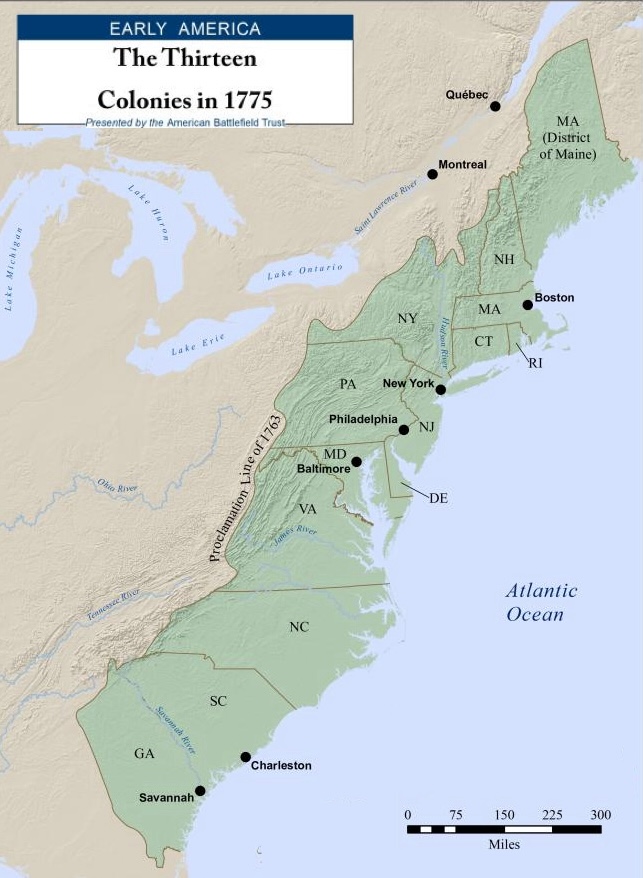
File:Fort Ticonderoga 1775.jpg
https://commons.wikimedia.org/wiki/File:Fort_Ticonderoga_1775.jpg
Note: For the Illustration of Ethan Allen.

Vermont.com
Vermont.com Guide to Guilford
https://vermont.com/cities/guilford/
Note: For the data.

The 1790 ‘Census’ of Vermont

(5) — four records

1790 Census: Heads of Families at the First Census of the United States 
Taken in the Year 1790

https://www.census.gov/library/publications/1907/dec/heads-of-families.html
Note 1: 5 Downloadable .pdf files
Note 2: Click on Vermont, Published in 1907 > Download All Vermont [21.0 MB]

The National Archives
1790 Census Records
https://www.archives.gov/research/census/1790
Note: For the data.
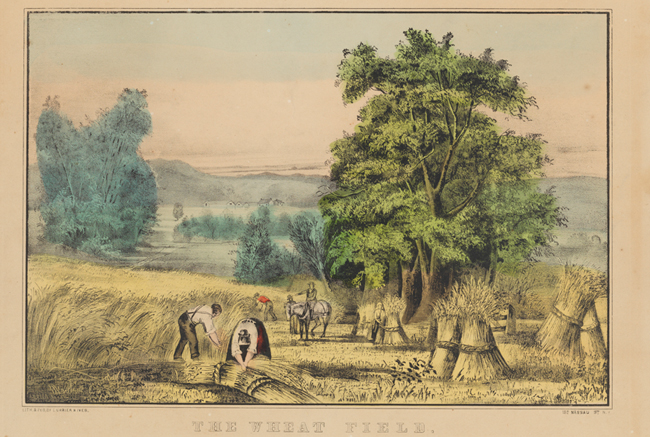
USGenWeb Free Census Project Help, HISTORY of the United States – Federal Census, 1790-1920
http://www.usgwcensus.org/help/history.html
Note: For the data.
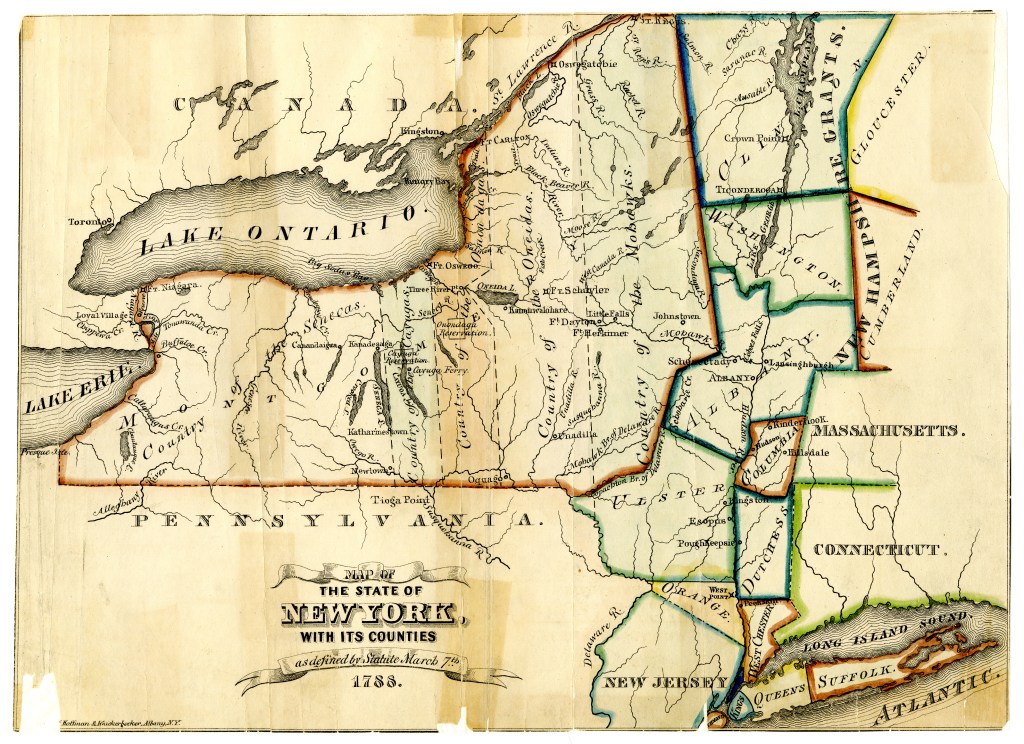
Elijah Gove Jr
in the Vermont, U.S., Vital Records, 1720-1908

https://www.ancestry.com/discoveryui-content/view/345462:4661
Digital page: 2859/4084
Note: For the data.
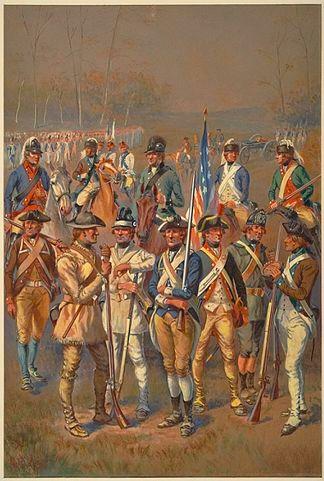
Two Locations in Windham County?

(6) — four records

Official History of Guilford, Vermont, 1678-1961.
With Genealogies and Biographical Sketches
Edited by National Grange, Vermont State Grange, Broad Brook Grange No. 151, Guilford
https://archive.org/details/officialhistoryo00unse/page/308/mode/2up
Note 1: Gore farm sale, Book page 309, Digital page: 308/585
Note 2: Tipped-in, foldout map of original property lots, Digital page 396/610

Halifax, Vermont
https://en.wikipedia.org/wiki/Halifax,_Vermont#External_links
Note: For the data.
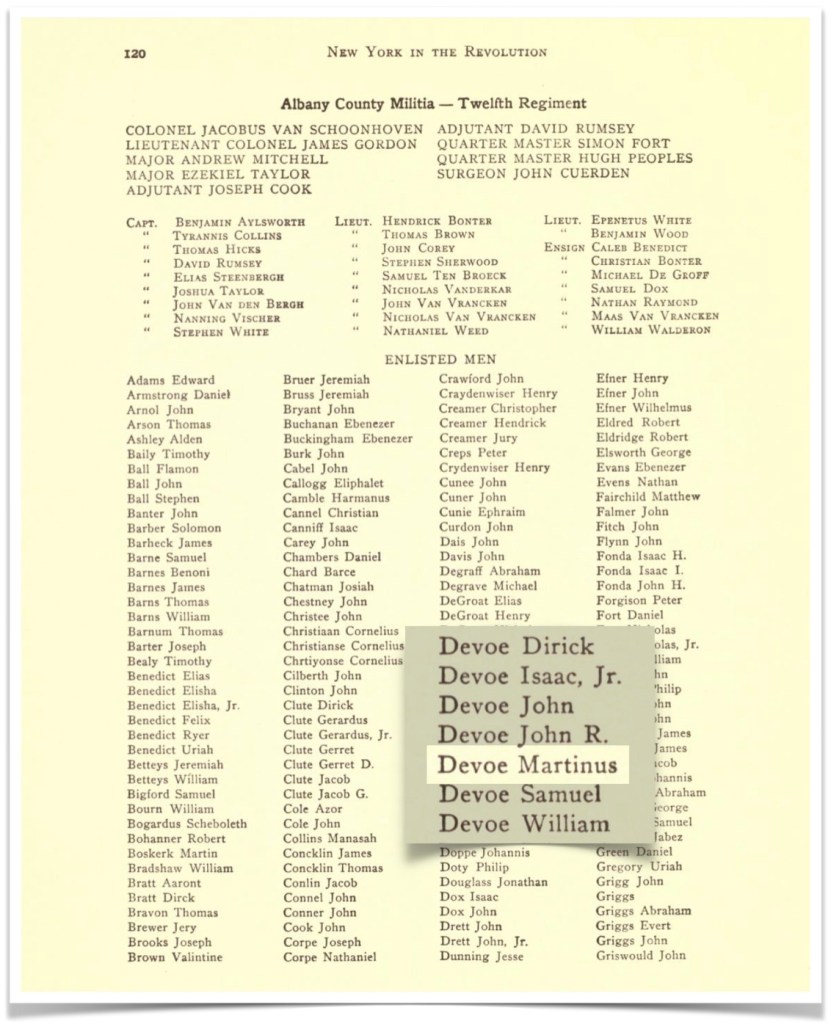
Guilford, Vermont
https://en.wikipedia.org/wiki/Guilford,_Vermont
Note: For the data.

Official History of Guilford, Vermont, 1678-1961.
With Genealogies and Biographical Sketches
Edited by National Grange, Vermont State Grange, Broad Brook Grange No. 151, Guilford
https://archive.org/details/officialhistoryo00unse/page/308/mode/2up
Note: Elijah Gore Revolutionary War service, page 135.

Samuel Gore (4) and Rebeckah Barney Marry

(7) — three records

Genealogy.com
Re: Barneys and Potters and Briggs, Oh My:-)
By William Barney
https://www.genealogy.com/forum/surnames/topics/barney/776/
Note: Home > Forum > Surnames > Barney

Mrs Elizabeth Barney
Vital – Vermont, Vital Records, 1760-1954

https://www.familysearch.org/ark:/61903/1:1:XFFT-335
Digital page: 2891/4008
Note: For her death record.

Family Search Tree (not our files)
https://www.familysearch.org/tree/pedigree/landscape/LQ5C-1D1
Note 1: Our source for only the Gore Family Photograph Portraits.
Note 2: This is not a family tree of our construction, therefore, we have not verified other information here.

The Waking Century — The Advent of Portrait Photography

(8) — two records

Photography by Jay
A Brief History of Portrait Photography
by Jay Soriano
https://jaysoriano.com/a-brief-history-of-portrait-photography/
Note: For the text and image.

Time
Now You Know: Why Do People Always Look So Serious in Old Photos?
by Merrill Fabray
https://time.com/4568032/smile-serious-old-photos/
Note: For the text.

Ellisburgh, and Belleville, Jefferson County, New York

(9) — six records

Growth of a Century: as illustrated in the history of Jefferson County, New York, from 1793 to 1894
by John A. Haddock https://archive.org/details/growthofcenturya00hadd/page/n749/mode/2up
Note: For information on the Barney family and Deacon Edward Barney.

NY Genealogy
The Coming of the Pioneers
Franklin County, Jefferson County, Lewis County, Oswego County, Saint Lawrence County
by New York Genealogy
https://newyorkgenealogy.org/franklin/the-coming-of-the-pioneers.htm
Note: For the data.

Old Maps
Map of New York 1814 by Mathew Carey from “Careys General Atlas
by Mathew Carey
http://www.old-maps.com/NY/ny-state/NY_1814_Carey-web.jpg
Note: For map image.

ThoughtCo.
History of American Agriculture
American Agriculture 1776–1990
by Mary Bellis
[Under the subhead] Agricultural Advances in the United States, 1775–1889
https://www.thoughtco.com/history-of-american-agriculture-farm-machinery-4074385
Note: For the farm scene image.

Ellisburg, New York
https://en.wikipedia.org/wiki/Ellisburg,_New_York
and
Belleville, New York
https://en.wikipedia.org/wiki/Belleville%2C_New_York
Note: For the data.

The War of 1812

(10) — nine records

USS Constitution Museum
The War of 1812 Overview
https://ussconstitutionmuseum.org/major-events/war-of-1812-overview/#:~:text=The%20two%20leading%20causes%20of,its%20own%20chronically%20undermanned%20warships.
Note: For the data.
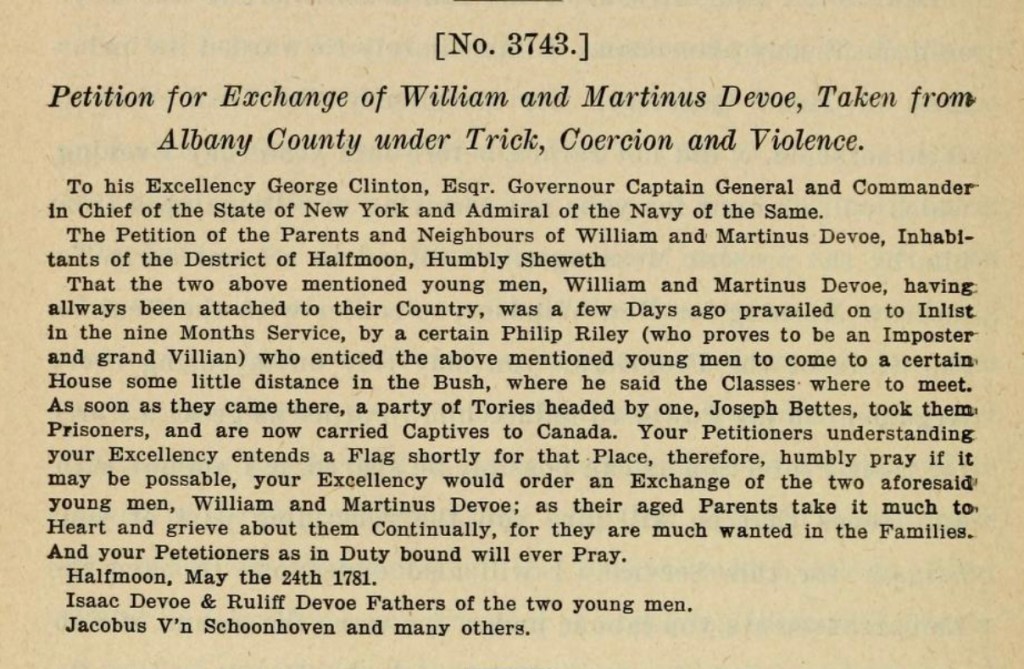
Samuel Gore
Military – United States War of 1812 Index to Service Records, 1812-1815

https://www.familysearch.org/ark:/61903/3:1:33SQ-G5Z8-9GNM?view=index&action=view&cc=1916219
Digital page: 2210/2843
Note: For the data.

Samuel Gore
in the U.S., War of 1812 Pension Application Files Index, 1812-1815

https://www.ancestry.com/discoveryui-content/view/72654:1133
Digital page: 740/946
Note: For the data.

National Archives and Records Administration
Bounty-Land Warrants for Military Service, 1775–1855
https://www.archives.gov/files/dc-metro/know-your-records/genealogy-fair/2012/handouts/war-of-1812-bounty-lands.pdf
and
Publication Number: M-313
Publication Title: Index to War of 1812 Pension Application Files
https://www.archives.gov/files/research/military/army/dc/m313.pdf
Note: For the data.

Encyclopædia Britannica
Embargo Act , United States [1807]
https://www.britannica.com/topic/Embargo-Act
Note: For the data.

The National Park Service, article —
“The acquisition of Canada this year will be a mere matter of marching”
https://www.nps.gov/articles/a-mere-matter-of-marching.htm
Note: For the data.
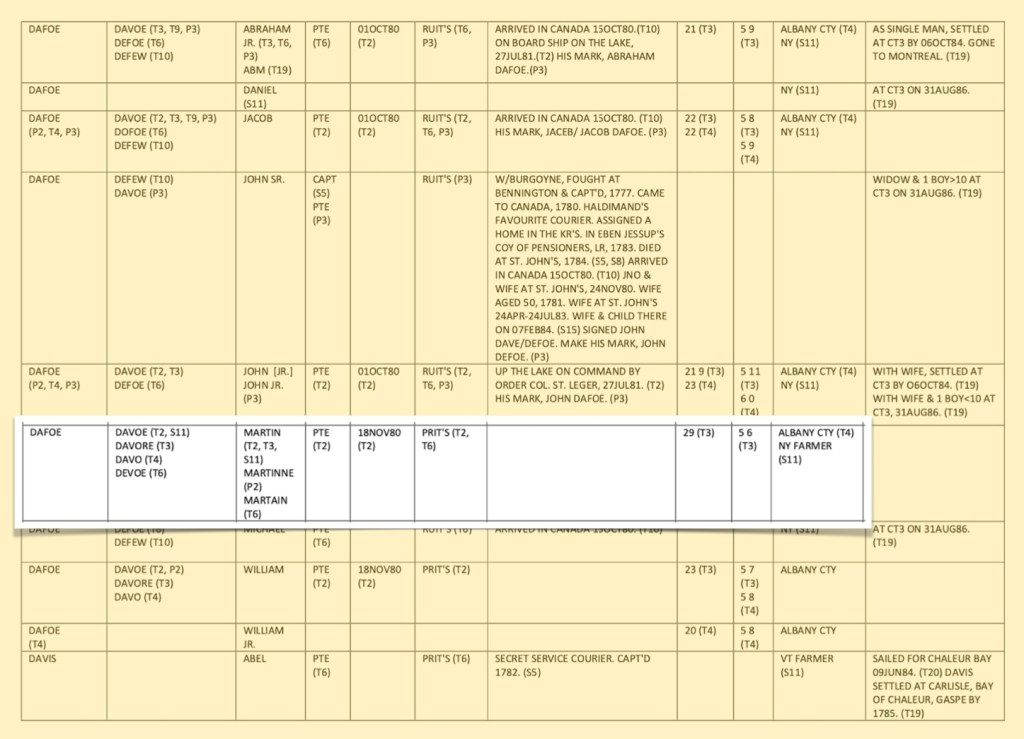
Jefferson County NY Wiki
War of 1812
https://jeffcowiki.miraheze.org/wiki/War_of_1812#:~:text=Jefferson%20County%20played%20a%20central,other%20county%20on%20American%20soil.
Note: For the data.
WAR OF 1812
(from Child’s Gazetteer(1890) – pp. 141-171)
https://freepages.rootsweb.com/~twigs2000/genealogy/warchilds.html
Note: For the data.
The War of 1812 Gallery images:
From various sources on Google search.