This is Chapter Seven of eight. We have been covering many interesting centuries of the Gore Family and their forebears, but now we are coming up on these modern times. For the most part, our ancestors are now firmly established in Ohio, living as either farmers, tradesmen, or keeping house.
Where Did These Things Come From?
Tucked in among the paperwork and family ephemera we went through when our Grandmother Lulu Gore died in 1975, were several different anti-slavery newspapers. They both surprised and baffled us because our family stories were silent on the subject of slavery — we wondered how these things had come into the family.
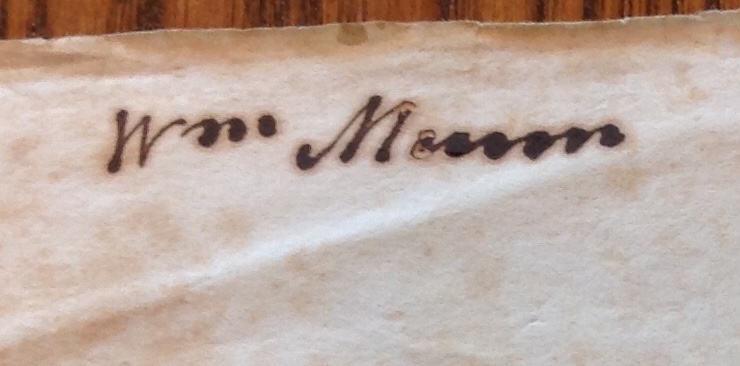
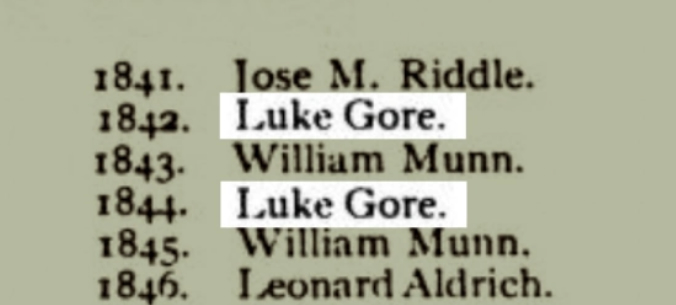
A clue was hiding in plain site on the top of one of the newspapers, where the name Wm Munn had been written in with a quill pen. (This was not really a surprise, because the local Munn family had been in the area as long as our family had, and perhaps, even a bit longer. However, we didn’t see the connection yet). Almost 50 years later, the mystery was solved when we wrote The Gore Line, A Narrative — Six, our previous chapter. In that section, we learned that our Great-Great-Grandfather Luke Gore had been a town clerk in Newbury township, Ohio for the years 1842 and 1844. Looking more closely we observed that William Munn, had served in the same role in 1843 and 1845. It seems then they must have been friends and alternated in this role over the four years.
These newspapers are, the —
- Geauga Republican & Whig, March 18, 1845
- National Anti-Slavery Standard, July 22, 1847
- National Anti-Slavery Standard, May 13, 1852
This got us to thinking about the role that the people of the Western Reserve played in the years leading up to and including the Civil War. In the early part of the 18th century, the Ohio Country was frequently referred to as the West, and from the perspective of New Englanders who settled it, it was indeed pioneer country. By the 1850s and 60s, the Western Reserve wasn’t thought of as a frontier anymore, but actually, it still was — that frontier being a psychological perspective, a state-of-mind about what it meant to be a good citizen in this newly-created country. (1)
The New England of The West
From an article written in 1957, titled The Connecticut Reserve and The Civil War, we learned several interesting perspectives about the area. “Within this region [of] some three million acres, approximately the size of Connecticut herself… [and] modified only slightly by contact with the frontier, the area became more like New England then New England itself.”


This meant that there was a moral fervor, conditioned by the churches of Protestant Puritanism, which had been transplanted from the New England states, to this new area. Furthermore, the leveling tendencies of the frontier experience had deepened the ideas of New England democracy within the population of settlers.
This resulted in an emphasis on “the democracy of the town… [and] Eastern culture provided a new synthesis in the field of popular education… social mobility and a re-affirmation of individual worth, equality, and dignity of man in general.” [Lottick] In other words, their state-of-mind, their ethos of hard work, having an education, using a democratic voice, and righteous behavior, was the desired standard. This was an empowering shift from of the previous generations who had chaffed under the rule of a capricious king in the British Colonies.
In the 19th century, the Western Reserve “was probably the most intensely antislavery section of the country”.
Wikipedia article on the Connecticut Western Reserve,
John Brown Jr. called it, in 1859, “the New England of the West.”
discussing John Brown, Jr.
Twenty years before the Civil War, “According to the theory of Boston’s Wm. Lloyd Garrison and the American Anti-Slavery Society (1833), slavery was a personal and social sin requiring immediate repentance of slaveholders and all others who had failed to witness against the institution”. [Case Western]
The Western Reserve College and Oberlin College became centers of Abolitionist agitation. In truth, Oberlin’s abolitionist viewpoint “was strengthened further when recruits from the Lane Theological Seminary…joined its fold”. [Lottick] Abolitionism then, grew out the mingled influences of both religion and education in the area where our ancestors lived. “People known as abolitionists believed that slavery should not exist and fought to end it. Northeast Ohio was a hotbed of abolitionist activity. Men and women, Black and White, free and enslaved, worked together for their cause”. [Cuyahoga Valley National Park article]
In contrast, the Southern states during this period had flourished under a very different system that most New Englanders (and their transplants) found to be very strange. It was a way of life built upon the use of slaves — essentially, upon a class-and-caste system of belief. As such, the possibility of “social mobility and a re-affirmation of individual worth” were not part of the equation.
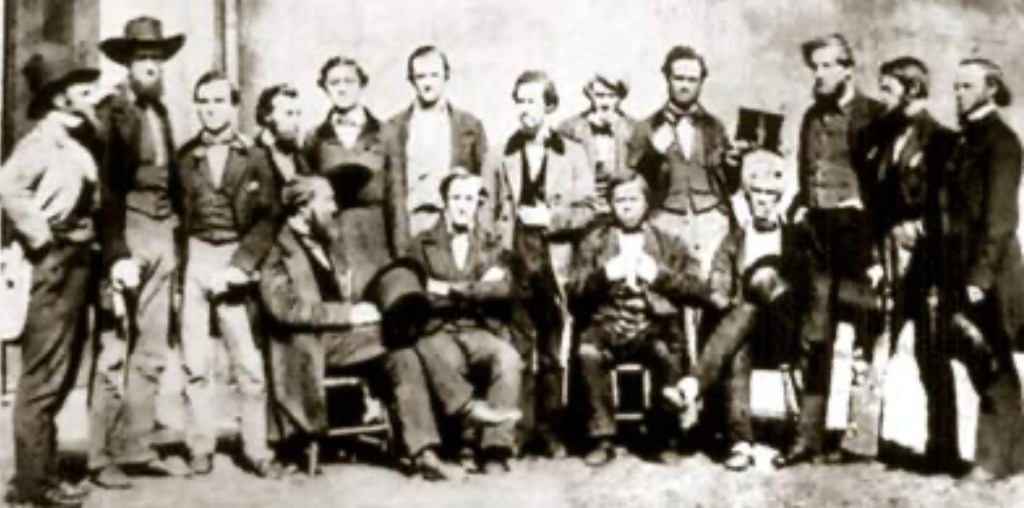


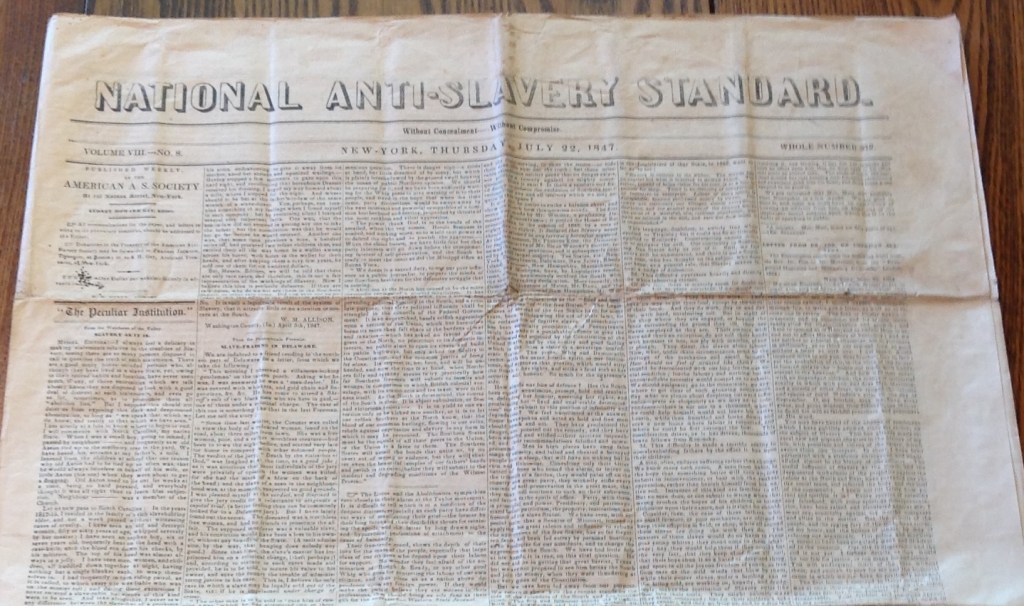

Top section, left image: Participants from the Oberlin-Wellington Rescue. Center image: Leg shackles used in the Trans-Atlantic slave trade. Right image: A painting of fugitives smuggled during winter, The Underground Railroad (1893 ) by Charles T. Webber. Lower section, left image: the National Anti-Slavery Standard newspaper, July 22, 1847, family document. Right image: April 24, 1851 “CAUTION!! Colored People of Boston” broadside warning of watchmen and police acting as kidnappers and slave catchers. [Please see the footnotes for specifics.] (2)
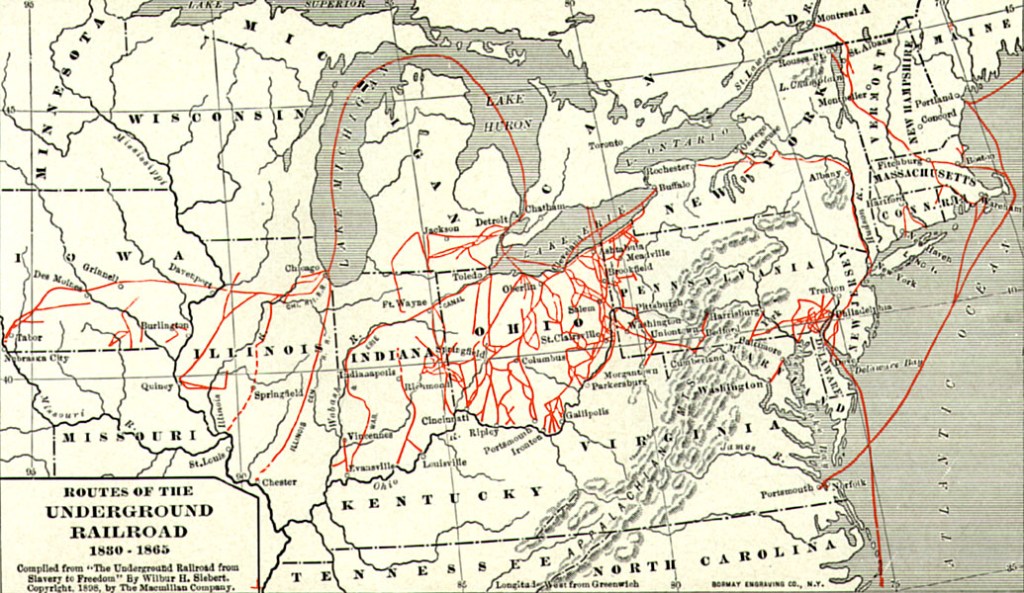
The Underground Railroad was not an actual railroad, but a network of secret routes and safe houses used by black slaves in the United States to escape to free states and Canada.
(Observation: There are so many red line over Ohio, that it looks like a cardiac diagram).
The Underground Railroad in the Western Reserve
The battles of the Civil War did not have a profound effect upon the Western Reserve territory, but the existence of the Underground Railroad did. In fact, initially there were many people in Cleveland who were not particularly concerned about the plight of slaves. This changed when “The completion of the Ohio Canal in 1832 enhanced the strategic importance of the city…” because this became one of the most direct routes from the slave-holding South, to freedom in Canada.
Furthermore, the indifferent attitude of some people changed dramatically when The Fugitive Slave Act was passed in 1850. This law lit a white hot fire under the Abolitionists. “The severity of this statute inspired an increased number of abolitionists, the development of a more efficient Underground Railroad, and the establishment of new personal-liberty laws in the North. These personal liberty laws were enacted in eight Northern States and prohibited state officials from assisting in returning fugitive slaves to the South…” [Case Western]
Our ancestors, being settlers from New England, and as evidenced by the anti-slavery newspapers, were likely concerned about and involved with, the abolitionist movement. We know for certain, that this branch of our family did not own slaves. (3)
The 1870s in Geauga County, Ohio
Luke Gore died in 1868, but several of his children continued to live in the area. When we reviewed the 1870 census, it showed that Dorr B. Gore is 18 and listed as living with his mother Electa, and his brothers Milan and Otto. They have a domestic servant, Myra Fowler — it turns out that she eventually married Dorr B.’s older brother Milan Gore on July 4, 1870. Observation: Perhaps this family liked holiday themed weddings? (Maybe it was budget-friendly and helped them save on decorations.)

History of Geauga and Lake Counties, Ohio, by the Williams Brothers, circa 1879. (See footnotes).
We observed that Luke Gore’s oldest son, Crockett Gore, was living with his wife Etta and their young family in Russell township. He was working as a farmer on land that his father had previously farmed (see The Gore Line, A Narrative — Six). From the Russell township Historical Society newsletter, March 1999: “Luke enlarged the farm, adding land in Russell to a total of 163.5 acres. After he died, his eldest son Crockett Gore, farmed the land”.
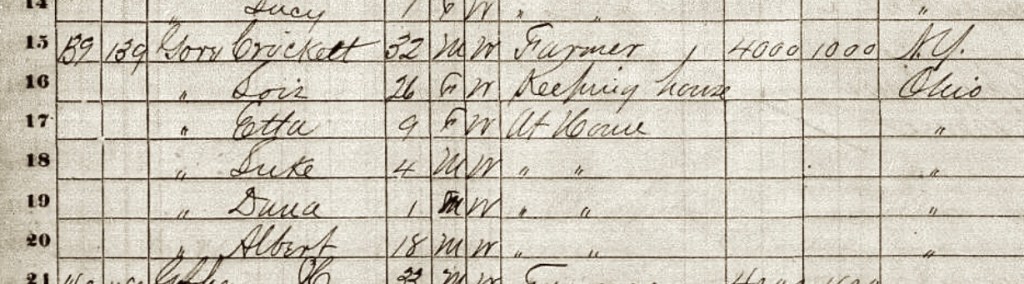
“He married a neighbor, Lois Havens, and they had Luke W., Dana and Ralph C. Luke W. is listed in our old school records as a student in the brick school in 1872. He died at the age of 17 in Russell, and Ralph C. also died young, aged 21. Both are buried with their parents in Munn cemetery in Newbury”.
“In 1882 Crockett built the home that is still there. He quarried sandstone for the foundation from a quarry on the farm, and cut and used wood from his own woodlot. He died in 1900 in Clio Michigan, but is buried in Munn cemetery in Newbury, with his parents, his wife Lois and a son who died at the age of 17.” (4)
The Kids Get Married! Dorr B. Gore Marries Ann Susan Booth
As always, times change, but love blooms eternal — starting the new year off right (!), our young Great-Grandfather Dorr B Gore (at just 21), married our Great-Grandmother, (even younger at 19), Ann Susan Booth, on January 1, 1872 in Burton, Geauga County, Ohio.

Dorr B. Gore, born September 8, 1851 in Newbury, Geauga County, Ohio – died June 11, 1930 in Cleveland, Cuyahoga County, Ohio. Ann Booth was born October 30, 1852 in Burton, Geauga, Ohio – died March 11, 1908 in Newbury, Geauga, Ohio.
Ann’s parents are James Monroe Booth (March 12, 1827-July 8, 1889) and Adelia Rose (March 31, 1827-January 25, 1910), whose families were among the very first pioneers to settle in the Western Reserve area.

They had four children:
- Nettie Belle (Gore) Robinson, born December 24, 1873 in Geauga, Ohio – died April 20, 1922 in Oblong, Crawford, Illinois.
- Clara Edna (Gore) Matthews, born July 3, 1876 in Auburn, Geauga, Ohio – died March 26, 1933 in Russell, Geauga, Ohio (Note: it is interesting to observe that she is a centennial baby).
- Forrest Munroe Gore, born August 11, 1878 in Newbury, Geauga, Ohio – died January 31, 1930 in Chagrin Falls, Cuyahoga County, Ohio
On the 1880 census, Dorr B. is 28 and also on the census are: Ann 28, Nellie 6, Clara 3, Forrest 1, his mother Electa 58, and the farm hand Elmer E. Brewer.
- Harley William Gore, born June 7, 1881 Russell, Geauga, Ohio – died November 24, 1941 Newbury, Geauga, Ohio.
(We are descended from Harley). (5)
Dorr B. Gore Had Two Wives
The Gores continued to live their lives mostly as farmers. Dorr B. Gore’s wife Ann Booth died on March 11, 1908 of heart failure after having had pneumonia for three weeks. Eighteen months later he married for a second time, to Amelia Harnden on October 12, 1909. A local resident, Amelia was born January 1, 1863 – died July 8, 1947, having outlived her husband Dorr B. by seventeen years.

A transcription of Ann Susan (Booth) Gore death notice:
August 7 — Ann Susan Booth, daughter of Monroe and Adelia Booth was born in Burton, Ohio, Oct. 30, 1851 where she lived until Jan. 1, 1872 when she married Dorr B. Gore of Newbury, where she lived the rest of her life. She had heart trouble for years and after a sickness of a little over three weeks with heart trouble and pneumonia she passed away Thursday morning, March 12, 1908, aged 56 years, 4 months, 12 days. She was a true kind and sweet disposition carrying love and sunshine where ever she went. She leaves a husband and four children who loved her and will miss her more than words can tell. Nettie B. Robinson, Clara E. Mathews, Harley W of Russell, and Forest M, who lives at the old home in Newbury, also an aged mother, Mrs. Adelia Booth, Burton. Three sisters, Mrs. P. D. Bishop, Andover, Mrs. Chas Stickney and Mrs. Carl Wicks of Burton, and her twin brother, Wm Booth of Midland, Mich. (6)
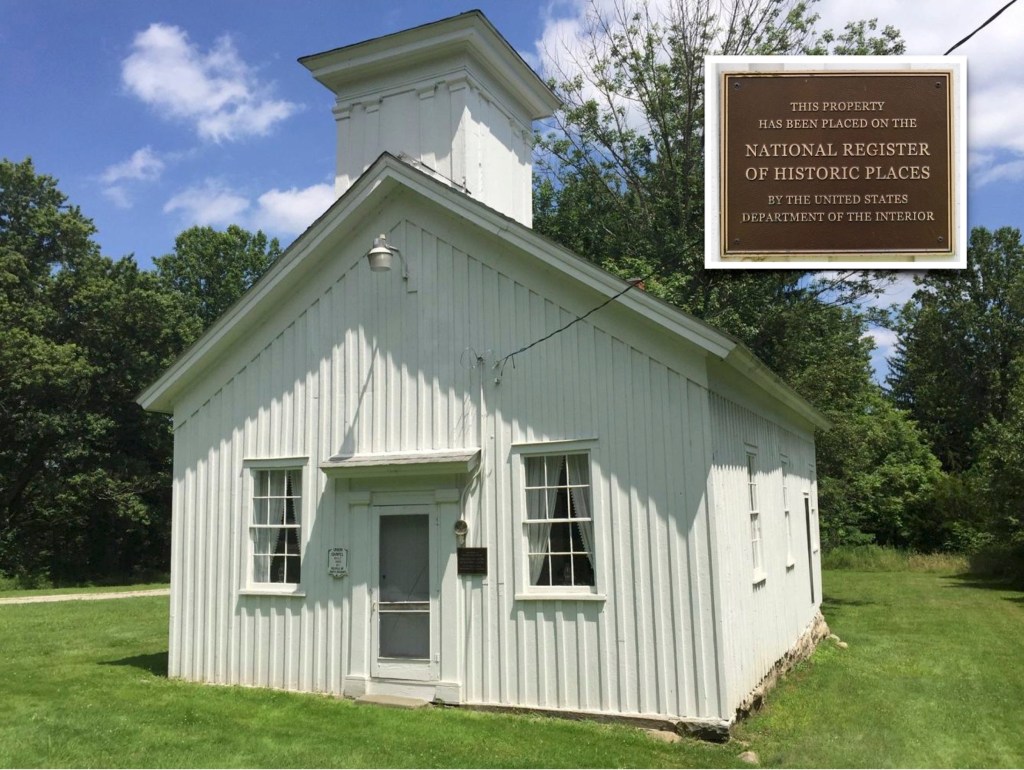
The Union Chapel and “Equal Rights in Newbury”
Our Grandmothers never had the right to vote until the year that our mother Marguerite (Gore) Bond was born — in 1920. That’s still rather astonishing today, but her mother Lulu was 38 years old, before she had the right to vote. Here is how women’s suffrage happened in our local community.
When the Abolitionist movement was birthed, “Many were entering the political arena for the first time. Women in Northeast Ohio organized female anti-slavery societies, circulated petitions, served as delegates to state and national antislavery conventions, and drafted editorials that were published in local papers such as The Anti-Slavery Bugle. In time, growing political experience and awareness of the plight of enslaved people, inspired women to consider their own freedom more critically; the women’s suffrage movement grew from the ranks of the abolitionist movement.” [Cuyahoga Valley National Park article]
The Union Chapel “was built between 1858-1859 by outraged citizens after members of the Congregational Church across the street refused to allow future President James A. Garfield to speak, fearing his topic would be controversial.”
“At the time the area was a vibrant settlement with a grist mill, tannery, tavern wagon and blacksmith shops, a post office and other shops. The population was described as liberal… In retaliation for the church’s snub, Anson Matthews, a store owner and the man who had invited Garfield to speak at the church, donated a one-acre plot of his land across the street for the Union Chapel. Today, both of the buildings continue to face each other.”
“The Union Chapel’s premise was for a ‘public hall or meeting house for literary, scientific, moral and religious purposes and lectures on all useful subjects,’ according to its deed. It was to be open and free and not to be used to the exclusion of anyone. Numerous important social reform movements were launched from within its walls.” [Cleveland.com article]
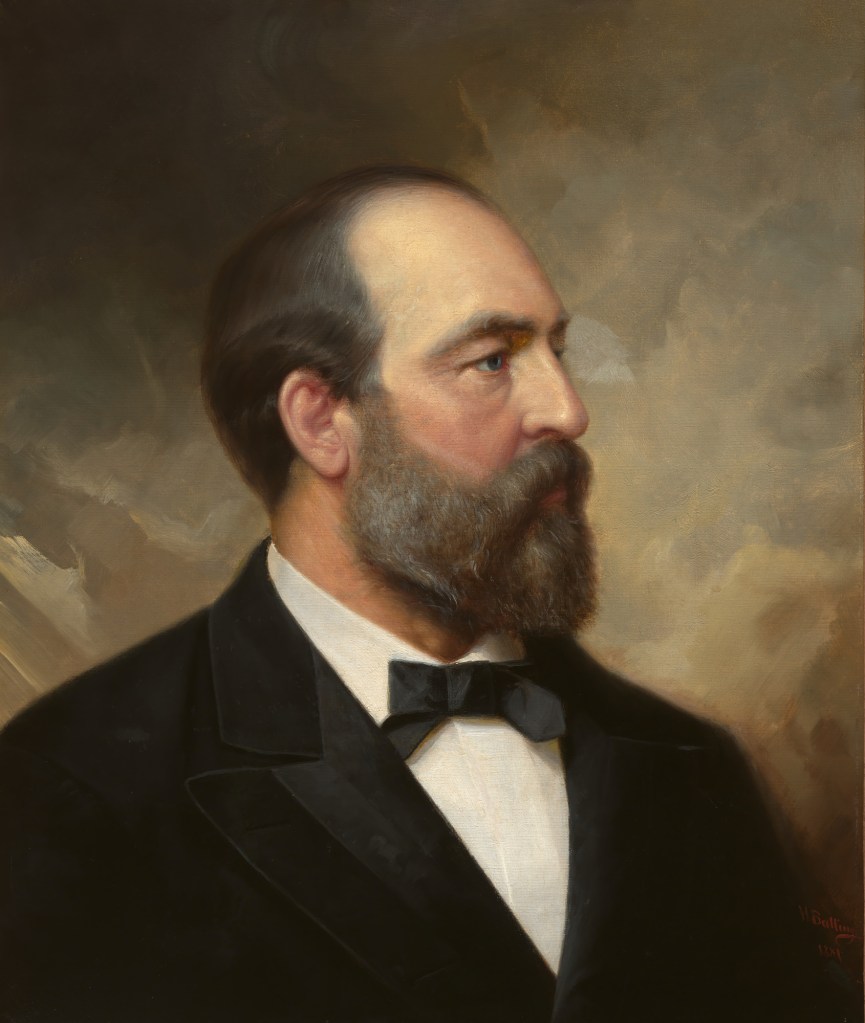
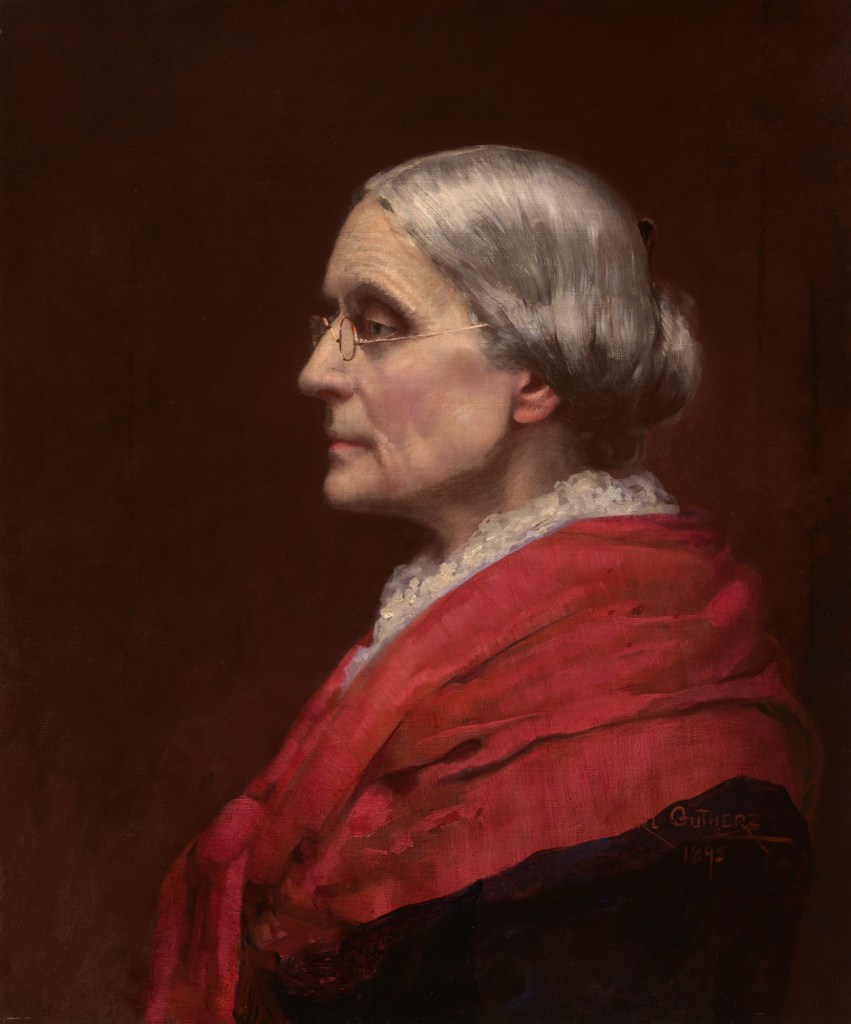
Gallery, left image: James A. Garfield. Right image: Susan Brownell Anthony (Images courtesy of the National Portrait Gallery).
Famous among the many speakers at the Union Chapel were James A. Garfield, the 20th President of the United States, and Susan B. Anthony.“She is known as a staunch advocate for women’s suffrage, [but] Anthony also participated in a wide spectrum of social reform movements.
Here, community reformers—mostly women, but men, too—pushed for progress considered radical for its time. Newbury, like other nearby towns, had been settled by travelers from the East, many from Massachusetts, then considered the center of culture and ‘advanced thinking’.”
The unconventional truth is, the women of Newbury township started to get people’s attention when some of them rightly decided that-corsets-were-just- not-at-all-sensible. “The first reform movement, in 1870, called for women to dress without ‘unnatural and unhealthy’ corsets, bustles and sweeping skirts. ‘Dress reform’ advocate Ellen Munn caused quite a stir when she showed up at a community picnic in trousers.” [Esmont]
“Ruth Fisher was born on January 25, 1809 in Newbury, Ohio. She married William Munn on April 18, 1833.” [Northeast Ohio Suffrage article] We have met William Munn in the introduction to this chapter, as he was a friend and colleague of our Great-Great-Grandfather Luke Gore.
[The year 1871] “witnessed the most significant crusade in the chapel’s history—to secure the right of women to vote.” [Esmont]
“The dress reform organization led to the formation of the South Newbury Woman’s Suffrage Political Club… [It] was established after a group of women, including Munn, presented themselves at the polls to vote in a previous election, but were refused. The chapel served as an incubator for the budding suffrage movement, and became home to the second-oldest women’s suffrage group in Ohio. In 1871, Munn was one of nine women to illegally cast a ballot in a local election at the Chapel, becoming one of the first female voters in Ohio’s history.” [Northeast Ohio Suffrage]
“More women would show up at subsequent elections to cast ballots. An account in the Geauga Republican newspaper from 1873 stated the election judges were ‘courteous and gentlemanly, as usual’ but declined the votes. The women—and the men who supported them—inscribed 50 ballots: ‘People’s Ticket. Equal Suffrage for all Citizens of the United States, an Inalienable and Constitutional Right. Knowledge and Truth in Opposition to Ignorance and Prejudice’.” [Esmont]
On the occasion of the 100th anniversary of the founding of the United States, on July 4, 1876, the Suffrage Club members planted a tree which came to be known as the Centennial Oak.

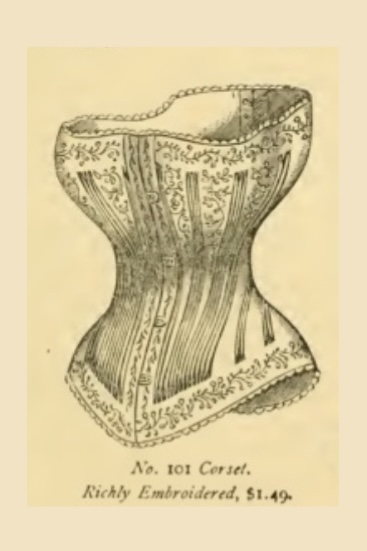
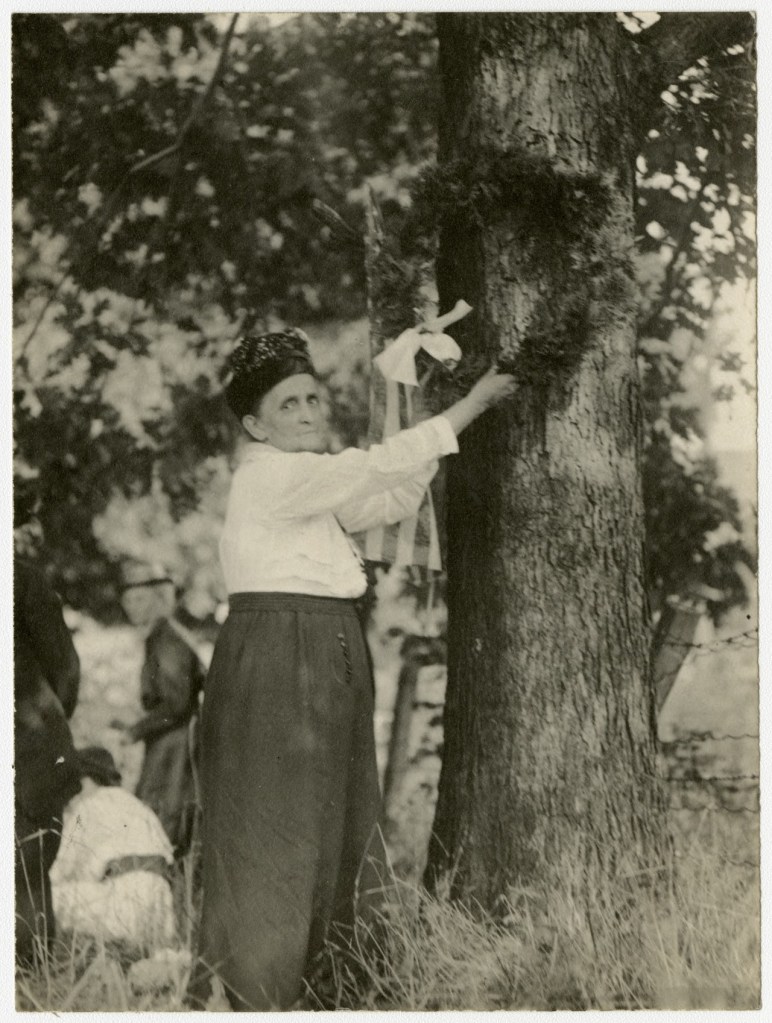
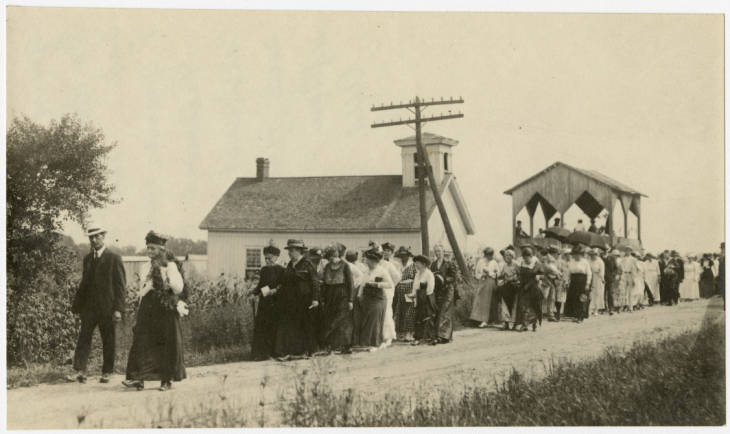
Top row, left image: Ruth (Fisher) Munn. Center image: Illustration of typical corsets worn in the 1880s. Right image: Dr. Julia Porter Green, shown August 23, 1919. She was the only surviving charter member of the South Newbury Woman’s Suffrage and Political Club to attend the August 23, 1919 procession at the South Newbury Union Chapel, as shown in the bottom image —“On Aug. 23, 1919, suffragists marched from South Newbury Union Chapel to a wreath-laying at the nearby Centennial Oak to commemorate the 19th Amendment”, via [Valiant Visionaries of the Vote].
A full report of the adoption of a constitution for the South Newbury Woman’s Suffrage and Political Club, including committee members, can be found in the book: 1798 – 1880, Pioneer and General History of Geauga County, with Sketches of Some of the Pioneers and Prominent Men by The Historical Society of Geauga County. (Please see the footnotes).
“The 19th amendment legally guarantees American women the right to vote. Achieving this milestone required a lengthy and difficult struggle—victory took decades of agitation and protest. Passed by Congress June 4, 1919, and ratified on August 18, 1920, the 19th amendment granted women the right to vote”. [archives.gov]
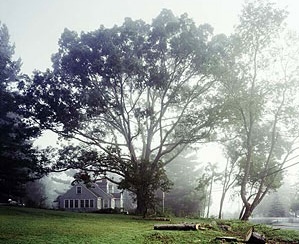
“Planted by the Newbury Women’s Political Suffrage Club on July 4, 1876, the tree, just like the suffrage movement, survived and grew larger and stronger. It was a symbolic move, planting the roots of a movement that would go on to change America’s face forever”.
In the next chapter, which is our last chapter for The Gore Line, we will be writing about our Gore grandparents, our uncles and our mother, during their times in the 20th century.
We have found, like other genealogical researchers, that so much deep history is recorded mostly about men — that when we find records for our female ancestors, our premise returns to… sometimes our ancestral grandmothers are more interesting than our ancestral grandfathers. And as always, these women, the foremothers, are quietly there… and in our family, we’re thinking about Lulu and Marguerite. (7)
Following are the footnotes for the Primary Source Materials,
Notes, and Observations
Where Did These Things Come From?
(1) These newspapers are items from our family collection and have been donated to the Geauga County Historical Society.
The New England of The West
(2) — seven records
Connecticut Western Reserve
https://en.wikipedia.org/wiki/Connecticut_Western_Reserve
Note: For the contemporary map image.
Western Reserve Including the Fire Lands 1826
https://commons.wikimedia.org/wiki/File:Western_Reserve_Including_the_Fire_Lands_1826.jpg
Note: On this map, Geauga County is still combined with the future Lake County and Russell township is not yet named.
JSTOR
History of Education Journal, Vol. 8, No. 3 (Spring, 1957), pp. 92-104
The Connecticut Reserve and the Civil War
by Kenneth V. Lottick
https://www.jstor.org/stable/3692620?read-now=1&seq=1#page_scan_tab_contents
Note: For the text.
John Brown Junior
https://en.wikipedia.org/wiki/John_Brown_Junior
Note: For the data.
Abolitionism
https://case.edu/ech/articles/a/abolitionism
Note: For the data.
Underground Railroad in Ohio
http://touringohio.com/history/ohio-underground-railroad.html
Note: For the data and the Oberlin photo.
Fugitive Slave Act of 1850
Fugitive Slave Act of 1850https://socialwelfare.library.vcu.edu/federal/fugitive-slave-act-of-1850/
Note: For the slavery poster.
The Underground Railroad in the Western Reserve
(3) — three records
The National Park Service, article —
Cuyahoga Valley’s Ties to the Underground Railroad
https://www.nps.gov/articles/000/cuyahoga-valleys-ties-to-underground-railroad.htm
Note: For the text.
Underground Railroad
https://en.wikipedia.org/wiki/Underground_Railroad
Note: For the text and map.
Abolitionism
https://case.edu/ech/articles/a/abolitionism
Note: For the text.
The 1870s in Geauga County, Ohio
(4) — three records

History of Geauga and Lake Counties, Ohio
https://archive.org/details/oh-geauga-lake-1879-williams/page/n9/mode/2up
Digital page: 9/443
Note: For the image of the Geauga County Courthouse.
Dorr Gore
Census – United States, Census, 1870
https://www.familysearch.org/ark:/61903/3:1:S3HT-68V3-RZY?view=index&action=view&cc=1438024
Book pages: 10-11, Digital page: 504-505/733, Entries 15-20, page center.
Note: For the data.
From our family documents:
Russell Township Historical Society Newsletter
March 1999, Volume 10, Issue 8, page 1

The Kids Get Married! Dorr B. Gore Marries Ann Susan Booth
(5) — twelve records
The Box SF
1872 Antique Victorian Home Insurance Company
Promotional 12 Month Calendar
https://theboxsf.com/products/00-205
Note: For the calendar artwork.
Dore Gore
Marriage – Ohio, County Marriages, 1789-2016
https://www.familysearch.org/ark:/61903/1:1:XZZ1-PZQ
Book page: 86, Digital page: 58/169, Left page, top entry
Note: For Dorr Gore marriage to Ann Susan Boothe.
Dorr B Gore
https://www.findagrave.com/memorial/69080449/dorr-b-gore
Note: For death reference, June 11, 1930.
Anne Susan Booth Gore
https://www.findagrave.com/memorial/69080314/anne-susan-gore
Note: For the data.
James Monroe Booth
https://www.findagrave.com/memorial/63806292/james-monroe-booth
Note: For the data.
Adelia “Delia” Rose Booth
https://www.findagrave.com/memorial/63806271/adelia-booth
Note: For the data.
Nellie Belle Gore Robinson
https://www.findagrave.com/memorial/100710304/nettie-belle-robinson
Note: For the data.
Forest M Gore
Death – Ohio, Deaths, 1908-1953
https://www.familysearch.org/ark:/61903/1:1:X8RV-847
Digital page: 780/3377.
Note: For the data.
Clara Matthews
Death – Ohio, Deaths, 1908-1953
https://www.familysearch.org/ark:/61903/1:1:X6QS-TZV
Digital page: 600/3322
Note: For the data.
Dorr B. Gore
Census – United States, Census, 1880
https://www.familysearch.org/ark:/61903/1:1:M8MJ-371
Digital page: 145/794, Entries 26 through 32.
Note: For the data.
Harley Gore
Listed in the Ohio, County Births, 1841-2003
in Newbury, Geauga County, Ohio
https://www.familysearch.org/ark:/61903/3:1:33SQ-GT7G-915K?cc=1932106
Book page 134, Digital page: 100/469, Left page, entry 2, #2845.
Note: For the data.
Harley W Gore
Death – Ohio Deaths, 1908-1953
https://www.familysearch.org/ark:/61903/1:1:X89M-9C2
Digital page: 1422/3314
Note: For the data.
Dorr B. Gore Had Two Wives
(6) — three records
Amelia Harnden Gore
Death – Ohio, Deaths, 1908-1953
https://www.familysearch.org/ark:/61903/1:1:X6V7-GXB
Digital page: 1856/3542
Note: For the data.
Don B Gore
Census – United States Census, 1910
https://www.familysearch.org/ark:/61903/1:1:MLXS-J3P
Book page: 6, Digital page: 283/1,152, Entries 92 and 93.
Note: For the data.
Dorr B Gore
Census – United States Census, 1920
https://www.familysearch.org/ark:/61903/1:1:MDBV-YRC
Book page: 4, Digital page: 772/1,105, Entries 56 and 57.
Note: For the data.
The Union Chapel and “Equal Rights in Newbury”
(7) — ten records
The National Register of Historic Places
Ohio — Geauga County
South Newbury Union Chapel (added 2012 – – #12000033)
https://nationalregisterofhistoricplaces.com/oh/geauga/state.html
Note: For the photo of the chapel.
South Newbury Union Chapel Honored:
Was key to women’s suffrage movement
https://www.cleveland.com/west-geauga/2012/10/south_newbury_union_chapel_hon.html
Note: For the text.
The National Portrait Gallery
James Garfield
by Ole Peter Hansen Balling
https://npg.si.edu/object/npg_NPG.65.25
Note: For his portrait.
The National Portrait Gallery
Susan Brownell Anthony
by Carl Gutherz
https://npg.si.edu/object/npg_NPG.2019.6
Note: For her portrait.
Cradle of Equal Suffrage
South Newbury Union Chapel
By Erin Esmont
https://geaugaparkdistrict-org.s3.amazonaws.com/wp-content/uploads/2020/04/30082618/ohio-history-connection-echoes-magazine-marchapril2020.pdf
Note: For history and photo images.
Northeast Ohio Suffrage
Valiant Visionaries of the Vote
https://www.neohiosuffrage.org/Valiant-Visionaries/geauga-county-suffrage#
Note: For history and photo images.
Vintage Dancer
1877 Victorian Corsets
https://vintagedancer.com/victorian/victorian-corsets-custom-costume-patterns/
Note: For the vintage corset illustrations.
The Landscape I Love
Beverly Ash, Michael Fath & Sandra Woolf
https://www.tclf.org/sites/default/files/microsites/LandscapeILove/union-chapel.html
Note: For image of the Centennial Oak.
The National Archives
Milestone Documents
19th Amendment to the U.S. Constitution: Women’s Right to Vote (1920)
https://www.archives.gov/milestone-documents/19th-amendment#:~:text=Passed by Congress June 4,decades of agitation and protest.
Note: For the data.
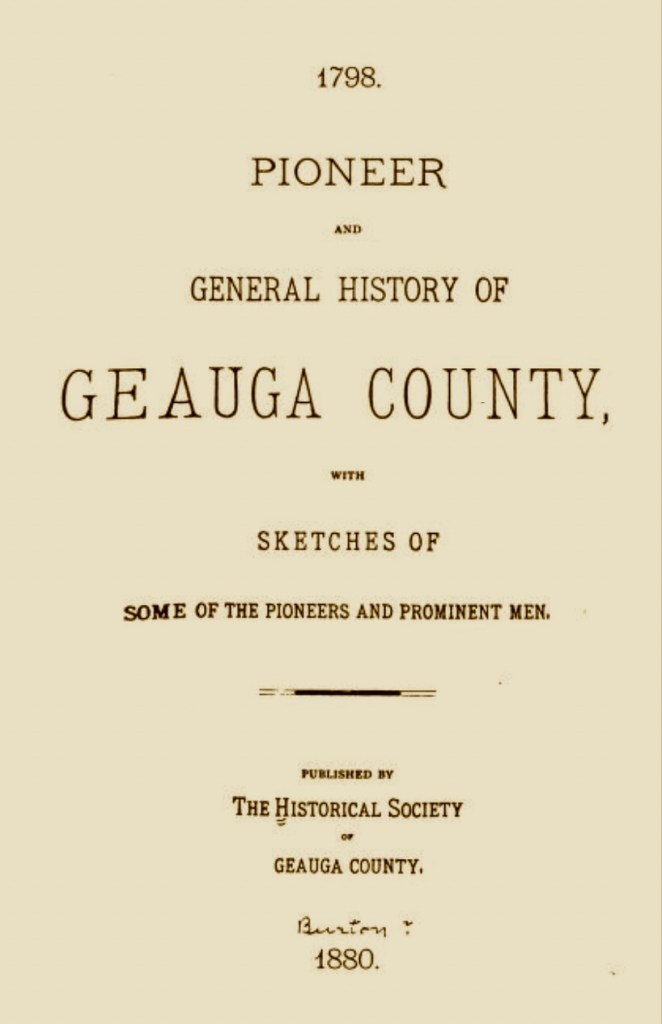
1798 – 1880, Pioneer and General History of Geauga County, with Sketches of Some of the Pioneers and Prominent Men
by The Historical Society of Geauga County
https://archive.org/details/oh-geauga-1880-historical-society/page/n9/mode/2up?view=theater
Book page: 89, Digital page: 89/821
Note: For the data regarding equal rights in Newbury.
 Our Ancestors, Our Narratives
