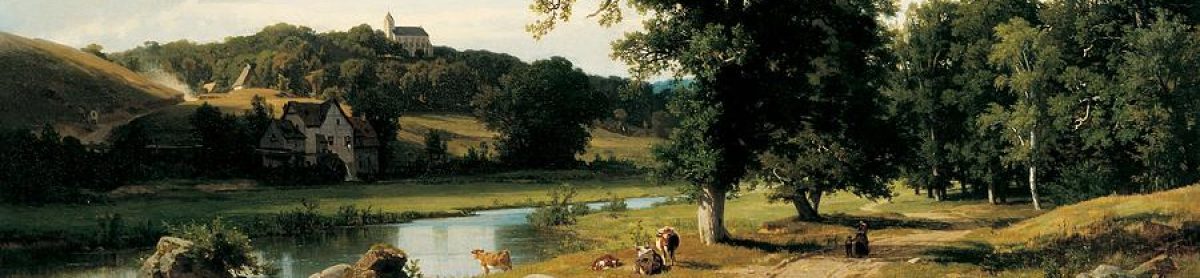
The Doty Line, A Narrative — Nine

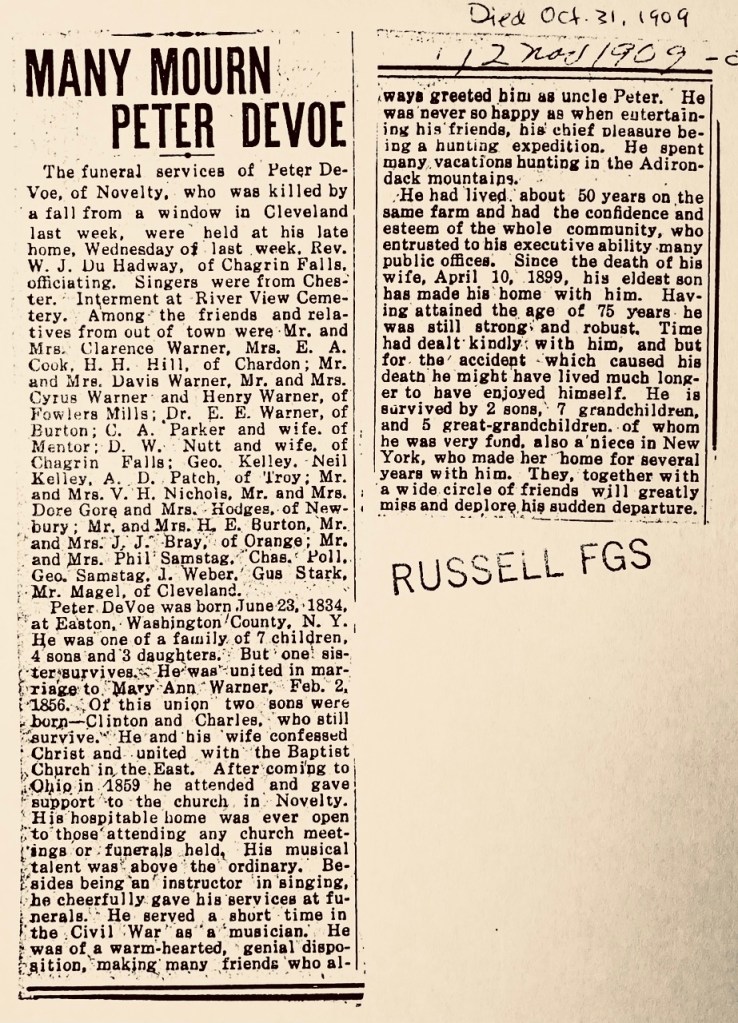
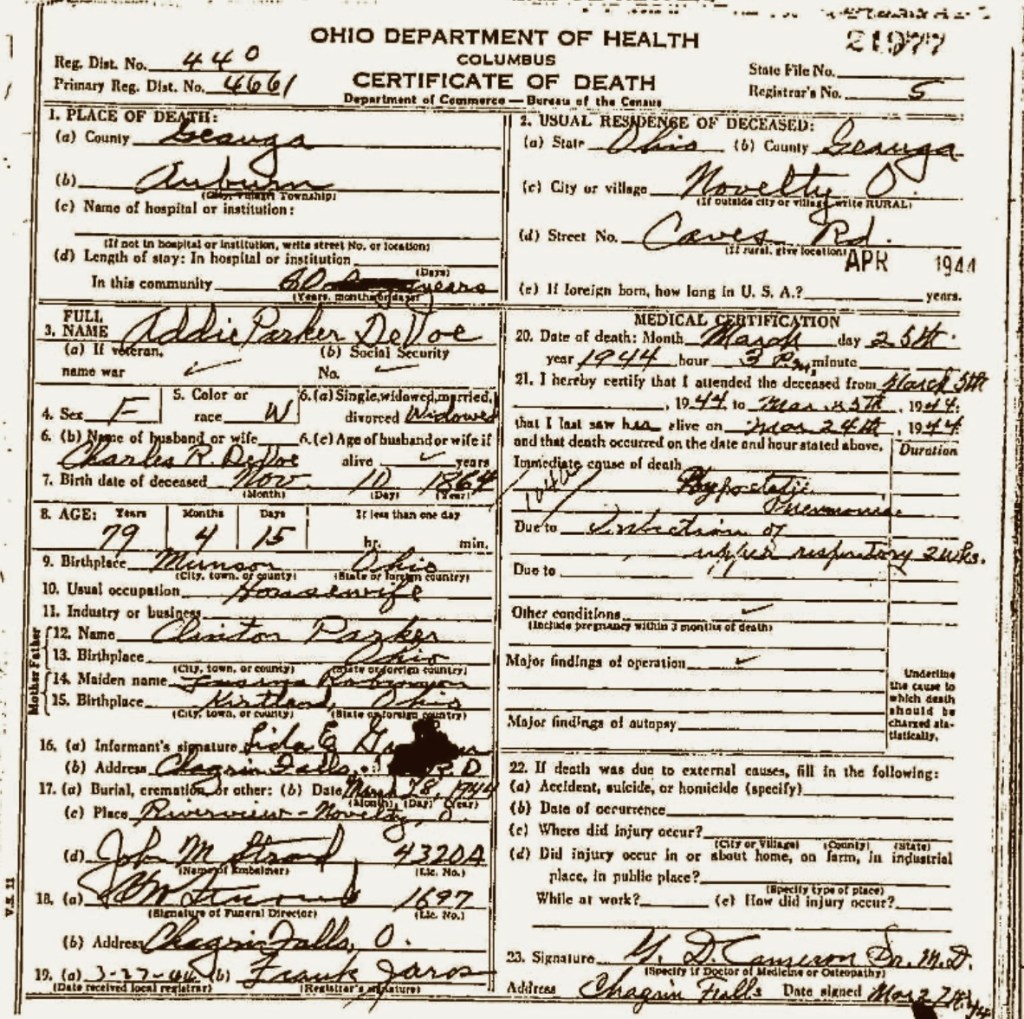
This is Chapter Nine of nine. This the last chapter of our narrative about the Doty Line, hence, we are writing about the marriage and family of Orman Shaw and his wife Elizabeth. In the last chapter (Eight), the Doty name gave way to the Shaw surname, and in this chapter, the Shaw surname gives way to the DeVoe surname.

This chapter covers the years from when Orman and his wife Elizabeth were born, from the years after the American Revolution, up the time of the American Civil War. We came across this distinctive bit of history, and feel that because it is unique, that perhaps we should share it. We reminds us of how life was so different for these generations, as compared to how we live today.

So, let’s take a look at the very last soldiers of the American Revolution.
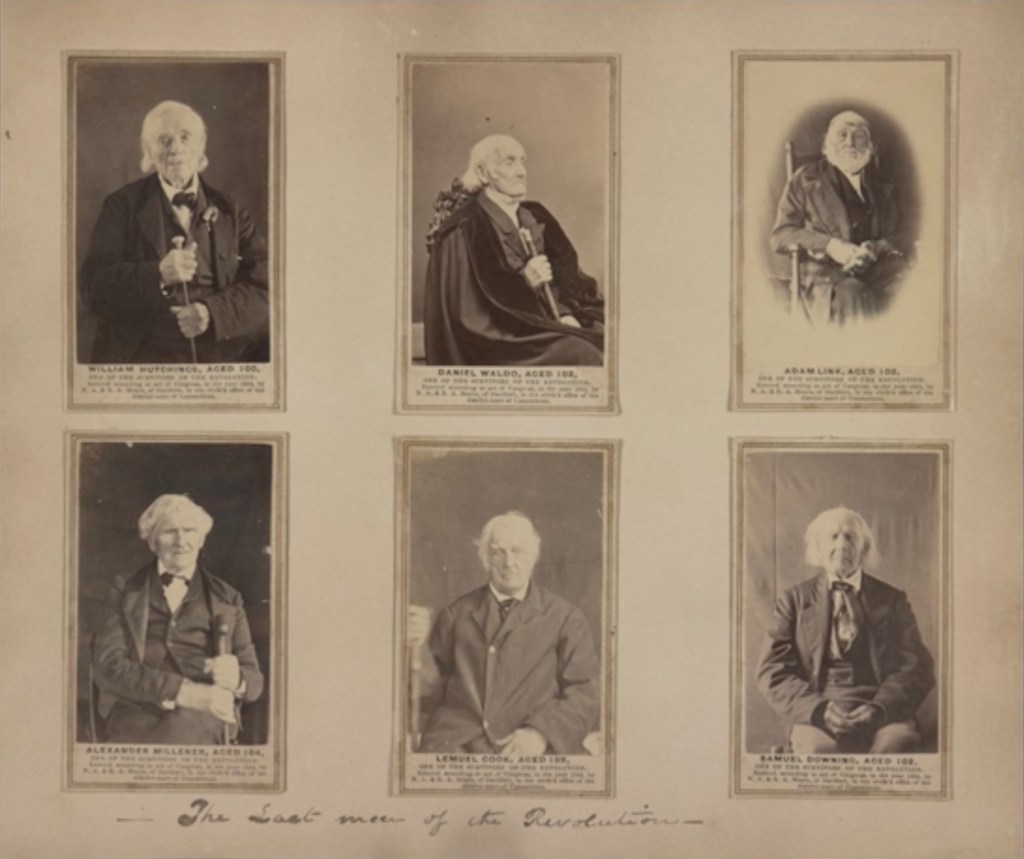
Image capture from the BBC video America’s Last Revolutionaries: Rare Photos of US patriots. (See footnotes).

The Last Six Men of the American Revolution

These men had lived their lives through a period when the United States as we have come to know it, first came into being. The BBC (isn’t that a bit ironic?) has created a celebrated video where we learn about these men who fought in the American Revolutionary War, and lived lifetimes that were so long — the end of their lives generally coincided with the end of those of our ancestors. To see the video (about 8 minutes in length), click on the link below:
https://www.bbc.com/reel/video/p0kh0k3v/america-s-last-revolutionaries-rare-photos-of-us-patriots (1)

A World That Seeks Balance

The young United States which Orman and Elizabeth Shaw were born into, was a world of variability. As such, they grew up in a young country that was trying to figure out how to govern itself, how to pay its debts from The War, how to establish a currency, how to unite the different states into a functioning Republic…

The PBS television program American Experience, aptly describes it this way in their program After The Revolution —
“The period following the Revolutionary War was one of instability and change. The end of monarchical rule, evolving governmental structures, religious fragmentation, challenges to the family system, economic flux, and massive population shifts all led to heightened uncertainty and insecurity. 

Although the states had united politically under the Articles of Confederation in 1777, they did not yet exist as a united nation. Each state retained individual sovereignty and operated under its own constitution. Congress struggled to hold the states together, and interests often clashed.”
The Articles of Confederation ended in 1789, and were then replaced with The Constitution.

Saratoga County New York, by Burr, 1866.
(Image courtesy of Maps Of The Past)

In other chapters we have described how local borders always seemed to be in flux — as described by Wikipedia, “When counties were established in the Province of New York in 1683, the present Saratoga County was part of Albany County. This was an enormous county, including the northern part of New York, as well as all of the present state of Vermont and, in theory, extending westward to the Pacific Ocean. This large county was progressively reduced in size by the separation of several counties until 1791, when Saratoga County and Rensselaer County were split off from Albany County.”

This family stayed local, living their 24 years first in Rensselaer County, and then moving one county westward to the community of Halfmoon in Saratoga County, where they put down deeper roots. The 1855 New York State Census tells us they relocated circa 1835. The Shaws were self sufficient farmers, likely making many of the things they needed, as their forebears had done across generations.
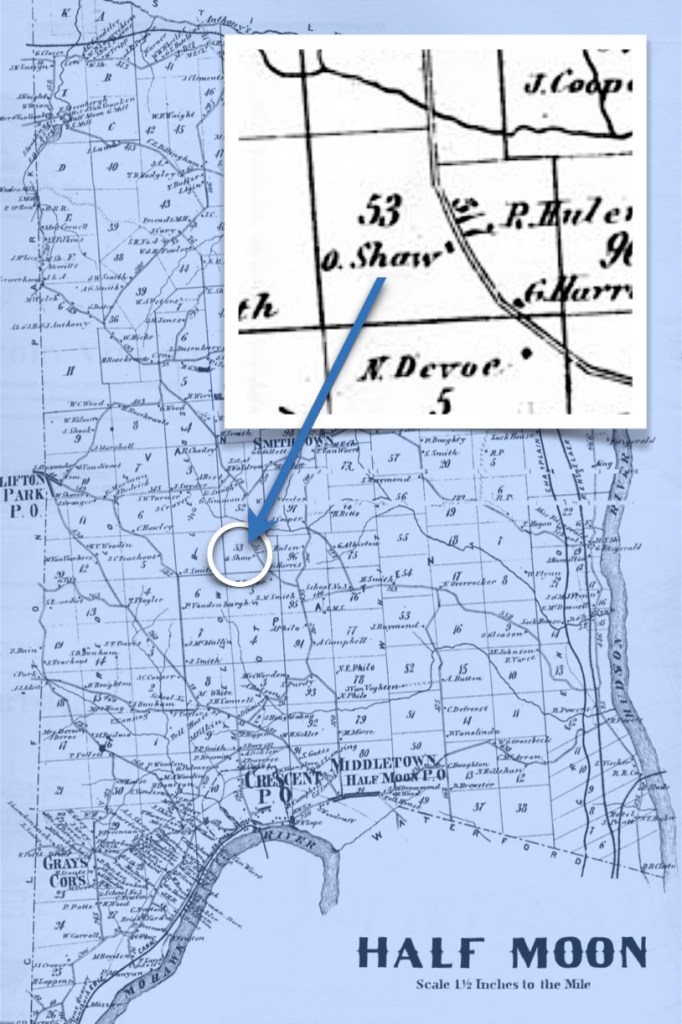
Orman Shaw’s Lot 53 property, where he had his farm. Shown on a map of the Town of Half Moon,
from the New Topographical Atlas of Saratoga County, New York, circa 1866

Even though this family had been born into an era of much change after the Revolutionary War, and there was much instability, things did evolve. The central government had become strong enough that a war with Great Britain had become inevitable for many reasons, but the basis of this new War was autonomy, and economics for the young United States. (2)

The War of 1812,
and Colonel William Knickerbocker’s 45th Regiment

“The tensions that caused the War of 1812 arose from the French revolutionary (1792–99) and Napoleonic Wars (1799–1815). During this nearly constant conflict between France and Britain, American interests were injured by each of the two countries’ endeavours to block the United States from trading with the other. American shipping initially prospered from trade with the French and Spanish empires, although the British countered the U.S. claim that ‘free ships make free goods’ with the belated enforcement of the so-called Rule of 1756 (trade not permitted in peacetime would not be allowed in wartime).” (Encyclopædia Britannica)

Orman Shaw served in the War of 1812 as a Private, in Captain Samuel Strom’s Company. That group was part of the larger brigade and regiment — the Schaghticoke brigade of Colonel William Knickerbocker’s 45th Regiment, of the New York Militia. They participated in the Plattsburgh Campaign.

At Left: Soldier Dress & Uniform in the War of 1812. (Image courtesy of the Pritzker Military Museum & Library). At Right: Macdonough’s Victory on Lake Champlain and Defeat of the British Army at Plattsburg by General Macomb, September 11, 1814, by Engraverː Benjamin Tanner, after painting by Hugh Reinagle. (Image courtesy of the Lake Champlain Maritime Museum Collection via Wikipedia).

As described in an article titled, Bicentennial of the Battle of Plattsburgh, on the blog History of the Town of Schaghticoke —
“According to a 1936 article in the Albany “Evening News”, the call for the draft went out; the men assembled at Henry Vandercook’s Inn and put slips of paper with their names in a hat. Every fourth slip of paper drawn was opened, and the man whose name appeared [was] drafted for service. I do not know how accurate this account is, as much of the rest of the story was not, but in any case, the 2,200 men began to march north on September 13, first goal Granville. Three solid days of rain ensued, with the march halted at Speigletown.

The newspaper account stated [that] they reached Granville two weeks later. [However…] they reached Granville on September 18. Whatever the case, the battle had occurred on September 11. As soon as that word reached the Brigade at Granville, it was disbanded and the men [were] sent home.”

1857 Pension claim for his service in the War of 1812, for Orman Shaw.
Excerpted from the New York, War of 1812 Certificates and Applications of
Claim and Related Records, 1858-1869. (See footnotes).

So we do not know if Orman actually experienced any other battles, since it seems he was certainly soaked to the bone with the rain and fatigued from the long march to Plattsburgh.

An eventual benefit of that experience was that he was eventually paid (43 years later!). He did qualify for a pension for his war service. The 1857 record for this is shown above, indicating that even at this very late date, he was compensated for costs that initially came out of his own pocket. (Notice that, like many other people of his era, he signed his name with an X). The amount was $54.25, which in today’s time is equal to about $2014.00. His wife Elizabeth was the designated heir for any further pension benefits. (See footnotes). (3)
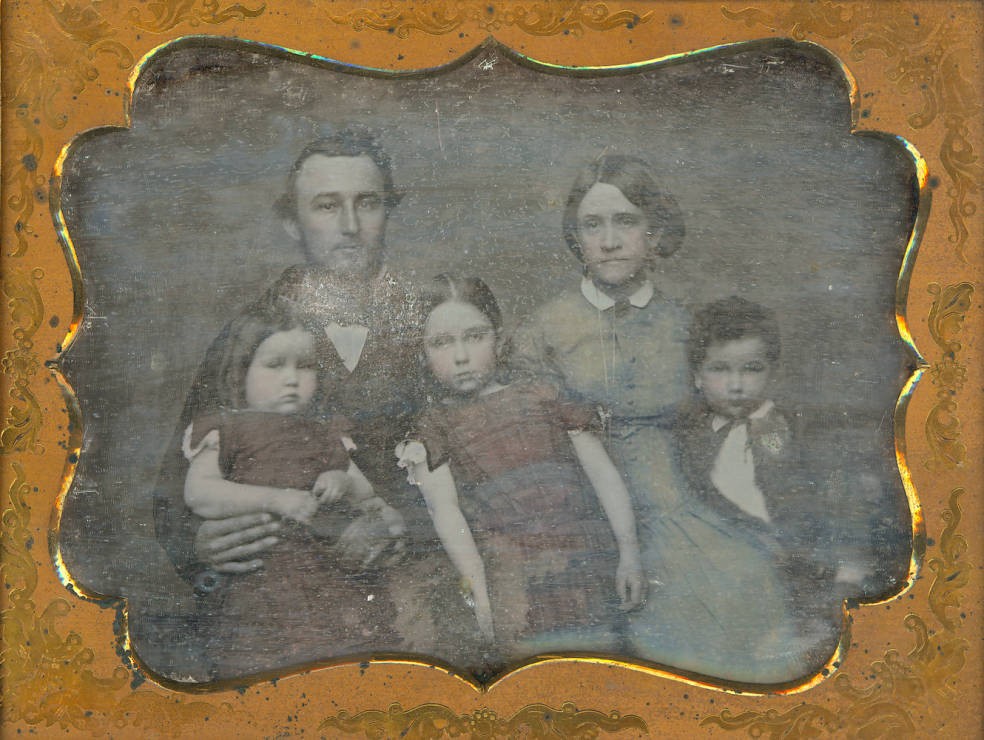
Just to be quite clear — this is not our 4x Great Grandfather Ormand Shaw’s family from long-ago New York State. Be that as it may, this is still a wonderful image — that of an unknown Ohio family, circa 1855, which we are using to ‘stand-in’ for Orman and Elizabeth’s family, [if only we had a daguerreotype of them!]. Image courtesy of Ohio Memory.

One interesting aspect of this time period, is that early forms of photography were starting to emerge as the world moved into the modern era. Some examples of this new photography are: heliography, calotypes, ambrotypes, tintypes, daguerreotypes, and albumen prints.

The Seven Shaws of Saratoga County

All birth and deaths took place in New York State, unless noted otherwise. Some county names did change over time — Albany County was reformed to be Rensselaer County, in 1791. So, before 1791 > Albany County, and after 1791 > Rensselaer County. Furthermore, when a county name changes, such as in a record for a marriage or a death, we have noted this.

We believe that in about 1811, Orman Shaw, married Elizabeth ________ (last name unknown) in Rensselaer, New York. He was born on March 3, 1790 in Pittstown, Albany County* — died August 13, 1842, Halfmoon, Saratoga County.
*Albany County became Rensselaer County in 1791.

His wife Elizabeth ________, was born May 1795 (location unknown) — died April 2, 1876 in Saratoga County. She is buried in the Crescent Cemetary, Crescent, Saratoga County.

They had five children, who are listed below. The first four children were born in Rensselaer County; youngest daughter Emeline was born in Saratoga County.

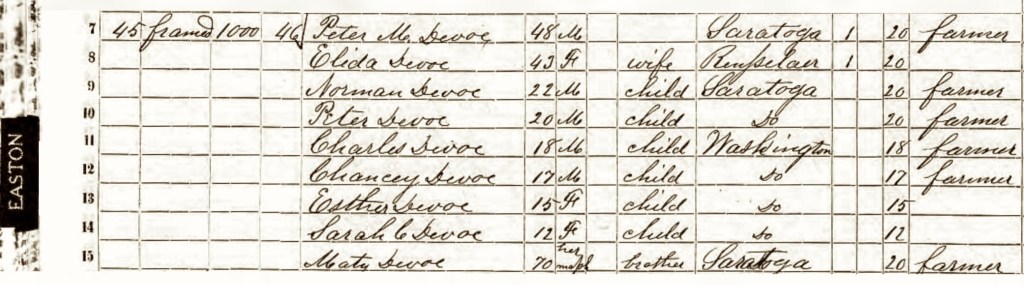
  • Elida (Shaw) DeVoe. (Who was sometimes recorded as Olive). She was born April 10, 1812 in Rensselaer County — died February 17, 1896, in Easton, Washington County. She married Peter M. DeVoe on January 22, 1829. Please refer to the chapter, The DeVoe Line, A Narrative — Eight, for the history of their family. (Note: Elida’s name is sometimes spelled Alida, and she is also occasionally written about with the nick name ‘Olive’ on documents).
    We are descended from Elida and her husband Peter M. DeVoe.
Marriage records excerpted from the U.S., Dutch Reformed Church Records in Selected States, 1639-1989, New York > Bought > Bought, Book 6. (See footnotes).
  • Elizabeth (Shaw) DeVoe Smead. She was born February 12, 1814 in Rensselaer County — died March 29, 1901 in Stillwater, Saratoga County. She was married two times: first to Cornelius DeVoe on October 7, 1830, he died in 1844; second (after) 1844, to Elihu Smead, he died in 1895. It is interesting to note that Elizabeth and her older sister Elida both married men from the DeVoe family, at the Boght-Becker Dutch Reformed Church, Colonie, Albany County.
  • John W. Shaw. He was born in 1825 in Rensselaer County — died March 8, 1915 in Daytona Beach, Volusia County, Florida. He married Sarah E. ________ (last name unknown). She was born in 1827.
  • Luzern Shaw. He was born in 1830, in Rensselaer County — died March 13, 1876, in Cohoes, Albany County. He married Julie Furman about 1855. She was born in April 1837, in either Dutchess or Green County — died December 6, 1838, in Halfmoon, Saratoga County.

    Luzern’s death is written about in the March 1876 edition of The Troy Daily Times under the section called: “Cohoes – Temperance Address — St. Patrick’s Day — Sudden Death: Luzern Shaw, an old resident of the first ward, died very suddenly last night. Heart disease is supposed to be the cause of his death.” They had three children, one of whom (Norman) died by suicide. (See footnotes).
  • Emeline (Shaw) Devine. She was born in 1838, in Saratoga County. She married Michael Devine, and died after 1868, likely in Malta, New York. (4)

Bringing The Farm to The Market

Sometimes we have the opportunity to understand more about the everyday lives of our ancestors when we come across documents which inform us about how they earned their livelihoods. Some pursed being merchants, one was a silversmith, several were painters, and many, many were farmers. For Orman Shaw, we have what are known as Agricultural Assessments from the Federal government in 1850 and 1860, as well as one from New York State in 1865. These reports help to paint a picture of what products he had brought to the market.

Sunday, a watercolor painting by Myles Birket Foster, of the English School.
This image demonstrates well the types of products which were produced on Orman Shaw’s farm in the 19th century: grain crops such as wheat farming, and raising livestock, in an area similar to the upper Hudson River Valley. (Image courtesy of Meisterdrucke).

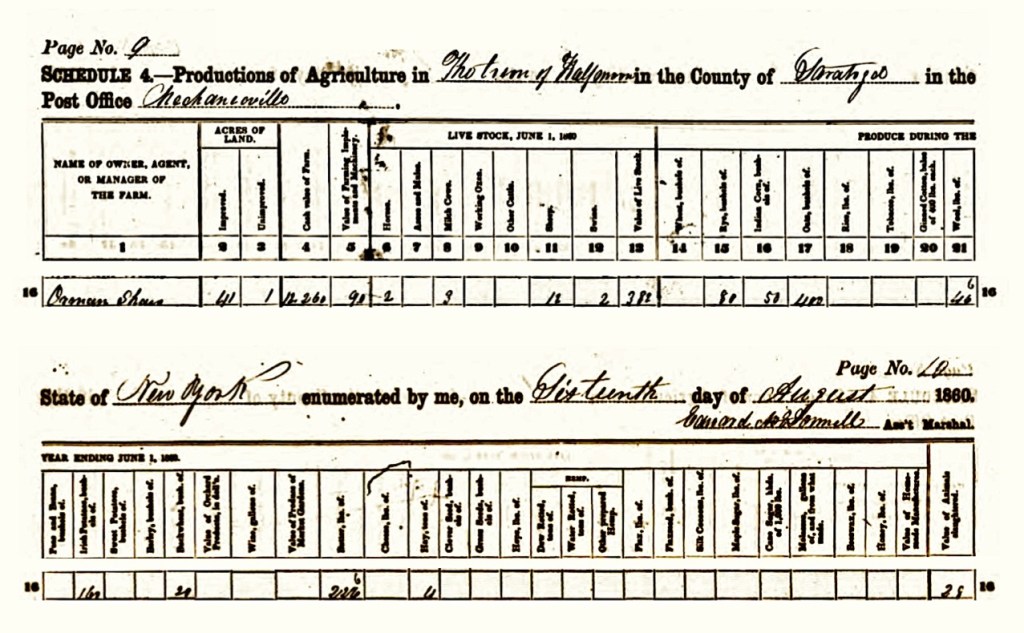
From those documents, and selecting 1860 as an example report, we learned some interesting things. Instead of being a farmer who grew crops, (but not corn, which seems to be stuck in our mind’s eye…) — he grew Irish potatoes, buckwheat, and hay. He raised swine, which were market animals. There were dairy cows, so he had fresh milk with which he made and sold butter. He was selling the wool from his sheep, likely to the newly developing area woolen mills that were opening in nearby counties.

In 1850, he reported his farm as having 211 improved acres, and 8 unimproved acres. The value of the farm was about $1200. Ten years later in 1860, it was clear to us that he had sold much land because his acreage was reduced to 41 acres, but the cash value of his property had increased to over $12,000. It seems that since he was in his 60s by then, he must of felt that having money in the bank was a prudent choice. That makes sense since this is what had been going on in America of the 1850s—

“The Panic of 1857 was a significant economic crisis that began in August 1857, stemming from a combination of agricultural and financial instabilities. The aftermath of the Crimean War reduced European demand for American crops, particularly affecting land speculators in the U.S. Meanwhile, the financial infrastructure was already overextended, and the failure of the Ohio Life Insurance and Trust Company sparked widespread panic. Following this, a series of bank failures in New York led to a loss of public confidence in the banking system, exacerbated by the sinking of the Central America steamer, which carried crucial gold reserves.” (Ebsco)

Excerpts from pages 9 and 10 for Orman Shaw in the U.S., Selected Federal Census Non-Population Schedules for 1860.

The New York State assessment of 1865 actually sought out much more data than the previous Federal assessments in 1850 and 1860. (The amount of questions and the categories actually doubled). Since the survey was done in 1865, this period of time coincided with the end of the American Civil War. We evaluated the data in 1865, it looked remarkably like the data from 1860. The questions then became for us, How did the Civil War affect things for New York farmers by the last assessment of 1865, which occurred soon before Orman’s death? (Technically, the War ended in 1865ish when there was a general cease of hostilities, see below).

“The conclusion of the American Civil War commenced with the articles of surrender agreement of the Army of Northern Virginia on April 9, at Appomattox Court House, by General Robert E. Lee and concluded with the surrender of the CSS Shenandoah on November 6, 1865, bringing the hostilities of the American Civil War to a close. Legally, the war did not end until a proclamation by President Andrew Johnson on August 20, 1866, when he declared “that the said insurrection is at an end and that peace, order, tranquillity, and civil authority now exist in and throughout the whole of the United States of America”. The Confederate government being in the final stages of collapse, the war ended by debellatio, with no definitive capitulation from the rapidly disintegrating Confederacy; rather, Lee’s surrender marked the effective end of Confederate military operations.” (Wikipedia)

Center image, Lee’s Surrender, Peace in Union by Thomas Nast.
The surrender of General Lee to General Grant at Appomattox Court House, Virginia, April 9, 1865.
(Image courtesy of http://www.granger.com via Wikipedia). The United States Flag and The Confederate States Flag images are courtesy of Google Images.

Unlike the American Revolutionary War and the War of 1812, no major battles for the Civil War were fought on the soil of New York State. Be that as it may, there were still riots and some fires south of Saratoga County in Manhattan. Perhaps this explains the relative equanimity that we perceive between the 1860 to 1865 surveys. If anything, farmers like Orman Shaw of Saratoga County were more appreciated. “New York boasted the nation’s most valuable farm land both before and after the Civil War. New York City was the nation’s biggest commercial, manufacturing and financial center during Reconstruction. [i.e. after the War] (PBS, American Experience)

Traveling On The Erie Canal, published in the 1825 edition of The Northern Traveler by Theodore Dwight. (Image courtesy of 40 x 4 x 28, see footnotes).

One thing to understand about this period, is that these years marked a transition between farming for one’s own subsistence, to one where many products could now be transported for sale to a larger market. Starting in the 1820s, New York State had built canals, such as the Erie Canal, and they were innovative for transporting goods to market. During the 1850s, new railroad lines were being built (practically everywhere it seems), and they were achieving even greater success with the timing and volume of goods moved. (NY State Canal Commission) (5)

Seen This Way, The Past Isn’t Finished

As we surmised from reviewing the various agricultural assessments, Orman Shaw seems to have been a sensible and thoughtful man. To that end, he thought about his own end long before it happened, creating his Will many years before it was actually needed. It is a very straightforward document, leaving much of his estate to his wife Elizabeth, but also providing for his children. (See footnotes).

First page of the 1868 Probate Notice, for the December 1858 Will of Orman Shaw.
Excerpted from the New York, U.S., Wills and Probate Records, 1659-1999,
Saratoga > Wills, Vol 021. (His complete Probate and Will is in the footnotes).

The Dotys > the Shaws > and the DeVoes had been making their homes in the New Amsterdam / New York area for many, many years. As an example, while the Dotys began in the Plymouth Colony, our ancestor David Du Four (DeVoe) was also living in Manhattan as a Walloon emigrant from the Southern Netherlands. For the generation that was to follow this one, this statement was prophetic. “Saratoga County was also a gateway for the westward migration of many settlers, as the Mohawk River provided a natural passageway through the Appalachian Mountains. Both the historic Champlain Canal, located on the Hudson River, and the Erie Canal, located on the Mohawk River, operated in this county.” (Town of Saratoga)
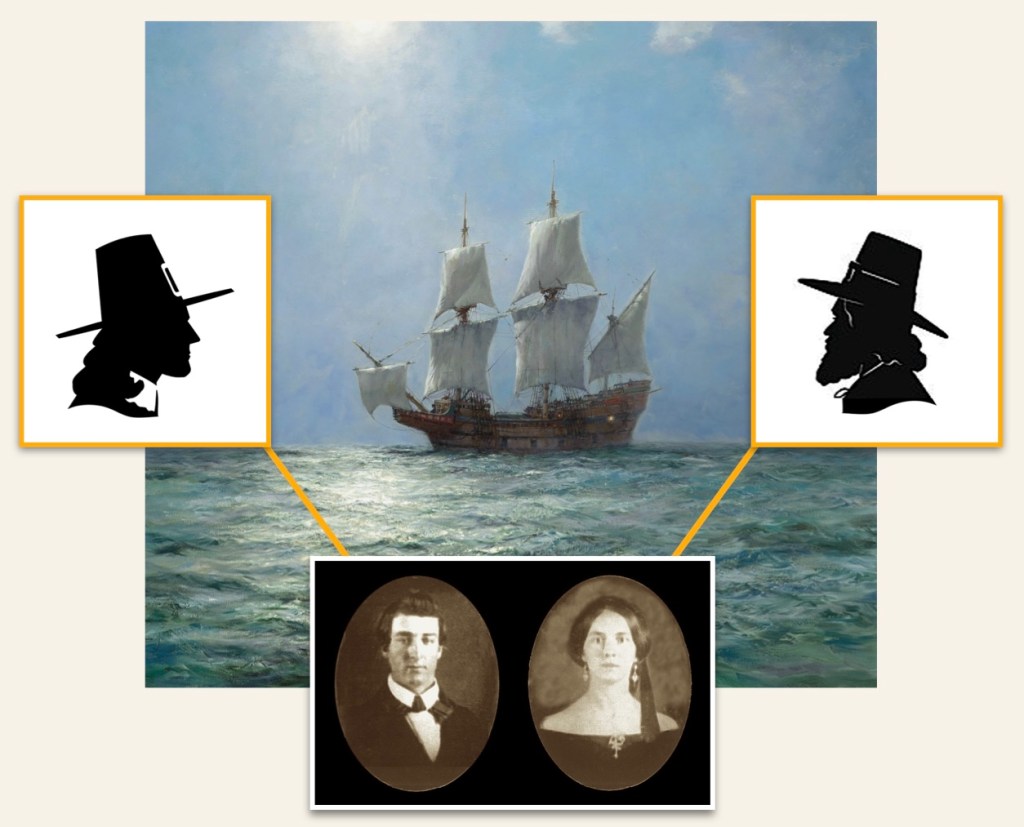
We are descended from two of the original Plymouth Pilgrim families, from the 1620 voyage
of the Mayflower. Both of these lines meet with our 2x Great Grandparents, through
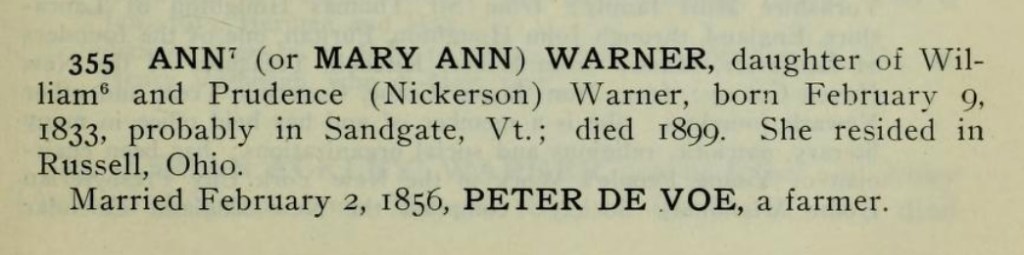
the marriage of Peter A. DeVoe (for Edward Doty), and Mary Ann Warner (for George Soule).
Background image, Isolation: The Mayflower Becalmed on a Moonlit Night, by Montague Dawson.

This then brings us full circle to Generation 8 in America — to Elida (Shaw) DeVoe’s son, Peter A. DeVoe, who is our 2x Great Grandfather. He is the direct descendant of Mayflower passenger, Pilgrim Edward Doty. When he married our 2x Great Grandmother Mary Ann Warner, she was the direct descendant of Doty’s fellow Mayflower passenger, Pilgrim George Soule. Their union connected the Doty and Soule lineages from the Mayflower.

You can read about Elida (Shaw) DeVoe’s life with her family and the subsequent generations, starting in The DeVoe Line, A Narrative — Eight.

We look backward, in order to look forward.
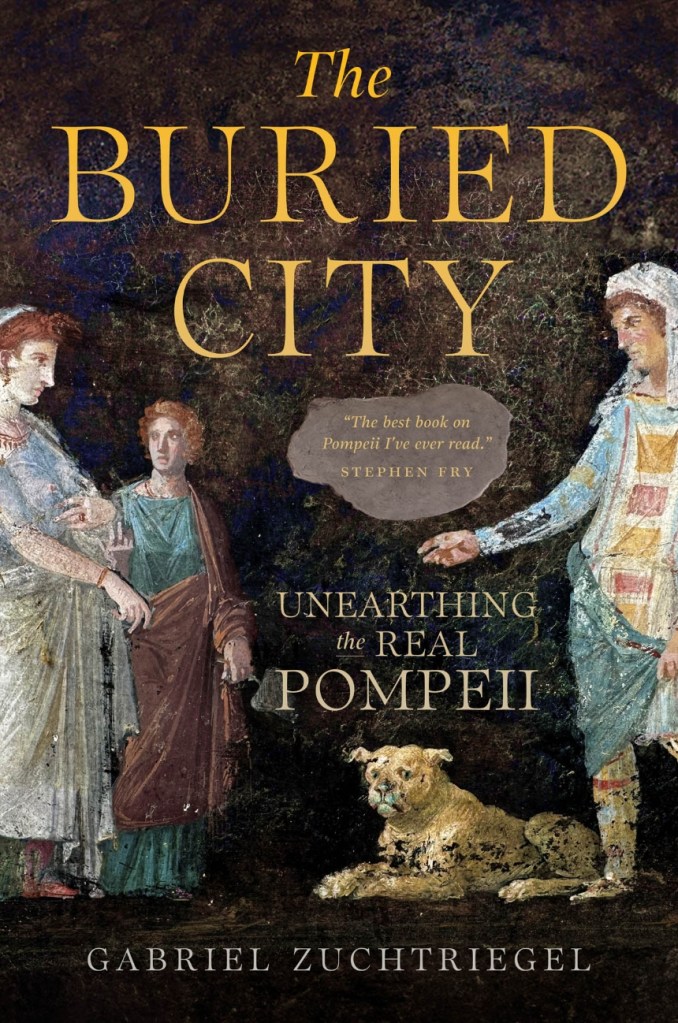
Sometimes we ponder if the genealogy work that we enjoy doing, is similar in a way to the type of work which archeologists do. In a passage found in a recent fascinating book about Pompeii, written by the director of the Pompeii Archaeological Park, Gabriel Zuchtriegel, we felt that his words captured our similar point-of-view very well:

“We must realize that we’re the product of the past, the decisions people have taken, sometimes centuries ago, but also that the decisions we make about telling history
in a particular way constructs the present and the future. Seen this way, the past isn’t finished. We, who keep telling and discovering the past, are in the middle of it.”
— excerpted from
The Buried City, Unearthing the Real Pompeii
by Gabriel Zuchtriegel, and Jamie Bulloch (translator] (6)

Following are the footnotes for the Primary Source Materials,
Notes, and Observations

The Last Six Men of the American Revolution

(1) — two records

BBC
America’s Last Revolutionaries: Rare Photos of US Patriots
https://www.bbc.com/reel/video/p0kh0k3v/america-s-last-revolutionaries-rare-photos-of-us-patriots
Note: For the video link.

The original book upon which the video is based:
The Last Men of the Revolution : A Photograph of Each From Life,
Together With Views of Their Homes Printed in Colors: Accompanied by
Brief Biographical Sketches of The Men

by E. B. Hillard, circa 1864
https://archive.org/details/gri_33125012930976/page/n7/mode/2up
Note: For the data.

A World That Seeks Balance

(2) — four records

PBS
American Experience
After the Revolution
https://www.pbs.org/wgbh/americanexperience/features/midwife-after-revolution/#:~:text=The%20period%20following%20the%20Revolutionary,to%20heightened%20uncertainty%20and%20insecurity.
Note: For the text.

Saratoga County, New York
https://en.wikipedia.org/wiki/Saratoga_County,_New_York
Note: For the text.

Maps Of The Past
Historic County Map — Saratoga County New York
by Burr, 1866
https://mapsofthepast.com/products/historic-county-map-saratoga-county-new-york-burr-1866-23-x-26-38-vintage-wall-art?srsltid=AfmBOoriJTM18WF7QhJ6QUHVM9PG1DdHHVq2Ji6H_5h-tjaPtL8_cO9X
Note: For the map image.
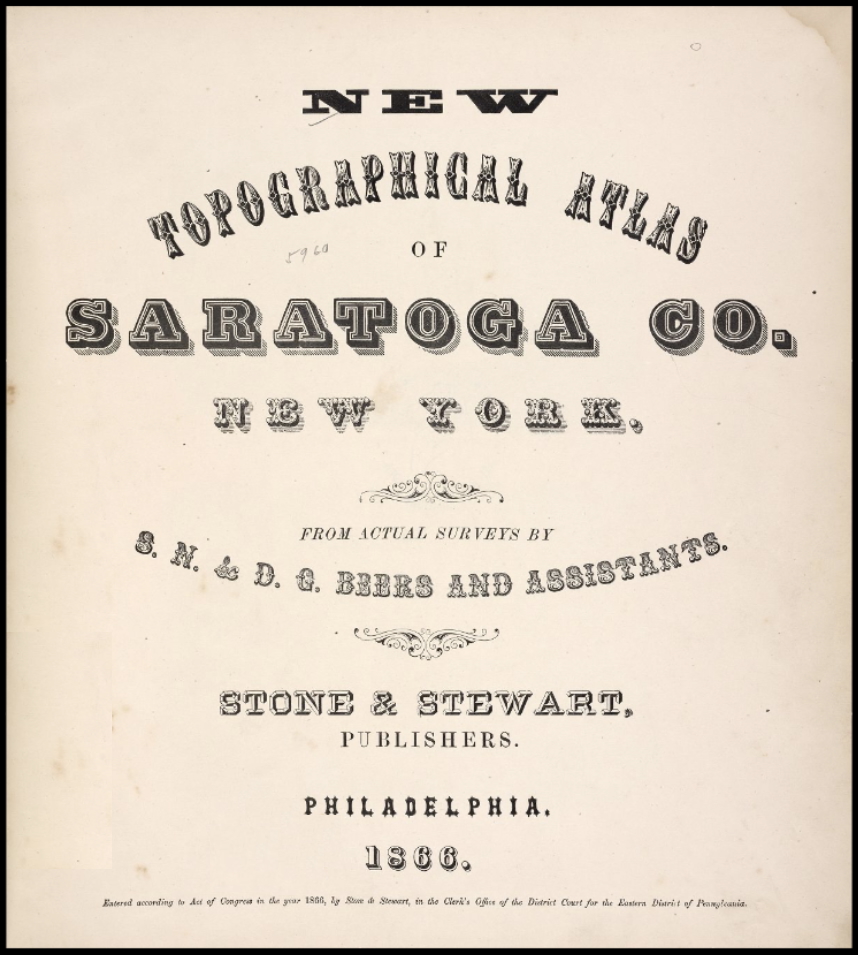
New Topographical Atlas of Saratoga County, New York,
from Actual Surveys by S. N. & D. G.
by Beers and Assistants, Stone & Stewart Publishers, Philadelphia, 1866
Town of Half Moon
http://aleph0.clarku.edu/~djoyce/gen/saratoga/HalfMoon.html
Note: For the map image.

The War of 1812,
and Colonel William Knickerbocker’s 45th Regiment


(3) — eight records

Encyclopædia Britannica
War of 1812, United Kingdom-United States history
https://www.britannica.com/event/War-of-1812
Note: For the text.

Orman Shaw
in the New York, U.S., War of 1812
Payroll Abstracts for New York State Militia, 1812-1815
https://www.ancestry.com/search/collections/5370/records/40678?tid=&pid=&queryId=c54e6ca0-5bf6-48b1-b11e-3f621985e820&_phsrc=XgW11&_phstart=successSource
Digital page: 746/1026
Note: For the form and data.

Pritzker Military Museum & Library
Soldier Dress & Uniform in the War of 1812
https://www.pritzkermilitary.org/soldier-dress-uniform-war-1812
Note: For soldier and sailor uniforms for the War of 1812.

Battle of Plattsburgh
https://en.wikipedia.org/wiki/Battle_of_Plattsburgh
Note: For the naval battle image.

History of the Town of Schaghticoke
Bicentennial of the Battle of Plattsburgh
https://schaghticokehistory.wordpress.com/tag/war-of-1812/
Note: For the text.

Orman Shaw
in the New York, War of 1812
Certificates and Applications of Claim and Related Records, 1858-1869
https://www.ancestry.com/search/collections/61602/records/1892
Note: For the form and data.

Orman Shaw
in the U.S., War of 1812
Pension Application Files Index, 1812-1815
https://www.ancestry.com/search/collections/1133/records/12473?tid=&pid=&queryId=67ee574a-c0de-4bba-a7f3-604dc04b1412&_phsrc=XgW8&_phstart=successSource
Note: For the form and data.

CPI Inflation Calculator
https://www.in2013dollars.com/us/inflation/1857?amount=54.25

The Seven Shaws of Saratoga County

(4) — eighteen records

Ohio Memory
The Father of Commercial Photography
by Lily Birkhimer
https://ohiomemory.ohiohistory.org/archives/901
Note: For the image of the hand-tinted daguerreotype showing an unknown Ohio family in 1855.

Ormon Shaw
in the U.S., Find a Grave Index, 1600s-Current
https://www.ancestry.com/search/collections/60525/records/64818874?tid=&pid=&queryId=f3dee6ae-c8db-4089-a5d2-9496668ef966&_phsrc=XgW1&_phstart=successSource
and
Ormon Shaw

https://www.findagrave.com/memorial/92469264/ormon-shaw
Note: For the data.

Elizabeth Shaw
in the U.S., Find a Grave Index, 1600s-Current
https://www.ancestry.com/search/collections/60525/records/64818889?tid=13457304&pid=122242335478&ssrc=pt
and
Elizabeth Shaw
https://www.findagrave.com/memorial/92469282/elizabeth-shaw
Note: For the data.

Peter Devoe
in the U.S., Dutch Reformed Church Records in Selected States, 1639-1989

New York > Bought > Bought, Book 6
https://www.ancestry.com/discoveryui-content/view/216615:6961
Book page: 13, Digital page: 59/105, Entry 1.
Note: For the marriage dates of Elida Shaw and her sister, Elizabeth Shaw.

The New York Times
Suicide of a Boy — A Threat Carried Out
https://www.nytimes.com/1870/08/20/archives/suicide-of-a-boya-threat-carried-out.html
Note 1: 1870 Death notice for Norman Shaw, the son of Luzern Shaw and Julie (Furman) Shaw.
Note 2: The online link is for New York Times subscribers.

Research Note — We have included all Census information we were able to locate for this family, from 1810 through 1865.

O Shaw
in the 1810 United States Federal Census
New York > Rensselaer > Schaghticoke
https://www.ancestry.com/search/collections/7613/records/319074?tid=&pid=&queryId=1c086b73-fe18-43fd-973f-86393d43093a&_phsrc=XgW14&_phstart=successSource
Book page: 64, or 435 (handwritten), Digital page: 1/10, Upper portion, entry #19
Note: For the data.

1810 Census Records
https://www.archives.gov/research/census/1810
Note: For the data.

Ormand Shaw
in the 1820 United States Federal Census
New York > Rensselaer > Schaghticoke
https://www.ancestry.com/search/collections/7734/records/504125?tid=&pid=&queryId=5410cdcd-49a1-4779-b96f-4c5ad74bb3a9&_phsrc=XgW10&_phstart=successSource
Digital page: 7/9, Upper portion, entry #7 (below his father Daniel Shaw)
Note: For the data.

1820 Census Records
https://www.archives.gov/research/census/1820
Note: For the data.

Orean Shaw
in the 1840 United States Federal Census
New York > Saratoga > Half Moon
Book page: 4 or 5, Digital page: 13/34, Upper portion, entry #5
Note: For the data.

1840 Census Records
https://www.archives.gov/research/census/1840
Note: For the data.

Orman Shaw
in the 1850 United States Federal Census
New York > Saratoga > Halfmoon
https://www.ancestry.com/search/collections/8054/records/8325089?tid=&pid=&queryId=b5d111be-0778-4a9b-9b32-0d9a0f10ea2f&_phsrc=GES1&_phstart=successSource
Digital pages 28-29/67, Lines 41, 42, (on page 28), Lines 1, 2 (on page 29)
Note: For the data.

1850 Census Records
https://www.archives.gov/research/census/1850
Note: For the data.

Norman Shaw
in the New York, U.S., State Census, 1855
Saratoga > Halfmoon > E.d. 1
https://www.ancestry.com/search/collections/7181/records/1653051873
Digital page: 19/22
Note 1: This census lists a granddaughter named Elizabeth Shear living in the home, who we believe could be a daughter of Elizabeth (Shaw) Smead. (We are still researching this relationship. Observe the difference in the surname spelling). Additionally, in Orman Shaw’s 1858 Will there is a minor boy listed named Norman Shear, who is likely her brother.
Note 2: This census also indicates that they have been living in Halfmoon for 20 years. That means that they relocated there circa 1835. Thus, Emeline is their only child born there.

New York Genealogical & Biographical Society
1855 New York State Census
https://www.newyorkfamilyhistory.org/subject-guide/new-york-state-census-records-online
Note: “The 1855 New York state census is notable because it was the first to record the names of every individual in the household. It also asked about the relationship of each family member to the head of the household—something that was not asked in the federal census until 1880.”

Orman Shaw
in the New York, U.S., State Census, 1865
Saratoga > Halfmoon
https://www.ancestry.com/search/collections/7218/records/1039871?tid=&pid=&queryId=6799a95f-ba3d-474c-b989-2cb60c663a84&_phsrc=XgW18&_phstart=successSource
Book page: 37, Digital page: 19/62, Right page, line 14
Note: For the data.

New York Genealogical & Biographical Society
1865 New York State Census
https://www.newyorkfamilyhistory.org/subject-guide/new-york-state-census-records-online

Bringing The Farm to The Market

(5) — twelve records

Meisterdrucke
Sunday
Watercolor painting by Myles Birket Foster, circa 1861
https://www.meisterdrucke.uk/fine-art-prints/Myles-Birket-Foster/66821/Sunday.html

Orman Shaw
in the U.S., Selected Federal Census Non-Population Schedules, 1850-1880
— for 1850
New York > Agriculture > 1850 > Saratoga > Halfmoon
https://www.ancestry.com/search/collections/1276/records/4678711?tid=&pid=&queryId=7ec47de9-f45e-4860-bfae-001c1dda8dad&_phsrc=gDu9&_phstart=successSource
Digital page: 2/6, Line 39
and
https://www.ancestry.com/search/collections/1276/records/4678711?tid=&pid=&queryId=7ec47de9-f45e-4860-bfae-001c1dda8dad&_phsrc=gDu9&_phstart=successSource
Digital page: 3/6, Line 39

Orman Shaw
in the U.S., Selected Federal Census Non-Population Schedules, 1850-1880
— for 1860
New York > Agriculture > 1850 > Saratoga > Halfmoon
https://www.ancestry.com/search/collections/1276/records/4516098?tid=&pid=&queryId=fe821526-8e41-485d-96a7-9c17a3008267&_phsrc=gDu11&_phstart=successSource
Book page: 9, Digital page: 6/7, Line 16
and
https://www.ancestry.com/search/collections/1276/records/4516098?tid=&pid=&queryId=fe821526-8e41-485d-96a7-9c17a3008267&_phsrc=gDu11&_phstart=successSource
Book page 10, Digital page 7/7, Line 16

Ebsco
Panic of 1857
https://www.ebsco.com/research-starters/history/panic-1857
Note: For the text.

Arman Shaw
in the New York, U.S., State Census, 1865
(The file is mislabled. This is actually an Agricultural Assessment.)
– for 1865
Saratoga > Halfmoon
https://www.ancestry.com/search/collections/7218/records/2880127?tid=&pid=&queryId=45bdb53a-b9b7-4bfa-8ee3-f3d512ba51f2&_phsrc=gDu19&_phstart=successSource
Book page: 56-59, Digital page: 29-31/62, Line 7
Note: This is a multipage form with many more data points.

Conclusion of the American Civil War
https://en.wikipedia.org/wiki/Conclusion_of_the_American_Civil_War
Note: For the text.

Lee’s Surrender, Peace in Union by Thomas Nast
[www.granger.com via Wikipedia]
https://commons.wikimedia.org/wiki/File:General_Robert_E._Lee_surrenders_at_Appomattox_Court_House_1865.jpg
Note: For the painting.

PBS
American Experience
Reconstruction: The Second Civil War
State by State — New York, Union State
https://www.pbs.org/wgbh/americanexperience/features/reconstruction-states/
Note: For the text.

40 x 4 x 28
(Historical Landscapes of The Erie Canal)
Navigating The Noses
Traveling On The Erie Canal, circa 1825
by Henry Inman (painter) and Peter Maverick (engraver)
https://40x4x28.com/category/the-noses/
Note: For the image.

NY State Canal Commission
The Dream of The Erie Canal
https://www.canals.ny.gov/About/History
Note: For the data and the image.

Seen This Way, The Past Isn’t Finished

(6) — four records

First page of the December 1868 Probate Notice
for the December 1858 Will of Orman Shaw, page 495.
Second page of the December 1868 Probate Notice
for the December 1858 Will of Orman Shaw, page 496.
Third page of the December 1858 Will of Orman Shaw, page 497.

Orman Shaw
in the New York, U.S., Wills and Probate Records, 1659-1999
https://www.ancestry.com/search/collections/8800/records/9143519?tid=&pid=&queryId=dfe2db3c-1d4c-4bdb-b0b1-0c88cfc683fc&_phsrc=XgW6&_phstart=successSource
Book pages: 495-497, Digital pages: 271-272/401
Note: For the document [3 pages total] and data.

Town of Saratoga
County of Saratoga History
https://www.saratogacountyny.gov/departments/county-clerk/historian/county-history/
Note: For the text.

Isolation: The Mayflower becalmed on a moonlit night
by Montague Dawson, (British, 1890-1973)
https://www.mutualart.com/Artwork/Isolation–The-Mayflower-becalmed-on-a-m/FD8D6C1A6976C620
Note: For the image of the Mayflower painting.
The University of Chicago Press
The Buried City, Unearthing the Real Pompeii
by Gabriel Zuchtriegel, and translated by Jamie Bulloch
https://press.uchicago.edu/ucp/books/book/chicago/B/bo246710287.html
Note: For the pull quote excerpted from the text.

The Soule Line, A Narrative — Seven

This is Chapter Seven of seven. In this last narrative on the descendants of Pilgrim George Soule, we cover Generations Five and Six in America. Both of these generations carry the new family surname of Warner.

Preface

Our introduction to the Drinkwater name family goes back to the early 1970s, when first heard the name Mercy Drinkwater from our Grandmother Lulu Gore. Mercy was the 2x Great Grandmother to Lulu, and it was likely that Mercy’s first name evolved from an idea in Christian theology. The “seven lively virtues… are those opposite to the seven deadly sins. They are often enumerated as chastity, temperance, charity, diligence, kindness, patience, and humility.” (Wikipedia). We could see the name ‘Mercy’ falling right in line with that point-of-view. (1)

Just ask Homer Simpson which one has more fun.

However, we must admit a bit sheepishly that the ‘deadly sin’ part of our personalities cannot help but notice that when you say her name out loud, it sounds distinctly like you are either openly worrying about dehydration, or echoing the emergency response team from the Poison Control Center:
Mercy! Drink water!

So much… for lively virtue.

Woodbury, Connecticut Colony

Like our ancestors who founded the Plymouth Colony in Massachusetts, the settlers who founded Woodbury, Connecticut were also religious objectors. “The founders of Woodbury came from Stratford, Connecticut, in the early 1670s. Ancient Woodbury consisted of the present towns of Woodbury, Southbury, Roxbury, Bethlehem, most of Washington and parts of Middlebury and Oxford.

Two groups of settlers came from Stratford. The first, religious dissidents unhappy with the church in Stratford, was led by Woodbury’s first minister, the Reverend Zachariah Walker. The second, led by Deacon Samuel Sherman, had been given approval by the general court to purchase land from local Native Americans in order to establish a new settlement. Together, fifteen families (about fifty people), arrived in ancient Woodbury, known as ‘Pomperaug Plantation’, early in 1673.” (Wikipedia, Woodbury Connecticut)

“By the end of the eighteenth century Woodbury had developed as a thriving center of agricultural trade because of its proximity to the Housatonic River, which provided a major navigational route to the coast. A measure of Woodbury’s wealth was the large number of artisans and tradesmen such as millers, blacksmiths, wheelwrights and clothiers as well as tinsmiths, tanners, joiners and goldsmiths.” (The Old Woodbury Historical Society)

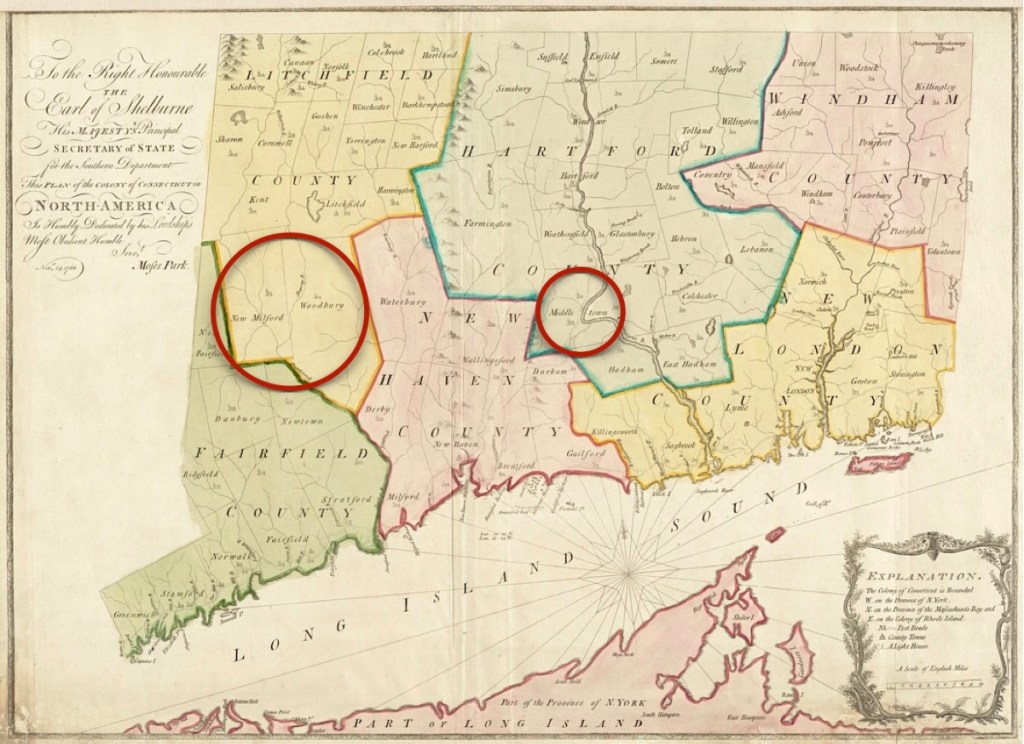
Plan of the Colony of Connecticut in North America, by Moses Park, 1766.
Mercy Drinkwater is from the area of the larger circle to the left; Eliphaz Warner, from the smaller circle to the right. (Image courtesy of the Boston Public Library).

One of the things about our Ancestral Grandmothers is the fact that not many records survive about these women. The eras that they lived in didn’t allow the creation of many meaningful records due to the customs of the time: things like civic records, inheritance laws, even Census data until about 1850… there just isn’t much there, or even that has survived. So it is with Mercy Drinkwater, especially as a young child.

We know when she was born, and that she was the youngest of 12 children from her father’s first wife. Her mother Elizabeth (Benedict) Drinkwater, died in 1749 when Mercy was about 15 months old. Her father William then remarried Susannah Washburn in 1751, when Mercy was about 3. Then in 1758, when Mercy was 10 years old, the records tell us that both William and her step-mother Susannah (Washburn) Drinkwater died.

So our primary question became, Who then raised Mercy for the next 10-11 years until she married? Was it her mother’s family the Benedicts? Or perhaps an older sister? How did she meet her husband, Eliphaz Warner? When exactly did they marry? We were not able to resolve these questions. We have looked everywhere and we don’t think that the marriage record has survived. We have to infer from what we know.

Mercy Drinkwater, born March 25, 1748, New Milford, Litchfield County, Connecticut Colony — died October 22, 1813, Sandgate, Bennington, Vermont. She was the daughter of William Drinkwater and Elizabeth Benedict.

Eliphaz Warner, born September 1, 1742, Middletown, Hartford* County, Connecticut Colony — died March 12, 1816, Sandgate, Bennington, Vermont. He was the son of Jabez Warner and Hannah Warner. He married Mercy Drinkwater by 1769, in an unknown location* in Connecticut; together they had seven children.

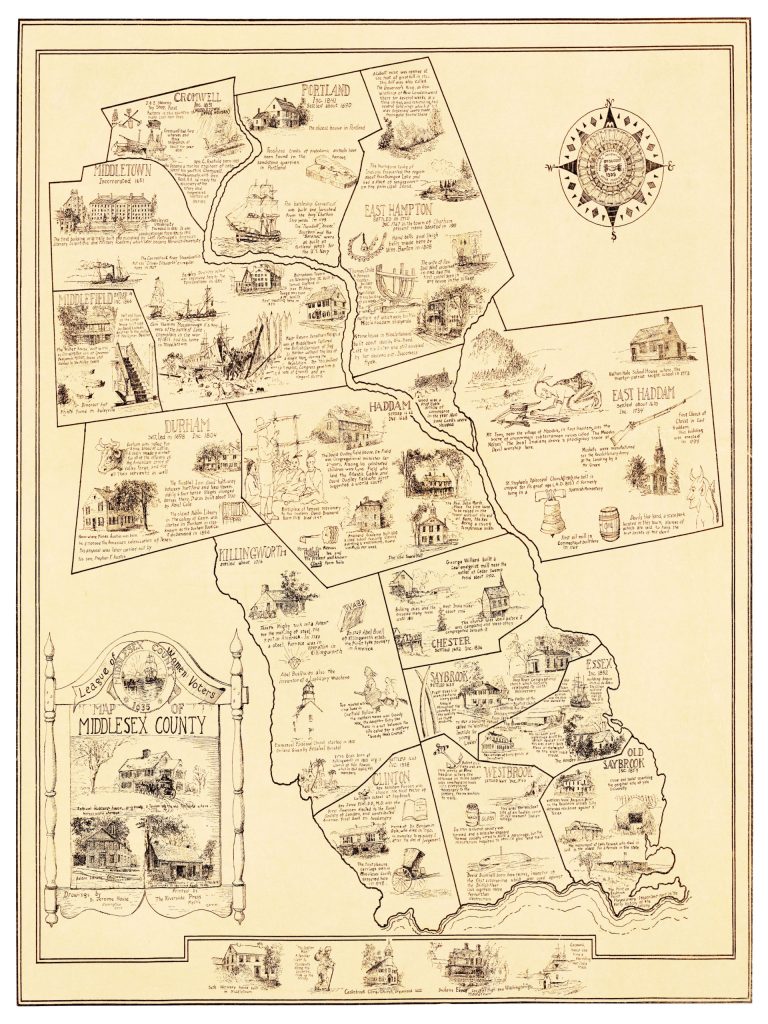
*We believe that the exact record for their marriage has been lost. This could be due to destruction caused by the church burning down, arson from conflicts with the Native Peoples, natural forces like a flood… Sometimes when the organizing government domain changes, records disappear through lack of oversight. Hartford County became Middlesex County in May 1785, being created from portions of Hartford County and New London County. Perhaps the record was lost then?

What we do know is this — it is highly probable is that they married in one of the three communities where their family members lived: Ridgefield, New Milford, or Woodbury. We just don’t know exactly where at this time. (2)

“This old map of Middlesex County, CT was commissioned in 1934 by the Connecticut League of Women Voters. S. Jerome Hoxie illustrated the map and it was printed by The Riverside Press in Mystic Connecticut.” (See footnotes).

Eliphaz and Mercy (Drinkwater) Warner Children

The first two children were born in Judea Parrish, Woodbury, Litchfield County, Connecticut Colony. “Before it became a separate town in 1779, and chose to name itself ‘Washington’, the area was known as ‘Judea’, and was part of Woodbury, Connecticut.” (Wikipedia, Judea Cemetery)

  • William S. Warner, born November 12, 1770 — died May 24, 1856, Sandgate, Bennington County, Vermont. He married first, (1798) Lucy Coan, in Woodbury, Litchfield County, Connecticut; they had 7 children. He married second, (circa 1816-17), Abigail Root; they had no children. He married third, (circa 1819) Prudence B. Nickerson, in Sandgate, Bennington, Vermont; they had 4 children. (We are descended from William and Prudence (Nickerson) Warner).
  • Dr. John Warner, born December 1772 — died September 4, 1839, Starkey, Yates County, New York. He married Mary DeWitt in October 1808.
  • Anna Warner, born 1773 in Middletown, Middlesex County, Connecticut Colony — died September 30, 1834, Sandgate, Bennington, Vermont. (Note: Anna may have been born in either Judea Parrish, Woodbury, Litchfield County, Connecticut, or Middletown, Middlesex County, Connecticut. The records conflict on this detail).

    By 1776 the family moved from Connecticut to Sandgate, Bennington County, The Vermont Republic (1771-1791), where the next four children were born .
  • Elizabeth Warner, born 1777 — died April 7, 1845, Salem, Washington County, New York. She married Joel Bassett, born Feb. 5, 1782 — died September 5, 1840, same location.
  • Hannah Warner, born 1783 — died October 13, 1818, Sandgate, Bennington County, Vermont.
  • Dr. James Warner, born 1785 — died February 21, 1813, Jericho, Chittenden County, Vermont.
  • Jabez Joseph Warner, born December 14, 1791 — died February 1, 1792 Sandgate, Bennington, County, Vermont.

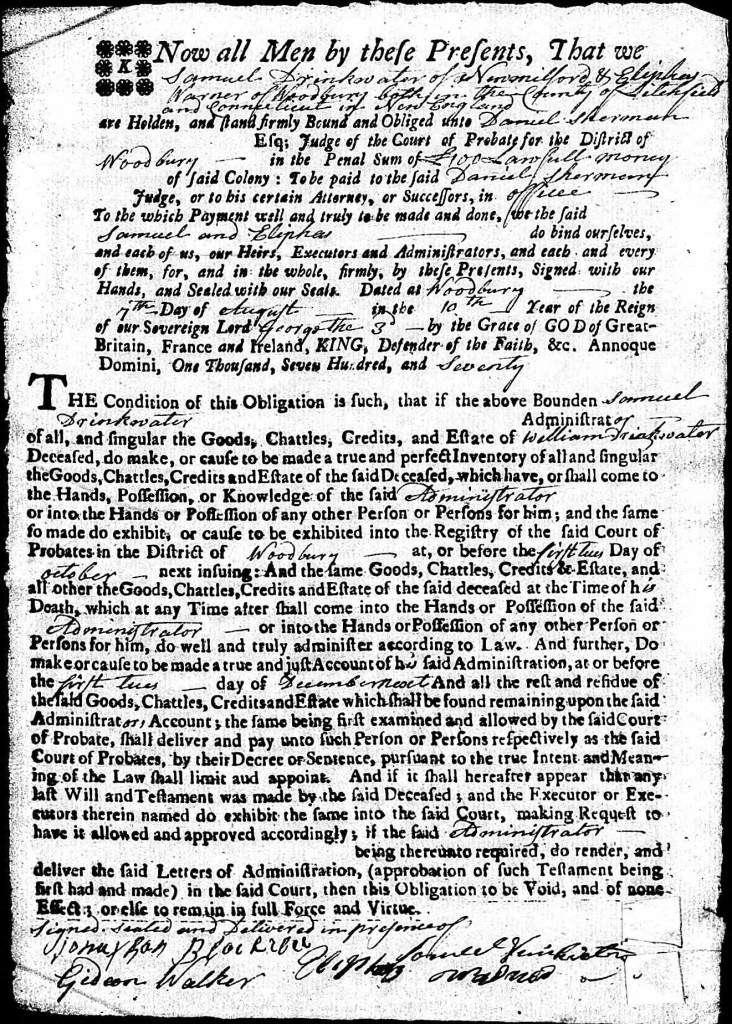
A few years before they moved to the Vermont frontier, this document appears. It’s one of the few things with Mercy (Drinkwater) Warner’s name attached to it. Why was this document done in 1770, 12 years after her father William Drinkwater had died? We speculate that perhaps Mercy and her husband Eliphaz Warner wanted to make sure that any portion of his estate she was due, had been delivered? (3)

Administration papers from the estate of William Drinkwater, circa 1770.
From the Connecticut, U.S., Wills and Probate Records, 1609-1999.

Colonel Seth Warner, a Distant Cousin

The Warner’s were a large family. And in those days, cousins married each other, which sometimes causes us to “fret and pull our hair out” when trying to figure out who is related to who… in this case our “cousinship” to Seth Warner is distant for us, but much closer to our Warner line during the 1760s and 1770s.

  • Seth Warner’s 2x Great-Grandfather, John Warner, Jr. was also the father of our 4x Great-Grandmother, Hannah (Warner) Warner.
  • She was married to her first cousin, Jabez Warner, our 4x Great-Grandfather.
  • Their son Eliphaz Warner, was our 3x Great Grandfather.

In 1754 Hannah and Jabez Warner moved to Woodbury, Litchfield, Connecticut Colony, a town next to Roxbury where lived Seth Warner and Ethan Allen, cousins via their Baker relatives. We can’t know how much they interacted some 150 years ago, but they were all of the same age and the adventuresome sort. At this time the state of Vermont did not exist yet. The area was called the New Hampshire Grants. It was a wild and unsettled area in the early 1760s. There were constant disputes between New York and New Hampshire as the Grants were being settled.

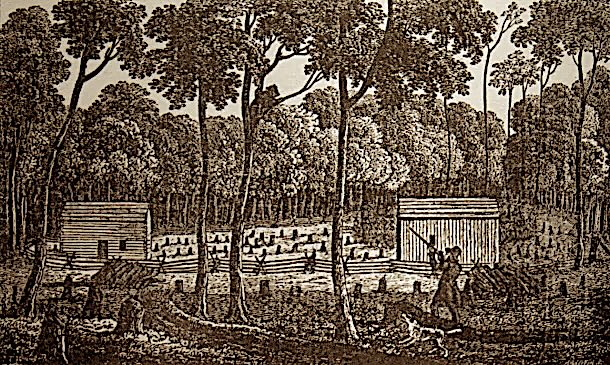
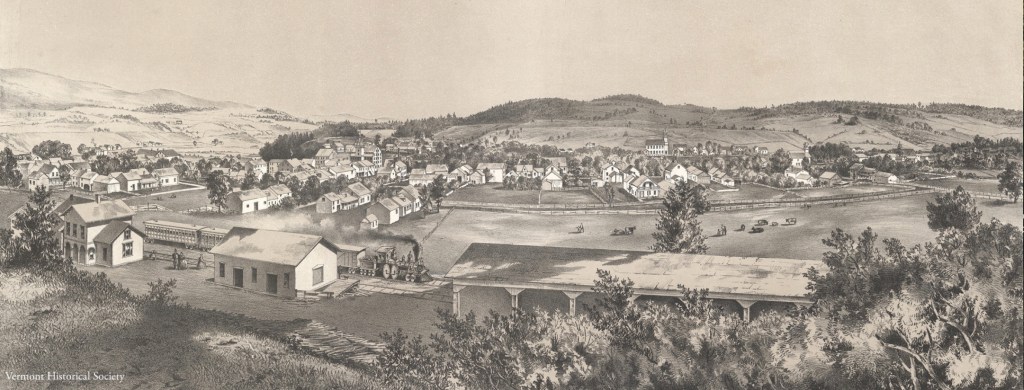
This print accompanied the narrative Seth Hubbell published in 1824 about his years spent struggling to establish a farm in the wilds of Vermont in 1789. (Image courtesy of the Vermont Historical Society).

Dr. Benjamin Warner, Seth’s father, moved his family to this area in 1763. We know that they settled in what is now Bennington, Vermont. But there is some evidence that Seth held property in a small section called Sandgate, about 20 miles north of Bennington. At this time, families from Roxbury, Woodbury, and other parts of Connecticut began moving into the New Hampshire Grants. The Hurds, the Hurlburts, the Bakers and the Allens settled throughout the area and eventually, the Eliphaz Warners settled in Sandgate.

Under-appreciated by History?
Seth Warner is famous in Vermont history through his activities with Ethan Allen of the Green Mountain Boys just prior to and during the Revolutionary War. However, we wonder if perhaps he has been under-appreciated by American historians in general. We learned, from a fascinating online article by writer Gene Procknow at All Things Liberty —

“The legendary stories of Ethan Allen and Vermont’s Green Mountain Boys have long been part of American folklore. Their heroically described exploits are fabled in many fictional accounts and in children’s books. Allen’s name is synonymously linked with the Green Mountain Boys as if he was their sole leader.  However, while Allen receives the fame, there is a strong case that Seth Warner, a lesser-known member of the Green Mountain Boys, was the more impactful military leader during the American Revolution.

From left to right, the Colonel Seth Warner Monument in Bennington, Vermont.
Center: The flag of the Green Mountain Boys,
Right: Green Mountain Rangers, 1776 by Lt. Charles M. Lefferts. (See footnotes).

During the revolution, Seth Warner emerged as the leader of the Green Mountain Boys.  A day after Fort Ticonderoga fell [Allan’s victory], Warner led a contingent of the Green Mountain Boys in capturing British forces at Crown Point [Warner’s victory]. Both Warner and Ethan Allen traveled to Philadelphia to meet with the Continental Congress to obtain military pay for the Green Mountain Boys and to obtain permission to enlist a Green Mountain regiment in the Continental Army.  They returned with both. [The Green Mountain Boys were then referred to as the Green Mountain Rangers, and Warner’s Regiment].

In July 1777, he ably commanded undersized rear guard units at the battle of Hubbarton, Vermont and rallied his troops to cement a patriot victory at Bennington* in August.  British losses at these two battles weakened their invasion force, which aided the Continental Army victory at Saratoga in October.  After the 1777 campaign, Warner continued leading his regiment despite declining health until the unit was disbanded on January 1, 1781.
* See the text, The Battle of Bennington below.

Seth Warner was the elected and recognized commander of the Green Mountain Boys during their entire service with the Continental Army, with Ethan Allen playing the important political roles of firebrand, publicist, and spokesperson. Clearly, the American cause benefited from Seth Warner’s military leadership, while Ethan Allen’s political leadership was critical to the formation of Vermont as a distinct, independent sovereign entity.” (All Things Liberty) (4)

Being Early to Bennington, Republic of Vermont

Even though Vermont is recognized as the 14th state of the United States, it was born out of a complicated mess of issues as to who had the right to live in that rural territory, and who had the right to govern it. Among the interested parties were (quite naturally) the Native Peoples, the French Government and their settlers, and the British Government and their settlers. Like a tide that kept washing in and out, people came in and went out. After the French were defeated in the French and Indian War, the rights to this area were given by the Treaty of Paris (in 1763), to the British.

Be that as it may, the New York Colony, and the Province of Massachusetts Bay Colony, and the Province of New Hampshire continued to squabble over who had the land rights to the territory. Much of this was due to the fact that the population of the area increased dramatically in a short period of less than 30 years. “In the 28 years from 1763 to 1791, the non-Indian population of ‘New Hampshire Grants’ rose from 300 to 85,000.

Plan of Sandgate (map), by Benning Wentworth, circa 1761.

New Hampshire’s [Colonial] governor, Benning Wentworth, [had] issued a series of 135 land grants between 1749 and 1764 called the New Hampshire Grants. Many of these were in a large valley on the west (or New York side) of the Green Mountains and only about forty miles from Albany. The town was laid out in 1749 and was settled after the war in 1761. The town was named Bennington for Wentworth. Ultimately, by 1754, Wentworth had granted lands for 15 towns. (Wikipedia, History of Vermont)

“The first settler in Sandgate was Reuben Thomas, who came from Woodbury, Connecticut. Congregational Church records show “1769, December 27th — Reuben Thomas Esqr. moved his family which was the first family into this town.” (Sandgate Vermont)

“In 1770, Ethan Allen—along with his brothers Ira and Levi, as well as Seth Warner—recruited an informal militia, the Green Mountain Boys, to protect the interests of the original New Hampshire settlers against the new migrants from New York. A significant standoff occurred at the Breakenridge farm in Bennington, when a sheriff from Albany arrived with a posse of 750 men to dispossess Breakenridge. The residents raised a body of about 300 armed men to resist. The Albany sheriff demanded Breakenridge, and was informed, ‘If you attempt it, you are a dead man.’ The sheriff returned to Albany.

In the summer of 1776, the first general convention of freemen of the New Hampshire Grants met in Dorset, Vermont, resolving ‘to take suitable measures to declare the New Hampshire Grants a free and independent district.’ On January 15, 1777, representatives of the New Hampshire Grants convened in Westminster and declared their land an independent republic, The Vermont Republic (from 1777 until 1791). Then in 1791, Vermont became a state.

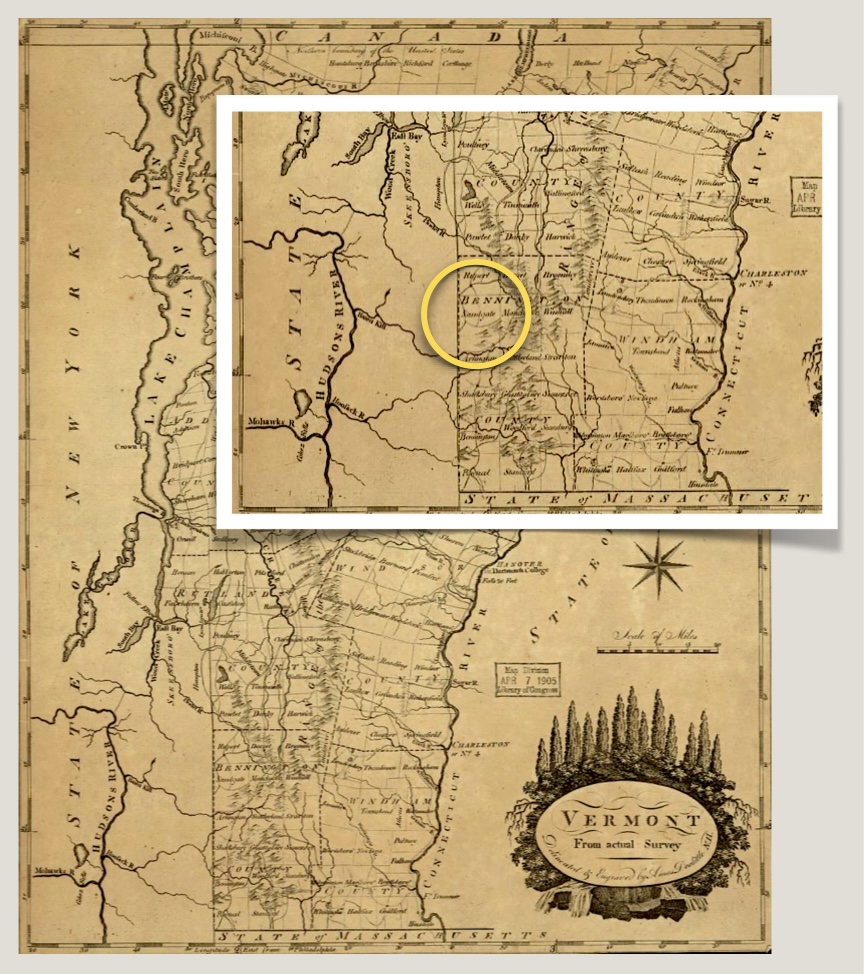
Vermont, from actual survey, by Amos Doolittle and Mathew Carey, circa 1795. This map shows where the Warners were living in the small town of Sandgate, Vermont from 1776 onwards. (Image courtesy of the Library of Congress).

Observation: 1776 is the year when the Eliphaz Warner family moved from the Woodbury, Litchfield County, Connecticut area to Sandgate, Bennington, Vermont Republic. They moved right into the very thick of things.

On June 2, [1776] a second convention of 72 delegates met at Westminster, known as the ‘Westminster Convention’. At this meeting, the delegates adopted the name ‘Vermont’ on the suggestion of Dr. Thomas Young of Philadelphia, a supporter of the delegates who wrote a letter advising them on how to achieve statehood. [One month later…] On July 4, the Constitution of Vermont was drafted during a violent thunderstorm at the Windsor Tavern owned by Elijah West. It was adopted by the delegates on July 8 after four days of debate. This was the first written constitution in North America to provide for the abolition of slavery (for adults), suffrage [voting rights] for men who did not own land, and public schools.” (Wikipedia, History of Vermont) (5)

The first page of the original Constitution for Vermont, with a vintage postcard featuring the Old Constitution House, the former Windsor Tavern. (See footnotes).

Or This Night Molly Stark Sleeps a Widow!

“During the summer of 1777, the invading British army of General John Burgoyne slashed its way southward through the thick forest, from Quebec to the Hudson River, captured the strategic stronghold of Fort Ticonderoga, and drove the Continental Army into a desperate southward retreat. Raiding parties of British soldiers and native warriors freely attacked, pillaged and burned the frontier communities of the Champlain Valley and threatened all settlements to the south. The Vermont frontier collapsed in the face of the British invasion. The New Hampshire legislature, fearing an invasion from the west, mobilized the state’s militia under the command of General John Stark.

General Burgoyne received intelligence that large stores of horses, food and munitions were kept at Bennington, which was the largest community in the land grant area. He dispatched 2,600 troops, nearly a third of his army, to seize the colonial storehouse there, unaware that General Stark’s New Hampshire troops were then traversing the Green Mountains to join up at Bennington with the Vermont continental regiments commanded by Colonel Seth Warner, together with the local Vermont and western Massachusetts militia. 

The combined American forces, under Stark’s command, attacked the British column at Hoosick, New York, just across the border from Bennington. General Stark reportedly challenged his troops to fight to the death, telling them ‘There are your enemies, the redcoats and the Tories. They are ours, or this night Molly Stark sleeps a widow!’ ” (Wikipedia, History of Vermont) (6)

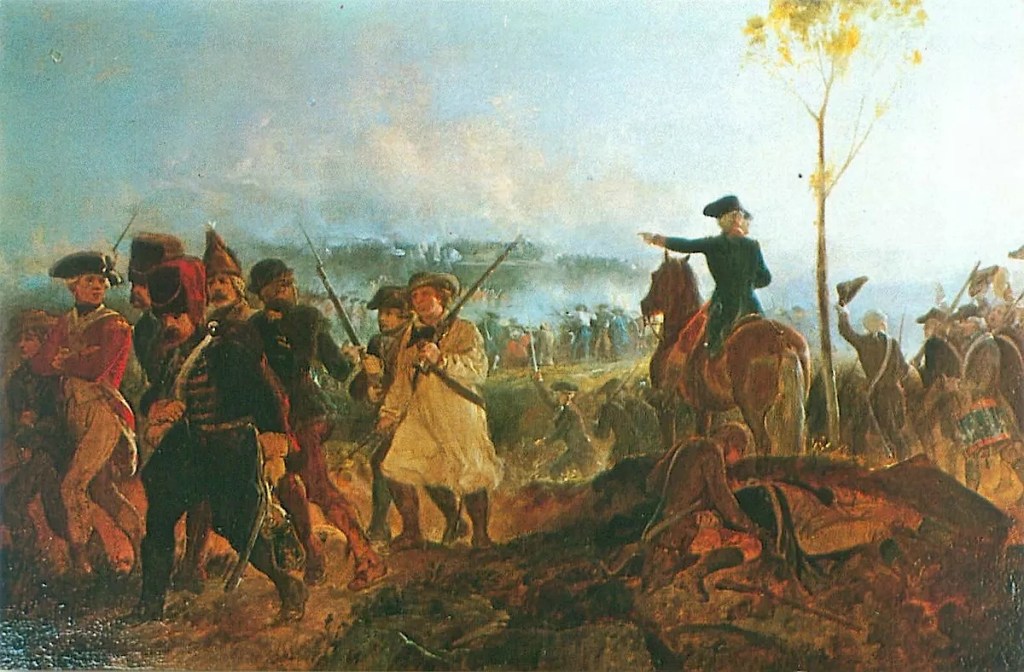
Battle of Bennington, 1777 by Alonzo Chappel. (Image courtesy of The Bennington Museum).

The Battle of Bennington

“The town is known in particular for the Battle of Bennington, which took place during the Revolutionary War. Although the battle took place approximately 12 miles (19 km) to the west in what is now the state of New York, an ammunition storage building located in Bennington was an important strategic target. On August 16, 1777, Gen. John Stark’s 1,500-strong New Hampshire Militia defeated 800 German (Hessian) mercenaries, local Loyalists, Canadians and Indians under the command of German Lt. Col. Friedrich Baum. German reinforcements under the command of Lt. Col. Heinrich von Breymann looked set to reverse the outcome, but were prevented by the arrival of Seth Warner’s Green Mountain Boys, the Vermont militia founded by Ethan Allen.” (Wikipedia, Bennington Vermont)

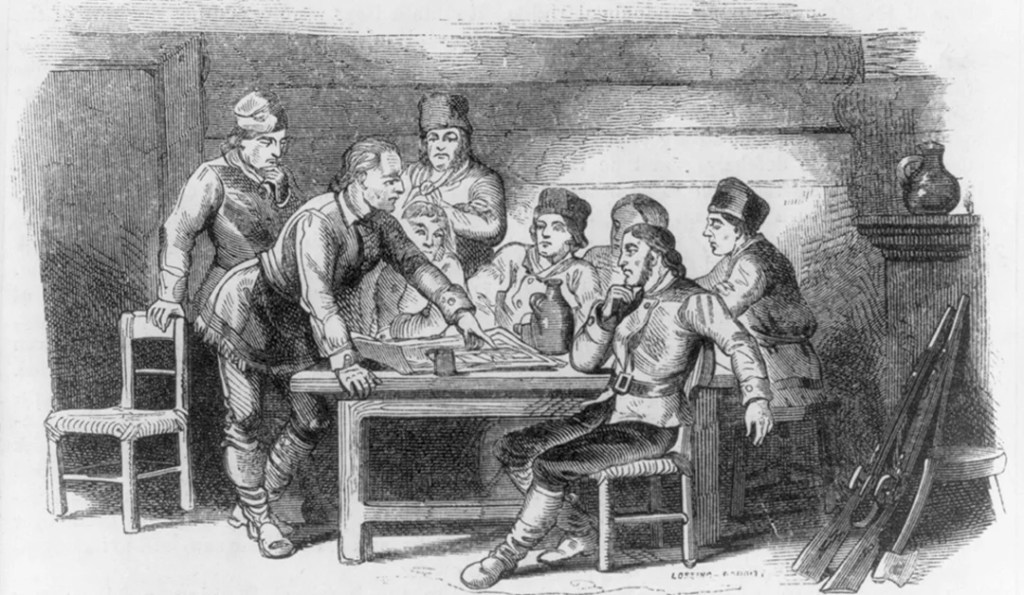
This illustration depicts Ethan Allen (pointing at the map) and the other leaders of the Green Mountain Boys, which included Seth Warner. (Image courtesy Library of Congress).

The “all-day battle fought in intense summer heat, the army of Yankee farmers defeated the British, killing or capturing 900 soldiers. Burgoyne never recovered from this loss and eventually surrendered at Saratoga on October 17. (Wikipedia, History of Vermont)

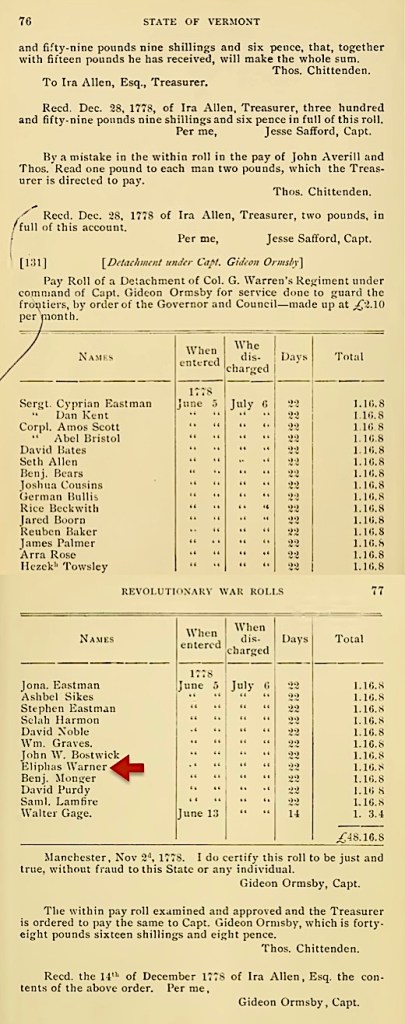
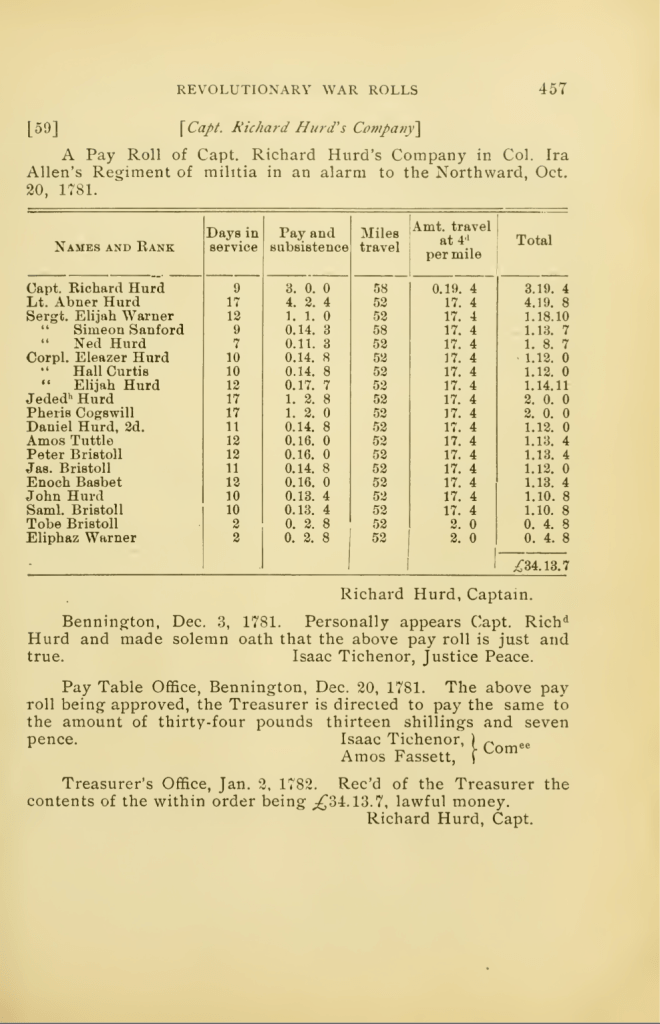
During the War, Eliphaz Warner was called to serve in several instances. Shown below is one of the payroll records “for service done to guard the frontiers”. (7)

From the book, Rolls of the Soldiers in the Revolutionary War, 1775 to 1783,
by John E, Goodrich. “Payroll under Col. G. Warren’s Regiment under the command
of Capt. Gideon Ormsby”, pages: 76-77. (Image courtesy of the Library of Congress).
For other rosters, see the footnotes.

Time’s Arrow Points in One Direction

If anyone has spent any time glancing over census data, it quickly becomes clear that early censuses were simple, and later ones grew increasingly more complex. “Statistics show that as the Nation’s population grew and its demographics changed, so did the decennial* census evolve in order to measure that growth and change. As a result, no two censuses are exactly alike. To count a population of 3,329,326 in 1790, the census cost $44,377, utilized 1,650 enumerators, and culminated in one published volume totaling 56 pages. The 1990 Census counted a population of 248,709,873, cost $2.5 billion, and culminated in published census reports totaling 450,000 pages.”
*All of the following censuses are decennial, meaning they recur every ten years.

1790 —
“The census began on Monday, August 2, 1790, and was finished within 9 months, under the rules and directions established in an Act of Congress approved March 1, 1790. The 1790 population census was the First Decennial* Census of the United States.” (The National Archives)

The 1790 United States census for Sandgate, Vermont.

The 1790 census tells us that Eliphaz Warner had 8 people in his home, who were enumerated as follows (with our observations for people inserted):

  • 3 men of 16 years & upwards, including heads of families: sons William, John, and father Eliphaz — Head of Family
    • 1 boy under 16 years: son James
    • 4 women including heads of families: daughters Anna, Elizabeth, Hannah, and mother Mercy

In 1798, Eliphaz and Mercy’s oldest son William Warner, married (1) Lucy Coan, daughter of Mulford and Elizabeth (Howd) Coan, in Woodbury, Litchfield, Connecticut. William returned to Woodbury for their marriage, and together she went with him to Sandgate, Vermont. They had seven children, who are interwoven throughout the following years of Census data shown below. (8)

For clarity, here is a list of their seven children:

  • Mary Warner, 1799 — 1859
  • William Warner, Jr., 1801—1890
  • Joseph Warner, 1803 — 1890
  • Lucina Warner, 1805 — 1874
  • Gaylord Coan Warner, 1808 — 1886
  • Benjamin Stone Warner, 1810 — 1893
  • John Warner, 1812 — 1889
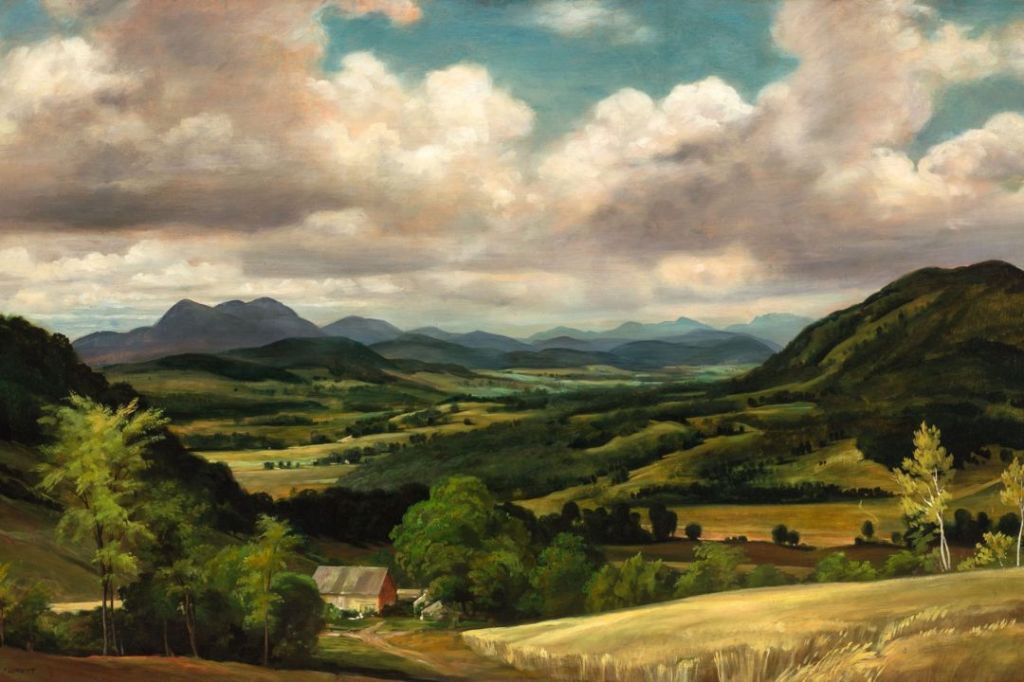
From the Vermont Historical Society, this painting titled Derby View, 1939 by William Dean Fausett, was painted to portray what colonial era Vermont would have looked like.

A New Century Begins

1800 —
“The census began on Monday, August 4, 1800, and was finished within 9 months, under the rules and directions established in an Act of Congress approved February 28, 1800. The 1800 population census was the Second Decennial Census of the United States.”

The 1800 United States census for Sandgate, Vermont.

For the Eliphaz Warner family, there were 5 people living there, as follows:

  • 1 boy 10 thru 15: son James
  • 1 man 45 and over: Eliphaz — Head of Family
  • 2 women 16 thru 25: daughters Hannah, Anna
  • 1 female 45 and over: mother Mercy

    This same 1800 census shows us that son William Warner is counted as a separate household. He is likely living nearby, if not next door. He had four people living in his home, enumerated as follows:
  • 2 men 26 thru 44: William — Head of Family, and an (unknown male)
  • 1 girl under 10: daughter Mary
  • 1 woman 45 and over: mother Lucy Coan (William’s first wife)

Observation: As we analyzed the censuses, it became clear that these two families lived next door to each other and that their lives were all intertwined. Eliphaz always had William living nearby, and after Eliphaz was no more, William usually had a sibling, or one of his own children nearby.

1810 —
“The census began on Monday, August 6, 1810, and was finished within 9 months, under the rules and directions established in an Act of Congress approved March 26, 1810. The 1810 population census was the Third Decennial Census of the United States.”

The 1810 United States census for Sandgate, Vermont. Note that Eliphaz’s name is positioned below his son William’s name.

This Census tells us that Eliphaz had 5 people in his home, who were enumerated as follows (with our observations of whom inserted):

  • 1 man 26 thru 44: son James (son John married, 1808 and lived in New York)
  • 1 man 45 and over: father Eliphaz — Head of Family
  • 2 women 26 thru 44: daughters Anna and Hannah (daughter Elizabeth married, 1808 and lived in New York)
  • 1 woman 45 and over: mother Mercy
Macdonough’s victory on Lake Champlain and defeat of the British Army at Plattsburg
by Genl. Macomb, Sept. 11 1814. Hand colored engraving by Benjamin Tanner, circa 1816.
(Image courtesy of Wikimedia Commons).

The 1810 Census is the last census that Eliphaz and Mercy appear in. From this point forward, all descriptions will only be about William Warner Sr.’s family. The 1810 Census further tells us that William Sr. had 9 people in his home, who were enumerated as follows (with our observations of whom inserted):

  • 4 boys under 10: sons William Jr., Joseph, Gaylord, and Benjamin
  • 1 man 26 thru 44: William Sr. — Head of Family
  • 2 girls under 10: daughters Lucina, and (unknown girl)
  • 1 girl: 10 thru 15: daughter Mary
  • 1 woman 26 thru 44: mother Lucy Coan

When the War of 1812 broke out in the young United States, Vermont was mostly removed from the battle sites of the war. The closest battle was The Battle of Plattsburg, which took place at the northern end of Lake Champlain, not very far away in New York State. “A relatively small force of approximately 5,000 Americans, including 2,200 Vermont militiamen, defeated a formidable force of roughly 11,000 British sailors on Sept. 11, 1814. This battle ended the British Invasion from Canada.” (Vermont National Guard Museum) We have not located any records that confirm that this branch of the Warner family actually participated in this war.

Besides, William Warner Sr. had his hands quite full. There was a house abundant of young children, his parents were elderly, and it seems that his wife Lucy had her troubles also — Several members of this family died during this decade; all of them in Vermont. Son Dr. James Warner died February 21, 1813 in Jericho, Chittenden County and is buried there. Mercy (Drinkwater) Warner soon followed. She died in October 22, 1813 in Sandgate, Bennington County and is buried in the Sandgate Center Cemetary. Eliphaz Warner died March 12, 1816 in Sandgate and is buried near his wife Mercy. Daughter Hannah Warner died October 13, 1818 in Sandgate and is buried near her parents. (9)

This brings us to…

The Decade of Three Wives

William Warner Sr.’s first wife, Lucy Coan, who had come to Vermont with him from Connecticut, died on October 2, 1815. She is buried at Sandgate Center Cemetery.

William was a widower with young children. He remarried after 1815 to his second wife (2) Abagail (Root) Warner. She was born about 1784 (based on the age of 34 years listed on her death record). Abagail has left very few records. She died soon after they were married, on June 13, 1818; there were no children.

At age 25, (3) Prudence B. Nickerson entered the family when she married William Warner in 1819; they had 4 children, James Ward, Lucy Mercy, Ira Nickerson, and Mary Ann. Like Abagail Root before her, there are very few records of her life prior to when she married William Sr. We know she was born in 1794 supposedly in Massachusetts, although some documents identify her birth in Vermont. We also note that there was a 24 year age gap when they married – William was 49 at the time.

Together, they are our 3x Great Grandparents — we are descended from William and Prudence B. (Nickerson) Warner and their daughter Mary Ann Warner.

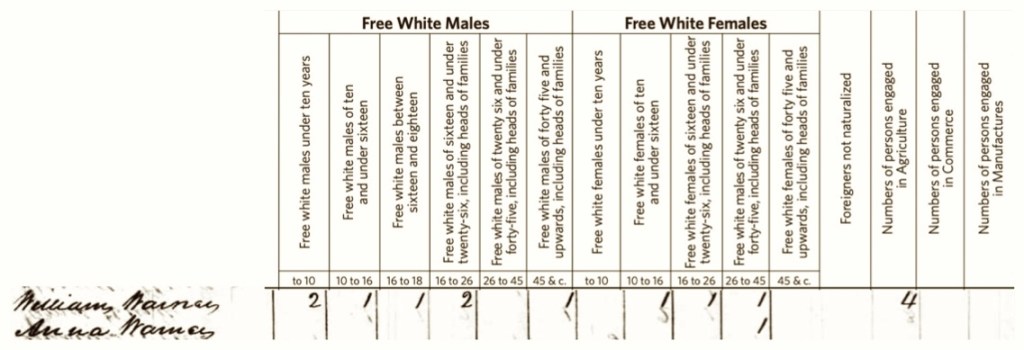
The 1820 United States census for Sandgate, Vermont for William Warner and his unmarried sister Anna Warner.

1820 —
“The census began on Monday, August 7, 1820, and was finished within 6 months, under the rules and directions established in an Act of Congress approved March 14, 1820. The 1820 population census was the Fourth Decennial Census of the United States.” The census tells us that 10 people are living there. William Sr.’s sister Anna never married and is living next door, probably in her parents home. She is listed separately on this census. (10)

  • 2 boys under 10: sons Benjamin, John.
  • 1 boy 10 to 15: son Gaylord
  • 1 boy from 16 to 18: (unknown male)
  • 2 men 16 to 25: sons Joseph, William Jr.
  • 1 man 45 and upwards: William Sr. — Head of Family
  • 1 girl from 10 to 15: daughter Lucina
  • 1 girl/woman from 16 to 25: daughter Mary
  • 1 woman 26 to 45: (step-mother) Prudence.
Baaa-aaa-ah. Who knew? Where are the trees?
(Image courtesy of the Vermont Historical Society).

A World Awash in Merino Sheep

William Warner Sr. was a farmer, but we don’t know if he raised sheep. If he needed any, he wouldn’t have needed to go very far. From the Vermont History Explorer, “Vermont’s landscape looks very different today than it did nearly 200 years ago. Many places that are now covered with trees were open fields. In the 1830s and 1840s, those fields were full of Merino sheep. Almost 1.7 million sheep lived in Vermont in 1840. At the same time, fewer than 300,000 people lived in the state. There were nearly six times more sheep than people in Vermont! These sheep produced almost 3.7 million pounds of wool.”

The 1830 United States census for Sandgate, Vermont.

1830 —
“The census began on Tuesday, June 1, 1830, and was finished within 6 months, under the rules and directions established in an Act of Congress approved March 23, 1830. The 1830 population census was the Fifth Decennial Census of the United States.” The census tells us that 9 people are living in the Warner home. William Sr.’s sister Anna is still living next door and is listed separately on this census.

  • 1 boy under 5: son Ira (likely an infant)
  • 1 boy 6 to 10: son James Ward
  • 1 boy 15 to 20: sons, Benjamin or John
  • 1 man 20 to 29: son Gaylord
  • 1 man 50 to 59: William — Head of Family
  • 1 girl under 5: (unknown girl)
  • 2 girls 5 to 9: daughter Lucy Mercy, and (unknown girl)
  • 1 woman 30 to 39: mother Prudence

This is the first census that begins counting the children that were born after Prudence and William Sr. married circa 1819. Their children were born in Sandgate, Bennington, Vermont.

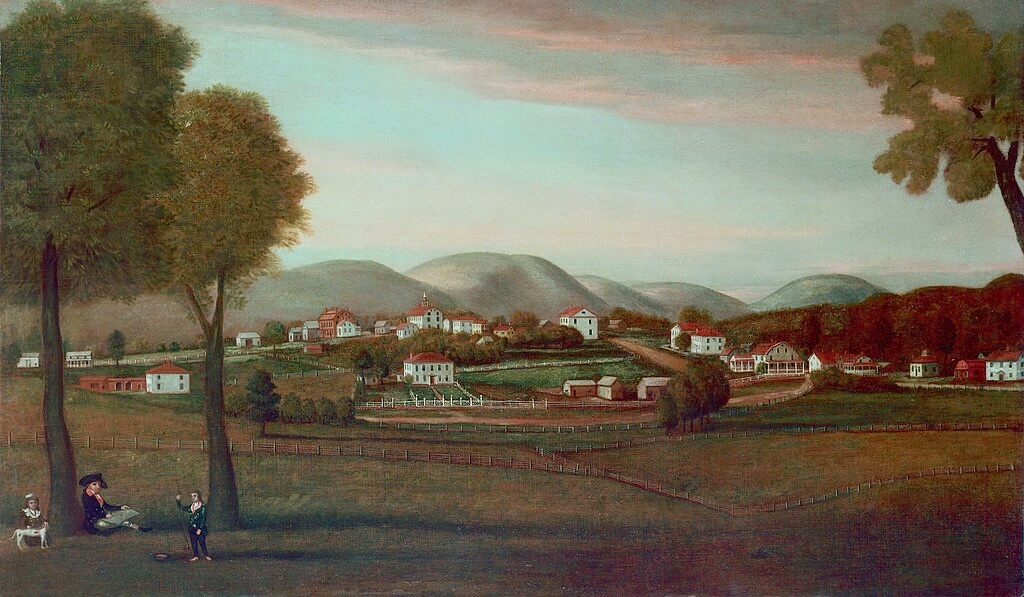
Townscape of Bennington; Landscape View of Old Bennington, circa 1798, by Ralph Earl.
It is interesting to note how the landscape had changed from dense forest to open fields.
(Image courtesy of the Bennington Museum).

Son James Ward Warner was born September 26, 1820 — died October 25, 1908, in Kennewick, Benton, Washington. He married first (1) Jane Mary Walton in 1845 in Manchester, Vermont, they had 3 children, Sylvester C, 1842-1847 (possibly born before their marriage), Helen Agnes, 1848-1931 and James, born 1860 – ?. Jane died in 1854 in Wisconsin where they had moved; he married second (2) Anne Ross in 1856. She was born in 1826 in New York and died 1902 in Spokane, Washington; they had one son, William Abner, 1860 – 1912. It appears William Abner moved west to Washington State where his parents died and are buried in Spokane. He died in Santa Monica, Los Angeles, California.

Daughter Lucy Mercy Warner was born May 2, 1823 — died November 14, 1879, Bennington, Bennington, Vermont. She married first in 1844 (1) Henry G. Stewart, 1806 – 1848; they had 1 daughter, Ellen 1845-1922. Ellen married Alexander Chapman in 1867 and they had two sons, George 1873 – ? and John, 1878 – 1938. After Henry Stewart’s death Lucy married second (2) Thomas Jefferson (TJ) Albro in 1859; they had 1 daughter, Theresa, 1860 – 1921. Theresa married Frank Henry Crawford in 1884 and they had 3 children, Randall who lived for 11 months in 1885, Buel, 1887 – 1958, and Alida “Lida” (Crawford) Beran, 1894 – 1945.

Son Ira Nickerson Warner was born May 20, 1830 — died March 6, 1877 in Aurora, DuPage, Illinois. By 1858 he married Julia Barrett, 1833 – ? ; they had 5 children, Charles D., 1859 – 1864, George A., 1864 – ?, Frederick A. 1866 – 1935, Ida Rowena, 1869 – 1943, and Lillian J., 1872 – 1899.

The 1840 United States census for Sandgate, Vermont.

1840 —
“The census began on Monday, June 1, 1840, and was finished within five months, under the rules and directions established in an Act of Congress approved March 3, 1839. The 1840 population census was the Sixth Decennial Census of the United States.” The census tells us that 7 people are living there. William’s oldest daughter Mary (Warner) Meeker is living next door, and is listed separately on this census.

  • 1 boy 10 to 14: son Ira
  • 1 boy 15 to 19: son James
  • 1 man 60 to 69: William — Head of Family
  • 1 girl 5 to 9: daughter Mary Ann
  • 1 girl 15 to 19: daughter Lucy Mercy
  • 1 woman 40 to 49: mother Prudence
  • 1 woman 70 to 79: (unknown woman)
Taking the census — after a sketch by Thomas Worth. As published in Harper’s Weekly magazine, 1870. (Image courtesy of the Library of Congress).

In 1833, Prudence and William had their last child, a daughter, Mary Ann Warner. She was born on February 9, 1833 — died April 10, 1899 in South Russell, Geauga, Ohio. On February 2, 1856 she married Peter A. DeVoe; they had 2 children. They are our Great-Great-Grandparents — we are descended from Peter and Mary Ann. For the history of Peter and Mary Ann’s further lives together, please see: The DeVoe Line, A Narrative — Nine.

The 1850 United States census for Sandgate, Vermont.

1850 —
“The census began on Saturday, June 1, 1850, and was finished within 5 months, under the rules and directions established in an Act of Congress approved May 23, 1850. The 1850 population census was the Seventh Decennial Census of the United States.” The is the first Census where we see all members of the household listed.

Things seem to have quieted down a lot at the Warner home with just William and Prudence living there. In 1850, their daughter Mary Ann is living nearby in Sandgate, at her older sister Mary Meeker’s home, where her brother Ira is also residing. Mary Ann’s name is sometimes recorded as Ann, probably because (in this case) there were two people living there with the same name of Mary.

The 1850 United States census for Sandgate, Vermont.

William Warner Sr. died on May 24, 1856. He is buried at Sandgate Center Cemetery, at which a remarkable number of Warner family members are also interred. Near William are his wives Lucy, and Abagail, some of his siblings, and several of his children. For his estate papers, please see the footnotes. (11)

Sometimes Life Is A Circle

From the 1830s through this pre Civil War period, seven of William Sr.’s eleven children, relocated from Vermont to the Connecticut Western Reserve of Ohio. This emigration included his youngest daughter Mary Ann (Warner) DeVoe and her husband, Peter A. DeVoe. William’s surviving wife Prudence moved there by 1870 and is buried near their daughter.

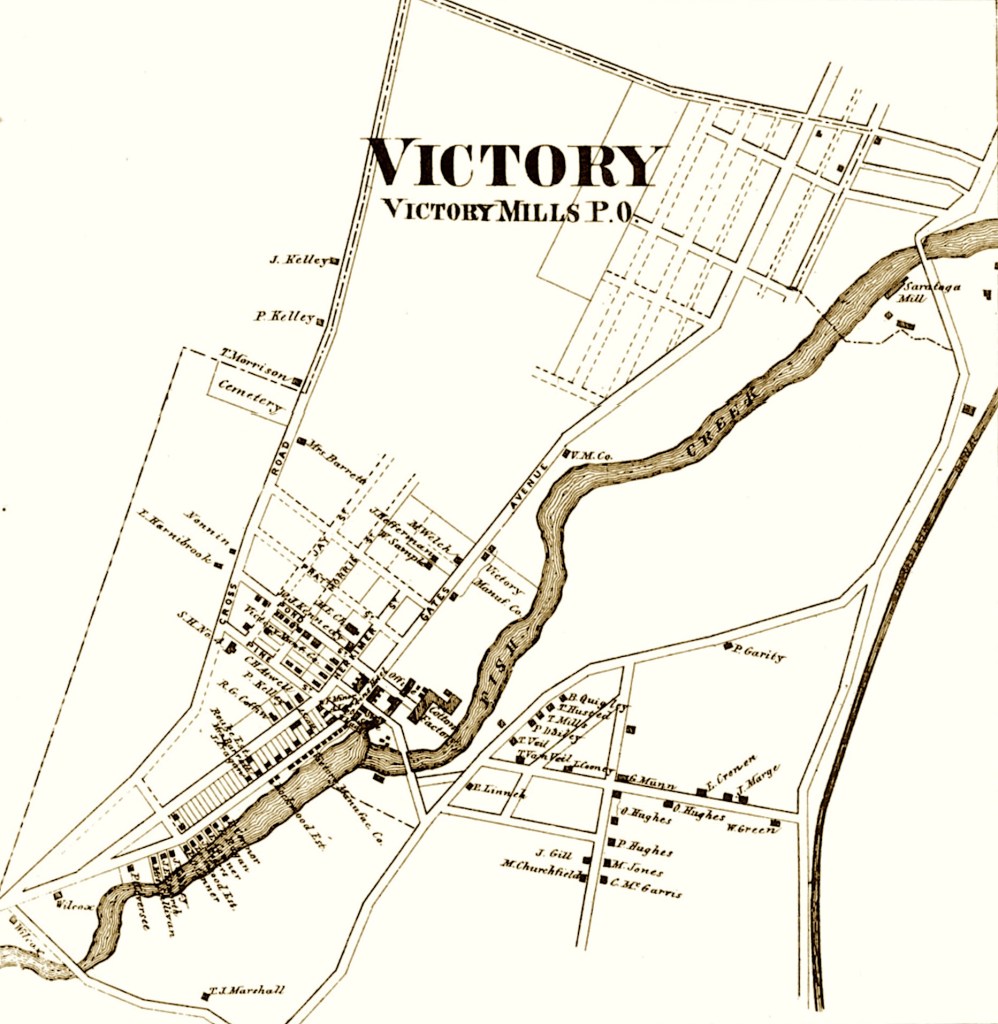
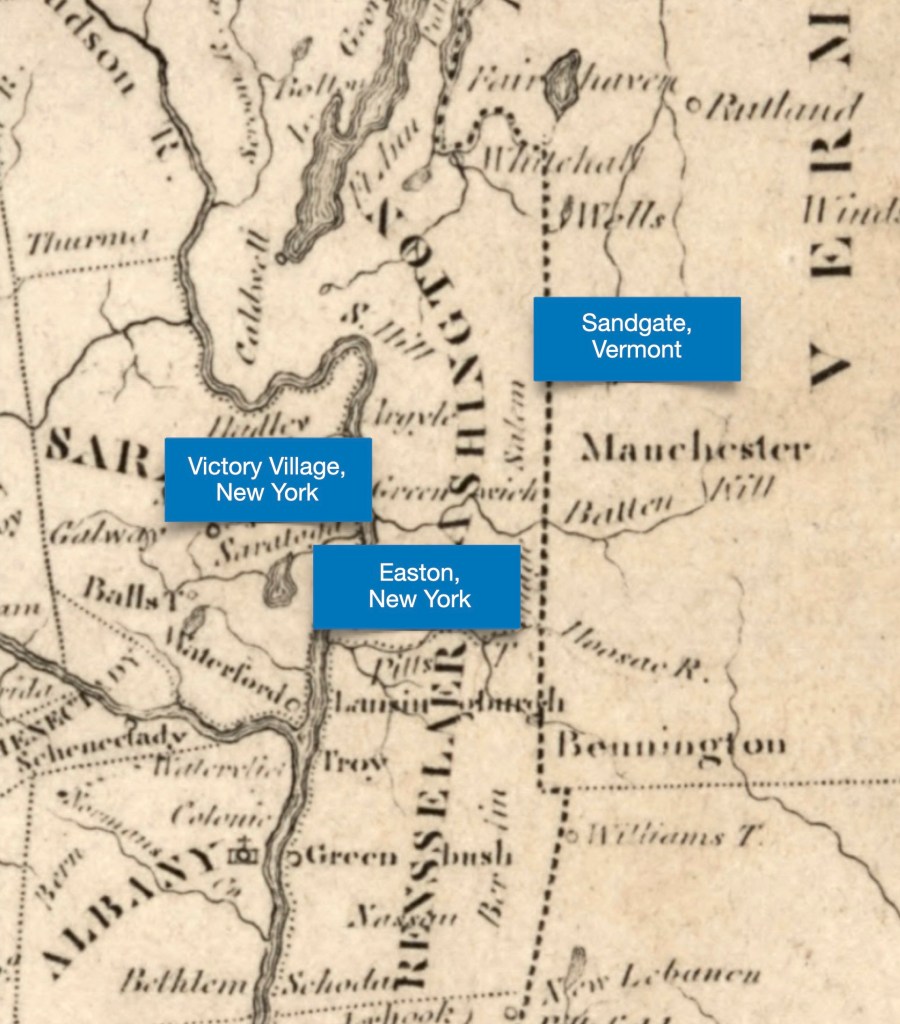
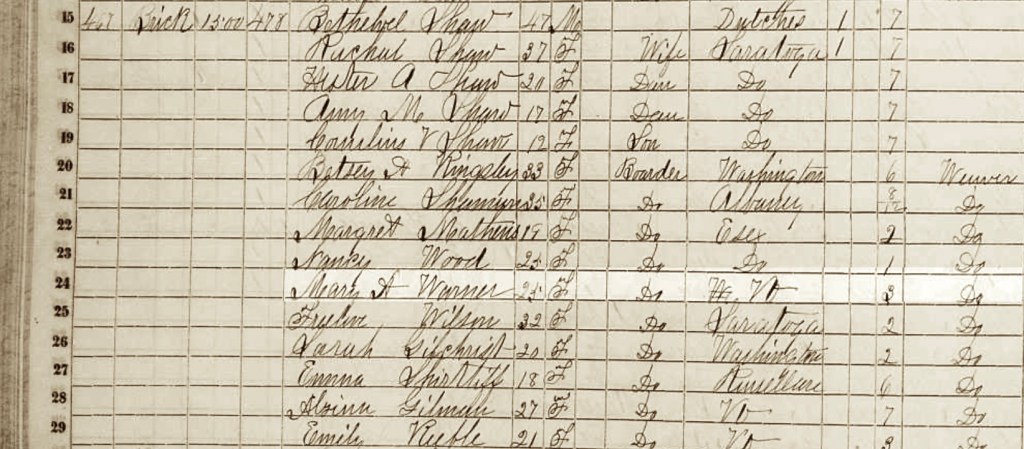
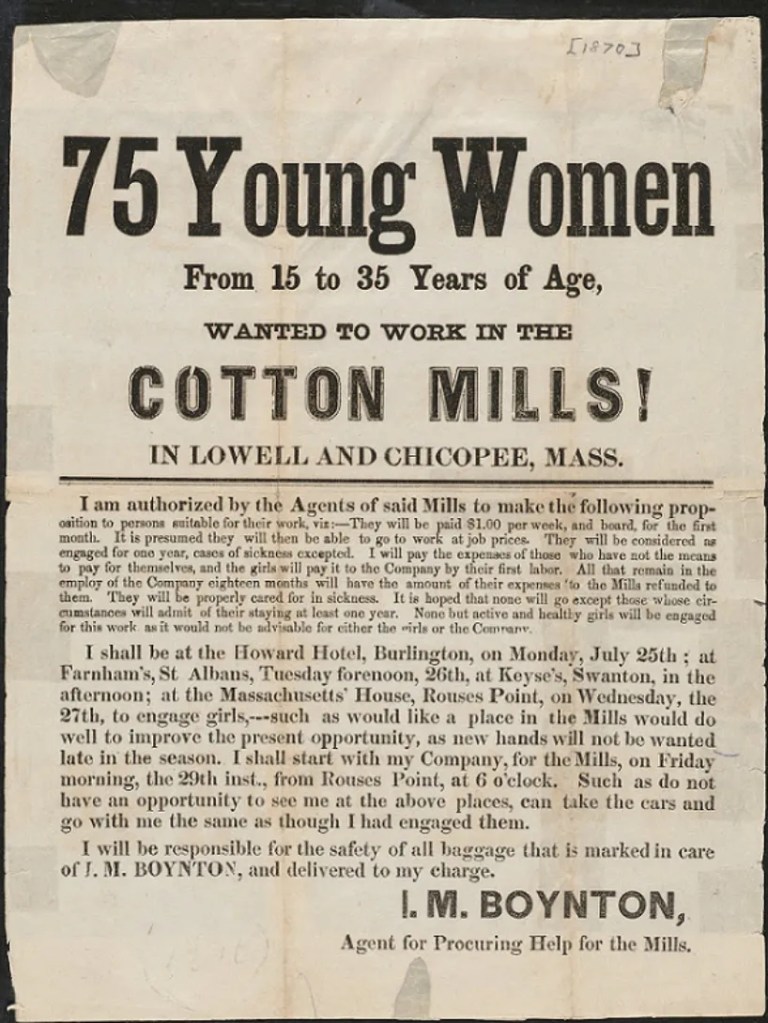
As we learned more about Mary Ann Warner’s history — we found that by 1855, she had already been residing in the town of Wilton in Saratoga County, New York for three years. She is working as a weaver at the nearby Saratoga Victory Manufacturing Company, in Victory Village. An ironic thing about her occupation, is the fact that the wool she was likely using to manufacture products, had likely been produced right in her old back yard in Bennington, Vermont. Like Mary Ann Warner at her loom — we ourselves also gather the threads, of family stories, and weave them into the warp and weft of a meaningful family narrative.

We are descended from two of the original Plymouth Pilgrim families, from the 1620 voyage
of the Mayflower. Both of these lines meet with our 2x Great Grandparents, through
the marriage of Peter A. DeVoe (for Edward Doty), and Mary Ann Warner (for George Soule).
Background image, Isolation: The Mayflower Becalmed on a Moonlit Night, by Montague Dawson.

With Generation Seven in America, the Warner family surname gives way to the surname of DeVoe. Mary Ann’s husband, Peter A. DeVoe, is a direct descendant of another Mayflower passenger, Pilgrim Edward Doty. Not only does this line of descent circle back to the Mayflower, but the DeVoe line traces its origins back to the same region of Holland where Pilgrim George Soule began his journey.

You can read about the DeVoe family, who have their own amazing history starting with, The DeVoe Line, A Narrative — One, Holland & Huguenots, and the Doty family, starting with, The Doty Line, A Narrative — One. (12)

Following are the footnotes for the Primary Source Materials,
Notes, and Observations

Preface

(1) — one record

Seven virtues
https://en.wikipedia.org/wiki/Seven_virtues#:~:text=In%20Christian%20history%2C%20the%20seven,faith%2C%20hope%2C%20and%20charity.
Note: For the text.
Woodbury, Connecticut Colony

(2) — eleven records

Woodbury, Connecticut
https://en.wikipedia.org/wiki/Woodbury,_Connecticut
Note: For the text.
The Old Woodbury Historical Society
History of Woodbury
https://www.owhs.org/history.html
Note: For the text.
Boston Public Library
Norman B. Levanthal Map & Education Center Collection
Plan of the Colony of Connecticut in North America
by Moses Park, 1766
https://collections.leventhalmap.org/search/commonwealth:z603vt46p
Note: For the map image. “Moses Park, a surveyor from Preston, Connecticut, executed this map in 1766 with the assistance of Asa Spaulding of Norwalk and Samuel Mott of Preston.”

Mercy Drinkwater
in the Connecticut, U.S., Town Birth Records, pre-1870 (Barbour Collection)
New Milford Vital Records 1712-1860

https://www.ancestry.com/search/collections/1034/records/191129?tid=&pid=&queryId=65f6527a-b69f-4af3-8bf1-1576fb5d0bef&_phsrc=dRx1&_phstart=successSource
Book page: 76, Digital page: 74/232
Note: Listed as the 14th entry on the page.

Mercy Warner
in the U.S., Find a Grave Index, 1600s-Current
https://www.ancestry.com/search/collections/60525/records/91584565
and
Mercy Drinkwater Warner
https://www.findagrave.com/memorial/16704122/mercy-warner
Note: For the data.

Eliphaz Warner
The Descendants of Andrew Warner (book)
Fourth Generation
https://www.ancestry.com/imageviewer/collections/15319/images/dvm_GenMono000758-00056-0?usePUB=true&_phsrc=dRx5&pId=104&backlabel=Return&queryId=0095c2f420af5ec55c6e85937768fa6e&rcstate=dvm_GenMono000758-00056-0:227,1330,361,1362;361,1329,481,1353;352,1361,477,1388;332,1395,456,1420;336,1428,458,1453;324,1462,456,1491;359,1493,479,1523;320,1561,446,1588;466,1625,594,1653;502,1743,709,1774;191,1793,321,1821;429,1868,578,1897;890,104,1041,127;729,413,857,443;426,602,641,631;177,649,307,678;179,771,308,799;681,761,831,791;650,803,804,832;980,878,1128,909;947,999,1099,1034;365,1195,488,1219;348,1229,469,1254
Book page: 98, Digital page: 107/184

Eliphaz Warner
in the U.S., Find a Grave Index, 1600s-Current
https://www.ancestry.com/search/collections/60525/records/91584550?tid=&pid=&queryId=e60befba-7e73-4827-b3c5-efdd800afda8&_phsrc=PRY1&_phstart=successSource
and
Eliphaz Warner
https://www.findagrave.com/memorial/16704105/eliphaz-warner
Note: For the data.

Middletown, Connecticut
https://en.wikipedia.org/wiki/Middletown,_Connecticut
Note: For the data.

KNOWOL
Historical Map of Middlesex County, Connecticut
https://www.knowol.com/information/connecticut/middlesex-county-map/
Note: For the map image and caption.

The Eliphaz and Mercy Warner Children

(3) — eight records

Eliphaz Warner
The Descendants of Andrew Warner (book)
Fifth Generation
https://www.ancestry.com/imageviewer/collections/15319/images/dvm_GenMono000758-00084-0?usePUB=true&_phsrc=dRx4&pId=160&backlabel=Return&queryId=0095c2f420af5ec55c6e85937768fa6e&rcstate=dvm_GenMono000758-00084-0:268,488,490,523;500,489,714,516;183,529,337,564;336,529,493,563;903,649,1071,679;339,933,477,957;304,1033,420,1059;369,1066,492,1093;349,1398,468,1422;324,1431,444,1456;637,1560,835,1588;240,1603,419,1639;419,1602,573,1638;484,1763,633,1795;887,83,1037,105;314,159,435,183;378,193,499,216;379,226,495,250;349,292,473,316;328,358,449,382
Book page: 154, Digital page 163/184
Note: For his family records.

Judea Cemetery
https://en.wikipedia.org/wiki/Judea_Cemetery
Note: For the text.

William Drinkwater
in the Connecticut, U.S., Wills and Probate Records, 1609-1999
Woodbury District > Probate Packets, Downs, C-Edmond, M, 1720-1880
https://www.ancestry.com/imageviewer/collections/9049/images/007629576_00856?usePUB=true&_phsrc=VgH4&_phstart=successSource&usePUBJs=true&pId=2465233
Digital page: 856/1417
Note: Case 1384 — Administration papers from the estate of William Drinkwater, circa 1770.

Colonel Seth Warner, a Distant Cousin

(4) — five records

Journal of The American Revolution
Seth Warner or Ethan Allen: Who Led the Green Mountain Boys?
by Gene Procknow
https://allthingsliberty.com/2014/05/seth-warner-or-ethan-allen-who-led-the-green-mountain-boys/
Note: For the text.
VT Digger, News and Culture
Then Again: Plagued by Ddversity, Wolcott’s First Settler Persevered
by Mark Bushnell
https://vtdigger.org/2018/09/09/plagued-adversity-wolcotts-first-settler-persevered/
Note: For the image.

The Historical Marker Database
Colonel Seth Warner
https://www.hmdb.org/m.asp?m=77023
Note: For the image, Photo 6 by Howard C. Ohlhous, October 24, 2008.

Flag of the Green Mountain Boys
https://en.wikipedia.org/wiki/Flag_of_the_Green_Mountain_Boys
Notes: Also known as the Stark Flag, this image is replica flag made by Amber Kincaid.

Uniforms of The American Revolution
Green Mountain Rangers, 1776
by Lt. Charles M. Lefferts, circa 1926
https://www.srcalifornia.com/uniforms/p24.htm
Note: For the image.

Being Early to Bennington (Vermont)

(5) — six records

History of Vermont
https://en.wikipedia.org/wiki/History_of_Vermont
Note: For the text.

Library of Congress
Plan of Sandgate (map)
by Benning Wentworth, circa 1809
https://www.loc.gov/resource/g3754s.ar087800/?r=-1.311,-0.37,3.622,1.808,0
Note: For the map image.

Sandgate Vermont
Early Settlers
https://www.sandgatevermont.com/settlers.php

Library of Congress
Vermont, from actual survey
by Amos Doolittle and Mathew Carey, circa 1795
https://www.loc.gov/resource/g3750.ct000093/?r=-0.878,-0.069,2.756,1.376,0
Note: For the map image.

Vermont History Explorer
The Vermont Constitution
https://vermonthistoryexplorer.org/the-vermont-constitution
Note: For the image of page one of the Vermont Constitution.

Hip Postcard
Vermont WINDSOR Old Constitution House, Built 1777 — DB
United States — Vermont — Other, Postcard

https://www.hippostcard.com/listing/vermont-windsor-old-constitution-house-built-1777-db/33113359
Note: For the vintage postcard image.

Or This Night Molly Stark Sleeps a Widow!

(6) — one record

History of Vermont
https://en.wikipedia.org/wiki/History_of_Vermont
Note: For the text.
The Battle of Bennington

(7) — eight records

Battle of Bennington, 1777 https://bennington.pastperfectonline.com/webobject/A4B796E5-ADE8-455B-8DF7-217237214000
by Alonzo Chappel.
Note: For the battle painting.

Bennington, Vermont
https://en.wikipedia.org/wiki/Bennington%2C_Vermont
Note: For the text.

Library of Congress
[Ethan Allen, 1738-1789, full-length portrait, standing,
before “the Green Mountain Boays in Council”, examining map]
digital file from b&w film copy neg.
https://www.loc.gov/resource/cph.3a47655/
Note: For the image.

History of Vermont
https://en.wikipedia.org/wiki/History_of_Vermont
Note: For the text.

Eliphaz Warner
The Descendants of Andrew Warner (book)
Fifth Generation
https://www.ancestry.com/imageviewer/collections/15319/images/dvm_GenMono000758-00084-0?usePUB=true&_phsrc=dRx4&pId=160&backlabel=Return&queryId=0095c2f420af5ec55c6e85937768fa6e&rcstate=dvm_GenMono000758-00084-0:268,488,490,523;500,489,714,516;183,529,337,564;336,529,493,563;903,649,1071,679;339,933,477,957;304,1033,420,1059;369,1066,492,1093;349,1398,468,1422;324,1431,444,1456;637,1560,835,1588;240,1603,419,1639;419,1602,573,1638;484,1763,633,1795;887,83,1037,105;314,159,435,183;378,193,499,216;379,226,495,250;349,292,473,316;328,358,449,382
Book page: 154, Digital page 163/184
Note: For his Revolutionary War service records.
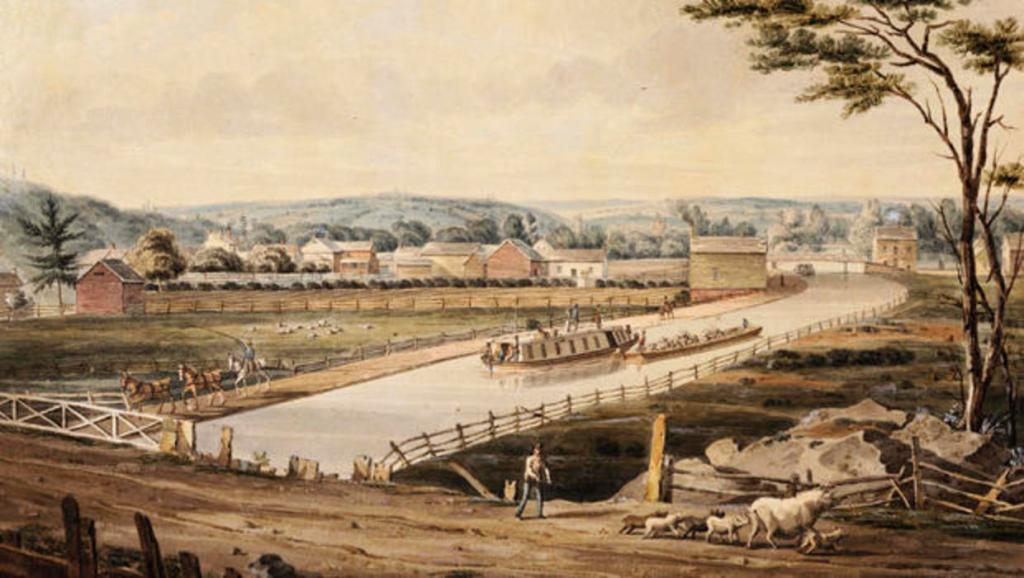
Library of Congress
Rolls of the Soldiers in the Revolutionary War,
1775 to 1783

by John E, Goodrich, circa 1904
https://www.loc.gov/resource/gdcmassbookdig.rollsofsoldiersi01verm/?sp=7&r=-1.249,-0.065,3.497,1.718,0
Records from 3 sections as follows:
Shown with the Revolutionary War Subtitle Section.
— Col. G. Warren’s Regiment under command of Capt. Gideon Ormsby
Book pages: 76-77, Digital pages: 106-107/964

— Capt. Lemuel Bradley’s Company
Book page: 414, Digital pages: 444/964
— Capt. Richard Hurd’s Company in Col. Ira Allen’s Regiment
Book page: 457, Digital pages: 487/964

Time’s Arrow Points in One Direction

(8) — six records

STEM Fellowship
The Arrow of Time
https://live.stemfellowship.org/the-arrow-of-time/
Note: For the data.

Library of Congress
U.S. Census Connections: A Resource Guide
History of the U.S. Census
https://guides.loc.gov/census-connections/census-history
Note: For the text.

The National Archives
1790 Census Records
https://www.archives.gov/research/census/1790
Note: For the data.

Eliphas Warner
in the 1790 United States Federal Census
Vermont > Bennington > Sandgate
https://www.ancestry.com/search/collections/5058/records/398650?tid=&pid=&queryId=98a8efe8-5fcc-4d84-9d21-54d2862efc2c&_phsrc=Qmi3&_phstart=successSource
Book page: 21, Digital page: 1 of 2
Note: For the data.

Vermont History
Vermont Historical Society Mounting a Major Exhibition:
“For The Love of Vermont: The Lyman Orton Collection”

Derby View by William Dean Fausett, circa 1939
https://vermonthistory.org/lyman-orton-for-the-love-of-vermont-art-exhibition
Note: For the paining by William Dean Fausett.

William Warner
in the North America, Family Histories, 1500-2000
https://www.ancestry.com/search/collections/61157/records/1807060
Note: For the data about his 1798 marriage to Lucy Coan.

A New Century Begins

(9) — twelve records

The National Archives
1800 Census Records
https://www.archives.gov/research/census/1800
Note: For the data.

Eliphaz Warner
in the 1800 United States Federal Census
Vermont > Bennington > Sandgate
https://www.ancestry.com/search/collections/7590/records/517748?tid=&pid=&queryId=4786d902-5d82-43a8-b238-b7cf626d86d1&_phsrc=Qmi4&_phstart=successSource

The National Archives
1810 Census Records
https://www.archives.gov/research/census/1810?_ga=2.101688962.2084972955.1741276218-755645739.1741276218
Note: For the data.

Macdonough’s Victory on Lake Champlain and Defeat of the British Army
at Plattsburg by Genl. Macomb, Sept. 11 1814.
Engraverː Benjamin Tanner, after painting by Hugh Reinagle, circa 1816
File:Macdonough’s victory on Lake Champlain and defeat of the British Army at Plattsburg by Genl. Macomb, Sept. 11 1814 (cropped).jpg
https://commons.wikimedia.org/wiki/File:Macdonough’s_victory_on_Lake_Champlain_and_defeat_of_the_British_Army_at_Plattsburg_by_Genl._Macomb,_Sept._11_1814_(cropped).jpg
Note: For the engraved war image.

1810 United States Federal Census
Vermont > Bennington > Sandgate
https://www.ancestry.com/search/collections/7613/records/613235?tid=&pid=&queryId=e72c38ad-6cba-40d7-8668-722546e89da1&_phsrc=LaX10&_phstart=successSource
Note: Digital page: 5/7
Note 1: For the data.
Note 2: We found this under the name of another community member: Stephen Scinter because it found not appear in searches using either Warner family name.

Vermont National Guard
Home > Museum >  > History > Wars > War Of 1812
Museum > > History > Wars > War Of 1812
https://vt.public.ng.mil/Museum/History/Wars/War-of-1812/#:~:text=A relatively small force of,the British Invasion from Canada.
Note: For the text.”>https://vt.public.ng.mil/Museum/History/Wars/War-of-1812/#:~:text=A relatively small force of,the British Invasion from Canada.
Note: For the text.

Dr. James Warner
https://www.findagrave.com/memorial/15098846/james-warner
Note: For her death record in 1813.

Hannah Warner
https://www.findagrave.com/memorial/16704110/hannah-warner
Note: For her death record in 1818.

Mercy Warner
in the U.S., Find a Grave Index, 1600s-Current
https://www.ancestry.com/search/collections/60525/records/91584565
and
Mercy Drinkwater Warner
https://www.findagrave.com/memorial/16704122/mercy-warner
Note: For the data.

Eliphaz Warner
in the U.S., Find a Grave Index, 1600s-Current
https://www.ancestry.com/search/collections/60525/records/91584550?tid=&pid=&queryId=e60befba-7e73-4827-b3c5-efdd800afda8&_phsrc=PRY1&_phstart=successSource
and
Eliphaz Warner
https://www.findagrave.com/memorial/16704105/eliphaz-warner
Note: For the data.

The Decade of Three Wives

(10) — ten records

Pinterest
Birds’ Nests (illustrations)
by Carl F. Gronemann
https://www.pinterest.com/pin/7951736837238337/
Notes: For the nest images.

Lucy Warner
in the U.S., Find a Grave Index, 1600s-Current
https://www.ancestry.com/search/collections/60525/records/91584559https://www.findagrave.com/memorial/16704116/lucy-warner
and
Lucy Coan Warner
https://www.findagrave.com/memorial/16704116/lucy-warner?_gl=1*qogcgg*_gcl_au*MTgzMjczMjIxLjE3NDE0NDY3MzA.*_ga*MTQ0MTY4ODk1OS4xNzQxNDQ2NzMw*_ga_4QT8FMEX30*MmMwNGE4ZTItNTkwOC00ZGIwLWFjMmItZWZiMjgxMTllMWVlLjIuMS4xNzQxNDU2ODEyLjU5LjAuMA..
Note: For the death data.

203 William Warner
The Descendants of Andrew Warner (book)
Sixth Generation
https://www.ancestry.com/imageviewer/collections/15319/images/dvm_GenMono000758-00134-0?usePUB=true&_phsrc=mYH3&pId=260&backlabel=Return&queryId=38e8346280d3fd1c8363358237de551d&rcstate=dvm_GenMono000758-00134-0%3A172%2C1481%2C285%2C1510%3B285%2C1481%2C417%2C1509%3B667%2C1482%2C770%2C1515%3B581%2C1522%2C679%2C1551%3B915%2C1683%2C1009%2C1716%3B714%2C413%2C802%2C442%3B338%2C1152%2C476%2C1180%3B727%2C1250%2C809%2C1274%3B548%2C1281%2C636%2C1314%3B791%2C1280%2C892%2C1314
Book page: 254, Digital page: 263/814
Note: For the Lucy Coan marriage data.

Abaigail Warner
in the Vermont, U.S., Vital Records, 1720-1908
https://www.ancestry.com/search/collections/4661/records/475913?tid=&pid=&queryId=4f4a50a5-af4e-4843-8b1b-e00c55e93578&_phsrc=mYH31&_phstart=successSource
and
Abigail Warner
in the U.S., Find a Grave Index, 1600s-Current
https://www.ancestry.com/search/collections/60525/records/91584543
and
https://www.findagrave.com/memorial/16704098/abigail-warner
Note: For the data.

Prudence Nickerson
in the North America, Family Histories, 1500-2000
W > Warner > The descendants of Andrew Warner
https://www.ancestry.com/search/collections/61157/records/1810112
Book page: 254, Digital page: 262/812
Note: For her marriage information.

The National Archives
1820 Census Records
https://www.archives.gov/research/census/1820?_ga=2.45009575.2084972955.1741276218-755645739.1741276218
Note: For the data.

William Warner
in the 1820 United States Federal Census
https://www.ancestry.com/search/collections/7734/records/166385?tid=&pid=&queryId=6f327c11-f22f-48ff-a316-60e1b9de1f93&_phsrc=unJ1&_phstart=successSource
Digital page: 1/6
Note: For the data.

A World Awash in Merino Sheep

(11) — twenty one records

Vermont History Explorer
Sheep in Vermont
https://vermonthistoryexplorer.org/sheep-in-vermont
Note: For the text.

The National Archives
1830 Census Records
https://www.archives.gov/research/census/1830?_ga=2.68161170.2084972955.1741276218-755645739.1741276218
Note: For the data.

Wm Warner
in the 1830 United States Federal Census
Vermont > Bennington > Sandgate
https://www.ancestry.com/search/collections/8058/records/781387?tid=&pid=&queryId=f25c311a-c9c4-4a64-bab4-cdb98f9bf760&_phsrc=unJ7&_phstart=successSource
Digital page: 1/12
Note: For the data.

Townscape of Bennington; Landscape View of Old Bennington, circa 1798
by Ralph Earl
https://commons.wikimedia.org/wiki/File:View_of_Bennington,_by_Ralph_Earl_(1798).jpg
Note: For the landscape image.

James Ward Warner
https://www.familysearch.org/en/tree/person/details/L69H-5CC
Note: For the data.

Lucy Mercy Warner
https://www.familysearch.org/en/tree/person/details/LZ6N-QJX
Note: For the data.

Ira N Warner
Pension – United States, General Index to Pension Files, 1861-1934
https://www.familysearch.org/ark:/61903/1:1:QJD5-MLYG?lang=en
Notes: For the data. James Warner was the beneficiary of his brother Ira’s military pension?  We find this curious because he and Julia were married in 1860 at beginning of Civil War.

Ira Nickerson Warner
https://www.findagrave.com/memorial/39675687/ira-n-warner
Note 1: For the data. His death date on his tombstone is incorrect.
Note 2: Posted at the findagrave website:
“Civil War Soldier – Source The Beacon News Online, May 13, 2005.
Ira Nickerson Warner, born in Sandgate, VT 20 May 1830 was the son of William Warner and Prudence Nickerson. He enlisted 29 July 1862; mustered in 1 September 1862 as Private, Company E, 10th Vermont Infantry. He was wounded May 10, 1864 in the Battle of Spotsylvania Court House in Virginia, the second major engagement in Lt. Gen. Ulysses S. Grant’s Overland Campaign; 30,000 soldiers lost their lives during this battle that lasted 14 days. Source: U.S., Civil War Soldier Records and Profiles, 1861-1865. In 1865 he married Julia ___ and had a son Fred born in 1866. He died in 1877 of typhoid pneumonia in Aurora, Kane, IL.”

Library of Congress
Taking the census — after sketch by Thomas Worth, circa 1870.
https://www.loc.gov/item/93510014/
Note: For the illustration.

The National Archives
1840 Census Records
https://www.archives.gov/research/census/1840?_ga=2.46571940.2084972955.1741276218-755645739.1741276218
Note: For the data.

Wm Warner
in the 1840 United States Federal Census
Sandgate > Bennington > Vermont
https://www.ancestry.com/search/collections/8057/records/3433594?tid=&pid=&queryId=e99fa725-5ecf-4b6d-a915-76171699b658&_phsrc=unJ9&_phstart=successSource
Digital page: 9/15
Note: For the data.

The National Archives
1850 Census Records
https://www.archives.gov/research/census/1850?_ga=2.43385638.2084972955.1741276218-755645739.1741276218
Note: For the data.

William Warner
in the 1850 United States Federal Census
Sandgate > Bennington > Vermont
https://www.ancestry.com/search/collections/8054/records/1138454?tid=&pid=&queryId=586edbac-fa8d-451e-b15b-03df2333af9c&_phsrc=unJ11&_phstart=successSource
Digital page: 3/21
Note: For the data, entry lines 13 and 14.

Mary Hecker [Meeker]
in the 1850 United States Federal Census
Vermont > Bennington > Sandgate
https://www.ancestry.com/search/collections/8054/records/1138439?tid=&pid=&queryId=672895b9-401b-4f6a-963d-4078278551fd&_phsrc=nVv10&_phstart=successSource
Digital page: 2/21, entry lines 40 to 42.
Note: Her married surname is Meeker, but in this file it is incorrectly recorded as Hecker.

William Warner
in the U.S., Find a Grave Index, 1600s-Current
https://www.ancestry.com/search/collections/60525/records/91584571
and
William Warner
https://www.findagrave.com/memorial/16704128/william-warner
Note: For the data.

William Warner Sr 1770-1856
https://www.ancestry.com/mediaui-viewer/collection/1030/tree/85459977/person/44522992343/media/da5e28d8-21ce-479f-bba0-208da4f29196?queryId=41c505ab-9453-432d-bce5-448937b1d2c9&searchContextTreeId=&searchContextPersonId=&_phsrc=unJ4&_phstart=successSource
Note: For his photographic portrait. It is linked to this file: https://www.ancestry.com/family-tree/person/tree/85459977/person/44522992343/facts

William Warner
in the Vermont, U.S., Wills and Probate Records, 1749-1999
https://www.ancestry.com/search/collections/9084/records/1048224
Note 1: For the documents.
Note 2: There are 10 documents in this set of estate papers, organized as Will, administration papers, guardianship papers, and order papers.

Prudence B Warner
in the U.S., Find a Grave Index, 1600s-Current
https://www.ancestry.com/search/collections/60525/records/70522415?tid=&pid=&queryId=a898bdda-9ee5-4082-b05b-37c14c260542&_phsrc=Qok1&_phstart=successSource
and
Prudence B Nickerson Warner
https://www.findagrave.com/memorial/97254137/prudence-b-warner
Note: For the data.

Sometimes Life Is A Circle

(12) — two records

Warp and weft
https://en.wikipedia.org/wiki/Warp_and_weft
Note: For the data.

Isolation: The Mayflower becalmed on a moonlit night
by Montague Dawson, (British, 1890-1973)
https://www.mutualart.com/Artwork/Isolation–The-Mayflower-becalmed-on-a-m/FD8D6C1A6976C620
Note: For the image of the Mayflower painting.

The DeVoe Line, A Narrative — Nine

This is Chapter Nine of eleven. In this chapter we write about the two Peters: father Peter M., and his son Peter A. We try to consistently use the letters of their middle names to distinguish them from each other, because it seems that in life, they each used their middle initial frequently to do exactly that. Despite this, it is ironic that we have never seen documentation which actually informs us of either of their complete middle name(s).

A Chip Off The Old Block?

As we learned in the previous chapter, Peter A. DeVoe was the fourth of eight children born to his father Peter M. DeVoe and his mother Alida (Shaw) DeVoe. We don’t know very much about the first twenty years of his life, but his father was a prosperous farmer, so it’s likely that the younger Peter A. followed the same model — at least for a while, anyway.

Map excerpted from the 1813 edition of H.G. Spafford’s gazetteer: A gazetteer of the
State of New-York. Albany, 1813. (Image courtesy of the Library of Congress).

The above map shows the eastern edge of New York State and the western edge of Vermont as they abutted each other just after the War of 1812, and before the commencement of the Civil War. The three principal communities indicated show where our ancestors lived during this period, prior to the westward emigration of our Great-Great-Grandparents to the Ohio Country. (1)

Learning From the 1855 New York State Census

Here is what makes the 1855 New York state census unique and also very helpful with our research: “The 1855 New York state census is notable because it was the first to record the names of every individual in the household. It also asked about the relationship of each family member to the head of the household—something that was not asked in the federal census until 1880. 

The 1855 New York state census also provides the length of time that people had lived in their towns or cities as well as their state or country of origin—this is particularly helpful for tracing immigrant ancestors. If born in New York State, the county of birth was noted, which is helpful for tracing migration within New York State.”

Peter A. DeVoe is listed on line 10, as being 20 years old, living in his parents’ home, working as a farmer, and that he was born in Saratoga County, New York.

1855 New York State Census for Easton, Washington County.

In 1855, Mary Ann was already residing in the town of Wilton* in Saratoga County, for three years, having moved there from Sandgate, Vermont. She is shown on line 24, as being 22 years old, and working as a weaver. We can also observe that she was born in Vermont, and that she is a boarder among ten other women who are also working as weavers. All of these women are living in a boarding house belonging to Bethelvel Shaw.

1855 New York State Census for Wilton, Saratoga County.

*In carefully analyzing the census materials, we learned that the landlord, Bethelvel Shaw and his family, ran a boarding house (which appears to have been situated amongst other boarding houses), in Victory Village, Saratoga County, New York. For both the 1855 and 1860 censuses, it is that same location, [despite being recorded as Wilton on the 1855 census].

Left to right, top: A cotton flower and bole, a millworker weaver working bobbins.
Center: Map of the Victory Mills hamlet in Saratoga County, New York, where our 2x Great Grandmother Mary Ann lived and worked in the early 1850s. Bottom: Stereoscopic view of a cotton mill in Lowell, Massachusetts, (See footnotes for credits).

When Mary Ann Warner lived there she worked as a weaver, so we analyzed histories of Saratoga County and maps from that era. We learned that there were very few mills that processed wool or cotton in Saratoga County during the period of 1852 through 1855. Having determined that she was recorded as living in Victory Village, the only place she could have worked at was the nearby Saratoga Victory Manufacturing Company. (2)

The Saratoga Victory Manufacturing Company

We don’t know what brought Mary Ann Warner to come and leave Vermont and move to Saratoga County, New York, but it plausibly could have been for economic opportunity. In the 1820s, one of the first cotton factory mills to have opened to great success in the United States was in Lowell, Massachusetts, and word likely spread out from there about employment.

As the National Park Service writes: “The term ‘mill girls’ was occasionally used in [1840s] antebellum newspapers and periodicals to describe the young Yankee women, generally 15 – 30 years old, who worked in the large cotton factories… To find workers for their mills in early Lowell, the textile corporations recruited women from New England farms and villages.”

Female textile workers often described themselves
as
mill girls, while affirming the virtue of their class and
the dignity of their labor. 

These “daughters of Yankee farmers” had few economic opportunities, and many were enticed by
the prospect of monthly cash wages and room and board
in a comfortable boardinghouse.

The Mill Girls of Lowell
The National Park Service

Beginning in 1823, with the opening of Lowell’s first factory, large numbers of young women moved to the growing city. In the mills, female workers faced long hours of toil and often grueling working conditions. Yet many female textile workers saved money and gained a measure of economic independence. In addition, the city’s shops and religious institutions, along with its educational and recreational activities, offered an exciting social life that most women from small villages had never experienced.”

Recruitment flyer for mill workers, circa 1840s.
(Image courtesy of Medium, via Thinking Citizen Blog).

Although not as famous as the factories in Lowell, Massachusetts, the Saratoga Victory Manufacturing Company grew to be a very large business enterprise. It operated under several owners until finally closing in the year 2000.

From the Eustace Families Association website:
“The village of Victory is a suburb of Schuylerville, Saratoga County, New York. Victory is located just south of Schuylerville on Fish Creek, a tributary to the historic Hudson River… Victory is the product of the industrial revolution. The number of textile mills, which required abundant waterpower, grew rapidly during the mid-1800s… [By 1846], The Saratoga Victory Manufacturing Company [was built as] a three-story cotton cloth manufacturing plant costing $425,000. The company flourished and the number of employees living near the mill increased. In 1850, the cotton mill employed 160 men, 209 women, working at 12,500 spindles and 309 looms and produced over 1,800,000 yards of cotton cloth.”

“The development and expansion of Victory Mill coincided with the Potato Famine in Ireland. As a result, many Irish Catholic immigrants found work at the mills and as early as 1847, there was already a significant number of Irish families settled there.” Observation: The frequency of Irish family names was something that we took note of when we analyzed the census materials. In this era, on our father’s side of the family, our Irish 2x Great Grandmother Elizabeth (McGuire) McMahon also worked as a weaver at a mill in Doune Village, Stirlingshire, Scotland. (See The McMahon and The McCall Lines, A Narrative). (3)

The City’s Shops and Religious Institutions… Offered an Exciting Social Life

To be honest, we really don’t know how, nor where, Peter A. and Mary Ann met. Were they introduced by friends at a dance, or a picnic? We have read that for many of the young women who worked in the mills, churches offered an acceptable social outlet for their young lives. At nearly 170 years ago, one can only conjecture what the circumstance was.

We also understand from his 1909 obituary, “He and his wife confessed Christ and united with Baptist Church in the East”. This explains how they became involved with the Baptist Church — but for all of the Dutch generations before him, his family had been devout members of the Dutch Reformed Church. Was this conversion the influence of Mary Ann’s family, or was it a natural progression of life, as one moves away from their parent’s home and ventures out into the world to find one’s self?

Photos to record the wedding of Peter A. and Mary Ann (Warner) DeVoe, circa 1856.
Marriage date: February 2, 1856
(Contemporary family photographs obtained from daguerratypes).
The Descendants of Andrew Warner > Seventh Generation, page 381.

Peter A. DeVoe and Mary Ann Warner were married on February 2, 1856. The location is likely either in Sandgate, Bennington County, Vermont, or in Easton, Washington County, New York. However, we cannot yet confirm the exact location, because a specific marriage record has not been discovered. We will keep on searching for it, but for now, we have relied on other credible sources for their marriage date. Mary Ann Warner is the youngest daughter of our 3x Great-Grandparents William Warner of Vermont, and his third wife, Prudence Nickerson.

Peter A. and Mary Ann had two children:

  • Clinton Chauncey DeVoe, born in New York, April 10, 1858 — died November 19, 1930 (We are descended from Clinton).
    For the specifics about Clinton Chauncey DeVoe’s life, please see
    The DeVoe Line, A Narrative — Ten.
  • Charles Raymond DeVoe, (see below)

Charles Raymond DeVoe was the younger son in the family. He was born at home in Russell, Geauga County, Ohio on November 4, 1861. He died July 28, 1939 also in Russell, Ohio. Charles DeVoe married Adeline M. “Addie” Parker, on November 4, 1884, in Geauga, Ohio. She was born on November 10, 1865 in Munson, Geauga, Ohio, the daughter of DeWitt Clinton Parker and Lucina Robinson. She died on March 25, 1944 in Auburn, Geauga, Ohio. (4)

Marriage License for Charles R. Devoe and Addie M. Parker,1884.

The Years Before the Civil War — How Did They Travel?

We do not know by which route Peter A., Mary Ann, and young Clinton Devoe traveled to Northeast Ohio. In the late 1850s, for people emigrating westward to Ohio from the counties in New York and Vermont where our ancestors lived — they would have likely traveled by a combination of canals, railroads, and roads.

This contemporary image indicates the travel options that existed in the 1850s
between Saratoga County, New York and the Western Reserve of Ohio. (Image courtesy of Quora).
Red = roadway routes, Blue = canal routes, Black = railway routes

The Canal Routes
The primary water route was a series of linked canals, dominated by the Erie Canal, which connected with the Champlain Canal. The Champlain ran between the Saratoga and Washington County borders, where Peter A’s parents and other relatives lived. It would have been very easy for them to access this route. Wikipedia states about the Erie, “The Erie’s peak year was 1855 when 33,000 commercial shipments took place.”

View on the Erie Canal (1830-32) by John William Hill
via The New York Public Library.

The Railway Routes
During this decade, railroad lines were also being constructed. If a traveler were fortunate, a rail line might exist for their destination. From Wikipedia: “The Mohawk and Hudson Railroad opened in 1837, providing a bypass to the slowest part of the canal between Albany and Schenectady. Other railroads were soon chartered and built to continue the line west to Buffalo, and in 1842 a continuous line (which later became the New York Central Railroad and its Auburn Road in 1853) was open the whole way to Buffalo.

The Roadway Routes
Roadways, however, were a rough, mixed-bag of environments. What type of road surface one encountered depended upon the circumstances of the area you were passing through. There were: improved surfaces, packed dirt, corduroy (felled trees were used as planks), and pathways through fields. Taking a land route the entire way would have been the most difficult option.

We heard family stories about wagon travel, but to be honest, we just do not know how they made their way to northeast Ohio. What we do know is that the western end of the Erie Canal, and the endpoint for the railroads [in 1859], was at Buffalo, New York, on Lake Erie. This became the decision point about what to do next.

Inset image: Horse drawn covered wagon. (Image courtesy of Little House books).
Background image: Gathering With Covered Wagon, 20th century image correct for
Conestoga wagon, oxen, style of dress, and Ohio designation.
(Image courtesy of digitalcommonwealth.org).

At Buffalo, a horse drawn wagon, or a heavy covered wagon such as the Conestoga wagon, would have been required for travel across Pennsylvania to the their new home in the Western Reserve of Ohio. This type of wagon was extremely popular in the years just before the Civil War, which started in 1861. (5)

Map of the Western Reserve Including the Fire Lands 1826. On this map, Geauga County is still combined with the future Lake County and Russell township (pink area) is not yet named. (Image courtesy of Wikimedia Commons).

Many New Englanders Were Moving to the Western Reserve in Ohio

We believe that their attraction to northeast Ohio was most likely because the influence of family members from Mary Ann’s side of the marriage. She was part of a large, extended Warner family.

Note: Her father William S. Warner Sr., was married three times: first to Lucy Coan which brought seven children into the world, and second to Abigail Root —a brief marriage due to Abigail’s death; without children. William Warner’s third marriage was to Mary Ann’s mother, Prudence B. Nickerson, bringing four more children.

From William’s first marriage to Lucy Coan, five older brothers of Mary Ann’s were living in the Western Reserve of Ohio, all of them in Geauga County. Her older sister, Lucina married Clark Reed and they settled in Pike County, in southeast Ohio. The Warner siblings migrated to Ohio in two waves. The first was in the 1830s, and the second was in the 1850s. The Willoughby Independent Newspaper, of Willoughby, Ohio, in 1881, recounts:

“Out of a family of eleven children of William Warner, Sr. of Sandgate, Bennington County, Vermont, seven migrated to Geauga County, Ohio at a time in American history when Ohio was considered the far west. Six located permanently in Geauga County, the other, Lusina (Warner) Reed, removed with her husband Clark Reed, to Pike County, Ohio.”

“The first to arrive was Gaylord C,. who came in 1830 followed the next year by his brothers, William Jr., Joseph and Benjamin and later John and a sister, [Mary] Ann, who married Peter DeVoe and settled in Russell. For the past 120 years these Warners, with their descendants, have contributed their bit to the progress of the Western Reserve. There are at present descendants of the family living in 10 of the 16 townships of Geauga. Besides many who moved on to help build a bigger and better America.” For many decades up to the present time, a yearly Warner Family Reunion has been held. The first reunion was in 1880 at the home of William Warner Jr.

Peter A. DeVoe’s 1909 obituary states that they entered Ohio in 1859. The 1860 United States Federal Census records them living in Russell township, Geauga County, Ohio.

1860 United States Federal Census for Russell township, Geauga County, Ohio.
1863 Civil War draft registration record for the counties of northeast Ohio in 1863.
Note that below Peter’s name is his younger brother Chauncey Devoe,
who must have been living in the area before he returned to New York state.

In the midst of the Civil war period, Peter A.’s younger brother Chauncey must have been living in the area, because he and Peter registered for Civil War service. Even though the War did not affect Ohio very much, Peter’s obituary in 1909 states, “His musical talent was above the ordinary… He served for a short time in the Civil war as a musician.”

March 1870 United States Federal Census for Russell township, Geauga County, Ohio.

By the time of the March 1870 census, Prudence Warner, Mary Ann’s mother, is living with them. We observed that one of the children listed — Warren French, is the neighbor’s child who must have been residing there also. We are neither sure when, nor how, Prudence Warner in her elder years traveled to Ohio from Sandgate, Vermont. Since it was the 1860s, railroad lines were fast developing, and it is quite possible that perhaps the entire trip was by railroad. (6)

Russell Township, from the Atlas of Lake and Geauga Counties 1874, Ohio
Published by Titus, Simmons and Titus, Philadelphia. Image courtesy of historicmapworks.com.

The Last Township to be Named

If you look carefully at the 1826 Western Reserve Firelands map/illustration a few paragraphs above, you can see that Russell township is not yet named. When researching why this is, we came across this passage from the 1878 book, the History of Geauga and Lake Counties, Ohio:
“Russell was the last to be peopled, of all the townships, and the most of her early inhabitants removed to her borders from the surrounding country. This is said by her historians to have resulted from the high prices at which the proprietors held the land. It was also due to the generally low estimate which prevailed, set upon her soil and timber.”

This was rather startling to read, because (at present) the township is heavily forested and there is also much farmland. We wonder if perhaps local politics and land speculation was affecting the early settlers, of which there were many in our family. From the 1880 edition of the Pioneer and General History of Geauga County..., we learned that both aspects were true.
“At the commencement of its settlement, it was called the West Woods by the people of Newbury. The reason why it was not settled as soon as the adjoining townships, I suppose, to be that the speculators who bought of the Connecticut Land company, held it out of the market, or held it above the market price.”

Interestingly, we learned that other people from Bennington County, Vermont, where the Warner family hailed from, were present in the area since the 1820s…
“Clark Robinson moved from Shaftsbury, Bennington County, Vermont, to Middlefield, in the fall of 1820… and bought a lot of land in Russell Center at three dollars per acre…on the eighth of November, 1825, moved his family into the body of a log house…” (7)

The Legacy of Briar Hill and Old Riverview

Riverview Chapel, 1930s newspaper epherma, Old Riverview / Briar Hill Cemetery,
Russell township, Ohio.

Amongst old family ancestry records we discovered a portion of a small 1910s(?), 1920s(?) newspaper article about our 2x Great Grandfather Peter A. Devoe. It describes how in earlier years he had donated a portion of his land to create the Riverview Cemetery, an adjunct to the Briar Hill Cemetery. If you examine his property map (shown above) from 1874, you can discern on the upper corner that it says Wesleyan Cemetery and shows a small indication labeled ‘Ch’ for a church, or chapel.

From the 1880 edition of the Pioneer and General History of Geauga County..., we discovered this:
“The Wesleyan Methodist Church. — About the year 1848 there was a division among the Methodists on the slavery question, a part of the members withdrew, and a Wesleyan Methodist church was organized embracing two families that were left of a Congregational church, that was formed in the northwest part of Russell, in the summer of 1840, when J. M. Childs was chosen deacon, and A. H. Childs was chosen clerk, which had become reduced to the two families mentioned, when their organization was given up, and they, uniting with those who came away from the Methodist Episcopal church, formed the Wesleyan Methodist church, and in 1850 they bought a piece of land of L. T. Tambling, two miles north of the center, on the west side of the Chillicothe road, a nice sandy knoll for a burying ground, and to build a meeting house on, and four of them paid for it, to-wit: H. Cummins, John Wesley, David Nutt, and J. M. Childs, and had it deeded to the trustees of the first Wesleyan Methodist church in Russell, and to their successors in office. The first three named that paid for the burying ground are dead and gone to their reward ; Mr. Childs is living yet. He says that in 1851 they began to make preparations to build a meeting house, but, being poor, and new beginners, it went on slow, but with a hard struggle with poverty and bad management, it was finished.”

The Wesleyan Cemetery eventually became known as Briar Hill Cemetery. The meeting house became the Riverview Chapel where Baptist religious services were held. Peter A. Devoe and his extended family members gathered there for worship. Our Grandmother Lulu Mae (DeVoe) Gore often spoke of his love of music and how he would lead musical performances at the chapel.

There are six generations of our family buried in Riverview Cemetery. These family lines are: Bond, DeVoe, Gore, McClintock, and Warner. (8)

They Joined Their Ancestors

Both Peter and Mary Ann were descended from many generations of people who earned their living as farmers from an agrarian economy. They carried on that tradition, as their sons did after them.

Mary A. Devoe death record, 1899.

Mary Ann (Warner) DeVoe was the first to pass away on April 10, 1899. We have found two records about her death, and they indicate that she died from either consumption, or measles.

Peter A. DeVoe was born on June 23, 1834 in Saratoga County, New York. After his wife Mary Ann passed away, he lived into the 20th century for another ten years . He died on October 31, 1909 from an accidental fall. This newspaper account describes what happened. Peter’s obituary (further below) speaks to how beloved he was in his community. (9)

An account of his death was published in
The Geauga Republican, or the Cleveland Leader, on November 3, 1909.
Peter died on October 31, 1909. This obituary was published (likely in the Geauga Republican)
on November 12, 1909.

In the next chapter we will write about Peter and Mary Ann’s son Clinton Chauncey DeVoe, his wife Clara Antionette McClintock, and their children.

Following are the footnotes for the Primary Source Materials,
Notes, and Observations

A Chip Off The Old Block?

(1) — one records

Library of Congress
State of New-York for Spafford’s gazetteer, 1813
https://www.loc.gov/resource/g3800.ct003432/?r=-0.195,0.049,1.46,0.862,0
Note: For a portion of the map image.

Learning From the 1855 New York State Census

(2) — eight records

New York Genealogical & Biographical Society
New York State Census Records Online
https://www.newyorkfamilyhistory.org/subject-guide/new-york-state-census-records-online#1855

Peter M Devoe
in the 1860 United States Federal Census

New York > Washington > Easton
https://www.ancestry.com/discoveryui-content/view/48630571:7667?tid=&pid=&queryId=35ec4bd5-43de-42e5-bb2e-505bfa1707e1&_phsrc=Rxw27&_phstart=successSource
Book page: 160, Digital page: 28/80, Entries 23 through 29.

Mary A Warner
Census – New York State Census, 1855

https://www.familysearch.org/ark:/61903/1:1:K63D-4G5
Digital page: 247/481, Entry 24.
Note: This census is recoded as Election District 2 / Wilton, but the location it covered for our Great-Great-Grandmother Mary Ann Warner is actually the small town of Victory Village, just south of Wilton. See the notes below on Bethuel Shaw.

Bethuel Shaw (or Nathaniel Shaw)
https://www.findagrave.com/memorial/118426704/bethuel-sha
Notes: Much research was done on Bethuel Shaw, and the following was determined — He and his family ran a boarding house (which appears to have been situated amongst other boarding houses), in Saratoga County, New York. For the 1855 “Wilton” census and for the “Victory Village” 1860 census, it is the same location because the names of the neighbors are exactly the same (the Taylor family and the Kelly family). On the 1860 census, his name Bethuel is recorded as Nathaniel.

History of Saratoga County, New York, with Biographical Sketches of Some of its Prominent Men and Pioneers
by Nathaniel Bartlett Sylvester, 1878
https://archive.org/details/cu31924028833064/page/n7/mode/2up

New Topographical Atlas Of Saratoga Co. New York
From Actual Surveys by S.N. & D.G. Beers and Assistants

Stone & Stewart, Publishers. Philadelphia. 1866
https://mathcs.clarku.edu/~djoyce/gen/saratoga/Atlas.html

Gossypium barbadense, cotton plant
Illustration from the Botany Library Plate Collection held at the
Natural History Museum, London
https://www.mediastorehouse.com.au/mary-evans-prints-online/gossypium-barbadense-cotton-plant-8613143.html
Note: For the cotton plant illustration.

Resources for History Teachers
The New England Textile Industry in the 19th Century
http://resourcesforhistoryteachers.pbworks.com/w/page/125185436/The%20New%20England%20Textile%20Industry%20in%20the%2019th%20Century
Note: For the Lowell, Massachusetts stereoscopic view card mill image.

The Saratoga Victory Manufacturing Company

(3) — four records

The Mill Girls of Lowell
https://www.nps.gov/lowe/learn/historyculture/the-mill-girls-of-lowell.htm#:~:text=To find workers for their,board in a comfortable boardinghouse.

Eustace Families Association
http://www.roneustice.com/Family History/IrishFamiliessub/EustisVictoryMills/VictoryMills.6.7.09.htm

Thinking Citizen Blog — Massachusetts (Part Two) Textiles, Shoes, Telephones
https://john-muresianu.medium.com/thinking-citizen-blog-massachusetts-part-two-textiles-shoes-telephones-55beeb38c6de

“Several companies owned and operated the facility over the years and unfortunately ended up closing its doors in 2000.”
https://www.villageofvictory.com/about-historical-victory/

The City’s Shops and Religious Institutions… Offered an Exciting Social Life

(4) — five records

The Descendants of Andrew Warner
> Seventh Generation
Compiled by Lucien C. Warner and Mrs. Josephine Genung Nichols
https://archive.org/details/descendantsofand00warn/page/380/mode/2up?view=theater
Book page: 381-382, Digital page: 380-382/804, Right page, entry 355.
Note: “Ann (or Mary Ann) Warner marries Peter DeVoe”

Charles R. Devoe
Marriage – Ohio, County Marriages, 1789-2016

https://www.familysearch.org/ark:/61903/1:1:XD2M-HMQ
Book page: 321, Digital page: 182/516      Right page bottom, entry 3.
Note 1: Spouse is, Addie Parker / Adeline M. Parker
Note 2: Marriage date, November 4.1884, in Geauga County, Ohio

Chas Raymond Devoe
Death – Ohio Deaths, 1908-1953

https://www.familysearch.org/ark:/61903/1:1:X8MR-L8D
Digital page: 1544/3320
Note: This file also documents his birth date.

Charles Raymond DeVoe death certificate, 1939.

Addie Parker Devoe
Death – Ohio Deaths, 1908-1953

https://www.familysearch.org/ark:/61903/1:1:X8ML-Y6F
Digital page: 2697/3295
Notes: Birth date and location, death date and location. 

Addie M. (Parker) DeVoe death certificate, 1944.

Adeline M. Parker
https://www.familysearch.org/tree/person/details/99B3-JDD
Note: Addie DeVoe’s parents are: DeWitt Clinton Parker and Lucina Robinson.

The Years Before the Civil War — How Did They Travel?

(5) — five records

Quora map image
How would someone in the 1850s get from New York to Kansas?https://www.quora.com/How-would-someone-in-the-1850s-get-from-New-York-to-Kansas

CBS News
All Hail The Erie Canal
“View on the Erie Canal” (1830-32) by John William Hill
via The New York Public Library
https://www.cbsnews.com/news/all-hail-the-erie-canal-200th-anniversary/
Note: For the landscape painting.

Erie Canal
https://en.wikipedia.org/wiki/Erie_Canal

Covered Wagon With Horses photo
Little House Books
http://lhbooks.weebly.com/covered-wagons.html
Note: For the covered wagon image in color.

Gathering With Covered Wagon
by Associated Photofeature Syndicate, 58 Charles Street, Boston, Massachusetts
https://www.digitalcommonwealth.org/search/commonwealth:0r96gd67j
Note: For the covered wagon image, sepia toned.

Many New Englanders Were Moving to the Western Reserve in Ohio

(6) — six records

Western Reserve Including the Fire Lands 1826
https://commons.wikimedia.org/wiki/File:Western_Reserve_Including_the_Fire_Lands_1826.jpg
Note: On this map, Geauga County is still combined with the future Lake County and Russell township is not yet named.

North America, Family Histories, 1500-2000 for Ann Warner
W > Warner > The Descendants of Andrew Warner
https://www.ancestry.com/imageviewer/collections/61157/images/46155_b290135-00262?usePUB=true&usePUBJs=true&pId=1810137
Book page: 254-255, Digital page: 262-263/812
Note: Entry 355 on page 263, is a notation for her marriage to Peter Devoe.

P Devon
in the 1860 United States Federal Census

https://www.ancestry.com/discoveryui-content/view/43403745:7667?tid=&pid=&queryId=a14478bc-ce31-4745-9564-8089cb4f9791&_phsrc=cUK2&_phstart=successSource
Book page: 18, Digital page: 18/25, Entries 27-29.

Peter Devoe
in the U.S., Civil War Draft Registrations Records, 1863-1865

Ohio > 19th > Class 1, A-K, Volume 1 of 4
https://www.ancestry.com/discoveryui-content/view/1035699:1666?tid=&pid=&queryId=74778971-fe58-4cc5-a090-2f50318fd932&_phsrc=cUK4&_phstart=successSource
Book page: 145, Digital page: 168/338, Entries 13 and 14.

Peter De Voe
Census – United States Census, 1870

https://www.familysearch.org/ark:/61903/1:1:M62W-W7Z
Book page: 2-3, Digital page: 612-613/733
Notes: Entries 35 through 40 at the bottom of the left page and entry 1
at the top of the (next right) page.

Extracts from the Willoughby Independent, 1881, Willoughby, Ohio Newspaper
Judy Jane Stebbins, 3/1/2013
https://usgenwebsites.org/OHLake/newspaper/Willoughby%20Independent%201881c%20Stebbins.pdf

The Last Township to be Named

(7) — three records

Cover for the Atlas of Lake and Geauga Counties 1874, Ohio.

Historic Map Works
Russell, Fowler’s Mills
From Lake and Geauga Counties 1874, Ohio

Published by Titus, Simmons and Titus in 1874
https://historicmapworks.com/Map/US/24292/Russell++Fowler+s+Mills/

History of Geauga and Lake Counties, Ohio
https://archive.org/details/oh-geauga-lake-1879-williams/page/n9/mode/2up
Book page: 207, Digital page: 318/443

1798 – 1880, Pioneer and General History of Geauga County, with Sketches
of Some of the Pioneers and Prominent Men
by The Historical Society of Geauga County
Russell > For Early Proprietors, and > Early Events:
https://archive.org/details/oh-geauga-1880-historical-society/page/109/mode/2up?view=theater
Book page: 109-110, Digital page: 109-110/821

The Legacy of Briar Hill and Old Riverview

(8) — two records

Russell Township
Township Cemeteries
https://russelltownship.us/departments/administration-1/cemetery
Note: For the Riverview Chapel image.

1798 – 1880, Pioneer and General History of Geauga County, with Sketches of Some of the Pioneers and Prominent Men
by The Historical Society of Geauga County
Russell > The Wesleyan Methodist Church
https://archive.org/details/oh-geauga-1880-historical-society/page/113/mode/2up?view=theater
Book page: 114, Digital page: 113/821

They Joined Their Ancestors

(9) — four records

Mary A. Devoe
Vital – Ohio Deaths and Burials, 1854-1997

https://www.familysearch.org/ark:/61903/1:1:F6D5-ST5
Book page: 8, Digital page: 435/469, Left page, entry #4828.
Note: her cause of death is listed as consumption (tuberculosis).

Peter Devoe
Death – Ohio Deaths, 1908-1953

https://www.familysearch.org/ark:/61903/1:1:X6XS-W2N
Digital page: 98/3051

Peter A. DeVoe death certificate, 1909.

Peter Devoe
in the Ohio, U.S., Rutherford B. Hayes Presidential Center Obituary Index, 1810s-2016

https://www.ancestry.com/discoveryui-content/view/2222115:1671?tid=&pid=&queryId=8f21bb29-7ea3-4d5b-9aed-f7ae3dc6ea30&_phsrc=bTB3&_phstart=successSource

Ohio, U.S., Wills and Probate Records, 1786-1998 for Peter De Voe
Geauga > Probate Files, Dutton, Charles O-Downing, Cornelia A
https://www.ancestry.com/imageviewer/collections/8801/images/005441006_01234?pId=15350799
Digital pages: 1234 through 1250
Note: There are about 17 images in this docket.

Peter Devoe
in the Ohio, U.S., Death Records, 1908-1932, 1938-2018

D
https://www.ancestry.com/discoveryui-content/view/6201688:5763?tid=&pid=&queryId=138f15d6-7ebf-4d55-ae45-6660f57adcfa&_phsrc=Wxe18&_phstart=successSource
Book page: 335, Digital page: 30/2684, Entry 15 from the bottom.