This is Chapter Eight of nine, being the next-to-last chapter of our narrative about the Doty Line. This chapter will introduce a new family line, the Shaw family, whose surname replaces the Doty surname in this part of our family history.
Setting The Stage
For the first part, the entire history takes place in a relatively small area of the upper Hudson River, at its confluence with the Mohawk River. As you can see in the map below, the town of Cohoes (Falls) is circled in orange. The area circled in yellow covers the district of Schaghticoke, and the towns of Lansingburgh, and Pittstown. Note the town of Troy shown just below Lansingburgh.
Detail from A Map of the State of New York, by Simeon De Witt, circa 1804. (Image courtesy of the Norman B. Leventhal Map & Education Center at the Boston Public Library).
In their era, borders, place names, and populations were always in flux, so we try to feature images which are as accurate as possible to the timeframe. As powerful as maps are for location orientation, we do sometimes come upon an image which helps readers to be grounded in a particular place. One such image is shown below, Troy from Mount Ida(No. 11 of The Hudson River Portfolio).
Troy from Mount Ida(No. 11 of The Hudson River Portfolio) Various artists/makers, circa 1821–22. (Image courtesy of the Metropolitan Museum of Art). This view shows the Hudson River at the border of Lansingburgh.
Look within this artwork and observe that the rain clouds have just cleared away, the late afternoon sunlight is just starting to shine through, it’s very quiet, except for the birds who are starting to call to one another. Two people are making their way along the river road. Maybe we can hear the murmur of their voices?
Imagine that you are standing at this most southern viewpoint in the new town of Lansingburgh, looking toward the south, down the Hudson River. Before you lies the small village of Troy.* In front of you are three islands, located where the Hudson meets the Mohawk. One island is named Van Schaick — which is likely named after one of Lydia Doty’s ancestors who were very early to this area. Behind you, with the breeze to your back, lie the towns of Lansingburgh, Pittstown, and Schaghticoke, where the future of this family unfolds.
Finally, to the right of the three major islands, lies the small town of Cohoes, where the our exploration truly begins.
Excerpted image of Lansingburgh, New York in 1847, as Point-of-Interest #153 from Wade & Croome’s Panorama of the Hudson River from New York to Waterford, by Wade, Disturnell, and Croome.
The image above is an open panoramic view from the 1840s, found within a unique souvenir book. It is built in an accordion style, with views that stretch out for 38 continuous hand-colored panels. It features aerial and panoramic views along both shores of the Hudson River, from New York City, on Manhattan Island, up to the Mohawk river junction at the town of Waterford (across the river from the town of Lansingburgh).
Our Comment: This souvenir book literally mirrors the historical movement of our family as it journeys from New Amsterdam / Manhattan, to Lansingburgh.
*We learned about the eventual ascendance of Troy as a metropolitan city; with it eventually overtaking and eclipsing all the other communities in the area in terms of prominence. From Wikipedia, “Through much of the 19th and into the early 20th centuries, Troy was one of the most prosperous cities in the United States. Prior to its rise as an industrial center, it was the transshipment point for meat and vegetables from Vermont and New York, which were sent by the Hudson River to New York City. The trade was vastly increased after the construction of the Erie Canal, with its eastern terminus directly across the Hudson River from Troy at Cohoes in 1825”. (1)
This oak tree, which eventually became known as the Witenagemot Oak Peace Tree, was planted to commemorate a treaty. It stood until 1949 when a flood toppled it. (Image courtesy of the Knickerbocker Historical Society).
A Tree of Welfare
This family eventually lived in several adjacent communities on both sides of the upper Hudson River. This area had earlier been populated first by Native Peoples, who then gave way to the Dutch, and then the British.
“In 1675, Governor Andros, governor of the colony of New York, planted a tree of Welfare near the junction of the Hoosic River and Tomhannock Creek, an area already known as Schaghticoke, “the place where the waters mingle.” This tree symbolized the friendship between the English and the Dutch, and the Schaghticoke Indians. The Native Inhabitants were Mohican refugees from New England welcomed to Schaghticoke [through a treaty] because they agreed to help protect the English from the French and the Iroquois. They stayed until 1754.
Prior to the proclamation of colonial independence, Schaghticoke was part of the colony of New York with most of its citizens governed by the city of Albany, which owned the land they rented.” (Wikipedia)
Daniel Shaw, like many of our other ancestors, was a farmer for most of his life. (This was confirmed through his Will). (2)
Getting To Know Daniel Shaw
Our research on Daniel Shaw and his birth family is ongoing. At first glance, we thought he may be related to a man named John Shaw who arrived in Plymouth Colony, in 1623 and was very involved in the settling of that place. However, a direct link between the family lines has not yet been found. We learned that another family of Shaws settled in Connecticut, so, as we publish this section of our family blog, we are researching that possible connection. (Updates will be added as we resolve the Shaw family line history).
Therefore, this grandfather is a bit enigmatic — due to the fact that not much information about his life before meeting Lydia Doty seems to have surfaced. He was barely mentioned in the Doty-Doten Family in America book by Ethan Allan Doty, (DDFA).
Despite that, in the rather comprehensively titled book, the History of the Seventeen Towns of Rensselaer County, From the Colonization of the Manor of Rensselaerwyck to the Present Time, we first observe Daniel Shaw’s name and the (likely) name of his future father-in-law, Joseph Doty. The context was what was then known as a patriotic pledge, made when American Colonists knew that a war with Great Britain was imminent.
It was a long, patriotic pledge, made on May 22, 1775. The opening paragraph reads: “A general association agreed to and subscribed by the freemen, freeholders and Inhabitants of the town of Lansingburgh and patent of Stone Arabia: Persuaded that the Violation of the rights and liberties of America depends, under God, on the firm opinion of its Inhabitants in a vigorous prosecution of the measures necessary for Its safety,— convinced of the necessity of preventing the anarchy and confusion which attend a dissolution of the power of government, we, the freemen, freeholders and inhabitants of the town of Lansingbugh and patent of Stone Arabia, being greatly alarmed at the avowed design of the British ministry to raise a revenue In America, and shocked by the bloody scenes now enacting In Massachusetts bay government, in the most solemn manner…”
Excerpted text from the History of the Seventeen Towns of Rensselaer County, From the Colonization of the Manor of Rensselaerwyck to the Present Time, page 34. In the left column we see Daniel Shaw as one of the signatories to a Patriotic Pledge, given in Lansingburgh on May 22, 1775. Despite the misspelling of the surname, in the right column we see the name of his future father- in-law, Joseph Doty. (See footnotes).
This tells us that he was living in the Lansingburgh area as early as May 1775.
The Albany County area and the local communities were the scenes of many fierce battles during the Revolutionary War. We learned that Daniel had served in the Albany Militia’s Fourteenth Regiment. It appears that years later, in March 1789, he was paid in certificates. The currency of the new United States was not regularized yet and many States still printed their own money. Certificates were issued by the government, which could be used with merchants to pay for goods. (See footnotes).
New York Revolutionary War Tax ListsBy County — Albany, showing page 4, October 1779, Land and Property Tax Lists – Schachtakoke. See Daniel Shaw of Cohoes indicated by the arrow, along with three siblings of Lydia Doty listed — her brothers Peter, Ormond, and Jacob Doty.
The United States was very new in this era and it was unclear to whom and how property taxes were to be paid. This was still not finalized until many years after The War had ended. We did find tax records from the year 1779. As explained by, the Empire State Society of the Sons of the American Revolution, “Subcommittee on Revolutionary Taxes and have been found to support the War and/or address a request of the Continental Congress. The lists therefore provide evidence of Revolutionary service for those whose names are found on the lists…” In a very young United States, paying the taxes to a government that was not very organized and still evolving… this was seen as a hallmark of patriotic behavior. (3)
Excerpted and collaged content from the U.S., Revolutionary War Rolls, 1775-1783 for Daniel Shaw New York > Willett´s Regiment of Levies, 1781-1783.
The Colonial Militias of New York
The 14th Albany County Regiment of Militia was a regiment of the New York Militia, and was part of the 2nd Brigade alongside the regiments of Tryon County. (Renamed as Montgomery County in 1784). Militiamen for Albany County were recruited into the 2nd New York Regiment.
Generally speaking, the “Albany County militia was the colonial militia of Albany County, New York. Drawn from the general male population, by law all male inhabitants from 15 to 55 had to be enrolled in militia companies, the later known by the name of their commanders. By the 1700s, the militia of the Province of New York was organized by county and officers were appointed by the royal government. By the early phases of the American Revolutionary War the county’s militia had grown into seventeen regiments.” We learned that Lydia Doty’s brothers Peter, Ormond, and Jacob Doty, were also part of this regiment.
As they were allied with the 2nd New York Regiment, this “regiment would see action in the Invasion of Canada (1775), the Battle of Valcour Island (1776), the Battles of Saratoga (1777), the Battle of Monmouth (1778), the Sullivan Expedition (1779), and the Battle of Yorktown (1781). The regiment would be furloughed, June 2, 1783, at Newburgh, New York.” (Fandom AR Wiki, and Wikipedia) We have another family line living in this exact same area during that time, who also participated in the Battles of Saratoga. Either family or both, may have also participated in The Battle of Klock’s Field, and The Battle of Oriskany. (See The Devoe Line, A Narrative — Five).
Observation 1: It is important to note that these men certainly did not participate in all of these battles. (We know this because they were paying property taxes in March and October 1779). We can credibly believe that The Battles of Saratoga in 1777, is an event which they fought in, because it took place right in their back yard. Other than that, they may have been called up periodically for campaigns.
Observation 2: Daniel Shaw’s friendship with (and awareness of) the Doty brothers, could have led to his meeting their sister, Lydia Doty. (4)
Wedding scene from Ramsay’s The Gentle Shepherd, Act V. Printed for G. Reid and Co., 1798. (Image courtesy of The Lewis Walpole Library at Yale University).
The Doty Surname Gives Way to Shaw
For this section, unless noted otherwise, all events took place in Albany County, New York State. Of note: Albany County was reformed to be Rensselaer County, in 1791. So, before 1791 > Albany County, and after 1791 > Rensselaer County. Furthermore, when a county name changes, such as in a record for a marriage or a death, we have noted this.
We believe that in about 1783, Daniel Shaw, married Lydia Doty (likely) in Lansingburgh. He was born about 1760 in (unknown location) – died August 13, 1842, in Lansingburgh, Rensselaer, New York. Lydia Doty was born in December 1769 in Lansingburgh, (then Albany County), New York – died November 2, 1830, in Schaghticoke, Rensselaer, New York.
Daniel was about 9 to 10 years older than Lydia, and she was only about 14 to 15 when she married him. Even though we do not know the exact death date for Lydia’s mother Giesje ‘Lucretia’ Doty, we believe that Lydia was very young when her mother died. During this time, the American Revolution was raging all around her. (We speculate that she may have been cared for by an older sister, but we do not have evidence for this. Even though we have seen similar circumstances in other family lines). The truth is, we do not know who actually cared for her, or her younger sister Nancy.
Together Daniel and Lydia had 10 children, who are listed below. In the 1790 Census, the family is shown as living in Pittstown, Albany County. Therefore, we believe that the first five children: Lucretia, Daniel Jr., Nancy, William, and Orman, were born there.
Taken on August 2, 1790, The 1790 population census was the First Census of the United States. (The National Archives).
Lucretia (Shaw) Preston. She was born about 1784 – died after 1865 in Verona, Oneida County. She married James Preston, date unknown.
Daniel Shaw, Jr. He was born about 1786 – died January 17, 1857 in Greenwich, Washington County.
Nancy (Shaw) Stover. She was born April 11, 1788 – died March 21, 1872 in Somers, Kenosha County, Wisconsin. She married Joseph Stover. We noted that of all these siblings, she was the only one to relocate outside of New York State.
William Shaw. He was born September 11, 1789 – died May 16, 1876 in Ulster County, New York. He married two times, with both marriages being in New York. First, to Hannah Burhans on July 25, 1812 in New York; second, to Eliza Bonestell on February 7, 1856 in Kingston, Ulster County. Please see the footnotes for an obituary about William’s life.
Orman Shaw. He was born on March 3, 1790 – died November 24, 1867 in Halfmoon, Saratoga County. About 1811, he married Elizabeth (last name unknown). We are descended from Orman and his wife Elizabeth.
The next five children: Henry, Soloman, John, Elizabeth, and Hiram, were likely born in the Schaghticoke District, (now) Renssaelar County. This was located just slightly to the west, right next to Pittstown. It could also be that the family may have already been living in Lansingburgh. It was technically a separate municipality from the Schaghticoke District. (Who knows exactly after more than 2oo years of various record keepers?)
Taken on August 4, 1800, the 1800 population census was the Second Census of the United States. (The National Archives).
Henry Shaw. He was born 1796 — died (date unknown). He is noted as being the 1842 executor for his father Daniel Shaw’s Will.
Solomon Shaw. He was born 1797 — died 1863.
John Shaw. He was born 1799 — died August 1859 in Cohoes. He married Mary Elizabeth Hutchins about 1827.
Elizabeth (Shaw) Baninger. She was born 1802 — death date unknown. She married (first name unknown) Baninger.
Hiram Shaw. He was born 1804 — died May 25, 1857, Waterford, Saratoga County. He married Jane A. Patten about 1823. (He died a tragic death, please see the footnotes). (5)
Perhaps He Was A Prudent Man?
Lydia Doty died in November 1830, and consequently her husband Daniel was maybe feeling a little bit blue in the years afterward— or maybe not. Perhaps he was just prudent? We observed that he executed his Will on September 22, 1834, but continued to live on for almost eight more years, dying on August 13, 1842.
The Will of Daniel Shaw, dated September 22, 1834.
When we looked at the Will contents, we read that he left his son Henry “the whole of my real estate, the crops on the ground and all the grain, hay fodder on the premises at the time of my death and also one mare and one colt and all the farming utensils”. (It seems Henry never married, so perhaps he was living with his father in his older age?) For his other children (excepting for Henry who was provided for), he asked that his estate “be equally divided among them”.
One of the most intriguing aspects of the Will is that after he indicated what he was providing to his son Henry, and before he mentions his other children, he specifically requests provision for a servant girl (we added commas to make the text understandable) —
To Misa, a Mulatto girl in my family, I give and bequeath one bedstead, one bed and straw-bed, two blankets, two sheets, two pillows, and one bolster, which I have usually had for my personal use, and one cow, which she may select from my cows, as a compensation for her services…
We checked the 1840 census to see if Daniel owned any slaves.* He did not. However, that census did indicate that there were three “Free Colored Persons” residing in the home, as follows:
Two males, one under 10, and one between 10-24 years old
One female, between 24-36 years old
*Slavery was fully abolished in New York following a gradual emancipation act passed in 1799 that freed children born after that date. An act on March 31, 1817, set the timeline for final emancipation, and the last enslaved people in the state gained freedom on July 4, 1827. (See footnotes).
We speculate that the Free Colored Person on the census (female) was Misa, and we wonder if the two males could have been her sons? By 1840, Daniel Shaw had been living in his Lansingburgh home for many years. When we looked at the ages for the other residents in the home, none of them aligned perfectly with the very scant knowledge we have about his children… Conceivably, he could have had a family boarding there. It makes sense that in his older age, and being a widower, he needed people around him. (6)
Crossing The Bridge
In the era we live in today, with the general ease of transportation, getting around is something we don’t pay much heed to. (Unless of course, we get stuck driving in traffic, or worse, we get a bit anxious because our luggage is taking much too long to show up at the carousel at the airport!) For our ancestors, getting around town took some real effort. Just imagine what it was like to cross the Hudson or Mohawk Rivers back then? It’s no wonder people got excited when a new bridge was built!
Page 108 from The Hudson, From the Wilderness to the Sea, by Benson John Lossing, 1866. The Union Bridge was built between 1800-1810.
From a Wikipedia article on the History of Lansingburgh, “The structure which spans the Hudson River between Lansingburgh and Waterford, Saratoga county, known as the Union Bridge, is distinguished as being the oldest wooden bridge in the United States. It stands intact today as strong apparently as in the early days of the century. When the bridge was constructed it was deemed a marvel of engineering skill. How the public looked upon the structure at that time is manifested by the elaborate character of the exercises which attended its opening.
The day was a holiday in Lansingburgh. A ‘very numerous procession’ was formed at noon at Johnson & Judson’s hotel and marched to the bridge, and thence across to Waterford, ‘under the discharge of seventeen cannon’, where a dinner had been provided at Van Schoonhoven’s hotel at the expense of the stockholders of the bridge. Among the prominent persons in attendance were the governor, the secretary of state, the comptroller, ‘and a large number of respectable gentlemen from Albany and the adjacent villages’, who ‘partook in much harmony and conviviality’. The structure is 800 feet (240 m) long and thirty feet wide…”
In the next chapter, we will literally cross over this Union Bridge with our 4x Great Grandfather Orman Shaw, and learn about a union of another kind — that with his future wife Elizabeth. They will come to reside in the community of Halfmoon, Saratoga County. (7)
Following are the footnotes for the Primary Source Materials, Notes, and Observations
Wade & Croome’s Panorama of the Hudson River from New York to Waterford [electronic resource] by William Wade, John Disturnell, and William Croome, circa 1847 https://archive.org/details/ldpd_11290386_000/page/n1/mode/2up Note: For the cover image, and the panoramic Point-of-Interest view #153 of Lansingburgh, New York
History of the Seventeen Towns of Rensselaer County, From the Colonization of the Manor of Rensselaerwyck to the Present Time by Arthur James Weise, circa 1880 https://archive.org/details/cu31924064123015/page/n5/mode/2up?view=theater Book page: 34, Digital page: 40/168, Left and right columns at bottom. Note: For the names Daniel Shaw and Joseph “Dody” as observed within the text.
Empire State Society of the Sons of the American Revolution New York Revolutionary War Tax Lists by County — Albany October 1779 Land and Property Tax Lists — Schachtakoke https://www.ess-sar.org/pages/nystax_counties/nys_taxlists_county_albany_schachtakoke_october-1779.html Document page: 4, Digital page: 5 Note 1: Entry 16 lists Danl Shaw of Cohoes. Note 2: Three siblings of Lydia Doty are listed: Peter, Orman, and Jacob Doty.
The Colonial Militias of New York
(4) — seven records
U.S., Revolutionary War Rolls, 1775-1783 for Daniel Shaw New York > Willett’s Regiment of Levies, 1781-1783 (Folder 173) — Various Organizations (Folder 181) Digital page: 226/644 https://www.ancestry.com/search/collections/4282/records/1725089 Note 1:“An account of certificates” with Daniel Shaw being listed 25th from the bottom. Indications read “Investigation shows that a large number of the names on this records as of Col. Peter Yates’ Reg’t. NY” Note 2: Further notations on digital page 228/644 indicate that payments were paid on 3 March 1789 in Lansingburgh by John VanRensselaer.
Documents Relative to the Colonial History of the State of New York by Various Authors, circa 1853 (is enclosed within) New York In The Revolution, Volume One by The Board of Regents and Berthold Fernow, circa 1887 https://archive.org/details/documentsrelativ15alba/page/n9/mode/2up Note 1: On book page 469 —Daniel Shaw, private, and Peter Doty, private, are listed on the Roster of the State Troops as being members of Yate’s Regiment. Note 2: On book page 361 —Jacob Doty, private, and Orman Doty, private, are listed on the Roster of the State Troops as being members of Van Rensselaer’s Regiment.
William Shaw obituary from an uncredited Kingston, New York newspaper.
William Shaw https://www.findagrave.com/memorial/106338154/william-shaw Note: For the obituary profile from an uncredited Kingston, New York newspaper. There are errors in the profile, such as his birthplace.He was not born in Dutchess County.
[Record of the Will of Daniel Shaw] New York, Probate Records, 1629-1971 > Rensselaer > Wills 1842-1843 vol 33 https://www.familysearch.org/ark:/61903/3:1:33SQ-GY4J-6ST?lang=en&i=167 Book pages: 279-285, Digital pages (images): 168-171/277 Note: The first six pages are notices to all the siblings of the probate. The actual Will begins on book page 285, or image 171.
This is Chapter Nine of nine. This the last chapter of our narrative about the Doty Line, hence, we are writing about the marriage and family of Orman Shaw and his wife Elizabeth. In the last chapter (Eight), the Doty name gave way to the Shaw surname, and in this chapter, the Shaw surname gives way to the DeVoe surname.
This chapter covers the years from when Orman and his wife Elizabeth were born, from the years after the American Revolution, up the time of the American Civil War. We came across this distinctive bit of history, and feel that because it is unique, that perhaps we should share it. We reminds us of how life was so different for these generations, as compared to how we live today.
So, let’s take a look at the very last soldiers of the American Revolution.
Image capture from the BBC video America’s Last Revolutionaries: Rare Photos of US patriots. (See footnotes).
The Last Six Men of the American Revolution
These men had lived their lives through a period when the United States as we have come to know it, first came into being. The BBC (isn’t that a bit ironic?) has created a celebrated video where we learn about these men who fought in the American Revolutionary War, and lived lifetimes that were so long — the end of their lives generally coincided with the end of those of our ancestors. To see the video (about 8 minutes in length), click on the link below: https://www.bbc.com/reel/video/p0kh0k3v/america-s-last-revolutionaries-rare-photos-of-us-patriots (1)
A World That Seeks Balance
The young United States which Orman and Elizabeth Shaw were born into, was a world of variability. As such, they grew up in a young country that was trying to figure out how to govern itself, how to pay its debts from The War, how to establish a currency, how to unite the different states into a functioning Republic…
The PBS television program American Experience, aptly describes it this way in their program After The Revolution — “The period following the Revolutionary War was one of instability and change. The end of monarchical rule, evolving governmental structures, religious fragmentation, challenges to the family system, economic flux, and massive population shifts all led to heightened uncertainty and insecurity. Although the states had united politically under the Articles of Confederation in 1777, they did not yet exist as a united nation. Each state retained individual sovereignty and operated under its own constitution. Congress struggled to hold the states together, and interests often clashed.” The Articles of Confederation ended in 1789, and were then replaced with The Constitution.
Saratoga County New York, by Burr, 1866. (Image courtesy of Maps Of The Past)
In other chapters we have described how local borders always seemed to be in flux — as described by Wikipedia, “When counties were established in the Province of New York in 1683, the present Saratoga County was part of Albany County. This was an enormous county, including the northern part of New York, as well as all of the present state of Vermont and, in theory, extending westward to the Pacific Ocean. This large county was progressively reduced in size by the separation of several counties until 1791, when Saratoga County and Rensselaer County were split off from Albany County”.
This family stayed local, living their 24 years first in Rensselaer County, and then moving one county westward to the community of Halfmoon in Saratoga County, where they put down deeper roots. The 1855 New York State Census tells us they relocated circa 1835. The Shaws were self sufficient farmers, likely making many of the things they needed, as their forebears had done across generations.
Orman Shaw’s Lot 53 property, where he had his farm. Shown on a map of the Town of Half Moon, from the New Topographical Atlas of Saratoga County, New York, circa 1866
Even though this family had been born into an era of much change after the Revolutionary War, and there was much instability, things did evolve. The central government had become strong enough that a war with Great Britain had become inevitable for many reasons, but the basis of this new War was autonomy, and economics for the young United States. (2)
The War of 1812, and Colonel William Knickerbocker’s 45th Regiment
“The tensions that caused the War of 1812 arose from the French revolutionary (1792–99) and Napoleonic Wars (1799–1815). During this nearly constant conflict between France and Britain, American interests were injured by each of the two countries’ endeavours to block the United States from trading with the other.American shipping initially prospered from trade with the French and Spanish empires, although the British countered the U.S. claim that ‘free ships make free goods’ with the belated enforcement of the so-called Rule of 1756 (trade not permitted in peacetime would not be allowed in wartime)”. (Encyclopædia Britannica)
Orman Shaw served in the War of 1812 as a Private, in Captain Samuel Strom’s Company. That group was part of the larger brigade and regiment — the Schaghticoke brigade of Colonel William Knickerbocker’s 45th Regiment, of the New York Militia. They participated in the Plattsburgh Campaign.
At Left: Soldier Dress & Uniform in the War of 1812. (Image courtesy of the Pritzker Military Museum & Library). At Right: Macdonough’s Victory on Lake Champlain and Defeat of the British Army at Plattsburg by General Macomb, September 11, 1814, by Engraverː Benjamin Tanner, after painting by Hugh Reinagle. (Image courtesy of the Lake Champlain Maritime Museum Collection via Wikipedia).
As described in an article titled, Bicentennial of the Battle of Plattsburgh, on the blog History of the Town of Schaghticoke — “According to a 1936 article in the Albany “Evening News”, the call for the draft went out; the men assembled at Henry Vandercook’s Inn and put slips of paper with their names in a hat. Every fourth slip of paper drawn was opened, and the man whose name appeared [was] drafted for service. I do not know how accurate this account is, as much of the rest of the story was not, but in any case, the 2,200 men began to march north on September 13, first goal Granville. Three solid days of rain ensued, with the march halted at Speigletown.
The newspaper account stated [that] they reached Granville two weeks later. [However…] they reached Granville on September 18. Whatever the case, the battle had occurred on September 11. As soon as that word reached the Brigade at Granville, it was disbanded and the men [were] sent home”.
1857 Pension claim for his service in the War of 1812, for Orman Shaw. Excerpted from the New York, War of 1812 Certificates and Applications of Claim and Related Records, 1858-1869. (See footnotes).
So we do not know if Orman actually experienced any other battles, since it seems he was certainly soaked to the bone with the rain and fatigued from the long march to Plattsburgh.
An eventual benefit of that experience was that he was eventually paid (43 years later!). He did qualify for a pension for his war service. The 1857 record for this is shown above, indicating that even at this very late date, he was compensated for costs that initially came out of his own pocket. (Notice that, like many other people of his era, he signed his name with an X). The amount was $54.25, which in today’s time is equal to about $2014.00. His wife Elizabeth was the designated heir for any further pension benefits. (See footnotes). (3)
Just to be quite clear — this is not our 4x Great Grandfather Ormand Shaw’s family from long-ago New York State. Be that as it may, this is still a wonderful image — that of an unknown Ohio family, circa 1855, which we are using to ‘stand-in’ for Orman and Elizabeth’s family, [if only we had a daguerreotype of them!]. Image courtesy of Ohio Memory.
One interesting aspect of this time period, is that early forms of photography were starting to emerge as the world moved into the modern era. Some examples of this new photography are: heliography, calotypes, ambrotypes, tintypes, daguerreotypes, and albumen prints.
The Seven Shaws of Saratoga County
All birth and deaths took place in New York State, unless noted otherwise. Some county names did change over time — Albany County was reformed to be Rensselaer County, in 1791. So, before 1791 > Albany County, and after 1791 > Rensselaer County. Furthermore, when a county name changes, such as in a record for a marriage or a death, we have noted this.
We believe that in about 1811, Orman Shaw, married Elizabeth (last name unknown) in Rensselaer, New York. He was born on March 3, 1790 in Pittstown, Albany County* – died August 13, 1842, Halfmoon, Saratoga County. *Albany County became Rensselaer County in 1791.
His wife Elizabeth, was born May 1795 (location unknown) — died April 2, 1876 in Saratoga County. She is buried in the Crescent Cemetary, Crescent, Saratoga County.
They had five children, who are listed below. The first four children were born in Rensselaer County; youngest daughter Emeline was born in Saratoga County.
Elida (Shaw) DeVoe. She was born April 10, 1812 in Rensselaer County – died February 17, 1896, in Easton, Washington County. She married Peter M. DeVoe on January 22, 1829. Please refer to the chapter, The DeVoe Line, A Narrative — Eight, for the history of their family. (Note: Elida’s name is sometimes spelled Alida, and she is also occasionally written about with the nick name ‘Olive’ on documents). We are descended from Elida and her husband Peter M. DeVoe.
Marriage records excerpted from the U.S., Dutch Reformed Church Records in Selected States, 1639-1989, New York > Bought > Bought, Book 6. (See footnotes).
Elizabeth (Shaw) DeVoe Smead. She was born February 12, 1814 in Rensselaer County – died March 29, 1901 in Stillwater, Saratoga County. She was married two times: first to Cornelius DeVoe on October 7, 1830, he died in 1844; second (after) 1844, to Elihu Smead, he died in 1895. It is interesting to note that Elizabeth and her older sister Elida both married men from the DeVoe family, at the Boght-Becker Dutch Reformed Church, Colonie, Albany County.
John W. Shaw. He was born in 1825 in Rensselaer County – died March 8, 1915 in Daytona Beach, Volusia County, Florida. He married Sarah E. (last name unknown). She was born in 1827.
Luzern Shaw. He was born in 1830, in Rensselaer County – died March 13, 1876, in Cohoes, Albany County. He married Julie Furman about 1855. She was born in April 1837, in either Dutchess or Green County – died December 6, 1838, in Halfmoon, Saratoga County.
Luzern’s death is written about in the March 1876 edition of The Troy Daily Times under the section called: “Cohoes – Temperance Address — St. Patrick’s Day — Sudden Death: Luzern Shaw, an old resident of the first ward, died very suddenly last night. Heart disease is supposed to be the cause of his death.” They had three children, one of whom (Norman) died by suicide. (See footnotes).
Emeline (Shaw) Devine. She was born in 1838, in Saratoga County. She married Michael Devine, and died after 1868, likely in Malta, New York. (4)
Bringing The Farm to The Market
Sometimes we have the opportunity to understand more about the everyday lives of our ancestors when we come across documents which inform us about how they earned their livelihoods. Some pursed being merchants, one was a silversmith, several were painters, and many, many were farmers. For Orman Shaw, we have what are known as Agricultural Assessments from the Federal government in 1850 and 1860, as well as one from New York State in 1865. These reports help to paint a picture of what products he had brought to the market.
Sunday, a watercolor painting by Myles Birket Foster, of the English School. This image demonstrates well the types of products which were produced on Orman Shaw’s farm in the 19th century: grain crops such as wheat farming, and raising livestock, in an area similar to the upper Hudson River Valley. (Image courtesy of Meisterdrucke).
From those documents, and selecting 1860 as an example report, we learned some interesting things. Instead of being a farmer who grew crops, (but not corn, which seems to be stuck in our mind’s eye…) — he grew Irish potatoes, buckwheat, and hay. He raised swine, which were market animals. There were dairy cows, so he had fresh milk with which he made and sold butter. He was selling the wool from his sheep, likely to the newly developing area woolen mills that were opening in nearby counties.
In 1850, he reported his farm as having 211 improved acres, and 8 unimproved acres. The value of the farm was about $1200. Ten years later in 1860, it was clear to us that he had sold much land because his acreage was reduced to 41 acres, but the cash value of his property had increased to over $12,000. It seems that since he was in his 60s by then, he must of felt that having money in the bank was a prudent choice. That makes sense since this is what had been going on in America of the 1850s—
“The Panic of 1857 was a significant economic crisis that began in August 1857, stemming from a combination of agricultural and financial instabilities. The aftermath of the Crimean War reduced European demand for American crops, particularly affecting land speculators in the U.S. Meanwhile, the financial infrastructure was already overextended, and the failure of the Ohio Life Insurance and Trust Company sparked widespread panic. Following this, a series of bank failures in New York led to a loss of public confidence in the banking system, exacerbated by the sinking of the Central America steamer, which carried crucial gold reserves”. (Ebsco)
Excerpts from pages 9 and 10 for Orman Shaw in the U.S., Selected Federal Census Non-Population Schedules for 1860.
The New York State assessment of 1865 actually sought out much more data than the previous Federal assessments in 1850 and 1860. (The amount of questions and the categories actually doubled). Since the survey was done in 1865, this period of time coincided with the end of the American Civil War. We evaluated the data in 1865, it looked remarkably like the data from 1860. The questions then became for us, How did the Civil War affect things for New York farmers by the last assessment of 1865, which occurred soon before Orman’s death? (Technically, the War ended 1865ish when there was a general cease of hostilities, see below).
“The conclusion of the American Civil War commenced with the articles of surrender agreement of the Army of Northern Virginia on April 9, at Appomattox Court House, by General Robert E. Lee and concluded with the surrender of the CSS Shenandoah on November 6, 1865, bringing the hostilities of the American Civil War to a close. Legally, the war did not end until a proclamation by President Andrew Johnson on August 20, 1866, when he declared “that the said insurrection is at an end and that peace, order, tranquillity, and civil authority now exist in and throughout the whole of the United States of America”. The Confederate government being in the final stages of collapse, the war ended by debellatio, with no definitive capitulation from the rapidly disintegrating Confederacy; rather, Lee’s surrender marked the effective end of Confederate military operations”. (Wikipedia)
Center image, Lee’s Surrender, Peace in Union by Thomas Nast. The surrender of General Lee to General Grant at Appomattox Court House, Virginia, April 9, 1865. (Image courtesy of http://www.granger.com via Wikipedia). The United States Flag and The Confederate States Flag images are courtesy of Google Images.
Unlike the American Revolutionary War and the War of 1812, no major battles for the Civil War were fought on the soil of New York State. Be that as it may, there were still riots and some fires south of Saratoga County in Manhattan. Perhaps this explains the relative equanimity that we perceive between the 1860 to 1865 surveys. If anything, farmers like Orman Shaw of Saratoga County were more appreciated. “New York boasted the nation’s most valuable farm land both before and after the Civil War. New York City was the nation’s biggest commercial, manufacturing and financial center during Reconstruction. [i.e. after the War]” (PBS, American Experience)
Traveling On The Erie Canal, published in the 1825 edition of The Northern Traveler by Theodore Dwight. (Image courtesy of 40 x 4 x 28, see footnotes).
One thing to understand about this period, is that these years marked a transition between farming for one’s own subsistence, to one where many products could now be transported for sale to a larger market. Starting in the 1820s, New York State had built canals, such as the Erie Canal, and they were innovative for transporting goods to market. During the 1850s, new railroad lines were being built (practically everywhere it seems), and they were achieving even greater success with the timing and volume of goods moved. (NY State Canal Commission) (5)
Seen This Way,The Past Isn’t Finished…
As we surmised from reviewing the various agricultural assessments, Orman Shaw seems to have been a sensible and thoughtful man. To that end, he thought about his own end long before it happened, creating his Will many years before it was actually needed. It is a very straightforward document, leaving much of his estate to his wife Elizabeth, but also providing for his children. (See footnotes).
First page of the 1868 Probate Notice, for the December 1858 Will of Orman Shaw. Excerpted from the New York, U.S., Wills and Probate Records, 1659-1999, Saratoga > Wills, Vol 021. (His complete Probate and Will is in the footnotes).
The Dotys > the Shaws > and the DeVoes had been making their homes in the New Amsterdam / New York area for many, many years. As an example, while the Dotys began in the Plymouth Colony, our ancestor David Du Four (DeVoe) was also living in Manhattan as a Walloon emigrant from the Southern Netherlands. For the generation that was to follow this one, this statement was prophetic. “Saratoga County was also a gateway for the westward migration of many settlers, as the Mohawk River provided a natural passageway through the Appalachian Mountains. Both the historic Champlain Canal, located on the Hudson River, and the Erie Canal, located on the Mohawk River, operated in this county.” (Town of Saratoga)
We are descended from two of the original Plymouth Pilgrim families, from the 1620 voyage of the Mayflower. Both of these lines meet with our 2x Great Grandparents, through the marriage of Peter A. DeVoe (for Edward Doty), and Mary Ann Warner (for George Soule). Background image, Isolation: The Mayflower Becalmed on a Moonlit Night, by Montague Dawson.
This then brings us full circle to Generation 8 in America — to Elida (Shaw) DeVoe’s son, Peter A. DeVoe, who is our 2x Great Grandfather. He is the direct descendant of Mayflower passenger, Pilgrim Edward Doty. When he married our 2x Great Grandmother Mary Ann Warner, she was the direct descendant of Doty’s fellow Mayflower passenger, Pilgrim George Soule. Their union connected the Doty and Soule lineages from the Mayflower.
You can read about Elida (Shaw) DeVoe’s life with her family and the subsequent generations, starting in The DeVoe Line, A Narrative — Eight.
We look backward, in order to look forward. Sometimes we ponder if the genealogy work that we enjoy doing, is similar in a way to the type of work which archeologists do. In a passage found in a recent fascinating book about Pompeii, written by the director of the Pompeii Archaeological Park, Gabriel Zuchtriegel, we felt that his words captured our similar point-of-view very well:
“We must realize that we’re the product of the past, the decisions people have taken, sometimes centuries ago, but also that the decisions we make about telling history in a particular way constructs the present and the future. Seen this way, the past isn’t finished. We, who keep telling and discovering the past, are in the middle of it.” — excerpted from The Buried City, Unearthing the Real Pompeii by Gabriel Zuchtriegel, and Jamie Bulloch (translator] (6)
Following are the footnotes for the Primary Source Materials, Notes, and Observations
The original book upon which the video is based: The Last Men of the Revolution : A Photograph of Each From Life, Together With Views of Their Homes Printed in Colors: Accompanied by Brief Biographical Sketches of The Men by E. B. Hillard, circa 1864 https://archive.org/details/gri_33125012930976/page/n7/mode/2up Note: For the data.
New Topographical Atlas of Saratoga County, New York, from Actual Surveys by S. N. & D. G. by Beers and Assistants, Stone & Stewart Publishers, Philadelphia, 1866 Town of Half Moon http://aleph0.clarku.edu/~djoyce/gen/saratoga/HalfMoon.html Note: For the map image.
The War of 1812, and Colonel William Knickerbocker’s 45th Regiment
Ohio Memory The Father of Commercial Photography by Lily Birkhimer https://ohiomemory.ohiohistory.org/archives/901 Note: For the image of the hand-tinted daguerreotype showing an unknown Ohio family in 1855.
Peter Devoe in the U.S., Dutch Reformed Church Records in Selected States, 1639-1989 New York > Bought > Bought, Book 6 https://www.ancestry.com/discoveryui-content/view/216615:6961 Book page: 13, Digital page: 59/105, Entry 1. Note: For the marriage dates of Elida Shaw and her sister, Elizabeth Shaw.
Orean Shaw in the 1840 United States Federal Census New York > Saratoga > Half Moon Book page: 4 or 5, Digital page: 13/34, Upper portion, entry #5 Note: For the data.
Norman Shaw in the New York, U.S., State Census, 1855 Saratoga > Halfmoon > E.d. 1 https://www.ancestry.com/search/collections/7181/records/1653051873 Digital page: 19/22 Note 1: This census lists a granddaughter named Elizabeth Shear living in the home, who we believe could be a daughter of Elizabeth (Shaw) Smead. (We are still researching this relationship. Observe the difference in the surname spelling). Additionally, in Orman Shaw’s 1858 Will there is a minor boy listed named Norman Shear, who is likely her brother. Note 2: This census also indicates that they have been living in Halfmoon for 20 years. That means that they relocated there circa 1835. Thus, Emeline is their only child born there.
New York Genealogical & Biographical Society 1855 New York State Census https://www.newyorkfamilyhistory.org/subject-guide/new-york-state-census-records-online Note:“The 1855 New York state census is notable because it was the first to record the names of every individual in the household. It also asked about the relationship of each family member to the head of the household—something that was not asked in the federal census until 1880.”
40 x 4 x 28 (Historical Landscapes of The Erie Canal) Navigating The Noses Traveling On The Erie Canal, circa 1825 by Henry Inman (painter) and Peter Maverick (engraver) https://40x4x28.com/category/the-noses/ Note: For the image.
First page of the December 1868 Probate Notice for the December 1858 Will of Orman Shaw, page 495.Second page of the December 1868 Probate Notice for the December 1858 Will of Orman Shaw, page 496.Third page of the December 1858 Will of Orman Shaw, page 497.
This is Chapter Seven of seven. In this last narrative on the descendants of Pilgrim George Soule, we cover Generations Five and Six in America. Both of these generations carry the new family surname of Warner.
Preface
Our introduction to the Drinkwater name family goes back to the early 1970s, when first heard the name Mercy Drinkwater from our Grandmother Lulu Gore. Mercy was the 2x Great Grandmother to Lulu, and it was likely that Mercy’s first name evolved from an idea in Christian theology. The “seven lively virtues… are those opposite to the seven deadly sins. They are often enumerated as chastity, temperance, charity, diligence, kindness, patience, and humility.” (Wikipedia). We could see the name ‘Mercy’ falling right in line with that point-of-view. (1)
Just ask Homer Simpson which one has more fun.
However, we must admit a bit sheepishly that the ‘deadly sin’ part of our personalities cannot help but notice that when you say her name out loud, it sounds distinctly like you are either openly worrying about dehydration, or echoing the emergency response team from the Poison Control Center: Mercy! Drink water!
So much… for lively virtue.
Woodbury, Connecticut Colony
Like our ancestors who founded the Plymouth Colony in Massachusetts, the settlers who founded Woodbury, Connecticut were also religious objectors. “The founders of Woodbury came from Stratford, Connecticut, in the early 1670s. Ancient Woodbury consisted of the present towns of Woodbury, Southbury, Roxbury, Bethlehem, most of Washington and parts of Middlebury and Oxford.
Two groups of settlers came from Stratford. The first, religious dissidents unhappy with the church in Stratford, was led by Woodbury’s first minister, the Reverend Zachariah Walker. The second, led by Deacon Samuel Sherman, had been given approval by the general court to purchase land from local Native Americans in order to establish a new settlement. Together, fifteen families (about fifty people), arrived in ancient Woodbury, known as ‘Pomperaug Plantation’, early in 1673”. (Wikipedia, Woodbury Connecticut)
“By the end of the eighteenth century Woodbury had developed as a thriving center of agricultural trade because of its proximity to the Housatonic River, which provided a major navigational route to the coast. A measure of Woodbury’s wealth was the large number of artisans and tradesmen such as millers, blacksmiths, wheelwrights and clothiers as well as tinsmiths, tanners, joiners and goldsmiths.” (The Old Woodbury Historical Society)
Plan of the Colony of Connecticut in North America, by Moses Park, 1766. Mercy Drinkwater is from the area of the larger circle to the left; Eliphaz Warner, from the smaller circle to the right. (Image courtesy of the Boston Public Library).
One of the things about our Ancestral Grandmothers is the fact that not many records survive about these women. The eras that they lived in didn’t allow the creation of many meaningful records due to the customs of the time: things like civic records, inheritance laws, even Census data until about 1850… there just isn’t much there, or even that has survived. So it is with Mercy Drinkwater, especially as a young child.
We know when she was born, and that she was the youngest of 12 children from her father’s first wife. Her mother Elizabeth (Benedict) Drinkwater, died in 1749 when Mercy was about 15 months old. Her father William then remarried Susannah Washburn in 1751, when Mercy was about 3. Then in 1758, when Mercy was 10 years old, the records tell us that both William and her step-mother Susannah (Washburn) Drinkwater died.
So our primary question became, Who then raised Mercy for the next 10-11 years until she married? Was it her mother’s family the Benedicts? Or perhaps an older sister? How did she meet her husband, Eliphaz Warner? When exactly did they marry? We were not able to resolve these questions. We have looked everywhere and we don’t think that the marriage record has survived. We have to infer from what we know.
Mercy Drinkwater, born March 25, 1748, New Milford, Litchfield County, Connecticut Colony — died October 22, 1813, Sandgate, Bennington, Vermont. She was the daughter of William Drinkwater and Elizabeth Benedict.
Eliphaz Warner, born September 1, 1742, Middletown, Hartford* County, Connecticut Colony — died March 12, 1816, Sandgate, Bennington, Vermont. He was the son of Jabez Warner and Hannah Warner. He married Mercy Drinkwater by 1769, in an unknown location* in Connecticut; together they had seven children.
*We believe that the exact record for their marriage has been lost. This could be due to destruction caused by the church burning down, arson from conflicts with the Native Peoples, natural forces like a flood… Sometimes when the organizing government domain changes, records disappear through lack of oversight. Hartford County became Middlesex County in May 1785, being created from portions of Hartford County and New London County. Perhaps the record was lost then?
What we do know is this — it is highly probable is that they married in one of the three communities where their family members lived: Ridgefield, New Milford, or Woodbury. We just don’t know exactly where at this time. (2)
“This old map of Middlesex County, CT was commissioned in 1934 by the Connecticut League of Women Voters. S. Jerome Hoxie illustrated the map and it was printed by The Riverside Press in Mystic Connecticut.” (See footnotes).
Eliphaz and Mercy (Drinkwater) Warner Children
The first two children were born in Judea Parrish, Woodbury, Litchfield County, Connecticut Colony. “Before it became a separate town in 1779, and chose to name itself ‘Washington’, the area was known as ‘Judea’, and was part of Woodbury, Connecticut”. (Wikipedia, Judea Cemetery)
William S. Warner, born November 12, 1770 — died May 24, 1856, Sandgate, Bennington County, Vermont. He married first, (1798) Lucy Coan, in Woodbury, Litchfield County, Connecticut; they had 7 children. He married second, (circa 1816-17), Abigail Root; they had no children. He married third, (circa 1819) Prudence B. Nickerson, in Sandgate, Bennington, Vermont; they had 4 children. (We are descended from William and Prudence (Nickerson) Warner).
Dr. John Warner, born December 1772 — died September 4, 1839, Starkey, Yates County, New York. He married Mary DeWitt in October 1808.
Anna Warner, born 1773 in Middletown, Middlesex County, Connecticut Colony — died September 30, 1834, Sandgate, Bennington, Vermont. (Note: Anna may have been born in either Judea Parrish, Woodbury, Litchfield County, Connecticut, or Middletown, Middlesex County, Connecticut. The records conflict on this detail).
By 1776 the family moved from Connecticut to Sandgate, Bennington County, The Vermont Republic (1771-1791), where the next four children were born .
Elizabeth Warner, born 1777 — died April 7, 1845, Salem, Washington County, New York. She married Joel Bassett, born Feb. 5, 1782 — died September 5, 1840, same location.
Hannah Warner, born 1783 — died October 13, 1818, Sandgate, Bennington County, Vermont.
Dr. James Warner, born 1785 — died February 21, 1813, Jericho, Chittenden County, Vermont.
Jabez Joseph Warner, born December 14, 1791 — died February 1, 1792 Sandgate, Bennington, County, Vermont.
A few years before they moved to the Vermont frontier, this document appears. It’s one of the few things with Mercy (Drinkwater) Warner’s name attached to it. Why was this document done in 1770, 12 years after her father William Drinkwater had died? We speculate that perhaps Mercy and her husband Eliphaz Warner wanted to make sure that any portion of his estate (she was due), had been delivered to her? (3)
Administration papers from the estate of William Drinkwater, circa 1770. From the Connecticut, U.S., Wills and Probate Records, 1609-1999.
ColonelSeth Warner, a Distant Cousin
The Warner’s were a large family. And in those days, cousins married each other, which sometimes causes us to “fret and pull our hair out” when trying to figure out who is related to who… in this case our “cousinship” to Seth Warner is distant for us, but much closer to our Warner line during the 1760s and 1770s.
Seth Warner’s 2x Great-Grandfather, John Warner, Jr. was also the father of our 4x Great-Grandmother, Hannah (Warner) Warner.
She was married to her first cousin, Jabez Warner, our 4x Great-Grandfather.
Their son Eliphaz Warner, was our 3x Great Grandfather.
In 1754 Hannah and Jabez Warner moved to Woodbury, Litchfield, Connecticut Colony, a town next to Roxbury where lived Seth Warner and Ethan Allen, cousins via their Baker relatives. We can’t know how much they interacted some 150 years ago, but they were all of the same age and the adventuresome sort. At this time the state of Vermont did not exist yet. The area was called the New Hampshire Grants. It was a wild and unsettled area in the early 1760s. There were constant disputes between New York and New Hampshire as the Grants were being settled.
This print accompanied the narrative Seth Hubbell published in 1824 about his years spent struggling to establish a farm in the wilds of Vermont in 1789. (Image courtesy of the Vermont Historical Society).
Dr. Benjamin Warner, Seth’s father, moved his family to this area in 1763. We know that they settled in what is now Bennington, Vermont. But there is some evidence that Seth held property in a small section called Sandgate, about 20 miles north of Bennington. At this time, families from Roxbury, Woodbury, and other parts of Connecticut began moving into the New Hampshire Grants. The Hurds, the Hurlburts, the Bakers and the Allens settled throughout the area and eventually, the Eliphaz Warners settled in Sandgate.
Under-appreciated by History? Seth Warner is famous in Vermont history through his activities with Ethan Allen of the Green Mountain Boys just prior to and during the Revolutionary War. However, we wonder if perhaps he has been under-appreciated by American historians in general. We learned, from a fascinating online article by writer Gene Procknow at All Things Liberty —
“The legendary stories of Ethan Allen and Vermont’s Green Mountain Boys have long been part of American folklore. Their heroically described exploits are fabled in many fictional accounts and in children’s books. Allen’s name is synonymously linked with the Green Mountain Boys as if he was their sole leader. However, while Allen receives the fame, there is a strong case that Seth Warner, a lesser-known member of the Green Mountain Boys, was the more impactful military leader during the American Revolution.
From left to right, the Colonel Seth Warner Monument in Bennington, Vermont. Center: The flag of the Green Mountain Boys, Right: Green Mountain Rangers, 1776 by Lt. Charles M. Lefferts. (See footnotes).
During the revolution, Seth Warner emerged as the leader of the Green Mountain Boys. A day after Fort Ticonderoga fell [Allan’s victory], Warner led a contingent of the Green Mountain Boys in capturing British forces at Crown Point [Warner’s victory]. Both Warner and Ethan Allen traveled to Philadelphia to meet with the Continental Congress to obtain military pay for the Green Mountain Boys and to obtain permission to enlist a Green Mountain regiment in the Continental Army. They returned with both. [The Green Mountain Boys were then referred to as the Green Mountain Rangers, and Warner’s Regiment].
In July 1777, he ably commanded undersized rear guard units at the battle of Hubbarton, Vermont and rallied his troops to cement a patriot victory at Bennington* in August. British losses at these two battles weakened their invasion force, which aided the Continental Army victory at Saratoga in October. After the 1777 campaign, Warner continued leading his regiment despite declining health until the unit was disbanded on January 1, 1781. * See the text, The Battle of Bennington below.
Seth Warner was the elected and recognized commander of the Green Mountain Boys during their entire service with the Continental Army, with Ethan Allen playing the important political roles of firebrand, publicist, and spokesperson. Clearly, the American cause benefited from Seth Warner’s military leadership, while Ethan Allen’s political leadership was critical to the formation of Vermont as a distinct, independent sovereign entity”. (All Things Liberty) (4)
Being Early to Bennington, Republic of Vermont
Even though Vermont is recognized as the 14th state of the United States, it was born out of a complicated mess of issues as to who had the right to live in that rural territory, and who had the right to govern it. Among the interested parties were (quite naturally) the Native Peoples, the French Government and their settlers, and the British Government and their settlers. Like a tide that kept washing in and out, people came in and went out. After the French were defeated in the French and Indian War, the rights to this area were given by the Treaty of Paris (in 1763), to the British.
Be that as it may, the New York Colony, and the Province of Massachusetts Bay Colony, and the Province of New Hampshire continued to squabble over who had the land rights to the territory. Much of this was due to the fact that the population of the area increased dramatically in a short period of less than 30 years. “In the 28 years from 1763 to 1791, the non-Indian population of ‘New Hampshire Grants’ rose from 300 to 85,000.
Plan of Sandgate (map), by Benning Wentworth, circa 1761. (Image courtesy of the Library of Congress).
New Hampshire’s [Colonial] governor, Benning Wentworth, [had] issued a series of 135 land grants between 1749 and 1764 called the New Hampshire Grants. Many of these were in a large valley on the west (or New York side) of the Green Mountains and only about forty miles from Albany. The town was laid out in 1749 and was settled after the war in 1761. The town was named Bennington for Wentworth. Ultimately, by 1754, Wentworth had granted lands for 15 towns. (Wikipedia, History of Vermont)
“The first settler in Sandgate was Reuben Thomas, who came from Woodbury, Connecticut. Congregational Church records show “1769, December 27th — Reuben Thomas Esqr. moved his family which was the first family into this town.” (Sandgate Vermont)
“In 1770, Ethan Allen—along with his brothers Ira and Levi, as well as Seth Warner—recruited an informal militia, the Green Mountain Boys, to protect the interests of the original New Hampshire settlers against the new migrants from New York. A significant standoff occurred at the Breakenridge farm in Bennington, when a sheriff from Albany arrived with a posse of 750 men to dispossess Breakenridge. The residents raised a body of about 300 armed men to resist. The Albany sheriff demanded Breakenridge, and was informed, ‘If you attempt it, you are a dead man.’ The sheriff returned to Albany.
In the summer of 1776, the first general convention of freemen of the New Hampshire Grants met in Dorset, Vermont, resolving ‘to take suitable measures to declare the New Hampshire Grants a free and independent district.’ On January 15, 1777, representatives of the New Hampshire Grants convened in Westminster and declared their land an independent republic, The Vermont Republic (from 1777 until 1791). Then in 1791, Vermont became a state.
Vermont, from actual survey, by Amos Doolittle and Mathew Carey, circa 1795. This map shows where the Warners were living in the small town of Sandgate, Vermont from 1776 onwards. (Image courtesy of the Library of Congress).
Observation: 1776 is the year when the Eliphaz Warner family moved from the Woodbury, Litchfield County, Connecticut area to Sandgate, Bennington, Vermont Republic. They moved right into the very thick of things.
On June 2, [1776] a second convention of 72 delegates met at Westminster, known as the ‘Westminster Convention’. At this meeting, the delegates adopted the name ‘Vermont’ on the suggestion of Dr. Thomas Young of Philadelphia, a supporter of the delegates who wrote a letter advising them on how to achieve statehood. [One month later…] On July 4, the Constitution of Vermont was drafted during a violent thunderstorm at the Windsor Tavern owned by Elijah West. It was adopted by the delegates on July 8 after four days of debate. This was the first written constitution in North America to provide for the abolition of slavery (for adults), suffrage [voting rights] for men who did not own land, and public schools.” (Wikipedia, History of Vermont) (5)
The first page of the original Constitution for Vermont, with a vintage postcard featuring the Old Constitution House, the former Windsor Tavern. (See footnotes).
Or This Night Molly Stark Sleeps a Widow!
“During the summer of 1777, the invading British army of General John Burgoyne slashed its way southward through the thick forest, from Quebec to the Hudson River, captured the strategic stronghold of Fort Ticonderoga, and drove the Continental Army into a desperate southward retreat. Raiding parties of British soldiers and native warriors freely attacked, pillaged and burned the frontier communities of the Champlain Valley and threatened all settlements to the south. The Vermont frontier collapsed in the face of the British invasion. The New Hampshire legislature, fearing an invasion from the west, mobilized the state’s militia under the command of General John Stark.
General Burgoyne received intelligence that large stores of horses, food and munitions were kept at Bennington, which was the largest community in the land grant area. He dispatched 2,600 troops, nearly a third of his army, to seize the colonial storehouse there, unaware that General Stark’s New Hampshire troops were then traversing the Green Mountains to join up at Bennington with the Vermont continental regiments commanded by Colonel Seth Warner, together with the local Vermont and western Massachusetts militia.
The combined American forces, under Stark’s command, attacked the British column at Hoosick, New York, just across the border from Bennington. General Stark reportedly challenged his troops to fight to the death, telling them ‘There are your enemies, the redcoats and the Tories. They are ours, or this night Molly Stark sleeps a widow!’ ” (Wikipedia, History of Vermont) (6)
Battle of Bennington, 1777 by Alonzo Chappel. (Image courtesy of The Bennington Museum).
The Battle of Bennington
“The town is known in particular for the Battle of Bennington, which took place during the Revolutionary War. Although the battle took place approximately 12 miles (19 km) to the west in what is now the state of New York, an ammunition storage building located in Bennington was an important strategic target. On August 16, 1777, Gen. John Stark’s 1,500-strong New Hampshire Militia defeated 800 German (Hessian) mercenaries, local Loyalists, Canadians and Indians under the command of German Lt. Col. Friedrich Baum. German reinforcements under the command of Lt. Col. Heinrich von Breymann looked set to reverse the outcome, but were prevented by the arrival of Seth Warner’s Green Mountain Boys, the Vermont militia founded by Ethan Allen”. (Wikipedia, Bennington Vermont)
This illustration depicts Ethan Allen [pointing at the map] and the other leaders of the Green Mountain Boys, which included Seth Warner. (Image courtesy of the Library of Congress).
The “all-day battle fought in intense summer heat, the army of Yankee farmers defeated the British, killing or capturing 900 soldiers. Burgoyne never recovered from this loss and eventually surrendered at Saratoga on October 17. (Wikipedia, History of Vermont)
During the War, Eliphaz Warner was called to serve in several instances. Shown below is one of the payroll records “for service done to guard the frontiers”. (7)
From the book, Rolls of the Soldiers in the Revolutionary War, 1775 to 1783, by John E, Goodrich. “Payroll under Col. G. Warren’s Regiment under the command of Capt. Gideon Ormsby”, pages: 76-77. (Image courtesy of the Library of Congress). For other rosters, see the footnotes.
Time’s Arrow Points in One Direction
If anyone has spent any time glancing over census data, it quickly becomes clear that early censuses were simple, and later ones grew increasingly more complex. “Statistics show that as the Nation’s population grew and its demographics changed, so did the decennial* census evolve in order to measure that growth and change. As a result, no two censuses are exactly alike. To count a population of 3,329,326 in 1790, the census cost $44,377, utilized 1,650 enumerators, and culminated in one published volume totaling 56 pages. The 1990 Census counted a population of 248,709,873, cost $2.5 billion, and culminated in published census reports totaling 450,000 pages”. *All of the following censuses are decennial, meaning they recur every ten years.
From the Vermont Historical Society, this painting titled Derby View, 1939 by William Dean Fausett, was painted to portray what colonial era Vermont would have looked like.
1790 — “The census began on Monday, August 2, 1790, and was finished within 9 months, under the rules and directions established in an Act of Congress approved March 1, 1790. The 1790 population census was the First Decennial* Census of the United States”. (The National Archives)
The 1790 United States census for Sandgate, Vermont.
The 1790 census tells us that Eliphaz Warner had 8 people in his home, who were enumerated as follows (with our observations for people inserted):
3 men of 16 years & upwards, including heads of families: sons William, John, and father Eliphaz — Head of Family
1 boy under 16 years: son James
4 women including heads of families: daughters Anna, Elizabeth, Hannah, and mother Mercy
Townscape of Bennington; Landscape View of Old Bennington, circa 1798, by Ralph Earl. It is interesting to note how the landscape had changed from dense forest to open fields. (Image courtesy of the Bennington Museum).
In 1798, Eliphaz and Mercy’s oldest son William Warner, married (1) Lucy Coan, daughter of Mulford and Elizabeth (Howd) Coan, in Woodbury, Litchfield, Connecticut. William returned to Woodbury for their marriage, and together she went with him to Sandgate, Vermont. They had seven children, who are interwoven throughout the following years of Census data shown below. (8)
For clarity, here is a list of their seven children:
Mary Warner, 1799 – 1859
William Warner, Jr., 1801-1890
Joseph Warner, 1803 -1890
Lucina Warner, 1805 – 1874
Gaylord Coan Warner, 1808 – 1886
Benjamin Stone Warner, 1810 – 1893
John Warner, 1812 – 1889
A New Century Begins
1800 — “The census began on Monday, August 4, 1800, and was finished within 9 months, under the rules and directions established in an Act of Congress approved February 28, 1800. The 1800 population census was the Second Decennial Census of the United States”.
The 1800 United States census for Sandgate, Vermont.
For the Eliphaz Warner family, there were 5 people living there, as follows:
1 boy 10 thru 15: son James
1 man 45 and over: Eliphaz – Head of Family
2 women 16 thru 25: daughters Hannah, Anna
1 female 45 and over: mother Mercy
This same 1800 census shows us that son William Warner is counted as a separate household. He is likely living nearby, if not next door. He had four people living in his home, enumerated as follows:
2 men 26 thru 44: William – Head of Family, and an (unknown male)
1 girl under 10: daughter Mary
1 woman 45 and over: mother Lucy Coan (William’s first wife)
Observation: As we analyzed the censuses, it became clear that these two families lived next door to each other and that their lives were all intertwined. Eliphaz always had William living nearby, and after Eliphaz was no more, William usually had a sibling, or one of his own children nearby.
1810 — “The census began on Monday, August 6, 1810, and was finished within 9 months, under the rules and directions established in an Act of Congress approved March 26, 1810. The 1810 population census was the Third Decennial Census of the United States”.
The 1810 United States census for Sandgate, Vermont. Note that Eliphaz’s name is positioned below his son William’s name.
This Census tells us that Eliphaz had 5 people in his home, who were enumerated as follows (with our observations of whom inserted):
1 man 26 thru 44: son James (son John married, 1808 and lived in New York)
1 man 45 and over: father Eliphaz – Head of Family
2 women 26 thru 44: daughters Anna and Hannah (daughter Elizabeth married, 1808 and lived in New York)
1 woman 45 and over: mother Mercy
Macdonough’s victory on Lake Champlain and defeat of the British Army at Plattsburg by Genl. Macomb, Sept. 11 1814. Hand colored engraving by Benjamin Tanner, circa 1816. (Image courtesy of Wikimedia Commons).
The 1810 Census is the last census that Eliphaz and Mercy appear in. From this point forward, all descriptions will only be about William Warner Sr.’s family. The 1810 Census further tells us that William Sr. had 9 people in his home, who were enumerated as follows (with our observations of whom inserted):
4 boys under 10: sons William Jr., Joseph, Gaylord, and Benjamin
1 man 26 thru 44: William Sr. – Head of Family
2 girls under 10: daughters Lucina, and (unknown girl)
1 girl: 10 thru 15: daughter Mary
1 woman 26 thru 44: mother Lucy Coan
When the War of 1812 broke out in the young United States, Vermont was mostly removed from the battle sites of the war. The closest battle was The Battle of Plattsburg, which took place at the northern end of Lake Champlain, not very far away in New York State. “A relatively small force of approximately 5,000 Americans, including 2,200 Vermont militiamen, defeated a formidable force of roughly 11,000 British sailors on Sept. 11, 1814. This battle ended the British Invasion from Canada”. (Vermont National Guard Museum) We have not located any records that confirm that this branch of the Warner family actually participated in this war.
Besides, William Warner Sr. had his hands quite full. There was a house abundant of young children, his parents were elderly, and it seems that his wife Lucy had her troubles also — Several members of this family died during this decade; all of them in Vermont. Son Dr. James Warner died February 21, 1813 in Jericho, Chittenden County and is buried there. Mercy (Drinkwater) Warner soon followed. She died in October 22, 1813 in Sandgate, Bennington County and is buried in the Sandgate Center Cemetary. Eliphaz Warner died March 12, 1816 in Sandgate and is buried near his wife Mercy. Daughter Hannah Warner died October 13, 1818 in Sandgate and is buried near her parents. (9)
This brings us to…
The Decade of Three Wives
William Warner Sr.’s first wife, Lucy Coan, who had come to Vermont with him from Connecticut, died on October 2, 1815. She is buried at Sandgate Center Cemetery.
William was a widower with young children. He remarried after 1815 to his second wife (2) Abagail (Root) Warner. She was born about 1784 (based on the age of 34 years listed on her death record). Abagail has left very few records. She died soon after they were married, on June 13, 1818; there were no children.
At age 25, (3) Prudence B. Nickerson entered the family when she married William Warner in 1819; they had 4 children, James Ward, Lucy Mercy, Ira Nickerson, and Mary Ann. Like Abagail Root before her, there are very few records of her life prior to when she married William Sr. We know she was born in 1794 supposedly in Massachusetts, although some documents identify her birth in Vermont. We also note that there was a 24 year age gap when they married – William was 49 at the time.
Together, they are our 3x Great Grandparents — we are descended from William and Prudence B. (Nickerson) Warnerand their daughter Mary Ann Warner.
The 1820 United States census for Sandgate, Vermont for William Warner and his unmarried sister Anna Warner.
1820 — “The census began on Monday, August 7, 1820, and was finished within 6 months, under the rules and directions established in an Act of Congress approved March 14, 1820. The 1820 population census was the Fourth Decennial Census of the United States”. The census tells us that 10 people are living there. William Sr.’s sister Anna never married and is living next door, probably in her parents home. She is listed separately on this census. (10)
2 boys under 10: sons Benjamin, John.
1 boy 10 to 15: son Gaylord
1 boy from 16 to 18: (unknown male)
2 men 16 to 25: sons Joseph, William Jr.
1 man 45 and upwards: William Sr. — Head of Family
1 girl from 10 to 15: daughter Lucina
1 girl/woman from 16 to 25: daughter Mary
1 woman 26 to 45: (step-mother) Prudence.
Baaa-aaa-ah. Who knew? Where are the trees? (Image courtesy of the Vermont Historical Society).
A World Awash in Merino Sheep
William Warner Sr. was a farmer, but we don’t know if he raised sheep. If he needed any, he wouldn’t have needed to go very far. From the Vermont History Explorer, “Vermont’s landscape looks very different today than it did nearly 200 years ago. Many places that are now covered with trees were open fields. In the 1830s and 1840s, those fields were full of Merino sheep. Almost 1.7 million sheep lived in Vermont in 1840. At the same time, fewer than 300,000 people lived in the state. There were nearly six times more sheep than people in Vermont! These sheep produced almost 3.7 million pounds of wool.”
The 1830 United States census for Sandgate, Vermont.
1830 — “The census began on Tuesday, June 1, 1830, and was finished within 6 months, under the rules and directions established in an Act of Congress approved March 23, 1830. The 1830 population census was the Fifth Decennial Census of the United States”. The census tells us that 9 people are living in the Warner home. William Sr.’s sister Anna is still living next door and is listed separately on this census.
1 boy under 5: son Ira (likely an infant)
1 boy 6 to 10: son James Ward
1 boy 15 to 20: sons, Benjamin or John
1 man 20 to 29: son Gaylord
1 man 50 to 59: William — Head of Family
1 girl under 5: (unknown girl)
2 girls 5 to 9: daughter Lucy Mercy, and (unknown girl)
1 woman 30 to 39: mother Prudence
This is the first census that begins counting the children that were born after Prudence and William Sr. married circa 1819. Their children were born in Sandgate, Bennington, Vermont.
Son James Ward Warner was born September 26, 1820 — died October 25, 1908, in Kennewick, Benton, Washington. (For a fuller description of his descendants, See Descendant Appendix A in the footnotes for this section). Daughter Lucy Mercy Warner was born May 2, 1823 — died November 14, 1879, Bennington, Bennington, Vermont. (For a fuller description of her descendants, See Descendant Appendix B in the footnotes for this section). Son Ira Nickerson Warner was born May 20, 1830 — died March 6, 1877 in Aurora, DuPage, Illinois. (For a fuller description of his descendants, See Descendant Appendix C in the footnotes for this section).
The 1840 United States census for Sandgate, Vermont.
1840 — “The census began on Monday, June 1, 1840, and was finished within five months, under the rules and directions established in an Act of Congress approved March 3, 1839. The 1840 population census was the Sixth Decennial Census of the United States”. The census tells us that 7 people are living there. William’s oldest daughter Mary (Warner) Meeker is living next door, and is listed separately on this census.
1 boy 10 to 14: son Ira
1 boy 15 to 19: son James
1 man 60 to 69: William – Head of Family
1 girl 5 to 9: daughter Mary Ann
1 girl 15 to 19: daughter Lucy Mercy
1 woman 40 to 49: mother Prudence
1 woman 70 to 79: (unknown woman)
Taking the census— after a sketch by Thomas Worth. As published in Harper’s Weekly magazine, 1870. (Image courtesy of the Library of Congress).
In 1833, Prudence and William had their last child, a daughter, Mary Ann Warner. She was born on February 9, 1833 — died April 10, 1899 in South Russell, Geauga, Ohio. On February 2, 1856 she married Peter A. DeVoe; they had 2 children. They are our Great-Great-Grandparents — we are descended from Peter and Mary Ann. For the history of Peter and Mary Ann’s further lives together, please see: The DeVoe Line, A Narrative — Nine.
The 1850 United States census for Sandgate, Vermont.
1850 — “The census began on Saturday, June 1, 1850, and was finished within 5 months, under the rules and directions established in an Act of Congress approved May 23, 1850. The 1850 population census was the Seventh Decennial Census of the United States”. The is the first Census where we see all members of the household listed.
Things seem to have quieted down a lot at the Warner home with just William and Prudence living there. In 1850, their daughter Mary Ann is living nearby in Sandgate, at her older sister Mary Meeker’s home, where her brother Ira is also residing. Mary Ann’s name is sometimes recorded as Ann, probably because (in this case) there were two people living there with the same name of Mary.
The 1850 United States census for Sandgate, Vermont.
William Warner Sr. died on May 24, 1856. He is buried at Sandgate Center Cemetery, at which a remarkable number of Warner family members are also interred. Near William are his wives Lucy, and Abagail, some of his siblings, and several of his children. For his estate papers, please see the footnotes. (11)
Sometimes Life Is A Circle
From the 1830s through this pre Civil War period, seven of William Sr.’s eleven children, relocated from Vermont to the Connecticut Western Reserve of Ohio. This emigration included his youngest daughter Mary Ann (Warner) DeVoe and her husband, Peter A. DeVoe. William’s surviving wife Prudence moved there by 1870 and is buried near their daughter.
As we learned more about Mary Ann Warner’s history — we found that by 1855, she had already been residing in the town of Wilton in Saratoga County, New York for three years. She is working as a weaver at the nearby Saratoga Victory Manufacturing Company, in Victory Village. An ironic thing about her occupation, is the fact that the wool she was likely using to manufacture products, had likely been produced right in her old backyard in Bennington, Vermont. Like Mary Ann Warner at her loom — we ourselves also gather the threads, of family stories, and weave them into the warp and weft of a meaningful family narrative.
We are descended from two of the original Plymouth Pilgrim families, from the 1620 voyage of the Mayflower. Both of these lines meet with our 2x Great Grandparents, through the marriage of Peter A. DeVoe (for Edward Doty), and Mary Ann Warner (for George Soule). Background image, Isolation: The Mayflower Becalmed on a Moonlit Night, by Montague Dawson.
With Generation Seven in America, the Warner family surname gives way to the surname of DeVoe. Mary Ann’s husband, Peter A. DeVoe, is a direct descendant of another Mayflower passenger, Pilgrim Edward Doty. Not only does this line of descent circle back to the Mayflower, but the DeVoe line traces its origins back to the same region of Holland where Pilgrim George Soule began his journey.
You can read about the DeVoe family, who have their own amazing history starting with, The DeVoe Line, A Narrative — One, Holland & Huguenots, and the Doty family, starting with, The Doty Line, A Narrative — One. (12)
Following are the footnotes for the Primary Source Materials, Notes, and Observations
Boston Public Library Norman B. Levanthal Map & Education Center Collection Plan of the Colony of Connecticut in North America by Moses Park, 1766 https://collections.leventhalmap.org/search/commonwealth:z603vt46p Note: For the map image. “Moses Park, a surveyor from Preston, Connecticut, executed this map in 1766 with the assistance of Asa Spaulding of Norwalk and Samuel Mott of Preston.”
The Historical Marker Database Colonel Seth Warner https://www.hmdb.org/m.asp?m=77023 Note: For the image, Photo 6 by Howard C. Ohlhous, October 24, 2008.
Library of Congress [Ethan Allen, 1738-1789, full-length portrait, standing, before “the Green Mountain Boays in Council”, examining map] digital file from b&w film copy neg. https://www.loc.gov/resource/cph.3a47655/ Note: For the image.
Library of Congress Rolls of the Soldiers in the Revolutionary War, 1775 to 1783 by John E, Goodrich, circa 1904 https://www.loc.gov/resource/gdcmassbookdig.rollsofsoldiersi01verm/?sp=7&r=-1.249,-0.065,3.497,1.718,0 Records from 3 sections as follows: Shown with the Revolutionary War Subtitle Section. — Col. G. Warren’s Regiment under command of Capt. Gideon Ormsby Book pages: 76-77, Digital pages: 106-107/964
— Capt. Lemuel Bradley’s Company Book page: 414, Digital pages: 444/964— Capt. Richard Hurd’s Company in Col. Ira Allen’s Regiment Book page: 457, Digital pages: 487/964
Descendant Appendix A Son James Ward Warner was married twice and had four children.
James Ward Warner was born September 26, 1820 — died October 25, 1908, in Kennewick, Benton, Washington. He married first Jane Mary Walton in 1845 in Manchester, Vermont. She died in 1854 in Wisconsin where they had moved. From this marriage, they had 3 children:
Sylvester C, 1842-1847 (possibly born before their marriage),
Helen Agnes, 1848-1931 and
James, born 1860 – date unknown
He married second, Anne Ross in 1856. She was born in 1826 in New York and died 1902 in Spokane, Washington. They had one son:
William Abner, 1860 – 1912. It appears William Abner moved west to Washington State where his parents died and are buried in Spokane. He died in Santa Monica, Los Angeles, California.
Descendant Appendix B Daughter Lucy Mercy Warner married twice and had two children.
Lucy Mercy Warner was born May 2, 1823 — died November 14, 1879, Bennington, Bennington, Vermont. She married first in 1844 Henry G. Stewart, 1806 – 1848. They had 1 daughter:
Ellen 1845-1922. Ellen married Alexander Chapman in 1867, and they had two sons: George 1873 – unknown date, and John, 1878 – 1938.
After Henry Stewart’s death, Lucy married second Thomas Jefferson (TJ) Albro in 1859; they had 1 daughter:
Theresa, 1860 – 1921. Theresa married Frank Henry Crawford in 1884, and they had 3 children: Randall who lived for 11 months in 1885, Buel, 1887 – 1958, and Alida ‘Lida’ (Crawford) Beran, 1894 – 1945.
Descendant Appendix C Son Ira Nickerson Warner married once and had five children.
Ira Nickerson Warner was born May 20, 1830 — died March 6, 1877 in Aurora, DuPage, Illinois. By 1858 he married Julia Barrett, 1833 – unknown date. They had 5 children:
Ira N Warner Pension – United States, General Index to Pension Files, 1861-1934 https://www.familysearch.org/ark:/61903/1:1:QJD5-MLYG?lang=en Notes: For the data. James Warner was the beneficiary of his brother Ira’s military pension? We find this curious because he and Julia were married in 1860 at beginning of Civil War.
Ira Nickerson Warner https://www.findagrave.com/memorial/39675687/ira-n-warner Note 1: For the data. His death date on his tombstone is incorrect. Note 2: Posted at the findagrave website: “Civil War Soldier – Source The Beacon News Online, May 13, 2005. Ira Nickerson Warner, born in Sandgate, VT 20 May 1830 was the son of William Warner and Prudence Nickerson. He enlisted 29 July 1862; mustered in 1 September 1862 as Private, Company E, 10th Vermont Infantry. He was wounded May 10, 1864 in the Battle of Spotsylvania Court House in Virginia, the second major engagement in Lt. Gen. Ulysses S. Grant’s Overland Campaign; 30,000 soldiers lost their lives during this battle that lasted 14 days. Source: U.S., Civil War Soldier Records and Profiles, 1861-1865. In 1865 he married Julia ___ and had a son Fred born in 1866. He died in 1877 of typhoid pneumonia in Aurora, Kane, IL.”
Library of Congress Taking the census — after sketch by Thomas Worth, circa 1870. https://www.loc.gov/item/93510014/ Note: For the illustration.
William Warner in the Vermont, U.S., Wills and Probate Records, 1749-1999 https://www.ancestry.com/search/collections/9084/records/1048224 Note 1: For the documents. Note 2: There are 10 documents in this set of estate papers, organized as Will, administration papers, guardianship papers, and order papers.
This is Chapter Seven of seven. It is the last of our opening chapters on The Pilgrims. So far we have covered topics such as — how they thought differently than we do today, British colonization, their experiences in Holland, the Mayflower, Plimoth Plantation, and the Native Peoples they encountered. Finally, we get to the part that most of us know, the Thanksgiving celebration. Like a great meal, pass the plate please, because there’s always more to share.
The Thanksgiving holiday is a national ritual that has moved like a resonant wave through American culture for more than 150 years. Iconic images such as those by painter Norman Rockwell have impressed generations, including our own family.
Freedom From Want, by Norman Rockwell, from the Saturday Evening Post magazine, March 6, 1943. (Image courtesy of the Saturday Evening Port archives).
Freedom From Want
“One of Norman Rockwell’s most well known and adored paintings, ‘Freedom from Want’ was never actually on the cover of the magazine. It appeared as an inside illustration, along with the three other images that represented President Franklin D. Roosevelt’s Four Freedoms: Freedom of Speech, Freedom of Worship, and Freedom from Fear. Hundreds of variations of this image have been created, including ones for our magazine featuring The Muppets and The Waltons.” (The Saturday Evening Post)
These examples pay tribute to the themes represented in Norman Rockwell’s painting, Freedom From Want. (There are many, many versions of this iconic artwork). From left to right, the Peanuts Gang, the Legos, and the Muppets all gather to celebrate. (See footnotes).
The Pilgrims arrived at Cape Cod Bay over 400 years ago. That has been a lot of time for some mythology about the first Thanksgiving to have developed — an event at which two of our ancestors were present. Some myths and rituals are good, because they bring all of us together. We think it will be interesting to look at and write a bit about, both this mythology and the actual history.
Myths are the body of legends and stories that belong to our different societies. Occasions such as wedding ceremonies, funerals, baptisms, Bar Mitzvah, church services, college graduations, Super Bowl, and Heineken Cup (Rugby) are all examples of the various types of rituals that take place during our normal lives.
It is these myths and rituals that give our societies some meaning and contribute to stability. Indeed, one could say that stability requires its myths and rituals.
Writer Brian Leggett, writing on Joseph Campbell’s book, The Power of Myth
“For American culture, the story of the Pilgrims, including their “first Thanksgiving” feast with the local Native Americans, has become the ruling creation narrative, celebrated each November along with turkey, pumpkin pie, and football games. The Pilgrims and Plymouth Rock have eclipsed the earlier 1607 English settlement at Jamestown, Virginia, as the place where America was born.” (National Endowment For The Humanities – NEFTH) (1)
What Happened In That First Winter
Before we can get to the first Thanksgiving celebration we need to pass through the devastating winter which the Saints and Strangers experienced. When they disembarked, it was already a troublesome experience. “With passengers and crew weakened by the voyage and weeks exploring Cape Cod, the Mayflower anchored in Plymouth harbor in late December 1620. The weather worsened, and exposure and infections [began to] take their toll. (PBS)
Immediate decisions were made as to where to begin with the development of structures for shelter. This required felling trees and making their own lumber. — “First to be built was a Common House which would have several huts around it. Then there would be living quarters built for the settlers. There would be a total of 19 lots. Because of the hardships that the settlers had to endure in the coming months, the Common House had to be used as living quarters and a hospital. Just as the construction of the Common House began, a storm came along which featured snow that changed to rain. During the next three weeks, there were a number of storms that moved through while producing rain, snow, and sleet. Many settlers lived on the Mayflower and left the ship [only] to work until March when more dwellings were constructed in earnest.” (NY NJ PA Weather – NYNJPA)
The First Winter of the Pilgrims in Massachusetts, 1620. Colored engraving, circa 19th century. (Image courtesy of The Granger Collection).
“Many of the colonists [had fallen] ill. They were probably suffering from scurvy and pneumonia caused by a lack of shelter in the cold, wet weather. Although the Pilgrims were not starving, their sea-diet was very high in salt, which weakened their bodies on the long journey and during that first winter. As many as two or three people died each day during their first two months on land. Only 52 people survived the first year in Plymouth. When the Mayflower left Plymouth on April 5, 1621, she was sailed back to England by only half of her crew.” (Plimoth Pautexet)
By the spring of 1621, about half of the Mayflower’s passengers and crew had died. We obtained these charts from the Pilgrim Hall Museum, and they are perfect for explaining quite clearly what a difference one year made in their lives.
William Bradford kept a registry recording those who had passed. The Plymouth Colony Archive Project shares his entry below. On March 24, 1621 (only three months after they arrived), he wrote —
Elizabeth Winslow: March “Dies Elizabeth, the wife of Master Edward. This month, Thirteen of our number die.”
“And in three months past, die Half our Company. The greatest part in the depth of winter, wanting houses and other comforts; being infected with the scurvy and other diseases which their long voyage and unaccommodate condition bring upon them. So as there die sometimes two or three a day. Of one hundred persons, scarce 50 remain. The living scarce able to bury the dead; the well not sufficient to tend the sick: there being in their time of greatest distress but six or seven who spare no pains to help them. Two of the seven were Master Brewster, their reverend Elder, and Master Standish the Captain.
The like disease fell also among the sailors; so as almost Half their company also die, before they sail.”
(See footnotes — Deetz and Mayflower Society)
“Of the eighteen women who began the journey, only five (Susanna White, Eleanor Billington, Elizabeth Hopkins, Katherine Carver, and Mary Brewster) were alive by the spring of 1621. Of these 5 women, Katherine Carver, wife of Plimoth’s first governor John Carver, would not live to see the year’s end. William Bradford writes that John Carver died in April 1621, and Katherine “his wife, being a weak woman, died within five or six weeks after him.”
“About a year after the arrival of the Mayflower, [around the time of the first Thanksgiving] the ship Fortune reached Plimoth bringing more settlers in November 1621. Amongst its passengers there were only two women, meaning this small contingent of adult women were often spread quite thin between the colony’s domestic duties.” (Mayflower Society) (2)
To Celebrate With A Harvest Feast
The Thanksgiving holiday has not existed for 400+ years as many people likely assume. In fact, for a long period of time it was a forgotten event. One of the first places it was mentioned is a small book we referred to in the chapter, The Pilgrims — A Mayflower Voyage.
In fact, “as autumn came, the Pilgrims gathered to in a ‘special manner rejoice together after we had gathered the fruit of our labors,’ wrote one of their number, Edward Winslow.” This same event was held again in 1623, but after that, there are no further records of it. (NEFTH)
Images left to right: Front cover for Mourt’s Relation, circa 1622. Photograph of the original 17th century volume (book) Of Plimoth Plantation. 1945 front cover for George F. Willison book, Saints and Strangers. (See footnotes).
Writer Joshua J. Mark in the World History Encyclopedia, helps us to understand the context of this period in the early 1620s: “The story of the First Thanksgiving comes from only two sources initially: Bradford and Winslow’s ‘Mourt’s Relation’, which gives a detailed account. The book seems to have been an initial success before going out of print and was only brought back to public notice in 1841.
By the fall of 1621, with Squanto’s [and Samoset’s] help, the colonists were able to bring in a good crop and had been shown the best hunting grounds and fishing streams. The colonists decided to celebrate with a harvest feast which has since been defined as the First Thanksgiving.
“Visit of Samoset to the Colony.” Illustration from the 1876 textbook, A Popular History of the United States, by William Cullen Bryant, circa 1876.
The narrative of the event is usually given along the lines provided by the scholar George F. Willison in his 1945 ‘Saints and Strangers: Being the Lives of the Pilgrim Fathers & Their Families, with Their Friends and Foes’, which is loosely based on Bradford’s and Winslow’s earlier account:
As the day of the harvest festival approached, four men were sent out to shoot waterfowl, returning with enough to supply the company for a week. Massasoit was invited to attend and shortly arrived – with ninety ravenous braves! The strain on the larder was somewhat eased when some of these went out and bagged five deer. Captain Standish staged a military review, there were games of skill and chance, and for three days the Pilgrims and their guests gorged themselves on venison, roast duck, roast goose, clams and other shellfish, succulent eels, white bread, corn bread, leeks and watercress and other “sallet herbes”, with wild plums and dried berries as dessert – all washed down with wine, made of the wild grape, both white and red, which the Pilgrims praised as “very sweete and strong”. At this first Thanksgiving feast in New England, the company may have enjoyed, though there is no mention of it in the record, some of the long-legged “Turkies” whose speed of foot in the woods constantly amazed the Pilgrims.
Gift of Meat from Native Americans to Plymouth Colonists. Hand-colored woodcut of a 19th-century illustration. (Illustration courtesy of North Wind Picture Archives).
Bradford’s Of Plymouth Plantation, which references the event in more general terms. (It was brought back into print in 1856). Bradford writes:
They began now [fall of 1621) to gather in the small harvest they had, and to prepare their houses for the winter, being well recovered and in health and strength and plentifully provisioned; for while some had been thus employed in affairs away from home, others were occupied in fishing for cod, bass, and other fish, of which they caught a good quantity, every family having their portion. All summer there was no want. And now, as winter approached, wild fowl began to arrive [and] they got abundance of wild turkeys besides venison. (Book II. ch. 2)
Harvest time had now come, and then instead of famine, God gave them plenty, and the face of things was changed, to the rejoicing of the hearts of many for which they blessed God. And the effect of their particular planting was well seen, for all had, one way or another, pretty well to bring the year about, and some of the abler sort and more industrious had to spare, and sell to others, in fact, no general want or famine has been amongst them since, to this day. (Book II. ch. 4) (3)
The First Thanksgiving In 1621, by Jean Leon Gerome Ferris. Another Ferris painting that, although somewhat romantic and popular, is wrong in most details.
What Was Really On The Menu?
Writer Joshua J. Mark continues: “Bradford mentions turkeys, which most likely were served as part of the feast, but no menu such as provided by Willison appears in the primary documents and, although cranberries probably grew in the nearby wetlands, nothing suggests they were harvested. Further, since the settlement had no ovens, butter, or wheat for crusts, there were no pies, pumpkin or otherwise. The most glaring misrepresentation of the First Thanksgiving story, however, which routinely adheres to the above passage from Willison, is that the Native Americans of the Wampanoag were invited to the feast; neither of the primary documents suggests this in any way.”
In addressing this quandary, Epicurious interviewed Kathleen Curtin the food historian at Plimoth Plantation (Plimoth Patuxet), who shares that “Most of today’s classic Thanksgiving dishes weren’t served in 1621,” says Curtin. “These traditional holiday dishes became part of the menu after 1700. When you’re trying to figure out just what was served, you need to do some educated guesswork. Ironically, it’s far easier to discern what wasn’t on the menu during those three days of feasting than what was!”
First Thanksgiving, by Artist unknown. (Image courtesy of Fine Art Storehouse).
She elaborates further, “Potatoes—white or sweet—would not have been featured on the 1621 table, and neither would sweet corn. Bread-based stuffing was also not made, though the Pilgrims may have used herbs or nuts to stuff birds. Instead, the table was loaded with native fruits like plums, melons, grapes, and cranberries, plus local vegetables such as leeks, wild onions, beans, Jerusalem artichokes, and squash. (English crops such as turnips, cabbage, parsnips, onions, carrots, parsley, sage, rosemary, and thyme might have also been on hand.) And for the starring dishes, there were undoubtedly native birds and game… Fish and shellfish were also likely [served].
“While modern Thanksgiving meals involve a lot of planning and work, at least we have efficient ovens and kitchen utensils to make our lives easier. Curtin says the Pilgrims probably roasted and boiled their food. ‘Pieces of venison and whole wildfowl were placed on spits and roasted before glowing coals, while other cooking took place in the household hearth,’ she notes, and speculates that large brass pots for cooking corn, meat pottages (stews), or simple boiled vegetables were in constant use.” (4)
“To make victuals both more plentiful and comfortable”
“The Pilgrims had to sell their butter in 1620 to pay expensive port fees caused by delays with the Speedwell. Little did they know that they would not taste cows’ milk, butter, or cheese for another four years. On September 8, 1623, Gov. William Bradford and Dep. Governor Isaac Allerton wrote to the Merchant Adventures in London imploring them to send goats and cattle in order ‘to make victuals both more plentiful and comfortable’ and stating that “the Colony will never be in good estate till they have some.
The London investors agreed, and finally sent over one bull and three heifers in 1623 on the Anne and five more cows on the Jacob in 1624. From that time forward, the food shortages came to an end. Why would the addition of cattle make such a difference?
Young Herdsmen with Cows, by Aelbert Cuyp, circa 1655-60. (Image courtesy of the Metropolitan Museum of Art).
“As the Pilgrims knew, the addition of milk, cheese and butter was so important to the diet of English colonists that it was called ‘white meat.’ The concentrated calories, proteins, calcium and fats were life sustaining, and particularly important for growing children. Most of the Pilgrims came from yeoman farming backgrounds and knew how to effectively use dairy cows. Dairying was ‘women’s work’ and it was hard and labor-intensive. The Colony women would have worked from dawn to dusk taking care of their cattle.
By 1627, the colonists had sufficient cattle to actually divide them by family group among the 156 colonists. The 1627 Division of Cattle into 13 family groups acts as an invaluable census for all those living in Plymouth during that year. The growth in cattle also caused a demand for farms, which led to the settlement of Kingston, Duxbury, Marshfield, and other towns throughout the colony.” (Mayflower Society Newsletter) (5)
Adopted — A Day of For Thanksgiving
Due to the advocacy of one woman, and a President who listened to her, we eventually gained a national holiday in November.
“Sarah Josepha Hale (1788-1879), the writer and editor of the popular periodical Godey’s Lady’s Book, campaigned for the national observance of Thanksgiving Day beginning in 1846. She wrote to each sitting president advocating the adoption of the holiday, but it was only acted upon in 1863 by President Abraham Lincoln (served 1861-1865) during the American Civil War as a means of encouraging national unity.
Sidebar: Sarah Joseph Hale was quite intriguing as she was an early advocate for equal educational opportunities for women. She was the author of the nursery rhyme “Mary Had a Little Lamb” and retired in 1877 at the age of 89. That same year, Thomas Edison spoke the opening lines of Mary’s Lamb as the first speech ever recorded on his newly invented phonograph. Here is a 17 second audio clip (just below his photo), where Edison recalls the original event. Unfortunately, the original recording was too fragile and has not survived.
Inventor Thomas Alva Edison with his early phonograph, circa 1877. (Public domain)Left image: A typical cover of Godey’s Lady’s Book, circa 1867. Note Hale’s name as editor on the front cover. Right image: Sarah Josepha Hale, 1831 by James Lambdin.
Americans already celebrated the holiday at different times in different places, but Hale wanted a specific national day of giving thanks to God for the blessings received during the past year. The Civil War context made such a day even more necessary, as both sides occasionally proclaimed days of thanksgiving to recognize and potentially foster divine support for their respective causes.” (World History Encyclopedia, WHE)
“Lincoln proved receptive to Hale’s ideas and officially declared the last Thursday in November ‘as a day of Thanksgiving and Praise to our beneficent Father who dwelleth in the Heavens.’ He added (in an October 3, 1863, proclamation written by Secretary of State William H. Seward) that Americans should ‘with humble penitence for our national perverseness and disobedience, commend to His tender care all those who have become widows, orphans, mourners or sufferers in the lamentable civil strife in which we are unavoidably engaged, and fervently implore the interposition of the Almighty Hand to heal the wounds of the nation and to restore it as soon as may be consistent with the Divine purposes to the full enjoyment of peace, harmony, tranquility and Union.’” (Lincoln Presidential Library)
A public notice about one of several Thanksgiving proclamations Lincoln issued during the Civil War, circa 1863. (Image courtesy of the Lincoln Presidential Library).
“The modern celebration of the holiday was formalized across the United States only as recently as 1963 under President John F. Kennedy (served 1961-1963), although it had been observed regionally for 100 years prior.” (WHE)
Finally, author Kathleen Donegan writes in Seasons of Misery: Catastrophe and Colonial Settlement in Early America, about the Pilgrims and the Native Peoples at the first celebration in 1621 —
“We love the story of Thanksgiving because it’s about alliance and abundance,” Donegan says… ‘But part of the reason that they were grateful was that they had been in such misery; that they had lost so many people — on both sides. So, in some way, that day of thanksgiving is also coming out of mourning; it’s also coming out of grief. It’s a very interesting narrative for a superpower nation. There is something sacred about humble beginnings. A country that has grown so rapidly, so violently, so prodigiously, needs a story of small, humble beginnings.’” (6)
Finally, Thanksgiving Dinner is Just Not Complete Without Pumpkin Pie!
Every year without fail we gathered together for our annual Thanksgiving dinner. Sometimes we would have twenty people gathered around the table at our home. It would always start out very well mannered and civilized, and then evolve into loosened belts, catching up on goings-on, mountains of dishes, and people yelling at the inevitable football games playing on the afternoon television.
Top photo: Around 1990, it looks like everyone decided to go to a restaurant and let someone else do the cooking. (Mom probably appreciated that). From left to right, John Bond, Daniel Bond, Jo Ann (Bond) White, and Marguerite Bond (who is casting glances at George Soule and Edward Doty). Middle right image, Susan Bond helping with a post dinner clean up. Bottom image, an example of our traditional family pumpkin pie, [with an overly crispy crust: ‘A’ for effort; ‘C+’ for execution].
Our mother was a good cook. Later in her life, we convinced her to write out some of her recipes and now we’re glad we did, except for the fact that she had very difficult handwriting to read. (Her excuse was always that when she was younger, she learned shorthand at secretarial school and it had ruined her handwriting. We would not disagree). In any case, for those of you who are interested — her actual recipe as she wrote it out, is transcribed in the footnotes. (7) By the way, the picture of the pie is not Mom’s, it’s from an experiment in pie making by two of her children!
Following are the footnotes for the Primary Source Materials, Notes, and Observations
“To make victuals both more plentiful and comfortable”
(5) — two records
Mayflower Society Newsletter, July 2024 by Lisa H. Pennington, Governor General Note 1: For the text cited in the article — 2024: The 400th Anniversary of the “Great Black Cow” (Access to this actual article is only available through a membership with the Mayflower Society). Note 2: We have transcribed the relevant newsletter text below:
The audio file housed at — The Internet Archive Mary had a little lamb by Thomas Edison https://archive.org/details/EDIS-SCD-02 Note: For the audio clip reference only.
This is Chapter Six of seven. Long before our ancestors had arrived in the New Plymouth, the native peoples who already lived there had more than a century of experience with the Europeans.
In the first chapter, The Pilgrims — Saints & Strangers, we briefly learned about some of the historical consequences of the Columbian Exchange. We were then choosing to apply a light touch to that history, but here in this chapter, we need to delve more deeply.
(The English Exporer) Bartholemew Gosnold trading with the Wampanoag at Martha’s Vineyard, circa 1597. (Image courtesy of The Newberry Library).
The Americas and The Great Dying
“The first manifestation of the Columbian Exchange may have been the spread of syphilis from the native people of the Caribbean Sea to Europe. The history of syphilis has been well-studied, but the origin of the disease remains a subject of debate.
There are two primary hypotheses: one proposes that syphilis was carried to Europe from the Americas by the crew of Christopher Columbus in the early 1490s, while the other proposes that syphilis previously existed in Europe but went unrecognized. The first written descriptions of syphilis in the Old World came in 1493. The first large outbreak of syphilis in Europe occurred in 1494–1495 among the army of Charles VIII during its invasion of Naples. Many of the crew members who had served with Columbus had joined this army. After the victory, Charles’s largely mercenary army returned to their respective homes, spreading “the Great Pox” across Europe, which killed up to five million people.” (Wikipedia)
This chart looks a bit heavy on the left side, doesn’t it? Data gathered was from Wikipedia, and The National Library of Medicine, United Kingdom. (See footnotes).
The Columbian Exchange of diseases towards the New World was far deadlier. The peoples of the Americas had previously had no exposure to Old World diseases and little or no immunity to them. An epidemic of swine influenza beginning in 1493 killed many of the Taino people inhabiting Caribbean islands. The pre-contact population of the island of Hispaniola was probably at least 500,000, but by 1526, fewer than 500 were still alive. Spanish exploitation was part of the cause of the near-extinction of the native people. (Wikipedia)
In 1518, smallpox was first recorded in the Americas and became the deadliest imported Old World disease. Forty percent of the 200,000 people living in the Aztec capital of Tenochtitlan, later Mexico City, are estimated to have died of smallpox in 1520 during the war of the Aztecs with conquistador Hernán Cortés. Epidemics, possibly of smallpox, spread from Central America, devastated the population of the Inca Empire a few years before the arrival of the Spanish. The ravages of Old World diseases and Spanish exploitation reduced the Mexican population from an estimated 20 million to barely more than a million in the 16th century. (Wikipedia)
Known as the Port St. Louis map, by Samuel de Champlain, circa 1605. This image shows the Patuxet settlement (the future Plymouth Colony site), before the plague of 1617. Note the depictions of shelters and abundant cornfields. It was included in the book, Les Voyages du Sievr de Champlain Xaintongeois, 1613. (Image courtesy of the Library of Congress).
“There is disagreement regarding the number of Native Peoples before the first Europeans set foot in North America, but approximately five to eighteen million is currently the best estimate, and a much larger population of over 100 million including throughout the Americas and West Indies is probable. The arrival of Europeans… resulted in a catastrophic ‘demographic collapse’ of up to 95% of the indigenous population. By the beginning of the 20th Century, the number of Native Americans in this country had been reduced to about 237,000 people through disease, war, and relocation.” (See footnotes, Ipswich) (1)
Passage excerpted from: Indian Narratives: Containing a Correct and Interesting History of the Indian Wars, From the Landing of Our Pilgrim Fathers, 1620. It was published in 1854, by Henry Trumbull, Susannah Willard, and Zadock Steele. (See footnotes).
Closer to Home in New England
“The Wampanoag Tribe, also known as the People of the First Light, has inhabited present-day Massachusetts and Eastern Rhode Island for more than 12,000 years. In the 1600s, there were as many as 40,000 people in the 67 villages that made up the Wampanoag People, who firstly lived as a nomadic hunting and gathering culture. By about 1000 AD, archaeologists have found the first signs of agriculture, in particular the corn crop, which became an important staple, as did beans and squash.” (Mayflower 400)
Dr. Ian Saxine of Bridgewater State University, when interviewed near the time of the Mayflower’s 400th anniversary stated, “There is evidence that the inhabitants of the Outer Cape had interacted with European sailors from Portugal, England and France for at least 200 years. They traded, and at times, fought.” (GBH News) This area is shown on the right portion of the map below.
Map of Wampanoag Country in the 1600s. Wampanoag territory in the 1600s was made up of about 67 villages, and this map shows some of them. The larger print shows the Wampanoag name, and the smaller print gives the modern name. (Map courtesy of Plimoth Patuxet Museums).
“Entire villages were lost and only a fraction of the Wampanoag Nation survived. This meant they were not only threatened by the effects of colonisation but vulnerable to rival tribes and struggled to fend off the neighbouring Narragansett, who had been less affected by this plague.
In the winter of 1616-17 an expedition dispatched by Sir Ferdinando Gorges found a region devastated by war and disease, the remaining people so “sore afflicted with the plague, for that the country was in a manner left void of inhabitants”. Two years later another Englishman found “ancient plantations” now completely empty with few inhabitants – and those that had survived were suffering.
In the years before the Mayflower arrived, the effects of colonization had already taken root.” (Mayflower 400)
Front cover and interior page from, Historical, Poetical and Pictorial American scenes: Principally Moral and Religious: Being a Selection of Interesting Incidents in American History to Which is Added a Historical Sketch of Each of the United States, by John W. Barber and Elizabeth G. Barber, 1850. (Images courtesy of the Hathi Trust).
When the sickness came, the reduction of the population may have been incremental, episodic, and continuous, but in the end, it was relentless. For the tribe with whom our family (mostly) interacted with, “the extraordinary impact of the Great Dying meant the Wampanoag had to reorganize its structure and the Sachems [the North American Indian chiefs] had to join together and build new unions.” (Mayflower 400)
“When we look back on the Aborigines, as the sole proprietors of our soil, on the places which once knew them, but are now to know them no more forever, feelings of sympathy and sadness come over our souls.
In the light of history, a tribe of men immortal as ourselves… have irrevocably disappeared from the scenes and concerns of earth.
Joseph Felt writing in his 1834 book, “History of Ipswich, Essex and Hamilton”
If you recall when we wrote in The Pilgrims — Saints & Strangers, we drew attention to the fact that people then had no concept of germ theory. The very healthy nature of the Native Peoples “proved their undoing, for they had built up no resistance, genetically or through childhood diseases, to the microbes that Europeans and Africans would bring to them. They did not cause the plague and were as baffled as to its origin as the stricken Indian villagers.
These epidemics probably constituted the most important geopolitical event of the early seventeenth century. Their net result was that the English, for their first fifty years in New England, would face no real Indian challenge.” (Lies My Teacher Told Me – LMTTM)
Drawing of a Wampanoag hut. (Image courtesy of the Leiden American Pilgrim Museum).
Nature loves to exploit a new environmental niche, and viruses that complicate our lives are unintentionally skilled at exploiting new opportunities. We all know this, with the most recent example being the global SARS-CoV-2 (COVID-19).
It was into this world of empty landscapes that the Plimoth Plantation began. (2)
First Encounters With The Pilgrims
From the standpoint of the Native People, when the Pilgrims first arrived, their memories of some of their own having been taken prisoner and sold into slavery, led some to act aggressively. “The First Encounter… was not so much an attack on the English settlers as the Wampanoags defending themselves and their culture. Pilgrim records say the Nauset [a neighboring tribe of the Wampanoags] attacked once the Pilgrims had pulled their small boat ashore after spending the day exploring along the coast and were camped out near the beach. Although the Pilgrims and Nauset engaged in a brief firefight, there is no record of any deaths or injuries.
Saxine [of Bridgewater State University] said both sides felt they had won what was the first violent engagement between the Native Americans and the European settlers who would later colonize Plymouth. The Mayflower party felt that they had won because the Nauset fighters pulled back after this firefight,” Saxine said. “The Nauset probably felt they had won because the English people sailed away and left them alone.” (GBH News) (3)
The Pilgrims arrive at Plymouth, Massachusetts on board the Mayflower, November 1620 (painting), by W.J. Aylward. (Image courtesy of Historynet.com)
These People Were Different.
“The story of the Pilgrims… has been told primarily from the English colonists’ point of view. How the Native Americans felt about the colonists’ arrival in the New World has been mostly absent from the story.” (GBH News)
“Four hundred years ago, this newly organised People [after the Great Dying] watched as yet another ship arrived from the east. These people were different. The Wampanoag watched as women and children walked from the ship, using the waters to wash themselves. Never before had they seen Europeans engage in such an act. They watched cautiously as the men of this new ship explored their lands, finding what remained of Patuxet and building homes. They watched them take corn and beans, probably winter provisions, stored for the harsh conditions that were to come. The Wampanoag People did not react.
Given the horrific nature of the past years, the Wampanoag People were understandably wary of this new group. Months would pass before contact. But in this time, they would have recognised the opportunity for a new alliance to help them survive.” (Mayflower 400) (3)
Discovering Indian Corn… and Graves
In the book, 1491: New Revelations of the Americas Before Columbus, author Charles C. Mann, states to National Geographic —
“When the pilgrims arrived in Cape Cod, they were incredibly unprepared. “They were under the persistent belief that because New England is south of the Netherlands and southern England, it would therefore be warmer,” says Mann. “Then they showed up six weeks before winter [actually less than six weeks] with practically no food.” In a desperate state, the pilgrims robbed corn from Native Americans graves and storehouses soon after they arrived; but because of their overall lack of preparation, half of them still died within their first year.
If the pilgrims had arrived in Cape Cod three years earlier, they might not have found those abandoned graves and storehouses… in fact, they might not have had space to land. Europeans who sailed to New England in the early to mid-1610s found flourishing communities along the coast, and little room for themselves to settle. But by 1620, when the Mayflower arrived, the area looked abandoned.
“Having their guns and hearing nobody, they entered the houses and found the people were gone. The sailors took some things but didn’t dare stay. . . . We had meant to have left some beads and other things in the houses as a sign of peace and to show we meant to trade with them. But we didn’t do it because we left in such haste. But as soon as we can meet with the Indians, we will pay them well for what we took.”
“We marched to the place we called Cornhill, where we had found the corn before. At another place we had seen before, we dug and found some more corn, two or three baskets full, and a bag of beans… In all we had about ten bushels, which will be enough for seed. It was with God’s help that we found this corn, for how else could we have done it, without meeting some Indians who might trouble us.”
“A couple of years before, there’d been an epidemic that wiped out most of the coastal population of New England, and Plymouth was on top of a village that had been deserted by disease,” says Mann. “The pilgrims didn’t know it, but they were moving into a cemetery,” he adds.
“The next morning, we found a place like a grave. We decided to dig it up. We found first a mat, and under that a fine bow. . . . We also found bowls, trays, dishes, and things like that. We took several of the prettiest things to carry away with us, and covered the body up again.”
“The newcomers did eventually pay the Wampanoags for the corn they had dug up and taken. Plymouth, unlike many other colonies, usually paid Indians for the land it took. In some instances Europeans settled in Indian towns because Natives had invited them, as protection against another tribe, or a nearby competing European power.” (National Geographic, and LMTTM)
Massasoit Meeting English Settlers, from Lives of Famous Indian Chiefs by Norman B. Wood, 1906. (Image courtesy of Encyclopædia Britannica).
“…just as the Pilgrims don’t represent all English colonists, the Wampanoags, who feasted with them, don’t represent all Native Americans. The Pilgrims’ relations with the Narragansetts, or the Pequots, were completely different.” (National Endowment For The Humanities – NEFTH) (5)
The Wampanoag Confederacy of Massasoit Sachem
The history that has come down to us today, records four individuals who made important differences in the lives of the Pilgrims, and helped them to succeed with their new colony endeavors.
Massasoit was the Sachem, or leader of the Wampanoag confederacy. MassasoitSachem means the Great Sachem. Although Massasoit was only his title, English colonists mistook it as his name and it stuck. Massasoit needed the Pilgrims just as much as they needed him. [His] people had been seriously weakened by a series of epidemics and were vulnerable to attacks by the Narragansetts, and he formed an alliance with the colonists at Plymouth Colony for defense against them. It was through his assistance that the Plymouth Colony avoided starvation during the early years.
At the time of the Pilgrims’ arrival in Plymouth, the realm of the Wampanoag, also known as the Pokanokets, included parts of Rhode Island and much of southeastern Massachusetts. Massasoit lived in Sowams, a village at Pokanoket in Warren, Rhode Island. He held the allegiance of lesser Pokanoket Sachems [chiefs].
Massasoit forged critical political and personal ties with colonial leaders William Bradford, Edward Winslow, Stephen Hopkins, John Carver, and Myles Standish, ties which grew out of a peace treaty negotiated on March 22, 1621. The alliance ensured that the Pokanokets remained neutral during the Pequot War in 1636. According to English sources, Massasoit prevented the failure of Plymouth Colony and the starvation that the Pilgrims faced during its earliest years.
Massasoit Sachem images, from left to right: Pilgrim Edward Winslow comforting Massasoit. Center: A Map of New-England (Woodcut), attributed to John Foster 1677. Note: The crown, indicates the royal seat of Massassoit Sachem of the Wampanoags, and is drawn between the two branches of the Sowams River. Plimoth is nearby to the southeast. Right: 1902 postcard photo showing Profile Rock, …it was thought to be that of the Wampanoag Chief Massasoit Sachem. (See footnotes).
Massasoit was humane and honest, kept his word, and endeavored to imbue his people with a love for peace. He kept the Pilgrims advised of any warlike designs toward them by other tribes. It is unclear when Massasoit died. Some accounts claim that it was as early as 1660; others contend that he died as late as 1662. He was anywhere from 80 to 90 at the time.” (Wikipedia)
“In Winslow’s second published book, ‘Good Newes from New England (1624),’ he recounted at length nursing the Wampanoag leader Massasoit as he lay dying, even to the point of spoon-feeding him chicken broth.” (See footnotes, The Conversation) (6)
Samoset arriving at Plymouth Colony in 1621. (See footnotes).
Samoset, the Abenaki Native American
This is how we first learn of Samoset, “Yet, in March, a lone Indian warrior named Samoset appeared and greeted the settlers, improbably, in English. Soon, the Pilgrims formed an alliance with the Wampanoags and their chief, Massasoit. Only a few years before, the tribe had lost 50 to 90 percent of its population to an epidemic borne by European coastal fisherman. Devastated by death, both groups were vulnerable to attack or domination by Indian tribes. They needed each other.” (NEFTH)
He “was the Abenaki Native American who first approached the English settlers of Plymouth Colony in friendship, introducing them to [the] natives Squanto and Massasoit who would help save and sustain the colony.
He was a Sagamore (Chief) of the Eastern Abenaki, who was either visiting Massasoit or had been taken prisoner by him sometime before the Mayflower landed off the coast of modern-day Massachusetts in November 1620. Massasoit chose him to make first contact with the pilgrims in March of 1621, and he has been recognized since as instrumental in bringing the Native Americans of the Wampanoag Confederacy and English colonists of Plymouth together in a compact which would remain unbroken for the next 50 years.”
All that is known of Samoset comes from these works except for a passing mention by the explorer Captain Christopher Levett who met Samoset in 1624 at present-day Portland, Maine, and considered it an honor based on Samoset’s role in helping to sustain Plymouth Colony in 1621. Samoset was highly regarded by other English and European colonists following his appearance in Mourt’s Relation, published in 1622. (World History Encyclopedia) (7)
Tisquantum. or Squanto, the Guide and Interpreter by Charles de Wolf Brownell, circa 1864. (See footnotes).
Tisquantum, Who is Also Known as Squanto
“A Native American called Tisquantum was born in 1580. He became known as Squanto and little is known of his early life. Some believe he was captured as a young man on the coast of what is now Maine by Captain George Weymouth in 1605. Weymouth was an Englishmen commissioned to explore the American coastline and thought his financial backers might like to see Native American people.
“What do most books leave out about Squanto? First, how he learned English. Squanto spent nine years [in England, with three years being in the employ of Ferdinando Gorges]. At length, Gorges helped Squanto arrange passage back to Massachusetts. Some historians doubt that Squanto was among the five Indians stolen in 1605. All sources agree, however, that in 1614 an English slave raider, Thomas Hunt, lured 24 Native Americans on board his ship under the premise of trade. Their number included Tisquantum. Hunt locked them up below deck, sailed for Spain and sold these people into the European slavery in Málaga, Spain. Squanto escaped from slavery, escaped from Spain, and made his way back to England.
Malaga, Spain, circa 1572, 40 years before Tisquantum was delivered there in slavery. (Image courtesy of Universitätsbibliothek Heidelberg).
After trying to get home via Newfoundland, in 1619 he talked Thomas Dermer into taking him along on his next trip to Cape Cod as an interpreter. He searched for his homeland but tragically, he arrived as the Great Dying reached its horrific climax. His tribe had all been wiped out two years before.. His home village, Patuxet, was lost. — No wonder Squanto threw in his lot with the Pilgrims.” (LMTTM and Mayflower 400)
“Squanto’s travels acquainted him with more of the world than any Pilgrim encountered. He had crossed the Atlantic perhaps six times, twice as an English captive, and had lived in Maine, Newfoundland, Spain, and England, as well as Massachusetts.” Excerpted from Lies My Teacher Told Me, by James W. Loewen, page 88.
“As translator, ambassador, and technical advisor, Squanto was essential to the survival of Plymouth in its first two years. Like other Europeans in America, the Pilgrims had no idea what to eat or how to raise or find food until American Indians showed them. [Massasoit was, as the Great Sachem of the Wampanoag Confederacy, the one who sent Tisquantum (Squanto) to live among the Pilgrim colonists.]
William Bradford called Squanto “a special instrument sent of God for their good beyond their expectation. He directed them how to set their corn, where to take fish, and to procure other commodities, and was also their pilot to bring them to unknown places for their profit.” Squanto was not the Pilgrims’ only aide: in the summer of 1621 Massasoit sent another Indian, Hobomok, to live among the Pilgrims for several years as guide and ambassador.” (LMTTM)
Importantly, we learned that he “… facilitated understandings between the colony and its native neighbors and established trade relations with a number of villages.” (Wikipedia)
Pilgrim Fathers and Squanto, the Friendly Indian, after an Illustration by C. W. Jefferys, 1926. (See footnotes).
“With spring, under the careful guidance of a Wampanoag friend, Tisquantum, the settlers planted corn, squash, and beans, with herring for fertilizer. They began building more houses, fishing for cod and bass, and trading with the Native Americans. By October, they had erected seven crude houses and four common buildings.” (NEFTH) (8)
Hobomok, A ‘Pneise’ of the Pokanoket
Almost nothing is known about Hobomok before he began living with the English settlers who arrived aboard the Mayflower. His name was variously spelled in 17th century documents and today is generally simplified as Hobomok, or Hobbamock. He was known as a Pneise, which means he was an elite warrior of the Algonquin people of Eastern Massachusetts. Also, he was a member of the Pokanoket tribe… whom Sachem Massasoit had authority over. William Bradford described him as “a proper lustie man, and a man of accounte for his vallour and parts amongst thed Indeans.”
“Hobomak is known to us primarily for his rivalry with Squanto, who lived with the settlers before him. He was greatly trusted by Myles Standish, the colony’s military commander, and he joined with Standish in a military raid against the Massachuset” [a neighboring tribe].
The March of Miles Standish, postcard image published by Armstrong & Co. (Image courtesy of the Library of Congress, see footnotes).
Both Bradford and Winslow first record Hobomok’s actions in connection with a crisis in which Squanto was thought to have been kidnapped and possibly murdered. Long story short is that there were ongoing rival factions for control among the various Native nations, and therefore there was an attempt to have Massasoit driven “from his country.” Hobomak aided Miles Standish “to raid Nemasket at night to round up Corbitant and any accomplices.” This was a messy confrontation, but Squanto was released, and Massasoit remained as Sachem.
However, “The affair left the colony feeling exposed. They decided to protect the settlement by taking down tall trees, dragging them from the forest and sinking them in deep holes closely bound to prevent arrows from passing through. [This was the building of a stockade.] Moreover, Standish divided the men into four squadrons and drilled them on how to respond to an emergency, including instructions on how to remain armed and alert to a native attack even during a fire in the town.” (Adapted from Wikipedia)
An artist’s conception of the Plymouth Colony by 1630. (See footnotes).
“Hobomok helped Plymouth set-up fur trading posts at the mouth of the Penobscot and Kennebec rivers in Maine; in Aputucxet, Massachusetts, and in Windsor, Connecticut.” If you recall, the underwriters in London who had financed the voyage of the Mayflower still need to be reimbursed by the Pilgrims. The income generated by the sale and shipment of these fur skins back to the Europeans, helped to alleviate those debts. (LMTTM) (9)
Very Faithful in Their Covenant of Peace
When have written previously that it appeared that the demeanor of the Pilgrims had shifted during their years in Leyden, Holland. Perhaps after all of their harrowing experiences since they left there, some of them were becoming less strident in their views? We observed that instead of viewing the Native Peoples in America as Others — as they themselves had been treated in England — an appreciation and tolerance toward those who are different from them, had begun to take hold.
Left image: Portrait of Plymouth Colony Governor Edward Winslow, Attributed to the school of Robert Walker, circa 1651. Right image: Hand-colored woodcut of Edward Winslow visiting Chief Massasoit. (See footnotes).
“At the same time, Pilgrims did not actively seek the conversion of Native Americans. According to scholars like [Nathaniel] Philbrick, English author Rebecca Fraser and [Mark] Peterson, the Pilgrims appreciated and respected the intellect and common humanity of Native Americans.
An early example of Pilgrim respect for the humanity of Native Americans came from the pen of Edward Winslow. Winslow was one of the chief Pilgrim founders of Plymouth. In 1622, just two years after the Pilgrims’ arrival, he published in the mother country the first book about life in New England, “Mourt’s Relation.”
While opining that Native Americans “are a people without any religion or knowledge of God,” he nevertheless praised them for being “very trusty, quick of apprehension, ripe witted, just.” Winslow added that “we have found the Indians very faithful in their covenant of peace with us; very loving. … we often go to them, and they come to us; some of us have been fifty miles by land in the country with them.” (See footnotes, The Conversation) (10)
Following are the footnotes for the Primary Source Materials, Notes, and Observations
Post-Columbian Transfer of Diseases chart, sources — Columbian Exchange https://en.wikipedia.org/wiki/Columbian_exchange Note: For the text and the image of, Sixteenth-century Aztec drawings of victims of smallpox, from the Florentine Codex. and New Hypothesis for Cause of Epidemic among Native Americans, New England, 1616–1619 by John S. Marr and John T. Cathey https://pmc.ncbi.nlm.nih.gov/articles/PMC2957993/ Note: For the data, “…leptospirosis complicated by Weil syndrome, a rare but severe bacterial infection, spread by non-native black rats that arrived on the settlers’ ships.” and Smithsonian Magazine Alfred W. Crosby on the Columbian Exchange by Megan Gambino https://www.smithsonianmag.com/history/alfred-w-crosby-on-the-columbian-exchange-98116477/?no-ist Note: For the bottom image.
Library of Congress Les voyages dv sievr de Champlain Xaintongeois, capitaine ordinaire pour le Roy, en la marine. Divisez en devx livres. ou, Iovrnal tres-fidele des observations faites és descouuertures de la Nouuelle France by Samuel de Champlain, circa 1605 https://www.loc.gov/item/22006274/ Book page: 80, Digital page: 112/436 Note: For book frontipiece and credits. and Plimoth Patuxet Museums Port St. Louis (map) https://plimoth.org/yath/unit-1/port-st-louis Note: For the text and map.
Indian Narratives: Containing a Correct and Interesting History of the Indian Wars, From the Landing of Our Pilgrim Fathers, 1620, circa 1854 by Henry Trumbull, Susannah Willard, and Zadock Steele https://archive.org/details/indiannarrative00steegoog/page/n10/mode/2up Book page: 76, Digital page: 87/295 Note: For the text.
Hathi Trust Historical, Poetical and Pictorial American scenes: Principally Moral and Religious: Being a Selection of Interesting Incidents in American History to Which is Added a Historical Sketch of Each of the United States, 1850 by John W. Barber and Elizabeth G. Barber https://babel.hathitrust.org/cgi/pt?id=uiuo.ark:/13960/t00057646&seq=199 Book page: 183, Digital page: 199/254 Note: For the text and the image.
Interesting Events in the History of The United States: being a selection of the most important and interesting events which have transpired… by John Warner Barber, 1798-1885 https://archive.org/details/intereventshistus00barbrich/page/n5/mode/2up Note: For text and the illustration, Discovering Indian Corn.
Images for the Massasoit collage — Hathi Trust Historical, Poetical and Pictorial American scenes: Principally Moral and Religious: Being a Selection of Interesting Incidents in American History to Which is Added a Historical Sketch of Each of the United States, 1850 by John W. Barber and Elizabeth G. Barber https://babel.hathitrust.org/cgi/pt?id=uiuo.ark:/13960/t00057646&seq=32 Book page: 16, Digital page: 32/254 Note: For the image of Massasoit. and The Massachusetts Historical Society A Map of New-England (Woodcut) Attributed to John Foster, 1677 https://www.masshist.org/database/68 Note 1: Originally published in William Hubbard’s Narrative of the Troubles with the Indians. Note 2: The Crown, indicates the royal seat of Massassoit, the Sachem of the Wampanoags, and is drawn between the two branches of the Sowams River. and File:Profile Rock (Assonet).jpg https://commons.wikimedia.org/wiki/File:Profile_Rock_(Assonet).jpg Note 1: Image, 1902 postcard photo showing Profile Rock; scanned from a private collection. Note 2: …it was thought to be that of the Wampanoag Chief Massasoit Sachem, from: https://www.atlasobscura.com/places/profile-rock
Antique Print Club Tisquantum. or Squanto, the Guide and Interpreter by Charles de Wolf Brownell, circa 1864 https://www.antiqueprintclub.com/Products/Antique-Prints/Historic-Views-People/Americas-Canada/Tisquantum-or-Squanto,-the-guide-and-interpreter-c.aspx Note 1: For the antique image of Tisquantum. or Squanto. Note 2: “Rare wood engraving with contemporary hand color, from Charles de Wolf Brownell’s ‘The Indian Races of North and South America: comprising an account of the principal aboriginal races; a description of their national customs, mythology, and religious ceremonies; the history of their most powerful tribes, and of their most celebrated chiefs and warriors…’, published in Hartford, Connecticut in 1864 by Hurlbut, Scranton & Co.”
Artwork of Málaga in 1572 — 40 years before Tisquantum was delivered there in slavery Extracted from: https://en.wikipedia.org/wiki/Squanto Notes: Georg Braun; Frans Hogenberg: Civitates Orbis Terrarum, Band 1, 1572 (Ausgabe Beschreibung vnd Contrafactur der vornembster Stät der Welt, Köln 1582; [VD16-B7188) Universitätsbibliothek Heidelberg
This is Chapter Five of seven. In this chapter we are going to share some of the knowledge we’ve gained about what it was like to live in the new ‘Plimouth’ Plantation, but first an interesting history that is quite literally, about a rock.
But now, God knows, Anything Goes!
Times have changed / And we’ve often rewound the clock / Since the Puritans got the shock / When they landed on Plymouth Rock If today / Any shock they should try to stem / ’Stead of landing on Plymouth Rock / Plymouth Rock would land on them!
In 1934, Cole Porter wrote the classic Broadway musical Anything Goes!, and it was quite an enormous hit with the Depression Era audiences. In fact, some of those catchy songs are still popular to this day. However, he got the introductory details in the lyrics just a little off in the title song.
The Puritans didn’t land at Plymouth Rock. Our ancestors the Pilgrims did — or did they?
Stereoscopic card image, circa 1925. (Image courtesy of the Library of Congress).
When you first lay eyes on Plymoth Rock, you can’t help but think, Is that all there is? (Cue singer Peggy Lee). It’s actually just pretty much a boulder. Even when you take a hopeful photograph wishing that through the magic of your camera, it will be… somehow more photogenic. It still ends up looking underwhelming — just like a rock from somebody’s yard down the street.
There are historical reasons for this. (1)
The Real Story of Behind Plymouth Rock
“There’s the inconvenient truth that no historical evidence exists to confirm Plymouth Rock as the Pilgrims’ steppingstone to the New World. Leaving aside the fact that the Pilgrims first made landfall on the tip of Cape Cod in November 1620 before sailing to safer harbors in Plymouth the following month, William Bradford and his fellow Mayflower passengers made no written references to setting foot on a rock as they disembarked to start their settlement on a new continent.
It wasn’t until 1741—121 years after the arrival of the Mayflower—that a 10-ton boulder in Plymouth Harbor was identified as the precise spot where Pilgrim feet first trod. The claim was made by 94-year-old Thomas Faunce, a church elder who said his father, who arrived in Plymouth in 1623, and several of the original Mayflower passengers assured him the stone was the specific landing spot. When the elderly Faunce heard that a wharf was to be built over the rock, he wanted a final glimpse. He was conveyed by chair 3 miles from his house to the harbor, where he reportedly gave Plymouth Rock a tearful goodbye. Whether Faunce’s assertion was accurate oral history or the figment of a doddering old mind, we don’t know.
By the 1770s, just a few years after Faunce made his declaration, Plymouth Rock had already become a tangible monument to freedom. As a revolutionary fever swept through Plymouth in 1774, some of the town’s most zealous patriots sought to enlist Plymouth Rock in the cause. With 20 teams of oxen at the ready, the colonists attempted to move the boulder from the harbor to a liberty pole in front of the town’s meetinghouse. As they tried to load the rock onto a carriage, however, it accidentally broke in two. The bottom portion of Plymouth Rock was left embedded on the shoreline, while the top half was moved to the town square.
On July 4, 1834, Plymouth Rock was on the move again, this time a few blocks north to the front lawn of the Pilgrim Hall Museum. And once again, the boulder had a rough ride. While passing the courthouse, the rock fell from a cart and broke in two on the ground. The small iron fence encircling Plymouth Rock did little to discourage the stream of souvenir seekers from wielding their hammers and chisels to get a piece of the rock. (Even today, chips off the old block are strewn across the country in places such as the Smithsonian Institution and the Plymouth Church in Brooklyn.)
The long history of the Plymouth Rock in images. Clockwise from the top left: The painting Memorial Housing the Plymouth Rock, (which was built circa 1920), the wharf which was built over the Rock, circa 1860s, a lithographic print of passengers arriving, Plymouth Rock in front of Pilgrim Hall, circa 1834, (note the painted numerals) and from the Historical Marker Database, the Plymouth Rock Marker. (See footnotes).
Finally, in 1880, at the same time that an America torn asunder by the Civil War was stitching itself back together, the top of Plymouth Rock was returned to the harbor and reunited with its base. The date ‘1620’ was carved on the stone’s surface, replacing painted numerals.
In conjunction with the 300th anniversary of the Pilgrims’ arrival, Plymouth’s Rock’s current home, which resembles a Roman temple, was constructed. The boulder now rests on a sandy bed 5 feet below street level, encased in an enclosure like a zoo animal. Given all the whittling and the accidents, Plymouth Rock is estimated to be only a third or half of its original size, and only a third of the stone is visible, with the rest buried under the sand. A prominent cement scar is a reminder of the boulder’s tumultuous journeys around town.” (History.com) (2)
The Landing of the Pilgrims by Henry Bacon, 1877. (Image courtesy of Wikipedia). Comment:Was Plymouth Rock ever really this big? Or was the painter Henry Bacon just inspired?
English Clothing in the 1620s: Not What You Think
“Many people think the Pilgrims always wore black clothes. This may be because in many images of the time, people are shown wearing black clothes. This is because in the 1620s, the best clothes were often black, and people usually had their portraits painted while wearing their best clothes. It was not easy to dye cloth a solid, long-lasting black. It took a great deal of skill. People kept clothes made of such beautiful, expensive cloth for special occasions. Everyday clothes were made of many colors. Brown, brick red, yellow and blue were common. Other clothes were made of cloth that was not dyed. These clothes were gray or white, the natural color of the cloth.” (Plimoth Pautuxet)
Let’s just clarify something here at the get go — The Pilgrims were not Puritans, even though they are sometimes labeled as such bywriters and artists from the past. (They just dressed similarly).
A Puritan Woman, About 1640 and A Puritan Man, About 1640. These cards are from WD & HO Wills, a British tobacco company founded in 1786. (The series is from 1929, English Period Costumes). Note: The man’s clothing would likely have been more colorful, despite the fact that many Victorian era illustrators have frequently portrayed the Pilgrims as wearing black.
“Men wore a short jacket called a doublet, which was attached to breeches (which are knee-length pants), to form a suit. Usually they were made of wool cloth or linen canvas. A felt hat often completed the outfit. At the time when the Pilgrims first arrived in Massachusetts, colors were fashionable, and the colonists wore various hues. The wardrobe of colonist William Brewster, for example, included a pair of green trousers and a violet-colored coat.
Women colonists wore elaborate multi-layered outfits: a corset, multiple petticoats, stockings, a dress over those items, and a waistcoat or apron. They also wore linen caps called coifs over their hair, and felt hats as well.” (WordPress, George Soule History) (3)
The Everyday Life of The Settlers
Historian Carla Pestana shares her thoughts on their everyday lives with this story, and reflects on how the world they lived in, was quickly changing:
“One thing I got fascinated with was the everyday reality of the settlers’ lives. In the book, I tell the story of a man named Thomas Hallowell who gets called before the grand jury in Plymouth in 1638 because he’s wearing red stockings. The reason why his neighbors call him on this, is that they know he doesn’t own red stockings and has no honest way to acquire them. So they think it needs to be looked into. When he’s called into court, he immediately confesses, yes, I was up in the very new town of Boston. I saw these stockings laying over a windowsill, drying, and I pocketed them, and brought them back to Plymouth, and put them on, and wore them in front of my neighbors, who knew I didn’t have them.
“It’s just so tempting..”.
That story tells you so much. The neighbors knew exactly what clothes he had, because clothes were really scarce and valuable. The materials to make clothing were not locally available, at first, and so it all has to be imported, which means that it’s expensive. Mostly they have to make do with what they have.
There were lots of references in letters, accounts, and even in the court records about people and their clothing, and about having to provide a suit of clothes to somebody, or having some shoes finally arrive on a ship, and what they’re able to do because the shoes have arrived. You’d think, shoes arrived, no big deal, but the shoes don’t just make themselves!
Cloth is coming in, and it’s being traded with Native hunters, and it’s being used by local people to make clothes. They try to get sheep, so they can have wool and start making woolen cloth. All of this trade is connecting them to other places, where sheep are available, or skills are available, or the cloth is coming from, or the shoes are coming from. That little story about this man’s stockings really tells us so much.
Changes were happening in the wider world, of which they were part. English people are in Virginia and Bermuda. The English are going in and out of the Caribbean all the time, and thinking about setting up settlements down there. Fisherman operating off the Grand Banks and in the northern fisheries are always stumbling into Plymouth. Then shortly after Plymouth, the New Amsterdam [Manhattan Island] colony was founded so English have these not-too-distant European neighbors from the Netherlands. French fishing boats are constantly in the region, so there’s all kinds of activity, and people coming and going.
Woodcut engraving of 17th Century New England Cod-fishing. (Image courtesy of Granger Art On Demand).
Almost immediately after Plymouth is founded, other peoples from England say, ‘Well, we can go there, too. We don’t need to be part of Plymouth, but we can go to that region, and actually mooch off of Plymouth for a while for food and supplies, and then go set up a trading post somewhere else.’ ” (Smithsonian) (4)
New England’s Great MigrationHad Started
The eventual success of the Plimoth Plantation caught the attention of many investors and immigrants back home in England. The inset detail (below) is excerpted from the famous 1676 Map of New York and New England by John Speed of London. (And no, that dark spec next to the ‘New Plymouth’ name is not the Plymouth Rock before it went on all of its adventures).
As part of The Great Migration, a map like this, with all of the various harbors already named, helped familiarize people with this strange new world they had been hearing about.“It depicts the territories acquired by the British with the capture of New Amsterdam in 1664, which changed European influence in the colonies from the Dutch to the English. It is the first appearance of the name Boston, and the first map to use the term New York for both Manhattan and the colony.”
Inset detail showing the town of New Plymouth, from A Map of New England and New York, by John Speed, circa 1676. (Image courtesy of Raremaps.com).
“The Great Migration Study Project uses 1620 — the date of the arrival of the Mayflower — as its starting point. The peak years lasted just over ten years — from 1629 to 1640, years when the Puritan crisis in England reached its height.
Motivated primarily by religious concerns, most Great Migration colonists traveled to Massachusetts in family groups. In fact, the proportion of Great Migration immigrants who traveled in family groups is the highest in American immigrant history. Consequently, New England retained a normal, multi-generational structure with relatively equal numbers of men and women. At the time they left England, many husbands and wives were in their thirties and had three or more children, with more yet to be born.
Great Migration colonists shared other distinctive characteristics. New Englanders had a high level of literacy, perhaps nearly twice that of England as a whole. New Englanders were highly skilled; more than half of the settlers had been artisans or craftsmen. Only about seventeen percent came as servants, mostly as members of a household.” (American Ancestors) (5)
Contemporary pushpin map of Plymouth, Massachusetts. (Image courtesy of Dreamstime).
Let’s Put A Pin In That (Place) Name!
We have come across some name variations about the place where the Pilgrims established their colony, which seem to cause a bit of confusion. We believe that these names depend upon the era in which the history was written, so we have sorted them out a bit.
Plymouth This is the location of the eventual (future) town on Cape Cod Bay where the Pilgrims established their settlement.
Plimoth Plantation, or Plymouth Plantation This is name with which Governor William Bradford described their settlement in his journal Of Plimoth Plantation. This old-fashioned spelling was soon supplanted with the more modern spelling: Plymouth Plantation.
Plimoth Colony, or Plymouth Colony Whether the Name is spelled as Plimoth, or Plymouth depends upon your source material, (and your computer’s fussy spell-check programming). They are the same place, just not the same spelling.
New Plimoth, or New Plymouth Again, the same place. Some people have assumed that the Pilgrims named Plymouth after the English port city they knew. Actually, John Smith had already named the area New Plimouth on his 1616 map. See the chapter, The Pilgrims — A Mayflower Voyage.
Contemporary photograph of the Plimoth Patuxet historical site. (Image courtesy of Wikipedia).
Plimoth Patuxet This is the name of the museum and present day historical (replica village) site near the town of Plymouth. It is viewed as a more accurate representation of the cultures that co-existed at that time. “For the 12,000 years that the Wampanoag lived in and around what is now Plymouth, they called the land Patuxet, meaning ‘place of running water’ in the Wampanoag language. This land that is both Patuxet and Plymouth speaks to the emergence of an Indigenous-English hybrid society that existed here — in conflict and in collaboration – in the 17th century.” (See footnotes, The Enterprise) (6)
William Bradford’s 1620 Sketch of Plymouth
For our two Pilgrim ancestors — George Soule and Edward Doty — we have only been able to discern where the Soule family home was specifically located. We started with William Bradford’s 1620 Sketch of Plymouth, upon which he noted the two primary roads: one labeled the Streete, and the other the High Way. On this sketch, he also indicated where some homes were built, or intended to be built, since it was Winter time.
The second map is from the 19th century. If you look closely, you can see that First Street (the Streete), had a name change to Leyden Street. This happened in 1823, when it was renamed in honor of Leiden, Holland.
Four different plat drawings showing the original housing sites for various Pilgrim families. Top row, left: William Bradford’s original drawing, “The meersteads & garden plots of which came first layed out 1620, is the only known map of the original town layout.” Top row right: 19th century, origin unknown. Bottom row, left: This drawing was originally published in “The Arkansas Gazette (Little Rock, Arkansas), November 21, 1966. Bottom row, right: Origin unknown. (See footnotes).
The third sketch is from the 20th century and is an aerial view of the Plymouth Plantation* for a November 1966 newspaper article in the Arkansas Gazette (Little Rock, Arkansas). The George Soule home is tucked into the upper corner. *Now known as the Plimoth Patuxet Museum, it opened in 1947.
Lastly, the image shown below at the lower right, appears as if it is from the mid-20th century. Note how several more homesites are accounted for, which earlier documents had not yet indicted. This brings us to any interesting point — it was a big challenge to work out exactly where the Soule house was, because all of these maps / had different authors / in different eras / with different purposes. Even the modern aerial photograph below does not account for a couple of new home additions to the Plimoth Patuxet site. (7)
The George and Mary Soule house as shown situated within Plimoth Patuxet Museum site. (Background image borrowed from Axiom Images, Aerial Stock Photos).
Leyden Street
In the last few years, archeologists have determined that the original location of Plimoth Plantation was likely Leyden Street in the present town of Plymouth, Massachusetts.
From the article See Plymouth, “The Pilgrims began laying out the street before Christmas in 1620 after disembarking from the Mayflower. The original settlers built their houses along the street from the shore up to the base of Burial Hill where the original fort/gun platform building was located, and now is the site of a cemetery and First Church of Plymouth.
Leyden Street is a street in Plymouth, Massachusetts that was created in 1620 by the Pilgrims, and claims to be the oldest continuously inhabited street in the Thirteen Colonies of British America. It was originally named First Street, …named Leyden Street in 1823.” (See Plymouth) (8)
Left image: Leyden Street in the 1800s from a period stereographic photo. Right image: This is a contemporary tourist map which shows the locations of the original Plimouth Colony, where the streets William Bradford sketched are still in use. The arrow indicates the distance to the Plimoth Patuxet Museum site — about 3.2 miles, or 5 kilometers.
If you recall from previous chapters, we learned that the British nobility were interested in developing these American colonies so that they could extract resources and bring those resources back to Europe to make money — and — the Pilgrims also had a responsibility to pay off their debts to the underwriters, who had financed their Mayflower voyage.
This transactional relationship required our ancestors to learn and develop new skills to prosper in this, their new home. They owe much of this success to the help of The Native Peoples.
Following are the footnotes for the Primary Source Materials, Notes, and Observations
Ella Fitzgerald – Anything Goes (Verve Records 1956) We believe that the best version of this song, is this one. Click on the link to listen: https://www.youtube.com/watch?v=8NTO2n35Xo0
Library of Congress Where the pilgrims landed, Plymouth Rock and Cole’s Hill, Plymouth, Mass., U.S.A. https://www.loc.gov/item/2018649923/ Note: For the wharf image.
Library of Congress Plymouth Rock, in front of Pilgrim Hall, ‘1834’ b&w film copy neg. https://www.loc.gov/resource/cph.3b43231/ Note: For the painted 1620 numerals image.
Alexandre Antique Prints, Maps & Books John Speed A Map of New England and New York. https://www.alexandremaps.com/pages/books/M8290/john-speed/a-map-of-new-england-and-new-york Note: For the history of the John Speed map.“It depicts the territories acquired by the British with the capture of New Amsterdam in 1664, which changed European influence in the colonies from the Dutch to the English.. It is the first appearance of name Boston, and the first map to use the term New York for both Manhattan and the colony.” Note: For the text.
Genealogy Bank April 2022 Newsletter Mayflower Descendants: Who’s Who, Part 14 by Melissa Davenport Berry https://www.genealogybank.com/newsletter-archives/202204/mayflower-descendants-who’s-who-part-14 Note 1: For the map image. Note 2: This map was originally published in “The Arkansas Gazette (Little Rock, Arkansas), 21 November 1966, page 25.” Original file name: arkansas-gazette-newspaper-1121-1966-plymouth-map.jpg
This is Chapter Four of seven. Finally, after many troubles, both Pilgrim Soule and Pilgrim Doty board the Mayflower and sail with the Saints and Strangers to the New World. As we learned in the chapter The Pilgrims — Colonial Pursuits, several European nations in the 15th and 16th centuries were seeking to exploit the resources available in the New World. They just needed good maps to guide them on their various quests.
Samuel de Champlain, Explorer and Cartographer
One of the most famous early explorers and cartographers was the Frenchman, Samuel de Champlain (1574 — 1635). “He made between 21 and 29 trips across the Atlantic Ocean, [creating] the first accurate coastal map during his explorations [as he] founded various colonial settlements.
Born into a family of sailors, Champlain began exploring North America in 1603, under the guidance of his uncle, François Gravé Du Pont. From 1604 to 1607, he participated in the exploration and creation of the first permanent European settlement north of Florida. Champlain was the first European to describe the Great Lakes, and published maps of his journeys and accounts of what he learned from the natives and the French living among the Natives.” (Wikipedia) (1)
Known as the Port St. Louis map, by Samuel de Champlain, circa 1605. This image shows the Patuxet settlement (the future Plymouth Colony site), before the plague of 1617. Note the depictions of shelters and abundant cornfields. It was included in the book, Les Voyages du Sievr de Champlain Xaintongeois, 1613. (Image courtesy of the Library of Congress).
Reliable Maps Were Difficult To Come By
“On March 3, 1614, Captain John Smith set sail for Monhegan Island, a rocky outcrop ten miles off the coast of Maine. The spot was popular for fishing, and the funders of Smith’s voyage expected fresh whale on his return. When Smith and the crew of his two whaling ships landed in what was then called Northern Virginia that April, however, they found rorqual and finback whales to be painfully difficult to catch. To make the trip worthwhile, most of the men fished and traded furs, while Smith and eight other shipmates explored the shore.
Smith quickly discerned that the half-dozen maps of the region he had in his possession were useless, saying that they ‘so unlike each to other; and most so differing from any true proportion, or resemblance of the Countrey [sic], as they did mee [sic] no more good, then so much waste paper, though they cost me more.’
With a humble set of surveying tools—a crude compass, astrolabe, sextant, a lead line to measure depth, a quill pen and paper—they gathered notes for their very own map of what Smith named ‘New England.’ The official map was published alongside Smith’s book, A Description of New England, in 1616.” (Smithsonian)
Captain John Smith’s map of New England, published in 1616. (Image courtesy of Smithsonian).
Many writers feel that the Pilgrims almost certainly had access to the map of New England published by Captain John Smith in 1616. An interesting fact: Some people have assumed that the Pilgrims named Plymouth after the English port city they knew in England. Actually, John Smith had already named the area New Plimouth on his 1616 map. “John Smith had studied the region… he even offered to guide the Pilgrim leaders. They rejected his services as too expensive and carried his guidebook along instead.” (Lies My Teacher Told Me – LMTTM)
An 19th century depiction of the Pilgrim Fathers leaving Delfshaven on their voyage to America. (Image courtesy of History Extra).
Observation: Recalling that two of the concerns which the Pilgrims had when they chose to leave Leyden, Holland, were these: Losing their English culture, and losing their religious viewpoint (their worldviews), to Dutch influence, to Dutch language, and to that culture. Did these ideas in any way influence the possibility that New Amsterdam needed to be avoided? It turns out that this observation is true — “The [Pilgrim] congregation obtained a land patent from the Plymouth Company in June 1619. They had declined the opportunity to settle south of Cape Cod in New Amsterdam because of their desire to avoid the Dutch influence.” (Wikipedia) (2)
But What Destination Exactly Were The Pilgrims Supposed To Sail To?
“In 1620, Virginia extended far beyond its current boundaries and the Mayflower was originally meant to land at its ‘northern parts,’ specifically the Hudson River. When the Mayflower attempted to sail around Cape Cod to reach the Hudson, contrary winds and dangerous shoals forced the ship to turn around and instead anchor in modern day Provincetown Harbor.” (The Mayflower Society)
Was something fishy going on? “The textbooks say the Pilgrims intended to go to Virginia, where there existed a British settlement already. But “the little party on the Mayflower”, explains American History, “never reached Virginia. On November 9, they sighted land on Cape Cod.” How did the Pilgrims wind up in Massachusetts when they set out for Virginia? “Violent storms blew their ship off course,” according to some textbooks; others blame an “error in navigation.” Both explanations may be wrong. Some historians believe the Dutch bribed the captain of the Mayflower to sail north so the Pilgrims would not settle near New Amsterdam. Others hold that the Pilgrims went to Cape Cod on purpose.
Bear in mind that the Pilgrims numbered only about 35 of the 102 settlers aboard the Mayflower; the rest were ordinary folk seeking their fortunes in the new Virginia colony. Author George Willison [of Saints and Strangers book fame] has argued that the Pilgrim leaders, wanting to be far from Anglican control, never planned to settle in Virginia. According to Willison, they intended a hijacking.” (LMTTM)
The Virginia Company of Plymouth managed the northern section (in yellow), which was much larger than what is shown here. The Virginia Company of London was responsible for the southern section shown in blue. The yellow rectangle designates overlapped responsibility. Competition between the two branches with overlapping territory was intended to motivate efficient settlement.
We have some observations about “something fishy” going on — Observation 1: Despite what history textbooks say about bad weather hampering their voyage, the Pilgrims still spent about six weeks exploring the coastline along what eventually became the Massachusetts Colony. Even back then, that is a long time to sail up and down the coast line. Suspicious? Perhaps, but the evidence is soft.
Observation 2: Virginia was quite a vast area at that time. Perhaps some writers get confused about what was actually designated as Virginia. The northern area where the Pilgrims settled, was still technicallyVirginia territory; it was just the very, very outer reaches of Virginia in 1620. Boundaries then were still in flux in North America. As such, this caused many disputes among both nations and their colonizers.
The Pilgrims Patent was in question because of this, and it was a fundamental reason why the Mayflower Compact was crafted. The definition of what was constituted as Virginia and as English territory, settled out in the decades after the Pilgrims landed, and was fully resolved as England gained more control of the area.
Observation 3: Despite their charter, they actually settled quite north of the Hudson River. The Dutch were slowly building strong militarized influence near the Hudson River. Since the Pilgrims had just left Leyden, they wanted to steer completely clear of anything Dutch, their culture, their language, their influences, etc.
Observation 4: Jamestown was further south, in the area that was shared by another charter, so why not go there? At this time, Jamestown was still a tough, difficult colony. If the Pilgrims thought Leyden was wrong for their families, then tales of the many struggles in Jamestown (cannibalism!), probably made going there out of the question. And, it was also a place named after someone who for years had worked actively against their safety and beliefs. So that was not a real possibility either.
What choices did they actually have? Perhaps they intended a hijacking, but it is also plausible that they just couldn’t sail south. (3)
The Mayflower — A Merchant Ship
“The Mayflower was [newly] built shortly before its purchase in 1608. Experts estimate that the length of the deck was between 80 and 90 feet and that the ship was 24 feet at its widest ” (Family Search)
“The Mayflower is first recorded in 1609, at which time it was a merchant ship travelling to Baltic ports, most notably Norway. It was at that time owned by Christopher Nichols, Richard Child, Thomas Short, and Christopher Jones II. The ship was about 180 tons, and rested in Harwich. In its early years it was employed in the transportation of tar, lumber, and fish; and possibly did some Greenland whaling. Later on in its life, it became employed in Mediterranean wine and spice trading.
In 1620, Thomas Weston assisted by John Carver and Robert Cushman, hired the Mayflower and the Speedwell to undertake the voyage to plant a colony in Northern Virginia. Christopher Jones was the captain of the Mayflower when it took the Pilgrims to New England in 1620.” (Rootsweb)
Mayflower II on Her Sailing Trials in the Waters Off Brixham, South Devon, April 1957 by Montague Dawson. (Image courtesy of Bonhams).
“The Mayflower set sail for home on April 5, 1621, arriving back May 6, 1621. The ship made a few more trading runs, to Spain, Ireland, and lastly to France. However, Captain Christopher Jones died shortly thereafter, and was buried March 5, 1621 or 1622, in Rotherhithe, Surrey, England. The ship lay dormant for about two years, at which point it was appraised for probate.
This probate inventory is the last record of the Mayflower. The ship was not in very good condition, being called “in ruinis” in a 1624 High Court of Admiralty record (HCA 3/30, folio 227) written in Latin. Ships in that condition were more valuable as wood (which was in shortage in England at the time), so the Mayflower was most likely broken apart and sold as scrap.” (Rootsweb)
“After 1624, the Mayflower disappeared from maritime records. Several places in England claim to have a piece of the original ship, but there is no historical proof to support these claims.” (Orange County Register – OCR) (4)
Embarkation of the Pilgrims by Robert Walter Wier, 1857. (Image courtesy of Wikipedia).
Saints, and Strangers, and Pilgrims, and Debts…
At the time, the definition “of who was a Pilgrim was much narrower than it is today. On board the 1620 voyage of the Mayflower to the New World were 102 passengers and 30 crew.” Not Everyone on the Mayflower was a Pilgrim.
The Saints Of the passengers, 40 or so comprised a band of English seekers of religious independence [religious Separatists, also sometimes called Brownists], These religious people – whose journey to the New World began in Leiden, Holland – referred to themselves as Saints, and to the others – who boarded in Southampton, England — as Strangers.
The Strangers These passengers are identified as people who were sympathetic to the cause of the Saints, but not necessarily people who shared their exact, specific viewpoint on faith. Some of them were Adventurers, who had contracted with the merchant Thomas Weston (1584-1647), for a ship to take them to the New World. Weston had enlisted some of the Strangers to assist the Separatists in establishing a colony and turning a profit for the investors who financed the expedition.
The Pilgrims Later in time, William Bradford [the Colony Governor, who once referred to] the so-called Saints as Pilgrims, from an Old Testament reference, and the name eventually stuck. During the bicentennial celebration in 1820 of the founding of Plymouth, the term Pilgrim was broadened to include all of the Mayflower passengers. “The English term ‘pilgrim’ originally comes from the Latin word peregrinus (per, through + ager, field, country, land), which means a foreigner, a stranger, someone on a journey, or a temporary resident”. (University of York)
From the Virginia Historical Society, An example of an Indentured servant agreement from July 31, 1627. (Image courtesy of Bridgeman Images).
The Indentured Servants “Indentured servitude is a form of labor in which a person is contracted to work without salary for a specific number of years. Between one-half and two-thirds of European immigrants to the American Colonies between the 1630s and the American Revolution came under indentures. The contract [is called an] ‘indenture’, [and] may be entered voluntarily for a prepaid lump sum, as payment for some good or service (e.g. travel), purported eventual compensation, or debt repayment.
Historically, in an apprenticeship, an apprentice worked with no pay for a master tradesman to learn a trade. This was often for a fixed length of time, usually seven years or less. Apprenticeship was not the same as indentureship”.
The Pilgrims started out deeply in debt — “Seeking the right to worship as they wished, the Pilgrims had signed a contract with the Virginia Company to settle on land near the Hudson River, which was then part of northern Virginia.” (History.com / Mayflower Compact))
“To pay for the journey to America, the Pilgrims took a loan for 1,700 pounds. This was an astronomical sum of money, considering the average day’s wage back then was 10 pence. To repay the loan, the Pilgrims signed a legal contract called an indenture, which obligated them to work for seven years, six days a week, harvesting furs and cod. However, more than half the Pilgrims died from the bitter cold the first winter.” (OCR)
The Pilgrims were finally able to erase their debt to the Merchant Adventurers by 1648. (NY NJ PA Weather – NYNJPA) (5)
However, before we sail, here are some statistics about those who were on board. Of the 132 people on board —
The Julian Calendar Versus The Gregorian Calendar
An important understanding about calendars — We have come across this important bit of information which we would like to share — When original sources are cited by some writers, it’s important to verify if they are citing dates that make sense with the calendar that is in use today. At the historical time of this journey, two calendars were in use. (Many writers do not realize this error).
“Simply put, the Mayflower passengers used a different calendar than we do now. According to their old-style Julian calendar, theMayflower departed England on September 6, 1620. However, the actual anniversary of their departure, according to the Gregorian calendar we use today, was September 16, 1620.”
Tamura Jones, for Vita Brevis, Mayflower Myths 2020
“When the Pilgrims lived in Leiden, [known as the Low Countries] the Dutch were using the Gregorian calendar, while the English were still using the Julian calendar.” The difference is about ten days.
“The Julian calendar is named after Julius Caesar, who introduced it as a reform of the Roman calendar. The Gregorian calendar is named after Pope Gregorius XIII, who introduced it as a reform of the Julian calendar. Henry VIII had thumbed his nose at the Pope by creating the Anglican Church, with the English head of state as the head of the Anglican Church. The English monarch was not going to jump at some papal decision. Great Britain and the many English colonies kept using the Julian calendar till 1751.” (Vita Brevis)
Note: In the following section, we have corrected the calendar dates to correspond to the Gregorian calendar we use today. (6)
This map and two others below are from the Oklahoma Society of Mayflower Descendants. (See footnotes).
The Speedwell and The Mayflower
“The Pilgrim’s arduous journey to the New World technically began on August 1, 1620, when a large group of colonists boarded a ship called the Speedwell in the Dutch port city of Delfshaven. From there, they sailed to Southampton, UK, where they met the rest of the passengers as well as a second ship, the Mayflower. The two ships disembarked from Southampton on August 15 with hopes of speedy crossing to northern Virginia.”
The Mayflower and Speedwell in Dartmouth Harbor By Leslie Wilcox, circa 1971.
Between August 22 and September 14. through the ports at both Dartmouth and Plymouth, “The Mayflower and Speedwell [had] twice set sail from England and returned because the Speedwell leaked. After the second return, the Speedwell was deemed unseaworthy, although no specific leak was found*. A significant reorganization of the voyage followed. The frustrated and exhausted Pilgrims docked at Plymouth and made the difficult decision to ditch the Speedwell. Some of the Pilgrims also called it quits in Plymouth, but the rest of the passengers and cargo from the Speedwell were transferred to the already overcrowded Mayflower. *Later it was found to be deliberately sabotaged by the crew who didn’t want to make the long voyage across the ocean on that ship. (NYNJPA)
On September 16, 1620, 102 passengers and 30 crew members crowded on board the Mayflower and set sail again, a month behind schedule. (Some of the passengers had already been living on the ship for one month by this time). They were leaving behind some of the passengers and vital supplies and would be crossing the Atlantic Ocean at the height of the storm season.
The Mayflower was a modest merchant ship built to carry crew and cargo. It had no passenger cabins, beds, dining rooms, or toilets. It also had very little ventilation. The passengers stayed on the gun deck, which measured about five feet tall (152.4 centimeters), preventing anyone taller than that from standing upright. At that time, all ships were cargo ships; the concept of passenger ships would not emerge for another two hundred years.
On November 21, the ship sighted American land, and the passengers rejoiced. However, as they approached the upper end of Cape Cod, they realized they were north of the area where King James had authorized them to settle. (This is the day when they signed The Mayflower Compact). After deliberating with the shipmaster, the Mayflower changed direction to sail south along the coast to its intended destination.
Within a day, joy turned to terror as treacherous shallow waters and crashing waves threatened to splinter the ship. They could not continue south. Harsh winter weather was upon them, food and drink supplies were nearly gone, and passengers and crew were ill and dying. Having no choice, they reversed their course and sailed back to Cape Cod to look for a place to settle.
The Mayflower anchored at Provincetown. The long voyage was eventful. A baby was born, [They named him Oceanus Hopkins], a young passenger died [William Butten], a main mast cracked and fell during a storm, casting doubt on the ship’s fate until its repair; and a male passenger [John Howland]* fell overboard, requiring a dramatic rescue. In addition, the seas were often stormy, and the relentlessly cold and wet passengers suffered from seasickness, scurvy, dehydration, and hunger.
*Comment: “Howland not only made it to America and worked off his indenture, but married a pretty young woman in the new colony named Elizabeth Tilley. They produced ten children, who begat 88 grandchildren, from whom an estimated two million Americans descended over the next four centuries. These included Ralph Waldo Emerson, Joseph Smith, Franklin Delano Roosevelt, Humphrey Bogart, Chevy Chase, and both Presidents Bush.” (National Endowment For The Humanities – NEFTH) (7)
Man overboard! John and Elizabeth (Tilley) Howland should be proud of these four grandchildren, if not many more of their two million (and counting) descendants. From left to right: Ralph Waldo Emerson, poet and essayist; Franklin Delano Roosevelt, 32nd President of the United States; Humphrey Bogart, Hollywood legend; and George H.W. Bush, 41st President of the United States.
What Was The Mayflower Compact?
When Pilgrims and other settlers set out on the ship for America in 1620, they intended to lay anchor in northern Virginia. But after treacherous shoals and storms drove their ship off course, the settlers landed in Massachusetts instead, near Cape Cod, outside of Virginia’s jurisdiction.
“English colonies at the time required “patents” – documents granted by the King or authorized companies which gave permission to settle at a particular place. Since the Mayflower passengers had obtained a patent for Virginia, when they instead landed in New England this patent was no longer valid.”(The Mayflower Society)
Comment: See Observation 2 (from above) under the section, But What Destination Exactly Were The Pilgrims Supposed To Sail To?
The Mayflower at Sea, by John Clark Ridpath. (Image courtesy of Wikimedia Commons).
Tensions arose on board the ship, and discord began before the colonists even left the ship. The strangers argued the Virginia Company contract was void. They felt since the Mayflower had landed outside of Virginia Company territory, they were no longer bound to the company’s charter. The defiant strangers refused to recognize any rules since there was no official government over them. Pilgrim leader William Bradford later wrote, ‘several strangers made discontented and mutinous speeches.’ (BBC)
[The strategy of the Pilgrim leaders was to] to quell the rebellion before it took hold. After all, establishing a New World colony would be difficult enough without dissent in the ranks. The Pilgrims knew they needed as many productive, law-abiding souls as possible to make the colony successful. With that in mind, they set out to create a temporary set of laws for ruling themselves as per the majority agreement.
On November 11, 1620 [November 21 on our Gregorian Calendar], 41 adult male colonists signed the Mayflower Compact, although it wasn’t called that at the time.
Signing The Mayflower Compact 1620, painting by Jean Leon Gerome Ferris, circa 1899. (Image courtesy of Wikimedia Commons).
The Mayflower Compact created laws for Mayflower Pilgrims and non-Pilgrims alike for the good of their new colony. It was a short document which established that:
The colonists would live in accordance with the Christian faith.
The colonists would remain loyal subjects to King James, despite their need for self-governance.
The colonists would create and enact “laws, ordinances, acts, constitutions and offices…” for the good of the colony, and abide by those laws.
The colonists would create one society and work together to further it.” (History.com)
“The influence of the Mayflower Compact has far outlasted and outgrown the Pilgrims’ original intent. Legally, it was superseded when the Pilgrims obtained a patent from the Council of New England for their settlement at Plimoth in 1621. However, the Compact had already gained symbolic importance in the Pilgrims’ lifetimes, as it was considered important enough to be read at government meetings in Plimoth Colony for many years.” (The Mayflower Society)
The text of the Mayflower Compact was published as early as 1622, (see Mourt’s Relation below). However, the names of the signatories of that document were not published for many years due to fears of political retaliation against them. Both of our ancestors, Pilgrim George Soule and Pilgrim Edward Doty, were signers. (8)
Front cover for Mourt’s Relation —“Erroneously attributed to fellow settler George Morton, scholars now believe the work to be written by Edward Winslow with contributions from William Bradford. Their names are not quoted as authors to avoid the association of the new settlement with fugitive Brownist separatists – a fact that could spell trouble for the fledgling colony.” ((VTHMB)
Mourt’s Relation
“The earliest text detailing the settlement of New Plymouth is known as Mourt’s Relation or ‘A Relation or Journal of the Beginning and Proceedings of the English Plantation Settled at Plimoth in New England’ (1622). The manuscript was carried out of New Plymouth by Robert Cushman, Chief Agent in London for the settlers, on board the Fortune in 1621. When Mourt’s Relation was sold in John Bellamy’s London bookshop in the 1620s, its readers could have scarcely imagined this would become one of the most well-known texts in American history.
Perhaps the most significant feature of Mourt’s Relation is its inclusion of ‘The Mayflower Compact’: the first governing document of Plymouth Colony. Signed on November 21, 1620 (prior to landing), the text gave a legal framework of government to the eventual settlement.” (Voyaging Through History, the Mayflower and Britain – VTHMB) (9)
An image of the original handwritten page of Governor William Bradford’s history Of Plimoth Plantation. In the footnotes, we have added an exact, line-by-line transcription with the original spelling and punctuation. (The words of the text have not been modernized).
Being thus arrived in a good harbor…
There is only one primary source account existing which describes the events while the Mayflower was at sea. It was written by Plymouth Colony Governor William Bradford in his History of Plymouth Plantation. It concludes with this dramatic passage:
Being thus arrived in a good harbor and brought safe to land, they fell upon their knees and blessed the God of heaven, who had brought them over the vast and furious ocean, and delivered them from all the perils and miseries thereof, again to set their feet on the firm and stable earth, their proper element. And no marvel if they were thus joyful, seeing wise Seneca was so affected with sailing a few miles on the coast of his own Italy; as he affirmed, that he had rather remain twenty years on his way by land, then pass by sea to any place in a short time; so tedious and dreadful was the same unto him. (10)
Top image: Frontispiece for the History of Plymouth Plantation by William Bradford (this edition), circa 1890. Background image: The first page of his original document, Of Plimoth Plantation. (See footnotes).
What Was It Like to Live on the Mayflower Gun Deck?
Writer Jeff Goertzen describes it pretty gruesomely — “You’re crammed in a room, shoulder to shoulder with 100 other passengers. [The distance from the floor to the ceiling was only five feet (152.4 centimeters) — so anyone taller than that, was constantly bent over].*
It’s dark. It smells. It’s wet and very cold. There’s no privacy. No bathrooms. Your meals are pitiful — salted meat and a hard, dry biscuit. [hardtack biscuits] You, and people around you are sick, because the room is rocking side to side. There’s no fresh water and no change of clean clothes. In essence, you‘re trapped because land is thousands of miles away. These conditions seem inhumane, but this was the Mayflower, the Pilgrims’ only means of transportation to a better life in the New Land.
*Observation: (Looking at you artist Jean Leon Gerome Ferris, circa 1899). Many artists like you have painted scenes inside of the Mayflower (gun deck) showing fabulous amounts of head space, lots of light, healthy, noble looking voyagers, etc. We surmise that this made the paintings more palatable to your patrons, rather than realistic looking scenes of seasick people slightly hunched over in the dark?
Of the passengers, most of the men had been farmers and were used to working long, hard hours. But on the ship, they spent most of their time reading or playing board games. The men also met to talk about the journey and plans for their new home. The women: On the ship, women cared for the children, prepared the meals, and sewed clothes. Women were expected to obey their husbands, so they never questioned their decision to go to the New World. Of the children, there were 41 minors on board the Mayflower. Only ten were girls. The older girls helped care for the younger children and there was no place for them to play.” (OCR)
Amazing, isn’t it? We wonder which sizes they eventually had at the first Thanksgiving celebration. (Image modified from Quora clip art).
From Quora: “The Puritans [actually the Pilgrims] brought more beer than water on the Mayflower. They carried 42 tons [tun or tonne] of beer (in contrast to only 14 tons of water) and 10,000 gallons of wine. The beverage of choice for many extended voyages was beer. The casks of fresh water tended to go “off” during long storage. Even on land, water was questionable as a potable drink — sometimes even dangerous. Young children were often given beer to drink as their daily beverage. The brews weren’t necessarily crafted with an eye toward imbibing alcohol; they were actually carried to avoid the water on board the ship.”
Observation: So understandably, beer was the beverage of choice. Thus, as in other earlier historical periods — before there was reliable, clean, fresh water available for people to drink — everyone drank fermented beverages. The microorganisms of the beer-making process rendered the beverage safe, and even the children drank beer. However, we have pondered just how much they could have drunk on a voyage like this — not too much we gather, because the ship was always heaving too and fro.
The Mayflower was originally a merchant ship that transported goods across the English Channel. It’s “castle-like” structures fore and aft (front and back) of the ship were designed to protect the crew from the elements. This made it very difficult to sail against the North Atlantic westerly winds, which is why it took more than two months to complete the journey.
Poop house: Despite this name, this was the living quarters for the Captain, and the higher ranking crew.
Cabin: The general sleeping quarters for the Mayflower’s crew. The 20-30 crewmembers took shifts working the ship and sleeping in this small space.
Steerage Room: Where the pilot steered the Mayflower with a special stick called a whip-staff, which moved the tiller, which then moved the rudder.
Upper Deck: Where the seamen worked and attended to the ship.
Forecastle: Where meals were cooked and the crew’s food supplies were kept.
Capstan: A large apparatus used to lift and lower cargo.
Gun Deck: Where the cannons were located — the ship carried 12 cannons to defend itself against pirates. Also, on merchant ships it was used to hold additional cargo, meaning this is where the ship’s passengers lived day in and day out. Note that there were no windows. All of the 102 passengers on the Mayflower’s journey to the new world lived in this cramped 58 foot x 24 foot space, [which equals 17.6 meters x 7.3 meters]. There was very little privacy and only the occasional opportunity to venture to the top deck to enjoy the sunshine and fresh air.
Cargo Hold: This is where the Pilgrims stored their cargo, which consisted of biscuits, salt, dried beef, salted pork, oats, peas, beer, wheat, clothing, canvas sheets filled with straw bedding, pots and pans, utensils, and tools for building and farming. (OCR) (11)
The Mayflower II from Britannica.
The Pilgrims have finally made it to America, but it is late and Winter was arriving — but truthfully, it had already started! In the next chapter, we are going to write about their initial arrival and life at the Plimoth Plantation.
Following are the footnotes for the Primary Source Materials, Notes, and Observations
Library of Congress Les voyages dv sievr de Champlain Xaintongeois, capitaine ordinaire pour le Roy, en la marine. Divisez en devx livres. ou, Iovrnal tres-fidele des observations faites és descouuertures de la Nouuelle France by Samuel de Champlain, circa 1605 https://www.loc.gov/item/22006274/ Book page: 80, Digital page: 112/436 Note: For the book frontipiece and credits. and Plimoth Patuxet Museums Port St. Louis (map) https://plimoth.org/yath/unit-1/port-st-louis Note: For the text and map.
Vita Brevis Mayflower Myths 2020 by Tamura Jones https://vitabrevis.americanancestors.org/2020/07/mayflower-myths-2020 Note 1: This reference gives a very precise timeline for the Pilgrims journey from Holland to North America. Note 2: For information about the differences between the Julian calendar and the Gregorian calendar.
File:The Mayflower at sea.jpg by John Clark Ridpath https://commons.wikimedia.org/wiki/File:The_Mayflower_at_sea.jpg Note: From the 1893 textbook, United States; a history: the most complete and most popular history of the United States of America from the aboriginal times to the present day…
Caleb Johnson’s Mayflower History.com The Mayflower Compact http://mayflowerhistory.com/mayflower-compact Note: We have included an exact, line-by-line transcription with the original spelling and punctuation. (The words of the text have not been modernized ).
In ye name of God Amen· We whose names are vnderwriten, the loyall subjects of our dread soueraigne Lord King James by ye grace of God, of great Britaine, franc, & Ireland king, defender of ye faith, &c
Haueing vndertaken, for ye glorie of God, and aduancemente of ye christian ^faith and honour of our king & countrie, a voyage to plant ye first colonie in ye Northerne parts of Virginia· doe by these presents solemnly & mutualy in ye presence of God, and one of another, couenant, & combine our selues togeather into a ciuill body politick; for ye our better ordering, & preseruation & fur= therance of ye ends aforesaid; and by vertue hearof, to enacte, constitute, and frame shuch just & equall lawes, ordinances, Acts, constitutions, & offices, from time to time, as shall be thought most meete & conuenient for ye generall good of ye colonie: vnto which we promise all due submission and obedience. In witnes wherof we haue herevnder subscribed our names at Cap= Codd ye ·11· of Nouember, in ye year of ye raigne of our soueraigne Lord king James of England, france, & Ireland ye eighteenth and of Scotland ye fiftie fourth. Ano: Dom ·1620·|
This is Chapter Three of seven. In this chapter, our ancestors really expand their horizons. They discover what it was like to be an exile in nearby Holland, and also, what it was like to boldly venture much further — to the unknown place in the New World across a great ocean.
In the century before our ancestors sailed on the Mayflower, there was much debate going on within the religious circles of Europe, about individual authority for direct religious experience. It is difficult for many of us today to quite understood how radical these thinkers were. This period was known as the Protestant Reformation and its development helped lead our ancestors (both figuratively and literally) out of the Old World and into a New World.
Martin Luther and the 95 Theses
“The Protestant Reformation was a religious reform movement that swept through Europe in the 1500s. It resulted in the creation of a branch of Christianity called Protestantism, a name used collectively to refer to the many religious groups that separated from the Roman Catholic Church due to differences in doctrine.
Martin Luther posting his 95 theses in 1517, by Ferdinand Pauwels. (Image courtesy of Wikimedia Commons).
The Protestant Reformation began in Wittenberg, Germany, on October 31, 1517, when Martin Luther, a teacher and a monk, published a document he called [the] ‘Disputation on the Power of Indulgences, or 95 Theses’. The document was a series of 95 ideas about Christianity that he invited people to debate with him. These ideas were controversial because they directly contradicted the Catholic Church’s teachings.” (National Geographic)
The Spread of Calvinism — “Written between 1536 and 1539, [John] Calvin’s ‘Institutes of the Christian Religion’ was one of the most influential works of the era. Toward the middle of the 16th century, these beliefs were formed into one consistent creed which would shape the future definition of the Reformed faith. Through Calvin’s missionary work in France, his program of reform eventually reached the French-speaking provinces of the Netherlands.
Reformed theologians believe that God communicates knowledge of himself to people through the Word of God. People are not able to know anything about God except through this self-revelation. (With the exception of general revelation of God; ‘His invisible attributes, His eternal power and divine nature, have been clearly seen, being understood through what has been made, so that they are without excuse’ [Romans 1:20].) Speculation about anything which God has not revealed through his Word is not warranted.” (Wikipedia)
From left to right: Portrait of Martin Luther, by Lucas Cranach the Elder, circa 1527. Title page to Disputation on the Power of Indulgences, by Martin Luther, circa 1519. Portrait of John Calvin, by Artist unknown. Title page to Christianae religionis institutio, by John Calvin, circa 1536. (See footnotes).
The Political Background — “The Pilgrim migration can be viewed as an aspect of the major changes in church and state throughout Europe which we know as the Renaissance and Reformation and the beginnings of colonialism. The urge to return to an ideal form of the Christian church in conformity with what is described in the New Testament arose from a critical reading of ancient texts which characterized other fields of scholarly enquiry at the time as well.Similar study of the Bible had inspired Martin Luther, Menno Simons,and John Calvin. The state Church of England rejected by the Pilgrims was, however, part of a much larger movement opposed to the religious dominance of Rome and the political dominance of the Catholic Hapsburg Empire.” (Leiden American Pilgrim Museum – LAPM)
The English King “Henry VIII created the Church of England as a religious body unique from the Roman Catholic Church in order to achieve his goal of divorcing his first wife, Catherine of Aragon, in an attempt to remarry and father sons to continue his dynasty. The primary difference between the Catholic Church and the Church of England is that the Catholic Church recognizes the Pope as the Head of the Church, while the Church of England is led by the English monarch as Supreme Head of the Church.” (See footnotes). (1)
James I and England
In 1603, Queen Elizabeth of England was succeeded by James VI and I (James Stuart). He was the King of Scotland, the King of England and the King of Ireland, who faced many complicated religious challenges during his reigns in Scotland and England. For the purposes of this narrative, we are referring to him as James I and focusing solely on England.
Portrait of Jacobus I, 1566-1625, (James I, House of Stuart), by Artist unknown. (Image courtesy of the Collection Museum Prinsenhof Delft / Loan Mauritshuis, The Hague). “James I disliked Robert Browne’s followers, who did not care for the episcopal hierarchy of the Anglican state church. The king maintained that God had bestowed upon him his position as absolute ruler, making any criticism of him sacrilege. On James’s orders, the ‘Brownists’, the separatist movement to which the Pilgrims belonged, were fined, imprisoned or banished.”
“On his succession to the English throne in 1603, James was impressed by the church system he found there, which still adhered to an episcopate [the Bishops of the Church of England] and supported the monarch’s position as the head of the church. On the other hand, there were many more Roman Catholics in England than in Scotland, and James inherited a set of penal laws which he was constantly exhorted to enforce against them. Before ascending to the English throne, James had [pledged] that he would not persecute “any that will be quiet and give but an outward obedience to the law,” but he soon reinforced strict penalties against Catholics. Partly triggered by Catholics’ disillusionment with the new King, the Gunpowder Plot of 1605 led to a new wave of anti-Catholicism and even harsher legislation.
James took an interest in the scholarly decisions of [religious] translators, [and] often participated in theological debate. A notable success was the commissioning of a new translation of the Bible, completed in 1611, which became known as the King James… and “Ironically, the most popular translation of that Bible, the King James version, came to be under a monarch who, in a sense, drove the Pilgrims from England.” (Wikipedia) and (National Endowment For The Humanities – NEFTH) (2)
It was one thing to disagree with the church hierarchy, but the political problem was that the head of the Church of England was also the reigning king. And James I, was a strong believer in unity when it came to his church; he had no patience with religious rebels…
“Anyone who separates from the church is not just separating from the church, but they’re separating from royal authority,” explains Michael Braddick, a historian at the University of Sheffield. “And that’s potentially very dangerous.”
Cited within the article, Who Were the Pilgrims Who Celebrated the First Thanksgiving? by Craig Lambert HUMANITIES, November/December 2015, Volume 36, Number 6
Historic Labels — Identifying Who “The Others” Are
Many historic references cite different terms when referring to the Pilgrims. They were religious non-conformists, who referred to themselves as Saints, not as Pilgrims. Later in time, William Bradford, the Plymouth Colony Governor, once referred to the Saints as Pilgrims, (from an Old Testament reference) and the name eventually stuck. In addition, “The English term ‘pilgrim’ originally comes from the Latin word peregrinus (per, through + ager, field, country, land), which means a foreigner, a stranger, someone on a journey, or a temporary resident”. (University of York)
People who disagreed with their views referred to them as English Dissenters, or Separatists, or (incorrectly) as Puritans, which was initially a pejorative phrase . The Separatists held many of the same beliefs as the Puritans, but “believed that their congregations should separate from the state church, which led to their being labelled Separatists.” In contrast, although they were perceived as similar, the Puritans wanted to work from within the established church framework to purify it from within.
“Pilgrims and Puritans get blended into one big origin story, when in fact they are different peoples with different colonies, patents, and perspectives.”
Abram Van Engen, A History of American Puritan Literature*
*The Puritans “came to the Americas a decade later, in greater numbers, and with far more institutional resources at their disposal. Whereas 102 Pilgrims came over on the Mayflower, 1,000 Puritans came to Boston. Unlike the Pilgrims, the Puritans had an official charter from the King of England to establish a colony and had not separated from the Church of England.” (Washington University)
Finally, Some older texts refer to them as the Brownists. “The Brownists were a Christian group in 16th-century England. They were a group of English Dissenters or early Separatists from the Church of England. They were named after Robert Browne, [of] the 1550s, [and] the terms were used to describe them by outsiders…” (Wikipedia) (3)
1600s Pilgrim Couple Kneeling In Prayer is a painting by Herbert Paus. (Image courtesy of History.com)
A Radical Notion At The Time
Having a direct experience of God, without intermediaries, was essentially what the Pilgrims sought in their religious beliefs. As such, “The Pilgrims strongly believed that the Church of England, and the Catholic Church, had strayed beyond Christ’s teachings, and established religious rituals, and church hierarchies, that went against the teachings of the Bible. This belief put them at odds with church officials, who in the early years of King James I tried to have them arrested and thrown in jail for refusing to participate in church rituals.”
The Pilgrim church had a number of religious differences with orthodoxy. Here were some of the main points and differences as further explained by Caleb Johnson’s Mayflower History.com —
Predestination The Pilgrims believed that before the foundation of the world, God predestined to make the world, man, and all things. He also predestined, at that time, who would be saved, and who would be damned.
Sacraments and Popery To the Pilgrims, there were only two sacraments: baptism and the Lord’s Supper. The other sacraments of the Church of England and Roman Catholic church (Confession, Penance, Confirmation, Ordination, Marriage, Confession, Last Rites) were inventions of man, had no scriptural basis, and were therefore superstitions — even to the point of being heretical or idolatrous.
Church Hierarchy The legitimacy of the Pope, the Saints, bishops, and the church hierarchy were rejected, as was the veneration of relics. The church of the Pilgrims was organized around five officers: pastor, teacher, elder, deacon, and deaconess (sometimes called the “church widow”). However, none of the five offices was considered essential to the church.
Infant Baptism The Pilgrims believed baptism was the sacrament that wiped away Original Sin, and was a covenant with Christ and his chosen people, and therefore children should be baptized as infants.
Holy Days and Religious Holidays The Pilgrims faithfully observed the Sabbath, and did not work on Sunday. Even when the Pilgrims were exploring Cape Cod, they stopped everything and stayed in camp on Sunday to keep the Sabbath. The Pilgrims did not celebrate Christmas and Easter.
The Geneva (edition of the) Bible, from 1560. (Image courtesy of Wikimedia Commons via The Library of Congress).
Religious Texts The Pilgrims used the Geneva edition of the Bible, first published in English in 1560. The translation and footnotes of the Geneva Bible were made by early Calvinists more trustworthy to the Pilgrims than the later King James Bible (first published in 1611) whose translation and footnotes were written by the Anglican church hierarchy.”
The red arrow indicates the location of the small village of Scrooby, in Nottinghamshire. From the atlas created by cartographer Christopher Saxton as part of his ‘Atlas of the Counties of England and Wales’ — a project commissioned by Queen Elizabeth I — Lincolnia nottinghamia, Map of Nottinghamshire and Lincolnshire from 1576. (Image courtesy of Wikimedia).
“Although most Puritans wanted to reform or ‘purify’ the Church of England [from within], a number of groups believed that the Church was irreparable. One such group of Separatists, as they were known, had its roots in the small village of Scrooby, in Nottinghamshire, England. It was in Scrooby, in the year 1607, that a group of people came together to form an illegal separate church after withdrawing from their Anglican parishes. As English citizens were required by law to become members of the Church of England, many of the Scrooby group suffered persecution, in the form of fines and imprisonments.” (See footnotes, The Plymouth Colony Archive Project – TPCAP) (4)
Excerpted detail showing the Village of Scrooby in Nottinghamshire, England. From the atlas created by cartographer Christopher Saxton as part of his ‘Atlas of the Counties of England and Wales.’ (Image courtesy of Wikimedia Commons).
William Brewster and the Scrooby Village Congregation
William Brewster is an important figure in the life of our ancestor George Soule. Likely born in 1566 or 1567, probably in Scrooby, Nottinghamshire — he was an educated English official. He was an illustrious figure in the Plymouth community, and became the senior elder and the leader there, by virtue of his education and existing stature with those immigrating from the Netherlands.
“Beginning in 1580, he studied briefly at Cambridge University, before entering the service of William Davison, ambassador to the Netherlands, in 1584, giving him opportunity to hear and see more of reformed religion. [As such] Brewster was the only Pilgrim with political and diplomatic experience. With his mentor Davison in prison*, Brewster had returned home to Scrooby for a time, where he took up his father’s former position as postmaster in 1590.”
Sidebar: Davison was an English diplomat and secretary to Queen Elizabeth I. As a Secretary of some influence, he was active in forging alliances with England’s Protestant friends in Holland and Scotland to prevent war with France. He was involved in the 1587 execution of Mary, Queen of Scots, and was made a scapegoat for this event.
The Old Manor House in Scrooby, by Artist unknown. “Not one to miss details, we suspect that she was probably keeping an eye on things going on at Scrooby.” Illustration of Queen Elizabeth I from Saxton’s ‘Atlas of the Counties of England and Wales.’
Using the manor house at Scrooby was a very brave move for this group of people. At that time, property like this was technically owned by the King, even though the era of manor houses was giving way to one of private country mansions. “The Tudor period (16th century) of stability in England saw the building of the first of the unfortified great houses. During the second half of the reign of Queen Elizabeth I and under her successor King James I, the first mansions designed by architects began to make their appearance [and came to] epitomize the English country house.”
“Following the campaign led by Archbishop Bancroft to force puritan ministers out of the Church of England, the Brewsters joined the Brownist church led by John Robinson and Richard Clifton, inviting them to meet in their manor house in Scrooby. Restrictions and pressures applied by the authorities convinced the congregation of a need to emigrate to the more sympathetic atmosphere of Holland, and Brewster organized the removal. Leaving England without permission was illegal at the time, so that departure was a complex matter. On its first attempt, in 1607, the group was arrested at Scotia Creek, but in 1608, Brewster and others were successful in leaving from the Humber,” [on the east coast of northern England]. (Wikipedia) (5)
Fleeing to First to Amsterdam, and Then to Leyden, Holland
“Robinson’s church lived for a year in Amsterdam, but in 1609 one of their fellow Brownist churches there led by John Smyth became the first Baptist church. In the controversy that followed, Robinson and Brewster decided to take their church to Leiden.” (Wikipedia)
Left page only: Permit from the city council of Leyden for 100 Englishmen to be allowed to settle in Leyden, dated February 12, 1609, via Heritage Leiden, Stadsarchief 1574 – 1816. (Image courtesy of Leiden Museum de Lakenhal).
Leyden, or Leiden? A comment about spelling — the spelling of the city name at the time when the Pilgrims resided there was Leyden (with a y). That is the spelling we prefer to use for this history. However in the present day, the name is spelled Leiden (with an i), which you will see in some quoted contexts.
Images form left to right: “Boats like these sailed from Amsterdam to Leyden.” (Image courtesy of the Leiden American Pilgrim Museum). ‘Imagined’ portrait of William Brewster, (Image courtesy of Family Search. The journey from Amsterdam to Leyden. Map of Holland: According to Astronomical Observations, circa 1791. (See footnotes).
“The move to Leiden was carefully prepared. The city’s permission included the statement, now famous, that Leiden ‘refuses no honest people free entry to come live in the city, as long as they behave honestly and obey all the laws and ordinances, and under those conditions the applicants’ arrival here would be pleasing and welcome.’ Putting inaction to fine words, the city refused to denounce the Pilgrims when the British ambassador requested information about them because they were rumored to be banished Brownists. Town officials let it be known that the city had heard nothing of their being either banished or Brownists, but rather that they were honest people of the Reformed religion – and would His Excellency please excuse them to the King in this matter.” (See footnotes, Leiden American Pilgrim Museum – LAPM) (6)
Winter Scene on a Canal, by Hendrick Avercamp, circa 1615. This painting shows typical winter activities that the Pilgrims would have experienced in Amsterdam and Leyden during the years when they lived there. (Image courtesy of Wikiart.org).
The Brewster Press
The city of Leyden was the second largest in the Netherlands, with around 40,000 people living there by 1620. “Leiden’s city walls had to expand in 1611, when no more houses could be built in the gardens of the older residences. A city extension was carried out all along the northern side of the town. About a third of Leiden’s inhabitants were refugees from Belgium, and among so many thousands of newcomers, the group of 100 Pilgrims arriving in 1609 attracted little attention.”
Map of Leiden, by Pieter Bast, circa 1600. (Image courtesy of Doopsgezinden en Remonstranten Leiden. See footnotes).
“Brewster lived near St Peter’s church (Dutch: Pieterskerk) in Leiden with his wife and children. He was chosen as assistant and later as an elder to Pastor John Robinson. (He was still an elder when he travelled to Plymouth Colony in 1620).
In Leiden, the group managed to make a living. Brewster had struggled for money in Amsterdam, but in Leiden he taught English to [Calvinist] university students. Leiden was a fountain of academic publishing; and it was again becoming a major artistic center as it had been in the earlier 16th century. When the Pilgrims were in Leiden, the Latin School counted among its pupils Rembrandt van Rijn.” (LAPM)
Leiden Museum de Lakenhal Perth Assembly, 1619 (Image courtesy of David Calderwood, Leiden University Libraries). “A year before their departure for America, the Pilgrims published this pamphlet in Leiden. It was immediately banned in England since it criticised royal decisions that had been made during an assembly in Perth, Scotland in 1618. In this pamphlet, the Pilgrims express their dislike of the celebration of Christmas and Easter, the episcopal hierarchy and the practice of kneeling during Holy Communion.”
“Brewster printed and published religious books for sale in England, but they were prohibited there. The press was prolific, printing “seven books against the regime of the Church of England in 1618 alone. In 1618, Brewster’s press published ‘De regimine Ecclesianae Scoticanae’ by Scottish minister David Calderwood, which was highly critical of James I and his government. They followed it up in April 1619 with ‘Perth Assembly.’
King James ordered an international manhunt for the writer and printer, but Brewster went underground. According to historian Stephen Tomkins, Brewster handed himself over to the Dutch authorities, who refused to send him to his death in England and so told James that they had arrested the wrong person and let him go. Tomkins judges that Brewster’s printing operation ‘came close to ruining his church’s plans for America.’ ” (Wikipedia) Clearly, King James I was against minority opinion being shared publicly.
For our ancestor George Soule, most of his future life experiences would be shaped by this period with William Brewster, and his life underground. (See The Soule Line, A Narrative — One). (7)
“The life of man compared to a weaver’s shuttle.” (Copperstitch according to Adrian van Venne), from: J. Cats “Old age, country life, and court thoughts, on Sorgh-Vliet” Amsterdam, 1656. (Image courtesy of the Leiden American Pilgrim Museum).
Pilgrim Occupations in Leyden
With so many refugees living in Leyden, the city welcomed some of them to work at the looms. Leiden American Pilgrim Museum notes, that among the Pilgrims, some worked at other professions —
Jonathan Brewster was a merchant who produced ribbon, that he exported to England.
Samuel Fuller, the Pilgrims’ physician in Plymouth Colony, was a serge-weaver in Leiden.
Myles Standish, the colony’s future military leader, was a soldier.
Isaac Allerton, later to become well-known as a merchant and Plymouth Colony’s representative in England, was a tailor in Leiden, a trade he had learned in London.
Edward Winslow assisted William Brewster as a printer, (and significantly for us, had George Soule travel with him on the Mayflower as his Servant).
Nicholas Claverley was one of Leiden’s first tobacco-pipe makers, involved with other Englishmen in the tobacco trade that could be found wherever English soldiers were garrisoned. (Note: Nicholas Claverley is recorded as being part of the Pilgrim group in Leyden, but he did not travel on the Mayflower).
“But adults and children alike, who’d been farmers in England, now toiled from dawn to dusk, six or seven days a week, weaving cloth in the textile factories. Even with such hardships, the Pilgrims later regarded their Leiden years as a type of glory days, whose difficulties were nothing compared with the ordeals they faced in America.” (NEFTH) (8)
Family photographs from inside of the Leiden American Pilgrim Museum, the Netherlands, November 2023. Located in a beautifully preserved house built circa 1365-1370. (Family photos).
Clockwise from the top: Street views of Beschuitsteeg (Biscuit) Alley), a portrait of Pilgrim Edward Winslow over the fireplace mantle, a view of the storage pantry, the sleeping area*, the museum exterior at the intersection of Beschuitsteeg 9 and Nieuwstraat. *Note: Curiously, in that era, people did not sleep lying down, but instead, slept in a sitting position. Two people and a nursing child would have slept in this nook).
Choosing to Travel to The British Colonies in North America
By 1617, the Separatists were getting anxious to move again. “Their biggest concern after a decade in this foreign land was that their children were becoming Dutch,’ Nathaniel Philbrick, the author of Mayflower explains. ‘They were still very proud of their English heritage. They were also fearful that the Spanish were about to attack again.’
Indeed, a conflict was building between Spain’s Catholic King and European Protestant powers, which would soon embroil the continent in the Thirty Years’ War. Radical Protestants viewed this as a battle between the forces of good (Protestantism) and evil (Roman Catholicism), little short of Armageddon. ‘Everything seemed to be on the edge of complete meltdown,’ Philbrick says. ‘And so they decided it’s time to pull the ripcord once again. Even if it meant leaving everything they had known all their lives.’ ” (NEFTH)
However by then, something had changed, as something had started to shift in their demeanor by living in Leyden, and this affected their views in the future Plymouth Colony —
“They were much more tolerant than people think, particularly for their time,” [Historian Jeremy Bangs] says. ‘They did not require people in the Plymouth Colony to follow Calvinist beliefs. This led to a conscious construction of a society with separation of church and state.’ Bangs, whose extensive research has made him one of the pre-eminent authorities on the Pilgrims, cites a 1645 proposal by the Plymouth Colony leaders that Jews, Catholics, Unitarians and many other sects be accepted in the Plymouth Colony.”
Further, in a Smithsonian magazine interview about her book, The World of Plymouth Plantation, historian Carla Pestana explores Plymouth’s grip on the American historical imagination. She says, “I do think that in Plymouth they tended to be somewhat more tolerant of alternate religious views. Decades later when the Harvard president openly explains that he’s a Baptist and has to leave Massachusetts, he goes to Plymouth. The first Quaker in Massachusetts who gets converted goes to Plymouth. I actually think that’s one reason why Plymouth wins in the sweepstakes for becoming the most important founding moment in the region. They don’t kill witches like Salem. They don’t kill Quakers like Boston. Some of the worst things that people in the late 18th century were starting to be embarrassed about, about their ancestors, didn’t happen in Plymouth.” (Smithsonian, for both Bangs, and Pestana)
We will be writing more about this evolution of their worldviews in the chapter, The Pilgrims — The Native Peoples.
The Departure of the Pilgrim Fathers from Delfshaven on Their Way to America on July 22, 1620. by Adam Willaerts, circa 1620. When they left Leyden,“They boarded [canal boats] at the Rapenburg, not far from the Pieterskerk and John Robinson’s house.” (Vita Brevis) From there, they sailed to Delfshaven where the Speedwell was waiting to take them to England. (Image courtesy of The Museum of Fine Arts Boston).
“Brewster and Robinson were the prime movers in the decision to sail for America, but once he was in hiding, the Separatists looked to their deacon John Carver and to Robert Cushman to carry on negotiations with the appropriate officials in London. Brewster returned to the Leiden congregation in 1620, when it was time for the Speedwell to sail to England. He had been hiding out in Netherlands and perhaps even England for the last year. At the time of his return, Brewster was the highest-ranking layman of the congregation and was their designated elder in Plymouth Colony.
When the passengers of the Mayflower landed at Plymouth Colony, Brewster became the senior elder, and so served as the religious leader of the colony in the colony, he became a Separatist leader and preacher, and eventually as an adviser to Governor William Bradford.
As the only university-educated member of the colony, Brewster took the part of the colony’s religious leader until pastor Ralph Smith arrived in 1629. Thereafter, he continued to preach irregularly until his death in April 1644. ‘He was tenderhearted and compassionate of such as were in misery,’ Bradford wrote, ‘but especially of such as had been of good estate and rank and fallen unto want and poverty.’ In 1632, he received lands in nearby Duxbury and removed from Plymouth to create a farm there.”
Our ancestor George Soule, had also done the same. (9)
Following are the footnotes for the Primary Source Materials, Notes, and Observations
Nationalmuseum (Stockholm, Sweden) Martin Luther (portrait) by Lucas Cranach the Elder, circa 1527 File:Martin Luther (1483-1546) (Lucas Cranach d.ä.) – Nationalmuseum – 22066.tif https://collection.nationalmuseum.se/sv/collection/item/22066/ Note: For his portrait.
The Huntington Library Globalizing the Protestant Reformations [Title page of the] Disputatio pro declaration virtutis indulgentiarum (Disputation on the Power of Indulgences) by Martin Luther, circa 1519 https://huntington.org/verso/globalizing-protestant-reformations Note: For the book image.
Collection Museum Prinsenhof Delft / Loan Mauritshuis, The Hague Portrait of Jacobus I, 1566-1625, (James I) by Artist unknown https://www.lakenhal.nl/en/story/images-and-credit-lines-pilgrims Notes: For his portrait. “James I disliked Robert Browne’s followers, who did not care for the episcopal hierarchy of the Anglican state church. The king maintained that God had bestowed upon him his position as absolute ruler, making any criticism of him sacrilege. On James’s orders, the ‘Brownists’, the separatist movement to which the Pilgrims belonged, were fined, imprisoned or banished.”
Caleb Johnson’s MayflowerHistory.com Church and Religion http://mayflowerhistory.com/religion Note: For the text regarding key beliefs of the Pilgrim congregation.
File:Lincolnia nottinghamia Atlas.jpg by Christopher Saxton, 1576 https://commons.wikimedia.org/wiki/File:Lincolnia_nottinghamia_Atlas.jpg Note: For the map of Nottinghamshire and Lincolnshire from 1576. Atlas created by cartographer Christopher Saxton as part of his ‘Atlas of the Counties of England and Wales’. Contains hand-written marginal notes.
File:Lincolnia nottinghamia Atlas.jpg by Christopher Saxton, 1576 https://commons.wikimedia.org/wiki/File:Lincolnia_nottinghamia_Atlas.jpg Note: For the map of Nottinghamshire and Lincolnshire from 1576. Atlas created by cartographer Christopher Saxton as part of his ‘Atlas of the Counties of England and Wales’. Contains hand-written marginal notes.
Leiden Museum de Lakenhal Permit from the city council of Leiden for 100 Englishmen to be allowed to settle in Leiden, dated 12 February 1609. Pilgrims to America — And The Limits of Freedom (Exhibition) via Heritage Leiden, Stadsarchief 1574 – 1816 https://www.lakenhal.nl/en/story/images-and-credit-lines-pilgrims Notes: (Left page only). This is the written agreement that granted permission for the Pilgrims – around 100 men and women – to settle in Leiden. The document was written on behalf of the city council by city secretary Jan van Hout on February 12, 1609. The religious community around John Robinson was probably larger than the hundred people mentioned in the agreement because children weren’t included.
Map of Holland: According to Astronomical Observations,Measurements of Schnellius & c. and the Superiorly Redesigned Special Maps of F. L. Güssefeld, circa 1791. https://www.loc.gov/resource/gdcwdl.wdl_01132/?r=-0.547,0.047,2.094,1.047,0 Note 1: This map of the Netherlands coast is the work of Prussian cartographer Franz Ludwig Güssefeld (1744-1807). It was drawn based on the calculations of the renowned Dutch mathematician Willebrord Snellius (1580-1626), a professor of mathematics at the University of Leiden, who conceived the idea of measuring the earth using triangulation. Snellius’s discoveries helped to determine the radius of the earth as well as led to more accurate ways of measuring the distance between two cities. Note 2: Adapted to document travel from Amsterdam to Leyden.
Winter Scene on a Canal by Hendrick Avercamp, circa 1615 https://www.wikiart.org/en/hendrick-avercamp/winter-scene-on-a-canal Note 1: For this painting. Note 2: Avercamp was famed for both his winter landscape paintings and for his superior ability as a draftsman. Today, his drawings are highly valued and are considered to be accurate records of Dutch clothing and lifestyles from this time period.
Doopsgezinden en Remonstranten Leiden, > Geschiedenis Map of Leiden by Pieter Bast, circa 1600 https://doreleiden.nl/geschiedenis/ Note 1: For the map. Note 2: The website section generally translates from the Dutch language as Church History of the Mennonites and Remonstrants
(LAPM) Leiden Museum de Lakenhal Pilgrims to America — And The Limits of Freedom (Exhibition) via Heritage Leiden, Stadsarchief 1574 – 1816 Perth Assembly, 1619 (Image courtesy of David Calderwood, Leiden University Libraries). https://www.lakenhal.nl/en/story/images-and-credit-lines-pilgrims Notes:“A year before their departure for America, the Pilgrims published this pamphlet in Leiden. It was immediately banned in England since it criticised royal decisions that had been made during an assembly in Perth, Scotland in 1618. In this pamphlet, the Pilgrims express their dislike of the celebration of Christmas and Easter, the episcopal hierarchy and the practice of kneeling during Holy Communion.”
This is Chapter Two of seven. Here we are examining some of the colonization that Europe attempted in the decades before the Pilgrims sailed to British North America.
Preface — Show Me The Money
The first wave of European colonization began with the initial Spanish and Portuguese conquests and explorations. Those kingdoms were the primary ones involved with the European colonization of the New World — thus, the Spanish and Portuguese became profoundly rich. “It was not long before the exclusivity of Iberian claims [Spain and Portugal] to the Americas, was challenged by other European powers, primarily the Netherlands, France, and England.
[Everyone wanted access to the (potential) resources available to them.] “…the English, French and Dutch were no more averse to making a profit than the Spanish and Portuguese, and whilst their areas of settlement in the Americas proved to be devoid of the precious metals found by the Spanish, trade in other commodities and products that could be sold at massive profit in Europe provided another reason for crossing the Atlantic — in particular, furs from Canada, tobacco and cotton grown in Virginia, and sugar in the islands of the Caribbean and Brazil.” (Wikipedia) (1)
Roanoke Wasn’t America’s Only Lost Colony, map courtesy of National Geographic, June 2018 issue. Note that the yellow arrows designate which three colonies we will profile.
England Finally Gets In The Game
“In the early 1600s it was finally England’s turn to play the game. Much like the young Spanish conquistadores coming to America a century earlier, young English aristocratics, or for that matter anyone seeking social betterment, looked to America in the hope of finding American gold with which they could buy land and thus social status.” (Colonial Foundations)
La Virgenia Pars — map of the E coast of N America from Chesapeake bay to the Florida Keys, with arms of Sir Walter Raleigh, English vessels, dolphins, fish, whales and sea-monsters, by John White, circa 1585-1593. (Image courtesy of The British Museum).
Virginia Was the Mother of the Colonies — “The Spanish had established Saint Augustine, Florida in 1565 as a strategic outpost to protect Spain’s Caribbean empire from English privateers. Between Newfoundland and Spanish Florida was a vast unsettled territory. Raleigh named this area Virginia an honor to Queen Elizabeth, (the Virgin Queen), with whom he sought favors. For many years thereafter the vast temperate region of North America was referred to as Virginia. It had no boundaries, and no government.
Each of the other original colonies was directly or indirectly carved out of Virginia. It was the first territory to be claimed by England in North America. At its maximum extent, Virginia encompassed most of what is now the United States, as well as portions of Canada and Mexico.
Virginia was the first of the thirteen original states to be founded and settled. It was generally the tradition of the English during the colonial period to establish large geographic units, and then to subsequently sub-divide them into smaller more manageable units. This two-phase process was conducted in order to establish legal claims to maximum territory.” (See footnotes, How Virginia Got Its Borders — HVGIB) (2)
The Stuarts, King James I (reigned 1603 – 1625). Painting of James VI and I Wearing the Jewel Called the Three Brothers in His Hat, circa 1605, (after) John de Critz .
King James I and the Virginia Company of 1606
Queen Elizabeth I died in 1603, and the continued development of colonies in the Americas then fell to her successor. “It would have to wait for a new monarch before colonization would become a reality. That monarch was King James I, Elizabeth’s successor. In 1606, he chartered two joint stock companies for the purpose of establishing colonies in Virginia.” (See footnotes, HVGIB)
In Renaissance England, wealthy merchants were eager to find investment opportunities, so they established several companies to trade in various parts of the world. Each company was made up of investors, known as merchant adventurers, who purchased shares of company stock. Profits were shared among the investors according to the amount of stock that each owned. More than 6,300 Englishmen invested in joint-stock companies between 1585 and 1630, trading in Russia, Turkey, Africa, the East Indies, the Mediterranean, and North America.
Example colonial promotions for investors and settlers by The Virginia Company — The New Life of Virginea, circa 1612, from the University of Glasgow Library. A Good Speed to Virginia, circa 1609, and A True Relation, circa 1608, from the Virginia Museum of History & Culture.
The Virginia Company emerged at a time when European empires chartered corporations for their imperial efforts. The English East India Company and Dutch East India Company had both recently received royal charters by their governments. (See also The DeVoe Line, A Narrative — One, Holland & Huguenots). The Virginia Company represented a new strategy that relied less on protected trade and ports — this strategy was settler colonialism.
Images left to right: The front and back of the royal seal of James I of England as the president of the Council of Virginia, the inscriptions signifying: Seal of the King of Great Britain, France, and Ireland, and For his Council of Virginia, circa 1606. The Virginia Company Coat of Arms and flag, circa 1620, the original seal of the London Company of Virginia. (Wikipedia)
Therefore, the English King James I needed money to continue England’s struggle against Spain and was very willing to charter two new colonization efforts to the New World, for the area (at that point) known overall as Virginia. For this effort he created The Virginia Company on April 10, 1606. It was an English trading company chartered with the objective of colonizing the eastern coast of America. “The [initial] Charter of 1606[which] did not mention a Virginia Company or a Plymouth Company; these names were applied somewhat later to the overall enterprise.” (Wikipedia) Hence, the Virginia Company eventually became two companies:
The Virginia Company of Plymouth was funded by wealthy investors from Plymouth, Bristol, and Exeter such as Sir John Popham. It was responsible for the northern part of Virginia (roughly what was to become New England). On August 13, 1607, the Plymouth Company established the Popham Colony along the Kennebec River in Maine. However, it was abandoned after about a year and the Plymouth Company became inactive. A successor company eventually established a permanent settlement in 1620 when the Pilgrims arrived in Plymouth, Massachusetts, aboard the Mayflower.
The Virginia Company of Plymouth managed the northern section (in yellow), which was much larger than what is shown here. The Virginia Company of London was responsible for the southern section shown in blue. The white rectangle designates overlapped responsibility. Competition between the two branches with overlapping territory was intended to motivate efficient settlement.
The Virginia Company of London was responsible for the southern colony. It was primarily focused on the Chesapeake Bay area of today’s Northern Virginia and Southern Maryland. The company established the Jamestown Settlement in present-day Jamestown, Virginia in 1607. (Overall several sources utilized, see footnotes).
It is quite an understatement to say that establishing a new colony in The Americas took much in terms of resources, and quite honestly, a lot of luck too. Each country was literally building an entire new system for their explorations, along with an ambitious, concurrent new economic model. Hence, the results, whether they understood this or not, were quite new societies.
In summary, Spain, Portugal, and France moved quickly to establish a presence in the New World, while other European countries moved more slowly. The English did not attempt to found colonies until many decades after the explorations of John Cabot, and early efforts were failures — most notably the Roanoke Colony, which vanished about 1590. (3)
Left image: Sir Walter Raleigh, portrait by William Segar. Right image: The House of Tudor, Queen Elizabeth I (reigned 1558 – 1603).
The Roanoke Colony, 1587 — ?
We learned from How Virginia Got Its Boundaries, that back “when Sir Walter Raleigh founded the first English settlement on Roanoke Island, there was no Virginia. There was only America… [and that] the failure of Roanoke Island was a financial disaster for Queen Elizabeth. She refused to invest further in colonial enterprises. Virginia remained in name only.” (See footnotes, HVGIB)
Some background — From Wikipedia, Raleigh “was an English statesman, soldier, writer, and explorer. One of the most notable figures of the Elizabethan era, he played a leading part in English colonization of North America. He helped defend England against the Spanish Armada. He rose rapidly in the favour of Queen Elizabeth I and was knighted in 1585. He was granted a royal patent to explore Virginia, paving the way for future English settlements. In 1591, he secretly married Elizabeth Throckmorton, one of the Queen’s ladies-in-waiting, without the Queen’s permission, for which he and his wife were sent to the Tower of London. After his release, they retired to his estate at Sherborne, Dorset.”
Observation: In addition to the cost of her war with Spain, Raleigh’s subterfuge of a marriage was another reason that Queen Elizabeth I decided not to further invest in his colonial adventures.
The Lost Colony, by William Ludwell Sheppard. This illustration from the 1876 textbook, A Popular History of the United States, by William Cullen Bryant.
England’s desire for empire building finally started emerging — “Roanoke Colony was founded by the governor Ralph Lane in 1585 on Roanoke Island in present-day Dare County, North Carolina. Lane’s colony was troubled by a lack of supplies and poor relations with some of the local Native American tribes. A resupply mission by Sir Richard Grenville was delayed, so Lane abandoned the colony and returned to England with Sir Francis Drake in 1586. Grenville arrived two weeks later and also returned home, leaving behind a small detachment to protect Raleigh’s claim.
A second expedition led by John White landed on the island in 1587 and set up another settlement. Sir Walter Raleigh had sent him to establish the ‘Cittie of Raleigh’ in Chesapeake Bay. That attempt became known as the Lost Colony due to the unexplained disappearance of its population.”
John White illustrations of the Secoton Indians, circa 1585. “…in one of many scenes painted by John White, the Lost Colony’s artist governor. White’s realistic portraits of Native American life… became one of the earliest lenses through which Europeans saw the New World.”
From left to right: An Indian girl shows off an English doll, Equipment for curing fish used by the North Carolina Algonquins, Ritual dances, and the Village of the Secoton. (Images courtesy of The Trustees of The British Museum, and National Geographic).
“The ship was unable to return right away however, because the English at this point were deeply engaged in this struggle for their very survival against the mighty Spanish Armada. Not until [after]the English survived this danger, three years after originally depositing the settlers in America, was a ship able to send supplies back to the colony. But upon the ship’s arrival, the settlers were nowhere to be seen — nor was there any indication of where they might be or what had happened to them. The cryptic word ‘CROATOAN’ was found carved into the palisade, which White interpreted to mean that the colonists had relocated to Croatoan Island. Before he could follow this lead, rough seas and a lost anchor forced the mission to return to England.”
The news of the Lost Colony put a serious chill on any further thoughts about another such venture — until another generation came along at a time when the lure of gold seemed to be greater than the fear of failure.” (Overall several sources are utilized, see footnotes). (4)
Left image with inset: A fresh clue to the lost colonists’ fate emerged when curators backlit this 16th-century map of what is now coastal North Carolina and discovered a star-shaped symbol under a patch. Some researchers believe it may mark the location of a fort where the colonists fled after abandoning their settlement on Roanoke Island. (Image courtesy of the Trustees of the British Museum). Right image: Portrait of John Smith via History.com.
The Roanoke Colony in the Popular Imagination
In today’s world, it seems that almost everyone has heard something along the way about the legend of Roanoke Island. One might think that this is a somewhat new phenomena due to the current omni-presence of social media and clickbait alternative reality programming. However, interest in this mystery goes back much further — nearly 200 years .
“United States historians largely overlooked or minimized the importance of the Roanoke settlements until 1834, when George Bancroft lionized the 1587 colonists in ‘A History of the United States’. Bancroft emphasized the nobility of Walter Raleigh, …the courage of the colonists, and the uncanny tragedy of their loss. He was the first since John White to write about Virginia Dare, calling attention to her status as the first English child born on what would become US soil, and the pioneering spirit exhibited by her name. The account captivated the American public.” (Wikipedia)
George Bancroft’s History of the Colonization of the United States, originally published in 1841.
There were investigations, but those were done in the very early days of the English presence in North America. Nothing conclusive was then determined about the fate of the colonists. Intriguingly, “Two decades later the English established their first permanent beachhead in the Americas, a hundred miles to the north on the James River, in what is now Virginia. Captain John Smith, the leader of the Jamestown colony, heard from the Indians that men wearing European clothes were living on the Carolina mainland west of Roanoke and Croatoan Islands.” (National Geographic)
Modern scholarship combined with many archeological excavations have all but concluded that the Roanoke Colonists were in the area, but had chosen to integrate into the local tribal cultures to survive.
“They say that the colony vanished and they left behind this cryptic message on a tree, ‘Croatoan,’ and no one knows what it means… The reason they do this is mystery sells, right? But Croatoan is Hatteras Island. It’s clearly labeled on the maps.”
Scott Dawson, President, Croatoan Archaeologist Society, Lost Colony Museum on Hatteras Island
Most recently, Dawson revealed that “archaeologists found ‘buckets’ of hammer scale, a leftover material from blacksmithing… ‘This is showing a presence of the English working metal and living in the Indian Village for decades —We’re finding this whole metalworking workshop on the site and natives didn’t do that…’ and ‘The Lost Colony is a marketing campaign that started in 1937 and it created this myth of a colony that vanished, and none of that is real…” (WHRO Public Media)
Playbills from 1937 and 1938 productions of The Lost Colony play.
The marketing campaign from 1937 was a play — We learned that, “The Lost Colony is an historical outdoor drama, written by American Paul Green and produced since 1937 in Manteo, North Carolina… The play was written during the Great Depression by Paul Green, who had earlier won the Pulitzer Prize for drama.” “The drama attracted enough tourists to stimulate the economy of Roanoke Island and the Outer Banks of North Carolina. Their hotels, motels, and restaurants thrived despite the bleak depression economy. The village of Manteo renamed its streets after historic figures in the drama. Originally intended for one season, the drama was produced again the following year and has since become a North Carolina tradition. Since 1937, more than four million visitors have seen it.”
Mystery sells. Mystery solved. (5)
John Hunt’s map of Fort George, at the failed Popham colony. (Image courtesy of the Island Institute, The Working Waterfront).
The Popham Colony, 1607-1608
“The Popham Colony—also known as the Sagadahoc Colony — was a short-lived English colonial settlement in North America. It was established in 1607 and was located in the present-day town of Phippsburg, Maine, near the mouth of the Kennebec River. It was founded a few months after its more successful rival, the colony at Jamestown. (See Jamestown below).
Popham was a project of the Plymouth Company, which was one of the two competing parts of the proprietary Virginia Company that King James chartered in 1606 to raise private funds from investors in order to settle Virginia. At the time, the name Virginia applied to the entire east coast of North America from Spanish Florida to New France in modern-day Canada. That area was technically under the claim of the Spanish crown, but was not occupied by the Spanish.
The colony lasted just 14 months. It is likely that the failure of the colony was due to multiple problems: the lack of financial support after the death of Sir John Popham, the inability to find another leader, the cold winter, and finally the hostility of both the native people and the French. The settlement of New England was delayed until it was taken up by refugees instead of adventurers.” (Wikipedia) (6)
Jamestown settlement on the James River, Virginia, as it may have been in 1615, by Sidney E. King. (Image courtesy of the National Park Service).
The Jamestown Settlement, 1607
In the beginning, the Jamestown Colony was yet another English disaster. On May 14, 1607, a group of roughly 100 members of the Virginia Company founded the first permanent English settlement in North America on the banks of the James River. (Note: The two key words here are English and permanent). It was “known variously as James Forte, James Towne and James Cittie, the new settlement initially consisted of a wooden fort built in a triangle around a storehouse for weapons and other supplies, a church and a number of houses.
The settlers… suffered greatly from hunger and illnesses like typhoid and dysentery, caused from drinking contaminated water from the nearby swamp. Settlers also lived under constant threat of attack by members of local Algonquian tribes, most of which were organized into a kind of empire under Chief Powhatan.
Images from left to right, Portrait of Captain John Smith, Chief Powhatan, Map detail described “Powhatan held this state & fashion when Capt. Smith was delivered to him prisoner 1607”. Excerpted detail of John Smith’s Map of Virginia used in various publications, first in 1612. (See footnotes).
An understanding reached between Powhatan and John Smith led the settlers to establish much-needed trade with Powhatan’s tribe by early 1608. Though skirmishes still broke out between the two groups, the Native Americans traded corn for beads, metal tools and other objects (including some weapons) from the English, who would depend on this trade for sustenance in the colony’s early years.
After Smith returned to England in late 1609, the inhabitants of Jamestown suffered through a long, harsh winter known as “The Starving Time,” during which more than 100 of them died. Firsthand accounts describe desperate people eating pets and shoe leather. Some Jamestown colonists even resorted to cannibalism. George Percy, the colony’s leader in John Smith’s absence, wrote:
“And now famine beginning to look ghastly and pale in every face that nothing was spared to maintain life and to do those things which seem incredible, as to dig up dead corpse out of graves and to eat them, and some have licked up the blood which hath fallen from their weak fellows.”
In the spring of 1610, just as the remaining colonists were set to abandon Jamestown, two ships arrived bearing at least 150 new settlers, a cache of supplies and the new English governor.” (History.com)
Tobacco was a key crop that saved Jamestown, although with later, unintended consequences. Left image: A School History of the United States, 1878 by David B. Scott. Notice how the residents of Jamestown were so eager to plant this crop, that they even planted it in the city streets. Right image: Petum Tabaccam, Plate 14B from the National Library of Medicine. (See footnotes).
Tobacco became Virginia’s first profitable export — “A period of relative peace followed the marriage in April 1614 of the colonist and tobacco planter John Rolfe to Pocahontas, a daughter of Chief Powhatan who had been captured by the settlers and converted to Christianity. (According to John Smith, Pocahontas had rescued him from death in 1607, when she was just a young girl and he was her father’s captive.) Thanks largely to Rolfe’s introduction of a new type of tobacco grown from seeds from the West Indies, Jamestown’s economy began to thrive.
Pocahontas Saving The Life of Capt. John Smith, Credited to the New England Chromo. Lith. Company, circa 1870. This is the same Captain John Smith who was the famous cartographer, (see his map near the end of this chapter).
This “genre artwork” lithograph is typical for the period with its historical inaccuracies. The scene is idealized; there are no mountains in Tidewater Virginia, for example, and the Powhatans lived in thatched houses rather than tipis.
In 1619, the colony established a General Assembly with members elected by Virginia’s male landowners; it would become a model for representative governments in later colonies. That same year, the first Africans (around 50 men, women and children) arrived in the English settlement; they had been on a Portuguese slave ship captured in the West Indies and brought to the Jamestown region. They worked as indentured servants at first (the race-based slavery system developed in North America in the 1680s) and were most likely put to work picking tobacco.” (History.com)
Observation: A number of historians actually document that this event — Tobacco fueled English colonization, the use of slave labor — was the true beginning of slavery for the future United States, despite the indentured servitude designation written above. (Historic Jamestowne).
Jamestown 1660s, by artist Keith Rocco. (Image from the artists’s website. See footnotes).
“Also in 1619, the Virginia Company recruited and shipped over about 90 women to become wives and start families in Virginia, something needed to establish a permanent colony. Over one hundred women, who brought or started families, had arrived in prior years, but 1619 was when establishing families became a primary focus.” (Historic Jamestowne)
Wikipedia points out this grim fact about colonial life during this period, “Of the 6,000 people who came to the [Jamestown] settlement between 1608 and 1624, only 3,400 survived.” (7)
Captain John Smith and His Love of Maps
Captain John Smith was an ardent and skilled map maker. He published two maps in England of the east coast of North America, one in 1612, and the other in 1614. These early actions had much impact in how North America was eventually settled. Author Peter Firstbrook wrote in his book, A Man Most Driven: Captain John Smith, Pocahontas and the Founding of America —
“When Smith was mapping New England, the English, French, Spanish and Dutch had settled in North America. Each of these European powers could have expanded, ultimately making the continent a conglomerate of similarly sized colonies. But, by the 1630s, after Plymouth and the Massachusetts Bay Colony were established, the English dominated the East Coast—in large part, Firstbrook claims, because of Smith’s map, book and his ardent endorsement of New England back in Britain.”
“Were it not for his authentic representation of what the region was like, I don’t think it would be anywhere near as popular,” says Firstbrook. “He was the most important person in terms of making North America part of the English speaking world.” (Smithsonian)
John Smith’s Virginia was originally published (separately) in London in 1612 and then in the 1612 Oxford publication of John Smith’s A Map of Virginia: With a Description of the Countrey, [sic] the Commodities, People, Government and Religion. Subsequently it appeared in several other works by Smith and other commentators on Virginia. It remained the most influential map of Virginia until the last quarter of the 17th century and many of the place names used by Smith remain in use.
Although our ancestors at Plymouth may have felt they were isolated in a new world of mostly Native Peoples, they were in fact part of an incredibly complex and inter-connected European network of trade and ideas. (8)
Following are the footnotes for the Primary Source Materials, Notes, and Observations
La Virgenia Pars — map of the E coast of N America from Chesapeake bay to the Florida Keys, with arms of Sir Walter Raleigh, English vessels, dolphins, fish, whales and sea-monsters by John White, circa 1585-1593 https://www.britishmuseum.org/collection/object/P_1906-0509-1-2 Note: For the map image.
Virtual Jamestown Virginia (map) by John Smith, circa 1612 http://www.virtualjamestown.org/jsmap_large.html Note:Virginia was originally published (separately) in London in 1612, and then in the 1612 Oxford publication of John Smith’s A Map ofVirginia: With a Description of the Countrey [sic], the Commodities, People, Government and Religion. Note: For the map image.
This is Chapter One of seven. We have written seven opening chapters about the history of The Pilgrims. They are structured around certain themes which frame the context(s) of the times within which these people lived. Think of them as a multi-lane highway where all lanes point in one direction — forward in time. At certain points, some lanes are more important than others, but together, they all inform the future, where we live.
In American culture, many people think that they have heard so much over the years about the Pilgrims, that there is nothing more they need to know. We disagree, because they haven’t met our family yet.
Two of our ancestors— Pilgrim George Soule and Pilgrim Edward Doty, were on the 1620 voyage of the Mayflower. They and their fellow travelers, occupy a very prominent space in the collective consciousness of American mythology.
We highly recommend that these chapters be read before taking a look at The Soule Line, A Narrative, or The Doty Line, A Narrative. As with all of our ancestral families, this research honors them. Simply put, that is why we write and share this blog — because sometimes we have to go back, to go forward.
Atlantic Overture
When our Grandmother Lulu Mae (DeVoe) Gore died in 1975, we had to clean her house out of all its possessions. To be honest, although her home was quite neat and tidy, we just weren’t very efficient in getting rid of things. She had lived in that home for 55 years and most things that she owned meant something special to someone, so we took our time and distributed things carefully. We’re glad that we did.
Lulu was the genealogist of the family, and from her research, there had been whispers going on that we had a Mayflower ancestor — we just didn’t know who exactly. Then this book was found tucked amongst others, next to her favorite sitting chair in her dining room. When flipping through the pages, we came across a notation that she had made in the index at some moment in the past.
Who was this person named Soule, George? Is this the ancestor who had been whispered about? Our mother Marguerite (Lulu’s daughter), then took over the genealogy work and completed the history which led her back to our ancestor, Pilgrim George Soule. After Marguerite passed on, Susan (Marguerite’s daughter), took up the mantle as the family genealogist and was able to develop many more family lines because the world had changed. (Much more information was now readily available on the internet). Susan determined that we also had an additional Mayflower ancestor, Pilgrim Edward Doty.
We are descended from two of the original Plymouth Pilgrim families, from the 1620 voyage of the Mayflower. Both of these lines meet with our 2x Great Grandparents, through the marriage of Peter A. Devoe (for Edward Doty), and Mary Ann Warner (for George Soule). Background image, Isolation: The Mayflower Becalmed on a Moonlit Night, by Montague Dawson.
To understand some things about our Pilgrim ancestors, it is important to first understand the times in which they lived. For example,they were coming from the Old World (their known worldviews), to the New World (a strange, unknown place). (1)
The Columbian Exchange
Historically, this time period had an over-arching theme which came to be known as: “The Columbian Exchange is… [a]widespread transfer of plants, animals, and diseases between the New World (the Americas) in the Western Hemisphere, and the Old World (Afro-Eurasia) in the Eastern Hemisphere, from the late 15th century on. It is named after the explorer Christopher Columbus and is related to the European colonization and global trade following his 1492 voyage. Some of the exchanges were deliberate while others were unintended.” (Wikipedia) Another aspect of this period is the natural advent of cultural clashes which we will touch upon about in The Pilgrims — The Native Peoples.
Christopher Columbus Arriving in The New World, illustration in Il Costume Antico et Moderno, i.e. The Ancient and Modern Costume (1817–26). (Image courtesy of Encyclopædia Britannica).
Observation: Maybe it is due to Hollywood movies, or perhaps it is just a natural way that the human mind works, but… it seems as if everyone, (with us included), tends to have a manner in which we project the consciousness of the present period back upon the times when our ancestors lived. They were not like those of us in the present day, because their eras were very much different from ours. To help understand their worldviews, we are going to outline three ways in which The Pilgrims were unlike people who are living today. (2)
Theirs Was A Pre-Scientific World
Our Pilgrim ancestors were living in a pre-scientific world in which religion was still the dominant player. That point-of-view might be a little hard for those of us in the modern world to understand. Before us, people didn’t have the perspective to comprehend things which we take for granted: stars and planets, germ-theory, equal opportunity, democratic rule, freedom of religion, etc.
New worlds were being discovered, but their world was still the Britain of their ancient forebears. What was ahead was a century of continued ongoing conflict in which royalty and the church were pitted against each other for control of the English people.
“The English Renaissance was a cultural and artistic movement in England from the early 16th century to the early 17th century. It is associated with the pan-European Renaissance that is usually regarded as beginning in Italy in the late 14th century. As in most of the rest of northern Europe, England saw little of these developments until more than a century later.Renaissance style and ideas, however, were slow to penetrate England, and the Elizabethan era in the second half of the 16th century is usually regarded as the height of the English Renaissance.
Shakespeare and his Friends at the Mermaid Tavern, by John Faed, circa 1850. (Image courtesy of Meisterdrucke Fine Art Prints).
The English Renaissance is different from the Italian Renaissance in several ways. The dominant art forms of the English Renaissance were literature and music. Visual arts in the English Renaissance were much less significant than in the Italian Renaissance. The English period began far later than the Italian…” (Wikipedia)
To understand how much change was afoot in the world — here are just a few of the people who were alive during the century of 1530-1630 outside of England — artists, scientists, philosophers: Michelangelo, Copernicus, Galileo Galilei, René Descartes. Inside of England, it was a virtual hit parade of politicians, but also some explorers and writers: Henry VIII, Elizabeth I, Mary Queen of Scots, Sir Francis Drake, William Shakespeare, Walter Raleigh, Oliver Cromwell.
Our forebears lived during a time at the very beginning of scientific invention, even though much of this information took decades to develop and disperse across the world. The Enlightenment and the Age of Reason were yet to come. As an example, when our ancestors gazed with wonder upon the stars of the night sky, their conception of the world was very different from our understanding today… (3)
The Astronomer, by Johannes Vermeer, circa 1668. This painting was completed almost 50 years after the Pilgrims had already been in Plymouth, New England. (Image courtesy of Wikipedia).
The Earth Was The Center Of Their Universe
We think about what their journey on the Mayflower must have been like — sailing under the vastness of the night sky, with just the cool light of the stars to guide them. Or perhaps standing on the shores of the new Plymouth, staring out at a universe, something they may have wondered about — but then, they barely knew how to think about it like we do. In their world, the Earth was the center of the universe. This is called the Copernican Heliocentric model and what this means is, “…the Sun [is positioned] at the center of the Universe, motionless, with Earth and the other planets orbiting around it in circular paths… at uniform speeds.” (Wikipedia)
This of course, changed in the decades that followed, but few of the Pilgrims likely knew this. Ironically, the telescope was invented in the Netherlands in 1608 while they were living in Leyden [Leiden]. Through subsequent refinements and improvements, the telescope became fundamental in helping Galileo Galilei develop his theories, published in the Dialogue Concerning the Two Chief World Systems (1632), which was a rejection of the Copernican Heliocentric model.
Galileo Galilei at His Trial by the Inquisition in Rome in 1633., i.e. Galileo pushes away the Bible. (Courtesy of The Wellcome Collection, via Wikimedia Commons).
This “was met with opposition from within the Catholic Church and from some astronomers. The matter was investigated by the Roman Inquisition in 1615, which concluded that his opinions contradicted accepted Biblical interpretations. Galileo later defended his views in Dialogue Concerning the Two Chief World Systems (1632), which appeared to attack and ridicule Pope Urban VIII, thus alienating both the Pope and the Jesuits, who had both strongly supported Galileo up until this point. He was tried by the Inquisition, found ‘vehemently suspect of heresy’, and forced to recant. He spent the rest of his life under house arrest.” (Wikipedia) (4)
Top left: Title page of Galileo Galilei’s Dialogue Concerning the Two Chief World Systems, published by Giovanni Battista Landini in 1632. Top right: Early depiction of a ‘Dutch telescope’ from the “Emblemata of zinne-werck” by Johan de Brune, in 1624. Bottom image: It was nearly 350 years after the 1620 landing of the Pilgrims, before we saw the first images of the Earth taken from the moon. “This photo was taken from the Apollo 11 Columbia command module, shortly before the lunar module was dispatched to the surface…July 1969”.
They Had No Concept of Germ Theory
We can thank our lucky stars* that we now live in a time when medicine has evolved beyond the ideas that were once widely believed in the time of these ancestors.
“In Tudor times, the understanding of medicine and the human body was based on the theory of the four bodily humours. This idea dates back to ancient Greece, where the body was seen more or less as a shell containing four different humours, or fluids: blood, phlegm, black bile, and yellow bile. The humours affect your whole being, from your health and feelings, to your looks and actions. The key to good health (and being a good person) is to keep your humours in balance. However, everyone has a natural excess of one of the humours, which is what makes us all look unique and behave differently. Shakespeare even mentions them on his plays: how medicine formed part of people’s lives and thoughts.” (Tudorworld.com)
Left image: From Humoralism and The Seasons— There were a number of things that could disrupt [the balance of the humours], including the kind of food you ate, whether or not you were getting enough sleep, and, of course, the changing of the seasons. Spring meant there might [would] be an excess of blood in the body, yellow bile was dominant in the summer, black bile rose to prominence with autumn, and phlegm was associated with winter. Right image: Woodcut print of “Quinta Essentia,” by Leonhart Thurneisser zum Thurn, circa 1574.
As shown in the images above, the belief then was that humours were tied to the different seasons, and hence, their corresponding astrological signs. [Observation:*Lucky Stars — The use of this funny expression seems to imply that our belief in Astrology is still ok, no?]
“Humorism began to fall out of favor in the 17th century and it was definitively disproved in the 1850s with the advent of germ theory, which was able to show that many diseases previously thought to be humoral were in fact caused by microbes.” (Wikipedia)
“The English of that era really couldn’t bathe even if they wanted to, notes V. W. Greene, a professor of epidemiology at the Ben Gurion Medical School in Beersheva, Israel. “There was no running water, streams were cold and polluted, heating fuel was expensive, and soap was hard to get or heavily taxed. There just weren’t facilities for personal hygiene. Cleanliness wasn’t a part of the folk culture.” (Lies My Teacher Told Me – LMTTM; See footnotes, V. W. Greene)
“Queen Isabella boasted that she took only two baths in her life, at birth and before her marriage.”
“Colonial America’s leaders deemed bathing impure, since it promoted nudity, which could only lead to promiscuity.”
excerpts from an article written by Jay Stuller titled “Cleanliness has only recently become a virtue” Smithsonian Magazine, February 1991
It’s no wonders perfumes were highly coveted possessions.
It took another 230 to 300 years for the understanding of germ theory to take hold in the popular consciousness. As explained by Encyclopædia Britannica, “Developed, verified, and popularized between 1850 and 1920, germ theory holds that certain diseases are caused by the invasion of the body by microorganisms. Research by Louis Pasteur,[and others] contributed to public acceptance of the once-baffling theory, proving that processes such as fermentation and putrefaction, as well as diseases such as cholera and tuberculosis, were caused by germs.
A representation by Robert Seymour of the cholera epidemic of the 19th century depicts the spread of the disease in the form of deadly air via miasma. (Image courtesy of Wikipedia Commons).
Before germ theory was popularly understood, the methods taken to avoid illness and infection were based on guesses rather than facts. After germ theory’s development and popularization, effective sanitation practices resulted in cleaner homes, hospitals, and public spaces— as well as longer life spans for the people who had never before known how to avoid getting sick.” (Encyclopædia Britannica) (5)
There Was No Concept of An Inherent Bill of Rights
Despite what many people think, the Mayflower Compact was not a democratic declaration of rights. (This is covered in the chapter, The Pilgrims — A Mayflower Voyage). What we want to convey here is that the day-to-day personal rights and freedoms which now exist and which many take for granted, didn’t exist at that time.
Much later than 1620, when the young United States adopted the Bill of Rights as the first 10 amendments to the Constitution in 1791, they began with the “First Amendment and Religion. The First Amendment has two provisions concerning religion: the Establishment Clause and the Free Exercise Clause. The Establishment clause prohibits the government ‘establishing’ a religion. The precise definition of ‘establishment’ is unclear. Historically, it meant prohibiting state-sponsored churches, such as the Church of England.” (See footnotes, United States Courts)
American statesman Patrick Henry (1736-1799) delivers his patriotic “Give me liberty, or give me death” speech before the Virginia Assembly in 1775. Henry was the leading proponent of the Bill of Rights as a bulwark against government overreach. (Image courtesy of The Library of Congress).
For The Pilgrims and all of their forebears, they lived their entire lives under the rule of a Monarch. We understand from their history that The Pilgrims desired to have religious freedom to worship as they saw appropriate. This was certainly a minority opinion when you live under a King who took a strong interest in religious matters. That said, British law had been taking an ever so slow drift toward some personal rights, but the freedom of religious choice and worship was not among them.
However, in the long history of English common law, there were some milestones which came to eventually influence the future American Bill of Rights. These same developments were likely heard as the background music of the Pilgrim experiences in both England and Holland. As such, they may have been thinking about, or debating them occasionally, especially when new emigrants from England entered their community.
Three Key Documents From English Law, and One From Colonial Law
The Teaching American History website, helps us understand how these rights came to be — In the England of 1215, “the most important contribution of the Magna Carta is the claim that there is a fundamental set of principles, which even the King must respect. Above all else, Magna Carta makes the case that the people have a ‘right’ to expect ‘reasonable’ conduct by the monarch. These rights are to be secured by the principle of representation.” (See footnotes, Teaching American History – TAH )
It is interesting to observe that the Magna Carta is about equally distant in time from The Pilgrims, as they are from us today.
Magna Carta, 1297: Widely viewed as one of the most important legal documents in the history of democracy. Courtesy of the David M. Rubenstein Gallery at the National Archives.
The Pilgrims were English citizens (along with some Walloon and Dutch citizens) who, even though they were in the New World, they were required to abide by British law. Soon after they left on the Mayflower, “The 1628 Petition of Right is the second of the three British documents that provided a strong common law component to the development of the American Bill of Rights. In the thirteenth century, the nobles petitioned the King to abandon his arbitrary and tyrannical policies; four centuries later, [and most importantly] it was the commoners who petitioned the King to adhere to the principles of reasonable government bequeathed by the English tradition.”
“The third British contribution to the development of the American Bill of Rights is the 1689 English Bill of Rights… several ancient rights of Englishmen are reaffirmed: the right to petition government for the redress of grievances, the expectation that governmental policy shall confirm to the rule of law… the freedom of speech and debate and that there were to be frequently held elections. Not included, however, in the declaration of rights [is] that Englishmen have are the right to the free exercise of religionand the right to choose their form of government.” (See footnotes, TAH)
Outcome: 7 of 26 rights in the U.S. Bill of Rights can be traced to the English Petition of Rights, and 7 more to the English Bill of Rights. However, with some duplication, these all net out to be 10 rights. (7)
From Colonial Law — The Massachusetts Body of Liberties of 1641
“The Massachusetts Body of Liberties, adopted in December 1641, was the first attempt in Massachusetts to restrain the power of the elected representatives by an appeal to a document that lists the rights, and duties, of the people. The document, drafted and debated over several years, combines the American covenanting tradition [to make an agreement; a covenant] with an appeal to the common law tradition.
Pilgrims Going To Church, by George Henry Boughton, circa 1867. (Image courtesy of Wikipedia).
Even more importantly, there is a distinctively qualitative difference in the emerging Colonial American version of rights. Unique is the emergence of the individual right of religious worship, the political rights of press and assembly, and what became the Sixth Amendment in the U.S. Bill of Rights dealing with accusation, confrontation, and counsel. These are home grown.” (See footnotes, TAH)
Outcome: There is a strong relationship between the U.S. Bill of Rights and the Colonial past. 18 of 26 rights in the U.S. Bill of Rights, or 70%, can be traced directly to the Colonial tradition. And 15 of 26 rights, or 60%, come from one source alone: the Massachusetts Body of Liberties of 1641.
The currents for these reforms began with, and continued to thrive with, our ancestors when they came to this part of the world. This process still continues to evolve, even to this very day. (8)
Following are the footnotes for the Primary Source Materials, Notes, and Observations
Copernican Heliocentrism https://en.wikipedia.org/wiki/Copernican_heliocentrism Note: This model positioned the Sun at the center of the Universe, motionless, with Earth and the other planets orbiting around it in circular paths, modified by epicycles, and at uniform speeds..
History of The Telescope https://en.wikipedia.org/wiki/History_of_the_telescope Note:“The history of the telescope can be traced to before the invention of the earliest known telescope, which appeared in 1608 in the Netherlands“.
File:Galileos Dialogue Title Page.png https://commons.wikimedia.org/wiki/File:Galileos_Dialogue_Title_Page.png Note:“Frontispiece (by Stefan Della Bella) and title page of Galileo Galilei’s Dialogue Concerning the Two Chief World Systems, published by Giovanni Battista Landini in 1632 in Florence.”
File:Emblemata 1624.jpg https://commons.wikimedia.org/wiki/File:Emblemata_1624.jpg Note:“Early depiction of a ‘Dutch telescope’ from the “Emblemata of zinne-werck” (Middelburg, 1624) of the poet and statesman Johan de Brune (1588-1658).”
V. W. Greene quoted in: English-Word Information, Ablutions or Bathing, Historical Perspectives https://wordinfo.info/unit/2701 Notes:“Colonial America’s leaders deemed bathing impure, since it promoted nudity, which could only lead to promiscuity.” and “The English of that era really couldn’t bathe even if they wanted to, notes V. W. Greene, a professor of epidemiology at the Ben Gurion Medical School in Beersheva, Israel. “There was no running water, streams were cold and polluted, heating fuel was expensive, and soap was hard to get or heavily taxed. There just weren’t facilities for personal hygiene. Cleanliness wasn’t a part of the folk culture.”
[LMTTM] Lies My Teacher Told Me by James W. Loewen https://www.google.pt/books/edition/Lies_My_Teacher_Told_Me/5m23RrMeLt4C?hl=en&gbpv=1&pg=PA1&printsec=frontcover Book pages: 70-92 Note: Cited in LMTTM, by author Jay Stuller, — “Cleanliness has only recently become a virtue…Queen Isabella boasted that she took only two baths in her life, at birth and before her marriage.” Cited in this article by author Jay Stuller — Smithsonian Magazine Cleanliness Has Only Recently Become a Virtue by Jay Stuller February 1991, pages 126-135
File:Cholera art.jpg https://commons.wikimedia.org/wiki/File:Cholera_art.jpg Note: A representation by Robert Seymour of the cholera epidemic of the 19th century depicts the spread of the disease in the form of deadly air via miasma.
Library of Congress “Give me liberty, or give me death!” Patrick Henry delivering his great speech on the rights of the colonies, before the Virginia Assembly, convened at Richmond, March 23rd 1775, concluding with the above sentiment, which became the war cry of the revolution. https://www.loc.gov/pictures/resource/pga.08961/ Note: For the artwork.
Three Key Documents From English Law, and One From Colonial Law
This is Chapter Seven of seven, where we conclude the history of the McClintock family. The story of their daughter Clara McClintock, our Great-Grandmother, continues in The DeVoe Line, A Narrative — Ten and Eleven.
The more things change, the more they stay the same…
The arc of experience for this branch of the McClintock family was mostly embodied in the 19th century, and almost all of them were farmers. Even so, change abounded due to the progress of the agricultural sciences, and the invention of the railroad which brought food to market. In 1790, farmers made up 90% of America’s labor force. By 1850, when Dexter McClintock was new to Ohio, that proportion had shifted, with farmers making up 64% of the labor force. In 1900, when his life came to a close, farmers made up 38% of the labor force. (See footnotes). (1)
Solon Township, Plate 195 of the Atlas of Cuyahoga County, Ohio, from Actual Surveys by and Under the Directions of D. J. Lake, 1874. (Image courtesy of the Cleveland Public Library Digital Collection).
One Generation To The Next
Our Great-Great-Grandparents are Dexter and Sarah Olive (Dickinson) McClintock. Dexter, the seventh child of James Sr. and Hepzibah McClintock, who was born August 15, 1819 in Phelps, Ontario, New York – died April 12, 1899 in Chagrin Falls, Cuyahoga, Ohio. He married Sarah Olive Dickinson November 6, 1840, in Phelps, Ontario, New York. She was born on April 22, 1822 in Phelps, Ontario, New York and baptized in the Dutch Reformed Church at Howes Cave*, New York on May 19, 1822. She died on September 23, 1906, Novelty, Geauga, Ohio. Her parents were Elijah Dickinson and Elizabeth Bice. *“Howes Cave is a hamlet in Schoharie County, New York, United States. The community is 5.3 miles east of Cobleskill.” (Wikipedia).
Together they had seven children. Their first child was born in New York state, and the other six children were born in Cuyahoga County, Ohio.
Hepzebah A. (McClintock) Martin, born about 1842 in Phelps, Ontario, New York – died after 1911.
Milo Alphonso McClintock, born December 30, 1844, Chagrin Falls, Cuyahoga, Ohio – died November 20, 1920, Twinsburg, Summit, Ohio.
Walter Ransom McClintock, born October 18, 1848, in Solon, Cuyahoga, Ohio – died June 12, 1924, Sherman, Iosco, Michigan
Martha Elizabeth (McClintock) Cochran, born June 13, 1853, Solon, Cuyahoga, Ohio – died July 6, 1925, Solon, Cuyahoga, Ohio
Charles D. McClintock*, born November 10, 1856, Chagrin Falls, Cuyahoga, Ohio – died July 22, 1937, Limestone Township, Peoria, Illinois (*Please see extensive notes on Charles McClintock in the footnotes).
Clara Antionette (McClintock) DeVoe, born July 14, 1860, Solon, Cuyahoga, Ohio – died September 6, 1932, Chagrin Falls, Cuyahoga, Ohio. (We are descended from Clara).
Sarah A. (McClintock) Hoyt, born September 20, 1863, Solon, Cuyahoga, Ohio – died November 15, 1927, Los Angeles, Los Angeles County, California
Destruction of the 1890 Census by the Great Fire of 1921 at the Commerce Department Building in Washington, D.C. (Image courtesy of raogk.org).
We have four censuses of the family in this area, from 1850 through 1880. Each one shows a prospering and growing family, with some children eventually splitting off as they form families of their own.
Due to a major fire in 1921, and the subsequent water damage, there are almost no 1890 Census records existing. “A January 10, 1921 fire at the U.S. Department of Commerce building in Washington, DC, destroyed the majority of the population schedules from the 1890 Census. The fire left an enormous gap in many families’ genealogical record. Although alternative records may provide some information, the loss of the 1890 Census schedules remains an insurmountable obstacle for many researchers attempting to trace families between the 1880 and 1900 censuses”. (Census.gov)
Dexter died in 1899, so the family census records were lost for him and his wife Sarah. She died in 1906, so there should be a 1900 Census record of her located somewhere. We just haven’t found it, but will continue to look.
We discovered the 1899 Obituary for Dexter McClintock, which was published in the Chagrin Falls Exponent newspaper on April 20, 1899. The complete document is in the footnotes, (but be careful!), some of the text about his father James McClintock Sr. is quite incorrect. We have already addressed those errors in the previous chapter, The McClintock Line, A Narrative — Six.
Here is a partial transcript from the obituary with our edits to correct errors:
D. McClintock
Mr. Dexter McClintock, whose demise was briefly mentioned in last week’s Exponent, was born in New York August 15, 1819, he being the fifth son of ten [we know of nine] children. His father, James McClintock…
In 1840 deceased returned to his native state [New Hampshire], where he was united in marriage. Nov. 6, with Sara Olive Dickinson, after which they immediately started for their home in Ohio. In 1844 they moved upon a large farm in Solon, where they remained until 1854, when he rented his farm and moved to Chagrin Falls, the deceased and his brother Joshua [Joshua John] embarking in the merchantile business, locating in the old Buckeye block, which stood upon land which has long since been converted into the park.
At the end of four years, [the] deceased again repaired to his farm where he remained until 1884, when he had the misfortune to receive a bad fall from the roof of his barn, which resulted in a badly fractured hip and other internal injuries, wholly incapacitating him from physical labor yet he remained upon his farm until Jan. 1, 1888, when he again moved to Chagrin Falls where, he resided until welcome death relieved him of the pain and suffering which he patiently endured for a period of more than 15 years.
Although the advantages in his boyhood days in the way of an education were rather meagre, he was a man of broad views. In politics he was a Democrat of the Jeffersonian type.
He left a widow, Sarah Olive McClintock, aged 77 years, and six children, three sons and three daughters [actually seven children: three sons, and four daughters]. The burial took place at Briar Hill Friday, April 14, at 11 a. m. (2)
This gallery is a collection of images from 19th century Solon, Ohio history. The center image is “Members of the Chamberlain family… clearing land at what is believed to be their property located on Liberty Road…Other well known families at the time were the McConougheys, and the McClintocks…” (See footnotes for resources).
They Were A Well Known Family
The gallery above is designed to evoke a feeling of what the rural and agricultural life of these ancestors must have been like. When they first arrived in the Western Reserve there were almost no roads, so they had to make their own if they wanted to get anywhere. If you wanted to eat, you were the one responsible for growing most of your own food. (This was similar to the wilds of New Hampshire their forebears had encountered when they arrived from Scotland). Things had evolved over the 170 years — there were some opportunities for education, and there were some small stores for sundry items. However, life was still very agricultural.
We think of Dexter and Sarah’s lives as being slow-and-steady, generation-to-the- next-generation. For example, he never seemed to miss a property tax payment. We have observed over 25 years of property tax payments made on the properties shown in the Solon map — starting in 1844, through 1880. (Dexter also made some property tax payments in the nearby township of Chagrin Falls in the 1850s, so they probably lived there during part of their lives together).
Solon, Cuyahoga County, Ohio, Property tax payment for, 1844
He must have been well respected in the community, because he was identified in The Western Reserve Register for 1852 as the Constable for that year. Observation: Here again, he seems to demonstrate his same principle of stepping-up when necessary: if you wanted good roads, healthy food, a safe community… you had be to be responsible for that yourself.
The Western Reserve Register for 1852, announces in the last line that Dexter McClintock is Constable for the year 1852.
“Duly sworn Ohio constables are considered peace officers under Ohio law… The office developed from its British counterpart during the colonial period. Prior to the modernization of law enforcement in the middle 19th century, local law enforcement was performed by constables and watchmen. Constables were appointed or elected at the local level for specific terms and, like their UK counterparts the Parish Constable, were not paid and did not wear a uniform. They were often paid a fee by the courts for each writ served and warrant executed. Following the example of the British Metropolitan Police established in 1829, the states gradually enacted laws to permit municipalities to establish police departments”. (Wikipedia) (3)
Annals of Cleveland, Volume II, Abstract 71, Real Estate
The 1850s weren’t drama free for this family — they got a jump start on their own rehearsal for The Civil War. This was a case that pitted one brother against another brother with his two sons.
In the previous chapter, we wrote about tippling. As we know in this modern era, an occasional alcoholic drink is fun, and with moderation, not a problem. Unfortunately, some people may be more persuaded to drink by their genetics, life experiences, or both. This was the case with 3x Great Grandfather, James McClintock Sr.’s brother, Samuel McClintock. We believe Samuel was the first family member to arrive in the Solon area, because he was paying property taxes as early as 1831. But this case started earlier than that…
An example of an 1806 handbill advertising land sales. (Image courtesy of the Library of Congress).
The following paragraphs and timeline describe the history of this court case and are taken directly from the abstract.
July 1829 Charles Seymour, a resident of Canandaigua, New York and agent of the State of Connecticut, in July 1829 issued a printed hand bill describing lands of the state which were for sale.
April 1830, until November 1830 Seymour agreed on April 27, 1830 to give Samuel McClintock, [who was] the owner of a farm in Manchester, Ontario County, New York, his selection of any tract of 125 acres listed on the hand bill [for land in Ohio] and $400 in cash in exchange for the Manchester farm. Samuel made his selection on November 8, choosing part of lot 33 and the west end of lot 34 in Solon Township, Ohio. (See the map below).
Dexter McClintock property as shown in this excerpted inset image from Solon Township, Plate 195. The property to the north belongs to his brother Joshua John (J.J.) McClintock. The lot to the west belongs to Romain Steward (R.S.) McClintock, who we infer is the grandson of Joshua John.
December 1830, until October 1832 The deed to the Ohio land was executed on December 16 by Isaac Spencer, treasurer of Connecticut, and sent to Seymour. Samuel desired to make an arrangement with [Samuel’s] brother, James McClintock Sr., for an interest in the property and asked for a new deed in James’s name. Since the state treasurer had already passed title to Samuel, it was impossible to make a new deed. Samuel moved from New York State to Michigan about October 1832.
The McClintocks owned other lots as shown on the map(s) following below. These properties were not part of Samuel’s real estate troubles.
From Ancestry.com, this partial map of Bainbridge township lots in 1830, shows portions of Tract Three, Lots 31 and 27, with the name J. McClintock. We believe that this name corresponds to the father James McClintock Sr. who seemed to be paying the property tax for many of his family members, but not for his brother Samuel.
November 1832, until May 1834 Under Samuel’s instructions, Seymour held up delivery of the deed until James should pay $30 still due to Seymour, which amount Samuel had lent his brother. James [Sr.] complied and Seymour delivered the deed to James on November 21, 1832 and also drew a separate deed to be executed by Samuel to James. Samuel signed the deed on July 5, 1833 and it was recorded on May 30, 1834.
About 1836 Samuel reputedly was a heavy drinker and lost his property in New York and in Michigan because of that habit. He moved to a farm near Parma [Ohio] about 1836. Later James permitted him to occupy a small piece of lot 34 near Solon. It was agreed between the brothers that Samuel could stay on the property for his lifetime, or purchase it at its cost price, if he would join a temperance society. At that time Samuel was a widower.
A temperance pledge signed by those who pledge to stop or reduce their use of alcohol, similar to those common during the 1830s and 1840s. (Image courtesy of Virginia Commonwealth University).
A new name appears in 1838 — At this point in time, the Bainbridge lots 31 and 27 appear to have transitioned to William, the son of James McClintock, Sr.
From Ancestry.com, this partial map of Bainbridge township lots in 1838, nearly a decade after the earlier 1830 map. It shows that portions of Lots 31 and 27 with the name Wm. McClintock.
1841, until October 1844 In 1841, James [Sr.] sued Samuel for forcible entry and detainer in the court of Justice of the Peace Simeon D. Kelley of Solon Township… During the trial a temperance pledge signed by Samuel was offered as evidence.F. W. Bingham tendered $30 in gold on behalf or [of?] Samuel for the purpose of obtaining a deed to the part of lot 34 occupied by Samuel.James Sr. continued to pay the taxes on the property until March 29, 1841. At that time, he deeded the land to his son, James Jr., for $700. This deed was recorded October 30, 1844.
September 1845, until January 1854 James [Sr.] died [in September 1845] and James Jr. sold the real estate to [his brother] Dexter McClintock [our ancestor] for $1,125 on September 25, 1845. Dexter took possession and made many improvements on the property in the years that followed.James Jr., died in 1849. [Correction, the actual date James Jr. died is January 1, 1854].
Legal Notice, published in: The Cleveland Leader, on Wednesday, May 18, 1859, page 2. We see that some of the late James McClintock Jr.’s children (Orvil, Seth, Edith) are listed.
May 1859 This legal notice was published about five years after the court proceedings. We don’t specifically know why, but speculate that perhaps some of the children were getting older and the court required this?
Comments: Outside of his reputed tendency to drink, we don’t understand what the motivation was by Samuel McClintock for the lawsuit. The facts seem pretty clear as to the history of events. Not to be too cynical, but it seems quite likely to have been about his need for money after all of his various failures and disappointments. (4)
We Hear That She Liked To Be Called Clarrie
Our Great Grandmother, Clara Antionette (McClintock) DeVoe is someone that we don’t know much about, even though we seem to know much about everyone else around her. She was Dexter and Sarah’s second youngest daughter, born July 14, 1860 and grew up in Solon, Ohio.
Clara DeVoe in her later years, circa 1920s. (Family photograph).
On November 18, 1877, our Great Grandfather Clinton DeVoe, married Clara Antoinette McClintock in Solon, Ohio. She died on November 6, 1932 in Chagrin Falls, Cuyahoga, Ohio.Together they raised five children: George, Lulu (our grandmother), Anna, Lena, and Nell. (5)
Clinton DeVoe and Clara McClintock marriage license, 1877.
For more about Clara’s life, please see the chapters, The DeVoe Line, A Narrative — Ten and Eleven.
Following are the footnotes for the Primary Source Materials, Notes, and Observations
The more things change, the more they stay the same…
Sarah Olive Dickinson in the U.S., Dutch Reformed Church Records in Selected States, 1639-1989 New York > Howe’s Cave > First Reformed Church, Records, 1810-1919 https://www.ancestry.com/discoveryui-content/view/2267436:6961 Book page: 82, Digital page: 36/55 Left page, entry 61. Notes: Parents are Elijah Dickinson and Elizabeth Bice. Birth date: April 22,1822, and baptism date: May 19, 1822. Note: For the data.
Research about Hepzebah A. (McClintock) Martin: The first record we have of her is the 1850 census, and it unclear to her in her history what her birth year actually is.
1860 Census: Michigan, married to William Martin, has a one year old daughter named Adele, and revises her birth year to be 1839 in Ohio. She is living in Michigan near her Great Uncle Freeman McClintock’s family, and other McClintock relatives in the area.
1870 census, she cites birth year as about 1836 in New York, and is living right next door to the Freeman McClintock family.
1880 and 1910 censuses, she claims her birth year to be 1842 in New York
1911, listed in a Detroit, Michigan directory as a widow of William Martin
Death by 1930, her death and maiden name are confirmed on her daughter Adele’s death certificate.
Our research about Charles McClintock: It seems he was married four times and lived in Ohio, Michigan, and Illinois. This affected obtaining accurate birth and death information on him. The history with twelve footnote entries, is as follows:
Charles D. Mcclintock in the Ohio, U.S., County Marriage Records, 1774-1993 https://www.ancestry.com/discoveryui-content/view/1152821:61378 Book page: 41, Digital page: 207/447, Right side, entry 3. Note: Marriage No. 2 date is December 29, 1886, to Evangeline Alexander.
Mary S Beck McClintock in the Pennsylvania, U.S., Death Certificates, 1906-1970 1934 > 063501-066500 https://www.ancestry.com/discoveryui-content/view/5290214:5164 Digital page: 1887/3528 Notes: By 1920 she was widowed. It’s unclear if the informer knew her well, but the husband’s name is wrong: Robert John McClintock?, when all other records record Charles D. McClintock.
Mary S Mcclintock in the 1920 United States Federal Census Ohio > Cuyahoga > Cleveland Ward 21 > District 0417 https://www.ancestry.com/discoveryui-content/view/104724814:6061 Book page: 13A, Digital page: 25/41, Entries 26 through 28. Note: By 1920 she is living with her daughter in Cleveland (again); states that she is married. Charles D. McClintock is not on this census.
Dyler Mcclintick in the 1870 United States Federal Census Ohio > Cuyahoga > Solon https://www.ancestry.com/discoveryui-content/view/38891740:7163 Book page: 13, Digital page: 13/23, Entry lines 14 through 21. Note: For the data; the document is barely legible. (See notes below the image).
1870 Census, page enhancement for legality.
These names are listed here due to poor legibility of the original document: Dexter, 51 Sarah, 48 Milo, 24 (Walter) Ransom, 19 Martha. 17 Charles, 13 Clara, 10 Sarah, 8 Notice that Dexter’s brother Joshua John is living next door.
Dert McClintock in the 1880 United States Federal Census Ohio > Cuyahoga > Solon > 075 https://www.ancestry.com/discoveryui-content/view/25436133:6742 Book page: 13, Digital page: 13/18, Entries 1 and 2. Note: For the data. Observe that Charles is married and living in the home with his wife Phebe.
There are many mistakes in the above obituary, (which we explain in our McClintock chapters 6 and 7.)
Notes: these two pages document the facts of the Court Case brought by Samuel McClintock against his brothers.
Library of Congress [Handbill example] Lands for sale: the following tracts of land are offered for sale on very reasonable terms… by Samuel Baird, 1806 https://www.loc.gov/resource/rbpe.15100300/?sp=1 Note: For the image.
This is Chapter Eleven of eleven, being the last chapter of our narrative about the DeVoe Line. We hope that you have enjoyed following along, for this family line was sincerely, the most difficult to have researched due to certain enigmatic records… However, as we move toward the end of the 20th century, life still engages the DeVoe(s), as it has for many centuries.
Pressed Blossoms
Both of our grandmothers long out-lived our grandfathers. As such, neither of us knew our grandfathers at all. Susan knew both of our grandmothers: Mary Adele (McCall) Bond and Lulu Mae (DeVoe) Gore. However, Grandma Mary died when I was quite young, so Grandma Lulu was really the only grandmother I ever knew. She lived nearby and was a strong influence on our family.
More than fifty years ago she made me a birthday card with a few pressed blossoms from her garden and I recently found it tucked-in amongst some family photographs I was reviewing for this history. She was an avid gardener and the perfect simplicity of this card still means much to me.
— Thomas, with Susan
Most Signed Their Name With an ‘X’
Our ancestors are a mixed lot when it came to their educations. If they had money, they likely had the 3-R’s of education: ’reading, ’riting, ’rithmatic. These educations seemed to be offered to our male relatives first, then second to the female relatives. If our ancestors didn’t have money, some of them still could sign their name.
If they were poor, generally speaking, education was an unobtainable luxury. We have seen so many documents where they simply signed their names with an ‘X’ which was accepted at that time. This made them dependent upon the courtesy of strangers, because witnesses were required to vouch for the signee.
Observation: Coming to understand this has helped explain why we have records for some of our ancestors that are inconsistent, with weird name spellings, incorrect locations, etc. It became apparent that many of our relatives couldn’t comprehend the words, but they knew that they were signing a contract, a deed, or a will...
The Class of ’99
Having an education became an increasingly important need as the world became more modern. Our Grandmother Lulu was the first person ever in her family, who as a young woman, graduated from high school — in the Chagrin Falls, Ohio, high school Class of 1899. (Then known as the Union School on Philomethian Street). None of her siblings accomplished this.
What is remarkable is this — that especially in that era, there were many people who thought it wasn’t necessary for a woman to be educated. Despite that prejudice, we believe that she was likely encouraged by her grandfather Peter A. DeVoe, who was a man who valued education. She became the beneficiary of his guidance, support, and encouragement throughout her youth. Most certainly, she always spoke fondly, almost reverently, about him.
The Union School, built in 1885, was the home of the High School until 1914. Photograph courtesy of cfhs.me — Discover Chagrin Falls History.
Coming from a poor family and achieving this feat was rather astonishing and must have taken tremendous effort on her part. To accomplish this, she moved away from her parents in Russell township, and lived as a household servant for a family in Chagrin Falls while attending school.
After her high school graduation, she went through teacher training, and at the very beginning of the 20th century, she worked as a schoolteacher at different one-room schoolhouses in the area. One of the schools is located in Chester township, in Geauga County, and was then known as District School No. 2, or also, as the Scotland School. It still stands today and is now listed on the National Register of Historic Places. (1)
The former Chester Township District School No. 2 was also known as Scotland School. Originally built in 1847, it was used as a one-room schoolhouse until 1926, when it closed. (Image courtesy of The National Register of Historic Places).
Some Things Change, and Then… Some Things Transform
In the present day, the Village of Chagrin Falls in Ohio, is considered to be an upscale place to live with many nice homes, beautiful scenery, good schools… Typical town boosters might describe it enthusiastically, like this:“Chagrin Falls, Ohio, nestled in the picturesque Cuyahoga County, offers a charming and idyllic lifestyle that beckons residents seeking tranquility, beauty, and a strong sense of ”
When our grandparents were alive, they certainly would have been much more circumspect in their description of the area. In their era, Chagrin Falls was a nice, but small, working-class hamlet, with a village center remarkable for its triangular shape, and a bent wood bandstand where they would waltz to music. We can recall our mother Marguerite describing that many of the houses in her 1920s childhood, really needed painting, — and this was before the Great Depression.
Images of the town of Chagrin Falls, Ohio from the 1870s through the 1910s. Top row, left to right: The High Falls, after which the town is named. Right: The Chagrin Falls park band which performed in the Triangle Park gazebo. Middle center image: Map of the town from the 1892 Cuyahoga County Atlas. Bottom row, left: Main Street. Center: The Atlas cover sheet. Right: Triangle Park in the 1870s before the bandstand /gazebo was built.
Our grandparents would put Marguerite in the Model T and go to the village for a haircut about once a month, while they also took care of other errands. Mom had an uncle on her father’s side who gave haircuts, (maybe Uncle Forest?) and also another uncle on her mother’s side (Uncle Frank) who did the same. It turns out that Uncle Frank was the craftier of the two, because he always gave Mom a lollipop when her haircut was done. Apparently it was always a drama to get her to go and see Uncle Forest, and who could blame a kid when lollipops were involved?
Marguerite Lulu (Gore) Bond, circa 1922. (Family photograph).
Knowing our mother as we did, in our mind’s eye, it seems likely she got bored hanging out at the farm, and longed for a bit more excitement in her life. When she was a young teenager, she worked for a time at Speice’s Drug Store as a soda-fountain jerk. The shop was located near the center of the Chagrin Falls village, about as far away from the farm as she could get in those days. It was the first job she had in a long career associated with food.
From Wikipedia: “Soda jerk… is an American term used to refer to a person… who would operate the sodafountain in a drugstore, preparing and serving soda [we actually said soda-pop] drinks and ice cream sodas. The drinks were made by mixing flavored syrup, carbonated water, and occasionally malt powder over either ice or a few scoops of ice cream. The drink would then be served in a tall glass with a long-handled spoon, most commonly known as a ‘oda spoon’, and drinking straws.”
Likely thinking she was a bit older than she actually was, we’re certain that Mom pictured her career as a soda fountain jerk with starry eyes… After all, the Depression was in full swing and after the local movie theater let out, all the cool kids went to the soda fountain. Maybe she thought her new career would be like this scene from a Hollywood movie?
To this day, as far as we know, Chagrin Falls, Ohio, has never had palm trees, nor pith helmets. (Image courtesy of Heroes, Heroines & History).
Our mother led an interesting life. To see more about her, here are some of the other narratives in which she is written about. (Please see The Gore Line, A Narrative — Eight, The Peterman Line, A Narrative, and The Bond Line, A Narrative — Seven). (2)
Lulu Mae DeVoe Becomes Mrs. Harley Gore
It is through Lulu that we connect to the Mayflower through two different family lines. We will be writing about this lineage when we document the Warner line.
Harley William Gore and Lulu Mae (DeVoe) Gore around the time of their wedding in 1905. (Family photographs).
In 1905, Lulu left her teaching career behind and married Harley William Gore becoming both a mother and a farmer’s wife. We believe that they met at a dance, or perhaps a picnic, and were introduced by mutual friends or family. At that time, it was a typical way to meet a young man during the Edwardian era. Social relationships were strictly defined by an unwritten set of rules. Young women had chaperones and one didn’t date, one was courted… All these years later, we’ve lost the thread of details about their courtship, but Grandmother used to mention dances in Triangle Park, in Chagrin Falls, and picnics at Pioneer Park at Punderson Lake in Newbury township.
Harley William Gore and Lulu Mae Devoe marriage application, 1905.
They had three children, all born in Russell township, Geauga County, Ohio:
Leland Harley Gore, born September 30, 1906 — died October 1, 1993
Elwyn Clinton Gore, born May 12, 1909 — died February 13, 1935
Marguerite Lulu (Gore) Peterman Bond, born June 28, 1920 — died March 4, 1999 (We are descended from Marguerite).
Some material for this aspect of our family narratives is covered in other narratives. We have written quite a bit about their life together, their children, and their extended family. (Please see The Gore Line, A Narrative — Eight).
We know that Grandma Gore was born at home and that there was no birth certificate. However, at some point in her life she needed one (perhaps to collect Social Security?) and the family had to “locate” two very ancient ladies that testified that she was born when and where she was… (3)
Parlor Games
For most people, television didn’t become a viable option for home entertainment until the middle of the 1950s. In prior decades, our ancestors had to be creative in how they entertained themselves in their limited leisure time. First, with the advent of the Edison phonograph, and then the development of home radios, suddenly there were many more options.
The Golden Age of Radio As a result, its popularity grew rapidly in the late 1920s and early 1930s, and by 1934, 60 percent of the nation’s households had radios. One and a half million cars were also equipped with them. The 1930s were the Golden Age of radio.
The History of the Radio Industry in the United States to 1940 Carole E. Scott, State University of West Georgia
For our ancestors who were of an older age by the time the mid-century period came along, some of their traditional entertainment choices prevailed. One such choice was card games — especially Gin Rummy, Pinochle, and Canasta!
Canasta playing cards. (Image courtesy of eBay.com).
Most people today have probably not heard of Canasta, but it was extremely popular in the late 1940s through the 1950s. Our Grandmother, along with our Uncle George, our Aunts, and their respective spouses, (and other friends) would gather at each other’s homes for potluck Canasta parties. Up to ten tables would be arranged, and the games began. Everyone would compete, shift to different players at other tables, and eventually someone would win a prize. We could be a bit wistful and say times were simpler then — and in some aspects they were, but in other ways, not so much — it was just another era. (4)
One Day in 1966, the Cleveland Press Came to Call
Lulu Gore in her flower garden in July 1966, as published in the following article Gifted Gardener Is Mrs. Lulu Gore, from the Cleveland Press, July 1966. (Family photograph).Gifted Gardener Is Mrs. Lulu Gore, Published in the Cleveland Press, July 1966. (Garden photographs courtesy of finegardening.com).
Being Rooted In One Place
Lulu had deep devotion to her family, and her farm, but her passion was her ardent love of gardening, as the above article from the Cleveland Press newspaper highlights. We recall how the long rows of peony plants which lined her driveway, how the ancient maple trees surrounding the house provided shade in the hot summers, the way that boughs of lilacs perfumed the Spring air… We were allowed to play in these gardens, but there was an ever-present warning to be careful, stay on the garden paths, and not to damage the plants… (in other words, we needed to be respectful of her hard work).
Her extended family filled the surrounding communities and existed in many ways like our Irish ancestors did with their kith, kin, and clan sensibilities. This gives us pause to think that perhaps this is what it was like for many of our European ancestors in their communities before they immigrated first to the British Colonies in America, then to the United States. Communities gather together for a few generations and then they change, with some leaving and establishing their own respective “center”.
For those of us who have moved around much as adults, it sometimes feels a bit constraining to think about living in one place for a very long time, but this is what Lulu did. She planted deep roots in her community and lived her entire life like the progressive rings from one of her grand maple trees — all within a five mile radius of where she was born.
“A single great tree can make a kind of garden, an entirely new place on the land, and in my mind I was already visiting the place my maple made, resting in its shade.
I’d decided on a maple because I’ve always liked the kind of light and air an old one seems to sponsor around itself. Maples suggest haven. They always look comfortable next to houses, in summer gathering the cool air under their low-hanging boughs and ushering it toward open windows.
Now I knew this wouldn’t happen overnight, probably not even in my lifetime, but wasn’t that precisely the point? To embark on a project that would outlast me, to plant a tree whose crown would shade not me, but my children or, more likely, the children of strangers?
Tree planting is always a utopian enterprise, it seems to me, a wager on a future the planter doesn’t necessarily expect to witness.”
Michael Pollan, “Putting Down Roots” The New York Times Magazine, May 6, 1990
Lulu Mae (Devoe) Gore died four days before she would have been 93 years old. She is buried in Riverview Cemetery in Russell, Ohio next to her husband Harley William Gore, amidst many generations of other extended family members. (For more on their lives together, please see the chapter, The Gore Line, A Narrative —Eight).
She had once penned a poem, titled…
When I Quit
When I quit this mortal shore And mosey ’round this earth no more, Don’t weep, don’t sigh, don’t grieve, don’t sob I may have struck a better job.
Don’t go and buy a large bouquet For which you’ll find it hard to pay. Don’t hang ’round me looking blue, I may be better off than you!
Don’t tell folks I was a Saint Or anything you know I ain’t. If you have stuff like that to spread Please hand it out before I’m dead.
If you have roses, bless your soul. Just pin one on my button hole. But do it while I’m at my best Instead of when I’m safe at rest.
She was the person in our family who helped us gain an appreciation for genealogical research. One day she looked off into the middle distance and made a comment about her family having had picnics at cemeteries. That sounded (!) completely odd to us, but it turns out it was once a thing. From Atlas Obscura: “During the 19th century, and especially in its later years, snacking in cemeteries happened across the United States. It wasn’t just apple-munching alongside the winding avenues of graveyards. Since many municipalities still lacked proper recreational areas, many people had full-blown picnics in their local cemeteries. The tombstone-laden fields were the closest things, then, to modern-day public parks.”
Lulu’s handwritten genealogy notes as she diagrammed her family relationships. (Family epherma).
Furthermore, “One of the reasons why eating in cemeteries become a “fad,” as some reporters called it, was that epidemics were raging across the country: Yellow fever and cholera flourished, children passed away before turning 10, women died during childbirth. Death was a constant visitor for many families, and in cemeteries, people could “talk” and break bread with family and friends, both living and deceased.”
One wonders if perhaps in their collective afterlife… our family members are still enjoying each other’s company breaking bread at family picnics? (5)
Following are the footnotes for the Primary Source Materials, Notes, and Observations
The Class of ’99
(1) — two records
Flickr.com One-room school house Photograph by Steve Mather https://www.flickr.com/photos/mathersteve/29573949615 Note: “Circa-1900, one-room school house. Wood & cast iron desks with inkwells. Tall stool and cone-shaped dunce cap. Teacher’s wooden desk with oil lamp. American flag. Slate chalk board. Framed photos of of American ” Note: For the photograph.
Part 1. Chagrin Falls (1892 atlas map) by George F. Cram, J. Q. A. Bennett, and J. H. Beers https://archive.org/details/dr_part-1-chagrin-falls-12048097 Note: For the map. “This atlas gives a detailed cartographic record of the City of Cleveland, Ohio, and the surrounding areas in Cuyahoga County in 1892. 52 maps show Cleveland. Cram was known mostly for his world atlases and occasional regional atlases. This city and county atlas may be one of the few that he published”.
Canasta https://en.wikipedia.org/wiki/Canasta Whitman Canasta Playing Cards Set with Box Red Roses MCM Vintage Double Deck Note: Canasta playing cards image courtesy of eBay.com.
One Day in 1966, the Cleveland Press Came to Call and Being Rooted In One Place
(5) — ten records
The article about our Grandmother’s floral garden was published in July 1966 in the Cleveland Press newspaper, (which ceased publishing in 1982).
“Settle somewhere, become established, as in We’ve put down roots here and don’t want to move away. This metaphoric expression, first recorded in 1921, likens the rooting of a plant to human settlement”. https://www.dictionary.com/browse/put-down-roots# Note: For the data.
This is Chapter Sevenof eleven parts. An unusual circumstance has required an unusual chapter for our DeVoe family history. We’ve created this unique chapter to address both the scarcity of records on this branch of the family, and to document our insights about working through a knotty challenge like this.
Ballston Spa was the “Center” of Saratoga County
Saratoga County Courthouse, built 1819. From the Saratoga Today newspaper article How Ballston Spa Became the County Seat, published April 1, 2021.
If you give a couple of ne’er-do-well convicts a lighted candle, they just might burn the jail down — and this is exactly what happened. According to the newspaper, Saratoga Today — “Fire broke out in the courthouse in the middle of the night on March 23 [1816]. Two prisoners, Fones Cole of Northampton (held on a forgery charge) and Peter Drapoo (a horse thief) used a candle they purchased from the jailor (reportedly for playing cards) to set fire to their cell and escape. Two other prisoners also escaped during the fire but a fifth prisoner, George Billings, was chained to the floor and perished in the flames.”
After the drama of that event, for three years, different interested Saratoga County towns vied for the new courthouse to be built in their community, but when all was said and done, the new courthouse stayed in Ballston Spa, opening in 1819. “The style of the building was essentially the same as the original building on Courthouse Hill, though they built this one out of brick.“
At the time of this chapter in our family history, the Surrogate of the County of Saratoga was George Palmer, esq., and he was working from this new courthouse. (1)
Our Dilemma With Peter M. Devoe — That “M” is Pretty Important!
In our search for our 3x Great Grandfather, Peter M. Devoe — as sometimes happens in genealogy research, you find yourself tracing a relative who has a rather common name. In this part of the world at that time, there were many, many Devoe(s) living in New York State. Also, the first name of Peter was (and stilll is!) quite popular. Occasionally we might luck out and see a middle name initial: Peter D., Peter J., etc., but without that special “M” nothing could be certain we had the right person.
And then there’s the surname. The Holland Society records these variants for the Devoe surname: De Voew, De Vous, Devoe, Du Fou, Du Voe, D. Fou, d. Fou, D. Vou, De Voe, Devou, De Vous, Vous, Du Vou. In a preliterate world, we find many of these spellings on census records, court records, correspondence… you name it!
We found his 1829 marriage record to Alida Shaw, and we will be writing about his and his family’s life together in the next chapter. The only other document we have located, where we are certain that it is him, is the Last Will and Testament of Elias Devoe. This 1832 Will is a treasured document from our research, — it is the only document that captures the name of Peter M. Devoe, and lists all the people who are his likely siblings. Being a rare item, we feel that it is important to explain to readers exactly how we came to these conclusions. (2)
Reading The Will by David Wilkie, 1820. (Image courtesy of Wikimedia Commons).
The Enigmatic Last Will and Testament of Elias Devoe
We are presenting the actual pages of Elias Devoe’s will as written on July 17, 1832, and probated on October 8, 1832. Each page has the actual words, first shown in the court copy, with a transcription following.
Last Will and Testament of Elias Devoe, page 1.
“Be it remembered that on this 8 day of October 1832, came before me George Palmer, Surrogate of the county of Saratoga, at my offices in the village of Stillwater Maria Devoe and Hoffman Steenburgh executors named in the last Will and Testament of Elias Devoe late of the town of Halfmoon in said County deceased and showed to said Surrogate that they and duly cited and notified Isaac M. Devoe, Peter M. Devoe, Maria Devoe, Elizabeth Quackenbush, Getty Gray, Catherine Vandekar, Alida Devoe, Anna Quik, Martin Van Curen and Asahel Philo Guardian to Maria Van Curen and Alida Van Curen minors, being the heirs at law and next of kin of the said deceased that they would on the said 8 day of October, at the place aforesaid present said will to the said Surrogate to be proved and allowed as a will of real a personal estate, and also on Cornelius Devoe, also an heir and next of kin of the said deceased to the same effect.
An example of American mourning artwork, circa 1830. (Image courtesy of herald net.com).
And leave being given to the said Maria and Hoffman they then and there produced to said Surrogate a certain instrument in writing purporting to be the last Will and Testament of the said Elias bearing date the Seventeenth day of July in the year of our Lord, one thousand, Eight hundred and thirty two and that then and there introduced Abram Van Wart and James McNiece who”
Last Will and Testament of Elias Devoe, page 2.
“being duly sworn did say that they were present and saw the said Elias _____ said instrument by signing the same, and adopting the seal and heard him declare the same to be his last Will and Testament and that they put their names to the same as witnesses in the presence of the testator and of each other, and of Platt Burtis, who also signed his name as a witness in presence of the said testator and of this witnesses. And that the said testator at the time of so executing the same was of sound mind and memory, and Hoffman Steenburgh also a witness to said Will being duly sworn says that at a subsequent day he was called on to be a witness to said Will, that the testator acknowledged to him that he executed said instrument as his Will and that when he so made his acknowledgement he was of sound mind and memory and then this deponent put his name to said Will as a witness in presence of the said testator. And hereupon the said James further said that he wrote said Will by actions of the testator, and that he was perfectly rational and knew well what he was about. And on the application of the said executors, I adjourned the further hearing and consideration of the proof of said Will until the 13th day of October, 1832 at 12 O clock noon, at my office in the village aforesaid, at which time and place came the said Platt Burtis also a witness to said Will, who being duly sworn and said that he was in presence of the testator at the time the above named Abram and James signed their names to said Will, that he then signed his, that the said testator in presence of these three witnesses acknowledged the execution of said instrument as his last Will and Testament and that at the time thereof, the said testator was of sound disposing mind and memory. And the said witnesses declared the testator above the age of twenty-one. It appearing to said Surrogate that said Will was properly executed, and that the testator at the time of executing the same was in all respects competent to devise real estate, and not under restraint, the said Surrogate records said Will and certifies to be in the words and figures following: In the name of God, Amen. I, Elias Devoe of the town of Halfmoon, in the county of Saratoga and State of New York being weak in body, but of sound mind and memory, and knowing the uncertainty of this life, for the purpose of making a disposition of such property real and personal, wherewith it has pleased Almighty God to bless me in this present world do make this my last Will and Testament, as follows, viz: Item. I give devise, and bequeath unto my”
Last Will and Testament of Elias Devoe, page 3.
“beloved wife Maria Devoe all my real estate, situate in the town of Halfmoon in the county of Saratoga aforesaid for and during her natural life, or as long as she shall live excepting therefrom my right in the mill lot, one third of which belongs to the estate of Cornelius Fonda, Deceased, one third to Henry Fonda, and the remaining third to myself, and also my store on the west side of the canal together with the basin on the east side of the same and also a small piece of Lands along the west side of the new roads, leading from the aquaduct [sic] to Tartalus Frosts and north of the road leading from the aquaduct [sic] to the village of Middletown all of which I do hereby except from this above devise of my real estate to my said wife Maria. Item. I do also hereby give, devise and bequeath unto my said wife Maria all my personal property for her own and sole use, benefit, and behoof forever. Item. From and after the death of my said wife, Maria, I do hereby give devise and bequeath unto my two sons Elias Devoe and Stephen Devoe all the real estate above given devised and bequeathed unto my said wife Maria to be divided equally between them share and share alike to them, their heirs, and assigns forever. Item. I give devise and bequeath unto Elias Link son of John Link, of the town of Watervliet in the county of Albany the above mentioned excepted small piece of land lying on the west side of the new road leading from the aqueduct to Tartalus Frosts and north of the road leading from the aqueduct to the village of Middletown, to him his heirs and assigns forever. Item. I order will and direct that my right in the mill lot above mentioned excepted be sold by my executrix and executor hereinafter named for the purpose of paying off and satisfying my just debts and the overflows if any there be, I hereby give to my said wife Maria. Lastly, I do hereby nominate, constitute and appoint my said wife Maria Devoe executrix and Hoffman Steenburgh Executor of the town of Halfmoon in the county of Saratoga aforesaid, of this my last will and testament, hereby revoking and annulling all former wills by me made, if any therebe. In witness whereof I have hereunto in my hand and seal, as and for my last will and testament this seventeenth of July, in the year of our Lord, One thousand Eight hundred and thirty two in the presence of the subscribing witnesses disinterested persons who have”
“Hereunto subscribed their names as witnesses hereto in my presence and in the presence of each other. Elias Devoe, SS. Witnesses present Abram M. Van Wart of Halfmoon, Saratoga County. Platt Burtis, Jas. [or Jan] McNiece of Halfmoon, Saratoga County. Hoffman Steenburgh of Halfmoon, Saratoga county.
I, George Palmer, Surrogate of the county of Saratoga do certify that the preceding record is a true copy of the last Will and Testament of Elias Devoe, of Halfmoon, in said county, deceased.
George Palmer, esq.” (3)
Further Notes Regarding Elias Devoe’s Estate
In an earlier era of America, when someone died, if their estate had any debts such as unpaid bills, mortgages which were not yet completed, etc., the courts required that their assets be evaluated for sale to satisfy the debts owed. This was very difficult for some families.
An example of 1830 American currency.
Some of the other Surrogate Court documents which follow from the Probate of the Will, are shown with a transcription, or are simply described:
March 11, 1833 Further notes regarding Elias Devoe’s estate: This is a public notice for people to appear before the court Surrogate George Palmer on April 27, [1833], is they have concerns about property being sold to pay off debts from the estate.
April 27, 1833 Further notes regarding Elias Devoe’s estate: Land surveying is described.
July 19, 1833 Further notes regarding Elias Devoe’s estate: George Palmer is acknowledging that some property has been sold.
October 12, 1832 This notice regards the documentation that the Van Curen children are heirs to the Will of Elias Devoe.
Portrait of Two Children, circa 1830, American School. (Artwork courtesy of Mutual Art).
“ Asahel Philo, Esq. Is appointed special guardian to Maria Van Curen and Alida Van Curen infant heirs and ___ next of kin of Elias Devoe late of Half Moon deceased, for the sole purpose of appearing for and taking care of this interest under an application of Maria Devoe and Hoffmann Steenbergh executors named in the last will of the said deceased to have the same ____ __recorded as a ____ of __ formal estate. George Palmer, esq.”
October 21, 1833 This notice describes guardianships for both the Devoe and Van Curen children who are mentioned in Elias Devoe’s Will.
“Asahel Philo is appointed guardian to Elias Link and to Stephen Devoe & Elias Devoe; and also Maria Van Curen & Alida Van Curen infant heirs as days [daughters], of Elias Devoe late of Halfmoon deceased, to take care of the interest of said infants under the application of Hoffman Steenbergh one of the executors of said Elias for the authority to mortgage, base or __ so much of the residue os his real estate as said be moneys [?] to pay the balance of his assets. George Palmer, esq.”
December 2, 1833 Further notes regarding Elias Devoe’s estate: It seems that at this point Elias Devoe had enough debts that what was sold previously, did not fulfill the obligations to pay off all of his estate debts. More land was to be sold and very specific descriptions of the property dimensions are specified.
Note: As stated in the chapter The DeVoe Line, A Narrative — Six, this Probate document is where we learned of the death of our 4x Great-Grandfather, Martinus Devoe.
“…to the estate of the said deceased, by mortgage or lease, it is ordered by said Surrogate, and he doth hereby order, pursuant to the Revised Statutes, that the said Executor Sale the following real Estate of the said deceased, to enable him to pay the balance of the debts of the said deceased, vis, that certain piece, track or parcel of land situated in the town of Halfmoon and county of Saratoga and being part of a lot of land known and distinguished in the map of Halfmoon patent by the name of the mill rights which lately belonged to Martin Devoe, deceased, described and bounded as follows…”
February 20, 1834 Further notes regarding Elias Devoe’s estate: Confirmation for the land sale to Joseph Knights in the amount of $130.88 on “first Monday of December last” — (December 2, 1833). (4)
What Do We Know About Elias Devoe, Outside of His Death?
Compiled sample, Index — United States, New York Land Records, 1630-1975, page 584. (For the year 1830).
There just aren’t a lot of records… but, there are tax records for his land holdings in the Halfmoon / Waterford community, so we believe that he was a farmer like many of his other relatives. Shown above is a representative sample of a land sale he did with his father Martin Devoe in 1830. In this case, Martin as the Grantor, was transferring ownership of a portion of his land to the Grantee, his son Elias DeVoe.
When he was a teenager, we know that Elias DeVoe served in the 2nd Regiment of Varian’s New York Militia in the War of 1812. His commander was Lieutenant Colonel Jonathan Varian of Westchester County. In the years after the war, there are no records of a pension being drawn for his service. (5)
To Sum Up, Who Were These Ancestors?
From our family stories, we knew that Canada was somehow involved in the story of Peter M. Devoe’s father, but the information was (to be polite) rather cloudy. The story about Canada found its resolution in the chapter: The DeVoe Line, A Narrative — Five. We had also heard that there were up to twelve children in this family, which made us conclude that inherited resources were apt to be thinly spread. That realization supported our idea as to why some of the descendants of these Devoe siblings eventually emigrated west to the northeast Ohio frontier.
When looking at the various censuses in the previous chapter, we were especially interested in the 1810 census — this seemed to represent the largest number of people who were living together. Since records no longer exist, we really had no idea of the actual names for some of the household occupants, but now we think we know. The Will of Elias DeVoe was the key document which helped us solve this riddle. In 1810, including Martinus, listed are 14 people total:
2 woman 26 to 45 years old: the mother Maria, and daughter Marytje
3 boys under 10 years old
1 boy 10 to 16 years old
2 men from 26 to 45 years old: Martinus – the Head of Household and one more
2 girls under 10 years old
4 girls 10 to 16 years old
Compiled image for the 1810 United States Federal Census for Halfmoon, Saratoga County, New York.
It took many hours of research, but we were able to correlate the next of kin from this Will, the Notice of Probate, one birth record, and several census records. Now we finally have the identities of all of the siblings of our 3x Great Grandfather Peter M. Devoe. Listed in the chart below are the immediate family — only the parents, Martinus and Maria (Steenbergh) Devoe, and their children.
Now that we have resolved the enigma of this era of our family’s records, let’s move on to the life of our 3x Great Grandfather Peter M. Devoe and his family. (6)
Following are the footnotes for the Primary Source Materials, Notes, and Observations
Our Dilemma With Peter M. Devoe — That “M” is Pretty Important!
(2) — one record
Records of the Reformed Dutch Church of Albany, New York, 1683–1809 Excerpted from Year Books of the Holland Society of New York http://aleph0.clarku.edu/~djoyce/gen/albany/part3.html Note: Listed under “D” in the Preface to The Index at the bottom of the scrolled file.
The Enigmatic Last Will and Testament of Elias Devoe
(3) — four records
New York Probate Records https://www.familysearch.org/en/wiki/New_York_Probate_Records “Probate is the “court procedure by which a will is proved to be valid or invalid” and encompasses “all matters and proceedings pertaining to the administration of estates, guardianships, etc.” Genealogists often refer to ‘Probate Records’ as “All records which relate to the disposition of an estate,” whether the person died leaving a will (testate) or not (intestate).”
New York, U.S., Wills and Probate Records, 1659-1999 for Elias Devoe Saratoga > Minutes, 1832-1842 https://www.ancestry.com/discoveryui-content/view/8359187:8800 October 21, 1833 Book page: 45 , Digital page: 30/538 Note: This notice describes guardianships for both the Devoe and Van Curen children who are mentioned in Elias Devoe’s Will.
New York, U.S., Wills and Probate Records, 1659-1999 for Elias Devoe Saratoga > Minutes, 1832-1842 https://www.ancestry.com/discoveryui-content/view/8359187:8800 Book pages: 55-56 , Digital pages: 35-36/538 Note: December 2, 1833, This Probate document describes additional land sales to satisfy the debts of Elias Devoe’s estate. Most importantly it states, “the mill rights which lately belonged to Martin Devoe, deceased…”
What Do We Know About Elias Devoe, Outside of His Death?
Peter Devoe in the U.S., Dutch Reformed Church Records in Selected States, 1639-1989 New York > Bought > Bought, Book 6 https://www.ancestry.com/discoveryui-content/view/216615:6961 Book page: 13, Digital page: 59/105, Peter M. DeVoe, entry 1 / Cornelius DeVoe, entry 3. Note: For the marriage dates both men.
This is Chapter Five of eleven. In 1939, Winston Churchill was giving a radio address when he coined a phrase that ended up becoming an idiom. He said, “It is a riddle wrapped in a mystery inside an enigma, but perhaps there is a key”. When it comes to “a riddle wrapped in a mystery”… well, that seems to aptly sum up what we came up against with this chapter on the Devoes.
Preface— Sometimes Family Stories Are Just Plain Wrong
Tracing the history of our 4x Great Grandfather Martinus Devoe has been frustrating, difficult, and challenging. Our troubles began with his son, Peter M. Devoe (our 3x Great Grandfather), who was an enigma to us. We knew when he was born, we knew whom he married, we knew when he died, but beyond that… c r i c k e t s . We couldn’t be sure of exactly who his parents were. It didn’t help that our Grandmother Lulu (DeVoe) Gore, and our Mother (Lulu’s daughter) Marguerite (Gore) Bond, weren’t comfortable discussing him. It seems they thought he had turned his back on the American Colonies and made his way to Canada. (What?! This was news to our ears.)
From left to right, Marguerite (Gore) Bond, Richard and Daniel Bond, Lulu (De Voe) Gore, at home circa 1954. (Family photograph).
Hearing something like that raised even more questions and it opened up a lot of mysterious doors for us as we did our research. It turns out that they were incorrect in their understanding of the actual family history for both Peter M. Devoe and his father Martinus Devoe. It’s quite likely that they had heard family stories, and as families do over time, they knitted something together which made sense for them. Whatever they thought they knew, it wasn’t an accurate history. However, there were some clues here and there…
Very little evidence about Martinus Devoe, prior to the 1780s, has survived and now we know why. There was a war and the Devoes lived right in the midst of it. We’ve finally unwrapped the riddle, having solved what really happened in the story of Martinus Devoe (this generation) and the one which followed (his son Peter M). It’s actually quite an interesting account.
A Map of the Provinces of New-York and New-Yersey [sic], with a part of Pennsylvania and the Province of Quebec, by Claude Joseph Sauthier, and Matthäus Albrecht Potter Published in Augsburg, 1777.
The focus of this chapter is specifically on the period of the Revolutionary War when the Devoe family and their extended clan were living in different communities along the Hudson River Valley. Martinus Devoe’s family was centered around Halfmoon and Albany, but some of the story also unfolds just across the border within Canada.
Of special note: In this era, the Hudson River waterway was the superhighway of its time and led directly north from the Atlantic Ocean at Manhattan, all the way up to Lake Champlain and Canada.
The map above, which was printed in Europe in 1777, show how the borders of the American Colonies were still in flux. Vermont does not yet exist, the border with Canada was somewhat permeable, New Jersey was misspelled as New-Yersey, many Native American tribes lived in their own ‘country’, and the mapmakers colorfully described one section as The Endless Mountains. (1)
This contemporary map, shows the constraints of the 13 American Colonies in 1775. Note how New York State contained an area which eventually became Vermont. Much of what eventually became the United States was still held by other interests. (Image Courtesy of The American Battlefield Trust).
The Patriots, The Loyalists, and The Fence-Sitters
In the midst of the Revolutionary War, the population of the British Colonies of North America could be divided into three groups. Those who wanted the War of Independence to succeed were called The Patriots. On the other side of the coin were The Loyalists who felt much more comfortable staying aligned with Great Britain and the interests of King George III. Between them were The Fence-Sitters. No matter which side you were on, there was muchcolorful language used all around to describe those on the other side, but we will keep things polite, and generally use: Patriots and Loyalists.
The Patriots We all know who the Patriots were — a veritable cascade of famous names from American history: George Washington, John Adams, Thomas Jefferson, Benjamin Franklin, Paul Revere, Betsy Ross, etc. Besides being the winners of the war, they got to write The History. This means, as it always has with the victors of any conflict, that they could shape the history of those who lost in whatever form they wanted.
Any early example of viral media meme that existed centuries before the internet, Benjamin Franklin’s 1754 cartoon “Join Or Die” depicted the original 13 American colonies. Later, the Colonists repurposed it as a symbol of their unity against British rule.
What we never really learn about when studying American history, is what it was like for the people on the other side, or even more so, for those who were in the middle. It always seems to be a binary choice: The Patriots are usually given many virtues, and The Loyalists are dismissed as being unworthy traitors and losers. For our family, especially those living in the Hudson River Valley, the truth was not so black-and-white. There are many more shades to consider when writing about the character of —
The Loyalists From the book, Loyalism in New York During The American Revolution by Alexander Clarence Flick, Ph.D., —“The loyalists were Americans, not Englishmen… Most American historians have characterized them as unprincipled royal office-holders, scheming political trimmers, a few aristocratic landlords and merchants, who were fearful of losing their wealth and indifferent to the rights of man…”, but there was actually more to this…
Flick continues, “Thus it appears that the loyalists of New York had within their ranks persons of all social positions from that of the poor emigrant but recently come to America; to the oldest and wealthiest family in the colony; from the ignorant agriculturist to the president of the only college in the province; from the humble cobbler and blacksmith to the most celebrated lawyer and physician in the metropolis…
The Wheat Field, by Currier & Ives. Reproduced from the article, New York: The Original Breadbasket of America, by Museum of the City of New York.
[There were many] conservative farmers in all parts of the colony, but especially in Queens, Kings, Richmond, Westchester, Albany and Tryon counties. They were happy and prosperous under the old regime. They did not feel the burdens complained of by the revolutionists, and consequently, had no sympathy with whig [Patriot] principles. But when their incomes were injured by the edicts of congress and committees and by war, their eyes turned toward the king’s army to restore their former peace and security”.
The Fence-Sitters These people were the ones caught in the middle. The neighbor on this side could be an excitable Patriot (!), and the neighbor on that side could be an excitable Loyalist (!), and what was one to do (?) when the crops needed to be tended to, the children fed, etc.
In actuality, there was a third group that very nearly made up the majority of the populous. Nearly 40% of the colonists were neither Patriot nor Loyalist, but neutral. These people were the type that were either pacifists, recent immigrants, or simply apolitical. They simply had no interest in the matter or committing to either cause. Another term for this group was ‘fence-sitters’.
From Loyalists vs Patriots: America’s Revolutionary Divide History In Charts
The Wikipedia article Loyalists Fighting In The American Revolution states: “The Loyalists were as socially diverse as their Patriot opponents but some groups produced more Loyalists. Thus they included… many tenant farmers in New York and people of Dutch origin in New York and New Jersey. Loyalists were most often people who were conservative by nature or in politics, [and who] valued order…”
Finally, again from Wikipedia: “The great majority of Loyalists never left the United States; they stayed on and were allowed to be citizens of the new country. Some became nationally prominent leaders…”
Map of the State of New York, 1788 via the New York State Archives Partnership Trust Although this map is from five years after the end of the American War for Independence, it delineates the ten counties and Native Peoples territories which existed in 1788. (That is the year that New York became a State).
Creating A Continental Army Initially in this era, being a soldier was not a full time job for many recruits. That might seem odd today, but back then a soldier would sign up for a term of work and then be relieved when he had to attend to farm duties, or if there were acute and pressing needs for his family.
In the archive of the Library of Congress: “In order to ‘preserve a good army’, one had to be created in the first place. It was a long and difficult road from the Continental Congress’s edict designating the militia around Boston as a Continental Army and creating such an army in fact. Although many colonials had had some military experience in the French and Indian War, most had served in militia units, a far cry from service in a regular European-style army.”
This watercolor by Charles M. Lefferts shows the wide variety of soldiers who made up the Continental Army. (Courtesy of Wikimedia Commons).
“Prior to 1777, enlistment in the Continental Army was of various durations but generally for a year of service. After 1778, Congress changed the rules and men served for either three years or the duration of the war. In some cases, bounties were paid to entice men to enlist or for men who chose to serve longer. Bounties could consist of additional money, additional clothing, or land west of the Ohio River, where many veterans would settle after the war.
Life in the Continental Army was difficult. It was mundane and monotonous. Generally, when not engaged in combat, soldiers in the Continental Army served three duties: fatigue or manual labor, such as digging vaults (latrines), clearing fields, or erecting fortifications. They also served on guard duty and drilled daily with their musket and in marching formations.” — The Fighting Man of the Continental Army, Daily Life as a Soldier
Jacobus Van Schoonhoven’s Regiment of Militia, and the12th Albany County Militia Regiment
We believe that our 4x Great Grandfather Martinus Devoe was a Patriot, because we can document that part of his history, starting in 1777. Of the Devoes listed below, Isaac Devoe, Jr. is likely his brother, and some of the others are cousins.
New York in the Revolution, page 120.
From Wikipedia, “The Van Schoonoven’s Regiment of Militia, also known as the 12th Albany County Militia Regiment, was called up in July 1777 at Halfmoon, New York, to reinforce Gen. Horatio Gates’s Continental Army during the Saratoga Campaign. The regiment served in Brigadier General Abraham Ten Broeck’s brigade.” The Saratoga Campaign was a resounding success for the Patriots in the war. (See The Saratoga Campaigns below).
When a young person is taught about the advent of the American Revolutionary War, the events are typically described almost as a level of mythos, (a body of interconnected myths or stories, especially those belonging to a particular religious or cultural tradition.) The midnight ride of Paul Revere, the Boston Tea Party, Patrick Henry’s Give Me liberty, or give me death! — Americans are taught about the battles of Lexington and Concord, since they are the initial (1775) incidents… but the fact is, New York State was the scene of many terrible, epic battles. These events greatly affected our family. (3)
Pressed From All Sides: New York State in the Revolution
When the invasion of New York City was imminent, George Washington, as Commander of the Continental Army, wanted to burn The City to the ground, rather than allow that to happen. Congress disagreed and let it be invaded. In August 1776, British forces attacked Long Island in southern New York and within days, took over control of Manhattan Island for the duration of the war, (1776 to 1783). Due to the fact that much property was owned there by British occupants (Tories) and Loyalist sympathizers, Manhattan was never directly bombed by the British navy.
The Saratoga Battles: Burgoyne’s March on Albany June-October 1777. Note: Observe how Lake Champlain leads directly to Albany, New York as the Sauthier / Potter map (from above) indicates. (Image courtesy of wikipedia.com).
Written below are very brief notes about a few of the nearby battles.
The Saratoga Campaign North of New York City, as the Hudson River moved north toward Lake Champlain, our ancestors were living in the area of Albany and Halfmoon. (Albany was just south of the area where the Battle of Saratoga took place, and Half Moon was slightly west). The Saratoga Campaign, which was actually two major battles in that area, was a complicated situation. Pressed from the north by the British forces from Quebec, who were moving south along Lake Champlain, and pressed from the south by the British forces around Manhattan who were moving north along the Hudson River, our ancestors were caught right in the middle.
Ultimately, the Patriots prevailed in the Saratoga Campaign and several important things resulted for the American Cause. The British learned that ‘the Rebels’ could be fierce fighters even with the haphazard state of the Continental Army at that time. In addition, the country of France decided to support the Americans (likely because they despised the British and hoped to make money and ruin England at the same time).
The Battle of Oriskany From Wikipedia, “The Battle of Oriskany was a significant engagement of the Saratoga campaign of the American Revolutionary War, and one of the bloodiest battles in the conflict between Patriot forces and those loyal to Great Britain”. It took place in the Mohawk Valley on the Mohawk River which joins the Hudson River just above Albany. (This would be near the area of Halfmoon).
Patriot General Herkimer at the Battle of Oriskany by Frederick Coffay Yohn. (Image courtesy of the public library of Utica, New York).
“The battle also marked the beginning of a war among the Iroquois, as Oneida warriors allied with the Patriot cause, as did the Tuscarora. The Mohawk, Seneca, Cayuga and Onondaga allied with the British. Each tribe was highly decentralized, and there were internal divisions among bands of the Oneida, some of whom became allies of the British. The battle location is known in Iroquois oral histories ‘A Place of Great Sadness. ’ ” Wikipedia — The Battle of Oriskany
Hand-drawn map indicating specific points at The Battle of Klock’s Field. Note that the city of Albany is shown on the right-hand side, on the Hudson River.
The Battle of Klock’s Field Our 4x Great Grandfather Martinus Devoe, could have participated in The Battle of Klock’s Field which occurred in 1780 on the north side of the Mohawk River. (It is likely that other members of his family did). Some regiments from Albany County were called up to fight, but we cannot verify conclusively whether-or-not he was there, because very soon after this battle, he and his cousin William were kidnapped by the British. (This would also be near Halfmoon). (4)
Excerpted from the Public Papers of George Clinton, First Governor of New York, 1777-1795, 1801-1804… This is the key document that helped us trace what happened to Martinus Devoe in Canada during a portion of the Revolutionary War.
Taken From Albany County Under Trick, Coercion and Violence
When we discovered the bit of evidence about Martinus Devoe’s life, it was the exciting key catalyst that helped us learn much more about him. When we analyzed it carefully, we learned that:
It confirmed that Isaac Devoe is indeed his father
Isaac Devoe’s brother Ruliff (Roelof), is the father of William Devoe
Martinus and William are therefore cousins
Martinus and William align with The Patriots
Joseph Bettes (Bettys) is their kidnaper
This petition was filed with George Clinton, Governor of the Province of New York
It was either filed with, or recorded on the date: May 14, 1781
The leader of their Albany regiment, Jacobus Van Schoonhoven (who was retired at this time), signed the petition along with “many others”
The Devoe families of Martinus and William were hopeful for a prisoner “exchange”, but this did not happen. Unbeknownst to them at the time, this type of complicated arrangement was only (and rarely) done for members of the Continental Army who were officers. Martinus and William never rose above the rank of Private. Additionally, The British were reluctant to recognize prisoner exchanges because that would have meant that they recognized The American Rebels as a sovereign state.
Observation: Martinus had indeed gone to Canada, not as someone who chose to be there, but as a kidnaping victim. We realized that this document confirmed what our mother and grandmother certainly did not know — that this part of the story was new information. They thought that Martinus’s son, Peter M. Devoe, had gone to Canada, and they likely didn’t seem to even know who Martinus was.
We had always wondered what the “M” stood for in Peter M. Devoe’s name, and now we think it possibly could have stood for Martinus, or Martin. It now made sense that over the generations as people shared stories, any mention of Canada just automatically came to mean that that person was a Loyalist “traitor”. Now we understand that perhaps Marguerite and Lulu had some familial self-imposed shame with this matter.
George Clinton, by Ezra Ames, circa 1814.
Joseph Bettys, Professional Scoundrel The man who had arranged for the kidnapping to happen was one Joseph Bettys. A local man from Albany County known as “a renowned kidnapper of patriots in upstate New York with St. Johns, Canada as his base”. (McBurney, see footnotes) In writing about him, Wikipedia states: “He joined the Patriot forces and was made a Sergeant. He was said to be courageous, but intolerant of military discipline, for which he was demoted. In the summer of 1776 he was again promoted, and transferred to the fleet on Lake Champlain commanded by Benedict Arnold.
Illustration of the capture of British Loyalist spy Joseph Bettys in the town of Ballston, New York, 1782, United States Magazine, 1857, p. 569.
On October 11, 1776 he distinguished himself in the Battle of Valcour Island, but was captured by the British and taken as a prisoner to Canada. In 1777, during his captivity, he changed sides, joining the British forces as an ensign.He served as a spy and messenger for the British; at one point he was captured, but was freed due to influence of family and friends. He rejoined British service and began recruiting soldiers among the population of Saratoga County[at that time still Albany County], raiding, burning farms and taking captives or killing Patriots”.
Observation: Joseph Bettys may have indeed “recruited” some people to the Loyalist side, but those words sound to us more like a euphemism for forced servitude.
In 1782, Bettys was captured and sent to Albany, where that year on the orders of General George Washington, he was tried and executed by hanging. Actually — after the noose was around his neck, he jumped down and died from the choking while falling. (We wonder if they kicked him when he was down).
British Prison Ship 1770s, Five Americans Escaping From The British Prison Ship Jersey Anchored In The East River New York During The Revolutionary War Wood Engraving American 1838.
The British Prison Ships It was not that uncommon for soldiers, and especially for sailors, to be kidnapped and forced to serve for the opposing side. The worst possible fate that could befall someone in that situation would be that they were classified as a traitor to Great Britain, and be sent to rot in one of the many prison ships which were located in New York harbor… Wikipedia confirms the cruelty shown The patriots: “King George III of Great Britain had declared American forces traitors in 1775, which denied them prisoner-of-war status. However, British strategy in the early conflict included [the] pursuit of a negotiated settlement, and so officials declined to try or hang them, the usual procedure for treason, to avoid unnecessarily risking any public sympathy the British might still enjoy.”
History.com writes, “Most of the young Americans knew what imprisonment would mean. Colonial newspapers had reported on the horrific conditions and brutal treatment aboard the prison ships from the beginning…” And from the George Washington Presidential Library: “Though estimates vary, between eight and eleven thousand American prisoners (or perhaps higher) died in British custody in New York. These deaths were not caused by a deliberate policy, but rather through poor or indifferent planning and care”. [Read: cruelty, disease, pestilence, and indifference] (5)
Following the Breadcrumbs That Led Us to Canada
Early on, we first came across a record of a Martin Dafoe [Martinus Devoe?] in an ancestry.com file. His was a name at that point which we had never heard of, and the file was a puzzling record stating “War Office Records: Monthly Return of Loyalists coming in from the Colonies to Lower Canada, from Halfmoon”. Much later we then came then across this record:
Excerpted from The Old United Empire Loyalists List, (Supplementary List, Appendix B).
We learned that in Canada, the name Devoe was frequently spelled as Dafoe in record-keeping, and we uncovered a name for something called the King’s Rangers. Suddenly, the bread crumbs that we had already found were starting to point us into a direction where everything was new. Long story short: many months later we eventually came upon a resource which pulled everything together: A Short Service History and Master Roll of James Rogers’ 2nd Battalion, King’s Rangers, by Gavin K. Watt.
From Watt’s book: “Some of the best known Loyalist names that have ties to the King’s Rangers include Bell, Brisco, Dafoe, Kemp, Pringles, and of course Rogers.” We found our ancestor (!) listed there:
Dafoe, Martin Alternate spellings of surname: Dave, Devore, Dave, Devon Alternate spellings of given name: Martin, Martinne, Martain Rank: Private Enlistment date: November 18, 1780 Company: Captain Azariah Pritchard’s Age: 29 [This is incorrect — he was closer to 26.] Height: 5 feet, 6 inches Place from and trade: Albany City, New York, and farmer
Excerpted from A Short Service History and Master Roll of James Rogers’ 2nd Battalion, King’s Rangers, page 50/85. Please see the footnotes for the explanation of codes.
Something was puzzling about the entry. His arrival date in Canada was listed as November 18, 1780? Earlier we had assumed that if he was in Canada the arrival date should correspond to something closer to the date noted on the Petition to Governor Clinton of New York. That date was May 15, 1781, fully six months later… what was going on? It now makes sense that the families of Martinus and William, were probably beside themselves with worries. It would have required much time and difficult logistics for the petition to be drafted, to gather multiple signatures, to present it to the Governor, etc. All of this while the War was raging all around them — that is why we believe that the 1781 date is likely the recording date.
Some of the other names we saw on this roster confirmed other data we had previously collected. The William Devoe who arrived on “18 Nov 80” was likely his cousin William, a fellow kidnap victim. Observe the names of the brothers Abraham and Jacob Dafoe, sons of John Ernst Devoe from a different Devoe line. The arrival dates for Abraham and Jacob are the same “01 Oct 80”, having arrived about six weeks earlier. There is a notation that Abraham arrived via boat. There is another record of Jacob Defoe dated 1782- 1783, recorded near the end of the War (see footnotes). John Ernst DeVoe and his sons were Loyalist during the Revolutionary War. After the war the family remained in Canada. We even came across one of Abraham’s payroll sheets. Conversely, if Martinus and William were ever paid for their time in the KIng’s Rangers, those records have not been found. (6)
Corporal Abraham Defoe’s sheet from the Pay Roll of Ruiter’s Company. Image courtesy of A Short Service History and Master Roll of James Rogers’ 2nd Battalion, King’s Rangers, by Gavin K. Watt, page 18.Siege of The Fort Saint-Jean, circa 1775, Watercolor by James Peachey (d. 1797)
Fort St. Jean, now known as Fort St. John
The operational center for the King’s Rangers was Fort St. Jean, Quebec. Martinus and William were fortunate enough* that they ended up at Fort St. Jean — which was just across the border from New York Province in Quebec. (See map at the top of this chapter). In fact, this fort was exactly 207 miles directly north from Albany City, New York, where they were likely ensconced until taken to Canada.
*If they had been P.O.W.s, they could have been sent to the death ships in New York Harbor. Since they were kidnapped and forcibly recruited, they were probably assigned with tasks like cleaning horse stables, and digging latrines, etc. We conjecture that they kept their heads down and decided to lay low. We observed on The Old United Empire Loyalists List from above, that William Devoe had deserted, but we do not know when this happened.
There were those in the fledgling United States who believed that it was their right to annex portions of Canada as new territories.
The Siege of Fort St. Jean From the Siege of Fort St. Jean… article in the Revolutionary War Journal — “By late summer, 1775, the American Second Congress was determined to bring Canada, the British 14th colony in America, into the fold of rebellion along with the other thirteen colonies. Two small American armies would advance into Canada. The larger, commanded first by Major General Phillip Schuyler and later by General Richard Montgomery, would push up Lake Champlain and the Richelieu River into Canada. They would quickly capture Montreal. Then head northeast, down the St. Lawrence River to join the other American force approaching Quebec through Maine, led by Colonel Benedict Arnold. Together, the two factions would claim the crown of the Canadian colony; Quebec City’s Citadel”.
Ultimately, even though the Americans had prevailed at first, many of their soldiers grew sick over the winter. When reinforcements from Great Britain arrived six months later, the Americans withdrew and returned to the Colonies. (7)
Plan of Fort St. Jean in Quebec, Canada, circa 1775. (Image courtesy of Bibliothèque et Archives Canada).
The King’s Rangers, also known as The King’s American Rangers
There were many companies on both sides of the war which used the word Rangers in their name. Our research has shown that our ancestors were part of the King’s Rangers, which is sometimes also referred to as The King’s American Rangers.
“In September 1779, the Second Battalion of King’s Rangers were garrisoned for a time at Fort St. Johns on the Richelieu River (now Saint Jean, Quebec). In October of 1780, a detachment of the Second Battalion took part in raids by Major Christopher Carleton into the Champlain Valley and the attacks on Fort Anne and Fort George NY. When rebels surrendered at Fort Anne, the King’s Rangers took advantage of an easy opportunity: they recruited 16 of the enemy prisoners into their own relatively small ranks.
There was, however, another side of the war. The Second Battalion was involved in the business of spying for the British. One of the more interesting missions was when James Breakenridge, Jr. of the King’s Rangers accompanied another loyalist carrying a secret proposal from Vermont’s Governor Thomas Chittendon and Ethan Allen regarding negotiations for Vermont to become a Canadian province. [In other words, similar to the earlier ambitions of the American Second Congress regarding Canada, both sides wanted more territory]. Known as The Vermont Negotiations, Major James Rogers was reportedly heavily involved in correspondence and face to face meetings with Allen and his associates”. — Excerpted from History of the King’s Rangers, via James Breakenridge’s Company of the King’s Rangers
From Wikipedia, “Despite recruitment issues being faced by the Rangers, the second battalion was active in scouting and recruiting along the frontiers of New York, Lake Champlain and the area that was to later become Vermont. They also engaged in the taking of Patriot prisoners of war… Due to the relatively small size of the Rangers, [they were] restricted [in] their operational capabilities to conducting reconnaissance for other corps, constructing fortifications, executing general garrison duties, assisting refugees in Quebec, aiding the escape of Loyalist families, and guarding prisoners of war”. (8)
These illustrations represent descriptions of the uniforms worn by The King’s Rangers. Artwork by artist Don Troiani.
The Winding Down of The War, and The Treaty of Paris
The American War for Independence formally ended with the signing of the Treaty of Paris in 1783. From the National Archives: “The American War for Independence (1775-1783) was actually a world conflict, involving not only the United States and Great Britain, but also France, Spain, and the Netherlands. The peace process brought a nascent United States into the arena of international diplomacy, playing against the largest and most established powers on earth”.
Page one of twelve pages for the Treaty of Paris; September 3, 1783, Perfected Treaties, 1778 – 1945, General Records of the United States Government, Record Group 11, National Archives Building, Washington, DC.
“The three American negotiators – John Adams, Benjamin Franklin, and John Jay – proved themselves ready for the world stage, achieving many of the objectives sought by the new United States. Two crucial provisions of the treaty were British recognition of U.S. independence and the delineation of boundaries that would allow for American western expansion”.
American Commissioners of the Preliminary Peace Agreement with Great Britain, 1783-1784, London, England, by Benjamin West (oil on canvas, unfinished sketch), Winterthur Museum, Winterthur, Delaware From left to right: John Jay, John Adams, Benjamin Franklin, Henry Laurens, and William Temple Franklin. The British commissioners refused to pose, and the picture was never finished.
As a perfect bookend to where our search for Martinus Devoe began, we came across the file that is the Canadian record for when he returned to New York State. “Martin Dafoe” returned from Fort St. Jean in Canada sometime in 1782-1783. We conjecture that is was likely 1783 after the Treaty of Paris had been signed. The record reads: Memorandum — of the names of the whole 245 Persons of the King’s Rangers — collected from the Muster Rolls and paylists of Maj. Rogers’s, Capn. Pritchards and Capn. Ruiters Co. in the years 1782-83″
The above document is a record of payment found in The George Washington Presidential Library at Mount Vernon. It was payment given to troops that were held as prisoners-of-war in Virginia. We have not been able to locate a similar payment record for Martinus which records him as a prisoner-of-war. This confirms our belief that, unlike Abraham Devoe, he may not have been paid due to his forced servitude.
Martinus Devoe’s payment for Revolutionary War service. Payment date is December 14, 1784.
However, our 4x Great Grandfather Martinus was indeed paid for his service in the Continental Army. On the above record, the four sets of numbers correspond to certificates that all soldiers and sailors were given. It is interesting and a bit ironic to see that the records are in (£) British Pound Stirling . English Sterling was the money standard until after the Revolution. Money was scarce, with only two to three million pounds in circulation. (Hammersley) The newly formed USA did not have much cash money on hand, but it made promises, i.e. some soldiers received land in newly opening areas such as the Ohio Valley to the west.
Our next chapter will discuss Martinus’s life in Halfmoon, New York, his marriage, and his rather large brood of children, from which, our 3x Great Grandfather Peter M. Devoe emerges. (9)
“Tory Refugees on the Way to Canada” by Howard Pyle. The work appeared in Harper’s Monthly in December 1901.
Following are the footnotes for the Primary Source Materials, Notes, and Observations
Preface— Sometimes Family Stories Are Just Plain Wrong
The Patriots, The Loyalists, and The Fence-Sitters
(2) — nine records
Library of Congress A Map of the Provinces of New-York and New-Yersey, with a part of Pennsylvania and the Province of Quebec by Sauthier, Claude Joseph and Lotter, Matthäus Albrecht, 1741-1810 Published in Augsburg, 1777. https://www.loc.gov/item/74692644 Note: For the map image.
Taken From Albany County Under Trick, Coercion and Violence
(5) — nine records
Petition for Exchange of William and Martinus Devoe, Taken from Albany County under Trick, Coercion and Violence from the Public Papers of George Clinton, First Governor of New York, 1777-1795, 1801-1804 … by New York (State). Governor (1777-1795 : Clinton) https://archive.org/details/publicpapersofge06innewy/page/906/mode/2up Book page: 906, Digital page: 906/918
Journal of The American Revolution What do you think was the strangest or most unconventional moment, battle or event of the Revolution? https://allthingsliberty.com/2017/01/weirdest-moment/ “I would have to pick the antics of Joseph Bettys, a Tory who became a renowned kidnapper of patriots in upstate New York with St. Johns, Canada as his base. In the Great Kidnapping Caper of 1781, the British Secret Service at St. Johns planned for eight parties of kidnappers to attempt abducting upstate New York patriots at the same time so as to keep the element of surprise. The leader of one of the bands, Joseph Bettys, was charged with kidnapping a Patriot in Ballstown, New York. Bettys had a crush on a local young woman. Amazingly, he left his band in the lurch and went off to persuade her to run off with him, which she did. Her outraged father, even though he was a Tory, went to the local Patriot committee, called the Albany County Commissioners for Detecting and Defeating Conspiracies. This alerted Patriots the entire kidnapping plot. None of them succeeded, but Bettys did successfully bring his girlfriend to Canada. Later, after succeeding in kidnapping some Patriots, Bettys was captured and hanged”. –Christian M. McBurney
A Short Service History and Master Roll of James Rogers’ 2nd Battalion, King’s Rangers By Gavin K. Watt Published by Global Heritage Press, Milton, 2015 ISBN 978-1-77240-029-8 https://globalgenealogy.com/countries/canada/loyalist/resources/101044.htm Note: Digital edition, .pdf download for purchase. Page 50/85 is the roster page which contains Martinus Devoe’s information.
The five listings below are the specific information for each transcription from the above reference, for the roster records for Martinus Devoe: (P2) Return of a Detachment of the King’s Rangers Commanded by Major James Rogers, in Canada, for which he is entitled to the King’s Bounty, at five Dollars pr. Man. St. John’s, 10th January 1782. AO, HO, AddMss21827, 296-97. (S11) E. Keith Fitzgerald, Loyalist Lists: Over 2000 Loyalist names and families from the Haldimand papers (Toronto: Ontario Genealogical Society, 1984) transcribed from the LAC transcript, MG21, B166, ff154-56. (AddMss21826) circa 1783. (T2) Muster Roll of a Detachment (three companies) of the King’s Rangers Commanded by Major James Rogers, St. John’s 27th July 1781. Horst Dresler research. LAC, W028/4/96-98. (T3) A Return of the Names, Cuntry [sic], Age, size and tim [sic] of service of a Detachment of the Kings rangers quartered at St. Johns — 1st January 1782. Braisted research. LAC, W028/10-142-43. (T6) Nominal Rolls of the King’s Rangers, 27th January, 1784. LAC, HP, B160 (AddMss21820) 153-56. Transcribed in H.M., Rogers’ Rangers, A History (Toronto: self published, 1953) 187-202.
American Commissioners of the Preliminary Peace Agreement with Great Britain, 1783-1784, London, England, by Benjamin West (oil on canvas, unfinished sketch), Winterthur Museum, Winterthur, Delaware From left to right: John Jay, John Adams, Benjamin Franklin, Henry Laurens, and William Temple Franklin. https://en.wikipedia.org/wiki/Treaty_of_Paris_(1783)#/media/File:Treaty_of_Paris_by_Benjamin_West_1783.jpg Note: The British commissioners refused to pose, and the picture was never finished.
This is Chapter Four of eleven. We are very lucky to have so many interesting ancestors whose history we are able to trace (for the most part!). There are some unexpected discoveries in this chapter as we learn about our Great Grandparents of nearly 400 years ago.
Preface: It’s Finally Settled!
In the book, the Genealogy of The De Veaux Family, we came across an rare anecdote about our Grandfather Isaac. This little tidbit has finally settled (when) the surname spelling of our branch of the DeVoe family name, became what it is today. (1)
This anecdote was found on page 20 of the Genealogy of The De Veaux Family. (See footnotes).
What Was Attractive to Our Ancestors in This Part of New York State?
We can thank the last ice age for the rich farming country that exists in both the Hudson River Valley and the Mohawk Valley —exactly the areas our ancestors were drawn to in this era. From the history of the Town of Colonie, we learned, “The lowland areas of the Hudson and Mohawk Valleys are characterized by long alluvial flats [deposition of sediment at riverbanks]. These were the first lands selected by both the Indians and the early colonists, since the continual flooding created fertile soils for agriculture. The alluvial flats along the Mohawk River near the Mohawk View area was designated by the Indians as ‘Canastagione’, a name that had many spellings, and eventually became Niskayuna.
‘Canastagione’ referred to the Indian corn fields on the Mohawk.”
The landscape painting below starts to allude to this perspective. The riverbanks are low and fertile, the forest is crowded with life, the water is fresh and abundant. One can see clearings in the distance that our ancestors likely embraced for their farm fields.
Mohawk River, New York, by Albert Bierstadt, 1864 (Image courtesy of the Portland Art Museum).
At a time when there were few roads, the Hudson River waterway was a super-highway for people to travel by ship up the Hudson from Manhattan to the outpost of Albany. Near this place, the Mohawk River branched off from the Hudson, and at this delta, our ancestors also lived in Halfmoon. For the most part, they were all farmers, but at least once, a “tailor, and sometime fur trader” has turned up. (2)
This is the composite map of the British Empire in America, 1733, by Henry Popple. Up to this time, New York had been settled mostly along the Hudson River. Observe in the lower left corner all of the still-existing nations of Native Peoples., which were sometimes referred to as the Iroquois Confederacy. (Image courtesy of the David Ramsey Map Collection).
Life in Albany and Halfmoon Before The Revolutionary War
It was still a dangerous time to leave the relatively protected area like Manhattan and move to a new area. From American History Central, “The conflicts between Britain and France for control over North America often took place in the frontier between New York and New France [the St. Lawrence River, Newfoundland, Nova Scotia, expanding to include much of the Great Lakes], and both nations sought to secure the support of the Iroquois Confederacy.Due to their control of the Fur Trade and influence in Western New York, the Iroquois skillfully manipulated the English and French, pitting them against each other to serve their own interests.”
The Houses of Stuart and Orange: King William III (reigned 1689 – 1703), Queen Anne (reigned 1702 – 1707), and then she continued as Queen under The House of Stuart, (reigned 1707 – 1714), The House of Hanover, George II (reigned 1727 – 1760).
“The first three Anglo-French conflicts — King William’s War (1689–1697), Queen Anne’s War (1702–1713), and King George’s War (1744–1748) — had significant consequences in North America due to:destruction of frontier settlements, disruption in the fur trade, and [an] increased importance of New York in the effort to remove France from North America. During the French and Indian War (1754–1763), most of the major battles on the mainland took place north of Albany, which is where the final invasion of Canada was launched. Albany became the focal point for mainland operations, and the French were finally driven out of North America in 1763.” (3)
Illustration of First Dutch Reformed Church building, Albany, NY, built in 1715 and replaced in 1789. It was demolished in 1806. (Public domain).
Isaac DeVoe, Marytje Van Olinda, and Their Children
Isaac DeVoe, was baptized December 11, 1720, in the Dutch Reformed Church of Albany, New York, British American Colonies — death date unknown. On August 19, 1750 he married Marytje (Van Olinda) DeVoe in the Dutch Reformed Church, also in Albany. She was baptized on April 27, 1729 also at the same location. Her death date is unknown.
Dutch Reformed Church records for the birth of Isaac DeVoe, December 11, 1720.Dutch Reformed Church marriage record for Isaac DeVoe and Mareytje Van Olinda, our 5x Great Grandparents on August 19, 1750.Dutch Reformed Church baptismal record for Mareytje “Maria” Van Olinda, for April 27, 1729.Entry from Genealogies of the First Settlers of Albany, via American Ancestors. (See footnotes).
Together, they had six children, all of whom were born in Albany, Albany County, New York, British American Colonies, and baptized at the Dutch Reformed Church in the same location.
Catarina (DeVoe) Quackenbosch, baptized December 24, 1752 — death date unknown. She married February 3, 1776, Jacob Quackenbosch.
Martinus DeVoe, baptized December 22, 1754 — died 1831-32. He married March 18, 1786, Maria (Steenbergh) DeVoe. (We are descended from Martinus).
Jan (John) DeVoe, baptized November 20, 1757 — death date unknown. He married September 10, 1778, Annatje (Conover) DeVoe.
Jannetje DeVoe, baptized November 9, 1760 — death date unknown
Isaac DeVoe (2), baptized June 5, 1763* — death date unknown
Gerardus DeVoe, born April 19, 1766 — death date unknown. He married September 1, 1795, Annatje (Merkel) DeVoe.
*as per Dutch Reformed Church records: Isaac DeVoe (2) was four weeks old when he was baptized, and Gerardus DeVoe’s birthdate is listed as being April 19, not April 14, as per the American Ancestors record.
Birth record for Martinus DeVoe, our 4x Great Grandfather. (See footnotes)
Finding actual records on our 4x Great Grandfather Martinus is a cause for celebration (!) because there just isn’t much out there on him that has survived. That being said, tenacious as we are — we dug in and found enough information about his life to craft an excellent history about his interesting life. We document his family thoroughly during the Revolutionary War and into the years following, in: The DeVoe Line, A Narrative — Five, Six, and Seven. (4)
When Did the DeVoe(s) Relocate to Halfmoon?
This is a funny question to resolve absolutely… Here’s what we do know, along with what we cannot know—
Isaac DeVoe’s father John (2) was born in 1680 in the Bloemendaal section of Manhattan, New York. For reasons we cannot explicitly explain John (2) chose to move to the Albany area up the Hudson River. He married Catharina VanderWerken in 1706 in Albany, and by the early date of 1720 he was a Freeholder in Halfmoon. They had eleven children between 1707 and 1725, all born in Albany. Did the whole family live live in Halfmoon that early, when the community would have been rather rough?
Their eighth child, Isaac DeVoe, was born in 1720 in Albany. He married Marytje Van Olinda in 1750 in Albany and had six children with her. Did Isaac’s wife Marytje and some of the children stay in Albany until things were more stable in Halfmoon?
The two communities were not that far from each other, but this was still an early period of settlement and the infrastructure (roads) were very poor to non-existent, and things were rather unsafe. During this time frame there were two major wars: King George’s War (1744–1748), and the French and Indian War (1754–1763). (From Life In Albany… above) “…most of the major battles on the mainland took place north of Albany, which is where the final invasion of Canada was launched.” After this period, there continued to be many conflicts leading up to the American Revolutionary War (1775–1783). So the question is:If you were a parent, would you want your kids living safe in the Albany stockade, or exposed in the unprotected Halfmoon farm fields?
Isaac and wife Marytje (Van Olinda), married in Albany in 1750. All of their children baptized at the Dutch Reformed Church in Albany, New York. This location most likely was chosen because her side of the Van Olinda family lived in Albany and had and had ties to that church.
The background is A Map of the State of New York, 1804 (inset portions), by Simeon DeWitt — the only known map that shows Halfmoon before there were boundary and name changes soon after 1804. When our family first moved there, Saratoga County did not yet exist until 1791. The inset panel is a description from an 1871 Gazetteer and Business Directory of Saratoga County. (Background image courtesy of Google Arts & Culture). Plan, of the City, of Albany, in the Province of New York, by Thomas Sowers, 1756, (Image courtesy of the Norman B. Leventhal Map and Education Center at the Boston Public Library).
In 1756, about six years after Isaac and Marytje were married, the City of Albany looked like this — basically a small fortress still surrounded by an outer wooden stockade. (One wonders if Halfmoon is just a backwoods hamlet at this point, even though there are people living there. We covered the development of Halfmoon in the previous chapter, The DeVoe Line, A Narrative — Three).
Early American Colonial City: Albany — Albany 1770, by Robert Yates. (Image courtesy of The Urban Anecdotes).
After twenty years of marriage, there are some changes. It’s interesting to see that by 1770, Albany has grown some. The biggest change is that the outer wooden stockade has been removed, which opens things up a lot.
The only documents we can access for this period which give us clues about where his family was living are the 1790 Census and some tax records. The Isaac DeVoe who is our 5x Great Grandfather would have been about 70 years old at this point— he may have no longer been living. In fact, he could have lived his entire life without being recorded in a discernible way either by a Census, or by tax records. We have located only one Isaac DeVoe living in Halfmoon at that time, and it could possibly be his son (also named Isaac, born 1763).
1790 United States Federal Census, Halfmoon, Albany County, New York.
1790, the first census The first census of the United States, which started on August 2, 1790 and lasted for several months. In addition to “this particular” Isaac, there are 7 people total living in the home. Censuses done during this era have an inherent problem, in that they are very limited, (in other words little information is provided). We will never know, but at 70 years of age, it is unlikely that this is our Grandfather Isaac because of the ages of the people living in the home.
3 free white persons – males 16 and over
2 free white persons – males under 16
2 free white persons female
The 1786-1788 Tax Records The earliest Halfmoon tax records we have located are for 1786 and 1788. From those we see taxes being paid in both years by what are presumably two sons of Isaac DeVoe: his son John (born 1757) and his namesake son, Isaac (2). Here are the records for Isaac (2) in 1786:
Halfmoon tax roll for 1786, New York State Archives Digital Collections.
It appears that many people in the community were a little slow, or reluctant, (or both!) to pay their taxes. By 1788, the local Powers That Be posted a rather cranky notice to the villagers, most of whom could not read and had to get someone kind to inform them.
Halfmoon tax roll for 1788, “Hereof you are not to fail at your Peril” cranky notice, New York State Archives Digital Collections.
What we do know is this: Isaac’s son, Martinus DeVoe was living in Halfmoon by 1790 because we have both the 1790 Census and 1802 tax records to support this view. (See The DeVoe Line, A Narrative — Six.)
So the point of all this is to demonstrate that we really don’t know exactly when Isaac and Marytje were living in Halfmoon. We know that several of their children took up residence there, and it is plausible that if they lived into their elder years, perhaps they were living with one of their children. (5)
When People Had Free Moments…
All of these territory conflicts were serious matters, but not everything in life is serious…
The writer Lindsay Forecast, in the article Leisure Activities in The Colonial Era, states, “The amount of time devoted to leisure, whether defined as recreation, sport, or play, depends on the time available after productive work is completed and the value placed on such pursuits at any given moment in time. There is no doubt that from the late 1600s to the mid-1850s, less time was devoted to pure leisure than today. The reasons for this are many – from the length of each day, the time needed for both routine and complex tasks, and religious beliefs about keeping busy with useful work. There is evidence that men, women, and children did pursue leisure activities when they had the chance, but there was just less time available.”
The Soldier’s Wife by George Smith, (Cropped image, courtesy of Gallerix.org).
“Before the revolution, one’s station in life tended to determine how one would spend one’s leisure. For the cultured elite, the necessity of sharpening social skills to an acceptable level occupied many hours and eventually many years of one’s life. Chances for social interaction outside the towns of colonial America included the quilting and sewing bees organized by women to provide company in what otherwise could become a too-cloistered environment. Most men were also required to attend periodic militia drills. As the individual aged, what was considered leisure activities changed with them.”
Quill pen writing illustration courtesy of The Paul Revere House, (Public domain).
Quilting Bees, Sewing Bees —Just Wondering If They Ever Had Spelling Bees… We have commented in other chapters about how for many people at this time, spelling was more of a phonetic adventure, rather than a disciplined practice. Here is an example: We once read a colonial era letter that, in addition to having to discern quill pen calligraphy (our nemesis), some of the words had what appeared to be idiosyncratic spellings. One word was “yfe” which we could not figure out.
It turns out that it was a clever phonetic spelling for the word wife. (6)
The Van Olinda Family Were Early Pioneers
One thing that we took note of with this family line, is that the name of a female Van Olinda ancestor was quite present in the documents which have survived. This is a bit unusual, and not typical of the histories we encounter from this era — but we applaud it. Frequently, her name appears in treaties and real estate documents.
This 1866 map from two centuries later, shows the area being described as “purchased by Alice van Olinde in 1667 from the Mohawk natives.” Of note is the small hamlet of Boght Corners in the lower portion. In 1829, “Alice’s” 4x Great Grandson Peter M. DeVoe, was married at the Dutch Reformed Church located there. (Image courtesy of the New York Public Library Digital Archives).
Here is an example from Wikipedia, “Boght Road, which was once called Cohoes Road and Manor Avenue, was the northern boundary of the Manor of Rensselaerswyck. North of the Manor was purchased by Alice van Olinde* in 1667 from the Mohawk natives, and the van Olinde family then sold and leased out farms to potential settlers. Loudon Road (today US 9), named in honor of Earl Loudon was built in 1755 for the purpose of bringing provisions north from Albany to Lake George and Fort Ticonderoga.”
*We were intrigued. Who is this Alice van Olinde? It turns out her real name was slightly different than this. Further on, see our Observation at the end of the section below, subtitled The Legacy of Our Grandmother… (7)
The Legacy of Our Grandmother — Hilletje (Van Slyck) Van Olinda
The dictionary defines the word apocryphal as being of questionable or doubtful authorship or authenticity — and so it is when it comes to some research in genealogy. Usually we refer to these items as family stories, but when the passed-on information gets to be very, very old, it can become apocryphal. It’s almost like the game of telephone: stories > told > again > and > again > become > altered.
To recount the history of the Van Olinda branch of the family forces us to confront a bit of this, and make some decisions. We know that our 8x Great Grandmother in this line is named Hilletje (Van Slyck) Van Olinda and that she was half Mohican. Her history is quite compelling, which we will get to in a moment, but first we need to address the issue of who her mother was, or was not. There is much information out there about her, with some researchers claiming that her name was Ots Toch Owisto’k, and that Hilletje’s father was a French fur trader named Jacques Hertel. The problem with this specificity is that there is no direct evidence to support it. In fact, there is no indirect evidence either. [We prefer to see some form of evidence to support claims.] Apocryphal stories which are put out there without supporting evidence are a genealogist’s version of the game of telephone.
“The practice of historians is to treat legends as meritless unless merit can be demonstrated. A rule of thumb that some historians apply to oral traditions is that after 200 years they have lost any reliability they might have had at the beginning.”
Jacques Hertel in Legend And History II by Genealogical Researcher Cynthia Brott Biasca
Genealogical Researcher Cynthia Brott Biasca does a remarkable investigation and refutation into the many claims of Hilletje’s parentage. We observed that the overall problem lies with the notions of writers from the 18th and 19th centuries, (and then the unquestioned adoption of that information by later writers). Unlike the world today, where we are marinated in media, back then writers only had the power of words to intrigue and impress their readers. It was natural to freely embellish histories with opinions, prejudices, half-truths, (and an occasional Indian Princess). When we first encounter our Grandmother Hilletje, this is how she is described in the book, The Mohawk Valley : Its Legends and Its History —
“She was born of a Christian father (Van Slake) and an Indian mother of the Mohawk tribes. Her mother remained in the country and lived among the Mohawks, and she lived with her the same as Indians live together. Her mother would never listen to anything about Christians, as it was against her heart from an inward unfounded hate. As Hilletie sometimes went among the whites to trade, some of the Christians took a fancy to the girl, discovering more resemblance to the Christians than the Indians, and wished to take her and bring her up, but her mother would not let her go. The little daughter had no disposition to go at first, but she felt a great inclination and love in her heart to those who spoke to her about Christ and the Christian religion. Her mother observed it and grew to hate her and finally drove her from her forest home. She went to those who had solicited her to come so long. She had a particular desire to learn to read and finally made her profession and was baptized.” (This was written in 1901, by Reid. See footnotes).
Left to right: The Mohawk Valley : Its Legends and Its History by W. Max Reid, 1901. Journal of Jasper Danckaerts, 1679-1680, and a Dutch Bible from 1782. (See footnotes).
Much of this is derived from three chapters of an earlier book written in Dutch in the late 17th century and titled [the] Journal of Jasper Danckaerts, 1679-1680. It was discovered > and translated about 80-90 years later in the 18th century >, then continually edited > again and again > for other editions. It is the closest we get to the actual description of the woman Hilletje. However, Danckaerts was a missionary, and it is through his lens that we see her —
“While we were there, a certain Indian woman, or half-breed, that is, from a European and an Indian woman, came with a little boy, her child, who was dumb, or whose tongue had grown fast. It was about four years old; she had heard we were there, and came to ask whether we knew of any advice for her child, or whether we could not do a little something to cure it. We informed her we were not doctors or surgeons, but we gave her our opinion, just as we thought. Sanders told me aside that she was a Christian, that is, had left the Indians, and had been taught by the Christians and baptized…She had said all this with a tender and affectionate heart, and with many tears, but tears which you felt proceeded from the heart, and from love towards God. I was surprised to find so far in the woods, and among Indians — but why say among Indians? among Christians ten times worse than Indians — a person who should address me with such affection and love of God; but I answered and comforted her. She then related to me from the beginning her case, that is, how she had embraced Christianity. She was born of a Christian father and an Indian mother, of the Mohawk tribes. [text continues as per Reid above, word-for-word]… She had especially a great desire to learn to read; and applied herself to that end day and night, and asked others, who were near her, to the vexation and annoyance of the other maids, who lived with her, who could sometimes with difficulty keep her back. But that did not restrain her ; she felt such an eagerness and desire to learn that she could not be withheld, particularly when she began to understand the Dutch language, and what was expressed in the New Testament, where her whole heart was. In a short time, therefore, she understood more about it than the other girls with whom she conversed, and who had first instructed her…” Finally, she made her profession, and was baptized.” (This was written by Danckaerts in the late 17th century and translated much later.)
*Observation: The genealogy game of telephone (before there were real telephones!) was actively being played soon after Hilletje met Jasper Danckaerts. This became apparent as we were sorting through the many variations of her first name.
We have no record of her given Mohawk name. Jasper Danckaerts in 1680 wrote her name in Dutch, which was then translated about 80 years later into the first English edition as: Aletta. Most of the time we see spelling variations that are: Hilletje (which is a Dutch name equivalent for Hilda). If the name is pronounced with a silent ‘H’ it is possible to sound a bit more like Aletta. However, the Dutch language name equivalent for Alice is: Aaltje, or Aeltje. (Google search) So it seems some contemporary writers have just selected Alice.
The Lake of the Iroquois by L. F. Tantillo. The artist writes, “Lake of the Iroquois depicts two Mohawk tribesmen crossing an Adirondack lake in a time frame after contact with Europeans, circa 1640. The canoe is based on period accounts of native vessels constructed of elm bark. The musket in the canoe was a common trade item at that time.”
The Southern Border of the Mohawk Nation The map below shows the community of Schenectady, which is slightly northwest of Albany. This area and the Rensselaer Manor adjacent to the south, is where most of the Van Olinda families were initially granted land patents. The areas west of here were still Native People areas, called the Country of the Five Nations of Indians (also sometimes referred to as the Iroquois Confederacy) — and the aptly named Mohawk River, represented the southern border of the more northerly Mohawk Nation. During an era of many conflicts between Dutch and English Colonists with the Native Peoples and also the French — this border community was evolving from a dangerous area to a somewhat settled area in which to live.
A Plan of Schenectady from A History of The Schenectady Patent in The Dutch and English Times, page 317. In Hilletje’s life, this area would have been much less settled. (See footnotes).
So what do we know about her life? From Greene’s book on the Mohawk Valley (see footnotes), her father, “the original Van Slyck, was Cornelis Antonissen Van Slyck, meaning ‘Cornelis, the son of Antonis of Slyck.’ The Dutch immigrant Antonissen Van Slyck, (alias ‘Borer Carnelis’ by the natives)” is noted as her father in Hudson-Mohawk Genealogical and Family Memoirs, Vol. II, and that she was born circa 1640s.
From Stefan Bielinski, Historian for the Colonial Albany Social History Project at the New York State Museum, we learned regarding Hilletje, “By the 1670s, this legendary historical character had become the wife of Albany businessman and regional property holder Pieter Danielse Van Olinda and the mother of several of his children.”
Map from page 58 of A History of The Schenectady Patent in The Dutch and English Times: Being Contributions Toward a History of The Lower Mohawk Valley, by Jonathan Pearson.
“Well known in the country west of Albany, Hilletie’s special talent was that of the interpreter. In 1667, she is said to have been given five islands in the Mohawk at Niskayuna in payment for her services. During the 1690s and possibly afterwards, she was paid by the provincial government as the ‘interpretess to the Indians at Albany.’ She was able to secure a number of parcels of land in the region in payment for her work as interpreter. A number of visitors mentioned her in their narratives.” (Bielinski)
Remember this word from the Introduction? “Canastagione” referred to the Indian corn fields on the Mohawk.” (Colonie) “Their lifestyle included farming on cleared flats near the river and hunting over a vast forested area. Their small villages were moved as necessary to preserve their way of life.” (Town of Halfmoon website) These islands were considered ideal locations for the growing of corn, and in a sense, show how esteemed Hilletje must have been by the Mohawks to have received such valuable areas as gifts.
Indian Deed to Hilletie Van Olinda, October 6, 1704. Note the Native American pictorial glyph signature alongside the wax seals. (Image courtesy of the New York State Archives Digital Collections)Dutch Reformed Church 1707 death record for Hilletje Van Olinda.
We know that Hilletje was married to Pieter Danielse Van Olinda and that they had several children. She died on February 10, 1707. Her husband Pieter, outlived her and “was a farmer, tailor, and sometime fur trader… He has been identified as one of the original patentees of Schenectady. In 1674, he was among those invited to the funeral of the director of Rensselaerswyck — where he held property… he filed a Will in August 1715 (died 1716)… Much of this real estate came to him through the work of his wife, the then late Hilletie Van Slyck… “ (Bielinski)
Which children eventually lead to Marytje (Van Olinda) DeVoe? As per American Ancestors (see footnotes) for our family, we are descended from the Van Olinda family as follows:
Antonis of Slyck, Dutch immigrant father of Antonissen Van Slyck
Antonissen Van Slyck was the father of a (half Mohawk) daughter, Hilletje Van Slyck
Hilletje (Van Slyck) Van Olinda — married Pieter Danielle Van Olinda. She died February 10, 1707. They had a son named…
Daniel Van Olinda, named as the eldest son in the Will of his father Pieter, continued the family line in the community of Halfmoon where he lived. Daniel Van Olinda married Lysbeth (Kregier) Van Olinda on June 11, 1696. They had a son named…
Marten Van Olinda, married Jannetie Van Der Werken on April 8, 1724. They had a daughter named…
Marytje [Maria] (Van Olinda) DeVoe, who became our 5x Great Grandmother (8)
In the next chapter, we feature our 4x Great Grandfather Martinus DeVoe, and his life during the Revolutionary War. It was one of the most complicated chapters of the DeVoe Line to write (truly and actually) because of the game of > telephone >> and >>> family >>>> stories.
Just ask Ernestine. We’re sure that she knows all about our history.
Following are the footnotes for the Primary Source Materials, Notes, and Observations
Preface: It’s Finally Settled!
(1) — one record
Genealogy of The De Veaux Family : Introducing the Numerous Forms of Spelling the Name by Various Branches and Generations in the Past Eleven Hundred Years by Thomas Farrington De Voe, 1811-1892 https://archive.org/details/genealogyofdevea00thom/page/n7/mode/2up Book page: 20, Digital page: 20/302 Note: For the anecdote about Isaac DeVoe and the receipted bill.
What Was Attractive to Our Ancestors in This Part of New York State?
Records of the Reformed Dutch Church of Albany, New York, 1683–1809 (Excerpted from Year Books of the Holland Society of New York, 1907) DRC of Albany Baptismal Record, 1789 to 1809 http://aleph0.clarku.edu/~djoyce/gen/albany/refchurch.html Note: We have itemized each individual record for their children which are found in three links, as directed below.
Here are the individual records for the first 4 children of Isaac DeVoe and Marytje (Van Olinda) DeVoe — Catarina, Martinus, Jan (John), and Jannetje are found at this link, Baptismal Record, 1750 to 1762: http://aleph0.clarku.edu/~djoyce/gen/albany/part4.html#baptismal
> [page 31] 1752 1752, Dec. 24. Catarina, of Isaac De Voy and Maritje V. drlinden. Wit.: Isaac Vosburg, Geerteruy Van de Linden and here also: Isaac De Voy in the U.S., Dutch Reformed Church Records in Selected States, 1639-1989 New York > Albany > Albany, Vol III, Book 3 https://www.ancestry.com/discoveryui-content/view/150162502:6961?ssrc=pt&tid=48708924&pid=240082063566 Book page: 64, Digital page: 268/506 Note: Hand transcription. Left page, fourth entry from the top
> [page 44] 1754 1754, Dec. 22. Martinus, of Isak Du Foe and Marytje Van der Linde. Wit.: Martinus V. d. Linden, Elisabeth Doxs.
> [page 57] 1757 1757, Nov. 20. Jan (John), of Isaac Devoe and Maria Van Olinde. Wit.: Jan Dox, Maria Coerteny.
> [page 71] 1760 1760, Nov. 9. Jannetie of Izak De Voe and Marytje V. der Linde (Van Olinde). Wit.: Daniel V. der Linde (Van Olinde), Elisabeth Bekker. and here also:Izak De Voe in the U.S., Dutch Reformed Church Records in Selected States, 1639-1989 New York > Albany > Albany, Vol III, Book 3https://www.ancestry.com/discoveryui-content/view/150163354:6961?ssrc=pt&tid=48708924&pid=240082063566 Book page: 186, Digital page: 190/506 Note: Hand transcription. Left page, fifth entry from the bottom
Isaac is found at this link: Baptismal Record, 1763 and 1764: http://aleph0.clarku.edu/~djoyce/gen/albany/part4.html#baptismal2 > [page 93] 1763 1763, June 5. Yzaac (Isaac) of Yzac (Izak) de Foe (de Voe) and Maria V. d. Linde. Wit. Cornelis V. d. Berg, Claartje Knoet. Note: Four weeks old.
Gerardus is found at this link: Baptismal Record, 1765 and 1771: http://aleph0.clarku.edu/~djoyce/gen/albany/part5.html#baptismal > [page 19] 1766 (bo = born on) bo. Apr. 19. Gerardus, of Yzaac du Voe and Marytje V. Olinde. Wit.: Gerardus V. Olinde, Lena du Voe.
Smithsonian Libraries Journal of Jasper Danckaerts, 1679-1680, These three chapters: The Story of Aletta, The Indian, The Story of Wouter, Aletta’s Nephew, Interview With Aletta and Wouter https://library.si.edu/digital-library/book/journalofjasper00danc Book pages: 201-211, Digital pages: 200-210/313
A History of The Schenectady Patent in The Dutch and English Times: Being Contributions Toward a History of The Lower Mohawk Valley by Jonathan Pearson, and Junius Wilson MacMurray https://archive.org/details/historyofschenec00pearuoft/historyofschenec00pearuoft/page/n7/mode/2up Note 1: For the Bouwlands map, Book page: 58, Digital page: 86/514 Note 2: For the Schenectady map, Book page: 317, Digital page: 349/514
New York State Archives Digital Collections Indian Deed to Hilletie Van Olinda, October 6, 1704 https://digitalcollections.archives.nysed.gov/index.php/Search/objects?search=Van+Olinda Description of the document: “Indian deed to Hilletie van Olinda, accompanying a petition for a patent for a tract of woodland, known by the Indian name of Dewaethoeiacocks, lying on the south side of the Maquase river, being bounded on the north side by Killian Van Ransleaer’s patent; on the west by the patent of Peter Hendrick de Haes; easterly down along the said river, by the Kahoos or Great falls, containing about 400 acres.”
Calendar of wills on file and recorded in the offices of the Clerk of the Court of Appeals, of the County Clerk at Albany, and of the Secretary of State, 1626-1836 Berthold Fernow, 1837-1908 https://archive.org/details/calendarwillson00appegoog/page/449/mode/2up Book page: 449 Digital page: 449/657, Left page, middle. Note: For Peter van Olinda 1715 Will.
This is Chapter Two of eleven. In this chapter we introduce you to our 11x Great Grandfather David Du Four, who was the progenitor of our DeVoe line in North America. He had an interesting life in New Amsterdam, which in today’s world we know as one of the world’s most famous places — Manhattan, New York City.
“What’s in a name? That which we call a rose / By any other name would smell as sweet.” — William Shakespeare
The Cobbe Portrait of WillIam Shakespeare (1564-1616), artist unknown. (Image courtesy of wikipedia.org).
Writer Chris Waugh comments that “William Shakespeare made these lines immortal in his legendary tale of star-crossed lovers named Romeo & Juliet. The question within the quote (What’s in a name?) is still regularly used today as a popular adage expressing the point that the name or label we put on things or persons may vary, but these can still accurately describe the subject at hand. Simply put: “It is what it is” and “You are what you are.”
In this part of our history, we’ve carefully observed that the DeVoe family surname varies much in spelling within the records. Do not be alarmed, because the spelling of family surnames in this pre-literate era was not yet considered to be very important. Among the jumble of variations you will observe here are: de Foar, De Foo, De Four, Du Four, De Vaux, Devauxe, De Voor, DeVors, Devoor, and DeVoe.
Frontispiece for Revised History of Harlem (City of New York): its origin and early annals by James Riker, which is cited much in this history.
James Riker wrote in The Revised History of Harlem — “From Mons, the rich capital of this province, seated to the north of Avesnes… came David du Four… whose posterity, which became numerous in his coimtry [territory or country], changed the form of their name to Devoor and Devoe.”
Our research turned up a similar story of surname confusion with a French immigrant family named Vorce. Their history relates, “there is the same confusion as other family names arising from the fact of their being written by those unfamiliar with their correct spelling… [hence, converted] comfortably to the pronunciation of their Dutch neighbors.” They even quoted Riker’s speculative story about David Du Four, “…settled in Harlem, where… in 1662… he was residing when Nicholas de Vaux arrived from France. The surnames of each being so much alike, they may have been led to the conclusion they were kinsmen, which led DeFour to alter the F to V, which later became DeVors, Devoe and other forms of the name…” The Vorce family solved the confusion around their surname by deciding “they were all Dutch together.” It’s likely Du Four also decided: Let’s All Be Dutch. (1)
Was David Du Four Belgian?
Not really… Belgium didn’t exist then.
Belgium didn’t become Belgium until more than 200 years after David Du Four was born. From Wikipedia, “For most of its history, what is now Belgium was either a part of a larger territory, such as the Carolingian Empire, or divided into a number of smaller states, prominent among them being the Duchy of Brabant, the County of Flanders, the Prince-Bishopric of Liège, the County of Namur, the County of Hainaut [where he lived], and the County of Luxembourg. Due to its strategic location as a country of contact between different cultures, Belgium has been called the ‘crossroads of Europe’; for the many armies fighting on its soil, it has also been called the ‘battlefield of Europe’…”
Map of the Netherlands in the Shape of a Lion, by Leo Belgicus, circa 1650. (Image courtesy of Wikimedia Commons).
Historically, there were royal families ruling Europe at this time, and conquest whether for resources, or for religious reasons, was in its heyday. The locations where the Du Fours lived were border areas, and hence regions of conflict, with battles fought repeatedly. Over the 16th, 17th, and 18th centuries, this area was repeatedly attacked and occupied by the Dutch, Spanish, French, and English forces. (At the beginning of the David Du Four’s life, Spain was supposedly in control of the area where David lived — the Southern Netherlands — but, neighboring France, and also Holland, wanted control).
Observation: Like a tide that kept washing in and out, it was a long era of endless hostilities…
Here is the short history version, continuing with Wikipedia: “The Eighty Years’ War (1568–1648) later led to the split between a northern Dutch Republic and theSouthern Netherlands from which Belgium and Luxembourg developed. The area, long a Habsburg stronghold, briefly came under Bourbon control during the War of the Spanish Succession.“
This map from 1705, indicates (with the red oval) the very southerly region within which our ancestors lived, before they emigrated to New Amsterdam.
“The French Revolutionary wars led to Belgium becoming part of France in 1795. After the defeat of the French in 1814, the Congress of Vienna created two new states, the United Kingdom of the Netherlands and the Grand Duchy of Luxembourg… TheSouthern Netherlands rebelled during the 1830 Belgian Revolution, establishing the modern Belgian state…” (2)
A portion of the Walloon Region in present day Belgium. Namvrcvm Comitatvs, (county of Namur) circa 1665. (Image courtesy of Blaeu Prints).
David Du Four Identified as a Walloon
What this means essentially, is that he lived in a part of the world, where his cultural identity was not necessarily tied to the nearby borders (which were always in flux). The Wallonia region is part of the low-lying area of Flanders and the hilly region of the Ardennes. The ancestral description of being a Walloon refers to the ancient Roman populations of the Burgundian Netherlands. As we have learned, this area was occupied by other nations many times, consequently, the Walloons are a mixed cultural ancestry of French / Dutch / Germanic / Celtic. Today, being Walloon is still a unique culture-based identity, recognized within the present borders of Belgium. David likely spoke in French dialects (or perhaps some Flemish), and then later in life, in Dutch.
Wikipedia writes: “Walloons are primarily Roman Catholic, with a historical minority of Protestantism which dates back to the Reformation era.” We know through research in the historical records, that David Du Four was a Protestant, and that eventually his family were members of the Dutch Reformed Church. It also seems that they likely also had affinities with the Huguenots and their diaspora. We speculate that perhaps with all of the religious and political turmoil within Wallonia — this may have inspired him to relocate his family to New Amsterdam. (3)
Map of Mons in the 16th century by Lodovico Guicciardini
The Man From Mons
David Du Four was born about 1620 at Bergen, Graafschap Henegouwen, Habsburgse Nederlanden (now Mons), Province de Hainaut, Southern Netherlands (now Belgium). He married twice — died before May 1699 at age 79, in Harlem or Turtle Bay, Manhattan, New York City, British American Colonies. [Note: New Amsterdam officially became New York City in the British American Colonies in 1665.]
Riker continues, “David Du Four, a native of Mons, in Hainault, upon this place being threatened by the successes of the French in the Walloon districts, retired [relocated] with others of his family to Sedan, and afterward to Amsterdam, where Du Four, though fitted by education for a better position, became an “opperman,” or drayman*. Left by the death of his wife, Marie Boulen [Boulyn], with a young child, Jean [John], born during their stay at Sedan…” *A drayman was historically the driver of a dray, a low, flat-bed wagon without sides, pulled generally by horses or mules that were used to transport all kinds of goods. (Wikipedia)
Contemporary map of the Netherlands, Belgium, and Luxembourg, (c. 1900), which shows the exact locations where the David Du Four family lived in Europe. Please note: The borders of these countries did not look at all like this in earlier centuries: see The DeVoe Line, A Narrative — One, Holland & Huguenots.
So, David’s first wife was Marie Boulyn. After they had relocated to Sedan, Ardennes, France, they had a boy whose name is John. Marie died sometime before 1657, and unfortunately, other than those facts, we really don’t know very much about her life.
Archief van de Burgerlijke, 1657, (Civil Archives of 1657).
In those days, especially if a man had a young child, he usually remarried pretty quickly. Again, from Riker: “…He found another companion in Jeanne Franzes, a lady of mature thirty-two years, from Queivrain, a little east of Mons, to whom he was married July 10th, 1657. That same year, with his new wife and his little son aforesaid [Jean], he sailed for Manhattan Island.”
Jeanne (Franzes) Du Four was born about 1625 at Quievremont, Province de Hainaut, Belgium — died after 1699 at Coale Kill, Turtle Bay, Manhattan, New Amsterdam, [New York City] after 74 years of age. Together, including the first born son John (1), they had seven children:
John DeVoor (1), born about 1651, Sedan, Provence du Picardie, France — died before April 1724, Bloemendaal (Bloomingdale), Manhattan, New York City, British American Colonies, 73 years of age. (We are descended from John (1), whose name is also sometimes recorded as Jan, or Jean).
Joris DeVoor, baptized July 7, 1658, and died before 1671
David DeVoor, baptized October 5, 1659, and married Elizabeth (Jansen) DeVoor
Pieter DeVoor, baptized October 15, 1662
Anthony /Teunis DeVoor, born about 1664 — died August 31, 1668.
Adriaen DeVoor, baptized January 28, 1665 — died before 1671
Glaude DeVoor, born about 1667 — died after February 1687. (4)
Map of New Netherland published by Nicolaes Visscher II (1649–1702) in 1684. (Image courtesy of world history.org).
A New Life In Harlem, New Amsterdam
We have not located the actual ship that David Du Four traveled on with his wife Jeanne and their son John. In fact, we are not sure if he arrived in 1657, or soon after, but we do know that he was there early on. We would be very lucky indeed if we found a ship manifest which names him, but at that time and in that era, it was not considered essential and was usually done only if the ship Captain thought it was necessary.
According to the Wikipedia article New Netherland, “The colony experienced dramatic growth during the 1650s, and became a major center for trade across the North Atlantic… The inhabitants of New Netherland were European colonists, Native Americans, and Africans imported as slave laborers. Not including Native Americans, the colonial population, many of whom were not of Dutch descent, was 4,301 in 1650, and 8,000 to 9,000 at the time of transfer to England in 1674.” (Colonial America to 1763)
View of New Amsterdam circa 1653, copy of a 17th Century painting for I.N. Stokes — Iconography of Manhattan Island, vol. IV plate 9, NYC Municipal Library.
We learned that he had been there “for three years” already by the “close of 1661” when it was documented in Riker’s Harlem history on page 183: “For three years this had been steadily growing, and at the close of 1661 contained over thirty adult male residents, mostly heads of families and freeholders. The following [top chart below] are the names of these pioneers, who first succeeded in planting the seeds of civilization and religion in this vicinity.” David is in the lower left column: note that he is listed by “nationality” as one of four Walloons, amongst French, Hollanders, Danes, Swedes, and Germans.
Charts extracted from the Revised History of Harlem (City of New York) by James Riker, from pages 183, 186 and 190.
More records continued — The middle and bottom charts show that, not surprisingly, he was a farmer who owned land. From the Riker book, (paraphrasing)… It seems that he had tired of being a drayman, so then he was helping his neighbors by shepherding their cows and oxen. Things didn’t go so well and somehow he lost some of the oxen. His understandably upset neighbors complained loudly and he had to find something else to do.
Riker wrote “Du Four, the Amsterdam drayman, better at driving a team [farming] than stupid cows, was soon disgusted with his new occupation and turned it over to Jean Gervoe, the soldier. But now the cattle were not well looked after, as was alleged; in fact, some of the oxen, when needed for the yoke, were missing.” Apparently one of the ways that Du Four had to compensate his neighbors, was by paying them “guilders” and giving them butter…
In early 1662, “the Van Keulen Hook lots were drawn” and we noticed that David was first on the list. The final chart, from slightly later in 1662, shows the amount of land he owned: 10 morgen(s). Hopefully, his neighbors were no longer upset about the oxen incident.
The blue arrow indicates David Du Four’s property. Map of Harlem, Showing the Lands as in the Original Lots and Farms. Appendix F from the Revised History of Harlem (City of New York) by James Riker.
The word morgen is from both the Dutch and German languages, and was used in their former colonies. It means morning. In practical usage it corresponds to as much land as one person can plow in a morning. As a unit of land measure it is equal to about two acres, or 0.8 hectare. (Dictionary.com) (5)
The Tragic Death of Young Teunis
On top of all the othermany unfortunate things that our ancestors dealt with, one particular event has stood out in the historical record. The Du Four son Teunis (also known as Anthony), was accidentally murdered by John Copstaff, a drunken soldier who was shooting off a gun. He was only about four years old.(Riker) “In 1668, Du Four, passing in a canoe un the East River, and with him his child, Anthony, when, between Turtle Bay and Blackwell’s Island, John Copstaff, a drunken soldier in another boat, let off a gun which wounded little Anthony; this was on August 18, and he died August 31. Copstaff was convicted of manslaughter. Du Four being very ill, he and wife, Jannetie, made a will, September 14, 1671, naming…” The Will was a precaution against future unknown circumstances. Both of the Du Four parents lived for many more years. (6)
It seems that David Du Four had several showings in court because the records have survived. Here’s a little background on the times. In 1670s he was a “frequent flyer” at court, with several cases. In New Amsterdam, people from all walks of life could bring a case to court. They could defend the case themselves, or ask someone to speak for them. It was not necessary for them to have a lawyer for every case. This is because…
The city tavern was renamed the City Hall, the Stadt Huys in 1653. George Hayward for I.N. Stokes — Iconography of Manhattan Island. (Image courtesy of the NYC Municipal Library).
(The following is extracted from Wikipedia) “In the first years after Henry Hudson sailed up the river in 1609 and claimed the area for the Dutch East India Company and… there was no real New Netherlands government and judicial system. The inhabitants of the small trading community of Manhattan Island as well as the members of the crew of the ships that came to the area, were subject to the rule of their captains.”
Around 1621, “the Dutch presence in America intensified and… the New Amsterdam judicial system was initially developed privately by the Dutch East India Company, and gradually brought into closer conformity with Dutch law of the period. There were no jury trials and the use of arbitration to resolve disputes was widespread.Although the magistrates were laymen, they were generally held to have a good knowledge of Dutch (customary) law. The Dutch East India Company provided law books…”
To a degree, it seems like going to court was similar to being sent to the Principals Office. You had to go and plead your case. For example:
Case: Ariaen Vincent v. David de Four: demand for payment of debt for a purchased horse: disputed: ordered to pay.
Case minutes for Ariaen Vincent v. David de Four, 1674. (Our ancestor’s case is found in the bottom section).
Our transcription will give you the gist of it: Mr. Vincent (the plaintiff) demands payment from the defendant (Mr. de Four), the sum of 100 florins for a horse sold him last year, which defendant must pay him in beavers* at 20 florins the [a] piece. Defendant says, he did not make any agreement, how high the beavers should go [sounds like it was about the price per beaver?]. The W. Court condemns the defendant to satisfy and pay the plaintiff the sum demanded in beavers at 20 florins, unless he [the] defendant proves[s] the contrary at the next Court day. (7)
*We’re just guessing, but that must be about 5 beavers?
New Amsterdam Becomes New York
The English had their own designs for the developing colonies in the New World, and their plans did not include letting the Dutch keep control of Manhattan. However, getting the Dutch out of Manhattan is not the same as getting the Dutch out of Manhattan. Much culture remained, and it took years for things to settle out.
Wikipedia writes: “The city was captured by the English in 1664; they took complete control of the colony in 1674 and renamed it New York. [The official name change was in 1665]. However the Dutch landholdings remained, and the Hudson River Valley maintained a traditional Dutch character until the 1820s.” and “…British ships entered Gravesend Bay in modern Brooklyn, and troops marched to capture the ferry across the East River to the city, with minimal resistance: the governor at the time, Peter Stuyvesant, was unpopular with the residents of the city. Articles of Capitulation 1664 were drawn up, the Dutch West India Company’s colors were struck on September 8, 1664, and the soldiers of the garrison marched to the East River for the trip home to the Netherlands…”
By 1677, the residents of Harlem were collectively desiring to expand their land holdings under the British. This was something that involved the attentions of the new Governor Andros. James Riker writes, “No little concern was felt at the silence of Governor Andros in regard to his promise to distribute more land among them, and at reports of the large grants he was intending to make in their immediate vicinity, and even within their limits.” A resolution was reached and new farms were established along the banks of the East River. Later that year, “60 [acres were granted] to David du Four and son [likely John 1]” at Turtle Bay. (Notice that the land measurement units were no longer the Dutch morgens, but are now the English acres).
Manhattan map, inset detail, illustration and deed showing the location of the Turtle Bay farm.
Side Bar Observation: My, how times change! To be honest, as descendants of David Du Four, we wish that our family still owned that land at Turtle Bay… Presently it is the site of the United Nations Headquarters in New York City.
“Standing on the eastern shore of Manhattan Island, on the banks of New York City’s East River, the 18-acre UN Headquarters remains both a symbol of peace and a beacon of hope.”
“During the latter half of 1946, following selection of the US as host country, a special UN site committee studied possible locations in such places as Philadelphia, Boston and San Francisco. While consideration was given at first to areas north of New York City, crowded Manhattan had not been seriously investigated. A last-minute offer of $8.5 million by John D. Rockefeller, Jr. for the purchase of the present site was accepted by a large majority of the General Assembly on 14 December 1946. The site chosen by the UN was a run-down area of slaughterhouses, light industry and a railroad barge landing.” — History of United Nations Headquarters. (8)
Some Thoughts About Their Lives
Mary Louise Booth writes in her book, the History of The City of New York that, “In the beginning of the settlement, the people had been forced to accommodate themselves to the necessities of a new country, and their houses, furniture and apparel had necessarily been of the rudest kind… the houses were one story in height with two rooms on a floor. The chimneys were of wood, and the roofs were thatched with reeds and straw. The furniture was of the rudest kind, carpets were unknown, as indeed they continued to be for many years after; the stools and tables were hewn out of rough planks by the hands of the colonists; wooden platters and pewter spoons took the place of more expensive crockery, and naught but the indispensable chest of homespun linen and a stray piece of plate or porcelain, a treasured memento of the Fatherland, was seen to remind one of civilization.”
Dutch Cottage in New York, 1679. (Image courtesy of the New York Public Library Digital Collections).
She continues, “As the forests became cleared away, and the colony increased, the style of living experienced a material change. The straw roofs and wooden chimneys were deemed unsafe, and were ordered to be removed ; and the settlers commenced to build their houses of brick and stone…
Household in the old Dutch Colony times. (From the History of The City of New York, by Mary Louise Booth, page 176).
The windows were small and the doors large; the latter were divided horizontally, so that, the upper half being swung open, the burgher could lean on the lower and smoke his pipe in peaceful contemplation. Not less comfortable were the social “ stoeps,” and the low, projecting eaves, beneath which the friendly neighbors congregated at twilight to smoke their long pipes and discuss the price of beaver-skins. These institutions have come down to our own times, and are still known and appreciated in the suburbs of the city.”
Upper portion of page one of David Du Four’s 1671 Will.
David Du Four died before May 1699 at age 79, in Harlem or Turtle Bay, Manhattan, New Amsterdam, [New York City]. His wife Jeanne (Frances) Du Four, died after 1699 at the same location after 74 years of age.
Page 97 extract, Calendar of Wills on File and Recorded in the Offices of the Clerk of the Court of Appeals, of the County Clerk at Albany, and of the Secretary of State, 1626-1836
On September 14, 1671, after the unexpected death of their son Teunis, they had written a Will. Historian James Riker indicates that, more than twenty five years later “His will was proved May 1, 1699. It names his children Jan [John 1], David, Pieter and Glaude.” The Will had not been updated in those years, and not all of these sons had survived as long as their father, or mother. (9)
Importantly for our family, we are descended from the oldest son, John (1). We will write about the history of his family in the next chapter.
Following are the footnotes for the Primary Source Materials, Notes, and Observations
“What’s in a name? That which we call a rose / By any other name would smell as sweet.”
Revised History of Harlem (City of New York): Its Origin and Early Annals by James Riker https://archive.org/details/revisedhistoryh00unkngoog/page/n12/mode/2up Note: For general biographical information — Book page: 65, Digital page: 64/907 Book page: 193, Digital page: 192/907 Book page: 408, Digital page: 408/907
Britannica.com Map of the Netherlands, Belgium, and Luxembourg, (c. 1900), from the article Low Countries in the 10th edition of Encyclopedia Britannica https://www.britannica.com/place/Low-Countries Note: For the map image.
Baptisms from 1639 to 1730 in the Reformed Dutch Church, New York by Thomas Grier Evans https://archive.org/details/baptismsfrom163921evan/page/n11/mode/2up Notes: These are transcribed records. The following children of David du Four and Jeanne (Frans) Du Four are confirmed in this book, as follows: Joris, Book page: 49, Digital page: 104/680 David, Book page: 54, Digital page: 114/680 Pieter, Book page: 67, Digital page: 126/680 Adriaen, Book page: 78, Digital page: 162/680
New York City Department of Records & Information Services View of New Amsterdam circa 1653, copy of a 17th Century painting for I.N. Stokes — Iconography of Manhattan Island, vol. IV plate 9, NYC Municipal Library. From: A Charter for New Amsterdam: February 2, 1653 https://www.archives.nyc/blog/2023/1/31/a-charter-for-new-amsterdam-february-2-1653
Revised History of Harlem (City of New York): Its Origin and Early Annals by James Riker https://archive.org/details/revisedhistoryh00unkngoog/page/n12/mode/2up Note: For general biographical information, three charts, and the oxen incident — Book pages: 182-183, Digital page: 182/907 Book page: 186, Digital page: 186/907 Book page: 190, Digital page: 190/907 Book pages: 193-194, Digital pages: 192-194/907
Revised History of Harlem (City of New York): Its Origin and Early Annals by James Riker https://archive.org/details/revisedhistoryof01rike/page/n861/mode/2up?view=theater&q=1 Book page: Appendix F, pull-out map, Digital page: 862/952 Note: This is a different edition from the above reference, and is for the pull-out map Appendix F only featured at the back of this edition.
The Iconography of Manhattan Island, 1498-1909 by Isaac Newton Phelps Stokes,1867-1944; Victor Hugo Paltsits,1867-1952; Frederik Caspar Wieder, 1874-1943 https://archive.org/details/iconographyofman06stok/page/n239/mode/2up Book page: 138, Digital page: 240/820. Note: Left page, right column, under the heading: The Edmund Seaman Farm, Block Check List. 1345-1364-1325-1362, Introduction: The Grant to David du Four
The Dutch language Will of David Du Four, from the New York, U.S., Wills and Probate Records, 1659-1999. (See footnotes).
Calendar of Wills on File and Recorded in the Offices of the Clerk of the Court of Appeals, of the County Clerk at Albany, and of the Secretary of State, 1626-1836 by Fernow, Berthold, 1837-1908, Comptroller of the New York (State) Court of Appeals; Albany County (N.Y.); New York (State) Secretary’s Office https://archive.org/details/calendarwillson00appegoog/page/97/mode/2up?view=theater Book page: 97, Digital page: 97/657, Left page, entry 3
This is Chapter One of eleven. With this chapter we begin a long and complicated history of the DeVoe branch of our family. There will be eleven chapters total in this family line.
Nearly all of our family lines were in North America very early on, including the DeVoes. Like the tap root of a tree, the key foundational event for America is the Pilgrims landing at Plymouth Rock, and their founding of the first sustained immigrant community. It is also because of the DeVoe line, that we connect to two Mayflower passengers: Pilgrim George Soule, and Pilgrim Edward Doty. In future posts, we will be writing their family narratives.
The Best Place to Find a Needle is a Haystack
On the one hand, we have found that doing genealogy research can bring a happiness which results from discovering something cool about an ancestor you only vaguely knew. (Or better yet, finding ancestors you never knew existed!) On the other hand, frustration comes when you know the beginning and ending to a story, but the needed documents which connect those ends, are like trying to find a needle in the proverbial haystack.
Haystacks, End of Summer, by Claude Monet, 1890-1891
From writer Mark Baker, “Conventional wisdom tells us that the best place for a needle is in a needle case, and the best place for hay is in a haystack. If you want to find something, or want other people to find it, you should put it in the right place. As we were all taught: a place for everything, and everything in its place. — That was true when we lived in the physical world. But we don’t live in the physical world anymore. We live on the Internet, and the Internet is topsy turvey world in which the best place to find a needle is actually a haystack. [As we know…]
Internet research has become the defacto tool of this era, and sometimes it is like a haystack. With this family, we found all the needles we were looking for, and some we weren’t, and learned a thing or two along the way. We have a great story to tell. So please, enjoy!
Preface: This particular history has two important paths, Politics and Religions. The first path is Politics. It is about the land — who lived where, and who was in charge of that land, etc. The second path is Religions — concerning what was happening with religious conflicts throughout these areas, during these centuries.
A note before we begin: For this blog chapter we are streamlining the complex history of this region, and only focusing on the time periods that affected our ancestors. Please think of this chapter as a synthesized history from many sources, (see footnotes). (1)
The First Path: Politics and Land — Understanding the Low Countries
The Low Countries, historically also known as the Netherlands, is a coastal lowland region in Northwestern Europe… consisting today of the three modern “Benelux” countries: Belgium, Luxembourg, and the Netherlands. Up until the very recent past this was not the case, because the region was almost continually overrun by ambitious imperial powers from adjoining regions. Over the centuries, geographically and historically, the area has also included parts of France and Germany.
Map showing the northern border of the Roman Empire (the Lines), which ran through what is now the Netherlands. (Image courtesy of Quora.com).
Comment: It’s natural for people today to think that their ancestors are defined by today’s borders, because for the most part, we live in an era where borders hardly move at all. Today, we identify through Borders. But this isn’t the way it should be thought about regarding ancestors who precede us. The world was different then. These ancestors lived in a place that doesn’t exist anymore. To use the “Benelux” example from above: then, Belgium didn’t exist; then, the Netherlands was an unrecognizable mash-up; then, Luxembourg was an obscure, distant Netherlands province.
Medieval Market Scene, (Public domain).
From the Romans to the Mid-1400s During the Roman Empire, the region of the Low Countries contained a militarized frontier and was the contact point between Rome and the Germanic tribes. After the long decline of the Roman Empire, this area was the scene of the early independent trading centers that marked the reawakening of Europe in the 12th century. As such, during the Middle Ages, the Low Countries were divided into numerous semi-independent principalities, where guilds and councils governed most of the cities along with a figurehead ruler. Interaction with these various rulers was regulated by a strict set of rules describing what the latter could and could not expect. All of the regions mainly depended on trade, manufacturing, and the encouragement of the free flow of goods and craftsmen.
What was very, very slowly emerging as the Netherlands, rivaled northern Italy as one of the most densely populated regions of Western Europe. Dutch and French dialects were the main languages used in secular city life.
Otto I, known as Otto the Great, (912 – 973), founder of the Holy Roman Empire, The House of Valois-Burgundy, Mary of Burgundy (1457 – 1482), Charles V, Holy Roman Emperor (1500 – 1558) Archduke of Austria, King of Spain, and Lord of the Netherlands [as the titular Duke of Burgundy].
The Holy Roman Empire and The Habsburg Netherlands The Saxony kings and emperors ruled the Netherlands in the 10th and 11th centuries. The Holy Roman Empire was founded by Otto I, known as Otto the Great. Through strategic marriages and personal appointments, Otto installed members of his family in the Duchy of Saxony kingdom’s most important duchies [the future Germany]. This strategy reduced the various dukes, who had previously been co-equals with the king, to royal subjects under his authority. In the latter part of his life, he conquered the Kingdom of Italy, thus being crowned in 962, Emperor of the Holy Roman Empire, by Pope John XII in Rome. Hence, Germany was called the Holy Roman Empire after the coronation of King Otto the Great, as Emperor.
About 500 years later, the Habsburg Netherlands was the Renaissance period collection of feudal land estates in the Low Countries, held together by the Holy Roman Empire’s House of Habsburg. The Hapsburg rule began in 1482, when Mary of Burgundy died. She was the last Valois-Burgundy ruler of the Netherlands, and the wife of Maximilian I of Austria. Their grandson, Emperor Charles V, was born in the Habsburg Netherlands and made Brussels one of his capitals. The Seventeen Provinces (the de facto fiefs of the Holy Roman Empire) formed the core of the Habsburg Netherlands, which passed to the Spanish Habsburgs, upon the abdication of Emperor Charles V in 1556.
A Brief History of the Netherlands map, circa 1555, by Brian A. Smith, D.C. The red circles indicate areas where our ancestors would live in the Walloon Provinces, during a time of shifting borders. Note: These Walloon Provinces are important to our family history.
The Spanish Netherlands Becoming known as the Seventeen Provinces in 1549, they were held by the Spanish branch of the Habsburgs from 1556, and known as the Spanish Netherlands from that time on. They named the area Flandes, which evolved into the name Flanders, and the Army of Flanders was given the task of defending the territory under Spanish service.
These Seventeen Provinces were already changing… In 1581, in the midst of the Dutch Revolt (see next section), the northern portion came together as the Seven United Provinces, and seceded from the rest of this territory to form the Dutch Republic. They still stayed under Spanish rule until the War of the Spanish Succession, (circa 1700). The remaining 10 provinces, in the area to the south where our ancestors lived, were also under Spanish control, but the area was referred to as the Southern Netherlands.
As the power of the Spanish branch of the Habsburgs waned in the latter decades of the 17th century, the territory of the Netherlands under Habsburg rule, was repeatedly invaded by the French and an increasing portion of the territory came under French control in many successive wars. (2)
The Battle of Gibraltar, 1607, by Cornelis Claesz van Wieringen, circa 1621. (Image courtesy of Wikimedia Commons).
The Dutch Revolt and the 80 Years War
The Eighty Years’ War, or Dutch Revolt, was an armed conflict in the [Spanish] Habsburg Netherlands between disparate groups of rebels, and the Spanish government. The causes of the war included the Reformation, centralization, taxation, and the rights and privileges of the nobility and cities. After the initial stages, Philip II of Spain, the sovereign of the Netherlands, deployed his armies and regained control over most of the rebel-held territories. However, widespread mutinies in the Spanish army caused a general uprising.
The view from history is that “The Reformation led to many Netherlanders leaving the Catholic church and joining Protestant churches. The rise of Protestantism became closely linked to the movement for independence from Spain.” (Family Search) This desire to be free from Spain makes sense for our ancestors because they lived in a conflicted border area…. Some sections of the Low Countries were Catholic, and some sections were turning to the Reformation-led Protestantism…. This led to more strife. The Seven Provinces which had formed the Dutch Republic in 1581, were considered to be Protestant dominant by 1588.
The Oudewater Massacre, committed by Spanish soldiers against Dutch civilians in 1575, during the 80 Years War. (Image courtesy of Wikipedia.com).
Observation: This revolt began in 1568 and ended in 1648, hence it’s aptly named as the Eighty Years’ War. When our ancestor was born into this milieu, [surroundings, setting, scene, environment] in 1620, the War had been going on for over half a century at that point.
In the ten years thereafter, the Dutch Republic made remarkable conquests in the north and east against a struggling Spanish Empire, and received diplomatic recognition from both France and England in 1596. The Dutch colonial empire emerged, which began with Dutch attacks on Portugal’s overseas territories.
The two sides agreed to a Twelve Years’ Truce in 1609; when it expired in 1621, fighting resumed as part of the broader Thirty Years’ War. An end was reached in 1648 with the Peace of Münster (a treaty part of the Peace of Westphalia), when Spain recognized the Dutch Republic as an independent country. (3)
The Syndics of the Drapers’ Guild, by Rembrandt, 1662. (Image courtesy of Google Art Project).
The Dutch Golden Age and The United East India Company
This was a period in the history of the Netherlands, roughly spanning the era from 1588 until 1672 , in which Dutch trade, science, art, and the Dutch military were among the most acclaimed in Europe. The Golden Age continued in peacetime during the Dutch Republic until the end of the century, when expensive conflicts fueled economic decline. The transition by the Netherlands to becoming the foremost maritime and economic power in the world has been called the “Dutch Miracle” by some historians.
…both foreigners and Dutchmen were apt to believe that the Dutch Republic was unique in permitting an unprecedented degree of freedom in the fields of religion, trade, and politics… In the eyes of contemporaries it was this combination of freedom and economic predominance that constituted the true miracle of the Dutch Republic.
Koenraad Wolter Swart Professor of Dutch History and Institutions in the University of London An Inaugural Lecture Delivered at University College London on November 6, 1967
The United East India Company* was a chartered company established on the March 20, 1602 by the States General of the Netherlands uniting existing companies into the first joint-stock company in the world, granting it a 21-year monopoly to carry out trade activities in Asia. Shares in the company could be bought by any resident of the United Provinces and then subsequently bought and sold in open-air secondary markets (one of which became the Amsterdam Stock Exchange). It is sometimes considered to have been the first multinational corporation.
Various artifacts of the Dutch East India Company, left to right: An Arita Dish, Eco Period, Japan / The Arms of the Dutch East India Company and of the Town of Batavia / Logo of the Amsterdam Chamber of the Dutch East India Company / copper coins / Batavia Ship Replica (See footnotes).
It was a powerful company, possessing quasi-governmental powers, including: the ability to wage war, imprison and execute convicts, negotiate treaties, strike its own coins, and establish colonies.
*In Dutch, the name of the company was the Vereenigde Nederlandsche Geoctroyeerde Oostindische Compagnie (abbreviated as the VOC), literally the “United Dutch Chartered East India Company”. Today, we generally refer to this company as The Dutch East India Company. (4)
The Second Path: Religious Persecution
James Riker wrote in The Revised History of Harlem — “From Mons, the rich capital of this province, seated to the north of Avesnes… came David du Four, of the same name, — and not improbably the same blood, as the martyr of Le Cateau [*], but whose posterity, which became numerous in his coimtry [territory or country], changed the form of their name to Devoor and Devoe.”
*This is what happened to the “The martyr of Le Cateau“— He was a man named David Du Four of whom Riker wrote: “Huguenots being held prisoners in the neighboring village of Troisville by the castellan and echevins [Roman Catholics] of Le Cateau, David Du Four and others went with arms and liberated them…” This happened in the late summer and autumn of 1566. The aftermath didn’t go so well: “Many executions followed during the ensuing month. One was that of David Du Four, before named. He was a tailor at Le Cateau, and only twenty-two years of age. But on his examination he with firmness declared that ‘he paid more regard to his salvation and to God, than to men.’ He and four others were hung, on April 9th [1567].
The Persecution of Huguenots in France Before the Edict of Nantes, 1598. Woodcut, 19th century.
Our immigrant ancestor to New Amsterdam will also be named David Du Four, but he won’t be born for another half century yet [1620], but that’s in the next chapter. Back to our telling of this tale…
This was the first intriguing reference we had found as to where our possible ancestor with the DeVoe family name had originated, and it was linked in the context with the word martyrdom. Riker’s book was about the New Amsterdam Colony in North America, but this was about some place in Europe…
After much research, and coming to an understanding about what Holland was like in this period, we learned that our ancestors in Holland identified as Walloons. (See The DeVoe Line, A Narrative — Two). This was compelling, because we had been coming across some histories [like Genealogy of The De Veaux Family], indicating that our DeVoe ancestors could have been Huguenots. (Observation: Some contemporary writers have picked up on this Huguenot idea and run with it.) However, we have come to believe that the Holland DeVoe(s) were likely surrounded by Huguenots due to where they lived, not because of who they were. Due to religious persecution, many Huguenots were fleeing the areas in France where they lived, and resettling in England. This June 2012 article from The International Institute of Genealogical Studies, explains the situation very well.
History and Beliefs The French-speaking Protestants who fled from religious persecution and civil war on the continent are all loosely referred to as Huguenots, however this term properly refers to only those from France, and not to the Walloons from the Low Countries. However, it is often impossible to distinguish the two groups because of the shared language and churches as well as much intermarriage in the early communities in England. Their beliefs were Calvinistic [Protestant] and closest to the English Presbyterian style of church government.
Landing of the Walloons at Albany, circa 1620s. (Image courtesy of the New York Public Library Digital Collections).
Walloons The first wave of many thousands of French-speaking Protestants were Walloon refugees who arrived in England from the Spanish Netherlands (now Belgium and the Netherlands) in 1567, having been forced to flee the suppression of Protestantism by King Philip of Spain’s forces lead by the Duke of Alva. This group had been in England for over a century before the true Huguenots came and the two groups settled in London and the same south-eastern towns.
…And in the Province of New York in New Amsterdam From Genealogy Magazine.com: It was French-speaking Walloons from Hainaut who were among the first to settle the Hudson River Valley and Manhattan Island between 1620 and 1626. Eight Belgian [Southern Netherlands Walloon] Protestant families, fleeing from Catholic Spanish religious persecution, joined the Dutch settlers in 1624 to settle what became New Amsterdam. [Apparently, some writers as late as 2006, fail to understand that Belgium didn’t exist for 200 more than years, that is, until 1830.]
“An example of a round robin, which was a document written in circular fashion to disguise the order in which it was done. This document is a promise by certain Walloons and French to go and inhabit Virginia, a land under obedience of the Kings of Great Britain’. 1621.” (Image courtesy of The National Archives, Great Britain).
Huguenots The Huguenots, (Protestants from France), first came in 1572 [to England] after the Massacre of St. Bartholomew in Paris,which saw 70,000 Huguenots across France brutally murdered. Elizabeth I’s court enter a period of mourning in honor of the Protestant lives lost to the Catholic terror. Although there was support for their religious freedom during the reigns of Elizabeth and James I, during that of Charles I… [there were restrictions imposed which forced the Huguenots to consider resettling somewhere else again]. In response, some moved to Holland, and the majority to the USA* [many to the new Amsterdam Colony in New York Province] taking their craft skills with them.
*OK, it should be obvious, but there was no USA yet. At the time, North America had Native Peoples, and was colonized by the British, Dutch, French, Spanish, and anybody else who could row a boat there. (5)
The Massacre of St. Bartholomew in Paris
St. Bartholomew’s Day Massacre, by François Dubois. (Image courtesy of Wikimedia Commons).
The St. Bartholomew’s Day massacre in 1572 was a targeted group of assassinations and a wave of Catholic mob violence, directed against the Huguenots (French Protestants) during the French Wars of Religion. Traditionally believed to have been instigated by Queen Catherine de’ Medici, the mother of King Charles IX.
The massacre started a few days after the marriage on August 18, 1572 of the king’s sister Margaret to the Protestant King Henry III of Navarre. Many of the wealthiest and most prominent Huguenots had gathered in largely Catholic Paris to attend the wedding.
Catherine de Medici Gazing at Protestants in the Aftermath of the Massacre of St. Bartholomew by Édouard Debat-Ponsan, 1880. (Image courtesy of Wikipedia).
The massacre began in the night of August 23-24, 1572, the eve of the feast of Bartholomew the Apostle, two days after the attempted assassination of Admiral Gaspard de Coligny, the military and political leader of the Huguenots. King Charles IX ordered the killing of a group of Huguenot leaders, including Coligny, and the slaughter spread throughout Paris. Lasting several weeks in all, the massacre expanded outward to the countryside and other urban centres. Modern estimates for the number of [the initially] dead across France vary widely, from 5,000 to 30,000. [Eventually] between two and four million people died from violence, famine or disease directly caused by the conflict, and it severely damaged the power of the French monarchy.
The massacre marked a turning point in the French Wars of Religion. The Huguenot political movement was crippled by the loss of many of its prominent aristocratic leaders. The fighting ended with a compromise in 1598, when Henry of Navarre, who had converted to Catholicism in 1593, was proclaimed King Henry IV of France and issued the Edict of Nantes, which granted substantial rights and freedoms to the Huguenots. However, Catholics continued to disapprove of Protestants and of Henry, and his assassination in 1610 triggered a fresh round of Huguenot rebellions in the 1620s. (Wikipedia) (6)
The popular name for this image is “All The Ways to Leave France,” from 1696, by Élie Benoist. In many ways, it aptly portrays the scattering of the Dutch Huguenots. (Image courtesy of Wikimedia Commons).
The Global Diaspora of The Huguenots and Their Protestant Allies
We’ve described the persecutions of the Huguenots, and their resulting diaspora. The term diaspora comes from an ancient Greek word meaning “to scatter about.” And that’s exactly what the people of a diaspora do — they scatter from their homeland to places across the globe, spreading their culture as they go. Our ancestors were Protestants, and eventually members of the Dutch Reformed Church.
In total, around 200,000 Huguenots were believed to have left France with around 50,000 settling in England. Many others immigrated to the American Colonies directly from France and indirectly from the Protestant countries of Europe, including the Netherlands, England, Germany, and Switzerland. Although the Huguenots settled along almost the entire eastern coast of North America, they showed a preference for what are now the states of Massachusetts, New York, Pennsylvania, Virginia, and South Carolina. The colonists became farmers, laborers, ministers, soldiers, sailors, and people who engaged in government. (7)
Our ancestors have followed many roads. In the next chapter, we will meet David Du Four, our Walloon ancestor from the Southern Netherlands who immigrated to New Amsterdam, which eventually became New York City.
Following are the footnotes for the Primary Source Materials, Notes, and Observations
Diana Muir Appelbaum (We are posting this essay by Koenraad Wolter Swart (1916—1992) both because it is still useful and in order to spare would-be readers the eye strain that results from reading it on microfiche). Miracle of the Dutch Republic By K. W. Swart Professor of Dutch History and Institutions in the University of London An Inaugural Lecture Delivered at University College London on November 6, 1967 http://www.dianamuirappelbaum.com/?p=583
This is Chapter Eight of eleven. This chapter of our family’s history takes place almost entirely within Saratoga County and the adjacent Washington County in New York State. Our 3x Great Grandparents Peter M. Devoe and Alida Shaw had a large family and much prosperity during a period of time which saw the advent of The Civil War.
Introduction — A Family of the 19th Century
Some of our ancestors didn’t move around very much. This is likely due to the fact that many of them were farmers and they owned land. Peter and Alida lived most of their lives within (no more than) a thirty mile radius (48 km) of where they were born.
Excerpt showing Saratoga and Washington counties, from the Atlas & Asher New Topographical Gazetteer of New York, circa 1871.
When they married, our ancestors lived in Halfmoon — but were married in the Dutch Reformed Church located in the nearby hamlet of Boght “Some of the earliest European settlements in Albany County were located in the general Boght Corners area [a hamlet of the present-day town of Colonie, New York],which is usually cited as ‘The Boght’ or ‘The Boght of the Kahoos’in early colonial documents. ‘Boght’ is a corruption of the Old Dutch word for “bay” or “bend” referring to the bend in the Mohawk River... While hamlets in New York do not have specifically demarcated borders, the corners in the name itself is from the four corners created by the intersection of Boght Road and [present-day]US Route 9.
The first church in this area, the Reformed Dutch Church of the Boght, was established in 1781. The church, which was the first north of the city of Albany, was established on petition from the citizens of that city. The church was an offspring of the Niskayuna Reformed Church due to the common pastorate; this union of the two churches ended in 1803. The church worship was conducted in the Dutch language until the first decade of the 19th century. (Wikipedia) (1)
Peter M. Devoe and Alida Shaw Marry
Marriage of Peter M. Devoe to Alida Shaw, 1829, (This is a 20th century transcription due to being a typewritten entry). Bought U.S. Dutch Reformed Church, Boght, Albany, New York Background image: Middle Dutch Church, New York City, by William Burgis. (Courtesy of wikimedia.org).
Peter M. DeVoe was the eleventh of twelve children in the family, born at home in Saratoga County, New York on March 1, 1807. He died on December 26, 1888 in Easton, Washington County, New York. Peter M. Devoe married Alida [or Elida] Shaw on January 22, 1829 in Boght, Albany County, New. York at the Dutch Reformed Church. She was born on April 10, 1812, in Rensselaer County, New York, the daughter of Orman Shaw and Elizabeth ________ (Last name unknown). Alida died on February 17, 1896, in Easton, Washington County, New York. We observed that in some documents, she is also named as Olive, which may have been a nick name.
They had eight children:
Clarissa (DeVoe) Doty, born May 1, 1830 — died December 14, 1865
Lewis DeVoe, born May 31, 1831 — died January 26, 1901
Norman DeVoe, born 1832 — died October 16, 1900
Peter A. DeVoe, born June 23, 1834 — died October 31, 1909 (We are descended from Peter A.)
Charles DeVoe, born 1837 — died December 22, 1886
Chauncey DeVoe, born 1838 — died November 7, 1902
Esther (DeVoe) Norton, born 1840 — died date unknown
Sarah C. (DeVoe) Cozzens, born December 25, 1842 — died March 5, 1911
We have not delineated the marriages for all of these siblings, but in the footnotes for this section we have included a chart created by our Grandmother Lulu Mae (DeVoe) Gore, where she has noted the spousal names and some of their children. This chart is also found in the footnotes for The DeVoe Line, A Narrative — Eleven. (2)
The Hudson River Valley near Hudson, New York, ca. 1850. (Image courtesy of Media Storehouse).
Putting On Our Detective Hats When Looking at the Early Census Materials
As we have done research on our family lines, we have always found census material to be helpful, but also sometimes problematic. Early Federal census material lacks much information and as just discussed, we end up having to put on our detective hats to take a look at what was likely going on.
After we were able to solve the mysteries of the parent’s names and the names of all the siblings through our analysis of the Will of Elias DeVoe… We continued to be confounded by a lack of many surviving early records which mention Peter M. Devoe. For a time, we even made comments about him just magically appearing in 1829 to marry Alida Shaw.
The 1840 United States Federal Census The sixth Federal Census of the United States was done in 1840. The census began on June 1, 1840, and lasted six months. We did locate this particular census record, which shows him already living in the community of Easton, Washington County, New York.
Compiled sample for Peter M. Devoe — United States Federal Census of 1840.
From this Federal census we can learn that including him, listed are 10 people total:
2 boys under 5 years old: Charles, Chauncey
3 boys from 5 to 10 years old: Lewis, Norman, and Peter A.
1 man from 30 to 40 years old: Peter M. — the Head of Household
1 man from 50 to 60 years old: unknown male, perhaps Maty?
1 girl under 5 years old: Esther
1 girl 10 to 15 years old: Clarissa
1 woman 20 to 30 years old: the mother Alida
Here is an example where we have to interpret data: The general guidance on census information is this: you don’t know who answered the questions… you don’t know who was at the door… you don’t know what they knew or didn’t know… you don’t know if perhaps they were guessing, in a hurry, etc., etc.
Author Thomas Halliday describes this type of analysis, when he writes —
“Everything that we will see is nonetheless grounded in fact, either directly observable… [or] strongly inferred, or, where our knowledge is incomplete, plausible based on what we can say for sure.”
Thomas Halliday, from his book “Otherlands, A Journey Through Earth’s Extinct Worlds”
We see that there is a girl under 5 years old living in the home, yet we have no record of a daughter (Esther) being born until the next year (1841). Yet it makes the most sense to us that this is the daughter Esther — even though some later records say 1841 is her birth year. Since we do not have an actual birth record for her, it’s more than likely that she was born in 1840, perhaps late in the year.
The Consequences of the 1911 New York State Fire New York State conducted their own census every five years, starting in 1825. However, we learned from the New York Genealogical and Biographical Society that: “The first three state censuses for New York are difficult to access and largely unavailable online…” (1825, 1835, and 1845) “Most records have been lost—due to the 1911 State Capitol fire, all copies of this state census held by New York at that time were completely destroyed.”
On March 29, 1911, the collections of the New York State Library, Manuscripts and Special Collections, Albany, New York, burned entirely. State census records from 1825, 1835, and 1845 were lost.
The 1850 Federal Census By the 1850 Federal Census, (the seventh census) we are able to account for one additional daughter: Sarah, born in December 1842. Being pretty good detectives, we also started to notice something unusual in the census material starting around 1850. We noticed that a Matey Devoe is listed as being age 60, and a male. We had no accounting as to who this person was.
1850 United States Federal Census — Line 17, Matey (male) Note: The age is noted incorrectly as 60, (the actual age is 65).
The 1855 New York State Census We learn (again) from the New York Genealogical and Biographical Society that: “The 1855 New York state census is notable because it was the first to record the names of every individual in the household. It also asked about the relationship of each family member to the head of the household—something that was not asked in the federal census until 1880. The 1855 New York state census also provides the length of time that people had lived in their towns or cities as well as their state or country of origin—this is particularly helpful for tracing immigrant ancestors.”
Extract from the New York State Census of 1855
What caught our attention were two notes listed on line 15, next to the name Maty Devoe — this description noted Maty as being 70 years old, and also a hermaphrodite (known today as intersex), and as a brother to Peter M.
Detail from line 15 of the New York State Census of 1855.
This was a surprise, but a pleasant one and after we spent much time talking about it, it made sense. We had always wondered who this person was and why their name had different spellings and genders in various documents over time.
Marytje Defoe’s birth record in the U.S., Dutch Reformed Church Records in Selected States, 1639-1989, Schenectady, Berne, and Schaghticoke, Book 5 (hand transcription).
We believe that Maty is Peter M. Devoe’s oldest sister Marytje, who was born on April 17, 1786. (Please see The DeVoe Line, A Narrative — Six). Also, we have come to believe that Marytje Devoe / Maty Devoe never married and lived their life in the home of relatives. It seems that at first Marytje lived with her parents Martinus and Maria Devoe of Halfmoon, until they passed away in the 1830s. From the 1840s onward, as Maty Devoe, they lived in the home of Peter M. Devoe and his wife Elida in Easton.
The 1860 Federal Census The eighth census of the United States took place on June 1, 1860 and took five months. We noticed several important changes in the home — Peter M. and his wife Elida still lived there. Their son Norman also lived there along with his wife Julia. Peter and Elida’s daughters Sarah (aged 17), and Elida (aged 3), were still at home.
Extract from the United States Federal Census of 1860.
Of note, it appears that Marytje / Maty is still living in the home, but now is identified as being named Mita… [Is this a phonetic spelling? One thing to interject here is that census takers were often wrong in how to spell someone’s name.] Interestingly, they are listed with a small ‘f’ for female gender, when five years earlier in the New York State Census of 1855, they were listed a hermaphrodite, and a brother. Perhaps the federal form (and/or the census taker) had no way to reconcile hermaphroditic, intersex information?
This is the last record we see of Marytje /Maty/ Mita, since they are not on the 1865 New York State Census. We believe that they must have passed on before 1865, having lived a long life. (3)
Intersex and Hermaphroditic People
Please note that this section contains an image of sensitive historical medical photography.
We were curious about how our intersex ancestor would have been perceived and how they would have lived during a much earlier era. It seemed to us, even though we cannot document this, that we observed Marytje /Maty as being loved by their family — certainly through the fact that they were always part of either their parent’s, or their brother’s homes.
From the John Hopkins University Press we read: “In early America, there was no surgery to “correct” genital anomalies; people lived with whatever bodies they were born with, in whichever gender that most suited them—though not without worry that their difference would be found out, particularly if they sometimes crossed the gender divide in their daily lives.”
Hermaphrodite (Nadar) is a series of medical photographs of a young intersex person, who had a male build and stature and may have been assigned female or self-identified as female. Photo taken by the French photographer Nadar (real name Gaspard-Félix Tournachon) in 1860. (Image courtesy of wikipedia.org).
Having focused on the word “hermaphrodite” found in the census material, we came to understand the need for a more contemporary term. From Wikipedia: “Terms used to describe intersex people are contested, and change over time and place. Intersex people were previously referred to as “hermaphrodites” or “congenital eunuchs”. In the 19th and 20th centuries, some medical experts devised new nomenclature in an attempt to classify the characteristics that they had observed… terms including the word “hermaphrodite” are considered to be misleading, stigmatizing, and scientifically specious in reference to humans… Some people with intersex traits use the term “intersex”, and some prefer other language.” (4)
Peter and Alida Devoe Owned Much Property
The last census in which we see Peter M. Devoe is the Federal Census from 1800. We observe that he and his wife Elida are the only ones living at home, but his son Chauncey and wife Calpurna appear to be living next door. Both men are noted as Farmers, and both women are Keeping house.
Extract from the United States Federal Census of 1880.
When Peter M. Devoe died on December 26, 1888, he had left a Last Will and Testament*, with both monies and land distributed to his wife Alida and amongst his various children. We noticed that he had to sign his Will with an “X” which indicated that he had not received any formal education. His Will was dated June 29, 1881, and probated on August 16, 1889 — (Please see the footnotes).
We found the following map, which is the only resource we have located, which shows Peter M. Devoe’s properties in Easton, Washington County, on the Hudson River. We know that he also owned property in Halfmoon, Saratoga County which was right next door.
Inset detail indicating the two properties owned by Peter M. Devoe in the 1850s in Easton, Washington County, New York. (Image courtesy of the Library of Congress). Map of Washington County, New York by Morris Levy, James D. Scott, Robert Pearsall Smith, Published in Philadelphia in 1853.
Being a farmer, it seems that he left a substantial estate. For example: In the Will he left his son Norman the oddly particular amount of $2,763 dollars. Today, that dollar value would be $91,345 — and Norman was just one of many people named… Lands were also distributed and the eventual administration of these ended up figuring into a lawsuit which the oldest son, Lewis Devoe, brought to the New York Supreme Court ten years later in 1899.
We cannot verify if Peter M. Devoe had received any property from his father Martinus Devoe, when Martinus died circa 1831-32, but… We do know from Lewis’s court paperwork that Peter M. was already acquiring land starting in the 1830s, and that he held on to that land for fifty years.
Sample document which shows the values of Peter M. Devoe’s land holdings in Washington County, New York, as of June 3, 1880.
Many years later our generation heard family stories, in which it was rumored that Peter M. Devoe had much money — but — he also had a lot of children. So when it came down to our 2x Great Grandfather, Peter A. Devoe, there weren’t many resources left. It seems that this doesn’t ring quite true because Peter A. received $1,150 in cash when his father died, which was a substantial amount at that time ($38,019 today). Peter A. also received property even though he had relocated to Ohio decades earlier. (5)
The Lewis Devoe New York State Supreme Court Case
What we have been able to discern from these documents from over 100 years ago, is that Lewis was looking into the records about how different pieces of his family’s land were being assessed in Washington County, New York. It is interesting to note that this occurred nearly ten years after his father Peter M. Devoe had passed away, and also after his mother Alida had passed in 1896.
Compiled Excerpt from the Washington Grantee index 1891-1900 vol 7.
Observation: Perhaps the death of his mother brought new information to light? Apparently Lewis had strong concerns about what he learned, because he then brought a suit against his siblings that went all the way to the New York State Supreme Court. The gist of all this brouhaha was this: It seems that he was quite upset that properties had been rented to tenants, then monies collected, and… well… Where was the accounting of this?Where did the money go to?To the children of the siblings?
Exterior folder, Page One for the documents relating to the 1899 Lewis Devoe lawsuit. (Family documents, — please see the footnotes).
What was the outcome of this case? To be certain, we haven’t been able to locate documents which provide resolution, but it is quite likely that it was settled amongst the various family members.
Except for the two siblings who had died in earlier years: Clarissa (DeVoe) Doty, who passed away in 1865, and Charles Devoe, who passed in 1886 — most of the children of Peter M. and Alida Devoe all passed away in the course of the next twelve years. As follows: Lewis (1901), Norman (1900), Peter A. (1909), Chauncey (1902), Esther (unknown), and Sarah (1911).
The Will Found, painting by George Smith, 1868 (Image courtesy of MutualArt).
In the next chapter we will be writing about our 2x Great Grandfather, Peter A. DeVoe, and his life in Ohio. He was very important and influential in the life of our Grandmother Lulu Mae (DeVoe) Gore. (6)
Following are the footnotes for the Primary Source Materials, Notes, and Observations
Doty-Doten Family in America Descendants of Edward Doty, an Emigrant by the Mayflower, 1620 by Ethan Allan Doty, 1897 https://archive.org/details/dotydotenfamilyi00doty/page/562/mode/2up Book pages: 562, Digital pages: 562 /1048 Note 1: Clarissa DeVoe is also recoded in this history which has been used frequently in our history of The Doty Line — A Narrative. She and her husband Jacob N. Doty are listed in entry 7401. Note 2: The book index has her listed as entry 7403, which is an error.
As explained by Susan Deanna Bond in an email dated August 9, 2025:
Peter A. DeVoe Note: We have written extensively about the life of Peter A. DeVoe in the next chapter. (Please see The DeVoe Line, A Narrative — Nine).
Esther DeVoe Census – New York State Census, 1875 https://www.familysearch.org/ark:/61903/1:1:VNVQ-CT8 Book page: 10, Digital page: 141/488 Entry line 10 Note: We know her married name is Norton through Peter M. Devoe’s Will.
Otherlands, A Journey Through Earth’s Extinct Worlds or Otherlands, A World in the Making by Thomas Halliday, 2022 ISBN-10: 0593132882, ISBN-13: 978-0593132883
I, Peter M. Devoe, of the town of Easton, in the County of Washington, State of New York, being of sound mind and memory, do make ordain, publish and declare this to be my last will and testament, that is to say:
FIRST — After all my lawful debts are paid and discharged, I give, devise and bequeath to my beloved wife, Alida Devoe, in lieu of ___r, the sole use and control of my homestead farm, with all the appurtenances thereto, including Stock, Horses, Wagons, Plows and all the farming implements, together with all the household furniture, Beds, Bedding, &c., during her natural life.
2nd — I give devise and bequeath to my grand-daughter, Anna Doty, one hundred (100) dollars.
3rd — After the death of my said wife, Alida. I give devise and bequeath to my sons Lewis, Norman, Peter, Charles, and Chauncey and to my daughters, Esther Norton and Sarrah C. Cozzens, and to their heirs, all the residue of my estate, both Real and Personal in whatever it may consist to be divided between them equally, share and share alike, including the several sums or portions heretofore Paid or given to them, which sums are as follows, viz: I have given to Lewis, fifteen hundred and fifty (1550) dollars, to Norman, twenty-seven hundred and sixty three (2763) dollars. For fifteen hundred (1500) Dollars of which I had a mortgage against him, which said mortgage I direct my executors to cancel and discharge after my death, without interest. To Peter, eleven hundred and fifty (1150) Dollars. Charles, three hundred (300) Dollars. To Chauncey, fourteen hundred and seventy (1470) dollars, and to my daughter, Sarah C. Cozzens two hundred (200) Dollars.
4th — I further direct that the premises known as the “Hemlock Grocery.” situated on the Champlain canal, between Schuyler Ville and Cove Ville, shall be included in the portion of Lewis, at the price of six hundred (600) dollars, and hereby give, devise and bequeath same unto him.
5th — 1 further direct that my farm of Forty (40) acres, situated in the town of Halfmoon and known as the “John Simmons” Farm shall be included in the portion of Chauncey, at the price of one thousand (1000) dollars, and I hereby give, devise and bequeath the same to him.
6th — I further direct that the income derived from all Moneys [sic], Notes, Bonds or other indences of debt of which I may be possessed at my death, shall be at the disposal of my said Wife, Alida, if she shall need the same for her support or comfort, and if the same shall not be needed by her as above stated, then I direct that my executors place the same at interest in some safe place, or invest in some safe securities to be accounted for at her decease.
7th and lastly —I further direct that no interest shall be charged on any of the sums paid or given to any my children above named.
Likewise, I make, constitute and appoint my said Wife Alida Devoe, and my son-in-law, Frederick Cozzens, at Easton and Greenwich, in Washington county respectively residing, to be executrix and executor of this my last Will and Testament. hereby revoking all former Wills by me made.
In Witness Whereof, I have hereunto subscribed my name and affixed my seal the 29th day of June in the year of our Lord one thousand eight hundred and eighty-one (1881).
PETER M.XDEVOE [his mark]
Witness to mark, J. T. Smith The above instrument consisting of one sheet, was at the date thereof subscribed by Peter M. Devoe, in the presence of us and each he at the time of making such subscription, acknowledged that he made the same, and declared the said instrument so subscribed by him to be his last Will + Testament. Whereupon we then and there at his request and in his presence and in the presence of each other subscribed our names as witnesses hereto.
J. T. SMITH, residing at Schuyler Ville, N. Y. Thomass Toohey, residing at Schuyler Ville, N. Y. __________________________________________
Exterior folder, Page One for the documents relating to the 1899 Lewis Devoe lawsuit, (Family documents).Page Two for the documents relating to the 1899 Lewis Devoe lawsuit, (Family documents).Page Three for the documents relating to the 1899 Lewis Devoe lawsuit, (Family documents).
This is Chapter Eight of eight, and our last chapter in the Gore Line. This family line has been the longest and deepest family research we have yet undertaken, but the effort has been worth it. Ancestors that we once only knew by name, they are now — well — many of them are familiar.
We grew up where our parents built their home in a small, rural farming township in northeast Ohio, in the Western Reserve, where we have much history. We were surrounded by farm fields, some small light-industry businesses, and lots and lots of trees. Ironically, our early ancestors had entered the area, and spent a long time clearing away the dense forest to make farmland, which aligned with their New England viewpoints. Good thing they missed a few trees…
Our Grandfather Harley Gore Made Maple Syrup
Depending upon whom you ask, (because there are lots of opinions on this), it generally takes about 12 gallons of sugar-maple tree sap to make one quart of maple syrup. Think about that the next time you generously slather it on your Grand Slam stack of flapjacks — no wonder it’s so expensive.
Grandfather Harley had a sugaring shack back in what they then called the West Woods section of their farm, where there was lots of forest, occasionally cleaved by the tributary called Silver Creek. The sugaring shack was a ruin by the time we took any interest in it, but by then Harley had already left this world. (1)
As The Victorian Age Gave Way to The Edwardian Age
Harley Gore is the youngest son of Dorr B. Gore and Ann Susan (Booth) Gore. He was born June 7, 1881 in Russell township, Geauga County, Ohio – died November 24, 1941 in Newbury township, Geauga, Ohio.
He married Lulu Mae DeVoe on December 3, 1905 in Chagrin Falls, Cuyahoga County, Ohio. She was born on April 8, 1882 in Russell township, Geauga County, Ohio – died April 4, 1975, in Chardon township, Geauga County, Ohio (four days before her 93rd birthday).
Her parents were Clinton Chauncey DeVoe, born April 10, 1858 in New York – died November 19, 1930 Russell, Geauga, Ohio. He married Clara Antionette McClintock on November 18, 1877 in Ohio. She was born July 14, 1860 in Solon township, Cuyahoga, Ohio – died September 6, 1932 Chagrin Falls, Cuyahoga, Ohio.
Harley William Gore and Lulu Mae Devoe marriage application, 1905.
Our Grandmother Lulu, was the first person in her lineage to graduate from high school — from Chagrin Falls High School in the class of 1899. She worked as a domestic servant at a residence in Chagrin Falls to support herself while attending school. After graduation she was a teacher in one-room schoolhouses in the area, until she married Harley Gore in 1905.
Harley William Gore and Lulu Mae (DeVoe) Gore around the time of their wedding in 1905. (Family photographs).
They had three children, all born in Russell township, Geauga County, Ohio:
Leland Harley Gore, born September 30, 1906 – died July 29, 2008
Elwyn Clinton Gore, born May 12, 1909 – died July 29, 2008
Marguerite Lulu (Gore) Peterman Bond, born June 28, 1920 – died March 4, 1999, (We are descended from Marguerite). (2)
Marguerite Lulu Gore, circa 1936. (Family photograph).
Our Uncles, Our Aunt, and — Their Families
Note: All births, deaths, and marriages are in Geauga County, Ohio unless otherwise noted.
Leland Gore and Forrestine (McFarland) Gore, June 1946, shown in film stills from the wedding of Dean and Marguerite Bond. (Family photographs).
Uncle Leland and Aunt Forrestine Our Uncle Leland was the oldest son in the family. He was born on September 30, 1906 Russell township, Geauga, Ohio – died October 1, 1993 Mount Dora, Lake County, Florida. He married Marjorie Forrestine McFarland, April 12, 1926 in Chagrin Falls, Cuyahoga, Ohio. She was born February 28, 1904 Cleveland, Cuyahoga, Ohio – died March 30, 1991, in Mount Dora, Lake, Florida.
They had two children:
William Eugene Gore, born January 14, 1927 Bainbridge, Geauga, Ohio — died July 13, 2013, Eustis, Lake, Florida.
William ‘Bill’ Gore was married to Marilyn Jean Potter (March 27, 1934 – January 11, 2018). Bill and Marilyn have two sons:
Larry Eugene Gore, born 1952
William Harley Gore, born 1953
Jerrie Lee (Gore) Hill, born July 15, 1929 Bainbridge township, Ohio — died July 10, 2023 Euclid, Cuyahoga, Ohio. Like her grandmother Lulu Gore, Jerri died just five days before her 94th birthday.
Jerrie Lee Gore married Denver Gates Hill, Jr., on September 12, 1949 in Geauga County, Ohio, where was born on August 24, 1928 – died April 21, 2013 in Cleveland, Cuyahoga, Ohio.
They had three children:
Victoria ‘Vicki’ Lynn Hill, born 1950
Denise Ann (Hill) Mitchell, born February 3, 1952 – died August 9, 1995
Dirk Regan Hill, born 1955
Uncle Elwyn Clinton Gore Our Uncle Elwyn died as a young man in a tragic and violent logging accident when he was 25. His death was a shock to the family and he was mourned for many years. He was born on May 12, 1909 in Russell township, Geauga, Ohio – died February 13, 1935 in Auburn township, Geauga, Ohio.
Elwyn Clinton Gore, circa 1921. (Family photograph).
When Elwyn died in 1935, it was the midst of the Great Depression and the family could not afford to provide him with a headstone. Our grandparents planted a pine tree to mark his resting place, until such time in the future when an appropriate marker could be placed. A family monument was eventually installed, but to this day, the pine tree still stands there resolutely guarding our relatives. (3)
Our Mother Marguerite, and Her Two Marriages
Marguerite Lulu (Gore) Peterman Bond, the only daughter, was born June 28, 1920 in Russell township, Geauga, Ohio – died March 4, 1999 in Burton township, Geauga, Ohio.
Marguerite was married twice: first, to Clarence Arthur Peterman Jr., September 19, 1936 in Ripley, Chautauqua, New York – their marriage ended by May of 1942, when they divorced. (Please see The Peterman Line, A Narrative).Note: In our mother’s first marriage, her first child, a son named James Elwyn Peterman, died soon after he was born.
She married second, our father, Dean Phillip Bond, June 26, 1946 in Newbury township, Geauga, Ohio. He was born August 15, 1919 in East Cleveland, Cuyahoga, Ohio – died September 24, 1996 in Chardon township, Geauga, Ohio. (Please see The Bond Line, A Narrative — Seven). Note: Dean Bond adopted both Jo Ann and John Alfred Peterman as his children. Their surnames changed from Peterman to Bond after the adoption was completed.
Together they had six children:
Jo Ann (Bond) White, born May 9, 1939, in Bedford, Cuyahoga, Ohio — died August 6, 2010 in Chagrin Falls, Cuyahoga, Ohio. Married Wayne Ronald White, October 5, 1958 — divorced November 16, 1977
John Alfred Bond, born 1940 First Marriage: Marjorie Ann (Narusch) Bond, October 28, 1961 — divorced November 29, 1977. Second Marriage: Susanne (Ficht) Bond, June 17, 1987
Susan Deanna Bond, born 1947
Daniel Earl Bond, born 1950 Married Betty Jane Roberts, November 21, 1975
Richard Dean Bond, born December 20, 1952, in East Cleveland, Cuyahoga, Ohio – died May 15, 2022, in Ravenna, Portage, Ohio
Thomas Harley Bond, born 1958 Married Leandro Jose Oliveira Coutinho, June 26, 2008 (4)
Conductor 193 on The Interurban Line
You may have noticed that our Grandfather Harley looked rather dapper in his conductor uniform for what people called The Interurban, otherwise known as the Cleveland and Eastern Electric Railway. (The parent company had the curious name of The Eastern Ohio Traction Company).
“In the late 1800’s the rolling hills of Geauga County were dotted with small farming communities linked by simple dirt roads. Most local travel was done either on foot or by hitching Old Bessie [a horse] to a wagon or sleigh, which posed many difficulties in periods of inclement weather. For longer journeys, the only other transportation available was via two steam railroads... From late autumn until spring… the normally dusty roads [were] impassible muddy ruts that were often frozen and snow covered for most of the winter. Travel in Geauga County, known for its abundant snowfalls, was difficult if not impossible most of the colder months.” [ceihsmu article]
The route that Harley was responsible for was the Chagrin Falls, Garrettsville, Hiram, Youngstown line. The red portion indicates the section which ran directly in front of his Newbury township farm property.
From writer Dan Rager, “Yes, there was a time when Geauga County was nothing but dirt roads, often impassable, and farms — farms with no easy way to get their produce to the city. The electric railroad known as the Cleveland and Eastern Electric Railway became a lifeline between the farms of Geauga county and the bustling city of Cleveland, according to the historical society. The interurbans, as they were popularly known, crisscrossed northern Ohio and provided economical and efficient access between Cleveland and the countryside…”
Observation: It is sometimes difficult for those of us who have grown up in a modern world — with paved roads, heated homes, hot tap water, and myriad groceries at our fingertips the year ’round — to appreciate how different the world was one hundred years ago. Where our ancestors lived was still really quite rural and remote from where most people lived.
Here is an easy example of the difference between the eras: Now, when most of us want to run to the store to grab a gallon of milk, we just grab our car keys, pull the car out of the garage, and run over to the local grocery — and while we are there we — pick up some Haagen-Dazs ice cream too (because > reasons).
Then, our grandparents had it much harder when it came to obtaining their food. For starters, there was no such thing as two-percent milk, nor Haagen-Dazs. (sad face) The ability to just jump in the car and zoom down to the store was science fiction straight out of an H.G. Wells novel. What is a quick jaunt today, would involve bringing out the horse(s), hooking up the wagon, or buggy, scheduling the time it would take in your busy day, etc., …and don’t forget the shovel, in case the horses decide to, well you know…
Various Cleveland and Eastern Electric Railway graphics, photos, and epherma. (See footnotes).
Back to writer Dan Rager, “…the interurban served a valuable purpose… It brought milk and produce from Geauga county farms to the city of Cleveland, and mail and other goods from Cleveland to the countryside, he said, adding city dwellers took the train to enjoy the country and those living out in the country took the train to see shows and shop in the city. Groups would even charter the trains for outings and picnics.”
The interurban lines existed from the 1890s until circa 1925, when they fell into disrepair due to technological changes with the development of bus lines, and the advent of the personal automobile. By that period, our Grandfather Harley had forsaken his railway career and now worked as a farmer. (5)
Their Life On The Farm
In 1910, the census records indicate that Harley and Lulu were renting farm property somewhere in Newbury township, and we know that later in that same decade, they were living just next door in Russell township. This is because they had moved to another farm, where they had rented property at the Russell/Newbury township border. (This is where our mother Marguerite was born).
Photos from the early 1920s. Left image: Lulu and Harley Gore. Right image: Brother and sister — Leland and Marguerite Gore.
In 1920, when Marguerite was one month old, they moved again, to a large farm property they had purchased in Newbury township. This is where Lulu, Harley, and Marguerite lived for the rest of their lives, and for Leland, in actuality, for most of his life too. So let’s just call it what it is (sotto voce) — same street syndrome. In their history together, the Gore families eventually all lived near each other on the same street that only had one stop sign between all of them.
The distance from the Harley Gore Farm, Russell township on the left, to Leland Gore Newbury township on the right, is about 3-4 miles as the bumble bee flies. Right in the middle are the homes of our Gore Grandparents, and Marguerite Bond’s home with Dean Bond, which is where we grew up.
When our Grandmother Lulu was in her 80s, we asked here about what it was like in “the olden times” when she was involved in running the farm. She said that they were up and dressed before dawn and that the animals — meaning the cows, horses, chickens, pig, cats, and dog — all were fed and watered before anything else was done. That would make at least 1-2 hours of time. Then, while the men continued to work, she came back to the house and started a fire in the wood stove, to cook breakfast for the family and the hired farm hands. Everything had to be made fresh, because there was no refrigeration.
After that, Harley and the other men would head back out to the fields and barns to continue their chores. That would involve many things, such as plowing, planting, cleaning stalls, fence mending, animal veterinary skills, chopping wood, and so on. Lulu would clean up after breakfast, empty the chamber pots, and put the house in order, gather eggs, fetch water, tend to sewing, work in the vegetable garden, prepare a mid-day meal, do laundry, then hang it out to dry, slaughter a chicken, prepare dinner, etc. Just a dizzying array of tasks!
Observation: People were busy (!) and tapping out this history on a keyboard makes us feel like sedentary ground sloths by comparison. We don’t know how they found time for other things, but obviously they did. Before television, there were picnics, card parties, garden clubs, and grange meetings. We heard that Harley was quite a history buff. Also, at a community level, he was involved in making sure that the cows were properly treated for TB, which can be found in unpasteurized milk.
The simple facts were these…
Radio was just starting to come into people’s lives, so after dinner, the family would listen to the radio, or read.
Saturday was the day when everyone had a bath from a tub which was set up in the kitchen.
When Marguerite was born, she eventually attended a one-room school house for the first few years, until the regular school was built in 1928. She told us that her father used to walk her to school about three miles each way.
If something wasn’t available, you would just need to make do with what was at hand.
March 1999, Volume 10, issue of the Russell Township Historical Society Newsletter, page 2. (Family ephemera).
Sometimes we find a bit of family history which comes along and captures some of the simple pleasures they found in life. Shown above is page two from a local historical newsletter. (Page one is in The Gore Line, A Narrative — Seven). (6)
Sunny hanging out with the Gore family heirloom chair. (Family photo).
An Heirloom Story
What does an heirloom represent?
The chair pictured above descends from the Gore Line and has been in our family for about 200 years, probably even longer. We don’t know specifically when it entered our family’s history, but it seems like it must have been during the Gore family’s time when living in either Vermont State, or New York State.
Our mother used to sit in this chair and rock her children, and her grandchildren. Like the many Grandmothers before her, she was quietly there, loving her children as best she could.
“Heirlooms represent family history, wealth, and treasured memories. They’re more than objects, serving as symbols for stories that deserve to be recounted and preserved indefinitely. Their value is not necessarily monetary, but deeply emotional. A family heirloom connects you to the struggles and successes of your loved ones, and because of that, they’re irreplaceable.” [The Magic Of An Heirloom]
This was a truth for our generation, our parents generation, their parents before them, and so forth…
When our mother Marguerite died in 1999, her own memories erased and long-dimmed by illness, we had emptied out her home a few years earlier. Our Pop had passed in 1996, and since Mom required complete care, living at home was not an option anymore. When we removed things from the walls, the patterns of their living emerged — years of smoking had tattooed the walls with outlined patterns of the former objects once held there. When the house was empty, we didn’t miss the building. We missed their things: their objects, mementos, heirlooms — all of these things represented them.
“An heirloom is often the final, fragile link to the memory of a parent or loved one, making it invaluable. Handed down for generations, the stories behind them become the stuff of family lore, ensuring that the legacy of the one who passed it on is immortalized.”
from The Magic Of An Heirloom
When writing these genealogy chapters, we have uncovered many interesting stories about our ancestors. Hopefully, the histories we are documenting, will pass through time and represent our own way of sharing an heirloom of memories with future family descendants. (7)
Following are the footnotes for the Primary Source Materials, Notes, and Observations
Marriage documents for Dean Phillip Bond and Marguerite (Gore) Peterman. In looking at this document, it seems obvious that Reverend Clarence E. Hall had been trained initially to write with a quill pen. (Family documents).
From our family documents (ephemera): Russell Township Historical Society Newsletter March 1999, Volume 10, Issue 8, pages 1 and 2 Note: Page 1 is also found in the footnotes for The Gore Line, A Narrative — Seven.
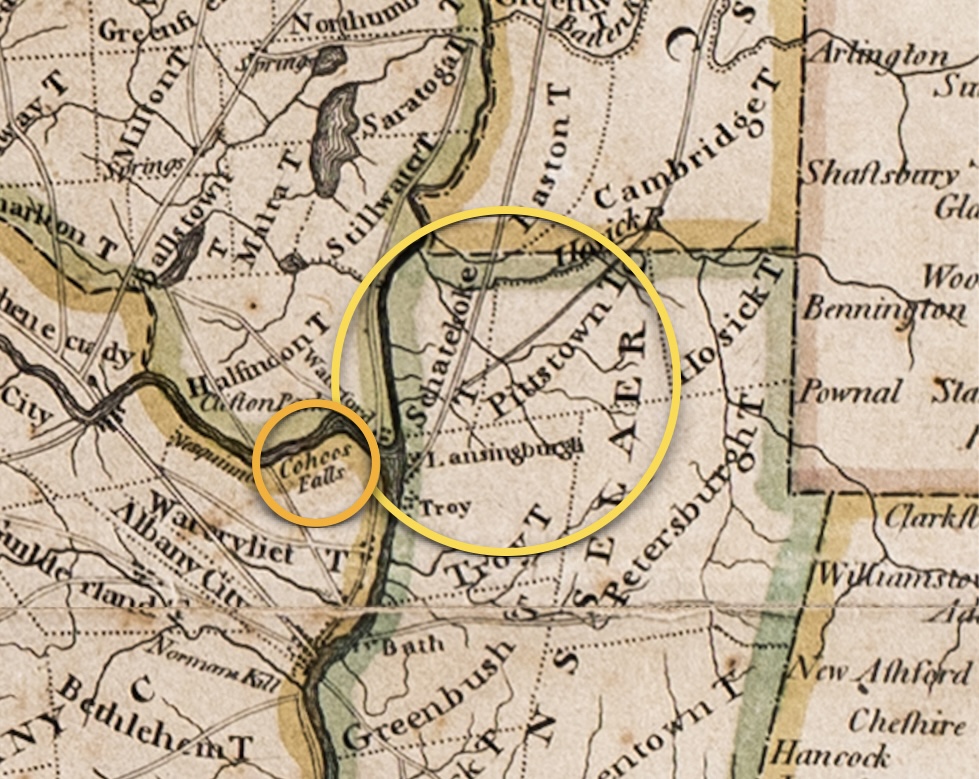
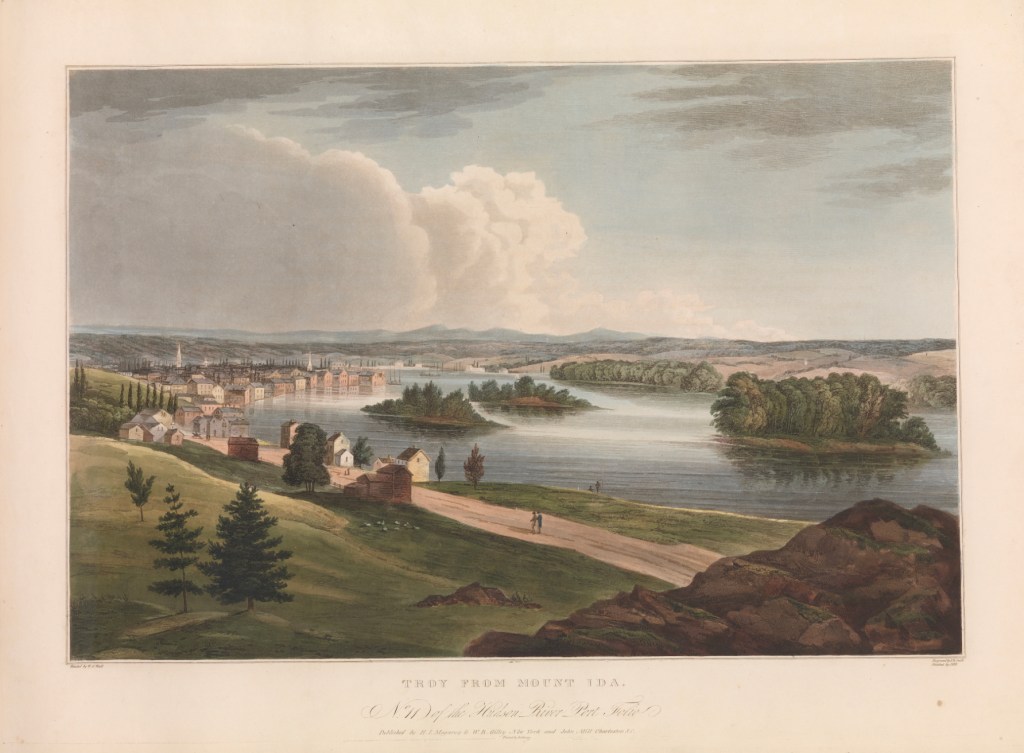

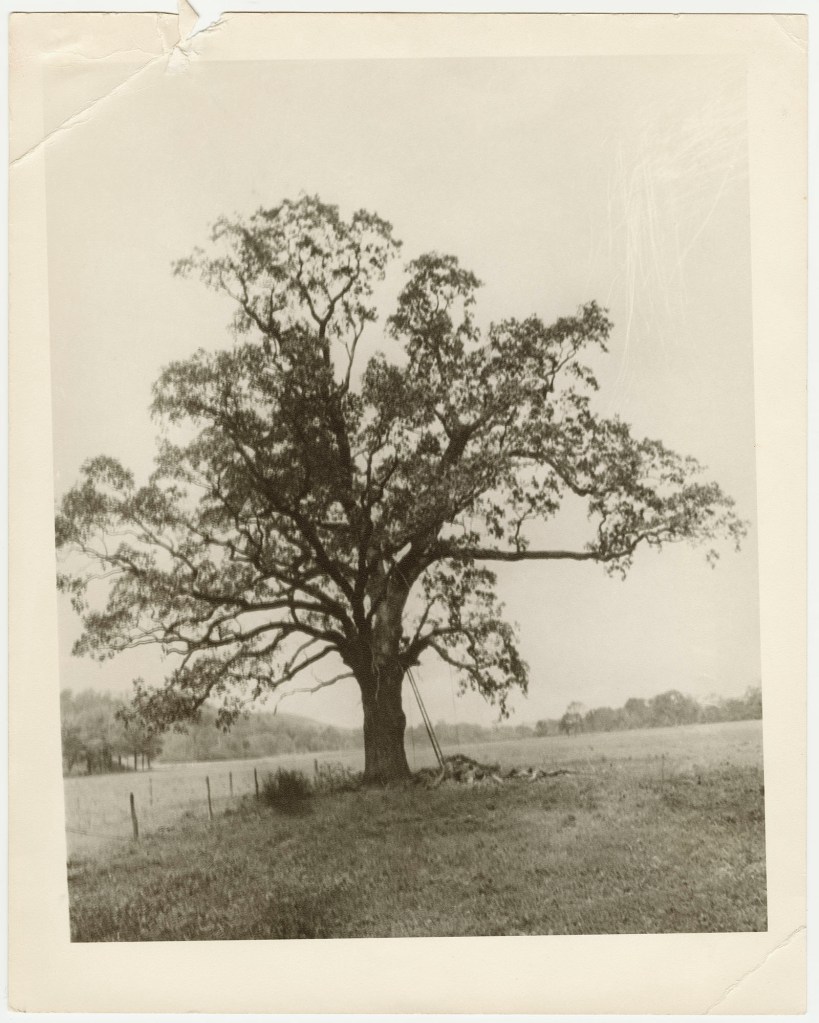
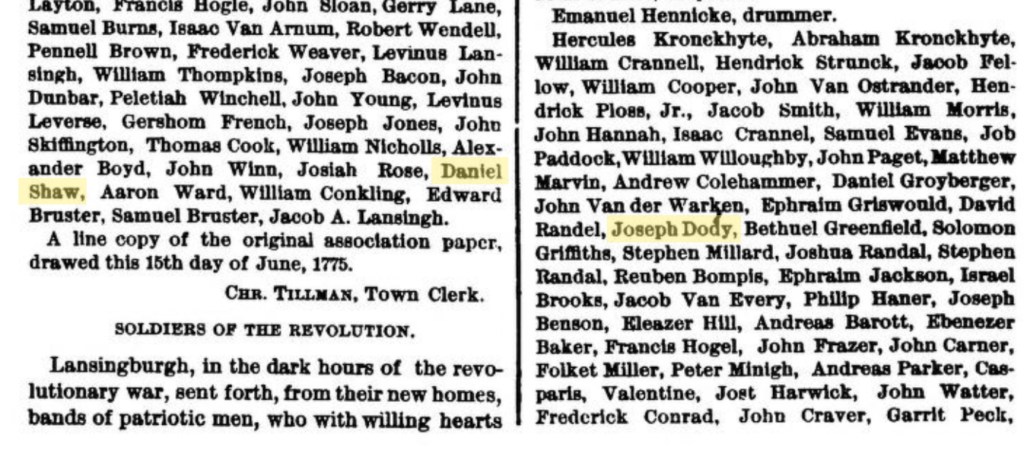

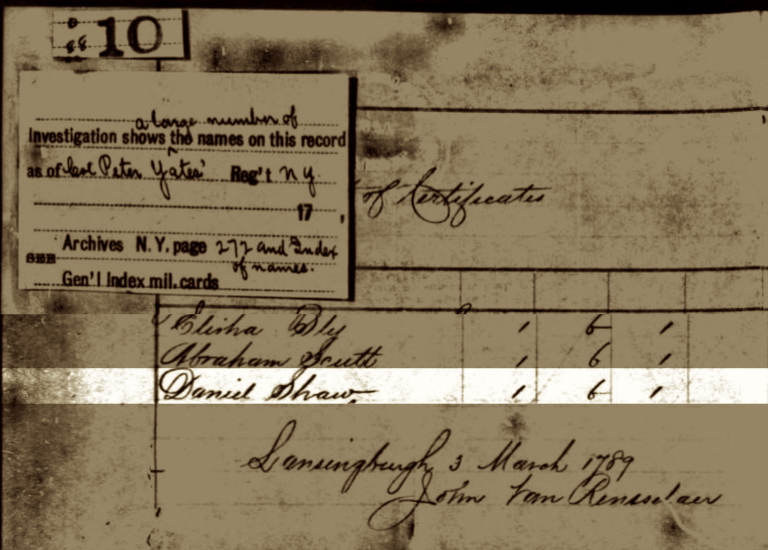
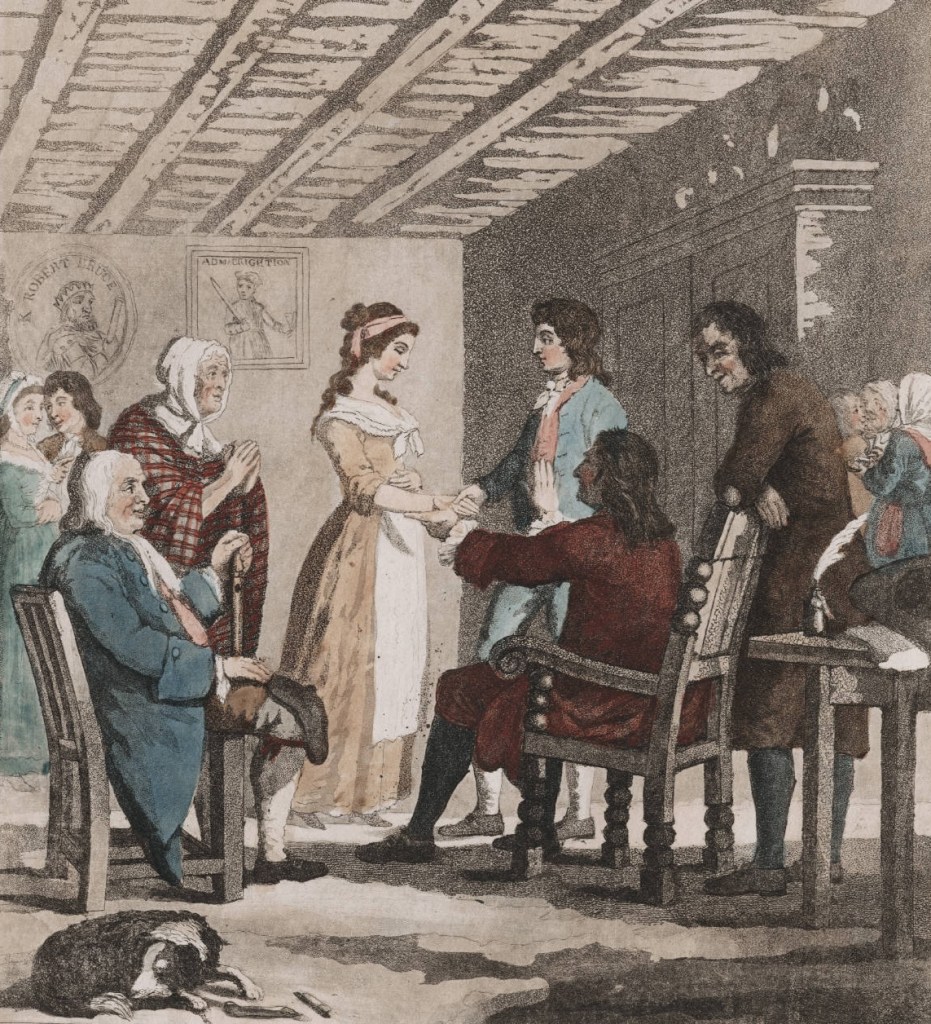


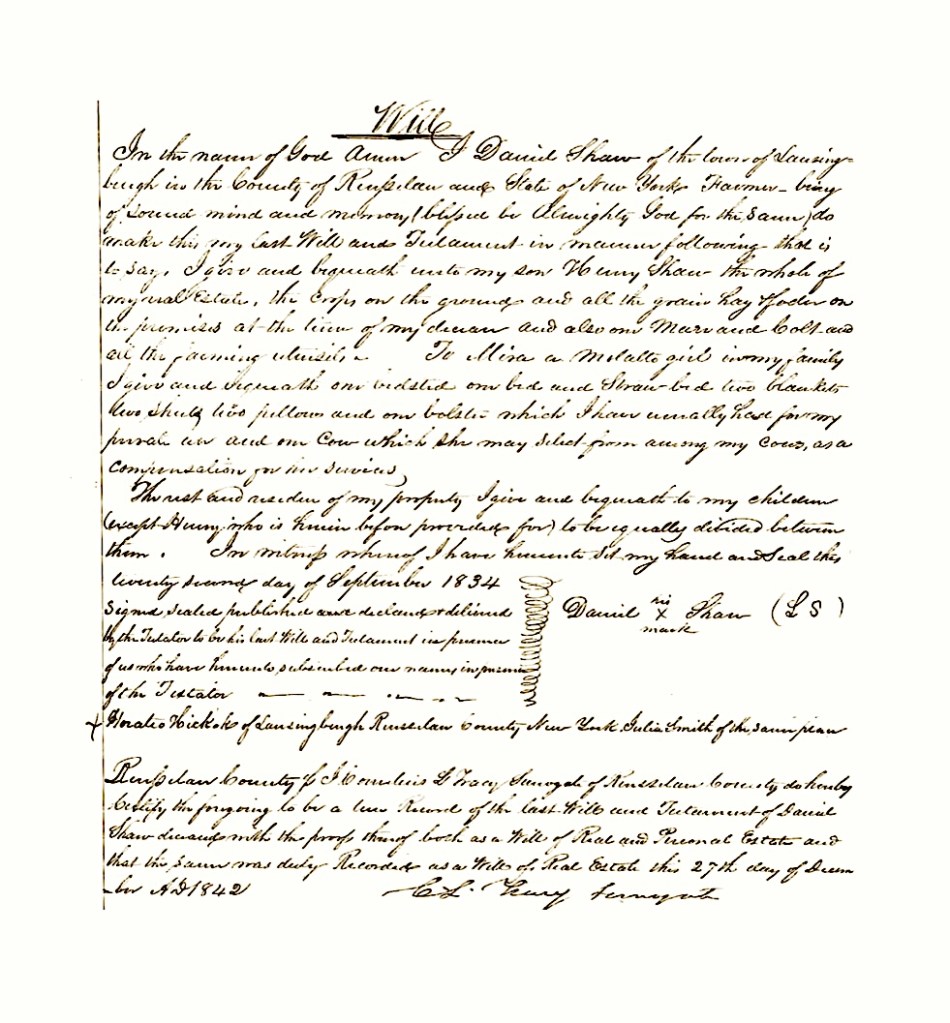
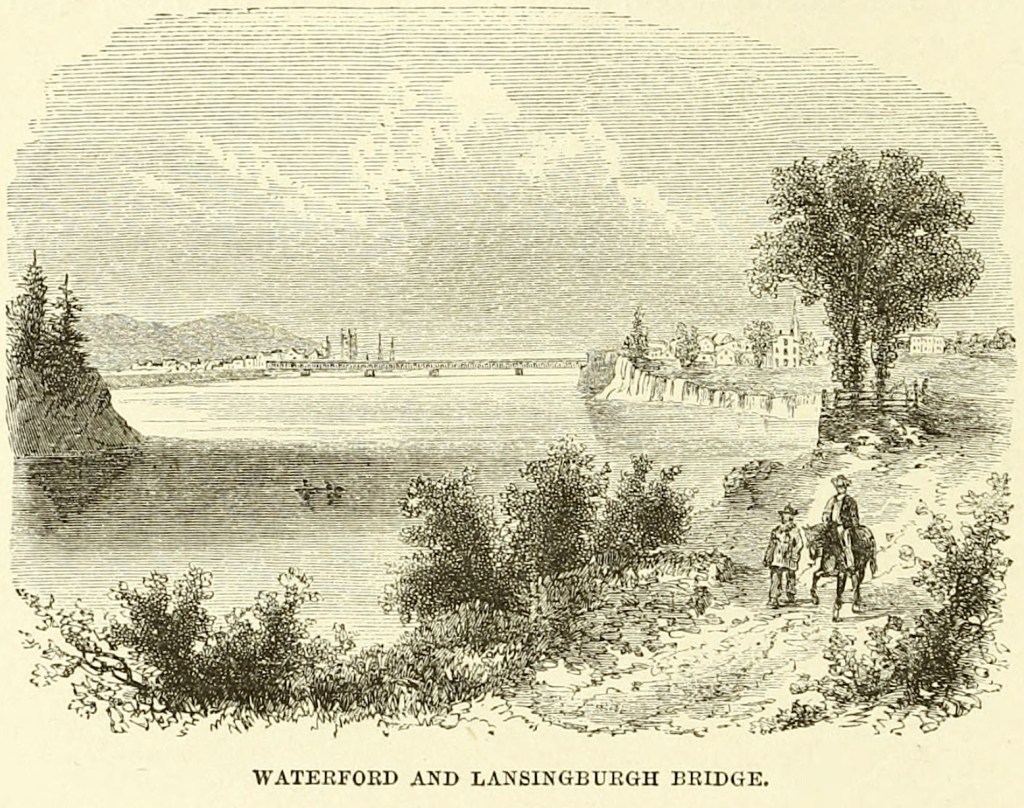
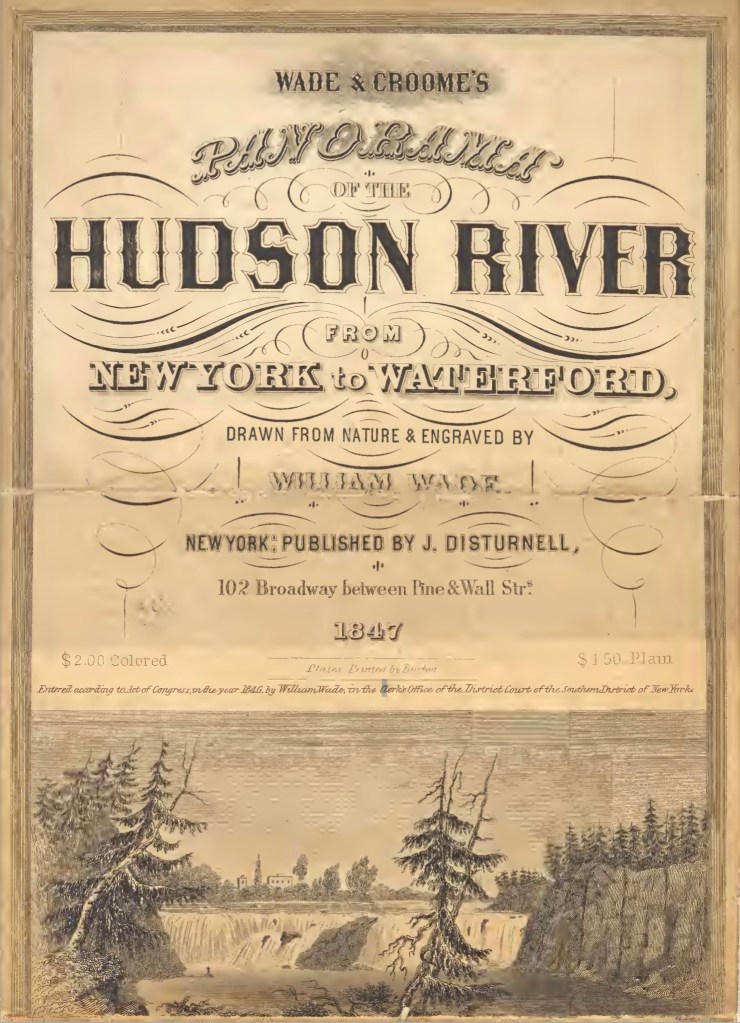


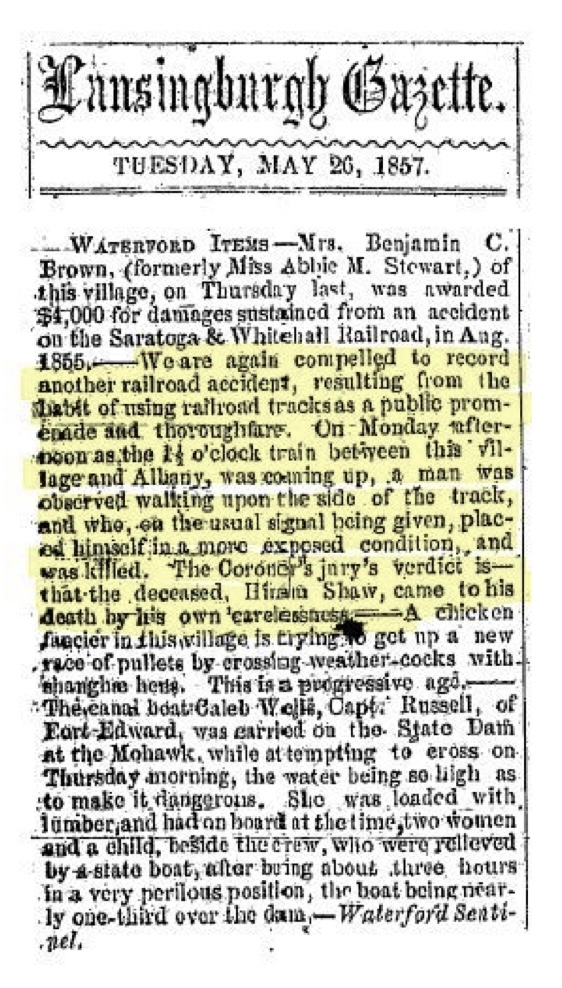
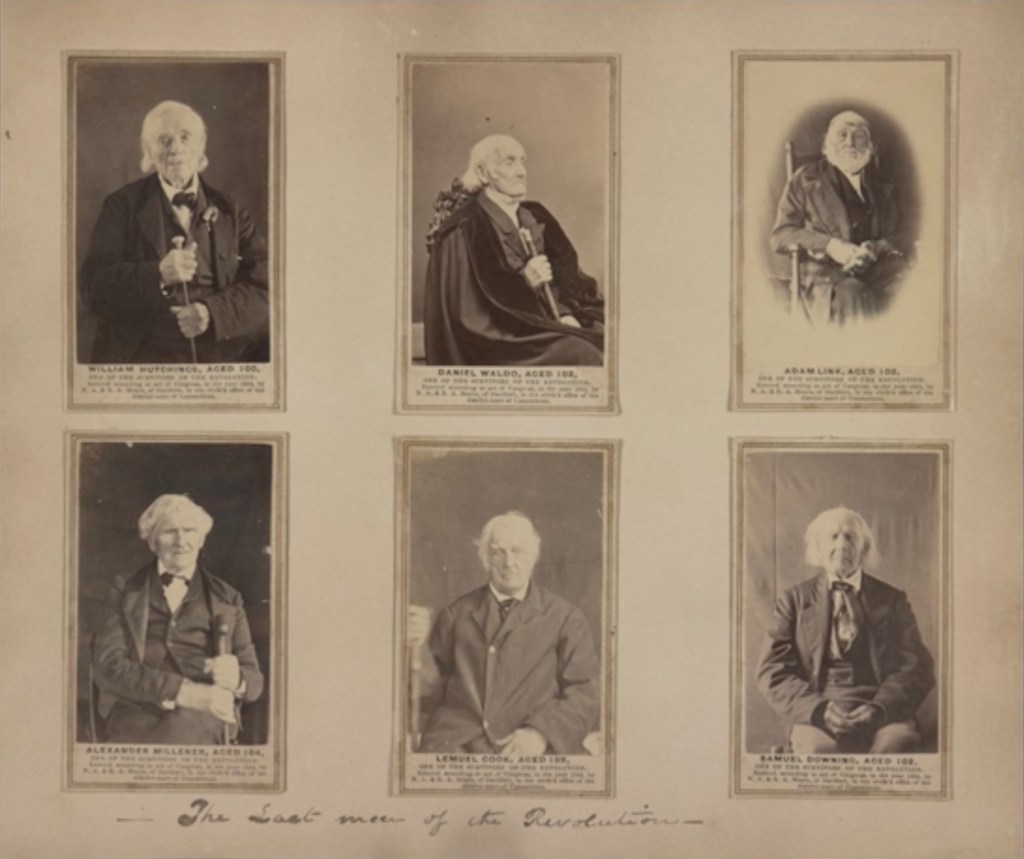

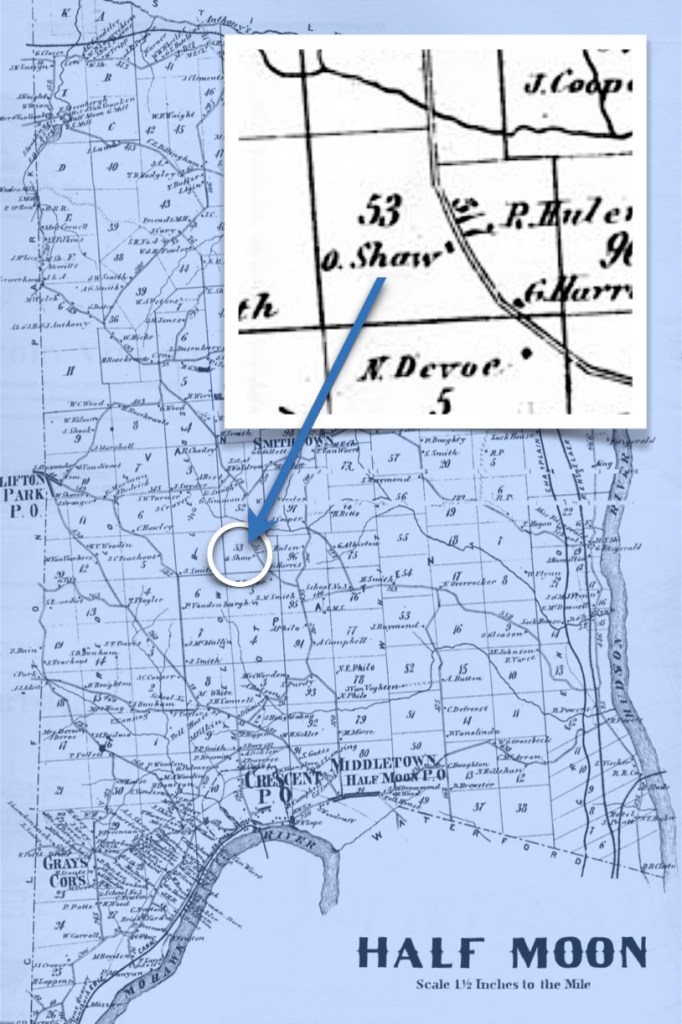


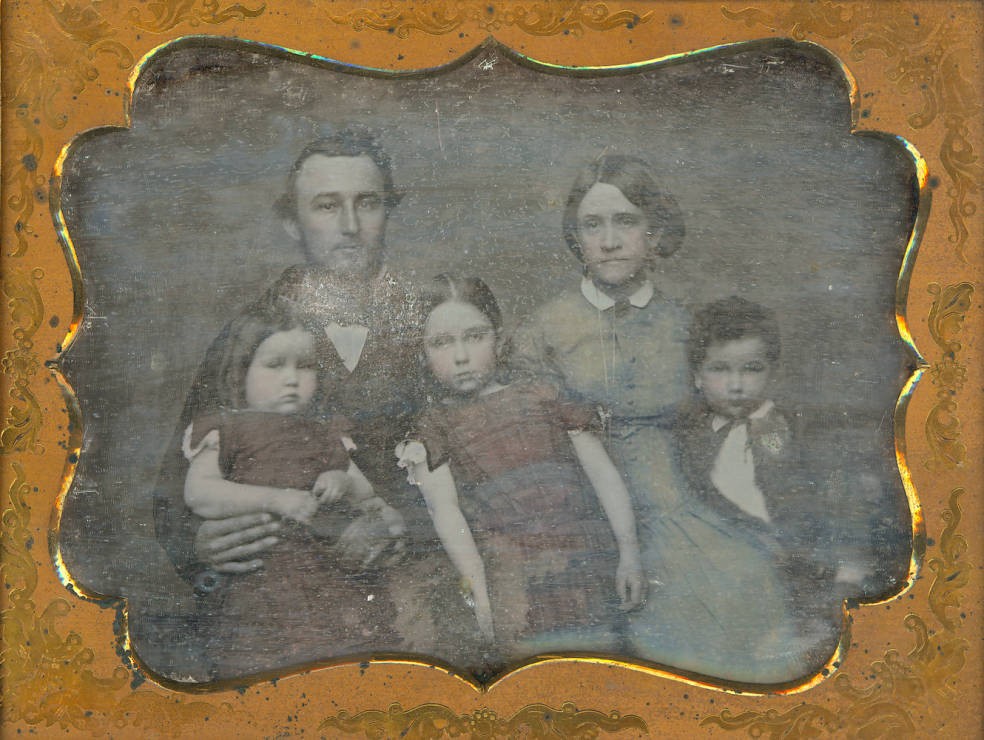


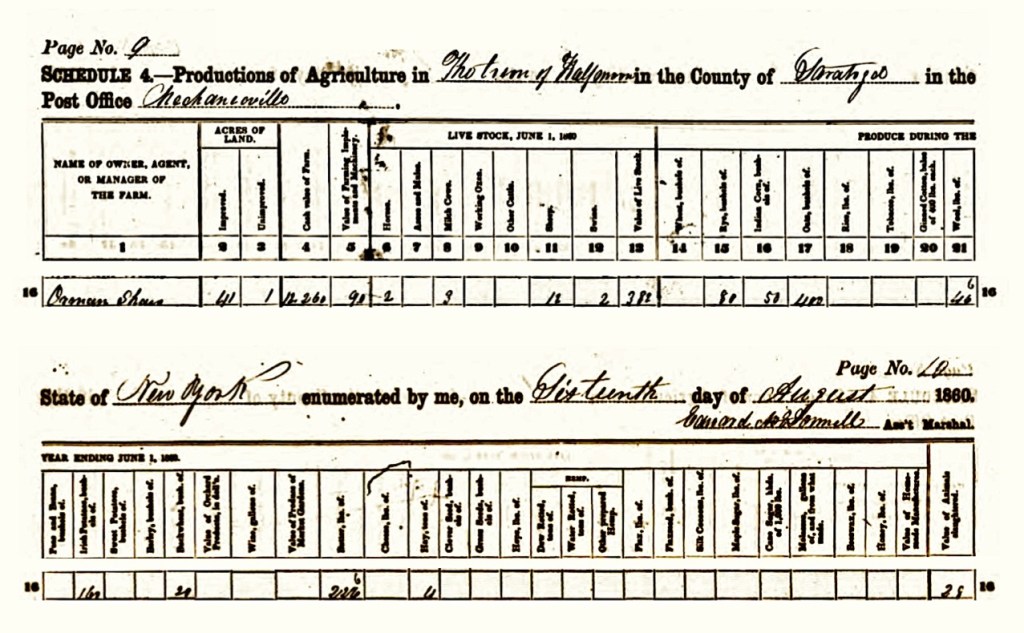


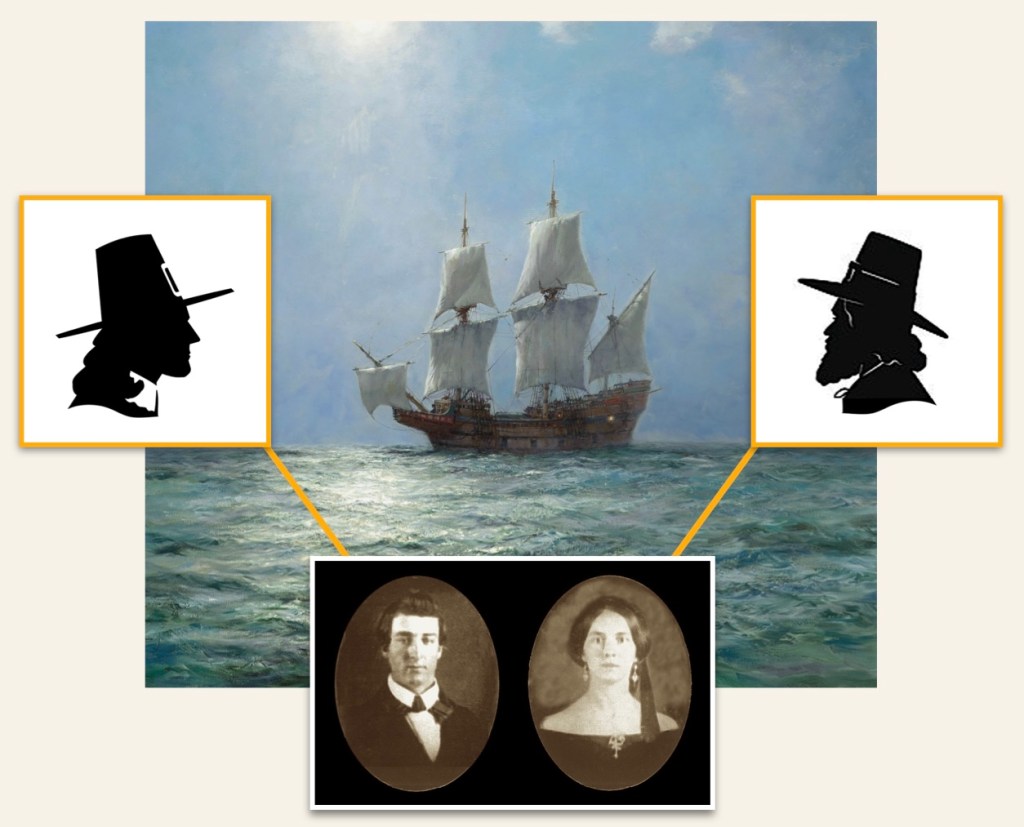

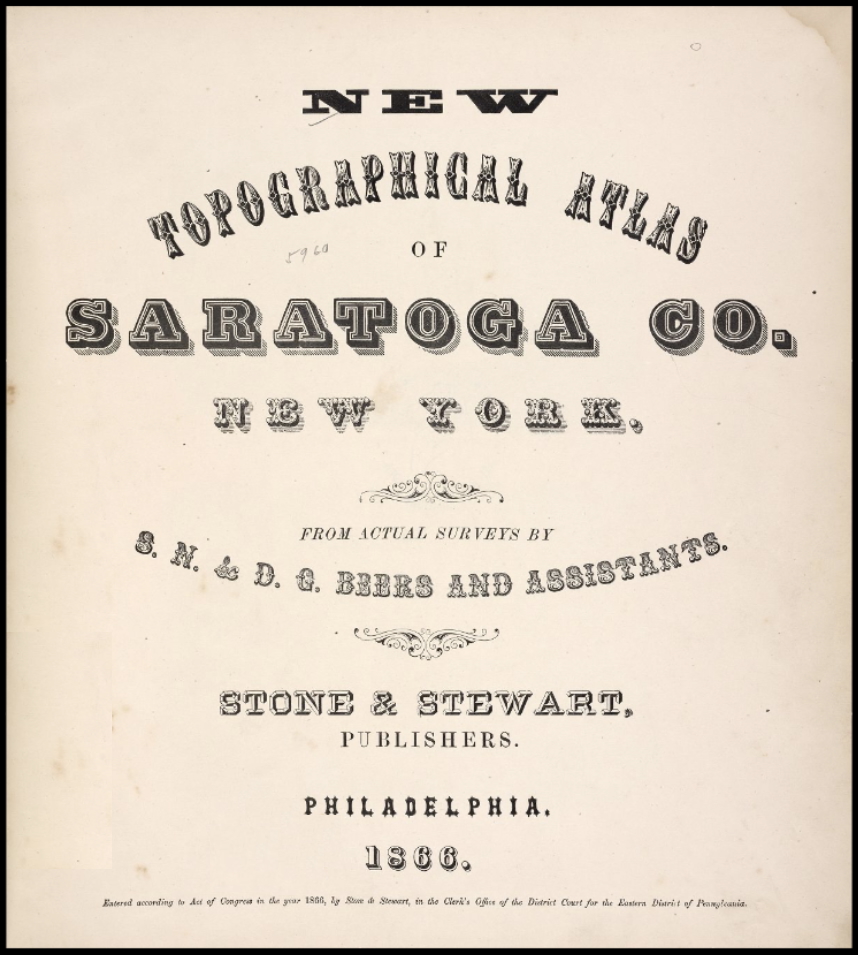




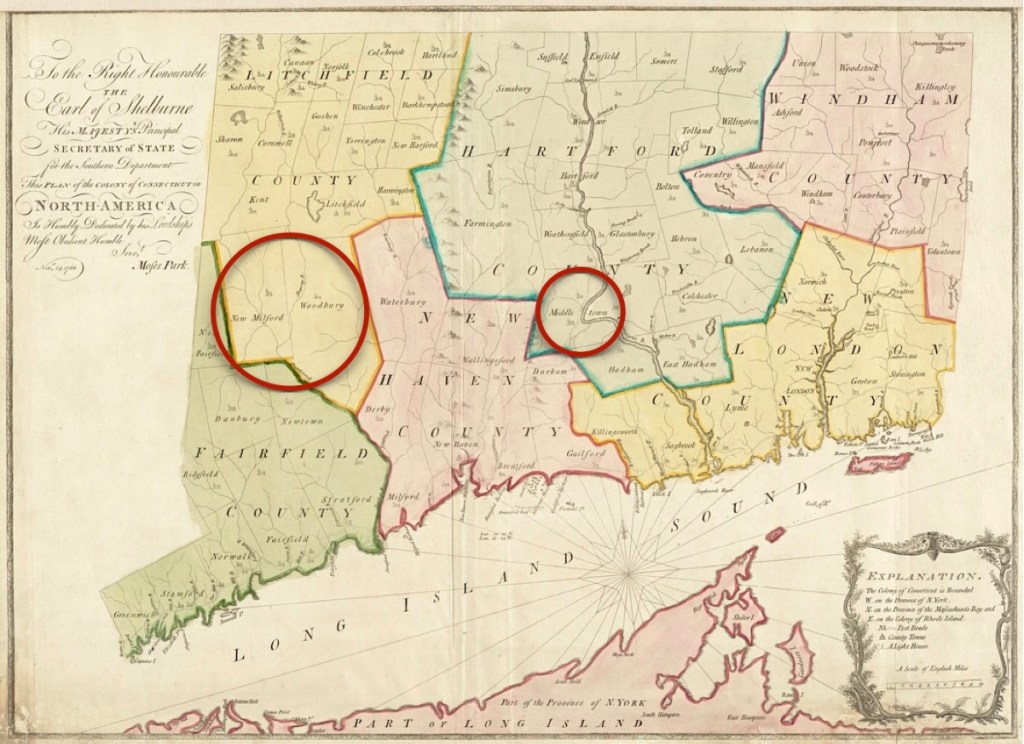
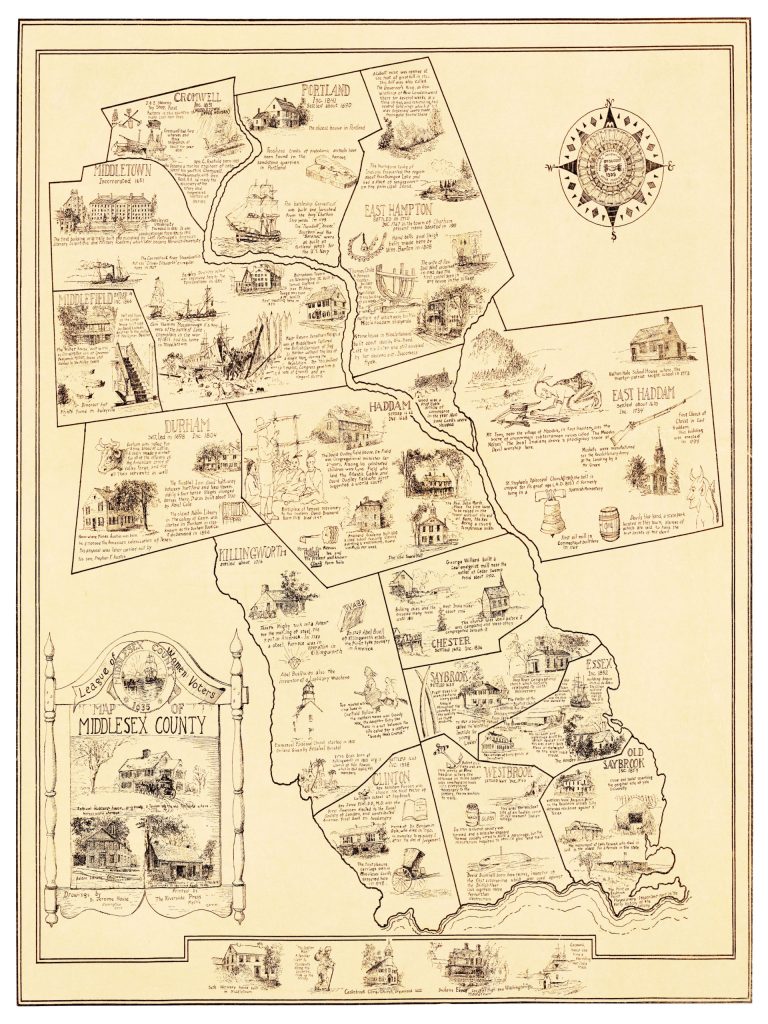
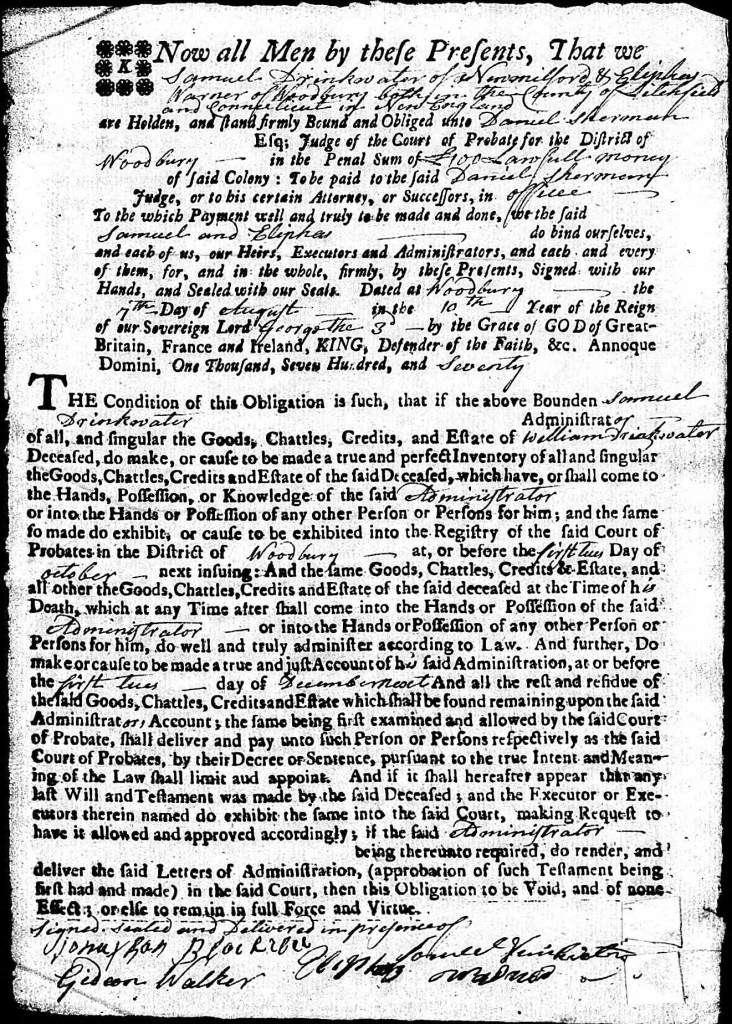
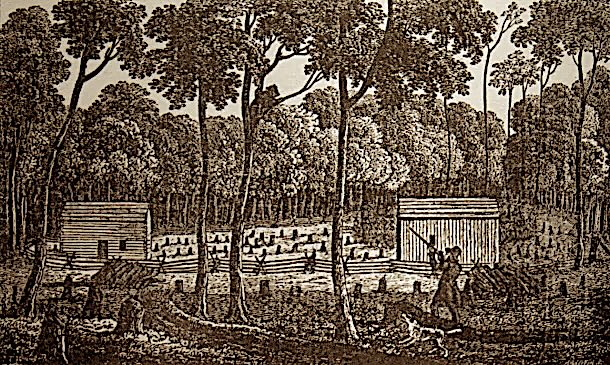


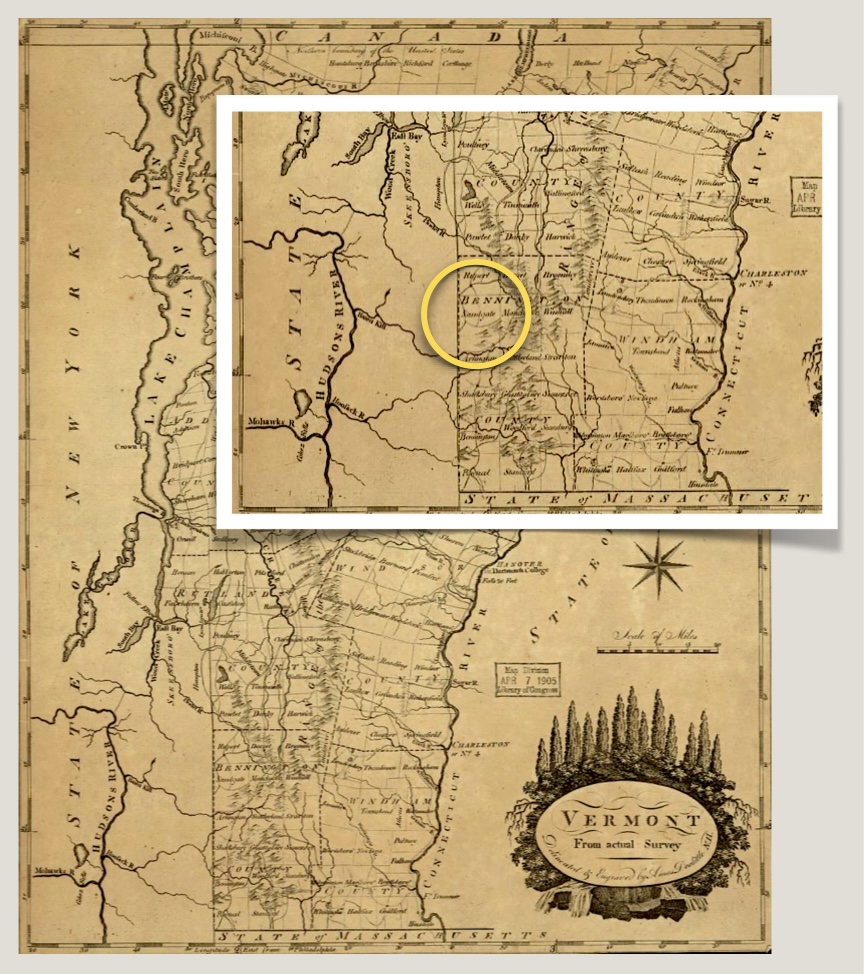

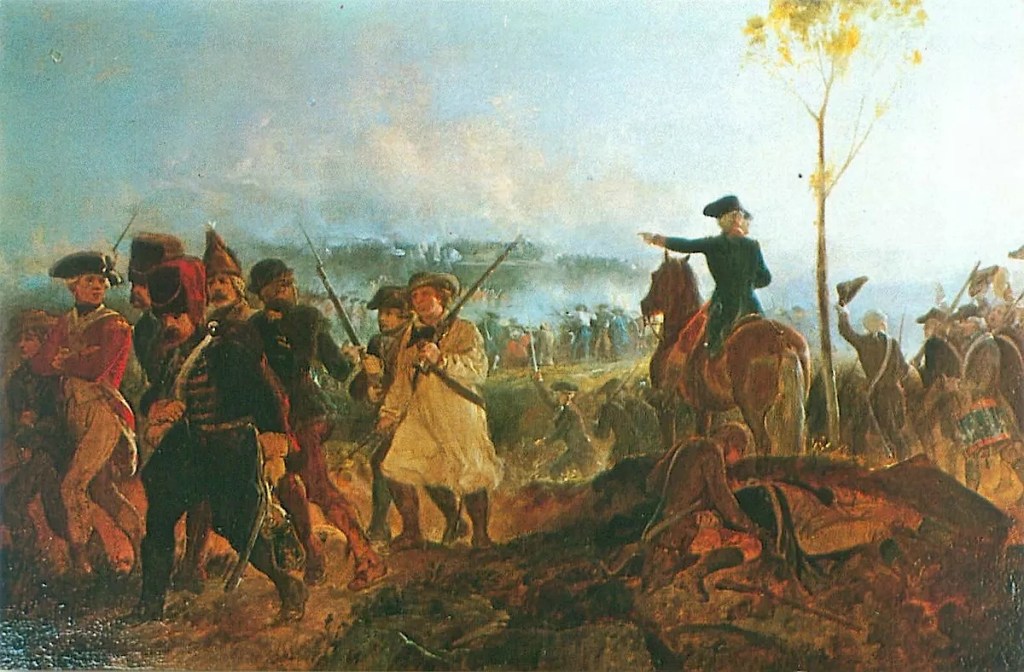
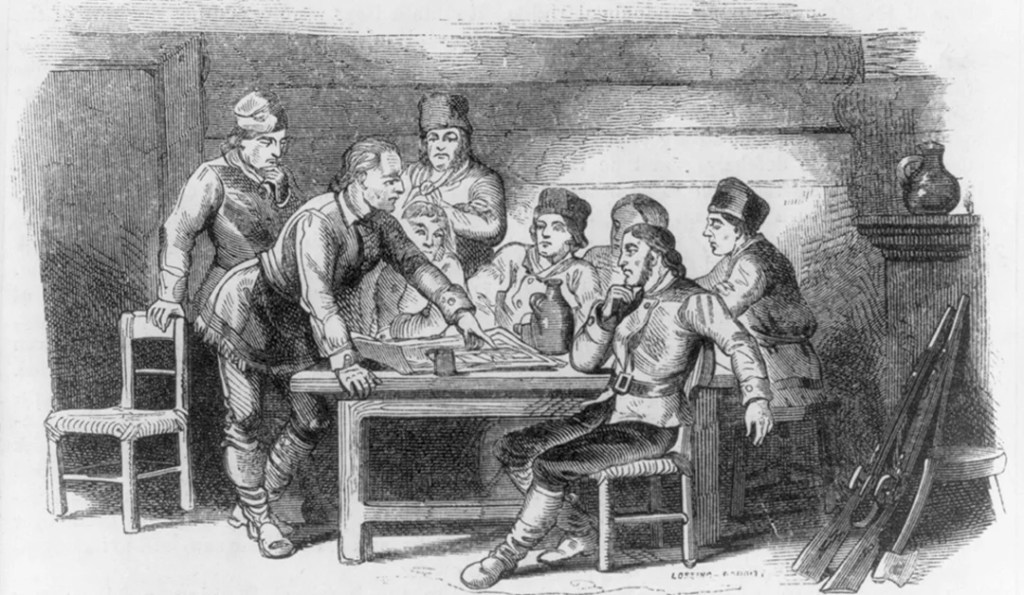
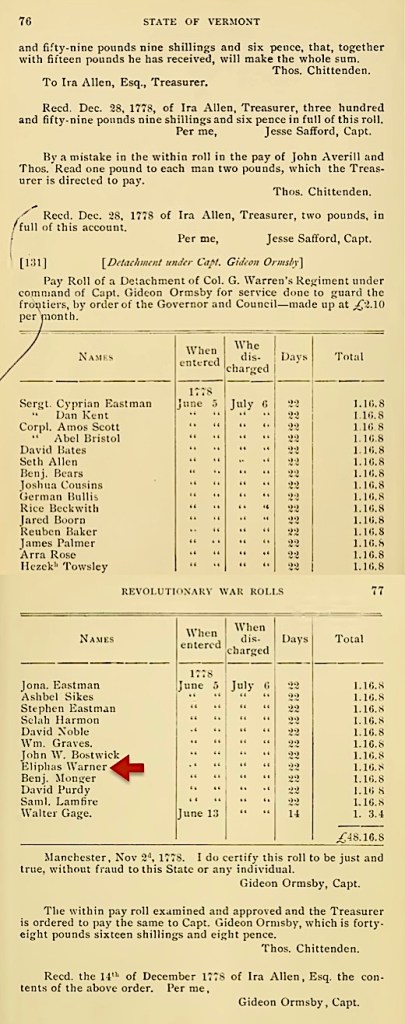
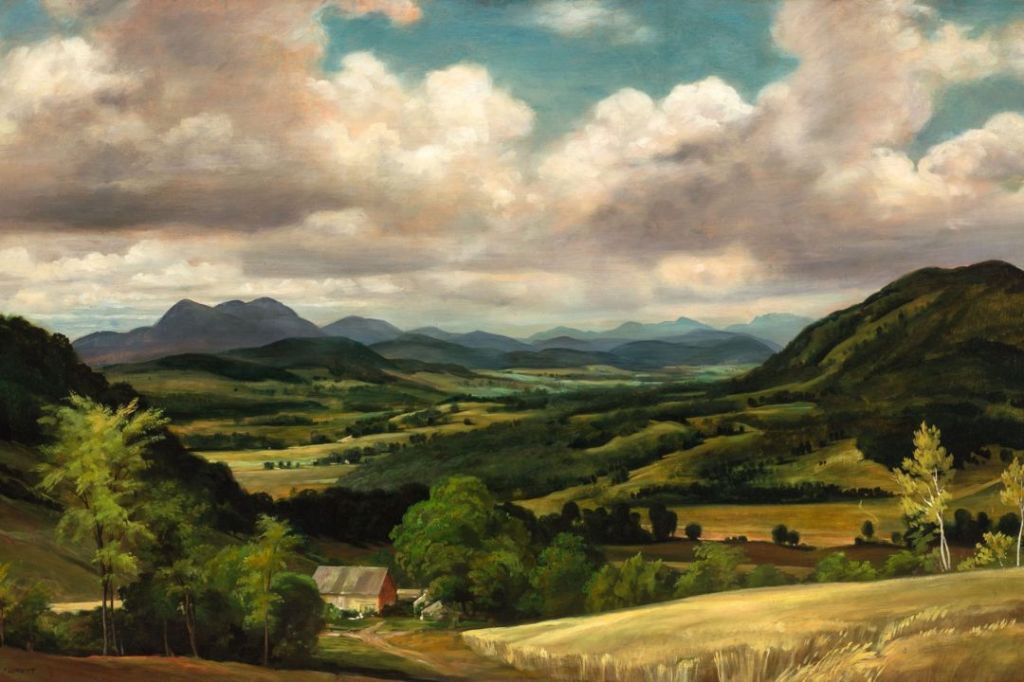

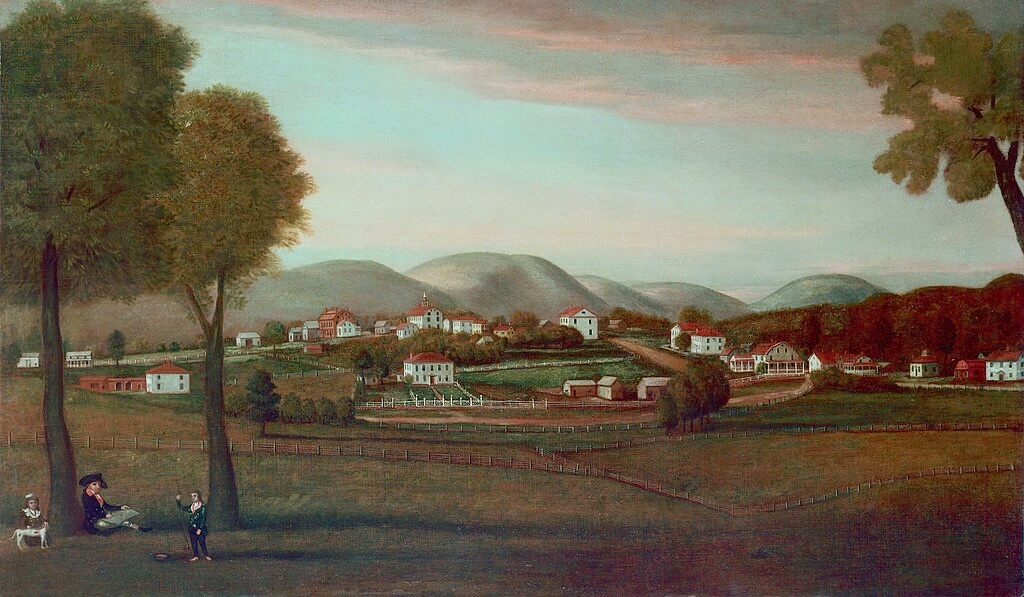



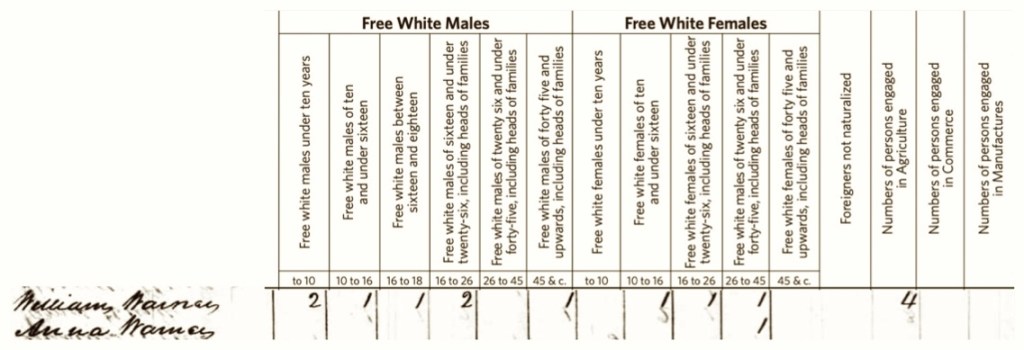
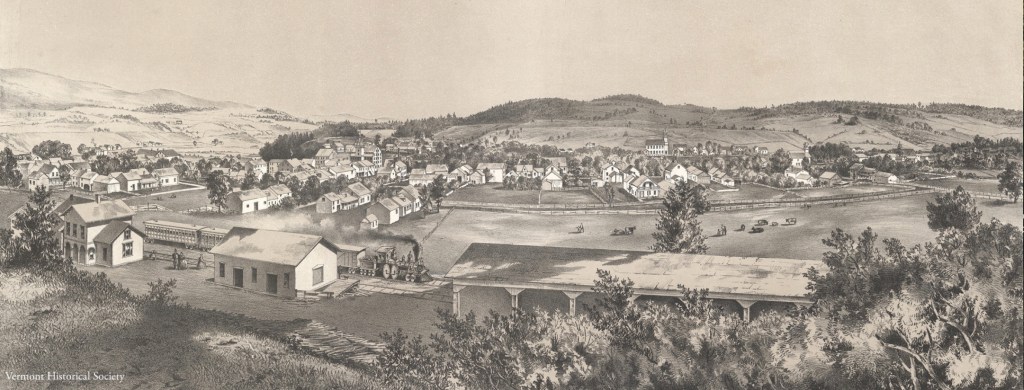


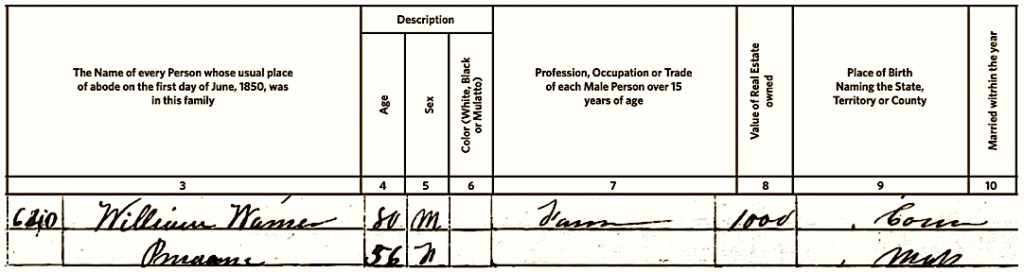


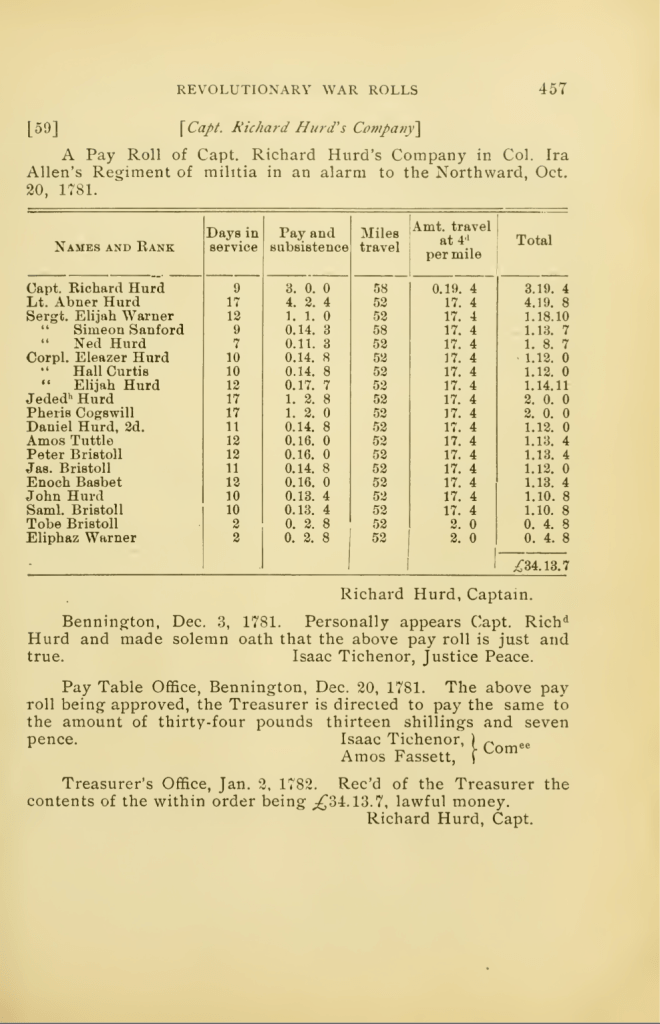



















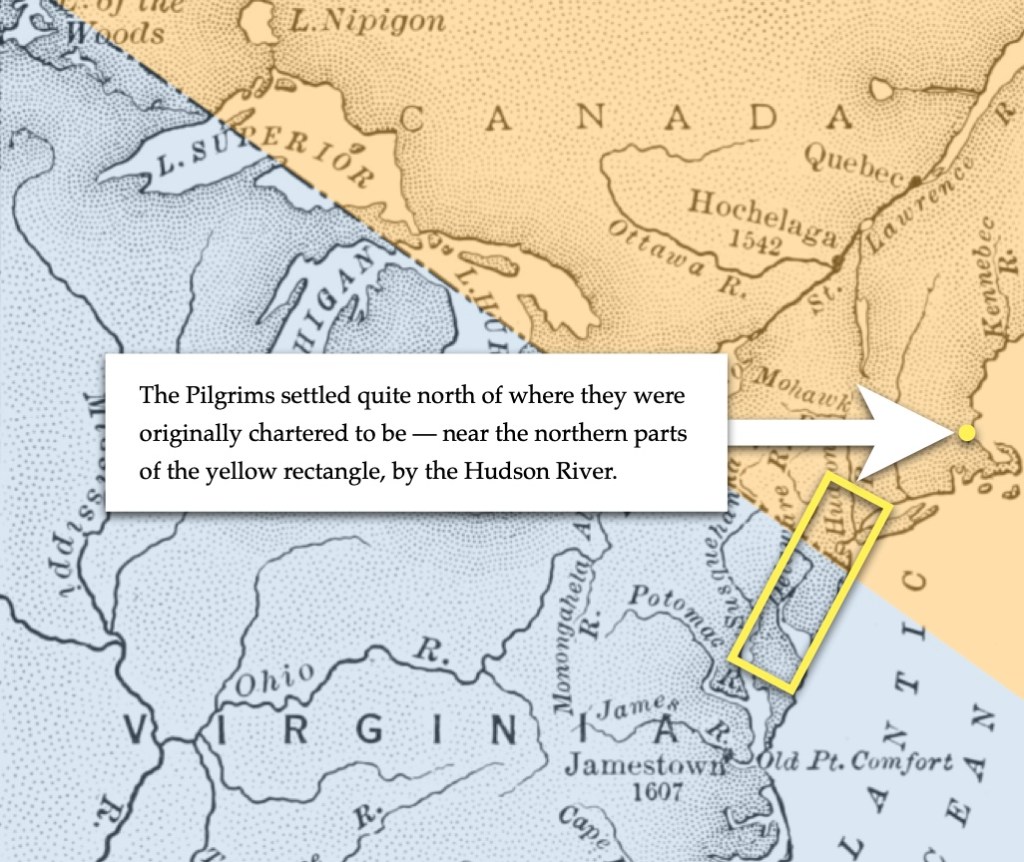


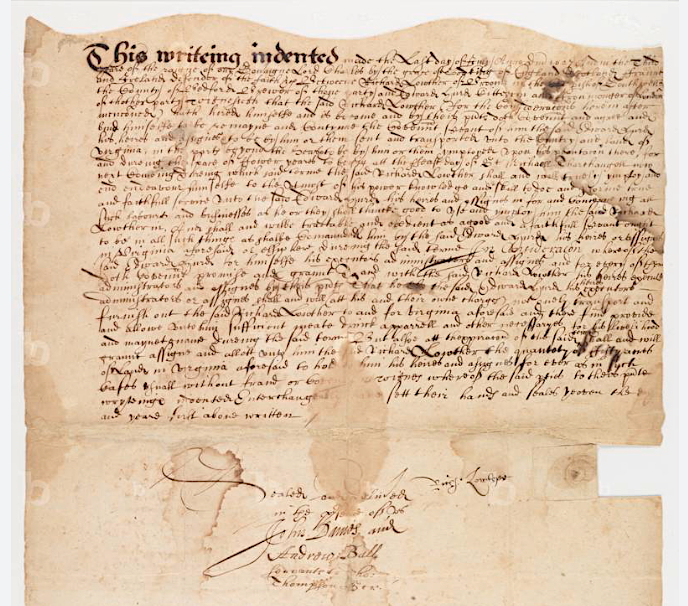
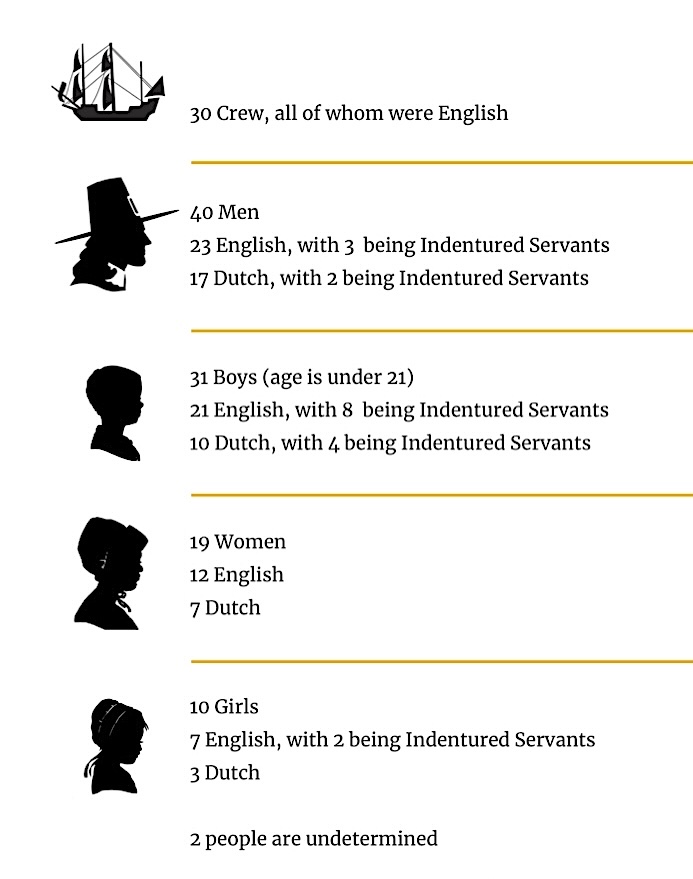


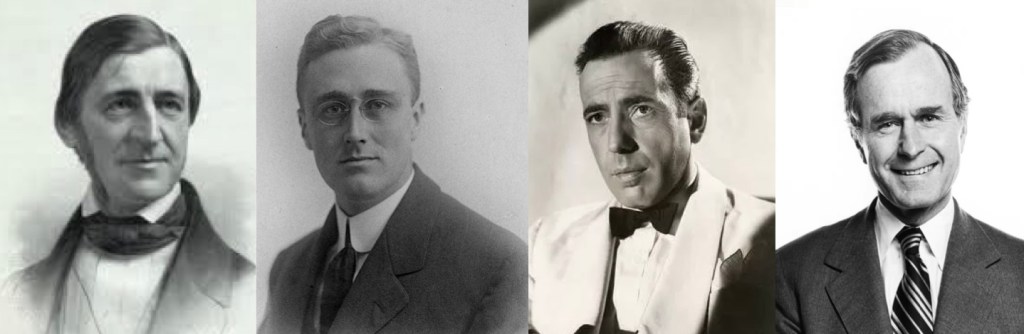

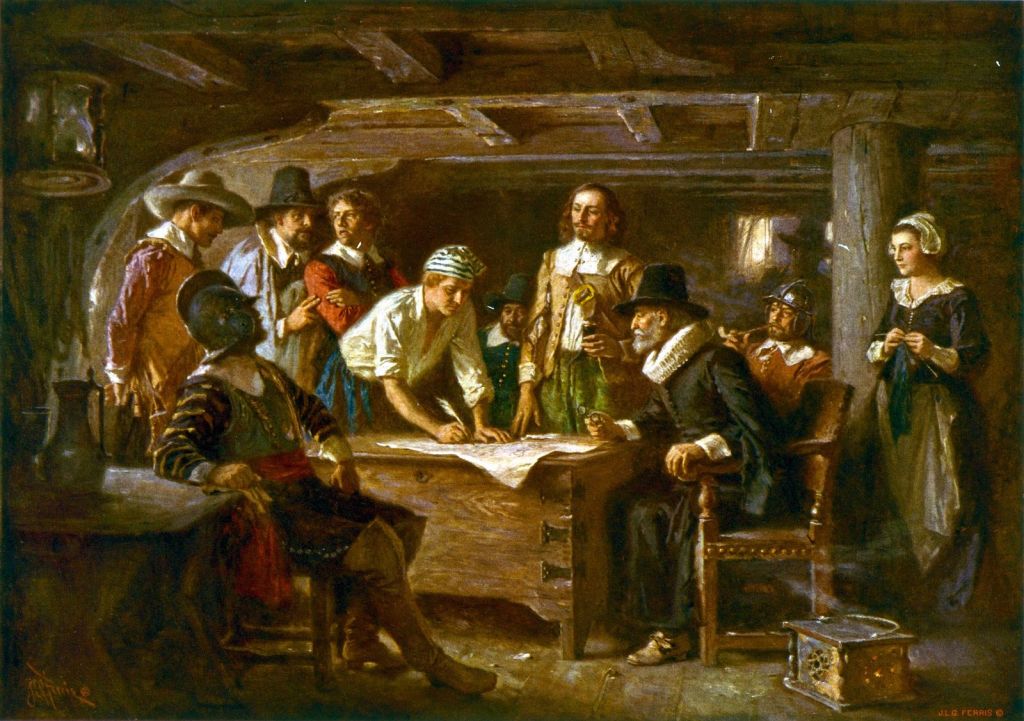

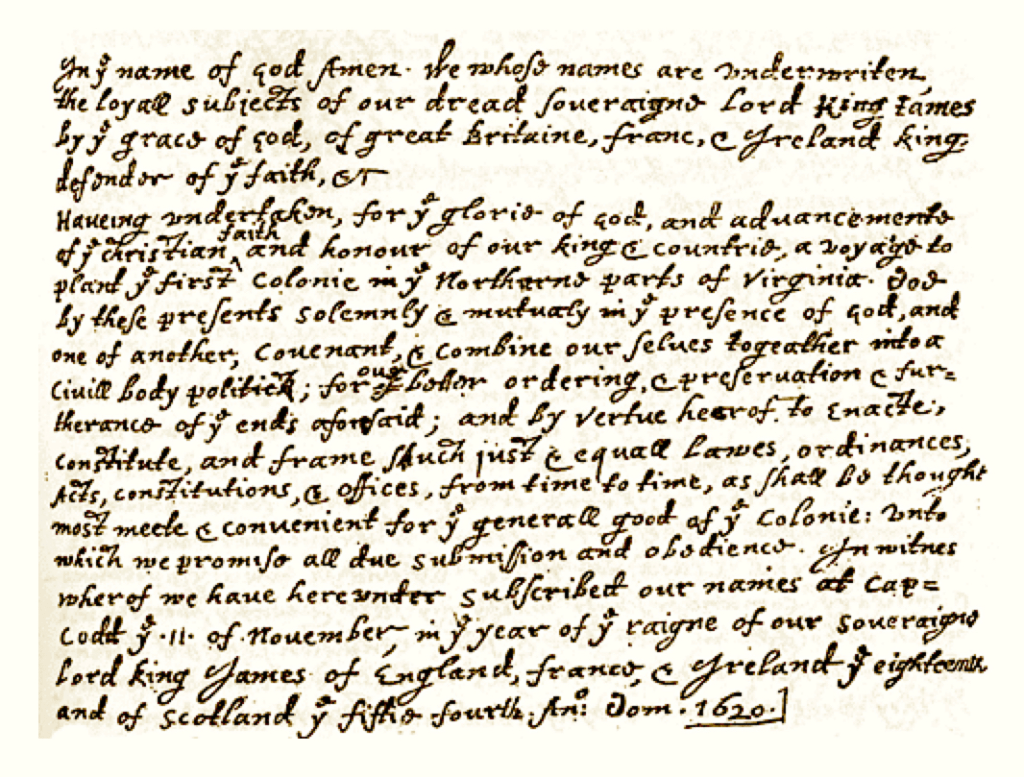
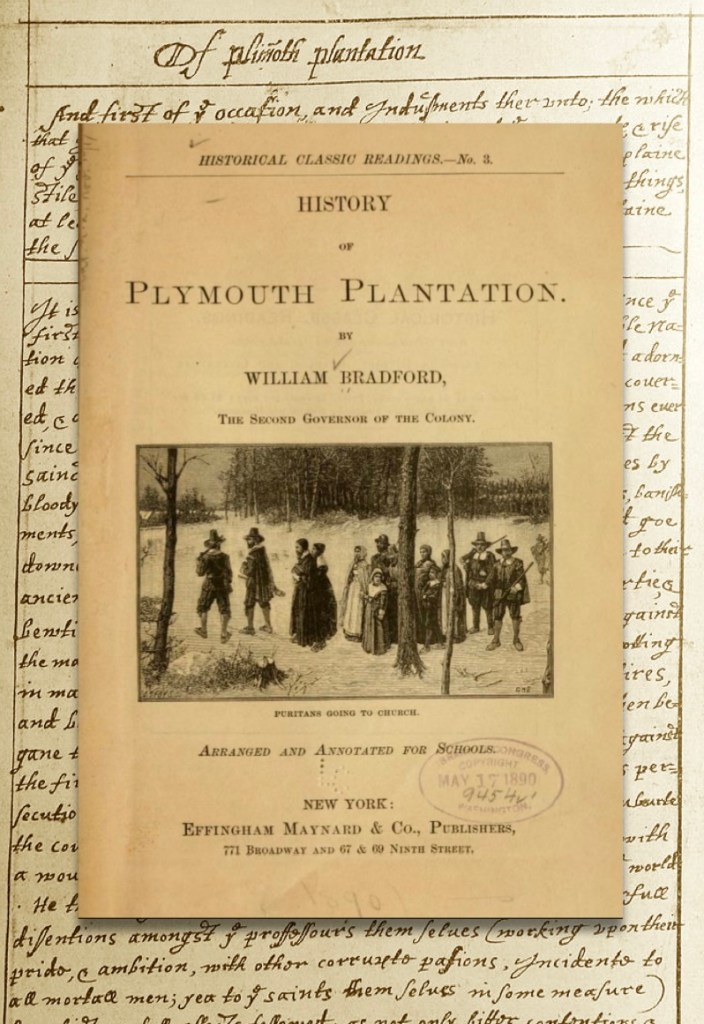
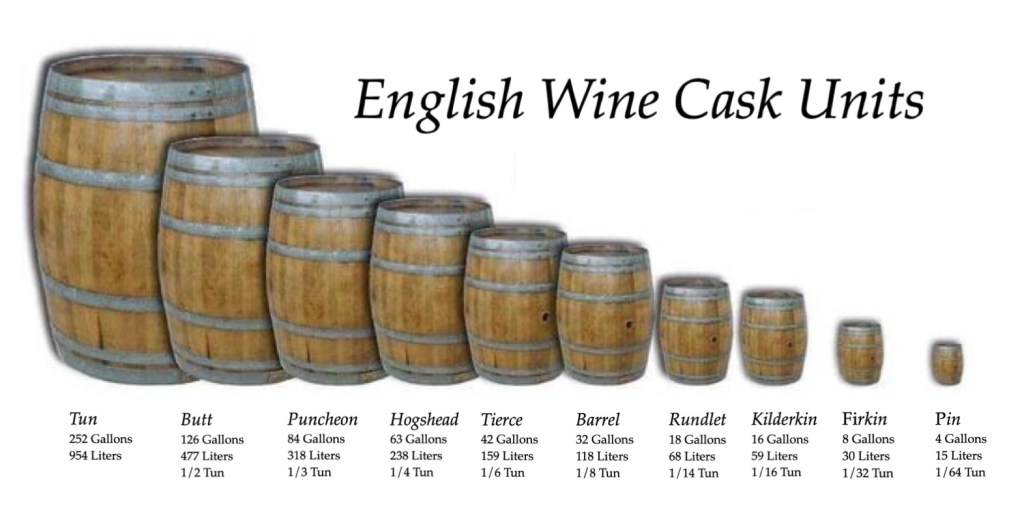


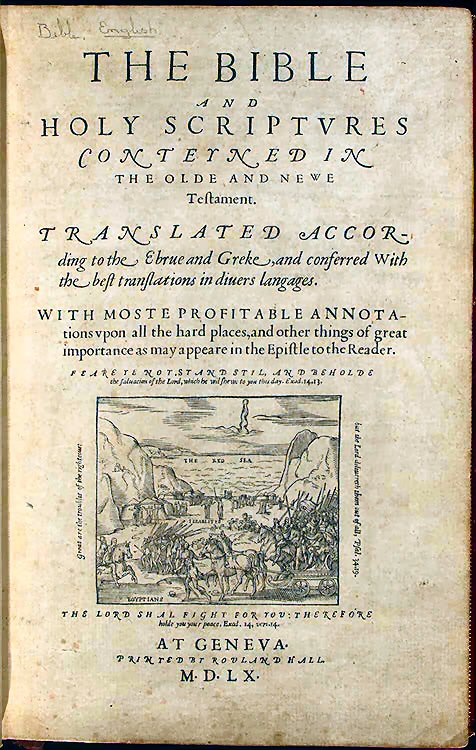
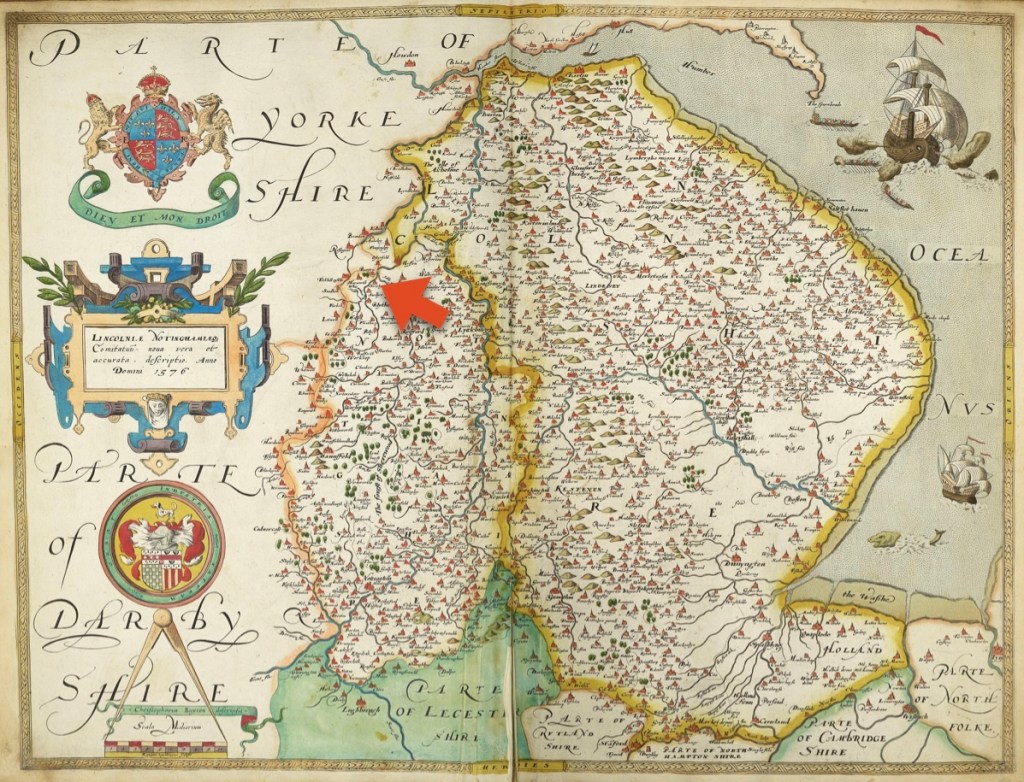
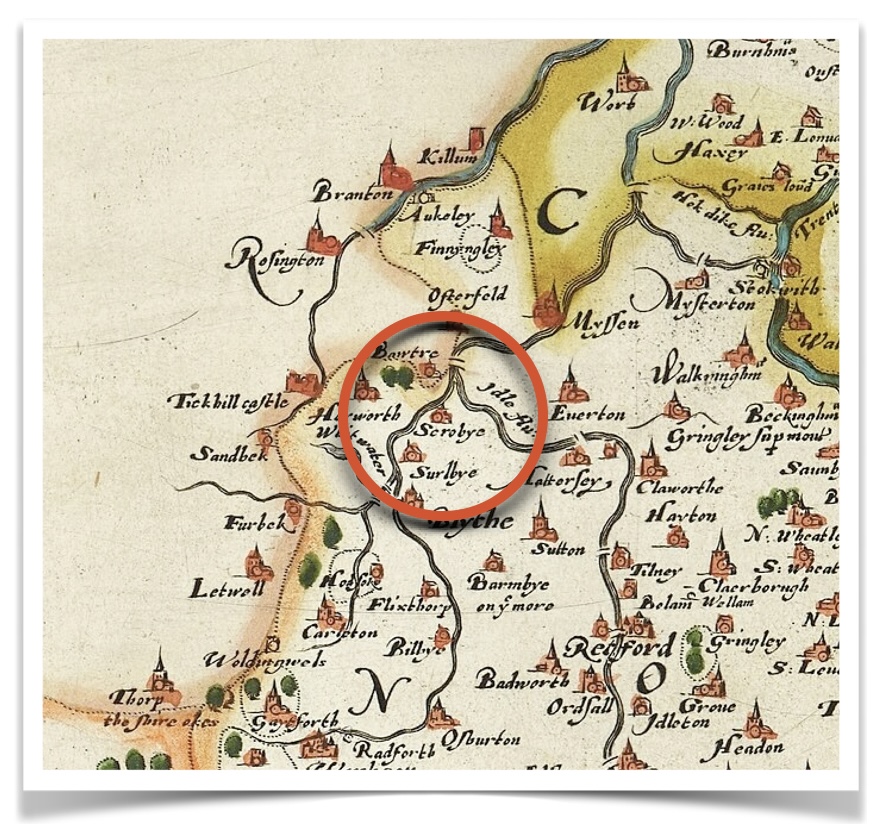













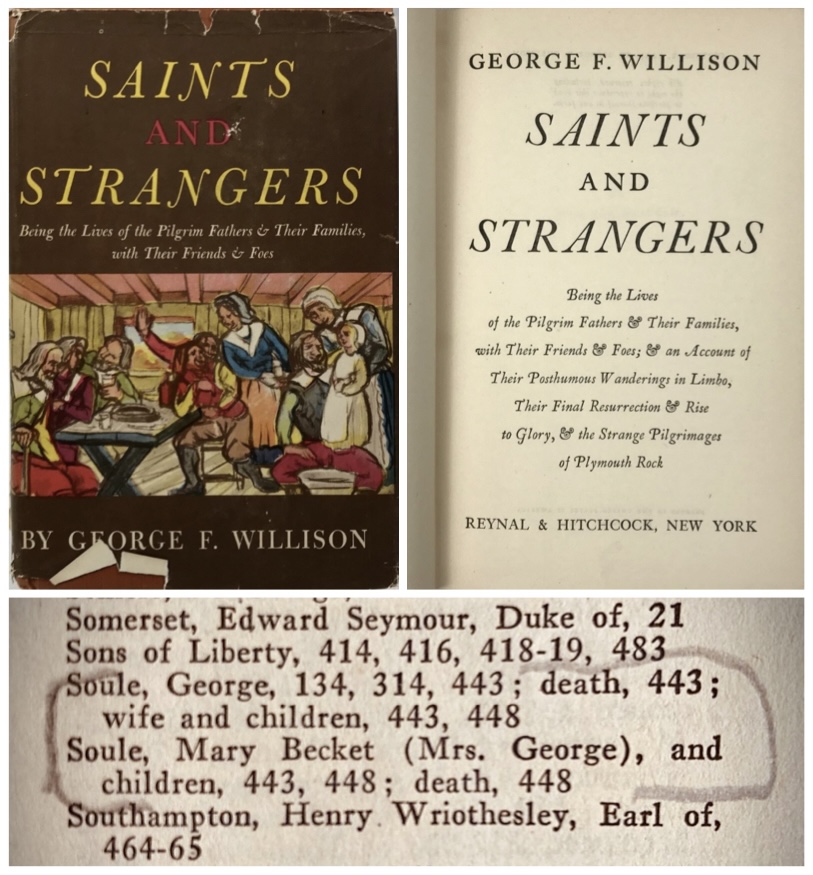



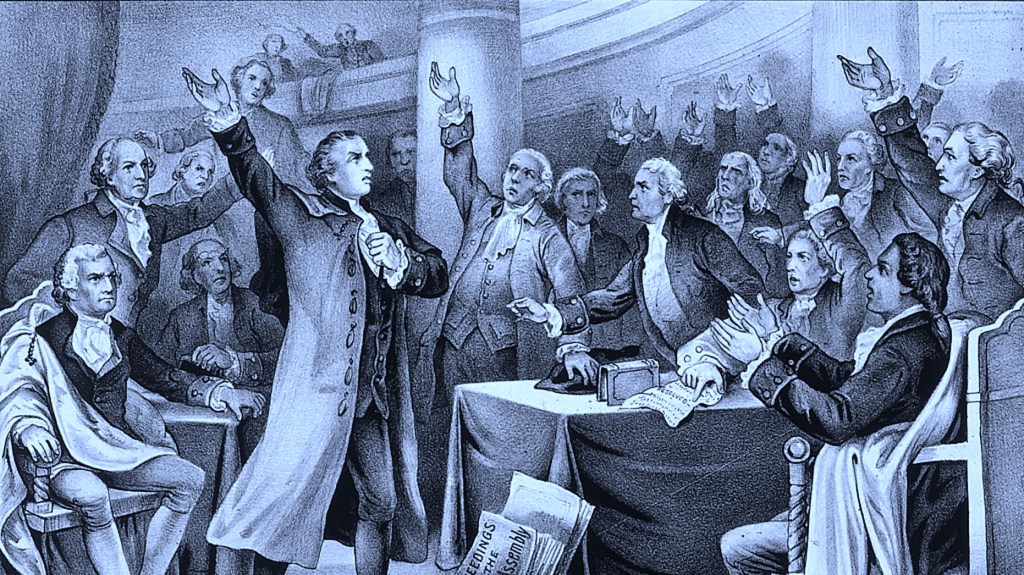

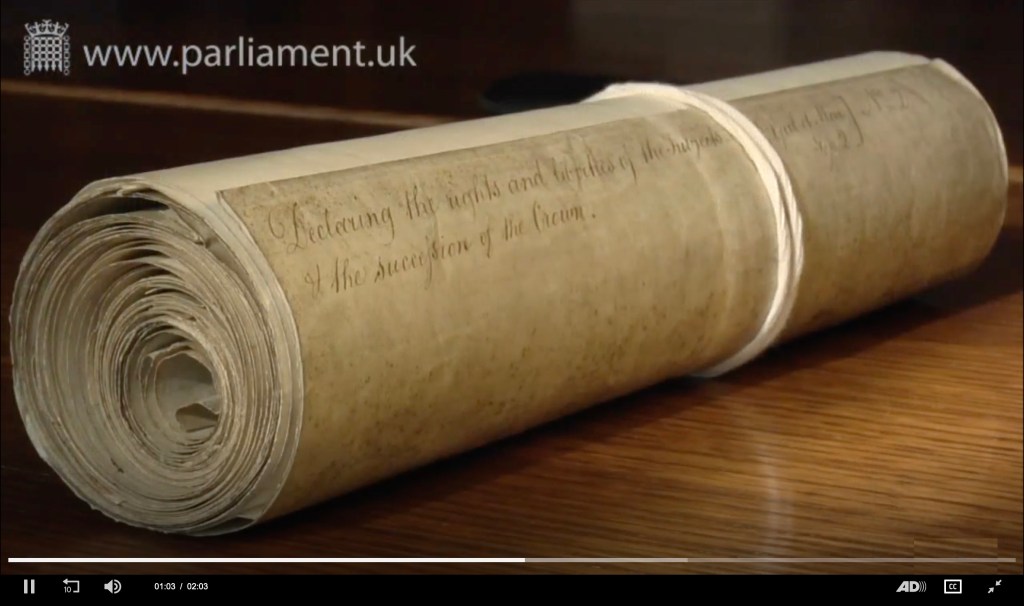
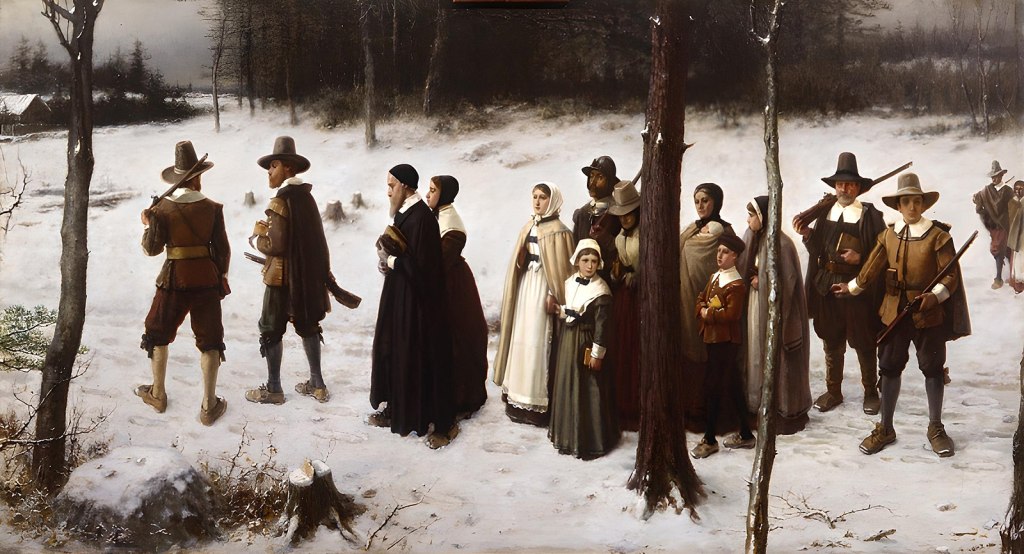


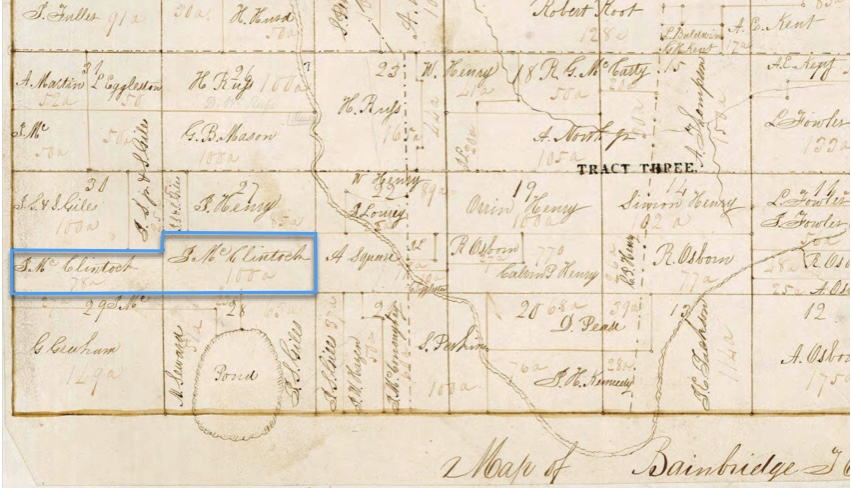





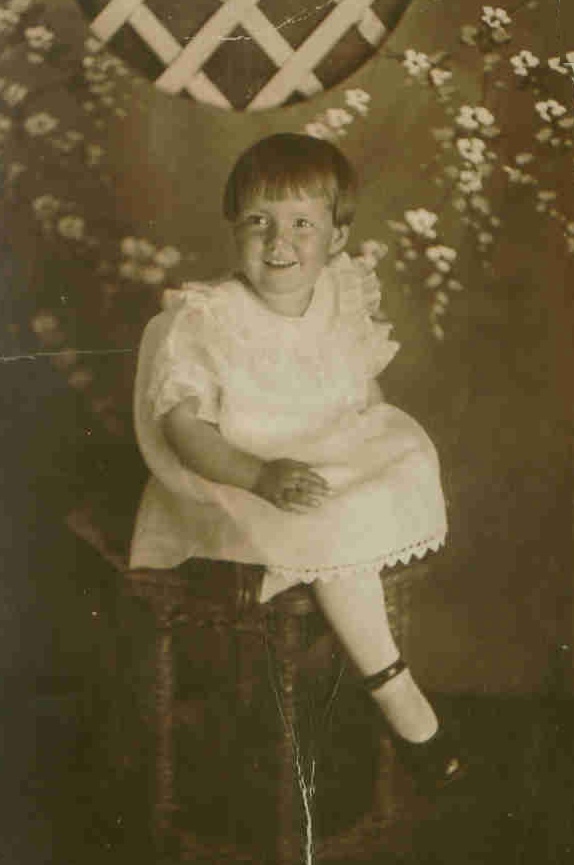

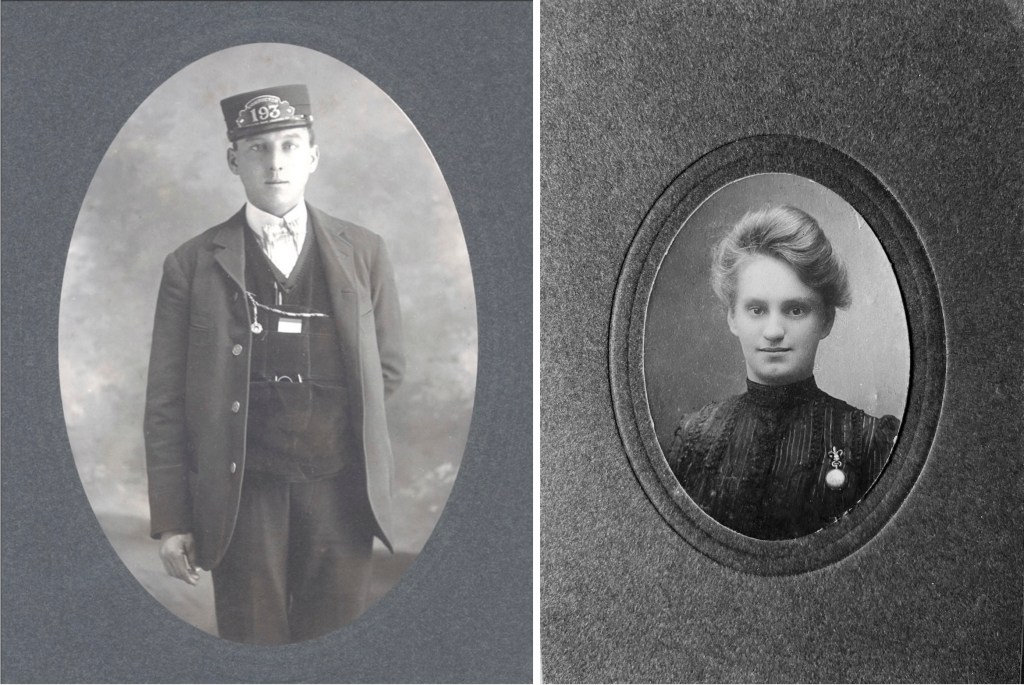
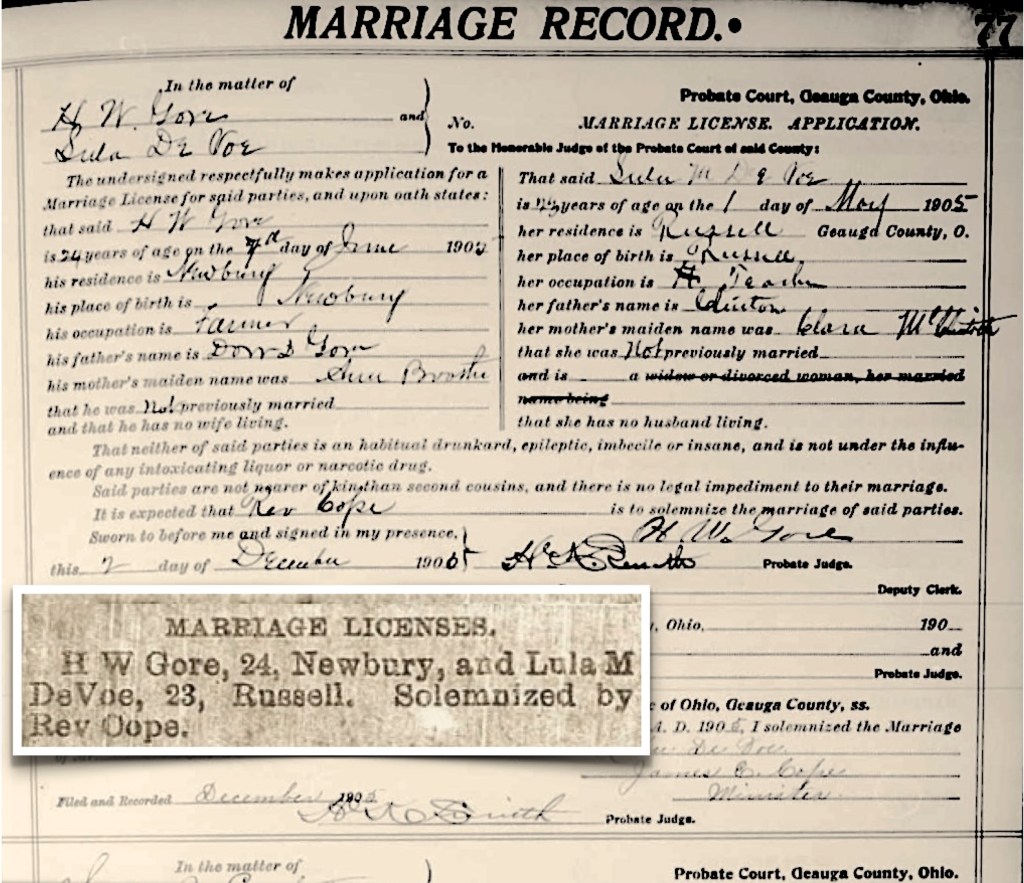
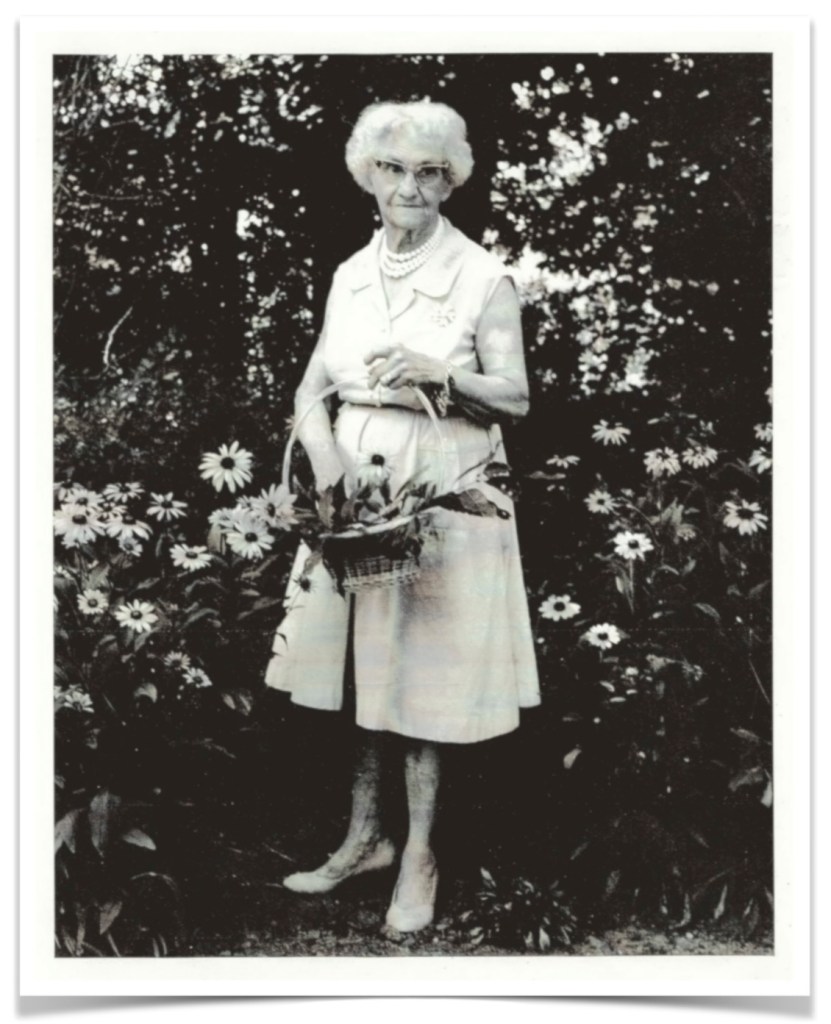
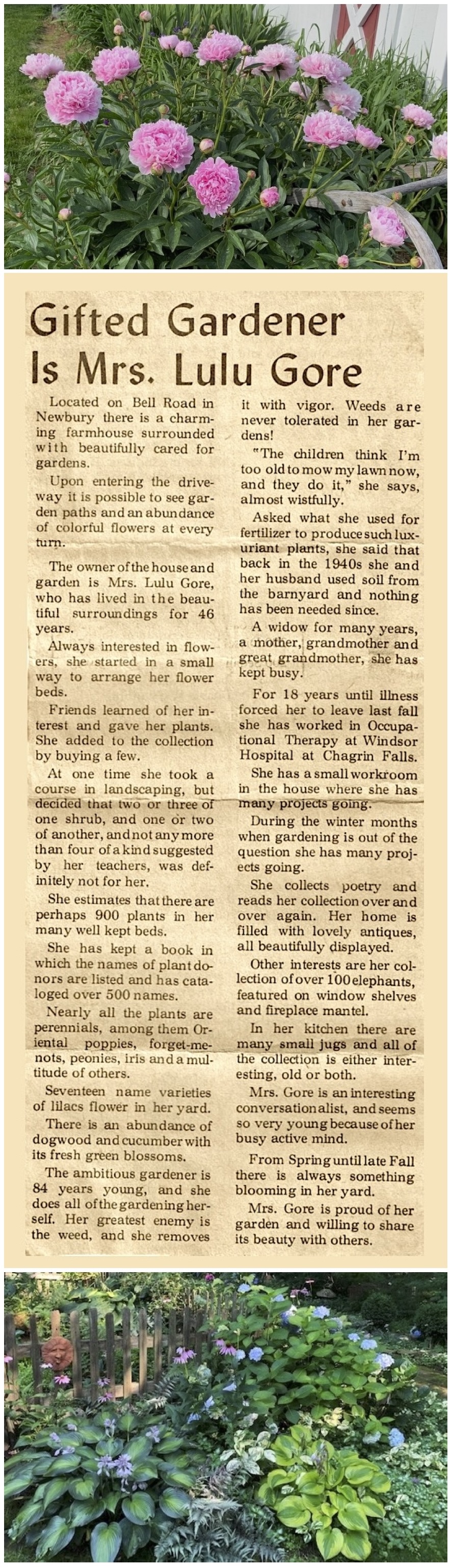
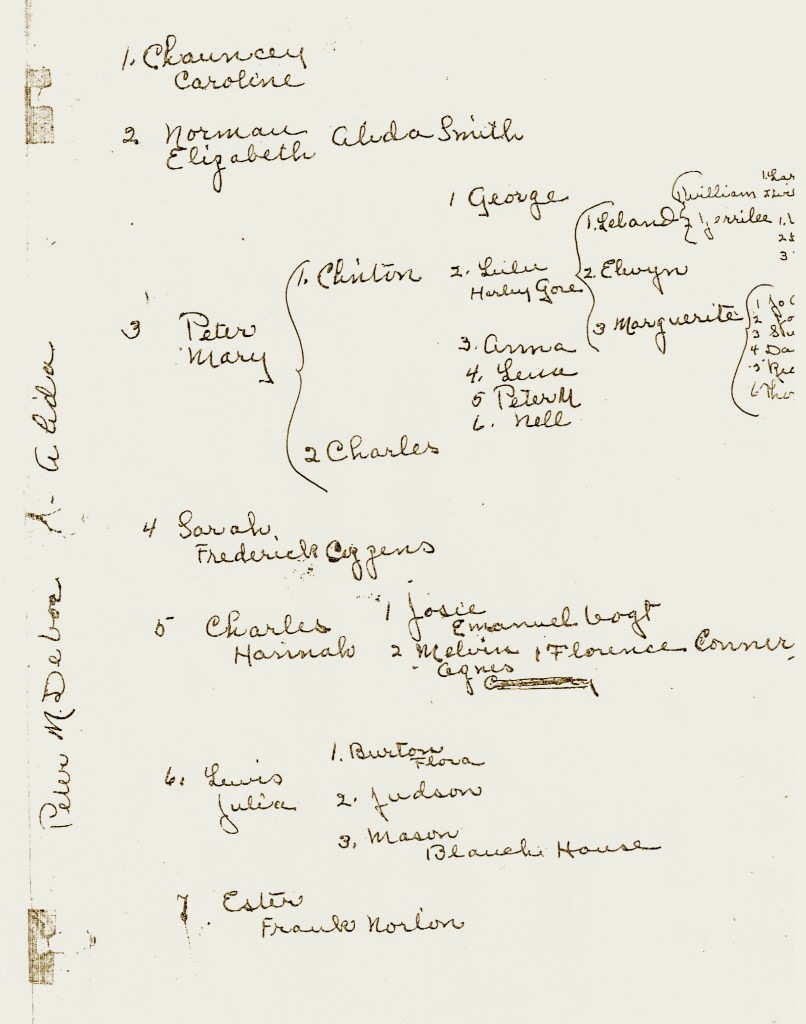


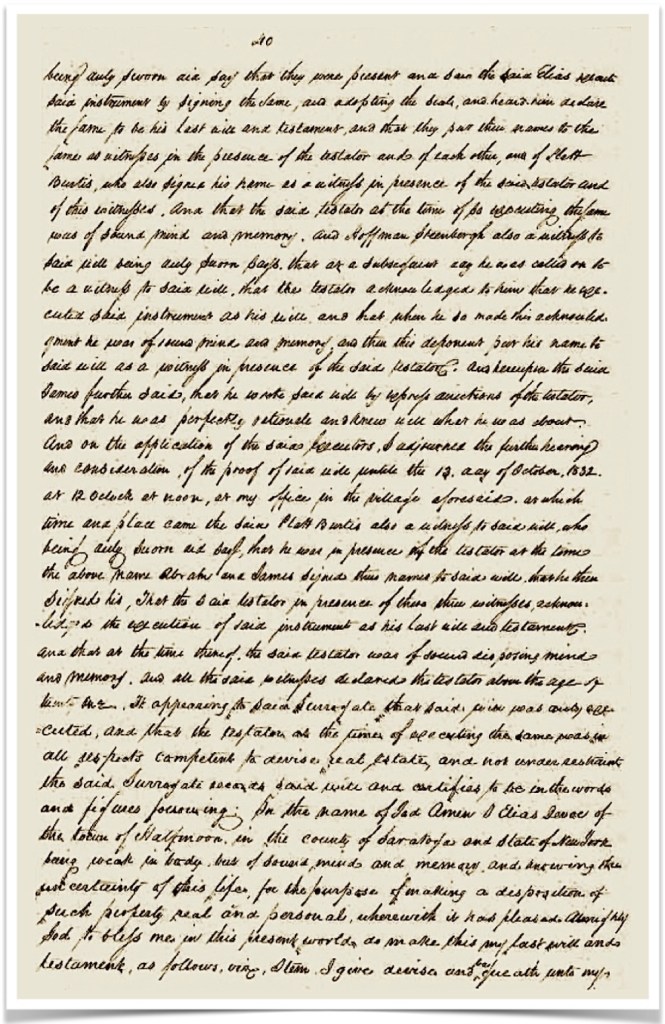
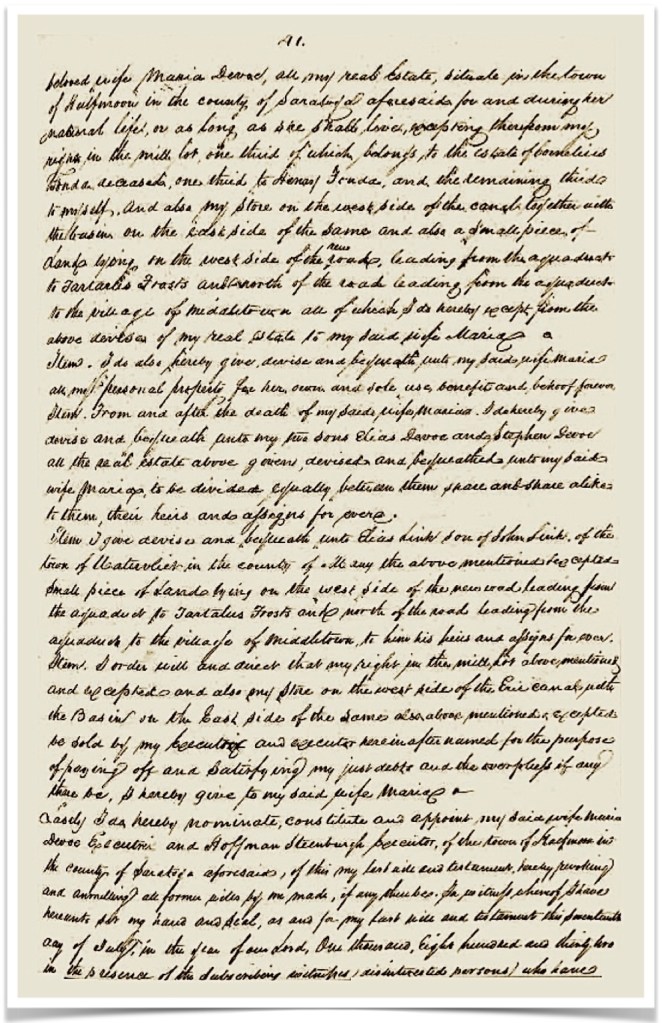
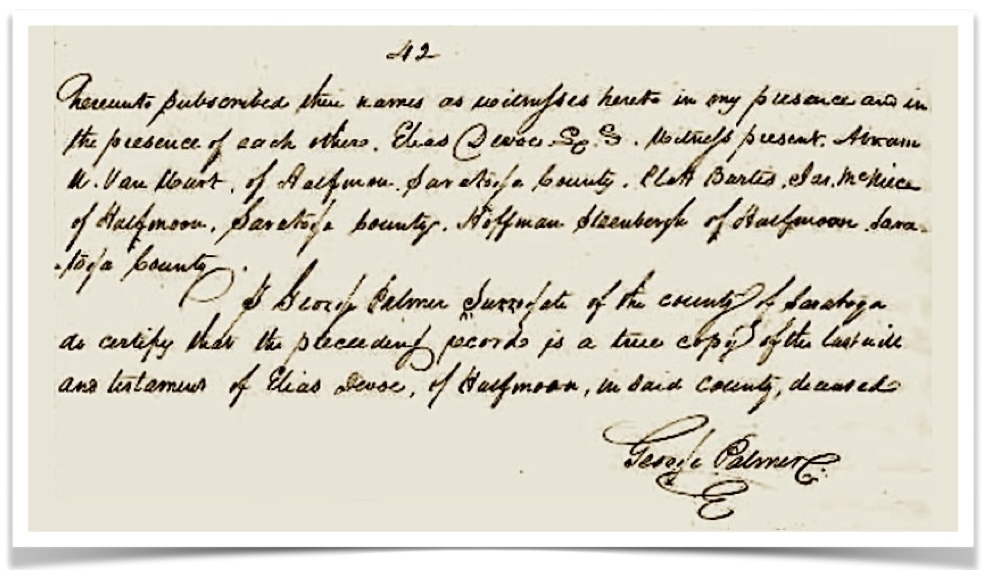



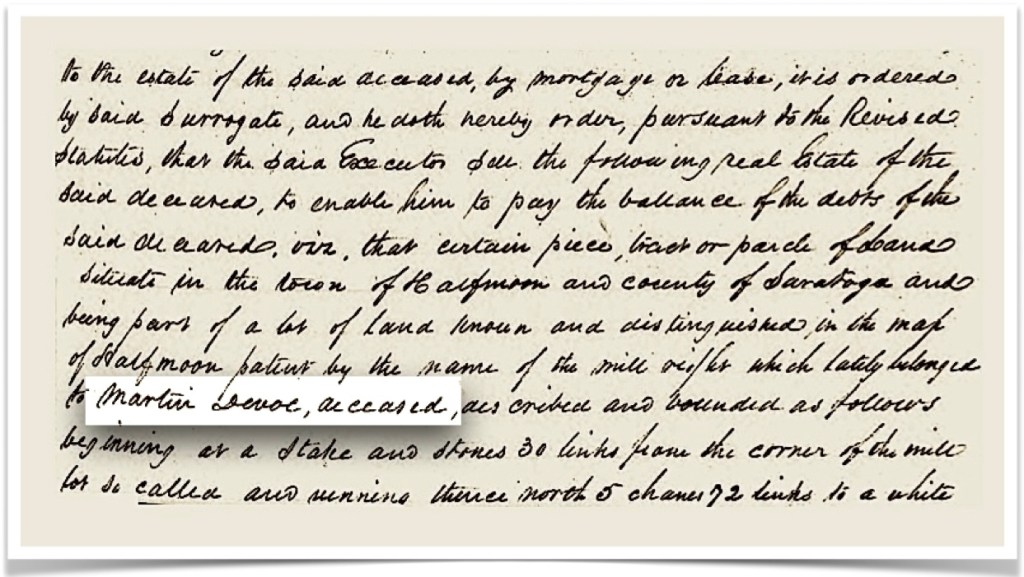


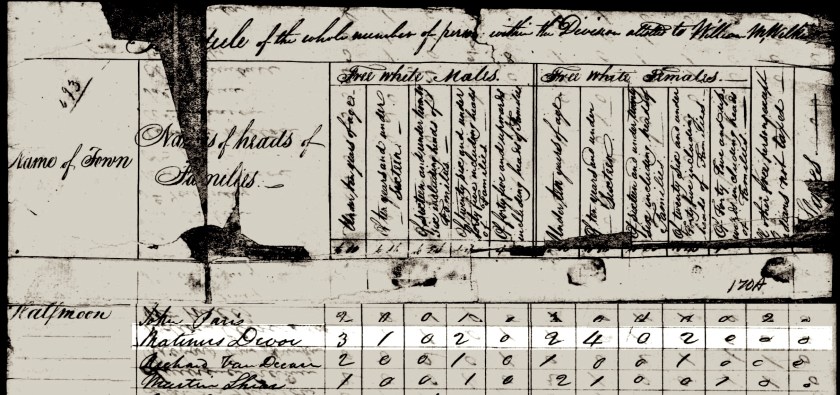
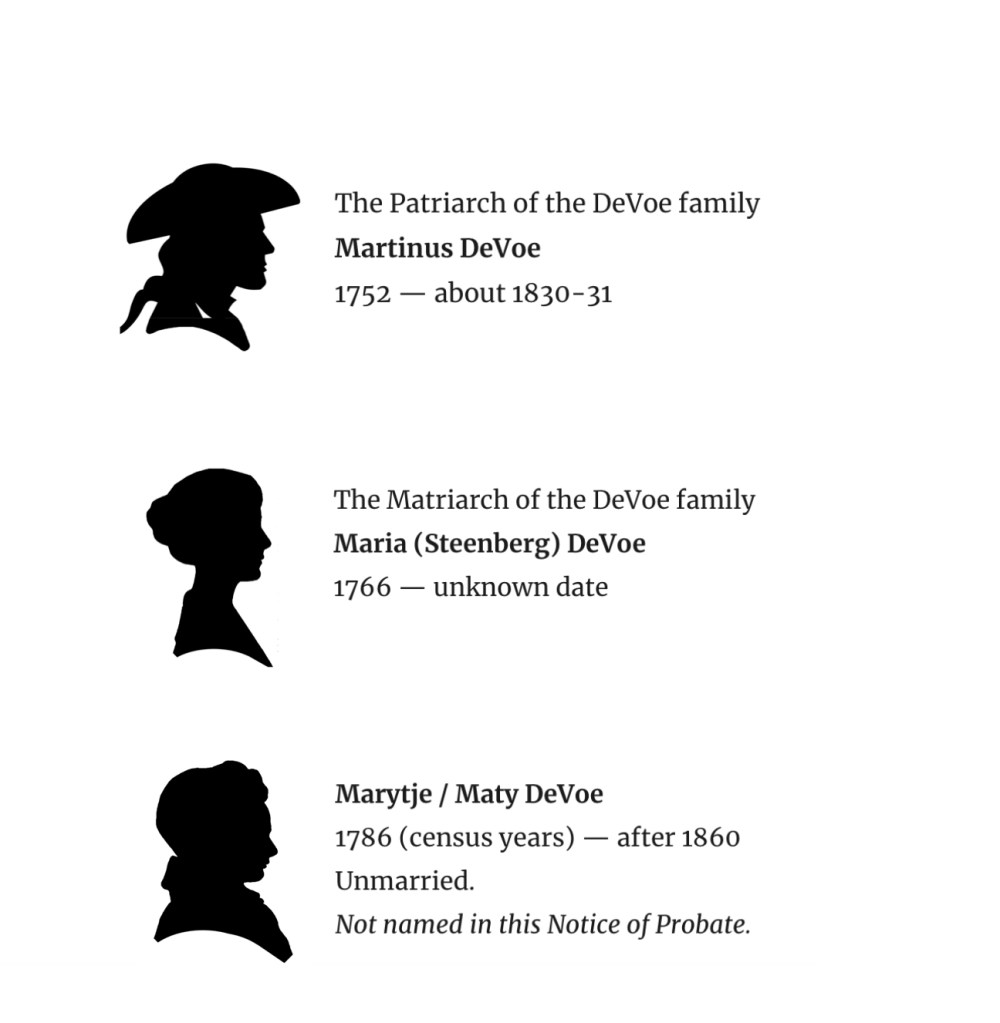
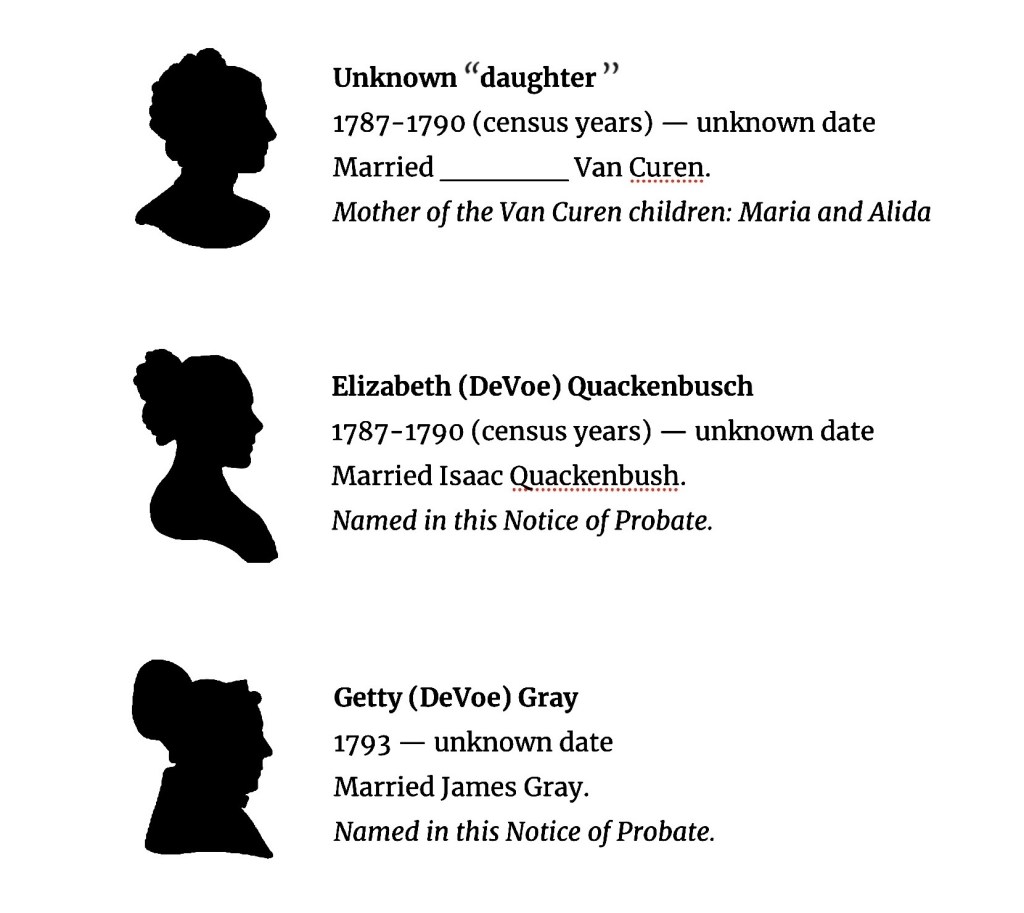

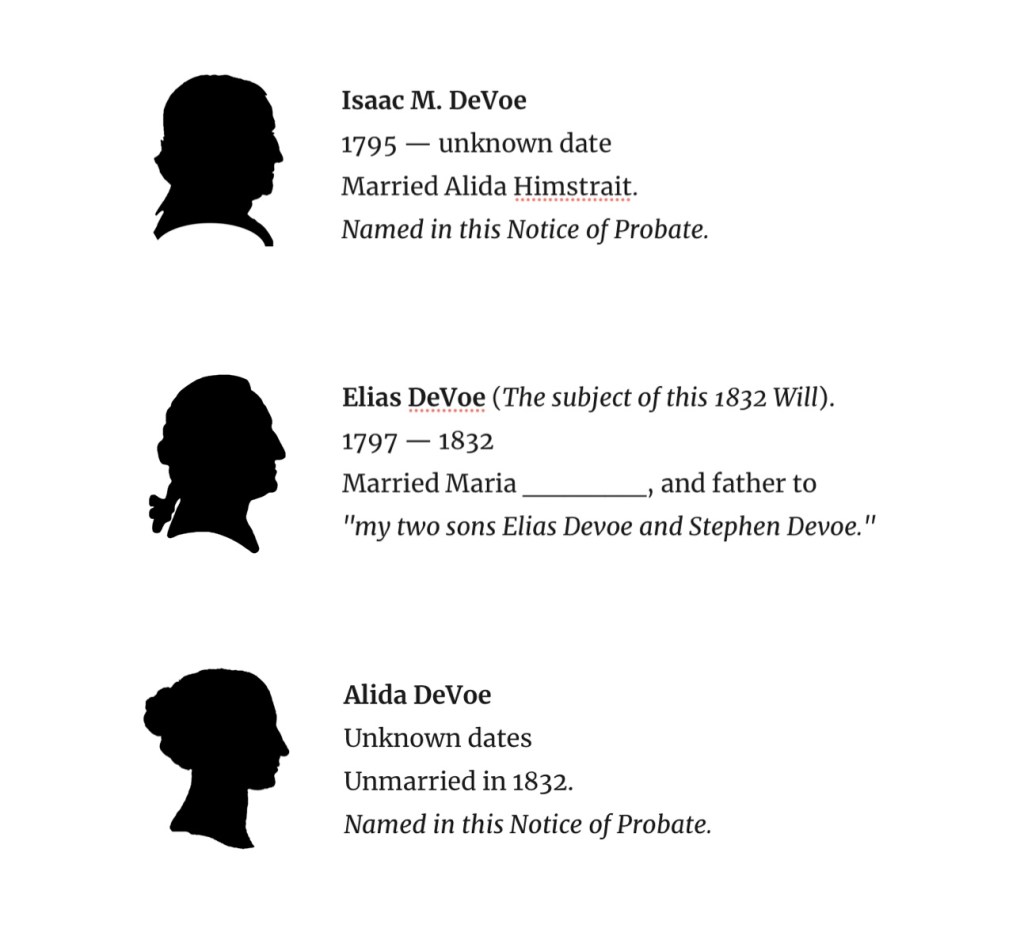


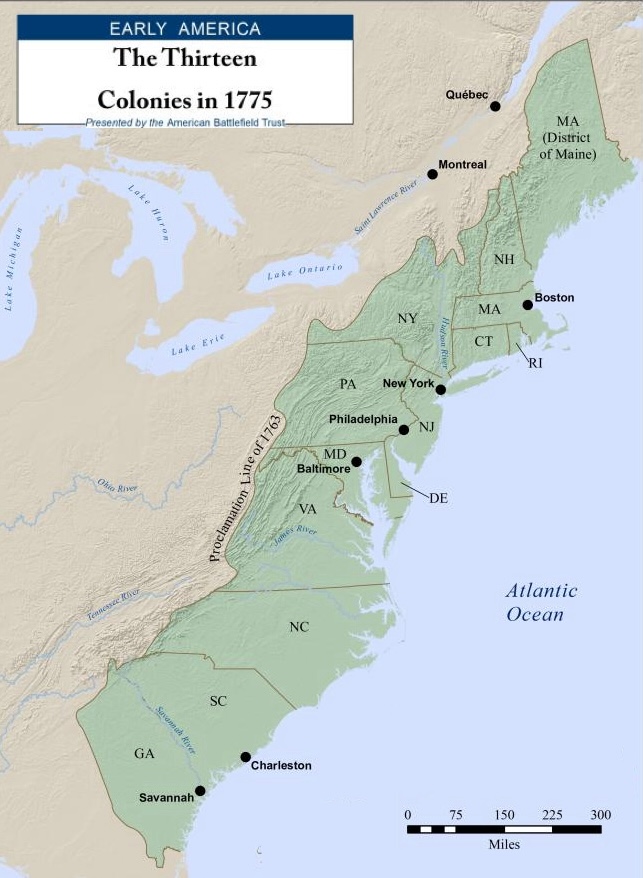

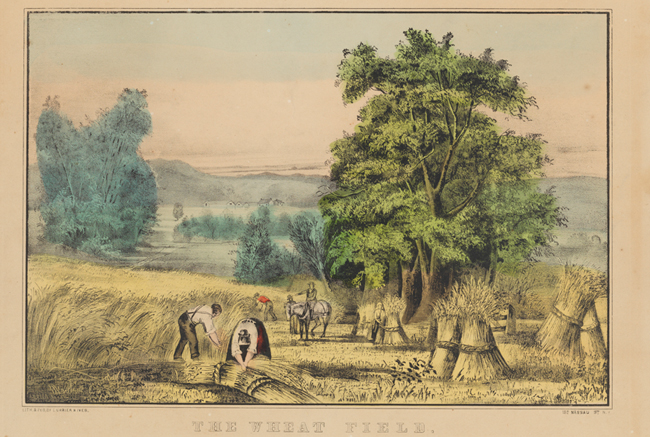
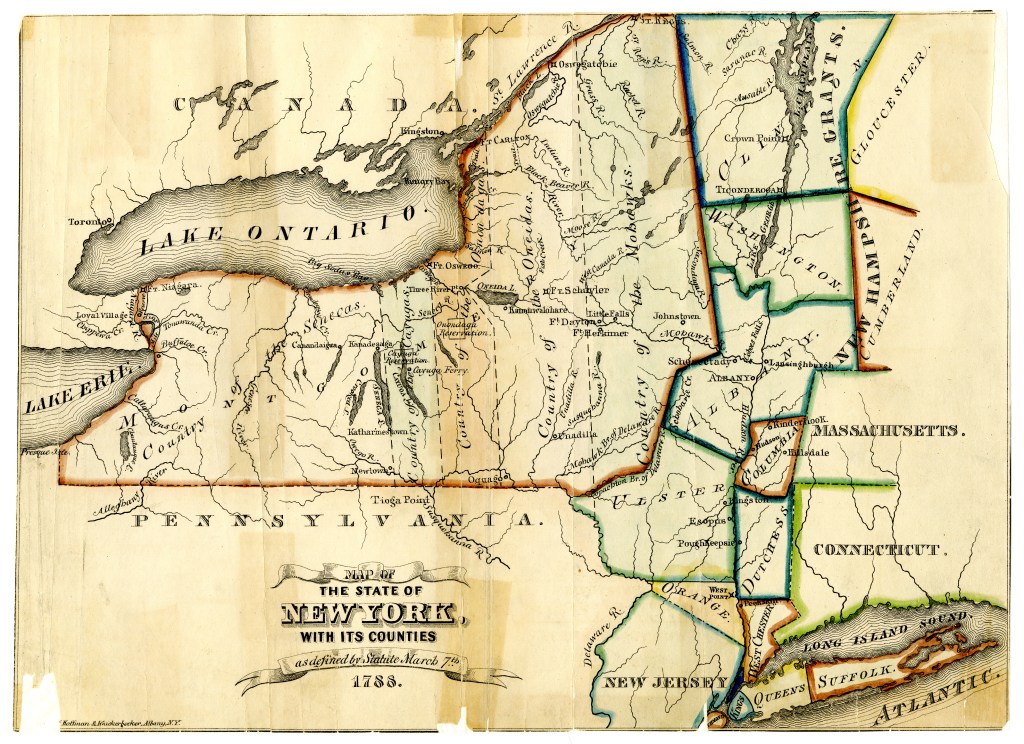
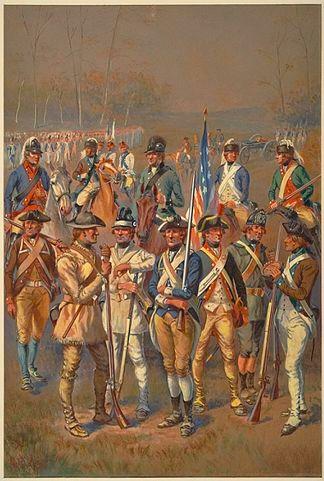
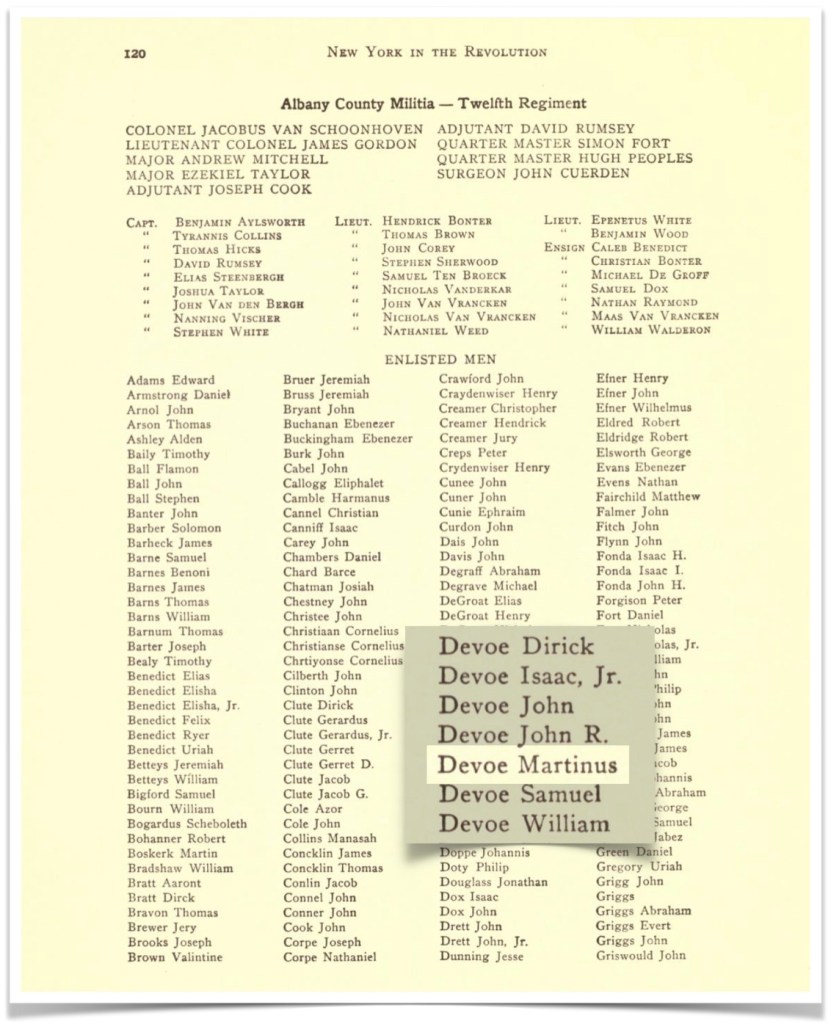


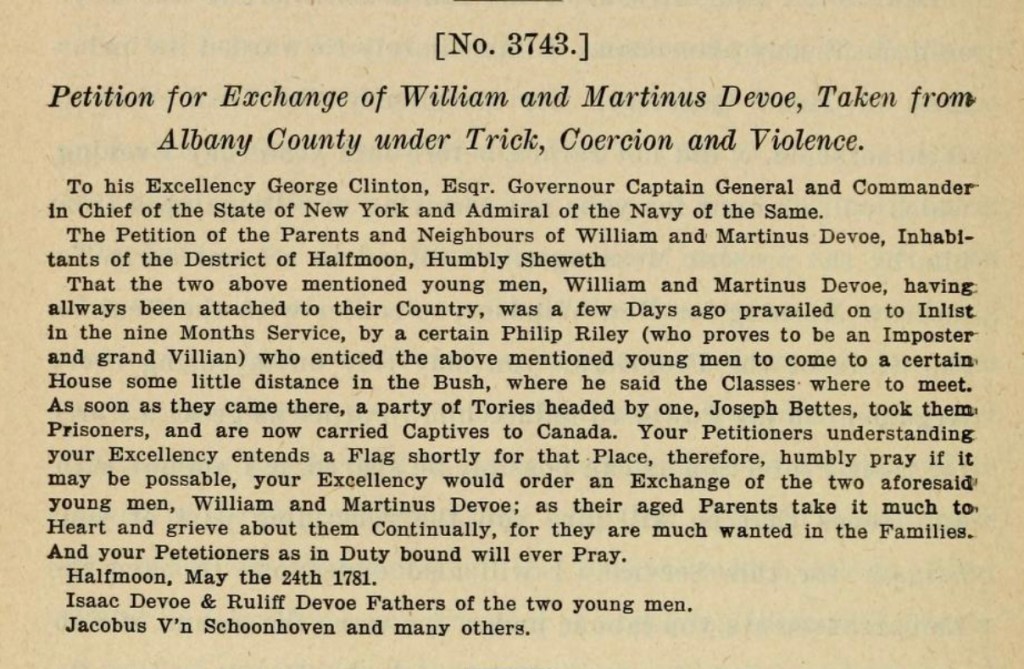


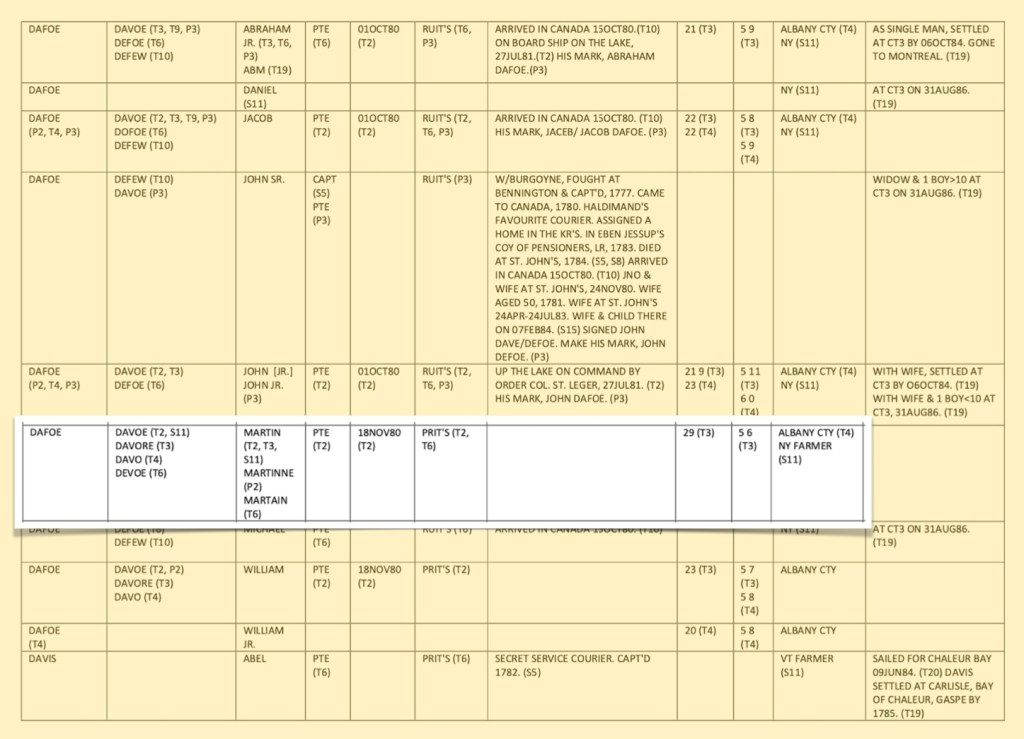

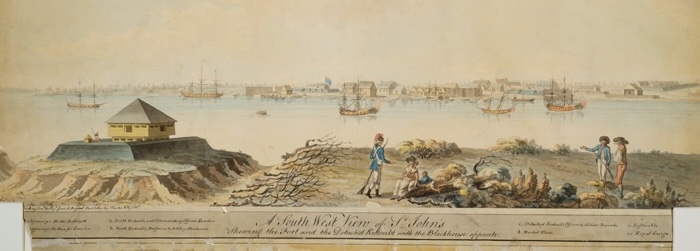



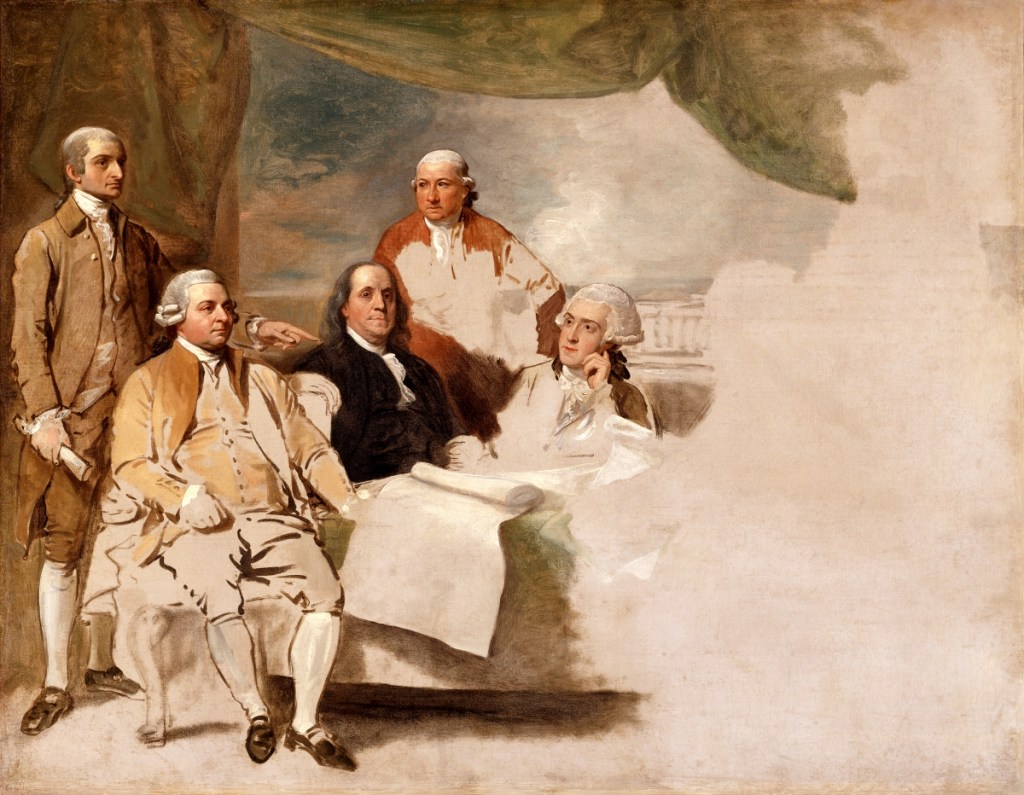
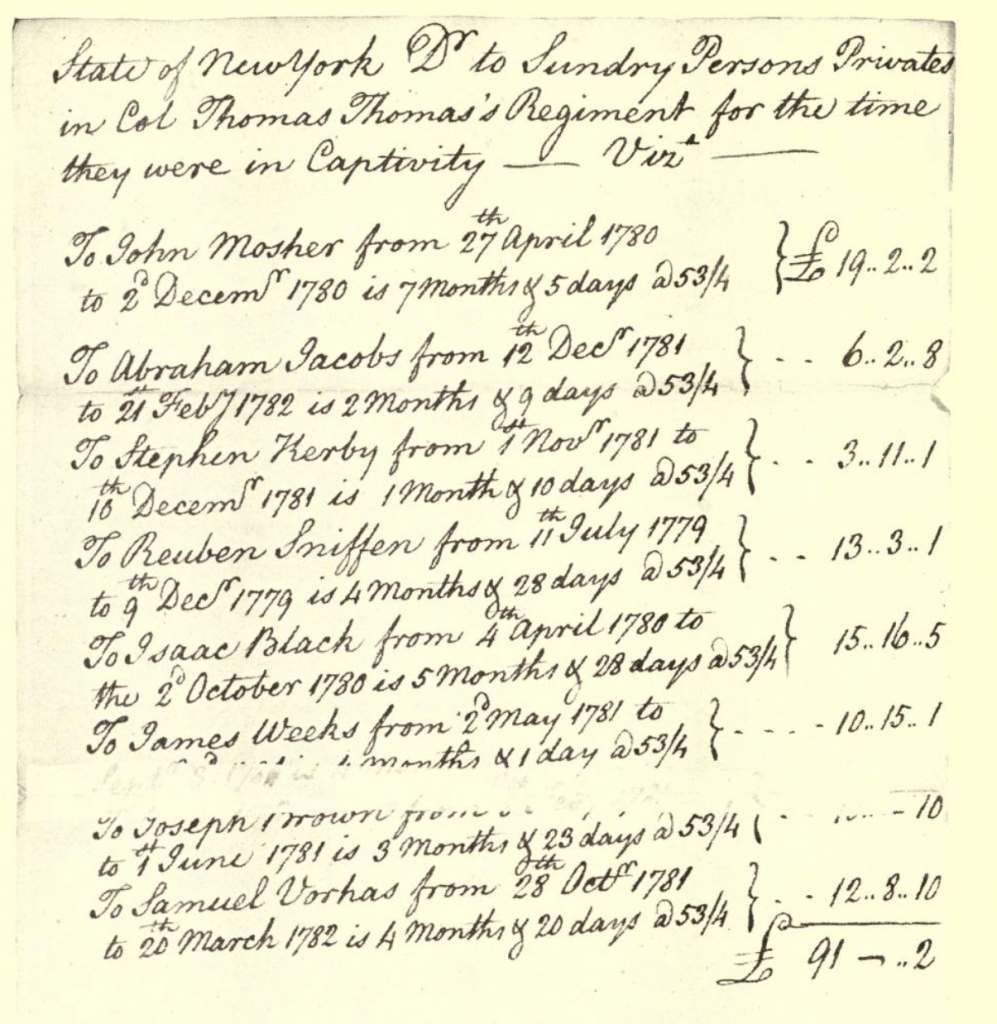
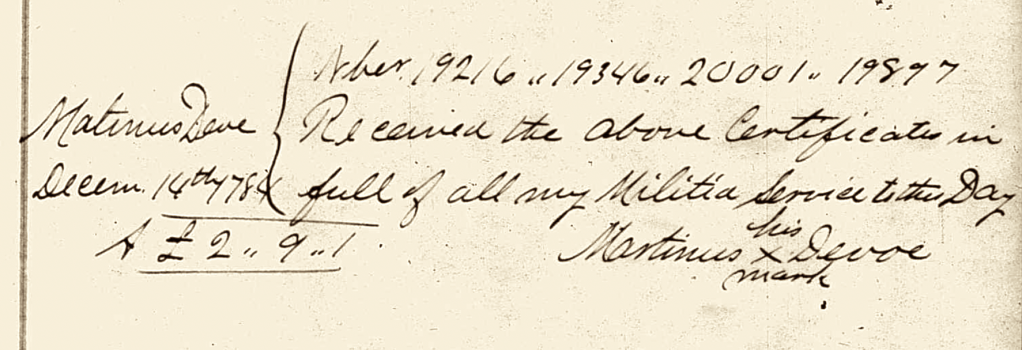



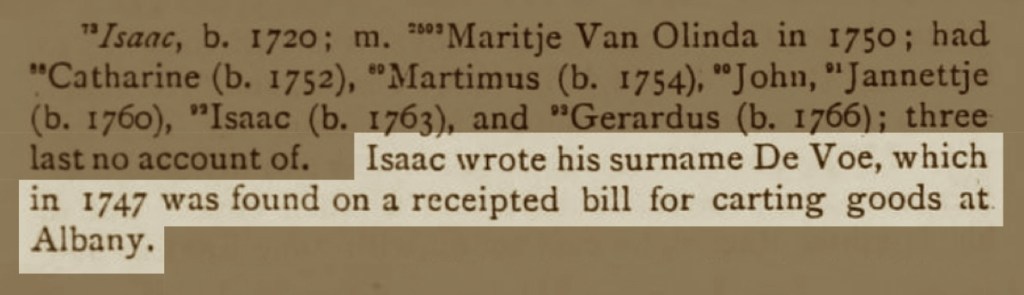

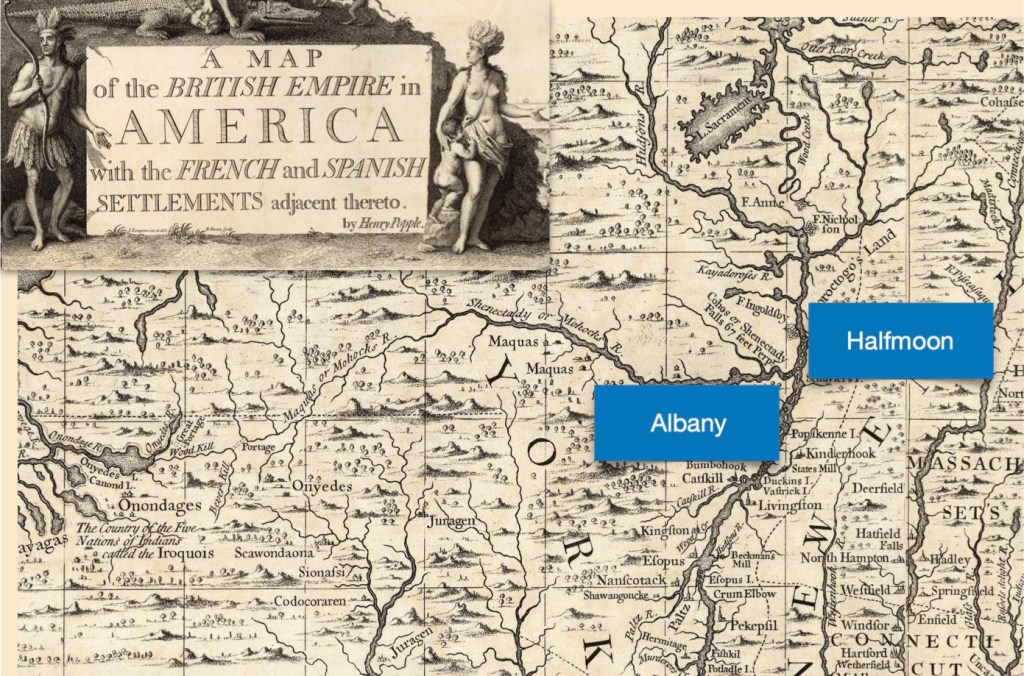







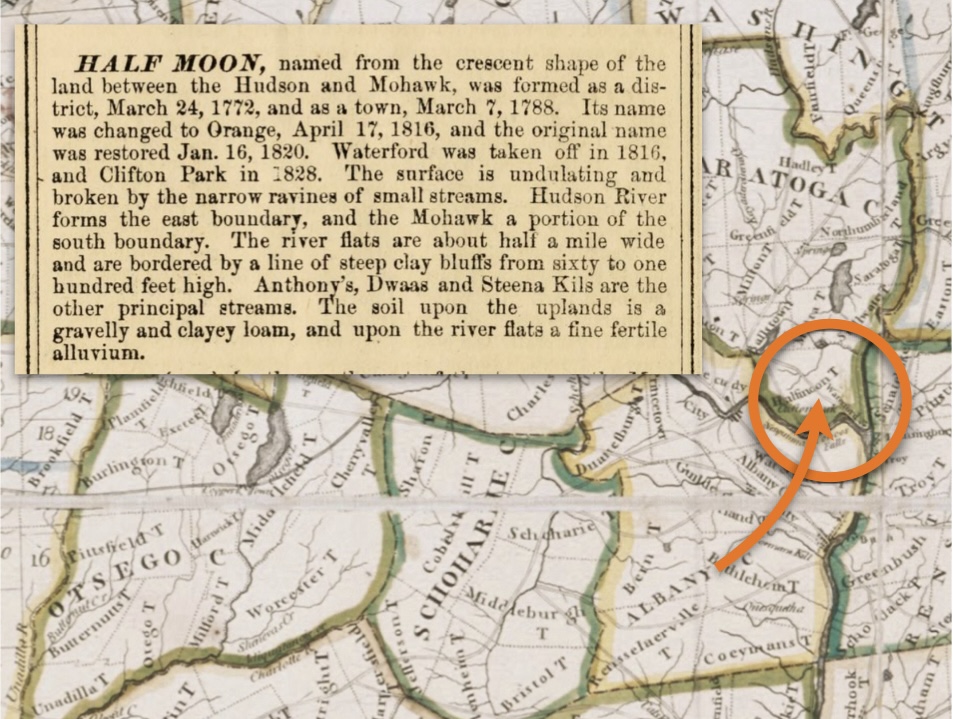
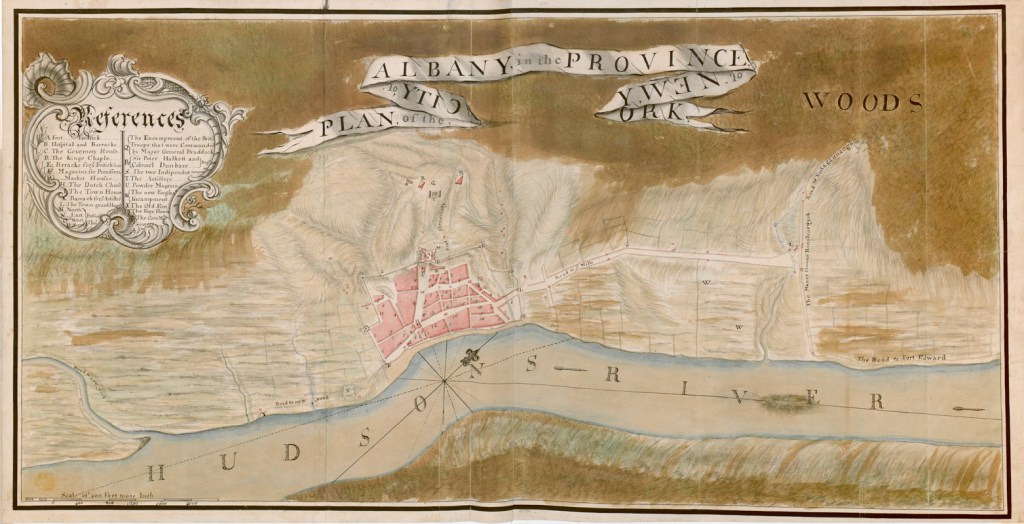

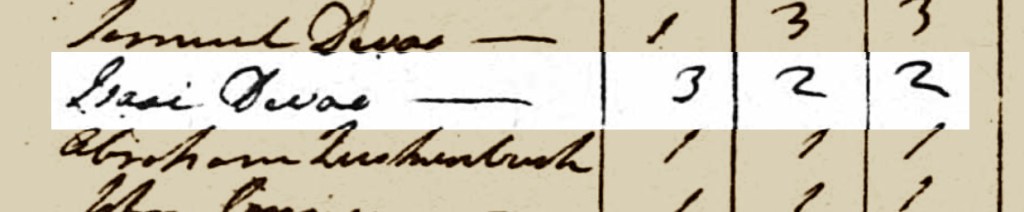

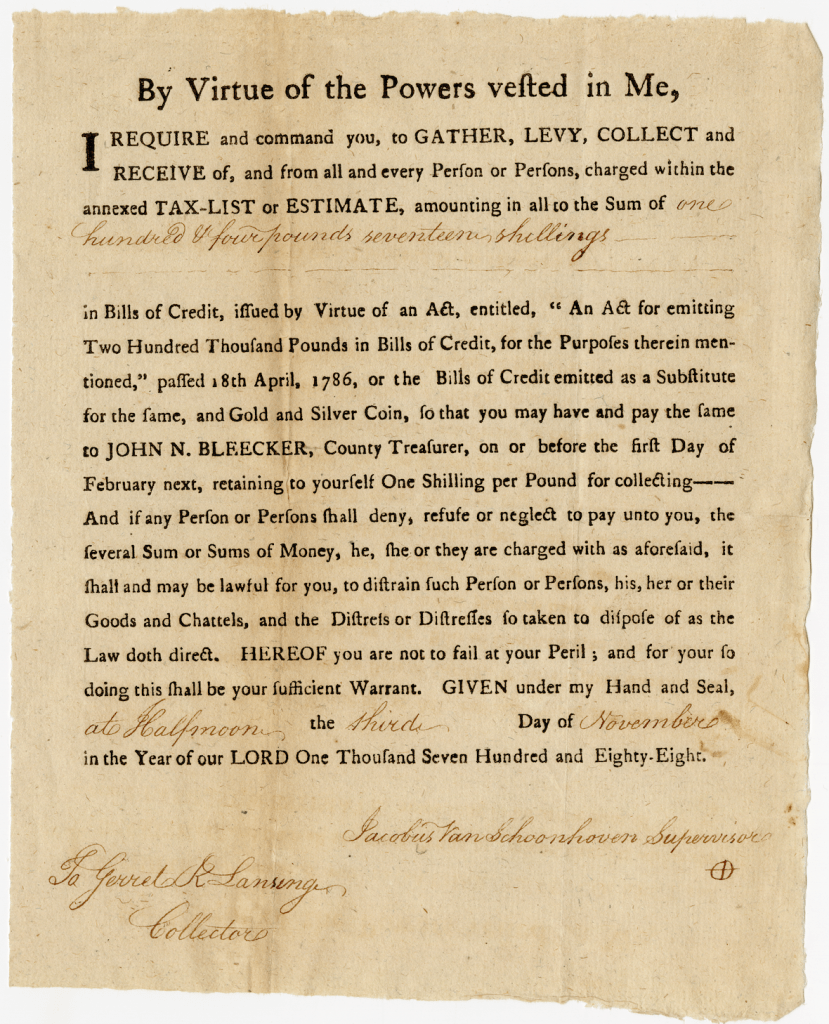


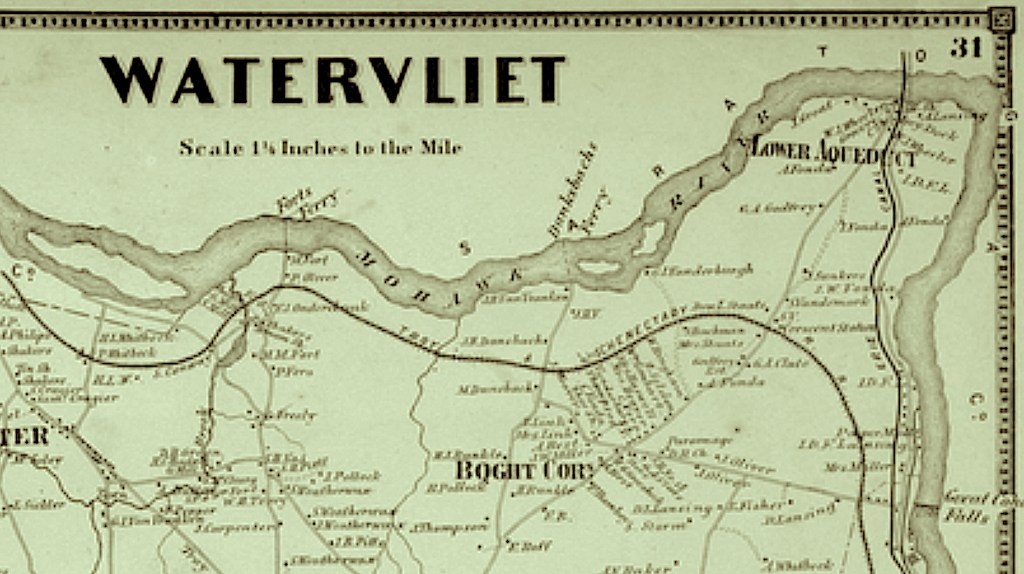


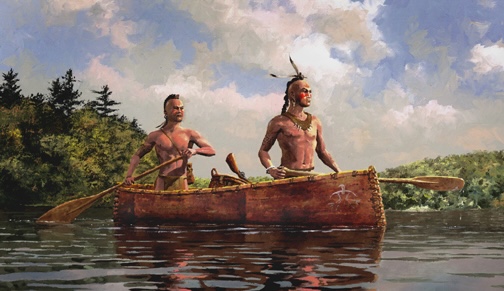


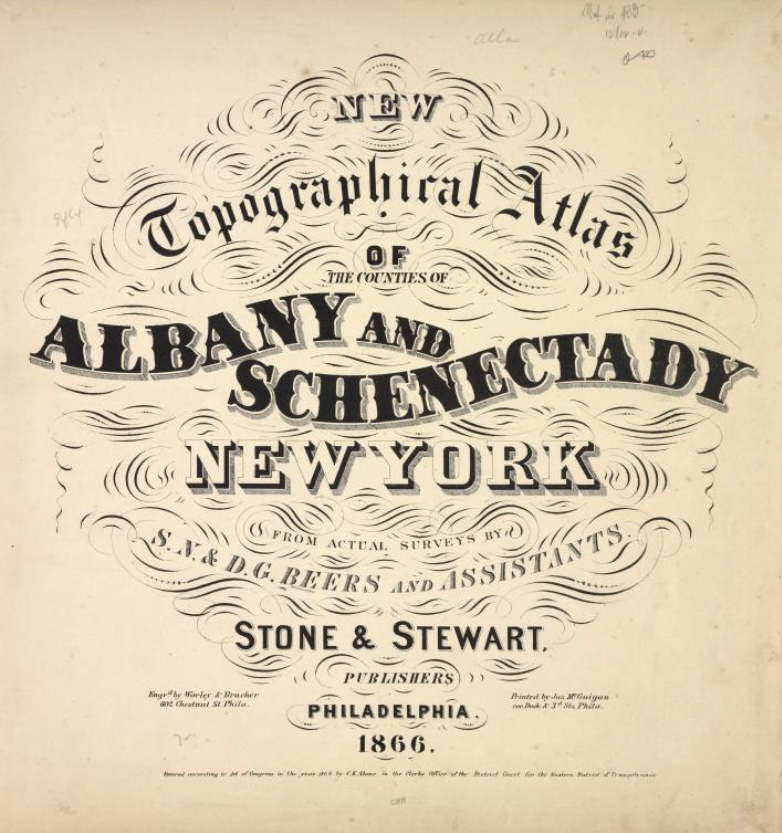






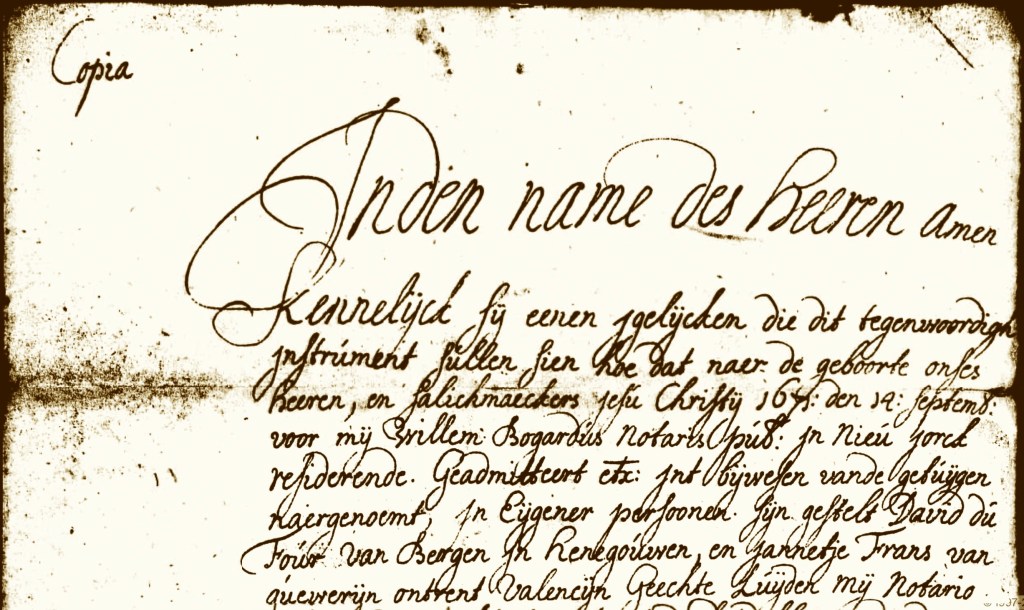
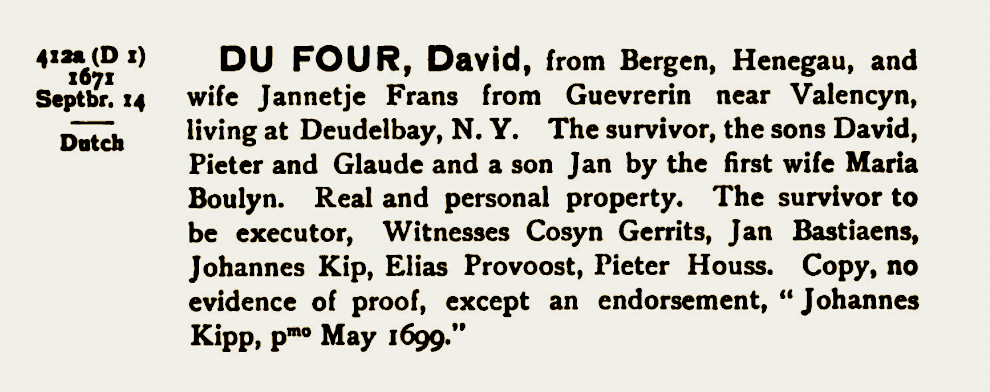

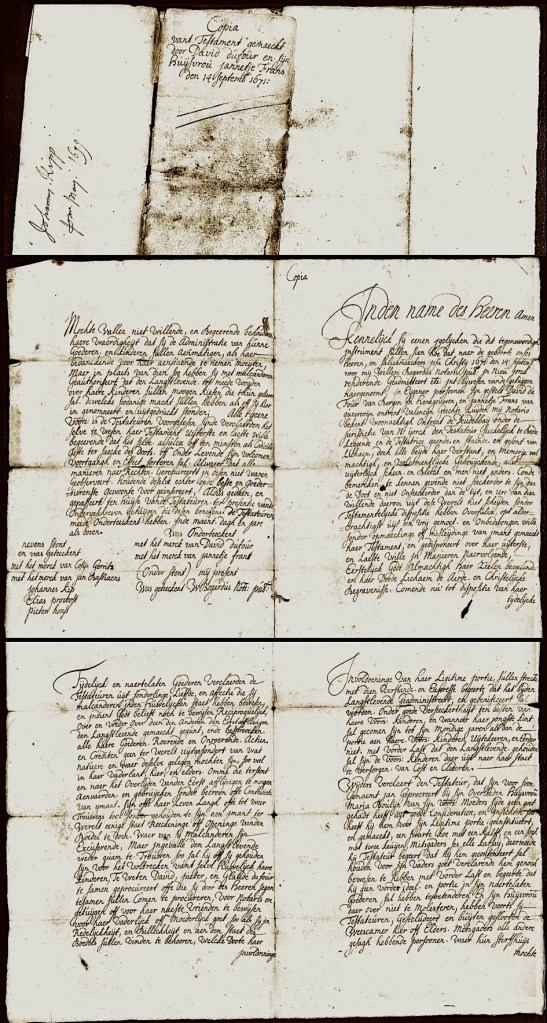

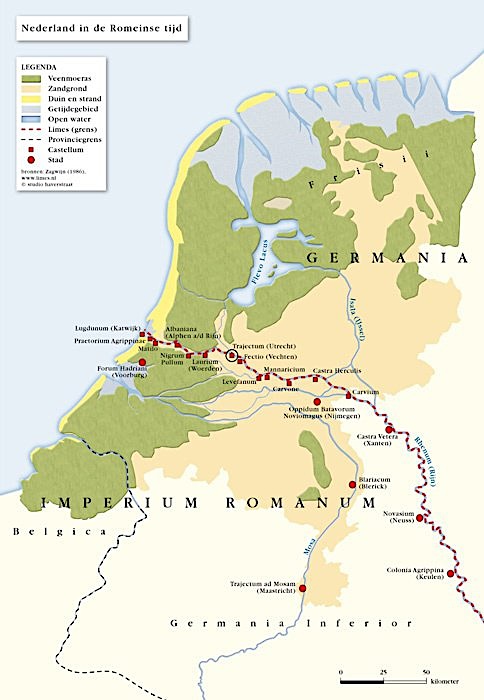



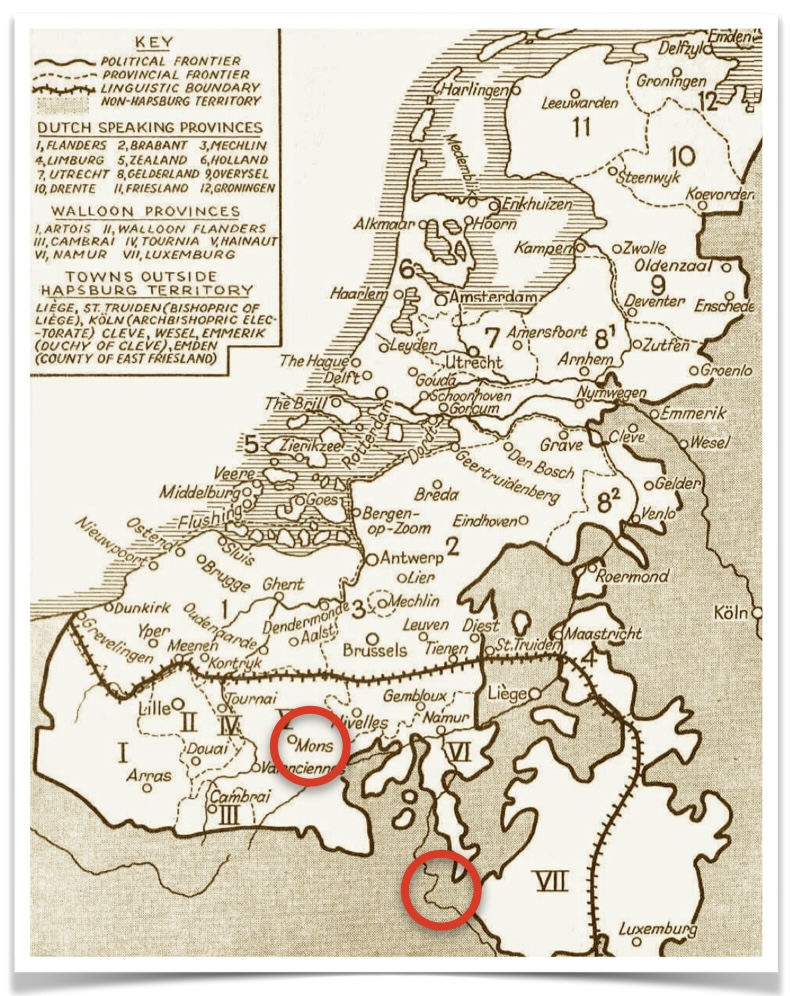






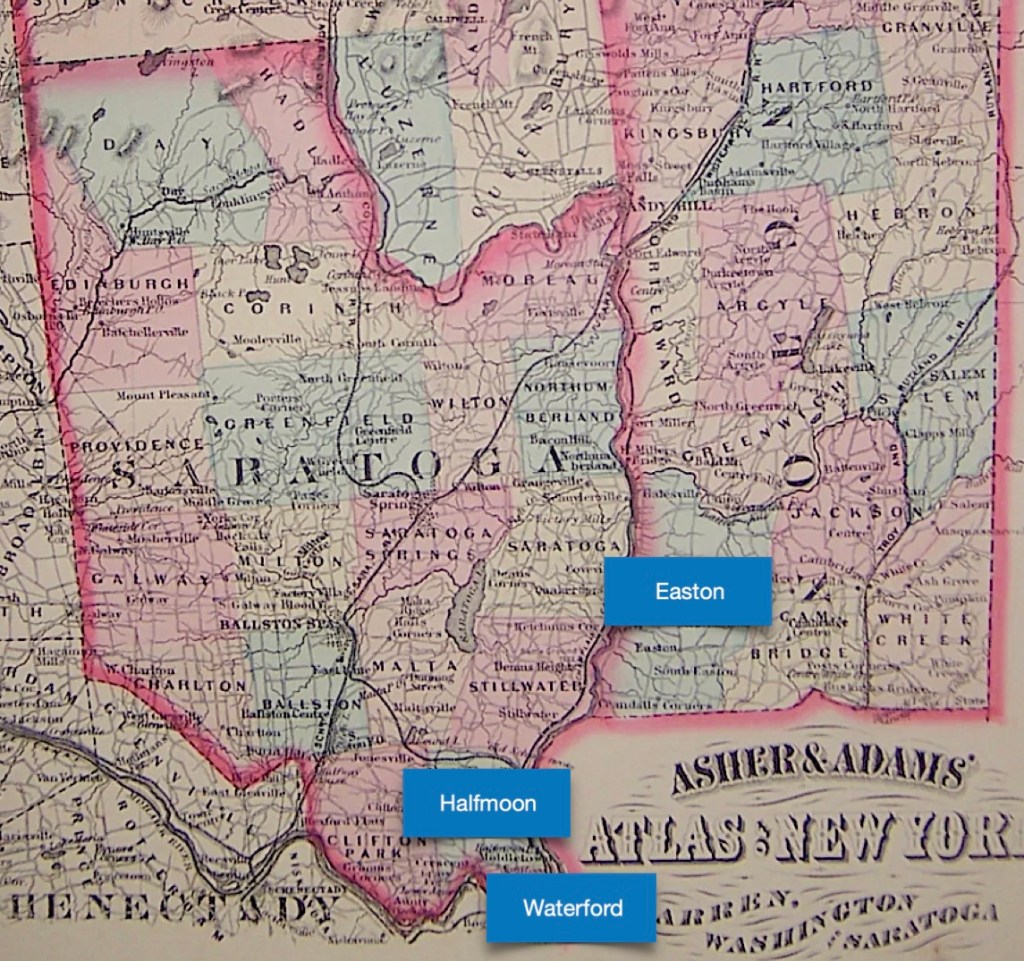

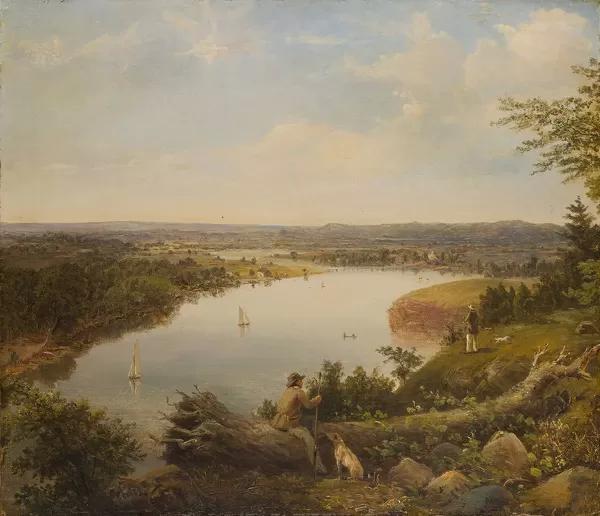


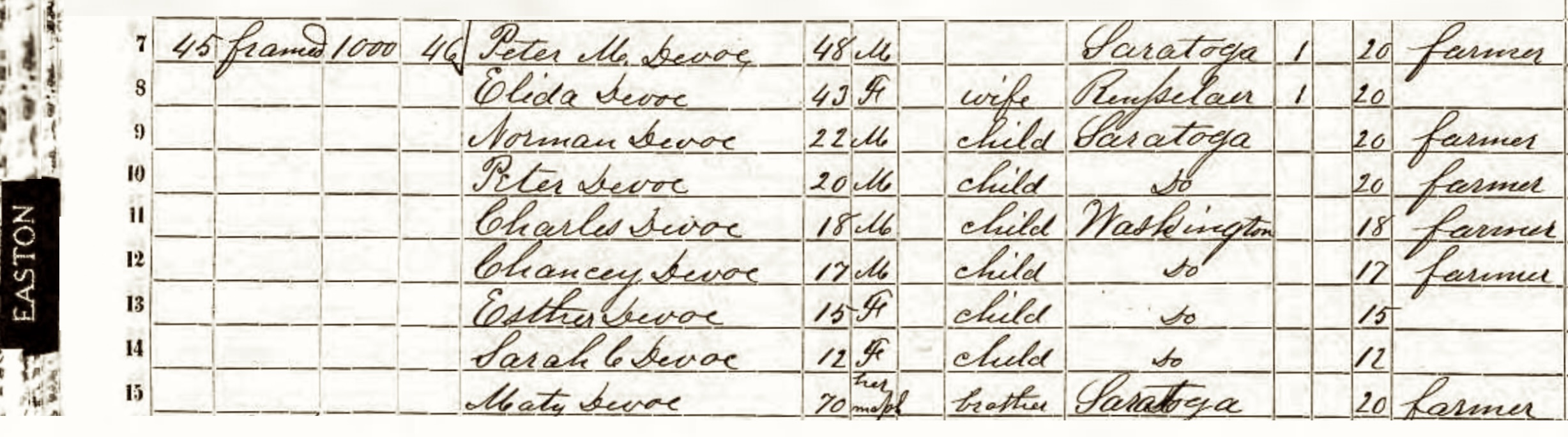


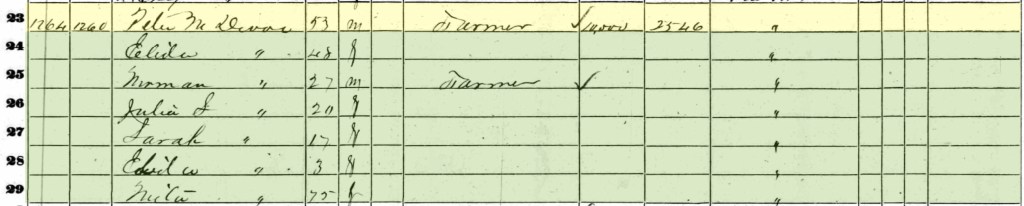

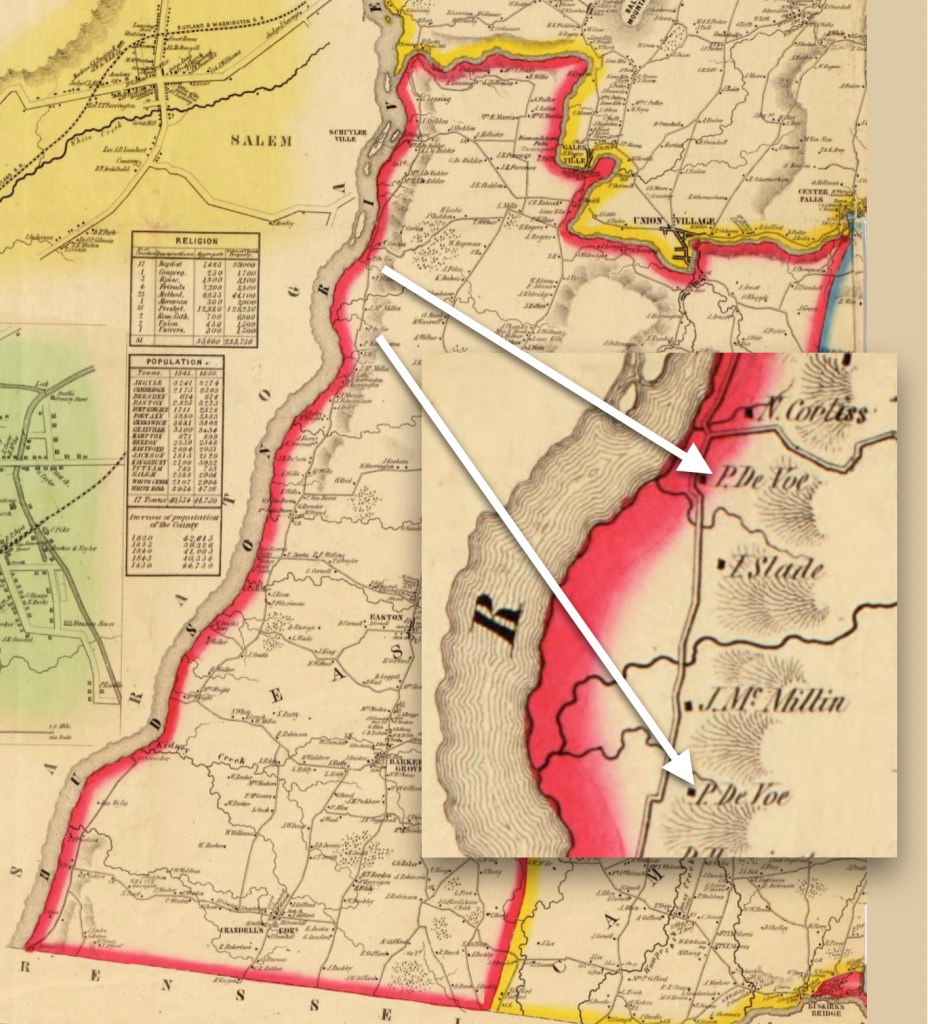


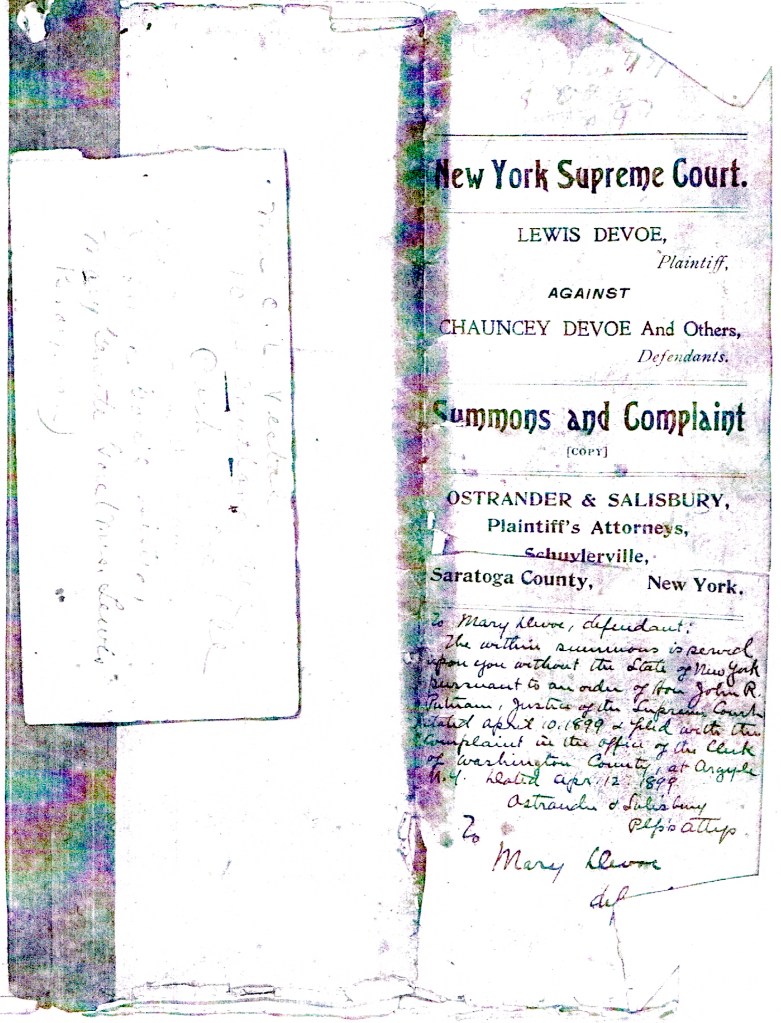


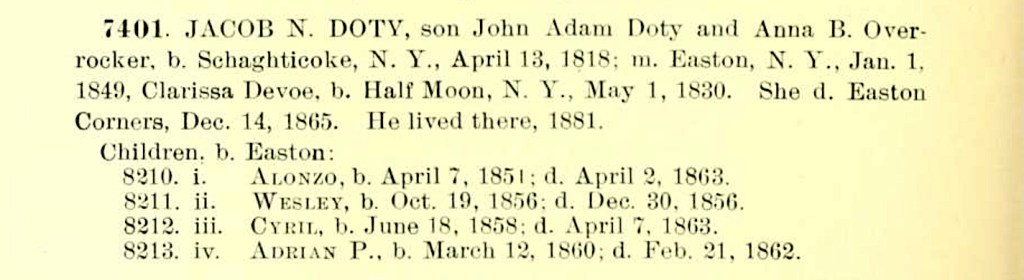


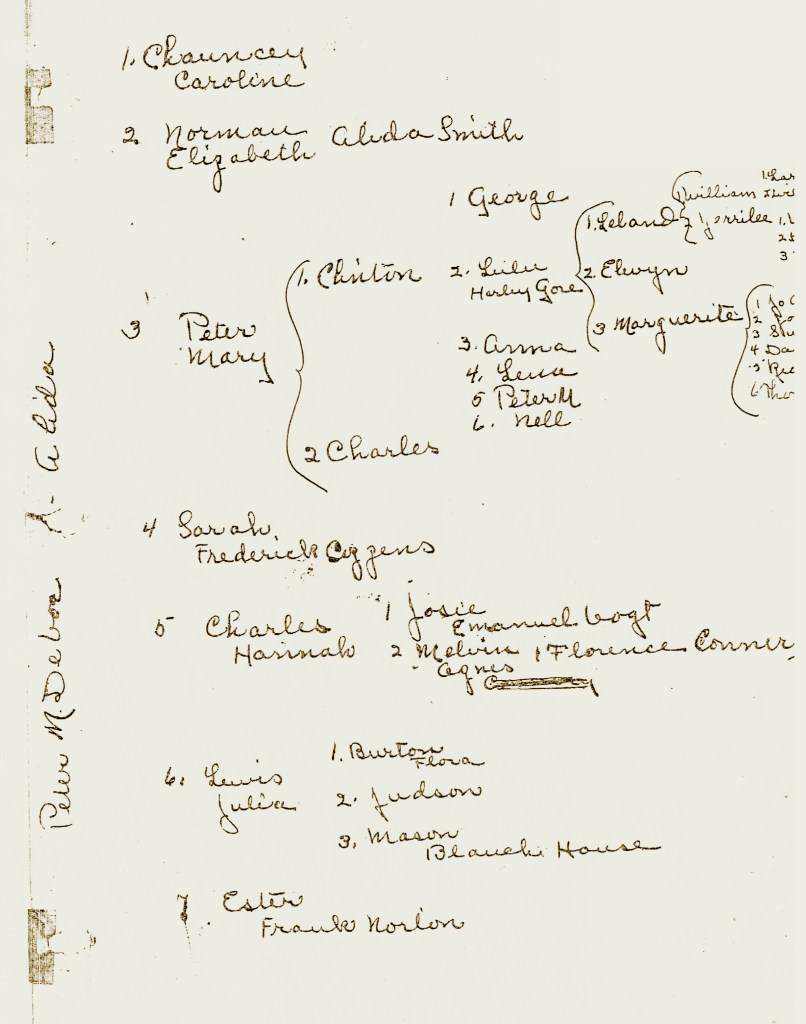


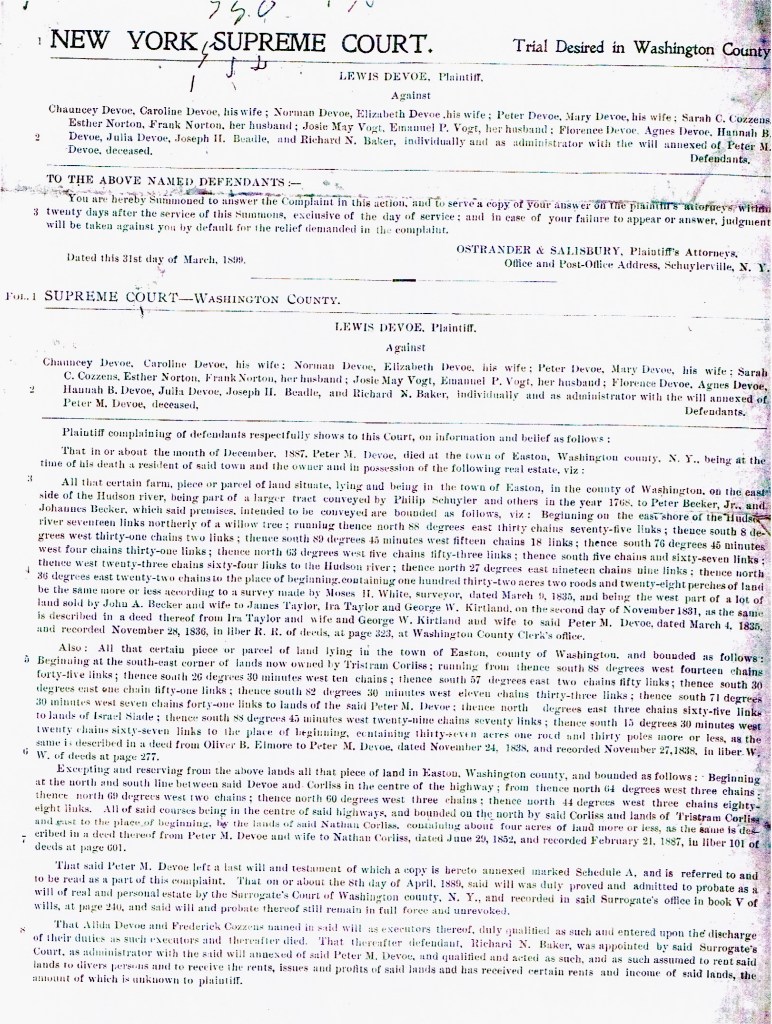
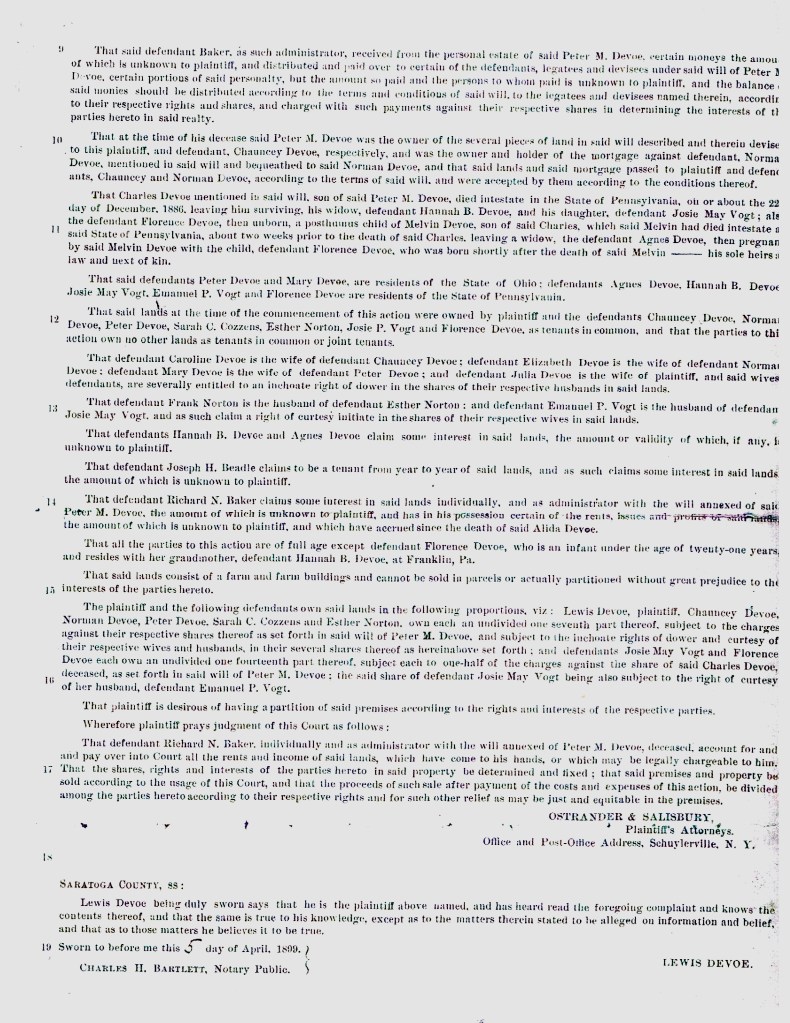


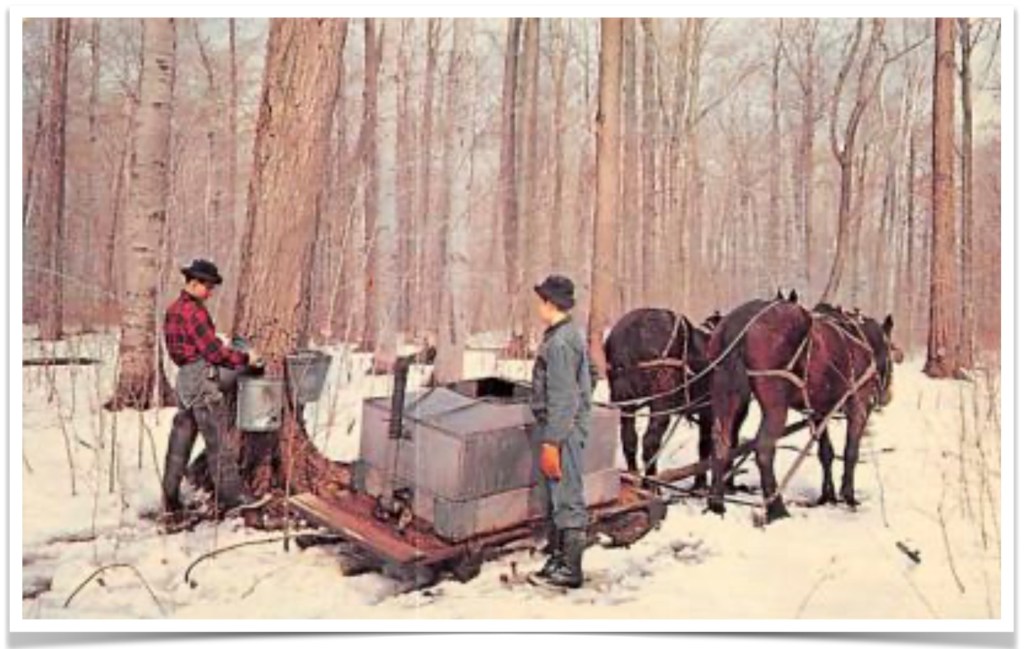


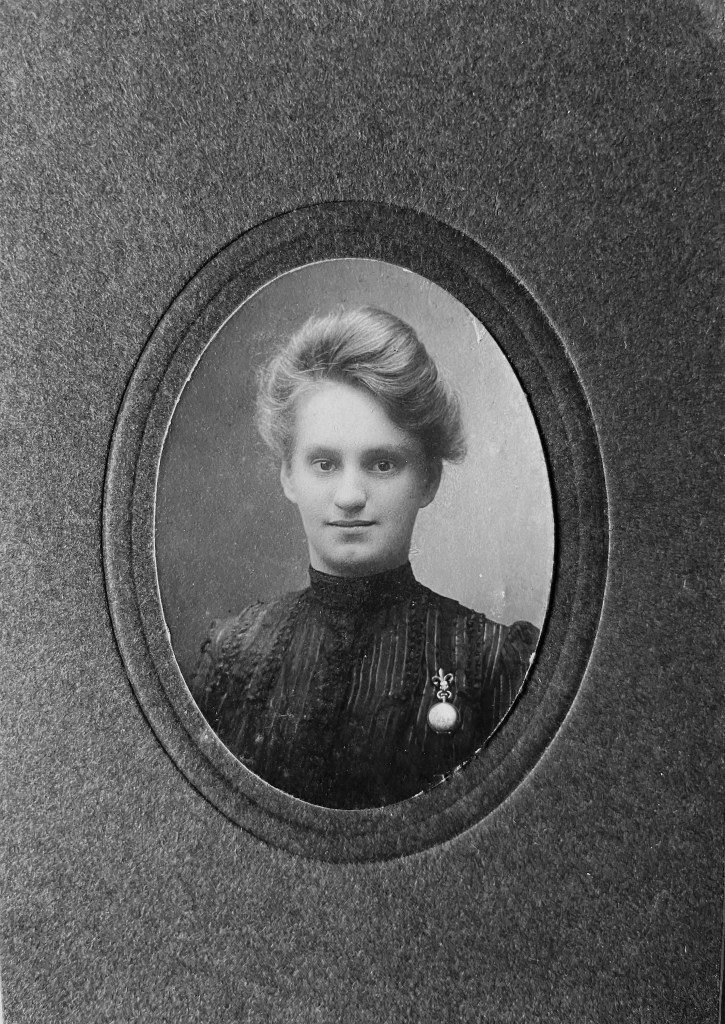





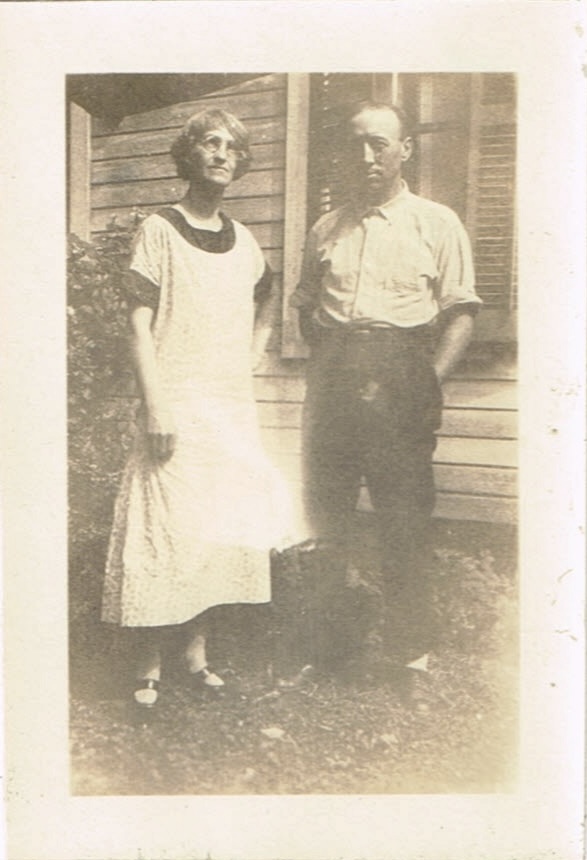



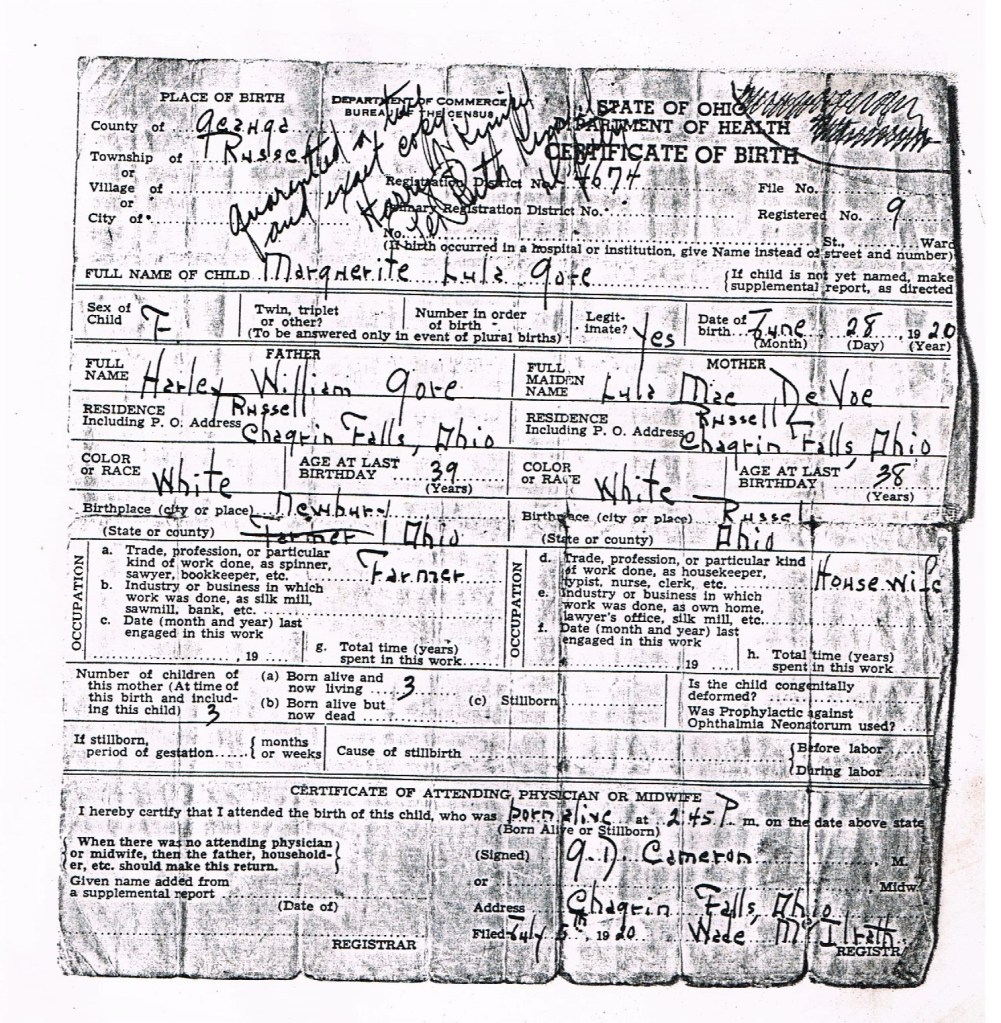

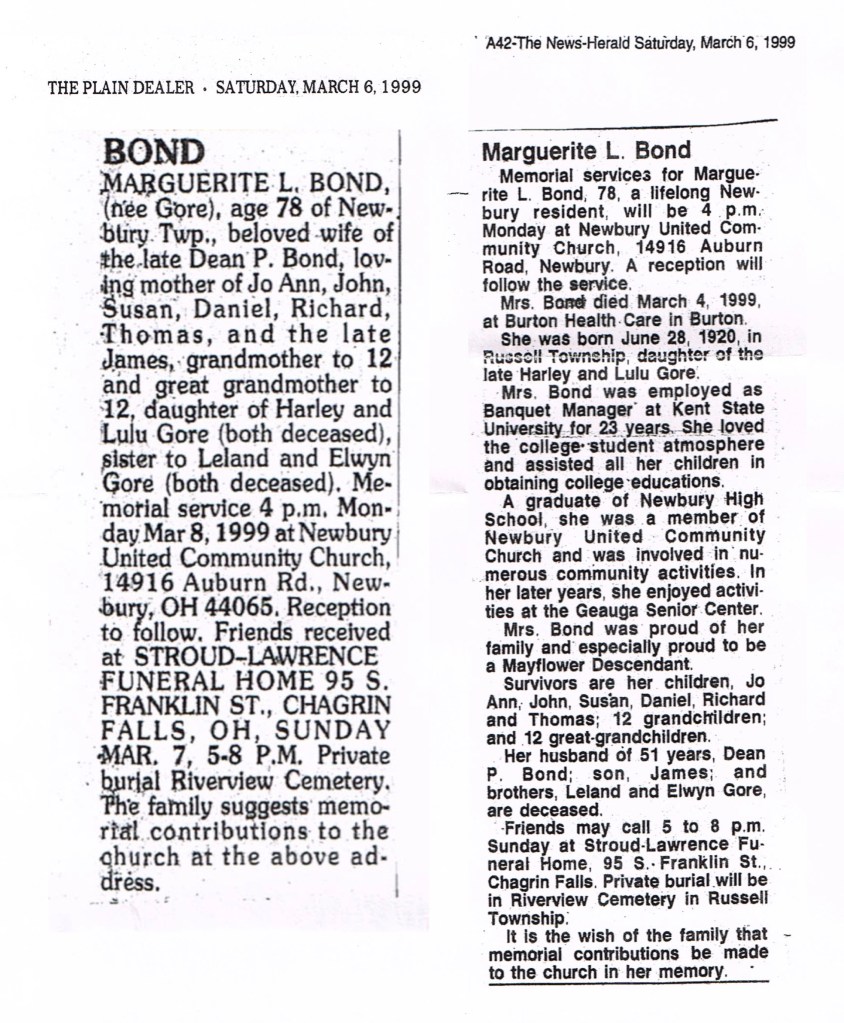


 Our Ancestors, Our Narratives

.jpg)
.jpg)
.jpg)
.jpg)

_by_Henry_A._Bacon.jpg)


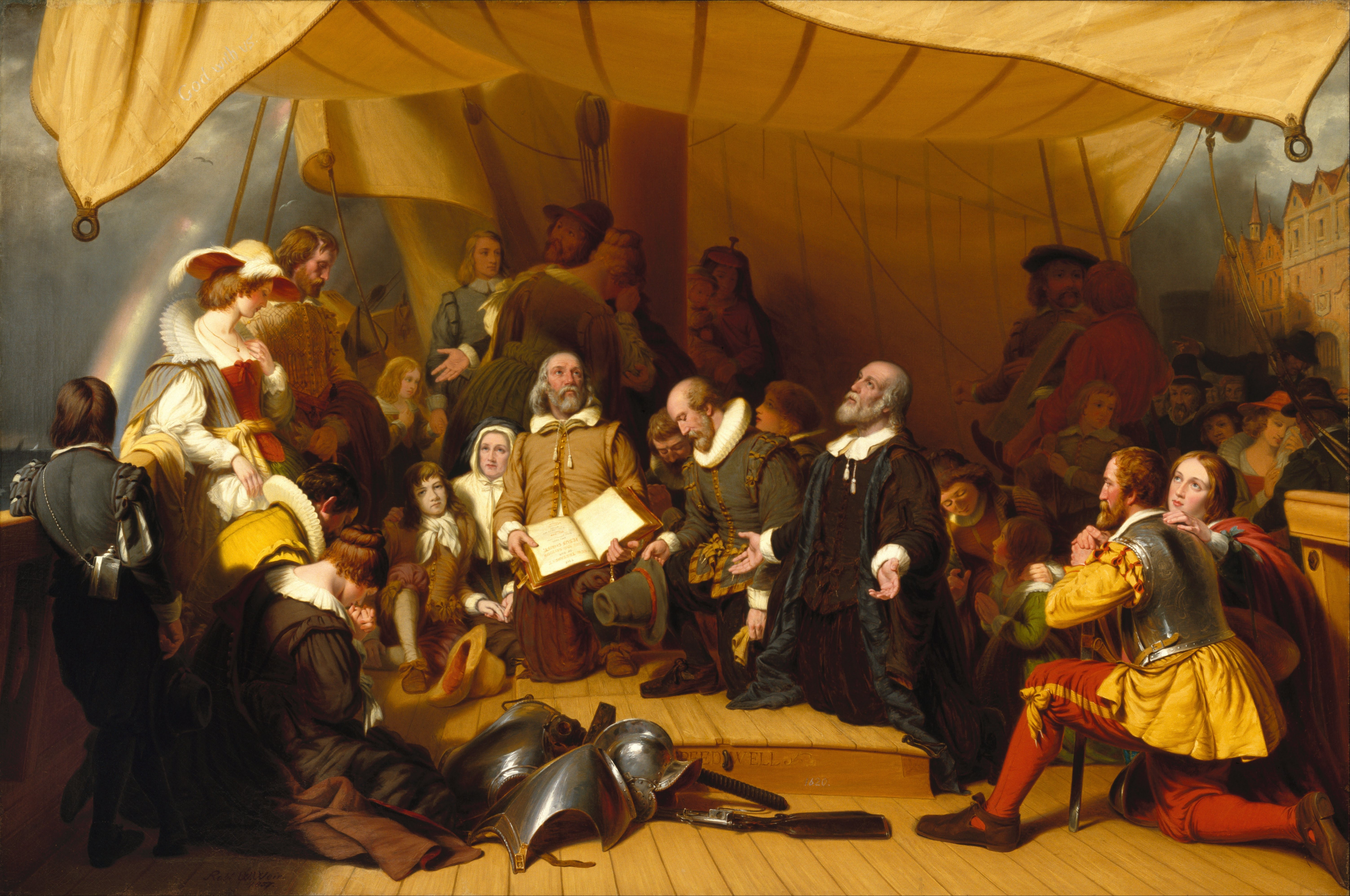


.jpg)


.jpg)




_illustration_Alchemic_approach_to_four_humors_in_relation_to_the_four_elements_and_zodiacal_signs.jpg)


.jpg)

#/media/File:FortStJeanPeachey1790.jpg)

#/media/File:Treaty_of_Paris_by_Benjamin_West_1783.jpg)
#/media/File:Tory_Refugees_by_Howard_Pyle.jpg)


#/media/File:1715_Dutch_Reformed_Church,_Albany,_NY.jpg)


_of_New_York_in_1679_at_Pearl_Street.jpg)
_During_the_Revolutionary_War_-_Geographicus_-_NewYorkCity-johnsonbien-1878.jpg)


,_by_Netherlandish_or_South_German_School_of_the_late_15th_Century.jpg)


#/media/File:Oudewater_moord.jpg)
#/media/File:Oudewater_moord.jpg Siege of Oudewater (1575)
https://en.wikipedia.org/wiki/Siege_of_Oudewater_(1575)#:~:text=II of Spain.-,Siege and massacre,leading to a major conflagration.)
 van het Amsterdamse lakenbereidersgilde - Google Art Project.jpg)


