The Williams / Harris Line, A Narrative — Three

This is Chapter Three of twelve, where we finally meet the family for whom we have named this family narrative. It is Sarah Cullen’s 1813 Regency era marriage to James Williams Jr. that connects us to this family.

The Parish of Pilton, Somersetshire

At the same time that Robert Cullen Jr. and his wife Phillis were raising their family in Stoke Lane just north of Shepton Mallet, the Williams family were doing the same, only south of that same small city. This generation of the Williams family has left few records, but what we have found provides enough essential information to sketch their lives with some clarity: births, a marriage, a family, deaths.
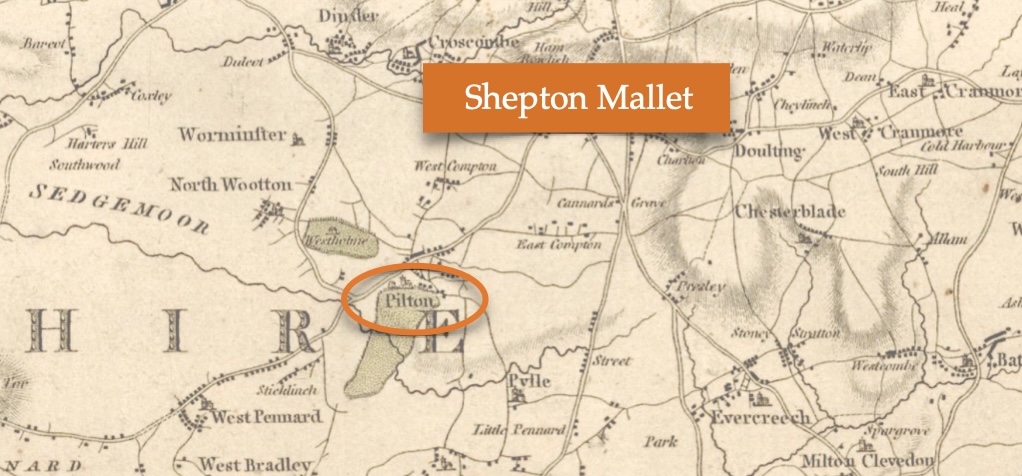
Enlarged detail from, Map of 24 miles round the City of Bath. Most humbly dedicated …,
by C. H. Masters, circa 1800. (Image courtesy of The National Library of Scotland).

If you look carefully at the map above, to the southwest of the village of Pilton (circled with an oval), is the town of West Pennard. In modern times, Pilton is frequently found associated with the parish of West Pennard — but, to add confusion to the situation, there is another hamlet in the same area spelled as: Piltown (note the added ‘w’).
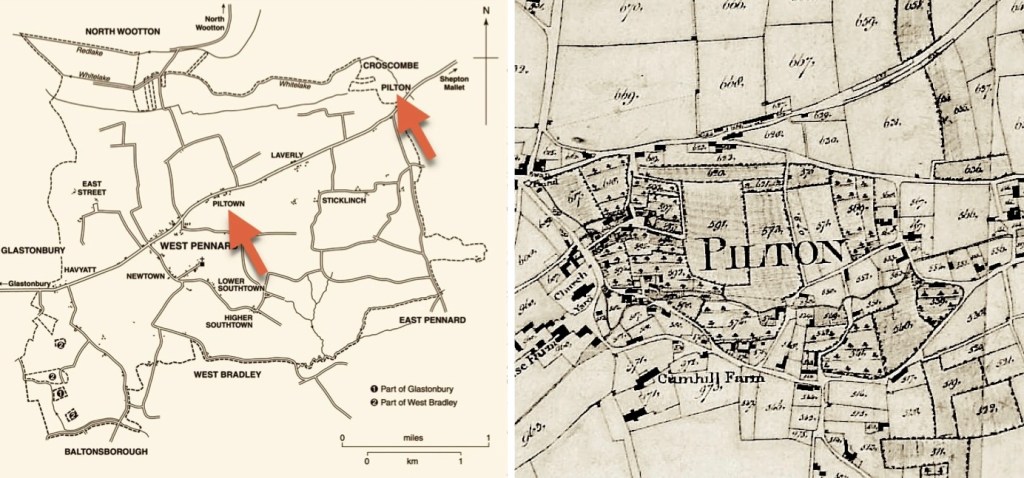
At left: An 1840 map demonstrates the confusion with names: Pilton versus Piltown. At right: A map of the Pilton parish in 1809. It is probable that some members of our family lived somewhere within the area of this map at that time.

“Piltonis a village andcivil parish in Somerset, England, located about 3miles (or 5km) southwest of Shepton Mallet. The parish includes the hamlets of West Compton, East Compton, Westholme, Beardly Batch, and Cannards Grave.

The village…is almost 20 miles (30km) from the sea but sits on the edge of the Somerset Levels, an area which has now been drained but was once a shallow tidal lake. According to legend in the 1st century, being a landing place then known as Pooltown, it is where Joseph of Arimathea landed in Britain. This is highly unlikely, as the suffix ‘ton’ is Saxon, and therefore cannot be from before 450-500 AD at the earliest.” (Wikipedia) (1)
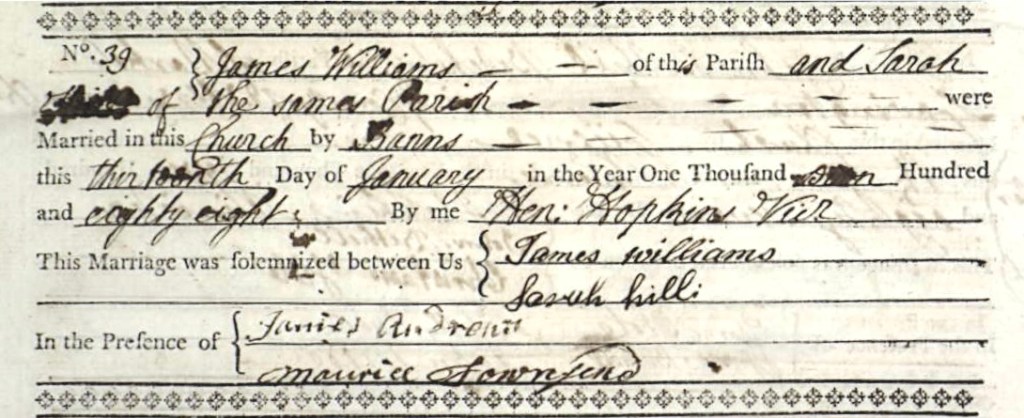
James Williams Sr. and Sarah Hill’s marriage record,
Pilton Parish, for January 13, 1788.

The Williams Family Branches Out

Starting in the new year of 1788, James Williams and Sarah Hill married in the Parish of Pilton. (Contemporary records indicate that this would be The Church of St. John the Baptist, see footnotes). A child was quickly on the way as ten months later, they welcomed their new son into the family. They named him James Williams Jr. in honor of his father. It is quite likely that they had many more children, or sadly, that they also lost some children. (We have discovered no records either way at this point in time). It is perhaps important to note that this record does not indicate his birth year, and that as he aged, he seems to be guessing at this information on the censuses.
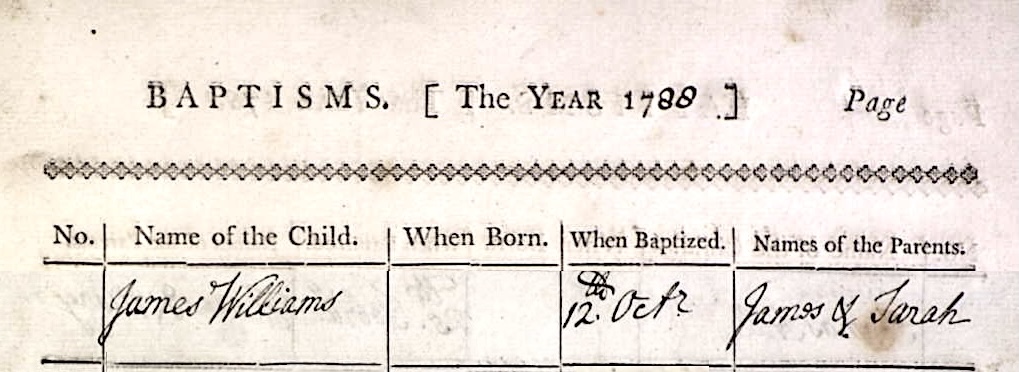
The baptism record of James Williams Jr., Pilton Parish, Somerset, on October 12, 1788.

What we do know is this: a number of years later, they had another son in 1810, and named him Samuel. This younger son stayed in Pilton and figures into the latter life of his father James Sr.

How did they support themselves?
To answer this question, we need to infer what we see on the maps and what we can glean from the 1841 Census. It’s certain that all the members of the Williams family were agricultural laborers, or tradesman in support of the community. On the 1841 census, James Williams Jr. and his brother Samuel Williams are identified as —Laborers, or Agricultural Laborers.
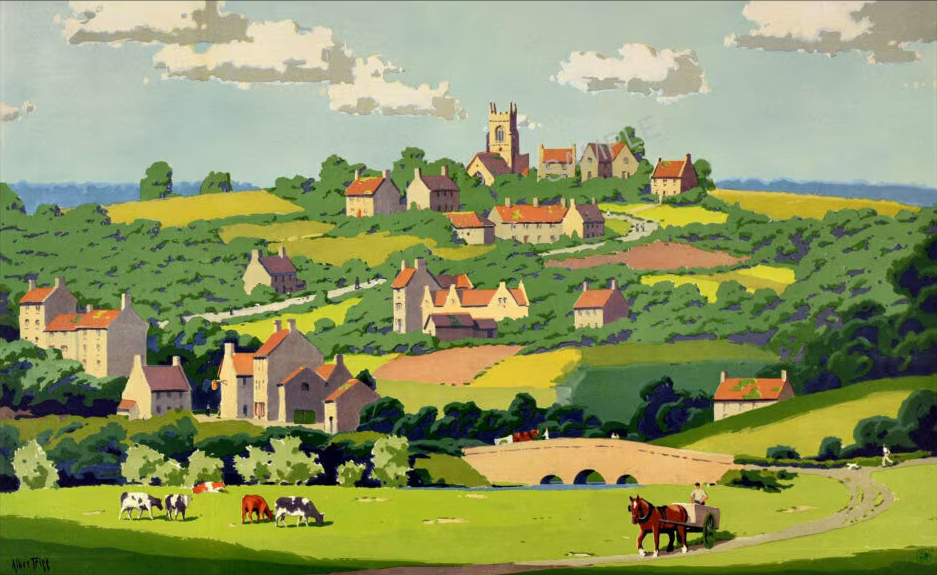
The bucolic life of Somerset, The Holiday County of Infinite Charm, by Herbert Alker Tripp.
British Railways Vintage Travel Poster, (Image courtesy of Mutual Art).

Around 1800, West Somerset agriculture was dominated by traditional farming techniques focused on raising arable crops. This means that the lands were suitable for growing crops. (This is different from lands only considered generally suitable for animal grazing).

Key crops included: wheat, barley, oats, and turnips (as fodder for animals). Field peas and beans were grown to help fix nitrogen in the soil. Apple orchards were vital for producing cider.

Animals were raised for wool, dairying, and meat:
Sheep — were raised for wool and meat, with wool being very important for the nearby Shepton Mallet cloth factories.
Cattle — known for dairy farming, particularly for cheddar cheese and butter, as well as raising beef cattle.
Pigs — were kept for meat and bacon.
Horses — were used primarily for transportation and for labor on farms. (Extracted from Wikipedia) (2)

Change Was in The Wind

The Industrial Revolution was slowly underway. The Industrial Revolution was the transition from small cottage industries in which goods were mostly made by hand to new, mass-produced goods in factories using steam and water power.

The Industrial Revolution began in Great Britain around 1760 and many of the early technological innovations happened there. Textiles were the dominant industry of the early Industrial Revolution. The textile industry was also the first to use modern production methods. The Industrial Revolution marked a major turning point in history and almost every aspect of daily life was influenced in some way.” (Students of History)
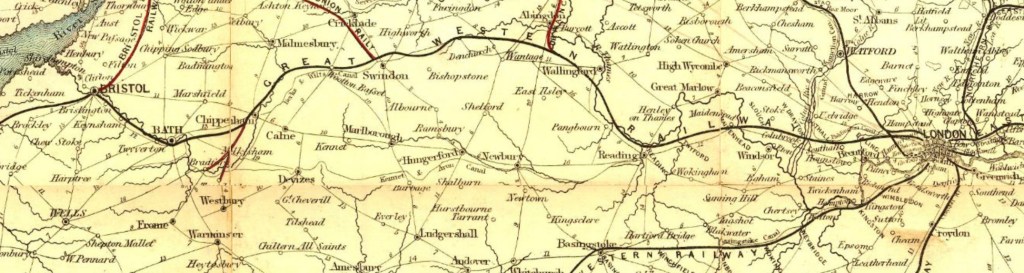
Cheffin’s Map – [The] Route of Great Western Railway, 1850. If you observe carefully at the lower left corner, you will see the village of West Pennard, and the city of Shepton Mallet…. (long dramatic sigh)… so close, and yet, so far. (Image courtesy of Wikimedia Commons).

The world was changing, but traditional life in the tiny parish of Pilton would stay the same for a while longer. Specifically, in West Somerset where they lived, industrialization was not as uniform, nor as rapid as in the North of England, but significant development occurred from the late 18th century into the early 19th century, particularly driven by the textile industry. The Great Western Railway pushed westward into the area, but went north to connect London, to the Somerset cities of Bath and Bristol — thereby passing well above the villages, parishes, and hamlets to the south. It reached Bath and Bristol circa 1840-ish, right near the of end-of-life for this generation. In fact, the working residents probably stood in the farm fields, arms akimbo, looking at the distant trail of coal smoke from the train line that would never reach them.

These cultural shifts would affect a place like Shepton Mallet much earlier than an outlying parish like Pilton. It is probable that none of this generation of the Williams family ever experienced any of these changes. The mother of the family, Sarah (Hill) Williams, passed away before her husband James, in early 1833. (3)
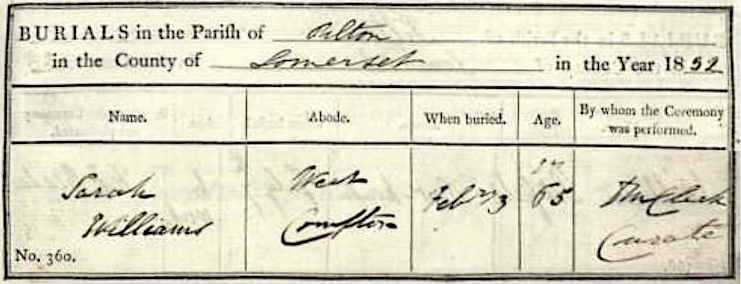
Burial record for Sarah (Hill) Williams. Note that even though the year noted on the page is 1832, she likely died in early 1833. (See footnotes).

The First Modern Census

James Williams Sr. likely never appeared in a Census until his life was nearly over. At 85 years old, he appears in the 1841 Census of England, living in the home of his younger son Samuel, and his family. Between 1801 and 1841, the British government had a rather haphazard approach in trying to capture this information. No one yet seemed to comprehend the pragmatic usefulness of this kind of data.

“There was widespread opposition to an official census until the end of the 18th century. This finally withered away after demographer Thomas Malthus, published his essay on the ‘principle of population’ in 1798. [He] caused great concern by suggesting that population growth would soon outstrip supplies of food and other resources. Unable to support itself, Britain would be hit by famine, disease and other disasters.* Concerned at this alarmist view of the future, people began to see the need for a census. Parliament passed the Census Act in 1800 and the first official census of England and Wales was on March 10, 1801… but the 1841 census, run by the new registration service, is regarded as the first modern census.
*Think of the Irish Potato Famine of 1845 to 1852 — An Gorta Mór(the Great Hunger), see footnotes.
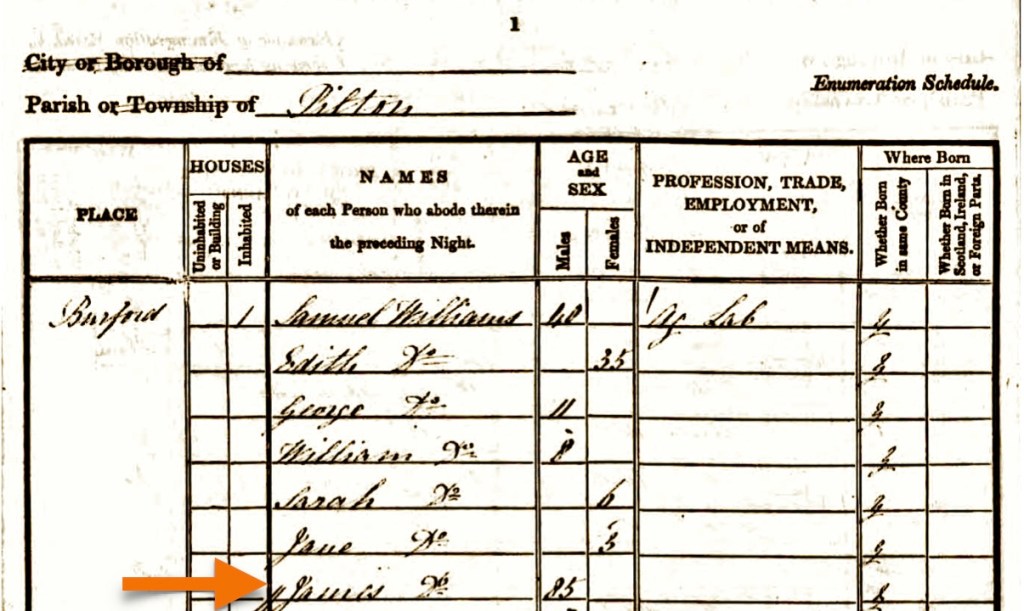
1841 Census of Pilton, Whitstone Hundred, Shelton Mallet District, Somerset.

Since 1801 there has been a census every ten years except in 1941, during the Second World War. For the first time, the head of each household was given a form to fill in on behalf of everyone in the household on a certain day. This system has stood the test of time, and it still forms the basis of the method we use today.” (The Office for National Statistics)
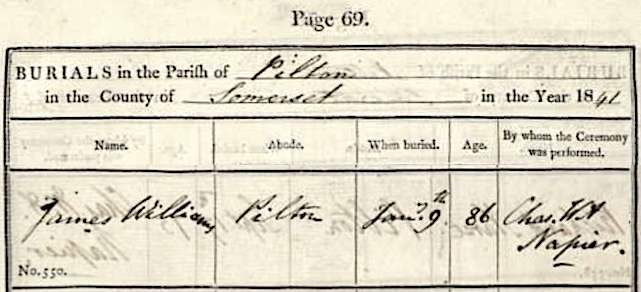
Burial record for James Williams Sr. Even though the year noted on the page is 1841, he likely died at end of 1841, or very early in 1842. (See footnotes).

James Williams Sr. passed away within a decade of his wife Sarah’s death. He lived to be about 86 years old, which is quite impressive when you consider the times within which he lived. He was born circa 1765 — a year notable for Great Britain’s Stamp Act. You wonder if his cries at being born, had to compete with the howls of the American Colonists in British North America over yet another tax. That charged event and their response to it, became an ignition point that helped build momentum toward the American Revolution. (See footnotes).
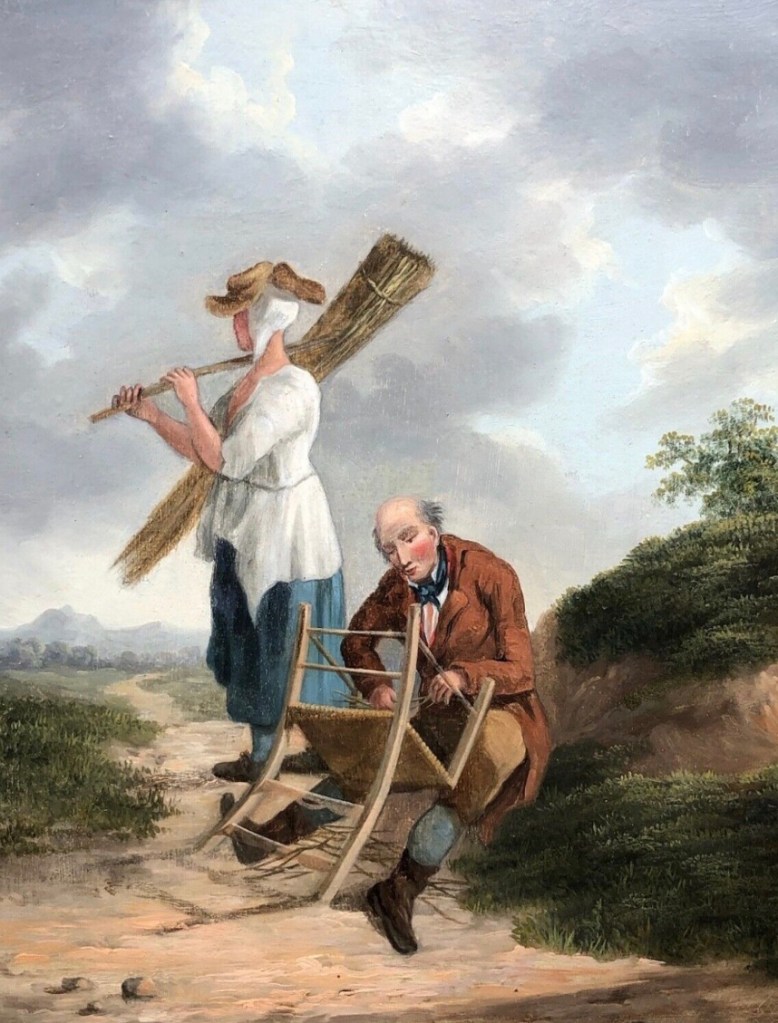
The Chair Mender, attributed to Francis Wheatley, 18th century.
(Image courtesy Strickland & Russell, UK).

At the end of his life, we ponder what James William Sr.’s life was truly about and how he must have felt, as he reflected on the many days which had passed. He probably missed his wife Sarah greatly, but then took some joy in his son Samuel’s home, surrounded by his grandchildren. In the next chapter, we will be looking at the life of his other son James Jr. and his wife Sarah Cullen, who then carry on our Williams family line. (4)

Following are the footnotes for the Primary Source Materials,
Notes, and Observations

The Parish of Pilton, Somersetshire

(1) — five records

The National Library of Scotland
Map of 24 miles round the City of Bath. Most humbly dedicated …
by C. H. Masters, circa 1800
https://maps.nls.uk/counties/rec/13617
Note: Enlarged for detail to show the Somerset villages of East Pennard and Shepton Mallet.

Pilton, Somerset
https://en.wikipedia.org/wiki/Pilton,_Somerset
Note: For the text.

Shepton Mallet
https://en.wikipedia.org/wiki/Shepton_Mallet
Note: For the reference.

BHO | British History Online
Parishes: West Pennard
https://www.british-history.ac.uk/vch/som/vol9/pp142-154
Note: For the 1840 map documenting both Pilton and Piltown.

Roads around Pilton — Illustrated Talk
P.V.H.G. (Pilton History The Heritage of a Somerset Parish)
by Richard Raynsford, January 2025
https://www.piltonhistory.org.uk/topics/travel-and-transport/roads-around-pilton-talk-by-richard-raynsford
Note: For data and 1809 map documenting Pilton.

The Williams Family Branches Out

(2) — seven records

James Williams [Sr]
in the England, Select Marriages, 1538-1973
https://www.ancestry.com/search/collections/9852/records/6807903?tid=&pid=&queryId=8863a398-2bbd-4284-a80c-807c49794e3d&_phsrc=giE15&_phstart=successSource
Note: Their marriage date is January 13, 1788; his wife’s name is Sarah Hill; Pilton, Somerset, England.
And
James Williams [Sr]
in the Somerset, England, Marriage Registers, Bonds and Allegations, 1754-1914
Marriage Registers Pilton 1783-1812
https://www.ancestry.com/search/collections/60858/records/4351154
Digital page: 23/43, Entry No. 39 on the left page.
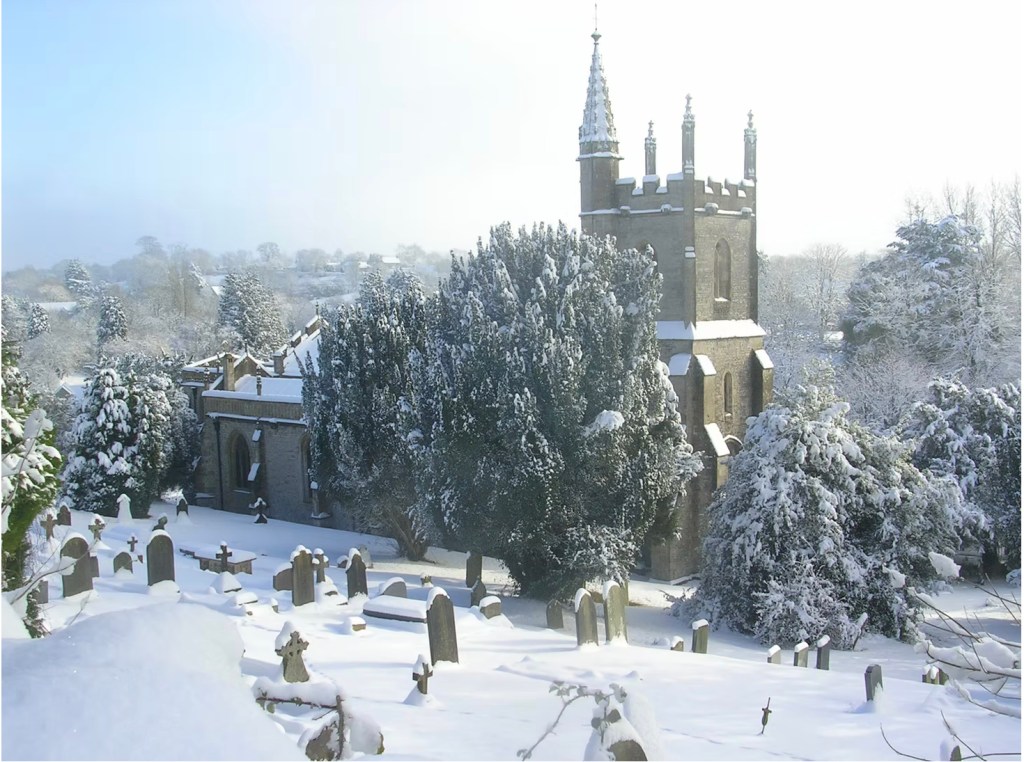
Pilton Parish Church in the Snow of 2010, photograph by Heather Hall.
(Imagery courtesy of the Pilton Parish Council).

James Williams [Jr]
in the England, Select Births and Christenings, 1538-1975
Pilton 1783-1813
https://www.ancestry.com/search/collections/9841/records/107149488
Digital page: 9/66, Second entry from the top.
Note: His October 12, 1788 baptismal record.
Note: On the 1851 Census, he states that his birthplace was West Compton, Somerset. (West Compton is a street of, and a very small hamlet in Pilton).

Samuel Williams
in the Somerset, England, Church of England Baptisms, Marriages, and Burials, 1531-1812
Pilton 1783-1813
https://www.ancestry.com/search/collections/60856/records/4350084
Book page: 45, Digital page: 25/66, Sixth entry on the right page.
Note: His September 13, 1801 baptismal record.

Pilton Parish Council,Gallery
Pilton Parish Church in the Snow of 2010.
Contemporary photo by Heather Hall
https://www.piltonparishcouncil.org/gallery?pgid=l5mc2pat-9666a9a3-327e-4bbd-a6d6-f3657d57b912

Mutual Art
British Railways Vintage Travel Poster
Somerset, The Holiday County of Infinite Charm
by Herbert Alker Tripp
https://www.mutualart.com/Artwork/Somerset/0C00B030E62ED037412AA502A8844BF1

British Agricultural Revolution
https://en.wikipedia.org/wiki/British_Agricultural_Revolution
Note: For the extracted data.

Change Was In The Wind

(3) — five records

Students of History
The Beginning of the Industrial Revolution
https://www.studentsofhistory.com/why-the-industrial-revolution-began-in-england
Note: For the text about the beginning of the Industrial Revolution in England.
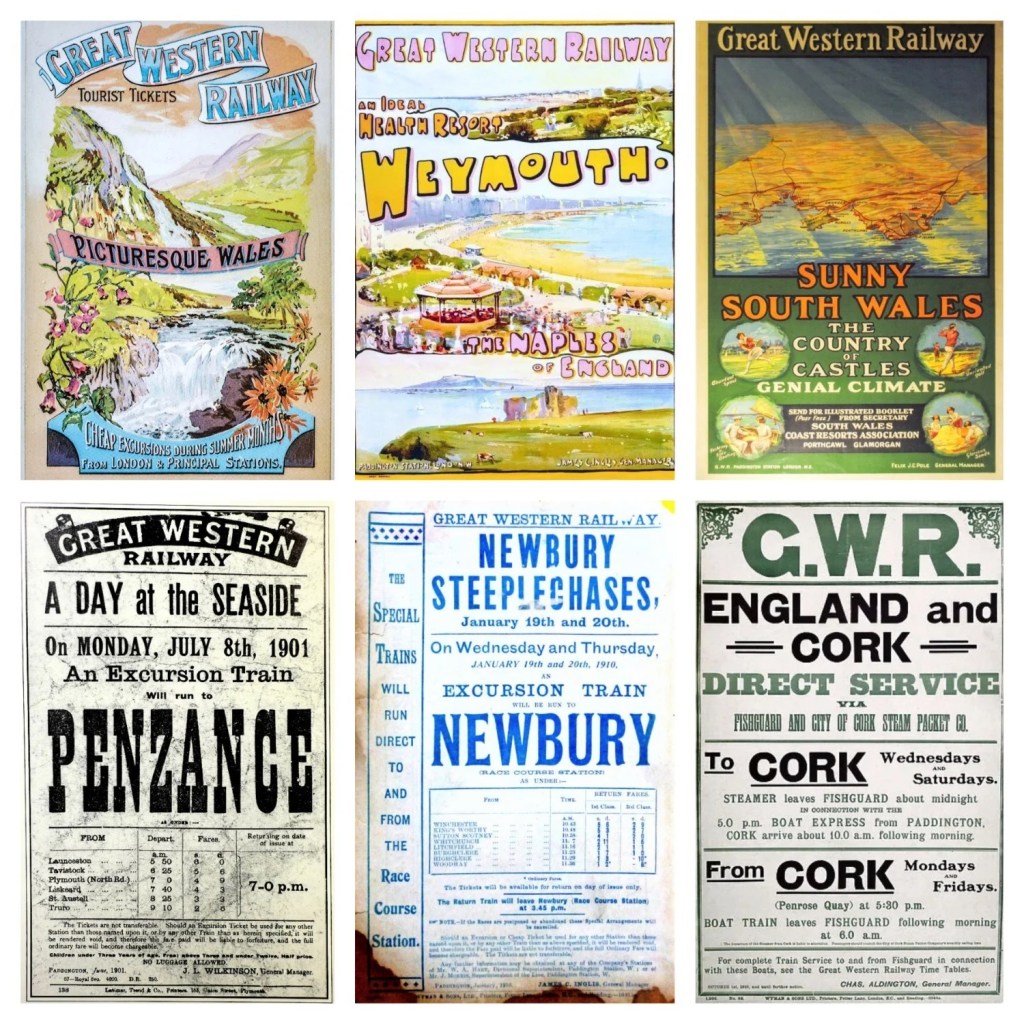
An assortment of 20th century Great Western Railroad travel posters from the article, The Farthing Layouts, A blog by Mikkel. (Image courtesy of RMweb, via https://www.rmweb.co.uk/blogs/entry/26677-edwardian-gwr-posters-an-overview-of-sorts/).

Great Western Railway
https://en.wikipedia.org/wiki/Great_Western_Railway
Note: For both the reference, and for
Cheffin’s Map — Route of Great Western Railway, 1850 map,
by Charles F. Cheffins, circa 1850.

Sarah Williams
in the Somerset, England, Church of England Burials, 1813-1914
Pilton 1813 1913
https://www.ancestry.com/search/collections/60859/records/4979797
Book page: 45, Digital page: 25/103, Entry No. 360 on the right page, (last entry at bottom).
Note: Her birth year is circa 1768, and her burial date was February 3, 1833.
and
Sarah Williams
Vital – England, Somerset, Church Records, 1501-1999
https://www.familysearch.org/ark:/61903/1:1:6D99-397B?lang=en

The First Modern Census

(4) — nine records

The Office for National Statistics
The Modern Census
https://www.ons.gov.uk/census/2011census/howourcensusworks/aboutcensuses/censushistory/themoderncensus#:~:text=The%20first%20official%20census%20was%20in%201801%2C,modern%20census.%20Last%20updated:%2018%20January%202016.
Note: Information about the only Census that James William Sr. ever appeared in (that we have discovered).

James Williams
[Sr]
in the 1841 England Census
Somerset Pilton ALL District 13
https://www.ancestry.com/search/collections/8978/records/13558430
Book page: 1 (or 23?), Digital page: 2/7, Left page, 7th entry for the Samuel Williams family.
Note: At 85, he is in the home of his son Samuel Williams.
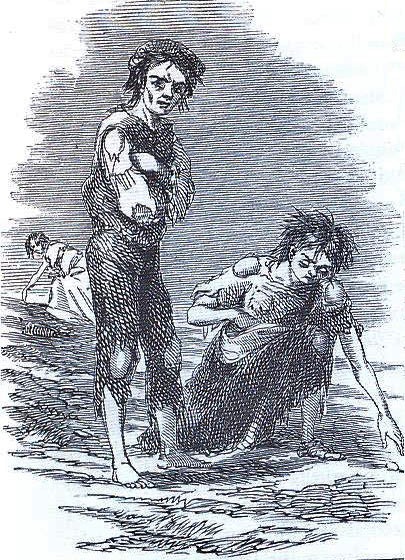
Boy and Girl at Cahera, by James Mahony, 1847.
As published in The Illustrated London News.
“The first Sketch is taken on the road, at Cahera, of a famished boy and girl turning up the ground to seek for a potato to appease their hunger. Not far from the spot where I made this sketch, says Mr. Mahoney, and less than fifty perches from the high road, is another of the many sepulchres above ground, where six dead bodies had lain for twelve days, without the least chance of interment, owing to their being so far from the town.” (https://commons.wikimedia.org/wiki/File:Skibbereen_by_James_Mahony,_1847.JPG)

Great Famine (Ireland)
https://en.wikipedia.org/wiki/Great_Famine_(Ireland)#:~:text=The%20Great%20Famine%2C%20also%20known%20as%20the,and%20disease%20in%20Ireland%20from%201845%20to
and
UK Parliament
The Great Famine
https://www.parliament.uk/about/living-heritage/evolutionofparliament/legislativescrutiny/parliamentandireland/overview/the-great-famine/#:~:text=Between%201845%2D52%20Ireland%20suffered,a%20disease%20destroying%20the%20crop.
Note: For the data.

James Williams [Sr]
in the England, Select Deaths and Burials, 1538-1991
https://www.ancestry.com/search/collections/9840/records/4658434
and
James Williams
in the Somerset, England, Church of England Burials, 1813-1914
Pilton 1813-1913
https://www.ancestry.com/search/collections/60859/records/4979987
Book page: 69, Digital page: 37/103, Entry No. 550 on the right page.
Note: The right margin notation indicates that he was the first entry for 1842.

Encyclopædia Britannica
Stamp Act, Great Britain [1765]

https://www.britannica.com/event/Stamp-Act-Great-Britain-1765
Note: For the data.

Strickland & Russell
Selling Antiques
The Chair Mender,
attributed to Francis Wheatley, 18th century
https://www.sellingantiques.co.uk/1051310/attributed-to-francis-wheatley-ra-original-late-18th-century-antique-oil-painting-on-board-the-chair-mender-english-country-landscape
Note: For the image.

The Gore Line, A Narrative — Eight

This is Chapter Eight of eight, and our last chapter in the Gore Line. This family line has been the longest and deepest family research we have yet undertaken, but the effort has been worth it. Ancestors that we once only knew by name, they are now — well — many of them are familiar.

We grew up where our parents built their home in a small, rural farming township in northeast Ohio, in the Western Reserve, where we have much history. We were surrounded by farm fields, some small light-industry businesses, and lots and lots of trees. Ironically, our early ancestors had entered the area, and spent a long time clearing away the dense forest to make farmland, which aligned with their New England viewpoints. Good thing they missed a few trees…

Our Grandfather Harley Gore Made Maple Syrup

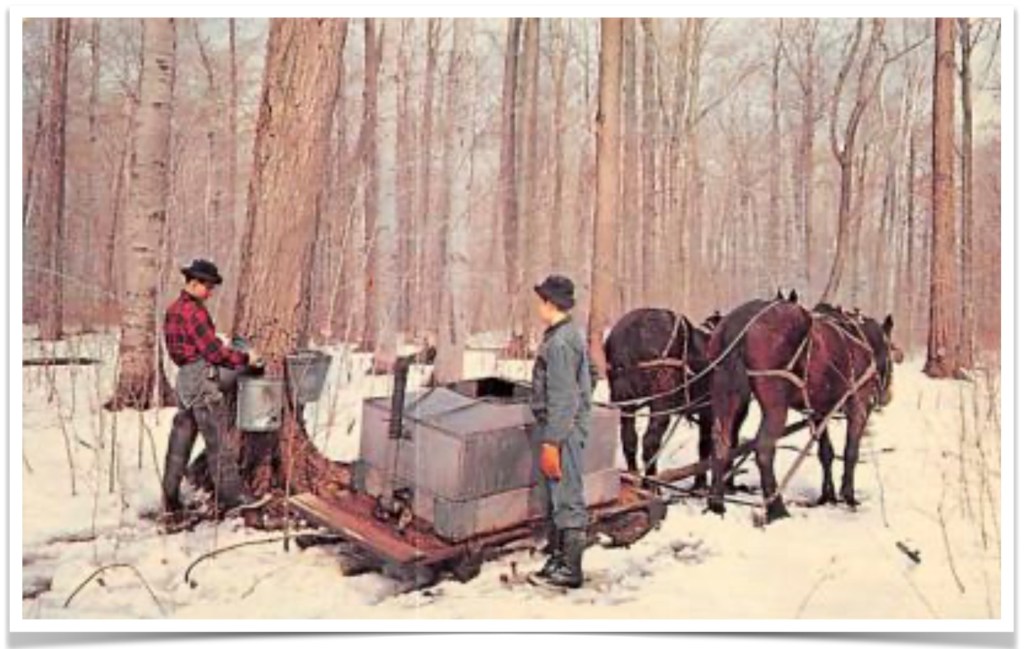
Depending upon whom you ask, (because there are lots of opinions on this), it generally takes about 12 gallons of sugar-maple tree sap to make one quart of maple syrup. Think about that the next time you generously slather it on your Grand Slam stack of flapjacks — no wonder it’s so expensive.

Grandfather Harley had a sugaring shack back in what they then called the West Woods section of their farm, where there was lots of forest, occasionally cleaved by the tributary called Silver Creek. The sugaring shack was a ruin by the time we took any interest in it, but by then Harley had already left this world. (1)

As The Victorian Age Gave Way to The Edwardian Age

Harley Gore is the youngest son of Dorr B. Gore and Ann Susan (Booth) Gore. He was born June 7, 1881 in Russell township, Geauga County, Ohio – died November 24, 1941 in Newbury township, Geauga, Ohio.

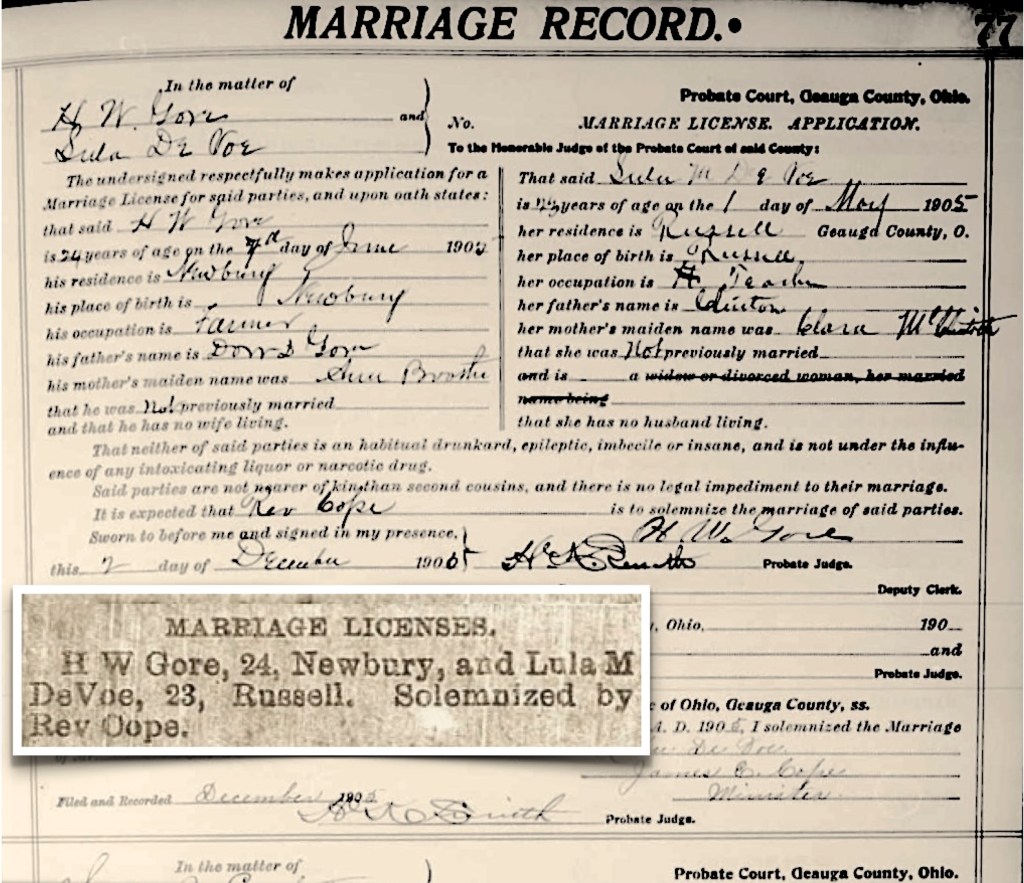
He married Lulu Mae DeVoe on December 3, 1905 in Chagrin Falls, Cuyahoga County, Ohio. She was born on April 8, 1882 in Russell township, Geauga County, Ohio – died April 4, 1975, in Chardon township, Geauga County, Ohio (four days before her 93rd birthday).

Her parents were Clinton Chauncey DeVoe, born April 10, 1858 in New York – died November 19, 1930 Russell, Geauga, Ohio. He married Clara Antionette McClintock on November 18, 1877 in Ohio. She was born July 14, 1860 in Solon township, Cuyahoga, Ohio – died September 6, 1932 Chagrin Falls, Cuyahoga, Ohio.

Harley William Gore and Lulu Mae Devoe marriage application, 1905.

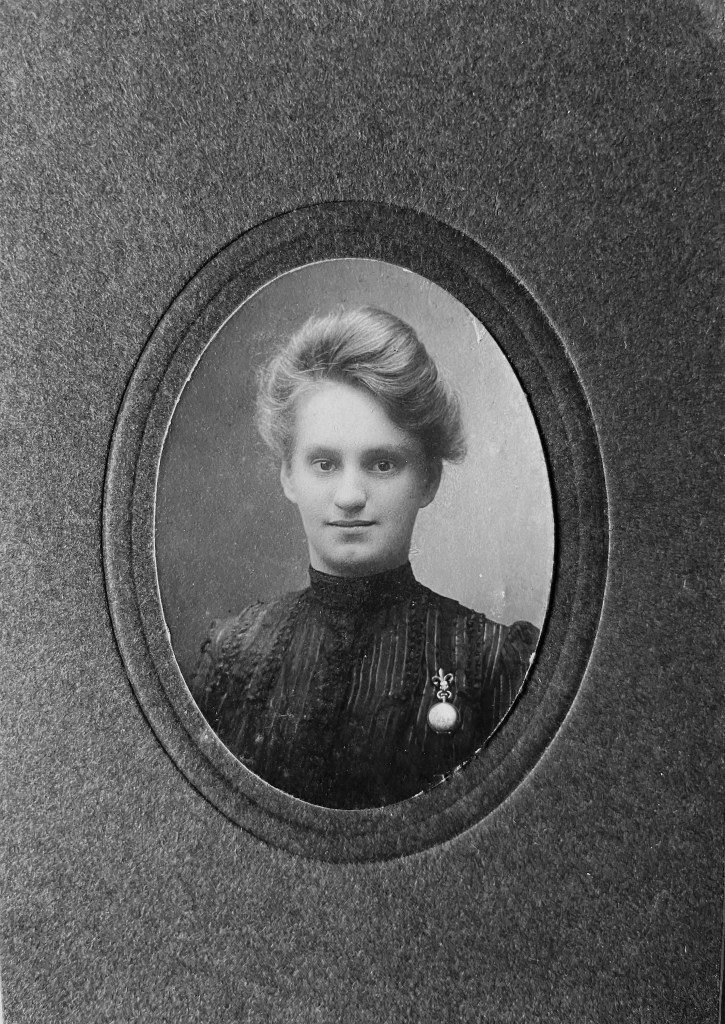
Our Grandmother Lulu, was the first person in her lineage to graduate from high school — from Chagrin Falls High School in the class of 1899. She worked as a domestic servant at a residence in Chagrin Falls to support herself while attending school. After graduation she was a teacher in one-room schoolhouses in the area, until she married Harley Gore in 1905.

Harley William Gore and Lulu Mae (DeVoe) Gore around the time of their wedding in 1905. (Family photographs).

They had three children, all born in Russell township, Geauga County, Ohio:

  • Leland Harley Gore, born September 30, 1906 – died July 29, 2008
  • Elwyn Clinton Gore, born May 12, 1909 – died February 13, 1935
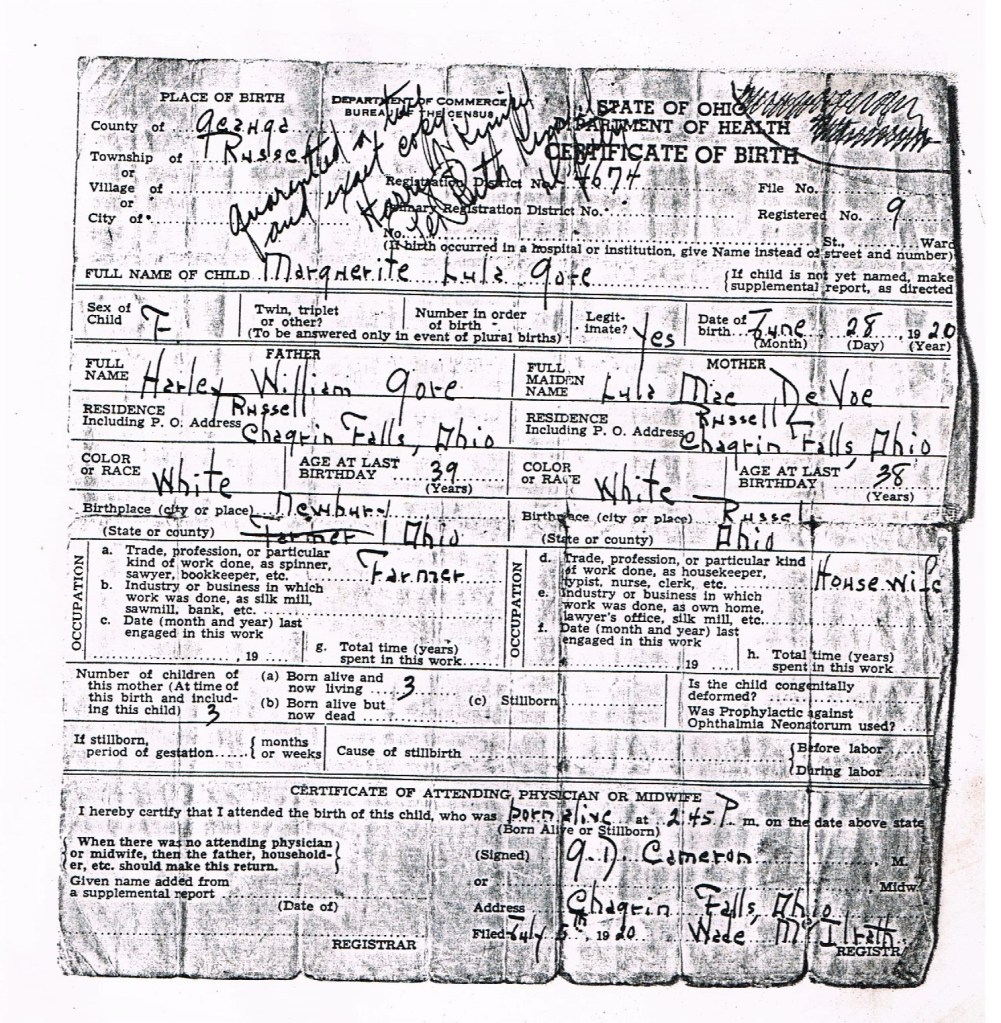
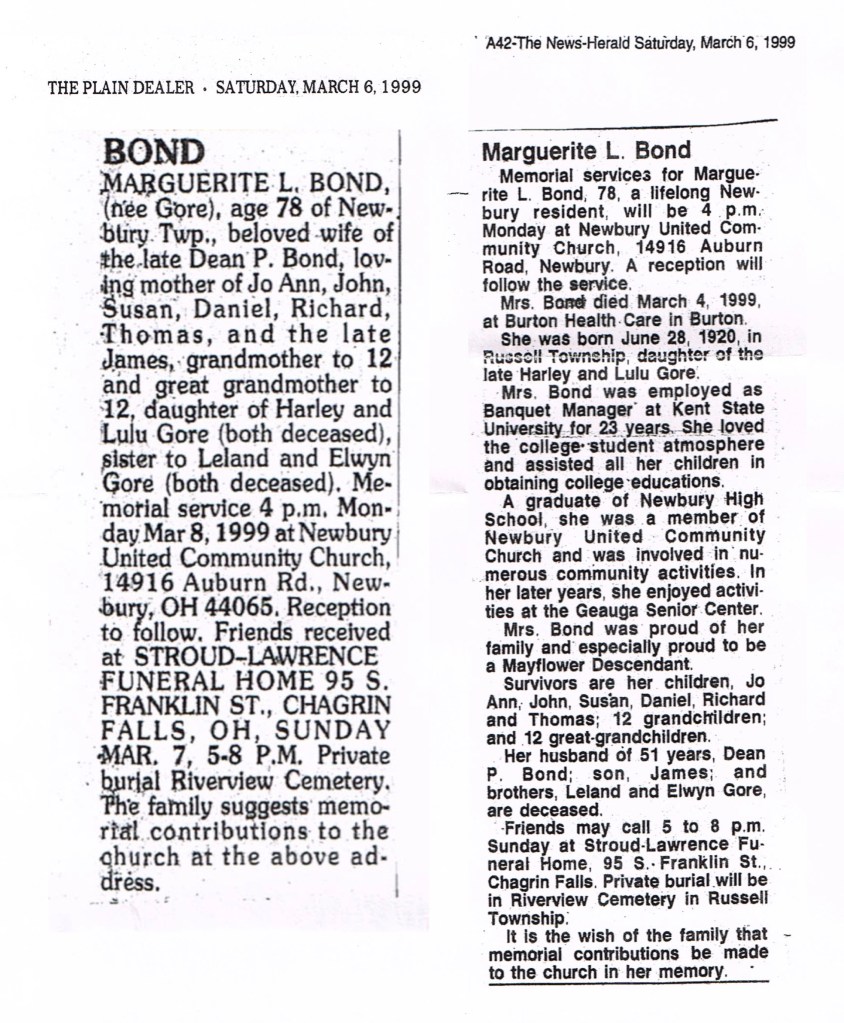
  • Marguerite Lulu (Gore) Peterman Bond, born June 28, 1920 – died March 4, 1999, (We are descended from Marguerite). (2)
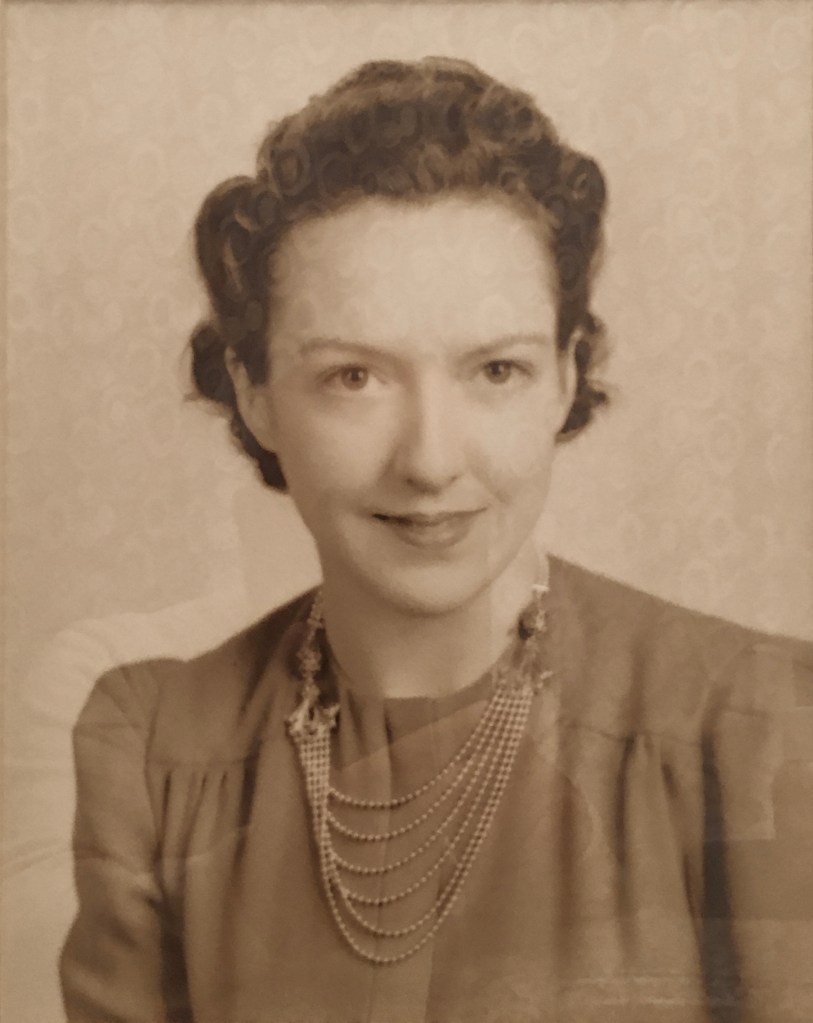
Marguerite Lulu Gore, circa 1936. (Family photograph).

Our Uncles, Our Aunt, and — Their Families

Note: All births, deaths, and marriages are in Geauga County, Ohio unless otherwise noted.

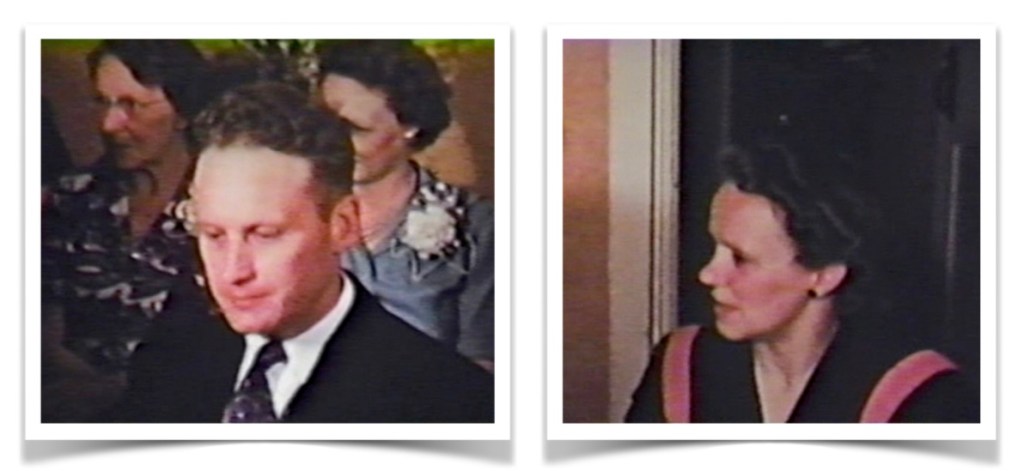
Leland Gore and Forrestine (McFarland) Gore, June 1946, shown in film stills from the wedding of Dean and Marguerite Bond. (Family photographs).

Uncle Leland and Aunt Forrestine
Our Uncle Leland was the oldest son in the family. He was born on September 30, 1906 Russell township, Geauga, Ohio – died October 1, 1993 Mount Dora, Lake County, Florida. He married Marjorie Forrestine McFarland, April 12, 1926 in Chagrin Falls, Cuyahoga, Ohio. She was born February 28, 1904 Cleveland, Cuyahoga, Ohio – died March 30, 1991, in Mount Dora, Lake, Florida.

They had two children:

  • William Eugene Gore, born January 14, 1927 Bainbridge, Geauga, Ohio — died July 13, 2013, Eustis, Lake, Florida.

    William ‘Bill’ Gore was married to Marilyn Jean Potter (March 27, 1934 – January 11, 2018). Bill and Marilyn have two sons:
  • Larry Eugene Gore, born 1952
  • William Harley Gore, born 1953

    Jerrie Lee (Gore) Hill, born July 15, 1929 Bainbridge township, Ohio — died July 10, 2023 Euclid, Cuyahoga, Ohio. Like her grandmother Lulu Gore, Jerri died just five days before her 94th birthday.

    Jerrie Lee Gore married Denver Gates Hill, Jr., on September 12, 1949 in Geauga County, Ohio, where was born on August 24, 1928 – died April 21, 2013 in Cleveland, Cuyahoga, Ohio.

They had three children:

  • Victoria ‘Vicki’ Lynn Hill, born 1950
  • Denise Ann (Hill) Mitchell, born February 3, 1952 – died August 9, 1995
  • Dirk Regan Hill, born 1955

    Uncle Elwyn Clinton Gore
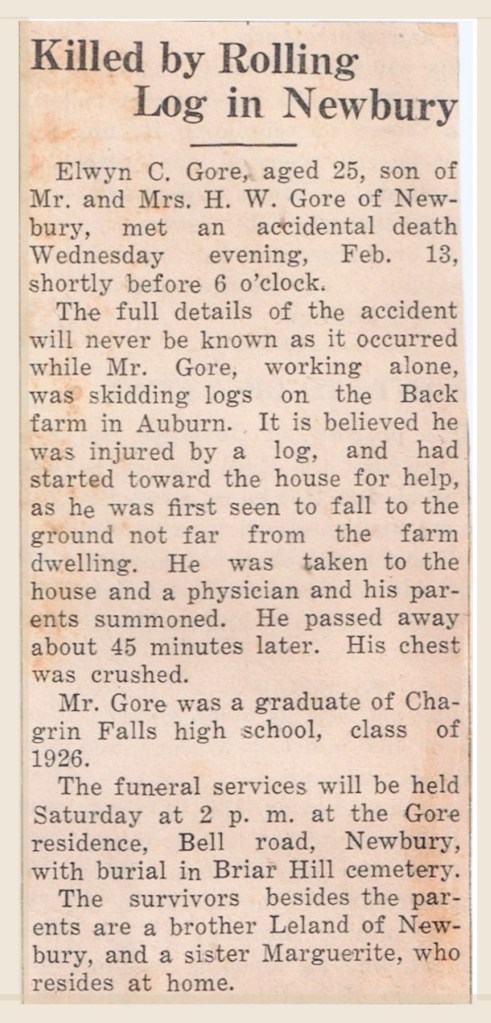
    Our Uncle Elwyn died as a young man in a tragic and violent logging accident when he was 25. His death was a shock to the family and he was mourned for many years. He was born on May 12, 1909 in Russell township, Geauga, Ohio – died February 13, 1935 in Auburn township, Geauga, Ohio.
Elwyn Clinton Gore, circa 1921. (Family photograph).

When Elwyn died in 1935, it was the midst of the Great Depression and the family could not afford to provide him with a headstone. Our grandparents planted a pine tree to mark his resting place, until such time in the future when an appropriate marker could be placed. A family monument was eventually installed, but to this day, the pine tree still stands there resolutely guarding our relatives. (3)

Our Mother Marguerite, and Her Two Marriages

Marguerite Lulu (Gore) Peterman Bond, the only daughter, was born June 28, 1920 in Russell township, Geauga, Ohio – died March 4, 1999 in Burton township, Geauga, Ohio.

Marguerite was married twice: first, to Clarence Arthur Peterman Jr., September 19, 1936 in Ripley, Chautauqua, New York – their marriage ended by May of 1942, when they divorced. (Please see The Peterman Line, A Narrative). Note: In our mother’s first marriage, her first child, a son named James Elwyn Peterman, died soon after he was born.

She married second, our father, Dean Phillip Bond, June 26, 1946 in Newbury township, Geauga, Ohio. He was born August 15, 1919 in East Cleveland, Cuyahoga, Ohio – died September 24, 1996 in Chardon township, Geauga, Ohio. (Please see The Bond Line, A Narrative — Seven). Note: Dean Bond adopted both Jo Ann and John Alfred Peterman as his children. Their surnames changed from Peterman to Bond after the adoption was completed.

Together they had six children:

  • Jo Ann (Bond) White, born May 9, 1939, in Bedford, Cuyahoga, Ohio — died August 6, 2010 in Chagrin Falls, Cuyahoga, Ohio.
    Married Wayne Ronald White, October 5, 1958 — divorced November 16, 1977
  • John Alfred Bond, born 1940
    First Marriage: Marjorie Ann (Narusch) Bond, October 28, 1961 — divorced November 29, 1977.
    Second Marriage: Susanne (Ficht) Bond, June 17, 1987
  • Susan Deanna Bond, born 1947
  • Daniel Earl Bond, born 1950
    Married Betty Jane Roberts, November 21, 1975
  • Richard Dean Bond, born December 20, 1952, in East Cleveland, Cuyahoga, Ohio – died May 15, 2022, in Ravenna, Portage, Ohio
  • Thomas Harley Bond, born 1958
    Married Leandro Jose Oliveira Coutinho, June 26, 2008 (4)

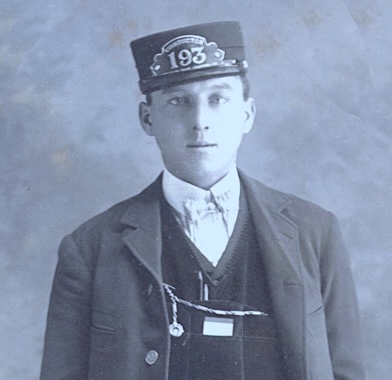
Conductor 193 on The Interurban Line

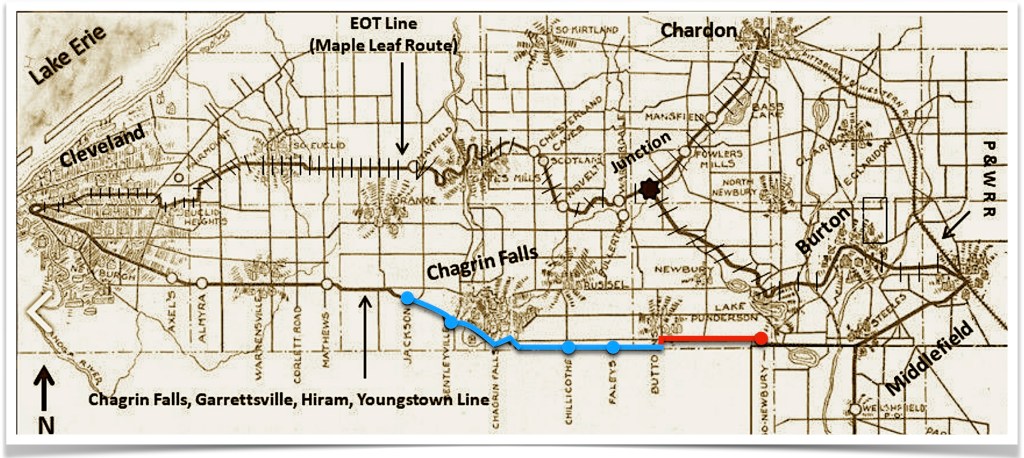
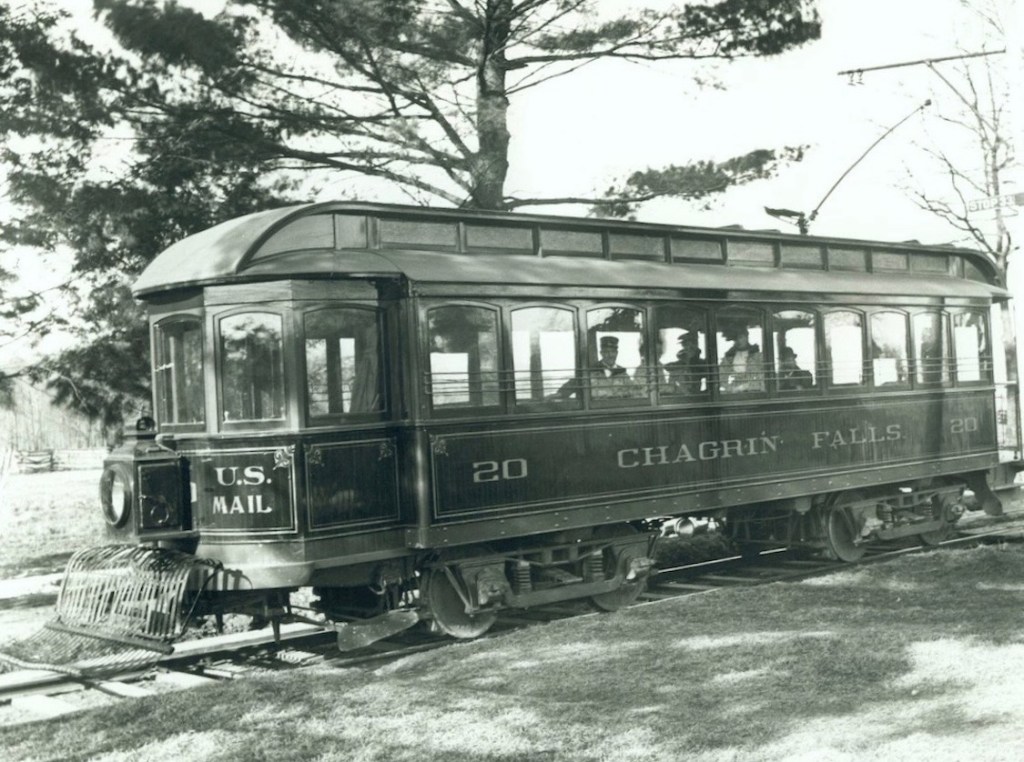
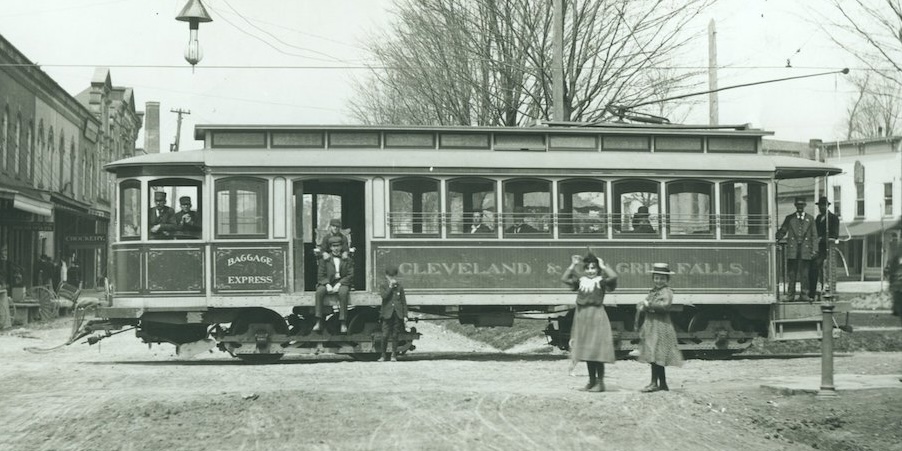
You may have noticed that our Grandfather Harley looked rather dapper in his conductor uniform for what people called The Interurban, otherwise known as the Cleveland and Eastern Electric Railway. (The parent company had the curious name of The Eastern Ohio Traction Company).

“In the late 1800’s the rolling hills of Geauga County were dotted with small farming communities linked by simple dirt roads. Most local travel was done either on foot or by hitching Old Bessie [a horse] to a wagon or sleigh, which posed many difficulties in periods of inclement weather. For longer journeys, the only other transportation available was via two steam railroads... From late autumn until spring… the normally dusty roads [were] impassible muddy ruts that were often frozen and snow covered for most of the winter. Travel in Geauga County, known for its abundant snowfalls, was difficult if not impossible most of the colder months.” [ceihsmu article]

From writer Dan Rager, “Yes, there was a time when Geauga County was nothing but dirt roads, often impassable, and farms — farms with no easy way to get their produce to the city. The electric railroad known as the Cleveland and Eastern Electric Railway became a lifeline between the farms of Geauga county and the bustling city of Cleveland, according to the historical society. The interurbans, as they were popularly known, crisscrossed northern Ohio and provided economical and efficient access between Cleveland and the countryside…”

Observation: It is sometimes difficult for those of us who have grown up in a modern world — with paved roads, heated homes, hot tap water, and myriad groceries at our fingertips the year ’round — to appreciate how different the world was one hundred years ago. Where our ancestors lived was still really quite rural and remote from where most people lived.

Here is an easy example of the difference between the eras: Now, when most of us want to run to the store to grab a gallon of milk, we just grab our car keys, pull the car out of the garage, and run over to the local grocery — and while we are there we — pick up some Haagen-Dazs ice cream too (because > reasons).

Then, our grandparents had it much harder when it came to obtaining their food. For starters, there was no such thing as two-percent milk, nor Haagen-Dazs. (sad face) The ability to just jump in the car and zoom down to the store was science fiction straight out of an H.G. Wells novel. What is a quick jaunt today, would involve bringing out the horse(s), hooking up the wagon, or buggy, scheduling the time it would take in your busy day, etc., …and don’t forget the shovel, in case the horses decide to, well you know…

Various Cleveland and Eastern Electric Railway graphics, photos, and epherma. (See footnotes).

Back to writer Dan Rager, “…the interurban served a valuable purpose… It brought milk and produce from Geauga county farms to the city of Cleveland, and mail and other goods from Cleveland to the countryside, he said, adding city dwellers took the train to enjoy the country and those living out in the country took the train to see shows and shop in the city. Groups would even charter the trains for outings and picnics.

The interurban lines existed from the 1890s until circa 1925, when they fell into disrepair due to technological changes with the development of bus lines, and the advent of the personal automobile. By that period, our Grandfather Harley had forsaken his railway career and now worked as a farmer. (5)

Their Life On The Farm

In 1910, the census records indicate that Harley and Lulu were renting farm property somewhere in Newbury township, and we know that later in that same decade, they were living just next door in Russell township. This is because they had moved to another farm, where they had rented property at the Russell/Newbury township border. (This is where our mother Marguerite was born).

Photos from the early 1920s. Left image: Lulu and Harley Gore.
Right image: Brother and sister — Leland and Marguerite Gore.

In 1920, when Marguerite was one month old, they moved again, to a large farm property they had purchased in Newbury township. This is where Lulu, Harley, and Marguerite lived for the rest of their lives, and for Leland, in actuality, for most of his life too. So let’s just call it what it is (sotto voce) — same street syndrome. In their history together, the Gore families eventually all lived near each other on the same street that only had one stop sign between all of them.

When our Grandmother Lulu was in her 80s, we asked here about what it was like in “the olden times” when she was involved in running the farm. She said that they were up and dressed before dawn and that the animals — meaning the cows, horses, chickens, pig, cats, and dog — all were fed and watered before anything else was done. That would make at least 1-2 hours of time. Then, while the men continued to work, she came back to the house and started a fire in the wood stove, to cook breakfast for the family and the hired farm hands. Everything had to be made fresh, because there was no refrigeration.

After that, Harley and the other men would head back out to the fields and barns to continue their chores. That would involve many things, such as plowing, planting, cleaning stalls, fence mending, animal veterinary skills, chopping wood, and so on. Lulu would clean up after breakfast, empty the chamber pots, and put the house in order, gather eggs, fetch water, tend to sewing, work in the vegetable garden, prepare a mid-day meal, do laundry, then hang it out to dry, slaughter a chicken, prepare dinner, etc. Just a dizzying array of tasks!

Observation: People were busy (!) and tapping out this history on a keyboard makes us feel like sedentary ground sloths by comparison. We don’t know how they found time for other things, but obviously they did. Before television, there were picnics, card parties, garden clubs, and grange meetings. We heard that Harley was quite a history buff. Also, at a community level, he was involved in making sure that the cows were properly treated for TB, which can be found in unpasteurized milk.

The simple facts were these…

  • Radio was just starting to come into people’s lives, so after dinner, the family would listen to the radio, or read.
  • Saturday was the day when everyone had a bath from a tub which was set up in the kitchen.
  • When Marguerite was born, she eventually attended a one-room school house for the first few years, until the regular school was built in 1928. She told us that her father used to walk her to school about three miles each way.
  • If something wasn’t available, you would just need to make do with what was at hand.
March 1999, Volume 10, issue of the Russell Township Historical Society Newsletter, page 2. (Family ephemera).

Sometimes we find a bit of family history which comes along and captures some of the simple pleasures they found in life. Shown above is page two from a local historical newsletter. (Page one is in The Gore Line, A Narrative — Seven). (6)

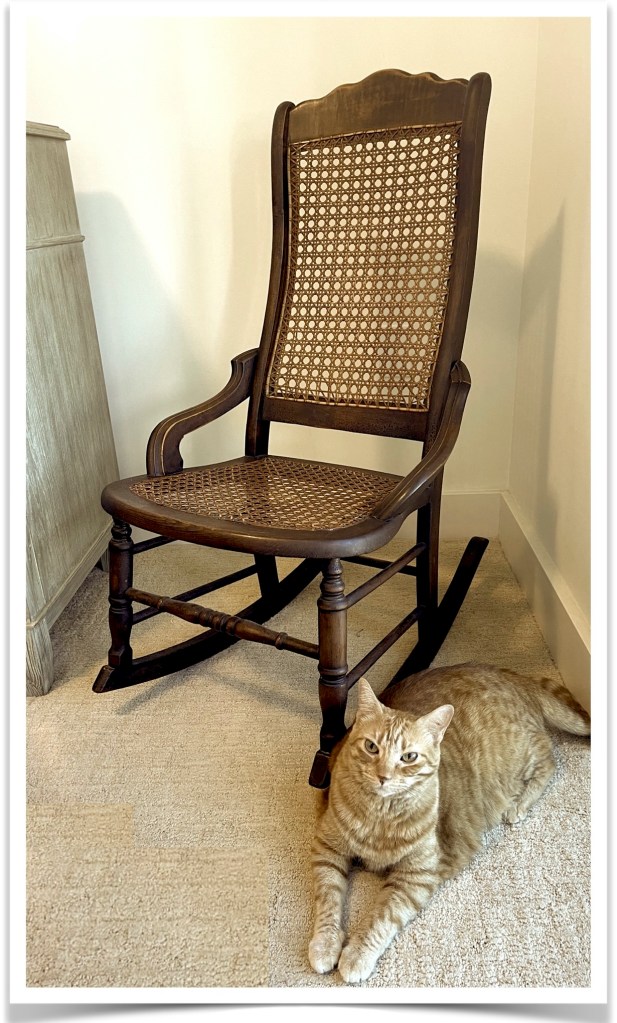
Sunny hanging out with the Gore family heirloom chair.
(Family photo).

An Heirloom Story

What does an heirloom represent?

The chair pictured above descends from the Gore Line and has been in our family for about 200 years, probably even longer. We don’t know specifically when it entered our family’s history, but it seems like it must have been during the Gore family’s time when living in either Vermont State, or New York State.

Our mother used to sit in this chair and rock her children, and her grandchildren. Like the many Grandmothers before her, she was quietly there, loving her children as best she could.

“Heirlooms represent family history, wealth, and treasured memories. They’re more than objects, serving as symbols for stories that deserve to be recounted and preserved indefinitely. Their value is not necessarily monetary, but deeply emotional. A family heirloom connects you to the struggles and successes of your loved ones, and because of that, they’re irreplaceable.” [The Magic Of An Heirloom]

This was a truth for our generation, our parents generation, their parents before them, and so forth…

When our mother Marguerite died in 1999, her own memories erased and long-dimmed by illness, we had emptied out her home a few years earlier. Our Pop had passed in 1996, and since Mom required complete care, living at home was not an option anymore. When we removed things from the walls, the patterns of their living emerged — years of smoking had tattooed the walls with outlined patterns of the former objects once held there. When the house was empty, we didn’t miss the building. We missed their things: their objects, mementos, heirlooms — all of these things represented them.

“An heirloom is often the final, fragile link to the memory
of a parent or loved one, making it invaluable.
Handed down for generations, the stories behind them
become the stuff of family lore, ensuring that the legacy of the one who passed it on is immortalized.”

from The Magic Of An Heirloom

When writing these genealogy chapters, we have uncovered many interesting stories about our ancestors. Hopefully, the histories we are documenting, will pass through time and represent our own way of sharing an heirloom of memories with future family descendants. (7)

Following are the footnotes for the Primary Source Materials,
Notes, and Observations

Our Grandfather Harley Gore Made Maple Syrup

(1) — one record

Maple Tapper Blog
How to Make Maple Syrup
https://blog.mapletapper.com/tag/how-much-syrup-does-a-gallon-of-sap-make/
Note: For the text.

As The Victorian Age Gave Way to The Edwardian Age

(2) — three records

Harley Gore
Listed in the Ohio, County Births, 1841-2003

in Newbury, Geauga County, Ohio
https://www.familysearch.org/ark:/61903/3:1:33SQ-GT7G-915K?cc=1932106
Book page 134, Digital page: 100/469, Left page, entry 2, #2845.
Note: For the data.

Harley W Gore
Death – Ohio Deaths, 1908-1953

https://www.familysearch.org/ark:/61903/1:1:X89M-9C2
Digital page: 1422/3314
Note: For the data.

H.W. Gore
Marriage – Ohio, County Marriages, 1789-2016

https://www.familysearch.org/ark:/61903/1:1:XDK5-YMD
Book page: 77, Digital page: 67/226. Right page, top entry.
Note: For the data.

Our Uncles, Our Aunt, and — Their Families

(3) — fifteen records

Leland Harley Gore
Birth – Ohio, County Births, 1841-2003

https://www.familysearch.org/ark:/61903/1:1:X6WQ-BQ8
Digital page: 66/77, Left page, last entry, #7948.
Note: For the data.

Leland Harley Gore
Vital – Florida Death Index, 1877-1998

https://www.familysearch.org/ark:/61903/1:1:VVH2-HV8
Note: For the data, Certificate #110440

Leland Gore
Marriage – Ohio, County Marriages, 1789-2016

https://www.familysearch.org/ark:/61903/1:1:2Q76-52W
Digital page: 107/603, Right page, entry 4.
and
Forrestine Mcfarland
Marriage – Ohio, County Marriages, 1789-2016

https://www.familysearch.org/ark:/61903/1:1:2Q76-52C
Digital page: 107/603, Right page, entry 4.
Note: For the data.

Forestina Marjery McFarlond
Birth – Ohio, County Births, 1841-2003

https://www.familysearch.org/ark:/61903/1:1:VNW7-3XM
Digital page: 1540/6742
Note: For the data.

Marjorie Gore
Death – United States Social Security Death Index

https://www.familysearch.org/ark:/61903/1:1:J1WP-857
and
https://www.familysearch.org/ark:/61903/1:1:6K3Q-L548
Note: For the data.

Jerrie Gore
Marriage – Ohio, County Marriages, 1789-2016

https://www.familysearch.org/ark:/61903/1:1:QPQT-9GX5
Book page: 403, Digital page: 459/532, Top entry on page.
and
Jerrie Gore
Marriage – Ohio, County Marriages, 1789-2016

https://www.familysearch.org/ark:/61903/3:1:33SQ-G16K-771?view=index&personArk=/ark:/61903/1:1:K8BT-K57&action=view
Digital page: 1177/3162
Note: For the data, Ohio state file no. 01172.

Denver Hill
in the Ohio, U.S., Birth Index, 1908-1998

https://www.ancestry.com/discoveryui-content/view/2081053:3146
Note: For the data, certificate number: 1928079305

Denver G. Hill
in the U.S., Obituary Collection, 1930-Current

https://www.ancestry.com/discoveryui-content/view/207850014:7545?_phsrc=llM1075&_phstart=successSource&gsfn=Denver+Gates&gsln=Hill&pid=LTHW-HJR&ml_rpos=2
Note: For the data.

Denise (Hill) Mitchell
Vital – Ohio Death Index, 1908-1932, 1938-1944, and 1958-2007

https://www.familysearch.org/ark:/61903/1:1:VK2Q-381
and
Denise Anne Hill Mitchell
https://www.findagrave.com/memorial/97750304/denise-anne-hill
Note: For the data.

Elwin C Gore
Census – United States Census, 1910

https://www.familysearch.org/ark:/61903/3:1:33SQ-GRC6-8FV?view=index&personArk=%2Fark%3A%2F61903%2F1%3A1%3AX478-PL7&action=view&cc=1810731
Digital page: 284/1152, Entry 65.
Note: For the data. This is not his birth record, but a census that lists him as being 11 months old.

Elwyn Clinton Gore
Death – Ohio Deaths, 1908-1953

https://www.familysearch.org/ark:/61903/1:1:X671-CZT
Digital page: 1156/3298
Note: For the data.


Our Mother Marguerite, and Her Two Marriages

(4) — nine records

This is a copy of our mother’s birth certificate— for Marguerite Lulu Gore, June 28, 1920. (family ephemera).


Marguerite L Bond
in the Ohio, U.S., Death Records, 1908-1932, 1938-2018

https://www.ancestry.com/discoveryui-content/view/134310:5763?tid=&pid=&queryId=4404f0d13f01ed1fb0a5e97d79a54ea2&_phsrc=Pul2&_phstart=successSource
Note: For the data.

(Family ephemera).

Marguerite Gore
in the New York State, Marriage Index, 1881-1967
 
https://www.ancestry.com/search/collections/61632/records/4705770?tid=&pid=&queryid=f5855cd416ad05e5d2312ba1f6b65641&_phsrc=PNe56&_phstart=successSource
Book page: Digital page: 1788/2587, Left column, entry 2 under Peterman.
Note: For the data.

James Elwyn Peterman
Death – Ohio, Deaths, 1908-1953

https://www.familysearch.org/ark:/61903/1:1:XZNY-D86
Digital page: 1337/3301
Note: For the data.

Marriage documents for Dean Phillip Bond and Marguerite (Gore) Peterman.
In looking at this document, it seems obvious that Reverend Clarence E. Hall had been trained initially to write with a quill pen. (Family documents).

Jo Ann (Bond) White
in the Ohio, U.S., Death Records, 1908-1932, 1938-2018

https://www.ancestry.com/discoveryui-content/view/8822354:5763
Note: For the data.

Richard Dean Bond
in the U.S., Cemetery and Funeral Home Collection, 1847-Current

https://www.ancestry.com/discoveryui-content/view/308822264:2190?tid=&pid=&queryId=579906553f7b188b1e8e83b9ab04753a&_phsrc=GgW5&_phstart=successSource
Note: For the data.

Conductor 193 on The Interurban Line

(5) — seven records

The Cleveland and Eastern Interurban Historical Society and Museum
The Building of the Cleveland and Eastern Railway
http://www.trainweb.org/ceihsm/construction.html
Note: For the text.

Artisans’ Corner Gallery
All Aboard the Interurban Railway
https://www.artisanscornergallery.com/all-aboard-the-interurban-railway/
Note: For the text.

For the image gallery: The selected images come from a variety of sources, including the following:

Their Life On The Farm

(6) — two records

Harley W Gore
Census – United States Census, 1910

https://www.familysearch.org/ark:/61903/1:1:MLXS-J7S
Book page: 7, Digital page: 284/1,152, Entries 31 through 34.
Note: For the data.

From our family documents (ephemera):
Russell Township Historical Society Newsletter
March 1999, Volume 10, Issue 8, pages 1 and 2
Note: Page 1 is also found in the footnotes for The Gore Line, A Narrative — Seven.

(Family ephemera).
(Family ephemera).

An Heirloom Story

(7) — one record

RL Reclaimed Leather
The Magic of a Family Heirloom
https://www.reclaimed-leather.com/blog/vintage-shop/the-magic-of-a-family-heirloom/
Note: For the text.