The Bond Line, A Narrative — Six

This is Chapter Six of seven: Finally we cross over into the Ohio frontier and meet several more generations of Bonds as they make their way toward the 20th century. (Thanks for sticking with us through this long history!) But first, we still have to cover some interesting history in Maryland.
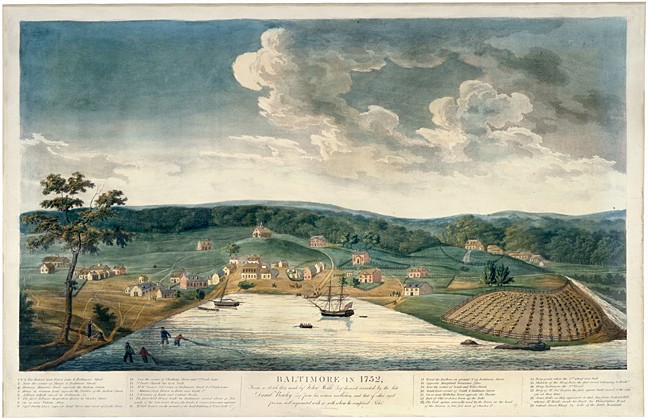
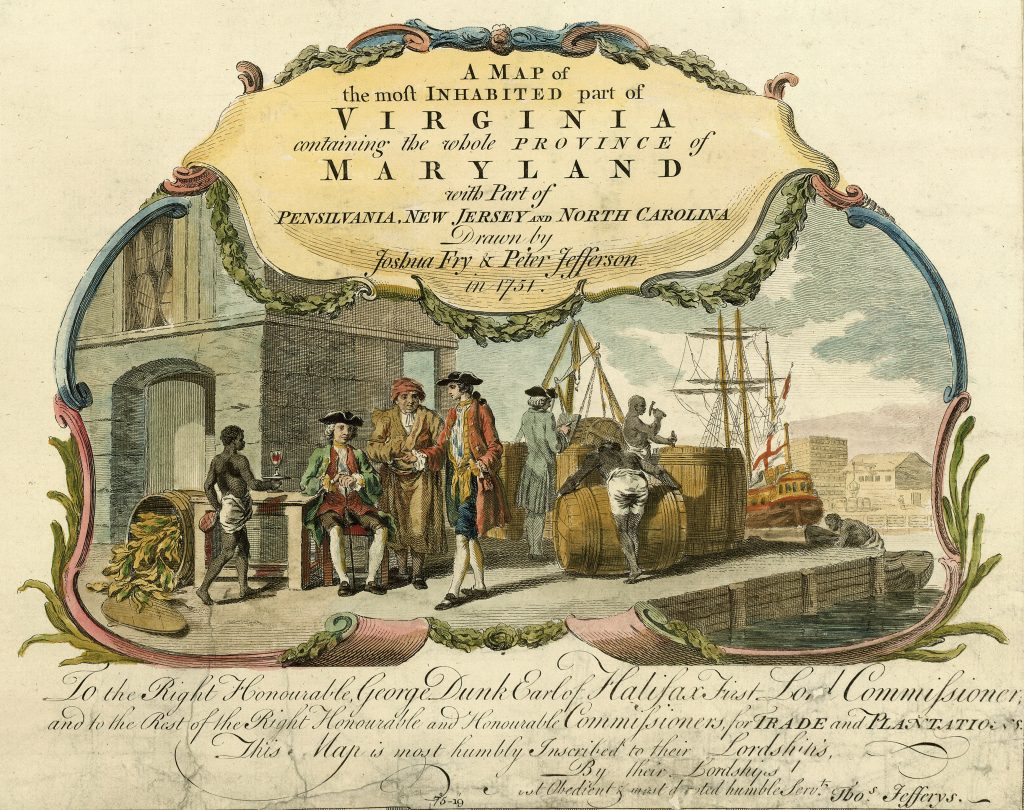
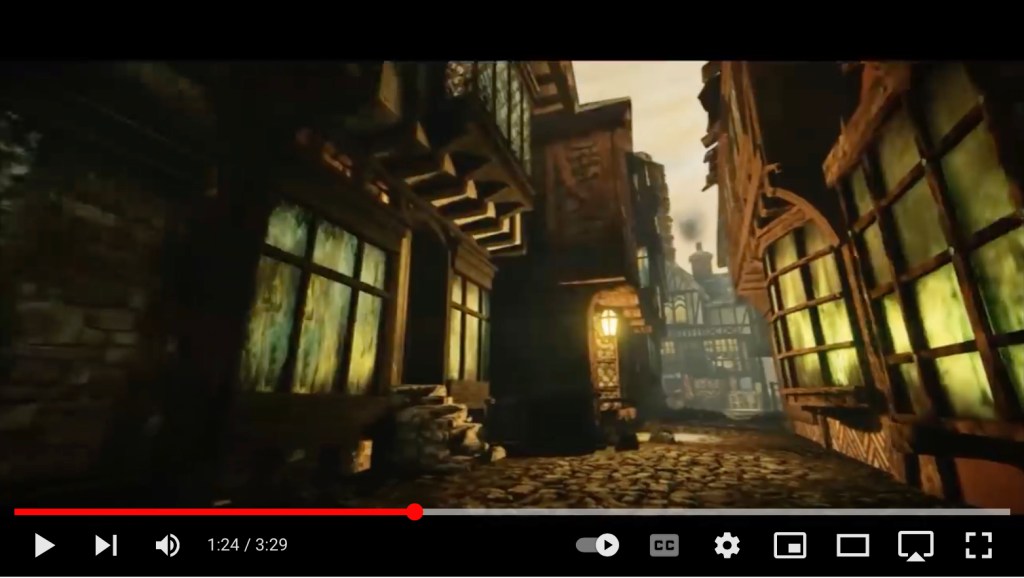
Baltimore in 1752, about 25 years before Edward Fell Bond was born.

We are descended from Edward Fell Bond, who relocated from Maryland to Ohio when he was an adult. Having been born in 1777, the last of four children of William and Sarah (Wrongs) Bond, his childhood was during the American Revolutionary War. He is the first grandfather in our lineage who was born and raised without the oversight of a monarch. For about 800 years, the Bond family had both prospered, and suffered, due to the British class system, but now — all of that was changing.

Who Was Sarah Franklin Smith?

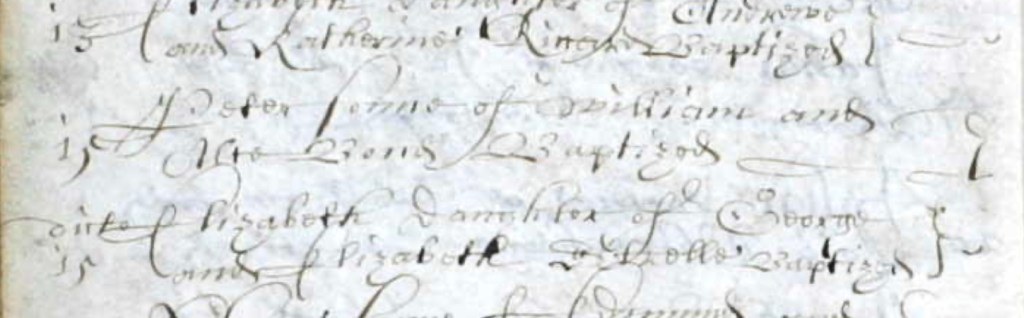
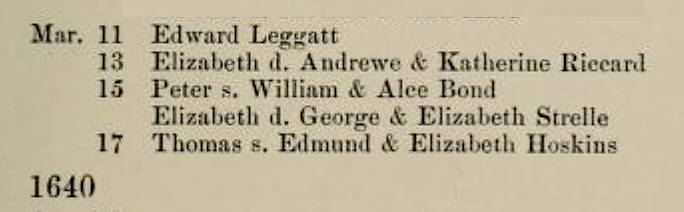
We have discovered that Edward had two marriages. His first marriage was to Sarah Franklin Smith on Christmas Eve, December 24, 1807, at St. James Parish, Baltimore County.

Edward Fell Bond and Sarah Franklin Smith marriage certificate, 1807.

Sarah was born on October 12, 1784 in St. Johns Parish, Baltimore County, Maryland, to James and Sarah Smith. Her parents had two more children, Franklin James Smith, who had a long life, and a boy named James Smith, Jr. who died young in 1791. Prior to the time of her christening, the St. Johns Parish and the St. James Parish had been combined. (In some records, both parishes are cited together, even though they separated in 1777). It appears that both this christening and her marriage took place at the same parish.

Observation: There are scant records on Sarah’s life. We can deduce that she was 23 years old when she married William. At 30, he was seven years older. Their son, William H. Bond was born August 12, 1808 in Baltimore County, Maryland. We have calculated his birth date based upon Jefferson County, Ohio court records.

The next record we can find about Edward is the August 1810 census that was conducted in the Pipe Creek and North Hundred area of Baltimore County. It was the third census of the United States.
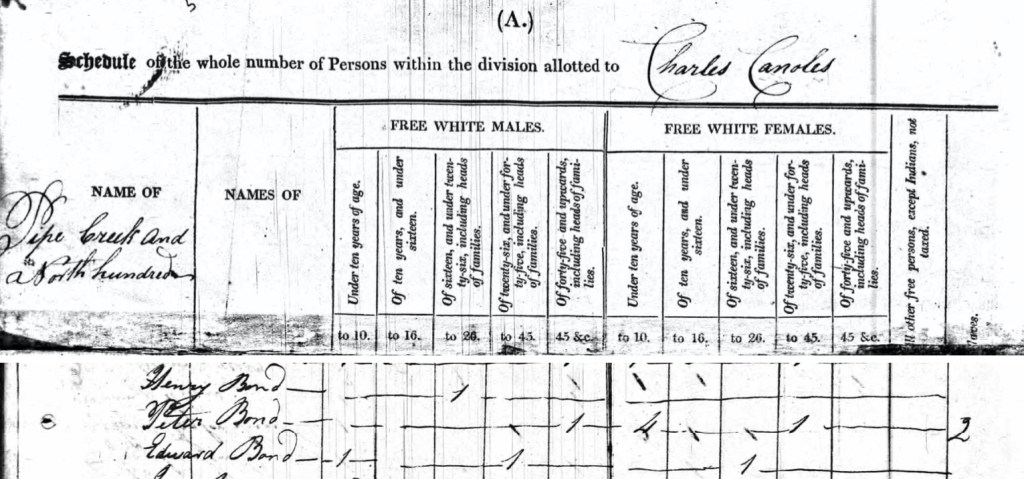
1810 United States Federal Census for Edward Bond, Maryland, Baltimore

From this census, we can discern a few things. Edward was 32 or 33, there is a male child in the home who is under 10 years of age, (likely William H.), and there is a female in the home who is between the ages of 26 and 45. From our research, we are not able to document specifically who is the female person. It is at this point in our narrative that Sarah Franklin (Smith) Bond just disappears from the records, and we have not discovered what happened to her despite long, fruitless efforts. The female cited in the census, could be her before she “disappears”. We assume Sarah (Smith) Bond died.

Following this census the records show that on January 24, 1811, Edward Fell Bond, aged 33 married Frances Harrison Hawkins, aged 19 (born November 29, 1791) in Baltimore County, Maryland. She took over the motherly responsibilities of raising young William, who was about 3-1/2 at this time. (1)

Who Were These Hawkins People?
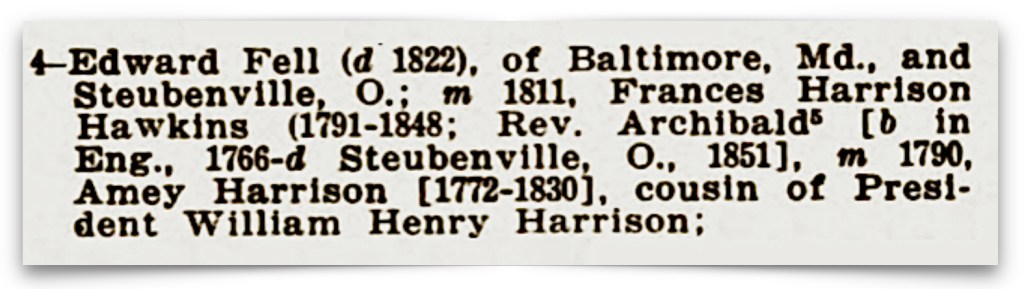
The Compendium of American Genealogy, Volume 5, 1933
By Frederick Adams Virkus.

Frances’s father was the Reverend Archibald D. Hawkins, who was born in England, and her mother was Amey Hawkins Harrison. Frances had four younger brothers one of whom was Ezekiel Cooper Hawkins, a celebrated pioneering daguerreotype photographer.

Francis Harrison Hawkins family line was noteworthy for some of her illustrious relatives. The first two relatives were within her lifetime… Benjamin Harrison V, considered to be one of the Founding Fathers of the United States. He was a governor of Virginia, and a signer of the Declaration of Independence. His son William Henry Harrison was President in 1841. After her lifetime, the great-grandson of Benjamin Harrison V, the same-named President Benjamin Harrison (1889-1893) was also a relation.

From http://www.whitehouse.gov“William Henry Harrison, an American military officer and politician, was the ninth President of the United States (1841), the oldest President to be elected at the time. On his 32nd day, he became the first to die in office, serving the shortest tenure in U.S. Presidential history.” and also, “Benjamin Harrison was the 23rd President of the United States from 1889 to 1893, elected after conducting one of the first “front-porch” campaigns by delivering short speeches to delegations that visited him in Indianapolis.” (2)

Their Life in Baltimore County

There are a few direct records that inform us of their lives in Baltimore. Edward F. Bond is listed in The New Baltimore Directory, and Annual Register; for 1800 and 1801, as being a grocer. In those days, a grocer would have had an emporium that we would likely call a general store. Except for bakeries, food stores were not specialized in those days to sell only food. They also had to provide for the larger needs of the community. Interestingly, the location of his business was at McElderry Wharf which had become an area for import/export businesses to situate themselves. Records indicate that some of the businesses located there were dealing with fine antiques, such as Chippendale and Hepplewhite furniture.

“McElderry Park takes its name from the McElderry family, who were wealthy merchants in Baltimore in the early 19th century. Irish immigrant Thomas McElderry (1758 – 1810) arrived in Baltimore in 1793 and quickly established himself—building a wharf that bore his name, improving Market Square, and helping found the Baltimore Water Company.”
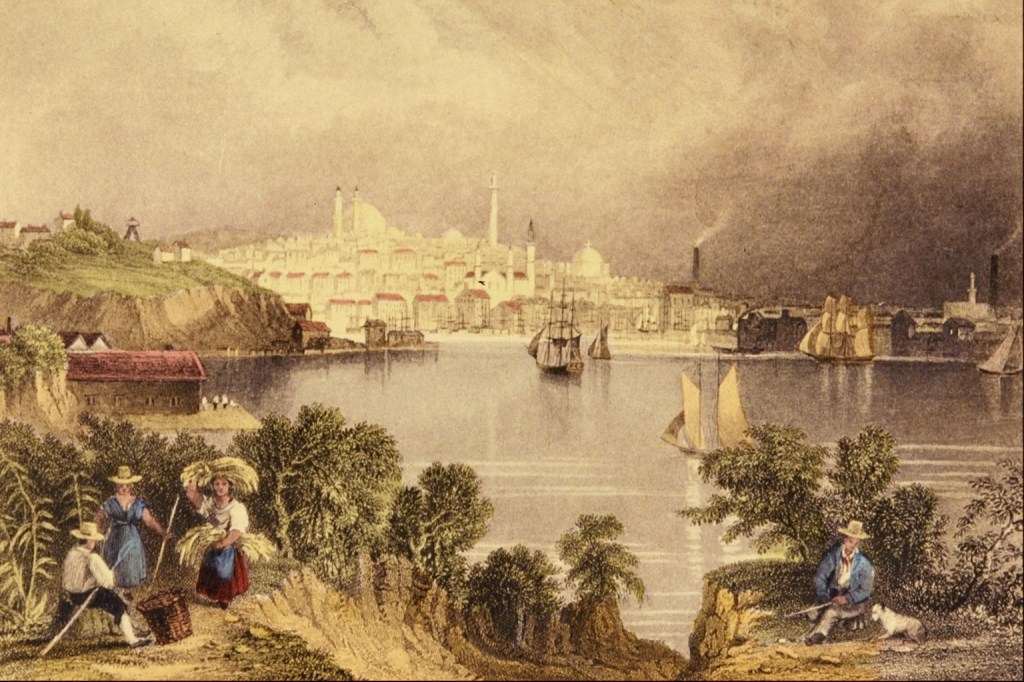
View of Baltimore by William H. Bartlett, before 1840.
(Image courtesy of wikipedia.org).

Observation: It is likely that Edward took notice of the fine home furnishings around him and perhaps pondered how to increase his fortunes. We found a record for an E. F. Bond arriving at the port of Philadelphia in 1804, which could be construed that he had traveled as part of creating his own import/export business.

By 1815, he had relocated and now presided over The Queen’s Ware Store, located at 44 North Howard Street, Baltimore. Queen’s Ware, or cream ware as it was also called, was a style of fine dishware pioneered by Josiah Wedgwood in England in the 1760s. Over time it became so popular, that the Americans tried to manufacture their own versions.

“Creamware was popular for a wide range of household pottery appearing in the Georgian dining-room and on the tea-table. It brought a finer kind of tableware to middle-class families, and wasn’t only for the rich. It was also used for commemorative items, like the pitcher, or jug…” Edward wasn’t a pottery maker, but a merchant, who seemed to appreciate finely crafted items.

Baltimore Street Map, 1838 by T. G. Bradford, G. W. Boyton, courtesy of wikipedia.com. (Note: The map colors are a bit odd. The areas of water are colored gray).

The 1838 map above shows specific items of historical interest for the Bond family. Each city section, or ward, has a specific number, and the arrows help with locating the details.

  • Ward 1: The location of Fell Street, near Fells Point.
  • Ward 2: Alice Ann street, named after Aliceanna (Webster) Bond.
  • Ward 3: Bond Street, named after Gentleman John Bond, and the location of McElderry Wharf (curious — it’s not on the water?). McElderry Wharf is where Edward Fell Bond’s first business was located.
  • Ward 10: The location of Howard Street, where Edward Fell Bond’s Queens Ware store was located.

Creamware pitcher
circa 1800 ,
with transfer-printed
“The Apotheosis of
George Washington”. 

Edward Fell Bond and Francis Hawkins had four children, three of their own, and William H., from Edward’s first marriage. Many of our ancestors, like others in their time, lived in a blended family. First born was:

  • William H. Bond, born August 12, 1808 – died, unknown
    (We are descended from William H.)
  • Mary Emeley Bond, born November 8, 1811 – died, January 24, 1815
  • Amy Jane Bond, born May 2, 1816 – died, August 13, 1891
  • Edward Fell Bond, Jr., born January 5, 1818 – died, January 10, 1884

    Observation: We have never discovered what the ‘H’ stood for in William H. Bond’s name. Maybe the letter was added in later after Edward Sr., met Frances? If that is the case, it may have been Harrison, or Hawkins… (3)

On To New Frontiers — Send Me a Postcard!

The western frontier of the new United States expanded greatly with Thomas Jefferson’s Louisiana Purchase of 1803. In addition, the Northwest Territory was just starting to settle out, and many people wanted to relocate there. Edward Fell Bond was the last in his line of Bond ancestors that still benefitted from the earlier wealth of his colonial ancestors. As the country changed, and generations came and went, landed estates had been broken down into smaller and smaller parcels, until there wasn’t much left to be shared or inherited.

“Following the Revolutionary War, for the next 25 years,
Ohio became the primary destination of westward bound pioneers because of the fertile farmland in the Ohio River Valley.

Some families stayed for the remainder of their lives. Others simply passed through on their way west.”

United States Migration Patterns
Beverly Whitaker, CG

Additionally, this period in Baltimore was a troubled time. There was a crippling trade embargo in 1807, then the War of 1812. Their daughter Mary Emeley died very young in 1815, and it appears that by 1811, Frances’s parents, Rev. Archibald and Amy (Harrison) Hawkins, had moved to the frontier community of Steubenville, Ohio, which was part of the Northwest Territory.

Commodore Perry Leaving the “Lawrence” for the “Niagara: at the Battle of Lake Erie, Thomas Birch, 1815. Courtesy of commons.wikipedia.org

“Between 1812 and 1820 several families moved to Steubenville who afterwards contributed not only to the artistic and literary side of this western society, but whose immediate and subsequent descendants gained a national reputation. The first of these was Rev. Archibald Hawkins, who came to Steubenville from Baltimore in 1811 and built a house on South Third Street, lately occupied by his granddaughter, Miss Rebecca Hawkins. He was a local Methodist preacher and is said to have been specially intimate friend of Rev. Father Morse, of St. Paul’s, who came a few years later. At that time he had a son Ezekiel, three years old, who early gave indications of precocity as an artist.” 

We imagine that Edward Sr.’s business on Howard Street in Baltimore was also suffering. “During the early nineteenth century, conflict between England and France led to an [1807] American trade embargo that restricted the importation of goods from these countries. Soon after, English hostilities on the high seas that led to the War of 1812, also stopped the flow of foreign goods to America, including fine British ceramics.” Merchants like Edward couldn’t obtain the imported goods they had been selling, so for a while, perhaps he turned to domestically made American products?

By May 1816, we know that they were living In Steubenville, Ohio because their daughter, Amy Jane Bond, was born that year in Steubenville. (4)

Greetings From Steubenville, Ohio

Edward Sr. and Frances (Hawkins) Bond followed her parents’ path to Steubenville, Ohio. The trip certainly lacked many of the comforts that they were accustomed to in Baltimore. Ohio was still considered to be frontier territory, even though it acquired statehood in 1803. Prior to 1803 Steubenville had been surveyed in 1796 and was well established by the time the Bond’s arrived.

Sanborn Fire Insurance Map from Steubenville, Jefferson County, Ohio, masthead 1892.
Courtesy of the Library of Congress.

There were very few improved roads, no railroads had been built through, and the canals (a new technology) were located far away. Horse drawn wagons weren’t much of an option until the muddy, rutted roads were much improved. The only way that people traveled initially was by horseback, on flat river boats, or sometimes by stagecoach. Frequently, it was a combination of all three. (It makes us tired just thinking about it!)
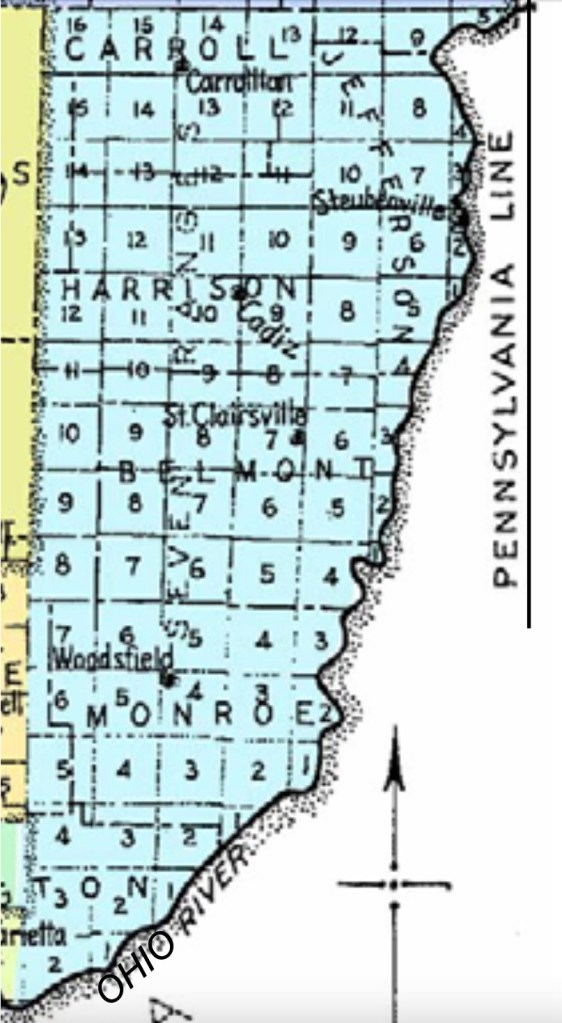
The area where Steubenville is located was then called the Seven Ranges, in southeastern Ohio.

Ohio was a place where business entities and governments from other states had rights to certain enormous parcels of land. Hence, many Eastern land speculators were hoping to make a profit on the western migration.

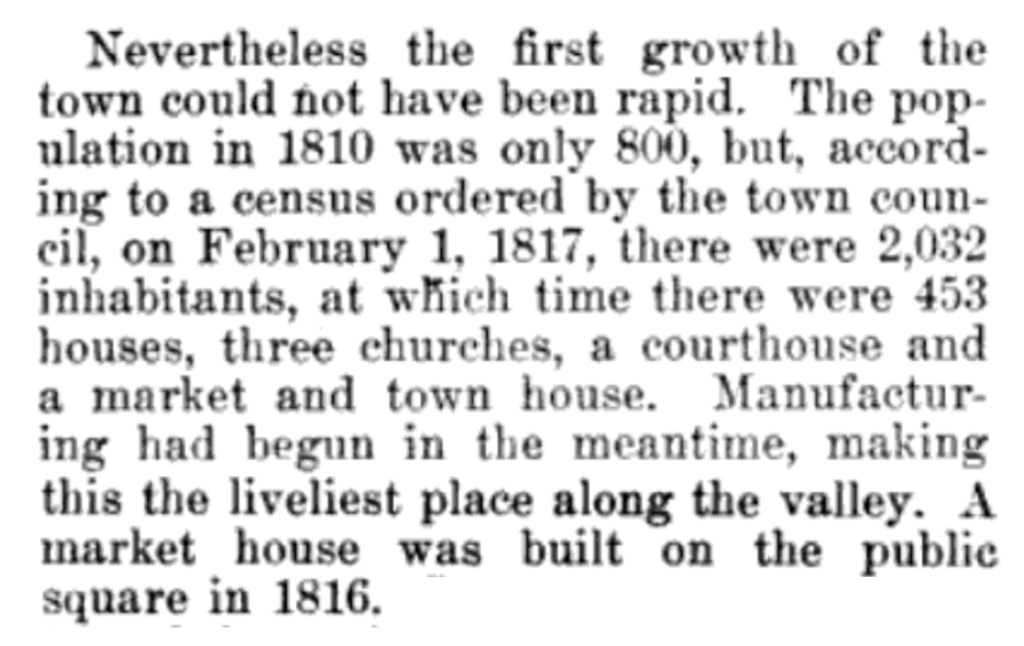
From the book, 20th Century History of Steubenville and Jefferson County, Ohio and Representative Citizens, Volume 1, we learned the tremendous population growth of just a few years time:

20th Century History of Steubenville and Jefferson County, Ohio, page 368.

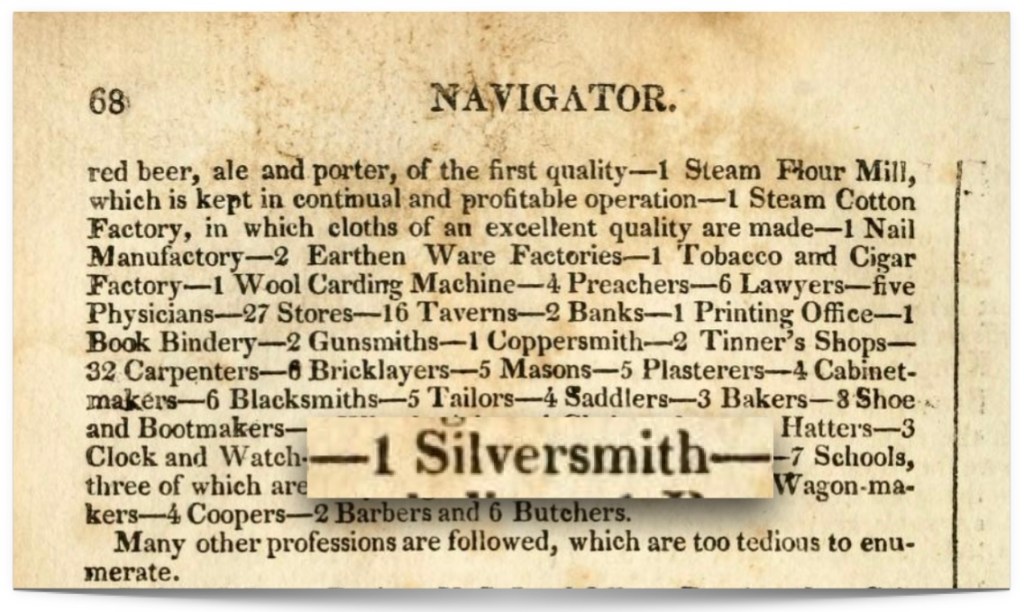
“The Navigator, published in Pittsburg in 1818, gives the industries in Steubenville in 1817 as follows…” We excerpted the portion below from a long list of occupations:

20th Century History of Steubenville and Jefferson County, Ohio, page 368.

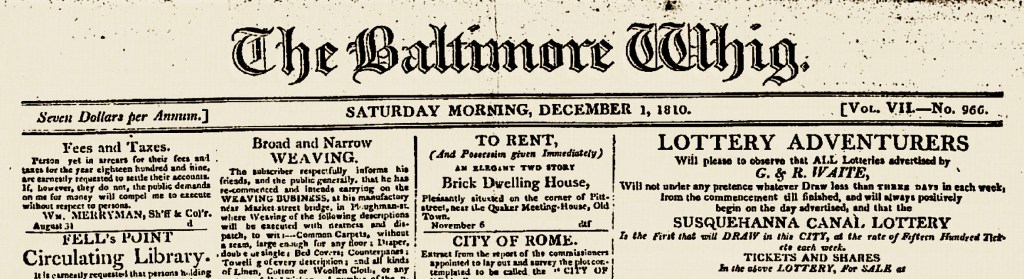
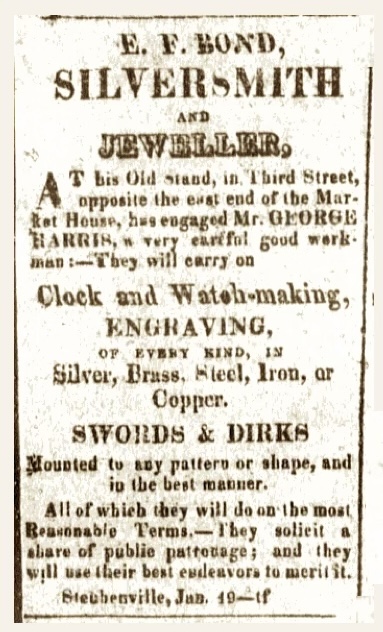
Edward Fell Bond Sr., returned to his appreciation of finer things when he set up a home in Steubenville. We know this because a couple of newspaper notices have survived the last 200 years. Additionally, he offered his services to the community as a silversmith and jeweler.

While they were living in Steubenville Frances had her last two children, Amy Jane Bond, born May 2, 1816 – died August 13, 1891, and Edward Fell Jr., born, January 5, 1818 – died November 10, 1884.
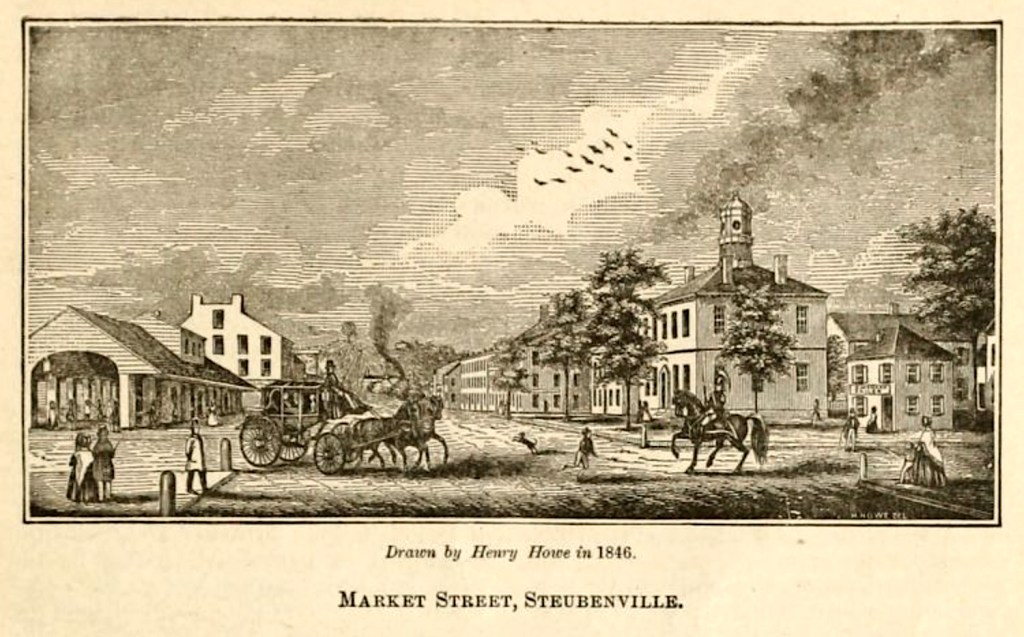
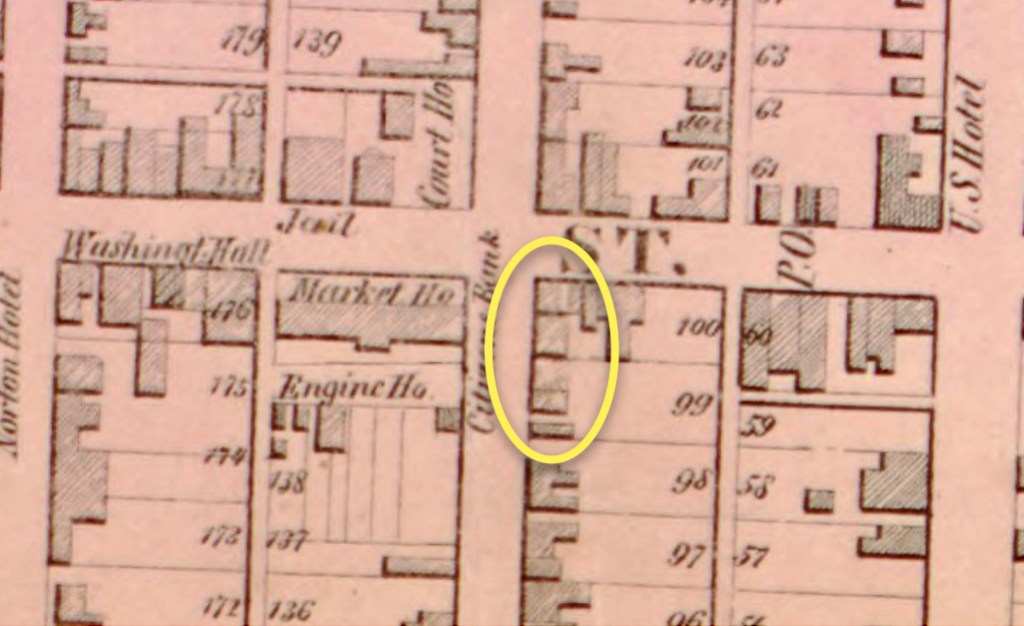
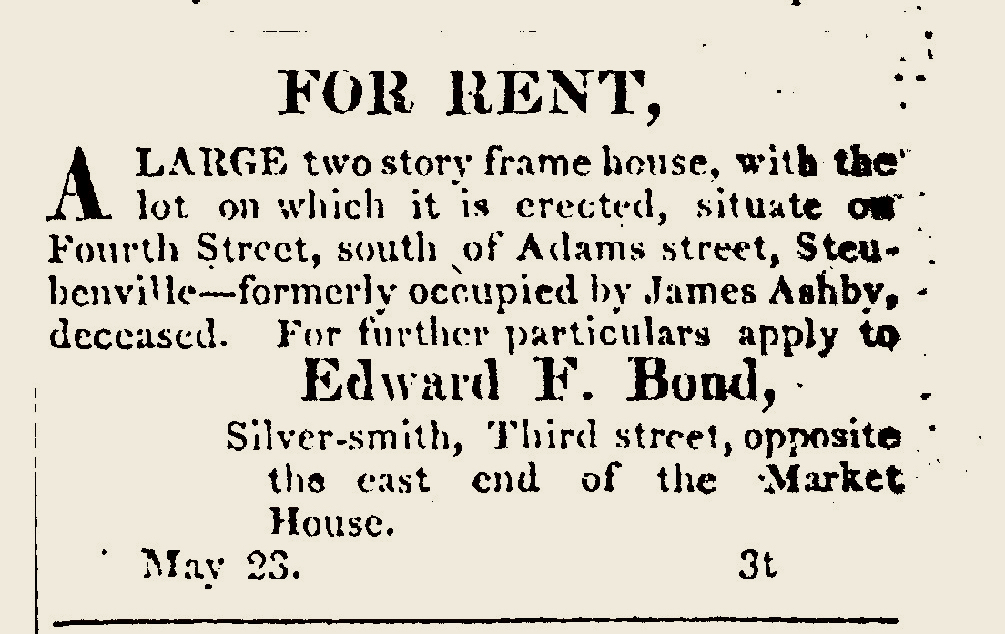
Excerpted from the 1856 James Keyly map of Steubenville, the top image, shows the likely location of E. F. Bond’s Silversmith business. Other than the newspaper clippings, the other two illustrations (above) are actually from later decades in that century. (There just isn’t that much art which documents Steubenville in the 1820s.) Observations: We noticed a couple of interesting things in the newspaper notices. First, the For Rent notice of May 23, 1817, is for a two story framed house. Having a framed house at that early time indicates that there was a local mill which was supplying improved wood. Prior to this, many buildings were somewhat reminiscent of timbered log cabins. Second, the January 19, 1822 Silversmith notice indicates that Mr. George Harris had been hired to carry on, which means that E. F. Bond Sr., was not well.
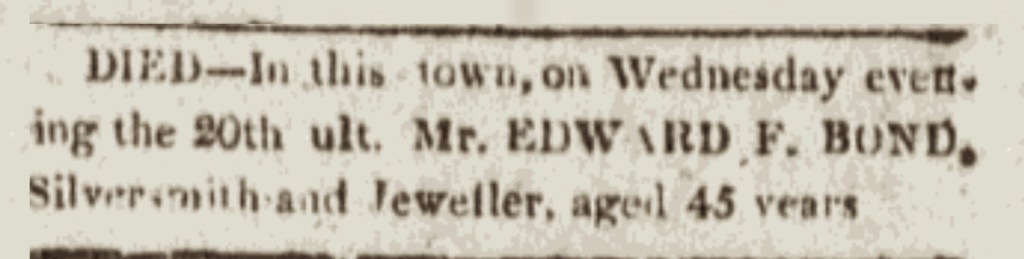
The Steubenville Herald, March 2, 1822.

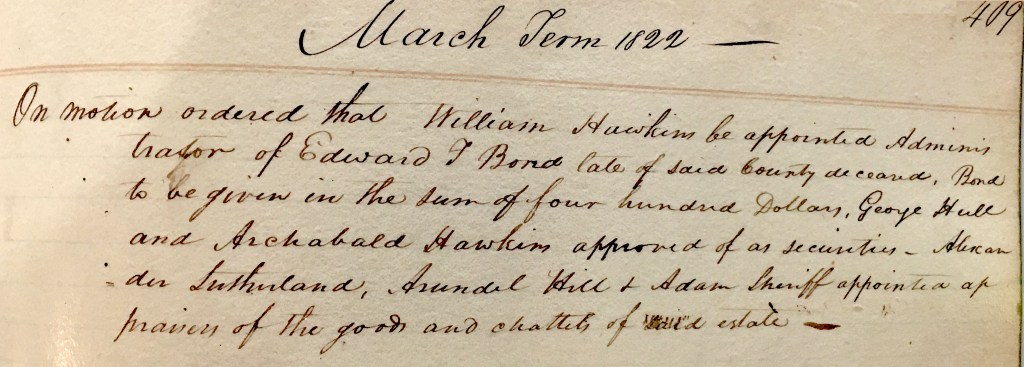
Indeed, he was not — Edward Fell Bond, Sr., passed away on February 20, 1822, just two weeks before his 45th birthday. This left his wife Frances to carry on with four young children. As shown below, his brother-in-law William Hawkins was appointed to administer his estate. (5)

Jefferson County Common Pleas Journal D, 1819-1822.

The Curious Story of William H. Bond

In 1822, William H. Bond would have been about 13 years old when his father died. Remember, he lost his birth mother when he was very young. He was now (technically) an orphan. Frances Hawkins was his stepmother. At that time in our history women had very few rights and most often were dependent on the support of a husband or male relative. Two years after Edward Fell Bond, Sr. died, Frances married John Odbert on June 17, 1824, in Jefferson County, Ohio. (Recording date: July 13, 1824). The Minister who married them was her father, the Reverend Archibald Hawkins. By that time William H. was almost 16 years old.

Jefferson County, Ohio, County Marriages, 1789-2016.

By March 1825, nine months after his stepmother remarried, William H. Bond was in court “choosing William Hawkins for his guardian — the court approved the choice…” He was now technically an orphan because both of his birth parents were dead and he was under the age of 21. It was required that he have a legal guardian. Since Frances was his stepmother, she was not considered as a guardian for an underage boy. William Hawkins, France’s brother, had been a part of William’s childhood, and had administered his late father’s estate. The elder William’s occupation was a painter. Perhaps the reason for this choice of guardian for young William H. is that William Hawkins could mentor him as an apprentice in the painting trade.

This document is important for establishing William’s exact birthdate in a court of law. His birthdate is August 12, 1808, which places him in Baltimore County, Maryland for his birth, and also confirms that Sarah Franklin Smith was his mother.

Jefferson County Common Pleas Journal E, 1822-1827.

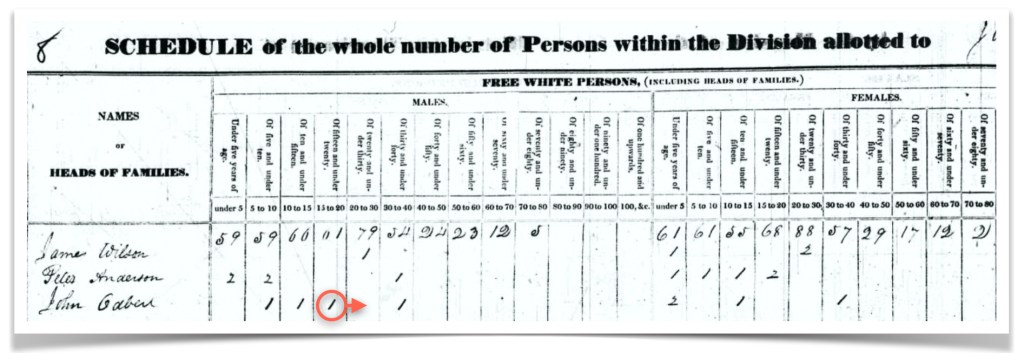
After the guardianship, the documentation on William H. is sporadic. It’s not clear if he was in the home of his stepfather John Odbert for the Federal Census of 1830. The census was conducted on June 1, and the categories only captured the ages of who was reported to be living in the home. We are able to discern that the following people live there:

1830 Federal census, conducted on June 1, 1830.
  • Archibald Odbert , age 5
  • Edward Fell Bond Jr., age 12
  • William H. Bond, age 21 ? (Note: He is marked in the wrong age category.)
  • John Odbert, age 31
  • Two girls, ages between 0-5 (We have no idea who they are.)
  • Amy Jane Bond, age 14
  • Frances (Hawkins) Bond Odbert, age 39

We find it odd that he is not listed in the correct age category, but we don’t know who was providing the information at the front door. Observation: Why would William be (potentially) living in the Odbert home at the age of 21? That is the age of maturity for a free, white male in 1830, and his guardian is William Hawkins, not John Odbert. However, we also don’t find him in the home of his legal guardian William Hawkins for the same 1830 census.

In surviving records after this time, there is much inconsistency about the exact year and place of William H. Bond’s birth. William H. came to Ohio when he was a young boy, probably seven or eight. His birth mother was deceased by the time he was 2-1/2. It is written (above) that he was 3-1/2 when Edward married Francis …so he probably didn’t remember his birth mother. He lost his father when he was 13, so in this state of loss, he probably just accepted what other people told him when it came to his age. We are sticking to the Jefferson County guardianship court record for his correct age.

  • Elizabeth Jane Bond born July 11, 1841 – died, August 18, 1911
  • Alexander Norton Bond, born February 1, 1848 – died, October 21, 1897.
    (We are descended from Alexander).

The next time we come across a record of William H. Bond, it is 1850, twenty years have passed, and many things have changed in his life. He is married to Lavina (maiden name unknown), and they have two children: William’s occupation is identified as a painter, which meant he was both both a sign painter and a house painter. As we wrote earlier he most likely learned this skill from his guardian, William Hawkins, a well known painter in the Steubenville area. The Bonds lived in Springfield Township, Hamilton County, Ohio, just a few miles north of Cincinnati, Ohio.

Where had he been from 1830 to 1850? Who was his wife Lavinia? We know she was born in Pennsylvania, but nothing else. We will continue to research him and Lavina and update this information if we come across credible sources.
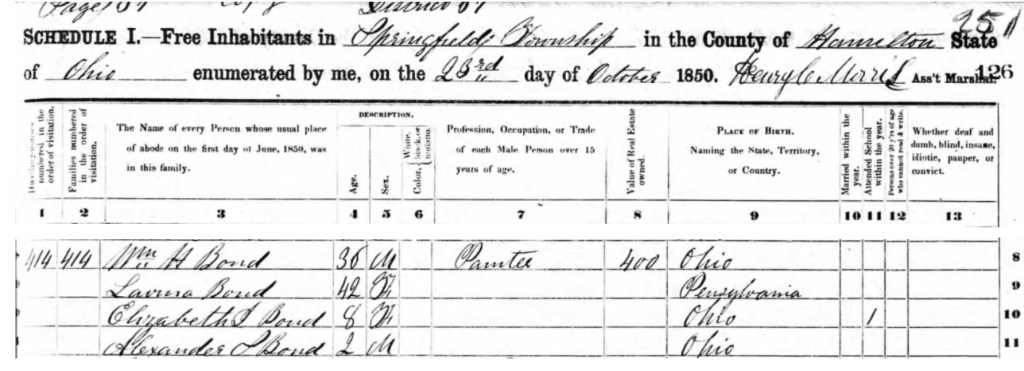
1850 United States Federal Census for Springfield Township, Hamilton County, Ohio

There are at least three errors in this census record: 1) We observed that William and Lavina’s birthdates are likely transposed, (or again, William didn’t really know his birth year). 2) William lists his birthplace as Ohio, when it was actually Maryland. 3) Alexander’s middle name is written as ‘S’, but his middle name is Norton. Since we do not know who was giving the census information it is most likely he or she was unaware of the correct dates and places. This is an ongoing problem with early census’. (6)

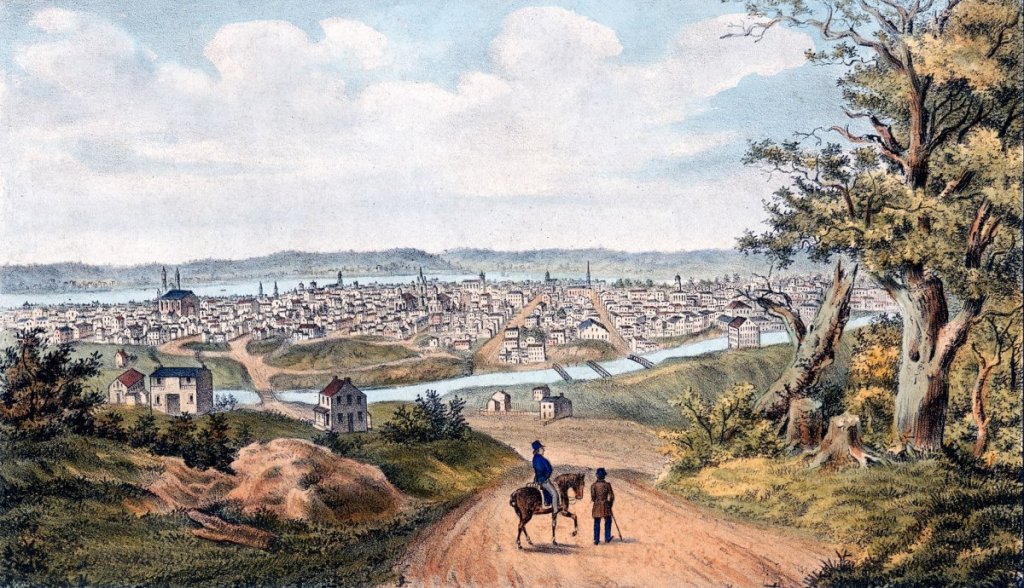
A View of Cincinnati in 1841.
(Image courtesy of http://www.origins.osu.edu).

A Time of Cholera

From our extensive research on this Great-Great-Grandfather and his family we have not been able to determine much about his adult life, and sadly, he seems to fade into obscurity.

We have wondered if William and Lavina may have died in one of the many massive cholera outbreaks that was affecting their area of Ohio for several years. Most people who came down with Cholera died very quickly — sometimes within one day. Local newspapers published daily lists of those who had passed away… From The Specter of Cholera in Nineteenth Century Cincinnati by Matthew D. Smith:

“Before the Civil War, Cincinnati was one of the most flourishing cities in the United States, but epidemic outbreaks of cholera in 1832, 1849, and 1866 threatened a social and economic meltdown. Previously unknown beyond Asia, cholera was a disease of modernity, reflecting new pathways in immigration, transportation, and human settlement. Cincinnati’s per-capita death toll was worse than that of almost any other major city in the United States, and containment proved practically impossible. The city’s central location on the Ohio River left it continuously exposed to infection and reinfection. To make matters worse, cholera’s impact radiated beyond the urban center, as waves of refugees spilled out across the Ohio Valley, spreading panic and disease wherever they went.”

Cincinnati Daily Gazette cholera death postings, October 25, 1832, page 3. Cholera burials, and
Graphic illustration about Cholera, This Is Not A Time For Sleep, 1883.

Cholera returned several times after 1849, including Springfield Township where the Bond family lived. As noted in Cincinnatians and Cholera, “When the disease returned in 1850, 1851, 1852, 1853, 1866, and 1873 Cincinnatians, at least partially, had to blame themselves…”

We do not know if, nor when, William and Lavina died, however, after the 1850 census we no longer find any record of either of them. (7)

Daniel Craig as James Bond 007. We wonder – could he contemplating the
“disappearance” of William and Lavina Bond?
(Image courtesy of http://www.variety.com).

After Springfield Township, the Return Back to Steubenville

On October 26, 1836, Amy Jane Bond married Robert H. Halsted in Steubenville, Jefferson County, Ohio where they lived and raised their family. Robert was born on April 28, 1809 in New York to Jacob and Mary (Anderson) Halsted.

October 26, 1836 marriage record for Robert H. Halsted and Amy J. Bond in Jefferson County, Ohio.

Amy Jane and Robert had three children — a son John, and two daughters Mary Frances, and Margaret Jane. (For a fuller description of their descendants, See Descendant Appendix A in the footnotes for this section).

On the 1860 Census, Alexander is living in the home of his paternal Aunt Amy Jane (Bond) Halsted, under the guardianship of her husband Robert. Observation: Alexander has been living with them since at least 1858 when his sister Elizabeth Jane married Jeremiah Northrup. Perhaps earlier? (For a fuller description of her descendants, See Descendant Appendix B in the footnotes for this section).

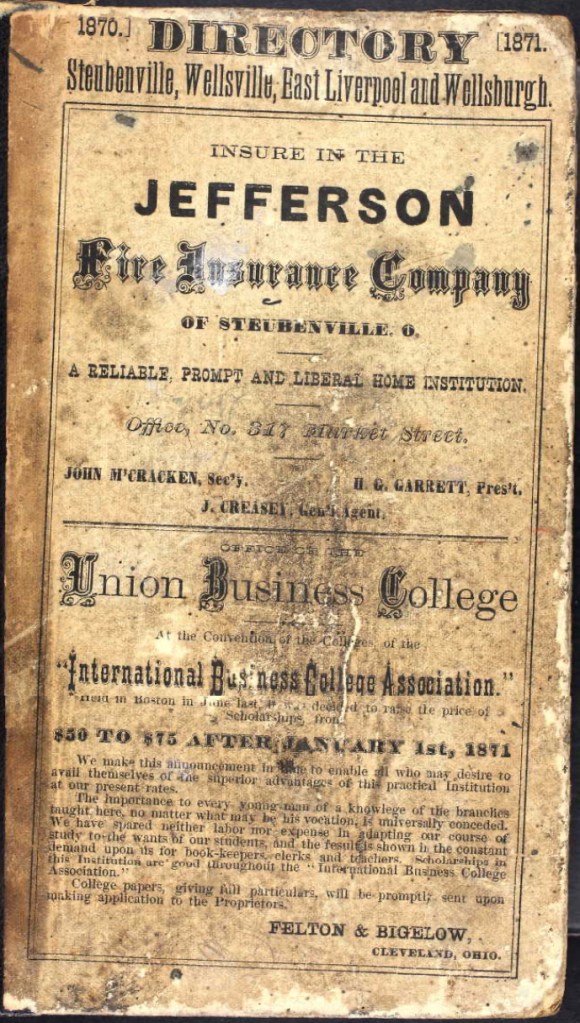
One thing is clear — he was raised as part of the Halsted family. Therefore, he would have identified with this family because he was very young when his parents disappeared. He followed Robert Halsted into the shoe business as a clerk according to the 1870 census. Also on the 1870 census, Robert Halsted’s prosperity is considerable at $10,000 dollars — shoes and boots were a good business! Alexander was 22 years old and still living with them in 1870. By 1872, he and Ruth Linton were married.

Wiggins and Weavers Directory of Steubenville, Wellsville, East Liverpool
and Wellsburg, 1870-71, page 44.

Robert H. Halsted died on July 30, 1882 aged 73, in Jefferson County, Ohio. Amy Jane (Bond) Halsted died on August 13, 1891 aged 75, in Pittsburgh, Pennsylvania where she lived with her daughter Mary (Halsted) Boyle and husband John Boyle. Both Robert H. and Amy Jane Halsted are buried at the Union Cemetery in Steubenville, Jefferson County, Ohio.

It is important to note that although Alexander was raised in the Halsted home with his cousins he had other family members in Steubenville. His father’s younger brother, Edward Fell Bond, Jr. born January 5, 1818 was married to Drucilla McClelland on April 30, 1846. Drucilla was born in Washington, Pennsylvania on October 9, 1826. (For a fuller description of their descendants, See Descendant Appendix C in the footnotes for this section). (8)

From Merchants and Craftsmen — A Traveling Salesman

Ringing in the New Year for 1872, Alexander Bond married Ruth Linton at the Minister of Disciples Church, Jefferson County, Ohio on January 1, 1872. He was 23 and she was 25.
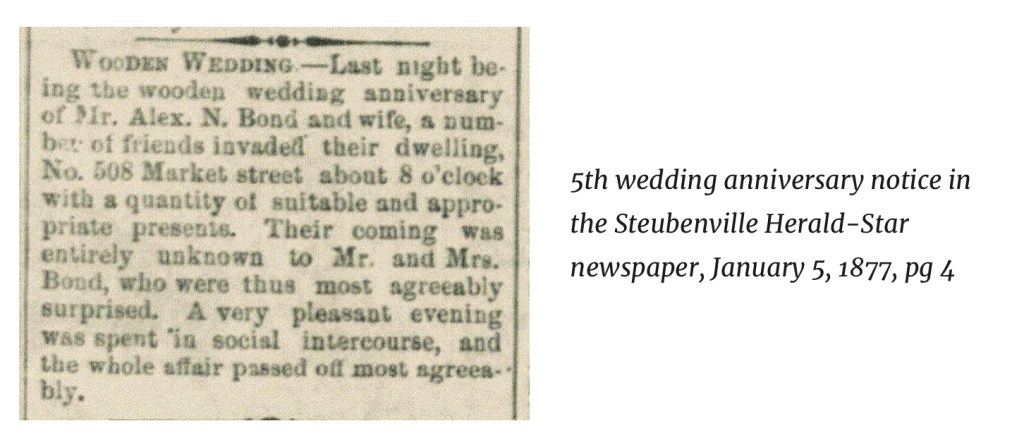
Ruth was born as the ninth of ten children in nearby Welles township on October 24, 1846; her parents being Benjamin and Anna (Dean) Linton. They settled in the Ohio river-located town of Brilliant, where all of their children were born. Their son Dean Linton Bond was born on September 29, 1873, followed four years later by their daughter Edna Jane Bond, born on January 31, 1878.

Alexander Norton Bond was descended from several generations of merchants and craftsmen. Since he spent most of his childhood in the Halsted home, his path was similar, but also a bit different. As a younger man, when he had clerked for his uncle Robert Halsted in the boot and shoe shop, he had learned a trade. This carried this forth to his traveling salesman career selling boots and shoes. He covered a large territory which reached as far as Columbus, Ohio.

Columbus, Ohio, City Directory, 1883, page: 105.

We find the 1880 census under his wife Ruth’s name. On May 9, 1882, their daughter Lily Victoria Bond was born. We conjecture that because he traveled to support his family, perhaps this explains why the births of his children are 4-6 years apart. On May 6, 1888, our Great Grandfather Earl Alexander Bond was born. (9)

Alexander and Ruth Bond lived at Lot 16, indicated by the blue rectangle.

From Wikipedia.com: “Brilliant was laid out in 1819… a new addition was laid out in 1836 named La Grange… In 1880, the Brilliant Glass Company was established… the town later adopted the name of the glass company and was incorporated as Brilliant.”

The Tragedies of the Columbus Train Accident

In July 1890, our great-grandparents Alexander and Ruth Bond, along with their son Earl, were either traveling to (or returning from) Columbus, Ohio to the Steubenville, Ohio area. Several railroad lines criss-crossed the distance that connected the two regions. We have not been able to discover what the exact nature of the trip was, but we do know that Alexander kept a business address in Columbus at 110 North High Street. Perhaps they were traveling there for his boot and shoe business? Another possibility is that they were attending a conference for the Disciples of Christ church in which Ruth was very involved. We will continue our research on this accident.
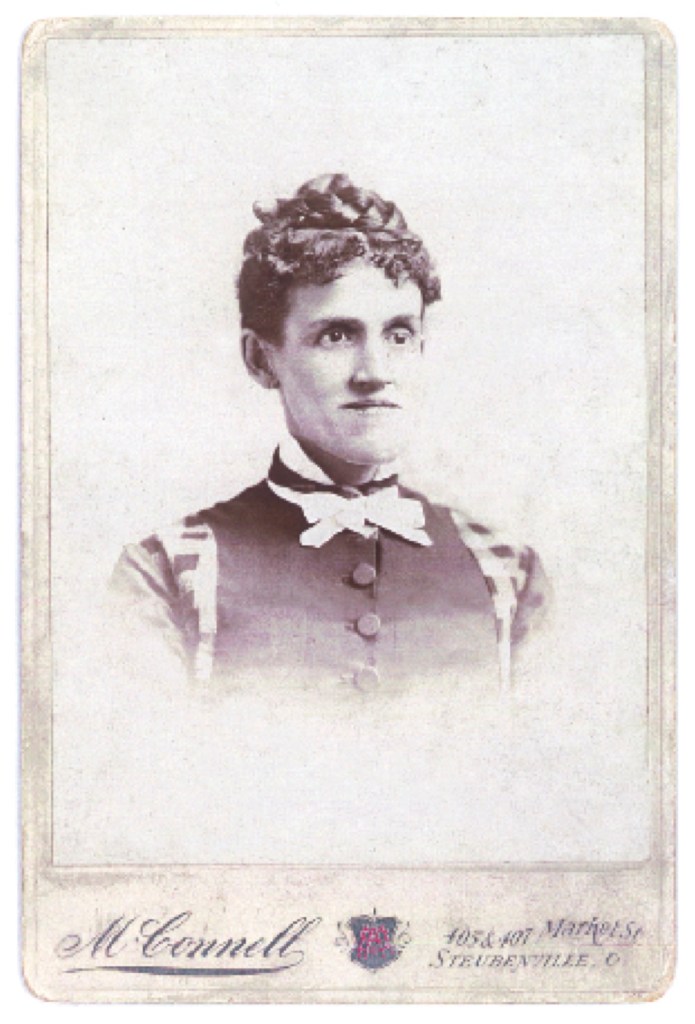
Ruth Linton Bond, circa 1886.

The Disciples of Christ church was a Protestant denominated fellowship which was popular in the state at that time.

With fewer local churches than other Christian denominations, the Disciples of Christ made less of an impact on moral and social reform and missions than Congregationalists or Presbyterians… Still, their activity was substantial.
With the success of the Baptists’ union in mind, churches formed the Disciples’ Union in 1885 to coordinate mission, social work, and communication. 

Encyclopedia of Cleveland History

There is a story in our family, the gist of which goes something like this: They were on a train near Columbus, which stopped on an incline to take on water. The last two cars, where the family was located, broke off (decoupled?) and started to slide down the incline gaining speed. The cars crashed violently. Ruth and Alexander were severely injured. Earl was thrown from the car and rolled down the hill where he was later rescued lying by a tree, near a small river or stream.

The trauma from this experience caused our Grandfather Earl Bond, to develop a stuttering problem which plagued him for the rest of his life.

We will likely never learn why they were on that particular trip. Unluckily, several years of research has never turned up any actual records of the accident. What we do know is this: Great-Grandmother Ruth’s injuries were so severe that she was taken to a hospital in Columbus, admitted on July 16, and died on July 23, 1890. Her death record looks rather “thin” on details…

J. A. Norton Railroad Map of Ohio published by the State, 1892.
This map diagrams the probable route for travel between Steubenville and Columbus, Ohio in 1890. The insets are obituaries of our Great-Grandparents Alexander and Ruth Bond, (see footnotes).

If Alexander was hospitalized, we don’t have a record for that, but we know by way of a story passed down through the family, that he had injuries to his spinal vertebrae which caused him to be seriously disabled for years. From Ruth’s obituary we know that her brother, Benjamin Linton, returned her body to Brilliant, Ohio for burial.

At some point Alexander returned to Brilliant where he and the children lived. We think that he most likely no longer worked as a traveling salesman. From a recording made by his daughter Lily (Bond) Connelly, when she was a very old woman, we have the following quote:

My brother Dean, joined and carried a Bible to church.  He was the first convert to church that Mother and Brother Wilcox built.  After her death he felt being a minister would please her most, to carry on her religious ideas.  He was 16 and went south to Knoxville, Tennessee, and stayed in the South.” Dean Linton Bond was a preacher for the rest of his life.

Alexander lived for seven more years until October 21, 1897. From records, we know that he suffered a debilitating stroke about eight weeks before his death. Edna, who would have been 19, may have still been living at home, or she may have already moved to Cleveland, Ohio where she stayed for the rest of her life. Lily was 15 and Earl was 9 years old. Both being minors meant they had to have a guardian, which is covered in the following post The Bond Line, A Narrative — Seven.

Alexander and Ruth Bond were buried in the Barrett Family Cemetery in Brilliant, Ohio. Today, the old cemetery is nearly lost to the encroaching forest. In June 2020, we found their grave marker, which has a curious epitaph:
They have done what they could...

Several members of the Linton family are also buried there. (10)

Following are the footnotes for the Primary Source Materials,
Notes, and Observations

Who Was Sarah Franklin Smith?

(1) — five records

Sarah Francklin Smith
Marriage – Maryland, Church Records, 1660-1996

https://www.familysearch.org/ark:/61903/1:1:QG6L-K28D
Book page: 370, Digital page: 188/193, Left page near the top, Dec. 24 entry.

Wilson Cary notes on the Bond family
http://usgenwebsites.org/MDAnnArundel/firstfam/bondfam.htm
Note: These files migrated to ancestry.com when the company was acquired. We have not been able to relocate them there — however, we did locate this in 2024.*

*We located this data in 2024:
Baltimore County MDGenWeb, BOND Family Research Notes
Bond Family Notes of Wilson Cary, Found in Maryland Historical Society
Transcribed by Lawrence E. Alley
https://usgenwebsites.org/MDBaltimore/family/bondresearchnotes.html

Sarah Smith
in the Maryland, U.S., Births and Christenings Index, 1662-1911
https://www.ancestry.com/discoveryui-content/view/55795:2565?tid=&pid=&queryId=c14b6b3d4bfd5e814489c0fb5538f2c5&_phsrc=Eto2&_phstart=successSource

Edward Bond
in the 1810 United States Federal Census

Maryland > Baltimore > Pipe Creek and North Hundred
https://www.ancestry.com/discoveryui-content/view/67869:7613
Book page: A, Digital page: 13/27

Frances Hawkins
in the Maryland, U.S., Compiled Marriages, 1655-1850

https://www.ancestry.com/discoveryui-content/view/101316:7846?tid=&pid=&queryId=5ef35e083ff807cfca1eea08cf6cf9d5&_phsrc=qAf9&_phstart=successSource

Who Were These Hawkins People?

(2) — two records

Frances Hawkins
in the Maryland, U.S., Compiled Marriages, 1655-1850

https://www.ancestry.com/discoveryui-content/view/101316:7846?tid=&pid=&queryId=5ef35e083ff807cfca1eea08cf6cf9d5&_phsrc=qAf9&_phstart=successSource

The Compendium of American Genealogy, Volume 5, 1933
by Frederick Adams Virkus, under direction of Albert Nelson Marquis
https://babel.hathitrust.org/cgi/pt?id=mdp.39015050178220&view=1up&seq=136
Book page: 134, Digital Page: 136/970

Their Life in Baltimore County

(3) — six records

Edward F. Bond
in the U.K. and U.S. Directories, 1680-1830

The New Baltimore Directory, and Annual Register; for 1800 and 1801
https://www.ancestry.com/discoveryui-content/view/1556077:3877?tid=&pid=&queryId=d5727a025a2b068a41d88a6223bd6e20&_phsrc=APU1&_phstart=successSource

About McElderry Park
History of Our Neighborhood
https://mcelderrypark.com/about-mcelderry-park/

Maryland Center for History and Culture
Lost City: Baltimore Town
https://www.mdhistory.org/lost-city-baltimore-town/

Edward F. Bond
in the U.K. and U.S. Directories, 1680-1830

The Baltimore Directory and Register, for the year 1816
https://www.ancestry.com/discoveryui-content/view/1604098:3877?tid=&pid=&queryId=d5727a025a2b068a41d88a6223bd6e20&_phsrc=APU2&_phstart=successSource

History of Baltimore
https://en.wikipedia.org/wiki/History_of_Baltimore
Note: For the Baltimore Street Map, 1838 by T. G. Bradford, G. W. Boyton

Home Things Past
Creamware & Queensware
https://homethingspast.com/2012/04/23/creamware-queensware/#pics

On To New Frontiers — Send Me a Postcard!

(4) — three records

The National Institute for Genealogical Studies
United States Migration to Ohio, Northwest Territory, Southwest 1785 to 1840 Growth in Ohio
https://www.familysearch.org/en/wiki/United_States_Migration_to_Ohio,_Northwest_Territory,_Southwest_1785_to_1840_(National_Institute)

20th Century History of Steubenville and Jefferson County, Ohio
and Representative Citizens
by Joseph Beatty Doyle, 1910
https://archive.org/details/bub_gb_5doyAQAAMAAJ/page/n311/mode/2up?q=Archibald+Hawkins
Book pages: 331, Digital Pages: 312/584, Right column, near the bottom.

This Week In Pennsylvania Archeology
Made in America: Philadelphia Queensware Pottery in the Early 19th Century
http://twipa.blogspot.com/2016/12/made-in-america-philadelphia-queensware.html

Greetings From Steubenville, Ohio

(5) — twelve records

Seven Ranges
https://en.wikipedia.org/wiki/Seven_Ranges

The Official Ohio Lands Book
https://ohioauditor.gov/publications/docs/OhioLandsBook.pdf

JSTOR
The Origins of Land Buyers, Steubenville Land Office, 1800 – 1820
by David T. Stephens and Alexander T. Bobersky
https://www.jstor.org/stable/2976385

File:Thomas Birtch Commodore Perry Leaving the Lawrence
for the Niagara at the Battle of Lake Erie.jpg,
by Thomas Birch, 1815
https://commons.wikimedia.org/wiki/File:Thomas_Birtch_Commodore_Perry_Leaving_the_Lawrence_for_the_Niagara_at_the_Battle_of_Lake_Erie.jpg

Library of Congress
Image 1 of Sanborn Fire Insurance Map from Steubenville, Jefferson County, Ohio.
https://www.loc.gov/resource/g4084sm.g4084sm_g069021892/?sp=1&st=image

Historical Collections Of Ohio In Two Volumes,
An Encyclopedia Of The State, Volume 1
by Henry Howe, and Davison Fillson Photos
https://archive.org/details/historicalcollec01inhowe/page/n7/mode/2up
Note: For these mages: Market Street, Steubenville and Steubenville From The West Virginia Shore.

Library of Congress
Map of Jefferson County, Ohio: from actual surveys, Copy 2
by James Kelly, 1856
https://www.loc.gov/resource/g4083j.la000643c/?st=image&r=0.199,1.07,0.055,0.105,90

Newspaper clipping [of a house]
For Rent
Steubenville Herald, May 23, 1817
https://www.ancestry.com/mediaui-viewer/collection/1030/tree/12766227/person/12804018321/media/9ca3772c-3454-4c79-9cc0-29097429fc78?_phsrc=APU7&_phstart=successSource
Note: Positioned in the center of the newspaper column image.

Newspaper clipping advertising E. F. Bond, Silversmith and Jeweler
Silversmith
Steubenville Herald, January 19, 1822
https://www.ancestry.com/mediaui-viewer/collection/1030/tree/12766227/person/12804018321/media/fb32ec5e-2b49-43d1-9d6f-63bbf3c2a05d?_phsrc=vOJ2&_phstart=successSource
Note: Positioned in the left column at the top.

Newspaper clipping for Edward Fell Bond Sr., Death Notice
Steubenville Herald, March 2, 1822
Obit
https://www.ancestry.com/mediaui-viewer/collection/1030/tree/12766227/person/12804018321/media/53df14db-1a64-4bcb-a1ad-8f805a84806f?_phsrc=APU5&_phstart=successSource

20th Century History of Steubenville and Jefferson County, Ohio
and Representative Citizens, Volume 1
by Joseph Beatty Doyle, 1910
https://www.google.com/books/edition/20th_Century_History_of_Steubenville_and/mdQyAQAAMAAJ?hl=en&gbpv=1&dq=bibliogroup:%2220th+Century+History+of+Steubenville+and+Jefferson+County,+Ohio+and+Representative+Citizens%22&printsec=frontcover
Book page: 368, Digital Page: 368

Edward F. Bond estate administration record
Jefferson County Common Pleas Journal D, 1819-1822
March 1822 term, Entry 409
Obtained from an on-site visit to the Jefferson County Historical Society, Steubenville, Ohio, on June 16, 2020

The Curious Story of William H. Bond

(6) — four records

John Oddbert
Marriage – Ohio, County Marriages, 1789-2016

https://www.familysearch.org/ark:/61903/1:1:XD5Z-T5H
Digital Page: 41/178, Left page, top entry.

William H. Bond guardianship record
Jefferson County Common Pleas Journal E, 1822-1827
March 1822 term, Entry 409
Obtained from an on-site visit to the Jefferson County Historical Society, Steubenville, Ohio, on June 16, 2020.

John Odbert
in the 1830 United States Federal Census

Ohio > Jefferson > Steubenville
https://www.ancestry.com/discoveryui-content/view/328350:8058?tid=&pid=&queryId=31859d6e777fa5a8558fef3a7e131e88&_phsrc=opq6&_phstart=successSource
Book page: 8, Digital page: 14/94, 3rd entry.

Wm H Bond
in the 1850 United States Federal Census

Ohio > Hamilton > Springfield
https://www.ancestry.com/discoveryui-content/view/13714796:8054?tid=&pid=&queryId=e9a27f017361e0cb9fc1648a6674943f&_phsrc=DYj9&_phstart=successSource
Book page: 8, Digital page: 61/88, Entries 8 through 11.

A Time of Cholera

(7) — four records

Origins, Current Events in Historical Perspective
Pandemic Redux: Revisiting Cincinnati’s 1849 Cholera in the Age of COVID-19
https://origins.osu.edu/connecting-history/cincinnati-cholera-covid-19-revisited?language_content_entity=en
Note: For the image: A View of Cincinnati in 1841.

Project Muse
The Specter of Cholera in Nineteenth Century Cincinnati
by Matthew D. Smith
https://muse.jhu.edu/article/624904/pdf

Northern Kentucky Tribune
Our Rich History: Epidemics in 19th Century Cincinnati/Northern Kentucky;
we have persevered
https://nkytribune.com/2020/03/our-rich-history-epidemics-in-19th-century-cincinnati-northern-kentucky-we-have-persevered/

Cincinnatians and Cholera: Attitudes Toward the Epidemics of 1832 and 1849
by Ruth C. Carter, page 44
http://bicetech.com/dbice/Schell/German%20Prodistent%20Orphanage/Cholera%20Cincinnati.pdf

After Springfield Township, the Return Back to Steubenville

(8) — ten records, and three Descendant Appendices: A, B, C

Robert H Halsted
in the Ohio, U.S., County Marriage Records, 1774-1993

Jefferson > 1830 – 1937
https://www.ancestry.com/discoveryui-content/view/4616192:61378
Book page: 183, Digital page: 325/421, Entry second from the bottom.

Robert H Halsted
in the 1860 United States Federal Census

Ohio > Jefferson > Steubenville
https://www.ancestry.com/discoveryui-content/view/43433349:7667
Book page: 6, Digital page: 71/190, Entries 31 through 38.

Robert H Halsted
in the 1870 United States Federal Census

Ohio > Jefferson > Steubenville Ward 2
https://www.ancestry.com/discoveryui-content/view/38690932:7163?tid=&pid=&queryId=163c932fae2aba90f8babde980296480&_phsrc=ijJ3&_phstart=successSource
Book page 4, Digital page 4/67, Entries 28 through 31.
R H Halstead
in the U.S., City Directories, 1822-1995

Ohio > Steubenville > 1870 > Wiggins and Weavers Directory of Steubenville, Wellsville, East Liverpool and Wellsburgh, 1870-71
https://www.ancestry.com/discoveryui-content/view/1393649876:2469?_phsrc=ijJ8&_phstart=successSource&gsfn=Robert+H&gsln=Halsted&ml_rpos=2&queryId=537f2c7a9599c2c093caadfdcb5fe13a
Book page: 44, Digital Pages: 54/174, Left page, at bottom.

Robert Harvey Halsted 1882 obituary.

Robert Harvey Halsted
in the U.S., Find a Grave Index, 1600s-Current

https://www.ancestry.com/discoveryui-content/view/60205198:60525?tid=&pid=&queryId=163c932fae2aba90f8babde980296480&_phsrc=ijJ5&_phstart=successSource
and
Robert Harvey Halsted
https://www.findagrave.com/memorial/93415765/robert-harvey-halsted

Amy Halstead
in the Pittsburgh, Pennsylvania, U.S., Deaths, 1870-1905

0505847 (004672720)
https://www.ancestry.com/family-tree/person/tree/111649002/person/162202420614/facts
Book page: 598, Digital page: 161/639, Left page, first entry.

Amy J Halsted
in the U.S., Find a Grave Index, 1600s-Current

https://www.ancestry.com/discoveryui-content/view/60205268:60525
and
Amy J Bond Halsted
https://www.findagrave.com/memorial/93415843/amy-j-halsted

The Northrup-Northrop genealogy : record of the known descendants
of Joseph Northrup, who came from England in 1637
by A. Judd Northrup, 908
Sixth Generation
https://www.ancestry.com/imageviewer/collections/13983/images/dvm_GenMono000320-00083-0?treeid=&personid=&queryId=852097e7-2ef6-4461-98a7-6bbc0977eff6&usePUB=true&_phsrc=BJh3&_phstart=successSource&pId=159
Book pages: 153-154, Digital Pages: 164/474

Descendant Appendix A
Amy Jane and Robert Halsted had three children:

  • Son John Halsted was born November 1, 1837 in Steubenville and died there on April, 26,1886. He was unmarried.
  • Mary Frances Halsted, their second child, was born February 1841 in Steubenville and died on December 8, 1911 in Pittsburgh, Allegheny County, Pennsylvania. She married John Dawson Boyle on October 6, 1859 in Steubenville. John was born April 9, 1832 in Union, Fayette, Pennsylvania and died March 25, 1915 in Pittsburgh, Allegheny, Pennsylvania. Mary Francis and John Boyle had five children:
  • Robert H. Boyle born March 27,1861 in Union, Fayette, Pennsylvania and died November 11, 1916 in Pittsburgh, Pennsylvania.
  • Margaret Boyle born November 7, 1862 in Washington, Pennsylvania and died September 3, 1938 in Pittsburgh, Pennsylvania.
  • Laura A. Boyle born July 9, 1866 in Washington, Pennsylvania and died February 10, 1948 in Pittsburgh, Pennsylvania.
  • Hetty Boyle born February 17, 1868 in Washington, Pennsylvania – her death date and location is unknown.
  • John E. Boyle born in 1871 in Washington, Pennsylvania and died in 1938 in California.
  • Margaret Jane Halsted, Amy Jane and Robert’s third child, was born on July 23, 1843 in Steubenville and died on April 23, 1922 in Steubenville, Ohio. She married Jonathan Hagan, Jr. on December 1, 1863 in Jefferson County, Ohio. Jonathan was born in 1839 in Steubenville, Ohio and died there on September 16, 1891. They are buried near her parents in Union Cemetery in Steubenville, Ohio. Margaret and Jonathan had seven children:
  • Emma J. Hagan born Jan. 1 1865 in Steubenville and died there October 12, 1871, at age 6.
  • Twin Sons: Calvin H. Hagan born 1867 in Steubenville and died April 28, 1935 in Seattle, King County, Washington and William E. Hagan also born in 1867 in Steubenville and died in 1911 in Kirkland, King, Washington.
  • Mary H. Hagan born in 1869 in Steubenville and died there on February 4, 1923.
  • Frances M. Hagan born February 7, 1872 in Steubenville and died there on July 7, 1945.
  • Margaret C. Hagan born June 3, 1875 in Steubenville and died there in 1965.
    Hetty or Beatty Hagan born August 21, 1878 in Steubenville and died there on December 23, 1956.

Descendant Appendix B
The Elizabeth Jane (Bond) Northup and Jeremiah Northup family.

In 1858, William H. and Lavina’s daughter Elizabeth Jane married Jeremiah Northrup in Steubenville, Ohio. She was only 17 and the marriage record indicates that Elizabeth was “given permission” to marry by her guardian, (uncle) Robert Halsted. Robert was married to Amy Jane (Bond) Halsted, William H.’s sister and Elizabeth Jane’s aunt.

Excerpt from The Northrup-Northrop genealogy… Published 1908.

From the family lineage book about the Northrup family, we see the listing of the marriage and it identifies Elizabeth Jane’s parents, William and Lavina Bond. They are listed in entry #320. The above entry indicates that Elizabeth and Jeremiah had no children, however, this is not true. Our research shows that there are several decendants from William and Lavina Bond and perhaps we can learn more about these relatives.

Jeramiah and Elizabeth Jane (Bond) Northrup had a daughter:

  • Matilda “Tilda” Peterson Northrup was born on July 29, 1862 in Sweedon, Edmonson County, Kentucky. She died at the young age of 28 on February 3, 1891 in Kirkwood, St. Louis, Missouri.

“Tilda” Northrup married Albert David Spencer, Sr. on February 23, 1884 in Kimmswick, Jefferson Co., Missouri. David was born November 30, 1835 in Megisville, Ohio and died August 21, 1934 in Evansville, Indiana. Tilda and Albert Spencer had two children, a daughter and a son:

  • Georgia Spencer, born March 31, 1885 in Kimmswick, Windsor Township, Jefferson, County, Missouri, and died in 1920. She married John Montague on June 11, 1902 in Kimmswick. They had two sons, Donald and John S. Montague.
  • Stanley P. Spencer born December 1890 in St. Louis, Missouri, and died May 12, 1902, age eleven, in McConnelsville, Morgan County, Ohio.

Descedents of William H. and Lavina Bond would have been carried forward via the lineages of: Elizabeth Jane (Bond) Northrup, Matilda “Tilda” (Northrup) Spencer, and Georgia (Spencer) Montague.

Upon their deaths, Jeremiah Watson Northrup on September 3, 1882, and Elizabeth Jane (Bond) Northrup on August 18, 1917 their bodies were returned to Ohio and are buried at Spring Grove Cemetery, Cincinnati, Ohio in the Northrup family burial plot.

Descendant Appendix C
Five sons were born to Edward and Drucilla Bond.

  • Leonidas W. Bond born March 2, 1847 in Steubenville, Ohio and died April 11, 1908 in Rochester, Beaver County, Pennsylvania. He married Mary Martin in 1873 in Steubenville. He served as a Private in the Civil War from May – September 1864.
  • Oldbert F. Bond born in 1849 in Steubenville and death date and location is unknown.
  • Robert (L.D.) Bond born in 1858 in Steubenville and died July 7, 1911 in Dennison, Tuscarawas County, Ohio.
  • Edward J. Bond born in 1864 and died in April 1864 in Marion, Grant County, Indiana. He married Johanna Prendeville about 1890 in Indiana. She was born in Ireland and they had six children.
  • Harry Bond born March 26, 1868 in Steubenville and died February 4, 1941 in Potter, Beaver, Pennsylvania. On an 1899 Tax Document for Beaver Falls, Harry is listed as an invalid.

From Merchants and Craftsmen — A Traveling Salesman

(9) — five records

A. N. Bond
in the Ohio, U.S., County Marriage Records, 1774-1993

https://www.ancestry.com/discoveryui-content/view/1184631:61378?tid=&pid=&queryId=9e86cab4aaeb31d958e122597dfd06d9&_phsrc=ijJ15&_phstart=successSource

Newspaper clipping for Alex. N. Bond 5th anniversary notice
Steubenville Herald-Star, 5 Jan 1877
https://www.familysearch.org/photos/artifacts/139384606?p=42470306&returnLabel=Alexander%20Norton%20Bond%20(L2HR-H98)&returnUrl=https%3A%2F%2Fwww.familysearch.org%2Ftree%2Fperson%2Fmemories%2FL2HR-H98
Note: Page 4.

Ruth Linton
in the 1850 United States Federal Census

Ohio > Jefferson > Wells
https://www.ancestry.com/discoveryui-content/view/13966249:8054
Digital page: 21/35, Entries 30 through 41.

Alexander Bond
in the 1880 United States Federal Census

Ohio > Jefferson > Lagrange > 118
https://www.ancestry.com/discoveryui-content/view/18011952:6742?tid=&pid=&queryId=9e86cab4aaeb31d958e122597dfd06d9&_phsrc=oKp1&_phstart=successSource
Book page: 2, Digital page: 2/8, Entries 37 through 40.

Alex N Bond
in the U.S., City Directories, 1822-1995

Williams Columbus City Directory for 1883-84
Ohio > Columbus > 1883 > Columbus, Ohio, City Directory, 1883
https://www.ancestry.com/discoveryui-content/view/285818721:2469?_phsrc=ijJ11&_phstart=successSource&gsfn=Alexander&gsln=Bond&ml_rpos=2&queryId=da24a9746580285158809e8014acb49a
Book page: 105, Digital Page: 55/500

The Tragedies of the Columbus Train Accident

(10) — seven records

Case Western Reserve University
Encyclopedia of Cleveland History
Disciples of Christ
bu Michael J. McTighe
https://case.edu/ech/articles/d/disciples-christ

Library of Congress
Railroad Map of Ohio published by the State, 1892.
Prepared by J. A. Norton, commissioner of railroads & telegraphs.
Copyright by H. B. Stranahan.
https://www.loc.gov/resource/g4081p.rr002860/?st=image&r=-0.753,-0.352,2.506,1.11,0

Newspaper clipping, Ruth Linton Bond obituary
Steubenville Daily Herald
July 24, 1890
Jefferson County Historical research
Schiappa Library archive, Steubenville, Ohio, Film Roll B14

Ruth L. Bond
Death – Ohio, County Death Records, 1840-2001

https://www.familysearch.org/ark:/61903/1:1:F6Z4-9HV
Book page: 36, Digital page: 165/781, Entry 34

Ohio, U.S., Wills and Probate Records, 1786-1998 for Ruth L Bond 
Jefferson County, Letters of Administration, Vol 3, 1892-1900
Digital page: 376/651
https://www.ancestry.com/imageviewer/collections/8801/images/007485923_00376?pId=2988540

Newspaper clipping, Alexander Norton Bond obituary
Steubenville Daily Herald
October 21, 1897
Jefferson County Historical research
Schiappa Library archive, Steubenville, Ohio, Film Roll B40

Alex N Bond
in the Ohio, U.S., Wills and Probate Records, 1786-1998

Jefferson > Administrators Application and Bond, Vol 6, 1895-1901
https://www.ancestry.com/discoveryui-content/view/1826489:8801
Book page: 82, Digital page: 190/747

The Bond Line, A Narrative — Five

This is Chapter Five of seven: Peter Bond, The Immigrant, seeks a fresh start in the British Colonies in America. We then move through several generations in Maryland, and eventually, we find ourselves moving further west to the Ohio frontier.

Preface: Be Wary Of Those K rations!

Our father Dean Phillip Bond, loved to fuss around in his summer vegetable garden every year. He was proud that he had grown beautiful, tasty vegetables which we very gratefully devoured practically every evening. As children, when we observed him taking a pause in his labors, he would rock back on his heels, and take a long drag on his ever-present cigarette, moving his arm in a long slow arc. We’re sure that he certainly thought about the demonic mosquitos and three corner flies which tormented him… but occasionally, we would see him staring off somewhere into the middle distance. Perhaps he was dreaming about his “unlived life” — that of a gentleman farmer.

 United States sailor holds a carton of Philip Morris cigarettes under one arm and a duffle bag over his other shoulder, while smoking a cigarette. (Image courtesy of http://www.azcentral.com).

Pop started smoking in WWII when he would receive K rations, which included four cigarettes, and a small book of matches. (He said that before that time, he had never smoked.) His habit eventually became a two-pack-a-day routine need, which seemed to be typical of many in his generation. Three months after our parents 50th wedding anniversary, he passed away from lung disease.

We bring this is up because there is a lot of rich irony in this history of our family. The progenitor of our line in America is Peter Bond, The Immigrant. In 1660 Peter arrived in the British Colony of Maryland and eventually prospered as he became a tobacco planter. In his era, tobacco was such a precious item that it was literally used as currency for many years. In other words, he could grow his own money.

If our father had known of this fantastical, but true story, I’m sure that he would have dreamed and desired to somehow take his cigarette butts and grow his own magic money. Or better yet, drop a penny into a garden furrow and let each one grow into a crisp one hundred dollar bill. (1)

The British Colonies Desperately Needed Workers

Until 1680 or so, due to the fact that the British Colonies in North America were large and had become quite successful, England determined that relocating “labor” to the Colonies was in their best interest. Ships from certain ports would transport people from the Mother Country to America. Each empty ship would then load up on valuable items which were much desired back home in England. This included prized commodities like cotton, indigo, tobacco, and sugar. This was a scheme where English merchants made money on both sections of the voyage.

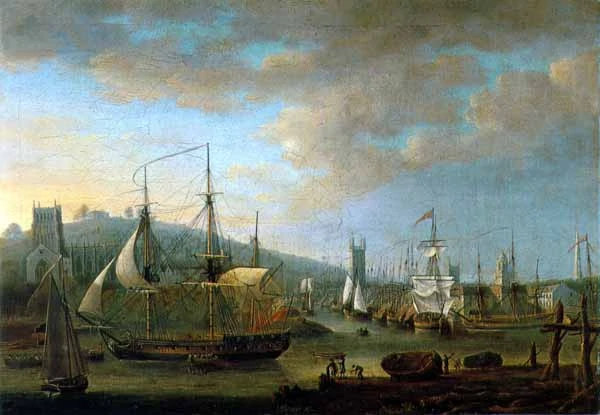
View of Bristol Harbour with the Cathedral and the Quay. (Art by Nicholas Pocock).

From the article, Indentured Servants at Gunston Hall

“When English settlers arrived in the New World, they brought indentured servitude with them.  Under this system, people worked for a set period of time as a payment for something. — Indentured servants were men and women who willingly signed a contract in which they agreed to work for a certain number of years to compensate for their voyage to America. 

Three different types of indentured servant agreements existed in the 18th century: free-willers, King’s passengers, and redemptioners… Free-will indentured servants decided to come to America on their own merit and willingly signed a contract before departing England. King’s passengers, [also known as convict servants], were criminals who were sent to America to serve a term of seven or fourteen years, depending on the crime they committed. Finally, redemptioners were passengers who were given two weeks to redeem the price of their voyage once they got to America and if they were unable to make the payment, they were sold to the highest bidder.”

In these modern times, a phrase such as “sold to the highest bidder” gives us a bit of pause. Early on, the English had such a desperate fever to send laborers to The Colonies that many unscrupulous people, orphans, and indigents were “spirited” away [kidnapped and not at their choice], who became a commodity in places like Virginia and Maryland. The city of Bristol, England was the epicenter for this white slave trade, which was lucrative for both the merchants and their agents. England was then, and still is to some extent now, a class-driven society. One has to wonder if this spiriting practice was unfortunately due to the “undesirables and destitute” being from a lower social class? Many of these poor people didn’t last very long in the Colonies due to poor health and mistreatment.

Tobacco in Colonial Virginia, map detail.

This however, wasn’t true for all people who immigrated. For Peter Bond, and many people in his class, to become an indentured servant was not something that carried a stigma. As a free-will indentured servants, he was an immigrant who was under a contract, for a short period of years. Once he had met his commitment, he was free by having paid his freedom dues. His passage and care had been provided, and he could now practice a new trade. That is why they were referred to as Servants.

“In the 1650s, an estimated 72,000 individuals, the majority of them indentured servants, went from England to the New World.” By this point in time, to remedy the problem of many [slave] laborers dying in The Colonies, and to create a more attractive market for immigrants, the courts required that proper records be kept and they were. The existing indenture system was revitalized and its use brought many new people to America. A register, known as the Tolzey Book [1654], introduced by the Common Council in 1654, indicates that The Servants, rather than being the destitute, actually consisted of: 

Yeomen39 per cent
(yeomen were a wide range of agricultural workers) 
Artisans23 per cent
Husbandmen16 per cent
Labourers13 per sent
Gentlemen2 per cent
Unknown7 per cent 
The Servants as documented in the 1654 Tolzey Book.

After 1680, the plantation owners in North America came to the conclusion that it was too expensive to continue with the English indentured servant system to staff workers for their properties. Over the next century, servant contracts tapered off. From this period forward, they transitioned to purchasing many more slaves from Africa. Hence, the slave system became quite firmly embedded in the central and southern portion of the British Colonies, as well as the Caribbean. (2)

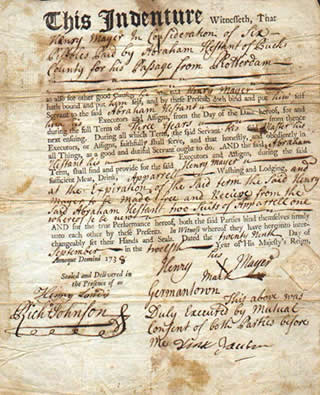
Example of an indentured
servant contract from 1738,
for British North America.

The Bristol Registry of Servants Sent to Foreign Plantations 1654-1686

There probably was not much for Peter Bond to inherit from his family by this period. The economy in London was very depressed at that time, as a consequence of the English Civil War. So we conjecture that perhaps he wanted to try his luck in the New World — as many young men of his class did at the time.

The Bristol Registry of Servants Sent to Foreign Plantations 1654-1686, page 121 detail.

At 19, Peter became a free-will indentured servant on November 29, 1659. He was one of eight people so indentured to a merchant named Henry Read, who was the agent. (This meant that he negotiated the contract(s) with the ship captain). For a few years prior to 1659, registries had become exacting by listing parents, destinations, etc., but apparently by November ’59, registries were getting “thin” and less detailed.

There are several things to note here: 1) Peter’s parents are not named because we know that both of them had died before his departure, 2) Nor is his destination given, 3) He gave his residence as Whitechapel in London which is the section of London where he was born and grew up in, which assures us that it is indeed our Peter, and 4) For the times, an indenture of four years is remarkable for all eight people. Many contracts were longer, so it certifies that none of them were criminals. Perhaps this was also indicative of their social class? (3)

The Early Settlers of Maryland

The Early Settlers of Maryland, title page.

Some other researchers propose that Peter Bond went for a short time to Virginia, and then to Maryland. Some ships in that era, would go to a port, load up on trade goods, and then go to another port. We have found no concrete evidence to support that this happened with Peter.

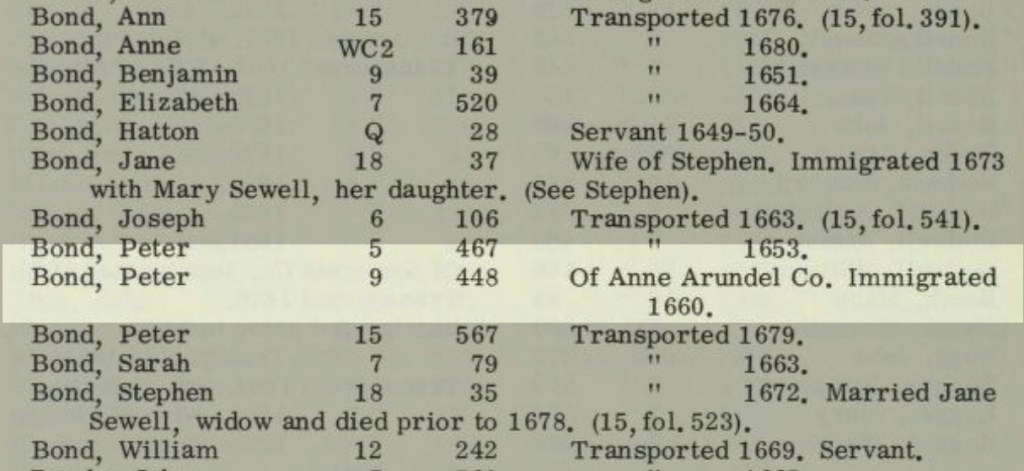
In fact, in the book The Early Settlers of Maryland, Peter Bond is listed as being in Maryland in 1660. We know that this is our ancestor, because he is listed as being from Anne Arundel County, which is in fact where he lived. Of note, there are two other Peter Bond(s) listed as being transported: one in 1653; another 1679. The word transported meant that they were indentured servants of some type. (We wonder if their same name(s) have confused other researchers?) Interestingly, Peter is not listed as being transported, even though we know that he had also been an indentured servant.

Peter Bond detail on page 48/525 of The Early Settlers of Maryland.

Fantastically, some people have proposed that he had a wife and child in England who traveled with him. Then his wife died, unnamed in records. Also, that he had two marriages in Maryland. Again, no concrete evidence of that. (4)

The Maryland Colony

The Maryland Colony was founded for religious reasons, not business reasons.

“The Province began as a proprietary colony of the English Lord Baltimore, who wished to create a haven for English Catholics in the New World at the time of the European wars of religion. Although Maryland was an early pioneer of religious toleration in the English colonies, religious strife among Anglicans, Puritans, Catholics, and Quakers was common in the early years…” Ultimately, due to the influx of the indentured servants, the majority of the population at that time were Protestants, and eventually they supplanted the Catholics.

“…the Province of Maryland developed along very similar lines to Virginia… and, like Virginia, Maryland’s economy quickly became centered on the cultivation of tobacco, for sale in Europe.”

British Roots of Maryland Families, page 61.

We see land ownership in the above passage from the book British Roots of Maryland Families which confirms that both Peter Bond and William Jones received their land under the “headright” system, which was used to attract immigrants to Maryland. From Wikipedia: “Headrights were granted to anyone who would pay for the transportation costs of an indentured laborer. These land grants consisted of 50 acres for someone newly moving to the area and 100 acres for people previously living in the area.” Indentured servants were not allowed to obtain rights to land until their period of service obligations had been met.

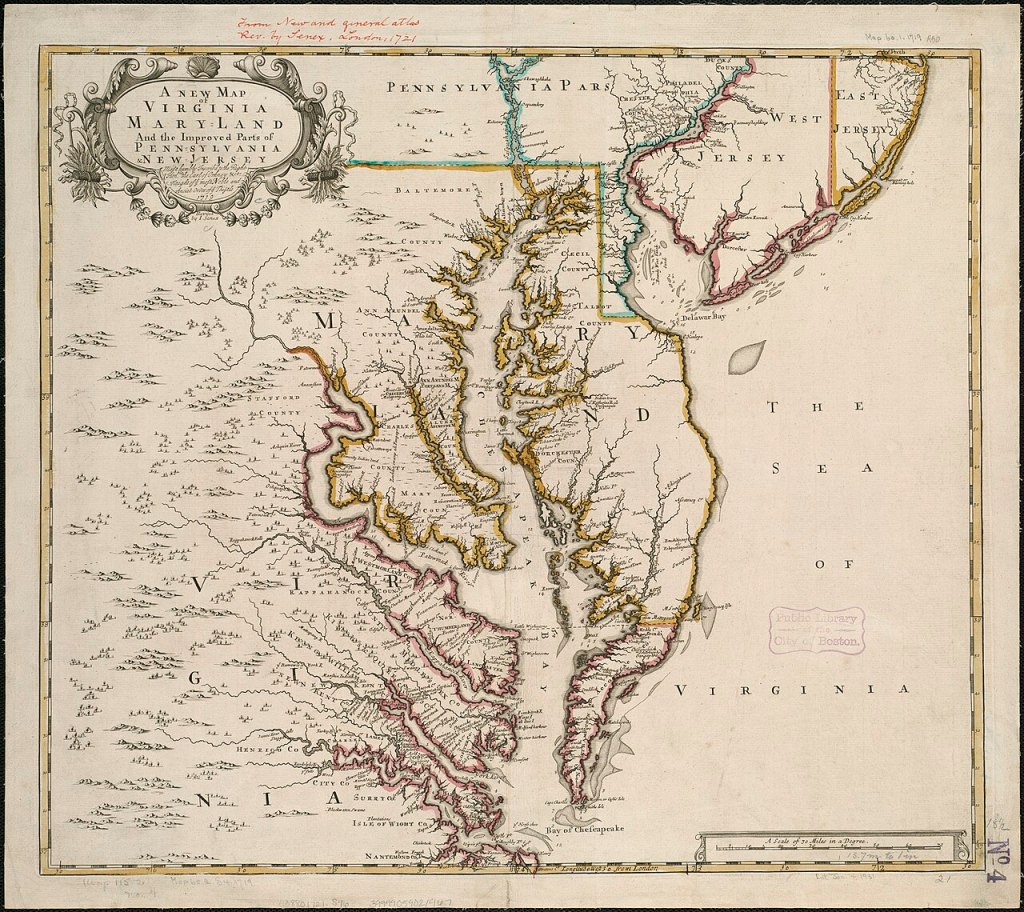
A New Map of Virginia, Maryland, And The Improved Parts Of Pennsylvania & New Jersey by Christopher Browne, 1685

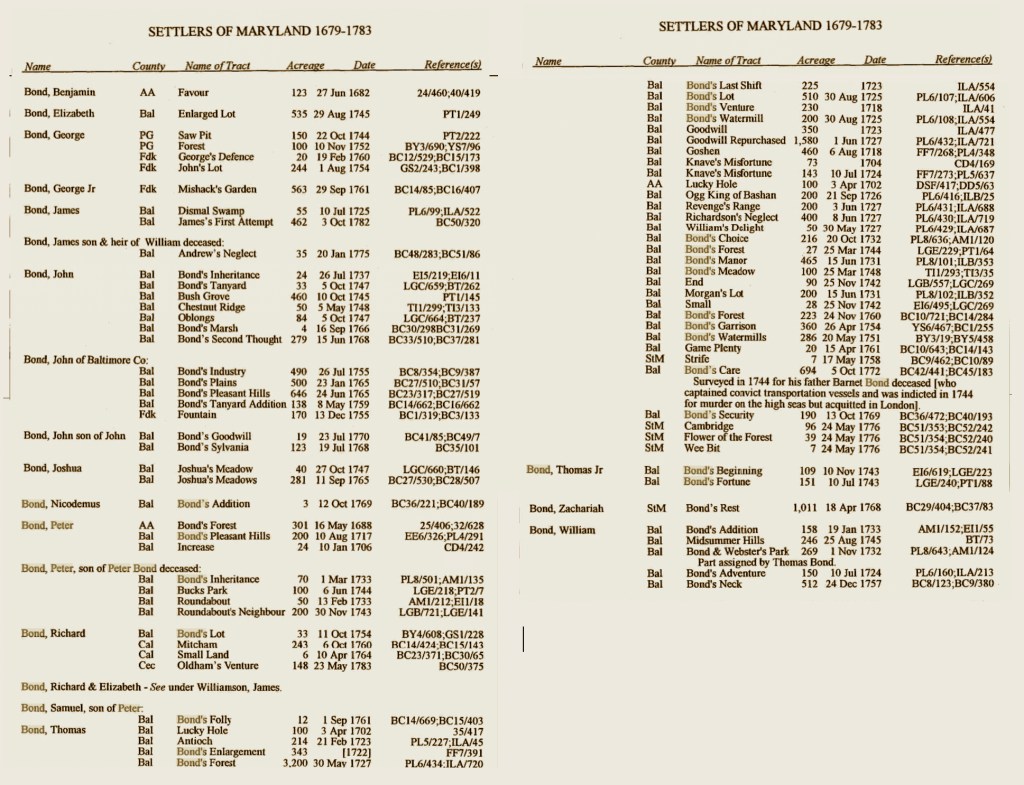
There is much evidence that Peter, his descendants and associates prospered during their years in Maryland as evidenced by the extensive records of land ownership that still exist — as we wrote in the Preface, we knew he had an extensive tobacco plantation. Most of the properties our direct ancestors held were in both Anne Arundel County (AA) and Baltimore County (Bal). To our modern eyes, some of these property names seem both curious and quaint.

Settlers of Maryland, 1679-1783, Consolidated Edition.
This Book lists various Bond properties in Maryland in the 1679-1783 period, assembled here into one file. Book pages: 59-61, Digital Pages: 73-75/906.

We know that he received some land starting sometime in 1667, as written in the book British Roots of Maryland Families, on page 61. Allen Kerr Bond wrote in The Story of The Bonds of Earth, “Nine years after, he is repaid by the authorities a considerable amount of tobacco (the local currency) for services of a nature not specified; and again, in 1678, for services, not military, to the government in a brief war with the Indians.” Further, “Ten years after this [about 1688], Peter becomes a planter… along the Patapsco [river]… on “three hundred and one acres, to be recorded as Bond’s Forest on the rent rolls of Lord Baltimore.”

“It is difficult to determine where Peter lived in Anne Arundel County because the land records were destroyed in a fire in 1703, but one deed dated 12 JUL 1673 regarding him was brought in when the new court house was built that proves he owned a tract on Swan Point on the north side of the Severn River when he conveyed a 40 acre part of his plantation to James Smith.”

Alan Kerr Bond wrote further, “…in 1698 the boundary between Anne Arundel and the newly formed Baltimore County” shifted, and “Baltimore County had moved to him…” (5)

Peter Bond Marries the Widow, Alice (Cole) Gill Drury

By 1677, Peter Bond was a married man. We haven’t discovered much personal information about him, except for some land records, until his marriage to Alice (Cole) Gill Drury.

Alice’s origins are a mystery. Was she born in England or America approximately between 1650-1655, or earlier? Why was she in Maryland? We first see references to her when she appears in marriage records. Before her marriage to Peter Bond, Alice was married twice. Her first husband was Stephen Gill, Sr. and with him Alice had a son named Stephen Gill, Jr., (born about 1673). Her second husband, William Drury, a widower, left a will naming Alice as his wife on August 22, 1676. This is proved because Peter & Alice Bond sued Drury’s executor for her share of his estate in June 1678. By the time she married Peter in late 1676 or early 1677she had been twice widowed with one child.

Peter and Alice were the parents of four sons who are mentioned in his Will:

  • Peter Bond Jr., born 1676 – died, February 28, 1718
  • Thomas Bond, born May 26, 1679 – died, December 18, 1755
    (We are descended from Thomas).
  • William Bond, born 1685 – died, August 23, 1742
  • John Bond, born 1689 – died, April 17, 1720

After Peter’s death Alice Bond was married for the fourth time by May 14, 1707 to Philip Washington. The couple were living apart by 1708 and the following year an agreement appears in the records which states :

“Whereas Philip Washington and Alice, his wife, have joyously consent to separate and live apart…”, etc. — Peter Bond, Jr. posted a (£ One Hundred Sterling) bond that stated he would support his mother.

After a long, and interesting life, Peter Bond, Sr. wrote a will on August 23, 1704; probated April 28, 1705. This informs us that he died sometime during that period. He had written [concise form] —
     “I, Peter Bond, being sick and weak in body butt still In sound and perfect memory I make this my last will testamentItem I doe give and bequeth my soul to my Lord god and maker and my body to ye Earth from where It Came
     Item – I doe Leave my well beloved wife Ealse (Alice) Bond my soule and hole Execkticx
[Executrix]
     Item – I give and bequeth unto forsaid wife my plantation and the land belonging to it during her Life and afterward to my son Peter Bon
d
     Item – I give and bequeth to my three sons Thomas William and John Bond Equally divided between them 300 Acres of Land Lying in aforesaid County att the head if bush River as will appears
     Item – I give and bequeth unto my son Thomas Bond one Cos
(cow?) Called Dollor and her hefor
     Item – I give and bequeth after my wifes desease my personal Effects to be Equally Divided among my three sons Peter William and John further my will is that my two sons William and John be free and to work for them – att ye adge (age) of Eighteene Of hears unto Enter thangably sett my hand and seale ye day and years above written. Peter Bond.
” (6)

Was Peter Bond a Quaker?

The proof that Peter Bond, The Immigrant was a Quaker, is pretty thin.

As a group in Britain, the Quakers suffered great abuse for their beliefs, and the progenitor, George Fox spent much of the 1660s jailed. However, he did have adherents who continued to grow the movement. When William Penn in 1681 created the Pennsylvania Colony as a sanctuary for religious freedom and tolerance, thousands of British people immigrated there.

George Fox, English missionary and founder of the Society of Friends (Quakers),
preaching in a tavern, c. 1650. (Image courtesy of Britannica.com).

“The Religious Society of Friends, also referred to as the Quaker Movement, was founded in England in the 17th century by George Fox. He and other early Quakers, or Friends, were persecuted for their beliefs, which included the idea that the presence of God exists in every person. Quakers rejected elaborate religious ceremonies, didn’t have official clergy and believed in spiritual equality for men and women. Quaker missionaries first arrived in America in the mid-1650s. Quakers, who practice pacifism, played a key role in both the abolitionist and women’s rights movements.”

In April 1649, [Maryland] colonists voted into law An Act Concerning Religion (later known as the Maryland Toleration Act), which granted freedom of worship for all Christians. Although permanently repealed in 1692, the act was one of the first statutes granting religious liberty of any kind and was an important step toward true freedom of religion in the United States.

Quaker missionaries arrived in North America in the mid-1650s. The first was Elizabeth Harris, who visited Virginia and Maryland. By the early 1660s, more than 50 other Quakers had followed Harris. So, Peter Bond was likely aware of the Quaker Movement, but whether or not he was a believer isn’t proven. Among his sons and extended family, there were Quakers, with some even donating land for meeting houses and schools. (7)

Pierce Brosnan as James Bond 007. Since he is an avid genealogist, we consulted with him about the Quaker pedigree of Peter Bond, The Immigrant. (His expression says it all.) Image courtesy of the guardian.com.

Thomas Bond was The Father of Eight Sons and Two Daughters

Of Peter Bond’s four sons, his son Thomas became regarded as an esteemed, respected citizen of Maryland. He was sometimes written of as Thomas of Emmorton, based upon the community where he lived.

Allen Kerr Bond wrote —
“Locating with his two brothers, William and John, lads not yet of age, in the present Harford County, on the three hundred acres of ‘Harris His Trust’ given them by their father, Thomas Bond seems to have put all of his energies into the accumulation of enormous holdings of the fertile forest uplands in that vicinity.” [If you consult the Bond Properties Chart above, you will see that this is quite true.]

Thomas was likely very aware of the Society of Friends movement which had been occurring in Great Britain, which also was attracting many immigrants to relocate to the British Colonies, seeking freedom to practice their religious beliefs in peace. Maryland had attracted many believers and the founder of the sect, George Fox, had visited the area in 1672 when Thomas would have been about thirteen years old. It seems there was a lot of Quaker energy present in the area.

Thomas Bond married Anne Robison on September 20, 1770 at All Hallows Parish, Anne Arundel, Maryland . Her father may have been a John Robison (or Robinson) and her mother is unknown. Thomas Bond died at “Kalmia”, his Emmorton, Maryland estate on December 18, 1755. He may have been buried “under a tree” on his property, however there is no official record of his burial. Anne was born on March 28, 1680 in West River, a community in Anne Arundel County. Her death date is unknown.

Thomas and Anne had a large family of ten children. In order of their births:

  • Thomas Bond (Jr), born 1703 – died 1781
  • Peter Bond, born April 28, 1705 – died December 23, 1738
  • William Bond, born 1708 – died 1769
  • John Bond, born November 10, 1712 – died March 11, 1786
    (We are descended from John).
  • Sarah Bond, born April 29, 1715 – died, December 12, 1759
  • Joshua Bond (1), born October 8, 1718 – died March 30, 1720
  • Ann Bond, born May 29, 1720 – died, August 20, 1720
  • Jacob Bond, born 1725 – died, November 30, 1780
  • Daniel Bond, born 1727 – died (by) August 11, 1780
  • Joshua Bond (2), born 1729 – died, July 8, 1768

Observation: It is probable that John and Anne became Quakers at some point during their marriage. Their headstones probably never existed, because before the mid-19th century Quaker headstones were rare, as they are not in keeping with the plain life.

Unbeknownst to either of us, and as wonderful surprise, it turns out that two very good friends of ours, the sisters Lessley and Barbara Berry, are our (very) distant cousins. We were friends for many years before we discovered this fact! From our shared ancestor, Thomas Bond, we are descended from two of his sons, John [>Susan and Thomas] and *Jacob [>Lessley and Barbara]. The world can be a small place sometimes.

*Jacob Bond — “The most prominent of the Bonds from the standpoint of Harford history, was Jacob, who died in November, 1780. He was a prominent member of the Committee of Harford County in the Revolution, having been elected by the people, and was captain of Company Eleven, of Harford militia, in the Revolution… Jacob Bond represented Harford County in the convention which met at Annapolis in 1776 and formed the first constitution of the State… He was also one of Harford’s representatives in the Annapolis convention of June 22, 1774, which protested against the tax on tea…” Jacob married Frances Partridge on December 28, 1747 at St. Paul’s Protestant Episcopal Church, Baltimore Co, Maryland

We know from several records that some of Thomas and Anne’s children became Quakers. It can be taken for granted that those who fought in the early wars were no longer Quakers, and records show many Bonds on the early Military Records.

History of Harford County, p. 206

Thomas of Emmorton, as he was known, was generous to his fellow Quakers by providing a Friends Meeting House at Fallston, for their worship. These buildings were designed in simple, domestic styles unlike more elaborate church architecture.

History of Harford County, p. 207

Thomas Bond may have been a man of good piety, but it seems that some of his prodigy were, how shall we say, not up to standard. This generation was “the first to backslide and fall under the displeasure of the Friends Meeting.” The offenders are pointed out in the following excerpts (below) of carefully kept records from Maryland Friends Meetings. (8)

What Would These Quaker Ancestors Think About Our Time?

Below is some of the information we found regarding the discipline and dismissal of Bond’s who were Quakers. By today’s standards most of this seems extreme!

U.S., Quaker Meeting Records, 1681-1935
Baltimore, Maryland, Gunpowder Monthly Meeting, Minutes, 1768-1784

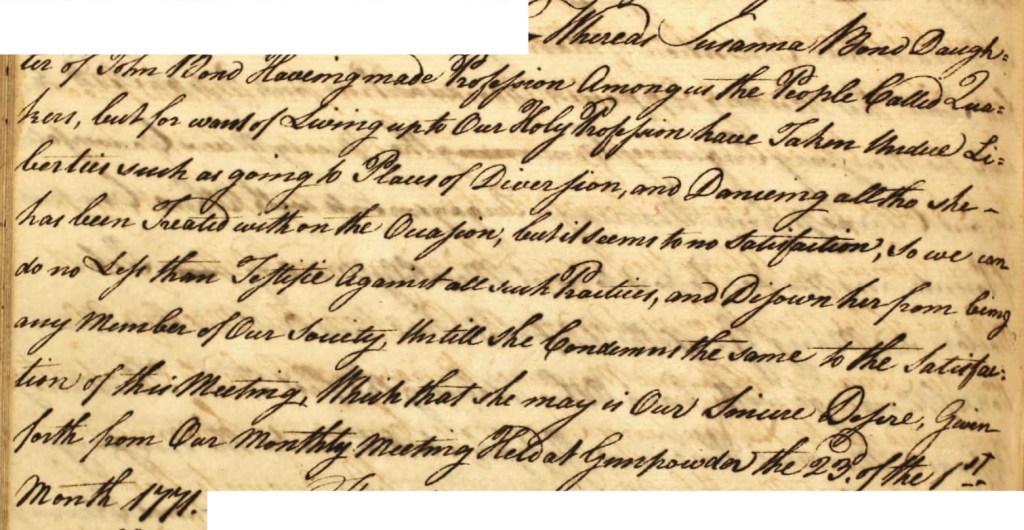
“John Bond married out of meeting – dismissed; James Bond – plays the fiddle – disowned; Samuel Bond – joins the Militia disciplined; Ann Bond – gone contrary to principle (pretty bonnet) disciplined; Susannah Bond – taking undue liberties and going to places of diversion and dancing – disowned; Joshua Bond – plays cards – disciplined: John Bond lends a man a gun disciplined; Hannah Bond married by a priest – disowned.” (9)

Gentleman John Bond and His Wife Aliceanna Webster

What was a Gentleman in Colonial Maryland? The Colony of Virginia and the Province of Maryland carried over some of the old social class structures from England, and then remodeled them to fit life in the British Colonies. In England, the lowest level of the Landed Gentry were The Gentlemen. They lived on plantations, and unlike their forebears, they no longer had to work with their own hands. Many were involved in managing their properties and investing in business ventures. After a plantation had been settled for several generations, the Planter would be free to have himself referred to as a Gentleman, or Gentleman Planter, as he wished.

John Bond and Elizanna Webster marriage record in the U.S., Quaker Meeting Records, 1681-1935, Nottingham Monthly Meeting, page J4.

On May 26, 1734, John Bond married Aliceanna Webster at the Nottingham Meeting of The Society of Friends in Harford County, Maryland. This is our first solid clue of Quakerism in the Bond family. Aliceanna was born on January 21, 1716 and she died on October 13, 1768, aged 52 years. She was the daughter of John Webster and Hannah Butterworth. The Websters and Butterworths played a large role in the settling of Harford County, Maryland.

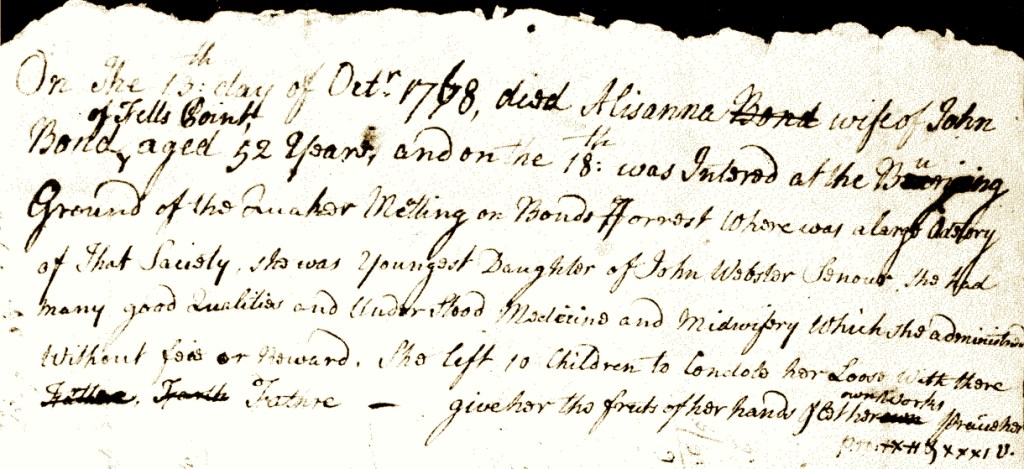
In addition to raising her large family Aliceanna was highly regarded as a midwife. Here is a transcription by (present day) Thomas Bond of her obituary:

“On the 13th day of Octr. 1768, died Alisanna Bond wife of John Bond of Fells Point, aged 52 years, and on the 18th: was Intsred [Interred] at the Burying Ground of the Quaker Meeting on Bonds Forrest where was a large _____ [?] of that family. She was Youngest Daughter of John Webster Senior, who had many good Qualities and Understood Medicine and Midwifery which she administered without fees or reward. She left 10 children to console her loose [loss] with their Father. give her the fruits of her hands ___ own works ___ praise her.”

Alisanna Bond obituary, courtesy of The Fells Point Story, addendum exhibits at near book’s end, app. page 102.

John and Aliceanna had eleven children. In the order of their births:

  • Samuel Bond, born January 23, 1736 – died October 19, 1801
  • Ann (Bond) Fell, born June 27, 1737 – died July 27, 1791
  • Thomas Bond, born September 29, 1739 – died January 23, 1791
  • Pamela (Bond) Moore, born May 30, 1740 – died September 28, 1801
  • Abigail Bond, born May 17, 1741 – died, May 26, 1805
  • Susanna (Bond) Hunt, born 1742 – died February 14, 1817
  • Jane Bond, born July 28, 1743 – died, January 30, 1812
  • William Bond, born March 8, 1746 – died unknown
    (We are descended from William).
  • John Bond, born November 30, 1748 – died December 8, 1812
  • Aliceanna (Bond) Kell, born 1749 – died, May 30, 1767
  • Hannah (Bond) Johns, is the eleventh child born (unknown) – death (unknown), however, we have her marriage record of January 27, 1757. We find Hannah in her father’s will, (see John Bond footnotes).

Having accrued a degree of wealth, our ancestor Gentleman John Bond lived his life on the plantation, and in the winter, at the Fells Point area of Baltimore. “He was a large land owner and merchant, shipping tobacco from Joppa and Baltimore to England…” He served as a justice of the peace, coroner, judge of the Orphan’s Court (1769-73).

Since he had taken an oath of office, the Quakers were aggrieved with this “going against testimony” and felt it went contrary to their principles. As a consequence, Gentleman John was “finally read out of meeting for his contumacy.” (That word means: stubborn resistance to authority.) He was an investor in not only his plantations, but also in ship building, home construction and mining. Some of his correspondence from his mercantile ventures survive, with one example shown below.

Letter from John Philpot of London to John Bond — April 24, 1766, courtesy of The Fells Point Story, addendum exhibits at near book’s end, app. page 104.

From the Maryland Genealogical and Memorial Encyclopedia — “He was a large land owner and merchant, shipping tobacco from Joppa and Baltimore to England, until he became involved in financial difficulties connected with the Bush River Company, which he and his father-in-law had organized.”

From The Bonds of Earth by Allen Kerr Bond — “Maryland contains a great variety of mineral deposits, which were worked profitably in many of her counties… Exactly when John Bond began to mine this ore, I do not know… Three years later [about 1762], John seems already to be a partner in the Bush River Company, formed by a number of Hartford County gentlemen… In 1773 it was sold out.” They had been mining iron ore (or what they called pig iron), but by 1773, the vein ran out. Prior to this time, “in the colonial days [they] were forbidden to manufacture anything from our iron. We must send the pig iron to England and buy back from that ‘Mother’ country the finished articles we needed; so that British manufacturing business might be built up.”

When the mine failed, Gentleman John found himself in debt for £3000 Stirling. His plantation home was nearly sold at auction, but it was rescued and saved by his son Thomas, “the Methodist”. His will also mentions the Fountain Copper Works, of which he and four other planters were all partners. It was located in Frederick County, not far from the town of Union Bridge. His four planter-partners must have also been English, because it is recorded that the mine closed at the beginning of the Revolutionary War, when the other partners returned to England.

Observations: This makes us wonder if John Bond and some members of his family were torn between loyalty to England, or loyalty to (the new) Maryland. Our family was involved with three groups, all of whom had a stake in the game, as it were… Many colonists were troubled about exorbitant British taxes and frustrated about how they were forced to purchase imported goods that they could have made themselves. They wanted change now. Some of the planter class were worried that their livelihoods were threatened — some wanted change and some wanted the status quo. The Quakers were pacifists, and they were having serious problems with the institution of slavery, and the idea of going to war. Quakerism had started in England, and even though many were persecuted, it was still a confusing period for them.

Eighteen yeas after his beloved wife Aliceanna died John Bond, Gentleman, died on March 11, 1786 in Harford County, Maryland.

John and Aliceanna’s daughter Ann married Edward Fell on November 2, 1758. They were first cousins as he was the son of William and Sarah (Bond) Fell. (Sarah was a younger sister of John Bond). The Fells were the original settlers of Fells Point in Baltimore. Edward and Ann lived at Fells Point and were very active in beginning to develop it as a place to live. He died six short years after their marriage and the birth of their son, William Fell. William was born on August 28, 1759 and died, unmarried, on October 6, 1786.

After Edward’s death Ann, with the help of her father, Gentleman John Bond, was heavily involved in the continued development of Fells Point. At this time in colonial history it was unusual for a woman to develop land or a community. To this day their is a Bond Street and an Aliceanna Street in Fells Point, Baltimore, Maryland. Further, “…200 years ago, it was one of colonial America’s biggest seaports, one that played a key role in thwarting the British during the War of 1812.”

In 1744 Ann (Bond) Fell married James Giles and they had three children together. Ann died in 1791 in Baltimore County, Maryland. (10)

Portrait of Ann Bond Fell by John Hesselius, 1728 – April 9, 1778
Courtesy of The National Portrait Gallery, Washington, DC.

The William and Sarah (Wrongs) Bond Family

In this generation, with this particular family, the historical record gets a bit sparse. This has required us to make some inferential observations when we lack a direct record.

William Bond was the eighth child of John and Aliceanna Bond. His first seven siblings were all born in quick, nearly unbroken succession, and then after his sister Jane, there was a pause before we meet William. That’s a lot of siblings, and there were three more after William. In general, it seems they all lived long lives. All except for William, which we will get to in a bit.

William and Sarah Wrongs were married on November 16, 1771, in St. George’s Parish Baltimore County, Maryland. St. George’s, also known as the Spesutia Parish… [was] the oldest Episcopal parish in Maryland. [The Episcopal Church describes itself as “Protestant, yet Catholic” and claims apostolic succession, tracing its bishops back to the apostles via holy orders… The Episcopal Church was formally separated from the Church of England in 1789 so that American clergy would not be required to accept the supremacy of the British monarch.]

Observation: The fact that they were married in a parish that was an Anglican order, and Episcopalian in its practice, points to the strong possibility that she might have been British and baptized into the Church of England. We have found a record in the papers of All Saints Wakefield Cathedral, West Yorkshire, England, which is part of the Church of England that may be a record of Sarah Wrongs birth. We have not found a birth record for her in America, and we first meet her when she marries William Bond.

Sarah D: of Robt Brook Wrongs [Sarah, daughter of Robert Brook Wrongs].
Baptismal record from Wakefield All Saints Cathedral, dated March 12, 1747.
South East View of the Parish Church of All Saints Wakefield, aquatint, by I. Cawthorn, circa 1807. Courtesy of The British Library.

When William married Sarah, it did not sit well with the Quakers. They had an expectation that partners would be selected from within their own community, certainly at the meeting house. In 1772, the Society of Friends, upset with both William and his brother Thomas for their marriages, removed them from participation in the Society of Friends.

Excerpted from Quaker meeting notes from the Gunpowder Monthly Meeting, Baltimore County, Maryland. (What is shown below below are from the bottom of one page, and the top of the next page).

“Where as Thomas and William Bond (sons of John Bond) have had a Birthright Among us the People Called Quakers but they having gone out in Marriage to Women of Other Professions Contrary to the good Order used Amongst Friends, Which Mission = doest [?] of theirs we Testify Against and Disown them from being any longer members of Our Society, unlike they Condemn their outgoing to the satisfaction of this Meeting and that their Conduct For later may Render them Worthy of Our Notice and Christian Care is Our Desire. Given forth from Our Monthly Meeting Held at Gunpowder the 25th of the 3rd month 1772. [March 25, 1772]

We next find William and Sarah in the Maryland Preliminary Census of 1776 which lists both of them as 30 years old. At that time, it was “taken for the purpose of setting Maryland’s quota for a tax to support the Revolutionary War.” We have not been able to identify the other people who are listed with them on this census.

Maryland Records, 1776 Harford County, Bush River Lower census cover sheet and p. 127

William and Sarah were the parents of four children:

  • John Bond, born, 1772 – died, unknown
  • Abigail (Bond) Everist, born 1776 – died, unknown
  • Edward Fell Bond, born March 4, 1777 – died, February 20, 1822
    (We are descended from Edward Fell).
  • Jane (Bond) Bradford, born 1782 – died, January 7, 1860

William Bond, being a child of the planter class, had inherited property from his father John Bond, the Gentleman. We don’t know much about his and Sarah’s life together at this point, simply because no records have been located. We can however, infer some things about William…

Observation: Even though the Quakers seriously rebuked him, we think that he may have still retained some of their pacifist tendencies. Alan Kerr Bond wrote in The Bonds of Earth, that William “was a non-associator in 1775 and 1776; yet like others in Quaker families who would not take up arms, he may have later become county magistrate…”

Like his father John Bond, William chose to disregard the Quaker prohibition against taking oaths, and we locate him as the probable “the worshipful William Bond” administering the Oath of Fidelity and Support to mustered militia men from Harford County. From Wikipedia: The term Non-Associators was applied to American colonists who refused to support and sign “military association” charters.

Also from Wikipedia: “In 1777, all Maryland voters were required to take the Oath of Fidelity and Support. This was an oath swearing allegiance to the state of Maryland and denying allegiance and obedience to Great Britain. As enacted by the Maryland General Assembly in 1777, all persons holding any office of profit or trust, including attorneys at law, and all voters were required to take the oath no later than March 1, 1778.”

Alan Kerr Bond identified William as a probable magistrate, which was defined in colonial times as “…the major figure in the colonial court system… the magistrate (a local official with limited power), often called justice of the peace or, simply, judge. This person mostly dealt with petty (minor) crimes in his local area.” Further, dictionary.com defines worshipful as — WorshipfulBritish. a formal title of honor used in announcing or mentioning certain highly regarded or respected persons.

Observation: William saw his father John suffer at the burden of British taxes on his tobacco and sugar shipments. He may have felt a need to do what he could to support and help create a new Maryland? Perhaps he felt being a magistrate was a non-violent way to participate in the cause?

Some ‘Quakers’ took up arms against the British, but some did not. Pacifist Quakers were treated with some disdain by their neighbors during and after the Revolutionary War. There are two other men named William Bond from other Maryland Counties, which we found records for, which have survived. It seems likely that our William Bond, unlike the others, never took up arms, but had found a social balance between engagement and pacifism to sustain himself and his family. (11)

The Kentucky Mystery

The rise of maintaining family histories through family bibles, journal stories, and embroidered family trees has had a long history. First, in the British Colonies, and then in the subsequent United States. By the 1800s, some families started cataloging their ancestors as a way to create their own history — “…some Americans came to see the process of learning one’s family history as a moral endeavor—a person could learn much from what her ancestors had done right or wrong… Even before the Civil War, there was ‘lineage consciousness’ among those descended from elite colonial families, who used their descent from ‘high’ birth to justify and enforce their higher social rank.”

We agree that some of these records can be filled with rich information, but you always need to verify your sources. In our research on our family lines, we have encountered two Daughters of the American Revolution publications which have asked us to call into question if they are accurate. Both state that William Bond “was killed by Indians on his way to Kentucky.” We believe that this is an error, and that this mistake was perpetuated through several other subsequent publications.

Records were kept by the new United States Confederation which documented in careful detail who was entitled to land (due to their war service), in new frontier areas (like Kentucky). William Bond’s name does not appear on any of these records, nor does his wife’s name appear on any war service pension records.

The fate of William Bond and Sarah Wrongs is a mystery. (This aspect of our family history will still continue to be researched). We know what happened with their four children. We are descended from their son Edward Fell Bond.(For more about his story, see The Bond Line — Part Six). Their daughter, Jane (Bond) Bradford’s son went on to have a high profile role in Maryland history. (12)

Where are William and Sarah Bond hiding?

Jane (Bond) Bradford and Her Famous Son Augustus

Edward Fell Bond’s younger sister Jane Bond, married Samuel Bradford on July 21, 1803 in Harford County. Their son, Augustus Williamson Bradford was born on January 9, 1806, in Bel Air, Maryland, a community near Baltimore.

Augustus was a law school graduate; politically first a Whig and then a Democrat. He was elected Governor of Maryland and served from January 8, 1862 – January 10, 1866 (essentially the length of the Civil War). As Governor, he was a staunch Union supporter and a fierce opponent of slavery.

During the American Civil War (1861–1865), Maryland, a slave state, was one of the border states, straddling the South and North. Despite some popular support for the cause of the Confederate States of America, Maryland did not secede during the Civil War. Across the state, some 50,000 citizens signed up for the military, with most joining the Union Cause. Approximately 5,000 citizens went south to fight for the Confederacy. This was a rough period for Maryland, because as a border state, it saw much conflict, due to military activity and unrest among a conflicted population.

Augustus Williamson Bradford, circa 1855-65, Photograph by Mathew Brady. Courtesy of The Library of Congress

In April 1864, both President Lincoln and Governor Augustus Bradford spoke at a fair in Baltimore, Maryland, which was held to raise funds for the welfare of Union soldiers. Certainly then, they knew each other.

Three months later — “During the War, the Confederates invaded Maryland three times. During the last of these, Bradley T. Johnson’s raiders visited Bradford’s home in July of 1864, and during his absence, burned it to the ground together with all his furniture, library, and papers.”  Learning this, it’s regrettable how much information from our family history was likely lost.

Augustus Williamson Bradford died in Baltimore on March 1, 1881, at the age of seventy-six.

Historical marker in Maryland concerning our distant relative.
(Photo courtesy of civilwarquilts.blogspot.com).

About nine months later, on April 14, 1865 the actor John Wilkes Booth assassinated President Abraham Lincoln at Ford’s Theatre in Washington, D.C. Booth was a Marylander and a Confederate sympathizer.

Memory: In March 1975, we traveled with our parents to Washington, D.C., to see the historical sites in anticipation of the approaching 1976 Bicentennial year. Among the memories was a visit to Ford’s Theatre and the upstairs bedroom across the street where Lincoln had died. At that time, we knew next to nothing about our family history. (13)

Unused Ticket for Ford’s Theatre April 14, 1865 (The night Lincoln was assassinated there).
Image courtesy of http://www.shapell.org

Following are the footnotes for the Primary Source Materials,
Notes, and Observations

Preface: Be Wary Of Those K rations!

(1) — two records

AZ Central
Vintage: Romantic Photos of The Soldier and The Cigarette
A United States sailor holds a carton of Philip Morris cigarettes under one arm and a duffle bag over his other shoulder while smoking a cigarette.
https://www.azcentral.com/picture-gallery/money/business/2014/04/02/vintage-romantic-photos-of-the-soldier-and-the-cigarette/7217459/
Maryland tobacco as currency:
http://www.thecurrencycollector.com/pdfs/Maryland_Colonial_and_Continental_Bank.pdf

The British Colonies Desperately Needed Workers

(2) — three records

George Mason’s Gunston Hall
Indentured Servants at Gunston Hall
https://gunstonhall.org/learn/people-of-gunston-hall/indentured-servants/

Encyclopedia Virginia
Tobacco in Colonial Virginia
https://encyclopediavirginia.org/entries/tobacco-in-colonial-virginia/
Note: For map detail.

U.S. History, Pre-Columbian to the New Millenium
The Southern Colonies
Indentured Servants
https://www.ushistory.org/us/5b.asp

The Bristol Registry of Servants Sent to Foreign Plantations 1654-1686

(3) — three records

The Bristol Registry of Servants Sent to Foreign Plantations 1654-1686
1659
by Peter Wilson Coldham
https://www.ancestry.com/imageviewer/collections/49090/images/FLHG_BristolRegistersofServants-0132?treeid=&lang=en-US&pId=14021
Book pages: 121-122, Digital Pages: 131-132/502
And confirmed here:
Virtual Jamestown.org
Indentured Servants Basic Search Results
http://www.virtualjamestown.org/indentures/search_indentures.cgi?search_type=basic&start_page=0&servant_ln=Bond&servant_fn=Peter&servant_place=&servant_occ=&destination=&ship=&year-ops=&year=&year1=&sex=male&agent_ln=&agent_fn=&agent_place=&agent_occ=&result_order=&submit=Initiate+Search&db=bristol_ind

Price Genealogy
Origins of Colonial Chesapeake Indentured Servants: American and English Sources
https://www.pricegen.com/genealogy-learning-center/overseas-origins/

The Early Settlers of Maryland

(4) — one record

The Early Settlers of Maryland; an index to names of immigrants compiled from records of land patents, 1633-1680, in the Hall of Records, Annapolis, Maryland
https://archive.org/details/earlysettlersofm00skor/page/n5/mode/2up
by Gust Skordas, John M, Brewer, Arthur Trader
Book page: 16 and 48, Digital Pages: 16 and 48/525
Note 1: Page 48/525 which list: our Peter, other Peter(s), and other Bonds.
Note 2: Our Peter is from Anne Arundel County and immigrated in 1660.

The Maryland Colony

(5) — six records

Province of Maryland
https://en.wikipedia.org/wiki/Province_of_Maryland

British Roots of Maryland Families
by Robert W. Barnes
B
https://www.ancestry.com/imageviewer/collections/49095/images/FLHG_BritishRoots-0101?usePUB=true&_phsrc=Ovg3&pId=15510
Book pages: 61, Digital Pages: 101/686

A New Map of Virginia, Maryland, And The Improved Parts
Of Pennsylvania & New Jersey 
by Christopher Browne, 1685
https://en.wikipedia.org/wiki/Province_of_Maryland#/media/File:A_new_map_of_Virginia,Maryland,_and_the_improved_parts_of_Pennsylvania&New_Jersey._LOC_2005630923(cropped).jpg

Settlers of Maryland, 1679-1783. [Consolidated Edition]
by Peter Wilson Coldham
B (section)
Explanation of file data: Various Bond properties are shown on this link which we have assembled into a chart for this blog chapter —
https://www.ancestry.com/imageviewer/collections/49058/images/FLHG_SettlersMaryland2-0074?treeid=&personid=&usePUB=true&_phsrc=Xqj2&_phstart=successSource&pId=101720&rcstate=FLHG_SettlersMaryland2-0074%3A337%2C703%2C422%2C732%3B556%2C703%2C643%2C733%3B653%2C703%2C742%2C733%3B821%2C745%2C935%2C775%3B224%2C952%2C313%2C982%3B820%2C953%2C933%2C985%3B223%2C1160%2C313%2C1190%3B223%2C1241%2C313%2C1270%3B594%2C1243%2C680%2C1273%3B820%2C1285%2C933%2C1316%3B223%2C1324%2C312%2C1354%3B820%2C1408%2C931%2C1438%3B818%2C1451%2C931%2C1480%3B818%2C1491%2C931%2C1521%3B818%2C1533%2C931%2C1563%3B818%2C1574%2C931%2C1605%3B818%2C1618%2C930%2C1648%3B815%2C2075%2C928%2C2105%3B813%2C2119%2C928%2C2149%3B813%2C2160%2C926%2C2190%3B813%2C2200%2C926%2C2230%3B813%2C2368%2C926%2C2399%3B813%2C2410%2C925%2C2440%3B813%2C2452%2C925%2C2482%3B810%2C2577%2C930%2C2608%3B1500%2C2624%2C1591%2C2656%3B810%2C2747%2C928%2C2777%3B210%2C2955%2C300%2C2986%3B807%2C2959%2C920%2C2990%3B807%2C2999%2C920%2C3031%3B1030%2C217%2C1312%2C254%3B225%2C457%2C314%2C487%3B823%2C456%2C941%2C487%3B224%2C539%2C314%2C569%3B337%2C539%2C422%2C569%3B821%2C580%2C935%2C611%3B224%2C703%2C314%2C733
Book pages: 59-61, Digital Pages: 73-75/906.
Note: This book lists land ownership in Maryland in the 1679-1783 period.

Peter Bond Marries the Widow, Alice (Cole) Gill Drury

(6) — six records

The Story of The Bonds of Earth
by Allen Kerr Bond
https://archive.org/details/storyofbondsofea00bond/mode/2up
Book pages: 164-166. Digital pages: 164-166/299

WikiTree
Peter Bond (abt. 1636 – bef. 1705)
https://www.wikitree.com/wiki/Bond-340
Note: Some smaller details in this link do not agree with other reliable sources.

WikiTree
Alice (Cole) Washington (abt. 1638 – aft. 1708)
Alice Cole, Washington (abt. 1638 – aft. 1708)
https://www.wikitree.com/wiki/Bond-340
Note: Some smaller details in this link do not agree with other reliable sources.

Baltimore County Families 1659-1759
by Robert W. Barnes
For the Peter Bond Family
— Book page: 47, Digital page: 57/935
https://www.ancestry.com/imageviewer/collections/48162/images/BaltimoreCoFamilies-002226-47?treeid=&personid=&usePUB=true&_phsrc=jhl2&_phstart=successSource&pId=224348&rcstate=BaltimoreCoFamilies-002434-255%3A167%2C1264%2C239%2C1285%3B332%2C1265%2C426%2C1285%3B1241%2C1262%2C1296%2C1282%3B695%2C1363%2C759%2C1384%3B166%2C1432%2C199%2C1451%3B666%2C1431%2C728%2C1451%3B719%2C1531%2C775%2C1557%3B979%2C1529%2C1034%2C1550%3B1163%2C1563%2C1220%2C1584%3B775%2C1598%2C830%2C1617%3B656%2C1866%2C718%2C1886%3B1176%2C1864%2C1238%2C1884%3B673%2C161%2C839%2C181%3B887%2C764%2C946%2C784%3B370%2C797%2C425%2C824%3B423%2C797%2C594%2C821%3B257%2C830%2C314%2C851%3B1129%2C828%2C1187%2C849%3B999%2C863%2C1056%2C883%3B258%2C997%2C313%2C1022%3B665%2C1063%2C722%2C1082%3B167%2C1097%2C201%2C1117%3B1178%2C1228%2C1302%2C1249

Rhinehart & Bassett Family Tree
Peter Bond’s probated Will from 1705:
http://www.bassett.net/gendata-o/p10576.htm
and from the:
Maryland Calendar of Wills:
by Jane Cotten, Roberta Bolling Henry, Eleanor Janet Whitall
https://archive.org/details/marylandcalendar03cott/page/n107/mode/2up?q=bond
Book page: 49, Digital page: 108/680
Bond, Peter, Balto. Co., 23rd Aug., 1704; 28th Apr., 1705.
“To wife Alice, extx., plantation and land during life; to pass to son Peter and hrs. at her decease. To sons Thomas, William and John, 300 A. at hd. of Bush R. To sons afsd., residue of estate afsd. at decease of wife. Sons William and John to be of age at 18 yrs.” Test: Lancelott Todd, John Lockett, Wm. Felps. 3. 451

Was Peter Bond a Quaker?

(7) — six records

Quakers
https://www.history.com/topics/immigration/history-of-quakerism

Quakers in Great Britain; 1650s-1750s
https://haygenealogy.com/hay/quaker/quaker-GB.html

George Fox
https://en.wikipedia.org/wiki/George_Fox

George Fox

Quakers & Slavery
George Fox’s Ambiguous Anti-Slavery Legacy
https://web.tricolib.brynmawr.edu/speccoll/quakersandslavery/commentary/people/fox.php

Society of Friends
https://www.britannica.com/topic/Society-of-Friends

The Guardian newspaper
Pierce Brosnan: I was ‘kicked to the kerb’ as James Bond after Die Another Day
https://www.theguardian.com/film/2015/nov/24/pierce-brosnan-james-bond-kicked-to-the-kerb-after-die-another-day
Note: For Pierce Brosnan as James Bond 007

Thomas Bond was The Father of Eight Sons and Two Daughters

(8) — six records

The Story of The Bonds of Earth
by Allen Kerr Bond
https://archive.org/details/storyofbondsofea00bond/mode/2up
Book page: 186, Digital page: 186/299

Thomas Bond
Vital – Maryland, Marriages, 1666-1970

Maryland Marriages, 1666-1970
https://www.familysearch.org/ark:/61903/1:1:F4V7-5M7?from=lynx1UIV8&treeref=LTV6-2WQ
and here:
All Hollows Parish, Anne Arundel, Maryland (1691 — 1858)
https://www.familysearch.org/ark:/61903/3:1:3Q9M-CSMZ-Q7HL-8
Book page: 32, Digital page: 1377/1933, 10th transcribed entry, SER Number #00044-8

Baltimore County Families 1659-1759
by Robert W. Barnes
For the Peter Bond Family
— Book page: 48, Digital page: 58/935

Baltimore County Families 1659-1759
by Robert W. Barnes
> Thomas Bond, Book page: 48, Digital page: 58/935
https://www.ancestry.com/imageviewer/collections/48162/images/BaltimoreCoFamilies-002227-48?treeid=&personid=&usePUB=true&_phsrc=jhl2&_phstart=successSource&pId=224349&rcstate=BaltimoreCoFamilies-002434-255%3A167%2C1264%2C239%2C1285%3B332%2C1265%2C426%2C1285%3B1241%2C1262%2C1296%2C1282%3B695%2C1363%2C759%2C1384%3B166%2C1432%2C199%2C1451%3B666%2C1431%2C728%2C1451%3B719%2C1531%2C775%2C1557%3B979%2C1529%2C1034%2C1550%3B1163%2C1563%2C1220%2C1584%3B775%2C1598%2C830%2C1617%3B656%2C1866%2C718%2C1886%3B1176%2C1864%2C1238%2C1884%3B673%2C161%2C839%2C181%3B887%2C764%2C946%2C784%3B370%2C797%2C425%2C824%3B423%2C797%2C594%2C821%3B257%2C830%2C314%2C851%3B1129%2C828%2C1187%2C849%3B999%2C863%2C1056%2C883%3B258%2C997%2C313%2C1022%3B665%2C1063%2C722%2C1082%3B167%2C1097%2C201%2C1117%3B1178%2C1228%2C1302%2C1249

Ann Robinson
https://www.ancestry.com/family-tree/person/tree/100009207/person/192283883876/facts
Note: Possible portrait of Ann Robison.

History of Harford County, title page.

History of Harford County Maryland
by Walter W. Preston, 1901
Jacob Bond
https://archive.org/details/historyharfordc00changoog/page/n226/mode/2up?view=theater
Book pages: 206-207, Digital page: 227/413

“Quaker headstones before the mid-19th century are rare, as they are not in keeping with the plain life.”
Sarah Brown Bond
https://www.findagrave.com/memorial/63562855/sarah-bond
Note: This gravesite is noted on this blog only for this quotation.

What Would These Quaker Ancestors Think About Our Time?

(9) — two records

Scattered Leaves : Genealogy of the Johnson – Bond and Utermoehlen (and) Bredehoeft Families
by Robert E. Johnson
https://www.familysearch.org/library/books/viewer/531365/?offset=0#page=14&viewer=picture&o=info&n=0&q=
Book page: 10, Digital page: 12/174
Note: Excerpted from the document: “The family of Thomas Bond seems to be the first to backslide and fall under the displeasure of Friends Meeting (Quakers)”.

Susanna Bond
in the U.S., Quaker Meeting Records, 1681-1935

Maryland > Baltimore > Gunpowder Monthly Meeting > Minutes, 1768-1784
https://www.ancestry.com/discoveryui-content/view/1107209832:2189?_phsrc=dGC21&_phstart=successSource&gsfn=Susannah&gsln=Bond&ml_rpos=4&queryId=1fe861c3b709e46848daa11c6905627c
Book page: “50”, Digital Pages: 54/374

Gentleman John Bond and His Wife Aliceanna Webster

(10) — eight records

John Bond
in the U.S., Quaker Meeting Records, 1681-1935

Pennsylvania > Chester > Nottingham Monthly Meeting > Minutes, 1730-1889
https://www.ancestry.com/discoveryui-content/view/1107234025:2189
Book page: 14, Digital Pages: 16/392

The Fells Point Story, cover.

The Fells Point Story
by Norman Rukert, 1976
https://www.rukert.com/docs/FellsPointStory1976.pdf
From a section with our direct page numbers, titled “Bond and Fell Papers”
– app. page 102, Alisanna Bond obituary, courtesy of Brown’s Wharf Museum.
– app. page 104, Letter from John Philpot in London…, courtesy of Brown’s Wharf Museum.

Genealogical and Memorial Encyclopedia of the State of Maryland: A Record of the Achievements of Her People in the Making of a Commonwealth and the Founding of a Nation, Vol 1
by Richard Henry Spencer
The only section is under Thomas Emerson Bond, MD. (5 pages only).
https://www.ancestry.com/imageviewer/collections/7719/images/7719-Volume1-0057?treeid=&personid=&usePUB=true&_phsrc=tTC5&_phstart=successSource&pId=57&rcstate=7719-Volume1-0058%3A766%2C958%2C882%2C1003%3B332%2C1205%2C558%2C1262%3B694%2C1267%2C814%2C1312%3B837%2C1267%2C953%2C1312%3B1034%2C1940%2C1260%2C1998%3B514%2C2131%2C631%2C2178%3B1378%2C649%2C1499%2C695%3B97%2C708%2C213%2C755%3B294%2C710%2C488%2C756%3B97%2C894%2C216%2C940%3B326%2C958%2C446%2C1004%3B627%2C959%2C748%2C1004
Book pages: 48-52,  Digital Pages: 1-5

The Story of The Bonds of Earth
by Allen Kerr Bond
https://archive.org/details/storyofbondsofea00bond/page/196/mode/2up
Book pages: 197- 199, Digital pages: 196-198/299

Wilson Cary notes on the Bond family*
https://usgenwebsites.org/MDBaltimore/family/bondresearchnotes.html
Note: These files migrated to ancestry.com when the company was acquired. We have not been able to relocate them there — however, we did locate this in 2024.*

John Bond of Harford Co [County]
Lud [land} to be div [divided amongst] his 3 sons Samuel — John — & William 5$ ea. & no more of his R&P. est. [right & proper estate].

— To gr. son John Bond (s. Thomas) [son of Thomas] that pl. [plantation] of “Bonds Forest” where I now dwell adj. [adjoining] Jacob Rush & Wm Tnuch [?] – Wm Baxler, Spring branch Falls – including Enoch William land & Benj Lancaster ld [land] — ½ & cd [called] “Fountain Copper Mines”, ½ of the pl [plantation of resurv. [resurveyed] next adj. [adjoining] that I now hold wh. [which] is the 1/3 pl [plantation] thereof of & the other pls [plantations] that has fallen to the company by any means so ever (being a copper mine in Feda Co. [Frederick County] — also ½ of my lots w.s. [west-south of?] Thames St [Street] Fells Pt [Point] — wh. [which] prop. [property] is to be left in the hands of my son Thomas for [the] bringing up & ed. [educating] of my grand son John Bond (s. of Thos) [son of Thomas] till 21 & then to be put in full pos. [possession] 

— to gr. Son [grandson] Thomas Bond (s.Thomas) [son of Thomas] ½ of sd [said] Fountain Copper Mines & ½ Thames St Lots & so on as above 

— to gr. Son William Bd [grand son William Bond] (s. Samuel) [son of Samuel] 5A.[?] on Great Road W. the Quaker Meeting house & adj [adjoining] Wm Smith Esq [Esquire]

— Dau [daughter] Alesanna Kell (ux [wife of] Thomas Kell) the plant [plantation] where as she now lives being 2 t. [tracts] of ld cd [land called] 2d Thory pt [Thorny Point?] & 2d T. [?] improved & all that pl [plantation] of Bonds Pleast[ant] Hills that lies adj [adjoining] Prospect & Capt[ain] Thos Kell’s ld [land] & what I have before given her & no money of my est. [estate] whatever 

— to my dau [daughter] Hannah Johns ux [wife of] (Aquilla) 20₤. 

— Dau [daughter] Susanna Hunt (ux [wife of] Phineus) ₤50. 

— Gr Dau [Grand daughter] Alisana Lockwood ₤50. 

— Dau [daughter] Pameula Moore (ux [wife of William) of Balt[imore]town my ho. [house?] on Fells Pt Cd [Fells Point called] & known by name of The Coffee House and also 1 lot wh. [with] improvements & house built by Hy Carver E.S. Thames St 

— Gr. Son [Grandson] John Bond (s. Wm) [son of William] pt [plantation] of l. cd [lands called] “Bonds Forest” where Wm [William] Bond now lives & all the ld [land] that lies betw [between 2 brs [branches or brooks] Overshot & old Ives Spring Branch down to the Falls & over to the Bond’s Forest line 

— To Gr son [Grandson] EdwD [Edward] Fell Bond (s. Wm) [son of William] the pl [plantation] of (cont. [containing] 2nd Page 4a) Bonds Forest where the Strandfords now live – ho [?] & orchard estb [established] at 100A [acres} – also t. [tract] where Amos Jones lives 65A. [acres]

— Gr son [Grandson] John Bond Fell (s. Thomas) [son of Thomas] pl [plantation] Bonds Pleast[ant] Hills where Iona Ady now lives estd 100A. [acres] 

— Frnd [Friend? Quaker?] Isaac Everett l. [lots] where he now lives bdg [bordering] on Olojues Sp’g br. – [branch or brook]

Exrs [executors]
— son Thomas Bond (surv. exr [surveyed executor] at probate) & 
— s.-1. c [said 1 called] Capt Thos Kell [Captain Thomas Kell]
– Bro Jno Bond [Brother John ]

wits [witnesses] 
— George Rush 
— Enoch Williams (Quaker) 
— Benj Rush Jr. (Quaker)

*We located this data in 2024:
Baltimore County MDGenWeb, BOND Family Research Notes
Bond Family Notes of Wilson Cary, Found in Maryland Historical Society
Transcribed by Lawrence E. Alley
https://usgenwebsites.org/MDBaltimore/family/bondresearchnotes.html
Note: This transcription may not match this original transcription exactly, but it I call me hove at present. Transcription of John Bond, Gentleman’s Will based on Wilson Carey content and annotations, written in 1786:

John Bond of HarfordCo lud to be div his 3 sons Samuel – John – & William 5$ ea. & no more of his R&P. est. To gr. son John Bond (s. Thomas) that pl. of “Bonds Forest” where I now dwell adj. Jacob Rush & Wm Tnuch? – Wm Baxler, Spring branch Falls – including Enoch William land & Benj Lancaster ld – ½ & cd? “Forunlain? Copper Mines”, ½ of the pl of resurv. next adj. that I now hold wh. is the 1/3 pl thereof of & the other pls that has fallen to the company by any means so ever (being a copper mine in Feda Co. – also ½ of my lots w.s. Thames SFells Pt – wh. prop. is to be left in the hands of my son Thomas for bringing up & ed. of my grand son John Bond (s. of Thos) till 21 & then to be put in full pos. To gr. Son Thomas Bond (s.Thomas) – ½ of sd Forulain? Copper Mines & ½ Thames St Lots & so on as above – to gr. Son William Bd (s. Samuel) 5A. on Great Road W. the Quaker Meeting house & adj Wm Smith Esq – Dau Alesanna Kell (ux Thomas Kell) the plant where as she now lives being 2 t. of ld cd 2d Thory pt & 2d T. improved & all that pl of Bonds Pleast Hills that lies adj Prospect & Capt Thos Kell’s ld & what I have before given her & no money of my est. whatever – to my dau Hannah Johns ux (Aquilla) 20₤. Dau Susanna Hunt (ux Phineus) ₤50. Gr Dau Alisana Lockwood ₤50. Dau Pameula Moore (ux Wm) of Balt. town my ho. on Fells Pt Cd & known by name of The Coffee House and also 1 lot wh. improvements & house built by Hy Carver E.S. Thames St – Gr. Son John Bond (s. Wm) pt of l. cd “Bonds Forest” where Wm Bond now lives & all the ld that lies betw 2 brs Overshot & old Ives Spring Branch down to the Falls & over to the Bond’s Forest line – To Gr son EdwD Fell Bond (s. Wm) the pl of (cont. 2nd Page 4a) Bonds Forest where the Strandfords now live – ho & orchard estb at 100A – also t. where Amos Jones lives 65A. – Gr son – John Bond Fell (s. Thomas) pl Bonds Pleast Hills where Iona Ady now lives estd 100A. Frnd Isaac Everett l. where he now lives bdg on Olojues Sp’g br. – 

Exrs son Thomas Bond (surv. exr at probate) & s.-1. c Capt Thos Kell – Bro Jno Bond.

wits George Rush. Enoch Williams (Quaker). Benj Rush Jr. (Quaker)”

Maryland Historical Magazine
Mining For Copper and Related Materials in Maryland
by Nancy C. Pearre
March 1964
https://msa.maryland.gov/megafile/msa/speccol/sc5800/sc5881/000001/000000/000233/pdf/msa_sc_5881_1_233.pdf
Note: Page 20 mentions the the Fountain Copper Works.

Baltimore County Families 1659-1759
by Robert W. Barnes
> John Bond Book pages: 50-51, Digital page: 60-61/935
https://www.ancestry.com/imageviewer/collections/48162/images/BaltimoreCoFamilies-002229-50?treeid=&personid=&usePUB=true&_phsrc=jhl2&_phstart=successSource&pId=224351&rcstate=BaltimoreCoFamilies-002434-255%3A167%2C1264%2C239%2C1285%3B332%2C1265%2C426%2C1285%3B1241%2C1262%2C1296%2C1282%3B695%2C1363%2C759%2C1384%3B166%2C1432%2C199%2C1451%3B666%2C1431%2C728%2C1451%3B719%2C1531%2C775%2C1557%3B979%2C1529%2C1034%2C1550%3B1163%2C1563%2C1220%2C1584%3B775%2C1598%2C830%2C1617%3B656%2C1866%2C718%2C1886%3B1176%2C1864%2C1238%2C1884%3B673%2C161%2C839%2C181%3B887%2C764%2C946%2C784%3B370%2C797%2C425%2C824%3B423%2C797%2C594%2C821%3B257%2C830%2C314%2C851%3B1129%2C828%2C1187%2C849%3B999%2C863%2C1056%2C883%3B258%2C997%2C313%2C1022%3B665%2C1063%2C722%2C1082%3B167%2C1097%2C201%2C1117%3B1178%2C1228%2C1302%2C1249

The Society for the Preservation of Federal Hill and Fell’s Point
Rediscover
Fell’s Point During the War of 1812
https://www.preservationsociety.com/rediscover/fells-point-during-the-war-of-1812
Note: For “…200 years ago, it was one of colonial America’s biggest seaports…”

The William Bond and Sarah Wrongs Family

(11) nineteen records

William Bond
in the Maryland, U.S., Compiled Marriages, 1655-1850

https://www.ancestry.com/discoveryui-content/view/20002:7846

St. George’s Spesutia, Maryland’s Oldest Episcopal Parish, to End Worship Services
https://www.baltimoresun.com/ph-ag-st-georges-closing-1109-20121108-story.html

Episcopal Church (United States)
https://en.wikipedia.org/wiki/Episcopal_Church_(United_States)

History of the Episcopal Church (United States)
https://en.wikipedia.org/wiki/History_of_the_Episcopal_Church_(United_States)

Sarah Wrong
in the West Yorkshire, England, Church of England Baptisms,

Marriages and Burials, 1512-1812
Wakefield, All Saints > 1747
https://www.ancestry.com/discoveryui-content/view/9793815:2256?tid=&pid=&queryId=37e0ee6ae697c64b5a80b5cef8723c13&_phsrc=cqI3&_phstart=successSource
Book page: 14, Digital page: 7/16

Wakefield Cathedral
https://en.wikipedia.org/wiki/Wakefield_Cathedral

Baltimore County Families 1659-1759
by Robert W. Barnes

> William Bond Book page: 53, Digital page: 63/935
https://www.ancestry.com/imageviewer/collections/48162/images/BaltimoreCoFamilies-002232-53?treeid=&personid=&usePUB=true&_phsrc=jhl2&_phstart=successSource&pId=224354&rcstate=BaltimoreCoFamilies-002434-255%3A167%2C1264%2C239%2C1285%3B332%2C1265%2C426%2C1285%3B1241%2C1262%2C1296%2C1282%3B695%2C1363%2C759%2C1384%3B166%2C1432%2C199%2C1451%3B666%2C1431%2C728%2C1451%3B719%2C1531%2C775%2C1557%3B979%2C1529%2C1034%2C1550%3B1163%2C1563%2C1220%2C1584%3B775%2C1598%2C830%2C1617%3B656%2C1866%2C718%2C1886%3B1176%2C1864%2C1238%2C1884%3B673%2C161%2C839%2C181%3B887%2C764%2C946%2C784%3B370%2C797%2C425%2C824%3B423%2C797%2C594%2C821%3B257%2C830%2C314%2C851%3B1129%2C828%2C1187%2C849%3B999%2C863%2C1056%2C883%3B258%2C997%2C313%2C1022%3B665%2C1063%2C722%2C1082%3B167%2C1097%2C201%2C1117%3B1178%2C1228%2C1302%2C1249

William Bond
in the U.S., Quaker Meeting Records, 1681-1935
https://www.ancestry.com/discoveryui-content/view/1107209922:2189?tid=&pid=&queryId=e9ff387cc8a9d899f26526d32b1d3f98&_phsrc=bKo4&_phstart=successSource
Book page: “78”, Digital page: 82/374

Maryland Records courtesy of http://www.grasslandfoundation.com

Maryland Records
Colonial, Revolutionary, County and Church from Original Sources, Volume II
http://www.grasslandfoundation.com/wp-content/uploads/2014/08/Maryland-Records-II.pdf
Book page: 122, for 1776 Hartford County, Bush River Lower Hundred census
Book page: 236, for Harford County, Oaths of Fidelity, MarchCourt, 1778 “The Worshipful William Bond’s Returns

Abigal Bond
Mentioned in the Record of Joshua Everist (Abigal Bond’s Husband)
Vital – Maryland, Marriages, 1666-1970

https://www.familysearch.org/ark:/61903/1:1:F4J2-CM9?from=lynx1UIV8&treeref=KHDZ-XP9

Jane Bond
Mentioned in the Record of Samuel Bradford (Jane Bond’s Husband)
Vital – Maryland, Marriages, 1666-1970

https://www.familysearch.org/ark:/61903/1:1:F4J7-3QC

The Story of The Bonds of Earth
by Allen Kerr Bond
https://archive.org/details/storyofbondsofea00bond/page/204/mode/2up
Book pages 205- 206, Digital pages: 204-206/299

Maryland State Archives
Guide to Government Records
Information on S961 — (Census of 1776)
http://guide.msa.maryland.gov/pages/series.aspx?action=viewseries&id=s961

Associators
https://en.wikipedia.org/wiki/Associators

Oath of Fidelity and Support
https://en.wikipedia.org/wiki/Oath_of_Fidelity_and_Support

Finding The Maryland 400
Persecuted in Revolutionary Baltimore: The Sufferings of Quakers
https://msamaryland400.com/2016/08/31/persecuted-in-revolutionary-baltimore-the-sufferings-of-quakers/

The Kentucky Mystery

(12) — three records

Why Are We All So Obsessed with Genealogy?
by Lilly Copeland
https://lithub.com/we-are-we-all-so-obsessed-with-genealogy/

William Bond
in the North America, Family Histories, 1500-2000

D > Daughters of the American Revolution > Lineage Book : NSDAR : Volume 087 : 1911
https://www.ancestry.com/discoveryui-content/view/2593487:61157?_phsrc=tuJ4&_phstart=successSource&gsfn=William&gsln=Bond&ml_rpos=21&queryId=67a251fade8a58408ae339fc2c081458
Book page: 287,  Digital Pages: 293/362
Note 1: Lineage Book, National Society of the Daughters of the American Revolution, volume LXXXVII, 86001-87000, published 1911, Entry 86899
Note 2: We believe that this history in in error, and that this did not happen: “…and was killed by Indians on his way to Kentucky.”

Sarah Wrongs
in the North America, Family Histories, 1500-2000

D > Daughters of the American Revolution > Lineage Book : NSDAR : Volume 021 : 1897
https://www.ancestry.com/discoveryui-content/view/1946106:61157
Book page: 236,  Digital Pages: 249/418
Note 1: Lineage Book, National Society of the Daughters of the American Revolution, volume LXXXVII, 20001-21000, published 1897, Entry 20672
Note 2: We believe that this history in in error, and that this did not happen: “…and was killed by Indians on his way to Kentucky.”

Jane (Bond) Bradford and Her Famous Son Augustus

(13) — eight records

Genealogy Trails History Group
Maryland Genealogy Trails, Governors of Maryland, 31st-35th
Augustus Williamson Bradford
http://genealogytrails.com/mary/governors7.html

File:Augustus Williamson Bradford – photo portrait standing.jpg
by Mathew Brady
https://commons.wikimedia.org/wiki/File:Augustus_Williamson_Bradford_-_photo_portrait_standing.jpg
Note: For photograph.

Maryland in the American Civil War
https://en.wikipedia.org/wiki/Maryland_in_the_American_Civil_War

Baltimore American newspaper front page
April 19, 1864
https://msa.maryland.gov/megafile/msa/speccol/sc3500/sc3520/001400/001463/tif/baltam4-19-1864.tif
and
Black Past
(1864) Abraham Lincoln “Address At A Sanitary Fair”
https://www.blackpast.org/african-american-history/1864-abraham-lincoln-definition-liberty/

Archives of Maryland (Biographical Series)
Augustus W. Bradford (1806-1881)
https://msa.maryland.gov/megafile/msa/speccol/sc3500/sc3520/001400/001463/html/1463bio2.html

Civil War Quilts
Quilts & Women’s History Focusing on the American Civil War
by Barbara Brackman
Maryland State Historical Marker (photo)
http://civilwarquilts.blogspot.com/2020/01/baltimore-marylands-sanitary-fair-union.html
Note: Photo caption, “Co-Chair Elizabeth Kell Bradford (1818-1894) was Governor Augustus Bradford’s wife. The family was enough of a Union symbol that Confederate troops burned their house a month or two after the fair in the closest raid the South made to Baltimore”.

Shapell Manuscript Foundation
Unused Ticket for Ford’s Theatre April 14, 1865 — The Night Lincoln Was Assassinated There
https://www.shapell.org/manuscript/ticket-for-fords-theatre-april-1865-night-of-lincoln-assassination/

The Bond Line, A Narrative — Four

This is Chapter Four of seven: Our intrepid predecessors, moved to Holwood Manor — then to London — and then to the British Colonies in America.

A Pre-Scientific World

In the The Bond Line, A Narrative — One, we discussed the historical evolution of heraldry, and how that proved useful to our ancestors for ordering their lives. This set of “identities” developed and changed over time as societies evolved. Communities became less centralized, individual family surnames became more important, people moved around a little more. However, our ancestors were still living in a pre-scientific world in which religion was still the dominant player.

Galileo Galilei at His Trial by the Inquisition in Rome in 1633., i.e. Galileo pushes away the Bible. (Courtesy of The Wellcome Collection via Wikimedia Commons).

That perspective might be a little hard for those of us in the modern world to understand. Before us, people didn’t have the perspective to comprehend things which we take for granted: stars and planets, germ-theory, equal opportunity, democratic rule, freedom of religion, etc.

New worlds were being discovered, but their world was still the Britain of their ancient forebears. What was ahead was a century of continued ongoing conflict in which royalty and the church were pitted against each other for control of the English people. (1)

The Italians Were Winning The Renaissance Footrace

“The English Renaissance was a cultural and artistic movement in England from the early 16th century to the early 17th century. It is associated with the pan-European Renaissance that is usually regarded as beginning in Italy in the late 14th century. As in most of the rest of northern Europe, England saw little of these developments until more than a century later. Renaissance style and ideas, however, were slow to penetrate England, and the Elizabethan era in the second half of the 16th century is usually regarded as the height of the English Renaissance.

The English Renaissance is different from the Italian Renaissance in several ways. The dominant art forms of the English Renaissance were literature and music. Visual arts in the English Renaissance were much less significant than in the Italian Renaissance. The English period began far later than the Italian…”

Stage setting design drawing by Cyril Walter Hodges, Folger Shakespeare Library.
(ART Box H688 no.1 pt.4).

To understand how much change was a foot in the world — here are just a few of the people who were alive during the century of 1530-1630 outside of England — artists, scientists, philosophers: Michelangelo, Copernicus, Galileo Galilei, René Descartes. Inside of England, it was a virtual hit parade of politicians, but also some explorers and writers: Henry VIII, Elizabeth I, Mary Queen of Scots, Sir Francis Drake, William Shakespeare, Walter Raleigh, Oliver Cromwell. (2)

Dramatic Religious and Military Upheaval

It was always a challenge with English history to figure out where your family fits in, much less what was their religious philosophy. For everyday Englishmen, the times of the Tudors and the times of the Stuarts were especially rough. Looking back on this period, it’s a bit of a paradox . England was entrenched in various religious persecutions, as if their old worldview was clashing with the newly emerging one. Geographic boundaries expanded —the world had entered an age of discovery. Inner boundaries shifted — the age of enlightenment was at hand, which would bring great change to our ancestral family.

Martin Luther posting his 95 theses in 1517.
(Painting by Belgian artist Ferdinand Pauwels, via Wikimedia Commons).

On October 31, 1517, Martin Luther, that strong willed German monk, posted his 95 arguments against the Catholic Church, ushering in the Reformation.  Declaring Faith and Scripture alone as necessary for Christian salvation, Luther’s rejection of papal authority opened the floodgates for an increasingly varied array of personal revelations and Christian beliefs… Aided by the newly emergent printing press, and a growing humanist unease at the worldly ambitions of Renaissance popes, Luther’s ideas quickly spread.”  Most Christian rulers strongly condemned these heretical Lutherans; rightly fearing that…”

…if the pope’s supremacy
could be toppled,
what would stop a king’s subjects
from someday condemning their
own divinely crowned ruler?
  Chaos, anarchy, and civil war would surely follow.

Candis Murray, Ph.D.
writing for the Shaker Heritage Society

Before 1534, England was Roman Catholic; Wales and Ireland were Roman Catholic as well, but Scotland was largely Pagan. (3)

The Tudor Family Put the ‘Fun’ in Dysfunctional

1534 marks the date when Henry VIII wished a divorce, so he split with the Roman Catholic Church (during the Reformation) to create the Church of England with himself [as] head instead of the Pope. His three successors in 1547-1603 varied between Catholic and Protestant, with each successive monarch trying to purge the country of the opposite religion.

1547: Henry VIII dies, and is succeeded by his son Edward VI.

1585: The Roanoke Island colony, the first English settlement in the New World, is founded by English explorer Sir Walter Raleigh.


Painting of Elizabeth I of England, attributed to George Gower, circa 1585.
(Image courtesy of world history.com).

1603: Following Queen Elizabeth I’s death, the Venetian ambassador writes that the “late queen had ruled over five different ‘peoples’ – English, Welsh, Cornish, Scottish, and Irish”. 

Protestant James I’s reign (1603-1625) culminated with the start of the cataclysmic Thirty Years War (1618-1648) which raged throughout central Europe primarily between Protestants and Catholics, with 1643-1647 being an English Civil War.


The Miseries of War; No. 11, The Hanging, or Les Miseres et les Mal-Hevrs de la Guerre
by Jacques Callot, between 1632 and 1633.

To put this time period into perspective: Thus, religious intolerance was extreme for the entire century… with much bloodshed and deep-seated hatred between those of different views. The end of the Thirty Years War (no victors; it ended by treaty) did not ring in a period of tolerance for all religions.

To our good fortune, the Bond family lines passed through this period without much turmoil. This was likely due to being far removed from much of the conflicts due to their estates being in Cornwall. (4)

London CallingLiving Near the Fulham Palace

Thomas Bond, first of Erth and Holwood, relinquished Holwood to his young son, William, and moved on to Fulham, a hamlet of London. We speculate that his wife Jone remained at Holwood to raise their son William. “The Court Rolls show that Thomas Bonde held property in several parts of Fulham…” In 1566, he and some others were “fined 12 pence because he had no bows.” The Court inflicted this fine under a statute passed in the reign of Philip and Mary.

From the book, Fulham Old And New : Being An Exhaustive History Of The Ancient Parish of Fulham, page 254. https://archive.org/details/b29010433_0002/page/254/mode/2up

From the above record, we have inferred that Thomas either lived in, or lived adjacent to the manor-house, or palace of Fulham. It had been, from a very early period, the principal summer residence of the Bishops of London. The renowned gardens at Fulham “first became remarkable in the time of Bishop Grindall, who was one of the earliest encouragers of botany, and the first person who imported the tamarisk-tree into this country, about the year 1560. His grapes, at Fulham, were esteemed of that value, and a fruit the Queen stood so well affected to, and so early ripe, that the Bishop used every year to send her Majesty a present of them.”

Fulham Palace. Courtesy of https://layersoflondon.humap.site
From the book Fulham Old And New : Being An Exhaustive History Of The Ancient Parish of Fulham, page 236. https://archive.org/details/b29010433_0001/page/236/mode/2up?view=theater

A very remarkable memorial tablet to Thomas Bonde, dated 1600, is described in the book Fulham Old And New : Being An Exhaustive History Of The Ancient Parish of Fulham. His will is dated 20 March 1599, (old calendar). The memorial tablet is dated March 1600, (also old calendar where the new year began 25 March). Thus he died between 25 and 31 March 1600.

Detail extracted from the lower photo. If you look carefully, there is marshalled heraldry
shown in quadrants for the following:
Upper left: Bonds of Erth, Upper right: Erth, Lower left: Maynard (of Easton, Essex)
Lower right: Coryton. These families are written about in The Bond Line — A Narrative, Three.
Memorial plaque for Thomas Bonde found at the All Saints Churchyard in
Fulham, London (Borough of Hammersmith and Fulham, Greater London), England. If you look carefully at the top portion, there is marshalled heraldry for— Upper left: Bonds of Erth, Upper right: Erth, Lower left: Maynard (of Easton, Essex) Lower right: Coryton.

The poem on the memorial plaque reads:
“At Earth in Cornwall was my firste beginnings
From Bonde’s and Corringstone (Coritons), as it may apere;
Now to Earth in Fulham God disposed my endinge
In March, the thousand and six hundred yere,
Tyll both in body and soul I shall be fully blest.”

Thomas Bonde, obit A Aetatis Sure 68 (68 years old)

We are not sure how Thomas made his fortunes, but he must have been a man of some prominence. His will, dated March 20, 1599/1600 and proved April 18, 1600: He left “Margaret Meridith, a widow, a piece of farm land and arranged for 20 shillings to be paid yearly forever to the officers of the poor unless the field was given for the use of the poor.” (This is the first time we see the name Margaret Meredith , a widow, in connection to Thomas Bond. We have not located records of what their relationship was.) For the transcribed will with annotations giving us an idea of Thomas’ generosity, see the footnotes.

Observation: 1620: The Mayflower is on route to America with the Pilgrims. (5)

The William and Alice (Hall) Bond Family

William Bond son of William Bond and Wilmot (Haughton) Bond, was born in 1608 at Holwood Manor, County Cornwall, England. He died in England, but the exact date is unknown. Other family records determine that his death was likely after 1643, and before 1659. William was born in Cornwall in 1608 and thus a descendant of the Bonds of Erth and Holwood. Was he taken to London about 1620 to learn the mariner’s trade? He could have been sponsored by his grandfather, Thomas Bond, then living in Fulham, or by half-brother Thomas Bond, a member of Parliament and the Virginia Company.

London, England, Church of England Baptisms, Marriages and Burials, 1538-1812,
Tower Hamlets, St Dunstan and all Saints, Stepney, 1609-1632.

The above original document is a record of the marriage for Alice Hall and William Bond on September 21, 1630 in St. Dunstan, Stepney, London, England. William’s church was St. Botulphs Without Bishopsgate. Wikipedia tells us that Bishopsgate was one of the eastern gates in London’s former defensive wall. The gate gave its name to the Bishopsgate Ward of the City of London. The ward is traditionally divided into Bishopsgate Within, inside the line wall, and Bishopsgate Without, beyond it. Bishopsgate Without is described as part of London’s East End. In the marriage record William is identified as a Mariner.

Alice Hall was the daughter of Captain Henry Hall, Jr. and Elizabeth Martin. She was christened April 12, 1615 in St. Dunstan, Stepney, London. At the time they married Alice was only 15 years old and William was 22 years old. Alice (Hall) Bond died in London, aged 44. She was buried 22 March 22, 1659 in St. Olave Churchyard, Hart Street, London, England, as shown in the record below, (noted as Alce Bond). Her husband, William, had died before her because she is listed as a “widdowe” (widow).

Observation: Was there an illness circulating in London at this time? The Great Plague was still five years in the future… The year 1659 saw the following deaths in the Alice (Hall) Bond family: Elizabeth (Martin) Hall, her mother, died on February 3, with burial on February 4. Alice herself died and was buried on March 22 (as noted above). Her father, Henry Hall, Jr. died on March 31, 1659. Three deaths in quick succession is startling, but no evidence of the cause of their deaths has been uncovered.

From The Registers of St. Olave, Hart Street, London, 1563-1700 with Alce Bond listed last.

William and Alice had six children. Sarah Bond was christened September 2, 1632 in St. Botolph, Bishopsgate, London, England. The other five children were all christened at St. Olave, Hart Street, Stepney, London. John Bond was christened October 18, 1635. Ann Bond was christened March 18, 1638. Peter Bond was christened March 15, 1640. (We are descended from Peter.) William Bond Jr. was christened 22 Aug 1641. Finally, Christopher Bond was christened 21 Dec 1642. (6)

Peter Bond christening, March 15, 1640. St. Olave, Hart Street, 1631-1707 Note: It is very faint, but legible. Look for the number 15 on the left.
Peter Bond christening, March 15, 1640. The Registers of St. Olave, Hart Street, London, 1563-1700

The family may have lived in Whitechapel, an east suburb of Old London about a mile from the now famous London Tower. It is evident that although William was most likely away, Alice with her children, stayed in the area of London where she was born.

The Commonwealth Period

At the time of Charles I’s beheading Peter Bond was nine years old. The English government became the Commonwealth run by Oliver Cromwell and his son Richard from 1653-1659. In May 1660, the House of Stuart was restored.

“In retrospect, the period of republican rule for England was a failure in the short term. During the 11-year period, no stable government was established to rule the English state for longer than a few months at a time. Several administrative structures were tried, and several Parliaments called and seated, but little in the way of meaningful, lasting legislation was passed. The only force keeping it together was the personality of Oliver Cromwell, who exerted control through the military…Not only did Cromwell’s regime crumble into near anarchy upon his death and the brief administration of his son, but the monarchy he overthrew was restored in 1660, and its first act was officially to erase all traces of any constitutional reforms of the Republican period. Still, the memory of the Parliamentarian cause, [would] eventually result in a constitutional monarchy.” (Wikipedia)

Our direct ancestor, Peter Bond, lived in London during this period before departing for the British Colonies in North America. (7)

Vintage engraving of a Birds-eye view of Westminster, London in the 16th Century. 1584

“Terra Maria” in the British American Colonies

“In 1608, Captain John Smith thought there was “no place more perfect for man’s habitation” than the Chesapeake Bay. [Maryland] Fur trader William Claiborne thought so, too, and set up a fur trading post on Kent Island in 1631. This was the first English settlement in the upper Chesapeake.

Maryland began as a colony when King Charles I promised George Calvert, the first Lord Baltimore, a colony north of Virginia. Before he could visit the colony, George Calvert died. His son, Cecilius, became the second Lord Baltimore and the Lord Proprietor of Maryland. He named his colony “Terra Maria,” or “Maryland” in honor of the king’s wife, Queen Henrietta Maria. Because Cecilius Calvert had to remain in England, he sent his younger brother, Leonard, to accompany the colonists and to be the first governor.”

It is recorded that Peter Bond arrived in Maryland in 1660, aged 20 years old.  Having been born and raised in London, he was witness to the chaos and ineffectiveness of the Commonwealth government run by Cromwell. Also, his mother Alice (Hall) Bond and both of her parents, had died the year before he left, as well as his father’s unknown death date. The aftermath of the English Civil War of his childhood, (1642-1651) had left the economy severely depressed. We wonder if these many events had anything to do with his leaving for America? As a young man, perhaps he just wanted a fresh start? (8)

Most importantly for us, our path was headed to the New World in the West.

Borrowed from The Far Side by Gary Larson
Copyright 2019-2022 by FarWorks, Inc. Thanks Gary!

Bubonic Plague and The Great London Fire

About five years after Peter Bond left for the Maryland colony, central London was devastated by two disasters. Plague returned in 1665, killing one-quarter of the population. The next year, 1666, The Great Fire completely destroyed everything in central London that was enclosed by the ancient Roman walls.

This amazing short 3-1/2 minute video by six students from De Montfort University (taking part in the Crytek Off the Map project), have built a virtual 3D representation of 17th century London before The Great Fire of 1666. (9)

To watch, clink on this link: https://www.youtube.com/watch?v=SPY-hr-8-M0

With Bubonic plague and fires burning down everything around you, what our ancestors really needed was for James Bond to step in and fix things.

Timothy Dalton as James Bond 007 in A License to Kill. Martinis always soothe the nerves.
Courtesy of http://www.cinemablend.com

Following are the footnotes for the Primary Source Materials,
Notes, and Observations

A Pre-Scientific World

(1) — one record

Galileo Galilei at His Trial by the Inquisition in Rome in 1633, i.e. Galileo pushes away the Bible.
Courtesy of The Wellcome Collection via Wikimedia Commons
https://commons.wikimedia.org/wiki/File:Galileo_Galilei_at_his_trial_Wellcome_V0018717.jpg#/media/File:Galileo_Galilei;_Galileo_Galilei_at_his_trial_at_the_Inquisi_Wellcome_V0018716.jpg

The Italians Were Winning The Renaissance Footrace

(2) — one record

English Renaissance
https://en.wikipedia.org/wiki/English_Renaissance

Dramatic Religious and Military Upheaval

(3) — three records

Luther Posting His 95 Theses
by Ferdinand Pauwels
https://commons.wikimedia.org/wiki/File:Luther95theses.jpg#file
Note: For painting.

Shaker Heritage Society
For God, King, & Country: Why the Shakers Irritated England https://home.shakerheritage.org/god-king-country-shakers-irritated-england/

The Hanging, or Les Miseres et les Mal-Hevrs de la Guerre
from the suite The Miseries and Misfortunes of War, 1633
by Jacques Callot
https://www.artgallery.nsw.gov.au/collection/works/DO10.1963.11/

The Tudor Family Put the ‘Fun’ in Dysfunctional

(4) — three records

World History Encyclopedia
Elizabeth I Armada Portrait
https://www.worldhistory.org/image/12284/elizabeth-i-armada-portrait/

IntoCornwall.com
Cornwall History Timeline
https://www.intocornwall.com/features/cornwall-history-timeline.asp

History.com
This Day In History
1590, Roanoke Colony Deserted
https://www.history.com/this-day-in-history/roanoke-colony-deserted

London CallingLiving Near the Fulham Palace

(5) — sis records

BHO | British History Online
Fulham
https://www.british-history.ac.uk/london-environs/vol2/pp344-424#p29

Fulham Old And New : Being An Exhaustive History Of The Ancient Parish Of Fulham, Title page.

Fulham Old And New : Being An Exhaustive History
Of The Ancient Parish Of Fulham
https://archive.org/details/b29010433_0002/page/254/mode/2up
Book page: 254, Digital page: 254/311

Thomas Bonde
https://www.findagrave.com/memorial/64029140/thomas-bonde
Note: For memorial plaque.

The Story of The Bonds of Earth
by Allen Kerr Bond
https://archive.org/details/storyofbondsofea00bond/mode/2up
Book page: 37-47, Digital page: 36-46/299

The “Will” of Thomas Bonde as transcribed by Susan Bond from source material originally found on rootsweb.com, which was subsequently acquired by ancestry.com. The original digital transcription file is referenced online, but cannot now be located, likely due the business merger.

(Our observations are in bold italic).

Thomas Bond 1599/1600 Will 

In the name of God Amen The Twentieth day of March in the Two and Fortieth [42nd] year of our Sovereign Lady Elizabeth by the grace of god Queen of England France and Ireland defender of the … and in the year of our Lord god One thousand five hundred ninety nine. [20 March 1600 new calendar]

I Thomas Bond of Fulham in the county Middlesex gent [gentleman] although weak of bodies yet perfect mind and memory thanks be to god do make and ordain this my perfect testimony conveying therein my last will in manner and form following that it to say finite and principally & command my soul into the hands of Almighty god my creator. And I also trust my Redeemer and Savior by the merit of what death and passion I trust that my sins are forgiven me and that in the resurrection of the righteous I shall be made perfect of the joys eternal prepared for the faithful and elected [chosen] children.  Amen

My body to be buried at the discretion of my Governor and overseers hereafter named. And as to the disposition of all my goods & chattels, lands & cenemente [?] what serve my mind & will is in manner & form following:

Item: I give and bequeath to Mary Meredith, widow, my two acres and a rood [a measure of land area equal to a quarter of an acre] of Freehold Land I have in a … field in Fulham called Anscens Field with the appurtenances [accessories] to have and to hold the said two acres and a rood land with the appurtenances unto the said Margaret Meredith and her heirs and fignes [?]  for over conditionally that the said Margaret Meredith and her heirs shall yearly pay to the collectors or other officers for the poor in the same parish for the time being and their …to the use of the poor of the same parish for … Twenty Shillings [= 1 Pound] of good and lawful money of England Balse [?] nearly by porcine [in person]… that if the said Margaret Meredith or her …. shall …or deme [deny]  to pay the said some of Twenty Shillings in manor and form of ore [?] said being lawfully demanded, then my will and mind is that from and asce [after? anie?] …Two acres and a rood of land with appurtenances shall … remain and to be churchwardens of the said parishes for the time being and their … forever to the rest of the poor people of the same parish of Fulham to be distributed amongst them upon the day of my funeral by the discretion of my Governor and… Twenty Shillings …

Item:  I give and bequeath to every one of William Arnold’s children being seaven(?) Twenty Shillings a piece Bequeathed 7 Pounds 

Item:  I give and bequeath to every one of Mathew Robyn’s children being Four-Twenty Shillings a piece Bequeathed 4 Pounds

Item:  I give and bequeath to every one of Margaret Meredith’s children being Four-Twenty Shillings a piece. Bequeathed 4 Pounds

Item:  I give and bequeath to Robert Wardon – Son of Sable Wardon my wife’s daughter Twenty Shillings Bequeathed 2 Pounds

Item:  I give and bequeath to each one of John Chandlehill’s children being Two Twenty Shillings a piece Bequeathed 2 Pounds

Item: I give and bequeath to my goddaughter Cathorin Weimall Twenty Shillings Bequeathed 1 Pound

Item:  Whereas I am behind and unpaid one yearly annuity of Twenty Shillings from the decease of William Bond my oldest brother somet mes [?] of Earth in the county of Cornwall bc gentleman, by virtue of one writing or deed …the hand and seal of the said William bearing date the eight day of December in the First year of the reign of our late Sovereign Lady Queen Mary (1553) as by the same deed more at ardge [?] appeared.

I do give and bequeath to Roger Bond my brother & Elizabeth Jackman my sister, if they be living the said yearly, annuity of Twenty Shillings [1 Pound] and the armories thereof behind together with the said deed & all my estate and intoees [?] which I have orchad [?] in the same or anie of them to have and to hold to the said Roger and Elizabeth if the be living and to the survivor of them to their own proper use forever.

Bequeathed 1 Pound each x 2 people for the rest of their lives

Item:  I do give and bequeath to William Wrennolle my first gown and my best gown a woolen snit-x waistcoat and my service books

Item:  I do give and bequeath to Latherin Arnold the wife of William Arnold holder my best gold ring

Item:  I do give and bequeath to Ronny Francis my godson my best satin doublet.

Item:  I do give and bequeath to Ellyn Robin of Rown To Mary Idlott of old as Branitford & Ellin Donbee of ntuvy(?) to each of them a smock and one apron of my wife’s

Item:  I do give and bequeath to John Bond four Pounds and eleven Shillings which he owed me and I give and bequeath to him more five Pounds & one Shilling of lawful money of England to make it. Bequeath = 10 Pounds

Item:  I do give and bequeath to Johan (Jone) (blank space), widow, my servant, forty Shillings if she happen to dwell with me at the time of my death.

Bequeathed 4 Pounds

Item:  I do give and bequeath to Elizabeth and Blanse my servant and John Ronney my countryman if they marry together my best mattress a feather bolster a coverlet the brought with herself a pair of Heels, a plain bedstead, a brass pot, broad mouthed and peered in the brime and forty Shillings of lawful money of England The residue of all goods moveable and unmovable my debts paid and legacies performed.

Bequeathed 4 Pounds

I give and bequeath to Richard Rawles my nephew whom I make my sole governor of my will and I do ordain and make my loving friends master… Edward person of Chelsey and Ronney Thorneton of Fulham my overseers

And I do give and bequeath to each of them forty Shillings towards their [?] anies herein to be taken Provided always that if my said governor shall refuse to be ordered and directed by my said overseers or the survivor of them and that testified under their hands and seals in writing them my will and mind is that from and after such certificate his interest of governorship aforesaid shall cease and be void.

Bequeathed 4 Pounds each = 12 Pounds total

And that then and from thence forth my said brother Roger shall be my governor and pay and do as is aforesaid In witness whereof I have hereunto set my hand & seal the day & year above said this will be subscribed sealed & acknowledged for his last will the day and year above said in the presence of us
Thomas Burton John Burtons msc. Thomas Burton Smith

Thomas Bond A short paragraph written in Latin

The will is dated 20 March 1599, (old calender). The memorial tablet is dated March 1600, (also old calender where the new year began on 25 March). Thus he died between 25 and 31 March 1600.

The Richard Bond Family in America
by Rev. Thomas A. Bond, Abbey of the Genesee, 1981
Microfilmed by the Genealogical Department of the Church of Jesus Christ of Latter-day Saints on April 9, 1986
(Item 14, Project and Roll XLIB 7-102 2017, G.S. Call 1321093)

The William Bond and Alice Hall Family

(6) — eight records

William Bond
in the London, England, Church of England Baptisms,

Marriages and Burials, 1538-1812
Tower Hamlets > St Dunstan and All Saints > Stepney, 1609-1632
https://www.ancestry.com/discoveryui-content/view/1098358:1624
Digital page: 131/140, Left page, entry for September 21, 1630.
Note: Peter was actually christened in 1640, not 1639.

Bishopsgate
https://en.wikipedia.org/wiki/Bishopsgate

Elizabeth Martin
https://www.ancestry.com/family-tree/person/tree/166487322/person/422244353591/facts

Henry Hall, Jr.
https://www.ancestry.com/family-tree/person/tree/166487322/person/422244353564/facts

Peter Bond
in the London, England, Church of England Baptisms,
Marriages and Burials, 1538-1812

City of London > St. Olave, Hart Street > 1631-1707 https://www.ancestry.com/imageviewer/collections/1624/images/31281_a100776-00011?pId=4754774
Note 1: Digital page: 10/75, Entry for March 15 (left page and very faint).
Note 2: The Church was using the old calendar where the new year began on March 25. This later changed, so therefore, we believe that his baptism was actually on March 15, 1640.

The Registers of St. Olave, Hart Street, London, 1563-1700
by Bruce W. Bannerman, 1862-1933
https://archive.org/details/registersofstola46stol/mode/2up
Note 1: For Peter Bond’s christening. see book page 49. Digital page: 48/362.
Note 2: Asserted in the footnote above, The Church was using the old calendar where the new year began on March 25. This later changed, so therefore, we believe that his baptism was actually on March 15, 1640.
Note 3: For Alice Bond’s burial, see book page 192. Digital page: 192/362.

Richard Bond and desendents [sic]
https://www.ancestry.com/mediaui-viewer/tree/10403921/person/6979535919/media/5f0ecfd9-3dd2-4c1a-a1ab-bfb0e84b19f6?_phsrc=qGQ3868&_phstart=successSource

Birds-Eye View of Westminster, London in the 16th Century
https://www.istockphoto.com/vector/birds-eye-view-of-westminster-london-in-the-16th-century-gm1136341577-302600877

The Commonwealth Period

(7) — two records

Commonwealth of England
https://en.wikipedia.org/wiki/Commonwealth_of_England

Portrait of Oliver Cromwell
by Samuel Cooper
https://en.wikipedia.org/wiki/Oliver_Cromwell#/media/File:Oliver_Cromwell_by_Samuel_Cooper.jpg

“Terra Maria” in the British American Colonies

(8) — one record

Maryland Office of Tourism
The First Marylanders — Native Americans and The First Colonists
https://www.visitmaryland.org/info/first-marylanders
Note: For the reference, “He named his colony “Terra Maria,” or “Maryland” in honor of the king’s wife, Queen Henrietta Maria.”

Bubonic Plague and The Great London Fire

(9) — one record

Pudding Lane Productions, Crytek Off The Map
A virtual recreation of 17th century London…
https://www.youtube.com/watch?v=SPY-hr-8-M0