This is Chapter Four of four. This is the concluding chapter we have written for the White family. They have been quite interesting, what with family legends at sea, modern reservoirs, a ship named Grumpus, Amish people, trees and vines…
This chapter will connect us to several other family lines which we have documented. These chapters are —
The Hoggarth Line, A Narrative — One and Two
The Peterman Line, A Narrative
The Bond Line, A Narrative — Seven
“Sadie, Sadie, Married Lady, That’s Me!”
Ralph Hiram White married “Sadie” i.e. Sarah Alice Elizabeth Hoggarth, on August 23, 1924, in Cuyahoga County, Ohio. She was born December 18, 1898 in Toronto, Ontario, Canada — died September 8, 1989 in Kirtland, Lake County, Ohio. Sadie was the daughter of John Richard Hoggarth Jr. and Alice Lavina Nelson Weegar.
For more about Sadie’s life before she met Ralph, see, The Hoggarth Line, A Narrative — One and Two.
Sadie’s personality would aptly be described as vivacious. She had bright red hair which made her stand out when she entered a room. But the most distinctive characteristic she had was her voice: slightly higher pitched and sing-song like. Talking with her was a contest where you just tried to keep up (!) with her rapid delivery. Thanksgiving dinners were festive affairs, but the conversation always reached a loud fever pitch because Sadie always set the pace.
This is the first ancestor we’ve had who is named Sadie — and with great delight, we just couldn’t resist sharing this…
The film clip above is about 5 minutes long and is from the movie Funny Girl, released in 1968. As sung by Barbra Streisand, the song “Sadie, Sadie Married Lady” is still memorable to this day.
Ralph and Sadie lived lives anchored in two locations which were not very far apart from each other, on the east side of Cleveland. Their first census finds them living on 2164 Stearns Road, near an area referenced as University Circle. This neighborhood is famous for being a somewhat posh cultural hub. It was then and is now, “a busy cultural hub with institutions like the Cleveland Natural History Museum and the Museum of Contemporary Art, a modern mirrored structure with regularly changing exhibitions. Severance Hall hosts performances by the Cleveland Orchestra, and paths wind past roses and maple trees at the Cleveland Botanical Garden.” It is also the home of the famous Cleveland Museum of Art. (See footnotes).
However, trying to document this exact location sent us on a bit of an adventure, since urban renewal has altered the character of the section where they lived. In fact, it’s just about impossible to specifically map this, but we do know how to describe it.
2164 Stearns Road 1930 Census of Euclid, Cuyahoga County, Ohio. Note that Ralph’s cousin Leo is living with them.
The postcard image below characterizes what Stearns Road was like then. It shows the Normal School, located about one block from their apartment building. Since we know the address they lived at, the Cleveland City Directory for 1930 led us to a man named Dewey M. Cupps (unrelated to our family), who lived at that location. Perhaps he lived there just before they did since the 1930 Directory material would have been gathered before the 1930 Census? Did they know each other? What was especially interesting for us was this anecdote we came across regarding Mr. Cupps and his family: “In 1930 he and his wife and their daughter lived in an apartment they were renting for $35 a month at 2164 Stearns Road in Cleveland, OH. They did have a radio. He worked as a motorman for a street railway.” Interestingly, that $35 rent would translate to about $625 in today’s money, and would never cover the current cost of rent in that area in today’s market. (So it seems that, Mr. Cupps had a good deal then!)
The Cleveland City Directory for 1932 lists Sadie and Ralph by name and indicates that he works as a foreman at the Dairymens Milk Company in Cleveland. The 1930 census had listed him as an auto mechanic, so he must have changed jobs. He worked for the Dairymens Milk Company for many years.
Top image: Vintage postcard of Stearns Road, Cleveland, Ohio in the 1930s very close to their apartment building. Middle: Entries from the 1930 and 1932 Cleveland City Directory. Bottom: The Dairymens Milk Company where Ralph White worked in 1932. (See footnotes).
The throes of the Great Depression occured during the 1930s. The following excerpt from History.com gives a brief description of the Great Depression suffered by many, (see footnotes).
“The Great Depression was the worst economic downturn in the history of the industrialized world, lasting from 1929 to 1939. It began after the stock market crash of October 1929, which sent Wall Street into a panic and wiped out millions of investors. Over the next several years, consumer spending and investment dropped, causing steep declines in industrial output and employment as failing companies laid off workers. By 1933, when the Great Depression reached its lowest point, some 15 million Americans were unemployed and nearly half the country’s banks had failed.” (1)
Euclid Was Once Vineyards
In the 1930s, the White family had moved to the nearby Cleveland Metro area known as Euclid. We have always thought of Euclid as a community given over to much small industrialization. However, 50 years earlier it was quite different. “In the 19th century, the area was largely agricultural. Over 200 acres were given over to vineyards in the 1880s.” (Case Western Reserve University)
“By the turn of the 20th century, winemaking was thriving in Ohio, with dozens of wineries located along the shores of Lake Erie and thousands of gallons of wine produced in this region. The area’s reputation for delicious wines increased vineyards throughout southern Lake Erie, which became famous as the Lake Erie Grape Belt. Despite Prohibition, which effectively wiped-out winemaking in Ohio…” (The History of Wineries and Vineyards in Ohio)
Top image: Greater Cleveland, Ohio area map indicating the location of the city of Euclid. Center: 1810 East 227th Street home where the Ralph White family lived for more than 25 years. Bottom: That exact street location for the home. (See footnotes).1810 East 227th Street 1940 Census of Euclid, Cuyahoga County, Ohio.
The 1940 Census finds Ralph and Sadie as parents with two young children, Alice Ada (9) and Wayne (3). Ralph is still working at the Dairymens Milk Company. By the time of the 1950 Census, their children are teenagers and daughter Alice is attending high school. Ralph is now working as a garage manager in an auto repair business, and Alice is working as a switchboard operator. (2)
1810 East 227th Street 1950 Census of Euclid, Cuyahoga County, Ohio.
What Was Life Like in Euclid During the 1940s and 1950s?
“During World War II, Euclid came to be home to the Tapco defense plant at 23555 Euclid Ave. With that plant came housing projects on East 200th Street and at Briardale Avenue. The post-World War II boom, and the prosperity that went with it, made Euclid an ideal place for families.Neighborhoods were like little villages, boasting their own community centers and activities. Euclid, which had been described as being ‘out in the country’ 15 years earlier, was now a thriving suburb.
With Euclid’s railroad lines and location just beyond Cleveland’s borders, industry poured in. These industries paid taxes, and soon the Euclid Schools rivaled the esteemed Shaker Heights schools as the best in the area. With jobs plentiful and top-notch schools, the population kept on growing.” (Euclid Sun Journal article)
So many previous generations of White family men were farmers… It is interesting to note that Ralph Hiram White seems to have rejected that way of life. Perhaps he didn’t find that path fulfilling as a young man living in rural Middlefield township? His brother Forrest had similarly also decided to not be a farmer, but a postman instead.
Likely, Ralph was also conditioned by the era he was living in, having married in the “Roaring 1920s”. Sadie had always lived in either urban, or suburban environments, so perhaps this was the best way for them to have a happy and successful marriage. We know that people then considered that Euclid was a desirable area to raise a family in. We speculate that they chose that community because it was a good functional midpoint for the both of them: her family was not too far away, his family was not too far away — and so, they located in an area that seemed to be a halfway point and raised their family.
Ralph died in May 1951 at the relatively young age of 55, from cardio vascular renal disease. His wife Sadie lived on for nearly forty more years, passing on in 1989.
Their Euclidian senior high school yearbook photos: Left, Alice Ada (White) Cameron, circa 1950 and Right, Wayne Ronald White, circa 1954.
Alice Ada White married Neil Paul Cameron circa 1957 and they lived in northeast Ohio their entire lives. They did not have children. (See footnotes). Wayne White became our brother-in-law when he married our sister Jo Ann Bond. Their story follows next. (3)
Oh That Matchmaker Marylou!
When Wayne and Jo Ann first met, it was a type of circular story, because it led from suburban Euclid back to rural Geauga County where the White family had long been established. As Ralph White’s son, Wayne had grown up in the somewhat more cosmopolitan suburbs of mid-century Cleveland, in Cuyahoga County. However, it seems that he, unlike his father Ralph, must have had an affection for rural township life. His cousin Marylou Portman (related through his uncle, Forrest White), was the person who initially introduced Wayne to Jo Ann. Jo Ann was a senior at Newbury High School, where she and Marylou were friends. They graduated in 1957.
Jo Ann and Marylou are shown in the 1957 Newbury High School yearbook.
Wayne Ronald White, born July 1, 1936, Cuyahoga County, Ohio — died [unknown date] 2020, in Chardon, Geauga County. He married [First] Jo Ann Bond, October 5, 1958, in Newbury, Geauga County — divorced November 16, 1977, also in Geauga County. She was born May 9, 1939, in Bedford, Cuyahoga County — died August 6, 2010, Chagrin Falls, Cuyahoga County. (All locations are in Ohio).
Together they had two children:
Mark Alan White Sr., born 1959
Wendy Carol (White) Wright, born 1961
This was quite common for their generation… Wayne and Jo Ann were married for 19 years, having married in 1958, at a young age. Nonetheless, as these things sometimes go, they both evolved and eventually grew apart. They decided to separate, and their marriage ended in a dissolution in November 1977.
In 1978, Wayne married a second time — Wayne Ronald White married [Second] Sharon L. Stivers, September 16, 1978, Geauga County, Ohio. She was born February 3, 1943. They lived in Middlefield and Claridon townships in Geauga County. (4)
Top image: A mid-century map showing the southern portion of Geauga County, Ohio circa 1950. Middlefield > Burton > Newbury townships are highlighted to show the east to west drift of the successive generations of the White family. Bottom image: From the 1966 Ohio Department of Highways map, “See The Wonderful World Of Ohio!” indicating with the green star, where their home was in Newbury.
Through the 1960s and 1970s
Wayne and Jo Ann settled in Newbury township, Geauga County. Despite spending his youth in the Cleveland suburbs, he returned to the pattern of his forefathers —by being the third generation of his family to live in Geauga County. As explained in the maps above, the White family kept moving westward across Geauga County township-by-township, generation-to-generation: Middlefield > Burton > Newbury. This started with his Great-Great-Grandfather James White, who was one of the first settlers in the area, having arrived in the Western Reserve sometime before 1810.
This Ford Semi-truck is similar to one that Wayne would have driven during his employment with the Cleveland Freight Lines Company.
He preferred to do manual labor… Similar to his father Ralph, Wayne literally steered toward jobs that were mechanical in nature. First he was partner at a small Texaco gas station in Newbury, then he went to work for Cleveland Freight Lines driving large semi-trucks as part of a delivery fleet. Lastly, he worked for the Andrews Moving and Storage Company helping others to relocate.
Their family life centered around their children… Mark and Wendy benefited from many school clubs and extra curricular activities: camping, sports, Boy Scouts and Girl Scouts, and 4-H Clubs, which highlighted the end of summer at the Great Geauga County Fair. This fair “is Ohio’s oldest continuous county fair and home to one of the oldest existing agricultural societies in America. It is held annually in Burton, Ohio every Labor Day weekend as a ‘grand finale’ to the summer. It has been around for more than 200 years…” and “Many of the buildings on the grounds used today date back to the nineteenth century, [and are]listed on the National Register of Historic Places.” (Wikipedia)
The Wayne and Jo Ann White family in the 1960s and ’70s. Upper left: Wayne, Jo Ann, Mark, and Wendy attending the July 1967 Bond family summer reunion. Upper right: Wendy, Wayne, and Mark at home, circa December 1970. Lower right: Wayne and Mark at the 1970 Great Geauga County Fair in Burton, Ohio. Lower right: Wendy practicing baton twirling in the summer of 1969. (Family photographs).
After the end of the marriage, Jo Ann returned to school to gain the practical skills she needed for gainful employment: she became a travel agent and worked in that vocation for 20 years. In the world then (prior to the vast changes the internet brought to the travel industry), everyone was heavily dependent upon travel agents to coordinate all of their travel needs. As such, travel agents could receive ‘perks’ as part of their employment —where, for example, a cruise ship company might offer a free cruise to an agent so that the travel agent could get to know their product. Thus, Jo Ann traveled extensively throughout the Caribbean, (and likely sold a lot of cruise packages).
Most interestingly, at the beginning of her career she went to the mainland of the People’s Republic of China (PRC) in late 1979, or very early in 1980. At the time, this was rather remarkable. She went as part of a group of travel agents who were among the first travel agents to be in China in many, many decades. Their mission was to learn about the newly-opened culture and to promote travel there.
A bit of background… From Wikipedia, “From February 21 to 28, 1972, United States President Richard Nixon visited the People’s Republic of China (PRC) in the culmination of his administration’s efforts to establish relations with the PRC after years of U.S. diplomatic policy that favored the Republic of China in Taiwan. His visit was the first time a U.S. president had visited the PRC, and his arrival in Beijing ended 25 years of no communication or diplomatic ties between the two countries.” Further on, “Beginning in 1978 and 1979, Deng Xiaoping promoted the development of tourism for purposes of economic development. As tourism became an important means of obtaining foreign currency for the government, China emphasized its exotic qualities to international tourists.”
1979 Pan Am Airlines People’s Republic Of China World Tours VTG Travel Booklet. (Image courtesy of eBay.com).
Jo Ann recounted that the hotel facilities were not very comfortable, and we remember that the photographs showed many of the Chinese guides dressed in military fatigues while wearing red hats. Her photographs from that time are now lost. The world has changed very much since then, but the photos of her standing on the Great Wall of China were impressive and exciting. (5)
For more about Jo Ann’s life, see The Peterman Line, and A Narrative, and The Bond Line, A Narrative — Seven.
Four Generations of Women Gathered In One Photo
In the mid-1960s, Four Generations of Women Gathered In One Photo, was taken. That original version featured the matriarch, Lulu (DeVoe) Gore, her daughter Marguerite (Gore) Bond, her daughter Jo Ann (Bond) White, and finally her daughter Wendy White. That was the first time ever that we had been able to document those relationships in one photograph. Alas, just like Jo Ann’s travel photos, any copies seem to be lost.
A little more than thirty years later (as shown below), we again had the opportunity to document an update to Four Generations of Women Gathered In One Photo. This time, Lulu had long ago passed on, and Emily, Wendy’s daughter, was brand new.
From a genealogical standpoint, it’s not often that we have a family photograph like this one. Taken in 1996, it shows four generations of women who have contributed to the White family line. Starting with the eldest person who is seated on the right — our mother, Marguerite Lulu (Gore) Bond, standing in back — Jo Ann (Bond) White. Seated on the left, Wendy Carol (White) Wright, holding her daughter Emily Grace Wright. (Family photograph).
Multiple generations of the White family have enriched our lives. It is because of the endurance and the sacrifices of these ancestors that we are here today — and we thank them for that privilege. (4)
Following are the footnotes for the Primary Source Materials, Notes, and Observations
Ralph H White https://www.findagrave.com/memorial/42393802/ralph-h-white Notes: Additional material from the findagrave.com website — BIRTH: 13 Sep 1895 DEATH: 11 May 1951 (aged 55) Source: Cleveland Press, Reel #127 “White, Ralph H., 1810 E. 227th St., Euclid, husband of Sadie (nee Hoggarth), father of Alice Ada and Wayne Ronald of Euclid, brother of Blanche Hickox and Forest (deceased).” Name: White, Ralph H., Obituary date: May 12 1951
Sarah E. “Sadie” Hoggarth White https://www.findagrave.com/memorial/68174060/sarah_e_white Notes: Additional material from the findagrave.com website — BIRTH: 18 Dec 1898 Toronto, Toronto Municipality, Ontario, Canada DEATH: 8 Sep 1989 (aged 90) Kirtland, Lake County, Ohio, USA Date: 1989-09-09 Source: Plain Dealer, pg. 10 sec. D
Sarah E Hoggarth in the Cuyahoga County, Ohio, U.S., Marriage Records and Indexes, 1810-1973 1901-1925 Reel 076 > Marriage Records 1924 Jul – 1924 Dec https://www.ancestry.com/search/collections/1876/records/2726617 Book page: 235, Digital page: 235/1000, Last entry on the page. Notes: Married on August 23, 1924.
Funny Girl | Sadie, Sadie, Married Lady | CineStream https://www.youtube.com/watch?v=h51msoRqLSo “A major critical and commercial success, Funny Girl became the highest-grossing film of 1968 in the United States and received eight Academy Award nominations. Streisand won the award for Best Actress for her performance, tying with Katharine Hepburn (The Lion in Winter)… Funny Girl is considered one of the greatest musical films ever. In 2016, Funny Girl was deemed ‘culturally, historically, or aesthetically significant’ by the United States Library of Congress, and selected for preservation in the National Film Registry.”
Newly Renovated Office/Lab Opportunity in University Circle https://images1.showcase.com/d2/mBtoR0y_n996Dofd0VmNcwhhWgYG6tdWL9LE1rFnQUo/document.pdf Note: For this text, “…a busy cultural hub with institutions like the Cleveland Natural History Museum and the Museum of Contemporary Art, a modern mirrored structure with regularly changing exhibitions. Severance Hall hosts performances by the Cleveland Orchestra, and paths wind past roses and maple trees at the Cleveland Botanical Garden.”
Case Western Reserve University Encyclopedia of Cleveland History Euclid https://case.edu/ech/articles/e/euclid “In the 19th century, the area was largely agricultural. Over 200 acres were given over to vineyards in the 1880s.”
The following four documents are related to the adoption of Jo Ann Peterman Bond White by Dean Phillip Bond in 1948. The original documents were lost and in 1985, duplicate documents were sourced.
June 1985, Letter from Daniel Earl Bond to Clarence Arthur Peterman, Jr. requesting cooperation in providing evidence for adoption(s) of Jo Ann (Peterman) Bond by Dean Phillip Bond. (Family document).1985 Telephone notes from Daniel Earl Bond’s correspondence with Clarence Arthur Peterman, Jr. Note: “She said she thinks he decided not to execute the form.”Authorization form for adoption document duplicate.Jo Ann Bond adoption form (duplicate).
This is Chapter Eight of eight, and our last chapter in the Gore Line. This family line has been the longest and deepest family research we have yet undertaken, but the effort has been worth it. Ancestors that we once only knew by name, they are now — well — many of them are familiar.
We grew up where our parents built their home in a small, rural farming township in northeast Ohio, in the Western Reserve, where we have much history. We were surrounded by farm fields, some small light-industry businesses, and lots and lots of trees. Ironically, our early ancestors had entered the area, and spent a long time clearing away the dense forest to make farmland, which aligned with their New England viewpoints. Good thing they missed a few trees…
Our Grandfather Harley Gore Made Maple Syrup
Depending upon whom you ask, (because there are lots of opinions on this), it generally takes about 12 gallons of sugar-maple tree sap to make one quart of maple syrup. Think about that the next time you generously slather it on your Grand Slam stack of flapjacks — no wonder it’s so expensive.
Grandfather Harley had a sugaring shack back in what they then called the West Woods section of their farm, where there was lots of forest, occasionally cleaved by the tributary called Silver Creek. The sugaring shack was a ruin by the time we took any interest in it, but by then Harley had already left this world. (1)
As The Victorian Age Gave Way to The Edwardian Age
Harley Gore is the youngest son of Dorr B. Gore and Ann Susan (Booth) Gore. He was born June 7, 1881 in Russell township, Geauga County, Ohio – died November 24, 1941 in Newbury township, Geauga, Ohio.
He married Lulu Mae DeVoe on December 3, 1905 in Chagrin Falls, Cuyahoga County, Ohio. She was born on April 8, 1882 in Russell township, Geauga County, Ohio – died April 4, 1975, in Chardon township, Geauga County, Ohio (four days before her 93rd birthday).
Her parents were Clinton Chauncey DeVoe, born April 10, 1858 in New York – died November 19, 1930 Russell, Geauga, Ohio. He married Clara Antionette McClintock on November 18, 1877 in Ohio. She was born July 14, 1860 in Solon township, Cuyahoga, Ohio – died September 6, 1932 Chagrin Falls, Cuyahoga, Ohio.
Harley William Gore and Lulu Mae Devoe marriage application, 1905.
Our Grandmother Lulu, was the first person in her lineage to graduate from high school — from Chagrin Falls High School in the class of 1899. She worked as a domestic servant at a residence in Chagrin Falls to support herself while attending school. After graduation she was a teacher in one-room schoolhouses in the area, until she married Harley Gore in 1905.
Harley William Gore and Lulu Mae (DeVoe) Gore around the time of their wedding in 1905. (Family photographs).
They had three children, all born in Russell township, Geauga County, Ohio:
Leland Harley Gore, born September 30, 1906 – died July 29, 2008
Elwyn Clinton Gore, born May 12, 1909 – died July 29, 2008
Marguerite Lulu (Gore) Peterman Bond, born June 28, 1920 – died March 4, 1999, (We are descended from Marguerite). (2)
Marguerite Lulu Gore, circa 1936. (Family photograph).
Our Uncles, Our Aunt, and — Their Families
Note: All births, deaths, and marriages are in Geauga County, Ohio unless otherwise noted.
Leland Gore and Forrestine (McFarland) Gore, June 1946, shown in film stills from the wedding of Dean and Marguerite Bond. (Family photographs).
Uncle Leland and Aunt Forrestine Our Uncle Leland was the oldest son in the family. He was born on September 30, 1906 Russell township, Geauga, Ohio – died October 1, 1993 Mount Dora, Lake County, Florida. He married Marjorie Forrestine McFarland, April 12, 1926 in Chagrin Falls, Cuyahoga, Ohio. She was born February 28, 1904 Cleveland, Cuyahoga, Ohio – died March 30, 1991, in Mount Dora, Lake, Florida.
They had two children:
William Eugene Gore, born January 14, 1927 Bainbridge, Geauga, Ohio — died July 13, 2013, Eustis, Lake, Florida.
William ‘Bill’ Gore was married to Marilyn Jean Potter (March 27, 1934 – January 11, 2018). Bill and Marilyn have two sons:
Larry Eugene Gore, born 1952
William Harley Gore, born 1953
Jerrie Lee (Gore) Hill, born July 15, 1929 Bainbridge township, Ohio — died July 10, 2023 Euclid, Cuyahoga, Ohio. Like her grandmother Lulu Gore, Jerri died just five days before her 94th birthday.
Jerrie Lee Gore married Denver Gates Hill, Jr., on September 12, 1949 in Geauga County, Ohio, where was born on August 24, 1928 – died April 21, 2013 in Cleveland, Cuyahoga, Ohio.
They had three children:
Victoria ‘Vicki’ Lynn Hill, born 1950
Denise Ann (Hill) Mitchell, born February 3, 1952 – died August 9, 1995
Dirk Regan Hill, born 1955
Uncle Elwyn Clinton Gore Our Uncle Elwyn died as a young man in a tragic and violent logging accident when he was 25. His death was a shock to the family and he was mourned for many years. He was born on May 12, 1909 in Russell township, Geauga, Ohio – died February 13, 1935 in Auburn township, Geauga, Ohio.
Elwyn Clinton Gore, circa 1921. (Family photograph).
When Elwyn died in 1935, it was the midst of the Great Depression and the family could not afford to provide him with a headstone. Our grandparents planted a pine tree to mark his resting place, until such time in the future when an appropriate marker could be placed. A family monument was eventually installed, but to this day, the pine tree still stands there resolutely guarding our relatives. (3)
Our Mother Marguerite, and Her Two Marriages
Marguerite Lulu (Gore) Peterman Bond, the only daughter, was born June 28, 1920 in Russell township, Geauga, Ohio – died March 4, 1999 in Burton township, Geauga, Ohio.
Marguerite was married twice: first, to Clarence Arthur Peterman Jr., September 19, 1936 in Ripley, Chautauqua, New York – their marriage ended by May of 1942, when they divorced. (Please see The Peterman Line, A Narrative).Note: In our mother’s first marriage, her first child, a son named James Elwyn Peterman, died soon after he was born.
She married second, our father, Dean Phillip Bond, June 26, 1946 in Newbury township, Geauga, Ohio. He was born August 15, 1919 in East Cleveland, Cuyahoga, Ohio – died September 24, 1996 in Chardon township, Geauga, Ohio. (Please see The Bond Line, A Narrative — Seven). Note: Dean Bond adopted both Jo Ann and John Alfred Peterman as his children. Their surnames changed from Peterman to Bond after the adoption was completed.
Together they had six children:
Jo Ann (Bond) White, born May 9, 1939, in Bedford, Cuyahoga, Ohio — died August 6, 2010 in Chagrin Falls, Cuyahoga, Ohio. Married Wayne Ronald White, October 5, 1958 — divorced November 16, 1977
John Alfred Bond, born 1940 First Marriage: Marjorie Ann (Narusch) Bond, October 28, 1961 — divorced November 29, 1977. Second Marriage: Susanne (Ficht) Bond, June 17, 1987
Susan Deanna Bond, born 1947
Daniel Earl Bond, born 1950 Married Betty Jane Roberts, November 21, 1975
Richard Dean Bond, born December 20, 1952, in East Cleveland, Cuyahoga, Ohio – died May 15, 2022, in Ravenna, Portage, Ohio
Thomas Harley Bond, born 1958 Married Leandro Jose Oliveira Coutinho, June 26, 2008 (4)
Conductor 193 on The Interurban Line
You may have noticed that our Grandfather Harley looked rather dapper in his conductor uniform for what people called The Interurban, otherwise known as the Cleveland and Eastern Electric Railway. (The parent company had the curious name of The Eastern Ohio Traction Company).
“In the late 1800’s the rolling hills of Geauga County were dotted with small farming communities linked by simple dirt roads. Most local travel was done either on foot or by hitching Old Bessie [a horse] to a wagon or sleigh, which posed many difficulties in periods of inclement weather. For longer journeys, the only other transportation available was via two steam railroads... From late autumn until spring… the normally dusty roads [were] impassible muddy ruts that were often frozen and snow covered for most of the winter. Travel in Geauga County, known for its abundant snowfalls, was difficult if not impossible most of the colder months.” [ceihsmu article]
The route that Harley was responsible for was the Chagrin Falls, Garrettsville, Hiram, Youngstown line. The red portion indicates the section which ran directly in front of his Newbury township farm property.
From writer Dan Rager, “Yes, there was a time when Geauga County was nothing but dirt roads, often impassable, and farms — farms with no easy way to get their produce to the city. The electric railroad known as the Cleveland and Eastern Electric Railway became a lifeline between the farms of Geauga county and the bustling city of Cleveland, according to the historical society. The interurbans, as they were popularly known, crisscrossed northern Ohio and provided economical and efficient access between Cleveland and the countryside…”
Observation: It is sometimes difficult for those of us who have grown up in a modern world — with paved roads, heated homes, hot tap water, and myriad groceries at our fingertips the year ’round — to appreciate how different the world was one hundred years ago. Where our ancestors lived was still really quite rural and remote from where most people lived.
Here is an easy example of the difference between the eras: Now, when most of us want to run to the store to grab a gallon of milk, we just grab our car keys, pull the car out of the garage, and run over to the local grocery — and while we are there we — pick up some Haagen-Dazs ice cream too (because > reasons).
Then, our grandparents had it much harder when it came to obtaining their food. For starters, there was no such thing as two-percent milk, nor Haagen-Dazs. (sad face) The ability to just jump in the car and zoom down to the store was science fiction straight out of an H.G. Wells novel. What is a quick jaunt today, would involve bringing out the horse(s), hooking up the wagon, or buggy, scheduling the time it would take in your busy day, etc., …and don’t forget the shovel, in case the horses decide to, well you know…
Various Cleveland and Eastern Electric Railway graphics, photos, and epherma. (See footnotes).
Back to writer Dan Rager, “…the interurban served a valuable purpose… It brought milk and produce from Geauga county farms to the city of Cleveland, and mail and other goods from Cleveland to the countryside, he said, adding city dwellers took the train to enjoy the country and those living out in the country took the train to see shows and shop in the city. Groups would even charter the trains for outings and picnics.”
The interurban lines existed from the 1890s until circa 1925, when they fell into disrepair due to technological changes with the development of bus lines, and the advent of the personal automobile. By that period, our Grandfather Harley had forsaken his railway career and now worked as a farmer. (5)
Their Life On The Farm
In 1910, the census records indicate that Harley and Lulu were renting farm property somewhere in Newbury township, and we know that later in that same decade, they were living just next door in Russell township. This is because they had moved to another farm, where they had rented property at the Russell/Newbury township border. (This is where our mother Marguerite was born).
Photos from the early 1920s. Left image: Lulu and Harley Gore. Right image: Brother and sister — Leland and Marguerite Gore.
In 1920, when Marguerite was one month old, they moved again, to a large farm property they had purchased in Newbury township. This is where Lulu, Harley, and Marguerite lived for the rest of their lives, and for Leland, in actuality, for most of his life too. So let’s just call it what it is (sotto voce) — same street syndrome. In their history together, the Gore families eventually all lived near each other on the same street that only had one stop sign between all of them.
The distance from the Harley Gore Farm, Russell township on the left, to Leland Gore Newbury township on the right, is about 3-4 miles as the bumble bee flies. Right in the middle are the homes of our Gore Grandparents, and Marguerite Bond’s home with Dean Bond, which is where we grew up.
When our Grandmother Lulu was in her 80s, we asked here about what it was like in “the olden times” when she was involved in running the farm. She said that they were up and dressed before dawn and that the animals — meaning the cows, horses, chickens, pig, cats, and dog — all were fed and watered before anything else was done. That would make at least 1-2 hours of time. Then, while the men continued to work, she came back to the house and started a fire in the wood stove, to cook breakfast for the family and the hired farm hands. Everything had to be made fresh, because there was no refrigeration.
After that, Harley and the other men would head back out to the fields and barns to continue their chores. That would involve many things, such as plowing, planting, cleaning stalls, fence mending, animal veterinary skills, chopping wood, and so on. Lulu would clean up after breakfast, empty the chamber pots, and put the house in order, gather eggs, fetch water, tend to sewing, work in the vegetable garden, prepare a mid-day meal, do laundry, then hang it out to dry, slaughter a chicken, prepare dinner, etc. Just a dizzying array of tasks!
Observation: People were busy (!) and tapping out this history on a keyboard makes us feel like sedentary ground sloths by comparison. We don’t know how they found time for other things, but obviously they did. Before television, there were picnics, card parties, garden clubs, and grange meetings. We heard that Harley was quite a history buff. Also, at a community level, he was involved in making sure that the cows were properly treated for TB, which can be found in unpasteurized milk.
The simple facts were these…
Radio was just starting to come into people’s lives, so after dinner, the family would listen to the radio, or read.
Saturday was the day when everyone had a bath from a tub which was set up in the kitchen.
When Marguerite was born, she eventually attended a one-room school house for the first few years, until the regular school was built in 1928. She told us that her father used to walk her to school about three miles each way.
If something wasn’t available, you would just need to make do with what was at hand.
March 1999, Volume 10, issue of the Russell Township Historical Society Newsletter, page 2. (Family ephemera).
Sometimes we find a bit of family history which comes along and captures some of the simple pleasures they found in life. Shown above is page two from a local historical newsletter. (Page one is in The Gore Line, A Narrative — Seven). (6)
Sunny hanging out with the Gore family heirloom chair. (Family photo).
An Heirloom Story
What does an heirloom represent?
The chair pictured above descends from the Gore Line and has been in our family for about 200 years, probably even longer. We don’t know specifically when it entered our family’s history, but it seems like it must have been during the Gore family’s time when living in either Vermont State, or New York State.
Our mother used to sit in this chair and rock her children, and her grandchildren. Like the many Grandmothers before her, she was quietly there, loving her children as best she could.
“Heirlooms represent family history, wealth, and treasured memories. They’re more than objects, serving as symbols for stories that deserve to be recounted and preserved indefinitely. Their value is not necessarily monetary, but deeply emotional. A family heirloom connects you to the struggles and successes of your loved ones, and because of that, they’re irreplaceable.” [The Magic Of An Heirloom]
This was a truth for our generation, our parents generation, their parents before them, and so forth…
When our mother Marguerite died in 1999, her own memories erased and long-dimmed by illness, we had emptied out her home a few years earlier. Our Pop had passed in 1996, and since Mom required complete care, living at home was not an option anymore. When we removed things from the walls, the patterns of their living emerged — years of smoking had tattooed the walls with outlined patterns of the former objects once held there. When the house was empty, we didn’t miss the building. We missed their things: their objects, mementos, heirlooms — all of these things represented them.
“An heirloom is often the final, fragile link to the memory of a parent or loved one, making it invaluable. Handed down for generations, the stories behind them become the stuff of family lore, ensuring that the legacy of the one who passed it on is immortalized.”
from The Magic Of An Heirloom
When writing these genealogy chapters, we have uncovered many interesting stories about our ancestors. Hopefully, the histories we are documenting, will pass through time and represent our own way of sharing an heirloom of memories with future family descendants. (7)
Following are the footnotes for the Primary Source Materials, Notes, and Observations
Marriage documents for Dean Phillip Bond and Marguerite (Gore) Peterman. In looking at this document, it seems obvious that Reverend Clarence E. Hall had been trained initially to write with a quill pen. (Family documents).
From our family documents (ephemera): Russell Township Historical Society Newsletter March 1999, Volume 10, Issue 8, pages 1 and 2 Note: Page 1 is also found in the footnotes for The Gore Line, A Narrative — Seven.
Finally! We are within historical shouting distance of people that we have actually known earlier in our lives, and also some we know now in the present. This is Chapter Seven of seven: most of the narrative takes place in Ohio, as our family grows, changes, evolves, and adapts through the 20th century and moves into the 21st. Thanks for paying attention and riding along with us.
Thank God for Typewriters!
Over the last few years, as we have been working on this project, we have had our struggles with deciphering / interpreting / arguing over / pondering what some past record keepers have been thinking when they take note of things. We have had to interpret Latin, Old English, Middle English, Present Day English, etc., etc. However, nothing competes with the grim torture of having to interpret writing from a quill pen — especially when the person writing(?) seemed to be having a medical emergency. In this narrative, we ecstatically move on to the newly-invented fountain pens and typewriters.
Jerry Lewis faux-typing, as seen in the 1963 movie, “Who’s Minding The Store?” To watch this clip, please click on this link: https://youtu.be/EcDQr75GlxI
Most of our ancestors could neither read, nor write until more-or-less the last 150 years, so they are not at fault. Many signed their names with an X or could just barely scratch out a signature. We don’t intend to rob them of their dignity, but finally, we are observing that many historical documents are now printed, or even written out on a typewriter. Happy days are here again! (1)
A Succession of Guardians…
When Alexander Norton Bond died in October 1897, and his wife Ruth being previously deceased in 1890… the care of the younger Bond children left everyone in a bit of a quandary. Of the four children, the two older siblings very soon moved away.
The eldest son, Dean Linton Bond moved to Tennessee to become a Preacher. He married Emma Brooks on May 10, 1899. Emma, a young widow, brought her daughter, Bessie Russell, to the marriage. Dean and Emma had no children of their own. He died on December 5, 1933 in Little Rock, Arkansas.
The next eldest, daughter Edna, moved when she was 19 to Glenville, a village on the east side of Cleveland, Ohio. (As recorded in the 1900 Census). On April 27, 1905, Edna married William C. Wickes, Jr. They had one child, a son named William Alexander Wickes, born July 17, 1908. Edna Jane (Bond) Wickes died November 10, 1964 in Columbus, Ohio. She and her husband are buried in Lakeview Cemetery in Cleveland, Ohio.
Alexander Bond had an insurance policy with The Commercial Traveler’s Mutual Accident Association of Utica New York which would have benefited his children with $5000 in the case of his death by an accident. However, he died from the complications of a stroke, so the insurance policy didn’t pay out fully. [Mutual’s view, as they wormed their way out of this, was to state that a stroke is not an accident. This resulted in a lower payout of $2500.] Alexander had died without a Will, so this meant that the family home and all of the possessions had to be sold at auction to create a fund for the children’s welfare and upbringing.
Advertisement for The Commercial Traveler’s Mutual Accident Association of Utica New York. It is probable that Alexander Bond selected this insurance company because he was a traveling salesman.
This left the two younger children, Lily and Earl (both minors), in need of a Guardian. In November 1897, the Guardianship of Lily, age 15, and Earl, age 9, was given to Alanson Wilcox, a family friend and preacher in the Disciples of Christ Church, within which their mother Ruth (Linton) Bond had been very active. A mere four months later, it seems Lily had moved to Glenville to be near her sister Edna. She became a boarder in the home of O.C. Pinney [Orestes Caesar — understandably, using initials must have made his life easier] and his wife Grace (Cowdery) Pinney at 33 Livingston Avenue, Glenville, Ohio.
Earl Alexander Bond, age 10. (Family photograph).
At the same time, the Guardianship for Earl Bond, age 10 (almost 11), was granted to Jared Dunbar. He did not live with Dunbar, but with his mother’s older sister Caroline Litten in Wells township, near Brilliant, Ohio. At that time she was a widow, about 63 years old. Also living in the home was her unmarried daughter Annie Litten. Annie was about 30 years old. On the 1900 Census, Caroline Litten is living in a home located between the homes of her son, the George Litten family, and her daughter, the Emma (Litten) Brindley family. It seems Earl was being raised with his Aunt Caroline’s family. Perhaps he felt somewhat more secure with these relatives around, after what he had been through.
South Main Street in Brilliant, Ohio, circa 1890s. (Image courtesy of http://www.ebay.com).
Observation: Our Grandfather Earl certainly lived with a lifelong sense of contained, but confusing, and frequent loss. This must have been quite hard for him as a little boy. His mother Ruth, died tragically in a train accident when he was 2 years old. His father Alexander, suffering with severe injuries from the same accident, died from a stroke when Earl was 9. Then his older siblings were not around, and he had a family friend as his Guardian for just four months. Very soon his sister Lily also left. At almost eleven years old, he had yet another new Guardian, Jared Dunbar.
From the Alexander Bond house sale, funds had been paid out to settle Alexander’s estate and death expenses, to Alanson Wilcox (for Guardianship), and to ‘Uncle’ Jared Dunbar (for Guardianship) and hence, given to Aunt Caroline Litten. She collected quarterly payments for Earl’s care for about 2-1/2 years, but then she died in September 1901. (She was the third caregiver of Earl’s to die: mother, father, aunt). By December 1901, the records show that payments were being made to John Raymond Litten, another son of Caroline Litten. These payments continued until July 1903. During this period we are not sure in whose home he resided. (2)
This document from Alexander Bond’s probate papers, shows some of the household items that were sold at auction on May 10, 1899.
Life in the O. C. Pinney Home in Glenville, Ohio
At this time in 1903, payments for the Guardianship of Earl were now being made to attorney O. C. Pinney in Glenville, Ohio. This was an interesting development, and raised many… “speculative questions”.
About 1898, Lily had moved into that home as an ingenue boarder while she was attending school. The Pinneys were neighbors to the home where Lily’s older sister, Edna Bond, was boarding. At this time Lily was under the Guardianship of O. C. Pinney. He and his wife Grace liked having ‘daughter’ around the house. O. C. and Grace had four sons: Mark (born 1877 – died 1898), Warren (born 1880), Dean (born 1883), and Wallace (born 1894). Lily was right in the middle of this age group — two sons were older than her; two younger.
In September 1900, Grace Pinney died. By May 1901, Lily’s guardianship under O. C. Pinney ended when she turned eighteen.
Lily is our Great Aunt and we shall keep this in polite society out of respect for her, but still, something seemed to have shifted. On February 27, 1903, at 20 years old, Lily Victoria Bond married O. C. Pinney, who was 31 years older than her. Did Lily marry him out of gratefulness, or perhaps a need for stability? Why did O. C. marry someone who was the age that a daughter of his would likely have been? Did his sons call her Mom? We shall never know answers to these questions, but we remain curious. (3)
The marriage record for O. C. Pinney and Lily V. Bond, February 27, 1903. Note that the marriage was solemnized by Alanson Wilcox, the first Guardian of both Lily and Earl.
Earl Bond Had a Stuttering, or Stammering Problem
A family story has been shared over generations that Grandfather Earl had a stuttering problem that started when he was a young boy. The National Health Service website from the United Kingdom, explains this condition on their website.
What causes stammering? It is not possible to say for sure why a child starts stammering, but it is not caused by anything the parents have done. Developmental and inherited factors may play a part, along with small differences in how efficiently the speech areas of the brain are working.
The National Health Service of the United Kingdom
It would be quite logical to assume that stuttering and stammering could be triggered by a traumatic event, such as the train wreck he survived when he was a small child. With all of the consequential anxieties produced in the aftermath, his mother’s death, his father’s disability, his being shuttled around as a child… As his descendants, everyone knittedsomething together that made sense, and it took on a life of its own. Truly, we just don’t know what was going on back then. We can only look at the historical records and infer.
Sometime between July 1903 and 1904, Earl is living in Glenville, Ohio with his sister and his new brother-in-law O. C. Pinney. We believe that the Pinneys had enrolled Earl into The New Lyme Institute. In all likelihood, in an attempt to help him with his speech problems and avail him to a better education.
The New Lyme Institute, like a Silent Screen Actor whose career gave way to the noisiness of Talking Motion Pictures — looks as if it had seen happier days. Photo circa 1965.
Located in Ashtabula County, Ohio, which is about 60 miles from Glenville in Cuyahoga County, the New Lyme Institute was a school that (it appears) the Pinney boys went to for their educations. Dean Pinney graduated from there in 1902.
In 1904, we see Earl Bond listed as a student in The Cleveland Directory, living with the Pinney family on Livingston Avenue in Glenville. Again in 1906, we find him listed, but now as an apprentice at 813 East 95th Street. It is plausible that the apprenticeship was an outgrowth of his earlier studies. (4)
Listings from The Cleveland Directory of 1904 (above), and 1906 (below).
The Birth of O. C. Jr., and the Death of O. C. Sr.
On February 20, 1905, Lily and O. C. welcomed their son Orestes Caesar Pinney, Jr., into the world. He was likely born at home in Glenville, a place now annexed into Cleveland, Ohio.
President Theodore Roosevelt, Jr. was being inaugurated as President of the United States for his second term on March 4, 1905, in Washington, D. C. There were many planned celebrations around the country, with many, many groups traveling to Washington to be present for the inauguration. O. C. Pinney was a military Lieutenant and Quartermaster for the Cleveland Battalion of Engineers. He and his 9 year old son Wallace were on their way to Washington with this military group, but they never arrived.
Near Rochester, Pennsylvania, after they left the Clifton Station, a terrible train accident occurred and people died, or were mortally injured. It was such a destructive and shocking event that the federal government got involved. Wallace Pinney died instantly at the scene. His father O. C. was gravely injured and was transported to the hospital at Rochester. Eventually he returned to Cleveland, Ohio, where he died at home three weeks after the accident.
Immediately after the Clifton Accident, The Railroad Gazette published an article describing what had actually happened. (See the footnotes for this section).
Our Great Aunt Lily had lost her husband, (in a similar manner to how her mother had died). She must have grieved greatly. Not only was her husband dead but her stepson Wallace was also gone. The other two stepsons Warren and Dean were in their 20s. Lily was now raising her newborn son, O. C. Jr., in her home with her brother Earl Bond. (Lily called him “Ralph” in future documents. Maybe it was a nickname she gave him because it was too heartbreaking to call him O. C.)?
Her brother Earl’s welfare still needed to be looked after. The accident happened near the time of his 17th birthday and for him, this was his fourth caregiver to pass away. Stability was once again… elusive.
The Alliance Review newspaper front page, March 7, 1905.
O. C. had been an attorney, and his brother Jay Pinney, who was also an attorney, came to be called “Uncle Jay” by Lily. He must have stepped in at certain times to help with family matters. The settling of O. C. Pinney’s estate was a complicated issue with many interested parties involved. We learned that Lily Pinney and her family were living at 813 East 95th Street N. E. Glenville/Cleveland, Ohio by 1906. This is the same address that Earl reported as the address for his apprenticeship.
In 1912, seven years after the Clifton Accident, our Grandfather Earl received a postcard in the mail from Theodore Roosevelt, Jr. It is likely that the former President had written this as a gesture of “Remembrance”. (In 1907, he had been President when as our family members were killed while traveling to his second inaugural). (5)
O. C. Jr. Became The Son Of A Preacher Man
On October 6, 1909, Lily (Bond) Pinney married Howard Connelly in Cleveland, Ohio. The year before, he had earned his degree at Yale Divinity School in Hartford, Connecticut. This marriage was a fresh start for her and her son.
U.S., School Catalogs, 1765-1935, Connecticut, Yale University, published 1910
As indicated on the 1910 Federal Census, they quickly settled in Ardmore, Carter County, Oklahoma, where Howard raised O. C. Jr., as his son. It is notable that O. C. Jr., had by 1910, taken on the Connelly name. We have not yet located evidence of an adoption, nor did Lily and Howard have any other children.
This movie is a toe-tapping good time! (Image courtesy of Etsy.com).
By 1917 at the time of Howard’s WWI draft registration card, they were settled in New Albany, Floyd County, Indiana.
Earl Bond was living with them in Oklahoma for the 1910 census, and also magically, he is recorded as living with his other sister Edna (Bond) Wickes, in Cleveland, Ohio. So what was going on?
From the United States Census Bureau, article 1910 Overview — “For the first time, enumerators in the large cities distributed questionnaires in advance, a day or two prior to April 15, so that people could become familiar with the questions and have time to prepare their answers. In practice, only a small portion of the population filled out their questionnaires before the enumerator visit, however. The law gave census takers two weeks to complete their work in cities of 5,000 inhabitants or more [such as Cleveland, Ohio] while enumerators in smaller and rural areas [such as Carter County, Oklahoma] were allotted 30 days to complete their task.”
It seems that both of Earl’s sisters were trying to claim him, and there must have been some confusion as to where Earl belonged. At 21 years old, he was old enough to decide where he wanted to be.
Great Aunt Lily died on March 19, 1966 in Indianapolis, Marion County, Indiana. (6)
The Last of The Gilded Age in Cleveland, Ohio
In 1873, Mark Twain and Charles Dudley Warner coauthored a book called The Guided Age, A Story of To-Day, the name of which came to define the era. Our Grandfather Earl had been born into what historians refer to as The Gilded Age, but as we have learned, the prosperity of that time was always just beyond him. From Encyclopedia.com:
“The Gilded Age and the Progressive Era in the United States spanned the years from the end of Reconstruction through the 1920s. Many historians overlap the end of the Gilded Age (1870–1900) with the beginning of the Progressive Era (1890–1929). [This] was an age of movement. Populations changed, people moved, and trade increased. Migration to the American west, a dramatic increase in immigration to the United States from foreign shores… the proliferation of railroads, steamers, telegraphs, and the telephone [also occurred].”
The Gilded Age was the era of the corporation, the heyday of the Robber Barons and Captains of Industry. In the era before both corporate taxes, much less personal income taxes, the city of Cleveland had greatly prospered — growing to become the sixth largest city in the United States. John D. Rockefeller, the founder of the Standard Oil Company, and many other very wealthy people lived on a section of Euclid Avenue, known as Millionaires Row. The images below, through both illustrations and postcards, document the opulence of the district.
“While the Gilded Age brought outstanding prosperity to some, it was also deeply tarnished beneath its gold veneer. The poor became poorer, the tenement slums grew, and new immigrants endured increasing economic and social hardships. Some of the most successful corporate endeavors became monopolies. Consumer prices rose; corruption and industrial labor abuses increased.
The Progressive Era sought to solve many of the social injustices of the Gilded Age. Where the Gilded Age was highly individualistic, progressive reformers thought that governments had a responsibility to promote socially beneficial programs. Progressives who advocated the government regulation of industry, asserted that economic and social policy could not easily be separated.” Looking back, it was foreshadowing the sorrows of the coming Great Depression. (7)
Women’s Suffrage Headquarters on Euclid Avenue in Cleveland, Ohio in 1912. Individuals in the picture include Belle Sherman and Judge Florence E. Allen.
Earl A. Bond Marries Mary Adele McCall
On October 12, 1910, Earl Alexander Bond married Mary Adele McCall. She was born on August 10, 1888 in South Euclid, Cuyahoga County, Ohio, the third daughter of John and Mary Jane (McMahon) McCall.
Note: For the history of Mary Adele (McCall) Bond’s early life, and her marriage to Earl A. Bond, please see the blog post chapter titled: The McMahon / The McCall Lines, A Narrative.
Our Grandparents: Mary Adele McCall, circa 1908 and Earl Alexander Bond, circa 1910. (Family photographs).
Mary and Earl had four sons:
Robert Earl, born October 28, 1911
John Allen, born March 2, 1914
Dean Phillip, born August 15, 1919 (We are descended from Dean.)
Edward Lee, born November 2, 1925
They spent the majority of their marriage in East Cleveland, Ohio except for some specific instances that we know of. Three of their sons were born in East Cleveland, except for John Allen, who was born in Kent, Portage County, Ohio, in 1914. (We have no idea why they were actually living in Kent). There is a family story that they moved to southern Ohio (most likely Brilliant) about 1915, with very young sons Robert Earl and John Allen. Sometime in 1916, Mary had an (undiagnosed) “nervous breakdown” and sons Robert and John were dispatched to the care of their maternal Grandmother Mary Jane McCall-Davin and her daughter, Elizabeth. A story passed down was that Aunt Elizabeth claimed that she knew when Mary and Earl were “having difficulties” because he would stutter.
Observation: We noticed that Earl and Mary had some larger gap years between the births of some of their sons. This seems similar to be a pattern we saw with Earl’s father, Alexander Bond. However, there was a difference — Alexander had been a traveling salesman and Earl was living with Mary at home. Our father’s cousin Roberta (Loebsack) Fumich stated in 2007: “They had a difficult marriage, much of it attributable to Mary.” [The story goes that] “when they would fight, she would throw him out of the house”. We do not know the circumstances of the troubles, or where Earl would live during those times.
By the time of World War I, they were back in the Cleveland area. Earl declared on his 1917-1918 Draft Registration Card that he was responsible for a wife and two children, and he cited a Cleveland address. When Dean was born in 1919, they lived in a house they owned on Alder Ave in East Cleveland, which is documented on the 1920 Census.
Additionally from that census, Earl is supporting his family as a private chauffeur. When his son Robert was born in 1911, the story passed down was that he was working for the Quigley Estate. He must have had a knack for working with automobiles, because by the end of the decade, he is listed as an auto mechanic in the The Cleveland, Ohio City Directory for 1920.
Earl was listed all throughout the 1920s in the Cleveland Business Directory in some association with automobile mechanics. Except for 1920, the addresses all match his home address on Alder Avenue. In the 1929 Cleveland Business Directory, the address 1509 Crawford Road (as shown below), is likely the location for the photograph above. (Note the sign for Bond’s Garage above the door frame), (Family photographs). (8)
The Stock Market Crash of 1929 and The Great Depression
The following excerpt from History.com gives a brief description of the Great Depression suffered by many, including our families.
“The stock market, centered at the New York Stock Exchange on Wall Street in New York City, was the scene of reckless speculation, where everyone from millionaire tycoons to cooks and janitors poured their savings into stocks. As a result, the stock market underwent rapid expansion, reaching its peak in August 1929.” In October of that year…
“The Great Depression was the worst economic downturn in the history of the industrialized world, lasting from 1929 to 1939. It began after the stock market crash of October 1929, which sent Wall Street into a panic and wiped out millions of investors. Over the next several years, consumer spending and investment dropped, causing steep declines in industrial output and employment as failing companies laid off workers. By 1933, when the Great Depression reached its lowest point, some 15 million Americans were unemployed and nearly half the country’s banks had failed.”
At first, many people did not understand the significance of the stock market crash and warily went on with their lives. We noted on the 1930 Federal Census, that our uncle Edward Lee had been born in 1925, joining the family at their home on Alder Avenue. Among the census notes was the statement about Earl, “working on own account”.
Surrounding our Grandmother Mary Adele Bond are her four sons, circa 1930. Starting with the back left and working clockwise: Robert Earl, John Allen (aka Al), Dean Phillip, and Edward Lee. (Family photograph).
Unfortunately, like so many other American families, the times they lived in were going to get very hard. (9)
The Sad Death of Earl Alexander Bond
Our Grandfather had lived a life where there was much recurring loss. As a young boy he had experienced the violent death of his mother Ruth, the prolonged ill health of his father, then his father’s death. Additionally, different people who had been his caregivers passed away while he was still young. He had the shame of his stuttering to deal with… his Bond’s Garage business failed sometime in 1931-1932… his marriage to our Grandmother Mary was very problematic, and he frequently was forced out of the house. During one of those episodes, he was living with his sister Edna and her husband Bill Wickes at their home in University Heights, a nearby neighborhood. On February 24, 1932, he went to the garage behind the house and hung himself. Edna and Bill found him the next morning.
Earl A. Bond death certificate, February 1932.
His death was devastating for the family. During his life, our father Dean Phillip, had difficulty talking about his father’s death and how it had affected him. Nearing the end of his own life, he shared that his own father had probably been very, very depressed and maybe he felt abandoned. Our mother Marguerite told us that she still harbored bad feelings toward Mary, her mother-in-law, calling her “a strange woman”. She related that when Mary went to the coroner to identity Earl’s body, she took —only our father Dean— along with her. He was a confused and vulnerable 12 year old, who had been certainly shocked at his father’s death. He sat outside while his mother conducted her identification… but Mom always maintained that the episode deeply affected him.
We learned from the 1940 Federal Census that her sons Dean and Edward were living at home. Edward was a student and Dean, age 20, was working. The census indicates he was employed as a truck driver for a carpet & cleaning company. He shared with us that he would give his mother his paycheck to provide for her and his younger brother.
Grandmother Mary never remarried. She raised her sons on her own after Earl’s death. She lived near her mother and sisters on Bluestone Avenue in South Euclid, Ohio. At some point, she moved to Strathmore Avenue in East Cleveland. Mary became a sales clerk at the May Company department store in Downtown Cleveland where she worked for many years. She lived until she was 76 years old, dying on March 12, 1965 at the Fairmount Nursing Home in Newbury, Geauga County, Ohio. Her death was attributed to a cerebral vascular hemorrhage, complicated by congestive heart failure.
A painting that means much to our family, is one that came from Grandmother Mary Bond’s residence to our home — at the end of her life. Her sons were clearing and organizing her home for its eventual sale, when our father Dean acquired this artwork. He related that during the Great Depression, an artist came to their front door and offered to create a painting for our Grandmother, if only she would feed him a good meal. So, she agreed to this kindness, and his painting of Hydrangeas graced her walls for many years. (10)
Our Uncles, Our Aunts, and — Their Families
From things that our father Dean often said, he valued work, and being a working man. Conversely, he wanted his children to have college educations and have more opportunities and choices than he felt he had. Dean did not graduate from high school. In his 70s, he finally admitted that he could have finished high school if he had wanted to.
Uncle Bob and Aunt Lucille Our Uncle Bob was the oldest son in the family, born at home in East Cleveland, Cuyahoga County, Ohio on October 28, 1911. He died on September 26, 2000 in Cleveland, Ohio. Robert Earle Bond married Flora Lucille Burkhart on December 4, 1939 in Cuyahoga County, Ohio. She was born on August 15, 1912, in Moore, Shelby County, Indiana. She died on January 19, 1999, in Cleveland, Ohio.
They had four children:
Robert Franklin Bond, born December 17, 1940 — died on November 14, 2021
Rita Ann (Bond) Bobzin, born 1943
Ruth Mary (Bond) Moorer, born 1947
Rachel Lucille (Bond) Buck, born 1952
Uncle Al, Aunt Mary, and Aunt Ruth Our Uncle Al was the second oldest son in the family, born in Kent, Portage County, Ohio on March 2, 1914. He died on August 18, 1990 in Willoughby, Lake County, Ohio. John Allen Bond married Mary Dunkle by 1940 in Cuyahoga County, Ohio. She was born Mary Elizabeth Dunkle on June 18, 1917, East Cleveland, Cuyahoga County, Ohio. She died on July 14, 1999, in Cincinnati, Hamilton County, Ohio. They were divorced in the 1960s.
They had four children:
David A. Bond, born 1940
Gerald L. ‘Jerry’ Bond, born 1943
Wayne Bond, born 1950
Constance (Bond) Evans, born 1955
Uncle Al married his second wife, Ruth Elizabeth (Angle) Shannon in 1969. She was born on March 19, 1913 in Logan, Hocking County, Ohio. She died on August 17, 1998 in Willoughby, Lake County, Ohio.
The four Bond brothers: Edward Lee, Dean Phillip, John Allen, and Robert Earle, before 1990. (Family photograph).
Uncle Ed and Aunt Beverly Our Uncle Ed was the youngest son in the family, born at home in East Cleveland, Cuyahoga County, Ohio on November 2, 1925. He died on July 22, 2018 in Orange County, California. Edward Lee Bond married Beverly Black on October 22, 1949 in Lyndhurst, Cuyahoga County, Ohio. She was born Beverlee Ann Black on March 8, 1927, in Lyndhurst, Cuyahoga County, Ohio, and died on April 5, 2011 in Garden Grove, Orange County, California. (11)
They had four children:
Gary Lee Bond, born September 12, 1950 — died July 29, 2008
William Lee Bond, born June 18, 1953 — died November 24, 1958
Karen Louise (Bond) Boehle, born 1957
James Lee Bond, born 1960
Thomas Bond, Susan Bond, Aunt Beverlee Bond, Uncle Edward Bond in Redondo Beach, California, November 2001. (Family photograph).
Out of The Great Depression and Into World War II
Our Pop, Dean Phillip Bond, attended Shaw High School in East Cleveland and took a great deal of pride in the fact that the comic actor Bob Hope had also gone there. As teenagers, when we quizzed him about why he left school, he was always a bit hesitant, and there was never a direct answer. In researching this blog, we came across high school class pictures of him which we had never seen before. He appeared in group photos in 1937 and 1938. We thought he had left school in his sophomore year, but these were Junior and Senior year photos. Honestly, we’re not really sure what happened.
1938 The Shuttle yearbook, Shaw High School, East Cleveland, Ohio, Senior B, Room 107. Dean is pictured in the upper right corner.
When he was a young adolescent, Pop was bitten by a mosquito, contracted the yellow fever virus, and got very sick. (A vaccine had yet to be developed, and later came into use in 1938). Unfortunately, the fevers resulted in partial deafness in his left ear.
When World War II came around, he was classified as 4F — not able to serve. This caused him a lot of shame and anxiety. He was determined to serve. He said that he went to a doctor and “got the problem fixed”. We know that he continued to have partial hearing problems throughout his life by the way he sometimes tilted his head to listen. So we are not sure how his medical problem was resolved to the satisfaction of the draft board.
Pop’s Selective Service Draft Card, completed on October 16, 1940. Interestingly, his brothers Robert and John Allen completed their respective cards on the same day.
We know that he served honorably in the Pacific Fleet on two destroyer escort ships, the U. S. S. Keith, DE-241 and the U. S. S. Oliver Mitchell DE-417.
Pop had different jobs on these ships, including being a fireman. He was reticent to share stories, but at one point he stated that Japanese planes were attacking his ship. He had to man the gun turret to fight them off, all the while being surrounded by bullets. His friend, next to him, died.
One job came late in the war when when it still seemed that Japan was not going to surrender. His job was to drive this flat-style of boat on to the beach, the sides would go down, and everyone would scramble to shore. We didn’t understand this role until seeing the opening scenes to the movie, Saving Private Ryan. The army and navy were training troops for an invasion of Japan. Fate intervened, and the atomic bombs were dropped, which brought about the end to the war in the Pacific.
Pop’s Campaign Service Medals from WWII: Staring clockwise from the left: American Campaign, Asiatic Pacific Campaign, World War II, Occupation Service. These hung on his bedroom wall for years. (Family photograph).
Pop passed through Honolulu in the Hawaiian Territory several times. Once he was able to meet up with his younger brother Edward Lee who was also in the Navy. San Francisco [he called it Frisco] was a big hub for the war effort and he mentioned that he liked to go to The Top of The Mark in the Mark Hopkins Hotel on Nob Hill. (12)
A bottle of whiskey sits on the bar at the Top of Mark in San Francisco. During WWII, servicemen would buy and leave a bottle in the care of the bartender so that the next soldier from their squadron could enjoy a free drink; the only requirement being whoever had the last sip would buy the next bottle.
Top of The Mark history, at the Mark Hopkins Hotel
All It Took Was A White Flower
Pop was on leave when he and Mom went on a date at Chin’s Golden Dragon Restaurant in Cleveland, Ohio in the Summer of 1945. (Family photograph).
Our parents had a mutual attraction to each other. They talked about Mom being a waitress at the White Horse Inn in Cleveland during WWII. She was wearing a white flower in her hair and that caught his attention. Many years later, I asked her to write me (Thomas) a letter and tell me what that time was like for her. [The complete letter is in the footnotes]. Here is a partial transcription:
Nov. 1, 1981 My Dear Son Tom,
You asked for something and I shall try. The years have rolled away and I no longer feel I am on a threshold with all the tomorrows stretching ahead forever; instead I seem to wake each morning a little surprised and sometimes lay there and try to figure what day it is; a temporary vacuum — it will pass as all things do. Nature’s way perhaps of saying “get your act together” no one is going to do it for you.
It was June 1945. The guns had stopped in Europe, but they still blazed with fury in the Pacific. There had been three and a half years of furious warfare. My own life had gone through a raging battle. As in all battles there was no victor, only the process of rebuilding.
A sailor was home on leave from the Pacific, our paths crossed. An electrical charge passed between us. We had two weeks of fun, dancing-laughing — just fun. He left. A couple of letters, but both of us had been emotionally burned and very wary.
February 1946 — a knock on my door and there stood a sailor. The guns had stopped in the Pacific. The men were coming home.
June 1946. Your father and I were married in front of the fireplace at Grandma’s. Aunts, Uncles, Cousins and a handful of friends. A Happy Wedding.
The ensuing years had many ups and downs. I suppose I had always dreamed of being pampered and adored. It is a little hard to pamper a head strong, independent woman. Your father had always dreamed of having someone look up to him. It is hard to look up to a “Happy Irishman” when necessities are knocking at the door.
But, we have survived. We love our children and our home and we love each other, but probably neither of us will ever let the other really know.
On their wedding day, June 22, 1946. (Family photograph).
Our Pop was the third son in the family, born at home in East Cleveland, Cuyahoga County, Ohio on August 15, 1919. He died on September 24, 1996 in Chardon, Geauga County, Ohio. Dean Phillip Bond married our mother Marguerite Lulu (Gore) Peterman on June 22, 1946 in Newbury, Geauga County, Ohio. She was born Marguerite Lulu Gore on August 15, 1912, in Russell, Geauga County, Ohio. She died on March 4, 1999, in Burton, Geauga County, Ohio.
June 1946 Wedding movie of Dean and Marguerite Bond. (Length: 3-1/2 minutes)In looking at this document, it seems obvious to us that Reverend Clarence E. Hall was descended from a long line of quill pen scribblers.
Note: This marriage was the second marriage for Marguerite. For the details of her first marriage, please see the blog chapter The Peterman Line — A Narrative.
This is a pencil rendering I did in the Spring of 1980, based upon a photograph of our mother Marguerite, and our oldest sister Jo Ann. The photo was taken in the east yard of our Grandmother Lulu Gore’s home in Newbury Township, Ohio circa 1945. (Thomas)
Together they had six children:
Jo Ann (Peterman) Bond White, born May 9, 1939, in Bedford, Cuyahoga County, Ohio — died August 6, 2010, Chagrin Falls, Cuyahoga County, Ohio Married Wayne Ronald White, October 5, 1958 — divorced November 16, 1977
John Alfred (Peterman) Bond, born 1940 First Marriage: Marjorie Ann (Narusch) Bond, October 28, 1961 — divorced November 29, 1977. Second Marriage: Susanne (Ficht) Bond, July 17, 1987
Susan Deanna Bond, born 1947
Daniel Earl Bond, born 1950 Married Betty Jane Roberts, November 21, 1975
Richard Dean Bond, born December 20, 1952, in East Cleveland, Cuyahoga County, Ohio — died May 15, 2022, in Ravenna, Portage County, Ohio
Thomas Harley Bond, born 1958 Married Leandro José Oliveira Coutinho, June 26, 2008
John and Jo Ann Peterman — this is a film still from the wedding movie of Dean and Marguerite, June 22, 1946. (Family photograph).
Dean Bond adopted both Jo Ann and John Alfred Peterman as his children. Their surnames changed from Peterman to Bond after the adoption was completed.
Dean Phillip Bond at various stages of his life. From left to right: Early 1920s, Early 1930s, Late 1940s, Summer 1979. (13)
Moving Around Until February 1957
Our parents did not have their own home for the first eleven years of their marriage. They spent almost all of their married life living in rural Geauga County, Ohio. The 1950 Federal Census locates them on Music Street, in Newbury township. Our brother John has recounted that he and Pop would climb up to the water cisterns for the house, and scrub them until they were very, very clean… because this was the water source for their home.
1950 Federal Census for Newbury township, Ohio
While their family continued to grow, they went back and forth between living with the Grandmothers: one time with Grandma Mary Bond in East Cleveland, Ohio and two other times with Grandma Lulu Gore in Newbury township. In 1956, ten years into their marriage, they started to build a home on the corner of the farm property owned by Grandma Lulu. It was an old orchard, filled with way past their prime apple trees and many briar bushes. All of that was cleared away, they broke land, and commenced to build. They moved in on February 1957. (Susan says that it was very exciting!)
This is the home we grew up in, before they did quite a bit of remodeling in 1977. Observe Pop’s garden on the far left. He did love his summer garden! (lalala).
Our mother described her 30s as being a period of great satisfaction because she and Dean had achieved much. Owning their own home made them particularly proud, and educating their children gave them great satisfaction. As with many other mid-century families — who had lived through the Great Depression and WWII — they found happiness in the stability and the freedom of choice which they could provide to their children. (14)
The Early Bird Catches the Worm
Pop spent many years working in the insurance industry (similar to his brothers Uncle Bob and Uncle Al.) During the Kennedy and Johnson eras, he worked at Sears Roebuck & Co., selling refrigerators and other large appliances. In those days, Sears was at its peak as a department store. It was fun to go to the Southgate Mall and open the refrigerators, looking at the fake food inside. Later in life, he worked as a machinist at Newbury Industries.
Mom spent some years at home with the kids, but around 1960, she went to work as the manager of the Executive Dining Room for the Lear Seigler Corporation. In 1964, she took a position at Kent State University and became their Manager of Banquet Sales. This was a position which she held until her retirement in 1986, having made many friends within the University. All six children attended/graduated from Kent State University. (15)
They Loved Having a Family
One thing that was very true about our family was that each child was viewed as an individual with their own interests. Our parents worked very hard with our various educations, sports, 4-H clubs, Boy Scouts… many of the things that other mid-century families did as part of their community involvement. In those days, airline flights were out of reach, so we traveled by car, visiting national parks and camping within the Midwest and the East Coast. Family reunions and birthday parties were never missed. These were busy years.
Various selected family photos — Starting clockwise with the upper left photo: June 1980, Back row – Jo Ann, John, Daniel, and Susan. Front row – Richard, Mom, Thomas, and Pop. Right column top: Spring 1954, Left to right – John, Susan, Pop holding Richard, Jo Ann, Daniel. Middle – Pop at The Grill, circa 1950. Bottom – Summer 1962, Left to right – Pop, Thomas, Richard, Daniel on the lookout for the Blue Ridge Parkway. Left corner bottom – DukeandRasha, circa 1982. Middle left – Easter 1954, Susan, Richard (with arms extended), and Daniel. (Family photographs). (16)
As the 20th Century Winds Down…
Mom and Pop at Ocean Beach, visiting San Francisco, California in 1985. (Family photograph).
50 years to the day, and at the same location, with some of the same people present, Dean and Marguerite celebrated their 50th wedding anniversary on June 22, 1996. Old friends and family members from several generations were there. Pop was in very ill, having had heart problems, as well as recently being diagnosed with stage four lung cancer. His mind was still sharp and he reveled in having achieved this moment. Three months later he died.
Dean and Marguerite with their extended family, celebrating their 50th wedding anniversary on June 22, 1996. (Family photograph).
Mom, however, was another story. We had been noticing for years that her memory was slipping… slipping some more… then, slipping much more. She was diagnosed with Alzheimers disease, and had been living in assisted care after breaking her hip. It was both interesting and sad to watch how she changed over the years. It was like her life was a movie that had started to run backwards. She was good at acting like she knew you, but eventually she would slip up. What was weird was how this consciousness came and went… almost like the way a turtle peaks its head above the ocean waves and peers around. She could be in the present for a moment, and then she was gone somewhere into the depths of the past. She died in March 1999, of uterine cancer, but the Alzheimers had taken her away long before.
The view from our parents home for more-or-less 50 years. (Family photograph).
Our parents lived their lives completely bound by the arc of the 20th century. In many ways, their experiences were similar to others in their generation, but to us — they were quite simply, and uniquely, our parents. (17)
Now We Step Aside to Present the First James Bond 007
Television was a new and exciting invention in the 1950s. Throughout our history of The Bond Line, we have inserted cheeky asides featuring famous actors who have played 007. Quoting directly from the online article: James Bond (Barry Nelson)…
“James ‘Jimmy’ Bond appeared in the Climax episode ‘Casino Royale’, a television adaptation of Ian Fleming’s first novel which aired in 1954. Though this is regarded as the first onscreen appearance of the character James Bond, the character is an American agent with ‘Combined Intelligence’. He was portrayed by American actor Barry Nelson. (18)
Barry Nelson as James “Jimmy” Bond in 1954.
Following are the footnotes for the Primary Source Materials, Notes, and Observations
The fourteen documents below were sourced through the Jefferson County, Ohio Historical Society in June 2017, by researcher Tammy Hosenfeld.
1897 November, legal documents from Alanson Wilcox, for Guardianship, Bond, and Administration for Lily Bond and Earl Bond
1898 February, Guardian’s Account from Alanson Wilcox listing Alexander Bond insurance information and expenses
1898 February, letters from Alanson Wilcox and O. C. Pinney for the Guardianship of Lily V. Bond
1898 March and May, legal documents for Bond and Guardianship from Jared Dunbar, for Earl A. Bond
1899 January, Legal documents (two portions thereof) regarding Alexander Bond’s home sale from Jared Dunbar.
Note: The page on the right above indicates that the house had “insufficient rental value to justify holding it”. We interpret this to mean that it had fallen into great dilapidation — Alexander being very ill for several years. In the present day, the site of the home has been replaced by a modern highway.
Life in the O. C. Pinney Home in Glenville, Ohio
(3)— five records
1899 January, O. C. Pinney letters for the Guardianship of Lily V. Bond
Note: These photos were taken on a trip to San Francisco, California in December 2022. The bottle on the right is from the present day, but the brand is known as Woodford Reserve Bourbon, which is a brand I created in the 1990s for the Brown-Forman Company. (Thomas)
All It Took Was A White Flower
(13)— nineteen records
November 1, 1981, personal letter from Marguerite Bond to her son, Thomas Harley Bond Note: Our Mother went to secretarial school for a brief time when she was a young, woman and she always claimed that learning “shorthand” ruined her writing. We could not disagree.
Here is a full transcription of the letter:
Nov. 1, 1981 My Dear Son Tom,
You asked for something and I shall try. The years have rolled away and I no longer feel I am on a threshold with all the tomorrows stretching ahead forever; instead I seem to wake each morning a little surprised and sometimes lay there and try to figure what day it is; a temporary vacuum — it will pass as all things do. Nature’s way perhaps of saying “get your act together” no one is going to do it for you.
It was June 1945. The guns had stopped in Europe, but they still blazed with fury in the Pacific. There had been three and a half years of furious warfare. My own life had gone through a raging battle. As in all battles there was no victor, only the process of rebuilding.
A sailor was home on leave from the Pacific, our paths crossed. An electrical charge passed between us. We had two weeks of fun, dancing-laughing — just fun. He left. A couple of letters, but both of us had been emotionally burned and very wary.
February 1946 — a knock on my door and there stood a sailor. The guns had stopped in the pacific. The men were coming home.
June 1946. Your father and I were married in front of the fireplace at Grandma’s. Aunts, Uncles, Cousins and a handful of friends. A Happy Wedding.
The ensuing years had many ups and downs. I suppose I had always dreamed of being pampered and adored. It is a little hard to pamper a head strong, independent woman. Your father had always dreamed of having someone look up to him. It is hard to look up to a “Happy Irishman” when necessities are knocking at the door.
But, we have survived. We love our children and our home and we love each other, but probably neither of us will ever let the other really know.
I feel a deep fulfillment in life. Gad gave me what I asked for. It wasn’t easy but no one ever said achieving was easy. Our home was always open to all, I can hear the footsteps, hear the laughter and the tears. See the dreams of each of our children building, some shattering, but it is always home. I know each of you have the tools to build your own lives and an inner strength to withstand the storms that will beat inevitably at your doors. And you have each other. Brothers and Sisters will never be alone.
I am a very private person. It is difficult to — impossible to share my inner being. As I grow older, I realize I am regressing into myself, but that is alright. It must be the way the Lord meant it. As the tomorrows come and go — accept — What I was born for has been achieved. God Bless you always Tom. You are very special. I rejoice in the world I have been permitted to share with you and I know when you have children you too will share, as generation passes into a fresh generation, but Love, the dominating force goes on forever. Mother
Some family relationships are hidden in plain sight.
When I was in fourth grade, my teacher Mrs. Blackington, was teaching us about how to refer to different relatives. When I was called to go to the chalkboard and list my Grandmothers — I wrote three names: Grandma Gore, Grandma Bond, Grandma Lemr. Then I took my seat. There was a little buzz going on in the classroom because I had written three names, and Mrs. Blackington told me that I was wrong. No one can have three grandmothers. I pushed my glasses back, and insisted I was right. This went back-and-forth between us for a minute or so. I was feeling a bit defiant that day, so I stood up at my desk and insisted that I was correct. We had reached détente, but she told me I needed to go home and “discuss this matter” with my parents.
Mrs. Blackington had strong opinions.
It turns out that our mother Marguerite had a previous marriage that I did not know about. When my sister Susan and I talked about this years later, she expressed amazement that we lived in a very small township, that everybody already knew the story, and yet “no one said anything”.
This is how I came to learn that “Grandma” Lemr was more of an honorific title. In her life she was Elizabeth “Bessie” (Hines) Peterman Lemr, the mother of Clarence Arthur Peterman, Jr., my mother’s first husband. (See The Peterman Line, A Narrative).
— Thomas, with Susan
Introduction — Newfoundland was an Anomaly…in the British Empire
Our narrative begins in Newfoundland, the most eastern province of Canada, officially known as Newfoundland and Labrador. “The first European contact with North America was that of the medieval Norse settlers arriving via Greenland. For several years after AD 1000 they lived in a village on the tip of the Great Northern Peninsula, known today as L’Anse aux Meadows.”
St. John’s, NL, 1786, “A View of St. John’s and Fort Townsend.” Courtesy of Library and Archives Canada (R5434 C-002545).
“Newfoundland was an anomaly in the expanding British Empire of the 17th and 18th centuries, because it was considered primarily as an industry rather than as a colony — as an activity rather than as a society.”
“European fishers had been working off Newfoundland and Labrador’s coasts for about 100 years by the turn of the 17th century. Most arrived by May or June to exploit abundant cod stocks before returning overseas in the late summer or early fall. Known as the transatlantic migratory fishery, the enterprise prospered until the early 19th century when it gave way to a resident industry.
As the number of permanent settlers at Newfoundland and Labrador increased throughout the 18th and 19th centuries, the lifestyles of workers engaged in the fishery changed. The household became an important part of the industry because resident fishers were increasingly able to rely on relatives for assistance instead of on hired hands. At the same time, the emergence of the seal hunt and other winter industries allowed fishers to diversify into other sectors and work year-round. A growing resident population also led to dramatic social and political changes, giving fishers and their families access to schools, churches, hospitals, poor relief, and many other services and institutions.
Despite these developments, many similarities remained between fishers in the 19th century and their 17th-century counterparts. Handlines, small open boats, and other gear remained largely unchanged since the days of the migratory fishery, as did the basic techniques of salting and drying fish. Inshore fishers of both the 17th and 19th centuries lived in coastal areas that were close to cod stocks, and they rowed to fishing grounds each morning before returning home in the evening or night.
Codfish painting by Charles M. Harden, courtesy of Fine Art America
The migratory fishery was a seasonal industry that required most of its workers to live in Newfoundland and Labrador on a temporary basis only, usually during the spring and summer when cod were plentiful in offshore waters. France, Spain, and Portugal participated in the early migratory fishery, but it was England that eventually dominated the industry, each year dispatching shiploads of fishers from its West Country ports.
Despite the dangers and expenses associated with annually sending thousands of men across the Atlantic, British fish merchants and government officials did not initially want to establish year-round settlements at Newfoundland and Labrador. The region had limited agricultural potential and offered few opportunities for winter work, which meant the state would likely have to spend large sums of money supporting colonists. Fish merchants also feared a resident industry would interfere with their profits from the lucrative cod trade.
England’s West Country eventually dominated Newfoundland and Labrador’s early migratory fishery. Painting by Nicholas Pocock. From Stanley Hutton, Bristol and its Famous Associations (Bristol: J.W. Arrowsmith, 1907)
As a result, most fishers working at Newfoundland and Labrador in the 17th and 18th centuries were not permanent residents. They instead travelled across the Atlantic each year in large ocean-going vessels and spent only a few months overseas before returning west in the late summer or early fall. During this time, the vast majority of fishing people were separated from their families and their homes.
The lifestyle of fishers remained largely unchanged until the migratory fishery gave way to a resident industry in the early 1800s. The number of permanent settlers at Newfoundland and Labrador gradually increased during the 17th and 18th centuries for a variety of reasons. Planters and merchants hired caretakers to overwinter on the island and guard fishing gear; wars sometimes made it difficult for people to cross the Atlantic and return home; and the emergence of proprietary colonies in the 1600s helped create a foundation for permanent settlement. The Irish and English women who began to come to Newfoundland and Labrador in greater numbers during the 1700s, often to work as servants for resident planters, were crucial to settlement. Many married migratory fishers or male servants and settled on the island to raise families.” (3)
“By the end of the 18th century a mixed English-Irish society was emerging in Newfoundland that was to develop a distinct character, in part because its existence had never been intended… The population was approximately 20,000 by the 1790s, and double that by 1815.” (1)
A Settler’s Life in Newfoundland and Labrador 1780-1840 (short video)
An excellent resource for understanding this time and place is found is found in this short ten minute video. Please take time to watch it. (2)
A remarkable nine minute video from the ‘Newfoundland and Labrador Heritage’ website explains the history of the area: A Settler’s Life in Newfoundland and Labrador 1780-1840. Please click on this link for the YouTube.com: https://www.youtube.com/watch?v=5bU1hWWDnSY&t=550s
We observed while researching this family line, that there was a great deal of variability in how the family surname was recorded. We have seen: Hynes, Hinds, Hinde, Haines, and Hines. For this narrative we will use the spelling Hines.
The Birth of James Hines
Into this population of Newfoundland immigrants, we commence our narrative with James Hines, the first ancestor we were able to find on record. His parents/grandparents may have been a part of the migratory population of Fishers that crossed the ocean from Ireland or England to fish the waters of Newfoundland. He was born in 1817 in Grand Banks, Newfoundland, Canada. The records indicate he married Jane Thornhill on October 2, 1833, in Fortune, Newfoundland. Jane was born on May 15, 1819, and baptized in Grand Bank, Newfoundland. She may have had a twin sister named Elizabeth. She was the daughter of William Thornhill and Ruth (?) whose last name may have been Baggs. The death dates for both James and Jane are unknown.
James and Jane had three children: George, Phebe, and James Wilson. Their eldest son was George Hines, whom we shall write about next.
Newfoundland, circa 1900 (Map image courtesy of Marionopolis College)
George Hines (Hynes) was born in Fortune, Newfoundland, Canada in 1837. He died on January 17, 1909, also in Fortune. It is from his death record that we determined his birth year, since we have not located a birth record. He married Sarah Hickman on June 6, 1864, in Fortune, where she had been born on June 30, 1847. She died on September 14, 1890 in Grand Bank, Newfoundland. Her parents were Robert Hickman and Grace Gallope Keeping.
George and Sarah had nine children, all of whom were born in Fortune, Newfoundland. Their eldest son, George Thomas Hines, furthers our narrative. (3)
Fortune, Newfoundland, circa 1890 (Image courtesy of facebook.com)
The Family Moves to York County, Ontario
Like the generations before him, George Thomas Hines was born in Fortune, on October 6, 1864. He married Olivia Forward Kelley there on August 14, 1886, and he died on June 25, 1921 in York, York County, Ontario. Olivia was born on September 15, 1863 in Fortune, and she died in York on December 30, 1944. They had seven children, all of whom were born in Newfoundland, except for their youngest son, John Oliver Mowt Hines, who was born in Toronto. The 1911 Canada census tells us that the family had relocated to York in the year 1906.
We learned that Olivia’s parents were Samuel Kelley and Jane Lake. Samuel was born about 1834, and died in 1854 in Newfoundland. His parents are Laurence Kelley and Margaret Forsey. Jane was born in Fortune on February 14, 1840. Samuel Kelley and Jane Lake married on September 27, 1860 in Fortune, Newfoundland. Jane (Lake) Kelley’s father, James Lake, was born in 1799 and died in 1854 in Fortune, Newfoundland. Jane’s mother was Susannah Gallope born in 1797 in Fortune. Her death date is unknown. James Lake married Susannah Gallope on May 10, 1835 in Fortune, Newfoundland.
“Who’s a good boy?” Newfoundland postage stamp. Courtesy of arpinphilately.com
In the George Thomas Hines and Olivia Forward Kelley family, there are seven children. We did not locate birth records for all of the children, so marriage or death information was used to access the birth dates.
The first six children were born in either Fortune or Grand Bank, Newfoundland. The last child was born in Toronto, Canada.
Samuel George Hines (birth record name is Sam George) – born January 28, 1887
Pricilla Tryphena Keeping Hines – born September 20, 1889 (death dates for Sam and Pricilla are unknown)
Emma Jane Hardy Hines – born August 28, 1892 and died April 22, 1985 in Middlefield, Geauga County, Ohio
Elizabeth “Bessie” Patten Hines – born July 19, 1900 and died March 10, 1978 in Windber, Somerset County, Pennsylvania
Frederick James Hines – born October 19, 1902 and died April 27, 1931 in Toronto, Ontario Canada
Alfred Charles Wood Hines – born about 1903 – death date unknown
John Oliver Mowt Hines – born May 17, 1910 and died October 22, 1976 in Scarborough (Toronto), Ontario, Canada
Their fourth child, Elizabeth “Bessie” Patten Hines, figures more prominently in our narrative. (4)
After Fortune, the Hines Family in Toronto
We could not locate the 1901 Canada census to learn about the family at that time. The first census document we found is the 1911 Canada census. It gives several pieces of information. The two eldest children, Sam and Priscilla, are not on this census. Sam would have been 24, and Priscilla 22, by 1911. If they were still living, there is no record of their whereabouts. (Note: this particular census is a good example of how “misinformation” is given to the census taker. For example: Olivia Hines age does not coincide with her birth date — it is off by five years. Frederick is identified as James K., and Alfred is identified as Frederick C.)
Additional information learned, is that the family immigrated from Newfoundland to Toronto, Canada in 1906. At that time the children were living at home. George Hines is working as a laborer, his wife Olivia is working as a washerwoman and the eldest daughter Emma, age 19, is a clerk in a millinery department. (Hat-making or millinery, is the design, manufacture, and sale of hats and head-wear. A person engaged in this trade is called a milliner or hatter.) The remainder of the children are either in school, or too young for school. They identify their religion as Methodist.
The 1921 Canada census tells us that George Thomas Hines was 57 years old and working as a teamster. Living in the home was Olivia age 55, James F. (Frederick) age 19, Alfred age 17, (John) Oliver age 10. The family indicates they are no longer Methodist, but Baptist.
Four generations from left to right: Olivia (Kelley) Hines, Emma Jane (Hines) Wright, Edna Winifred (Wright) Gardner and (in the foreground) Barbara Mae Gardner, circa late 1930s
We also learned that here were other changes within the family. In 1912, Emma Jane Hines had married Alan Hamilton Wright in Ontario, Canada. During their marriage they had five children, all born in Canada. Edna Wright 1913-2003, Vernon ‘Bill’ Wright 1916-1937, Margaret Wright 1919-1921, June Dorothy Wright 1923-2010 and Elizabeth ‘Betts’ Wright 1924 – death unknown. Their daughter June was a life-long friend to our mother Marguerite (Gore) Peterman Bond, and was also a cousin to Clarence Arthur Peterman, our mother’s first husband.
June Dorothy Wright, circa 1940 The photo inscription reads: “To Geet” June’s nickname for Marguerite (Gore) Peterman Bond.
Additionally on the Hines family 1921 Census, Elizabeth/Bessie (Hines) Peterman and her son Clarence Arthur Peterman, Jr. were living with her parents. For some reason, her name on the census is “Mary”. In 1920, her husband Clarence is living in Indianapolis, Indiana with the Stroud family and working as an auto mechanic. (See The Peterman Line, A Narrative)
As that blog post explains: “It seems that while he was in Toronto Clarence Arthur Peterman met, or knew, Elizabeth Patten Hines. At that time, she went by the name Bessie. Later in her life, she was known as Betty Lemr. On August 23, 1918, she gave birth to a son, Clarence Arthur Peterman, Jr. Two weeks later, on September 6, 1918, she and Clarence Sr. were married. On their marriage certificate his occupation is listed as soldier. Bessie returned to York to live with her parents, and Clarence returned to Toronto. The separation may have been because of his service in the Royal Flying Corps, or because they did not intend to live together.”
On June 25, 1921, George Thomas Hines died of a pulmonary disease, most likely COPD. He is buried at the Prospect Cemetery in Toronto, Ontario, Canada. Within a couple of years, the Hines siblings — including Bessie (Hines) Peterman — began crossing from Toronto to Cleveland, Ohio.
In October 1923, Alfred Charles Hines crossed into the United States at Buffalo, New York to visit a friend. It is not known how long he stayed. In August 1936, he married Clementine Ellen Williams in Toronto. There is no further information about Alfred Charles Hines. His wife Clementine (Williams) Hines died in 1975, in Toronto, Canada.
Euclid Avenue at the corner of East 105th Street, Cleveland, Ohio, circa 1920s. Courtesy of the Cleveland Memory Project.
Also in October 1923, Frederick James Hines applied for Naturalization in the United States. By all accounts, Frederick James Hines’s adult life was tragic. After he entered the United States and settled in Cleveland, he brought his fiancé, Ann Jane Arbour, to Ohio. In May 1924, she entered the U.S., destination Cleveland. Frederick and Ann were married on June 7, 1924, in Cleveland, Ohio. Ann Jane (Arbour) Hines died tragically in Cleveland on July 12, 1924, barely a month after their marriage. Her cause of death is unknown. At some point Frederick J. Hines returned to Canada. On August 16, 1930, he married Gladys Love in Toronto, Canada. Eight months into this marriage, Frederick died on April 27, 1931, of tuberculosis. He is buried at the Prospect Cemetery in Toronto with his parents.
The youngest brother, John Oliver Mowt Hines, remained in Canada. He married Catherine Josephine McLellan on September 23, 1936. John died on October 22, 1976 in Scarborough, Ontario, Canada.
After her husband died in 1921, Olivia (Kelley) Hines spent the rest of her life in Toronto and died on December 30, 1944 in Toronto. She lived to be 81 years old and is buried at the Prospect Cemetery in Toronto with her husband and son. (5)
Bessie/Betty Married Frank Lemr…
On January 3, 1924, Betty (as she now called herself) entered the United States in Buffalo, New York with her five year old son, Clarence “Art” Peterman. Her destination was Cleveland, Ohio to visit her sister Emma Jane (Hines) Wright. Presumably, she did not return to Canada. There are no other records of her leaving or re-entering the United States. On April 25, 1929 she married Frank Lemr in Cleveland, Cuyahoga County, Ohio. They never had any children together. In 1936, her son Art Peterman met, and then married, our mother Marguerite Lulu (Gore) Peterman Bond.
In 1937 their first child, James Elwyn Peterman, died within a few hours of his birth. Their next two children, Jo Ann and John Alfred Peterman, are the linkage from the Hines/Petermans to the Bonds. Art and Marguerite Peterman’s marriage ended in 1942. Marguerite married Dean Phillip Bond in 1946. At Art’s request, Dean legally adopted Jo Ann and John. Their last name was now Bond. Dean and Marguerite went on to have four more children. Art had married Dorothy Weyant and they had a son, Dennis. They moved to Pennsylvania. (see The Peterman Line, A Narrative).
On July 10, 1942, Betty Lemr became a naturalized United States citizen.
All of this brings us to memories and remembrances of Betty. She is the link that ties us together as one family. She was the natural grandmother to Jo Ann and John, the “Grandma Lemr” referred to in the preface. As the Bond family grew, the Lemrs were always close by. There was never any discussion about Marguerite’s marriage to Art Peterman. Betty and Frank were just our Grandma and Grandpa Lemr.
Jo Ann (Peterman/ Bond) White, featured in The Plain Dealer newspaper, (Cleveland, Ohio), Sunday, June 8, 1997
They would do small things for all of the children such as attend birthdays, holidays, graduations, and other special occasions. In 1957, the year Jo Ann Bond was a senior in high school, Betty bought her a beautiful black and white Prom dress. Jo Ann kept the dress and was still able to it wear many years later — even at her 30 year high school class reunion.
In the 1950s Betty was a cook for Newbury School. She was a friendly voice that for many years was was lovingly remembered by the students.
Betty started a catering business in the early 1960s. She and Marguerite focused their entertainment and cooking skills on weddings. These were small weekend affairs where the guests ate canapes, buffet items, and wedding cake. The main table was covered with a white table cloth and tulle to match the wedding party’s color scheme. There were silver platters and a silver tea service to add to the formal occasion. Often the “kids” were enlisted to help with the serving, or hauling items in and out of the reception. (They might get paid as much as $5).
Four generations together: Foreground: Marjorie Ann (Narusch) Bond, John Alfred Bond, Second row, left: Mary (Schott) Narusch, Thomas Narusch, Mary (Muck) Muth Schall, holding Linda Christine Bond, Betty (Hines) Peterman Lemr, holding Catherine Marie (Bond) Brigham, Frank Lemr, circa December 1963. (Family photograph).
The great-grandchildren sometimes had sleep-overs at the Lemr’s home. Betty, who never had a daughter, loved to set the girls’ hair in curlers so they would look cute for church on Sunday. Betty attended Newbury United Community Church on Sunday and always sat in the very last pew.
She had a collection of tea cups she kept on display in her living room. As children we were afraid to go into that room for fear of breaking something. A fun pastime was to play in the creek that ran behind their house, occasionally having to peel off any slugs that (unfortunately) may have become attached.
As Betty grew older, she drove a brown Duster car. Once she was visiting and left the car running with the keys locked inside. She didn’t even realize it until the kids came inside and asked why her car was still on! And there was always the matched set of outfits for the four great-granddaughters. Betty probably thought it was cute to dress all of the girls alike, even though the girls might not agree!
Ralph and Emma (Hines) Wright Daniels, with Frank and Betty (Hines) Peterman Lemr circa 1950’s
Frank Lemr, for many years, was active in the Masons (the secret fraternal order of Free and Accepted Masons), and Betty was busy in its auxiliary organization, Eastern Star. It’s likely that Frank probably started attending meetings at the main lodge in downtown Cleveland, and then they eventually shifted their membership from there, to the Lyndhurst Lodge when they moved to Geauga County. Freemasonry is defined as “…an international fraternity for men (although there are also some lodges for women). [It] is not a religion, but its beliefs are heavily influenced by 18th and 19th century Deism and Universalism. Masons must only swear a belief in a Divine Being, … religion, as well as politics, are forbidden topics in any lodge. How one worships is one’s own private business. All Masonry demands is that you do have religious beliefs to rest your moral development on.”
From Wikipedia: The Square and Compasses joined is the single most identifiable symbol of Freemasonry. Both the square and compasses are architect’s tools and are used in Masonic ritual as emblems to teach symbolic lessons.
Betty and Frank Lemr lived for many years in their house on Music Street, in Newbury Township, Geauga County, Ohio. Frank died of a heart attack on December 8, 1967. He had just begun his retirement. He is buried at the Acacia Masonic Memorial Park in Mayfield Heights, Cuyahoga, Ohio. Betty died on March 10, 1978 in Windber, Pennsylvania. (She had moved to Pennsylvania to be near her son Art Peterman). She is buried with her husband at the Acacia Masonic Memorial Park in Mayfield Heights. (6)
Good advice is always helpful. (Image courtesy of facebook.com).
The story of the Hines family began in Fortune, Newfoundland, Canada and spread to many parts of the United States and Canada. At the time they lived there, Fortune was very small, and (also apparently), refreshingly honest. We found this photo and thought it would be a great one with which to end our Hines Narrative.
Following are the footnotes for the Primary Source Materials, Notes, and Observations
Introduction, Newfoundland was an Anomaly…in the British Empire
James Lake (for birth record) Mentioned in the Record of Jane Lake (James Lake’s Daughter) Vital – Canada, Newfoundland, Vital Statistics, 1753-1893 https://www.familysearch.org/ark:/61903/1:1:QK9Y-QMTC Digital page: 153/193, Entry 5.
Frank Lemr Marriage – Ohio, County Marriages, 1789-2016 https://www.familysearch.org/ark:/61903/1:1:2Q72-B9B Book page: 344, Digital page: 483/922, Left page, Second entry from the bottom, Application No. 243219.
This chapter is about a line from our family that was filled with much mystery and drama. Our research has cleared away many myths…
Preface
In 1936, our mother, Marguerite Lulu (Gore) Peterman Bond eloped with a young man named Clarence Arthur Peterman, Jr., and they married in Ripley, Chautauqua County, New York. The state of New York was chosen because they could travel there by car in one day, and it had laws that allowed a young woman of 16 years to get married without parental permission. Most importantly, even though the marriage was not a successful one, Marguerite had three children with “Art” — James, Jo Ann, and John. Their family lines are documented within this blog, we thought it essential to document the Peterman family line for the future benefit of our many nieces and nephews, and their descendants.
Map of the Rheinland-Pfalz by Gerard de Jode, 1593. (Image courtesy of Sanderus Antique Maps & Books).
Rhineland-Pfalz, or the Rhineland-Palatinate
The Peterman family is first encountered in the Rhineland-Pfalz (Rhineland-Palatinate), located in the southwestern area of Germany. In those times, this small section of what would later become Germany, was very close to the borders of both France and Belgium. From Britannica.com “Rhineland-Palatinate has had a long history of division and possession by foreign powers…” and,“The Reformation of the 16th and 17th centuries saw further territorial divisions that originated in the conflicts of Protestantism, Roman Catholicism, and Calvinism and led to the Thirty Years’ War (1618–48). Foreign countries and principalities—particularly Bavaria, Spain, Austria, Sweden, and France—determined the political development of Rhineland. In the 17th and 18th centuries the Palatinate had close political and cultural ties with France.” Essentially, the area was one of shifting borders, changing political alliances, and religious conflict. (1)
Heraldry for Landau from a 17th century document. (Courtesy of Heraldry-Wiki.com).
The Peterman Line Begins in Bavaria
The oldest surviving records for the Peterman line begin with the birth of Hanns Velti Petermann I in 1615. He lived his life in the small village called Wollmesheim, located adjacent to the city of Landau, in the Rhineland-Palatinate. He died on March 24, 1692. Depending upon who recorded the information and when, records may also list Bayern (Bavaria), and Deutschland (Germany).
We don’t know what he did for a living, but we do know he married a woman named Agnes (maiden name unknown) Petermann who was born circa 1623, also in Rhineland-Pfalz, Germany. She died on April 20, 1701 at the same location. There are two recorded dates for their marriage, one in 1643, and another in 1658, but we cannot confirm which date is the actual year they married. What we did observe is that both of their sons were born after the 1658 date.
Hans Petermann in the Germany, Lutheran Baptisms, Marriages, and Burials, 1500-1971. (Ancestry.com, see footnotes).
The oldest surviving son from the marriage of Hanns Velti Petermann I and Agnes, is their son who was named after his father: Hanss Velten Petermann II. We have learned that he was born in 1659, in Mörzheim, Landau, Bayern, Germany, his death date is unknown. His wife named Margaretha Kuhn. She was born in 1670 in Baden, Preuben, Germany. She died in 1743 at the same location. Hanns II and Margaretha had 7 children. Their oldest son continued the line.
As what seems to have been a strong family tradition with the naming oldest sons, Hans Valentin Petermann III was born on June 4, 1692 in Mörzheim, Stadt Landau, Rhineland-Palatinate, Germany. This was only a few months after his grandfather Hans I had died. He married Anna Elisabeth Barbara (Liebeta) Matthessin, who was born on December 24, 1702, in Odernheim, Bayern, Germany. They married in 1718 and had 12 children, all of whom were born in Mörzheim, Stadt Landau, Rhineland-Palatinate, Germany.
Equestrian portrait of Louis XIV (1638–1715) by René-Antoine Houasse. At this time, “The Sun King” was the most powerful monarch in Europe.
The area that they lived in continued to have much volatility. From britannica.com, “During the War of the Grand Alliance (1689–97), [also known as the Nine Years War] the troops of the French monarch Louis XIV ravaged the Rhenish [Southeastern Germany] Palatinate, causing many Germans to emigrate. Many of the early German settlers of America (the Pennsylvania Germans, commonly called the Pennsylvania Dutch) were refugees from the Palatinate.” (2)
The Harrowing Journey on the Osgood
Wikipedia writes that “Gottlieb Mittelberger (1714 – 1758) was a German author, schoolmaster, organist, and Lutheran pastor. He was best known for his work Journey to Pennsylvania (1756). Mittelberger’s travelogue provides a firsthand historic account of the misery and exploitation of German immigrants during the US colonial period... [He] wrote a two-part travelogue about his voyage and experiences in colonial America... Observing from the perspective of a ship passenger aboard the Dutch vessel Osgood, Mittelberger documented the harrowing experiences of the 400 impoverished European immigrants making the transatlantic voyage from Rotterdam to Philadelphia. The majority of the passengers were representative of the influx of Germans to America from Baden, Württemberg, and the Palatinate.”
The front cover of Gottlieb Mittelberger’s 1756 book, Journey to Pennsylvania in the Year 1750 and Return to Germany in the Year 1754. (Image courtesy of Wikipedia).
As it happens, in 1750, the family immigrated to the American British Colonies, on the same ship, the Osgood. An account of the harrowing passage, including reference to (Johan) Michael Peterman has survived at: http://susanleachsnyder.com/Genealogy/TheOsgoodShip1750.html (Please see the footnotes section at the end for a complete transcription).
They passed through ports in Holland, and arrived in Philadelphia—but, settled in the town of York, in the newly established (1749) York County, in the Pennsylvania Colony. Their new home was a community of people who, like them, had left Europe behind. Perhaps they were seeking a new start in a place less burdened by tradition, with less strife from wars. This move afforded their children a chance at new lives, in a new world.
The ship Osgood, circa 1750. The background image is from The Pennsylvania Gazette (Philadelphia), the October 4, 1750 issue. It is included for this line of text announcing the arrival of the ship Osgood a few days earlier: “Since our last Captain Wilkie arrived here from Holland with Palatines.”
Hans III died in York, Pennsylvania Colony, on September 26, 1782. He and Ana Elizabetha may have had 12-13 children. Their son Johan Michael Petermann, carried the family line forth in America. (3)
Life in the British Colony of Pennsylvania
Their choice of settling in York, Pennsylvania was a prodigious one. It was laid out as a city in 1741, so they were among the very first settlers. After our ancestors were well established, the city became very famous for being the temporary Capitol of the United States, for the Continental Congress during the Revolutionary War. (1775-1783)
“The City of York, Pennsylvania – named for York, England – was part of the building of our nation, … [the]City was the birthplace of the Articles of Confederation and it was here that the words ‘The United States of America’ were first spoken.”
“The Articles of Confederation and Perpetual Unionwas an agreement among the 13 original states of the United States of America that served as its first frame of government. It was approved after much debate (between July 1776 and November 1777) by the Second Continental Congress on November 15, 1777, and sent to the states for ratification. The Articles of Confederation came into force on March 1, 1781, after ratification by all the states.
A guiding principle of the Articles was to establish and preserve the independence and sovereignty of the states.” Between 1787-1789, the Articles of Confederation were superseded by the present Constitution of the United States, our main governing document which is still in use to this day.
Continental Congress Court House, circa 1777.
In this new country, Johan Michael Peterman, his wife Anna Maria Wegener, and their children prospered. He had been born on March 15, 1727 in Mörzheim, Stadt Landau, Rhineland-Palatinate, Germany. He died on October 11, 1784 in Windsor, York County, Pennsylvania, United States. His wife Anna Maria Wegener, had been born in the British Colonies in York, Pennsylvania in 1734, and died November 15, 1810 in Baytown, Lancaster County, Pennsylvania.
They married in 1755 in York, Pennsylvania Colony and had 11 children. From this large family, it was their son George Michael Peterman who is our ancestor. (4)
The Family Name is Shortened by One Letter
It is interesting to note that about this time in this generation, the family surname was shortened by dropping the last letter “n”. From this point forward, the family name was simply spelled as Peterman. With this, George Michael Peterman now had an American name. George was born on September 3, 1763 in Windsor, York County, Pennsylvania (colony), and died on August 20, 1853 in Stoystown, Somerset County, Pennsylvania (state). George was a farmer his entire life.
In 1785, he married Anna Maria Frey in Stoystown, Pennsylvania. She was born on December 18, 1789 in Washington, Franklin County, Pennsylvania and together they had 9 children, all born in Pennsylvania. Anna Maria died in March 9, 1853 in Somerset, Pennsylvania. It is their eldest son, John George Peterman, who carried our family line forward. (5)
O Canada!
John George Peterman was born on May 9, 1785 in Hooverville, Shade Township, Somerset, Pennsylvania. He was the only member of his family who relocated to Vaughn Township, Ontario, Canada. John George, preferred the name “George” and used it throughout his life. He married Susanna Sell in Somerset, sometime before 1812. She was born in Washington, Franklin County, Pennsylvania on December 18, 1789. It seems that George and Susannah moved to Vaughan, Ontario, soon after they were married. Their first child, a daughter, was born in 1813 in Vaughan Township, which was located just north of Little York (Toronto).
We don’t have direct evidence of why they moved to Canada, but we can make observations about the times they lived in. The country of Canada was loyal to the British Crown. Perhaps (John) George Peterman was a Loyalist and thought that he would prosper in a place that was under British rule? It could also be that he was tired of the conflicts generated by the American Revolution, and the approaching War of 1812.
Cover of sheet music for “O Canada,” published by Frederick Harris Music Co.
At the time, Canada’s boundaries were in flux: “In 1786, Lord Dorchester arrived in Quebec City as Governor-in-Chief of British North America. His mission was to solve the problems of the newly landed Loyalists. At first, Dorchester suggested opening the new Canada West as districts under the Quebec government, but the British Government made known its intention to split Canada into Upper and Lower Canada. Dorchester began organizing for the new province of Upper Canada, including a capital. Dorchester’s first choice was Kingston, but he was aware of the number of Loyalists in the Bay of Quinte and Niagara areas, and he chose instead the location north of the Bay of Toronto, midway between the settlements and 30 miles (48 km) from the US.”
“Dorchester intended for the location of the new capital to be named Toronto. Instead, Lieutenant Governor Simcoe ordered the name of the new settlement to be called York, after the Duke of York, who had guided a recent British victory in Holland. Simcoe is recorded as both disliking aboriginal names and disliking Dorchester. The new capital was named York on August 27, 1793… [named so from 1793 -1834]… To differentiate it from York in England and New York City, the town was known as Little York.”
In America, York County, Pennsylvania, had been important to their family’s history. So, it is very interesting to observe that now there was a place rich with opportunities in Canada which was also called York:
“The Battle of York was an easy win for Americans as they eyed expansion into Canada in the first years of the War of 1812. On April 27th 1813 in York, Ontario, now present-day Toronto, 2,700 Americans stormed Fort York, defeating the 750 British and Ojibwa Indians defending what was at the time the capitol of Upper Canada…”
American strategy at the beginning of the War of 1812 was one of a young country looking for room to grow. Seeing the rivers and lakes to the North as key routes for trade and transportation, Americans attempted, unsuccessfully at first, to gain control of Canada.”
The American Battlefield Trust
Perhaps they moved to Canada because they had friends and acquaintances who had already relocated there, and they saw a farmland opportunity as advantageous. He was starting a new family and maybe he wanted a fresh start.
“Despite the hardships of pioneer life, settlers came to Vaughan in considerable numbers. The population grew from 19 men, 5 women, and 30 children in 1800 to 4,300 in 1840. The first people to arrive were mainly Pennsylvania Germans, with a smaller number of families of English descent and a group of French Royalists.” “The first settlers to arrive were Pennsylvanian Germans from the United States, but the influx of homesteaders was a mere trickle at first. In 1800, there were a mere 54 people in all of Vaughan Township. After the war of 1812, however, a massive wave of British migrants flooded the area.”
George and Susanna Peterman, circa 1860.
Canada conducts a census every ten years, beginning in the year 1851. On that census, (John) George’s occupation is listed as farmer.
He and Susanna had nine children, all born in Canada. He died on August 16, 1871, in Vaughan Township, York, Ontario, Canada. Susanna died on January 25, 1866 in the same location. They are buried in the Zion Lutheran Church Cemetery in Vaughan, Ontario. Their last child, a boy named John Peterman, is the next ancestor of whom we will write about.
John George Peterman, Jr. was born on October 20, 1814 in Vaughan, York, Ontario. On May 6, 1834, he married Susan Robins in the Vaughan Township, York, Ontario, Canada of Ontario. She was born on October 1, 1814, location unknown. Between 1886 and the 1900 United States census, John Jr. and Susan had relocated to Cheboygan, Cheboygan County, Michigan. She died there on November 20, 1892. John Jr. had a long life — he died in Cheboygan on January 16, 1911. They had eight children, but one record indicates that perhaps there were two more, for ten total. Their oldest son, George Alfred Peterman, continues the narrative.
George Alfred Peterman was born on October 30, 1832 Vaughan, York, Ontario. He died in the small lake town of Innisfil, Simcoe County, (north of Toronto), on December 20, 1927. He worked as a farmer his entire life. On January 22, 1853, he married Charlotte Elizabeth Shuttleworth in York, Ontario. Charlotte was from Lancashire, England, United Kingdom. She died on January 1, 1911 in Bradford, Simcoe, Ontario.
They had four children, and their second son was William Albert Peterman (Sr). He is the one who continues our narrative. It appears that succeeding generations of the family eventually settled in the nearby town of Newmarket.
William Albert Peterman (Sr.) was a new year’s baby, born on January 1, 1857 in Vaughan, York, Ontario, Canada. He married Mary Strasler in Scott Township, Ontario, on February 8, 1881. Mary was born on November 13, 1858 in Ontario, and both of Mary’s parents, Henry Strasler and Susanna (Meyer) had been born in Switzerland.
On the 1901 Canada Census, all four children are living at home. William lists his occupation as a carpenter. He identifies their “Race or Tribe” as German, their nationality as Canadian, and their religion as Methodist. Interestingly, on this census they identify their “Race or Tribe” as Dutch*, not German, and their nationality as Canadian. William is listed as a Cabinetmaker who works for himself.
*Could they have been confused about their family’s earlier generations having lived among a Dutch population in Pennsylvania, or perhaps, the family’s passage through Holland on the way to the American Colonies?
Observations after reviewing documents
William Albert Peterman died on April 17, 1926 in Newmarket, York County, Ontario, Canada. Mary died on May 5, 1938 in the same location. Of their four children, Clarence Arthur Peterman (Sr.) continues the history. (6)
A Man Shrouded in Mystery
Clarence A. Peterman (Sr.) was born in Newmarket, York County, Canada on May 26, 1894. He has been shrouded in mystery over the years and was not on the 1911 Canadian census with his parents. He would have been 17 in 1911 and he may have already left home. The next record we found for him is dated June 5, 1917. He was living in Minneapolis, Minnesota and had filed a US registration card, presumably for World War I. The registration information indicates that he was working as a mechanic for the Oakland Motor Company and that he was a Registered Alien in the US because he was still a Canadian citizen. Information on the card indicates he is 23 years old, single, and had no dependents. He is described as “short, slender, brown eyes, and black hair”.
Clarence Arther Peterman Sr., World War I draft registration card.
Clarence also filed a second WW I registration card. This one was for the British Expeditionary Force of the Royal Flying Corps based in Toronto, Canada. His involvement (or job) in the Corps is unknown. Perhaps he worked as a mechanic. There is no indication that he was a pilot, or that he left Canada to fight in WW I.
It seems that while he was in Toronto Clarence Arthur Peterman met, or knew, Elizabeth Patten Hines. At that time, she went by the name Bessie. Later in her life, she was known as Betty Lemr. On August 23, 1918, she gave birth to a son, Clarence Arthur Peterman, Jr. Two weeks later, on September 6, 1918, she and Clarence Sr. were married. On their marriage certificate his occupation is listed as soldier. Bessie returned to York to live with her parents, and Clarence returned to Toronto. The separation may have been because of his service in the Royal Flying Corps, or because they did not intend to live together.
Eighteen months later, in January 1920, Clarence Sr. is living in Indianapolis, Indiana. This information comes from the 1920 United States census. On the census it specifies he is single, age 26, and is an Alien (Canadian) working in the United States. (29) Since Clarence specified he was single, we looked for a record of a separation or divorce from Bessie (Hines) Peterman. To date, a document has not been located. Therefore, it is possible they were still married, but not living together. On the 1921 Canadian census, Bessie and her two year old son, Clarence Peterman Jr., are living with her parents, George and Olivia Hines in Toronto, Canada.
Map of the city of Indianapolis, Indiana, circa 1926. (See footnotes).
In 1920, Clarence is living as a boarder in the William Stroud home. William is a superintendent in the auto industry and Clarence is working as a mechanic in the same industry. Looking closely at the census, the family he is living with is from Minnesota, where Clarence had previously lived. It’s possible there was a connection in Minnesota. In addition to William Stroud, the other family members are his wife Lydia, age 28, son William, age 10, daughter Doris, age 8, and William’s mother Anna, age 72. The importance of this information will follow.
As stated earlier, Clarence A. Peterman Sr. had been shrouded in mystery over the years. What was his relationship with his son? Why didn’t he remain in Canada and live with his wife and son? One important story has been that he was involved with a woman and wanted to marry her. We know he died young, age 31 on October 16, 1925. The following story in The Indianapolis Times newspaper dated October 17, answers the questions about Clarence Arthur Peterman Sr. – or perhaps creates new ones.
The Indianapolis Times, October 17, 1925 — front page and page 3.
The tragic newspaper account above indicates that on October 16, 1925 he died in a murder/suicide with a gunshot wound to his head. His death certificate indicates that he was married, but with no information about a wife. (Recall, that on the 1920 census he registered as single.) The death certificate is signed by William Stroud, the man in whose home he was boarding.
Clarence Arthur Peterman, Sr. was buried on October 20, 1925 in Newmarket Cemetery, Newmarket, York, Ontario, Canada. He preceded his parents in death. Even though his life ended sordidly, Clarence Arthur Peterman Sr. did have a son with Bessie Hines, who was named after him and is important to the rest of our narrative.
For more information on the Hines family, see The Hines Line, A Narrative. (7)
Building a Nest… or Two
We continue with the childhood of Clarence Arthur Peterman, Jr. He was referred to by the name of “Art” most of his life, so to distinguish him from his father, we will refer to him by that name.
Art was born in Toronto, York County, Ontario on August 23, 1918 and he died on May 10, 1994 in Johnstown, Cambria County, Pennsylvania. His story in Ohio begins when he first entered the United States on January 3, 1924. His mother, Elizabeth “Bessie” (Hines) Peterman crossed into the United States with her 5 year old son Art, through Buffalo, New York. Her destination was Cleveland, Ohio to visit her sister, Emma (Hines) Wright, for three weeks.
Elizabeth ‘Bessie’ (Hines) Peterman 1924 entry card.
It’s unknown how long he remained in the United States. One story is that he was raised by his maternal grandmother, Olivia Hines, in Toronto, Canada. This may be true because his mother Bessie married Frank Lemr in 1929, in Cleveland, Ohio. On the 1930 United States census, Art is not living with them. He cannot be found on either the 1930 United States census, nor the 1931 Canadian census.
As stated in the introduction, in 1936, just after his 18th birthday, he eloped with Marguerite Lulu Gore and they married in Ripley, Chautauqua County, New York on September 19, 1936. Marguerite was born in Russell Township, Geauga County, Ohio on June 28, 1920, and was the only daughter, and the youngest sibling with two older brothers.
Comment: Their trip to a legal marriage was the absolute shortest path possible, so they plotted well (as some teenagers do).The town of Ripley is just over the border from Pennsylvania, so literally their journey was 120 miles — a small jaunt across northeast Ohio, then a short section of Pennsylvania, and then voilà,they were in Ripley.They did this trip in one day — they drove there, got married, drove home, and then told the parents.
This map shows the distance between Chagrin Falls, Ohio and Ripley, New York — about 120 miles of driving. (map image courtesy of Curtis Wright Maps).
They had married quite young and they had a fractious marriage. He was barely 18, and she was 16 — it’s likely that they both thought they were older than their years. Being married was probably quite fun at first, but very quickly, a baby was on the way (!)
Art and Marguerite had three children. James Elwyn Peterman was born on June 26, 1936 in the evening, at Bedford, Cuyahoga County, Ohio. From the very moment he was born, he had severe medical problems with his heart, and also his lungs. We were told that he was a blue baby, which is a condition caused when there is a shortage of oxygen in the baby’s blood. He lived for a few hours and died early in the morning on June 27, 1936 of respiratory failure. The next day, Marguerite turned 17. He is buried in Briar Hill Cemetery (Riverview) in Russell Township, Geauga County, Ohio.
In 1939, Marguerite and Art welcomed their daughter Jo Ann (Peterman) Bond White into their family. She was born on May 9, 1939 in Bedford, and died August 6, 2010. She is buried at the Western Reserve Memorial Gardens in Chesterland, Geauga, Ohio. On December 18, 1940, they also celebrated the holidays with the arrival of their last child, John Alfred (Peterman) Bond, who was also born in Bedford, a few days before Christmas.
The Peterman Family, 1940 US census.
The 1940 Census contains quite a bit of information about their life together. One of the questions asked was where had they lived in 1939? The answer given was Newbury, Geauga, Ohio. It is reasonable to assume they were living with Marguerite’s parents, Harley and Lulu Gore. Art’s job is listed as farm hand. Harley was quite ill and not able to work the farm — his son Leland Gore was operating his father’s farm, as well as his own. Art was most likely working on one, or both of the farms.
By May 1940, Art and Marguerite were living in a house in nearby Chagrin Falls, Ohio. Listed in the home are (Clarence) Art, age 24 [his correct age is almost 22], Marguerite, age 20 (pregnant with son John), Jo Ann, (age one), and June Wright, age 16. June Wright was Art’s cousin and attending Chagrin Falls High School. Art and June are listed as non US citizens, both born in Canada. Also in 1940, Art registered for the WW II draft. He indicates that he is working for City Ice and Fuel, in Cleveland, Ohio. (8)
Clarence Arthur Peterman Jr. Becomes a Naturalized Citizen
To become a United States citizen one needed to complete several documents. In 1941, Art Peterman completed a Petition for Naturalization. He is identified as being 5’6″ tall, weighs 145 pounds, and has brown eyes and dark brown hair. Interestingly, he states his Race as French and his Nationality as Great Britain. Canada was still part of the British Empire at the time, but his nationality should have been Canadian. Why he listed his Race as French is a mystery because the family’s history is German and English, not French.
Clarence Arthur Peterman Jr., Petition for Naturalization, circa 1941 — 1942.
There are two additional documents. An Affidavit of Witness on which two witnesses said they were acquainted with him since August 1938. A third document is the Certificate of Arrival. This document tells us that Art first entered the United States with his mother, Bessie (Hines) Peterman, on January 3, 1924 when he was five years old. They entered the United States in Buffalo, New York on the Michigan Central Railway. Clarence Arthur Peterman became a Naturalized United States Citizen on June 12, 1942.
On November 24, 1941 Harley Gore, Marguerite’s father, died of heart disease. By this time Marguerite and Art had endured a very difficult marriage and had grown apart. After her father’s death, Marguerite and the children, Jo Ann and John, moved into her mother’s home in Newbury, Ohio. By May of 1942, Art and Marguerite Peterman were divorced. On his Order of Admission form dated June 12, 1942, Art Peterman was living in Cleveland, Ohio.
By then the United States was deeply involved in WW II. In October 1942, Clarence Arthur Peterman Jr. joined the United States Coast Guard – Merchant Marines. From 1942 to 1945, he served on ships that transported vast quantities of war materiel, supplies, and equipment needed to fight the war between the United States and parts of Europe. (9)
WWII Recruitment Poster for The Merchant Marines. (Image courtesy The National WWII Museum, New Orleans).
Life After World War II
Art was discharged from the Coast Guard in 1945 at the end of the war. He and Dorothy Weyant were married, date unknown. On July 19, 1946, their only child, Dennis A. Peterman, was born in Lorain County, Ohio. Also in 1946, Marguerite (Gore) Peterman married Dean Phillip Bond. At the time of Dean and Marguerite’s marriage, Art asked Dean if he would legally adopt his children, Jo Ann and John. The adoption went forward and thereafter, Jo Ann and John’s legal last surname became Bond, and they were raised by Dean.(See footnotes).
Dennis A. Peterman, circa 1964.
At some point, Art and Dorothy Peterman moved to Johnstown, Pennsylvania. Their son Dennis married Madeline S. Koot on June 17, 1967 in Windber, Pennsylvania. Five years later, Dennis Peterman, aged 32, died on March 23, 1979, cause unknown, in Lorain County, Ohio. His mother Dorothy’s memorial on findagrave.com mentions her daughter-in-law Madeline (Koot) Peterman-Teli, her grandchildren, and her great-grandchildren.
Art Peterman died on May 10, 1994 in Johnstown, Dorothy J. (Weyant) Peterman died on March 19, 2013. Art, Dorothy and Dennis are buried in Richland Cemetery, Richland Township, Cambria County, Pennsylvania. (10)
Following are the footnotes for the Primary Source Materials, Notes, and Observations
Please note: Ancestry.com and FamilySearch.com were used extensively in researching information for The Peterman Line, A Narrative blog post. We observed that each site had both strengths and weaknesses with regards to correct information. Errors are mostly due to data entry errors by other people. It is important to look for other supporting evidence (when possible) to document correct genealogical histories.
Preface and Rhineland-Pfalz, or the Rhineland-Palatinate
[Author’s note: While researching material for this blog post, we have observed that some of the files on ancestry.com are messy and can lead the viewer down false trails. We include these links only for the interesting details found within them. However, the files found at family search.com are extensive and much more accurate in diagramming this family lineage. For an example, see * below in the section Life in the British Colony of Pennsylvania].
Nine Years’ War https://en.wikipedia.org/wiki/Nine_Years’_War Note: For the Equestrian portrait of Louis XIV (1638–1715) by René-Antoine Houasse. The Sun King was the most powerful monarch in Europe.
From Gottlieb Mittleberger — Journey to Pennsylvania in the Year 1750 and Return to Germany in the Year 1754, trans. Carl Theo Eben (Philadelphia: John Jos. McVey, n.d.), as excerpted from: http://susanleachsnyder.com/Genealogy/TheOsgoodShip1750.html
Here is the transcription about travel on The Osgood Ship: A German immigrant by the name of Gottlieb Mittelberger, who arrived along with Michael Peterman in Philadelphia in 1750 on the ship Osgood, gave us a vivid account of his crossing to America.
Both in Rotterdam and in Amsterdam the people are packed densely, like herrings so to say, in the large sea-vessels. One person receives a place of scarcely 2 feet width and 6 feet length in the bedstead, while many a ship carries four to six hundred souls; not to mention the innumerable implements, tools, provisions, water-barrels and other things which likewise occupy such space.
Both in Rotterdam and in Amsterdam the people are packed densely, like herrings so to say, in the large sea-vessels. One person receives a place of scarcely 2 feet width and 6 feet length in the bedstead, while many a ship carries four to six hundred souls; not to mention the innumerable implements, tools, provisions, water-barrels and other things which likewise occupy such space.
On account of contrary winds it takes the ships sometimes 2, 3, and 4 weeks to make the trip from Holland to . . England. But when the wind is good, they get there in 8 days or even sooner. Everything is examined there and the custom — duties paid, whence it comes that the ships ride there 8, 10 or 14 days and even longer at anchor, till they have taken in their full cargoes. During that time every one is compelled to spend his last remaining money and to consume his little stock of provisions which had been reserved for the sea; so that most passengers, finding themselves on the ocean where they would be in greater need of them, must greatly suffer from hunger and want. Many suffer want already on the water between Holland and Old England.
When the ships have for the last time weighed their anchors near the city of Kaupp [Cowes] in Old England, the real misery begins with the long voyage. For from there the ships, unless they have good wind, must often sail 8, 9, 10 to 12 weeks before they reach Philadelphia. But even with the best wind the voyage lasts 7 weeks.
But during the voyage there is on board these ships terrible misery, stench, fumes, horror, vomiting, many kinds of sea-sickness, fever, dysentery, headache, heat, constipation, boils, scurvy, cancer, mouth rot, and the like, all of which come from old and sharply salted food and meat, also from very bad and foul water, so that many die miserably.
Add to this want of provisions, hunger, thirst, frost, heat, dampness, anxiety, want, afflictions and lamentations, together with other trouble, as . . . the lice abound so frightfully, especially on sick people, that they can be scraped off the body. The misery reaches the climax when a gale rages for 2 or 3 nights and days, so that every one believes that the ship will go to the bottom with all human beings on board. In such a visitation the people cry and pray most piteously.
Children from 1 to 7 years rarely survive the voyage. I witnessed . . . misery in no less than 32 children in our ship, all of whom were thrown into the sea. The parents grieve all the more since their children find no resting-place in the earth, but are devoured by the monsters of the sea. That most of the people get sick is not surprising, because, in addition to all other trials and hardships, warm food is served only three times a week, the rations being very poor and very little. Such meals can hardly be eaten, on account of being so unclean. The water which is served out of the ships is often very black, thick and full of worms, so that one cannot drink it without loathing, even with the greatest thirst. Toward the end we were compelled to eat the ship’s biscuit which had been spoiled long ago; though in a whole biscuit there was scarcely a piece the size of a dollar that had not been full of red worms and spiders’ nests. . .
At length, when, after a long and tedious voyage, the ships come in sight of land, so that the promontories can be seen, which the people were so eager and anxious to see, all creep from below on deck to see the land from afar, and they weep for joy, and pray and sing, thanking and praising God. The sight of the land makes the people on board the ship, especially the sick and the half dead, alive again, so that their hearts leap within them; they shout and rejoice, and are content to bear their misery in patience, in the hope that they may soon reach the land in safety. But alas!
When the ships have landed at Philadelphia after their long voyage, no one is permitted to leave them except those who pay for their passage or can give good security; the others, who cannot pay, must remain on board the ships till they are purchased, and are released from the ships by their purchasers. The sick always fare the worst, for the healthy are naturally preferred and purchased first; and so the sick and wretched must often remain on board in front of the city for 2 or 3 weeks, and frequently die, whereas many a one, if he could pay his debt and were permitted to leave the ship immediately, might recover and remain alive.
The sale of human beings in the market on board the ship is carried out thus: Every day Englishmen, Dutchmen and High-German people come from the city of Philadelphia and other places, in part from a great distance, say 20, 30, or 40 hours away, and go on board the newly arrived ship that has brought and offers for sale passengers from Europe, and select among the healthy persons such as they deem suitable for their business, and bargain with them how long they will serve for their passage money, which most of them are still in debt for. When they have come to an agreement, it happens that adult persons bind themselves in writing to serve 3, 4, 5 or 6 years for the amount due by them, according to their age and strength. But very young people, from 10 to 15 years, must serve till they are 21 years old. Many parents must sell and trade away their children like so many head of cattle; for if their children take the debt upon themselves, the parents can leave the ship free and unrestrained; but as the parents often do not know where and to what people their children are going, it often happens that such parents and children, after leaving the ship, do not see each other again for many years, perhaps no more in all their lives. . .
It often happens that whole families, husband, wife and children, are separated by being sold to different purchasers, especially when they have not paid any part of their passage money.
When a husband or wife has died a sea, when the ship has made more than half of her trip, the survivor must pay or serve not only for himself or herself but also for the deceased. When both parents have died over half-way at sea, their children, especially when they are young and have nothing to pawn or pay, must stand for their own and their parents’ passage, and serve till they are 21 years old. When one has served his or her term, he or she is entitled to a new suit of clothes at parting; and if it has been so stipulated, a man gets in addition a horse, a woman, a cow. When a serf has an opportunity to marry in this country, he or she must pay for each year which he or she would have yet to serve, 5 or 6 pounds.
Clarance Arthur Peterman in the UK, Royal Air Force Airmen Records, 1918-1940 U.S., Residents Serving in the British Expeditionary Forces, 1917-1919 https://www.ancestry.com/discoveryui-content/view/11190:9178 Note: This file is only visible with a Fold3 membership.
Clarence Arthur Peterman [Jr.] U.S., World War II Draft Cards Young Men, 1940-1947 Ohio > Paterson-Predmore > Petering, Williams-Peters, Ralph https://www.ancestry.com/discoveryui-content/view/199441456:2238 Digital page: 152/2292 Note: He indicates that he is working for City Ice and Fuel, in Cleveland, Ohio.
Clarence Arthur Peterman (Jr.) Becomes a Naturalized Citizen
Clarence A Peterman [Jr.], Migration – New York, New York Passenger and Crew Lists, 1909, 1925-1958 https://www.familysearch.org/ark:/61903/1:1:2H36-HPB Book page: 185, Digital page: 416/772 Note: The ship name: William D Moseley — List or Manifest of Aliens Employed on the Vessel as Members of Crew.
The following six documents are related to the adoption of Jo Ann (Peterman) Bond White, and John Alfred (Peterman) Bond by Dean Phillip Bond in 1948. The original documents were lost and in 1985, duplicate documents were sourced.
June 1985, Letter from Daniel Earl Bond to Clarence Arthur Peterman, Jr. requesting cooperation in providing evidence for adoption(s) of Jo Ann (Peterman) Bond and John Alfred (Peterman) Bond by Dean Phillip Bond. (Family document).1985 Telephone notes from Daniel Earl Bond’s correspondence with Clarence Arthur Peterman, Jr. Note: “She said she thinks he decided not to execute the form.”Authorization form for adoption document duplicate.Jo Ann Bond adoption form (duplicate).Authorization form for adoption document duplicate.John Alfred Bond adoption form (duplicate).
Dorothy J. Peterman https://www.findagrave.com/memorial/112661672/dorothy-j-peterman From the Associated Press: “WINDBER — PETERMAN – Dorothy J., 90, Windber, went home to be with the Lord March 19, 2013. Born March 25, 1922, in Windber. Dorothy lived in Windber for most of her years prior to moving to Richland and recently resided at Church of the Brethren Home. Dorothy graduated from Windber Area High School in 1941 and was a member of Trinity United Methodist Church Scalp Level. She completed her studies in cosmetology and received her license in l961 after which she opened and operated Dorothy’s Beauty Salon in Scalp Level for more than 20 years. She also was a member of Anna L. Windolph Chapter 495 Order of the Eastern Star, Johnstown. Dorothy was a strong, kind-hearted, loving mother and grandmother. Despite her recent set backs, she remained high-spirited. She devoted her life to her family, especially her grandchildren and great-grandchildren who will miss her dearly.
Survivors include her brother, Charles J. Weyant, Richland; daughter-in-law, Madeline (Koot) Peterman-Teli; grandsons, Jason Peterman and Ryan Peterman; and great-grandchildren, Nadine and Caden Peterman, all of Ohio; and her ‘living guardian angel’, Bonnie Ott from Windber. Also survived by several nieces and nephews. Preceded in death by parents, Leslie and Margaret (Shearer); husband, Clarence ‘Art’ Peterman; son, Dennis A. Peterman; brother, Donald Weyant; and devoted friend, Robert ‘Bob’ Caldwell…”

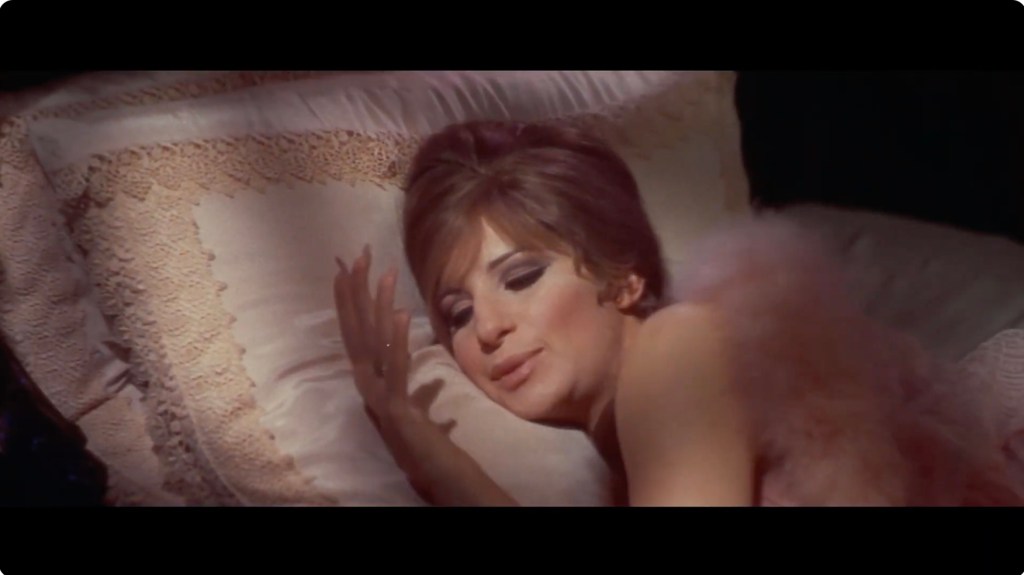


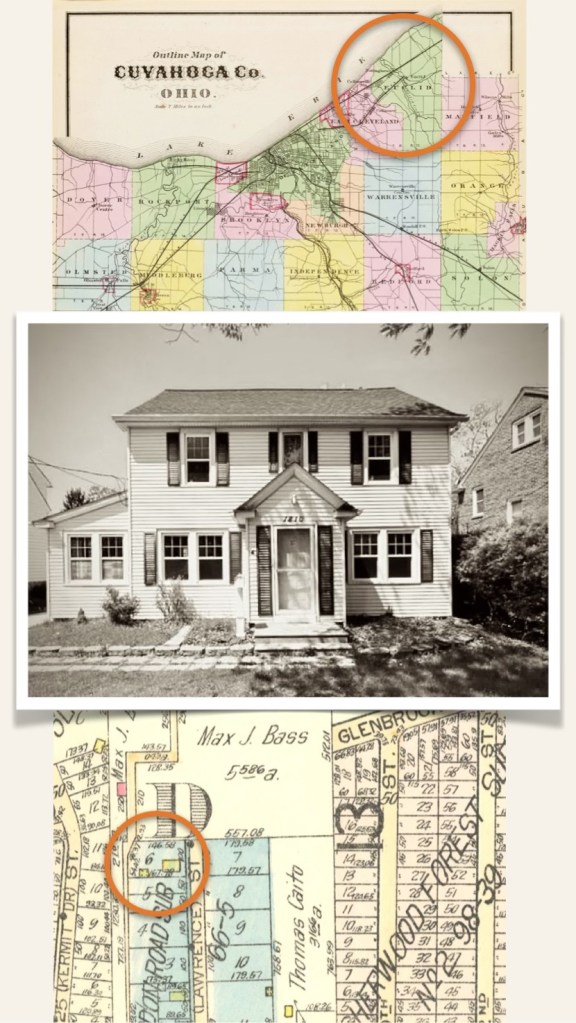



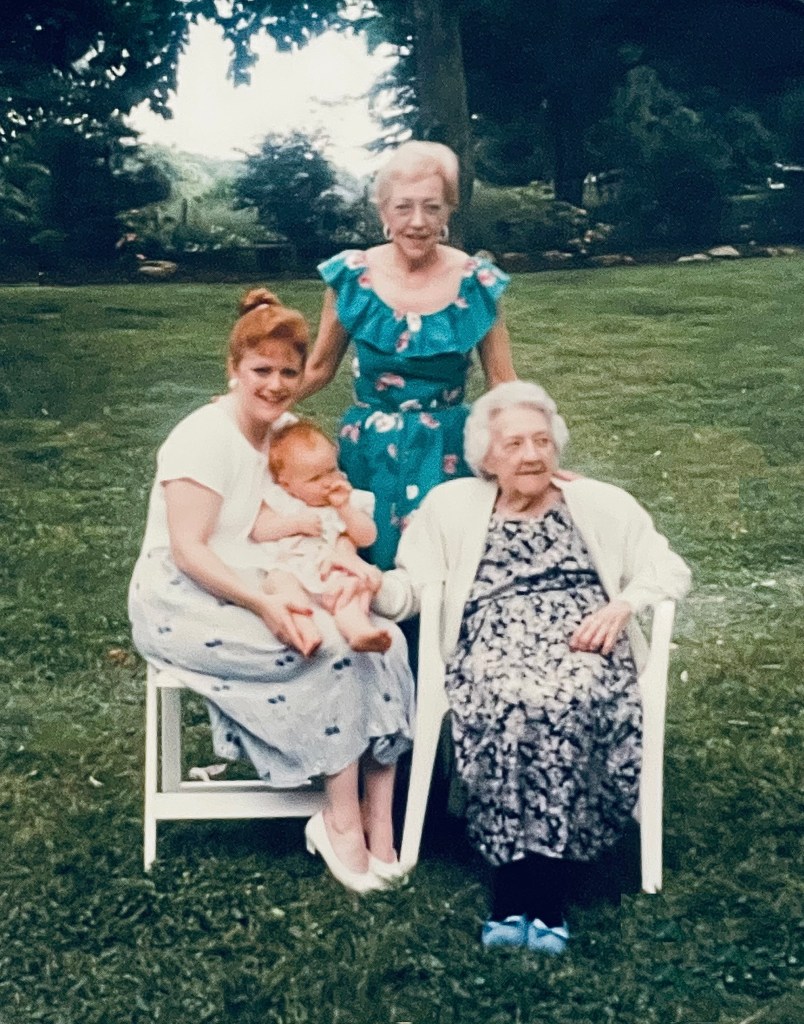
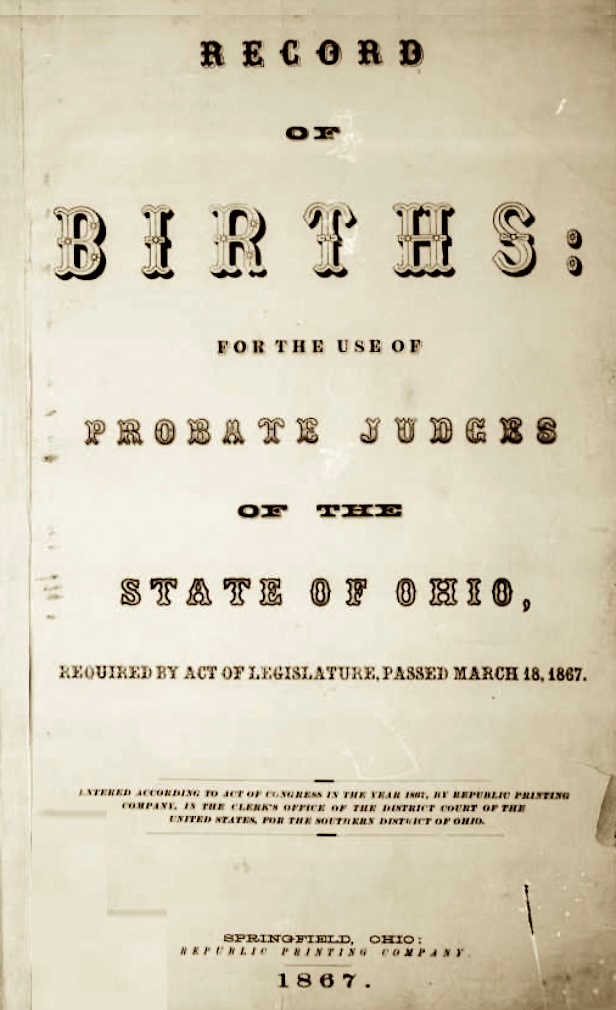


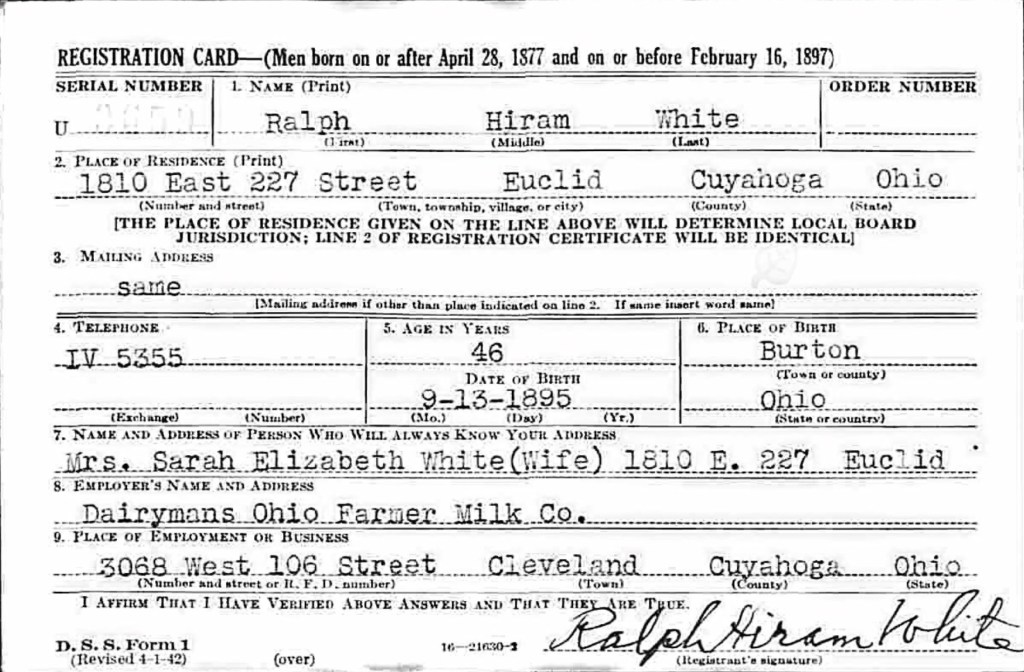


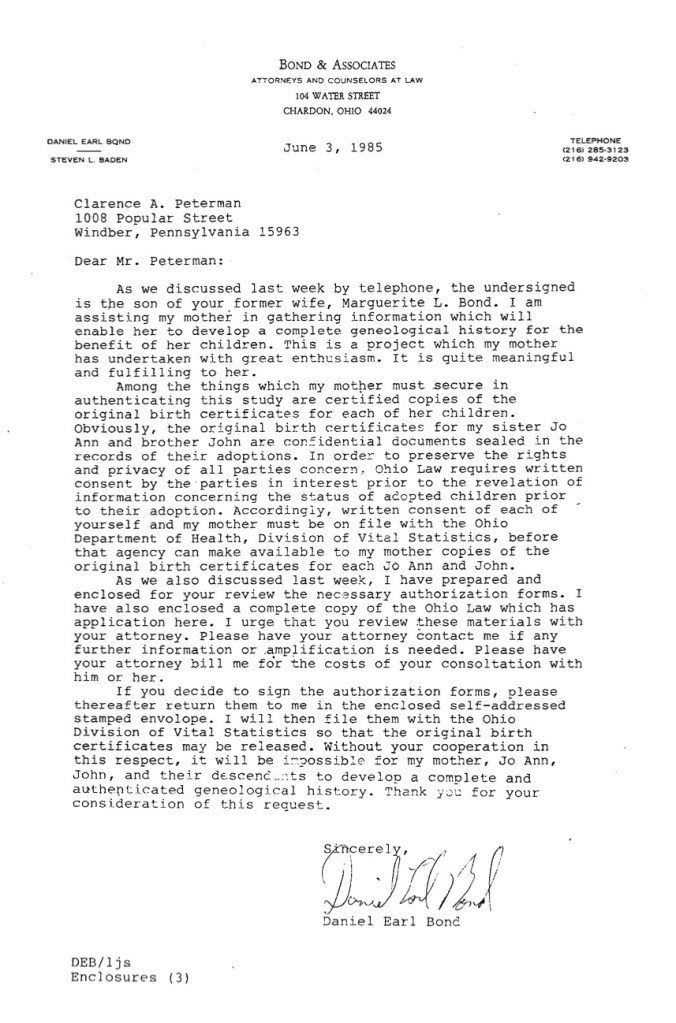
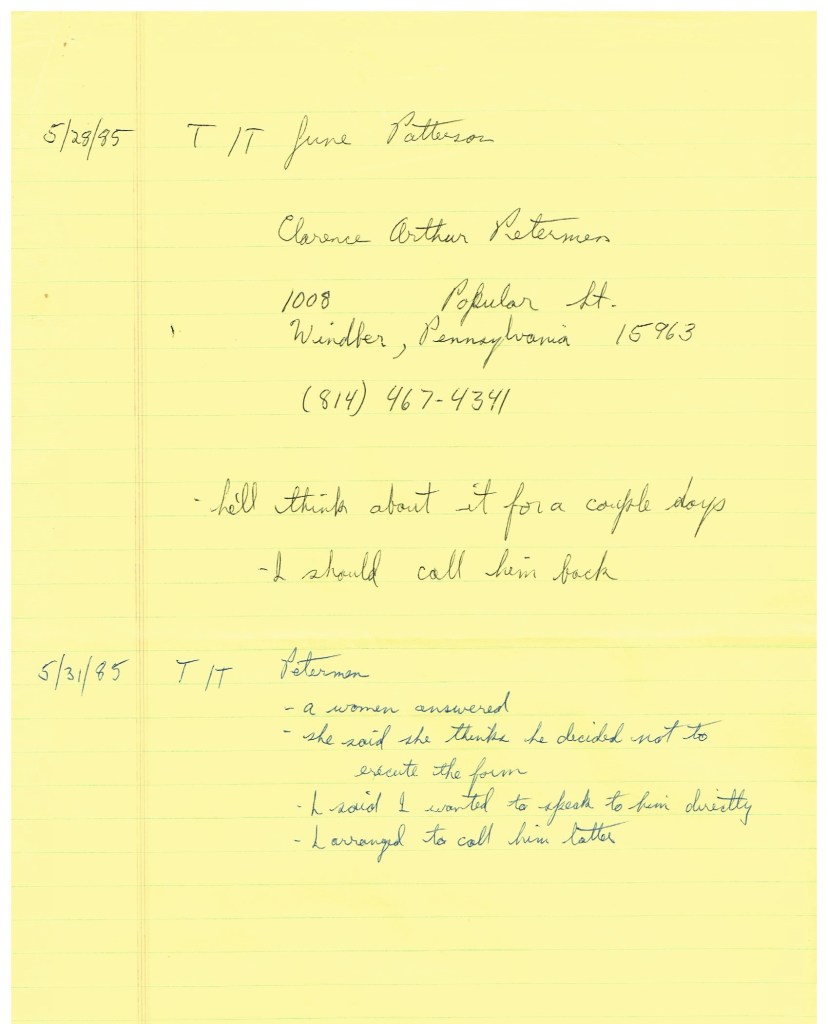
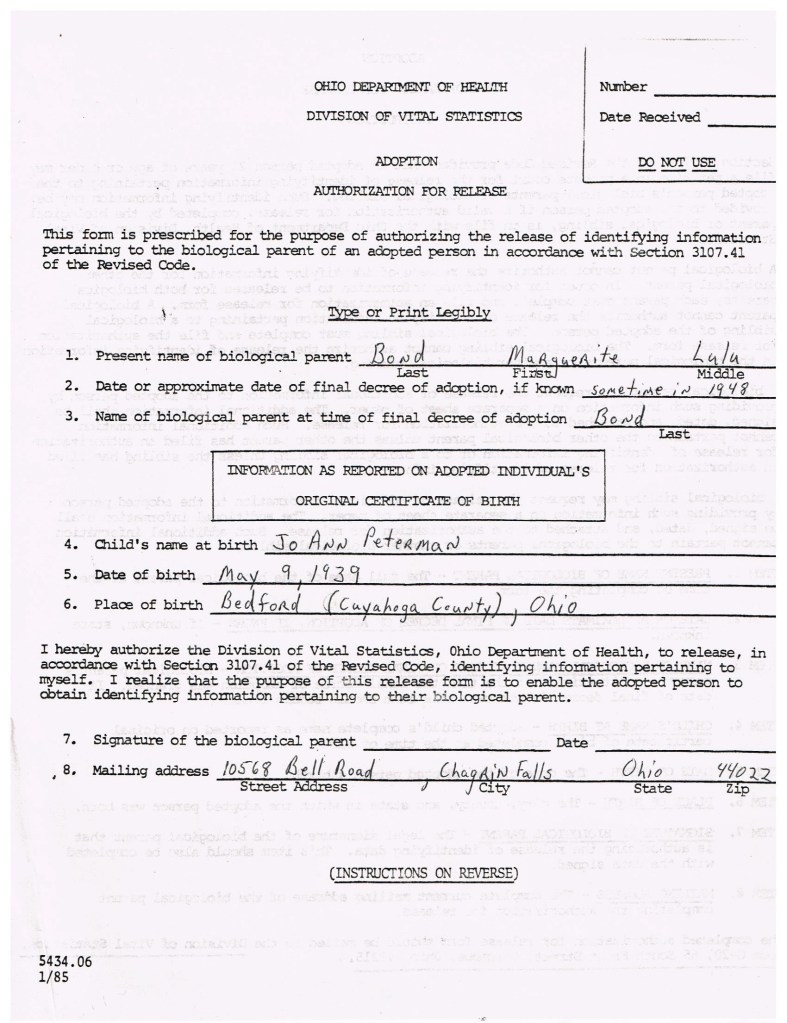


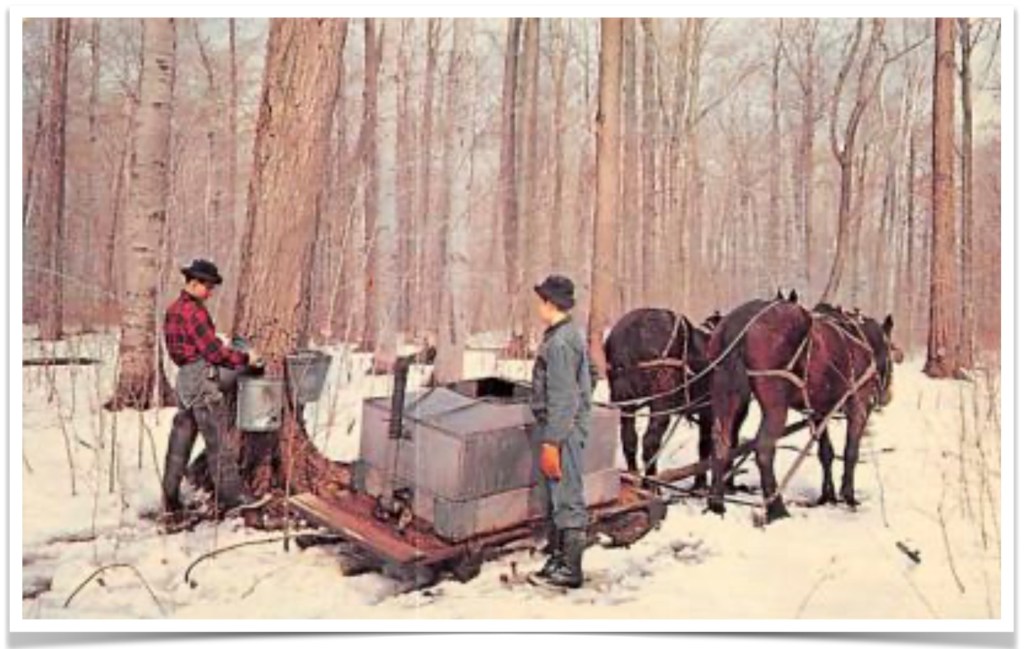

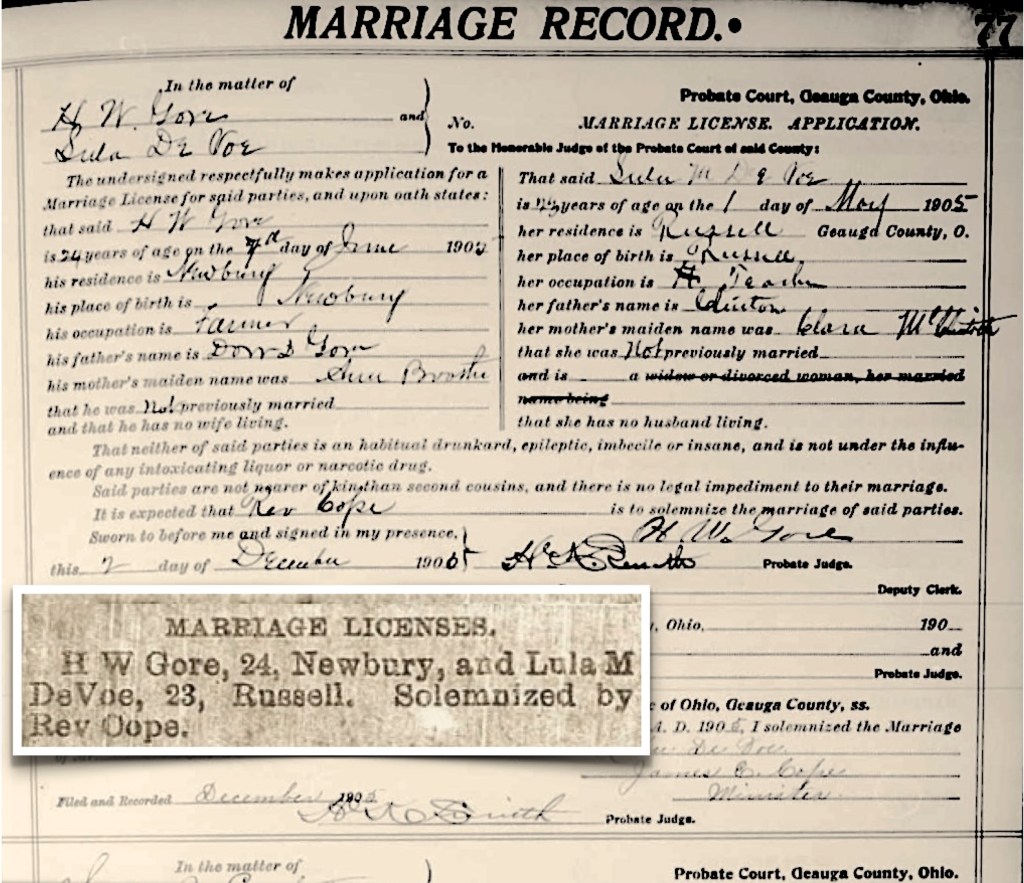

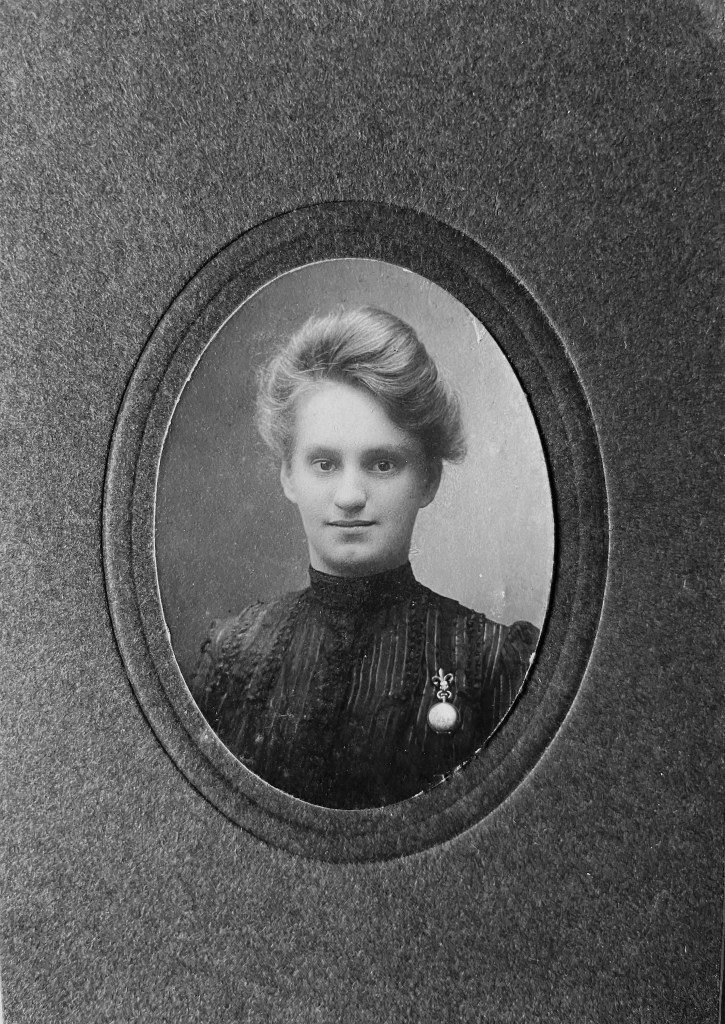
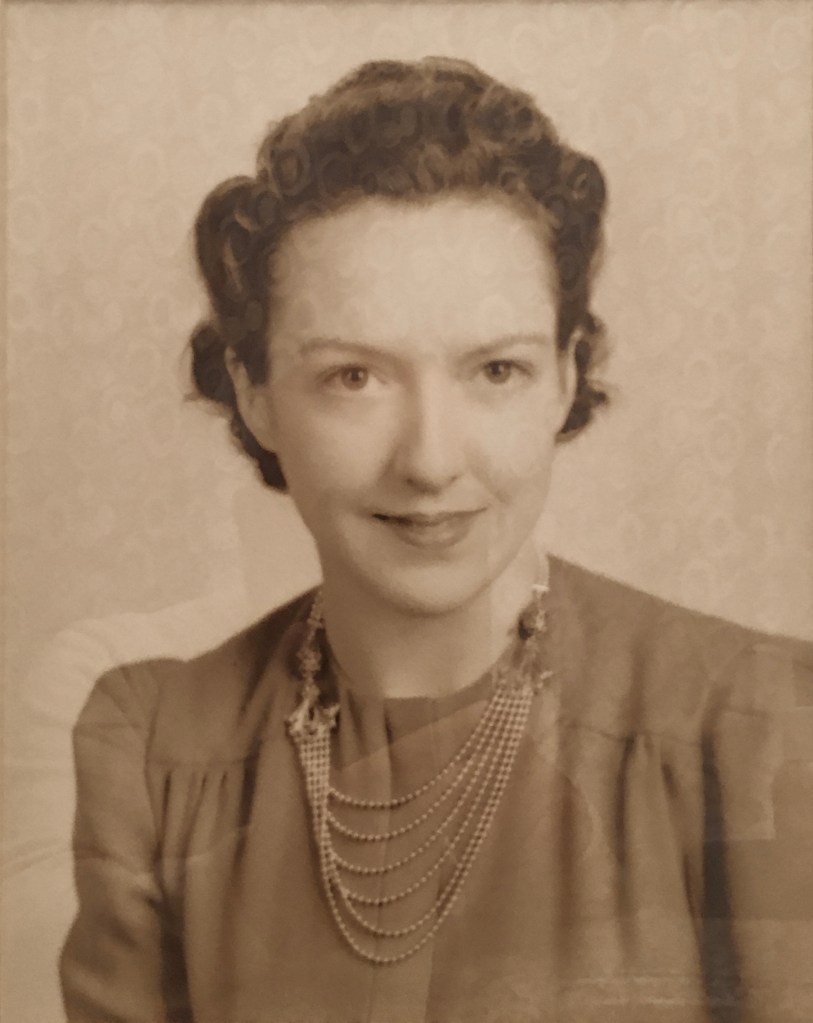
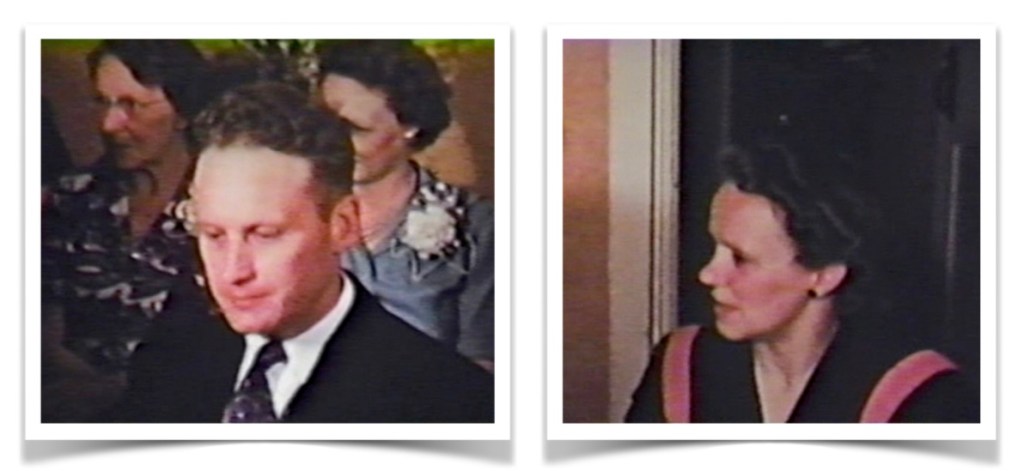

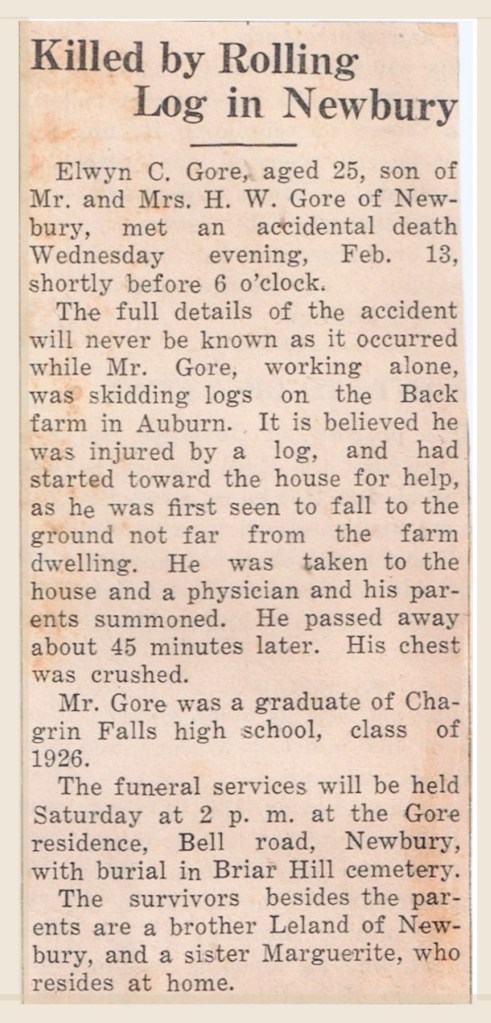
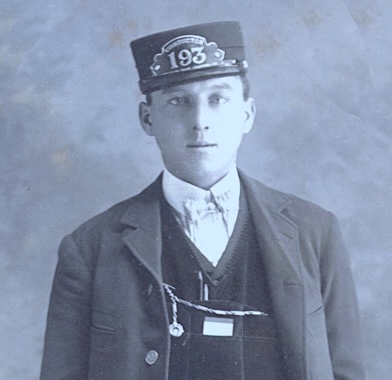
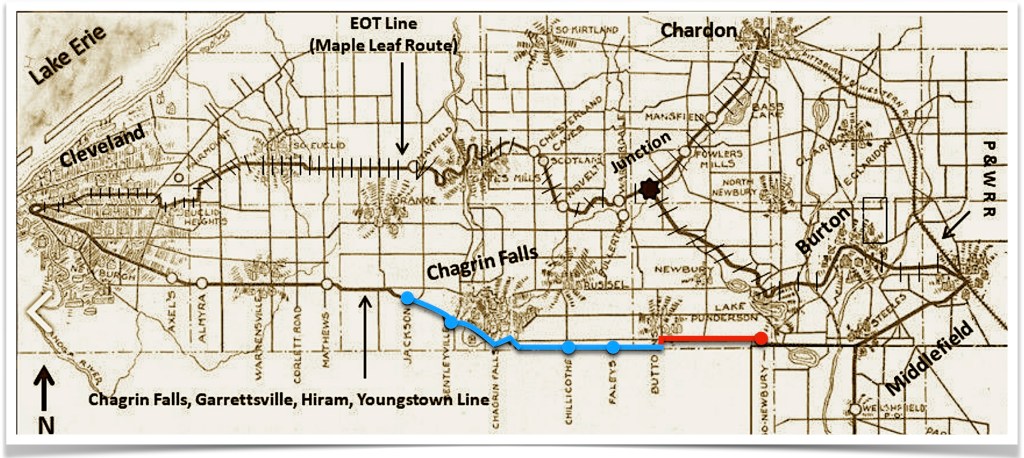
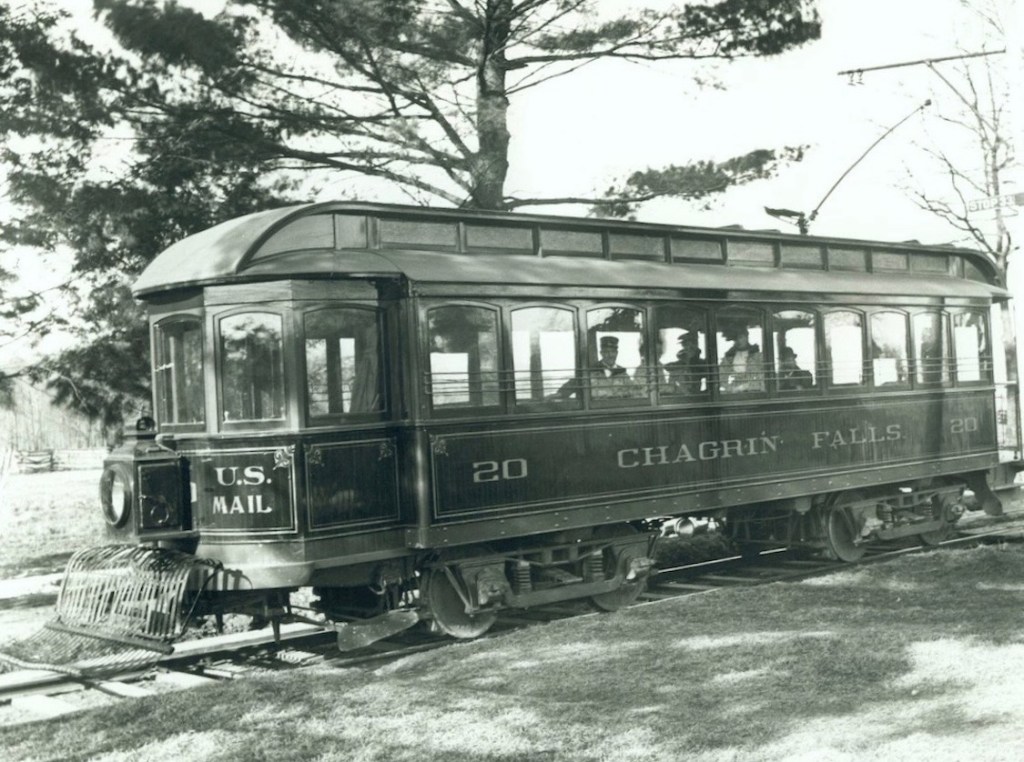


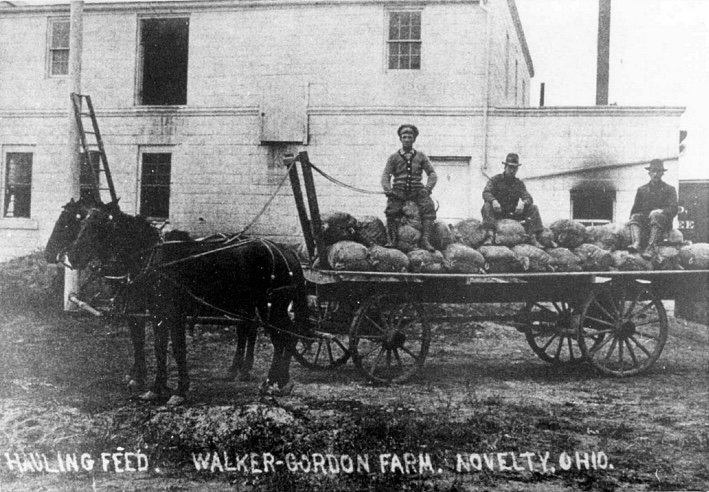


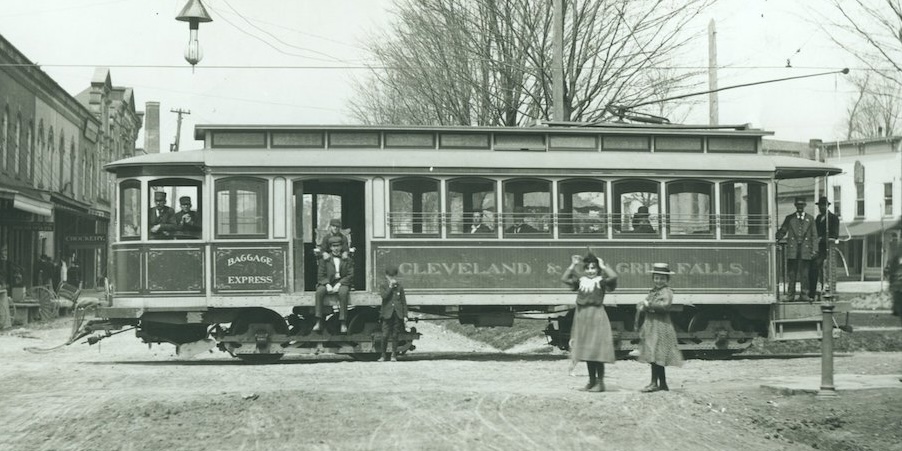
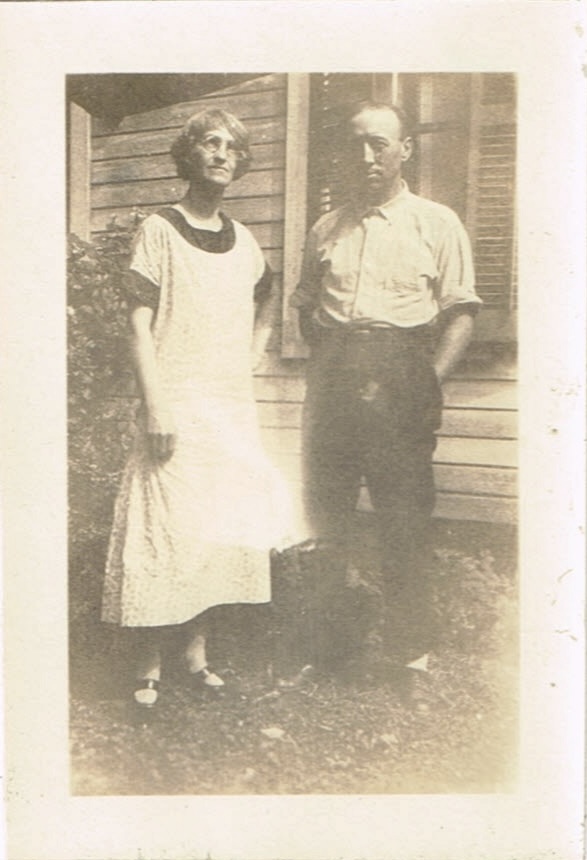


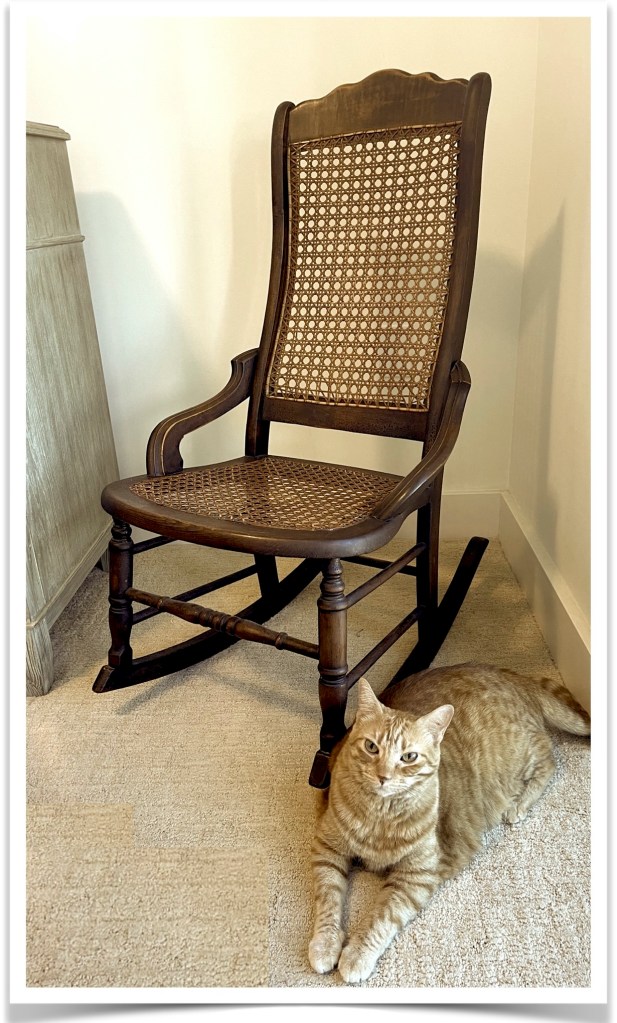

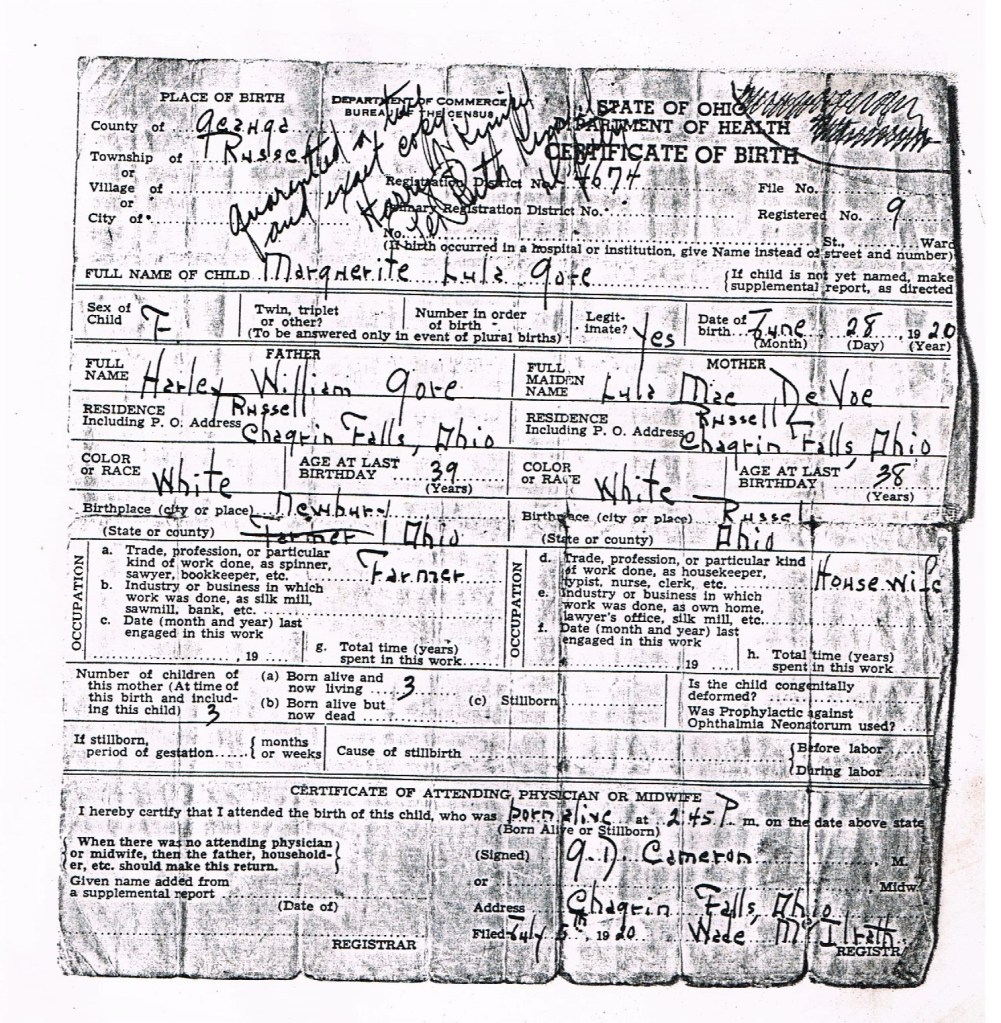

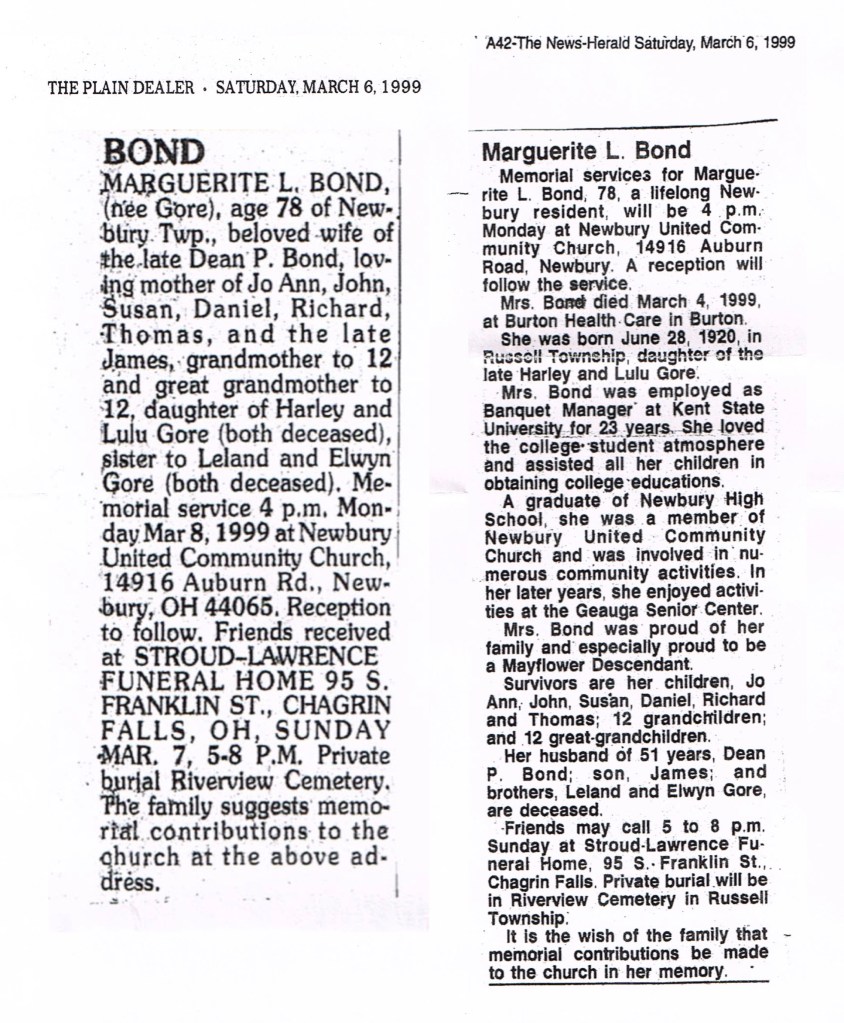


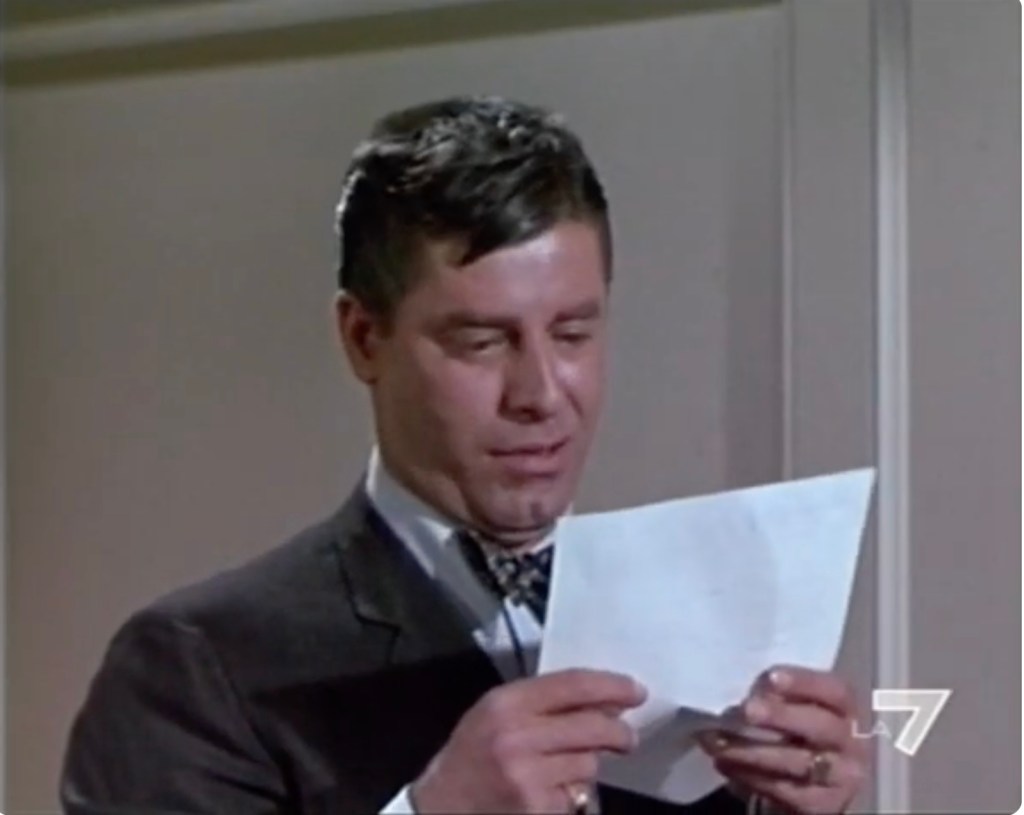


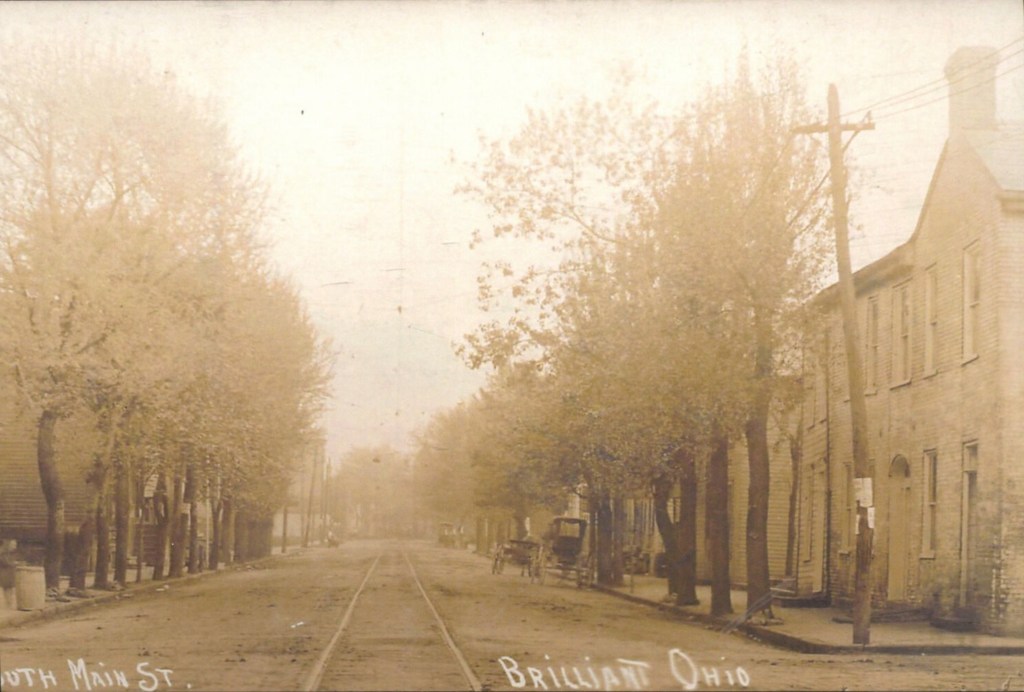

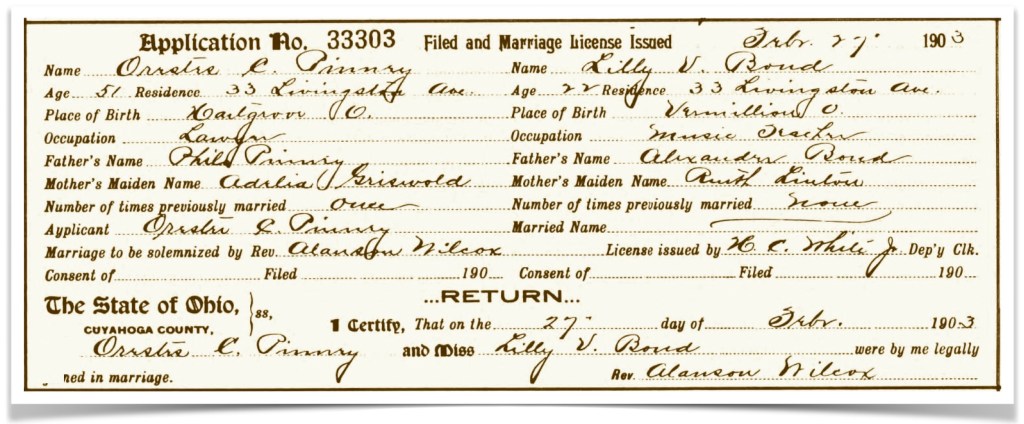

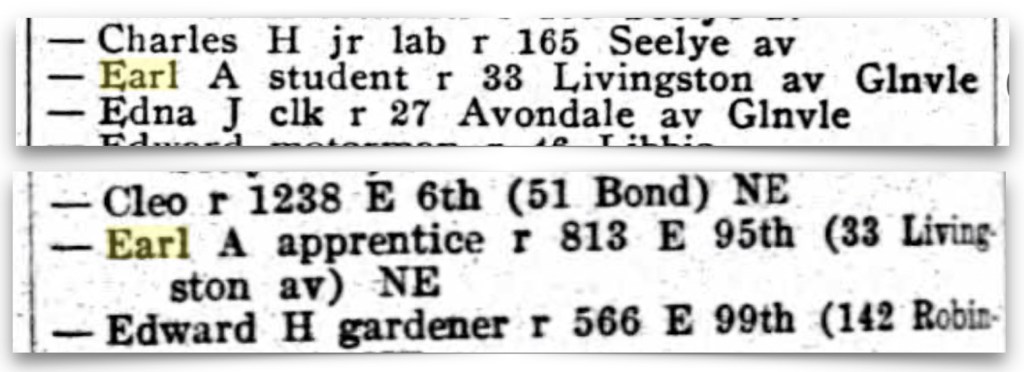


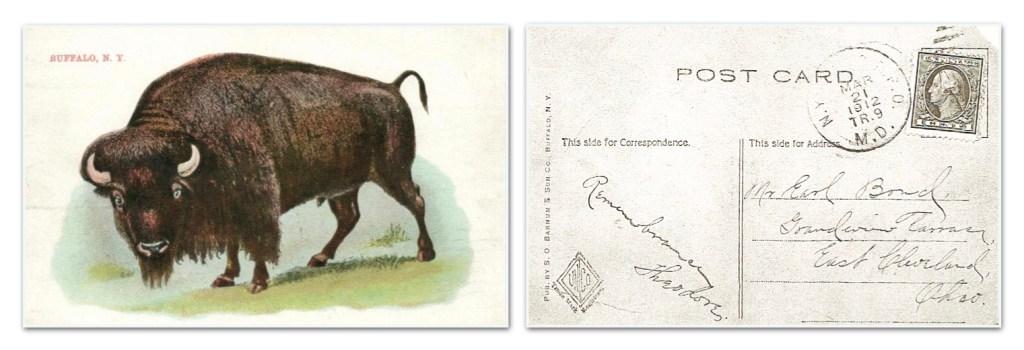


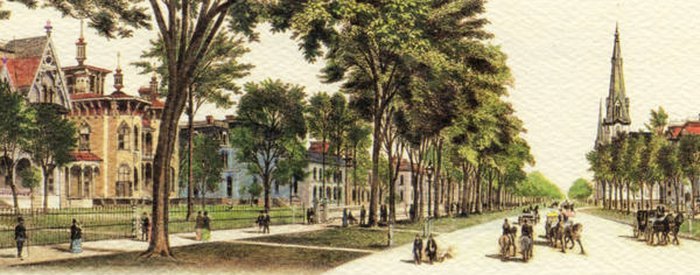
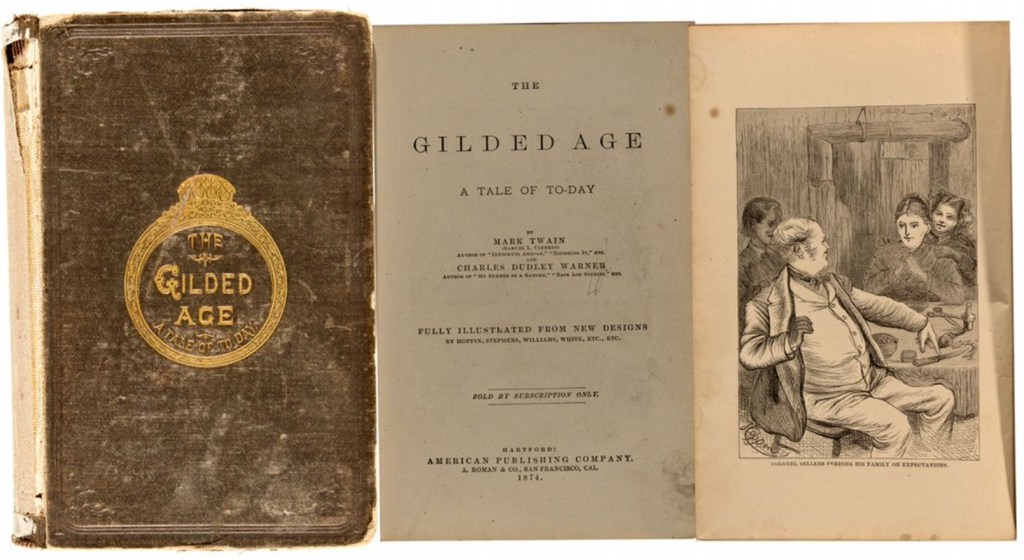


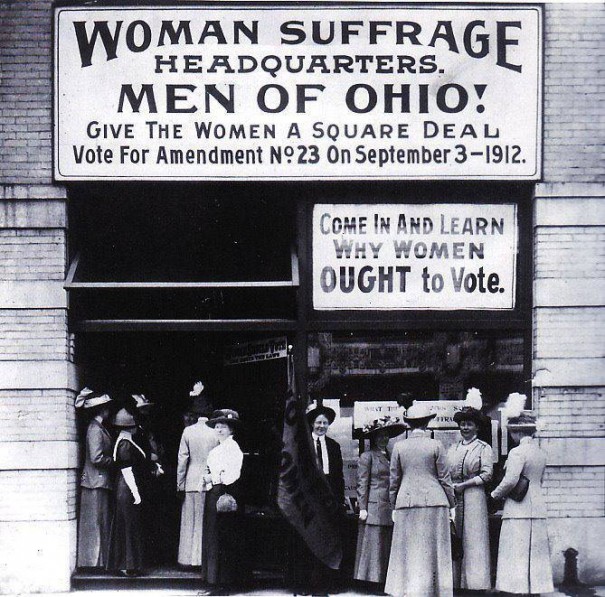

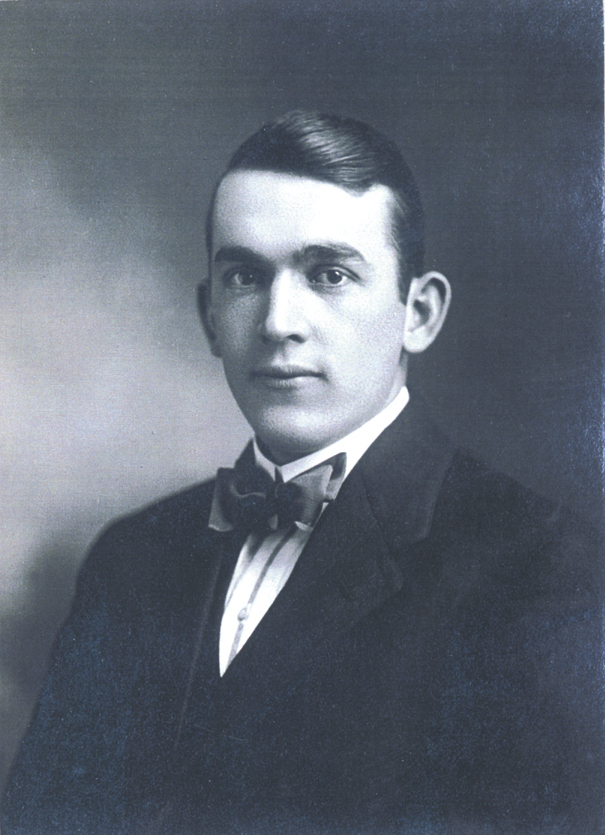
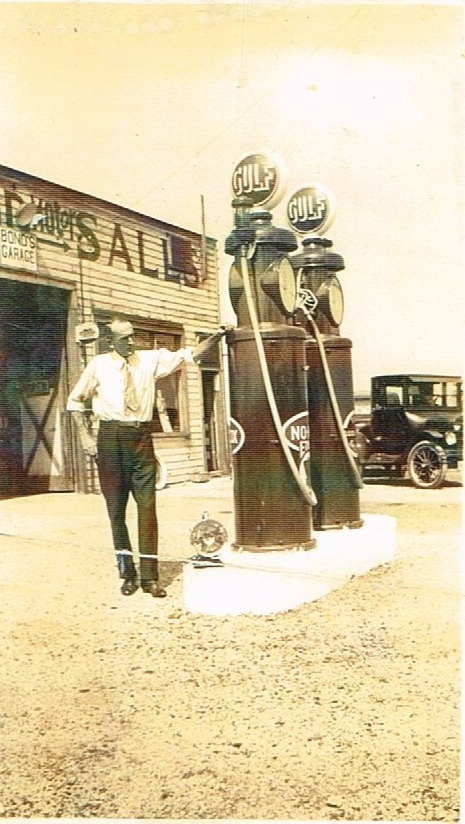




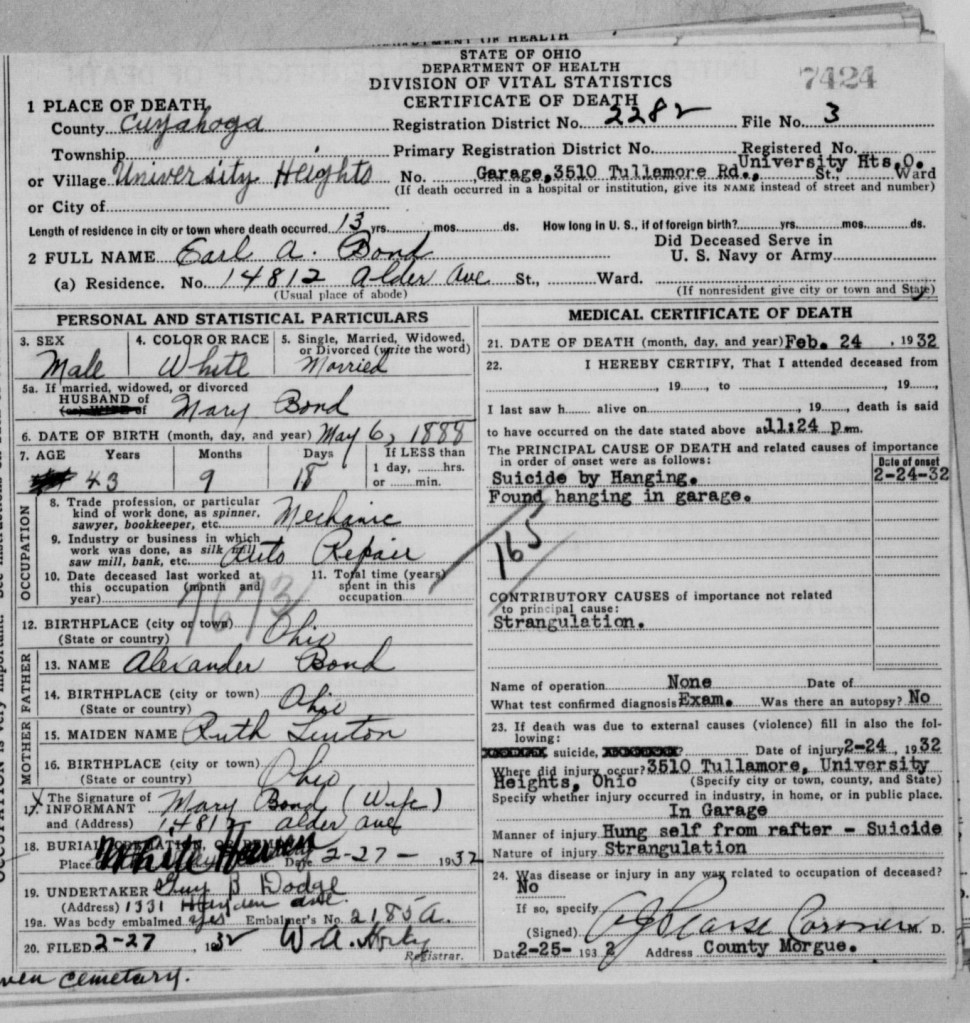
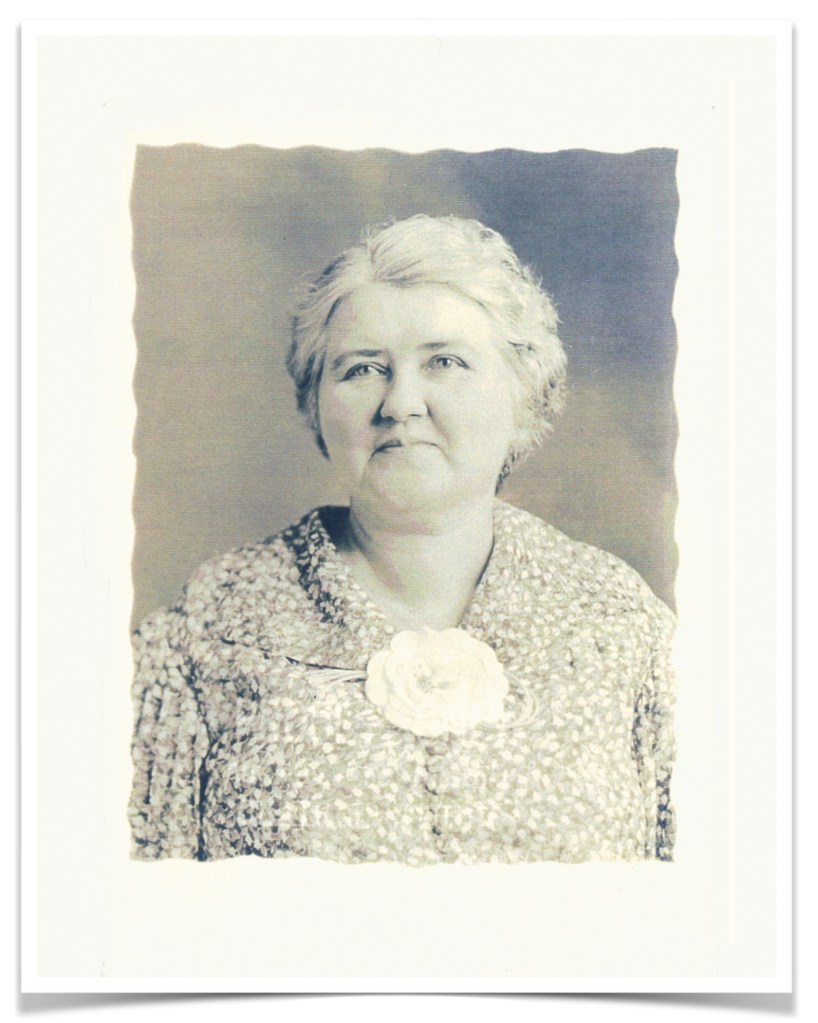

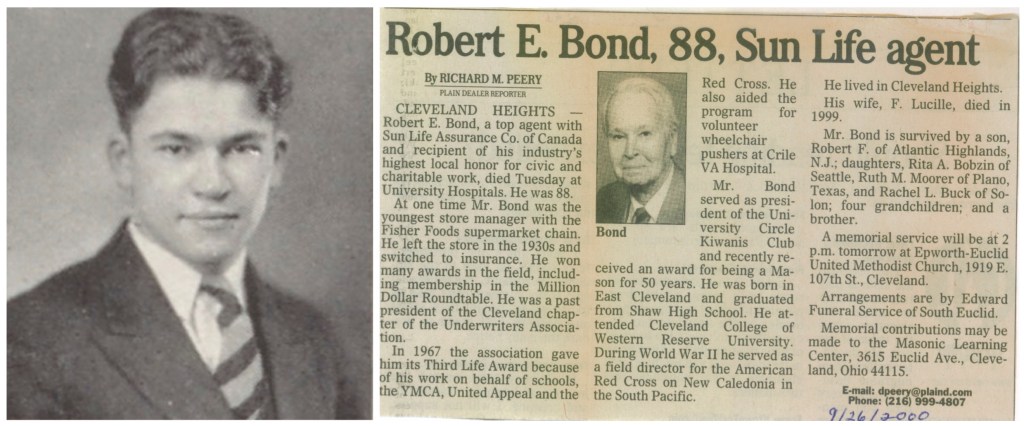

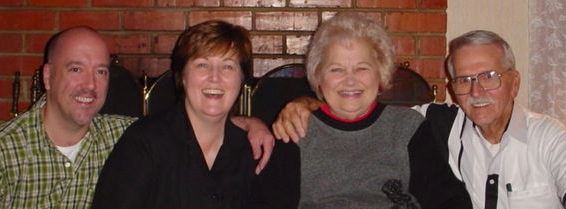


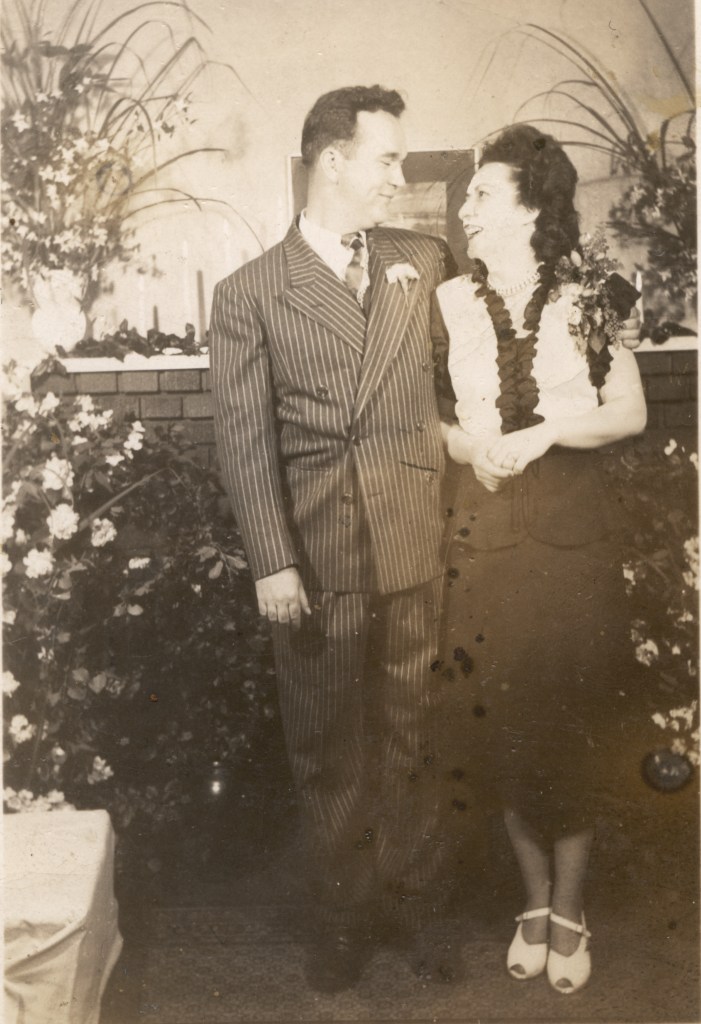


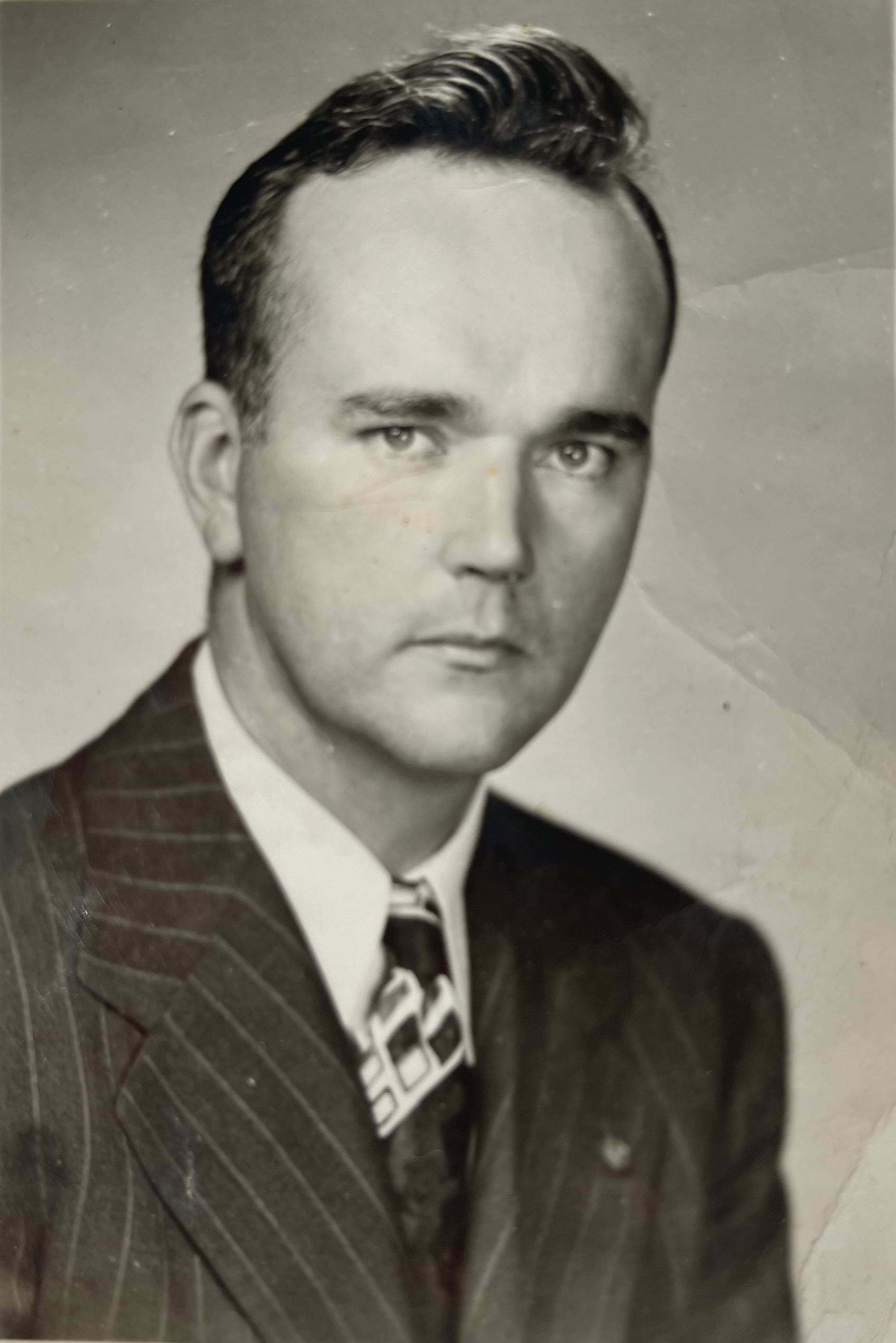
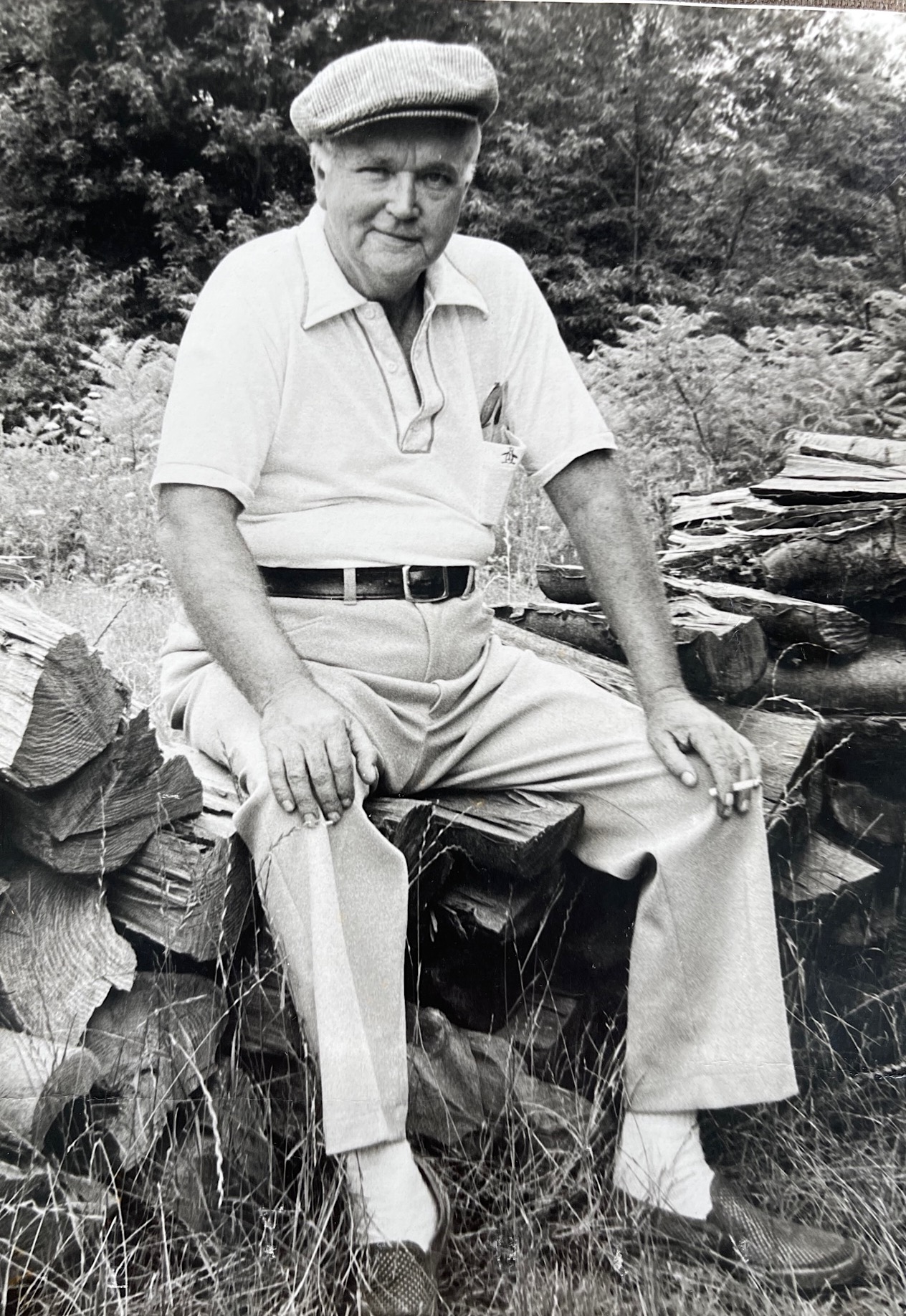



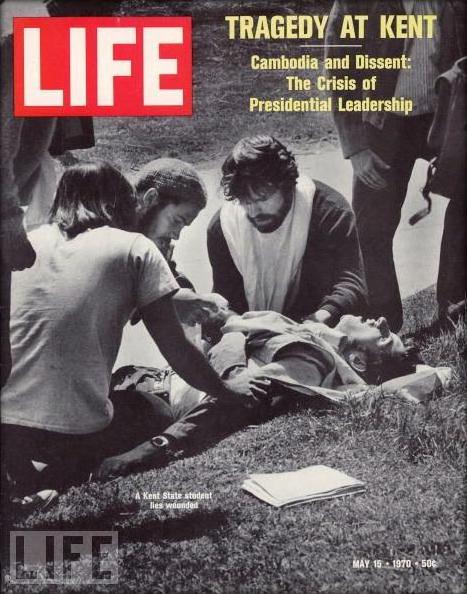


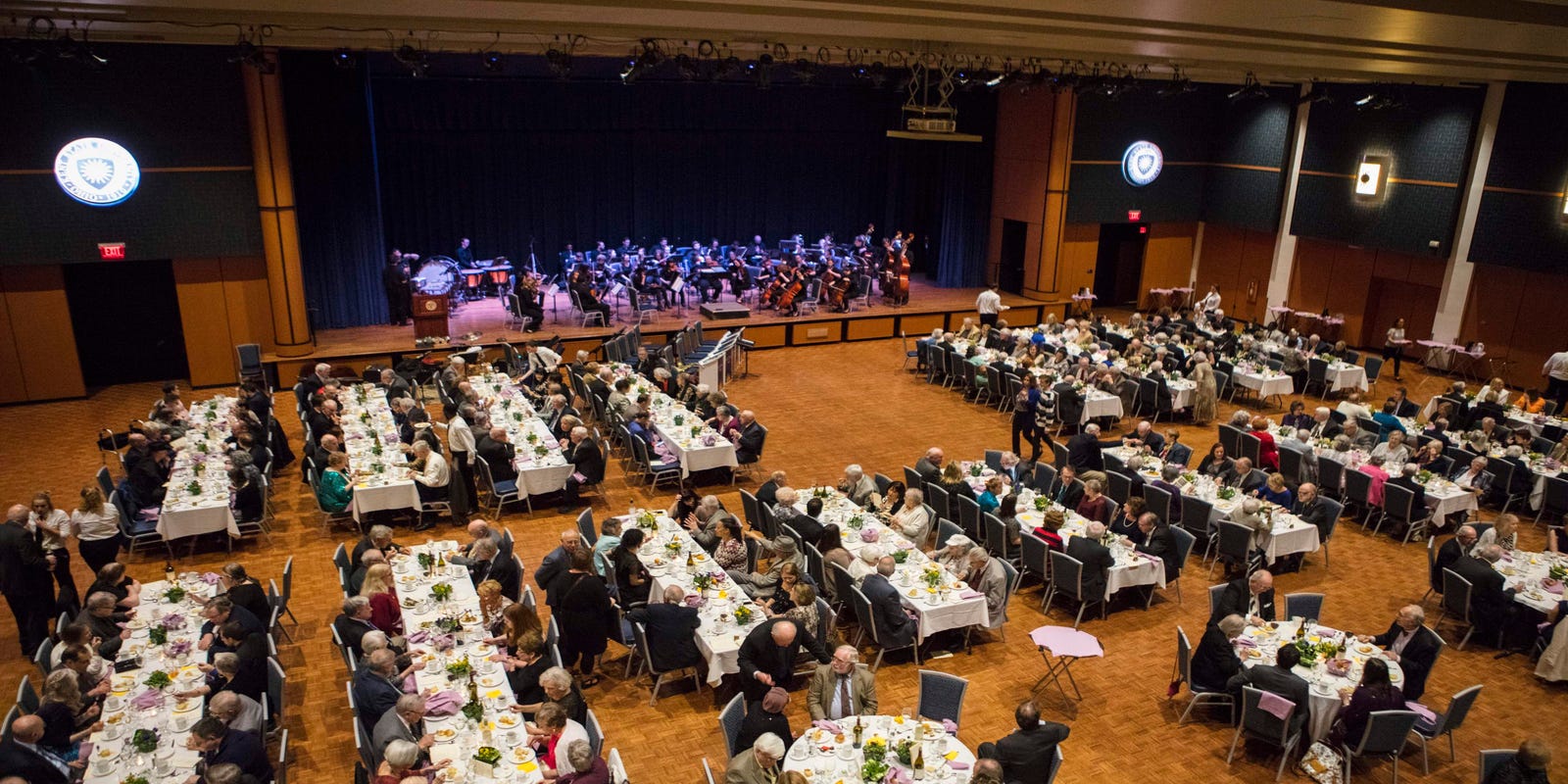

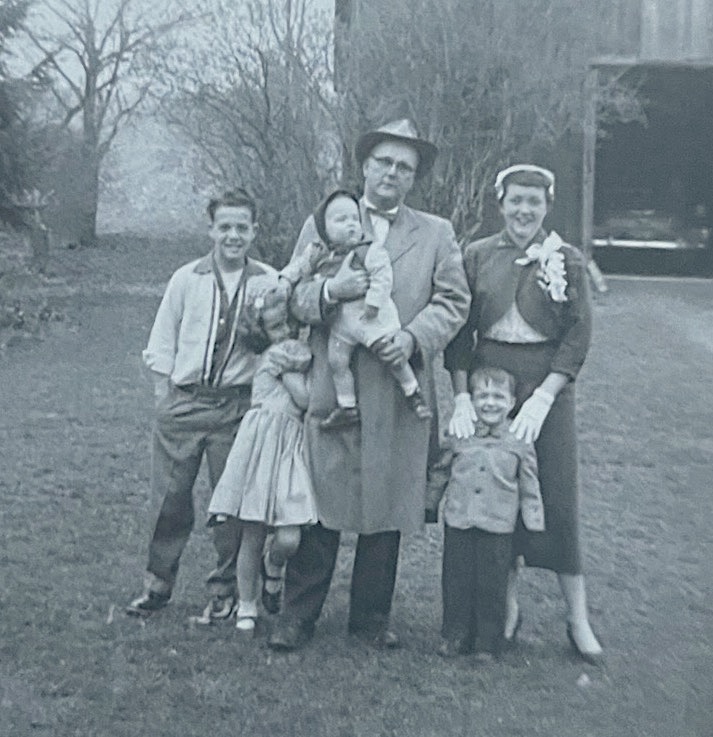

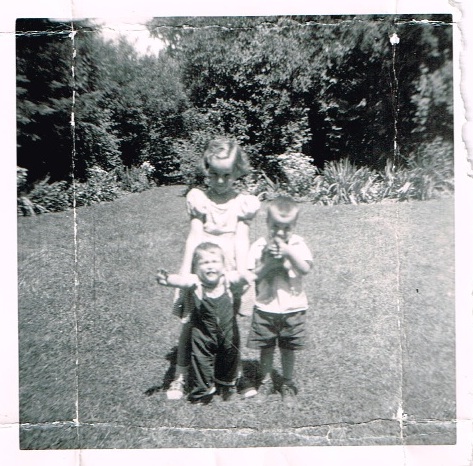
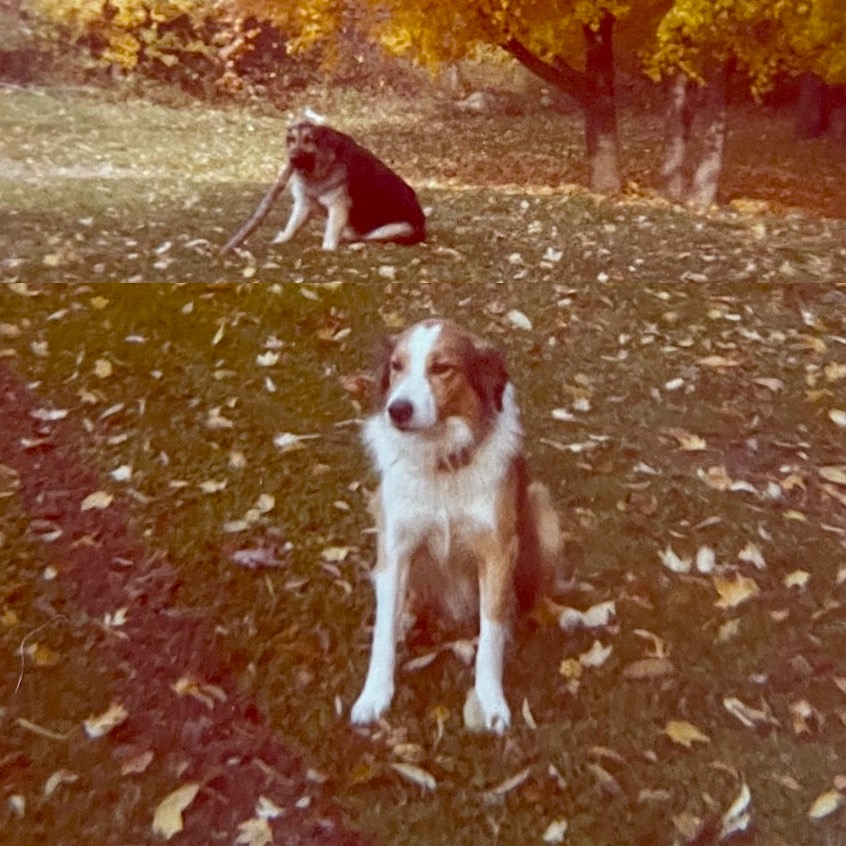
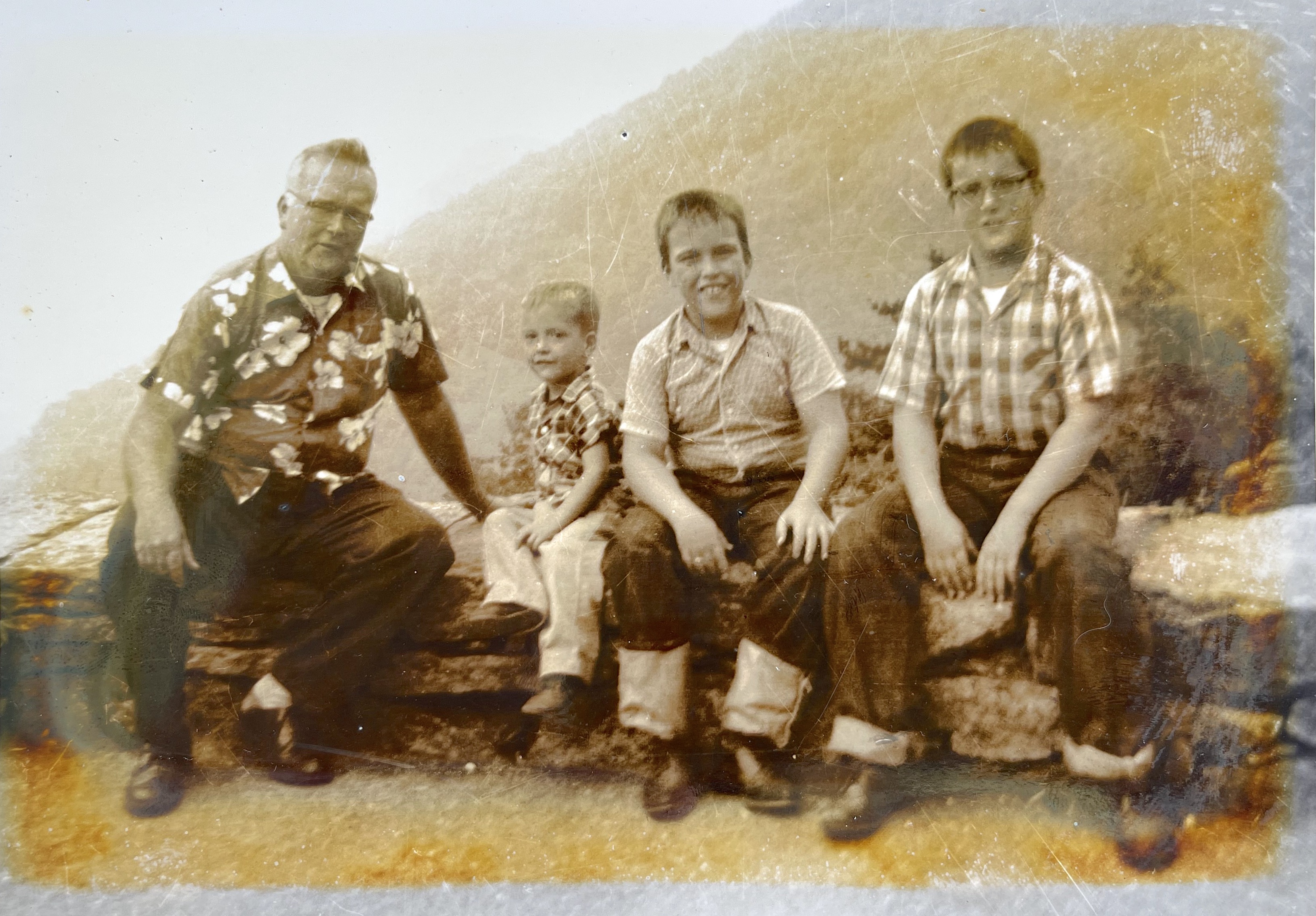

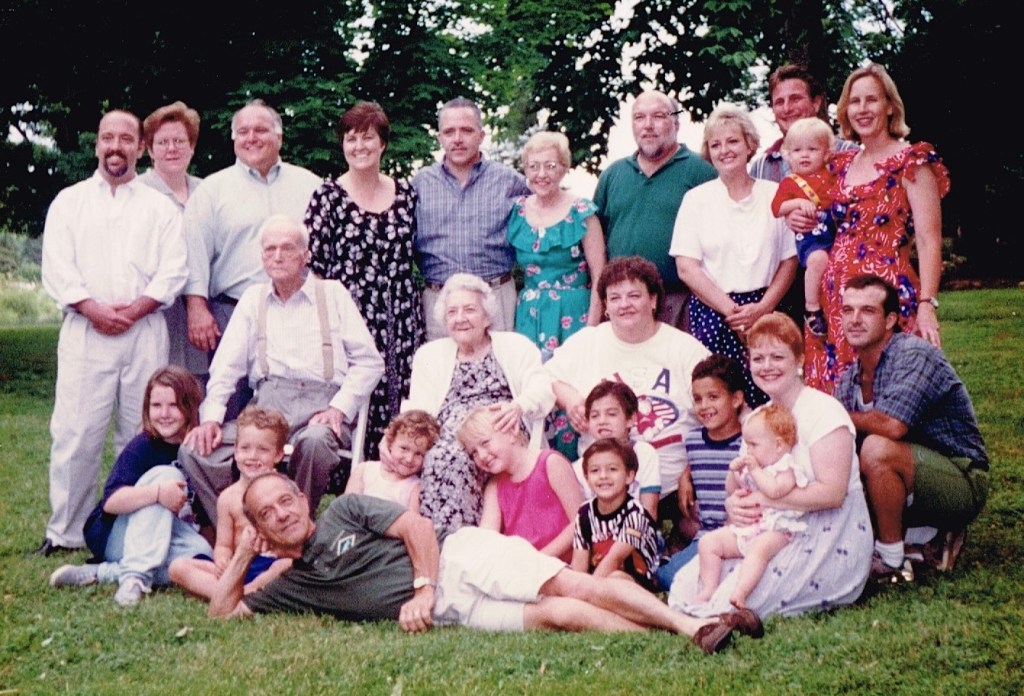
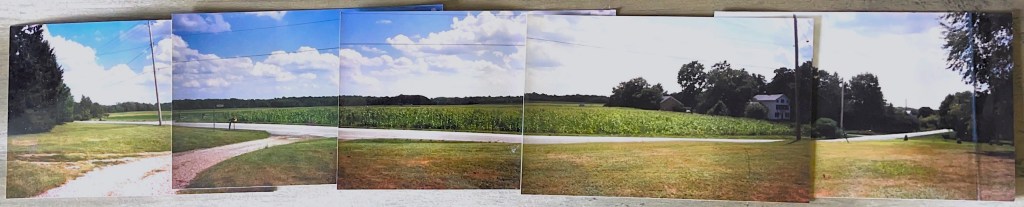


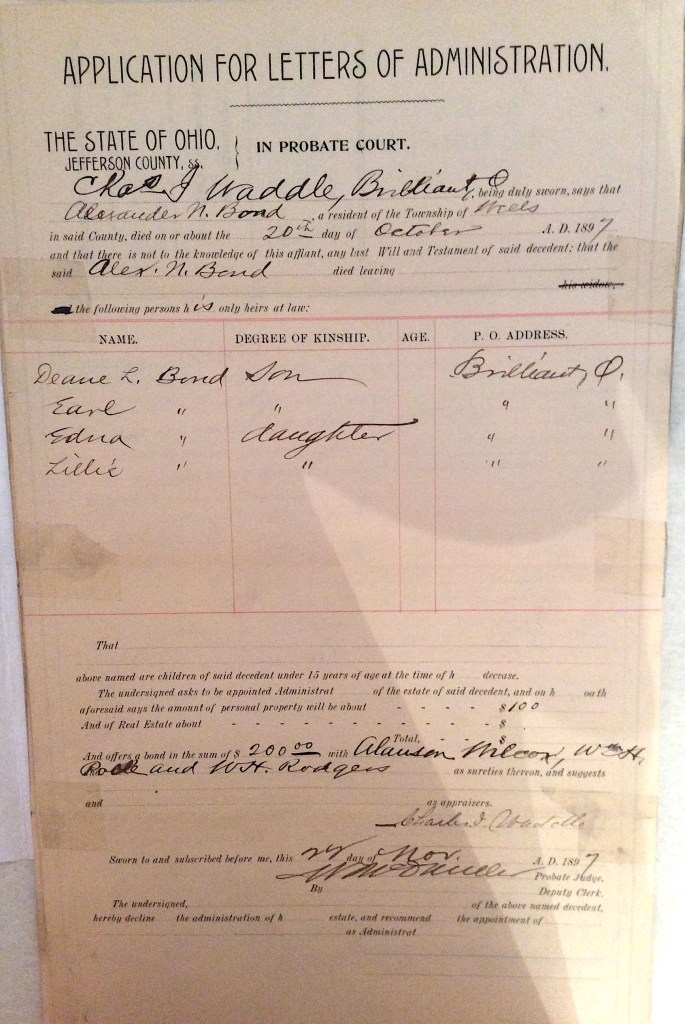
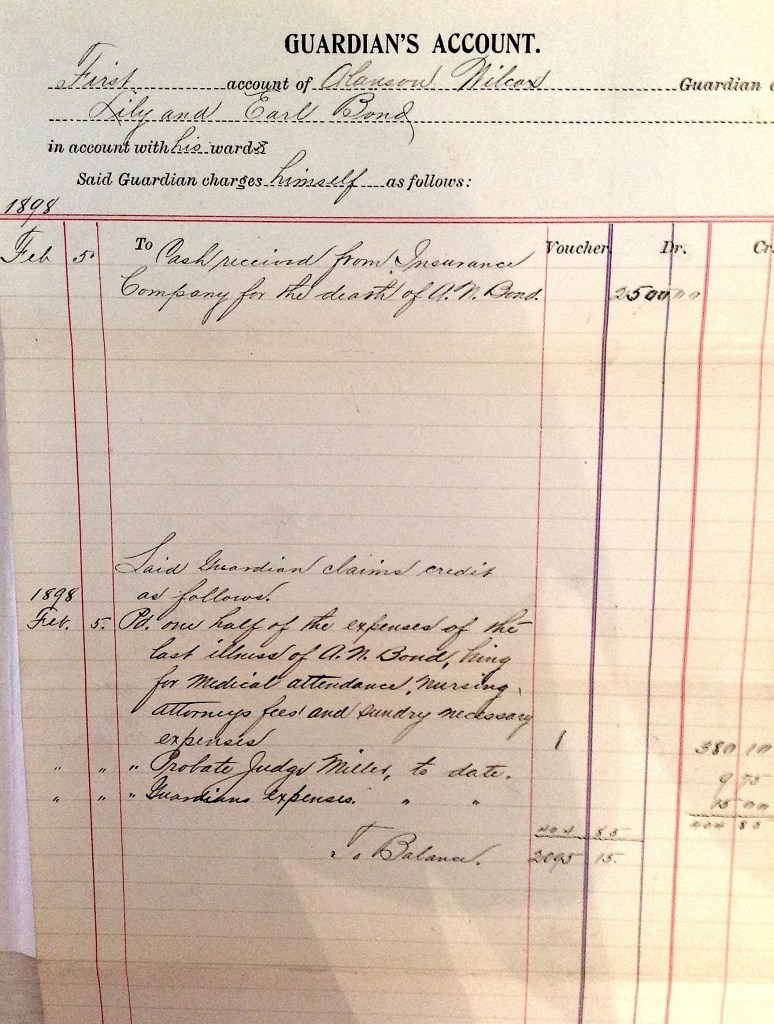


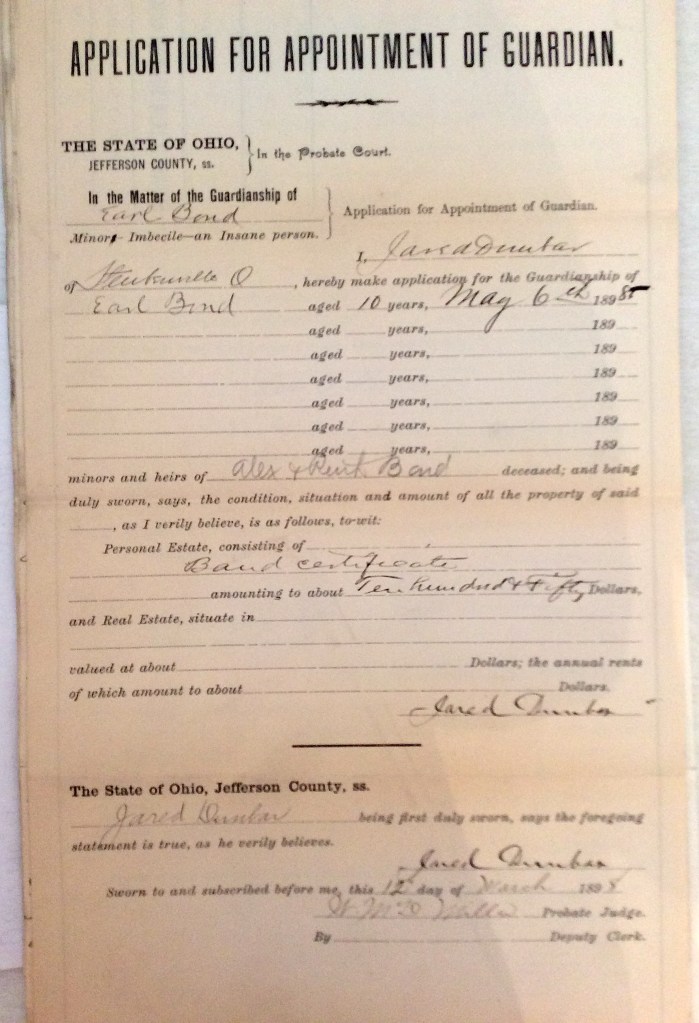
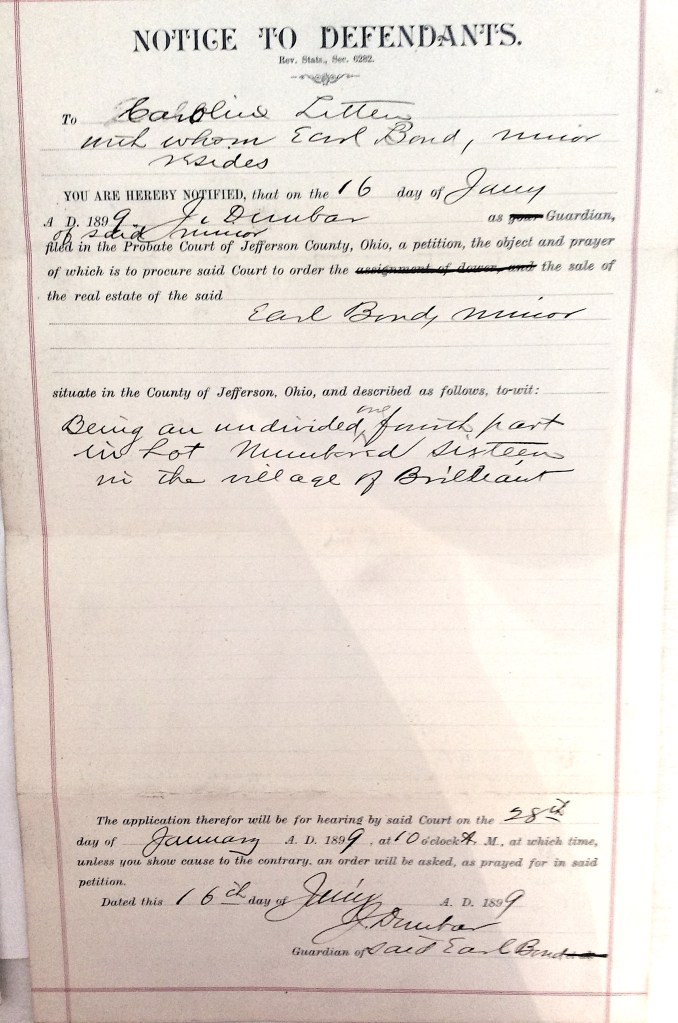


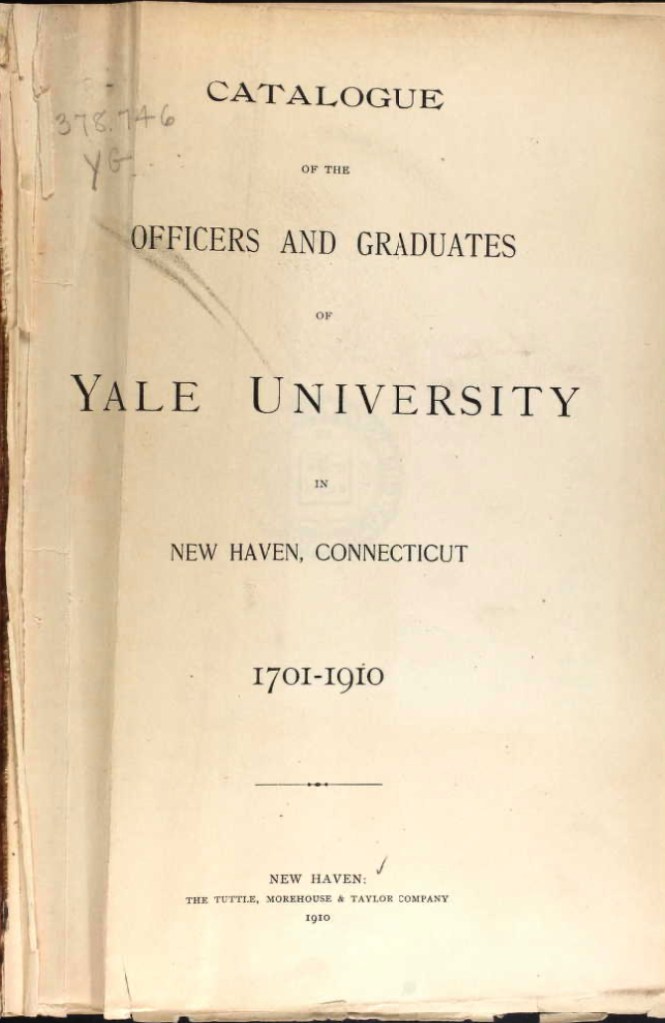


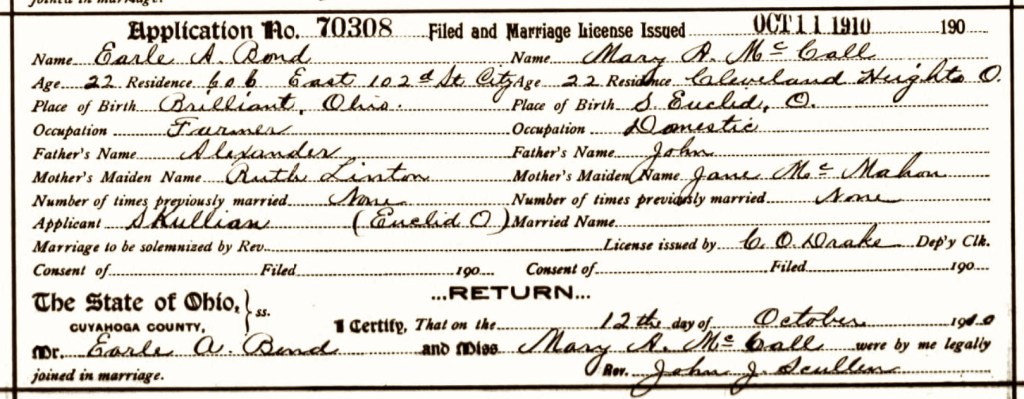
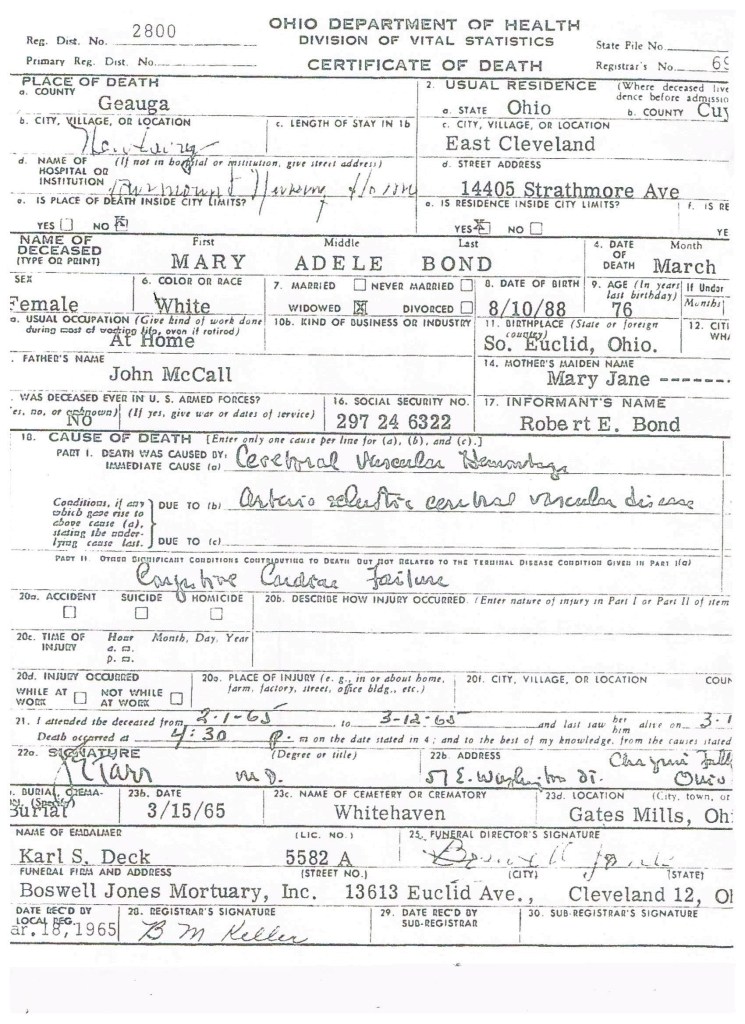

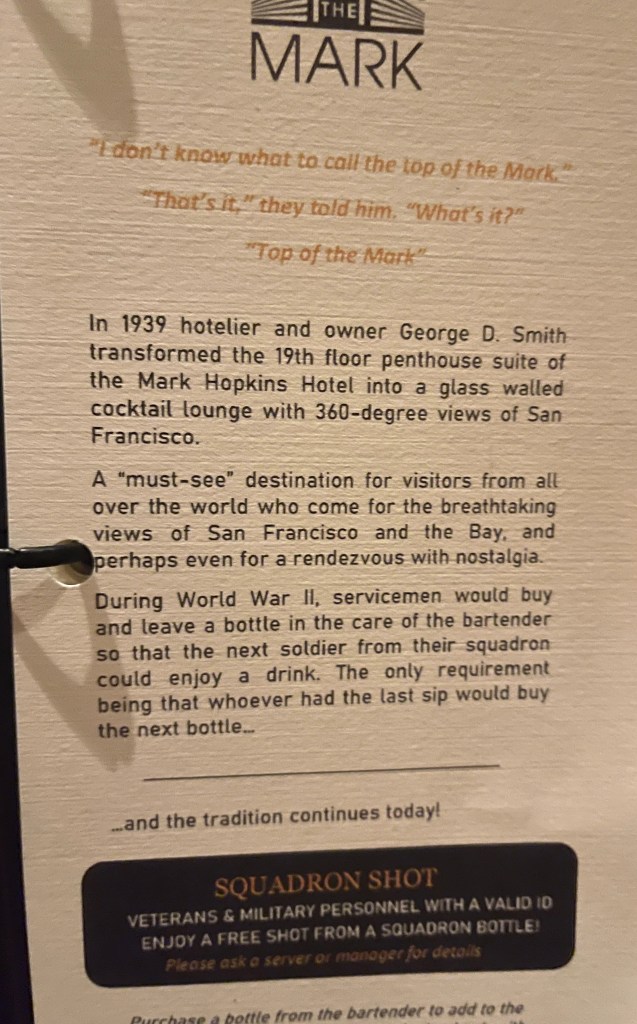
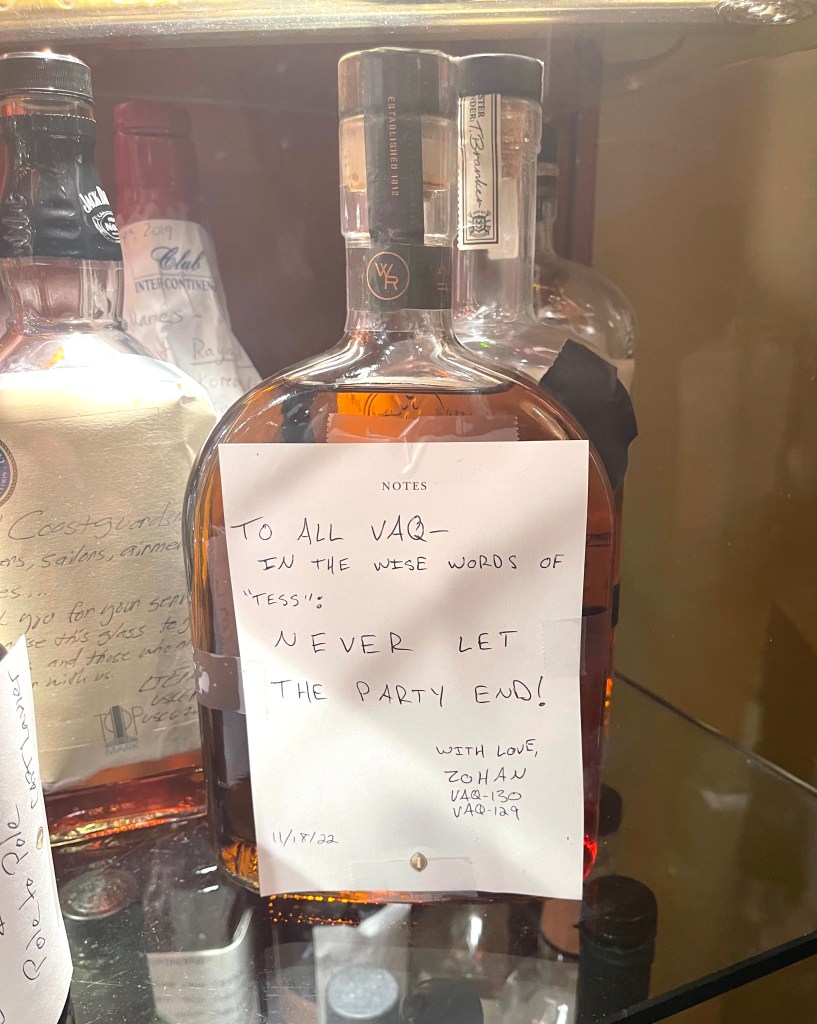


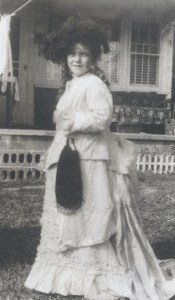


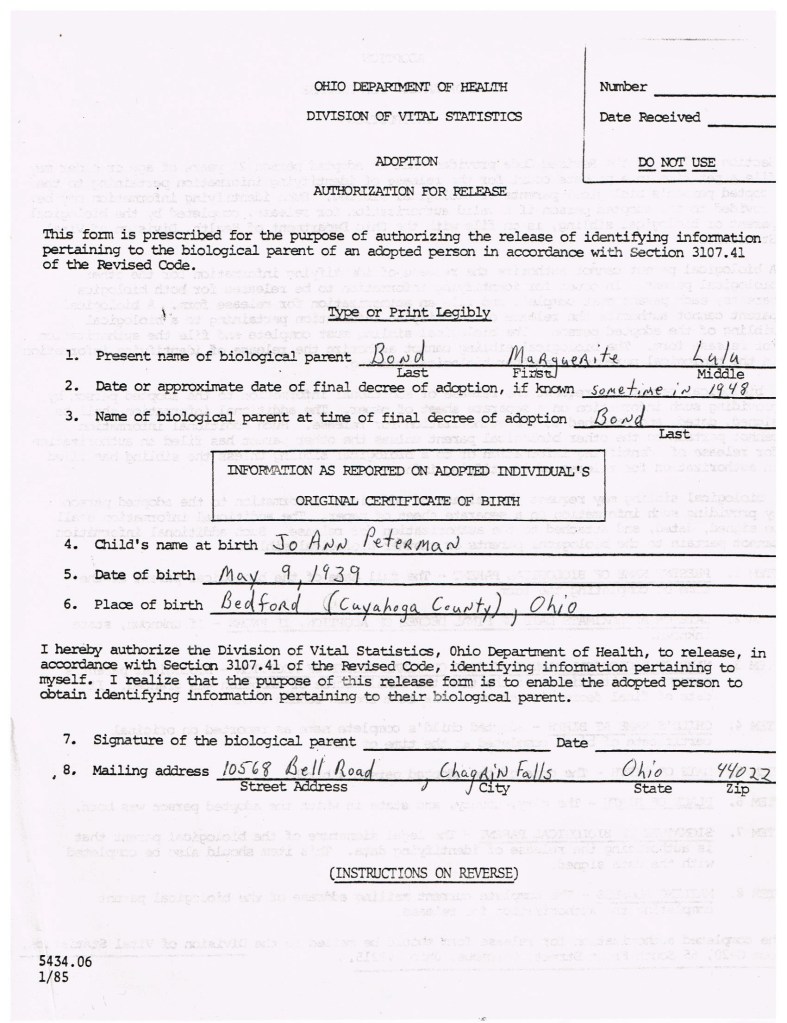


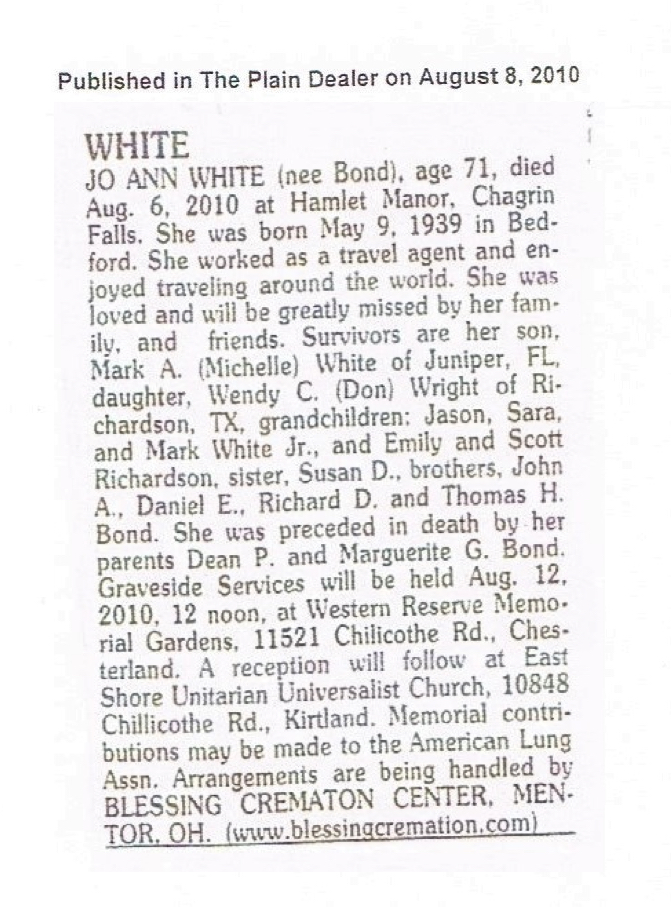



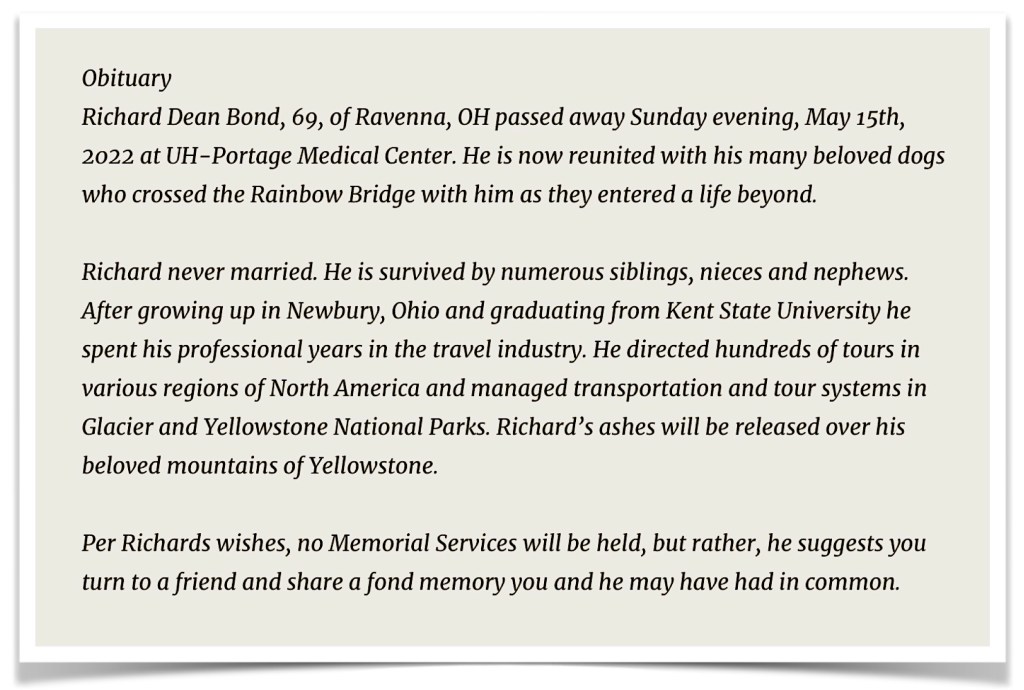
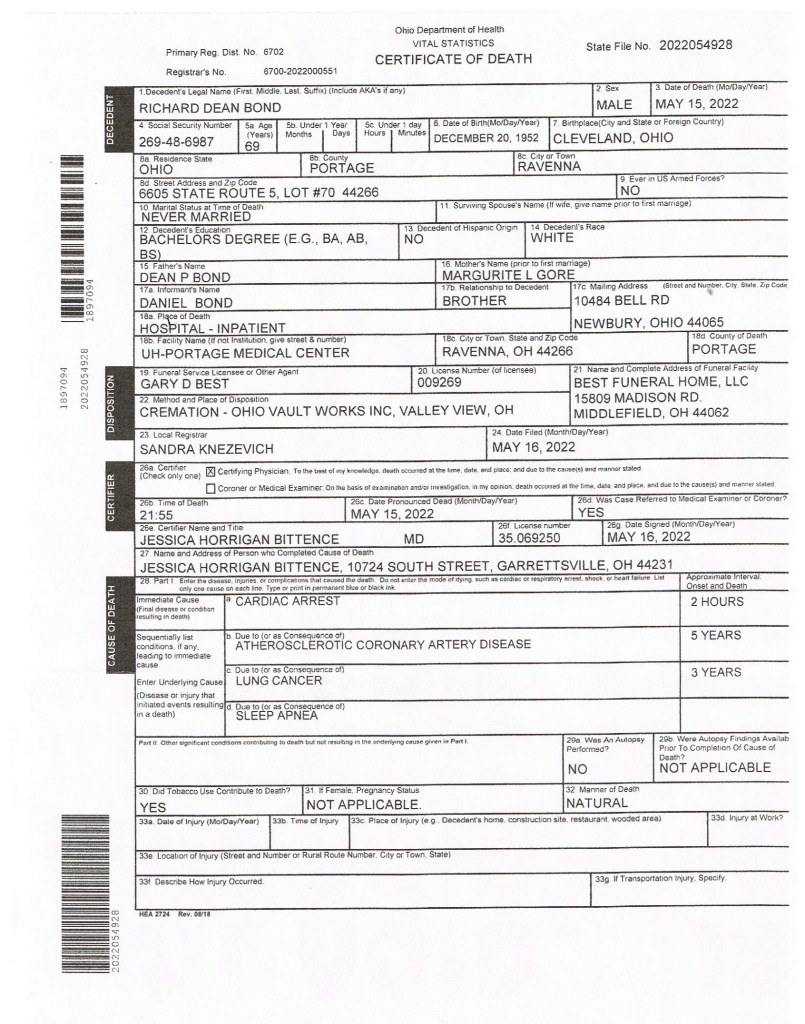
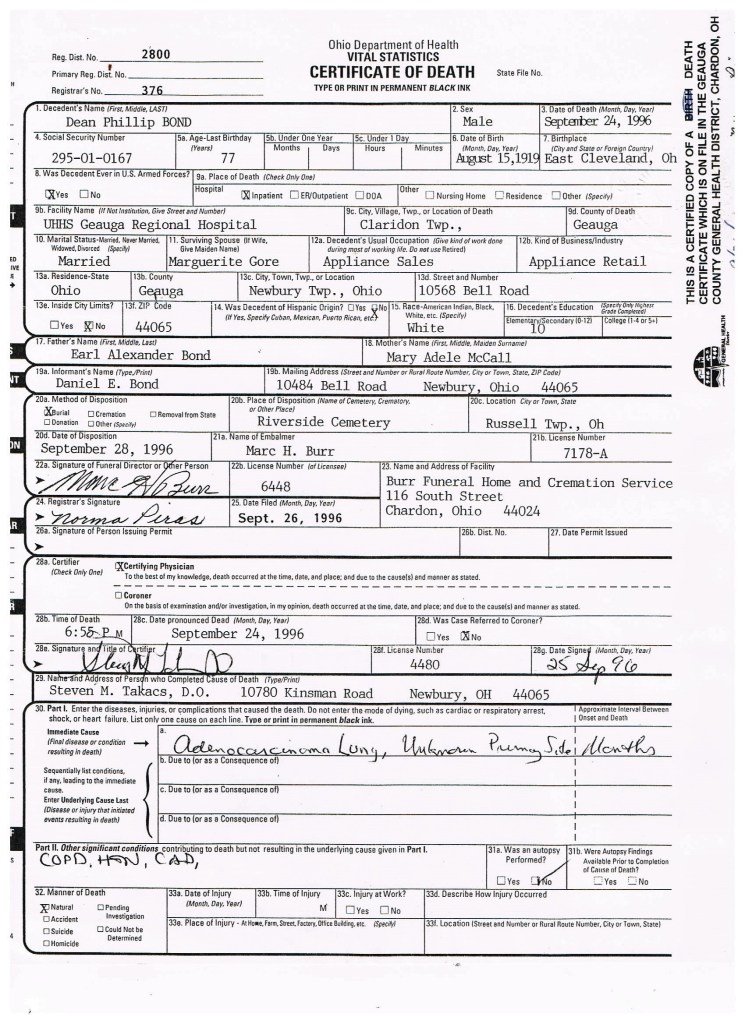




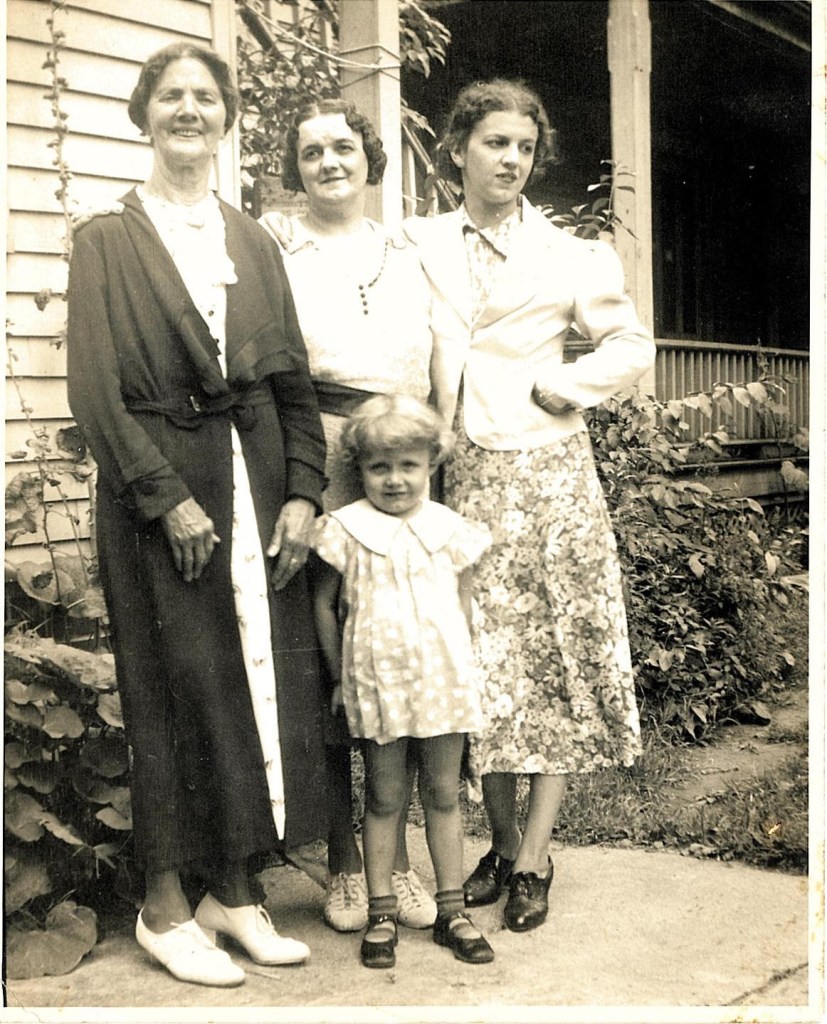

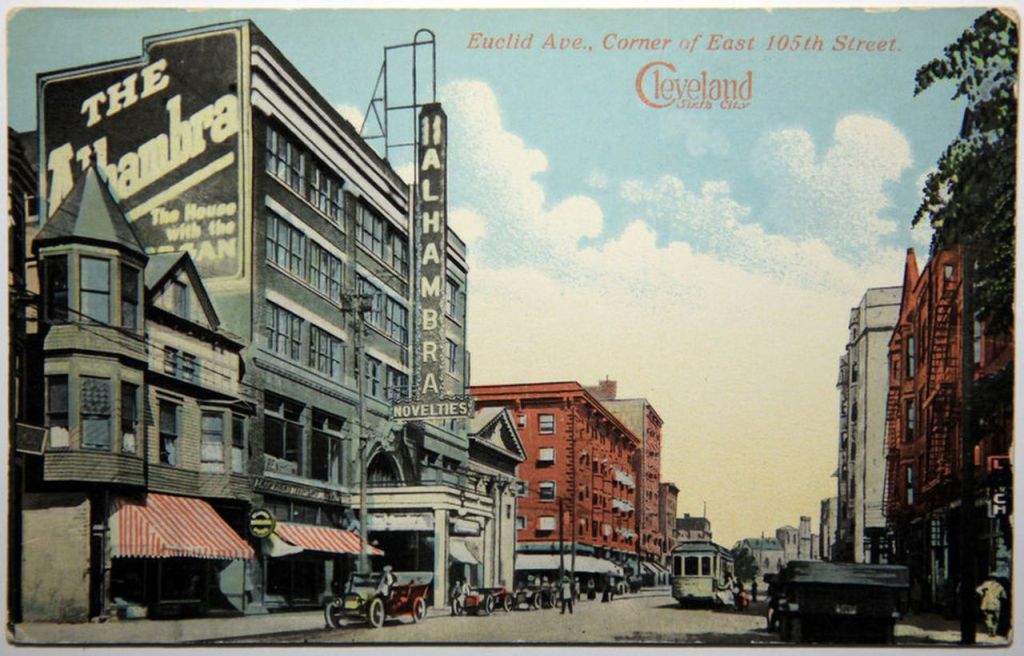


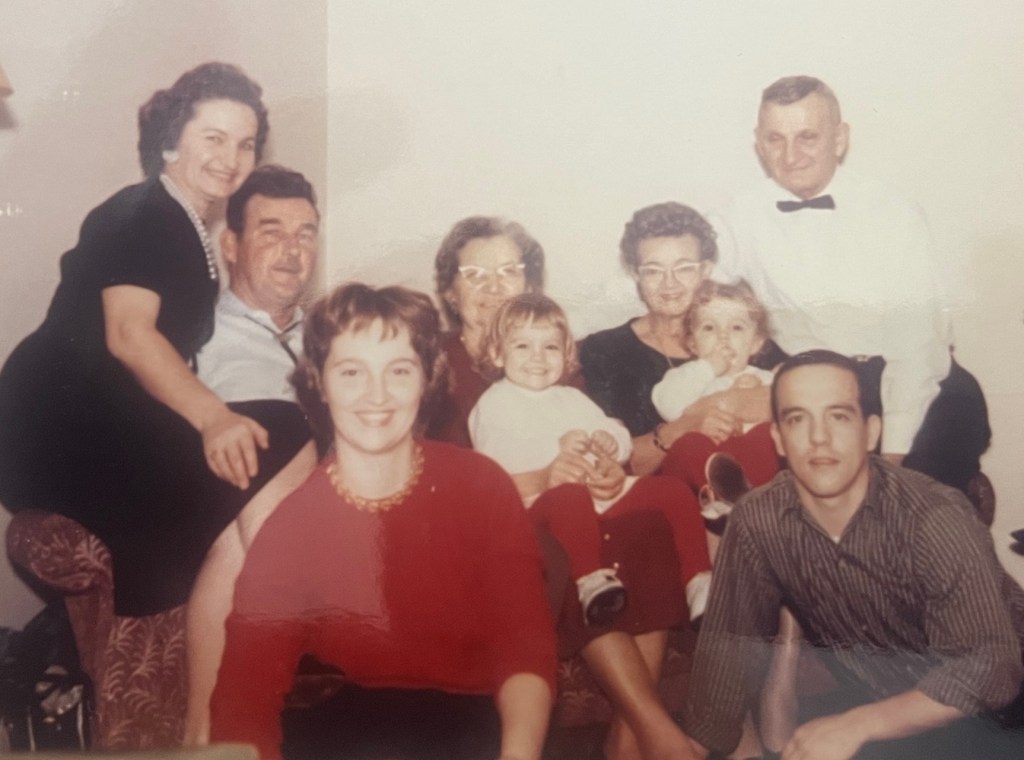


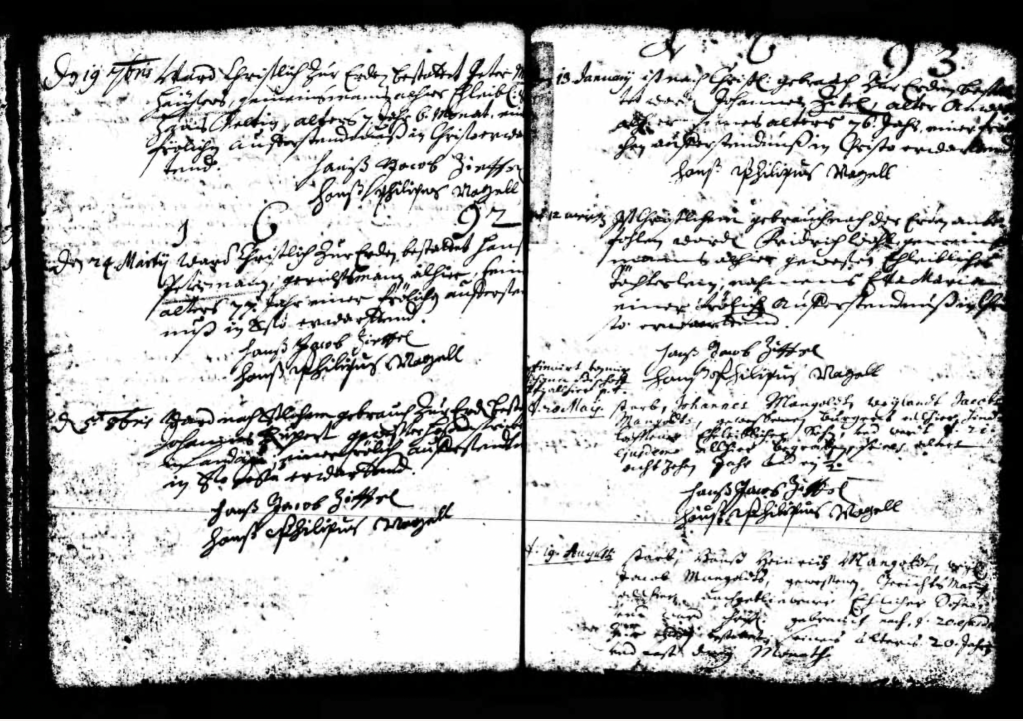




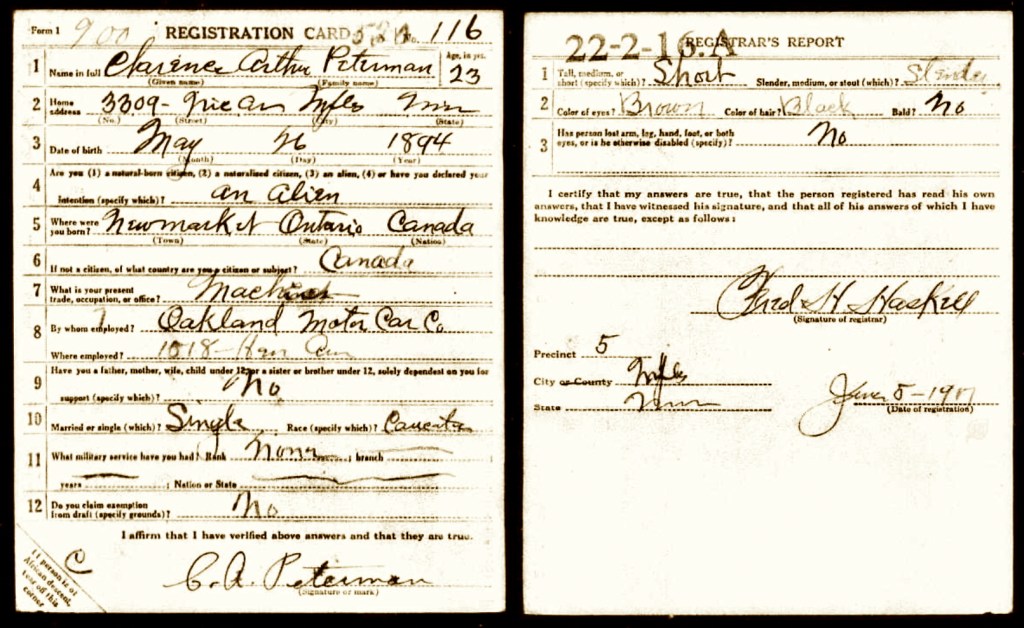
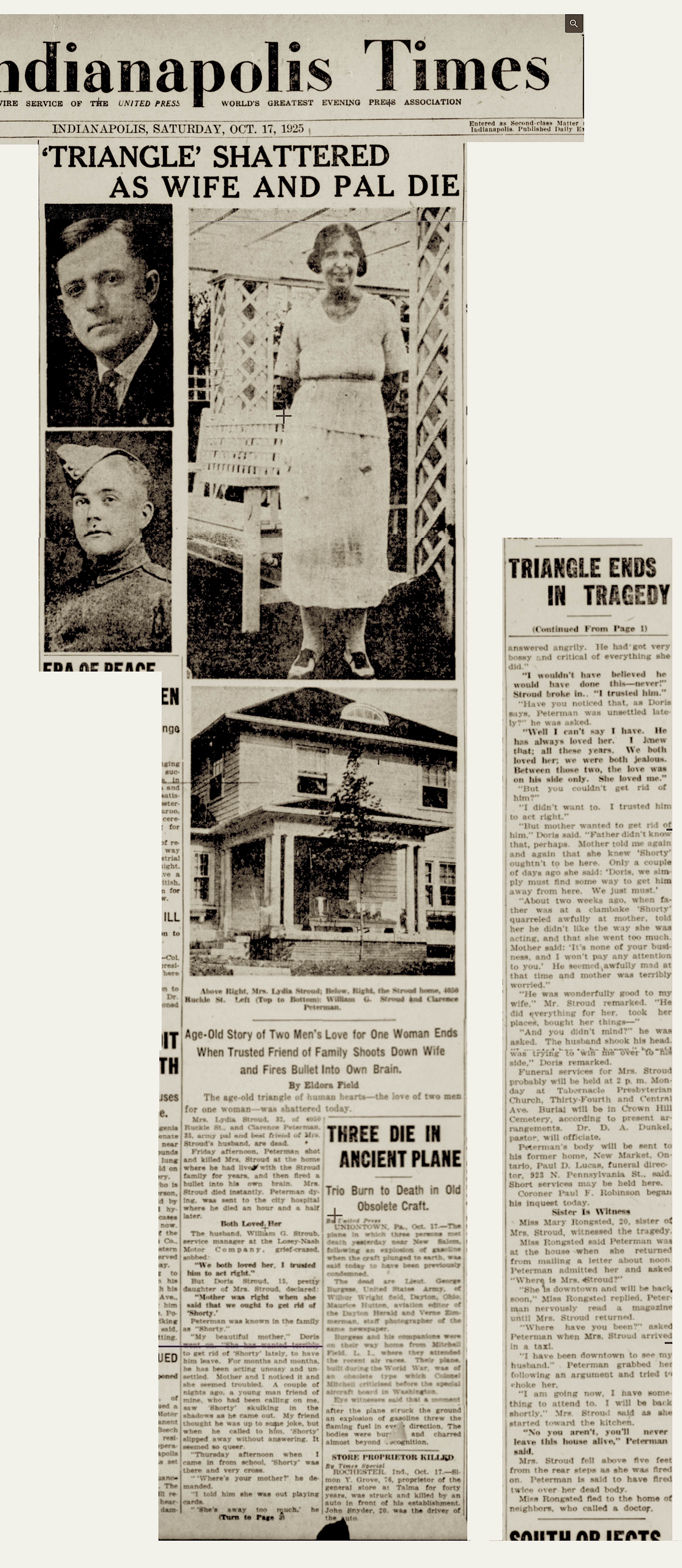


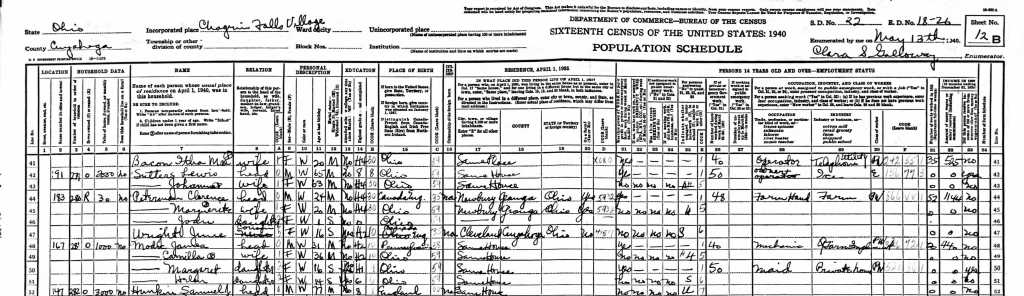


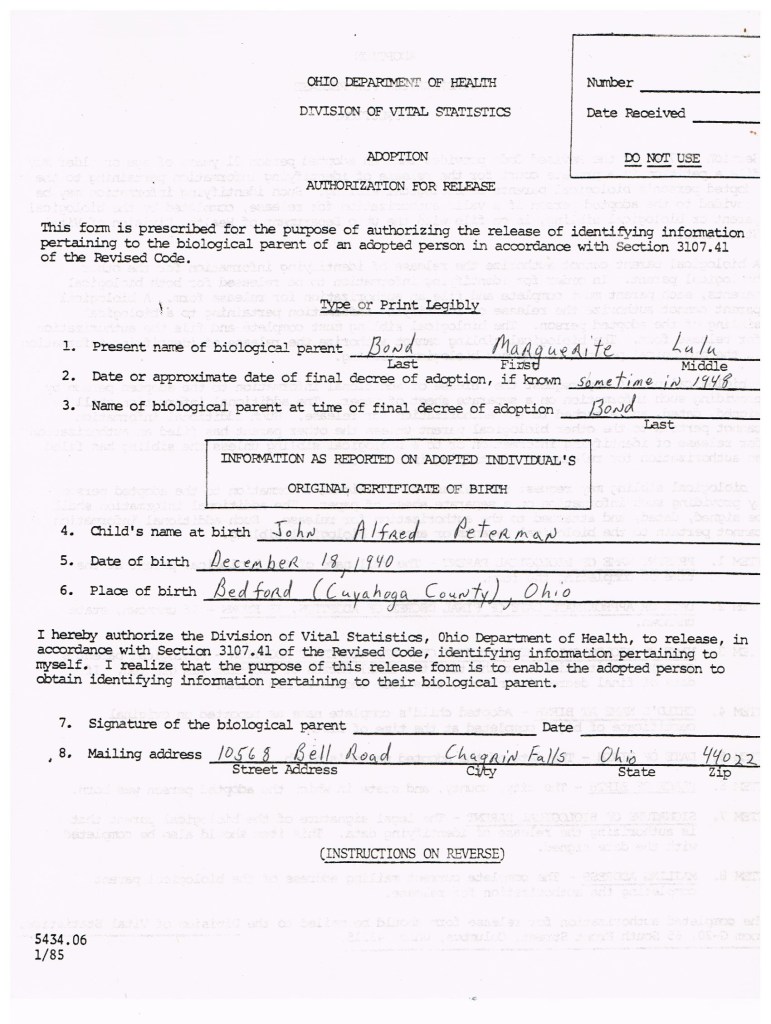
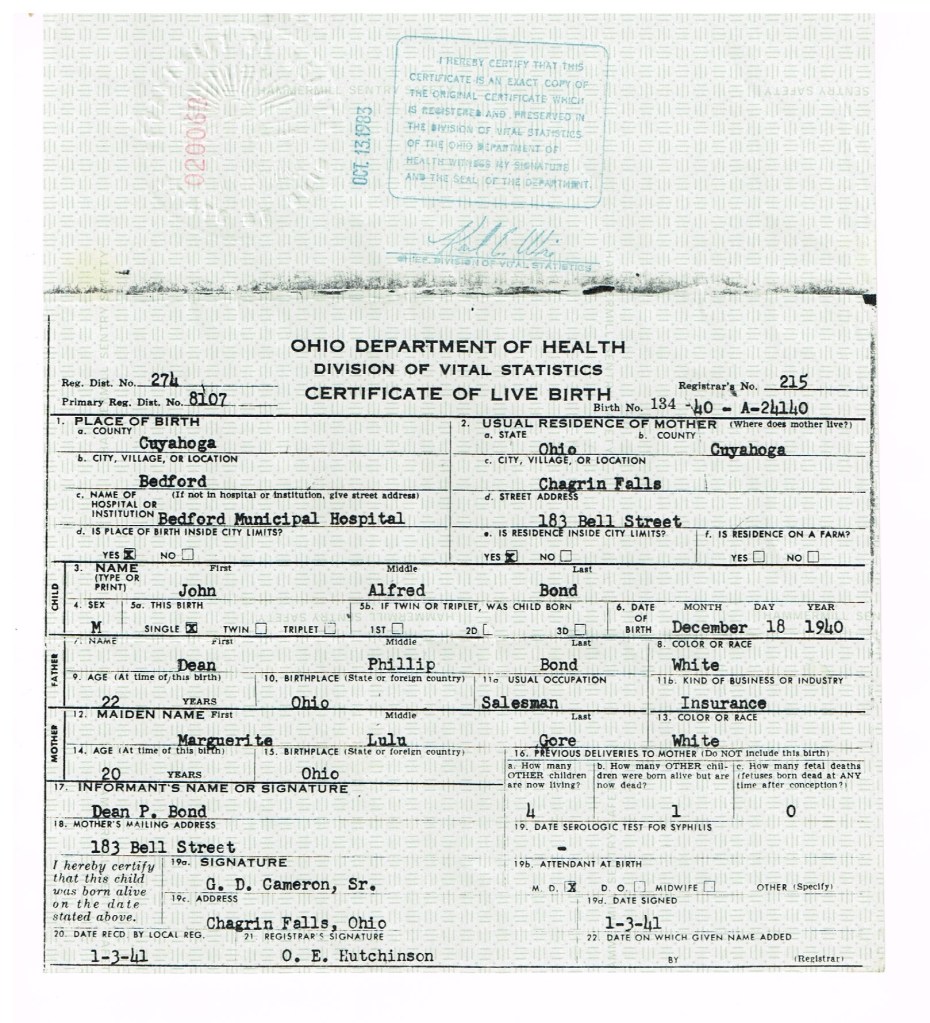
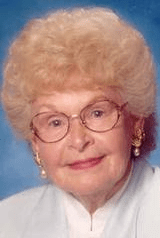
 Our Ancestors, Our Narratives
 - Geauga County - Geauga County - ED 28-1 to 28 - NARA - 26128376.jpg)