Discovering and Sharing Our Family Genealogical Research
Author: Susan Deanna Bond & Thomas Harley Bond
So much work in genealogy is about looking backward and trying to make sense of whatever history, stories, family anecdotes — are receding into the rearview mirror. For these family history narratives, we are attempting to look forward into the future — to a future that we know we will not be a part of someday. We are creating and crafting a resource for the benefit of future generations. Susan lives in Chesapeake, Virginia and Thomas lives Lisbon, Portugal.
This is Chapter Four of seven, as we continue with the unfolding history of the McClintock family.
This chapter of our narrative has two parts. The first part is about wars and conflict; the second part, peace and community. It is unusual for us to find so many records about an ancestor who was not well known to history. This is due to the fact that William McClintock was deeply involved as a Selectman for the town of Derryfield in both governmental and religious matters, (and that the records have survived!)
Colonists Walking to Church, by James S. King (Public domain).
Before the American Revolution, a town like Chester had a widely scattered population. The History of New Hampshire states, that “men, women and children had been accustomed to walk six and eight miles to attend [religious] services.” (Ya gotta hand it to these ancestors… show of hands for anyone who does this today on a regular basis…) (1)
In Times of War, We Suffer
In the year 1748, there was palpable fear in Tyng’s Township of Indians (Native Peoples) attacking the “There seems to have been more fear of the Indians this year than in any other. There were several garrisons kept in town. The house now occupied by Benjamin Hills still has the port-holes through the boarding…” (These portholes are related to the sides of a wooden ship which was repurposed to build the wall of a house. The portholes were windows which the setters would shoot through toward people they viewed as aggressors.) Below is an example of a petition that our ancestors, who appear to have lived far from the town center. (History of Old Chester)
The third petition of 1748.
Our ancestors were inhabiting the lower reaches of the British New Hampshire Province. The upper portion was a border area, sparsely filled with the French, who had their various alliances with Native Peoples. Hence, the region was a border area filled with conflict, some of it percolating down to southern New Hampshire. “In British America, wars were often named after the sitting British monarch, such as King William’s War or Queen Anne’s War. There had already been a King George’s War in the 1740s during the reign of King George II, so British colonists named this conflict after their opponents, and it became known as the French and Indian War”. (Wikipedia) (2)
Louis-Joseph de Montcalm trying to stop Native Americans from attacking British soldiers and civilians as they leave Fort William Henry at the Battle of Fort William Henry, during the French and Indian War. (Image courtesy of Wikimedia Commons).
Military Service in Two Wars
The French and Indian War “The French and Indian War (1754–1763) was a theater of the Seven Years’ War, which pitted the North American colonies of the British Empire against those of the French, each side being supported by various Native American tribes. Two years into the war, in 1756, Great Britain declared war on France, beginning the worldwide Seven Years’ War. At the start of the war, the French colonies had a population of roughly 60,000 settlers, compared with 2 million in the British colonies. The outnumbered French particularly depended on their native allies. The British colonists were supported at various times by the Iroquois, Catawba, and Cherokee tribes, and the French colonists were supported by Wabanaki Confederacy members Abenaki and Mi’kmaq…” (Wikipedia)
American Commissioners of the Preliminary Peace Agreement with Great Britain, 1783-1784, London, England, by Benjamin West, (oil on canvas, unfinished sketch), Winterthur Museum, Winterthur, Delaware. From left to right: John Jay, John Adams, Benjamin Franklin, Henry Laurens, and William Temple Franklin. The British commissioners refused to pose, and the picture was never finished.
Records show that that William and his twin brother Michael were involved in military service for two wars during the decades of the 1740s through the 1770s. William McClintock achieved the rank of Sergeant, and his brother Michael achieved the rank of Captain. We found records of military payments in pounds and shillings, made to William McClintock and his brother Michael. Browne writes in the Early Records of the Town of Derryfield, “Paid by the Sundrey persons hereafter Named to Nethaniel Martin Teopilus Griflfen & Nat Baker as volenters men they went to Noumber four about the Retreet from Ty — are as followeth William mc Clintok 0 6 0 0.” (See the notes from the Harvard Library at the end of this section, for an explanation about payments).
The conflict William was paid for was the siege of “Number four about the retreat from Ty [Tyngstown] which“was a frontier action at present-day Charlestown, New Hampshire, during King George’s War”. (Collections of The Bennington Museum, Bennington, Vermont)
The Association Test “In March 1776 the Continental Congress resolved that all persons who refused to sign the Association to defend the cause of the Colonies should be disarmed. To put this resolve into effect, the New Hampshire Committee of Safety directed the local authorities, usually the selectmen, to have all adult males sign the Association and to report the names of those who refused to sign. The end result amounted to a census of the adult male inhabitants of New Hampshire for 1776…” (Inhabitants of New Hampshire 1776)
From this document we learned that both Michael(Nicheall) and William signed the Association, and that they were both still living in Derryfield. William’s sons Alexander and John also signed, but were then living in the nearby town of Hillsborough.
Battle of Bennington, August 16, 1777, by Alonzo Chappel. (Image courtesy of The Bennington Museum).
The Battle of Bennington, Revolutionary War John Stark of Derryfield, New Hampshire was friends with both of the McClintock brothers as he had served with them as one of the town administrators during the 1760s. During the Revolutionary War, he “was commissioned [as]a brigadier general of the New Hampshire militia and was ordered to lead a force to Bennington, there to cooperate with Seth Warner’s Green Mountain Boys posted at Manchester.
Stark agreed to take the independent command, so long as he was issued a commission from only New Hampshire. He refused to take orders from Congress or from any Continental officer. As the historian Richard Ketchum has emphasized, “the effect was startling. Within six days, twenty-five companies – almost fifteen hundred men – signed up to follow him, some of them even walking out of a church service when they heard of his appointment. [In August 1777] General Stark marched his force to Bennington – a small village that one British officer called ‘the metropolis of the [future] state of Vermont’.” (Champlain Valley NHP, see footnotes).
From the Early Records of the Town of Derryfield, “Paid by indeviduels to hold on John Nutt Enoch Harvey Theophilus Griffin & David Farmer and others went with General Stark at the Battel at Benenten are as folloeth (viz) Micheal mc Clintok 1 2 0 0 William mc Clintok 1 4 0 0”
It’s unclear if William and Michael were paid in (£) Pound sterling, shillings, and pence, or in the scrip of the Continental Congress. “When the Second Continental Congress met in Philadelphia in 1775, it authorized the issue of bills of credit to the value of two million Spanish milled dollars as a way of funding the Revolutionary War. The Continental Congress granted a charter to create the Bank of North America in Philadelphia to issue the notes. Paul Revere of Boston engraved the plates for the first of these bills, which were known as Continental Currency. As had been the case in the days of Colonial Scrip, each of the colonies printed its own notes, some denominated in pounds, shillings, and pence, and others in dollars.” (Harvard Library)
The Stamp Act of 1765 was one of the outrages which helped lead to the American Revolution in 1776. At the time, the British government was forcing American Colonists to pay for the costs of the French and Indian War through extra taxation. (See footnotes).
Observations: In 1755, when the French and Indian War began, both of the brothers would have been 46 years old. When the conflicts for the Revolutionary War began in 1775, they would have been 68 years old. We thought that might be a bit too old to serve, but the records for the date of the Battle of Bennington correspond to gaps in their records with the town administration of Derryfield. So, even though they were older, it seems possible. Family Search records that the age range for Servicemen during the French and Indian War, and the Revolutionary War, was 16-60 years. Additionally, author Browne wrote in The History of Hillsborough, New Hampshire, 1735-1921,“An examination of this list made nearly a year after the battle of Lexington shows that… of the forty-seven men eighteen were over fifty years of age, and beyond the military limit, though this did not deter the most of them from entering the service sometime during the war.” (3)
William Wore Many Hats in Addition to His Tricorne Cap!
As we wrote about in the last chapter, our McClintock ancestors lived in an area that had several names (Tyng’s Township, circa 1727 > Derryfield, circa 1751 > Manchester, circa 1810). William McClintock was the most active member of the town administration and there are many records which feature his various responsibilities. From the book, the History of Manchester, 1735-1921, author Browne writes:
“…a board of officers known as “Select Men,” usually consisting of five of the most prominent men in the community, were chosen to look after matters in the intervals [between town meetings]. Finally these came to be elected for a year, and the meetings were made annual, unless some uncommon subject demanded a special meeting, and March, the least busy period of all the year for the tillers of the soil, was selected as the month in which to hold these gatherings. Soon the Selectmen became known as ‘The Fathers of the Town,’ a very apt term, considering that they were in truth masters of the situation and lawmakers as well as lawgivers.
New England town meeting image courtesy of Winchester News. (Public domain).
The next officer of importance to the Selectmen, and we are not unmindful of the Moderator, who must have been the oldest official, was the person who was intrusted [sic] with the keeping of the records, the Clerk… There had to be men to keep the peace, and the restrictions were very rigid in those days, and these officers were called ‘Constables.’ As soon as the time came when money was needed to finance the public business taxes had to be assessed, which called for ‘Assessors,’ though the Selectmen usually performed this duty, and do until this day in most country towns. In order to obtain these taxes, men had to go out and collect them, for even then money was not paid over until called for, and this duty was performed for a time by the Constable. (The History of Hillsborough, 1735-1921)
Records for Michael and William McClintock were gathered from two sources: Early Records of the Town of Derryfield: Now Manchester, N. H. 1751 – 1782, and The History of Hillsborough, New Hampshire, 1735-1921).
Role
Years
Broad duties
Assessor
1751
Raised money
Committees
1751, 1754, 1769, 1778
Constable
1756
Collects taxes
Moderator
1753, 1754, 1758, 1766, 1767, 1769, 1775
Manages meetings
Preacher
1759
Selectman
1754, 1758 through 1760 1763 through 1765 1769 through 1772
Administration
Surveyor of Highways
1758, 1779
Field work
Michael McClintock had several roles over the years, but he seems to have spent more time doing other activities such as his agricultural work. With his brother being involved in local government more deeply, he must have been quite aware of what was going on at different times, but chose to keep a lower profile.
Public notice posted by Michael McClintock the year he was a Constable, advising the townspeople of an upcoming meeting. (Early Records of the Town of Derryfield, p. 61)
Role
Years
Duties
Constable
1757 through 1759
Collects taxes
Deerkeeper
1766
Surveyor of Highways
1766
Field work
Tithingman
1752, 1760, 1761, 1771
Preserves order during church services
In January 1776, New Hampshire became the first colony to set up an independent government and the first to establish a constitution. (Wikipedia) By 1778, town records indicate that William McClintock was part of a committee involved in the framing a new state Constitution.
Comment: To create the above charts, we did an extensive analysis of the copious administrative records for both William and Michael McClintock. If interested in that level of detail, please see the many index entries listed in the footnotes of the Early Records of the Town of Derryfield: Now Manchester, N. H., 1751 — 1782, Volumes I and VIII. (4)
In Times of Peace, We Try to Build A Community
The Colonial Meeting House “A colonial meeting house was a meeting house used by communities in colonial New England. Built using tax money, the colonial meeting house was the focal point [central focus] of the community where the town’s residents could discuss local issues, conduct religious worship, and engage in town business.” [It] was usually the largest building in the town.
Most were almost square, with a steep pitched roof running east to west. There were usually three doors: The one in the center of the long south wall was called the Door of Honor, and was used by the minister and his family, and honored out-of-town guests. The other doors were located in the middle of the east and west walls, and were used by women and men, respectively. A balcony (called a gallery) was usually built on the east, south, and west walls, and a high pulpit was located on the north wall.
From the Derryfield history, the 1754 seating plan for the town Meeting House.
Following the separation of church and state, some towns architecturally separated the building’s religious and governmental functions by constructing a floor at the balcony level, and using the first floor for town business, and the second floor for church.
“They were simple buildings with no statues, decorations, stained glass, or crosses on the walls. Box pews were provided for families, and single men and women (and slaves) usually sat in the balconies. Large windows were located at both the ground floor and gallery levels. It was a status symbol to have much glass in the windows, as the glass was expensive and had to be imported from England”. (Wikipedia)
The following YouTube.com video, by photographer Peter Hoving, beautifully explains the layout and concepts behind New England Meeting Houses. Some of which he as photographed in New Hampshire.
In the Early Records of the Town of Derryfield, in describing the period after the French and Indian War, “An era of prosperity had dawned upon the province, but unfortunately for the harmony and welfare of the new town two combative elements of human life made up the minds and sinews of the men of Derryfield. Its inhabitants consisted of two distinct races, the Scotch-Irish who had begun to settle within the bounds of its territory as early as 1720, with others following from time to time… while the grant of the Tyng township in 1735 called thirty or more families of the English colony of Massachusetts, the latter largely along the banks and at the mouth of Cohas brook.…
The Scotch Presbyterians, who somewhat outnumbered their contemporaries, were imbued with their set, vivid views of what constituted their civil and religious liberties, while the English in their belief were as rigid and dogmatical as they. We see the coloring of this difference of opinion coming to the surface almost immediately, for within a year of the granting of the charter a controversy arose relative to the building of a meeting-house and settling of a minister”.
The gist of this history seems to be that there were two groups of people who made up Derryfield: the Scotch Presbyterians, and the resettled English from Massachusetts. (Remember that Massachusetts had once long been an overlord of New Hampshire province). It seems that in an era when religious practice was a very strong component of people’s lives, both sides had resolute religious viewpoints.
Center: Irish Bible, circa 1690, Background top: Section of a mural depicting The Rev. John Wise of Ipswich, and Bottom: Illustration artwork for a barn in the English style. (See footnotes).
In the town records of Derryfield, we saw William McClintock involved as early as 1752, in conducting Presbyterian religious services out of his home. Apparently, since the town lacked a meeting center, and a Preacher (as they termed it), it was not unusual to do religious services at one’s home, or even one’s barn. Additional town records indicate that the Selectman who administered the town were actively interviewing and seeking preachers throughout the 1750s. Occasionally they would find someone, but it seems that it was never a long-term solution.
In this era, town residents had been paying taxes and fees which were collected to provide for a a town center, i.e. a Meeting House. This was a normal New England circumstance — that a Meeting House would exist at the center of the village and this facility would be where town meetings, town administration, and religious services would be conducted. For myriad reasons that are not important now, locations would be chosen, taxes would be paid, things would be agreed to, and then at the next town meeting, all of it would be undone as different sides squabbled. This literally delayed construction for decades.
Comment:No wonder they couldn’t get a Preacher. Who would want to work in that environment if everyone was so inflexible and argumentative.
A meeting house building plan and site would eventually be agreed to, and construction begun, but the building was only used as the Meeting House for a short period, before being replaced by another structure, built by a new generation. Lost tax revenues due to the Revolutionary War didn’t help matters. (5)
From The Town Church of Manchester, by Thomas Chalmers, 1869 (1903 edition).
A Rhum and A Sunset
Not everything was about war and politics. The book, The Town Church of Manchester records, “The records of Tyngstown contain an interesting account of the expense of the raising of the meetinghouse. [As monetary records for pounds and shillings] The first two items are — To Joseph Blanchard for Rum & Provisions 2 5 3 To the Rev’d M’r Thomas Parker 2 0 0 After all our respect for the piety of the fathers, preaching seems to have been a secondary matter when it came to ‘rum and provisions.’ Rum was an important factor in that raising, for it constituted both the first and the last items in the bill of expenses. The last item is —
“Had of William McClinto for Raiseing 6 g’lls [gallons] of Rhum at 18s per G’ll [gallon] @ 5 8 0”
After all, William was the descendant of a Glasgow ‘Maltman’ (a brewer).
I measured off 20 acres of Meadow and Swamp for William McClintock in the meadow below his house to Abraham Merrill and others for which McClintock paid me a Dollar and I paid him 11/ Hampshire old Tenor for 1/2 a pint of Rum
Matthew Patten December 28th, 1770 diary entry from The Diary of Matthew Patten of Bedford, N.H.
Matthew Patten lived in Bedford, not very far from William McClintock. From the quote above, observe the odd words like Hampshire old Tenor to describe the form of payment. We forget that as America was being settled each province had it’s own currency. It must have been very confusing to travelers back then.
Example of the currency use in the New Hampshire Province before 1799. (Compiled from various Google image searches).
From the article, Money in The American Colonies, we learned from writer Ron Michener, “The monetary arrangements in use in America before the Revolution were extremely varied. Each colony had its own conventions, tender laws, and coin ratings, and each issued its own paper money. The units of account in colonial times were pounds, shillings, and pence (1£ = 20s., 1s. = 12d.). These pounds, shillings, and pence, however, were local units, such as New York money, Pennsylvania money, Massachusetts money, or South Carolina money and should not be confused with sterling. [the English currency]To do so is comparable to treating modern Canadian dollars and American dollars as interchangeable simply because they are both called dollars… after 1799, in which year a law was passed requiring all accounts to be kept in dollars or units, dimes or tenths, cents or hundredths, and mills or thousandths”.
The Sotzmann-Ebeling Map of New Hampshire, Circa 1796. (Image courtesy of Boston Rare Maps).
In 1769, New Hampshire created five counties: Cheshire, Grafton, Hillsborough, Rockingham, and Strafford. Subsequently, much of the historical records have William and Michael McClintock in the records of both Hillsborough County and the city of Manchester. New Hampshire became a state in 1781. However, for most of their lives, they lived in the Province of New Hampshire, without a County, in the small town of Derryfield.
We are not sure how long either Michael McClintock or William McClintock lived. For Michael, we do know this — From the National Archives, “The census began on Monday, August 2, 1790, and was finished within 9 months.” In Derryfield, Hillsborough County, there is a record of a Michael McClintock living there with a woman. Both are recorded as being over 16 years of age. A general issue for genealogical research with this first census, is that it provides almost no detail, nor context. By the time 1790 rolled around, Michael would have been about 81 years old. It could be him, we just cannot say for sure. The last tax record we have for him is from the Derryfield history, for the Continental County and Town Tax for 1779-80.
As for William McClintock, the same tax record observation applies to him. We are not sure that he was still living by the time of the 1790 census, because there is no record of him being counted directly. He had five children and perhaps he could have been living in one of their homes? As we know with Michael… the 1790 census only records someone as being either over, or under 16 years of age, providing no further detail. However, since there was no listing for William McClintock we can assume that it is possible that he was probably no longer living by 1790.(6)
In the next chapter, we will meet our 4x Great Grandfather, John McClintock (Sr.), the youngest son of William and Agnes McClintock.
Following are the footnotes for the Primary Source Materials, Notes, and Observations
American Commissioners of the Preliminary Peace Agreement with Great Britain, 1783-1784, London, England, by Benjamin West (oil on canvas, unfinished sketch), Winterthur Museum, Winterthur, Delaware From left to right: John Jay, John Adams, Benjamin Franklin, Henry Laurens, and William Temple Franklin. https://en.wikipedia.org/wiki/Treaty_of_Paris_(1783)#/media/File:Treaty_of_Paris_by_Benjamin_West_1783.jpg Note: For the painting image. The British commissioners refused to pose, and the picture was never finished.
Early Records of the Town of Derryfield: Now Manchester, N. H. 1782 — 1800, Volumes II and IX by George Waldo Browne https://archive.org/details/earlyrecordstow00nhgoog/page/n6/mode/2up Book pages: 109-110, Digital pages: 129-131/425 Note: For the data. Descriptions of payment for year 1776 military service to “Noumber four about the Retreet from Ty” “the Battel at Benenten”.
From the Derryfield History, we see many index entries for the McClintock family. From the Early Records of the Town of Derryfield: Now Manchester, N. H., 1751 — 1782, Volumes I and VIII.
History of Old Chester [N. H.] from 1719 to 1869 by Benjamin Chase 1799-1889 https://archive.org/details/historyofoldches00chas/page/96/mode/2up Book page: 96, Digital page: 96/702 Note: For the architectural plan. The Ground Plan of the Old-Meeting House as Seated in 1754…
Early Records of the Town of Derryfield: Now Manchester, N. H. 1751 — 1782, Volumes I and VIII by George Waldo Browne https://archive.org/details/earlyrecordstow01nhgoog/page/n4/mode/2up Book pages: 10-11, Digital pages: 15/407 Note: For the description of the two different communities which made up Derryfield.
Towns of New England and Old England, Ireland and Scotland … connecting links between cities and towns of New England and those of the same name in England, Ireland and Scotland https://archive.org/details/townsnewengland02stat/page/n10/mode/1up Book page: 120, Digital page: 120/225 Note: For the text.
This is Chapter Three of seven. So many of our ancestors came to British North America through the classic New England colonies: Massachusetts, Vermont, New York. In this chapter we learn about one place which is new to our history — New Hampshire Province.
People Were Hearing Stories About America…
What was pulling Presbyterians from Scotland and the Ulster, Ireland plantations to New Hampshire in British North America? “In the early 1700s, however, [the English] Parliament imposed strong restrictions on trade, which caused severe problems in both Irish and Scottish commerce. This in turn led to more conflict between the Irish and the Scots settlers over rapidly dwindling resources, made especially urgent by a harsh winter in 1717...”
“Beginning of petition dated March 26, 1718, sent by 319 “Inhabitants of the North of Ireland” to the “Right Honourable Collonel Samuel [Shute] Governour of New England,” expressing interest in moving to New England if encouraged. New Hampshire Historical Society.”
The situation was dominated by the Ulster-Irish / Ulster-Scots Presbyterians and their sympathizers in Scotland. “New England was being touted as a paradise of opportunity, cheap land, and religious tolerance – things very much lacking in Ulster at this point – and in 1718 a petition was signed by over 300 Ulster Scots families to ask the governor of Massachusetts for land. Rev. William Boyd undertook the long journey from Ulster to Boston to give the petition to Gov. Samuel Shute, who was amenable to the idea. Between 1718 and 1755, what is known as the Great Migration took place, with hundreds of thousands of Scots travelling across the Atlantic to Massachusetts, Pennsylvania, and Virginia.” (Worcester Historical Museum Library and Archives)
Across the ocean in the British Colonies of North America, “In 1679 King Charles II separated New Hampshire from Massachusetts, issuing a charter for the royal Province of New Hampshire, with John Cutt as governor. New Hampshire was absorbed into the Dominion of New England in 1686, which collapsed in 1689. After a brief period without formal government (the settlements were de facto ruled by Massachusetts) William III and Mary II issued a new provincial charter in 1691. From 1699 to 1741 the governors of Massachusetts were also commissioned as governors of New Hampshire.
The province’s geography placed it on the frontier between British and French colonies in North America, and it was for many years subjected to native claims, especially in the central and northern portions of its territory. Because of these factors, it was on the front lines of many military conflicts, including King William’s War, Queen Anne’s War, Father Rale’s War, and King George’s War. By the 1740s most of the native population had either been killed or driven out of the province’s territory.
Governor Benning Wentworth, by Joseph Blackburn, circa 1760. (Image courtesy of Wikimedia Commons).
Since the political powers in Massachusetts had been used to running things in New Hampshire, there were many disputes about borders which were not resolved until 1741. “Benning Wentworth in 1741 became the first non-Massachusetts governor since Edward Cranfield succeeded John Cutt in the 1680s”. (Wikipedia) (1)
The Province of New Hampshire
“New Hampshire has been known as the Province of New Hampshire, the Upper Province of Massachusetts, the Upper Plantation of Massachusetts, and New Hampshire Colony”. (American History Central)
Notice in the very old, (very brown) 1757 map of the New Hampshire Province below, that most of the settlement is located in the southeastern corner. These communities are not far from the location of the port of Portsmouth, and also hug the northern Massachusetts border. This map doesn’t yet delineate a true shape for the state.
An Accurate Map of His Majesty’s Province of New-Hampshire in New England… by Samuel Langdon, circa 1757. (Image courtesy of the Library of Congress).
The Massachusetts Colony had been settled much earlier, and the terrain was a far more friendly environment for farming and settlement. New Hampshire was mountainous and the soils were more like what was found back in Scotland.
“The terrain of New Hampshire Colony was rough and covered with forests, rivers, plateaus, and mountains. The soil was rocky, which made it difficult for farmers to cultivate fields and raise certain crops. The plentiful forests provided access to timber. New Hampshire features around 1,300 lakes and ponds, plus 40,000 miles of streams… Access to rivers and the coast made fishing and whaling popular. The thick forests provided wood that was used for timber, including masts for ships. The forests were also full of animals that provided valuable furs for trade”. (American History Central) (2)
Thomas. Cole’s engraving of the White Mountains, New Hampshire. (Image courtesy of the Syracuse University Art Museum).
The Scotch Range of New Hampshire
Four travelers — Michael McClintock and his wife Margaret; William McClintock and his wife Agnes — immigrated to the Province of New Hampshire around 1731. From William Copley’s book, Scotch-Irish Settlers in New Hampshire, 1719-1776, we learned that the “date and place of first mention of residence in the New World” is 1731. This date is “Extracted from several sources, mainly New Hampshire Provincial Deeds, 1641-1771,” and it implies that they had the resources to acquire property. They arrived either in 1731, or shortly before that time.
They had left the Scottish Belt (Glasgow) behind and moved to what was known as the Scotch Range in New Hampshire. “The southernmost towns in New Hampshire… town names like Londonderry, Antrim, Bedford” were brought over from Scottish and Irish locations (Quora). Additionally, “The Scotch-Irish settlements, like Londonderry, were Presbyterian”. (American History Central)
The Copley book record (cited above) is conclusive for us because it documents two records for each couple, both of which agree in the details: dates, spouses, and family surname spellings. The book, History of Old Chester, from 1719 to 1869, by Benjamin Chase, also contains information about our family, but importantly, the surname is oddly recorded as McClento. This matches up like a hand and glove to the Copley book for their journey, along with land records.
From this point forward, unfortunately, there isn’t really any history about their wives. This often happens with ancestral lines.
A View of Portsmouth in Piscataqua River, aquaqtint print by J.F.W. Des Barres, circa 1781. (Image courtesy of Boston Rare Maps). Note that this image was created half a century after they journeyed from Scotland. Portsmouth must have been much simpler when they arrived.
Due to their arrival date (1731 or earlier) in the Colonies, we believe that it is certainly plausible that the four traveled together. Very few ship records exist from that time period, but it is likely that they ventured from the port at Glasgow, Scotland to the port at Portsmouth, New Hampshire Province. It’s also interesting to note that as twins, both men would have been 22 years old, which means that they had reached their age of majority in Scotland.
In the Old Chester book, Chase further records: “The first [settlement] in that part of Chester was by William and Michael McClento. Michael was in Londonderry and bought land there in 1731, and 1733. He is in Chester in 1744. William McClento of Kingstown [Kingston] bought of Thomas Packer of Dracut, 1 lot in the 3d range in ‘Tyngstown,’ in June, 1739.*So they probably settled there under a claim from Tyngstown, about 1740. But so far as Chester was concerned, they were squatters.”
*Tyngs Township was one of the early names for Derryfield. The name was changed in 1751.
Please note: Judging distances on this map is deceiving. This inset from the Langdon map above, shows the communities in which they lived. William’s family walked up to 120 miles from Kingston to Londonderry and from there, both families went to Chester. (See footnotes).
“The Proprietors sued them, and a verdict was rendered in favor of the defendants, Dec. 8, 1743, and appealed. The land on which they settled was not lotted until 1745. They came up from Londonderry on foot with their effects. [That is a distance of up to 120 miles]. It is said by some that Michael settled on No. 1, 4th D… William with his pack, and his wife with a ‘bairn’* in her arms, forded the brook some distance below the present road, with the water to their “haunches”, and erected a hut [log cabin] near the river, but afterwards built at the Huse place, on lot No, 4. William’s wife was Agnes”.
*Bairn is a Northern England-English, Scottish-English and Scots term for a child. It originated in Old English as bearn, becoming restricted to Scotland and the North of England c. 1700. (Wikipedia)
“Michael McClento had a daughter Nancy. He used to buy thread and perhaps fine linen cloth, and he and his daughter would take each a pack, and carry it to Boston to sell, taking from four to six days, and sometimes netting them three pounds”. (3)
The Mt. Desert Widow Book Half-Problem
There has been much confusion between the histories of the McClintock family and the Gamble family and we would like to address this. We know that the McClintock families and the Gamble families knew each other because they lived in the same communities.
William McClintock had a son named Alexander McClintock who was born about 1738. In 1760, he married a woman named Janet Gamble, and in 1895 a book titled The Mt. Desert Widow: Genealogy of the Maine Gamble Family from First Landing… by Greenleaf Cilley and Jonathan Cilley was published. This is where the troubles began.
At the end of the 19th century, it was very popular to publish family histories that were essentially vanity publications. These sources can be invaluable for genealogy research, but they can also be problematic unless they are very, very carefully reviewed. Sometimes materials that were submitted to the authors were not well vetted. (This is a problem created by families where stories get repeated over time until someone writes them down, and then storytelling becomes a fact, when [ha!] in fact, it is nothing like that.)
It seems as if someone blended together the history of another William McClintock family who are Irish, and immigrated from Ireland… (There was a William McClintock family from Ireland living in Portsmouth, New Hampshire during this period, but this is not our family.) Our William McClintock family is from Scotland — and our family never lived in Ireland. As we said, no one thought to look carefully at the history…
Parts of the McClintock family history, such as the towns where they lived: Londonderry, Derryfield, Hillsborough, are certainly true, and the stories of the bridges which they built, are likely true. However, other parts of the Gamble / McClintock history are completely wrong.
The Mt. Widow book had wrong arrival dates, direct statements that Michael and William were father and son, it cites Ireland as their origin location, etc., but none of this is true. What we do know is that William Gamble was born in Derry, County Cavan, Ulster, Ireland, and that he came to New Hampshire in 1736, after our ancestors were already there. We looked at his birth information, along with his Will, his marriages, and estate probate records to verify his information. It’s unfortunate that in the present day, so many tree-makers cite a record like the Mt. Widow book, but for our family, it is quite simply not accurate.
One last thing, we discovered is a book titled (the) History of Manchester, formerly Derryfield, in New-Hampshire… by Chandler Eastman Potter, which was published in 1856 — 40 years earlier that the Mt. Widow book. The story in the Mt. Widow book was lifted almost word-for-word from the previous book, and it still reads like family apocrypha. (See footnotes).
Cohas Brook in Manchester, New Hampshire. It is likely that the sites where our McClintock ancestors (possibly) built bridges were probably similar to this image. (See footnotes).
As problematic as some of the information is, it is plausible that the information about the bridges which the McClintocks built is accurate, because it does describe where they were living. (We are taking it as anecdotal evidence because this is the only place where we have seen this information). “They were industrious, thriving people and… built the first bridge across the Cohas, and also another across the little Cohas on the road from Amoskeag to Derry. These bridges were built in 1738… The McClintocks were voted 20 S. [shillings] a year for 10 years for the use of the bridges. The McClintocks moved to Hillsboro, N.H., where their descendants yet reside”. (Note: Hillsboro is also spelled as Hillborough, and the spelling in old documents varies). (4)
Polyonymous: Which Means — Known By Several Different Names
This area of New Hampshire Province where they lived went through name changes during their lifetimes. In 1722, a man named John Goffe settled in Old Harry’s Town, in the British Province of New Hampshire. (Even so, this was never an official name for the place). Five years later in 1727, Tyngstown (or Tyng’s Township) was established. The McClintock’s were in the area by 1731.
Hand-drawn map indicating the boundaries of the newly-formed town of Derryfield. From the book, the Early Records of Derryfield: Now Manchester, N.H. (See footnotes).
Some sources indicate that their community was sometimes referred to as Nutfield because of the Chestnut trees, and in 1751, Tyngstown was rechartered as Derryfield, which was created from carving out sections from portions of the other surrounding communities, such as Chester.
From the book, the Early Records of Derryfield: Now Manchester, N.H., “…As this territory was not deemed of sufficient size to make a ‘respectable township’, enough was taken from the adjoining towns to make up the desired area… Thus the Derryfield charter covered about thirty-five square miles of coimtry [a colonial word for country > meaning, land] from the following sources: eight square miles of Tyng township, nine square miles of the northwestern portion of Londonderry, formerly Nutfield, and seventeen and three-fourths square miles of Chester, erstwhile called ‘the chestnut country’. The name of Derryfield is claimed to have originated from the practice of stock [sheep and cattle] owners of Londonderry in allowing their herds to graze on the clearings within its limits, and arising from the term ‘Derry’s field’.”
Cows Grazing Under The Oaks, by Edward Mitchell Bannister, circa 1893. (Image courtesy of Grogan & Company, see footnotes).
So then, the question becomes, did they move from Chester to Derryfield, or did Derryfield come to them? It seems that Derryfield came to them.
On June 21, 1788, after the American Revolution, the Province of New Hampshire becomes the State of New Hampshire. In 1810, long after both William and Michael had passed on, Derryfield was renamed Manchester and remains named that to this day.
Comment: Since various record writers have used town names from different eras in a mix-n-match fashion, the proper sequence is this: Harry’s Town, circa 1722 > Nutfield (unofficial) > Tyng’s Township, circa 1727 > Derryfield, circa 1751 > Manchester, circa 1810. (5)
The Family of William McClintock
William McClintock, who along with his twin brother Michael, was born on September 18, 1709, in Glasgow Scotland, the son of Thomas and Margarit (Gilhagie) Mclintoch. William married Agnes (last name unknown) before 1731, in Scotland.
As a reference point for an extended Colonial New England family from this time period, we like the sensibility of this portrait — The Peale Family, by Charles Willson Peale, circa 1771–1773.
We’ve uncovered records that William and Agnes had at least five children, all born in the Province of New Hampshire. The first three children were likely born in Chester; the last two, in Tyngstown, (all locations eventually becoming Derryfield > Manchester).
William Jr., about 1736 — death date unknown
Alexander, about 1738 — death date unknown
Mary (McClintock) Starrett, September 29, 1739 — December 19, 1785
Janet (McClintock) Dickey, about 1742 — June 11, 1811
John McClintock, about 1744 — October 9, 1803, (We are descended from John).
We believe that William and his brother Michael made their livings in agriculture, through farming and some animal husbandry. Even though this was not their background in their younger lives in Glasgow, Scotland, it was the primary occupation of their community in New Hampshire. Even with that, both of them, but especially William, were deeply involved in the local government through various activities. In the book index for the Derryfield History, there are almost one hundred entries for ‘Sergeant’ William McClintock alone. In addition, his brother Michael, his sons William Jr., Alexander, and John are all also indexed with numerous entries. (6)
In the next chapter, we will explore the life of this family during the years before, and during the Revolutionary War, as well as their lives within the community.
Following are the footnotes for the Primary Source Materials, Notes, and Observations
Book, not available online: COPELY, WILLIAM. Scotch-Irish Settlers in New Hampshire, 1719-1776. In Historical New Hampshire (New Hampshire Historical Society, Concord), vol. 50:3/4 (Fall/Winter 1995), pp. 213-228. “Date and place of first mention of residence in the New World. Extracted from several sources, mainly “New Hampshire Provincial Deeds, 1641-1771,” which is on microfilm at the New Hampshire Historical Society”. Note: For the data.
Boston Rare Maps A View of Portsmouth in Piscataqua River (Lovely Aquatint View of Portsmouth, New Hampshire from The Atlantic Neptune, circa 1781) by J.F.W. Des Barres https://bostonraremaps.com/inventory/atlantic-neptune-portsmouth-new-hampshire-1781/ Note 1: For the landscape image. Note 2: These comments were attached at the file source — Lovely Aquatint View of Portsmouth, New Hampshire, from The Atlantic Neptune, circa 1781)
Agnes in the North America, Family Histories, 1500-2000 The Mount Desert Widow: Genealogy of the Maine Gamble Family from First Landing : On the Coast of Mount Desert Down to the Present Day (From the Knox County Historical and Genealogical Magazine, August 1896) Article by Greenleaf and Jonathan P. Cilley https://www.ancestry.com/discoveryui-content/view/3949974:61157?ssrc=pt&tid=18269704&pid=635978908 G > Gamble > The Mt Desert Widow : Genealogy of the Maine Gamble Family…Book page 192, Digital page: 198/207 and The Mount Desert Widow: Genealogy of the Maine Gamble Family from First Landing : On the Coast of Mount Desert Down to the Present Day https://archive.org/details/mountdesertwidow1895cill Book page 192, Digital page: 192/196 Note: For the data.
History of Manchester, formerly Derryfield, in New-Hampshire : including that of ancient Amoskeag, or the middle Merrimack Valley, together with the address, poem, and other proceedings of the centennial celebration of the incorporation of Derryfield at Manchester, October 22, 1851 by C. E. Potter, (Chandler Eastman) https://archive.org/details/historyofmanches00pott Book page: 184, Digital page: 184/763 Note: For the text.
Cohas Brook, Manchester, New Hampshire (postcard) High-Resolution Image File – 600 DPI Scan #419277 https://www.cardcow.com/stock-photo/419277/ Note: For Cohas River image.
Polyonymous: Which Means — Known By Several Different Names
Early Records of the Town of Derryfield: Now Manchester, N. H. 1751 — 1782, Volumes I and VIII by George Waldo Browne https://archive.org/details/earlyrecordstow01nhgoog/page/n4/mode/2up Book page: 8-10, Digital page: 13-15/407, Note: For the town map and Derryfield naming information. Note: For the data.
From the Derryfield History, we see many index entries for the McClintock family. From the Early Records of the Town of Derryfield: Now Manchester, N. H., 1751 — 1782, Volumes I and VIII.
Index page from the Derryfield book, as shown above: Early Records of the Town of Derryfield: Now Manchester, N. H. 1751 — 1782, Volumes I and VIII by George Waldo Browne https://archive.org/details/earlyrecordstow01nhgoog/page/n390/mode/2up Book page 384, Digital page: 391/407 Note: For the data.
The Peale Family by Charles Willson Peale, circa 1771–1773 Collection of the New-York Historical Society. from The American Yawp, 4. Colonial Life https://www.americanyawp.com/text/04-colonial-society/ Note: For the family portrait image.
This is Chapter Two of seven, where we explain just what the heck was going on in Scotland and England with all of the squabbling going on between the various monarchs. We also get to meet our 6x Great-Grandfather and his family, who were definitely not monarchs!
If you are a stickler for details as we are…
… then we really like you! Sometimes we need to pause and explain why we see records which have odd differences when they are recording similar information. A note about place names, standard spelling, and what is this shire thing all about?
Shire means that the area is the fiefdom of a Sheriff. Not the type of Sheriff you and I might encounter today, but one from the Middle Ages. It all begins with “Malcolm III (reigned 1058 to 1093) appears to have introduced sheriffs as part of a policy of replacing previous forms of government with French feudal structures. This policy was continued by Edgar (reigned 1097 to 1107), Alexander I (reigned 1107 to 1124)…” and so on and so forth, and finally, “were completed only in the reign of King Charles I (reigned 1625 to 1649)”.
“Historically, the spelling of the county town and the county were not standardized. By the 18th century the names County of Dunbarton [with n]and County of Dumbarton [with m] were used interchangeably”. Additionally, “In Scotland, as in England and Wales, the terms ‘shire’ and ‘county’ have been used interchangeably, with the latter becoming more common in later usage. Today, ‘county’ is more commonly used, with ‘shire’ being seen as a more poetic or [an] archaic variant”. (Wikipedia)
In practical terms, this means that the area near Loch Lomond is called: Dunbarton > Dunbartonshire > County of Dunbarton (with either n or m). Similarly, the area south of there around Glasgow is called: Lanark > Lanarkshire > County of Lanark. (1)
The Central Belt of Scotland
If you look at this map from 1710, you can observe a cinched-in area in central Scotland that looks like the country is almost corseted, (see the yellow oval). The McClintocks and the other families from the surrounding communities, lived in this area — what is generally still referred to as the Central Belt of Scotland. These generations from the 1600s were the parents and grandparents of our ancestors.
The National Archives, The North Part of Great Britain Called Scotland, by Herman Moll, Geographer, 1714. (Image courtesy of The National Archives UK).
Observation: Sometimes ancestry research is like a treasure hunt through the internet with many red herrings thrown into your path. This is the case with this family, which we originally thought was from Bonhill, Dunbartonshire, but when we looked much more closely at the details — we saw lots of things that made us reconsider the paths other researchers had taken. Suffice it to say that we found accurate, reliable records for our family. (2)
The Thomas Mclintoch Family of Glasgow
Our 7x Great Grandparents are Michael Mclintoch and Jonat Wining. [Note the spelling of McClintock for this family.] They had a son named Thomas Mclintoch who married Margarit Gilhagie, our 6x Great Grandparents. We don’t know Thomas’s birthdate, but we know he was baptized on October 5, 1662 by his parents at the High Church of Glasgow, Lanark, Scotland. This building in the present day, “is the oldest cathedral in mainland Scotland and the oldest building in Glasgow.” (Wikipedia) The name High Church is how it was referred to after 1560.
Thomas Mclintoch baptism record for 1662. (Image courtesy of Scotlands People). Honestly, we’re not sure if this is written in Latin (?) or perhaps, in Scottish Gaelic?
Thomas and his wife Margarit (Gilhagie) Mclintoch on March 10, 1698 baptized their son, Michael Mclintoch, who was likely named for his grandfather. He must have died young because they used the name Michael again for another son born later. (Comment: This idea of repeating a deceased child’s name for a later subsequent child might seem very odd to us today. However, we have seen this in many family lines during earlier centuries.)
On September 18, 1709, they had twin boys and named them Michael and William. (We are descended from William). We will be writing about them extensively in the following chapters. In our research we discovered additional siblings. The known children of Thomas and Margarit (Gilhagie) Mclintoch are as follows:
Jonet, May 12, 1696 — death date unknown
Michael, born March 10, 1698 — death date before 1709
James, born March 23, 1701 — death date unknown
Agnes, born November 12, 1702 — death date unknown
Elizabeth, September 11, 1705 — death date unknown
Michael, September 18, 1709 — death date unknown
William, September 18, 1709 — death date unknown
By 1723, Thomas Mclintoch had died. We discovered on the death register that he was what was know as a Maltman. “The name Maltman means a brewer, which is a craft which goes back to prehistoric times in Scotland. By the seventeenth century maltmen or brewers were well established in every town. Their craft symbol of malt shovels and sheaves of corn can still be found on gravestones all over the country”. (Scotland’s A Story to Tell…see footnotes)
Thomas Mclintoch’s death record for 1723. (Image courtesy of Scotlands People).
In an era when clean water was not necessarily safe enough to drink, everyone drank fermented or distilled beverages like beer or whiskey, because the fermentation process killed the nasty microorganisms. Hence, Brewers were considered important, and it was a protected Guild.
Our ancestors might have been enjoying fermented beverages to pass the time, but much had been going on in Europe which affected their peace and prosperity… (3)
John Calvin Was a Big Interrupter to The Status Quo
For centuries Europe had been struggling with dueling monarchies, fractious wars, and shaky alliances —but the world was slowly changing. Some of the English and Scottish monarchy knew this and had been plotting ways to hold things together through state centralization.
The gist of it is this: The Reformation had brought much change to Europe through the rise of the Protestant religion, greatly influenced by the French theologian John Calvin. “He was a principal figure in the development of the system of Christian theology later called Calvinism, including its doctrines of predestination and of God’s absolute sovereignty in the salvation of the human soul from death and eternal damnation.” (Wikipedia)
For a veeerry looonng time much ado was made about whether you were Protestant, or Catholic. In 1534, the English King, Henry the VIII, wanted to divorce his first wife, Queen Katherine of Aragon, a devote Catholic. The Pope, in Rome disagreed. So Henry got cranky and had all of the Catholics removed, along with their power, because he was mad at the Pope. The English then adopted a form of worship in the Anglican Church, which was technically Protestant, but still looked rather Catholic in its painstaking presentation.
John Calvin, French theologian ((1509-1564), The Houses of Stuart and Orange: King William III (reigned 1689 – 1703), Queen Anne (reigned 1702 – 1707), and then she continued as Queen under The House of Stuart, (reigned 1707 – 1714).
For years afterward, there were still a lot of Catholics in England, Ireland and Scotland. By the reign of James VI and “…he was the last Catholic monarch of England, Scotland, and Ireland. His reign is now remembered primarily for conflicts over religious tolerance, but it also involved struggles over the divine right of kings. He was deposed in 1688, and later that year leading members of the English political class invited William of Orange [a Protestant] to assume the English throne. *[He was King James VI in Scotland. When he became King of England, after Queen Elizabeth I’s death, he also became King James I].
Until the Union of Parliaments, [when the Scottish and English parliaments merged], the Scottish throne might be inherited by a different successor [a non Protestant] after Queen Anne, who had said in her first speech to the English parliament that a Union wasvery necessary.” (Wikipedia) Anne’s father was Catholic, but she and her sister Mary were raised Protestant. As writer Hamish MacPherson puts it in The National, “The English nobility’s obsession with securing ‘correct’ succession for Queen Anne overrode all other considerations…” (i.e., they wanted only a Protestant in charge of things).
Long story short, between 1706 and 1707, things were worked out by the Acts of Union, whether people liked it or not.
The Parliamentof England and The Parliament of Scotland
“The Acts of Union refer to two Acts of Parliament, one by the Parliament of England in 1706, the other by the Parliament of Scotland in 1707. They put into effect the Treaty of Union agreed on July 22, 1706, which combined the previously separate Kingdom of England and Kingdom of Scotland into a single Kingdom of Great Britain. The Acts took effect on 1 May 1, 1707, creating the Parliament of Great Britain, based in the Palace of Westminster”. (Wikipedia)
How did this affect our ancestors living in Scotland? Our Glasgow brewer ancestor, Thomas Mclintoch would have interacted much with the growers of wheat, barley, rye, and corn, because he needed their products to do his craft. Price fluctuations, embargoes, crop failures, taxes, exports to England, etc., would have brought additional stresses… If the Scots had a feeling of autonomy, they were now completely beholden to England. The years leading up to the Acts of Union had been difficult for the Scots. (4)
A Scotsman, An Englishman, and a Volcano, Walk Into a Bar
“The Scottish economy was severely impacted by privateers during the 1688–1697 Nine Years’ War and the 1701 War of the Spanish Succession, with the Royal Navy focusing on protecting English ships. This compounded the economic pressure caused by the seven ill years of the 1690s, when 5–15% of the population died of starvation.” (Wikipedia) But this may not have been all that was going on —
From the Daily Mail, “Crop failures that lead to Scotland signing up to the 1707 Acts of Union with England were caused by tropical volcanic eruptions thousands of miles away, scientists have claimed. When the two lava-chambers blew their tops within three years of each other, first in 1693 and then a second in 1695, the Caledonian temperature dipped by about 1.56C across Caledonia. The added cooling meant plants like wheat and barley did not grow properly, leading to a famine that killed up to 15 per cent of the country’s population”.
View of Gunung Api, from the Atlas of Mutual Heritage, circa 1758. (Image courtesy of the Royal Library of the Netherlands, via Wikimedia Commons).
And from Science magazine, “the second-coldest decade of the past 800 years stretched from 1695 to 1704. Summertime temperatures during this period were about 1.56°C lower than summertime averages from 1961 to 1990, the team will report in a forthcoming issue of the Journal of Volcanology and Geothermal Research
All of this coincides with two major volcanic eruptions in the tropics: one in 1693 and an even larger one in 1695. The one-two punch likely sent Scotland into a deep chill that triggered massive crop failures and famines for several years, the team speculates”.
Miss Kennedy distributing clothing at Kilrush. (Wood engraving from an English newspaper of 1849, via Alamy).
“The migration of Scot-Irish settlers to America began in the 1680s but did not occur in large numbers until the 1720s. Although the Scottish emigrants, in coming to America, were assured freedom to exercise their Presbyterian religion at a time when the Stuart monarchy favored spreading the Anglican Church throughout the British Isles, the most important motivation for Scottish emigration was economic. (Encyclopedia of North Carolina) (5)
Presbyterianism
Our research on American records has determined that these ancestors followed the Presbyterian line of Protestant faith. In the European world in which they lived, religions had always been sanctioned by the Monarchies, or the Pope, or a combination of the two. The Acts of Union had guaranteed the Scots the right to self-determination in worship, but we believe that they were still a bit wary about believing this right truly existed.
“The word Presbyterian is applied to churches that trace their roots to the Church of Scotland or to English Dissenter groups that formed during the English Civil War.
Contemporary illustration of the Scottish Presbyterian Cross. “The cross many people know as the Presbyterian cross has its roots in the Celtic tradition and the Scottish Reformation. This design emerged in early Christian Ireland and Scotland around the 5th-8th centuries. The circle on the cross is interpreted by some as representing eternity, the sun, or the cycle of life and death”. (See footnotes).
Presbyterian church government was ensured in Scotland by the Acts of Union in 1707, which created the Kingdom of Great Britain. In fact, most Presbyterians found in England can trace a Scottish connection, and the Presbyterian denomination was also taken to North America, mostly by Scots and Scots-Irish immigrants. The Presbyterian denominations in Scotland hold to the Reformed theology of John Calvin and his immediate successors, although there is a range of theological views within contemporary Presbyterianism”. (Wikipedia)
Times were rather tough. There were economic troubles, wars, crop failures, absentee landlords… and religious considerations. We’re certain these ancestors were hearing reports about new opportunities in America. It was probably due to the lack of opportunity for economic advancement and a desire to break free from the hierarchical restrictions of Scottish culture which made the younger McClintocks seek to move on. (6)
In the next chapter we will write about the twin sons Michael and William McClintock and their move to America.
Following are the footnotes for the Primary Source Materials, Notes, and Observations
St. Charles Avenus Presbyterian Church A New Pilgrimage to Scotland https://www.scapc.org/scotland/ Note: For the Contemporary illustration of the Scottish Presbyterian Cross.
This is Chapter One of seven, about a family line which begins in Europe and through the remarkable deeds of two twin brothers, they found an expansive family line in America.
Clara (McClintock) DeVoe is our Great-Grandmother on our mother Marguerite (Gore) Bond’s maternal side of the family. Through her family, she is our direct connection to Scotland during the period of colonial immigration. On our father Dean Bond’s side of things, some of our Irish relatives went to Scotland to find work (and survive) during the Great Hunger of the potato famine. They also had many children there, but maintained their cultural identity as Irish people. (His side then immigrated to the United States in the 1880s).
Clara McClintock’s family also immigrated, but at a much earlier time than the Irish side did. Their story starts here…
Scotland in the Early Middle Ages — This general map of Scotland is attributed to Robert Gordon of Straloch, circa 1654. Along the right side of the map is an inset with representations of the islands north of Scotland. (Image courtesy of Wikimedia Commons).
Fàilte!(This Means Welcome in Scottish Gaelic)
Our story begins in the Highlands of Scotland, around the shores of the famous Loch Lomond. Our ancestors in this family line are descended from the Clan McClintock families who lived there. The Loch is pictured in this map almost exactly in the center section.
This inset detail from the earlier map above, indicates the area around Loch Lomond where the Clan Colquhoun were situated, and it is from this area where the McClintock name originates.
But first, let’s explain the origins of the surname, and then its affiliation as a Septof the Clan Colquhoun from this area. (1)
All Around Loch Lomond…
The following text is excerpted from The History of the McClintock Family, by Col. R. S. McClintock. “The name Mac Lintock, McLintock or McClintock is a Highland one, and, in Scotland, though nowhere else, is chiefly to be found in the South-western Highlands and especially in the district round Loch Lomond, formerly subject to the Laird of Luss whose name was Colquhoun.
In Gaelic it is spelt ‘Mac Ghiolla Fhionntog’, or – to adopt the Scottish method which omits the mute letters – ‘Mac’ill’intog’, and means ‘son of the servant (i.e. religious follower) of Fintag’. Fintag, like the better known name of Fintán, is a diminutive of Fionn (anglicized Finn) meaning fair-haired”.
Saint Fintan of Clonenagh, circa 524 – 603. (Image courtesy of Ana St. Paula).
[R. S. McClintock was] “…making researches in Edinburgh [and discovered]…the record of an action taken in 1528 by the Abbot of Cambuskenneth against the parishioners of the parish of Kilmarnock in Dumbartonshire. These parishioners were sued for refusing to pay their ‘tiends’ or tithes which were due to the Abbot, who was patron of the parish… probably caused by the Abbot neglecting to appoint a minister and [instead] putting the stipend into his own pocket.
However this may be, we have a list of the defaulting parishioners with the amounts of their assessments, and among such names, in modern spelling… we find three McClintocks: Andrew of Ballagane, Donald of Balloch and Andrew of Boturich: probably there was only one Andrew – who was assessed on two separate holdings. Balloch is at the south end of Loch Lomond where the river Leven flows out of the Loch and Ballagane and Boturich lay 2 and 4 miles respectively to the northwards.”
“I had always imagined that the McClintocks were people of importance and I pictured them as striding over the heather in kilts with an eagle’s feather in their bonnet, but this dream was rudely shattered when I was lunching with the Duke of Argyll at Rosneath — I asked whether there were many of the name in Argyll. ‘Oh yes,’ said the Duke, ‘there are plenty – they are mostly tinkers, water tinkers.’* Water tinkers, I may mention, is a branch of the trade much looked down upon by the other tinkers. However, the Duke added ‘They’re very good chaps: you’d like them’.”
From our research, we have learned that Water Tinkers were likely tinsmiths who traveled by boat. (2)
From left to top right: Portrait of the 28th Clan Chief — Colonel Sir Alan Colquhoun of Luss (1838–1910). Frontispiece and Crest from Chiefs of Colquhoun and their country, Volume 2, and Excerpt from the Gill Humphreys Clan Map of Scotland. (See footnotes for image sources).
Clan Colquhoun
“Clan Colquhoun (Scottish Gaelic: Clann a’ Chombaich) is a Highland Scottish clan whose lands are located around the borders of the Loch Lomond lake. The Clan Colquhoun International Society, the official organization representing the clan considers the following names as septs* of clan Colquhoun. However several of the names are claimed by other clans, including Clan Gregor – traditional enemy of clan Colquhoun.
*In the context of Scottish clans, septs are families that followed another family’s chief, or part of the extended family and that hold a different surname. These smaller septs would then be part of the chief’s larger clan. A sept might follow another chief if two families were linked through marriage, or, if a family lived on the land of a powerful laird [estate owner], they would follow him whether they were related or not.
Dunglass Castle, by F.A.Pernot. (Image courtesy of Wikipedia Commons).
The clan chief’s early stronghold was at Dunglass Castle, which is perched on a rocky promontory by the River Clyde. Dunglass Castle was also close to the royal Dumbarton Castle, of which later Colquhoun chiefs were appointed governors and keepers.” (Wikipedia)
“The Colquhouns can claim to be both a Highland and Lowland clan, as their ancient territory bestrides the Highland Boundary Fault, where it passes through Loch Lomond”. (The National). (3)
We Know Where They Lived — But, How Did They Live?
We are of course curious about the lives of these relatives, but we know little about them until they immigrate to British North America. They did come out of the Scottish culture of the late 17th century, so what was that like?
“The Highlands, for most people, started at Loch Lomond and The Trossachs. They still do – but no longer in the sense understood by Lowland Scots until well into the 18th century.
The Highlands were a different society, where the Highland clan system held different values. The feudal system of Lowland Scotland (and England), where ‘vassals’ held land from ‘superiors’, did not prevail in the Highlands. Instead land tenure was closely linked to kinship and loyalty – members of the clan had an allegiance to their chief, a kind of mutual protection whereby the clansfolk lived securely in their territories but would unswervingly answer the chief’s call to arms if it came. In effect, clans were – potentially – private armies. In mediaeval Scotland they had even threatened the established monarchy.
Antique Scottish Landscape Highland Cattle on Loch Pathway Mountains, by A. Lewis. (Image courtesy of 1st Dibs).
A clan’s wealth was formerly measured in cattle (as a means of seeing them through the harsh Highland winters). Many of the clans around Loch Lomond and The Trossachs, closest to the Highland line, and with the rich farms of the Lowlands within easy reach, gained a reputation as cattle-thieves.At the very least they had expertise both in cattle-droving or protecting cattle from other marauding clans.” (Clans of Loch Lomond & The Trossachs)
There Were Established Levels to Everything “Scotland in this period was a hierarchical society, with a complex series of ranks and orders” for those that lived in the urban centers and the rural areas: Of course, at the top we can see the Monarchy, and just below them are the High Noble Classes, consisting of the Dukes and Earls.
A table of ranks in early modern Scottish society, (Wikipedia).
In rural society, we see some middle ranking people, mostly defined by how much land they owned. At the Rural Top were the Lairds / Bonnet Lairds, who owned the most; the Yeoman, (still major landholders); the Husbandmen (smaller landholders); the Cottars (peasant farmers). In urban society, at the upper end we see the Burgesses, and the Alderman Bailies, who were essentially different levels of municipal administrators. Then the merchant class, craftsmen, workers, and brute laborers. (Wikipedia)
Observation: This societal hierarchy was probably very hard to transcend. In records that have survived to this day, we see that our later McClintock ancestors could sign their names, and read and write. We know this through their participation in local government. But some other accounts also describe them in a bit rougher terms regarding their behaviors. In regard to Scotland, we are not sure about what social rank they were inhabiting, but they were from Glasgow, so it was likely the Merchant Class, or Craftsmen. They had to have the resources necessary to pay for their ship passage to the Colonies, and to then provide for themselves afterwards.
A Scottish Lowland farm from John Slezer’s Prospect of Dunfermline, published in the Theatrum Scotiae, 1693. (Image courtesy of Wikimedia Commons).
“17th century Scotland looked very different to today: it was predominantly rural, the landscape being made up of clusters of small farms, surrounded by narrow strips of cultivated ground (rigs) in an otherwise barren landscape. There were few trees or hedges, but plenty of bogs, mountains and moorland. There were very few roads, with access generally being by muddy tracks that were frequently impassable due to the weather. Most of the farms were quite small — usually less than 300 acres in total. Individual families lived on as little as 20 acres and survived by subsistence farming.
The departure of King James to London in 1603 [as Heir to the English throne after Elizabeth I’s death] brought about change, particularly for wealthy Scottish landowners. If they wanted to remain part of the King’s court and retain their political influence, then they had to follow James to England. As a result, many became ‘absentee’ landlords. In England, however, they became aware of potential improvements and alternative methods of farming that would fuel the agricultural revolution that followed in the 18th century.” (Scottish Archives for Schools, a division of the National Records of Scotland)
The actions of these absentee Scottish landlords precipitated a big change in Scotland called the Lowland Clearances. From Wikipedia, “As farmland became more commercialized in Scotland during the 18th century, land was often rented through auctions. This led to an inflation of rents that priced many tenants out of the market. Thousands of cottars and tenant farmers from the southern counties (Lowlands) of Scotland migrated from farms and small holdings they had occupied to the new industrial centers of Glasgow, Edinburgh and northern England or abroad.” Big population changes were starting to occur. (4)
Inset image from the Robert Gordon of Straloch map of Scotland from the Introduction. This map shows the location of the city of Glasgow in the Lanarkshire District, just south of Loch Lomond. (Image courtesy of Wikimedia Commons).
Lanarkshire and the City of Glasgow
Our ancestors had begun in the areas around Loch Lomond, but had migrated south down the River Clyde, to the area of the City of Glasgow in Lanarkshire. From Wikipedia, “By the 16th century, the city’s tradesmen and craftsmen had begun to wield significant influence, particularly the Incorporation of Tailors, which in 1604 was the largest guild in Glasgow; members of merchant and craft guilds accounted for about 10% of the population by the 17th century. With the discovery of the Americas and the trade routes it opened up, Glasgow was ideally placed to become an important trading centre with the River Clyde providing access to the city and the rest of Scotland for merchant shipping...
The engraving above shows Glasgow, Scotland, the area where our ancestors lived circa 1700. (Image courtesy of Random Scottish History, Port Glasgow, pp.87-98, public domain).
Access to the Atlantic Ocean allowed the import of slave-produced cash crops such as American tobacco and cotton along with Caribbean sugar into Glasgow, which were then further exported throughout Europe. These imports flourished after 1707, when union with England made the trade legal.” Interestingly in 1726, the famous English novelist Daniel Defoe (of Robinson Crusoe) describes Glasgow as “The cleanest and best-built city in Britain; 50 ships a year sail to America”.
It is from this location that two brothers decided to immigrate directly from Glasgow to the British Colonies in North America. This city underwent much change in the century after they left, losing much of its rural character. (5)
Who Immigrated to North America in the 17th Century?
“Immigration to North America in the 17th and 18th centuries reflects a complex blend of motivations. European royals, political, and business leaders sought wealth, power, and resources. Missionaries wanted to convert Native Americans to Christianity, while others looked to escape religious persecution. Violent conflicts, high land rents, and criminal punishments also caused—or forced—people to sail to the colonies.
The first immigrants came mainly from northern European countries. They arrived to establish a new life in North America—the British colonies, New France, New Netherlands, New Sweden, or New Spain. In the 18th century, European migration to North America continued and increased, as colonies became more established.
English, Welsh, Irish, Scottish, and Scots-Irish people from Ulster [Ireland]left their homelands for myriad reasons. Religious refuge was sought by Quakers, Puritans, Presbyterians, Congregationalists, and Catholics, for example. And as the British agricultural system shifted in favor of larger landholders—through the 18th-century Enclosure Movement—smaller farmers were forced off their lands. This prompted many to journey across the Atlantic.” (Ancestry) (6)
Who are the — Scots / Scotch-Irish / Scots-Irish / Ulster-Irish / Ulster-Scots ?
We have been observing how some writers use different terms when describing these ancestral groups who came to British North America. (It’s confusing enough to drive one to drink!) Our ancestors appear to have come directly from Scotland to New England, without stopping over in England, or Ireland (now chiefly known as Ulster-Scots). Therefore, we agree with this expression — “Scotch is the drink, Scots are the people.”
The Highlander on the right looks a bit like he is wearing a kilt that’s pretty close to that of the Clan Colquhoun tartan?
Writer Michael Montgomery helped us understand these various descriptors when he wrote, “I began noticing Scots-Irish [no small h]. I observed that academics and genealogists used it to some extent… to conform to usage in the British Isles, where today people from Scotland are called Scots rather than Scotch.
In the United States Scotch-Irish[notice the small h] has been used for Ulster immigrants (mainly of Presbyterian heritage) for more than three centuries and well over one hundred years for their descendants. Why Scotch-Irish rather than Scots-Irish? Simply because, as we will see, people of Scottish background were known as Scotch in the eighteenth century, so that term was brought to America, where it took root and flourished.
In the nineteenth century Scotch-Irish widened to encompass other Protestants (Anglicans, Quakers, etc.) and eventually some writers applied it to Ulster immigrants collectively [Ulster-Scots] because they were presumed all to have absorbed the Scottish-influenced culture of Presbyterians who had come to Ulster from Scotland in the seventeenth century”. (7)
Therefore, it seems that these ancestors are, to put it simply, Scots.
We don’t definitively know why the McClintocks came to British North America, but we do understand that they were likely Presbyterians based upon their histories. In the next chapter, we will lift a glass and toast to them as they eventually make plans to journey across the Atlantic Ocean to their new home.
Following are the footnotes for the Primary Source Materials, Notes, and Observations
Scotland in the Early Middle Ages (map) Attributed to Robert Gordon of Straloch, circa 1654 https://commons.wikimedia.org/wiki/File:Atlas_Van_der_Hagen-KW1049B11_038-SCOTIA_REGNUM_cum_insulis_adjacentibus.jpeg Note: For the map and data. “In 1654 Joan Blaeu (1598-1673) published an atlas which was completely dedicated to the kingdom of Scotland. Blaeu composed this atlas in cooperation with the Scottish Government. The framework of the atlas was a collection of manuscript maps by the Scottish pastor Timothy Pont (c. 1560- c. 1614). This material had been prepared for publication from 1626 under orders from Blaeu by the Scottish cartographer Robert Gordon of Straloch (1580-1661) who completed the collection with 11 new maps. This general map of Scotland is one of those new maps. Along the right side of the map is an inset with representations of the islands north of Scotland.”
File:Dunglass Castle.jpg https://commons.wikimedia.org/wiki/File:Dunglass_Castle.jpg Note: For the image. From Wikimedia Commons — “Ruines du Chateau de Dunglass, Dunglass Castle” drawn by F.A.Pernot and printed by A.Dewasme. Published in Vues Pittoresque De L’Ecosse,1827. This cannot be Dunglass Castle, East Lothian, because that building was some distance inland, next to a stream, whereas this image is clearly next to a substantial body of water, i.e. The Clyde”.
This is Chapter Eleven of eleven, being the last chapter of our narrative about the DeVoe Line. We hope that you have enjoyed following along, for this family line was sincerely, the most difficult to have researched due to certain enigmatic records… However, as we move toward the end of the 20th century, life still engages the DeVoe(s), as it has for many centuries.
Pressed Blossoms
Both of our grandmothers long out-lived our grandfathers. As such, neither of us knew our grandfathers at all. Susan knew both of our grandmothers: Mary Adele (McCall) Bond and Lulu Mae (DeVoe) Gore. However, Grandma Mary died when I was quite young, so Grandma Lulu was really the only grandmother I ever knew. She lived nearby and was a strong influence on our family.
More than fifty years ago she made me a birthday card with a few pressed blossoms from her garden and I recently found it tucked-in amongst some family photographs I was reviewing for this history. She was an avid gardener and the perfect simplicity of this card still means much to me.
— Thomas, with Susan
Most Signed Their Name With an ‘X’
Our ancestors are a mixed lot when it came to their educations. If they had money, they likely had the 3-R’s of education: ’reading, ’riting, ’rithmatic. These educations seemed to be offered to our male relatives first, then second to the female relatives. If our ancestors didn’t have money, some of them still could sign their name.
If they were poor, generally speaking, education was an unobtainable luxury. We have seen so many documents where they simply signed their names with an ‘X’ which was accepted at that time. This made them dependent upon the courtesy of strangers, because witnesses were required to vouch for the signee.
Observation: Coming to understand this has helped explain why we have records for some of our ancestors that are inconsistent, with weird name spellings, incorrect locations, etc. It became apparent that many of our relatives couldn’t comprehend the words, but they knew that they were signing a contract, a deed, or a will...
The Class of ’99
Having an education became an increasingly important need as the world became more modern. Our Grandmother Lulu was the first person ever in her family, who as a young woman, graduated from high school — in the Chagrin Falls, Ohio, high school Class of 1899. (Then known as the Union School on Philomethian Street). None of her siblings accomplished this.
What is remarkable is this — that especially in that era, there were many people who thought it wasn’t necessary for a woman to be educated. Despite that prejudice, we believe that she was likely encouraged by her grandfather Peter A. DeVoe, who was a man who valued education. She became the beneficiary of his guidance, support, and encouragement throughout her youth. Most certainly, she always spoke fondly, almost reverently, about him.
The Union School, built in 1885, was the home of the High School until 1914. Photograph courtesy of cfhs.me — Discover Chagrin Falls History.
Coming from a poor family and achieving this feat was rather astonishing and must have taken tremendous effort on her part. To accomplish this, she moved away from her parents in Russell township, and lived as a household servant for a family in Chagrin Falls while attending school.
After her high school graduation, she went through teacher training, and at the very beginning of the 20th century, she worked as a schoolteacher at different one-room schoolhouses in the area. One of the schools is located in Chester township, in Geauga County, and was then known as District School No. 2, or also, as the Scotland School. It still stands today and is now listed on the National Register of Historic Places. (1)
The former Chester Township District School No. 2 was also known as Scotland School. Originally built in 1847, it was used as a one-room schoolhouse until 1926, when it closed. (Image courtesy of The National Register of Historic Places).
Some Things Change, and Then… Some Things Transform
In the present day, the Village of Chagrin Falls in Ohio, is considered to be an upscale place to live with many nice homes, beautiful scenery, good schools… Typical town boosters might describe it enthusiastically, like this:“Chagrin Falls, Ohio, nestled in the picturesque Cuyahoga County, offers a charming and idyllic lifestyle that beckons residents seeking tranquility, beauty, and a strong sense of ”
When our grandparents were alive, they certainly would have been much more circumspect in their description of the area. In their era, Chagrin Falls was a nice, but small, working-class hamlet, with a village center remarkable for its triangular shape, and a bent wood bandstand where they would waltz to music. We can recall our mother Marguerite describing that many of the houses in her 1920s childhood, really needed painting, — and this was before the Great Depression.
Images of the town of Chagrin Falls, Ohio from the 1870s through the 1910s. Top row, left to right: The High Falls, after which the town is named. Right: The Chagrin Falls park band which performed in the Triangle Park gazebo. Middle center image: Map of the town from the 1892 Cuyahoga County Atlas. Bottom row, left: Main Street. Center: The Atlas cover sheet. Right: Triangle Park in the 1870s before the bandstand /gazebo was built.
Our grandparents would put Marguerite in the Model T and go to the village for a haircut about once a month, while they also took care of other errands. Mom had an uncle on her father’s side who gave haircuts, (maybe Uncle Forest?) and also another uncle on her mother’s side (Uncle Frank) who did the same. It turns out that Uncle Frank was the craftier of the two, because he always gave Mom a lollipop when her haircut was done. Apparently it was always a drama to get her to go and see Uncle Forest, and who could blame a kid when lollipops were involved?
Marguerite Lulu (Gore) Bond, circa 1922. (Family photograph).
Knowing our mother as we did, in our mind’s eye, it seems likely she got bored hanging out at the farm, and longed for a bit more excitement in her life. When she was a young teenager, she worked for a time at Speice’s Drug Store as a soda-fountain jerk. The shop was located near the center of the Chagrin Falls village, about as far away from the farm as she could get in those days. It was the first job she had in a long career associated with food.
From Wikipedia: “Soda jerk… is an American term used to refer to a person… who would operate the sodafountain in a drugstore, preparing and serving soda [we actually said soda-pop] drinks and ice cream sodas. The drinks were made by mixing flavored syrup, carbonated water, and occasionally malt powder over either ice or a few scoops of ice cream. The drink would then be served in a tall glass with a long-handled spoon, most commonly known as a ‘oda spoon’, and drinking straws.”
Likely thinking she was a bit older than she actually was, we’re certain that Mom pictured her career as a soda fountain jerk with starry eyes… After all, the Depression was in full swing and after the local movie theater let out, all the cool kids went to the soda fountain. Maybe she thought her new career would be like this scene from a Hollywood movie?
To this day, as far as we know, Chagrin Falls, Ohio, has never had palm trees, nor pith helmets. (Image courtesy of Heroes, Heroines & History).
Our mother led an interesting life. To see more about her, here are some of the other narratives in which she is written about. (Please see The Gore Line, A Narrative — Eight, The Peterman Line, A Narrative, and The Bond Line, A Narrative — Seven). (2)
Lulu Mae DeVoe Becomes Mrs. Harley Gore
It is through Lulu that we connect to the Mayflower through two different family lines. We will be writing about this lineage when we document the Warner line.
Harley William Gore and Lulu Mae (DeVoe) Gore around the time of their wedding in 1905. (Family photographs).
In 1905, Lulu left her teaching career behind and married Harley William Gore becoming both a mother and a farmer’s wife. We believe that they met at a dance, or perhaps a picnic, and were introduced by mutual friends or family. At that time, it was a typical way to meet a young man during the Edwardian era. Social relationships were strictly defined by an unwritten set of rules. Young women had chaperones and one didn’t date, one was courted… All these years later, we’ve lost the thread of details about their courtship, but Grandmother used to mention dances in Triangle Park, in Chagrin Falls, and picnics at Pioneer Park at Punderson Lake in Newbury township.
Harley William Gore and Lulu Mae Devoe marriage application, 1905.
They had three children, all born in Russell township, Geauga County, Ohio:
Leland Harley Gore, born September 30, 1906 — died October 1, 1993
Elwyn Clinton Gore, born May 12, 1909 — died February 13, 1935
Marguerite Lulu (Gore) Peterman Bond, born June 28, 1920 — died March 4, 1999 (We are descended from Marguerite).
Some material for this aspect of our family narratives is covered in other narratives. We have written quite a bit about their life together, their children, and their extended family. (Please see The Gore Line, A Narrative — Eight).
We know that Grandma Gore was born at home and that there was no birth certificate. However, at some point in her life she needed one (perhaps to collect Social Security?) and the family had to “locate” two very ancient ladies that testified that she was born when and where she was… (3)
Parlor Games
For most people, television didn’t become a viable option for home entertainment until the middle of the 1950s. In prior decades, our ancestors had to be creative in how they entertained themselves in their limited leisure time. First, with the advent of the Edison phonograph, and then the development of home radios, suddenly there were many more options.
The Golden Age of Radio As a result, its popularity grew rapidly in the late 1920s and early 1930s, and by 1934, 60 percent of the nation’s households had radios. One and a half million cars were also equipped with them. The 1930s were the Golden Age of radio.
The History of the Radio Industry in the United States to 1940 Carole E. Scott, State University of West Georgia
For our ancestors who were of an older age by the time the mid-century period came along, some of their traditional entertainment choices prevailed. One such choice was card games — especially Gin Rummy, Pinochle, and Canasta!
Canasta playing cards. (Image courtesy of eBay.com).
Most people today have probably not heard of Canasta, but it was extremely popular in the late 1940s through the 1950s. Our Grandmother, along with our Uncle George, our Aunts, and their respective spouses, (and other friends) would gather at each other’s homes for potluck Canasta parties. Up to ten tables would be arranged, and the games began. Everyone would compete, shift to different players at other tables, and eventually someone would win a prize. We could be a bit wistful and say times were simpler then — and in some aspects they were, but in other ways, not so much — it was just another era. (4)
One Day in 1966, the Cleveland Press Came to Call
Lulu Gore in her flower garden in July 1966, as published in the following article Gifted Gardener Is Mrs. Lulu Gore, from the Cleveland Press, July 1966. (Family photograph).Gifted Gardener Is Mrs. Lulu Gore, Published in the Cleveland Press, July 1966. (Garden photographs courtesy of finegardening.com).
Being Rooted In One Place
Lulu had deep devotion to her family, and her farm, but her passion was her ardent love of gardening, as the above article from the Cleveland Press newspaper highlights. We recall how the long rows of peony plants which lined her driveway, how the ancient maple trees surrounding the house provided shade in the hot summers, the way that boughs of lilacs perfumed the Spring air… We were allowed to play in these gardens, but there was an ever-present warning to be careful, stay on the garden paths, and not to damage the plants… (in other words, we needed to be respectful of her hard work).
Her extended family filled the surrounding communities and existed in many ways like our Irish ancestors did with their kith, kin, and clan sensibilities. This gives us pause to think that perhaps this is what it was like for many of our European ancestors in their communities before they immigrated first to the British Colonies in America, then to the United States. Communities gather together for a few generations and then they change, with some leaving and establishing their own respective “center”.
For those of us who have moved around much as adults, it sometimes feels a bit constraining to think about living in one place for a very long time, but this is what Lulu did. She planted deep roots in her community and lived her entire life like the progressive rings from one of her grand maple trees — all within a five mile radius of where she was born.
“A single great tree can make a kind of garden, an entirely new place on the land, and in my mind I was already visiting the place my maple made, resting in its shade.
I’d decided on a maple because I’ve always liked the kind of light and air an old one seems to sponsor around itself. Maples suggest haven. They always look comfortable next to houses, in summer gathering the cool air under their low-hanging boughs and ushering it toward open windows.
Now I knew this wouldn’t happen overnight, probably not even in my lifetime, but wasn’t that precisely the point? To embark on a project that would outlast me, to plant a tree whose crown would shade not me, but my children or, more likely, the children of strangers?
Tree planting is always a utopian enterprise, it seems to me, a wager on a future the planter doesn’t necessarily expect to witness.”
Michael Pollan, “Putting Down Roots” The New York Times Magazine, May 6, 1990
Lulu Mae (Devoe) Gore died four days before she would have been 93 years old. She is buried in Riverview Cemetery in Russell, Ohio next to her husband Harley William Gore, amidst many generations of other extended family members. (For more on their lives together, please see the chapter, The Gore Line, A Narrative —Eight).
She had once penned a poem, titled…
When I Quit
When I quit this mortal shore And mosey ’round this earth no more, Don’t weep, don’t sigh, don’t grieve, don’t sob I may have struck a better job.
Don’t go and buy a large bouquet For which you’ll find it hard to pay. Don’t hang ’round me looking blue, I may be better off than you!
Don’t tell folks I was a Saint Or anything you know I ain’t. If you have stuff like that to spread Please hand it out before I’m dead.
If you have roses, bless your soul. Just pin one on my button hole. But do it while I’m at my best Instead of when I’m safe at rest.
She was the person in our family who helped us gain an appreciation for genealogical research. One day she looked off into the middle distance and made a comment about her family having had picnics at cemeteries. That sounded (!) completely odd to us, but it turns out it was once a thing. From Atlas Obscura: “During the 19th century, and especially in its later years, snacking in cemeteries happened across the United States. It wasn’t just apple-munching alongside the winding avenues of graveyards. Since many municipalities still lacked proper recreational areas, many people had full-blown picnics in their local cemeteries. The tombstone-laden fields were the closest things, then, to modern-day public parks.”
Lulu’s handwritten genealogy notes as she diagrammed her family relationships. (Family epherma).
Furthermore, “One of the reasons why eating in cemeteries become a “fad,” as some reporters called it, was that epidemics were raging across the country: Yellow fever and cholera flourished, children passed away before turning 10, women died during childbirth. Death was a constant visitor for many families, and in cemeteries, people could “talk” and break bread with family and friends, both living and deceased.”
One wonders if perhaps in their collective afterlife… our family members are still enjoying each other’s company breaking bread at family picnics? (5)
Following are the footnotes for the Primary Source Materials, Notes, and Observations
The Class of ’99
(1) — two records
Flickr.com One-room school house Photograph by Steve Mather https://www.flickr.com/photos/mathersteve/29573949615 Note: “Circa-1900, one-room school house. Wood & cast iron desks with inkwells. Tall stool and cone-shaped dunce cap. Teacher’s wooden desk with oil lamp. American flag. Slate chalk board. Framed photos of of American ” Note: For the photograph.
Part 1. Chagrin Falls (1892 atlas map) by George F. Cram, J. Q. A. Bennett, and J. H. Beers https://archive.org/details/dr_part-1-chagrin-falls-12048097 Note: For the map. “This atlas gives a detailed cartographic record of the City of Cleveland, Ohio, and the surrounding areas in Cuyahoga County in 1892. 52 maps show Cleveland. Cram was known mostly for his world atlases and occasional regional atlases. This city and county atlas may be one of the few that he published”.
Canasta https://en.wikipedia.org/wiki/Canasta Whitman Canasta Playing Cards Set with Box Red Roses MCM Vintage Double Deck Note: Canasta playing cards image courtesy of eBay.com.
One Day in 1966, the Cleveland Press Came to Call and Being Rooted In One Place
(5) — ten records
The article about our Grandmother’s floral garden was published in July 1966 in the Cleveland Press newspaper, (which ceased publishing in 1982).
“Settle somewhere, become established, as in We’ve put down roots here and don’t want to move away. This metaphoric expression, first recorded in 1921, likens the rooting of a plant to human settlement”. https://www.dictionary.com/browse/put-down-roots# Note: For the data.
This is Chapter Ten of eleven. One of the consistent challenges we have had in documenting our family history is verifying the actual facts, and providing enough supporting details so that the records are trustworthy and credible.
Many of our ancestors thought they knew the correct information (for example on death certificates), but actually, they often times didn’t and therefore knitted something together that made sense to only them… (looking at you Aunt Nell).
So this raises a question: Where was our Great-Grandfather Clinton DeVoe born?
Our Great-Grandfather was born on April 10, 1858 in either New York or Vermont. He died on November 19, 1930 in Russell, Geauga, Ohio. His death certificate indicates that he was born in Sandgate, Bennington County, Vermont. We believe he was born in New York because it is listed on all of the future censuses he is found on. The following explanation gives a little background on the confusion —
On the 1850 census, Mary Ann Warner (his future mother), is living in Sandgate, Bennington, Vermont, where she was born to William and Prudence (Nickerson) Warner in 1833. By the 1855 New York State census, she was living in a boarding home in Victory Village / Wilton, Saratoga County, New York and is identified as a “weaver” — noting that she had been living there since 1852. We do know that she married Clinton’s father Peter A. Devoe on February 2, 1856.
1860 United States Federal Census for Russell township, Geauga County, Ohio.
By 1860, Peter A., Mary Ann, and Clinton are found on the census for Russell township, Geauga County, Ohio. That census began in June 1860, and it indicates that he was two years old and born in “NY”, which can only stand for New York State. We’ve never discovered the exact location, but suspect it may have been Easton, Washington, New York where his father Peter grew up.
Between their marriage in February 1856 and their move to Russell, Ohio by June 1860, where did they live? After they married, did they move back to New York where Clinton was born, or did they stay in Sandgate, Vermont to have their baby? Mary Ann’s father, William Warner, died shortly after Mary Ann and Peter married. Whichever scenario happened, we know that they traveled west in 1859 to start a new life in Ohio.
Wherever he first entered this world, Clinton Chauncey DeVoe was most certainly born at home and therefore, had no birth certificate.
Observation: Perhaps in her extraordinary state of grief at providing the details about her father’s life to the “record keepers”, our Aunt Nell was quite bewitched, bothered, and bewildered? One can only think of the befuddled, humorous character of Aunt Clara, from Bewitched, who always messed up her spells. (Please see the end of the footnotes for a humorous video). (1)
A Victorian Era Marriage
On November 18, 1877 Clinton married Clara Antoinette Mc Clintock. She was born on July 14, 1860 in Solon, Cuyahoga County, Ohio. Her parents were Dexter McClintock and Sarah Olive Dickinson, and she died on November 6, 1932 in Chagrin Falls, Cuyahoga, Ohio. (We will be written about her life and family, in The McClintock Line, A Narrative— One through Seven).
Clinton DeVoe and Clara McClintock marriage license, 1877.Clinton DeVoe and Clara McClintock marriage contract. The marriage license was granted on November 15, 1877 and they married three days later on November 18, 1877. Note that some of the ink is much faded. (Family photograph).
The DeVoe family were lifelong farmers and based upon family stories, there were always struggles with money and resources. The story passed down to us was that Clinton had a drinking problem, or what we would now call, an alcoholic. He and Clara raised a large family and things were never easy.
A Shocking Story to Our Modern Ears
Grandmother Gore, when she was quite old, — (see Grandmother Lulu Mae DeVoe and Grandfather Harley Gore below) — would, with reticence, occasionally share a story about the poverty of her childhood. For those of us who had grown up in the prosperous post World War II era, some things we heard were a surprise…
Clara DeVoe in her later years, circa 1920s. (Family photograph).
One story we recall is about the Christmas holidays in the 1890s. The family was very poor, and her father Clinton had broken his leg and could not work, nor had he actually worked, for some time… There was literally no money for presents, a holiday dinner, and certainly no money for decorations of any sort, including a Christmas tree. Lulu was the oldest girl in the family and she had three younger sisters (which she referred to as the little ones), who just wouldn’t be able to comprehend the direness of the situation. So, Lulu put on warm clothes and went out into the winter cold to find a solution. What she ended up doing was cutting down a thorn bush and dragging it home. She then tore up rags to make bows to decorate the “Christmas tree” and apparently the ruse worked.
Observation: In this blog, it is a coincidence that we have an illustration of a holiday tree in the chapter titled “With All Our Grandparents — It’s a Numbers Game”. This small story brings another dimension to that picture — a more realistic understanding that each of us are descended from the sacrifices of many others who came before us. (2)
The Family of Clinton and Clara (McClintock) DeVoe, circa 1920s. From left to right: Lena (DeVoe) Danforth, Nell (DeVoe) Schulte, Clinton DeVoe, George DeVoe, Clara (McClintock) DeVoe, Anna (DeVoe) Rufner, Lulu (DeVoe) Gore. (Family photograph).
Our Great Uncles, Our Great Aunts, and — Their Families
Our Great-Grandparents Clinton and Clara Devoe had six children, five of which survived into adulthood. Although they were our Great aunts and uncles we have always referred to them just as “aunt and uncle”. Below are simple outlines of their narratives.
Uncle George and Aunt Anna (Frost) Devoe Our Uncle George was the oldest child in the family, born at home in Russell township, Geauga County, Ohio on June 20, 1878. He died on May 26, 1946 in Cleveland, Cuyahoga County, Ohio. George Eugene Devoe married Anna Carrie Frost on June March 12, 1904 in Geauga, Ohio. She was born on September 26, 1882, in Newbury township, Geauga, Ohio. She was the daughter of Charles K. Frost and Mary Ann Stanton. Anna died on March 26, 1970, in Warrensville Heights, Cuyahoga, Ohio.
George Eugene DeVoe and Anna Carrie Frost marriage application, June 1904
They had three children:
Jessie M. (DeVoe) Sloat, born June 23, 1905 — died February 12, 1982
Carl Harold DeVoe, born January 26, 1909 — died March 23, 1996
Ralph George DeVoe, born July 11, 1914 — died January 7, 2000
George worked for years at the Chase Bag Company in Chagrin Falls, Ohio as a Beaterman, which means he was the operator of the machinery that mixed, beat and hydrated pulp and other ingredients used in making paper. Chagrin Falls had hydro power from the waterways that ran through the village. In his lifetime, the two major manufacturers were the Adams Bag Company and the Chase Paper Bag Company, which merged in 1925.
Grandmother Lulu Mae (DeVoe) and Grandfather Harley Gore (We are descended from Lulu and Harley.) Lulu Mae was the oldest daughter and the second oldest sibling in the family. We have written quite a bit about her life with our Grandfather Harley, their children, and their larger extended family. (Please see The DeVoe Line, A Narrative — Ten and Eleven, and The Gore Line, A Narrative — Eight).
The DeVoe daughters, circa 1890s, left to right: Lena Belle DeVoe, Lulu Mae DeVoe, Helen Rae “Nell” DeVoe, and in back: Anna Maud DeVoe (Family photograph).
Aunt Anna Maud (DeVoe) and Uncle Johnny Rufener The third child born into the family was our Aunt Anna Maud Devoe. She was born at home in Russell, Geauga County, Ohio on August 8, 1886. She died on June 20, 1970 in Ashtabula, Ashtabula County, Ohio. Anna Maud DeVoe married John Rufener (Jr), on July 15, 1904 in Geauga, Ohio. He was born on September 8, 1885, in Hudson, Ohio, the son of John Rufener and Anna Kampf. He died on April 8, 1960 in Russell, Geauga, Ohio.
Anna Maud DeVoe and John Rufener marriage application, 1904.
They had two children:
Wayne George E. Rufener, born June 8, 1901 — died January 18, 1988
Dora (Rufener) Heck, born November 9, 1904 — died May 27, 1977
Left to right: Our Uncle Johnny owned a hardware store located on Main Street in Chagrin Falls, Ohio. Aunt Anna shared with our mother Marguerite, her passion for Girl Scout cookies. Please observe that this recipe looks a bit “iffy”. (See footnotes for image credits).Sisters Lulu Mae (DeVoe) Gore and Aunt Anna Maud (DeVoe) Rufener, mid-1960s. (Family photograph).
Aunt Lena Belle (DeVoe) and Uncle William Danforth The fourth child born was Aunt Lena Belle. Like her siblings, she was also born at home in Russell, Geauga County, Ohio on June 11, 1889. She died on January 15, 1958 in Willoughby, Lake County, Ohio. Lena Belle DeVoe married William Marshall Danforth on August 29, 1912 in Geauga, Ohio. He was born on September 12, 1874 in Munson, Geauga, Ohio, the son of Charles A. Danforth and Cordelia Cummings. He died on April 8, 1950 in Kirkland, Lake, Ohio.
Lena Belle DeVoe, June 11, 1889 in Ohio Births and Christenings, 1841-2003. Note: It has been rare that we have found birth records for this family, so we were delighted to find a record for Lena!Lena Belle DeVoe and William Marshall Danforth marriage application, 1912.
Observation: Despite what is written on their marriage document, from everything we know from our long family history, Aunt Lena was not born in Auburn, Ohio as she wrote on her marriage application. We do not know why she wrote that.
They had three children:
Willieta Florence “Billie” (Danforth) Poole, born June 18, 1916 — died November 1, 2005
Ilda Clara (Danforth) Hockenberry, born August 15, 1917 — died February 15, 2007
Charles Henry Danforth, born April 3, 1929 — died January 28, 2000
This is a pencil rendering I did in the Spring of 1980, based upon a photograph of our Grandmother Lulu, and her niece Billie (Danforth) Poole. Lulu had titled it: Billie and Me . The original photo was taken circa 1917. (Thomas)Left to right: Sisters Ilda Clara (Danforth) Hockenberry and Willeta Florence “Billie” (Danforth) Poole, with cousins Carl Harold DeVoe and Marguerite Lulu (Gore) Bond. Photographed at the Warner Family Reunion held in Hamden township, Geauga County in 1983. (Family photograph).
Uncle Peter M. DeVoe, the young baby Toward the end of her life our Grandmother Lulu talked about her younger brother who lived to be about one year old. It was a revelation to us, because this baby boy was never discussed, and we think that many descendants haven’t heard of him. She said that he was named after his paternal Grandfather Peter M. Devoe. We believe that he lived and died circa 1892.
Guardian Angel With a Sleeping Child, circa 1900. (Image courtesy of myartprints.co.uk).
Aunt Helen Rae, aka Aunt Nell (DeVoe) and Uncle Frank Schulte The youngest daughter in the family was named Helen Rae, but everyone knew her as Aunt Nell or Nellie. Holding up the family tradition, she was born at home on November 8, 1893, in Russell, Geauga County, Ohio. She died on July 20, 1966 in Cleveland, Cuyahoga County, Ohio. Helen Rae DeVoe married Frank J. Schulte (Jr) on March 11, 1912 in Geauga, Ohio. He was born on June 20, 1891, in Ohio, the son of Frank Schulte and Mary Busch. He died on September 14, 1977 in Cleveland, Cuyahoga, Ohio.
Helen Rae “Nellie” DeVoe and Frank J. Schulte marriage application, 1912.
Observation: Despite what is written on their marriage document, it is riddled with errors, as follows: Frank’s last name ends with the letter E, not the letter Y, his mother’s maiden name is Busch, the place he was born in is spelled N_____, Ohio and Aunt Nell was certainly not born in Mantua, Ohio.
Left to right: A Gibson Girl postcard image from the Belle Epoque era featuring Chagrin Falls, Ohio. Right: A Roseville Donatello pottery bowl. The Roseville Donatello pottery line was the most globally successful line of the Roseville Pottery Company. Most of the pieces were manufactured in the 1920s in Ohio. [Aunt Nell gave a bowl like this to her sister Lulu as a thank you gift for helping her with her gambling addiction]. Her great nephew Thomas discovered this piece 70 years later in his parents’ basement, and it sent him spiraling into a long Martha Stewart inspired pottery collecting phase. Susan describes Aunt Nell as having been Happy-Go-Lucky, so here we are with an excerpt from a 1943 Rudy Vallee movie… Aunt Nell probably would have loved this.
Aunt Nell and Uncle Frank did not have any children. When she died, our grandmother and mother were cleaning out her home, they found lots of money squirreled away in the oddest places. There were background whispers that she had a gambling problem, and that our Grandmother Lulu had tried to help her overcome it — so, it seems that the stories were likely true.
Film still of sisters Nell (DeVoe) Schulte and Lena (DeVoe) Danforth at the wedding of Dean and Marguerite Bond, June 1946.
It seems that the five surviving children of Clinton Clara Devoe were all lifelong friends — something that is rather remarkable for the 20th century. In the next chapter, we will be writing about our Grandmother Lulu Mae (DeVoe) Gore, her husband Harley Gore, and their family. (3)
Following are the footnotes for the Primary Source Materials, Notes, and Observations
So this raises a question: Where was our Great-Grandfather born?
(1) — one record
Aunt Clara from Bewitched image Aunt Clara, Vision, and the Audacity of Excellence at Any Age https://www.linkedin.com/pulse/aunt-clara-vision-audacity-excellence-any-age-david-lord “One of the most delightful characters is Aunt Clara, an elderly witch who can never quite get her spells right. These mishaps frequently cause humorous predicaments for Sam and Darrin, as they try to correct the damage from Clara’s well-intended but disastrous interference in their lives. Aunt Clara meanwhile is consistently portrayed as a lovable but doddering and somewhat feeble character. What is fascinating though is to contrast that image with the actress who played her, Marion Lorne. Born in 1883, Lorne portrayed Aunt Clara from 1964, until her death in 1968 at the age of 84. While Lorne had a long career in both the stage and screen, there is little doubt, that it was the role of Aunt Clara that brought her the greatest amount of fame and acclaim, resulting in her posthumously receiving the Emmy for best supporting actress.”
A Victorian Era Marriage, and A Shocking Story to Our Modern Ears
Observation: Our Aunt Nell provided the information for Clinton DeVoe’s 1930 death certificate, and like other documents to which she is attached, the information is wrong. Clinton was certainly born in New York State, not Sandgate, Vermont.
John H Rufener Census – United States Census, 1930 https://www.familysearch.org/ark:/61903/1:1:X4SY-HPV Book page: 7B, Digital page: 1086/1118, Entries 58 through 61. Note: On this census he reports that his parents were born in Switzerland.
William Marshall Danforth Military – United States, World War I Draft Registration Cards, 1917-1918 https://www.familysearch.org/ark:/61903/1:1:K6FJ-LHM Digital page: 3351/5779 Note: Birth date confirmation for William Marshall Danforth.
William Marshall Danforth WWI Draft Registration card.
This is Chapter Nine of eleven. In this chapter we write about the two Peters: father Peter M., and his son Peter A. We try to consistently use the letters of their middle names to distinguish them from each other, because it seems that in life, they each used their middle initial frequently to do exactly that. Despite this, it is ironic that we have never seen documentation which actually informs us of either of their complete middle name(s).
A Chip Off The Old Block?
As we learned in the previous chapter, Peter A. DeVoe was the fourth of eight children born to his father Peter M. DeVoe and his mother Alida (Shaw) DeVoe. We don’t know very much about the first twenty years of his life, but his father was a prosperous farmer, so it’s likely that the younger Peter A. followed the same model — at least for a while, anyway.
Map excerpted from the 1813 edition of H.G. Spafford’s gazetteer: A gazetteer of the State of New-York. Albany, 1813. (Image courtesy of the Library of Congress).
The above map shows the eastern edge of New York State and the western edge of Vermont as they abutted each other just after the War of 1812, and before the commencement of the Civil War. The three principal communities indicated show where our ancestors lived during this period, prior to the westward emigration of our Great-Great-Grandparents to the Ohio Country. (1)
Learning From the 1855 New York State Census
Here is what makes the 1855 New York state census unique and also very helpful with our research: “The 1855 New York state census is notable because it was the first to record the names of every individual in the household. It also asked about the relationship of each family member to the head of the household—something that was not asked in the federal census until 1880.
The 1855 New York state census also provides the length of time that people had lived in their towns or cities as well as their state or country of origin—this is particularly helpful for tracing immigrant ancestors.If born in New York State, the county of birth was noted, which is helpful for tracing migration within New York State.”
Peter A. DeVoe is listed on line 10, as being 20 years old, living in his parents’ home, working as a farmer, and that he was born in Saratoga County, New York.
1855 New York State Census for Easton, Washington County.
In 1855, Mary Ann was already residing in the town of Wilton* in Saratoga County, for three years, having moved there from Sandgate, Vermont. She is shown on line 24, as being 22 years old, and working as a weaver. We can also observe that she was born in Vermont, and that she is a boarder among ten other women who are also working as weavers. All of these women are living in a boarding house belonging to Bethelvel Shaw.
1855 New York State Census for Wilton, Saratoga County.
*In carefully analyzing the census materials, we learned that the landlord, Bethelvel Shaw and his family, ran a boarding house (which appears to have been situated amongst other boarding houses), in Victory Village, Saratoga County, New York. For both the 1855 and 1860 censuses, it is that same location, [despite being recorded as Wilton on the 1855 census].
Left to right, top: A cotton flower and bole, a millworker weaver working bobbins. Center: Map of the Victory Mills hamlet in Saratoga County, New York, where our 2x Great Grandmother Mary Ann lived and worked in the early 1850s. Bottom: Stereoscopic view of a cotton mill in Lowell, Massachusetts, (See footnotes for credits).
When Mary Ann Warner lived there she worked as a weaver, so we analyzed histories of Saratoga County and maps from that era. We learned that there were very few mills that processed wool or cotton in Saratoga County during the period of 1852 through 1855. Having determined that she was recorded as living in Victory Village, the only place she could have worked at was the nearby Saratoga Victory Manufacturing Company. (2)
The Saratoga Victory Manufacturing Company
We don’t know what brought Mary Ann Warner to come and leave Vermont and move to Saratoga County, New York, but it plausibly could have been for economic opportunity. In the 1820s, one of the first cotton factory mills to have opened to great success in the United States was in Lowell, Massachusetts, and word likely spread out from there about employment.
As the National Park Service writes: “The term ‘mill girls’ was occasionally used in [1840s] antebellum newspapersand periodicals to describe the young Yankee women, generally 15 – 30 years old, who worked in the large cotton factories… To find workers for their mills in early Lowell, the textile corporations recruited women from New England farms and villages.”
Female textile workers often described themselves as mill girls, while affirming the virtue of their class and the dignity of their labor.
These “daughters of Yankee farmers” had few economic opportunities, and many were enticed by the prospect of monthly cash wages and room and board in a comfortable boardinghouse.
The Mill Girls of Lowell The National Park Service
“Beginning in 1823, with the opening of Lowell’s first factory, large numbers of young women moved to the growing city.In the mills, female workers faced long hours of toil and often grueling working conditions. Yet many female textile workers saved money and gained a measure of economic independence. In addition, the city’s shops and religious institutions, along with its educational and recreational activities, offered an exciting social life that most women from small villages had never experienced.”
Recruitment flyer for mill workers, circa 1840s. (Image courtesy of Medium, via Thinking Citizen Blog).
Although not as famous as the factories in Lowell, Massachusetts, the Saratoga Victory Manufacturing Company grew to be a very large business enterprise. It operated under several owners until finally closing in the year 2000.
From the Eustace Families Association website: “The village of Victory is a suburb of Schuylerville, Saratoga County, New York. Victory is located just south of Schuylerville on Fish Creek, a tributary to the historic Hudson River… Victory is the product of the industrial revolution. The number of textile mills, which required abundant waterpower, grew rapidly during the mid-1800s… [By 1846], The Saratoga Victory Manufacturing Company [was built as]a three-story cotton cloth manufacturing plant costing $425,000. The company flourished and the number of employees living near the mill increased. In 1850, the cotton mill employed 160 men, 209 women, working at 12,500 spindles and 309 looms and produced over 1,800,000 yards of cotton cloth.”
“The development and expansion of Victory Mill coincided with the Potato Famine in Ireland. As a result, many Irish Catholic immigrants found work at the mills and as early as 1847, there was already a significant number of Irish families settled there.” Observation: The frequency of Irish family names was something that we took note of when we analyzed the census materials. In this era, on our father’s side of the family, our Irish 2x Great Grandmother Elizabeth (McGuire) McMahon also worked as a weaver at a mill in Doune Village, Stirlingshire, Scotland. (See The McMahon / McCall Lines, A Narrative — One). (3)
The City’s Shops and Religious Institutions… Offered an Exciting Social Life
To be honest, we really don’t know how, nor where, Peter A. and Mary Ann met. Were they introduced by friends at a dance, or a picnic? We have read that for many of the young women who worked in the mills, churches offered an acceptable social outlet for their young lives. At nearly 170 years ago, one can only conjecture what the circumstance was.
We also understand from his 1909 obituary, “He and his wife confessed Christ and united with Baptist Church in the East”. This explains how they became involved with the Baptist Church — but for all of the Dutch generations before him, his family had been devout members of the Dutch Reformed Church. Was this conversion the influence of Mary Ann’s family, or was it a natural progression of life, as one moves away from their parent’s home and ventures out into the world to find one’s self?
Photos to record the wedding of Peter A. and Mary Ann (Warner) DeVoe, circa 1856. Marriage date: February 2, 1856 (Contemporary family photographs obtained from daguerratypes).The Descendants of Andrew Warner > Seventh Generation, page 381.
Peter A. DeVoe and Mary Ann Warner were married on February 2, 1856. The location is likely either in Sandgate, Bennington County, Vermont, or in Easton, Washington County, New York. However, we cannot yet confirm the exact location, because a specific marriage record has not been discovered. We will keep on searching for it, but for now, we have relied on other credible sources for their marriage date. Mary Ann Warner is the youngest daughter of our 3x Great-Grandparents William Warner of Vermont, and his third wife, Prudence Nickerson.
Peter A. and Mary Ann had two children:
Clinton Chauncey DeVoe, born in New York, April 10, 1858 — died November 19, 1930 (We are descended from Clinton). For the specifics about Clinton Chauncey DeVoe’s life, please see The DeVoe Line, A Narrative — Ten.
Charles Raymond DeVoe, (see below)
Charles Raymond DeVoe was the younger son in the family. He was born at home in Russell, Geauga County, Ohio on November 4, 1861. He died July 28, 1939 also in Russell, Ohio. Charles DeVoe married Adeline M. “Addie” Parker, on November 4, 1884, in Geauga, Ohio. She was born on November 10, 1865 in Munson, Geauga, Ohio, the daughter of DeWitt Clinton Parker and Lucina Robinson. She died on March 25, 1944 in Auburn, Geauga, Ohio. (4)
Marriage License for Charles R. Devoe and Addie M. Parker,1884.
The Years Before the Civil War — How Did They Travel?
We do not know by which route Peter A., Mary Ann, and young Clinton Devoe traveled to Northeast Ohio. In the late 1850s, for people emigrating westward to Ohio from the counties in New York and Vermont where our ancestors lived — they would have likely traveled by a combination of canals, railroads, and roads.
This contemporary image indicates the travel options that existed in the 1850s between Saratoga County, New York and the Western Reserve of Ohio. (Image courtesy of Quora). Red = roadway routes, Blue = canal routes, Black = railway routes
The Canal Routes The primary water route was a series of linked canals, dominated by the Erie Canal, which connected with the Champlain Canal. The Champlain ran between the Saratoga and Washington County borders, where Peter A.’s parents and other relatives lived. It would have been very easy for them to access this route. Wikipedia states about the Erie,“The Erie’s peak year was 1855 when 33,000 commercial shipments took place.”
View on the Erie Canal (1830-32) by John William Hill via The New York Public Library.
The Railway Routes During this decade, railroad lines were also being constructed. If a traveler were fortunate, a rail line might exist for their destination. From Wikipedia: “The Mohawk and Hudson Railroad opened in 1837, providing a bypass to the slowest part of the canal between Albany and Schenectady. Other railroads were soon chartered and built to continue the line west to Buffalo, and in 1842 a continuous line (which later became the New York Central Railroad and its Auburn Road in 1853) was open the whole way to Buffalo”.
The Roadway Routes Roadways, however, were a rough, mixed-bag of environments. What type of road surface one encountered depended upon the circumstances of the area you were passing through. There were: improved surfaces, packed dirt, corduroy (felled trees were used as planks), and pathways through fields. Taking a land route the entire way would have been the most difficult option.
We heard family stories about wagon travel, but to be honest, we just do not know how they made their way to northeast Ohio. What we do know is that the western end of the Erie Canal, and the endpoint for the railroads [in 1859], was at Buffalo, New York, on Lake Erie. This became the decision point about what to do next.
Inset image: Horse drawn covered wagon. (Image courtesy of the Little House books). Background image: Gathering With Covered Wagon, 20th century image correct for Conestoga wagon, oxen, style of dress, and Ohio designation. (Image courtesy of digitalcommonwealth.org).
At Buffalo, a horse drawn wagon, or a heavy covered wagon such as the Conestoga wagon, would have been required for travel across Pennsylvania to the their new home in the Western Reserve of Ohio. This type of wagon was extremely popular in the years just before the Civil War, which started in 1861. (5)
Map of the Western Reserve Including the Fire Lands 1826. On this map, Geauga County is still combined with the future Lake County and Russell township (pink area) is not yet named. (Image courtesy of Wikimedia Commons).
Many New Englanders Were Moving to the Western Reserve in Ohio
We believe that their attraction to northeast Ohio was most likely because the influence of family members from Mary Ann’s side of the marriage. She was part of the large, extended Warner family.
Note: Her father William S. Warner Sr., was married three times: first to Lucy Coan which brought seven children into the world, and second to Abigail Root —a brief marriage due to Abigail’s death; without children. William Warner’s third marriage was to Mary Ann’s mother, Prudence B. Nickerson, bringing four more children.
From William’s first marriage to Lucy Coan, five older brothers of Mary Ann were living in the Western Reserve of Ohio, all of them in Geauga County. Her older sister, Lucina married Clark Reed and they settled in Pike County, in southeast Ohio. The Warner siblings migrated to Ohio in two waves. The first was in the 1830s, and the second was in the 1850s. The Willoughby Independent Newspaper, of Willoughby, Ohio, in 1881, recounts:
“Out of a family of eleven children of William Warner, Sr. of Sandgate, Bennington County, Vermont, seven migrated to Geauga County, Ohio at a time in American history when Ohio was considered the far west. Six located permanently in Geauga County, the other, Lusina (Warner) Reed, removed with her husband Clark Reed, to Pike County, Ohio.”
“The first to arrive was Gaylord C., who came in 1830 followed the next year by his brothers, William Jr., Joseph and Benjamin and later John and a sister, [Mary] Ann, who married Peter DeVoe and settled in Russell. For the past 120 years these Warners, with their descendants, have contributed their bit to the progress of the Western Reserve. There are at present descendants of the family living in 10 of the 16 townships of Geauga. Besides many who moved on to help build a bigger and better America.” For many decades up to the present time, a yearly Warner Family Reunion has been held. The first reunion was in 1880 at the home of William Warner Jr.
Peter A. DeVoe’s 1909 obituary states that they entered Ohio in 1859. The 1860 United States Federal Census records them living in Russell township, Geauga County, Ohio.
1860 United States Federal Census for Russell township, Geauga County, Ohio.1863 Civil War draft registration record for the counties of northeast Ohio in 1863. Note that below Peter’s name is his younger brother Chauncey Devoe, who must have been living in the area before he returned to New York state.
In the midst of the Civil war period, Peter A.’s younger brother Chauncey must have been living in the area, because he and Peter registered for Civil War service. Even though the War did not affect Ohio very much, Peter’s obituary in 1909 states, “His musical talent was above the ordinary… He served for a short time in the Civil war as a musician.”
March 1870 United States Federal Census for Russell township, Geauga County, Ohio.
By the time of the March 1870 census, Prudence Warner, Mary Ann’s mother, is living with them. We observed that one of the children listed — Warren French, is the neighbor’s child who must have been residing there also. We are neither sure when, nor how, Prudence Warner in her elder years, traveled to Ohio from Sandgate, Vermont. Since it was the 1860s, railroad lines were fast developing, and it is quite possible that perhaps the entire trip was by railroad. (6)
Russell Township, from the Atlas of Lake and Geauga Counties 1874, Ohio Published by Titus, Simmons and Titus, Philadelphia. Image courtesy of historicmapworks.com.
The Last Township to be Named
If you look carefully at the 1826 Western Reserve Firelands map/illustration a few paragraphs above, you can see that Russell township is not yet named. When researching why this is, we came across this passage from the 1878 book, the History of Geauga and Lake Counties, Ohio: “Russell was the last to be peopled, of all the townships, and the most of her early inhabitants removed to her borders from the surrounding country. This is said by her historians to have resulted from the high prices at which the proprietors held the land. It was also due to the generally low estimate which prevailed, set upon her soil and timber.”
This was rather startling to read, because (at present) the township is heavily forested and there is also much farmland. We wonder if perhaps local politics and land speculation was affecting the early settlers, of which there were many in our family. From the 1880 edition of the Pioneer and General History of Geauga County..., we learned that both aspects were true. “At the commencement of its settlement, it was called the West Woods by the people of Newbury. The reason why it was not settled as soon as the adjoining townships, I suppose, to be that the speculators who bought of the Connecticut Land company, held it out of the market, or held it above the market price.”
Interestingly, we learned that other people from Bennington County, Vermont, where the Warner family hailed from, were present in the area since the 1820s… “Clark Robinson moved from Shaftsbury, Bennington County, Vermont, to Middlefield, in the fall of 1820… and bought a lot of land in Russell Center at three dollars per acre…on the eighth of November, 1825, moved his family into the body of a log house…” (7)
The Legacy of Briar Hill and Old Riverview
Riverview Chapel, 1930s newspaper epherma, Old Riverview / Briar Hill Cemetery, Russell township, Ohio.
Amongst old family ancestry records we discovered a portion of a small 1910s(?), 1920s(?) newspaper article about our 2x Great Grandfather Peter A. Devoe. It describes how in earlier years he had donated a portion of his land to create the Riverview Cemetery, an adjunct to the Briar Hill Cemetery. If you examine his property map (shown above) from 1874, you can discern on the upper corner that it says Wesleyan Cemetery and shows a small indication labeled ‘Ch’ for a church, or chapel.
From the 1880 edition of the Pioneer and General History of Geauga County..., we discovered this: “The Wesleyan Methodist Church. — About the year 1848 there was a division among the Methodists on the slavery question, a part of the members withdrew, and a Wesleyan Methodist church was organized embracing two families that were left of a Congregational church, that was formed in the northwest part of Russell, in the summer of 1840, when J. M. Childs was chosen deacon, and A. H. Childs was chosen clerk, which had become reduced to the two families mentioned, when their organization was given up, and they, uniting with those who came away from the Methodist Episcopal church, formed the Wesleyan Methodist church, and in 1850 they bought a piece of land of L. T. Tambling, two miles north of the center, on the west side of the Chillicothe road, a nice sandy knoll for a burying ground, and to build a meeting house on, and four of them paid for it, to-wit: H. Cummins, John Wesley, David Nutt, and J. M. Childs, and had it deeded to the trustees of the first Wesleyan Methodist church in Russell, and to their successors in office. The first three named that paid for the burying ground are dead and gone to their reward; Mr. Childs is living yet. He says that in 1851 they began to make preparations to build a meeting house, but, being poor, and new beginners, it went on slow, but with a hard struggle with poverty and bad management, it was finished.”
The Wesleyan Cemetery eventually became known as Briar Hill Cemetery. The meeting house became the Riverview Chapel where Baptist religious services were held. Peter A. Devoe and his extended family members gathered there for worship. Our Grandmother Lulu Mae (DeVoe) Gore often spoke of his love of music and how he would lead musical performances at the chapel.
There are six generations of our family buried in Riverview Cemetery. These family lines are: Bond, DeVoe, Gore, McClintock, and Warner. (8)
They Joined Their Ancestors
Both Peter and Mary Ann were descended from many generations of people who earned their living as farmers from an agrarian economy. They carried on that tradition, as their sons did after them.
Mary A. Devoe death record, 1899.
Mary Ann (Warner) DeVoe was the first to pass away on April 10, 1899. We have found two records about her death, and they indicate that she died from either consumption, or measles.
Peter A. DeVoe was born on June 23, 1834 in Saratoga County, New York. After his wife Mary Ann passed away, he lived into the 20th century for another ten years . He died on October 31, 1909 from an accidental fall. This newspaper account describes what happened. Peter’s obituary (further below) speaks to how beloved he was in his community. (9)
An account of his death was published in The Geauga Republican, or the Cleveland Leader, on November 3, 1909.Peter died on October 31, 1909. This obituary was published (likely in the Geauga Republican) on November 12, 1909.
In the next chapter we will write about Peter and Mary Ann’s son Clinton Chauncey DeVoe, his wife Clara Antionette McClintock, and their children.
Following are the footnotes for the Primary Source Materials, Notes, and Observations
Mary A Warner Census – New York State Census, 1855 https://www.familysearch.org/ark:/61903/1:1:K63D-4G5 Digital page: 247/481, Entry 24. Note: This census is recoded as Election District 2 / Wilton, but the location it covered for our Great-Great-Grandmother Mary Ann Warner is actually the small town of Victory Village, just south of Wilton. See the notes below on Bethuel Shaw.
Bethuel Shaw (or Nathaniel Shaw) https://www.findagrave.com/memorial/118426704/bethuel-sha Notes: Much research was done on Bethuel Shaw, and the following was determined — He and his family ran a boarding house (which appears to have been situated amongst other boarding houses), in Saratoga County, New York. For the 1855 “Wilton” census and for the “Victory Village” 1860 census, it is the same location because the names of the neighbors are exactly the same (the Taylor family and the Kelly family). On the 1860 census, his name Bethuel is recorded as Nathaniel.
Charles R. Devoe Marriage – Ohio, County Marriages, 1789-2016 https://www.familysearch.org/ark:/61903/1:1:XD2M-HMQ Book page: 321, Digital page: 182/516 Right page bottom, entry 3. Note 1: Spouse is, Addie Parker / Adeline M. Parker Note 2: Marriage date, November 4.1884, in Geauga County, Ohio
Peter De Voe Census – United States Census, 1870 https://www.familysearch.org/ark:/61903/1:1:M62W-W7Z Book page: 2-3, Digital page: 612-613/733 Notes: Entries 35 through 40 at the bottom of the left page and entry 1 at the top of the (next right) page.
Mary A. Devoe Vital – Ohio Deaths and Burials, 1854-1997 https://www.familysearch.org/ark:/61903/1:1:F6D5-ST5 Book page: 8, Digital page: 435/469, Left page, entry #4828. Note: her cause of death is listed as consumption (tuberculosis).
This is Chapter Sevenof eleven parts. An unusual circumstance has required an unusual chapter for our DeVoe family history. We’ve created this unique chapter to address both the scarcity of records on this branch of the family, and to document our insights about working through a knotty challenge like this.
Ballston Spa was the “Center” of Saratoga County
Saratoga County Courthouse, built 1819. From the Saratoga Today newspaper article How Ballston Spa Became the County Seat, published April 1, 2021.
If you give a couple of ne’er-do-well convicts a lighted candle, they just might burn the jail down — and this is exactly what happened. According to the newspaper, Saratoga Today — “Fire broke out in the courthouse in the middle of the night on March 23 [1816]. Two prisoners, Fones Cole of Northampton (held on a forgery charge) and Peter Drapoo (a horse thief) used a candle they purchased from the jailor (reportedly for playing cards) to set fire to their cell and escape. Two other prisoners also escaped during the fire but a fifth prisoner, George Billings, was chained to the floor and perished in the flames.”
After the drama of that event, for three years, different interested Saratoga County towns vied for the new courthouse to be built in their community, but when all was said and done, the new courthouse stayed in Ballston Spa, opening in 1819. “The style of the building was essentially the same as the original building on Courthouse Hill, though they built this one out of brick.“
At the time of this chapter in our family history, the Surrogate of the County of Saratoga was George Palmer, esq., and he was working from this new courthouse. (1)
Our Dilemma With Peter M. Devoe — That “M” is Pretty Important!
In our search for our 3x Great Grandfather, Peter M. Devoe — as sometimes happens in genealogy research, you find yourself tracing a relative who has a rather common name. In this part of the world at that time, there were many, many Devoe(s) living in New York State. Also, the first name of Peter was (and stilll is!) quite popular. Occasionally we might luck out and see a middle name initial: Peter D., Peter J., etc., but without that special “M” nothing could be certain we had the right person.
And then there’s the surname. The Holland Society records these variants for the Devoe surname: De Voew, De Vous, Devoe, Du Fou, Du Voe, D. Fou, d. Fou, D. Vou, De Voe, Devou, De Vous, Vous, Du Vou. In a preliterate world, we find many of these spellings on census records, court records, correspondence… you name it!
We found his 1829 marriage record to Alida Shaw, and we will be writing about his and his family’s life together in the next chapter. The only other document we have located, where we are certain that it is him, is the Last Will and Testament of Elias Devoe. This 1832 Will is a treasured document from our research, — it is the only document that captures the name of Peter M. Devoe, and lists all the people who are his likely siblings. Being a rare item, we feel that it is important to explain to readers exactly how we came to these conclusions. (2)
Reading The Will by David Wilkie, 1820. (Image courtesy of Wikimedia Commons).
The Enigmatic Last Will and Testament of Elias Devoe
We are presenting the actual pages of Elias Devoe’s will as written on July 17, 1832, and probated on October 8, 1832. Each page has the actual words, first shown in the court copy, with a transcription following.
Last Will and Testament of Elias Devoe, page 1.
“Be it remembered that on this 8 day of October 1832, came before me George Palmer, Surrogate of the county of Saratoga, at my offices in the village of Stillwater Maria Devoe and Hoffman Steenburgh executors named in the last Will and Testament of Elias Devoe late of the town of Halfmoon in said County deceased and showed to said Surrogate that they and duly cited and notified Isaac M. Devoe, Peter M. Devoe, Maria Devoe, Elizabeth Quackenbush, Getty Gray, Catherine Vandekar, Alida Devoe, Anna Quik, Martin Van Curen and Asahel Philo Guardian to Maria Van Curen and Alida Van Curen minors, being the heirs at law and next of kin of the said deceased that they would on the said 8 day of October, at the place aforesaid present said will to the said Surrogate to be proved and allowed as a will of real a personal estate, and also on Cornelius Devoe, also an heir and next of kin of the said deceased to the same effect.
An example of American mourning artwork, circa 1830. (Image courtesy of herald net.com).
And leave being given to the said Maria and Hoffman they then and there produced to said Surrogate a certain instrument in writing purporting to be the last Will and Testament of the said Elias bearing date the Seventeenth day of July in the year of our Lord, one thousand, Eight hundred and thirty two and that then and there introduced Abram Van Wart and James McNiece who”
Last Will and Testament of Elias Devoe, page 2.
“being duly sworn did say that they were present and saw the said Elias _____ said instrument by signing the same, and adopting the seal and heard him declare the same to be his last Will and Testament and that they put their names to the same as witnesses in the presence of the testator and of each other, and of Platt Burtis, who also signed his name as a witness in presence of the said testator and of this witnesses. And that the said testator at the time of so executing the same was of sound mind and memory, and Hoffman Steenburgh also a witness to said Will being duly sworn says that at a subsequent day he was called on to be a witness to said Will, that the testator acknowledged to him that he executed said instrument as his Will and that when he so made his acknowledgement he was of sound mind and memory and then this deponent put his name to said Will as a witness in presence of the said testator. And hereupon the said James further said that he wrote said Will by actions of the testator, and that he was perfectly rational and knew well what he was about. And on the application of the said executors, I adjourned the further hearing and consideration of the proof of said Will until the 13th day of October, 1832 at 12 O clock noon, at my office in the village aforesaid, at which time and place came the said Platt Burtis also a witness to said Will, who being duly sworn and said that he was in presence of the testator at the time the above named Abram and James signed their names to said Will, that he then signed his, that the said testator in presence of these three witnesses acknowledged the execution of said instrument as his last Will and Testament and that at the time thereof, the said testator was of sound disposing mind and memory. And the said witnesses declared the testator above the age of twenty-one. It appearing to said Surrogate that said Will was properly executed, and that the testator at the time of executing the same was in all respects competent to devise real estate, and not under restraint, the said Surrogate records said Will and certifies to be in the words and figures following: In the name of God, Amen. I, Elias Devoe of the town of Halfmoon, in the county of Saratoga and State of New York being weak in body, but of sound mind and memory, and knowing the uncertainty of this life, for the purpose of making a disposition of such property real and personal, wherewith it has pleased Almighty God to bless me in this present world do make this my last Will and Testament, as follows, viz: Item. I give devise, and bequeath unto my”
Last Will and Testament of Elias Devoe, page 3.
“beloved wife Maria Devoe all my real estate, situate in the town of Halfmoon in the county of Saratoga aforesaid for and during her natural life, or as long as she shall live excepting therefrom my right in the mill lot, one third of which belongs to the estate of Cornelius Fonda, Deceased, one third to Henry Fonda, and the remaining third to myself, and also my store on the west side of the canal together with the basin on the east side of the same and also a small piece of Lands along the west side of the new roads, leading from the aquaduct [sic] to Tartalus Frosts and north of the road leading from the aquaduct [sic] to the village of Middletown all of which I do hereby except from this above devise of my real estate to my said wife Maria. Item. I do also hereby give, devise and bequeath unto my said wife Maria all my personal property for her own and sole use, benefit, and behoof forever. Item. From and after the death of my said wife, Maria, I do hereby give devise and bequeath unto my two sons Elias Devoe and Stephen Devoe all the real estate above given devised and bequeathed unto my said wife Maria to be divided equally between them share and share alike to them, their heirs, and assigns forever. Item. I give devise and bequeath unto Elias Link son of John Link, of the town of Watervliet in the county of Albany the above mentioned excepted small piece of land lying on the west side of the new road leading from the aqueduct to Tartalus Frosts and north of the road leading from the aqueduct to the village of Middletown, to him his heirs and assigns forever. Item. I order will and direct that my right in the mill lot above mentioned excepted be sold by my executrix and executor hereinafter named for the purpose of paying off and satisfying my just debts and the overflows if any there be, I hereby give to my said wife Maria. Lastly, I do hereby nominate, constitute and appoint my said wife Maria Devoe executrix and Hoffman Steenburgh Executor of the town of Halfmoon in the county of Saratoga aforesaid, of this my last will and testament, hereby revoking and annulling all former wills by me made, if any therebe. In witness whereof I have hereunto in my hand and seal, as and for my last will and testament this seventeenth of July, in the year of our Lord, One thousand Eight hundred and thirty two in the presence of the subscribing witnesses disinterested persons who have”
“Hereunto subscribed their names as witnesses hereto in my presence and in the presence of each other. Elias Devoe, SS. Witnesses present Abram M. Van Wart of Halfmoon, Saratoga County. Platt Burtis, Jas. [or Jan] McNiece of Halfmoon, Saratoga County. Hoffman Steenburgh of Halfmoon, Saratoga county.
I, George Palmer, Surrogate of the county of Saratoga do certify that the preceding record is a true copy of the last Will and Testament of Elias Devoe, of Halfmoon, in said county, deceased.
George Palmer, esq.” (3)
Further Notes Regarding Elias Devoe’s Estate
In an earlier era of America, when someone died, if their estate had any debts such as unpaid bills, mortgages which were not yet completed, etc., the courts required that their assets be evaluated for sale to satisfy the debts owed. This was very difficult for some families.
An example of 1830 American currency.
Some of the other Surrogate Court documents which follow from the Probate of the Will, are shown with a transcription, or are simply described:
March 11, 1833 Further notes regarding Elias Devoe’s estate: This is a public notice for people to appear before the court Surrogate George Palmer on April 27, [1833], is they have concerns about property being sold to pay off debts from the estate.
April 27, 1833 Further notes regarding Elias Devoe’s estate: Land surveying is described.
July 19, 1833 Further notes regarding Elias Devoe’s estate: George Palmer is acknowledging that some property has been sold.
October 12, 1832 This notice regards the documentation that the Van Curen children are heirs to the Will of Elias Devoe.
Portrait of Two Children, circa 1830, American School. (Artwork courtesy of Mutual Art).
“ Asahel Philo, Esq. Is appointed special guardian to Maria Van Curen and Alida Van Curen infant heirs and ___ next of kin of Elias Devoe late of Half Moon deceased, for the sole purpose of appearing for and taking care of this interest under an application of Maria Devoe and Hoffmann Steenbergh executors named in the last will of the said deceased to have the same ____ __recorded as a ____ of __ formal estate. George Palmer, esq.”
October 21, 1833 This notice describes guardianships for both the Devoe and Van Curen children who are mentioned in Elias Devoe’s Will.
“Asahel Philo is appointed guardian to Elias Link and to Stephen Devoe & Elias Devoe; and also Maria Van Curen & Alida Van Curen infant heirs as days [daughters], of Elias Devoe late of Halfmoon deceased, to take care of the interest of said infants under the application of Hoffman Steenbergh one of the executors of said Elias for the authority to mortgage, base or __ so much of the residue os his real estate as said be moneys [?] to pay the balance of his assets. George Palmer, esq.”
December 2, 1833 Further notes regarding Elias Devoe’s estate: It seems that at this point Elias Devoe had enough debts that what was sold previously, did not fulfill the obligations to pay off all of his estate debts. More land was to be sold and very specific descriptions of the property dimensions are specified.
Note: As stated in the chapter The DeVoe Line, A Narrative — Six, this Probate document is where we learned of the death of our 4x Great-Grandfather, Martinus Devoe.
“…to the estate of the said deceased, by mortgage or lease, it is ordered by said Surrogate, and he doth hereby order, pursuant to the Revised Statutes, that the said Executor Sale the following real Estate of the said deceased, to enable him to pay the balance of the debts of the said deceased, vis, that certain piece, track or parcel of land situated in the town of Halfmoon and county of Saratoga and being part of a lot of land known and distinguished in the map of Halfmoon patent by the name of the mill rights which lately belonged to Martin Devoe, deceased, described and bounded as follows…”
February 20, 1834 Further notes regarding Elias Devoe’s estate: Confirmation for the land sale to Joseph Knights in the amount of $130.88 on “first Monday of December last” — (December 2, 1833). (4)
What Do We Know About Elias Devoe, Outside of His Death?
Compiled sample, Index — United States, New York Land Records, 1630-1975, page 584. (For the year 1830).
There just aren’t a lot of records… but, there are tax records for his land holdings in the Halfmoon / Waterford community, so we believe that he was a farmer like many of his other relatives. Shown above is a representative sample of a land sale he did with his father Martin Devoe in 1830. In this case, Martin as the Grantor, was transferring ownership of a portion of his land to the Grantee, his son Elias DeVoe.
When he was a teenager, we know that Elias DeVoe served in the 2nd Regiment of Varian’s New York Militia in the War of 1812. His commander was Lieutenant Colonel Jonathan Varian of Westchester County. In the years after the war, there are no records of a pension being drawn for his service. (5)
To Sum Up, Who Were These Ancestors?
From our family stories, we knew that Canada was somehow involved in the story of Peter M. Devoe’s father, but the information was (to be polite) rather cloudy. The story about Canada found its resolution in the chapter: The DeVoe Line, A Narrative — Five. We had also heard that there were up to twelve children in this family, which made us conclude that inherited resources were apt to be thinly spread. That realization supported our idea as to why some of the descendants of these Devoe siblings eventually emigrated west to the northeast Ohio frontier.
When looking at the various censuses in the previous chapter, we were especially interested in the 1810 census — this seemed to represent the largest number of people who were living together. Since records no longer exist, we really had no idea of the actual names for some of the household occupants, but now we think we know. The Will of Elias DeVoe was the key document which helped us solve this riddle. In 1810, including Martinus, listed are 14 people total:
2 woman 26 to 45 years old: the mother Maria, and daughter Marytje
3 boys under 10 years old
1 boy 10 to 16 years old
2 men from 26 to 45 years old: Martinus – the Head of Household and one more
2 girls under 10 years old
4 girls 10 to 16 years old
Compiled image for the 1810 United States Federal Census for Halfmoon, Saratoga County, New York.
It took many hours of research, but we were able to correlate the next of kin from this Will, the Notice of Probate, one birth record, and several census records. Now we finally have the identities of all of the siblings of our 3x Great Grandfather Peter M. Devoe. Listed in the chart below are the immediate family — only the parents, Martinus and Maria (Steenbergh) Devoe, and their children.
Now that we have resolved the enigma of this era of our family’s records, let’s move on to the life of our 3x Great Grandfather Peter M. Devoe and his family. (6)
Following are the footnotes for the Primary Source Materials, Notes, and Observations
Our Dilemma With Peter M. Devoe — That “M” is Pretty Important!
(2) — one record
Records of the Reformed Dutch Church of Albany, New York, 1683–1809 Excerpted from Year Books of the Holland Society of New York http://aleph0.clarku.edu/~djoyce/gen/albany/part3.html Note: Listed under “D” in the Preface to The Index at the bottom of the scrolled file.
The Enigmatic Last Will and Testament of Elias Devoe
(3) — four records
New York Probate Records https://www.familysearch.org/en/wiki/New_York_Probate_Records “Probate is the “court procedure by which a will is proved to be valid or invalid” and encompasses “all matters and proceedings pertaining to the administration of estates, guardianships, etc.” Genealogists often refer to ‘Probate Records’ as “All records which relate to the disposition of an estate,” whether the person died leaving a will (testate) or not (intestate).”
New York, U.S., Wills and Probate Records, 1659-1999 for Elias Devoe Saratoga > Minutes, 1832-1842 https://www.ancestry.com/discoveryui-content/view/8359187:8800 October 21, 1833 Book page: 45 , Digital page: 30/538 Note: This notice describes guardianships for both the Devoe and Van Curen children who are mentioned in Elias Devoe’s Will.
New York, U.S., Wills and Probate Records, 1659-1999 for Elias Devoe Saratoga > Minutes, 1832-1842 https://www.ancestry.com/discoveryui-content/view/8359187:8800 Book pages: 55-56 , Digital pages: 35-36/538 Note: December 2, 1833, This Probate document describes additional land sales to satisfy the debts of Elias Devoe’s estate. Most importantly it states, “the mill rights which lately belonged to Martin Devoe, deceased…”
What Do We Know About Elias Devoe, Outside of His Death?
Peter Devoe in the U.S., Dutch Reformed Church Records in Selected States, 1639-1989 New York > Bought > Bought, Book 6 https://www.ancestry.com/discoveryui-content/view/216615:6961 Book page: 13, Digital page: 59/105, Peter M. DeVoe, entry 1 / Cornelius DeVoe, entry 3. Note: For the marriage dates both men.
This is Chapter Six of eleven. In the few years immediately following the Revolutionary War, we lose track of Martinus DeVoe until March 1786, when he married.
Prior to then, we believe he was likely rebuilding his life in the community of Halfmoon, New York. He may have been living there already when he married, but we can definitely confirm his presence there with his young wife and family by the time of the 1790 United States Federal Census.
It’s apparent that his local community had not perceived him to be a Loyalist (due to his time of forced servitude at Fort St. Jean, Quebec, Canada). There are no records of his property having been seized by the American Patriots. In contrast within other communities, in retaliation, actual Loyalist families were often stripped of their property and then forced to flee to Canada.
He Was Both a Miller and a Farmer
We know that Martinus was a landowner and likely a farmer, because he described himself as working in agriculture on census materials. We also know that he very likely had a grist mill, due to where his property was located adjacent to water and a mill road. He owned valuable “mill rights” which were written about in the Will of a relative.
Winter in the Country, The Old Grist Mill, by George H. Durrie (1820-1863) Published by Currier & Ives.
The illustration above shows a grist mill which is similar in time frame and landscape to where Martinus lived then.
As excerpted from Pennsylvania State University’s online article, Colonial America’s Pre-Industrial Age of Wood and Water: “The development of mills was the first step in freeing agricultural people from the drudgery of rural life. Colonial farmers often traveled up to 50 miles to get grain ground into flour. The long trip to the mill was offset by the fact that it saved them the labor of grinding by hand... Mills were so important that communities often offered inducements such as free mill sites and adjoining land, limited monopoly rights, tax exemptions, exemptions from military duty, and even outright money gifts. Mills helped to attract settlers to a town and increased land value.”
We learned from the book The History of Waterford, New York by Sydney Ernest Hammersley, exactly where Martinus owned property in Half Moon — Lot #84, (map inset portion).
The above map is known as the Van Schaick of Halfmoon Patent Map #1, 1762-1767 which includes both the Village and the Town of Waterford. The Patent itself was also known in 1700 as the Precinct of Halfmoon. Observations: 1) The map orientation requires the viewer to visualize the map as the top side is West, the right-hand side is actual North, the bottom side is East. 2) There is a Mill Road which bisects the town near Martinus’s property. This would have corresponded to his mill rights. 3) There are other nearby DeVoe properties belonging to DeVoes.
We also have located property tax records which support the fact that he was a landowner. Above is an example tax record from the year 1802. (1)
Understanding That Borders and Boundaries Were In Flux
Most research records indicate that Halfmoon, New York is/was located in Saratoga County, but this was not always the circumstance. This part of the newly-minted United States of America had borders which seemed to be altered every few years. From Wikipedia, “When counties were established in the Province of New York in 1683, the present Saratoga County was part of Albany County. This was an enormous county, including the northern part of New York, as well as all of the present state of Vermont and, in theory, extending westward to the Pacific Ocean. This large county was progressively reduced in size by the separation of several counties until 1791, when Saratoga County and Rensselaer County were split off from Albany County.”
So in 1791, Halfmoon became part of the new Saratoga County and home to our DeVoe ancestors.
The following is commentary is provided by Joseph Garver, Research Librarian, Map Collection, Harvard College, via Google Arts & Culture: “In the first decades after the American Revolution, cartographers played a critical role in the political and economic development of the new republic. The settlement of boundary disputes, the sale of public lands, and the planning of infrastructure projects all required accurate surveys. In New York the challenge of compiling a detailed, reliable map was placed in the capable hands of Simeon DeWitt, who served as the state’s surveyor general from 1784 to 1834.
A Map of the State of New York, 1804 (inset portions), by Simeon DeWitt, (Image courtesy of Google Arts & Culture).
As the official responsible for the disposition of millions of acres in the public domain (primarily land seized from Loyalists and the Iroquois), De Witt needed to coordinate many teams of surveyors, equipped only with compasses and chains, in the sparsely inhabited western and central parts of the state. He also consulted British colonial maps, incorporated new state boundary surveys, and collated hundreds of manuscript plans submitted by town supervisors and county clerks. The resulting map would show the state of New York entering the 19th century in its new boundaries, with an accurate depiction of its rivers, lakes, roads, and new settlements… It was admired not only for its scientific accuracy, but also for its vision of a state reinventing itself.”
The 1856 map below, shows the town of Waterford after it was carved out of the existing community of Halfmoon. From the History of Waterford, NY: “In 1816 the old precinct of Halve Maan (Halfmoon) was divided into two separate towns, Halfmoon and Waterford. The Village of Waterford is located within the town and holds the distinction of being the oldest continually incorporated village in the United States.”
Halfmoon & Waterford 1856 Old Town Map, showing the town of Waterford, New York as being separated from the community of Half Moon.
Waterford had always been a hamlet within Halfmoon, but now it was its own separate community. By 1816, our ancestors now lived within the community of Waterford, in Saratoga County, New York. (2)
Martinus Takes A Bride
On March 18, 1786, Martinus DeVoe married Maria Steenbergh with the record located in the register of the Dutch Reformed Church Schenectady Marriages Vol 5. We found the record in The Holland Society archives, it being a transcription from older records. It is interesting to see that the record is written in Dutch — it translates as: March 18 Martinus DeVoe, born in Half Moon with Maria Steenbergh, born in Fishkill and both wed in Halfmoon.
Martinus’s marriage to Maria Steenbergh on March 18, 1786, from the Holland Society Archives. (This is a 20th century transcription due to being a typewritten entry).Maria (Steenbergh) DeVoe’s birth record, March 24, 1765 (hand transcription).
As noted above, Maria is identified as being from Fishkill, a town south of Halfmoon. Her family’s history took place primarily in Kingston and Dutchess counties. Let’s begin with her great-great grandfathers Theunis and Jan.
View near Fishkill, New York: Preparatory Study for Plate 17 of The Hudson River PortFolio, 1820 by William Guy Wall.
Since we do not know how Maria and Martinus met, we are not sure when she was actually residing in Fishkill, Duchess County, or perhaps somewhere else in Albany County. At her wedding, maybe she just identified that her family was originally from the Fishkill area? From Wikipedia, “The third New York Provincial Congress convened in Fishkill in May 1776. Fishkill became part of one of the largest colonial military encampments during the Revolutionary War… [and that] The Dutch Reformed church was used as a military prison [during the war]”. (3)
Concerning The Bunschoten or Benschoten Family in America
Maria (Steenburgh) DeVoe’s 2x Great Grandfather was Theunis Eliasen Van Bunschoten. The English translation of his name is Thenuis (Anthony) Eliasen, son of Elias, from the town of Bunschoten in Holland. This is important because the name Elias moved forward from generation to generation and eventually helped us uncover a great mystery in our family tree.
Theunis Eliasen, born November 11, 1643, in Bunschoten, Utrecht, Netherlands — died, 1727-28 in Kingston, Ulster, New York. His arrival in New Amsterdam is thought to be before 1660. He married Gerritje Gerrits Van Der Burgh February 27, 1674 in Bergen, Essex, New Jersey. Gerritje was born September 16, 1649 in Amsterdam, Noord-Holland, Netherlands — died, after 1700, also in Kingston. She arrived in New Amsterdam in 1662, at 13 years old.
Theunis and Gerritje’s daughter Marritje (Maria), married Matthias Van Steenbergen.
Family Surnames Can Be Complicated Some background information on the name Van Steenbergen before we continue: Matthias (Matthew) was the son of Jan Jansen Van Amersfoort. As we can see, his father’s name translates as Jan (John) > son of Jan (John) > from Amersfoort, Holland. He was Maria’s other 2x Great Grandfather.
Map of Utrecht: Amerſuoert, circa 1570. (Image courtesy of WikiTree).
From the book, The Van Bunschoten or Van Benschoten Family in America, William Henry Van Benschoten writes, “Jan Jansen van Amersfoort or Jan Jansen Timmerman (the carpenter) as he was at first styled until the Van Steenbergen displaced both”. [Comment: Historically, family surnames have traditionally been connected to where someone was from, or what their profession was. Sometimes it was both things. The pattern we see here is: location (from Amersfoort), then profession (Timmerman, the carpenter), then Van Steenbergen (of the stone hills). We haven’t been able to find out why the family surname was changed to Van Steenbergen(!) because it doesn’t fit the pattern. This mystery gives us something to research in the future].
Note: Just as with the DeVoe ancestors, there are several spelling variations when we are documenting records of the same family. Among the variations you will see are: Van Steenbergen, Steenburgh, and Steenberg.
The stockade at Kingston, New York (formerly Wiltwyck), circa 1695, by L. F. Tantillo Fine Art.
Continuing.., “Jan Jansen was among the very earliest residents at Esopus [Kingston, New York]; in 1658 he signed the agreement to concentrate the scattered settlements and erect a stockade; in 1662 he owned a lot in the village; in 1667, at the time of the so-called mutiny, he was one of the burghers [wealthy citizen] who took up arms against the English garrison; and, in fact, he figured quite extensively in the small community for years.”
Jan Jansen van Amersfoort/van Steenbergen, born about 1630 in Amersfoort, Utrecht, Netherlands — died, about 1678 in Kingston, Ulster, New York. He married Catryntie (Katryn) Mathysen Van Keuren, October 3, 1660 in Kingston. She was born about 1640 at Ft. Orange, Albany, New York — died, 1680-84 in Kingston.
The Van Bunschoten and Van Steenburgen families were joined when Matthias Van Steenbergen, born March 31, 1678 — died, about 1745, Kingston, married Marritje Van Bunschoten on March 12, 1699. She was born before 1678, also in Kingston, and died there about 1768. The new Van Steenburgen family had eight children, all of them born in Kingston, New York.
Their second son, Johannes Van Steenbergen (or Steenburgh by this time), was most likely born before January 1700 as there is a record he was baptized January 21, 1700 at the Dutch Reformed Church in Kingston, New York. There is no record of his death other than a document dated October 18, 1801 stating he died without a Will. From this many people think he died in 1800, which would have made him about 100 years old…quite an achievement in those days! In 1770 he owned land in Dutchess County. One could infer that perhaps he lived there in 1770. In this county we find the town of Fishkill, which was named as Maria Steenburgh’s location when she married Martinus DeVoe in 1786. (We are descended from Johannes.)
Upper image: Kingston was first known as Wiltwyck (meaning wild place), then next as Esopus, and then finally as Kingston. Native Peoples frequently attacked the site regardless of what it was named. Shown is a British cartoon portraying “the murder of Jane McCrea by Natives”. Lower image: Prior to the American Revolution, the city of Kingston was the Capitol of New York. During the Saratoga Campaign of that war, the British burned the city to the ground by destroying over 300 buildings. Interestingly, The Tobias Van Steenburgh House is shown as a late 1880s illustration portraying the home in 1777. It is regarded as the only house that survived from the burning of Kingston during this period, and still stands to this day. (See footnotes).
Comment: One son, Tobias Van Steenburgh, 1732-1738, inherited the family home in Kingston, New York. The footnotes give an interesting overview of how the house survived the American Revolution.
Johannes Van Steenbergen/Steenburgh married Grietjen Wiesborn on February 3, 1722 in Kingston, Ulster, New York. Grietje was born May 30, 1702 in Flammersfeld, Altenkirchen, Rheinland-Pfalz [Germany]. Her death date is unknown. Johannes and Grietje had nine children, all born in Kingston, New York.
The Dutch Reformed Church in Fishkill, New York, date unknown. (Image courtesy of ancestry.com).
Maria’s Parents Jacobus Van Steenburgh, born 1731 Kingston, Ulster, New York — died 1800, Halfmoon, Saratoga, New York. He married Maria ‘Molly’ Schouten, 1755 in Kingston, New York. She was born, 1732 in Kingston – died, date unknown, Halfmoon. Molly’s parents were: Syman Schouten, 1717 – 1770, and Annatje Duytscher, 1718 – 1758.
During the Revolutionary War many men were required to serve at least a three month term in a local militia. On a document called The New York Colonial Muster Rolls we find Jacobus Van Steenburgh listed along with his brothers Tobia and Johannes.
It appears that it was this generation of the Van Steenburghs that moved north from Dutchess and Ulster counties, to Saratoga and Rensselaer counties. In the many census and cemetery records, beginning in the 1780s and 1790s, we find listings of Steenbergh siblings and their descendants. It is also in this period that the Van portion of the surname began to disappear, with the spelling, resulting in the simplified form of Steenburgh, or Steenbergh.
View from Fishkill Looking to West Point by W.G. Wall; engraved by I. Hill (Image courtesy of the Library of Congress).
Jacobus and Molly had nine children, the first two born in Fishkill, Dutchess County, New York and the other seven born in Halfmoon, Saratoga County, New York. All were baptized at the Dutch Reformed Church at Schaghticoke, Rensselaer, County, New York. (4)
Annatje Van Steenburgh, born December 14, 1758
Jacobus (James) Van Steenburgh, born December 3, 1759 — died March 31, 1838, Alburgh, Grand Isle, Vermont. Married Rebecca Lake in 1779.
Maria Van Steenburgh born March 29,1764 — death date unknown. Married Martinus DeVoe, March 18, 1786. (We are descended from Maria).
Derick (Richard) Van Steenbergh, born 1769 — died February 6, 1847, Halfmoon, Saratoga, New York
Johannes (John) Van Steenburgh , born 1771
Margaret Van Steenburgh, born 1774
Jannitje Van Steenburgh, born 1776
Cattrina Van Steenburgh, born 1779
Stephanus Van Steenburgh, dates unknown
Martinus and Maria Started a Family…
Right away, it seems! Almost exactly one month to the day after they were married, Maria (Steenbergh) DeVoe gave birth to her first child, a daughter they named Marytje. (As a very popular and common name in this era, it corresponds to the English name Mary, and would have been pronounced as Mahr-id-je).
Marytje Defoe’s birth record in the U.S., Dutch Reformed Church Records in Selected States, 1639-1989, Schenectady, Berne, and Schaghticoke, Book 5.
Marytje was born on April 17, 1786. Observation: This is the same record book in which her mother Maria Steengergh’s birth is noted. Maria’s record is on book page 167; Marytje’s on page 393 —a difference of 21 years, and 266 pages.
Marytje DeVoe is also the only child from this marriage of whom we have a birth record. We spent years researching records, and have developed very plausible theories as to why the records likely do not still exist. To get to that, we first need to see the history of the Dutch Reformed Church in Waterford, and then review the various Census records available for this family. (5)
The Waterford Dutch Reformed Church
Our oral family stories have told us that Martinus and Maria had a large family. This is also confirmed through the various censuses in the next section. So why haven’t we been able to locate any baptismal records for their children, except for their firstborn daughter Marytje? (Their marriage record and Marytje’s birth record are found in the records of other congregations outside of the Halfmoon / Waterford immediate area. These areas are where other family members were then living).
There is only one seventy-nine page catalog available for the Waterford church: the Records of the Reformed Dutch Church of Waterford, Saratoga County, N.Y., 1824-1862, and it exists only on microfilm in Utah State. What is most noteworthy however, is that the records start in the year 1824, and by that time all of Martinus’s and Maria’s children were already born and well beyond their baptismal ages.
We have spent years turning over every stone and reviewing every congregation record that we could, and have turned up nothing. Although very frustrating, we have gained insights into what may have happened to this information.
The records have been lost within the DRC congregations… From the records of The Holland Society, there were nearly eighty Dutch Reformed Church congregations dotting the Hudson River Valley in New York and portions of New Jersey during these centuries. Together, both services and records were provided in the Dutch language until the decades following the Revolutionary War. What this means for history, is that the population that made up the DRC congregations diminished through both emigration and intermarriage with people from other church denominations. As actual churches were closed, their records were then passed to other locations.
Some records just could not be salvaged… It is clear that not all of the materials seem to have been preserved. Within The Holland Society records there are historical notes that some registers crumbled into myriad fragments which could not be salvaged. Those records which are still with us, are either handwritten or typed transcriptions from the 19th and 20th centuries.
The Reformed Dutch Church of Waterford — “It was a bit of rare luck to have a kind neighbor give us a picture of this first known Waterford Church after it had been moved into the village in 1799 from its site on the ‘Great’ or Hudson River Road.” (via author Hammersley, in The History of Waterford, New York).
The church was relocated while they were still becoming parents… Excerpted from History of Saratoga County, New York: “This society, now extinct, was the old pioneer church of Waterford; emphatically, the church of old times… [The old church] was taken down and removed [to] the corner of Middle and Third Streets, the work being finished in 1799… The year when the old house of worship up the river was built seems to be unknown, nor is it certain that it was the first… the records of this ancient society do not seem to have been preserved, and the names of its founders are not easily found.” Who knows? If there were records in Waterford prior to 1799, perhaps this is when they were lost in the shuffle.
And Then Mother Nature intervened… In addition to the above short bit of history, Hammersley wrote: “In 1874 this old Dutch Church was said to have been struck by lightning and partly burned. It was torn down in 1876. Its cornerstone was fortunately preserved and is part of the foundation of the residence owned in 1955 by Miss A. Marian Button, resting upon the exact site of the old church, at No. 22 Third St.” A fire, smoke, and water damage, although it happened much later, is a sure way to have old paper records vanish.
Could they have just not cared anymore? We have wondered if perhaps they just gave up on baptizing their children? It seems incredibly unlikely in that era. In fact, we know that their son Peter M. Devoe (our 3x Great Grandfather) was married in the Dutch Reformed Church in Boght, Albany County, New York in January, 1829. We will cover his family life in the chapter, The Devoe Line, A Narrative — Eight.
To sum this up, we believe that the birth records for most of the children of Martinus and Maria Devoe have been lost. Being ever the optimists, perhaps one day we will get lucky and discover a fresh resource. (6)
Starting With The First United States Census…
When George Washington was inaugurated as President in 1789, no one knew how many people lived in the new United States. From mountvernon.org: “The 1790 census was the first federally sponsored count of the American people. One of the most significant undertakings of George Washington’s first term as president, the census fulfilled a constitutional mandate and was interpreted by many as evidence of national prosperity and progress.” The art of conducting a census properly on a national level was something that would take decades to work out. What we see in some of these early records are just the bare bones information.
Observation 1: Please note with each census that spelling errors with surnames was then quite common.Sometimes this was due to the quill pen writing, and sometimes the general spelling was deemed not important.
Observation 2: It is interesting to note that initially, census formats were not standardized. The government required that the census takers provide their own paper to conduct their work. This led to much of the uniqueness we see in the early records.
Taking the Census, by Francis William Edmonds, American, 1854. In this genre painting, Edmonds is depicting a time period much earlier than 1854. Note the small portrait of George Washington above the fireplace. (Image courtesy of the Metropolitan Museum of Art, New York).
1790, the first census The first census of the United States, which started on August 2, 1790 and lasted for several months. In addition to Martinus, there are 4 free women listed in the home: his wife Maria, daughter Marytje, and 2 others.
1790 United States Federal Census, Halfmoon, Albany County, New York.
1800, the second census The second census began on Monday, August 4, 1800, and was finished within nine months.
1800 United States Census for Halfmoon, Albany County, New York.
Martinus is the last entry on the page. Including him, listed are 11 people total:
2 boys under 10 years old
1 man from 26 to 45 years old: the father, Martinus – the Head of Household
3 girls under 10 years old
3 girls 10 to 16 years old: the daughter Marytje, and 2 others
1 woman 16 to 26 years old: the mother, Maria
1 slave
1810, the third census The census began on Monday, August 6, 1810, and was finished within nine months.
Compiled image for the 1810 United States Federal Census for Halfmoon, Saratoga County, New York.
Including Martinus, listed are 14 people total:
3 boys under 10 years old
1 boy 10 to 16 years old
2 men from 26 to 45 years old: the father, Martinus – the Head of Household and one more
2 girls under 10 years old
4 girls 10 to 16 years old
2 woman 26 to 45 years old: the mother, Maria, and daughter Marytje
1820, the fourth census The census began on Monday, August 7, 1820, and was finished within six months. It appears that this was the first census that inquired about categories of status: Foreigners, Agriculture, Commerce, and Manufacturing. For his family, Martinus indicated that 2 people were employed with Agriculture.
1820 United States Federal Census for Halfmoon, Saratoga County, New York.
Please note: There are 9 people listed according to the record, but it seems like there should be 10:
2 boys 10 to 16 years old
1 boy 16 to 18 years old
3 boys 16 to 26 years old
1 man 45 & up: the father, Martin – the Head of Household
2 girls 16 to 26 years old
1 woman 26 to 45 years old: Marytje is 34 years old at this point. This is either her, or her mother Maria. We wonder if Maria is still alive, or if Marytje has moved out of the home?
Newburg, no.14 (engraved by J. Hill), of The Hudson River PortFolio, 1821-25 by William Guy Wall.
1830, the fifth census The census began on Tuesday, June 1, 1830, and was finished within six months. Shown below is a cropped excerpt of the final form to allow for scaled visibility of the information.
Please note: This is a very difficult scan to read and we noticed that some of the data is not correct. (This is likely due to machine reading). We have noted and made the corrections below. Listed are 5 people total:
1 boy under five years of age
1 man of 20 and under 30
1 man of 50 and under 60
1 man of 90 and under 100
1 woman of 20 and under 30
We have not located a death record, nor a tombstone for Martinus DeVoe. Therefore, we are not absolutely sure that he is still alive after approximately June 1831-32, because on December 22, 1830, he would have been 76 years old. By 1830, he was not likely listed as the Head of Household, so who was the Martin Devin listed above is most likely a relative (perhaps a son?) Also note that a male “of 90 and under 100” is listed, but we do not know who that likely was. The census enumerator could have placed whoever that is, into the wrong age category by accident?
What we do know is this: From the Probate Records / Land Sale documents following the probate of Elias Devoe’s Will, (which we will write about in the next section titled The DeVoe Line, A Narrative — Seven, we speculate that Martinus was dead by 1830-31.
Excerpted detail from the Probate Records of Elias DeVoe, dates December 2, 1833.
Quoting from the Probate document, the following is entered into the record by George Palmer, the Surrogate of the Court of Saratoga County, on the first Monday [the 2nd] of December 1833: “…to the estate of the said deceased, by mortgage or lease, it is ordered by said Surrogate, and he doth hereby order, pursuant to the Revised Statutes, that the said Executor Sale the following real Estate of the said deceased, to enable him to pay the balance of the debts of the said deceased, vis, that certain piece, track or parcel of land situated in the town of Halfmoon and county of Saratoga and being part of a lot of land known and distinguished in the map of Halfmoon patent by the name of the mill rights which lately belonged to Martin Devoe, deceased, described and bounded as follows…” (7)
The next chapter in our narrative about The Devoe Line, is a “deep-dive” analysis into a document which is the only item we have found which helps us understand the next steps of our family history.It took years of work to complete this task…
Following are the footnotes for the Primary Source Materials, Notes, and Observations
Concerning The Bunschoten or Benschoten Family in America
(4) — thirty records
Kingston New York, United States https://www.britannica.com/place/Kingston-New-York Note:“A fur-trading post was established on the site about 1615. The first permanent settlement, called Esopus, was made by the Dutch in 1652.”
Note: Below are two contemporary accounts of why the Van Steenburgh house was not burnt:a newspaper article, and a Wikipedia entry. We did not use either article, but the reader may find them interesting. Van Steenburgh House Withstood Kingston Torching by Anthony P. Musso https://eu.poughkeepsiejournal.com/story/news/local/2016/06/28/van-steenburgh-local-history-dateline/86484310/ and Tobias Van Steenburgh House “The house was built by Jan Jansen Van Steenbergen presumably in the 1660’s. His descendant Tobias Van Steenburgh, son of Matthias Van Steenbergen, was the owner of record at the time of the American Revolution. It was the only house in Kingston, New York not burned to the ground by the British and is still standing today.” https://en.wikipedia.org/wiki/Tobias_Van_Steenburgh_House
Library of Congress View from Fishkill Looking to West Point by W.G. Wall; engraved by I. Hill https://www.loc.gov/resource/pga.03829/ Note: For the landscape image.
We did not use the reference below, but the reader may find interesting regarding the Van Steenbergh family surname change: The History Of Kingston, New York by Marius Schoonmaker https://archive.org/details/historyofkingsto01scho/page/n5/mode/2up Book page: 493, Digital page: 492/558 Note: for the Van Steenbergh name history
History of Saratoga County, New York, with Biographical Sketches of Some of its Prominent Men and Pioneers by Nathaniel Bartlett Sylvester, 1825-1894 https://archive.org/details/cu31924028833064/mode/2up Book page: 329, Digital page: 472/780
Martin Devoe Census – United States Census, 1820 https://www.familysearch.org/ark:/61903/1:1:XHG8-V61 Digital page: 380/499 Notes: Martin is listed about halfway down the page. There are 9 people listed according to the record, but it seems like there should be 10.
New York, U.S., Wills and Probate Records, 1659-1999 for Elias Devoe Saratoga > Minutes, 1832-1842 https://www.ancestry.com/discoveryui-content/view/8359187:8800 Book pages: 55-56 , Digital pages: 35-36/538 Note: December 2, 1833 — This document describes additional land sales to satisfy the debts of Elias Devoe’s estate. Most importantly it states, “the mill rights which lately belonged to Martin Devoe, deceased…”
This is Chapter Five of eleven. In 1939, Winston Churchill was giving a radio address when he coined a phrase that ended up becoming an idiom. He said, “It is a riddle wrapped in a mystery inside an enigma, but perhaps there is a key”. When it comes to “a riddle wrapped in a mystery”… well, that seems to aptly sum up what we came up against with this chapter on the Devoes.
Preface— Sometimes Family Stories Are Just Plain Wrong
Tracing the history of our 4x Great Grandfather Martinus Devoe has been frustrating, difficult, and challenging. Our troubles began with his son, Peter M. Devoe (our 3x Great Grandfather), who was an enigma to us. We knew when he was born, we knew whom he married, we knew when he died, but beyond that… c r i c k e t s . We couldn’t be sure of exactly who his parents were. It didn’t help that our Grandmother Lulu (DeVoe) Gore, and our Mother (Lulu’s daughter) Marguerite (Gore) Bond, weren’t comfortable discussing him. It seems they thought he had turned his back on the American Colonies and made his way to Canada. (What?! This was news to our ears.)
From left to right, Marguerite (Gore) Bond, Richard and Daniel Bond, Lulu (De Voe) Gore, at home circa 1954. (Family photograph).
Hearing something like that raised even more questions and it opened up a lot of mysterious doors for us as we did our research. It turns out that they were incorrect in their understanding of the actual family history for both Peter M. Devoe and his father Martinus Devoe. It’s quite likely that they had heard family stories, and as families do over time, they knitted something together which made sense for them. Whatever they thought they knew, it wasn’t an accurate history. However, there were some clues here and there…
Very little evidence about Martinus Devoe, prior to the 1780s, has survived and now we know why. There was a war and the Devoes lived right in the midst of it. We’ve finally unwrapped the riddle, having solved what really happened in the story of Martinus Devoe (this generation) and the one which followed (his son Peter M). It’s actually quite an interesting account.
A Map of the Provinces of New-York and New-Yersey [sic], with a part of Pennsylvania and the Province of Quebec, by Claude Joseph Sauthier, and Matthäus Albrecht Potter Published in Augsburg, 1777.
The focus of this chapter is specifically on the period of the Revolutionary War when the Devoe family and their extended clan were living in different communities along the Hudson River Valley. Martinus Devoe’s family was centered around Halfmoon and Albany, but some of the story also unfolds just across the border within Canada.
Of special note: In this era, the Hudson River waterway was the superhighway of its time and led directly north from the Atlantic Ocean at Manhattan, all the way up to Lake Champlain and Canada.
The map above, which was printed in Europe in 1777, show how the borders of the American Colonies were still in flux. Vermont does not yet exist, the border with Canada was somewhat permeable, New Jersey was misspelled as New-Yersey, many Native American tribes lived in their own ‘country’, and the mapmakers colorfully described one section as The Endless Mountains. (1)
This contemporary map, shows the constraints of the 13 American Colonies in 1775. Note how New York State contained an area which eventually became Vermont. Much of what eventually became the United States was still held by other interests. (Image Courtesy of The American Battlefield Trust).
The Patriots, The Loyalists, and The Fence-Sitters
In the midst of the Revolutionary War, the population of the British Colonies of North America could be divided into three groups. Those who wanted the War of Independence to succeed were called The Patriots. On the other side of the coin were The Loyalists who felt much more comfortable staying aligned with Great Britain and the interests of King George III. Between them were The Fence-Sitters. No matter which side you were on, there was muchcolorful language used all around to describe those on the other side, but we will keep things polite, and generally use: Patriots and Loyalists.
The Patriots We all know who the Patriots were — a veritable cascade of famous names from American history: George Washington, John Adams, Thomas Jefferson, Benjamin Franklin, Paul Revere, Betsy Ross, etc. Besides being the winners of the war, they got to write The History. This means, as it always has with the victors of any conflict, that they could shape the history of those who lost in whatever form they wanted.
Any early example of viral media meme that existed centuries before the internet, Benjamin Franklin’s 1754 cartoon “Join Or Die” depicted the original 13 American colonies. Later, the Colonists repurposed it as a symbol of their unity against British rule.
What we never really learn about when studying American history, is what it was like for the people on the other side, or even more so, for those who were in the middle. It always seems to be a binary choice: The Patriots are usually given many virtues, and The Loyalists are dismissed as being unworthy traitors and losers. For our family, especially those living in the Hudson River Valley, the truth was not so black-and-white. There are many more shades to consider when writing about the character of —
The Loyalists From the book, Loyalism in New York During The American Revolution by Alexander Clarence Flick, Ph.D., —“The loyalists were Americans, not Englishmen… Most American historians have characterized them as unprincipled royal office-holders, scheming political trimmers, a few aristocratic landlords and merchants, who were fearful of losing their wealth and indifferent to the rights of man…”, but there was actually more to this…
Flick continues, “Thus it appears that the loyalists of New York had within their ranks persons of all social positions from that of the poor emigrant but recently come to America; to the oldest and wealthiest family in the colony; from the ignorant agriculturist to the president of the only college in the province; from the humble cobbler and blacksmith to the most celebrated lawyer and physician in the metropolis…
The Wheat Field, by Currier & Ives. Reproduced from the article, New York: The Original Breadbasket of America, by Museum of the City of New York.
[There were many] conservative farmers in all parts of the colony, but especially in Queens, Kings, Richmond, Westchester, Albany and Tryon counties. They were happy and prosperous under the old regime. They did not feel the burdens complained of by the revolutionists, and consequently, had no sympathy with whig [Patriot] principles. But when their incomes were injured by the edicts of congress and committees and by war, their eyes turned toward the king’s army to restore their former peace and security”.
The Fence-Sitters These people were the ones caught in the middle. The neighbor on this side could be an excitable Patriot (!), and the neighbor on that side could be an excitable Loyalist (!), and what was one to do (?) when the crops needed to be tended to, the children fed, etc.
In actuality, there was a third group that very nearly made up the majority of the populous. Nearly 40% of the colonists were neither Patriot nor Loyalist, but neutral. These people were the type that were either pacifists, recent immigrants, or simply apolitical. They simply had no interest in the matter or committing to either cause. Another term for this group was ‘fence-sitters’.
From Loyalists vs Patriots: America’s Revolutionary Divide History In Charts
The Wikipedia article Loyalists Fighting In The American Revolution states: “The Loyalists were as socially diverse as their Patriot opponents but some groups produced more Loyalists. Thus they included… many tenant farmers in New York and people of Dutch origin in New York and New Jersey. Loyalists were most often people who were conservative by nature or in politics, [and who] valued order…”
Finally, again from Wikipedia: “The great majority of Loyalists never left the United States; they stayed on and were allowed to be citizens of the new country. Some became nationally prominent leaders…”
Map of the State of New York, 1788 via the New York State Archives Partnership Trust Although this map is from five years after the end of the American War for Independence, it delineates the ten counties and Native Peoples territories which existed in 1788. (That is the year that New York became a State).
Creating A Continental Army Initially in this era, being a soldier was not a full time job for many recruits. That might seem odd today, but back then a soldier would sign up for a term of work and then be relieved when he had to attend to farm duties, or if there were acute and pressing needs for his family.
In the archive of the Library of Congress: “In order to ‘preserve a good army’, one had to be created in the first place. It was a long and difficult road from the Continental Congress’s edict designating the militia around Boston as a Continental Army and creating such an army in fact. Although many colonials had had some military experience in the French and Indian War, most had served in militia units, a far cry from service in a regular European-style army.”
This watercolor by Charles M. Lefferts shows the wide variety of soldiers who made up the Continental Army. (Courtesy of Wikimedia Commons).
“Prior to 1777, enlistment in the Continental Army was of various durations but generally for a year of service. After 1778, Congress changed the rules and men served for either three years or the duration of the war. In some cases, bounties were paid to entice men to enlist or for men who chose to serve longer. Bounties could consist of additional money, additional clothing, or land west of the Ohio River, where many veterans would settle after the war.
Life in the Continental Army was difficult. It was mundane and monotonous. Generally, when not engaged in combat, soldiers in the Continental Army served three duties: fatigue or manual labor, such as digging vaults (latrines), clearing fields, or erecting fortifications. They also served on guard duty and drilled daily with their musket and in marching formations.” — The Fighting Man of the Continental Army, Daily Life as a Soldier
Jacobus Van Schoonhoven’s Regiment of Militia, and the12th Albany County Militia Regiment
We believe that our 4x Great Grandfather Martinus Devoe was a Patriot, because we can document that part of his history, starting in 1777. Of the Devoes listed below, Isaac Devoe, Jr. is likely his brother, and some of the others are cousins.
New York in the Revolution, page 120.
From Wikipedia, “The Van Schoonoven’s Regiment of Militia, also known as the 12th Albany County Militia Regiment, was called up in July 1777 at Halfmoon, New York, to reinforce Gen. Horatio Gates’s Continental Army during the Saratoga Campaign. The regiment served in Brigadier General Abraham Ten Broeck’s brigade.” The Saratoga Campaign was a resounding success for the Patriots in the war. (See The Saratoga Campaigns below).
When a young person is taught about the advent of the American Revolutionary War, the events are typically described almost as a level of mythos, (a body of interconnected myths or stories, especially those belonging to a particular religious or cultural tradition.) The midnight ride of Paul Revere, the Boston Tea Party, Patrick Henry’s Give Me liberty, or give me death! — Americans are taught about the battles of Lexington and Concord, since they are the initial (1775) incidents… but the fact is, New York State was the scene of many terrible, epic battles. These events greatly affected our family. (3)
Pressed From All Sides: New York State in the Revolution
When the invasion of New York City was imminent, George Washington, as Commander of the Continental Army, wanted to burn The City to the ground, rather than allow that to happen. Congress disagreed and let it be invaded. In August 1776, British forces attacked Long Island in southern New York and within days, took over control of Manhattan Island for the duration of the war, (1776 to 1783). Due to the fact that much property was owned there by British occupants (Tories) and Loyalist sympathizers, Manhattan was never directly bombed by the British navy.
The Saratoga Battles: Burgoyne’s March on Albany June-October 1777. Note: Observe how Lake Champlain leads directly to Albany, New York as the Sauthier / Potter map (from above) indicates. (Image courtesy of wikipedia.com).
Written below are very brief notes about a few of the nearby battles.
The Saratoga Campaign North of New York City, as the Hudson River moved north toward Lake Champlain, our ancestors were living in the area of Albany and Halfmoon. (Albany was just south of the area where the Battle of Saratoga took place, and Half Moon was slightly west). The Saratoga Campaign, which was actually two major battles in that area, was a complicated situation. Pressed from the north by the British forces from Quebec, who were moving south along Lake Champlain, and pressed from the south by the British forces around Manhattan who were moving north along the Hudson River, our ancestors were caught right in the middle.
Ultimately, the Patriots prevailed in the Saratoga Campaign and several important things resulted for the American Cause. The British learned that ‘the Rebels’ could be fierce fighters even with the haphazard state of the Continental Army at that time. In addition, the country of France decided to support the Americans (likely because they despised the British and hoped to make money and ruin England at the same time).
The Battle of Oriskany From Wikipedia, “The Battle of Oriskany was a significant engagement of the Saratoga campaign of the American Revolutionary War, and one of the bloodiest battles in the conflict between Patriot forces and those loyal to Great Britain”. It took place in the Mohawk Valley on the Mohawk River which joins the Hudson River just above Albany. (This would be near the area of Halfmoon).
Patriot General Herkimer at the Battle of Oriskany by Frederick Coffay Yohn. (Image courtesy of the public library of Utica, New York).
“The battle also marked the beginning of a war among the Iroquois, as Oneida warriors allied with the Patriot cause, as did the Tuscarora. The Mohawk, Seneca, Cayuga and Onondaga allied with the British. Each tribe was highly decentralized, and there were internal divisions among bands of the Oneida, some of whom became allies of the British. The battle location is known in Iroquois oral histories ‘A Place of Great Sadness. ’ ” Wikipedia — The Battle of Oriskany
Hand-drawn map indicating specific points at The Battle of Klock’s Field. Note that the city of Albany is shown on the right-hand side, on the Hudson River.
The Battle of Klock’s Field Our 4x Great Grandfather Martinus Devoe, could have participated in The Battle of Klock’s Field which occurred in 1780 on the north side of the Mohawk River. (It is likely that other members of his family did). Some regiments from Albany County were called up to fight, but we cannot verify conclusively whether-or-not he was there, because very soon after this battle, he and his cousin William were kidnapped by the British. (This would also be near Halfmoon). (4)
Excerpted from the Public Papers of George Clinton, First Governor of New York, 1777-1795, 1801-1804… This is the key document that helped us trace what happened to Martinus Devoe in Canada during a portion of the Revolutionary War.
Taken From Albany County Under Trick, Coercion and Violence
When we discovered the bit of evidence about Martinus Devoe’s life, it was the exciting key catalyst that helped us learn much more about him. When we analyzed it carefully, we learned that:
It confirmed that Isaac Devoe is indeed his father
Isaac Devoe’s brother Ruliff (Roelof), is the father of William Devoe
Martinus and William are therefore cousins
Martinus and William align with The Patriots
Joseph Bettes (Bettys) is their kidnaper
This petition was filed with George Clinton, Governor of the Province of New York
It was either filed with, or recorded on the date: May 14, 1781
The leader of their Albany regiment, Jacobus Van Schoonhoven (who was retired at this time), signed the petition along with “many others”
The Devoe families of Martinus and William were hopeful for a prisoner “exchange”, but this did not happen. Unbeknownst to them at the time, this type of complicated arrangement was only (and rarely) done for members of the Continental Army who were officers. Martinus and William never rose above the rank of Private. Additionally, The British were reluctant to recognize prisoner exchanges because that would have meant that they recognized The American Rebels as a sovereign state.
Observation: Martinus had indeed gone to Canada, not as someone who chose to be there, but as a kidnaping victim. We realized that this document confirmed what our mother and grandmother certainly did not know — that this part of the story was new information. They thought that Martinus’s son, Peter M. Devoe, had gone to Canada, and they likely didn’t seem to even know who Martinus was.
We had always wondered what the “M” stood for in Peter M. Devoe’s name, and now we think it possibly could have stood for Martinus, or Martin. It now made sense that over the generations as people shared stories, any mention of Canada just automatically came to mean that that person was a Loyalist “traitor”. Now we understand that perhaps Marguerite and Lulu had some familial self-imposed shame with this matter.
George Clinton, by Ezra Ames, circa 1814.
Joseph Bettys, Professional Scoundrel The man who had arranged for the kidnapping to happen was one Joseph Bettys. A local man from Albany County known as “a renowned kidnapper of patriots in upstate New York with St. Johns, Canada as his base”. (McBurney, see footnotes) In writing about him, Wikipedia states: “He joined the Patriot forces and was made a Sergeant. He was said to be courageous, but intolerant of military discipline, for which he was demoted. In the summer of 1776 he was again promoted, and transferred to the fleet on Lake Champlain commanded by Benedict Arnold.
Illustration of the capture of British Loyalist spy Joseph Bettys in the town of Ballston, New York, 1782, United States Magazine, 1857, p. 569.
On October 11, 1776 he distinguished himself in the Battle of Valcour Island, but was captured by the British and taken as a prisoner to Canada. In 1777, during his captivity, he changed sides, joining the British forces as an ensign.He served as a spy and messenger for the British; at one point he was captured, but was freed due to influence of family and friends. He rejoined British service and began recruiting soldiers among the population of Saratoga County[at that time still Albany County], raiding, burning farms and taking captives or killing Patriots”.
Observation: Joseph Bettys may have indeed “recruited” some people to the Loyalist side, but those words sound to us more like a euphemism for forced servitude.
In 1782, Bettys was captured and sent to Albany, where that year on the orders of General George Washington, he was tried and executed by hanging. Actually — after the noose was around his neck, he jumped down and died from the choking while falling. (We wonder if they kicked him when he was down).
British Prison Ship 1770s, Five Americans Escaping From The British Prison Ship Jersey Anchored In The East River New York During The Revolutionary War Wood Engraving American 1838.
The British Prison Ships It was not that uncommon for soldiers, and especially for sailors, to be kidnapped and forced to serve for the opposing side. The worst possible fate that could befall someone in that situation would be that they were classified as a traitor to Great Britain, and be sent to rot in one of the many prison ships which were located in New York harbor… Wikipedia confirms the cruelty shown The patriots: “King George III of Great Britain had declared American forces traitors in 1775, which denied them prisoner-of-war status. However, British strategy in the early conflict included [the] pursuit of a negotiated settlement, and so officials declined to try or hang them, the usual procedure for treason, to avoid unnecessarily risking any public sympathy the British might still enjoy.”
History.com writes, “Most of the young Americans knew what imprisonment would mean. Colonial newspapers had reported on the horrific conditions and brutal treatment aboard the prison ships from the beginning…” And from the George Washington Presidential Library: “Though estimates vary, between eight and eleven thousand American prisoners (or perhaps higher) died in British custody in New York. These deaths were not caused by a deliberate policy, but rather through poor or indifferent planning and care”. [Read: cruelty, disease, pestilence, and indifference] (5)
Following the Breadcrumbs That Led Us to Canada
Early on, we first came across a record of a Martin Dafoe [Martinus Devoe?] in an ancestry.com file. His was a name at that point which we had never heard of, and the file was a puzzling record stating “War Office Records: Monthly Return of Loyalists coming in from the Colonies to Lower Canada, from Halfmoon”. Much later we then came then across this record:
Excerpted from The Old United Empire Loyalists List, (Supplementary List, Appendix B).
We learned that in Canada, the name Devoe was frequently spelled as Dafoe in record-keeping, and we uncovered a name for something called the King’s Rangers. Suddenly, the bread crumbs that we had already found were starting to point us into a direction where everything was new. Long story short: many months later we eventually came upon a resource which pulled everything together: A Short Service History and Master Roll of James Rogers’ 2nd Battalion, King’s Rangers, by Gavin K. Watt.
From Watt’s book: “Some of the best known Loyalist names that have ties to the King’s Rangers include Bell, Brisco, Dafoe, Kemp, Pringles, and of course Rogers.” We found our ancestor (!) listed there:
Dafoe, Martin Alternate spellings of surname: Dave, Devore, Dave, Devon Alternate spellings of given name: Martin, Martinne, Martain Rank: Private Enlistment date: November 18, 1780 Company: Captain Azariah Pritchard’s Age: 29 [This is incorrect — he was closer to 26.] Height: 5 feet, 6 inches Place from and trade: Albany City, New York, and farmer
Excerpted from A Short Service History and Master Roll of James Rogers’ 2nd Battalion, King’s Rangers, page 50/85. Please see the footnotes for the explanation of codes.
Something was puzzling about the entry. His arrival date in Canada was listed as November 18, 1780? Earlier we had assumed that if he was in Canada the arrival date should correspond to something closer to the date noted on the Petition to Governor Clinton of New York. That date was May 15, 1781, fully six months later… what was going on? It now makes sense that the families of Martinus and William, were probably beside themselves with worries. It would have required much time and difficult logistics for the petition to be drafted, to gather multiple signatures, to present it to the Governor, etc. All of this while the War was raging all around them — that is why we believe that the 1781 date is likely the recording date.
Some of the other names we saw on this roster confirmed other data we had previously collected. The William Devoe who arrived on “18 Nov 80” was likely his cousin William, a fellow kidnap victim. Observe the names of the brothers Abraham and Jacob Dafoe, sons of John Ernst Devoe from a different Devoe line. The arrival dates for Abraham and Jacob are the same “01 Oct 80”, having arrived about six weeks earlier. There is a notation that Abraham arrived via boat. There is another record of Jacob Defoe dated 1782- 1783, recorded near the end of the War (see footnotes). John Ernst DeVoe and his sons were Loyalist during the Revolutionary War. After the war the family remained in Canada. We even came across one of Abraham’s payroll sheets. Conversely, if Martinus and William were ever paid for their time in the KIng’s Rangers, those records have not been found. (6)
Corporal Abraham Defoe’s sheet from the Pay Roll of Ruiter’s Company. Image courtesy of A Short Service History and Master Roll of James Rogers’ 2nd Battalion, King’s Rangers, by Gavin K. Watt, page 18.Siege of The Fort Saint-Jean, circa 1775, Watercolor by James Peachey (d. 1797)
Fort St. Jean, now known as Fort St. John
The operational center for the King’s Rangers was Fort St. Jean, Quebec. Martinus and William were fortunate enough* that they ended up at Fort St. Jean — which was just across the border from New York Province in Quebec. (See map at the top of this chapter). In fact, this fort was exactly 207 miles directly north from Albany City, New York, where they were likely ensconced until taken to Canada.
*If they had been P.O.W.s, they could have been sent to the death ships in New York Harbor. Since they were kidnapped and forcibly recruited, they were probably assigned with tasks like cleaning horse stables, and digging latrines, etc. We conjecture that they kept their heads down and decided to lay low. We observed on The Old United Empire Loyalists List from above, that William Devoe had deserted, but we do not know when this happened.
There were those in the fledgling United States who believed that it was their right to annex portions of Canada as new territories.
The Siege of Fort St. Jean From the Siege of Fort St. Jean… article in the Revolutionary War Journal — “By late summer, 1775, the American Second Congress was determined to bring Canada, the British 14th colony in America, into the fold of rebellion along with the other thirteen colonies. Two small American armies would advance into Canada. The larger, commanded first by Major General Phillip Schuyler and later by General Richard Montgomery, would push up Lake Champlain and the Richelieu River into Canada. They would quickly capture Montreal. Then head northeast, down the St. Lawrence River to join the other American force approaching Quebec through Maine, led by Colonel Benedict Arnold. Together, the two factions would claim the crown of the Canadian colony; Quebec City’s Citadel”.
Ultimately, even though the Americans had prevailed at first, many of their soldiers grew sick over the winter. When reinforcements from Great Britain arrived six months later, the Americans withdrew and returned to the Colonies. (7)
Plan of Fort St. Jean in Quebec, Canada, circa 1775. (Image courtesy of Bibliothèque et Archives Canada).
The King’s Rangers, also known as The King’s American Rangers
There were many companies on both sides of the war which used the word Rangers in their name. Our research has shown that our ancestors were part of the King’s Rangers, which is sometimes also referred to as The King’s American Rangers.
“In September 1779, the Second Battalion of King’s Rangers were garrisoned for a time at Fort St. Johns on the Richelieu River (now Saint Jean, Quebec). In October of 1780, a detachment of the Second Battalion took part in raids by Major Christopher Carleton into the Champlain Valley and the attacks on Fort Anne and Fort George NY. When rebels surrendered at Fort Anne, the King’s Rangers took advantage of an easy opportunity: they recruited 16 of the enemy prisoners into their own relatively small ranks.
There was, however, another side of the war. The Second Battalion was involved in the business of spying for the British. One of the more interesting missions was when James Breakenridge, Jr. of the King’s Rangers accompanied another loyalist carrying a secret proposal from Vermont’s Governor Thomas Chittendon and Ethan Allen regarding negotiations for Vermont to become a Canadian province. [In other words, similar to the earlier ambitions of the American Second Congress regarding Canada, both sides wanted more territory]. Known as The Vermont Negotiations, Major James Rogers was reportedly heavily involved in correspondence and face to face meetings with Allen and his associates”. — Excerpted from History of the King’s Rangers, via James Breakenridge’s Company of the King’s Rangers
From Wikipedia, “Despite recruitment issues being faced by the Rangers, the second battalion was active in scouting and recruiting along the frontiers of New York, Lake Champlain and the area that was to later become Vermont. They also engaged in the taking of Patriot prisoners of war… Due to the relatively small size of the Rangers, [they were] restricted [in] their operational capabilities to conducting reconnaissance for other corps, constructing fortifications, executing general garrison duties, assisting refugees in Quebec, aiding the escape of Loyalist families, and guarding prisoners of war”. (8)
These illustrations represent descriptions of the uniforms worn by The King’s Rangers. Artwork by artist Don Troiani.
The Winding Down of The War, and The Treaty of Paris
The American War for Independence formally ended with the signing of the Treaty of Paris in 1783. From the National Archives: “The American War for Independence (1775-1783) was actually a world conflict, involving not only the United States and Great Britain, but also France, Spain, and the Netherlands. The peace process brought a nascent United States into the arena of international diplomacy, playing against the largest and most established powers on earth”.
Page one of twelve pages for the Treaty of Paris; September 3, 1783, Perfected Treaties, 1778 – 1945, General Records of the United States Government, Record Group 11, National Archives Building, Washington, DC.
“The three American negotiators – John Adams, Benjamin Franklin, and John Jay – proved themselves ready for the world stage, achieving many of the objectives sought by the new United States. Two crucial provisions of the treaty were British recognition of U.S. independence and the delineation of boundaries that would allow for American western expansion”.
American Commissioners of the Preliminary Peace Agreement with Great Britain, 1783-1784, London, England, by Benjamin West (oil on canvas, unfinished sketch), Winterthur Museum, Winterthur, Delaware From left to right: John Jay, John Adams, Benjamin Franklin, Henry Laurens, and William Temple Franklin. The British commissioners refused to pose, and the picture was never finished.
As a perfect bookend to where our search for Martinus Devoe began, we came across the file that is the Canadian record for when he returned to New York State. “Martin Dafoe” returned from Fort St. Jean in Canada sometime in 1782-1783. We conjecture that is was likely 1783 after the Treaty of Paris had been signed. The record reads: Memorandum — of the names of the whole 245 Persons of the King’s Rangers — collected from the Muster Rolls and paylists of Maj. Rogers’s, Capn. Pritchards and Capn. Ruiters Co. in the years 1782-83″
The above document is a record of payment found in The George Washington Presidential Library at Mount Vernon. It was payment given to troops that were held as prisoners-of-war in Virginia. We have not been able to locate a similar payment record for Martinus which records him as a prisoner-of-war. This confirms our belief that, unlike Abraham Devoe, he may not have been paid due to his forced servitude.
Martinus Devoe’s payment for Revolutionary War service. Payment date is December 14, 1784.
However, our 4x Great Grandfather Martinus was indeed paid for his service in the Continental Army. On the above record, the four sets of numbers correspond to certificates that all soldiers and sailors were given. It is interesting and a bit ironic to see that the records are in (£) British Pound Stirling . English Sterling was the money standard until after the Revolution. Money was scarce, with only two to three million pounds in circulation. (Hammersley) The newly formed USA did not have much cash money on hand, but it made promises, i.e. some soldiers received land in newly opening areas such as the Ohio Valley to the west.
Our next chapter will discuss Martinus’s life in Halfmoon, New York, his marriage, and his rather large brood of children, from which, our 3x Great Grandfather Peter M. Devoe emerges. (9)
“Tory Refugees on the Way to Canada” by Howard Pyle. The work appeared in Harper’s Monthly in December 1901.
Following are the footnotes for the Primary Source Materials, Notes, and Observations
Preface— Sometimes Family Stories Are Just Plain Wrong
The Patriots, The Loyalists, and The Fence-Sitters
(2) — nine records
Library of Congress A Map of the Provinces of New-York and New-Yersey, with a part of Pennsylvania and the Province of Quebec by Sauthier, Claude Joseph and Lotter, Matthäus Albrecht, 1741-1810 Published in Augsburg, 1777. https://www.loc.gov/item/74692644 Note: For the map image.
Taken From Albany County Under Trick, Coercion and Violence
(5) — nine records
Petition for Exchange of William and Martinus Devoe, Taken from Albany County under Trick, Coercion and Violence from the Public Papers of George Clinton, First Governor of New York, 1777-1795, 1801-1804 … by New York (State). Governor (1777-1795 : Clinton) https://archive.org/details/publicpapersofge06innewy/page/906/mode/2up Book page: 906, Digital page: 906/918
Journal of The American Revolution What do you think was the strangest or most unconventional moment, battle or event of the Revolution? https://allthingsliberty.com/2017/01/weirdest-moment/ “I would have to pick the antics of Joseph Bettys, a Tory who became a renowned kidnapper of patriots in upstate New York with St. Johns, Canada as his base. In the Great Kidnapping Caper of 1781, the British Secret Service at St. Johns planned for eight parties of kidnappers to attempt abducting upstate New York patriots at the same time so as to keep the element of surprise. The leader of one of the bands, Joseph Bettys, was charged with kidnapping a Patriot in Ballstown, New York. Bettys had a crush on a local young woman. Amazingly, he left his band in the lurch and went off to persuade her to run off with him, which she did. Her outraged father, even though he was a Tory, went to the local Patriot committee, called the Albany County Commissioners for Detecting and Defeating Conspiracies. This alerted Patriots the entire kidnapping plot. None of them succeeded, but Bettys did successfully bring his girlfriend to Canada. Later, after succeeding in kidnapping some Patriots, Bettys was captured and hanged”. –Christian M. McBurney
A Short Service History and Master Roll of James Rogers’ 2nd Battalion, King’s Rangers By Gavin K. Watt Published by Global Heritage Press, Milton, 2015 ISBN 978-1-77240-029-8 https://globalgenealogy.com/countries/canada/loyalist/resources/101044.htm Note: Digital edition, .pdf download for purchase. Page 50/85 is the roster page which contains Martinus Devoe’s information.
The five listings below are the specific information for each transcription from the above reference, for the roster records for Martinus Devoe: (P2) Return of a Detachment of the King’s Rangers Commanded by Major James Rogers, in Canada, for which he is entitled to the King’s Bounty, at five Dollars pr. Man. St. John’s, 10th January 1782. AO, HO, AddMss21827, 296-97. (S11) E. Keith Fitzgerald, Loyalist Lists: Over 2000 Loyalist names and families from the Haldimand papers (Toronto: Ontario Genealogical Society, 1984) transcribed from the LAC transcript, MG21, B166, ff154-56. (AddMss21826) circa 1783. (T2) Muster Roll of a Detachment (three companies) of the King’s Rangers Commanded by Major James Rogers, St. John’s 27th July 1781. Horst Dresler research. LAC, W028/4/96-98. (T3) A Return of the Names, Cuntry [sic], Age, size and tim [sic] of service of a Detachment of the Kings rangers quartered at St. Johns — 1st January 1782. Braisted research. LAC, W028/10-142-43. (T6) Nominal Rolls of the King’s Rangers, 27th January, 1784. LAC, HP, B160 (AddMss21820) 153-56. Transcribed in H.M., Rogers’ Rangers, A History (Toronto: self published, 1953) 187-202.
American Commissioners of the Preliminary Peace Agreement with Great Britain, 1783-1784, London, England, by Benjamin West (oil on canvas, unfinished sketch), Winterthur Museum, Winterthur, Delaware From left to right: John Jay, John Adams, Benjamin Franklin, Henry Laurens, and William Temple Franklin. https://en.wikipedia.org/wiki/Treaty_of_Paris_(1783)#/media/File:Treaty_of_Paris_by_Benjamin_West_1783.jpg Note: The British commissioners refused to pose, and the picture was never finished.
This is Chapter Four of eleven. We are very lucky to have so many interesting ancestors whose history we are able to trace (for the most part!). There are some unexpected discoveries in this chapter as we learn about our Great Grandparents of nearly 400 years ago.
Preface: It’s Finally Settled!
In the book, the Genealogy of The De Veaux Family, we came across an rare anecdote about our Grandfather Isaac. This little tidbit has finally settled (when) the surname spelling of our branch of the DeVoe family name, became what it is today. (1)
This anecdote was found on page 20 of the Genealogy of The De Veaux Family. (See footnotes).
What Was Attractive to Our Ancestors in This Part of New York State?
We can thank the last ice age for the rich farming country that exists in both the Hudson River Valley and the Mohawk Valley —exactly the areas our ancestors were drawn to in this era. From the history of the Town of Colonie, we learned, “The lowland areas of the Hudson and Mohawk Valleys are characterized by long alluvial flats [deposition of sediment at riverbanks]. These were the first lands selected by both the Indians and the early colonists, since the continual flooding created fertile soils for agriculture. The alluvial flats along the Mohawk River near the Mohawk View area was designated by the Indians as ‘Canastagione’, a name that had many spellings, and eventually became Niskayuna.
‘Canastagione’ referred to the Indian corn fields on the Mohawk.”
The landscape painting below starts to allude to this perspective. The riverbanks are low and fertile, the forest is crowded with life, the water is fresh and abundant. One can see clearings in the distance that our ancestors likely embraced for their farm fields.
Mohawk River, New York, by Albert Bierstadt, 1864 (Image courtesy of the Portland Art Museum).
At a time when there were few roads, the Hudson River waterway was a super-highway for people to travel by ship up the Hudson from Manhattan to the outpost of Albany. Near this place, the Mohawk River branched off from the Hudson, and at this delta, our ancestors also lived in Halfmoon. For the most part, they were all farmers, but at least once, a “tailor, and sometime fur trader” has turned up. (2)
This is the composite map of the British Empire in America, 1733, by Henry Popple. Up to this time, New York had been settled mostly along the Hudson River. Observe in the lower left corner all of the still-existing nations of Native Peoples., which were sometimes referred to as the Iroquois Confederacy. (Image courtesy of the David Ramsey Map Collection).
Life in Albany and Halfmoon Before The Revolutionary War
It was still a dangerous time to leave the relatively protected area like Manhattan and move to a new area. From American History Central, “The conflicts between Britain and France for control over North America often took place in the frontier between New York and New France [the St. Lawrence River, Newfoundland, Nova Scotia, expanding to include much of the Great Lakes], and both nations sought to secure the support of the Iroquois Confederacy.Due to their control of the Fur Trade and influence in Western New York, the Iroquois skillfully manipulated the English and French, pitting them against each other to serve their own interests.”
The Houses of Stuart and Orange: King William III (reigned 1689 – 1703), Queen Anne (reigned 1702 – 1707), and then she continued as Queen under The House of Stuart, (reigned 1707 – 1714), The House of Hanover, George II (reigned 1727 – 1760).
“The first three Anglo-French conflicts — King William’s War (1689–1697), Queen Anne’s War (1702–1713), and King George’s War (1744–1748) — had significant consequences in North America due to:destruction of frontier settlements, disruption in the fur trade, and [an] increased importance of New York in the effort to remove France from North America. During the French and Indian War (1754–1763), most of the major battles on the mainland took place north of Albany, which is where the final invasion of Canada was launched. Albany became the focal point for mainland operations, and the French were finally driven out of North America in 1763.” (3)
Illustration of First Dutch Reformed Church building, Albany, NY, built in 1715 and replaced in 1789. It was demolished in 1806. (Public domain).
Isaac DeVoe, Marytje Van Olinda, and Their Children
Isaac DeVoe, was baptized December 11, 1720, in the Dutch Reformed Church of Albany, New York, British American Colonies — death date unknown. On August 19, 1750 he married Marytje (Van Olinda) DeVoe in the Dutch Reformed Church, also in Albany. She was baptized on April 27, 1729 also at the same location. Her death date is unknown.
Dutch Reformed Church records for the birth of Isaac DeVoe, December 11, 1720.Dutch Reformed Church marriage record for Isaac DeVoe and Mareytje Van Olinda, our 5x Great Grandparents on August 19, 1750.Dutch Reformed Church baptismal record for Mareytje “Maria” Van Olinda, for April 27, 1729.Entry from Genealogies of the First Settlers of Albany, via American Ancestors. (See footnotes).
Together, they had six children, all of whom were born in Albany, Albany County, New York, British American Colonies, and baptized at the Dutch Reformed Church in the same location.
Catarina (DeVoe) Quackenbosch, baptized December 24, 1752 — death date unknown. She married February 3, 1776, Jacob Quackenbosch.
Martinus DeVoe, baptized December 22, 1754 — died 1831-32. He married March 18, 1786, Maria (Steenbergh) DeVoe. (We are descended from Martinus).
Jan (John) DeVoe, baptized November 20, 1757 — death date unknown. He married September 10, 1778, Annatje (Conover) DeVoe.
Jannetje DeVoe, baptized November 9, 1760 — death date unknown
Isaac DeVoe (2), baptized June 5, 1763* — death date unknown
Gerardus DeVoe, born April 19, 1766 — death date unknown. He married September 1, 1795, Annatje (Merkel) DeVoe.
*as per Dutch Reformed Church records: Isaac DeVoe (2) was four weeks old when he was baptized, and Gerardus DeVoe’s birthdate is listed as being April 19, not April 14, as per the American Ancestors record.
Birth record for Martinus DeVoe, our 4x Great Grandfather. (See footnotes)
Finding actual records on our 4x Great Grandfather Martinus is a cause for celebration (!) because there just isn’t much out there on him that has survived. That being said, tenacious as we are — we dug in and found enough information about his life to craft an excellent history about his interesting life. We document his family thoroughly during the Revolutionary War and into the years following, in: The DeVoe Line, A Narrative — Five, Six, and Seven. (4)
When Did the DeVoe(s) Relocate to Halfmoon?
This is a funny question to resolve absolutely… Here’s what we do know, along with what we cannot know—
Isaac DeVoe’s father John (2) was born in 1680 in the Bloemendaal section of Manhattan, New York. For reasons we cannot explicitly explain John (2) chose to move to the Albany area up the Hudson River. He married Catharina VanderWerken in 1706 in Albany, and by the early date of 1720 he was a Freeholder in Halfmoon. They had eleven children between 1707 and 1725, all born in Albany. Did the whole family live live in Halfmoon that early, when the community would have been rather rough?
Their eighth child, Isaac DeVoe, was born in 1720 in Albany. He married Marytje Van Olinda in 1750 in Albany and had six children with her. Did Isaac’s wife Marytje and some of the children stay in Albany until things were more stable in Halfmoon?
The two communities were not that far from each other, but this was still an early period of settlement and the infrastructure (roads) were very poor to non-existent, and things were rather unsafe. During this time frame there were two major wars: King George’s War (1744–1748), and the French and Indian War (1754–1763). (From Life In Albany… above) “…most of the major battles on the mainland took place north of Albany, which is where the final invasion of Canada was launched.” After this period, there continued to be many conflicts leading up to the American Revolutionary War (1775–1783). So the question is:If you were a parent, would you want your kids living safe in the Albany stockade, or exposed in the unprotected Halfmoon farm fields?
Isaac and wife Marytje (Van Olinda), married in Albany in 1750. All of their children baptized at the Dutch Reformed Church in Albany, New York. This location most likely was chosen because her side of the Van Olinda family lived in Albany and had and had ties to that church.
The background is A Map of the State of New York, 1804 (inset portions), by Simeon DeWitt — the only known map that shows Halfmoon before there were boundary and name changes soon after 1804. When our family first moved there, Saratoga County did not yet exist until 1791. The inset panel is a description from an 1871 Gazetteer and Business Directory of Saratoga County. (Background image courtesy of Google Arts & Culture). Plan, of the City, of Albany, in the Province of New York, by Thomas Sowers, 1756, (Image courtesy of the Norman B. Leventhal Map and Education Center at the Boston Public Library).
In 1756, about six years after Isaac and Marytje were married, the City of Albany looked like this — basically a small fortress still surrounded by an outer wooden stockade. (One wonders if Halfmoon is just a backwoods hamlet at this point, even though there are people living there. We covered the development of Halfmoon in the previous chapter, The DeVoe Line, A Narrative — Three).
Early American Colonial City: Albany — Albany 1770, by Robert Yates. (Image courtesy of The Urban Anecdotes).
After twenty years of marriage, there are some changes. It’s interesting to see that by 1770, Albany has grown some. The biggest change is that the outer wooden stockade has been removed, which opens things up a lot.
The only documents we can access for this period which give us clues about where his family was living are the 1790 Census and some tax records. The Isaac DeVoe who is our 5x Great Grandfather would have been about 70 years old at this point— he may have no longer been living. In fact, he could have lived his entire life without being recorded in a discernible way either by a Census, or by tax records. We have located only one Isaac DeVoe living in Halfmoon at that time, and it could possibly be his son (also named Isaac, born 1763).
1790 United States Federal Census, Halfmoon, Albany County, New York.
1790, the first census The first census of the United States, which started on August 2, 1790 and lasted for several months. In addition to “this particular” Isaac, there are 7 people total living in the home. Censuses done during this era have an inherent problem, in that they are very limited, (in other words little information is provided). We will never know, but at 70 years of age, it is unlikely that this is our Grandfather Isaac because of the ages of the people living in the home.
3 free white persons – males 16 and over
2 free white persons – males under 16
2 free white persons female
The 1786-1788 Tax Records The earliest Halfmoon tax records we have located are for 1786 and 1788. From those we see taxes being paid in both years by what are presumably two sons of Isaac DeVoe: his son John (born 1757) and his namesake son, Isaac (2). Here are the records for Isaac (2) in 1786:
Halfmoon tax roll for 1786, New York State Archives Digital Collections.
It appears that many people in the community were a little slow, or reluctant, (or both!) to pay their taxes. By 1788, the local Powers That Be posted a rather cranky notice to the villagers, most of whom could not read and had to get someone kind to inform them.
Halfmoon tax roll for 1788, “Hereof you are not to fail at your Peril” cranky notice, New York State Archives Digital Collections.
What we do know is this: Isaac’s son, Martinus DeVoe was living in Halfmoon by 1790 because we have both the 1790 Census and 1802 tax records to support this view. (See The DeVoe Line, A Narrative — Six.)
So the point of all this is to demonstrate that we really don’t know exactly when Isaac and Marytje were living in Halfmoon. We know that several of their children took up residence there, and it is plausible that if they lived into their elder years, perhaps they were living with one of their children. (5)
When People Had Free Moments…
All of these territory conflicts were serious matters, but not everything in life is serious…
The writer Lindsay Forecast, in the article Leisure Activities in The Colonial Era, states, “The amount of time devoted to leisure, whether defined as recreation, sport, or play, depends on the time available after productive work is completed and the value placed on such pursuits at any given moment in time. There is no doubt that from the late 1600s to the mid-1850s, less time was devoted to pure leisure than today. The reasons for this are many – from the length of each day, the time needed for both routine and complex tasks, and religious beliefs about keeping busy with useful work. There is evidence that men, women, and children did pursue leisure activities when they had the chance, but there was just less time available.”
The Soldier’s Wife by George Smith, (Cropped image, courtesy of Gallerix.org).
“Before the revolution, one’s station in life tended to determine how one would spend one’s leisure. For the cultured elite, the necessity of sharpening social skills to an acceptable level occupied many hours and eventually many years of one’s life. Chances for social interaction outside the towns of colonial America included the quilting and sewing bees organized by women to provide company in what otherwise could become a too-cloistered environment. Most men were also required to attend periodic militia drills. As the individual aged, what was considered leisure activities changed with them.”
Quill pen writing illustration courtesy of The Paul Revere House, (Public domain).
Quilting Bees, Sewing Bees —Just Wondering If They Ever Had Spelling Bees… We have commented in other chapters about how for many people at this time, spelling was more of a phonetic adventure, rather than a disciplined practice. Here is an example: We once read a colonial era letter that, in addition to having to discern quill pen calligraphy (our nemesis), some of the words had what appeared to be idiosyncratic spellings. One word was “yfe” which we could not figure out.
It turns out that it was a clever phonetic spelling for the word wife. (6)
The Van Olinda Family Were Early Pioneers
One thing that we took note of with this family line, is that the name of a female Van Olinda ancestor was quite present in the documents which have survived. This is a bit unusual, and not typical of the histories we encounter from this era — but we applaud it. Frequently, her name appears in treaties and real estate documents.
This 1866 map from two centuries later, shows the area being described as “purchased by Alice van Olinde in 1667 from the Mohawk natives.” Of note is the small hamlet of Boght Corners in the lower portion. In 1829, “Alice’s” 4x Great Grandson Peter M. DeVoe, was married at the Dutch Reformed Church located there. (Image courtesy of the New York Public Library Digital Archives).
Here is an example from Wikipedia, “Boght Road, which was once called Cohoes Road and Manor Avenue, was the northern boundary of the Manor of Rensselaerswyck. North of the Manor was purchased by Alice van Olinde* in 1667 from the Mohawk natives, and the van Olinde family then sold and leased out farms to potential settlers. Loudon Road (today US 9), named in honor of Earl Loudon was built in 1755 for the purpose of bringing provisions north from Albany to Lake George and Fort Ticonderoga.”
*We were intrigued. Who is this Alice van Olinde? It turns out her real name was slightly different than this. Further on, see our Observation at the end of the section below, subtitled The Legacy of Our Grandmother… (7)
The Legacy of Our Grandmother — Hilletje (Van Slyck) Van Olinda
The dictionary defines the word apocryphal as being of questionable or doubtful authorship or authenticity — and so it is when it comes to some research in genealogy. Usually we refer to these items as family stories, but when the passed-on information gets to be very, very old, it can become apocryphal. It’s almost like the game of telephone: stories > told > again > and > again > become > altered.
To recount the history of the Van Olinda branch of the family forces us to confront a bit of this, and make some decisions. We know that our 8x Great Grandmother in this line is named Hilletje (Van Slyck) Van Olinda and that she was half Mohican. Her history is quite compelling, which we will get to in a moment, but first we need to address the issue of who her mother was, or was not. There is much information out there about her, with some researchers claiming that her name was Ots Toch Owisto’k, and that Hilletje’s father was a French fur trader named Jacques Hertel. The problem with this specificity is that there is no direct evidence to support it. In fact, there is no indirect evidence either. [We prefer to see some form of evidence to support claims.] Apocryphal stories which are put out there without supporting evidence are a genealogist’s version of the game of telephone.
“The practice of historians is to treat legends as meritless unless merit can be demonstrated. A rule of thumb that some historians apply to oral traditions is that after 200 years they have lost any reliability they might have had at the beginning.”
Jacques Hertel in Legend And History II by Genealogical Researcher Cynthia Brott Biasca
Genealogical Researcher Cynthia Brott Biasca does a remarkable investigation and refutation into the many claims of Hilletje’s parentage. We observed that the overall problem lies with the notions of writers from the 18th and 19th centuries, (and then the unquestioned adoption of that information by later writers). Unlike the world today, where we are marinated in media, back then writers only had the power of words to intrigue and impress their readers. It was natural to freely embellish histories with opinions, prejudices, half-truths, (and an occasional Indian Princess). When we first encounter our Grandmother Hilletje, this is how she is described in the book, The Mohawk Valley : Its Legends and Its History —
“She was born of a Christian father (Van Slake) and an Indian mother of the Mohawk tribes. Her mother remained in the country and lived among the Mohawks, and she lived with her the same as Indians live together. Her mother would never listen to anything about Christians, as it was against her heart from an inward unfounded hate. As Hilletie sometimes went among the whites to trade, some of the Christians took a fancy to the girl, discovering more resemblance to the Christians than the Indians, and wished to take her and bring her up, but her mother would not let her go. The little daughter had no disposition to go at first, but she felt a great inclination and love in her heart to those who spoke to her about Christ and the Christian religion. Her mother observed it and grew to hate her and finally drove her from her forest home. She went to those who had solicited her to come so long. She had a particular desire to learn to read and finally made her profession and was baptized.” (This was written in 1901, by Reid. See footnotes).
Left to right: The Mohawk Valley : Its Legends and Its History by W. Max Reid, 1901. Journal of Jasper Danckaerts, 1679-1680, and a Dutch Bible from 1782. (See footnotes).
Much of this is derived from three chapters of an earlier book written in Dutch in the late 17th century and titled [the] Journal of Jasper Danckaerts, 1679-1680. It was discovered > and translated about 80-90 years later in the 18th century >, then continually edited > again and again > for other editions. It is the closest we get to the actual description of the woman Hilletje. However, Danckaerts was a missionary, and it is through his lens that we see her —
“While we were there, a certain Indian woman, or half-breed, that is, from a European and an Indian woman, came with a little boy, her child, who was dumb, or whose tongue had grown fast. It was about four years old; she had heard we were there, and came to ask whether we knew of any advice for her child, or whether we could not do a little something to cure it. We informed her we were not doctors or surgeons, but we gave her our opinion, just as we thought. Sanders told me aside that she was a Christian, that is, had left the Indians, and had been taught by the Christians and baptized…She had said all this with a tender and affectionate heart, and with many tears, but tears which you felt proceeded from the heart, and from love towards God. I was surprised to find so far in the woods, and among Indians — but why say among Indians? among Christians ten times worse than Indians — a person who should address me with such affection and love of God; but I answered and comforted her. She then related to me from the beginning her case, that is, how she had embraced Christianity. She was born of a Christian father and an Indian mother, of the Mohawk tribes. [text continues as per Reid above, word-for-word]… She had especially a great desire to learn to read; and applied herself to that end day and night, and asked others, who were near her, to the vexation and annoyance of the other maids, who lived with her, who could sometimes with difficulty keep her back. But that did not restrain her ; she felt such an eagerness and desire to learn that she could not be withheld, particularly when she began to understand the Dutch language, and what was expressed in the New Testament, where her whole heart was. In a short time, therefore, she understood more about it than the other girls with whom she conversed, and who had first instructed her…” Finally, she made her profession, and was baptized.” (This was written by Danckaerts in the late 17th century and translated much later.)
*Observation: The genealogy game of telephone (before there were real telephones!) was actively being played soon after Hilletje met Jasper Danckaerts. This became apparent as we were sorting through the many variations of her first name.
We have no record of her given Mohawk name. Jasper Danckaerts in 1680 wrote her name in Dutch, which was then translated about 80 years later into the first English edition as: Aletta. Most of the time we see spelling variations that are: Hilletje (which is a Dutch name equivalent for Hilda). If the name is pronounced with a silent ‘H’ it is possible to sound a bit more like Aletta. However, the Dutch language name equivalent for Alice is: Aaltje, or Aeltje. (Google search) So it seems some contemporary writers have just selected Alice.
The Lake of the Iroquois by L. F. Tantillo. The artist writes, “Lake of the Iroquois depicts two Mohawk tribesmen crossing an Adirondack lake in a time frame after contact with Europeans, circa 1640. The canoe is based on period accounts of native vessels constructed of elm bark. The musket in the canoe was a common trade item at that time.”
The Southern Border of the Mohawk Nation The map below shows the community of Schenectady, which is slightly northwest of Albany. This area and the Rensselaer Manor adjacent to the south, is where most of the Van Olinda families were initially granted land patents. The areas west of here were still Native People areas, called the Country of the Five Nations of Indians (also sometimes referred to as the Iroquois Confederacy) — and the aptly named Mohawk River, represented the southern border of the more northerly Mohawk Nation. During an era of many conflicts between Dutch and English Colonists with the Native Peoples and also the French — this border community was evolving from a dangerous area to a somewhat settled area in which to live.
A Plan of Schenectady from A History of The Schenectady Patent in The Dutch and English Times, page 317. In Hilletje’s life, this area would have been much less settled. (See footnotes).
So what do we know about her life? From Greene’s book on the Mohawk Valley (see footnotes), her father, “the original Van Slyck, was Cornelis Antonissen Van Slyck, meaning ‘Cornelis, the son of Antonis of Slyck.’ The Dutch immigrant Antonissen Van Slyck, (alias ‘Borer Carnelis’ by the natives)” is noted as her father in Hudson-Mohawk Genealogical and Family Memoirs, Vol. II, and that she was born circa 1640s.
From Stefan Bielinski, Historian for the Colonial Albany Social History Project at the New York State Museum, we learned regarding Hilletje, “By the 1670s, this legendary historical character had become the wife of Albany businessman and regional property holder Pieter Danielse Van Olinda and the mother of several of his children.”
Map from page 58 of A History of The Schenectady Patent in The Dutch and English Times: Being Contributions Toward a History of The Lower Mohawk Valley, by Jonathan Pearson.
“Well known in the country west of Albany, Hilletie’s special talent was that of the interpreter. In 1667, she is said to have been given five islands in the Mohawk at Niskayuna in payment for her services. During the 1690s and possibly afterwards, she was paid by the provincial government as the ‘interpretess to the Indians at Albany.’ She was able to secure a number of parcels of land in the region in payment for her work as interpreter. A number of visitors mentioned her in their narratives.” (Bielinski)
Remember this word from the Introduction? “Canastagione” referred to the Indian corn fields on the Mohawk.” (Colonie) “Their lifestyle included farming on cleared flats near the river and hunting over a vast forested area. Their small villages were moved as necessary to preserve their way of life.” (Town of Halfmoon website) These islands were considered ideal locations for the growing of corn, and in a sense, show how esteemed Hilletje must have been by the Mohawks to have received such valuable areas as gifts.
Indian Deed to Hilletie Van Olinda, October 6, 1704. Note the Native American pictorial glyph signature alongside the wax seals. (Image courtesy of the New York State Archives Digital Collections)Dutch Reformed Church 1707 death record for Hilletje Van Olinda.
We know that Hilletje was married to Pieter Danielse Van Olinda and that they had several children. She died on February 10, 1707. Her husband Pieter, outlived her and “was a farmer, tailor, and sometime fur trader… He has been identified as one of the original patentees of Schenectady. In 1674, he was among those invited to the funeral of the director of Rensselaerswyck — where he held property… he filed a Will in August 1715 (died 1716)… Much of this real estate came to him through the work of his wife, the then late Hilletie Van Slyck… “ (Bielinski)
Which children eventually lead to Marytje (Van Olinda) DeVoe? As per American Ancestors (see footnotes) for our family, we are descended from the Van Olinda family as follows:
Antonis of Slyck, Dutch immigrant father of Antonissen Van Slyck
Antonissen Van Slyck was the father of a (half Mohawk) daughter, Hilletje Van Slyck
Hilletje (Van Slyck) Van Olinda — married Pieter Danielle Van Olinda. She died February 10, 1707. They had a son named…
Daniel Van Olinda, named as the eldest son in the Will of his father Pieter, continued the family line in the community of Halfmoon where he lived. Daniel Van Olinda married Lysbeth (Kregier) Van Olinda on June 11, 1696. They had a son named…
Marten Van Olinda, married Jannetie Van Der Werken on April 8, 1724. They had a daughter named…
Marytje [Maria] (Van Olinda) DeVoe, who became our 5x Great Grandmother (8)
In the next chapter, we feature our 4x Great Grandfather Martinus DeVoe, and his life during the Revolutionary War. It was one of the most complicated chapters of the DeVoe Line to write (truly and actually) because of the game of > telephone >> and >>> family >>>> stories.
Just ask Ernestine. We’re sure that she knows all about our history.
Following are the footnotes for the Primary Source Materials, Notes, and Observations
Preface: It’s Finally Settled!
(1) — one record
Genealogy of The De Veaux Family : Introducing the Numerous Forms of Spelling the Name by Various Branches and Generations in the Past Eleven Hundred Years by Thomas Farrington De Voe, 1811-1892 https://archive.org/details/genealogyofdevea00thom/page/n7/mode/2up Book page: 20, Digital page: 20/302 Note: For the anecdote about Isaac DeVoe and the receipted bill.
What Was Attractive to Our Ancestors in This Part of New York State?
Records of the Reformed Dutch Church of Albany, New York, 1683–1809 (Excerpted from Year Books of the Holland Society of New York, 1907) DRC of Albany Baptismal Record, 1789 to 1809 http://aleph0.clarku.edu/~djoyce/gen/albany/refchurch.html Note: We have itemized each individual record for their children which are found in three links, as directed below.
Here are the individual records for the first 4 children of Isaac DeVoe and Marytje (Van Olinda) DeVoe — Catarina, Martinus, Jan (John), and Jannetje are found at this link, Baptismal Record, 1750 to 1762: http://aleph0.clarku.edu/~djoyce/gen/albany/part4.html#baptismal
> [page 31] 1752 1752, Dec. 24. Catarina, of Isaac De Voy and Maritje V. drlinden. Wit.: Isaac Vosburg, Geerteruy Van de Linden and here also: Isaac De Voy in the U.S., Dutch Reformed Church Records in Selected States, 1639-1989 New York > Albany > Albany, Vol III, Book 3 https://www.ancestry.com/discoveryui-content/view/150162502:6961?ssrc=pt&tid=48708924&pid=240082063566 Book page: 64, Digital page: 268/506 Note: Hand transcription. Left page, fourth entry from the top
> [page 44] 1754 1754, Dec. 22. Martinus, of Isak Du Foe and Marytje Van der Linde. Wit.: Martinus V. d. Linden, Elisabeth Doxs.
> [page 57] 1757 1757, Nov. 20. Jan (John), of Isaac Devoe and Maria Van Olinde. Wit.: Jan Dox, Maria Coerteny.
> [page 71] 1760 1760, Nov. 9. Jannetie of Izak De Voe and Marytje V. der Linde (Van Olinde). Wit.: Daniel V. der Linde (Van Olinde), Elisabeth Bekker. and here also:Izak De Voe in the U.S., Dutch Reformed Church Records in Selected States, 1639-1989 New York > Albany > Albany, Vol III, Book 3https://www.ancestry.com/discoveryui-content/view/150163354:6961?ssrc=pt&tid=48708924&pid=240082063566 Book page: 186, Digital page: 190/506 Note: Hand transcription. Left page, fifth entry from the bottom
Isaac is found at this link: Baptismal Record, 1763 and 1764: http://aleph0.clarku.edu/~djoyce/gen/albany/part4.html#baptismal2 > [page 93] 1763 1763, June 5. Yzaac (Isaac) of Yzac (Izak) de Foe (de Voe) and Maria V. d. Linde. Wit. Cornelis V. d. Berg, Claartje Knoet. Note: Four weeks old.
Gerardus is found at this link: Baptismal Record, 1765 and 1771: http://aleph0.clarku.edu/~djoyce/gen/albany/part5.html#baptismal > [page 19] 1766 (bo = born on) bo. Apr. 19. Gerardus, of Yzaac du Voe and Marytje V. Olinde. Wit.: Gerardus V. Olinde, Lena du Voe.
Smithsonian Libraries Journal of Jasper Danckaerts, 1679-1680, These three chapters: The Story of Aletta, The Indian, The Story of Wouter, Aletta’s Nephew, Interview With Aletta and Wouter https://library.si.edu/digital-library/book/journalofjasper00danc Book pages: 201-211, Digital pages: 200-210/313
A History of The Schenectady Patent in The Dutch and English Times: Being Contributions Toward a History of The Lower Mohawk Valley by Jonathan Pearson, and Junius Wilson MacMurray https://archive.org/details/historyofschenec00pearuoft/historyofschenec00pearuoft/page/n7/mode/2up Note 1: For the Bouwlands map, Book page: 58, Digital page: 86/514 Note 2: For the Schenectady map, Book page: 317, Digital page: 349/514
New York State Archives Digital Collections Indian Deed to Hilletie Van Olinda, October 6, 1704 https://digitalcollections.archives.nysed.gov/index.php/Search/objects?search=Van+Olinda Description of the document: “Indian deed to Hilletie van Olinda, accompanying a petition for a patent for a tract of woodland, known by the Indian name of Dewaethoeiacocks, lying on the south side of the Maquase river, being bounded on the north side by Killian Van Ransleaer’s patent; on the west by the patent of Peter Hendrick de Haes; easterly down along the said river, by the Kahoos or Great falls, containing about 400 acres.”
Calendar of wills on file and recorded in the offices of the Clerk of the Court of Appeals, of the County Clerk at Albany, and of the Secretary of State, 1626-1836 Berthold Fernow, 1837-1908 https://archive.org/details/calendarwillson00appegoog/page/449/mode/2up Book page: 449 Digital page: 449/657, Left page, middle. Note: For Peter van Olinda 1715 Will.
This is Chapter Three of eleven. When generational family names repeat, we made the decision long ago, that the best way to keep people sorted was to number them in this circumstance. Accordingly, please meet 7x Great Grandfather John Devoor (1), and his son, 6x Great Grandfather John Devoe (2). The family surname in these generations has evolved from Du Four to Devoor to DeVoe.
Manhattan 1660 (view from Governor’s Island), by L. F. Tantillo Fine Art (Image courtesy of the New Amsterdam History Center).
David Du Four’s Oldest Son, John DeVoor
John DeVoor (1), born about 1651, Sedan, Provence du Picardie, France — died before April 1724, Bloemendaal, (New York City), British American Colonies, at 73 years of age.
He married first, Jannetje (Van Isselteyn) DeVoor, born about 1656 at Leyden, South Holland, Netherland — died after May 1701 at 45 years of age. They married July 5, 1676, Bloemendaal, (New York City), British American Colonies. They had twelvechildren, all born in Bloemendaal (New York City), British American Colonies:
Marritje (DeVoor) Van Der Werken, born 1677, and married Gerrit Van Der Werken
John DeVoor (2), born May 1680 — died July 27, 1746. He married Catharina (Van Der Werken) DeVoor in 1706. (We are descended from John 2).
Margrietje (DeVoor) Pier, born November 1681, and married Teunis Pier
David DeVoor , born 1683, and married Anna (Wakefield) Van Bremen/DeVoor
Peter DeVoor, born February 1686, and married Annatje (Bisset) DeVoor
Rachel (DeVoor) Grootvelt, baptized February 23, 1687, and married Hendrik Hendrikszen Grootvelt in 1706
Arriantje (DeVoor) Vanderbeek/Montayne, born November 1688 and married Conradus Vanderbeek, and Jacob Montayne
Jannetje (DeVoor) Bisset, baptized February 28, 1690, and married Andrew Bisset in 1712
Elizabeth (DeVoor) Michielszen, born May 13, 1693, and married Michiel Michielszen
Teunis DeVoor, born 1696, and married Gertie (Barheyt) DeVoor and Sarah (Van Oblinus) DeVoor
William DeVoor, born about 1698, and married Charity (Conklin) DeVoor
Abraham DeVoor, baptized May 11, 1701
After his first wife’s death, he married second, a widow, Marritje (Von Woggelum) Hendrickson/DeVoor. They married March 7, 1705, at the home of her father Pieter Von Woggelum in New York City, New York, British American Colonies. They had no children.
Collect Pond, New York City watercolor illustration by Archibald Robinson, circa 1798 (Image courtesy of Wikimedia Commons).
Observation: ( Please see the footnotes) Where John DeVoor (1) died is now a vanished area of Manhattan, New York City: In February 1667, the first land grant was issued for a section of Manhattan, which today is the Upper West Side (and Harlem). The Dutch called the area, Bloemendaal, (Bloomingdale) which translates to ‘Valley of Flowers’ (after Holland’s tulip region), as the area was once a rural home to many farms and forests.
From the History of Harlem book, “John Devoor, [whom we refer to as John 1] born during his father’s sojourn at Sedan, married, in 1676, a Leyden girl, Jannetie, daughter of Jan Willems Van Isselsteyn, otherwise called Tan of Leyden. He bought a farm at [Bloemendaal] Bloomingdale, where he died, leaving a widow, Mary. She was daughter of Capt. Peter Van Woglum, of Albany.
The New York Historical Society, extract from the Will of John Devoor.
John Devoor (1) left a Will, the content of which is cited in the records of the New York Historical Society, “In the name of God, Amen. July 24, 1717. I, John Devoer, of New York, yeoman [farmer], being at present sick and weak, All my lands and real estate in New York or New Jersey, with the waggon and utensils of husbandry, are to be sold within three months “at Publick vendue,” and the money to be paid into the hands of Johanes Jansen, Esq., and Philip Minthorne, whom I make executors.
I give to my eldest son John [John 2], £3 for his birthright, and after that he shall share with the rest. I direct that my daughter, Rachel Devoer, shall have from my executors one English shilling, wherewith I cut her off and utterly debar her for her undutifulness, from demanding any more. I leave to sons Peter, David, William, Teunis, and Abraham, each a milk cow. To my sons William andTeunis each £7, 10s. To my daughter Ariantie, wife of Jacobus Montanye, one cow. To my daughter, Elizabeth Devoer, my painted cupboard. My executors are to punctually observe all the articles contained in a certain indenture made before my last marriage, between Peter Van Weglum, my wife, and myself.
I leave to my wife Mary one quarter of the winter wheat and rye. I leave all the rest to my children, John, David, William, Teunis, Peter, Abraham, Greetie, wife of Teunis Pier; Araintie, wife of Jacobus Montanye, Jannette, wife of Andrew Bisset, and Elizabeth, and to the children of my daughter Mary, wife of Geritt Roelofsen.”
“Witnesses, Geraldes Comfort, Jan Van Hoorne, Maximus Reolofsen. [sic] Proved, April 13, 1724.”
Observation: Unfortunately, it’s quite obvious that he had some type of serious disagreement with his daughter Rachel, which he took right up to his grave. (Talk about trying to have the last word!) (1)
The Family From Bloemendaal
View of Lower Manhattan, Showing the Church Within the Fort, by Jaspar Danckaerts, 1680.
The opening image at the top of this page shows a remarkably painted view of Manhattan in 1660, but as cinematic as it looks, the reality of the times are a bit more humble. Around the time that John Devoor (2) was born in 1680, things were much more rustic.
Our ancestor, John Dufour/Devoor/DeVoe (2), born May 1680, Bloemendaal, (New York City), British American Colonies — died July 27, 1746, Halfmoon, Albany County, New York, British American Colonies, at 66 years of age.
From The Yearbook of The Holland Society, 1905, page 6.From the Dutch Reformed Church Records, for Albany, Book 2, page 234.
He married Catharina (Van Der Werken) DeVoe, at Albany onJune 5, 1706. She was born January12, 1687 at Albany, British American Colonies— died July 1, 1746, at 59 years of age in Halfmoon, Albany, New York. They were initially buried at “Reformed Dutch Church graveyard” in Albany. (See footnotes).
They had elevenchildren. All of the children were baptised in the Dutch Reformed Church in Albany, New York, British American Colonies:
John Devoe (3), born February 1707, and married Fytje (Van Der Werken) DeVoor
Geertruy Devoe, baptized September 26, 1708, and died young
Geertruy (Devoe) Doxie, baptized November 5, 1710, and married Peter Doxie in 1736
Roelof Devoe, baptized April 19, 1713
Jannetje Devoe, baptized December 25, 1714, and died young
William Devoe, born September 1716 — married Sara (Van Vorst) DeVoor
Marritje (Devoe) Van Der Kaar, baptized August 3, 1718, and married Abraham Van Der Kaar
Isaac Devoe, born December 11, 1720, and married Marritje (Van Olinda) DeVoe, (We are descended from Isaac).
Jannetje Devoe, baptized January 20, 1723
[Twin daughters] Catherine (Devoe) Quackenbush, born September 26, 1725, and married Gerrit Quackenbush, February 6, 1750
Arriantje Devoe, born September 26, 1725
Dutch Reformed Church records for the birth of Isaac DeVoe, our 5x Great Grandfather. (See footnotes).
We believe that John DeVoe (2), although he had been living in Bloemendaal, New York City, he relocated to Albany when he married Catharina (Van Der Werken) DeVoe. This is supported by the records that all of his children were baptized at the Dutch Reformed Church in Albany, starting with his oldest son John (3). [Who was born almost exactly nine months after his parents married]. (See footnotes).
The John Miller Plan of Albany in 1695. The community would have still looked much like this when John DeVoe (2) and his wife Catharina (Van Der Werken) DeVoe moved there. (Image courtesy of The Albany Institute Collections).
At the time, Albany was (essentially) the northernmost outpost on the Hudson River. The area was still very rough, but their timing was fortuitous, because in the coming decades, the location was to develop into a place to prosper and raise a family. After a number of years living in Albany, they moved to the Halfmoon community (sometime between 1720/1724, and 1746 — we don’t know exactly when). From the History of Harlem book by James Riker, “…John [2], eldest son, married, in 1706, Catharine, daughter of Roelof Gerrits Vander Werken, of Half Moon, to which place he removed [we just don’t know exactly when this move was], and, on April 1, 1724, sold his interest in his father’s farm to his brothers David and William. He died in 1746, and his descendants are called De Voe.” (2)
Halve Maen (ship, 1608).
Henry Hudson
John Devoe (2) and his wife Catharina took up residence in Halfmoon, New York, north of Albany, after their marriage. Halfmoon was settled where the delta of Hudson River and the Mohawk River meet, in the more northerly part of the Hudson River Valley. The town name came from the ship: The Halve Maen, which was Henry Hudson’s ship.
Comment: You might be asking — Why’ re so many things named Hudson This, or Hudson That in New York state? It turns out that the first European person to discover the area was Henry Hudson, and even though there were Native Peoples already living there, it was his name that was placed on maps made for the Dutch and British merchants.
Portrait of English explorer, Henry Hudson.
Wikipedia records, “Henry Hudson was an English sea explorer and navigator during the early 17th century, best known for his explorations of present-day Canada and parts of the Northeastern United States... In 1609, he landed in North America on behalf of the Dutch East India Company [his employer, even though he was English] and explored the region around today’s modern New York metropolitan area. Looking for a Northwest Passage to Asia on his ship Halve Maen (“Half Moon”), he sailed up the Hudson River, which was later named after him, and thereby laid the foundation for Dutch colonization of the region.
On his final expedition, while still searching for the Northwest Passage, Hudson became the first European to see Hudson Strait and the immense Hudson Bay. In 1611, after wintering on the shore of James Bay, Hudson wanted to press on to the west, but most of his crew mutinied. The mutineers cast Hudson, his son, and six others adrift; the Hudsons and their companions were never seen again.” (3)
The Land Grant Process
In the current day, we tend to think of the word patent as applying to an invention, such new type of component for a computer. For our ancestors in this early era, the word patent meant something quite different. It meant land, and land meant wealth and prosperity.
From the article, New York Land Grants: Some History Until The American Revolution, the author Richard Williams writes: “Land policy in colonial times in what is now New York State favored nobility and prominent men with connections to the Crown. This involved several countries (The Netherlands, England, and France), several explorers, several early pioneers, and appointed officials who oversaw the disbursement of land by land grants or patents.
Patents are land and privileges granted to one or more persons by the British crown or, later, by the state of New York. Proprietors were joint owners of a patent, who then often surveyed, subdivided and sold individual allotments.” In other words: Patents were issued by the governor as the representative of the Duke of York, who in turn represented the King of England.
Observation: This was pure Imperialism in the age of Colonialism.
In early New York, “Settlement was not initially important and trading with Indigenous people was prohibited reserved to the [Dutch West India] Company, but from the earliest settlements along the Hudson and Mohawk Rivers many freemen turned from farming to the fur trade...In New Netherland the Dutch had a great port and a long navigable river, the Hudson River, to move into the Indigenous territory, particularly important in the absence of roads in the 16th and 17th centuries. In 1624, 18 Walloon families arrived in at Fort Orange (Beverwyck, now Albany), adjacent to old Fort Nassau, and the prominent Dutch soon established manors..”
“After the English took over the New Netherland colony and renamed it New York, a fundamental principle of English law applied: that the King is the original owner of all lands in his realm, including the colonies, and that title to that land may be received only from the crown through the colonial governor.” (4)
The Community of Halfmoon, in Albany County
Several generations of our DeVoe ancestors lived in, or adjacent to this Albany County community in New York. The town was known as Halfmoon for much of its history, but in 1816, a southern section where many of our ancestors lived, cleaved off to became a new town named Waterford. (Twenty five years prior to that, both towns had left Albany County when Saratoga County was formed in 1791).
Only two old maps of the Halfmoon / Waterford community before this split have survived. The first, the Lands Sold by Annetie Lievers to Roelof Garrets… map shown below on the right. This is referred to as Map 3 from the book, The History of Waterford, by Sydney Ernest Hammersley. It shows the various delta islands where the Mohawk and Hudson rivers met; the spaces between them were eventually filled in. The second map by Simeon DeWitt, to this day is the only map which documents Halfmoon in Saratoga County, before the Waterford split. [For more about the DeWill map, see The DeVoe Line, A Narrative — Six].
The map inset portion on the left is titled A Map of the State of New York, 1804 by Simeon DeWitt. It documents Halfmoon in Saratoga County before a large portion of it cleaved off to became Waterford. The map on the right, known as Map 3, Lands Sold by Annetie Lievers to Roelof Garrets, Dated February 4, 1686 By James Frost, Surveyors December 25, 1844, is the only surviving map showing the original town site. (From Hammersley).
As Hammersley’s book describes it, “This map valuable, until 1844 when civilizations, canal and railroads were added to it, shows the Village of Waterford, part of the Town, and fourteen islands once in the Mohawk delta. The map maker took pains to show the direction of the Mohawk’s flow through its four branches… This map was obtained from virtually the last, local Vanderwerken…” which loosely translates from Dutch to mean for the workers.
Thomas Dongan, 2nd Earl of Limerick, 5th Colonial Governor of New York from 1683-1688.
The land which eventually became Halfmoon was granted as follows, cited from the Sylvester’s History of Saratoga County, New York, “The boundaries of a certain parcel of land in the county of Albany, confirmed unto Anthony Van Schaick, by Governor Thomas Dongan, 31st May, 1687.
A certain parcel of tract of land, and being to the north and above the town of Albany, and is commonly called and known by the name of the Half-Moon, which stretches up alongst the North river, from a certain place where are several streams of water, to a creek or kill, where there is a fall of waters, which, running into the land, hath its course into the North river; the said creek, or kill, and fall being by the Indians called Tieuwenendahow; and from thence runs up the Maquas kill westward, to a place called Dowailsoiaex, and so strikes presently eastward up along by the said stream, and then to the North river aforementioned.A true copy, taken from the original by Philip Livingston.”
The Van Schaick Patent, 1762-1767 (Map 1), (From Hammersley). Note: The map orientation requires the viewer to understand that the right-hand side is actual true North.
So let’s take a look at where John Devoor (2) actually owned property. We know that he was one of the original freeholders of land in 1720. Hammersley writes, “The title of ‘Freeholder’ dates back to the 1600’s in England. Such were persons, responsible in character and frequently the recipients of land grants. They possessed almost as much authority as the nobles in Europe. These attributes were certainly well diluted by the characteristics of settlement living in the Precinct of Halfmoon.” We interpret the author to mean: as a community of farmers, our ancestors had long surrendered any pretensions of nobility.
John DeVoe (2) had been living in Albany before he was in Halfmoon. By 1720, he was free to either be a landlord from Albany by leasing his land to others in the Halfmoon community, or he was free to farm the land himself. At some point, he permanently relocated his family from Albany to Halfmoon. We know that he and his wife Catharina (Van Der Werken) DeVoe both died in Halfmoon in 1746. (5)
“Let’s All Be Dutch!” Begins Evolving to “Let’s All Be American!”
From the article, River People in Early Albany, we learn that, “Following three decades of peace on the northern frontier, geographically huge Albany County began to fill out as its population rose from just 2,273 in 1703 to 10,634 in 1749.
The descendants of Albany’s founders already had established satellite settlements [for example Halfmoon] at the most advantageous regional locations, and the Van Rensselaers, Livingstons, and Albany-based landholders now were ready to exploit their large estates in the lands beyond Albany city. To do this, upriver developers first persuaded some overflow native sons and one-time garrison soldiers from Albany and New York that farming represented a viable first step forward. But increasingly, landholders sought out more available German and Scots-Irish immigrants to join sons and soldiers in farming fertile valley lands as tenants.
“The names of the 1720 Halfmoon Freeholders show the almost complete domination of the Dutch inhabitants. In the same area, 70 years later, the Dutch preponderance had been reduced by English, Irish and Scotch people to 20 per cent of the original Dutch figure.”
The History of Waterford, New York by Sydney Ernest Hammersley, 1957
By mid century, Albany County and Ulster and Dutchess as well had become agricultural dynamos as many new hands cultivated and harvested fields and forests to produce large surpluses that would be much in demand in New York and across the British empire.
After 1750, another new group of Albany river people emerged to follow on the heels of the Hudson River transporters. Unlike traditional merchants and skippers, they did not share New Netherland roots. Even though they sometimes married into the region, they were much less able to call on established kinship networks for clients. These comparative newcomers were able to gain a toehold in the carrying trade [shipping on the Hudson River] because of the increased demand for transport and a leveling of opportunity, as colonial New York was becoming more populous and more diverse. As such, they were in the forefront of the transition between old Dutch New York and a more Anglo-American New World.” (6)
In the next chapter, we follow the family life of our 5x Great Grandfather Isaac DeVoe and his wife Marritje Van Olinda in their small community of Halfmoon, New York.
Following are the footnotes for the Primary Source Materials, Notes, and Observations
U.S., Dutch Reformed Church Records in Selected States, 1639-1989 for Jean Du Four New York > Albany > Albany, Vol II, Book 2 https://www.ancestry.com/imageviewer/collections/6961/images/42037_2421401574_0611-00122?pId=219449 Book page:117, Digital page: 121/308, Entry 3 from the page bottom. Note 1: John (2) DuFour/Devoor/DeVoe Note 2: For baptism in Dutch Reformed Church, Albany, New York on February 19, 1707.
Katharina Roelofse Vander Werke in the U.S., Dutch Reformed Church Records in Selected States, 1639-1989 New York > Albany > Albany, Vol II, Book 2 https://www.ancestry.com/discoveryui-content/view/2220244:6961 Book page: 234, Digital page: 238/308, Left page, entry 1. Note: For her marriage.
Genealogy of the De Veaux Family Introducing the Numerous Forms of Spelling the Name by Various Branches and Generations in the Past Eleven Hundred Years by Thomas F. De Voe https://archive.org/details/genealogyofdevea00devo/page/20/mode/2up Book pages: 19-22, Digital page: 19-22/302 Notes: For John Devoor, and the marriage date and spouse of Geertruy (Devoe) Doxie.
Genealogical Notes of New York and New England Families by Sebastian Visscher Talcott https://archive.org/details/genealogicalnote00talc/page/454/mode/1up Book page: 454, Digital page: 454/747 Note: From page 454 —They were initially buried at “Reformed Dutch Church graveyard” in Albany, and “Copy of a book kept by Barent Bradt of the burials in the Reformed Dutch Church graveyard and under the church in the city of Albany, from 1722 to 1757 inclusive.” and here: Genealogical Notes of New York and New England Families by Sebastian Visscher Talcott https://archive.org/details/genealogicalnote00talc/page/467/mode/1up Book page: 467, Digital page: 467/747 Notes: Page 467 indicates the interment dates of July 1 for the “wife of Jan de Voe” and then the following July 27, for “Jan de Voe”.
The History of Waterford, New York by Sydney Ernest Hammersley, 1957 https://archive.org/details/historyofwaterfo00hamm/page/n5/mode/2up Inserts: Maps #1 and #3 from the pocket at the back of the book. Indicated on Digital page: 400, for all map descriptions by author Digital page: 404, Van Schaik Patent Map 1762-1767 (Map 1) Digital page: 408, Lands Sold by Annetie Lievers to Roelof Garrets… (Map 3) Book pages: 41-42, Digital page: 42/408 for the chart, “The 1720 Freeholders…”
Hudson-Mohawk Vernacular Architecture — Formerly The Dutch Barn Preservation Society (DBPS) https://hmvarch.org/dbps-news.html Fall 2006 link > https://hmvarch.org/dbps-news/2006-fall-dbps-news.pdf Note: The bottom of page 2 in this document further explains the history of land ownership within Halfmoon at the time of this narrative The DeVoe Line, A Narrative, — Three.
This is Chapter Two of eleven. In this chapter we introduce you to our 11x Great Grandfather David Du Four, who was the progenitor of our DeVoe line in North America. He had an interesting life in New Amsterdam, which in today’s world we know as one of the world’s most famous places — Manhattan, New York City.
“What’s in a name? That which we call a rose / By any other name would smell as sweet.” — William Shakespeare
The Cobbe Portrait of WillIam Shakespeare (1564-1616), artist unknown. (Image courtesy of wikipedia.org).
Writer Chris Waugh comments that “William Shakespeare made these lines immortal in his legendary tale of star-crossed lovers named Romeo & Juliet. The question within the quote (What’s in a name?) is still regularly used today as a popular adage expressing the point that the name or label we put on things or persons may vary, but these can still accurately describe the subject at hand. Simply put: “It is what it is” and “You are what you are.”
In this part of our history, we’ve carefully observed that the DeVoe family surname varies much in spelling within the records. Do not be alarmed, because the spelling of family surnames in this pre-literate era was not yet considered to be very important. Among the jumble of variations you will observe here are: de Foar, De Foo, De Four, Du Four, De Vaux, Devauxe, De Voor, DeVors, Devoor, and DeVoe.
Frontispiece for Revised History of Harlem (City of New York): its origin and early annals by James Riker, which is cited much in this history.
James Riker wrote in The Revised History of Harlem — “From Mons, the rich capital of this province, seated to the north of Avesnes… came David du Four… whose posterity, which became numerous in his coimtry [territory or country], changed the form of their name to Devoor and Devoe.”
Our research turned up a similar story of surname confusion with a French immigrant family named Vorce. Their history relates, “there is the same confusion as other family names arising from the fact of their being written by those unfamiliar with their correct spelling… [hence, converted] comfortably to the pronunciation of their Dutch neighbors.” They even quoted Riker’s speculative story about David Du Four, “…settled in Harlem, where… in 1662… he was residing when Nicholas de Vaux arrived from France. The surnames of each being so much alike, they may have been led to the conclusion they were kinsmen, which led DeFour to alter the F to V, which later became DeVors, Devoe and other forms of the name…” The Vorce family solved the confusion around their surname by deciding “they were all Dutch together.” It’s likely Du Four also decided: Let’s All Be Dutch. (1)
Was David Du Four Belgian?
Not really… Belgium didn’t exist then.
Belgium didn’t become Belgium until more than 200 years after David Du Four was born. From Wikipedia, “For most of its history, what is now Belgium was either a part of a larger territory, such as the Carolingian Empire, or divided into a number of smaller states, prominent among them being the Duchy of Brabant, the County of Flanders, the Prince-Bishopric of Liège, the County of Namur, the County of Hainaut [where he lived], and the County of Luxembourg. Due to its strategic location as a country of contact between different cultures, Belgium has been called the ‘crossroads of Europe’; for the many armies fighting on its soil, it has also been called the ‘battlefield of Europe’…”
Map of the Netherlands in the Shape of a Lion, by Leo Belgicus, circa 1650. (Image courtesy of Wikimedia Commons).
Historically, there were royal families ruling Europe at this time, and conquest whether for resources, or for religious reasons, was in its heyday. The locations where the Du Fours lived were border areas, and hence regions of conflict, with battles fought repeatedly. Over the 16th, 17th, and 18th centuries, this area was repeatedly attacked and occupied by the Dutch, Spanish, French, and English forces. (At the beginning of the David Du Four’s life, Spain was supposedly in control of the area where David lived — the Southern Netherlands — but, neighboring France, and also Holland, wanted control).
Observation: Like a tide that kept washing in and out, it was a long era of endless hostilities…
Here is the short history version, continuing with Wikipedia: “The Eighty Years’ War (1568–1648) later led to the split between a northern Dutch Republic and theSouthern Netherlands from which Belgium and Luxembourg developed. The area, long a Habsburg stronghold, briefly came under Bourbon control during the War of the Spanish Succession.“
This map from 1705, indicates (with the red oval) the very southerly region within which our ancestors lived, before they emigrated to New Amsterdam.
“The French Revolutionary wars led to Belgium becoming part of France in 1795. After the defeat of the French in 1814, the Congress of Vienna created two new states, the United Kingdom of the Netherlands and the Grand Duchy of Luxembourg… TheSouthern Netherlands rebelled during the 1830 Belgian Revolution, establishing the modern Belgian state…” (2)
A portion of the Walloon Region in present day Belgium. Namvrcvm Comitatvs, (county of Namur) circa 1665. (Image courtesy of Blaeu Prints).
David Du Four Identified as a Walloon
What this means essentially, is that he lived in a part of the world, where his cultural identity was not necessarily tied to the nearby borders (which were always in flux). The Wallonia region is part of the low-lying area of Flanders and the hilly region of the Ardennes. The ancestral description of being a Walloon refers to the ancient Roman populations of the Burgundian Netherlands. As we have learned, this area was occupied by other nations many times, consequently, the Walloons are a mixed cultural ancestry of French / Dutch / Germanic / Celtic. Today, being Walloon is still a unique culture-based identity, recognized within the present borders of Belgium. David likely spoke in French dialects (or perhaps some Flemish), and then later in life, in Dutch.
Wikipedia writes: “Walloons are primarily Roman Catholic, with a historical minority of Protestantism which dates back to the Reformation era.” We know through research in the historical records, that David Du Four was a Protestant, and that eventually his family were members of the Dutch Reformed Church. It also seems that they likely also had affinities with the Huguenots and their diaspora. We speculate that perhaps with all of the religious and political turmoil within Wallonia — this may have inspired him to relocate his family to New Amsterdam. (3)
Map of Mons in the 16th century by Lodovico Guicciardini
The Man From Mons
David Du Four was born about 1620 at Bergen, Graafschap Henegouwen, Habsburgse Nederlanden (now Mons), Province de Hainaut, Southern Netherlands (now Belgium). He married twice — died before May 1699 at age 79, in Harlem or Turtle Bay, Manhattan, New York City, British American Colonies. [Note: New Amsterdam officially became New York City in the British American Colonies in 1665.]
Riker continues, “David Du Four, a native of Mons, in Hainault, upon this place being threatened by the successes of the French in the Walloon districts, retired [relocated] with others of his family to Sedan, and afterward to Amsterdam, where Du Four, though fitted by education for a better position, became an “opperman,” or drayman*. Left by the death of his wife, Marie Boulen [Boulyn], with a young child, Jean [John], born during their stay at Sedan…” *A drayman was historically the driver of a dray, a low, flat-bed wagon without sides, pulled generally by horses or mules that were used to transport all kinds of goods. (Wikipedia)
Contemporary map of the Netherlands, Belgium, and Luxembourg, (c. 1900), which shows the exact locations where the David Du Four family lived in Europe. Please note: The borders of these countries did not look at all like this in earlier centuries: see The DeVoe Line, A Narrative — One, Holland & Huguenots.
So, David’s first wife was Marie Boulyn. After they had relocated to Sedan, Ardennes, France, they had a boy whose name is John. Marie died sometime before 1657, and unfortunately, other than those facts, we really don’t know very much about her life.
Archief van de Burgerlijke, 1657, (Civil Archives of 1657).
In those days, especially if a man had a young child, he usually remarried pretty quickly. Again, from Riker: “…He found another companion in Jeanne Franzes, a lady of mature thirty-two years, from Queivrain, a little east of Mons, to whom he was married July 10th, 1657. That same year, with his new wife and his little son aforesaid [Jean], he sailed for Manhattan Island.”
Jeanne (Franzes) Du Four was born about 1625 at Quievremont, Province de Hainaut, Belgium — died after 1699 at Coale Kill, Turtle Bay, Manhattan, New Amsterdam, [New York City] after 74 years of age. Together, including the first born son John (1), they had seven children:
John DeVoor (1), born about 1651, Sedan, Provence du Picardie, France — died before April 1724, Bloemendaal (Bloomingdale), Manhattan, New York City, British American Colonies, 73 years of age. (We are descended from John (1), whose name is also sometimes recorded as Jan, or Jean).
Joris DeVoor, baptized July 7, 1658, and died before 1671
David DeVoor, baptized October 5, 1659, and married Elizabeth (Jansen) DeVoor
Pieter DeVoor, baptized October 15, 1662
Anthony /Teunis DeVoor, born about 1664 — died August 31, 1668.
Adriaen DeVoor, baptized January 28, 1665 — died before 1671
Glaude DeVoor, born about 1667 — died after February 1687. (4)
Map of New Netherland published by Nicolaes Visscher II (1649–1702) in 1684. (Image courtesy of world history.org).
A New Life In Harlem, New Amsterdam
We have not located the actual ship that David Du Four traveled on with his wife Jeanne and their son John. In fact, we are not sure if he arrived in 1657, or soon after, but we do know that he was there early on. We would be very lucky indeed if we found a ship manifest which names him, but at that time and in that era, it was not considered essential and was usually done only if the ship Captain thought it was necessary.
According to the Wikipedia article New Netherland, “The colony experienced dramatic growth during the 1650s, and became a major center for trade across the North Atlantic… The inhabitants of New Netherland were European colonists, Native Americans, and Africans imported as slave laborers. Not including Native Americans, the colonial population, many of whom were not of Dutch descent, was 4,301 in 1650, and 8,000 to 9,000 at the time of transfer to England in 1674.” (Colonial America to 1763)
View of New Amsterdam circa 1653, copy of a 17th Century painting for I.N. Stokes — Iconography of Manhattan Island, vol. IV plate 9, NYC Municipal Library.
We learned that he had been there “for three years” already by the “close of 1661” when it was documented in Riker’s Harlem history on page 183: “For three years this had been steadily growing, and at the close of 1661 contained over thirty adult male residents, mostly heads of families and freeholders. The following [top chart below] are the names of these pioneers, who first succeeded in planting the seeds of civilization and religion in this vicinity.” David is in the lower left column: note that he is listed by “nationality” as one of four Walloons, amongst French, Hollanders, Danes, Swedes, and Germans.
Charts extracted from the Revised History of Harlem (City of New York) by James Riker, from pages 183, 186 and 190.
More records continued — The middle and bottom charts show that, not surprisingly, he was a farmer who owned land. From the Riker book, (paraphrasing)… It seems that he had tired of being a drayman, so then he was helping his neighbors by shepherding their cows and oxen. Things didn’t go so well and somehow he lost some of the oxen. His understandably upset neighbors complained loudly and he had to find something else to do.
Riker wrote “Du Four, the Amsterdam drayman, better at driving a team [farming] than stupid cows, was soon disgusted with his new occupation and turned it over to Jean Gervoe, the soldier. But now the cattle were not well looked after, as was alleged; in fact, some of the oxen, when needed for the yoke, were missing.” Apparently one of the ways that Du Four had to compensate his neighbors, was by paying them “guilders” and giving them butter…
In early 1662, “the Van Keulen Hook lots were drawn” and we noticed that David was first on the list. The final chart, from slightly later in 1662, shows the amount of land he owned: 10 morgen(s). Hopefully, his neighbors were no longer upset about the oxen incident.
The blue arrow indicates David Du Four’s property. Map of Harlem, Showing the Lands as in the Original Lots and Farms. Appendix F from the Revised History of Harlem (City of New York) by James Riker.
The word morgen is from both the Dutch and German languages, and was used in their former colonies. It means morning. In practical usage it corresponds to as much land as one person can plow in a morning. As a unit of land measure it is equal to about two acres, or 0.8 hectare. (Dictionary.com) (5)
The Tragic Death of Young Teunis
On top of all the othermany unfortunate things that our ancestors dealt with, one particular event has stood out in the historical record. The Du Four son Teunis (also known as Anthony), was accidentally murdered by John Copstaff, a drunken soldier who was shooting off a gun. He was only about four years old.(Riker) “In 1668, Du Four, passing in a canoe un the East River, and with him his child, Anthony, when, between Turtle Bay and Blackwell’s Island, John Copstaff, a drunken soldier in another boat, let off a gun which wounded little Anthony; this was on August 18, and he died August 31. Copstaff was convicted of manslaughter. Du Four being very ill, he and wife, Jannetie, made a will, September 14, 1671, naming…” The Will was a precaution against future unknown circumstances. Both of the Du Four parents lived for many more years. (6)
It seems that David Du Four had several showings in court because the records have survived. Here’s a little background on the times. In 1670s he was a “frequent flyer” at court, with several cases. In New Amsterdam, people from all walks of life could bring a case to court. They could defend the case themselves, or ask someone to speak for them. It was not necessary for them to have a lawyer for every case. This is because…
The city tavern was renamed the City Hall, the Stadt Huys in 1653. George Hayward for I.N. Stokes — Iconography of Manhattan Island. (Image courtesy of the NYC Municipal Library).
(The following is extracted from Wikipedia) “In the first years after Henry Hudson sailed up the river in 1609 and claimed the area for the Dutch East India Company and… there was no real New Netherlands government and judicial system. The inhabitants of the small trading community of Manhattan Island as well as the members of the crew of the ships that came to the area, were subject to the rule of their captains.”
Around 1621, “the Dutch presence in America intensified and… the New Amsterdam judicial system was initially developed privately by the Dutch East India Company, and gradually brought into closer conformity with Dutch law of the period. There were no jury trials and the use of arbitration to resolve disputes was widespread.Although the magistrates were laymen, they were generally held to have a good knowledge of Dutch (customary) law. The Dutch East India Company provided law books…”
To a degree, it seems like going to court was similar to being sent to the Principals Office. You had to go and plead your case. For example:
Case: Ariaen Vincent v. David de Four: demand for payment of debt for a purchased horse: disputed: ordered to pay.
Case minutes for Ariaen Vincent v. David de Four, 1674. (Our ancestor’s case is found in the bottom section).
Our transcription will give you the gist of it: Mr. Vincent (the plaintiff) demands payment from the defendant (Mr. de Four), the sum of 100 florins for a horse sold him last year, which defendant must pay him in beavers* at 20 florins the [a] piece. Defendant says, he did not make any agreement, how high the beavers should go [sounds like it was about the price per beaver?]. The W. Court condemns the defendant to satisfy and pay the plaintiff the sum demanded in beavers at 20 florins, unless he [the] defendant proves[s] the contrary at the next Court day. (7)
*We’re just guessing, but that must be about 5 beavers?
New Amsterdam Becomes New York
The English had their own designs for the developing colonies in the New World, and their plans did not include letting the Dutch keep control of Manhattan. However, getting the Dutch out of Manhattan is not the same as getting the Dutch out of Manhattan. Much culture remained, and it took years for things to settle out.
Wikipedia writes: “The city was captured by the English in 1664; they took complete control of the colony in 1674 and renamed it New York. [The official name change was in 1665]. However the Dutch landholdings remained, and the Hudson River Valley maintained a traditional Dutch character until the 1820s.” and “…British ships entered Gravesend Bay in modern Brooklyn, and troops marched to capture the ferry across the East River to the city, with minimal resistance: the governor at the time, Peter Stuyvesant, was unpopular with the residents of the city. Articles of Capitulation 1664 were drawn up, the Dutch West India Company’s colors were struck on September 8, 1664, and the soldiers of the garrison marched to the East River for the trip home to the Netherlands…”
By 1677, the residents of Harlem were collectively desiring to expand their land holdings under the British. This was something that involved the attentions of the new Governor Andros. James Riker writes, “No little concern was felt at the silence of Governor Andros in regard to his promise to distribute more land among them, and at reports of the large grants he was intending to make in their immediate vicinity, and even within their limits.” A resolution was reached and new farms were established along the banks of the East River. Later that year, “60 [acres were granted] to David du Four and son [likely John 1]” at Turtle Bay. (Notice that the land measurement units were no longer the Dutch morgens, but are now the English acres).
Manhattan map, inset detail, illustration and deed showing the location of the Turtle Bay farm.
Side Bar Observation: My, how times change! To be honest, as descendants of David Du Four, we wish that our family still owned that land at Turtle Bay… Presently it is the site of the United Nations Headquarters in New York City.
“Standing on the eastern shore of Manhattan Island, on the banks of New York City’s East River, the 18-acre UN Headquarters remains both a symbol of peace and a beacon of hope.”
“During the latter half of 1946, following selection of the US as host country, a special UN site committee studied possible locations in such places as Philadelphia, Boston and San Francisco. While consideration was given at first to areas north of New York City, crowded Manhattan had not been seriously investigated. A last-minute offer of $8.5 million by John D. Rockefeller, Jr. for the purchase of the present site was accepted by a large majority of the General Assembly on 14 December 1946. The site chosen by the UN was a run-down area of slaughterhouses, light industry and a railroad barge landing.” — History of United Nations Headquarters. (8)
Some Thoughts About Their Lives
Mary Louise Booth writes in her book, the History of The City of New York that, “In the beginning of the settlement, the people had been forced to accommodate themselves to the necessities of a new country, and their houses, furniture and apparel had necessarily been of the rudest kind… the houses were one story in height with two rooms on a floor. The chimneys were of wood, and the roofs were thatched with reeds and straw. The furniture was of the rudest kind, carpets were unknown, as indeed they continued to be for many years after; the stools and tables were hewn out of rough planks by the hands of the colonists; wooden platters and pewter spoons took the place of more expensive crockery, and naught but the indispensable chest of homespun linen and a stray piece of plate or porcelain, a treasured memento of the Fatherland, was seen to remind one of civilization.”
Dutch Cottage in New York, 1679. (Image courtesy of the New York Public Library Digital Collections).
She continues, “As the forests became cleared away, and the colony increased, the style of living experienced a material change. The straw roofs and wooden chimneys were deemed unsafe, and were ordered to be removed ; and the settlers commenced to build their houses of brick and stone…
Household in the old Dutch Colony times. (From the History of The City of New York, by Mary Louise Booth, page 176).
The windows were small and the doors large; the latter were divided horizontally, so that, the upper half being swung open, the burgher could lean on the lower and smoke his pipe in peaceful contemplation. Not less comfortable were the social “ stoeps,” and the low, projecting eaves, beneath which the friendly neighbors congregated at twilight to smoke their long pipes and discuss the price of beaver-skins. These institutions have come down to our own times, and are still known and appreciated in the suburbs of the city.”
Upper portion of page one of David Du Four’s 1671 Will.
David Du Four died before May 1699 at age 79, in Harlem or Turtle Bay, Manhattan, New Amsterdam, [New York City]. His wife Jeanne (Frances) Du Four, died after 1699 at the same location after 74 years of age.
Page 97 extract, Calendar of Wills on File and Recorded in the Offices of the Clerk of the Court of Appeals, of the County Clerk at Albany, and of the Secretary of State, 1626-1836
On September 14, 1671, after the unexpected death of their son Teunis, they had written a Will. Historian James Riker indicates that, more than twenty five years later “His will was proved May 1, 1699. It names his children Jan [John 1], David, Pieter and Glaude.” The Will had not been updated in those years, and not all of these sons had survived as long as their father, or mother. (9)
Importantly for our family, we are descended from the oldest son, John (1). We will write about the history of his family in the next chapter.
Following are the footnotes for the Primary Source Materials, Notes, and Observations
“What’s in a name? That which we call a rose / By any other name would smell as sweet.”
Revised History of Harlem (City of New York): Its Origin and Early Annals by James Riker https://archive.org/details/revisedhistoryh00unkngoog/page/n12/mode/2up Note: For general biographical information — Book page: 65, Digital page: 64/907 Book page: 193, Digital page: 192/907 Book page: 408, Digital page: 408/907
Britannica.com Map of the Netherlands, Belgium, and Luxembourg, (c. 1900), from the article Low Countries in the 10th edition of Encyclopedia Britannica https://www.britannica.com/place/Low-Countries Note: For the map image.
Baptisms from 1639 to 1730 in the Reformed Dutch Church, New York by Thomas Grier Evans https://archive.org/details/baptismsfrom163921evan/page/n11/mode/2up Notes: These are transcribed records. The following children of David du Four and Jeanne (Frans) Du Four are confirmed in this book, as follows: Joris, Book page: 49, Digital page: 104/680 David, Book page: 54, Digital page: 114/680 Pieter, Book page: 67, Digital page: 126/680 Adriaen, Book page: 78, Digital page: 162/680
New York City Department of Records & Information Services View of New Amsterdam circa 1653, copy of a 17th Century painting for I.N. Stokes — Iconography of Manhattan Island, vol. IV plate 9, NYC Municipal Library. From: A Charter for New Amsterdam: February 2, 1653 https://www.archives.nyc/blog/2023/1/31/a-charter-for-new-amsterdam-february-2-1653
Revised History of Harlem (City of New York): Its Origin and Early Annals by James Riker https://archive.org/details/revisedhistoryh00unkngoog/page/n12/mode/2up Note: For general biographical information, three charts, and the oxen incident — Book pages: 182-183, Digital page: 182/907 Book page: 186, Digital page: 186/907 Book page: 190, Digital page: 190/907 Book pages: 193-194, Digital pages: 192-194/907
Revised History of Harlem (City of New York): Its Origin and Early Annals by James Riker https://archive.org/details/revisedhistoryof01rike/page/n861/mode/2up?view=theater&q=1 Book page: Appendix F, pull-out map, Digital page: 862/952 Note: This is a different edition from the above reference, and is for the pull-out map Appendix F only featured at the back of this edition.
The Iconography of Manhattan Island, 1498-1909 by Isaac Newton Phelps Stokes,1867-1944; Victor Hugo Paltsits,1867-1952; Frederik Caspar Wieder, 1874-1943 https://archive.org/details/iconographyofman06stok/page/n239/mode/2up Book page: 138, Digital page: 240/820. Note: Left page, right column, under the heading: The Edmund Seaman Farm, Block Check List. 1345-1364-1325-1362, Introduction: The Grant to David du Four
The Dutch language Will of David Du Four, from the New York, U.S., Wills and Probate Records, 1659-1999. (See footnotes).
Calendar of Wills on File and Recorded in the Offices of the Clerk of the Court of Appeals, of the County Clerk at Albany, and of the Secretary of State, 1626-1836 by Fernow, Berthold, 1837-1908, Comptroller of the New York (State) Court of Appeals; Albany County (N.Y.); New York (State) Secretary’s Office https://archive.org/details/calendarwillson00appegoog/page/97/mode/2up?view=theater Book page: 97, Digital page: 97/657, Left page, entry 3
This is Chapter One of eleven. With this chapter we begin a long and complicated history of the DeVoe branch of our family. There will be eleven chapters total in this family line.
Nearly all of our family lines were in North America very early on, including the DeVoes. Like the tap root of a tree, the key foundational event for America is the Pilgrims landing at Plymouth Rock, and their founding of the first sustained immigrant community. It is also because of the DeVoe line, that we connect to two Mayflower passengers: Pilgrim George Soule, and Pilgrim Edward Doty. In future posts, we will be writing their family narratives.
The Best Place to Find a Needle is a Haystack
On the one hand, we have found that doing genealogy research can bring a happiness which results from discovering something cool about an ancestor you only vaguely knew. (Or better yet, finding ancestors you never knew existed!) On the other hand, frustration comes when you know the beginning and ending to a story, but the needed documents which connect those ends, are like trying to find a needle in the proverbial haystack.
Haystacks, End of Summer, by Claude Monet, 1890-1891
From writer Mark Baker, “Conventional wisdom tells us that the best place for a needle is in a needle case, and the best place for hay is in a haystack. If you want to find something, or want other people to find it, you should put it in the right place. As we were all taught: a place for everything, and everything in its place. — That was true when we lived in the physical world. But we don’t live in the physical world anymore. We live on the Internet, and the Internet is topsy turvey world in which the best place to find a needle is actually a haystack. [As we know…]
Internet research has become the defacto tool of this era, and sometimes it is like a haystack. With this family, we found all the needles we were looking for, and some we weren’t, and learned a thing or two along the way. We have a great story to tell. So please, enjoy!
Preface: This particular history has two important paths, Politics and Religions. The first path is Politics. It is about the land — who lived where, and who was in charge of that land, etc. The second path is Religions — concerning what was happening with religious conflicts throughout these areas, during these centuries.
A note before we begin: For this blog chapter we are streamlining the complex history of this region, and only focusing on the time periods that affected our ancestors. Please think of this chapter as a synthesized history from many sources, (see footnotes). (1)
The First Path: Politics and Land — Understanding the Low Countries
The Low Countries, historically also known as the Netherlands, is a coastal lowland region in Northwestern Europe… consisting today of the three modern “Benelux” countries: Belgium, Luxembourg, and the Netherlands. Up until the very recent past this was not the case, because the region was almost continually overrun by ambitious imperial powers from adjoining regions. Over the centuries, geographically and historically, the area has also included parts of France and Germany.
Map showing the northern border of the Roman Empire (the Lines), which ran through what is now the Netherlands. (Image courtesy of Quora.com).
Comment: It’s natural for people today to think that their ancestors are defined by today’s borders, because for the most part, we live in an era where borders hardly move at all. Today, we identify through Borders. But this isn’t the way it should be thought about regarding ancestors who precede us. The world was different then. These ancestors lived in a place that doesn’t exist anymore. To use the “Benelux” example from above: then, Belgium didn’t exist; then, the Netherlands was an unrecognizable mash-up; then, Luxembourg was an obscure, distant Netherlands province.
Medieval Market Scene, (Public domain).
From the Romans to the Mid-1400s During the Roman Empire, the region of the Low Countries contained a militarized frontier and was the contact point between Rome and the Germanic tribes. After the long decline of the Roman Empire, this area was the scene of the early independent trading centers that marked the reawakening of Europe in the 12th century. As such, during the Middle Ages, the Low Countries were divided into numerous semi-independent principalities, where guilds and councils governed most of the cities along with a figurehead ruler. Interaction with these various rulers was regulated by a strict set of rules describing what the latter could and could not expect. All of the regions mainly depended on trade, manufacturing, and the encouragement of the free flow of goods and craftsmen.
What was very, very slowly emerging as the Netherlands, rivaled northern Italy as one of the most densely populated regions of Western Europe. Dutch and French dialects were the main languages used in secular city life.
Otto I, known as Otto the Great, (912 – 973), founder of the Holy Roman Empire, The House of Valois-Burgundy, Mary of Burgundy (1457 – 1482), Charles V, Holy Roman Emperor (1500 – 1558) Archduke of Austria, King of Spain, and Lord of the Netherlands [as the titular Duke of Burgundy].
The Holy Roman Empire and The Habsburg Netherlands The Saxony kings and emperors ruled the Netherlands in the 10th and 11th centuries. The Holy Roman Empire was founded by Otto I, known as Otto the Great. Through strategic marriages and personal appointments, Otto installed members of his family in the Duchy of Saxony kingdom’s most important duchies [the future Germany]. This strategy reduced the various dukes, who had previously been co-equals with the king, to royal subjects under his authority. In the latter part of his life, he conquered the Kingdom of Italy, thus being crowned in 962, Emperor of the Holy Roman Empire, by Pope John XII in Rome. Hence, Germany was called the Holy Roman Empire after the coronation of King Otto the Great, as Emperor.
About 500 years later, the Habsburg Netherlands was the Renaissance period collection of feudal land estates in the Low Countries, held together by the Holy Roman Empire’s House of Habsburg. The Hapsburg rule began in 1482, when Mary of Burgundy died. She was the last Valois-Burgundy ruler of the Netherlands, and the wife of Maximilian I of Austria. Their grandson, Emperor Charles V, was born in the Habsburg Netherlands and made Brussels one of his capitals. The Seventeen Provinces (the de facto fiefs of the Holy Roman Empire) formed the core of the Habsburg Netherlands, which passed to the Spanish Habsburgs, upon the abdication of Emperor Charles V in 1556.
A Brief History of the Netherlands map, circa 1555, by Brian A. Smith, D.C. The red circles indicate areas where our ancestors would live in the Walloon Provinces, during a time of shifting borders. Note: These Walloon Provinces are important to our family history.
The Spanish Netherlands Becoming known as the Seventeen Provinces in 1549, they were held by the Spanish branch of the Habsburgs from 1556, and known as the Spanish Netherlands from that time on. They named the area Flandes, which evolved into the name Flanders, and the Army of Flanders was given the task of defending the territory under Spanish service.
These Seventeen Provinces were already changing… In 1581, in the midst of the Dutch Revolt (see next section), the northern portion came together as the Seven United Provinces, and seceded from the rest of this territory to form the Dutch Republic. They still stayed under Spanish rule until the War of the Spanish Succession, (circa 1700). The remaining 10 provinces, in the area to the south where our ancestors lived, were also under Spanish control, but the area was referred to as the Southern Netherlands.
As the power of the Spanish branch of the Habsburgs waned in the latter decades of the 17th century, the territory of the Netherlands under Habsburg rule, was repeatedly invaded by the French and an increasing portion of the territory came under French control in many successive wars. (2)
The Battle of Gibraltar, 1607, by Cornelis Claesz van Wieringen, circa 1621. (Image courtesy of Wikimedia Commons).
The Dutch Revolt and the 80 Years War
The Eighty Years’ War, or Dutch Revolt, was an armed conflict in the [Spanish] Habsburg Netherlands between disparate groups of rebels, and the Spanish government. The causes of the war included the Reformation, centralization, taxation, and the rights and privileges of the nobility and cities. After the initial stages, Philip II of Spain, the sovereign of the Netherlands, deployed his armies and regained control over most of the rebel-held territories. However, widespread mutinies in the Spanish army caused a general uprising.
The view from history is that “The Reformation led to many Netherlanders leaving the Catholic church and joining Protestant churches. The rise of Protestantism became closely linked to the movement for independence from Spain.” (Family Search) This desire to be free from Spain makes sense for our ancestors because they lived in a conflicted border area…. Some sections of the Low Countries were Catholic, and some sections were turning to the Reformation-led Protestantism…. This led to more strife. The Seven Provinces which had formed the Dutch Republic in 1581, were considered to be Protestant dominant by 1588.
The Oudewater Massacre, committed by Spanish soldiers against Dutch civilians in 1575, during the 80 Years War. (Image courtesy of Wikipedia.com).
Observation: This revolt began in 1568 and ended in 1648, hence it’s aptly named as the Eighty Years’ War. When our ancestor was born into this milieu, [surroundings, setting, scene, environment] in 1620, the War had been going on for over half a century at that point.
In the ten years thereafter, the Dutch Republic made remarkable conquests in the north and east against a struggling Spanish Empire, and received diplomatic recognition from both France and England in 1596. The Dutch colonial empire emerged, which began with Dutch attacks on Portugal’s overseas territories.
The two sides agreed to a Twelve Years’ Truce in 1609; when it expired in 1621, fighting resumed as part of the broader Thirty Years’ War. An end was reached in 1648 with the Peace of Münster (a treaty part of the Peace of Westphalia), when Spain recognized the Dutch Republic as an independent country. (3)
The Syndics of the Drapers’ Guild, by Rembrandt, 1662. (Image courtesy of Google Art Project).
The Dutch Golden Age and The United East India Company
This was a period in the history of the Netherlands, roughly spanning the era from 1588 until 1672 , in which Dutch trade, science, art, and the Dutch military were among the most acclaimed in Europe. The Golden Age continued in peacetime during the Dutch Republic until the end of the century, when expensive conflicts fueled economic decline. The transition by the Netherlands to becoming the foremost maritime and economic power in the world has been called the “Dutch Miracle” by some historians.
…both foreigners and Dutchmen were apt to believe that the Dutch Republic was unique in permitting an unprecedented degree of freedom in the fields of religion, trade, and politics… In the eyes of contemporaries it was this combination of freedom and economic predominance that constituted the true miracle of the Dutch Republic.
Koenraad Wolter Swart Professor of Dutch History and Institutions in the University of London An Inaugural Lecture Delivered at University College London on November 6, 1967
The United East India Company* was a chartered company established on the March 20, 1602 by the States General of the Netherlands uniting existing companies into the first joint-stock company in the world, granting it a 21-year monopoly to carry out trade activities in Asia. Shares in the company could be bought by any resident of the United Provinces and then subsequently bought and sold in open-air secondary markets (one of which became the Amsterdam Stock Exchange). It is sometimes considered to have been the first multinational corporation.
Various artifacts of the Dutch East India Company, left to right: An Arita Dish, Eco Period, Japan / The Arms of the Dutch East India Company and of the Town of Batavia / Logo of the Amsterdam Chamber of the Dutch East India Company / copper coins / Batavia Ship Replica (See footnotes).
It was a powerful company, possessing quasi-governmental powers, including: the ability to wage war, imprison and execute convicts, negotiate treaties, strike its own coins, and establish colonies.
*In Dutch, the name of the company was the Vereenigde Nederlandsche Geoctroyeerde Oostindische Compagnie (abbreviated as the VOC), literally the “United Dutch Chartered East India Company”. Today, we generally refer to this company as The Dutch East India Company. (4)
The Second Path: Religious Persecution
James Riker wrote in The Revised History of Harlem — “From Mons, the rich capital of this province, seated to the north of Avesnes… came David du Four, of the same name, — and not improbably the same blood, as the martyr of Le Cateau [*], but whose posterity, which became numerous in his coimtry [territory or country], changed the form of their name to Devoor and Devoe.”
*This is what happened to the “The martyr of Le Cateau“— He was a man named David Du Four of whom Riker wrote: “Huguenots being held prisoners in the neighboring village of Troisville by the castellan and echevins [Roman Catholics] of Le Cateau, David Du Four and others went with arms and liberated them…” This happened in the late summer and autumn of 1566. The aftermath didn’t go so well: “Many executions followed during the ensuing month. One was that of David Du Four, before named. He was a tailor at Le Cateau, and only twenty-two years of age. But on his examination he with firmness declared that ‘he paid more regard to his salvation and to God, than to men.’ He and four others were hung, on April 9th [1567].
The Persecution of Huguenots in France Before the Edict of Nantes, 1598. Woodcut, 19th century.
Our immigrant ancestor to New Amsterdam will also be named David Du Four, but he won’t be born for another half century yet [1620], but that’s in the next chapter. Back to our telling of this tale…
This was the first intriguing reference we had found as to where our possible ancestor with the DeVoe family name had originated, and it was linked in the context with the word martyrdom. Riker’s book was about the New Amsterdam Colony in North America, but this was about some place in Europe…
After much research, and coming to an understanding about what Holland was like in this period, we learned that our ancestors in Holland identified as Walloons. (See The DeVoe Line, A Narrative — Two). This was compelling, because we had been coming across some histories [like Genealogy of The De Veaux Family], indicating that our DeVoe ancestors could have been Huguenots. (Observation: Some contemporary writers have picked up on this Huguenot idea and run with it.) However, we have come to believe that the Holland DeVoe(s) were likely surrounded by Huguenots due to where they lived, not because of who they were. Due to religious persecution, many Huguenots were fleeing the areas in France where they lived, and resettling in England. This June 2012 article from The International Institute of Genealogical Studies, explains the situation very well.
History and Beliefs The French-speaking Protestants who fled from religious persecution and civil war on the continent are all loosely referred to as Huguenots, however this term properly refers to only those from France, and not to the Walloons from the Low Countries. However, it is often impossible to distinguish the two groups because of the shared language and churches as well as much intermarriage in the early communities in England. Their beliefs were Calvinistic [Protestant] and closest to the English Presbyterian style of church government.
Landing of the Walloons at Albany, circa 1620s. (Image courtesy of the New York Public Library Digital Collections).
Walloons The first wave of many thousands of French-speaking Protestants were Walloon refugees who arrived in England from the Spanish Netherlands (now Belgium and the Netherlands) in 1567, having been forced to flee the suppression of Protestantism by King Philip of Spain’s forces lead by the Duke of Alva. This group had been in England for over a century before the true Huguenots came and the two groups settled in London and the same south-eastern towns.
…And in the Province of New York in New Amsterdam From Genealogy Magazine.com: It was French-speaking Walloons from Hainaut who were among the first to settle the Hudson River Valley and Manhattan Island between 1620 and 1626. Eight Belgian [Southern Netherlands Walloon] Protestant families, fleeing from Catholic Spanish religious persecution, joined the Dutch settlers in 1624 to settle what became New Amsterdam. [Apparently, some writers as late as 2006, fail to understand that Belgium didn’t exist for 200 more than years, that is, until 1830.]
“An example of a round robin, which was a document written in circular fashion to disguise the order in which it was done. This document is a promise by certain Walloons and French to go and inhabit Virginia, a land under obedience of the Kings of Great Britain’. 1621.” (Image courtesy of The National Archives, Great Britain).
Huguenots The Huguenots, (Protestants from France), first came in 1572 [to England] after the Massacre of St. Bartholomew in Paris,which saw 70,000 Huguenots across France brutally murdered. Elizabeth I’s court enter a period of mourning in honor of the Protestant lives lost to the Catholic terror. Although there was support for their religious freedom during the reigns of Elizabeth and James I, during that of Charles I… [there were restrictions imposed which forced the Huguenots to consider resettling somewhere else again]. In response, some moved to Holland, and the majority to the USA* [many to the new Amsterdam Colony in New York Province] taking their craft skills with them.
*OK, it should be obvious, but there was no USA yet. At the time, North America had Native Peoples, and was colonized by the British, Dutch, French, Spanish, and anybody else who could row a boat there. (5)
The Massacre of St. Bartholomew in Paris
St. Bartholomew’s Day Massacre, by François Dubois. (Image courtesy of Wikimedia Commons).
The St. Bartholomew’s Day massacre in 1572 was a targeted group of assassinations and a wave of Catholic mob violence, directed against the Huguenots (French Protestants) during the French Wars of Religion. Traditionally believed to have been instigated by Queen Catherine de’ Medici, the mother of King Charles IX.
The massacre started a few days after the marriage on August 18, 1572 of the king’s sister Margaret to the Protestant King Henry III of Navarre. Many of the wealthiest and most prominent Huguenots had gathered in largely Catholic Paris to attend the wedding.
Catherine de Medici Gazing at Protestants in the Aftermath of the Massacre of St. Bartholomew by Édouard Debat-Ponsan, 1880. (Image courtesy of Wikipedia).
The massacre began in the night of August 23-24, 1572, the eve of the feast of Bartholomew the Apostle, two days after the attempted assassination of Admiral Gaspard de Coligny, the military and political leader of the Huguenots. King Charles IX ordered the killing of a group of Huguenot leaders, including Coligny, and the slaughter spread throughout Paris. Lasting several weeks in all, the massacre expanded outward to the countryside and other urban centres. Modern estimates for the number of [the initially] dead across France vary widely, from 5,000 to 30,000. [Eventually] between two and four million people died from violence, famine or disease directly caused by the conflict, and it severely damaged the power of the French monarchy.
The massacre marked a turning point in the French Wars of Religion. The Huguenot political movement was crippled by the loss of many of its prominent aristocratic leaders. The fighting ended with a compromise in 1598, when Henry of Navarre, who had converted to Catholicism in 1593, was proclaimed King Henry IV of France and issued the Edict of Nantes, which granted substantial rights and freedoms to the Huguenots. However, Catholics continued to disapprove of Protestants and of Henry, and his assassination in 1610 triggered a fresh round of Huguenot rebellions in the 1620s. (Wikipedia) (6)
The popular name for this image is “All The Ways to Leave France,” from 1696, by Élie Benoist. In many ways, it aptly portrays the scattering of the Dutch Huguenots. (Image courtesy of Wikimedia Commons).
The Global Diaspora of The Huguenots and Their Protestant Allies
We’ve described the persecutions of the Huguenots, and their resulting diaspora. The term diaspora comes from an ancient Greek word meaning “to scatter about.” And that’s exactly what the people of a diaspora do — they scatter from their homeland to places across the globe, spreading their culture as they go. Our ancestors were Protestants, and eventually members of the Dutch Reformed Church.
In total, around 200,000 Huguenots were believed to have left France with around 50,000 settling in England. Many others immigrated to the American Colonies directly from France and indirectly from the Protestant countries of Europe, including the Netherlands, England, Germany, and Switzerland. Although the Huguenots settled along almost the entire eastern coast of North America, they showed a preference for what are now the states of Massachusetts, New York, Pennsylvania, Virginia, and South Carolina. The colonists became farmers, laborers, ministers, soldiers, sailors, and people who engaged in government. (7)
Our ancestors have followed many roads. In the next chapter, we will meet David Du Four, our Walloon ancestor from the Southern Netherlands who immigrated to New Amsterdam, which eventually became New York City.
Following are the footnotes for the Primary Source Materials, Notes, and Observations
Diana Muir Appelbaum (We are posting this essay by Koenraad Wolter Swart (1916—1992) both because it is still useful and in order to spare would-be readers the eye strain that results from reading it on microfiche). Miracle of the Dutch Republic By K. W. Swart Professor of Dutch History and Institutions in the University of London An Inaugural Lecture Delivered at University College London on November 6, 1967 http://www.dianamuirappelbaum.com/?p=583
This is Chapter Eight of eleven. This chapter of our family’s history takes place almost entirely within Saratoga County and the adjacent Washington County in New York State. Our 3x Great Grandparents Peter M. Devoe and Alida Shaw had a large family and much prosperity during a period of time which saw the advent of The Civil War.
Introduction — A Family of the 19th Century
Some of our ancestors didn’t move around very much. This is likely due to the fact that many of them were farmers and they owned land. Peter and Alida lived most of their lives within (no more than) a thirty mile radius (48 km) of where they were born.
Excerpt showing Saratoga and Washington counties, from the Atlas & Asher New Topographical Gazetteer of New York, circa 1871.
When they married, our ancestors lived in Halfmoon — but were married in the Dutch Reformed Church located in the nearby hamlet of Boght “Some of the earliest European settlements in Albany County were located in the general Boght Corners area [a hamlet of the present-day town of Colonie, New York],which is usually cited as ‘The Boght’ or ‘The Boght of the Kahoos’in early colonial documents. ‘Boght’ is a corruption of the Old Dutch word for “bay” or “bend” referring to the bend in the Mohawk River... While hamlets in New York do not have specifically demarcated borders, the corners in the name itself is from the four corners created by the intersection of Boght Road and [present-day]US Route 9.
The first church in this area, the Reformed Dutch Church of the Boght, was established in 1781. The church, which was the first north of the city of Albany, was established on petition from the citizens of that city. The church was an offspring of the Niskayuna Reformed Church due to the common pastorate; this union of the two churches ended in 1803. The church worship was conducted in the Dutch language until the first decade of the 19th century. (Wikipedia) (1)
Peter M. Devoe and Alida Shaw Marry
Marriage of Peter M. Devoe to Alida Shaw, 1829, (This is a 20th century transcription due to being a typewritten entry). Bought U.S. Dutch Reformed Church, Boght, Albany, New York Background image: Middle Dutch Church, New York City, by William Burgis. (Courtesy of wikimedia.org).
Peter M. DeVoe was the eleventh of twelve children in the family, born at home in Saratoga County, New York on March 1, 1807. He died on December 26, 1888 in Easton, Washington County, New York. Peter M. Devoe married Alida [or Elida] Shaw on January 22, 1829 in Boght, Albany County, New. York at the Dutch Reformed Church. She was born on April 10, 1812, in Rensselaer County, New York, the daughter of Orman Shaw and Elizabeth ________ (Last name unknown). Alida died on February 17, 1896, in Easton, Washington County, New York. We observed that in some documents, she is also named as Olive, which may have been a nick name.
They had eight children:
Clarissa (DeVoe) Doty, born May 1, 1830 — died December 14, 1865
Lewis DeVoe, born May 31, 1831 — died January 26, 1901
Norman DeVoe, born 1832 — died October 16, 1900
Peter A. DeVoe, born June 23, 1834 — died October 31, 1909 (We are descended from Peter A.)
Charles DeVoe, born 1837 — died December 22, 1886
Chauncey DeVoe, born 1838 — died November 7, 1902
Esther (DeVoe) Norton, born 1840 — died date unknown
Sarah C. (DeVoe) Cozzens, born December 25, 1842 — died March 5, 1911
We have not delineated the marriages for all of these siblings, but in the footnotes for this section we have included a chart created by our Grandmother Lulu Mae (DeVoe) Gore, where she has noted the spousal names and some of their children. This chart is also found in the footnotes for The DeVoe Line, A Narrative — Eleven. (2)
The Hudson River Valley near Hudson, New York, ca. 1850. (Image courtesy of Media Storehouse).
Putting On Our Detective Hats When Looking at the Early Census Materials
As we have done research on our family lines, we have always found census material to be helpful, but also sometimes problematic. Early Federal census material lacks much information and as just discussed, we end up having to put on our detective hats to take a look at what was likely going on.
After we were able to solve the mysteries of the parent’s names and the names of all the siblings through our analysis of the Will of Elias DeVoe… We continued to be confounded by a lack of many surviving early records which mention Peter M. Devoe. For a time, we even made comments about him just magically appearing in 1829 to marry Alida Shaw.
The 1840 United States Federal Census The sixth Federal Census of the United States was done in 1840. The census began on June 1, 1840, and lasted six months. We did locate this particular census record, which shows him already living in the community of Easton, Washington County, New York.
Compiled sample for Peter M. Devoe — United States Federal Census of 1840.
From this Federal census we can learn that including him, listed are 10 people total:
2 boys under 5 years old: Charles, Chauncey
3 boys from 5 to 10 years old: Lewis, Norman, and Peter A.
1 man from 30 to 40 years old: Peter M. — the Head of Household
1 man from 50 to 60 years old: unknown male, perhaps Maty?
1 girl under 5 years old: Esther
1 girl 10 to 15 years old: Clarissa
1 woman 20 to 30 years old: the mother Alida
Here is an example where we have to interpret data: The general guidance on census information is this: you don’t know who answered the questions… you don’t know who was at the door… you don’t know what they knew or didn’t know… you don’t know if perhaps they were guessing, in a hurry, etc., etc.
Author Thomas Halliday describes this type of analysis, when he writes —
“Everything that we will see is nonetheless grounded in fact, either directly observable… [or] strongly inferred, or, where our knowledge is incomplete, plausible based on what we can say for sure.”
Thomas Halliday, from his book “Otherlands, A Journey Through Earth’s Extinct Worlds”
We see that there is a girl under 5 years old living in the home, yet we have no record of a daughter (Esther) being born until the next year (1841). Yet it makes the most sense to us that this is the daughter Esther — even though some later records say 1841 is her birth year. Since we do not have an actual birth record for her, it’s more than likely that she was born in 1840, perhaps late in the year.
The Consequences of the 1911 New York State Fire New York State conducted their own census every five years, starting in 1825. However, we learned from the New York Genealogical and Biographical Society that: “The first three state censuses for New York are difficult to access and largely unavailable online…” (1825, 1835, and 1845) “Most records have been lost—due to the 1911 State Capitol fire, all copies of this state census held by New York at that time were completely destroyed.”
On March 29, 1911, the collections of the New York State Library, Manuscripts and Special Collections, Albany, New York, burned entirely. State census records from 1825, 1835, and 1845 were lost.
The 1850 Federal Census By the 1850 Federal Census, (the seventh census) we are able to account for one additional daughter: Sarah, born in December 1842. Being pretty good detectives, we also started to notice something unusual in the census material starting around 1850. We noticed that a Matey Devoe is listed as being age 60, and a male. We had no accounting as to who this person was.
1850 United States Federal Census — Line 17, Matey (male) Note: The age is noted incorrectly as 60, (the actual age is 65).
The 1855 New York State Census We learn (again) from the New York Genealogical and Biographical Society that: “The 1855 New York state census is notable because it was the first to record the names of every individual in the household. It also asked about the relationship of each family member to the head of the household—something that was not asked in the federal census until 1880. The 1855 New York state census also provides the length of time that people had lived in their towns or cities as well as their state or country of origin—this is particularly helpful for tracing immigrant ancestors.”
Extract from the New York State Census of 1855
What caught our attention were two notes listed on line 15, next to the name Maty Devoe — this description noted Maty as being 70 years old, and also a hermaphrodite (known today as intersex), and as a brother to Peter M.
Detail from line 15 of the New York State Census of 1855.
This was a surprise, but a pleasant one and after we spent much time talking about it, it made sense. We had always wondered who this person was and why their name had different spellings and genders in various documents over time.
Marytje Defoe’s birth record in the U.S., Dutch Reformed Church Records in Selected States, 1639-1989, Schenectady, Berne, and Schaghticoke, Book 5 (hand transcription).
We believe that Maty is Peter M. Devoe’s oldest sister Marytje, who was born on April 17, 1786. (Please see The DeVoe Line, A Narrative — Six). Also, we have come to believe that Marytje Devoe / Maty Devoe never married and lived their life in the home of relatives. It seems that at first Marytje lived with her parents Martinus and Maria Devoe of Halfmoon, until they passed away in the 1830s. From the 1840s onward, as Maty Devoe, they lived in the home of Peter M. Devoe and his wife Elida in Easton.
The 1860 Federal Census The eighth census of the United States took place on June 1, 1860 and took five months. We noticed several important changes in the home — Peter M. and his wife Elida still lived there. Their son Norman also lived there along with his wife Julia. Peter and Elida’s daughters Sarah (aged 17), and Elida (aged 3), were still at home.
Extract from the United States Federal Census of 1860.
Of note, it appears that Marytje / Maty is still living in the home, but now is identified as being named Mita… [Is this a phonetic spelling? One thing to interject here is that census takers were often wrong in how to spell someone’s name.] Interestingly, they are listed with a small ‘f’ for female gender, when five years earlier in the New York State Census of 1855, they were listed a hermaphrodite, and a brother. Perhaps the federal form (and/or the census taker) had no way to reconcile hermaphroditic, intersex information?
This is the last record we see of Marytje /Maty/ Mita, since they are not on the 1865 New York State Census. We believe that they must have passed on before 1865, having lived a long life. (3)
Intersex and Hermaphroditic People
Please note that this section contains an image of sensitive historical medical photography.
We were curious about how our intersex ancestor would have been perceived and how they would have lived during a much earlier era. It seemed to us, even though we cannot document this, that we observed Marytje /Maty as being loved by their family — certainly through the fact that they were always part of either their parent’s, or their brother’s homes.
From the John Hopkins University Press we read: “In early America, there was no surgery to “correct” genital anomalies; people lived with whatever bodies they were born with, in whichever gender that most suited them—though not without worry that their difference would be found out, particularly if they sometimes crossed the gender divide in their daily lives.”
Hermaphrodite (Nadar) is a series of medical photographs of a young intersex person, who had a male build and stature and may have been assigned female or self-identified as female. Photo taken by the French photographer Nadar (real name Gaspard-Félix Tournachon) in 1860. (Image courtesy of wikipedia.org).
Having focused on the word “hermaphrodite” found in the census material, we came to understand the need for a more contemporary term. From Wikipedia: “Terms used to describe intersex people are contested, and change over time and place. Intersex people were previously referred to as “hermaphrodites” or “congenital eunuchs”. In the 19th and 20th centuries, some medical experts devised new nomenclature in an attempt to classify the characteristics that they had observed… terms including the word “hermaphrodite” are considered to be misleading, stigmatizing, and scientifically specious in reference to humans… Some people with intersex traits use the term “intersex”, and some prefer other language.” (4)
Peter and Alida Devoe Owned Much Property
The last census in which we see Peter M. Devoe is the Federal Census from 1800. We observe that he and his wife Elida are the only ones living at home, but his son Chauncey and wife Calpurna appear to be living next door. Both men are noted as Farmers, and both women are Keeping house.
Extract from the United States Federal Census of 1880.
When Peter M. Devoe died on December 26, 1888, he had left a Last Will and Testament*, with both monies and land distributed to his wife Alida and amongst his various children. We noticed that he had to sign his Will with an “X” which indicated that he had not received any formal education. His Will was dated June 29, 1881, and probated on August 16, 1889 — (Please see the footnotes).
We found the following map, which is the only resource we have located, which shows Peter M. Devoe’s properties in Easton, Washington County, on the Hudson River. We know that he also owned property in Halfmoon, Saratoga County which was right next door.
Inset detail indicating the two properties owned by Peter M. Devoe in the 1850s in Easton, Washington County, New York. (Image courtesy of the Library of Congress). Map of Washington County, New York by Morris Levy, James D. Scott, Robert Pearsall Smith, Published in Philadelphia in 1853.
Being a farmer, it seems that he left a substantial estate. For example: In the Will he left his son Norman the oddly particular amount of $2,763 dollars. Today, that dollar value would be $91,345 — and Norman was just one of many people named… Lands were also distributed and the eventual administration of these ended up figuring into a lawsuit which the oldest son, Lewis Devoe, brought to the New York Supreme Court ten years later in 1899.
We cannot verify if Peter M. Devoe had received any property from his father Martinus Devoe, when Martinus died circa 1831-32, but… We do know from Lewis’s court paperwork that Peter M. was already acquiring land starting in the 1830s, and that he held on to that land for fifty years.
Sample document which shows the values of Peter M. Devoe’s land holdings in Washington County, New York, as of June 3, 1880.
Many years later our generation heard family stories, in which it was rumored that Peter M. Devoe had much money — but — he also had a lot of children. So when it came down to our 2x Great Grandfather, Peter A. Devoe, there weren’t many resources left. It seems that this doesn’t ring quite true because Peter A. received $1,150 in cash when his father died, which was a substantial amount at that time ($38,019 today). Peter A. also received property even though he had relocated to Ohio decades earlier. (5)
The Lewis Devoe New York State Supreme Court Case
What we have been able to discern from these documents from over 100 years ago, is that Lewis was looking into the records about how different pieces of his family’s land were being assessed in Washington County, New York. It is interesting to note that this occurred nearly ten years after his father Peter M. Devoe had passed away, and also after his mother Alida had passed in 1896.
Compiled Excerpt from the Washington Grantee index 1891-1900 vol 7.
Observation: Perhaps the death of his mother brought new information to light? Apparently Lewis had strong concerns about what he learned, because he then brought a suit against his siblings that went all the way to the New York State Supreme Court. The gist of all this brouhaha was this: It seems that he was quite upset that properties had been rented to tenants, then monies collected, and… well… Where was the accounting of this?Where did the money go to?To the children of the siblings?
Exterior folder, Page One for the documents relating to the 1899 Lewis Devoe lawsuit. (Family documents, — please see the footnotes).
What was the outcome of this case? To be certain, we haven’t been able to locate documents which provide resolution, but it is quite likely that it was settled amongst the various family members.
Except for the two siblings who had died in earlier years: Clarissa (DeVoe) Doty, who passed away in 1865, and Charles Devoe, who passed in 1886 — most of the children of Peter M. and Alida Devoe all passed away in the course of the next twelve years. As follows: Lewis (1901), Norman (1900), Peter A. (1909), Chauncey (1902), Esther (unknown), and Sarah (1911).
The Will Found, painting by George Smith, 1868 (Image courtesy of MutualArt).
In the next chapter we will be writing about our 2x Great Grandfather, Peter A. DeVoe, and his life in Ohio. He was very important and influential in the life of our Grandmother Lulu Mae (DeVoe) Gore. (6)
Following are the footnotes for the Primary Source Materials, Notes, and Observations
Doty-Doten Family in America Descendants of Edward Doty, an Emigrant by the Mayflower, 1620 by Ethan Allan Doty, 1897 https://archive.org/details/dotydotenfamilyi00doty/page/562/mode/2up Book pages: 562, Digital pages: 562 /1048 Note 1: Clarissa DeVoe is also recoded in this history which has been used frequently in our history of The Doty Line — A Narrative. She and her husband Jacob N. Doty are listed in entry 7401. Note 2: The book index has her listed as entry 7403, which is an error.
As explained by Susan Deanna Bond in an email dated August 9, 2025:
Peter A. DeVoe Note: We have written extensively about the life of Peter A. DeVoe in the next chapter. (Please see The DeVoe Line, A Narrative — Nine).
Esther DeVoe Census – New York State Census, 1875 https://www.familysearch.org/ark:/61903/1:1:VNVQ-CT8 Book page: 10, Digital page: 141/488 Entry line 10 Note: We know her married name is Norton through Peter M. Devoe’s Will.
Otherlands, A Journey Through Earth’s Extinct Worlds or Otherlands, A World in the Making by Thomas Halliday, 2022 ISBN-10: 0593132882, ISBN-13: 978-0593132883
I, Peter M. Devoe, of the town of Easton, in the County of Washington, State of New York, being of sound mind and memory, do make ordain, publish and declare this to be my last will and testament, that is to say:
FIRST — After all my lawful debts are paid and discharged, I give, devise and bequeath to my beloved wife, Alida Devoe, in lieu of ___r, the sole use and control of my homestead farm, with all the appurtenances thereto, including Stock, Horses, Wagons, Plows and all the farming implements, together with all the household furniture, Beds, Bedding, &c., during her natural life.
2nd — I give devise and bequeath to my grand-daughter, Anna Doty, one hundred (100) dollars.
3rd — After the death of my said wife, Alida. I give devise and bequeath to my sons Lewis, Norman, Peter, Charles, and Chauncey and to my daughters, Esther Norton and Sarrah C. Cozzens, and to their heirs, all the residue of my estate, both Real and Personal in whatever it may consist to be divided between them equally, share and share alike, including the several sums or portions heretofore Paid or given to them, which sums are as follows, viz: I have given to Lewis, fifteen hundred and fifty (1550) dollars, to Norman, twenty-seven hundred and sixty three (2763) dollars. For fifteen hundred (1500) Dollars of which I had a mortgage against him, which said mortgage I direct my executors to cancel and discharge after my death, without interest. To Peter, eleven hundred and fifty (1150) Dollars. Charles, three hundred (300) Dollars. To Chauncey, fourteen hundred and seventy (1470) dollars, and to my daughter, Sarah C. Cozzens two hundred (200) Dollars.
4th — I further direct that the premises known as the “Hemlock Grocery.” situated on the Champlain canal, between Schuyler Ville and Cove Ville, shall be included in the portion of Lewis, at the price of six hundred (600) dollars, and hereby give, devise and bequeath same unto him.
5th — 1 further direct that my farm of Forty (40) acres, situated in the town of Halfmoon and known as the “John Simmons” Farm shall be included in the portion of Chauncey, at the price of one thousand (1000) dollars, and I hereby give, devise and bequeath the same to him.
6th — I further direct that the income derived from all Moneys [sic], Notes, Bonds or other indences of debt of which I may be possessed at my death, shall be at the disposal of my said Wife, Alida, if she shall need the same for her support or comfort, and if the same shall not be needed by her as above stated, then I direct that my executors place the same at interest in some safe place, or invest in some safe securities to be accounted for at her decease.
7th and lastly —I further direct that no interest shall be charged on any of the sums paid or given to any my children above named.
Likewise, I make, constitute and appoint my said Wife Alida Devoe, and my son-in-law, Frederick Cozzens, at Easton and Greenwich, in Washington county respectively residing, to be executrix and executor of this my last Will and Testament. hereby revoking all former Wills by me made.
In Witness Whereof, I have hereunto subscribed my name and affixed my seal the 29th day of June in the year of our Lord one thousand eight hundred and eighty-one (1881).
PETER M.XDEVOE [his mark]
Witness to mark, J. T. Smith The above instrument consisting of one sheet, was at the date thereof subscribed by Peter M. Devoe, in the presence of us and each he at the time of making such subscription, acknowledged that he made the same, and declared the said instrument so subscribed by him to be his last Will + Testament. Whereupon we then and there at his request and in his presence and in the presence of each other subscribed our names as witnesses hereto.
J. T. SMITH, residing at Schuyler Ville, N. Y. Thomass Toohey, residing at Schuyler Ville, N. Y. __________________________________________
Exterior folder, Page One for the documents relating to the 1899 Lewis Devoe lawsuit, (Family documents).Page Two for the documents relating to the 1899 Lewis Devoe lawsuit, (Family documents).Page Three for the documents relating to the 1899 Lewis Devoe lawsuit, (Family documents).
These pedigree charts are included as an additional guide to support our narrative history chapters for The Bond Line.
Note 1: Each pedigree chart has a title located at the top, indicated by the name of the ancestor, who is documented starting as shown on the far left. Note 2: Charts flow starting at the near present time to the past.
Key to our codes: b = birth p = place m = marriage d = death
This is Chapter Eight of eight, and our last chapter in the Gore Line. This family line has been the longest and deepest family research we have yet undertaken, but the effort has been worth it. Ancestors that we once only knew by name, they are now — well — many of them are familiar.
We grew up where our parents built their home in a small, rural farming township in northeast Ohio, in the Western Reserve, where we have much history. We were surrounded by farm fields, some small light-industry businesses, and lots and lots of trees. Ironically, our early ancestors had entered the area, and spent a long time clearing away the dense forest to make farmland, which aligned with their New England viewpoints. Good thing they missed a few trees…
Our Grandfather Harley Gore Made Maple Syrup
Depending upon whom you ask, (because there are lots of opinions on this), it generally takes about 12 gallons of sugar-maple tree sap to make one quart of maple syrup. Think about that the next time you generously slather it on your Grand Slam stack of flapjacks — no wonder it’s so expensive.
Grandfather Harley had a sugaring shack back in what they then called the West Woods section of their farm, where there was lots of forest, occasionally cleaved by the tributary called Silver Creek. The sugaring shack was a ruin by the time we took any interest in it, but by then Harley had already left this world. (1)
As The Victorian Age Gave Way to The Edwardian Age
Harley Gore is the youngest son of Dorr B. Gore and Ann Susan (Booth) Gore. He was born June 7, 1881 in Russell township, Geauga County, Ohio – died November 24, 1941 in Newbury township, Geauga, Ohio.
He married Lulu Mae DeVoe on December 3, 1905 in Chagrin Falls, Cuyahoga County, Ohio. She was born on April 8, 1882 in Russell township, Geauga County, Ohio – died April 4, 1975, in Chardon township, Geauga County, Ohio (four days before her 93rd birthday).
Her parents were Clinton Chauncey DeVoe, born April 10, 1858 in New York – died November 19, 1930 Russell, Geauga, Ohio. He married Clara Antionette McClintock on November 18, 1877 in Ohio. She was born July 14, 1860 in Solon township, Cuyahoga, Ohio – died September 6, 1932 Chagrin Falls, Cuyahoga, Ohio.
Harley William Gore and Lulu Mae Devoe marriage application, 1905.
Our Grandmother Lulu, was the first person in her lineage to graduate from high school — from Chagrin Falls High School in the class of 1899. She worked as a domestic servant at a residence in Chagrin Falls to support herself while attending school. After graduation she was a teacher in one-room schoolhouses in the area, until she married Harley Gore in 1905.
Harley William Gore and Lulu Mae (DeVoe) Gore around the time of their wedding in 1905. (Family photographs).
They had three children, all born in Russell township, Geauga County, Ohio:
Leland Harley Gore, born September 30, 1906 – died July 29, 2008
Elwyn Clinton Gore, born May 12, 1909 – died July 29, 2008
Marguerite Lulu (Gore) Peterman Bond, born June 28, 1920 – died March 4, 1999, (We are descended from Marguerite). (2)
Marguerite Lulu Gore, circa 1936. (Family photograph).
Our Uncles, Our Aunt, and — Their Families
Note: All births, deaths, and marriages are in Geauga County, Ohio unless otherwise noted.
Leland Gore and Forrestine (McFarland) Gore, June 1946, shown in film stills from the wedding of Dean and Marguerite Bond. (Family photographs).
Uncle Leland and Aunt Forrestine Our Uncle Leland was the oldest son in the family. He was born on September 30, 1906 Russell township, Geauga, Ohio – died October 1, 1993 Mount Dora, Lake County, Florida. He married Marjorie Forrestine McFarland, April 12, 1926 in Chagrin Falls, Cuyahoga, Ohio. She was born February 28, 1904 Cleveland, Cuyahoga, Ohio – died March 30, 1991, in Mount Dora, Lake, Florida.
They had two children:
William Eugene Gore, born January 14, 1927 Bainbridge, Geauga, Ohio — died July 13, 2013, Eustis, Lake, Florida.
William ‘Bill’ Gore was married to Marilyn Jean Potter (March 27, 1934 – January 11, 2018). Bill and Marilyn have two sons:
Larry Eugene Gore, born 1952
William Harley Gore, born 1953
Jerrie Lee (Gore) Hill, born July 15, 1929 Bainbridge township, Ohio — died July 10, 2023 Euclid, Cuyahoga, Ohio. Like her grandmother Lulu Gore, Jerri died just five days before her 94th birthday.
Jerrie Lee Gore married Denver Gates Hill, Jr., on September 12, 1949 in Geauga County, Ohio, where was born on August 24, 1928 – died April 21, 2013 in Cleveland, Cuyahoga, Ohio.
They had three children:
Victoria ‘Vicki’ Lynn Hill, born 1950
Denise Ann (Hill) Mitchell, born February 3, 1952 – died August 9, 1995
Dirk Regan Hill, born 1955
Uncle Elwyn Clinton Gore Our Uncle Elwyn died as a young man in a tragic and violent logging accident when he was 25. His death was a shock to the family and he was mourned for many years. He was born on May 12, 1909 in Russell township, Geauga, Ohio – died February 13, 1935 in Auburn township, Geauga, Ohio.
Elwyn Clinton Gore, circa 1921. (Family photograph).
When Elwyn died in 1935, it was the midst of the Great Depression and the family could not afford to provide him with a headstone. Our grandparents planted a pine tree to mark his resting place, until such time in the future when an appropriate marker could be placed. A family monument was eventually installed, but to this day, the pine tree still stands there resolutely guarding our relatives. (3)
Our Mother Marguerite, and Her Two Marriages
Marguerite Lulu (Gore) Peterman Bond, the only daughter, was born June 28, 1920 in Russell township, Geauga, Ohio – died March 4, 1999 in Burton township, Geauga, Ohio.
Marguerite was married twice: first, to Clarence Arthur Peterman Jr., September 19, 1936 in Ripley, Chautauqua, New York – their marriage ended by May of 1942, when they divorced. (Please see The Peterman Line, A Narrative).Note: In our mother’s first marriage, her first child, a son named James Elwyn Peterman, died soon after he was born.
She married second, our father, Dean Phillip Bond, June 26, 1946 in Newbury township, Geauga, Ohio. He was born August 15, 1919 in East Cleveland, Cuyahoga, Ohio – died September 24, 1996 in Chardon township, Geauga, Ohio. (Please see The Bond Line, A Narrative — Seven). Note: Dean Bond adopted both Jo Ann and John Alfred Peterman as his children. Their surnames changed from Peterman to Bond after the adoption was completed.
Together they had six children:
Jo Ann (Bond) White, born May 9, 1939, in Bedford, Cuyahoga, Ohio — died August 6, 2010 in Chagrin Falls, Cuyahoga, Ohio. Married Wayne Ronald White, October 5, 1958 — divorced November 16, 1977
John Alfred Bond, born 1940 First Marriage: Marjorie Ann (Narusch) Bond, October 28, 1961 — divorced November 29, 1977. Second Marriage: Susanne (Ficht) Bond, June 17, 1987
Susan Deanna Bond, born 1947
Daniel Earl Bond, born 1950 Married Betty Jane Roberts, November 21, 1975
Richard Dean Bond, born December 20, 1952, in East Cleveland, Cuyahoga, Ohio – died May 15, 2022, in Ravenna, Portage, Ohio
Thomas Harley Bond, born 1958 Married Leandro Jose Oliveira Coutinho, June 26, 2008 (4)
Conductor 193 on The Interurban Line
You may have noticed that our Grandfather Harley looked rather dapper in his conductor uniform for what people called The Interurban, otherwise known as the Cleveland and Eastern Electric Railway. (The parent company had the curious name of The Eastern Ohio Traction Company).
“In the late 1800’s the rolling hills of Geauga County were dotted with small farming communities linked by simple dirt roads. Most local travel was done either on foot or by hitching Old Bessie [a horse] to a wagon or sleigh, which posed many difficulties in periods of inclement weather. For longer journeys, the only other transportation available was via two steam railroads... From late autumn until spring… the normally dusty roads [were] impassible muddy ruts that were often frozen and snow covered for most of the winter. Travel in Geauga County, known for its abundant snowfalls, was difficult if not impossible most of the colder months.” [ceihsmu article]
The route that Harley was responsible for was the Chagrin Falls, Garrettsville, Hiram, Youngstown line. The red portion indicates the section which ran directly in front of his Newbury township farm property.
From writer Dan Rager, “Yes, there was a time when Geauga County was nothing but dirt roads, often impassable, and farms — farms with no easy way to get their produce to the city. The electric railroad known as the Cleveland and Eastern Electric Railway became a lifeline between the farms of Geauga county and the bustling city of Cleveland, according to the historical society. The interurbans, as they were popularly known, crisscrossed northern Ohio and provided economical and efficient access between Cleveland and the countryside…”
Observation: It is sometimes difficult for those of us who have grown up in a modern world — with paved roads, heated homes, hot tap water, and myriad groceries at our fingertips the year ’round — to appreciate how different the world was one hundred years ago. Where our ancestors lived was still really quite rural and remote from where most people lived.
Here is an easy example of the difference between the eras: Now, when most of us want to run to the store to grab a gallon of milk, we just grab our car keys, pull the car out of the garage, and run over to the local grocery — and while we are there we — pick up some Haagen-Dazs ice cream too (because > reasons).
Then, our grandparents had it much harder when it came to obtaining their food. For starters, there was no such thing as two-percent milk, nor Haagen-Dazs. (sad face) The ability to just jump in the car and zoom down to the store was science fiction straight out of an H.G. Wells novel. What is a quick jaunt today, would involve bringing out the horse(s), hooking up the wagon, or buggy, scheduling the time it would take in your busy day, etc., …and don’t forget the shovel, in case the horses decide to, well you know…
Various Cleveland and Eastern Electric Railway graphics, photos, and epherma. (See footnotes).
Back to writer Dan Rager, “…the interurban served a valuable purpose… It brought milk and produce from Geauga county farms to the city of Cleveland, and mail and other goods from Cleveland to the countryside, he said, adding city dwellers took the train to enjoy the country and those living out in the country took the train to see shows and shop in the city. Groups would even charter the trains for outings and picnics.”
The interurban lines existed from the 1890s until circa 1925, when they fell into disrepair due to technological changes with the development of bus lines, and the advent of the personal automobile. By that period, our Grandfather Harley had forsaken his railway career and now worked as a farmer. (5)
Their Life On The Farm
In 1910, the census records indicate that Harley and Lulu were renting farm property somewhere in Newbury township, and we know that later in that same decade, they were living just next door in Russell township. This is because they had moved to another farm, where they had rented property at the Russell/Newbury township border. (This is where our mother Marguerite was born).
Photos from the early 1920s. Left image: Lulu and Harley Gore. Right image: Brother and sister — Leland and Marguerite Gore.
In 1920, when Marguerite was one month old, they moved again, to a large farm property they had purchased in Newbury township. This is where Lulu, Harley, and Marguerite lived for the rest of their lives, and for Leland, in actuality, for most of his life too. So let’s just call it what it is (sotto voce) — same street syndrome. In their history together, the Gore families eventually all lived near each other on the same street that only had one stop sign between all of them.
The distance from the Harley Gore Farm, Russell township on the left, to Leland Gore Newbury township on the right, is about 3-4 miles as the bumble bee flies. Right in the middle are the homes of our Gore Grandparents, and Marguerite Bond’s home with Dean Bond, which is where we grew up.
When our Grandmother Lulu was in her 80s, we asked here about what it was like in “the olden times” when she was involved in running the farm. She said that they were up and dressed before dawn and that the animals — meaning the cows, horses, chickens, pig, cats, and dog — all were fed and watered before anything else was done. That would make at least 1-2 hours of time. Then, while the men continued to work, she came back to the house and started a fire in the wood stove, to cook breakfast for the family and the hired farm hands. Everything had to be made fresh, because there was no refrigeration.
After that, Harley and the other men would head back out to the fields and barns to continue their chores. That would involve many things, such as plowing, planting, cleaning stalls, fence mending, animal veterinary skills, chopping wood, and so on. Lulu would clean up after breakfast, empty the chamber pots, and put the house in order, gather eggs, fetch water, tend to sewing, work in the vegetable garden, prepare a mid-day meal, do laundry, then hang it out to dry, slaughter a chicken, prepare dinner, etc. Just a dizzying array of tasks!
Observation: People were busy (!) and tapping out this history on a keyboard makes us feel like sedentary ground sloths by comparison. We don’t know how they found time for other things, but obviously they did. Before television, there were picnics, card parties, garden clubs, and grange meetings. We heard that Harley was quite a history buff. Also, at a community level, he was involved in making sure that the cows were properly treated for TB, which can be found in unpasteurized milk.
The simple facts were these…
Radio was just starting to come into people’s lives, so after dinner, the family would listen to the radio, or read.
Saturday was the day when everyone had a bath from a tub which was set up in the kitchen.
When Marguerite was born, she eventually attended a one-room school house for the first few years, until the regular school was built in 1928. She told us that her father used to walk her to school about three miles each way.
If something wasn’t available, you would just need to make do with what was at hand.
March 1999, Volume 10, issue of the Russell Township Historical Society Newsletter, page 2. (Family ephemera).
Sometimes we find a bit of family history which comes along and captures some of the simple pleasures they found in life. Shown above is page two from a local historical newsletter. (Page one is in The Gore Line, A Narrative — Seven). (6)
Sunny hanging out with the Gore family heirloom chair. (Family photo).
An Heirloom Story
What does an heirloom represent?
The chair pictured above descends from the Gore Line and has been in our family for about 200 years, probably even longer. We don’t know specifically when it entered our family’s history, but it seems like it must have been during the Gore family’s time when living in either Vermont State, or New York State.
Our mother used to sit in this chair and rock her children, and her grandchildren. Like the many Grandmothers before her, she was quietly there, loving her children as best she could.
“Heirlooms represent family history, wealth, and treasured memories. They’re more than objects, serving as symbols for stories that deserve to be recounted and preserved indefinitely. Their value is not necessarily monetary, but deeply emotional. A family heirloom connects you to the struggles and successes of your loved ones, and because of that, they’re irreplaceable.” [The Magic Of An Heirloom]
This was a truth for our generation, our parents generation, their parents before them, and so forth…
When our mother Marguerite died in 1999, her own memories erased and long-dimmed by illness, we had emptied out her home a few years earlier. Our Pop had passed in 1996, and since Mom required complete care, living at home was not an option anymore. When we removed things from the walls, the patterns of their living emerged — years of smoking had tattooed the walls with outlined patterns of the former objects once held there. When the house was empty, we didn’t miss the building. We missed their things: their objects, mementos, heirlooms — all of these things represented them.
“An heirloom is often the final, fragile link to the memory of a parent or loved one, making it invaluable. Handed down for generations, the stories behind them become the stuff of family lore, ensuring that the legacy of the one who passed it on is immortalized.”
from The Magic Of An Heirloom
When writing these genealogy chapters, we have uncovered many interesting stories about our ancestors. Hopefully, the histories we are documenting, will pass through time and represent our own way of sharing an heirloom of memories with future family descendants. (7)
Following are the footnotes for the Primary Source Materials, Notes, and Observations
Marriage documents for Dean Phillip Bond and Marguerite (Gore) Peterman. In looking at this document, it seems obvious that Reverend Clarence E. Hall had been trained initially to write with a quill pen. (Family documents).
From our family documents (ephemera): Russell Township Historical Society Newsletter March 1999, Volume 10, Issue 8, pages 1 and 2 Note: Page 1 is also found in the footnotes for The Gore Line, A Narrative — Seven.
This is Chapter Seven of eight. We have been covering many interesting centuries of the Gore Family and their forebears, but now we are coming up on these modern times. For the most part, our ancestors are now firmly established in Ohio, living as either farmers, tradesmen, or keeping house.
Where Did These Things Come From?
Tucked in among the paperwork and family ephemera we went through when our Grandmother Lulu Gore died in 1975, were several different anti-slavery newspapers. They both surprised and baffled us because our family stories were silent on the subject of slavery — we wondered how these things had come into the family.
A clue was hiding in plain site on the top of one of the newspapers, where the name Wm Munn had been written in with a quill pen. (This was not really a surprise, because the local Munn family had been in the area as long as our family had, and perhaps, even a bit longer. However, we didn’t see the connection yet). Almost 50 years later, the mystery was solved when we wrote The Gore Line, A Narrative — Six, our previous chapter. In that section, we learned that our Great-Great-Grandfather Luke Gore had been a town clerk in Newbury township, Ohio for the years 1842 and 1844. Looking more closely we observed that William Munn, had served in the same role in 1843 and 1845. It seems then they must have been friends and alternated in this role over the four years.
These newspapers are, the —
Geauga Republican & Whig, March 18, 1845
National Anti-Slavery Standard, July 22, 1847
National Anti-Slavery Standard, May 13, 1852
This got us to thinking about the role that the people of the Western Reserve played in the years leading up to and including the Civil War. In the early part of the 18th century, the Ohio Country was frequently referred to as the West, and from the perspective of New Englanders who settled it, it was indeed pioneer country. By the 1850s and 60s, the Western Reserve wasn’t thought of as a frontier anymore, but actually, it still was — that frontier being a psychological perspective, a state-of-mindabout what it meant to be a good citizen in this newly-created country. (1)
The New England of The West
From an article written in 1957, titled The Connecticut Reserve and The Civil War, we learned several interesting perspectives about the area. “Within this region [of] some three million acres, approximately the size of Connecticut herself… [and] modified only slightly by contact with the frontier, the area became more like New England then New England itself.”
This meant that there was a moral fervor, conditioned by the churches of Protestant Puritanism, which had been transplanted from the New England states, to this new area. Furthermore, the leveling tendencies of the frontier experience had deepened the ideas of New England democracy within the population of settlers.
This resulted in an emphasis on “the democracy of the town… [and] Eastern culture provided a new synthesis in the field of popular education… social mobility and a re-affirmation of individual worth, equality, and dignity of man in general.” [Lottick] In other words, their state-of-mind, their ethos of hard work, having an education, using a democratic voice, and righteous behavior, was the desired standard. This was an empowering shift from of the previous generations who had chaffed under the rule of a capricious king in the British Colonies.
In the 19th century, the Western Reserve “was probably the most intensely antislavery section of the country”. John Brown Jr. called it, in 1859, “the New England of the West.”
Wikipedia article on the Connecticut Western Reserve, discussing John Brown, Jr.
Twenty years before the Civil War, “According to the theory of Boston’s Wm. Lloyd Garrison and the American Anti-Slavery Society (1833), slavery was a personal and social sin requiring immediate repentance of slaveholders and all others who had failed to witness against the institution”. [Case Western]
The Western Reserve College and Oberlin College became centers of Abolitionist agitation. In truth, Oberlin’s abolitionist viewpoint “was strengthened further when recruits from the Lane Theological Seminary…joined its fold”. [Lottick] Abolitionism then, grew out the mingled influences of both religion and education in the area where our ancestors lived. “People known as abolitionists believed that slavery should not exist and fought to end it. Northeast Ohio was a hotbed of abolitionist activity. Men and women, Black and White, free and enslaved, worked together for their cause”. [Cuyahoga Valley National Park article]
In contrast, the Southern states during this period had flourished under a very different system that most New Englanders (and their transplants) found to be very strange. It was a way of life built upon the use of slaves — essentially, upon a class-and-caste system of belief. As such, the possibility of “social mobility and a re-affirmation of individual worth” were not part of the equation.
Top section, left image: Participants from the Oberlin-Wellington Rescue. Center image: Leg shackles used in the Trans-Atlantic slave trade. Right image: A painting of fugitives smuggled during winter, The Underground Railroad (1893 ) by Charles T. Webber. Lower section, left image: the National Anti-Slavery Standard newspaper, July 22, 1847, family document. Right image: April 24, 1851 “CAUTION!! Colored People of Boston” broadside warning of watchmen and police acting as kidnappers and slave catchers. [Please see the footnotes for specifics.] (2)
“Routes of the Underground Railroad.” The Underground Railroad was not an actual railroad, but a network of secret routes and safe houses used by black slaves in the United States to escape to free states and Canada. (Observation: There are so many red line over Ohio, that it looks like a cardiac diagram).
The Underground Railroadin the Western Reserve
The battles of the Civil War did not have a profound effect upon the Western Reserve territory, but the existence of the Underground Railroad did. In fact, initially there were many people in Cleveland who were not particularly concerned about the plight of slaves. This changed when “The completion of the Ohio Canal in 1832 enhanced the strategic importance of the city…” because this became one of the most direct routes from the slave-holding South, to freedom in Canada.
Furthermore, the indifferent attitude of some people changed dramatically when The Fugitive Slave Act was passed in 1850. This law lit a white hot fire under the Abolitionists.“The severity of this statute inspired an increased number of abolitionists, the development of a more efficient Underground Railroad, and the establishment of new personal-liberty laws in the North. These personal liberty laws were enacted in eight Northern States and prohibited state officials from assisting in returning fugitive slaves to the South…” [Case Western]
Our ancestors, being settlers from New England, and as evidenced by the anti-slavery newspapers, were likely concerned about and involved with, the abolitionist movement. We know for certain, that this branch of our family did not own slaves. (3)
The 1870s in Geauga County, Ohio
Luke Gore died in 1868, but several of his children continued to live in the area. When we reviewed the 1870 census, it showed that Dorr B. Gore is 18 and listed as living with his mother Electa, and his brothers Milan and Otto. They have a domestic servant, Myra Fowler — it turns out that she eventually married Dorr B.’s older brother Milan Gore on July 4, 1870. Observation: Perhaps this family liked holiday themed weddings?(Maybe it was budget-friendly and helped them save on decorations.)
Engraving of the Geauga County Courthouse reproduced from the History of Geauga and Lake Counties, Ohio, by the Williams Brothers, circa 1879. (See footnotes).
We observed that Luke Gore’s oldest son, Crockett Gore, was living with his wife Etta and their young family in Russell township. He was working as a farmer on land that his father had previously farmed (see The Gore Line, A Narrative — Six). From the Russell township Historical Society newsletter, March 1999: “Luke enlarged the farm, adding land in Russell to a total of 163.5 acres. After he died, his eldest son Crockett Gore, farmed the land”.
“He married a neighbor, Lois Havens, and they had Luke W., Dana and Ralph C. Luke W. is listed in our old school records as a student in the brick school in 1872. He died at the age of 17 in Russell, and Ralph C. also died young, aged 21. Both are buried with their parents in Munn cemetery in Newbury”.
“In 1882 Crockett built the home that is still there. He quarried sandstone for the foundation from a quarry on the farm, and cut and used wood from his own woodlot. He died in 1900 in Clio Michigan, but is buried in Munn cemetery in Newbury, with his parents, his wife Lois and a son who died at the age of 17.” (4)
The Kids Get Married! Dorr B. Gore Marries Ann Susan Booth
As always, times change, but love blooms eternal — starting the new year off right (!), our young Great-Grandfather Dorr B Gore (at just 21), married our Great-Grandmother, (even younger at 19), Ann Susan Booth, on January 1, 1872 in Burton, Geauga County, Ohio.
1872 Antique Victorian Home Insurance Company, promotional calendar.
Dorr B. Gore, born September 8, 1851 in Newbury, Geauga County, Ohio – died June 11, 1930 in Cleveland, Cuyahoga County, Ohio. Ann Booth was born October 30, 1852 in Burton, Geauga, Ohio – died March 11, 1908 in Newbury, Geauga, Ohio.
Ann’s parents are James Monroe Booth (March 12, 1827-July 8, 1889) and Adelia Rose (March 31, 1827-January 25, 1910), whose families were among the very first pioneers to settle in the Western Reserve area.
They had four children:
Nettie Belle (Gore) Robinson, born December 24, 1873 in Geauga, Ohio – died April 20, 1922 in Oblong, Crawford, Illinois.
Clara Edna (Gore) Matthews, born July 3, 1876 in Auburn, Geauga, Ohio – died March 26, 1933 in Russell, Geauga, Ohio (Note: it is interesting to observe that she is a centennial baby).
Forrest Munroe Gore, born August 11, 1878 in Newbury, Geauga, Ohio – died January 31, 1930 in Chagrin Falls, Cuyahoga County, Ohio
On the 1880 census, Dorr B. is 28 and also on the census are: Ann 28, Nellie 6, Clara 3, Forrest 1, his mother Electa 58, and the farm hand Elmer E. Brewer.
Harley William Gore, born June 7, 1881 Russell, Geauga, Ohio – died November 24, 1941 Newbury, Geauga, Ohio. (We are descended from Harley). (5)
Dorr B. Gore Had Two Wives
The Gores continued to live their lives mostly as farmers. Dorr B. Gore’s wife Ann Booth died on March 11, 1908 of heart failure after having had pneumonia for three weeks. Eighteen months later he married for a second time, to Amelia Harnden on October 12, 1909. A local resident, Amelia was born January 1, 1863 – died July 8, 1947, having outlived her husband Dorr B. by seventeen years.
Ann Susan (Booth) Gore death notice, March 1908. (Source unknown).
A transcription of Ann Susan (Booth) Gore death notice: August 7 — Ann Susan Booth, daughter of Monroe and Adelia Booth was born in Burton, Ohio, Oct. 30, 1851 where she lived until Jan. 1, 1872 when she married Dorr B. Gore of Newbury, where she lived the rest of her life. She had heart trouble for years and after a sickness of a little over three weeks with heart trouble and pneumonia she passed away Thursday morning, March 12, 1908, aged 56 years, 4 months, 12 days. She was a true kind and sweet disposition carrying love and sunshine where ever she went. She leaves a husband and four children who loved her and will miss her more than words can tell. Nettie B. Robinson, Clara E. Mathews, Harley W of Russell, and Forest M, who lives at the old home in Newbury, also an aged mother, Mrs. Adelia Booth, Burton. Three sisters, Mrs. P. D. Bishop, Andover, Mrs. Chas Stickney and Mrs. Carl Wicks of Burton, and her twin brother, Wm Booth of Midland, Mich. (6)
Tiny, but mighty. The modest and unassuming Union Chapel located in Newbury township, Ohio, is listed on the National Register of Historic Places.
The Union Chapel and “Equal Rights in Newbury”
Our Grandmothers never had the right to vote until the year that our mother Marguerite (Gore) Bond was born — in 1920. That’s still rather astonishing today, but her mother Lulu was 38 years old, before she had the right to vote. Here is how women’s suffrage happened in our local community.
When the Abolitionist movement was birthed, “Many were entering the political arena for the first time. Women in Northeast Ohio organized female anti-slavery societies, circulated petitions, served as delegates to state and national antislavery conventions, and drafted editorials that were published in local papers such as The Anti-Slavery Bugle. In time, growing political experience and awareness of the plight of enslaved people, inspired women to consider their own freedom more critically; the women’s suffrage movement grew from the ranks of the abolitionist movement.” [Cuyahoga Valley National Park article]
The Union Chapel “was built between 1858-1859 by outraged citizens after members of the Congregational Church across the street refused to allow future President James A. Garfield to speak, fearing his topic would be controversial.”
“At the time the area was a vibrant settlement with a grist mill, tannery, tavern wagon and blacksmith shops, a post office and other shops. The population was described as liberal… In retaliation for the church’s snub, Anson Matthews, a store owner and the man who had invited Garfield to speak at the church, donated a one-acre plot of his land across the street for the Union Chapel. Today, both of the buildings continue to face each other.”
“The Union Chapel’s premise was for a ‘public hall or meeting house for literary, scientific, moral and religious purposes and lectures on all useful subjects,’ according to its deed. It was to be open and free and not to be used to the exclusion of anyone. Numerous important social reform movements were launched from within its walls.” [Cleveland.com article]
Gallery, left image: James A. Garfield. Right image: Susan Brownell Anthony (Images courtesy of the National Portrait Gallery).
Famous among the many speakers at the Union Chapel were James A. Garfield, the 20th President of the United States, and Susan B. Anthony.“She is known as a staunch advocate for women’s suffrage, [but] Anthony also participated in a wide spectrum of social reform movements.
Here, community reformers—mostly women, but men, too—pushed for progress considered radical for its time. Newbury, like other nearby towns, had been settled by travelers from the East, many from Massachusetts, then considered the center of culture and ‘advanced thinking’.”
The unconventional truth is, the women of Newbury township started to get people’s attention when some of them rightly decided that-corsets-were-just- not-at-all-sensible. “The first reform movement, in 1870, called for women to dress without ‘unnatural and unhealthy’ corsets, bustles and sweeping skirts. ‘Dress reform’ advocate Ellen Munn caused quite a stir when she showed up at a community picnic in trousers.” [Esmont]
“Ruth Fisher was born on January 25, 1809 in Newbury, Ohio. She married William Munn on April 18, 1833.” [Northeast Ohio Suffrage article] We have met William Munn in the introduction to this chapter, as he was a friend and colleague of our Great-Great-Grandfather Luke Gore.
[The year 1871] “witnessed the most significant crusade in the chapel’s history—to secure the right of women to vote.” [Esmont]
“The dress reform organization led to the formation of the South Newbury Woman’s Suffrage Political Club… [It] was established after a group of women, including Munn, presented themselves at the polls to vote in a previous election, but were refused. The chapel served as an incubator for the budding suffrage movement, and became home to the second-oldest women’s suffrage group in Ohio.In 1871, Munn was one of nine women to illegally cast a ballot in a local election at the Chapel, becoming one of the first female voters in Ohio’s history.” [Northeast Ohio Suffrage]
“More women would show up at subsequent elections to cast ballots. An account in the Geauga Republican newspaper from 1873 stated the election judges were ‘courteous and gentlemanly, as usual’ but declined the votes. The women—and the men who supported them—inscribed 50 ballots: ‘People’s Ticket. Equal Suffrage for all Citizens of the United States, an Inalienable and Constitutional Right. Knowledge and Truth in Opposition to Ignorance and Prejudice’.” [Esmont]
On the occasion of the 100th anniversary of the founding of the United States, on July 4, 1876, the Suffrage Club members planted a tree which came to be known as the Centennial Oak.
Top row, left image: Ruth (Fisher) Munn. Center image: Illustration of typical corsets worn in the 1880s. Right image: Dr. Julia Porter Green, shown August 23, 1919. She was the only surviving charter member of the South Newbury Woman’s Suffrage and Political Club to attend the August 23, 1919 procession at the South Newbury Union Chapel, as shown in the bottom image —“On Aug. 23, 1919, suffragists marched from South Newbury Union Chapel to a wreath-laying at the nearby Centennial Oak to commemorate the 19th Amendment”, via [Valiant Visionaries of the Vote].
A full report of the adoption of a constitution for the South Newbury Woman’s Suffrage and Political Club, including committee members, can be found in the book: 1798 – 1880, Pioneer and General History of Geauga County, with Sketches of Some of the Pioneers and Prominent Men by The Historical Society of Geauga County. (Please see the footnotes).
“The 19th amendment legally guarantees American women the right to vote. Achieving this milestone required a lengthy and difficult struggle—victory took decades of agitation and protest. Passed by Congress June 4, 1919, and ratified on August 18, 1920, the 19th amendment granted women the right to vote”. [archives.gov]
“Planted by the Newbury Women’s Political Suffrage Club on July 4, 1876, the tree, just like the suffrage movement, survived and grew larger and stronger. It was a symbolic move, planting the roots of a movement that would go on to change America’s face forever”.
In the next chapter, which is our last chapter for The Gore Line, we will be writing about our Gore grandparents, our uncles and our mother, during their times in the 20th century.
We have found, like other genealogical researchers, that so much deep history is recorded mostly about men — that when we find records for our female ancestors, our premise returns to… sometimes our ancestral grandmothers are more interesting than our ancestral grandfathers. And as always, these women, the foremothers, are quietly there… and in our family, we’re thinking about Lulu and Marguerite. (7)
Following are the footnotes for the Primary Source Materials, Notes, and Observations
Where Did These Things Come From?
(1) These newspapers are items from our family collection and have been donated to the Geauga County Historical Society.
From our family documents: Russell Township Historical Society Newsletter March 1999, Volume 10, Issue 8, page 1
The Kids Get Married! Dorr B. Gore Marries Ann Susan Booth
(5) — twelve records
The Box SF 1872 Antique Victorian Home Insurance Company Promotional 12 Month Calendar https://theboxsf.com/products/00-205 Note: For the calendar artwork.
Dore Gore Marriage – Ohio, County Marriages, 1789-2016 https://www.familysearch.org/ark:/61903/1:1:XZZ1-PZQ Book page: 86, Digital page: 58/169, Left page, top entry Note: For Dorr Gore marriage to Ann Susan Boothe.
This is Chapter Six of eight. In this chapter, we will spend all of our time with our family in the 19th century, almost entirely in an area known as the Connecticut Western Reserve located in the Ohio Country.
Family
So much work in genealogy is about looking backward and trying to make sense of whatever history, stories, family anecdotes — are receding into the rearview mirror. For these family history narratives, we are attempting to look forward into the future — to a future that we know we will not be part of someday. We are creating and crafting a resource for the benefit of future generations.
“During the years when my ancestors went West, so did millions of other people… Many families moved again and again; only a few headed back East across the mountains…
A French observer said that a true American’s life was like a soldier’s, here today and tomorrow fifty miles off… Old America seems to be breaking up, and moving westward… towards the Ohio…”
Ian Frazier, author of Family page 60
In 1994, the great American writer Ian Frazier published a wonderful book called Family, in which he criss-crossed the United States beautifully writing about the past and present histories of his family — from both sides —his mother’s, and his father’s. Much of the book took place in the Western Reserve of Ohio. It inspired us then and still does today! It was such joy for us to read, and with our encouragement, several of our siblings also read it. (In those years, our parents were in much declined health, and even though we told them how much we enjoyed Mr. Frazier’s Family, neither of them were able to read the book.)
We have excerpted a few Family quotes from Mr. Frazier’s book to use in this chapter. We hope he doesn’t mind — with thanks to you, Ian!
“In 1790, almost all Americans lived along the coast in the original thirteen colonies; by 1850, only half did.” — Ian Frazier, author of Family, page 61
The last place we were with our grandfather Luke Gore, was in Belleville, Jefferson County, New York in the years after the War of 1812. From his generation, he and most of his siblings spread out across the young United States. We continue his story. (1)
Luke Gore Marries his First Cousin Mila
Luke Gore, being our 2x Grandfather, married 2x, (twice ha!), but we’ll write about his first marriage to his first cousin Mila Gore.
In 1834, when Luke was 28 years old, he traveled to Bernardston, Massachusetts to visit his cousins — his paternal uncle, Ezekiel Gore’s family. Ezekiel was married to Miriam Strate and they had three daughters: Anna, Esther, and Mila. The History of The Town of Bernardston, Franklin Co., Massachusetts 1739-1900, wryly describes his visit:
“Mila m.[married] Jan 19, 1834, Luke Gore (a cousin) of Black River, N.Y., after a long and tedious courtship of three days.”
Mila was born in Halifax, Windham, Vermont and was living with her parents in Bernardston, Massachusetts. At that time Luke was living in Jefferson County, New York. The Bernardston bookdescribes him as being from Black River, a small village in Jefferson county, named after the local river.
How were they cousins, you ask? In the previous generation, (see The Gore Line, A Narrative — Five), Luke Gore’s father Samuel Gore (4) and Mila Gore’s father Ezekiel Gore, were brothers. Observation: It’s reasonable to assume that marrying first cousins would not be allowed in today’s time, but things were different then…
We have a letter from a distant cousin, Pearl Avia Gordon Vestal, written on January 25, 1940, to our Grandmother Lulu (DeVoe) Gore, a portion of which further discusses this trip:
From the above letter it seems clear that Pearl thought Rebeckah (Barney) Gore moved to Ohio. We are not so sure, since Rebeckah is buried in Belleville, New York.
Luke Gore is our Great-Great-Grandfather, born April 1, 1805, Halifax, Windham, Vermont – died October 2, 1868, Newbury, Geauga, Ohio. He married Mila Gore on January 19, 1834 (as written above). She was born circa 1813 Bernardston, Franklin, Massachusetts – died September 29, 1848, Newbury, Geauga, Ohio. They had three children:
Crockett Gore, born 1839 Brattleboro, Windham, Vermont – died December 9, 1900 Vienna, Genesee, Michigan. On January 16, 1866 he married Lois Haven.
Eliza (Gore) Richmond, born May 1846 Russell, Geauga, Ohio – died June 9, 1917 Allapattah, Dade, Florida. On August 10, 1867 she married Cassius Richmond.
Milan R. Gore, born January 6, 1847 Newbury, Geauga, Ohio – died February 20, 1920 Newton Falls, Trumbull, Ohio. On July 4, 1870 he married Myra Fowler.
Luke Gore married a second time about one year after Mila died. He was a widower with three young children. His second wife is Electa Stanhope, who is our Great-Great-Grandmother. They married September 20, 1849 in Claridon, Geauga, Ohio. Electa was born September 13, 1822 in New York – died January 6, 1907 in Chagrin Falls, Cuyahoga County, Ohio.
Her parents are Asahel Redington Stanhope born July 11, 1793 Gill, Franklin, Massachusetts – died September 8, 1879 Mantua, Portage, Ohio and Mary Finch. She was born May 21, 1798 in New York State – died 1873, unknown location.
Marriage license for Luke Gore and Electa Stanhope, September 20, 1849.
Electa and Luke had two sons:
Dorr B. Gore, born September 8, 1851 Newbury, Geauga, Ohio – died June 11, 1930 Cleveland, Cuyahoga, Ohio. (We are descended from Dorr B.)
Otto S. Gore, born September 1854 Newbury, Geauga, Ohio – died April 17, 1941, same location. Otto married Charlotte (Luce) Reed in 1902. (2)
What Was Going On In ‘The Ohio Country’?
We grew up in the Western Reserve of Ohio and it was puzzling for us when visitors would go-on-and-on about how beautiful New England was in the Autumn. And then this: OH MY, Oh My, oh my! The Maple Syrup! From our viewpoint, things around us looked just like Connecticut, and our maple syrup was already a matter of esteemed civic pride. It all makes sense now, that where we grew up, really is New England’s child.
“As a colony, and then as a state, Connecticut had never accepted the finality of her western boundary… After the war, when other states were giving up their western lands, Connecticut said she would yield all but a strip of the Ohio country 120 miles long and 50 miles wide. She said she reserved this section for herself, which is how it got the name Western Reserve. Congress finally accepted this reserve… maybe because Connecticut was so persistent it was just easier to let her have her way.” [Frazier, page 54]
The area was the first gateway westward for the Northwest Territory, and became critical for settlement after President Jefferson’s Louisiana Purchase of 1803. From Wikipedia.org:“The Ohio Lands were the several grants, tracts, districts and cessions which make up what is now the U.S. state of Ohio The Ohio Country was one of the first settled parts of the Midwest, and indeed one of the first settled parts of the United States beyond the original Thirteen Colonies.”
A Map of the Connecticut Western Reserve, from [an] actual Survey, circa 1798. Image reproduced courtesy of the Connecticut Museum of Culture and History.
“Map of the Connecticut Western Reserve in what is now Ohio, from Sandusky Bay and Lake Erie to the north, Ashtabula and Trumbull counties to the east, Medina and Portage counties to the south, and the Fire Land to the west. The other counties depicted are Lorain, Cuyahoga and Geauga. All counties are outlined in red and each county seat is colored red.”
From the Western Reserve Historical Society, “The Connecticut Western Reserve was the area of northeast Ohio that Connecticut had reserved for her citizens in 1786 in exchange for ceding all western land claims to the U.S. government. The area comprised all land south of Lake Erie to 41′ latitude and within 120 miles of Pennsylvania’s western border. The Connecticut Land Company (1795-1809) was authorized by Connecticut to purchase and resell most of the Western Reserve, and received title to all Reserve land except for the 500,000-acre Firelands on the extreme west which was reserved for Connecticut victims whose lands were burned by the British in the Revolution. Gen. Moses Cleaveland, a company director and its general agent, led the first company survey party to the Reserve in 1796 and founded the settlement of Cleveland at the mouth of the Cuyahoga River.”
Because of many problems, the Connecticut Land Company failed to return a profit and was dissolved in about 1809. With the advent of the War of 1812, progress was further delayed, but eventually, settlers started to move into the region.
“There were two routes to the Western Reserve. One was through the Mohawk Valley, crossed New York to Buffalo and entered Ohio either by boat or along the lakeshore to Conneaut. The other crossed Pennsylvania, climbed the mountains and down to Pittsburgh, following the trails to Youngstown and into the Reserve from the southeast. Travel time for both was about the same.” [A Mini-History of Newbury]
Ohio became a state in 1803. Geauga County originated as part of Trumbull County, then partitioned and reorganized as Geauga County in 1806. In 1840, the northern part of the county was partitioned off to become Lake County. Since that time, Geauga County has had 16 townships. (3)
Those Two Younger Sisters
Perhaps it was the zeitgeist, or the spirit of the age, that propelled our ancestor Luke Gore with the urge to move west and settle in the Western Reserve of Ohio. It could also simply be because his two younger sisters (and his aunt) had gotten there first.
Belinda (Gore) Barton married Horace Barton in Chardon township, Geauga County, Ohio in 1835. Belinda lived in that area until she died in Lake County in 1900. Additionally, Mary Genette (Gore) Brayman married Lewis Brayman in Claridon township, Geauga, Ohio in 1837 and at some point the Brayman family then continued west to Iowa.
We also know that Luke Gore’s Aunt Sarah (Gore) Slater and her husband John were living in Chardon township at this time. They are listed as residing there for both the 1840 and 1850 censuses, so they must have arrived before 1840. Therefore, we think that all of these family members arrived in the area at about the same time.
Many of his children were born there… We know that our grandfather Luke Gore was living in Geauga County in the 1840s, as four of his five children were born there, starting in 1846 with Eliza, then Milan in 1847, Dorr in 1851, and finally Otto in 1854.
Tax assessments He was also paying tax assessments from 1838 through 1852. One particular tax record of 1838 through 1852, for Newbury township, includes the name of his brother, Hart Gore.
His oldest son Crockett Gore, was born in 1839, Brattleboro, Windham, Vermont, so we know that Luke and Mila were not living in Ohio yet — but after Crockett was born, he and Mila were on their way! Observation: So Luke was likely an investor and probably influenced by the choices of his relatives: his aunt, his younger sisters, and their husbands. (4)
Our Great Great Grandfather Luke Gore is listed as the Newbury township Clerk in 1842 1nd 1844. From 1798 – 1880, Pioneer and General History of Geauga County, with Sketches of Some of the Pioneers and Prominent Men, page 237.
“1798-1880 Pioneer and General History of Geauga County”
Below are excerpts from the book, 1798-1880 Pioneer and General History of Geauga County, which paint a picture of what life was like in that area from 1810 until the 1840s. It seems that initially, it was quite a wilderness.
Detail showing Newbury township, Geauga County, Ohio in 1847. Reproduced from the foldout map endpiece, Historical Collections of Ohio, published in one volume in 1847 by Henry Howe.
“When the lands composing the Western Reserve were first surveyed [the 1790s], they were all covered by a dense forest, and were considered of little value, so were surveyed very carelessly. They connected but few or no lines. Many of the townships were surveyed by the job, as it is called… The townships of our county are called five miles square…”
“In the month of July, 1810, Mr. Lemuel Punderson and wife moved from Burton (where they had lived most of the time since their marriage in 1808) and settled where the Punderson homestead now stands, near the foot of the lake, and commenced improvements in earnest, where he had previously built their mill and distillery.” Mr. Punderson had been an agent for the Connecticut Land Grant Company. We were taught in school that our township of Newbury was among the first places to be surveyed in the area due to the large lakes there providing excellent sight-lines for the later surveyors. Today, those lakes are an Ohio state park named after Mr. Punderson.
Reproduced from the Historical Collections of Ohio, published in one volume in 1847 by Henry Howe, page 189.
“From [about] that time [1810] the settlement of Newbury became a reality, and family after family came into town from the eastern States. — In the year 1812 the State road was cut through to Chardon. [the County Seat] The contract was to cut all timber less than eight inches, and clear out the road. The larger timber was girdled so it would die. —In the year 1817 the present township of Newbury was set off from the township of Burton by the commissioners…”
“In 1819 Joshua M. Burnett returned to Massachusetts, received pay for property sold, and came back, bringing with him material for building, and that season employed David Hill, of Burton, to erect him a frame house, it being the first frame house in the township. [Prior to this time, settlers lived in log cabins] People gathered from all this and neighboring townships to the raising. They came early and stayed late, it being a new era in the new settlement. The building was named, after the custom of those days, “The Farmers’ Delight,” by Mr. Hamlet Coe, after which the bottle of whiskey was thrown from the top of the house to the center of the road without breaking, which was considered a good omen, and called forth loud huzzas.”
Reproduced from the Historical Collections of Ohio, published in one volume in 1847 by Henry Howe, page 125.
“In 1820, Welcome Bullock, J. M. Burnett, Lemuel Punderson, Jonah Johnson, and others blazed the trees and cut the brush from Burnett’s tavern to Chagrin Falls, there meeting a company from Cleveland at work on the same undertaking. They all camped a few rods north and east of the Falls. The next morning, after breakfast, they separated, each company going home over their own road.” Observation: This roadway was very likely the street that we grew up on.
In fact, right next to the home we grew up in, was located the Morton Home. It was famous for who married there. From A Mini-History of Newbury: “Brigham Young married Mary Ann Angel, one of his numerous wives [wife number two], on the front porch of this house. She was a cousin of Mrs. Morton and a convert to Mormonism. Abraham Morton opposed the marriage and would not let Brigham Young into the house so the marriage took place on the front porch. That was in February 1834, and Brigham Young was 24 and Mary Ann Angel was 18.” (5)
The 1857 Library of Congress Map of Geauga County
Since 1838, Luke Gore had been paying taxes on properties he owned in various townships. Some of the names are localized designations within each township: Auburn Corners, Bainbridge, and South Newbury. Old tax records helped to locate some of the properties.
Map of Geauga and Lake Counties, Ohio By Robert Pearsall Smith, Philadelphia : S.H. Matthews [1857] (Image courtesy of the Library of Congress).
From the high resolution map link above, we were able to locate the property he owned in Auburn Corners and South Newbury, situated on the border of the two townships. [See L. Gore 81a, 129a, 96-1/2a just below.] (6)
Map detail from the 1857 Smith map indicating property owned by Luke Gore in 1857.
“After That, Mushrooms Were Never Served in the Home”
When we quizzed our mother Marguerite about what she knew of her Great-Grandfather Luke Gore, one of her stories always ended with the words, “After that, mushrooms were never served in the home.” Apparently, Grandfather Luke died on October 2, 1868 — from being poisoned by mushrooms. (Since the best season to forage for mushrooms in northeastern Ohio is late March and early April, perhaps the ones that killed him were mushrooms which had been stored for the winter? We will never know for certain…)
Deadly amanita, by William Hamilton Gibson, from his book Our Edible Toadstools and Mushrooms, 1895. (Image courtesy of Alamy).
There are many types of mushrooms available for foraging, but the likely culprit here is probably Amanita phalloides. From Wikipedia.org: “These toxic mushrooms resemble several edible species (most notably Caesar’s mushroom and the straw mushroom) commonly consumed by humans… The genus Amanita contains about 600 species of agarics [a fungus of this style], including some of the most toxic known mushrooms found worldwide, as well as some well-regarded edible species. This genus is responsible for approximately 95% of the fatalities resulting from mushroom poisoning…”
Luke Gore death record, October 2, 1868.
Luke’s wife Electa lived on after him for another 38 years, dying in 1907 in Newbury, Geauga, Ohio. In the next chapter, we are following the life of their son, the uniquely-named Dorr B. Gore, our Great-Grandfather. After what seems like centuries of Thomas(s), Richard(s), and William(s) — it’s very refreshing to have a uniquely named relative! (7)
Following are the footnotes for the Primary Source Materials, Notes, and Observations
Family
(1) — one record
Family by Ian Frazier Farrar Straus Giroux, New York publishers 1994, First edition Note: We have excerpted material from pages 54, 60, and 61.
Personal letter from Pearl Avia Gordon Vestal, written on January 25, 1940, to our Grandmother Lulu (DeVoe) Gore. Note: Pearl is the Great-Granddaughter of Mary Gennette (Gore) Brayman, the sister of our Great-Great-Grandfather, Luke Gore.
(This letter is family ephemera).
Electa Stanhope Marriage – Ohio, County Marriages, 1789-2016 https://www.familysearch.org/ark:/61903/1:1:XDK1-1XM Book page: 98, Digital page: 51/304, Left page, bottom entry. Note: For their marriage record.
1798 – 1880, Pioneer and General History of Geauga County, with Sketches of Some of the Pioneers and Prominent Men by The Historical Society of Geauga County https://archive.org/details/oh-geauga-1880-historical-society/page/n9/mode/2up?view=theater Notes: Topics researched as follows — Surveying work, Book page: 56, Digital page: 55/821 Mr. Lemuel Punderson, Book page: 228, Digital page: 227/821 1810 in Newbury, Book page: 228, Digital page: 227/821 State road to Chardon, Book page: 229, Digital page: 229/821 Township clerk listing, Book page: 237, Digital page: 237/821
Historical Collections of Ohio… by Henry Howe https://archive.org/details/historicalcollec00howe_4/page/n9/mode/2up?view=theater Notes: Topics researched as follows — Geauga County, Book pages: 187-190, Digital pages: 186-190/593 Chagrin Falls, Book pages: 125-126, Digital pages: 124-126/593 View in Chardon, Book page: 189, Digital pages: 189/593 Note:“…is a work of history published in one volume in 1847 by Henry Howe (1816–1893). Howe had spent more than a year traveling across the state of Ohio making sketches, interviewing people, and collecting data.”
Those Two Younger Sisters
(5) — ten records
Bilindy Gore Marriage – Ohio, County Marriages, 1789-2016 Book page: 99, Digital page: 54/247, Right page, center entry. Note: For Belinda Gore 1835 marriage to Horace Barton, in Chardon, Ohio. Note: For the data.
Mary G. Gore Marriage – Ohio, County Marriages, 1789-2016 https://www.familysearch.org/ark:/61903/1:1:X8F4-BRM Book page: 1100, Digital page: 519/658 Left page, bottom entry Note: For Mary Genette Gore 1837 marriage to Lewis Brayman, in Portage County, Ohio. Note: For the data.
Luke Gore, Tax – Ohio Tax Records, 1800-1850 https://www.familysearch.org/ark:/61903/1:1:Q2RG-S4GP Note: The actual record is for 1838-1852 and includes the name of his Uncle Hart Gore. Digital page: 172/735, Left page, lower middle. Note: For the data.
This is Chapter Five of eight. In this chapter we will be writing about how our ancestors migrated first into New York State, and then how the next generation spread into other states and territories to the west, outside of New England. This was an era of much conflict with the French and Indian War, the War for Independence, and the War of 1812.
When we were younger, our Grandmother Lulu Gore lived near us for much of our childhood years. As a creative, can-do type of Grandma, she inspired us with her gardens, her interesting holiday decorations, and her interest in family history. We lived in a rural Ohio area, and Lulu was the wife of our Grandfather Harley Gore. He had passed away years before we were born. However, before his death she helped him begin his Gore genealogy work. Toward the end of his life in 1941, as he was dying of heart disease, he asked his wife if she could begin the story of his family’s origins. The work was never finished, (as genealogy work never is…) However, we feel honored to continue what she began.
Grandma Moses Certainly Knew How to Paint The Rural Life
Anna Mary Robertson Moses, also known as Grandma Moses was a prolific American painter of the last century. From Wikipedia: “Moses painted scenes of rural life from earlier days, which she called ‘old-timey’ New England landscapes. Moses said that she would ‘get an inspiration and start painting; then I’ll forget everything, everything except how things used to be and how to paint it so people will know how we used to live.’ ” Grandma Moses artwork has appeared in museums and galleries the world over, and often, she painted scenes of New England life.
Moving Day on the Farm, circa 1951. Anna Mary Robertson Moses, known as ‘Grandma Moses’ (Courtesy of wikiart.org).
We know that our ancestors didn’t live in a pastoral, problem-free world, but the work of Anna May Robinson Moses inspires us to reconnect with our many ancestors who lived before our time. (1)
Elijah Gore Sr., and Desire Safford Have a Big Family
As the third son of Samuel Gore (3) and Desire (Safford) Gore, Elijah Gore Sr., was born on February 11, 1743 in Norwich, Connecticut Colony – died about 1794, probably in Halifax, Windham, Vermont. He married Sarah Little December 11, 1767 in Voluntown, Connecticut Colony, when he was 24 and she was 18. She was born September 5, 1749 in Sutton, Worcester, Massachusetts Colony – died August 26, 1805 in Halifax, Windham, Vermont, aged 60.
*see The 1790 “Census” of Vermont (below)
The birth registrations for Sarah Little and her older brother Moses. Massachusetts, Town Clerk, Vital and Town Records, 1626-2001.
Sarah (Little) Gore was the daughter of Ezekiel and Margret (Fitts) Little. She is buried at Stafford Cemetery in Halifax , and it is assumed that Elijah is buried next to her, even though there is no headstone, nor record of his death.
Before 1779, Elijah Gore Sr. and his family left Connecticut for Vermont. They settled in Halifax, Windham (county), Vermont. Here he owned land located on Vermont’s southern border with Massachusetts. As is often the case, as pioneers moved from place to place they named their new towns and counties after the places they had previously lived. As a result, Windham County is in both Connecticut, and Vermont. Some of their family records also cite the adjacent location of Guilford township, which borders Halifax on its eastern side.
McClelland’s Map of Windham County, Vermont, circa 1856. Inset image: Halifax and Guilford townships from Vermont’s southern border. (Image courtesy of the Library of Congress).
Elijah and Sarah Gore had ten children. Their first born, Elijah Jr., was born in Killingly, Connecticut Colony, the next four were born in Voluntown, Connecticut Colony, and the rest in Halifax, Vermont Colony. (2)
Elijah Gore Jr., born (Killingly, Connecticut Colony), September 5, 1768 – died 1798
Ezekiel Gore, born November 20, 1770 – died May 14, 1847 in Bernardston, Franklin, Massachusetts
Margaret (Gore) Stafford, born February 10, 1773 – died March 10, 1864 in Monroe, Franklin, Massachusetts
Samuel Gore (4), born, April 10, 1775 – died August 10, 1815 in Belleville, Jefferson, New York (We are descended from Samuel 4).
Obadiah Gore born November 20, 1777 – death date unknown
Hannah (Gore) Starr, born September 1, 1779 – died 1819 in Halifax, Windham, Vermont
Lucy (Gore) Bennett, born May 21, 1781 – death date unknown
Daniel Gore, born October 30, 1783 and died April 10, 1859 in Monroe, Franklin, Massachusetts
Desire (Gore) Bixby, born November 8, 1786 – died December 8, 1833 in Guilford, Windham, Vermont
Sarah (Gore) Slater, born August 12, 1789 and died September 19, 1858 in Chardon, Geauga, Ohio
The French and Indian War
Like the previous narrative, The Gore Line — Four, wars were an elemental part of history in the new American Colonies. In 1666, France claimed ‘Vermont’ as part of New France. From Wikipedia: “French explorer Samuel de Champlain claimed the area of what is now Lake Champlain, giving the name, Verd Mont (Green Mountain) to the region he found, on a 1647 map”.
British forces under fire from the French and Indian forces.
“The French and Indian War (1754–1763) was a theater of the Seven Years’ War, which pitted the North American colonies of the British Empire against those of the French, each side being supported by various Native American tribes. At the start of the war, the French colonies had a population of roughly 60,000 settlers, compared with 2 million in the British colonies. The outnumbered French particularly depended on their native allies. French Canadians call it the guerre de la Conquête — ‘War of the Conquest’.”
“Following France’s loss in the French and Indian War, the 1763 Treaty of Paris gave control of the whole region to the British... The end of the war brought new settlers to Vermont. The first settler of the grants was Samuel Robinson, who began clearing land in Bennington in 1761.. In the 28 years from 1763 to 1791, the non-Indian population of Vermont rose from 300 to 85,000”.
The Elijah Gore Family were living in a territory that was a disputed frontier, likely quite rugged, and similar enough to other areas their forebears had lived in — that it was filled with opportunity. Indeed, this family was living in ‘Vermont’ before Vermont was Vermont. (3)
Many People Had Tried to Claim Land in Vermont
It’s a complicated situation which played out over several decades and involved different English monarchs, Colonial Governors and various legal representatives, as the borders of Vermont were always in dispute — not only with the French, but also with the neighboring colonies, whose settlers seemed to continually want to expand their land holdings. Some of our ancestors probably got up in the morning and thought to themselves, “I feel a bit betwixt and between — wonder who is in charge today?”
From Wikipedia, on the History of Vermont: “A fort at Crown Point had been built in 1759, and the road stretched across the Green Mountains from Springfield to Chimney Point, making traveling from the neighboring British colonies easier than ever before. Three colonies laid claim to the area. The Province of Massachusetts Bay claimed the land on the basis of the 1629 charter of the Massachusetts Bay Colony. The Province of New York claimed Vermont based on land granted to the Duke of York (later King James II & VII) in 1664. The Province of New Hampshire, whose western limits had never been determined, also claimed Vermont, in part based upon a decree of George II in 1740”.
Engraving depicting Ethan Allen at the Capture of Fort Ticonderoga in 1775. (Image courtesy of Wikipedia.org).
There was a lot of acrimonious behavior: “In 1770, Ethan Allen—along with his brothers Ira and Levi, as well as Seth Warner—recruited an informal militia, the Green Mountain Boys, to protect the interests of the original New Hampshire settlers against the new migrants from New York… The American Revolution changed the face of these various conflicts after the battle of Bennington, Vermont became important. ‘The battle was a major strategic success for the American cause…’ ”
In Guilford, the township adjacent to Halifax, we learn from the website, We Are Vermont: “There was so much controversy between Yorkist and Vermont factions at the beginning of the Revolutionary War that 2 sets of officials were fighting for control in Guilford. The fighting escalated to a point where, in 1783, the Vermont government sent Ethan Allen with a Militia to the town to enforce martial law and collect taxes. This was known as the ‘Guilford War’ and eventually those who opposed Vermont’s laws moved to settle in New York.” (4)
*The ‘Census’ of Vermont
According to the National Archives: “Vermont became a state on March 4, 1791, [as the 14th state] so the census was taken in Vermont in 1791…” Specifically, “The Census was taken in Rhode Island on 7-5-1790 and in Vermont on 3-2-1791 [March 2, 1791], after they ratified the constitution.” [USGenWeb] Even though Vermont had a census, it was after everyone else’s census, and it continues to be mistakenly referred to as the “1790” census.
Our research has concluded that our ancestor Elijah Gore, even though we do not know his exact death date, was still alive after March 1791. We analyzed the census and believe this for the following reasons:
Heads of Families first Vermont census, Page 50, conducted on March 2, 1791.
Their son Elijah Jr. married Susannah Barney on August 17, 1789, in nearby Guilford, so he was likely no longer living with his parents. (When the census was done, it would be highly improbable that his household numbers could match up with the 1791 census data.) Even though he has the same name as his father Elijah Sr., there is only one listing for a man with this name in Halifax Town, Windham County, Vermont, at this time.
The Free White Males of 16 years and upward including heads of families would be Elijah Gore Sr., our grandfather, and his son Ezekiel, age 20 years.
The categories show only one Free White Males under 16 years living in the home. That would likely be our ancestor Samuel Gore (4), who was 15 at the time.
The Free White Females including heads of families indicates one person, who is likely our grandmother Sarah Little.
All other free persons are everyone else who was living in the home. That number is 8, which corresponds exactly to everyone else, from Margaret through Sarah.
Lastly, there are no slaves listed. We would expect this from people who identified as Puritans.
Unfortunately, there is scant evidence on the life activities of this ancestor. Elijah’s occupation is unknown, but it’s very likely, he was a farmer. (5)
Two Locations in Windham County?
This branch of the Gore family, owned land in Windham county in two adjacent townships: Halifax and Guilford. (This explains why family records intermix the two locations). The Official History of Guilford, Vermont, 1678-1961, cites the sale of land in Guilford, as illustrated below.
Note that Lot 168 is mentioned as being “on the Halifax line”. It also appears that Elijah Gore may have also owned a portion of Lot 167.
A plan of Guilford, drawn by Nathan Dwight, surveyor, in 1765, showing the original 50-acre and 100-acre lots. The names of many of the earliest settlers have been added, according to the best information available in existing records. From the Official History of Guilford, Vermont, 1678-1961, Digital pages, Inset: 309/585 and for Map: 396/610.
Even though these two townships are next door neighbors, because they were in disputed areas, the records are a bit complicated. Initially, the Royal Governor of New Hampshire, Benning Wentworth, was in charge of the area. From Wikipedia: “Halifax was the second town chartered, west of the Connecticut River on May 11, 1750 by New Hampshire Governor Benning Wentworth, meaning Halifax is the second oldest town in the state after Bennington…” and also, Guilford was “Chartered as Guilford New Hampshire in 1754… chartered [again] as Guilford, Vermont in 1791” when Vermont became an official state. Additionally, Guilford is “the most populous town in Vermont from 1791-1820”.
This may also help explain that our research turned up that Elijah Gore Sr. is recorded as having served in the American Revolutionary War, under the banner of Captain Samuel Fillbrick’s Company in (oddly enough) New Hampshire. From the Official history of Guilford, Vermont, 1678-1961, page 135:
This puzzled us at first, but it makes sense that some militias would be organized under the names of other Colonies, since Vermont did not technically exist until after the war, in 1791. (6)
Samuel Gore (4) and Rebeckah Barney Marry
Our ancestor, Samuel Gore (4), born April 10, 1775 Voluntown, Windham, Connecticut Colony – died August 10, 1815in Belleville, Jefferson County, New York. He married Rebeckah Barney on February 22, 1798, in a ceremony at Halifax, Vermont, officiated by Darius Bullock. She was born April 6, 1782 Guilford, Windham, Vermont – died October 26, 1860 in Belleville, Jefferson, New York. They likely met socially through family or friends because their home townships, Halifax and Guilford, were adjacent to each other.
Rebeckah was the daughter of Deacon Edward Barney, who was a physician and Baptist Deacon. He was born August 18, 1749 in Rehoboth, Bristol, Massachusetts Colony – died August 9, 1839 in Ellisburg, Jefferson, New York. Rebeckah’s mother was Elizabeth Brown, born October 3, 1750 in Middletown, Middlesex, Connecticut – died March 5, 1793 in Guilford, Windham, Vermont. Elizabeth died in childbirth with her 12th pregnancy at the age of 42 — her newborn infant daughter Mabel was buried with her. [William Barney and Familysearch.com footnotes] Together the Barneys had twelve children, with Rebeckah being the 7th child.
Our 4x Great-Grandmother, Rebeckah (Barney) Gore.
Samuel (4) and Rebecca had seven children. The first five were born in Halifax, Windham, Vermont and the youngest two were born in Belleville, Jefferson County, New York.
Observation: Quite notable about this family group, is that these are the first ancestors of whom we have photographic portraits! We’ll meet their children in just a moment, but first, we need to discuss this newly invented portraiture… (7)
The Waking Century — The Advent of Portrait Photography
Suddenly, a new age was upon us…
“Getting painted portraits done used to be exclusive to families in the upper classes of society. That all changed when photography came into existence. In 1839, Robert Cornelius shot the first successful portrait, a self-portrait (a selfie, no less), using the venerable daguerreotype. Cornelius took advantage of the light outdoors to get a faster exposure. Sprinting out of his father’s shop, Robert held this pose for a whole minute before rushing back and putting the lens cap back on”.
“You see, shooting with the daguerreotype required between 3 to 15 minutes of exposure time depending on the available light — making portraiture incredibly impractical if not impossible.” [Soriano, A Brief History of Portrait Photography]
Robert Cornelius’s Self-Portrait, 1839.
Did you ever wonder why the ancestors in many old photographs are not smiling, which is our custom today? From Time Magazine: “Experts say that the deeper reason for the lack of smiles early on is that photography took guidance from pre-existing customs in painting—an art form in which many found grins uncouth and inappropriate for portraiture. Accordingly, high-end studio photographers would create an elegant setting and direct the subject how to behave, producing the staid expressions which are so familiar in 19th century photographs. The images they created were formal and befitted the expense of paying to have a portrait made, especially when that portrait might be the only image of someone.” Indeed, these are the scant few images we have of these ancestors…
Observation: It is quite notable that this generation, born after the Revolutionary War, began heading west and moved into new states and territories: Iowa, Minnesota, New York, Ohio, and Wisconsin — none of them died in Vermont.
Shown below are each of the Samuel and Rebeckah Gore children, with their families and respective portraits.
Gratia (Gore) Cook, born September 27, 1800, Halifax, Windham, Vermont – died, February 16, 1876, Winneconne, Winnebago, Wisconsin. Left to right: Gratia (Gore) Cook; her sons Eugene Kincaid Cook, and Malcolm G. Cook.
Hart Gore [twin of Clark], born December 13, 1802, Halifax, Windham, Vermont – died February 11, 1892, Rushford, Fillmore, Minnesota. Top Row, left to right: Hart Gore, his wife Miranda Goodenough, their son Leslie Gore, Bottom row, left to right: Their son Charles W. Gore, his wife Martha E. (Bartley) Gore, and their daughter Mary Jeanette (Gore) Valentine.
Clark Gore [twin of Hart] born December 13, 1803 in Halifax, Windham, Vermont. He married Lydia Burge and they had three children: Martha Lydia Gore, Myron Gore, and Alice Gore.
Luke Gore, born April 1, 1805, Halifax, Windham, Vermont – died October 2, 1868, Newbury, Geauga, Ohio (We are descended from Luke.) Top Row, left to right: Luke Gore, his second wife, Electa (Stanhope) Gore (our grandmother). Milan R. Gore,* Bottom row, left to right: Crockett Gore*, his wife Lois (Haven) Gore, and Crockett’s son Dana D. Gore. *Milan and Crockett are the children of Luke Gore and his first wife: Mila Gore. She was born in 1813 in Halifax, Windham, Vermont – died September 29, 1848 in Newbury, Geauga, Ohio. Luke and Mila were first cousins.
Belinda (Gore) Barton, born July 15, 1807, Halifax, Windham, Vermont – died August 15, 1900, Madison, Lake, Ohio Top row, left to right: Belinda (Gore) Barton, her husband Horace Barton, and their son Hanford Barton. Bottom row, left to right: Their daughter Frances (Barton) Cook, and her husband Eugene Kincaid Cook. Note: Frances (Barton) Cook married her first cousin Eugene Kincaid Cook [see Gratia (Gore) Cook above].
Susan (Gore) Bishop, born February 27, 1812, Belleville, Jefferson, New York – died August 15, 1897, Jefferson County, New York. Left image: Susan (Gore) Bishop and Center image: Her daughter Emogene Matilda Birdy Bishop.
Mary Genette (Gore) Brayman, born June 18, 1814, Belleville, Jefferson, New York – died February 28, 1891, Farmington, Van Burn, Iowa. Top Row, left to right: Mary Genette (Gore) Brayman, her daughter Victoria Icebenda (Brayman) Goodenough, and Victoria’s husband Gilbert Clark Goodenough. Bottom row, left to right: The Brayman children — their sons Andrew Jackson Brayman, Edward Barney Brayman, and their daughter Flora Arabella (Brayman) Orr. (8)
Ellisburgh, and Belleville, Jefferson County, New York
After his wife Elizabeth died in 1793, Deacon Edward Barney eventually remarried. He and his second wife Phebe Bennett had six more children. They also moved from Vermont to New York just after the turn of the 19th century.
From the book, The Growth of A Century: “Deacon Edward Barney came from Guilford, Vermont, about 1803 and settled in the town of Ellisburgh. He was a physician and farmer. He died in 1835, aged 86 years. Three of his sons, substantial business men, settled and raised families in that town, and were foremost in efforts to repel invasion during the War of 1812, especially in defence of Sackets Harbor”. [More on this area below.]
So, it’s clear that he relocated his family to New York State, and it was quite a move(!) They relocated up near the border with Canada at the eastern edge of Lake Ontario. Apparently, Samuel Gore (4) and his wife Rebeckah also followed sometime between 1807 when Belinda was born in Vermont, and 1812 when Susan was born in New York.
Ellisburgh and Belleville are located at the eastern edge of Lake Ontario, as indicated by the inset image. Map of New York 1814 by Mathew Carey from “Careys General Atlas” (Image courtesy of Old-maps.com).
We often wondered what made them decide to emigrate to a new area after spending generations in New England. The article The Coming of the Pioneers from newyorkgenealogy.org helped explain what had been in the air: “By 1800 the tide of immigration towards Northern New York had definitely set in. The lure of cheap lands in a new country brought settlers by the hundreds from the New England states and the still new settlements in the vicinity of Utica. Marvelous tales were told there of the fertility of the lands in the Black River Country, of corn planted in the ground without plowing growing to over eleven feet in height and of wheat yielding from twenty-five to thirty-five bushels to the acre. A traveling missionary commenting on the universal contention of the pioneers in their new homes along the Black river said that he had not “seen an unhappy person for 90 miles on that river.”
“These tales and others brought sturdy, young men and their families from Vermont and Plattsburgh over the woodland trail into Chateaugay and finally to the infant settlements springing up along the St. Lawrence, the Grass and the St. Regis rivers. They brought others, their household goods laden on crude wood sleds, drawn by oxen, up through the trackless woods of the Black River Country…”
To this day, according to Wikipedia, Ellisburgh, New York is still considered a village, and Belleville, (just north of Ellisburgh even smaller), is considered a hamlet. Most of our ancestors who were there, left the area, or didn’t stay there for very long. The only exception was Susan (Gore) Bishop, who was a lifelong resident. (9)
The War of 1812
Like his father Elijah before him, Samuel Gore (4) participated in the new country’s war efforts, as a private in Captain Jonathan Scott’s Company of Colonel Anthony Sprague’s Regiment Jefferson County Militia, New York. (Curiously, his wife Rebeckah never claimed his war pension, likely because he survived unhurt: “All pensions granted to veterans of the War of 1812 and their surviving dependents before 1871 were based exclusively on service-connected death or disability”.)
We had always thought that the War of 1812 was fought because England was rather cranky and upset that they had lost the American Revolutionary War a generation earlier. [Honestly, it just wasn’t deemed to be that important in American high school history classes.] However, there was much more to the conflict.
From the USS Constitution Museum.org: “The War of 1812 pitted the young United States in a war against Great Britain, from whom the American colonies had won their independence in 1783. The conflict was a byproduct of the broader conflict between Great Britain and France over who would dominate Europe and the wider world.” If you recall, in The Gore Line, A Narrative — Four, we had commented on the fact that England had crafted an economic model that benefited them by extracting resources from their Colonies. This changed after the War For Independence, and was aggravated further when President Jefferson passed the Embargo Act of 1807 in retaliation for what was happening to America’s ships and sailors at sea. The embargo was hard on American farmers because it reduced the market for their products, but they weathered the storm, so to speak.
“In Britain’s effort to control the world’s oceans, the British Royal Navy encroached upon American maritime rights and cut into American trade during the Napoleonic Wars. In response, the young republic declared war on Britain on June 18, 1812. The two leading causes of the war were the British Orders-in-Council, which limited American trade with Europe, and impressment, [read as: kidnapping and forced servitude] the Royal Navy’s practice of taking seamen from American merchant vessels to fill out the crews of its own chronically undermanned warships. Under the authority of the Orders in Council, the British seized some 400 American merchant ships and their cargoes between 1807 and 1812”.
It’s hard to believe this today, but in the expansionist era our ancestors lived in, and with everything else that was going on… There were many Hawks in the Continental Congress who believed, The War would allow them to expand American territory into the areas of Canada, which were defined as Upper Canada (essentially Ontario), and Lower Canada (present day Quebec).
The acquisition of Canada this year, as far as the neighborhood of Quebec, will be a mere matter of marching; and will give us experience for the attack of Halifax the next, and the final expulsion of England from the American continent.
Thomas Jefferson to William Duane, 4 August 1812
According to the National Park Service: “…many Americans assumed that the Canadian population would welcome the arrival of American forces. In reality, the inhabitants of Canada—a mix of French settlers, American loyalists who had fled north during the War of Independence, and a growing population of ambivalent American transplants – had little reason to embrace an incursion from the south”.
Indeed, “Jefferson also overestimated the readiness of the American armies. Optimists assumed that the U.S. army could be effective as an invading and occupying force… Jefferson also misjudged the effectiveness of the British army. Their own success fighting and defeating the British redcoats during their War of Independence proved a deceptive lesson. Unlike the British troops Americans faced during the Revolution, the British army that arrived in Canada was better led and battle-hardened by twenty years of experience fighting against Napoleonic France”.
However, with our ancestors living where they lived, it was a prime area for much conflict. “Jefferson County early became the theater of active military and naval operations. Sackets Harbor was then the most important point on Lake Ontario. It was made the headquarters of the northern division of the American fleet, and here were fitted out numerous important expeditions against the British in Canada”. [RootsWeb, Child’s Gazetteers 1890]
Furthermore, “The war started in 1812 and lasted until 1815, though a peace treaty had been signed in 1814. Over 2200 US soldiers died and over 1600 British. Jefferson County played a central role in the war, from beginning to end. It was the headquarters of Commodore Isaac Chauncey and the US Navy of the Great Lakes. Six armed engagements were fought in Jefferson County during the war, more so than any other county on American soil. The successful campaigns against York and Niagara (1813) were launched from Sackets Harbor, as were the not so successful campaigns on Montreal and Niagara (1814). Perry’s victory on Lake Erie was also directed from Jefferson County under the command of Isaac Chauncey.” [Jefferson County NY Wiki]
As far as we know, it’s a miracle that none of our family members in this line, died during this time. In Part Six we are writing about our ancestor Luke Gore and his family, as they move west from New England — perhaps following other family members who led the way. (10)
Following are the footnotes for the Primary Source Materials, Notes, and Observations
A Special Note About This Chapter There is a wealth of well done documentation completed by other fellow researchers about this family line, in the Familysearch.org website. We would like to bring this work to your attention, as follows:
Note 2: The research also contains a robust amount of detail and source information for those researchers who would like to research their ancestors beyond the classical family tree level.
Note 3: Here is an example — again from this link: https://www.familysearch.org/tree/pedigree/landscape/LQ5C-1D1 , then click on the name Samuel Gore found within the center screen block above his wife’s name, Rebeckah Barney. This will open a biography box on the right side of your screen.
From there, click on the PERSON box, just below Samuel’s birth and death information. This will open a new window which displays useful links such as Details, Sources, etc.
Here is the path: Pedigree landscape view (classical tree) > Samuel Gore biography page > PERSON link > Useful links
Grandma Moses Certainly Knew How to Paint The Rural Life
Sarah Little Vital – Massachusetts, Town Clerk, Vital and Town Records, 1626-2001 https://www.familysearch.org/ark:/61903/1:1:F4FR-L9K Book page: 117, Digital page: 65/544. Right page, last entry. Note: For her birth registration.
Official History of Guilford, Vermont, 1678-1961. With Genealogies and Biographical Sketches Edited by National Grange, Vermont State Grange, Broad Brook Grange No. 151, Guilford https://archive.org/details/officialhistoryo00unse/page/308/mode/2up Note 1: Gore farm sale, Book page 309, Digital page: 308/585 Note 2: Tipped-in, foldout map of original property lots, Digital page 396/610
Official History of Guilford, Vermont, 1678-1961. With Genealogies and Biographical Sketches Edited by National Grange, Vermont State Grange, Broad Brook Grange No. 151, Guilford https://archive.org/details/officialhistoryo00unse/page/308/mode/2up Note: Elijah Gore Revolutionary War service, page 135.
Family Search Tree (not our files) https://www.familysearch.org/tree/pedigree/landscape/LQ5C-1D1 Note 1: Our source for only the Gore Family Photograph Portraits. Note 2: This is not a family tree of our construction, therefore, we have not verified other information here.
The Waking Century — The Advent of Portrait Photography
This is Chapter Four of eight. In this chapter of the Gore narrative, we are documenting a momentous century in the lives of the men and women in two more generations of our family. They journey from their homes in Roxbury, Massachusetts Colony, to the Connecticut Colony, and eventually find themselves facing the American Revolution.
Our ancestors were born into a world already in transition… before we venture further, it is important to understand some of what had been occurring in the New England area of their births.
The New England Colonies in 1677. (Image courtesy of the National Geographic Society).
Preface: Troubles Brewing — Change is Fomenting
The English Monarchy governed its far-flung colonies by the power of extracting resources, then having those resources shipped to England for their own manufacturing use. These raw materials were then processed into goods (for example, textiles such as blankets), which were then shipped to the North American Colonies, sold and taxed. This scheme worked very well for England, but added to a growing sense of displacement which many Colonists felt about their place in the world. What were their rights to self-governance? How did a distant, far off monarchy fit into their worldviews?
Literally and figuratively, boundaries were shifting. Literally, with the actuality that colonies, territories, and borders, were all shifting in a state of flux. Unlike today, as we move through a highly-bound, demarcated world, they were somewhat unbound, trying to figure it out as they went along. Figuratively, our ancestors were starting to form a ‘mental map’ of a world which was really quite different from that of their forbearers.
The English Monarchy was also going through some important changes. From essayist Joerg Knipprath: “There have been few times as crucial to the development of English constitutional practice as the 17th century. The period began with absolute monarchs ruling by the grace of God and ended with a new model of a constitutional monarchy under law created by Parliament. That story was well known to the Americans of the founding period.”
The Gore family had settled in Roxbury, Massachusetts, which is on the far eastern shore of the North American continent. As time went on, more colonists arrived and land holdings expanded to fill what was available under British governance. People wanted stability and prosperity, but the choices about where to further gowere somewhat limited. For the settlers, this meant that ‘you’ needed to expand to the colonies to the north, or to the south. Movement into the western areas, was prohibited, but also, those areas in the 17th century were wilderness, unexplored, and generally hostile. (1)
King Philip’s War
Our ancestors were used to thinking about kings and queens of the European sort, but now they were going to meet a local king, who was new to their understanding. The following is excerpted from the Native Heritage Project article, King Philip’s War:
“King Philip’s War was sometimes called the First Indian War, Metacom’s War, or Metacom’s Rebellion and was an armed conflict between Native American inhabitants of present-day southern New England, English colonists and their Native American allies in 1675–76. The war is named after the main leader of the Native American side, Metacomet, known to the English as “King Philip”.
“Throughout the Northeast, the Native Americans had suffered severe population losses due to pandemics of smallpox, spotted fever, typhoid and measles, infectious diseases carried by European fishermen, starting in about 1618, two years before the first colony at Plymouth had been settled. Plymouth, Massachusetts, [which]was established in 1620 with significant early help from Native Americans, particularly… Metacomet’s father and chief of the Wampanoag tribe.”
“Prior to King Philip’s War, tensions fluctuated between different groups of Native Americans and the colonists, but relations were generally peaceful. As the colonists’ small population of a few thousand grew larger over time and the number of their towns increased, the Wampanoag, Nipmuck, Narragansett, Mohegan, Pequot, and other small tribes were each treated individually (many were traditional enemies of each other) by the English colonial officials of Rhode Island, Plymouth, Massachusetts Bay, Connecticut and the New Haven colony.”
Over time, “…the building of [Colonial] towns… progressively encroached on traditional Native American territories. As their population increased, the New Englanders continued to expand their settlements along the region’s coastal plain and up the Connecticut River valley. By 1675 they had even established a few small towns in the interior between Boston and the Connecticut River settlements. Tensions escalated and the war itself actually started almost accidentally, certainly not intentionally, but before long, it has spiraled into a full scale war between the 80,000 English settlers and the 10,000 or so Indians.”
Drawing depicting the capture of Mrs. Rolandson during the King Philip’s War between colonists and New England tribes, 1857, Harper’s Monthly. (Image courtesy Library of Congress).
From Wikipedia: “The war was the greatest calamity in seventeenth-century New England and is considered by many to be the deadliest war in Colonial American history. In the space of little more than a year, 12 of the region’s towns were destroyed and many more were damaged, the economy of Plymouth and Rhode Island Colonies was all but ruined and their population was decimated, losing one-tenth of all men available for military service. More than half of New England’s towns were attacked by Natives.” (2)
King Philip’s War began the development of an independent American identity. The New England colonists faced their enemies without support from any European government or military, and this began to give them a group identity separate and distinct from Britain.
The Name of War: King Philip’s War and the Origins of American Identity by Jill Lepore
Philip Wells and The Dominion of New England, 1686-1689
The institution of The Dominion of New England by the Royal Fiat of King Charles II added to an already existing stew of tensions in the colonies. It didn’t last that long, and Sir Edmund Andros was dispatched by the Colonists fairly quickly. For our family, the most important resulting aspect was this:
The British rulers knew that when you have accurate maps, you have power.
From the Historical Journal of Massachusetts: “The arrival of Wells and Andros’s government in Massachusetts signaled a major change in how the colonists described borders. In late 1686, King James II appointed Edmund Andros as the governor of the Dominion of New England, an administrative body that combined all the colonies.”
“While previously Massachusetts colonists selected their governors, Andros was an imposition from the King. King James II aimed to streamline the administration of the small New England colonies and bring their unruly subjects more directly under imperial control. A stark contrast to the less experienced, agrarian focused, and rurally raised leaders of early New England.”
“Although Massachusetts colonists had begun to gradually embrace mapping as a tool after the 1650s, the Dominion, an imperial tool, accelerated this process. Unsurprisingly, Andros employed familiar tools of state building and state power, including maps. He gave Wells a new appointment as the head surveyor for the Dominion and hired at least three deputy surveyors, Richard Clements, John Gore, and John Smith. Each man generally operated in a particular area…John Gore in ‘Napmuge [Nipmuck] Country’ in present-day central Massachusetts.” (3)
Did the Gore Brothers See An Opportunity?
When we first met our ancestor Samuel Gore (1) in The Gore Line — Three, we learned that he had been born in Roxbury, Massachusetts Colony, in October 1652. He was not the oldest surviving son in the family. That distinction belonged to his older brother John (2), who was the (part-time) Writ for the town of Roxbury, and was also a sought-after, skilled surveyor. These positions would have required some degree of formal education, and would be in demand in a fast-growing colony.
Inset: A youthful George Washington surveying at Pope’s Creek, Virginia. (Image courtesy of the National Park Service via Medium). Background: Frontispiece from Samuel Wyld’s The Practical Surveyor (1780). (Image courtesy of the American Philosophical Society, APS).
Notes: As the oldest son, John (2) would have benefited from primogeniture*, which was the standard for that time. (This meant that the Lions Share of the father’s estate went to the oldest son before any other person.) However, this did not always happen in the Northern Colonies, and in his father’s Will of 1657, this did not happen for John (2), as he had already received his portion of his father’s estate. Hence, his younger brother Samuel (1) likely benefited somewhat.
*primogeniture (noun) – the state or fact of being the firstborn of children of the same parents. – Law. the system of inheritance or succession by the firstborn, specifically the eldest son.
Observation: Additionally, as a surveyor, he was involved in projects which may have influenced the younger Samuel in his choices about where his family would live. They appear to have interacted frequently throughout their lives, as they both did surveying work, and were land-holders themselves. During a time of frequent land speculation, it seems quite likely, that they both benefited from information gained while doing their professions. From the Cameron County Genealogy Project: “Samuel Gore came into the sole possession of his father’s common lands in 1716… On 2 March 1712/13 he was elected one of the Fence Viewers of Roxbury and 3 March 1717 was one of the Surveyors of Highways.” (4)
The New Roxbury Colony, and The Mashamoquet Purchase
The people of Roxbury, Massachusetts Colony had run out of land and they decided to do something about it rather than wait for permission from, or action by, their British Governor-by-fiat, Sir Edmund Andros.
The town of Roxbury was one of the most ancient and influential in Massachusetts Colony. The Roxbury people were the best that came from England, and filled many of the highest offices in the colonial government.
Nothing was lacking for their growth and prosperity but a larger area of territory, then “limits being so scanty and not capable of enlargement that several persons… — were compelled to remove out of the town and colony.
Ellen D. Larned author of The History of Windham County, page 18
In 1642, the Woodward and Saffery line was established as the southern border of the Massachusetts Colony, and thus, the northern border of the Connecticut Colony. Within a couple of decades of that date, in the rough-and-tumble early Colonial period, the people of Massachusetts wanted more land, and their neighbors to the south in the Connecticut Colony, started to take issue with what they felt was their land. It all got very complicated.
In addition, many skirmishes between the Colonists and the Native American tribes had resulted in King Philip’s War, which had destroyed much infrastructure and weakened both sides. The ‘Indians’ in shock from their defeat, had started to return to their old haunts, which the Colonists were looking to expand into. Perhaps the Roxbury settlers were spurred on by the arrival of The Dominion, because by 1686, boundaries and settlements were changing.
There was a grant for ‘Indian’ lands that consisted of two portions in Nipmuck County — one portion was called Myanexet, and the other Quinnatesset. This land had been acquired by the English representatives William Stoughton and Joseph Dudley; purchased in 1682 from the Indian representative Black James, for £50 by the English Government. From The History of Windham County: Among the first to “The land thus purchased was laid out in June, 1684, by John Gore [2], of Roxbury, under the supervision of Colonel William Dudley.”
This colorful image purports to show George Washington working as a surveyor in Colonial America. We are using it as a stand-in for our ancestor John Gore working with ‘Indian’ guides in the wilds of the Massachusetts and Connecticut colonies.
Circa May 1686 — “In May, they were visited by Samuel Williams, Sen., Lieutenant Timothy Stevens and John Curtis, who, with John Gore as surveyor, came as committee from Roxbury, ‘to view the land, in order to the laying out of the same; settle the southern bounds (upon or near the colony line)… Eleven days were spent by Mr. Gore in making the needful surveys and measurements — Massachusetts’ South boundary line evaded their search, so they made a station about one and a half miles south of Plaine Ilill, and thence marked trees east and west for the south line of their grant, nearly two miles south of the invisible Woodward’s and Safferys line, thus securing to Massachusetts another strip of Connecticut territory”.
Problems arose due to the perceived position of the Woodward and Saffery line, and then it was not clear who exactly who was at fault with information from 1642. (Remember, earlier maps were not very precise before this period). Ultimately, what was surveyed created problems for both Colonies.
This chart from page 15 of Windham County shows the survey work by John Gore (2) that was completed for the Quinnatesset portion of the land purchase. The horizontal line is the Woodward and Saffery line. Above that line is Massachusetts and below it is Connecticut. The small letter ‘e’ on the left portion is the designation for Samuel Gore (1)’s purchase — the father of John Gore (2). For whatever reason, land purchased by both Thompson and Gore ended up “being-kind-of-ish” in Connecticut, not Massachusetts. This was a problem in the fact that the Colonies were (of course) governed by Britain, and these two colonies had separate governments whose interests were not aligned.
Further excerpted material from Windham County: “No attempt was made to occupy and cultivate these farms by their owners. Thompson’s land remained in his family for upwards of an hundred years, and the town that subsequently included it was named in his honor”.
As time went on, Mashamoquet was the name of a river which was frequently used as a boundry marker. By 1686, the land was known as the Mashamoquet Purchase, and the village settlement was called New Roxbury.
“The survey and divisions (of land) were accomplished during the winter, and on March 27th, 1694, nearly eight years after the date of purchase, the several proprietors received their allotments in the following order: 1, Esther Grosvenor; 2, Thomas Mowry; 3, John Ruggles; 4, John Gore; 5, Samuel Gore [1]’s heirs; 6, Samuel Ruggles; 7, John Chandler; 8, Jacob, Benjamin and Daniel Dana; 9, Benjamin Sabin; 1 0, Thomas and Elizabeth Ruggles; 11, John White; 12, Joseph Griffin… Note that Samuel Gore’s heirs received his allotment of land. Samuel died in 1694, age 41, two years before the division of land in Connecticut was completed”.
In 1690, the village was renamed Woodstock.
Connecticut was originally settled by Dutch Fur Traders. The first English settlers arrived in Connecticut in 1663 under the leadership of Reverenced Thomas Hooker. They were Puritans from the Massachusetts Bay Colony.
“By the settlement of Massachusetts boundary line in 1713… Massachusetts was forced to admit that Woodward’s and Saffery’s line ran some miles south of the bound prescribed by her patent… That Connecticut had a lawful right to the fee as well as jurisdiction of this land no one could deny, but beset by enemies at home and abroad she was forced to yield it to the stronger Colony, and allowed Massachusetts, by formal agreement and covenant, to keep the towns laid out by her in Connecticut territory, and the various grantees to retain possession of this land, receiving as equivalent an equal number of acres in distant localities. Under this arrangement, Connecticut yielded: To the town of Woodstock, 50,410 acres. …To John Gore, 500 acres…”
…and in 1749 the town officially chose to became part of Connecticut.
In the more southern portion of the Mashamoquet Purchase, below the village of Woodstock (formerly New Roxbury), another small township was established named Pomfret. It was incorporated in 1713, and is important to the next generation of the Gore Family. (5)
Captain Samuel Gore (2) Marries Hannah Draper
Samuel Gore (2) was born on October 20, 1681, in Roxbury, Massachusetts Colony – died May 27, 1756, in Norwich, Connecticut Colony. He married Hannah Draper about 1703, when he was 22 and she was 17 years old. Hannah was born April 8, 1686 in Roxbury, Massachusetts Colony and died July 11, 1741, in Norwich, Connecticut Colony. They are both buried in the Eliot Burying Ground in Roxbury, Suffolk County, Massachusetts.
Hannah was the daughter of Moses Draper and Hannah Chandler. He was born on September 15, 1664 in Dedham, Massachusetts – died August 14, 1693 in Boston, Massachusetts Colony, age 29. His parents were James Draper and Miriam Stansfield.
Hannah (Chandler) Draper, was born September 19, 1669 in Roxbury, Suffolk, Massachusetts Colony – died June 9, 1692 in Roxbury, Massachusetts, age 22. Her parents were John Chandler and Elizabeth Douglass.
Hannah (Draper) Gore was six years old when her mother died in July 1692. In November 1962 her father, Moses Draper, married Mary Thatcher. A child, Moses Draper, Jr. was born September 12, 1693. However, the father, Moses, had died the month before his birth. By age seven, Hannah was an orphan. Her guardianship was given to her Uncle James Draper on August 1, 1695. It is unclear if she was raised by him, or remained with Mary (Thatcher) Draper and her step-brother Moses. Below is interesting information regarding the settlement by 1715 of Moses Draper’s estate.
All three pages above are from The Drapers In America, Being a History and Genealogy Those of That Name and Connection, by Thomas Wall-Morgan Draper, 1892. Note on the third page (167): A past genealogist wrote-in “Samuel” in pencil, to correct the author’s error about her husband.
Samuel Gore (2) and Hannah (Draper) Gore Family
For the first eleven years of their marriage Samuel (2) and Hannah lived in Roxbury, Massachusetts where the first six of their nine children were born. Note: CTC = Connecticut Colony, CT = Connecticut State
Elizabeth (Gore) Witter, born January 12, 1704 – died April 9, 1761 Preston, CTC
Samuel Gore, born March 26, 1705 – died May 22, 1706 (one year old)
Samuel Gore (3), born May 29, 1707 – died July 26, 1791 Voluntown, CT (We are descended from Samuel 3).
Moses Gore, born September 23, 1709 – died 1786 Cornwallis, Kings, Nova Scotia, Canada
John Gore, born October 11, 1711 – died January 19, 1735, Norwich CTC
Obadiah Gore, born July 26, 1714 – died 10 January 1779, of smallpox in Wyoming, Pennsylvania. Notably, he lost several adult children in another Native American ‘Indian War’ — the Wyoming Valley Massacre July 3, 1778.
Their youngest three were born in Norwich, Connecticut Colony (CTC):
Daniel Gore, born September 6, 1719- died October 4, 1719 (one month old)
Hannah (Gore) Burrow Gallup, born December 20, 1720 – died March 19, 1810 Stonington, CT
Sarah (Gore) Hobart born January 15, 1723 – died July 28, 1743 Stonington, CTC
After his wife Hannah (Draper) Gore died in 1741, Samuel (2) married for a second time to Mrs. Dorcas Blunt on May 13, 1742. (6)
What The Connecticut Charter of 1662 Accomplished
The Conneticut Charter was remarkable for several reasons. From Wikipedia: The English Parliament restored the monarchy in 1660, and King Charles II assumed the English throne. Connecticut had never been officially recognized as a colony by the English government, so the General Court determined that the independence of Connecticut must be legitimized... The key document mapping out Connecticut’s original boundaries wasn’t in fact a map. It was, instead, a royal charter… arguably the most important document in Connecticut’s history—contains among its other provisions a written description of the colony’s boundaries that served the same function as a drawn map.
Charter of the Colony of Connecticut, 1662 – Connecticut State Library.
The document described Connecticut’s western borders extending through Pennsylvania-claimed lands all the way to the ‘southern sea”. From Connecticut History.org: “The ‘South Sea’—what we call the Pacific Ocean—was well known to early navigators, but its exact location in relation to Connecticut Colony was unclear in 1662. What England’s King Charles II effectively granted Connecticut through that grandiose wording was a swath of land some 70 miles north to south, stretching from the Narragansett Bay on the east to the northern California/Oregon coast just west of Mount Shasta...”
“Historians have long marveled at the generous provisions of the 1662 royal charter. In addition to the transcontinental footprint, the king also granted Connecticut virtually complete governmental autonomy more than a century before the Declaration of Independence. The charter’s provisions in this regard were so complete that when other states scrambled to create new constitutions at the start of the American Revolution, Connecticut simply replaced the king’s name with ‘the people of Connecticut’ and continued using the charter as its constitution until 1818”.
Observations: It is plausible that these boundaries would could have influenced the choices of the ancestral descendants found further on in The Gore Line after this era. For us in the present day, the ‘western’ boundary became a defining feature of where we grew up in Ohio. (7)
The Houses of Stuart and Orange: Queen Anne (reigned 1702 – 1707), and then she continued as Queen under The House of Stuart, (reigned 1707 – 1714), The House of Hanover, George I (reigned 1714-1727), George II (reigned 1727 – 1760).
The Samuel Gore Family Moves to Norwich in the Connecticut Colony
Observation: Samuel Gore (2), was the son of a carpenter and part-time surveyor, but most importantly, he was connected through his relatives to land investments in New England. Land ownership may have been his primary means of retaining wealth. He may have been a farmer (yeoman), but we doubt that he ever pushed a plow in his early life. He likely leased his lands and had other people to do much of the hard labor. (This may have been different for his children and grandchildren…)
The History of Windham County records that John Chandler, the grandfather of Hannah (Chandler) Gore purchased Pomfret land from Samuel Gore (2) about 1716. It is probable that Samuel (2) had likely acquired the land he sold, through his inheritance from his father Samuel (1). John then moved his family from Roxbury, Massachusetts Colony to Pomfret, Connecticut Colony. Pomfret was then a newly established area formed from the Mashamoquet Purchase.
Additionally, the Weld Collections, by Charles Frederick Robinson, records of Samuel (2)… “He was of Roxbury in 1719, and 20 July, 1734, he was of Norwich, Conn. He sold on the former date [1719] land in Roxbury on the Dedham road, for £420, Hannah his wife releasing her right of dower (SD 57.16)”. It is likely that this land ‘on Dedham Road’ was the original land of Moses Draper, the father of his wife Hannah, (see Drapers in America, p 165 above).
In 1721, Samuel (2) was commissioned Captain of the 5th Company, Connecticut Militia, located in Norwich. (8)
The Susquehanna Company
Can we acquire that land? … this refrain seems to be a dominant theme for these generations of the Gore Family. From Connecticut History.Org: “In 1753, amidst a flurry of land speculation and westward expansion that captivated the imagination of American colonists, Connecticut settlers formed the Susquehanna Company for the purposes of developing the Wyoming Valley in northeastern Pennsylvania... a shortage of farmland and a growing population had encouraged some in Connecticut to revisit the terms of the colony’s original land grant…” — the one that promised that Connecticut’s borders extended ever westward. See above: What The Connecticut Charter of 1662 Accomplished
“Pennsylvania also had a royal charter, issued in 1681 by the same king, that gave it title to the territory in question. This was not unusual, as the imperial bureaucracy back in England often possessed only rudimentary knowledge of the vast American terrain”.
Map The Part of Pennsylvania that Lies Between the Forks of the Susquehanna, Divided into Townships, ca. 1790s. (Image courtesy of the Library of Congress, Geography and Map Division).
“So, in 1754, when the Susquehanna Company acquired the land for 2,000 pounds from an Iroquois delegation at a conference in Albany, New York, many called the validity of the transaction into question. Settlement of the area (which also included land west of the Wyoming Valley and made up almost one-third of Pennsylvania) quickly became a divisive issue among Connecticut, Pennsylvania, and several tribal nations, as well as within the Connecticut colony itself.”
Samuel Gore (2) and his son, Obadiah Gore, had become members of The Susquehanna Company. As owners of one right, or share, their names appear among the names of the grantees in the Indian deed of July 11, 1754. Twenty-four years later the younger Gore generation would fight in the Battle of Wyoming (a county in Pennsylvania).
Ultimately by 1799, Connecticut gave up any claim it had to lands in Pennsylvania, but this was not before one particularly famous, but truly terrible battle, changed the lives of some of our ancestors. (9)
The Battle of Wyoming (County), Pennsylvania
The situation in Pennsylvania came to a head in the Wyoming Valley Massacre of July 3, 1778. The family of Captain Obadiah Gore did not fare well. (10)
Battle Of Wyoming, 1778 by Alonzo Chapel (1858). Public domain.
“When the Battle of Wyoming was fought, Capt. Obadiah Gore was one of the small company of old men who remained in Forty fort for its defense…” Three of Obadiah Gore’s sons and two sons-in-law died in the Battle of Wyoming that day fighting for The Continental Army. Fully recounted below, more than a century later, in A History Of, Luzerne County, Pennsylvania, 1893 edition:
Samuel Gore (3) Marries Desire Safford
Samuel Gore (3) was born on May 29, 1707, in Roxbury, Massachusetts Colony – died July 26, 1791, in Voluntown, Connecticut, USA. He moved with his parents to Norwich, Connecticut sometime in his childhood. He married Desire Safford, February 25, 1735/36 in Norwich, New London County, Connecticut Colony. She was born on October 18, 1717 in Voluntown, Connecticut Colony – died September 11, 1772, same location. Desire was the daughter of John Safford and Dorothy Larrabee.
From Family Search.org: “Before 1881, Voluntown belonged to Windham County, Connecticut, instead of New London County. Much of the land situated in what is now Voluntown was granted to the volunteers of the Narragansett War in 1700. The name Volunteer’s Town turned into what is now known as Voluntown.”
Although this map was created in 1856, Voluntown boundaries had stayed the same since Samuel Gore (3)’s lifetime.
Samuel Gore (3) and Desire had nine children. He moved his family from Voluntown, some 14 miles north east of Norwich, and then returned to Norwich, and even later returned to Voluntown. He owned land in both places, and where they were living influenced where each child’s birth was recorded, as noted below — all were born in either Norwich, New London County, or Voluntown, Windham County, Connecticut Colony. Note: CTC = Connecticut Colony, CT = Connecticut State
John Gore, born November 15,1736, Norwich, New London, CTC – died August 15, 1773, Norwich, CT
Elizabeth (Gore) Eddy, born December 15, 1738, Voluntown, New London, CTC – died March 14, 1790, Salisbury, Litchfield, CT
Hannah Gore, born June 26, 1741, Voluntown, CTC – death date unknown
Dorothy (Gore) Titus, born February 6, 1746/47, Norwich, New London, CTC- died 1816, Stirling City, Windham, CT
Desire Gore, born April 19, 1750, Norwich, New London, CTC – death date unknown
Elijah Gore, born February 11, 1754, Norwich, CTC – died after 1791 Halifax, Windham, Vermont. (We are descended from Elijah).
Amos Gore, born October 9, 1755, Norwich, New London, CTC- died June 11, 1827, Halifax, Windham, Vermont
Esther (Gore) Stafford, born January 22, 1759, Norwich, New London, CTC – October 24, 1836, Halifax, Windham, Vermont
Ebenezer Gore, born February 3, 1762, Voluntown, New London, CTC- died September 30, 1790, Killingly, Windham, CT
Observation: Elijah Gore and family along with his siblings, Amos and Lydia (Carpenter) Gore, and Samuel and Esther (Gore) Stafford, moved to Halifax, Windham, Vermont, where they lived for the rest of their lives. Note that the name Windham County (confusingly!) repeats in Vermont.
Samuel Gore (3) was a beneficiary of his father’s estate, so this may have provided him with the economic means to live the life of a gentleman farmer: he was a land-holder, who also did some farming. It also seems that his life was quieter than those of his father’s and grandfathers’ generations. The administrative documents for his estate are interesting, extensive, and quite illegible. In those times, all debts were to be settled when the Will was probated, so sometimes an extensive inventory of assets were necessary.
Comment:The frequent bane of our research, is trying to interpret the poor quill-penmanship of court administrators and census takers! ‘Our hats are off to you’ if you can read the 34 administrative papers!) (11)
First page of the administrative documents for the estate of Samuel Gore (3), circa 1791.
The Last King of America
From Wikipedia.org: “George III’s life and reign were marked by a series of military conflicts involving his kingdoms, much of the rest of Europe, and places farther afield in Africa, the Americas and Asia. Early in his reign, Great Britain defeated France in the Seven Years’ War, becoming the dominant European power in North America and India. However, many of Britain’s American colonies were soon lost in the American War of Independence… [The War] was the culmination of the civil and political American Revolution. In the 1760s, a series of acts by Parliament was met with resistance in Britain’s Thirteen Colonies in America. In particular they rejected new taxes levied by Parliament, a body in which they had no direct representation. The colonies had previously enjoyed a high level of autonomy in their internal affairs and viewed Parliament’s acts as a denial of their rights as Englishmen… The colonies declared their independence in July 1776…” (12)
The House of Hanover, George III (reigned 1760-1820). King George III in his Coronation Robes, by Allan Ramsay, circa 1765. (Image courtesy of Wikimedia Commons).
In the next chapter, The Gore Line — Five, we will feature the last of our Gore relatives who live in Connecticut. They venture on to Vermont, and then move westward to New York state. Indeed very soon, the people of the newly formed United States of America begin their westward journey.
Following are the footnotes for the Primary Source Materials, Notes, and Observations
A group of Indians armed with bow-and-arrow, along with a fire in a carriage ablaze, burn a log-cabin in the woods during King Philip’s War, 1675-1676, hand-colored woodcut from the 19th century. https://commons.wikimedia.org/wiki/File:KingPhilipsWarAttack.webp Note: For the illustration.
America’s Best History, Pre-Revolution Timeline — The 1600s 1675 Detail https://americasbesthistory.com/abhtimeline1675m.html Note: For the illustration depicting the capture of Mrs. Rolandson during the King Philip’s War between colonists and New England tribes, 1857, Harper’s Monthly.
The Name of War: King Philip’s War and the Origins of American Identity by Jill Lepore Vintage Books, 1999 Book pages: 5-7 Note: For the pull quote.
Philip Wells and The Dominion of New England, 1686-1689
Medium Ink sketch of young George Washington… https://medium.com/@NGA_GEOINT/plotting-the-course-5b9a35d24a01 Note: “Ink sketch of young George Washington surveying the area around the Popes Creek plantation. Credit: National Park Service, U.S. Dept. of the Interior, National Park Service Historical Handbook Series No. 26, frontispiece”. Note: For the illustration.
These pedigree charts are included as an additional guide to support our narrative history chapters for The Gore Line.
Note 1: Each pedigree chart has a title located at the top, indicated by the name of the ancestor, who is documented starting as shown on the far left. Note 2: Charts flow starting at the near present time to the past.
Key to our codes: b = birth p = place m = marriage d = death
This is Chapter Three of eight. Our Gore relatives move from the United Kingdom to the New England Colonies in the New World. The relationship of the Gore(s) to the British Crown, like many others in the Great Migration, was one of physical distance, and then increasingly emotional distance.
In this chapter, we are covering the first two generations of the Gore Family in the Massachusetts Bay Colony.
The Stuarts: King James I (reigned 1603 – 1625), King Charles I (reigned 1625 – 1649), and King Charles II (reigned 1660 – 1685). The Stuarts represent the Union of Scottish and the English Crowns. As such, they were the first kings of the United Kingdom. (1)
The Great Migration, 1620-1640
The term Great Migration can refer to the migration in the period of English Puritans to the New England colonies, starting with the Plymouth Colony and then the Massachusetts Bay Colony, (where the Gore family immigrated to). They came in family groups rather than as isolated individuals and were mainly motivated for their freedom to practice their beliefs.
This religious conflict worsened after Charles I became king in 1625, and Parliament increasingly opposed his authority. In 1629, Charles dissolved Parliament with no intention of summoning a new one, in an ill-fated attempt to neutralize his enemies there, which included numerous Puritans. With the religious and political climate so unpromising, many Puritans decided to leave the country. (2)
A New Era Begins in The American Colonies
Richard and Elizabeth Gore’s son John Gore (John 1 in America), born 1606 in Alton, East Hampshire District, Hampshire – died June 4, 1657 in Roxbury, Suffolk County, Massachusetts, British Colonies. He was interred at the Eliot Burying Ground at the same location. In England, he lived in North Baddesley and Southampton, Hampshire.
In July 1625 John Gore, aged 19, earned a B.A. from Queens College in Cambridge. He married Rhoda Gardner, on July 24, 1627, at Saint Trinity The Less, London Hackney, London. We believe she was born circa 1605, [“Rhoda wife of John Gore deposed on May 19, 1655aged forty-five years or thereabouts”] near Waltham Abbey, Essex, England. By 1635, they had immigrated to Boston, Massachusetts Bay Colony in the British North America. Soon thereafter they moved to Roxbury where they had 10 children, all of them born in Roxbury, except as noted:
Mary (Gore) Mylame, born March 1632 (baptized April 1) in England in the parish of Ippolitts in Hertfordshire; the only record we’ve found of her is in her father’s Will
John (John 2, in America), born May 23, 1634 in England and baptized in the parish of Ippolitts in Hertfordshire in England – died June 26, 1706
Obadiah (I), born June 1636 – died September 1636 (3 months)
Abigail (I), born August 1641 – died before May 1643 (1 year)
Abigail (II), born May 7, 1643 – died October 31, 1671
Hannah, born May 1646 – died July 1686
Obadiah (II), born 1648 – died September 3, 1653
Gore Twins, birth & death dates unknown (possibly stillborn)*
Samuel (1), born June 11, 1651 – died July 26, 1692 (We are descended from Samuel). * The birth and death dates for the Gore twins is incomplete and contradictory in various records.
John Gore (1) was one of the few men in Roxbury who were given the honorific title of “Mister”. When he died in 1657, he provided in his Will for his wife and his five surviving children, as follows:
1657 Will of John Gore of Roxbury, Massachusetts Colony.
Rhoda married a second time, about 1659, to John Remington. Documentation found in Volume 3 of the book, The Great Migration…, indicates that “‘on 14 July 1662, Rhoda Gore executrix aforesaid’ stated that she had “some years since married with Lieutenant John Remington of Rowley, and that an event following the marriage had taken place ‘two years since (i.e., two years ago)’”. She married for the third time on June 3, 1674, to Edward Porter. Finally, she married for the fourth time, after February 12, 1677-78 and before May 15, 1679 to Joshua Tidd.
Rhoda (Gardner) Gore Remington Porter Tidd died August 22, 1693 in Roxbury, Norfolk County, Massachusetts. She outlived three of her husbands, and her burial details are unknown.
In our research on our Gore family we came across a wonderful and very thorough Gore Family History written by a “cousin”, Jeff Gore. We have excerpted some of his writing in our narrative. You can find his complete Gore Family History at: https://jgoredotorg.wordpress.com/2018/05/27/the-gore-family-history/. Thank you, Jeff! (3)
The Massachusetts Bay Colony
Arrival of the Winthrop Colony, by William F. Halsall, (W. F. Halsall, Public Domain).
“John and Rhoda Gore arrived at the Massachusetts Bay Colony in 1635 with two young children. At the time of their arrival there were only a few thousand colonists in all of New England. This was just fifteen years after the Pilgrims arrived at Plymouth Rock, and five years after John Winthrop founded the city of Boston following the arrival of a fleet containing eleven ships and 700 colonists (see drawing by Halsall above). This was the second attempt by a group of investors to colonize the area, after an unsuccessful attempt in 1623 to establish a settlement further north on Cape Ann. This second attempt was successful, with about 20,000 people migrating to New England in the 1620s and 1630s in what is known as the Great Migration. The Puritans had been embroiled in a long dispute with the Monarchy regarding the practice of their religion, culminating in King Charles I dissolving a rebellious Parliament in 1629.”
Bird‘s-eye-view of Queen’s College, Cambridge by David Loggan, published in 1690, probably drawn in 1685. (Image courtesy of Wikimedia Commons).
“John immigrated to the American colonies seven years after graduating from Queen’s College in Oxford University (drawing of Queen’s College above is from 1690). Although Harvard would not be founded for another year, Queen’s College was approaching its 300 year anniversary. John was from a wealthy English family, son of Richard Gore (1574-1644) of North Baddesley and Southampton, Hampshire. Richard [had] married Elizabeth Gore (1576- 1650) in 1599 and together they had two sons, John and Thomas.”
Research has not revealed what the reasons were regarding John’s decision to immigrate to the Massachusetts Bay Colony with his family.
Plan of Boston showing existing ways and owners on December 25, 1635 George Lamb, creator. ) Image courtesy of the Boston Public Library, Norman B. Leventhal Map Center).
“At the time of John Gore’s arrival, the town of Boston was unrecognizable. Most strikingly, the Back Bay and South End were not yet filled in, meaning that only a narrow spit of land connected the town of Boston to Roxbury and the rest of the mainland (see far left in image above). “The “Field near Colbron’s” will turn into Boston Common, whereas what we refer to as Beacon Hill extends from the region labeled “West Hill” to the original “Beacon Hill” to the South. The town of Boston was still so small that this map could list the name of the owner of each house in the map!” (4)
First in Boston, Then Settling in Roxbury
Plan of Roxbury, made by John G. Hales. (Image courtesy of digitalcommonwealth.org).
“In 1637, John Gore moved to Roxbury, just across the isthmus from Boston, with his wife Rhoda Gardner and the beginnings of their family. Although Roxbury is now a neighborhood within Boston, at the time it was an independent town. It was one of the first towns established in the Massachusetts Bay Colony”.
1839 engraving from Historical Collections, Being a General Collection of Interesting Facts, Traditions, Biographical Sketches, Anecdotes &c, Relating to the History and Antiquities of Every Town in Massachusetts, by John Warner Barber. (See footnotes).
“Originally the name was spelled ‘Rocksbury,’ and Barber, in his Historical Collections, says: ‘A great part of this town is rocky land; hence the name of Rocksbury.’ The rocky soil caused challenges for farming, and William Pynchon, the original founder of Rocksbury, gave up on the location just before John Gore settled there and left with a third of the population to settle what became Springfield. Despite these initial challenges, Roxbury eventually became famous for its apples, pears, and other fruits’”.
John arrived in Roxbury with his wife Rhoda on April 18, 1637and was one of the few men in the colony honored with the title of “Mister”. He is mentioned in a list of landowners of the year 1643 as owning 188 acres.
When he landed at Boston and passed on Boston Neck to Roxbury, “Mrs Gore was carried by two men, as the ground was wet and swampy. Arriving at Roxbury, the men stopped with their fair burden on a small hill, when Mrs Gore, who was much fatiqued, exclaimed “This is Paradise”, and the spot was henceforth named “Paradise Hill”.
from the Cameron County Genealogy Project
“In 1638, John was a member of the Ancient and Honorable Artillery Company, the oldest chartered military organization in North America and the third oldest chartered military organization in the world. Multiple generations of the Gore family stayed in the Roxbury area, and indeed many of the early Gore Family, including John, are buried in the Eliot Burial Ground.”
“Finally, John Gore was one of the founders of Roxbury Latin School, and his signature is on the school charter. His son John was an early graduate of the school, studied at Harvard from 1651-1654, and later became a master in 1673 back at Roxbury Latin.”
“About 1674 he leased the Bell Homestead in Roxbury for twenty-one years, agreeing [either to] teach the free school, to provide a substitute teacher, or to pay twelve pounds yearly in corn or cattle.” — Cutter
“At the time of his death, John Gore’s estate contained 812 pounds of real estate and buildings, including 4000 acres (over six square miles).” (5)
The Gore Family Home
The Town of Roxbury: its Memorable Persons and Places… by Francis Samuel Drake, 1828-1885, (Image courtesy of The Internet Archive).
Excerpted from the article Paul Gore, written by Walter H. Marx for the Jamaica Plain Historical Society, in September 1990:
“The Gores prospered and early appear as selectmen in the Town of Roxbury. Their homestead (see picture from Drake’s ‘Town of Roxbury’ above) stood by Stony Brook (before it was put into a culvert) and Tremont Street near Roxbury Crossing. A piece of the estate was later sliced off when the railroad to Providence was built.
The homestead, however, continued to stand until 1876 and was inhabited by the Gores, until the land was sold and cut up as a prize location in a Roxbury that was rapidly becoming industrialized. The present Gore Street, running parallel to Tremont Street on the west side into Parker Street, still commemorates the ancient Roxbury family and is probably the reason why the municipal government ordered Paul added to the Gore Street in Jamaica Plain to prevent confusion.”
Left: Detail of the 1843 Map of The City of Roxbury, Charles Whitney, cr. Right: Detail of the Map of the City of Boston and Immediate Neighborhood, Henry McIntyre cr. (Images courtesy of the Boston Public Library, Norman B. Leventhal Map Center).
“…a happy side effect of the Revolutionary War was that Britain became exceedingly interested in the Boston Area and commisioned a number of maps to be made, the most famous of which is likely the Pelham map.” (6)
A Plan of Boston in New England with its Environs Henry Pelham, cartographer, Francis Jukes, engraver, published 1777. (Image courtesy of the Mount Vernon Ladies Association).
Samuel Gore, The Second Generation
“John and Rhoda had ten children, and [we] descend from his son Samuel (1638 – 1692, although some sources list 1651 as [his]birth date). As we have seen in discussions of the original Homestead, many of the descendants of John Gore Jr stayed in the Boston region, whereas many of Samuel’s descendants spread across the Union. Although primogeniture [*]was not commonly practiced in the Northern colonies, there may still have been a difference in inheritance that led to this asymmetry.”
*primogeniture (noun) – the state or fact of being the firstborn of children of the same parents. – Law. the system of inheritance or succession by the firstborn, specifically the eldest son.
“Samuel was still relatively young when his father passed away in 1657, but his father’s property should have provided a launching pad for the young Samuel. His mother also received land, and in any case within two years was remarried to Lieutenant John Remington.
Samuel grew up to be a carpenter and, [and also did surveying work] like his father John Gore, served as selectman in Roxbury. In 1689, Samuel was one of the three officers in the military company from the town of Roxbury that took part in what you might consider a prelude to the Revolutionary War that would occur nearly a century later.”
The Houses of Stuart and Orange: King James II (reigned 1685 – 1688), Queen Mary II (reigned 1689 – 1694), and King William III (reigned 1689 – 1703). James II was ousted by Parliament less than four years after ascending to the throne. To settle the question of who should replace the deposed monarch, a Convention Parliament elected James’ daughter Mary II and her husband (also his nephew) William III co-regents, in the Glorious Revolution.
“In 1684, King Charles II revoked the charter of the Massachusetts Bay Colony because the colonial leaders had refused [to] make administrative changes that would have brought the colony under tighter control of the Crown.
In response, King James II–the successor to King Charles II after his passing in 1685–created the Dominion of New England and appointed [the] former governor of New York, Sir Edmund Andros, dominion. This was deeply unpopular among the colonists, and in 1689 there was an uprising in which 2000 militia members rose up and deposed Andros, eventually leading to the restoration of the Massachusetts Bay Colony.”
Note: The Dominion of New England is also revisited in The Gore Line — Four.
Observation: Having an education afforded John Gore the ability to be the ‘Writ’ (the clerk) of the local Roxbury government. When you read the ancient records of Roxbury, you are reading our ancestor’s handiwork, see below. (7)
Top image, inset excerpt from: The Town of Roxbury: its memorable people and places… Background image: The Expulsion of Sir Edmund Andros. (See footnotes).
Samuel Gore (1) Marries Elizabeth Weld
“At the age of 21, Samuel [on August 28, 1672]married Elizabeth Weld (1655-1717). [She was the]granddaughter of Captain Joseph Weld. Joseph Weld was one of the richest men in Massachusetts, and indeed the Weld family has a long distinguished history within the region (William Weld, governor of Massachusetts from 1991-1997, is the most famous living member of the Weld family). Given that the Weld and Gore families both had extensive land holdings in Roxbury, the families would have known each other well. Indeed, both Samuel and Elizabeth were born in Roxbury, with Samuel born four years earlier.”
During their marriage Samuel (1) and Elizabeth had seven children. All of the children were born in Roxbury, Massachusetts.
Abigail, born May 29, 1673 – died July 1675
John, born November 10, 1676 – died March 10, 1679
Child Gore born and died September 24, 1680
Samuel Jr. (2), October 20, born 1681 – died May 27, 1756 (We are descended from Samuel).
John, born June 22, 1683 – died November 12, 1720
Thomas, born August 16, 1686 – died October 17, 1689
Obadiah, born July 13, 1688 – died 8, 1721*
Samuel Gore (1) lived his entire life in Roxbury. “He was Lieutenant in the Military Company of Roxbury in 1689, which took part in the revolution that overthrew the government of Sir Edmund Andros…” [Abbott, Courtright footnote]
Samuel Gore (1) death record, July 4, 1692.
He died on July 4, 1692 at age 41 and is buried at the Eliot Burying Ground in Roxbury, Massachusetts.
*For an interesting side story about a grandson of Obadiah Gore, please see the footnotes. (8)
The Weld Family Was Famous and Prosperous
Map of New England printed by John Seller John in 1675 CE, based on William Reed’s original survey of 1665 CE. (Image courtesy of the Norman B. Leventhal Map Center).
“Elizabeth Weld was the daughter of John Weld (1630-1691) and Margaret Bowen (1623 – 1692). As was the case for most of these early colonists, her family traced their roots back to Wales and England. Captain Joseph Weld (1599–1646) was the youngest of the three brothers who immigrated from England. For his role in the Pequot War of 1637, the colonial legislature granted Weld 278 acres (1.13 km2) in the town of Roxbury. Captain Weld’s land is now much of present-day Jamaica Plain and Roslindale, and in particular the Arnold Arboretum. With the wealth generated from this grant, Joseph Weld became one of the first donors to Harvard and a founder of the Ancient and Honorable Artillery Company of Massachusetts.”
After Samuel Gore died in 1692, Elizabeth (Weld) Gore married Benjamin Tucker in 1695. He died in 1713 and this left Elizabeth a widow once again. Ten years later in 1723 , aged 68, she married John Smith. Elizabeth (Weld) Gore Tucker Smith died in 1725. It is assumed that she is buried in the Eliot Burying Grounds with her family members. (9)
Women in Colonial America
Throughout the Gore narratives, we have been documenting what we can about our many ancestral grandmothers, but records are scarce. Sometimes we come upon source material that enlightens us as to what was expected of women from that era, and select a passage or two, to share. It can be difficult to understand and to not judge ancestors who held different beliefs from those we hold in the modern era.
A colonial woman’s main duty was to be married and bear as many children as possible to contribute to populating the new American country. It was common for women to have as many as six to twelve children by the time she was 40 – 45. Unfortunately, many of these children did not live into adolescence. A woman could have easily gone through her entire adulthood being pregnant and/or nursing a child. All too often many women died before reaching age 50.
“Women primarily worked at home.” (Illustration from Women in Colonial America, courtesy of Study.com).
In addition to bearing children a woman’s day of labor began at dawn and ended when the work was completed. From page 108 in Women of Colonial America…
“Wherever she lived, whether in a colonial town, on a farm or on the distant frontier, she began her day with a dizzying whirl of daily chores. Her family’s survival often depended upon her skills and efforts – her mastering housewifery.”
“Her duties included management of the house and yard which included dairy (milking, making cheese) planting and tending a kitchen garden, taking care of the hen house and often small animals such as a pig or goat. Of course, she also had to cook, clean the home, make the clothes and care for the children. If the children lived past infancy they were able to help with daily chores, including the farm work”.
Of course, some women did ‘make a name’ for themselves. We have included the following information about Anne Hutchinson because we think it is interesting to understand how women with their own ideas were treated in the very early years of America. Additionally, our ancestor, Joseph Weld and his uncle, the Reverend Thomas Weld, are mentioned. Here is a very brief summary of her story from Women of Colonial America:
Free thought and expression did not go well for Anne Hutchinson.
Anne Hutchinson “A Woman Unfit for Our Society”
Excerpted from page 55:Will and Anne Hutchinson and their eleven children arrived in the Massachusetts Bay Colony in 1634 as a part of the Puritan movement to America. At that time John Winthrop was the most powerful man, and minister, in the Colony.
“Puritans believed revelation came through scripture interpreted by a minister. Anne claimed God had revealed himself directly to her, a claim considered a vain and arrogant boast for a woman – she placed herself on an equal plane with her betters, the ministers.”
Free thought and expression did not go well for Anne Hutchinson.
On November 7, 1637 at age 46 and during her 16th pregnancy, Anne was tried by a jury of men led by John Winthrop because “she commented, interpreted and preached on church doctrine. She encouraged her followers to evaluate and question their ministers.”
“The men confronting Anne in the Cambridge meetinghouse that day saw a dangerous threat to authority, a woman who dabbled in matters not befitting a female. There was something dark, they thought, something of the devil in a woman so bold and sharp-tongued as Mistress Hutchinson.”
Anne was tried for her interpretation of God and her indiscretions to the men of the Puritan church. Her sentence “was to be banished from our jurisdiction as being a woman unfit for our society and are to be imprisoned till the court shall send you away.”
Portrait of John Winthrop of the Massachusetts Bay Colony, date unknown . (Image courtesy of the World History Encyclopedia).
At this point in Anne’s trial, the Weld(s) are involved.
“That long cold winter Anne lived under house arrest at the home ofJoseph Weld.” (Captain) Joseph Weld was Elizabeth (Weld) Gore’s grandfather. He and his brother, Reverend Thomas Weld, were deeply involved with the Puritan church. Thomas Weld was one of the ministers who took part in Anne Hutchinson’s trial. Eventually, Anne and her family were expelled from Massachusetts Bay Colony and moved on to the Rhode Island Colony.
Other women were thought to be witches and went through some real terror.
The Examination of a Witch (1853), depicting the trial of Quaker preacher Mary Fisher in 1656. Oil on canvas, 97.8 x 137 cm (38.5 x 53.9 in). (Image courtesy of the Peabody Essex Museum, Salem, Massachusetts, via Wikipedia Commons).
1692/1693: from Smithsonian Magazine — “The Salem witch trials occurred in colonial Massachusetts between early 1692 and mid-1693. More than 200 people were accused of practicing witchcraft—the devil’s magic—and 20 were executed.” (10)
Observation: Some of these Puritan ancestors don’t appear to be (as we would phrase it today) a barrel of laughs...
In Part 4 we will be continuing the story of the Gore(s), writing about the son Samuel Gore (2) and his wife Hannah Draper, covering two generations.
Following are the footnotes for the Primary Source Materials, Notes, and Observations
Rhoda Gore in the U.S., New England Marriages Prior to 1700 U.S., New England Marriages Prior to 1700 for Rhoda Gore Second Supplement To Torrey´s New England Marriages Prior to 1700 https://www.ancestry.com/discoveryui-content/view/900183268:3824 Note: For the data.
Dawes-Gates Ancestral Lines : A Memorial Volume Containing the American Ancestry of Rufus R. Dawes, Vol. I, 1943 Compiled by Mary Walton Ferris https://www.ancestry.com/search/collections/11708/Vol I. Gore Book pages: 320-325, Digital pages: 354-360/1773 Note: For the data.
The Town of Roxbury: its memorable persons and places, its history and antiquities, with numerous illustrations of its old landmarks and noted personages Francis Samuel Drake https://archive.org/details/townofroxburyits00drak For The Revolution of 1689: Book page 19, Digital page: 18/475 Note: For the data.
We wanted to share the following because it is quite interesting:
“…it is worth mentioning that one of Samuel Gore Sr.’s other sons, Obadiah Gore, was the grandfather of Christopher Gore (1758 – 1827), who was a well-known lawyer, financier, and politician. He served as Governor of Massachusetts as well as US Senator from Massachusetts. His summer home, Gore Place (image above), is in Waltham and can still be visited. In addition, the former library at Harvard, Gore Hall, was named after Christopher (donations by the childless Christopher probably helped…). Gore Hall played a major role in the history and identity of the City of Cambridge, and indeed an image of Gore Hall is in the official seal of Cambridge (below). Unfortunately, Christopher Gore did not have any children”.
This is Chapter Two of eight. The years we will be covering are a period of 375 years, from circa 1272 to circa 1644. We’ve observed that some historical records for our family are scant prior to 1272, and we believe that this is due to the long term after-effects of the Plague of Justinian.
In Part One we looked at the long history of the Comyn family in Scotland, England, and Ireland, ending with Lady Eleanor Comyn. Her story is foundational to our family history because she is the first ancestor from this period that we can locate in a specific place at a specific time. Note: A few ancestors preceded her, but we have records neither for their years, nor their locations.
Observation: Sometimes, we think we are lucky to be here at all! Her history begins circa 1355, right after the lingering finish for the period of The Black Death.
These three images show plague times in Europe. Left image: St. Sebastian pleads for those afflicted with plague during the 7th century plague of Pavia, by Josse Lieferinxe. Middle image: a plague doctor during the Black Death. Right image: Triumph of Death by Pieter Bruegel the Elder during the second plague. (All images courtesy of Wikimedia Commons).
The Plague of Justinian and the Second Plague, aka The Black Death
The first plague, the Plague of Justinian in the 6th and 7th centuries is the first known attack on record, and marks the first firmly recorded pattern of plague. From historical descriptions, as much as 40% of the population of Constantinople died from the plague. Modern estimates suggest that half of Europe’s population died as a result of this first plague pandemic before it disappeared in the 700s.
The Black Death (also known as the Pestilence, the Great Mortality or the Plague) was a bubonic plague pandemic occurring in Western Eurasia and North Africa from 1346 to 1353. It is the most fatal pandemic recorded in human history, causing the deaths of 75–200 million people, peaking in Europe from 1347 to 1351. Although the plague died out in most places, it became endemic and recurred regularly.
OK — so that history is very sobering and grim. Let’s lighten up a bit and look into the name origins for both the surnames Gore and Gower. (1)
Who’s Behind Door Number 1, Door Number 2, or Door Number 3?
Surnames became necessary when governments introduced personal taxation (surnamedb.com). In other words, it became important to know peoples’ occupation and possessions for tax purposes.
When it comes to understanding either the Gore surname, or the Gower surname, there are a dizzying amount of choices depending upon where you look. France, Germany, Wales, England… all of them contribute something to such a simple family name.
Let’s start with what either Gore, or Gower might mean. Many resources point to the belief that Gore describes a triangular piece of land:
Honestly, it doesn’t really matter if the family name of Gore / Gower came from one particular place. After a while, it’s like a bowl of Northern European soup where everything blends together into one tasty dish.
By the close of the 16th century, the spelling of the name in England had been formulated to that of Gore, although there were a few isolated exceptions. All of those bearing this name who came to New England, Maryland, and the Carolinas used the spelling of Gore. It seems that those coming to Virginia used the name Gore, as well as the variant spellings of Gower, Goar, Goare and Goore, probably due to lack of formal education not only by family members, but by those occupying positions at the church parishes and courthouses.
Eating Pigs (from London, British Library, Additional 18851, fol. 6r). (Image courtesy of Leiden Medievalists Blog).
Finally here’s a unique file found at familysearch.com: “French: from Old French gore ‘sow’ (a word of allegedly imitative origin, reflecting the grunting of the animal), applied as a metaphoric occupational name for a swineherd…” (2)
Some Notes As We Begin…
When we are researching our ancestors we look at many samples of family trees, quite a few which have inaccurate dates for birth and death and sometimes mix up or add incorrect family members! [This is understandable when trying to find ancestors from long ago. A lot of research in very old documents and books have to be located and interpreted… even when written in Early English]. TheInternet Archive and Google Books have been invaluable for our research. We reference them in the footnotes so that others can look at them there if interested.
Then we begin the task of figuring out who is who, the approximate times they lived in, who they were related to, and where they lived.
All births and deaths are in England, unless noted otherwise.
The Gower family used the names Richard and Thomas for manygenerations. Don’t worry about being confused — it’s all sorted.
For an understanding of Manor House estates from this era, please see: The Bond Line, A Narrative — Two, under the subhead Slavery, The Feudal System, and the Manor System
For context, as the easiest way to understand the times within which our ancestors lived, we organize each section utilizing the various Houses of the English Monarchy.
We Begin in the Era of the Three King Edwards, 1272-1377
For this era, shown above are these PlantagenetKings of England: Edward I (reigned 1272-1307), Edward II (reigned 1307-1327), Edward III (reigned 1327-1377).
Richard 1, and Thomas 1 In the time of Edward I of England (reigned 1272-1307), genealogists have recorded that a man named Richard Gower (Richard 1) who lived in England. “A right ancient family whose pedigree is recorded in all the visitations…” taken from [The Landed Gentry by Burke]. We speculate that he may have arrived with William the Conqueror, but we do not have direct evidence of this. He had a son named Thomas Gower (Thomas 1), who married Margery.
Richard 2 In the time of Edward II (reigned 1307-1327),Thomas (Thomas 1) and Margery had a son named Richard Gower (Richard 2), named after his grandfather (Richard 1). This second Richard Gower married (unknown wife). In the time of Edward III (reigned 1327-1377), they had a son also named Richard Gower (Richard 3).
We have created this map of England circa 1450 to help locate where our ancestors lived at different times. The time period is: 1285 through 1644.
From 1337 until 1453: The Hundred Years’ War was a series of armed conflicts between the kingdoms of England and France during the Late Middle Ages. It originated from disputed claims to the French throne between the English House of Plantagenet and the French royal House of Valois. The Hundred Years’ War was one of the most significant conflicts of the Middle Ages. For 116 years, interrupted by several truces, five generations of kings from two rival dynasties fought for the throne of the dominant kingdom in Western Europe.
The next three succeeding Kings of England: The House of Plantagenet, Richard II (reigned 1377 – 1399), The House of Lancaster, Henry IV (reigned 1399 – 1413), Henry V (reigned 1413 – 1422).
Richard 3 Richard Gower (Richard 3) was born during the reign of Edward III – died (unknown date). He married Lady Elyanor Comyn, born (date unknown), from the Manor of Newbold Comyn, Warwickshire – died (unknown date). They had a son named Thomas Gower (Thomas 2) born during the reign of Edward III – died circa 1458.
You will find in The Gore Line – One, a helpful narrative, with footnotes, about the Comyns in Ireland and England. It is from this family group that we believe our ancestor, Elyanor (Comyn) Gower emerges. Through primary source documents, The Antiquities of Warwickshire Illustrated and The Visitation of 1569, we found references to Elyanor Comyn of Newbold Comyn. There is no mention of her parents. Using the references The Irish Comyns, by E. St. John Brooks and Notes on the Comyn Pedigree, by David Comyn we learned how, through the marriage of Elias Comyn and Joan, the location became known as “Newbold Comyn”. In the Antiquities of Warwickshire Illustrated, we found the following passage: “for it appears that in 8 H (Henry VIII) the moytie [one-half of the property] of this Mannour, with the moytie also of Poston-Underhill were past away by Robert Dineley, cosin [cousin?] to the said Elene, and Joan his wife, to Thomas Gower of Woodhall and his heirs”….
Since we do not have the date of this dealing other than the reference to Henry VIII, the Thomas Gower that was involved was most likely Thomas, second son of Thomas 6 and Anne (Washbourne) Gower and the 4th great-grandson of Elyanor (Comyn) Gower. We are left to speculate on why Thomas Gower stepped in and purchased one-half of the Manor of Newbold Comyn.
The Antiquities of Warwickshire Illustrated: from Records, Leiger-books, Manuscripts, Charters, Evidences, Tombes, and Armes: Beautified with Maps, Prospects, and Portraictures by Sir William Dugdale, 1605-1686, page 295.
Thomas 2 Thomas Gower (Thomas ) married Katherine Ward. Katherine was born (unknown date) – died (unknown date). They had two sons, Thomas Gower (Thomas 3) born circa 1375- died (unknown date), and Nicholas (dates unknown). Burke’s Landed Gentry describes Thomas 2 thus “resided at Woodhall in Norton juxta Kempsey co. Worcester, which is described by Habingdon as “Woodhall in Norton the fayre seat of the Gowers”. Thomas 2 served as the Escheator of Worcestershire during the reign of Henry V (reigned 1413-1422). (The medieval English escheator was a royal official who seized the goods and chattels of felons, fugitives and outlaws for the crown’s benefit.)
Thomas 3 Thomas Gowerof Woodhall (Thomas 3), was born circa 1375 in Woodhall, Worcestershire – died before 1431, in the same place. He married circa 1395 Lady Katherine, daughter of John, the Third Lord Sutton of Dudley. She was born circa 1380 – died circa 1431 in Woodhall. In the time of Henry VI (reigned 1422-1461 and 1470-1471), they had a son named Thomas Gower (Thomas 4).
Thomas 3 was also an Escheator of Worcestershire: Excerpted from British History Online— “Thomas Gower, escheator of Worcestershire in 1419-20, settled it (Woodhall) in 1410 upon himself and his wife Katherine, in whose right he appears to have held it… She was, according to a pedigree of the Gower family given in the Visitation of Worcestershire, 1569, a daughter of Lord Dudley… Habington mentions that he has seen in a book of the bishopric of Worcester the Lady Dudley called lady of Woodhall… Thomas Gower died before 1431, and his widow married John Finch, who is called ‘of Woodall’ in 1431.”
The House of Lancaster, King Henry VI (reigned 1422-1461 and 1470-1471), The House of York, King Edward IV (reigned 1461 -1470 and 1471 – 1483), King Edward V (reigned 1483).
Thomas 4 Thomas Gower (Thomas 4), Lord of the Manor of Crookbarrow and Woodhall, was born circa 1398 – died circa 1440. He married Alice, daughter of John Attwood of Northwick, Worcestershire in 1422. She was born (unknown date) – died circa 1470 in Worcester, Worcestershire. They had a son named Thomas (Thomas 5).
From the book, The Attwood Family with Historic Notes & Pedigrees, page 17.
Thomas Gower 5 was born in the time of King Henry VI (reigned 1422-1461 and 1470-1471). He had five brothers.
Thomas 5 (We are descended from Thomas 5).
Richard
Robart
William
John
Humfrey
Contemporary planning map for Worcestershire, England showing the ancient sites of Crookbarrow Manor and Woodall.
Sir Thomas Gower (Thomas 5) Lord of the Manor of Woodhall, married circa 1470 Lady Anne, daughter of Lord Norman Washbourne of Stanford, Wichenford, Worcestershire, and Margaret Lepoor, Heiress of Wichenford. Lady Anne was born circa 1455 – died (unknown date). (3)
They had eight children — five sons and three daughters:
John Gower
Thomas
Frauncis
Robart
Richard (4) (We are descended from Richard 4).
Anne
Margery
Margarett
The End of the Plantagenet Reign and The Beginning of The Tudor Reign
The House of York, King Richard III (reigned 1483-1485, The House of Tudor, King Henry VII (reigned 1485-1509, King Henry VIII, (reigned 1509-1547).
From 1455 until 1487: The Wars of the Roses, known at the time and for more than a century after, as the Civil Wars, were a series of internal wars fought over control of the English throne in the mid-to-late fifteenth century.
1492: Christopher Columbus, an Italian navigator, began his initial voyage (the first of four voyages), across the Atlantic ocean sponsored by the Catholic Monarchs of Spain, opening the way for the widespread European exploration and colonization of the Americas. His expeditions were the first known European contact with the Caribbean, Central America, and South America.
Richard Gower (Richard 4), born circa 1480 – Woodhall, Worcestershire – died May 11, 1543. He married circa 1501 Cornelia Bronson, born circa 1485 in Earls Colne, Essex – died circa 1550. They had a son, Richard (Richard 5).
Observation: In records for this generation and those following, we noticed that the family surname was transitioning in general. This was likely due to record-keeping and errors from different locations and periods. The name was anglicized, (to alter to a characteristic English form, sound, or spelling), similar to this pattern: Gower > Goare > Goore > Gore.
Richard Goare (Richard 5), born in Nether Wallop, Hampshire, circa 1500 – died May 21, 1543, in the same location. He married Elizabeth Stephenson circa 1523. She was born circa 1506 in Waltham Abbey, Great Waltham, Essex – died August 19, 1551 in Chichester, Sussex. Records vary, but they may have had four children: Dates are approximate.
Elizabeth, born 1523
Nicholas, born 1524 – died 1561 (We are descended from Nicholas).
Michael, born 1529 – died 1604
John, born 1532
Observation: We noted that Cornelia Bronson’s husband, Richard Gower (Richard 4) died May 11, 1543, and her son Richard (Richard 5) died ten days later, on May 21, 1543. With both of these deaths coming so close in time, they may be linked to the spread of the plague in 1543, in one of its recurrent phases.
Henry VIII’s idea of social distancing was seven miles.
There was plague and ‘great death’ in the capital [London] in 1543, when a proclamation forbade Londoners from coming within seven miles of the King.
Alison Weir “Ramping up the proclamations – how Henry VIII dealt with epidemics” via Culturefly
1534: For reasons not only to do with his marital situation, Henry VIII broke with Rome, the Pope and the Catholic Church. At the time the Catholic monasteries (and abbeys, priories, convents and friaries) owned over a quarter of all the cultivated land in England. Henry declared himself the Supreme Head of the Church of England and as such he had the authority to do what he wanted with all this church estate. He took possession of their assets. The Pope retaliated by excommunicating Henry in 1538. (Henry continued his plunder and pillage, breaking up over 850 monasteries in total.) Observation: In this chaos, records again were lost.
The House of Tudor, King Edward VI (reigned 1547 – 1553), [Sorry, we skipped over Jane Grey, the 9-day Queen], Queen Mary I (reigned 1553 – 1558), Queen Elizabeth I (reigned 1558 – 1603).
Nicholas Goore, Gentleman, born circa 1524 in Nether Wallop, Hampshire – died November 7, 1561 in the same location. On November 13, 1549 he married Dorothy Thistlewaite. She was born 1532 in Trowbridge, Mendip, Wiltshire and died after 1582 in Nether Wallop, Hampshire. It is not established specifically how many children they had. We do know they had at least one son, William Goore (William 1).
William Goore, Gentleman, (William 1), was born December 21, 1550 in Nether Wallop, Hampshire – died November 9 or 11, 1587 in the same location. He married Joan Pittman (date unknown). She was born circa 1562 at or near Nether Wallop, Hampshire – died circa 1610 in Nether Wallop, Hampshire.
From William Goore’s published Will, we know that they had nine children:
William
Richard (Richard 6) (We are descended from Richard).
John
Nicholas
William, The Younger
Agnes
Elizabeth
Barbara
Margery
The 1587 will of William Goore of Nether Wallop The New England Historical and Genealogical Register, Volume 40, 1886, page 38
Richard Goare, Gentleman (Richard 6) born circa 1581 at Nether Wallop, Hampshire – died January 3, 1643 in Southampton, Hampshire. He married Elizabeth Mainwaring circa 1599 in Waltham Abbey, Essex, England. She was born circa 1582 in the area of Waltham Abbey, Essex – died after 1643 in Southampton, Hampshire. Her father Oliver, of Windleshaw of Lancashire Manwaring, claimed to be a Descendant of Charlemagne. Oliver also immigrated to the American British Colonies because he died in Port Tobacco, Charles, Maryland Colony. Elizabeth’s mother Margaret Tarbock (or Torbock), claimed descendancy from King Edward I.
Richard was a leading sergemaker (clothier) in Southampton, England. In 1610, he was one of the overseers of the poor in the Parish of All Saints of Southampton. They may have had at least four children:
Thomas, born circa 1602 – died June 1646
John (John 1), born 1606 (We are descended from John 1).
William, born 1611
Margaret, born 1614
* Observation: Due to the ongoing repetitive nature of many of our grandfathers first names, we have been numbering them throughout to keep them sorted. Henceforth, as our history shifts to the British Colonies in America, John Gore will be designated as “John 1” (to start fresh).
The wax seal referred to above, likely looked similar to this example. It belonged to Thomas Gore (1631 -1684), ofAlderton in Wiltshire.
Now located in the Massachusetts Bay Colony (upcoming in The Gore Line — Four), John Gore 1 was living in Massachusetts when his father, Richard 6, died. He was the executor of his father’s Will, and in 1644 he was required to send a letter to Attorney Joseph Browne of Halster, Southampton, England to prove [his father] Richard’s will, about December 23, 1644.
Dawes-Gates Ancestral Lines : A Memorial Volume Containing the American Ancestry of Rufus R. Dawes, page 320
Richard Gore’s Will, from — sites.rootsweb.com: “Richard Gore left a will dated 6 January 1643 that was written at Nether Wallop, Hampshire, England, and bears the wax seal with the Gore Coat of Arms consisting of three bulls’ heads with sabre and crescent.
He gave to son Thomas GOARE the living at Baddesley in the County of Southampton, “… wherein I lately lived together with all my cattle and the corn in the barns, and all the corn now standing or growing upon the ground there, and also one furnace now standing in the house together with the one half of all my goods of household stuff; also 200 pounds*. Give to wife Elizabeth GOARE the other half of all my household goods and implements of household, together with all my wool and yarn and 200 pounds*. [At this point in history, wool was England’s most valuable export]. Give to servants, three ministers of the towns of Southampton videlt[?] and Baddesley & the poor of those towns. All the rest of goods and chattles unbequeathed after expenses and legacies paid to eldest son John GOARE, sole executor. Well beloved friends Mr. John MAYOR and Mr. Nicholas CAPELIN the executors in trust. Wits. Augustine FULL, Mary MAUGER, Ffran. WEEKES.”
* The values of 200 pounds sterling equals about $58,000 today. Some researchers estimate that his total wealth was closer to 800 pounds…
At this point in our narrative, their association with England shifts gears. Much more happens to these ancestors — a tiny bit more in England, and then on to the British Colonies in America. (4)
We believe that Grog is definitely not one of Gore surname spellings. Cartoon borrowed from The Far Side by Gary Larson, Copyright 2019-2022 by FarWorks, Inc. Thanks Gary!
Following are the footnotes for the Primary Source Materials, Notes, and Observations
The Plague of Justinian and the Second Plague, aka The Black Death
File:Plaguet03.jpg, (for Justinian Plague image) https://commons.wikimedia.org/wiki/File:Plaguet03.jpg Note: For the image, St. Sebastian pleads for those afflicted with plague during the 7th century plague of Pavia, by Josse Lieferinxe.
The Gowers Name Their Generations Either Richard or Thomas
(3) — thirty two records
Project Britain, British Life and Culture Timeline of the Kings and Queens of England by Mandy Barrow http://projectbritain.com/kings.htm Note: For the data.
Wales “This ancient and distinguished surname, with several notable entries in the National Biography, may be either of Welsh or English (Norman) origin. As a Welsh surname Gower is locational from the Gower or Gwyr peninsula, in West Glamorgan, Wales, and the first recording from this source is particularly early.
England The first recorded spelling of the family name is shown to be that of Walter de Guher, which was dated 1130, in the “Pipe Rolls of Carmarthenshire”, during the reign of King Henry 1, known as “The Lion of Justice”, 1100-1135.
Among the earliest records of the family in England are those of William ad le Gorwege of Cambridge in the year 1273; those of Allan atte Gora of Essex in 1292; those of Thomas de la Gore of Suffolk in 1292; those of Simon atte Gore of Somersetshire in 1327; those of Richard Gorwaye of Somersetshire in 1327; and those of Thomas Pegrim Gore and Mary Gore also of Somersetshire in 1367.
There is a further place called Gower north west of Eastry in Kent from which the name may also conceivably derive, as surname recordings are particularly prevalent in 16th Century Church Registers of Kent and Surrey. John Gower was christened at Farnham, Surrey, on September 22, 1552, and on June 9, 1591, Katherine Gower and Thomas Henshaw were married at Waldershare, Kent.
France There are three Norman origins for the modern surname Gower: the first of these is regional for someone who came from the district north of Paris, known in Old French as “Gohiere”; the second is locational from any of the various places in Northern France called Gouy (from the Gallo-Roman personal name “Gaudius”, with the addition of the Anglo-Norman French suffix ‘-er’).
Probably also from a familiar / vernacular form of the personal name Grégoire, shortened to Gore. In the United States, the Americanized form of Dutch Goor and Breton Gour .
Germany Finally, Gower may derive from a Norman personal name “Go(h)ier”, an adoption of the Old German “Godehar”, composed of the elements “gode”, good, and “heri, hari”, army.
JSTOR The Journal of the Royal Society of Antiquaries of Ireland Vol. 86, No. 2 (1956), pp. 170-186 (17 pages) The Early Irish Comyns by E. St. John Brooks https://www.jstor.org/stable/25509253
The Antiquities of Warwickshire Illustrated: From Records, Leiger-Books, Manuscripts, Charters, Evidences, Tombes, and Armes : Beautified with Maps, Prospects, and Portraitures by Sir William Dugdale and Wenceslaus Hollar https://archive.org/details/antiquitiesofwar00dugd/page/294/mode/2up Book pages: 295-296, Digital Pages: 294-295/826 Note: For the text and book page image.
For the three bulls seal] Thomas Gore (1631 -1684) https://armorial.library.utoronto.ca/stamp-owners/GOR007 ” Thomas Gore, of Alderton in Wiltshire, was the third son of Charles Gore, of Alderton, and Lydias, daughter and heir of William White, citizen and draper of London”.
Dawes-Gates Ancestral Lines : A Memorial Volume Containing the American Ancestry of Rufus R. Dawes, Vol. I, 1943 Compiled by Mary Walton Ferris https://www.ancestry.com/search/collections/11708/Vol I. Gore Book pages: 320-325, Digital pages: 354-360/1773
This is Chapter One of eight. When it came to our mother, she used to say that her roots, were from a “proud, noble people”. We were never quite sure about what she was getting at specifically, but in her mind’s eye, she probably pictured history similar to the way that mid-century Hollywood movies portrayed it.
A scene from the Metro-Goldwn-Mayer movie, Plymouth Adventure, circa 1952.
We do know that she was quite the enthusiast for her genealogy studies, as was her mother before her. Their time existed before online research was possible, so it limited what they were able to achieve. As we all know, the world has changed a lot, and we have taken up the mantle to continue in our own way, with what they started. (1)
Sometimes Our Ancestral Grandmothers Are More Interesting Than Our Ancestral Grandfathers
Human societies weren’t always male-dominated. The switch came when we became farmers — about 12,000 years ago in the Mesopotamian region. That was a long time ago, and the transition from egalitarian family unit to a patriarchal family structure was not something that happened overnight.
After years of researching our family lines, we have most often dealt with the histories of men. This is due to the fact that the men are the ones whose stories were / are often recorded, and most of the time we don’t hear the stories about the women. When we do find their stories, they tend to be within the last few hundred years, but generally speaking, they are rare.
Farmers Harvesting Crops by Pietro de Crescenzi. From ‘Opus Ruralium Commmodorum’ (1471), Vollbehr Collection, Rare Book Collection (Image courtesy of The Library of Congress.
Interestingly, in genealogy a woman’s name can provide a valuable link to an entire family history that had remained hidden. So it is with our 20x Great-Grandmother Lady Elyanor Comyn. She lived circa 1355, and was married to Richard Gower. Her life provides the foundational link that connects our family to Scottish Royalty and the Noble Class from that part of the world. We write about her influence in The Gore Line, A Narrative — Two.
We will commence with the history of her forefathers, but remember, the foremothers are quietly there too. (2)
What’s in a Name? For this blog chapter, we are presenting a deep history of the Scottish Kings and Rulers to provide historical context. Eventually, we will relate this to the ComynFamily and our own history.
Note: Many of the personal names and place names written in this history are difficult for the modern reader to read and pronounce. Don’t worry about it. These names are from very old languages: Scots, and Scottish Gaelic. Just let the names wash over you as you read the history —it’s more fun that way!
The Kingdom of The Picts… The Kingdom of Alba… The Kingdom of Scotland
The Kingdom of the Picts just became known as the Kingdom of Alba in Scottish Gaelic, which later became known in Scots and English as Scotland; the terms are retained in both languages to this day. By the late 11th century at the very latest, Scottish kings were using the term rex Scottorum, or King of Scots, to refer to themselves in Latin.
Illustration of typical Pict clothing, circa 1000. (Image courtesy of Merlin’s Tales of Britannia Wiki).
“Pictish kingship didn’t pass from father to son but from relative to relative through choice. Some scholars have speculated that royal blood wasn’t patrilineal for the Picts, but matrilineal, meaning that the women of the clan (sisters, nieces, etc.) were the only ones who could give birth to kings.
Matrilineality allowed the Picts a larger pool of kingly candidates to choose from, as opposed to one or two sons of a single monarch. Although scholars aren’t completely sure exactly how the Picts chose their kings, it’s worth noting that if power passed through the mother’s bloodline, this didn’t necessarily mean that women were given more power in society.”
The reign of Kenneth MacAlpin begins with what is often called the House of Alpin, an entirely modern concept. The descendants of Kenneth MacAlpin were divided into two branches; the crown would alternate between the two, the death of a king from one branch often hastened by war or assassination by a pretender from the other. [Note: This is important to understand, that these two intertwined lines give us the early Kings of Scotland. We have documented Elyanor Comyn’s line through direct descendancy as much as possible.]
For Scottish Kings, an illustration of the Stone of Scone in the Coronation Chair at Westminster Abbey, 1855. (Image courtesy of Wikimedia Commons).
Note: All births and deaths are in Scotland, unless noted otherwise.
Alpín macEchdach From wikipedia.com: Alpín macEchdach, born 778 at Dunollie Castle, Argyll – died (unknown date). He was a supposed king of Dál Riata, an ancient kingdom that included parts of Ireland and Scotland. Alpín’s mother was the sister and heiress of Causantín macFergusa, King of the Picts. Alpín married a ‘Scottish Princess’, and fathered two sons: Domnall mac Ailpín and Kenneth MacAlpin.
Alpín macEchdach, born (date unknown) – died in July or August 834, when he was either killed while fighting the Picts in Galloway, or beheaded after the battle. He was succeeded by his son Cináed Mac Ailpin, i.e. Kenneth macAlpin.
Illustration of Kenneth macAlpin (Image courtesy of britroyals.com).
Kenneth macAlpin, Cináed macAilpin, born 810 on the ‘Scottish’ Isle of Iona – died February 13, 858, in Forteviot, Perthshire. Kenneth I is traditionally considered the founder of Scotland, which was then known as Alba, although like his immediate successors, he bore the title of King of the Picts. The name of his wife is unknown, but they had four children:
Causantín macCináeda, Constantine I, King of Alba
Áed of the White Flowers macCináeda, King of Alba
Unknown daughter; she married Rhun ab Arthgal
Máel Muire ingen Cináeda; she married Áed Findliath
Succession in the kingdom was carried out in the form of tanistry* so Kenneth’s successor was his brother Donald, rather than his eldest son. After the death of Donald I (Domnall MacAilpín), the sons of Kenneth I — Causantín macCináeda and Áed macCináeda, inherited the crown. The Alpínid dynasty, which ruled Scotland until the beginning of the 11th century, was formed during this period.
*Tanistry is a Gaelic system for passing on titles and lands. In this system the Tanist is the office of heir-apparent, or second-in-command, among the (royal) Gaelic patrilineal dynasties of Ireland, Scotland and Mann.
Donald I / Constantine I, King of Alba (Image courtesy of The National Galleries of Scotland).
Donald I, Causantín macCináeda He inherited the throne upon the death of his uncle Donald I (Domnall MacAilpín), April 13, 862. Often known as Constantine I, born circa 862 – died in 877, possibly in Fife, Scotland. At the time, his Kingdom was battling the Vikings. The name of his wife is unknown, but they had a son: Donald II (Domnall macCausantín), King of the Picts of Alba.
Donald II, King of The ‘Scottish Picts’ of Alba. (Image courtesy of The National Galleries of Scotland).
Donald II, Domnall macCausantín Donald II, King of The ‘Scottish Picts’ of Alba, born 862 Forres, Moray – died in the same location in 900, in a battle with invading Dane Tribes. His death in 900 marks the transition for the use of Picts as a title, to Scots as a title. He married circa 887 Lady Sigurd Orkney (location unknown). They had one son: Máel Coluim macDomnaill. The Chronicle of the Kings of Alba has Donald succeeded by his cousin Constantine II.
Malcom I King of Alba, Mael Coluim macDomnaill was the son of Donald II. Born October 5, 887, Auchencairn, Kirkcudbrightshire – died December 3, 954, at Dunnottar Castle, Fordoun, Kincardineshire. He became king when his cousin Constantine II abdicated the throne to become a monk. Like the generations before him, he also died a violent death in battle. The name of his wife is unknown, but they had two children: Dubh mac Mhaoil Chaluim (Dub), King of Alba (Scotland), and Kenneth II, King of Alba(Scotland), Cináed macMaíl Coluim.
Kenneth II King of Alba (Scotland), Cináed macMaíl Coluim, (Image courtesy of Hulton Archive/Getty Images).
Kenneth II King of Alba (Scotland), Cináed macMaíl Coluim, born (unknown date) – died 995, was King of Scots from 971 to 995. The son of Malcolm I, he succeeded King Cuilén (Cuilén mac Iduilb) on the latter’s death in 971. The name of his wife is unknown.
According to John of Fordun (14th century), Kenneth II Alba (Scotland) attempted to change the succession rules, allowing “the nearest survivor in blood to the deceased king to succeed”, thus securing the throne for his own descendants. He reportedly did so to specifically exclude Constantine (III) and Kenneth (III), called Gryme in this source. The two men then jointly conspired against him, convincing Lady Finella, to kill the king. She reportedly did so to achieve personal revenge, as Kenneth II had killed her own son. Again, we don’t have a record of his wife’s name, but we know that he had at least one son, Máel Coluim macCináeda, Malcom II of Scotland.
Malcolm II, Máel Coluim macCináeda, of Scotland. (Image courtesy of scotclans.com).
Malcolm II of Scotland, Máel Coluim macCináeda Malcolm II of Scotland was the last king of the House of Alpin. Born circa 954 (location unknown) – died November 25, 1034 in Glamis. The name of his wife is unknown.
He demonstrated a rare ability to survive among early Scottish kings by reigning for 29 years. He was determined to retain the succession within his own line, but since Malcolm II had no son of his own… He strategically undertook to negotiate a series of dynastic marriages of his three daughters, to men who might otherwise be his rivals, while securing the loyalty of the principal chiefs, their relatives. His daughters were:
Bethóc ingen Maíl Coluim meic Cináeda, married Crínánof Dunkeld, mother of his successor, Duncan I.
Donalda, married Findláech of Moray, mother of Macbeth, King of Scotland
Olith, married Sigurd Hlodvirsson, Earl of Orkney, mother of Thorfinn the Mighty
In his reign, Malcom II successfully crushed all opposition to him and, having no sons, was able to pass the crown to his daughter’s son, Duncan I, Crínán of Dunkeld, who inaugurated the House of Dunkeld.
Bethoc Beatrix, Bethóc ingen Maíl Coluim meic Cináeda Sometimes referred to as a princess of Scotland, this mother of the future Duncan I of Scotland, Donnchad Mac Crínáin, was the daughter of Malcolm II of Scotland. She was born circa 984 in Perth, Perthshire – died circa 1045 in the same location. She was married to the Crínán of Dunkeld, who was also known as Crinan de Mormaer.
Abbot Crínán of Dunkeld, who was also known as: Crinan de Mormaer, and Mormaer of Atholl (Artwork: Abbott Crinan of Dunkeld by Netanel Miles-Yepez, 2006, from the artists’s website)
Crínán of Dunkeld, born circa 976/980 (unknown location) – died 1045 (unknown location) was the hereditary abbot of the monastery of Dunkeld, and perhaps the Mormaer of Atholl. Crínán was progenitor of the House of Dunkeld, the dynasty which would rule Scotland until the later 13th century. He was the son-in-law of one king, and the father of another.
The House of Dunkeld (in Scottish Gaelic: Dùn Chailleann) is a genealogical construct to illustrate the clear succession of Scottish kings from 1034 to 1040 and from 1058 to 1286. The line is also variously referred to by historians as ‘The Canmores’ and ‘MacMalcolm’.
Bethoc Beatrix and Crínán of Dunkeld had two sons: Duncan I of Scotland, Donnchad Mac Crínáin, (as mentioned above) and Maldred mac Crínán, Earl of Dunbar, Lord of Cumbria & Allerdale, born 1015 – died 1045.
Duncan I of Scotland, Donnchad Mac Crínáin (Image courtesy of ancestry.com).
Duncan I of Scotland, Donnchad mac Crinain, born circa 1001 (unknown location) – died August 14, 1040 in Bothnagowan. He was king of Scotland from 1034 to 1040. He married Sibylla of Northumbia (anglicized as Sibyl Fitzsiward), born circa 1009/1014 (unknown location) – died 1070 (unknown location). They had three children:
Malcolm III of Scotland, also known as Máel Coluim mac Donnchada and Malcolm Canmore, died 1093
Donald III of Scotland, also known as Domnall Mac Donnchada and Donalbain
Máel Muire, Earl of Atholl, also known as Melmare
He is the historical basis of the ‘King Duncan’ in Shakespeare’s play Macbeth. The early period of Duncan’s reign was apparently uneventful, perhaps a consequence of his youth. His cousin Macbeth (Mac Bethad mac Findláich) is recorded as having been his dux, today rendered as ‘duke’ (and meaning nothing more than the rank between prince and marquess) — but then still having the Roman meaning of ‘war leader’. This suggests that Macbeth may have been the power behind the throne.
In 1039, Duncan led a large Scots army south to besiege Durham, but the expedition ended in disaster. Duncan survived, but the following year he led an army north into Moray, Macbeth’s domain, apparently on a punitive expedition against Moray. There he was killed in action, at the battle of Bothnagowan, by the men of Moray led by Macbeth, probably on August 14, 1040. He is thought to have been buried at Elgin, before later relocation to the island of Iona. (3)
The first page of Macbeth from the First Folio of William Shakespeare, 1623. (Image courtesy of wikipedia.com).
Let’s Talk About William Shakespeare for a Moment
All of us are familiar with the name Macbeth from the writings of William Shakespeare. Even though it is a beautiful work of fiction, it is rather intriguing to know that it involves (in name only) some of the people from the Gore family line.
From IPL, the Internet Public Library: “William Shakespeare’s play, Macbeth, turned what people knew as Scottish history into a powerful act of betrayal; a madman murdering a good king out of greed. Shakespeare wrote Macbeth for [the] reigning king of England, King James I of England (James VI of Scotland) who had a strong belief in all things dark and supernatural, like witches.
Macbeth includes multiple historical characters, all previous kings of Scotland; but why? Shakespeare uses the characters King Duncan, King Macbeth, and King Malcolm to explore the royalty of Scotland throughout time and to appease the king with a dark story about history.”
Chandos portrait of William Shakespeare Attributed to John Taylor, 1600 – 1610. (Image courtesy of Wikipedia, via The National Portrait Gallery).
Furthermore, why did Shakespeare pick a real Scottish King to be the protagonist of his play Macbeth and then not use his actual history?
Because he was forced to.
Shakespeare was commissioned to write a play for James I, who incorrectly believed that he was descended from Banquo. Of course, Banquo is a fictional character.
He had to write a play about what happens to someone who kills a king, or what James I believed should happen to someone who kills a king. After all, the Catholics had unsuccessfully plotted to kill him [in the Gunpowder Plot].
Joseph Langford, author of Macbeth – Chapters Unspoken at My House
Observation: Shakespeare wrote the play Macbeth in 1606, about 600 years after Duncan I of Scotland, Donnchad Mac Crínáin was born. For perspective, we are yet another 400+ years distant from Shakespeare. (4)
Kings and Queens, Princes and Princesses, Lords and Ladies
Portrait of Donald III of Scotland, by George Jamesone. (Image courtesy of wikipedia.org).
Donald III of Scotland The second son of Duncan I of Scotland, and Sibylla of Northumbia, Sibyl Fitzsiward, was Donald III of Scotland also known as Domnall mac Donnchada and Donalbain (now that’s a mouthful!). He was born circa 1034, Atholl, Perth – died 1099, Rescobie {prison], Angus. In 1059, he married Hextilda fitz Andlaw of Perth in Rescobie, Angus. She was born in 1040, Perth – died 1100, in Argyll (unknown date). They were the parents of one daughter: Bethoc Ingen Domnail Bane, Princess of Scotland.
Following his father’s death, Donald went into hiding in Ireland for 17 years, for fear that he would be killed by Macbeth. It was during this time that Malcolm’s grandfather, Crinan of Dunkeld, who was married to Malcolm II’s daughter, was killed fighting Macbeth. The minor character of Donalbain in William Shakespeare’s play Macbeth represents Donald III.
1072: William The Conqueror invades Scotland. This forced the Royal Court of Malcolm III to sign the Treaty of Abernethy. The extended result was that Scotland became a liege state (subordinate) to William the Conqueror’s England.
The Purple Thistle, the floral symbol of Scotland. (Image courtesy of Alamy.com).
Bethoc Ingen Domnail Bane, Tynedale, Princess of Scotland, born 1087, Morayshire, Scotland – died 1160 Perthshire, Scotland. She married Uchtred de Tyndale, Lord of Tynedale, about 1121, in Morayshire, Scotland. They were the parents of at least four sons and one daughter:
Ranulf of Tynedale, born 1113
Simon of Tynedale, born 1115
Adam of Tynedale, born 1117
Robert Untried de Tynedale, born 1120
Hextilda of Tynedale, 1122 – 1182
Through Hextilda’s marriage, we will meet the very powerful Comyn family of medieval Scotland. Although Hextilda was not a ruler, in this line she is the first iconic and significant Grandmother we have found. This echos our premise from the introduction, that “sometimes Our Ancestral Grandmothers are more interesting than our Ancestral Grandfathers”. (5)
All Things in Comyn: The Origins of the Clan Comyn in England and Scotland
The Comyn surname is of Norman origin. It is either a place-name possibly derived from Comines, near Lille, in France, or possibly derived from Bosc-Bénard-Commin, near Rouen in the Duchy of Normandy.
This clan is believed to descend from Robert de Comyn, (or Comines, or Comminges), a companion of William the Conqueror who accompanied him in his conquest of England in the year 1066. Shortly after his participation in the Battle of Hastings, Robert was made Earl of Northumberland, and when David I came to Scotland to claim his throne, Richard de Comyn, the grandson of Robert, was among the Norman knights that followed him.
This grandson, Richard de Comyn, quickly gained land and influence in Scotland through an advantageous marriage to the granddaughter of the former Scottish King Donald III, Hextilda of Tynedale. She was a Princess of Scotland.
The Purple Thistle, the floral symbol of Scotland. (Image courtesy of Shutterstock.com).
Hextilda of Tynedale Countess of Atholl, born 1122, Tindale, Northumberland, England – died 1182, Moulin, Perthshire. She married Richard de Comyn, born 1115 in Northalteron, Morayshire – died 1179, Altyre, Morayshire. The Justiciar of Lothian in 1145, Badenoch, Invernesshire, Scotland. The Justiciars of Lothian were responsible for the administration of royal justice in the province of Lothian. They had at least seven children:
Idonea de Comyn, born 1148
Odinel (Odo) de Commi, born 1150
John de Comyn, 1146 – 1152/1159
Christien, born 1160
Simon, born 1161
William Comyn, Earl of Buchan, Lord of Badenoch, born 1163 – died 1233
Ada, born – (unknown dates)
The Clan Comyn was very successful for centuries in Scotland, and it has been confusing to keep the names, titles, descendants, etc., properly sorted and noted for this blog chapter. This account from Electric Scotland has great merit for providing a credible record of their times. We cover their history up until the time of Elyanor Comyn and Richard Gower. (6)
The Clan Comyn
THERE WAS NO GREATER NAME in Scotland towards the end of the thirteenth century, than that of Comyn. With their headquarters in Badenoch the chiefs and gentlemen of the clan owned broad lands in nearly every part of Scotland, and the history of the time is full of their deeds and the evidences of their influence.
Writers who seek to derive this clan from a Celtic source cite the existence of two abbots of lona of the name who held office in the years 597 and 657 respectively. The latter of these was known as Comyn the Fair, and from one or another of them the name of Fort Augustus, “Ku Chuimein,” was probably derived. Another origin of the family is recounted by Wyntoun in his Cronykil of Scotland. According to this writer, there was at the court of Malcolm III, a young foreigner. His occupation was that of Door-ward or usher of the royal apartment, but, to begin with, he knew only two words of the Scottish language, “Cum in,” and accordingly became known by that name.
He married the only daughter of the king’s half-brother Donald, and his descendants therefore represented the legitimate line of the old Celtic kings of Scotland, as against the illegitimate line descending from Malcolm III. The Comyns themselves claim descent from Robert de Comyn, Earl of Northumberland, who fell along with Malcolm III, at the battle of Alnwick in 1093. That Robert de Comyn, again, claimed descent, through the Norman Counts de Comyn, from no less a personage than Charlemagne. The probability appears to be that a scion of the house of Northumberland came north in the days of Malcolm III, and obtained lands in the county of Roxburgh, where one ‘of the name’ is found settled in the reign of Malcolm’s son, David I.
Map of the erritories of Regional Rulers and other Lordships in Medieval Scotland, c. 1230. (Image courtesy of wikipedia.com).
A few years later, in the reign of Alexander III, there were in Scotland, according to the historian Fordun, three powerful Earls: Buchan, Menteith, and Atholl, and no fewer than thirty-two knights of the name of Comyn. There was also Comyn, Lord of Strathbogie. As Lords of Badenoch they owned the formidable stronghold of Lochindorb in that district, and a score of castles throughout the country besides. Stories of their deeds and achievements well nigh fill the annals of the north of that time.
In the boyhood of Alexander III, when Henry III of England was doing his best by fraud and force to bring Scotland under his power — it was Walter Comyn, Earl of Menteith, who stood out as the most patriotic of all the Scottish nobles to resist the attempts of the English king.
When Henry, at the marriage of his daughter to the boy-king of Scots, suggested that the latter should render fealty for the kingdom of Scotland, it was probably Walter Comyn who put the answer into Alexander’s mouth “That he had come into England upon a joyful and pacific errand, and would not treat upon so arduous a question without the advice of the Estates of his realm”. And when Henry marched towards the Scottish Border at the head of an army, it was Walter Comyn who collected a Scottish host, and made the English king suddenly modify his designs. Alas! at the very moment when he seemed to have achieved his purpose, when the English faction had been driven out, and Alexander and the Comyns, with the queen-mother, the famous Marie de Couci, had established a powerful government in Scotland, the Earl of Menteith suddenly died.
William Comyn, Earl of Buchan, Lord of Badenoch grave marker. (Image courtesy of findagrave.com).
William Comyn, Earl of Buchan, Lord of Badenoch William Comyn was Lord of Badenoch and Earl of Buchan. He was born 1163, in Altyre, Moray – died 1233 in Buchan, Moray, where he is buried in Deer Abbey.
William made his fortune in the service of King William I of Scotland fighting rebellions in the north. William witnessed no fewer than 88 charters of the king. and he was sheriff of Forfar (1195–1211). Between 1199 and 1200, he was sent to England to discuss important matters on King William’s behalf with the new king, John.
William was appointed to the prestigious office of Justiciar of Scotia, the most senior royal office in the kingdom, in 1205. Between 1211 and 1212, William, as Warden of Moray (or Guardian of Moray) fought against the insurgency of Gofraid mac Domnaill (of the Meic Uilleim family), whom William beheaded in Kincardine in 1213. Upon finally destroying the Meic Uilleim(s) in 1229, he was given the Lordship of Badenoch and the lands it controlled.
Deer Abbey is a Cistercian monastery in Buchan, Scotland founded by William Comyn, Earl of Buchan in 1219; where he is buried. (Image courtesy of Wikipedia.com).
William Comyn married two times. His first wife Sarah Fitzhugh (aka Sarah filia Roberti) born 1155/1160 – died 1204, married 1193. Their children are:
Walter, Lord of Badenoch, born 1190 – died circa 1258, married Isabella, Countess of Menteith
Richard, Lord of Badenoch, born 1194-died 1249, married Eve Amabilia de Galloway
Jardine Comyn, Lord of Inverallochy, born 1190 (or before)
Johanna (aka Jean), born 1198 – died 1274, married 1220, Uilleam I, Earl of Ross
John Comyn, Earl of Angus, born – died (unknown dates), married Matilda, Countess of Angus (aka. Maud)
David Comyn, Lord of Kilbride, born (unknown date) – died 1247, married Isabel de Valoigne
William’s second wife and family are: Marjory (aka. Margaret), Countess of Buchan (aka Margaret Colhan of Buchan), born circa 1190/1194 — died 1244. They married circa 1209/1212.
Idonea (a.k.a Idoine), born circa 1215/1221 -died (unknown date), married 1237, Gilbert de Haya of Erroll
Alexander, Earl of Buchan, born 1217 – died 1290, married, Elizabetha de Quincy
William, born 1217
Margaret, born 1215 – died (unknown date), married Sir John de Keith, Marischal of Scotland
Fergus, Lord of Gorgyn, born 1219– died 1260, married 1249 to (unknown wife)
Elizabeth, born 1223 – died 1267, married Uilleam, Earl of Mar
Agnes, born 1225 (unknown location) – died (unknown date), married 1262, Sir Philip de Meldrum, Justiciar of Scotia
The Purple Thistle, the floral symbol of Scotland. (Image courtesy of Etsy.com).
Richard Comyn, Lord of Badenoch, the eldest son of William Comyn and Sarah Fitzhugh, is unique. There is little information about his life which has yet come to light. He appears to have continued the tradition of managing his family’s extensive landholdings and estates in England and South Scotland. When his brother Walter died in 1258, he was also bestowed the title Earl of Menteith.
He was born 1194, in Aberdeenshire, Scotland – died 1249, in the same location, and is buried in Kelso Abbey. He married Eve Amabilia de Galloway, born 1215, Ayr, Ayrshire, Scotland – died 1280, (unknown locations). They had three sons:
Sir John I, The Red, Comyn, Lord of Badenoch
William Comyn, born 1227 – died 1258
Richard Comyn, born (unknown date) – died 1264
The Comyn Family Crest, (Image courtesy of Scots Connection).
Sir John Comyn I Lord of Badenoch, was a land Baron known as Rufus and the Red Comyn, a nickname more commonly applied to his grandson, John Comyn III. He was born 1215 – died 1274.
The Comyn family were important and powerful in Scotland when Alexander III of Scotland was a minor, and John was one of those with court influence. He was an ambassador from Alexander II of Scotland to Louis IX of France in 1246. On the death of his uncle Walter Comyn in 1258, he received all of Walter’s titles (as the new Lord of Badenoch) and estates, and became the head of his family. He was appointed justiciary of Galloway in March 1258 – 1259. John Comyn I was entrusted by Alexander III of Scotland with the defence of Scotland’s northern territories from invasion by the Vikings and the Danes.
His first wife was called Eve Stewart, born 1224 – died (unknown date); married 1240 (unknown location). They had seven children:
John of Badenoch, who succeeded his father
William of Kirkintilloch, born 1240 – died (unknown date); married Isabella Russell, daughter of John Russell and Isabella, Countess of Menteith
Alexander, married Eva, widow of Alexander Murray.
Marian, married Richard Siward
a daughter, married Geoffrey Moubray
a daughter, married Alexander of Argyll
a daughter, married Sir Andrew Moray
His second wife was Lady Alice de Roos (possibly Lindsay), born (unknown date) – died April 29, 1286; married circa 1260. They had four children:
John ‘le jeon’ born 1260 – died (possibly) 1279
Robert, married Margaret Comyn (a cousin), daughter of William Comyn of Lochaber
a daughter, Alice
an unknown daughter, married Sir William Galbraith, 4th Chief of that Ilk, Lord of Kyncaith
Coat-of-Arms of Comyn, Earl of Buchan (Image courtesy of Scotclans).
John ‘le jean’ Comyn II of Badenoch, nicknamed the Black Comyn, was a Scottish nobleman; a Guardian of Scotland. He was born 1215 (unknown location) – died 1302, Inverness, Scotland.
In 1284, he joined with other Scottish noblemen who acknowledged Margaret of Norway as the heir of King Alexander. John Comyn is credited with the building of several large castles or castle houses in and around Inverness. Parts of Mortlach (Balvenie Castle) and Inverlochy Castle. As his father before him, he was entrusted by Alexander III of Scotland with the defence of Scotland’s northern territories from invasion by the Vikings and the Danes.
Again, from Electric Scotland — On the death of the Maid of Norway, the infant queen of Scotland, in the year 1290, John Comyn, Lord of Badenoch, known popularly as the Black Comyn, was one of the twelve claimants to the Scottish throne, and the tradition of the marriage of the young Comyn of Malcolm III’s time with the daughter of Donald, King Duncan’s legitimate son, is proved to be authentic by the fact that the Lord of Badenoch’s claim to the throne was based upon that descent. He was among the knights who supported King John Baliol against Edward I’s invasion in 1297, but was one of those forced to surrender in the castle of Dunbar after the defeat of the Scots at that place.
The ruins of Inverlochy Castle, painted by Horatio McCulloch in 1857. (Image courtesy of Wikipedia.com).
Comyn married Eleanor (Alianora) de Balliol, born 1245 (unknown location) – died 1302 in Badenoch, Inverness, Scotland, at his castle of Lochindorb. She was the daughter of John I de Balliol of Barnard Castle, sister of King John of Scotland.
They were the parents of at least one son: John Comyn III of Badenoch.
A recovered badge that adorned the horse of Sir John Comyn, the Lord of Badenoch, found in a boggy field in Kinross. (Image courtesy of The Jordan Family, see footnotes).
John Comyn IIIof Badenoch, nicknamed the Red, was born 1274 (unknown location) – died February 10, 1306, at Greyfriars Church, Dumfries.
He was a leading Scottish baron and magnate (a man of higher nobility) who played an important role in the First War of Scottish Independence. He served as Guardian of Scotland after the forced [1296] abdication of his uncle, King John Balliol (reigned 1292–1296), and for a time commanded the defence of Scotland against English attacks. At this time there were 12 or 13 contenders for the throne of Scotland through different birth lines: John Comyn III and Robert The Bruce among them. There was much tension in the air…
John Comyn III of Badenoch, married Lady Joan de Valence of Pembroke, born 1230 – died after September 20, 1307, (locations unknown) daughter of William de Valence, 1st Earl of Pembroke, who was the half-brother to Henry III of England, and uncle of Edward I of England.
Robert The Bruce stabs John Comyn III to death before the high altar of the Greyfriars Church in Dumfries. Known as Comyn Stabbed By Bruce (illustration) by Patten Wilson (1902). The artwork was published in a 1902 edition of A Child’s History of England by Charles Dickens. (see footnotes).
Bruce and Comyn met to discuss their differences on February 10, 1306 at the Church of the Grey Friars in Dumfries, leaving their swords outside the church. An argument between the pair ensued and Bruce drew his dagger in anger and stabbed Comyn in front of the high altar of the church. He then fled the church, telling his followers outside what had occurred. Sir Roger Kirkpatrick went back inside and finished off the seriously wounded Comyn, and also slew his uncle, Sir Robert Comyn, who tried to save John. A letter from the English court to the Pope stated –
‘Bruce rose against King Edward as a traitor and murdered Sir John Comyn, Lord of Badenoch, in the church of the Friars Minor in the town of Dumfries, at the high altar, because John would not assent to the treason which Bruce planned… to resume war.. and make himself king of Scotland.’
It is unlikely that Bruce had gone to the meeting with the intention of murdering Comyn in a church. However, the deed was done and there was no going back. He proceeded to attack the strongholds of the Comyns in Southern Scotland. The Bruce confessed his crime to his supporter, Robert Wishart, Bishop of Glasgow, and received absolution, on condition that as King, he would be respectful of the church, he was, nonetheless, later excommunicated by the Pope for the act.
On March 25, 1306, Robert the Bruce, was crowned Robert I, King of Scots at Scone. John (III) the Red Comyn’s only son, died at the Battle of Bannockburn, while fighting on the English side. After the Battle of Bannockburn, the estates of the Scottish Clan Comyn were distributed to other families. (7)
Let’s Learn About The Irish Comyns
Parallel to the busy marriages, alliances, fighting, murdering, etc., that was going on with the Comyn families in England and Scotland, it seems that there is another aspect to this family which needs to be explained. There were also Comyn(s) living in Ireland.
From the journal article, The Early Irish Comyns, the author wrote: “There is little reason to doubt that the ancestors of the various Anglo-Irish families of Comyn (Cumin) in Ireland came to this country in the wake of John Comyn, the first Anglo-Norman archbishop of Dublin. John Comyn became archbishop in 1182 and died in 1212. No Comyns are known in Ireland before this time.”
He wrote further: “There is little doubt that a family contemporary with him, that of Comyn of Newbold Comyn, Warwickshire, Walcott, Wiltshire and Kinsaley, County Dublin* was closely related to him. It has been suggested that his family was ultimately the same as the great Scottish house of that name.”
Swords Castle was built for the Archbishops of Dublin in the 12th century. (Image courtesy of wikipedia.com).
Comment: We researched the Irish branch of the Comyn family and the history of Newbold Comyn, because we have come across files on several genealogy websites which purport to record that Lady Elyanor Comyn’s father was named Newbold Comyn. When studying these files, there is no documentation whatsoever to support this viewpoint. Additionally, this error keeps being repeated again-and-again by other would be tree-makers.
*David Comyn, the author of Notes On The Comyn Pedigree, wrote: “These land holdings came into the Comyn family through the marriage of Elias Comyn to the heiress Johanna, the heiress of Newbolt and Walcott in Warwickshire. In about 1293 he [Elias or Helias] was granted the lands of Kinsale by the Abbot of The Holy Trinity, Dublin to Elias Comyn circa 1281.” It seems however, the Elias’s older brother John was the first trustee of these holdings. We found the record of an agreement from 1246 – 1247, between John Comyn and Geoffrey de Semele, allowing the Comyn’s “the right to fish in the River Leam” at Newbold Comyn.
Left and center: Farmhouse, Newbold Comyn, by W. Colliss, and Newbold Comyn, Home of Miss Walker. Both images courtesy of the leamington History Group. Right image: Newbold Comyn, 19th century, by John Rawson Walker, 1855. (Image courtesy of Mutual Art).
Our research has determined that Newbold Comyn, on the Eastern edge of Leamington Spa, Warwickshire, England, has never been a person’s name. It is the location of a very old estate. From the Leamington History Group: “Newbold Comyn, in [the] Domesday [Book] is recorded as having 5 Hides of land (1 Hide is generally thought to be sufficient land to support 1 family). Newbold was divided between two landlords: 3 Hides were held by Malmesbury Abbey, the gift of the former owner Wulfwine, to enable him to retire to the Abbey as a monk. The remaining 2 were held by the Count of Meulan, a major landowner in Warwickshire”. (8)
The Domesday Book, 1085 Land of Malmesbury (St Mary), abbey of.., Warwickshire folio 3, page 3. Newbold [Comyn], 25 householdsThe Domesday Book, 1085 Land of Count of Meulan, Warwickshire folio 6, page 6. Newbold [Comyn], 25 households
Kith, Kin, and Clan
Your kith are the people you know very well, but who aren’t related to you. If you’re asking all of your best friends over for dinner, you can say that you’re inviting your kith. Your kin are “family or relatives”. Call them what you will, but you’re stuck with those people related to you by blood or marriage. It is a bit old-fashioned now, but when when someone refers to their kith and kin, they mean their friends and family.
A clan is an extended family. Your clan might include your parents and siblings, but also your cousins, and second cousins, aunts and uncles, and grandparents. Families that are related to each other, whether through marriage or as distant cousins, are members of the same clan. If you get together with a big family group every summer, you can say [that] you vacation with your clan. In Scotland, a person’s clan has a specific name, like “Clan Comyn”. The word comes from the Gaelic clann, “family or offspring”’ with the Latin root planta, “offshoot”.
Truthfully, we have not been able to determine exactly which specific branch of the Clan Comyn, Lady Elyanor Comyn emerged from. Her family represented lines of people from Flanders, Scotland, England, and Ireland — areas which came to be very important for our family history.
Sadly, the names of many, many daughters were not recorded and in a sense, they become submerged by recorded history. What we do know about our 20x Great-Grandmother is that she married Richard Gower. From their union, the Gore family line from which we descend, came to be. Her life provides the foundational link that connects our family across England in The Gore Line, A Narrative — 2. (9)
Following are the footnotes for the Primary Source Materials, Notes, and Observations
Ranker 14 Facts About The Picts, A Scottish Tribe That Gave The Roman Empire Hell, under the subhead: They Might’ve Chosen Royalty Through Female Bloodlines by Carly Silver https://www.ranker.com/list/ancient-pict-facts/carly-silver Note: For the text.
Family History of Philip Wilson Donald KING OF SCOTLAND (c. 860-900) Donald II, King of the Picts of Alba https://www.whobegatwhom.co.uk/ind1996.html Note: For the text and his portrait.
Wappen Wiki House of Comyn — Coat-of-Arms, Cadet Branches, and Personal Arms https://wappenwiki.org/index.php/House_of_Comyn Note: For the artwork. (Much more detail can be observed here).
JSTOR The Early Irish Comyns E. St. John Brooks The Journal of the Royal Society of Antiquaries of Ireland Vol. 86, No. 2 (1956), pp. 170-186 (17 pages) https://www.jstor.org/stable/25509253 Note: For the text.
Leamington History Group Newbold Comyn https://leamingtonhistory.co.uk/newbold-comyn/ Note: For the data and two artworks: Farmhouse, Newbold Comyn, by W. Colliss, and Newbold Comyn, Home of Miss Walker.
Finally! We are within historical shouting distance of people that we have actually known earlier in our lives, and also some we know now in the present. This is Chapter Seven of seven: most of the narrative takes place in Ohio, as our family grows, changes, evolves, and adapts through the 20th century and moves into the 21st. Thanks for paying attention and riding along with us.
Thank God for Typewriters!
Over the last few years, as we have been working on this project, we have had our struggles with deciphering / interpreting / arguing over / pondering what some past record keepers have been thinking when they take note of things. We have had to interpret Latin, Old English, Middle English, Present Day English, etc., etc. However, nothing competes with the grim torture of having to interpret writing from a quill pen — especially when the person writing(?) seemed to be having a medical emergency. In this narrative, we ecstatically move on to the newly-invented fountain pens and typewriters.
Jerry Lewis faux-typing, as seen in the 1963 movie, “Who’s Minding The Store?” To watch this clip, please click on this link: https://youtu.be/EcDQr75GlxI
Most of our ancestors could neither read, nor write until more-or-less the last 150 years, so they are not at fault. Many signed their names with an X or could just barely scratch out a signature. We don’t intend to rob them of their dignity, but finally, we are observing that many historical documents are now printed, or even written out on a typewriter. Happy days are here again! (1)
A Succession of Guardians…
When Alexander Norton Bond died in October 1897, and his wife Ruth being previously deceased in 1890… the care of the younger Bond children left everyone in a bit of a quandary. Of the four children, the two older siblings very soon moved away.
The eldest son, Dean Linton Bond moved to Tennessee to become a Preacher. He married Emma Brooks on May 10, 1899. Emma, a young widow, brought her daughter, Bessie Russell, to the marriage. Dean and Emma had no children of their own. He died on December 5, 1933 in Little Rock, Arkansas.
The next eldest, daughter Edna, moved when she was 19 to Glenville, a village on the east side of Cleveland, Ohio. (As recorded in the 1900 Census). On April 27, 1905, Edna married William C. Wickes, Jr. They had one child, a son named William Alexander Wickes, born July 17, 1908. Edna Jane (Bond) Wickes died November 10, 1964 in Columbus, Ohio. She and her husband are buried in Lakeview Cemetery in Cleveland, Ohio.
Alexander Bond had an insurance policy with The Commercial Traveler’s Mutual Accident Association of Utica New York which would have benefited his children with $5000 in the case of his death by an accident. However, he died from the complications of a stroke, so the insurance policy didn’t pay out fully. [Mutual’s view, as they wormed their way out of this, was to state that a stroke is not an accident. This resulted in a lower payout of $2500.] Alexander had died without a Will, so this meant that the family home and all of the possessions had to be sold at auction to create a fund for the children’s welfare and upbringing.
Advertisement for The Commercial Traveler’s Mutual Accident Association of Utica New York. It is probable that Alexander Bond selected this insurance company because he was a traveling salesman.
This left the two younger children, Lily and Earl (both minors), in need of a Guardian. In November 1897, the Guardianship of Lily, age 15, and Earl, age 9, was given to Alanson Wilcox, a family friend and preacher in the Disciples of Christ Church, within which their mother Ruth (Linton) Bond had been very active. A mere four months later, it seems Lily had moved to Glenville to be near her sister Edna. She became a boarder in the home of O.C. Pinney [Orestes Caesar — understandably, using initials must have made his life easier] and his wife Grace (Cowdery) Pinney at 33 Livingston Avenue, Glenville, Ohio.
Earl Alexander Bond, age 10. (Family photograph).
At the same time, the Guardianship for Earl Bond, age 10 (almost 11), was granted to Jared Dunbar. He did not live with Dunbar, but with his mother’s older sister Caroline Litten in Wells township, near Brilliant, Ohio. At that time she was a widow, about 63 years old. Also living in the home was her unmarried daughter Annie Litten. Annie was about 30 years old. On the 1900 Census, Caroline Litten is living in a home located between the homes of her son, the George Litten family, and her daughter, the Emma (Litten) Brindley family. It seems Earl was being raised with his Aunt Caroline’s family. Perhaps he felt somewhat more secure with these relatives around, after what he had been through.
South Main Street in Brilliant, Ohio, circa 1890s. (Image courtesy of http://www.ebay.com).
Observation: Our Grandfather Earl certainly lived with a lifelong sense of contained, but confusing, and frequent loss. This must have been quite hard for him as a little boy. His mother Ruth, died tragically in a train accident when he was 2 years old. His father Alexander, suffering with severe injuries from the same accident, died from a stroke when Earl was 9. Then his older siblings were not around, and he had a family friend as his Guardian for just four months. Very soon his sister Lily also left. At almost eleven years old, he had yet another new Guardian, Jared Dunbar.
From the Alexander Bond house sale, funds had been paid out to settle Alexander’s estate and death expenses, to Alanson Wilcox (for Guardianship), and to ‘Uncle’ Jared Dunbar (for Guardianship) and hence, given to Aunt Caroline Litten. She collected quarterly payments for Earl’s care for about 2-1/2 years, but then she died in September 1901. (She was the third caregiver of Earl’s to die: mother, father, aunt). By December 1901, the records show that payments were being made to John Raymond Litten, another son of Caroline Litten. These payments continued until July 1903. During this period we are not sure in whose home he resided. (2)
This document from Alexander Bond’s probate papers, shows some of the household items that were sold at auction on May 10, 1899.
Life in the O. C. Pinney Home in Glenville, Ohio
At this time in 1903, payments for the Guardianship of Earl were now being made to attorney O. C. Pinney in Glenville, Ohio. This was an interesting development, and raised many… “speculative questions”.
About 1898, Lily had moved into that home as an ingenue boarder while she was attending school. The Pinneys were neighbors to the home where Lily’s older sister, Edna Bond, was boarding. At this time Lily was under the Guardianship of O. C. Pinney. He and his wife Grace liked having ‘daughter’ around the house. O. C. and Grace had four sons: Mark (born 1877 – died 1898), Warren (born 1880), Dean (born 1883), and Wallace (born 1894). Lily was right in the middle of this age group — two sons were older than her; two younger.
In September 1900, Grace Pinney died. By May 1901, Lily’s guardianship under O. C. Pinney ended when she turned eighteen.
Lily is our Great Aunt and we shall keep this in polite society out of respect for her, but still, something seemed to have shifted. On February 27, 1903, at 20 years old, Lily Victoria Bond married O. C. Pinney, who was 31 years older than her. Did Lily marry him out of gratefulness, or perhaps a need for stability? Why did O. C. marry someone who was the age that a daughter of his would likely have been? Did his sons call her Mom? We shall never know answers to these questions, but we remain curious. (3)
The marriage record for O. C. Pinney and Lily V. Bond, February 27, 1903. Note that the marriage was solemnized by Alanson Wilcox, the first Guardian of both Lily and Earl.
Earl Bond Had a Stuttering, or Stammering Problem
A family story has been shared over generations that Grandfather Earl had a stuttering problem that started when he was a young boy. The National Health Service website from the United Kingdom, explains this condition on their website.
What causes stammering? It is not possible to say for sure why a child starts stammering, but it is not caused by anything the parents have done. Developmental and inherited factors may play a part, along with small differences in how efficiently the speech areas of the brain are working.
The National Health Service of the United Kingdom
It would be quite logical to assume that stuttering and stammering could be triggered by a traumatic event, such as the train wreck he survived when he was a small child. With all of the consequential anxieties produced in the aftermath, his mother’s death, his father’s disability, his being shuttled around as a child… As his descendants, everyone knittedsomething together that made sense, and it took on a life of its own. Truly, we just don’t know what was going on back then. We can only look at the historical records and infer.
Sometime between July 1903 and 1904, Earl is living in Glenville, Ohio with his sister and his new brother-in-law O. C. Pinney. We believe that the Pinneys had enrolled Earl into The New Lyme Institute. In all likelihood, in an attempt to help him with his speech problems and avail him to a better education.
The New Lyme Institute, like a Silent Screen Actor whose career gave way to the noisiness of Talking Motion Pictures — looks as if it had seen happier days. Photo circa 1965.
Located in Ashtabula County, Ohio, which is about 60 miles from Glenville in Cuyahoga County, the New Lyme Institute was a school that (it appears) the Pinney boys went to for their educations. Dean Pinney graduated from there in 1902.
In 1904, we see Earl Bond listed as a student in The Cleveland Directory, living with the Pinney family on Livingston Avenue in Glenville. Again in 1906, we find him listed, but now as an apprentice at 813 East 95th Street. It is plausible that the apprenticeship was an outgrowth of his earlier studies. (4)
Listings from The Cleveland Directory of 1904 (above), and 1906 (below).
The Birth of O. C. Jr., and the Death of O. C. Sr.
On February 20, 1905, Lily and O. C. welcomed their son Orestes Caesar Pinney, Jr., into the world. He was likely born at home in Glenville, a place now annexed into Cleveland, Ohio.
President Theodore Roosevelt was being inaugurated as President of the United States for his second term on March 4, 1905, in Washington, D. C. There were many planned celebrations around the country, with many, many groups traveling to Washington to be present for the inauguration. O. C. Pinney was a military Lieutenant and Quartermaster for the Cleveland Battalion of Engineers. He and his 9 year old son Wallace were on their way to Washington with this military group, but they never arrived.
Near Rochester, Pennsylvania, after they left the Clifton Station, a terrible train accident occurred and people died, or were mortally injured. It was such a destructive and shocking event that the federal government got involved. Wallace Pinney died instantly at the scene. His father O. C. was gravely injured and was transported to the hospital at Rochester. Eventually he returned to Cleveland, Ohio, where he died at home three weeks after the accident.
Immediately after the Clifton Accident, The Railroad Gazette published an article describing what had actually happened. (See the footnotes for this section).
Our Great Aunt Lily had lost her husband, (in a similar manner to how her mother had died). She must have grieved greatly. Not only was her husband dead but her stepson Wallace was also gone. The other two stepsons Warren and Dean were in their 20s. Lily was now raising her newborn son, O. C. Jr., in her home with her brother Earl Bond. (Lily called him “Ralph” in future documents. Maybe it was a nickname she gave him because it was too heartbreaking to call him O. C.)?
Her brother Earl’s welfare still needed to be looked after. The accident happened near the time of his 17th birthday and for him, this was his fourth caregiver to pass away. Stability was once again… elusive.
The Alliance Review newspaper front page, March 7, 1905.
O. C. had been an attorney, and his brother Jay Pinney, who was also an attorney, came to be called “Uncle Jay” by Lily. He must have stepped in at certain times to help with family matters. The settling of O. C. Pinney’s estate was a complicated issue with many interested parties involved. We learned that Lily Pinney and her family were living at 813 East 95th Street N. E. Glenville/Cleveland, Ohio by 1906. This is the same address that Earl reported as the address for his apprenticeship. (5)
O. C. Jr. Became The Son Of A Preacher Man
On October 6, 1909, Lily (Bond) Pinney married Howard Connelly in Cleveland, Ohio. The year before, he had earned his degree at Yale Divinity School in Hartford, Connecticut. This marriage was a fresh start for her and her son.
U.S., School Catalogs, 1765-1935, Connecticut, Yale University, published 1910
As indicated on the 1910 Federal Census, they quickly settled in Ardmore, Carter County, Oklahoma, where Howard raised O. C. Jr., as his son. It is notable that O. C. Jr., had by 1910, taken on the Connelly name. We have not yet located evidence of an adoption, nor did Lily and Howard have any other children.
This movie is a toe-tapping good time! (Image courtesy of Etsy.com).
By 1917 at the time of Howard’s WWI draft registration card, they were settled in New Albany, Floyd County, Indiana.
Earl Bond was living with them in Oklahoma for the 1910 census, and also magically, he is recorded as living with his other sister Edna (Bond) Wickes, in Cleveland, Ohio. So what was going on?
From the United States Census Bureau, article 1910 Overview — “For the first time, enumerators in the large cities distributed questionnaires in advance, a day or two prior to April 15, so that people could become familiar with the questions and have time to prepare their answers. In practice, only a small portion of the population filled out their questionnaires before the enumerator visit, however. The law gave census takers two weeks to complete their work in cities of 5,000 inhabitants or more [such as Cleveland, Ohio] while enumerators in smaller and rural areas [such as Carter County, Oklahoma] were allotted 30 days to complete their task.”
It seems that both of Earl’s sisters were trying to claim him, and there must have been some confusion as to where Earl belonged. At 21 years old, he was old enough to decide where he wanted to be.
Great Aunt Lily died on March 19, 1966 in Indianapolis, Marion County, Indiana. (6)
The Last of The Gilded Age in Cleveland, Ohio
In 1873, Mark Twain and Charles Dudley Warner coauthored a book called The Guided Age, A Story of To-Day, the name of which came to define the era. Our Grandfather Earl had been born into what historians refer to as The Gilded Age, but as we have learned, the prosperity of that time was always just beyond him. From Encyclopedia.com:
“The Gilded Age and the Progressive Era in the United States spanned the years from the end of Reconstruction through the 1920s. Many historians overlap the end of the Gilded Age (1870–1900) with the beginning of the Progressive Era (1890–1929). [This] was an age of movement. Populations changed, people moved, and trade increased. Migration to the American west, a dramatic increase in immigration to the United States from foreign shores… the proliferation of railroads, steamers, telegraphs, and the telephone [also occurred].”
The Gilded Age was the era of the corporation, the heyday of the Robber Barons and Captains of Industry. In the era before both corporate taxes, much less personal income taxes, the city of Cleveland had greatly prospered — growing to become the sixth largest city in the United States. John D. Rockefeller, the founder of the Standard Oil Company, and many other very wealthy people lived on a section of Euclid Avenue, known as Millionaires Row. The images below, through both illustrations and postcards, document the opulence of the district.
“While the Gilded Age brought outstanding prosperity to some, it was also deeply tarnished beneath its gold veneer. The poor became poorer, the tenement slums grew, and new immigrants endured increasing economic and social hardships. Some of the most successful corporate endeavors became monopolies. Consumer prices rose; corruption and industrial labor abuses increased.
The Progressive Era sought to solve many of the social injustices of the Gilded Age. Where the Gilded Age was highly individualistic, progressive reformers thought that governments had a responsibility to promote socially beneficial programs. Progressives who advocated the government regulation of industry, asserted that economic and social policy could not easily be separated.” Looking back, it was foreshadowing the sorrows of the coming Great Depression. (7)
Women’s Suffrage Headquarters on Euclid Avenue in Cleveland, Ohio in 1912. Individuals in the picture include Belle Sherman and Judge Florence E. Allen.
Earl A. Bond Marries Mary Adele McCall
On October 12, 1910, Earl Alexander Bond married Mary Adele McCall. She was born on August 10, 1888 in South Euclid, Cuyahoga County, Ohio, the third daughter of John and Mary Jane (McMahon) McCall.
Note: For the history of Mary Adele (McCall) Bond’s early life, and her marriage to Earl A. Bond, please see the blog post chapter titled: The McMahon / The McCall Lines, A Narrative.
Our Grandparents: Mary Adele McCall, circa 1908 and Earl Alexander Bond, circa 1910. (Family photographs).
Mary and Earl had four sons:
Robert Earl, born October 28, 1911
John Allen, born March 2, 1914
Dean Phillip, born August 15, 1919 (We are descended from Dean.)
Edward Lee, born November 2, 1925
They spent the majority of their marriage in East Cleveland, Ohio except for some specific instances that we know of. Three of their sons were born in East Cleveland, except for John Allen, who was born in Kent, Portage County, Ohio, in 1914. (We have no idea why they were actually living in Kent). There is a family story that they moved to southern Ohio (most likely Brilliant) about 1915, with very young sons Robert Earl and John Allen. Sometime in 1916, Mary had an (undiagnosed) “nervous breakdown” and sons Robert and John were dispatched to the care of their maternal Grandmother Mary Jane McCall-Davin and her daughter, Elizabeth. A story passed down was that Aunt Elizabeth claimed that she knew when Mary and Earl were “having difficulties” because he would stutter.
Observation: We noticed that Earl and Mary had some larger gap years between the births of some of their sons. This seems similar to be a pattern we saw with Earl’s father, Alexander Bond. However, there was a difference — Alexander had been a traveling salesman and Earl was living with Mary at home. Our father’s cousin Roberta (Loebsack) Fumich stated in 2007: “They had a difficult marriage, much of it attributable to Mary.” [The story goes that] “when they would fight, she would throw him out of the house”. We do not know the circumstances of the troubles, or where Earl would live during those times.
By the time of World War I, they were back in the Cleveland area. Earl declared on his 1917-1918 Draft Registration Card that he was responsible for a wife and two children, and he cited a Cleveland address. When Dean was born in 1919, they lived in a house they owned on Alder Ave in East Cleveland, which is documented on the 1920 Census.
Additionally from that census, Earl is supporting his family as a private chauffeur. When his son Robert was born in 1911, the story passed down was that he was working for the Quigley Estate. He must have had a knack for working with automobiles, because by the end of the decade, he is listed as an auto mechanic in the The Cleveland, Ohio City Directory for 1920.
Earl was listed all throughout the 1920s in the Cleveland Business Directory in some association with automobile mechanics. Except for 1920, the addresses all match his home address on Alder Avenue. In the 1929 Cleveland Business Directory, the address 1509 Crawford Road (as shown below), is likely the location for the photograph above. (Note the sign for Bond’s Garage above the door frame), (Family photographs). (8)
The Stock Market Crash of 1929 and The Great Depression
The following excerpt from History.com gives a brief description of the Great Depression suffered by many, including our families.
“The stock market, centered at the New York Stock Exchange on Wall Street in New York City, was the scene of reckless speculation, where everyone from millionaire tycoons to cooks and janitors poured their savings into stocks. As a result, the stock market underwent rapid expansion, reaching its peak in August 1929.” In October of that year…
“The Great Depression was the worst economic downturn in the history of the industrialized world, lasting from 1929 to 1939. It began after the stock market crash of October 1929, which sent Wall Street into a panic and wiped out millions of investors. Over the next several years, consumer spending and investment dropped, causing steep declines in industrial output and employment as failing companies laid off workers. By 1933, when the Great Depression reached its lowest point, some 15 million Americans were unemployed and nearly half the country’s banks had failed.”
At first, many people did not understand the significance of the stock market crash and warily went on with their lives. We noted on the 1930 Federal Census, that our uncle Edward Lee had been born in 1925, joining the family at their home on Alder Avenue. Among the census notes was the statement about Earl, “working on own account”.
Surrounding our Grandmother Mary Adele Bond are her four sons, circa 1930. Starting with the back left and working clockwise: Robert Earl, John Allen (aka Al), Dean Phillip, and Edward Lee. (Family photograph).
Unfortunately, like so many other American families, the times they lived in were going to get very hard. (9)
The Sad Death of Earl Alexander Bond
Our Grandfather had lived a life where there was much recurring loss. As a young boy he had experienced the violent death of his mother Ruth, the prolonged ill health of his father, then his father’s death. Additionally, different people who had been his caregivers passed away while he was still young. He had the shame of his stuttering to deal with… his Bond’s Garage business failed sometime in 1931-1932… his marriage to our Grandmother Mary was very problematic, and he frequently was forced out of the house. During one of those episodes, he was living with his sister Edna and her husband Bill Wickes at their home in University Heights, a nearby neighborhood. On February 24, 1932, he went to the garage behind the house and hung himself. Edna and Bill found him the next morning.
Earl A. Bond death certificate, February 1932.
His death was devastating for the family. During his life, our father Dean Phillip, had difficulty talking about his father’s death and how it had affected him. Nearing the end of his own life, he shared that his own father had probably been very, very depressed and maybe he felt abandoned. Our mother Marguerite told us that she still harbored bad feelings toward Mary, her mother-in-law, calling her “a strange woman”. She related that when Mary went to the coroner to identity Earl’s body, she took —only our father Dean— along with her. He was a confused and vulnerable 12 year old, who had been certainly shocked at his father’s death. He sat outside while his mother conducted her identification… but Mom always maintained that the episode deeply affected him.
We learned from the 1940 Federal Census that her sons Dean and Edward were living at home. Edward was a student and Dean, age 20, was working. The census indicates he was employed as a truck driver for a carpet & cleaning company. He shared with us that he would give his mother his paycheck to provide for her and his younger brother.
Grandmother Mary never remarried. She raised her sons on her own after Earl’s death. She lived near her mother and sisters on Bluestone Avenue in South Euclid, Ohio. At some point, she moved to Strathmore Avenue in East Cleveland. Mary became a sales clerk at the May Company department store in Downtown Cleveland where she worked for many years. She lived until she was 76 years old, dying on March 12, 1965 at the Fairmount Nursing Home in Newbury, Geauga County, Ohio. Her death was attributed to a cerebral vascular hemorrhage, complicated by congestive heart failure.
A painting that means much to our family, is one that came from Grandmother Mary Bond’s residence to our home — at the end of her life. Her sons were clearing and organizing her home for its eventual sale, when our father Dean acquired this artwork. He related that during the Great Depression, an artist came to their front door and offered to create a painting for our Grandmother, if only she would feed him a good meal. So, she agreed to this kindness, and his painting of Hydrangeas graced her walls for many years. (10)
Our Uncles, Our Aunts, and — Their Families
From things that our father Dean often said, he valued work, and being a working man. Conversely, he wanted his children to have college educations and have more opportunities and choices than he felt he had. Dean did not graduate from high school. In his 70s, he finally admitted that he could have finished high school if he had wanted to.
Uncle Bob and Aunt Lucille Our Uncle Bob was the oldest son in the family, born at home in East Cleveland, Cuyahoga County, Ohio on October 28, 1911. He died on September 26, 2000 in Cleveland, Ohio. Robert Earle Bond married Flora Lucille Burkhart on December 4, 1939 in Cuyahoga County, Ohio. She was born on August 15, 1912, in Moore, Shelby County, Indiana. She died on January 19, 1999, in Cleveland, Ohio.
They had four children:
Robert Franklin Bond, born December 17, 1940 — died on November 14, 2021
Rita Ann (Bond) Bobzin, born 1943
Ruth Mary (Bond) Moorer, born 1947
Rachel Lucille (Bond) Buck, born 1952
Uncle Al, Aunt Mary, and Aunt Ruth Our Uncle Al was the second oldest son in the family, born in Kent, Portage County, Ohio on March 2, 1914. He died on August 18, 1990 in Willoughby, Lake County, Ohio. John Allen Bond married Mary Dunkle by 1940 in Cuyahoga County, Ohio. She was born Mary Elizabeth Dunkle on June 18, 1917, East Cleveland, Cuyahoga County, Ohio. She died on July 14, 1999, in Cincinnati, Hamilton County, Ohio. They were divorced in the 1960s.
They had four children:
David A. Bond, born 1940
Gerald L. ‘Jerry’ Bond, born 1943
Wayne Bond, born 1950
Constance (Bond) Evans, born 1955
Uncle Al married his second wife, Ruth Elizabeth (Angle) Shannon in 1969. She was born on March 19, 1913 in Logan, Hocking County, Ohio. She died on August 17, 1998 in Willoughby, Lake County, Ohio.
The four Bond brothers: Edward Lee, Dean Phillip, John Allen, and Robert Earle, before 1990. (Family photograph).
Uncle Ed and Aunt Beverly Our Uncle Ed was the youngest son in the family, born at home in East Cleveland, Cuyahoga County, Ohio on November 2, 1925. He died on July 22, 2018 in Orange County, California. Edward Lee Bond married Beverly Black on October 22, 1949 in Lyndhurst, Cuyahoga County, Ohio. She was born Beverlee Ann Black on March 8, 1927, in Lyndhurst, Cuyahoga County, Ohio, and died on April 5, 2011 in Garden Grove, Orange County, California. (11)
They had four children:
Gary Lee Bond, born September 12, 1950 — died July 29, 2008
William Lee Bond, born June 18, 1953 — died November 24, 1958
Karen Louise (Bond) Boehle, born 1957
James Lee Bond, born 1960
Thomas Bond, Susan Bond, Aunt Beverlee Bond, Uncle Edward Bond in Redondo Beach, California, November 2001. (Family photograph).
Out of The Great Depression and Into World War II
Our Pop, Dean Phillip Bond, attended Shaw High School in East Cleveland and took a great deal of pride in the fact that the comic actor Bob Hope had also gone there. As teenagers, when we quizzed him about why he left school, he was always a bit hesitant, and there was never a direct answer. In researching this blog, we came across high school class pictures of him which we had never seen before. He appeared in group photos in 1937 and 1938. We thought he had left school in his sophomore year, but these were Junior and Senior year photos. Honestly, we’re not really sure what happened.
1938 The Shuttle yearbook, Shaw High School, East Cleveland, Ohio, Senior B, Room 107. Dean is pictured in the upper right corner.
When he was a young adolescent, Pop was bitten by a mosquito, contracted the yellow fever virus, and got very sick. (A vaccine had yet to be developed, and later came into use in 1938). Unfortunately, the fevers resulted in partial deafness in his left ear.
When World War II came around, he was classified as 4F — not able to serve. This caused him a lot of shame and anxiety. He was determined to serve. He said that he went to a doctor and “got the problem fixed”. We know that he continued to have partial hearing problems throughout his life by the way he sometimes tilted his head to listen. So we are not sure how his medical problem was resolved to the satisfaction of the draft board.
Pop’s Selective Service Draft Card, completed on October 16, 1940. Interestingly, his brothers Robert and John Allen completed their respective cards on the same day.
We know that he served honorably in the Pacific Fleet on two destroyer escort ships, the U. S. S. Keith, DE-241 and the U. S. S. Oliver Mitchell DE-417.
Pop had different jobs on these ships, including being a fireman. He was reticent to share stories, but at one point he stated that Japanese planes were attacking his ship. He had to man the gun turret to fight them off, all the while being surrounded by bullets. His friend, next to him, died.
One job came late in the war when when it still seemed that Japan was not going to surrender. His job was to drive this flat-style of boat on to the beach, the sides would go down, and everyone would scramble to shore. We didn’t understand this role until seeing the opening scenes to the movie, Saving Private Ryan. The army and navy were training troops for an invasion of Japan. Fate intervened, and the atomic bombs were dropped, which brought about the end to the war in the Pacific.
Pop’s Campaign Service Medals from WWII: Staring clockwise from the left: American Campaign, Asiatic Pacific Campaign, World War II, Occupation Service. These hung on his bedroom wall for years. (Family photograph).
Pop passed through Honolulu in the Hawaiian Territory several times. Once he was able to meet up with his younger brother Edward Lee who was also in the Navy. San Francisco [he called it Frisco] was a big hub for the war effort and he mentioned that he liked to go to The Top of The Mark in the Mark Hopkins Hotel on Nob Hill. (12)
A bottle of whiskey sits on the bar at the Top of Mark in San Francisco. During WWII, servicemen would buy and leave a bottle in the care of the bartender so that the next soldier from their squadron could enjoy a free drink; the only requirement being whoever had the last sip would buy the next bottle.
Top of The Mark history, at the Mark Hopkins Hotel
All It Took Was A White Flower
Pop was on leave when he and Mom went on a date at Chin’s Golden Dragon Restaurant in Cleveland, Ohio in the Summer of 1945. (Family photograph).
Our parents had a mutual attraction to each other. They talked about Mom being a waitress at the White Horse Inn in Cleveland during WWII. She was wearing a white flower in her hair and that caught his attention. Many years later, I asked her to write me (Thomas) a letter and tell me what that time was like for her. [The complete letter is in the footnotes]. Here is a partial transcription:
Nov. 1, 1981 My Dear Son Tom,
You asked for something and I shall try. The years have rolled away and I no longer feel I am on a threshold with all the tomorrows stretching ahead forever; instead I seem to wake each morning a little surprised and sometimes lay there and try to figure what day it is; a temporary vacuum — it will pass as all things do. Nature’s way perhaps of saying “get your act together” no one is going to do it for you.
It was June 1945. The guns had stopped in Europe, but they still blazed with fury in the Pacific. There had been three and a half years of furious warfare. My own life had gone through a raging battle. As in all battles there was no victor, only the process of rebuilding.
A sailor was home on leave from the Pacific, our paths crossed. An electrical charge passed between us. We had two weeks of fun, dancing-laughing — just fun. He left. A couple of letters, but both of us had been emotionally burned and very wary.
February 1946 — a knock on my door and there stood a sailor. The guns had stopped in the Pacific. The men were coming home.
June 1946. Your father and I were married in front of the fireplace at Grandma’s. Aunts, Uncles, Cousins and a handful of friends. A Happy Wedding.
The ensuing years had many ups and downs. I suppose I had always dreamed of being pampered and adored. It is a little hard to pamper a head strong, independent woman. Your father had always dreamed of having someone look up to him. It is hard to look up to a “Happy Irishman” when necessities are knocking at the door.
But, we have survived. We love our children and our home and we love each other, but probably neither of us will ever let the other really know.
On their wedding day, June 22, 1946. (Family photograph).
Our Pop was the third son in the family, born at home in East Cleveland, Cuyahoga County, Ohio on August 15, 1919. He died on September 24, 1996 in Chardon, Geauga County, Ohio. Dean Phillip Bond married our mother Marguerite Lulu (Gore) Peterman on June 22, 1946 in Newbury, Geauga County, Ohio. She was born Marguerite Lulu Gore on August 15, 1912, in Russell, Geauga County, Ohio. She died on March 4, 1999, in Burton, Geauga County, Ohio.
June 1946 Wedding movie of Dean and Marguerite Bond. (Length: 3-1/2 minutes)In looking at this document, it seems obvious to us that Reverend Clarence E. Hall was descended from a long line of quill pen scribblers.
Note: This marriage was the second marriage for Marguerite. For the details of her first marriage, please see the blog chapter The Peterman Line — A Narrative.
This is a pencil rendering I did in the Spring of 1980, based upon a photograph of our mother Marguerite, and our oldest sister Jo Ann. The photo was taken in the east yard of our Grandmother Lulu Gore’s home in Newbury Township, Ohio circa 1945. (Thomas)
Together they had six children:
Jo Ann (Peterman) Bond White, born May 9, 1939, in Bedford, Cuyahoga County, Ohio — died August 6, 2010, Chagrin Falls, Cuyahoga County, Ohio Married Wayne Ronald White, October 5, 1958 — divorced November 16, 1977
John Alfred (Peterman) Bond, born 1940 First Marriage: Marjorie Ann (Narusch) Bond, October 28, 1961 — divorced November 29, 1977. Second Marriage: Susanne (Ficht) Bond, July 17, 1987
Susan Deanna Bond, born 1947
Daniel Earl Bond, born 1950 Married Betty Jane Roberts, November 21, 1975
Richard Dean Bond, born December 20, 1952, in East Cleveland, Cuyahoga County, Ohio — died May 15, 2022, in Ravenna, Portage County, Ohio
Thomas Harley Bond, born 1958 Married Leandro José Oliveira Coutinho, June 26, 2008
John and Jo Ann Peterman — this is a film still from the wedding movie of Dean and Marguerite, June 22, 1946. (Family photograph).
Dean Bond adopted both Jo Ann and John Alfred Peterman as his children. Their surnames changed from Peterman to Bond after the adoption was completed.
Dean Phillip Bond at various stages of his life. From left to right: Early 1920s, Early 1930s, Late 1940s, Summer 1979. (13)
Moving Around Until February 1957
Our parents did not have their own home for the first eleven years of their marriage. They spent almost all of their married life living in rural Geauga County, Ohio. The 1950 Federal Census locates them on Music Street, in Newbury township. Our brother John has recounted that he and Pop would climb up to the water cisterns for the house, and scrub them until they were very, very clean… because this was the water source for their home.
1950 Federal Census for Newbury township, Ohio
While their family continued to grow, they went back and forth between living with the Grandmothers: one time with Grandma Mary Bond in East Cleveland, Ohio and two other times with Grandma Lulu Gore in Newbury township. In 1956, ten years into their marriage, they started to build a home on the corner of the farm property owned by Grandma Lulu. It was an old orchard, filled with way past their prime apple trees and many briar bushes. All of that was cleared away, they broke land, and commenced to build. They moved in on February 1957. (Susan says that it was very exciting!)
This is the home we grew up in, before they did quite a bit of remodeling in 1977. Observe Pop’s garden on the far left. He did love his summer garden! (lalala).
Our mother described her 30s as being a period of great satisfaction because she and Dean had achieved much. Owning their own home made them particularly proud, and educating their children gave them great satisfaction. As with many other mid-century families — who had lived through the Great Depression and WWII — they found happiness in the stability and the freedom of choice which they could provide to their children. (14)
The Early Bird Catches the Worm
Pop spent many years working in the insurance industry (similar to his brothers Uncle Bob and Uncle Al.) During the Kennedy and Johnson eras, he worked at Sears Roebuck & Co., selling refrigerators and other large appliances. In those days, Sears was at its peak as a department store. It was fun to go to the Southgate Mall and open the refrigerators, looking at the fake food inside. Later in life, he worked as a machinist at Newbury Industries.
Mom spent some years at home with the kids, but around 1960, she went to work as the manager of the Executive Dining Room for the Lear Seigler Corporation. In 1964, she took a position at Kent State University and became their Manager of Banquet Sales. This was a position which she held until her retirement in 1986, having made many friends within the University. All six children attended/graduated from Kent State University. (15)
They Loved Having a Family
One thing that was very true about our family was that each child was viewed as an individual with their own interests. Our parents worked very hard with our various educations, sports, 4-H clubs, Boy Scouts… many of the things that other mid-century families did as part of their community involvement. In those days, airline flights were out of reach, so we traveled by car, visiting national parks and camping within the Midwest and the East Coast. Family reunions and birthday parties were never missed. These were busy years.
Various selected family photos — Starting clockwise with the upper left photo: June 1980, Back row – Jo Ann, John, Daniel, and Susan. Front row – Richard, Mom, Thomas, and Pop. Right column top: Spring 1954, Left to right – John, Susan, Pop holding Richard, Jo Ann, Daniel. Middle – Pop at The Grill, circa 1950. Bottom – Summer 1962, Left to right – Pop, Thomas, Richard, Daniel on the lookout for the Blue Ridge Parkway. Left corner bottom – DukeandRasha, circa 1982. Middle left – Easter 1954, Susan, Richard (with arms extended), and Daniel. (Family photographs). (16)
As the 20th Century Winds Down…
Mom and Pop at Ocean Beach, visiting San Francisco, California in 1985. (Family photograph).
50 years to the day, and at the same location, with some of the same people present, Dean and Marguerite celebrated their 50th wedding anniversary on June 22, 1996. Old friends and family members from several generations were there. Pop was in very ill, having had heart problems, as well as recently being diagnosed with stage four lung cancer. His mind was still sharp and he reveled in having achieved this moment. Three months later he died.
Dean and Marguerite with their extended family, celebrating their 50th wedding anniversary on June 22, 1996. (Family photograph).
Mom, however, was another story. We had been noticing for years that her memory was slipping… slipping some more… then, slipping much more. She was diagnosed with Alzheimers disease, and had been living in assisted care after breaking her hip. It was both interesting and sad to watch how she changed over the years. It was like her life was a movie that had started to run backwards. She was good at acting like she knew you, but eventually she would slip up. What was weird was how this consciousness came and went… almost like the way a turtle peaks its head above the ocean waves and peers around. She could be in the present for a moment, and then she was gone somewhere into the depths of the past. She died in March 1999, of uterine cancer, but the Alzheimers had taken her away long before.
The view from our parents home for more-or-less 50 years. (Family photograph).
Our parents lived their lives completely bound by the arc of the 20th century. In many ways, their experiences were similar to others in their generation, but to us — they were quite simply, and uniquely, our parents. (17)
Now We Step Aside to Present the First James Bond 007
Television was a new and exciting invention in the 1950s. Throughout our history of The Bond Line, we have inserted cheeky asides featuring famous actors who have played 007. Quoting directly from the online article: James Bond (Barry Nelson)…
“James ‘Jimmy’ Bond appeared in the Climax episode ‘Casino Royale’, a television adaptation of Ian Fleming’s first novel which aired in 1954. Though this is regarded as the first onscreen appearance of the character James Bond, the character is an American agent with ‘Combined Intelligence’. He was portrayed by American actor Barry Nelson. (18)
Barry Nelson as James “Jimmy” Bond in 1954.
Following are the footnotes for the Primary Source Materials, Notes, and Observations
The fourteen documents below were sourced through the Jefferson County, Ohio Historical Society in June 2017, by researcher Tammy Hosenfeld.
1897 November, legal documents from Alanson Wilcox, for Guardianship, Bond, and Administration for Lily Bond and Earl Bond
1898 February, Guardian’s Account from Alanson Wilcox listing Alexander Bond insurance information and expenses
1898 February, letters from Alanson Wilcox and O. C. Pinney for the Guardianship of Lily V. Bond
1898 March and May, legal documents for Bond and Guardianship from Jared Dunbar, for Earl A. Bond
1899 January, Legal documents (two portions thereof) regarding Alexander Bond’s home sale from Jared Dunbar.
Note: The page on the right above indicates that the house had “insufficient rental value to justify holding it”. We interpret this to mean that it had fallen into great dilapidation — Alexander being very ill for several years. In the present day, the site of the home has been replaced by a modern highway.
Life in the O. C. Pinney Home in Glenville, Ohio
(3)— five records
1899 January, O. C. Pinney letters for the Guardianship of Lily V. Bond
Note: These photos were taken on a trip to San Francisco, California in December 2022. The bottle on the right is from the present day, but the brand is known as Woodford Reserve Bourbon, which is a brand I created in the 1990s for the Brown-Forman Company. (Thomas)
All It Took Was A White Flower
(13)— nineteen records
November 1, 1981, personal letter from Marguerite Bond to her son, Thomas Harley Bond Note: Our Mother went to secretarial school for a brief time when she was a young, woman and she always claimed that learning “shorthand” ruined her writing. We could not disagree.
Here is a full transcription of the letter:
Nov. 1, 1981 My Dear Son Tom,
You asked for something and I shall try. The years have rolled away and I no longer feel I am on a threshold with all the tomorrows stretching ahead forever; instead I seem to wake each morning a little surprised and sometimes lay there and try to figure what day it is; a temporary vacuum — it will pass as all things do. Nature’s way perhaps of saying “get your act together” no one is going to do it for you.
It was June 1945. The guns had stopped in Europe, but they still blazed with fury in the Pacific. There had been three and a half years of furious warfare. My own life had gone through a raging battle. As in all battles there was no victor, only the process of rebuilding.
A sailor was home on leave from the Pacific, our paths crossed. An electrical charge passed between us. We had two weeks of fun, dancing-laughing — just fun. He left. A couple of letters, but both of us had been emotionally burned and very wary.
February 1946 — a knock on my door and there stood a sailor. The guns had stopped in the pacific. The men were coming home.
June 1946. Your father and I were married in front of the fireplace at Grandma’s. Aunts, Uncles, Cousins and a handful of friends. A Happy Wedding.
The ensuing years had many ups and downs. I suppose I had always dreamed of being pampered and adored. It is a little hard to pamper a head strong, independent woman. Your father had always dreamed of having someone look up to him. It is hard to look up to a “Happy Irishman” when necessities are knocking at the door.
But, we have survived. We love our children and our home and we love each other, but probably neither of us will ever let the other really know.
I feel a deep fulfillment in life. Gad gave me what I asked for. It wasn’t easy but no one ever said achieving was easy. Our home was always open to all, I can hear the footsteps, hear the laughter and the tears. See the dreams of each of our children building, some shattering, but it is always home. I know each of you have the tools to build your own lives and an inner strength to withstand the storms that will beat inevitably at your doors. And you have each other. Brothers and Sisters will never be alone.
I am a very private person. It is difficult to — impossible to share my inner being. As I grow older, I realize I am regressing into myself, but that is alright. It must be the way the Lord meant it. As the tomorrows come and go — accept — What I was born for has been achieved. God Bless you always Tom. You are very special. I rejoice in the world I have been permitted to share with you and I know when you have children you too will share, as generation passes into a fresh generation, but Love, the dominating force goes on forever. Mother
This is Chapter Six of seven: Finally we cross over into the Ohio frontier and meet several more generations of Bonds as they make their way toward the 20th century. (Thanks for sticking with us through this long history!) But first, we still have to cover some interesting history in Maryland.
Baltimore in 1752, by William Strickland. The scene depicted is about 25 years before Edward Fell Bond was born. (Image courtesy of the Maryland Center for History and Culture).
We are descended from Edward Fell Bond, who relocated from Maryland to Ohio when he was an adult. Having been born in 1777, the last of four children of William and Sarah (Wrongs) Bond, his childhood was during the American Revolutionary War. He is the first grandfather in our lineage who was born and raised without the oversight of a monarch. For about 800 years, the Bond family had both prospered, and suffered, due to the British class system, but now — all of that was changing.
Who Was Sarah Franklin Smith?
We have discovered that Edward had two marriages. His first marriage was to Sarah Franklin Smith on Christmas Eve, December 24, 1807, at St. James Parish, Baltimore County.
Edward Fell Bond and Sarah Franklin Smith marriage certificate, 1807.
Sarah was born on October 12, 1784 in St. Johns Parish, Baltimore County, Maryland, to James and Sarah Smith. Her parents had two more children, Franklin James Smith, who had a long life, and a boy named James Smith, Jr. who died young in 1791. Prior to the time of her christening, the St. Johns Parish and the St. James Parish had been combined. (In some records, both parishes are cited together, even though they separated in 1777). It appears that both this christening and her marriage took place at the same parish.
Observation: There are scant records on Sarah’s life. We can deduce that she was 23 years old when she married William. At 30, he was seven years older. Their son, William H. Bond was born August 12, 1808 in Baltimore County, Maryland. We have calculated his birth date based upon Jefferson County, Ohio court records.
The next record we can find about Edward is the August 1810 census that was conducted in the Pipe Creek and North Hundred area of Baltimore County. It was the third census of the United States.
1810 United States Federal Census for Edward Bond, Maryland, Baltimore
From this census, we can discern a few things. Edward was 32 or 33, there is a male child in the home who is under 10 years of age, (likely William H.), and there is a female in the home who is between the ages of 26 and 45. From our research, we are not able to document specifically who is the female person. It is at this point in our narrative that Sarah Franklin (Smith) Bond just disappears from the records, and we have not discovered what happened to her despite long, fruitless efforts. The female cited in the census, could be her before she “disappears”. We assume Sarah (Smith) Bond had died.
Following this census the records show that on January 24, 1811, Edward Fell Bond, aged 33 married Frances Harrison Hawkins, aged 19 (born November 29, 1791) in Baltimore County, Maryland. She took over the motherly responsibilities of raising young William, who was about 3-1/2 at this time. (1)
Who Were These Hawkins People?
The Compendium of American Genealogy, Volume 5, 1933, by Frederick Adams Virkus.
Frances’s father was the Reverend Archibald D. Hawkins, who was born in England, and her mother was Amey Hawkins Harrison. Frances had four younger brothers one of whom was Ezekiel Cooper Hawkins, a celebrated pioneering daguerreotype photographer.
Francis Harrison Hawkins family line was noteworthy for some of her illustrious relatives. The first two relatives were within her lifetime… Benjamin Harrison V, considered to be one of the Founding Fathers of the United States. He was a governor of Virginia, and a signer of the Declaration of Independence. His son William Henry Harrison was the 9th US President in 1841. After her lifetime, the great-grandson of Benjamin Harrison V, the same-named 23rd President Benjamin Harrison (1889-1893), was also a relation.
Masthead for the Baltimore Whig newspaper, circa 1810. Our research has shown that the marriage of Edward Fell Bond and Frances Harrison Hawkins was announced in The Baltimore Whig newspaper, in the January 28, 1811 issue. The notice mentioned that she was a cousin to the (Virginia) Harrison family through her mother’s side of the family. (See footnotes).
From http://www.whitehouse.gov — “William Henry Harrison, an American military officer and politician, was the ninth President of the United States (1841), the oldest President to be elected at the time. On his 32nd day, he became the first to die in office, serving the shortest tenure in U.S. Presidential history…” and also, “Benjamin Harrison was the 23rd President of the United States from 1889 to 1893, elected after conducting one of the first ‘front-porch’ campaigns by delivering short speeches to delegations that visited him in Indianapolis.”
Comment: The election of William Henry Harrison as the 9th President of the United States, resulted in a bit of irony for our family history. He displaced Martin Van Buren, the 8th President, to whom we are directly related through his Dutch grandparents. Additionally, those same grandparents lead us to the eminent Roosevelt family, who also gave the United States two more Presidents. We cover these connections in another family line, please see The Doty Line, A Narrative — Seven. (2)
Their Life in Baltimore County
There are a few direct records that inform us of their lives in Baltimore. Edward F. Bond is listed in The New Baltimore Directory, and Annual Register; for 1800 and 1801, as being a grocer. In those days, a grocer would have had an emporium that we would likely call a general store. Except for bakeries, food stores were not specialized in those days to sell only food. They also had to provide for the larger needs of the community. Interestingly, the location of his business was at McElderry Wharf which had become an area for import/export businesses to situate themselves. Records indicate that some of the businesses located there were dealing with fine antiques, such as Chippendale and Hepplewhite furniture.
“McElderry Park takes its name from the McElderry family, who were wealthy merchants in Baltimore in the early 19th century. Irish immigrant Thomas McElderry (1758 – 1810) arrived in Baltimore in 1793 and quickly established himself—building a wharf that bore his name, improving Market Square, and helping found the Baltimore Water Company.”
View of Baltimore (before 1840) by William Henry Bartlett (1809–1854). (Image courtesy of Wikipedia Commons).
Observation: It is likely that Edward took notice of the fine home furnishings around him and perhaps pondered how to increase his fortunes. We found a record for an E. F. Bond arriving at the port of Philadelphia in 1804, which could be construed that he had traveled as part of creating his own import/export business.
By 1815, he had relocated and now presided over The Queen’s Ware Store, located at 44 North Howard Street, Baltimore.Queen’s Ware, or cream ware as it was also called, was a style of fine dishware pioneered by Josiah Wedgwood in England in the 1760s. Over time it became so popular, that the Americans tried to manufacture their own versions.
“Creamware was popular for a wide range of household pottery appearing in the Georgian dining-room and on the tea-table. It brought a finer kind of tableware to middle-class families, and wasn’t only for the rich. It was also used for commemorative items, like the pitcher, or jug…” Edward wasn’t a pottery maker, but a merchant, who seemed to appreciate finely crafted items.
Baltimore Street Map, 1838 by T. G. Bradford, G. W. Boyton. (Image courtesy of Wikipedia Commons). Note:The map colors are a bit odd, with the areas of water colored as gray.
The 1838 map above shows specific items of historical interest for the Bond family. Each city section, or ward, has a specific number, and the arrows help with locating the details.
Ward 1: The location of Fell Street, near Fells Point.
Ward 2:Alice Ann street, named after Aliceanna (Webster) Bond.
Ward 3: Bond Street, named after Gentleman John Bond, and the location of McElderry Wharf (curious — it’s not on the water?). McElderry Wharf is where Edward Fell Bond’s first business was located.
Ward 10: The location of Howard Street, where Edward Fell Bond’s Queens Ware store was located.
Creamware pitcher circa 1800 , with transfer-printed “The Apotheosis of George Washington”. (Image courtesy of Home Things Past).
Edward Fell Bond and Francis Hawkins had four children, three of their own, and William H., from Edward’s first marriage. Many of our ancestors, like others in their time, lived in a blended family. Their children are:
William H. Bond, born August 12, 1808 – died, unknown (We are descended from William H.)
Mary Emeley Bond, born November 8, 1811 – died, January 24, 1815
Amy Jane Bond, born May 2, 1816 – died, August 13, 1891
Edward Fell Bond, Jr., born January 5, 1818 – died, January 10, 1884
Observation: We have never discovered what the ‘H’ stood for in William H. Bond’s name. Maybe the letter was added in later after Edward Sr., met Frances? If that is the case, it may have been Harrison, or Hawkins… (3)
On To New Frontiers — Send Us a Postcard!
The western frontier of the new United States expanded greatly with Thomas Jefferson’s Louisiana Purchase of 1803. In addition, the Northwest Territory was just starting to settle out, and many people wanted to relocate there. Edward Fell Bond was the last inhis line of Bond ancestors that still benefitted from the earlier wealth of his colonial ancestors. As the country changed, and generations came and went, landed estates had been broken down into smaller and smaller parcels, until there wasn’t much left to be shared or inherited.
“Following the Revolutionary War, for the next 25 years, Ohio became the primary destination of westward bound pioneers because of the fertile farmland in the Ohio River Valley.
Some families stayed for the remainder of their lives. Others simply passed through on their way west.”
United States Migration Patterns Beverly Whitaker, CG
Additionally, this period in Baltimore was a troubled time. There was a crippling trade embargo in 1807, then the War of 1812. Their daughter Mary Emeley died very young in 1815, and it appears that by 1811, Frances’s parents, Rev. Archibald and Amy (Harrison) Hawkins, had moved west to the frontier community of Steubenville, Ohio, which was part of the Northwest Territory.
“Commodore Perry Leaving the Lawrence for the Niagara: at the Battle of Lake Erie”, by Thomas Birch, 1815. (Image courtesy of Wikimedia Commons).
“Between 1812 and 1820 several families moved to Steubenville who afterwards contributed not only to the artistic and literary side of this western society, but whose immediate and subsequent descendants gained a national reputation. The first of these was Rev. Archibald Hawkins, who came to Steubenville from Baltimore in 1811 and built a house on South Third Street, lately occupied by his granddaughter, Miss Rebecca Hawkins. He was a local Methodist preacher and is said to have been specially intimate friend of Rev. Father Morse, of St. Paul’s, who came a few years later. At that time he had a son Ezekiel, three years old, who early gave indications of precocity as an artist.”
We imagine that Edward Sr.’s business on Howard Street in Baltimore was also suffering. During the early nineteenth century, conflict between England and France led to an [1807] American trade embargo that restricted the importation of goods from these countries. Soon after, English hostilities on the high seas that led to the War of 1812, also stopped the flow of foreign goods to America, including fine British ceramics. Merchants like Edward couldn’t obtain the imported goods they had been selling, so for a while, perhaps he turned to domestically made American products?
By May 1816, we know that they were living In Steubenville, Ohio because their daughter, Amy Jane Bond, was born there in that year. (4)
Sanborn Fire Insurance Map from Steubenville, Jefferson County, Ohio, masthead 1892. Courtesy of the Library of Congress.
Greetings From Steubenville, Ohio
Edward Sr. and Frances (Hawkins) Bond followed her parent’s path to Steubenville, Ohio. The trip certainly lacked many of the comforts that they were accustomed to in Baltimore. Ohio was still considered to be frontier territory, even though it acquired statehood in 1803. Prior to 1803 Steubenville had been surveyed in 1796 and was well established by the time the Bonds arrived.
There were very few improved roads, no railroads had been built through, and the canals (a new technology then) were located far away. Horse drawn wagons weren’t much of an option until the muddy, rutted roads were much improved. The only way that people traveled initially was by horseback, on flat river boats, or sometimes by stagecoach. Frequently, it was a combination of all three. (It makes us tired just thinking about it!)
The area where Steubenville is located was then called the Seven Ranges, in southeastern Ohio.
Ohio was a place where business entities and governments from other states had rights to certain enormous parcels of land. Hence, many Eastern land speculators were hoping to make a profit on the western migration.
From the book, 20th Century History of Steubenville and Jefferson County, Ohio and Representative Citizens, Volume 1, we learned the tremendous population growth in seven years time:
20th Century History of Steubenville and Jefferson County, Ohio, page 368.
Edward Sr., returned to his appreciation of finer things when he set up a home in Steubenville. We know this because a couple of newspaper notices have survived the last 200 years. Additionally, he offered his services to the community as a silversmith and jeweler. The Navigator, a publication highly valued by those who traveled on the waterways within the Ohio frontier, published in their 1821 edition, the following list of industries and professions in Steubenville at that time. We excerpted the section below to show that the listed profession of ‘1 silversmith’, is our Edward Fell Bond.
While they were living in Steubenville Frances had her last two children, Amy Jane Bond, born May 2, 1816 – died August 13, 1891, and Edward Fell Jr., born, January 5, 1818 – died November 10, 1884.
This illustration is actually from later decades in the 19th century. There just isn’t that much art which documents Steubenville in the 1820s, but it demonstrates the scale of the small city.
This map image is excerpted from the 1856 James Keyly map of Steubenville and it shows what we have discerned is the likely location of E. F. Bond’s Silversmith business.
From the newspaper clipping, we have made a couple of observations: First, this For Rent notice from the Steubenville Herald of May 23, 1817, is for a two story framed house. Having a framed house at that early time indicates that there was a local mill which was supplying improved wood. Prior to this, many buildings were somewhat reminiscent of timbered log cabins. They must have either rented, or purchased this house soon after their arrival in Steubenville.
Just a few years later, this second newspaper clipping, also from the Steubenville Herald, of January 19, 1822 indicates that Mr. George Harris had been hired to carry on, which means that E. F. Bond Sr., was not well.
Indeed, he certainly was not well — Edward Fell Bond, Sr., passed away on February 20, 1822, just two weeks before his 45th birthday. This notice from the same newspaper cited above, was published on March 2, 1822. This left his wife Frances to carry on with four young children. As shown below, his brother-in-law William Hawkins was appointed to administer his estate. (5)
The Curious Story of William H. Bond
1822 When his father Edward died, William H. Bond would have been about 13 years old. (Remember, he lost his birth mother when he was very young). He was technically now an orphan because both of his birth parents were dead and he was under the age of 21.
Jefferson County, Ohio, County Marriages, 1789-2016.
His father’s wife, Frances Hawkins, was technically his stepmother. At that time in our cultural history women had very few rights and most often were dependent on the support of a husband, or male relative. As his stepmother, she was not considered appropriate as a guardian for an underage boy.
Jefferson County Common Pleas Journal D, 1819-1822.
William Hawkins, the brother of widowed Frances, was the administrator of Edward Fell Bond’s estate (as shown above). The elder William’s occupation was as a painter, which may have some influence on the rest of this history…
1824 Two years after Edward Fell Bond, Sr. died, Frances married John Odbert on June 17, 1824, in Jefferson County, Ohio. (Recording date: July 13, 1824). The Minister who married them was her father, the Reverend Archibald Hawkins. By that time William H. was almost 16 years old.
1825 By March 1825, nine months after his stepmother remarried, William H. Bond was in court “choosing William Hawkins for his guardian — the court approved the choice”. Perhaps they had grown closer in the last couple of years, and this had been one of the reasons considered for his being chosen as the guardian for young William H. Additionally, William Hawkins had perhaps been mentoring him as an apprentice in the painting trade?
Jefferson County Common Pleas Journal E, 1822-1827.
The document above is important for establishing William H.’s exact birthdate in a court of law. This is the only reliable source we have found for William H.’s birthdate, which we determined is August 12, 1808. This places him in Baltimore County, Maryland for his birth, and also confirms that Sarah Franklin Smith is his birth mother.
1826 to 1830 After the guardianship, the documentation on William H. is sporadic. It’s not clear if he was in the home of his stepfather John Odbert for the Federal Census of 1830. This census was conducted on June 1, and the categories only captured the ages of who was reported to be living in the home. We are able to discern that the following people lived there:
1830 Federal census, conducted on June 1, 1830.
Archibald Odbert , age 5
Edward Fell Bond Jr., age 12
William H. Bond, age 21 ? (Note: He is marked in the wrong age category.)
John Odbert, age 31
Two girls, ages between 0-5 (We have no idea who they are.)
Amy Jane Bond, age 14
Frances (Hawkins) Bond Odbert, age 39
We find it odd that he is not listed in the correct age category, but we don’t know who was providing the information at the front door. Observation: Why would William be (potentially) living in the Odbert home at the age of 21? That is the age of maturity for a free, white male in 1830, and his guardian is William Hawkins, not John Odbert. However, we also don’t find him in the home of his legal guardian William Hawkins for the same 1830 census.
After 1830 In surviving records after this time, there is much inconsistency about the exact year and place of William H. Bond’s birth. He came to Ohio when he was a young boy of probably seven or eight years. His birth mother was deceased by the time he was 2-1/2. It is written (above) that he was 3-1/2 when Edward married his stepmother Francis …so he probably didn’t remember his actual birth mother. He lost his father when he was 13, so in this state of loss, he probably just accepted what other people told him when it came to his age. Hence, we are sticking to the Jefferson County guardianship court record for his correct age.
Elizabeth Jane Bond born July 11, 1841 – died, August 18, 1911
Alexander Norton Bond, born February 1, 1848 – died, October 21, 1897. (We are descended from Alexander).
1850 The next time we come across a record of William H. Bond, it is 1850, twenty years have passed, and many things have changed in his life. He is married to Lavina (maiden name unknown), and they have two children: William’s occupation is identified as a painter, which meant he was both a sign painter and a house painter. As we wrote earlier he most likely learned this skill from his former guardian, William Hawkins, a well known painter in the Steubenville area. The Bonds lived in Springfield Township, Hamilton County, Ohio, just a few miles north of Cincinnati, Ohio.
Where had he been from 1830 to 1850? Who was his wife Lavinia? We know she was born in Pennsylvania, but truly nothing else. We will continue to research him and Lavina and update this information if we come across credible sources.
1850 United States Federal Census for Springfield Township, Hamilton County, Ohio
There are at least three errors in this census record: 1) We observed that William and Lavina’s birthdates are likely transposed, or again, William didn’t really know his birth year. 2) William lists his birthplace as Ohio, when it is actually Maryland. 3) Alexander’s middle name is written as ‘S’, but his middle name is actually Norton. Since we do not know who was giving the census information, it is most likely he or she was unaware of the correct dates and places. This is an ongoing problem with early census information. (6)
A View of Cincinnati in 1841. (Image courtesy of Wikimedia Commons).
A Time of Cholera
From our extensive research on this Great-Great-Grandfather and his family we have not been able to determine much about his adult life, and sadly, he seems to fade into obscurity.
We have wondered if William and Lavina may have died in one of the many massive cholera outbreaks that was affecting their area of Ohio for several years. Most people who came down with Cholera died very quickly — sometimes within one day. Local newspapers published daily lists of those who had passed away… From The Specter of Cholera in Nineteenth Century Cincinnati by Matthew D. Smith:
“Before the Civil War, Cincinnati was one of the most flourishing cities in the United States, but epidemic outbreaks of cholera in 1832, 1849, and 1866 threatened a social and economic meltdown. Previously unknown beyond Asia, cholera was a disease of modernity, reflecting new pathways in immigration, transportation, and human settlement. Cincinnati’s per-capita death toll was worse than that of almost any other major city in the United States, and containment proved practically impossible. The city’s central location on the Ohio River left it continuously exposed to infection and reinfection. To make matters worse, cholera’s impact radiated beyond the urban center, as waves of refugees spilled out across the Ohio Valley, spreading panic and disease wherever they went.”
Cincinnati Daily Gazette cholera death postings, October 25, 1832, page 3. Cholera burials, and Graphic illustration about Cholera, This Is Not A Time For Sleep, 1883. (See footnotes).
Cholera returned several times after 1849, including to Springfield Township where the Bond family lived. As noted in Cincinnatians and Cholera, “When the disease returned in 1850, 1851, 1852, 1853, 1866, and 1873 Cincinnatians, at least partially, had to blame themselves…”
We do not know if, nor when, William and Lavina died, however, after the 1850 census we no longer find any record of either of them. (7)
Daniel Craig as James Bond 007. We wonder — could he be contemplating the “disappearance” of William and Lavina Bond? (Image courtesy of http://www.variety.com).
After Springfield Township, the Return Back to Steubenville
Through our searches as to whatever became of William H. and Lavina, we soon discovered that their children Elizabeth Jane and Alexander were living on the opposite side of the state of Ohio in Steubenville, with their Aunts. One of these Aunts, Amy Jane (Bond) Halsted, is who we are writing about next.
On October 26, 1836, Amy Jane Bond married Robert H. Halsted in Steubenville, Jefferson County, Ohio where they lived and raised their family. Robert was born on April 28, 1809 in New York to Jacob and Mary (Anderson) Halsted.
October 26, 1836 marriage record for Robert H. Halsted and Amy J. Bond in Jefferson County, Ohio.
Amy Jane and Robert had three children — a son John, and two daughters Mary Frances, and Margaret Jane. (For a fuller description of their descendants, See Descendant Appendix A in the footnotes for this section).
Observation 1: Was it chic to give your daughter the middle name of ‘Jane’ in this period? We have Amy Jane, Elizabeth Jane, Margaret Jane… (Please see the end of the footnotes).
On the 1860 Census, Alexander is living in the home of his paternal Aunt Amy Jane (Bond) Halsted, under the guardianship of her husband Robert.
Observation 2: Alexander has been living with them since at least 1858 when his sister Elizabeth Jane married Jeremiah Northrup. Perhaps earlier? (For a fuller description of her descendants, See Descendant Appendix B in the footnotes for this section).
One thing is clear — he was raised as part of the Halsted family. Therefore, he would have identified with this family because he was very young when his parents disappeared. He followed Robert Halsted into the shoe business as a clerk according to the 1870 census. Also on the same census, Robert Halsted’s prosperity is considerable at $10,000 dollars — (shoes and boots were a good business!) Alexander was 22 years old and still living with them in 1870. By 1872, he and Ruth Linton were married.
Wiggins and Weavers Directory of Steubenville, Wellsville, East Liverpool and Wellsburg, 1870-71, page 44.
Robert H. Halsted died on July 30, 1882 aged 73, in Jefferson County, Ohio. Amy Jane (Bond) Halsted died on August 13, 1891 aged 75, in Pittsburgh, Pennsylvania where she lived with her daughter Mary (Halsted) Boyle and husband John Boyle. Both Robert H. and Amy Jane Halsted are buried at the Union Cemetery in Steubenville, Jefferson County, Ohio.
It is important to note that although Alexander was raised in the Halsted home with his cousins he had other family members in Steubenville. His father’s younger brother, Edward Fell Bond, Jr. born January 5, 1818 was married to Drucilla McClelland on April 30, 1846. Drucilla was born in Washington, Pennsylvania on October 9, 1826. (For a fuller description of their descendants, See Descendant Appendix C in the footnotes for this section). (8)
From Merchants and Craftsmen — A Traveling Salesman
Ringing in the New Year for 1872, Alexander Bond married Ruth Linton at the Minister of Disciples Church, Jefferson County, Ohio on January 1, 1872. He was 23 and she was 25.
Ruth was born as the ninth of ten children in nearby Welles township on October 24, 1846; her parents being Benjamin and Anna (Dean) Linton. They settled in the Ohio river-located town of Brilliant, where all of their children were born. Their son Dean Linton Bond was born on September 29, 1873, followed four years later by their daughter Edna Jane Bond, born on January 31, 1878.
Alexander Norton Bond was descended from several generations of merchants and craftsmen. Since he spent most of his childhood in the Halsted home, his path was similar, but also a bit different. As a younger man, when he had clerked for his uncle Robert Halsted in the boot and shoe shop, he had learned a trade. This carried this forth to his traveling salesman career selling boots and shoes. He covered a large territory which reached as far as Columbus, Ohio.
Columbus, Ohio, City Directory, 1883, page: 105.
We find the 1880 census under his wife Ruth’s name. On May 9, 1882, their daughter Lily Victoria Bond was born. We conjecture that because he traveled to support his family, perhaps this explains why the births of his children are 4-6 years apart. On May 6, 1888, our Great Grandfather Earl Alexander Bond was born. (9)
Alexander and Ruth Bond lived at Lot 16, indicated by the blue rectangle.
From Wikipedia.com: “Brilliant was laid out in 1819… a new addition was laid out in 1836 named La Grange… In 1880, the Brilliant Glass Company was established… the town later adopted the name of the glass company and was incorporated as Brilliant.”
The Tragedies of the ColumbusTrain Accident
In July 1890, our great-grandparents Alexander and Ruth Bond, along with their son Earl, were either traveling to (or returning from) Columbus, Ohio to the Steubenville, Ohio area. Several railroad lines criss-crossed the distance that connected the two regions. We have not been able to discover what the exact nature of the trip was, but we do know that Alexander kept a business address in Columbus at 110 North High Street. Perhaps they were traveling there for his boot and shoe business? Another possibility is that they were attending a conference for the Disciples of Christ church in which Ruth was very involved. We will continue our research on this accident.
Ruth Linton Bond, circa 1886.
The Disciples of Christ church was a Protestant denominated fellowship which was popular in the state at that time.
With fewer local churches than other Christian denominations, the Disciples of Christ made less of an impact on moral and social reform and missions than Congregationalists or Presbyterians… Still, their activity was substantial. With the success of the Baptists’ union in mind, churches formed the Disciples’ Union in 1885 to coordinate mission, social work, and communication.
Encyclopedia of Cleveland History
There is a story in our family, the gist of which goes something like this: They were on a train near Columbus, which stopped on an incline to take on water. The last two cars, where the family was located, broke off (decoupled?) and started to slide down the incline gaining speed. The cars crashed violently. Ruth and Alexander were severely injured. Earl was thrown from the car and rolled down the hill where he was later rescued lying by a tree, near a small river, or stream.
The trauma from this experience caused our Grandfather Earl Bond, to develop a stuttering problem which plagued him for the rest of his life.
We will likely never learn why they were on that particular trip. (In those days, accidents were routinely covered up. Unluckily, several years of research has never turned up any actual records of the accident). What we do know is this: Great-Grandmother Ruth’s injuries were so severe that she was taken to a hospital in Columbus, admitted on July 16, and died on July 23, 1890. Her death record looks rather “thin” on details…
J. A. Norton Railroad Map of Ohio published by the State, 1892. This map diagrams the probable route for travel between Steubenville and Columbus, Ohio in 1890. The insets are obituaries of our Great-Grandparents Alexander and Ruth Bond, (see footnotes).
If Alexander was hospitalized, we don’t have a record for that, but we know by way of a story passed down through the family, that he had injuries to his spinal vertebrae which caused him to be seriously disabled for years. From Ruth’s obituary we know that her brother, Benjamin Linton, returned her body to Brilliant, Ohio for burial.
At some point Alexander returned to Brilliant where he and the children lived. We think that he most likely no longer worked as a traveling salesman. From a recording made by his daughter Lily (Bond) Connelly, when she was a very old woman, we have the following quote:
“My brother Dean, joined and carried a Bible to church. He was the first convert to church that Mother and Brother Wilcox built. After her death he felt being a minister would please her most, to carry on her religious ideas. He was 16 and went south to Knoxville, Tennessee, and stayed in the South.” Dean Linton Bond was a preacher for the rest of his life.
Alexander lived for seven more years until October 21, 1897. From records, we know that he suffered a debilitating stroke about eight weeks before his death. Edna, who would have been 19, may have still been living at home, or she may have already moved to Cleveland, Ohio where she stayed for the rest of her life. Lily was 15, and Earl was 9 years old. Both being minors meant they had to have a guardian, which is covered in the following post The Bond Line, A Narrative — Seven.
Alexander and Ruth Bond were buried in the Barrett Family Cemetery in Brilliant, Ohio. Today, the old cemetery is nearly lost to the encroaching forest. In June 2020, we found their grave marker, which has a curious epitaph: They have done what they could...
Several members of the Linton family are also buried there. (10)
Following are the footnotes for the Primary Source Materials, Notes, and Observations
Wilson Cary notes on the Bond family http://usgenwebsites.org/MDAnnArundel/firstfam/bondfam.htm Note: These files migrated to ancestry.com when the company was acquired. We have not been able to relocate them there — however, *we did locate this data (copied below), in 2024.
JSTOR The Origins of Land Buyers, Steubenville Land Office, 1800 – 1820 by David T. Stephens and Alexander T. Bobersky https://www.jstor.org/stable/2976385
Edward F. Bond estate administration record Jefferson County Common Pleas Journal D, 1819-1822 March 1822 term, Entry 409 Obtained from an on-site visit to the Jefferson County Historical Society, Steubenville, Ohio, on June 16, 2020
William H. Bond guardianship record Jefferson County Common Pleas Journal E, 1822-1827 March 1822 term, Entry 409 Obtained from an on-site visit to the Jefferson County Historical Society, Steubenville, Ohio, on June 16, 2020.
Descendant Appendix A Amy Jane and Robert Halsted had three children:
Son John Halsted was born November 1, 1837 in Steubenville and died there on April, 26,1886. He was unmarried.
Mary Frances Halsted, their second child, was born February 1841 in Steubenville and died on December 8, 1911 in Pittsburgh, Allegheny County, Pennsylvania. She married John Dawson Boyle on October 6, 1859 in Steubenville. John was born April 9, 1832 in Union, Fayette, Pennsylvania and died March 25, 1915 in Pittsburgh, Allegheny, Pennsylvania. Mary Francis and John Boyle had five children:
Robert H. Boyle born March 27,1861 in Union, Fayette, Pennsylvania and died November 11, 1916 in Pittsburgh, Pennsylvania.
Margaret Boyle born November 7, 1862 in Washington, Pennsylvania and died September 3, 1938 in Pittsburgh, Pennsylvania.
Laura A. Boyle born July 9, 1866 in Washington, Pennsylvania and died February 10, 1948 in Pittsburgh, Pennsylvania.
Hetty Boyle born February 17, 1868 in Washington, Pennsylvania – her death date and location is unknown.
John E. Boyle born in 1871 in Washington, Pennsylvania and died in 1938 in California.
Margaret Jane Halsted, Amy Jane and Robert’s third child, was born on July 23, 1843 in Steubenville and died on April 23, 1922 in Steubenville, Ohio. She married Jonathan Hagan, Jr. on December 1, 1863 in Jefferson County, Ohio. Jonathan was born in 1839 in Steubenville, Ohio and died there on September 16, 1891. They are buried near her parents in Union Cemetery in Steubenville, Ohio. Margaret and Jonathan had seven children:
Emma J. Hagan born January 1, 1865 in Steubenville and died there October 12, 1871, at age 6.
Twin Sons: Calvin H. Hagan born 1867 in Steubenville and died April 28, 1935 in Seattle, King County, Washington and William E. Hagan also born in 1867 in Steubenville and died in 1911 in Kirkland, King, Washington.
Mary H. Hagan born in 1869 in Steubenville and died there on February 4, 1923.
Frances M. Hagan born February 7, 1872 in Steubenville and died there on July 7, 1945.
Margaret C. Hagan born June 3, 1875 in Steubenville and died there in 1965. Hetty or Beatty Hagan born August 21, 1878 in Steubenville and died there on December 23, 1956.
Descendant Appendix B The Elizabeth Jane (Bond) Northup and Jeremiah Northup family.
In 1858, William H. and Lavina’s daughter Elizabeth Jane married Jeremiah Northrup in Steubenville, Ohio. She was only 17 and the marriage record indicates that Elizabeth was “given permission” to marry by her guardian, (uncle) Robert Halsted. Robert was married to Amy Jane (Bond) Halsted, William H.’s sister and Elizabeth Jane’s aunt.
Excerpt from The Northrup-Northrop genealogy… Published 1908.
From the family lineage book about the Northrup family, we see the listing of the marriage and it identifies Elizabeth Jane’s parents, William and Lavina Bond. They are listed in entry #320. The above entry indicates that Elizabeth and Jeremiah had no children, however, this is not true. Our research shows that there are several decendants from William and Lavina Bond and perhaps we can learn more about these relatives.
Jeramiah and Elizabeth Jane (Bond) Northrup had a daughter:
Matilda ‘Tilda’ Peterson Northrup was born on July 29, 1862 in Sweedon, Edmonson County, Kentucky. She died at the young age of 28 on February 3, 1891 in Kirkwood, St. Louis, Missouri.
‘Tilda’ Northrup married Albert David Spencer, Sr. on February 23, 1884 in Kimmswick, Jefferson Co., Missouri. David was born November 30, 1835 in Megisville, Ohio and died August 21, 1934 in Evansville, Indiana. Tilda and Albert Spencer had two children, a daughter and a son:
Georgia Spencer, born March 31, 1885 in Kimmswick, Windsor Township, Jefferson, County, Missouri, and died in 1920. She married John Montague on June 11, 1902 in Kimmswick. They had two sons, Donald and John S. Montague.
Stanley P. Spencer born December 1890 in St. Louis, Missouri, and died May 12, 1902, age eleven, in McConnelsville, Morgan County, Ohio.
Descendants of William H. and Lavina Bond would have been carried forward via the lineages of: Elizabeth Jane (Bond) Northrup, Matilda ‘Tilda’ (Northrup) Spencer, and Georgia (Spencer) Montague.
Upon their deaths, Jeremiah Watson Northrup on September 3, 1882, and Elizabeth Jane (Bond) Northrup on August 18, 1917 their bodies were returned to Ohio and are buried at Spring Grove Cemetery, Cincinnati, Ohio in the Northrup family burial plot.
Descendant Appendix C Five sons were born to Edward and Drucilla Bond.
Leonidas W. Bond born March 2, 1847 in Steubenville, Ohio and died April 11, 1908 in Rochester, Beaver County, Pennsylvania. He married Mary Martin in 1873 in Steubenville. He served as a Private in the Civil War from May – September 1864.
Oldbert F. Bond born in 1849 in Steubenville and death date and location is unknown.
Robert (L.D.) Bond born in 1858 in Steubenville and died July 7, 1911 in Dennison, Tuscarawas County, Ohio.
Edward J. Bond born in 1864 and died in April 1864 in Marion, Grant County, Indiana. He married Johanna Prendeville about 1890 in Indiana. She was born in Ireland and they had six children.
Harry Bond born March 26, 1868 in Steubenville and died February 4, 1941 in Potter, Beaver, Pennsylvania. On an 1899 Tax Document for Beaver Falls, Harry is listed as an invalid.
Just a passing thought regarding the bestowing of the name Jane on so many of our female relatives —
Borrowed from The Far Side by Gary Larson Copyright 2019-2022 by FarWorks, Inc. Thanks Gary!
From Merchants and Craftsmen — A Traveling Salesman
Newspaper clipping, Ruth Linton Bond obituary Steubenville Daily Herald July 24, 1890 Jefferson County Historical research Schiappa Library archive, Steubenville, Ohio, Film Roll B14
Newspaper clipping, Alexander Norton Bond obituary Steubenville Daily Herald October 21, 1897 Jefferson County Historical research Schiappa Library archive, Steubenville, Ohio, Film Roll B40
This is Chapter Five of seven: Peter Bond, The Immigrant, seeks a fresh start in the British Colonies in America. We then move through several generations in Maryland, and eventually, we find ourselves moving further west to the Ohio frontier.
Preface:Be Wary Of Those K rations!
Our father Dean Phillip Bond, loved to fuss around in his summer vegetable garden every year. He was proud that he had grown beautiful, tasty vegetables which we very gratefully devoured practically every evening. As children, when we observed him taking a pause in his labors, he would rock back on his heels, and take a long drag on his ever-present cigarette, moving his arm in a long slow arc. We’re sure that he certainly thought about the demonic mosquitos and three corner flies which tormented him… but occasionally, we would see him staring off somewhere into the middle distance. Perhaps he was dreaming about his “unlived life” — that of a gentleman farmer.
United States sailor holds a carton of Philip Morris cigarettes under one arm and a duffle bag over his other shoulder, while smoking a cigarette. (Image courtesy of http://www.azcentral.com).
Pop started smoking in WWII when he would receive K rations, which included four cigarettes, and a small book of matches. (He said that before that time, he had never smoked.) His habit eventually became a two-pack-a-day routine need, which seemed to be typical of many in his generation. Three months after our parents 50th wedding anniversary, he passed away from lung disease.
We bring this is up because there is a lot of rich irony in this history of our family. The progenitor of our line in America is Peter Bond, The Immigrant. In 1660 Peter arrived in the British Colony of Maryland and eventually prospered as he became a tobacco planter. In his era, tobacco was such a precious item that it was literally used as currency for many years. In other words, he could grow his own money.
If our father had known of this fantastical, but true story, we’re sure that he would have dreamed and desired to somehow take his cigarette butts and grow his own magic money. Or better yet, drop a penny into a garden furrow and let each one grow into a crisp one hundred dollar bill. (1)
The British Colonies Desperately Needed Workers
Until 1680 or so, due to the fact that the British Colonies in North America were large and had become quite successful, England determined that relocating “labor” to the Colonies was in their best interest. Ships from certain ports would transport people from the Mother Country to America. Each empty ship would then load up on valuable items which were much desired back home in England. This included prized commodities like cotton, indigo, tobacco, and sugar. This was a scheme where English merchants made money on both sections of the voyage.
View of Bristol Harbour with the Cathedral and the Quay, by Nicholas Pocock, 1740-1821. (Image courtesy of Art UK).
From the article, Indentured Servants at Gunston Hall —
“When English settlers arrived in the New World, they brought indentured servitude with them. Under this system, people worked for a set period of time as a payment for something. — Indentured servants were men and women who willingly signed a contract in which they agreed to work for a certain number of years to compensate for their voyage to America.
Three different types of indentured servant agreements existed in the 18th century: free-willers, King’s passengers, and redemptioners… Free-will indentured servants decided to come to America on their own merit and willingly signed a contract before departing England. King’s passengers, [also known as convict servants], were criminals who were sent to America to serve a term of seven or fourteen years, depending on the crime they committed. Finally, redemptioners were passengers who were given two weeks to redeem the price of their voyage once they got to America and if they were unable to make the payment, they were sold to the highest bidder.”
In these modern times, a phrase such as “sold to the highest bidder” gives us a bit of pause. Early on, the English had such a desperate fever to send laborers to The Colonies that many unscrupulous people, orphans, and indigents were “spirited” away [kidnapped, and not at their choice], who became a commodity in places like Virginia and Maryland. The city of Bristol, England was the epicenter for this white slave trade, which was lucrative for both the merchants and their agents. England was then, and still is to some extent now, a class-driven society. One has to wonder if this spiriting practice was unfortunately due to the “undesirables and destitute” being from a lower social class? Many of these poor people didn’t last very long in the Colonies due to poor health and mistreatment.
Cartouche detail from the Fry-Jefferson map, by Joshua Fry and Peter Jefferson. (Image courtesy of Encyclopedia Virginia).
This however, wasn’t true for all people who immigrated. For Peter Bond, and many people in his class, to become an indentured servant was not something that carried a stigma. As a free-will indentured servants, he was an immigrant who was under a contract, for a short period of years. Once he had met his commitment, he was free by having paid his freedom dues. His passage and care had been provided, and he could now practice a new trade. That is why they were referred to as Servants.
“In the 1650s, an estimated 72,000 individuals, the majority of them indentured servants, went from England to the New World.” By this point in time, to remedy the problem of many [slave] laborers dying in The Colonies, and to create a more attractive market for immigrants, the courts required that proper records be kept and they were. The existing indenture system was revitalized and its use brought many new people to America. A register, known as the Tolzey Booke [1654], introduced by the Common Council in 1654, indicates that The Servants, rather than being the destitute, actually consisted of:
Yeomen
39 per cent (yeomen were a wide range of agricultural workers)
Artisans
23 per cent
Husbandmen
16 per cent
Labourers
13 per sent
Gentlemen
2 per cent
Unknown
7 per cent
The Servants as documented in the 1654 Tolzey Booke. We derived these figures from information scattered throughout the text. (See footnotes).
After 1680, the plantation owners in North America came to the conclusion that it was too expensive to continue with the English indentured servant system to staff workers for their properties. Over the next century, servant contracts tapered off. From this period forward, they transitioned to purchasing many more slaves from Africa. Hence, the slave system became quite firmly embedded in the central and southern portion of the British Colonies, as well as the Caribbean. (2)
Example of an indentured servant contract from 1738, for British North America. (Image courtesy of Wikimedia Commons).
The Bristol Registry of Servants Sent to Foreign Plantations 1654-1686
There probably was not much for Peter Bond to inherit from his family by this period. The economy in London was very depressed at that time, as a consequence of the English Civil War. So we conjecture that perhaps he wanted totry his luck in the New World — as many young men of his class did at the time.
The Bristol Registry of Servants Sent to Foreign Plantations 1654-1686, page 121 detail.
At 19, Peter became a free-will indentured servant on November 29, 1659. He was one of eight people so indentured to a merchant named Henry Read, who was the agent. (This meant that he negotiated the contract(s) with the ship captain). For a few years prior to 1659, registries had become exacting by listing parents, destinations, etc., but apparently by November ’59, registries were getting “thinner” and less detailed.
There are several things to note here: 1) Peter’s parents are not named because we know that both of them had died before his departure. 2) Nor is his destination given. 3) He gave his residence as Whitechapel in London which is the section of London where he was born and grew up in, which assures us that it is indeed our Peter, and 4) For the times, an indenture of four years is remarkable for all eight people. Many contracts were longer, so it certifies that none of them were criminals. Perhaps this was also indicative of their social class? (3)
The Early Settlers of Maryland
The Early Settlers of Maryland, title page.
Some other researchers propose that Peter Bond went for a short time to Virginia, and then to Maryland. Some ships in that era, would go to a port, load up on trade goods, and then go to another port. We have found no concrete evidence to support that this happened with Peter.
In fact, in the book The Early Settlers of Maryland, Peter Bond is listed as being in Maryland in 1660. We know that this is our ancestor, because he is listed as being from Anne Arundel County, which is in fact where he lived. Of note, there are two other Peter Bond(s) listed as being transported: one in 1653; another 1679. The word transported meant that they were indentured servants of some type. (We wonder if their same name(s) have confused other researchers?) Interestingly, Peter is not listed as being transported, even though we know that he had also been an indentured servant.
Peter Bond detail on page 48/525 of The Early Settlers of Maryland.
Fantastically, some people have proposed that he had a wife and child in England who traveled with him. Then his wife died, unnamed in records. Also, that he had two marriages in Maryland. Again, no concrete evidence of that. (4)
The Maryland Colony
The Maryland Colony was founded for religious reasons, not business reasons.
“The Province began as a proprietary colony of the English Lord Baltimore, who wished to create a haven for English Catholics in the New World at the time of the European wars of religion. Although Maryland was an early pioneer of religious toleration in the English colonies, religious strife among Anglicans, Puritans, Catholics, and Quakers was common in the early years…” Ultimately, due to the influx of the indentured servants, the majority of the population at that time were Protestants, and eventually they supplanted the Catholics.
“…the Province of Maryland developed along very similar lines to Virginia… and, like Virginia, Maryland’s economy quickly became centered on the cultivation of tobacco, for sale in Europe.”
British Roots of Maryland Families, page 61.
We see land ownership in the above passage from the book British Roots of Maryland Families which confirms that both Peter Bond and William Jones received their land under the “headright” system, which was used to attract immigrants to Maryland. From Wikipedia: “Headrights were granted to anyone who would pay for the transportation costs of an indentured laborer. These land grants consisted of 50 acres for someone newly moving to the area and 100 acres for people previously living in the area.” Indentured servants were not allowed to obtain rights to land until their period of service obligations had been met.
A New Map of Virginia, Maryland, And The Improved Parts Of Pennsylvania & New Jersey by Christopher Browne, 1685. (Image courtesy of Wikimedia Commons).
There is much evidence that Peter, his descendants and associates prospered during their years in Maryland as evidenced by the extensive records of land ownership that still exist — as we wrote in the preface, we knew he had an extensive tobacco plantation. Most of the properties our direct ancestors held were in both Anne Arundel County (AA) and Baltimore County (Bal). To our modern eyes, some of these property names seem both curious and quaint.
Settlers of Maryland, 1679-1783, Consolidated Edition. This book lists various Bond properties in Maryland in the 1679-1783 period, assembled here into one file.
We know that he received some land starting sometime in 1667, as written on page 61 in the book British Roots of Maryland Families. Allen Kerr Bond wrote in The Story of The Bonds of Earth, “Nine years after, he is repaid by the authorities a considerable amount of tobacco (the local currency) for services of a nature not specified; and again, in 1678, for services, not military, to the government in a brief war with the Indians.” Further, “Ten years after this [about 1688], Peter becomes a planter… along the Patapsco [river]… on ‘three hundred and one acres, to be recorded as Bond’s Forest on the rent rolls of Lord Baltimore.’”
“It is difficult to determine where Peter lived in Anne Arundel County because the land records were destroyed in a fire in 1703, but one deed dated 12 JUL 1673 regarding him was brought in when the new court house was built that proves he owned a tract on Swan Point on the north side of the Severn River when he conveyed a 40 acre part of his plantation to James Smith.”
Alan Kerr Bond wrote further, “…in 1698 the boundary between Anne Arundel and the newly formed Baltimore County” shifted, and “Baltimore County had moved to him…” (5)
Peter Bond Marries the Widow, Alice (Cole) Gill Drury
By 1677, Peter Bond was a married man. We haven’t discovered much personal information about him, except for some land records, until his marriage to Alice (Cole) Gill Drury.
Alice’s origins are a mystery. Was she born in England or America approximately between 1650-1655, or earlier? Why was she in Maryland? We first see references to her when she appears in marriage records. Before her marriage to Peter Bond, Alice was married twice. Her first husband was Stephen Gill, Sr. and with him Alice had a son named Stephen Gill, Jr., (born about 1673). Her second husband, William Drury, a widower, left a Will naming Alice as his wife on August 22, 1676. This is proved because Peter & Alice Bond sued Drury’s executor for her share of his estate in June 1678. By the time she married Peter in late 1676 or early 1677 she had been twice widowed with one child.
Peter and Alice were the parents of four sons who are mentioned in his Will:
Peter Bond Jr., born 1676 – died, February 28, 1718
Thomas Bond, born May 26, 1679 – died, December 18, 1755 (We are descended from Thomas).
William Bond, born 1685 – died, August 23, 1742
John Bond, born 1689 – died, April 17, 1720
After Peter’s death Alice Bond was married for the fourth time by May 14, 1707 to Philip Washington. The couple were living apart by 1708 and the following year an agreement appears in the records which states :
“Whereas Philip Washington and Alice, his wife, have joyously consent to separate and live apart…”, etc. — Peter Bond, Jr. posted a (£ One Hundred Sterling) bond that stated he would support his mother.
After a long, and interesting life, Peter Bond, Sr. wrote a Will on August 23, 1704; probated April 28, 1705. This informs us that he died sometime during that period. He had written [concise form] — “I, Peter Bond, being sick and weak in body butt still In sound and perfect memory I make this my last will testamentItem I doe give and bequeth my soul to my Lord god and maker and my body to ye Earth from where It Came Item – I doe Leave my well beloved wife Ealse (Alice) Bond my soule and hole Execkticx [Executrix] Item – I give and bequeth unto forsaid wife my plantation and the land belonging to it during her Life and afterward to my son Peter Bond Item – I give and bequeth to my three sons Thomas William and John Bond Equally divided between them 300 Acres of Land Lying in aforesaid County att the head if bush River as will appears Item – I give and bequeth unto my son Thomas Bond one Cos (cow?)Called Dollor and her hefor Item – I give and bequeth after my wifes desease my personal Effects to be Equally Divided among my three sons Peter William and John further my will is that my two sons William and John be free and to work for them – att ye adge (age) of Eighteene Of hears unto Enter thangably sett my hand and seale ye day and years above written. Peter Bond.” (6)
Was Peter Bond a Quaker?
The proof that Peter Bond, The Immigrant was a Quaker, is pretty thin.
As a group in Britain, the Quakers suffered great abuse for their beliefs, and the progenitor, George Fox spent much of the 1660s jailed. However, he did have adherents who continued to grow the movement. When William Penn in 1681 created the Pennsylvania Colony as a sanctuary for religious freedom and tolerance, thousands of British people immigrated there.
George Fox, English missionary and founder of the Society of Friends (Quakers), preaching in a tavern, c. 1650. (Image courtesy of Encyclopædia Britannica).
“The Religious Society of Friends, also referred to as the Quaker Movement, was founded in England in the 17th century by George Fox. He and other early Quakers, or Friends, were persecuted for their beliefs, which included the idea that the presence of God exists in every person. Quakers rejected elaborate religious ceremonies, didn’t have official clergy and believed in spiritual equality for men and women. Quaker missionaries first arrived in America in the mid-1650s. Quakers, who practice pacifism, played a key role in both the abolitionist and women’s rights movements.”
In April 1649, [Maryland] colonists voted into law An Act Concerning Religion (later known as the Maryland Toleration Act), which granted freedom of worship for all Christians. Although permanently repealed in 1692, the act was one of the first statutes granting religious liberty of any kind and was an important step toward true freedom of religion in the United States.
Quaker missionaries arrived in North America in the mid-1650s. The first was Elizabeth Harris, who visited Virginia and Maryland. By the early 1660s, more than 50 other Quakers had followed Harris. So, Peter Bond was likely aware of the Quaker Movement, but whether or not he was a believer isn’t proven. Among his sons and extended family, there were Quakers, with some even donating land for meeting houses and schools. (7)
Pierce Brosnan as James Bond 007. Since he is an avid genealogist, we consulted with him about the Quaker pedigree of Peter Bond, The Immigrant. (His dubious expression says it all.) Image courtesy of the Guardian.com.
Thomas Bond was The Father of Eight Sons and Two Daughters
Of Peter Bond’s four sons, his son Thomas became regarded as an esteemed, respected citizen of Maryland. He was sometimes written of as Thomas of Emmorton, based upon the community where he lived.
Allen Kerr Bond wrote — “Locating with his two brothers, William and John, lads not yet of age, in the present Harford County, on the three hundred acres of ‘Harris His Trust’ given them by their father, Thomas Bond seems to have put all of his energies into the accumulation of enormous holdings of the fertile forest uplands in that vicinity.” [If you consult the Bond Properties Chart shown above, you will see that this is quite true.]
Thomas was likely very aware of the Society of Friends movement which had been occurring in Great Britain, which also was attracting many immigrants to relocate to the British Colonies, seeking freedom to practice their religious beliefs in peace. Maryland had attracted many believers and the founder of the sect, George Fox, had visited the area in 1672 when Thomas would have been about thirteen years old. It seems there was a lot of Quaker energy present in the area.
Thomas Bond married Anne Robison on September 20, 1770 at All Hallows Parish, Anne Arundel, Maryland . Her father may have been a John Robison (or Robinson) and her mother is unknown. Thomas Bond died at ‘Kalmia’, his Emmorton, Maryland estate on December 18, 1755. He may have been buried ‘under a tree’ on his property, however there is no official record of his burial. Anne was born on March 28, 1680 in West River, a community in Anne Arundel County. Her death date is unknown.
Thomas and Anne had a large family of ten children. In order of their births:
Thomas Bond (Jr), born 1703 – died 1781
Peter Bond, born April 28, 1705 – died December 23, 1738
William Bond, born 1708 – died 1769
John Bond, born November 10, 1712 – died March 11, 1786 (We are descended from John).
Sarah Bond, born April 29, 1715 – died, December 12, 1759
Joshua Bond (1), born October 8, 1718 – died March 30, 1720
Ann Bond, born May 29, 1720 – died, August 20, 1720
Jacob Bond, born 1725 – died, November 30, 1780
Daniel Bond, born 1727 – died (by) August 11, 1780
Joshua Bond (2), born 1729 – died, July 8, 1768
Observation: It is probable that John and Anne became Quakers at some point during their marriage. Their headstones probably never existed, because before the mid-19th century Quaker headstones were rare, as they are not in keeping with the plain life.
Unbeknownst to either of us, and as a wonderful surprise, it turns out that two very good friends of ours, the sisters Lessley and Barbara Berry, are our (very) distant cousins. We were friends for many years before we discovered this fact! From our shared ancestor, Thomas Bond, we are descended from two of his sons, John [>Susan and Thomas] and *Jacob [>Lessley and Barbara]. The world can be a small place sometimes.
*Jacob Bond — “The most prominent of the Bonds from the standpoint of Harford history, was Jacob, who died in November, 1780. He was a prominent member of the Committee of Harford County in the Revolution, having been elected by the people, and was captain of Company Eleven, of Harford militia, in the Revolution… Jacob Bond represented Harford County in the convention which met at Annapolis in 1776 and formed the first constitution of the State… He was also one of Harford’s representatives in the Annapolis convention of June 22, 1774, which protested against the tax on tea…” Jacob married Frances Partridge on December 28, 1747 at St. Paul’s Protestant Episcopal Church, Baltimore Co, Maryland.
We know from several records that some of Thomas and Anne’s children became Quakers. It can be taken for granted that those who fought in the early wars were no longer Quakers, and that records show many Bonds within the early Military Records.
History of Harford County, p. 206
Thomas of Emmorton, as he was known, was generous to his fellow Quakers by providing a Friends Meeting House at Fallston, for their worship. These buildings were designed in simple, domestic styles unlike more elaborate church architecture.
History of Harford County, p. 207
Thomas Bond may have been a man of good piety, but it seems that some of his prodigy were, how shall we say, not up to standard. This generation was “the first to backslide and fall under the displeasure of the Friends Meeting.” The offenders are pointed out in the following excerpts (below) of carefully kept records from Maryland Friends Meetings. (8)
What Would These Quaker Ancestors Think About Our Time?
Below is some of the information we found regarding the discipline and dismissal of Bond’s who were Quakers. By today’s standards most of this seems extreme!
“John Bond married out of meeting – dismissed; James Bond – plays the fiddle – disowned; Samuel Bond – joins the Militia disciplined; Ann Bond – gone contrary to principle (pretty bonnet) disciplined; Susannah Bond – taking undue liberties and going to places of diversion and dancing – disowned; Joshua Bond – plays cards – disciplined: John Bond lends a man a gun disciplined; Hannah Bond married by a priest – disowned.” (9)
Gentleman John Bond and His Wife Aliceanna Webster
What was a Gentleman in Colonial Maryland? The Colony of Virginia and the Province of Maryland carried over some of the old social class structures from England, and then remodeled them to fit life in the British Colonies. In England, the lowest level of the Landed Gentry were The Gentlemen. They lived on plantations, and unlike their forebears, they no longer had to work with their own hands. Many were involved in managing their properties and investing in business ventures. After a plantation had been settled for several generations, the Planter would be free to have himself referred to as a Gentleman, or Gentleman Planter, as he wished.
John Bond and Elizanna (Aliceanna) Webster marriage record in the U.S., Quaker Meeting Records, 1681-1935, Nottingham Monthly Meeting, page J4.
On May 26, 1734, John Bond married Aliceanna Webster at the Nottingham Meeting of The Society of Friends in Harford County, Maryland. This is our first solid clue of Quakerism in the Bond family. Aliceanna was born on January 21, 1716 and she died on October 13, 1768, aged 52 years. She was the daughter of John Webster and Hannah Butterworth. The Websters and Butterworths played a large role in the settling of Harford County, Maryland.
In addition to raising her large family Aliceanna was highly regarded as a midwife. Here is a transcription by (present day) Thomas Bond of her obituary:
“On the 13th day of Octr. 1768, died Alisanna Bond wife of John Bond of Fells Point, aged 52 years, and on the 18th: was Intsred [Interred] at the Burying Ground of the Quaker Meeting on Bonds Forrest where was a large _____ [?] of that family. She was Youngest Daughter of John Webster Senior, who had many good Qualities and Understood Medicine and Midwifery which she administered without fees or reward. She left 10 children to console her loose [loss] with their Father. give her the fruits of her hands ___ own works ___ praise her.”
Alisanna Bond obituary, courtesy of The Fells Point Story, addendum exhibits at near book’s end, app. page 102.
John and Aliceanna had eleven children. In the order of their births:
Samuel Bond, born January 23, 1736 – died October 19, 1801
Ann (Bond) Fell, born June 27, 1737 – died July 27, 1791
Thomas Bond, born September 29, 1739 – died January 23, 1791
Pamela (Bond) Moore, born May 30, 1740 – died September 28, 1801
Abigail Bond, born May 17, 1741 – died, May 26, 1805
Susanna (Bond) Hunt, born 1742 – died February 14, 1817
Jane Bond, born July 28, 1743 – died, January 30, 1812
William Bond, born March 8, 1746 – died unknown (We are descended from William).
John Bond, born November 30, 1748 – died December 8, 1812
Aliceanna (Bond) Kell, born 1749 – died, May 30, 1767
Hannah (Bond) Johns, is the eleventh child born (unknown) – death (unknown), however, we have her marriage record of January 27, 1757. We find Hannah in her father’s will, (see John Bond footnotes).
Having accrued a degree of wealth, our ancestor Gentleman John Bond lived his life on the plantation, and in the winter, at the Fells Point area of Baltimore. “He was a large land owner and merchant, shipping tobacco from Joppa and Baltimore to England…” He served as a justice of the peace, coroner, judge of the Orphan’s Court (1769-73).
Since he had taken an oath of office, the Quakers were aggrieved with this “going against testimony” and felt it went contrary to their principles. As a consequence, Gentleman John was “finally read out of meeting for his contumacy.” (That word means: stubborn resistance to authority.) He was an investor in not only his plantations, but also in ship building, home construction and mining. Some of his correspondence from his mercantile ventures survive, with one example shown below.
Letter from John Philpot of London to John Bond — April 24, 1766, courtesy of The Fells Point Story, addendum exhibits at near book’s end, app. page 104.
From the Maryland Genealogical and Memorial Encyclopedia —“He was a large land owner and merchant, shipping tobacco from Joppa and Baltimore to England, until he became involved in financial difficulties connected with the Bush River Company, which he and his father-in-law had organized.”
From The Bonds of Earth by Allen Kerr Bond — “Maryland contains a great variety of mineral deposits, which were worked profitably in many of her counties… Exactly when John Bond began to mine this ore, I do not know… Three years later [about 1762], John seems already to be a partner in the Bush River Company, formed by a number of Hartford County gentlemen… In 1773 it was sold out.” They had been mining iron ore (or what they called pig iron), but by 1773, the vein ran out. Prior to this time, “in the colonial days [they]were forbidden to manufacture anything from our iron. We must send the pig iron to England and buy back from that ‘Mother’ country the finished articles we needed; so that British manufacturing business might be built up.”
When the mine failed, Gentleman John found himself in debt for £3000 Stirling. His plantation home was nearly sold at auction, but it was rescued and saved by his son Thomas, “the Methodist”. His will also mentions the Fountain Copper Works, of which he and four other planters were all partners. It was located in Frederick County, not far from the town of Union Bridge. His four planter-partners must have also been English, because it is recorded that the mine closed at the beginning of the Revolutionary War, when the other partners returned to England.
Observations: This makes us wonder if John Bond and some members of his family were torn between loyalty to England, or loyalty to (the new) Maryland. Our family was involved with three groups, all of whom had a stake in the game, as it were… Many colonists were troubled about exorbitant British taxes and frustrated about how they were forced to purchase imported goods that they could have made themselves. They wanted change now. Some of the planter class were worried that their livelihoods were threatened — some wanted change and some wanted the status quo. The Quakers were pacifists, and they were having serious problems with the institution of slavery, and the idea of going to war. Quakerism had started in England, and even though many were persecuted, it was still a confusing period for them.
Eighteen yeas after his beloved wife Aliceanna died John Bond, Gentleman, died on March 11, 1786 in Harford County, Maryland.
John and Aliceanna’s daughter Ann married Edward Fell on November 2, 1758. They were first cousins as he was the son of William and Sarah (Bond) Fell. (Sarah was a younger sister of John Bond). The Fells were the original settlers of Fells Point in Baltimore. Edward and Ann lived at Fells Point and were very active in beginning to develop it as a place to live. He died six short years after their marriage and the birth of their son, William Fell. William was born on August 28, 1759 and died, unmarried, on October 6, 1786.
After Edward’s death Ann, with the help of her father, Gentleman John Bond, was heavily involved in the continued development of Fells Point. At this time in colonial history it was unusual for a woman to develop land or a community. To this day their is a Bond Street and an Aliceanna Street in Fells Point, Baltimore, Maryland. Further, “…200 years ago, it was one of colonial America’s biggest seaports, one that played a key role in thwarting the British during the War of 1812.”
In 1744 Ann (Bond) Fell married James Giles and they had three children together. Ann died in 1791 in Baltimore County, Maryland. (10)
Portrait of Ann Bond Fell by John Hesselius, (1728 – 1778). (Image courtesy of The National Portrait Gallery, Washington, DC).
The William and Sarah (Wrongs) Bond Family
In this generation, with this particular family, the historical record gets a bit sparse. This has required us to make some inferential observations when we lack a direct record.
William Bond was the eighth child of John and Aliceanna Bond. His first seven siblings were all born in quick, nearly unbroken succession, and then after his sister Jane, there was a pause before we meet William. That’s a lot of siblings, and there were three more after William. In general, it seems they all lived long lives. All except for William, which we will get to in a bit.
William and Sarah Wrongs were married on November 16, 1771, in St. George’s Parish Baltimore County, Maryland. St. George’s, also known as the Spesutia Parish… [was] the oldest Episcopal parish in Maryland. [The Episcopal Church describes itself “Protestant, yet Catholic” and claims apostolic succession, tracing its bishops back to the apostles via holy orders… The Episcopal Church was formally separated from the Church of England in 1789 so that American clergy would not be required to accept the supremacy of the British monarch.]
Observation:The fact that they were married in a parish that was an Anglican order, and Episcopalian in its practice, points to the strong possibility that she might have been British and baptized into the Church of England. We have found a record in the papers of All Saints Wakefield Cathedral, West Yorkshire, England, which is part of the Church of England that may be a record of Sarah Wrongs birth. We have not found a birth record for her in America, and we first meet her when she marries William Bond.
Sarah D: of Robt Brook Wrongs [Sarah, daughter of Robert Brook Wrongs]. Baptismal record from Wakefield All Saints Cathedral, dated March 12, 1747.South East View of the Parish Church of All Saints Wakefield, aquatint, by I. Cawthorn, circa 1807. Courtesy of The British Library.
When William married Sarah, it did not sit well with the Quakers. They had an expectation that partners would be selected from within their own community, certainly at the meeting house. In 1772, the Society of Friends, upset with both William and his brother Thomas for their marriages, removed them from participation in the Society of Friends.
Excerpted from Quaker meeting notes from the Gunpowder Monthly Meeting, Baltimore County, Maryland. (What is shown below below are from the bottom of one page, and the top of the next page).
“Where as Thomas and William Bond (sons of John Bond) have had a Birthright Among us the People Called Quakers but they having gone out in Marriage to Women of Other Professions Contrary to the good Order used Amongst Friends, Which Mission = doest [?] of theirs we Testify Against and Disown them from being any longer members of Our Society, unlike they Condemn their outgoing to the satisfaction of this Meeting and that their Conduct For later may Render them Worthy of Our Notice and Christian Care is Our Desire. Given forth from Our Monthly Meeting Held at Gunpowder the 25th of the 3rd month 1772. [March 25, 1772]”
We next find William and Sarah in the Maryland Preliminary Census of 1776 which lists both of them as 30 years old. At that time, it was “taken for the purpose of setting Maryland’s quota for a tax to support the Revolutionary War.” We have not been able to identify the other people who are listed with them on this census.
Maryland Records, 1776 Harford County, Bush River Lower census cover sheet and p. 127
William and Sarah were the parents of four children:
John Bond, born, 1772 – died, unknown
Abigail (Bond) Everist, born 1776 – died, unknown
Edward Fell Bond, born March 4, 1777 – died, February 20, 1822 (We are descended from Edward Fell).
Jane (Bond) Bradford, born 1782 – died, January 7, 1860
William Bond, being a child of the planter class, had inherited property from his father John Bond, the Gentleman. We don’t know much about his and Sarah’s life together at this point, simply because no records have been located. We can however, infer some things about William…
Observation:Even though the Quakers seriously rebuked him, we think that he may have still retained some of their pacifist tendencies. Alan Kerr Bond wrote in The Bonds of Earth, that William “was a non-associator in 1775 and 1776; yet like others in Quaker families who would not take up arms, he may have later become county magistrate…”
Like his father John Bond, William chose to disregard the Quaker prohibition against taking oaths, and we locate him as the probable “the worshipful William Bond” administering the Oath of Fidelity and Support to mustered militia men from Harford County. From Wikipedia: The term Non-Associators was applied to American colonists who refused to support and sign “military association” charters.
Also from Wikipedia: “In 1777, all Maryland voters were required to take the Oath of Fidelity and Support. This was an oath swearing allegiance to the state of Maryland and denying allegiance and obedience to Great Britain. As enacted by the Maryland General Assembly in 1777, all persons holding any office of profit or trust, including attorneys at law, and all voters were required to take the oath no later than March 1, 1778.”
Alan Kerr Bond identified William as a probable magistrate, which was defined in colonial times as “…the major figure in the colonial court system… the magistrate (a local official with limited power), often called justice of the peace or, simply, judge. This person mostly dealt with petty (minor) crimes in his local area.” Further, dictionary.com defines worshipful as —Worshipful, British. a formal title of honor used in announcing or mentioning certain highly regarded or respected persons.
Observation: William saw his father John suffer at the burden of British taxes on his tobacco and sugar shipments. He may have felt a need to do what he could to support and help create a new Maryland? Perhaps he felt being a magistrate was a non-violent way to participate in the cause?
Some ‘Quakers’ took up arms against the British, but some did not. Pacifist Quakers were treated with some disdain by their neighbors during and after the Revolutionary War. There are two other men named William Bond from other Maryland Counties, which we found records for, which have survived. It seems likely that our William Bond, unlike the others, never took up arms, but had found a social balance between engagement and pacifism to sustain himself and his family. (11)
The Kentucky Mystery
The rise of maintaining family histories through family bibles, journal stories, and embroidered family trees has had a long history. First, in the British Colonies, and then in the subsequent United States. By the 1800s, some families started cataloging their ancestors as a way to create their own history — “…some Americans came to see the process of learning one’s family history as a moral endeavor—a person could learn much from what her ancestors had done right or wrong… Even before the Civil War, there was ‘lineage consciousness’ among those descended from elite colonial families, who used their descent from ‘high’ birth to justify and enforce their higher social rank.”
We agree that some of these records can be filled with rich information, but you always need to verify your sources. In our research on our family lines, we have encountered two Daughters of the American Revolution publications which have asked us to call into question if they are accurate. Both state that William Bond “was killed by Indians on his way to Kentucky.”We believe that this is an error, and that this mistake has been perpetuated through several other subsequent publications.
Records were kept by the new United States Confederation which documented in careful detail who was entitled to land (due to their war service), in new frontier areas (like Kentucky). William Bond’s name does not appear on any of these records, nor does his wife’s name appear on any war service pension records.
The fate of William Bond and Sarah Wrongs is a mystery. (This aspect of our family history will still continue to be researched). We know what happened with their four children. We are descended from their son Edward Fell Bond.(For more about his story, see The Bond Line — Part Six). Their daughter, Jane (Bond) Bradford’s son went on to have a high profile role in Maryland history. (12)
Where are William and Sarah Bond hiding?
Jane (Bond) Bradford and Her Famous Son Augustus
Edward Fell Bond’s younger sister Jane Bond, married Samuel Bradford on July 21, 1803 in Harford County. Their son, Augustus Williamson Bradford was born on January 9, 1806, in Bel Air, Maryland, a community near Baltimore.
Augustus was a law school graduate; politically first a Whig and then a Democrat. He was elected Governor of Maryland and served from January 8, 1862 – January 10, 1866 (essentially the length of the Civil War). As Governor, he was a staunch Union supporter and a fierce opponent of slavery.
During the American Civil War (1861–1865), Maryland, a slave state, was one of the border states, straddling the South and North. Despite some popular support for the cause of the Confederate States of America, Maryland did not secede during the Civil War. Across the state, some 50,000 citizens signed up for the military, with most joining the Union Cause. Approximately 5,000 citizens went south to fight for the Confederacy. This was a rough period for Maryland, because as a border state, it saw much conflict, due to military activity and unrest among a conflicted population.
Augustus Williamson Bradford, circa 1855-65, Photograph by Mathew Brady. (Image courtesy of The Library of Congress).
In April 1864, both President Lincoln and Governor Augustus Bradford spoke at a fair in Baltimore, Maryland, which was held to raise funds for the welfare of Union soldiers. Certainly then, they knew each other.
Three months later — “During the War, the Confederates invaded Maryland three times. During the last of these, Bradley T. Johnson’s raiders visited Bradford’s home in July of 1864, and during his absence, burned it to the ground together with all his furniture, library, and papers.” Learning this, it’s regrettable how much information from our family history was likely lost.
Augustus Williamson Bradford died in Baltimore on March 1, 1881, at the age of seventy-six.
Historical marker in Maryland concerning our distant relative. (Photo courtesy of civilwarquilts.blogspot.com).
About nine months later, on April 14, 1865 the actor John Wilkes Booth assassinated President Abraham Lincoln at Ford’s Theatre in Washington, D.C. Booth was a Marylander and a Confederate sympathizer.
Memory:In March 1975, we traveled with our parents to Washington, D.C., to see the historical sites in anticipation of the approaching 1976 Bicentennial year. Among the memories was a visit to Ford’s Theatre and the upstairs bedroom across the street where Lincoln had died. At that time, we knew next to nothing about our family history. (13)
Unused Ticket for Ford’\’s Theatre April 14, 1865(The night Lincoln was assassinated there). Image courtesy of http://www.shapell.org
Following are the footnotes for the Primary Source Materials, Notes, and Observations
Maryland State Archives — Guide to Government Records Understanding Maryland Records Money https://guide.msa.maryland.gov/pages/viewer.aspx?page=money Note: For the data, “Because coined and printed money were in short supply during the early Colonial period, records frequently showed payments being made in pounds of tobacco”.
The Widening Gate Bristol and the Atlantic Economy, 1450-1700 by David Harris Sacks University of California Press UC Press E-Books Collection, 1982-2004 >The Capitalism of the Spirit, 1650–1700 > A Shoemakers’ Holiday https://publishing.cdlib.org/ucpressebooks/view?docId=ft3f59n8d1&chunk.id=d0e20595&toc.id=ch8&toc.depth=1&brand=ucpress;query=Tilley&anchor.id=d0e20643#X Note: Footnote 8 references BRO… Bristol Record Office, Common Council Proceedings, Vol. 5, p. 72, with this text: “all Boyes Maides and other persons which for the future shall be transported beyond the Seas as servants… before their going aship board to have their Covenants or Indentures of service and apprenticeship inrolled in the Tolzey booke as other Indentures of apprenticeship are and haue used to be and that noe Master or other officer whatsoever of any ship or vessell shall (before such inrolment be made) receive into his or their ship or vessell or therein permit to be transported beyond the Seas such Boyes Maides or other persons”.
The Bristol Registry of Servants Sent to Foreign Plantations 1654-1686
(3)— four records
An indenture signed by Henry Mayer, with an “X”, in 1738. This contract bound Mayer to Abraham Hestant of Bucks County, Pennsylvania, who had paid for Mayer to travel from Europe. https://commons.wikimedia.org/wiki/File:Indenturecertificate.jpg Note: For the sample contract.
The Early Settlers of Maryland; an index to names of immigrants compiled from records of land patents, 1633-1680, in the Hall of Records, Annapolis, Maryland https://archive.org/details/earlysettlersofm00skor/page/n5/mode/2up by Gust Skordas, John M, Brewer, Arthur Trader Book page: 16 and 48, Digital Pages: 16 and 48/525 Note 1: Page 48/525 which list: our Peter, other Peter(s), and other Bonds. Note 2: Our Peter is from Anne Arundel County and immigrated in 1660.
Peter Bond Marries the Widow, Alice (Cole) Gill Drury
(6)— five records
WikiTree Peter Bond (abt. 1636 – bef. 1705) https://www.wikitree.com/wiki/Bond-340 Note: Some smaller details in this link do not agree with other reliable sources.
WikiTree Alice (Cole) Washington (abt. 1638 – aft. 1708) Alice Cole, Washington (abt. 1638 – aft. 1708) https://www.wikitree.com/wiki/Bond-340 Note:Some smaller details in this link do not agree with other reliable sources.
Rhinehart & Bassett Family Tree Peter Bond’s probated Will from 1705: http://www.bassett.net/gendata-o/p10576.htm and from the: Maryland Calendar of Wills: by Jane Cotten, Roberta Bolling Henry, Eleanor Janet Whitall https://archive.org/details/marylandcalendar03cott/page/n107/mode/2up?q=bond Book page: 49, Digital page: 108/680 Bond, Peter, Balto. Co., 23rd Aug., 1704; 28th Apr., 1705. “To wife Alice, extx., plantation and land during life; to pass to son Peter and hrs. at her decease. To sons Thomas, William and John, 300 A. at hd. of Bush R. To sons afsd., residue of estate afsd. at decease of wife. Sons William and John to be of age at 18 yrs.” Test: Lancelott Todd, John Lockett, Wm. Felps. 3. 451
Encyclopædia Britannica Society of Friends https://www.britannica.com/topic/Society-of-Friends Note: Describes as, “George Fox, English missionary and founder of the Society of Friends (Quakers), preaching in a tavern, c. 1650”.
Sarah Brown Bond https://www.findagrave.com/memorial/63562855/sarah-bond Note: This gravesite is noted on this blog only for this specific quotation: “Quaker headstones before the mid-19th century are rare, as they are not in keeping with the plain life.”
What Would These Quaker Ancestors Think About Our Time?
The Fells Point Story by Norman G. Rukert, 1976 https://www.rukert.com/docs/FellsPointStory1976.pdf From a section with our direct page numbers, titled “Bond and Fell Papers” – app. page 102, Alisanna Bond obituary, courtesy of Brown’s Wharf Museum. – app. page 104, Letter from John Philpot in London…, courtesy of Brown’s Wharf Museum.
Wilson Cary notes on the Bond family* https://usgenwebsites.org/MDBaltimore/family/bondresearchnotes.html Note: These files migrated to ancestry.com when the company was acquired. We have not been able to relocate them there — however, *we did locate this data (copied below), in 2024.
John Bond of Harford Co [County] Lud [land} to be div [divided amongst] his 3 sons Samuel — John — & William 5$ ea. & no more of his R&P. est. [right & proper estate].
— To gr. son John Bond (s. Thomas) [son of Thomas] that pl. [plantation] of “Bonds Forest” where I now dwell adj. [adjoining] Jacob Rush & Wm Tnuch [?] – Wm Baxler, Spring branch Falls – including Enoch William land & Benj Lancaster ld [land] — ½ & cd [called] “Fountain Copper Mines”, ½ of the pl [plantation of resurv. [resurveyed] next adj. [adjoining] that I now hold wh. [which] is the 1/3 pl [plantation] thereof of & the other pls [plantations] that has fallen to the company by any means so ever (being a copper mine in Feda Co. [Frederick County] — also ½ of my lots w.s. [west-south of?] Thames St [Street] Fells Pt [Point] — wh. [which] prop. [property] is to be left in the hands of my son Thomas for [the] bringing up & ed. [educating] of my grand son John Bond (s. of Thos) [son of Thomas] till 21 & then to be put in full pos. [possession]
— to gr. Son [grandson] Thomas Bond (s.Thomas) [son of Thomas] ½ of sd [said] Fountain Copper Mines & ½ Thames St Lots & so on as above
— to gr. Son William Bd [grand son William Bond] (s. Samuel) [son of Samuel] 5A.[?] on Great Road W. the Quaker Meeting house & adj [adjoining] Wm Smith Esq [Esquire]
— Dau [daughter] Alesanna Kell (ux [wife of] Thomas Kell) the plant [plantation] where as she now lives being 2 t. [tracts] of ld cd [land called] 2d Thory pt [Thorny Point?] & 2d T. [?] improved & all that pl [plantation] of Bonds Pleast[ant] Hills that lies adj [adjoining] Prospect & Capt[ain] Thos Kell’s ld [land] & what I have before given her & no money of my est. [estate] whatever
— to my dau [daughter] Hannah Johns ux [wife of] (Aquilla) 20₤.
— Dau [daughter] Susanna Hunt (ux [wife of] Phineus) ₤50.
— Gr Dau [Grand daughter] Alisana Lockwood ₤50.
— Dau [daughter] Pameula Moore (ux [wife of William) of Balt[imore]town my ho. [house?] on Fells Pt Cd [Fells Point called] & known by name of The Coffee House and also 1 lot wh. [with] improvements & house built by Hy Carver E.S. Thames St
— Gr. Son [Grandson] John Bond (s. Wm) [son of William] pt [plantation] of l. cd [lands called] “Bonds Forest” where Wm [William] Bond now lives & all the ld [land] that lies betw [between 2 brs [branches or brooks] Overshot & old Ives Spring Branch down to the Falls & over to the Bond’s Forest line
— To Gr son [Grandson] EdwD [Edward] Fell Bond (s. Wm) [son of William] the pl [plantation] of (cont. [containing] 2nd Page 4a) Bonds Forest where the Strandfords now live – ho [?] & orchard estb [established] at 100A [acres} – also t. [tract] where Amos Jones lives 65A. [acres]
— Gr son [Grandson] John Bond Fell (s. Thomas) [son of Thomas] pl [plantation] Bonds Pleast[ant] Hills where Iona Ady now lives estd 100A. [acres]
— Frnd [Friend? Quaker?] Isaac Everett l. [lots] where he now lives bdg [bordering] on Olojues Sp’g br. – [branch or brook]
Exrs [executors] — son Thomas Bond (surv. exr [surveyed executor] at probate) & — s.-1. c [said 1 called] Capt Thos Kell [Captain Thomas Kell] – Bro Jno Bond [Brother John ]
wits [witnesses] — George Rush — Enoch Williams (Quaker) — Benj Rush Jr. (Quaker)
*As stated above, we located this data in 2024: Baltimore County MDGenWeb, BOND Family Research Notes Bond Family Notes of Wilson Cary, Found in Maryland Historical Society Transcribed by Lawrence E. Alley https://usgenwebsites.org/MDBaltimore/family/bondresearchnotes.html Note: This transcription may not match this original transcription exactly… Transcription of John Bond, Gentleman’s Will based on Wilson Carey content and annotations, written in 1786:
“John Bond of HarfordCo lud to be div his 3 sons Samuel – John – & William 5$ ea. & no more of his R&P. est. To gr. son John Bond (s. Thomas) that pl. of “Bonds Forest” where I now dwell adj. Jacob Rush & Wm Tnuch? – Wm Baxler, Spring branch Falls – including Enoch William land & Benj Lancaster ld – ½ & cd? “Forunlain? Copper Mines”, ½ of the pl of resurv. next adj. that I now hold wh. is the 1/3 pl thereof of & the other pls that has fallen to the company by any means so ever (being a copper mine in Feda Co. – also ½ of my lots w.s. Thames St Fells Pt – wh. prop. is to be left in the hands of my son Thomas for bringing up & ed. of my grand son John Bond (s. of Thos) till 21 & then to be put in full pos. To gr. Son Thomas Bond (s.Thomas) – ½ of sd Forulain? Copper Mines & ½ Thames St Lots & so on as above – to gr. Son William Bd (s. Samuel) 5A. on Great Road W. the Quaker Meeting house & adj Wm Smith Esq – Dau Alesanna Kell (ux Thomas Kell) the plant where as she now lives being 2 t. of ld cd 2d Thory pt & 2d T. improved & all that pl of Bonds Pleast Hills that lies adj Prospect & Capt Thos Kell’s ld & what I have before given her & no money of my est. whatever – to my dau Hannah Johns ux (Aquilla) 20₤. Dau Susanna Hunt (ux Phineus) ₤50. Gr Dau Alisana Lockwood ₤50. Dau Pameula Moore (ux Wm) of Balt. town my ho. on Fells Pt Cd & known by name of The Coffee House and also 1 lot wh. improvements & house built by Hy Carver E.S. Thames St – Gr. Son John Bond (s. Wm) pt of l. cd “Bonds Forest” where Wm Bond now lives & all the ld that lies betw 2 brs Overshot & old Ives Spring Branch down to the Falls & over to the Bond’s Forest line – To Gr son EdwD Fell Bond (s. Wm) the pl of (cont. 2nd Page 4a) Bonds Forest where the Strandfords now live – ho & orchard estb at 100A – also t. where Amos Jones lives 65A. – Gr son – John Bond Fell (s. Thomas) pl Bonds Pleast Hills where Iona Ady now lives estd 100A. Frnd Isaac Everett l. where he now lives bdg on Olojues Sp’g br. –
Exrs son Thomas Bond (surv. exr at probate) & s.-1. c Capt Thos Kell – Bro Jno Bond.
wits George Rush. Enoch Williams (Quaker). Benj Rush Jr. (Quaker)”
Maryland Records Colonial, Revolutionary, County and Church from Original Sources Volume II http://www.grasslandfoundation.com/wp-content/uploads/2014/08/Maryland-Records-II.pdf Book page: 122, for 1776 Hartford County, Bush River Lower Hundred census Book page: 236, for Harford County, Oaths of Fidelity, March Court, 1778 “The Worshipful William Bond’s Returns”
Sarah Wrongs in the North America, Family Histories, 1500-2000 D > Daughters of the American Revolution > Lineage Book : NSDAR : Volume 021 : 1897 https://www.ancestry.com/discoveryui-content/view/1946106:61157 Book page: 236, Digital Pages: 249/418 Note 1: Lineage Book, National Society of the Daughters of the American Revolution, volume LXXXVII, 20001-21000, published 1897, Entry 20672 Note 2: We believe that this history in in error, and that this did not happen: “…and was killed by Indians on his way to Kentucky.”
Civil War Quilts Quilts & Women’s History Focusing on the American Civil War by Barbara Brackman Maryland State Historical Marker (photo) http://civilwarquilts.blogspot.com/2020/01/baltimore-marylands-sanitary-fair-union.html Note: Historical marker in Maryland concerning our distant relative. Photo caption, “Co-Chair Elizabeth Kell Bradford (1818-1894) was Governor Augustus Bradford’s wife. The family was enough of a Union symbol that Confederate troops burned their house a month or two after the fair in the closest raid the South made to Baltimore”.
This is Chapter Four of seven: Our intrepid predecessors, moved to Holwood Manor — then to London — and then to the British Colonies in America.
A Pre-Scientific World
In the The Bond Line, A Narrative — One, we discussed the historical evolution of heraldry, and how that proved useful to our ancestors for ordering their lives. This set of “identities” developed and changed over time as societies evolved. Communities became less centralized, individual family surnames became more important, people moved around a little more. However, our ancestors were still living in a pre-scientific world in which religion was still the dominant player.
Galileo Galilei at His Trial by the Inquisition in Rome in 1633., i.e. Galileo pushes away the Bible. (Courtesy of The Wellcome Collection via Wikimedia Commons).
That perspective might be a little hard for those of us in the modern world to understand. Before us, people didn’t have the perspective to comprehend things which we take for granted: stars and planets, germ-theory, equal opportunity, democratic rule, freedom of religion, etc.
New worlds were being discovered, but their world was still the Britain of their ancient forebears. What was ahead was a century of continued ongoing conflict in which royalty and the church were pitted against each other for control of the English people. (1)
The Italians Were Winning The Renaissance Footrace
“The English Renaissance was a cultural and artistic movement in England from the early 16th century to the early 17th century. It is associated with the pan-European Renaissance that is usually regarded as beginning in Italy in the late 14th century. As in most of the rest of northern Europe, England saw little of these developments until more than a century later.Renaissance style and ideas, however, were slow to penetrate England, and the Elizabethan era in the second half of the 16th century is usually regarded as the height of the English Renaissance.
The English Renaissance is different from the Italian Renaissance in several ways. The dominant art forms of the English Renaissance were literature and music. Visual arts in the English Renaissance were much less significant than in the Italian Renaissance. The English period began far later than the Italian…”
Stage setting design drawing by Cyril Walter Hodges. (Image courtesy of the Folger Shakespeare Library).
To understand how much change was a foot in the world — here are just a few of the people who were alive during the century of 1530-1630 outside of England — artists, scientists, philosophers: Michelangelo, Copernicus, Galileo Galilei, René Descartes. Inside of England, it was a virtual hit parade of politicians, but also some explorers and writers: Henry VIII, Elizabeth I, Mary Queen of Scots, Sir Francis Drake, William Shakespeare, Walter Raleigh, Oliver Cromwell. (2)
Dramatic Religious and Military Upheaval
It was always a challenge with English history to figure out where your family fits in, much less what was their religious philosophy. For everyday Englishmen, the times of the Tudors and the times of the Stuarts were especially rough. Looking back on this period, it’s a bit of a paradox . England was entrenched in various religious persecutions, as if their old worldview was clashing with the newly emerging one. Geographic boundaries expanded —the world had entered an age of discovery. Inner boundaries shifted — the age of enlightenment was at hand, which would bring great change to our ancestral family.
Martin Luther posting his 95 theses in 1517, by Belgian artist Ferdinand Pauwels. (Image courtesy of Wikimedia Commons).
“On October 31, 1517, Martin Luther, that strong willed German monk, posted his 95 arguments against the Catholic Church, ushering in the Reformation. Declaring Faith and Scripture alone as necessary for Christian salvation, Luther’s rejection of papal authority opened the floodgates for an increasingly varied array of personal revelations and Christian beliefs… Aided by the newly emergent printing press, and a growing humanist unease at the worldly ambitions of Renaissance popes, Luther’s ideas quickly spread.” Most Christian rulers strongly condemned these heretical Lutherans; rightly fearing that…”
…if the Pope’s supremacycould be toppled, what wouldstop a king’s subjectsfrom someday condemning theirown divinely crowned ruler? Chaos, anarchy, and civil war would surely follow.
Candis Murray, Ph.D. writing for the Shaker Heritage Society
Before 1534, England was Roman Catholic; Wales and Ireland were Roman Catholic as well, but Scotland was largely Pagan. (3)
The Tudor Family Put the ‘fun’ in Dysfunctional
1534 marks the date when Henry VIII wished a divorce, so he split with the Roman Catholic Church (during the Reformation) to create the Church of England with himself [as] head instead of the Pope. His three successors in 1547-1603 varied between Catholic and Protestant, with each successive monarch trying to purge the country of the opposite religion.
1547: Henry VIII dies, and is succeeded by his son Edward VI.
1585: The Roanoke Island colony, the first English settlement in the New World, is founded by English explorer Sir Walter Raleigh.
Painting of Elizabeth I of England, attributed to George Gower, circa 1585. (Image courtesy of WorldHistory.com).
1603: Following Queen Elizabeth I’s death, the Venetian ambassador writes that the “late queen had ruled over five different ‘peoples’ – English, Welsh, Cornish, Scottish, and Irish”.
Protestant James I’s reign (1603-1625) culminated with the start of the cataclysmic Thirty Years War (1618-1648) which raged throughout central Europe primarily between Protestants and Catholics, with 1643-1647 being an English Civil War.
The Miseries of War; No. 11, The Hanging, or Les Miseres et les Mal-Hevrs de la Guerre by Jacques Callot, between 1632 and 1633. (Image courtesy of Art Gallery NSW).
To put this time period into perspective: Thus, religious intolerance was extreme for the entire century… with much bloodshed and deep-seated hatred between those of different views. The end of the Thirty Years War (no victors; it ended by treaty), did not ring in a period of tolerance for all religions.
To our good fortune, the Bond family lines passed through this period without much turmoil. This was likely due to being far removed from much of the conflicts due to their estates being in Cornwall. (4)
London Calling — Living Near the Fulham Palace
Thomas Bond, first of Erth and Holwood, relinquished Holwood to his young son, William, and moved on to Fulham, a hamlet of London. We speculate that his wife Jone remained at Holwood to raise their son “The Court Rolls show that Thomas Bonde held property in several parts of Fulham…” In 1566, he and some others were “fined 12 pence because he had no bows...” The Court inflicted this fine under a statute passed in the reign of Philip and Mary.
Excerpted text from the book, Fulham Old And New: Being An Exhaustive History Of The Ancient Parish of Fulham, Volume II, page 254.
From the above record, we have inferred that Thomas either lived in, or lived adjacent to the manor-house, or palace of Fulham. It had been, from a very early period, the principal summer residence of the Bishops of London. The renowned gardens at Fulham “first became remarkable in the time of Bishop Grindall, who was one of the earliest encouragers of botany, and the first person who imported the tamarisk-tree into this country, about the year 1560. His grapes, at Fulham, were esteemed of that value, and a fruit the Queen stood so well affected to, and so early ripe, that the Bishop used every year to send her Majesty a present of them.”
1795 engraving of Fulham Palace. (Image courtesy of Layers of London). Excerpted text from the book Fulham Old And New: Being An Exhaustive History Of The Ancient Parish of Fulham, Volume I, Page 236.
A very remarkable memorial tablet to Thomas Bonde, dated 1600, is described in the book Fulham Old And New: Being An Exhaustive History Of The Ancient Parish of Fulham, Volume II (page 235). His will is dated 20 March 1599, (old calendar). The memorial tablet is dated March 1600, (also old calendar where the new year began 25 March). Thus he died between 25 and 31 March 1600.
Detail extracted from the lower photo. If you look carefully, there is marshalled heraldry shown in four quadrants for the following: Upper left: Bonds of Erth, Upper right: Erth, Lower left: Maynard (of Easton, Essex) Lower right: Coryton. These families are written about in The Bond Line — A Narrative, Three.Memorial plaque for Thomas Bonde found at the All Saints Churchyard in Fulham, London (Borough of Hammersmith and Fulham, Greater London), England. If you look carefully at the top portion, there is marshalled heraldry for— Upper left: Bonds of Erth, Upper right: Erth, Lower left: Maynard (of Easton, Essex) Lower right: Coryton.
The poem on the memorial plaque reads: “At Earth in Cornwall was my firste beginnings From Bonde’s and Corringstone (Coritons), as it may apere; Now to Earth in Fulham God disposed my endinge In March, the thousand and six hundred yere, Tyll both in body and soul I shall be fully blest.” Thomas Bonde, obit A Aetatis Sure 68 (68 years old)
We are not sure how Thomas made his fortune(s), but he must have been a man of some prominence. His Will, dated March 20, 1599/1600 and proved April 18, 1600: He left “Margaret Meridith, a widow, a piece of farm land and arranged for 20 shillings to be paid yearly forever to the officers of the poor unless the field was given for the use of the poor.” (This is the first time we see the name Margaret Meredith , a widow, in connection to Thomas Bond. We have not located records as to what their relationship was.) For the transcribed Will with annotations giving us an idea of Thomas’s generosity, see the footnotes.
Observation:1620: The Mayflower is on route to America with the Pilgrims. (5)
The William and Alice (Hall) Bond Family
William Bond son of William Bond and Wilmot (Haughton) Bond, was born in 1608 at Holwood Manor, County Cornwall, England. He died in England, but the exact date is unknown. Other family records determine that his death was likely after 1643, and before 1659. William was born in Cornwall in 1608 and thus a descendant of the Bonds of Erth and Holwood. Was he taken to London about 1620 to learn the mariner’s trade? He could have been sponsored by his grandfather, Thomas Bond, then living in Fulham, or by half-brother Thomas Bond, a member of Parliament and the Virginia Company.
London, England, Church of England Baptisms, Marriages and Burials, 1538-1812, Tower Hamlets, St Dunstan and All Saints, Stepney, 1609-1632.
The above original document is a record of the marriage for Alice Hall and William Bond on September 21, 1630 in St. Dunstan, Stepney, London, England. William’s church was St. Botulphs Without Bishopsgate. Wikipedia tells us that Bishopsgate was one of the eastern gates in London’s former defensive wall. The gate gave its name to the Bishopsgate Ward of the City of London. The ward is traditionally divided into Bishopsgate Within, inside the line wall, and Bishopsgate Without, beyond it. Bishopsgate Without is described as part of London’s East End. In the marriage record William is identified as a Mariner.
Alice Hall was the daughter of Captain Henry Hall, Jr. and Elizabeth Martin. She was christened April 12, 1615 in St. Dunstan, Stepney, London. At the time they married Alice was only 15 years old and William was 22 years old. Alice (Hall) Bond died in London, aged 44. She was buried 22 March 22, 1659 in St. Olave Churchyard, Hart Street, London, England, as shown in the record below, (noted as Alce Bond). Her husband, William, had died before her, because she is listed as a “widdowe” (widow).
Observation:Was there an illness circulating in London at this time? The Great Plague was still five years in the future… The year 1659 saw the following deaths in the Alice (Hall) Bond family: Elizabeth (Martin) Hall, her mother, died on February 3, with burial on February 4. Alice herself died and was buried on March 22 (as noted above). Her father, Henry Hall, Jr. died on March 31, 1659. Three deaths in quick succession is startling, but no evidence of the cause of their deaths has been uncovered.
From The Registers of St. Olave, Hart Street, London, 1563-1700 with Alce Bond listed last.
William and Alice had six children. Sarah Bond was christened September 2, 1632 in St. Botolph, Bishopsgate, London, England. The other five children were all christened at St. Olave, Hart Street, Stepney, London. John Bond was christened October 18, 1635. Ann Bond was christened March 18, 1638.
Peter Bond was christened March 15, 1640. (We are descended from Peter.) William Bond Jr. was christened 22 Aug 1641. Finally, Christopher Bond was christened 21 Dec 1642. (6)
Peter Bond christening, March 15, 1640. St. Olave, Hart Street, 1631-1707 Note: It is very faint, but legible. Look for the number 15 on the left.Peter Bond christening, March 15, 1640. The Registers of St. Olave, Hart Street, London, 1563-1700
The family may have lived in Whitechapel, an east suburb of Old London about a mile from the now famous London Tower. It is evident that although William was most likely away, Alice with her children, stayed in the area of London where she was born.
The Commonwealth Period
At the time of Charles I’s beheading Peter Bond was nine years old. The English government became the Commonwealth run by Oliver Cromwell and his son Richard from 1653-1659. In May 1660, the House of Stuart was restored.
“In retrospect, the period of republican rule for England was a failure in the short term. During the 11-year period, no stable government was established to rule the English state for longer than a few months at a time. Several administrative structures were tried, and several Parliaments called and seated, but little in the way of meaningful, lasting legislation was passed. The only force keeping it together was the personality of Oliver Cromwell, who exerted control through the military…Not only did Cromwell’s regime crumble into near anarchy upon his death and the brief administration of his son, but the monarchy he overthrew was restored in 1660, and its first act was officially to erase all traces of any constitutional reforms of the Republican period. Still, the memory of the Parliamentarian cause, [would] eventually result in a constitutional monarchy.” (Wikipedia)
Our direct ancestor, Peter Bond, lived in London during this period before departing for the British Colonies in North America. (7)
Vintage engraving of a Birds-eye view of Westminster, London in the 16th Century. 1584
“Terra Maria” in the British American Colonies
“In 1608, Captain John Smith thought there was ‘no place more perfect for man’s habitation’ than the Chesapeake Bay. [Maryland] Fur trader William Claiborne thought so, too, and set up a fur trading post on Kent Island in 1631. This was the first English settlement in the upper Chesapeake.
Maryland began as a colony when King Charles I promised George Calvert, the first Lord Baltimore, a colony north of Virginia. Before he could visit the colony, George Calvert died. His son, Cecilius, became the second Lord Baltimore and the Lord Proprietor of Maryland. He named his colony ‘Terra Maria’, or ‘Maryland’ in honor of the king’s wife, Queen Henrietta Maria. Because Cecilius Calvert had to remain in England, he sent his younger brother, Leonard, to accompany the colonists and to be the first governor.”
It is recorded that Peter Bond arrived in Maryland in 1660, aged 20 years old. Having been born and raised in London, he was witness to the chaos and ineffectiveness of the Commonwealth government run by Cromwell. Also, his mother Alice (Hall) Bond and both of her parents, had died the year before he left, as well as his father’s unknown death date. The aftermath of the English Civil War of his childhood, (1642-1651) had left the economy severely depressed. We wonder if these many events had anything to do with his leaving for America? As a young man, perhaps he just wanted a fresh start? (8)
Most importantly for us, our path was headed to the New World in the West.
Borrowed from The Far Side by Gary Larson Copyright 2019-2022 by FarWorks, Inc. Thanks Gary!
Bubonic Plague and The Great London Fire
About five years after Peter Bond left for the Maryland colony, central London was devastated by two disasters. Plague returned in 1665, killing one-quarter of the population. The next year, 1666, The Great Fire completely destroyed everything in central London that was enclosed by the ancient Roman walls.
This amazing short 3-1/2 minute video by six students from De Montfort University (taking part in the Crytek Off the Map project), have built a virtual 3D representation of 17th century London before The Great Fire of 1666. (9)
With Bubonic plague and fires burning down everything around you — what our ancestors really needed was for James Bond 007 to step in and just fix things with a couple of fabulous martinis.
Despite plague, fires, and the general mayhem of 1660s London, Timothy Dalton as James Bond 007, always maintains his cool. Film still from the movie, A License to Kill. Since you asked, we can certainly state with conviction: Martinis always soothe the nerves. (Image courtesy of The Hollywood Reporter).
Following are the footnotes for the Primary Source Materials, Notes, and Observations
Note: The Will of Thomas Bonde (as transcribed below by Susan Bond), is from source material originally found on Rootsweb.com, a company which was then subsequently acquired by Ancestry.com. The original digital transcription file is referenced online, but cannot now be located, likely due the business merger.
(Our observations are in bold italic).
Thomas Bond 1599/1600 Will
In the name of God Amen The Twentieth day of March in the Two and Fortieth [42nd] year of our Sovereign Lady Elizabeth by the grace of god Queen of England France and Ireland defender of the … and in the year of our Lord god One thousand five hundred ninety nine. [20 March 1600 new calendar]
I Thomas Bond of Fulham in the county Middlesex gent [gentleman] although weak of bodies yet perfect mind and memory thanks be to god do make and ordain this my perfect testimony conveying therein my last will in manner and form following that it to say finite and principally & command my soul into the hands of Almighty god my creator. And I also trust my Redeemer and Savior by the merit of what death and passion I trust that my sins are forgiven me and that in the resurrection of the righteous I shall be made perfect of the joys eternal prepared for the faithful and elected [chosen] children. Amen
My body to be buried at the discretion of my Governor and overseers hereafter named. And as to the disposition of all my goods & chattels, lands & cenemente [?] what serve my mind & will is in manner & form following:
Item: I give and bequeath to Mary Meredith, widow, my two acres and a rood [a measure of land area equal to a quarter of an acre] of Freehold Land I have in a … field in Fulham called Anscens Field with the appurtenances [accessories] to have and to hold the said two acres and a rood land with the appurtenances unto the said Margaret Meredith and her heirs and fignes [?] for over conditionally that the said Margaret Meredith and her heirs shall yearly pay to the collectors or other officers for the poor in the same parish for the time being and their …to the use of the poor of the same parish for … Twenty Shillings [= 1 Pound] of good and lawful money of England Balse [?] nearly by porcine [in person]… that if the said Margaret Meredith or her …. shall …or deme [deny] to pay the said some of Twenty Shillings in manor and form of ore [?] said being lawfully demanded, then my will and mind is that from and asce [after? anie?] …Two acres and a rood of land with appurtenances shall … remain and to be churchwardens of the said parishes for the time being and their … forever to the rest of the poor people of the same parish of Fulham to be distributed amongst them upon the day of my funeral by the discretion of my Governor and… Twenty Shillings …
Item: I give and bequeath to every one of William Arnold’s children being seaven(?) Twenty Shillings a piece Bequeathed 7 Pounds
Item: I give and bequeath to every one of Mathew Robyn’s children being Four-Twenty Shillings a piece Bequeathed 4 Pounds
Item: I give and bequeath to every one of Margaret Meredith’s children being Four-Twenty Shillings a piece. Bequeathed 4 Pounds
Item: I give and bequeath to Robert Wardon – Son of Sable Wardon my wife’s daughter Twenty Shillings Bequeathed 2 Pounds
Item: I give and bequeath to each one of John Chandlehill’s children being Two Twenty Shillings a piece Bequeathed 2 Pounds
Item: I give and bequeath to my goddaughter Cathorin Weimall Twenty Shillings Bequeathed 1 Pound
Item: Whereas I am behind and unpaid one yearly annuity of Twenty Shillings from the decease of William Bond my oldest brother somet mes [?] of Earth in the county of Cornwall bc gentleman, by virtue of one writing or deed …the hand and seal of the said William bearing date the eight day of December in the First year of the reign of our late Sovereign Lady Queen Mary (1553) as by the same deed more at ardge [?] appeared.
I do give and bequeath to Roger Bond my brother & Elizabeth Jackman my sister, if they be living the said yearly, annuity of Twenty Shillings [1 Pound] and the armories thereof behind together with the said deed & all my estate and intoees [?] which I have orchad [?]in the same or anie of them to have and to hold to the said Roger and Elizabeth if the be living and to the survivor of them to their own proper use forever.
Bequeathed 1 Pound each x 2 people for the rest of their lives
Item: I do give and bequeath to William Wrennolle my first gown and my best gown a woolen snit-x waistcoat and my service books
Item: I do give and bequeath to Latherin Arnold the wife of William Arnold holder my best gold ring
Item: I do give and bequeath to Ronny Francis my godson my best satin doublet.
Item: I do give and bequeath to Ellyn Robin of Rown To Mary Idlott of old as Branitford & Ellin Donbee of ntuvy(?) to each of them a smock and one apron of my wife’s
Item: I do give and bequeath to John Bond four Pounds and eleven Shillings which he owed me and I give and bequeath to him more five Pounds & one Shilling of lawful money of England to make it. Bequeath = 10 Pounds
Item: I do give and bequeath to Johan (Jone) (blank space), widow, my servant, forty Shillings if she happen to dwell with me at the time of my death.
Bequeathed 4 Pounds
Item: I do give and bequeath to Elizabeth and Blanse my servant and John Ronney my countryman if they marry together my best mattress a feather bolster a coverlet the brought with herself a pair of Heels, a plain bedstead, a brass pot, broad mouthed and peered in the brime and forty Shillings of lawful money of England The residue of all goods moveable and unmovable my debts paid and legacies performed.
Bequeathed 4 Pounds
I give and bequeath to Richard Rawles my nephew whom I make my sole governor of my will and I do ordain and make my loving friends master… Edward person of Chelsey and Ronney Thorneton of Fulham my overseers
And I do give and bequeath to each of them forty Shillings towards their [?] anies herein to be taken Provided always that if my said governor shall refuse to be ordered and directed by my said overseers or the survivor of them and that testified under their hands and seals in writing them my will and mind is that from and after such certificate his interest of governorship aforesaid shall cease and be void.
Bequeathed 4 Pounds each = 12 Pounds total
And that then and from thence forth my said brother Roger shall be my governor and pay and do as is aforesaid In witness whereof I have hereunto set my hand & seal the day & year above said this will be subscribed sealed & acknowledged for his last will the day and year above said in the presence of us Thomas Burton John Burtons msc. Thomas Burton Smith
Thomas Bond A short paragraph written in Latin
The will is dated 20 March 1599, (old calender). The memorial tablet is dated March 1600, (also old calender where the new year began on 25 March). Thus he died between 25 and 31 March 1600.
The Richard Bond Family in America by Rev. Thomas A. Bond, Abbey of the Genesee, 1981 Microfilmed by the Genealogical Department of the Church of Jesus Christ of Latter-day Saints on April 9, 1986 (Item 14, Project and Roll XLIB 7-102 2017, G.S. Call 1321093)
The William Bond and Alice Hall Family
(6)— eight records
William Bond in the London, England, Church of England Baptisms, Marriages and Burials, 1538-1812 Tower Hamlets > St Dunstan and All Saints > Stepney, 1609-1632 https://www.ancestry.com/discoveryui-content/view/1098358:1624 Digital page: 131/140, Left page, entry for September 21, 1630. Note: Peter was actually christened in 1640, not 1639.
Peter Bond in the London, England, Church of England Baptisms, Marriages and Burials, 1538-1812 City of London > St. Olave, Hart Street > 1631-1707 https://www.ancestry.com/imageviewer/collections/1624/images/31281_a100776-00011?pId=4754774 Note 1: Digital page: 10/75, Entry for March 15 (left page and very faint). Note 2: The Church was using the old calendar where the new year began on March 25. This later changed, so therefore, we believe that his baptism was actually on March 15, 1640.
The Registers of St. Olave, Hart Street, London, 1563-1700 by Bruce W. Bannerman, 1862-1933 https://archive.org/details/registersofstola46stol/mode/2up Note 1: For Peter Bond’s christening. see book page 49. Digital page: 48/362. Note 2: Asserted in the footnote above, The Church was using the old calendar where the new year began on March 25. This later changed, so therefore, we believe that his baptism was actually on March 15, 1640. Note 3: For Alice Bond’s burial, see book page 192. Digital page: 192/362.
Maryland Office of Tourism The First Marylanders — Native Americans and The First Colonists https://www.visitmaryland.org/info/first-marylanders Note: For the reference, “He named his ‘Terra Maria’, ‘Maryland’ in honor of the king’s wife, Queen Henrietta Maria.”
This is Chapter Three of seven: Digging deeper into our Cornwall ancestors— from Erth Barton, to Holwood Manor.
Wessex, one of the kingdoms of Anglo-Saxon England, was land which now approximates the modern counties of Hampshire, Dorset, Wiltshire, and Somerset, and eventually expanded westward to cover Devon and Cornwall.
This may be how the name Bondi, came to be identified as the Bonds of Erth, who were located near the border of Devon and Cornwall, near Plymouth Sound. We do not know when our ancestors arrived in Penryn, Cornwall, but we do know that about the year 1400 our ancestor Robert Bond (of Penryn) married Elizabeth de Erth (Earth) and that upon that marriage, the Bonds of Erth began. (1)
Map of Cornwall and the South West, extracted from the map of England by Matthew Paris, circa 1250. The names Cornwall, Devon, and Somerset are large labels written in blue and red ink, with Dorset written in red ink. (Map detail courtesy of World History Encyclopedia).
The Cornish Gentry
Gentry is defined as an old English word signifying people from a high social class, i.e. the landed gentry.
The names of most of the Cornish gentry are local — “The Cornish,” says Carew, “entitle one another with his owne and his father’s Christian name, and conclude with the place of his dwelling.” Carew was the author of the 1602 edition of the Survey of Cornwall.
The practice of families taking their names from the place of their abode, with the addition of de, was, at an early period, more or less prevalent throughout England. “Bond, of Earth, near Saltash, married the heiress of an ancient family, who took their name from that Barton [the manor house of a farm].”
Trematon Castle, Cornwall by Petit W Le, after T Allom, published 1830 by Fisher, Son & Co. London.
Before the Duchy of Cornwall was created, as an annex to the English crown in 1337, Trematon Castle was one of four principal residences of the Earls of Cornwall. (2)
Hugh de Erth and His Descendants
We first learned about the de Erth family with the mention of both Hugh and William de Erth in a long-titled book — A Continuation of the Complete History of England: containing the lives and reigns of Edward I, II & III and Richard the Second by Robery Brady, published in 1700. (This is the only historical reference we have found for William de Erth.)
On page 78 of that book, Brady writes that in 1304, the Terms given to, and accepted by John Comyn [terms of submission by the Scots after the last insurrection] … “These things are agreed on with Monsieur Richard de Burgh, earl of Ulster, Monsieur Aymer de Valance, … Monsieur Henry de Percy, Knights, and John Comyn of Badenagh, for Himself and his Aydants of Scotland, … in the Name of the King, … Monsieur Hugh de Erth, Monsieur William de Erth, Monsieur James de Ross, … Knights, for themselves and all their Scots assistants, who would be sworn in the Peace and Faith of the King, were Sworn.”
Hence, Hugh de Erth was sworn as a Knight for his faithful service in battles for King Edward I, who reigned from A.D. 1272 – 1307. Edward was also known as Edward Longshanks, and the Hammer of the Scots. Hugh de Erth must have been very brave and valiant in battles to catch the attention of the King. Here is a little background: –24 February 1303: The Battle of Roslin takes place between English and Scottish forces at Roslin, south of Edinburgh, resulting in a Scottish victory. – An irritated and impatient man, King Edward I, in May 1303, invaded Scotland once more, with a view to subjugating the country once and for all. – 3 February 1304: The Community of Scotland under the Guardianship of John III Comyn agrees to a peace treaty with King Edward I.
A Continuation of the Complete History of England…by Robery Brady, 1700. Detail excerpt from page 78. Note the use of the French language.
Obviously, King Edward I and his successors thought highly of the de Erth family from Cornwall. In 1299, Henry de Erth was born in Erth, St. Stephens Parish, Cornwall. His father was Sir Hugh de Erth, Knight, but his mother’s name is unrecorded. (Possibly her name could have been Helena Beckstead?)
In research from nearly a century ago, Allen Kerr Bond wrote in The Story of The Bonds of Earth — “The first mention of Earth in history that I can find, is in the English Calendar of Patent Rolls for 1337 A.D. (for King Edward III) when Henry de Erth [a Knight] is made Constable of the strong castle of Tremerton [Trematon], a few miles from Earth. Although this Knight of Earth was not a Bond, it was by marriage with one of his heiress descendants a little later that the first Bond came to Earth as its knightly possessor…” Henry de Erth had been bestowed these lands for services rendered to John of Eltham, the Earl of Cornwall, and the brother of King Edward III who reigned from A.D. 1327-1377. (Note: Kerr Bond uses the spelling Earth while we have chosen to use the original spelling Erth).
It must have been nice to be “in good” with the royal family. Hugh de Erth’s son, Sir Henry de Erth, was also a Knight, and apparently a very good friend and servant to John of Eltham, the Duke of Cornwall, a younger brother of King Edward III.
Excerpts from the 1337 Calendar of the Patent Rolls for Edward III A. D. 1334-1338. From pages 382-383, 395, and 509.
There are (shown above) three excerpts from the 1337 Calendar of the Patent Rollsfor Edward III A. D. 1334-1338, which identify Sir Henry de Erth specifically. The first two are the most important: – The first excerpt endows him with the constableship of Tremonton Castle, which is a Knight’s role. – The second excerpt reinforces the first endowment, establishes the terms, and recognizes Sir Henry de Erth’s long time services to John of Eltham. It further identifies Henry’s role as a “baneour”. That important role is the chief standard-bearer of the King; a Knight Banneret. John of Eltham was a warrior prince and Henry would have been right there in battle, beside him. In 1333, King Edward III made his greatest expedition against Scotland, resulting in the capture and permanent annexation to England of the strong Scottish border fortress of Berwick.
A medieval depiction of King Edward III at the siege of Berwick. The Knight Banneret carrying the square-shaped banner is Sir Henry de Erth.Here is the original context of the Sir Henry de Erth image, as found in a French illuminated manuscript. (See footnotes).
Sir Henry de Erth’s son Geoffrey de Erth, was likely born at Erth in St. Stephen’s Parish, Saltash, and died circa 1405. Geoffrey had a daughter named Elizabeth de Erth. As the heiress of Erth, she was his favored daughter — her birth is estimated to be circa 1375. Elizabeth is written about (below) in Our Erth Ancestors. (3)
Nearby is the Village of Saltash, Cornwall, England, Courtesy of Magna Britannia, Vol. III — Cornwall, circa 1814. (Image courtesy of Archive.org).
Where on Earth was Erth?
The Erth settlement, or estate, was likely located on the Lynher river, which connected to Plymouth Sound, not very far from the village of Trematon. From the book, The Bonds of Earth, by Allen Kerr Bond: “The great harbor of Plymouth, marking the beginning of the line of boundary between Cornwall and Devonshire; and beside a little river of Cornwall which enters this great harbor is the homestead ‘Earth’ or ‘Erth’, the ancient dwelling of the Bonds of Cornwall.”
Richard Carew (1555-1620), Aged 32, as High-Sherriff and Deputy-Lieutenant of Cornwall. (Image courtesy of Wikimedia Commons).
A Genealogical and Heraldic History of the Commoners of Great Britain and Ireland, Vol. I, provides two relevant (but unattributed) references. The second entry follows: “In following the course of the Lyner [the Lynher river], you fall down by Master Bond’s ancient house at Erth, descended to his ancestors from a daughter and heir of that name”. We discovered that this quote was taken from The Survey of Cornwall by Richard Carew, published in 1602.
Carew’s Survey of Cornwall, page 111, published 1602.
In the “Table of the Second Booke” Bond is listed as being in the East Hundred, [similar to a county]. This is the easternmost county of Cornwall. This table falls near the end of the book.
Our research led us to add many new sources which confirm the establishment of the Bond family at Erth. (4)
We cited the two books in the top row left and center, in our writing about Hugh de Erth and His Descendants. Excerpts from the other four sources are situated below:
The Parochial History of Cornwall, Vol. 3, page 465, published 1838.
Note: Galfridus is an Anglo-Norman variant of the name Geoffrey.
The Battle Abbey Roll , page 138, published 1889.Magna Britannia, page 290, published 1814.Magna Britannia, page c, published 1814.Magna Britannia, page cxxxii, published 1814.
Our Erth Ancestors
We know some of the lineage of the de Erth line and the names of some of the early family. For the de Erth family, their gentry status within the Cornish society, we can infer: 1) Their names are location-based and so they must be from the landowning classes. 2) In a feudal society, land was power and so this placed them well above most Englishmen.
This map is included to show the difference in location from Penryn to Erth, Cornwall. Trains travelling from Penryn to Saltash cover a distance of around 43 miles (69 km) during the journey. Our ancestors could have easily sailed from one location to the other.
[Cornwall] Cornubia sive Cornwallia, by Willem Janszoon Blaeu, Amsterdam, circa 1650. The circled areas indicate Penryn on the left, and Erth on the right. (Image courtesy of Barry Lawrence Ruderman Antique Maps).
The deErth and Penryn ancestors for whom we have records, are listed below interspersed with important historical points. All births and deaths were in Cornwall, England, unless noted. For the Bonds of Penryn, we show a list only, as we have no knowledge of them as persons; how they lived, their education, and little of their professions.
When Goffery de Erth died, (Hugh de Erth and His Descendants section), the next owner of Erth Barton was Robert Bond of Penryn, who had married his daughter, Elizabeth de Erth.
Robert Bond was born est. 1370, in Penryn, Cornwall and died est.1434 at Erth, Saltash, Cornwall . He married Elizabeth de Erth who was born est. 1375 and died est. 1434. Elizabeth was likely born at Erth, Saltash, Cornwall and died in the same location. The Barton of Erth is located in St. Stephen Parish. As a result of this advantageous marriage, the Bonds of Penryn became the Bonds of Erth, and Robert Bond vastly increased his landholdings.
Ancient Family Crest for de ErthAncient Family Crest for Bond
Elizabeth and Robert had three sons, all born at Erth, Saltash, Cornwall: – Thomas born est. 1400 – death date unknown – Robert born est. 1408 – death date unknown – Richard born est. 1410 and died est. 1462 We are descended from Richard Bond — He remained at Erth and continued the direct family line there. His brother Robert, is the founder of the Dorset Branch of the Bond family.
1387: John Trevisa of Cornwall wrote the first book about England in the English language (previously Latin was the language most frequently used by authors).
2. Richard Bond born est. 1410 at Erth, Saltash, Cornwall and died est. 1462 in the same place. Richard married first Elizabeth Maynard est. 1400-1430 of Dorset, and subsequently after her death he married, in 1434, her sister, Agenta ‘Agnes’ Maynard who was born est. 1411 in Dorset and died est. 1470 at Erth, Saltash, Cornwall. It has been written that Agnes Maynard was an heiress of an old Cornish family said to be descended from Irish kings.
John Burke, Esq. wrote A Genealogical and Heraldic History of the Commoners of Great Britain and Ireland, in 4 Volumes, published between 1833-1838. According to Burke: “Richard, of Earth , who m. in 1434 , (during the reign of 12th Henry VI) Agnes, second daughter and co-heiress of Richard Maynard, and their posterity were still residing at Earth at the visitation of Cornwall , anno 1620 . The Bonds, of Holwood, in the same county, were a younger branch of those of Earth , and are now represented by Thomas Bond in the county of Cornwall.”
Ancient Family Crest for Maynard in Cornwall, and Essex
Richard and Agnes had two sons: Thomas and Richard. (We are descended from Thomas).
3. Thomas Bond was born est. 1440 and died est. 1510, both at Erth, Saltash, Cornwall. (The website findagrave.com states Thomas was born in 1450, but that would make him a pre-teen when married!)
Thomas Bond married Elizabeth Kendall of Duloe, Cornwall, date unknown. She was born est. 1445 in Duloe to Richard and Jane (Penpons) Kendall and died est. 1516 at Erth, Saltash, Cornwall. Thomas and Elizabeth are buried in the ancient St. Stephen Churchyard in Saltash, Cornwall, England.
Ancient Family Crest for Kendall
Thomas and Elizabeth had three children, all born at Erth, Saltash, Cornwall. – John born est. 1462 – death date unknown – William (Willms) born est. 1465 – death est. 1529 also at Erth, Cornwall (We are descended from William). – Agenta born est. 1467 – death date unknown.
1485: Polydore Vergil, an Italian cleric commissioned by King Henry VII to write a history of England, states that “The whole country of Britain is divided into four parts, whereof the one is inhabited by Englishmen, the other of Scots, the third of Welshmen, the fourth of Cornish people … and which all differ among themselves either in tongue, either in manners, or else in laws and ordinances.”
4. William (Willms) Bond married Jane Gibbs of Dorset about 1500. She was born est. 1480 in Dorset and died est. 1539 at Erth, Saltash, Cornwall. Both are buried in St. Stephen Parish churchyard in Saltash.
William and Jane had three children at Erth, Saltash: – William II born est. 1503 – death date unknown – Richard born 1507 and died 1553 at Erth. (We are descended from Richard). – Elizabeth est. 1509 – death date unknown. She was married three times; William Killigrewe, Robert Trevisa, and John Piper.
1498: Plague, a.k.a. the Black Death which one of the most devastating pandemics in human history sweeps England.
Portrait of Henry VIII of England (1491-1547), by Meynnart Wewyck, circa 1509. (Image courtesy of Wikimedia Commons).
1509: Henry VIII’s coronation procession includes “nine children of honour” representing England and France, Gascony, Guienne, Normandy, Anjou, Cornwall, Wales and Ireland.
Oh No! 1509-1510 More Plague in Cornwall...
1533-1540 Henry VIII founds Church of Englandand commences the Reformation.Dissolution of the Monasteries including Glasney College in Penryn (Part One).
5. Richard Bond was born September 22, 1507 and died December 20, 1553, both at Erth, Saltash, Cornwall. In 1530, Richard married Elizabeth Coriton of Saltash, Cornwall, daughter and co-heiress of Thomas Coryton/Coriton. Why the spelling of the Coryton name changed is unknown . Elizabeth was the widow of John Batten. The Coritons (Coryton) were an old family who as far back as 1250 were seated at Coryton in Devonshire. Elizabeth was born est. 1508 in Saltash, Cornwall. Her death date is unknown but she most likely died at Erth, Saltash, Cornwall.
Richard and Elizabeth had seven children. Their son, Thomas Bond, was born est. 1532 at Erth Barton, Saltash, Cornwall and died in 1600 at Fulham, London, England. (We are descended from Thomas, see The Bond Line, A Narrative — Four) (5)
Ancient Family Crest for Coryton
1545: The captain of Henry VIII’s ship the Mary Rose, Roger Grenville of Stowe (father of Sir Richard Grenville of the Revenge) dies in the sinking of the ship. This ship was acting as the flagship of vice-admiral Sir George Carew when the ship was struck by a squall and sank at Spithead (Portsmouth) on July 19th. Comment: In the 1980s, our parents toured the recovered and restored ship wreck, Mary Rose, at the Cleveland Historical Society at University Circle, Cleveland, Ohio.
It should be noted that the Bonds of Erth continued through Thomas’s brother, William Bond, who married Katherine Fitz de Ford and carried on the family Bonds of Erth. There are indications that other children and their decedents moved north of Quethiock to an area known as Tresunger in St. Endellion, County Cornwall. (5)
Historic Ordnance Survey Map of Devonport, 1899-1900, for the extracted detail of Erth Barton, Cornwall. (Image courtesy of The Francis Frith Collection, see footnotes.).
Erth Barton
The ancient ancestral Bond Estate is located close to the small city of Saltash in Cornwall, near Plymouth Sound. The Erth House is a Norman Manor House, and the Barton, or Farm, was once called Goffery Manor, in the 9th Century AD.
In 1610, a study was commissioned to determine if Erth House was the oldest building in Cornwall, and the conclusion was that it indeed was the oldest building due to large sections of the interior structure being intact. It did however, receive remodeling in the 17th century. It is documented as a “barton at Erth held by Golfridus [Geoffrey] de Earth temp Henry IV (1399-1413)”. The building is today a country manor Bed and Breakfast with the same name.
The present day Erth Barton looks like a nice place to stay if you are in the Cornwall, England area. When I wrote about glancing backward in the preface for The Bond Line, A Narrative — Two, I now realize that if I had earlier attained this level of scholarship about family genealogy — I (Thomas) would certainly have found a pathway for our parents to see the significant, original Bond estate. (6)
6. Thomas Bond married Jone (maiden name unknown) about 1560 and acquired the Holwood estate by marriage with Jone. She had probably inherited it from her family. Jone was the widow of T. Tome and had a daughter named Sable Tome. From the website findagrave.com for Thomas Bond(e) the following is a description of Holwood, the estate of Thomas and Jone Bond. “Thomas Bonde, a younger son, left Earth and located at Holwood, a seat higher up the river Lyner, of very great antiquity,… from him descend the family of ‘Bonds of Erth and Holwood.’ … Gilbert describes the place as “a fine estate abounding in tillage and pasture lands, excellent timber and fruits.” Holwood is 2 miles west of Quethiock Parish, Cornwall. It is also about seven miles northwest of the Bonds of Erth, Saltash, also in County Cornwall.
Depending upon who was recording the information, the new parish was called Quethiocke, which had been known by other names. According to Bannister’s Glossary of Names: “The parish, formerly called Quethiocke, Quedic, Queidike, and Cruetheke, means ‘The weaver’s place (gwia) to weave’. And from genuki.org: “The parish of Quethiock, (Cornish: Gwydhek), is pronounced ‘Gwithick’; anciently called Cruetheke… It is named after the Old Cornish for a wooded place”.
Holwood Manor on the River Lynher, Cornwall. Quethiocke Parish is shown at top center. Historic Ordnance Survey Map of Doddycross, 1900. (Image courtesy of The Francis Frith Collection, see footnotes.).Quethiock Church & Its Interior Manuments Gilbert’s An Historical Survey of the County of Cornwall, 1820 edition, page 462.
7. William Bond, the only child of Thomas and Jone Bond, was born in 1561 at Holewood Manor, Quethiock, County Cornwall and died there in 1610. In 1582 William married Jane Sproue, daughter of Thomas Sproue of Northill. Children born to this marriage were: Eleanor 1583 (wife of Hugh Rositer), Thomas 1584 (the Second, of Holwood), Susanna 1587 (wife of Peter Hunt), John 1689, Christopher 1591, Anna 1593 (wife of Richard Roberts), and (possibly) Richard 1594. Jane (Sproue) Bond died, death date unknown.
At some point in time, we know that Thomas removed from Holwood and moved to Fulham, London, England. We can only speculate why and when this occurred. His young son, William, became “the lord of the manor”. We will elaborate on Thomas Bond of Fulham in The Bond Line, A Narrative — Four.
Sir Roger Moore as James Bond 007. Clearly perplexed, he’s likely trying to sort out the endless stream of male ancestors named “William Bond” over the generations. (Image courtesy of Digital Spy).
After the death of his first wife, Jane, William Bond married a second time about 1606, to Wilmot Haughton, widow of Philip Stroud. Wilmot was born about 1570 at Haughton Towers in Lancashire, England to William and Anne (DeVerney) Haughton. Wilmot’s death at Holwood Manor is estimated about 1633. To this marriage two sons were born: William Bond 1608 (our ancestor) and his brother Peter Bond 1610. We will follow our ancestor William Bond in Section Four.
Thomas, the first born son of William and Jane (Sproue) Bond, most likely inherited Holwood Manor, as cited below, by the reign of Charles II (1660-1685). In the following generations of the William and Jane (Sproue) Bond’s family there are several males named William. As the generations grew it is likely that Thomas (b. 1688, son of William, b. 1663), had likely inherited Holwood. However, he “died without offspring”. In his will, dated April 18, 1723, he left all of his lands to Richard, his first cousin… with “the provision that he make either the mansion of Earth or Holwood his principle place of residence, under penalty of forfeiture of all lands so demised.” Richard chose Holwood, but he also died without offspring. With their deaths, Erth and Holwood probably passed out of the family’s hands.
A description of Holwood. Gilbert’s An Historical Survey of the County of Cornwall, 1820 edition, page 465.Magna Britannia, vol. 3, page 274.
Our line of the Bonds of Erth and Holwood were minor political players, still mostly concerned with tending to their country manor houses, with their plantations, and Devon cattle. Eventually, some of the Bond cousins of the Dorset line would become rather prominent in London, but that is not our direct lineage. Some in our line stayed at Erth, some went just a bit north to Holwood for a few generations, and some went to Fulham, London. (7)
Following are the footnotes for the Primary Source Materials, Notes, and Observations
Three mentions of Henry de Erth in the Calendar of the Patent Rolls for Edward III A. D. 1334-1338: Excerpt One: Membrane 39 Book page: 383, Digital page: 395/820, Located about halfway down the page. https://babel.hathitrust.org/cgi/pt?id=mdp.39015011275826&view=1up&seq=395&skin=2021 Excerpt Two: Membrane 32 Book page: 382-393, Digital page: 405/820, Located near the bottom and at the top of the next page. https://babel.hathitrust.org/cgi/pt?id=mdp.39015011275826&view=1up&seq=405&skin=2021 Excerpt Three: Membrane 6 Book page: 497, Digital page 509/820, Located near the bottom and at the top of the next page. “Henry de Erth had been bestowed these lands for services rendered to John of Eltham, the Earl of Cornwall, and brother of Edward II.”
The Parochial History of Cornwall, Vol. III Founded on the manuscript histories of Mr. Hals and Mr. Tonkin, with with additions and various appendices by Davies Gilbert, 1838 https://archive.org/details/parochialhistory03gilb/page/464/mode/2up Book page: 465, Digital page: 464/470
Magna Brittanica, Being a Concise Topographical Account of the Several Counties of Great Britain, Volume The Third by Rev. Daniel Lysons and Samuel Lysons, Esq., 1814 https://archive.org/details/magnabrittanicab03lyso/page/n7/mode/2up Book page: 290, Digital page: 291/360 Book page: C, Digital page: 124/780 Book page: cxxxii, Digital page: 156/780 Digital page: 650/780 (for the Village of Saltash illustration)
Our Erth Ancestors
(5)— ten records
Barry Lawrence Ruderman Antique Maps [Cornwall] Cornubia sive Cornwallia by Willem Janszoon Blaeu, Amsterdam, circa 1650 https://www.raremaps.com/gallery/detail/111054 Note: For the map image.
An Historical Survey of the County of Cornwall: to which is added, a complete heraldry, by C. S. Gilbert, 1817 (This edition contains the heraldry bookplates.) https://wellcomecollection.org/works/g68eerr8/items?canvas=9 Note 1: Book page: 30, Digital page: 30/441, for the Bond family reference. Note 2: For five Coat of Arms, as follows: – Bond Coat of Arms, Plate VI (6) – De Erth Coat of Arms, Plate XIII (13) – Coryton Coat of Arms, Plate VI (6) – Kendall Coat of Arms, Plate XV (15) – Maynard Coat of Arms, Plate XVII (17) Note 3: The Maynard family coat of arms (as demonstrated in Gilbert’s book), may be a localized Cornwall variation. Excerpted from the Description found in this file: https://commons.wikimedia.org/wiki/File:Maynard_%28of_Easton,_Essex%29_Arms.svg , as follows: – Maynard Baronets, Baron Maynard, Viscount Maynard. Descended from Maynard of Sherford in the parish of Brixton, Devon (as is stated on monument to Sir Henty Maynard (d.1610). – The Visitations of the County of Devon: Comprising the Heralds’ Visitations of 1531, 1564 & 1620, Exeter, 1895, p.561); Sherford located in parish of Brixton per Risdon, Tristram, Survey of Devon, 1811 edition, London, 1811, with 1810 Additions, p.392.
Magna Brittanica, Being a Concise Topographical Account of the Several Counties of Great Britain, Volume The Third by Rev. Daniel Lysons and Samuel Lysons, Esq., 1814 – Holloughwood, or Holwood Manor… Book page: 274 (bottom) — 275 (top), Digital page: 274-275/361, for https://archive.org/details/magnabrittanicab03lyso/page/274/mode/2up
The Richard Bond Family in America by Rev. Thomas A. Bond, Abbey of the Genesee, 1981 Microfilmed by the Genealogical Department of the Church of Jesus Christ of Latter-day Saints on April 9, 1986 (Item 14, Project and Roll XLIB 7-102 2017, G.S. Call 1321093)
This is Chapter One of seven: Please start here — everything will be explained in due time. We’re not in a rush.
Introduction: Hollywood Has Really Messed Things Up
If you think about classic movies like The Adventures of Robin Hood, or Monty Python and the Holy Grail, viewers have the sanitized impression that the Middle Ages were a lot of fun and games, hither ’n yon, etc., but of course… we all know that just wasn’t true.
There were a lot of wars, people were stressed out, dry cleaners didn’t exist, and worst of all (!), there was no Tylenol available for those tension headaches after a night of drinking too much “mulled wine”. But our ancestors, resourceful as they were, somehow pulled through. We know, we’ve got their genes.
The costume designer obviously had a “bedazzled” phase with that Pegasus motif.
At some point, our ancestors switched from eating like this:
We still eat like this — especially when we get a bucket of Extra Crispy at KFC.
To eating like this:
We wonder what type of family crest they had at Downton Abbey?
Surely, we jest? But there is signifigance in what a Pegasus heraldry symbol meant to the other troops, and what the finally laid table of an upperclass British family meant to the villagers: there was always an audience looking on.
When it comes to the ancient deErth family and the ancient Bond family, we had heraldry for a purpose. Let us explain… (1)
Let’s Pause for a Moment to Look at Symbolic Thinking
We all know what these symbols mean, right? Creating and adding meaning to symbols is a uniquely human trait. As such, symbolic thinking is a feature which sets us apart from all other thinking creatures.
In the pre-literate world, symbols became very important, because once learned, they guided people to understand with whom, or what, they were dealing with. To an extant, that is still true today, especially with sports, commerce, and religion.
Heraldry originated when most people were illiterate, but could easily recognize a bold, striking, and simple design. I guess you could call it an early form of social media, with the court heralds being influencers.
What is a Coat-of-Arms?
Words used to describe symbols like these, are called “blazons”.
How did a coat-of-arms get started? The first coat-of-arms were used to distinguish one knight from another. When a knight had on his full armor, including plate mail and helmet, even his friends couldn’t recognize him. Because of this, knights began to paint symbols on their shields. The symbols on a coat-of-arms were meant to represent the achievements of the person, manor, or state, to whom the arms were granted. They eventually began to put the symbol on their banner and the cloth surcoat they wore over their armor. This is how it got the name coat-of-arms.
To use and legally bear a coat-of-arms, a person had to be granted the honor by a ruling monarch. The laws and rules regarding the right to use them, and if they could be passed on varied greatly by region, ruler, and country. In England and Scotland, the individual granted the coat-of-arms was the only one who could use it and display it. It wasn’t until King Richard I, in the 13th century, that a coat-of-arms became hereditary.
Coat-of-Arms for the DeErth and Bonds of Erth Families
Ancient heraldry for the deErth family. The only design which was evident within the Bond family following the deErth family’s three deer heads of Erth. The subsequent black chevron with three gold bezants (coins), is the registered and recognized Bonds of Erth heraldry.
Arms of Bond of Erth Barton, near Saltash, Cornwall. (Image courtesy of Wikipedia.com).
At first glance, we thought that this coat-of-arms was just a little bit plain jane. Then we came to realize that this is what authenticity looks like.
What Did the Colors Mean?
The colors in heraldry are called tinctures. Old French words were used to describe the colors of the background, which came to have different meanings. Red (gules) was the color of a warrior and nobility, blue (azure) for truth and sincerity, black (sable) for piety and knowledge, and green (vert) for hope and joy. Presently, English heraldry has seven colors (tinctures) including two metals (gold, silver) and five colors (blue, red, purple, black, green).
Estucheon, the shape of the shield.
Helm, the top center of this shape, where future generations might add elements to represent their individual family.
Charge, the main picture in the center of the coat of arms. In our family, we had a black Chevron, that is the pointed shape on the estucheon.
Ordinaries, designs that appeared on the field. In our family, we had Bezants, these are the three gold coins diplayed on the black chevron. This motif is derived from Richard, the Earl of Cornwall.
What is a Family Crest?
Everyone gets confused and uses these coat-of-arms and family crest interchangeably. They are not the same. The crest is the helm (top portion) of the coat-of-arms and is actually part of the overall design. The crest is an identifier for what the person (who was originally granted the coat-of-arms) did, in order to receive the honor. Some families have used it as a symbol, without the full arms beneath it.
In the Introduction we wrote about how different eating styles have evolved over time. Family crests evolved for the fortunate few to to use to mark their property. For example, if your Family Shield was too complex to recreate at a small scale, a family crest would be used. Perfect for stamping on the silverware to show your pedigree!
It became the job of people called heralds to keep track of the different coats-of-arms. They made sure that each design was unique, and they also kept track as to whom each Family Arms belonged.
From Britannica: “In the second half of the 12th century the men who supervised festivities and delivered invitations to guests were often the same minstrels who, after tournaments and battles, extolled [sang the praises of] the virtues and deeds of the victors. Heralds can be identified in the descriptions of tournaments from about 1170. The duties of minstrels and messengers appear then to have merged, and, as the minstrels recounted the deeds and virtues of their masters and their masters’ ancestors, their interest in genealogy developed. That new skill was related to their tournament duties, which included the necessity to recognize the banners and shields of all those invited to attend”. In other words, somebody had to keep things sorted out.
Pictures of heralds from H. Ströhl’s Heraldischer Atlas. (Image courtesy of Wikipedia).
By the 12th century, the use of the coat-of-arms had become much more common, and in the 13th-century family use of the coat-of-arms became common as the symbols had been passed down from ancestors in the previous centuries. Usually, the oldest son would often inherit the coat-of-arms from his father without any changes, while younger brothers often added symbols to make theirs unique. When a woman married, the coat-of-arms of her family was often added to her husband’s arms, called marshaling.
As families grew, the shield of the coat-of-arms was sometimes divided into different parts (e.g. quartered) to represent the merging of families (although this is not the only reason a shield might be divided). Even still, families would have to alter the Arms enough to distinguish it from prior generations. This is where it would become a Family Arms, the symbol for the family, instead of the symbol for an individual.
Even though this map by John Speed, dates from 1611, one can see that there was still a lot of heraldry going on. (Image courtesy of University of Cambridge Digital Library).
Cornish heraldry generally conformed with the rules and customs of English heraldry… however, the use of arms was far more widespread amongst the Cornish than the English and there was far less control over the use of heraldry. The writer Richard Carew wrote in the early 17th century, “The Cornish appear to change and diversify their arms at pleasure… The most Cornish gentlemen can better vaunt of their pedigree than their livelihood for that they derive from great antiquity, and I make question whether any shire in England of but equal quantitie can muster a like number of faire coate-armours”. Even back then, Carew was sniffing out the socially ambitious families.
This is why you will see several Arms for one surname or family, that can look only slightly different, or can look entirely different from each other.
Our cousins — the Bonds of Grange — and their Family Arms.
Notice in the above example of heraldry for The Bonds of Grange from A Genealogical and Heraldic History of the Commoners of Great Britain and Ireland, Vol. I. The Coat-of-Arms for that particular family has been marshaled (four quadrants) and elements have been added to the top (the helm). If you look carefully, you can still see the chevron with the three bezants.
From The Story of The Bonds of Earth, by Allen Kerr Bond, Pegasus Press, 1930.
Notice in the example above how the Bond Coat-of-Arms has gotten a lot more decorated. There’s even a catchy motto added. This phrase is frequently translated from Latin as: The World Does Not Suffice, or The World Is Not Enough.
As the Bond family married, immigrated, and went on with their lives, it once again became fashionable (rather than a basic necessity) to have a family coat-of-arms. The trouble was, there were so many Bond families, and not a lot of widespread scholarship to support what designs went forward. There were no more heralds to manage who-really-was-who.
Even George Lazenby, in his only film as James Bond, got in on the act.
Film still from On Her Majesty’s Secret Service
As we all know, James Bond always prevailed in his fight for good-versus-evil. (Even with that modern, exuberant coat-of-arms). That’s why we love him. (2)
Following are the footnotes for the Primary Source Materials, Notes, and Observations
Introduction: Hollywood Has Really Messed Things Up
For these six Sections listed below, all records are adapted from the links that follow:
Let’s Pause for a Moment to Look atSymbolic Thinking What is a Coat-of-Arms? Coat-of-Arms for the DeErth and Bonds of Erth Families What Did the Colors Mean? What is a Family Crest? The HeraldsWere Busy Bureaucrats…
An Historical Survey of the County of Cornwall: to which is added, a complete heraldry, by C. S. Gilbert, 1817 https://wellcomecollection.org/works/g68eerr8/items?canvas=9 Note 1: Book page: 30, Digital page: 30/441, for the Bond family historical text reference. Note 2: For two Coat-of-Arms, as follows: – Bond Coat-of-Arms, Plate VI (6) – De Erth Coat-of-Arms, Plate XIII (13) Note: This edition contains the heraldry bookplates.
(John Speed Map of Cornwall, 1611) University of Cambridge Digital Library The theatre of the empire of Great Britaine: presenting an exact geography of the kingdomes of England, Scotland, Ireland,… (Atlas.2.61.1) https://cudl.lib.cam.ac.uk/view/PR-ATLAS-00002-00061-00001/18
Lithuania has a very long and very complicated history. Over the centuries, many people ruled the area, and depending upon which / occupier / tribe / kingdom / duchy / tsar / country / was in charge, hence, the borders were always in flux.
Lithuania’s name first written in 1009, in the annals of the Quedlinburg Abbey, Germany. (Courtesy of Wikipedia).
The Grand Duchy of Lithuania
“The history of Lithuania dates back to settlements founded many thousands of years ago, but the first written record of the name for the country dates back to 1009 AD. The Union of Lublin [1569] and the integration of the two countries [Poland and Lithuania] notwithstanding, Lithuania continued to exist as a grand duchy within the Polish–Lithuanian Commonwealth for over two centuries. It retained separate laws as well as an army and a treasury. Within the Commonwealth, the grand duchy made important contributions to European economic, political, and cultural life — Western Europe was supplied with grain, along with sea routes for trade… The early Commonwealth’s religious tolerance and democracy among the ruling noble class were unique in Europe.
The Grand Duchy of Lithuania within The Polish–Lithuanian Commonwealth c. 1635 Courtesy of Wikiwand (Sweden)Szlachta [the Noble Class} in costumes of the Voivodeships of the Crown of the KIngdom of Poland, Grand Duchy of Lithuania and the Polish–Lithuanian Commonwealth in the 17th and 18th century. (Courtesy of Wikipedia).
The Polish–Lithuanian Commonwealth lasted until 1795, when the last of the Partitions of Poland erased both Lithuania and Poland from the political map. After the dissolution, Lithuanians lived under the rule of the Russian Empire until the 20th century. Tsar Alexander I [decided that] the southwestern part of Lithuania [would] became a part of the Russian-controlled Kingdom of Poland in 1815. The rest of Lithuania continued to be administered as a Russian province. There were several [failed] major rebellions, especially in 1830-1831, and 1863. Lithuania ceased to exist as a distinct entity for more than a century.
Large numbers of Lithuanians emigrated to the United States in 1867–1868 after a famine in Lithuania. Between 1868 and 1914, approximately 635,000 people, almost 20 percent of the population, left Lithuania. Lithuanian cities and towns were growing under the Russian rule, but the country remained underdeveloped by the European standards and job opportunities were limited.” (1)
Enter the Narusch Family…
One of the easier things about researching ancestors like Joseph T. Narusch, is that not many people have a name spelled exactly as N A R U S C H. There are variations, such as Narish, or Narusis. They may also be phonetic spellings by immigration officials at Castle Garden, or Ellis Island, who were dealing with a large audience of immigrants. Or there may be families who spell their name that way. We were not able to find any definitive proof of Joseph Thomas Narusch’s arrival path and naturalization into the United States. However, some intriguing clues were found.
We have wondered why they chose Scranton, Pennsylvania as the place they would settle in? It most likely had to do with coal mining, steel manufacturing, and railroads. “How did [the] word of plentiful employment opportunities spread? Agents from the Pennsylvania’s Coal and Railroad Companies traveled throughout eastern and southern Europe, seeking cheap labor. Word spread quickly about the streets of America being paved with gold. These stories hastened the Lithuanians to head towards the ports of Bremen and Hamburg, creating a labor shortage in their own land and prompting the Russian government to prohibit lawful immigration.”
Our narrative begins with Mikolas P. Narusis (Michael P. Narusch), who was born in 1866 in Russia, which Czar Alexander I had annexed about six decades earlier. At the time, it was part of an ‘erased’ Lithuania and Poland.
Mikolas Narusis (Michael P. Narusch) and Anna P. (Hankwicz) Narusus (Anna P. Narusch), date unknown. These are likely colorized daguerreotypes.
In the second year of the Russian Revolution, on 16 February 1918, Lithuania was re-established as a democratic state. From this time forward we start to see Lithuania appearing here-and-there on some documents. However, Russia is still documented and we see a mix of the two countries overlapping each other on records. Perhaps the use of ‘Lithuania’ was a desire to connect with an authentic homeland, and distance oneself from a Czarist / Stalinist Russia.
Mikolas died as Michael P. Narish, in Scranton, Lackawanna County, Pennsylvania on May 8, 1927. On his death certificate, his place-of-birth is identified as Lithuania. The certificate was signed by Anthony Narusch, his son. Also, on this certificate it indicates that Michael Narusch father’s name was George Narish. We do not have any other information on the father George.
Michael was married to Anna (Hankricz) Narusis — there is no information on a marriage date. Anna’s birth year was 1868 and she was born in (Russia) Lithuania. She died on November 10, 1938 (as Anna Narish) in Scranton, Pennsylvania. A note on their estimated year(s) of birth: Their first child was born in 1881. If the dates are correct, Michael would have been 15 and Anna 13, when this child was born. These ages are confirmed by their respective death certificates, but, is it probable they were that young?
The Narusch family tree names eight children born to the couple, but only gives information about Joseph T. Narusch. The information below about his siblings is derived from other records, (see footnotes).
Joseph Thomas Narusch — born on September 17, 1881. His birthplace has been identified by others in a couple of locations. From our research, the most logical location seems to be in (present day spellingand location): Mikyciai (village), Lazdijai (municipal district), Altus (County), Russia (Lithuania). This village is located in the southwest corner of Lithuania, about 12 miles from the border with Poland.Joseph died on August 24, 1954 in Akron, Ohio. He is buried in Holy Cross Cemetery, Akron, Ohio.
Anthony Narish — born August 26, 1885 (likely) in Mikyciai, Russia; died October 2, 1969 (likely) in Scranton, Lackawanna County, Pennsylvania
William Narish — born March 4, 1888 (likely) in Mikyciai, Russia; died February 9, 1926 in San Antonio, Bexar County, Texas
Peter Narish — born 1888, (likely) in Mikyciai, Russia; death date and location unknown. Observation: Brothers William and Peter were both born in 1888. Were they actual twins, or ‘Irish twins’ meaning, they were siblings born in the same year.
Frank Narish — born June 3, 1895 in Scranton, Pennsylvania; died April 7, 1966, at the same location
Eva ‘Effie’ (Narish) Kerchowskas — born about 1897 in Scranton, Pennsylvania; died in 1933 at the same location
Paul Narish — born January 24, 1899 in Scranton, Pennsylvania; died March 4, 1977 in San Diego, San Diego County, California
Anna (Narish) Staninas — born about 1900 in Scranton, Pennsylvania; death date and location unknown
On the 1930 United States census for Joseph Thomas Narish, who is living in Akron, Summit County, Ohio — he indicates that the family left Russia and immigrated to America in 1890. In the same census, his brother Anthony states 1891. We have not been able to determine what port they came through. (2)
Their New Life in The United States
Scranton, Pennsylvania, circa early 1900s.
The family settled in Scranton, Lackawanna County, Pennsylvania, and our history continues with Joseph Thomas Narusch.
In 1903, Joseph is working as a brakeman for the railroads. Then in 1904, he is working in the same city as a bartender at the M P Narusch Saloon, likely owned by his father. Over the years, the general occupation of Joseph was related to working for the railroads.
Michael P Narusch, Lackawanna, Pennsylvania, U.S., City Directories, 1822-1995, (Ancestry.com).
In 1906, Joseph was living in Meadville, Crawford County, Pennsylvania, not far from the Ohio state line. On July 17, 1906, Joseph Narusch and Janet J. Klinginsmith were married in Meadville. Janette was from the town of Orangeville, Trumbull County, Ohio — which is on the Ohio / Pennsylvania state line. (We don’t know why her surname is written as Klinginsmith on the wedding document. Her family name is Klinesmith. If you examine their wedding certificate carefully, there is one consistent style of handwriting throughout. Perhaps someone was filling it out for them? More likely, Joseph and Janette hadn’t the ability to read and write. Being reliant on others, perhaps it didn’t occur to them to verify her name?)
Soon, Janette was expecting a baby. Unfortunately, they had an unnamed child who died from premature birth on April 1, 1907. In the 1910 Census, they are living with Janet’s parents in Hartford, Trumbull County, Ohio, not far from Orangeville. ‘Railroad’ is listed as his occupation. In 1912, he is back in Meadville and working as a brakeman for the railroad. On June 23, 1913, having been married for seven years, Joseph and Janet (Klinesmith) Narusch were divorced in Mercer County, Pennsylvania.
Joseph Thomas Narusch, circa 1906 and Inez M. Cole, date unknown.
In 1914, Joseph was working on the railroad in Corry, Erie County, Pennsylvania. We do not know when or where he met his future wife Inez M. Cole, but we do have a record of their marriage. Joseph and Inez M. Cole were married on May 23, 1914 in Jamestown, Chautauqua, New York. Inez was the daughter of Frank Kiser Cole and Maude (Hurlburt) Cole. (3)
Frank Kiser Cole and Maude Hurlbert, of the Cole Family
Frank Kiser Cole, was born on November 6, 1863 in Mina, Chautauqua County, New York. On the 1865 New York State census, the Cole family is living in the same town. Frank’s father was Elisha Cole, who was born in 1824 in Herkimer County, New York. His mother, Lucy A. Bailey was born in 1827 in Chautauqua County, New York. There are six children listed on the 1865 census: William, age 17; James, age 13; Emily, age 11; Ida, age 6; Eva, age 4 and Frank, age one. Fifteen years later on the 1880 United States Census all of the children, except the eldest William, are still living at home. Frank is 16 years old and is listed as going to school.
1882 Bird’s eye view of the village of Jamestown, Chautauqua County, New York. Drawn by H. Brosius & A. F. Poole. Beck & Pauli, lithographers.
On the 1880 census, the Hurlbert family is living in Corry, Erie County, Pennsylvania and Maude Herlbert is 10 years old. She was born in July 1870. Her father is William Hurlbert, whose occupation is listed as a molder. (From the website, Family Tree Researcher, Dictionary of Old Occupations: “Moulder: a person who carved stone, a skilled occupation. The occupational term evolved to include casting iron”). He was 42 years old, born about 1838 in Canada, as were both of his parents. Maude’s mother is Mary (maiden name unknown) Hurlbert. Mary was 27 years old, born about 1853 in Pennsylvania. She indicates that her father was also born in Pennsylvania and her mother was born in New York. Other information about her parents is unknown. On this census we learn there is a 15 year age difference between William and Mary Hurlbert. Given that Maude was 10 years old in 1880, her mother would have been about 17 and her father 32 when she was born. Also listed on the census are two additional children: Claud(e) age 8, born 1872, and Pearl age one, born 1889.
Frank Kiser Cole, age 24 married Maude Hurlbert, age 18 on November 1, 1888 in Jamestown, Chautauqua, New York. Their first child, Hazel Irene Cole was born in 1889, and died in 1892.Their son, Ray F., was born in 1891, and died in 1918 at age 27, from the Spanish flu epidemic. Their second daughter was born in 1893, and they named her Irene Hazel, perhaps in honor of her sister. The last child born into this family is Inez M. Cole, born on May 5, 1895.
On October 31, 1900 Inez’s mother, Maude (Hurlbert) Cole, died age 30. Her cause of death is unknown. Frank Cole was now widowed with three young children. Three years later, on September 2, 1903, he married Marjorie E. Johnston, of Harrisburg, Brant County, Ontario, Canada. They were married in Jamestown, New York.
Frank Kiser Cole, circa 1888.
Frank and Marjorie (Johnston) Cole were married for a truly short time. On April 20, 1904, Frank Kiser Cole, age 40, died of gastroenteritis. Married for less than a year, Marjorie Cole was now raising her step-children alone. In 1914, when Inez married Joseph Narusch, she named Marjorie as her mother on their marriage certificate. It is quite possible that she barely remembered her birth mother, Maude (Hurlbert) Cole. However, in 1943 on the Social Security Application & Claims Index, Inez (Cole) Narusch’s mother is listed as Maude Hurlbert.
In 1919, Marjorie (Johnston) Cole went on to marry Henry Dallenbach.(4)
The Nine Children of Joseph and Inez (Cole) Narusch
Joseph and Inez had a very large family, many of them eventually settled in Ohio, but one son went to live as far away as Alaska. The son who carries the Narusch line forward is: Thomas Joseph Narusch.
Thomas Joseph Narusch, circa 1938.
Thomas Joseph Narusch was born on November 20, 1914 in Corry, Erie County, Pennsylvania He died on September 27, 1972 in Chardon, Geauga, Ohio. He was married to Mary Schott. Thomas and Mary are buried in the All Souls Cemetery in Chardon, Geauga County, Ohio.
Francis “Frank” Joseph Narusch was born on March 6, 1916 in Scranton, Lackawanna County, Pennsylvania. He died on May 2, 1966 in Alaska. He was married to Valaria E. Lashinski.
Joseph Narusch was born on May 12, 1917 in Akron, Summit County, Ohio. He died on November 5, 1918 in Akron, Ohio, age 1.5 years old. His cause of death was from bronchial pneumonia, as a consequence of having had the flu. The timing of his death coincides with the 1918 Spanish Flu Pandemic.
Anna Narusch was born in 1918 in Akron, Ohio. She died on January 27, 1923 in Akron, at age 4. She should be listed on the 1920 Census, but we cannot locate a 1920 Census record for Joseph and Inez Narusch.
Michael John Joseph Narusch was born on October 2, 1921 in Akron, Ohio. He died on January 19, 1988 in Cleveland, Cuyahoga County, Ohio. He was married to Doris Ann McDaniels. Michael and Doris are buried in All Souls Cemetery in Chardon, Ohio.
Paul W. Narusch was born on November 7, 1924 in Akron, Ohio. He died on January 30, 1998 in Akron, Ohio. He was married to Marilyn J. Vereshack.
James Thomas Narusch was born on July 16, 1926 in Akron, Ohio. He died on October 12, 1977 in Painesville, Lake County, Ohio. He was married to Beverly J. Shook. James and Beverly are buried in All Souls Cemetery in Chardon, Ohio.
Eva Mae (Narusch) Shook Stahl was born on December 16, 1927 (likely) in Akron, Ohio. She was married to Donald C. Shook, brother of Beverly Shook, who was married to James Narusch. She was also married to David T. Stahl. Eva Mae died in 2015, location unknown.
Mary Helen (Narusch) Allshouse was born on April 13, 1929 in Akron, Ohio. She died on January 3, 1990 in Calaveras County, California. She was married to James Allshouse. (5)
Joseph and Inez Build a Life Together in Akron, Ohio
In 1918, Joseph and Inez Narusch were living at 532 Spalding Avenue, Akron, Summit County, Ohio. On his WW I Draft Registration Card, he identifies himself as a Brakeman for the Erie Railroad. He is 37 years old, described as tall, slender, with brown eyes, and dark brown hair.
The United States established diplomatic relations with Lithuania on July 28, 1922. A poster from Lithuania celebrating the recognition of Lithuania by the United States.
Many Lithuanians, who, as part of a global diaspora from Europe, relocated as immigrants to the Akron area. “In 1920, the top immigrant groups in Akron were Germans, Hungarians, Austrians, and Russians. The immigrants during this period formed social organizations, clubs, and churches. They settled in ethnic neighborhoods, often near the booming rubber factories that were giving Akron its claim to fame as the ‘Rubber Capital of the World’. There was a Polish-American club on Glenwood Avenue, and Hungarian and German Clubs on Grant Street. (Many of these clubs and organizations still exist). The immigrants also held picnics, parades and other cultural affairs to celebrate their cultural heritages. Most of the immigrants of the period eventually moved out of these ethnic areas by the second generation.”
Most of the information we have been able to learn from the family comes from census material. Throughout the history of the census, the questions asked can vary from one decade to the next. The 1930 census offers the most information about Joseph Narusch’s background. In this census he tells us that he immigrated to the United States in 1890. (His brother Anthony states it was 1891.) He would have been nine years old. It is fair to assume that he came to the United States with his parents, and perhaps some siblings, even though we have been unable to confirm, with documentation, when and where they immigrated. The census states that he was a naturalized citizen by 1930.
A family listens to the radio in the 1930s — the Census Bureau collected radio ownership data in 1930 on the population schedule. National Archive photo from Radio In The 1930s. (Image courtesy of United States Census Bureau).
The 1930 census further tells us that the family still lived in Akron, and that Joseph owned his home which was valued at $4000. One of the questions asked was“Is there a Radio Set in the home”? (This question was asked to learn how many homes had electricity in 1930. They reported no). Although electricity was discovered in 1882, only half of the homes in the United States had electricity by 1925. An article in Ohio History Connections tells the story of Ohio’s major role in getting electricity into businesses and homes. At that time television was unavailable, so the radio was the major form of communication.
He reports his, and his parents, place of birth as Lithuania. They spoke Lithuanian at home before they came to the United States. Joseph’s occupation is as an engineer for the Quaker Oats Company. He most likely transported Quaker Oats products, or materials to make the products, by train. There are seven surviving children living at home. Two of the children had died: Joseph in 1918, Anna in 1922.
In the 1940 Census, the family continues to live in Akron and five of the children are still living at home. The oldest two brothers, Thomas and Francis Narusch, are located on other 1940 censuses. New information in this census tells us that Joseph attended school through 5th grade and Inez went through 7th grade. In this census, Joseph is 58 and does not list an occupation. He is selected for supplementary questioning and he lists his “usual occupation” as a steam engineer for the Quaker Oats Rubber Company.
Front page of the Akron Beacon Journal newspaper, December 8, 1941.
America declared war on December 8, 1941 after Japan attacked the United States Navy in Pearl Harbor, Hawaii territory. In 1942, Joseph registers for the Draft for WW II. He is 61 years old. It was considered very patriotic to register and enlist in the armed services. Several of his sons served in WW II. There is no evidence that Joseph Narusch actually joined one of the services.
Inez (Cole) Narusch died May 5, 1944 in Akron, Ohio of a cerebral hemorrhage due to cardio-vascular and renal disease. She is buried in Holy Cross Cemetery. Akron, Ohio. Joseph Thomas Narusch died on August 24, 1954 in Akron, Ohio. He is also buried in Holy Cross Cemetery. We were unable to locate his death certificate. (6)
Thomas Joseph — The Oldest NaruschSon, Marries Mary Schott
When Thomas was 23, and his bride Mary was 20, they married on January 4, 1938, in Akron, Ohio.
Marriage record for Thomas Joseph Narusch and Mary Schott. (Family ephemera).
Mary was born on February 23, 1917 in Akron, Ohio to John and Mary (Muck) Schott. Her birth name is Marie. She grew up in a blended family with three step-brothers: Harry, George, and John Muth. At age 94, Mary died on September 6, 2011, while living in a Long Term Care home in Parma, Ohio.
Top row, left: Thomas and Mary Naurusch with son Tommy, circa 1945. Center: Thomas and Mary, circa 1938. Right: Mary, Thomas, son Tommy, daughter Marjorie, Mary and Henry Muth, with Harry Muth behind. Bottom row, left: Inez M. (Cole) Narusch and Joseph Thomas Narusch, circa 1914. Right: Inez and Joseph Thomas, circa 1942. (Family photographs).
After their marriage, Thomas and Mary lived in Shaker Heights, Ohio. On the 1940 Census they are living with the Athel Wood family. Mr. Wood was the general manager of the Cleveland Slag Manufacturing Company. He and his wife, Alice Wood, had three children ages 12, 4, and 11 months. Mary is listed as a servant in the Wood home where she (most probably) helped with the children. Thomas Narusch is listed as a fireman at the same slag manufacturing company where Mr. Wood worked. The census identifies them as high school graduates. Thomas’s salary was $1200 and Mary’s was $300. While they were living in Shaker Heights, Thomas registered for the World War II draft.
They moved back to Akron where on April 7, 1942 their daughter, Marjorie Ann Narusch was born. Their son, Thomas Michael Narusch was born on April 21, 1945. At age 14 Thomas Joseph Narusch died of leukemia on February 29, 1960. He is buried in All Souls Cemetery, Chardon, Geauga County, Ohio.
At some point the family moved to Newbury, Ohio where Marge and Tommy attended Newbury School.
Marge graduated from Newbury High School in 1959 and was married on October 28, 1961 to John Alfred Bond. John was born on December 18, 1940 in Bedford, Cuyahoga County, Ohio, to Clarence Arthur ‘Art’ Peterman Jr., and Marguerite (Gore) Peterman. After Art and Marguerite divorced, John was adopted by Marguerite’s second husband Dean Phillip Bond. (See The Bond Line, A Narrative — Seven, and the footnotes).
Four generations together: Foreground: Marjorie Ann (Narusch) Bond, John Alfred Bond, Second row, left: Mary (Schott) Narusch, Thomas Narusch, Mary (Muck) Muth Schall, holding Linda Christine Bond, Betty (Hines) Peterman Lemr, holding Catherine Marie (Bond) Brigham, Frank Lemr, circa December 1963. Photograph provided courtesy of their great-granddaughter Heidi Louise (Bond) Lahammer. (Family photograph).
On November 29, 1977, John and Marge Bond were divorced in Geauga County, Ohio. Marjorie Ann (Narusch) Bond passed away on April 25, 2022 from renal failure. She is buried at All Souls Cemetery in Chardon, Ohio. (7)
John Alfred Bond and Marjorie Ann (Narusch) Bond had five children:
Linda Christine Bond, born 1962
Catherine Marie (Bond) Brigham, born 1963
Heidi Louise (Bond) Lahammer, born 1964
Holly Annette (Bond) Territ Bond, born 1967
John Patrick Bond, born 1970
Following are the footnotes for the Primary Source Materials, Notes, and Observations
Maude Hurbbert in the 1880 United States Federal Census Pennsylvania > Erie > Corry > 142 https://www.ancestry.com/discoveryui-content/view/37313828:6742 Book page: 6, Digital page: 6/58, Left page, entries 15 through 19. Note: This census determines her birth year.
Family Researcher Dictionary of Old Occupations Definitions of jobs Monger – Mustarder > Moulder https://www.familyresearcher.co.uk/glossary/Dictionary-of-Old-Occupations-Index.html Note:“Moulder: earliest use was as a person who carved stone, a skilled occupation. The occupational term evolved to include casting iron. Is also a pottery industry term for a Presser.”
Ray F. Cole Death – New York, Church and Civil Deaths, 1797-1963 https://www.familysearch.org/ark:/61903/3:1:3QS7-99KT-29L6 Digital page: 1234/1726 Note: On this certificate, Ray’s mother is listed as Maude Colburn Cole. We believe that this is an error, and that Colburn was not her middle name.
Irene Hazel Cole Mentioned in the Record of Frederick S Propheter (Irene Hazel Cole’s Husband) Marriage – New York, County Marriages, 1778-1848; 1908-1937 https://www.familysearch.org/ark:/61903/3:1:9Q97-YS89-H37?i=354&cc=1618491 Digital page: 1459/1998 Note: This document informs us of her age, to infer her birth year. and here: Frederick S Prophetre Marriage – New York, County Marriages, 1778-1848; 1908-1937 https://www.familysearch.org/ark:/61903/1:1:FF5B-1FX Book page: 620, Digital page: 354/566, Left page, left column, entry 1, #3096.
Marjorie Ann (Narusch) Bond, date unknown.Transcribed text from Marjorie Ann Bond obituary, published in 2022, in the Geauga County Maple Leaf newspaper.
The following four documents are related to the adoption of John Alfred (Peterman) Bond by Dean Phillip Bond in 1948. The original documents were lost and in 1985, duplicate documents were sourced.
June 1985, Letter from Daniel Earl Bond to Clarence Arthur Peterman, Jr. requesting cooperation in providing evidence for adoption(s) of Jo Ann (Peterman) Bond by Dean Phillip Bond. (Family document).1985 Telephone notes from Daniel Earl Bond’s correspondence with Clarence Arthur Peterman, Jr. Note: “She said she thinks he decided not to execute the form.”Authorization form for adoption document duplicate.John Alfred Bond adoption form (duplicate).
Something to share… In a blog about family genealogy, it is not often that one encounters something so personal about a family member. After she had passed on, I wrote a letter to the children of my former sister-in-law Marjorie Ann (Narusch) Bond. I have decided to share it for posterity, because it captures many of the simple details and nuances we pass through in Life, and these things don’t normally appear in a blog of this kind. (There are four pages which follow below).
A polyglot is defined as a person who can speak and use many languages. (Neither of us are a polyglot — Heavens, no!) However, it seems that many of our ancestors are from parts of the world where, over time, there were many different cultures in charge depending upon the era. “The noun polity refers to a political group of any size or shape— it can be a government, a state, a country, or even a social group. When you hear the word polity, think politics and you’re on the right track.” Maybe it’s time to coin a new word: poly-polity.
From the Celtics, to the Romans, to the Mongols… and so forth
“The history of Budapest began when an early Celtic settlement transformed into the Roman town of Aquincum, the capital of Lower Pannonia. At the time, the settlement was at the edge of the Roman Empire. The Hungarians arrived in the territory in the late 9th century, but the area was pillaged by the Mongols in 1241–42. Over the centuries, the area became known as Buda.
Location of Aquincum within the Roman Empire. (Image courtesy of Wikipedia).
It became one of the centers for Italian Renaissance culture by the 15th century, [which] was particularly significant during the reign of King Matthias Corvinus. His library, the Bibliotheca Corviniana, was Europe’s greatest collection of historical chronicles and philosophic and scientific works in the 15th century, and second in size only to the Vatican library. After the foundation of the first Hungarian university in Pécs in 1367, the second one was established in Óbuda in 1395. The first Hungarian book was printed in Buda in 1473, [and it had] about 5,000 inhabitants around 1500.
Buda during the Middle Ages, woodcut from the Nuremberg Chronicle (1493). (Image courtesy of Wikipedia).
The Ottoman Turks conquered Buda in 1526, as well in 1529, and finally occupied it in 1541. Turkish rule lasted for more than 150 years. The unoccupied western part of the country became part of the Habsburg monarchy as Royal Hungary.
The 19th century was dominated by the Hungarian struggle for independence and modernisation. The national insurrection against the Habsburgs began in the Hungarian capital in 1848 and was defeated one and a half years later, with the help of the Russian Empire. 1867 was the year of [the] Reconciliation that brought about the birth of the Austro-Hungarian Empire… After the unification of Buda, Óbuda, and Pest on November 17, 1873, with the name Budapest given to the new capital, [which] made Budapest the twin capital of a dual monarchy. The Austro-Hungarian Empire [was] dissolved in 1918, following [the end of] WW I.” (1)
Mary Muck Immigrates to America
Our ancestor Maria Muck, was born on April 4, 1896, in Bogyiszló, Pest-Pilis-Solt-Kiskun, in the Austro-Hungarian Empire. (Present day Budapest, Hungary). Her parents were Pál (Paul) Muck and Erszébet (Elizabeth), last name unknown. We really don’t know anything about her parents. Her baptismal name is Maria, but it seems she became Mary upon her arrival in America.
The steamer Lapland, courtesy of ancestry.com.
Mary immigrated to America on the steamer ship Lapland leaving from Antwerp, Belgium on November 20, 1913, and arriving at Ellis Island, New York on December 8, 1913. Closely examining the immigration document from Ellis Island, it appears she traveled with three other young women: Rosalina Urspringer, Maria Schmidt, and Maria Shiener.
Historical Observation — One can see in the postcard image above, as stated, that they had sailed on the Red Star Line steamer ship, the Lapland. This was in 1913. During our research, we discovered that this particular ship had been designated in April 1912 (the previous year), for a special sailing. It returned the 172 surviving crew members of the R.M.S. Titanic, from New York City, to Plymouth, England. (See footnotes).
Returning to Maria and her fellow travelers — all four claimed Bikacs, Hungary, as their last permanent address. Each listed themselves as a servant ranging in ages from 18 to 22, and all were single. Lastly, all four identified Akron, Ohio, as their final destination for permanent residence. There are two categories in which they gave the same answer—
Nationality (country): Hungary Race or People: German
The original document found online is slightly trimmed off at the bottom, but in the notes section it indicates that a cousin, Konrad Hartenstein, was Mary’s contact in Akron. Researching that name, we found a Konrad Hartenstein who immigrated to America from Hungary in 1910. He was a 31 year old man whose destination was also Akron, Ohio. What brought them both to Akron, Ohio? It may have been the opportunity to work in one of the thriving rubber companies: Goodyear Rubber Co., Goodrich Rubber Co., or Firestone.
The Firestone Tire and Rubber Company, The General Tire and Rubber Company, The B.F. Goodrich Rubber Company, early 20th century. (Images ourtesy of bonanza.com).
“What might be called the ‘first wave’ of Hungarians to Akron and Summit County occurred in mid 1890s and continued up until the First World War when a lull in European immigration occurred. During this time period, only the Germans, Irish, and Italians sent more immigrants to the U.S. than those from the Austria-Hungary Empire. The vast majority of these initial immigrants from Hungary were unskilled laborers and were met with suspicion and the derisive American slang epithet of ‘Hunkie’.
By November of 1911, the Beacon Journal was trumpeting the fact that Akron was the home of 6,000 Hungarians known as the ‘Akron Colony,’ and they formed ‘the larger part of the foreign population’ within the city… Akron, with its expanding factories and corresponding constant demand for additional laborers, …that “not a day passes but that Hungarians from across the seas locate in Akron.” (2)
Hungarian immigrants celebrating the sunflower harvest in [nearby] Cleveland, 1913. (Image courtesy of commons.wikimedia.org).
John Schott, the Young Widower
On the immigration document Mary identified herself as a servant, but it appears she eventually became a rubber worker. That is the occupation she named on the marriage application when she married John Schott. We don’t know specifically when, or where, Mary Muck met John Schott, but it seems logical that they met through their work. Both of them worked within the community of people who worked at the numerous Akron rubber plants. John Schott was a young widower. He had married Teres Mandl on October 13, 1914. We have no further records on her, but we know that she died within the first year of their marriage. John indicated that on his marriage document with Mary, (that Teres was no longer living).
Three years after her arrival, Mary and John were married on November 12, 1915 in Akron, Ohio. Their daughter Mary Schott was born on February 23, 1917. She was only eight months old when her father died on October 12, 1917. His death certificate indicates that he died aged 21 years, 4 months, 27 days. John’s cause of death was general septicemia (a bacterial blood infection), complicated by emphysema.
Mary was now a 23 year old widow with a daughter to raise. (3)
Six Months Later She Married Henry Muth
Hendrick (Harry) Muth immigrated to America in 1907 when he was 17 years old. He traveled on the ship Bluecher departing from Hamburg, Germany. On the ship’s manifest he identifies his previous location as Ketfel, Hungary. At the time, the town was on the Austria-Hungary border, and today it is in Romania. For an unknown reason Henry submitted two Declaration of Intentions documents for naturalization. The first was in 1915 when he lived in Michigan. He may have intended to get his citizenship at that time but did not complete it. The other in 1923, is when he lived in Ohio and eventually did become a citizen. On both naturalization papers he indicates his birth location as Csikóstőttős, Austria-Hungary. While living in Michigan, he did complete a registration card for WW I. He was 5 foot eight inches tall, weighed 154 pounds, had blond/light brown hair and blue grey eyes.
The Bluecher, Hamburg-American line, circa 1902.
Once he arrived in America his whereabouts from 1907 to January 1915 is unknown. Records appear when he marries Karoline Dakart in Michigan.
On January 30, 1915 Henry Muth and Karoline Dakart were married in Detroit, Michigan. She was born in Austria-Hungary in 1894. On November 15, 1915 they had a son, Harry H. Muth, born in Detroit. At some time before March 1917, they moved to Riverdale, Cook County, Illinois, a suburb of Chicago. On March 11, 1917, a second son, Leonard Muth was born.
This was both a very joyous and a very sad period of time in Henry Muth’s life. He was married with two sons. Then on December 2, 1917 his wife Karoline died, reason unknown. Two months and a few days later, on February 8, 1918, baby son Leonard died — he was only eleven months old. Both mother and son are buried in the Mount Olivet Catholic Cemetery in Chicago, Illinois. After these two deaths, Henry and his son Harry moved to Akron, Ohio. (4)
A Blended Family
Henry Muth, a widower, and Mary (Muck) Schott, a widow, were married on April 16, 1918, in Akron, Ohio. On their marriage license he names his parents as Phillip Muth and Katherine Keller. Mary names her father as Paul Muck and her mother as Elizabeth Muck. (Our research has not revealed Elizabeth’s maiden name.)
The Muth marriage began with two very young children. Harry Henry Muth was two years, six months and Mary Schott was one year, two months. Two more sons joined the family.
On January 19, 1919, George Muth, a honeymoon baby, was born in Akron, Ohio almost nine months to the day from when his parents married. On January 23, 1922, John Muth was born. This completed the blended Muth family.
In the 1920 census, the family was comprised of Henry and Mary, sons Harry, age 4, George, age 11 months, and daughter Mary Schott, age 3. Henry identified his occupation as a machinist, as he will continue to do on all future censuses. Both Henry and Mary indicated that the language spoken at home was German — they could speak English, but must have preferred speaking German.
By the 1930 census, John has joined the family. This census has a mistake in that their son George is identified as a stepson. His name is listed right after Mary’s who is listed as stepdaughter. Also, Mary’s last name, Schott, is not used on this census as it was on the 1920 Census. We find that there is often inconsistency with some census material. Either the person giving the information, or the person taking it, make mistakes when writing it down.
The information on this census tells us that Henry owned his home which was valued at $7000. He became a naturalized citizen in 1926, but Mary (his wife) was identified as an alien. An undated document from the Department of Labor, Immigration and Naturalization Services has Mary’s birth date, country of birth, date and port of arrival. It is witnessed by George and Eva Kohler and the address is in Cuyahoga Falls, which means it was completed at a later time. The line where a date for naturalization should be filled in is blank. So perhaps, Mary never became a naturalized United States citizen, or someone forgot to fill in the date.
U. S. S. Macon – Navy Blimp and Goodyear Zeppelin Airship Hanger Akron — 1940’s Ohio Vintage Postcard. (Image courtesy of amazon.com).
On the 1940 census, George and John are still living at home with their parents. Daughter Mary is not on the 1940 census because she married Thomas Narusch in 1938. (See the chapter, The Narusch Line, A Narrative.)
Front row: Marjorie Narusch, Carole Muth. Second Row: Mary Muth, Henry Muth, Jo Muth, George Muth. Back Row: Harry Muth, John Muth, circa 1948.
On the 1950 census, just Henry and Mary are living at home. Henry is still working in the rubber industry, as a machinist, molder, and polisher. There are two additional interesting things to note on this census. First, Mary was selected for a few additional questions, which correlated to her entry line 24. Secondly, notice that in column 13, the census asked about place of birth. The next column ‘Leave Blank B’ follows. If you were born in Ohio, the B Column is left blank. If you are born in a state or country outside of Ohio, a code number would be written there. “These codes were added later, after the enumerator had handed in their work, as part of the editing process. After the census data was collected it needed to be translated into codes on punch cards that the machines could read, and then tabulated into statistical information.” The number 126 is beside both of their names with 26 being the country code for Hungary. (5)
Harry, George, and John Muth
Harry Muth was not on the 1940 census because he joined the United States Navy in April 1940, before the United States entered WW II. He served in the Navy until May 1962. Harry Muth died in 1993 in California. He and his wife Goldie Marie (Neuenschwander) Muth are buried in the San Joaquin National Cemetery in Merced County, California.
George Muth married Josephine Miller in 1942 in Akron. He joined the Army in 1943 and served until the end of World War II in 1945. George died in Northampton Township, Summit County, Ohio, in 1997.
John Muth joined the United States Navy and served in WW II and the Korean War. In 1956, he married Julia Aswad in Alameda, California and lived the rest of his life in Northern California. He died in 2010, and is buried in the Sacramento Valley National Cemetery in Solano County, California. (6)
The Third Husband, John George Schall, is Also a Widower
On December 15, 1951, Henry Muth died in Akron, Ohio. His cause of death is unknown. He is buried at the Chestnut Hill Memorial Park in Cuyahoga Falls, Cuyahoga County, Ohio.
Four generations together: Foreground: Marjorie Ann (Narusch) Bond, John Alfred Bond, Second row, left: Mary (Schott) Narusch, Thomas Narusch, Mary (Muck) Muth Schall, holding Linda Christine Bond, Betty (Hines) Peterman Lemr, holding Catherine Marie (Bond) Brigham, Frank Lemr, circa December 1963. (Family photograph).
One can surmise that Mary (Muck) Schott Muth liked being married to Hungarian gentlemen, and that the ones who came her way, were widowers. She married a third time to John George Schall on October 19, 1953, in Akron, Ohio. As expected, John was a widower whose wife Elizabeth (Binder) Schall, had died about 1952. They moved to Whittier, California where Mary died on November 25, 1965. She is buried in Chestnut Hill Memorial Park with her second husband, Henry Muth, in Cuyahoga Falls, Cuyahoga County, Ohio. John George Schall died on August 23, 1970, in Whittier, and is buried at Rose Hills Memorial Park in Whittier, Los Angeles County, California. (7)
Following are the footnotes for the Primary Source Materials, Notes, and Observations
(Click on the link below). What Happened to Titanic’s Surviving Crew After the Sinking? https://www.youtube.com/watch?v=_swzJ4JvI_Y Note: For the story of the R.M.S. Titanic crew.
John Schott in the Summit County, Ohio, U.S., Marriage Records, 1840-1980 915-1924, Volumes 26-43 > Vol 26 (p. 292-end)-Vol 27 (p. 1-507, cont), 1915-1916 https://www.ancestry.com/imageviewer/collections/2145/images/4441426_00350?pId=148987 Book page: 162, Digital page: 344/592, Left page, entry 1. Note: For his second marriage in 1915 to Mary Muck.
Mary Schott, 1917 birth registration. Photocopy provided courtesy of her granddaughter, Catherine Marie (Bond) Brigham.
Johann Schott (gravesite) https://www.findagrave.com/memorial/119756345/johann-schott Notes: Translation from German: Here lies Johann Schott Husband of Maria [Muck] Schott, Father of Maria [Mary, daughter] Schott, Born on 21 July 1896, Died on 12 October 1917
Henry Muth Migration • Ohio, County Naturalization Records, 1800-1977 https://www.familysearch.org/ark:/61903/1:1:QG1L-DHTS Book page: 117, Digital page: 524/861, See right page. Note: For his second naturalization application, 1923-1926.
This is Chapter Two of seven: There’s a lot to write about! In this part, we will cover Our Earliest History up to and including Penryn, Cornwall, England.
Preface: Let’s Begin with Bond Street in London
Our parents were not world travelers. Outside of my father’s experiences as a World War II sailor in the Pacific Theater, and some trips to Ontario, Canada, they seemed to be the most comfortable traveling within the mainland USA. In 1988, I (Thomas) volunteered to be their chaperone if they would come to London for a week, to see some places involved with their family heritage. So they came.
We called our father “Pop”. Our parents were simply Mom and Pop.
Dean Phillip Bond in London, England, 1988. (Family photograph).
Pop had always embraced his Irish heritage; our Mom, her English roots. He desired to be All Things Irish, but that was truly only a part of him. For both of them, Britain itself played the largest role.
One day we found ourselves in the very posh Mayfair District, seeking out a place we had learned of — Bond Street. To our delight, we saw that there were actually two sections: Old Bond Street and New Bond Street. Pop stood on the old side, I stood on the new side, and we reached out and hugged each other. He was tickled pink.
— Thomas
Bond Street in the Mayfair District of London, England. (Image courtesy of wikipedia.org).
The story about London’s Bond Street is emblematic of how family histories are always about connecting the old with the new. The old path merges with the new path, both united, always following time’s arrow in one direction. By glancing backward, we seek to try and discern clues about our fleeting, ever-receding past.
Introduction: Our Ancient Origins
Located at the fringes of Europe, Britain received European technological and cultural developments much later than Southern Europe and the Mediterranean region did, during prehistory. By around 4000 BC, the island was populated by people with a Neolithic culture. No written language of the pre-Roman inhabitants of Britain is known; therefore, the history, culture and way of life of pre-Roman Britain are known mainly through archeological finds. This evidence demonstrates that ancient Britons were involved in extensive maritime trade and cultural links with the rest of Europe from the Neolithic onwards, especially by exporting tin that was in abundant supply.
Recent archeological evidence (based on measuring specific isotopes found in tin), has revealed that ancient tin ingots found in Israel — prove the metal was mined in Cornwall as long ago as 2000 BC. Through trade routes from thousands of years ago, these ingots ended up in the far eastern Meiterranean. There is some current controversy over whether the Phoenicians had ever reached Britain, and that is for others to settle. As always, new evidence sometimes takes a while to be accepted. They may have gotten there… certainly someone did. (1)
The earliest known reference to the inhabitants of Britain was by Pytheas, a Greek geographer who made a voyage of exploration around the British Isles between 330 and 320 BC.
Wikipedia, Pytheas of Massalia
Although none of his own writings remain, writers during the time of the Roman Empire made much reference to Britons. Pytheas called the people of Britain the Pretanoí or Bretanoí. Pliny’s Natural History (77 AD) says the older name for the island was Albion, and Avenius calls it insula Albionum, “island of the Albions”.
The Latin name for the Britons was Britanni. The last centuries before the Roman invasion saw an influx of Celtic speaking refugees from Gaul ,[modern-day description: generally where France meets Belgium], who were displaced as the Roman Empire expanded around 50 BC. They settled along most of the coastline of southern Britain between about 200 BC and 43 AD, although it is hard to estimate what proportion of the population they formed there. In the first century BC, Roman leader Julius Caesar reported that the Gauls called themselves ‘Celts’ — Thus whether it was given to them by others or not, it was used by the Celts themselves.
The southwest peninsular location of the Cornovii. (Image courtesy of Vividmaps.com).
In pre-Roman times, Cornwall was part of the kingdom of Dumnonia. The ancient Britons formed a series of tribes, cultures and identities: the Dumnonii and Cornovii were the Celtic tribes who inhabited what was to become Cornwall during the Iron Age, Roman, and post-Roman periods. The map above shows the Cornovii tribe in the southwest peninsula of “England”, the area now known as Cornwall.
The Cornovii, Who Become The Cornish People
The Sack of Rome in the year 410 prompted a complete Roman departure from Britain, and Cornwall then experienced an influx of Celtic Christian missionaries from Ireland who had a profound effect upon the early Cornish people, their culture, faith, and architecture. These first centuries after the Romans left are known as the age of the saints. The ensuing decline of the Roman Empire encouraged the Anglo-Saxon invasion of Britain. The Angles, Jutes, Frisia, and Saxons, Germanic peoples from northern [mostly coastal] Europe, established petty kingdoms and settled in different regions of what was to become England, and parts of southern Scotland.
Historically, the Anglo-Saxon period denotes the period in Britain between about 450 and 1066. The early Anglo-Saxon period includes the creation of an English nation, of which many aspects still survive today, including regional government by shires and counties (also known as hundreds). During this period, Christianity was established and there was a flowering of literature and language. Charters and law were also established. The term Anglo-Saxon is popularly used for the language that was spoken and written by the Anglo-Saxons in England and southeastern Scotland from at least the mid-5th century until the mid-12th century. It is more commonly called Old English. (2)
The Norsemen, The Danes, and The Vikings
The Viking Age in Scandinavian history is recorded as the period from 793, the earliest record of the first Danish sea raids on England by Norsemen, lasting until the Norman Conquest of England in 1066. At that time, the present day nations of Norway, Sweden and Denmark did not exist. Those who came to the British Isles have been generally referred to as Vikings [from Scandinavia]. However, some scholars debate whether the term Viking represented all settlers, or just those who raided England and other countries.
In the 700s, Frankish and English records of political, military, and economic interactions with the north, describe the Danes as one people ruled by a king, and Denmark as comprising the peninsula of Jutland, all the islands, and Scania (part of Sweden). A unified realm was initiated by King Harald I Fairhair in the 9th century. His efforts in unifying the petty kingdoms of Norway resulted in the first known Norwegian central government.
The Age of Viking Voyages. Notes the years indicated on the orange boxes. Bright green: territories, and bright blue: sailing routes. (Image courtesy of Wikipedia.org).
Sabine Baring-Gould writes in his Family Names and Their Meaning:
“It is now generally recognized that the name Bonde… (plural Bonder) was not originally a family name; but was the designation of a class of Norse landholders.
The old Norse Bonde was the man in highest position after the Earl. He was the free-holder responsible to none save the Earl. It was because [King] Harold Fairhair resolved on introducing the feudal tenure of land into Norway, that a great exodus of the Bonder took place; and they migrated and colonized Iceland and the Faroe Isles”.
Bonders emigrated to England from Scandinavian with, or as, Vikings. They may have arrived as early as the 800s and became landholders. They lived among the people and became “English”. At the onset of the Norman Conquest in 1066 they were initially overwhelmed in a common ruin with the Saxons and other tribes. However, not for long; within in a generation or two they adjusted to Norman rule, re-established themselves and began to identify by the old class title: Bond.
Observations: This establishes that the Bond name and its variations, was present throughout England in the centuries before the Norman Conquest, and that many of them were landholders during the Anglo-Saxon period. It is reasonable to assume that some of these Bond(ers) ended up in Cornwall.
The Anglo-Saxons referred to Cornwall as West Wales, to distinguish it from North Wales (modern-day Wales). The Saxons, of the Kingdom of Wessex, were expanding their territory westwards toward Cornwall. The Cornish were frequently embattled with the West Saxons, until King Athelstan of England, 927-939, determined that the River Tamar would become the formal boundary between the West Saxons and the Cornish in the year 936, making Cornwall one of the last retreats of the older Britons that encouraged the development of a distinct Cornish identity.
Arrival in England scene [39] from the Bayeux Tapestry, depicting ships grounding and horses landing. (Image courtesy of Wikipedia.org).
The Norman Conquest of England, which began with an invasion by the troops of William, Duke of Normandy (King William I of England) in 1066, resulted in the removal of the Anglo-Saxon derived monarchy, aristocracy, and clerical hierarchy. It was replaced by Normans, Scandinavian Vikings from northern France and their Breton allies where they maintained rule in the Brittonic-speaking parts of the conquered lands. England would come to absorb the Normans, but the Cornish (Cornwall) “vigorously resisted” their influence.
The Normans themselves were descendants of those Vikings who had been given feudal over-lordship of areas in northern France, namely the Duchy of Normandy, in the 10th century. In that respect, descendants of the Vikings continued to have an influence in northern Europe.
William the Conqueror, William I of England (circa 1028-1087). First Norman King of England (1066-1087), holding Battle Abbey, illuminated manuscript portrait painting by Matthew Paris circa 1250-1259. (Image courtesy of Alamy).
Edward The Confessor died in January 1066 after a reign of 23 years as King of England. Edward was childless and had no heir to the throne. After his death there were several claimants to the English throne. Harold Godwinson, Harald Hardrada, King of Norway and Duke William II of Normandy. William was a first cousin once-removed of Edward the Confessor. Harold Godwinson repelled Hardrada and claimed the throne for 282 days. Duke William II of Normandy invaded England and defeated Harold at the Battle of Hastings in October 1066. He became William the Conqueror and King William I of England.
The Domesday Book
Oxford Reference defines the Domesday Book as “A survey of property in England conducted in 1086. Conceived by William I, but probably to some extent based on pre-Conquest administrative records. It was the most comprehensive assessment of property and land ever undertaken in medieval Europe. Its purpose was to maximize the revenues from the land tax…” The holdings / estates that became connected to the Bond families are mentioned in two places. Note: We have included these references to demonstrate that there were Bond, Bonde, Le Bonde, Bondi, Bondu etc., families present before the Norman invasion and that these families already had long histories in England.
The Domesday Book was a comprehensive survey and record of all the landowners, property, tenants and serfs of medieval Norman England. It was compiled in 1086-7 under the orders of William the Conqueror (r. 1066-87).
The Domesday Book established that the “Bondi” (derived from Bonder) family in ª(the future Wiltshire county) were endowed with ancient land holdings. At that time the recognition of land ownership gave them rights and privileges that were excluded from most other people.
Domesday Book, Folio Wiltshire, page 17, is where we see the name Bondi specifically mentioned:
Fisherton-de-la-mere, Folio Wiltshire, page 17, Domesday Book
Domesday Book, Folio Wiltshire, page 10, is where the Fisherton estate (in Wilts) is specifically mentioned. Lord Roger DeCourseulles (also known as De Courcil) 1030-1121, came to England with William The Conqueror in 1066. In this Folio he is identified as the tenant in chief of Fisherton Delaware, Wiltshire, England. The Lord of Fisherton was surnamed Bondi. Lord Roger’s second son, Hugh Fitz Roger married the Bondi sister and heiress. Upon this marriage their offspring assumed the Bondi name. Note: From Lord Roger’s first son, John de Curichil, the family line eventually leads to Sir Winston Churchill.
Fisherton [Anger], Folio Wiltshire, page 10, Domesday Book
In Cornwall, the Domesday Survey identified that the major landholders were King William I, his half-brother Robert, Count of Mortain and the Bishop of Exeter of Tavistock Abbey. (3)
Slavery, The Feudal System, and the Manor System
Throughout Europe, wartime captives were commonly forced into slavery — something that remained true for the people captured during Viking raids. As European kingdoms transitioned to feudal societies, serfdom began to replace slavery as the main economic and agricultural engine. From Slavery to Tenant Farming — “In England, slaves (or slave families) are recorded at the village level in the Domesday Book (1086). If counted as heads of households, the c. 28,000 slaves made up just over ten percent of the recorded population. In general, slavery was more prevalent in southwest England than in the east of England.” English Christians nominally discontinued owning slaves after the 1066 conquest. It is difficult to be certain about slave numbers, however, since the old Roman word for slave (servus) continued to be applied to unfree people whose status later was reflected by the term serf.
The system of having slaves gave way to the feudal system. It is most assured that our ancestors of the High Middle Ages worked under the feudal system.
From Western European Feudalism — Establishing Order: “By the High Middle Ages… feudalism was completely developed and the Europeans benefited from it. Feudalism established a strong social order that provided protection and safety. Under feudalism, Europeans were linked to each other with promises which helped both parties, up and down in the hierarchy. The feudal system was just like an ecosystem – without one level, the entire system would fall apart. The hierarchies were formed of four main parts: Monarchs, Lords/Ladies (Nobles), Knights, and Peasants/Serfs. Each of the levels depended on each other on their everyday lives.”
From Wikipedia.org — “The classic version of feudalism describes a set of reciprocal legal and military obligations which existed among the warrior nobility, revolving around the three key concepts of lords, vassals, and fiefs. In broad terms, a lord was a noble who held land, a vassal was a person who was granted possession of the land by the lord, and the land was known as a fief. In exchange for the use of the fief and protection by the lord, the vassal would provide some sort of service to the lord,” [such as tenant farming, and military service].
Penhallam Manor, with an example of a a 13th century manor house inner courtyard. (Image courtesy of English Heritage, see footnotes).
The feudal system slowly morphed into “manorialism”. Again, from Wikipedia.org — “Manorialism, also known as the manor system, was the method of land ownership in parts of Europe, notably England, during the Middle Ages. Its defining features included a large, sometimes fortified manor house in which the lord of the manor and his dependents lived and administered a rural estate, and a population of labourers who worked the surrounding land to support themselves and the lord. Manorialism is sometimes included as part of the feudal system.” (4)
The Bond Family Surname
As explained in the section The Norsemen, The Danes, and The Vikings, the Bond family name has its origins in a class of landholders originally from Scandinavia who settled in England. As a consequence of the Norman Invasion and the purging of Anglo-Saxon culture, some Bond families (through good fortune) retained their land. Some had already transitioned to the use of surnames, which eventually came to be recognized through heraldry.
Sabine Baring-Gould: (An apt example) “Richard, the Bonde immigrant settler, became Richard Bonde [landowner], as the terror of the Norman rule relaxed. The completeness of the catastrophe of the Conquest may be perceived by the total and permanent disappearance of Saxon and Norse personal names.”
Throughout the records and rolls of the 12th and 13th centuries we find [that] all our personal names are Norman. The Saxon seems almost extinct. This lament applies with full force to the Bonds of Cornwall. Thomas, William, Richard, Henry, [and] John repeat themselves generation after generation. …this compliance with Norman custom was really due to a contempt for everything pre-Conquest…
Sabine Baring-Gould, Family Names And Their Story
Ancestry.com also has a good summation of the origins the Bond surname — English: status name for a peasant farmer or husbandman, Middle English bonde (Old English bonda, bunda, reinforced by Old Norse bóndi). The Old Norse word was also in use as a personal name, and this has given rise to other English and Scandinavian surnames alongside those originating as status names.
Sean Connery as James Bond in Dr. No (1962). Definitely not a peasant farmer: So, who’s your favorite Bond?
From A Genealogical and Heraldic History of the Commoners of Great Britain and Ireland, Vol. I, provides two relevant (but unattributed) references. The first follows:
“Mr. Bond has an old MS. pedigree on vellum, dated 1636, which deduces their descent from a Norman, who came in at the Conquest, and married the daughter and heiress of Bond, of Penrynin Cornwall: and in Andersen’s pedigree, of Churchill, Duke of Marlborough, we find that Hugh Fitz Roger, second son of Roger de Council, (a follower of William the Conqueror, and who obtained from him extensive estates in Somersetshire, Dorsetshire, and Wiltshire, as appears by Domesday ) [circa 1086-1087], espousing the sister and heiress, lord of Fisherton, their offspring assumed the surname and arms of that family, viz sa fess or, and hence came the family of Bond. This Bond (or Bondi as he is called in the Domesday book) appears to have been a Saxon, and is mentioned in that record as holding Fisherton in Wilts, as well as other lordships in Dorset and Somerset, as early as the time of Edward the Confessor.”
Observation:In the first sentence Roger De Courcil is marrying the daughter and heiress of Bond in Penryn, Cornwall. In Collins’s Peerage of England, Roger De Courcil wedded Gertruda, daughter of Sir Guy de Torbay. Then the mention of Hugh Fitz Roger marrying a sister and heiress of Fisherton and taking on the Bondi surname. All of the historical documents we have discovered, go back-and-forth in time with their references. As such, “what happened when and to whom” from a thousand years ago, can get a little cloudy. (5)
The Emerging Bond Family Lineage in Cornwall and Wilts
Our research has led us to believe that our Bond family line originates to a large extent, in Penryn, Cornwall, England. Cornwall was a distinct and to a great extent, separate part of the kingdom. In 1485, Polydore Vergil, the Italian cleric commissioned by King Henry VII to write a history of England, wrote that “The whole country of Britain is divided into four parts, whereof the one is inhabited by Englishmen, the other of Scots, the third of Welshmen, the fourth of Cornish people … and which all differ among themselves either in tongue, either in manners, or else in laws and ordinances.”
The ancient town of Penryn. (Image courtesy of Cornish Studies Resources).
Penryn is one of Cornwall’s most ancient towns, located on the southwest coast of Cornwall. The town first appears in the Domesday Book under the name of Trelivel, and was named Penryn in 1216 by the Bishop of Exeter. It was once an important harbor, handling granite and tin, trade to be shipped to other parts of the country and the world, during the medieval period. We don’t know what our Penryn ancestors did for their living over the centuries. It seems likely that some of them could have been engaged (in some form) with the acquisition and refinement of tin.
At the time that our early Bonds lived there, Penryn was administered by the Bishop of Exeter. He had a manor house and our ancestors most likely were among the people who supported his manor through both trade and tax. (6)
The Two Centuries After William The Conqueror
Two years after the Norman Conquest, in 1068, there was a rebellion in the Southwest (Cornwall), causing King William I, to order that castles be built there. At this time, the Manor of Trematon was in the hands of William’s half-brother Robert, the Count of Mortain. Robert chose for his castle a site about 1-1/2 miles southeast of Trematon village, overlooking the Lynher estuary. The original castle defenses consisted of earthworks and timber palisades — it was built upon the Roman ruins of an earlier fort. Four Norman castles were built in east Cornwall at different periods, at Launceston, Trematon, Restormel, and Tintagel.
Trematon Castle on the River Lynher, from Magna Britannia, Vol. III, Cornwall, circa 1814. (Image courtesy of Archive.org).
Trematon Castle became the administrative center for the area, and Robert, (the Count) soon founded and promoted a weekly market outside the castle’s gate. This functioned administratively to focus the population on him charitably. In 1075, Robert ceded the Manor of Trematon to Richard de Valletort, a Norman knight who had fought at the Battle of Hastings.
From the Battle Abbey Roll:
The Battle Abbey Roll , page 138.
Observation: We do not know with certainty if these ancients Bond(s) were Saxon, or Norman, or perhaps a bit of both.
The following text is taken directly from A Genealogical and Heraldic History of the Commoners of Great Britain and Ireland, Vol. I — “The family of Bond were of great antiquity in the county of Cornwall and are said to have been originally seated at Penryn in that county, but removed thence, at a very early period, to Earth, in the parish of St. Stephens, [near Trematon Castle] an estate they acquired in marriage with the daughter and heiress of a very ancient house, which took its name from that place.” (7)
Our Bond Penryn Ancestors
We have tried to give a bit of history of the possible origins of Bonds in England. However, we do not have documented records of Bonds until we learn of Robert Bond marrying Elizabeth de Erth in Saltash, Cornwall about 1400. Below are some references to Bonds found in family trees in Ancestry and/or Family Search. Without actual source material it is difficult to know the exact nature of our early ancestors.
The early Penryn ancestors (without sources) are listed below interspersed with important historical points:
1. John Le Bond I, born est. 1220
Observations: John LeBond is generally recognized as the progenitor of the Bond family line in Cornwall, but there are almost no verifiable records of him. It is interesting to note that his surname begins with ‘Le’. Could this be a Norman influence? Interestingly, in the Cornish language there is a word Laë , which means “High”. Perhaps Le Bond was a designation of high status?
1258: Grant to Bishop of Exeter for a market and fair at Penryn. “The granting of the right to hold markets and fairs was a very significant development for any town in the medieval period; they provided the underpinning for the economy of the town and brought trade in from the surrounding countryside.”
2. Gnu Le Bond est. 1250 – 1307, (A son with a curious name… Obviously the name is transcribed from some ancient name which we do not have reference to.)
1265: Glasney College was founded at Penryn by the Bishop of Exeter.On completion this fortified residence housed 26 clerics with its own church, domestic quarters, refectory, chapter house, mills, and cemetery. It was subsequently destroyed during the Reformation.
3. John Le Bond II est. 1280-1340, married toMnu 1285-1345 (What a name! — perhaps her name could be Mary?).
4. Richard of Penryn Bond est. 1300-1350, Penryn, Cornwall, married Sarah, Lady Bragham, est. 1300 -1330, Penryn, Cornwall.
1315-1317: Total failure of the harvest in Cornwall through bad weather. In Europe, climate change leads to the Great Famine.
5. Richard II of Penryn Bond est. 1330-1380, Penryn, Cornwall
The Black Death (or “Great Pestilence”) reached Cornwall 1349, almost certainly by a ship, peaking in 1350-51 and breaking-out again in 1352. Estimates suggest that towns in Cornwall such as Truro and Bodmin lost half of their populations.
6. John of Penryn Bond est. 1350-1400, Penryn, Cornwall England, married to Mary, dates unknown.
1360-1362: Second outbreak of The Black Death in Cornwall lasting to 1362.
After this period, we have records which indicate that Robert Bond est. 1375 – about 1434, relocated east to Erth, Saltash to marry Elizabeth deErth. Erth (Earth) is the area near Tremanton Castle and Plymouth Sound. Subsequent posts will show, that our Cornwall family history will move through: Penryn > Erth > Holwood > London to America. (8)
Following are the footnotes for the Primary Source Materials, Notes, and Observations
Map from The Times of Israel: Tin deposits on the Eurasian continent and distribution of tin finds in the area studied dating from 2500-1000 BCE. The arrow does not indicate the actual trade route but merely illustrates the assumed origin of the Israeli tin based on the data. (Credit: Berger et al. 2019; Prepared by Daniel Berger)
Vivid Maps Roman Britain Explained in Maps Britain and Ireland just before the Roman invasion (10 AD) https://vividmaps.com/roman-britain/ Note: Scroll down, and the entry is found in the Comments section, as submitted under the name Chaplin.
The Cornovii, Who Become The Cornish People and The Norsemen, The Danes, and The Vikings
The Domesday Book (as illustrated) by William Andrews, circa 1900, from “Historic Byways and Highways of Old England” (Image courtesy of Wikipedia.org).
“This Bond (or Bondi as he is called in the Domesday book) appears to have been a Saxon, and is mentioned in that record as holding Fisherton in Wilts…” The two estates of ‘Fisherton’ in Wiltshire are mentioned in these folios, as follows:
Magna Brittanica, Being a Concise Topographical Account of the Several Counties of Great Britain, Volume The Third by Rev. Daniel Lysons and Samuel Lysons, Esq., 1814 by Daniel Lysons and Samuel Lysons https://archive.org/details/b22012369_0002/page/288/mode/1up Digital page: 671/800 (for the Trematon Castle on the River Lynher illustration)
Some family relationships are hidden in plain sight.
When I was in fourth grade, my teacher Mrs. Blackington, was teaching us about how to refer to different relatives. When I was called to go to the chalkboard and list my Grandmothers — I wrote three names: Grandma Gore, Grandma Bond, Grandma Lemr. Then I took my seat. There was a little buzz going on in the classroom because I had written three names, and Mrs. Blackington told me that I was wrong. No one can have three grandmothers. I pushed my glasses back, and insisted I was right. This went back-and-forth between us for a minute or so. I was feeling a bit defiant that day, so I stood up at my desk and insisted that I was correct. We had reached détente, but she told me I needed to go home and “discuss this matter” with my parents.
Mrs. Blackington had strong opinions.
It turns out that our mother Marguerite had a previous marriage that I did not know about. When my sister Susan and I talked about this years later, she expressed amazement that we lived in a very small township, that everybody already knew the story, and yet “no one said anything”.
This is how I came to learn that “Grandma” Lemr was more of an honorific title. In her life she was Elizabeth “Bessie” (Hines) Peterman Lemr, the mother of Clarence Arthur Peterman, Jr., my mother’s first husband. (See The Peterman Line, A Narrative).
— Thomas, with Susan
Introduction — Newfoundland was an Anomaly…in the British Empire
Our narrative begins in Newfoundland, the most eastern province of Canada, officially known as Newfoundland and Labrador. “The first European contact with North America was that of the medieval Norse settlers arriving via Greenland. For several years after AD 1000 they lived in a village on the tip of the Great Northern Peninsula, known today as L’Anse aux Meadows.”
St. John’s, NL, 1786, “A View of St. John’s and Fort Townsend.” Courtesy of Library and Archives Canada (R5434 C-002545).
“Newfoundland was an anomaly in the expanding British Empire of the 17th and 18th centuries, because it was considered primarily as an industry rather than as a colony — as an activity rather than as a society.”
“European fishers had been working off Newfoundland and Labrador’s coasts for about 100 years by the turn of the 17th century. Most arrived by May or June to exploit abundant cod stocks before returning overseas in the late summer or early fall. Known as the transatlantic migratory fishery, the enterprise prospered until the early 19th century when it gave way to a resident industry.
As the number of permanent settlers at Newfoundland and Labrador increased throughout the 18th and 19th centuries, the lifestyles of workers engaged in the fishery changed. The household became an important part of the industry because resident fishers were increasingly able to rely on relatives for assistance instead of on hired hands. At the same time, the emergence of the seal hunt and other winter industries allowed fishers to diversify into other sectors and work year-round. A growing resident population also led to dramatic social and political changes, giving fishers and their families access to schools, churches, hospitals, poor relief, and many other services and institutions.
Despite these developments, many similarities remained between fishers in the 19th century and their 17th-century counterparts. Handlines, small open boats, and other gear remained largely unchanged since the days of the migratory fishery, as did the basic techniques of salting and drying fish. Inshore fishers of both the 17th and 19th centuries lived in coastal areas that were close to cod stocks, and they rowed to fishing grounds each morning before returning home in the evening or night.
Codfish painting by Charles M. Harden, courtesy of Fine Art America
The migratory fishery was a seasonal industry that required most of its workers to live in Newfoundland and Labrador on a temporary basis only, usually during the spring and summer when cod were plentiful in offshore waters. France, Spain, and Portugal participated in the early migratory fishery, but it was England that eventually dominated the industry, each year dispatching shiploads of fishers from its West Country ports.
Despite the dangers and expenses associated with annually sending thousands of men across the Atlantic, British fish merchants and government officials did not initially want to establish year-round settlements at Newfoundland and Labrador. The region had limited agricultural potential and offered few opportunities for winter work, which meant the state would likely have to spend large sums of money supporting colonists. Fish merchants also feared a resident industry would interfere with their profits from the lucrative cod trade.
England’s West Country eventually dominated Newfoundland and Labrador’s early migratory fishery. Painting by Nicholas Pocock. From Stanley Hutton, Bristol and its Famous Associations (Bristol: J.W. Arrowsmith, 1907)
As a result, most fishers working at Newfoundland and Labrador in the 17th and 18th centuries were not permanent residents. They instead travelled across the Atlantic each year in large ocean-going vessels and spent only a few months overseas before returning west in the late summer or early fall. During this time, the vast majority of fishing people were separated from their families and their homes.
The lifestyle of fishers remained largely unchanged until the migratory fishery gave way to a resident industry in the early 1800s. The number of permanent settlers at Newfoundland and Labrador gradually increased during the 17th and 18th centuries for a variety of reasons. Planters and merchants hired caretakers to overwinter on the island and guard fishing gear; wars sometimes made it difficult for people to cross the Atlantic and return home; and the emergence of proprietary colonies in the 1600s helped create a foundation for permanent settlement. The Irish and English women who began to come to Newfoundland and Labrador in greater numbers during the 1700s, often to work as servants for resident planters, were crucial to settlement. Many married migratory fishers or male servants and settled on the island to raise families.” (3)
“By the end of the 18th century a mixed English-Irish society was emerging in Newfoundland that was to develop a distinct character, in part because its existence had never been intended… The population was approximately 20,000 by the 1790s, and double that by 1815.” (1)
A Settler’s Life in Newfoundland and Labrador 1780-1840 (short video)
An excellent resource for understanding this time and place is found is found in this short ten minute video. Please take time to watch it. (2)
A remarkable nine minute video from the ‘Newfoundland and Labrador Heritage’ website explains the history of the area: A Settler’s Life in Newfoundland and Labrador 1780-1840. Please click on this link for the YouTube.com: https://www.youtube.com/watch?v=5bU1hWWDnSY&t=550s
We observed while researching this family line, that there was a great deal of variability in how the family surname was recorded. We have seen: Hynes, Hinds, Hinde, Haines, and Hines. For this narrative we will use the spelling Hines.
The Birth of James Hines
Into this population of Newfoundland immigrants, we commence our narrative with James Hines, the first ancestor we were able to find on record. His parents/grandparents may have been a part of the migratory population of Fishers that crossed the ocean from Ireland or England to fish the waters of Newfoundland. He was born in 1817 in Grand Banks, Newfoundland, Canada. The records indicate he married Jane Thornhill on October 2, 1833, in Fortune, Newfoundland. Jane was born on May 15, 1819, and baptized in Grand Bank, Newfoundland. She may have had a twin sister named Elizabeth. She was the daughter of William Thornhill and Ruth (?) whose last name may have been Baggs. The death dates for both James and Jane are unknown.
James and Jane had three children: George, Phebe, and James Wilson. Their eldest son was George Hines, whom we shall write about next.
Newfoundland, circa 1900 (Map image courtesy of Marionopolis College)
George Hines (Hynes) was born in Fortune, Newfoundland, Canada in 1837. He died on January 17, 1909, also in Fortune. It is from his death record that we determined his birth year, since we have not located a birth record. He married Sarah Hickman on June 6, 1864, in Fortune, where she had been born on June 30, 1847. She died on September 14, 1890 in Grand Bank, Newfoundland. Her parents were Robert Hickman and Grace Gallope Keeping.
George and Sarah had nine children, all of whom were born in Fortune, Newfoundland. Their eldest son, George Thomas Hines, furthers our narrative. (3)
Fortune, Newfoundland, circa 1890 (Image courtesy of facebook.com)
The Family Moves to York County, Ontario
Like the generations before him, George Thomas Hines was born in Fortune, on October 6, 1864. He married Olivia Forward Kelley there on August 14, 1886, and he died on June 25, 1921 in York, York County, Ontario. Olivia was born on September 15, 1863 in Fortune, and she died in York on December 30, 1944. They had seven children, all of whom were born in Newfoundland, except for their youngest son, John Oliver Mowt Hines, who was born in Toronto. The 1911 Canada census tells us that the family had relocated to York in the year 1906.
We learned that Olivia’s parents were Samuel Kelley and Jane Lake. Samuel was born about 1834, and died in 1854 in Newfoundland. His parents are Laurence Kelley and Margaret Forsey. Jane was born in Fortune on February 14, 1840. Samuel Kelley and Jane Lake married on September 27, 1860 in Fortune, Newfoundland. Jane (Lake) Kelley’s father, James Lake, was born in 1799 and died in 1854 in Fortune, Newfoundland. Jane’s mother was Susannah Gallope born in 1797 in Fortune. Her death date is unknown. James Lake married Susannah Gallope on May 10, 1835 in Fortune, Newfoundland.
“Who’s a good boy?” Newfoundland postage stamp. Courtesy of arpinphilately.com
In the George Thomas Hines and Olivia Forward Kelley family, there are seven children. We did not locate birth records for all of the children, so marriage or death information was used to access the birth dates.
The first six children were born in either Fortune or Grand Bank, Newfoundland. The last child was born in Toronto, Canada.
Samuel George Hines (birth record name is Sam George) – born January 28, 1887
Pricilla Tryphena Keeping Hines – born September 20, 1889 (death dates for Sam and Pricilla are unknown)
Emma Jane Hardy Hines – born August 28, 1892 and died April 22, 1985 in Middlefield, Geauga County, Ohio
Elizabeth “Bessie” Patten Hines – born July 19, 1900 and died March 10, 1978 in Windber, Somerset County, Pennsylvania
Frederick James Hines – born October 19, 1902 and died April 27, 1931 in Toronto, Ontario Canada
Alfred Charles Wood Hines – born about 1903 – death date unknown
John Oliver Mowt Hines – born May 17, 1910 and died October 22, 1976 in Scarborough (Toronto), Ontario, Canada
Their fourth child, Elizabeth “Bessie” Patten Hines, figures more prominently in our narrative. (4)
After Fortune, the Hines Family in Toronto
We could not locate the 1901 Canada census to learn about the family at that time. The first census document we found is the 1911 Canada census. It gives several pieces of information. The two eldest children, Sam and Priscilla, are not on this census. Sam would have been 24, and Priscilla 22, by 1911. If they were still living, there is no record of their whereabouts. (Note: this particular census is a good example of how “misinformation” is given to the census taker. For example: Olivia Hines age does not coincide with her birth date — it is off by five years. Frederick is identified as James K., and Alfred is identified as Frederick C.)
Additional information learned, is that the family immigrated from Newfoundland to Toronto, Canada in 1906. At that time the children were living at home. George Hines is working as a laborer, his wife Olivia is working as a washerwoman and the eldest daughter Emma, age 19, is a clerk in a millinery department. (Hat-making or millinery, is the design, manufacture, and sale of hats and head-wear. A person engaged in this trade is called a milliner or hatter.) The remainder of the children are either in school, or too young for school. They identify their religion as Methodist.
The 1921 Canada census tells us that George Thomas Hines was 57 years old and working as a teamster. Living in the home was Olivia age 55, James F. (Frederick) age 19, Alfred age 17, (John) Oliver age 10. The family indicates they are no longer Methodist, but Baptist.
Four generations from left to right: Olivia (Kelley) Hines, Emma Jane (Hines) Wright, Edna Winifred (Wright) Gardner and (in the foreground) Barbara Mae Gardner, circa late 1930s
We also learned that here were other changes within the family. In 1912, Emma Jane Hines had married Alan Hamilton Wright in Ontario, Canada. During their marriage they had five children, all born in Canada. Edna Wright 1913-2003, Vernon ‘Bill’ Wright 1916-1937, Margaret Wright 1919-1921, June Dorothy Wright 1923-2010 and Elizabeth ‘Betts’ Wright 1924 – death unknown. Their daughter June was a life-long friend to our mother Marguerite (Gore) Peterman Bond, and was also a cousin to Clarence Arthur Peterman, our mother’s first husband.
June Dorothy Wright, circa 1940 The photo inscription reads: “To Geet” June’s nickname for Marguerite (Gore) Peterman Bond.
Additionally on the Hines family 1921 Census, Elizabeth/Bessie (Hines) Peterman and her son Clarence Arthur Peterman, Jr. were living with her parents. For some reason, her name on the census is “Mary”. In 1920, her husband Clarence is living in Indianapolis, Indiana with the Stroud family and working as an auto mechanic. (See The Peterman Line, A Narrative)
As that blog post explains: “It seems that while he was in Toronto Clarence Arthur Peterman met, or knew, Elizabeth Patten Hines. At that time, she went by the name Bessie. Later in her life, she was known as Betty Lemr. On August 23, 1918, she gave birth to a son, Clarence Arthur Peterman, Jr. Two weeks later, on September 6, 1918, she and Clarence Sr. were married. On their marriage certificate his occupation is listed as soldier. Bessie returned to York to live with her parents, and Clarence returned to Toronto. The separation may have been because of his service in the Royal Flying Corps, or because they did not intend to live together.”
On June 25, 1921, George Thomas Hines died of a pulmonary disease, most likely COPD. He is buried at the Prospect Cemetery in Toronto, Ontario, Canada. Within a couple of years, the Hines siblings — including Bessie (Hines) Peterman — began crossing from Toronto to Cleveland, Ohio.
In October 1923, Alfred Charles Hines crossed into the United States at Buffalo, New York to visit a friend. It is not known how long he stayed. In August 1936, he married Clementine Ellen Williams in Toronto. There is no further information about Alfred Charles Hines. His wife Clementine (Williams) Hines died in 1975, in Toronto, Canada.
Euclid Avenue at the corner of East 105th Street, Cleveland, Ohio, circa 1920s. Courtesy of the Cleveland Memory Project.
Also in October 1923, Frederick James Hines applied for Naturalization in the United States. By all accounts, Frederick James Hines’s adult life was tragic. After he entered the United States and settled in Cleveland, he brought his fiancé, Ann Jane Arbour, to Ohio. In May 1924, she entered the U.S., destination Cleveland. Frederick and Ann were married on June 7, 1924, in Cleveland, Ohio. Ann Jane (Arbour) Hines died tragically in Cleveland on July 12, 1924, barely a month after their marriage. Her cause of death is unknown. At some point Frederick J. Hines returned to Canada. On August 16, 1930, he married Gladys Love in Toronto, Canada. Eight months into this marriage, Frederick died on April 27, 1931, of tuberculosis. He is buried at the Prospect Cemetery in Toronto with his parents.
The youngest brother, John Oliver Mowt Hines, remained in Canada. He married Catherine Josephine McLellan on September 23, 1936. John died on October 22, 1976 in Scarborough, Ontario, Canada.
After her husband died in 1921, Olivia (Kelley) Hines spent the rest of her life in Toronto and died on December 30, 1944 in Toronto. She lived to be 81 years old and is buried at the Prospect Cemetery in Toronto with her husband and son. (5)
Bessie/Betty Married Frank Lemr…
On January 3, 1924, Betty (as she now called herself) entered the United States in Buffalo, New York with her five year old son, Clarence “Art” Peterman. Her destination was Cleveland, Ohio to visit her sister Emma Jane (Hines) Wright. Presumably, she did not return to Canada. There are no other records of her leaving or re-entering the United States. On April 25, 1929 she married Frank Lemr in Cleveland, Cuyahoga County, Ohio. They never had any children together. In 1936, her son Art Peterman met, and then married, our mother Marguerite Lulu (Gore) Peterman Bond.
In 1937 their first child, James Elwyn Peterman, died within a few hours of his birth. Their next two children, Jo Ann and John Alfred Peterman, are the linkage from the Hines/Petermans to the Bonds. Art and Marguerite Peterman’s marriage ended in 1942. Marguerite married Dean Phillip Bond in 1946. At Art’s request, Dean legally adopted Jo Ann and John. Their last name was now Bond. Dean and Marguerite went on to have four more children. Art had married Dorothy Weyant and they had a son, Dennis. They moved to Pennsylvania. (see The Peterman Line, A Narrative).
On July 10, 1942, Betty Lemr became a naturalized United States citizen.
All of this brings us to memories and remembrances of Betty. She is the link that ties us together as one family. She was the natural grandmother to Jo Ann and John, the “Grandma Lemr” referred to in the preface. As the Bond family grew, the Lemrs were always close by. There was never any discussion about Marguerite’s marriage to Art Peterman. Betty and Frank were just our Grandma and Grandpa Lemr.
Jo Ann (Peterman/ Bond) White, featured in The Plain Dealer newspaper, (Cleveland, Ohio), Sunday, June 8, 1997
They would do small things for all of the children such as attend birthdays, holidays, graduations, and other special occasions. In 1957, the year Jo Ann Bond was a senior in high school, Betty bought her a beautiful black and white Prom dress. Jo Ann kept the dress and was still able to it wear many years later — even at her 30 year high school class reunion.
In the 1950s Betty was a cook for Newbury School. She was a friendly voice that for many years was was lovingly remembered by the students.
Betty started a catering business in the early 1960s. She and Marguerite focused their entertainment and cooking skills on weddings. These were small weekend affairs where the guests ate canapes, buffet items, and wedding cake. The main table was covered with a white table cloth and tulle to match the wedding party’s color scheme. There were silver platters and a silver tea service to add to the formal occasion. Often the “kids” were enlisted to help with the serving, or hauling items in and out of the reception. (They might get paid as much as $5).
Four generations together: Foreground: Marjorie Ann (Narusch) Bond, John Alfred Bond, Second row, left: Mary (Schott) Narusch, Thomas Narusch, Mary (Muck) Muth Schall, holding Linda Christine Bond, Betty (Hines) Peterman Lemr, holding Catherine Marie (Bond) Brigham, Frank Lemr, circa December 1963. (Family photograph).
The great-grandchildren sometimes had sleep-overs at the Lemr’s home. Betty, who never had a daughter, loved to set the girls’ hair in curlers so they would look cute for church on Sunday. Betty attended Newbury United Community Church on Sunday and always sat in the very last pew.
She had a collection of tea cups she kept on display in her living room. As children we were afraid to go into that room for fear of breaking something. A fun pastime was to play in the creek that ran behind their house, occasionally having to peel off any slugs that (unfortunately) may have become attached.
As Betty grew older, she drove a brown Duster car. Once she was visiting and left the car running with the keys locked inside. She didn’t even realize it until the kids came inside and asked why her car was still on! And there was always the matched set of outfits for the four great-granddaughters. Betty probably thought it was cute to dress all of the girls alike, even though the girls might not agree!
Ralph and Emma (Hines) Wright Daniels, with Frank and Betty (Hines) Peterman Lemr circa 1950’s
Frank Lemr, for many years, was active in the Masons (the secret fraternal order of Free and Accepted Masons), and Betty was busy in its auxiliary organization, Eastern Star. It’s likely that Frank probably started attending meetings at the main lodge in downtown Cleveland, and then they eventually shifted their membership from there, to the Lyndhurst Lodge when they moved to Geauga County. Freemasonry is defined as “…an international fraternity for men (although there are also some lodges for women). [It] is not a religion, but its beliefs are heavily influenced by 18th and 19th century Deism and Universalism. Masons must only swear a belief in a Divine Being, … religion, as well as politics, are forbidden topics in any lodge. How one worships is one’s own private business. All Masonry demands is that you do have religious beliefs to rest your moral development on.”
From Wikipedia: The Square and Compasses joined is the single most identifiable symbol of Freemasonry. Both the square and compasses are architect’s tools and are used in Masonic ritual as emblems to teach symbolic lessons.
Betty and Frank Lemr lived for many years in their house on Music Street, in Newbury Township, Geauga County, Ohio. Frank died of a heart attack on December 8, 1967. He had just begun his retirement. He is buried at the Acacia Masonic Memorial Park in Mayfield Heights, Cuyahoga, Ohio. Betty died on March 10, 1978 in Windber, Pennsylvania. (She had moved to Pennsylvania to be near her son Art Peterman). She is buried with her husband at the Acacia Masonic Memorial Park in Mayfield Heights. (6)
Good advice is always helpful. (Image courtesy of facebook.com).
The story of the Hines family began in Fortune, Newfoundland, Canada and spread to many parts of the United States and Canada. At the time they lived there, Fortune was very small, and (also apparently), refreshingly honest. We found this photo and thought it would be a great one with which to end our Hines Narrative.
Following are the footnotes for the Primary Source Materials, Notes, and Observations
Introduction, Newfoundland was an Anomaly…in the British Empire
James Lake (for birth record) Mentioned in the Record of Jane Lake (James Lake’s Daughter) Vital – Canada, Newfoundland, Vital Statistics, 1753-1893 https://www.familysearch.org/ark:/61903/1:1:QK9Y-QMTC Digital page: 153/193, Entry 5.
Frank Lemr Marriage – Ohio, County Marriages, 1789-2016 https://www.familysearch.org/ark:/61903/1:1:2Q72-B9B Book page: 344, Digital page: 483/922, Left page, Second entry from the bottom, Application No. 243219.
This chapter is about a line from our family that was filled with much mystery and drama. Our research has cleared away many myths…
Preface
In 1936, our mother, Marguerite Lulu (Gore) Peterman Bond eloped with a young man named Clarence Arthur Peterman, Jr., and they married in Ripley, Chautauqua County, New York. The state of New York was chosen because they could travel there by car in one day, and it had laws that allowed a young woman of 16 years to get married without parental permission. Most importantly, even though the marriage was not a successful one, Marguerite had three children with “Art” — James, Jo Ann, and John. Their family lines are documented within this blog, we thought it essential to document the Peterman family line for the future benefit of our many nieces and nephews, and their descendants.
Map of the Rheinland-Pfalz by Gerard de Jode, 1593. (Image courtesy of Sanderus Antique Maps & Books).
Rhineland-Pfalz, or the Rhineland-Palatinate
The Peterman family is first encountered in the Rhineland-Pfalz (Rhineland-Palatinate), located in the southwestern area of Germany. In those times, this small section of what would later become Germany, was very close to the borders of both France and Belgium. From Britannica.com “Rhineland-Palatinate has had a long history of division and possession by foreign powers…” and,“The Reformation of the 16th and 17th centuries saw further territorial divisions that originated in the conflicts of Protestantism, Roman Catholicism, and Calvinism and led to the Thirty Years’ War (1618–48). Foreign countries and principalities—particularly Bavaria, Spain, Austria, Sweden, and France—determined the political development of Rhineland. In the 17th and 18th centuries the Palatinate had close political and cultural ties with France.” Essentially, the area was one of shifting borders, changing political alliances, and religious conflict. (1)
Heraldry for Landau from a 17th century document. (Courtesy of Heraldry-Wiki.com).
The Peterman Line Begins in Bavaria
The oldest surviving records for the Peterman line begin with the birth of Hanns Velti Petermann I in 1615. He lived his life in the small village called Wollmesheim, located adjacent to the city of Landau, in the Rhineland-Palatinate. He died on March 24, 1692. Depending upon who recorded the information and when, records may also list Bayern (Bavaria), and Deutschland (Germany).
We don’t know what he did for a living, but we do know he married a woman named Agnes (maiden name unknown) Petermann who was born circa 1623, also in Rhineland-Pfalz, Germany. She died on April 20, 1701 at the same location. There are two recorded dates for their marriage, one in 1643, and another in 1658, but we cannot confirm which date is the actual year they married. What we did observe is that both of their sons were born after the 1658 date.
Hans Petermann in the Germany, Lutheran Baptisms, Marriages, and Burials, 1500-1971. (Ancestry.com, see footnotes).
The oldest surviving son from the marriage of Hanns Velti Petermann I and Agnes, is their son who was named after his father: Hanss Velten Petermann II. We have learned that he was born in 1659, in Mörzheim, Landau, Bayern, Germany, his death date is unknown. His wife named Margaretha Kuhn. She was born in 1670 in Baden, Preuben, Germany. She died in 1743 at the same location. Hanns II and Margaretha had 7 children. Their oldest son continued the line.
As what seems to have been a strong family tradition with the naming oldest sons, Hans Valentin Petermann III was born on June 4, 1692 in Mörzheim, Stadt Landau, Rhineland-Palatinate, Germany. This was only a few months after his grandfather Hans I had died. He married Anna Elisabeth Barbara (Liebeta) Matthessin, who was born on December 24, 1702, in Odernheim, Bayern, Germany. They married in 1718 and had 12 children, all of whom were born in Mörzheim, Stadt Landau, Rhineland-Palatinate, Germany.
Equestrian portrait of Louis XIV (1638–1715) by René-Antoine Houasse. At this time, “The Sun King” was the most powerful monarch in Europe.
The area that they lived in continued to have much volatility. From britannica.com, “During the War of the Grand Alliance (1689–97), [also known as the Nine Years War] the troops of the French monarch Louis XIV ravaged the Rhenish [Southeastern Germany] Palatinate, causing many Germans to emigrate. Many of the early German settlers of America (the Pennsylvania Germans, commonly called the Pennsylvania Dutch) were refugees from the Palatinate.” (2)
The Harrowing Journey on the Osgood
Wikipedia writes that “Gottlieb Mittelberger (1714 – 1758) was a German author, schoolmaster, organist, and Lutheran pastor. He was best known for his work Journey to Pennsylvania (1756). Mittelberger’s travelogue provides a firsthand historic account of the misery and exploitation of German immigrants during the US colonial period... [He] wrote a two-part travelogue about his voyage and experiences in colonial America... Observing from the perspective of a ship passenger aboard the Dutch vessel Osgood, Mittelberger documented the harrowing experiences of the 400 impoverished European immigrants making the transatlantic voyage from Rotterdam to Philadelphia. The majority of the passengers were representative of the influx of Germans to America from Baden, Württemberg, and the Palatinate.”
The front cover of Gottlieb Mittelberger’s 1756 book, Journey to Pennsylvania in the Year 1750 and Return to Germany in the Year 1754. (Image courtesy of Wikipedia).
As it happens, in 1750, the family immigrated to the American British Colonies, on the same ship, the Osgood. An account of the harrowing passage, including reference to (Johan) Michael Peterman has survived at: http://susanleachsnyder.com/Genealogy/TheOsgoodShip1750.html (Please see the footnotes section at the end for a complete transcription).
They passed through ports in Holland, and arrived in Philadelphia—but, settled in the town of York, in the newly established (1749) York County, in the Pennsylvania Colony. Their new home was a community of people who, like them, had left Europe behind. Perhaps they were seeking a new start in a place less burdened by tradition, with less strife from wars. This move afforded their children a chance at new lives, in a new world.
The ship Osgood, circa 1750. The background image is from The Pennsylvania Gazette (Philadelphia), the October 4, 1750 issue. It is included for this line of text announcing the arrival of the ship Osgood a few days earlier: “Since our last Captain Wilkie arrived here from Holland with Palatines.”
Hans III died in York, Pennsylvania Colony, on September 26, 1782. He and Ana Elizabetha may have had 12-13 children. Their son Johan Michael Petermann, carried the family line forth in America. (3)
Life in the British Colony of Pennsylvania
Their choice of settling in York, Pennsylvania was a prodigious one. It was laid out as a city in 1741, so they were among the very first settlers. After our ancestors were well established, the city became very famous for being the temporary Capitol of the United States, for the Continental Congress during the Revolutionary War. (1775-1783)
“The City of York, Pennsylvania – named for York, England – was part of the building of our nation, … [the]City was the birthplace of the Articles of Confederation and it was here that the words ‘The United States of America’ were first spoken.”
“The Articles of Confederation and Perpetual Unionwas an agreement among the 13 original states of the United States of America that served as its first frame of government. It was approved after much debate (between July 1776 and November 1777) by the Second Continental Congress on November 15, 1777, and sent to the states for ratification. The Articles of Confederation came into force on March 1, 1781, after ratification by all the states.
A guiding principle of the Articles was to establish and preserve the independence and sovereignty of the states.” Between 1787-1789, the Articles of Confederation were superseded by the present Constitution of the United States, our main governing document which is still in use to this day.
Continental Congress Court House, circa 1777.
In this new country, Johan Michael Peterman, his wife Anna Maria Wegener, and their children prospered. He had been born on March 15, 1727 in Mörzheim, Stadt Landau, Rhineland-Palatinate, Germany. He died on October 11, 1784 in Windsor, York County, Pennsylvania, United States. His wife Anna Maria Wegener, had been born in the British Colonies in York, Pennsylvania in 1734, and died November 15, 1810 in Baytown, Lancaster County, Pennsylvania.
They married in 1755 in York, Pennsylvania Colony and had 11 children. From this large family, it was their son George Michael Peterman who is our ancestor. (4)
The Family Name is Shortened by One Letter
It is interesting to note that about this time in this generation, the family surname was shortened by dropping the last letter “n”. From this point forward, the family name was simply spelled as Peterman. With this, George Michael Peterman now had an American name. George was born on September 3, 1763 in Windsor, York County, Pennsylvania (colony), and died on August 20, 1853 in Stoystown, Somerset County, Pennsylvania (state). George was a farmer his entire life.
In 1785, he married Anna Maria Frey in Stoystown, Pennsylvania. She was born on December 18, 1789 in Washington, Franklin County, Pennsylvania and together they had 9 children, all born in Pennsylvania. Anna Maria died in March 9, 1853 in Somerset, Pennsylvania. It is their eldest son, John George Peterman, who carried our family line forward. (5)
O Canada!
John George Peterman was born on May 9, 1785 in Hooverville, Shade Township, Somerset, Pennsylvania. He was the only member of his family who relocated to Vaughn Township, Ontario, Canada. John George, preferred the name “George” and used it throughout his life. He married Susanna Sell in Somerset, sometime before 1812. She was born in Washington, Franklin County, Pennsylvania on December 18, 1789. It seems that George and Susannah moved to Vaughan, Ontario, soon after they were married. Their first child, a daughter, was born in 1813 in Vaughan Township, which was located just north of Little York (Toronto).
We don’t have direct evidence of why they moved to Canada, but we can make observations about the times they lived in. The country of Canada was loyal to the British Crown. Perhaps (John) George Peterman was a Loyalist and thought that he would prosper in a place that was under British rule? It could also be that he was tired of the conflicts generated by the American Revolution, and the approaching War of 1812.
Cover of sheet music for “O Canada,” published by Frederick Harris Music Co.
At the time, Canada’s boundaries were in flux: “In 1786, Lord Dorchester arrived in Quebec City as Governor-in-Chief of British North America. His mission was to solve the problems of the newly landed Loyalists. At first, Dorchester suggested opening the new Canada West as districts under the Quebec government, but the British Government made known its intention to split Canada into Upper and Lower Canada. Dorchester began organizing for the new province of Upper Canada, including a capital. Dorchester’s first choice was Kingston, but he was aware of the number of Loyalists in the Bay of Quinte and Niagara areas, and he chose instead the location north of the Bay of Toronto, midway between the settlements and 30 miles (48 km) from the US.”
“Dorchester intended for the location of the new capital to be named Toronto. Instead, Lieutenant Governor Simcoe ordered the name of the new settlement to be called York, after the Duke of York, who had guided a recent British victory in Holland. Simcoe is recorded as both disliking aboriginal names and disliking Dorchester. The new capital was named York on August 27, 1793… [named so from 1793 -1834]… To differentiate it from York in England and New York City, the town was known as Little York.”
In America, York County, Pennsylvania, had been important to their family’s history. So, it is very interesting to observe that now there was a place rich with opportunities in Canada which was also called York:
“The Battle of York was an easy win for Americans as they eyed expansion into Canada in the first years of the War of 1812. On April 27th 1813 in York, Ontario, now present-day Toronto, 2,700 Americans stormed Fort York, defeating the 750 British and Ojibwa Indians defending what was at the time the capitol of Upper Canada…”
American strategy at the beginning of the War of 1812 was one of a young country looking for room to grow. Seeing the rivers and lakes to the North as key routes for trade and transportation, Americans attempted, unsuccessfully at first, to gain control of Canada.”
The American Battlefield Trust
Perhaps they moved to Canada because they had friends and acquaintances who had already relocated there, and they saw a farmland opportunity as advantageous. He was starting a new family and maybe he wanted a fresh start.
“Despite the hardships of pioneer life, settlers came to Vaughan in considerable numbers. The population grew from 19 men, 5 women, and 30 children in 1800 to 4,300 in 1840. The first people to arrive were mainly Pennsylvania Germans, with a smaller number of families of English descent and a group of French Royalists.” “The first settlers to arrive were Pennsylvanian Germans from the United States, but the influx of homesteaders was a mere trickle at first. In 1800, there were a mere 54 people in all of Vaughan Township. After the war of 1812, however, a massive wave of British migrants flooded the area.”
George and Susanna Peterman, circa 1860.
Canada conducts a census every ten years, beginning in the year 1851. On that census, (John) George’s occupation is listed as farmer.
He and Susanna had nine children, all born in Canada. He died on August 16, 1871, in Vaughan Township, York, Ontario, Canada. Susanna died on January 25, 1866 in the same location. They are buried in the Zion Lutheran Church Cemetery in Vaughan, Ontario. Their last child, a boy named John Peterman, is the next ancestor of whom we will write about.
John George Peterman, Jr. was born on October 20, 1814 in Vaughan, York, Ontario. On May 6, 1834, he married Susan Robins in the Vaughan Township, York, Ontario, Canada of Ontario. She was born on October 1, 1814, location unknown. Between 1886 and the 1900 United States census, John Jr. and Susan had relocated to Cheboygan, Cheboygan County, Michigan. She died there on November 20, 1892. John Jr. had a long life — he died in Cheboygan on January 16, 1911. They had eight children, but one record indicates that perhaps there were two more, for ten total. Their oldest son, George Alfred Peterman, continues the narrative.
George Alfred Peterman was born on October 30, 1832 Vaughan, York, Ontario. He died in the small lake town of Innisfil, Simcoe County, (north of Toronto), on December 20, 1927. He worked as a farmer his entire life. On January 22, 1853, he married Charlotte Elizabeth Shuttleworth in York, Ontario. Charlotte was from Lancashire, England, United Kingdom. She died on January 1, 1911 in Bradford, Simcoe, Ontario.
They had four children, and their second son was William Albert Peterman (Sr). He is the one who continues our narrative. It appears that succeeding generations of the family eventually settled in the nearby town of Newmarket.
William Albert Peterman (Sr.) was a new year’s baby, born on January 1, 1857 in Vaughan, York, Ontario, Canada. He married Mary Strasler in Scott Township, Ontario, on February 8, 1881. Mary was born on November 13, 1858 in Ontario, and both of Mary’s parents, Henry Strasler and Susanna (Meyer) had been born in Switzerland.
On the 1901 Canada Census, all four children are living at home. William lists his occupation as a carpenter. He identifies their “Race or Tribe” as German, their nationality as Canadian, and their religion as Methodist. Interestingly, on this census they identify their “Race or Tribe” as Dutch*, not German, and their nationality as Canadian. William is listed as a Cabinetmaker who works for himself.
*Could they have been confused about their family’s earlier generations having lived among a Dutch population in Pennsylvania, or perhaps, the family’s passage through Holland on the way to the American Colonies?
Observations after reviewing documents
William Albert Peterman died on April 17, 1926 in Newmarket, York County, Ontario, Canada. Mary died on May 5, 1938 in the same location. Of their four children, Clarence Arthur Peterman (Sr.) continues the history. (6)
A Man Shrouded in Mystery
Clarence A. Peterman (Sr.) was born in Newmarket, York County, Canada on May 26, 1894. He has been shrouded in mystery over the years and was not on the 1911 Canadian census with his parents. He would have been 17 in 1911 and he may have already left home. The next record we found for him is dated June 5, 1917. He was living in Minneapolis, Minnesota and had filed a US registration card, presumably for World War I. The registration information indicates that he was working as a mechanic for the Oakland Motor Company and that he was a Registered Alien in the US because he was still a Canadian citizen. Information on the card indicates he is 23 years old, single, and had no dependents. He is described as “short, slender, brown eyes, and black hair”.
Clarence Arther Peterman Sr., World War I draft registration card.
Clarence also filed a second WW I registration card. This one was for the British Expeditionary Force of the Royal Flying Corps based in Toronto, Canada. His involvement (or job) in the Corps is unknown. Perhaps he worked as a mechanic. There is no indication that he was a pilot, or that he left Canada to fight in WW I.
It seems that while he was in Toronto Clarence Arthur Peterman met, or knew, Elizabeth Patten Hines. At that time, she went by the name Bessie. Later in her life, she was known as Betty Lemr. On August 23, 1918, she gave birth to a son, Clarence Arthur Peterman, Jr. Two weeks later, on September 6, 1918, she and Clarence Sr. were married. On their marriage certificate his occupation is listed as soldier. Bessie returned to York to live with her parents, and Clarence returned to Toronto. The separation may have been because of his service in the Royal Flying Corps, or because they did not intend to live together.
Eighteen months later, in January 1920, Clarence Sr. is living in Indianapolis, Indiana. This information comes from the 1920 United States census. On the census it specifies he is single, age 26, and is an Alien (Canadian) working in the United States. (29) Since Clarence specified he was single, we looked for a record of a separation or divorce from Bessie (Hines) Peterman. To date, a document has not been located. Therefore, it is possible they were still married, but not living together. On the 1921 Canadian census, Bessie and her two year old son, Clarence Peterman Jr., are living with her parents, George and Olivia Hines in Toronto, Canada.
Map of the city of Indianapolis, Indiana, circa 1926. (See footnotes).
In 1920, Clarence is living as a boarder in the William Stroud home. William is a superintendent in the auto industry and Clarence is working as a mechanic in the same industry. Looking closely at the census, the family he is living with is from Minnesota, where Clarence had previously lived. It’s possible there was a connection in Minnesota. In addition to William Stroud, the other family members are his wife Lydia, age 28, son William, age 10, daughter Doris, age 8, and William’s mother Anna, age 72. The importance of this information will follow.
As stated earlier, Clarence A. Peterman Sr. had been shrouded in mystery over the years. What was his relationship with his son? Why didn’t he remain in Canada and live with his wife and son? One important story has been that he was involved with a woman and wanted to marry her. We know he died young, age 31 on October 16, 1925. The following story in The Indianapolis Times newspaper dated October 17, answers the questions about Clarence Arthur Peterman Sr. – or perhaps creates new ones.
The Indianapolis Times, October 17, 1925 — front page and page 3.
The tragic newspaper account above indicates that on October 16, 1925 he died in a murder/suicide with a gunshot wound to his head. His death certificate indicates that he was married, but with no information about a wife. (Recall, that on the 1920 census he registered as single.) The death certificate is signed by William Stroud, the man in whose home he was boarding.
Clarence Arthur Peterman, Sr. was buried on October 20, 1925 in Newmarket Cemetery, Newmarket, York, Ontario, Canada. He preceded his parents in death. Even though his life ended sordidly, Clarence Arthur Peterman Sr. did have a son with Bessie Hines, who was named after him and is important to the rest of our narrative.
For more information on the Hines family, see The Hines Line, A Narrative. (7)
Building a Nest… or Two
We continue with the childhood of Clarence Arthur Peterman, Jr. He was referred to by the name of “Art” most of his life, so to distinguish him from his father, we will refer to him by that name.
Art was born in Toronto, York County, Ontario on August 23, 1918 and he died on May 10, 1994 in Johnstown, Cambria County, Pennsylvania. His story in Ohio begins when he first entered the United States on January 3, 1924. His mother, Elizabeth “Bessie” (Hines) Peterman crossed into the United States with her 5 year old son Art, through Buffalo, New York. Her destination was Cleveland, Ohio to visit her sister, Emma (Hines) Wright, for three weeks.
Elizabeth ‘Bessie’ (Hines) Peterman 1924 entry card.
It’s unknown how long he remained in the United States. One story is that he was raised by his maternal grandmother, Olivia Hines, in Toronto, Canada. This may be true because his mother Bessie married Frank Lemr in 1929, in Cleveland, Ohio. On the 1930 United States census, Art is not living with them. He cannot be found on either the 1930 United States census, nor the 1931 Canadian census.
As stated in the introduction, in 1936, just after his 18th birthday, he eloped with Marguerite Lulu Gore and they married in Ripley, Chautauqua County, New York on September 19, 1936. Marguerite was born in Russell Township, Geauga County, Ohio on June 28, 1920, and was the only daughter, and the youngest sibling with two older brothers.
Comment: Their trip to a legal marriage was the absolute shortest path possible, so they plotted well (as some teenagers do).The town of Ripley is just over the border from Pennsylvania, so literally their journey was 120 miles — a small jaunt across northeast Ohio, then a short section of Pennsylvania, and then voilà,they were in Ripley.They did this trip in one day — they drove there, got married, drove home, and then told the parents.
This map shows the distance between Chagrin Falls, Ohio and Ripley, New York — about 120 miles of driving. (map image courtesy of Curtis Wright Maps).
They had married quite young and they had a fractious marriage. He was barely 18, and she was 16 — it’s likely that they both thought they were older than their years. Being married was probably quite fun at first, but very quickly, a baby was on the way (!)
Art and Marguerite had three children. James Elwyn Peterman was born on June 26, 1936 in the evening, at Bedford, Cuyahoga County, Ohio. From the very moment he was born, he had severe medical problems with his heart, and also his lungs. We were told that he was a blue baby, which is a condition caused when there is a shortage of oxygen in the baby’s blood. He lived for a few hours and died early in the morning on June 27, 1936 of respiratory failure. The next day, Marguerite turned 17. He is buried in Briar Hill Cemetery (Riverview) in Russell Township, Geauga County, Ohio.
In 1939, Marguerite and Art welcomed their daughter Jo Ann (Peterman) Bond White into their family. She was born on May 9, 1939 in Bedford, and died August 6, 2010. She is buried at the Western Reserve Memorial Gardens in Chesterland, Geauga, Ohio. On December 18, 1940, they also celebrated the holidays with the arrival of their last child, John Alfred (Peterman) Bond, who was also born in Bedford, a few days before Christmas.
The Peterman Family, 1940 US census.
The 1940 Census contains quite a bit of information about their life together. One of the questions asked was where had they lived in 1939? The answer given was Newbury, Geauga, Ohio. It is reasonable to assume they were living with Marguerite’s parents, Harley and Lulu Gore. Art’s job is listed as farm hand. Harley was quite ill and not able to work the farm — his son Leland Gore was operating his father’s farm, as well as his own. Art was most likely working on one, or both of the farms.
By May 1940, Art and Marguerite were living in a house in nearby Chagrin Falls, Ohio. Listed in the home are (Clarence) Art, age 24 [his correct age is almost 22], Marguerite, age 20 (pregnant with son John), Jo Ann, (age one), and June Wright, age 16. June Wright was Art’s cousin and attending Chagrin Falls High School. Art and June are listed as non US citizens, both born in Canada. Also in 1940, Art registered for the WW II draft. He indicates that he is working for City Ice and Fuel, in Cleveland, Ohio. (8)
Clarence Arthur Peterman Jr. Becomes a Naturalized Citizen
To become a United States citizen one needed to complete several documents. In 1941, Art Peterman completed a Petition for Naturalization. He is identified as being 5’6″ tall, weighs 145 pounds, and has brown eyes and dark brown hair. Interestingly, he states his Race as French and his Nationality as Great Britain. Canada was still part of the British Empire at the time, but his nationality should have been Canadian. Why he listed his Race as French is a mystery because the family’s history is German and English, not French.
Clarence Arthur Peterman Jr., Petition for Naturalization, circa 1941 — 1942.
There are two additional documents. An Affidavit of Witness on which two witnesses said they were acquainted with him since August 1938. A third document is the Certificate of Arrival. This document tells us that Art first entered the United States with his mother, Bessie (Hines) Peterman, on January 3, 1924 when he was five years old. They entered the United States in Buffalo, New York on the Michigan Central Railway. Clarence Arthur Peterman became a Naturalized United States Citizen on June 12, 1942.
On November 24, 1941 Harley Gore, Marguerite’s father, died of heart disease. By this time Marguerite and Art had endured a very difficult marriage and had grown apart. After her father’s death, Marguerite and the children, Jo Ann and John, moved into her mother’s home in Newbury, Ohio. By May of 1942, Art and Marguerite Peterman were divorced. On his Order of Admission form dated June 12, 1942, Art Peterman was living in Cleveland, Ohio.
By then the United States was deeply involved in WW II. In October 1942, Clarence Arthur Peterman Jr. joined the United States Coast Guard – Merchant Marines. From 1942 to 1945, he served on ships that transported vast quantities of war materiel, supplies, and equipment needed to fight the war between the United States and parts of Europe. (9)
WWII Recruitment Poster for The Merchant Marines. (Image courtesy The National WWII Museum, New Orleans).
Life After World War II
Art was discharged from the Coast Guard in 1945 at the end of the war. He and Dorothy Weyant were married, date unknown. On July 19, 1946, their only child, Dennis A. Peterman, was born in Lorain County, Ohio. Also in 1946, Marguerite (Gore) Peterman married Dean Phillip Bond. At the time of Dean and Marguerite’s marriage, Art asked Dean if he would legally adopt his children, Jo Ann and John. The adoption went forward and thereafter, Jo Ann and John’s legal last surname became Bond, and they were raised by Dean.(See footnotes).
Dennis A. Peterman, circa 1964.
At some point, Art and Dorothy Peterman moved to Johnstown, Pennsylvania. Their son Dennis married Madeline S. Koot on June 17, 1967 in Windber, Pennsylvania. Five years later, Dennis Peterman, aged 32, died on March 23, 1979, cause unknown, in Lorain County, Ohio. His mother Dorothy’s memorial on findagrave.com mentions her daughter-in-law Madeline (Koot) Peterman-Teli, her grandchildren, and her great-grandchildren.
Art Peterman died on May 10, 1994 in Johnstown, Dorothy J. (Weyant) Peterman died on March 19, 2013. Art, Dorothy and Dennis are buried in Richland Cemetery, Richland Township, Cambria County, Pennsylvania. (10)
Following are the footnotes for the Primary Source Materials, Notes, and Observations
Please note: Ancestry.com and FamilySearch.com were used extensively in researching information for The Peterman Line, A Narrative blog post. We observed that each site had both strengths and weaknesses with regards to correct information. Errors are mostly due to data entry errors by other people. It is important to look for other supporting evidence (when possible) to document correct genealogical histories.
Preface and Rhineland-Pfalz, or the Rhineland-Palatinate
[Author’s note: While researching material for this blog post, we have observed that some of the files on ancestry.com are messy and can lead the viewer down false trails. We include these links only for the interesting details found within them. However, the files found at family search.com are extensive and much more accurate in diagramming this family lineage. For an example, see * below in the section Life in the British Colony of Pennsylvania].
Nine Years’ War https://en.wikipedia.org/wiki/Nine_Years’_War Note: For the Equestrian portrait of Louis XIV (1638–1715) by René-Antoine Houasse. The Sun King was the most powerful monarch in Europe.
From Gottlieb Mittleberger — Journey to Pennsylvania in the Year 1750 and Return to Germany in the Year 1754, trans. Carl Theo Eben (Philadelphia: John Jos. McVey, n.d.), as excerpted from: http://susanleachsnyder.com/Genealogy/TheOsgoodShip1750.html
Here is the transcription about travel on The Osgood Ship: A German immigrant by the name of Gottlieb Mittelberger, who arrived along with Michael Peterman in Philadelphia in 1750 on the ship Osgood, gave us a vivid account of his crossing to America.
Both in Rotterdam and in Amsterdam the people are packed densely, like herrings so to say, in the large sea-vessels. One person receives a place of scarcely 2 feet width and 6 feet length in the bedstead, while many a ship carries four to six hundred souls; not to mention the innumerable implements, tools, provisions, water-barrels and other things which likewise occupy such space.
Both in Rotterdam and in Amsterdam the people are packed densely, like herrings so to say, in the large sea-vessels. One person receives a place of scarcely 2 feet width and 6 feet length in the bedstead, while many a ship carries four to six hundred souls; not to mention the innumerable implements, tools, provisions, water-barrels and other things which likewise occupy such space.
On account of contrary winds it takes the ships sometimes 2, 3, and 4 weeks to make the trip from Holland to . . England. But when the wind is good, they get there in 8 days or even sooner. Everything is examined there and the custom — duties paid, whence it comes that the ships ride there 8, 10 or 14 days and even longer at anchor, till they have taken in their full cargoes. During that time every one is compelled to spend his last remaining money and to consume his little stock of provisions which had been reserved for the sea; so that most passengers, finding themselves on the ocean where they would be in greater need of them, must greatly suffer from hunger and want. Many suffer want already on the water between Holland and Old England.
When the ships have for the last time weighed their anchors near the city of Kaupp [Cowes] in Old England, the real misery begins with the long voyage. For from there the ships, unless they have good wind, must often sail 8, 9, 10 to 12 weeks before they reach Philadelphia. But even with the best wind the voyage lasts 7 weeks.
But during the voyage there is on board these ships terrible misery, stench, fumes, horror, vomiting, many kinds of sea-sickness, fever, dysentery, headache, heat, constipation, boils, scurvy, cancer, mouth rot, and the like, all of which come from old and sharply salted food and meat, also from very bad and foul water, so that many die miserably.
Add to this want of provisions, hunger, thirst, frost, heat, dampness, anxiety, want, afflictions and lamentations, together with other trouble, as . . . the lice abound so frightfully, especially on sick people, that they can be scraped off the body. The misery reaches the climax when a gale rages for 2 or 3 nights and days, so that every one believes that the ship will go to the bottom with all human beings on board. In such a visitation the people cry and pray most piteously.
Children from 1 to 7 years rarely survive the voyage. I witnessed . . . misery in no less than 32 children in our ship, all of whom were thrown into the sea. The parents grieve all the more since their children find no resting-place in the earth, but are devoured by the monsters of the sea. That most of the people get sick is not surprising, because, in addition to all other trials and hardships, warm food is served only three times a week, the rations being very poor and very little. Such meals can hardly be eaten, on account of being so unclean. The water which is served out of the ships is often very black, thick and full of worms, so that one cannot drink it without loathing, even with the greatest thirst. Toward the end we were compelled to eat the ship’s biscuit which had been spoiled long ago; though in a whole biscuit there was scarcely a piece the size of a dollar that had not been full of red worms and spiders’ nests. . .
At length, when, after a long and tedious voyage, the ships come in sight of land, so that the promontories can be seen, which the people were so eager and anxious to see, all creep from below on deck to see the land from afar, and they weep for joy, and pray and sing, thanking and praising God. The sight of the land makes the people on board the ship, especially the sick and the half dead, alive again, so that their hearts leap within them; they shout and rejoice, and are content to bear their misery in patience, in the hope that they may soon reach the land in safety. But alas!
When the ships have landed at Philadelphia after their long voyage, no one is permitted to leave them except those who pay for their passage or can give good security; the others, who cannot pay, must remain on board the ships till they are purchased, and are released from the ships by their purchasers. The sick always fare the worst, for the healthy are naturally preferred and purchased first; and so the sick and wretched must often remain on board in front of the city for 2 or 3 weeks, and frequently die, whereas many a one, if he could pay his debt and were permitted to leave the ship immediately, might recover and remain alive.
The sale of human beings in the market on board the ship is carried out thus: Every day Englishmen, Dutchmen and High-German people come from the city of Philadelphia and other places, in part from a great distance, say 20, 30, or 40 hours away, and go on board the newly arrived ship that has brought and offers for sale passengers from Europe, and select among the healthy persons such as they deem suitable for their business, and bargain with them how long they will serve for their passage money, which most of them are still in debt for. When they have come to an agreement, it happens that adult persons bind themselves in writing to serve 3, 4, 5 or 6 years for the amount due by them, according to their age and strength. But very young people, from 10 to 15 years, must serve till they are 21 years old. Many parents must sell and trade away their children like so many head of cattle; for if their children take the debt upon themselves, the parents can leave the ship free and unrestrained; but as the parents often do not know where and to what people their children are going, it often happens that such parents and children, after leaving the ship, do not see each other again for many years, perhaps no more in all their lives. . .
It often happens that whole families, husband, wife and children, are separated by being sold to different purchasers, especially when they have not paid any part of their passage money.
When a husband or wife has died a sea, when the ship has made more than half of her trip, the survivor must pay or serve not only for himself or herself but also for the deceased. When both parents have died over half-way at sea, their children, especially when they are young and have nothing to pawn or pay, must stand for their own and their parents’ passage, and serve till they are 21 years old. When one has served his or her term, he or she is entitled to a new suit of clothes at parting; and if it has been so stipulated, a man gets in addition a horse, a woman, a cow. When a serf has an opportunity to marry in this country, he or she must pay for each year which he or she would have yet to serve, 5 or 6 pounds.
Clarance Arthur Peterman in the UK, Royal Air Force Airmen Records, 1918-1940 U.S., Residents Serving in the British Expeditionary Forces, 1917-1919 https://www.ancestry.com/discoveryui-content/view/11190:9178 Note: This file is only visible with a Fold3 membership.
Clarence Arthur Peterman [Jr.] U.S., World War II Draft Cards Young Men, 1940-1947 Ohio > Paterson-Predmore > Petering, Williams-Peters, Ralph https://www.ancestry.com/discoveryui-content/view/199441456:2238 Digital page: 152/2292 Note: He indicates that he is working for City Ice and Fuel, in Cleveland, Ohio.
Clarence Arthur Peterman (Jr.) Becomes a Naturalized Citizen
Clarence A Peterman [Jr.], Migration – New York, New York Passenger and Crew Lists, 1909, 1925-1958 https://www.familysearch.org/ark:/61903/1:1:2H36-HPB Book page: 185, Digital page: 416/772 Note: The ship name: William D Moseley — List or Manifest of Aliens Employed on the Vessel as Members of Crew.
The following six documents are related to the adoption of Jo Ann (Peterman) Bond White, and John Alfred (Peterman) Bond by Dean Phillip Bond in 1948. The original documents were lost and in 1985, duplicate documents were sourced.
June 1985, Letter from Daniel Earl Bond to Clarence Arthur Peterman, Jr. requesting cooperation in providing evidence for adoption(s) of Jo Ann (Peterman) Bond and John Alfred (Peterman) Bond by Dean Phillip Bond. (Family document).1985 Telephone notes from Daniel Earl Bond’s correspondence with Clarence Arthur Peterman, Jr. Note: “She said she thinks he decided not to execute the form.”Authorization form for adoption document duplicate.Jo Ann Bond adoption form (duplicate).Authorization form for adoption document duplicate.John Alfred Bond adoption form (duplicate).
Dorothy J. Peterman https://www.findagrave.com/memorial/112661672/dorothy-j-peterman From the Associated Press: “WINDBER — PETERMAN – Dorothy J., 90, Windber, went home to be with the Lord March 19, 2013. Born March 25, 1922, in Windber. Dorothy lived in Windber for most of her years prior to moving to Richland and recently resided at Church of the Brethren Home. Dorothy graduated from Windber Area High School in 1941 and was a member of Trinity United Methodist Church Scalp Level. She completed her studies in cosmetology and received her license in l961 after which she opened and operated Dorothy’s Beauty Salon in Scalp Level for more than 20 years. She also was a member of Anna L. Windolph Chapter 495 Order of the Eastern Star, Johnstown. Dorothy was a strong, kind-hearted, loving mother and grandmother. Despite her recent set backs, she remained high-spirited. She devoted her life to her family, especially her grandchildren and great-grandchildren who will miss her dearly.
Survivors include her brother, Charles J. Weyant, Richland; daughter-in-law, Madeline (Koot) Peterman-Teli; grandsons, Jason Peterman and Ryan Peterman; and great-grandchildren, Nadine and Caden Peterman, all of Ohio; and her ‘living guardian angel’, Bonnie Ott from Windber. Also survived by several nieces and nephews. Preceded in death by parents, Leslie and Margaret (Shearer); husband, Clarence ‘Art’ Peterman; son, Dennis A. Peterman; brother, Donald Weyant; and devoted friend, Robert ‘Bob’ Caldwell…”
In 2021, we came across this image from a holiday greeting card and took delight in how it diagrams the expansive nature of grandparents as they flow from one generation to the next.
Family trees are frequently diagrammed from the tree base to the upper branches. However, we like how this places “you” as the star at the top, and works through all of the supporting branches to give a more realistic picture that each of us are descended from many others.
A popular song titled The Story, written by Phil Hanseroth, has these lyrics which speak to us about all of our ancestral grandparents. When you read the lyrics and reflect on their meaning, it feels as if this is a song our ancestors sing to us in gratitude for acknowledging them. “All of these lines across my face Tell you the story of who I am So many stories of where I’ve been And how I got to where I am Oh, but these stories don’t mean anything When you’ve got no one to tell them to, it’s true I was made for you…”
We have discovered many unexpected and interesting things about our various ancestors. For instance, two branches of this tree are linked to our Mayflower ancestors: Pilgrim George Soule (about 11 generations) and Pilgrim Edward Doty (about 12 generations) back. We knew about Soule, but Doty was a surprise.
Family trees are nice to have, but we believe that they truly come alive when given a context within history. Please enjoy the narratives we have undertaken about our family, and come to know the times and places within which they lived.
And finally, as the holiday tree indicates, after about 20 generations… we all have one million grandparents! (That’s a lot of stories!)
This is Chapter One of two, being the very first of our many family lines which we have researched over the last few years. Some of our ancestral lines have enough complete history that we are able to travel very far back in time, and others, we can only link back for a couple of centuries due to the historical circumstances. The McMahon and McCall lines are of the latter category, as you will see…
Ireland — A Country in Transition
The story of the McMahon and the McGuire families requires a brief explanation about the times and places within which they lived. Their history takes place during the past 225 years, primarily in Ireland, and Scotland, and then eventually the United States.
Ireland around the year 1800 was already a country in transition, evolving from a strictly agricultural society, to one where the impact of the Industrial Revolution was altering the landscape of life. Watt’s invention of the steam engine in 1786 was beginning to have an influence on where railroads were built, what materials factories eventually came to manufacture, and where people lived.
A Map of Ireland, by William Faden, 1798. (Image courtesy of David Rumsey Historical Map Collection).
Most people started to work at a very young age, and what was important in their lives was their labor and their productivity. The very idea of having an education must have seemed like a luxury to them. We see this in the documents that survive from the time period, where our ancestors had to sign their names using an X. Hence, they had to rely on others (witnesses and administrators) to write for them. Sometimes this resulted in errors in the spelling of family names, errors in relying on memory for place names, etc. Not being able to read, nor write, these individuals had to trust that what was recorded was accurate. In actuality, they truly couldn’t verify much. The spelling of names for the same person could vary over time. For example: The Mc prefix on the surname was used to designate the relationship as “son of…” Sometimes this prefix was dropped, sometimes it was altered to M’ or Mac. The same person at different times of their life could be Mahon, M’Mahon, or Macmahon; McGuire could be Maguire, M’Guire, or McGuire.
Our Irish ancestors were Roman Catholic, and by 1800 were emerging from two centuries of oppression by other political and religious movements.
In the 1920’s, a fire In Dublin from the Irish Civil War destroyed almost all of the previous century’s records which were held at the Public Record Office of Dublin’s Four Court complex.
Initially, census records in Ireland were haphazard, to nonexistent. The first full census was conducted in 1821 and today only fragments of it exist. In the 1920’s, a fire In Dublin from the Irish Civil War destroyed almost all of the previous century’s records which were held at the Public Record Office of Dublin’s Four Court complex. Very, very few records survived and are generally referred to as census fragments. However, the church parishes had kept marriage and baptismal records — many of those records survived. Forenames and family names were common and tended to be repeated in families over time. This makes it difficult to discern if particular records belong to our ancestors.
Ireland’s history in the 19th century is known for The Great Famine (or The Great Hunger), which devastated Ireland from 1845 to 1852. The population of Ireland greatly declined through disease and emigration and the generational effects from this period lasted much longer than those few years. The accompanying article on The Potato Famine is a good overview of the conditions the Irish lived through.
The Irish Famine: Scene at the Gate of the Work-House by Thomas Horsfall of the English School.
This history greatly affected our Irish ancestors, and by fate, our family history. In the case of the McMahon and McGuire families, some of them moved to Scotland seeking work, to build their families, and our futures. (1)
The McMahons and The McKinzies
The research of our McMahon roots via Mary Jane McMahon/McCall/Davin begins with her father Patrick McMahon, born and baptized in Dublin, Ireland.
We first encounter our ancestor Patrick McMahon in the register for his baptism in the Parish Church of Finglas and St. Margaret’s in Dublin, Ireland, in 1834. He was the youngest of four sons from the marriage of Philip Mahon/McMahon and Jane McKenzie. His baptism, as well as the baptisms of his brothers, had been dutifully recorded in the church record “Parish of Finglas and St. Margaret’s Register of Baptisms and Marriages 1821—1841”.
Image from Fingal And Its Churches by Robert Walsh was published in 1888. Fingal is an area of north Dublin that extends from the River Tolka in the south to the River Devlin in the north.
For these ancestors, we have baptism dates, but not birth dates. For Roman Catholics, the baptism of a child was considered essential due to the high infant mortality rate in that era. This meant that the baby was baptized as soon as this could be accomplished with the church. Outside of a religious context, Ireland did not require the civil registration of a child’s birth until 1864.
William Mahon was the first born son in December 1825, followed by John Mahon in October 1828, then Philip Mahon (likely) in December 1830 since his baptism date is January 2, 1831.
Patrick Mahon/McMahon was the last born son, in July 1834, (we are descended from Patrick). His baptism date was August 3, 1834. If Philip and Jane had other children, it is probable that the births would also have been recorded in the Finglas Parish Register. No other records have been identified.
Inset details from A Map of Ireland, by William Faden, 1798. (Image courtesy of David Rumsey Historical Map Collection).
We don’t know how or when Philip McMahon and Jane McKenzie met, but it’s clear that they were married sometime between the May 1821 Irish census, and the end of December 1825 when their first son William was baptized. (We are still searching for their actual marriage record.) We found that Jane McKenzie’s surname is frequently misspelled on the baptismal records. If they were not married, a proxy for each person would have had to stand-in for them and the parish record would reflect that. We are confident that these ancestors are the parents because of the consistent use of the same parish church for baptisms and importantly, Jane’s surname (McKinzie) is found on Philip and Patrick McMahon’s respective wedding certificates.
A Mackenzie clansmen. (Image courtesy of highland titles.com).
Patrick McMahon’s mother Jane McKenzie was born in Ballinacargy, Drung & Larah Parish, County Cavan, Ireland, on December 29, 1800, the daughter of Alexander McKinzie and Mary Goggins. We have no evidence of her beginnings, but we did find a clue about her in a census twenty years after her birth.
Through a surviving 1821 Census fragment, we know that Jane was living in County Cavan, at the home of her grandmother Elizabeth Goggins. Also living in the home is her mother Mary McKinzie. Both Elizabeth Goggins and Mary McKenzie were identified as widows. Jane is identified as a granddaughter to Elizabeth Goggins. All of them list their occupation as spinners. The growing of flax fibers and the spinning of those fibers into linen thread, was a strong industry in the north of Ireland.
A young Irish woman working at a spinning wheel. Engraving by Francis Holl after F.W. Topham, via Wikimedia Commons.
Jane’s mother, Mary (Goggins) McKinzie was the first born in a family of four children, with her siblings being brothers. Their names were John, William, and David Goggins. We know much about the Goggins family, but very little about Mary’s actual life. It appears that she was part of a large extended family, through her brother John’s marriage, but the evidence is circumstantial.
It’s interesting to note that it was traditional to name your children after other family members such as grandparents, parents, aunts or uncles. It’s one of the biggest challenges in genealogical research to keep all of those overlapping names sorted out! So perhaps Jane’s inspiration for naming her two oldest sons with Patrick Mahon was from her maternal uncles’ names William and John.
The MacMahon Coat of Arms, (Image courtesy of wikipedia.org).
We think that Patrick’s father Philip Mahon/McMahon, was born somewhere between 1799 and 1805. We have not been able to trace ancestors on this line further back than Philip Mahon/McMahon due to the fact that names like his were very, very common in Ireland. We have several different couples who could have been his parents, but the evidence is not concrete enough at this time to publish the names. We are still researching his origins.
We learned that Irish and English history had an impact on how Irish family names were recorded. Philip McMahon’s forename Mahon in the Finglas Parish baptismal records for his sons, is better understood by reviewing this article from The Irish Times. We don’t know exactly why his name is recorded as Mahon for those records. We know that in that era, some people were starting to restore prefixes to their family names which had been dropped in earlier times. Certainly, surviving records indicate that his sons returned to using the full family name of McMahon. (2)
The Maguires
Patrick and Anne Maguire’s daughters were born in the midst of the Great Famine years in Ireland. The oldest daughter, Mary Francis Maguire was likely born in May 1845 and baptized on June 1 that same year. Our ancestor, Elizabeth Margaret Maguire was born in June 1846 and baptized on July 3. The youngest sister, Margaret Ann Maguire was baptized on November 22, 1847.
The Maguire Coat of Arms, (Image courtesy of COADB.com).
We know nothing about Elizabeth Maguire’s Irish childhood, nor how long she lived in Ireland. Across the Irish Sea, Scotland did not suffer the same deprivations and impacts that Ireland had endured during The Famine. Ultimately, many Irish people emigrated to Scotland in search of work and a better life.
We believe that the Maguire/McGuire branch of the family was living in Dublin, Ireland. We noticed on the marriage document that both Patrick and Anne have the same surname Maguire. Was this a coincidence, or were they perhaps cousins? Often second or third cousins married each other. This location, The St. Mary’s Pro-Cathedral in Dublin City, is the same location where their three daughters were baptized. (3)
Their Emigration to Scotland
We know that both Patrick McMahon and Elizabeth Maguire are in Scotland by 1860, because they are living in the village of Doune, and are married in on October 1, 1860 in nearby Stirling, Scotland.
Doune Castle in an 1803 engraving in the publication Scotia Depicta. In Sir Walter Scott’s first novel, Waverly (1814), the protagonist Edward Waverley is brought to Doune Castle by the Jacobites.
There are several things to note about their marriage certificate. Both Patrick and Elizabeth lacked education and could not sign their names, so instead they made an X. Witnesses were required to vouch for the signee, so we see other names like Michael McGuire, Richard McGuire, and Edward Maguire. We do not know if these people were relatives, but it’s probable.
It’s important to note another observation we have about Elizabeth Maguire’s mother, Anne Maguire. Her name is recorded as Nancy C______ on the marriage document. She is also the only one of the four parents, who was not listed as being “dead” by the time of the October 1860 marriage. In that era, a woman with the name of Anne, was often called Nancy. The name Nancy was originally a diminutive form of Anne or Ann.
We believe that she remarried, hence her surname changed to C______, and she was known as Nancy C______. Due to the obscure penmanship on that 1860 marriage document, we have not been able to decipher the exact spelling of Anne Maguire/Nancy C______’s (new) surname. We did see that her “maiden name Maguire” is written just below her new surname. On Elizabeth’s 1911 death certificate, her mother’s maiden name is written as Kerns. We believe that this is more likely a phonetic spelling for her re-married surname.
For those of us living in current times, it seems strange that Patrick and Elizabeth had difficulties in keeping track of their actual ages. On the marriage register, even though he was 26 when he married Elizabeth, Patrick stated that he was 25. As for Elizabeth, she gave her age as 19 when she was actually only 14. Throughout her life, Elizabeth (and sometimes her daughter Ann Elizabeth) would state ages and locations that were not correct. It’s clear that they were guessing. For her 1860 marriage, perhaps Elizabeth wanted to appear older?
Throughout her life, Elizabeth (and sometimes her daughter Ann Elizabeth) would state ages and locations that were not correct. It’s clear that they were guessing. For her 1860 marriage, perhaps Elizabeth wanted to appear older?
An observation we made after analyzing documents
We know that Patrick McMahon’s older brother Philip McMahon had emigrated to Scotland in the 1850s. By 1860, he is living in nearby Kilmadock, Scotland. In 1857 he and Margaret Duncanson were married.
This map below shows the layout for the region within which they lived in the village of Doune in Stirlingshire. The map is interactive, so if you navigate the map in a “north-westerly fashion” you can see the layout of the Doune Village and the Deanston Cotton Works where Elizabeth worked as a weaver.
There were many woolen mills and linen factories in the larger surrounding area. The fact that Elizabeth worked as a weaver on a steam-powered loom is noteworthy. She was likely first employed as a child-laborer in the factories and then worked her way up to that position. Prior to this time, women, like Jane McKenzie, were confined to making thread and men ran the looms. A little more than a generation later, women had advanced and were considered skillful enough to do some of the jobs that men used to do. (4)
Moving Around Frequently — The Central Belt Of Scotland
During the next period of slightly more than 20 years, Patrick and Elizabeth moved around a lot. Their childrens’ births and deaths were in the areas of Perthshire, Stirlingshire, and North Lanarkshire, Scotland. On a map these locations are in the Central Belt of Scotland, all in a relatively close area. On most of the childrens’ birth registrations Patrick McMahon is identified as a quarryman, or laborer. With an ever growing family, perhaps he was following the best employment opportunities open to him.
Eventually, we learned from the 1900 census, Elizabeth was asked two questions: For mothers, “How many children has the person had?” and “How many of those children are living?”
1900 United States Census Question
On the 1900 census,Elizabeth answered that she had had twelve children and that six are living. We have been able to confirm eleven children. Their records are woven together with census and administrative records.
Scotland holds its census very ten years beginning on the first year of the decade (1861, 1871, 1881). The 1861 census has them living in Kilmadock, Scotland. Patrick is listed as an agricultural laborer, and Elizabeth is a cotton weaver.
In the 1871 and 1881 censuses we see the growing McMahon family.
View of the Town of Perth, County Perthshire, Scotland 1837. (Image courtesy of media storehouse.com.au).
In Kilmadock Parish, Perthshire County, Scotland — two children…
James McMahon born January 24, 1862 in Doune, Kilmadock, Perthshire, Scotland.
Mary Jane McMahon born August 4, 1863 in Doune, Kilmadock, Perthshire, Scotland. (We are descended from Mary Jane).
St Ninians, by Jane Anne Wright (1842–1922). (Image courtesy of artuk.org).
In St. Ninians Parish, Stirlingshire County, Scotland — three children…
Margaret McMahon born August 12, 1865 in Craigforth, St. Ninians, Stirlingshire, Scotland. Margaret died of hydrocephalus on July 7, 1866 aged 11 months, in Bannockburn.
Philip McMahon born May 2, 1867 in Bannockburn, St. Ninians, Stirlingshire, Scotland.
John McMahon born December 10, 1868 in Bannockburn, St. Ninians, Stirlingshire, Scotland. John (also) died of hydrocephalus on October 2, 1869 aged 10 months.
By the time of the 1871 census, Elizabeth and Patrick are registered on two separate censuses. There was a pattern of Patrick seeking out work and Elizabeth following with the children. Elizabeth was living in Shotts, Lanarkshire, and with her are James, Mary Jane, (both scholars) and Phillip. Patrick was a boarder living at the home of Mrs. Thomas Mulligan in Wishaw, Lanarkshire. Between the time of the census in the Spring, and Edward’s birth in October, the family had relocated to Wishaw.
Scottish Post Office Directories, Pigot and Co.’s National Commercial Directory for the Whole of Scotland and of the Isle of Man, page 636.
In Cambusnethan Parish and Shotts Parish, North Lanarkshire County, Scotland — five children…
Edward McMahon born October 19, 1871 in Berryhill Rows, Wishaw, Cambusnethan, North Lanarkshire, Scotland
Thomas McMahon born August 16, 1873 in Auchinlea, Shotts, North Lanarkshire, Scotland. Thomas died of bronchitis on March 30, 1875, aged 19 months.
Ann Elizabeth McMahon born August 15, 1875 in Crossgates, Shotts, North Lanarkshire, Scotland.
Shotts Parish, General Register of Poor, 1870-1894, page 397.
It seems that 1879 was a very difficult year for the McMahon family. We found a poorhouse record indicating that the family needed help. The record states that Patrick was “wholly disabled” and “partially destitute”. Curiously, his name is listed as Peter McMahon, so perhaps his name was Patrick (Peter) McMahon? This cannot be confirmed, but the spouse and children are definitely his family. It also indicates that at 17, James is already working in a mine and that at 15, Mary Jane is described as “sitting at home doing nothing”. Perhaps instead of working in an outside location, Mary Jane was helping her mother with the children?
This document is the only place where their daughter Helen appears. Helen never appeared on a census. Finding her name on the poorhouse document led us to her birth certificate, which we would have never looked for otherwise. Also on the document, a 5-month-old baby boy named Pat appears.
Helen McMahon born February 22, 1877 in Crossgates, Shotts, North Lanarkshire, Scotland. Helen died of whooping cough and bronchitis on August 14, 1879, aged 18 months, in Auchinlea, North Lanarkshire.
Patrick McMahon born November 9, 1878 in Crossgates, Shotts, North Lanarkshire, Scotland. Patrick died between November 17, 1881 when they arrived in America, and November 1882, when his younger sibling was born in Ohio.
The 1881 census shows us there have been many changes at their Scotland home. Patrick, James, and Phillip are not listed. Living with Elizabeth in Shotts, Lanarkshire, are: Mary Jane (brickwork laborer), Edward, and Ann Elizabeth (both scholars), and baby Patrick, listed at the top of the next page. Curiously, baby Patrick is listed as Peter even though his birth certificate clearly states that his name is Patrick. (5)
In the next chapter, we follow the McMahons as they make a new life in America.
Following are the footnotes for the Primary Source Materials, Notes, and Observations
Jane Mc Kinzie Vital – Ireland, Births and Baptisms, 1620-1881 https://www.familysearch.org/ark:/61903/1:1:F5P2-QW5 On page 662 of 746, the page reads: “The Parish Book of Drung & Larah Diocese of Kilmore” And on page 664 of 746, it reads: “Register book for the parishes of Drung and Larah received in Drung Church on the 7th August 1785 by the Revd Thomas Cradoc — The registry of such families of ancient parishioners as could in any wise be calculated from Ruins of the Old Register Book are inserted in the first six Leaves of this book”
The murder of Shane O’Neill: In the mid-1500s, Sean or Shane O’Neill, the Earl of Tyrone, was causing so many problems for the English crown that Elizabeth I banned the name O’Neill, on punishment of death and forfeiture of property. She would not be pleased to know that today O’Neill is a top ten Irish surname, and Sean is a top ten Irish given name. (Photograph: Getty Images)
Moving Around Frequently — The Central Belt Of Scotland
(5) — twenty four records
Elizebeth C McMahon Census – United States, Census, 1900 https://www.familysearch.org/ark:/61903/1:1:MSCQ-JQ5 Book page: Sheet 18, Digital page: 318/1069 Entry lines 68 through 71. Note: Joliet township, Illinois. Included here for the census questions.
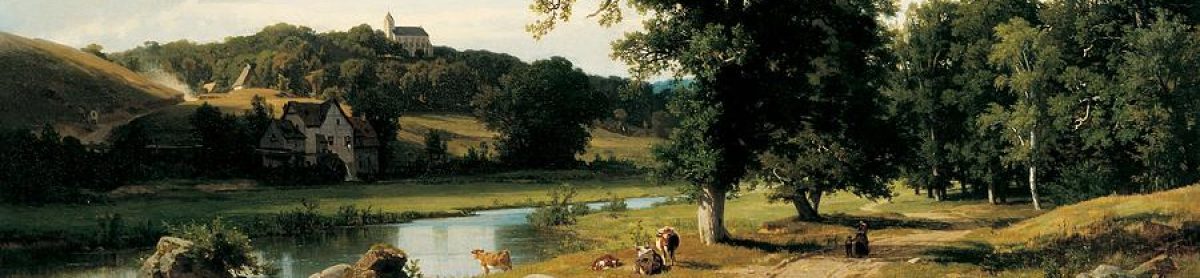


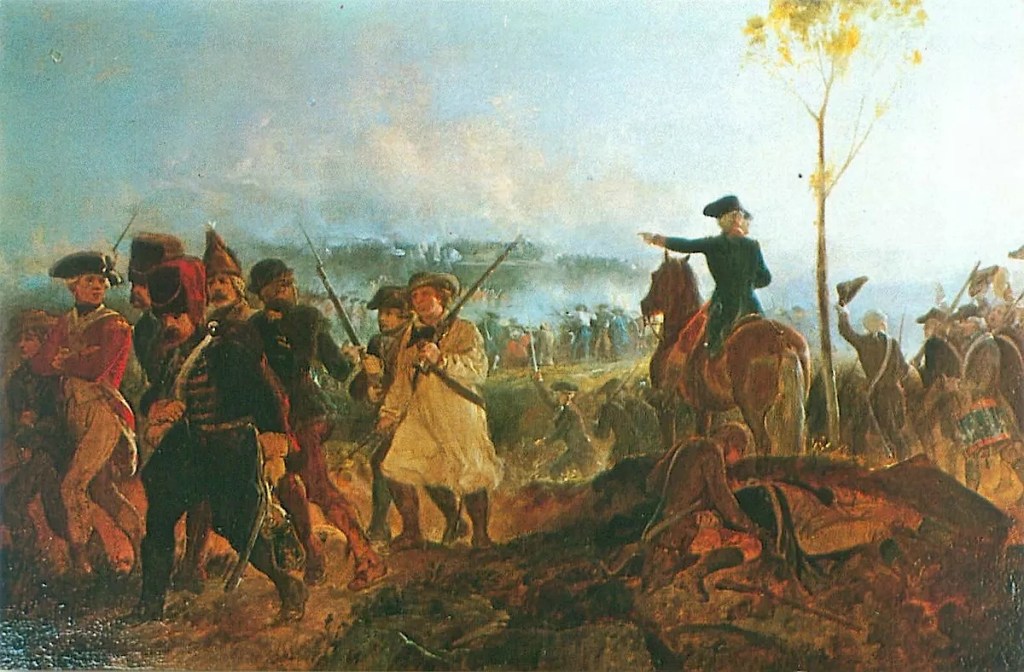


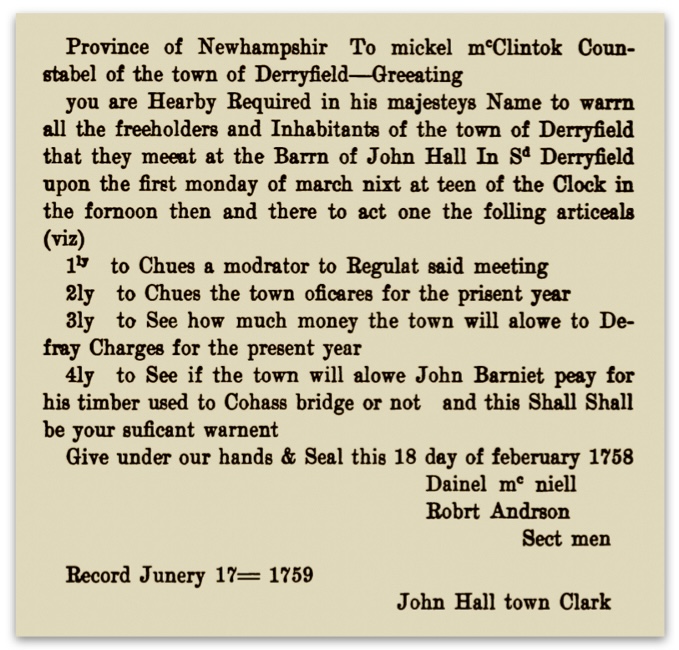
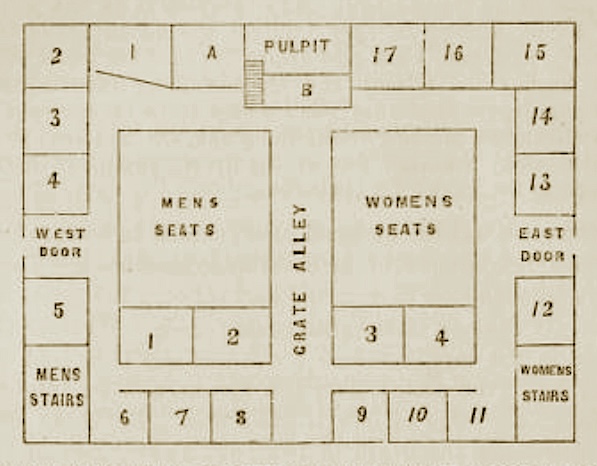
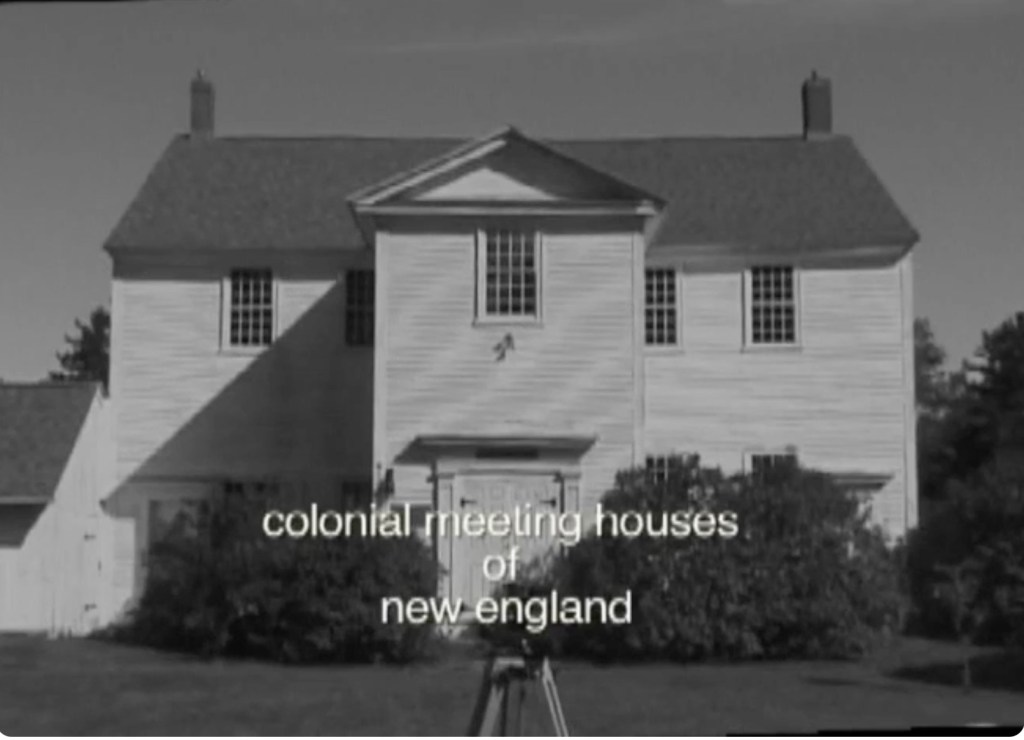
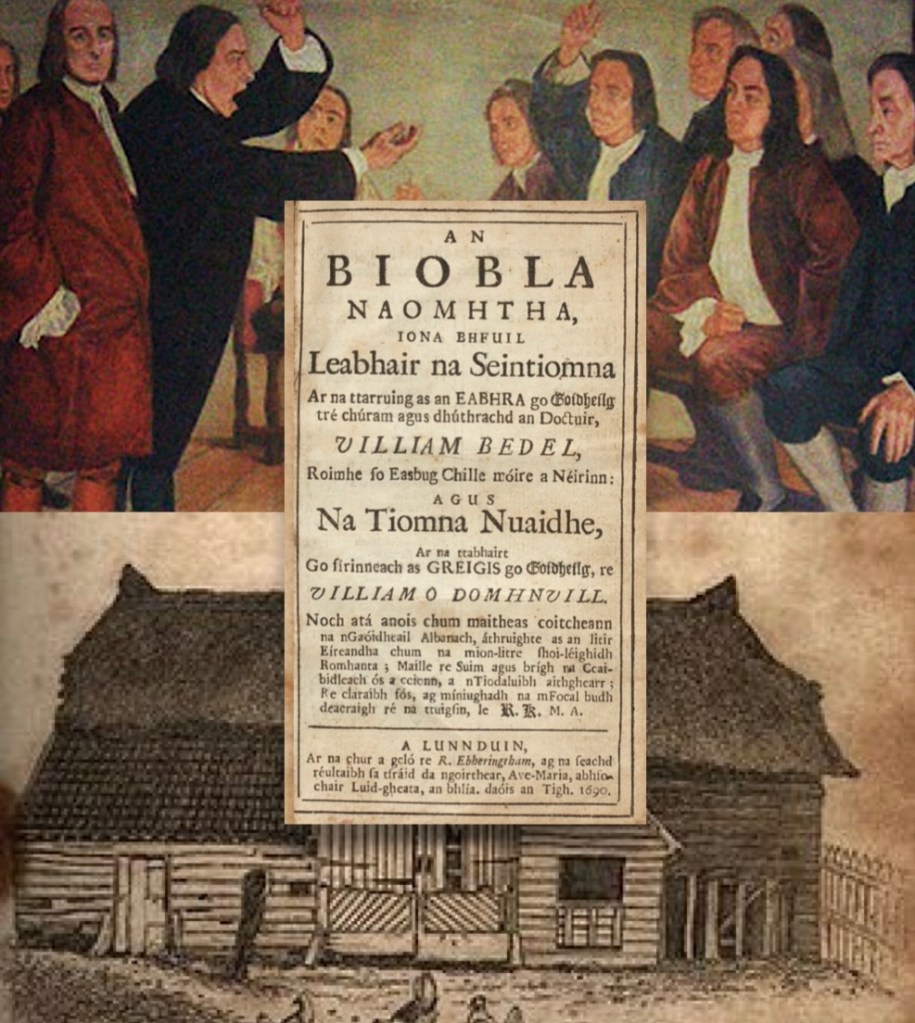


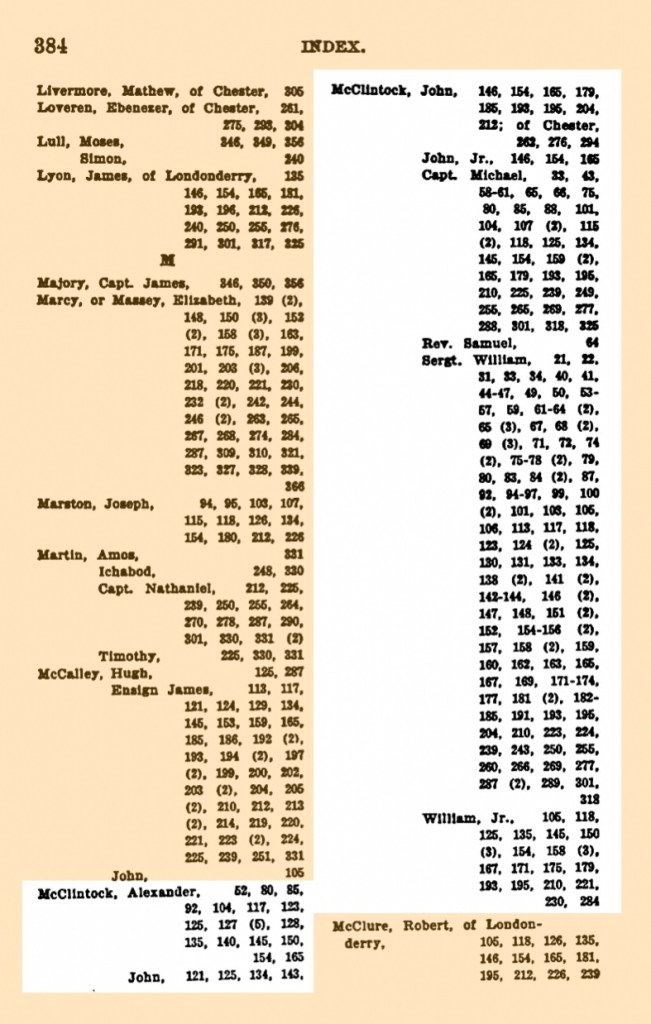


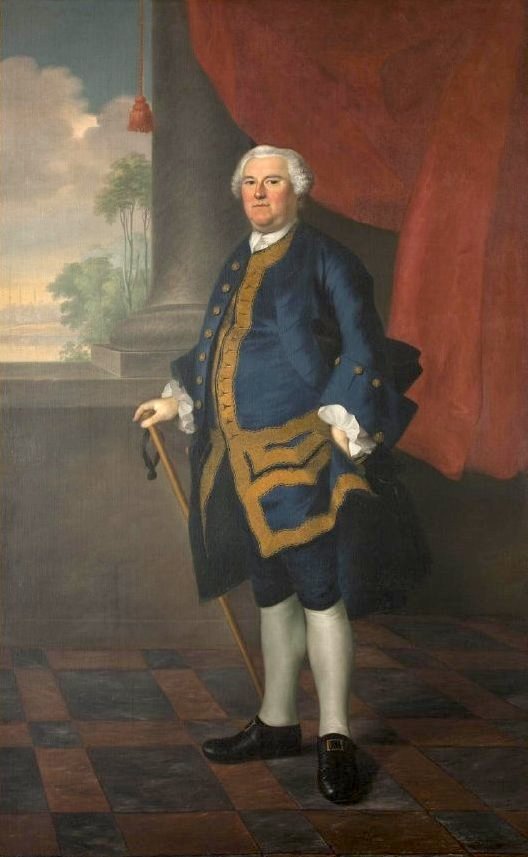

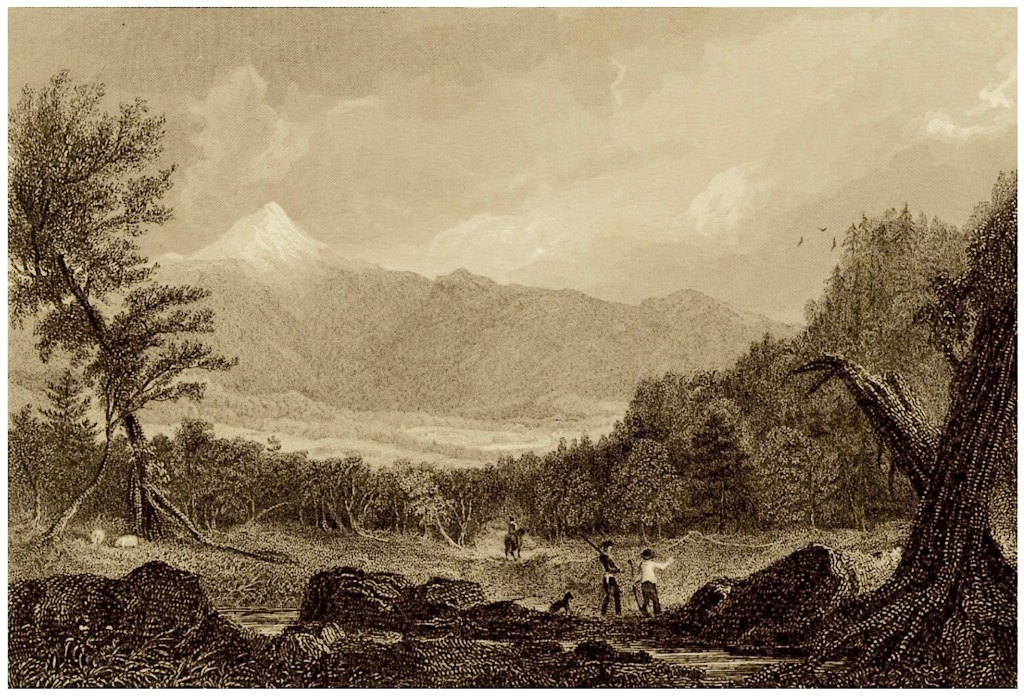


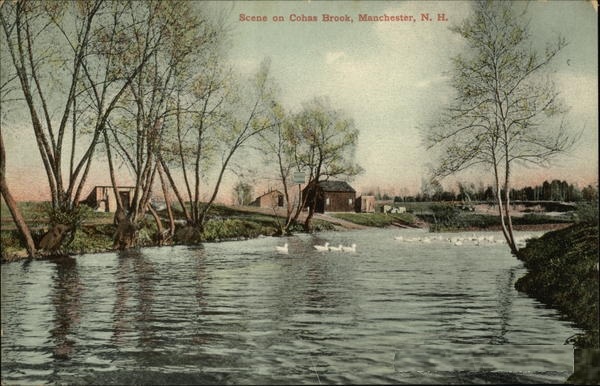


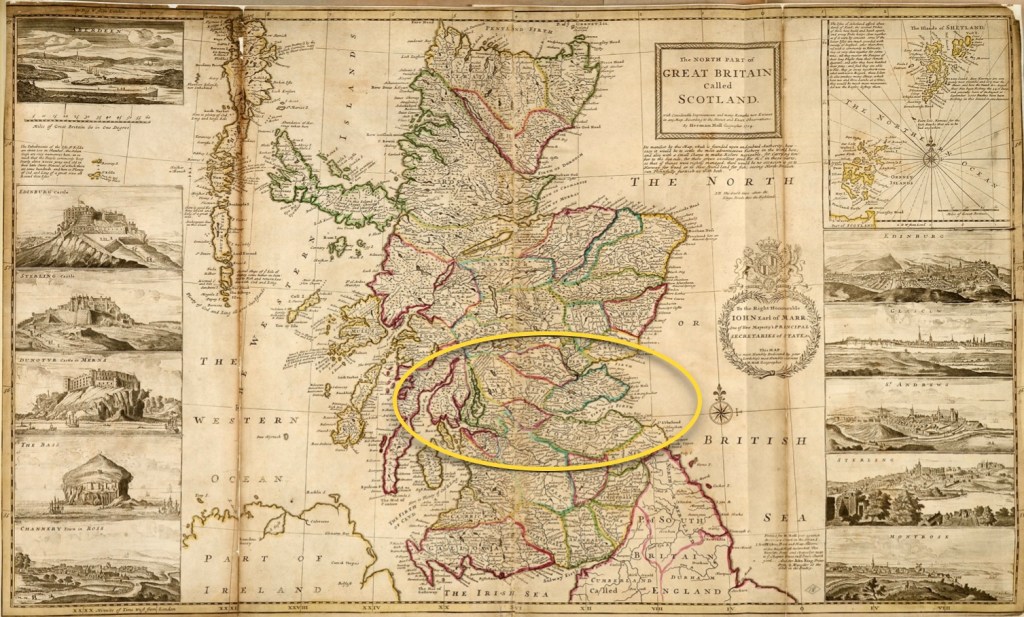
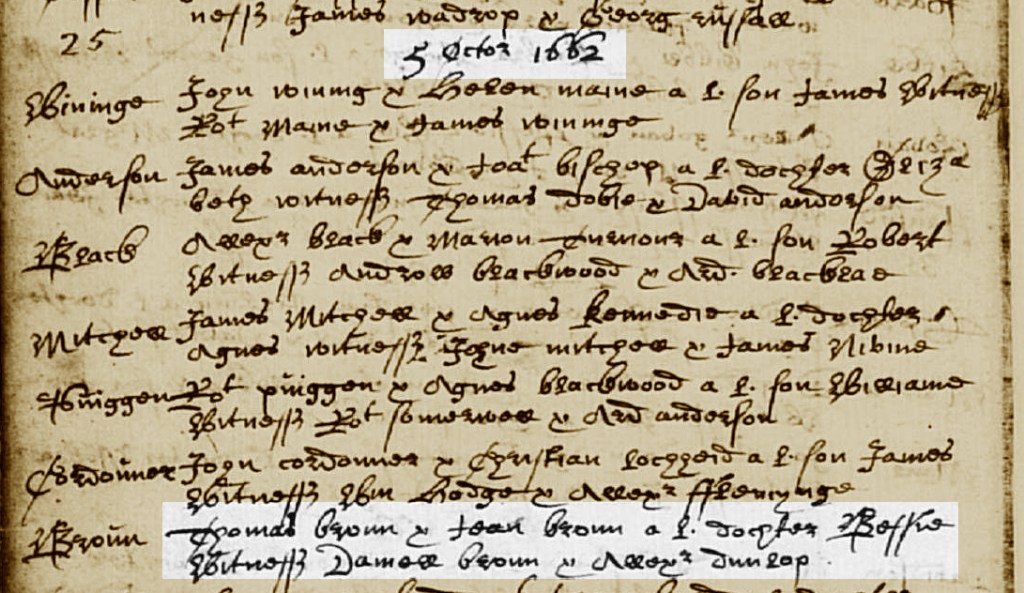
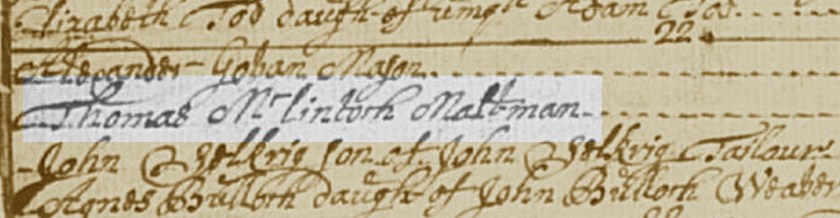

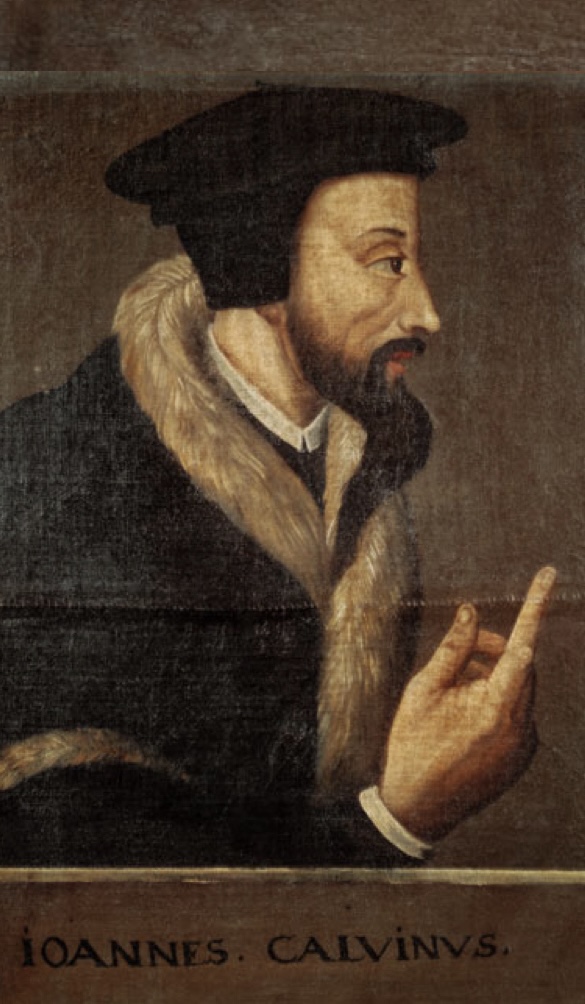


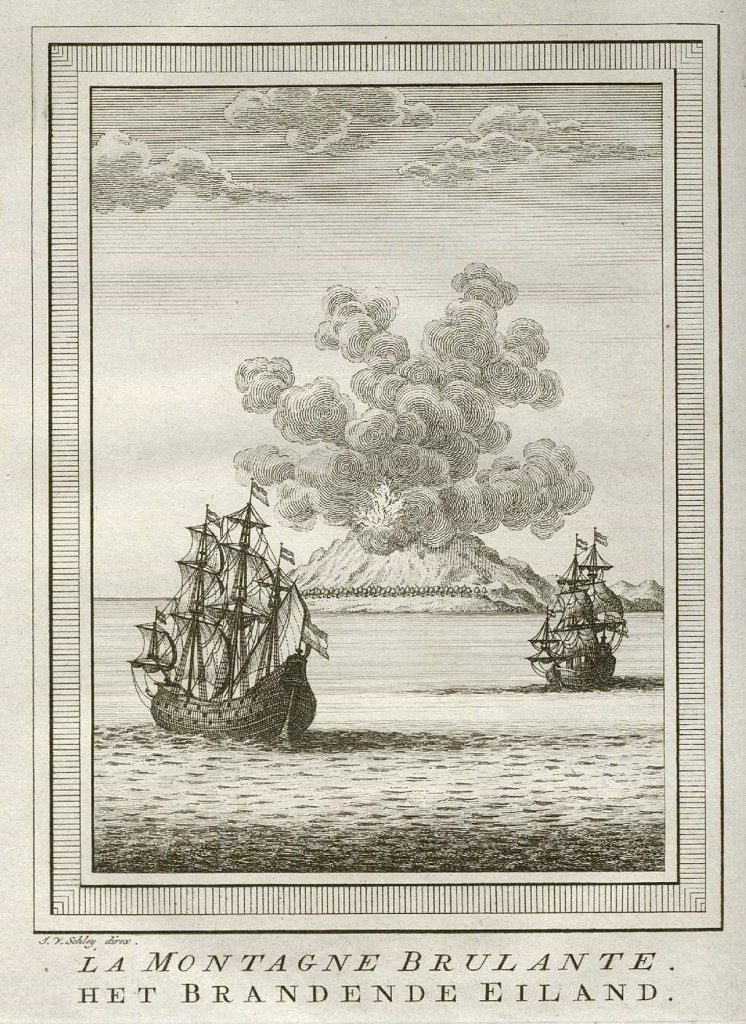
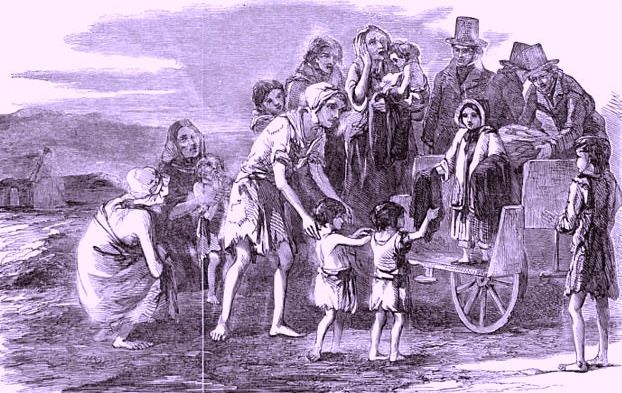
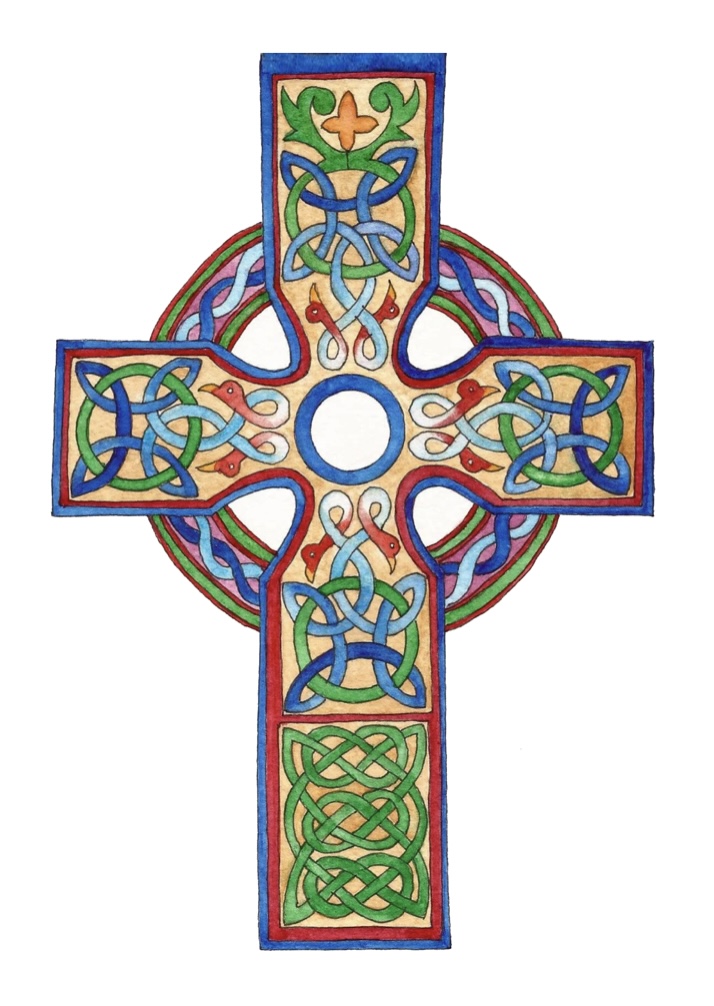

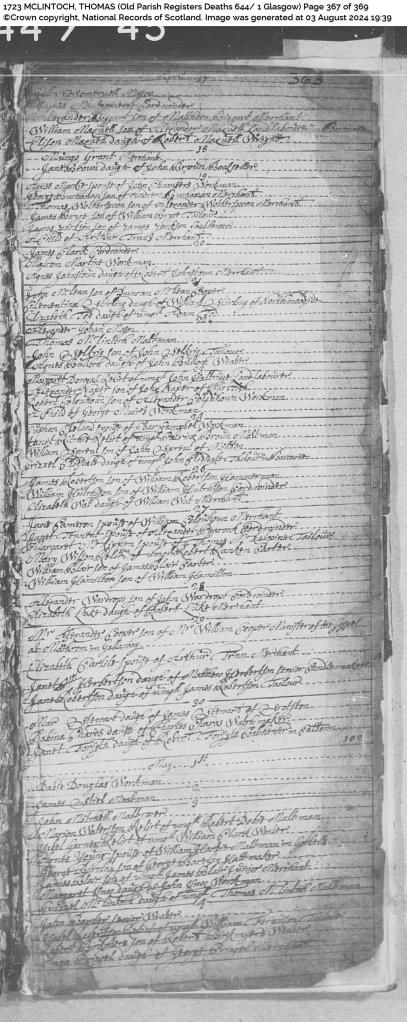

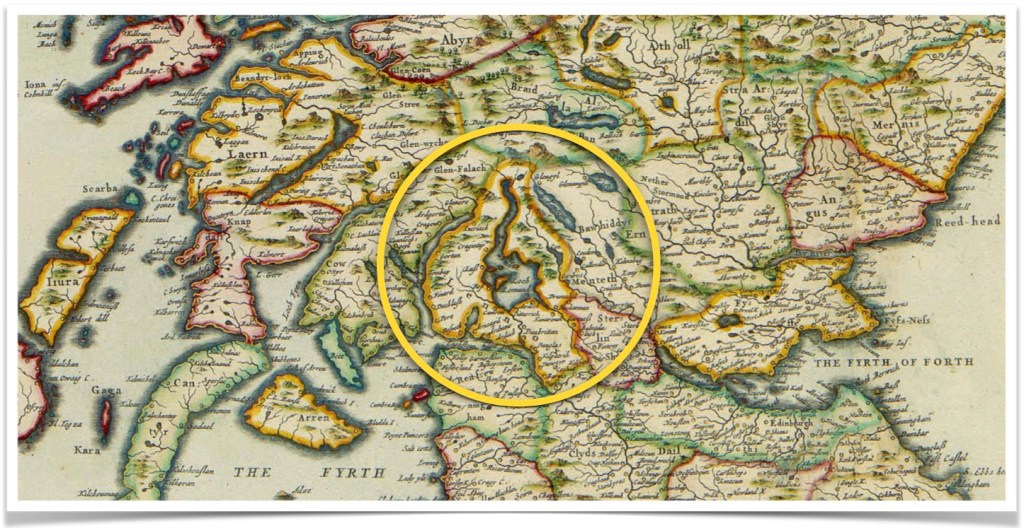
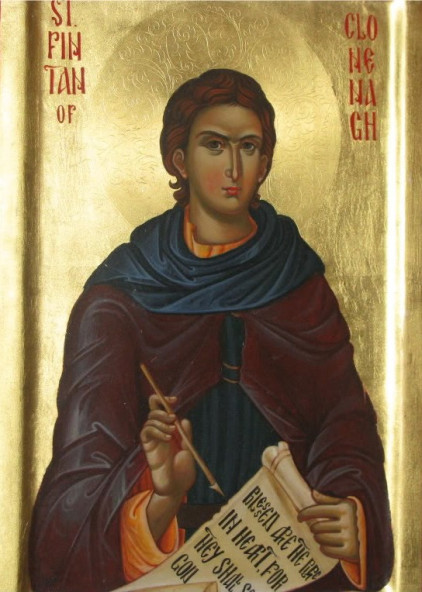


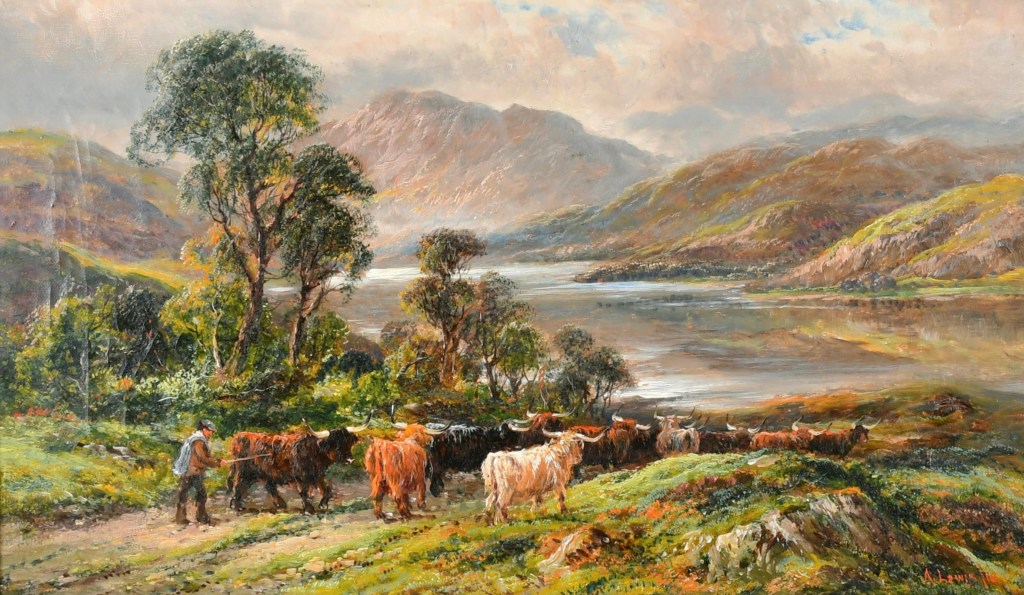


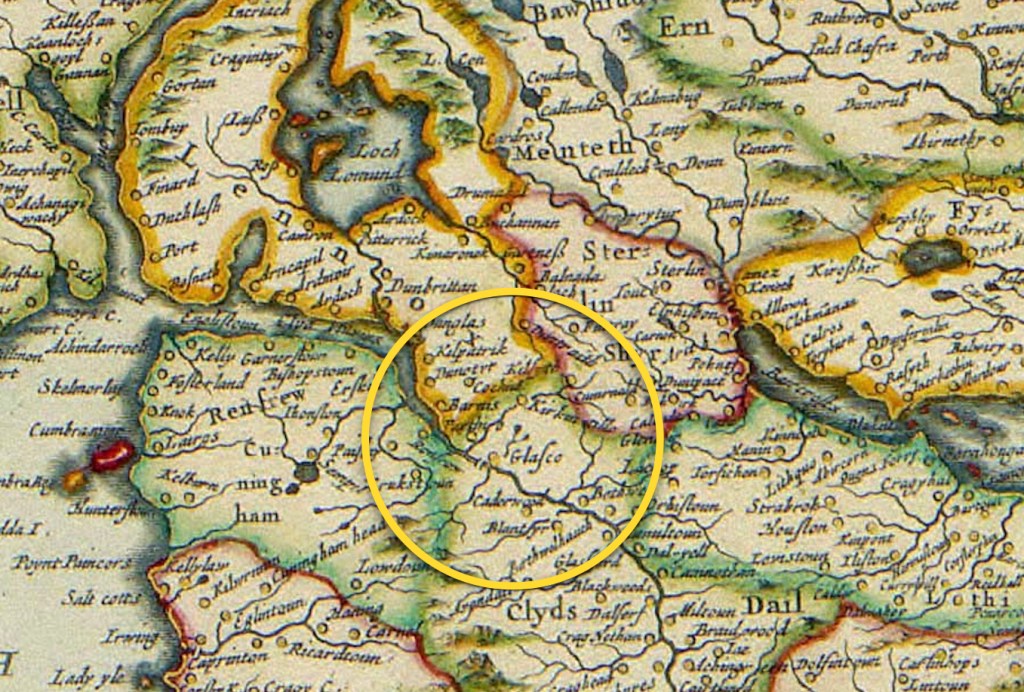






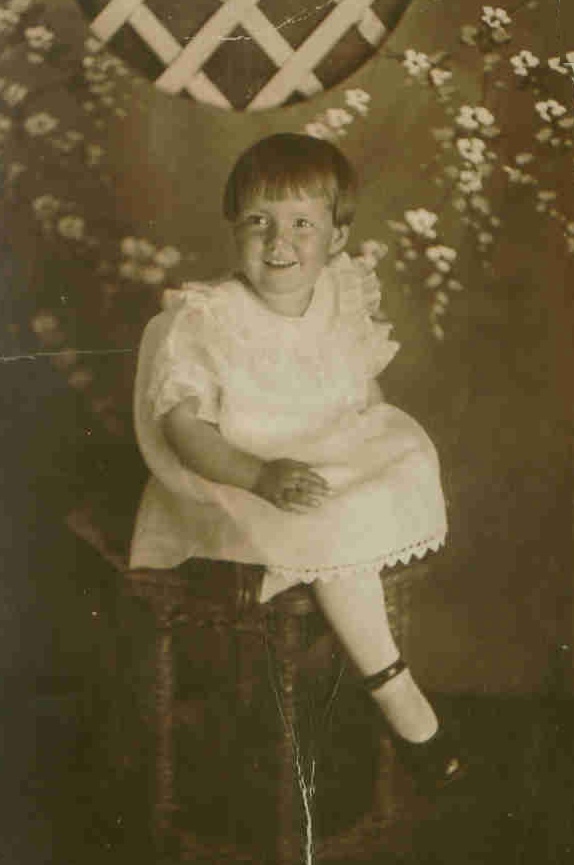

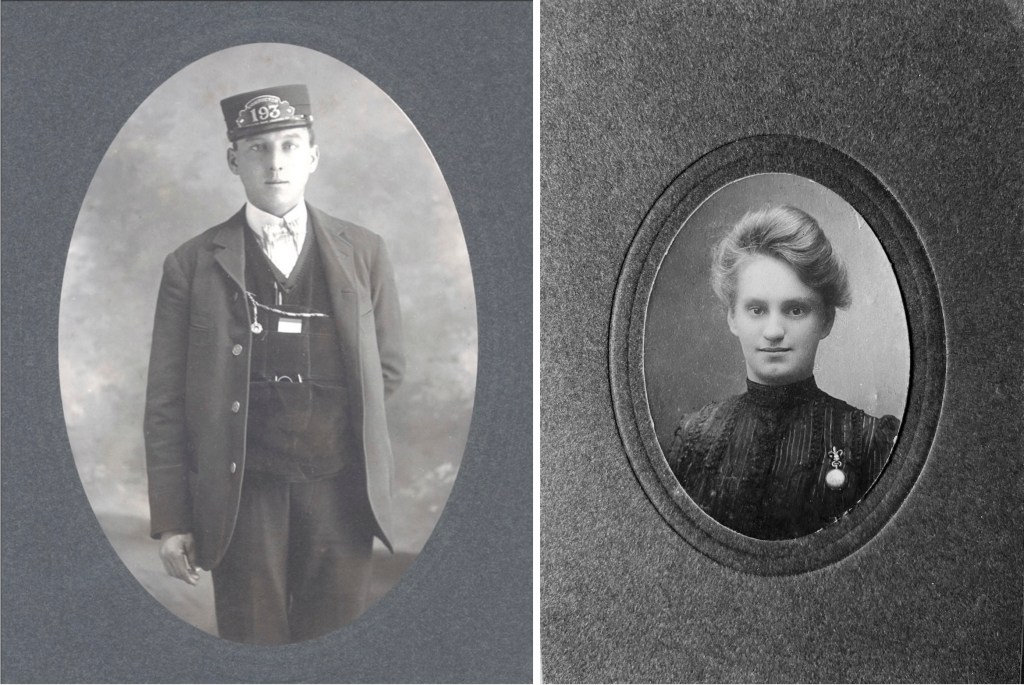
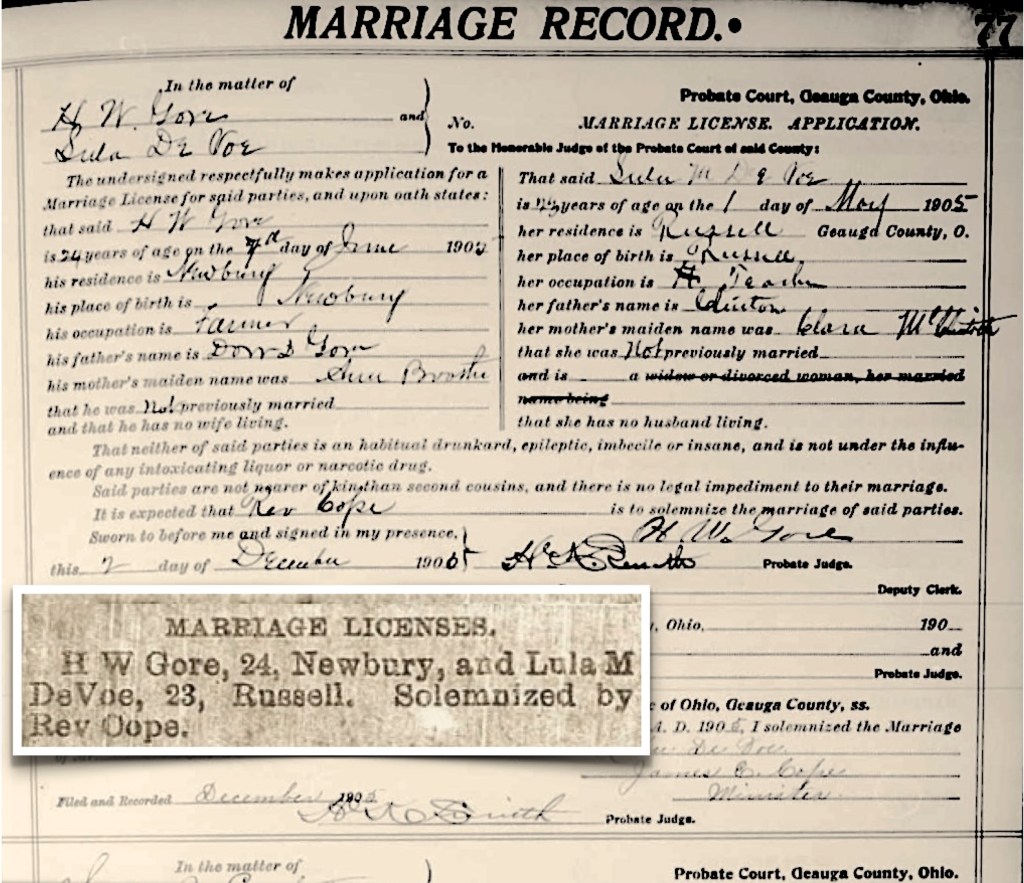
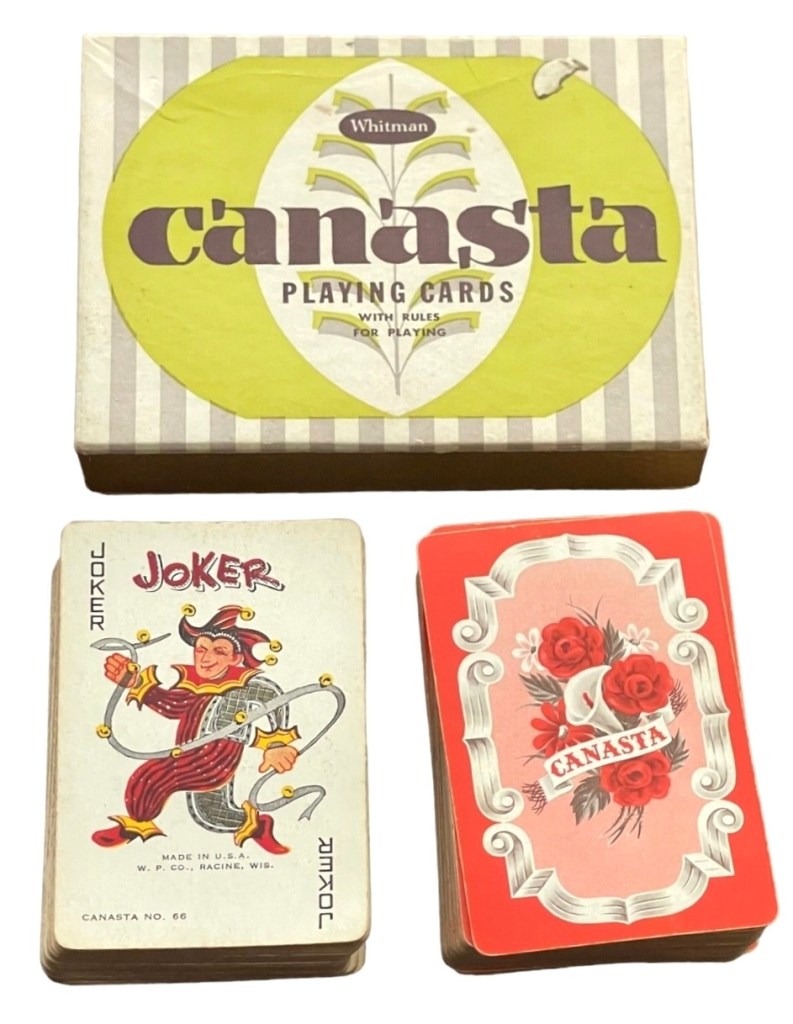
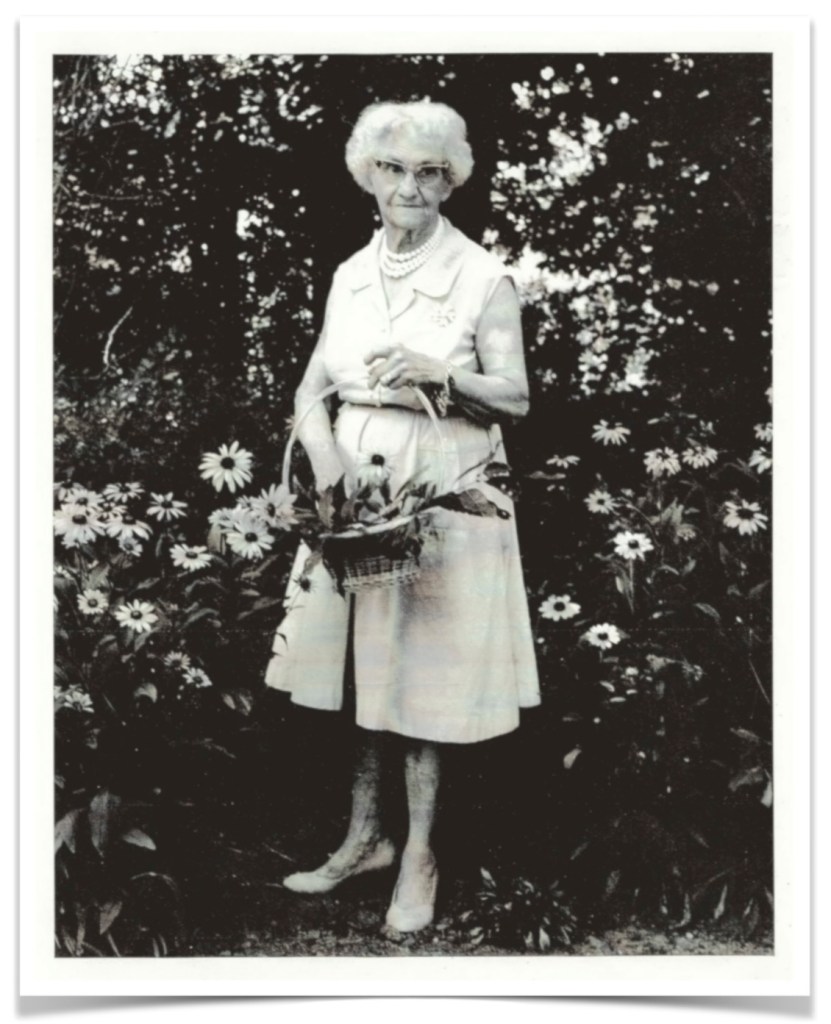
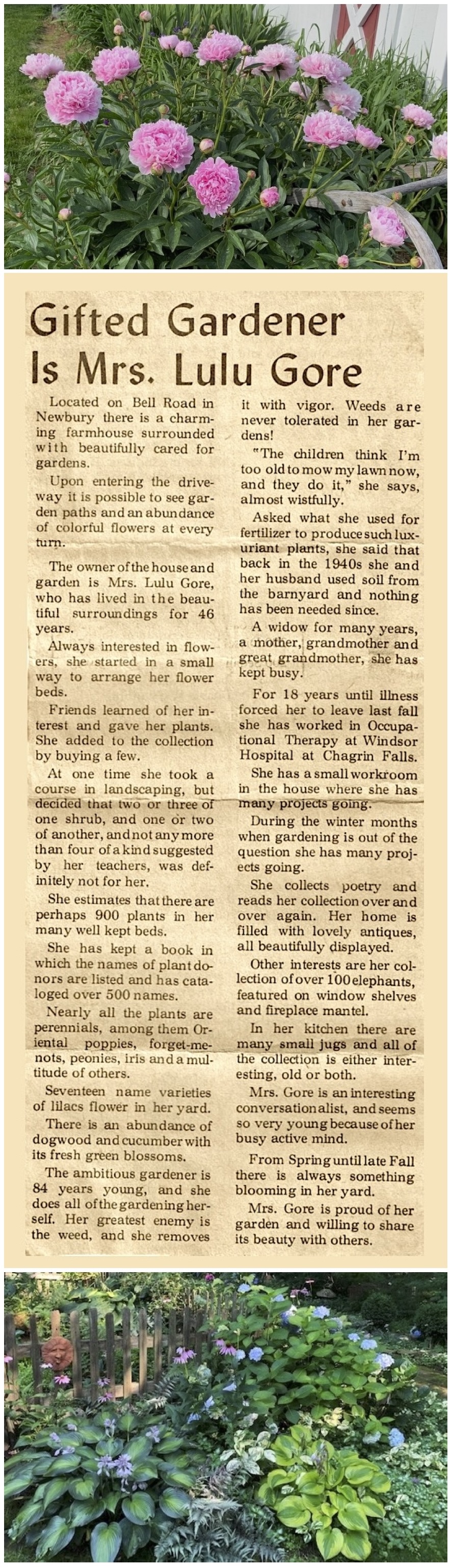
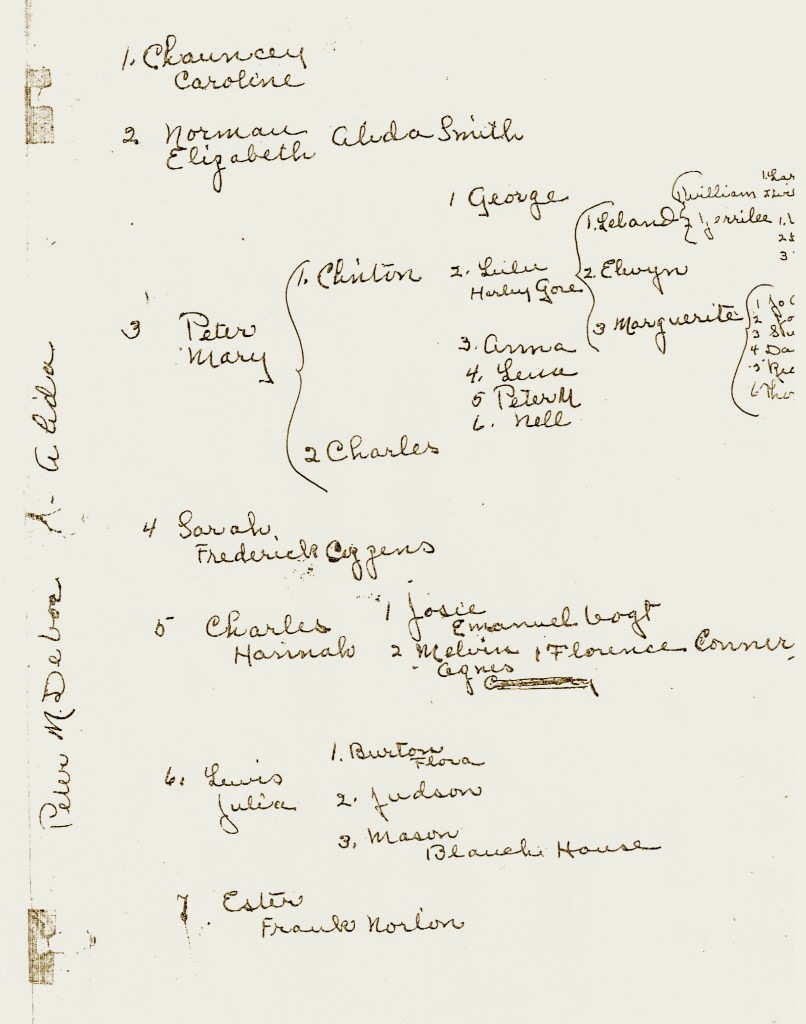


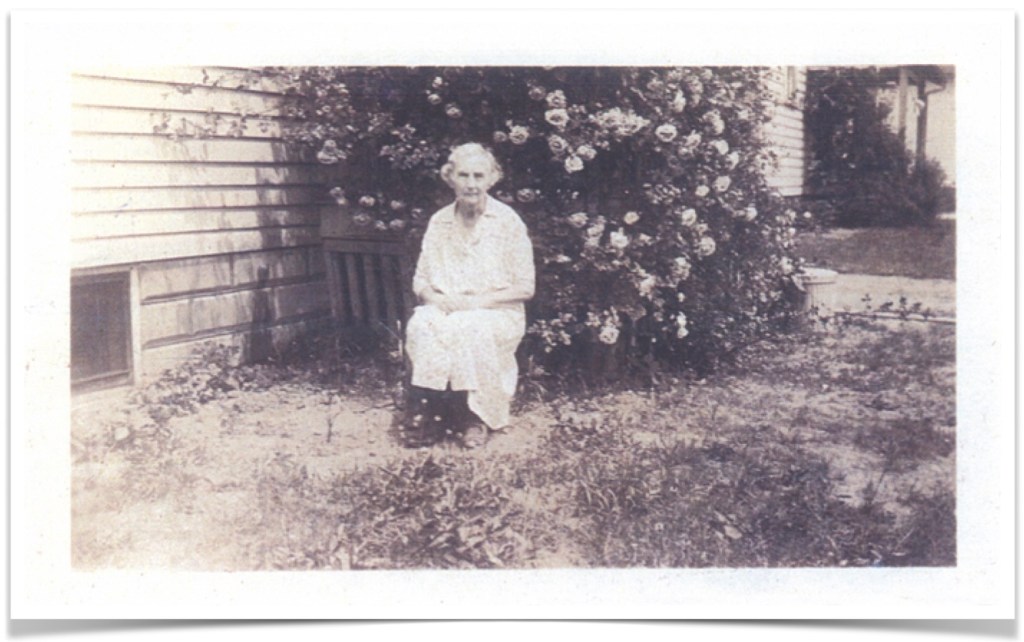

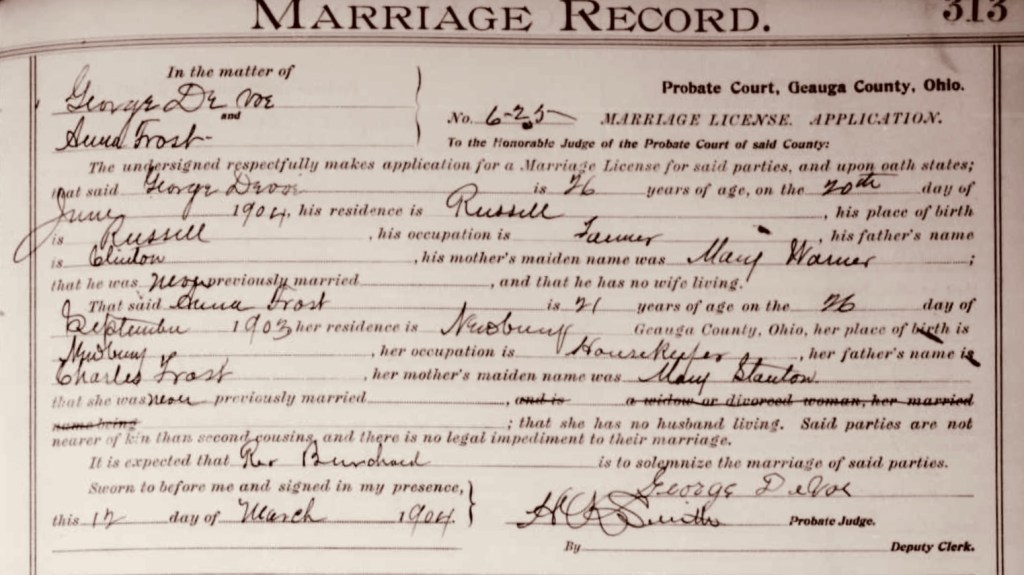

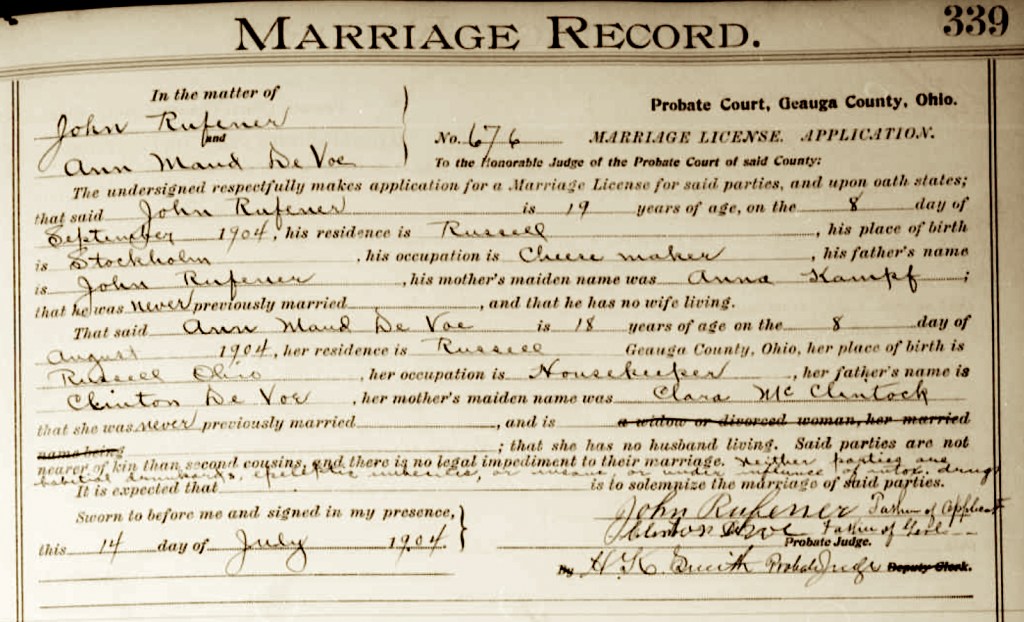

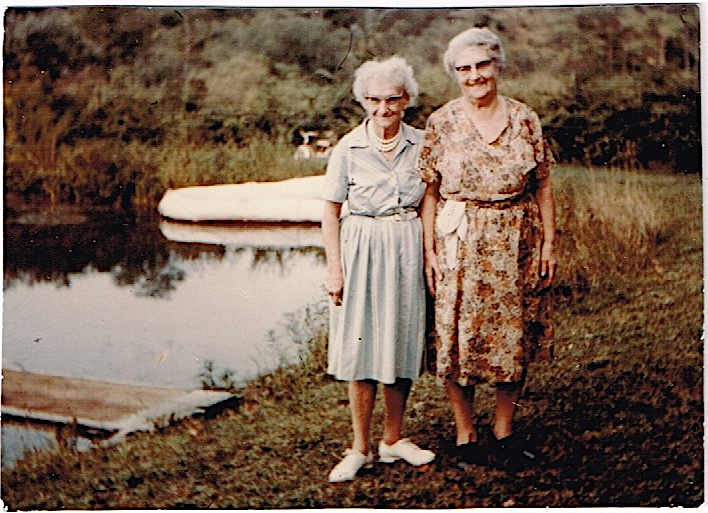

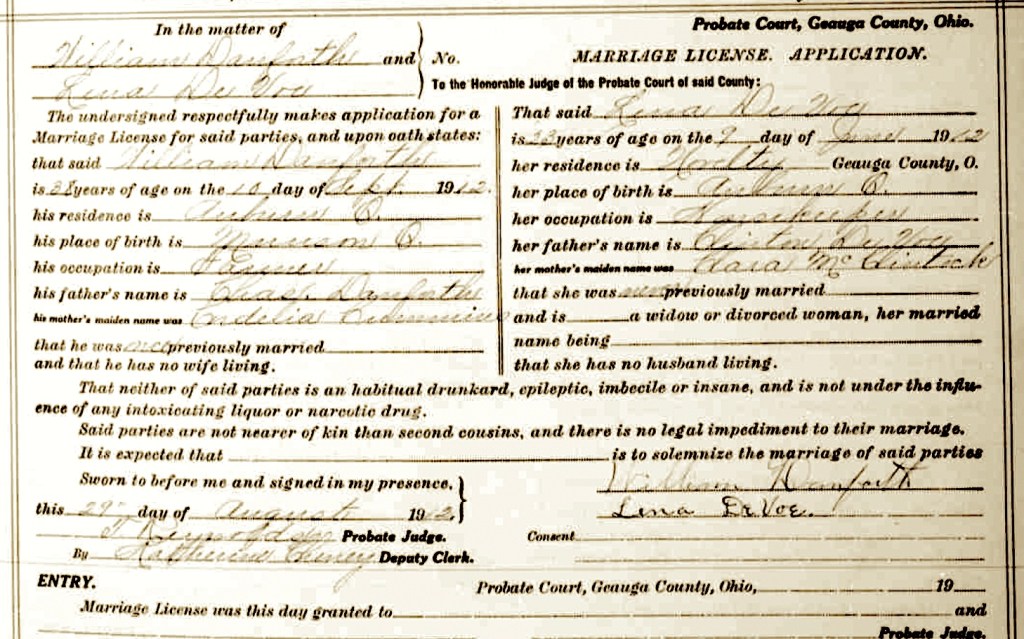


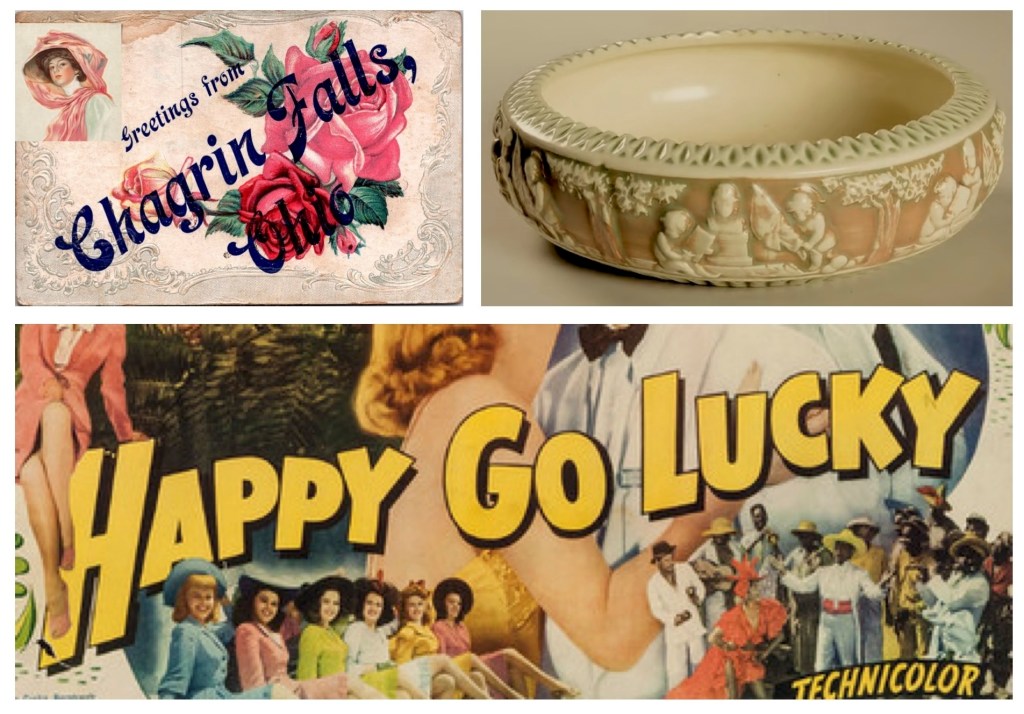
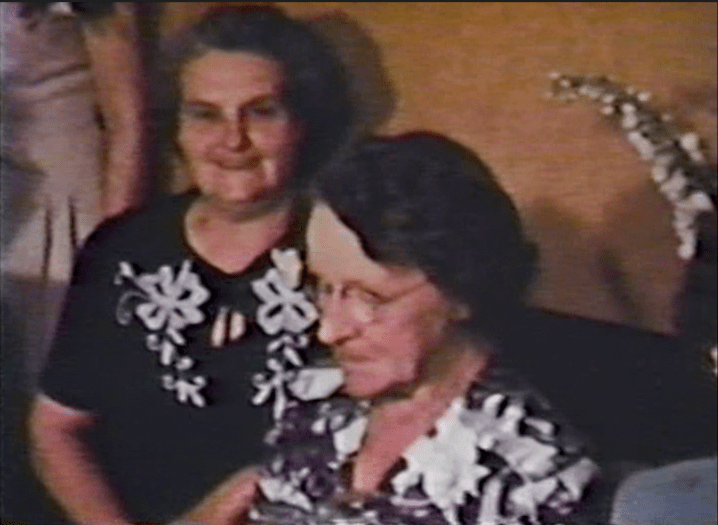
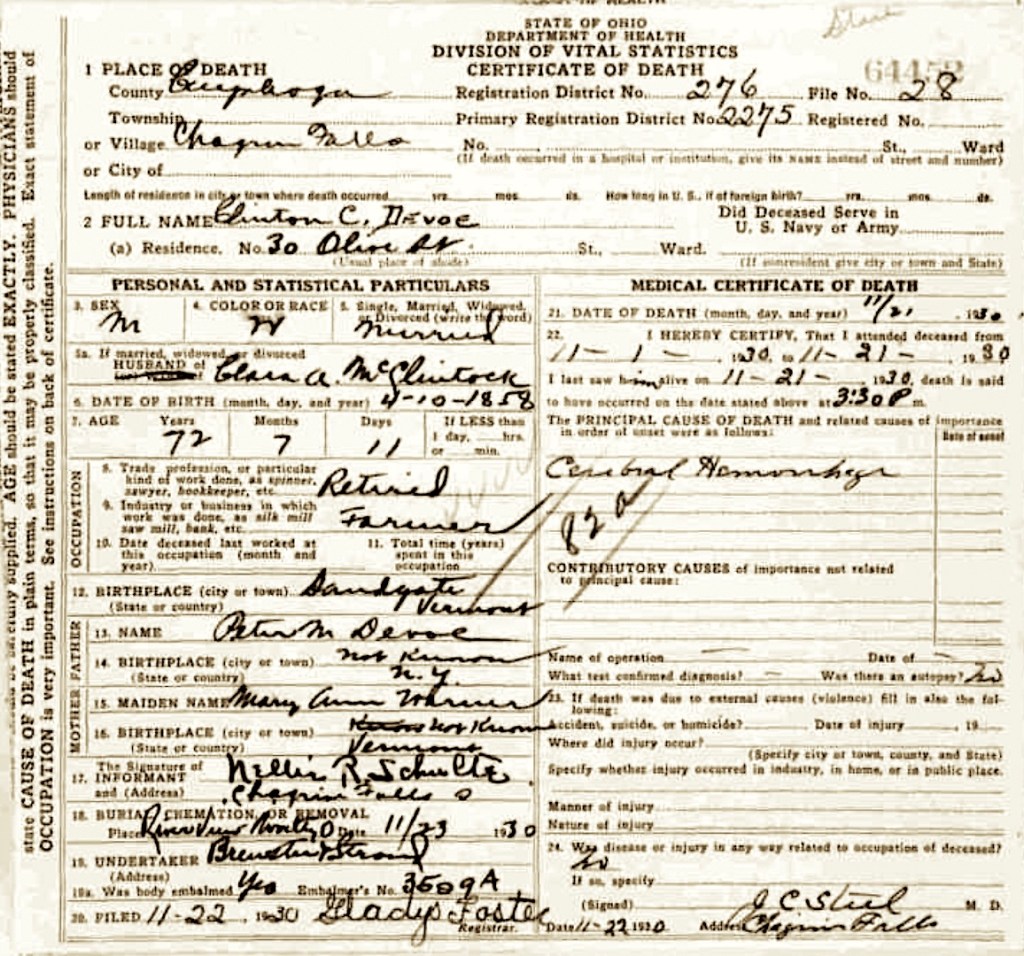


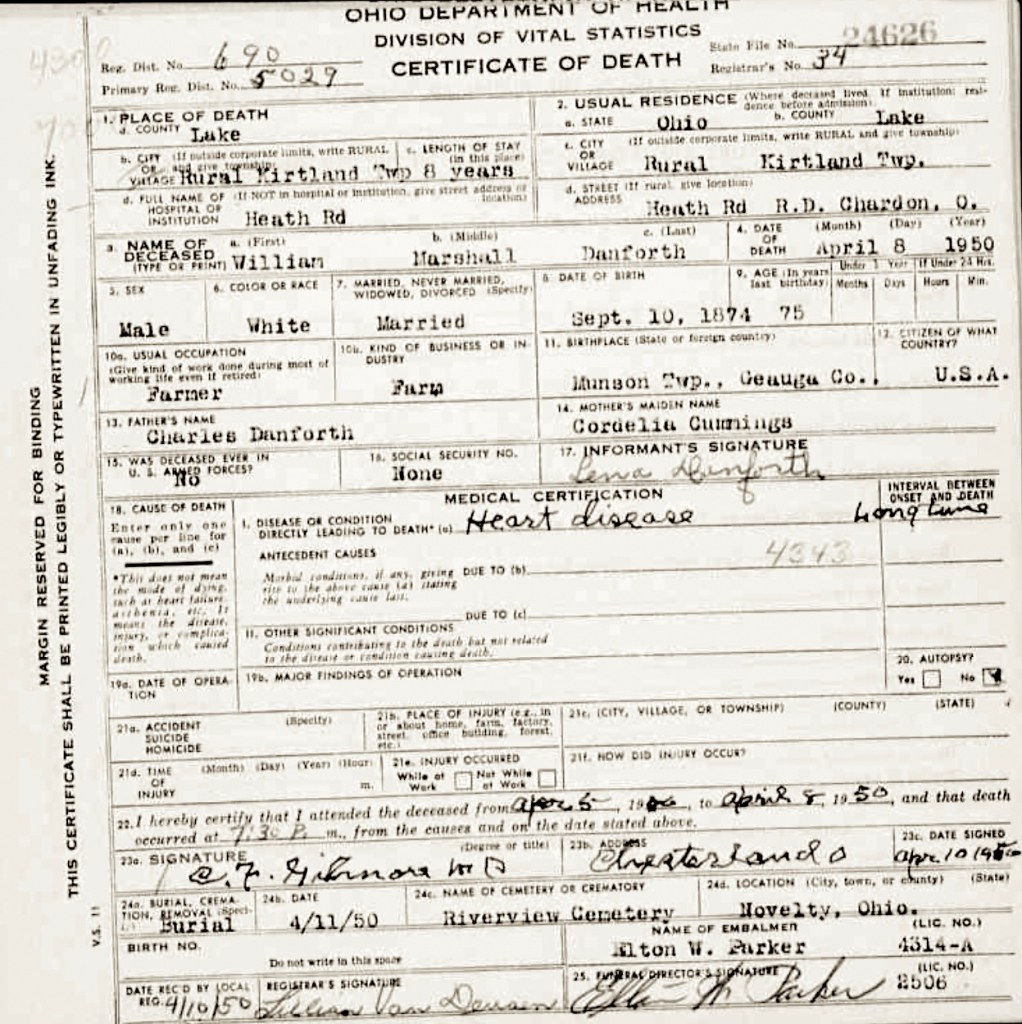
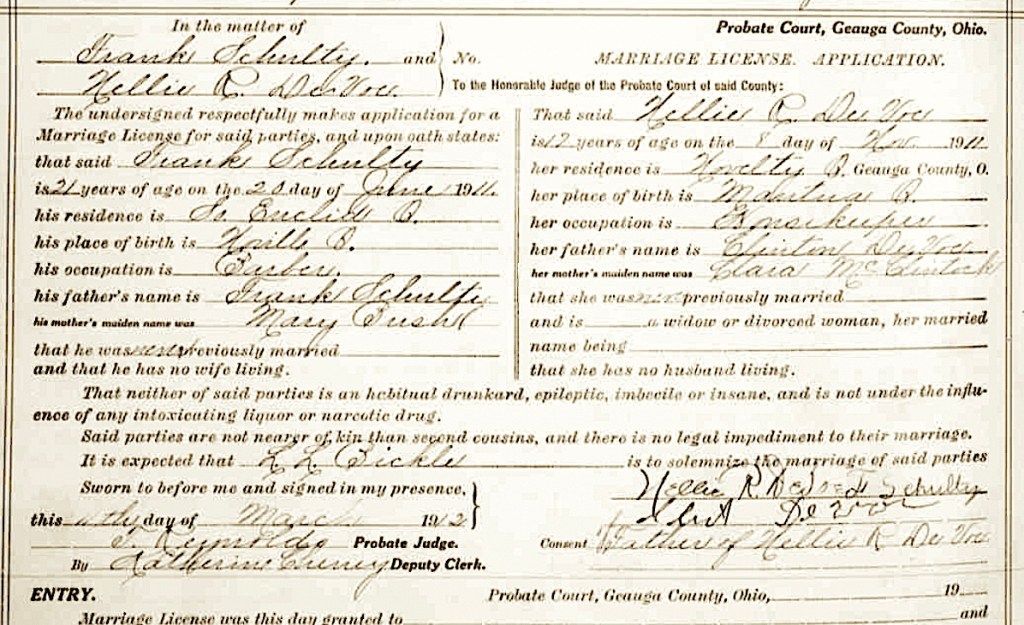
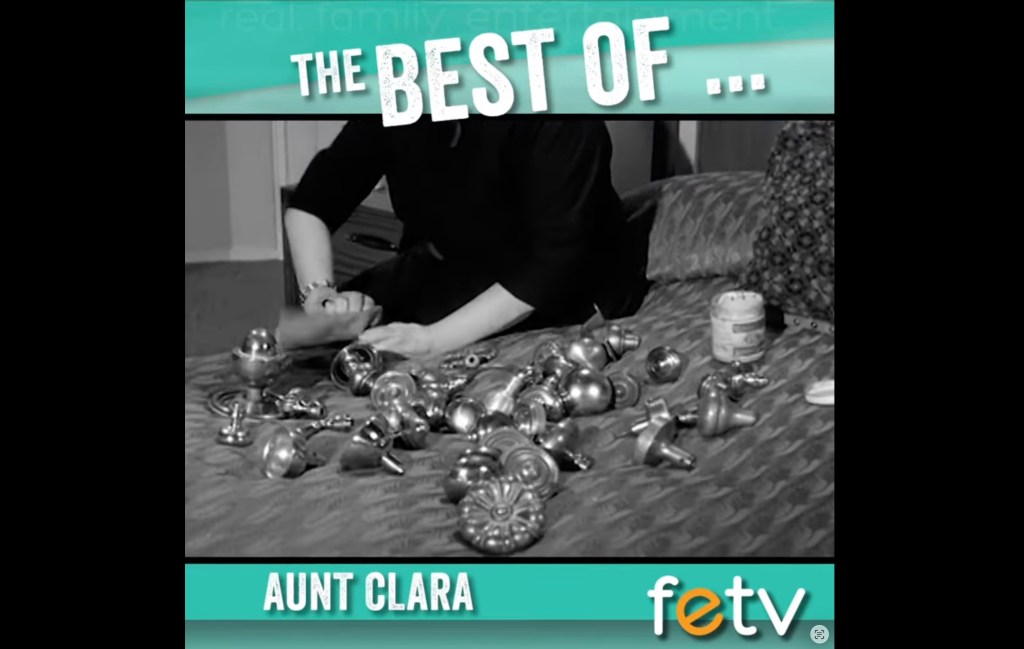
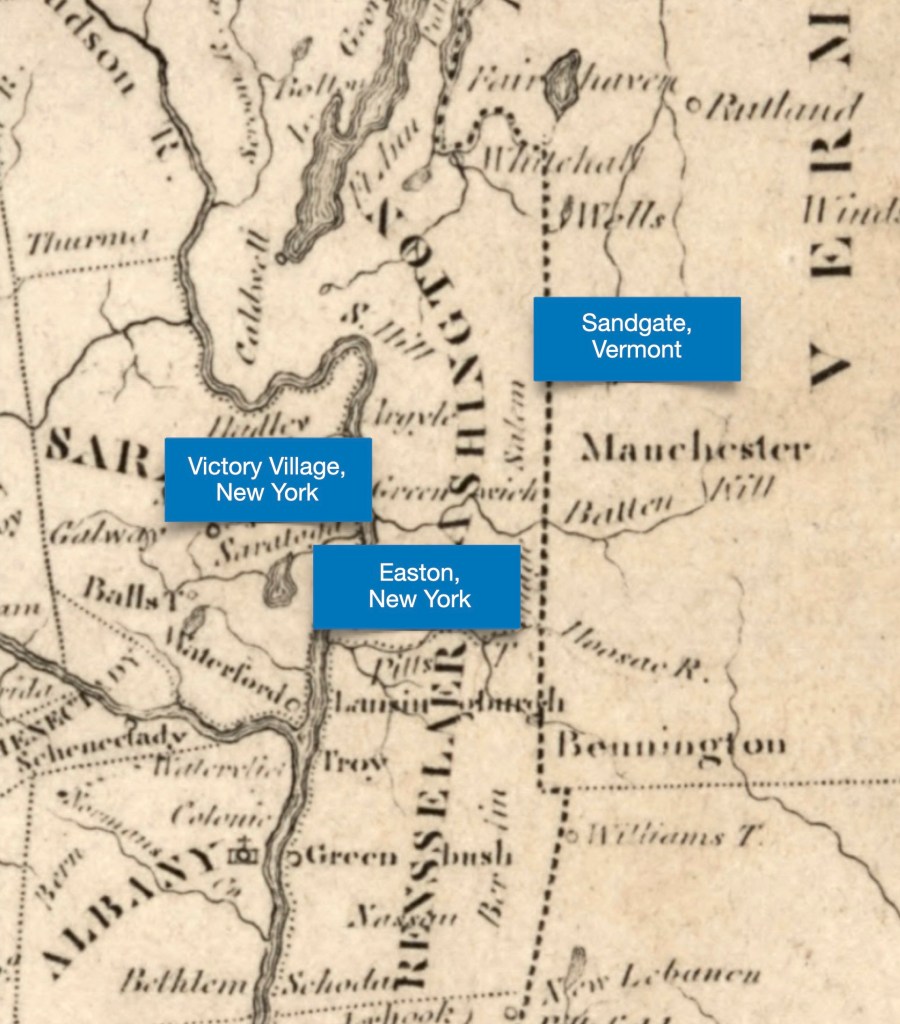
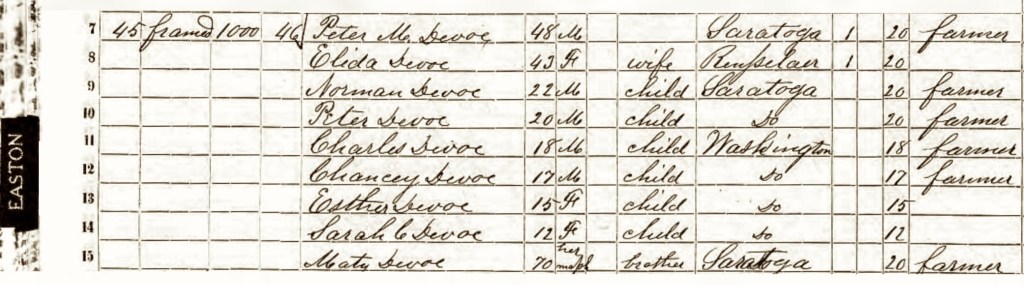
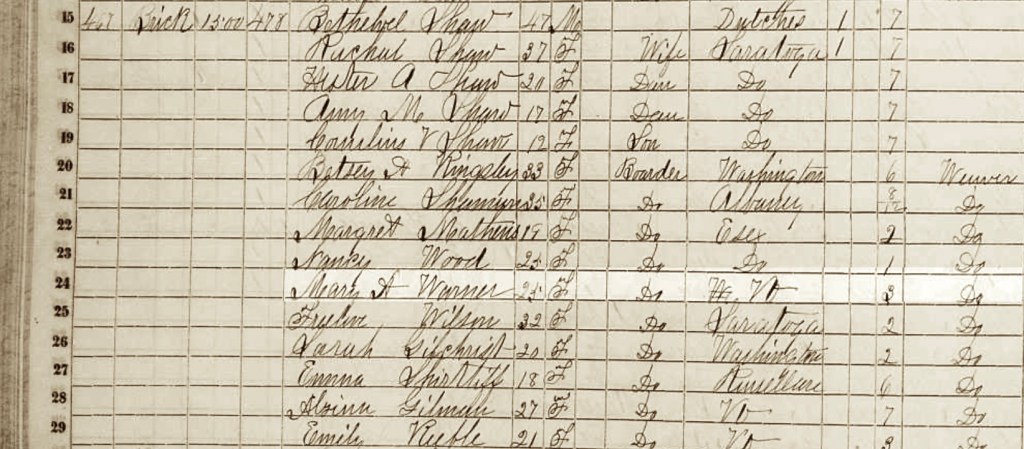

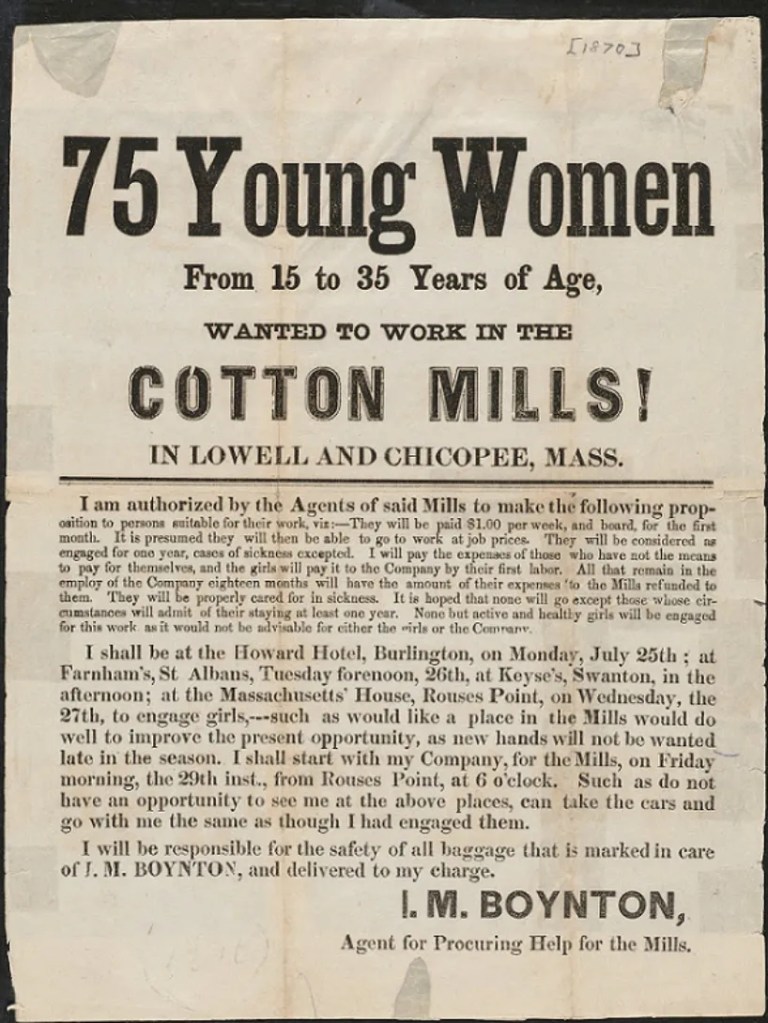

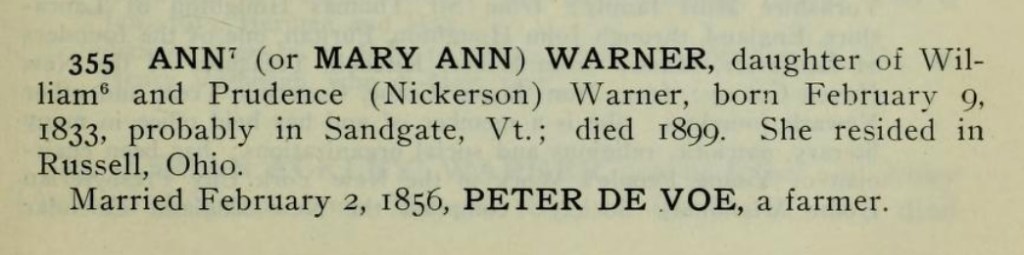



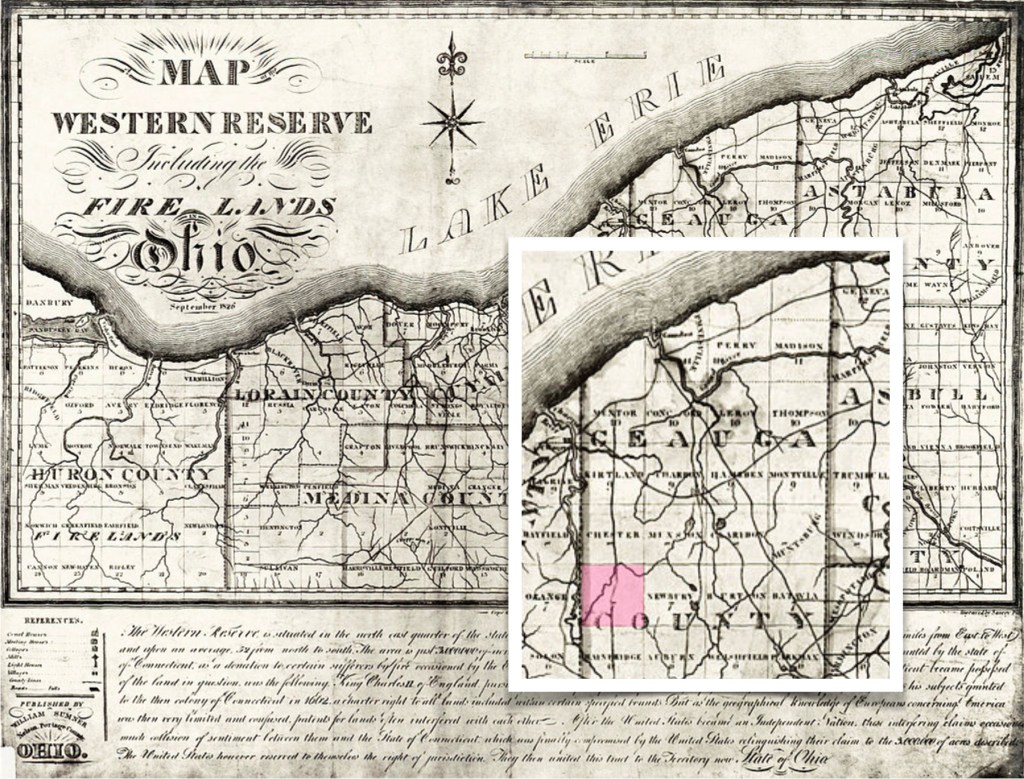


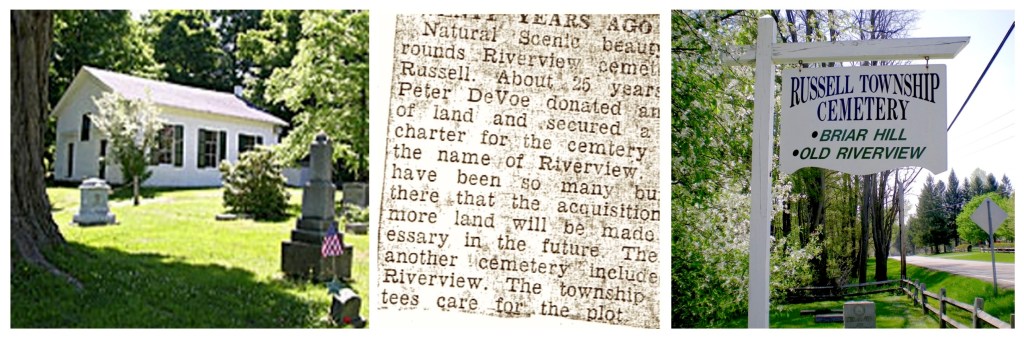


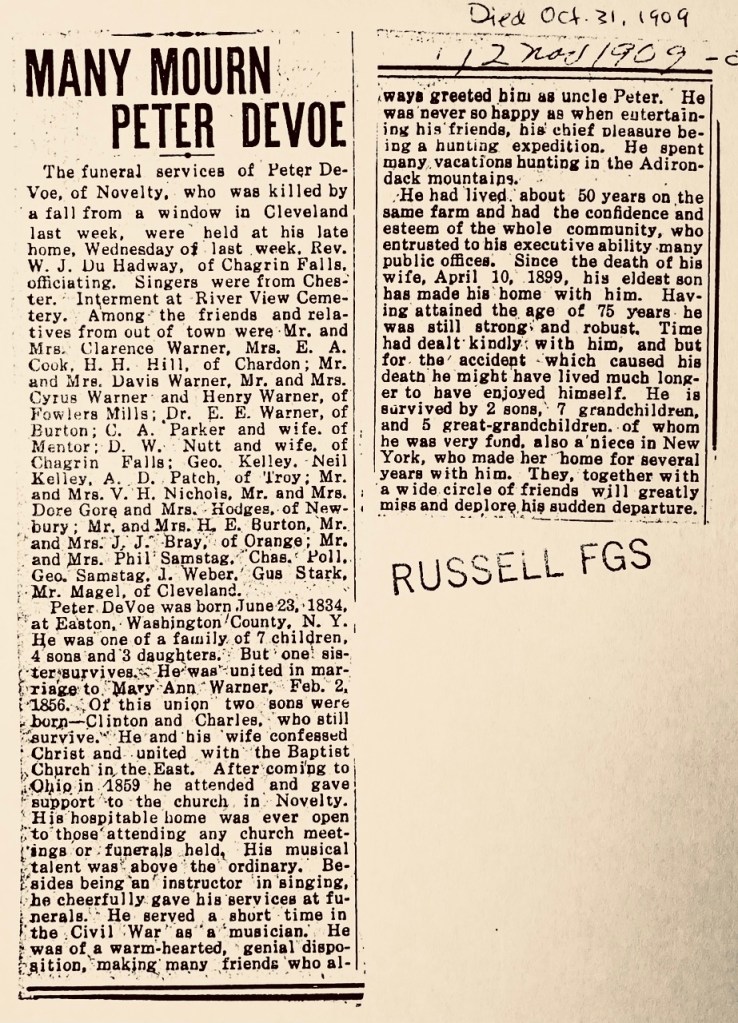

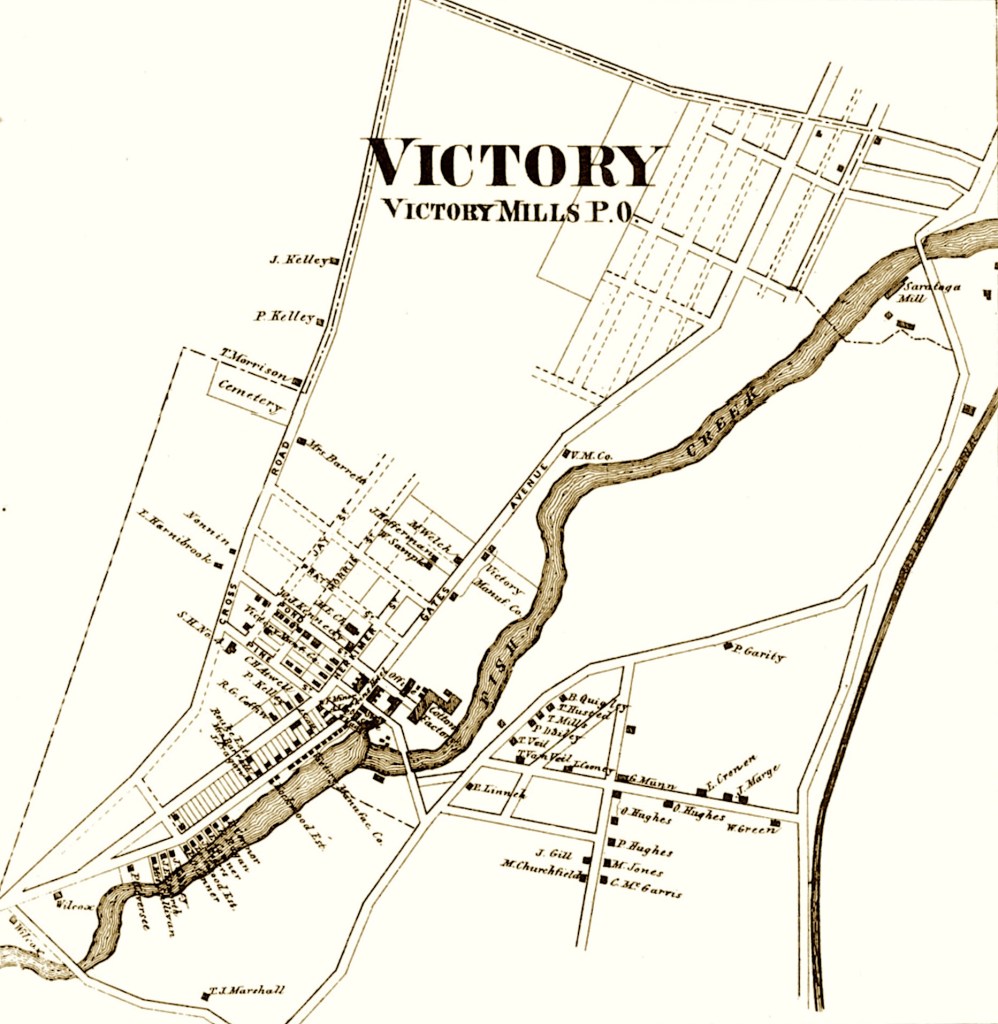

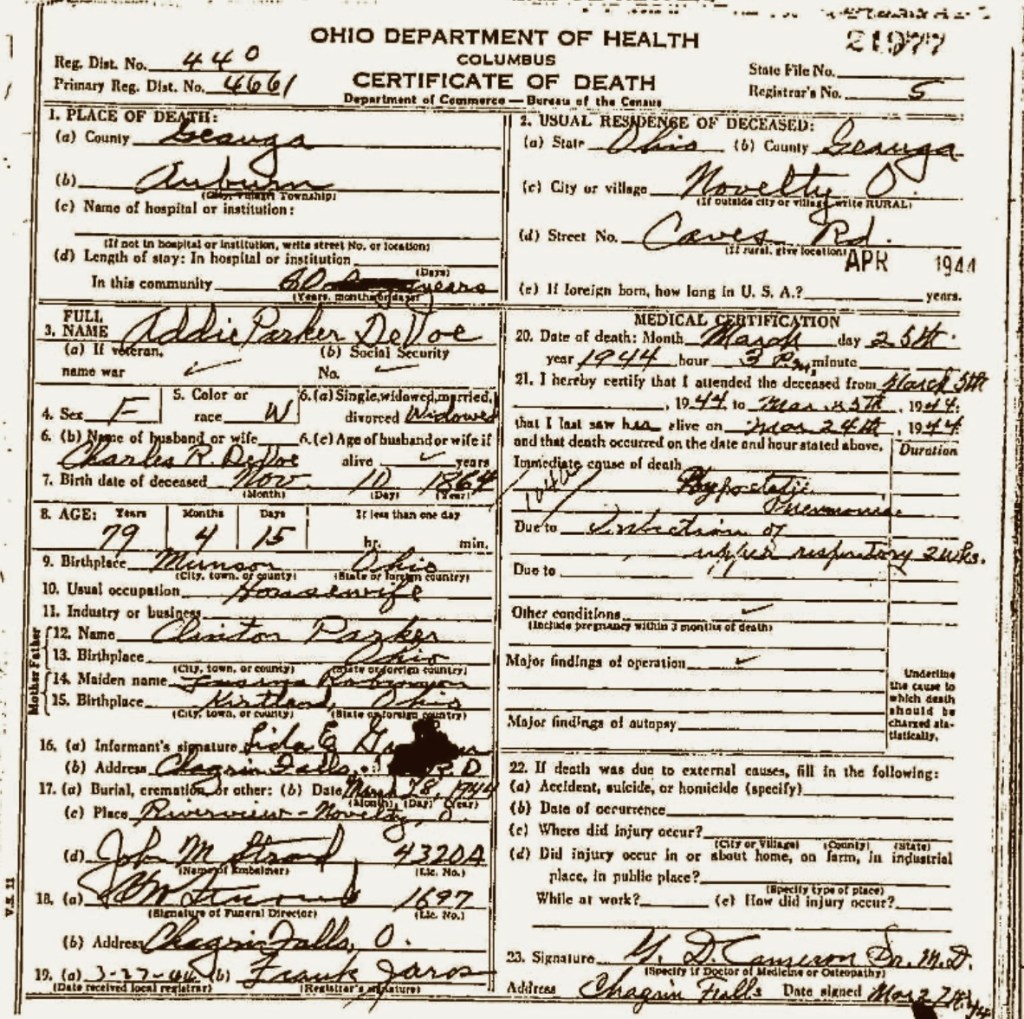




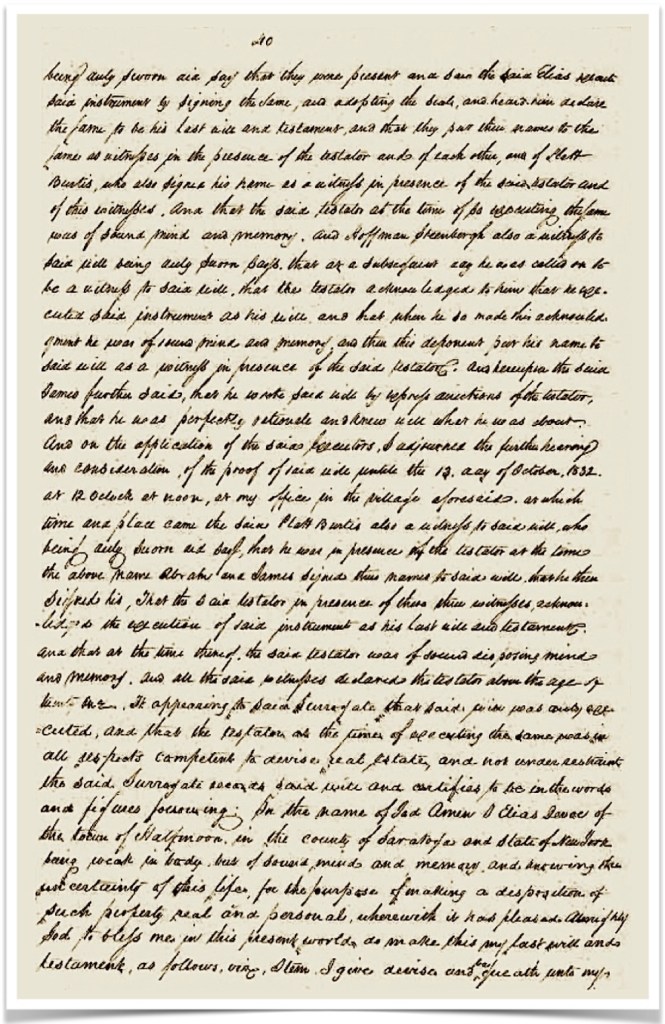
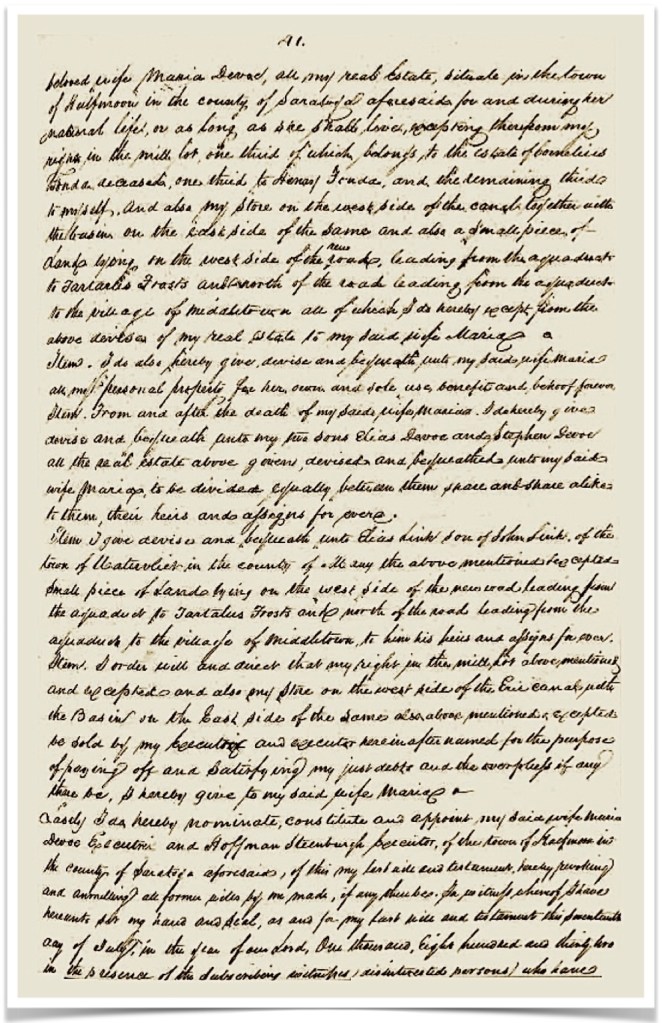
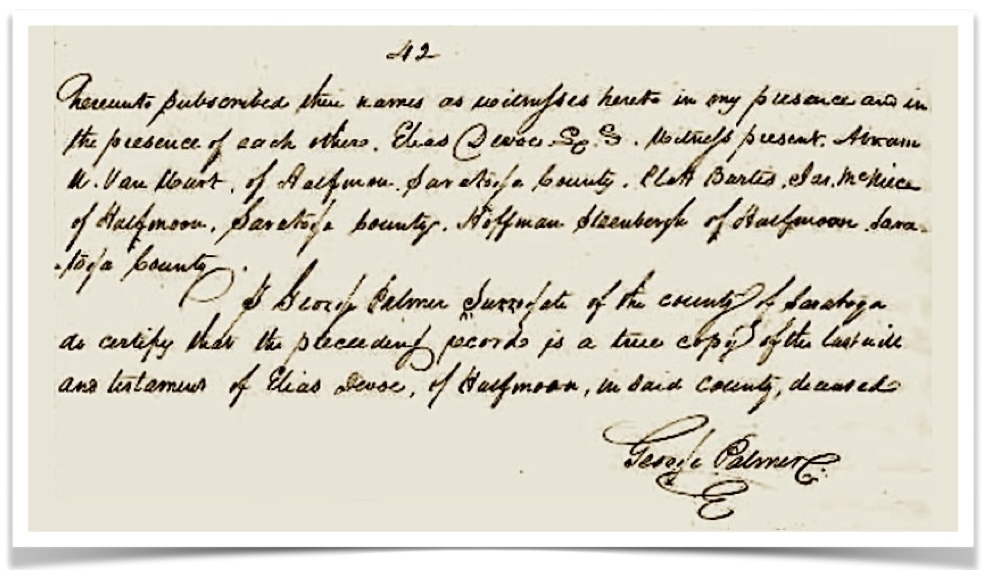

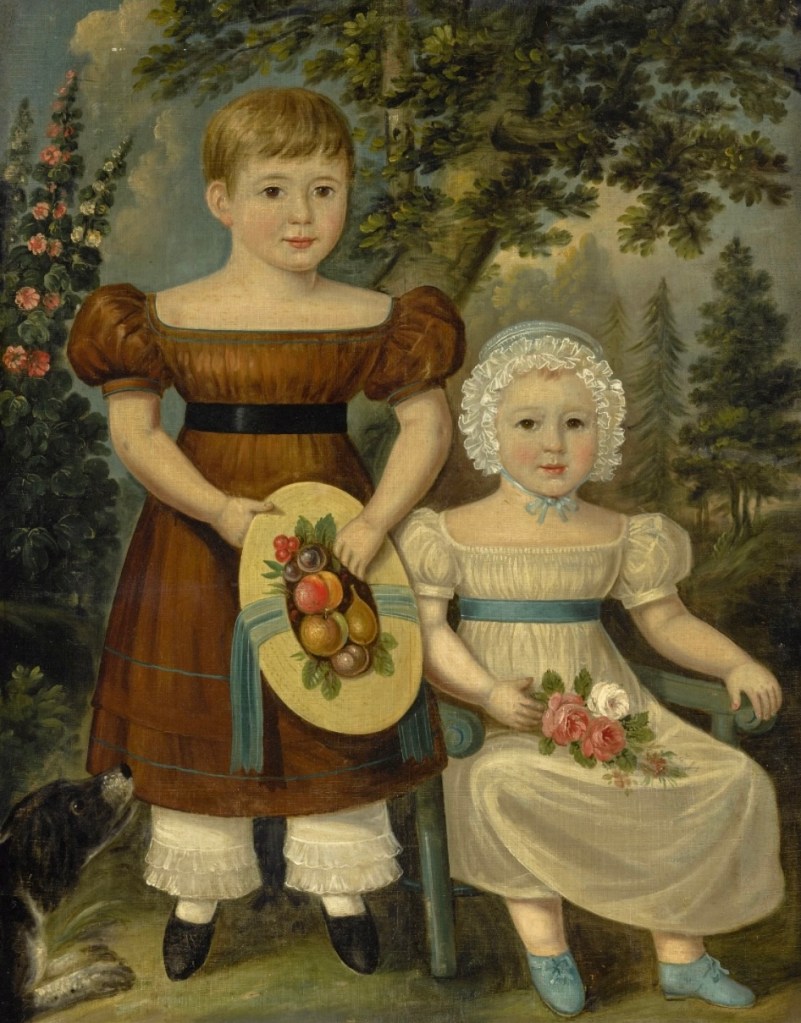


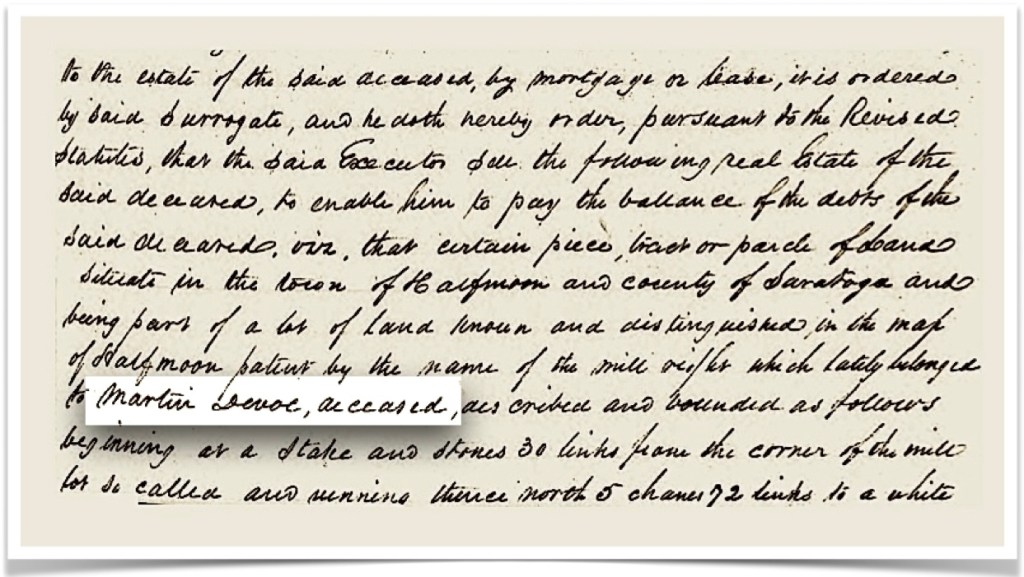


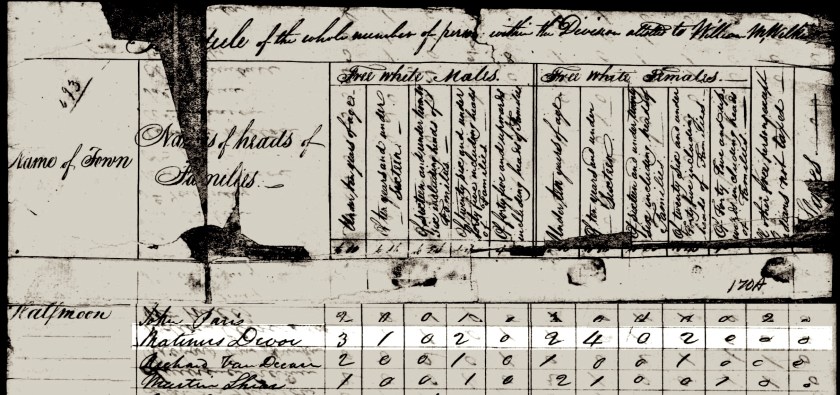
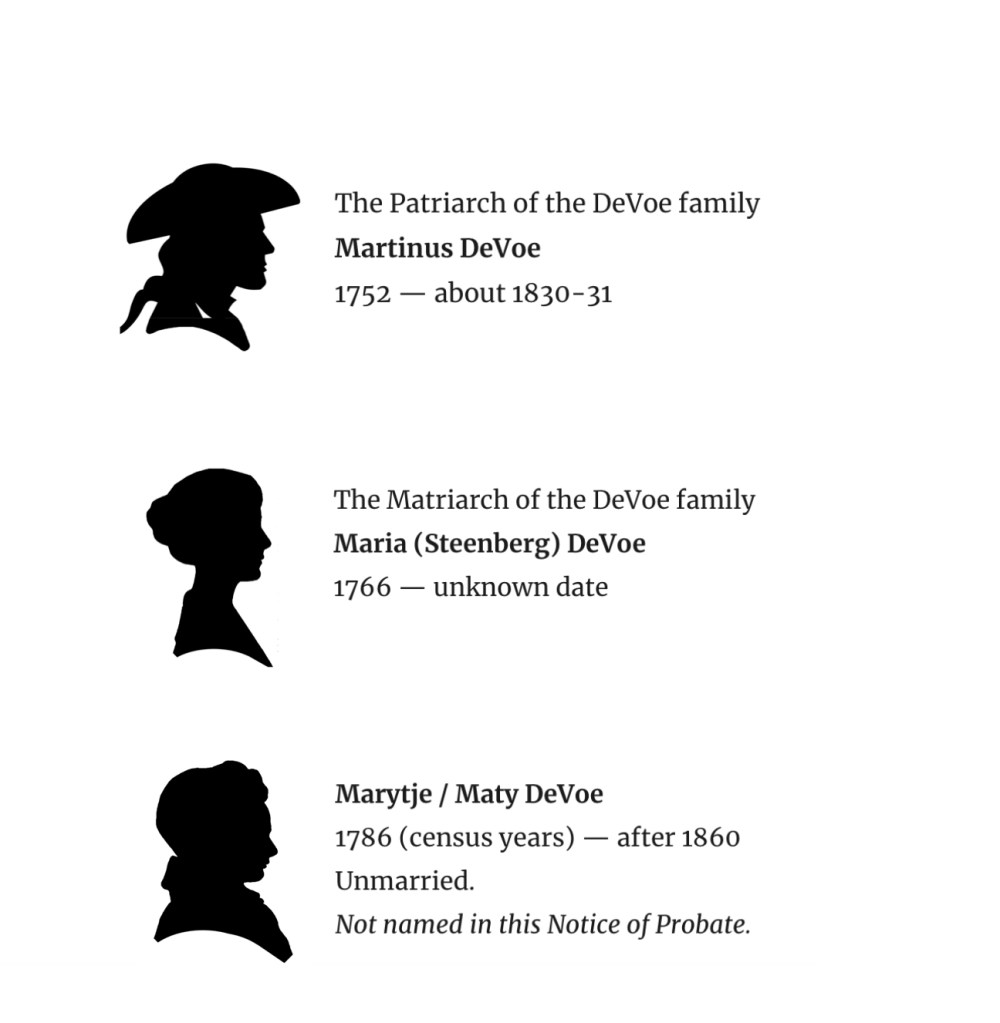
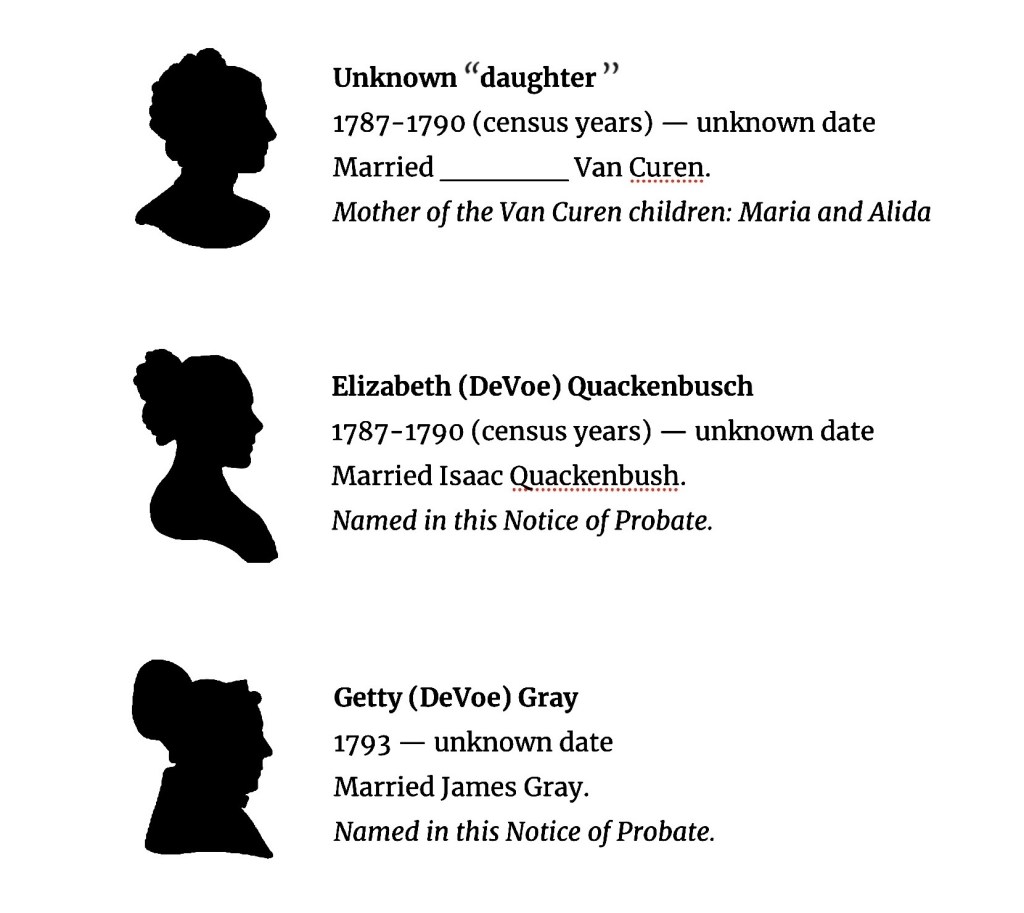

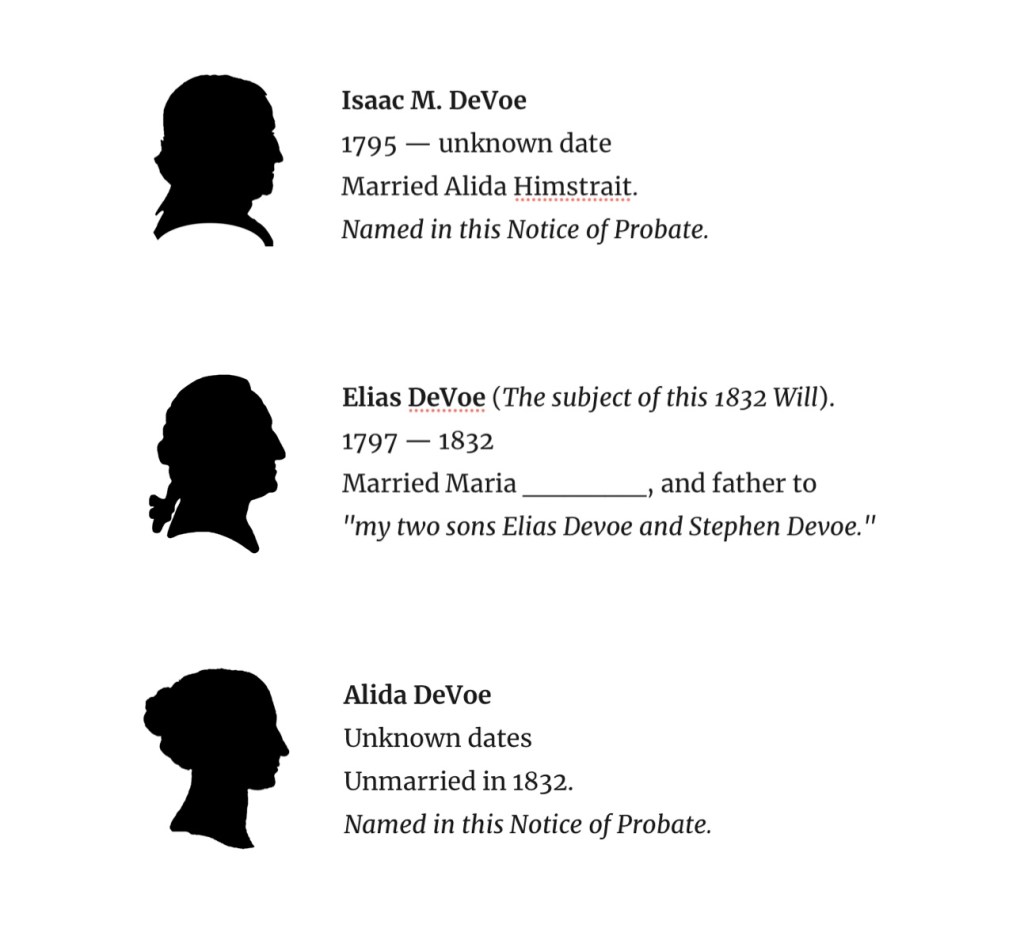




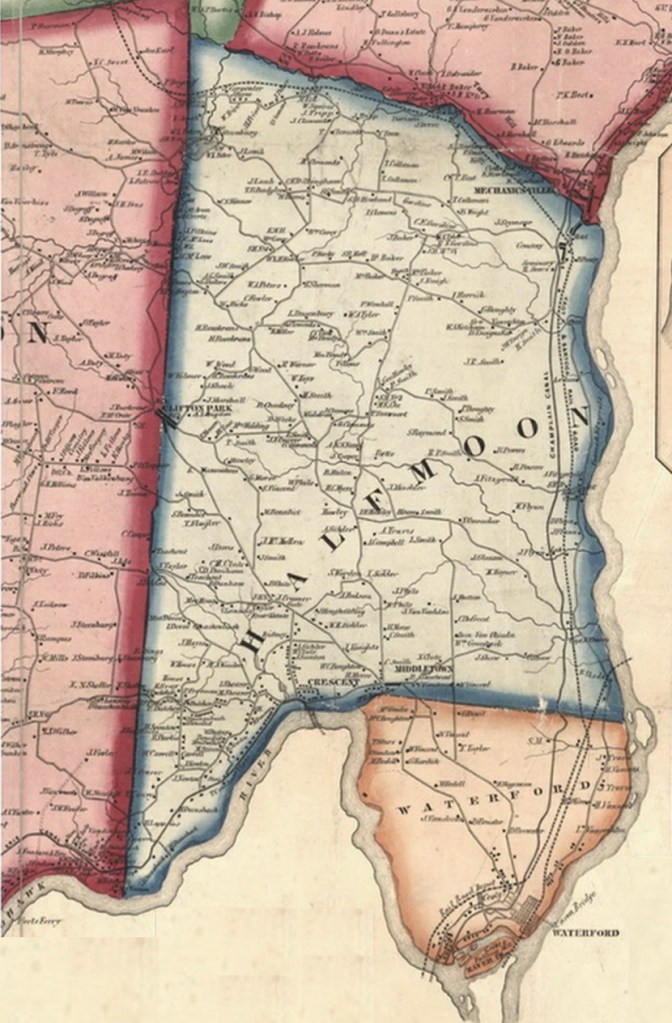



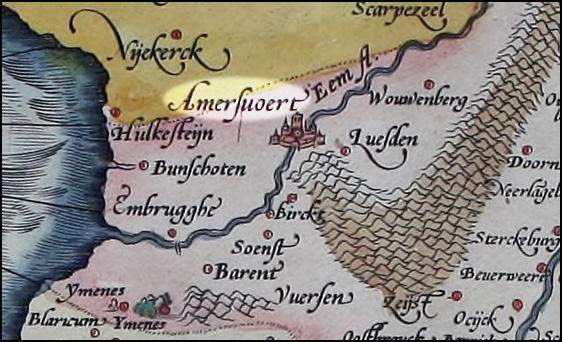
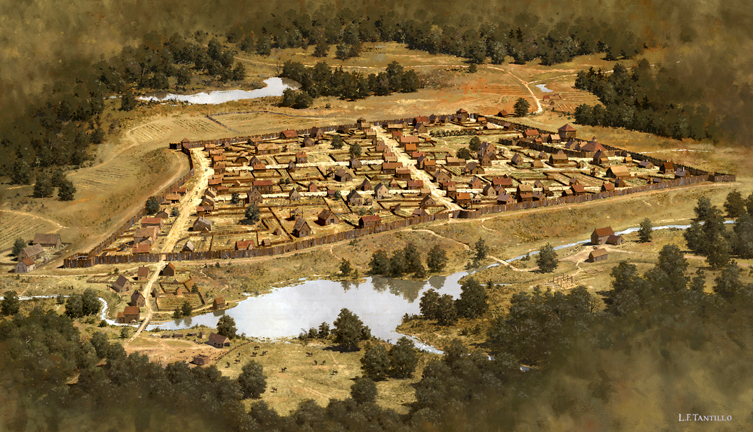




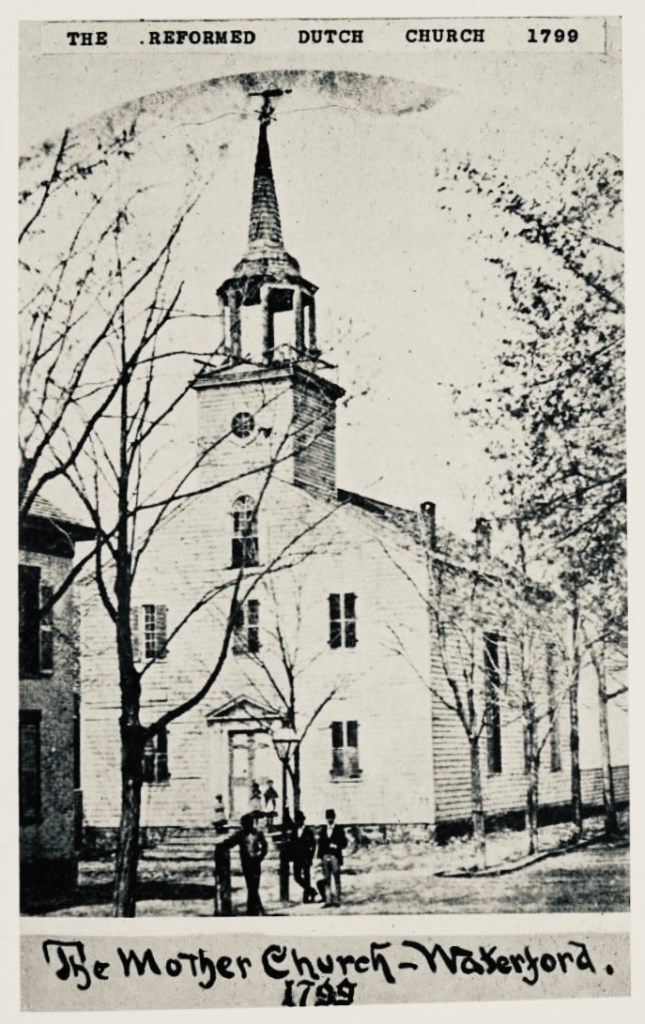
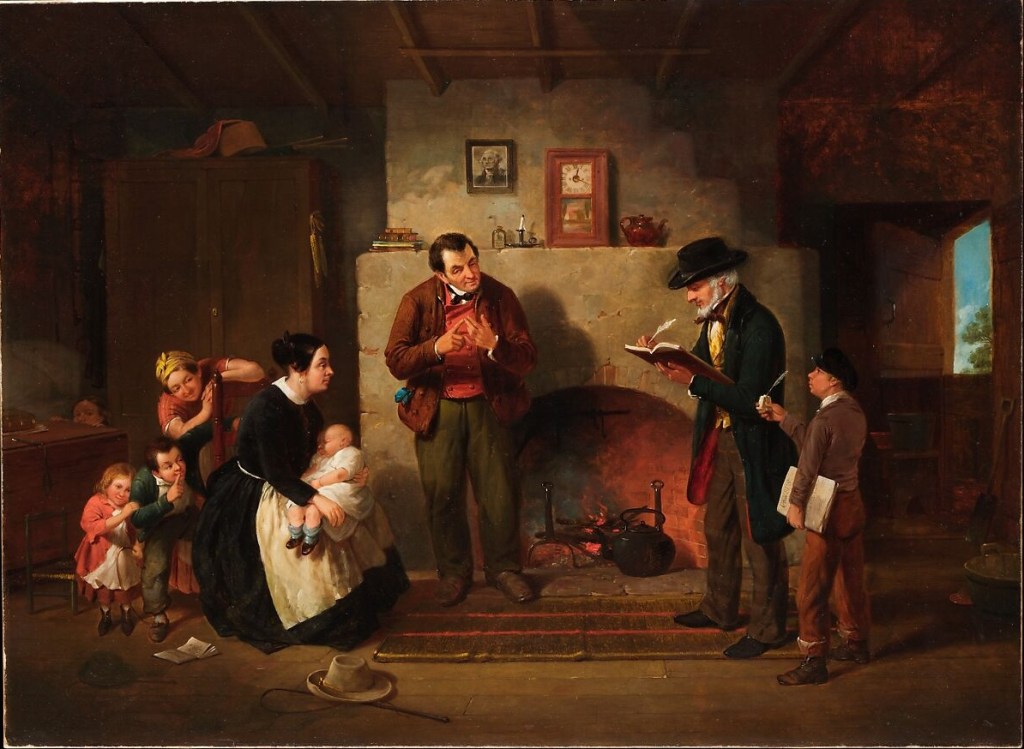


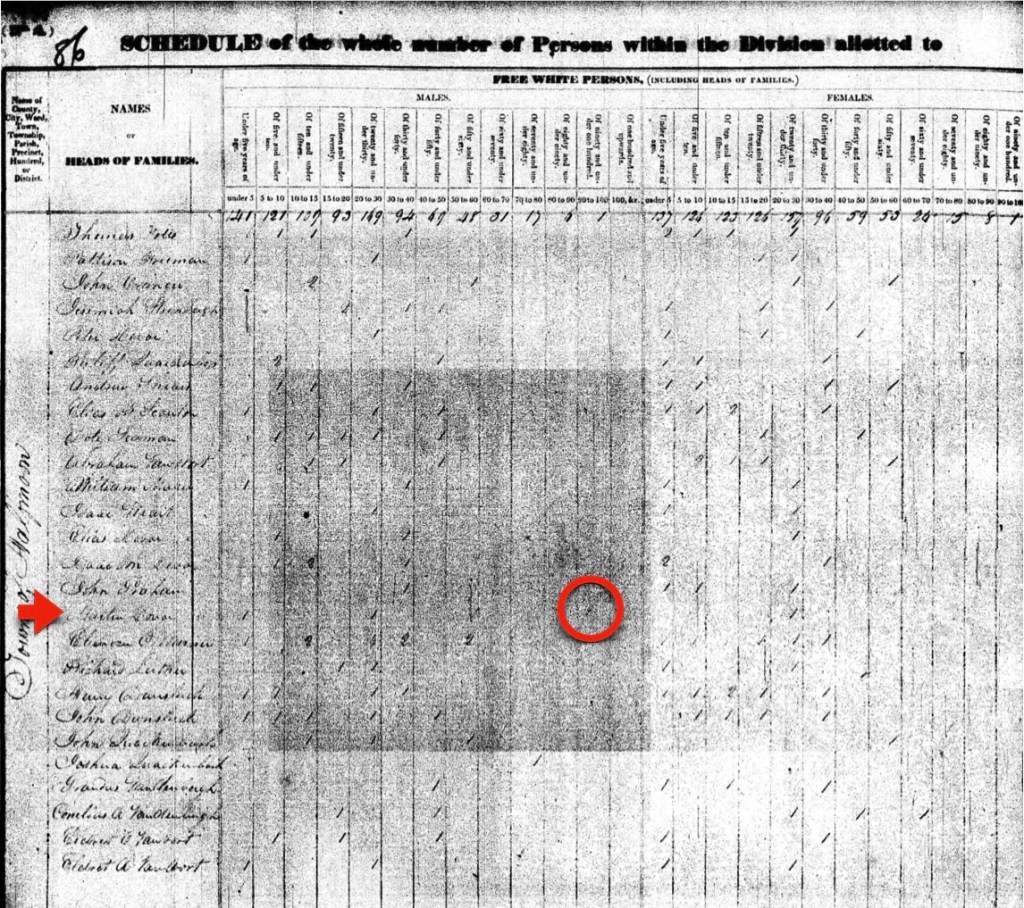

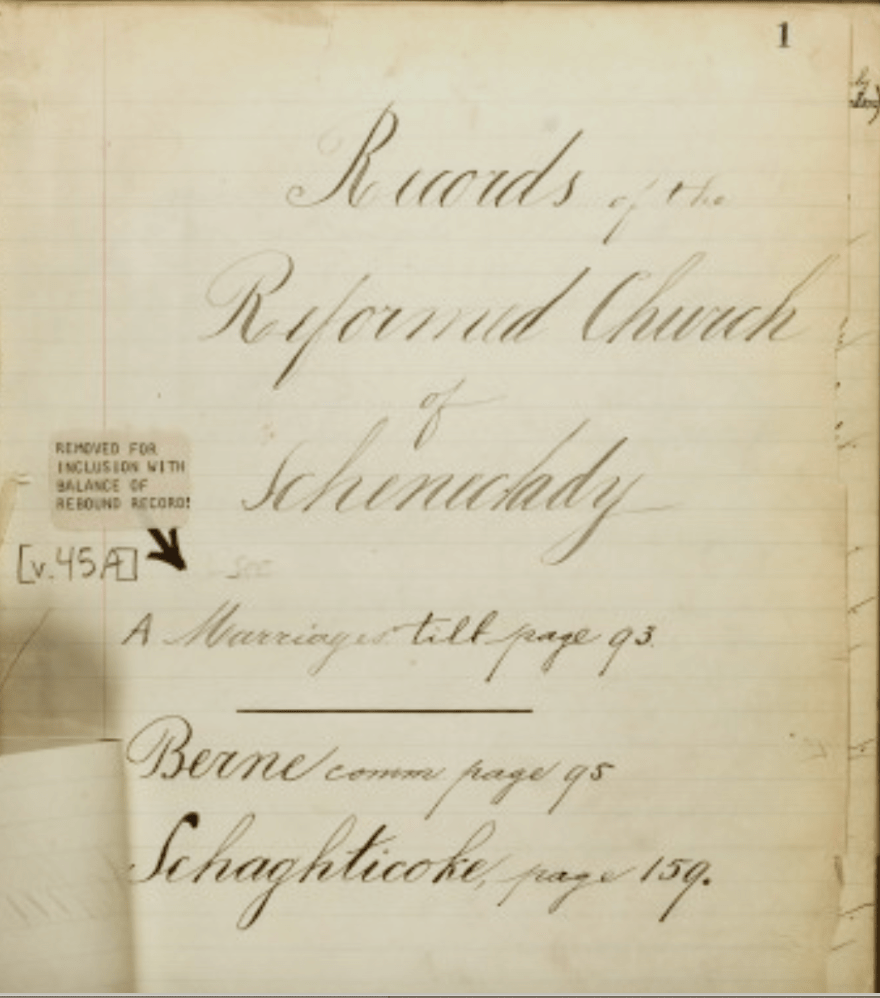


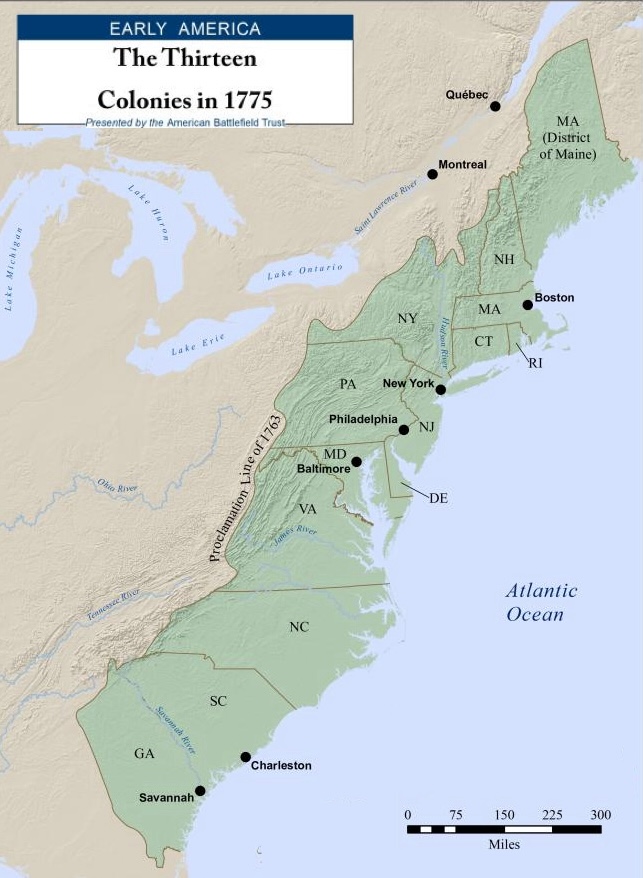

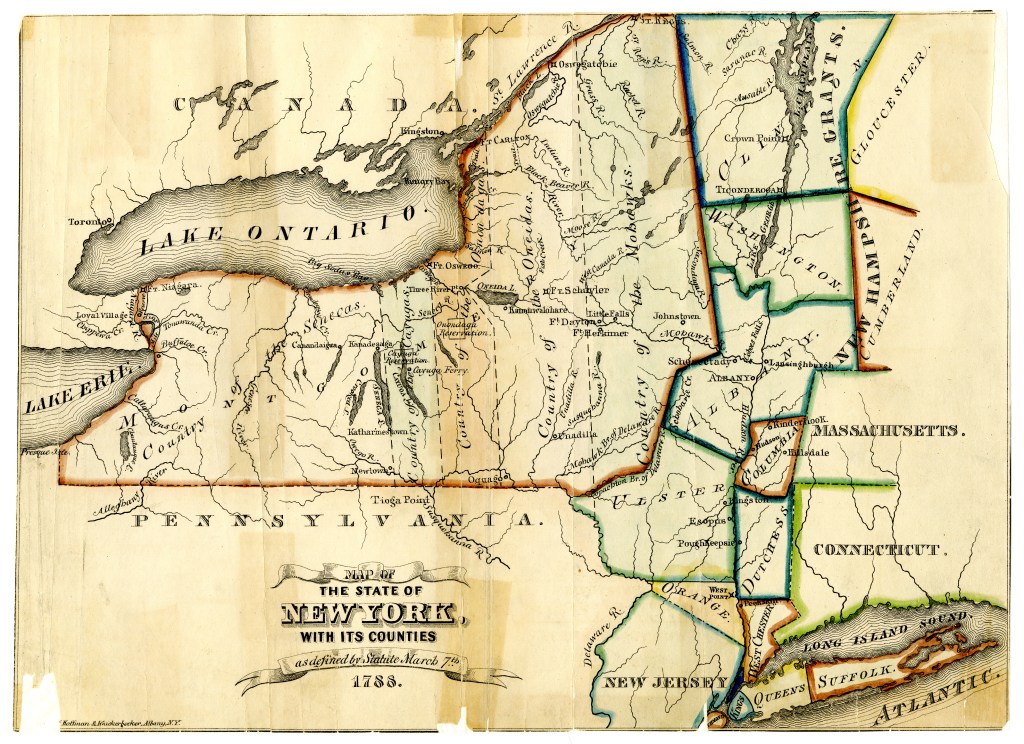
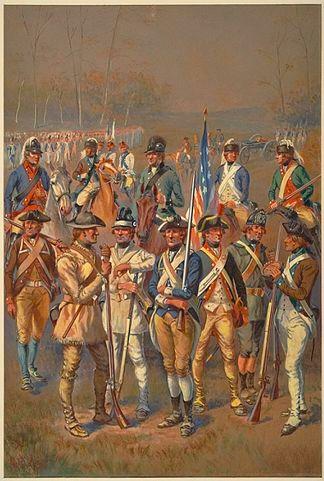
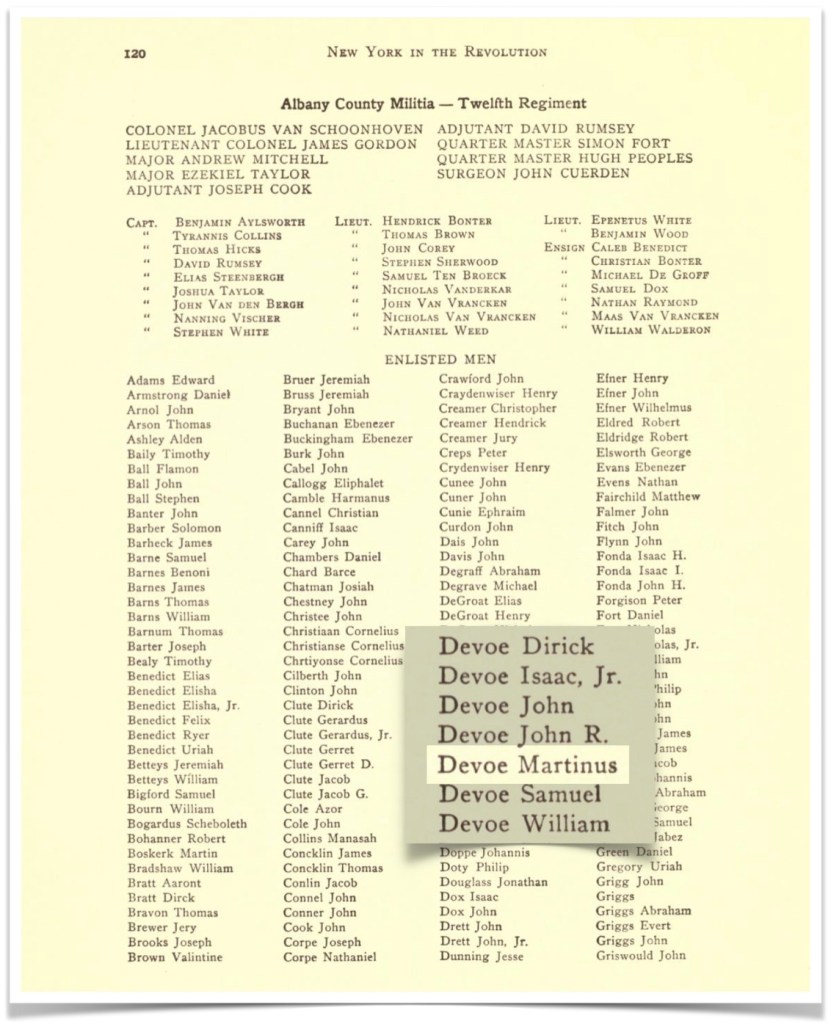


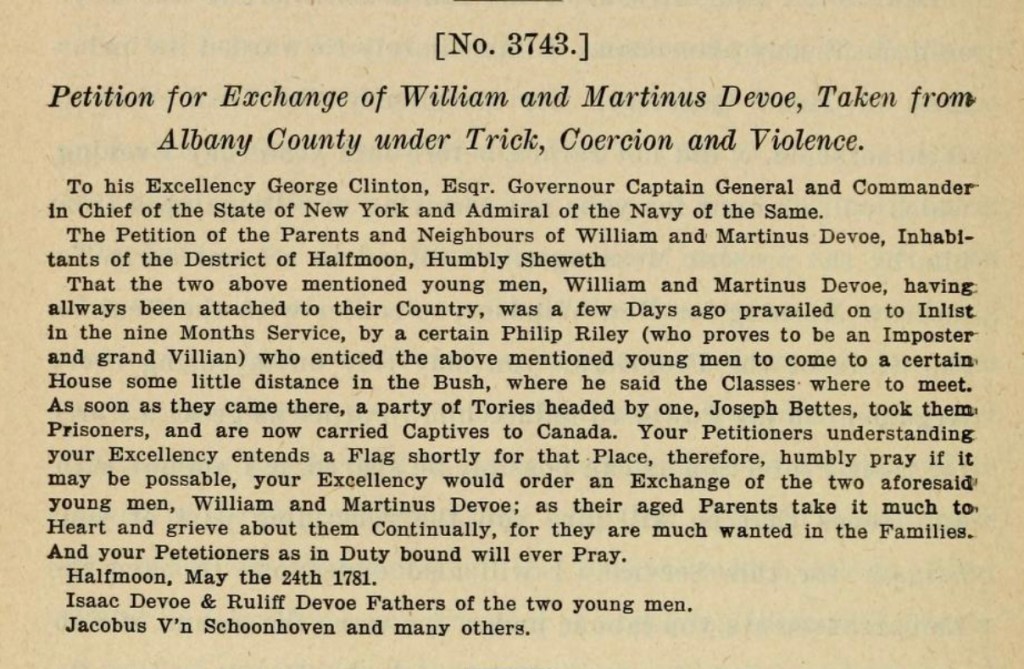


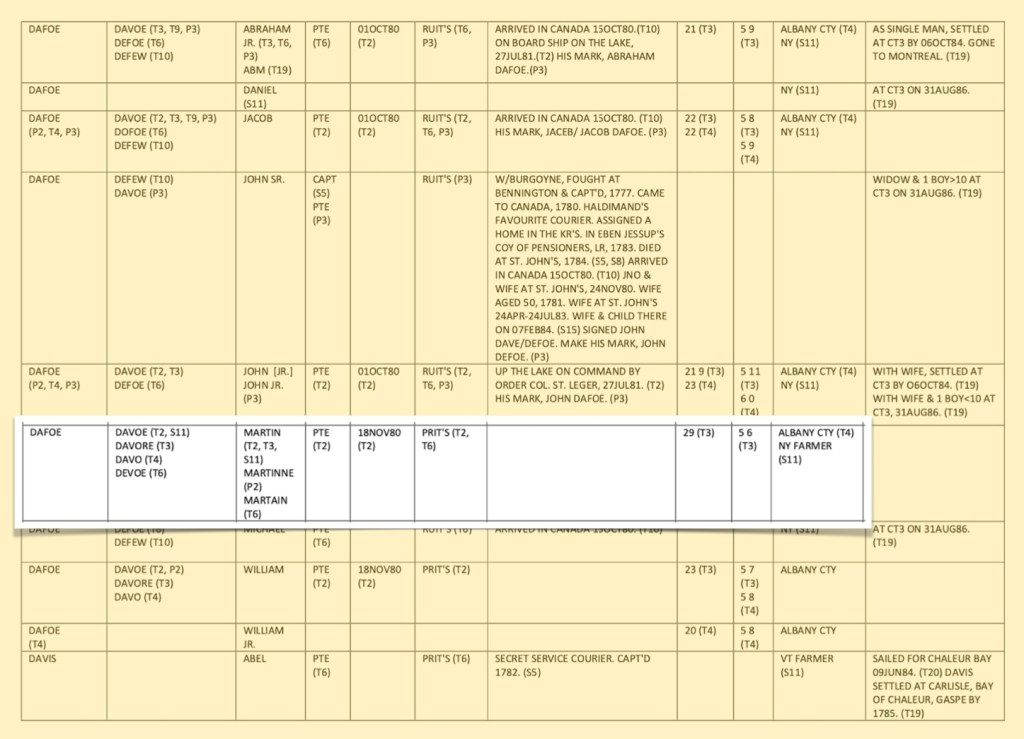

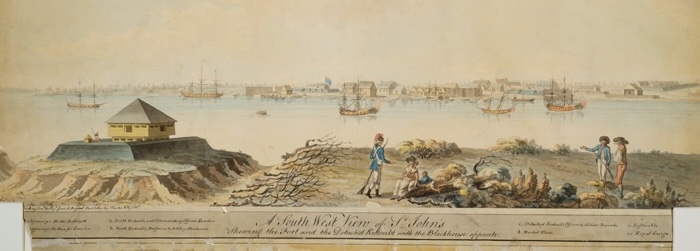



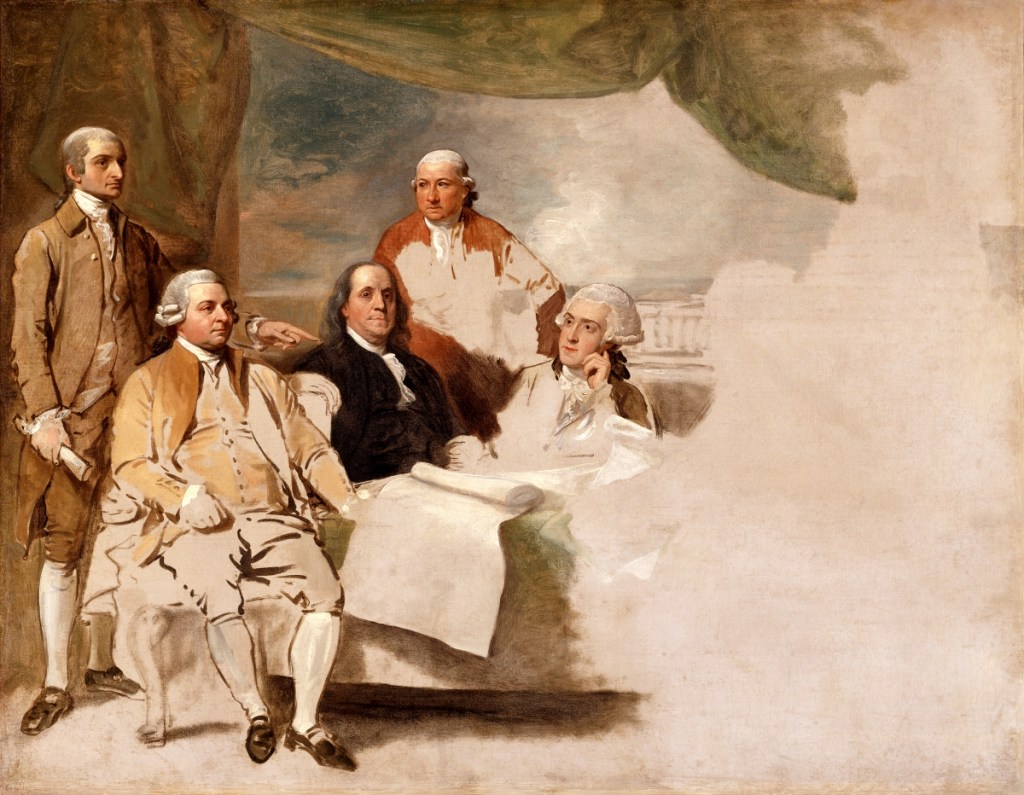
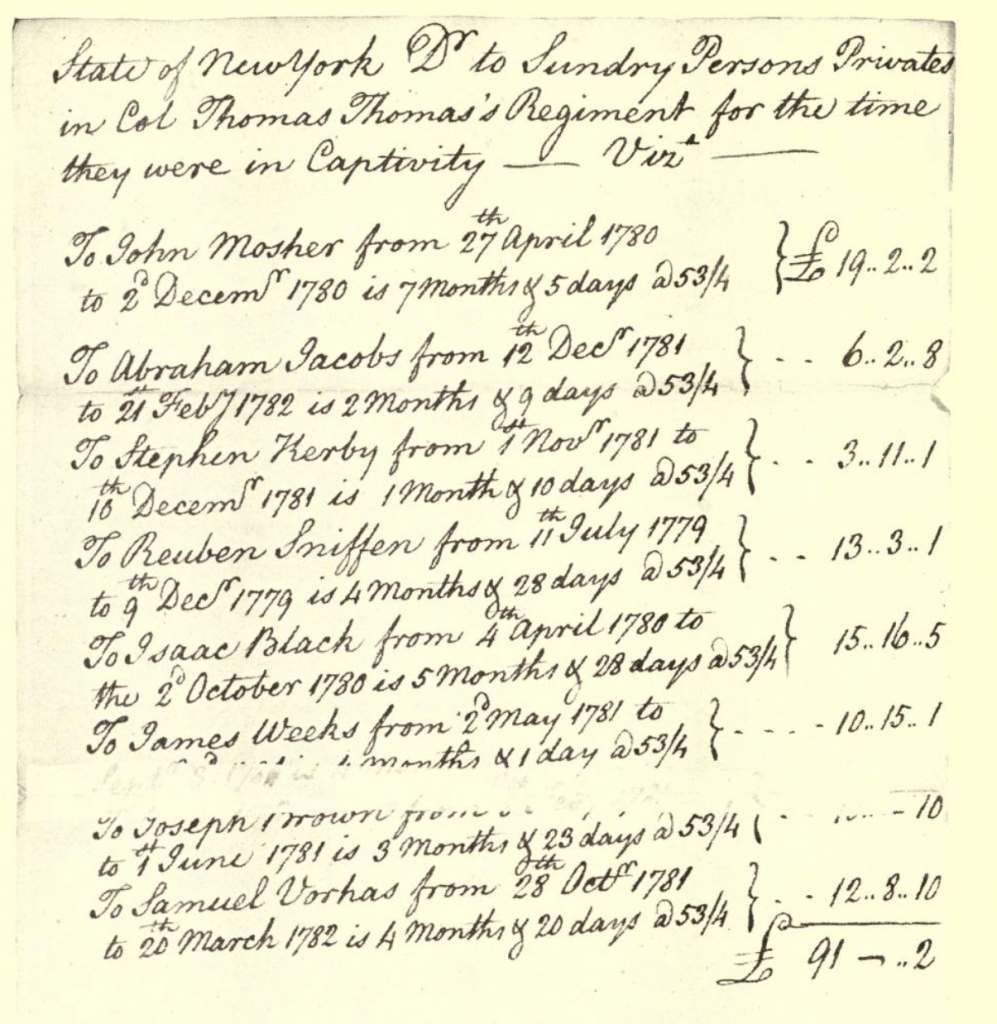
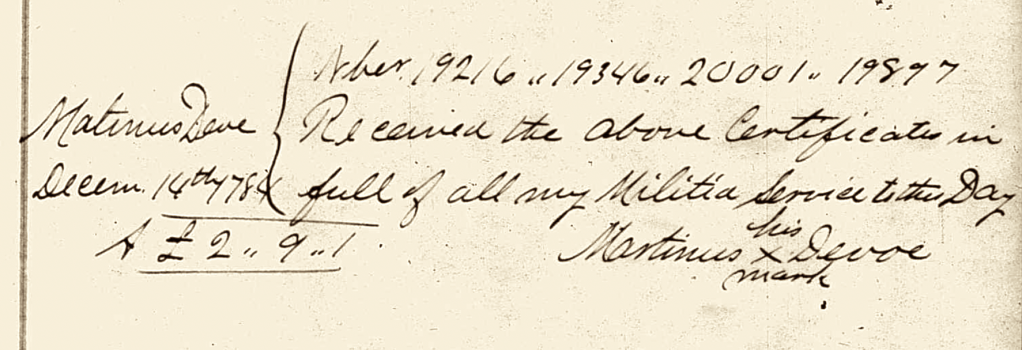



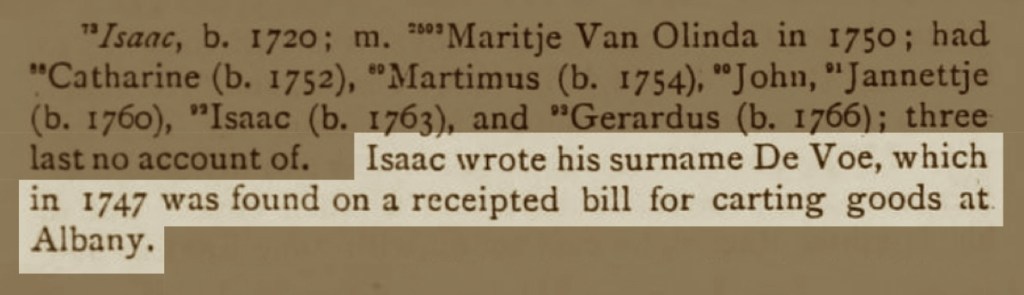

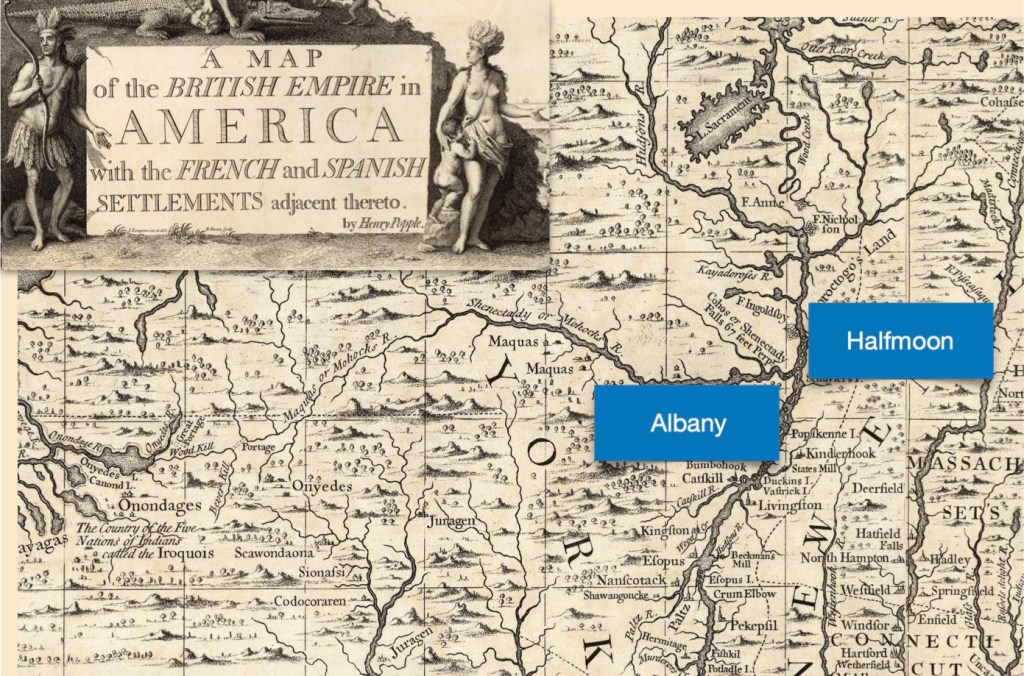
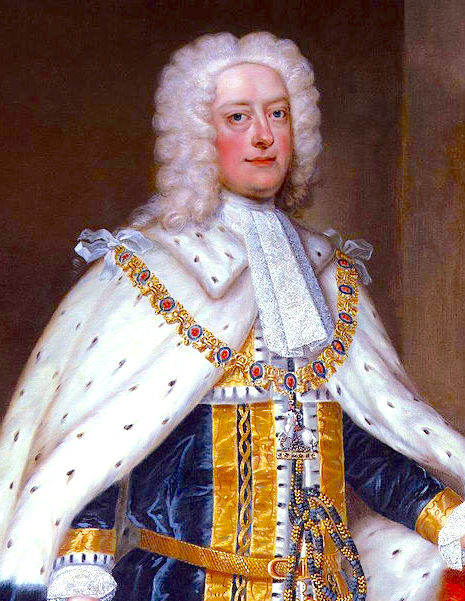
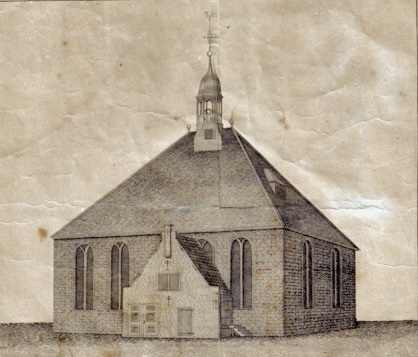





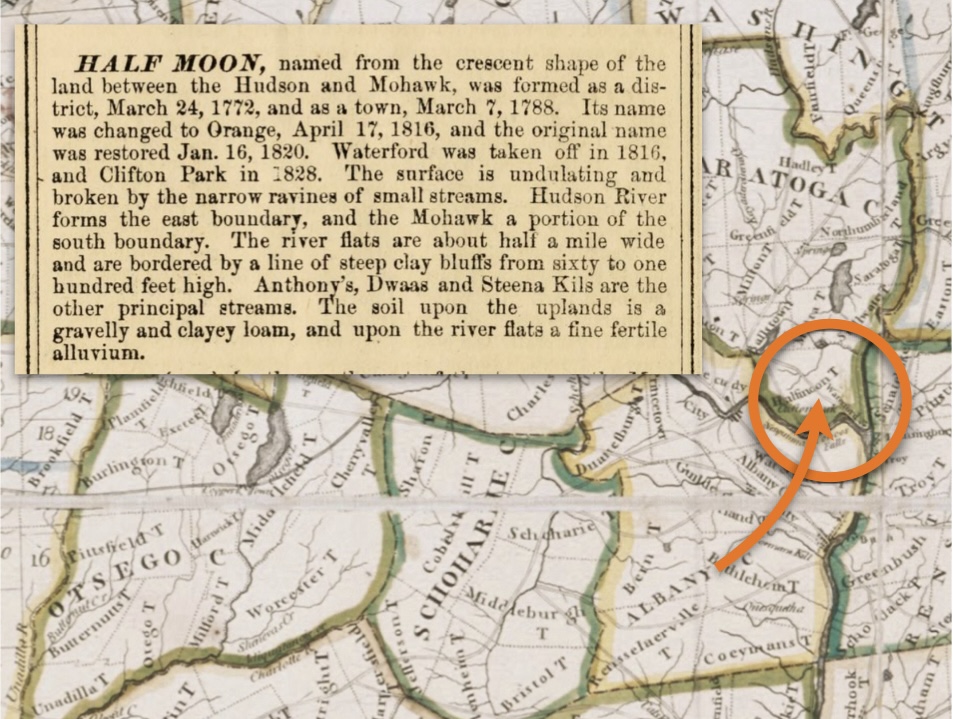
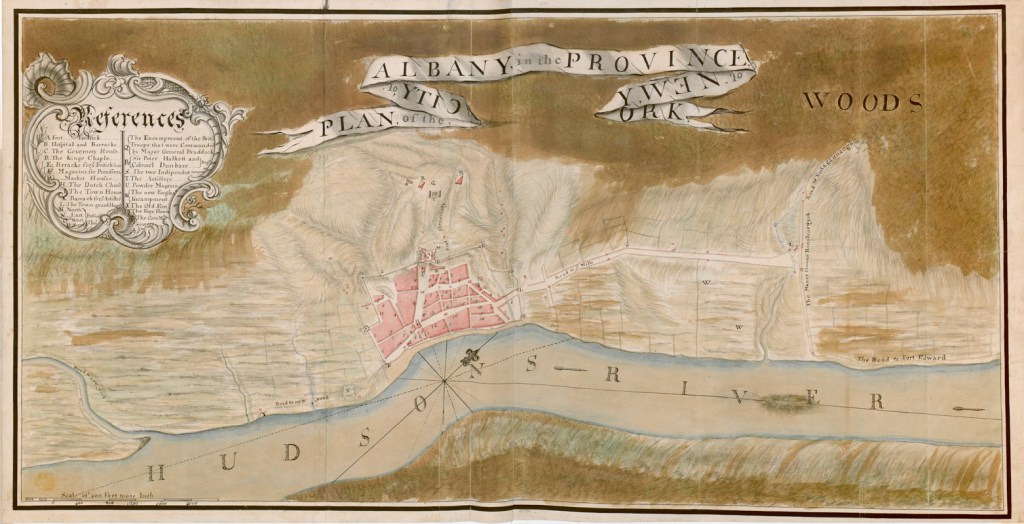

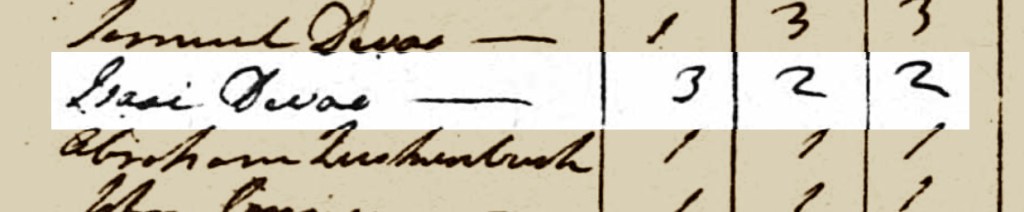

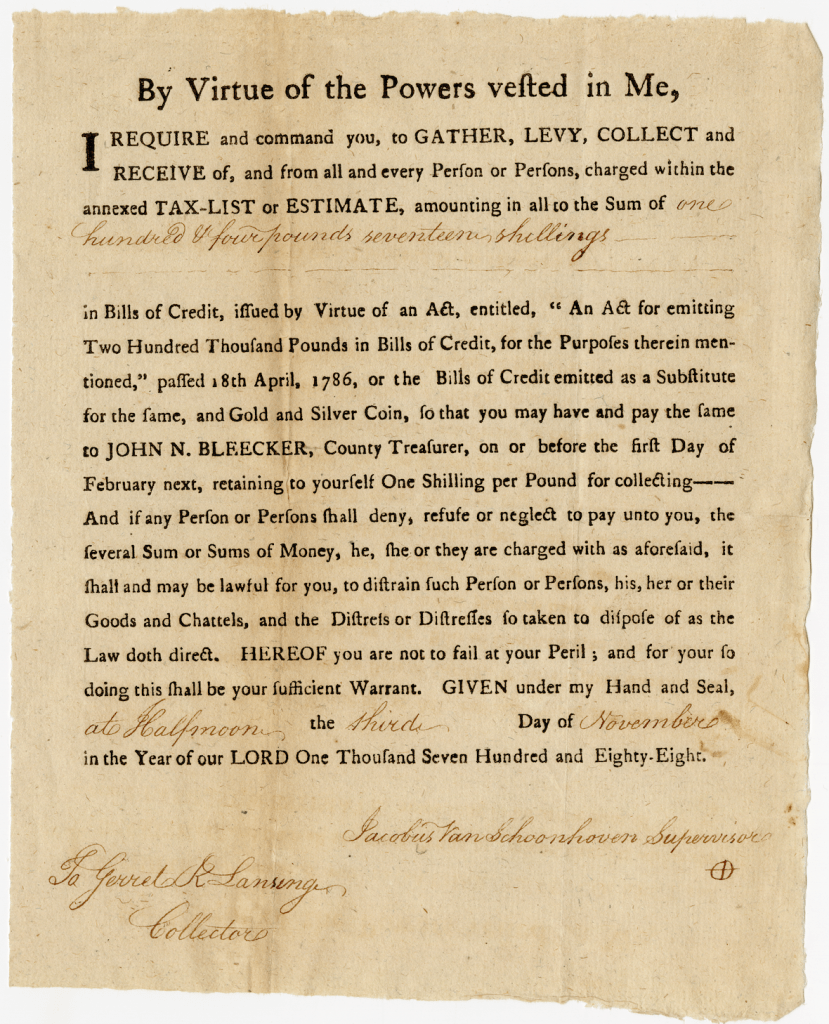


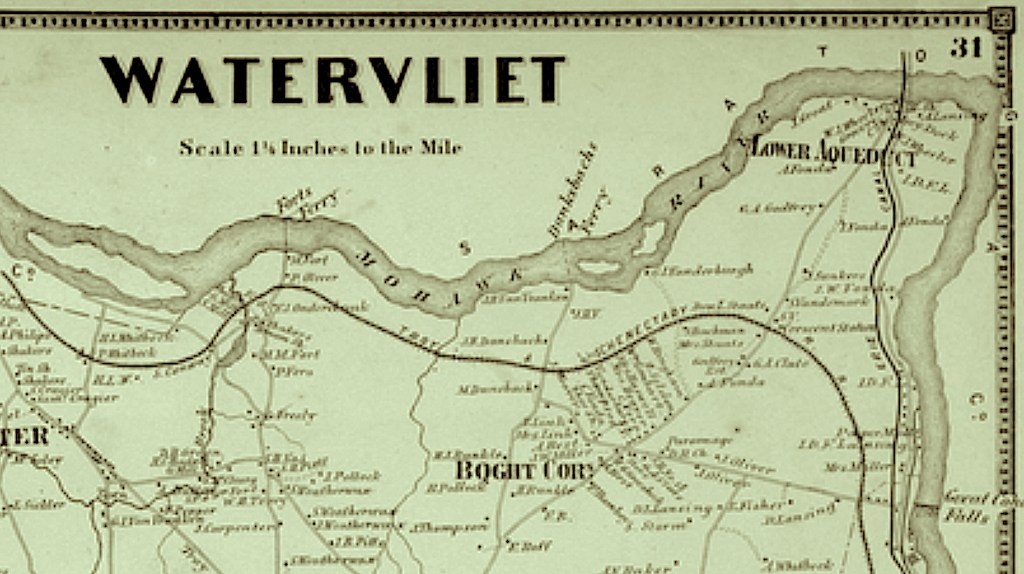


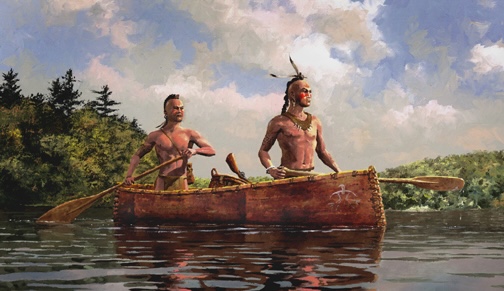
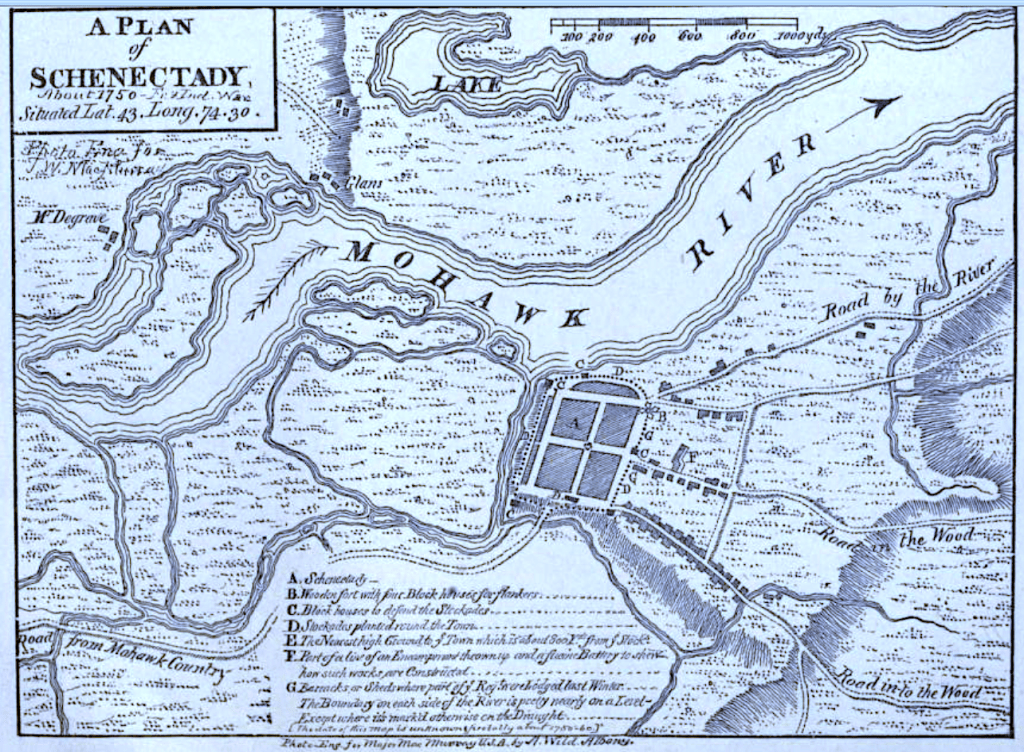




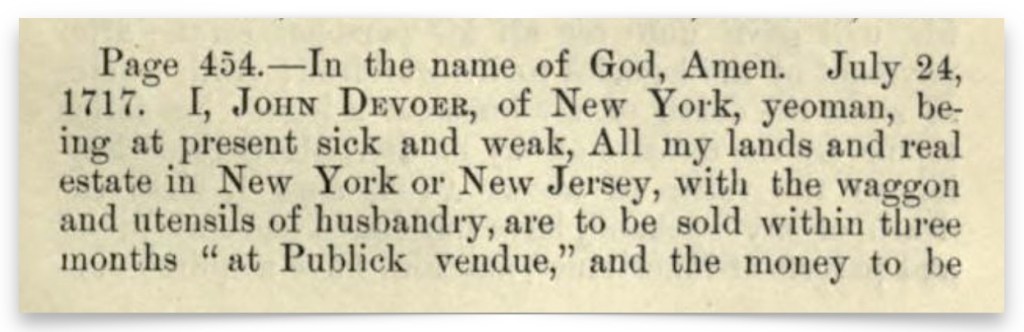


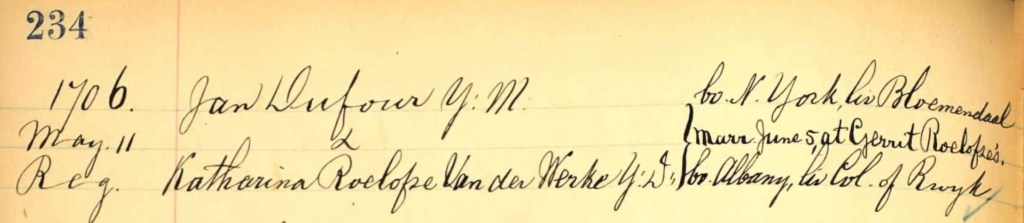


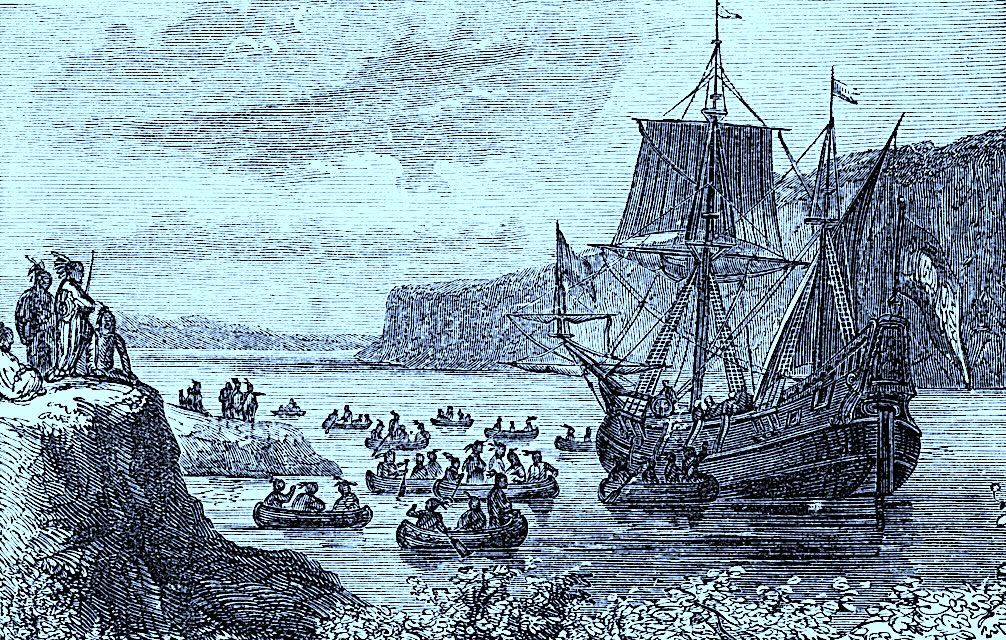

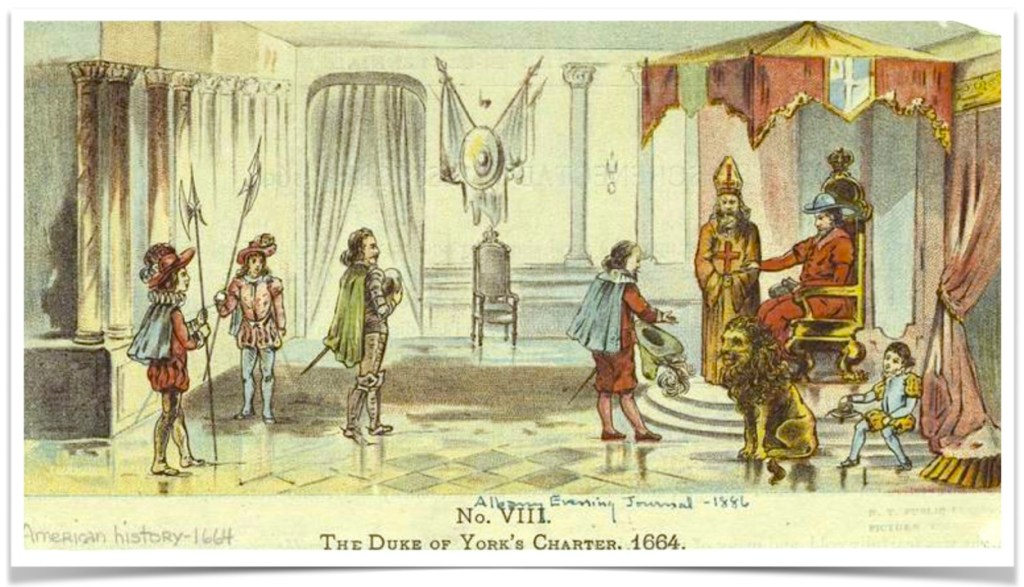




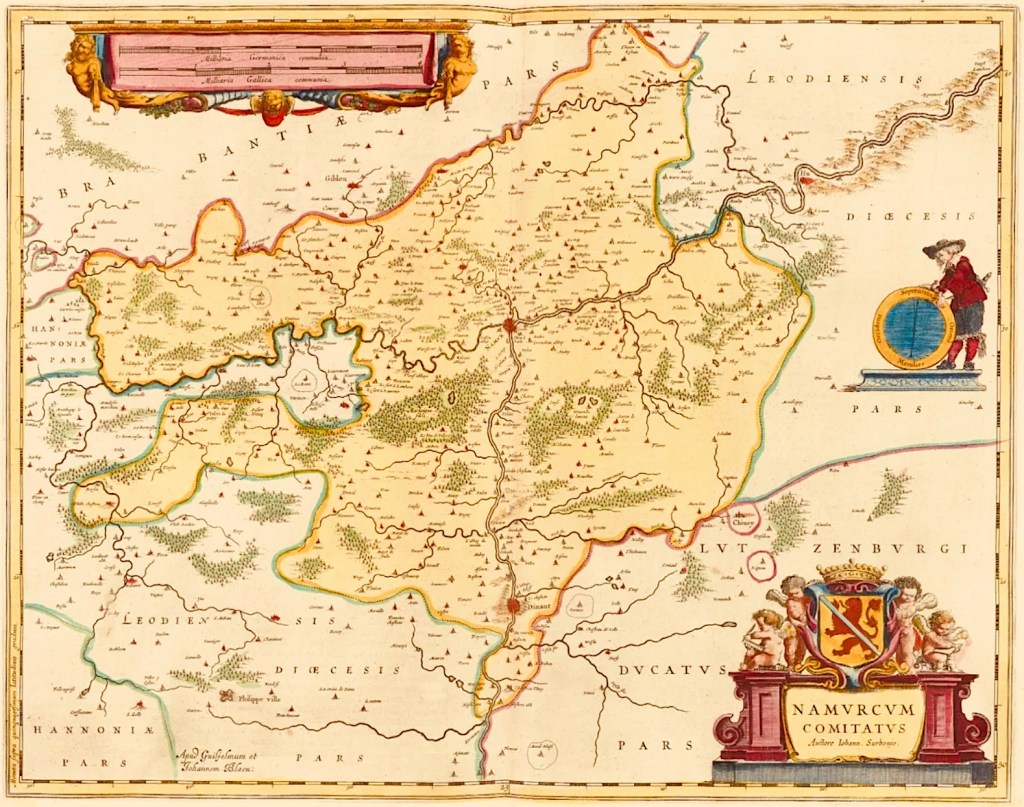

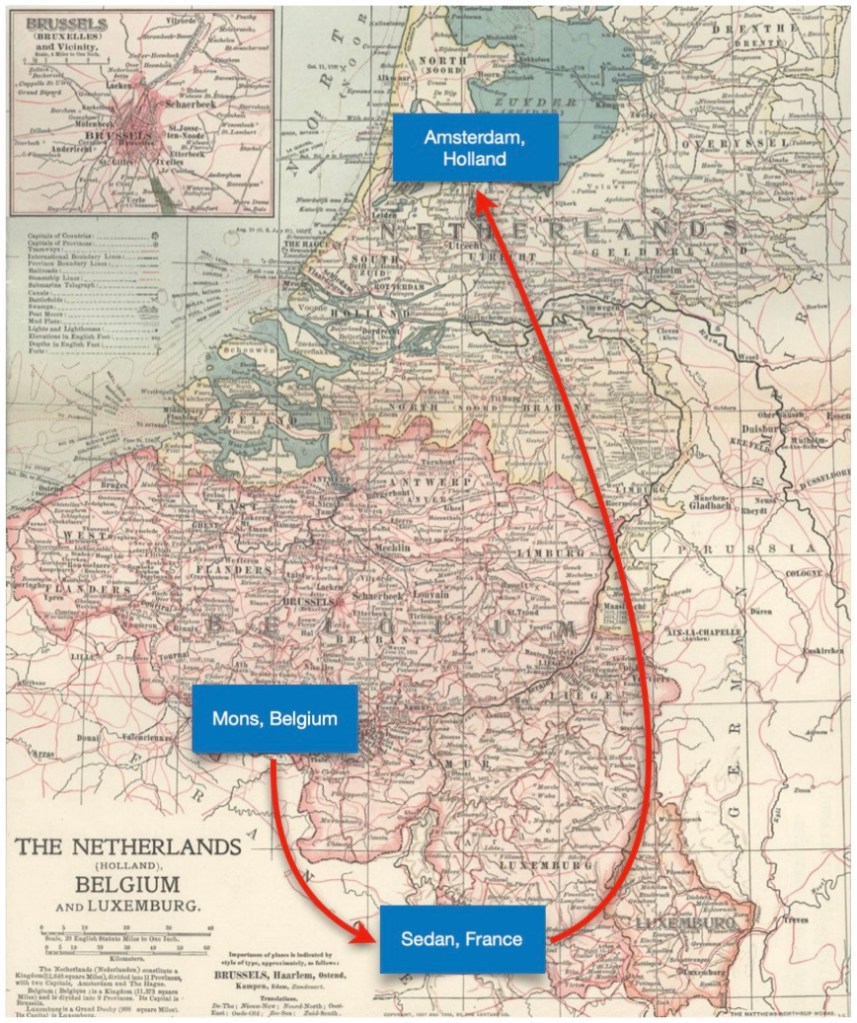
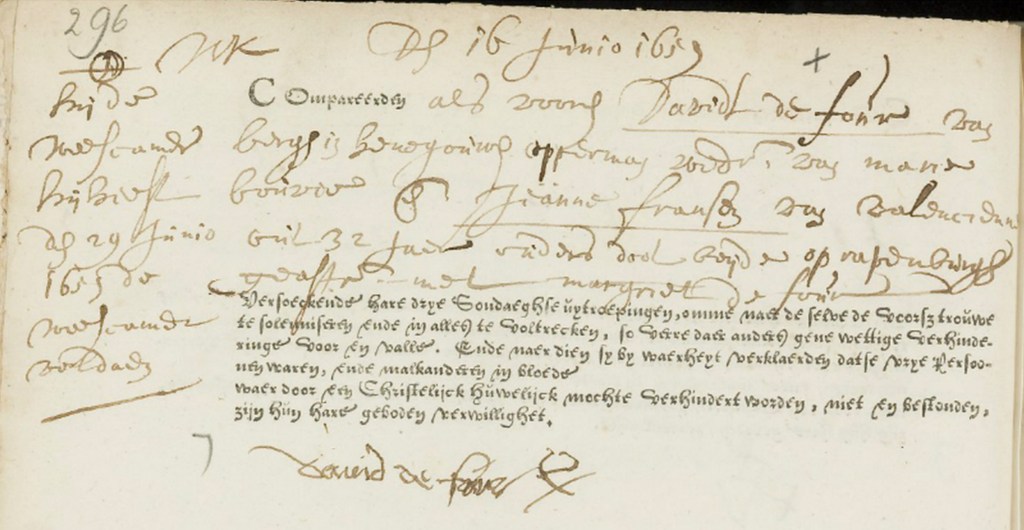


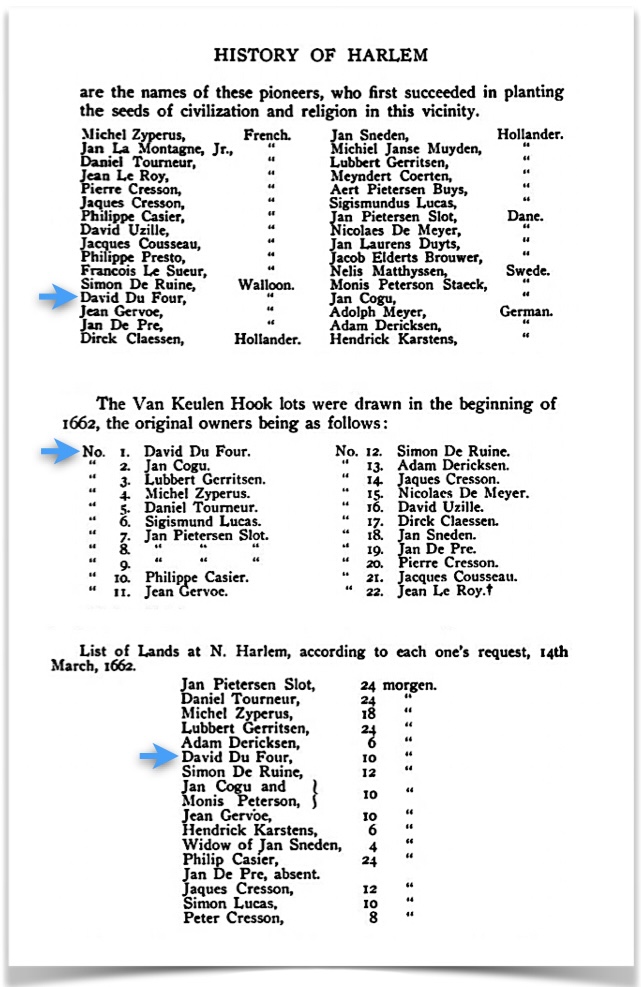
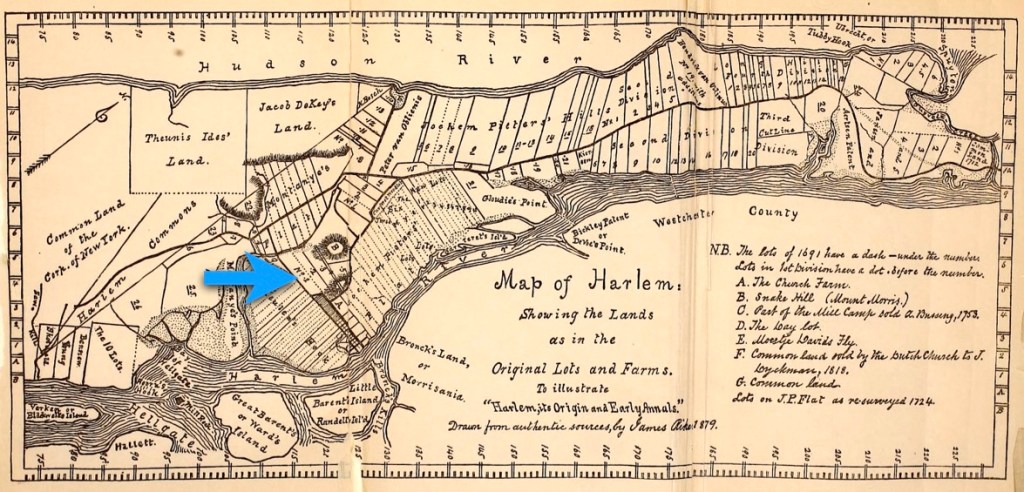

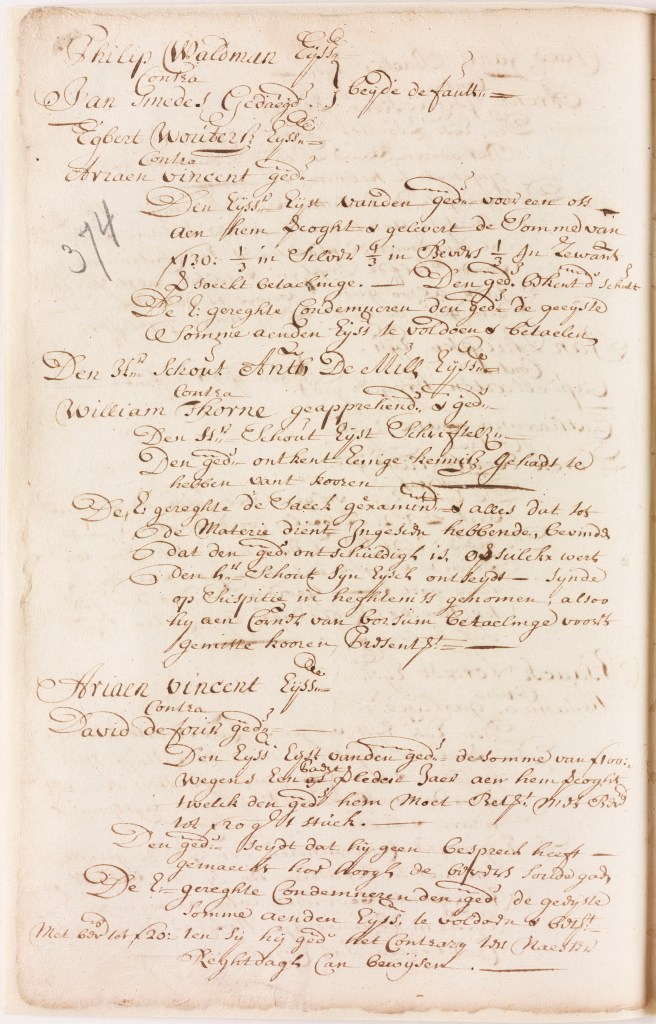
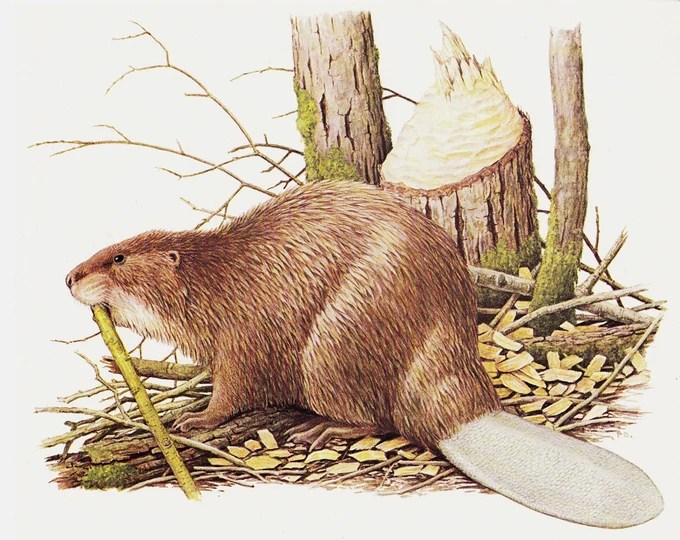
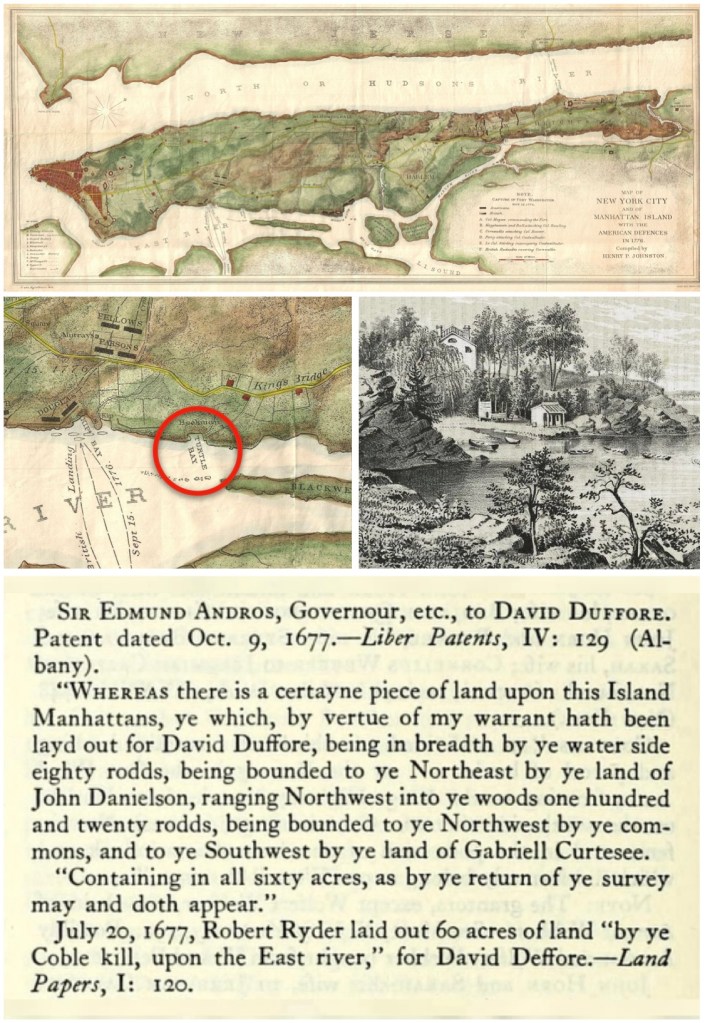
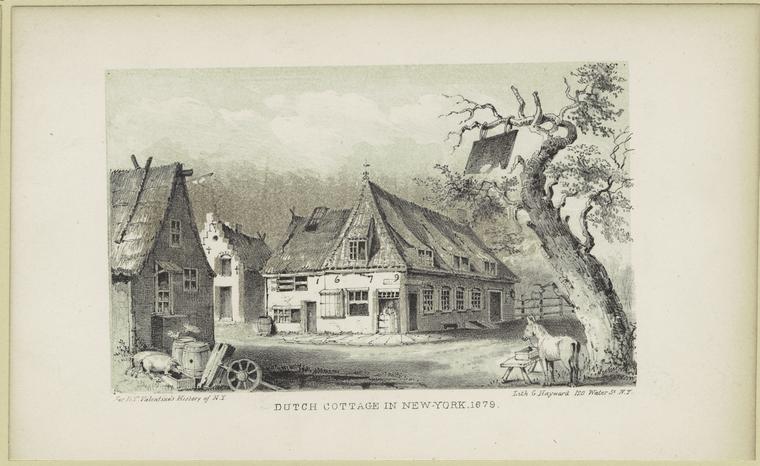
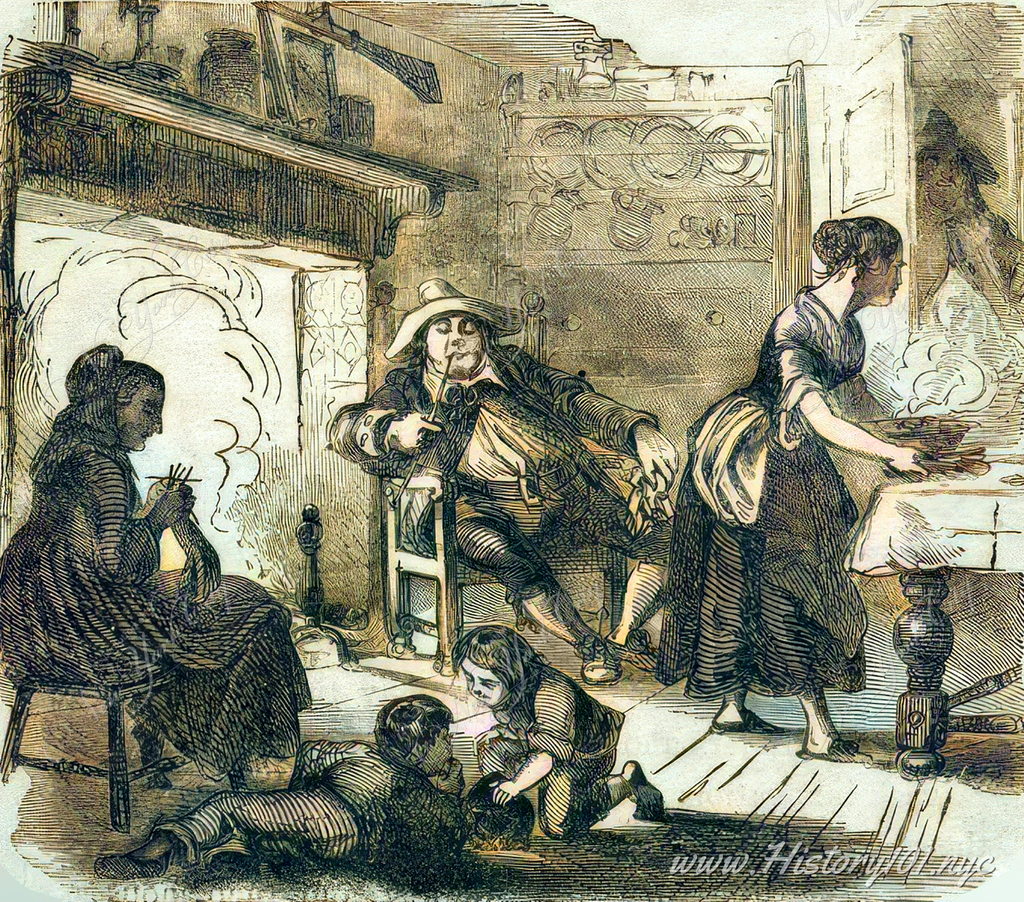
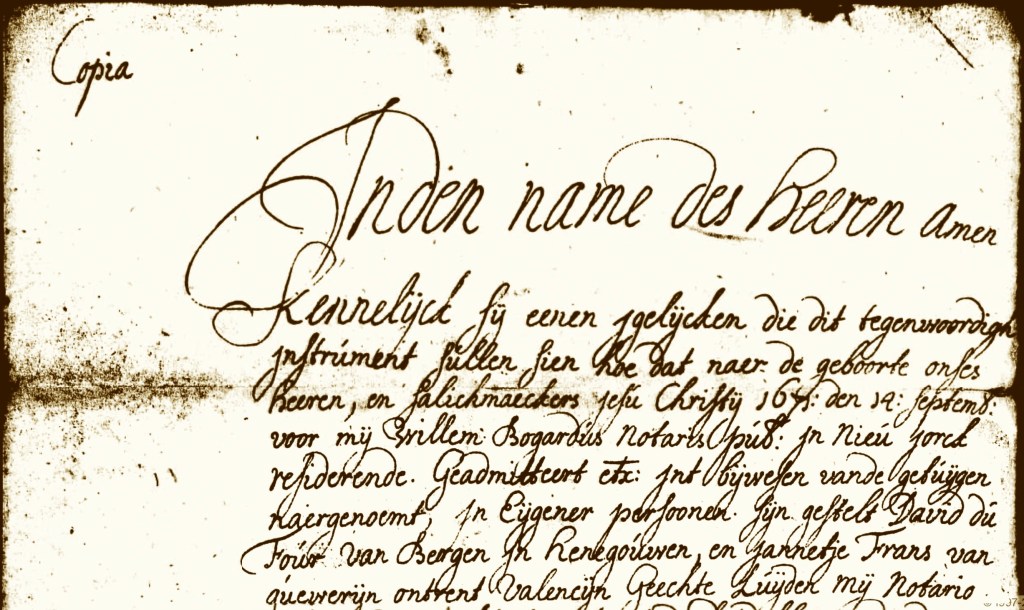
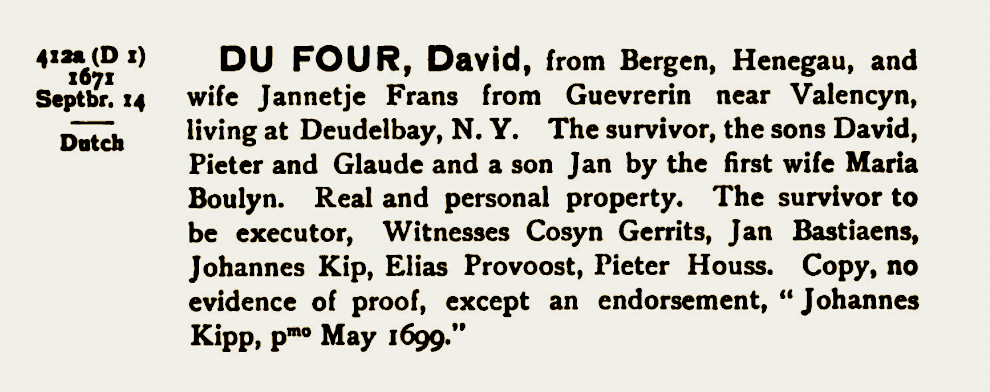

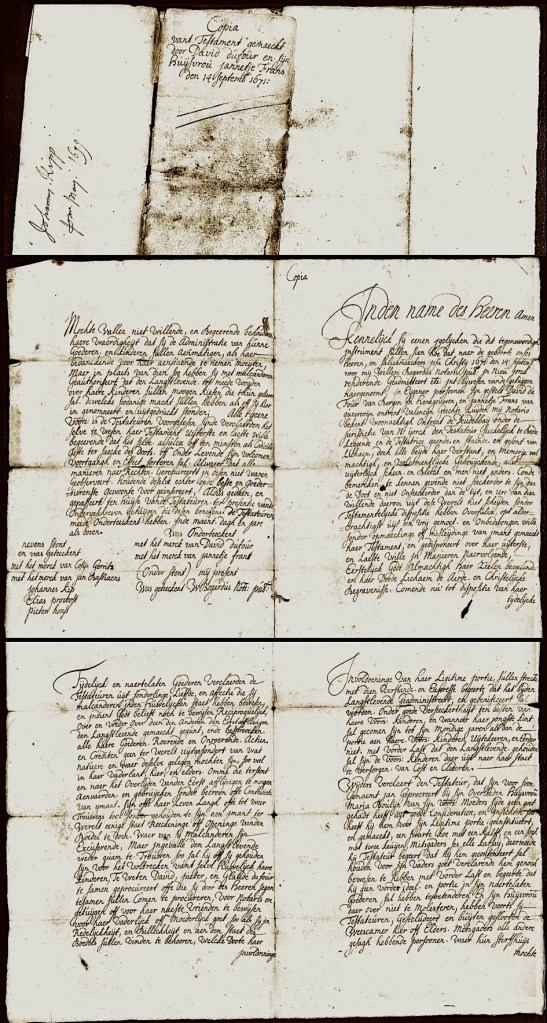






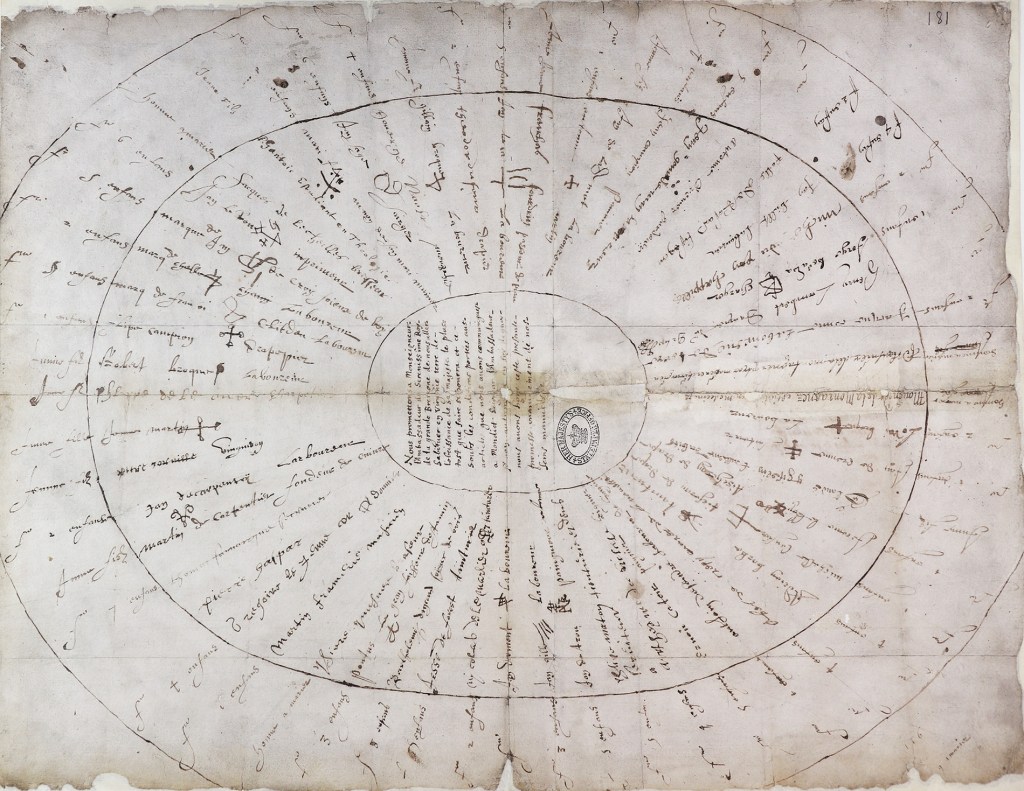




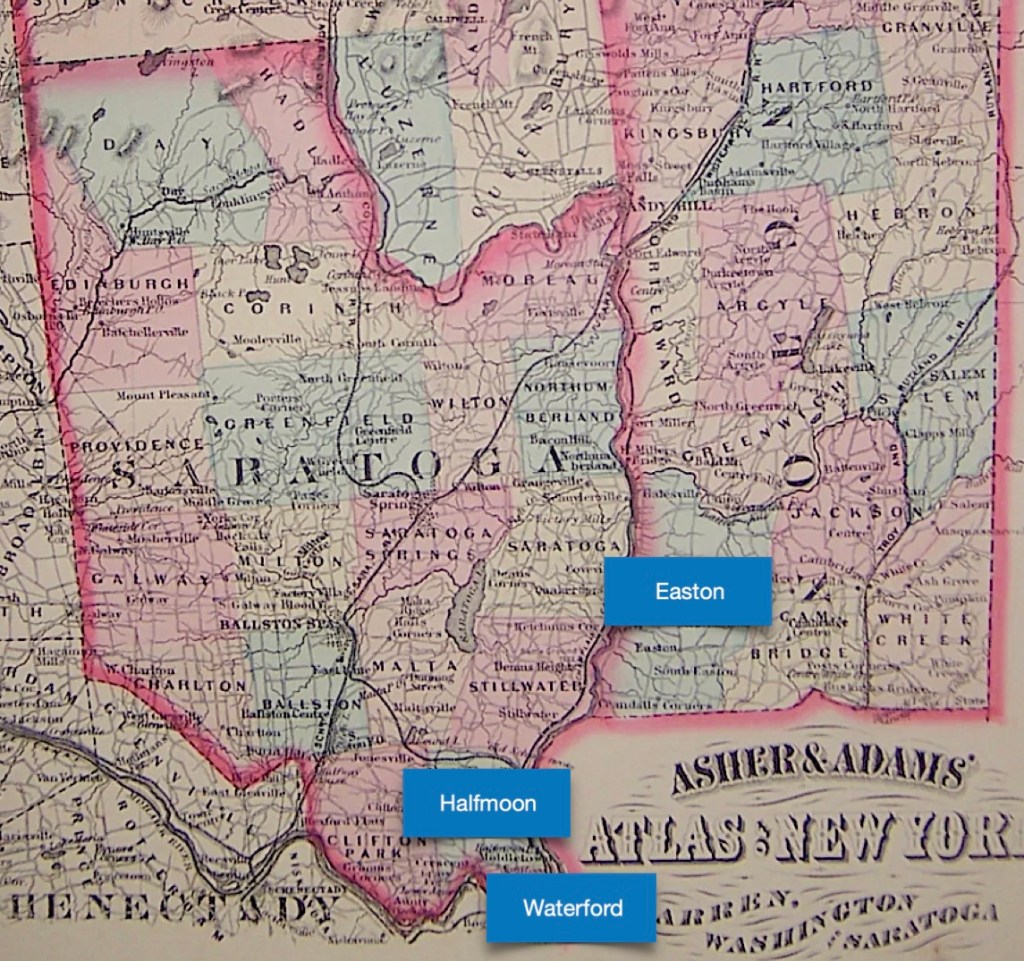



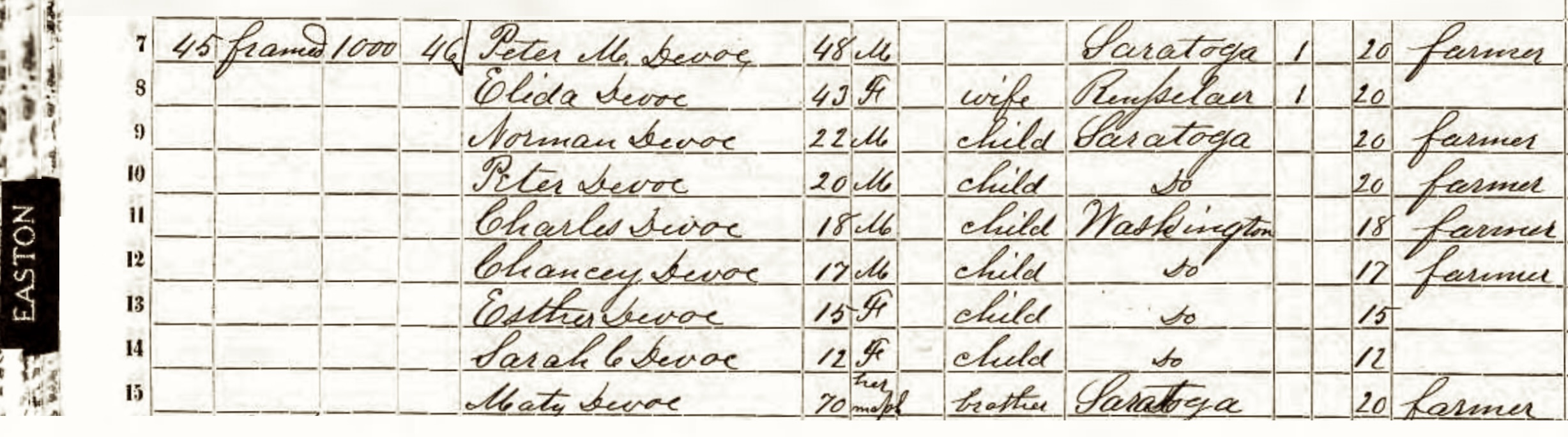


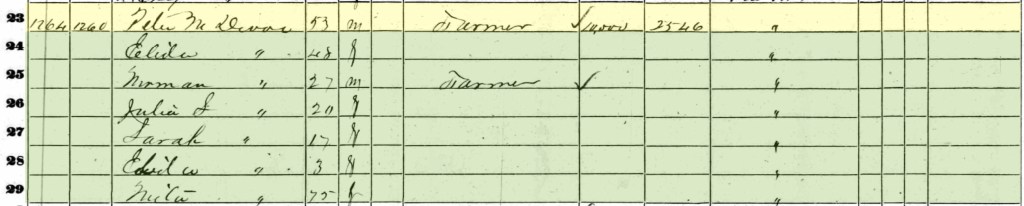
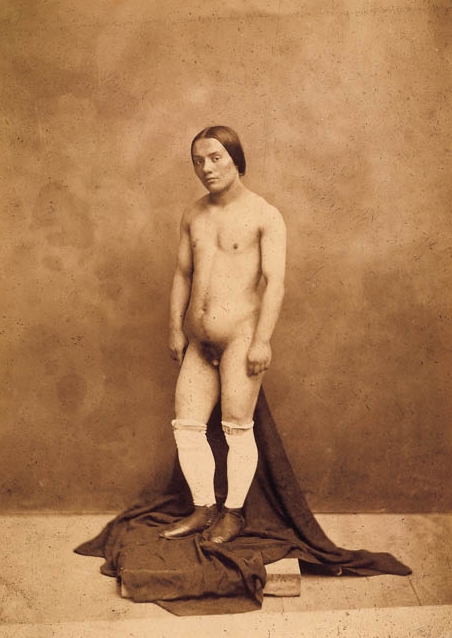

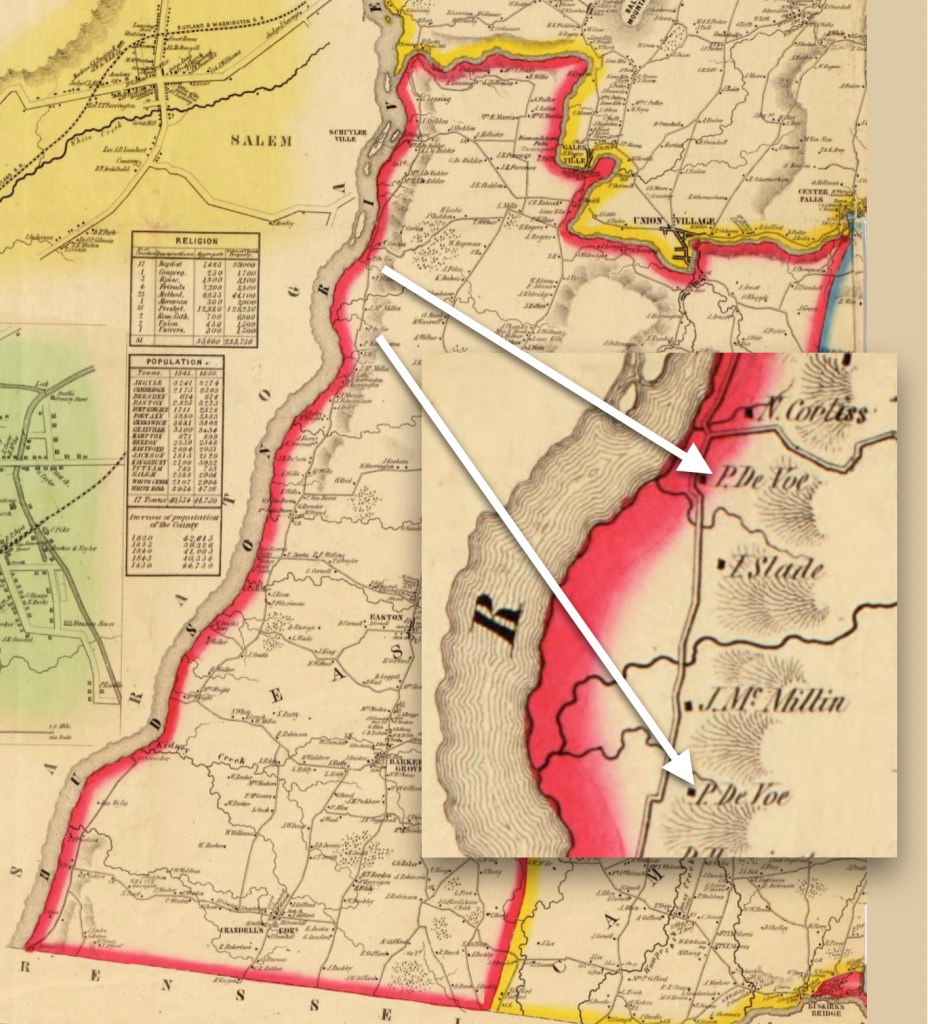


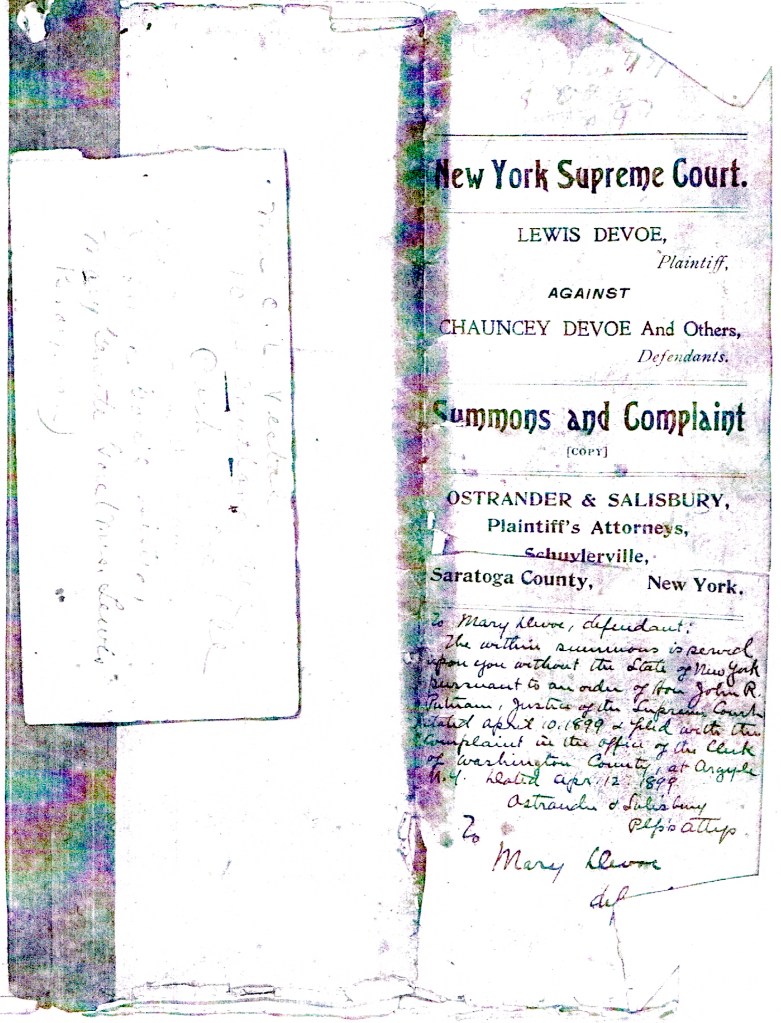


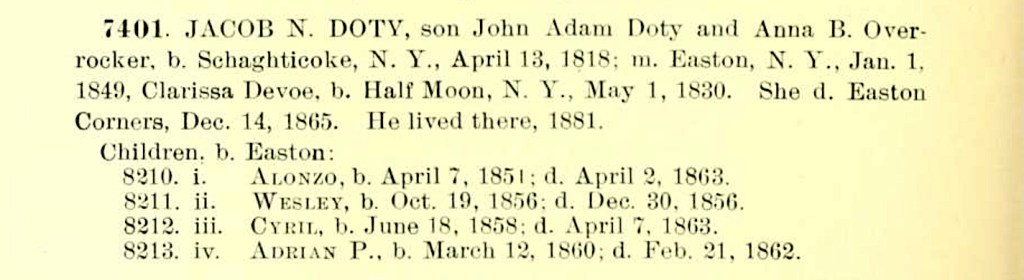


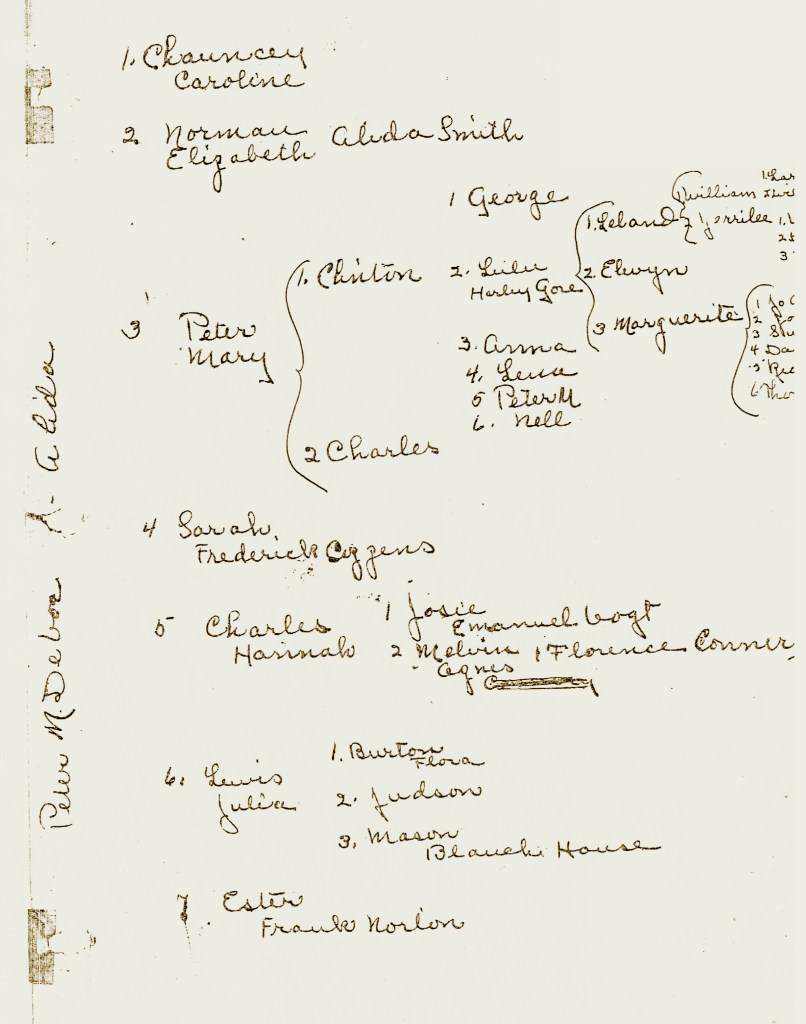


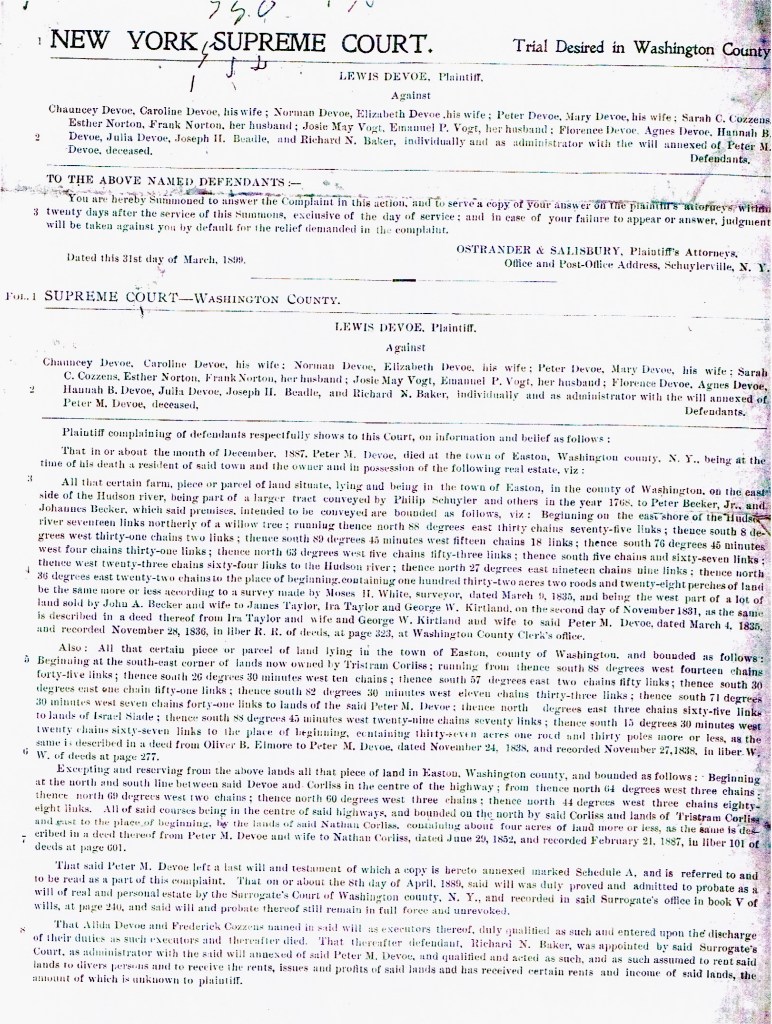
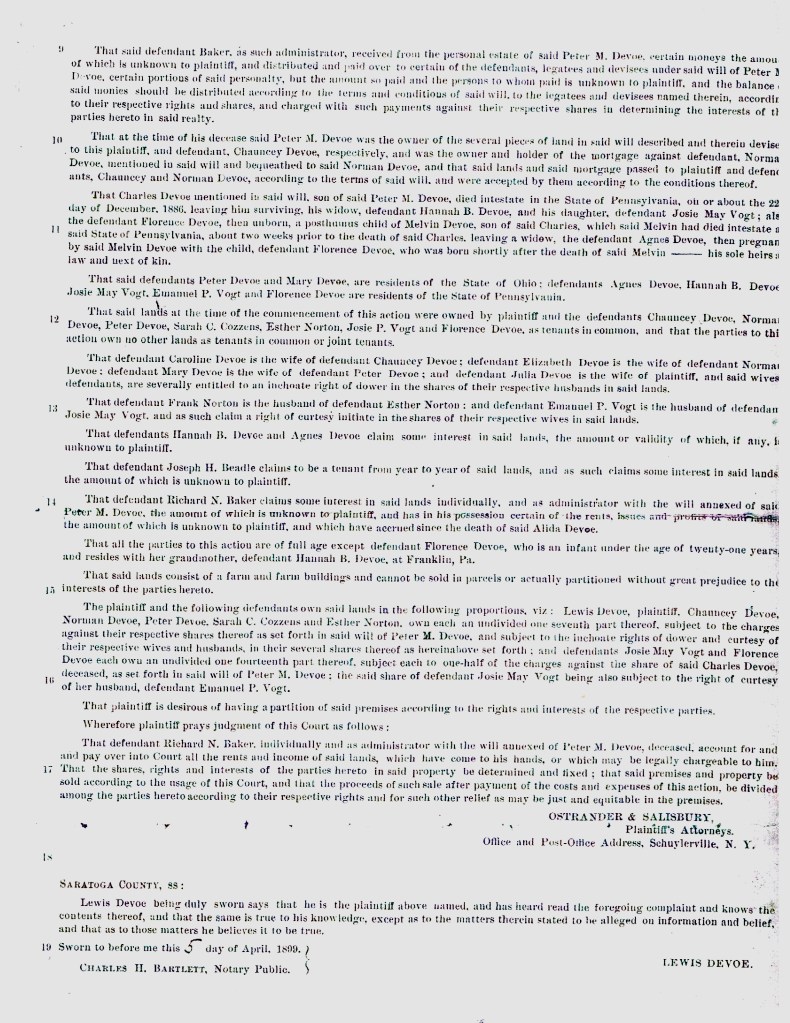


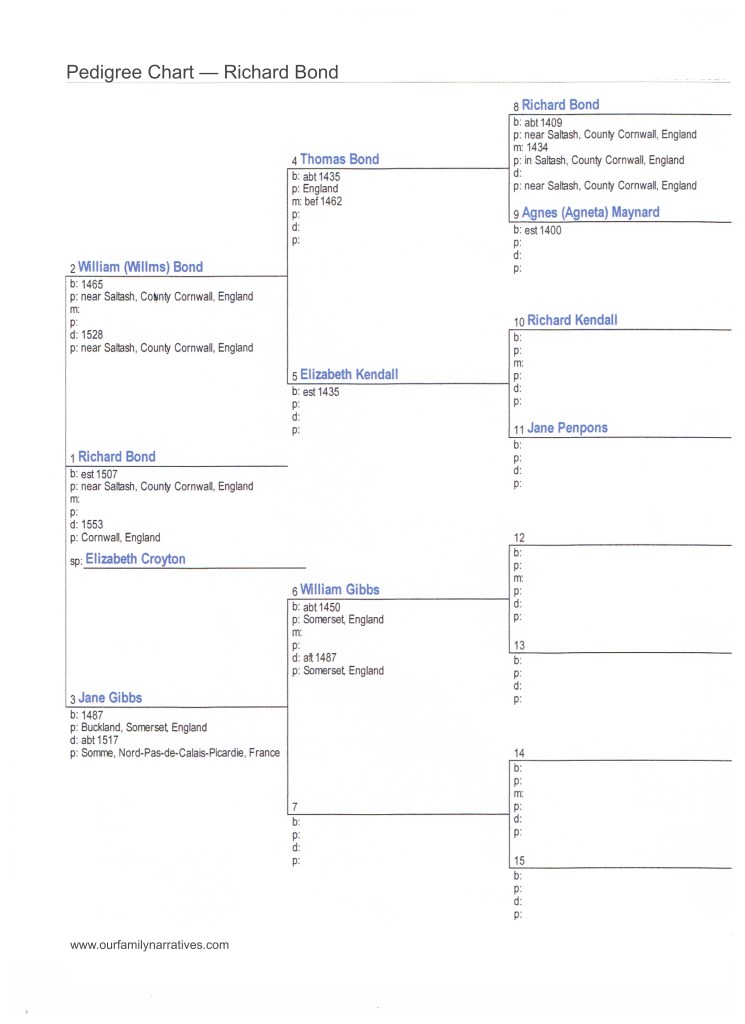


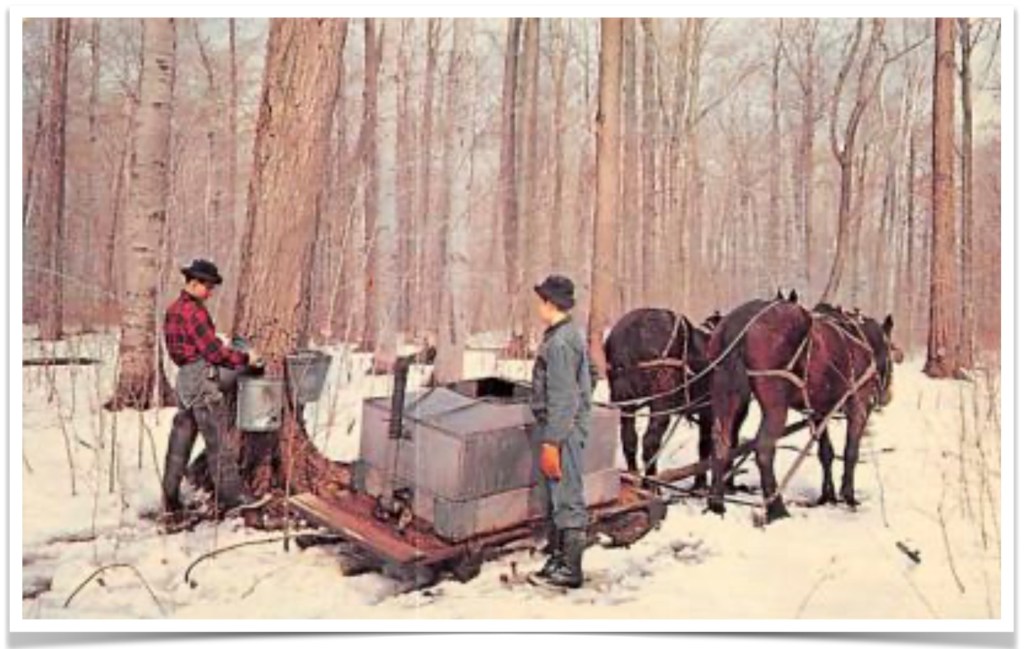


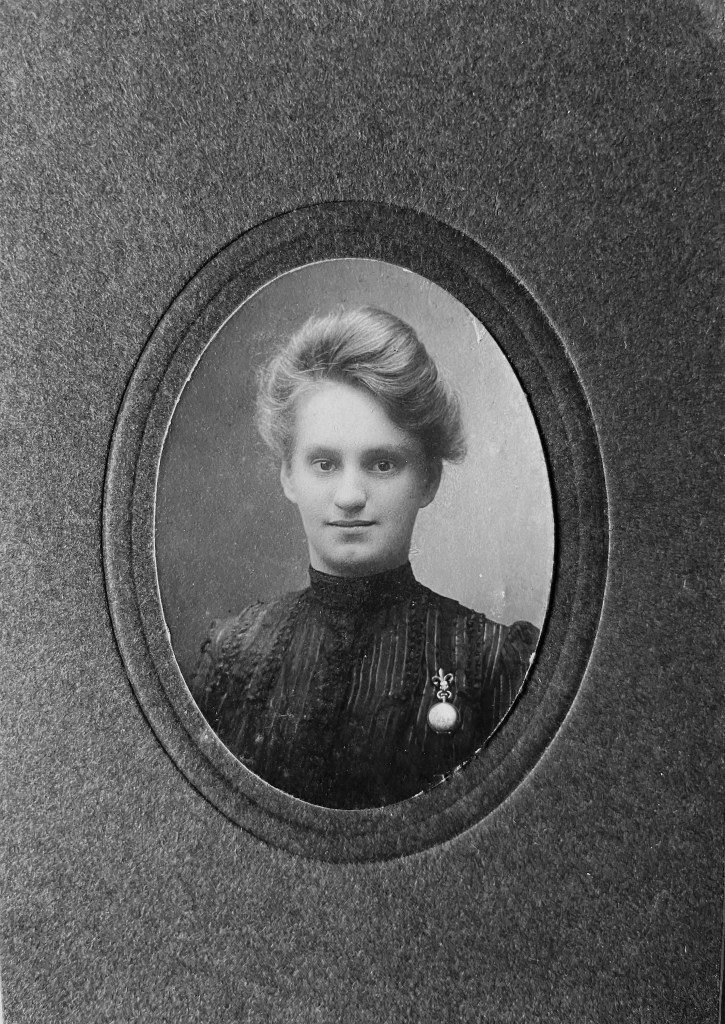
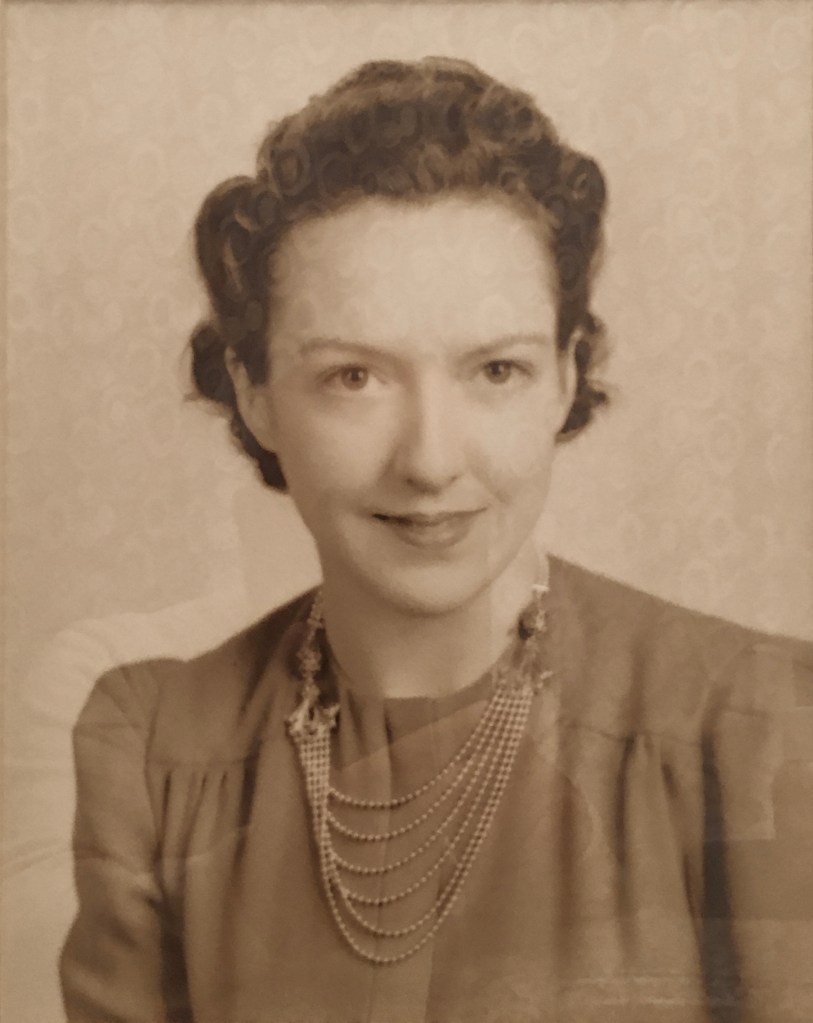
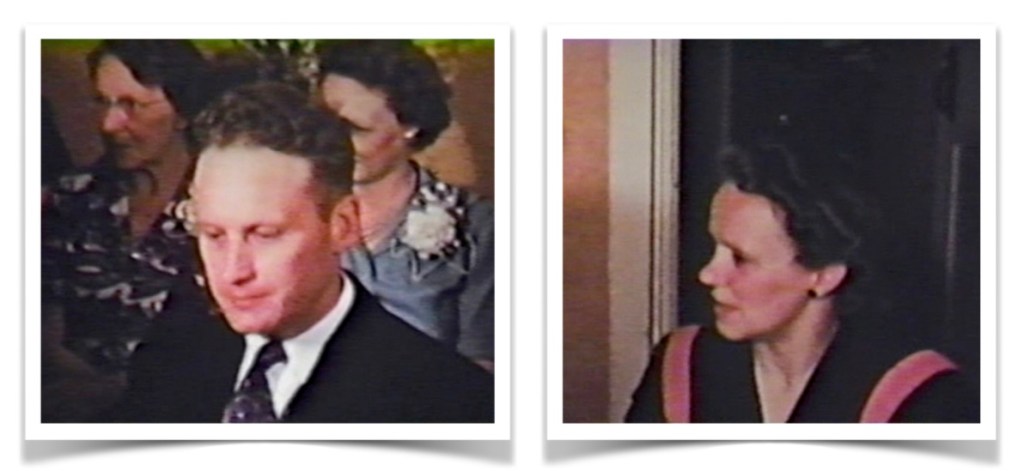

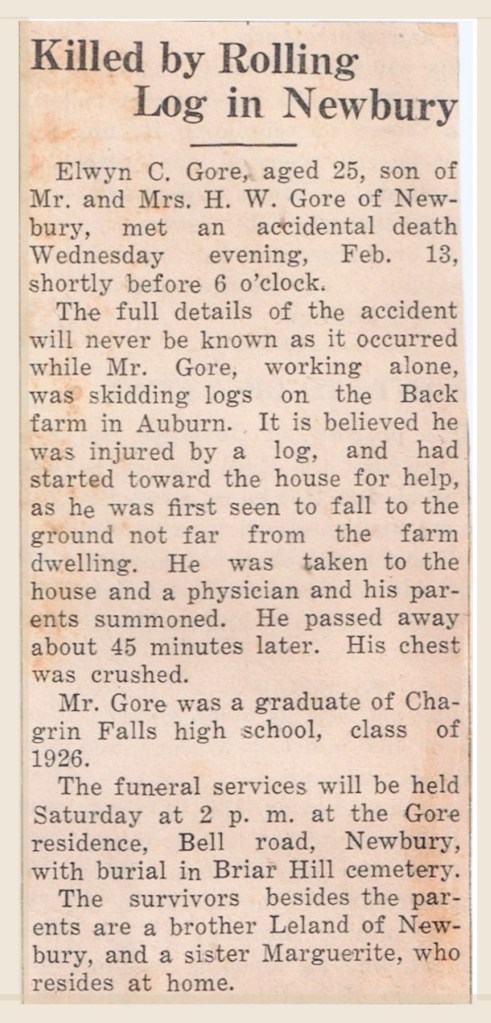
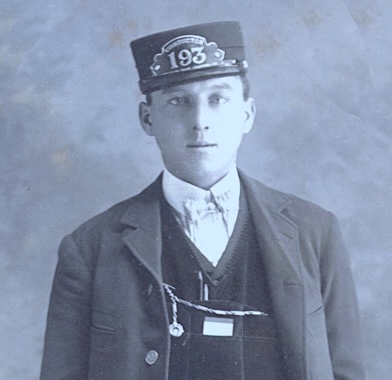
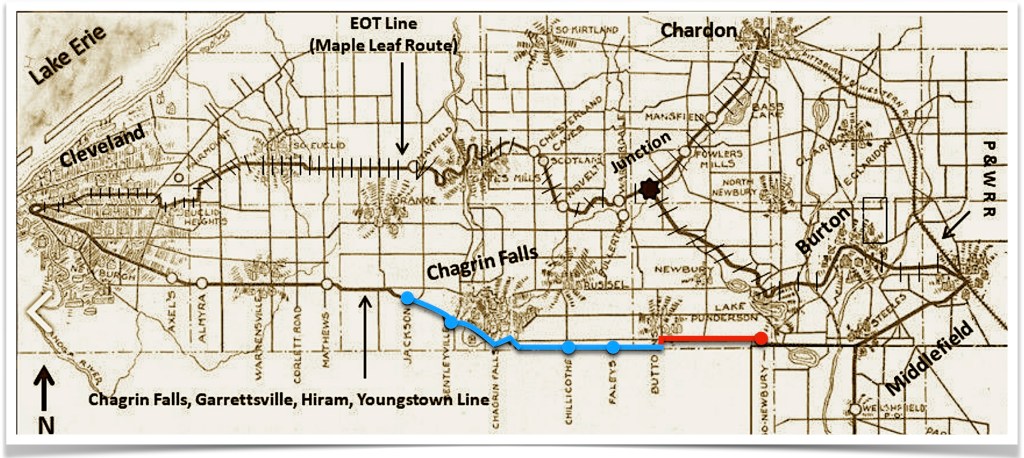
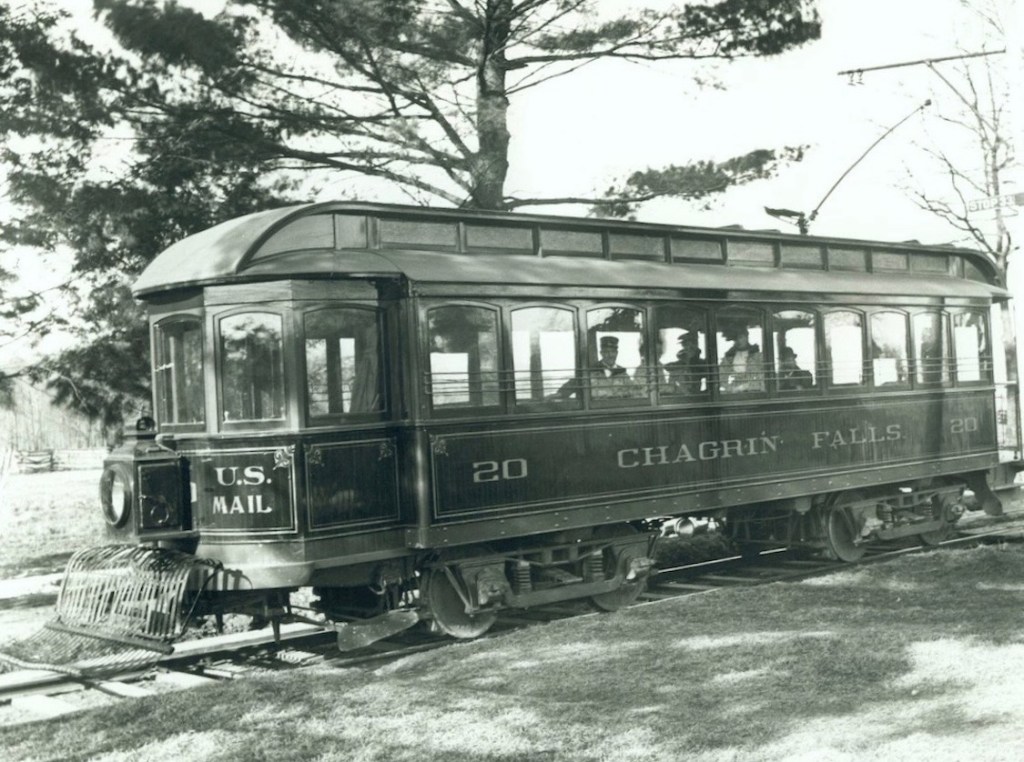


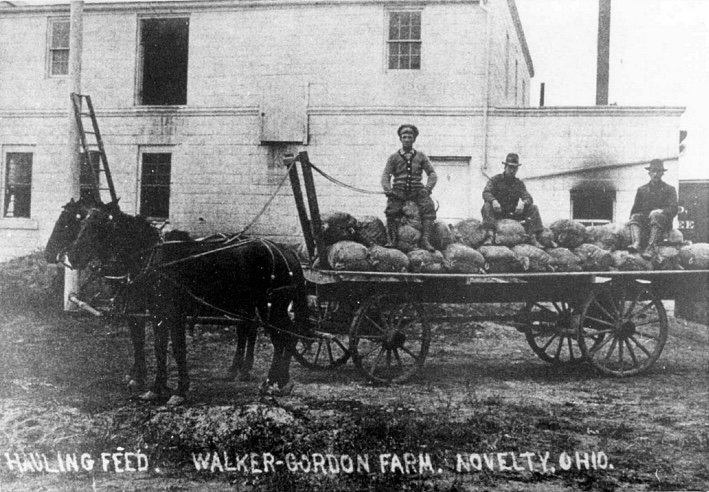


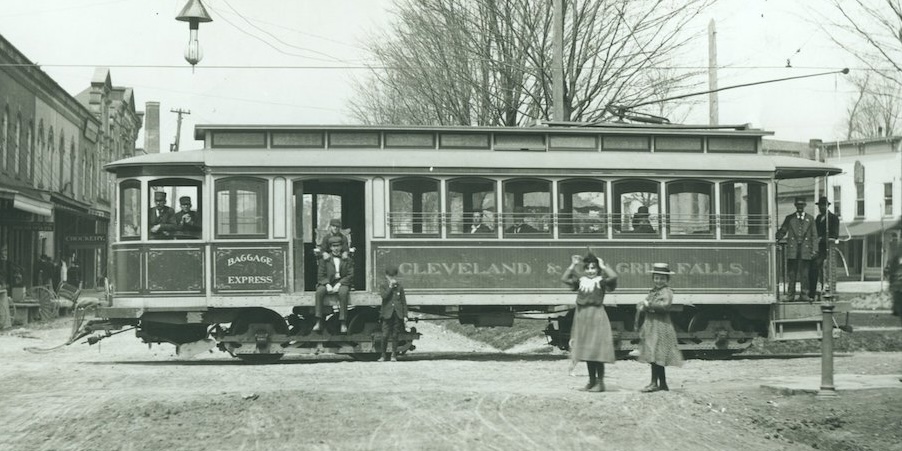
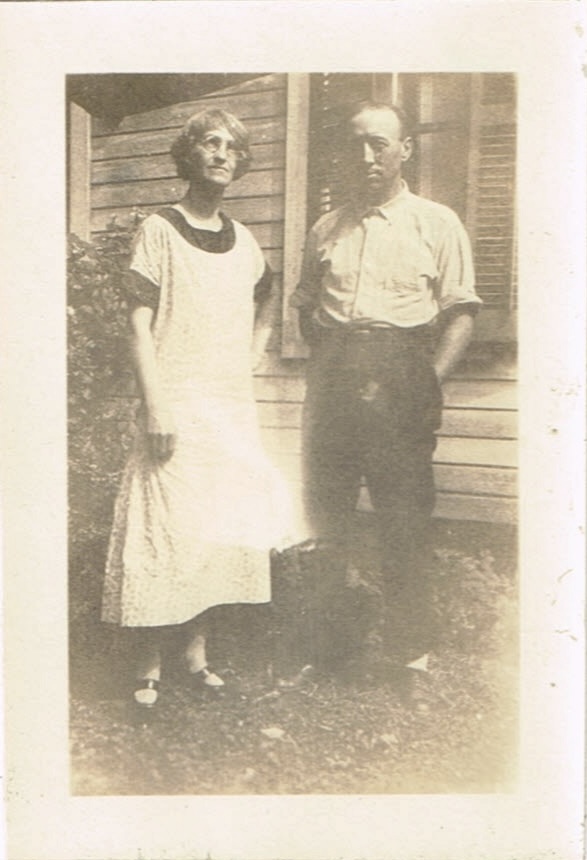


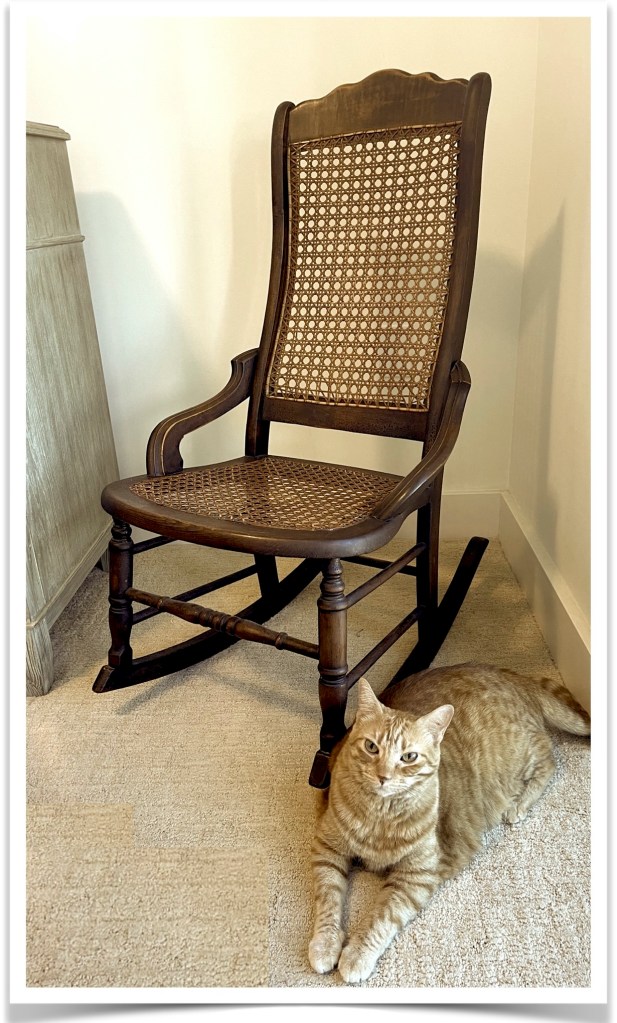

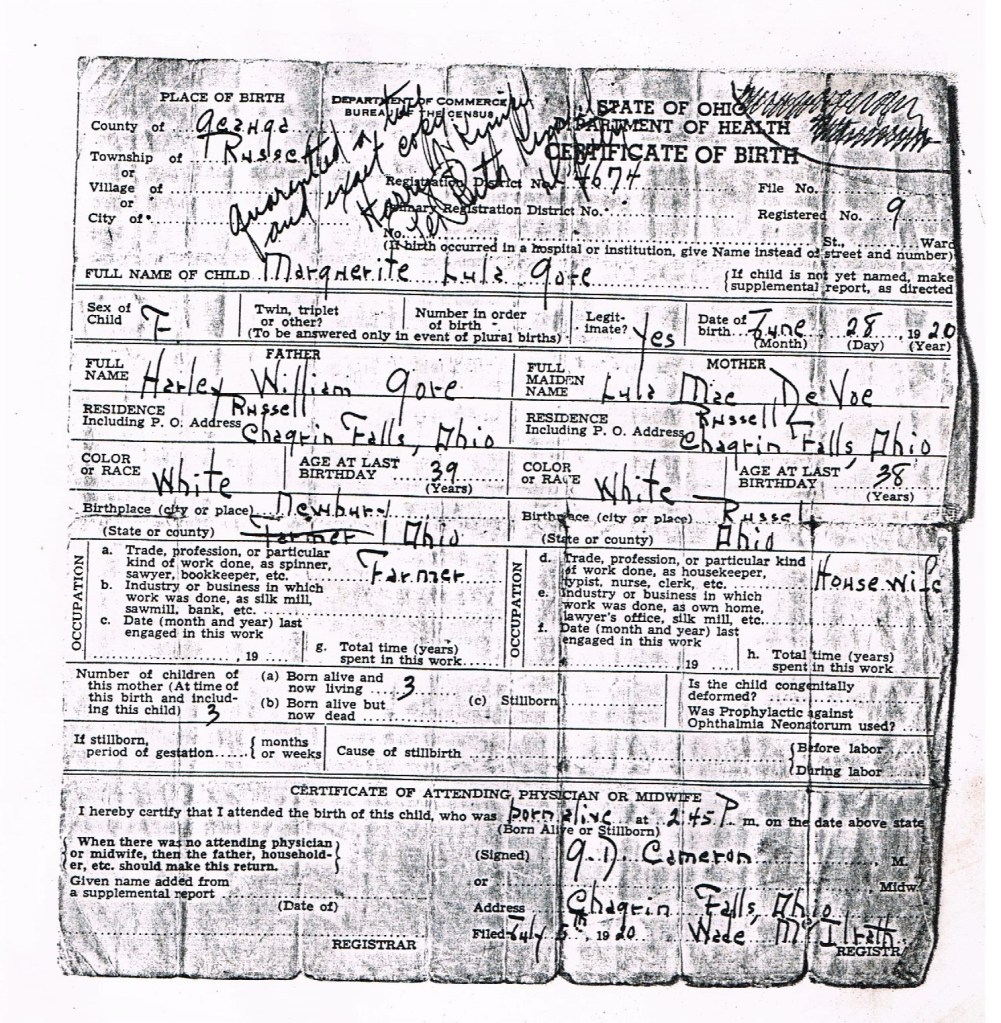

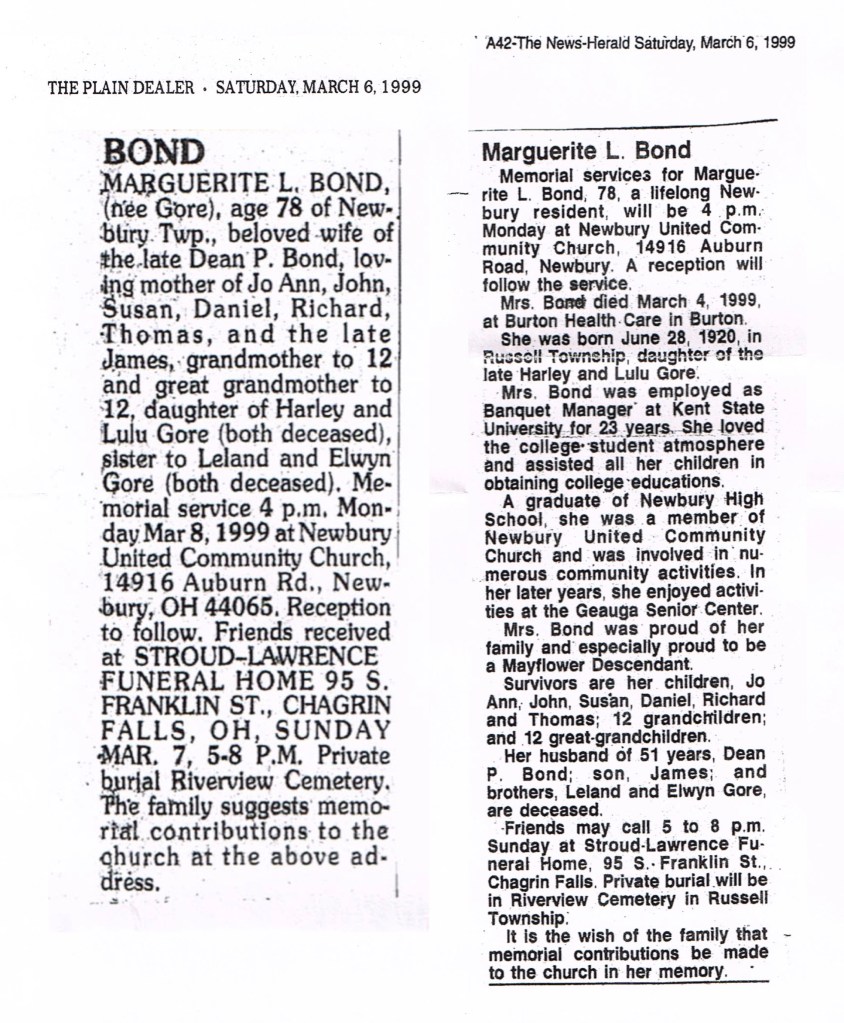


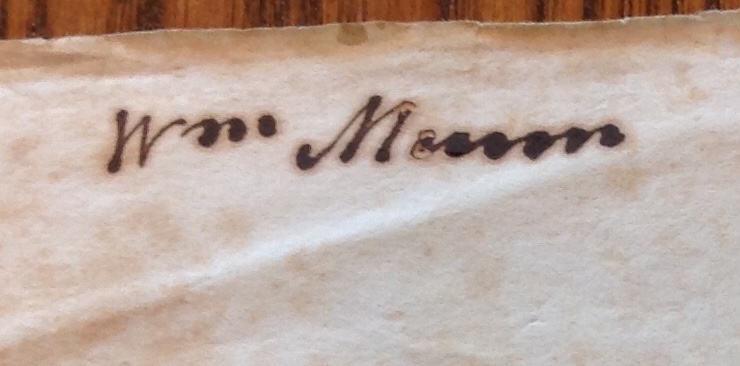
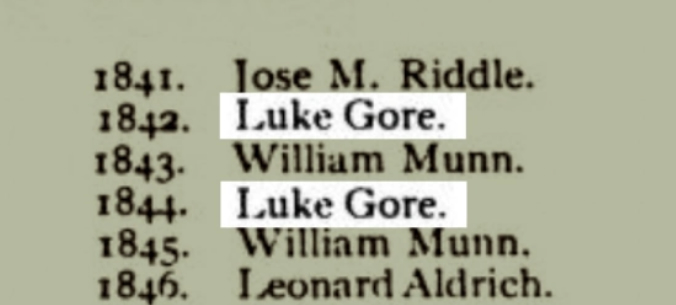


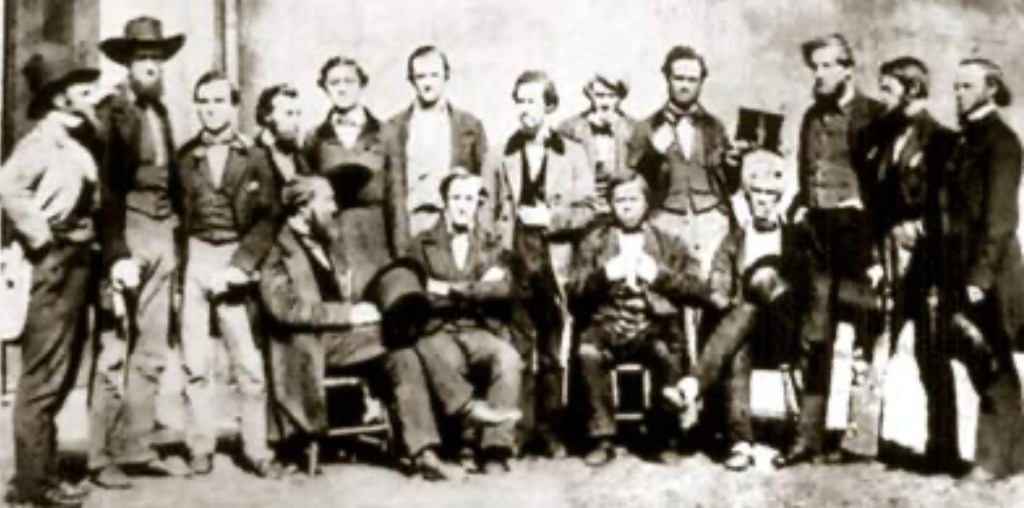


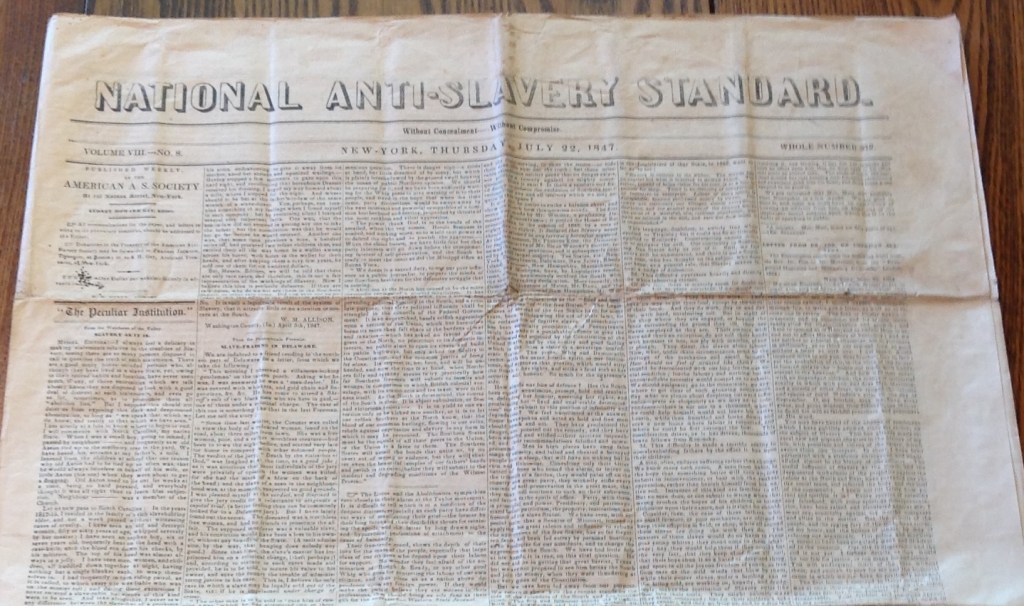

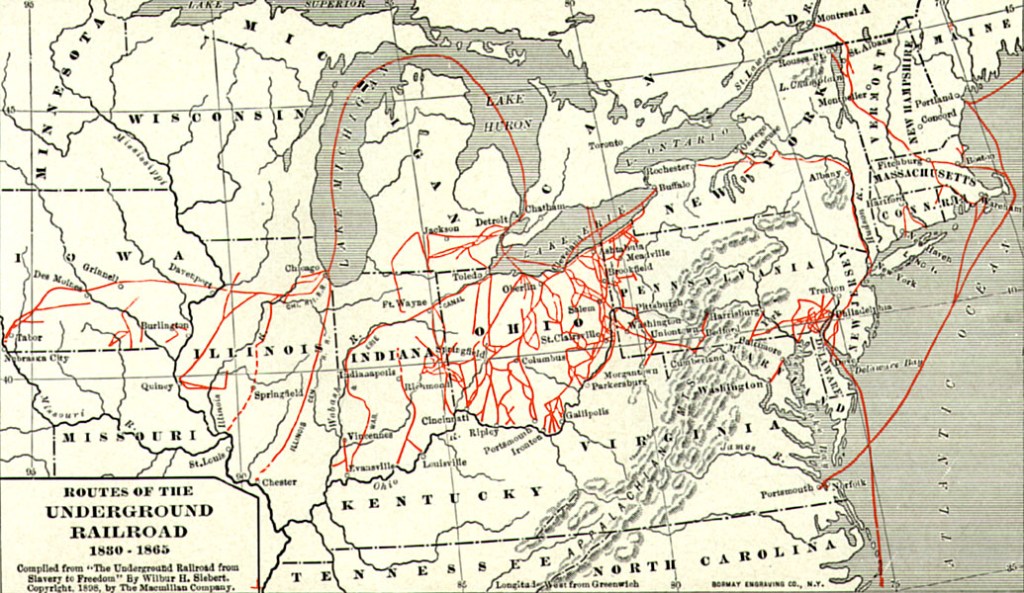

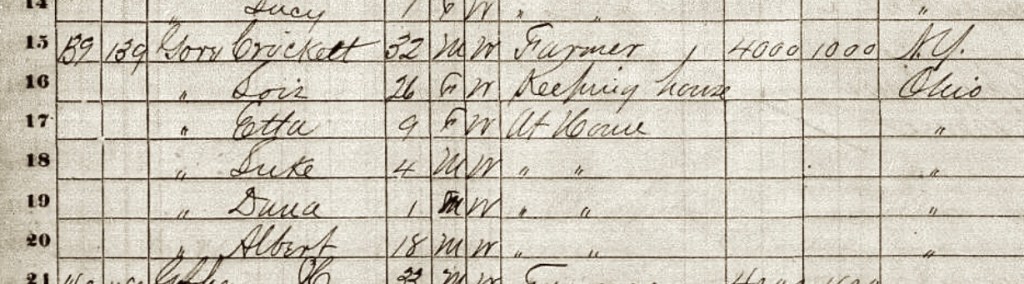


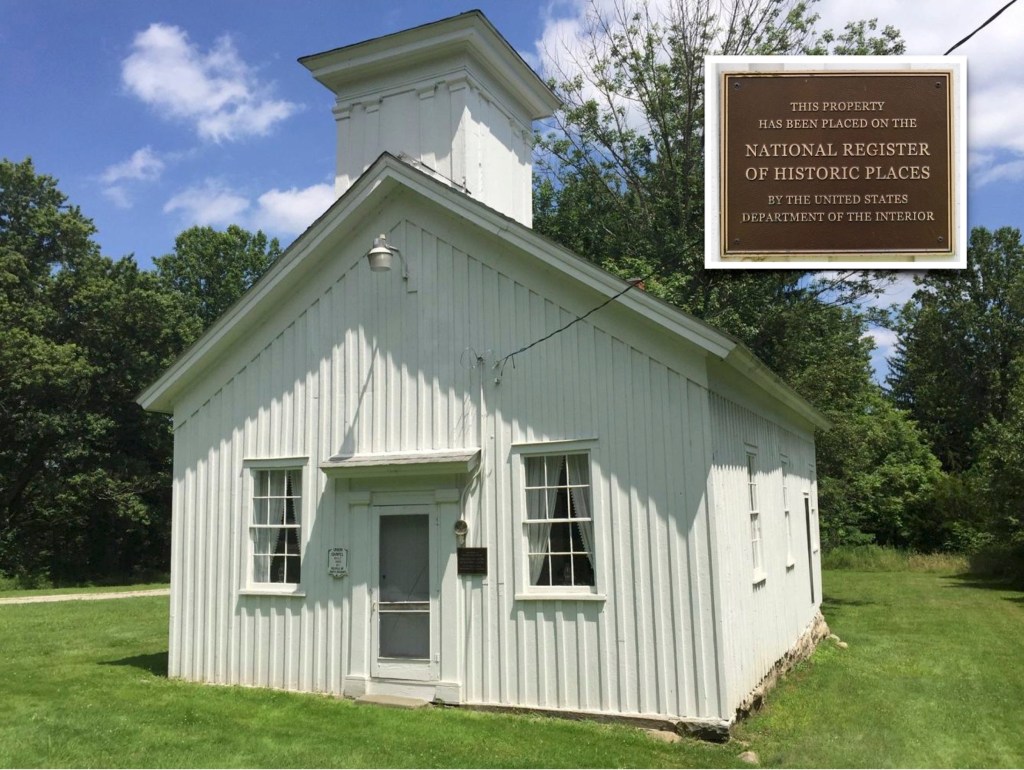

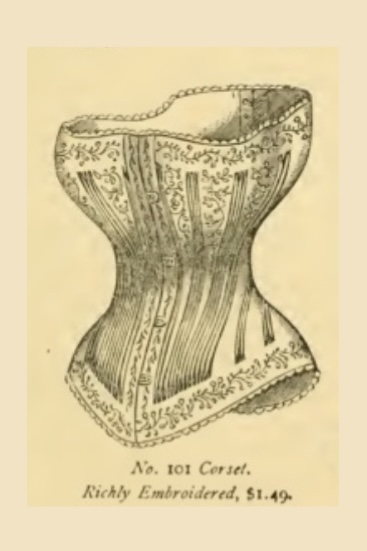
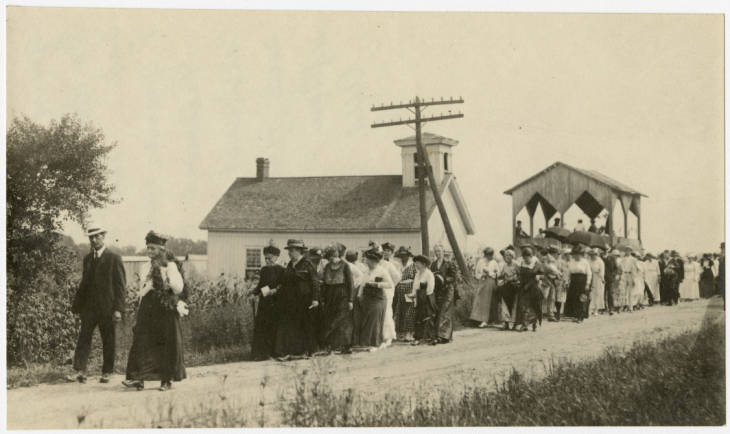


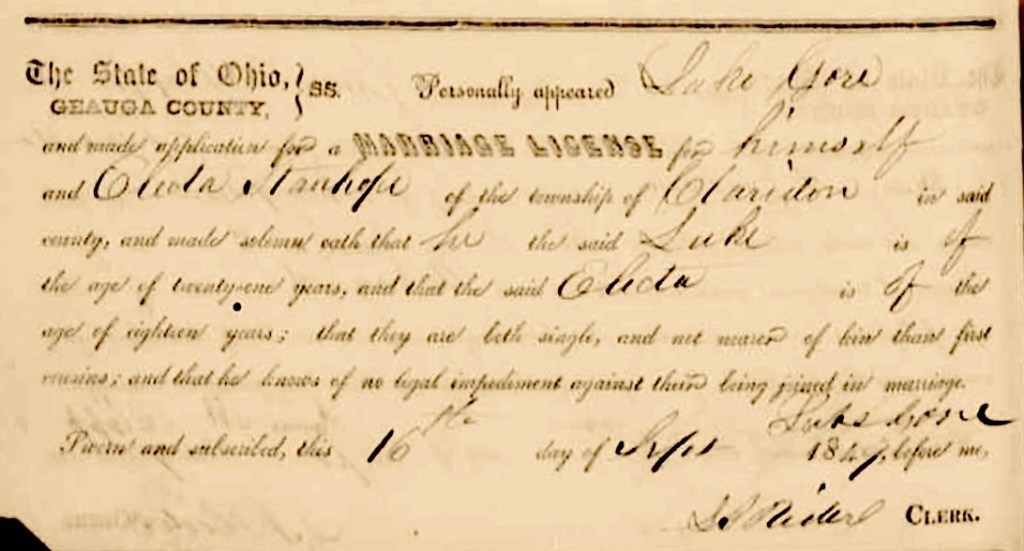
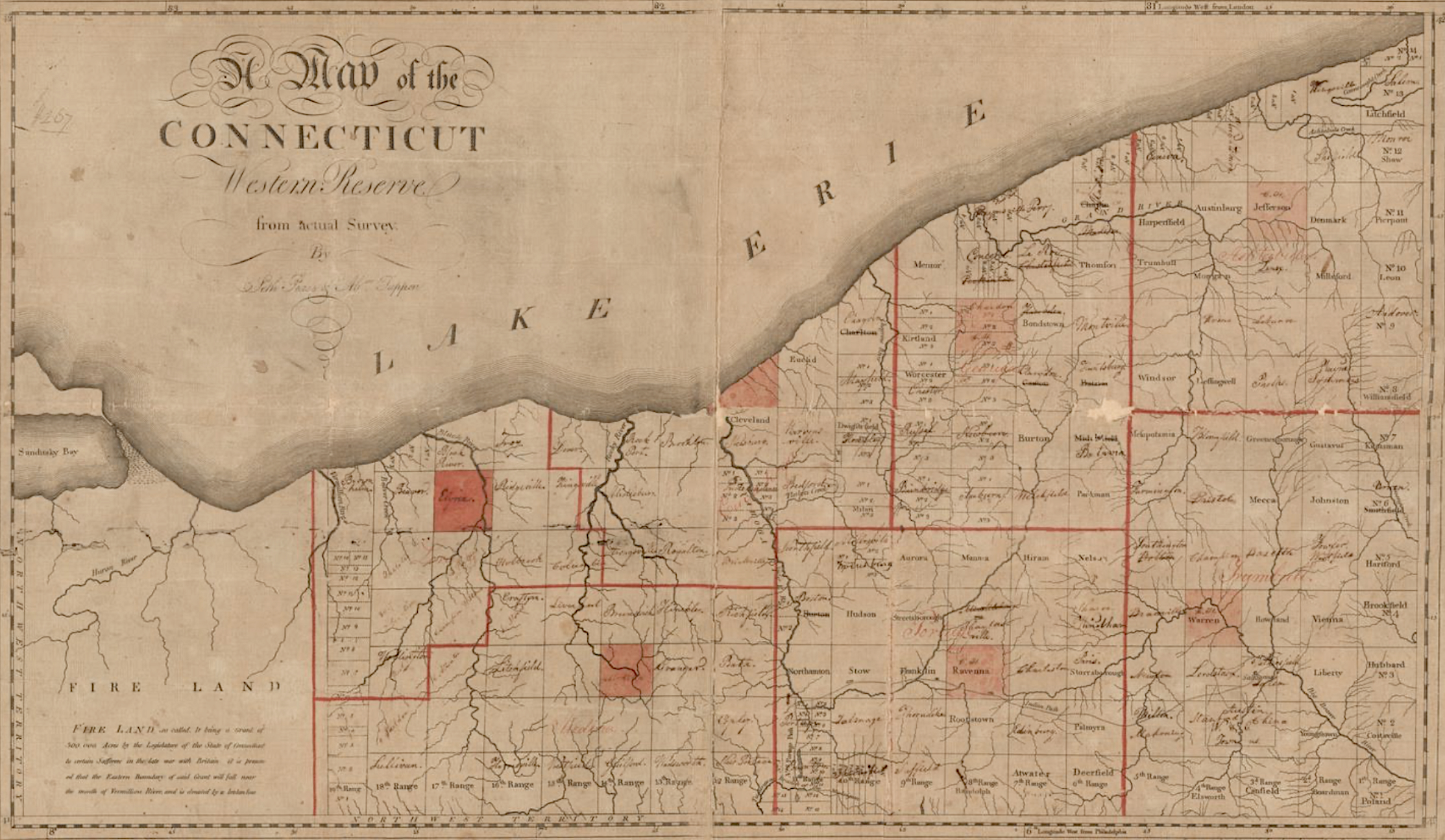


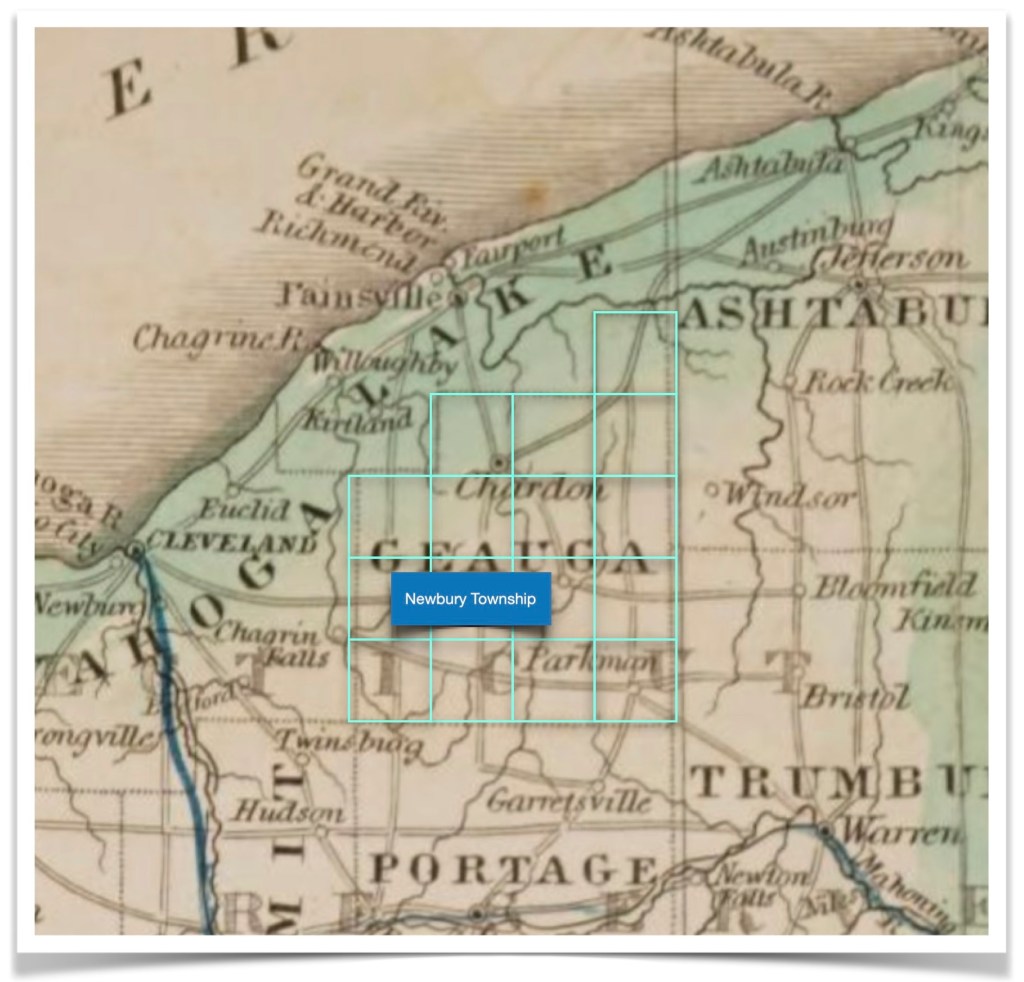

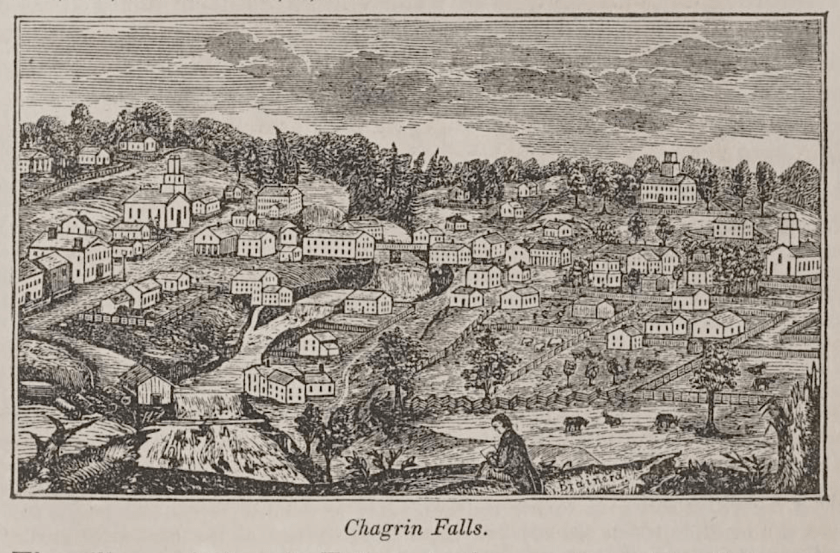


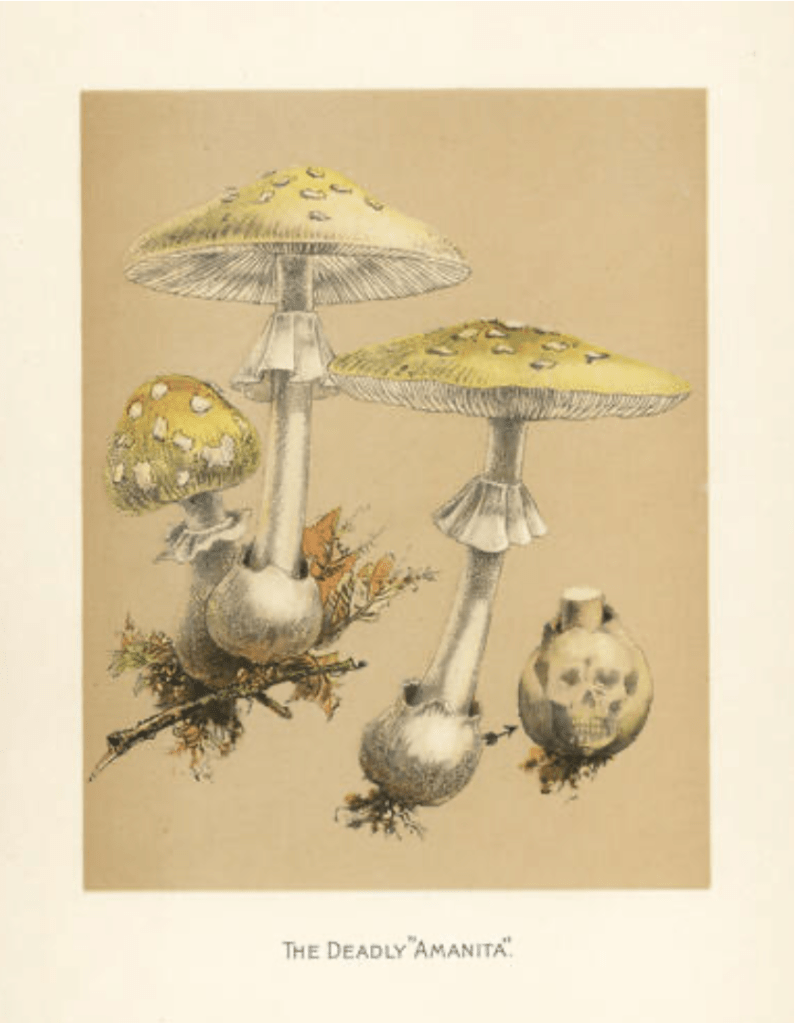

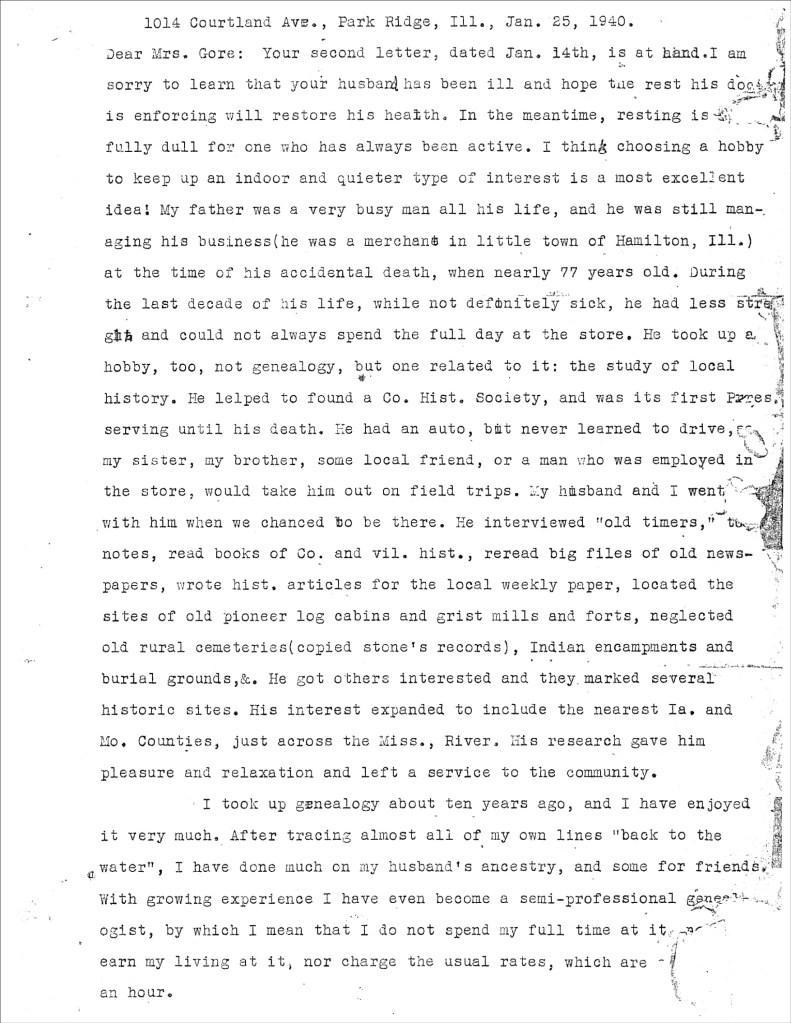




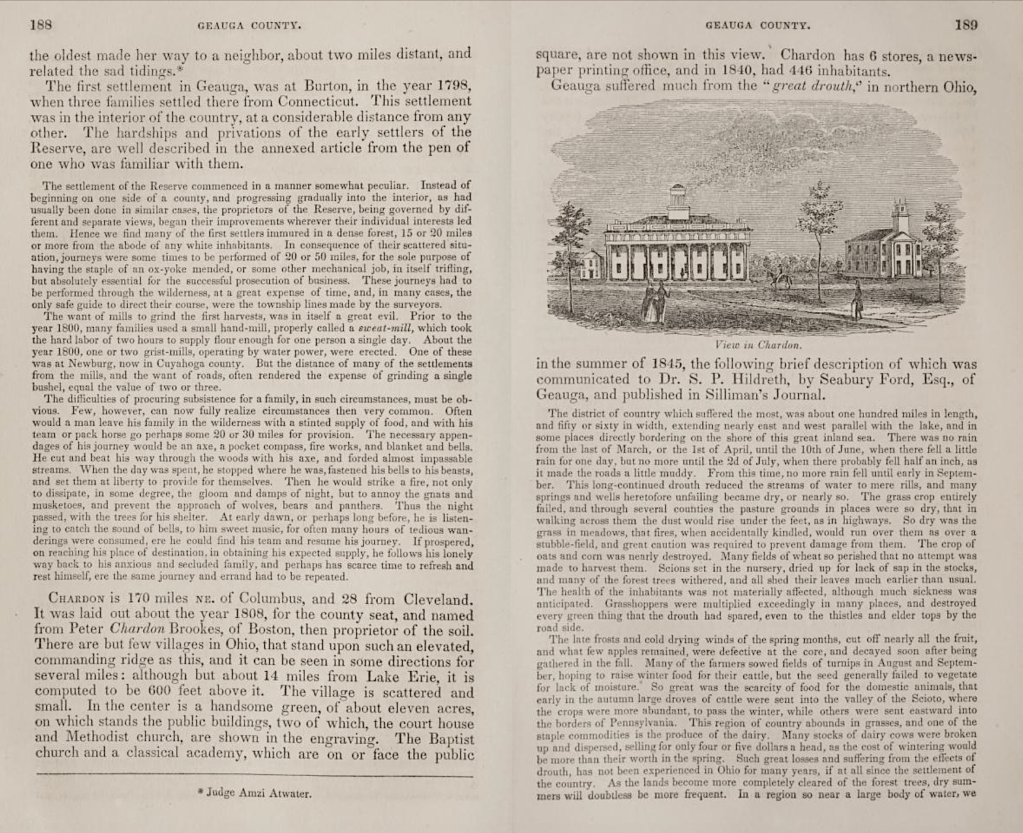


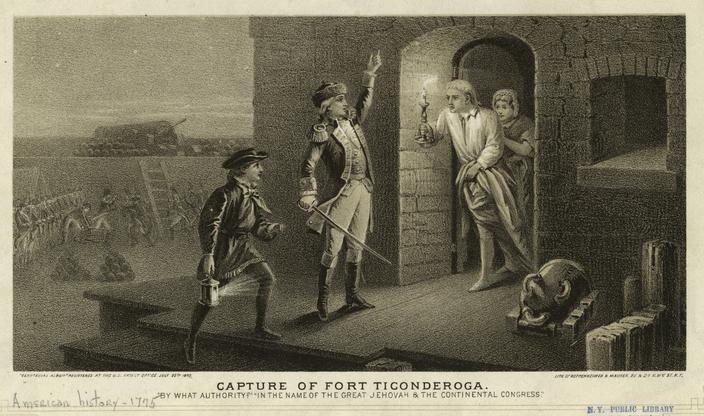






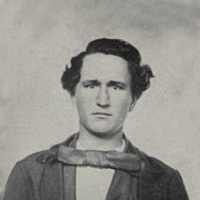
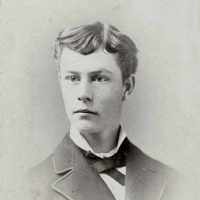


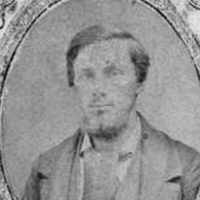

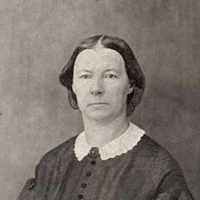

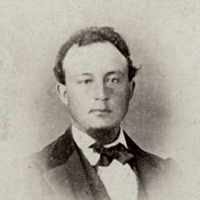

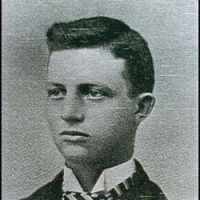
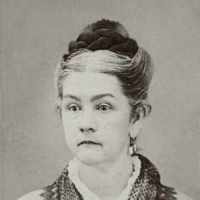
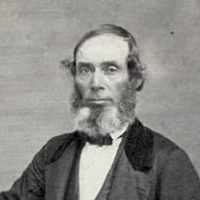






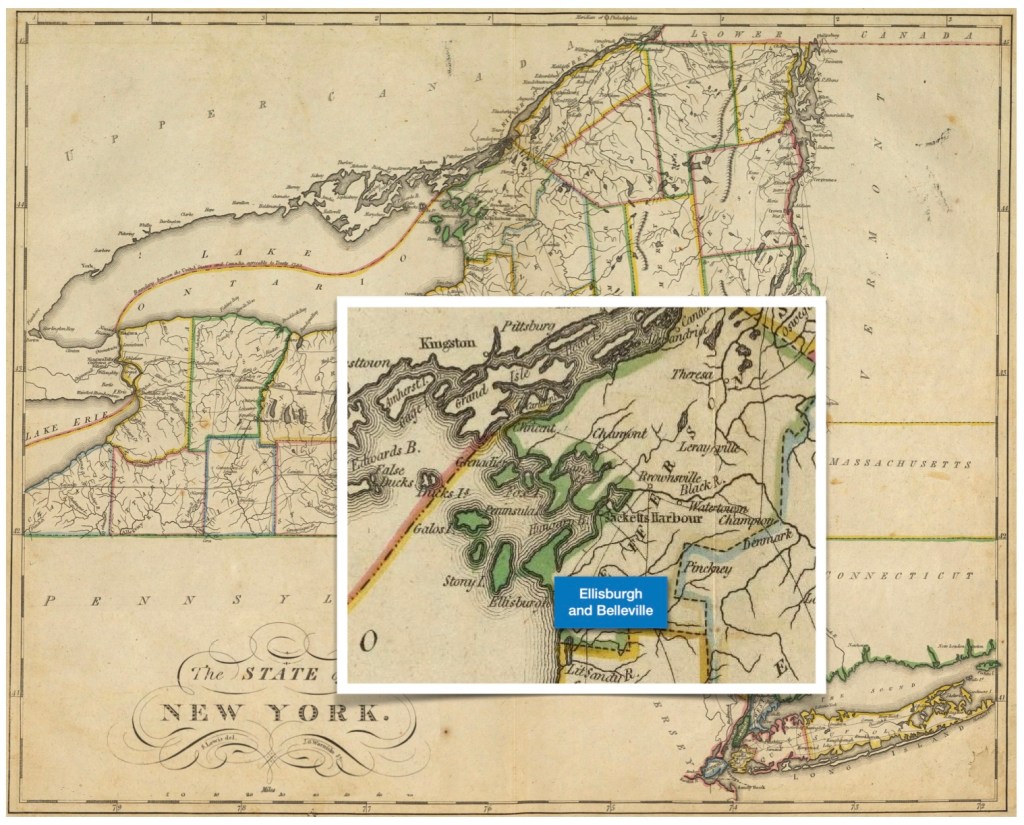
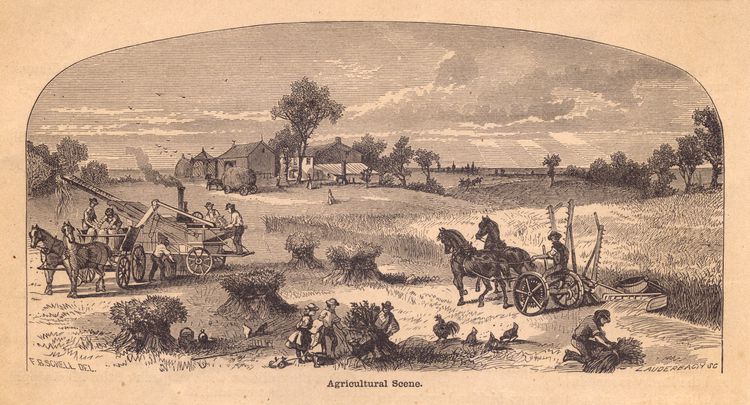
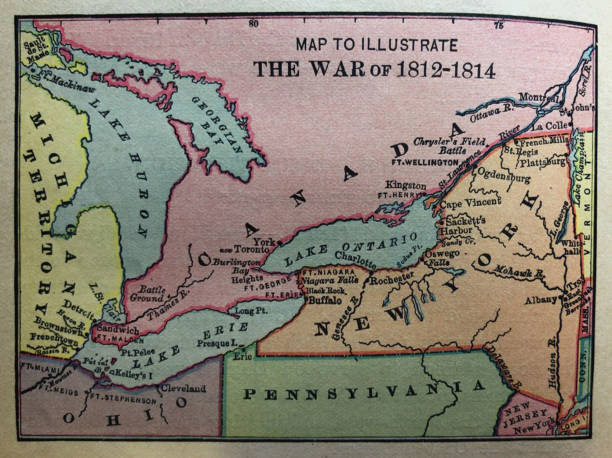
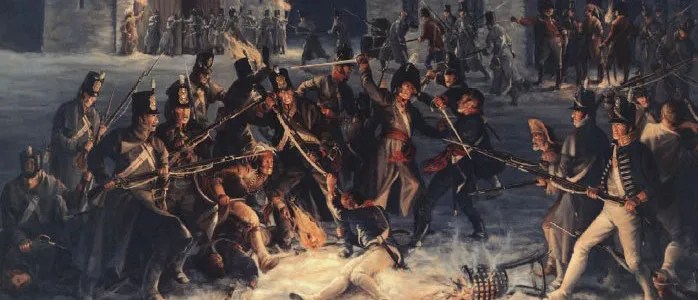


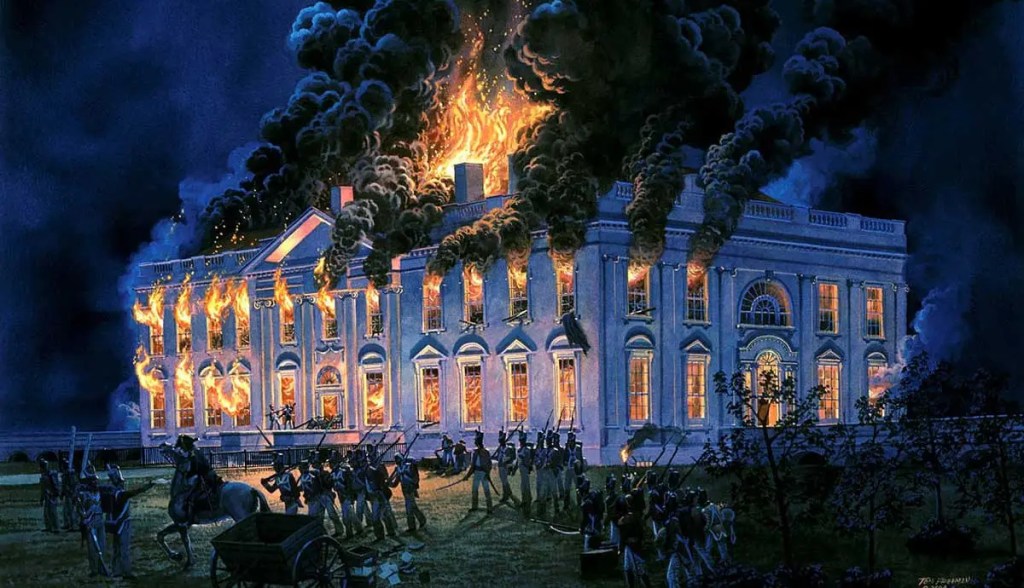
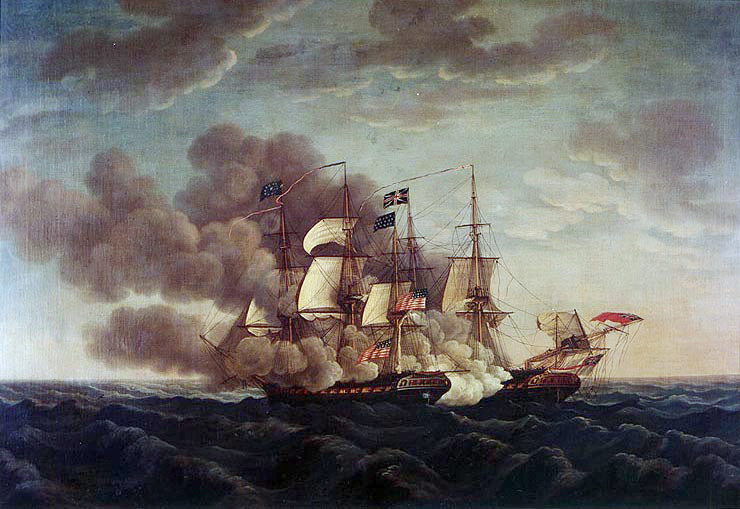

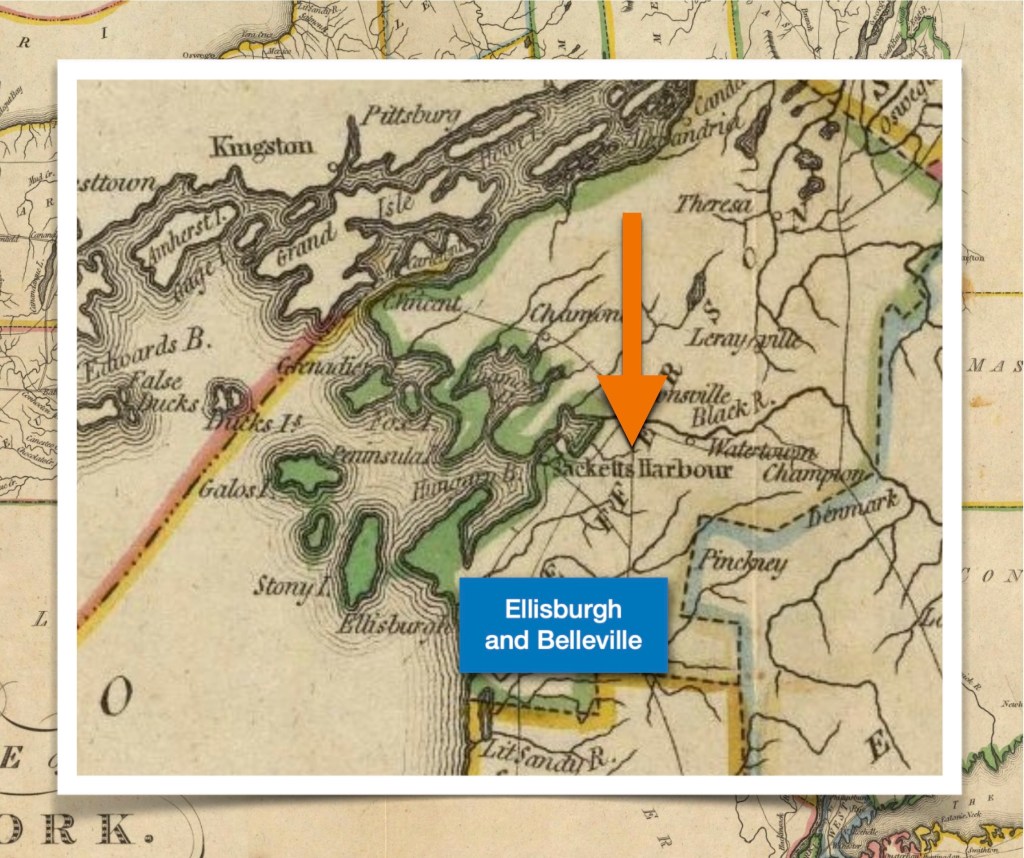
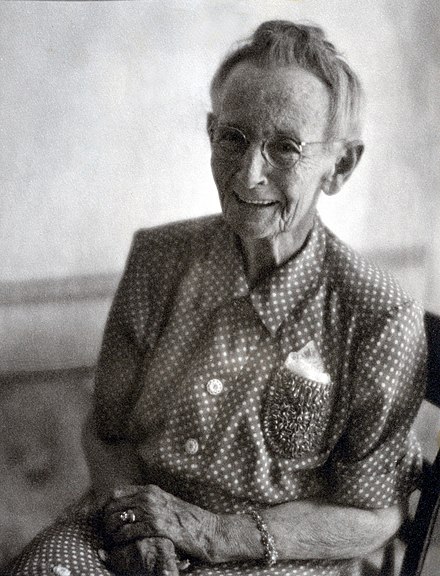


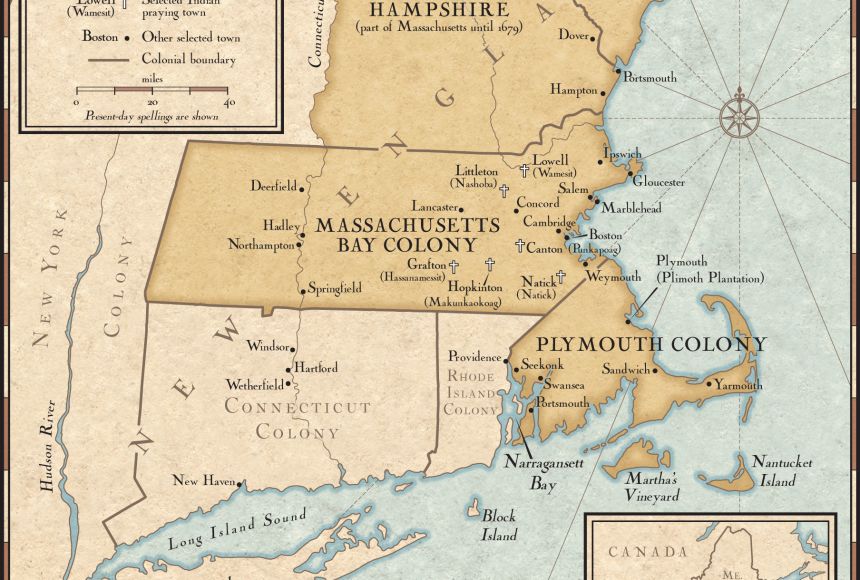

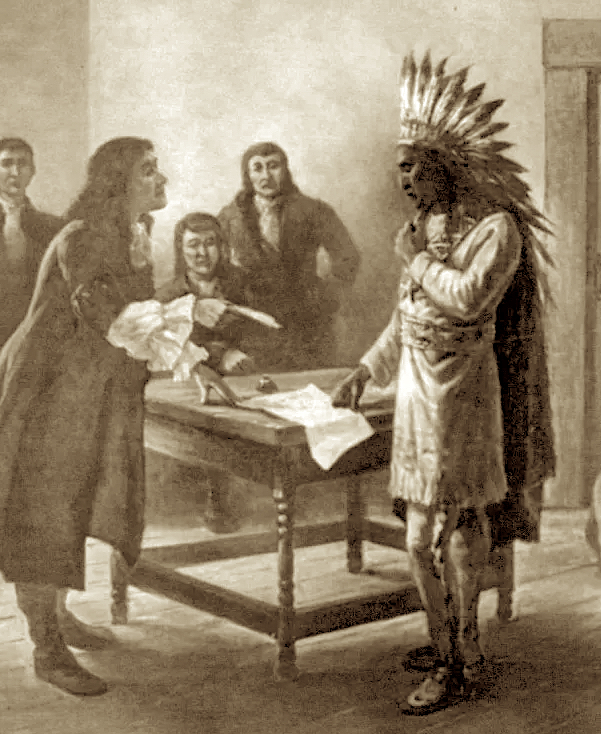
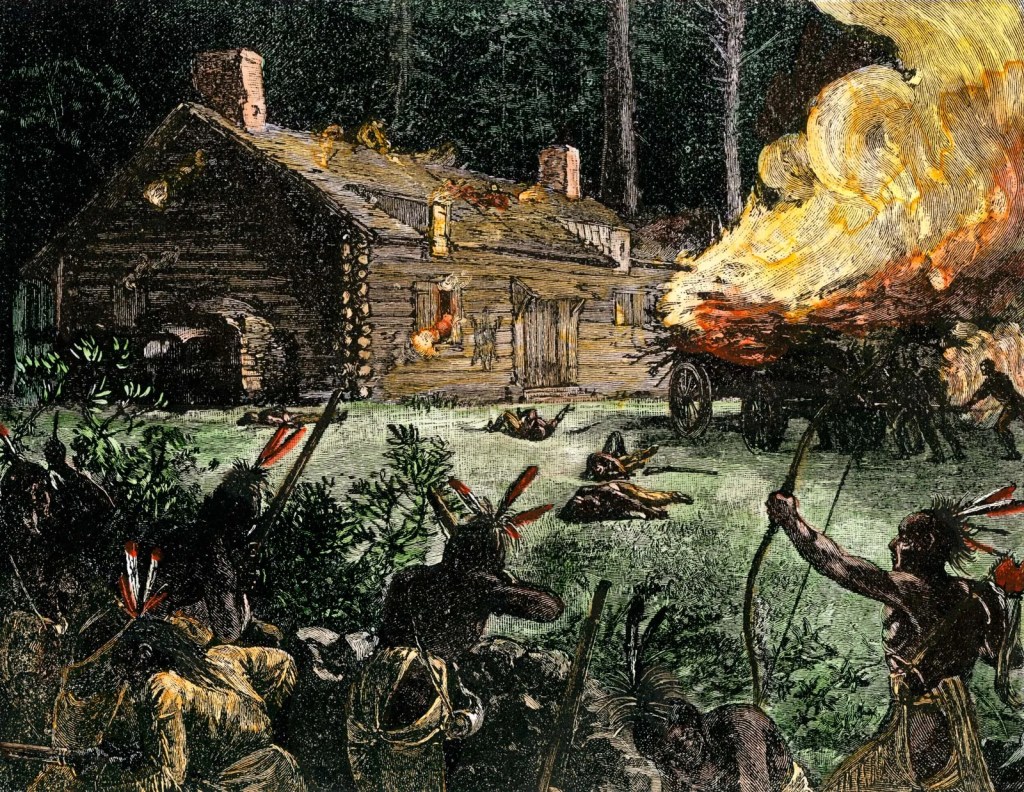






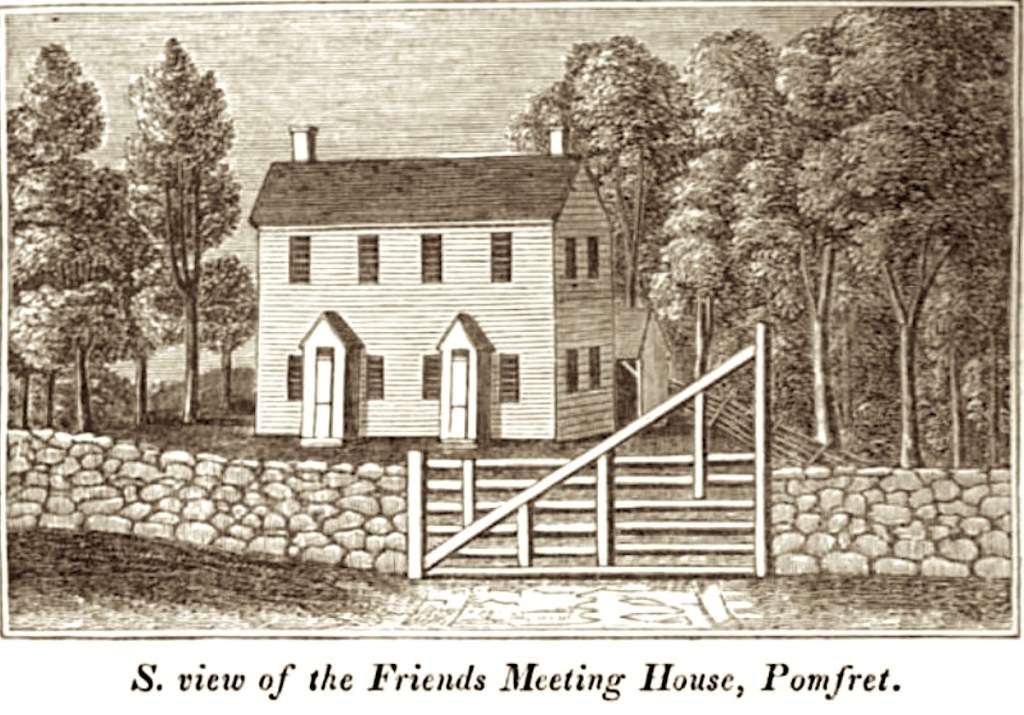
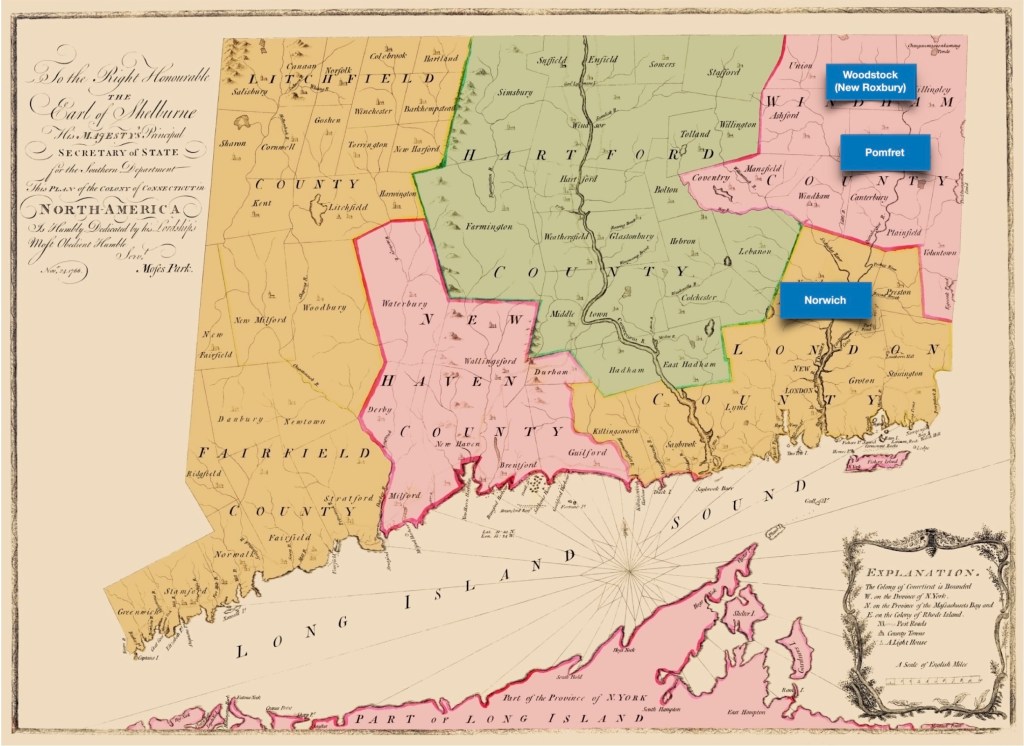
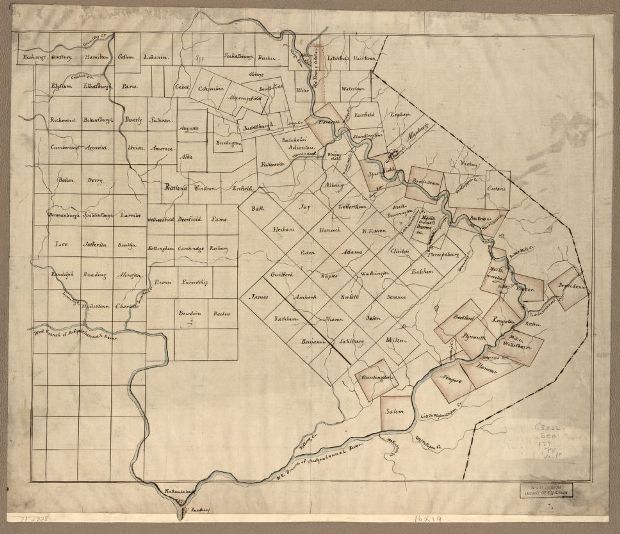

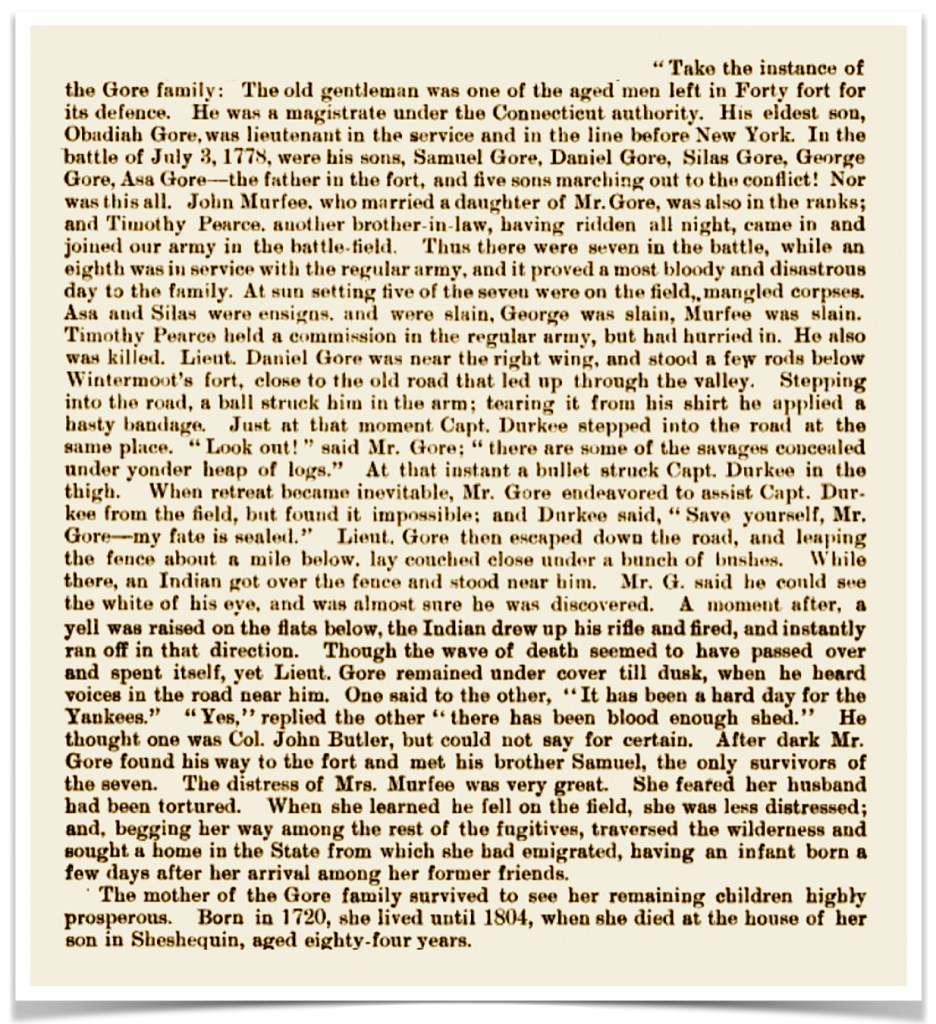
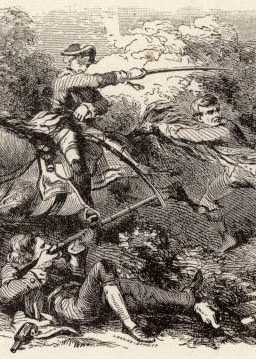
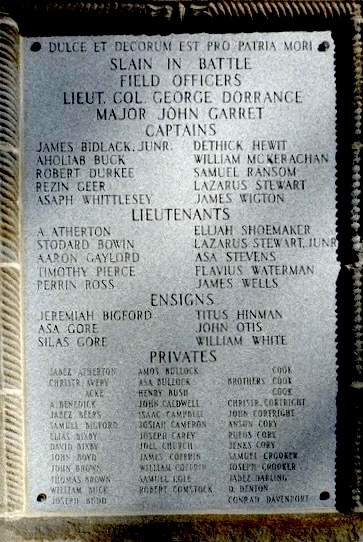


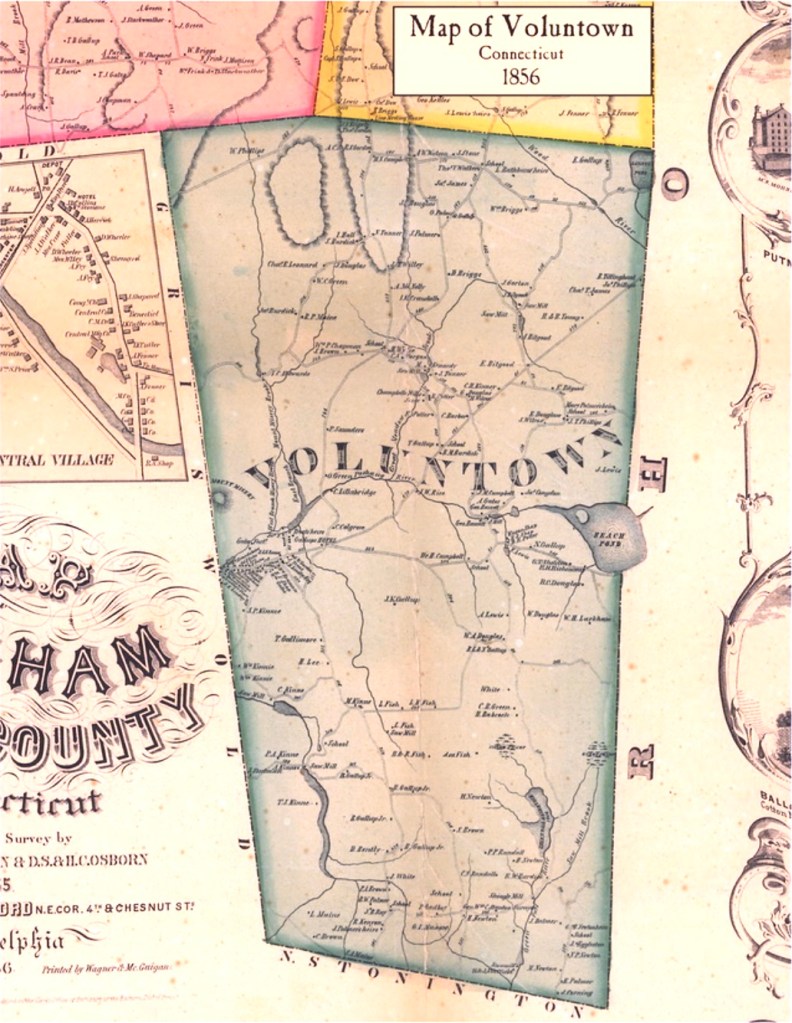
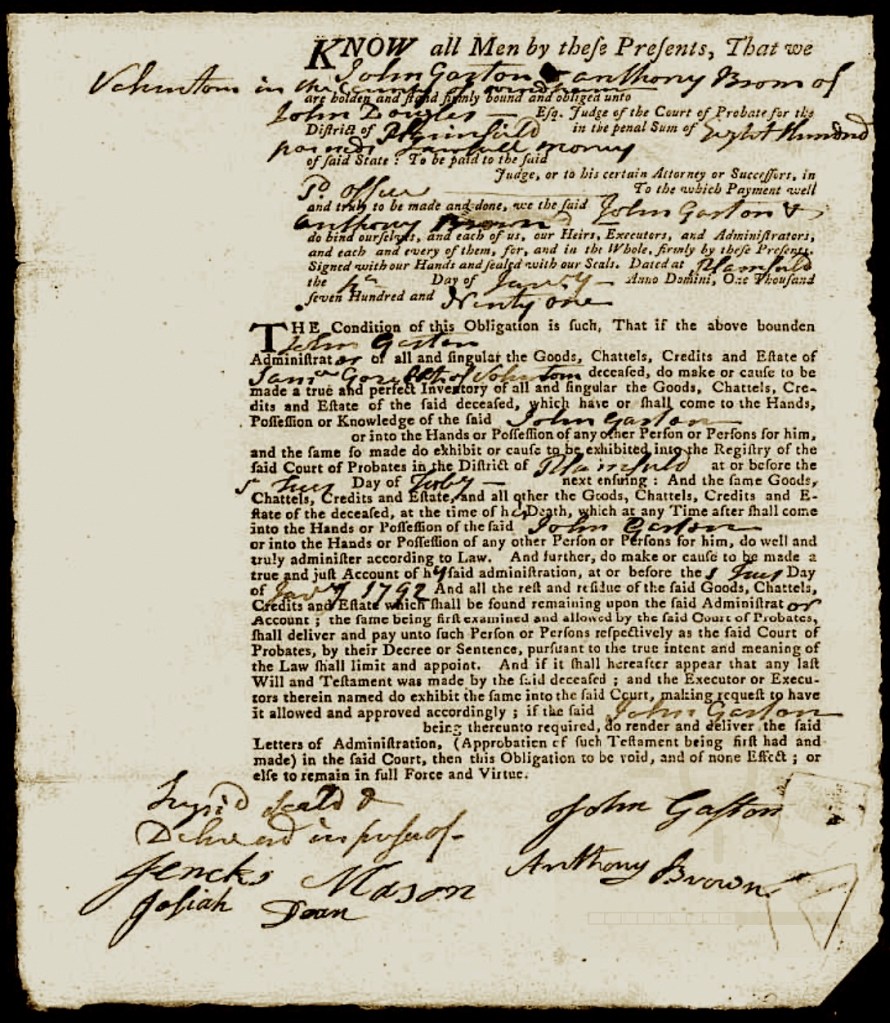



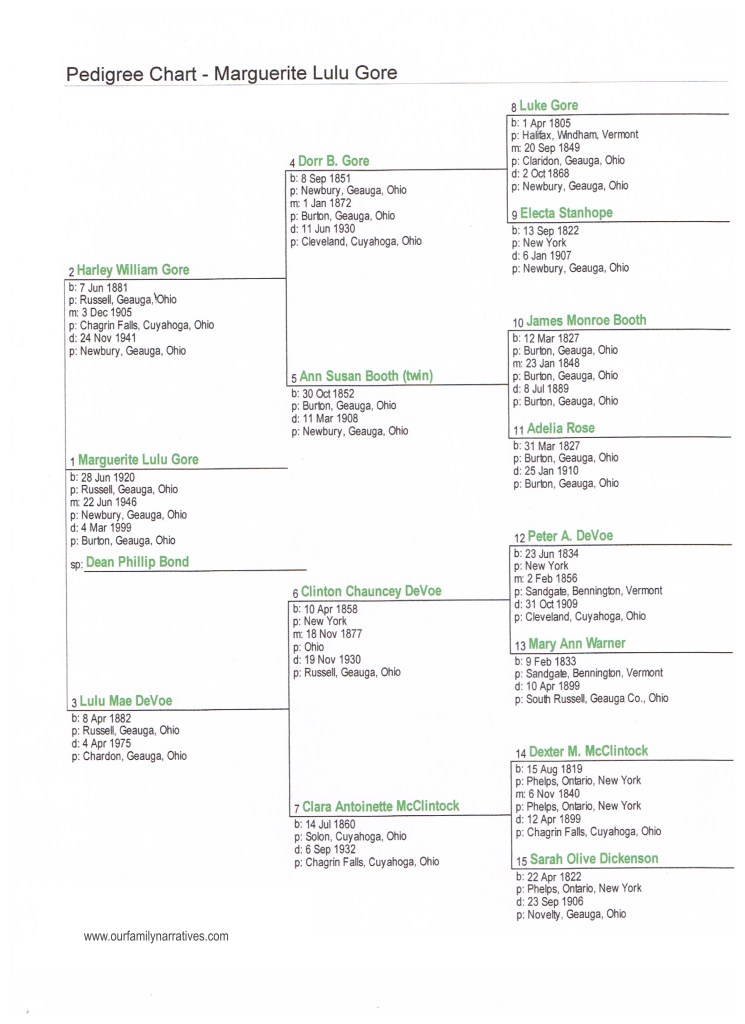
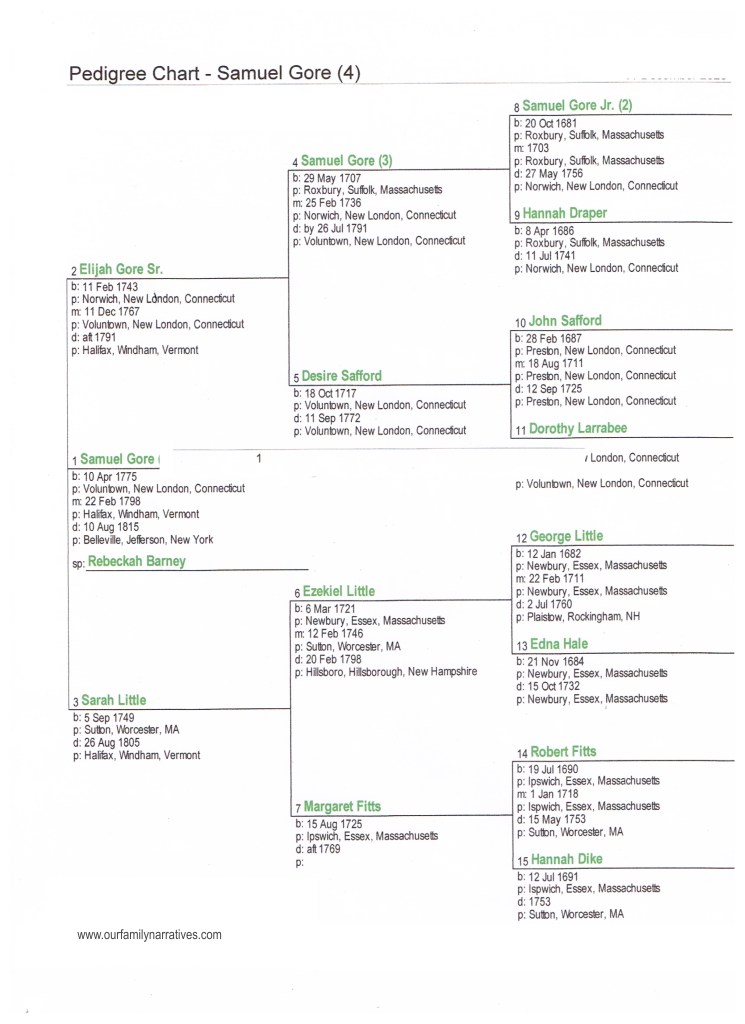


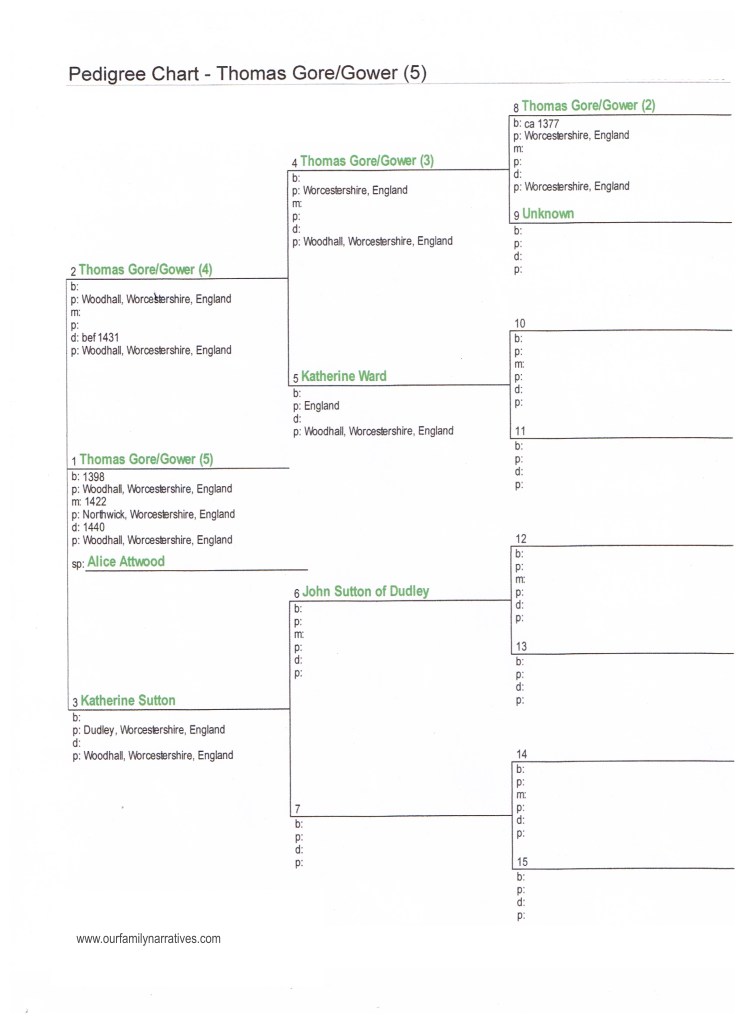

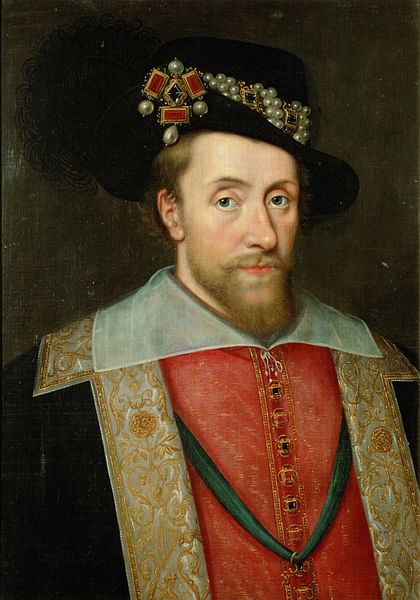

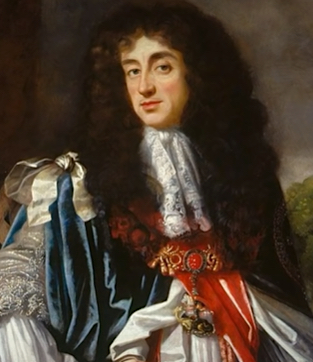


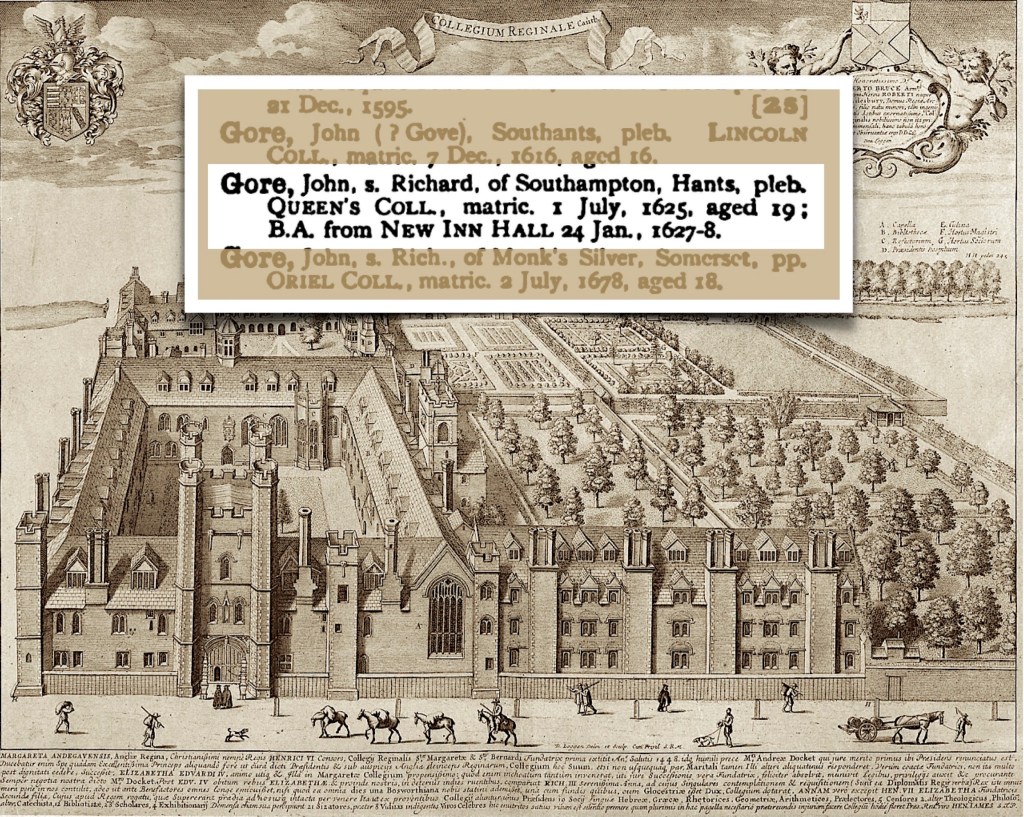


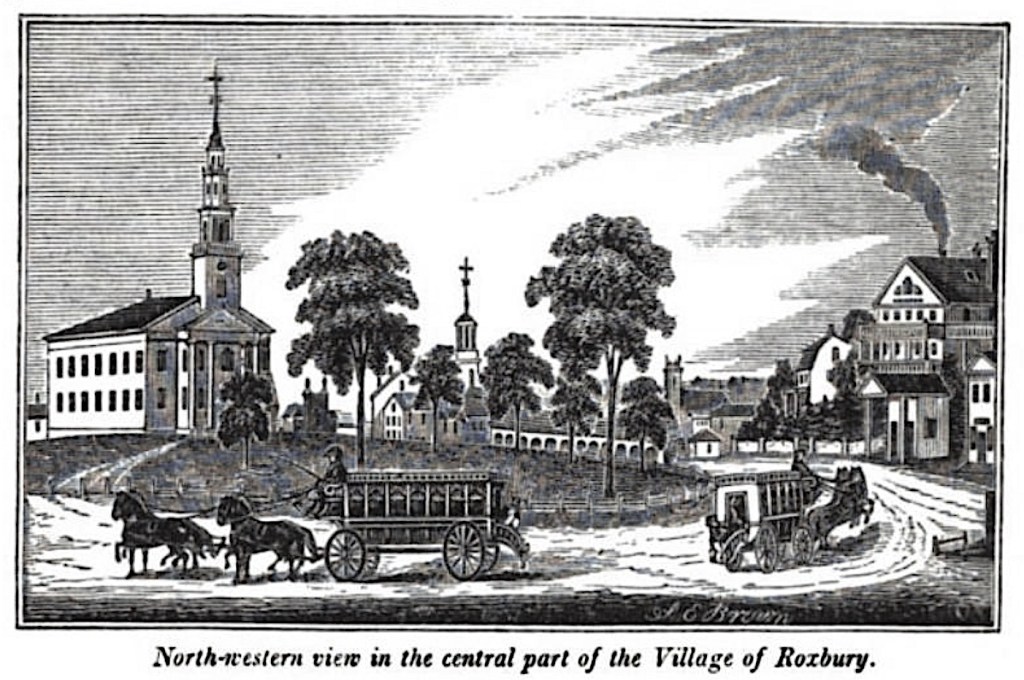
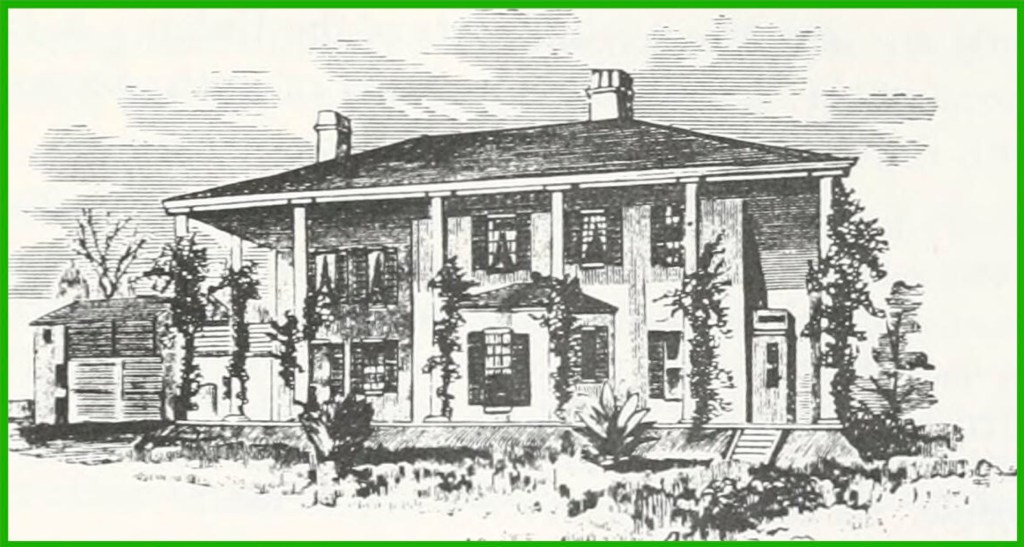

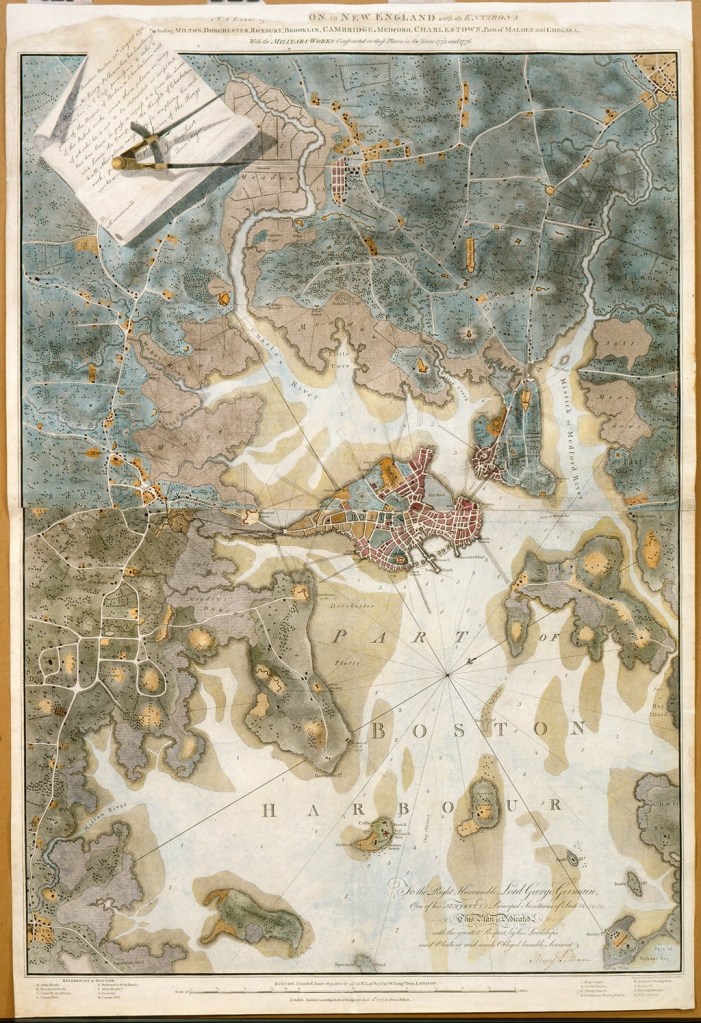

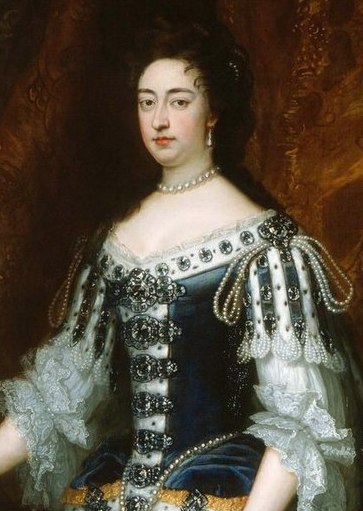


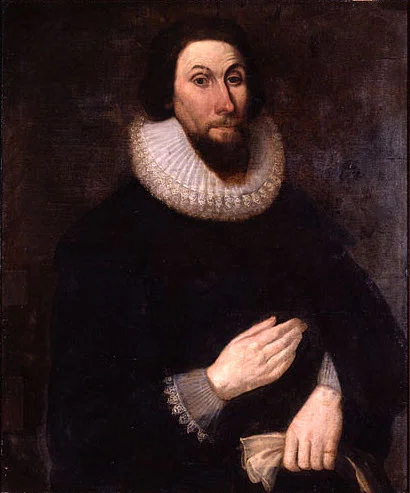



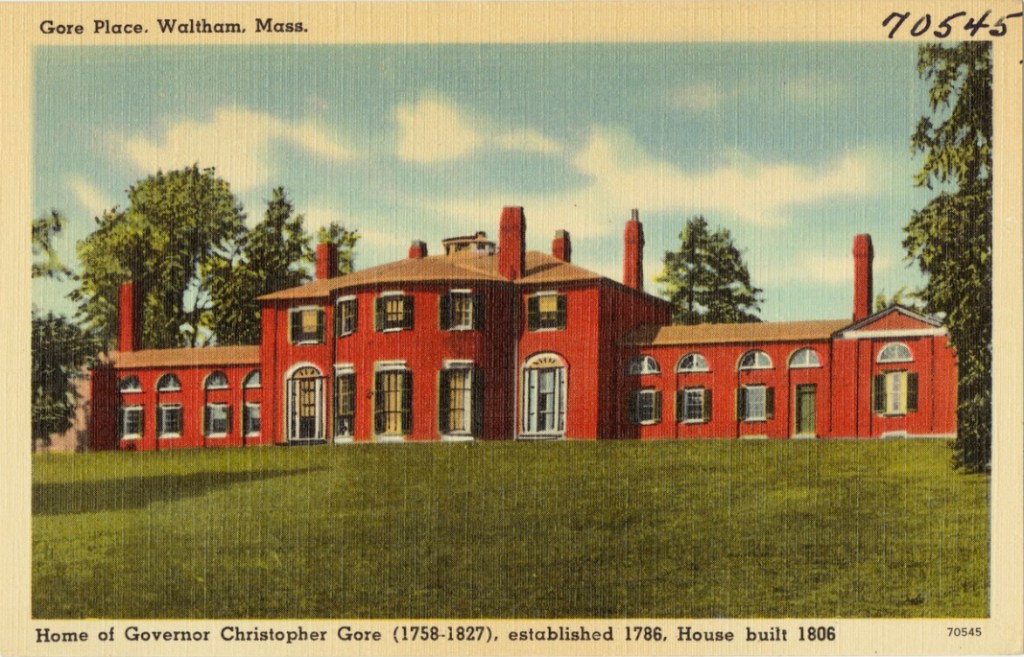









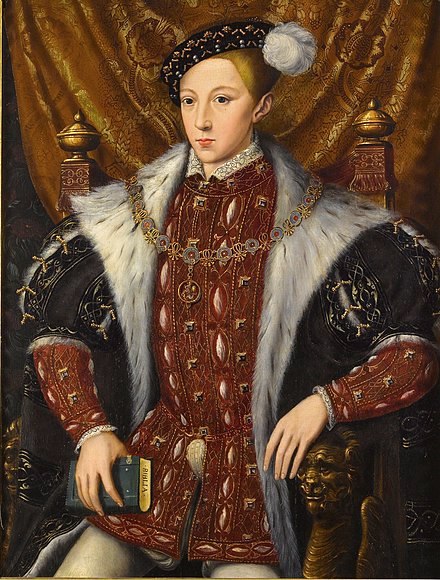
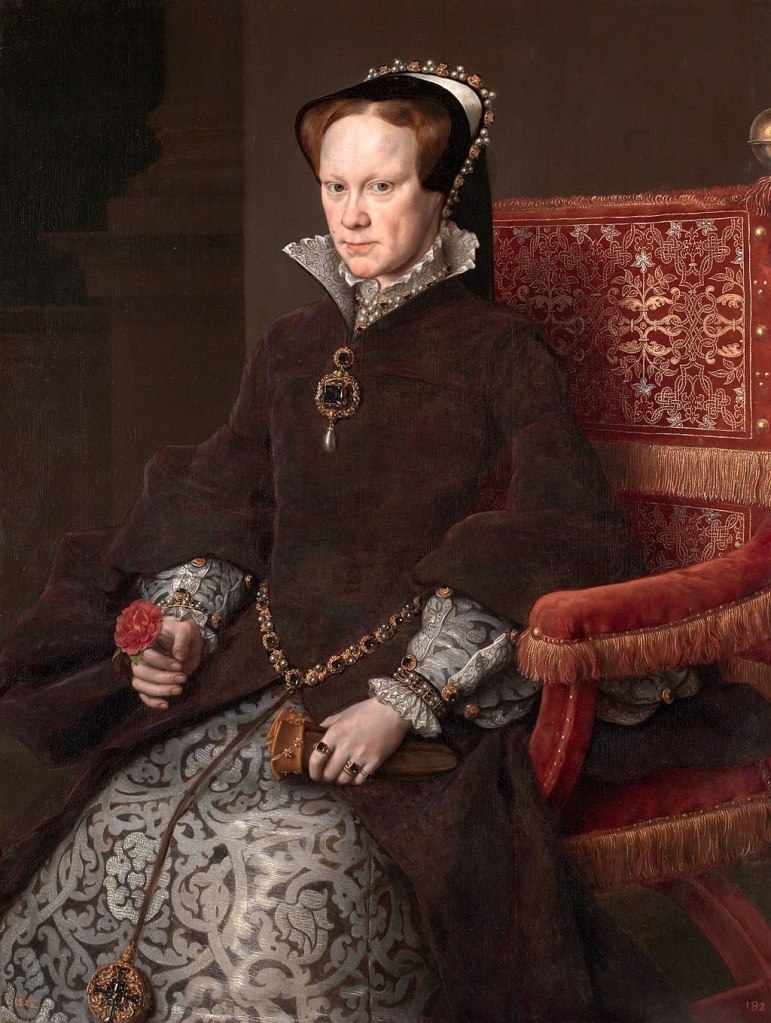

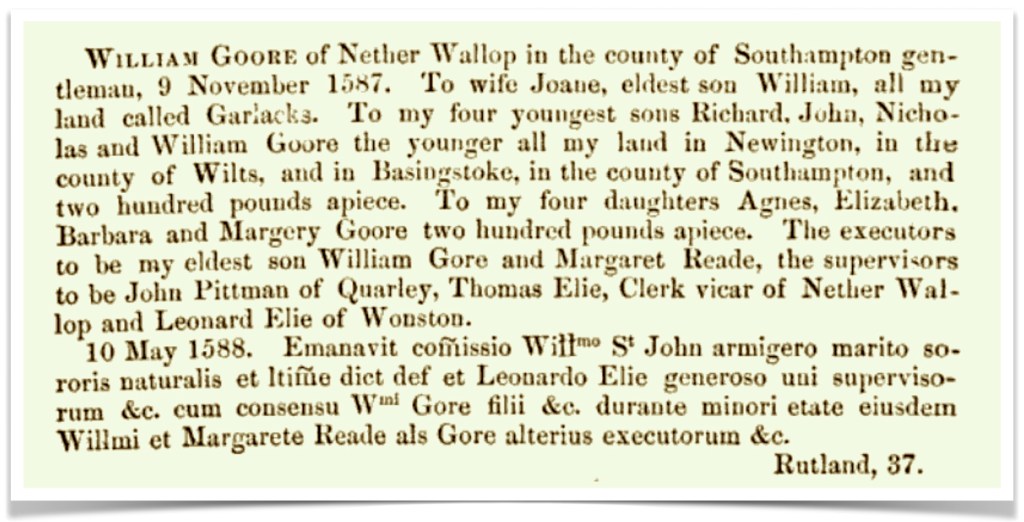


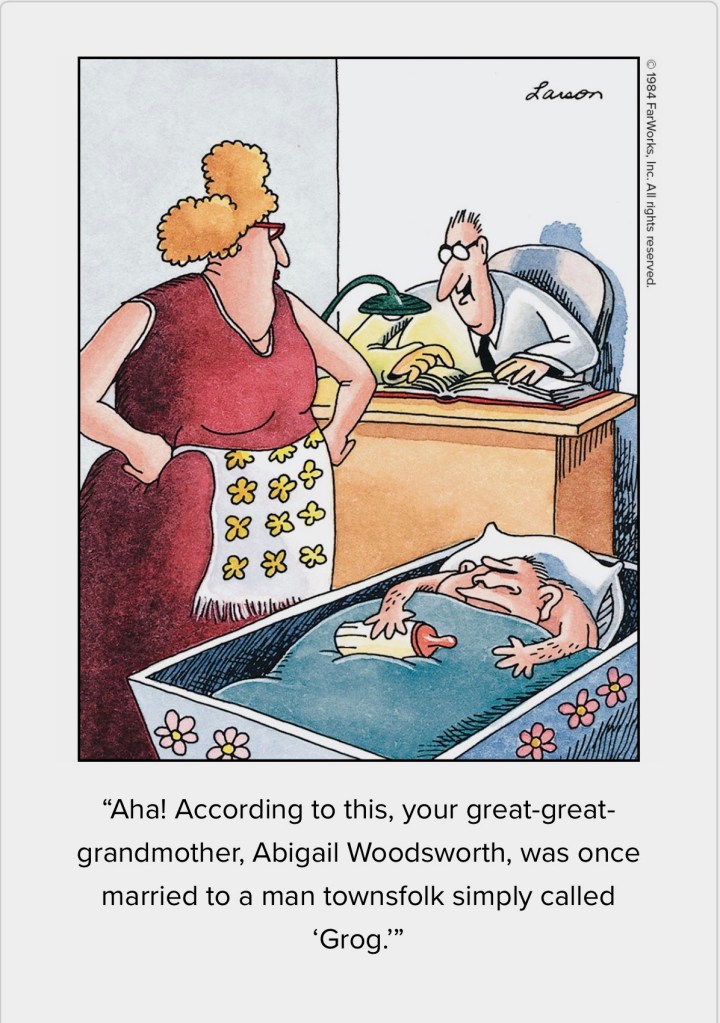





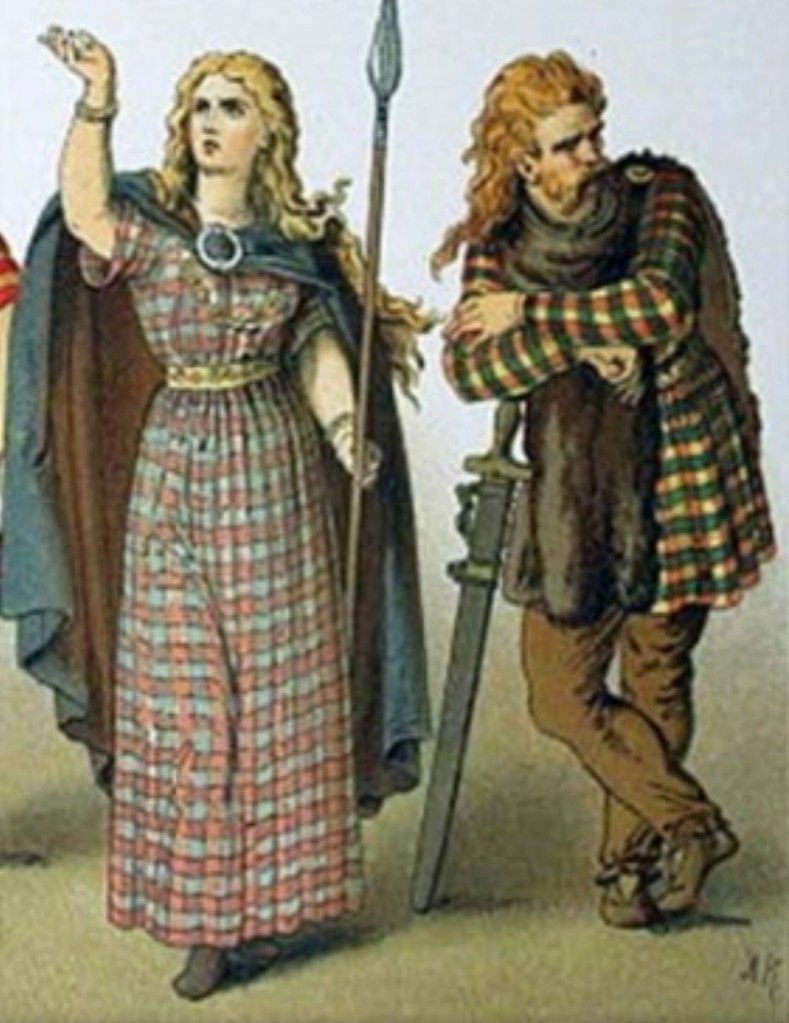




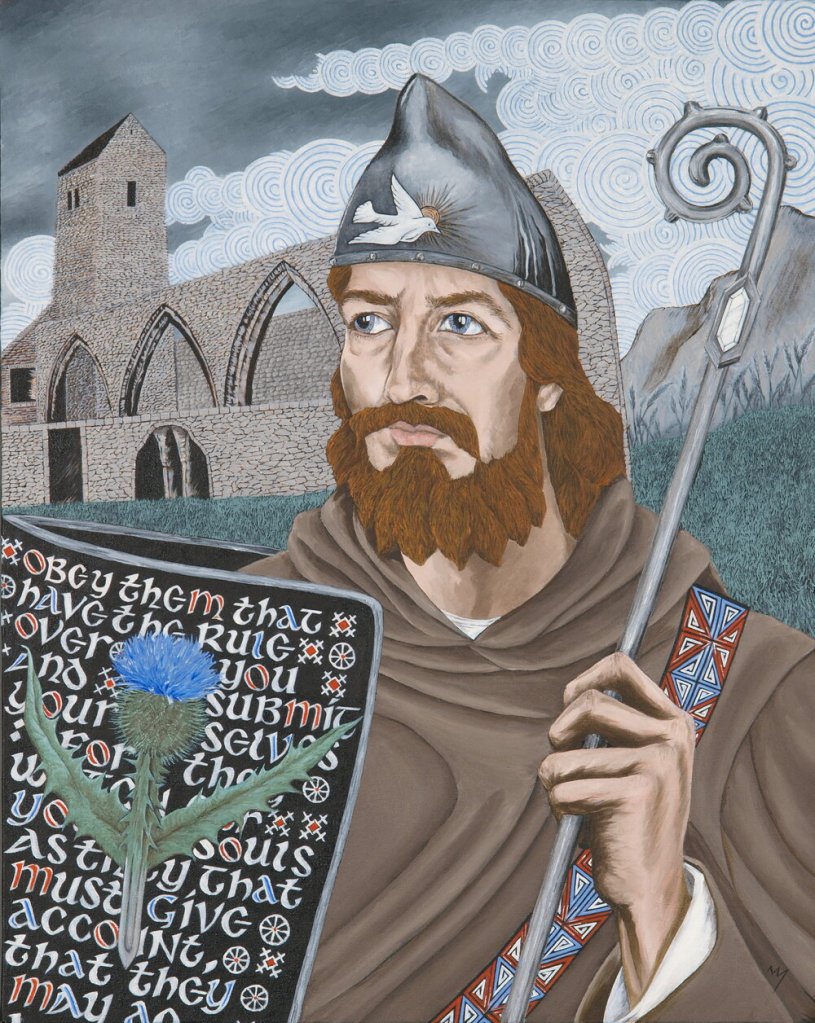




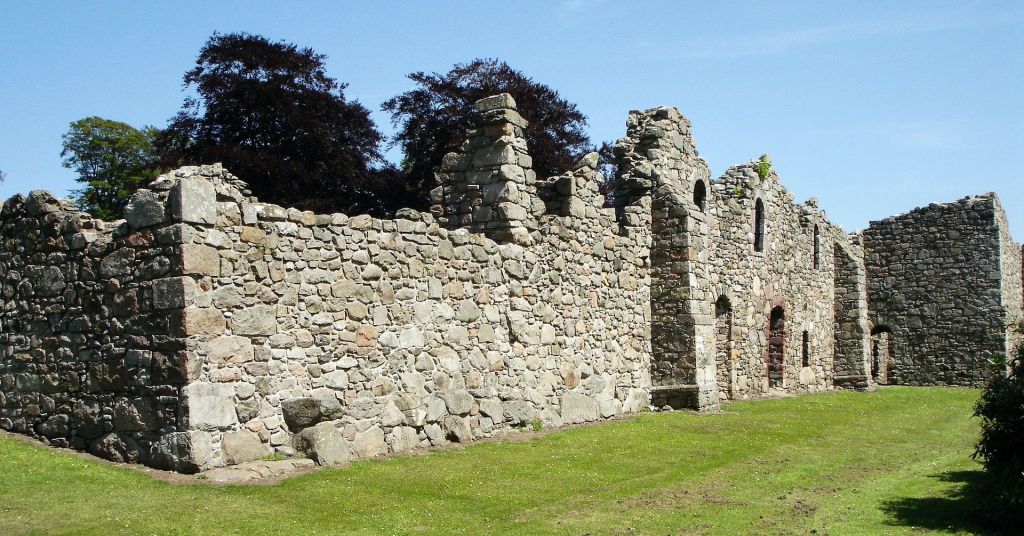
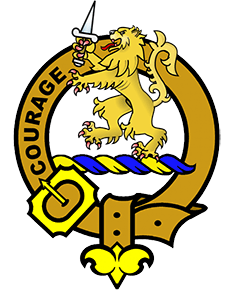
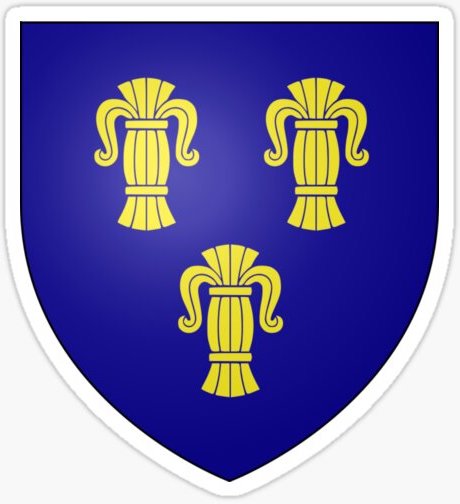



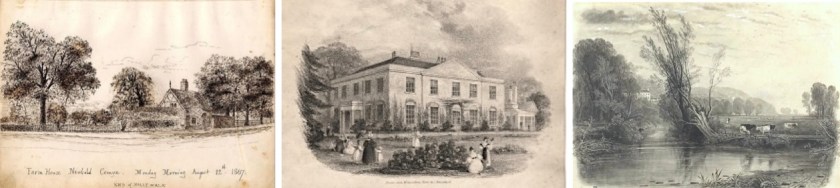






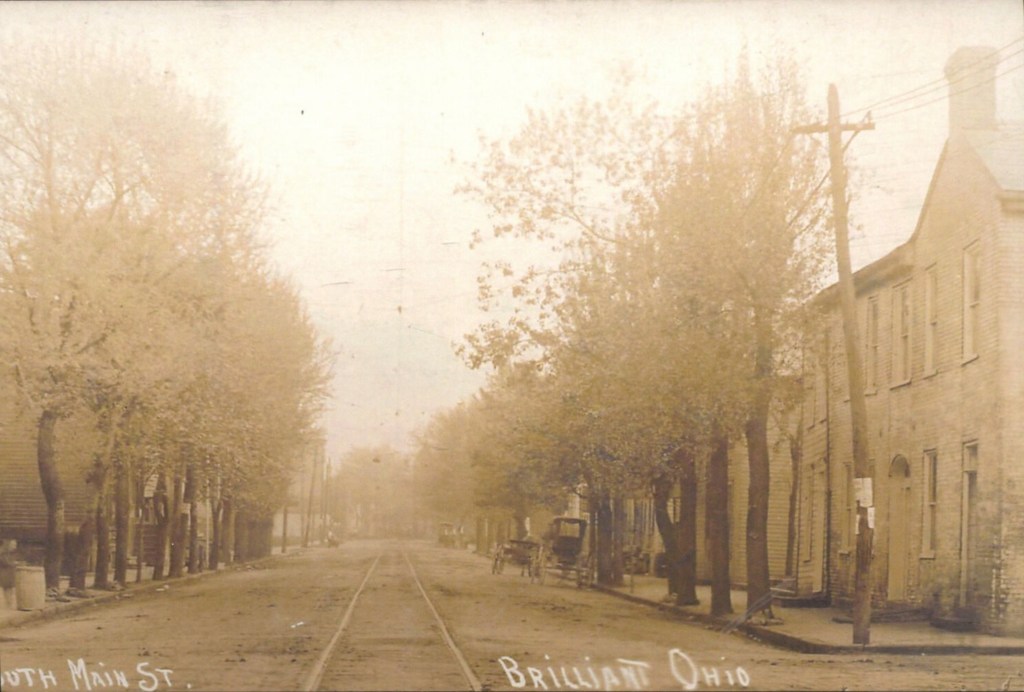

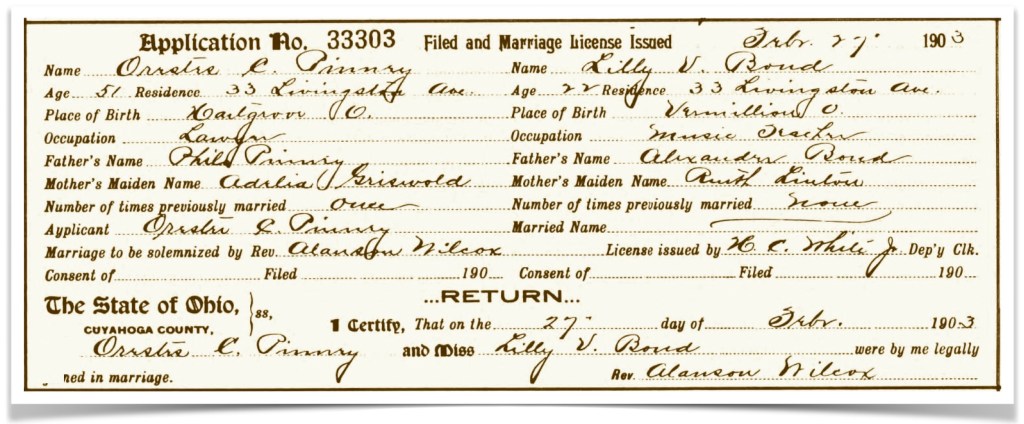

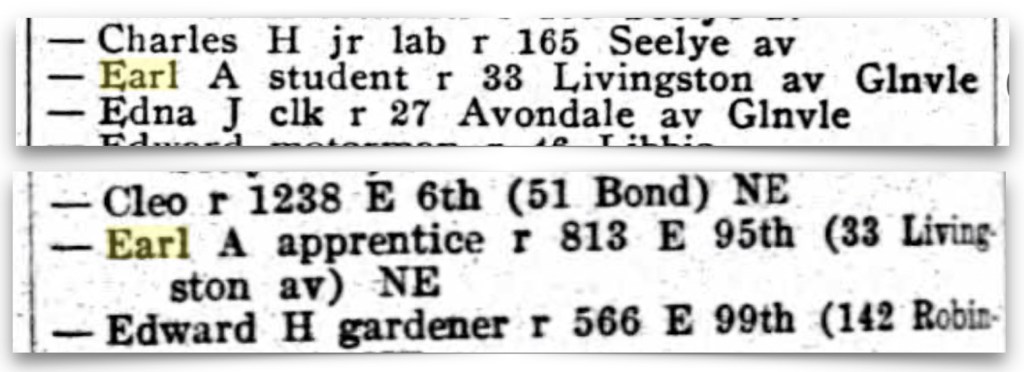


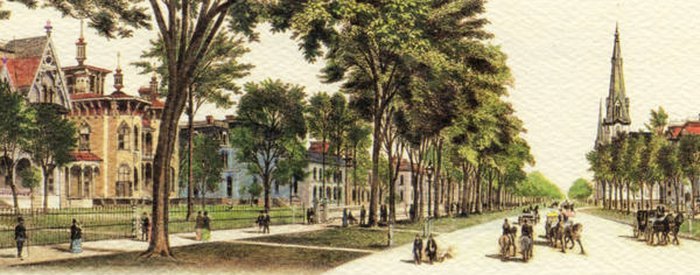
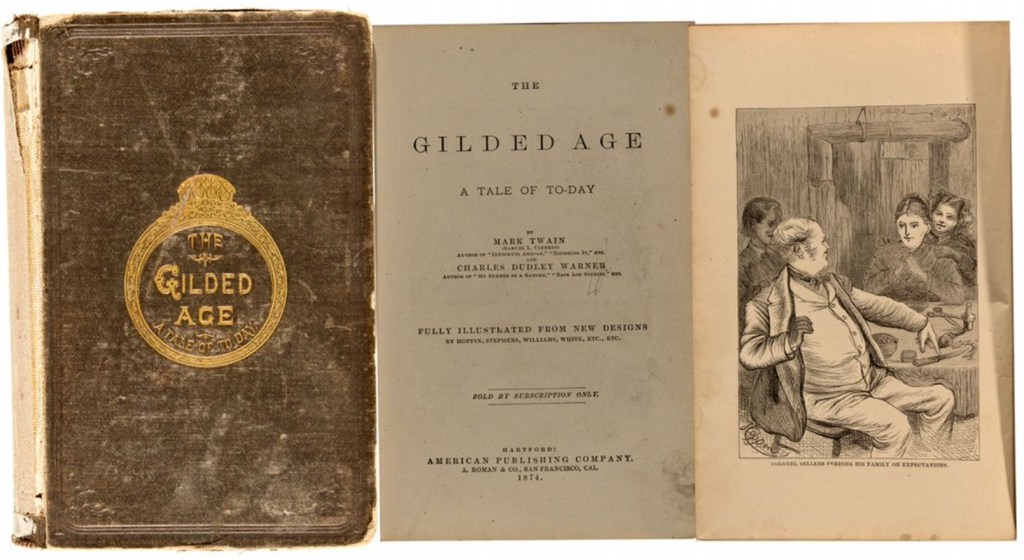


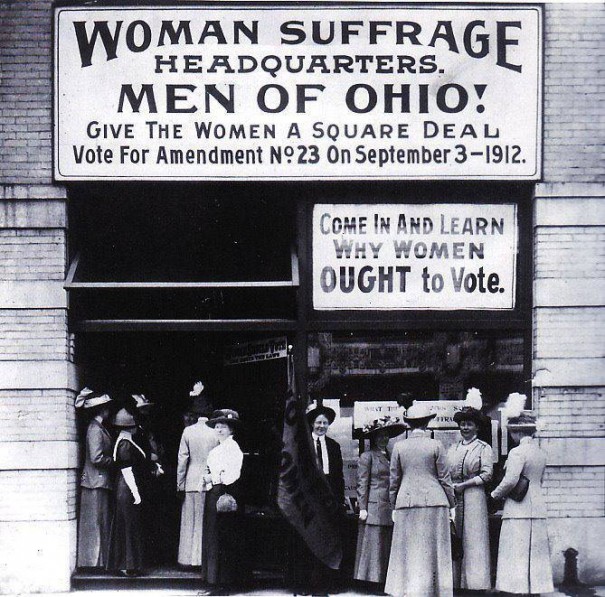

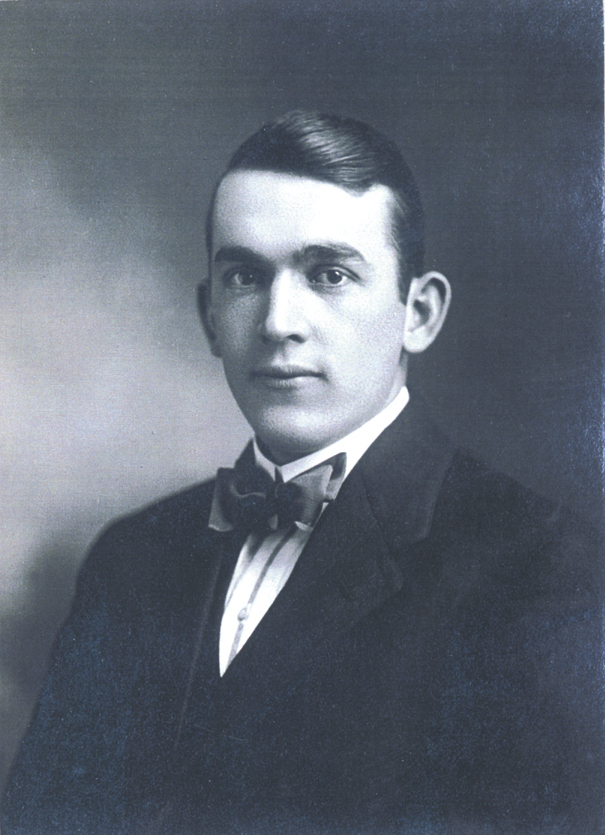
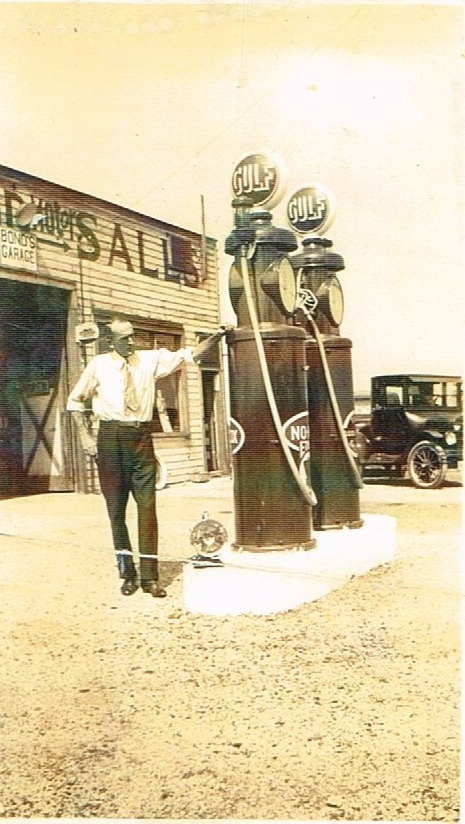




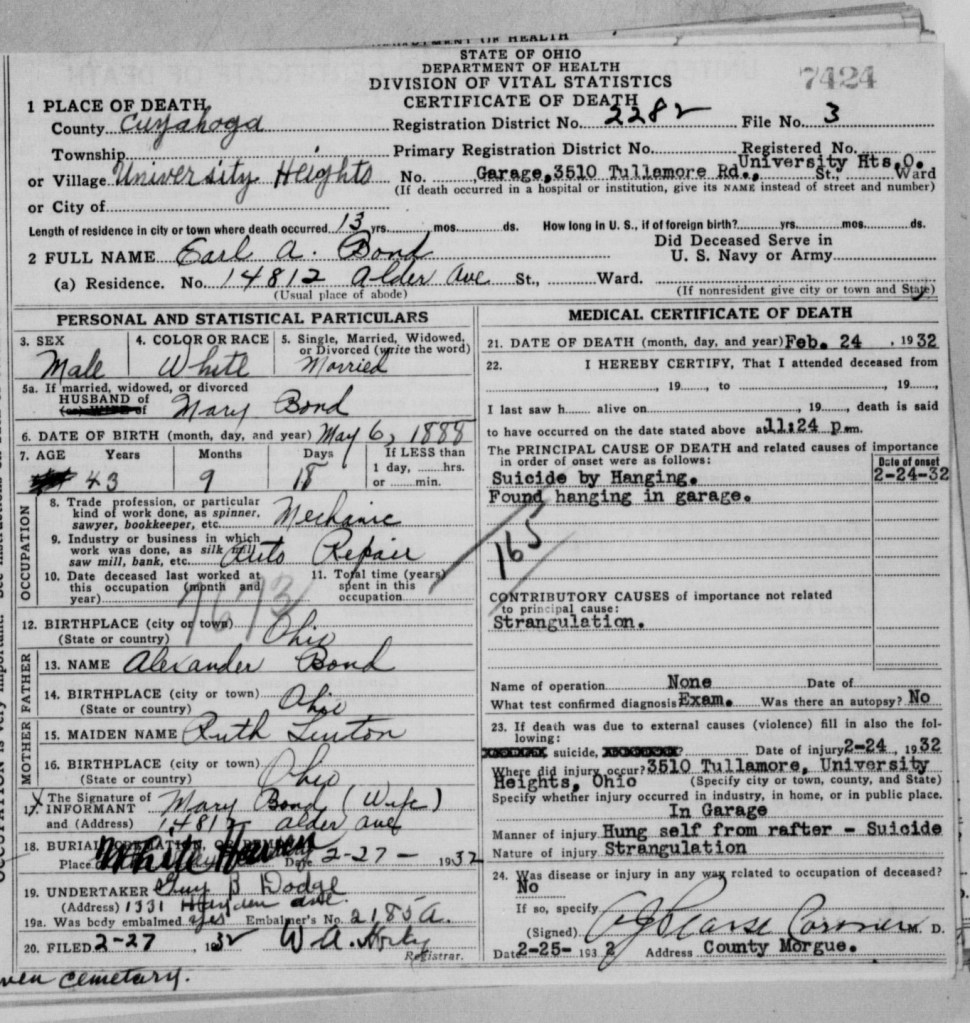
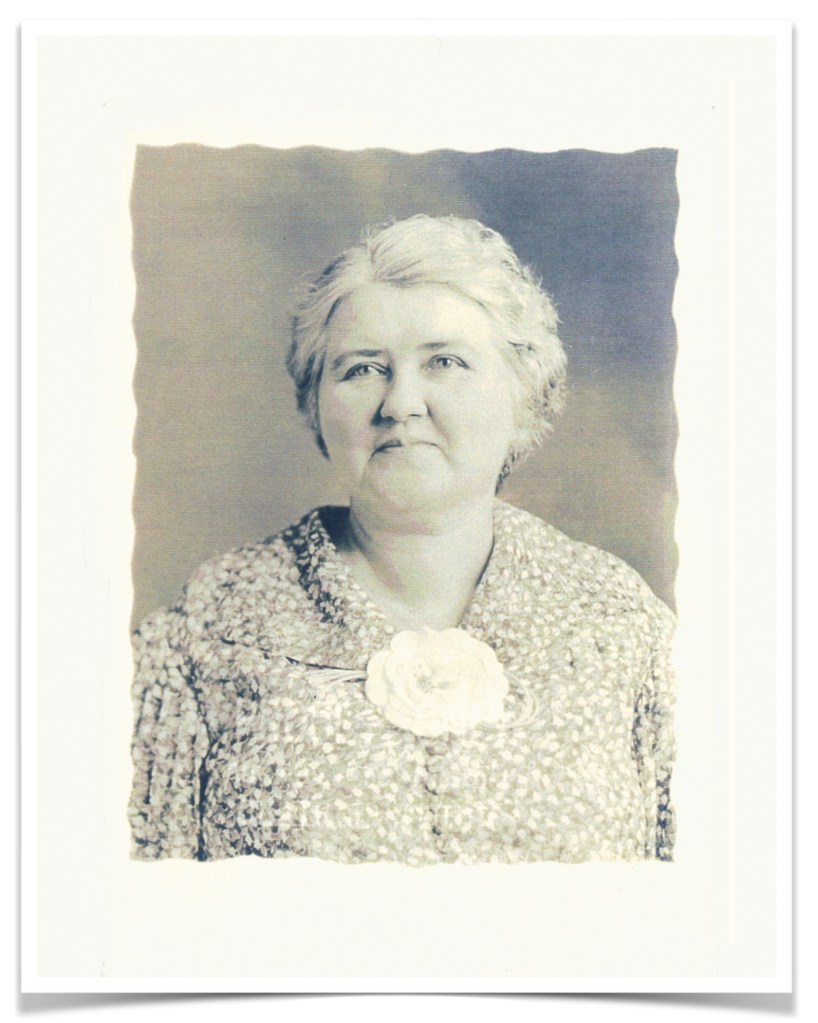

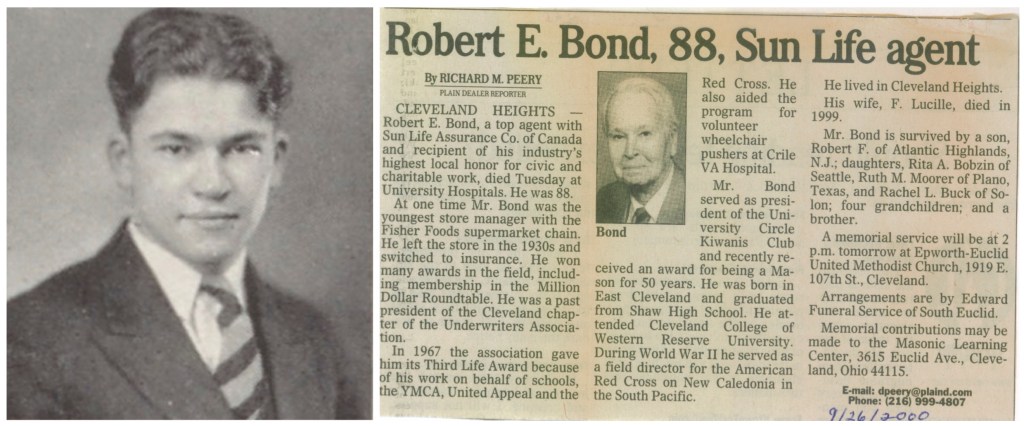











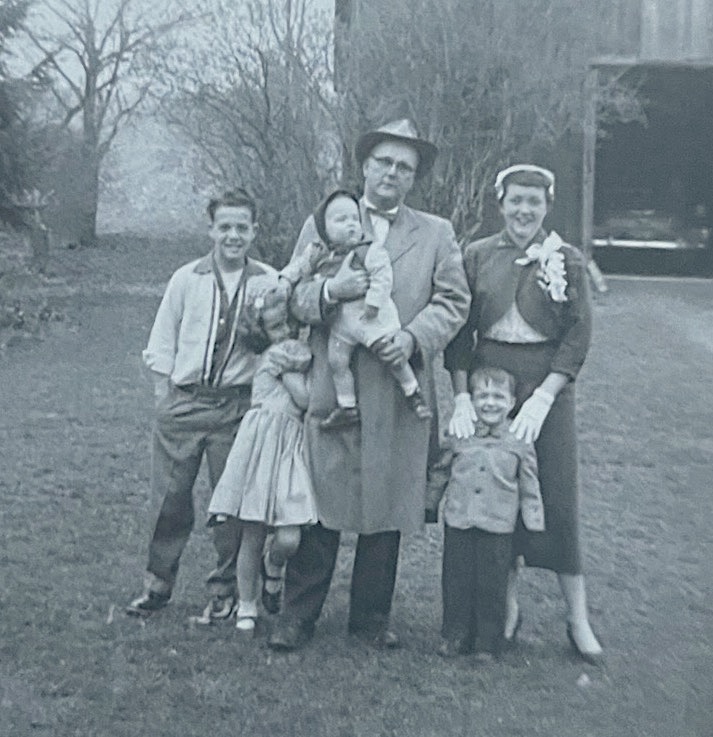

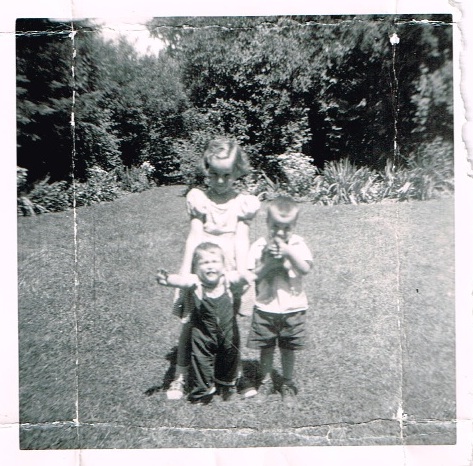
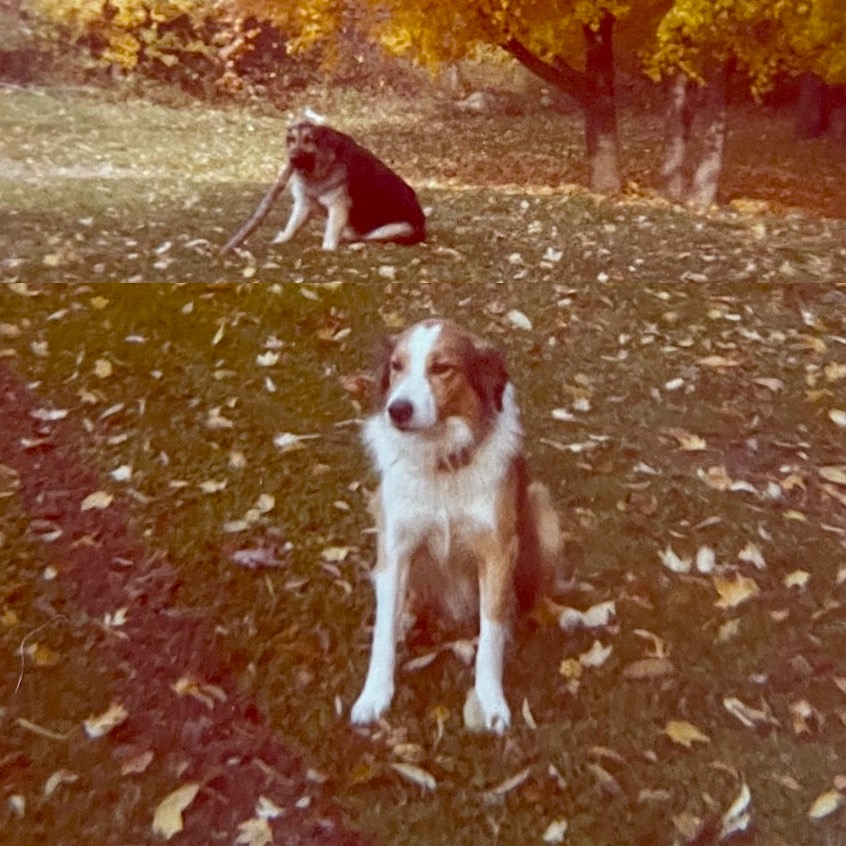
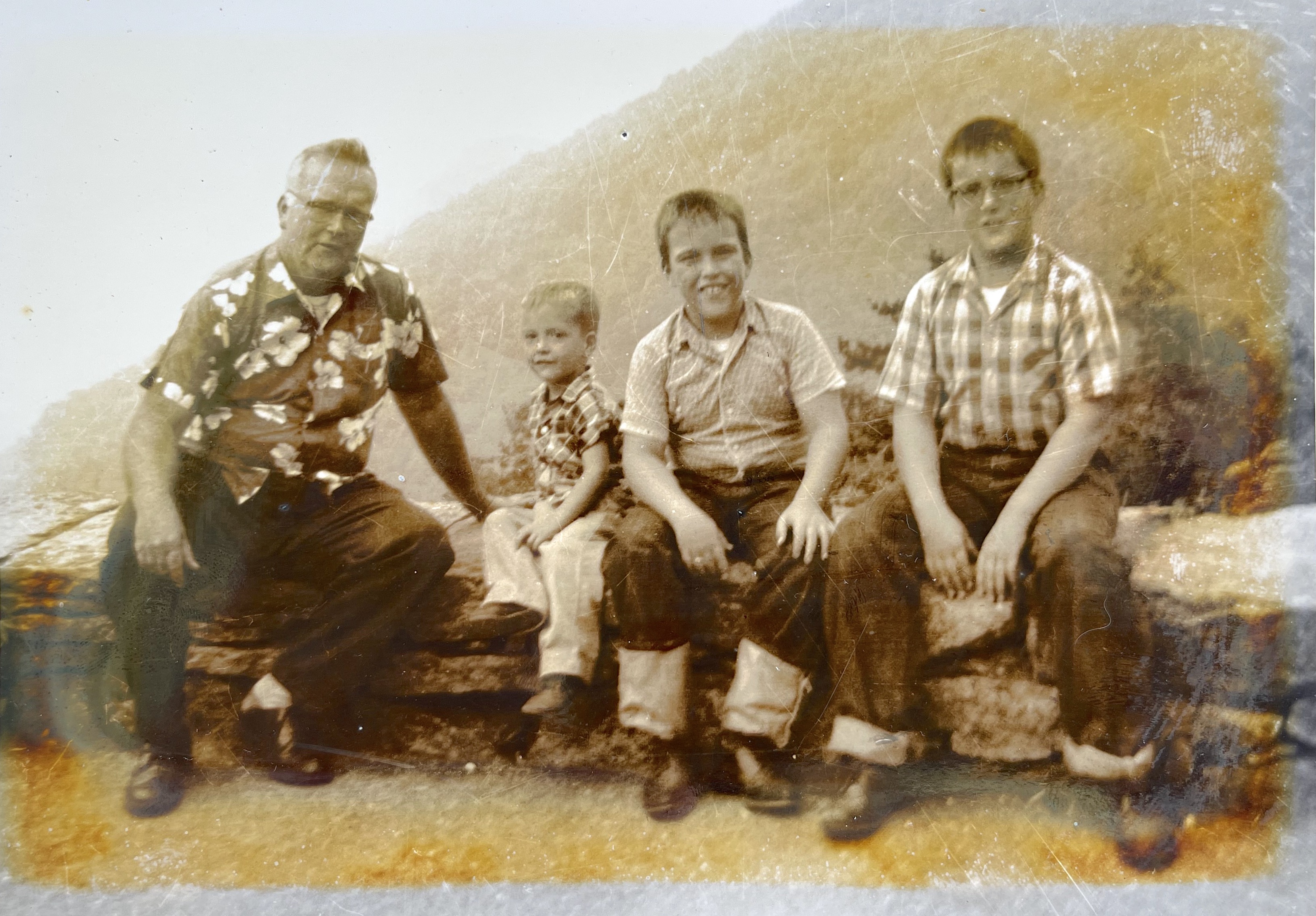

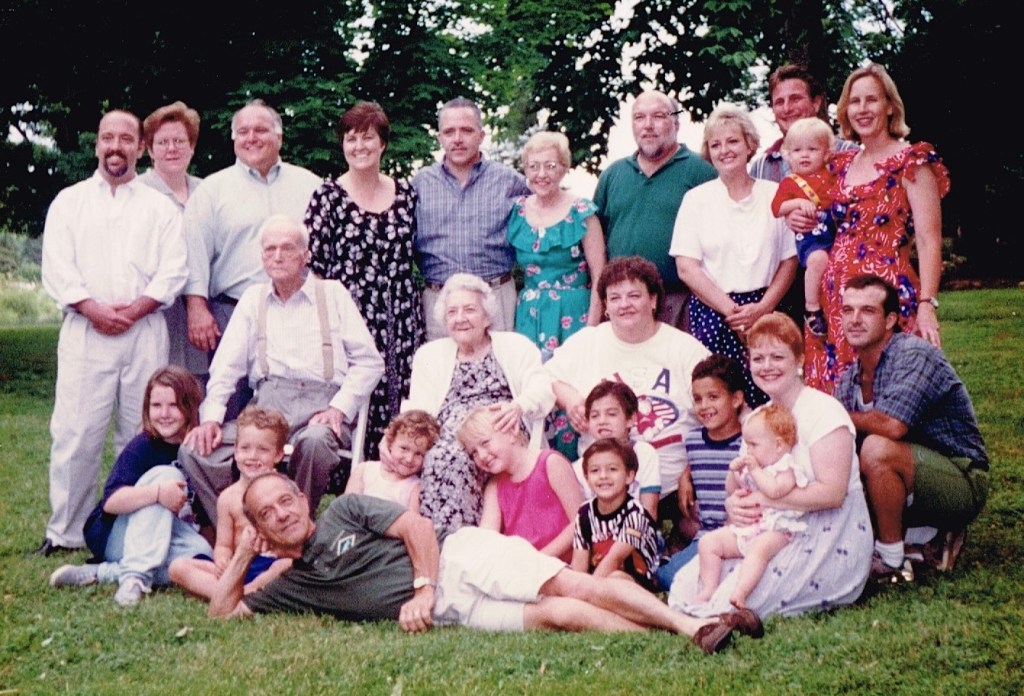
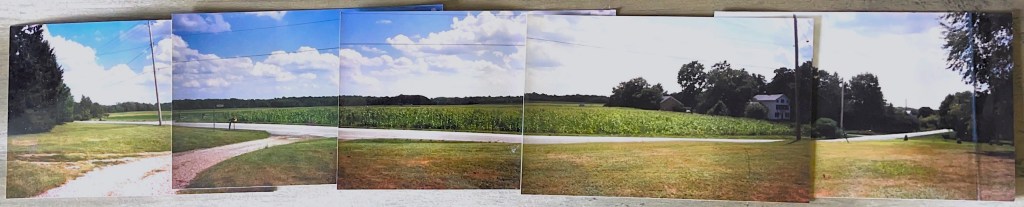


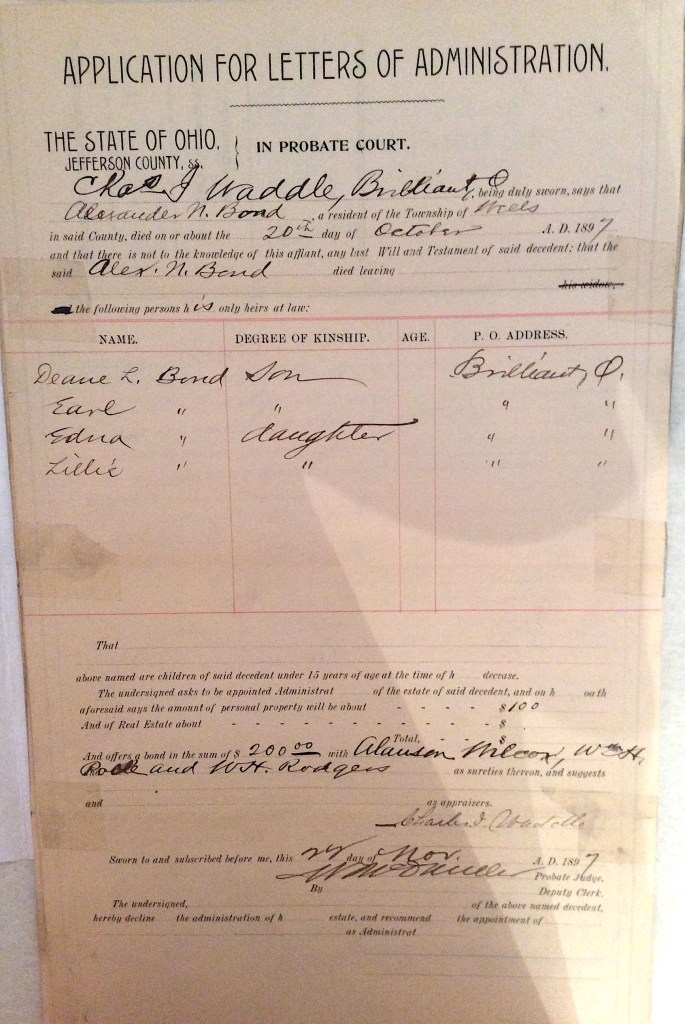
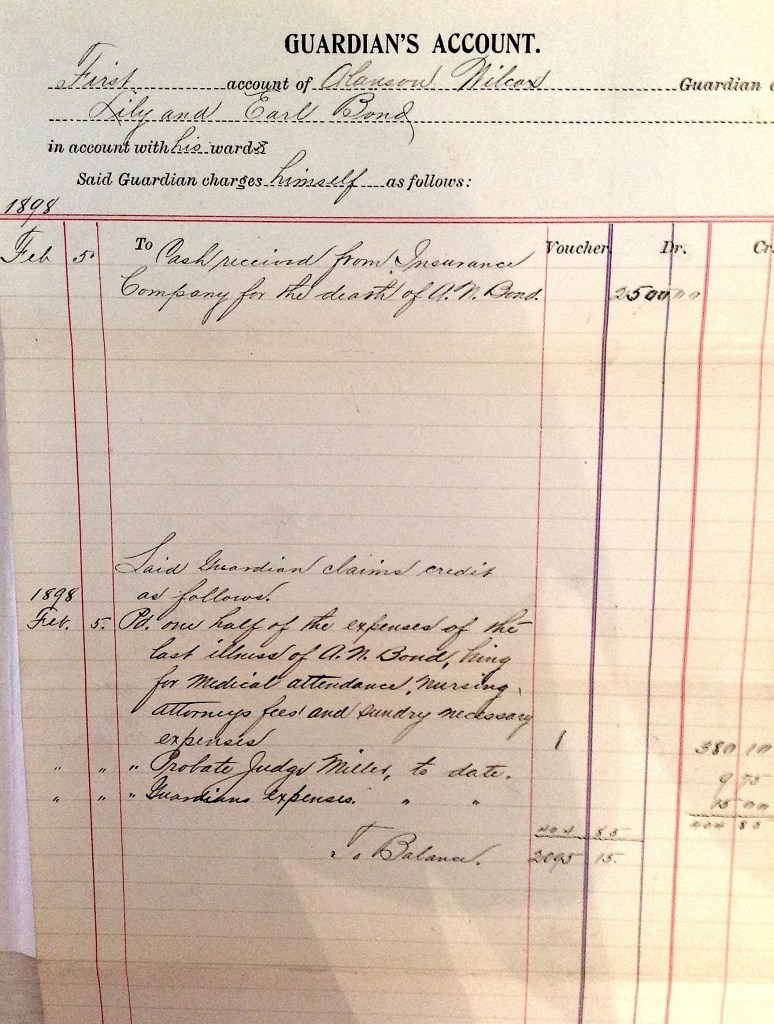


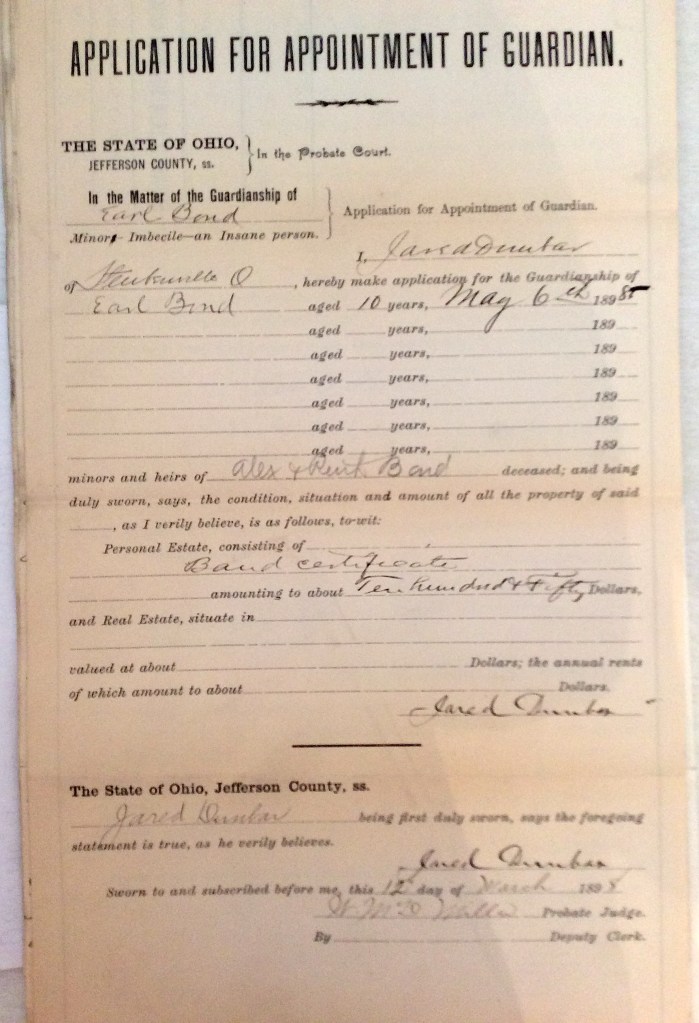
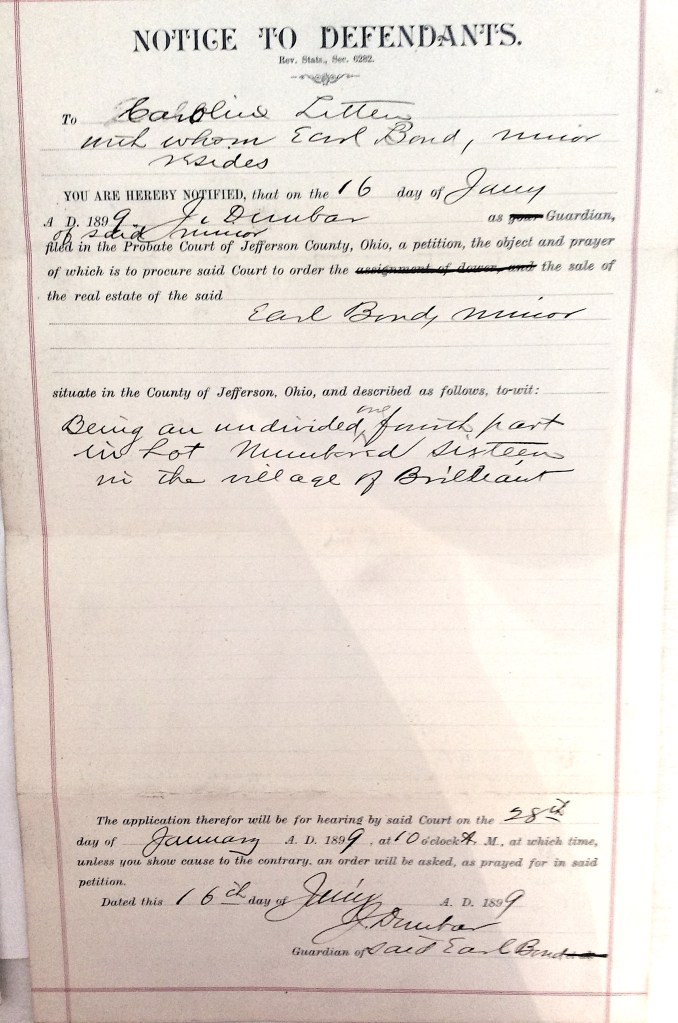




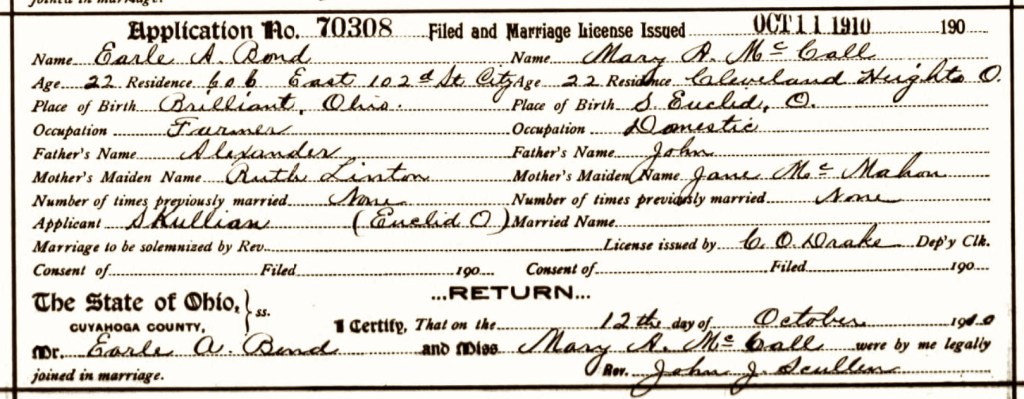
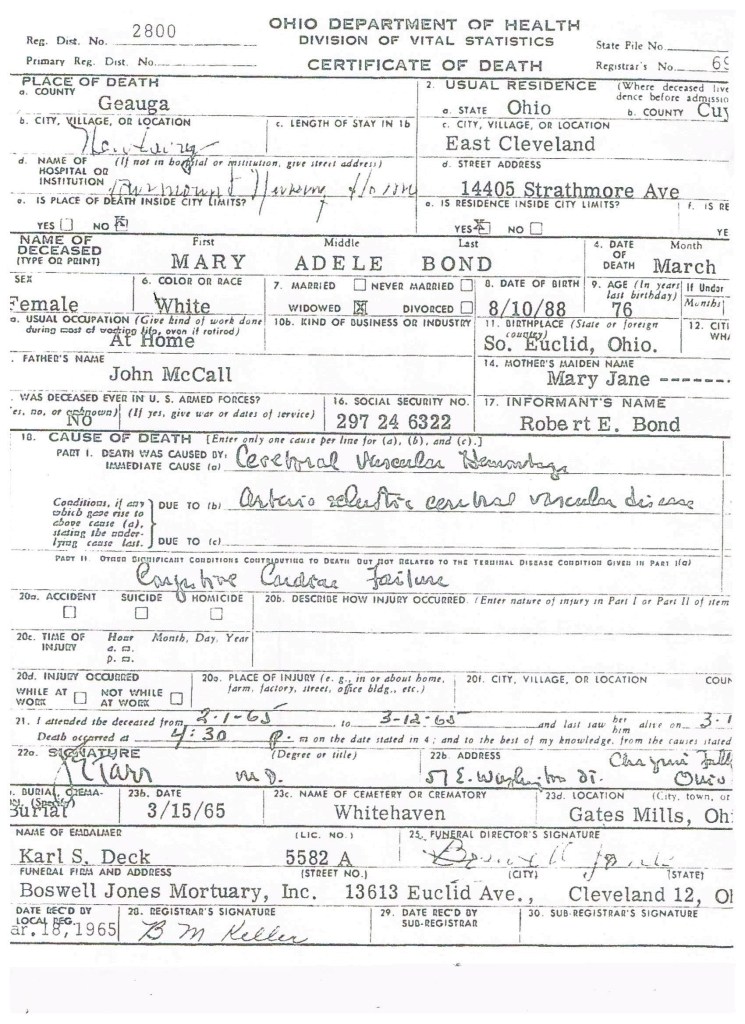





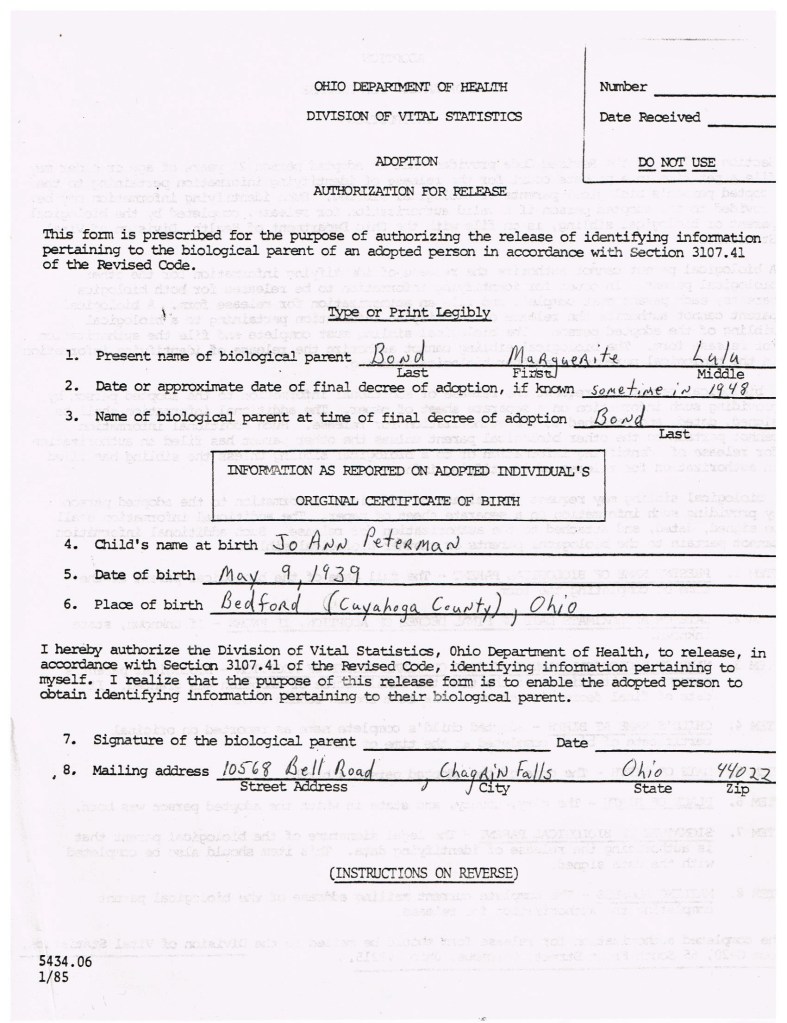


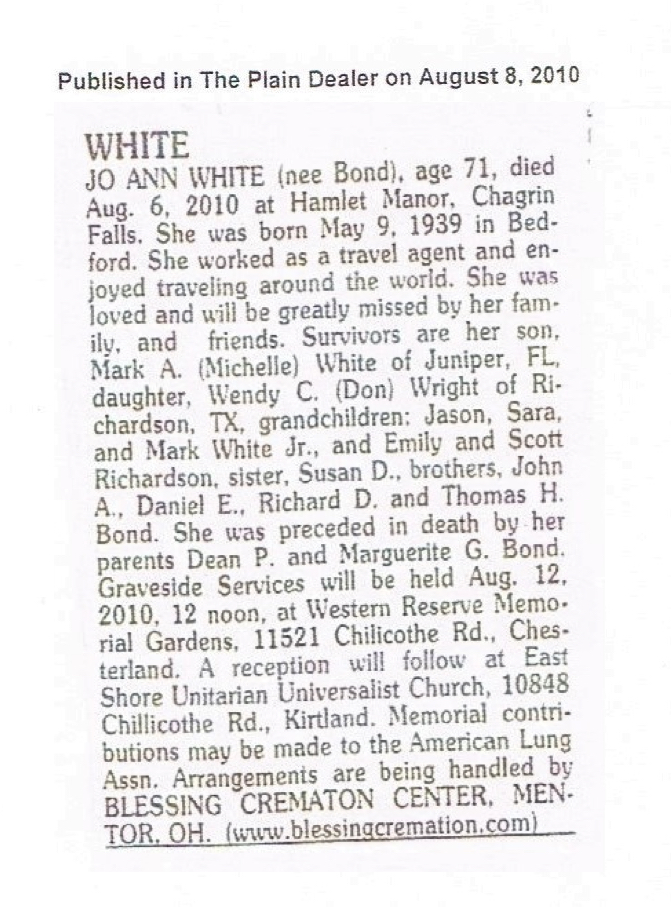



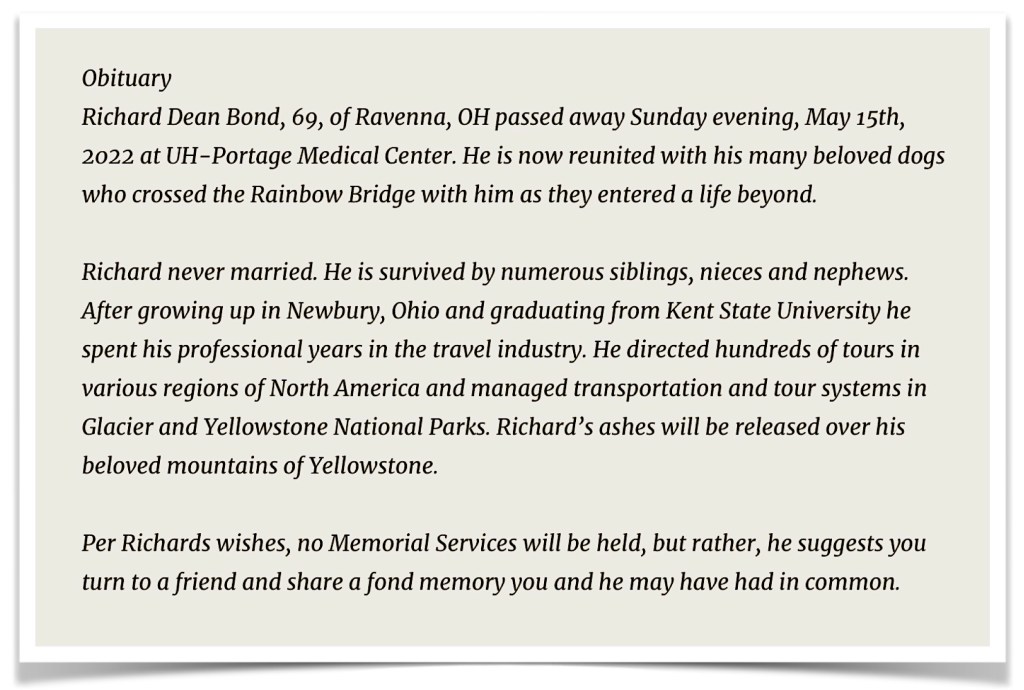
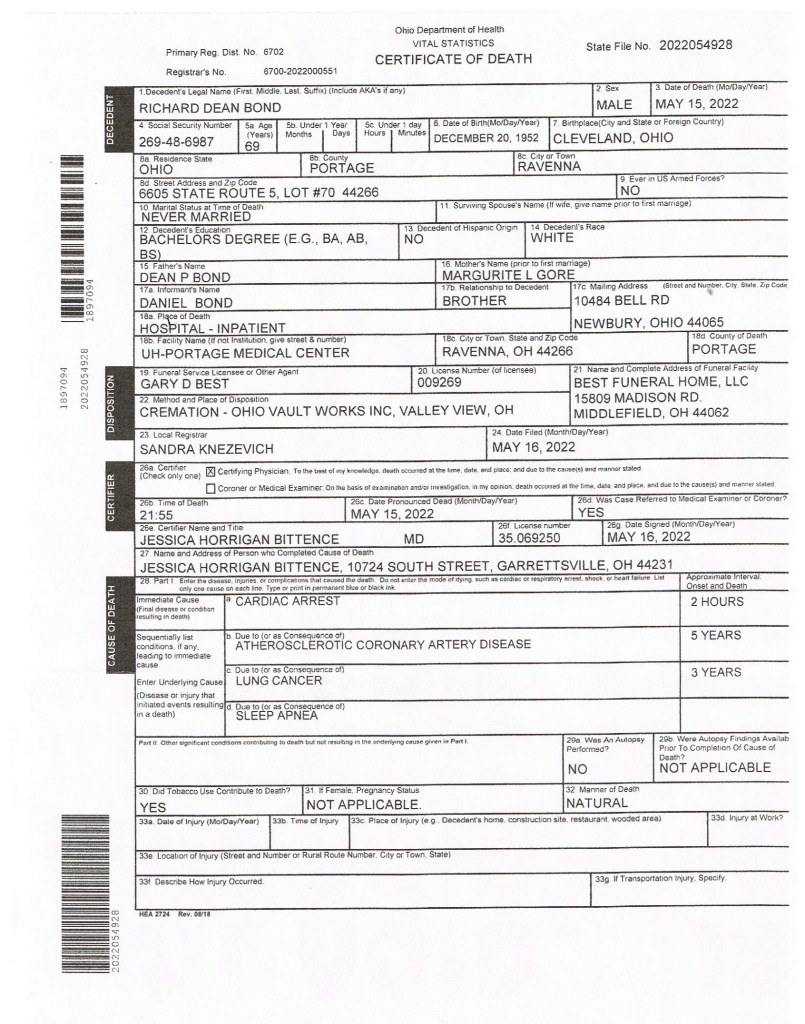
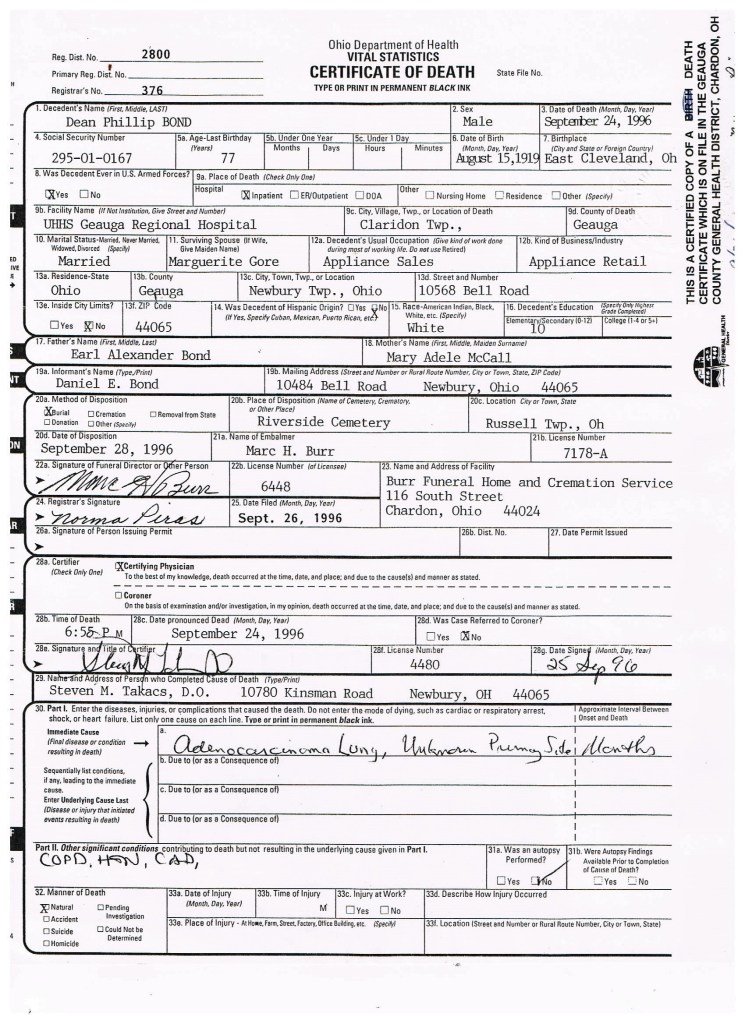


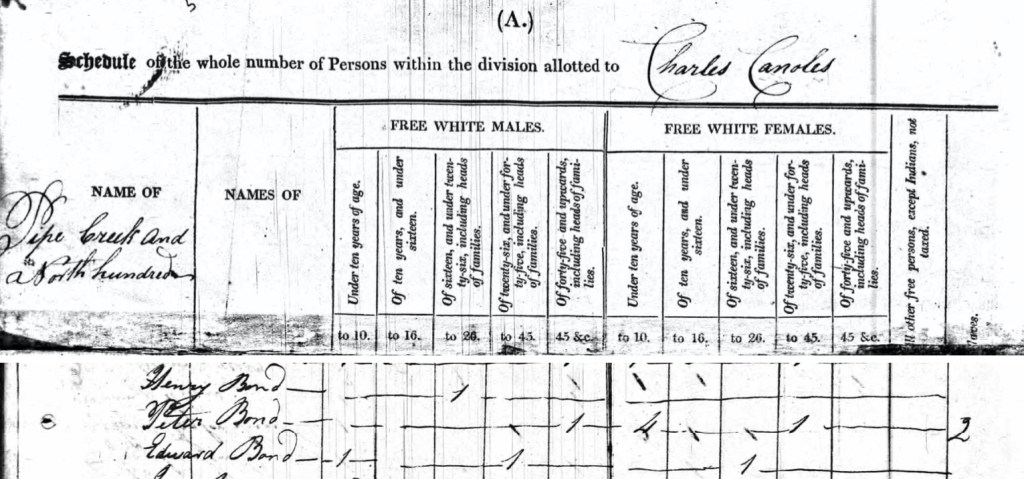
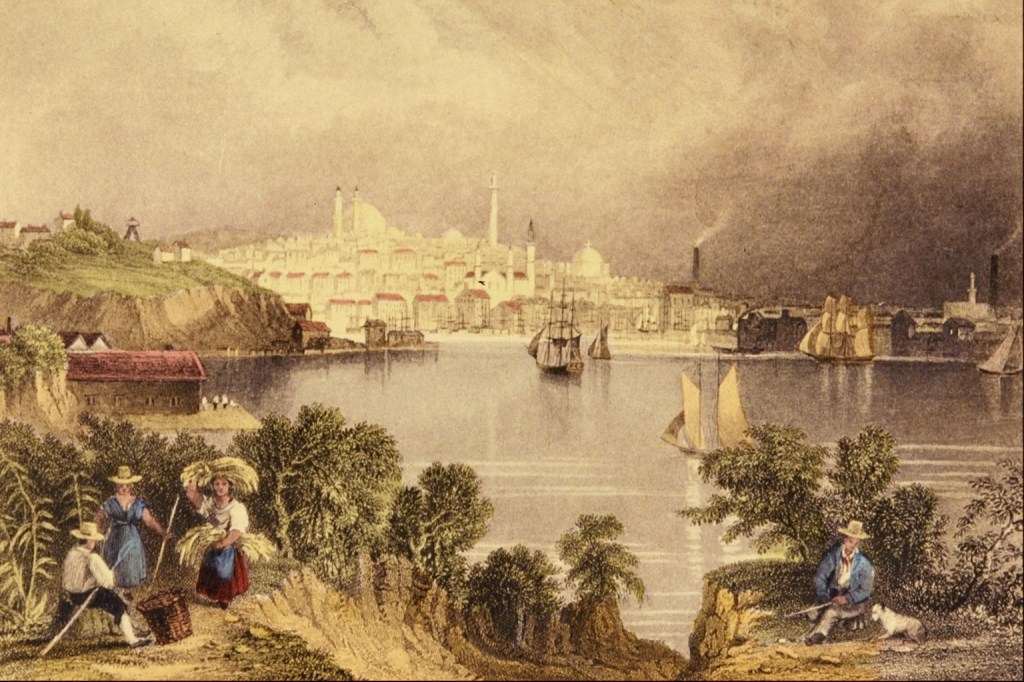


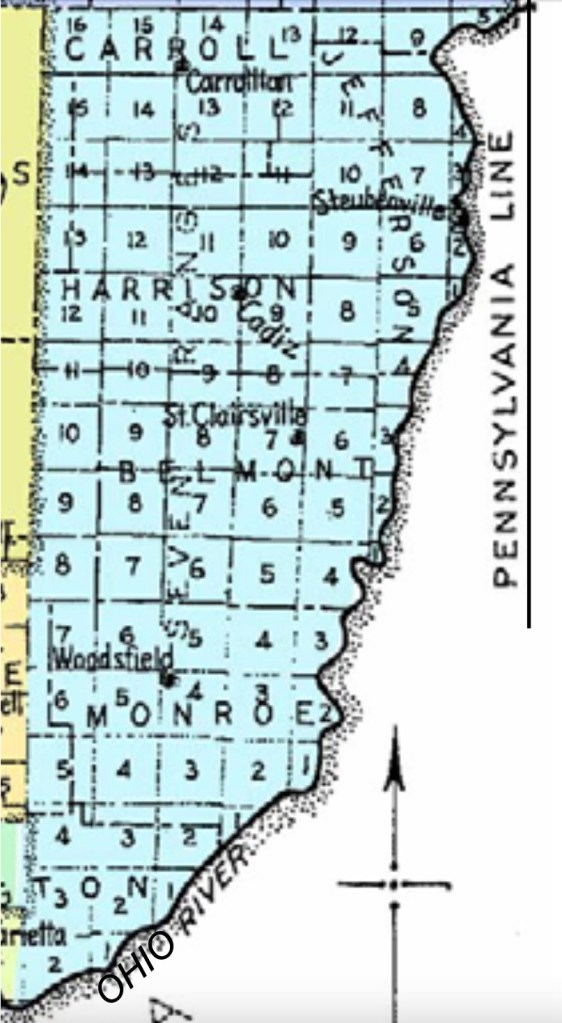
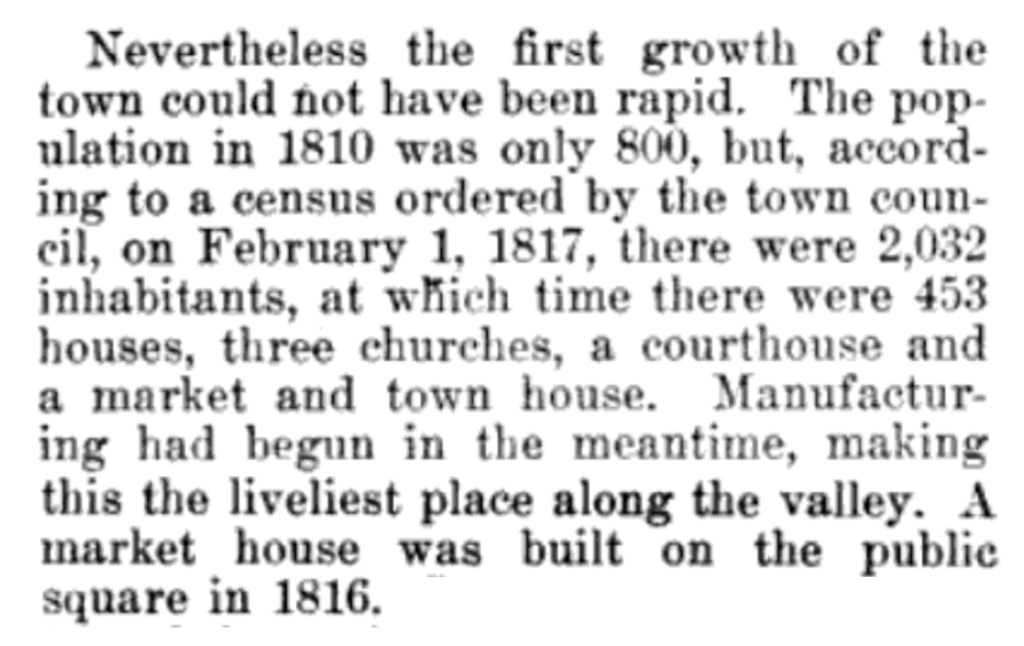
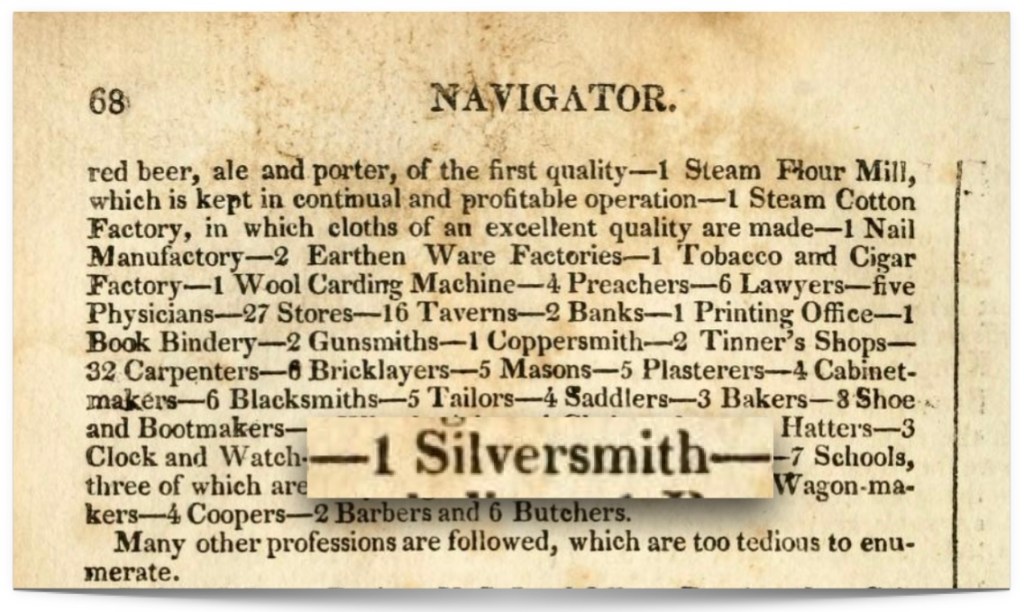
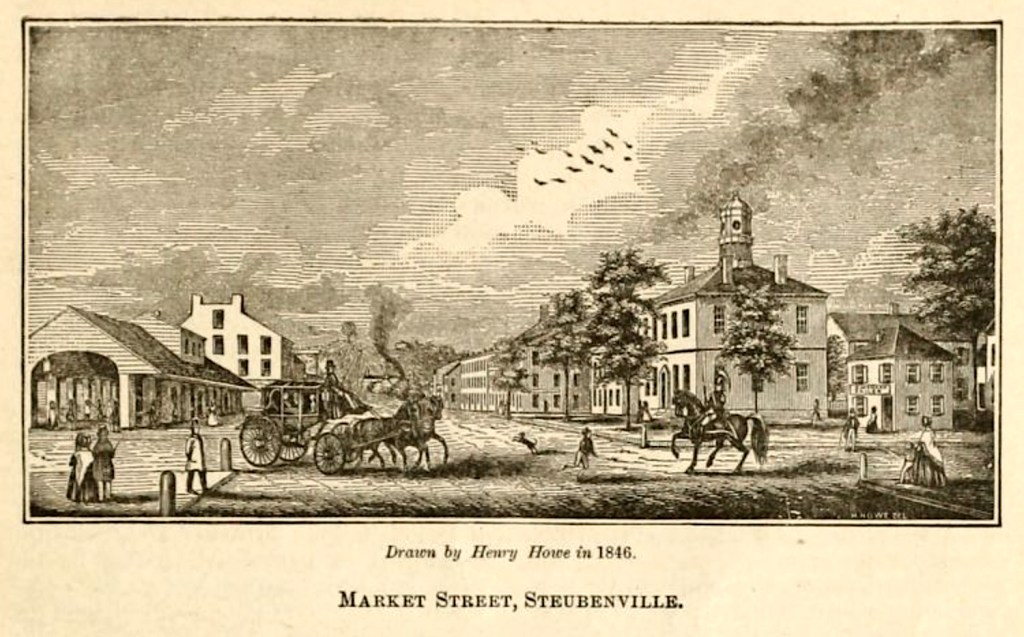
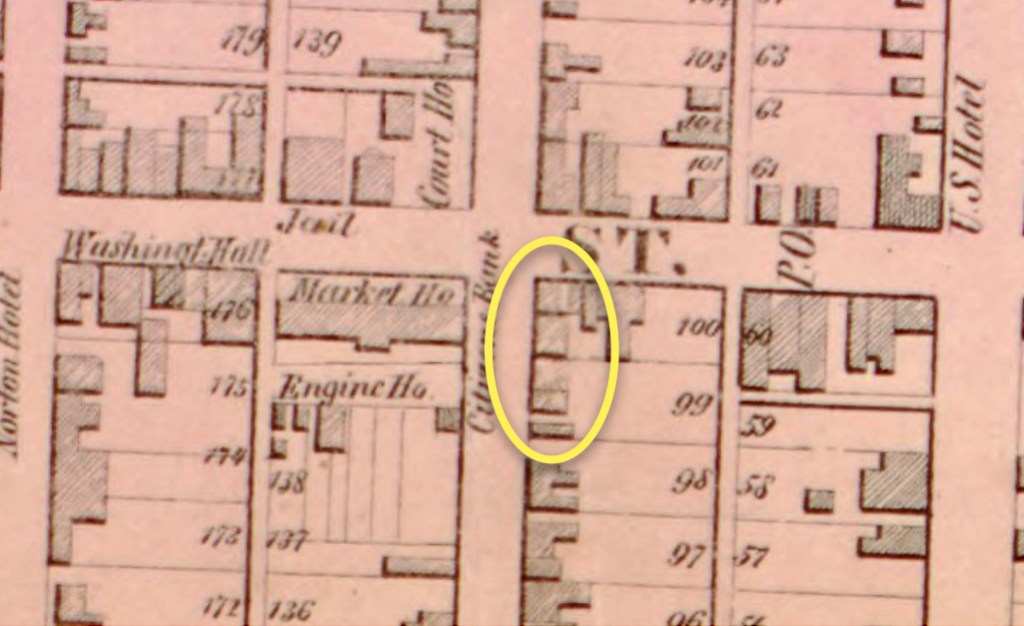
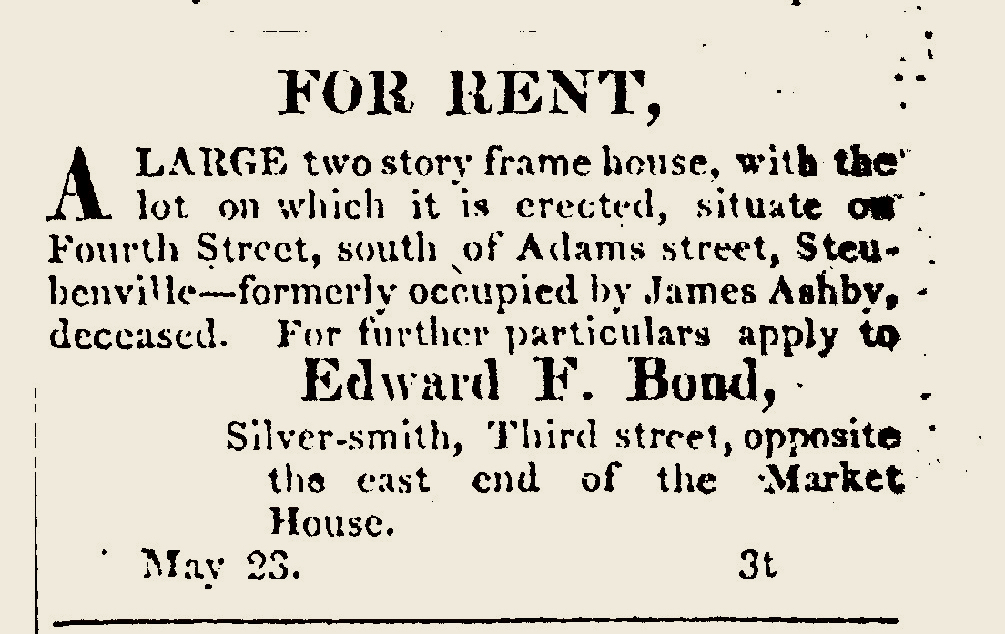
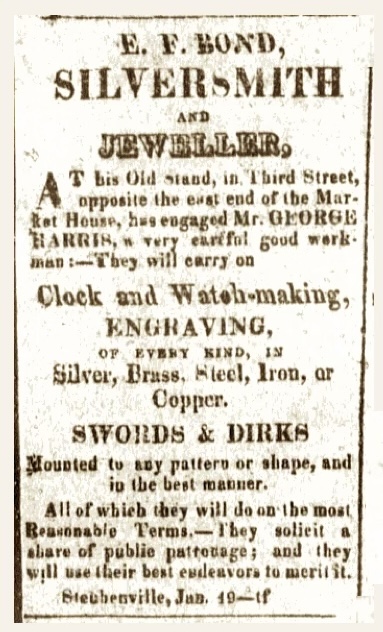
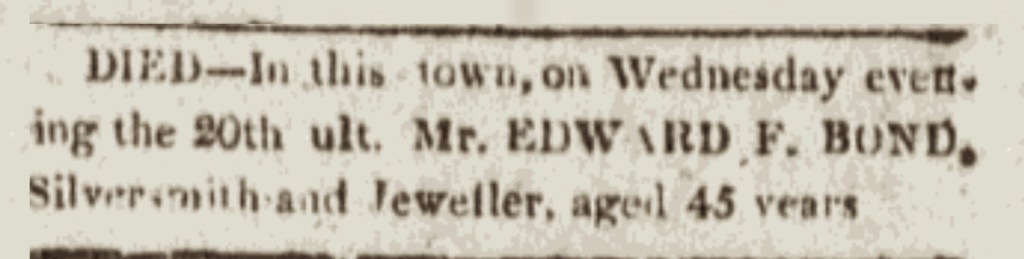

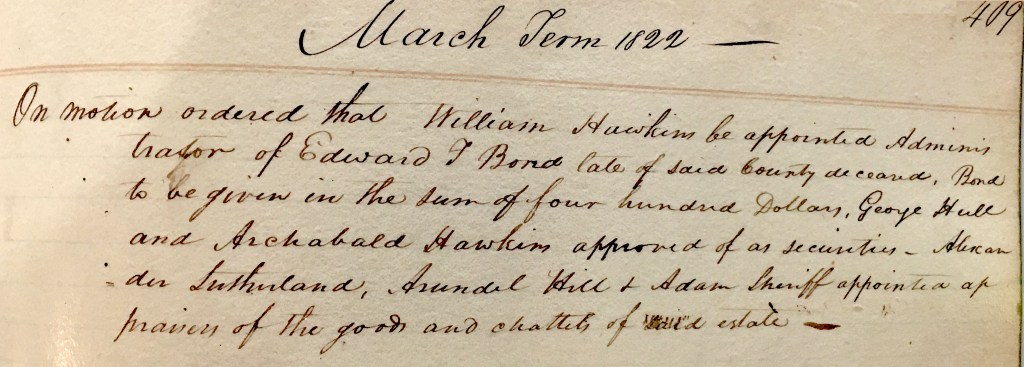

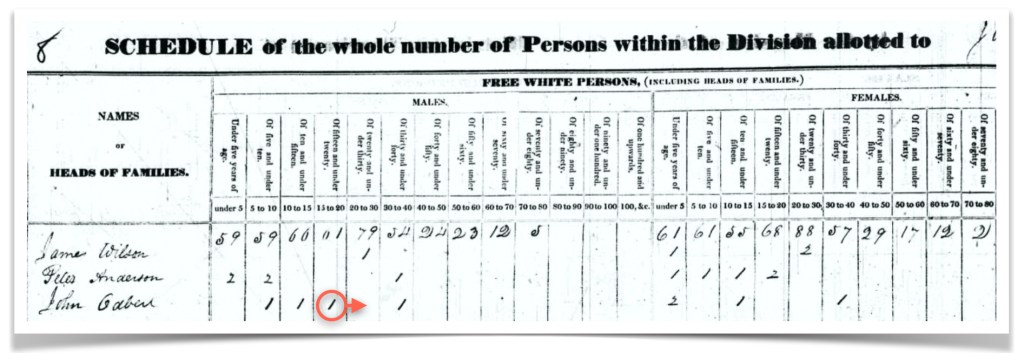
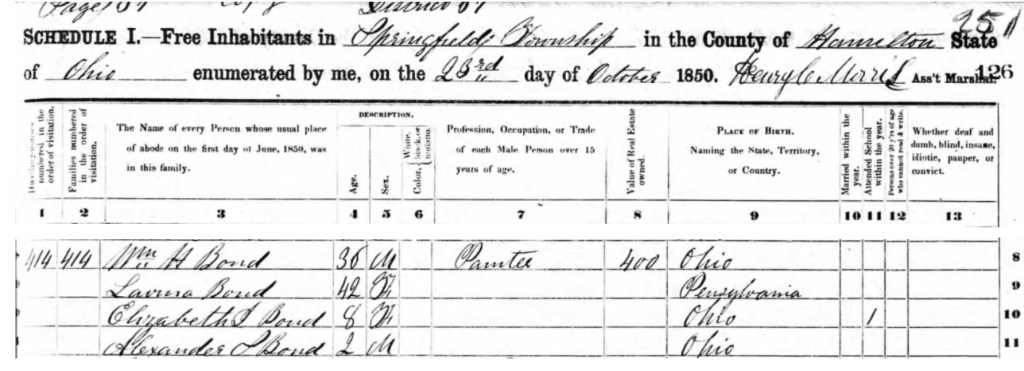
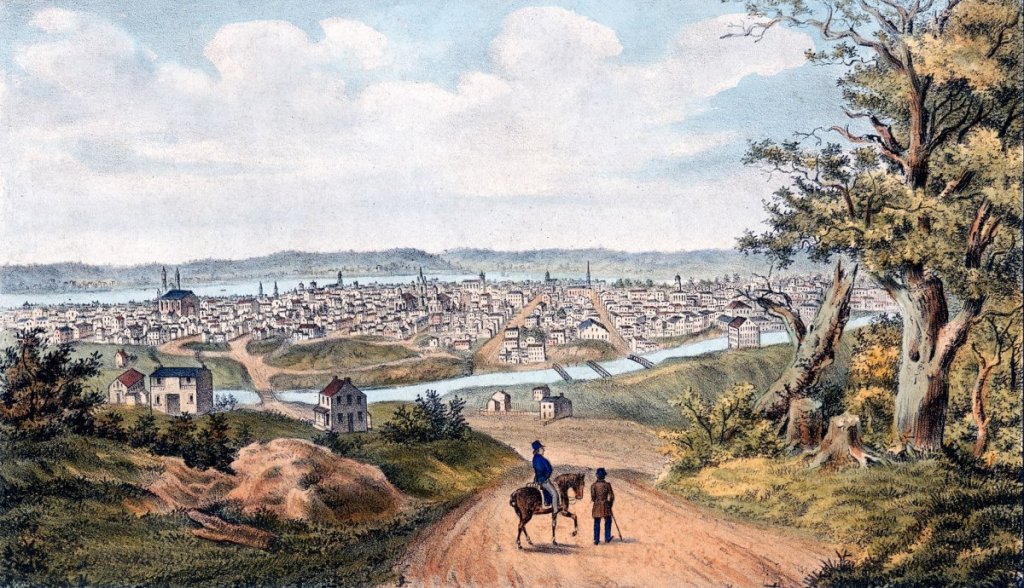


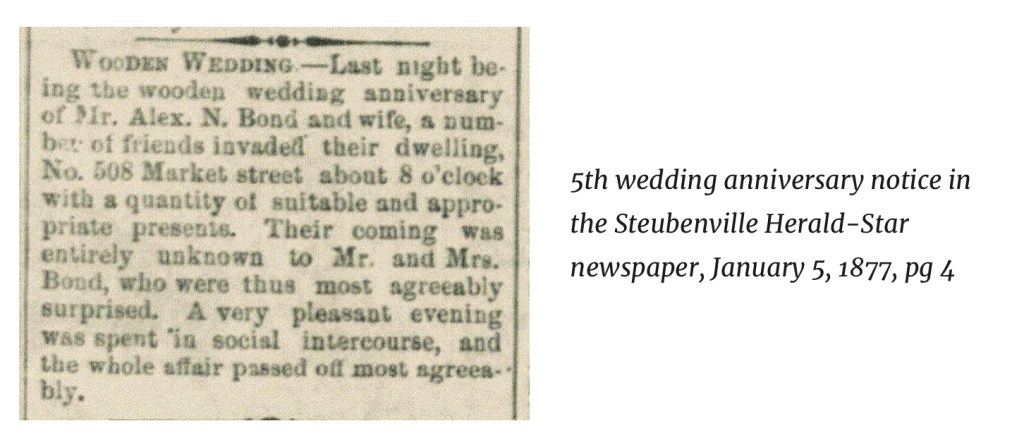


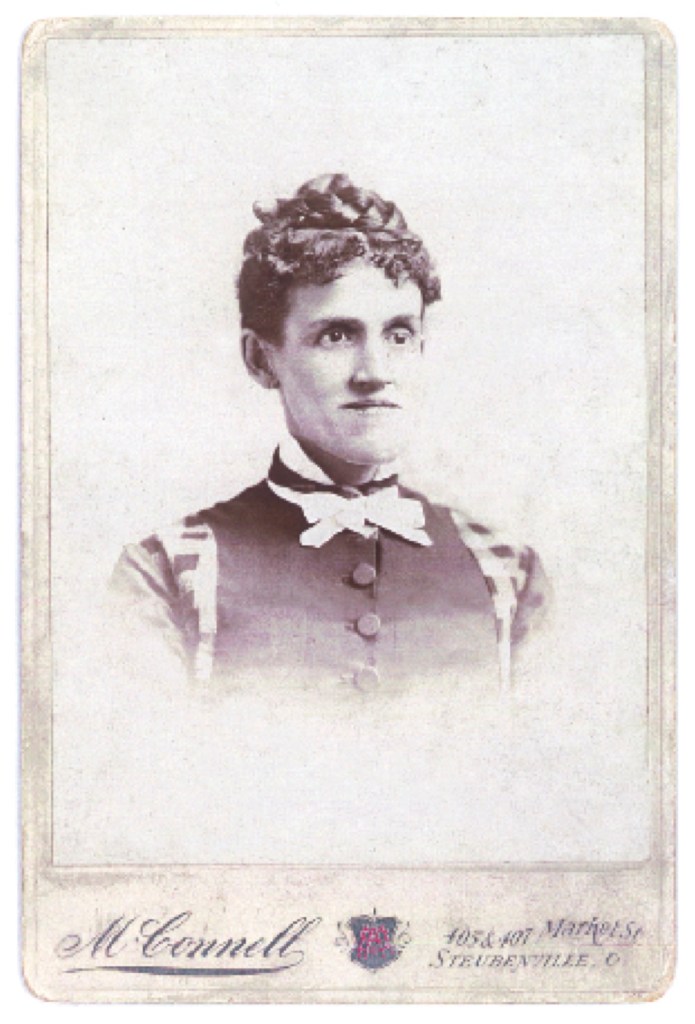


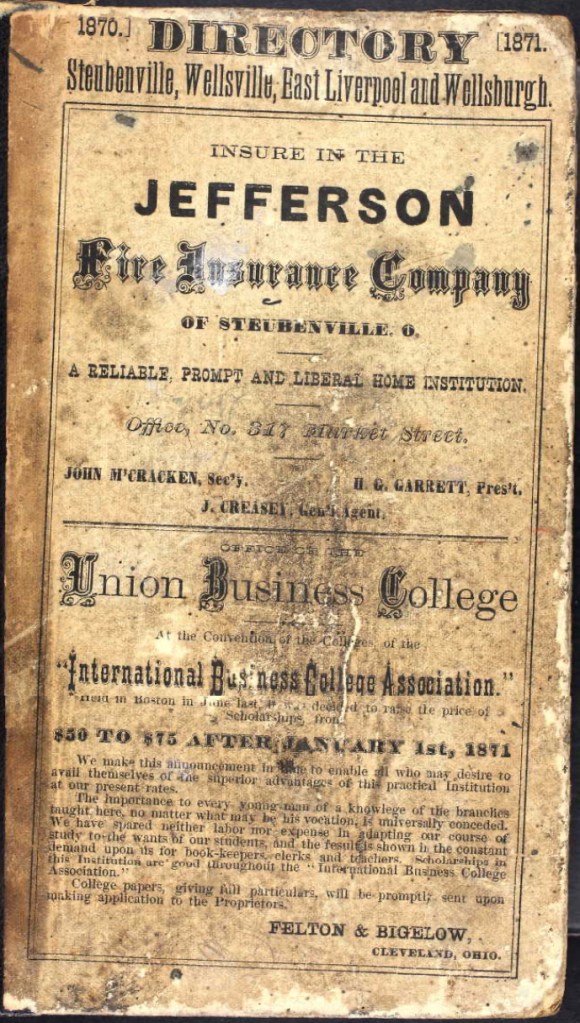




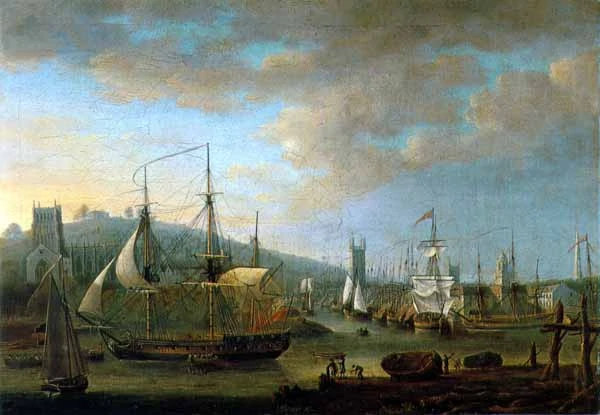
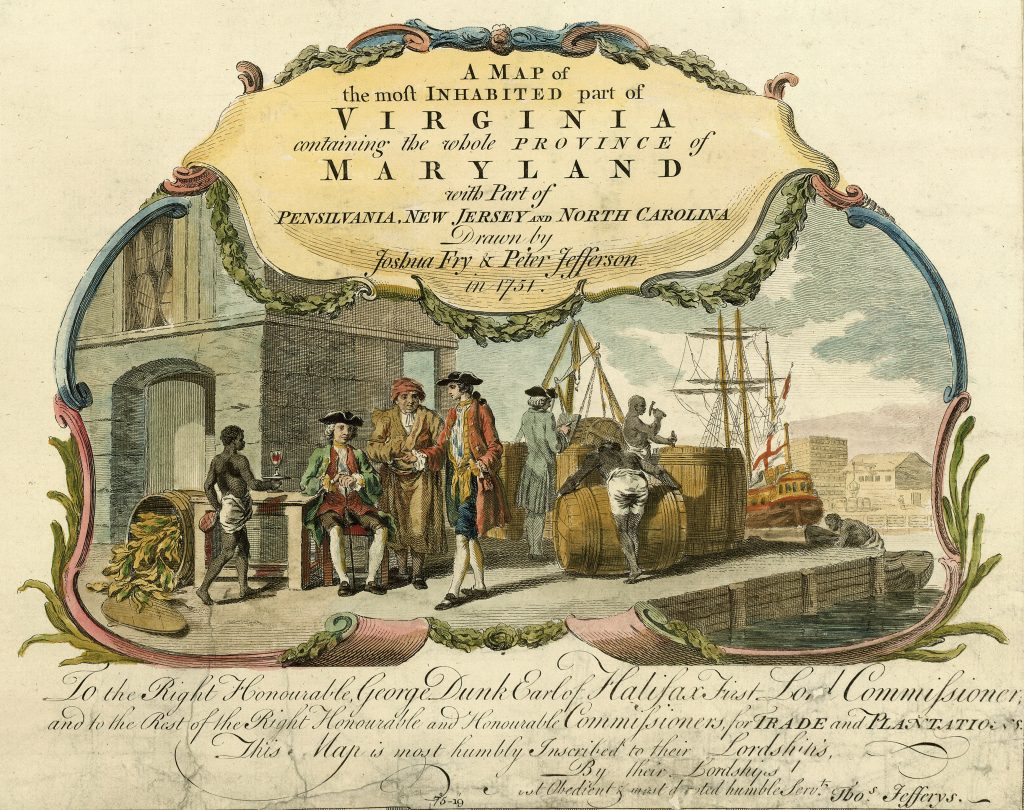
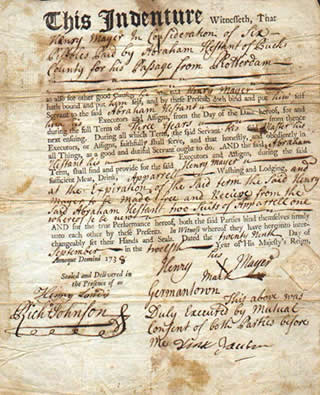


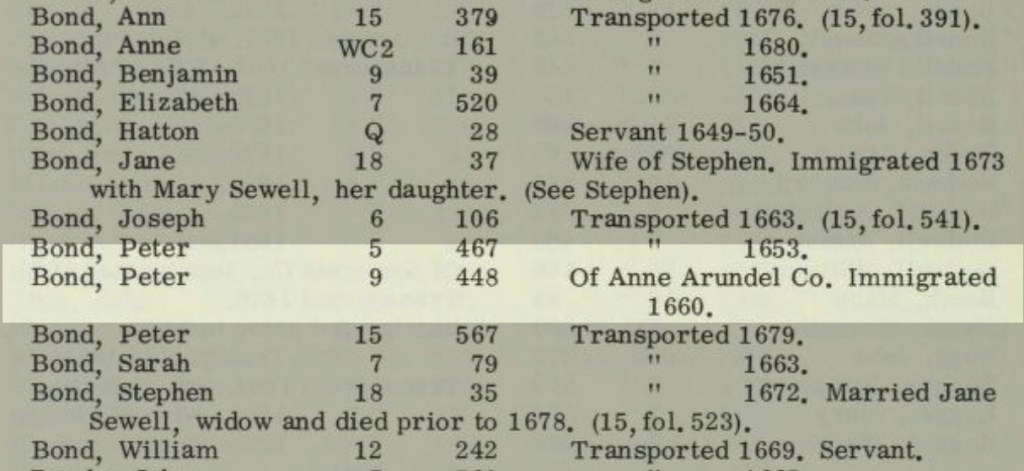

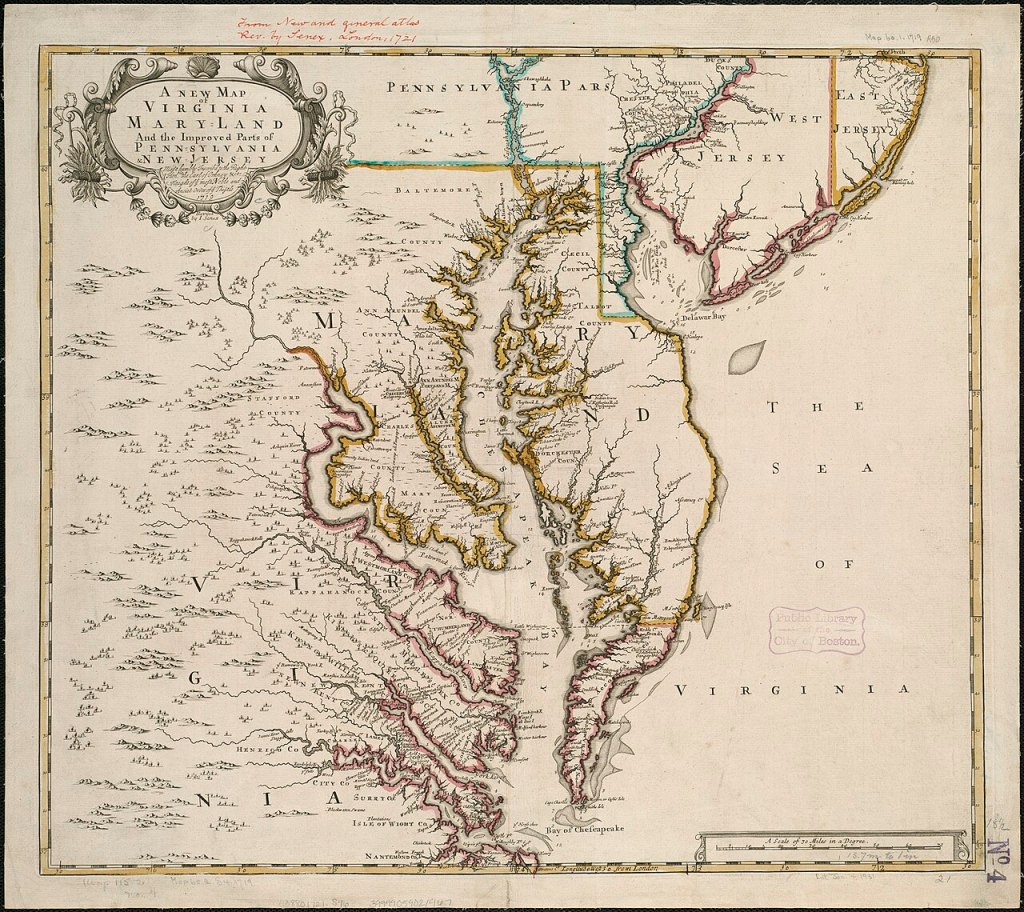
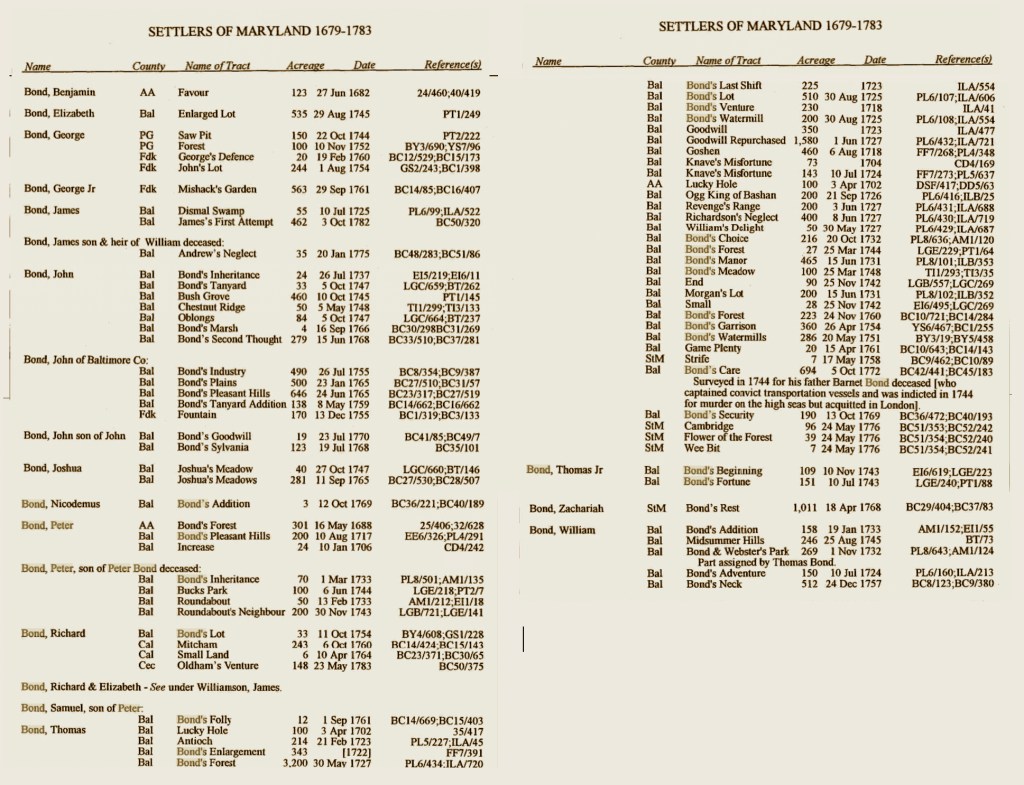




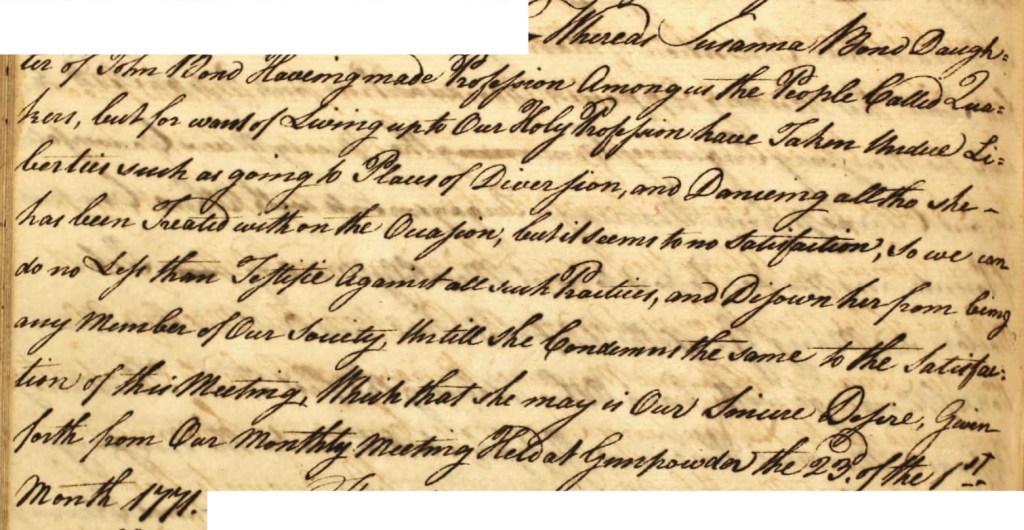

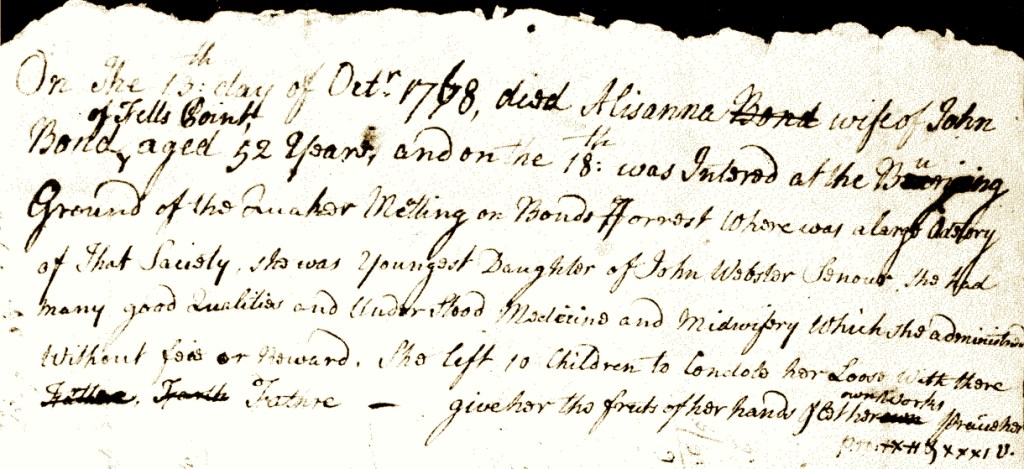

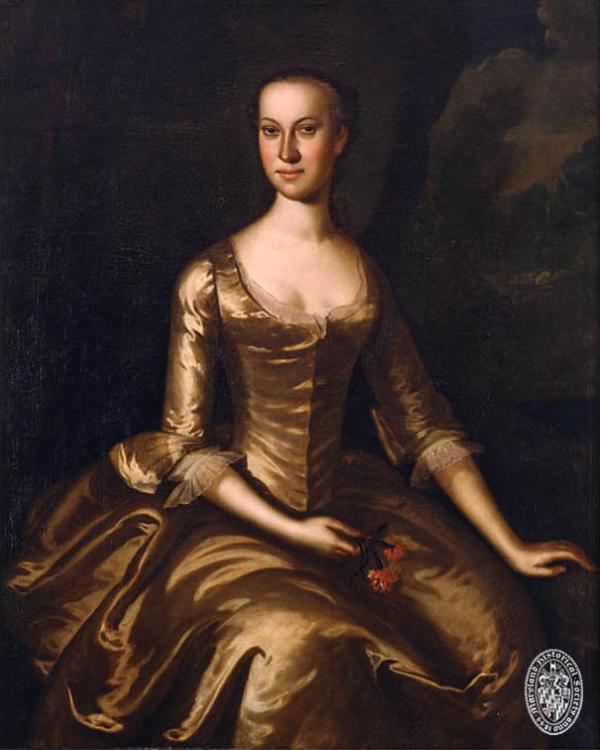


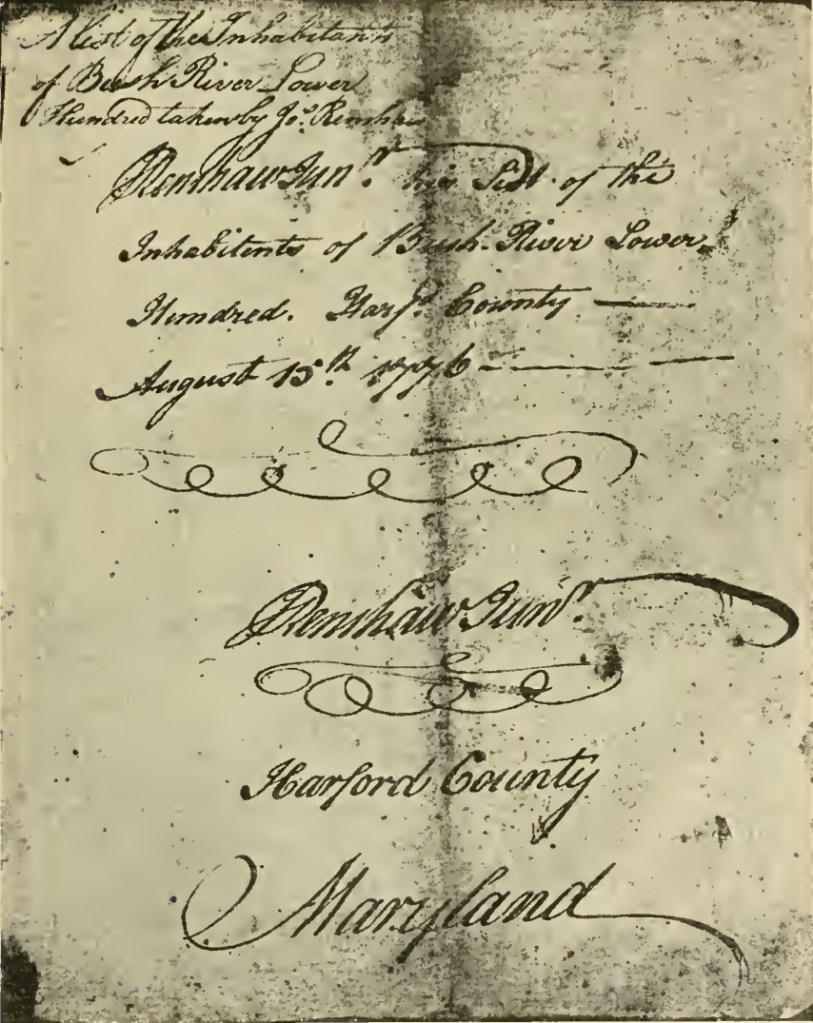
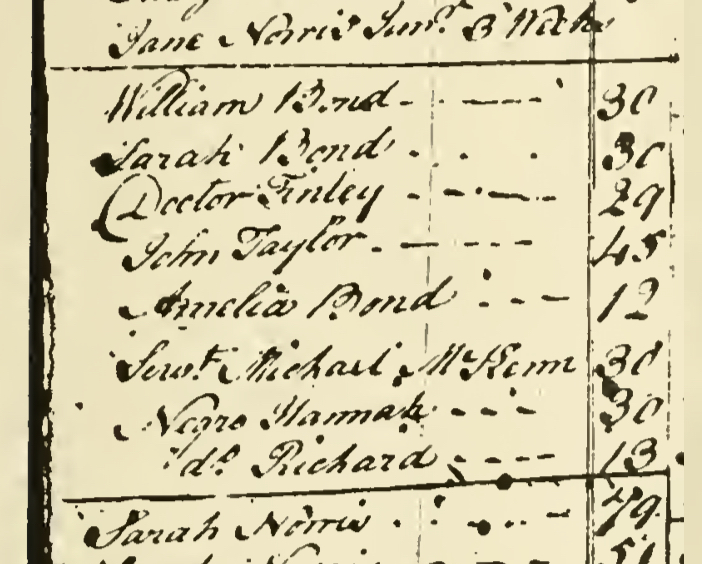
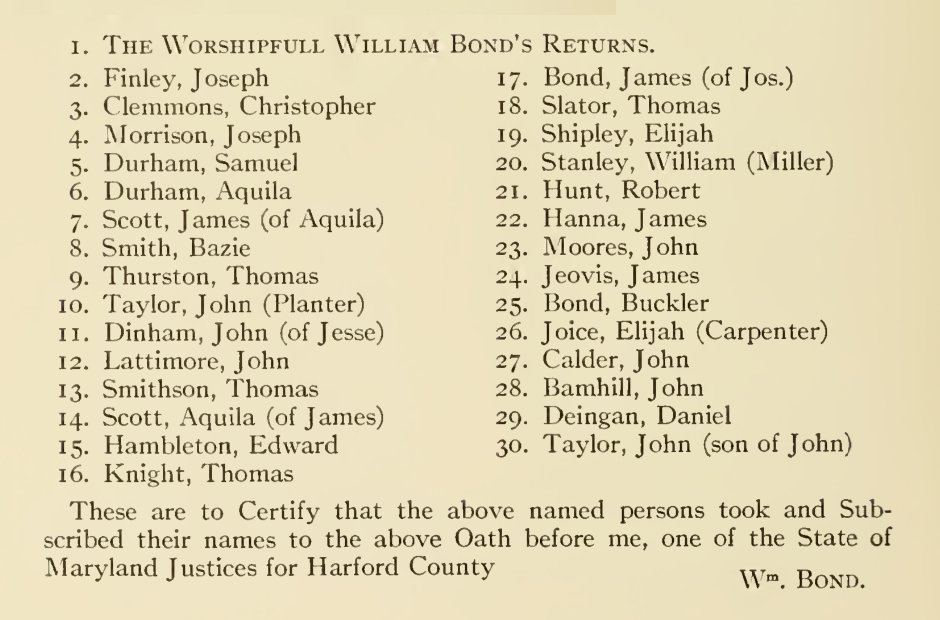






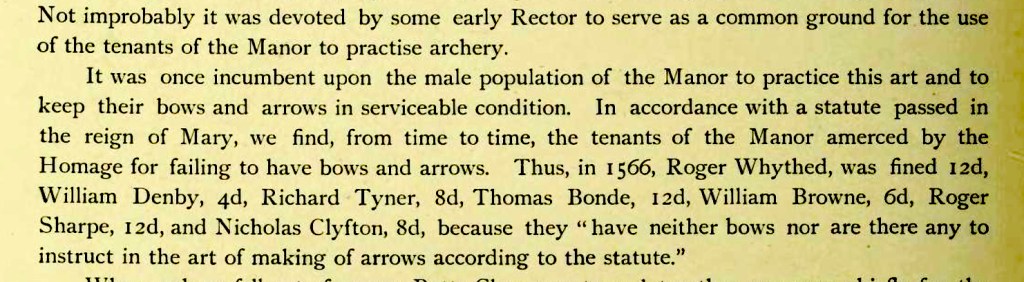


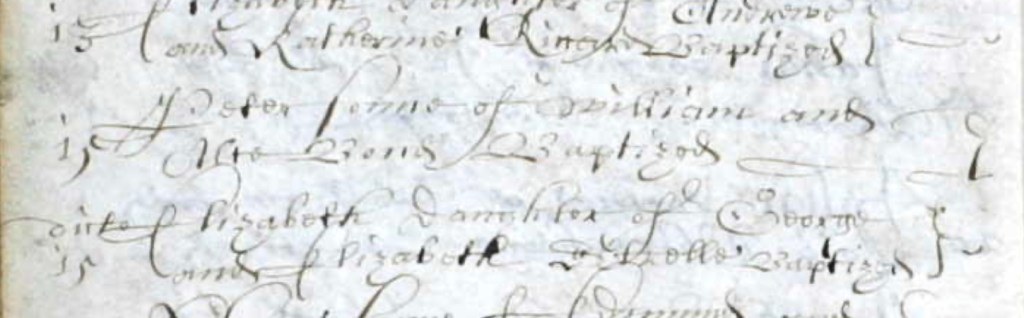
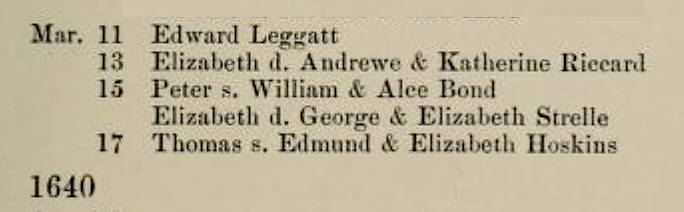
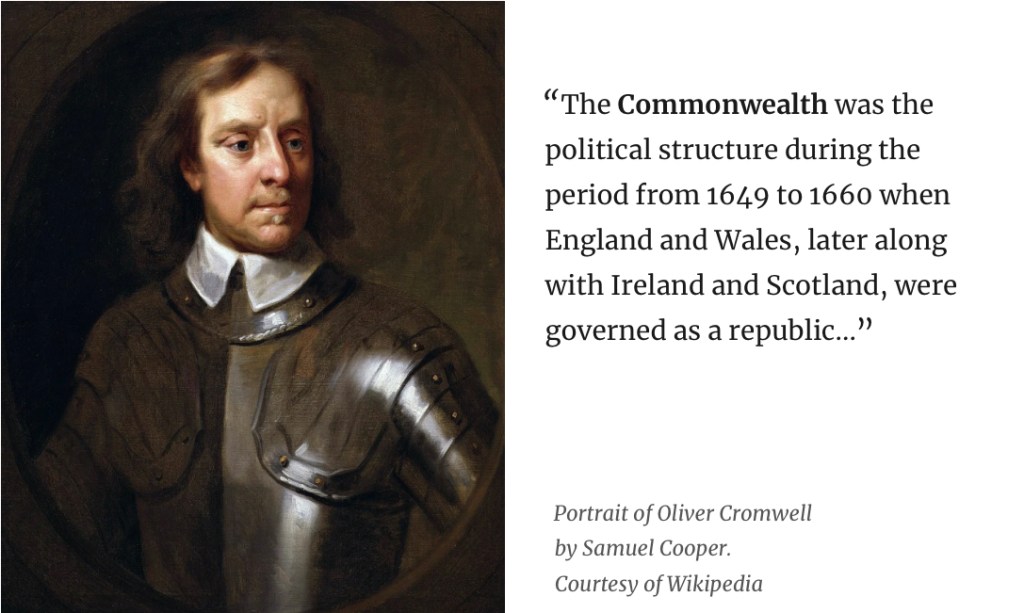

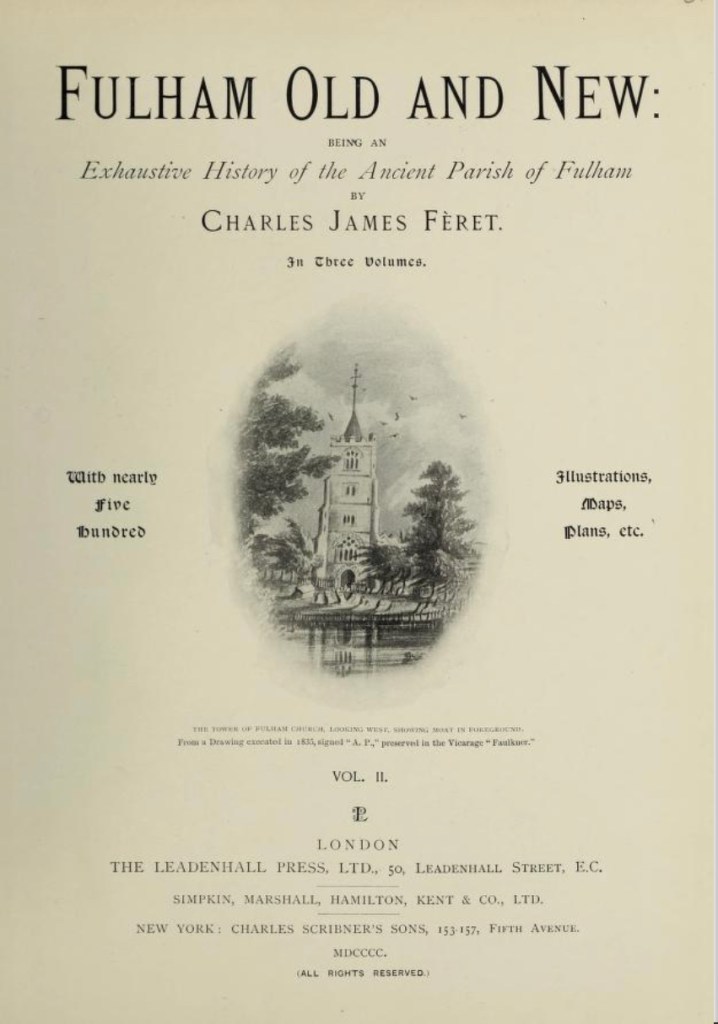


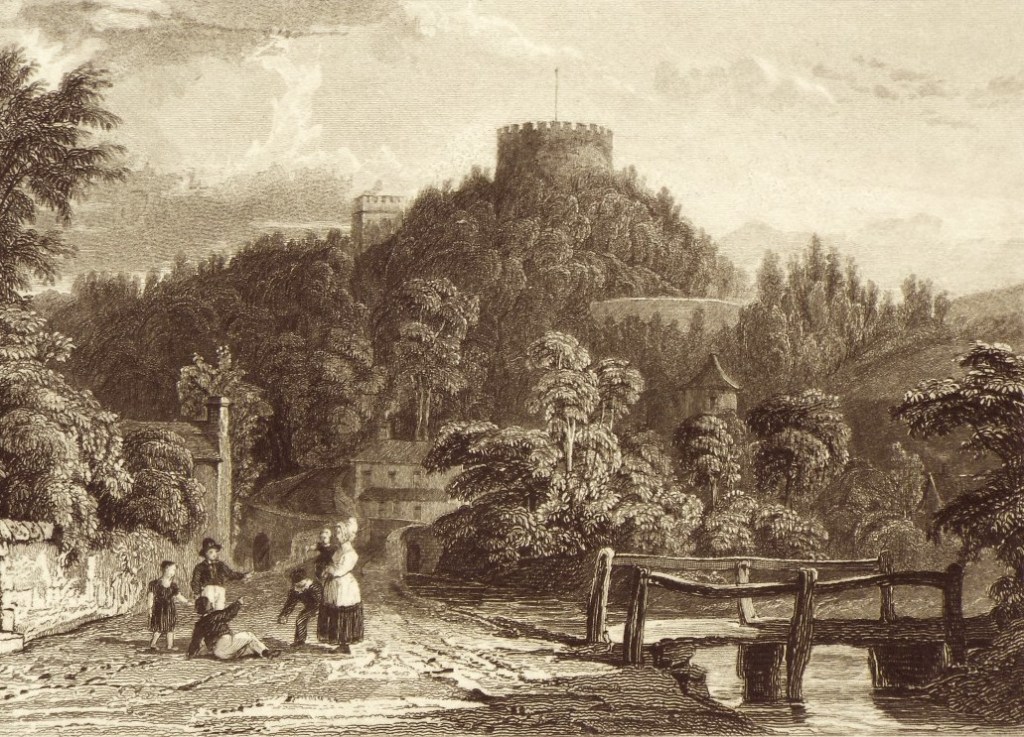

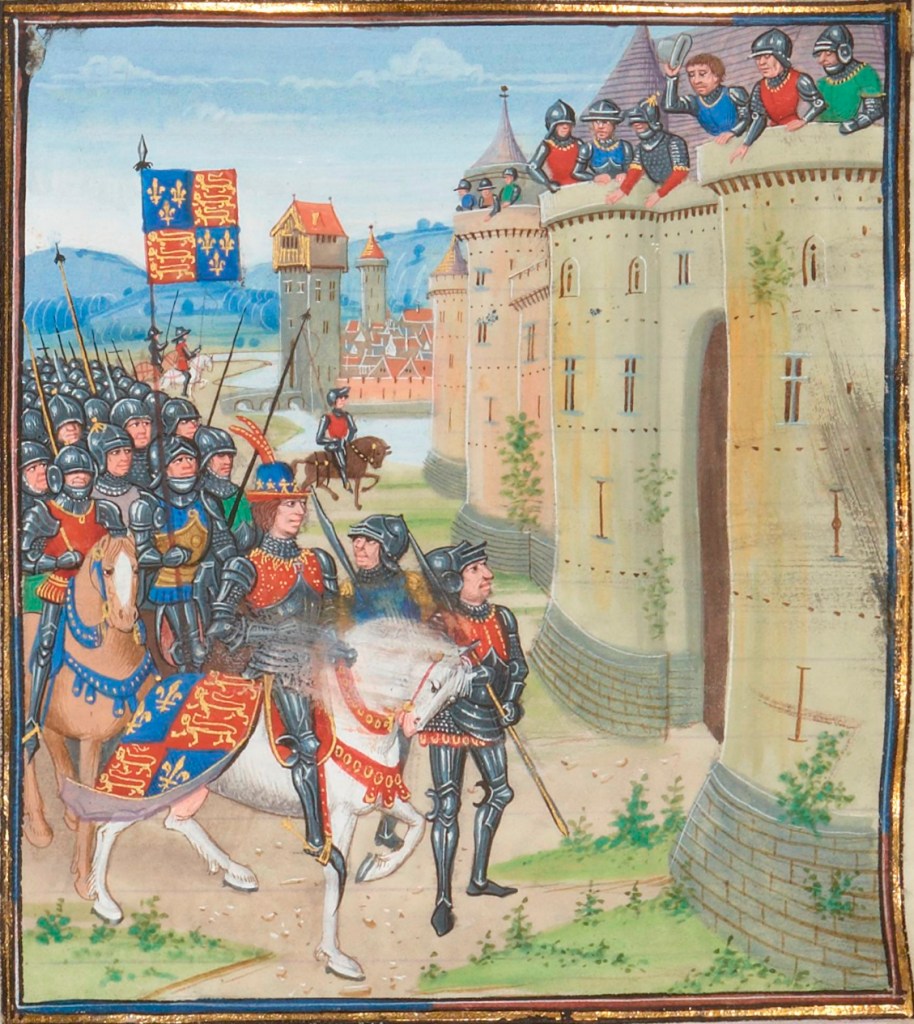
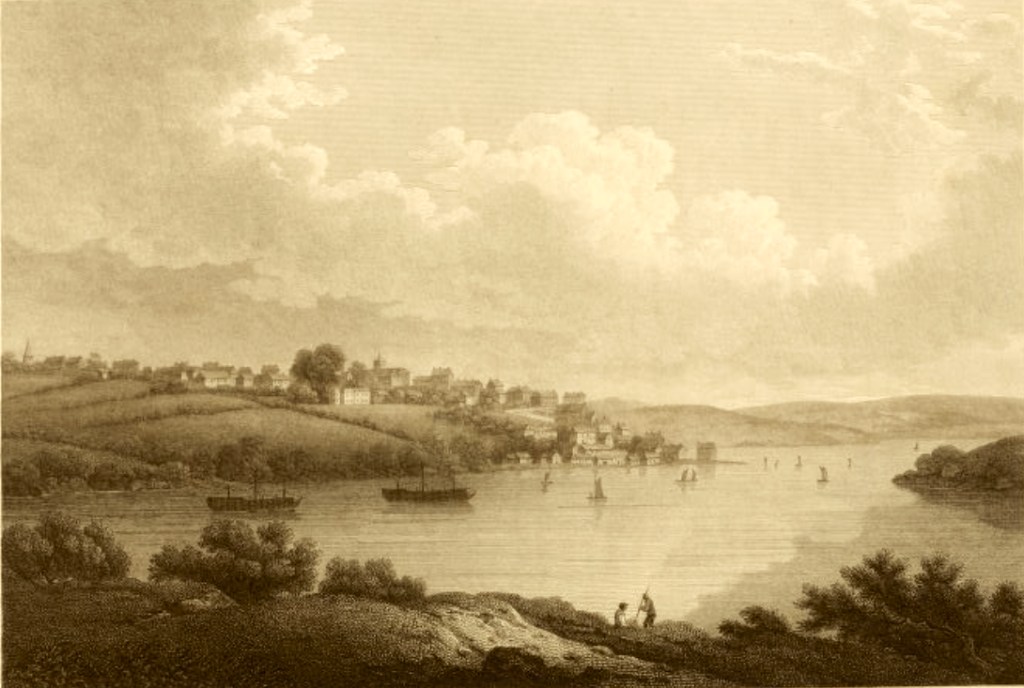

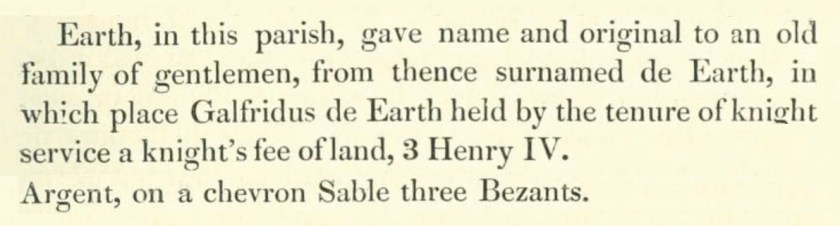


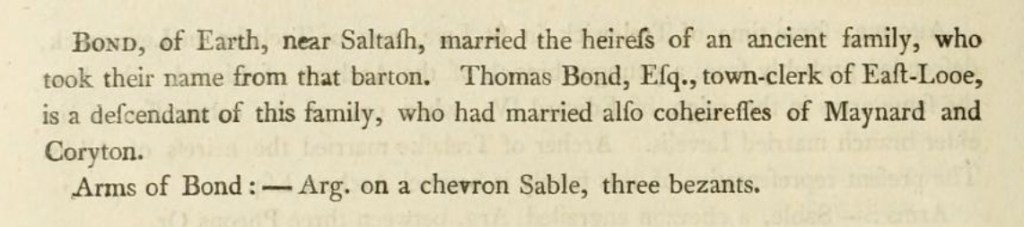

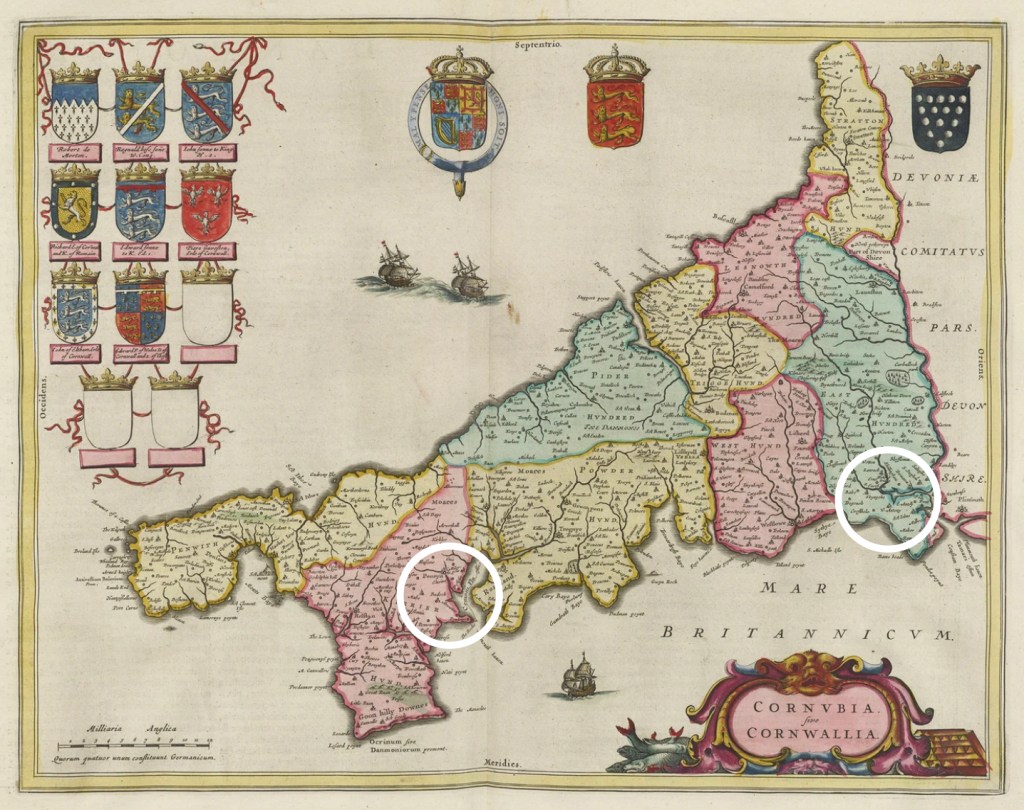

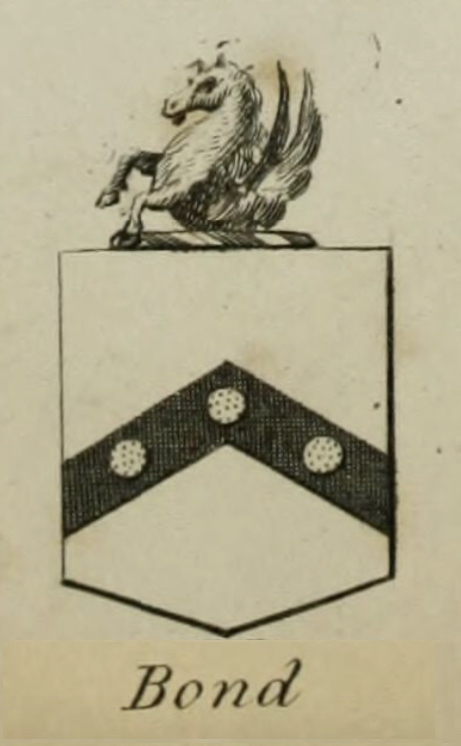


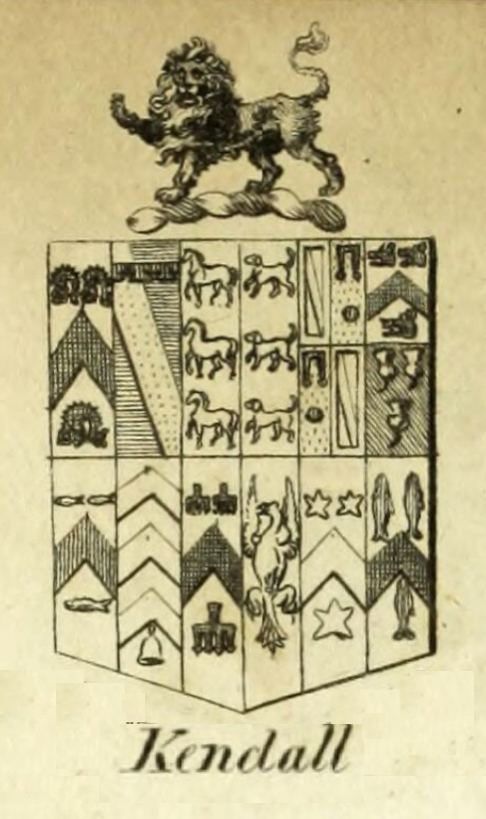

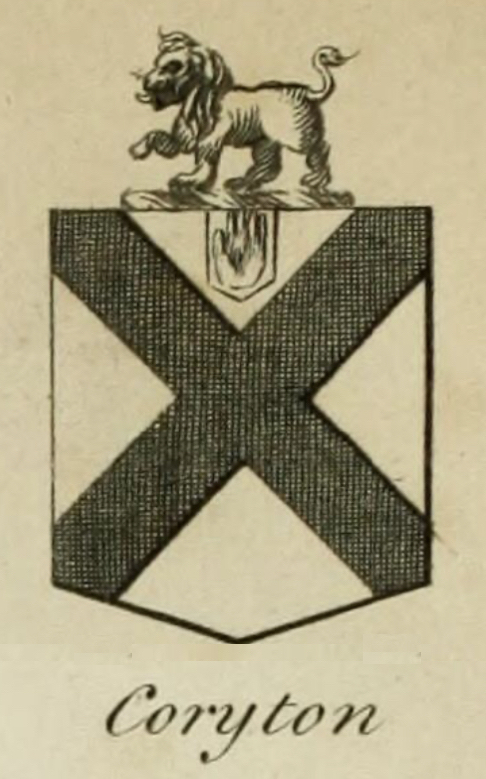
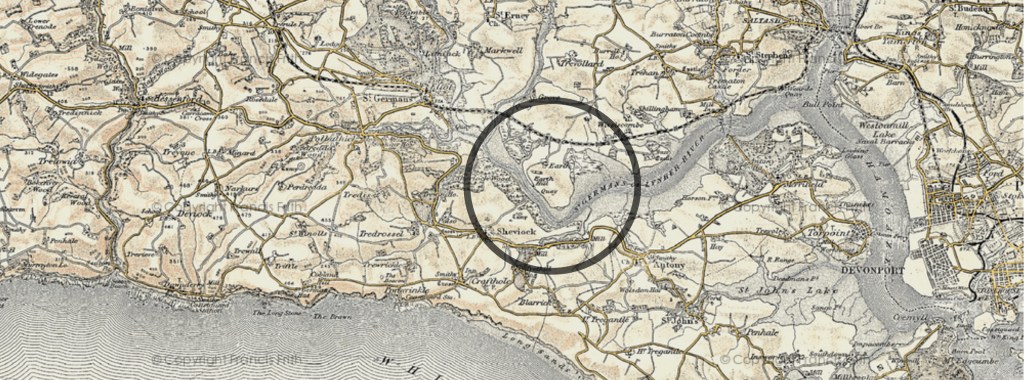


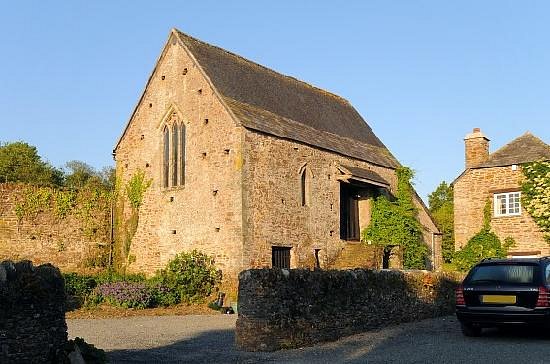


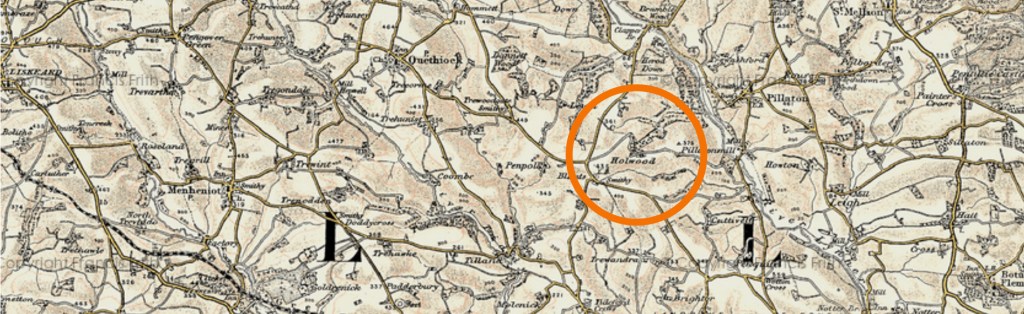
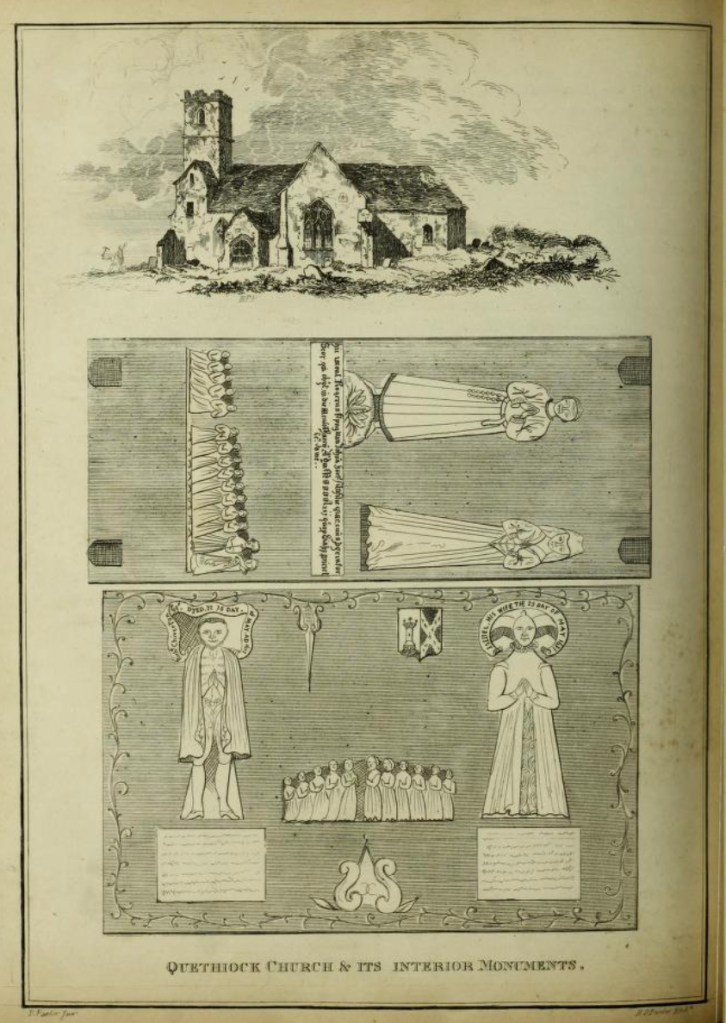

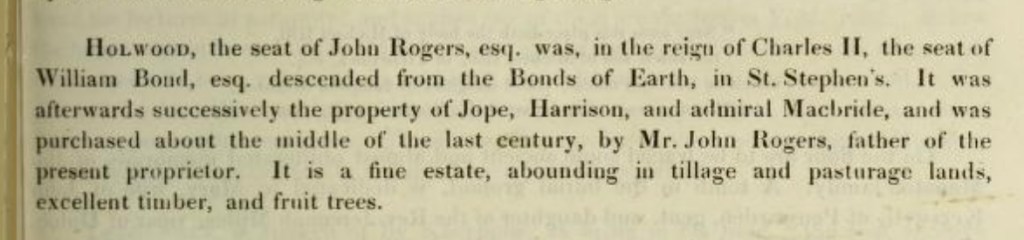


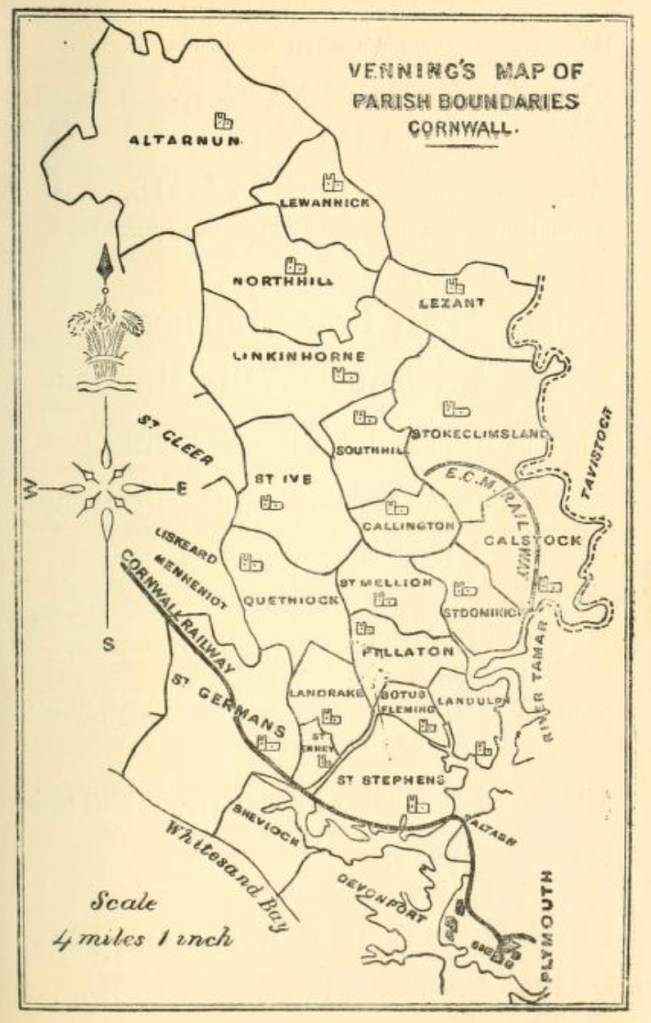


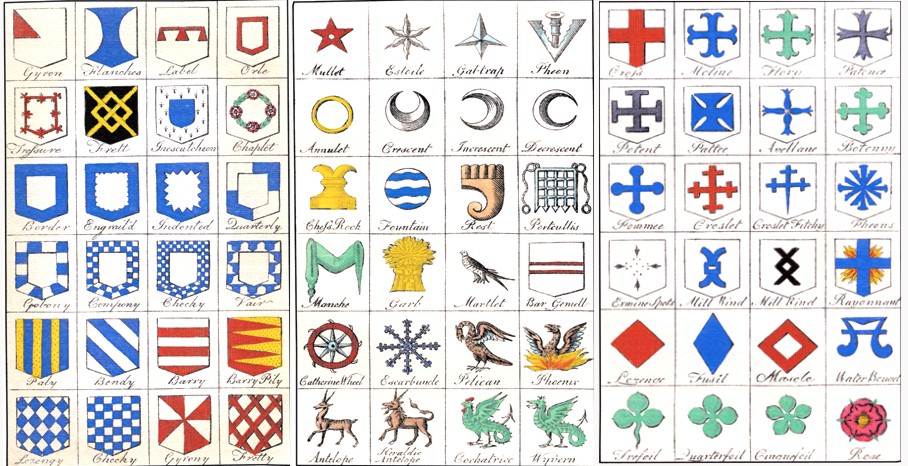
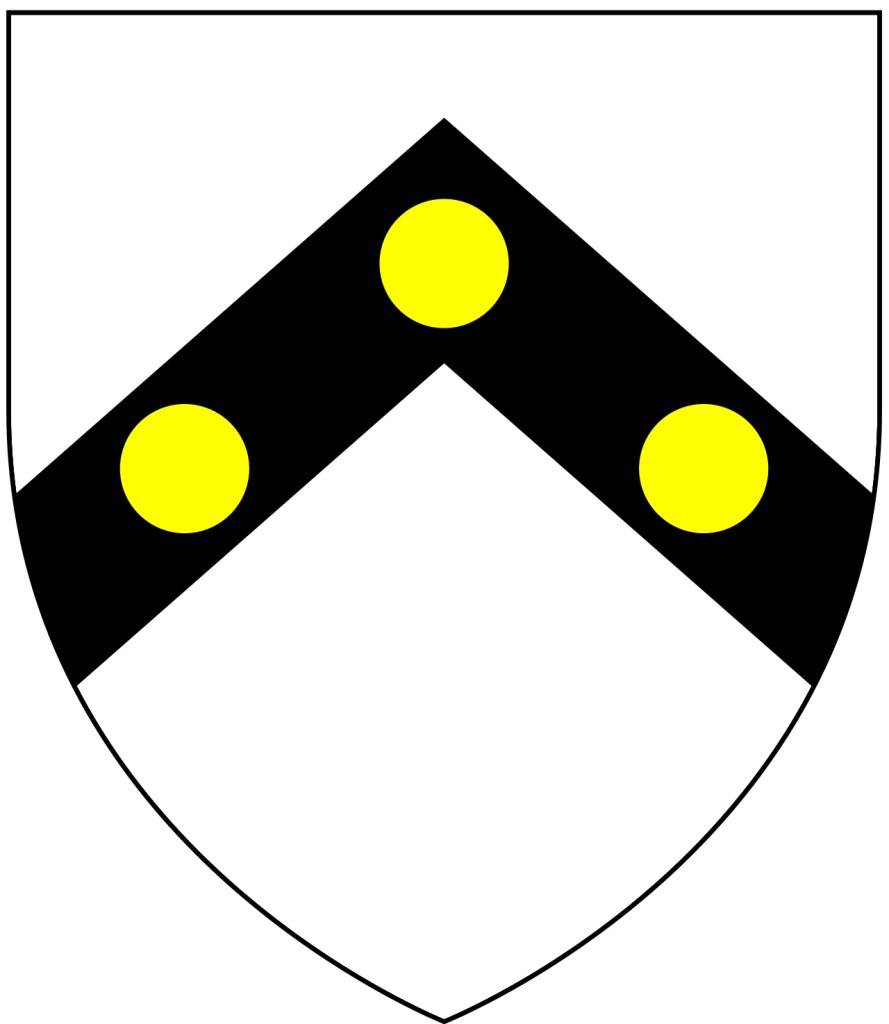



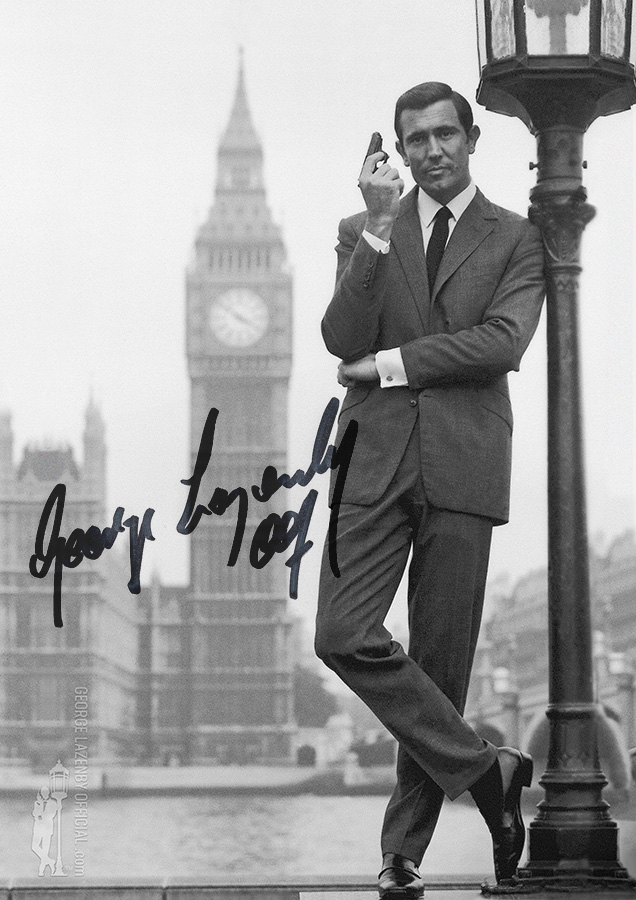


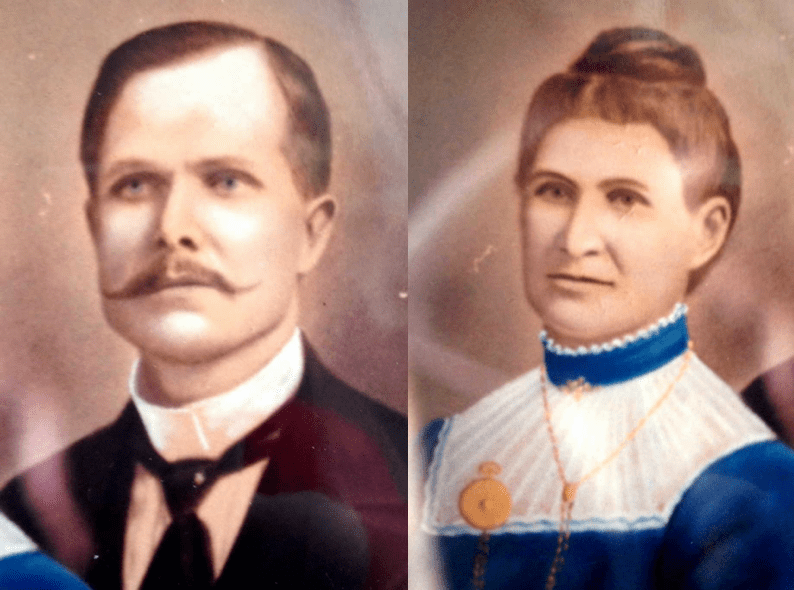
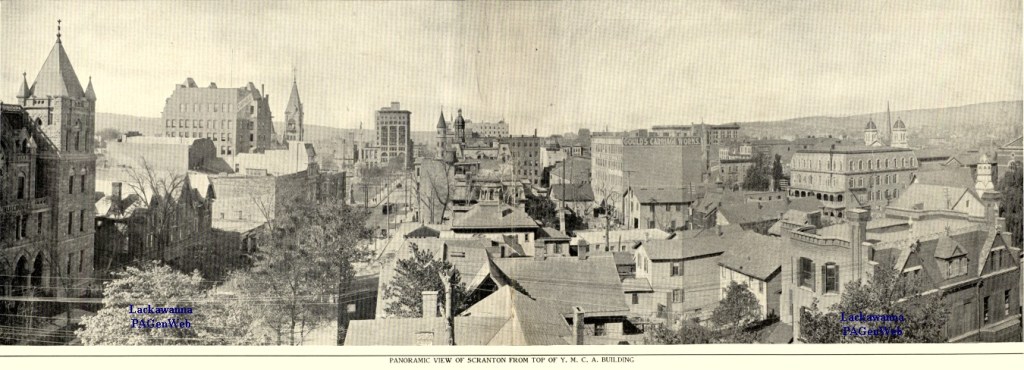
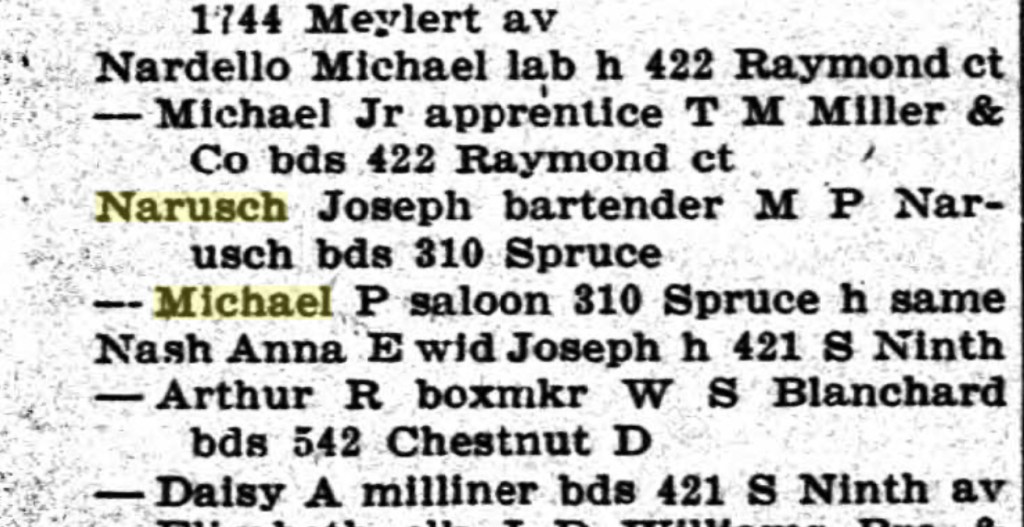


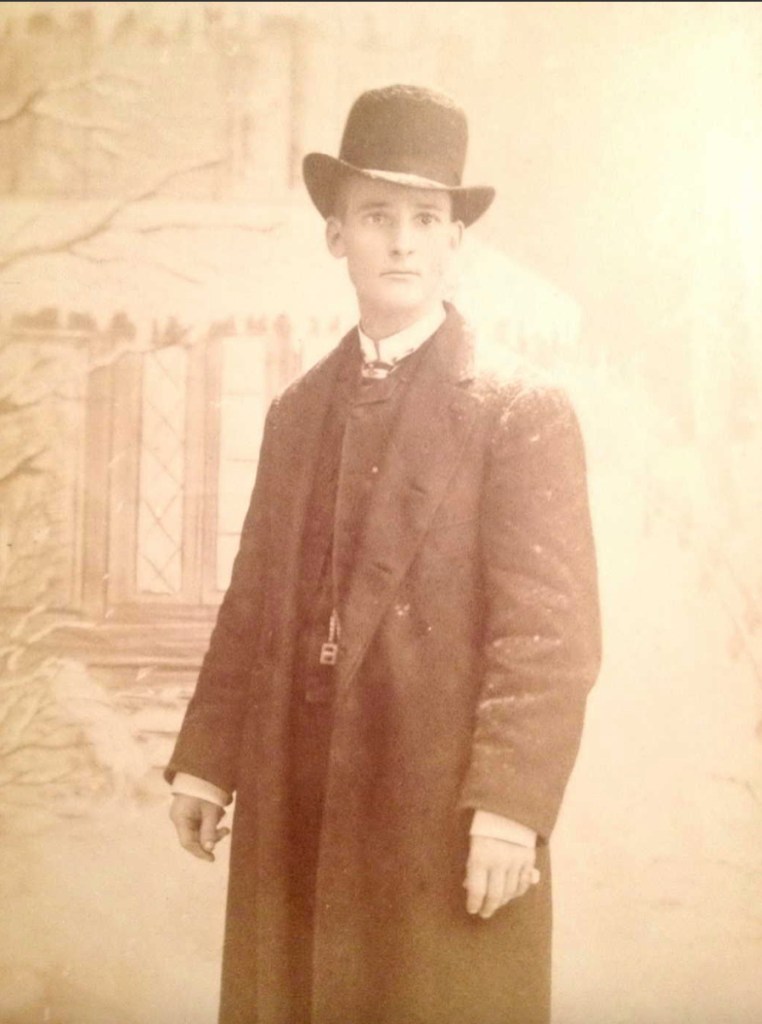

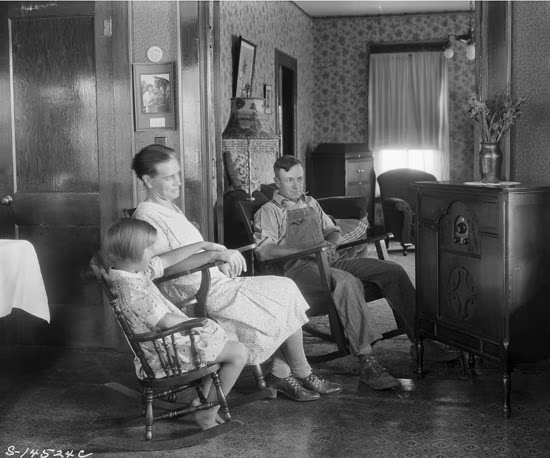
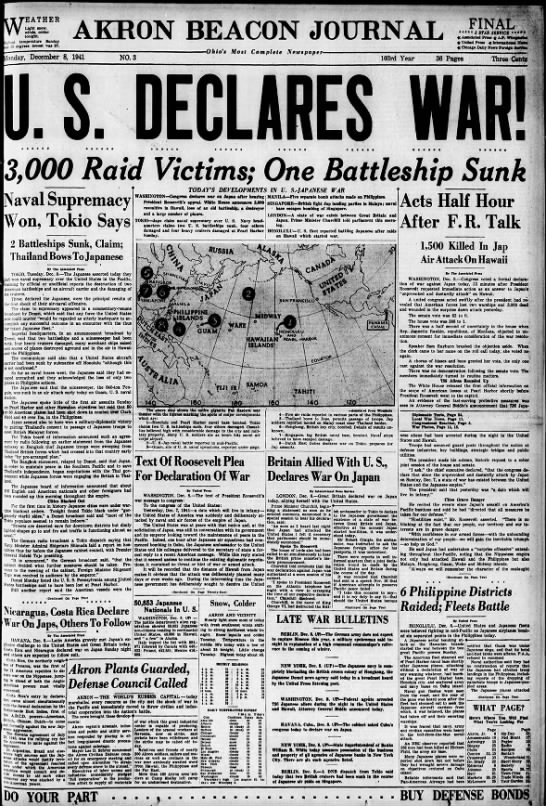
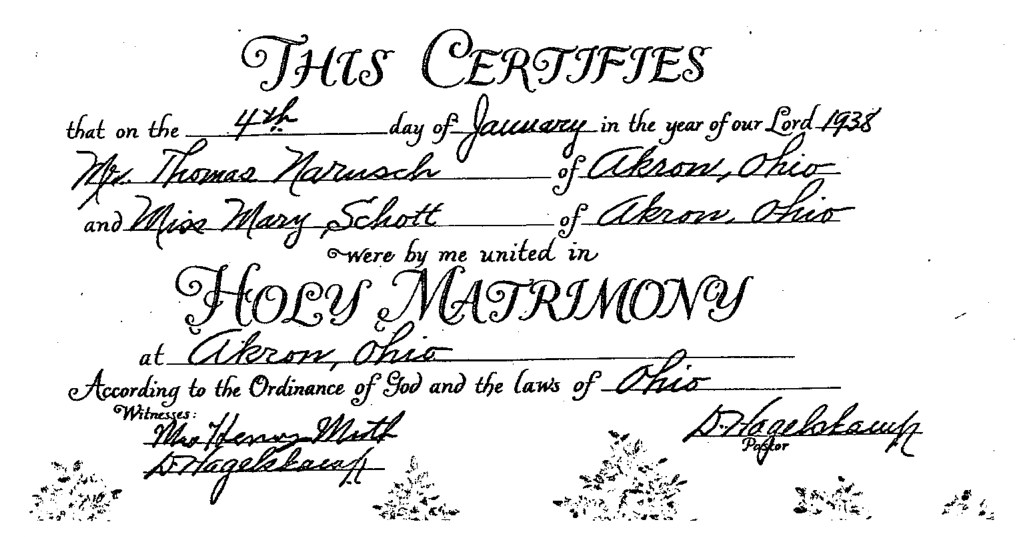

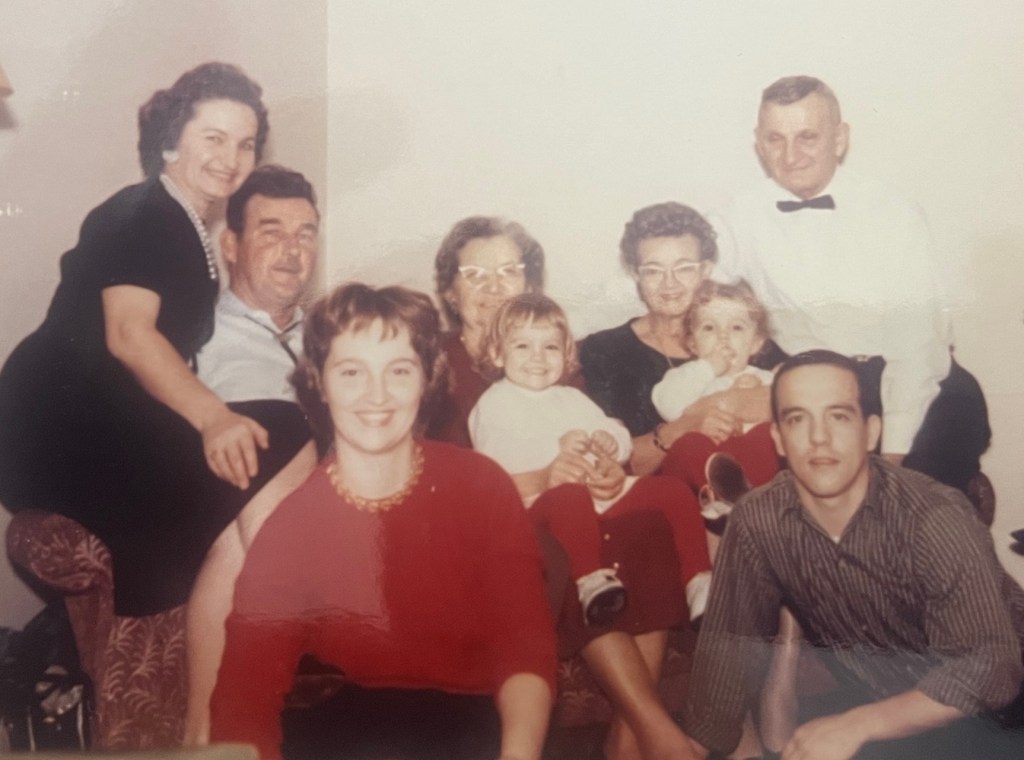



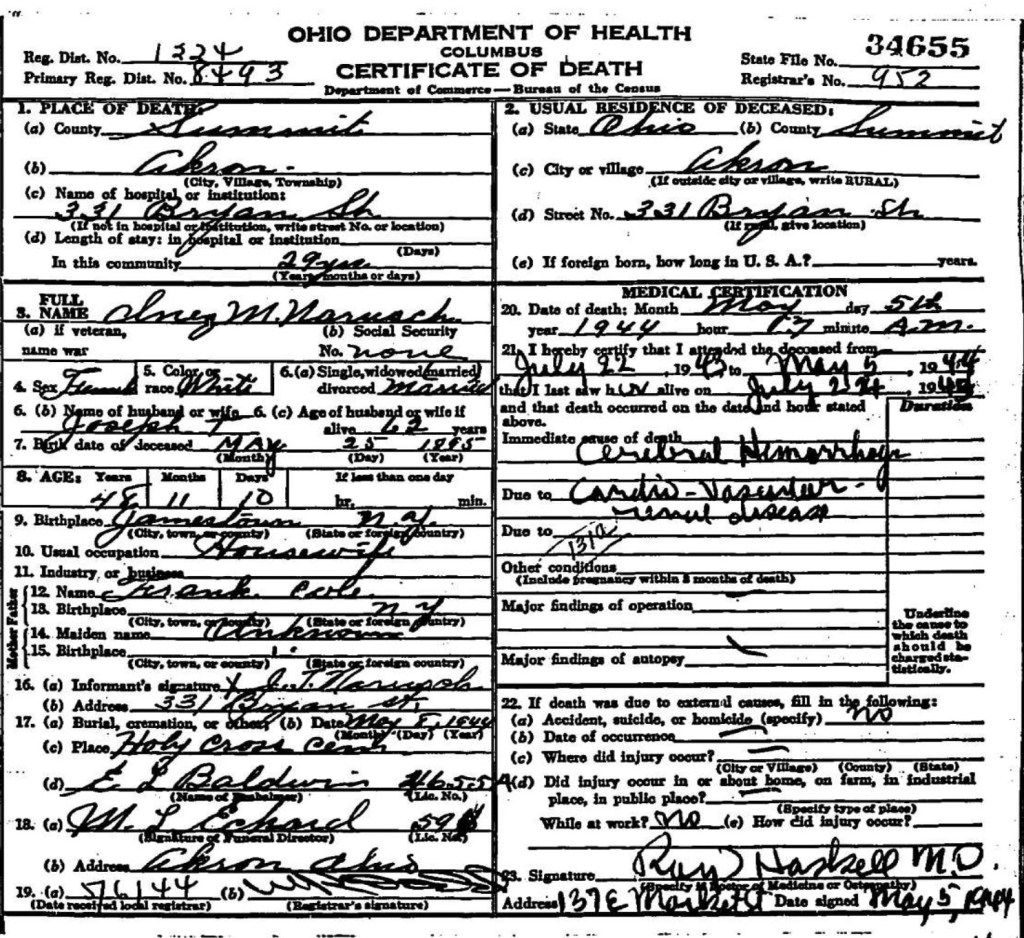
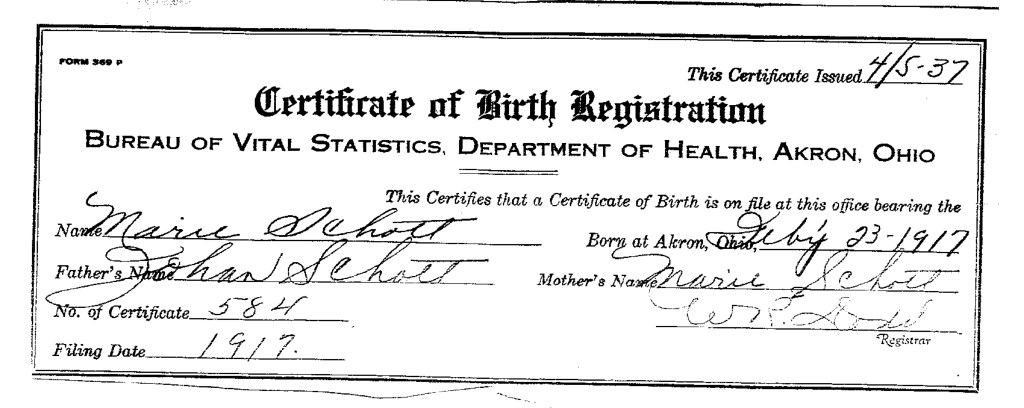


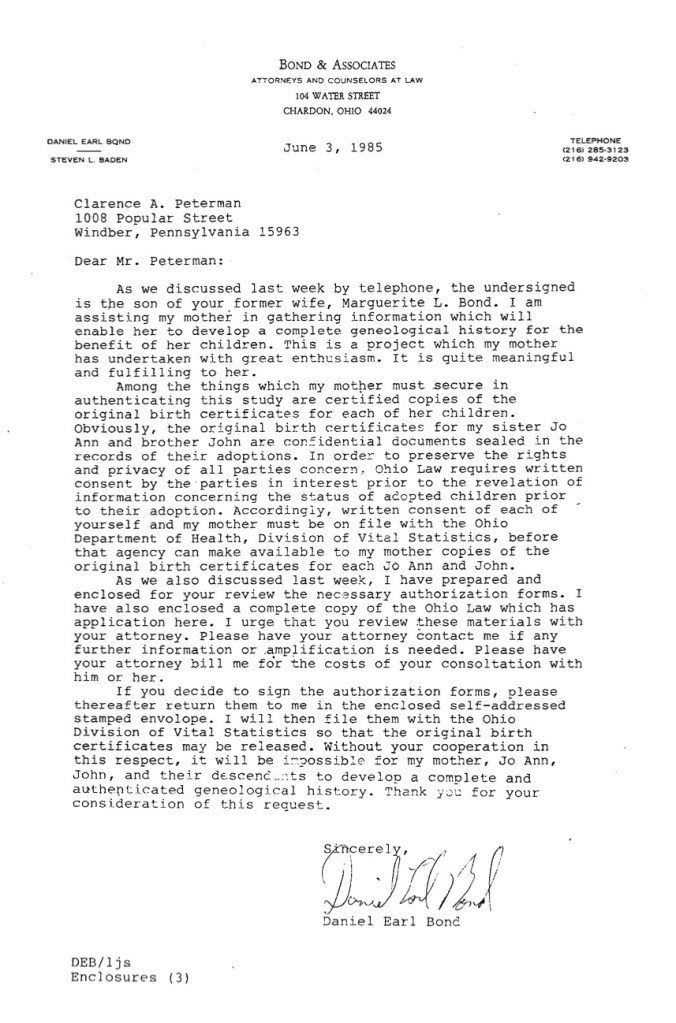
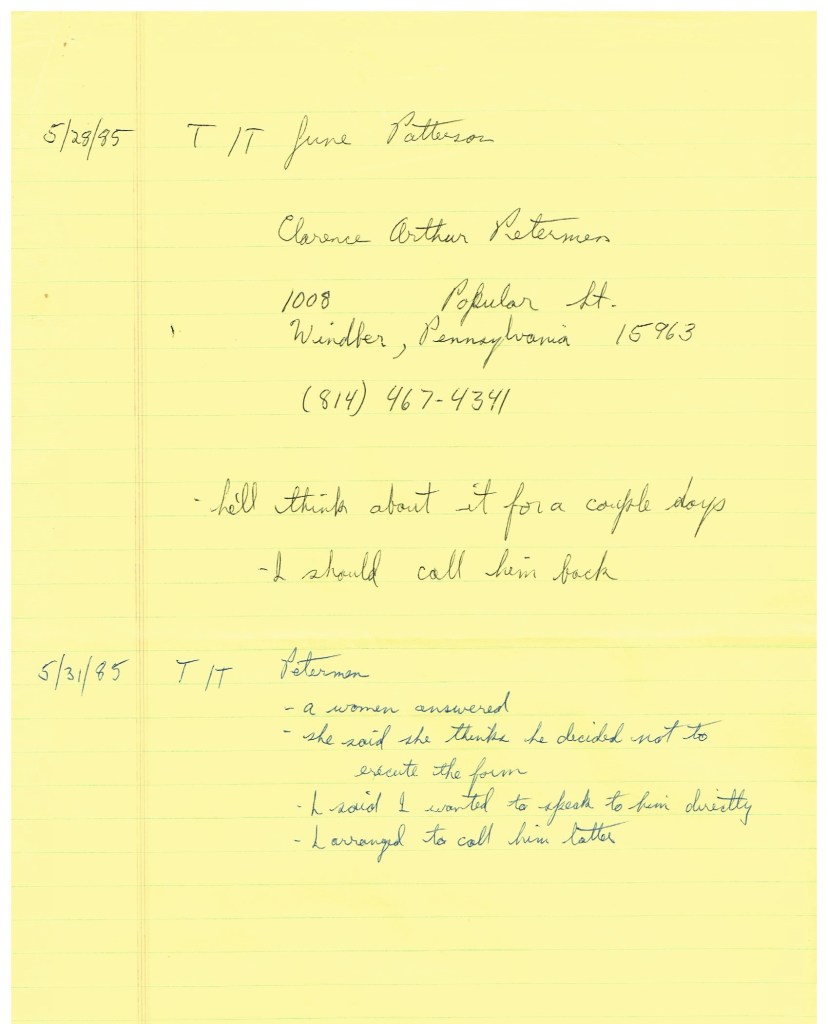
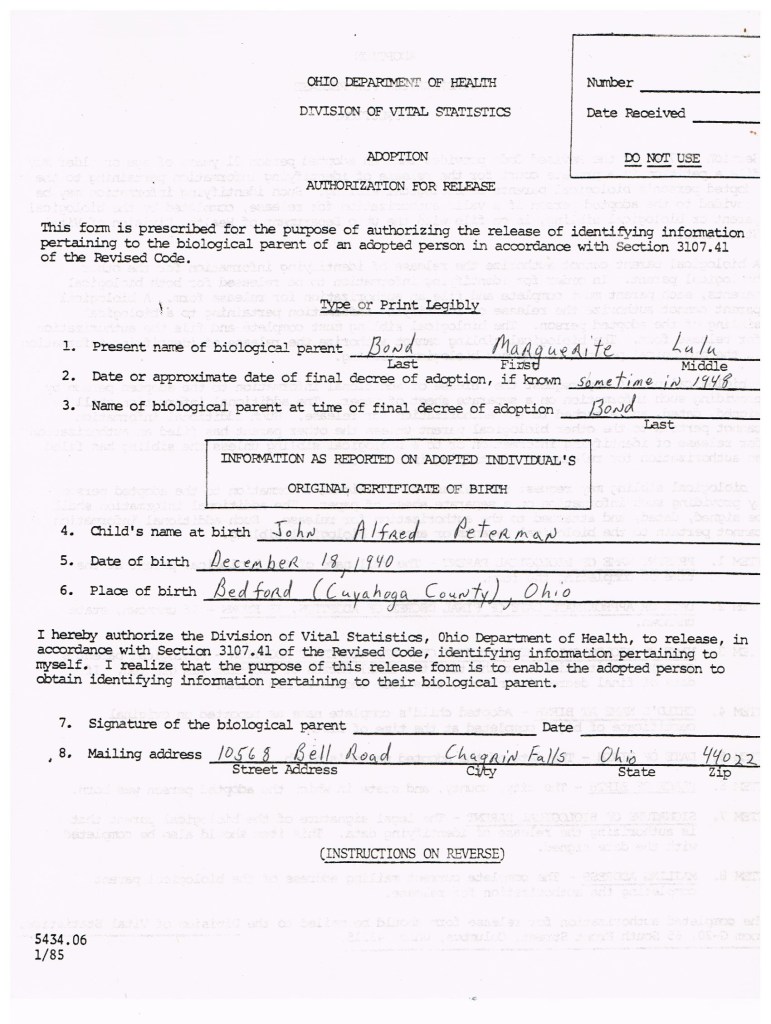
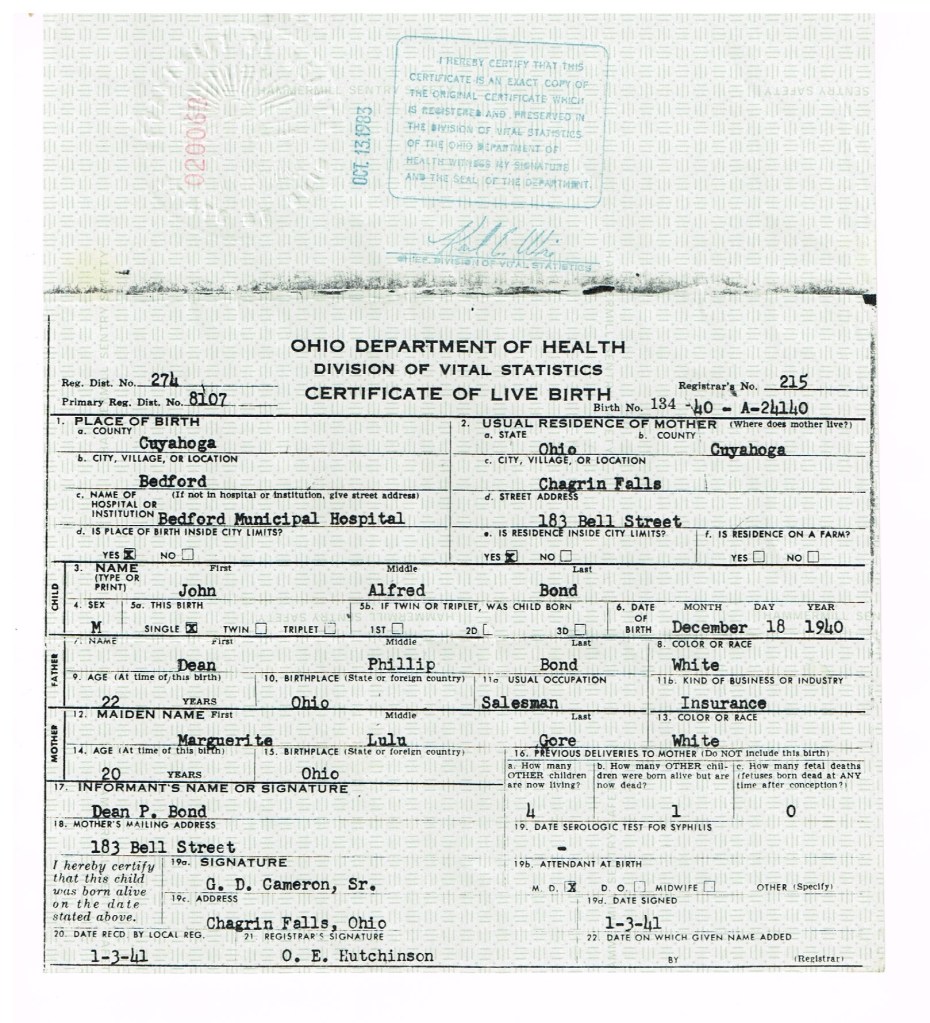

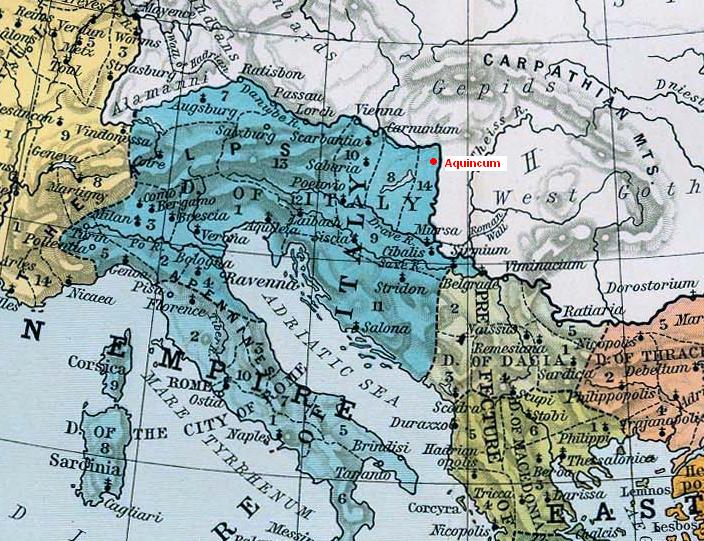
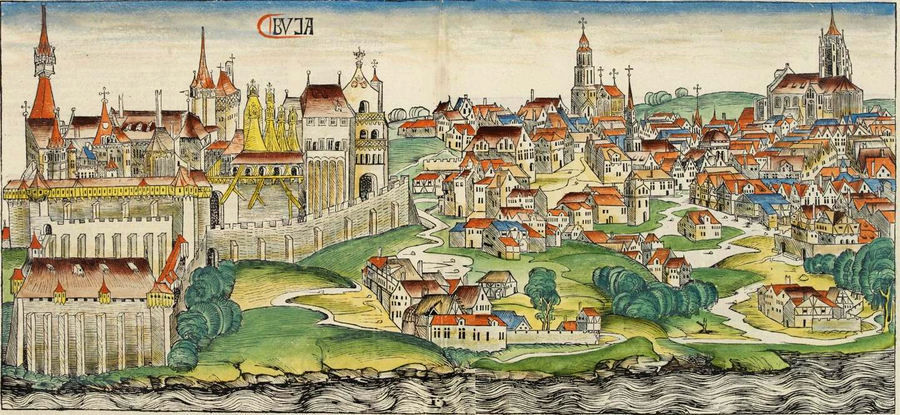
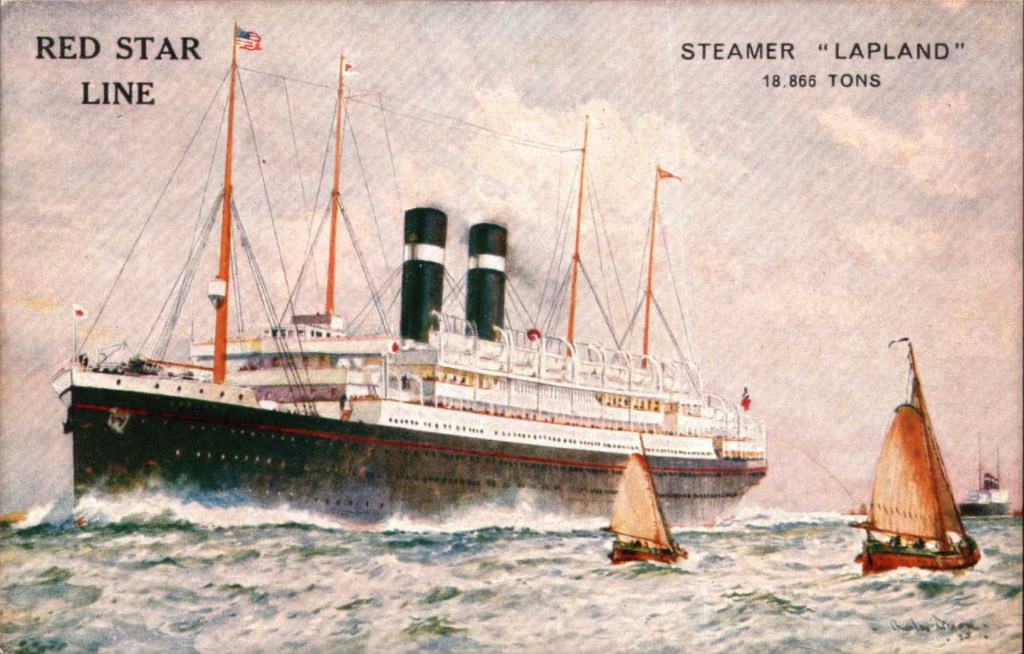
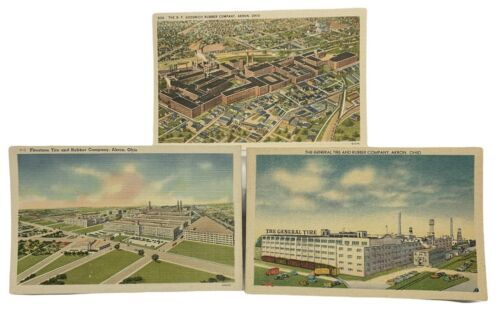


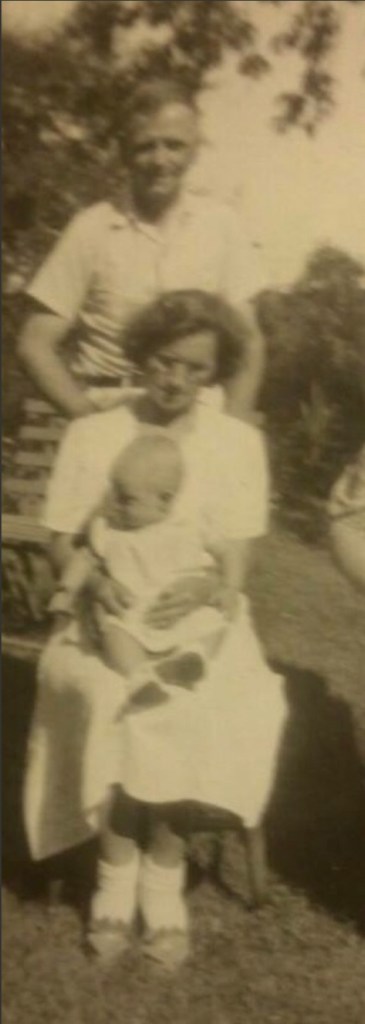
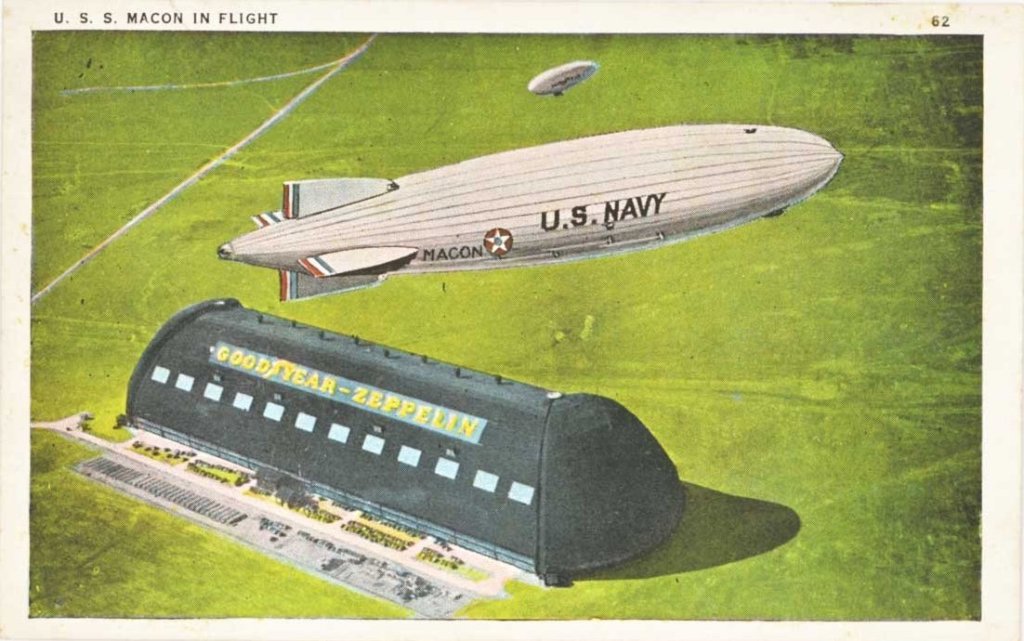

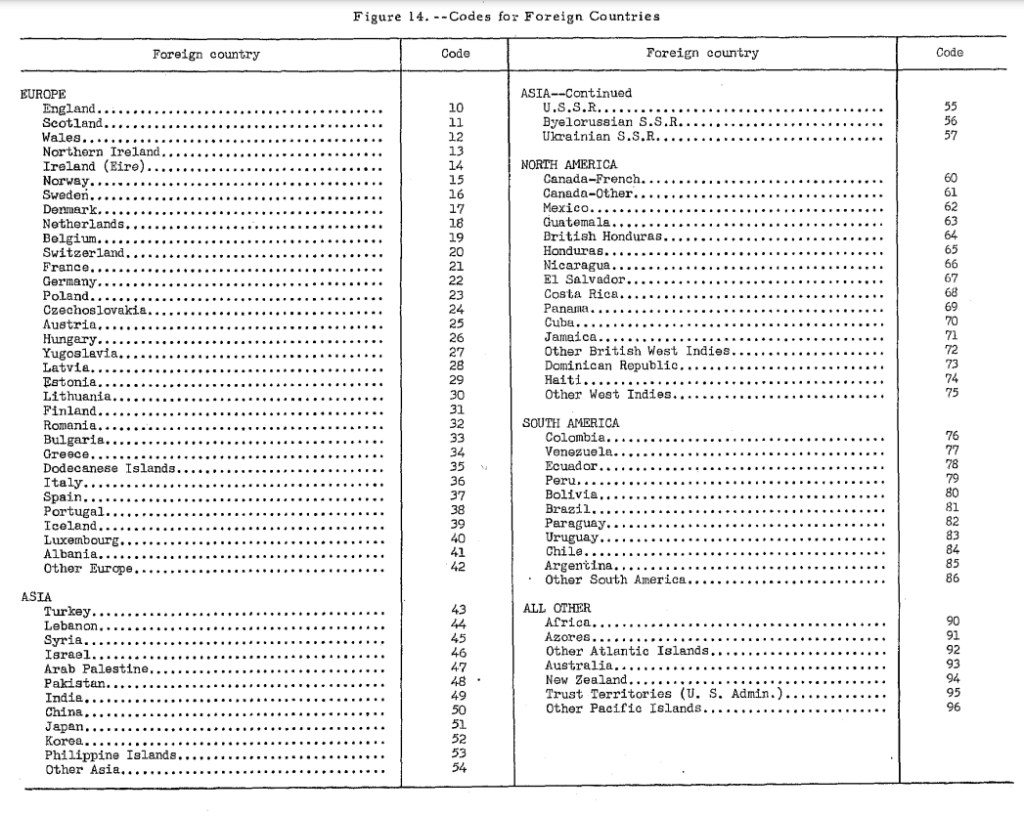
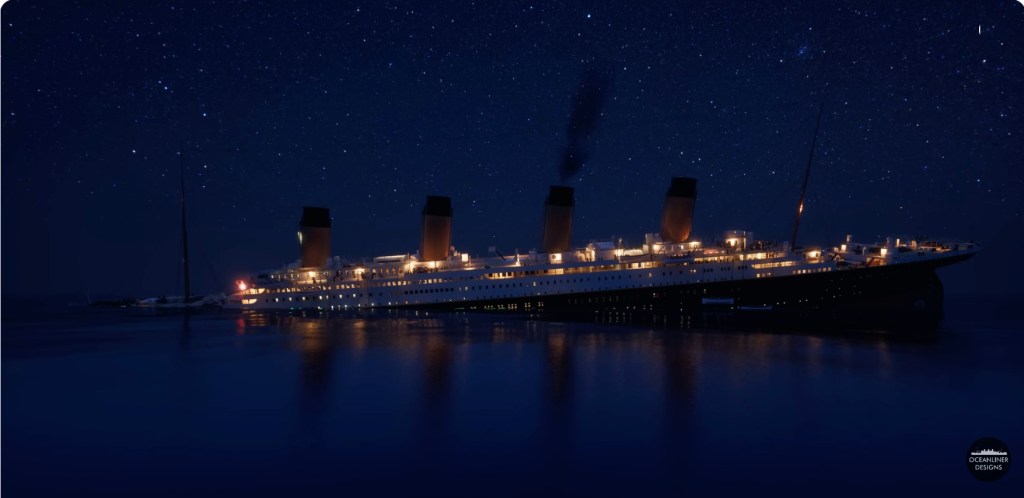
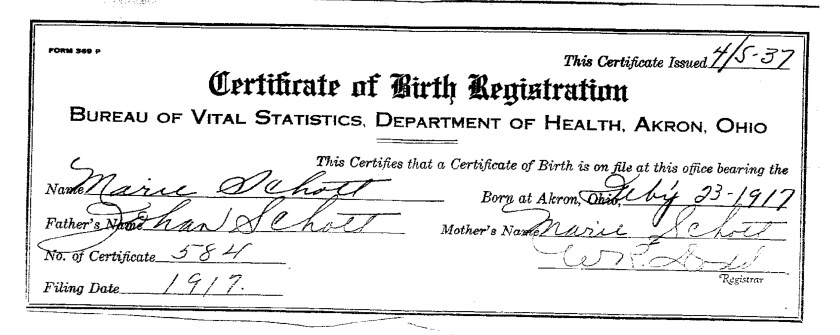
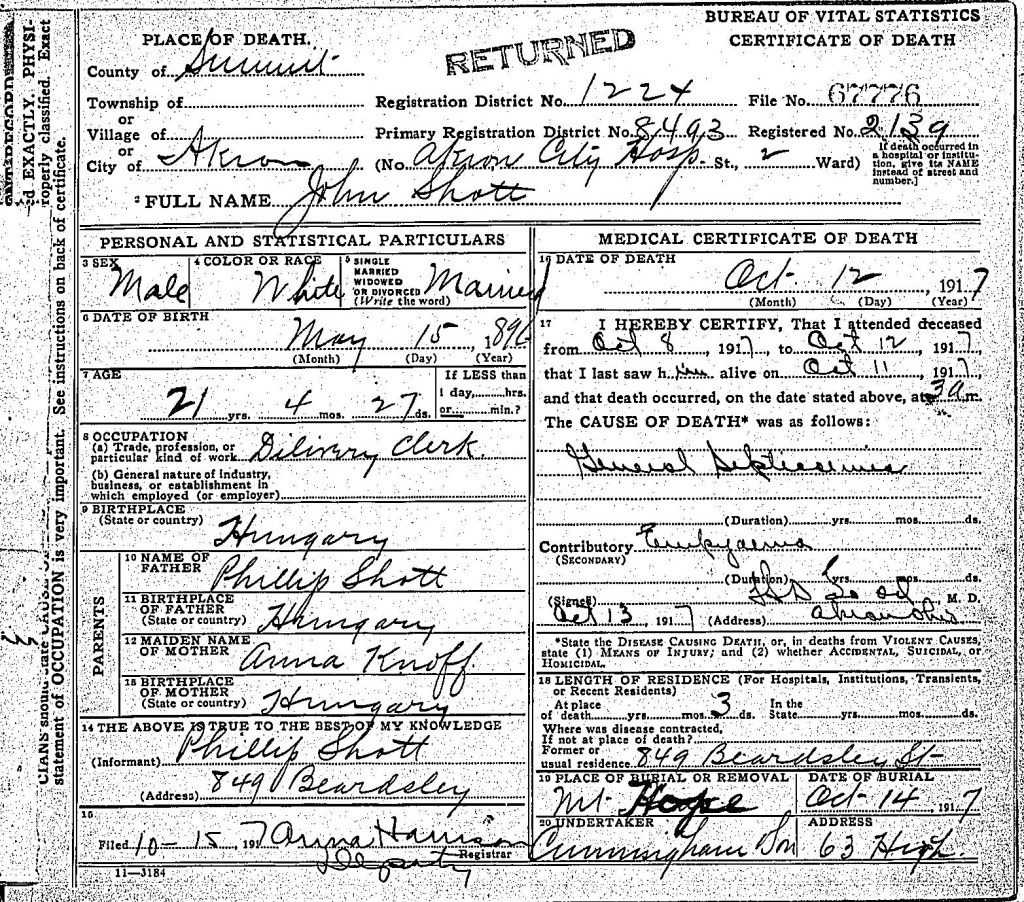
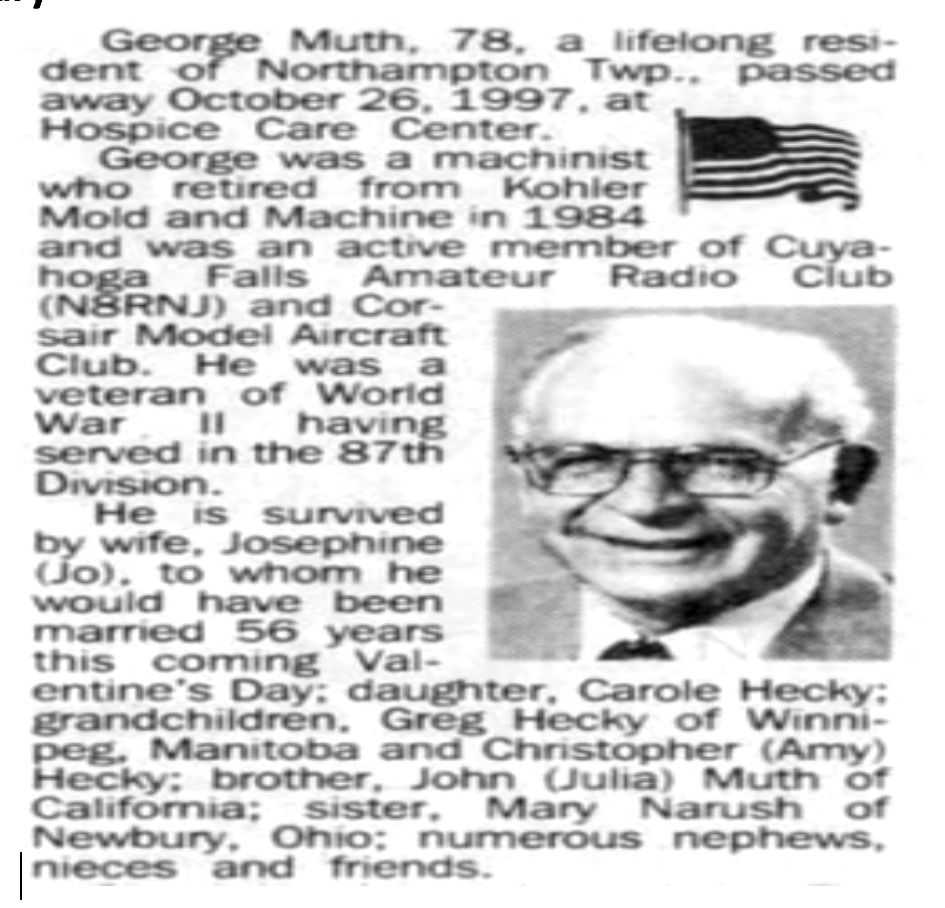




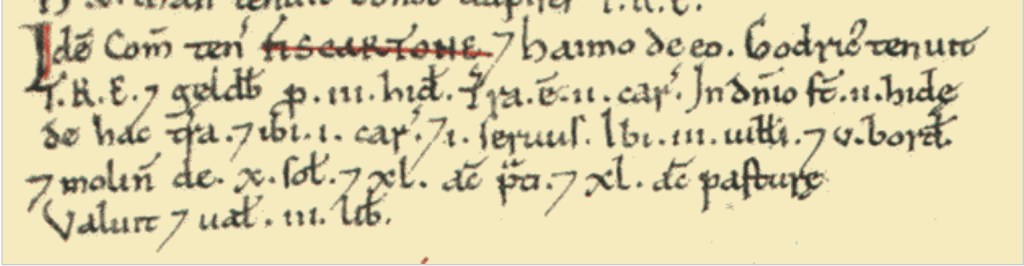
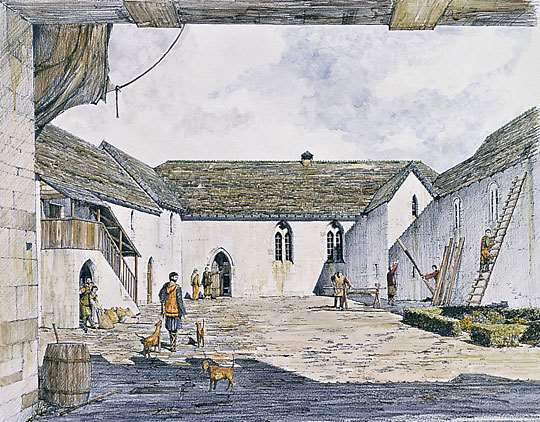


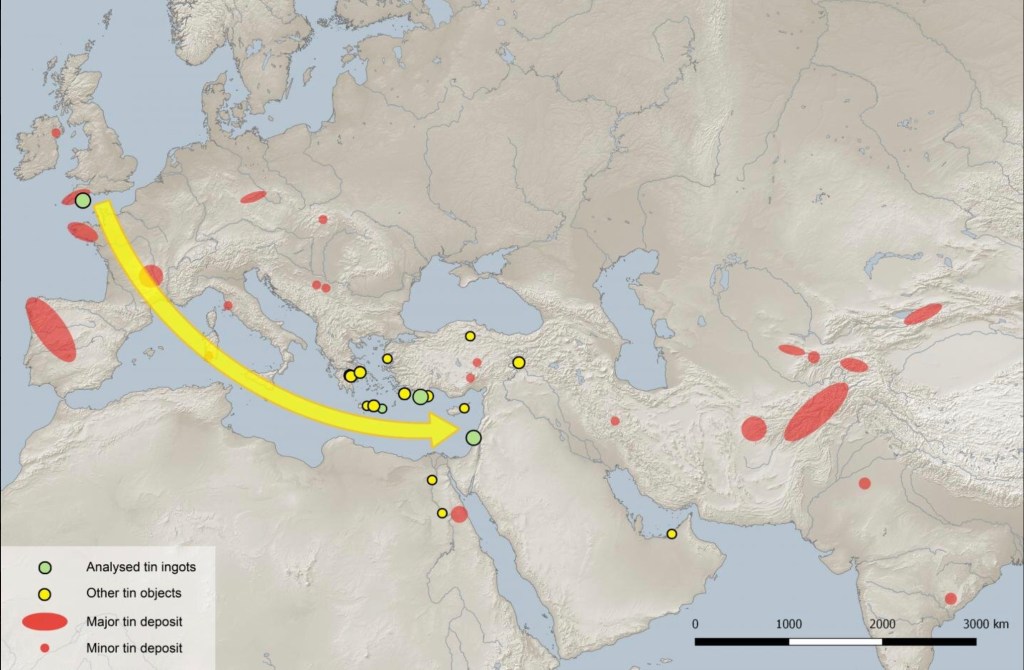
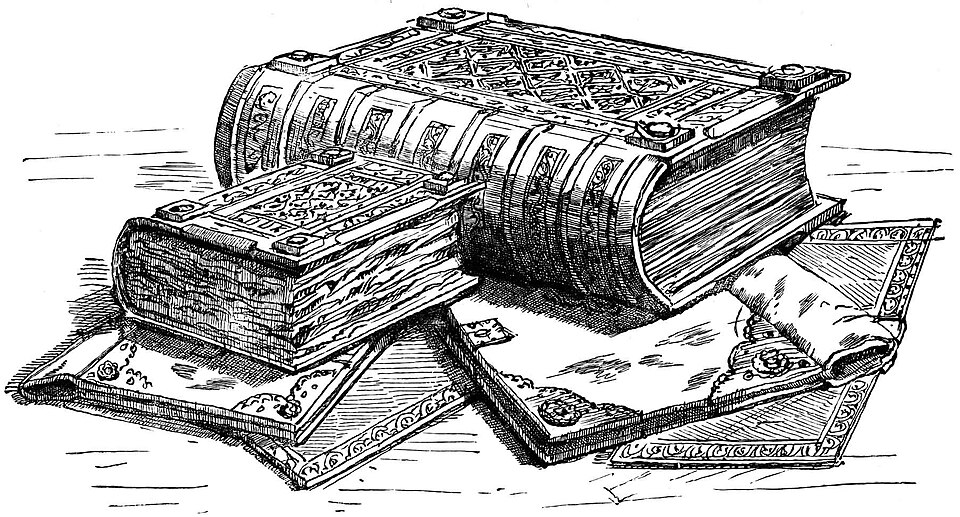
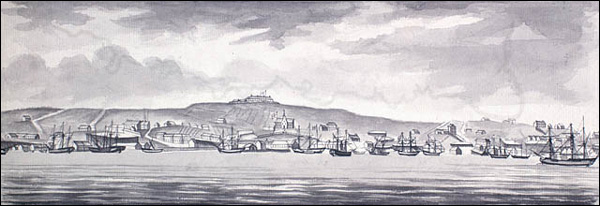

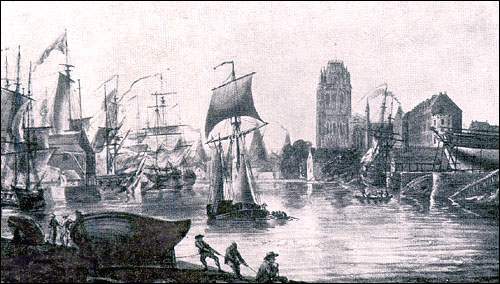
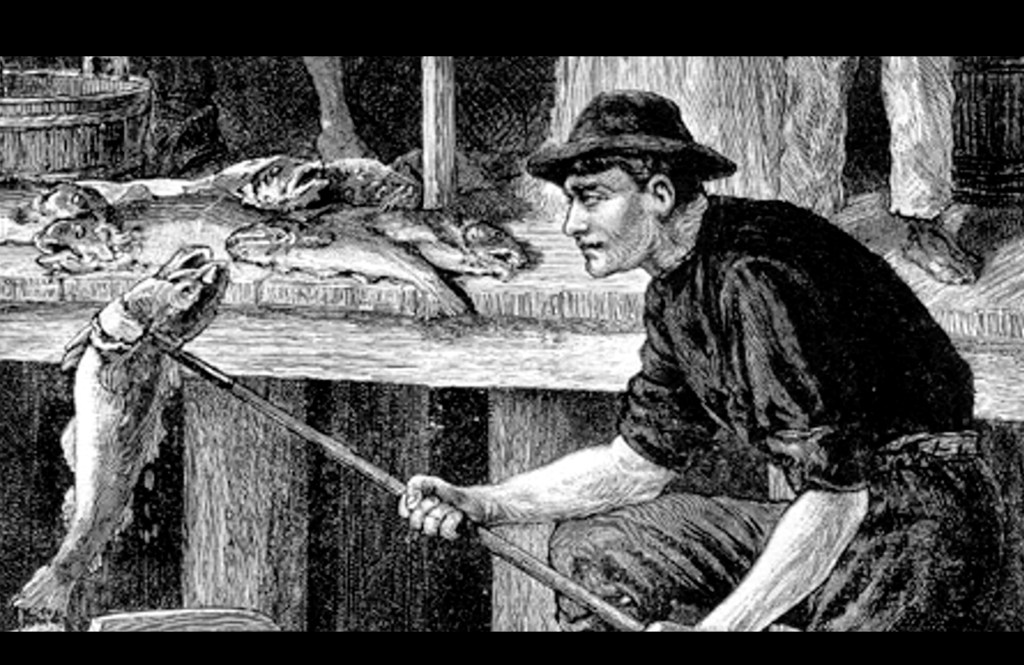


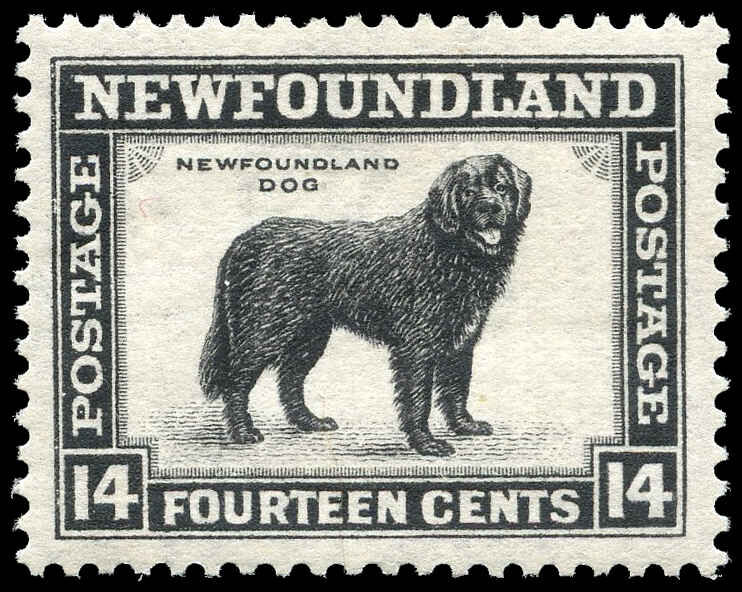
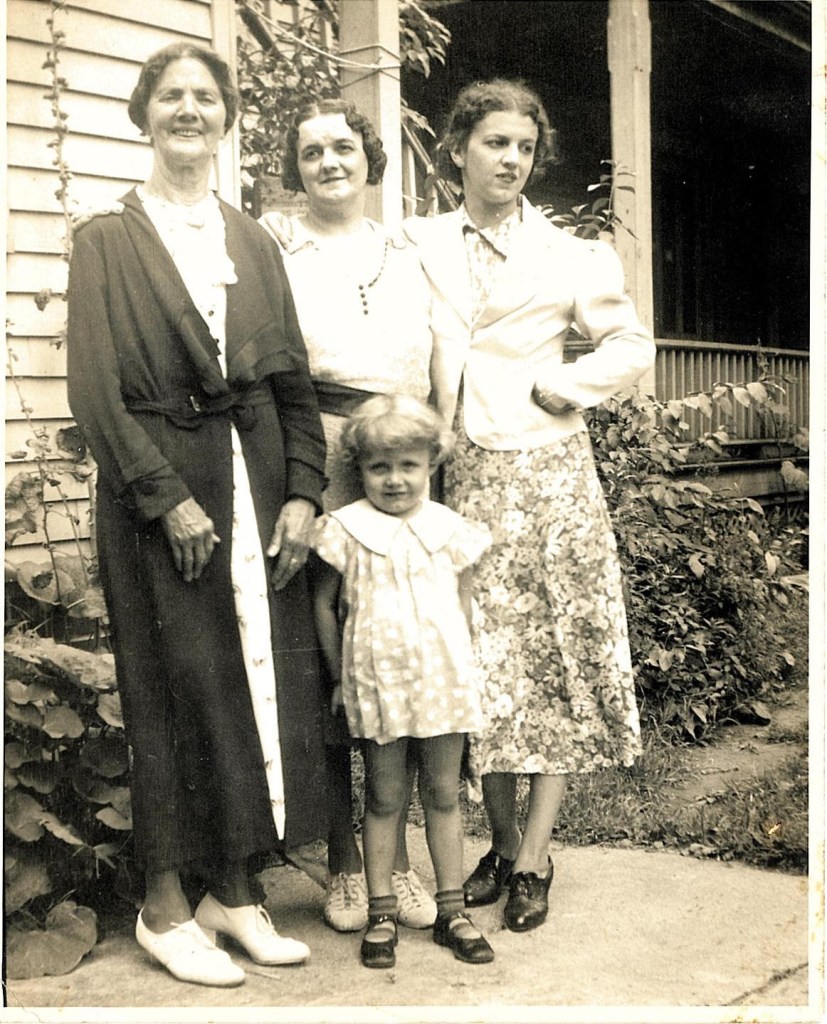

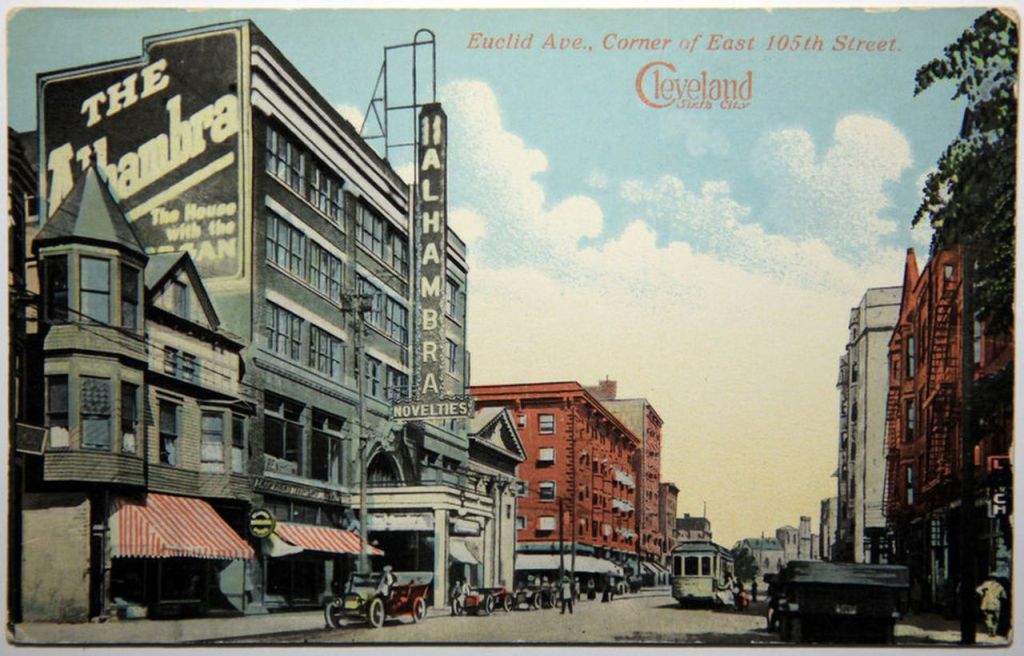


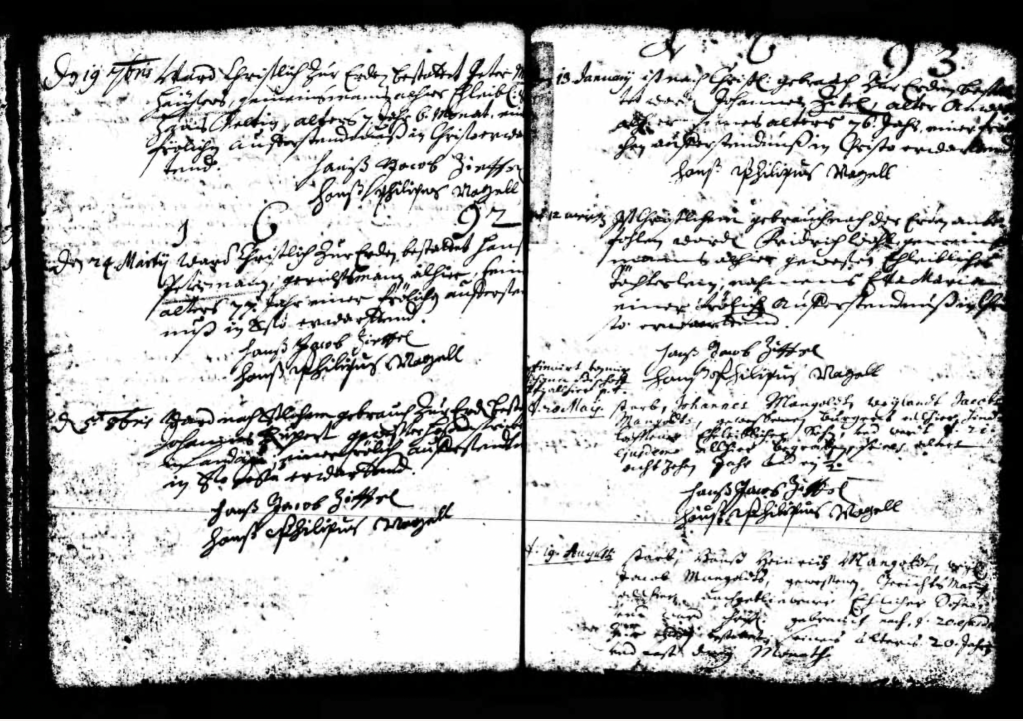


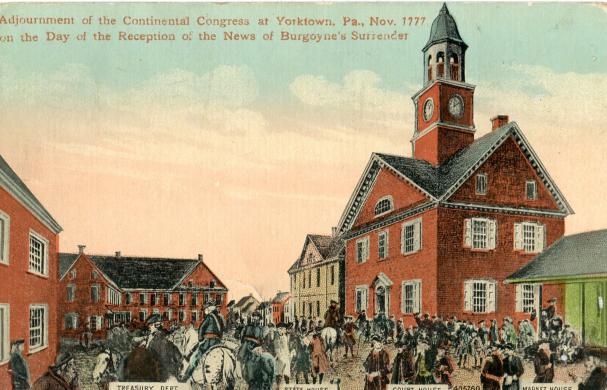


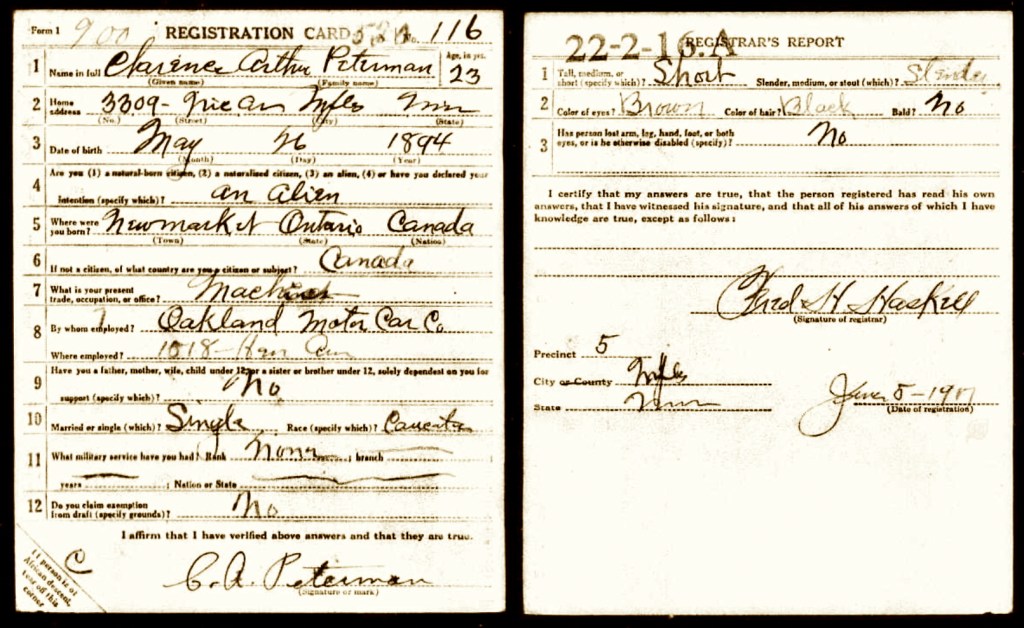
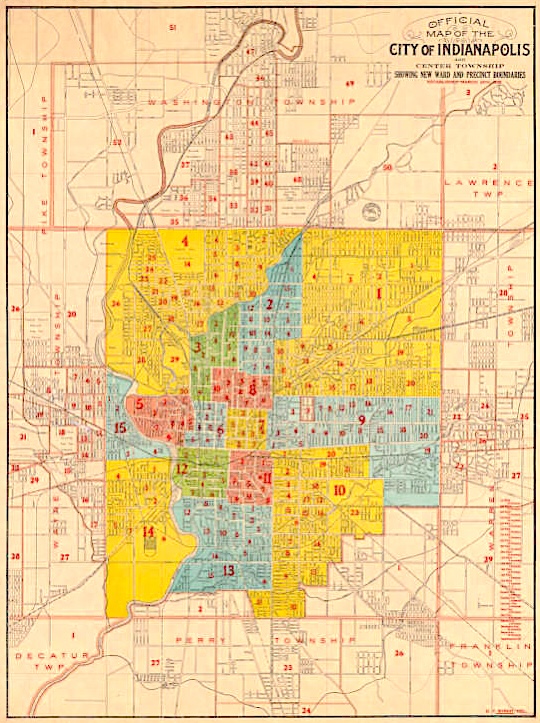
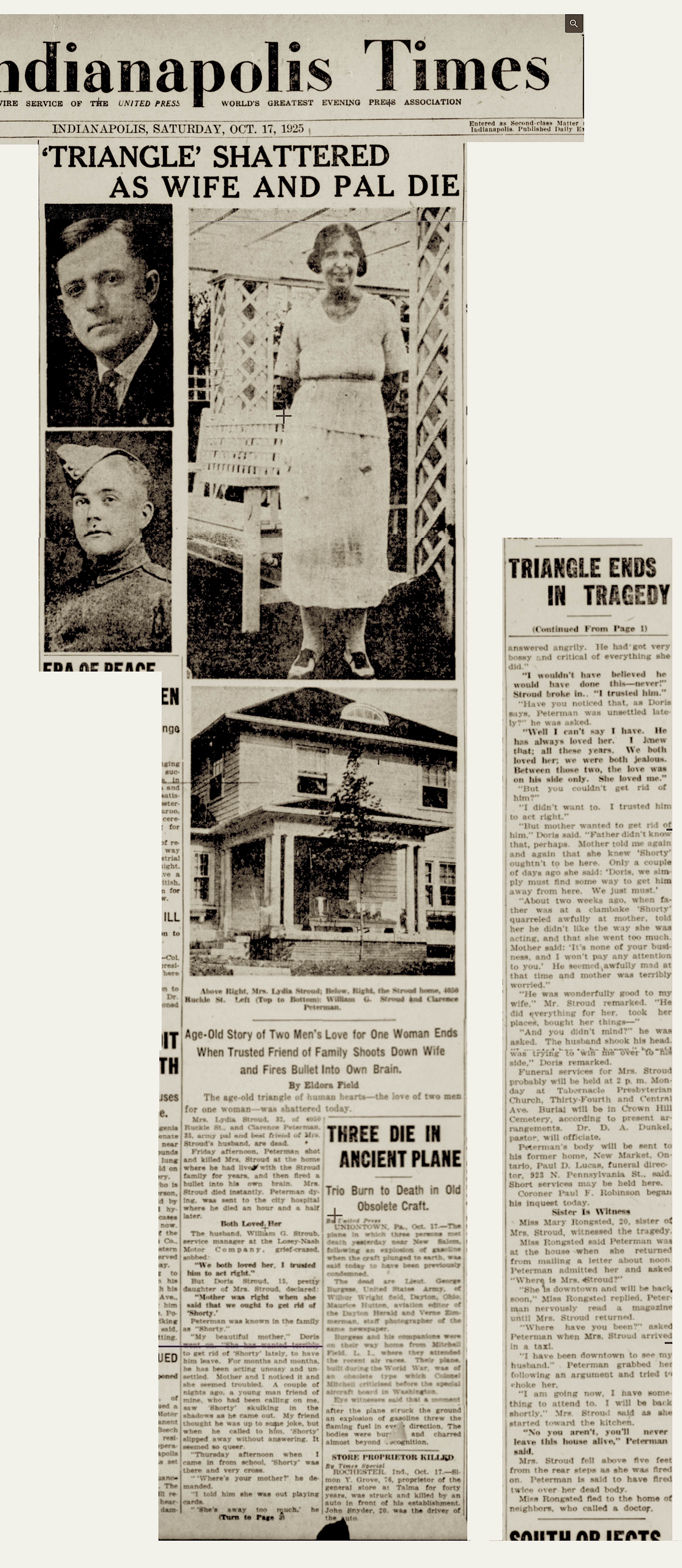


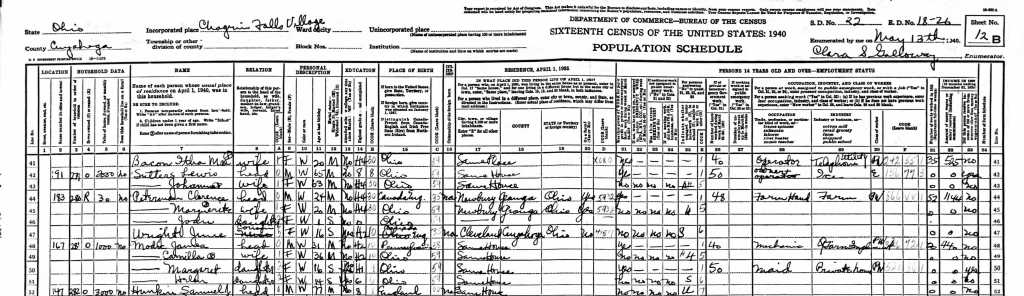


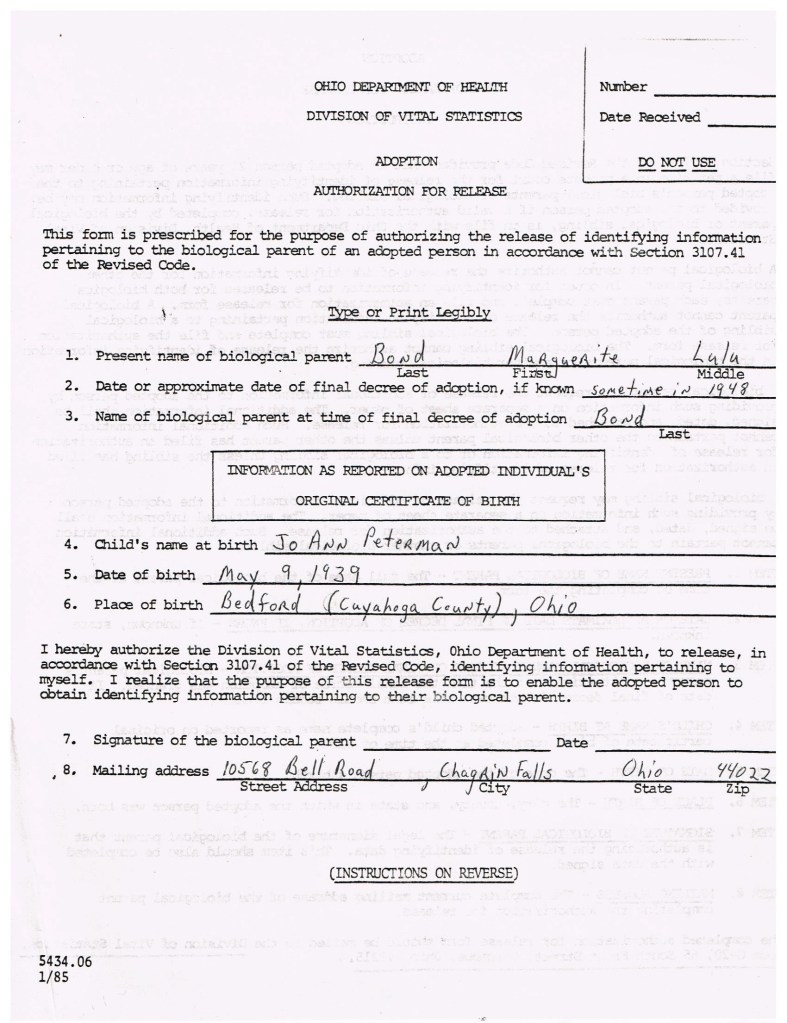

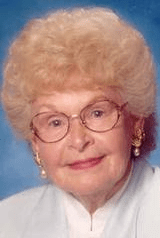

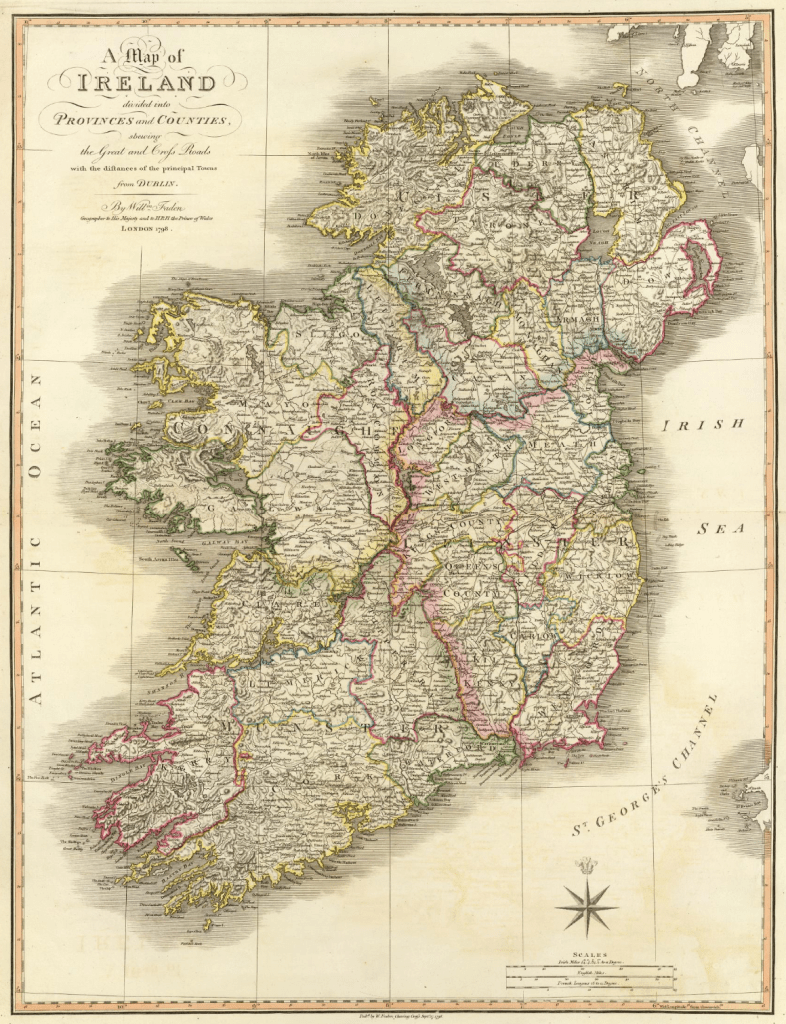
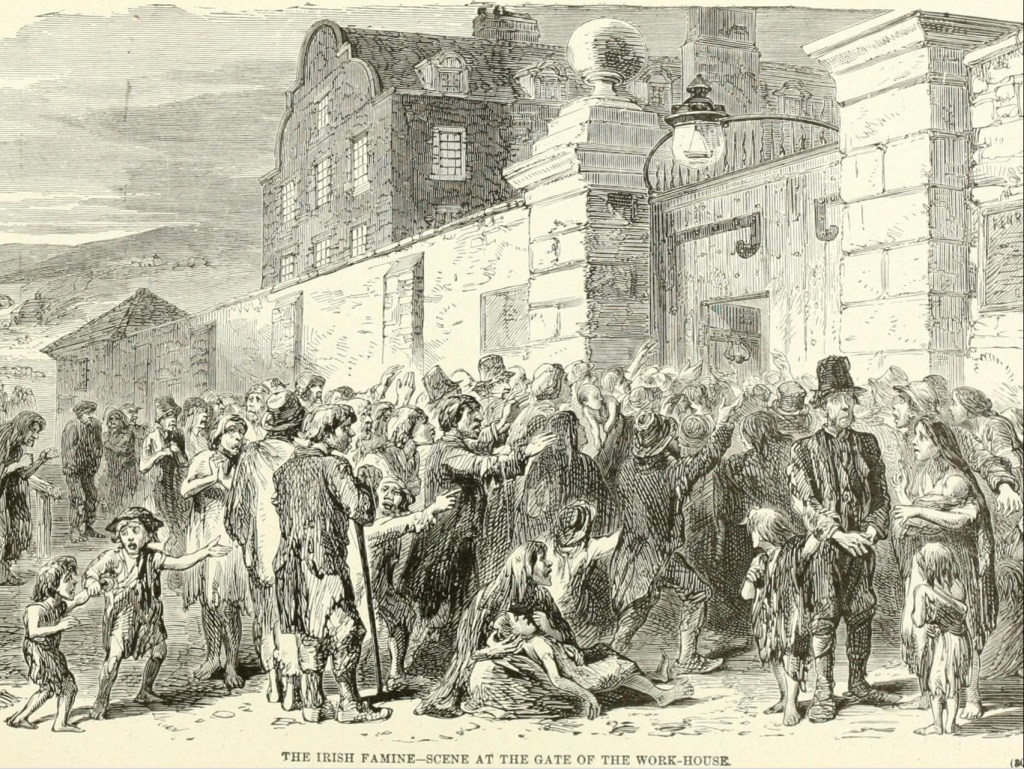


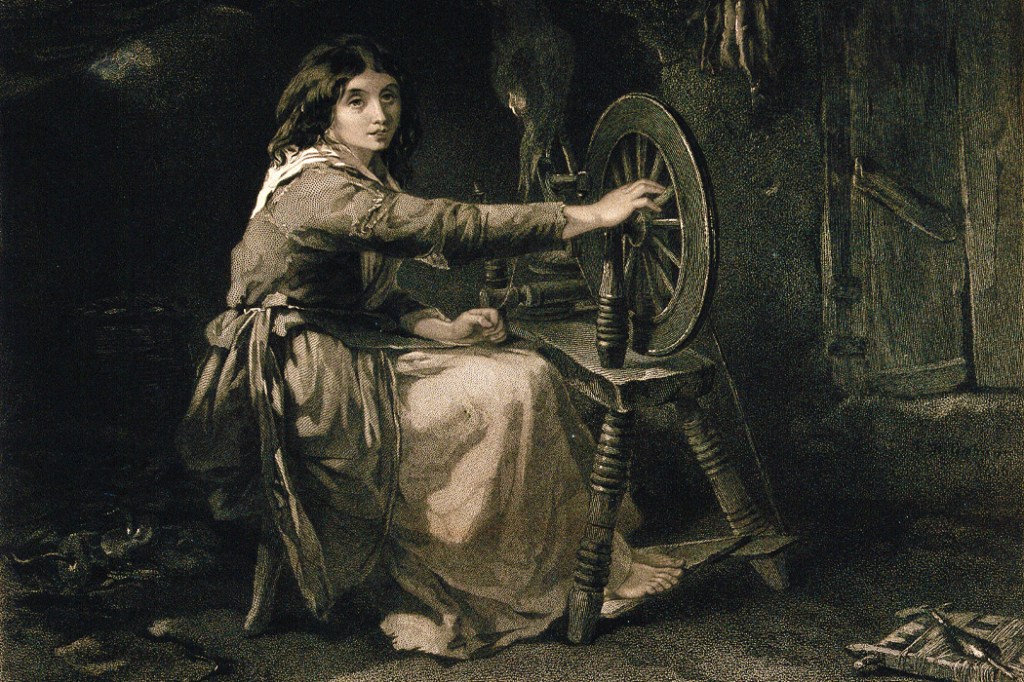

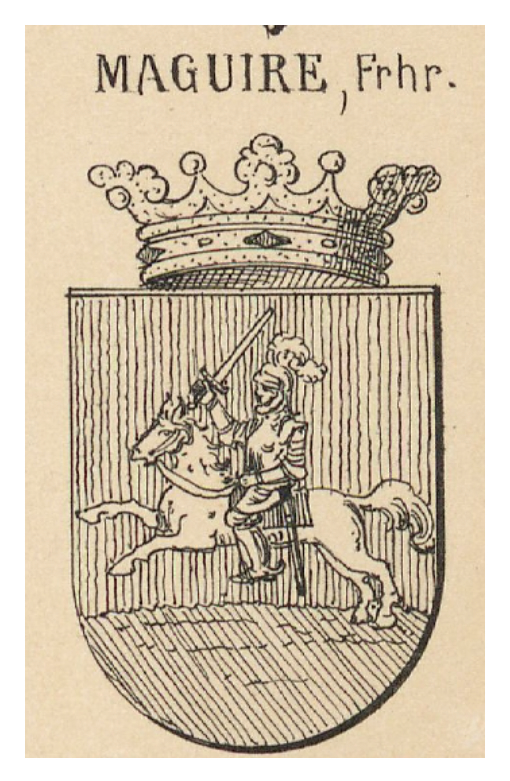


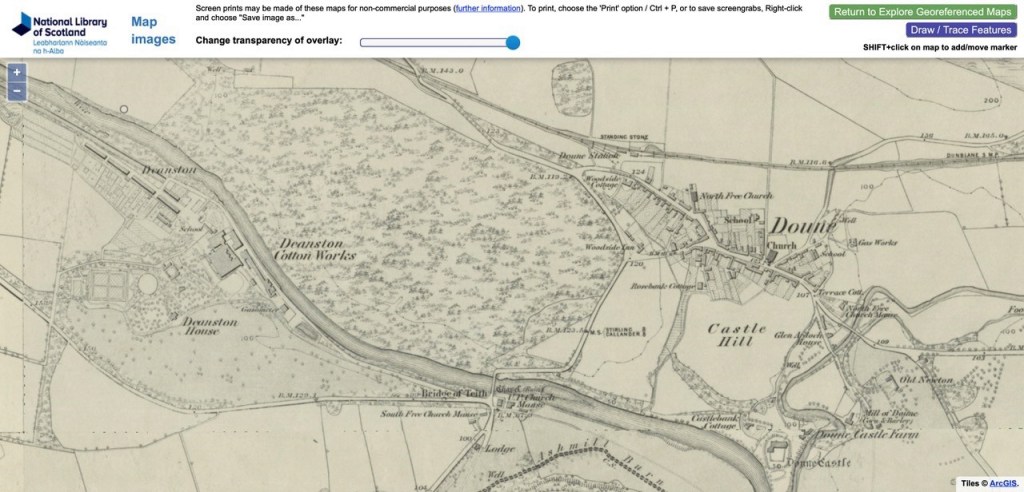
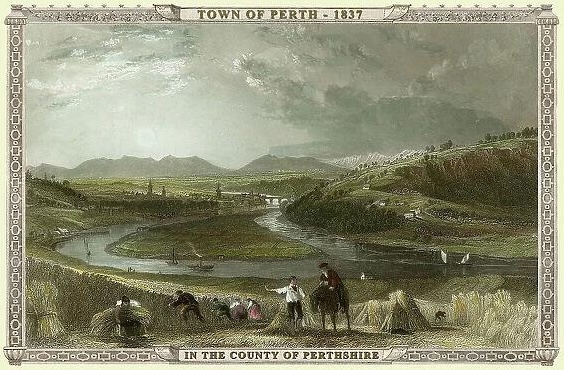
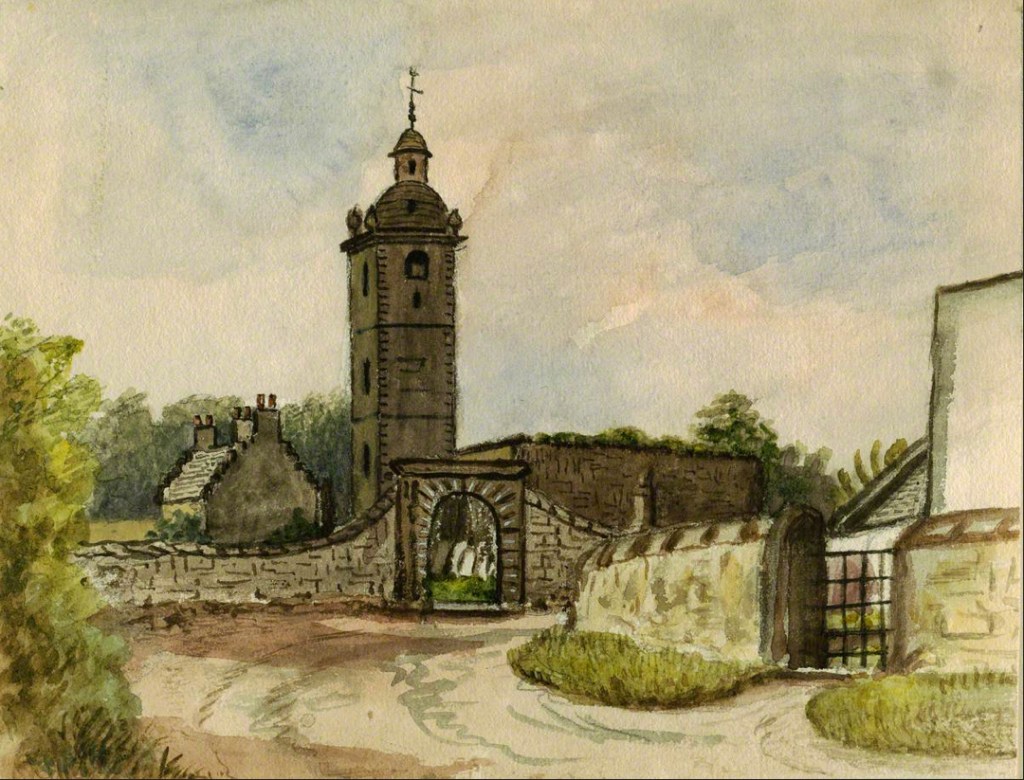

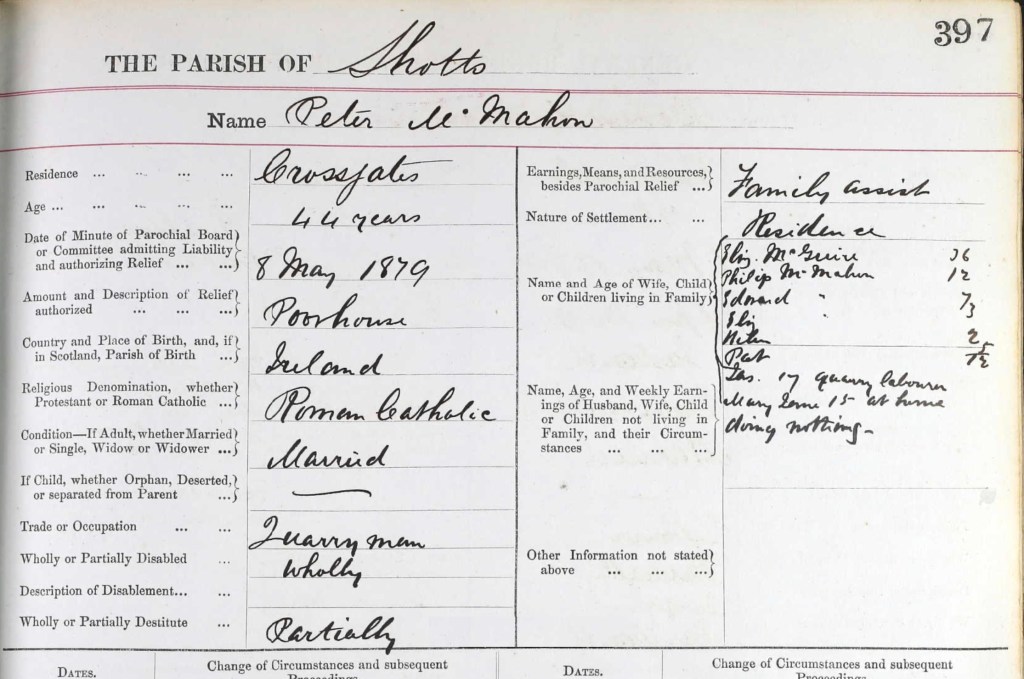



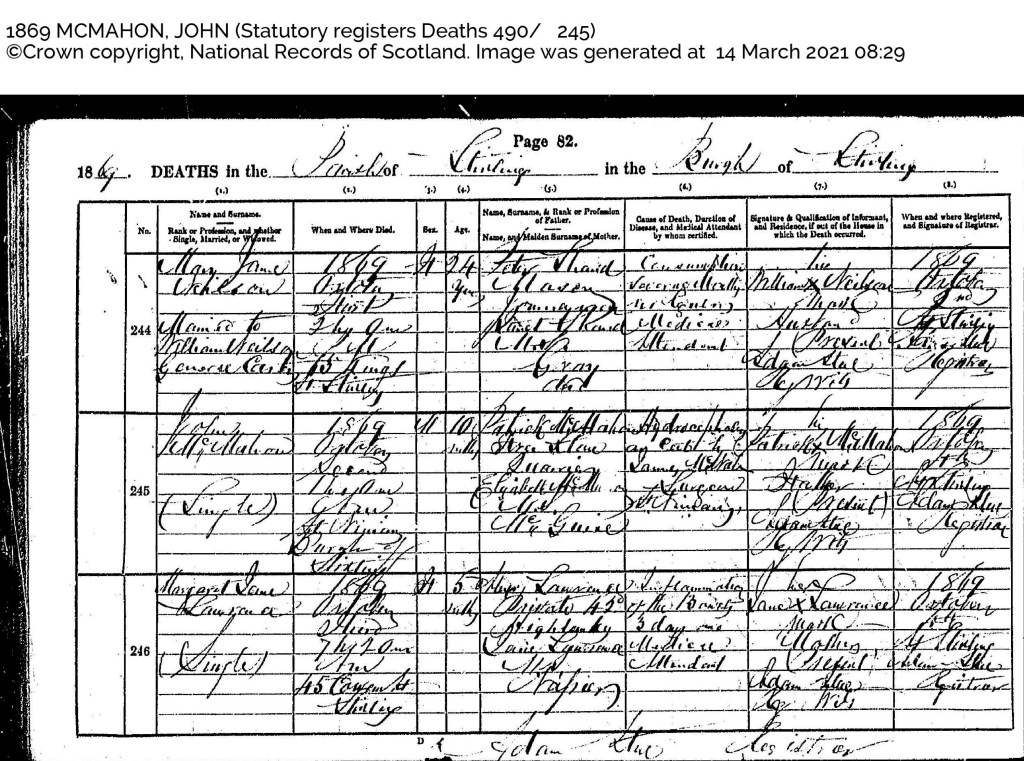
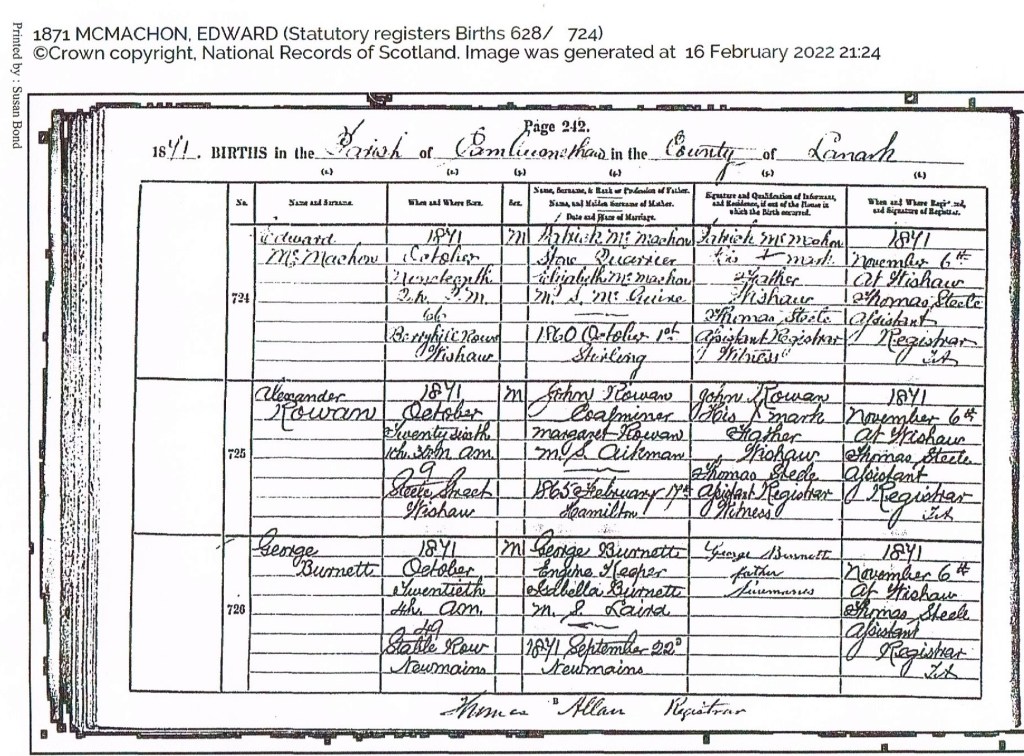


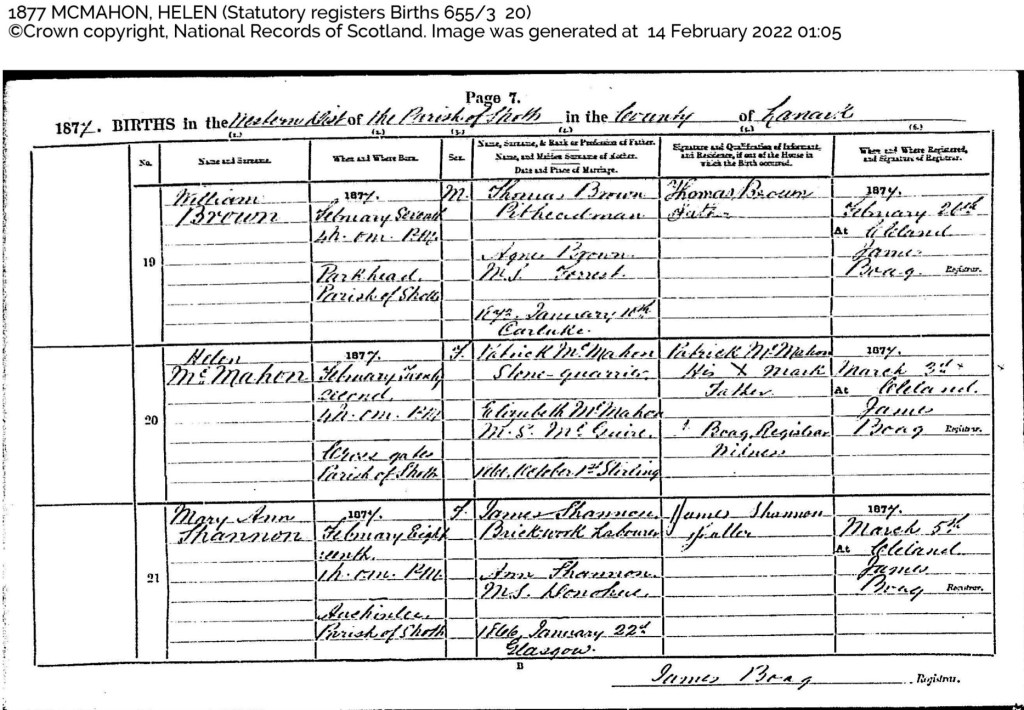
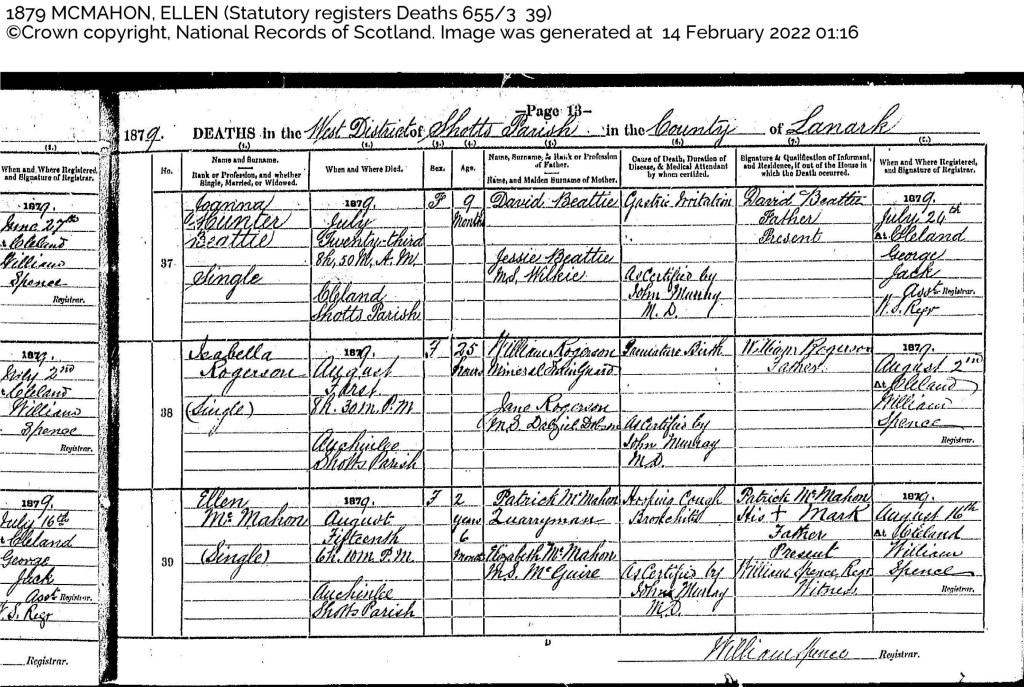

 Our Ancestors, Our Narratives

#/media/File:Treaty_of_Paris_by_Benjamin_West_1783.jpg)


.jpg)

#/media/File:FortStJeanPeachey1790.jpg)

#/media/File:Tory_Refugees_by_Howard_Pyle.jpg)


#/media/File:1715_Dutch_Reformed_Church,_Albany,_NY.jpg)
.jpg)


_of_New_York_in_1679_at_Pearl_Street.jpg)
_During_the_Revolutionary_War_-_Geographicus_-_NewYorkCity-johnsonbien-1878.jpg)


,_by_Netherlandish_or_South_German_School_of_the_late_15th_Century.jpg)


#/media/File:Oudewater_moord.jpg)
#/media/File:Oudewater_moord.jpg Siege of Oudewater (1575)
https://en.wikipedia.org/wiki/Siege_of_Oudewater_(1575)#:~:text=II of Spain.-,Siege and massacre,leading to a major conflagration.)
 van het Amsterdamse lakenbereidersgilde - Google Art Project.jpg)


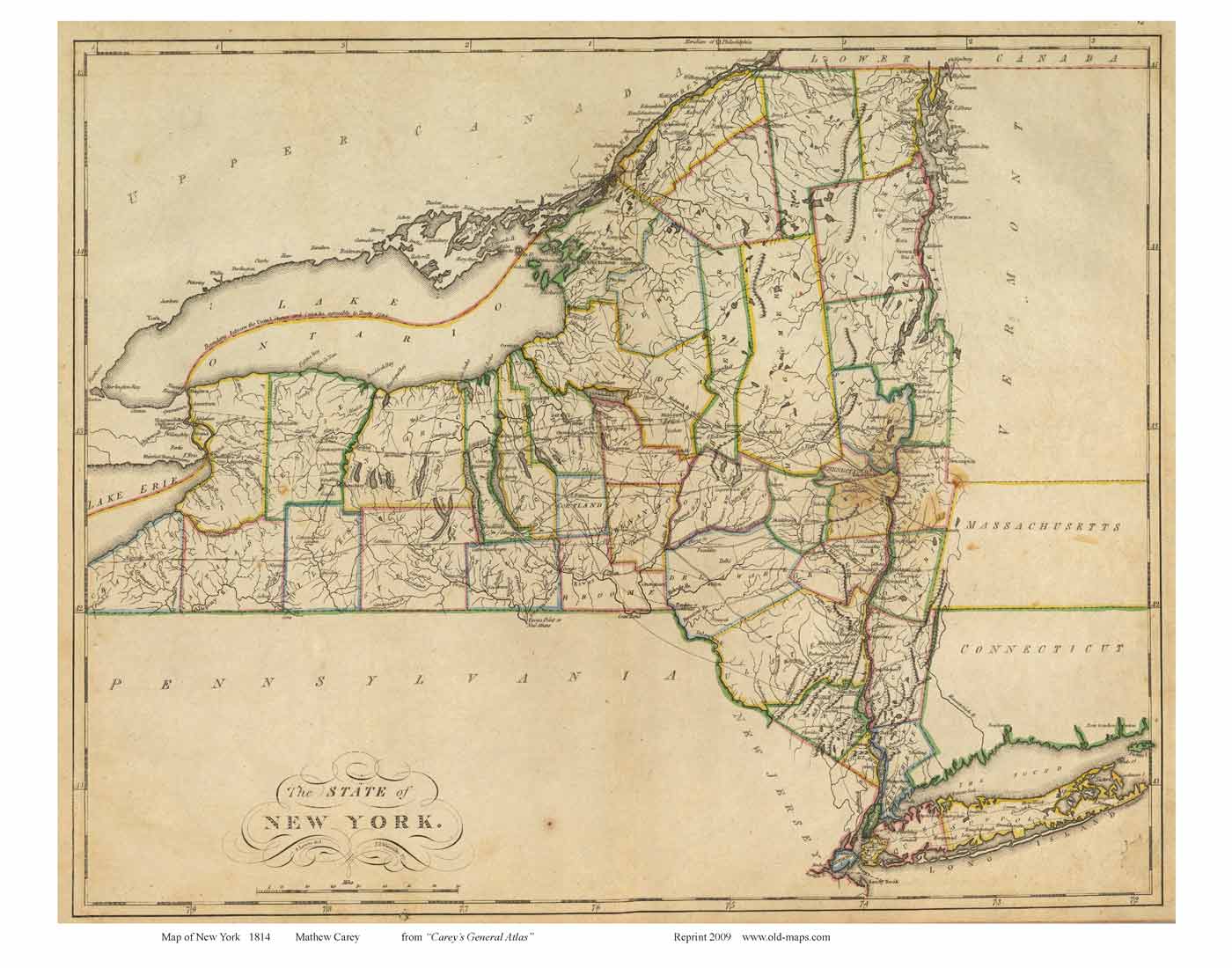


.png)


.jpg)

.jpg)


.jpg)


