A Linha do Coutinho / Oliveira, Uma Narrativa — Capítulo Três

Este é o Capítulo 3 de 3, sendo o último capítulo que acompanha esta linhagem familiar. (De relembrar que, no total, existem 6 capítulos: o primeiro conjunto de 3 capítulos está escrito em inglês; o segundo conjunto de 3 capítulos está traduzido para português.

Cartaz de viagem de Jatos da Varig Airlines para a Bahia, por volta de 1960.
(Imagem cortesia da Librairie Elbé, Paris).

Um Lugar Completamente à Parte

As famílias Coutinho e Oliveira são famílias tradicionais católicas romanas brasileiras, descendentes de imigrantes portugueses. No entanto, o estado da Bahia, no nordeste do Brasil, para onde imigraram, é um local único, bastante distinto do resto do país. Há razões históricas para isso… (1)

O Catolicismo é a Religião Fundamental do Brasil

Segundo a tradição, a primeira missa católica celebrada no Brasil ocorreu a 26 de abril de 1500. Foi celebrada por um padre que chegou ao país juntamente com os piratas e exploradores portugueses para reivindicar a posse das terras recém-descobertas. A primeira diocese do Brasil foi erigida mais de 50 anos depois, em 1551.

A forte herança católica do Brasil remonta ao zelo missionário ibérico, cujo objetivo no século XV era difundir o cristianismo. As missões da Igreja começaram a dificultar a política governamental de exploração dos povos indígenas. Assim, em 1782, os jesuítas foram suprimidos e o governo intensificou o controlo sobre a Igreja. Atualmente, a Igreja Católica é a maior denominação religiosa do país, com 119 milhões de pessoas, ou 56,75% da população brasileira, a declarar-se católica em 2022. Estes números fazem do Brasil o país com a maior comunidade católica do mundo. Existe um vasto panteão de santos na tradição católica. (Wikipedia e Google)
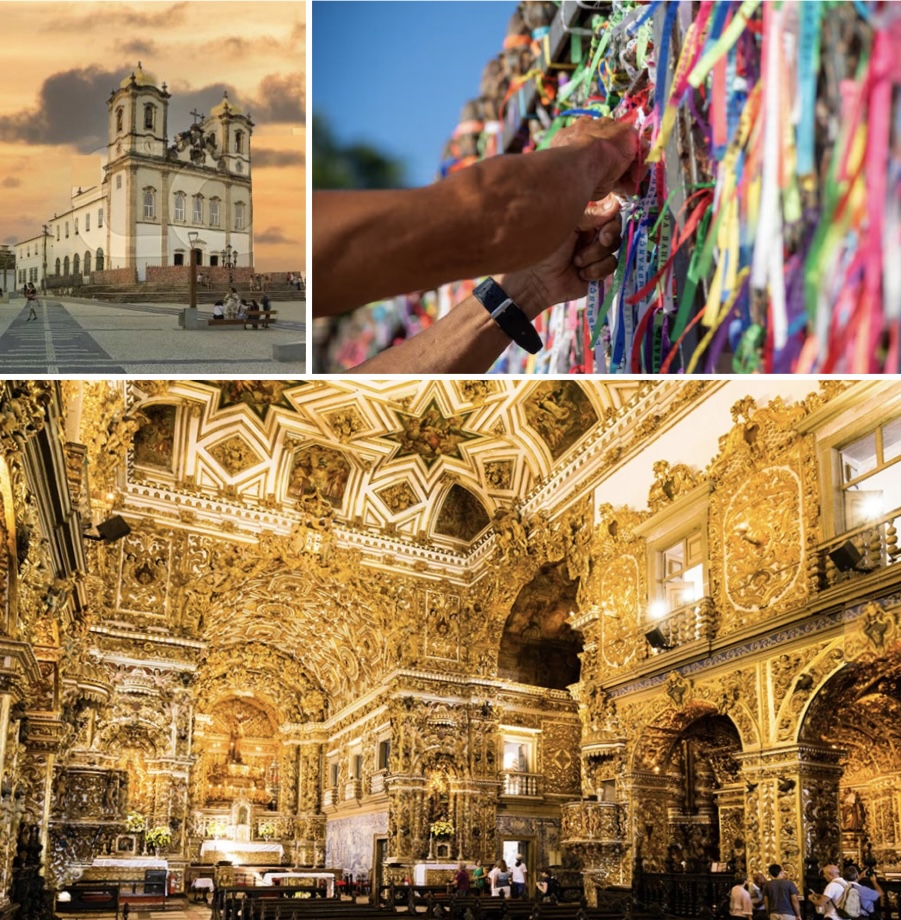
Em cima, à esquerda: Exterior da Igreja de Nosso Senhor do Bonfim, Salvador. Canto superior direito: Fitas atadas à vedação que circunda a igreja. Leem ‘Lembrança do Senhor do Bonfim da Bahia’ e estão ligados à crença de verem os seus desejos atendidos. Em baixo: Vista interior da Igreja e Convento de São Francisco / Igreja e Convento de São Francisco.

Comentário: Há mais católicos romanos no Brasil do que em Itália, simplesmente porque a população do Brasil é muito maior do que a da Itália. Seria muito apropriado dizer que o catolicismo é uma religião institucionalizada na Bahia. Especificamente, as fontes citam que existem mais de 365 catedrais e igrejas históricas só em Salvador, na Bahia. (Uma para cada dia do ano — o que nos leva a pensar: e o dia 29 de fevereiro? Em vez de ir à igreja, todos ganham um dia de folga para ir à praia?) (2)

A Escravatura só Terminou Oficialmente em 1888

“Durante o período do tráfico atlântico de escravos, o Brasil importou mais africanos escravizados do que qualquer outro país do mundo. Dos 12 milhões de africanos trazidos à força para o Novo Mundo, aproximadamente 5,5 milhões foram levados para o Brasil entre 1540 e a década de 1860. A escravização em massa de africanos desempenhou um papel fundamental na economia do país e foi responsável pela geração de vastas riquezas. Nos primeiros 250 anos após a colonização do território, cerca de 70% de todos os imigrantes que chegaram à colónia eram pessoas escravizadas.

A escravatura não foi legalmente abolida em todo o país até 1888, quando Isabel, Princesa Imperial do Brasil, promulgou a Lei Áurea. A Lei Áurea foi precedida pela Lei Rio Branco, de 28 de setembro de 1871 (Lei do Nascimento Livre), que libertou todas as crianças nascidas de pais escravizados, e pela Lei Saraiva-Cotegipe, de 28 de setembro de 1885, que libertou os escravos quando estes completassem 60 anos. O Brasil foi o último país do mundo ocidental a abolir a escravatura.” (Wikipedia, ver notas de rodapé).

À esquerda: Isabel, Princesa Imperial do Brasil, fotografada por Joaquim Insley Pacheco, cerca de 1870. À direita: Manuscrito da Lei Áurea do Arquivo Nacional do Brasil.

Candomblé e Sincretismo

Quando vivíamos na Bahia, por vezes assistíamos a partes de cerimónias de Candomblé realizadas num local chamado terreiro. Estes espaços sagrados são centrais para o Candomblé, servindo como local de culto comunitário, rituais e ligações com os espíritos ancestrais. Ambos achávamos notável que muitos Pai-de-santos ou Mãe-de-santos diferentes pudessem olhar para ti e dizer-te exatamente qual o Orixá que te estava a proteger. (E entre eles, em diferentes épocas e lugares, eram sempre os mesmos).

“O Candomblé desenvolveu-se entre as comunidades afro-brasileiras no meio do tráfico atlântico de escravos, entre os séculos XVI e XIX. Surgiu da fusão das religiões tradicionais africanas dos povos iorubá, bantu e fon, trazidas para a América do Sul, com o catolicismo romano, especialmente os santos católicos. Consolidou-se principalmente na região da Bahia durante o século XIX.” (Wikipédia e Altar Gods)

Uma das tradições religiosas centrais do Candomblé é a veneração dos Orixás, energias divinas associadas a diferentes elementos da natureza. Acredita-se que os indivíduos se identificam com um dos Orixás como o seu espírito tutelar. (Altar Gods)

Quando muitos escravizados chegaram à Baía durante a diáspora, encontraram os colonialistas portugueses católicos romanos que controlavam a região. De forma muito astuta, mantiveram as suas afiliações religiosas, ocultando secretamente os seus próprios santos, que estavam associados a santos católicos, como forma de preservar as crenças africanas apesar da conversão religiosa forçada. Isso chama-se sincretismo. Exemplo disso é o Orixá Ogun, que representa São Jorge, São Sebastião ou Santo António, dependendo da região. O Candomblé pode ser considerado uma religião não-institucionalizada na Bahia.

Imagem superior: Obra de arte contemporânea representando três Orixás. Inferior esquerda: Grupo de praticantes de Candomblé fotografados em 1902. (Ambas as imagens são cortesia de Altar Gods). Em baixo, à direita: Fotografia de família da festa de Iemanjá realizada todos os anos em fevereiro em Salvador, Bahia.

Em síntese, “o Candomblé é uma religião exclusivamente afro-brasileira, possibilitada pela mistura de tradições africanas, europeias e indígenas no Novo Mundo. O Candomblé é mais forte na Bahia, Brasil, um importante porto para a chegada de africanos. A sua principal cidade, Salvador, foi a primeira capital do Brasil. O primeiro terreiro de Candomblé foi construído em Salvador no século XIX, após a abolição da escravatura.” (Wikipédia) (4)
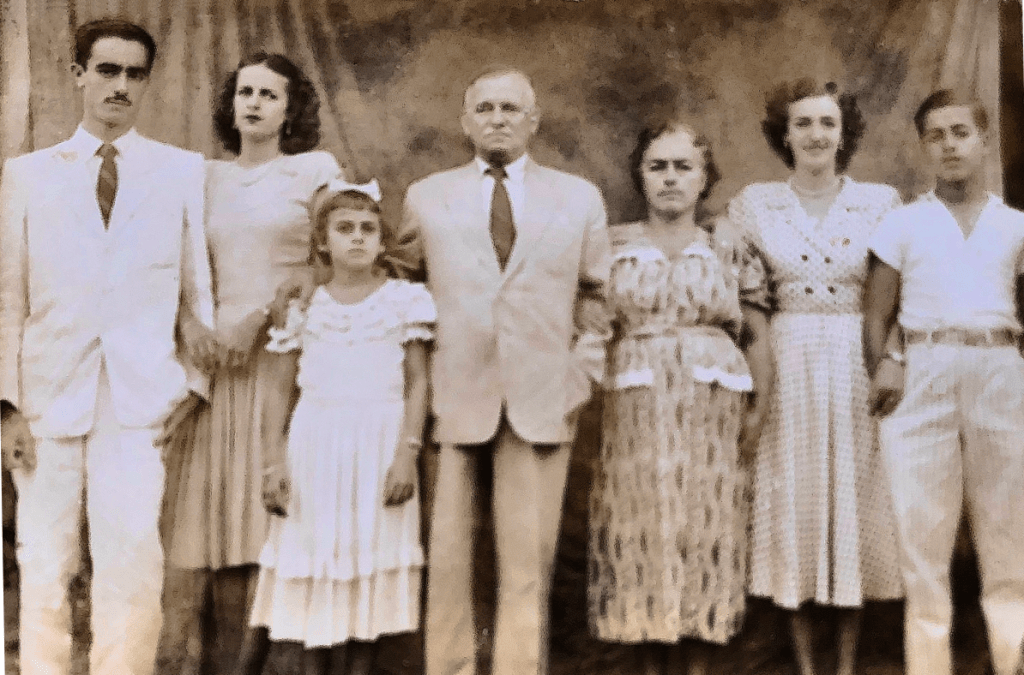
A Família Oliveira de Ubaitaba por volta de 1949-50. Da esquerda para a direita: Raynelde Dantas Motta, Laura (Oliveira) Motta, Lourdes Oliveira, João Celestino de Oliveira, Maria (Almeida) de Oliveira, Lindaura de Almeida Oliveira e José Oliveira. (Foto de família).

A Família Oliveira de Ubaitaba

Ubaitaba é uma pequena cidade ribeirinha localizada num trecho remanescente da Mata Atlântica antiga, no estado da Bahia, entre as cidades de Salvador e Ilhéus. Esta região “era anteriormente habitada por povos indígenas [Tupi] até à chegada dos colonizadores portugueses. Após o contacto com os portugueses e o estabelecimento das Capitanias do Brasil pelo Rei Manuel I de Portugal a partir de 1504, o território do município passou a fazer parte das terras da Capitania de São Jorge dos Ilhéus. A vila de São Jorge dos Ilhéus foi fundada em 1536 como Vila de São Jorge dos Ilhéos. O nome moderno de Ubaitaba tem origem na língua Tupi.

Ao longo do século XVIII, desenvolveu-se a Capitania de São Jorge dos Ilhéus e estabeleceram-se quintas ao longo da costa da vasta região. A origem da vila está relacionada com a criação das fazendas do Arraial de Tabocas e do Arraial de Faisqueira (em 1783), área então utilizada para a extração de madeira, cultivo de cana-de-açúcar, cereais e cacau.

This is a excerpted portion of the General Map of Brazil published in January 1911, and organized by the company Hartmann-Reichenbach. The red lines are railways. (Map image courtesy of Mapas Históricos da Bahia).

A 28 de janeiro de 1914, uma cheia destruiu o Arraial de Tabocas, dispersando a sua população. Coordenados pelo médico Francisco Xavier de Oliveira, residente na aldeia, as vítimas reconstruíram a aldeia, erguendo-a acima das águas. O nome escolhido foi Itapira. [Este nome foi alterado para] Ubaitaba, concedido em 1933, uma combinação das palavras indígenas “ubá, que significa canoa pequena, ‘y’, que significa rio, e ‘taba’ que significa vila/cidade.

Ao analisar as poucas fotografias históricas disponíveis da cidade, percebe-se que o traçado é constituído por duas ruas paralelas que acompanham a margem do rio. Entre as duas ruas, encontra-se um amplo meridiano arborizado, com a Igreja Católica numa das extremidades da cidade. As lojas e comércios têm um ou dois andares e estão virados para a rua. Fornecemos esta descrição porque a família Oliveira possuía um armazém em Ubaitaba, do tipo então conhecido por mercearia.

À esquerda: Uma das duas ruas principais da cidade de Ubaitaba, na Bahia, no século XIX. À direita: a igreja que marcava o fim das ruas. O mercado geral, “mercearia”, gerido pela família Oliveira, situava-se provavelmente em algum lugar ao longo desta rua e poderia ter sido semelhante ao apresentado na fotografia inferior. (Para créditos das fotografias, ver notas de rodapé).

Antes do aparecimento das grandes cadeias de retalho, as mercerias gerais serviam como lojas de bairro essenciais, onde as pessoas podiam comprar uma variedade de produtos do dia-a-dia, funcionando como um ponto central nas comunidades locais. Vendiam uma grande variedade de produtos básicos e importados, incluindo artigos essenciais como arroz, feijão e açúcar, bem como produtos indispensáveis ​​como sabão e fósforos, e uma seleção de alimentos e bebidas importadas. Também ofereciam produtos locais, como café, queijo e fruta.

Algumas mercearias raras ainda existem até hoje, mas este nome evocativo em particular deu lugar ao nome bastante genérico e universal de mini-mercado. (Pense em bilhetes de lotaria, cigarros, um pacote de leite e talvez alguns snacks, ou donuts). Nesta era moderna do Walmart em que vivemos, existem poucos lugares nas comunidades locais onde se pode entrar numa pequena loja familiar e todos saberem o seu nome.

À família de Oliveira…
Podemos começar por Manoel Celestino de Oliveira, nascido (provavelmente) no Brasil. Casou com Rita Celestino de Oliveira. Tiveram um filho, cujo nome é —

João Celestino de Oliveira, nascido a 6 de novembro de 1890 — em Maceió, Alagoas (estado) faleceu a 25 de novembro de 1968, em Ubaitaba. Casou duas vezes: primeiro com Eufrosina Souza Oliveira, até à sua morte antes de 1925. Tiveram um filho.

Em segundo lugar, casou com Maria de Almeida em 1925. Nasceu a 20 de março de 1900 em Maracás — faleceu a 5 de outubro de 1968, em Ubaitaba. Tiveram mais quatro filhos. Os pais de Maria de Almeida eram: Cândido Olegário de Almeida e Balbina Olegário.

Juntos, João Celestino de Oliveira e Maria de Almeida criaram 5 filhos. Todos os nascimentos e óbitos ocorreram na Bahia, Brasil, salvo indicação em contrário:

  • Agostinho Celestino de Oliveira, nascido a 13 de Agosto de 1919 — falecido a 12 de Abril de 1983. (A sua mãe biológica foi a primeira mulher Eufrosina Souza Oliveira). Casou com Ana Eusátquio de Souza a 24 de abril de 1944.
  • Lindaura de Almeida (Oliveira) Coutinho, nascida a 24 de outubro de 1927 em Ubaitaba — falecida a 19 de junho de 2020 em Salvador. (Lindaura leva a linhagem familiar mais longe. Veja o seu cônjuge e filhos abaixo).
  • Laura de Almeida (Oliveira) Motta, nascida a 27 de março de 1929. Casou com Raynelde Dantas Motta, a 30 de março de 1949.
  • José Celestino de Oliveira, nascido a 20 de dezembro de 1937 — falecido em 1992. Casou com Nidia Maria Amado de Oliveira em maio de 1968.
    Era prima do querido romancista brasileiro Jorge Amado (ver notas de rodapé).
  • Maria Lourdes de Almeida (Oliveira) Cunha, nascida a 11 de Novembro de 1938. Casou com Humberto Olegário da Cunha a 28 de Dezembro de 1965. (5)
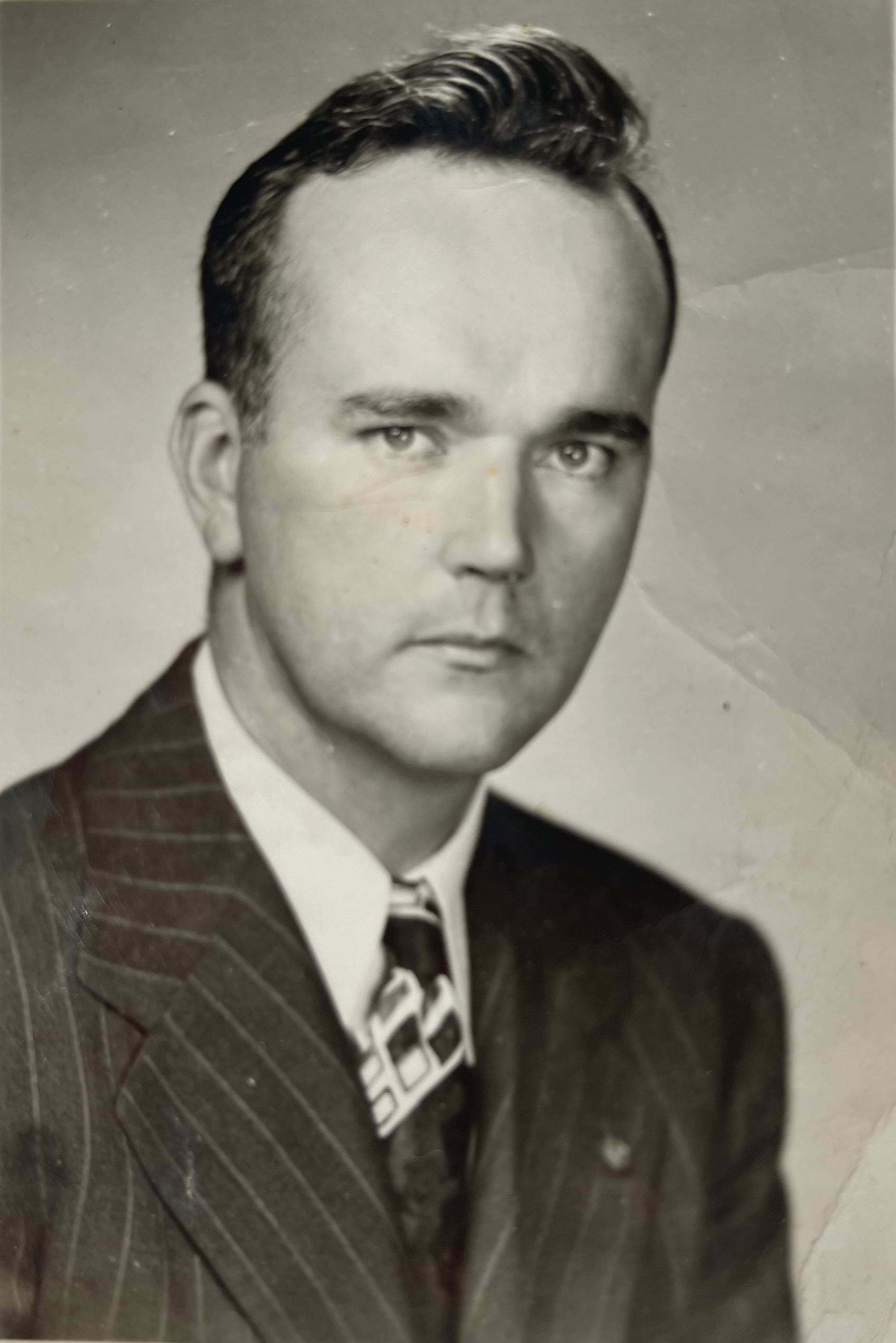
Paulo de Azevêdo Coutinho, cerca de 1966, e
Lindaura Almeida (Oliveira) Coutinho, cerca de 1950.
(Fotos de família).

“Nem imaginas o quanto senti a tua falta…”

Antes de se casarem, Paulo e Lindaura trocaram cartas durante cerca de dois anos, até ficarem noivos em setembro de 1950. (Nessa altura, as cartas eram a única forma de comunicação. Os telefones residenciais ainda eram uma novidade e bastante caros no Brasil daquela época). Nenhuma destas cartas de namoro sobreviveu, mas algumas outras foram preservadas. Ao analisá-las, notamos a ternura com que ainda escrevia à sua mulher, Lindaura, mesmo muitos anos após o casamento. Numa carta de 1968 (que incluímos nas notas de rodapé), lemos estas palavras —

11 de abril de 1968

Minha querida Lindaura,

Saúde, juntamente aos nossos queridos filhos.

Estou arranjando as coisas para que possa vir no início de maio. Rivaldo conseguiu uma casa na Piranga, mas tem que fazer grandes reformas. Não pagarei aluguel, nem concerto.

Acho que na Piranga, os nossos filhinhos não extranharão muito o clima de Piranga. Breve lhe escreverei, carta mais minuciosa. Não calcula você, o quanto de saudade tenho sentido. Muitos beijos para os nossos filhos. Saudoso abraço do seu Paulo.

PS: A gratificação vai ser compensadora. NBR$ 500,00. Se a camioneta da “Ritom” não chegar até o dia 17 deste, mandarei os vestidos de Maria Celeste de avião.

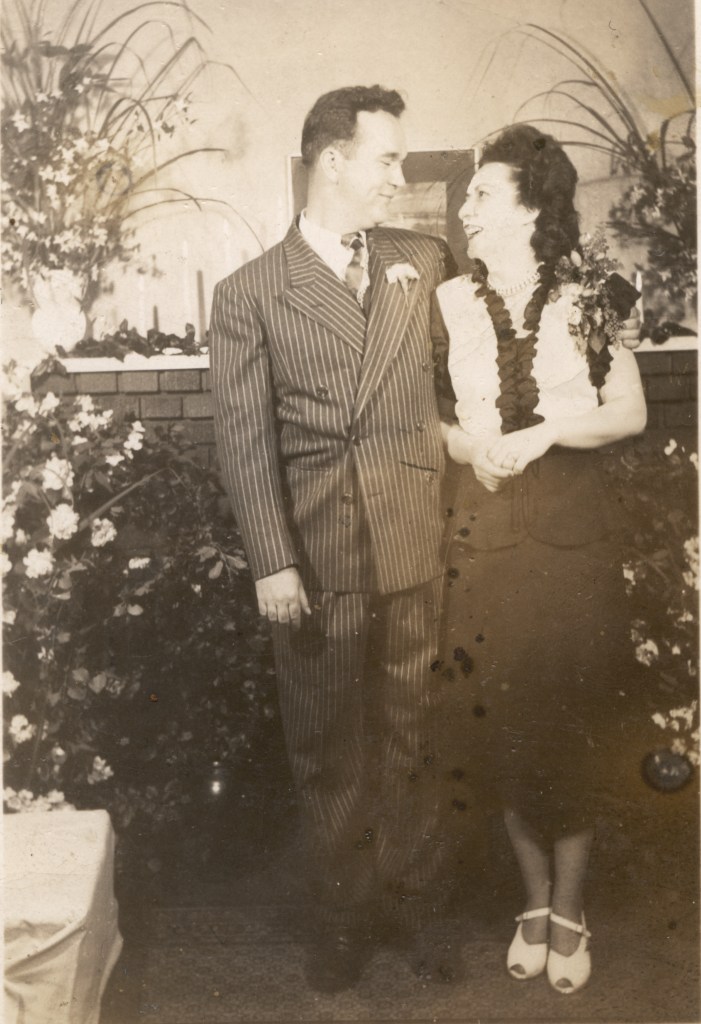
Fotografia do seu casamento em março de 1952. (Family photograph).

Paulo de Azevêdo Coutinho, nascido a 29 de junho de 1919 em Lençóis — falecido a 28 de novembro de 1990 em Salvador. Casou com Lindaura Almeida de Oliveira a 19 de março de 1952 em Ubaitaba. Nasceu a 24 de outubro de 1927 em Ubaitaba — faleceu a 19 de junho de 2020 em Salvador.

O casal teve cinco filhos, como se descreve abaixo. Todos os nascimentos e óbitos ocorreram na Bahia, Brasil, salvo indicação em contrário:

  • Maria Celeste Oliveira Coutinho, nascida a 14 de julho de 1953 em Salvador. Casou com Bernardino Dantas de Santana, em 28 de Julho de 1989, (termina) data desconhecida.
  • Maria Angela Oliveira (Coutinho) Martins Bass, nascida a 11 de Abril de 1955 em Salvador. Casou duas vezes, a primeira vez com Antonio Martins Jr., 1985 — (termina) antes de 2002. Casou a segunda vez com Robert Bass, 2002 — 2010, (a sua morte). Morreu no condado de Sarasota, Flórida, Estados Unidos.
  • Maria Cristina Oliveira (Coutinho) Pinheiro, nascida a 27 de maio de 1961 em Ilhéus. Casou com Antonio Carlos Marques Pinheiro, em 1983. Tiveram dois filhos.
  • Paulo Emilio Oliveira Coutinho, nascido a 17 de setembro de 1963 em Ilhéus. Casou uma vez, primeiro com Marizela Cardoso Sales, 1991 — (termina) antes de 2009. Tiveram dois filhos. Em segundo lugar, juntou-se a Sonia Alves Silva Chagas, em 2023. Têm um filho.
  • Leandro José Oliveira Coutinho, nascido a 30 de setembro de 1965 em Ilhéus. Casou com Thomas Harley Bond em 26 de Junho de 2008.

Antes de conhecer Lindaura Almeida Oliveira, Paulo de Azevêdo Coutinho manteve uma relação anterior com uma mulher de nome Zulmira Silva. Embora nunca tenham se casado, e ela tenha falecido em 1952, desta união nasceram dois filhos, meios-irmãos da família (em cima). Paulo foi então pai de sete filhos.

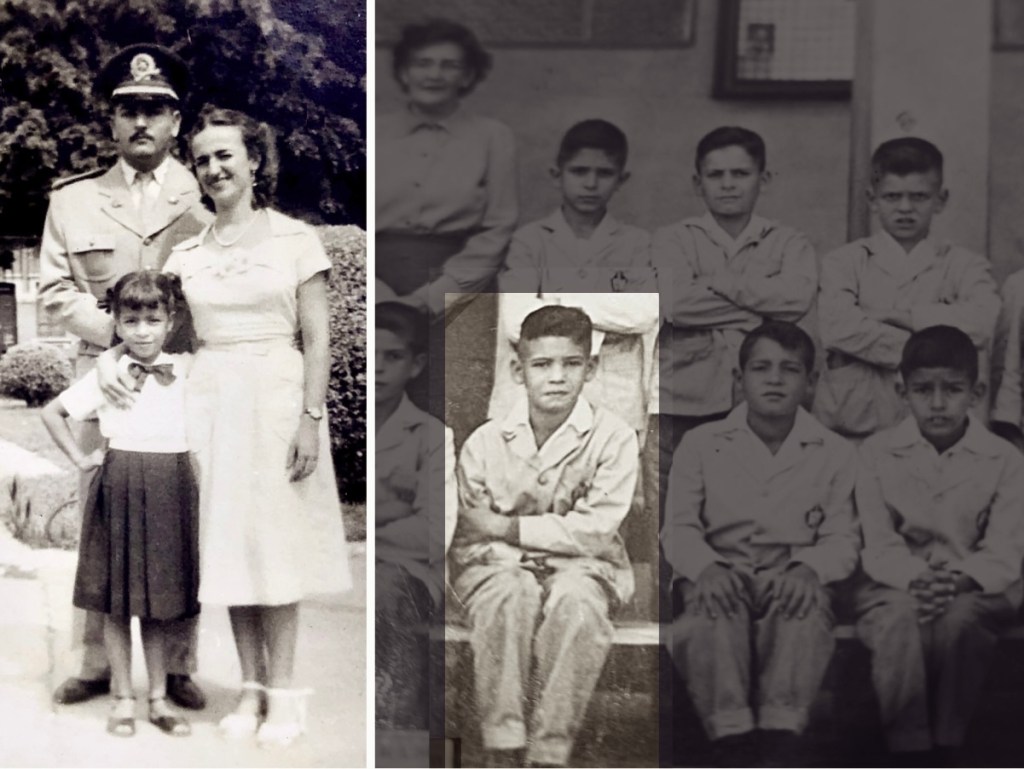
À esquerda: Paulo, Lindaura, e Sonia Coutinho, cerca de 1950. À direita: Newton numa fotografia escolar, cerca de 1954. (Fotografias de família).
  • Sonia Maria De Azevêdo (Coutinho) Costa, nascida a 5 de novembro de 1942, em Salvador. Casou com Jorge Augusto de Oliveira Costa em 1969. Tiveram dois filhos.
  • Newton de Azevêdo Coutinho, nascido a 25 de setembro de 1944 — falecido a 27 de maio de 2000, ambos em Salvador. Casou com Titê _____ em 1971. Tiveram uma filha. (6)
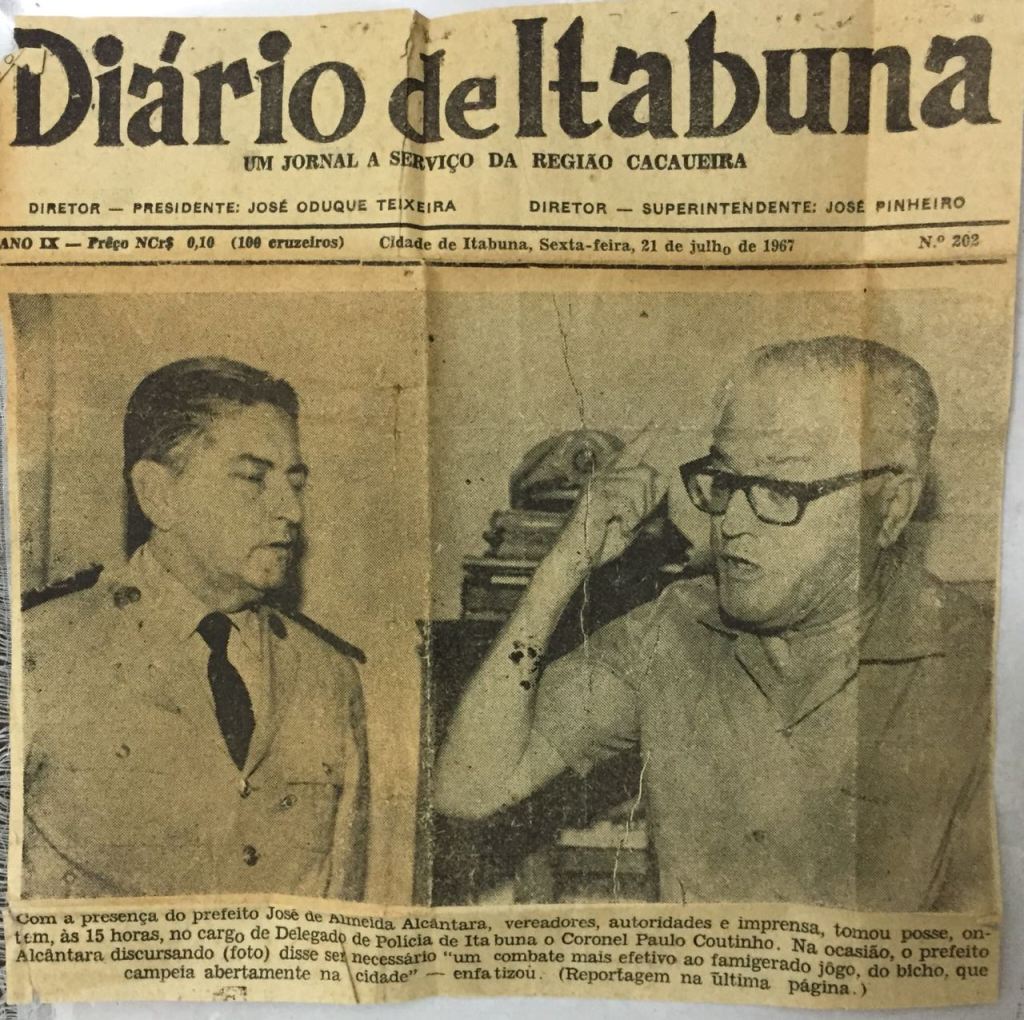
Edição de 21 de julho de 1967 do jornal Diário de Itabuna:
“Com a presença do presidente da Câmara José de Almeida Alcântara, vereadores, autoridades e imprensa, o coronel Paulo Coutinho tomou posse como chefe da polícia de Itabuna ontem às 15h00. Durante o seu discurso (foto), o presidente da Câmara Alcântara (na foto) enfatizou a necessidade de ‘um combate mais eficaz ao infame jogo do bicho [um jogo ilegal de números, ver notas de rodapé], que é abertamente desenfreado na cidade”. (Fotografia de família).

Coronel Paulo Coutinho

A fotografia acima, tirada num jornal, mostra o Coronel Paulo Coutinho como o recém-empossado Chefe de Polícia de Itabuna, em Julho de 1967. O homem animado, gesticulando com o braço, é José de Almeida Alcântara, o presidente da Câmara local, que parece bastante incomodado com as actividades de um jogo ilegal de números chamado Jogo de Bicho. Este era um jogo extremamente popular e, ao mesmo tempo, extremamente ilegal. Explorava pessoas que simplesmente não tinham condições para jogar. Segundo a Wikipédia: “Diz-se que o jogo se popularizou porque aceitava apostas de qualquer valor, numa época em que a maioria dos brasileiros lutava para sobreviver a uma profunda crise económica. ‘Se vir duas cabanas perdidas algures no interior’, observou certa vez um diplomata brasileiro, ‘pode apostar que um bicheiro [alguém ligado ao jogo] vive numa delas e um apostador assíduo na outra’”.

Era dever do Coronel Coutinho reprimir a operação ilegal. Esta era uma oportunidade para alguém na sua posição aceitar subornos e dinheiro por baixo dos panos para fazer vista grossa, mas nunca o fez. Até hoje, a sua família afirma categoricamente que ele era aquilo que se poderia descrever como um homem íntegro, que acreditava que viver uma vida honesta era melhor do que ascender através da corrupção. (E isto durante a era de uma ditadura militar repressiva, da qual a sua família também afirma que ele se manteve afastado).
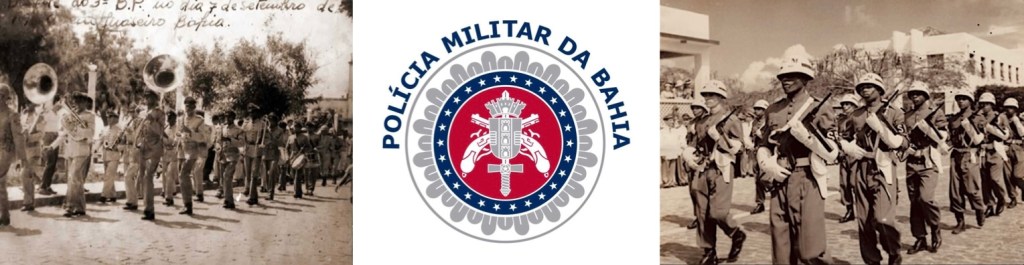
A designação Polícia Militar só foi padronizada em 1946, durante o governo de Getúlio Vargas, com a nova Constituição de 1946, após o período Vargas do Estado Novo (1937-1945), que tinha como objetivo limitar a capacidade militar das Forças Armadas para que estas se concentrassem exclusivamente nas suas funções policiais. Historicamente, no Brasil, Após a Segunda Guerra Mundial, a Polícia Militar tornou-se uma força policial mais tradicional, semelhante à gendarmaria, subordinada aos estados’. Os gendarmes raramente são mobilizados em situações militares, exceto em missões humanitárias no estrangeiro. Num país como os Estados Unidos, as forças armadas e a polícia actuam de forma separada em termos de interacção com a comunidade.” Portanto, para quem não é brasileiro, este termo pode ser enganador.

“De acordo com o artigo 144.º da Constituição Federal, a função da Polícia Militar é servir como uma força policial visível e preservar a ordem pública. [Ela] está organizada como uma força militar e tem uma estrutura hierárquica militar. O comandante da Polícia Militar de um estado é geralmente um Coronel. O comando está dividido em regiões policiais, que mobilizam batalhões e companhias policiais.” (Wikipédia)

O Coronel Coutinho trabalhou em várias comunidades diferentes durante a sua carreira: Ilhéus, Itabuna, Juazeiro, e Salvador. Algumas destas missões separaram-no, por vezes, da sua família em crescimento por períodos de tempo. (7)

A casa dos Coutinho quando viviam em Ilhéus, na Bahia, situada na Rua Almiro Vinhas, 13.

Vivendo em Ilhéus e depois em Piranga

A família Coutinho era uma família de classe média numa época no Brasil em que existiam muito poucas famílias deste perfil. De facto, das décadas de 1950 a 1980, a classe média era muito pequena. Depois, as coisas começaram a mudar com o avanço da democracia e a prosperidade económica. A classe média representava 15% da população brasileira no início da década de 1980 e abrange agora quase um terço dos 190 milhões de habitantes do país. Este crescimento deve-se ao bom desempenho económico do Brasil nos últimos anos, às políticas de redução da pobreza, às novas oportunidades de emprego e a uma força de trabalho mais qualificada. (World Bank Group)
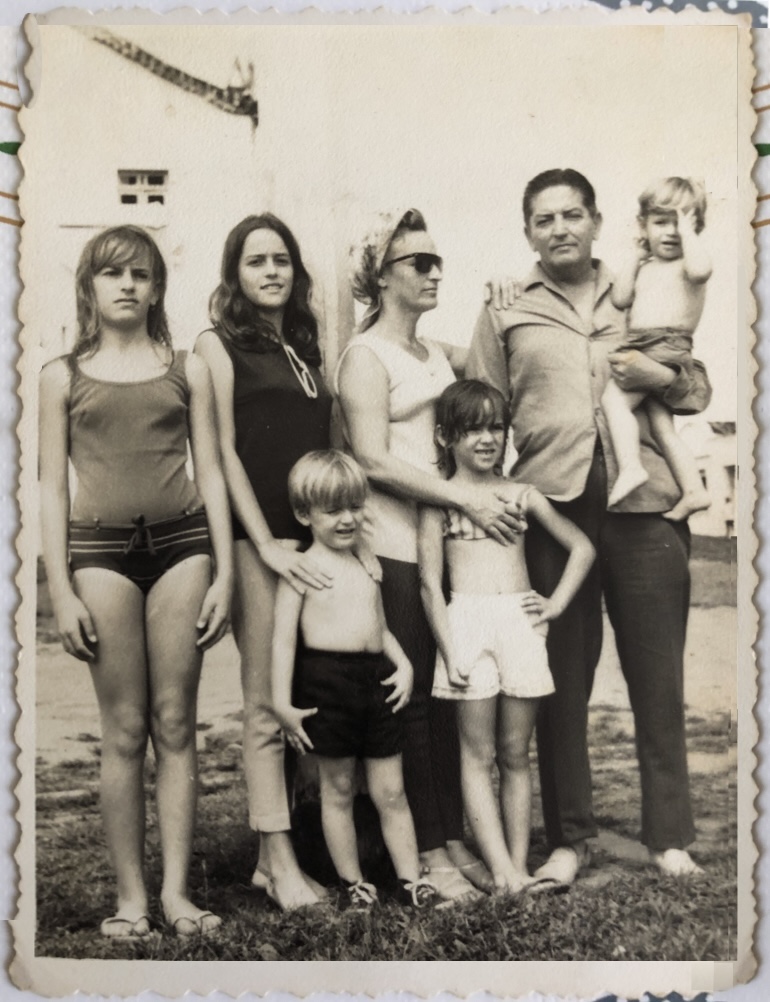
A família Coutinho, cerca de 1967. Primeira fila, da esquerda para a direita: Paulo e Cristina. Segunda fila, da esquerda para a direita: Ângela, Celeste, Lindaura, Paulo pai, e Leandro.
(Fotografia de família).

Por volta de 1969, a família mudou-se para a região norte da Bahia durante um ano, vivendo em Piranga, na fronteira norte do estado. Como escreveu Paulo numa carta a Lindaura em Abril de 1968: “O bónus valerá a pena. R$ 500,00”. Isto indica-nos que a mudança para o norte se deveu provavelmente a uma promoção na carreira de Paulo, que passou a coronel da Polícia Militar.
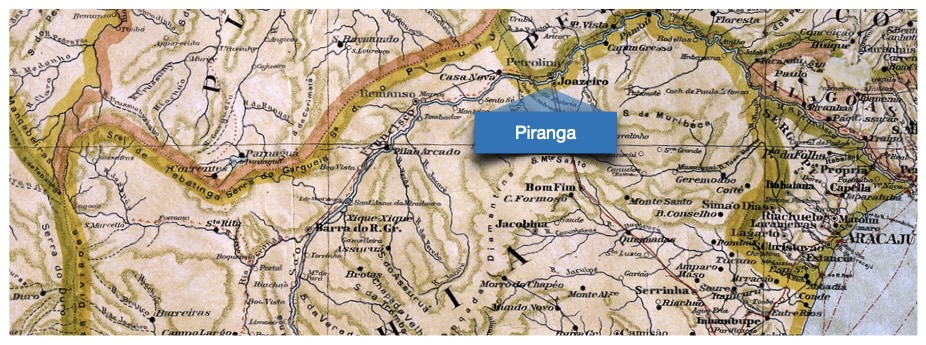
Trata-se de um excerto do Mapa Geral do Brasil publicado em janeiro de 1911. Piranga é um pequeno município situado nas margens do rio São Francisco, no alto estado da Bahia. (Imagem do mapa cortesia de Mapas Históricos da Bahia).

A comunidade de Piranga é um pequeno município e um subúrbio de Juazeiro, que “está geminada com Petrolina, no estado [adjacente] de Pernambuco. As duas cidades estão ligadas por uma ponte moderna que atravessa o rio São Francisco. Juntas, formam a região metropolitana de Petrolina-Juazeiro, um conglomerado urbano de cerca de 500.000 habitantes”. (Wikipédia) A família regressou a Ilhéus antes de se mudar finalmente para Salvador em 1970. (8)

Pensando em Helena e Maria

Observação: Quando vivi pela primeira vez em Salvador, na Bahia, fiquei surpreendido com a enorme quantidade de pessoas que tinham outras disponíveis para trabalhar como empregadas domésticas. Como criança americana de classe média, isto não era algo remotamente acessível para nós. Tínhamos sempre muitas tarefas para fazer, para além de todas as outras responsabilidades que tínhamos enquanto adolescentes. — Thomas

“O fim da escravatura em 1888 não foi acompanhado de qualquer plano para integrar os ex-escravos negros numa sociedade capitalista baseada no trabalho remunerado. Embora fossem oferecidos empregos remunerados aos europeus que emigraram para o Brasil depois disso, para muitas mulheres negras pobres e sem instrução, a única possibilidade era continuar a trabalhar como empregadas domésticas”. Como recorda o escritor Mike Gatehouse: ‘As mulheres… viviam num pequeno quarto na zona de serviço do nosso apartamento. Isto era comum para todas as minhas amigas, como tinha sido para os nossos pais. Durante esses anos, as tarefas domésticas nunca fizeram parte da minha rotina ou algo com que tivesse de me preocupar. A casa funcionava como um hotel, onde os quartos eram limpos, as roupas lavadas e as refeições apareciam como que por magia.’” (LAB — Latin American Bureau, ver notas de rodapé.)

Cerca de 1970, Paulo foi novamente promovido. Este levou a família à cidade costeira de Salvador, no bairro de Canela.

Em Ilhéus, Piranga e Salvador, Helena desempenhou o importante papel de auxiliar doméstica. Viveu com a família Coutinho até aos 21 anos e ajudou a cuidar das crianças. Além disso, uma outra mulher chamada Maria assumia a função de empregada doméstica, mas não vivia na casa.
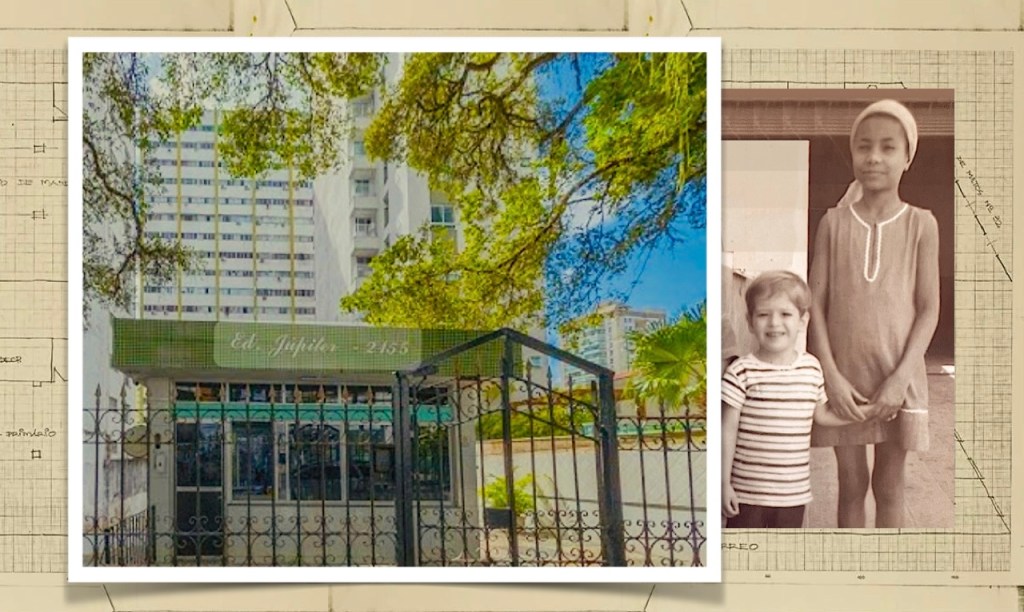
À esquerda: A casa dos Coutinho quando viviam em Salvador, Bahia, situada no Edifício Júpiter,
Avenida Sete de Setembro, 2155, no bairro da Vitória. À direita: Helena, com Leandro.
(Fotos de família).

Em 1975, mudaram-se pela última vez para uma nova casa num moderno arranha-céus chamado Edifício Júpiter, localizado no famoso Corredor da Vitória. (No Brasil, é muito comum identificar os edifícios pelo nome, em vez da morada). Este edifício e o bairro vizinho de Vitória proporcionavam à família um fácil acesso a comodidades, boas escolas para os filhos e, muito importante, segurança, durante um período de grande tensão no Brasil. Lindaura, a mãe da família, viveu no Edifício Júpiter durante 45 anos.

Mapa da cidade de Salvador, Brasil. A área circulada a verde engloba os bairros da Canela e da Vitória, onde residia a família Coutinho.
(Imagem cedida por Geographicus Rare Antique Maps).

“Com menos de um quilómetro de extensão, o Corredor da Vitória alberga o Museu de Arte da Bahia, o Museu Carlos Costa Pinto e o Museu Geológico da Bahia. Vitória é uma das áreas urbanas mais valorizadas do Nordeste do Brasil.” (Wikipédia)

Leandro recorda-se das muitas mangueiras e das grandes casas antigas que ainda ladeavam a rua. Por vezes, com o falecimento das famílias mais antigas, as suas casas e jardins eram abandonados e deterioravam-se. (A maioria destas casas acabou por ser demolida para dar lugar a modernos prédios de apartamentos). Até hoje, conta histórias de como a sua paixão pelas mangas o levava a invadir estes antigos jardins, a subir às árvores e a sair furtivamente com um cacho de mangas frescas. (9)

A Culpa é da Bossa Nova

Quando eu e o Leandro nos conhecemos, foi um verdadeiro encontro entre a América do Norte e a América do Sul, porque o inglês dele não era muito bom e o meu português era inexistente. (Tinha vivido na Alemanha na década anterior e, antes disso, na França, pelo que o seu francês e alemão eram bastante bons). Como norte-americano, eu era (e ainda sou, em certa medida) um grande contraste com a sua capacidade linguística. Sempre me impressionou a facilidade com que transita fluentemente para outras línguas em jantares.

Inicialmente, nessa altura, pensei no que sabia sobre o Brasil, e a resposta era: não muito. Quando eu era rapaz, o Brasil mergulhou num regime militar repressivo e simplesmente não havia notícias sobre isso nos jornais locais. Quando a democracia regressou ao Brasil entre 1985 e 1988, ninguém que eu conhecesse prestou muita atenção, embora estivéssemos conscientes desta mudança.

Como a maioria dos americanos, se sabia alguma coisa sobre o Brasil, era basicamente Carmen Miranda e alguns êxitos de bossa nova nas rádios. A Sra. Miranda era famosa por usar um chapéu de banana nos filmes, sempre linda (e parecendo divertir-se imenso a fazê-lo). A música Bossa Nova foi depois traduzida para inglês para agradar ao público americano (e, claro, para vender mais discos).
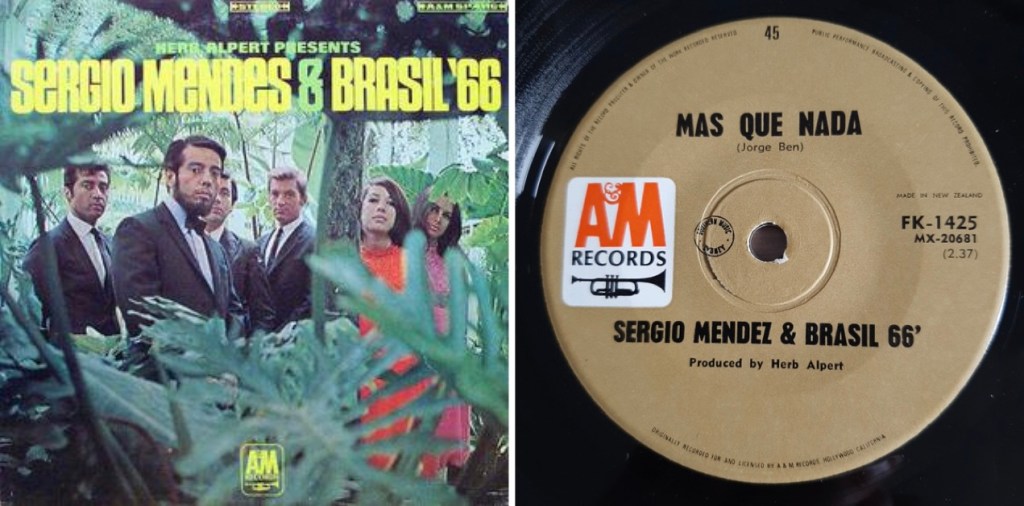
A maioria de nós conhecia o êxito “Garota de Ipanema”, que ouvíamos nos rádios AM a pilhas. Influenciada pela música, a banda Sergio Mendes & Brazil ’66 era extremamente popular em meados da década de 1960 (na altura em que Leandro nasceu). Aliás, eram tão famosos que ainda me lembro perfeitamente de estar num campo enlameado em Newbury Township, Ohio, depois de uma tempestade, quando tinha uns 10 anos. Assisti à banda marcial da Newbury High School a tocar uma versão muito boa da música Mas Que Nada (que, ironicamente, era cantada em português). Diria que era de dar vontade de bater o pé ao ritmo, mas as minhas botas estavam atoladas na lama.

Mas Que Nada interpretada por Sergio Mendes e Brasil ’66.

Para Leandro e a sua família, os Coutinhos e os Oliveiras — passados ​​muitos e muitos anos, a vida completou um ciclo, pois regressámos à terra ancestral dos seus antepassados. Vemos o mundo através das nossas lentes modernas, pensando sempre naqueles que aqui viveram antes de nós. Para esta família, invertemos o rumo da sua imigração passada, pois agora vivemos em Lisboa, Portugal. (10)

— Thomas

A seguir são apresentadas as notas de rodapé para os Materiais de Fonte Primária, Notas e Observações

Um Lugar Completamente à Parte

(1) — um registos

Librairie Elbé Paris
Jets to Brazil, Varig Airlines cartaz de viagem
por artista desconhecido, cerca de 1960
https://www.elbe.paris/en/vintage-travel-posters/1618-vintage-poster-1960-jets-brazil-varig-airlines.html
Nota: Para a arte do cartaz vintage.

O Catolicismo é a Religião Fundamental do Brasil

(2) — quatro registos

Catholic Church in Brazil
(Igreja Católica no Brasil)
https://en.wikipedia.org/wiki/Catholic_Church_in_Brazil
Nota: Para o texto.

Alguns santos do panteão Católico romano.

Estátuas de Santos em Ouro Preto, Minas Gerais
por Fotógrafo desconhecido
https://en.wikipedia.org/wiki/Catholic_Church_in_Brazil#/media/File:-i—i-_(6288973445).jpg
Nota: Para a fotografia acima

Afar
The São Francisco Church e Convent
Igreja e Convento de São Francisco

https://www.afar.com/places/igreja-e-convento-de-sao-francisco-salvador
Nota: Para a fotografia.

Igreja de Nosso Senhor do Bonfim, Salvador
https://en.wikipedia.org/wiki/Church_of_Nosso_Senhor_do_Bonfim,_Salvador
Nota: Para o texto explicativo “Lembrança do Senhor do Bonfim da Bahia”

A Escravatura só Terminou Oficialmente em 1888

(3) — quatro registos

Escravatura no Brasil
https://en.wikipedia.org/wiki/Slavery_in_Brazil
Nota: Para o texto.

Isabel, Princesa Imperial do Brasil
https://en.wikipedia.org/wiki/Isabel,_Princess_Imperial_of_Brazil
Nota: Para referência.

Isabel, Princesa Imperial do Brasil
fotografado por Joaquim Insley Pacheco, cerca de 1870
https://en.wikipedia.org/wiki/Isabel,_Princess_Imperial_of_Brazil#/media/File:Isabel,_Princesa_do_Brasil,_1846-1921_(cropped).jpg
Nota: Para o retrato dela.

Lei Áurea
https://en.wikipedia.org/wiki/Lei_Áurea
Nota: Para a imagem do documento.

Candomblé e Sincretismo

(4) — três registos

Ilustração Carybé do Orixa Yemanjá.
(Imagem cortesia do Pinterest).

Candomblé
https://en.wikipedia.org/wiki/Candomblé
Nota: Para o texto e a fotografia histórica de 1902.

Altar Gods
Candomble: Afro-Brazilian Faith and the Orixas
(Candomblé: A Fé Afro-Brasileira e os Orixás)
https://altargods.com/candomble/candomble/
Nota: Referente ao texto e às obras de arte.

A Família Oliveira de Ubaitaba

(5) — cinco registos

> A fotografia de família nesta secção faz parte da coleção pessoal de fotografias de família.

Ubaitaba
https://pt.wikipedia.org/wiki/Ubaitaba
Nota: Para o texto.

Mapas Históricos da Bahia
Mapa da Bahia de 1911
https://www.historia-brasil.com/bahia/mapas-historicos/seculo-20.htm
Nota: Trata-se de um excerto do Mapa Geral do Brasil publicado em janeiro de 1911 e organizado pela empresa Hartmann-Reichenbach. As linhas vermelhas representam caminhos-de-ferro.

Ubaitaba.com
História Regional e História
http://ubaitaba.com/historia-regional/
Nota: As fotografias superiores são da secção do website com a etiqueta História Regional e História.

Restos de Colecção
Mercearias e Mini-Mercados
https://restosdecoleccao.blogspot.com/2013/05/mercearias-e-mini-mercados.html
Nota: Para a fotografia inferior intitulada Antigas Mercearias.

“Nem imaginas o quanto senti a tua falta…”

(6) — nove registos

> As fotografias de família desta secção fazem parte da coleção pessoal de fotografias de família.

Carta de Paulo para a sua esposa Lindaura, datada de 11 de abril de 1968, pouco antes da sua mudança para Piranga, na Bahia.

Jorge Amado, (10 de agosto de 1912 — 6 de agosto de 2001) “…foi um escritor brasileiro da escola modernista. Continua a ser o mais conhecido dos escritores brasileiros modernos, com a sua obra traduzida em cerca de 49 línguas e popularizada no cinema, entre as quais Dona Flor e Seus Dois Maridos, em 1976, e tendo sido nomeado para o Prémio Nobel da Literatura pelo menos sete vezes.
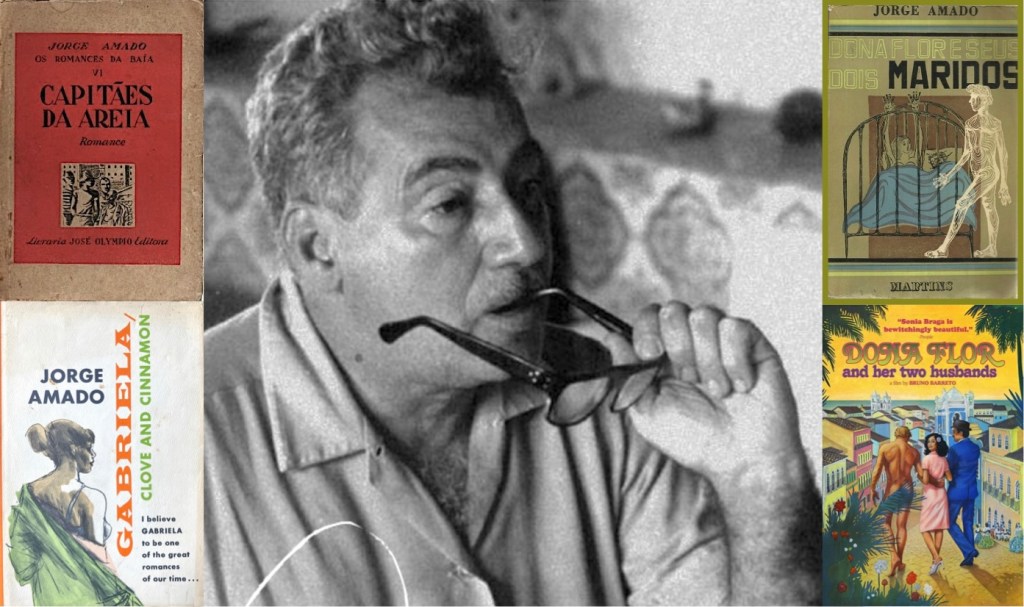
Retrato do romancista Jorge Amado.

A sua obra reflete a imagem de um Brasil mestiço* e é marcada pelo sincretismo religioso. Retratou um país alegre e otimista que, ao mesmo tempo, era assolado por profundas diferenças sociais e económicas.” (Wikipédia) *Mestiço é um termo português que se refere a pessoas de raça mista, ou seja, pessoas de ascendência europeia e indígena não europeia.

Jorge Amado
https://en.wikipedia.org/wiki/Jorge_Amado
Nota: Para o texto.

Fundação Casa de Jorge Amado
https://www.jorgeamado.org.br/
Nota: Para o seu retrato.

Editoras Brasileiras
3 Livros para Conhecer a Obra de Jorge Amado,
Mestre do Realismo Social e da Imaginação Baiana
https://brazilianpublishers.com.br/en/noticias-en/3-books-to-get-to-know-the-work-of-jorge-amado-master-of-social-realism-and-bahian-imagination/
Nota: Para o texto.

O site da Editoras Brasileiras recomenda estes “três livros essenciais [que devem ser lidos] para descobrir a força e a diversidade da sua literatura”. (O texto descritivo abaixo é do site deles).

  • Capitães da Areia
    No livro, acompanhamos Pedro Bala, Professor, Gato, Sem Pernas e Boa Vida, jovens marginalizados que crescem nas ruas de Salvador. Vivendo juntos no Trapiche, formam uma comunidade unida. A chegada de Dora e do seu irmão Zé Fuinha, trazidos por Professor, causa alvoroço entre os rapazes, que não estão habituados à presença feminina. Aos poucos, desenvolve-se um laço afetivo entre o líder do grupo e a menina.

    Capitães da Areia
    (Captains of the Sands)
    https://en.wikipedia.org/wiki/Captains_of_the_Sands
    Nota: Para referência.
  • Dona Flor e Seus Dois Maridos
    A história começa durante o carnaval de 1943 na Bahia, quando Vadinho, um mulherengo e jogador inveterado, morre subitamente. Dona Flor, sua mulher, fica inconsolável. Algum tempo depois, casa com Teodoro Madureira, um farmacêutico que é o oposto do seu primeiro marido. Juntos, levam uma vida estável e tranquila, mas monótona, até ao dia em que o fantasma de Vadinho aparece na cama de Dona Flor.

Dona Flor e Seus Dois Maridos (romance)
(Dona Flor and Her Two Husbands) (novel)
https://en.wikipedia.org/wiki/Dona_Flor_and_Her_Two_Husbands_(novel)Nota: Para referência.

  • Gabriela, Cravo e Canela
    O livro narra o romance entre Nacib e Gabriela, passado em Ilhéus na década de 1920, durante o auge do desenvolvimento da cidade impulsionado pelo cacau. A sensualidade de Gabriela conquista Nacib e muitos outros homens, desafiando a lei contra o adultério feminino. Publicado em 1958, o livro foi um sucesso mundial e tornou-se uma aclamada telenovela brasileira.

Gabriela, Cravo e Canela
(Gabriela, Clove and Cinnamon)
https://en.wikipedia.org/wiki/Gabriela,_Clove_and_Cinnamon
Nota: Para referência.

Mestiço
https://en.wikipedia.org/wiki/Mestiço
Nota: Para os dados.

Coronel Paulo Coutinho

(7) — quatro registos

> A fotografia de família nesta secção faz parte da coleção pessoal de fotografias de família.

Jogo do bicho
https://en.wikipedia.org/wiki/Jogo_do_bicho
Nota: Para referência.

Polícia Militar (Brasil)
Military Police [Brazil]
https://en.wikipedia.org/wiki/Military_Police_(Brazil)#:~:text=The Military Police was founded,on being exclusively police forces.
Nota: Para o texto.

Gendarmerie
https://en.wikipedia.org/wiki/Gendarmerie
Nota: Para referência.

Vivendo em Ilhéus e depois em Piranga

(8) — três registos

> As fotografias de família desta secção fazem parte da coleção pessoal de fotografias de família.

World Bank Group
No Brasil, uma classe média emergente arranca
(In Brazil, an emergent middle class takes off)
https://www.worldbank.org/en/news/feature/2012/11/13/middle-class-in-Brazil-Latin-America-report
Nota: Para o texto.

Cenas de Salvador da Bahia de Carybé.

Exposição “Carybé e o Povo da Bahia”
celebra a identidade cultural no Museu de Arte da Bahia

https://jornalgrandebahia.com.br/2024/12/exposicao-carybe-e-o-povo-da-bahia-celebra-a-identidade-cultural-no-museu-de-arte-da-bahia/
Nota: Para as ilustrações de Carybé acima.

Juazeiro
https://en.wikipedia.org/wiki/Juazeiro
Nota: Para o texto.

Pensando em Helena e Maria

(9) — quatro registos

> A fotografia de família nesta secção faz parte da coleção pessoal de fotografias de família.

LAB – Latin American Bureau
Empregadas domésticas brasileiras: um ensaio fotográfico
(Brazilian Maids: A Photo Essay)
por Mike Gatehouse
https://lab.org.uk/brazilian-maids-a-photo-essay/
Nota: Para o texto.

Vitória (Salvador)
https://pt.wikipedia.org/wiki/Vitória_(Salvador)
Nota: Para o texto.

Geographicus Rare Antique Maps
1931 Papelaria Brazileira City Plan of Salvador, Brazil
https://www.geographicus.com/P/AntiqueMap/salvadorbahia-papelariabrazileira-1931
Nota: Para a imagem do mapa.

A Culpa é da Bossa Nova

(10) — dois registos

Sérgio Mendes
https://en.wikipedia.org/wiki/Sérgio_Mendes
Nota: Para referência.
é também
Herb Alpert Apresenta Sergio Mendes & Brasil ’66
(Herb Alpert Presents Sergio Mendes & Brasil ’66)
https://en.wikipedia.org/wiki/Herb_Alpert_Presents_Sergio_Mendes_%26_Brasil_%2766
Nota: Referente à arte da capa do álbum.
The Coutinho / Oliveira Line, A Narrative — Three

This is Chapter 3 of 3, being the last chapter that follows this family line. (Again, as a reminder), in total there are 6 chapters: the first set of 3 chapters is written in English; second set of 3 chapters is translated into Portuguese.

Varig Airlines Jets to Bahia travel poster, circa 1960.
(Image courtesy of Librairie Elbé, Paris).

A Place Quite Apart

The Coutinho and Oliveira families are traditional Brazilian Roman Catholic families, descended from Portuguese immigrants. However, the northeastern state of Bahia, which they immigrated to, is a unique place quite apart from the rest of Brazil. There are historical reasons for this… (1)

Catholicism is the Foundational Religion of Brazil

“According to the tradition, the first Catholic mass celebrated in Brazil took place on April 26, 1500. It was celebrated by a priest who arrived in the country along with the Portuguese pirates and explorers to claim possession of the newfound land. The first diocese in Brazil was erected more than 50 years later, in 1551.

Brazil’s strong Catholic heritage can be traced to the Iberian missionary zeal, with the 15th-century goal of spreading Christianity. The Church missions began to hamper the government policy of exploiting the natives. [Thus] in 1782 the Jesuits were suppressed, and the government tightened its control over the Church. [In the present day,] the Catholic Church is the largest denomination in the country, where 119 million people, or 56.75% of the Brazilian population, were self-declared Catholics in 2022. These figures make Brazil the single country with the largest Catholic community in the world.” There is a large pantheon of saints in the Catholic tradition. (Wikipedia and Google)

Top left: Exterior of the Church of Nosso Senhor do Bonfim, Salvador. Top right: Ribbons tied to the fence which surrounds the church. They read ‘Lembrança do Senhor do Bonfim da Bahia’ (Remembrance of the Lord of Bonfim of Bahia) and are linked to the belief of having your wishes granted. Bottom: Interior view of the Igreja e Convento de São Francisco / The São Francisco Church and Convent.

Comment: There are more Roman Catholics in Brazil than there are in Italy, simply because the population of Brazil is much greater than that of Italy. It would be very appropriate to say that Catholicism is an institutionalized religion in Bahia. Specifically, sources cite that there are more than 365 historic cathedrals and churches just in Salvador da Bahia alone. (One for each day of the year — So this makes us ponder, what about Leap Year Day? Instead of going to church, does everyone get a day off to go to the beach?) (2)

Slavery Did Not Officially End Until 1888

“During the Atlantic slave trade era, Brazil imported more enslaved Africans than any other country in the world. Out of the 12 million Africans who were forcibly brought to the New World, approximately 5.5 million were brought to Brazil between 1540 and the 1860s. The mass enslavement of Africans played a pivotal role in the country’s economy and was responsible for the production of vast amounts of wealth. In the first 250 years after the colonization of the land, roughly 70% of all immigrants to the colony were enslaved people.

Slavery was not legally ended nationwide until 1888, when Isabel, Princess Imperial of Brazil, promulgated the Lei Áurea (Golden Act). The Lei Áurea was preceded by the Rio Branco Law of September 28, 1871 (the Law of Free Birth), which freed all children born to slave parents, and by the Saraiva-Cotegipe Law (the Law of Sexagenarians), of September 28, 1885, that freed slaves when they reached the age of 60. Brazil was the last country in the Western world to abolish slavery.” (Wikipedia, see footnotes). (3)

At left: Isabel, Princess Imperial of Brazil, photographed by Joaquim Insley Pacheco, circa 1870.
At right: Manuscript of the Lei Áurea from the Brazilian National Archives.

Candomblé and Syncretism

When we lived in Bahia, we would sometimes view portions of Candomblé ceremonies that were held at a place called a terreiro, (a temple or house of worship). These sacred spaces are central to Candomblé, serving as the location for community worship, rituals, and connections with ancestral spirits. We both felt that it was rather remarkable that many different  Pai-de-santos (father of the saint) or Mãe-de-santos could look at you and tell you exactly which Orirá looked over you. (And among them in different times and places, they were always consistent).

“Candomblé developed among Afro-Brazilian communities amid the Atlantic slave trade of the 16th to 19th centuries. It arose through the blending of the traditional African religions from the Yoruba, Bantu, and Fon people brought to South America, along with Roman Catholicism, especially the Catholic saints. It primarily coalesced in the Bahia region during the 19th century.” (Wikipedia and Altar Gods)

One of the central religious traditions of Candomble is veneration of the Orixas, divine energies associated with different elements of nature. Individuals are believed to identify with one of the Orixas as their tutelary spirit. (Altar Gods)

When these many enslaved peoples arrived in Bahia during this diaspora, they encountered Roman Catholic Portuguese colonialists who then controlled the area. Very cleverly, they maintained their religious affiliations by covertly hiding their own saints who were linked to Catholic saints as a way to preserve African beliefs despite forced religious conversion. This is called syncretism. An example of this is the Orixa Ogun, who stands-in for, Saint George, Saint Sebastian, or Saint Anthony, depending upon your location. Candomblé can be thought of as a non-institutionalized religion in Bahia.

Image at top: Contemporary artwork representing three Orixas. Bottom left: A group of Candomblé practitioners photographed in 1902. (Both images are courtesy of Altar Gods). Bottom right: Family photograph of the Yemanjá festival held every February in Salvador, Bahia.

In summary, “Candomblé is a uniquely Afro-Brazilian religion, made possible by mixing African, European, and native Indian traditions in the New World. Candomblé is strongest in Bahia, Brazil, a major port for arriving Africans. Its principal city, Salvador, was the first capital city of Brazil. The first Candomblé temple was built in Salvador in the 19th century after the abolition of slavery.” (Wikipedia) (4)

The Oliveira Family of Ubaitaba circa 1949-50. Left to right: Raynelde Dantas Motta, Laura (Oliveira) Motta, Lourdes Oliveira, João Celestino de Oliveira, Maria (Almeida) de Oliveira, Lindaura de Almeida Oliveira, and José Oliveira. (Family photograph).

The Oliveira Family of Ubaitaba

Ubaitaba is a small river city found in section of the remaining ancient Atlantic rainforest, in the state of Bahia, between the cities of Salvador and Ilhéus. This region “was formerly inhabited by Indigenous peoples [Tupi] until the arrival of Portuguese colonizers. After contact with the Portuguese and the establishment of the Captaincies of Brazil by King Manuel I of Portugal from 1504 onwards, the municipality’s territory became part of the lands of the Captaincy of São Jorge dos Ilhéus. The village of São Jorge dos Ilhéus was founded in 1536 as Vila de São Jorge dos Ilhéos. The modern name of Ubaitaba is from the Tupi language.

Throughout the 18th century, the Captaincy of São Jorge dos Ilhéus developed, and farms were established along the coast of the vast region. The origin of the village is related to the creation of both the Arraial de Tabocas and the Arraial de Faisqueira farms (in 1783), an area then used for timber extraction, sugar cane, cereal and cocoa cultivation.

This is a excerpted portion of the General Map of Brazil published in January 1911, and organized by the company Hartmann-Reichenbach. The red lines are railways. (Map image courtesy of Mapas Históricos da Bahia).

On January 28, 1914, a river flood destroyed the Arraial de Tabocas, scattering its population. Coordinated by physician Francisco Xavier de Oliveira, a resident of the village, the victims rebuilt the settlement, rising above the floodwaters. The name chosen was Itapira. [This name was changed to] Ubaitaba, conferred in 1933, a combination of the Indigenous words ‘ubá, meaning small canoe, ‘y,’ meaning river, and ‘taba’ meaning village / city.

When reviewing the very few historic photographs available of the city, the layout is two parallel roads which run along the river’s edge. Between the two streets is a wide, park-like meridien, with the Catholic Church anchoring one end of town. Shops and stores are one or two stories tall, and facing the street. We provide this description because the Oliveira family ran a general market store in Ubaitaba, of the type then known as a mercearia.

Left: One of the two main streets of the town of Ubaitaba, Bahia in the 19th century. Right: the church which anchored the end of the streets. The general market ‘mercearia’ which the Oliveira family operated, would have been somewhere along this street, and could have looked like the one shown in the lower photograph. (For photograph credits, see footnotes).


Before the rise of large retail chains, mercerias gerais (general stores) served as essential neighborhood stores where people could buy a range of everyday products, acting as a central point in local communities. They sold a wide variety of basic and imported goods, including staples like rice, beans, and sugar, along with everyday essentials like soap and matches, and a selection of imported foods and liquors. They also offered locally made products such as coffee, cheese, and fruits.

Some rare mercearias still exist to this day, but that particular evocative name has given way to the rather bland and universal name of mini-market. (Think lottery tickets, cigarettes, a carton of milk, and perhaps some chips, or donuts). In this modern Walmart era in which we live, very few places still exist in local communities, where you can walk into a small family store and everyone knows your name.

For the de Oliveira family
We can begin with, Manoel Celestino de Oliveira, born (likely) in Brazil. He married Rita Celestino de Oliveira. They had a son, who is named —

João Celestino de Oliveira, born November 6, 1890 — in Maceió, Alagoas (state) died November 25, 1968, in Ubaitaba. He was married two times: first to Eufrosina Souza Oliveira, until her death before 1925. They had one child.

Second, he married Maria de Almeida in 1925. She was born on March 20, 1900 in Maracás — died October 5, 1968, in Ubaitaba. They had four more children.
Maria de Almeida’s parents were: Cândido Olegário de Almeida and Balbina Olegário.

Together, João Celestino de Oliveira and Maria de Almeida raised 5 children. All births and deaths are in Bahia, Brazil, unless noted otherwise:

  • Agostinho Celestino de Oliveira, born August 13, 1919 — died April 12, 1983.
    (His birth mother was first wife Eufrosina Souza Oliveira). He married Ana Eusátquio de Souza on April 24, 1944.
  • Lindaura de Almeida (Oliveira) Coutinho, born October 24, 1927 in Ubaitaba — died June 19, 2020 in Salvador.
    (Lindaura carries the family line forward. See her spouse and children below).
  • Laura de Almeida (Oliveira) Motta, born March 27, 1929. She married Raynelde Dantas Motta, on March 30, 1949.
  • José Celestino de Oliveira, born December 20, 1937 — died 1992. He married Nidia Maria Amado de Oliveira in May 1968.
    She was a cousin of the beloved Brazilian novelist Jorge Amado, (see footnotes).
  • Maria Lourdes de Almeida (Oliveira) Cunha, born November 11, 1938. She married Humberto Olegário da Cunha on December 28, 1965. (5)
Paulo de Azevêdo Coutinho, circa 1966, and
Lindaura Almeida (Oliveira) Coutinho, circa 1950s.
(Family photographs).

You can’t imagine how much I’ve missed you…”

Before they were married, Paulo and Lindaura corresponded via letters for about two years before becoming engaged in September 1950. (At that time, letters were the only way they could communicate. Home telephones were still rather new and quite expensive, in the Brazil of that that era). None of those courtship letters have survived, but a few others have. When we looked at them we noted the degree of tenderness with which he still wrote to his wife Lindaura, even many years after they were married. In a 1968 letter (which we have placed the in the footnotes), we read these words —

April 11, 1968

My dear Lindaura,

Wishing you health together with our dear children.

I’m arranging things so that you can come here in the beginning of May. Rivaldo has found a house in Piranga, but he has to make major repairs. I won’t be paying rent, nor for any repairs.

I think that our little ones won’t be too unfamiliar with the climate in Piranga. Soon, I’ll write you a more detailed letter. You can’t imagine how much I’ve missed you. Many kisses to our children. A melancholic hug from your Paulo.

PS: The bonus will be worth it. NBR 500.00. If the “Ritom” truck doesn’t arrive by the 17th of this month, I’ll send Maria Celeste’s dresses by plane.

Their March 1952 wedding photograph. (Family photograph).

Paulo de Azevêdo Coutinho, born June 29, 1919 in Lençóis — died November 28, 1990 in Salvador. He married Lindaura Almeida de Oliveira on March 19, 1952 in Ubaitaba. She was born October 24, 1927 in Ubaitaba — died June 19, 2020 in Salvador.

They had five children together, as follows below. All births and deaths are in Bahia, Brazil, unless otherwise noted:

  • Maria Celeste Oliveira Coutinho, born July 14, 1953 in Salvador. She married Bernardino Dantas de Santana on July 28, 1989, — (ends) unknown date.
  • Maria Angela Oliveira (Coutinho) Martins Bass, born April 11, 1955 in Salvador. She married two times, first to Antonio Martins, Jr., 1985 — (ends) before 2002. She married second Robert Bass, 2002 — 2010, (his death). He died in Sarasota County, Florida, United States.
  • Maria Cristina Oliveira (Coutinho) Pinheiro, born May 27, 1961 in Ilhéus. She married Antonio Carlos Marques Pinheiro on September 17, 1983. They had two children.
  • Paulo Emilio Oliveira Coutinho, born September 17, 1963 in Ilhéus. He married once, first to Marizela Cardoso Sales, 1991 — (ends) before 2023. They had two children. Second, he was domestic-partnered to Sonia Alves Silva Chagas, in 2023. They have one child.
  • Leandro José Oliveira Coutinho, born September 30, 1965 in Ilhéus. He married Thomas Harley Bond on June 26, 2008.

Prior to knowing Lindaura Almeida Oliveira, Paulo de Azevêdo Coutinho had a previous relationship with a woman named Zulmira Silva. Even though they never married, and the fact that she passed on in 1952, from this union there were two children who were half-siblings of the (above) family. Paulo was then the father to seven children.

Left: Paulo, Lindaura, and Sonia Coutinho, circa 1950. Right: Newton in a school photograph, circa 1954. (Family photographs).
  • Sonia Maria De Azevêdo (Coutinho) Costa, born November 5, 1942, in Salvador. She married Jorge Augusto de Oliveira Costa in 1969. They had two children.
  • Newton de Azevêdo Coutinho, born September 25, 1944 — died May 27, 2000, both in Salvador. He married Titê _______ in 1971. They had one child. (6)
The July 21, 1967 edition of Diário de Itabuna newspaper:
“With Mayor José de Almeida Alcântara, council members, officials, and the press in attendance, Colonel Paulo Coutinho was sworn in as Itabuna Police Chief yesterday at 3 p.m. During his speech (photo), Mayor Alcantara (pictured) emphasized the need for ‘a more effective fight against the infamous jogo do bicho [an illegal gambling numbers game, see footnotes], which is openly rampant in the city.” (Family photograph).

Colonel Paulo Coutinho

The above newspaper photograph shows Colonel Paulo Coutinho as the newly-sworn-in Itabuna Police Chief in July 1967. The excited man waving his arm is José de Almeida Alcântara, the local mayor who seems quite upset about the local goings-on of an illegal gambling numbers enterprise called Jogo de Bicho. This was a game that was extremely popular, and at the same time, extremely illegal. It preyed upon people who simply could not afford to gamble. From Wikipedia, “The game is said to have become popular because it accepted bets of any amount, in a time when most Brazilians struggled to survive a very deep economic crisis. ‘If you see two shacks lost somewhere in the backlands’ a Brazilian diplomat once observed, ‘you can bet that a bicheiro [someone connected to the game] lives in one of them and a steady bettor in the other.’” 

It was Colonel Coutinho’s job to crack down on the illegal operation. This was an opportunity for someone in his position to take bribes and accept money under the table to look the other way, but he never did this. To this day, his family is quite clear that he was what could be described as a straight-arrow, who thought that living an honest life was better than advancing through corruption. (And this was during the era of a repressive military dictatorship, which his family also maintains that he steered clear of too).

“The name Military Police was only standardized in 1946 under the regime of Getúlio Vargas, with the new Constitution of 1946 after the Vargas Era of the Estado Novo (1937-1945), which had the objective of limiting the military capacity of the Public Forces in order to focus on being exclusively police forces. Historically in Brazil, ‘After World War II, the Military Police became a more traditional police force, similar to a gendarmerie, subject to the states’. Gendarmes are very rarely deployed in military situations, except in humanitarian deployments abroad. In a country like the United States, the military and police are separate in terms of they interact with the community.” Therefore, for those who are not from Brazil, this term may be misleading.

“According to Article 144 of the federal constitution, the function of the Military Police is to serve as a conspicuous police force and to preserve public order. [They] are organized as a military force and have a military-based rank structure. The commandant of a state’s Military Police is usually a Colonel. The command is divided into police regions, which deploy police battalions and companies.” (Wikipedia)

Colonel Coutinho worked in several different communities during his career: Ilhéus, Itabuna, Juazeiro, and Salvador. Some of these assignments sometimes separated him from his growing family for periods of time. (7)

The Coutinho home when they lived in Ilheus, Bahia, located at Rua Almiro Vinhas, 13.

Living in Ilhéus and then Piranga

The Coutinho family was a middle-class family during a time in Brazil when there were very few similar families. Indeed, from the 1950s through the 1980s, the middle class of was very small. Then things started to shift with the advancement of democracy and further economic prosperity. The “middle class comprised 15% of the Brazilian population in the early 1980s, and now they encompass nearly a third of the country’s 190 million inhabitants. It rose thanks to Brazil’s good economic performance in the recent years, poverty reduction policies, new work opportunities, and a better-educated workforce. (World Bank Group)

The Coutinho family, circa 1967. Front row, left to right: Paulo and Cristina. Back row, left to right: Angela, Celeste, Lindaura, Paulo Sr., and Leandro. (Family photograph).

Circa 1969, the family moved to the northern part of Bahia for a year and lived in Piranga, at the northern border of the Bahia state. As Paulo had written in his letter to Lindaura in April 1968, “The bonus will be worth it. NBR 500.00.” This informs us that their move north was likely due to a work promotion for his career as a Colonel with the Military Police.

This is an excerpted portion of the General Map of Brazil published in January 1911. Piranga is a small municipality located on the São Francisco river in the very upper portion of Bahia. (Map image courtesy of Mapas Históricos da Bahia).

The Piranga community is small municipality and a suburb of Juazeiro, which “is twinned with Petrolina, in the [adjacent] state of Pernambuco. The two cities are connected by a modern bridge crossing the São Francisco River. Together they form the metropolitan region of Petrolina-Juazeiro, an urban conglomerate of close to 500,000 inhabitants’. (Wikipedia) The family returned to Ilhéus again before finally moving to Salvador in 1970. (8)

Thinking of Helena and Maria

Observation: When I was first living in Salvador da Bahia, I was startled by the sheer abundance of people who had other people available to work for them as household staff. As a middle class American child, this was not something that was even remotely available to us in any form. We always had many chores to do, in addition all the other responsibilities we bore as adolescents. — Thomas

“The end of slavery in 1888 didn’t come with any plan to integrate the black ex-slaves into a capitalist society based on paid work. While the paid jobs were offered to the Europeans that emigrated to Brazil after that time, for many of the poor and uneducated black women the only possibility was to continue working as maids”. As recalled by writer Mike Gatehouse, ‘The women… would live in a small bedroom in the working area of our flat. This was common for all my friends, as it had been for our parents. During those years chores were never part of my routine or something I had to worry about. The house worked like a hotel where rooms were cleaned, clothes washed and meals appeared as if by magic.’” (LAB — Latin American Bureau, see footnotes.)

Circa 1970, Paulo was promoted again. This took the family to the coastal city of Salvador, and into the Canela neighborhood.

In Ilhéus, Piranga, and Salvador, Helena was the person who fulfilled the important role of the home-helper. She lived with the Coutinho family until she was 21 years old, and assisted with looking after the children. Furthermore, another woman named Maria worked as a domestic servant, but she did not live in the house.

Left: The Coutinho home when they lived in Salvador, Bahia, located at Edificio Júpiter,
Avenida Sete de Septembre, 2155, in the Vitória neighborhood. Right: Helena, with Leandro. (Family photographs).

In 1975 they moved one last time, into a new home in a modern skyscraper named Edificio Júpiter, located on the celebrated Corredor da Vitória. (In Brazil, it is very common to identify buildings by their name, rather than their address). This building and the adjacent Vitória neighborhood afforded the family easy access to conveniences, good schools for the children, and quite importantly — safety, during a period of much tension in Brazil. Lindaura, the family’s mother, lived in Edificio Júpiter for 45 years.

Papelaria Brazileira City Plan of Salvador, Brazil. The area circled in green encloses
the Canela, and the Vitória districts where the Coutinho family lived.
(Image courtesy of Geographicus Rare Antique Maps).

“Less than a kilometer long, the Corredor da Vitória is home to the Bahia Art Museum, the Carlos Costa Pinto Museum, and the Bahia Geological Museum. Vitória is one of the most valued urban areas in Northeast Brazil.” (Wikipedia)

Leandro remembers the many mango trees and the grand old homes which still then lined the street. Sometimes, as the older families from the previous era passed away, their homes and gardens would become abandoned, and fall into disrepair. (Most of these homes were eventually razed to make way for modern high-rise apartment buildings). To this day, he shares tales that his passion for mangos would seduce him into sneaking into these old gardens, climbing the trees, and furtively sneaking away with a clutch of fresh mangos. (9)

Blame It On The Bossa Nova

When Leandro and I met, it was truly North America meets South America because his English was not very good, and my Portuguese was non-existent. (He had been living for the previous decade in Germany, and France before that, so his French and German were quite good). As the North American, I was then, (and am still somewhat now), a big contrast to his skillful linguistic ability. I have always been humbled by the ease with which he fluently slips into other languages at dinner parties.

Initially at that time, I thought about what I knew about Brazil, and the answer was not too much. When I was a boy, Brazil vanished in to repressive military regime and there just wasn’t any news about it in the local newspapers. When democracy returned to Brazil between 1985 — 1988, no one I knew was paying much attention, even though we were aware of this change.

Like most Americans, if I knew much about Brazil, it was simply Carmen Miranda, and some Bossa Nova radio hits. Ms. Miranda was famous for her flair for wearing a banana hat in movies while looking lovely, (and also like she was having a lot of fun while doing this). Bossa Nova music was then translated into English for palatability to American audiences (and of course, to sell more records).

Most of us were aware of the hit song The Girl from Ipanema, which we heard on AM transistor radios. Influentialy, the band Sergio Mendes & Brazil ’66 was extremely popular in the mid-1960s, (around the time that Leandro was born). In fact, they were so famous that I still have a distinct memory of standing in a muddy field in Newbury Township, Ohio, after a rainstorm, when I was about 10 years old. I watched the Newbury High School Marching Band knock-out a pretty good version of the song Mas Que Nada (which ironically, was sung in Portuguese). I would say that it was toe-tapping good, but my boots were stuck in the mud.

Mas Que Nada as performed by Sergio Mendes and Brasil ’66.

For Leandro and his family lines, the Coutinhos and the Oliveiras — after many, many years, life has come full circle as we have returned to the ancient land of his ancestors. We see the world through our modern lens, thinking always about those who lived here before us. For this family line, we have reversed the tide of their past immigration, for we now live in Lisbon, Portugal. (10)

— Thomas

Following are the footnotes for the Primary Source Materials,
Notes, and Observations

A Place Quite Apart

(1) — one record

Librairie Elbé Paris
Jets to Brazil, Varig Airlines travel poster
by Artist unknown, circa 1960 
https://www.elbe.paris/en/vintage-travel-posters/1618-vintage-poster-1960-jets-brazil-varig-airlines.html
Note: For the vintage poster artwork.

Catholicism is the Foundational Religion of Brazil

(2) — four records

Catholic Church in Brazil
https://en.wikipedia.org/wiki/Catholic_Church_in_Brazil
Note: For the text.

Some of the Saints in the Roman Catholic pantheon.

Statues of Saints in Ouro Preto, Minas Gerais
by Photographer unknown
https://en.wikipedia.org/wiki/Catholic_Church_in_Brazil#/media/File:-i—i-_(6288973445).jpg
Note: For the photo shown above.

Afar
The São Francisco Church and Convent
Igreja e Convento de São Francisco

https://www.afar.com/places/igreja-e-convento-de-sao-francisco-salvador
Note: For the photograph.

Church of Nosso Senhor do Bonfim, Salvador
https://en.wikipedia.org/wiki/Church_of_Nosso_Senhor_do_Bonfim,_Salvador
Note: For the text explaining “Lembrança do Senhor do Bonfim da Bahia” (Remembrance of the Lord of Bonfim of Bahia).

Slavery Did Not Officially End Until 1888

(3) — four records

Slavery in Brazil
https://en.wikipedia.org/wiki/Slavery_in_Brazil
Note: For the text.

Isabel, Princess Imperial of Brazil
https://en.wikipedia.org/wiki/Isabel,_Princess_Imperial_of_Brazil
Note: For the reference.

Isabel, Princess Imperial of Brazil
photographed by Joaquim Insley Pacheco, circa 1870
https://en.wikipedia.org/wiki/Isabel,_Princess_Imperial_of_Brazil#/media/File:Isabel,_Princesa_do_Brasil,_1846-1921_(cropped).jpg
Note: For her portrait.

Lei Áurea
https://en.wikipedia.org/wiki/Lei_Áurea
Note: For the document image.

Candomblé and Syncretism

(4) — three records

Carybé illustration of the Orixa Yemanjá.
(Image courtesy of Pinterest).

Candomblé
https://en.wikipedia.org/wiki/Candomblé
Note: For the text and historical photograph from 1902.

Altar Gods
Candomble: Afro-Brazilian Faith and the Orixas 
https://altargods.com/candomble/candomble/
Note: For the text and artworks.

The Oliveira Family of Ubaitaba

(5) — five records

> The family photograph in this section is from the personal family photograph collection.

Ubaitaba
https://pt.wikipedia.org/wiki/Ubaitaba
Note: For the text.

Mapas Históricos da Bahia
Mapa da Bahia de 1911
https://www.historia-brasil.com/bahia/mapas-historicos/seculo-20.htm
Notes: This is a excerpted portion of the General Map of Brazil published in January 1911, and organized by the company Hartmann-Reichenbach. The red lines are railways.

Ubaitaba.com
História Regional and História
http://ubaitaba.com/historia-regional/
Note: Upper photographs are from the website section labeled História Regional and História.

Restos de Colecção
Mercearias e Mini-Mercados
https://restosdecoleccao.blogspot.com/2013/05/mercearias-e-mini-mercados.html
Note: For the lower photograph titled Antigas Mercearias.

You can’t imagine how much I’ve missed you…”

(6) — nine records

> The family photographs in this section are from the personal family photograph collection.

The April 11, 1968 letter from Paulo to his wife Lindaura, just before their move to Piranga, Bahia.

Jorge Amado, August 10, 1912 — August 6, 2001) “…was a Brazilian writer of the modernist school. He remains the best-known of modern Brazilian writers, with his work having been translated into some 49 languages and popularized in film, including Dona Flor and Her Two Husbands in 1976, and having been nominated for the Nobel Prize in Literature at least seven times.

Portrait of novelist Jorge Amado.

His work reflects the image of a Mestiço* Brazil and is marked by religious syncretism. He depicted a cheerful and optimistic country that was beset, at the same time, with deep social and economic differences.” (Wikipedia) *Mestiço is a Portuguese term that refers to persons of mixed race, as people from European and Indigenous non-European ancestry.

Jorge Amado
https://en.wikipedia.org/wiki/Jorge_Amado
Note: For the text.

Fundação Casa de Jorge Amado
https://www.jorgeamado.org.br/
Note: For his portrait.

Brazilian Publishers
3 Books to Get to Know The Work of Jorge Amado,
Master of Social Realism and Bahian Imagination

https://brazilianpublishers.com.br/en/noticias-en/3-books-to-get-to-know-the-work-of-jorge-amado-master-of-social-realism-and-bahian-imagination/
Note: For the text.

The Brazilian Publishers website recommends that these “three essential books [which should be read] to discover the strength and diversity of his literature”. (The descriptive text below is from their website).

  • Captains of the Sands (Capitães da Areia)
    In the book, we follow Pedro Bala, Professor, Gato, Sem Pernas and Boa Vida, marginalized young people who grow up on the streets of Salvador. Living together at Trapiche, they form a close-knit community. The arrival of Dora and her brother Zé Fuinha, brought by Professor, causes a stir among the boys, who are not used to the female presence. Slowly, an emotional bond develops between the group’s leader and the girl.

    Captains of the Sands
    https://en.wikipedia.org/wiki/Captains_of_the_Sands
    Note: For the reference.
  • Dona Flor and Her Two Husbands (Dona Flor e Seus Dois Maridos)
    The story begins during the 1943 carnival in Bahia, when Vadinho, a womanizer and inveterate gambler, suddenly dies. Dona Flor, his wife, is inconsolable. Some time later, she marries Teodoro Madureira, a pharmacist who is the opposite of her first husband. Together, they have a stable and peaceful, but boring, life until the day when Vadinho’s ghost appears in Dona Flor’s bed.

    Dona Flor and Her Two Husbands (novel)
    https://en.wikipedia.org/wiki/Dona_Flor_and_Her_Two_Husbands_(novel)Note: For the reference.
  • Gabriela, Clove and Cinnamon (Gabriela, Cravo e Canela)
    The book tells the story of the romance between Nacib and Gabriela, set in Ilhéus in the 1920s, during the city’s cocoa-driven development. Gabriela’s sensuality wins over Nacib and many men, defying the law against female adultery. Published in 1958, the book was a worldwide success and became an acclaimed Brazilian soap opera.

Gabriela, Clove and Cinnamon
https://en.wikipedia.org/wiki/Gabriela,_Clove_and_Cinnamon
Note: For the reference.

Mestiço
https://en.wikipedia.org/wiki/Mestiço
Note: For the data.

Colonel Paulo Coutinho

(7) — four records

> The family photograph in this section is from the personal family photograph collection.

Jogo do bicho
https://en.wikipedia.org/wiki/Jogo_do_bicho
Note: For the reference.

Military Police (Brazil)
https://en.wikipedia.org/wiki/Military_Police_(Brazil)#:~:text=The Military Police was founded,on being exclusively police forces.
Note: For the text.

Gendarmerie
https://en.wikipedia.org/wiki/Gendarmerie
Note: For the reference.

World Bank Group
In Brazil, an emergent middle class takes off
https://www.worldbank.org/en/news/feature/2012/11/13/middle-class-in-Brazil-Latin-America-report
Note: For the text.

Living in Ilhéus and then Piranga

(8) — three records

> The family photographs in this section are from the personal family photograph collection.

Scenes of Salvador da Bahia by Carybé.

Exposição “Carybé e o Povo da Bahia”
celebra a identidade cultural no Museu de Arte da Bahia

https://jornalgrandebahia.com.br/2024/12/exposicao-carybe-e-o-povo-da-bahia-celebra-a-identidade-cultural-no-museu-de-arte-da-bahia/
Note: For the Carybé illustrations above.

Juazeiro
https://en.wikipedia.org/wiki/Juazeiro
Note: For the text.

Thinking of Helena and Maria

(9) — four records

> The family photograph in this section is from the personal family photograph collection.

LAB – Latin American Bureau
Brazilian Maids: A Photo Essay
by Mike Gatehouse
https://lab.org.uk/brazilian-maids-a-photo-essay/
Note: For the text.

Vitória (Salvador)
https://pt.wikipedia.org/wiki/Vitória_(Salvador)
Note: For the text.

Geographicus Rare Antique Maps
1931 Papelaria Brazileira City Plan of Salvador, Brazil
https://www.geographicus.com/P/AntiqueMap/salvadorbahia-papelariabrazileira-1931
Note: For the map image.

Blame It On The Bossa Nova

(10) — two records

Sérgio Mendes
https://en.wikipedia.org/wiki/Sérgio_Mendes
Note: For the reference.
and
Herb Alpert Presents Sergio Mendes & Brasil ’66
https://en.wikipedia.org/wiki/Herb_Alpert_Presents_Sergio_Mendes_%26_Brasil_%2766
Note: For the album cover artwork.


The McMahon / McCall Lines, A Narrative — Two

This is Chapter Two of two, where the narrative for this family shifts due to their immigration from Scotland to America during the twilight of the Victorian era. Like many other families from this period, they were seeking a new way: better wages for their skills, the chance to improve their lives, and better opportunities for their children.

Their Immigration to The United States

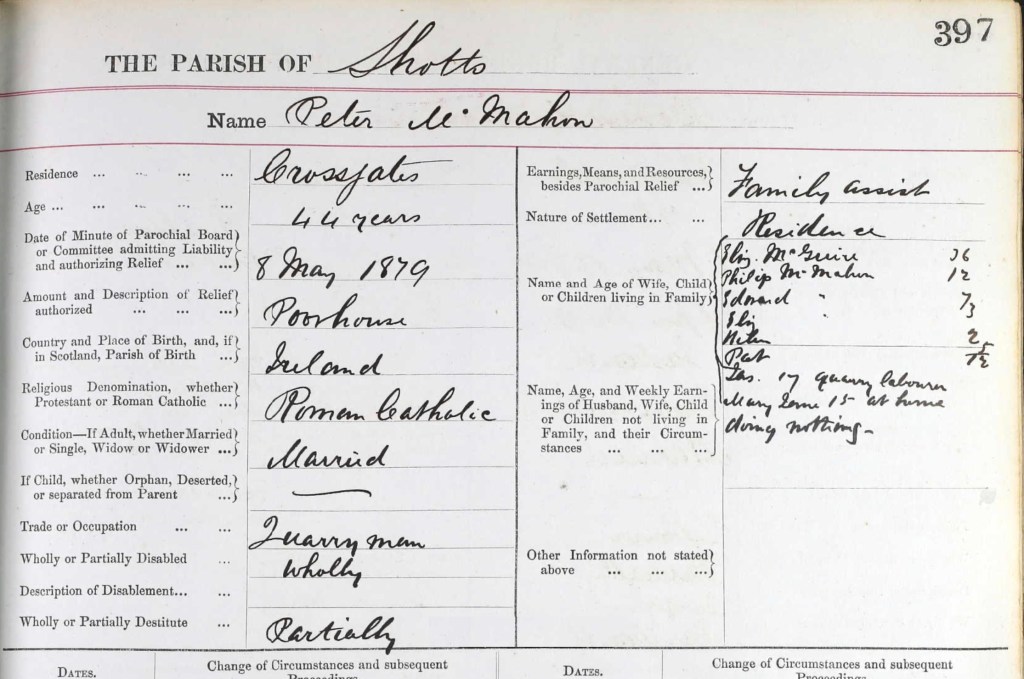
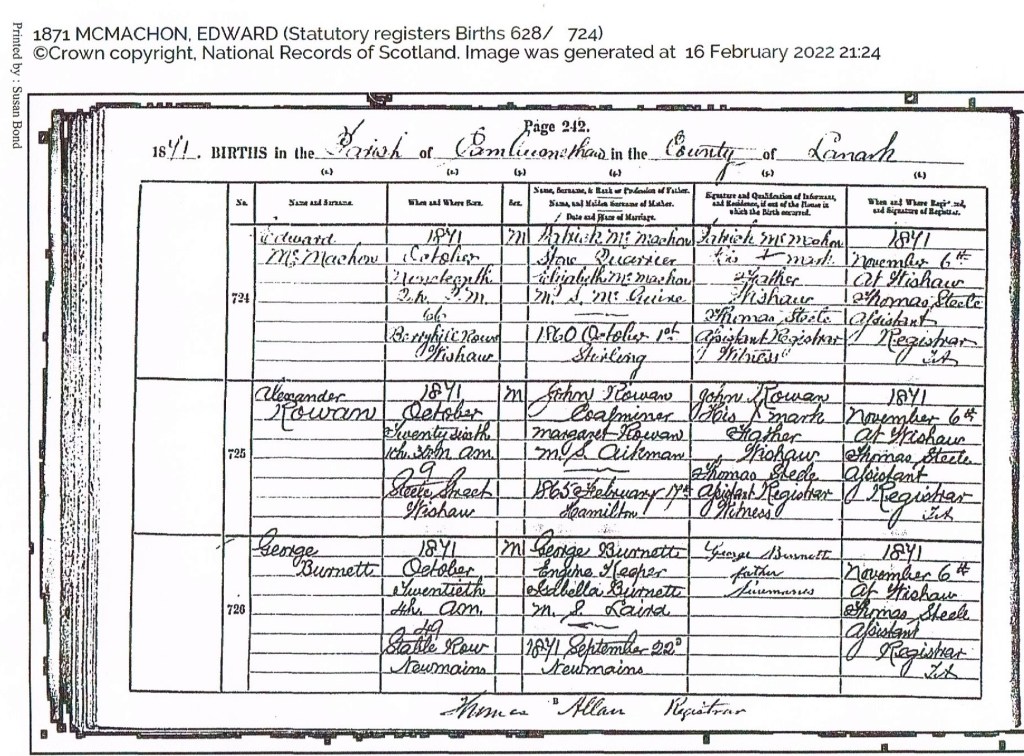
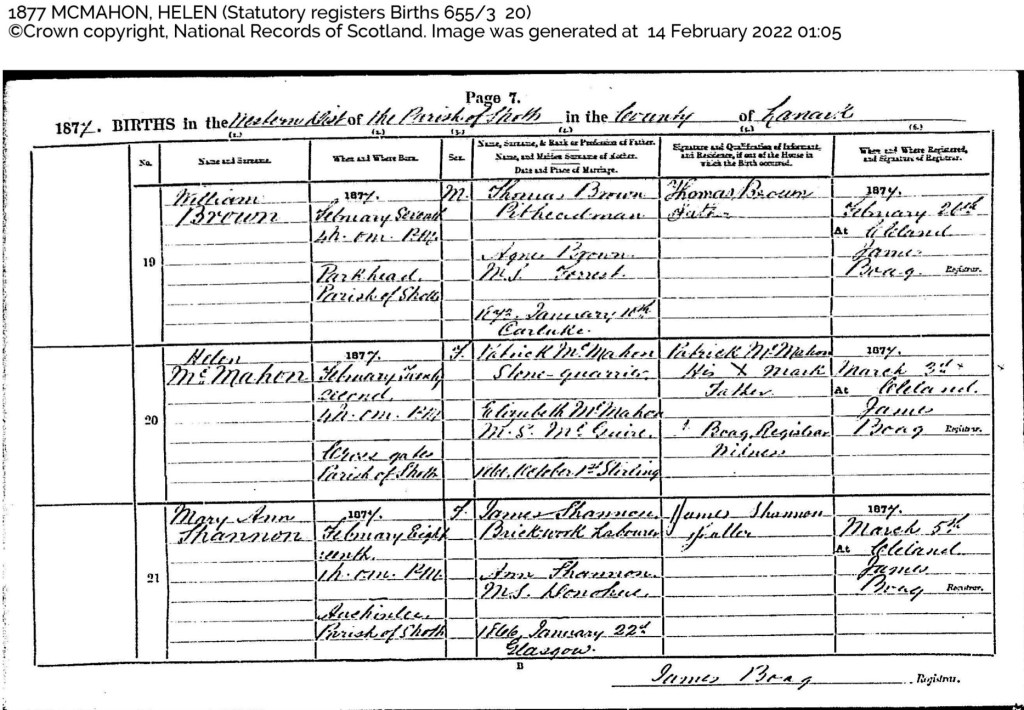
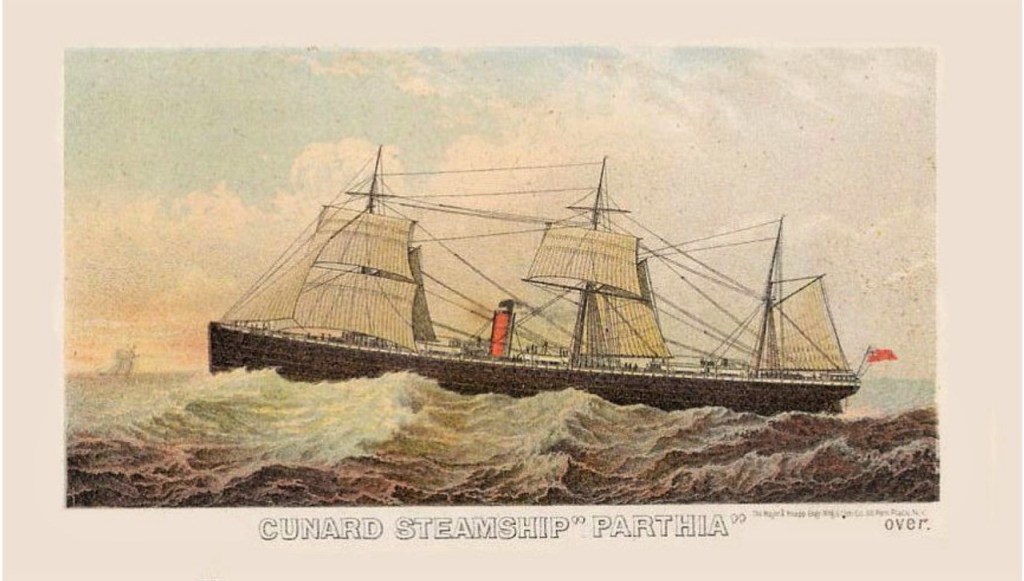
The McMahons traveled to America in two separate trips. On April 14, 1881, Patrick McMahon aged 47 and his sons, James aged 19, and Phillip aged 13, immigrated to the United States on the ship Parthia. They traveled in steerage. Their entrance point is via Castle Garden, New York. (Ellis Island did not open until 1892).

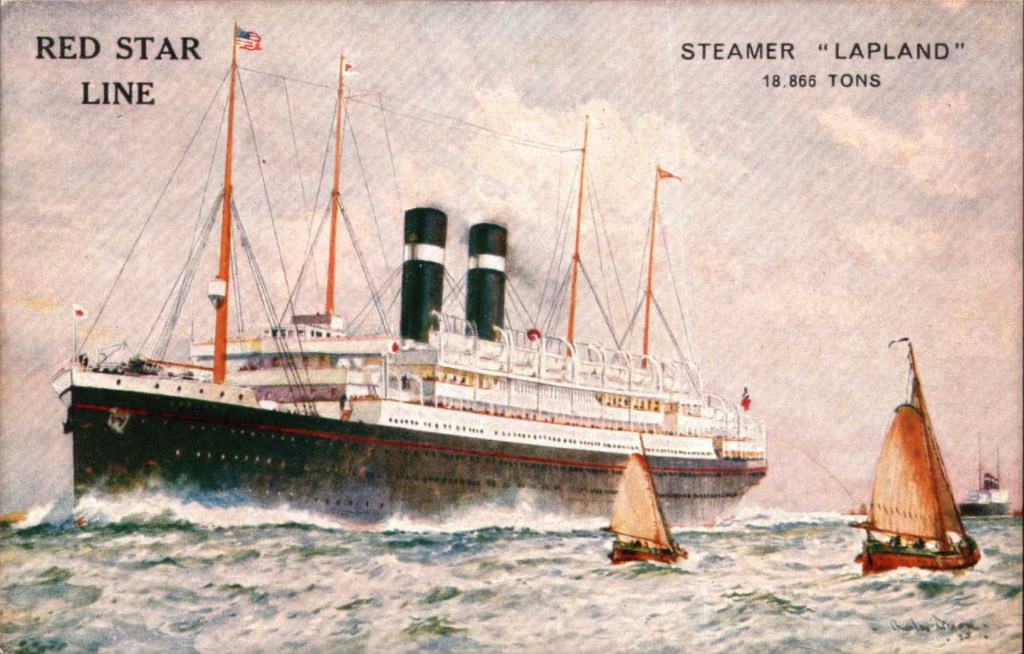
The steamship Parthia, circa 1881.

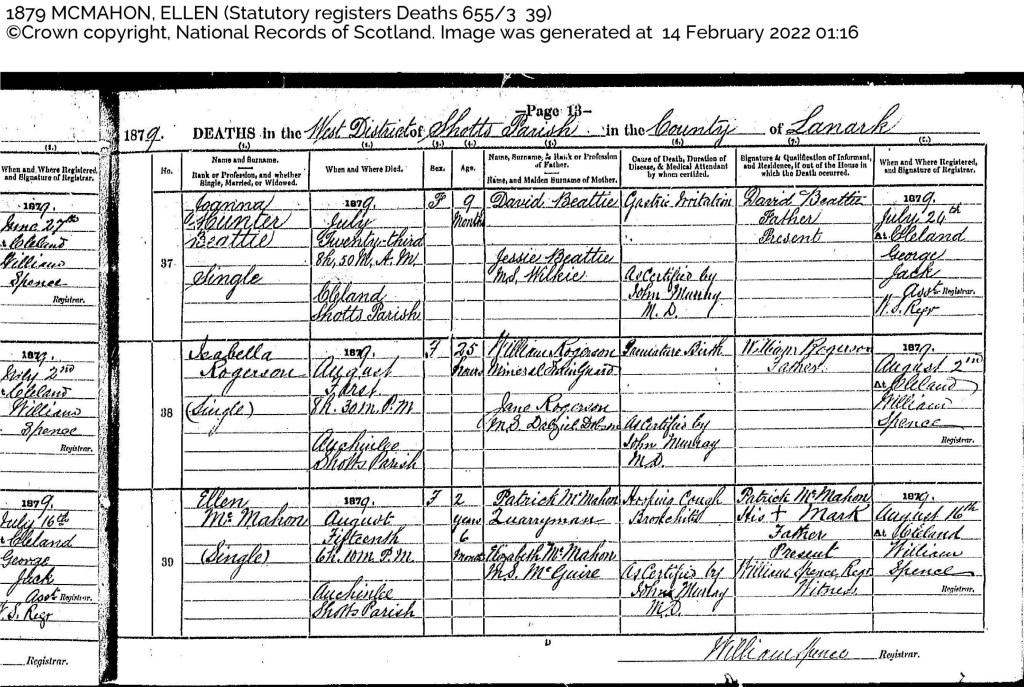
Seven months later on November 17, 1881, Elizabeth McMahon aged 35, and children Mary Jane aged 18, Edward aged 10, Ann Elizabeth aged 6, and Pat aged 3, arrive at Castle Garden, New York aboard the ship Bothnia. They also traveled in steerage. This is the last record we see for baby Patrick. We don’t know what happened to him, nor where he is buried. Did he die very soon after reaching America, or did he survive until he was in Ohio?

The steamship Bothnia, circa 1881.

We believe that Patrick and his older sons immigrated first to obtain gainful employment and prove that they could support the rest of their soon-to-be-immigrating family. It is assumed they moved to Ohio so that Patrick and his older sons could work in the quarries.

We learned that they settled in Brownhelm Township, Lorain County, Ohio where there was an existing quarry. Also, Edward Bond (Patrick McMahon’s great-grandson) shared with Susan Bond (Patrick McMahon’s great-great-granddaughter) stories he heard as a child that the McMahons worked in the quarries near Amherst in Lorain County. It is not known how long the family resided in Brownhelm Township. At some point they moved to South Euclid, Cuyahoga County, Ohio, and lived near the Bluestone Quarry where Patrick worked. For further history on the quarries, see the attached article in the footnotes, Quarry Story.

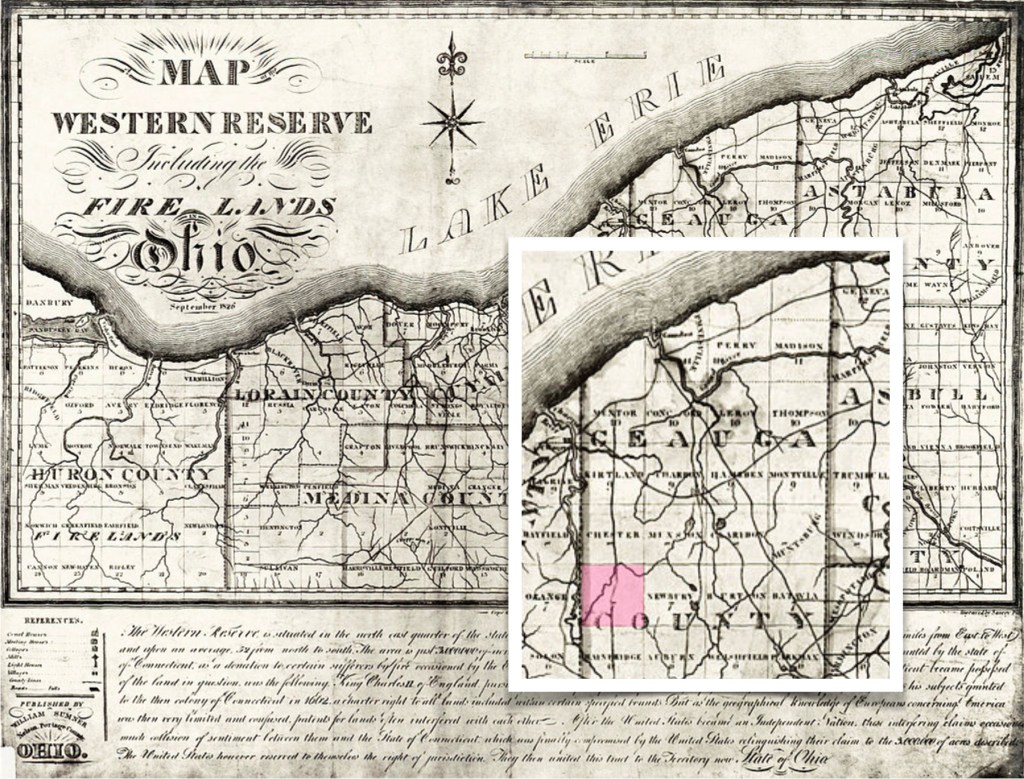
For map title detail: Range 19 Brownhelm TWP 6, map.
(Image courtesy of Larsen Fine Maps Gallery).

Brownhelm Township, Lorain County, Ohio, USA — one child

Upon reaching Ohio, the McMahon family first settled in Brownhelm Township in Lorain County. Records tell us they were living there when their last child was born.

  • Patrick Joseph McMahon born November 20, 1882 in Brownhelm Township, Lorain County, Ohio. We noticed the repetition of his first name from his slightly older brother… back then, it was not considered unusual to bestow the name of a deceased child to a younger sibling.

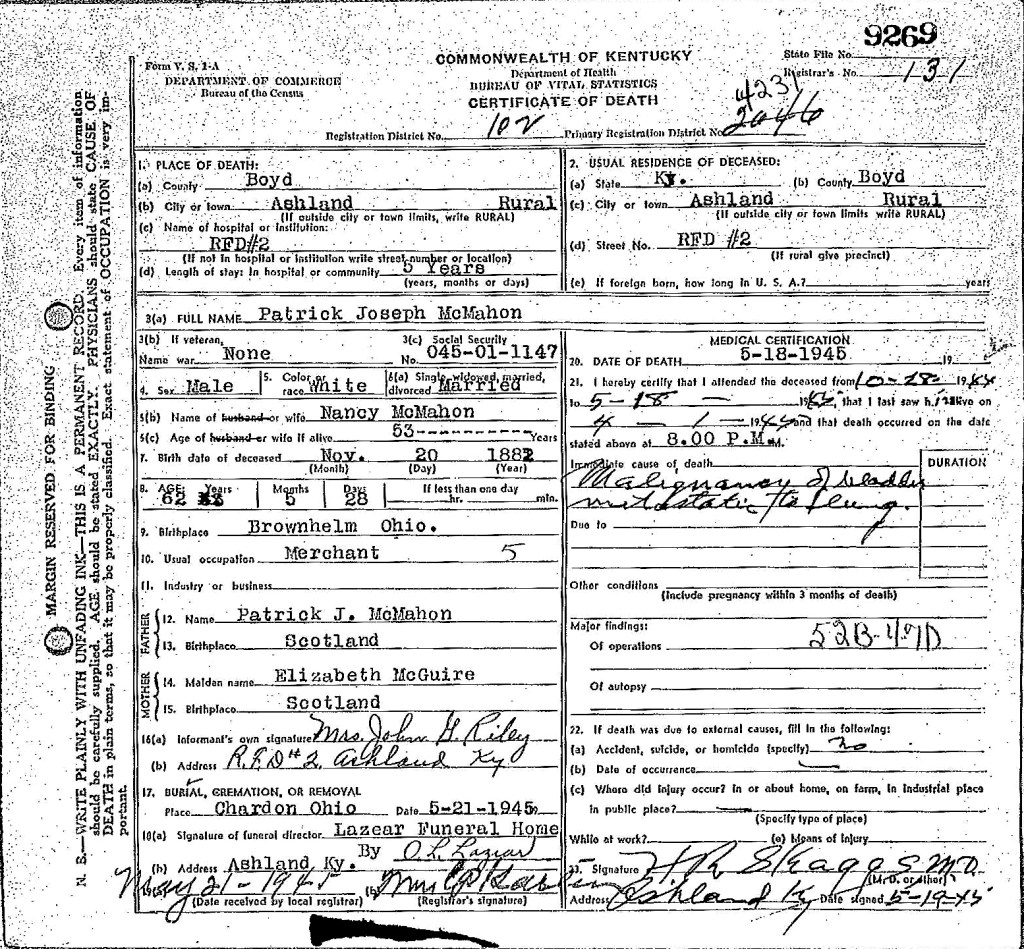
His birth information is derived from his 1945 Boyd County, Kentucky death certificate. We observed some errors in the information. It was stated that both his parents were born in Scotland, but they were born in Ireland. It was written that his father’s middle name was Patrick J. This infers that he believed his father Patrick’s middle name was Joseph. We believe that there is more evidence that his father’s middle name could have been Peter.

The patriarch of the family, Patrick McMahon, died from heart disease on July 17, 1886 in South Euclid, Ohio, far away from the Dublin, Ireland of his childhood. His tough life as a manual laborer likely took its toll on his health and well-being. On his death record, he is listed as Pat McMahon being 52 years, 11 months, 6 days old. A reverse dating with these numbers puts Patrick close to his original birthdate. Since he had a difficult time remembering his age, and was not educated, this variance is acceptable. (1)

Mary Jane McMahon, Our Scottish Ancestor

1881 to 1889 Mary Jane McMahon married John McCall

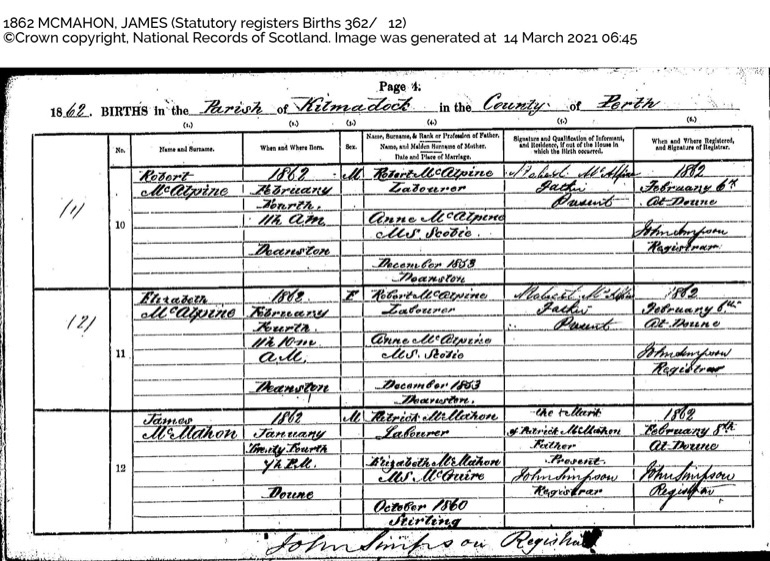
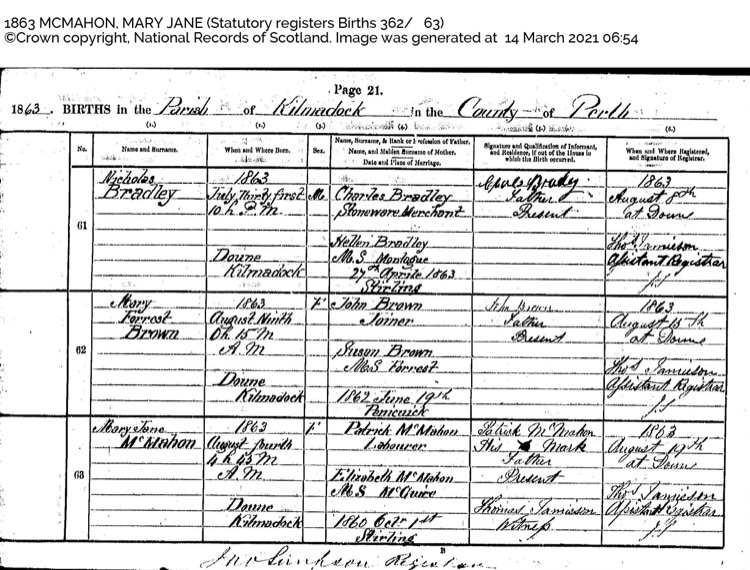
Our direct ancestor, Mary Jane McMahon, was born in Doune, Kilmadock, Perthshire, Scotland on August 4, 1863, the second child in a family of 12 children. She may have been named after her Great Grandmother Mary (Goggins) McKenzie and Grandmother Jane (McKenzie) McMahon.

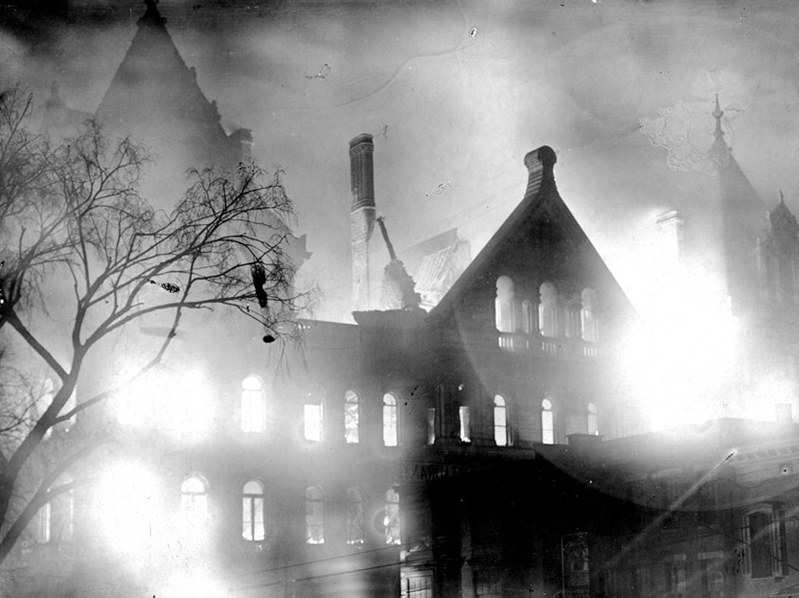
In 1881, at age eighteen, Mary Jane immigrated to the United States with her mother and younger siblings. The McMahon family probably participated in the 1890 US Census. Unfortunately, the 1890 Census was destroyed by a fire in 1921 at the Commerce Department Building in Washington, D.C. The dates and locations used to reconstruct Mary Jane’s story in America are primarily from marriage records and the Ohio censuses from the years 1900 to 1940. The United States Commerce Department releases the census 74 years after it was officially taken. The 1950 Census was made available in 2022. 

Destruction of the 1890 Census by the Great Fire of 1921 at the Commerce Department Building
in Washington, D.C. (Image courtesy of raogk.org).

In researching genealogy it is not uncommon to find incorrect or inconsistent information in the census. We are sure the McMahon children never had more than an eighth grade education, whether in Scotland, or Ohio. The census always asks the question “can you read & write”. Mary Jane answered “yes” most of the time. While evaluating the 1900 through 1940 censuses which Mary Jane McMahon/McCall/Davin participated in, frequently the dates and ages recorded on them do not always align with the birth records. 

We have surmised that our ancestor did not always know the correct date or location of her birth, or her parents births, so she guessed. Sometimes she got it right, and sometimes she got it wrong. 

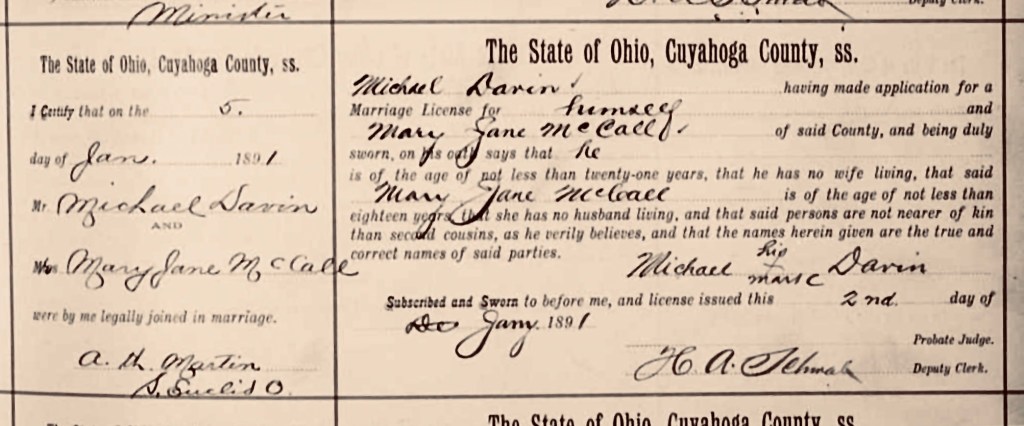
We do know that sometime between her arrival in Ohio in 1881 and 1883 Mary Jane McMahon met John McCall. They were issued a marriage license on February 22, 1884. John McCall signed the license with his mark an X which tells us he could not write. Mary Jane was not required to sign her name. 

John McCall and Mary Jane McMahon were married on February 28, 1884 in St. Paul Catholic Church in Euclid Township in Cuyahoga County. In 2007, St. Paul Church issued a copy of the marriage certificate to Susan Bond.

John McCall and Mary Jane McMahon marriage certificate, February 28, 1884. (2007 copy).

John McCall worked at the Bluestone Quarries as had his father-in-law Patrick McMahon. We do not have any information about John’s whereabouts before his marriage to Mary Jane. In the 1882 Cleveland Directory a John McCall- stonecutter, is listed. He was a boarder in the Clinton Hotel in Cleveland. We cannot know if this was our ancestor, John McCall. It was a very common name in the Cleveland area.

The Bluestone Quarry, South Euclid, Ohio, date unknown.
(Courtesy of the Euclid Historical Museum).

The Bluestone Quarries were situated in the small village of Bluestone. The village is now incorporated into the town of South Euclid. In its heyday, Bluestone was home to about 400 people and contained a general store and post office, two saloons, a temperance hall, a church, and boarding houses. The village sprang from the single industry of quarrying the rock from which the town took its name. Bluestone reached the peak of its growth in the 1890’s when immigrant laborers from Sweden, Italy, Ireland, Scotland, and Canada were working in five quarries.

Life was not at all easy for the women living in the town. There were epidemics, and all too frequently a sudden shrill note on one of the quarry’s whistles would blast an ominous portent, terrifying all who heard it. “Whenever the whistle blew all the women around would run down to that quarry to see if it was her husband who had been hurt or killed”. This description was shared by Mrs. Schroeder in the South Euclid Golden Jubilee booklet, 1917 -1967.

This photo is representative a typical mercantile store
that would have been in the village of Bluestone. (Image courtesy of eBay.com).

Note: All of Mary Jane’s children were born in the village of Bluestone, because the city of South Euclid did not exist until 1917. However, all of the birth records identify South Euclid, Cuyahoga County, Ohio as the childrens’ birth location. 

Mary Jane and John McCall had three daughters born in the four years of their marriage:

  • Elizabeth M. McCall, born October 8, 1884 — died February 12, 1951
  • Margaret Ann (McCall) Taylor, born September 25, 1886 — died October 17, 1950
  • Mary Adele (McCall) Bond, born August 10, 1888 — died March 12, 1965 (We are descended from Mary Adele).

Copies of the baptismal certificates from St. Paul Church for each of the girls. are located in the footnotes under “Baptismal Certificates”. Pastor A. T. Martin recorded the names, and other information, in Latin. Also, on two of the certificates Mary Jane’s birth location is incorrect. 

In 1888, tragedy struck the McCall family. The story passed down is that John was seriously injured in a wagon accident while working at the quarries. We do not know when or how the accident occurred. Unfortunately, John died as a result of it. His injury may have been something he could have survived, but we know that medical treatment had not progressed in 1888. His death left Mary Jane, aged 25, with three very young daughters.

1888 death record for John Coll, from Ohio County Death Records, 1840-2001,
Cuyahoga Record of deaths, 1868-1908.

In Ohio in 1867, it became a statewide law to record deaths at the probate court of the county where the death occurred. Death Records were one-line entries in ledger books, listing additional information such as birthplace, and cause of death. Traditional death certificates were not required in Ohio until 1908.

It is on John’s daughters baptismal certificates and his death record in the Cuyahoga County ledger that we learned some information about him. For some unexplained reason, on his death record his last name is spelled “Coll”. All of the other information on the record is correct so we are confident this is our John McCall. The details we learned are: John “Coll” McCall died on October 12, 1888, aged 38.   His correct birth date is October 9, 1850. The death record also tells us that John was from Ramelton, County Donegal, Ireland. His parents are identified as John and Margaret. His official cause of death was blood poisoning, which leads us to speculate that he may have died from sepsis in an era when antibiotics did not exist. We are continuing to research John McCall’s birth family, and his immigration to the United States.

1888-1889
How Mary Jane McCall supported her daughters after her husband’s death is speculation. She may have lived with, or near, her mother and younger siblings. We know her father died in 1886. Patrick McMahon is buried in the St. Paul Church Cemetery in Euclid, Ohio. He is buried in Section 10, Row 4, Grave 26. John McCall is also buried at St. Paul Cemetery in an unmarked grave. 

Elizabeth McMahon and Mary Jane McCall were both widows with young children.

1890 – 1899  Mary Jane (McMahon) McCall married Michael Davin 
As previously shared, the 1890 Federal census was destroyed in 1921. There are very few resources for the period from 1890 until we see the 1900 census. However, we know that sometime between 1890-1891 Mary Jane met Michael Davin. On the 1900 census, we learned that Michael Davin was born in England in 1863, and that he immigrated to the United States in 1890. His occupation is listed as a quarryman so he most likely worked at the Bluestone Quarries. 

Michael Davin and Mary Jane McCall marriage application, 1891.

On January 2, 1891 Michael and Mary Jane applied for a wedding license. Michael signed his name with his mark, an X, indicating he could not write. Mary Jane and Michael were married on January 5, 1891 by Reverend A. T. Martin, the same pastor who married  Mary Jane and John McCall. It would be reasonable to assume that they were married in the same church because Reverend Martin was the pastor at St. Paul Church.

Mary Jane brought her three daughters to their marriage. She and Michael Davin had three more children and a set of stillborn twins. They were born in (Bluestone) South Euclid, Ohio.

  • John Martin Davin, born October 21, 1892 — died February 23, 1976
  • William Davin, born May 4, 1893 — died date unknown
  • Teresa Ann (Davin) Loebsack, born June 14, 1896 — died May 3, 1976
  • Unnamed stillborn twin boys, birth year unknown 
1900 — Dawn Of The Century
“New inventions meant exciting prospects for the 1900s”
Sheet music illustration by Edward Taylor Paull, (courtesy of pbs.org).

1900 – 1909  The Growing McCall/Davin Family
In addition to the births of the first three children listed on the June 7, 1900 Federal Census, we learned other important things about the Davin family. They lived in Euclid Township in Cuyahoga County, Ohio. Michael and Mary Jane had five children living in the home. Listed are: Marguerite (actually Margaret Ann) McCall 13, Mary (Adele) McCall 11, John Davin 8, William Davin 6, and Teresa Davin 3. Elizabeth McCall, aged 15, was living and working as a servant for a family in Mayfield Township in Cuyahoga County. She was listed on their 1900 Census. The family had a daughter, aged three and twin boys aged one. Perhaps it was her job to care for the children. 

It is on the 1900 Census that we begin to observe a pattern where Mary Jane either guessed, or made up dates, and locations. She incorrectly records that she immigrated to the US in 1882, instead of 1881. She correctly identifies Scotland as her birth country, but lists that her parents were born in Scotland. As we know, this is incorrect. Patrick McMahon and Elizabeth McGuire/ McMahon were born in Dublin, Ireland.

The census asked the question of women “how many children were born” and “how many are living”. Mary Jane answered six children born and six living. This answer leads us to believe that the twins were born between 1901-1909. By the next census in 1910 Michael Davin is not listed with the family. It is assumed that he died between 1901-1909. We have not found any death records for him.

An Interview With Mary Jane’s Granddaughter Roberta
In 2007, Susan Bond, Dean Bond’s daughter, visited with Roberta Fumich. Dean and Roberta were first cousins and Mary Jane’s grandchildren. During the visit Roberta shared stories she remembered from her childhood. Because the stories came directly from Roberta they are included in Mary Jane (McMahon) McCall/Davin’s story.

Roberta (Loebsack) Fumich, circa 1996. (Family photograph).

Roberta speaking: “My Great Grandmother was called “Grandma Jane”. Mary Jane had three girls with John McCall, and two boys, a girl and stillborn twin boys, with Michael Davin. The story about the twins is that Mary Jane was carrying buckets of water, then tripped and fell on the buckets. When the twins were stillborn, they were bruised.”

Roberta said that her mother, Teresa (Davin) Loebsack, had memories of her father being very sick. Michael may have died when Teresa was still a little girl. It is possible he suffered from an illness while working at the quarries. 

One could certainly speculate that working at the Bluestone Quarries was bad for one’s health. In the McMahon/McCall/Davin families three men had worked in the quarries, and all three men died young.

1898 – 1906 Elizabeth McMahon and sons James, Philip, Edward, and Patrick
We wondered what happened to Mary Jane’s mother Elizabeth McMahon and her brothers after Patrick McMahon’s death in 1886. The destroyed 1890 Census might have given us some information, but until 1898 we have no record of them. Beginning in 1898, we find them in the Joliet, Illinois Business Directories. Listed are Elizabeth McMahon, a widow and her sons James, Philip, Edward, and Patrick. The boys are listed as laborers, except Patrick who was in school until the 1904 directory when he is listed as a laborer.  

1900 United States Census, Joliet Township, Illinois.

On the 1900 census for Joliet, Illinois, Elizabeth is the “Head of House” with three sons, James, Edward and Patrick living with her. Philip McMahon is not on this census and is no longer found in the Joliet Business Directories, so we assume that he left the area. James, Edward, and Patrick are identified in the 1900-1906 directories, as is their mother. From 1906 forward we have no additional information on James, Edward, and Philip McMahon. Our research will continue. There is no record of Elizabeth McMahon’s whereabouts from 1906 until her death in 1911.

Penny Postcard View of Winchester Avenue, Ashland, Boyd County, Kentucky.

Patrick Joseph McMahon
There is quite a bit of information on the youngest son Patrick Joseph McMahon. By 1917 or earlier, he had moved back to Cleveland. In 1917, he registered for the WW I draft. After that the next record we found is the 1940 census. He was living in Boyd County, Kentucky married to Nancy J. Hutchinson, a widow. The 1940 Census asks the question “where were you living in 1935” and Patrick indicates he was living in New Haven, Connecticut.

Patrick Joseph McMahon died in Ashland, Boyd County, Kentucky. His death on May 18, 1945 was from bladder cancer that had metastasized to his lungs. Patrick is buried in Chardon, Ohio, at the Chardon Municipal Cemetery with his sister Ann Elizabeth (Rose) Norton and her husband Will Norton.  

1910 – 1919  A Decade of Change in the McCall/Davin Family
On the May 12, 1910 Census, Mary Jane Davin was the head of the home. Her family was living on Bluestone Road in Cleveland Heights, Cuyahoga County. Elizabeth McCall, 24, was living at home and working as a servant for a private family. Marguerite (Margaret) McCall, 22, was similarly working for a private family. John Davin, 18, was working as a janitor at a Club House, and Teresa Davin, 13, was likely in school. William Davin was 16 in 1910 and was not on this census. Mary Adele McCall, 21, was living and working as a maid for a family on Strathmore Avenue in East Cleveland. She was listed on their 1910 Census. Ironically, later in her life Mary bought a home on Strathmore Avenue.

In October 1910, two of Mary Jane’s daughters were married one week apart. (We bet that was a busy two weeks for Great Grandmother Mary Jane!)

Two examples of 1910 American wedding dress fashions:
Left: The Butterick Wedding Dress 3784, from May 1910, and
Right: The Story of the Seven Sisters: Women’s Magazines at NYPL, from October 1910.
(See footnotes)

On October 19, 1910, Margaret Ann McCall married Oscar C. Taylor. Roberta said that the Taylor family lived across the street from Margaret’s family on Bluestone Road. Margaret and Oscar had three sons: William “Bill” Taylor born March 19, 1914, a stillborn baby boy born 1918, and Malcom “Buck” Taylor born April 3, 1922. Oscar had an automotive repair business in East Cleveland where the family lived. Margaret and Oscar were married for 40 years.

A week before Margaret’s marriage, Mary Adele McCall married Earl Alexander Bond on October 12, 1910. Earl moved to Cleveland in 1903 from Jefferson County, Ohio. Mary and Earl had four sons; Robert Earl Bond born October 28, 1911, John Allen “Al” Bond born March 2, 1914, Dean Phillip Bond born August 15, 1919, and Edward Lee Bond born November 2, 1925.

Mary Adele (McCall) Bond, circa 1908. (Family photograph).

Roberta shared another story: “Mary and Earl Bond, moved to southern Ohio about 1915.” (with very young sons Robert and John Allen “Al”.) “Sometime in 1916, Mary had an (undiagnosed) “nervous breakdown”. Teresa went to southern Ohio on a train to bring the children back to Cleveland. Grandma Jane and Aunt Elizabeth took care of them.” 

Mary and Earl moved back to Cleveland before 1919 when Dean was born. At that time they lived in a house they owned on Alder Ave in East Cleveland. Per Roberta, “They had a difficult marriage, much of it attributable to Mary.”

Elizabeth McMahon, Mary Jane’s mother, passed away on December 25, 1911. She died at the home of her daughter, Ann Elizabeth Norton, in Hambden, Geauga County, Ohio. Her cause of death was a cerebral hemorrhage. On her death certificate it indicates that her burial location is “Euclid Creek”. This location is not a cemetery. (Research on her burial site will continue).

While researching Ann Elizabeth (McMahon) Norton, we found that for some unexplained reason her name is often recorded as “Rose”. It is used on her death certificate and grave marker.

1920-1929  Mary Jane Davin Suffered a Serious Accident
When the January 9, 1920 Census was taken, Mary Jane, Elizabeth McCall, and Teresa Davin were renting their home on Bluestone Road in Cleveland Heights. On the census both Elizabeth and Teresa were working at the “electric factory” (General Electric at Nela Park). Elizabeth was an Inspector and Teresa was an Operator.

Three weeks later on January 28, 1920 Teresa Ann Davin aged 23, married Robert Loebsack. At the beginning of their marriage Teresa and Bob lived with Mary Jane and Elizabeth in the duplex on Bluestone Road. They had three children:

  • Roberta Jane (Loebsack) Fumich, born May 12, 1922—  died January 8, 2020
  • Alton Howard Loebsack, born September 25, 1925 —  died January 30, 1987
  • Luanne Terese Anne (Loebsack) Tarro, born February 22, 1935 —  died June 14, 2013
Huron Road Hospital, Cleveland, Ohio, Penny Postcard.
(Image courtesy of eBay.com).

In 1925, the Loebsack’s were still living on Bluestone. Roberta said that “Grandma Jane would go to bed when it got dark and would get up with the sun. When she got up she would stoke the coal furnace. One morning, a gas bubble exploded and caught her nightgown on fire. Teresa had just purchased some ointment and quickly covered Mary Jane with it. However, she was very badly burned and was taken to Huron Road Hospital where she stayed for six months.”

“To care for Mary Jane, Teresa and Roberta moved in with Margaret and Oscar Taylor because they lived near the hospital in a caretaker’s house on the Blossom Estate. Every day one of the daughters (primarily Teresa and Margaret) would go to the hospital and help with Mary Jane’s rehabilitation therapy. Mary Adele helped when she could. Elizabeth worked at Nela Park and could not help them during the day, but did help on weekends.”  

Thankfully, Mary Jane recovered from her burns and lived to age 89.

Newsboy Selling ‘Grit’, Irwinville Farms, Georgia, USA,
John Vachon for Farm Security Administration, May 1938.
(Image courtesy of alamy.com).

1930-1939 The “Great Depression” Years
On the April 9, 1930 census, five years after her recovery from the burn accident, Mary Jane Davin now 66, and Elizabeth McCall 44, had moved from the Bluestone house. The census tells us they were living at 1776 Urbana Road in Cleveland in a home they were renting for $37.00 a month. Elizabeth was the wage earner working as an inspector at the General Electric “electric lamp works”.

On the census, one of the questions asked was “Is there a Radio Set in the home”? They reported yes, (they had a radio set in their home). This question was asked to learn how many homes had electricity in 1930. Although electricity was discovered in 1882, only half of the homes in the United States had electricity by 1925. An article in Ohio History Connections tells the story of Ohio’s major role in getting electricity into businesses and homes.

A family listens to the radio in the 1930s — the Census Bureau collected radio ownership data
in 1930 on the population schedule. National Archive photo from Radio In The 1930s.
(Image courtesy of United States Census Bureau).

This census had the fewest number of questions on any of the census’ available to us. As on past census’ Mary Jane’s answers on this census are incorrect. For example, she indicates she immigrated in 1910 (actually 1881) and that she could not read, nor write. On previous census’ she always answered that she could read and write. It appears that Mary Jane never became a naturalized citizen. On both of the 1930 and 1940 censuses she is listed as an alien citizen. [Alien is a term used in federal and state law to identify a foreign-born person who lives in the United States, has not naturalized, and is still a citizen of a foreign country]. This tells us that Mary Jane was never able to vote in a state or federal election.

The following excerpt from History.com gives a brief description of the Great Depression suffered by many, including our families, (see footnotes).

“The Great Depression was the worst economic downturn in the history of the industrialized world, lasting from 1929 to 1939. It began after the stock market crash of October 1929, which sent Wall Street into a panic and wiped out millions of investors. Over the next several years, consumer spending and investment dropped, causing steep declines in industrial output and employment as failing companies laid off workers. By 1933, when the Great Depression reached its lowest point, some 15 million Americans were unemployed and nearly half the country’s banks had failed.”

Short video (2:18) from the FDR Library titled The Great Depression.
Click on this link to watch:
https://www.youtube.com/watch?v=QgmeL7sp4hw

The Davins, Taylors, Loebsacks, and Bonds were not exempt from the effects of the Great Depression. Elizabeth McCall continued to work at the General Electric Company and supported her mother. We learned on the 1930 Censuses that Oscar Taylor (Margaret’s husband), owned an auto repair garage in East Cleveland and supported his family. Bob Loebsack, (Teresa’s husband), worked in a retail meat market (grocery store) to support his family. Earl Bond, (Mary Adele’s husband), owned an auto repair business to support his family, and John Davin, (Mary Jane’s son), was in the United States Navy living in California with his wife and daughter.

…in the middle of the night Elizabeth heard a loud noise that woke her up. She got up and could not identify the noise. The next morning they learned that Earl had died by suicide.

Remembrance from Roberta (Loebsack) Fumich

On February 24, 1932, Earl Bond committed suicide. At that time he was not living with his family at the Alder Avenue home in East Cleveland. Earl was living in University Heights with his sister Edna and her husband Bill Wicks. They found Earl hanged in their garage.

Aunt Elizabeth told Roberta that she knew when Mary and Earl were “having difficulties” because he would stutter. The story goes that “when they would fight, she would throw him out of the house. Further, Roberta said “she was sleeping at Aunt Elizabeth’s, when in the middle of the night Elizabeth heard a loud noise that woke her up. She got up and could not identify the noise. The next morning they learned that Earl had died by suicide. Elizabeth always believed the noise she heard in the middle of the night was when Earl died.”

For more about this episode in our family’s history, please see:
The Bond Line, A Narrative — Seven.

1936 Family Reunion at Bluestone Park, South Euclid, Ohio, with all of Mary Jane’s daughters and grandchildren. Missing: John Davin, living in California and William Davin, whereabouts unknown.
First Row: Alton Loebsack, Dean Bond, Roberta Loebsack, Edward Bond
Second Row: Elizabeth McCall, Margaret (McCall) Taylor, Mary Jane (McMahon) McCall/Davin,
Teresa (Davin) Loebsack, Mary A. (McCall) Bond.
Third Row: Robert Loebsack (holding Luanne Loebsack), Malcolm “Buck” Taylor, Oscar Taylor, Al Bond, Bill Taylor, Robert Bond. (Family photograph).

1940-1949 Pre and Post World War II
On the April 5, 1940 Census, Elizabeth McCall and Mary Jane Davin, aged 76, were living at 1751 Clarkstone Road in Cleveland in a home that Elizabeth owned. Elizabeth indicated that she had completed seventh grade. Mary Jane implied that she had completed eighth grade, however, it had to have been in Scotland. Elizabeth continued working as an assembler at the “Lamp Works” and made a monthly salary of $1,172. Before taxes it would have been $14,064 which in 1940, was a very good living for a single woman with a seventh grade education. Elizabeth McCall remained a single woman throughout her life. This is the last census we have available to glean information about Mary Jane. 

We do know her son, John Davin served his country in two World Wars as an officer in the United States Navy. Also during World War II, several of her grandsons served honorably. Dean and Edward Bond and Alton Loebsack served in the United States Navy. Malcom “Buck” Taylor served in the United States Army. Robert Bond served in the American Field Service.

1950-1954
On October 17, 1950 Margaret (McCall) Taylor, aged 64, died from uterine cancer. She is buried at the East Cleveland Township Cemetery, Cuyahoga County, along with her husband Oscar, son William, and Oscar’s parents. Four months later on February 12, 1951, Elizabeth McCall, aged 66, died from cerebral venous thrombosis, a blood clot in her brain. She is also buried with her sister Margaret at the East Cleveland Township Cemetery. Lastly, Mary Jane (McMahon) McCall/Davin died on February 16, 1954, aged 89 (and six months). We don’t have a copy of her death certificate but one could agree that she may have died of old age!

Mary Jane McMahon lived her first 18 years in the Central Belt of Scotland before immigrating to Ohio. There she spent 71 of her 89 years living in and around Cleveland, Ohio. She left a long line of descendants living all over the United States (and maybe the world). She is buried in Knollwood Cemetery in Mayfield Heights, Cuyahoga County, Ohio. 

1965
Mary Jane’s third daughter, Mary Adele (McCall) Bond died, aged 76, on March 12. Her cause of death was congestive cardiac failure caused by cerebral vascular hemorrhage. She is buried with her husband Earl Bond at Whitehaven Cemetery in Mayfield Village, Cuyahoga County, Ohio.

1976
Mary Jane’s fourth daughter Teresa (Davin) Loebsack, aged 79, died on May 3. She in Knollwood Cemetery near her mother. Buried with Teresa is her husband Robert Loebsack, died in 1970, and son Alton Loebsack, died in 1987. Three months before Teresa died, Mary Jane’s son, John Martin Davin, aged 84, died on February 23, in San Diego California. John is buried at Mountain View Cemetery in Fresno, Fresno County, California.

Mary Jane (McMahon) McCall Davin photographed on Christmas Day,
December 25, 1931, aged 67. (Family photograph).

When viewing the photograph of Mary Jane (McMahon) McCall Davin from 1931, it’s intriguing to see that the photographer chose the prop of a spinning wheel lamp to accompany her. She was descended from men who worked to build communities by freeing stone from the earth, and from mothers who spun threads, worked looms, and raised families.

The narrative of our Irish ancestors is built from their history. Like a piece of well-crafted Irish linen, it is woven carefully from the threads of family stories, their long lost records, and our desire to connect with them through time. (2)

Following are the footnotes for the Primary Source Materials,
Notes, and Observations

Their Immigration to The United States

(1) — seven records

We looked at ship manifests for the New York harbor area and found this:
The Parthia, the ship they traveled on, is found in this file at the very top of the list:
https://stevemorse.org/cgi-bin/boat.php?series=&rollStart=&rollEnd=&volumeStart=&volumeEnd=&monthStart=&dayStart=&yearStart=&monthEnd=&dayEnd=&yearEnd=&boatkind=starts&boat=Parthia&&portkind=starts&port=&pageSize=50&database=all&local=yes&auth=&offset=51

Then follow this link for the manifest record: https://stevemorse.org/ellis2/mmminus.html?back=https://stevemorse.org/cgi-bin/boat.php?series=&rollStart=&rollEnd=&volumeStart=&volumeEnd=&monthStart=&dayStart=&yearStart=&monthEnd=&dayEnd=&yearEnd=&boatkind=starts&boat=Parthia&&portkind=starts&port=&pageSize=50&database=all&local=yes&auth=&offset=51&series=0&roll=435&frame=213&display=true

Note: Further guidance for this footnote:

  • At the bottom of the page, buttons are shown >
  • Series M237 Roll 435 Frame 213 >
  • The Display button is located below the Series M237 button. Frame and Display are the only important buttons. >
  • You enter the frame number and then hit display to see data as follows:
  • Frame 217: The ship manifest Frame 222: Patrick and his sons James and Phillip are listed as having traveled in steerage (about 2/3’s of the way down the page.)

Elza Mc Mahon
in the New York, U.S., Arriving Passenger and Crew Lists (including Castle Garden and Ellis Island), 1820-1957

Date > 1881 > November > 17 > Bothnia
https://search.ancestry.com/cgi-bin/sse.dll?indiv=1&dbid=7488&h=11711370&tid=&pid=&queryId=427de71394a3060e85ccd472fd5aaffd&usePUB=true&_phsrc=BnY39&_phstart=successSource
Digital Page: 2/6: (bottom of page)
Note: Elizabeth and her children are listed near the bottom of the page.
and here:
Elza Mc Mahon
in the New York Port, Ship Images, 1851-1891
https://www.ancestry.com/discoveryui-content/view/2442696:8644?tid=&pid=&queryId=427de71394a3060e85ccd472fd5aaffd&_phsrc=BnY38&_phstart=successSource

Amherst Historical Society
Quarry Story
https://amhersthistoricalsociety.org/quarry-story/

Larsen Fine Maps Gallery
Range 19 Brownhelm TWP 6
https://larsenfinemaps.com/products/819
Note: For Brownhelm township map title detail.

Patrick Joseph McMahon,
Kentucky death certificate #9269
https://www.familysearch.org/ark:/61903/3:1:3Q9M-C9TF-H3GF-F?cc=1417491&personaUrl=%2Fark%3A%2F61903%2F1%3A1%3AN9VP-XSM
Digital page: 2293/3534
Note: This document provides his birth place and date.

Pat Mcmahon
Death – Ohio, County Death Records, 1840-2001

https://www.familysearch.org/ark:/61903/1:1:F6VG-1ZF
Digital page: 222/701, Left page, bottom, line 7.

Mary Jane McMahon, Our Scottish Ancestor

(2) — forty four records

John McCall & Mary Jane McMahon marriage license
Ohio, County Marriages, 1789-2016
Marriage records (Cuyahoga County, Ohio), 1810-1941; indexes, 1810-1952
https://www.familysearch.org/ark:/61903/3:1:939K-BJ7Z-H?i=154&cc=1614804
Book page: 220, Digital page: 155/322, Left page, 3rd entry.

Random Acts of Genealogical Kindness
Fate of the 1890 Population Census
https://raogk.org/census-records/1890-fire/

Encyclopedia of Cleveland History
Bluestone Quarries
https://case.edu/ech/articles/b/bluestone-quarries#:~:text=The%20BLUESTONE%20QUARRIES%20were%20situated,a%20church%2C%20and%20boarding%20houses

Euclid Historical Museum
Bluestone Quarry
https://clevelandhistorical.org/index.php/files/show/5508
Note: For photograph.

The Proud Heritage of South Euclid Ohio; Golden Jubilee 1917-1967
https://www.garrisonhousebooks.com/product/19167/The-Proud-Heritage-of-South-Euclid-Ohio-Golden-Jubilee-1917-1967

Real Photo South Euclid Ohio Store Front Downtown Postcard
https://www.ebay.com/itm/372726256823

Baptismal Certificates, for the McCall Daughters
Note: These copies of the original St. Paul Church baptismal certificates are written in Latin:
Ego infrascriptus baptizavi = I baptized the undersigned,
nat = born / birth,
ex = from,
ex loco = from the place,
et = and,
Patrini fuerunt = we are sponsors

Elizabeth McCall Born October 8,1884 Baptized October 19, 1884
Margaret Ann McCall Born September 25, 1886 Baptized October 10, 1886
Mary Adele McCall Born August 10,1888 Baptized August 22, 1888

John Coll (McCall) death record
Ohio, County Death Records, 1840-2001, Cuyahoga
Record of deaths, 1868-1908
https://www.familysearch.org/ark:/61903/1:1:F6LS-Y5G
Book Page: 303, Digital Page: 384/701, Left page, middle, entry 3.

Ohio, County Marriages, 1789-2016, Cuyahoga
Marriage records 1890, vol 35
Michael Davin and Mary Jane McCall marriage record
https://www.familysearch.org/ark:/61903/3:1:939K-BP9S-PC?i=168&cc=1614804&personaUrl=%2Fark%3A%2F61903%2F1%3A1%3AZZ1P-NSPZ
Book page: 243, Digital page: 169/319, Right page, entry 3.

1900 — Dawn Of The Century
“New inventions meant exciting prospects for the 1900s”
Sheet music illustration by Edward Taylor Paull
From the article: Summing Up, Looking Forward and The Paris Exposition
https://www.pbs.org/wgbh/americanexperience/features/1900-forward-exposition/

1900 census, Michael and Mary Jane Davin
United States Census, 1900  Ohio  Cuyahoga
Ed 218 Euclid Township (south half)
https://www.familysearch.org/ark:/61903/3:1:S3HT-DZK3-QG1?i=9&cc=1325221&personaUrl=%2Fark%3A%2F61903%2F1%3A1%3AMMZZ-YG5
Book Page: 5/5B, Digital Page: 10/34, Entries 72 through 78.

Image of Roberta (Loebsack) Fumich, circa 1996.
(Family photograph).

Elizebeth C McMahon
Census – United States Census, 1900, Joliet Township, Illinois
https://www.familysearch.org/ark:/61903/1:1:MSCQ-JQ5
Digital page: 36/51, Entries 68 through 71.

1940 Kentucky census, Patrick Joseph McMahon
United States Census, 1940, Kentucky, Boyd, Magisterial District 4
https://www.familysearch.org/ark:/61903/3:1:3QSQ-G9M1-S7JY?i=69&personaUrl=%2Fark%3A%2F61903%2F1%3A1%3AK7R9-QDF
  Book Page: 35B, Digital Page: 70/85, Entry line 60.

Patrick Joseph McMahon, Kentucky death certificate https://www.familysearch.org/ark:/61903/3:1:3Q9M-C9TF-H3GF-F?cc=1417491&personaUrl=%2Fark%3A%2F61903%2F1%3A1%3AN9VP-XSM

1910 census, Mary Jane Davin and family
United States Census, 1910 Ohio Cuyahoga, Cleveland Heights, Ed 435
https://www.familysearch.org/ark:/61903/3:1:33SQ-GRKQ-9HPR?i=4&cc=1727033&personaUrl=%2Fark%3A%2F61903%2F1%3A1%3AMLZ5-8QJ
Digital Page: 5/14 Entry lines 46 through 50.

Two examples of 1910 American wedding dress fashions:
witness2fashion
Butterick Wedding Dress, May 1910
https://witness2fashion.wordpress.com/2019/05/02/butterick-wedding-dress-may-1910/
and
Huffington Post
The Story of the Seven Sisters: Women’s Magazines at NYPL, October 1910
https://www.huffpost.com/entry/the-story-of-the-seven-si_b_2989101

Margaret Ann McCall and Oscar Taylor marriage record
Ohio County Marriages, 1789-2016, Cuyahoga Marriage records 1910, vol 76
https://www.familysearch.org/ark:/61903/3:1:939K-BPS2-LJ?i=223&cc=1614804&personaUrl=%2Fark%3A%2F61903%2F1%3A1%3AZ832-4YPZ
Book Page: 355, Digital Page: 224/298, Right page, top entry.

Mary Adele McCall and Earle A. Bond marriage record Ohio County Marriages, 1789-2016, Cuyahoga Marriage records 1910, vol 76
https://www.familysearch.org/ark:/61903/3:1:939K-BPSG-XL?i=209&cc=1614804&personaUrl=%2Fark%3A%2F61903%2F1%3A1%3AZ8Q7-XW6Z
Book Page: 327, Digital Page: 210/298, Right page, last entry.

Elizabeth (McGuire) McMahon 1911 death certificate.

Elizabeth (McGuire) McMahon
Ohio Deaths, 1908-1953, 1911 https://www.familysearch.org/ark:/61903/3:1:33SQ-GPJR-BVT?i=1550&cc=1307272&personaUrl=%2Fark%3A%2F61903%2F1%3A1%3AX8D5-F6D
Digital page: 1551/2865
Note: Her actual birth year is 1846, not 1848 as listed.

Mary Jane Davin
in the 1920 United States Federal Census

https://www.ancestry.com/discoveryui-content/view/33247675:6061?tid=&pid=&queryId=11f7c7ecd1f87166c178004c58b1f5f0&_phsrc=qGQ3620&_phstart=successSource
Book Page: 2B, Digital Page: 4/29, Entry lines 63 through 65.

Teresa Davin and Robert Loebsack marriage record
Ohio, County Marriages, 1789-2016, Cuyahoga
Marriage records 1919-1920, vol 115 
https://www.familysearch.org/ark:/61903/3:1:939K-BJ34-D3?i=158&cc=1614804&personaUrl=%2Fark%3A%2F61903%2F1%3A1%3AZ8WM-R2N2
Book Page: 220, Digital Page: 159/201, Left page, entry 4.

Mary Jane Davin
in the 1930 United States Federal Census
https://www.ancestry.com/discoveryui-content/view/73457206:6224
Book Page: Sheet 5B, Digital Page: 9/20, Entry lines 81 and 82.

Penny Postcard image of
Cleveland, Ohio, Huron Road Hospital (ClevOH297) https://www.ebay.com/itm/385218122138

Roberta Fumich death, email notes between
Thomas Harley Bond to Susan Deanna Bond on June 15, 2024:
Two quick questions about Roberta Fumich:
What does the “J” stand for in her middle name?
“- The J stands for Jane…”
She died in 2020. Do you know the date and do you have a file for this?
“…and she died on Jan. 8, 2020 – age 97! I don’t have a file for her death — I went to her memorial service.

Alton H. Loebsack
in the U.S., Find a Grave Index, 1600s-Current
https://www.ancestry.com/discoveryui-content/view/138034360:60525

Luanne Terese Tarro
in the U.S., Find a Grave Index, 1600s-Current
https://www.ancestry.com/discoveryui-content/view/152515702:60525

Newsboy Selling ‘Grit’, Irwinville Farms, Georgia, USA (photo)
John Vachon for Farm Security Administration, May 1938
https://www.alamy.com/newsboy-selling-grit-irwinville-farms-georgia-usa-john-vachon-for-farm-security-administration-may-1938-image185170684.html?imageid=FAF7CE37-F79C-489E-B60A-C781AD84410D&p=240905&pn=5&searchId=fff6f73450e69a474356b250d67936d7&searchtype=0

Ohio History Central
Electricity https://ohiohistorycentral.org/w/Electricity#:~:text=1929.,to%20light%20cities%20at%20night

National Archive photo from the United States Census Bureau article,
Radio In The 1930s
https://www.census.gov/library/photos/radio-in-the-1930s.html

Great Depression History
https://www.history.com/topics/great-depression/great-depression-history

Short video (2:18) from the FDR Library titled The Great Depression.
Note: If the video does not load, here is the url: https://www.youtube.com/watch?v=QgmeL7sp4hw

Earl Alexander Bond 1932 death certificate.

Earl A. Bond death
Vital – Ohio Death Index, 1908-1932, 1938-1944, and 1958-2007

https://www.familysearch.org/ark:/61903/1:1:VKPN-8YQ

Mary J Davin
in the 1940 United States Federal Census

https://www.ancestry.com/discoveryui-content/view/32051230:2442
Book Page: Sheet 2B, Digital Page: 4/22, Entry lines 71 -72.

Margaret McCall Taylor (death)
https://www.findagrave.com/memorial/161288506/margaret-taylor

Elizabeth McCall (death)
https://www.findagrave.com/memorial/127229270/elizabeth-mccall

Mary Jane Davin (death)
https://www.findagrave.com/memorial/172552545/mary-jane-davin
Note: There is an error for her birth year. Her actual birth year is 1863.

Mary Adele (McCall) Bond 1965 death certificate.

Mary Adele (McCall) Bond
Note: The above document is unsourced and certain important information such as her death date is cropped off. See this file for more complete information:
Mary A Bond in the Ohio, U.S., Death Records, 1908-1932, 1938-2022
https://www.ancestry.com/discoveryui-content/view/3132441:5763?tid=&pid=&queryId=07feb666-c93b-4a3c-9f62-f1ac3be52813&_phsrc=ZSs1&_phstart=successSource

Teresa A Loebsack (death)
https://www.findagrave.com/memorial/172554197/teresa-a-loebsack

John Martin Davin (death) https://www.findagrave.com/memorial/167944586/john-martin-davin

Ohio Postcards for Sale
OH.jpg
https://www.oldpostcards.com/uspostcards/ohio.html 

The White Line, A Narrative — Four

This is Chapter Four of four. This is the concluding chapter we have written for the White family. They have been quite interesting, what with family legends at sea, modern reservoirs, a ship named Grumpus, Amish people, trees and vines…

This chapter will connect us to several other family lines which we have documented. These chapters are —

  • The Hoggarth Line, A Narrative — One and Two
  • The Peterman Line, A Narrative
  • The Bond Line, A Narrative — Seven

“Sadie, Sadie, Married Lady, That’s Me!”

Ralph Hiram White married “Sadie” i.e. Sarah Alice Elizabeth Hoggarth, on August 23, 1924, in Cuyahoga County, Ohio. She was born December 18, 1898 in Toronto, Ontario, Canada — died September 8, 1989 in Kirtland, Lake County, Ohio. Sadie was the daughter of John Richard Hoggarth Jr. and Alice Lavina Nelson Weegar.

For more about Sadie’s life before she met Ralph, see, The Hoggarth Line, A Narrative — One and Two.

Sadie’s personality would aptly be described as vivacious. She had bright red hair which made her stand out when she entered a room. But the most distinctive characteristic she had was her voice: slightly higher pitched and sing-song like. Talking with her was a contest where you just tried to keep up (!) with her rapid delivery. Thanksgiving dinners were festive affairs, but the conversation always reached a loud fever pitch because Sadie always set the pace.

This is the first ancestor we’ve had who is named Sadie — and with great delight, we just couldn’t resist sharing this…

The film clip above is about 5 minutes long and is from the movie Funny Girl, released in 1968. As sung by Barbra Streisand, the song “Sadie, Sadie Married Lady” is still memorable to this day.

The clip can viewed at this link:
https://www.youtube.com/watch?v=h51msoRqLSo

Ralph and Sadie lived lives anchored in two locations which were not very far apart from each other, on the east side of Cleveland. Their first census finds them living on 2164 Stearns Road, near an area referenced as University Circle. This neighborhood is famous for being a somewhat posh cultural hub. It was then and is now, “a busy cultural hub with institutions like the Cleveland Natural History Museum and the Museum of Contemporary Art, a modern mirrored structure with regularly changing exhibitions. Severance Hall hosts performances by the Cleveland Orchestra, and paths wind past roses and maple trees at the Cleveland Botanical Garden.” It is also the home of the famous Cleveland Museum of Art. (See footnotes).

However, trying to document this exact location sent us on a bit of an adventure, since urban renewal has altered the character of the section where they lived. In fact, it’s just about impossible to specifically map this, but we do know how to describe it.

2164 Stearns Road
1930 Census of Euclid, Cuyahoga County, Ohio. Note that Ralph’s cousin Leo is living with them.

The postcard image below characterizes what Stearns Road was like then. It shows the Normal School, located about one block from their apartment building. Since we know the address they lived at, the Cleveland City Directory for 1930 led us to a man named Dewey M. Cupps (unrelated to our family), who lived at that location. Perhaps he lived there just before they did since the 1930 Directory material would have been gathered before the 1930 Census? Did they know each other? What was especially interesting for us was this anecdote we came across regarding Mr. Cupps and his family: “In 1930 he and his wife and their daughter lived in an apartment they were renting for $35 a month at 2164 Stearns Road in Cleveland, OH. They did have a radio. He worked as a motorman for a street railway.” Interestingly, that $35 rent would translate to about $625 in today’s money, and would never cover the current cost of rent in that area in today’s market. (So it seems that, Mr. Cupps had a good deal then!)

The Cleveland City Directory for 1932 lists Sadie and Ralph by name and indicates that he works as a foreman at the Dairymens Milk Company in Cleveland. The 1930 census had listed him as an auto mechanic, so he must have changed jobs. He worked for the Dairymens Milk Company for many years.

Top image: Vintage postcard of Stearns Road, Cleveland, Ohio in the 1930s very close to their apartment building. Middle: Entries from the 1930 and 1932 Cleveland City Directory.
Bottom: The Dairymens Milk Company where Ralph White worked in 1932. (See footnotes).

The throes of the Great Depression occured during the 1930s. The following excerpt from History.com gives a brief description of the Great Depression suffered by many, (see footnotes).

The Great Depression was the worst economic downturn in the history of the industrialized world, lasting from 1929 to 1939. It began after the stock market crash of October 1929, which sent Wall Street into a panic and wiped out millions of investors. Over the next several years, consumer spending and investment dropped, causing steep declines in industrial output and employment as failing companies laid off workers. By 1933, when the Great Depression reached its lowest point, some 15 million Americans were unemployed and nearly half the country’s banks had failed.” (1)

Euclid Was Once Vineyards

In the 1930s, the White family had moved to the nearby Cleveland Metro area known as Euclid. We have always thought of Euclid as a community given over to much small industrialization. However, 50 years earlier it was quite different. “In the 19th century, the area was largely agricultural. Over 200 acres were given over to vineyards in the 1880s.” (Case Western Reserve University)

“By the turn of the 20th century, winemaking was thriving in Ohio, with dozens of wineries located along the shores of Lake Erie and thousands of gallons of wine produced in this region. The area’s reputation for delicious wines increased vineyards throughout southern Lake Erie, which became famous as the Lake Erie Grape Belt. Despite Prohibition, which effectively wiped-out winemaking in Ohio…” (The History of Wineries and Vineyards in Ohio)

Top image: Greater Cleveland, Ohio area map indicating the location of the city of Euclid.
Center: 1810 East 227th Street home where the Ralph White family lived for more than 25 years.
Bottom: That exact street location for the home. (See footnotes).
1810 East 227th Street
1940 Census of Euclid, Cuyahoga County, Ohio.

The 1940 Census finds Ralph and Sadie as parents with two young children, Alice Ada (9) and Wayne (3). Ralph is still working at the Dairymens Milk Company. By the time of the 1950 Census, their children are teenagers and daughter Alice is attending high school. Ralph is now working as a garage manager in an auto repair business, and Alice is working as a switchboard operator. (2)

1810 East 227th Street
1950 Census of Euclid, Cuyahoga County, Ohio.

What Was Life Like in Euclid During the 1940s and 1950s?

“During World War II, Euclid came to be home to the Tapco defense plant at 23555 Euclid Ave. With that plant came housing projects on East 200th Street and at Briardale Avenue. The post-World War II boom, and the prosperity that went with it, made Euclid an ideal place for families. Neighborhoods were like little villages, boasting their own community centers and activities. Euclid, which had been described as being ‘out in the country’ 15 years earlier, was now a thriving suburb.

With Euclid’s railroad lines and location just beyond Cleveland’s borders, industry poured in. These industries paid taxes, and soon the Euclid Schools rivaled the esteemed Shaker Heights schools as the best in the area. With jobs plentiful and top-notch schools, the population kept on growing.” (Euclid Sun Journal article)

So many previous generations of White family men were farmers… It is interesting to note that Ralph Hiram White seems to have rejected that way of life. Perhaps he didn’t find that path fulfilling as a young man living in rural Middlefield township? His brother Forrest had similarly also decided to not be a farmer, but a postman instead.

Likely, Ralph was also conditioned by the era he was living in, having married in the “Roaring 1920s”. Sadie had always lived in either urban, or suburban environments, so perhaps this was the best way for them to have a happy and successful marriage. We know that people then considered that Euclid was a desirable area to raise a family in. We speculate that they chose that community because it was a good functional midpoint for the both of them: her family was not too far away, his family was not too far away — and so, they located in an area that seemed to be a halfway point and raised their family.

Ralph died in May 1951 at the relatively young age of 55, from cardio vascular renal disease. His wife Sadie lived on for nearly forty more years, passing on in 1989.

Their Euclidian senior high school yearbook photos: Left, Alice Ada (White) Cameron, circa 1950 and Right, Wayne Ronald White, circa 1954.

Alice Ada White married Neil Paul Cameron circa 1957 and they lived in northeast Ohio their entire lives. They did not have children. (See footnotes). Wayne White became our brother-in-law when he married our sister Jo Ann Bond. Their story follows next. (3)

Oh That Matchmaker Marylou!

When Wayne and Jo Ann first met, it was a type of circular story, because it led from suburban Euclid back to rural Geauga County where the White family had long been established. As Ralph White’s son, Wayne had grown up in the somewhat more cosmopolitan suburbs of mid-century Cleveland, in Cuyahoga County. However, it seems that he, unlike his father Ralph, must have had an affection for rural township life. His cousin Marylou Portman (related through his uncle, Forrest White), was the person who initially introduced Wayne to Jo Ann. Jo Ann was a senior at Newbury High School, where she and Marylou were friends. They graduated in 1957.

Jo Ann and Marylou are shown in the 1957 Newbury High School yearbook.

Wayne Ronald White, born July 1, 1936, Cuyahoga County, Ohio — died [unknown date] 2020, in Chardon, Geauga County. He married [First] Jo Ann Bond, October 5, 1958, in Newbury, Geauga County — divorced November 16, 1977, also in Geauga County. She was born May 9, 1939, in Bedford, Cuyahoga County — died August 6, 2010, Chagrin Falls, Cuyahoga County. (All locations are in Ohio).

Together they had two children:

  • Mark Alan White Sr., born 1959
  • Wendy Carol (White) Wright, born 1961

This was quite common for their generation…
Wayne and Jo Ann were married for 19 years, having married in 1958, at a young age. Nonetheless, as these things sometimes go, they both evolved and eventually grew apart. They decided to separate, and their marriage ended in a dissolution in November 1977.

In 1978, Wayne married a second time
Wayne Ronald White married [Second] Sharon L. Stivers, September 16, 1978, Geauga County, Ohio. She was born February 3, 1943. They lived in Middlefield and Claridon townships in Geauga County. (4)

Top image: A mid-century map showing the southern portion of Geauga County, Ohio circa 1950. Middlefield > Burton > Newbury townships are highlighted to show the east to west drift of the successive generations of the White family. Bottom image: From the 1966 Ohio Department of Highways map, “See The Wonderful World Of Ohio!” indicating with the green star, where their home was in Newbury.

Through the 1960s and 1970s

Wayne and Jo Ann settled in Newbury township, Geauga County. Despite spending his youth in the Cleveland suburbs, he returned to the pattern of his forefathers —by being the third generation of his family to live in Geauga County. As explained in the maps above, the White family kept moving westward across Geauga County township-by-township, generation-to-generation: Middlefield > Burton > Newbury. This started with his Great-Great-Grandfather James White, who was one of the first settlers in the area, having arrived in the Western Reserve sometime before 1810.

This Ford Semi-truck is similar to one that Wayne would have driven during his employment with the Cleveland Freight Lines Company.

He preferred to do manual labor…
Similar to his father Ralph, Wayne literally steered toward jobs that were mechanical in nature. First he was partner at a small Texaco gas station in Newbury, then he went to work for Cleveland Freight Lines driving large semi-trucks as part of a delivery fleet. Lastly, he worked for the Andrews Moving and Storage Company helping others to relocate.

Their family life centered around their children…
Mark and Wendy benefited from many school clubs and extra curricular activities: camping, sports, Boy Scouts and Girl Scouts, and 4-H Clubs, which highlighted the end of summer at the Great Geauga County Fair. This fair “is Ohio’s oldest continuous county fair and home to one of the oldest existing agricultural societies in America. It is held annually in Burton, Ohio every Labor Day weekend as a ‘grand finale’ to the summer. It has been around for more than 200 years…” and “Many of the buildings on the grounds used today date back to the nineteenth century, [and are]listed on the National Register of Historic Places.” (Wikipedia)

The Wayne and Jo Ann White family in the 1960s and ’70s.
Upper left: Wayne, Jo Ann, Mark, and Wendy attending the July 1967 Bond family summer reunion. Upper right: Wendy, Wayne, and Mark at home, circa December 1970. Lower right: Wayne and Mark at the 1970 Great Geauga County Fair in Burton, Ohio. Lower right: Wendy practicing baton twirling in the summer of 1969. (Family photographs).

After the end of the marriage, Jo Ann returned to school to gain the practical skills she needed for gainful employment: she became a travel agent and worked in that vocation for 20 years. In the world then (prior to the vast changes the internet brought to the travel industry), everyone was heavily dependent upon travel agents to coordinate all of their travel needs. As such, travel agents could receive ‘perks’ as part of their employment —where, for example, a cruise ship company might offer a free cruise to an agent so that the travel agent could get to know their product. Thus, Jo Ann traveled extensively throughout the Caribbean, (and likely sold a lot of cruise packages).

Most interestingly, at the beginning of her career she went to the mainland of the People’s Republic of China (PRC) in late 1979, or very early in 1980. At the time, this was rather remarkable. She went as part of a group of travel agents who were among the first travel agents to be in China in many, many decades. Their mission was to learn about the newly-opened culture and to promote travel there.

A bit of background…
From Wikipedia, “From February 21 to 28, 1972, United States President Richard Nixon visited the People’s Republic of China (PRC) in the culmination of his administration’s efforts to establish relations with the PRC after years of U.S. diplomatic policy that favored the Republic of China in Taiwan. His visit was the first time a U.S. president had visited the PRC, and his arrival in Beijing ended 25 years of no communication or diplomatic ties between the two countries.” Further on, “Beginning in 1978 and 1979, Deng Xiaoping promoted the development of tourism for purposes of economic development. As tourism became an important means of obtaining foreign currency for the government, China emphasized its exotic qualities to international tourists.

1979 Pan Am Airlines People’s Republic Of China World Tours VTG Travel Booklet. (Image courtesy of eBay.com).

Jo Ann recounted that the hotel facilities were not very comfortable, and we remember that the photographs showed many of the Chinese guides dressed in military fatigues while wearing red hats. Her photographs from that time are now lost. The world has changed very much since then, but the photos of her standing on the Great Wall of China were impressive and exciting. (5)

For more about Jo Ann’s life, see The Peterman Line, and A Narrative,
and The Bond Line, A Narrative — Seven.

Four Generations of Women Gathered In One Photo

In the mid-1960s, Four Generations of Women Gathered In One Photo, was taken. That original version featured the matriarch, Lulu (DeVoe) Gore, her daughter Marguerite (Gore) Bond, her daughter Jo Ann (Bond) White, and finally her daughter Wendy White. That was the first time ever that we had been able to document those relationships in one photograph. Alas, just like Jo Ann’s travel photos, any copies seem to be lost.

A little more than thirty years later (as shown below), we again had the opportunity to document an update to Four Generations of Women Gathered In One Photo. This time, Lulu had long ago passed on, and Emily, Wendy’s daughter, was brand new.

From a genealogical standpoint, it’s not often that we have a family photograph like this one.
Taken in 1996, it shows four generations of women who have contributed to the White family line. Starting with the eldest person who is seated on the right — our mother, Marguerite Lulu (Gore) Bond, standing in back — Jo Ann (Bond) White. Seated on the left, Wendy Carol (White) Wright, holding her daughter Emily Grace Wright. (Family photograph).

Multiple generations of the White family have enriched our lives. It is because of the endurance and the sacrifices of these ancestors that we are here today — and we thank them for that privilege. (4)

Following are the footnotes for the Primary Source Materials, 
Notes, and Observations

“Sadie, Sadie, Married Lady, That’s Me!

(1) — twenty one records

Ralph White
Birth – Ohio, County Births, 1841-2003

https://www.familysearch.org/ark:/61903/1:1:X695-C4C
Book page: 250, Digital page: 159/319, Entry #5526, left page.

Ralph White
in the Ohio, U.S., Births and Christenings Index, 1774-1973

https://www.ancestry.com/search/collections/2541/records/3357416

Ralph H White
https://www.findagrave.com/memorial/42393802/ralph-h-white
Notes: Additional material from the findagrave.com website —
BIRTH: 13 Sep 1895
DEATH: 11 May 1951 (aged 55)
Source: Cleveland Press, Reel #127
“White, Ralph H., 1810 E. 227th St., Euclid, husband of Sadie (nee Hoggarth), father of Alice Ada and Wayne Ronald of Euclid, brother of Blanche Hickox and Forest (deceased).” Name: White, Ralph H., Obituary date: May 12 1951

Ralph Hiram White 1951 death certificate.

Ralph Hiram White
Death – Ohio, Deaths, 1908-1953

https://www.familysearch.org/ark:/61903/1:1:X6GK-Q7Q
Note: Death certificate

Ralph H White
in the U.S., Social Security Applications and Claims Index, 1936-2007

https://www.ancestry.com/search/collections/60901/records/3666670?tid=&pid=&queryId=f648f269-693a-4a17-88f3-e67e507d53fb&_phsrc=RGK4&_phstart=successSource
Note: Confirms birth and death dates.

Sarah E. “Sadie” Hoggarth White
https://www.findagrave.com/memorial/68174060/sarah_e_white
Notes: Additional material from the findagrave.com website —
BIRTH: 18 Dec 1898 Toronto, Toronto Municipality, Ontario, Canada
DEATH: 8 Sep 1989 (aged 90) Kirtland, Lake County, Ohio, USA
Date: 1989-09-09
Source: Plain Dealer, pg. 10 sec. D

Sarah E. White
in the U.S., Social Security Death Index, 1935-2014

https://www.ancestry.com/search/collections/3693/records/66932914?tid=&pid=&queryId=049e9dc6-9371-4bba-ac96-7b36ef769db2&_phsrc=Nif12&_phstart=successSource
Notes: Birth, December 18, 1898.  Death, September 8, 1989

Sarah E Hoggarth
in the Cuyahoga County, Ohio, U.S., Marriage Records and Indexes, 1810-1973
1901-1925

Reel 076 > Marriage Records 1924 Jul – 1924 Dec
https://www.ancestry.com/search/collections/1876/records/2726617
Book page: 235, Digital page: 235/1000, Last entry on the page.
Notes: Married on August 23, 1924.

Funny Girl | Sadie, Sadie, Married Lady | CineStream
https://www.youtube.com/watch?v=h51msoRqLSo
“A major critical and commercial success, Funny Girl became the highest-grossing film of 1968 in the United States and received eight Academy Award nominations. Streisand won the award for Best Actress for her performance, tying with Katharine Hepburn (The Lion in Winter)… Funny Girl is considered one of the greatest musical films ever. In 2016, Funny Girl was deemed ‘culturally, historically, or aesthetically significant’ by the United States Library of Congress, and selected for preservation in the National Film Registry.”

Newly Renovated Office/Lab Opportunity in University Circle
https://images1.showcase.com/d2/mBtoR0y_n996Dofd0VmNcwhhWgYG6tdWL9LE1rFnQUo/document.pdf
Note: For this text, “…a busy cultural hub with institutions like the Cleveland Natural History Museum and the Museum of Contemporary Art, a modern mirrored structure with regularly changing exhibitions. Severance Hall hosts performances by the Cleveland Orchestra, and paths wind past roses and maple trees at the Cleveland Botanical Garden.”

For the 2164 Stearns Road collage —
Cleveland Public Library Digital Gallery
Cleveland Normal School (postcard)
https://clevelandhistorical.org/index.php/files/show/4265
Cleveland City Directory 1930
https://cplorg.contentdm.oclc.org/digital/collection/p16014coll29/id/41130
Book page: 1960, Digital page: 1952/2206
Note: The apartment is found here, for 2164 Stearns Road.
and
and for the Dewey Cupps reference:
https://www.findagrave.com/memorial/18261196/dewey-marquis-cupps
“In 1930 he and his wife and their daughter lived in an apartment they were renting for $35 a month at 2164 Stearns Road in Cleveland, OH. They did have a radio. He worked as a motorman for a street railway.”
and
Cleveland Public Library Digital Gallery
Cleveland City Directory 1932
https://cplorg.contentdm.oclc.org/digital/collection/p16014coll29/id/11603/rec/6
Book page: 1362, Digital page: 1363/1938
Note: They are listed by name.
Cleveland Memory.org
Dairymen’s Milk Company (plant)
https://clevelandmemory.contentdm.oclc.org/digital/collection/press/id/6651/

Calculate the Value of $35 in 1930
https://www.dollartimes.com/inflation/inflation.php?amount=35&year=1930
Note: In 2024, $35 is worth about $625.

Sarah A White
in the 1930 United States Federal Census

Ohio > Cuyahoga > Cleveland (Districts 251-500) > District 0367
https://www.ancestry.com/search/collections/6224/records/73830227?tid=&pid=&queryId=37ad860c-04ec-407a-b577-c8e0885aea44&_phsrc=Nif2&_phstart=successSource
Book page: 5A, Digital page: 7/40, Entries 47 through 49.
Note: Their home address is: 2164 Stearns Road; location not available to map.

For the 1810 East 227th Street collage —
David Rumsey Map Collection
Outline map of Cuyahoga Co. Ohio
By D. J. Lake, circa 1871
https://www.davidrumsey.com/luna/servlet/detail/RUMSEY~8~1~359116~90125968

and
Cleveland Public Library Digital Gallery:
Plat Book of Cuyahoga County, Ohio Volume 5 (Hopkins, 1927-1943)
https://cplorg.contentdm.oclc.org/digital/collection/p4014coll24/id/4985/rec/9
Then click on this link:
Plate 23, Euclid Village
https://cplorg.contentdm.oclc.org/digital/collection/p4014coll24/id/5011/rec/9

History.com
Great Depression History
https://www.history.com/topics/great-depression/great-depression-history

Euclid Was Once Vineyards

(2) — five records

Case Western Reserve University
Encyclopedia of Cleveland History
Euclid
https://case.edu/ech/articles/e/euclid
“In the 19th century, the area was largely agricultural. Over 200 acres were given over to vineyards in the 1880s.”

The History of Wineries and Vineyards in Ohio
by Sabah Drabu
https://cookingenie.com/content/blog/the-history-of-wineries-and-vineyards/

Sarah White
in the 1940 United States Federal Census

Ohio > Cuyahoga > Euclid >18-128
https://www.ancestry.com/search/collections/2442/records/30166899?tid=&pid=&queryId=83b8a363-f27a-420c-9311-d006f513f017&_phsrc=Nif4&_phstart=successSource
Book page: 1B, Digital page: 2/36, Entries 58 through 61.

Ralph Hiram White World War 2 draft registration card

Mrs Sarah Elizabeth White [for husband Ralph]
in the U.S., World War II Draft Registration Cards, 1942

https://www.ancestry.com/search/collections/1002/records/120585725?tid=&pid=&queryId=6c95d513-928b-4847-a09b-30c93a011a36&_phsrc=Nif10&_phstart=successSource

Sadie White
in the 1950 United States Federal Census

Ohio > Cuyahoga > Euclid >18-144
https://www.ancestry.com/search/collections/62308/records/209660545?tid=&pid=&queryId=7458b34d-ee15-4201-924a-7b9230ac8945&_phsrc=Nif6&_phstart=successSource
Book page: 87, Digital page: 92/96, Entries 3 through 6.

What Was Life Like in Euclid During the 1940s and 1950s?

(3) — eight records

Smith’s Restaurant & Cocktail Lounge, Route 283, Euclid, Ohio [postcard]
https://www.digitalcommonwealth.org/search/commonwealth:7p88ck46k

Euclid Sun Journal Had Front Seat to Euclid History
https://www.cleveland.com/euclidsunjournal/2009/07/euclid_sun_journal_had_front_s.html

Euclidian ((Euclid High School yearbook, 1950)
Euclid Senior High School 
Alice White
https://archive.org/details/euclidian1950unse/page/28/mode/2up
Book page: 29, Digital page: 628/188, Right page, lower right corner.

Euclidian (Euclid High School yearbook, 1954)
Euclid High School
Wayne White
https://archive.org/details/euclidian1954unse/page/62/mode/2up
Book page: 62, Digital page: 62/218, Right page, upper right corner.

Alice Ada White Cameron
https://www.findagrave.com/memorial/64105413/alice-ada-cameron?_gl=1*1phbsey*_gcl_au*NTk4MzA1ODk2LjE3MzM5MzU2MjE.*_ga*MTg0ODQyNTE3Ny4xNzMzOTM1NjIx*_ga_4QT8FMEX30*MWU3OTQyNzItNWU3OS00NmVlLTgxOWEtZDE2YmY0MTc4MWVjLjIuMS4xNzMzOTQ1ODM0LjQyLjAuMA..*_ga_LMK6K2LSJH*MWU3OTQyNzItNWU3OS00NmVlLTgxOWEtZDE2YmY0MTc4MWVjLjIuMS4xNzMzOTQ1ODM0LjAuMC4w
Notes: Additional material from the findagrave.com website —
BIRTH: 11 Feb 1931 Cleveland, Cuyahoga County, Ohio, USA
DEATH: 4 May 2000 (aged 69) Garrettsville, Portage County, Ohio, USA
and
Alice Ada Cameron
in the U.S., Find a Grave Index, 1600s-Current
https://www.ancestry.com/search/collections/60525/records/23516688

Alice Ada Cameron
in the Ohio, U.S., Death Records, 1908-1932, 1938-2022

https://www.ancestry.com/search/collections/5763/records/45462?tid=856575&pid=6903443108&ssrc=pt

Neilan Paul Cameron obituary.
(He was the spouse of Alice Ada White).

Oh That Matchmaker Marylou!

(4) — sixteen records

Jo Ann Bond
in the U.S., School Yearbooks, 1900-2016

Ohio > Newbury > Newbury High School > 1957
https://www.ancestry.com/search/collections/1265/records/410027197
Note: For Home Economics class photograph.

Wayne White
in the Ohio, U.S., Birth Index, 1908-2003

https://www.ancestry.com/search/collections/3146/records/2662040?tid=&pid=&queryId=feab2f32-1670-470c-bd18-a363ff238cb2&_phsrc=LGc3&_phstart=successSource

Wayne White
in the Ohio, U.S., Death Records, 1908-1932, 1938-2022

https://www.ancestry.com/search/collections/5763/records/10516626

Jo Ann Bond
in the U.S., School Yearbooks, 1900-2016

Ohio > Newbury > Newbury High School > 1957
https://www.ancestry.com/search/collections/1265/records/410026838?tid=&pid=&queryId=c818fe2f-0e0e-4e0d-a223-9586cfe7c310&_phsrc=LGc14&_phstart=successSource
Note: For her Senior Class graduation photo.

The following four documents are related to the adoption of Jo Ann Peterman Bond White by Dean Phillip Bond in 1948. The original documents were lost and in 1985, duplicate documents were sourced.

June 1985, Letter from Daniel Earl Bond to Clarence Arthur Peterman, Jr. requesting cooperation in providing evidence for adoption(s) of Jo Ann (Peterman) Bond by Dean Phillip Bond. (Family document).
1985 Telephone notes from Daniel Earl Bond’s correspondence with Clarence Arthur Peterman, Jr. Note: “She said she thinks he decided not to execute the form.”
Authorization form for adoption document duplicate.
Jo Ann Bond adoption form (duplicate).

Jo Ann (Bond) White in the Ohio, U.S., Death Records,
1908-1932, 1938-2018

https://www.ancestry.com/discoveryui-content/view/8822354:5763

Wayne R. White
in the U.S., Newspapers.com Marriage Index, 1800s-current

https://www.ancestry.com/search/collections/62116/records/500861666?tid=&pid=&queryId=811f5bdd-b4e7-41f0-a668-8a082aa0ab49&_phsrc=LGc5&_phstart=successSource
Note: For 1958 marriage to Jo Ann Bond.

Wayne White
in the Ohio, U.S., Divorce Abstracts, 1962-1963, 1967-1971, 1973-2007

https://www.ancestry.com/search/collections/2026/records/3176060
Note: For 1977 marriage dissolution with Jo Ann White.

Mark White
in the Ohio, U.S., Birth Index, 1908-2003

https://www.ancestry.com/search/collections/3146/records/7022981?tid=&pid=&queryId=a59f6c5c-a869-4c40-8023-82e483b17e53&_phsrc=zLu2&_phstart=successSource
Note: Certificate #1959093136

Wendy White
in the Ohio, U.S., Birth Index, 1908-2003

https://www.ancestry.com/search/collections/3146/records/7834248?tid=&pid=&queryId=12a00a98-433b-4075-8ff6-dc1ec0a99c9c&_phsrc=zLu5&_phstart=successSource
Note: Certificate #1961098459

Wayne R White
in the Ohio, U.S., Marriage Abstracts, 1970, 1972-2007

https://www.ancestry.com/search/collections/2025/records/794538?tid=&pid=&queryId=42e537cf-aa32-4836-8f72-c1a0b592aef3&_phsrc=LGc2&_phstart=successSource
Note: Marriage 1978 marriage to Sharon L. Stivers.

The National Archives
General Highway Map of Geauga County, Ohio
File:1950 Census Enumeration District Maps – Ohio (OH) – Geauga County – Geauga County – ED 28-1 to 28 – NARA – 26128376.jpg

See The Wonderful World Of Ohio!
1966, Ohio Department of Highways
https://www.oldmapsonline.org/en/Geauga_County,_Ohio?gid=2959dca8-9d79-5d71-914b-651274cf549a#position=9.0073/41.471/-81.263&year=1966

Through the 1960s and 1970s

(5) — five records

1961 Ford HD-1000 Diesel Tractor Truck
https://en.wheelsage.org/ford/h-series_trucks/ford_hd-1000_diesel_tractor_truck

Geauga County Fair https://en.wikipedia.org/wiki/Geauga_County_Fair#:~:text=6%20External%20links-,History,Chardon%2C%20Ohio%20on%20October%2023.

1972 visit by Richard Nixon to China
https://en.wikipedia.org/wiki/1972_visit_by_Richard_Nixon_to_China

Tourism in China
https://en.m.wikipedia.org/wiki/Tourism_in_China

1979 Pan Am Airlines People’s Republic Of China World Tours VTG Travel Booklet
https://www.ebay.com.sg/itm/126864589042

With All Our Ancestors — This Is How We Research Their Lives

We grew up in a family where people (on both sides) had forever been telling stories about their ancestors, although much of it was apocryphal.* Yet nothing was truly researched, nor documented meeting today’s contemporary standards. The world was so different then, and doing research on your family made you indebted to only a few available sources. Much work was done by writing letters to people, who knew people, who researched cemeteries, and had family bibles.

*An apocryphal story is probably not true, although it is often told and believed by some people to have happened. (Via the Cambridge Dictionary)

Then One Afternoon…

Around 1967, or thereabouts, our maternal grandmother Lulu Mae (DeVoe) Gore sat down at her dining room table, delicately unfolded and smoothed with her hands, a very large fan-fold style family tree. It was a decades old project at that point, having been carefully researched and crafted by her hand. Lulu’s husband Harley had passed on nearly thirty years earlier. It was his desire near the end of his life, to know more about his family origins — so, as we understand it today, this was when our family history started to become real to us.

When we met to discuss this, present were Lulu’s daughter Marguerite and her granddaughter Susan, both of whom shared an interest in family history. Grandson Thomas was also present, but being somewhat younger, he was told to “sit still, and don’t touch anything”.

This is an example of a fan-fold style family history chart. (Image courtesy of Amazon.com).

This is when we first heard stories about some New England ancestors, ongoing suspicions about there perhaps being a Mayflower relative.., all of it still very vivid today as memories. Peppering our Grandmother with questions, we tried to understand how it all fit together. Lulu had her grand chart, many photographs, and lots of anecdotal stories. She had opened the past to us, and for her, she was likely pleased that she had a daughter and granddaughter to share this legacy with.

Lulu Gore passed on in 1975 and her daughter Marguerite Bond took over the task of researching family history via traditional methods. When she retired in the 1980s, she relied mostly on resource books, and trips to both the local Western Reserve Historical Society in Cleveland, Ohio and the Geauga County Courthouse in Chardon, Ohio. In addition, she traveled to Plymouth, Massachusetts to research the 1620 history of the Mayflower, and to the small city of Steubenville, in Jefferson County, Ohio (to research her husband Dean’s side of the family). Time went on, and she did what she could while slowing losing her ability to retain memories.

Comment: Marguerite swore that she would never, ever work on a computer. (She came from a generation which viewed a “thingamajig” like a computer with much trepidation, and in her case, some disdain). True to her word, and quite ironically, about the time that online databases started to appear, Marguerite decided to disappear — passing on in 1999. She passed her research on to her daughter Susan. (1)

This is a sample page of the type of research which Marguerite did. (Good luck reading her handwriting!) It documents a portion of the Gore family line, which we have covered in the chapter: The Gore Line, A Narrative — Six.

Hide and Seek

In 1999, the world was in the midst of the newly flourishing Go-Go-Days of the Internet. Both Susan and Thomas were living at the epicenter of this change, both residing in San Francisco, California. Suddenly, it became quite apparent that we now had new resources to help us work out “how it all fit together”. However, this didn’t happen quickly. Even though resources had greatly evolved, it took much time for the databases to be sufficiently trustworthy for our needs. We then had to dig-in and look at everything with fresh eyes. Back then much research was like a game of Hide and Seek.

Susan spent years making new discoveries, but also verifying the work of her Grandmother and Mother. She sometimes spent time tramping around cemeteries, looking for relatives whose records had fallen away.

Twenty-five years later, for our present research, we have been using the online sources: Ancestry.com, FamilySearch.com, and the Internet Archive. Depending upon the family line, we also seek out resources and databases far beyond these three websites. As an example, when we documented the Irish families on our father’s side, we utilized much of the invaluable resources available on the website ScotlandsPeople.com. That chapter alone,
The McMahon and The McCall Lines, A Narrative, took one year of dedicated research and writing. (You will be able to see, at the end of each chapter we list the specific print and website resources for that chapter).

Covid 19
It’s worth emphasizing that the Ancestry and FamilySearch databases can sometimes be unreliable. Here is our viewpoint on this —

Covid 19 required that many people stay at home to prevent further spread of the virus to others. As such, many people decided to undertake projects which involved new hobbies. This is a polite way of saying that many people (would-be-tree makers) launched their own family tree projects, when most of them had no research experience. Hence, the Ancestry and FamilySearch websites became a perfect storm of poorly researched, and inaccurate information. There is still some valuable information to be found therein, but one must look very, very carefully with great discernment at what is presented. If there can be secondary sources (such as books, actual documents, etc.), which verify discoveries, then the information can probably be acceptable. (2)

Why Context Is Important

Context provides us an opportunity to understand the world as it once existed but is no more, and most importantly, narrate the world in which our ancestors lived.

Family trees are only interesting up to a point, then they can get a bit mundane. Think of historical biographies. If they were written in such a way that “this person married that person, and then they had children”, it’s likely that this category of interesting books would struggle to find readers. We would be a much poorer society for it.

“What is intelligence, and how does it work?”

Intelligence is the ability to tell stories... The “story” that I am talking about is a much broader category, and it is that type of story that forms the basis for thought. It is our superior ability to tell that kind of story that separates us from the animals.

Your brain likes these things I write, both fiction and non-fiction, because the conscious part of your brain is a story engine. It evolved to connect a bunch of observed facts into a coherent story that makes them all make sense together, and to make plans, which are also stories.

Devon Eriksen

One thing which we came to realize, is that much family history is written about the Men who were our Grandfathers, but much less is written about the Women in their lives. In some circumstances, we have been unable to learn anything about some of our Grandmothers other than their name, because scant information is available.

When it comes to historical books about women who were mostly lost to history, we often think of this book by author Jill Lepore: Book of Ages, The Life and Opinions of Jane Franklin. She was the youngest sister of her very famous brother, inventor, printer, writer, diplomat, and one of the founding fathers of the United States, Benjamin Franklin. They were close as siblings, but their individual lives went in very different directions, and Jane Franklin left only a few records. The author did a remarkable job in telling her life story, making it possible for those of us who are alive today, to understand, appreciate, and ponder Jane’s life.

If you notice in the above chart on the right, we see that in the Josiah Franklin family, there were an astonishing number of seventeen children born from two different mothers. Women often had many children in those days, and sometimes they died in childbirth. Whenever that happened, the husband frequently remarried pretty quickly because someone needed to provide directly for the children. If the husband was the one who died, the wife also sometimes remarried quickly. This had much to do with preserving prosperity because inheritance laws back then were not favorable to women.

From the Pulitzer Prize winning book, Prairie Fires, The American Dreams of Laura Ingalls Wilder by Caroline Fraser, we admired this excerpt because it’s a point of view which captures the essence of us seeking out our ancestors.

“DISCOVERING how Charles Ingalls and his family came to find themselves a few miles from the shores of Lake Pepin, just a few years after Pepin County was first marked on a map, is a detective story tracking generations into the past. Pieces of the family portrait survive, but the whole remains elusive, obscured under the soot of time. It may never be complete.

That is always a problem, in writing about poor people. The powerful, the rich and influential, tend to have a healthy sense of their self-importance. They keep things: letters, portraits, and key documents, such as the farm record of Thomas Jefferson, which preserved the number and identity of his slaves. No matter how far they may travel, people of high status and position are likely to be rooted by their very wealth, protecting fragile ephemera in a manse or great home. They have a Mount Vernon, a Monticello, a Montpelier.

But the Ingallses were not people of power or wealth. Generation after generation, they traveled light, leaving things behind. Looking for their ancestry is like looking through a glass darkly, images flickering in obscurity. As far as we can tell, from the moment they arrived on this continent they were poor, restless, struggling, constantly moving from one place to another in an attempt to find greater security from hunger and want. And as they moved, the traces of their existence were scattered and lost. Sometimes their lives vanish from view, as if in a puff of smoke.

So as we look back across the ages, trying to find what made Laura’s parents who they were, imagine that we’re on a prairie in a storm. The wind is whipping past and everything is obscured. But there are the occasional bright, blinding moments that illuminate a face here and there. Sometimes we hear a voice, a song snatched out of the air.”

With those thoughts in mind, there is one final thought we would like to bring forward… (3)

Genealogy Is Not Genetics

When testing for genetic ancestry became available, four of us from a family of seven siblings thought it might be interesting to look into our family’s genetic history to ascertain how similar we are. The idea was that if we each used a different company, we could look and see how similar the genes each of us inherited are to each other, and how the research science shaped this outcome. Of note: Our family, like many of our ancestors, is a blended family with the same biological mother, but two biological fathers. (See the chapters The Peterman Line, A Narrative and The Bond Line, A Narrative — Seven for the history).

What we learned by using different companies, is that the quality of the results varied widely. Some of that was to be expected, since three of us (Daniel, Richard, Thomas) are males and could research both the X and Y chromosome lines. Our sister Susan was researching only the X line, because at this time, that is only what can be done for females. However, some of the companies we enlisted didn’t seem too interested in our genetics, as much as they were interested in selling us other products, etc.

Perhaps also we were influenced by family reunions where people said “We’re English through and through. Or, we sometimes heard “That’s your Irish side.” Hollywood also likely influenced our expectations due to its simplistic presentation of various immigrant cultures. What we learned is that we are Northern European for the most part, with some of us presenting a bit more Dutch than we knew was possibly in there. The Neanderthal genes were also a surprise!

The idea of inheriting genes which determine your culture has been roundly disproved by genetic research. Some behaviors can be determined through the influence of genetic inheritance, but to be honest, all of us are a rather varied admixture of our ancestors. This chart shows why:

For someone alive today, the number of genealogical ancestors doubles each generation. But each DNA fragment (colored bars) is inherited through a random, zigzagging path up the family tree, meaning DNA is inherited only from a small fraction of one’s ancestors. (Image courtesy of The Conversation, see footnotes).

The word “Gene” and “Genealogy” both come from the same root word “genə-, also gen-, Proto-Indo-European root meaning give birth, beget, with derivatives referring to procreation and familial and tribal groups”. <Familial and tribal groups> is the most important aspect of this definition in the sense that it is the most meaningful.

Therefore, we are a product of both Nature (our genes) and Nuture (our environment). With regard to our genealogy, we feel that it’s essentially about our community and our familial bonds. Those are the things which remain.

For over 400 years, our ancestors migrated westward from Europe to new lives in North America, settling primarily in the United States. In the 2020s, both Thomas and Susan also migrated. Susan moved to Chesapeake, Virginia, and Thomas — contrary to the drift of his ancestors — moved to Europe. He now lives in Lisbon, Portugal. (4)

Following are the footnotes for the Primary Source Materials,
Notes, and Observations

Then One Afternoon…

(1) — three records

Apocryphal [definition]
https://dictionary.cambridge.org/dictionary/english/apocryphal

TreeSeek Genealogy Fan Wall Chart | Large Blank Fillable Pedigree Form for Family History and Ancestry
https://www.amazon.com/TreeSeek-Genealogy-Fillable-Pedigree-Ancestry/dp/B0131UD0CK?

The Western Reserve Historical Society
https://www.wrhs.org

Hide and Seek

(2) — seven records

Ancestry.com article [history]
https://en.wikipedia.org/wiki/Ancestry.com#:~:text=Ancestry%20officially%20went%20online%20with,of%20Ancestry.com%20in%201996.
and
Ancestry.com homepage link:
https://www.ancestry.com

FamilySearch.com article [history]
https://en.wikipedia.org/wiki/FamilySearch
and
FamilySearch.com homepage link:
https://www.familysearch.org/en/

Internet Archive article [history]
https://en.wikipedia.org/wiki/Internet_Archive
and
Internet Archive homepage link:
https://archive.org

Scotland’s People website
https://www.scotlandspeople.gov.uk

Why Context Is Important

(3) — four records

Devon Eriksen
Devon’s Substack article, “What is Intelligence?”
https://devoneriksen.substack.com/p/what-is-intelligence?r=2q1yxd&utm_medium=ios&triedRedirect=true

Book of Ages: The Life and Opinions of Jane Franklin
by Jill Lepore
https://scholar.harvard.edu/jlepore/publications/book-ages-life-and-opinions-benjamin-franklins-sister

The Electric Benjamin Franklin
Temple’s Diary — A Tale Of Benjamin Franklin’s Family, In the Days Leading up to The American Revolution
https://www.ushistory.org/franklin/temple/part9_070276.htm?srsltid=AfmBOor21c9XyhhDFVFoUtLdlCSEigt_lMU4HHj9oCH0ixJr5POTBoWz

Prairie Fires, The American Dreams of Laura Ingalls Wilder
by Caroline Fraser
https://prairiefiresbook.com

Genealogy Is Not Genetics

(4) — two records

The Conversation [article]
DNA says you’re related to a Viking, a medieval German Jew or a 1700s enslaved African? What a genetic match really means
by Shai Carmi and Harald Ringbauer
https://theconversation.com/dna-says-youre-related-to-a-viking-a-medieval-german-jew-or-a-1700s-enslaved-african-what-a-genetic-match-really-means-222833

Etymology Dictionary
https://www.etymonline.com/search?q=gene

The DeVoe Line, A Narrative — Eleven

This is Chapter Eleven of eleven, being the last chapter of our narrative about the DeVoe Line. We hope that you have enjoyed following along, for this family line was sincerely, the most difficult to have researched due to certain enigmatic records… However, as we move toward the end of the 20th century, life still engages the DeVoe(s), as it has for many centuries.

Pressed Blossoms

Both of our grandmothers long out-lived our grandfathers. As such, neither of us knew our grandfathers at all. Susan knew both of our grandmothers: Mary Adele (McCall) Bond and Lulu Mae (DeVoe) Gore. However, Grandma Mary died when I was quite young, so Grandma Lulu was really the only grandmother I ever knew. She lived nearby and was a strong influence on our family.

More than fifty years ago she made me a birthday card with a few pressed blossoms from her garden and I recently found it tucked-in amongst some family photographs I was reviewing for this history. She was an avid gardener and the perfect simplicity of this card still means much to me.

— Thomas, with Susan

Most Signed Their Name With an ‘X

Our ancestors are a mixed lot when it came to their educations. If they had money, they likely had the 3-R’s of education: ’reading, ’riting, ’rithmatic. These educations seemed to be offered to our male relatives first, then second to the female relatives. If our ancestors didn’t have money, some of them still could sign their name.

If they were poor, generally speaking, education was an unobtainable luxury. We have seen so many documents where they simply signed their names with an ‘X’ which was accepted at that time. This made them dependent upon the courtesy of strangers, because witnesses were required to vouch for the signee.

Observation: Coming to understand this has helped explain why we have records for some of our ancestors that are inconsistent, with weird name spellings, incorrect locations, etc. It became apparent that many of our relatives couldn’t comprehend the words, but they knew that they were signing a contract, a deed, or a will...

The Class of ’99

Having an education became an increasingly important need as the world became more modern. Our Grandmother Lulu was the first person ever in her family, who as a young woman, graduated from high school — in the Chagrin Falls, Ohio, high school Class of 1899. (Then known as the Union School on Philomethian Street). None of her siblings accomplished this.

What is remarkable is this — that especially in that era, there were many people who thought it wasn’t necessary for a woman to be educated. Despite that prejudice, we believe that she was likely encouraged by her grandfather Peter A. DeVoe, who was a man who valued education. She became the beneficiary of his guidance, support, and encouragement throughout her youth. Most certainly, she always spoke fondly, almost reverently, about him.

The Union School, built in 1885, was the home of the High School until 1914. Photograph courtesy of cfhs.me — Discover Chagrin Falls History.

Coming from a poor family and achieving this feat was rather astonishing and must have taken tremendous effort on her part. To accomplish this, she moved away from her parents in Russell township, and lived as a household servant for a family in Chagrin Falls while attending school.

After her high school graduation, she went through teacher training, and at the very beginning of the 20th century, she worked as a schoolteacher at different one-room schoolhouses in the area. One of the schools is located in Chester township, in Geauga County, and was then known as District School No. 2, or also, as the Scotland School. It still stands today and is now listed on the National Register of Historic Places. (1)

The former Chester Township District School No. 2 was also known as Scotland School. 
Originally built in 1847, it was used as a one-room schoolhouse until 1926, when it closed.
(Image courtesy of The National Register of Historic Places).

Some Things Change, and Then… Some Things Transform

In the present day, the Village of Chagrin Falls in Ohio, is considered to be an upscale place to live with many nice homes, beautiful scenery, good schools… Typical town boosters might describe it enthusiastically, like this:“Chagrin Falls, Ohio, nestled in the picturesque Cuyahoga County, offers a charming and idyllic lifestyle that beckons residents seeking tranquility, beauty, and a strong sense of

When our grandparents were alive, they certainly would have been much more circumspect in their description of the area. In their era, Chagrin Falls was a nice, but small, working-class hamlet, with a village center remarkable for its triangular shape, and a bent wood bandstand where they would waltz to music. We can recall our mother Marguerite describing that many of the houses in her 1920s childhood, really needed painting, — and this was before the Great Depression.

Images of the town of Chagrin Falls, Ohio from the 1870s through the 1910s. Top row, left to right: The High Falls, after which the town is named. Right: The Chagrin Falls park band which performed in the Triangle Park gazebo. Middle center image: Map of the town from the 1892 Cuyahoga County Atlas. Bottom row, left: Main Street. Center: The Atlas cover sheet. Right: Triangle Park in the 1870s before the bandstand /gazebo was built.

Our grandparents would put Marguerite in the Model T and go to the village for a haircut about once a month, while they also took care of other errands. Mom had an uncle on her father’s side who gave haircuts, (maybe Uncle Forest?) and also another uncle on her mother’s side (Uncle Frank) who did the same. It turns out that Uncle Frank was the craftier of the two, because he always gave Mom a lollipop when her haircut was done. Apparently it was always a drama to get her to go and see Uncle Forest, and who could blame a kid when lollipops were involved?

Marguerite Lulu (Gore) Bond, circa 1922. (Family photograph).

Knowing our mother as we did, in our mind’s eye, it seems likely she got bored hanging out at the farm, and longed for a bit more excitement in her life. When she was a young teenager, she worked for a time at Speice’s Drug Store as a soda-fountain jerk. The shop was located near the center of the Chagrin Falls village, about as far away from the farm as she could get in those days. It was the first job she had in a long career associated with food.

From Wikipedia: Soda jerk… is an American term used to refer to a person… who would operate the sodafountain in a drugstore, preparing and serving soda [we actually said soda-pop] drinks and ice cream sodas. The drinks were made by mixing flavored syrup, carbonated water, and occasionally malt powder over either ice or a few scoops of ice cream. The drink would then be served in a tall glass with a long-handled spoon, most commonly known as a ‘oda spoon’, and drinking straws.

Likely thinking she was a bit older than she actually was, we’re certain that Mom pictured her career as a soda fountain jerk with starry eyes… After all, the Depression was in full swing and after the local movie theater let out, all the cool kids went to the soda fountain. Maybe she thought her new career would be like this scene from a Hollywood movie?

To this day, as far as we know, Chagrin Falls, Ohio, has never had palm trees, nor pith helmets.
(Image courtesy of Heroes, Heroines & History).

Our mother led an interesting life. To see more about her, here are some of the other narratives in which she is written about. (Please see The Gore Line, A Narrative — Eight, The Peterman Line, A Narrative, and The Bond Line, A Narrative — Seven). (2)

Lulu Mae DeVoe Becomes Mrs. Harley Gore

It is through Lulu that we connect to the Mayflower through two different family lines. We will be writing about this lineage when we document the Warner line.

Harley William Gore and Lulu Mae (DeVoe) Gore
around the time of their wedding in 1905. (Family photographs).

In 1905, Lulu left her teaching career behind and married Harley William Gore becoming both a mother and a farmer’s wife. We believe that they met at a dance, or perhaps a picnic, and were introduced by mutual friends or family. At that time, it was a typical way to meet a young man during the Edwardian era. Social relationships were strictly defined by an unwritten set of rules. Young women had chaperones and one didn’t date, one was courted… All these years later, we’ve lost the thread of details about their courtship, but Grandmother used to mention dances in Triangle Park, in Chagrin Falls, and picnics at Pioneer Park at Punderson Lake in Newbury township.

Harley William Gore and Lulu Mae Devoe marriage application, 1905.

They had three children, all born in Russell township, Geauga County, Ohio:

  • Leland Harley Gore, born September 30, 1906 — died October 1, 1993
  • Elwyn Clinton Gore, born May 12, 1909 — died February 13, 1935
  • Marguerite Lulu (Gore) Peterman Bond,
    born June 28, 1920 — died March 4, 1999 (We are descended from Marguerite).

Some material for this aspect of our family narratives is covered in other narratives. We have written quite a bit about their life together, their children, and their extended family. (Please see The Gore Line, A Narrative — Eight).

We know that Grandma Gore was born at home and that there was no birth certificate. However, at some point in her life she needed one (perhaps to collect Social Security?) and the family had to “locate” two very ancient ladies that testified that she was born when and where she was… (3)

Parlor Games

For most people, television didn’t become a viable option for home entertainment until the middle of the 1950s. In prior decades, our ancestors had to be creative in how they entertained themselves in their limited leisure time. First, with the advent of the Edison phonograph, and then the development of home radios, suddenly there were many more options.

The Golden Age of Radio
As a result, its popularity grew rapidly in the late 1920s and early 1930s, and by 1934, 60 percent of the nation’s households had radios. One and a half million cars were also equipped with them. The 1930s were the Golden Age of radio.

The History of the Radio Industry in the United States to 1940
Carole E. Scott, State University of West Georgia

For our ancestors who were of an older age by the time the mid-century period came along, some of their traditional entertainment choices prevailed. One such choice was card games — especially Gin Rummy, Pinochle, and Canasta!

Canasta playing cards. (Image courtesy of eBay.com).

Most people today have probably not heard of Canasta, but it was extremely popular in the late 1940s through the 1950s. Our Grandmother, along with our Uncle George, our Aunts, and their respective spouses, (and other friends) would gather at each other’s homes for potluck Canasta parties. Up to ten tables would be arranged, and the games began. Everyone would compete, shift to different players at other tables, and eventually someone would win a prize. We could be a bit wistful and say times were simpler then — and in some aspects they were, but in other ways, not so much — it was just another era. (4)

One Day in 1966, the Cleveland Press Came to Call

Lulu Gore in her flower garden in July 1966, as published in the following article Gifted Gardener Is Mrs. Lulu Gore, from the Cleveland Press, July 1966. (Family photograph).
Gifted Gardener Is Mrs. Lulu Gore, Published in the Cleveland Press, July 1966.
(Garden photographs courtesy of finegardening.com).

Being Rooted In One Place

Lulu had deep devotion to her family, and her farm, but her passion was her ardent love of gardening, as the above article from the Cleveland Press newspaper highlights. We recall how the long rows of peony plants which lined her driveway, how the ancient maple trees surrounding the house provided shade in the hot summers, the way that boughs of lilacs perfumed the Spring air… We were allowed to play in these gardens, but there was an ever-present warning to be careful, stay on the garden paths, and not to damage the plants… (in other words, we needed to be respectful of her hard work).

Her extended family filled the surrounding communities and existed in many ways like our Irish ancestors did with their kith, kin, and clan sensibilities. This gives us pause to think that perhaps this is what it was like for many of our European ancestors in their communities before they immigrated first to the British Colonies in America, then to the United States. Communities gather together for a few generations and then they change, with some leaving and establishing their own respective “center”.

For those of us who have moved around much as adults, it sometimes feels a bit constraining to think about living in one place for a very long time, but this is what Lulu did. She planted deep roots in her community and lived her entire life like the progressive rings from one of her grand maple trees — all within a five mile radius of where she was born.

“A single great tree can make a kind of garden, an entirely new place on the land, and in my mind I was already visiting the place my maple made, resting in its shade.

I’d decided on a maple because I’ve always liked the kind of light and air an old one seems to sponsor around itself. Maples suggest haven. They always look comfortable next to houses, in summer gathering the cool air under their low-hanging boughs and ushering it toward open windows.

Now I knew this wouldn’t happen overnight, probably not even
in my lifetime, but wasn’t that precisely the point?
To embark on a project that would outlast me, to plant a tree whose crown would shade not me, but my children or, more likely, the children of strangers?

Tree planting is always a utopian enterprise, it seems to me,
a wager on a future the planter doesn’t necessarily expect to witness.”

Michael Pollan, “Putting Down Roots
The New York Times Magazine, May 6, 1990

Lulu Mae (Devoe) Gore died four days before she would have been 93 years old. She is buried in Riverview Cemetery in Russell, Ohio next to her husband Harley William Gore, amidst many generations of other extended family members. (For more on their lives together, please see the chapter, The Gore Line, A Narrative —Eight).

She had once penned a poem, titled…

When I Quit

When I quit this mortal shore
And mosey ’round this earth no more,
Don’t weep, don’t sigh, don’t grieve, don’t sob
I may have struck a better job.

Don’t go and buy a large bouquet
For which you’ll find it hard to pay.
Don’t hang ’round me looking blue,
I may be better off than you!

Don’t tell folks I was a Saint
Or anything you know I ain’t.
If you have stuff like that to spread
Please hand it out before I’m dead.

If you have roses, bless your soul.
Just pin one on my button hole.
But do it while I’m at my best
Instead of when I’m safe at rest.

She was the person in our family who helped us gain an appreciation for genealogical research. One day she looked off into the middle distance and made a comment about her family having had picnics at cemeteries. That sounded (!) completely odd to us, but it turns out it was once a thing. From Atlas Obscura: “During the 19th century, and especially in its later years, snacking in cemeteries happened across the United States. It wasn’t just apple-munching alongside the winding avenues of graveyards. Since many municipalities still lacked proper recreational areas, many people had full-blown picnics in their local cemeteries. The tombstone-laden fields were the closest things, then, to modern-day public parks.

Lulu’s handwritten genealogy notes as she diagrammed her family relationships.
(Family epherma).

Furthermore, “One of the reasons why eating in cemeteries become a “fad,” as some reporters called it, was that epidemics were raging across the country: Yellow fever and cholera flourished, children passed away before turning 10, women died during childbirth. Death was a constant visitor for many families, and in cemeteries, people could “talk” and break bread with family and friends, both living and deceased.”

One wonders if perhaps in their collective afterlife… our family members are still enjoying each other’s company breaking bread at family picnics? (5)

Following are the footnotes for the Primary Source Materials,
Notes, and Observations

The Class of ’99

(1) — two records

Flickr.com
One-room school house
Photograph by Steve Mather
https://www.flickr.com/photos/mathersteve/29573949615
Note: “Circa-1900, one-room school house. Wood & cast iron desks with inkwells. Tall stool and cone-shaped dunce cap. Teacher’s wooden desk with oil lamp. American flag. Slate chalk board. Framed photos of of American
Note: For the photograph.

The National Register of Historic Places
Ohio — Geauga County
Chester Township District School No. 2 (added 1982 – – #82001463)
https://nationalregisterofhistoricplaces.com/oh/geauga/state.html
Note: For the photograph.

Some Things Change, and Then… Some Things Transform

(2) — eight records

Benefits of Living in Chagrin Falls, OH
https://www.morsemoving.com/benefits-of-living-in-chagrin-falls-oh/#:~:text=Chagrin%20Falls%2C%20Ohio%2C%20nestled%20in,town%20has%20much%20to%20offer.
Note: For the text.

Discover Chagrin Falls History
Landmarks > High Falls
https://cfhs.me/?c=landmarks&t=high-falls
Schools, Churches, Libraries > Union School
https://cfhs.me/?c=schools-churches-libraries&t=union-school
Landmarks > Bandstand
https://cfhs.me/?c=landmarks&t=bandstand
Business > Druggists
https://cfhs.me/?c=business&t=druggists
Note: For historic photographs from this area.

Part 1. Chagrin Falls (1892 atlas map)
by George F. Cram, J. Q. A. Bennett, and J. H. Beers
https://archive.org/details/dr_part-1-chagrin-falls-12048097
Note: For the map. “This atlas gives a detailed cartographic record of the City of Cleveland, Ohio, and the surrounding areas in Cuyahoga County in 1892. 52 maps show Cleveland. Cram was known mostly for his world atlases and occasional regional atlases. This city and county atlas may be one of the few that he published”.

Soda Jerk
https://en.wikipedia.org/wiki/Soda_jerk
Note: For the data.

Heroes, Heroines & History
Soda Fountains — A Sweet Memory of the Past
by Pamela S. Meyers
https://www.hhhistory.com/2014/10/soda-fountains-sweet-memory-of-past.html
Note: For the soda fountain image, which is captioned as, A typical mid-20th Century soda fountain.

Lulu Mae DeVoe Becomes Mrs. Harley Gore

(3) — two records

A Mini-History of Newbury
Marian Gould Bottger and the Newbury Bicentennial Committee, 1976
https://www.newburyohio.com/Newbury_MiniHistory.pdf
Note: For the text.

H.w. Gore
Marriage – Ohio, County Marriages, 1789-2016

https://www.familysearch.org/ark:/61903/1:1:XDK5-YMD
Book page: 77, Digital page: 67/226. Right page, entry 1.
Note: For the data.

Parlor Games

(4) — two records

The History of the Radio Industry in the United States to 1940
Carole E. Scott, State University of West Georgia
https://eh.net/encyclopedia/the-history-of-the-radio-industry-in-the-united-states-to-1940/#:~:text=The Golden Age of Radio&text=As a result, its popularity,the Golden Age of radio.
Note: For the text.

Canasta
https://en.wikipedia.org/wiki/Canasta
Whitman Canasta Playing Cards Set with Box Red Roses MCM Vintage Double Deck
Note: Canasta playing cards image courtesy of eBay.com.

One Day in 1966, the Cleveland Press Came to Call
and Being Rooted In One Place

(5) — ten records

The article about our Grandmother’s floral garden was published in July 1966 in the Cleveland Press newspaper, (which ceased publishing in 1982).

Cleveland Press
https://en.wikipedia.org/wiki/Cleveland_Press
Note: For the data.

Fine Gardening.com
Revisiting an Ohio Garden photographs
https://www.finegardening.com/article/revisiting-an-ohio-garden
and
Mike and Brenda’s Ohio Garden
https://www.finegardening.com/article/mike-and-brendas-ohio-garden
Note: Due to the fact that no photographs survive of Lulu Gore’s expansive mid-century flower gardens, these contemporary photographs are (only) representative due to their similarity.
Note: For the floral photographs.

“Settle somewhere, become established, as in We’ve put down roots here and don’t want to move away. This metaphoric expression, first recorded in 1921, likens the rooting of a plant to human settlement”.
https://www.dictionary.com/browse/put-down-roots#
Note: For the data.

Putting Down Roots
Essay by Michael Pollan
The New York Times Magazine, May 6, 1990
https://michaelpollan.com/articles-archive/putting-down-roots/
Note: For the text.

Lulu Mae Gore April 1975 death notice..

Lulu M Gore
in the Ohio, U.S., Death Records, 1908-1932, 1938-2018

https://www.ancestry.com/discoveryui-content/view/817894:5763?tid=&pid=&queryId=8aceffb0-6b99-4026-88c8-c5331138b985&_phsrc=rxA1&_phstart=successSource
Note: For the data.

Lulu Gore
in the U.S., Find a Grave Index, 1600s-Current

https://www.ancestry.com/discoveryui-content/view/61357205:60525
Note: For the data.

Lulu DeVoe Gore
https://www.findagrave.com/memorial/98032392/lulu-gore
Note: For the data.

Atlas Obscura
Remembering When Americans Picnicked in Cemeteries
https://www.atlasobscura.com/articles/picnic-in-cemeteries-america
Note: For the text.

A historic image of the Woodland Cemetery in Dayton, Ohio.
(Image courtesy of Woodland Cemetery and Arboretum, via Atlas Obscura).

The DeVoe Line, A Narrative — Nine

This is Chapter Nine of eleven. In this chapter we write about the two Peters: father Peter M., and his son Peter A. We try to consistently use the letters of their middle names to distinguish them from each other, because it seems that in life, they each used their middle initial frequently to do exactly that. Despite this, it is ironic that we have never seen documentation which actually informs us of either of their complete middle name(s).

A Chip Off The Old Block?

As we learned in the previous chapter, Peter A. DeVoe was the fourth of eight children born to his father Peter M. DeVoe and his mother Alida (Shaw) DeVoe. We don’t know very much about the first twenty years of his life, but his father was a prosperous farmer, so it’s likely that the younger Peter A. followed the same model — at least for a while, anyway.

Map excerpted from the 1813 edition of H.G. Spafford’s gazetteer: A gazetteer of the
State of New-York. Albany, 1813. (Image courtesy of the Library of Congress).

The above map shows the eastern edge of New York State and the western edge of Vermont as they abutted each other just after the War of 1812, and before the commencement of the Civil War. The three principal communities indicated show where our ancestors lived during this period, prior to the westward emigration of our Great-Great-Grandparents to the Ohio Country. (1)

Learning From the 1855 New York State Census

Here is what makes the 1855 New York state census unique and also very helpful with our research: “The 1855 New York state census is notable because it was the first to record the names of every individual in the household. It also asked about the relationship of each family member to the head of the household—something that was not asked in the federal census until 1880. 

The 1855 New York state census also provides the length of time that people had lived in their towns or cities as well as their state or country of origin—this is particularly helpful for tracing immigrant ancestors. If born in New York State, the county of birth was noted, which is helpful for tracing migration within New York State.

Peter A. DeVoe is listed on line 10, as being 20 years old, living in his parents’ home, working as a farmer, and that he was born in Saratoga County, New York.

1855 New York State Census for Easton, Washington County.

In 1855, Mary Ann was already residing in the town of Wilton* in Saratoga County, for three years, having moved there from Sandgate, Vermont. She is shown on line 24, as being 22 years old, and working as a weaver. We can also observe that she was born in Vermont, and that she is a boarder among ten other women who are also working as weavers. All of these women are living in a boarding house belonging to Bethelvel Shaw.

1855 New York State Census for Wilton, Saratoga County.

*In carefully analyzing the census materials, we learned that the landlord, Bethelvel Shaw and his family, ran a boarding house (which appears to have been situated amongst other boarding houses), in Victory Village, Saratoga County, New York. For both the 1855 and 1860 censuses, it is that same location, [despite being recorded as Wilton on the 1855 census].

Left to right, top: A cotton flower and bole, a millworker weaver working bobbins.
Center: Map of the Victory Mills hamlet in Saratoga County, New York, where our 2x Great Grandmother Mary Ann lived and worked in the early 1850s. Bottom: Stereoscopic view of a cotton mill in Lowell, Massachusetts, (See footnotes for credits).

When Mary Ann Warner lived there she worked as a weaver, so we analyzed histories of Saratoga County and maps from that era. We learned that there were very few mills that processed wool or cotton in Saratoga County during the period of 1852 through 1855. Having determined that she was recorded as living in Victory Village, the only place she could have worked at was the nearby Saratoga Victory Manufacturing Company. (2)

The Saratoga Victory Manufacturing Company

We don’t know what brought Mary Ann Warner to come and leave Vermont and move to Saratoga County, New York, but it plausibly could have been for economic opportunity. In the 1820s, one of the first cotton factory mills to have opened to great success in the United States was in Lowell, Massachusetts, and word likely spread out from there about employment.

As the National Park Service writes: “The term ‘mill girls’ was occasionally used in [1840s] antebellum newspapers and periodicals to describe the young Yankee women, generally 15 – 30 years old, who worked in the large cotton factories… To find workers for their mills in early Lowell, the textile corporations recruited women from New England farms and villages.”

Female textile workers often described themselves
as
mill girls, while affirming the virtue of their class and
the dignity of their labor. 

These “daughters of Yankee farmers” had few economic opportunities, and many were enticed by
the prospect of monthly cash wages and room and board
in a comfortable boardinghouse.

The Mill Girls of Lowell
The National Park Service

Beginning in 1823, with the opening of Lowell’s first factory, large numbers of young women moved to the growing city. In the mills, female workers faced long hours of toil and often grueling working conditions. Yet many female textile workers saved money and gained a measure of economic independence. In addition, the city’s shops and religious institutions, along with its educational and recreational activities, offered an exciting social life that most women from small villages had never experienced.

Recruitment flyer for mill workers, circa 1840s.
(Image courtesy of Medium, via Thinking Citizen Blog).

Although not as famous as the factories in Lowell, Massachusetts, the Saratoga Victory Manufacturing Company grew to be a very large business enterprise. It operated under several owners until finally closing in the year 2000.

From the Eustace Families Association website:
“The village of Victory is a suburb of Schuylerville, Saratoga County, New York. Victory is located just south of Schuylerville on Fish Creek, a tributary to the historic Hudson River… Victory is the product of the industrial revolution. The number of textile mills, which required abundant waterpower, grew rapidly during the mid-1800s… [By 1846], The Saratoga Victory Manufacturing Company [was built as]a three-story cotton cloth manufacturing plant costing $425,000. The company flourished and the number of employees living near the mill increased. In 1850, the cotton mill employed 160 men, 209 women, working at 12,500 spindles and 309 looms and produced over 1,800,000 yards of cotton cloth.”

“The development and expansion of Victory Mill coincided with the Potato Famine in Ireland. As a result, many Irish Catholic immigrants found work at the mills and as early as 1847, there was already a significant number of Irish families settled there.Observation: The frequency of Irish family names was something that we took note of when we analyzed the census materials. In this era, on our father’s side of the family, our Irish 2x Great Grandmother Elizabeth (McGuire) McMahon also worked as a weaver at a mill in Doune Village, Stirlingshire, Scotland. (See The McMahon / McCall Lines, A Narrative — One). (3)

The City’s Shops and Religious Institutions… Offered an Exciting Social Life

To be honest, we really don’t know how, nor where, Peter A. and Mary Ann met. Were they introduced by friends at a dance, or a picnic? We have read that for many of the young women who worked in the mills, churches offered an acceptable social outlet for their young lives. At nearly 170 years ago, one can only conjecture what the circumstance was.

We also understand from his 1909 obituary, “He and his wife confessed Christ and united with Baptist Church in the East”. This explains how they became involved with the Baptist Church — but for all of the Dutch generations before him, his family had been devout members of the Dutch Reformed Church. Was this conversion the influence of Mary Ann’s family, or was it a natural progression of life, as one moves away from their parent’s home and ventures out into the world to find one’s self?

Photos to record the wedding of Peter A. and Mary Ann (Warner) DeVoe, circa 1856.
Marriage date: February 2, 1856
(Contemporary family photographs obtained from daguerratypes).
The Descendants of Andrew Warner > Seventh Generation, page 381.

Peter A. DeVoe and Mary Ann Warner were married on February 2, 1856. The location is likely either in Sandgate, Bennington County, Vermont, or in Easton, Washington County, New York. However, we cannot yet confirm the exact location, because a specific marriage record has not been discovered. We will keep on searching for it, but for now, we have relied on other credible sources for their marriage date. Mary Ann Warner is the youngest daughter of our 3x Great-Grandparents William Warner of Vermont, and his third wife, Prudence Nickerson.

Peter A. and Mary Ann had two children:

  • Clinton Chauncey DeVoe, born in New York, April 10, 1858 — died November 19, 1930 (We are descended from Clinton).
    For the specifics about Clinton Chauncey DeVoe’s life, please see
    The DeVoe Line, A Narrative — Ten.
  • Charles Raymond DeVoe, (see below)

Charles Raymond DeVoe was the younger son in the family. He was born at home in Russell, Geauga County, Ohio on November 4, 1861. He died July 28, 1939 also in Russell, Ohio. Charles DeVoe married Adeline M. “Addie” Parker, on November 4, 1884, in Geauga, Ohio. She was born on November 10, 1865 in Munson, Geauga, Ohio, the daughter of DeWitt Clinton Parker and Lucina Robinson. She died on March 25, 1944 in Auburn, Geauga, Ohio. (4)

Marriage License for Charles R. Devoe and Addie M. Parker,1884.

The Years Before the Civil War — How Did They Travel?

We do not know by which route Peter A., Mary Ann, and young Clinton Devoe traveled to Northeast Ohio. In the late 1850s, for people emigrating westward to Ohio from the counties in New York and Vermont where our ancestors lived — they would have likely traveled by a combination of canals, railroads, and roads.

This contemporary image indicates the travel options that existed in the 1850s
between Saratoga County, New York and the Western Reserve of Ohio. (Image courtesy of Quora).
Red = roadway routes, Blue = canal routes, Black = railway routes

The Canal Routes
The primary water route was a series of linked canals, dominated by the Erie Canal, which connected with the Champlain Canal. The Champlain ran between the Saratoga and Washington County borders, where Peter A.’s parents and other relatives lived. It would have been very easy for them to access this route. Wikipedia states about the Erie,“The Erie’s peak year was 1855 when 33,000 commercial shipments took place.

View on the Erie Canal (1830-32) by John William Hill
via The New York Public Library.

The Railway Routes
During this decade, railroad lines were also being constructed. If a traveler were fortunate, a rail line might exist for their destination. From Wikipedia: “The Mohawk and Hudson Railroad opened in 1837, providing a bypass to the slowest part of the canal between Albany and Schenectady. Other railroads were soon chartered and built to continue the line west to Buffalo, and in 1842 a continuous line (which later became the New York Central Railroad and its Auburn Road in 1853) was open the whole way to Buffalo”.

The Roadway Routes
Roadways, however, were a rough, mixed-bag of environments. What type of road surface one encountered depended upon the circumstances of the area you were passing through. There were: improved surfaces, packed dirt, corduroy (felled trees were used as planks), and pathways through fields. Taking a land route the entire way would have been the most difficult option.

We heard family stories about wagon travel, but to be honest, we just do not know how they made their way to northeast Ohio. What we do know is that the western end of the Erie Canal, and the endpoint for the railroads [in 1859], was at Buffalo, New York, on Lake Erie. This became the decision point about what to do next.

Inset image: Horse drawn covered wagon. (Image courtesy of the Little House books).
Background image: Gathering With Covered Wagon, 20th century image correct for
Conestoga wagon, oxen, style of dress, and Ohio designation.
(Image courtesy of digitalcommonwealth.org).

At Buffalo, a horse drawn wagon, or a heavy covered wagon such as the Conestoga wagon, would have been required for travel across Pennsylvania to the their new home in the Western Reserve of Ohio. This type of wagon was extremely popular in the years just before the Civil War, which started in 1861. (5)

Map of the Western Reserve Including the Fire Lands 1826. On this map, Geauga County is still combined with the future Lake County and Russell township (pink area) is not yet named. (Image courtesy of Wikimedia Commons).

Many New Englanders Were Moving to the Western Reserve in Ohio

We believe that their attraction to northeast Ohio was most likely because the influence of family members from Mary Ann’s side of the marriage. She was part of the large, extended Warner family.

Note: Her father William S. Warner Sr., was married three times: first to Lucy Coan which brought seven children into the world, and second to Abigail Root —a brief marriage due to Abigail’s death; without children. William Warner’s third marriage was to Mary Ann’s mother, Prudence B. Nickerson, bringing four more children.

From William’s first marriage to Lucy Coan, five older brothers of Mary Ann were living in the Western Reserve of Ohio, all of them in Geauga County. Her older sister, Lucina married Clark Reed and they settled in Pike County, in southeast Ohio. The Warner siblings migrated to Ohio in two waves. The first was in the 1830s, and the second was in the 1850s. The Willoughby Independent Newspaper, of Willoughby, Ohio, in 1881, recounts:

“Out of a family of eleven children of William Warner, Sr. of Sandgate, Bennington County, Vermont, seven migrated to Geauga County, Ohio at a time in American history when Ohio was considered the far west. Six located permanently in Geauga County, the other, Lusina (Warner) Reed, removed with her husband Clark Reed, to Pike County, Ohio.”

“The first to arrive was Gaylord C., who came in 1830 followed the next year by his brothers, William Jr., Joseph and Benjamin and later John and a sister, [Mary] Ann, who married Peter DeVoe and settled in Russell. For the past 120 years these Warners, with their descendants, have contributed their bit to the progress of the Western Reserve. There are at present descendants of the family living in 10 of the 16 townships of Geauga. Besides many who moved on to help build a bigger and better America.” For many decades up to the present time, a yearly Warner Family Reunion has been held. The first reunion was in 1880 at the home of William Warner Jr.

Peter A. DeVoe’s 1909 obituary states that they entered Ohio in 1859. The 1860 United States Federal Census records them living in Russell township, Geauga County, Ohio.

1860 United States Federal Census for Russell township, Geauga County, Ohio.
1863 Civil War draft registration record for the counties of northeast Ohio in 1863.
Note that below Peter’s name is his younger brother Chauncey Devoe,
who must have been living in the area before he returned to New York state.

In the midst of the Civil war period, Peter A.’s younger brother Chauncey must have been living in the area, because he and Peter registered for Civil War service. Even though the War did not affect Ohio very much, Peter’s obituary in 1909 states, “His musical talent was above the ordinary… He served for a short time in the Civil war as a musician.

March 1870 United States Federal Census for Russell township, Geauga County, Ohio.

By the time of the March 1870 census, Prudence Warner, Mary Ann’s mother, is living with them. We observed that one of the children listed — Warren French, is the neighbor’s child who must have been residing there also. We are neither sure when, nor how, Prudence Warner in her elder years, traveled to Ohio from Sandgate, Vermont. Since it was the 1860s, railroad lines were fast developing, and it is quite possible that perhaps the entire trip was by railroad. (6)

Russell Township, from the Atlas of Lake and Geauga Counties 1874, Ohio
Published by Titus, Simmons and Titus, Philadelphia. Image courtesy of historicmapworks.com.

The Last Township to be Named

If you look carefully at the 1826 Western Reserve Firelands map/illustration a few paragraphs above, you can see that Russell township is not yet named. When researching why this is, we came across this passage from the 1878 book, the History of Geauga and Lake Counties, Ohio:
“Russell was the last to be peopled, of all the townships, and the most of her early inhabitants removed to her borders from the surrounding country. This is said by her historians to have resulted from the high prices at which the proprietors held the land. It was also due to the generally low estimate which prevailed, set upon her soil and timber.

This was rather startling to read, because (at present) the township is heavily forested and there is also much farmland. We wonder if perhaps local politics and land speculation was affecting the early settlers, of which there were many in our family. From the 1880 edition of the Pioneer and General History of Geauga County..., we learned that both aspects were true.
“At the commencement of its settlement, it was called the West Woods by the people of Newbury. The reason why it was not settled as soon as the adjoining townships, I suppose, to be that the speculators who bought of the Connecticut Land company, held it out of the market, or held it above the market price.

Interestingly, we learned that other people from Bennington County, Vermont, where the Warner family hailed from, were present in the area since the 1820s…
“Clark Robinson moved from Shaftsbury, Bennington County, Vermont, to Middlefield, in the fall of 1820… and bought a lot of land in Russell Center at three dollars per acre…on the eighth of November, 1825, moved his family into the body of a log house…” (7)

The Legacy of Briar Hill and Old Riverview

Riverview Chapel, 1930s newspaper epherma, Old Riverview / Briar Hill Cemetery,
Russell township, Ohio.

Amongst old family ancestry records we discovered a portion of a small 1910s(?), 1920s(?) newspaper article about our 2x Great Grandfather Peter A. Devoe. It describes how in earlier years he had donated a portion of his land to create the Riverview Cemetery, an adjunct to the Briar Hill Cemetery. If you examine his property map (shown above) from 1874, you can discern on the upper corner that it says Wesleyan Cemetery and shows a small indication labeled ‘Ch’ for a church, or chapel.

From the 1880 edition of the Pioneer and General History of Geauga County..., we discovered this:
“The Wesleyan Methodist Church. — About the year 1848 there was a division among the Methodists on the slavery question, a part of the members withdrew, and a Wesleyan Methodist church was organized embracing two families that were left of a Congregational church, that was formed in the northwest part of Russell, in the summer of 1840, when J. M. Childs was chosen deacon, and A. H. Childs was chosen clerk, which had become reduced to the two families mentioned, when their organization was given up, and they, uniting with those who came away from the Methodist Episcopal church, formed the Wesleyan Methodist church, and in 1850 they bought a piece of land of L. T. Tambling, two miles north of the center, on the west side of the Chillicothe road, a nice sandy knoll for a burying ground, and to build a meeting house on, and four of them paid for it, to-wit: H. Cummins, John Wesley, David Nutt, and J. M. Childs, and had it deeded to the trustees of the first Wesleyan Methodist church in Russell, and to their successors in office. The first three named that paid for the burying ground are dead and gone to their reward; Mr. Childs is living yet. He says that in 1851 they began to make preparations to build a meeting house, but, being poor, and new beginners, it went on slow, but with a hard struggle with poverty and bad management, it was finished.

The Wesleyan Cemetery eventually became known as Briar Hill Cemetery. The meeting house became the Riverview Chapel where Baptist religious services were held. Peter A. Devoe and his extended family members gathered there for worship. Our Grandmother Lulu Mae (DeVoe) Gore often spoke of his love of music and how he would lead musical performances at the chapel.

There are six generations of our family buried in Riverview Cemetery. These family lines are: Bond, DeVoe, Gore, McClintock, and Warner. (8)

They Joined Their Ancestors

Both Peter and Mary Ann were descended from many generations of people who earned their living as farmers from an agrarian economy. They carried on that tradition, as their sons did after them.

Mary A. Devoe death record, 1899.

Mary Ann (Warner) DeVoe was the first to pass away on April 10, 1899. We have found two records about her death, and they indicate that she died from either consumption, or measles.

Peter A. DeVoe was born on June 23, 1834 in Saratoga County, New York. After his wife Mary Ann passed away, he lived into the 20th century for another ten years . He died on October 31, 1909 from an accidental fall. This newspaper account describes what happened. Peter’s obituary (further below) speaks to how beloved he was in his community. (9)

An account of his death was published in
The Geauga Republican, or the Cleveland Leader, on November 3, 1909.
Peter died on October 31, 1909. This obituary was published (likely in the Geauga Republican)
on November 12, 1909.

In the next chapter we will write about Peter and Mary Ann’s son Clinton Chauncey DeVoe, his wife Clara Antionette McClintock, and their children.

Following are the footnotes for the Primary Source Materials,
Notes, and Observations

A Chip Off The Old Block?

(1) — one records

Library of Congress
State of New-York for Spafford’s gazetteer, 1813
https://www.loc.gov/resource/g3800.ct003432/?r=-0.195,0.049,1.46,0.862,0
Note: For a portion of the map image.

Learning From the 1855 New York State Census

(2) — eight records

New York Genealogical & Biographical Society
New York State Census Records Online
https://www.newyorkfamilyhistory.org/subject-guide/new-york-state-census-records-online#1855

Peter M Devoe
in the 1860 United States Federal Census

New York > Washington > Easton
https://www.ancestry.com/discoveryui-content/view/48630571:7667?tid=&pid=&queryId=35ec4bd5-43de-42e5-bb2e-505bfa1707e1&_phsrc=Rxw27&_phstart=successSource
Book page: 160, Digital page: 28/80, Entries 23 through 29.

Mary A Warner
Census – New York State Census, 1855

https://www.familysearch.org/ark:/61903/1:1:K63D-4G5
Digital page: 247/481, Entry 24.
Note: This census is recoded as Election District 2 / Wilton, but the location it covered for our Great-Great-Grandmother Mary Ann Warner is actually the small town of Victory Village, just south of Wilton. See the notes below on Bethuel Shaw.

Bethuel Shaw (or Nathaniel Shaw)
https://www.findagrave.com/memorial/118426704/bethuel-sha
Notes: Much research was done on Bethuel Shaw, and the following was determined — He and his family ran a boarding house (which appears to have been situated amongst other boarding houses), in Saratoga County, New York. For the 1855 “Wilton” census and for the “Victory Village” 1860 census, it is the same location because the names of the neighbors are exactly the same (the Taylor family and the Kelly family). On the 1860 census, his name Bethuel is recorded as Nathaniel.

History of Saratoga County, New York, with Biographical Sketches of Some of its Prominent Men and Pioneers
by Nathaniel Bartlett Sylvester, 1878
https://archive.org/details/cu31924028833064/page/n7/mode/2up

New Topographical Atlas Of Saratoga Co. New York
From Actual Surveys by S.N. & D.G. Beers and Assistants

Stone & Stewart, Publishers. Philadelphia. 1866
https://mathcs.clarku.edu/~djoyce/gen/saratoga/Atlas.html

Gossypium barbadense, cotton plant
Illustration from the Botany Library Plate Collection held at the
Natural History Museum, London
https://www.mediastorehouse.com.au/mary-evans-prints-online/gossypium-barbadense-cotton-plant-8613143.html
Note: For the cotton plant illustration.

Resources for History Teachers
The New England Textile Industry in the 19th Century
http://resourcesforhistoryteachers.pbworks.com/w/page/125185436/The%20New%20England%20Textile%20Industry%20in%20the%2019th%20Century
Note: For the Lowell, Massachusetts stereoscopic view card mill image.

The Saratoga Victory Manufacturing Company

(3) — four records

The Mill Girls of Lowell
https://www.nps.gov/lowe/learn/historyculture/the-mill-girls-of-lowell.htm#:~:text=To find workers for their,board in a comfortable boardinghouse.

Eustace Families Association
http://www.roneustice.com/Family History/IrishFamiliessub/EustisVictoryMills/VictoryMills.6.7.09.htm

Thinking Citizen Blog — Massachusetts (Part Two) Textiles, Shoes, Telephones
https://john-muresianu.medium.com/thinking-citizen-blog-massachusetts-part-two-textiles-shoes-telephones-55beeb38c6de

“Several companies owned and operated the facility over the years and unfortunately ended up closing its doors in 2000.”
https://www.villageofvictory.com/about-historical-victory/

The City’s Shops and Religious Institutions… Offered an Exciting Social Life

(4) — five records

The Descendants of Andrew Warner
> Seventh Generation
Compiled by Lucien C. Warner and Mrs. Josephine Genung Nichols
https://archive.org/details/descendantsofand00warn/page/380/mode/2up?view=theater
Book page: 381-382, Digital page: 380-382/804, Right page, entry 355.
Note: “Ann (or Mary Ann) Warner marries Peter DeVoe”

Charles R. Devoe
Marriage – Ohio, County Marriages, 1789-2016

https://www.familysearch.org/ark:/61903/1:1:XD2M-HMQ
Book page: 321, Digital page: 182/516      Right page bottom, entry 3.
Note 1: Spouse is, Addie Parker / Adeline M. Parker
Note 2: Marriage date, November 4.1884, in Geauga County, Ohio

Chas Raymond Devoe
Death – Ohio Deaths, 1908-1953

https://www.familysearch.org/ark:/61903/1:1:X8MR-L8D
Digital page: 1544/3320
Note: This file also documents his birth date.

Charles Raymond DeVoe death certificate, 1939.

Addie Parker Devoe
Death – Ohio Deaths, 1908-1953

https://www.familysearch.org/ark:/61903/1:1:X8ML-Y6F
Digital page: 2697/3295
Notes: Birth date and location, death date and location. 

Addie M. (Parker) DeVoe death certificate, 1944.

Adeline M. Parker
https://www.familysearch.org/tree/person/details/99B3-JDD
Note: Addie DeVoe’s parents are: DeWitt Clinton Parker and Lucina Robinson.

The Years Before the Civil War — How Did They Travel?

(5) — five records

Quora map image
How would someone in the 1850s get from New York to Kansas?https://www.quora.com/How-would-someone-in-the-1850s-get-from-New-York-to-Kansas

CBS News
All Hail The Erie Canal
“View on the Erie Canal” (1830-32) by John William Hill
via The New York Public Library
https://www.cbsnews.com/news/all-hail-the-erie-canal-200th-anniversary/
Note: For the landscape painting.

Erie Canal
https://en.wikipedia.org/wiki/Erie_Canal

Covered Wagon With Horses photo
Little House Books
http://lhbooks.weebly.com/covered-wagons.html
Note: For the covered wagon image in color.

Gathering With Covered Wagon
by Associated Photofeature Syndicate, 58 Charles Street, Boston, Massachusetts
https://www.digitalcommonwealth.org/search/commonwealth:0r96gd67j
Note: For the covered wagon image, sepia toned.

Many New Englanders Were Moving to the Western Reserve in Ohio

(6) — six records

Western Reserve Including the Fire Lands 1826
https://commons.wikimedia.org/wiki/File:Western_Reserve_Including_the_Fire_Lands_1826.jpg
Note: On this map, Geauga County is still combined with the future Lake County and Russell township is not yet named.

North America, Family Histories, 1500-2000 for Ann Warner
W > Warner > The Descendants of Andrew Warner
https://www.ancestry.com/imageviewer/collections/61157/images/46155_b290135-00262?usePUB=true&usePUBJs=true&pId=1810137
Book page: 254-255, Digital page: 262-263/812
Note: Entry 355 on page 263, is a notation for her marriage to Peter Devoe.

P Devon
in the 1860 United States Federal Census

https://www.ancestry.com/discoveryui-content/view/43403745:7667?tid=&pid=&queryId=a14478bc-ce31-4745-9564-8089cb4f9791&_phsrc=cUK2&_phstart=successSource
Book page: 18, Digital page: 18/25, Entries 27-29.

Peter Devoe
in the U.S., Civil War Draft Registrations Records, 1863-1865

Ohio > 19th > Class 1, A-K, Volume 1 of 4
https://www.ancestry.com/discoveryui-content/view/1035699:1666?tid=&pid=&queryId=74778971-fe58-4cc5-a090-2f50318fd932&_phsrc=cUK4&_phstart=successSource
Book page: 145, Digital page: 168/338, Entries 13 and 14.

Peter De Voe
Census – United States Census, 1870

https://www.familysearch.org/ark:/61903/1:1:M62W-W7Z
Book page: 2-3, Digital page: 612-613/733
Notes: Entries 35 through 40 at the bottom of the left page and entry 1
at the top of the (next right) page.

Extracts from the Willoughby Independent, 1881, Willoughby, Ohio Newspaper
Judy Jane Stebbins, 3/1/2013
https://usgenwebsites.org/OHLake/newspaper/Willoughby%20Independent%201881c%20Stebbins.pdf

The Last Township to be Named

(7) — three records

Cover for the Atlas of Lake and Geauga Counties 1874, Ohio.

Historic Map Works
Russell, Fowler’s Mills
From Lake and Geauga Counties 1874, Ohio

Published by Titus, Simmons and Titus in 1874
https://historicmapworks.com/Map/US/24292/Russell++Fowler+s+Mills/

History of Geauga and Lake Counties, Ohio
https://archive.org/details/oh-geauga-lake-1879-williams/page/n9/mode/2up
Book page: 207, Digital page: 318/443

1798 – 1880, Pioneer and General History of Geauga County, with Sketches
of Some of the Pioneers and Prominent Men
by The Historical Society of Geauga County
Russell > For Early Proprietors, and > Early Events:
https://archive.org/details/oh-geauga-1880-historical-society/page/109/mode/2up?view=theater
Book page: 109-110, Digital page: 109-110/821

The Legacy of Briar Hill and Old Riverview

(8) — two records

Russell Township
Township Cemeteries
https://russelltownship.us/departments/administration-1/cemetery
Note: For the Riverview Chapel image.

1798 – 1880, Pioneer and General History of Geauga County, with Sketches of Some of the Pioneers and Prominent Men
by The Historical Society of Geauga County
Russell > The Wesleyan Methodist Church
https://archive.org/details/oh-geauga-1880-historical-society/page/113/mode/2up?view=theater
Book page: 114, Digital page: 113/821

They Joined Their Ancestors

(9) — four records

Mary A. Devoe
Vital – Ohio Deaths and Burials, 1854-1997

https://www.familysearch.org/ark:/61903/1:1:F6D5-ST5
Book page: 8, Digital page: 435/469, Left page, entry #4828.
Note: her cause of death is listed as consumption (tuberculosis).

Peter Devoe
Death – Ohio Deaths, 1908-1953

https://www.familysearch.org/ark:/61903/1:1:X6XS-W2N
Digital page: 98/3051

Peter A. DeVoe death certificate, 1909.

Peter Devoe
in the Ohio, U.S., Rutherford B. Hayes Presidential Center Obituary Index, 1810s-2016

https://www.ancestry.com/discoveryui-content/view/2222115:1671?tid=&pid=&queryId=8f21bb29-7ea3-4d5b-9aed-f7ae3dc6ea30&_phsrc=bTB3&_phstart=successSource

Ohio, U.S., Wills and Probate Records, 1786-1998 for Peter De Voe
Geauga > Probate Files, Dutton, Charles O-Downing, Cornelia A
https://www.ancestry.com/imageviewer/collections/8801/images/005441006_01234?pId=15350799
Digital pages: 1234 through 1250
Note: There are about 17 images in this docket.

Peter Devoe
in the Ohio, U.S., Death Records, 1908-1932, 1938-2018

D
https://www.ancestry.com/discoveryui-content/view/6201688:5763?tid=&pid=&queryId=138f15d6-7ebf-4d55-ae45-6660f57adcfa&_phsrc=Wxe18&_phstart=successSource
Book page: 335, Digital page: 30/2684, Entry 15 from the bottom.

The DeVoe Line, A Narrative — Seven

This is Chapter Seven of eleven parts. An unusual circumstance has required an unusual chapter for our DeVoe family history. We’ve created this unique chapter to address both the scarcity of records on this branch of the family, and to document our insights about working through a knotty challenge like this.

Ballston Spa was the “Center” of Saratoga County

Saratoga County Courthouse, built 1819. From the Saratoga Today newspaper article
How Ballston Spa Became the County Seat, published April 1, 2021.

If you give a couple of ne’er-do-well convicts a lighted candle, they just might burn the jail down — and this is exactly what happened. According to the newspaper, Saratoga Today
“Fire broke out in the courthouse in the middle of the night on March 23 [1816]. Two prisoners, Fones Cole of Northampton (held on a forgery charge) and Peter Drapoo (a horse thief) used a candle they purchased from the jailor (reportedly for playing cards) to set fire to their cell and escape. Two other prisoners also escaped during the fire but a fifth prisoner, George Billings, was chained to the floor and perished in the flames.”

After the drama of that event, for three years, different interested Saratoga County towns vied for the new courthouse to be built in their community, but when all was said and done, the new courthouse stayed in Ballston Spa, opening in 1819. “The style of the building was essentially the same as the original building on Courthouse Hill, though they built this one out of brick.

At the time of this chapter in our family history, the Surrogate of the County of Saratoga was George Palmer, esq., and he was working from this new courthouse. (1)

Our Dilemma With Peter M. DevoeThat “M” is Pretty Important!

In our search for our 3x Great Grandfather, Peter M. Devoe — as sometimes happens in genealogy research, you find yourself tracing a relative who has a rather common name. In this part of the world at that time, there were many, many Devoe(s) living in New York State. Also, the first name of Peter was (and stilll is!) quite popular. Occasionally we might luck out and see a middle name initial: Peter D., Peter J., etc., but without that special “M” nothing could be certain we had the right person.

And then there’s the surname. The Holland Society records these variants for the Devoe surname: De Voew, De Vous, Devoe, Du Fou, Du Voe, D. Fou, d. Fou, D. Vou, De Voe, Devou, De Vous, Vous, Du Vou. In a preliterate world, we find many of these spellings on census records, court records, correspondence… you name it!

We found his 1829 marriage record to Alida Shaw, and we will be writing about his and his family’s life together in the next chapter. The only other document we have located, where we are certain that it is him, is the Last Will and Testament of Elias Devoe. This 1832 Will is a treasured document from our research, — it is the only document that captures the name of Peter M. Devoe, and lists all the people who are his likely siblings. Being a rare item, we feel that it is important to explain to readers exactly how we came to these conclusions. (2)

Reading The Will by David Wilkie, 1820. (Image courtesy of Wikimedia Commons).

The Enigmatic Last Will and Testament of Elias Devoe

We are presenting the actual pages of Elias Devoe’s will as written on July 17, 1832, and probated on October 8, 1832. Each page has the actual words, first shown in the court copy, with a transcription following.

Last Will and Testament of Elias Devoe, page 1.

“Be it remembered that on this 8 day of October 1832, came before me George Palmer, Surrogate of the county of Saratoga, at my offices in the village of Stillwater Maria Devoe and Hoffman Steenburgh executors named in the last Will and Testament of Elias Devoe late of the town of Halfmoon in said County deceased and showed to said Surrogate that they and duly cited and notified Isaac M. Devoe, Peter M. Devoe, Maria Devoe, Elizabeth Quackenbush, Getty Gray, Catherine Vandekar, Alida Devoe, Anna Quik, Martin Van Curen and Asahel Philo Guardian to Maria Van Curen and Alida Van Curen minors, being the heirs at law and next of kin of the said deceased that they would on the said 8 day of October, at the place aforesaid present said will to the said Surrogate to be proved and allowed as a will of real a personal estate, and also on Cornelius Devoe, also an heir and next of kin of the said deceased to the same effect.

An example of American mourning artwork, circa 1830.
(Image courtesy of herald net.com).

And leave being given to the said Maria and Hoffman they then and there produced to said Surrogate a certain instrument in writing purporting to be the last Will and Testament of the said Elias bearing date the Seventeenth day of July in the year of our Lord, one thousand, Eight hundred and thirty two and that then and there introduced Abram Van Wart and James McNiece who”

Last Will and Testament of Elias Devoe, page 2.

“being duly sworn did say that they were present and saw the said Elias _____ said instrument by signing the same, and adopting the seal and heard him declare the same to be his last Will and Testament and that they put their names to the same as witnesses in the presence of the testator and of each other, and of Platt Burtis, who also signed his name as a witness in presence of the said testator and of this witnesses. And that the said testator at the time of so executing the same was of sound mind and memory, and Hoffman Steenburgh also a witness to said Will being duly sworn says that at a subsequent day he was called on to be a witness to said Will, that the testator acknowledged to him that he executed said instrument as his Will and that when he so made his acknowledgement he was of sound mind and memory and then this deponent put his name to said Will as a witness in presence of the said testator. And hereupon the said James further said that he wrote said Will by actions of the testator, and that he was perfectly rational and knew well what he was about. And on the application of the said executors, I adjourned the further hearing and consideration of the proof of said Will until the 13th day of October, 1832 at 12 O clock noon, at my office in the village aforesaid, at which time and place came the said Platt Burtis also a witness to said Will, who being duly sworn and said that he was in presence of the testator at the time the above named Abram and James signed their names to said Will, that he then signed his, that the said testator in presence of these three witnesses acknowledged the execution of said instrument as his last Will and Testament and that at the time thereof, the said testator was of sound disposing mind and memory. And the said witnesses declared the testator above the age of twenty-one. It appearing to said Surrogate that said Will was properly executed, and that the testator at the time of executing the same was in all respects competent to devise real estate, and not under restraint, the said Surrogate records said Will and certifies to be in the words and figures following: In the name of God, Amen. I, Elias Devoe of the town of Halfmoon, in the county of Saratoga and State of New York being weak in body, but of sound mind and memory, and knowing the uncertainty of this life, for the purpose of making a disposition of such property real and personal, wherewith it has pleased Almighty God to bless me in this present world do make this my last Will and Testament, as follows, viz: Item. I give devise, and bequeath unto my”

Last Will and Testament of Elias Devoe, page 3.

“beloved wife Maria Devoe all my real estate, situate in the town of Halfmoon in the county of Saratoga aforesaid for and during her natural life, or as long as she shall live excepting therefrom my right in the mill lot, one third of which belongs to the estate of Cornelius Fonda, Deceased, one third to Henry Fonda, and the remaining third to myself, and also my store on the west side of the canal together with the basin on the east side of the same and also a small piece of Lands along the west side of the new roads, leading from the aquaduct [sic] to Tartalus Frosts and north of the road leading from the aquaduct [sic] to the village of Middletown all of which I do hereby except from this above devise of my real estate to my said wife Maria. Item. I do also hereby give, devise and bequeath unto my said wife Maria all my personal property for her own and sole use, benefit, and behoof forever. Item. From and after the death of my said wife, Maria, I do hereby give devise and bequeath unto my two sons Elias Devoe and Stephen Devoe all the real estate above given devised and bequeathed unto my said wife Maria to be divided equally between them share and share alike to them, their heirs, and assigns forever. Item. I give devise and bequeath unto Elias Link son of John Link, of the town of Watervliet in the county of Albany the above mentioned excepted small piece of land lying on the west side of the new road leading from the aqueduct to Tartalus Frosts and north of the road leading from the aqueduct to the village of Middletown, to him his heirs and assigns forever. Item. I order will and direct that my right in the mill lot above mentioned excepted be sold by my executrix and executor hereinafter named for the purpose of paying off and satisfying my just debts and the overflows if any there be, I hereby give to my said wife Maria. Lastly, I do hereby nominate, constitute and appoint my said wife Maria Devoe executrix and Hoffman Steenburgh Executor of the town of Halfmoon in the county of Saratoga aforesaid, of this my last will and testament, hereby revoking and annulling all former wills by me made, if any therebe. In witness whereof I have hereunto in my hand and seal, as and for my last will and testament this seventeenth of July, in the year of our Lord, One thousand Eight hundred and thirty two in the presence of the subscribing witnesses disinterested persons who have”

Hereunto subscribed their names as witnesses hereto in my presence and in the presence of each other. Elias Devoe, SS. Witnesses present Abram M. Van Wart of Halfmoon, Saratoga County. Platt Burtis, Jas. [or Jan] McNiece of Halfmoon, Saratoga County. Hoffman Steenburgh of Halfmoon, Saratoga county.

I, George Palmer, Surrogate of the county of Saratoga do certify that the preceding record is a true copy of the last Will and Testament of Elias Devoe, of Halfmoon, in said county, deceased.

George Palmer, esq.” (3)

Further Notes Regarding Elias Devoe’s Estate

In an earlier era of America, when someone died, if their estate had any debts such as unpaid bills, mortgages which were not yet completed, etc., the courts required that their assets be evaluated for sale to satisfy the debts owed. This was very difficult for some families.

An example of 1830 American currency.

Some of the other Surrogate Court documents which follow from the Probate of the Will, are shown with a transcription, or are simply described:

March 11, 1833
Further notes regarding Elias Devoe’s estate: This is a public notice for people to appear before the court Surrogate George Palmer on April 27, [1833], is they have concerns about property being sold to pay off debts from the estate.

April 27, 1833
Further notes regarding Elias Devoe’s estate: Land surveying is described.

July 19, 1833
Further notes regarding Elias Devoe’s estate: George Palmer is acknowledging that some property has been sold.

October 12, 1832
This notice regards the documentation that the Van Curen children are heirs to the Will of Elias Devoe.

Portrait of Two Children, circa 1830, American School.
(Artwork courtesy of Mutual Art).

“ Asahel Philo, Esq. Is appointed special guardian to Maria Van Curen and Alida Van Curen infant heirs and ___ next of kin of Elias Devoe late of Half Moon deceased, for the sole purpose of appearing for and taking care of this interest under an application of Maria Devoe and Hoffmann Steenbergh executors named in the last will of the said deceased to have the same ____ __recorded as a ____ of __ formal estate. George Palmer, esq.”

October 21, 1833
This notice describes guardianships for both the Devoe and Van Curen children who are mentioned in Elias Devoe’s Will.

“Asahel Philo is appointed guardian to Elias Link and to Stephen Devoe & Elias Devoe; and also Maria Van Curen & Alida Van Curen infant heirs as days [daughters], of Elias Devoe late of Halfmoon deceased, to take care of the interest of said infants under the application of Hoffman Steenbergh one of the executors of said Elias for the authority to mortgage, base or __ so much of the residue os his real estate as said be moneys [?] to pay the balance of his assets. George Palmer, esq.”

December 2, 1833
Further notes regarding Elias Devoe’s estate: It seems that at this point Elias Devoe had enough debts that what was sold previously, did not fulfill the obligations to pay off all of his estate debts. More land was to be sold and very specific descriptions of the property dimensions are specified.

Note: As stated in the chapter The DeVoe Line, A Narrative — Six, this Probate document is where we learned of the death of our 4x Great-Grandfather, Martinus Devoe.

“…to the estate of the said deceased, by mortgage or lease, it is ordered by said Surrogate, and he doth hereby order, pursuant to the Revised Statutes, that the said Executor Sale the following real Estate of the said deceased, to enable him to pay the balance of the debts of the said deceased, vis, that certain piece, track or parcel of land situated in the town of Halfmoon and county of Saratoga and being part of a lot of land known and distinguished in the map of Halfmoon patent by the name of the mill rights which lately belonged to Martin Devoe, deceased, described and bounded as follows…”

February 20, 1834
Further notes regarding Elias Devoe’s estate: Confirmation for the land sale to Joseph Knights in the amount of $130.88 on “first Monday of December last” — (December 2, 1833). (4)

What Do We Know About Elias Devoe, Outside of His Death?

Compiled sample, Index — United States, New York Land Records,
1630-1975, page 584. (For the year 1830).

There just aren’t a lot of records… but, there are tax records for his land holdings in the Halfmoon / Waterford community, so we believe that he was a farmer like many of his other relatives. Shown above is a representative sample of a land sale he did with his father Martin Devoe in 1830. In this case, Martin as the Grantor, was transferring ownership of a portion of his land to the Grantee, his son Elias DeVoe.

When he was a teenager, we know that Elias DeVoe served in the 2nd Regiment of Varian’s New York Militia in the War of 1812. His commander was Lieutenant Colonel Jonathan Varian of Westchester County. In the years after the war, there are no records of a pension being drawn for his service. (5)

To Sum Up, Who Were These Ancestors?

From our family stories, we knew that Canada was somehow involved in the story of Peter M. Devoe’s father, but the information was (to be polite) rather cloudy. The story about Canada found its resolution in the chapter: The DeVoe Line, A Narrative — Five. We had also heard that there were up to twelve children in this family, which made us conclude that inherited resources were apt to be thinly spread. That realization supported our idea as to why some of the descendants of these Devoe siblings eventually emigrated west to the northeast Ohio frontier.

When looking at the various censuses in the previous chapter, we were especially interested in the 1810 census — this seemed to represent the largest number of people who were living together. Since records no longer exist, we really had no idea of the actual names for some of the household occupants, but now we think we know. The Will of Elias DeVoe was the key document which helped us solve this riddle. In 1810, including Martinus, listed are 14 people total:

  • 2 woman 26 to 45 years old: the mother Maria, and daughter Marytje
  • 3 boys under 10 years old
  • 1 boy 10 to 16 years old
  • 2 men from 26 to 45 years old: Martinus – the Head of Household and one more
  • 2 girls under 10 years old
  • 4 girls 10 to 16 years old
Compiled image for the 1810 United States Federal Census
for Halfmoon, Saratoga County, New York.

It took many hours of research, but we were able to correlate the next of kin from this Will, the Notice of Probate, one birth record, and several census records. Now we finally have the identities of all of the siblings of our 3x Great Grandfather Peter M. Devoe. Listed in the chart below are the immediate family — only the parents, Martinus and Maria (Steenbergh) Devoe, and their children.

Now that we have resolved the enigma of this era of our family’s records, let’s move on to the life of our 3x Great Grandfather Peter M. Devoe and his family. (6)

Following are the footnotes for the Primary Source Materials,
Notes, and Observations

Ballston Spa was the “Center” of Saratoga County

(1) — one record

Saratoga Today [newspaper article]
How Ballston Spa Became the County Seat, published April 1, 2021
https://saratogatodaynewspaper.com/history/item/13327-how-ballston-spa-became-the-county-seat

Our Dilemma With Peter M. Devoe — That “M” is Pretty Important!

(2) — one record

Records of the Reformed Dutch Church of Albany,
New York, 1683–1809

Excerpted from Year Books of the Holland Society of New York
http://aleph0.clarku.edu/~djoyce/gen/albany/part3.html
Note: Listed under “D” in the Preface to The Index at the bottom of the scrolled file.

The Enigmatic Last Will and Testament of Elias Devoe

(3) — four records

New York Probate Records
https://www.familysearch.org/en/wiki/New_York_Probate_Records
“Probate is the “court procedure by which a will is proved to be valid or invalid” and encompasses “all matters and proceedings pertaining to the administration of estates, guardianships, etc.” Genealogists often refer to ‘Probate Records’ as “All records which relate to the disposition of an estate,” whether the person died leaving a will (testate) or not (intestate).”

Reading The Will
painting by David Wilkie, 1820
https://commons.wikimedia.org/wiki/File:Wilkie,_David_-_Reading_the_Will_-_1820.jpg
Note: For the genre painting.

Elias Devoe
in the New York, U.S., Wills and Probate Records, 1659-1999

https://www.ancestry.com/discoveryui-content/view/6723613:8800?tid=&pid=&queryId=88d79b36-b6ab-407f-9e67-eda45e0e1fb4&_phsrc=dYM5&_phstart=successSource
October 8, 1832
The Last Will and Testament of Elias Devoe.
Book pages: 39-42, Digital Pages: 402-404 /538

This mourning picture from about 1830 sold for over $22,000
https://www.heraldnet.com/life/this-mourning-picture-from-about-1830-sold-for-over-22000/
Note: This is an example image from the period and not related to our specific family.

Further Notes Regarding Elias Devoe’s Estate

(4) — five records

Image of Currency from 1830
Philadelphia, Bank of the United States, December 2, 1830
https://www.currencyquest.com/item.php?item_id=2475

Mutual Art
Portrait of Two Children, circa 1830
American School, 19th Century
https://www.mutualart.com/Artwork/Portrait-of-Two-Children/A0CFE61DF82FAAD6
Note: For their portrait.

Elias Devoe
in the New York, U.S., Wills and Probate Records, 1659-1999

Saratoga > Minutes, 1832-1842
https://www.ancestry.com/discoveryui-content/view/8359086:8800?tid=&pid=&queryId=3f388875-8429-4056-b4e4-a90559098290&_phsrc=Teb3&_phstart=successSource
Book page: 17, Digital page: 16/538
Note 1: October 12, 1832, This notice regards the documentation that the Van Curen children are heirs to the Will of Elias Devoe.
Note 2: The date on this Ancestry file is not correct.

New York, U.S., Wills and Probate Records, 1659-1999 for Elias Devoe
Saratoga > Minutes, 1832-1842
https://www.ancestry.com/discoveryui-content/view/8359187:8800
October 21, 1833
Book page: 45 , Digital page: 30/538
Note: This notice describes guardianships for both the Devoe and Van Curen children who are mentioned in Elias Devoe’s Will.

New York, U.S., Wills and Probate Records, 1659-1999 for Elias Devoe
Saratoga > Minutes, 1832-1842
https://www.ancestry.com/discoveryui-content/view/8359187:8800
Book pages: 55-56 , Digital pages: 35-36/538
Note: December 2, 1833, This Probate document describes additional land sales to satisfy the debts of Elias Devoe’s estate. Most importantly it states, “the mill rights which lately belonged to Martin Devoe, deceased…”

What Do We Know About Elias Devoe, Outside of His Death?

(5) — six records

Pritzker Military Museum & Library
Soldier Dress & Uniform in the War of 1812
https://www.pritzkermilitary.org/soldier-dress-uniform-war-1812#:~:text=Soldiers%20wore%20a%20single%2Dbreasted,wools%20were%20used%20as%20well.
Note: For soldier uniform images.

Elias Devoe
in the U.S., War of 1812 Service Records, 1812-1815

https://www.ancestry.com/discoveryui-content/view/351001:4281?tid=&pid=&queryId=179239cb-6fcf-484d-8ac2-0f12cfd342cc&_phsrc=mAt30&_phstart=successSource
and here:
Elias Devoe
Military – United States, War of 1812 Index to Service Records, 1812-1815

https://www.familysearch.org/ark:/61903/1:1:Q29K-9VCL
Digital page: 1,429/2,229

New York State Militia Index, as of 4 July 1812
Gary M. Gibson, ed.
Derived primarily from the Military Minutes of the Council of Appointment
of the State of New York 1783-1821,

Volume II (Albany: James B. Lyon, 1901) pp.1400-1409
https://www.napoleon-series.org/military-info/Warof1812/2018/Issue28/NewYorkStateMilitiaIndex.pdf

Elias DeVoe
Index to Land – United States, New York Land Records, 1630-1975

https://www.familysearch.org/ark:/61903/1:1:DCPC-2Q2M
Book page: 584, Digital page: 142/627
Note: For 1830.

Grantor Vs. Grantee: What Do They Mean In Real Estate?
https://www.forbes.com/advisor/mortgages/real-estate/grantor-vs-grantee/#:~:text=What%20Is%20a%20Grantor%3F,their%20property%20to%20someone%20else.

To Sum Up, Who Were These Ancestors?

(6) — eight records

Elias Devoe
in the New York, U.S., Wills and Probate Records, 1659-1999

Saratoga > Wills, Vol 0007-0009, 1791-1836
https://www.ancestry.com/discoveryui-content/view/6723613:8800?tid=&pid=&queryId=88d79b36-b6ab-407f-9e67-eda45e0e1fb4&_phsrc=dYM5&_phstart=successSource
Book pages: 39-42, Digital Pages: 402-404/538
Note: October 8, 1832, The Last Will and Testament of Elias Devoe.

Town of Half Moon Cemeteries
West Cresent Cemetery, Town of Half Moon Saratoga Co NY
https://www.ancestry.com/imageviewer/collections/16573/images/dvm_LocHist004233-00071-1?ssrc=&backlabel=Return&pId=69
Book page: (SAHM 18) or 2, Digital page: 72/76
Note: For Elizabeth (DeVoe) Quackenbush marriage to Isaac Quackenbush

Town of Half Moon Cemeteries
West Crescent Cemetery, Town of Half Moon Saratoga Co NY
https://www.ancestry.com/imageviewer/collections/16573/images/dvm_LocHist004233-00071-1?ssrc=&backlabel=Return&pId=69
Book page: (SAHM 18) or 2, Digital page: 72/76
Note: For Gitty (DeVoe) Gray marriage to James Gray
and
Gitty Gray
in the U.S., Find a Grave Index, 1600s-Current

https://www.ancestry.com/search/collections/60525/records/25706499?tid=&pid=&queryId=a224a20b-c0af-4610-9121-3d82a76423d0&_phsrc=UnS7&_phstart=successSource

Headstone DeVoe Elida wife of Issac
https://www.ancestry.com/mediaui-viewer/collection/1030/tree/81477860/person/320109355934/media/84c3c62d-6fc3-4895-a264-272f2b4f5d47?queryId=ff05a863-5bc7-4690-ae93-4ad0f7355844&_phsrc=sRF2&_phstart=successSource
Note: For confirmation of her marriage to Isaac M. Devoe.

Town of Half Moon Cemeteries
Union Cemetery Crescent Town of Half Moon Saratoga Co NY
https://www.ancestry.com/imageviewer/collections/16573/images/dvm_LocHist004233-00066-1?ssrc=&backlabel=Return&pId=64
Book page: (SAHM 17) or 2, Digital page: 67/76
Note: We believe that the death dates for the wives are in error.

Martin Devoe
https://www.findagrave.com/memorial/95514353/martin-devoe?_gl=1*1y0v87m*_gcl_au*NjkzNDQwODk0LjE3MDMyMzUyNDU.*_ga*MzQ2NDI3NzguMTcwMzIzNTI0Nw..*_ga_4QT8FMEX30*MGI0MjUzNzYtMWEyZi00ZDdmLTlmNGItMWEzMTc1ODQxM2FhLjEwLjEuMTcwMzY5Njg3Ny41OS4wLjA.*_ga_LMK6K2LSJH*MGI0MjUzNzYtMWEyZi00ZDdmLTlmNGItMWEzMTc1ODQxM2FhLjEwLjEuMTcwMzY5Njg3Ny4wLjAuMA..
Note: This record is for Elizabeth (West) DeVoe, the wife of Martin DeVoe.

Peter Devoe
in the U.S., Dutch Reformed Church Records in Selected States, 1639-1989

New York > Bought > Bought, Book 6
https://www.ancestry.com/discoveryui-content/view/216615:6961
Book page: 13, Digital page: 59/105, Peter M. DeVoe, entry 1 / Cornelius DeVoe, entry 3.
Note: For the marriage dates both men.

The DeVoe Line, A Narrative — Five

This is Chapter Five of eleven. In 1939, Winston Churchill was giving a radio address when he coined a phrase that ended up becoming an idiom. He said, “It is a riddle wrapped in a mystery inside an enigma, but perhaps there is a key”. When it comes to “a riddle wrapped in a mystery”… well, that seems to aptly sum up what we came up against with this chapter on the Devoes.

Preface — Sometimes Family Stories Are Just Plain Wrong

Tracing the history of our 4x Great Grandfather Martinus Devoe has been frustrating, difficult, and challenging. Our troubles began with his son, Peter M. Devoe (our 3x Great Grandfather), who was an enigma to us. We knew when he was born, we knew whom he married, we knew when he died, but beyond that… c r i c k e t s . We couldn’t be sure of exactly who his parents were. It didn’t help that our Grandmother Lulu (DeVoe) Gore, and our Mother (Lulu’s daughter) Marguerite (Gore) Bond, weren’t comfortable discussing him. It seems they thought he had turned his back on the American Colonies and made his way to Canada. (What?! This was news to our ears.)

From left to right, Marguerite (Gore) Bond, Richard and Daniel Bond, Lulu (De Voe) Gore,
at home circa 1954. (Family photograph).

Hearing something like that raised even more questions and it opened up a lot of mysterious doors for us as we did our research. It turns out that they were incorrect in their understanding of the actual family history for both Peter M. Devoe and his father Martinus Devoe. It’s quite likely that they had heard family stories, and as families do over time, they knitted something together which made sense for them. Whatever they thought they knew, it wasn’t an accurate history. However, there were some clues here and there…

Very little evidence about Martinus Devoe, prior to the 1780s, has survived and now we know why. There was a war and the Devoes lived right in the midst of it. We’ve finally unwrapped the riddle, having solved what really happened in the story of Martinus Devoe (this generation) and the one which followed (his son Peter M). It’s actually quite an interesting account.

A Map of the Provinces of New-York and New-Yersey [sic], with a part of Pennsylvania
and the Province of Quebec
, by Claude Joseph Sauthier, and Matthäus Albrecht Potter
Published in Augsburg, 1777.

The focus of this chapter is specifically on the period of the Revolutionary War when the Devoe family and their extended clan were living in different communities along the Hudson River Valley. Martinus Devoe’s family was centered around Halfmoon and Albany, but some of the story also unfolds just across the border within Canada.

Of special note: In this era, the Hudson River waterway was the superhighway of its time and led directly north from the Atlantic Ocean at Manhattan, all the way up to Lake Champlain and Canada.

The map above, which was printed in Europe in 1777, show how the borders of the American Colonies were still in flux. Vermont does not yet exist, the border with Canada was somewhat permeable, New Jersey was misspelled as New-Yersey, many Native American tribes lived in their own ‘country’, and the mapmakers colorfully described one section as The Endless Mountains. (1)

This contemporary map, shows the constraints of the 13 American Colonies in 1775.
Note how New York State contained an area which eventually became Vermont.
Much of what eventually became the United States was still held by other interests.
(Image Courtesy of The American Battlefield Trust).

The Patriots, The Loyalists, and The Fence-Sitters

In the midst of the Revolutionary War, the population of the British Colonies of North America could be divided into three groups. Those who wanted the War of Independence to succeed were called The Patriots. On the other side of the coin were The Loyalists who felt much more comfortable staying aligned with Great Britain and the interests of King George III. Between them were The Fence-Sitters. No matter which side you were on, there was much colorful language used all around to describe those on the other side, but we will keep things polite, and generally use: Patriots and Loyalists.

The Patriots
We all know who the Patriots were — a veritable cascade of famous names from American history: George Washington, John Adams, Thomas Jefferson, Benjamin Franklin, Paul Revere, Betsy Ross, etc. Besides being the winners of the war, they got to write The History. This means, as it always has with the victors of any conflict, that they could shape the history of those who lost in whatever form they wanted.

Any early example of viral media meme that existed centuries before the internet,
Benjamin Franklin’s 1754 cartoon “Join Or Die” depicted the original 13 American colonies.
Later, the Colonists repurposed it as a symbol of their unity against British rule.

What we never really learn about when studying American history, is what it was like for the people on the other side, or even more so, for those who were in the middle. It always seems to be a binary choice: The Patriots are usually given many virtues, and The Loyalists are dismissed as being unworthy traitors and losers. For our family, especially those living in the Hudson River Valley, the truth was not so black-and-white. There are many more shades to consider when writing about the character of —

The Loyalists
From the book, Loyalism in New York During The American Revolution by Alexander Clarence Flick, Ph.D., —“The loyalists were Americans, not Englishmen… Most American historians have characterized them as unprincipled royal office-holders, scheming political trimmers, a few aristocratic landlords and merchants, who were fearful of losing their wealth and indifferent to the rights of man…”, but there was actually more to this…

Flick continues, “Thus it appears that the loyalists of New York had within their ranks persons of all social positions from that of the poor emigrant but recently come to America; to the oldest and wealthiest family in the colony; from the ignorant agriculturist to the president of the only college in the province; from the humble cobbler and blacksmith to the most celebrated lawyer and physician in the metropolis…

The Wheat Field, by Currier & Ives. Reproduced from the article,
New York: The Original Breadbasket of America, by Museum of the City of New York.

[There were many] conservative farmers in all parts of the colony, but especially in Queens, Kings, Richmond, Westchester, Albany and Tryon counties. They were happy and prosperous under the old regime. They did not feel the burdens complained of by the revolutionists, and consequently, had no sympathy with whig [Patriot] principles. But when their incomes were injured by the edicts of congress and committees and by war, their eyes turned toward the king’s army to restore their former peace and security”.

The Fence-Sitters
These people were the ones caught in the middle. The neighbor on this side could be an excitable Patriot (!), and the neighbor on that side could be an excitable Loyalist (!), and what was one to do (?) when the crops needed to be tended to, the children fed, etc.

In actuality, there was a third group that very nearly made
up the majority of the populous. Nearly 40% of the colonists were neither Patriot nor Loyalist, but neutral. These people
were the type that were either pacifists, recent immigrants,
or simply apolitical. They simply had no interest in the matter
or committing to either cause.
Another term for this group was ‘fence-sitters’.

From Loyalists vs Patriots: America’s Revolutionary Divide
History In Charts

The Wikipedia article Loyalists Fighting In The American Revolution states: “The Loyalists were as socially diverse as their Patriot opponents but some groups produced more Loyalists. Thus they included… many tenant farmers in New York and people of Dutch origin in New York and New Jersey. Loyalists were most often people who were conservative by nature or in politics, [and who] valued order…

Finally, again from Wikipedia: “The great majority of Loyalists never left the United States; they stayed on and were allowed to be citizens of the new country. Some became nationally prominent leaders…

Map of the State of New York, 1788 via the New York State Archives Partnership Trust
Although this map is from five years after the end of the American War for Independence,
it delineates the ten counties and Native Peoples territories which existed in 1788.
(That is the year that New York became a State).

Creating A Continental Army
Initially in this era, being a soldier was not a full time job for many recruits. That might seem odd today, but back then a soldier would sign up for a term of work and then be relieved when he had to attend to farm duties, or if there were acute and pressing needs for his family.

In the archive of the Library of Congress: “In order to ‘preserve a good army’, one had to be created in the first place. It was a long and difficult road from the Continental Congress’s edict designating the militia around Boston as a Continental Army and creating such an army in fact. Although many colonials had had some military experience in the French and Indian War, most had served in militia units, a far cry from service in a regular European-style army.

This watercolor by Charles M. Lefferts shows the wide variety of soldiers who made up the Continental Army. (Courtesy of Wikimedia Commons).

“Prior to 1777, enlistment in the Continental Army was of various durations but generally for a year of service. After 1778, Congress changed the rules and men served for either three years or the duration of the war. In some cases, bounties were paid to entice men to enlist or for men who chose to serve longer. Bounties could consist of additional money, additional clothing, or land west of the Ohio River, where many veterans would settle after the war.

Life in the Continental Army was difficult. It was mundane and monotonous. Generally, when not engaged in combat, soldiers in the Continental Army served three duties: fatigue or manual labor, such as digging vaults (latrines), clearing fields, or erecting fortifications. They also served on guard duty and drilled daily with their musket and in marching formations.
— The Fighting Man of the Continental Army, Daily Life as a Soldier

Jacobus Van Schoonhoven’s Regiment of Militia,
and the 12th Albany County Militia Regiment

We believe that our 4x Great Grandfather Martinus Devoe was a Patriot, because we can document that part of his history, starting in 1777. Of the Devoes listed below, Isaac Devoe, Jr. is likely his brother, and some of the others are cousins.

New York in the Revolution, page 120.

From Wikipedia, “The Van Schoonoven’s Regiment of Militia, also known as the 12th Albany County Militia Regiment, was called up in July 1777 at Halfmoon, New York, to reinforce Gen. Horatio Gates’s Continental Army during the Saratoga Campaign. The regiment served in Brigadier General Abraham Ten Broeck’s brigade.” The Saratoga Campaign was a resounding success for the Patriots in the war. (See The Saratoga Campaigns below).

When a young person is taught about the advent of the American Revolutionary War, the events are typically described almost as a level of mythos, (a body of interconnected myths or stories, especially those belonging to a particular religious or cultural tradition.) The midnight ride of Paul Revere, the Boston Tea Party, Patrick Henry’s Give Me liberty, or give me death! — Americans are taught about the battles of Lexington and Concord, since they are the initial (1775) incidents… but the fact is, New York State was the scene of many terrible, epic battles. These events greatly affected our family. (3)

Pressed From All Sides: New York State in the Revolution

When the invasion of New York City was imminent, George Washington, as Commander of the Continental Army, wanted to burn The City to the ground, rather than allow that to happen. Congress disagreed and let it be invaded. In August 1776, British forces attacked Long Island in southern New York and within days, took over control of Manhattan Island for the duration of the war, (1776 to 1783). Due to the fact that much property was owned there by British occupants (Tories) and Loyalist sympathizers, Manhattan was never directly bombed by the British navy.

The Saratoga Battles: Burgoyne’s March on Albany June-October 1777.
Note: Observe how Lake Champlain leads directly to Albany, New York as the Sauthier / Potter map (from above) indicates. (Image courtesy of wikipedia.com).

Written below are very brief notes about a few of the nearby battles.

The Saratoga Campaign
North of New York City, as the Hudson River moved north toward Lake Champlain, our ancestors were living in the area of Albany and Halfmoon. (Albany was just south of the area where the Battle of Saratoga took place, and Half Moon was slightly west). The Saratoga Campaign, which was actually two major battles in that area, was a complicated situation. Pressed from the north by the British forces from Quebec, who were moving south along Lake Champlain, and pressed from the south by the British forces around Manhattan who were moving north along the Hudson River, our ancestors were caught right in the middle.

Ultimately, the Patriots prevailed in the Saratoga Campaign and several important things resulted for the American Cause. The British learned that ‘the Rebels’ could be fierce fighters even with the haphazard state of the Continental Army at that time. In addition, the country of France decided to support the Americans (likely because they despised the British and hoped to make money and ruin England at the same time).

The Battle of Oriskany
From Wikipedia, “The Battle of Oriskany was a significant engagement of the Saratoga campaign of the  American Revolutionary War, and one of the bloodiest battles in the conflict between Patriot forces and those loyal to Great Britain”. It took place in the Mohawk Valley on the Mohawk River which joins the Hudson River just above Albany. (This would be near the area of Halfmoon).

Patriot General Herkimer at the Battle of Oriskany by Frederick Coffay Yohn.
(Image courtesy of the public library of Utica, New York).

“The battle also marked the beginning of a war among the Iroquois, as Oneida warriors allied with the Patriot cause, as did the Tuscarora. The Mohawk, Seneca, Cayuga and Onondaga allied with the British. Each tribe was highly decentralized, and there were internal divisions among bands of the Oneida, some of whom became allies of the British. The battle location is known in Iroquois oral histories ‘A Place of Great Sadness. ’ ”
Wikipedia — The Battle of Oriskany

Hand-drawn map indicating specific points at The Battle of Klock’s Field. Note that the city of Albany is shown on the right-hand side, on the Hudson River.

The Battle of Klock’s Field
Our 4x Great Grandfather Martinus Devoe, could have participated in The Battle of Klock’s Field which occurred in 1780 on the north side of the Mohawk River. (It is likely that other members of his family did). Some regiments from Albany County were called up to fight, but we cannot verify conclusively whether-or-not he was there, because very soon after this battle, he and his cousin William were kidnapped by the British. (This would also be near Halfmoon). (4)

Excerpted from the Public Papers of George Clinton, First Governor of New York,
1777-1795, 1801-1804… This is the key document that helped us trace what happened to Martinus Devoe in Canada during a portion of the Revolutionary War.

Taken From Albany County Under Trick, Coercion and Violence

When we discovered the bit of evidence about Martinus Devoe’s life, it was the exciting key catalyst that helped us learn much more about him. When we analyzed it carefully, we learned that:

  • It confirmed that Isaac Devoe is indeed his father
  • Isaac Devoe’s brother Ruliff (Roelof), is the father of William Devoe
  • Martinus and William are therefore cousins
  • Martinus and William align with The Patriots
  • Joseph Bettes (Bettys) is their kidnaper
  • This petition was filed with George Clinton, Governor of the Province of New York
  • It was either filed with, or recorded on the date: May 14, 1781
  • The leader of their Albany regiment, Jacobus Van Schoonhoven (who was retired at this time), signed the petition along with “many others”

The Devoe families of Martinus and William were hopeful for a prisoner “exchange”, but this did not happen. Unbeknownst to them at the time, this type of complicated arrangement was only (and rarely) done for members of the Continental Army who were officers. Martinus and William never rose above the rank of Private. Additionally, The British were reluctant to recognize prisoner exchanges because that would have meant that they recognized The American Rebels as a sovereign state.

Observation: Martinus had indeed gone to Canada, not as someone who chose to be there, but as a kidnaping victim. We realized that this document confirmed what our mother and grandmother certainly did not knowthat this part of the story was new information. They thought that Martinus’s son, Peter M. Devoe, had gone to Canada, and they likely didn’t seem to even know who Martinus was.

We had always wondered what the “M” stood for in Peter M. Devoe’s name, and now we think it possibly could have stood for Martinus, or Martin. It now made sense that over the generations as people shared stories, any mention of Canada just automatically came to mean that that person was a Loyalist “traitor”. Now we understand that perhaps Marguerite and Lulu had some familial self-imposed shame with this matter.

George Clinton, by Ezra Ames, circa 1814.

Joseph Bettys, Professional Scoundrel
The man who had arranged for the kidnapping to happen was one Joseph Bettys. A local man from Albany County known as “a renowned kidnapper of patriots in upstate New York with St. Johns, Canada as his base”. (McBurney, see footnotes) In writing about him, Wikipedia states: “He joined the Patriot forces and was made a Sergeant. He was said to be courageous, but intolerant of military discipline, for which he was demoted. In the summer of 1776 he was again promoted, and transferred to the fleet on Lake Champlain commanded by Benedict Arnold.

Illustration of the capture of British Loyalist spy Joseph Bettys
in the town of Ballston, New York, 1782, United States Magazine, 1857, p. 569.

On October 11, 1776 he distinguished himself in the Battle of Valcour Island, but was captured by the British and taken as a prisoner to Canada. In 1777, during his captivity, he changed sides, joining the British forces as an ensign. He served as a spy and messenger for the British; at one point he was captured, but was freed due to influence of family and friends. He rejoined British service and began recruiting soldiers among the population of Saratoga County[at that time still Albany County], raiding, burning farms and taking captives or killing Patriots”.

Observation: Joseph Bettys may have indeed “recruited” some people to the Loyalist side, but those words sound to us more like a euphemism for forced servitude.

In 1782, Bettys was captured and sent to Albany, where that year on the orders of General George Washington, he was tried and executed by hanging. Actually — after the noose was around his neck, he jumped down and died from the choking while falling. (We wonder if they kicked him when he was down).

British Prison Ship 1770s, Five Americans Escaping From The British Prison Ship Jersey
Anchored In The East River New York During The Revolutionary War
Wood Engraving American 1838.

The British Prison Ships
It was not that uncommon for soldiers, and especially for sailors, to be kidnapped and forced to serve for the opposing side. The worst possible fate that could befall someone in that situation would be that they were classified as a traitor to Great Britain, and be sent to rot in one of the many prison ships which were located in New York harbor… Wikipedia confirms the cruelty shown The patriots: “King George III of Great Britain had declared American forces traitors in 1775, which denied them prisoner-of-war status. However, British strategy in the early conflict included [the] pursuit of a negotiated settlement, and so officials declined to try or hang them, the usual procedure for treason, to avoid unnecessarily risking any public sympathy the British might still enjoy.”

History.com writes, “Most of the young Americans knew what imprisonment would mean. Colonial newspapers had reported on the horrific conditions and brutal treatment aboard the prison ships from the beginning…” And from the George Washington Presidential Library: “Though estimates vary, between eight and eleven thousand American prisoners (or perhaps higher) died in British custody in New York. These deaths were not caused by a deliberate policy, but rather through poor or indifferent planning and care”. [Read: cruelty, disease, pestilence, and indifference] (5)

Following the Breadcrumbs That Led Us to Canada

Early on, we first came across a record of a Martin Dafoe [Martinus Devoe?] in an ancestry.com file. His was a name at that point which we had never heard of, and the file was a puzzling record stating “War Office Records: Monthly Return of Loyalists coming in from the Colonies to Lower Canada, from Halfmoon”. Much later we then came then across this record:

Excerpted from The Old United Empire Loyalists List, (Supplementary List, Appendix B).

We learned that in Canada, the name Devoe was frequently spelled as Dafoe in record-keeping, and we uncovered a name for something called the King’s Rangers. Suddenly, the bread crumbs that we had already found were starting to point us into a direction where everything was new. Long story short: many months later we eventually came upon a resource which pulled everything together: A Short Service History and Master Roll of James Rogers’ 2nd Battalion, King’s Rangers, by Gavin K. Watt.

From Watt’s book: “Some of the best known Loyalist names that have ties to the King’s Rangers include Bell, Brisco, Dafoe, Kemp, Pringles, and of course Rogers.” We found our ancestor (!) listed there:

Dafoe, Martin
Alternate spellings of surname: Dave, Devore, Dave, Devon
Alternate spellings of given name: Martin, Martinne, Martain
Rank: Private
Enlistment date: November 18, 1780
Company: Captain Azariah Pritchard’s
Age: 29 [This is incorrect — he was closer to 26.]
Height: 5 feet, 6 inches
Place from and trade: Albany City, New York, and farmer

Excerpted from A Short Service History and Master Roll of James Rogers’ 2nd Battalion, King’s Rangers, page 50/85. Please see the footnotes for the explanation of codes.

Something was puzzling about the entry. His arrival date in Canada was listed as November 18, 1780? Earlier we had assumed that if he was in Canada the arrival date should correspond to something closer to the date noted on the Petition to Governor Clinton of New York. That date was May 15, 1781, fully six months later… what was going on? It now makes sense that the families of Martinus and William, were probably beside themselves with worries. It would have required much time and difficult logistics for the petition to be drafted, to gather multiple signatures, to present it to the Governor, etc. All of this while the War was raging all around them — that is why we believe that the 1781 date is likely the recording date.

Some of the other names we saw on this roster confirmed other data we had previously collected. The William Devoe who arrived on “18 Nov 80” was likely his cousin William, a fellow kidnap victim. Observe the names of the brothers Abraham and Jacob Dafoe, sons of John Ernst Devoe from a different Devoe line. The arrival dates for Abraham and Jacob are the same 01 Oct 80”, having arrived about six weeks earlier. There is a notation that Abraham arrived via boat. There is another record of Jacob Defoe dated 1782- 1783, recorded near the end of the War (see footnotes). John Ernst DeVoe and his sons were Loyalist during the Revolutionary War. After the war the family remained in Canada. We even came across one of Abraham’s payroll sheets. Conversely, if Martinus and William were ever paid for their time in the KIng’s Rangers, those records have not been found. (6)

Corporal Abraham Defoe’s sheet from the Pay Roll of Ruiter’s Company.
Image courtesy of A Short Service History and Master Roll of James Rogers’ 2nd Battalion,
King’s Rangers
, by Gavin K. Watt, page 18.
Siege of The Fort Saint-Jean, circa 1775, Watercolor by James Peachey (d. 1797)

Fort St. Jean, now known as Fort St. John

The operational center for the King’s Rangers was Fort St. Jean, Quebec. Martinus and William were fortunate enough* that they ended up at Fort St. Jean — which was just across the border from New York Province in Quebec. (See map at the top of this chapter). In fact, this fort was exactly 207 miles directly north from Albany City, New York, where they were likely ensconced until taken to Canada.

*If they had been P.O.W.s, they could have been sent to the death ships in New York Harbor. Since they were kidnapped and forcibly recruited, they were probably assigned with tasks like cleaning horse stables, and digging latrines, etc. We conjecture that they kept their heads down and decided to lay low. We observed on The Old United Empire Loyalists List from above, that William Devoe had deserted, but we do not know when this happened.

There were those in the fledgling United States who believed that it was their right to annex portions of Canada as new territories.

The Siege of Fort St. Jean
From the Siege of Fort St. Jean… article in the Revolutionary War Journal — “By late summer, 1775, the American Second Congress was determined to bring Canada, the British 14th colony in America, into the fold of rebellion along with the other thirteen colonies. Two small American armies would advance into Canada. The larger, commanded first by Major General Phillip Schuyler and later by General Richard Montgomery, would push up Lake Champlain and the Richelieu River into Canada. They would quickly capture Montreal. Then head northeast, down the St. Lawrence River to join the other American force approaching Quebec through Maine, led by Colonel Benedict Arnold. Together, the two factions would claim the crown of the Canadian colony; Quebec City’s Citadel”.

Ultimately, even though the Americans had prevailed at first, many of their soldiers grew sick over the winter. When reinforcements from Great Britain arrived six months later, the Americans withdrew and returned to the Colonies. (7)

Plan of Fort St. Jean in Quebec, Canada, circa 1775.
(Image courtesy of Bibliothèque et Archives Canada).

The King’s Rangers, also known as The King’s American Rangers

There were many companies on both sides of the war which used the word Rangers in their name. Our research has shown that our ancestors were part of the King’s Rangers, which is sometimes also referred to as The King’s American Rangers.

“In September 1779, the Second Battalion of King’s Rangers were garrisoned for a time at Fort St. Johns on the Richelieu River (now Saint Jean, Quebec). In October of 1780, a detachment of the Second Battalion took part in raids by Major Christopher Carleton into the Champlain Valley and the attacks on Fort Anne and Fort George NY. When rebels surrendered at Fort Anne, the King’s Rangers took advantage of an easy opportunity: they recruited 16 of the enemy prisoners into their own relatively small ranks.

There was, however, another side of the war. The Second Battalion was involved in the business of spying for the British. One of the more interesting missions was when James Breakenridge, Jr. of the King’s Rangers accompanied another loyalist carrying a secret proposal from Vermont’s Governor Thomas Chittendon and Ethan Allen regarding negotiations for Vermont to become a Canadian province. [In other words, similar to the earlier ambitions of the American Second Congress regarding Canada, both sides wanted more territory]. Known as The Vermont Negotiations, Major James Rogers was reportedly heavily involved in correspondence and face to face meetings with Allen and his associates”.
— Excerpted from History of the King’s Rangers, via James Breakenridge’s Company of the King’s Rangers

From Wikipedia, “Despite recruitment issues being faced by the Rangers, the second battalion was active in scouting and recruiting along the frontiers of New York, Lake Champlain and the area that was to later become Vermont. They also engaged in the taking of Patriot prisoners of war… Due to the relatively small size of the Rangers, [they were] restricted [in] their operational capabilities to conducting reconnaissance for other corps, constructing fortifications, executing general garrison duties, assisting refugees in Quebec, aiding the escape of Loyalist families, and guarding prisoners of war”. (8)

These illustrations represent descriptions of the uniforms worn by The King’s Rangers.
Artwork by artist Don Troiani.

The Winding Down of The War, and The Treaty of Paris

The American War for Independence formally ended with the signing of the Treaty of Paris in 1783. From the National Archives: “The American War for Independence (1775-1783) was actually a world conflict, involving not only the United States and Great Britain, but also France, Spain, and the Netherlands. The peace process brought a nascent United States into the arena of international diplomacy, playing against the largest and most established powers on earth”.

Page one of twelve pages for the Treaty of Paris; September 3, 1783,
Perfected Treaties, 1778 – 1945, General Records of the United States Government,
Record Group 11, National Archives Building, Washington, DC.

“The three American negotiators – John Adams, Benjamin Franklin, and John Jay – proved themselves ready for the world stage, achieving many of the objectives sought by the new United States. Two crucial provisions of the treaty were British recognition of U.S. independence and the delineation of boundaries that would allow for American western expansion”.

American Commissioners of the Preliminary Peace Agreement with Great Britain, 1783-1784,
London, England, by Benjamin West
(oil on canvas, unfinished sketch), Winterthur Museum, Winterthur, Delaware
From left to right: John Jay, John Adams, Benjamin Franklin, Henry Laurens, and William Temple Franklin. The British commissioners refused to pose, and the picture was never finished.

As a perfect bookend to where our search for Martinus Devoe began, we came across the file that is the Canadian record for when he returned to New York State. “Martin Dafoe” returned from Fort St. Jean in Canada sometime in 1782-1783. We conjecture that is was likely 1783 after the Treaty of Paris had been signed. The record reads: Memorandum — of the names of the whole 245 Persons of the King’s Rangers — collected from the Muster Rolls and paylists of Maj. Rogers’s, Capn. Pritchards and Capn. Ruiters Co. in the years 1782-83″

The above document is a record of payment found in The George Washington Presidential Library at Mount Vernon. It was payment given to troops that were held as prisoners-of-war in Virginia. We have not been able to locate a similar payment record for Martinus which records him as a prisoner-of-war. This confirms our belief that, unlike Abraham Devoe, he may not have been paid due to his forced servitude.

Martinus Devoe’s payment for Revolutionary War service. Payment date is December 14, 1784.

However, our 4x Great Grandfather Martinus was indeed paid for his service in the Continental Army. On the above record, the four sets of numbers correspond to certificates that all soldiers and sailors were given. It is interesting and a bit ironic to see that the records are in (£) British Pound Stirling . English Sterling was the money standard until after the Revolution. Money was scarce, with only two to three million pounds in circulation. (Hammersley) The newly formed USA did not have much cash money on hand, but it made promises, i.e. some soldiers received land in newly opening areas such as the Ohio Valley to the west.

Our next chapter will discuss Martinus’s life in Halfmoon, New York, his marriage, and his rather large brood of children, from which, our 3x Great Grandfather Peter M. Devoe emerges. (9)

“Tory Refugees on the Way to Canada” by Howard Pyle.
The work appeared in Harper’s Monthly in December 1901.

Following are the footnotes for the Primary Source Materials,
Notes, and Observations

Preface — Sometimes Family Stories Are Just Plain Wrong

(1) — one record

“a riddle, wrapped in a mystery, inside an enigma”
https://idioms.thefreedictionary.com/a+riddle%2C+wrapped+in+a+mystery%2C+inside+an+enigma

The Patriots, The Loyalists, and The Fence-Sitters

(2) — nine records

Library of Congress
A Map of the Provinces of New-York and New-Yersey, with a part of Pennsylvania and the Province of Quebec
by Sauthier, Claude Joseph and Lotter, Matthäus Albrecht, 1741-1810
Published in Augsburg, 1777.
https://www.loc.gov/item/74692644
Note: For the map image.

The American Battlefield Trust
American Revolution Facts
https://www.battlefields.org/learn/articles/american-revolution-faqs

History.com
How Benjamin Franklin’s Viral Political Cartoon United the 13 Colonies
https://www.history.com/news/ben-franklin-join-or-die-cartoon-french-indian-war
Note: For the drawing.

Loyalism In New York During The American Revolution
by Alexander Clarence Flick, Ph.D.
https://archives.gnb.ca/exhibits/forthavoc/html/NYLoyalism.aspx?culture=en-CA

Loyalists Fighting in the American Revolution
https://en.wikipedia.org/wiki/Loyalists_fighting_in_the_American_Revolution

Loyalist (American Revolution)
https://en.wikipedia.org/wiki/Loyalist_(American_Revolution)

The Wheat Field, by Currier & Ives.
Reproduced from the article, New York: The Original Breadbasket of America, by Museum of the City of New York
https://www.mcny.org/story/new-york-original-breadbasket-america
Note: For the farming image.

Loyalists vs Patriots: America’s Revolutionary Divide
https://historyincharts.com/patriot-and-loyalist-support-for-the-american-revolution/

New York State Archives Partnership Trust
Map of the State of New York, 1788
1788 Map of New York State showing native lands and ten counties, printed by Hoffman & Knickerbocker, Albany, N.Y.
https://www.nysarchivestrust.org/education/consider-source/browse-primary-source-documents/indigenous-history/map-state-new-york-1788
Note: For the map image.

Jacobus Van Schoonhoven’s Regiment of Militia,
and the 12th Albany County Militia Regiment

(3) — six records

Library of Congress
Creating a Continental Army
https://www.loc.gov/classroom-materials/united-states-history-primary-source-timeline/american-revolution-1763-1783/creating-a-continental-army/

The American Battlefield Trust
The Fighting Man of the Continental Army, Daily Life as a Soldier
https://www.battlefields.org/learn/articles/fighting-man-continental-army

Van Schoonhoven’s Regiment of Militia
https://en.wikipedia.org/wiki/Van_Schoonhoven%27s_Regiment_of_Militia

Jacobus Van Schoonhoven
https://en.wikipedia.org/wiki/Jacobus_Van_Schoonhoven

New York In The Revolution as Colony and State
A Compilation of Documents and Records From the Office Of the State Comptroller
https://archive.org/details/newyorkrevolution01statrich/page/120/mode/2up?view=theater
Book page: 120, Digital page: 120/534

Myth
https://en.wikipedia.org/wiki/Myth#:~:text=Because%20%22myth%22%20is%20sometimes%20used,particular%20religious%20or%20cultural%20tradition.

Pressed From All Sides: New York State in the Revolution

(4) — five records

The George Washington Presidential Library at Mount Vernon
British Occupation of New York City
https://www.mountvernon.org/library/digitalhistory/digital-encyclopedia/article/british-occupation-of-new-york-city/#:~:text=Five%20days%20later%2C%20an%20expeditionary,the%20City%20of%20New%20York.

Battles of Saratoga
https://en.wikipedia.org/wiki/Battles_of_Saratoga

Saratoga Campaign
https://en.wikipedia.org/wiki/Saratoga_campaign

Battle of Oriskany
https://en.wikipedia.org/wiki/Battle_of_Oriskany

Battle of Klock’s Field
https://en.wikipedia.org/wiki/Battle_of_Klock’s_Field

Taken From Albany County Under Trick, Coercion and Violence

(5) — nine records

Petition for Exchange of William and Martinus Devoe, Taken from Albany County under Trick, Coercion and Violence
from the Public Papers of George Clinton,
First Governor of New York, 1777-1795, 1801-1804 …
by New York (State). Governor (1777-1795 : Clinton)
https://archive.org/details/publicpapersofge06innewy/page/906/mode/2up
Book page: 906, Digital page: 906/918

Early New Netherlands Settlers
David <?> Du Four, (Rn=25344)
https://freepages.rootsweb.com/~rclarke/genealogy/page1/dufour.htm
Note: Information about Isaac, Roelof, and William Devoe.

George Clinton
by Ezra Ames, circa 1814
https://en.wikipedia.org/wiki/File:George_Clinton_by_Ezra_Ames_(full_portrait).jpg
Note: For his portrait.

Journal of The American Revolution
What do you think was the strangest or most unconventional moment, battle or event of the Revolution?
https://allthingsliberty.com/2017/01/weirdest-moment/
I would have to pick the antics of Joseph Bettys, a Tory who became a renowned kidnapper of patriots in upstate New York with St. Johns, Canada as his base.  In the Great Kidnapping Caper of 1781, the British Secret Service at St. Johns planned for eight parties of kidnappers to attempt abducting upstate New York patriots at the same time so as to keep the element of surprise.  The leader of one of the bands, Joseph Bettys, was charged with kidnapping a Patriot in Ballstown, New York.  Bettys had a crush on a local young woman.  Amazingly, he left his band in the lurch and went off to persuade her to run off with him, which she did.  Her outraged father, even though he was a Tory, went to the local Patriot committee, called the Albany County Commissioners for Detecting and Defeating Conspiracies.  This alerted Patriots the entire kidnapping plot.  None of them succeeded, but Bettys did successfully bring his girlfriend to Canada.  Later, after succeeding in kidnapping some Patriots, Bettys was captured and hanged”. –Christian M. McBurney

Joseph Bettys
https://en.wikipedia.org/wiki/Joseph_Bettys#:~:text=Joseph%20Bettys%20(%22Joe%22),a%20British%20Spy%20in%201782.&text=Joe%20was%20born%20and%20grew,Town%20of%20Ballston,%20New%20York.

The Capture of Joe Bettys
United States Magazine, 1857, p. 569.
https://en.wikipedia.org/wiki/Joseph_Bettys#/media/File:The_Capture_of_Joe_Bettys.png
Note: For the Bettys illustration.

Prisoners of War in the American Revolutionary War
https://en.wikipedia.org/wiki/Prisoners_of_war_in_the_American_Revolutionary_War

History.com
The Appalling Way the British Tried to Recruit Americans Away from Revolt
https://www.history.com/news/british-prison-ships-american-revolution-hms-jersey

The George Washington Presidential Library at Mount Vernon
Prisoners of War
https://www.mountvernon.org/library/digitalhistory/digital-encyclopedia/article/prisoners-of-war/

Following the Breadcrumbs That Led Us to Canada

(6) — five records

Martin Devoe
in the Canadian Immigrant Records, Part One

War Office Records: Monthly Return of Loyalists coming in from the Colonies to Lower Canada, from Half Moon
https://www.ancestry.com/discoveryui-content/view/118848:3795?tid=&pid=&queryId=35bfa0c6-6799-4cd1-8778-623c4e66d6b6&_phsrc=Fpd49&_phstart=successSource
National Archives of Canada:
Microfilm Reel No. B-2867 (MG 11 W.O. 28/10), page 118

The Old United Empire Loyalists List (Supplementary List, Appendix B)
https://www.ancestry.com/imageviewer/collections/48267/images/OldEmpireLoyalists-006200-293?treeid=&personid=&queryId=f6d5dc2a-b2db-4138-8a89-4648724a3b67&usePUB=true&_phsrc=Rlk7&_phstart=successSource&pId=273793&rcstate=OldEmpireLoyalists-006200-293:180,1134,275,1159;279,1135,411,1161;180,1164,274,1191;290,1453,429,1480;180,1071,275,1097;180,1103,275,1129 
Book page: 293, Digital page: 297/339

A Short Service History and Master Roll of James Rogers’ 2nd Battalion,
King’s Rangers

By Gavin K. Watt
Published by Global Heritage Press, Milton, 2015
ISBN 978-1-77240-029-8
https://globalgenealogy.com/countries/canada/loyalist/resources/101044.htm
Note: Digital edition, .pdf download for purchase. Page 50/85 is the roster page which contains Martinus Devoe’s information.

The five listings below are the specific information for each transcription from the above reference, for the roster records for Martinus Devoe:
(P2)
Return of a Detachment of the King’s Rangers Commanded by Major James Rogers, in Canada, for which he is entitled to the King’s Bounty, at five Dollars pr. Man. St. John’s, 10th January 1782. AO, HO, AddMss21827, 296-97.
(S11)
E. Keith Fitzgerald, Loyalist Lists: Over 2000 Loyalist names and families from the Haldimand papers (Toronto: Ontario Genealogical Society, 1984) transcribed from the LAC transcript, MG21, B166, ff154-56. (AddMss21826) circa 1783.
(T2)
Muster Roll of a Detachment (three companies) of the King’s Rangers Commanded by Major James Rogers, St. John’s 27th July 1781. Horst Dresler research. LAC, W028/4/96-98.
(T3)
A Return of the Names, Cuntry [sic], Age, size and tim [sic] of service of a Detachment of the Kings rangers quartered at St. Johns — 1st January 1782. Braisted research. LAC, W028/10-142-43.
(T6)
Nominal Rolls of the King’s Rangers, 27th January, 1784. LAC, HP, B160 (AddMss21820) 153-56. Transcribed in H.M., Rogers’ Rangers, A History (Toronto: self published, 1953) 187-202.

Jacob Dafoe
in the Canadian Immigrant Records, Part Two

https://www.ancestry.com/discoveryui-content/view/1648:3798?ssrc=pt&tid=14402677&pid=427511048


Early New Netherlands Settlers
David <?> Du Four, (Rn=25344)
https://freepages.rootsweb.com/~rclarke/genealogy/page1/dufour.htm
Note: Reference for information about the various DeVoe’s: William, Abraham, and Jacob Devoe.

Fort St. Jean, now known as Fort St. John

(7) — four records

Siege of The Fort Saint-Jean, circa 1775
Watercolor by James Peachey (d. 1797) https://en.wikipedia.org/wiki/Fort_Saint-Jean_(Quebec)#/media/File:FortStJeanPeachey1790.jpg
Note: For the fort image.

Siege of Fort St. Jean, September 17 – November 3, 1775
https://revolutionarywarjournal.com/siege-of-fort-st-jean-september-17-november-3-1775/

Fort Saint-Jean (Quebec)
https://en.wikipedia.org/wiki/Fort_Saint-Jean_(Quebec)

[Plan of Fort St. Jean in Quebec, Canada, circa 1775]
Plan des redoutes érigées à Saint-Jean lors de l’été 1775. Bibliothèque et Archives Canada, NMC-2771
https://en.wikipedia.org/wiki/Siege_of_Fort_St._Jean#/media/File:Redoutes_Sud_et_Nord_1775.jpg

The King’s Rangers, also known as The King’s American Rangers

(8) — three records

James Breakenridge’s Company of the King’s Rangers
History of the King’s Rangers
http://www.kingsrangers.org/history.php

King’s Rangers
https://en.wikipedia.org/wiki/King%27s_Rangers#:~:text=The%20King’s%20Rangers%2C%20also%20known,during%20the%20American%20Revolutionary%20War.

Pinterest, King’s Royal Regiment of New York
by Don Troiani
https://fi.pinterest.com/pin/483362972507218407/
Note: For the King’s Ranger’s uniforms.

The Winding Down Of The War, and The Treaty of Paris

(9) — nine records

National Archives, Milestone Documents
Treaty of Paris (1783)
https://www.archives.gov/milestone-documents/treaty-of-paris

American Commissioners of the Preliminary Peace Agreement
with Great Britain, 1783-1784, London, England, by Benjamin West
(oil on canvas, unfinished sketch), Winterthur Museum, Winterthur, Delaware
From left to right: John Jay, John Adams, Benjamin Franklin, Henry Laurens, and William Temple Franklin.
https://en.wikipedia.org/wiki/Treaty_of_Paris_(1783)#/media/File:Treaty_of_Paris_by_Benjamin_West_1783.jpg
Note: The British commissioners refused to pose, and the picture was never finished.

Martin Dafoe
in the Canadian Immigrant Records, Part Two

https://www.ancestry.com/discoveryui-content/view/1650:3798?tid=&pid=&queryId=76c7720d-1bb8-48a9-af88-2ad63bd07ae4&_phsrc=Fpd55&_phstart=successSource
Transcribed from original documents held in the collection of the
National Archives of Canada [Ottawa]: RG 19, vol. 4447, file 36.

Prisoners of War in the American Revolutionary War
https://en.wikipedia.org/wiki/Prisoners_of_war_in_the_American_Revolutionary_War

The George Washington Presidential Library at Mount Vernon
Prisoners of War
https://www.mountvernon.org/library/digitalhistory/digital-encyclopedia/article/prisoners-of-war/

New York. Military Records 1775–1783
https://www.familysearch.org/ark:/61903/3:1:3QS7-89WB-8Z7H?view=index&action=view
Digital page: 125/691
and
Martinus Deve
in the U.S., Compiled Revolutionary War Military Service Records, 1775-1783

New York > Van Schoonhoven´s Regiment (Albany County), Militia > A – Z
https://www.ancestry.com/search/collections/1309/records/218144?tid=&pid=&queryId=47f4707e-798a-418b-83ac-3a4bb9d45038&_phsrc=dxF1&_phstart=successSource
Digital page: 380-381/1593

The History of Waterford, New York
by Sydney Ernest Hammersley, 1957
https://archive.org/details/historyofwaterfo00hamm/page/n5/mode/2up

“Tory Refugees on the Way to Canada” by Howard Pyle.
https://en.wikipedia.org/wiki/Loyalist_(American_Revolution)#/media/File:Tory_Refugees_by_Howard_Pyle.jpg
Note 1: For the illustration.
Note 2: The work appeared in Harper’s Monthly in December 1901.

The DeVoe Line, A Narrative — Four

This is Chapter Four of eleven. We are very lucky to have so many interesting ancestors whose history we are able to trace (for the most part!). There are some unexpected discoveries in this chapter as we learn about our Great Grandparents of nearly 400 years ago.

Preface: It’s Finally Settled!

In the book, the Genealogy of The De Veaux Family, we came across an rare anecdote about our Grandfather Isaac. This little tidbit has finally settled (when) the surname spelling of our branch of the DeVoe family name, became what it is today. (1)

This anecdote was found on page 20 of the Genealogy of The De Veaux Family. (See footnotes).

What Was Attractive to Our Ancestors in This Part of New York State?

We can thank the last ice age for the rich farming country that exists in both the Hudson River Valley and the Mohawk Valley —exactly the areas our ancestors were drawn to in this era. From the history of the Town of Colonie, we learned, “The lowland areas of the Hudson and Mohawk Valleys are characterized by long alluvial flats [deposition of sediment at riverbanks]. These were the first lands selected by both the Indians and the early colonists, since the continual flooding created fertile soils for agriculture. The alluvial flats along the Mohawk River near the Mohawk View area was designated by the Indians as ‘Canastagione’, a name that had many spellings, and eventually became Niskayuna.

‘Canastagione’ referred to the Indian corn fields on the Mohawk.”

The landscape painting below starts to allude to this perspective. The riverbanks are low and fertile, the forest is crowded with life, the water is fresh and abundant. One can see clearings in the distance that our ancestors likely embraced for their farm fields.

Mohawk River, New York, by Albert Bierstadt, 1864 (Image courtesy of the Portland Art Museum).

At a time when there were few roads, the Hudson River waterway was a super-highway for people to travel by ship up the Hudson from Manhattan to the outpost of Albany. Near this place, the Mohawk River branched off from the Hudson, and at this delta, our ancestors also lived in Halfmoon. For the most part, they were all farmers, but at least once, a “tailor, and sometime fur trader” has turned up. (2)

This is the composite map of the British Empire in America, 1733, by Henry Popple. Up to this time, New York had been settled mostly along the Hudson River. Observe in the lower left corner all of the still-existing nations of Native Peoples., which were sometimes referred to as the Iroquois Confederacy. (Image courtesy of the David Ramsey Map Collection).

Life in Albany and Halfmoon Before The Revolutionary War

It was still a dangerous time to leave the relatively protected area like Manhattan and move to a new area. From American History Central, “The conflicts between Britain and France for control over North America often took place in the frontier between New York and New France [the St. Lawrence River, Newfoundland, Nova Scotia, expanding to include much of the Great Lakes], and both nations sought to secure the support of the Iroquois Confederacy. Due to their control of the Fur Trade and influence in Western New York, the Iroquois skillfully manipulated the English and French, pitting them against each other to serve their own interests.”

The Houses of Stuart and Orange: King William III (reigned 1689 – 1703), Queen Anne (reigned 1702 – 1707), and then she continued as Queen under The House of Stuart, (reigned 1707 – 1714), The House of Hanover, George II (reigned 1727 – 1760).

“The first three Anglo-French conflicts — King William’s War (1689–1697), Queen Anne’s War (1702–1713), and King George’s War (1744–1748) — had significant consequences in North America due to: destruction of frontier settlements, disruption in the fur trade, and [an] increased importance of New York in the effort to remove France from North America. During the French and Indian War (1754–1763), most of the major battles on the mainland took place north of Albany, which is where the final invasion of Canada was launched. Albany became the focal point for mainland operations, and the French were finally driven out of North America in 1763.” (3)

Illustration of First Dutch Reformed Church building, Albany, NY,
built in 1715 and replaced in 1789. It was demolished in 1806. (Public domain).

Isaac DeVoe, Marytje Van Olinda, and Their Children

Isaac DeVoe, was baptized December 11, 1720, in the Dutch Reformed Church of Albany, New York, British American Colonies — death date unknown. On August 19, 1750 he married Marytje (Van Olinda) DeVoe in the Dutch Reformed Church, also in Albany. She was baptized on April 27, 1729 also at the same location. Her death date is unknown.

Dutch Reformed Church records for the birth of Isaac DeVoe, December 11, 1720.
Dutch Reformed Church marriage record for Isaac DeVoe and Mareytje Van Olinda, our 5x Great Grandparents on August 19, 1750.
Dutch Reformed Church baptismal record for Mareytje “Maria” Van Olinda, for April 27, 1729.
Entry from Genealogies of the First Settlers of Albany, via American Ancestors. (See footnotes).

Together, they had six children, all of whom were born in Albany, Albany County, New York, British American Colonies, and baptized at the Dutch Reformed Church in the same location.

  • Catarina (DeVoe) Quackenbosch, baptized December 24, 1752 — death date unknown. She married February 3, 1776, Jacob Quackenbosch.
  • Martinus DeVoe, baptized December 22, 1754 — died 1831-32. He married March 18, 1786, Maria (Steenbergh) DeVoe. (We are descended from Martinus).
  • Jan (John) DeVoe, baptized November 20, 1757 — death date unknown. He married September 10, 1778, Annatje (Conover) DeVoe.
  • Jannetje DeVoe, baptized November 9, 1760 — death date unknown
  • Isaac DeVoe (2), baptized June 5, 1763* — death date unknown
  • Gerardus DeVoe, born April 19, 1766 — death date unknown. He married September 1, 1795, Annatje (Merkel) DeVoe.

    *as per Dutch Reformed Church records: Isaac DeVoe (2) was four weeks old when he was baptized, and Gerardus DeVoe’s birthdate is listed as being April 19, not April 14, as per the American Ancestors record.
Birth record for Martinus DeVoe, our 4x Great Grandfather. (See footnotes)

Finding actual records on our 4x Great Grandfather Martinus is a cause for celebration (!) because there just isn’t much out there on him that has survived. That being said, tenacious as we are — we dug in and found enough information about his life to craft an excellent history about his interesting life. We document his family thoroughly during the Revolutionary War and into the years following, in: The DeVoe Line, A Narrative — Five, Six, and Seven. (4)

When Did the DeVoe(s) Relocate to Halfmoon?

This is a funny question to resolve absolutely… Here’s what we do know, along with what we cannot know—

Isaac DeVoe’s father John (2) was born in 1680 in the Bloemendaal section of Manhattan, New York. For reasons we cannot explicitly explain John (2) chose to move to the Albany area up the Hudson River. He married Catharina VanderWerken in 1706 in Albany, and by the early date of 1720 he was a Freeholder in Halfmoon. They had eleven children between 1707 and 1725, all born in Albany. Did the whole family live live in Halfmoon that early, when the community would have been rather rough?

Their eighth child, Isaac DeVoe, was born in 1720 in Albany. He married Marytje Van Olinda in 1750 in Albany and had six children with her. Did Isaac’s wife Marytje and some of the children stay in Albany until things were more stable in Halfmoon?

The two communities were not that far from each other, but this was still an early period of settlement and the infrastructure (roads) were very poor to non-existent, and things were rather unsafe. During this time frame there were two major wars: King George’s War (1744–1748), and the French and Indian War (1754–1763). (From Life In Albany… above) “…most of the major battles on the mainland took place north of Albany, which is where the final invasion of Canada was launched.” After this period, there continued to be many conflicts leading up to the American Revolutionary War (1775–1783). So the question is: If you were a parent, would you want your kids living safe in the Albany stockade, or exposed in the unprotected Halfmoon farm fields?

Isaac and wife Marytje (Van Olinda), married in Albany in 1750. All of their children baptized at the Dutch Reformed Church in Albany, New York. This location most likely was chosen because her side of the Van Olinda family lived in Albany and had and had ties to that church.

The background is A Map of the State of New York, 1804 (inset portions),
by Simeon DeWitt — the only known map that shows Halfmoon before there were boundary and name changes soon after 1804. When our family first moved there, Saratoga County did not yet exist until 1791. The inset panel is a description from an 1871 Gazetteer and Business Directory of Saratoga County. (Background image courtesy of Google Arts & Culture).
Plan, of the City, of Albany, in the Province of New York, by Thomas Sowers, 1756, (Image courtesy of the Norman B. Leventhal Map and Education Center at the Boston Public Library).

In 1756, about six years after Isaac and Marytje were married, the City of Albany looked like this — basically a small fortress still surrounded by an outer wooden stockade. (One wonders if Halfmoon is just a backwoods hamlet at this point, even though there are people living there. We covered the development of Halfmoon in the previous chapter, The DeVoe Line, A Narrative — Three).

Early American Colonial City: AlbanyAlbany 1770, by Robert Yates. (Image courtesy of The Urban Anecdotes).

After twenty years of marriage, there are some changes. It’s interesting to see that by 1770, Albany has grown some. The biggest change is that the outer wooden stockade has been removed, which opens things up a lot.

The only documents we can access for this period which give us clues about where his family was living are the 1790 Census and some tax records. The Isaac DeVoe who is our 5x Great Grandfather would have been about 70 years old at this point— he may have no longer been living. In fact, he could have lived his entire life without being recorded in a discernible way either by a Census, or by tax records. We have located only one Isaac DeVoe living in Halfmoon at that time, and it could possibly be his son (also named Isaac, born 1763).

1790 United States Federal Census, Halfmoon, Albany County, New York.

1790, the first census
The first census of the United States, which started on August 2, 1790 and lasted for several months. In addition to “this particular” Isaac, there are 7 people total living in the home. Censuses done during this era have an inherent problem, in that they are very limited, (in other words little information is provided). We will never know, but at 70 years of age, it is unlikely that this is our Grandfather Isaac because of the ages of the people living in the home.

  • 3 free white persons – males 16 and over
  • 2 free white persons – males under 16
  • 2 free white persons female

The 1786-1788 Tax Records
The earliest Halfmoon tax records we have located are for 1786 and 1788. From those we see taxes being paid in both years by what are presumably two sons of Isaac DeVoe: his son John (born 1757) and his namesake son, Isaac (2). Here are the records for Isaac (2) in 1786:

Halfmoon tax roll for 1786, New York State Archives Digital Collections.

It appears that many people in the community were a little slow, or reluctant, (or both!) to pay their taxes. By 1788, the local Powers That Be posted a rather cranky notice to the villagers, most of whom could not read and had to get someone kind to inform them.

Halfmoon tax roll for 1788, “Hereof you are not to fail at your Peril” cranky notice,
New York State Archives Digital Collections.

What we do know is this: Isaac’s son, Martinus DeVoe was living in Halfmoon by 1790 because we have both the 1790 Census and 1802 tax records to support this view. (See The DeVoe Line, A Narrative — Six.)

So the point of all this is to demonstrate that we really don’t know exactly when Isaac and Marytje were living in Halfmoon. We know that several of their children took up residence there, and it is plausible that if they lived into their elder years, perhaps they were living with one of their children. (5)

When People Had Free Moments…

All of these territory conflicts were serious matters, but not everything in life is serious…

The writer Lindsay Forecast, in the article Leisure Activities in The Colonial Era, states, “The amount of time devoted to leisure, whether defined as recreation, sport, or play, depends on the time available after productive work is completed and the value placed on such pursuits at any given moment in time. There is no doubt that from the late 1600s to the mid-1850s, less time was devoted to pure leisure than today. The reasons for this are many – from the length of each day, the time needed for both routine and complex tasks, and religious beliefs about keeping busy with useful work. There is evidence that men, women, and children did pursue leisure activities when they had the chance, but there was just less time available.”

The Soldier’s Wife by George Smith, (Cropped image, courtesy of Gallerix.org).

“Before the revolution, one’s station in life tended to determine how one would spend one’s leisure. For the cultured elite, the necessity of sharpening social skills to an acceptable level occupied many hours and eventually many years of one’s life. Chances for social interaction outside the towns of colonial America included the quilting and sewing bees organized by women to provide company in what otherwise could become a too-cloistered environment. Most men were also required to attend periodic militia drills. As the individual aged, what was considered leisure activities changed with them.”

Quill pen writing illustration courtesy of The Paul Revere House, (Public domain).

Quilting Bees, Sewing Bees —Just Wondering If They Ever Had Spelling Bees…
We have commented in other chapters about how for many people at this time, spelling was more of a phonetic adventure, rather than a disciplined practice. Here is an example: We once read a colonial era letter that, in addition to having to discern quill pen calligraphy (our nemesis), some of the words had what appeared to be idiosyncratic spellings. One word was “yfe” which we could not figure out.

It turns out that it was a clever phonetic spelling for the word wife. (6)

The Van Olinda Family Were Early Pioneers

One thing that we took note of with this family line, is that the name of a female Van Olinda ancestor was quite present in the documents which have survived. This is a bit unusual, and not typical of the histories we encounter from this era — but we applaud it. Frequently, her name appears in treaties and real estate documents.

This 1866 map from two centuries later, shows the area being described as “purchased by Alice van Olinde in 1667 from the Mohawk natives.” Of note is the small hamlet of Boght Corners in the lower portion. In 1829, “Alice’s” 4x Great Grandson Peter M. DeVoe, was married at the Dutch Reformed Church located there. (Image courtesy of the New York Public Library Digital Archives).

Here is an example from Wikipedia, “Boght Road, which was once called Cohoes Road and Manor Avenue, was the northern boundary of the Manor of Rensselaerswyck. North of the Manor was purchased by Alice van Olinde* in 1667 from the Mohawk natives, and the van Olinde family then sold and leased out farms to potential settlers. Loudon Road (today US 9), named in honor of Earl Loudon was built in 1755 for the purpose of bringing provisions north from Albany to Lake George and Fort Ticonderoga.”

*We were intrigued. Who is this Alice van Olinde? It turns out her real name was slightly different than this. Further on, see our Observation at the end of the section below, subtitled The Legacy of Our Grandmother… (7)

The Legacy of Our Grandmother — Hilletje (Van Slyck) Van Olinda

The dictionary defines the word apocryphal as being of questionable or doubtful authorship or authenticity — and so it is when it comes to some research in genealogy. Usually we refer to these items as family stories, but when the passed-on information gets to be very, very old, it can become apocryphal. It’s almost like the game of telephone: stories > told > again > and > again > become > altered.

To recount the history of the Van Olinda branch of the family forces us to confront a bit of this, and make some decisions. We know that our 8x Great Grandmother in this line is named Hilletje (Van Slyck) Van Olinda and that she was half Mohican. Her history is quite compelling, which we will get to in a moment, but first we need to address the issue of who her mother was, or was not. There is much information out there about her, with some researchers claiming that her name was Ots Toch Owisto’k, and that Hilletje’s father was a French fur trader named Jacques Hertel. The problem with this specificity is that there is no direct evidence to support it. In fact, there is no indirect evidence either. [We prefer to see some form of evidence to support claims.] Apocryphal stories which are put out there without supporting evidence are a genealogist’s version of the game of telephone.

“The practice of historians is to treat legends as meritless unless merit can be demonstrated. A rule of thumb that some historians apply to oral traditions is that after 200 years they have lost any reliability they might have had at the beginning.”

Jacques Hertel in Legend And History II
by Genealogical Researcher Cynthia Brott Biasca

Genealogical Researcher Cynthia Brott Biasca does a remarkable investigation and refutation into the many claims of Hilletje’s parentage. We observed that the overall problem lies with the notions of writers from the 18th and 19th centuries, (and then the unquestioned adoption of that information by later writers). Unlike the world today, where we are marinated in media, back then writers only had the power of words to intrigue and impress their readers. It was natural to freely embellish histories with opinions, prejudices, half-truths, (and an occasional Indian Princess). When we first encounter our Grandmother Hilletje, this is how she is described in the book, The Mohawk Valley : Its Legends and Its History

“She was born of a Christian father (Van Slake) and an Indian mother of the Mohawk tribes. Her mother remained in the country and lived among the Mohawks, and she lived with her the same as Indians live together. Her mother would never listen to anything about Christians, as it was against her heart from an inward unfounded hate. As Hilletie sometimes went among the whites to trade, some of the Christians took a fancy to the girl, discovering more resemblance to the Christians than the Indians, and wished to take her and bring her up, but her mother would not let her go. The little daughter had no disposition to go at first, but she felt a great inclination and love in her heart to those who spoke to her about Christ and the Christian religion. Her mother observed it and grew to hate her and finally drove her from her forest home. She went to those who had solicited her to come so long. She had a particular desire to learn to read and finally made her profession and was baptized.” (This was written in 1901, by Reid. See footnotes).

Left to right: The Mohawk Valley : Its Legends and Its History by W. Max Reid, 1901. Journal of Jasper Danckaerts, 1679-1680, and a Dutch Bible from 1782. (See footnotes).

Much of this is derived from three chapters of an earlier book written in Dutch in the late 17th century and titled [the] Journal of Jasper Danckaerts, 1679-1680. It was discovered > and translated about 80-90 years later in the 18th century >, then continually edited > again and again > for other editions. It is the closest we get to the actual description of the woman Hilletje. However, Danckaerts was a missionary, and it is through his lens that we see her —

“While we were there, a certain Indian woman, or half-breed, that is, from a European and an Indian woman, came with a little boy, her child, who was dumb, or whose tongue had grown fast. It was about four years old; she had heard we were there, and came to ask whether we knew of any advice for her child, or whether we could not do a little something to cure it. We informed her we were not doctors or surgeons, but we gave her our opinion, just as we thought. Sanders told me aside that she was a Christian, that is, had left the Indians, and had been taught by the Christians and baptized… She had said all this with a tender and affectionate heart, and with many tears, but tears which you felt proceeded from the heart, and from love towards God. I was surprised to find so far in the woods, and among Indians — but why say among Indians? among Christians ten times worse than Indians — a person who should address me with such affection and love of God; but I answered and comforted her. She then related to me from the beginning her case, that is, how she had embraced Christianity. She was born of a Christian father and an Indian mother, of the Mohawk tribes. [text continues as per Reid above, word-for-word]… She had especially a great desire to learn to read; and applied herself to that end day and night, and asked others, who were near her, to the vexation and annoyance of the other maids, who lived with her, who could sometimes with difficulty keep her back. But that did not restrain her ; she felt such an eagerness and desire to learn that she could not be withheld, particularly when she began to understand the Dutch language, and what was expressed in the New Testament, where her whole heart was. In a short time, therefore, she understood more about it than the other girls with whom she conversed, and who had first instructed her…” Finally, she made her profession, and was baptized.” (This was written by Danckaerts in the late 17th century and translated much later.)

*Observation: The genealogy game of telephone (before there were real telephones!) was actively being played soon after Hilletje met Jasper Danckaerts. This became apparent as we were sorting through the many variations of her first name.

We have no record of her given Mohawk name. Jasper Danckaerts in 1680 wrote her name in Dutch, which was then translated about 80 years later into the first English edition as: Aletta. Most of the time we see spelling variations that are: Hilletje (which is a Dutch name equivalent for Hilda). If the name is pronounced with a silent ‘H’ it is possible to sound a bit more like Aletta. However, the Dutch language name equivalent for Alice is: Aaltje, or Aeltje. (Google search) So it seems some contemporary writers have just selected Alice.

The Lake of the Iroquois by L. F. Tantillo. The artist writes, “Lake of the Iroquois depicts two Mohawk tribesmen crossing an Adirondack lake in a time frame after contact with Europeans, circa 1640. The canoe is based on period accounts of native vessels constructed of elm bark. The musket in the canoe was a common trade item at that time.”

The Southern Border of the Mohawk Nation
The map below shows the community of Schenectady, which is slightly northwest of Albany. This area and the Rensselaer Manor adjacent to the south, is where most of the Van Olinda families were initially granted land patents. The areas west of here were still Native People areas, called the Country of the Five Nations of Indians (also sometimes referred to as the Iroquois Confederacy) — and the aptly named Mohawk River, represented the southern border of the more northerly Mohawk Nation. During an era of many conflicts between Dutch and English Colonists with the Native Peoples and also the French — this border community was evolving from a dangerous area to a somewhat settled area in which to live.

A Plan of Schenectady from A History of The Schenectady Patent in The Dutch and English Times, page 317. In Hilletje’s life, this area would have been much less settled. (See footnotes).

So what do we know about her life?
From Greene’s book on the Mohawk Valley (see footnotes), her father, “the original Van Slyck, was Cornelis Antonissen Van Slyck, meaning ‘Cornelis, the son of Antonis of Slyck.’ The Dutch immigrant Antonissen Van Slyck, (alias ‘Borer Carnelis’ by the natives)” is noted as her father in Hudson-Mohawk Genealogical and Family Memoirs, Vol. II, and that she was born circa 1640s.

From Stefan Bielinski, Historian for the Colonial Albany Social History Project at the New York State Museum, we learned regarding Hilletje, “By the 1670s, this legendary historical character had become the wife of Albany businessman and regional property holder Pieter Danielse Van Olinda and the mother of several of his children.”

Map from page 58 of A History of The Schenectady Patent in The Dutch and English Times:
Being Contributions Toward a History of The Lower Mohawk Valley
, by Jonathan Pearson.

“Well known in the country west of Albany, Hilletie’s special talent was that of the interpreter. In 1667, she is said to have been given five islands in the Mohawk at Niskayuna in payment for her services. During the 1690s and possibly afterwards, she was paid by the provincial government as the ‘interpretess to the Indians at Albany.’ She was able to secure a number of parcels of land in the region in payment for her work as interpreter. A number of visitors mentioned her in their narratives.” (Bielinski)

Remember this word from the Introduction? “Canastagione” referred to the Indian corn fields on the Mohawk.” (Colonie) “Their lifestyle included farming on cleared flats near the river and hunting over a vast forested area. Their small villages were moved as necessary to preserve their way of life.” (Town of Halfmoon website) These islands were considered ideal locations for the growing of corn, and in a sense, show how esteemed Hilletje must have been by the Mohawks to have received such valuable areas as gifts.

Indian Deed to Hilletie Van Olinda, October 6, 1704. Note the Native American pictorial glyph signature alongside the wax seals. (Image courtesy of the New York State Archives Digital Collections)
Dutch Reformed Church 1707 death record for Hilletje Van Olinda.

We know that Hilletje was married to Pieter Danielse Van Olinda and that they had several children. She died on February 10, 1707. Her husband Pieter, outlived her and “was a farmer, tailor, and sometime fur trader… He has been identified as one of the original patentees of Schenectady. In 1674, he was among those invited to the funeral of the director of Rensselaerswyck — where he held property… he filed a Will in August 1715 (died 1716)Much of this real estate came to him through the work of his wife, the then late Hilletie Van Slyck… (Bielinski)

Which children eventually lead to Marytje (Van Olinda) DeVoe?
As per American Ancestors (see footnotes) for our family, we are descended from the Van Olinda family as follows:

  • Antonis of Slyck, Dutch immigrant father of Antonissen Van Slyck
  • Antonissen Van Slyck was the father of a (half Mohawk) daughter, Hilletje Van Slyck
  • Hilletje (Van Slyck) Van Olinda — married Pieter Danielle Van Olinda. She died February 10, 1707. They had a son named…
  • Daniel Van Olinda, named as the eldest son in the Will of his father Pieter, continued the family line in the community of Halfmoon where he lived. Daniel Van Olinda married Lysbeth (Kregier) Van Olinda on June 11, 1696. They had a son named…
  • Marten Van Olinda, married Jannetie Van Der Werken on April 8, 1724. They had a daughter named…
  • Marytje [Maria] (Van Olinda) DeVoe, who became our 5x Great Grandmother (8)

In the next chapter, we feature our 4x Great Grandfather Martinus DeVoe, and his life during the Revolutionary War. It was one of the most complicated chapters of the DeVoe Line to write (truly and actually) because of the game of > telephone >> and >>> family >>>> stories.


Just ask Ernestine. We’re sure that she knows all about our history.

Following are the footnotes for the Primary Source Materials,
Notes, and Observations

Preface: It’s Finally Settled!

(1) — one record

Genealogy of The De Veaux Family : Introducing the Numerous Forms of Spelling the Name by Various Branches and Generations in the Past Eleven Hundred Years
by Thomas Farrington De Voe, 1811-1892
https://archive.org/details/genealogyofdevea00thom/page/n7/mode/2up
Book page: 20, Digital page: 20/302
Note: For the anecdote about Isaac DeVoe and the receipted bill.

What Was Attractive to Our Ancestors in This Part of New York State?

(2) — three records

Town of Colonie, Town Historian
The Early History of Colonie
https://www.colonie.org/departments/historian/early-history

Mohawk River, New York
by Albert Bierstadt, 1864, oil on canvas – Portland Art Museum – Portland, Oregon – DSC08750.jpg
https://commons.m.wikimedia.org/wiki/File:Mohawk_River,_New_York,_by_Albert_Bierstadt,_1864,_oil_on_canvas_-_Portland_Art_Museum_-_Portland,_Oregon_-_DSC08750.jpg
Note: For the landscape image.

David Ramsey Map Collection
Composite (map): British Empire in America, 1733
by Henry Popple
https://www.davidrumsey.com/luna/servlet/detail/RUMSEY~8~1~887~70081:-Composite-Map-of–A-Map-of-the-Bri
Note: For the map image.

Life in Albany and Halfmoon Before The Revolutionary War

(3) — five records

Britannica
Iroquois Confederacy, American Indian confederation
https://www.britannica.com/topic/Iroquois-Confederacy

American History Central
New York Colony 1524 – 1763
New York Colony, the Iroquois, and New France
https://www.americanhistorycentral.com/entries/new-york-colony/

List of English Monarchs
Houses of Stuart and Orange
https://en.wikipedia.org/wiki/List_of_English_monarchs
Note: For their portraits.

[Queen Anne]
File:Dahl, Michael – Queen Anne – NPG 6187.jpg
https://commons.wikimedia.org/wiki/File:Dahl,MichaelQueen_Anne-_NPG_6187.jpg
Note: For her portrait.

King George II
https://commons.wikimedia.org/wiki/File:King_George_II_by_Charles_Jervas.jpg
Note: For his portrait.

Isaac DeVoe, Marytje Van Olinda, and Their Children

(4) — fifteen records

Illustration of First Dutch Reformed Church building, Albany, NY
https://en.wikipedia.org/wiki/First_Church_in_Albany_(Reformed)#/media/File:1715_Dutch_Reformed_Church,_Albany,_NY.jpg
Note: For the church building image.

First Church in Albany (Reformed)
https://en.wikipedia.org/wiki/First_Church_in_Albany_(Reformed)

Albany County, New York: First Settlers, 1630-1800 (Archived1)
https://www.americanancestors.org/databases/albany-county-new-york-first-settlers-1630-1800-archived1/image?volumeId=63472&pageName=42&rId=10007842425
Book page: 42, Digital page: 42/182

Isaac De Voe
in the U.S., Dutch Reformed Church Records in Selected States, 1639-1989

New York > Albany > Albany, Vol I, Book 1
https://www.ancestry.com/discoveryui-content/view/40264:6961?ssrc=pt&tid=48708924&pid=240082063566
Book page: 95, Digital page: 99/368, Right page, entry 2 from the top.
Note: For marriage information. Hand transcription      

Genealogies of The First Settlers of Albany
https://www.americanancestors.org/databases/albany-county-new-york-first-settlers-1630-1800-archived/image?rId=6526998&volumeId=7370&pageName=129&filterQuery=
Book page: 129
Note: See left column entry for Van Olinda, and follow:
Pieter/Hilletie > Daniel/Lysbeth > Marten/Jannetie > Maria

Maritje Van Olinda
https://www.ancestry.com/family-tree/person/tree/6000267/person/252272497714/facts?_phsrc=wfr1&_phstart=successSource
and
Part 4, 1750–1764, Holland Society of New York (1907)
Records of the Reformed Dutch Church of Albany, New York, 1683–1809
http://aleph0.clarku.edu/~djoyce/gen/albany/part4.html#marriage
Note 1: Click on this link: Marriages, 1750 to 1762, then see entry for August 19, 1750.
Note 2: Both entries are for marriage records.
Note 3: We have not been able to discern what the notation “with pardon” means in this context. It is interesting to look at the other notations: “2 living at the Half Moon, born at Nistigoenen, live near Schaghticoke”.

U.S., Dutch Reformed Church Records in Selected States, 1639-1989
New York > Albany > Albany, Vol I, Book 1
https://www.ancestry.com/discoveryui-content/view/39413:6961?tid=&pid=&queryId=c38b5d34-11bb-42af-a384-6478a5a4718a&_phsrc=yJB1&_phstart=successSource
Book page: 268, Digital page: 272/368
Note 1: Birth record for Marytje Van Olinda.
Note 2: The entry is noted under April 20, 1729, with the indication of d7 — that it is 7 days after is her actual birthday (d7 equals April 27).
Note 3: This is the same location that all of their children were baptized.

Records of the Reformed Dutch Church of Albany, New York, 1683–1809
(Excerpted from Year Books of the Holland Society of New York, 1907)
DRC of Albany Baptismal Record, 1789 to 1809
http://aleph0.clarku.edu/~djoyce/gen/albany/refchurch.html
Note: We have itemized each individual record for their children which are found in three links, as directed below.

Here are the individual records for the first 4 children of Isaac DeVoe and Marytje (Van Olinda) DeVoe —
Catarina, Martinus, Jan (John), and Jannetje are found at this link,
Baptismal Record, 1750 to 1762:
http://aleph0.clarku.edu/~djoyce/gen/albany/part4.html#baptismal

> [page 31] 1752
1752, Dec. 24. Catarina, of Isaac De Voy and Maritje V. drlinden. Wit.: Isaac Vosburg, Geerteruy Van de Linden
and here also:
Isaac De Voy
in the U.S., Dutch Reformed Church Records in Selected States, 1639-1989
New York > Albany > Albany, Vol III, Book 3
https://www.ancestry.com/discoveryui-content/view/150162502:6961?ssrc=pt&tid=48708924&pid=240082063566
Book page: 64, Digital page: 268/506
Note: Hand transcription.        Left page, fourth entry from the top

> [page 44] 1754
1754, Dec. 22. Martinus, of Isak Du Foe and Marytje Van der Linde. Wit.: Martinus V. d. Linden, Elisabeth Doxs.

> [page 57] 1757
1757, Nov. 20. Jan (John), of Isaac Devoe and Maria Van Olinde. Wit.: Jan Dox, Maria Coerteny.

> [page 71] 1760
1760, Nov. 9. Jannetie of Izak De Voe and Marytje V. der Linde (Van Olinde). Wit.: Daniel V. der Linde (Van Olinde), Elisabeth Bekker.
and here also:Izak De Voe
in the U.S., Dutch Reformed Church Records in Selected States, 1639-1989
New York > Albany > Albany, Vol III, Book 3https://www.ancestry.com/discoveryui-content/view/150163354:6961?ssrc=pt&tid=48708924&pid=240082063566
Book page: 186, Digital page: 190/506
Note: Hand transcription.        Left page, fifth entry from the bottom

Isaac is found at this link: Baptismal Record, 1763 and 1764:
http://aleph0.clarku.edu/~djoyce/gen/albany/part4.html#baptismal2
> [page 93] 1763
1763, June 5. Yzaac (Isaac) of Yzac (Izak) de Foe (de Voe) and Maria V. d. Linde. Wit. Cornelis V. d. Berg, Claartje Knoet. Note: Four weeks old.

Gerardus is found at this link: Baptismal Record, 1765 and 1771:
http://aleph0.clarku.edu/~djoyce/gen/albany/part5.html#baptismal
> [page 19] 1766 (bo = born on)
bo. Apr. 19. Gerardus, of Yzaac du Voe and Marytje V. Olinde. Wit.: Gerardus V. Olinde, Lena du Voe.

Early New Netherlands Settlers
David <?> Du Four, (Rn=25344)
https://freepages.rootsweb.com/~rclarke/genealogy/page1/dufour.htm

When Did the DeVoe(s) Relocate to Halfmoon?

(5) — nine records

Gazetteer and Business Directory of Saratoga County, N.Y.,
and Queensbury, Warren County,
for 1871
https://archive.org/details/gazetteerbusines00chi/page/92/mode/2up?view=theater
Book page: 92, Digital page: 92/303

A Map of the State of New York, 1804 (cropped portion)
Simeon DeWitt (1756-1834)
https://artsandculture.google.com/asset/a-map-of-the-state-of-new-york/gQG44G8fdQpGwQ?hl=pt-PT
Note: For map image.

Boston Public Library
Norman B. Leventhal Map and Education Center
Plan, of the City, of Albany, in the Province of New York (map)
by Thomas Sowers, 1756
https://collections.leventhalmap.org/search/commonwealth:hx11z365w

The Urban Anecdotes
Early American Colonial City: Albany
Albany 1770 (map)
by Robert Yates
https://www.the-urban-anecdotes.com/post/early-american-colonial-city-albany
Note: For the map image.

The George Washington Presidential Library at Mount Vernon
First United States Census, 1790
https://www.mountvernon.org/library/digitalhistory/digital-encyclopedia/article/first-united-states-census-1790/#:~:text=The%201790%20census%20was%20the,of%20national%20prosperity%20and%20progress.

American Revolutionary War
https://en.wikipedia.org/wiki/American_Revolutionary_War#:~:text=The%20American%20Revolutionary%20War%20(April,and%20commanded%20by%20George%20Washington

Isaac Devoe
in the 1790 United States Federal Census

New York > Albany > Half Moon
https://www.ancestry.com/discoveryui-content/view/234148:5058?tid=&pid=&queryId=47cac8d0-7968-4a12-b3a0-4d1b0ec73750&_phsrc=nLK2&_phstart=successSource
Book page: Noted as 322, Digital page: 1/4, Left column, entry 25 from the bottom of the page.

New York State Archives Digital Collections
Halfmoon tax roll, 1786
https://digitalcollections.archives.nysed.gov/index.php/Detail/objects/57252
Note: There are 16 downloadable files.This is the relevant file: NYSA_A1201-78_1786_Albany_Halfmoon_p04.tiff

New York State Archives Digital Collections
Halfmoon tax roll, 1788
https://digitalcollections.archives.nysed.gov/index.php/Detail/objects/95585

When People Had Free Moments…

(6) — three records

The Revere House Gazette, Spring 2016
Leisure Activities in The Colonial Era
by Lindsay Forecast
https://www.paulreverehouse.org/wp-content/uploads/2016/06/PaulRevereHouse_Gazette122_Spring16.pdf

The Soldiers Wife (image cropped)
by George Smith (1829-1901)
https://gallerix.org/storeroom/1073111432/N/718/
Note: For the image of the children playing.

Quill Pen Writing and Drawing illustration
https://www.paulreverehouse.org/event/quill-pen-writing-and-drawing-aug2023/
Note: For the illustration.

The Van Olinda Family Were Early Pioneers

(7) — three records

History of the Mohawk Valley: Gateway to the West 1614-1925,
Volume 1

Nelson Greene, editor
https://www.schenectadyhistory.org/resources/mvgw/history/022.html
Book pages: 326-351
Note: Chapter 22: Settlers at Schenectady, 1661-1664

Watervliet, New York (map)
New Topographical Atlas of the Counties of Albany and Schenectady New York
https://digitalcollections.nypl.org/items/510d47e3-72e9-a3d9-e040-e00a18064a99/book?parent=76f52680-c5f6-012f-6a69-58d385a7bc34#page/17/mode/2up
Book page: 31
Note 1: For the map image.
Note 2: Known in the present day as the town of Colonie.

Boght Corners, New York
https://en.wikipedia.org/wiki/Boght_Corners,_New_York
Note: For the mention of “was purchased by Alice van Olinde in 1667 from the Mohawk natives…”

The Legacy of Our Grandmother  — Hilletje (Van Slyck) Van Olinda

(8) — eighteen records

Apocryphal [definition]
https://www.merriam-webster.com/dictionary/apocryphal#:~:text=apocryphal%20implies%20an%20unknown%20or,itself%20is%20dubious%20or%20inaccurate.

Jacques Hertel in Legend And History II
by Cynthia Brott Biasca
https://www.familysearch.org/memories/memory/134755036

The Mohawk Valley: Its Legends and Its History
by W. Max Reid, 1901
https://ia600507.us.archive.org/13/items/mohawkvalleyitsl00reid/mohawkvalleyitsl00reid.pdf
Book pages: 156-160

1782 BÍBLIA ENCADERNADA DE COURO com FECHOS BIBLIA SACRA
antiga na Holanda Holandesa
[1782 LEATHER BOUND BIBLE with LOCKS Antique HOLY BIBLE in Dutch Holland]
https://www.ebay.com/itm/364780333183?norover=1&mkevt=1&mkrid=711-167022-160074-6&mkcid=2&itemid=364780333183&targetid=296633477513&device=c&mktype=pla&googleloc=9197425&poi=&campaignid=20741944936&mkgroupid=158218881347&rlsatarget=pla-296633477513&abcId=&merchantid=5300591862&gad_source=1&gbraid=0AAAAAD_QDh_LgbL-MlCni_jX5IWQJNcW7&gclid=Cj0KCQjwkdO0BhDxARIsANkNcrdM9VcKURsHWIfTYIAb3fyHXC8OqZt0uH34KI6nRzdABQ_ESrxluZMaArrcEALw_wcB

Smithsonian Libraries
Journal of Jasper Danckaerts, 1679-1680,
These three chapters: The Story of Aletta, The Indian, The Story of Wouter, Aletta’s Nephew, Interview With Aletta and Wouter
https://library.si.edu/digital-library/book/journalofjasper00danc
Book pages: 201-211, Digital pages: 200-210/313

Mohawk Village, 1780
A Mohawk Native American village in central New York, c1780.
Engraving, 19th century
https://www.mediastorehouse.com/granger-art-on-demand/mohawk-village-1780-mohawk-native-american-7505681.html
Note: For the village illustration.

Hudson-Mohawk Genealogical and Family Memoirs, Vol. II
Hudson-Mohawk Family Histories
by Cuyler Reynolds (editor)
https://www.ancestry.com/imageviewer/collections/48324/images/HudsonMohawkII-002620-704?ssrc=&backlabel=Return&pId=291902
Book page: 704, Digital page: 221/465

The Fine Art of Historical and Marine Painting
Lake of the Iroquois
Two Iroquois in the Adirondacks, circa 1640

by L. F. Tantillo
https://lftantillo.com/native-americans-in-new-york/lake-of-the-iroquois.html

A History of The Schenectady Patent in The Dutch and English Times: Being Contributions Toward a History of The Lower Mohawk Valley
by Jonathan Pearson, and Junius Wilson MacMurray
https://archive.org/details/historyofschenec00pearuoft/historyofschenec00pearuoft/page/n7/mode/2up
Note 1: For the Bouwlands map, Book page: 58, Digital page: 86/514
Note 2: For the Schenectady map, Book page: 317, Digital page: 349/514

History of the County of Schenectady, N. Y., from 1662 to 1886…
by John H. Munsell , George Rogers Howell
https://archive.org/details/historycountysc00howegoog/page/n30/mode/2up
Book pages: 15-16, Digital pages: 31/254

A Brief History of Early Halfmoon
by The Town of Halfmoon, New York
https://www.townofhalfmoon-ny.gov/historian/pages/a-brief-history-of-early-halfmoon

New York State Archives Digital Collections
Indian Deed to Hilletie Van Olinda, October 6, 1704
https://digitalcollections.archives.nysed.gov/index.php/Search/objects?search=Van+Olinda
Description of the document:
“Indian deed to Hilletie van Olinda, accompanying a petition for a patent for a tract of woodland, known by the Indian name of Dewaethoeiacocks, lying on the south side of the Maquase river, being bounded on the north side by Killian Van Ransleaer’s patent; on the west by the patent of Peter Hendrick de Haes; easterly down along the said river, by the Kahoos or Great falls, containing about 400 acres.”

U.S., Dutch Reformed Church Records in Selected States, 1639-1989
New York > Albany > Albany, Vol III, Book 3
https://www.ancestry.com/imageviewer/collections/6961/images/42037_1521003239_0772-00018?ssrc=&backlabel=Return
Book page: 13, Digital page: 17/506, last entry before November 4, 1710.
Note: 1707 death record for Hilletje Van Olinda

Pieter Danielse Van Olinda
by Stefan Bielinski
https://exhibitions.nysm.nysed.gov/albany/bios/vo/pdvolinda.html

Calendar of wills on file and recorded in the offices of the Clerk of the Court of Appeals, of the County Clerk at Albany, and of the Secretary of State, 1626-1836
Berthold Fernow, 1837-1908
https://archive.org/details/calendarwillson00appegoog/page/449/mode/2up
Book page: 449 Digital page: 449/657, Left page, middle.
Note: For Peter van Olinda 1715 Will.

Albany County, New York: First Settlers, 1630-1800 (Archived1)
https://www.americanancestors.org/databases/albany-county-new-york-first-settlers-1630-1800-archived1/image?volumeId=63472&pageName=42&rId=10007842425
Book page: 42, Digital page: 42/182

We present this family tree for information purposes only, since some of the information is unsourced. Be careful!
https://www.familysearch.org/tree/pedigree/landscape/LDHG-GMP

The Hollywood Reporter
Laugh-In’ Tribute Set at Netflix With Original Star Lily Tomlin
https://www.hollywoodreporter.com/tv/tv-news/laugh-tribute-set-at-netflix-original-star-lily-tomlin-1191978/

The DeVoe Line, A Narrative — Two

This is Chapter Two of eleven. In this chapter we introduce you to our 11x Great Grandfather David Du Four, who was the progenitor of our DeVoe line in North America. He had an interesting life in New Amsterdam, which in today’s world we know as one of the world’s most famous places — Manhattan, New York City.

“What’s in a name? That which we call a rose / By any other name would smell as sweet.” — William Shakespeare

The Cobbe Portrait of WillIam Shakespeare (1564-1616), artist unknown. (Image courtesy of wikipedia.org).

Writer Chris Waugh comments that “William Shakespeare made these lines immortal in his legendary tale of star-crossed lovers named Romeo & Juliet. The question within the quote (What’s in a name?) is still regularly used today as a popular adage expressing the point that the name or label we put on things or persons may vary, but these can still accurately describe the subject at hand. Simply put: “It is what it is” and “You are what you are.” 

In this part of our history, we’ve carefully observed that the DeVoe family surname varies much in spelling within the records. Do not be alarmed, because the spelling of family surnames in this pre-literate era was not yet considered to be very important. Among the jumble of variations you will observe here are: de Foar, De Foo, De Four, Du Four, De Vaux, Devauxe, De Voor, DeVors, Devoor, and DeVoe.

Frontispiece for Revised History of Harlem (City of New York): its origin and early annals
by James Riker, which is cited much in this history.

James Riker wrote in The Revised History of Harlem — “From Mons, the rich capital of this province, seated to the north of Avesnes… came David du Four whose posterity, which became numerous in his coimtry [territory or country], changed the form of their name to Devoor and Devoe.”

Our research turned up a similar story of surname confusion with a French immigrant family named Vorce. Their history relates, “there is the same confusion as other family names arising from the fact of their being written by those unfamiliar with their correct spelling… [hence, converted] comfortably to the pronunciation of their Dutch neighbors.” They even quoted Riker’s speculative story about David Du Four, “…settled in Harlem, where… in 1662… he was residing when Nicholas de Vaux arrived from France. The surnames of each being so much alike, they may have been led to the conclusion they were kinsmen, which led DeFour to alter the F to V, which later became DeVors, Devoe and other forms of the name…” The Vorce family solved the confusion around their surname by deciding “they were all Dutch together.” It’s likely Du Four also decided: Let’s All Be Dutch. (1)

Was David Du Four Belgian?

Not really… Belgium didn’t exist then.

Belgium didn’t become Belgium until more than 200 years after David Du Four was born. From Wikipedia, “For most of its history, what is now Belgium was either a part of a larger territory, such as the Carolingian Empire, or divided into a number of smaller states, prominent among them being the Duchy of Brabant, the County of Flanders, the Prince-Bishopric of Liège, the County of Namur, the County of Hainaut [where he lived], and the County of Luxembourg. Due to its strategic location as a country of contact between different cultures, Belgium has been called the ‘crossroads of Europe’; for the many armies fighting on its soil, it has also been called the ‘battlefield of Europe’…”

Map of the Netherlands in the Shape of a Lion, by Leo Belgicus, circa 1650.
(Image courtesy of Wikimedia Commons).

Historically, there were royal families ruling Europe at this time, and conquest whether for resources, or for religious reasons, was in its heyday. The locations where the Du Fours lived were border areas, and hence regions of conflict, with battles fought repeatedly. Over the 16th, 17th, and 18th centuries, this area was repeatedly attacked and occupied by the Dutch, Spanish, French, and English forces. (At the beginning of the David Du Four’s life, Spain was supposedly in control of the area where David lived the Southern Netherlands but, neighboring France, and also Holland, wanted control).

Observation: Like a tide that kept washing in and out, it was a long era of endless hostilities…

Here is the short history version, continuing with Wikipedia: “The Eighty Years’ War (1568–1648) later led to the split between a northern Dutch Republic and the Southern Netherlands from which Belgium and Luxembourg developed. The area, long a Habsburg stronghold, briefly came under Bourbon control during the War of the Spanish Succession.

This map from 1705, indicates (with the red oval) the very southerly region within which our ancestors lived, before they emigrated to New Amsterdam.

The French Revolutionary wars led to Belgium becoming part of France in 1795. After the defeat of the French in 1814, the Congress of Vienna created two new states, the United Kingdom of the Netherlands and the Grand Duchy of Luxembourg… The Southern Netherlands rebelled during the 1830 Belgian Revolution, establishing the modern Belgian state…” (2)

A portion of the Walloon Region in present day Belgium. Namvrcvm Comitatvs, (county of Namur) circa 1665. (Image courtesy of Blaeu Prints).

David Du Four Identified as a Walloon

What this means essentially, is that he lived in a part of the world, where his cultural identity was not necessarily tied to the nearby borders (which were always in flux). The Wallonia region is part of the low-lying area of Flanders and the hilly region of the Ardennes. The ancestral description of being a Walloon refers to the ancient Roman populations of the Burgundian Netherlands. As we have learned, this area was occupied by other nations many times, consequently, the Walloons are a mixed cultural ancestry of French / Dutch / Germanic / Celtic. Today, being Walloon is still a unique culture-based identity, recognized within the present borders of Belgium. David likely spoke in French dialects (or perhaps some Flemish), and then later in life, in Dutch.
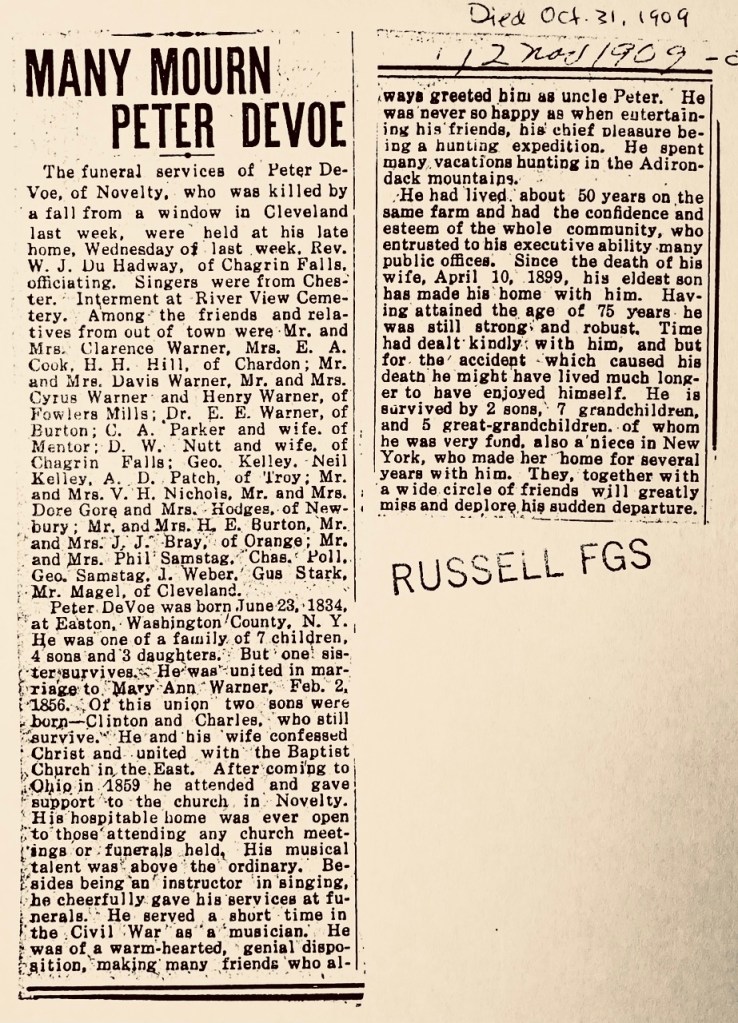
Wikipedia writes: “Walloons are primarily Roman Catholic, with a historical minority of Protestantism which dates back to the Reformation era.” We know through research in the historical records, that David Du Four was a Protestant, and that eventually his family were members of the Dutch Reformed Church. It also seems that they likely also had affinities with the Huguenots and their diaspora. We speculate that perhaps with all of the religious and political turmoil within Wallonia — this may have inspired him to relocate his family to New Amsterdam. (3)

Map of Mons in the 16th century by Lodovico Guicciardini

The Man From Mons

David Du Four was born about 1620 at Bergen, Graafschap Henegouwen, Habsburgse Nederlanden (now Mons), Province de Hainaut, Southern Netherlands (now Belgium). He married twice — died before May 1699 at age 79, in Harlem or Turtle Bay, Manhattan, New York City, British American Colonies. [Note: New Amsterdam officially became New York City in the British American Colonies in 1665.]

Riker continues, “David Du Four, a native of Mons, in Hainault, upon this place being threatened by the successes of the French in the Walloon districts, retired [relocated] with others of his family to Sedan, and afterward to Amsterdam, where Du Four, though fitted by education for a better position, became an “opperman,” or drayman*. Left by the death of his wife, Marie Boulen [Boulyn], with a young child, Jean [John], born during their stay at Sedan…”
*A drayman was historically the driver of a dray, a low, flat-bed wagon without sides, pulled generally by horses or mules that were used to transport all kinds of goods. (Wikipedia) 

Contemporary map of the Netherlands, Belgium, and Luxembourg, (c. 1900), which shows the exact locations where the David Du Four family lived in Europe. Please note: The borders of these countries did not look at all like this in earlier centuries: see The DeVoe Line, A Narrative — One, Holland & Huguenots.

So, David’s first wife was Marie Boulyn. After they had relocated to Sedan, Ardennes, France, they had a boy whose name is John. Marie died sometime before 1657, and unfortunately, other than those facts, we really don’t know very much about her life.

Archief van de Burgerlijke, 1657, (Civil Archives of 1657).

In those days, especially if a man had a young child, he usually remarried pretty quickly. Again, from Riker: “…He found another companion in Jeanne Franzes, a lady of mature thirty-two years, from Queivrain, a little east of Mons, to whom he was married July 10th, 1657. That same year, with his new wife and his little son aforesaid [Jean], he sailed for Manhattan Island.”

Jeanne (Franzes) Du Four was born about 1625 at Quievremont, Province de Hainaut, Belgium — died after 1699 at Coale Kill, Turtle Bay, Manhattan, New Amsterdam, [New York City] after 74 years of age. Together, including the first born son John (1), they had seven children:

  • John DeVoor (1), born about 1651, Sedan, Provence du Picardie, France — died before April 1724, Bloemendaal (Bloomingdale), Manhattan, New York City, British American Colonies, 73 years of age. (We are descended from John (1), whose name is also sometimes recorded as Jan, or Jean).
  • Joris DeVoor, baptized July 7, 1658, and died before 1671
  • David DeVoor, baptized October 5, 1659, and married Elizabeth (Jansen) DeVoor
  • Pieter DeVoor, baptized October 15, 1662
  • Anthony /Teunis DeVoor, born about 1664 — died August 31, 1668.
  • Adriaen DeVoor, baptized January 28, 1665 — died before 1671
  • Glaude DeVoor, born about 1667 — died after February 1687. (4)
Map of New Netherland published by Nicolaes Visscher II (1649–1702) in 1684. (Image courtesy of world history.org).

A New Life In Harlem, New Amsterdam

We have not located the actual ship that David Du Four traveled on with his wife Jeanne and their son John. In fact, we are not sure if he arrived in 1657, or soon after, but we do know that he was there early on. We would be very lucky indeed if we found a ship manifest which names him, but at that time and in that era, it was not considered essential and was usually done only if the ship Captain thought it was necessary.

According to the Wikipedia article New Netherland, “The colony experienced dramatic growth during the 1650s, and became a major center for trade across the North Atlantic… The inhabitants of New Netherland were European colonists, Native Americans, and Africans imported as slave laborers. Not including Native Americans, the colonial population, many of whom were not of Dutch descent, was 4,301 in 1650, and 8,000 to 9,000 at the time of transfer to England in 1674.” (Colonial America to 1763)

View of New Amsterdam circa 1653, copy of a 17th Century painting for I.N. Stokes —
Iconography of Manhattan Island, vol. IV plate 9, NYC Municipal Library.

We learned that he had been there “for three years” already by the “close of 1661” when it was documented in Riker’s Harlem history on page 183: “For three years this had been steadily growing, and at the close of 1661 contained over thirty adult male residents, mostly heads of families and freeholders. The following [top chart below] are the names of these pioneers, who first succeeded in planting the seeds of civilization and religion in this vicinity.” David is in the lower left column: note that he is listed by “nationality” as one of four Walloons, amongst French, Hollanders, Danes, Swedes, and Germans.

Charts extracted from the Revised History of Harlem (City of New York) by James Riker,
from pages 183, 186 and 190.

More records continued — The middle and bottom charts show that, not surprisingly, he was a farmer who owned land. From the Riker book, (paraphrasing)… It seems that he had tired of being a drayman, so then he was helping his neighbors by shepherding their cows and oxen. Things didn’t go so well and somehow he lost some of the oxen. His understandably upset neighbors complained loudly and he had to find something else to do.

Riker wrote “Du Four, the Amsterdam drayman, better at driving a team [farming] than stupid cows, was soon disgusted with his new occupation and turned it over to Jean Gervoe, the soldier. But now the cattle were not well looked after, as was alleged; in fact, some of the oxen, when needed for the yoke, were missing.” Apparently one of the ways that Du Four had to compensate his neighbors, was by paying them “guilders” and giving them butter…

In early 1662, “the Van Keulen Hook lots were drawn” and we noticed that David was first on the list. The final chart, from slightly later in 1662, shows the amount of land he owned: 10 morgen(s). Hopefully, his neighbors were no longer upset about the oxen incident.

The blue arrow indicates David Du Four’s property. Map of Harlem, Showing the Lands as in the Original Lots and Farms. Appendix F from the Revised History of Harlem (City of New York) by James Riker.

The word morgen is from both the Dutch and German languages, and was used in their former colonies. It means morning. In practical usage it corresponds to as much land as one person can plow in a morning. As a unit of land measure it is equal to about two acres, or 0.8 hectare. (Dictionary.com) (5)

The Tragic Death of Young Teunis

On top of all the other many unfortunate things that our ancestors dealt with, one particular event has stood out in the historical record. The Du Four son Teunis (also known as Anthony), was accidentally murdered by John Copstaff, a drunken soldier who was shooting off a gun. He was only about four years old.(Riker) “In 1668, Du Four, passing in a canoe un the East River, and with him his child, Anthony, when, between Turtle Bay and Blackwell’s Island, John Copstaff, a drunken soldier in another boat, let off a gun which wounded little Anthony; this was on August 18, and he died August 31. Copstaff was convicted of manslaughter. Du Four being very ill, he and wife, Jannetie, made a will, September 14, 1671, naming…” The Will was a precaution against future unknown circumstances. Both of the Du Four parents lived for many more years. (6)

For. Every. Little. Kerfuffle. With. Your. Neighbors.

It seems that David Du Four had several showings in court because the records have survived. Here’s a little background on the times. In 1670s he was a “frequent flyer” at court, with several cases. In New Amsterdam, people from all walks of life could bring a case to court. They could defend the case themselves, or ask someone to speak for them.  It was not necessary for them to have a lawyer for every case. This is because…

The city tavern was renamed the City Hall, the Stadt Huys in 1653.
George Hayward for I.N. Stokes — Iconography of Manhattan Island.
(Image courtesy of the NYC Municipal Library).

(The following is extracted from Wikipedia)
“In the first years after Henry Hudson sailed up the river in 1609 and claimed the area for the Dutch East India Company and… there was no real New Netherlands government and judicial system. The inhabitants of the small trading community of Manhattan Island as well as the members of the crew of the ships that came to the area, were subject to the rule of their captains.”

Around 1621, “the Dutch presence in America intensified and… the New Amsterdam judicial system was initially developed privately by the Dutch East India Company, and gradually brought into closer conformity with Dutch law of the period. There were no jury trials and the use of arbitration to resolve disputes was widespread. Although the magistrates were laymen, they were generally held to have a good knowledge of Dutch (customary) law. The Dutch East India Company provided law books…”

To a degree, it seems like going to court was similar to being sent to the Principals Office. You had to go and plead your case. For example:

Case: Ariaen Vincent v. David de Four:
demand for payment of debt for a purchased horse: disputed: ordered to pay.

Case minutes for Ariaen Vincent v. David de Four, 1674. (Our ancestor’s case is found in the bottom section).

Our transcription will give you the gist of it:
Mr. Vincent (the plaintiff) demands payment from the defendant (Mr. de Four), the sum of 100 florins for a horse sold him last year, which defendant must pay him in beavers* at 20 florins the [a] piece. Defendant says, he did not make any agreement, how high the beavers should go [sounds like it was about the price per beaver?]. The W. Court condemns the defendant to satisfy and pay the plaintiff the sum demanded in beavers at 20 florins, unless he [the] defendant proves[s] the contrary at the next Court day. (7)

*We’re just guessing, but that must be about 5 beavers?

New Amsterdam Becomes New York

The English had their own designs for the developing colonies in the New World, and their plans did not include letting the Dutch keep control of Manhattan. However, getting the Dutch out of Manhattan is not the same as getting the Dutch out of Manhattan. Much culture remained, and it took years for things to settle out.

Wikipedia writes: “The city was captured by the English in 1664; they took complete control of the colony in 1674 and renamed it New York. [The official name change was in 1665]. However the Dutch landholdings remained, and the Hudson River Valley maintained a traditional Dutch character until the 1820s.” and “…British ships entered Gravesend Bay in modern Brooklyn, and troops marched to capture the ferry across the East River to the city, with minimal resistance: the governor at the time, Peter Stuyvesant, was unpopular with the residents of the city. Articles of Capitulation 1664 were drawn up, the Dutch West India Company’s colors were struck on September 8, 1664, and the soldiers of the garrison marched to the East River for the trip home to the Netherlands…”

By 1677, the residents of Harlem were collectively desiring to expand their land holdings under the British. This was something that involved the attentions of the new Governor Andros. James Riker writes, “No little concern was felt at the silence of Governor Andros in regard to his promise to distribute more land among them, and at reports of the large grants he was intending to make in their immediate vicinity, and even within their limits.” A resolution was reached and new farms were established along the banks of the East River. Later that year, “60 [acres were granted] to David du Four and son [likely John 1]at Turtle Bay. (Notice that the land measurement units were no longer the Dutch morgens, but are now the English acres).

Manhattan map, inset detail, illustration and deed showing the location of the Turtle Bay farm.

Side Bar Observation: My, how times change! To be honest, as descendants of David Du Four, we wish that our family still owned that land at Turtle Bay… Presently it is the site of the United Nations Headquarters in New York City.

“Standing on the eastern shore of Manhattan Island, on the banks of New York City’s East River, the 18-acre UN Headquarters remains both a symbol of peace and a beacon of hope.”

“During the latter half of 1946, following selection of the US as host country, a special UN site committee studied possible locations in such places as Philadelphia, Boston and San Francisco. While consideration was given at first to areas north of New York City, crowded Manhattan had not been seriously investigated. A last-minute offer of $8.5 million by John D. Rockefeller, Jr. for the purchase of the present site was accepted by a large majority of the General Assembly on 14 December 1946. The site chosen by the UN was a run-down area of slaughterhouses, light industry and a railroad barge landing.”
— History of United Nations Headquarters. (8)

Some Thoughts About Their Lives

Mary Louise Booth writes in her book, the History of The City of New York that, “In the beginning of the settlement, the people had been forced to accommodate themselves to the necessities of a new country, and their houses, furniture and apparel had necessarily been of the rudest kind… the houses were one story in height with two rooms on a floor. The chimneys were of wood, and the roofs were thatched with reeds and straw. The furniture was of the rudest kind, carpets were unknown, as indeed they continued to be for many years after; the stools and tables were hewn out of rough planks by the hands of the colonists; wooden platters and pewter spoons took the place of more expensive crockery, and naught but the indispensable chest of homespun linen and a stray piece of plate or porcelain, a treasured memento of the Fatherland, was seen to remind one of civilization.”

Dutch Cottage in New York, 1679. (Image courtesy of the New York Public Library Digital Collections).

She continues, “As the forests became cleared away, and the colony increased, the style of living experienced a material change. The straw roofs and wooden chimneys were deemed unsafe, and were ordered to be removed ; and the settlers commenced to build their houses of brick and stone…

Household in the old Dutch Colony times. (From the History of The City of New York, by Mary Louise Booth, page 176).

The windows were small and the doors large; the latter were divided horizontally, so that, the upper half being swung open, the burgher could lean on the lower and smoke his pipe in peaceful contemplation. Not less comfortable were the social “ stoeps,” and the low, projecting eaves, beneath which the friendly neighbors congregated at twilight to smoke their long pipes and discuss the price of beaver-skins. These institutions have come down to our own times, and are still known and appreciated in the suburbs of the city.”

Upper portion of page one of David Du Four’s 1671 Will.

David Du Four died before May 1699 at age 79, in Harlem or Turtle Bay, Manhattan, New Amsterdam, [New York City]. His wife Jeanne (Frances) Du Four, died after 1699 at the same location after 74 years of age. 

Page 97 extract, Calendar of Wills on File and Recorded in the Offices of the Clerk of the Court of Appeals, of the County Clerk at Albany, and of the Secretary of State, 1626-1836

On September 14, 1671, after the unexpected death of their son Teunis, they had written a Will. Historian James Riker indicates that, more than twenty five years later “His will was proved May 1, 1699. It names his children Jan [John 1], David, Pieter and Glaude.” The Will had not been updated in those years, and not all of these sons had survived as long as their father, or mother. (9)

Importantly for our family, we are descended from the oldest son, John (1). We will write about the history of his family in the next chapter.

Following are the footnotes for the Primary Source Materials,
Notes, and Observations

“What’s in a name? That which we call a rose / By any other name would smell as sweet.”

(1) — eight records

“What’s In A Name?”
by Chris Haugh
http://www.historysharkproductions.com/whats-in-a-name.html

The Cobbe Portrait of WillIam Shakespeare (1564-1616)
File:Cobbe portrait of Shakespeare.jpg
https://en.wikipedia.org/wiki/File:Cobbe_portrait_of_Shakespeare.jpg

Genealogy of the De Veaux Family
Introducing the Numerous Forms of Spelling the Name by Various Branches

and Generations in the Past Eleven Hundred Years
by Thomas F. De Voe
https://archive.org/details/genealogyofdevea00devo/page/n3/mode/2up

Revised History of Harlem (City of New York): Its Origin and Early Annals
by James Riker
https://archive.org/details/revisedhistoryh00unkngoog/page/n12/mode/2up
Note: For general biographical information —
Book page: 65, Digital page: 64/907
Book page: 193, Digital page: 192/907
Book page: 408, Digital page: 408/907

VORCE
https://freepages.rootsweb.com/~hubbard/genealogy/NNY_index/vorce.html
and
Genealogical and Family History of Northern New York:
A Record of The Achievements of Her People in the Making of a Commonwealth and The Founding of a Nation
by William Richard Cutter, 1847 edition
https://archive.org/details/genealogicalfami02incutt/page/430/mode/2up
Book page: 431, Digital page: 430/860

Was David Du Four Belgian?

(2) — four records

Belgium’s Independence (1830 – present time)
“… A provisional government declared independence on October 4th, 1830.”
https://www.belgium.be/en/about_belgium/country/history/belgium_from_1830#:~:text=Following%20this%20rising%20Belgium%20separated,or%20who%20had%20special%20qualifications.

History of Belgium
https://en.wikipedia.org/wiki/History_of_Belgium

Map of the Netherlands in the Shape of a Lion, by Leo Belgicus, circa 1650
https://commons.wikimedia.org/wiki/File:Joannes_van_Deutecum_-_Leo_Belgicus_1650_-_published_by_Claes_Jansz_Visscher_Amsterdam.jpg
Note: For the map image.

Sanderus Antique Maps & Books
Northern Netherlands (VII Provinces), by Pieter Mortier. c. 1705
https://sanderusmaps.com/our-catalogue/antique-maps/europe/low-countries-netherlands/northern-netherlands-vii-provinces-by-pieter-mortier
“United Provinces of the Netherlands with their Acquisitions in Flanders, Brabant, Limburg, and Lyege and the Places which they possessed on the Rhine, in the Duchy of Cleves, and in the Archbishopric and Electorate of Cologne.”
Note: For the map image.

David Du Four Identified as a Walloon

(3) — three records

Namvrcvm Comitatvs, circa 1665 (map)
Prints Blaeu website
https://shop.blaeuprints.com/buy/maps/belgium/namur-malonne-jambes/?v=35357b9c8fe4 
Note: ‘Namvrcvm Comitatvs’ translates to ‘County of Namur’ in English.

The Flag of Wallonia

Walloons
https://en.wikipedia.org/wiki/Walloons
and
Flag of Wallonia
https://en.wikipedia.org/wiki/Flag_of_Wallonia

The Man From Mons

(4) — sixteen records

Map of Mons in the 16th Century, circa 1550
by Lodovico Guicciardini
https://en.wikipedia.org/wiki/Mons,_Belgium#/media/File:Stadsplan_Mons_uit_de_zestiende_eeuw.jpg
Note: For the map image.

Revised History of Harlem (City of New York): Its Origin and Early Annals
by James Riker
https://archive.org/details/revisedhistoryh00unkngoog/page/n12/mode/2up
Book pages: 99-100, Digital pages: 98-100/907
Note: For general biographical information.

Drayman
https://en.wikipedia.org/wiki/Drayman

Davidt de Four (abt. 1625 – bef. 1699)
https://www.wikitree.com/wiki/De_Four-2
Notes: Various points of information were pulled from this file:
– David Du Four’s exact birthplace
– The marriage certificate of David du Four and Jeanne Franzen —
https://archief.amsterdam/indexen/persons?ss=%7B%22q%22:%22Jeanne%20Fransen%22%7D
File number: OTR00052000157, Digital page: 15C/242, Left page, entry 1.

WikiTree
Marie (Boulen) Bouvie (1635 – bef. 1657)
https://www.wikitree.com/wiki/Boulen-1

Britannica.com
Map of the Netherlands, Belgium, and Luxembourg, (c. 1900), 
from the article Low Countries in the 10th edition of Encyclopedia Britannica
https://www.britannica.com/place/Low-Countries
Note: For the map image.

WikiTree
Jeanne Frans (abt. 1625 – aft. 1699)
https://www.wikitree.com/wiki/Frans-85
Note: For Jeanne (Franzen) Du Four’s death location

David Du Four
in the Netherlands, Select Marriages, 1565-1892

https://www.ancestry.com/discoveryui-content/view/611949:60076?tid=&pid=&queryId=4ea6d503-225d-4d73-bf58-9ed334277e1c&_phsrc=LhJ2&_phstart=successSource

Early New Netherlands Settlers
David <?> Du Four, (Rn=25344)
https://freepages.rootsweb.com/~rclarke/genealogy/page1/dufour.htm

Jean Du Voor
in the U.S. and Canada, Passenger and Immigration Lists Index, 1500s-1900s

https://www.ancestry.com/discoveryui-content/view/1620944:7486?ssrc=pt&tid=108788208&pid=162384998722
Notes: Sourced from the book The Early Germans of New Jersey, Their History, Churches and Genealogies, Dover, NJ: Theodore Frelinghuysen Chambers, 1895, located at: https://archive.org/details/earlygermansofne00cham/page/344/mode/2up?view=theater&q=%22Du+Voor%22
Book pages: 344-345, Digital pages: 334-345/667

Baptisms from 1639 to 1730 in the Reformed Dutch Church, New York
by Thomas Grier Evans
https://archive.org/details/baptismsfrom163921evan/page/n11/mode/2up
Notes: These are transcribed records. The following children of David du Four and Jeanne (Frans) Du Four are confirmed in this book, as follows:
Joris, Book page: 49, Digital page: 104/680
David, Book page: 54, Digital page: 114/680
Pieter, Book page: 67, Digital page: 126/680
Adriaen, Book page: 78, Digital page: 162/680

A New Life In Harlem, New Amsterdam

(5) — six records

New Netherland
https://en.wikipedia.org/wiki/New_Netherland
and
Colonial America to 1763
by Thomas L. Purvis.
https://archive.org/details/colonialamericat00purv_0/page/128/mode/2up
Book page: 128, Digital page: 128/386

New York City Department of Records & Information Services
View of New Amsterdam circa 1653,
copy of a 17th Century painting for I.N. Stokes —
Iconography of Manhattan Island, vol. IV plate 9, NYC Municipal Library.
From:
A Charter for New Amsterdam: February 2, 1653
https://www.archives.nyc/blog/2023/1/31/a-charter-for-new-amsterdam-february-2-1653

Revised History of Harlem (City of New York): Its Origin and Early Annals
by James Riker
https://archive.org/details/revisedhistoryh00unkngoog/page/n12/mode/2up
Note: For general biographical information, three charts,
and the oxen incident
Book pages: 182-183, Digital page: 182/907
Book page: 186, Digital page: 186/907
Book page: 190, Digital page: 190/907
Book pages: 193-194, Digital pages: 192-194/907

Revised History of Harlem (City of New York): Its Origin and Early Annals
by James Riker
https://archive.org/details/revisedhistoryof01rike/page/n861/mode/2up?view=theater&q=1
Book page: Appendix F, pull-out map, Digital page: 862/952
Note: This is a different edition from the above reference, and is for the pull-out map Appendix F only featured at the back of this edition.

Dictionary.com
Morgen
https://www.dictionary.com/browse/morgen#

The Tragic Death of Young Teunis

(6) — one record

Revised History of Harlem (City of New York): its origin and early annals
by James Riker
https://archive.org/details/revisedhistoryh00unkngoog/page/n12/mode/2up
Book page: 408, Digital page: 408/907
Note: General biographical information.

For. Every. Little. Kerfuffle. With. Your. Neighbors.

(7) — six records

Stadt Huys (City Hall) in 1679
https://commons.wikimedia.org/wiki/File:The_Stadt_Huys_(City_Hall)_of_New_York_in_1679_at_Pearl_Street.jpg

New Amsterdam Judicial System
https://en.wikipedia.org/wiki/New_Amsterdam_judicial_system

New York Municipal Archives
Guide to the records of New Amsterdam, 1647-1862
Collection No. MSS 0040
https://www.nyc.gov/assets/records/pdf/Dutch-NewAmsterdam_MSS0040_MASTER.pdf

The records of New Amsterdam from 1653 to 1674 anno Domini
Vol. VII. Court minutes of New Amsterdam
https://www.ancestry.com/imageviewer/collections/12896/images/dvm_PrimSrc000280-01255-0?treeid=&personid=&queryId=efac883e-ba59-4547-b7e9-bfda4edf6885&usePUB=true&_phsrc=LhJ1&_phstart=successSource&pId=2487&rcstate=dvm_PrimSrc000280-01255-0:1086,1979,1290,2028
Digital page: 2489/2765

New Amsterdam History Center
Mapping New York | Encyclopedia
Document: Minutes | Case | Philip Waldman v. Jan Smedes: default
https://encyclopedia.nahc-mapping.org/document/minutescasephilip-waldman-v-jan-smedes-default

Vintage BEAVER print
https://www.etsy.com/listing/156335324/vintage-beaver-print?utm_source=Pinterest&utm_medium=PageTools&utm_campaign=Share&epik=dj0yJnU9MnJJVzhqQTcwWTdJckhfeE1UakNfd2FhVGtEd2Q3LXcmcD0wJm49cGpfWGlUSXA2ZkJneGlUWXRrVGpNQSZ0PUFBQUFBR1o5Z1N3

New Amsterdam Becomes New York

(8) — seven records

Colonial History of the United States
https://en.wikipedia.org/wiki/Colonial_history_of_the_United_States

Conquest of New Netherland
https://en.wikipedia.org/wiki/Conquest_of_New_Netherland

Revised History of Harlem (City of New York): Its Origin and Early Annals
by James Riker
https://archive.org/details/revisedhistoryh00unkngoog/page/n12/mode/2up
Book page: 338-340, Digital page: 338-340/907
Note: General biographical information.

Map of New York City and of Manhattan Island with the American Defences in 1776.
https://commons.wikimedia.org/wiki/File:1878_Bien_and_Johnson_Map_of_New_York_City_(Manhattan_Island)_During_the_Revolutionary_War_-_Geographicus_-_NewYorkCity-johnsonbien-1878.jpg
Note: Used for two small inset maps to indicate where David Du Four owned property in Turtle Bay, Manhattan.

Turtle Bay, East River, N.Y. 1853
by George Hayward
https://commons.wikimedia.org/wiki/File:Turtle_Bay,_Manhattan_1853.jpg
Note: For the Turtle Bay image.

The Iconography of Manhattan Island, 1498-1909
by Isaac Newton Phelps Stokes,1867-1944; Victor Hugo Paltsits,1867-1952; Frederik Caspar Wieder, 1874-1943
https://archive.org/details/iconographyofman06stok/page/n239/mode/2up
Book page: 138, Digital page: 240/820.
Note: Left page, right column, under the heading: The Edmund Seaman Farm, Block Check List. 1345-1364-1325-1362, Introduction: The Grant to David du Four

History of United Nations Headquarters
https://www.un.org/sites/un2.un.org/files/headquarters.pdf
Note: For the building image.

Some Thoughts About Their Lives

(9) — six records

History of The City of New York, from its Earliest Settlement to The Present Time
by Booth, Mary Louise, 1831-1889
https://archive.org/details/historyofcityofn00boot_0/page/194/mode/2up

Dutch Cottage in New York, 1679
The New York Public Library Digital Collections
https://digitalcollections.nypl.org/items/510d47e1-2ba1-a3d9-e040-e00a18064a99

1648: A Glimpse into Dutch Household: Daily Life in New (Nieuw) Amsterdam
https://www.history101.nyc/dutch-household-new-amsterdam-1600s?v=2

David Du Four
in the New York County, New York, U.S., Wills and Probate Records, 1658-1880 (NYSA)
J0038-82: Probated Wills, 1671-1815 > Wills, Box 04-06, Crispell, Cornelius-Erwin, Samuel, 1767-1778
https://www.ancestry.com/discoveryui-content/view/52776:60387?tid=&pid=&queryId=f8d0f93f-3723-4704-8f8a-6f507ee548b1&_phsrc=LiJ42&_phstart=successSource
Digital pages: 197-201/964
and
David Du Foor
in the New York, U.S., Wills and Probate Records, 1659-1999

https://www.ancestry.com/discoveryui-content/view/1747140:8800?tid=&pid=&queryId=14cf0f49-97b0-412e-82e5-d6dab8e8581c&_phsrc=LhJ4&_phstart=successSource
Digital pages: 501-504/688

The Dutch language Will of David Du Four, from the New York, U.S., Wills and Probate Records, 1659-1999. (See footnotes).

Calendar of Wills on File and Recorded in the Offices of the Clerk of the Court of Appeals, of the County Clerk at Albany, and of the Secretary of State, 1626-1836
by Fernow, Berthold, 1837-1908, Comptroller of the New York (State) Court of Appeals; Albany County (N.Y.); New York (State) Secretary’s Office
https://archive.org/details/calendarwillson00appegoog/page/97/mode/2up?view=theater
Book page: 97, Digital page: 97/657, Left page, entry 3

The DeVoe Line, A Narrative — One, Walloons in The Low Countries

This is Chapter One of eleven. With this chapter we begin a long and complicated history of the DeVoe branch of our family. There will be eleven chapters total in this family line.

Nearly all of our family lines were in North America very early on, including the DeVoes. Like the tap root of a tree, the key foundational event for America is the Pilgrims landing at Plymouth Rock, and their founding of the first sustained immigrant community. It is also because of the DeVoe line, that we connect to two Mayflower passengers: Pilgrim George Soule, and Pilgrim Edward Doty. In future posts, we will be writing their family narratives.

The Best Place to Find a Needle is a Haystack

On the one hand, we have found that doing genealogy research can bring a happiness which results from discovering something cool about an ancestor you only vaguely knew. (Or better yet, finding ancestors you never knew existed!) On the other hand, frustration comes when you know the beginning and ending to a story, but the needed documents which connect those ends, are like trying to find a needle in the proverbial haystack.

Haystacks, End of Summer, by Claude Monet, 1890-1891

From writer Mark Baker, “Conventional wisdom tells us that the best place for a needle is in a needle case, and the best place for hay is in a haystack. If you want to find something, or want other people to find it, you should put it in the right place. As we were all taught: a place for everything, and everything in its place.That was true when we lived in the physical world. But we don’t live in the physical world anymore. We live on the Internet, and the Internet is topsy turvey world in which the best place to find a needle is actually a haystack. [As we know…]

Internet research has become the defacto tool of this era, and sometimes it is like a haystack. With this family, we found all the needles we were looking for, and some we weren’t, and learned a thing or two along the way. We have a great story to tell. So please, enjoy!

Preface: This particular history has two important paths, Politics and Religions. The first path is Politics. It is about the land — who lived where, and who was in charge of that land, etc. The second path is Religions — concerning what was happening with religious conflicts throughout these areas, during these centuries.

A note before we begin: For this blog chapter we are streamlining the complex history of this region, and only focusing on the time periods that affected our ancestors. Please think of this chapter as a synthesized history from many sources, (see footnotes). (1)

The First Path: Politics and Land — Understanding the Low Countries

The Low Countries, historically also known as the Netherlands, is a coastal lowland region in Northwestern Europe… consisting today of the three modern “Benelux” countries: Belgium, Luxembourg, and the Netherlands. Up until the very recent past this was not the case, because the region was almost continually overrun by ambitious imperial powers from adjoining regions. Over the centuries, geographically and historically, the area has also included parts of France and Germany.

Map showing the northern border of the Roman Empire (the Lines), which ran through what is now the Netherlands. (Image courtesy of Quora.com).

Comment: It’s natural for people today to think that their ancestors are defined by today’s borders, because for the most part, we live in an era where borders hardly move at all. Today, we identify through Borders. But this isn’t the way it should be thought about regarding ancestors who precede us. The world was different then. These ancestors lived in a place that doesn’t exist anymore. To use the “Benelux” example from above: then, Belgium didn’t exist; then, the Netherlands was an unrecognizable mash-up; then, Luxembourg was an obscure, distant Netherlands province.

Medieval Market Scene, (Public domain).

From the Romans to the Mid-1400s
During the Roman Empire, the region of the Low Countries contained a militarized frontier and was the contact point between Rome and the Germanic tribes. After the long decline of the Roman Empire, this area was the scene of the early independent trading centers that marked the reawakening of Europe in the 12th century. As such, during the Middle Ages, the Low Countries were divided into numerous semi-independent principalities, where guilds and councils governed most of the cities along with a figurehead ruler. Interaction with these various rulers was regulated by a strict set of rules describing what the latter could and could not expect. All of the regions mainly depended on trade, manufacturing, and the encouragement of the free flow of goods and craftsmen.

What was very, very slowly emerging as the Netherlands, rivaled northern Italy as one of the most densely populated regions of Western Europe. Dutch and French dialects were the main languages used in secular city life.

Otto I, known as Otto the Great, (912 – 973), founder of the Holy Roman Empire, The House of Valois-Burgundy, Mary of Burgundy (1457 – 1482), Charles V, Holy Roman Emperor (1500 – 1558) Archduke of Austria, King of Spain, and Lord of the Netherlands [as the titular Duke of Burgundy].

The Holy Roman Empire and The Habsburg Netherlands 
The Saxony kings and emperors ruled the Netherlands in the 10th and 11th centuries. The Holy Roman Empire was founded by Otto I, known as Otto the Great. Through strategic marriages and personal appointments, Otto installed members of his family in the Duchy of Saxony kingdom’s most important duchies [the future Germany]. This strategy reduced the various dukes, who had previously been co-equals with the king, to royal subjects under his authority. In the latter part of his life, he conquered the Kingdom of Italy, thus being crowned in 962, Emperor of the Holy Roman Empire, by Pope John XII in Rome. Hence, Germany was called the Holy Roman Empire after the coronation of King Otto the Great, as Emperor.

About 500 years later, the Habsburg Netherlands was the Renaissance period collection of feudal land estates in the Low Countries, held together by the Holy Roman Empire’s House of Habsburg. The Hapsburg rule began in 1482, when Mary of Burgundy died. She was the last Valois-Burgundy ruler of the Netherlands, and the wife of Maximilian I of Austria. Their grandson, Emperor Charles V, was born in the Habsburg Netherlands and made Brussels one of his capitals. The Seventeen Provinces (the de facto fiefs of the Holy Roman Empire) formed the core of the Habsburg Netherlands, which passed to the Spanish Habsburgs, upon the abdication of Emperor Charles V in 1556.

 A Brief History of the Netherlands map, circa 1555, by Brian A. Smith, D.C. The red circles indicate areas where our ancestors would live in the Walloon Provinces, during a time of shifting borders. Note: These Walloon Provinces are important to our family history.

The Spanish Netherlands
Becoming known as the Seventeen Provinces in 1549, they were held by the Spanish branch of the Habsburgs from 1556, and known as the Spanish Netherlands from that time on. They named the area Flandes, which evolved into the name Flanders, and the Army of Flanders was given the task of defending the territory under Spanish service. 

These Seventeen Provinces were already changing… In 1581, in the midst of the Dutch Revolt (see next section), the northern portion came together as the Seven United Provinces, and seceded from the rest of this territory to form the Dutch Republic. They still stayed under Spanish rule until the War of the Spanish Succession, (circa 1700). The remaining 10 provinces, in the area to the south where our ancestors lived, were also under Spanish control, but the area was referred to as the Southern Netherlands.

As the power of the Spanish branch of the Habsburgs waned in the latter decades of the 17th century, the territory of the Netherlands under Habsburg rule, was repeatedly invaded by the French and an increasing portion of the territory came under French control in many successive wars. (2)

The Battle of Gibraltar, 1607, by Cornelis Claesz van Wieringen, circa 1621. (Image courtesy of Wikimedia Commons).

The Dutch Revolt and the 80 Years War

The Eighty Years’ War, or Dutch Revolt, was an armed conflict in the [Spanish] Habsburg Netherlands between disparate groups of rebels, and the Spanish government. The causes of the war included the Reformation, centralization, taxation, and the rights and privileges of the nobility and cities. After the initial stages, Philip II of Spain, the sovereign of the Netherlands, deployed his armies and regained control over most of the rebel-held territories. However, widespread mutinies in the Spanish army caused a general uprising.

The view from history is that “The Reformation led to many Netherlanders leaving the Catholic church and joining Protestant churches. The rise of Protestantism became closely linked to the movement for independence from Spain.” (Family Search) This desire to be free from Spain makes sense for our ancestors because they lived in a conflicted border area…. Some sections of the Low Countries were Catholic, and some sections were turning to the Reformation-led Protestantism…. This led to more strife. The Seven Provinces which had formed the Dutch Republic in 1581, were considered to be Protestant dominant by 1588.

The Oudewater Massacre, committed by Spanish soldiers against Dutch civilians in 1575, during the 80 Years War. (Image courtesy of Wikipedia.com).

Observation: This revolt began in 1568 and ended in 1648, hence it’s aptly named as the Eighty Years’ War. When our ancestor was born into this milieu, [surroundings, setting, scene, environment] in 1620, the War had been going on for over half a century at that point.

In the ten years thereafter, the Dutch Republic made remarkable conquests in the north and east against a struggling Spanish Empire, and received diplomatic recognition from both France and England in 1596. The Dutch colonial empire emerged, which began with Dutch attacks on Portugal’s overseas territories.

The two sides agreed to a Twelve Years’ Truce in 1609; when it expired in 1621, fighting resumed as part of the broader Thirty Years’ War. An end was reached in 1648 with the Peace of Münster (a treaty part of the Peace of Westphalia), when Spain recognized the Dutch Republic as an independent country. (3)

The Syndics of the Drapers’ Guild, by Rembrandt, 1662. (Image courtesy of Google Art Project).

The Dutch Golden Age and The United East India Company

This was a period in the history of the Netherlands, roughly spanning the era from 1588 until 1672 , in which Dutch trade, science, art, and the Dutch military were among the most acclaimed in Europe. The Golden Age continued in peacetime during the Dutch Republic until the end of the century, when expensive conflicts fueled economic decline. The transition by the Netherlands to becoming the foremost maritime and economic power in the world has been called the “Dutch Miracle” by some historians.

…both foreigners and Dutchmen were apt to believe that the
Dutch Republic was unique in permitting an unprecedented degree of freedom in the fields of religion, trade, and politics…
In the eyes of contemporaries it was this combination of freedom and economic predominance that constituted the true miracle
of the Dutch Republic.

Koenraad Wolter Swart
Professor of Dutch History and Institutions in the University of London
An Inaugural Lecture Delivered at University College London
on November 6, 1967

The United East India Company* was a chartered company established on the March 20, 1602 by the States General of the Netherlands uniting existing companies into the first joint-stock company in the world, granting it a 21-year monopoly to carry out trade activities in Asia. Shares in the company could be bought by any resident of the United Provinces and then subsequently bought and sold in open-air secondary markets (one of which became the Amsterdam Stock Exchange). It is sometimes considered to have been the first multinational corporation.

Various artifacts of the Dutch East India Company, left to right: An Arita Dish, Eco Period, Japan / The Arms of the Dutch East India Company and of the Town of Batavia / Logo of the Amsterdam Chamber of the Dutch East India Company / copper coins / Batavia Ship Replica (See footnotes).

It was a powerful company, possessing quasi-governmental powers, including: the ability to wage war, imprison and execute convicts, negotiate treaties, strike its own coins, and establish colonies.

*In Dutch, the name of the company was the Vereenigde Nederlandsche Geoctroyeerde Oostindische Compagnie (abbreviated as the VOC), literally the “United Dutch Chartered East India Company”. Today, we generally refer to this company as The Dutch East India Company. (4)

The Second Path: Religious Persecution

James Riker wrote in The Revised History of Harlem — “From Mons, the rich capital of this province, seated to the north of Avesnes… came David du Four, of the same name, — and not improbably the same blood, as the martyr of Le Cateau [*], but whose posterity, which became numerous in his coimtry [territory or country], changed the form of their name to Devoor and Devoe.”

*This is what happened to the “The martyr of Le Cateau“— He was a man named David Du Four of whom Riker wrote: “Huguenots being held prisoners in the neighboring village of Troisville by the castellan and echevins [Roman Catholics] of Le Cateau, David Du Four and others went with arms and liberated them…” This happened in the late summer and autumn of 1566. The aftermath didn’t go so well: “Many executions followed during the ensuing month. One was that of David Du Four, before named. He was a tailor at Le Cateau, and only twenty-two years of age. But on his examination he with firmness declared that ‘he paid more regard to his salvation and to God, than to men.’ He and four others were hung, on April 9th [1567].

The Persecution of Huguenots in France
Before the Edict of Nantes, 1598
. Woodcut, 19th century.

Our immigrant ancestor to New Amsterdam will also be named David Du Four, but he won’t be born for another half century yet [1620], but that’s in the next chapter. Back to our telling of this tale…

This was the first intriguing reference we had found as to where our possible ancestor with the DeVoe family name had originated, and it was linked in the context with the word martyrdom. Riker’s book was about the New Amsterdam Colony in North America, but this was about some place in Europe…

After much research, and coming to an understanding about what Holland was like in this period, we learned that our ancestors in Holland identified as Walloons. (See The DeVoe Line, A Narrative — Two). This was compelling, because we had been coming across some histories [like Genealogy of The De Veaux Family], indicating that our DeVoe ancestors could have been Huguenots. (Observation: Some contemporary writers have picked up on this Huguenot idea and run with it.) However, we have come to believe that the Holland DeVoe(s) were likely surrounded by Huguenots due to where they lived, not because of who they were. Due to religious persecution, many Huguenots were fleeing the areas in France where they lived, and resettling in England. This June 2012 article from The International Institute of Genealogical Studies, explains the situation very well.

History and Beliefs
The French-speaking Protestants who fled from religious persecution and civil war on the continent are all loosely referred to as Huguenots, however this term properly refers to only those from France, and not to the Walloons from the Low Countries. However, it is often impossible to distinguish the two groups because of the shared language and churches as well as much intermarriage in the early communities in England. Their beliefs were Calvinistic [Protestant] and closest to the English Presbyterian style of church government.

Landing of the Walloons at Albany, circa 1620s.
(Image courtesy of the New York Public Library Digital Collections).

Walloons
The first wave of many thousands of French-speaking Protestants were Walloon refugees who arrived in England from the Spanish Netherlands (now Belgium and the Netherlands) in 1567, having been forced to flee the suppression of Protestantism by King Philip of Spain’s forces lead by the Duke of Alva. This group had been in England for over a century before the true Huguenots came and the two groups settled in London and the same south-eastern towns.

And in the Province of New York in New Amsterdam
From Genealogy Magazine.com: It was French-speaking Walloons from Hainaut who were among the first to settle the Hudson River Valley and Manhattan Island between 1620 and 1626. Eight Belgian [Southern Netherlands Walloon] Protestant families, fleeing from Catholic Spanish religious persecution, joined the Dutch settlers in 1624 to settle what became New Amsterdam. [Apparently, some writers as late as 2006, fail to understand that Belgium didn’t exist for 200 more than years, that is, until 1830.]

“An example of a round robin, which was a document written in circular fashion to disguise the order in which it was done. This document is a promise by certain Walloons and French to go and inhabit Virginia, a land under obedience of the Kings of Great Britain’. 1621.” (Image courtesy of The National Archives, Great Britain).

Huguenots
The Huguenots, (Protestants from France), first came in 1572 [to England] after the Massacre of St. Bartholomew in Paris,which saw 70,000 Huguenots across France brutally murdered. Elizabeth I’s court enter a period of mourning in honor of the Protestant lives lost to the Catholic terror. Although there was support for their religious freedom during the reigns of Elizabeth and James I, during that of Charles I… [there were restrictions imposed which forced the Huguenots to consider resettling somewhere else again]. In response, some moved to Holland, and the majority to the USA* [many to the new Amsterdam Colony in New York Province] taking their craft skills with them. 

*OK, it should be obvious, but there was no USA yet. At the time, North America had Native Peoples, and was colonized by the British, Dutch, French, Spanish, and anybody else who could row a boat there. (5)

The Massacre of St. Bartholomew in Paris

St. Bartholomew’s Day Massacre, by François Dubois. (Image courtesy of Wikimedia Commons).

The St. Bartholomew’s Day massacre in 1572 was a targeted group of assassinations and a wave of Catholic mob violence, directed against the Huguenots (French Protestants) during the French Wars of Religion. Traditionally believed to have been instigated by Queen Catherine de’ Medici, the mother of King Charles IX.

The massacre started a few days after the marriage on August 18, 1572 of the king’s sister Margaret to the Protestant King Henry III of Navarre. Many of the wealthiest and most prominent Huguenots had gathered in largely Catholic Paris to attend the wedding.

Catherine de Medici Gazing at Protestants in the Aftermath of the Massacre of St. Bartholomew
by Édouard Debat-Ponsan, 1880. (Image courtesy of Wikipedia).

The massacre began in the night of August 23-24, 1572, the eve of the feast of Bartholomew the Apostle, two days after the attempted assassination of Admiral Gaspard de Coligny, the military and political leader of the Huguenots. King Charles IX ordered the killing of a group of Huguenot leaders, including Coligny, and the slaughter spread throughout Paris. Lasting several weeks in all, the massacre expanded outward to the countryside and other urban centres. Modern estimates for the number of [the initially] dead across France vary widely, from 5,000 to 30,000. [Eventually] between two and four million people died from violence, famine or disease directly caused by the conflict, and it severely damaged the power of the French monarchy. 

The massacre marked a turning point in the French Wars of Religion. The Huguenot political movement was crippled by the loss of many of its prominent aristocratic leaders. The fighting ended with a compromise in 1598, when Henry of Navarre, who had converted to Catholicism in 1593, was proclaimed King Henry IV of France and issued the Edict of Nantes, which granted substantial rights and freedoms to the Huguenots. However, Catholics continued to disapprove of Protestants and of Henry, and his assassination in 1610 triggered a fresh round of Huguenot rebellions in the 1620s. (Wikipedia) (6)

The popular name for this image is “All The Ways to Leave France,” from 1696, by Élie Benoist. In many ways, it aptly portrays the scattering of the Dutch Huguenots. (Image courtesy of Wikimedia Commons).

The Global Diaspora of The Huguenots and Their Protestant Allies

We’ve described the persecutions of the Huguenots, and their resulting diaspora. The term diaspora comes from an ancient Greek word meaning “to scatter about.” And that’s exactly what the people of a diaspora do — they scatter from their homeland to places across the globe, spreading their culture as they go. Our ancestors were Protestants, and eventually members of the Dutch Reformed Church.

In total, around 200,000 Huguenots were believed to have left France with around 50,000 settling in England. Many others immigrated to the American Colonies directly from France and indirectly from the Protestant countries of Europe, including the Netherlands, England, Germany, and Switzerland. Although the Huguenots settled along almost the entire eastern coast of North America, they showed a preference for what are now the states of Massachusetts, New York, Pennsylvania, Virginia, and South Carolina. The colonists became farmers, laborers, ministers, soldiers, sailors, and people who engaged in government. (7)

Our ancestors have followed many roads. In the next chapter, we will meet David Du Four, our Walloon ancestor from the Southern Netherlands who immigrated to New Amsterdam, which eventually became New York City.

Following are the footnotes for the Primary Source Materials,
Notes, and Observations

The Best Place to Find a Needle is a Haystack

(1) — two records

Every Page is Page One
The Best Place to Find a Needle is a Haystack
by Mark Baker
https://everypageispageone.com/2011/10/12/the-best-place-to-find-a-needle-is-a-haystack/

Haystacks, End of Summer
by Claude Monet, 1890-1891
https://en.m.wikipedia.org/wiki/File:Claude_Monet._Haystack._End_of_the_Summer._Morning._1891._Oil_on_canvas._Louvre,_Paris,_France.jpg
Note: For the haystack image.

The First Path: Politics and Land — Understanding the Low Countries

(2) — thirteen records

Low Countries
https://en.wikipedia.org/wiki/Low_Countries

Was the Netherlands part of the Roman Empire?
https://www.quora.com/Was-the-Netherlands-part-of-the-Roman-Empire
Note: For the map.

Representation of a guild in the Middle Ages. (Public domain)

Brewminate: A Bold Blend of News and Ideas
The Economics of Medieval and Early Modern Guilds
By Dr. Sheilagh Ogilvie
Professor of Economic History, University of Cambridge
https://brewminate.com/the-economics-of-medieval-and-early-modern-guilds/

Otto I, Holy Roman Emperor, invading Italy (cropped image)
By Tancredi Scarpelli
https://www.meisterdrucke.ie/fine-art-prints/Tancredi-Scarpelli/36868/Otto-I,-Holy-Roman-Emperor,-invading-Italy.html
(Image courtesy of Meisterdrucke).

Otto the Great
https://en.wikipedia.org/wiki/Otto_the_Great
Note: For his portrait.

Mary of Burgundy (1458–1482)
Attributed to Michael Pacher
File:Mary of Burgundy (1458–1482), by Netherlandish or South German School of the late 15th Century.jpg
https://en.wikipedia.org/wiki/Mary_of_Burgundy#/media/File:Mary_of_Burgundy_(1458–1482),_by_Netherlandish_or_South_German_School_of_the_late_15th_Century.jpg
Note: For her portrait.

Mary of Burgundy
https://en.wikipedia.org/wiki/Mary_of_Burgundy

Ficheiro:Barend van Orley – Portrait of Charles V – Google Art Project.jpg
by Bernaert van Orley, circa 1515
https://pt.m.wikipedia.org/wiki/Ficheiro:Barend_van_Orley_-_Portrait_of_Charles_V_-_Google_Art_Project.jpg
Note: For his portrait.

Charles V, Holy Roman Emperor
https://en.wikipedia.org/wiki/Charles_V,_Holy_Roman_Emperor

The Most Remarkable Lives of Jan Jansen and his son Anthony
A Brief History of the Netherlands (map)
By Brian A. Smith, D.C.
https://ia801604.us.archive.org/32/items/2013JanAndAnthonyJansenPublic/2013 Jan and Anthony Jansen public.pdf
Book page: 3/145
Note: For the map.

History Maps
Part of the Holy Roman Empire
https://history-maps.com/story/History-of-the-Netherlands
History of the Netherlands, 5000 BCE – 2024

Habsburg Netherlands
https://en.wikipedia.org/wiki/Habsburg_Netherlands

Spanish Netherlands
https://en.wikipedia.org/wiki/Spanish_Netherlands

The Dutch Revolt and the 80 Years War

(3) — five records

The Battle of Gibraltar, 1607
by Cornelis Claesz van Wieringen, circa 1621
File:Slag bij Gibraltar in 1607 Het ontploffen van het Spaanse admiraalsschip tijdens de zeeslag bij Gibraltar, 25 april 1607, SK-A-2163.jpg

History Maps
The Dutch Revolt
https://history-maps.com/story/History-of-the-Netherlands
History of the Netherlands, 5000 BCE – 2024

Netherlands Church History
https://www.familysearch.org/en/wiki/Netherlands_Church_History

The killing of Oudewater (Netherlands) Spanish troops murder al civilisans after a siege during the eighty years war.
https://en.wikipedia.org/wiki/Siege_of_Oudewater_(1575)#/media/File:Oudewater_moord.jpg
Note: For the The Oudewater massacre… image.

Siege of Oudewater (1575)
https://en.wikipedia.org/wiki/Siege_of_Oudewater_(1575)#:~:text=II of Spain.-,Siege and massacre,leading to a major conflagration.

The Dutch Golden Age and The United East India Company

(4) — eight records

The Syndics of the Drapers’ Guild
by Rembrandt, 1662
File:Rembrandt – De Staalmeesters- het college van staalmeesters (waardijns) van het Amsterdamse lakenbereidersgilde – Google Art Project.jpg

The flag of the Dutch East India Company.

Dutch East India Company
https://en.wikipedia.org/wiki/Dutch_East_India_Company#:~:text=In%20Dutch%2C%20the%20name%20of,the%20United%20East%20India%20Company).

Diana Muir Appelbaum
(We are posting this essay by Koenraad Wolter Swart (1916—1992) both because it is still useful and in order to spare would-be readers the eye strain that results from reading it on microfiche).
Miracle of the Dutch Republic
By K. W. Swart
Professor of Dutch History and Institutions in the University of London
An Inaugural Lecture Delivered at University College London on
November 6, 1967
http://www.dianamuirappelbaum.com/?p=583

Footnotes for the Dutch East India Company artifacts images:
Christie’s
An Arita Dish Commissioned by the Dutch East India Company
Edo Period, Late 17th Century
https://onlineonly.christies.com/s/japanese-art-english-court/arita-dish-commissioned-dutch-east-india-company-39/13671

The Arms of the Dutch East India Company and of the Town of Batavia,
Jeronimus Becx (II), 1651
https://www.rijksmuseum.nl/en/collection/SK-A-4643

Logo of the Amsterdam Chamber of the Dutch East India Company
https://en.m.wikipedia.org/wiki/File:VOC-Amsterdam.svg

Dutch East India Company, Gelderland (1726-1793), Duit(C) coins
https://www.educationalcoin.com/product/dutch-east-india-company-gelderland-1726-1793-duitc/

Batavia Dutch East India Company Ship Replica
https://www.amazon.com/Old-Modern-Handicrafts-Batavia-Collectible/dp/B00OP971EA

The Second Path: Religious Persecution

(5) — seven records

Revised History of Harlem (City of New York): Its Origin and Early Annals
by James Riker
https://archive.org/details/revisedhistoryh00unkngoog/page/n12/mode/2up
Book pages: 35-36, Digital pages: 34-36/907
Note: For general biographical information.

The Persecution of Huguenots in France Before the Edict of Nantes, 1598.
Wood engraving, late 19th century
https://www.walmart.com/ip/Huguenot-Persecution-Nthe-Persecution-Of-Huguenots-In-France-Before-The-Edict-Of-Nantes-1598-Wood-Engraving-Late-19Th-Century-Poster/508758362
Note: For The Persecution of Huguenots image.

Genealogy of The De Veaux Family : Introducing the Numerous Forms of Spelling the Name by Various Branches and Generations in the Past Eleven Hundred Years
by Thomas Farrington De Voe, 1811-1892
https://archive.org/details/genealogyofdevea00thom/page/n7/mode/2up

The International Institute of Genealogical Studies
England History of Huguenots, Walloons, Flemish Religions
https://www.familysearch.org/en/wiki/England_History_of_Huguenots,_Walloons,_Flemish_Religions_-_International_Institute

Genealogy Magazine.com
Belgian Migrations: Walloons Arrived Early in America
https://www.genealogymagazine.com/belgian-migrations-walloons-arrived-early-in-america/
and
Landing of the Walloons at Albany
https://digitalcollections.nypl.org/items/510d47e0-f393-a3d9-e040-e00a18064a99
Note: For the Landing of the Walloons at Albany image.

The National Archives
A ‘round robin’ from Walloon emigrants
https://www.nationalarchives.gov.uk/education/resources/huguenots-in-england/huguenot-migrants-in-england-source-3a/

The Massacre of St. Bartholomew in Paris

(6) — three records

St. Bartholomew’s Day Massacre
by François Dubois, a Huguenot painter who fled France after the massacre.
https://commons.wikimedia.org/wiki/File:La_masacre_de_San_Bartolomé,_por_François_Dubois.jpg
Note: For the St. Bartholomew’s Day image.

French Wars of Religion
https://en.wikipedia.org/wiki/French_Wars_of_Religion

Is it just us, or does Catherine de Medici remind you of this famous Disney villain?

Catherine de Medici Gazing at Protestants in the Aftermath of the Massacre of St. Bartholomew
by Édouard Debat-Ponsan, 1880
https://pt.m.wikipedia.org/wiki/Ficheiro:Debat-Ponsan-matin-Louvre.jpg
Note: For the Catherine de Medici image.

The Global Diaspora of The Huguenots and Their Protestant Allies

(7) — four records

Vocabulary.com
Diaspora definition
https://www.vocabulary.com/dictionary/diaspora#:~:text=The%20term%20diaspora%20comes%20from,their%20culture%20as%20they%20go.

Historic UK
The Huguenots – England’s First Refugees
https://www.historic-uk.com/HistoryUK/HistoryofEngland/The-Huguenots/

The Huguenot Society of America
The Huguenots in America
https://www.huguenotsocietyofamerica.org/history/huguenot-history/

Historie Der Gereformeerde Kerken Van Vrankryk
(History of the Reformed Churches of Vrankryk)
by Élie Benoist, 1696
https://commons.wikimedia.org/wiki/File:Houghton_Typ_632.96.202_-_Historie_Der_Gereformeerde_Kerken_Van_Vrankryk.jpg
Note: For the “All The Ways to Leave France” image.

The DeVoe Line, A Narrative — Eight

This is Chapter Eight of eleven. This chapter of our family’s history takes place almost entirely within Saratoga County and the adjacent Washington County in New York State. Our 3x Great Grandparents Peter M. Devoe and Alida Shaw had a large family and much prosperity during a period of time which saw the advent of The Civil War.

Introduction — A Family of the 19th Century

Some of our ancestors didn’t move around very much. This is likely due to the fact that many of them were farmers and they owned land. Peter and Alida lived most of their lives within (no more than) a thirty mile radius (48 km) of where they were born.

Excerpt showing Saratoga and Washington counties, from
the Atlas & Asher New Topographical Gazetteer of New York, circa 1871.

When they married, our ancestors lived in Halfmoon — but were married in the Dutch Reformed Church located in the nearby hamlet of Boght “Some of the earliest European settlements in Albany County were located in the general Boght Corners area [a hamlet of the present-day town of Colonie, New York],which is usually cited as ‘The Boght’ or ‘The Boght of the Kahoos’ in early colonial documents. ‘Boght’ is a corruption of the Old Dutch word for “bay” or “bend” referring to the bend in the Mohawk River... While hamlets in New York do not have specifically demarcated borders, the corners in the name itself is from the four corners created by the intersection of Boght Road and [present-day]US Route 9.

The first church in this area, the Reformed Dutch Church of the Boght, was established in 1781. The church, which was the first north of the city of Albany, was established on petition from the citizens of that city. The church was an offspring of the Niskayuna Reformed Church due to the common pastorate; this union of the two churches ended in 1803. The church worship was conducted in the Dutch language until the first decade of the 19th century. (Wikipedia) (1)

Peter M. Devoe and Alida Shaw Marry

Marriage of Peter M. Devoe to Alida Shaw, 1829, (This is a 20th century transcription due to being a typewritten entry). Bought U.S. Dutch Reformed Church, Boght, Albany, New York
Background image: Middle Dutch Church, New York City, by William Burgis.
(Courtesy of wikimedia.org).

Peter M. DeVoe was the eleventh of twelve children in the family, born at home in Saratoga County, New York on March 1, 1807. He died on December 26, 1888 in Easton, Washington County, New York. Peter M. Devoe married Alida [or Elida] Shaw on January 22, 1829 in Boght, Albany County, New. York at the Dutch Reformed Church. She was born on April 10, 1812, in Rensselaer County, New York, the daughter of Orman Shaw and Elizabeth ________ (Last name unknown). Alida died on February 17, 1896, in Easton, Washington County, New York. We observed that in some documents, she is also named as Olive, which may have been a nick name.

They had eight children:

  • Clarissa (DeVoe) Doty, born May 1, 1830 — died December 14, 1865
  • Lewis DeVoe, born May 31, 1831 — died January 26, 1901
  • Norman DeVoe, born 1832 — died October 16, 1900
  • Peter A. DeVoe, born June 23, 1834 — died October 31, 1909
    (We are descended from Peter A.)
  • Charles DeVoe, born 1837 — died December 22, 1886
  • Chauncey DeVoe, born 1838 — died November 7, 1902
  • Esther (DeVoe) Norton, born 1840 — died date unknown
  • Sarah C. (DeVoe) Cozzens, born December 25, 1842 — died March 5, 1911

We have not delineated the marriages for all of these siblings, but in the footnotes for this section we have included a chart created by our Grandmother Lulu Mae (DeVoe) Gore, where she has noted the spousal names and some of their children. This chart is also found in the footnotes for The DeVoe Line, A Narrative — Eleven. (2)

The Hudson River Valley near Hudson, New York, ca. 1850.
(Image courtesy of Media Storehouse).

Putting On Our Detective Hats When Looking at the Early Census Materials

As we have done research on our family lines, we have always found census material to be helpful, but also sometimes problematic. Early Federal census material lacks much information and as just discussed, we end up having to put on our detective hats to take a look at what was likely going on.

After we were able to solve the mysteries of the parent’s names and the names of all the siblings through our analysis of the Will of Elias DeVoe… We continued to be confounded by a lack of many surviving early records which mention Peter M. Devoe. For a time, we even made comments about him just magically appearing in 1829 to marry Alida Shaw.

The 1840 United States Federal Census
The sixth Federal Census of the United States was done in 1840. The census began on June 1, 1840, and lasted six months. We did locate this particular census record, which shows him already living in the community of Easton, Washington County, New York.

Compiled sample for Peter M. Devoe — United States Federal Census of 1840.

From this Federal census we can learn that including him, listed are 10 people total:

  • 2 boys under 5 years old: Charles, Chauncey
  • 3 boys from 5 to 10 years old: Lewis, Norman, and Peter A.
  • 1 man from 30 to 40 years old: Peter M. — the Head of Household
  • 1 man from 50 to 60 years old: unknown male, perhaps Maty?
  • 1 girl under 5 years old: Esther
  • 1 girl 10 to 15 years old: Clarissa
  • 1 woman 20 to 30 years old: the mother Alida

Here is an example where we have to interpret data: The general guidance on census information is this: you don’t know who answered the questions… you don’t know who was at the door… you don’t know what they knew or didn’t know… you don’t know if perhaps they were guessing, in a hurry, etc., etc.

Author Thomas Halliday describes this type of analysis, when he writes —

“Everything that we will see is nonetheless grounded in fact, either directly observable… [or] strongly inferred, or, where our knowledge is incomplete, plausible based on what we can say for sure.”

Thomas Halliday,
from his book “Otherlands, A Journey Through Earth’s Extinct Worlds”

We see that there is a girl under 5 years old living in the home, yet we have no record of a daughter (Esther) being born until the next year (1841). Yet it makes the most sense to us that this is the daughter Esther — even though some later records say 1841 is her birth year. Since we do not have an actual birth record for her, it’s more than likely that she was born in 1840, perhaps late in the year.

The Consequences of the 1911 New York State Fire
New York State conducted their own census every five years, starting in 1825. However, we learned from the New York Genealogical and Biographical Society that: “The first three state censuses for New York are difficult to access and largely unavailable online…” (1825, 1835, and 1845) “Most records have been lost—due to the 1911 State Capitol fire, all copies of this state census held by New York at that time were completely destroyed.

On March 29, 1911, the collections of the New York State Library,
Manuscripts and Special Collections, Albany, New York, burned entirely. State census records from 1825, 1835, and 1845 were lost.

The 1850 Federal Census
By the 1850 Federal Census, (the seventh census) we are able to account for one additional daughter: Sarah, born in December 1842. Being pretty good detectives, we also started to notice something unusual in the census material starting around 1850. We noticed that a Matey Devoe is listed as being age 60, and a male. We had no accounting as to who this person was.

1850 United States Federal Census — Line 17, Matey (male)
Note: The age is noted incorrectly as 60, (the actual age is 65).

The 1855 New York State Census
We learn (again) from the New York Genealogical and Biographical Society that: “The 1855 New York state census is notable because it was the first to record the names of every individual in the household. It also asked about the relationship of each family member to the head of the household—something that was not asked in the federal census until 1880. The 1855 New York state census also provides the length of time that people had lived in their towns or cities as well as their state or country of origin—this is particularly helpful for tracing immigrant ancestors.”

Extract from the New York State Census of 1855

What caught our attention were two notes listed on line 15, next to the name Maty Devoe — this description noted Maty as being 70 years old, and also a hermaphrodite (known today as intersex), and as a brother to Peter M.

Detail from line 15 of the New York State Census of 1855.

This was a surprise, but a pleasant one and after we spent much time talking about it, it made sense. We had always wondered who this person was and why their name had different spellings and genders in various documents over time.

Marytje Defoe’s birth record in the
U.S., Dutch Reformed Church Records in Selected States, 1639-1989,
Schenectady, Berne, and Schaghticoke, Book 5 (hand transcription).

We believe that Maty is Peter M. Devoe’s oldest sister Marytje, who was born on April 17, 1786. (Please see The DeVoe Line, A Narrative — Six). Also, we have come to believe that Marytje Devoe / Maty Devoe never married and lived their life in the home of relatives. It seems that at first Marytje lived with her parents Martinus and Maria Devoe of Halfmoon, until they passed away in the 1830s. From the 1840s onward, as Maty Devoe, they lived in the home of Peter M. Devoe and his wife Elida in Easton.

The 1860 Federal Census
The eighth census of the United States took place on June 1, 1860 and took five months. We noticed several important changes in the home — Peter M. and his wife Elida still lived there. Their son Norman also lived there along with his wife Julia. Peter and Elida’s daughters Sarah (aged 17), and Elida (aged 3), were still at home.

Extract from the United States Federal Census of 1860.

Of note, it appears that Marytje / Maty is still living in the home, but now is identified as being named Mita… [Is this a phonetic spelling? One thing to interject here is that census takers were often wrong in how to spell someone’s name.] Interestingly, they are listed with a small ‘f’ for female gender, when five years earlier in the New York State Census of 1855, they were listed a hermaphrodite, and a brother. Perhaps the federal form (and/or the census taker) had no way to reconcile hermaphroditic, intersex information?

This is the last record we see of Marytje /Maty/ Mita, since they are not on the 1865 New York State Census. We believe that they must have passed on before 1865, having lived a long life. (3)

Intersex and Hermaphroditic People

Please note that this section contains an image of sensitive historical medical photography.

We were curious about how our intersex ancestor would have been perceived and how they would have lived during a much earlier era. It seemed to us, even though we cannot document this, that we observed Marytje /Maty as being loved by their family — certainly through the fact that they were always part of either their parent’s, or their brother’s homes.

From the John Hopkins University Press we read: “In early America, there was no surgery to “correct” genital anomalies; people lived with whatever bodies they were born with, in whichever gender that most suited them—though not without worry that their difference would be found out, particularly if they sometimes crossed the gender divide in their daily lives.”

Hermaphrodite (Nadar) is a series of medical photographs of a young intersex person, who had a male build and stature and may have been assigned female or self-identified as female.
Photo taken by the French photographer Nadar (real name Gaspard-Félix Tournachon) in 1860.
(Image courtesy of wikipedia.org).

Having focused on the word “hermaphrodite” found in the census material, we came to understand the need for a more contemporary term. From Wikipedia: “Terms used to describe intersex people are contested, and change over time and place. Intersex people were previously referred to as “hermaphrodites” or “congenital eunuchs”. In the 19th and 20th centuries, some medical experts devised new nomenclature in an attempt to classify the characteristics that they had observed… terms including the word “hermaphrodite” are considered to be misleading, stigmatizing, and scientifically specious in reference to humans… Some people with intersex traits use the term “intersex”, and some prefer other language.” (4)

Peter and Alida Devoe Owned Much Property

The last census in which we see Peter M. Devoe is the Federal Census from 1800. We observe that he and his wife Elida are the only ones living at home, but his son Chauncey and wife Calpurna appear to be living next door. Both men are noted as Farmers, and both women are Keeping house.

Extract from the United States Federal Census of 1880.

When Peter M. Devoe died on December 26, 1888, he had left a Last Will and Testament*, with both monies and land distributed to his wife Alida and amongst his various children. We noticed that he had to sign his Will with an “X” which indicated that he had not received any formal education. His Will was dated June 29, 1881, and probated on August 16, 1889 — (Please see the footnotes).

We found the following map, which is the only resource we have located, which shows Peter M. Devoe’s properties in Easton, Washington County, on the Hudson River. We know that he also owned property in Halfmoon, Saratoga County which was right next door.

Inset detail indicating the two properties owned by Peter M. Devoe in the 1850s in Easton, Washington County, New York. (Image courtesy of the Library of Congress).
Map of Washington County, New York
by Morris Levy, James D. Scott, Robert Pearsall Smith, Published in Philadelphia in 1853.

Being a farmer, it seems that he left a substantial estate. For example: In the Will he left his son Norman the oddly particular amount of $2,763 dollars. Today, that dollar value would be $91,345 — and Norman was just one of many people named… Lands were also distributed and the eventual administration of these ended up figuring into a lawsuit which the oldest son, Lewis Devoe, brought to the New York Supreme Court ten years later in 1899.

We cannot verify if Peter M. Devoe had received any property from his father Martinus Devoe, when Martinus died circa 1831-32, but… We do know from Lewis’s court paperwork that Peter M. was already acquiring land starting in the 1830s, and that he held on to that land for fifty years.

Sample document which shows the values of Peter M. Devoe’s land holdings in Washington County, New York, as of June 3, 1880.

Many years later our generation heard family stories, in which it was rumored that Peter M. Devoe had much money — but — he also had a lot of children. So when it came down to our 2x Great Grandfather, Peter A. Devoe, there weren’t many resources left. It seems that this doesn’t ring quite true because Peter A. received $1,150 in cash when his father died, which was a substantial amount at that time ($38,019 today). Peter A. also received property even though he had relocated to Ohio decades earlier. (5)

The Lewis Devoe New York State Supreme Court Case

What we have been able to discern from these documents from over 100 years ago, is that Lewis was looking into the records about how different pieces of his family’s land were being assessed in Washington County, New York. It is interesting to note that this occurred nearly ten years after his father Peter M. Devoe had passed away, and also after his mother Alida had passed in 1896.

Compiled Excerpt from the Washington Grantee index 1891-1900 vol 7. 

Observation: Perhaps the death of his mother brought new information to light? Apparently Lewis had strong concerns about what he learned, because he then brought a suit against his siblings that went all the way to the New York State Supreme Court. The gist of all this brouhaha was this: It seems that he was quite upset that properties had been rented to tenants, then monies collected, and… well… Where was the accounting of this? Where did the money go to? To the children of the siblings?

Exterior folder, Page One for the documents relating to the 1899 Lewis Devoe lawsuit.
(Family documents, — please see the footnotes).

What was the outcome of this case? To be certain, we haven’t been able to locate documents which provide resolution, but it is quite likely that it was settled amongst the various family members.

Except for the two siblings who had died in earlier years: Clarissa (DeVoe) Doty, who passed away in 1865, and Charles Devoe, who passed in 1886 — most of the children of Peter M. and Alida Devoe all passed away in the course of the next twelve years. As follows: Lewis (1901), Norman (1900), Peter A. (1909), Chauncey (1902), Esther (unknown), and Sarah (1911).

The Will Found, painting by George Smith, 1868
(Image courtesy of MutualArt).

In the next chapter we will be writing about our 2x Great Grandfather, Peter A. DeVoe, and his life in Ohio. He was very important and influential in the life of our Grandmother Lulu Mae (DeVoe) Gore. (6)

Following are the footnotes for the Primary Source Materials,
Notes, and Observations

Introduction — A Family of the 19th Century 

(1) — three records

Boght Corners, New York
https://en.wikipedia.org/wiki/Boght_Corners,_New_York

Watervliet (town), New York
https://en.wikipedia.org/wiki/Watervliet_(town),_New_York
Note: Watervliet is now known in the present day as Colonie.

Cover page for Atlas & Asher New Topographical Gazetteer of New York, circa 1871

Atlas & Asher New Topographical Gazetteer of New York, circa 1871
https://digitalcollections.nypl.org/items/510d47e3-1c74-a3d9-e040-e00a18064a99/book?parent=49161ec0-c5f6-012f-15b7-58d385a7bc34#page/2/mode/1up

Peter M. Devoe and Alida Shaw Marry

(2) — fourteen records

Maps of Antiquity
1871 – Warren, Washington, and Saratoga Counties – Antique Map
https://mapsofantiquity.com/products/warren-washington-and-saratoga-counties-asher-and-adams-nyo523
Note: For the map image.

Peter Devoe
in the U.S., Dutch Reformed Church Records in Selected States, 1639-1989

New York > Bought > Bought, Book 6
https://www.ancestry.com/discoveryui-content/view/216615:6961
Book page: 13, Digital page: 59/105, Entry 1.

Middle Dutch Church, New York City, by William Burgis
https://commons.wikimedia.org/wiki/File:Middle_Dutch_Church,_New_York_City,_by_William_Burgis.jpg
Note: For background image.

Clarissa Doty
https://www.findagrave.com/memorial/117887685/clarissa-doty?
and
Claracy Devorux
in the New York, U.S., County Marriage Records, 1847-1849, 1907-1936

https://www.ancestry.com/search/collections/61377/records/900482362?tid=&pid=&queryId=b5d3795d-78f4-416b-8f9f-b43b80be9baa&_phsrc=UnS9&_phstart=successSource
Washington > 1841-1908
Digital page: 41/428, Left column, entry 1.

Doty-Doten Family in America
Descendants of Edward Doty, an Emigrant by the Mayflower, 1620

by Ethan Allan Doty, 1897
https://archive.org/details/dotydotenfamilyi00doty/page/562/mode/2up
Book pages: 562, Digital pages: 562 /1048
Note 1: Clarissa DeVoe is also recoded in this history which has been used frequently in our history of The Doty Line — A Narrative. She and her husband Jacob N. Doty are listed in entry 7401.
Note 2: The book index has her listed as entry 7403, which is an error.

As explained by Susan Deanna Bond in an email dated August 9, 2025:

Lewis DeVoe
https://www.findagrave.com/memorial/120850897/lewis-devoe

Norman Devoe
https://www.findagrave.com/memorial/95566454/norman-devoe

Peter A. DeVoe
Note: We have written extensively about the life of Peter A. DeVoe in the next chapter. (Please see The DeVoe Line, A Narrative — Nine).

Charles DeVoe
in the U.S., Find a Grave Index, 1600s-Current

https://www.ancestry.com/discoveryui-content/view/133711122:60525?tid=&pid=&queryId=0630ab78-d8a5-459e-b4a6-5124ba69049a&_phsrc=FsV3&_phstart=successSource
and
Charles Devoe
https://www.findagrave.com/memorial/163938371/charles-devoe

Chauncey DeVoe
https://www.findagrave.com/memorial/179186338/chauncey-devoe

Esther DeVoe
Census – New York State Census, 1875
https://www.familysearch.org/ark:/61903/1:1:VNVQ-CT8
Book page: 10, Digital page: 141/488 Entry line 10
Note: We know her married name is Norton through Peter M. Devoe’s Will.

Sarah C. DeVoe Cozzens
https://www.findagrave.com/memorial/84524682/sarah-c-cozzens

Media Storehouse
The Hudson River Valley Near Hudson (Looking Toward Albany, New York)
by Unknown Painter, American School, circa 1850
https://www.mediastorehouse.com.au/heritage-images/hudson-river-valley-near-hudson-new-york-ca-19843763.html
Note: For the landscape image.

Lulu Mae Devoe Gore’s handwritten genealogy notes as she diagrammed her family relationships. (Family epherma).

Putting On Our Detective Hats When Looking at the Early Census Materials

(3) — eleven records

The National Archives
1840 Census Records
https://www.archives.gov/research/census/1840

Peter M Daves
in the 1840 United States Federal Census

New York > Washington > Easton
https://www.ancestry.com/discoveryui-content/view/1616065:8057?tid=&pid=&queryId=326ef017-2790-44e9-921e-30cf4aca7577&_phsrc=Zxc2&_phstart=successSource
Book page: 142 (or 266), Digital page: 31/40, Entry 12 from the bottom.

Cover for the book Otherlands by Thomas Halliday.

Otherlands, A Journey Through Earth’s Extinct Worlds
or
Otherlands, A World in the Making
by Thomas Halliday, 2022
ISBN-10: ‎ 0593132882, ISBN-13: ‎ 978-0593132883

Fire at the New York State Library
https://www.newyorkfamilyhistory.org/blog/fire-new-york-state-library

Peter M Devoe
in the 1850 United States Federal Census

https://www.ancestry.com/discoveryui-content/view/8764443:8054?tid=&pid=&queryId=d9214997-668a-4c15-919e-cc751384d5b2&_phsrc=Rxw29&_phstart=successSource
Book page: 364, Digital page: 37/77, Entries 8 through 18.
Note: Entry 18 lists a 24 year old woman named Mary Augen, from Ireland. We believe that she may have been a servant girl.

The New York Genealogical and Biographical Society
New York State Census Records Online — 1855 New York State Census
https://www.newyorkfamilyhistory.org/subject-guide/new-york-state-census-records-online#:~:text=1825%2C%201835%2C%20and%201845%20New%20York%20State%20Censuses&text=In%20some%20cases%2C%20counties%20may,by%20checking%20with%20county%20repositories.

Peter M Devoe
in the New York, U.S., State Census, 1855

https://www.ancestry.com/discoveryui-content/view/1654641341:7181?tid=&pid=&queryId=202e327c-c66c-478c-9b6b-4ba4ad93da39&_phsrc=Rxw12&_phstart=successSource
Digital page: 4/32, Left page, entries 7 through 15.
Notes: Of particular importance is entry 16 — Maty Devoe, listed as a brother of Peter M. Devoe, aged 70 years, and who is noted as an hermaphrodite.

Martynus Devoe
in the U.S., Dutch Reformed Church Records in Selected States, 1639-1989

New York > Schaghticoke > Schenectady, Berne, and Schaghticoke, Book 5
https://www.ancestry.com/discoveryui-content/view/150048134:6961
Book page: 393, Digital page: 118/209, Entry 4 from the page bottom.
Note: The record for their daughter Marytje, born on April 17, 1786.
and here:
Records for 1786
Holland Society Archives > 10 Research Collections > 4 Collegiate / Dutch Reformed Church Collections > 3 Dutch Church Records, 42037 > Book 05 – Schenectady Berne Schaghticoke
https://hsny.localarchives.net/?a=d&d=A-RG10-SG04-S03-Bk-05-Schenectady-Berne-Schaghticoke.1.153&e=——-en-20–1–txt-txIN%7ctxTA%7ctxCO%7ctxTY%7ctxTI%7ctxRG%7ctxSG%7ctxSE%7ctxSB%7ctxCT%7ctxIE%7ctxIT%7ctxTE%7ctxLA%7ctxSU%7ctxSP%7ctxDS%7ctxAD%7ctxPR%7ctxTR%7ctxFI-Schenectady———-
Book page: 393, Digital page: Image 153, Entry 4 from the page bottom.

The United States Census Bureau
1860 Census: Population of the United States
https://www.census.gov/library/publications/1864/dec/1860a.html

Peter M Devoe
in the 1860 United States Federal Census

New York > Washington > Easton
https://www.ancestry.com/discoveryui-content/view/48630571:7667?tid=&pid=&queryId=35ec4bd5-43de-42e5-bb2e-505bfa1707e1&_phsrc=Rxw27&_phstart=successSource
Book page: 160, Digital page: 28/80, Entries 23 through 29.

Intersex and Hermaphroditic People

(4) — three records

Intersex People In The Past and Present:
Contemporary Advocacy in Historical Context
by Elizabeth Reis, Macaulay Honors College, City University of New York
https://www.press.jhu.edu/newsroom/intersex-people-past-and-present-contemporary-advocacy-historical-context
Note: Ms Reis is the author of Bodies In Doubt, An American History of Intersex

Intersex
https://en.wikipedia.org/wiki/Intersex

Self portrait in Smock Félix Nadar, photographer,
(Image courtesy of The Getty Center via commons.wikimedia.org).

Hermaphrodite (Nadar)
1860s medical photography by Nadar
https://en.wikipedia.org/wiki/Hermaphrodite_(Nadar)

Peter and Alida Devoe Owned Much Property

(5) — five records

Map of Washington County, New York Copy 1
by Morris Levy, James D. Scott, Robert Pearsall Smith
Published in Philadelphia in 1853
https://www.loc.gov/resource/g3803w.la000573/?r=0.043,-0.261,1.472,0.74,0
Note: At this link the map is zoomable for more detail.

Peter Devoe
Census – United States Census, 1880
https://www.familysearch.org/ark:/61903/1:1:MZNZ-9DY
Digital page: 141/898, Entries 27 through 30.

Peter M Deroe
in the New York, U.S., Wills and Probate Records, 1659-1999

Washington > Wills, Vol V-W, 1888-1892
https://www.ancestry.com/discoveryui-content/view/4806965:8800?tid=&pid=&queryId=5ac78e48-6b64-4511-8d11-0221dae472df&_phsrc=BYb9&_phstart=successSource
Book pages: 240-244 , Digital pages: 130-132/663
Notes: This record appears to be a handwritten transcription from the original document. Below is a typed transcription of the Will from the above file:
__________________________________________

I, Peter M. Devoe, of the town of Easton, in the County of Washington, State of New York, being of sound mind and memory, do make ordain, publish and declare this to be my last will and testament, that is to say:

FIRST — After all my lawful debts are paid and discharged, I give, devise and bequeath to my beloved wife, Alida Devoe, in lieu of ___r, the sole use and control of my homestead farm, with all the appurtenances thereto, including Stock, Horses, Wagons, Plows and all the farming implements, together with all the household furniture, Beds, Bedding, &c., during her natural life.

2nd — I give devise and bequeath to my grand-daughter, Anna Doty, one hundred (100) dollars.

3rd — After the death of my said wife, Alida. I give devise and bequeath to my sons Lewis, Norman, Peter, Charles, and Chauncey and to my daughters, Esther Norton and Sarrah C. Cozzens, and to their heirs, all the residue of my estate, both Real and Personal in whatever it may consist to be divided between them equally, share and share alike, including the several sums or portions heretofore Paid or given to them, which sums are as follows, viz: I have given to Lewis, fifteen hundred and fifty (1550) dollars, to Norman, twenty-seven hundred and sixty three (2763) dollars. For fifteen hundred (1500) Dollars of which I had a mortgage against him, which said mortgage I direct my executors to cancel and discharge after my death, without interest. To Peter, eleven hundred and fifty (1150) Dollars. Charles, three hundred (300) Dollars. To Chauncey, fourteen hundred and seventy (1470) dollars, and to my daughter, Sarah C. Cozzens two hundred (200) Dollars.

4th — I further direct that the premises known as the “Hemlock Grocery.” situated on the Champlain canal, between Schuyler Ville and Cove Ville, shall be included in the portion of Lewis, at the price of six hundred (600) dollars, and hereby give, devise and bequeath same unto him.

5th — 1 further direct that my farm of Forty (40) acres, situated in the town of Halfmoon and known as the “John Simmons” Farm shall be included in the portion of Chauncey, at the price of one thousand (1000) dollars, and I hereby give, devise and bequeath the same to him.

6th — I further direct that the income derived from all Moneys [sic], Notes, Bonds or other indences of debt of which I may be possessed at my death, shall be at the disposal of my said Wife, Alida, if she shall need the same for her support or comfort, and if the same shall not be needed by her as above stated, then I direct that my executors place the same at interest in some safe place, or invest in some safe securities to be accounted for at her decease.

7th and lastly —I further direct that no interest shall be charged on any of the sums paid or given to any my children above named.

Likewise, I make, constitute and appoint my said Wife Alida Devoe, and my son-in-law, Frederick Cozzens, at Easton and Greenwich, in Washington county respectively residing, to be executrix and executor of this my last Will and Testament. hereby revoking all former Wills by me made.

In Witness Whereof, I have hereunto subscribed my name and affixed my seal the 29th day of June in the year of our Lord one thousand eight hundred and eighty-one (1881).

PETER M.  X   DEVOE [his mark]

Witness to mark, J. T. Smith
The above instrument consisting of one sheet, was at the date thereof subscribed by Peter M. Devoe, in the presence of us and each he at the time of making such subscription, acknowledged that he made the same, and declared the said instrument so subscribed by him to be his last Will + Testament. Whereupon we then and there at his request and in his presence and in the presence of each other subscribed our names as witnesses hereto.

J. T. SMITH, residing at Schuyler Ville, N. Y.
Thomass Toohey, residing at Schuyler Ville, N. Y.

__________________________________________

Peter M Deroe
in the New York, U.S., Wills and Probate Records, 1659-1999

Washington > Minutes, Vol W-X, 1889-1891
https://www.ancestry.com/discoveryui-content/view/1724296:8800?tid=&pid=&queryId=78260969-514b-4129-bba5-ddbee3a9efea&_phsrc=BYb13&_phstart=successSource
Digital pages:
Note 1: Peter M. Devoe’s Will was entered into Probate until August 16, 1889. Note 2: Leading up to this there were additional notices filed with the Court on the following 1889 dates: January 14, February 18, April 8, August 16.

“$1 in 1888 is worth $33.06 today…”
https://www.in2013dollars.com/us/inflation/1888

The Lewis Devoe New York State Supreme Court Case

(6) — two records

Land – United States, New York Land Records, 1630-1975
Washington Grantee index 1891-1900 vol 7 

https://www.familysearch.org/ark:/61903/3:1:3QS7-89WC-KCWH?i=121&cc=2078654&personaUrl=%2Fark%3A%2F61903%2F1%3A1%3AC33P-G4PZ
Book page: 216, Digital page: 122/531
Note: Categorized as Land Assessment and Deed Records

Exterior folder, Page One for the documents relating to the 1899 Lewis Devoe lawsuit,
(Family documents).
Page Two for the documents relating to the 1899 Lewis Devoe lawsuit,
(Family documents).
Page Three for the documents relating to the 1899 Lewis Devoe lawsuit,
(Family documents).

MutualArt
The Will Found, by George Smith, 1868
https://www.mutualart.com/Artwork/THE-WILL-FOUND/A5D86394FC8B44A0
Note: For the genre painting.

The Gore Line, A Narrative — Eight

This is Chapter Eight of eight, and our last chapter in the Gore Line. This family line has been the longest and deepest family research we have yet undertaken, but the effort has been worth it. Ancestors that we once only knew by name, they are now — well — many of them are familiar.

We grew up where our parents built their home in a small, rural farming township in northeast Ohio, in the Western Reserve, where we have much history. We were surrounded by farm fields, some small light-industry businesses, and lots and lots of trees. Ironically, our early ancestors had entered the area, and spent a long time clearing away the dense forest to make farmland, which aligned with their New England viewpoints. Good thing they missed a few trees…

Our Grandfather Harley Gore Made Maple Syrup

Depending upon whom you ask, (because there are lots of opinions on this), it generally takes about 12 gallons of sugar-maple tree sap to make one quart of maple syrup. Think about that the next time you generously slather it on your Grand Slam stack of flapjacks — no wonder it’s so expensive.

Grandfather Harley had a sugaring shack back in what they then called the West Woods section of their farm, where there was lots of forest, occasionally cleaved by the tributary called Silver Creek. The sugaring shack was a ruin by the time we took any interest in it, but by then Harley had already left this world. (1)

As The Victorian Age Gave Way to The Edwardian Age

Harley Gore is the youngest son of Dorr B. Gore and Ann Susan (Booth) Gore. He was born June 7, 1881 in Russell township, Geauga County, Ohio – died November 24, 1941 in Newbury township, Geauga, Ohio.

He married Lulu Mae DeVoe on December 3, 1905 in Chagrin Falls, Cuyahoga County, Ohio. She was born on April 8, 1882 in Russell township, Geauga County, Ohio – died April 4, 1975, in Chardon township, Geauga County, Ohio (four days before her 93rd birthday).

Her parents were Clinton Chauncey DeVoe, born April 10, 1858 in New York – died November 19, 1930 Russell, Geauga, Ohio. He married Clara Antionette McClintock on November 18, 1877 in Ohio. She was born July 14, 1860 in Solon township, Cuyahoga, Ohio – died September 6, 1932 Chagrin Falls, Cuyahoga, Ohio.

Harley William Gore and Lulu Mae Devoe marriage application, 1905.

Our Grandmother Lulu, was the first person in her lineage to graduate from high school — from Chagrin Falls High School in the class of 1899. She worked as a domestic servant at a residence in Chagrin Falls to support herself while attending school. After graduation she was a teacher in one-room schoolhouses in the area, until she married Harley Gore in 1905.

Harley William Gore and Lulu Mae (DeVoe) Gore around the time of their wedding in 1905. (Family photographs).

They had three children, all born in Russell township, Geauga County, Ohio:

  • Leland Harley Gore, born September 30, 1906 – died July 29, 2008
  • Elwyn Clinton Gore, born May 12, 1909 – died July 29, 2008
  • Marguerite Lulu (Gore) Peterman Bond, born June 28, 1920 – died March 4, 1999, (We are descended from Marguerite). (2)
Marguerite Lulu Gore, circa 1936. (Family photograph).

Our Uncles, Our Aunt, and — Their Families

Note: All births, deaths, and marriages are in Geauga County, Ohio unless otherwise noted.

Leland Gore and Forrestine (McFarland) Gore, June 1946, shown in film stills from the wedding of Dean and Marguerite Bond. (Family photographs).

Uncle Leland and Aunt Forrestine
Our Uncle Leland was the oldest son in the family. He was born on September 30, 1906 Russell township, Geauga, Ohio – died October 1, 1993 Mount Dora, Lake County, Florida. He married Marjorie Forrestine McFarland, April 12, 1926 in Chagrin Falls, Cuyahoga, Ohio. She was born February 28, 1904 Cleveland, Cuyahoga, Ohio – died March 30, 1991, in Mount Dora, Lake, Florida.

They had two children:

  • William Eugene Gore, born January 14, 1927 Bainbridge, Geauga, Ohio — died July 13, 2013, Eustis, Lake, Florida.

    William ‘Bill’ Gore was married to Marilyn Jean Potter (March 27, 1934 – January 11, 2018). Bill and Marilyn have two sons:
  • Larry Eugene Gore, born 1952
  • William Harley Gore, born 1953

    Jerrie Lee (Gore) Hill, born July 15, 1929 Bainbridge township, Ohio — died July 10, 2023 Euclid, Cuyahoga, Ohio. Like her grandmother Lulu Gore, Jerri died just five days before her 94th birthday.

    Jerrie Lee Gore married Denver Gates Hill, Jr., on September 12, 1949 in Geauga County, Ohio, where was born on August 24, 1928 – died April 21, 2013 in Cleveland, Cuyahoga, Ohio.

They had three children:

  • Victoria ‘Vicki’ Lynn Hill, born 1950
  • Denise Ann (Hill) Mitchell, born February 3, 1952 – died August 9, 1995
  • Dirk Regan Hill, born 1955

    Uncle Elwyn Clinton Gore
    Our Uncle Elwyn died as a young man in a tragic and violent logging accident when he was 25. His death was a shock to the family and he was mourned for many years. He was born on May 12, 1909 in Russell township, Geauga, Ohio – died February 13, 1935 in Auburn township, Geauga, Ohio.
Elwyn Clinton Gore, circa 1921. (Family photograph).

When Elwyn died in 1935, it was the midst of the Great Depression and the family could not afford to provide him with a headstone. Our grandparents planted a pine tree to mark his resting place, until such time in the future when an appropriate marker could be placed. A family monument was eventually installed, but to this day, the pine tree still stands there resolutely guarding our relatives. (3)

Our Mother Marguerite, and Her Two Marriages

Marguerite Lulu (Gore) Peterman Bond, the only daughter, was born June 28, 1920 in Russell township, Geauga, Ohio – died March 4, 1999 in Burton township, Geauga, Ohio.

Marguerite was married twice: first, to Clarence Arthur Peterman Jr., September 19, 1936 in Ripley, Chautauqua, New York – their marriage ended by May of 1942, when they divorced. (Please see The Peterman Line, A Narrative). Note: In our mother’s first marriage, her first child, a son named James Elwyn Peterman, died soon after he was born.

She married second, our father, Dean Phillip Bond, June 26, 1946 in Newbury township, Geauga, Ohio. He was born August 15, 1919 in East Cleveland, Cuyahoga, Ohio – died September 24, 1996 in Chardon township, Geauga, Ohio. (Please see The Bond Line, A Narrative — Seven). Note: Dean Bond adopted both Jo Ann and John Alfred Peterman as his children. Their surnames changed from Peterman to Bond after the adoption was completed.

Together they had six children:

  • Jo Ann (Bond) White, born May 9, 1939, in Bedford, Cuyahoga, Ohio — died August 6, 2010 in Chagrin Falls, Cuyahoga, Ohio.
    Married Wayne Ronald White, October 5, 1958 — divorced November 16, 1977
  • John Alfred Bond, born 1940
    First Marriage: Marjorie Ann (Narusch) Bond, October 28, 1961 — divorced November 29, 1977.
    Second Marriage: Susanne (Ficht) Bond, June 17, 1987
  • Susan Deanna Bond, born 1947
  • Daniel Earl Bond, born 1950
    Married Betty Jane Roberts, November 21, 1975
  • Richard Dean Bond, born December 20, 1952, in East Cleveland, Cuyahoga, Ohio – died May 15, 2022, in Ravenna, Portage, Ohio
  • Thomas Harley Bond, born 1958
    Married Leandro Jose Oliveira Coutinho, June 26, 2008 (4)

Conductor 193 on The Interurban Line

You may have noticed that our Grandfather Harley looked rather dapper in his conductor uniform for what people called The Interurban, otherwise known as the Cleveland and Eastern Electric Railway. (The parent company had the curious name of The Eastern Ohio Traction Company).

“In the late 1800’s the rolling hills of Geauga County were dotted with small farming communities linked by simple dirt roads. Most local travel was done either on foot or by hitching Old Bessie [a horse] to a wagon or sleigh, which posed many difficulties in periods of inclement weather. For longer journeys, the only other transportation available was via two steam railroads... From late autumn until spring… the normally dusty roads [were] impassible muddy ruts that were often frozen and snow covered for most of the winter. Travel in Geauga County, known for its abundant snowfalls, was difficult if not impossible most of the colder months.” [ceihsmu article]

From writer Dan Rager, “Yes, there was a time when Geauga County was nothing but dirt roads, often impassable, and farms — farms with no easy way to get their produce to the city. The electric railroad known as the Cleveland and Eastern Electric Railway became a lifeline between the farms of Geauga county and the bustling city of Cleveland, according to the historical society. The interurbans, as they were popularly known, crisscrossed northern Ohio and provided economical and efficient access between Cleveland and the countryside…”

Observation: It is sometimes difficult for those of us who have grown up in a modern world — with paved roads, heated homes, hot tap water, and myriad groceries at our fingertips the year ’round — to appreciate how different the world was one hundred years ago. Where our ancestors lived was still really quite rural and remote from where most people lived.

Here is an easy example of the difference between the eras: Now, when most of us want to run to the store to grab a gallon of milk, we just grab our car keys, pull the car out of the garage, and run over to the local grocery — and while we are there we — pick up some Haagen-Dazs ice cream too (because > reasons).

Then, our grandparents had it much harder when it came to obtaining their food. For starters, there was no such thing as two-percent milk, nor Haagen-Dazs. (sad face) The ability to just jump in the car and zoom down to the store was science fiction straight out of an H.G. Wells novel. What is a quick jaunt today, would involve bringing out the horse(s), hooking up the wagon, or buggy, scheduling the time it would take in your busy day, etc., …and don’t forget the shovel, in case the horses decide to, well you know…

Various Cleveland and Eastern Electric Railway graphics, photos, and epherma. (See footnotes).

Back to writer Dan Rager, “…the interurban served a valuable purpose… It brought milk and produce from Geauga county farms to the city of Cleveland, and mail and other goods from Cleveland to the countryside, he said, adding city dwellers took the train to enjoy the country and those living out in the country took the train to see shows and shop in the city. Groups would even charter the trains for outings and picnics.

The interurban lines existed from the 1890s until circa 1925, when they fell into disrepair due to technological changes with the development of bus lines, and the advent of the personal automobile. By that period, our Grandfather Harley had forsaken his railway career and now worked as a farmer. (5)

Their Life On The Farm

In 1910, the census records indicate that Harley and Lulu were renting farm property somewhere in Newbury township, and we know that later in that same decade, they were living just next door in Russell township. This is because they had moved to another farm, where they had rented property at the Russell/Newbury township border. (This is where our mother Marguerite was born).

Photos from the early 1920s. Left image: Lulu and Harley Gore.
Right image: Brother and sister — Leland and Marguerite Gore.

In 1920, when Marguerite was one month old, they moved again, to a large farm property they had purchased in Newbury township. This is where Lulu, Harley, and Marguerite lived for the rest of their lives, and for Leland, in actuality, for most of his life too. So let’s just call it what it is (sotto voce) — same street syndrome. In their history together, the Gore families eventually all lived near each other on the same street that only had one stop sign between all of them.

When our Grandmother Lulu was in her 80s, we asked here about what it was like in “the olden times” when she was involved in running the farm. She said that they were up and dressed before dawn and that the animals — meaning the cows, horses, chickens, pig, cats, and dog — all were fed and watered before anything else was done. That would make at least 1-2 hours of time. Then, while the men continued to work, she came back to the house and started a fire in the wood stove, to cook breakfast for the family and the hired farm hands. Everything had to be made fresh, because there was no refrigeration.

After that, Harley and the other men would head back out to the fields and barns to continue their chores. That would involve many things, such as plowing, planting, cleaning stalls, fence mending, animal veterinary skills, chopping wood, and so on. Lulu would clean up after breakfast, empty the chamber pots, and put the house in order, gather eggs, fetch water, tend to sewing, work in the vegetable garden, prepare a mid-day meal, do laundry, then hang it out to dry, slaughter a chicken, prepare dinner, etc. Just a dizzying array of tasks!

Observation: People were busy (!) and tapping out this history on a keyboard makes us feel like sedentary ground sloths by comparison. We don’t know how they found time for other things, but obviously they did. Before television, there were picnics, card parties, garden clubs, and grange meetings. We heard that Harley was quite a history buff. Also, at a community level, he was involved in making sure that the cows were properly treated for TB, which can be found in unpasteurized milk.

The simple facts were these…

  • Radio was just starting to come into people’s lives, so after dinner, the family would listen to the radio, or read.
  • Saturday was the day when everyone had a bath from a tub which was set up in the kitchen.
  • When Marguerite was born, she eventually attended a one-room school house for the first few years, until the regular school was built in 1928. She told us that her father used to walk her to school about three miles each way.
  • If something wasn’t available, you would just need to make do with what was at hand.
March 1999, Volume 10, issue of the Russell Township Historical Society Newsletter, page 2. (Family ephemera).

Sometimes we find a bit of family history which comes along and captures some of the simple pleasures they found in life. Shown above is page two from a local historical newsletter. (Page one is in The Gore Line, A Narrative — Seven). (6)

Sunny hanging out with the Gore family heirloom chair.
(Family photo).

An Heirloom Story

What does an heirloom represent?

The chair pictured above descends from the Gore Line and has been in our family for about 200 years, probably even longer. We don’t know specifically when it entered our family’s history, but it seems like it must have been during the Gore family’s time when living in either Vermont State, or New York State.

Our mother used to sit in this chair and rock her children, and her grandchildren. Like the many Grandmothers before her, she was quietly there, loving her children as best she could.

“Heirlooms represent family history, wealth, and treasured memories. They’re more than objects, serving as symbols for stories that deserve to be recounted and preserved indefinitely. Their value is not necessarily monetary, but deeply emotional. A family heirloom connects you to the struggles and successes of your loved ones, and because of that, they’re irreplaceable.” [The Magic Of An Heirloom]

This was a truth for our generation, our parents generation, their parents before them, and so forth…

When our mother Marguerite died in 1999, her own memories erased and long-dimmed by illness, we had emptied out her home a few years earlier. Our Pop had passed in 1996, and since Mom required complete care, living at home was not an option anymore. When we removed things from the walls, the patterns of their living emerged — years of smoking had tattooed the walls with outlined patterns of the former objects once held there. When the house was empty, we didn’t miss the building. We missed their things: their objects, mementos, heirlooms — all of these things represented them.

“An heirloom is often the final, fragile link to the memory
of a parent or loved one, making it invaluable.
Handed down for generations, the stories behind them
become the stuff of family lore, ensuring that the legacy of the one who passed it on is immortalized.”

from The Magic Of An Heirloom

When writing these genealogy chapters, we have uncovered many interesting stories about our ancestors. Hopefully, the histories we are documenting, will pass through time and represent our own way of sharing an heirloom of memories with future family descendants. (7)

Following are the footnotes for the Primary Source Materials,
Notes, and Observations

Our Grandfather Harley Gore Made Maple Syrup

(1) — one record

Maple Tapper Blog
How to Make Maple Syrup
https://blog.mapletapper.com/tag/how-much-syrup-does-a-gallon-of-sap-make/
Note: For the text.

As The Victorian Age Gave Way to The Edwardian Age

(2) — three records

Harley Gore
Listed in the Ohio, County Births, 1841-2003

in Newbury, Geauga County, Ohio
https://www.familysearch.org/ark:/61903/3:1:33SQ-GT7G-915K?cc=1932106
Book page 134, Digital page: 100/469, Left page, entry 2, #2845.
Note: For the data.

Harley W Gore
Death – Ohio Deaths, 1908-1953

https://www.familysearch.org/ark:/61903/1:1:X89M-9C2
Digital page: 1422/3314
Note: For the data.

H.W. Gore
Marriage – Ohio, County Marriages, 1789-2016

https://www.familysearch.org/ark:/61903/1:1:XDK5-YMD
Book page: 77, Digital page: 67/226. Right page, top entry.
Note: For the data.

Our Uncles, Our Aunt, and — Their Families

(3) — fifteen records

Leland Harley Gore
Birth – Ohio, County Births, 1841-2003

https://www.familysearch.org/ark:/61903/1:1:X6WQ-BQ8
Digital page: 66/77, Left page, last entry, #7948.
Note: For the data.

Leland Harley Gore
Vital – Florida Death Index, 1877-1998

https://www.familysearch.org/ark:/61903/1:1:VVH2-HV8
Note: For the data, Certificate #110440

Leland Gore
Marriage – Ohio, County Marriages, 1789-2016

https://www.familysearch.org/ark:/61903/1:1:2Q76-52W
Digital page: 107/603, Right page, entry 4.
and
Forrestine Mcfarland
Marriage – Ohio, County Marriages, 1789-2016

https://www.familysearch.org/ark:/61903/1:1:2Q76-52C
Digital page: 107/603, Right page, entry 4.
Note: For the data.

Forestina Marjery McFarlond
Birth – Ohio, County Births, 1841-2003

https://www.familysearch.org/ark:/61903/1:1:VNW7-3XM
Digital page: 1540/6742
Note: For the data.

Marjorie Gore
Death – United States Social Security Death Index

https://www.familysearch.org/ark:/61903/1:1:J1WP-857
and
https://www.familysearch.org/ark:/61903/1:1:6K3Q-L548
Note: For the data.

Jerrie Gore
Marriage – Ohio, County Marriages, 1789-2016

https://www.familysearch.org/ark:/61903/1:1:QPQT-9GX5
Book page: 403, Digital page: 459/532, Top entry on page.
and
Jerrie Gore
Marriage – Ohio, County Marriages, 1789-2016

https://www.familysearch.org/ark:/61903/3:1:33SQ-G16K-771?view=index&personArk=/ark:/61903/1:1:K8BT-K57&action=view
Digital page: 1177/3162
Note: For the data, Ohio state file no. 01172.

Denver Hill
in the Ohio, U.S., Birth Index, 1908-1998

https://www.ancestry.com/discoveryui-content/view/2081053:3146
Note: For the data, certificate number: 1928079305

Denver G. Hill
in the U.S., Obituary Collection, 1930-Current

https://www.ancestry.com/discoveryui-content/view/207850014:7545?_phsrc=llM1075&_phstart=successSource&gsfn=Denver+Gates&gsln=Hill&pid=LTHW-HJR&ml_rpos=2
Note: For the data.

Denise (Hill) Mitchell
Vital – Ohio Death Index, 1908-1932, 1938-1944, and 1958-2007

https://www.familysearch.org/ark:/61903/1:1:VK2Q-381
and
Denise Anne Hill Mitchell
https://www.findagrave.com/memorial/97750304/denise-anne-hill
Note: For the data.

Elwin C Gore
Census – United States Census, 1910

https://www.familysearch.org/ark:/61903/3:1:33SQ-GRC6-8FV?view=index&personArk=%2Fark%3A%2F61903%2F1%3A1%3AX478-PL7&action=view&cc=1810731
Digital page: 284/1152, Entry 65.
Note: For the data. This is not his birth record, but a census that lists him as being 11 months old.

Elwyn Clinton Gore
Death – Ohio Deaths, 1908-1953

https://www.familysearch.org/ark:/61903/1:1:X671-CZT
Digital page: 1156/3298
Note: For the data.


Our Mother Marguerite, and Her Two Marriages

(4) — nine records

This is a copy of our mother’s birth certificate— for Marguerite Lulu Gore, June 28, 1920. (family ephemera).


Marguerite L Bond
in the Ohio, U.S., Death Records, 1908-1932, 1938-2018

https://www.ancestry.com/discoveryui-content/view/134310:5763?tid=&pid=&queryId=4404f0d13f01ed1fb0a5e97d79a54ea2&_phsrc=Pul2&_phstart=successSource
Note: For the data.

(Family ephemera).

Marguerite Gore
in the New York State, Marriage Index, 1881-1967
 
https://www.ancestry.com/search/collections/61632/records/4705770?tid=&pid=&queryid=f5855cd416ad05e5d2312ba1f6b65641&_phsrc=PNe56&_phstart=successSource
Book page: Digital page: 1788/2587, Left column, entry 2 under Peterman.
Note: For the data.

James Elwyn Peterman
Death – Ohio, Deaths, 1908-1953

https://www.familysearch.org/ark:/61903/1:1:XZNY-D86
Digital page: 1337/3301
Note: For the data.

Marriage documents for Dean Phillip Bond and Marguerite (Gore) Peterman.
In looking at this document, it seems obvious that Reverend Clarence E. Hall had been trained initially to write with a quill pen. (Family documents).

Jo Ann (Bond) White
in the Ohio, U.S., Death Records, 1908-1932, 1938-2018

https://www.ancestry.com/discoveryui-content/view/8822354:5763
Note: For the data.

Richard Dean Bond
in the U.S., Cemetery and Funeral Home Collection, 1847-Current

https://www.ancestry.com/discoveryui-content/view/308822264:2190?tid=&pid=&queryId=579906553f7b188b1e8e83b9ab04753a&_phsrc=GgW5&_phstart=successSource
Note: For the data.

Conductor 193 on The Interurban Line

(5) — seven records

The Cleveland and Eastern Interurban Historical Society and Museum
The Building of the Cleveland and Eastern Railway
http://www.trainweb.org/ceihsm/construction.html
Note: For the text.

Artisans’ Corner Gallery
All Aboard the Interurban Railway
https://www.artisanscornergallery.com/all-aboard-the-interurban-railway/
Note: For the text.

For the image gallery: The selected images come from a variety of sources, including the following:

Their Life On The Farm

(6) — two records

Harley W Gore
Census – United States Census, 1910

https://www.familysearch.org/ark:/61903/1:1:MLXS-J7S
Book page: 7, Digital page: 284/1,152, Entries 31 through 34.
Note: For the data.

From our family documents (ephemera):
Russell Township Historical Society Newsletter
March 1999, Volume 10, Issue 8, pages 1 and 2
Note: Page 1 is also found in the footnotes for The Gore Line, A Narrative — Seven.

(Family ephemera).
(Family ephemera).

An Heirloom Story

(7) — one record

RL Reclaimed Leather
The Magic of a Family Heirloom
https://www.reclaimed-leather.com/blog/vintage-shop/the-magic-of-a-family-heirloom/
Note: For the text.

The Bond Line, A Narrative — Seven

Finally! We are within historical shouting distance of people that we have actually known earlier in our lives, and also some we know now in the present. This is Chapter Seven of seven: most of the narrative takes place in Ohio, as our family grows, changes, evolves, and adapts through the 20th century and moves into the 21st. Thanks for paying attention and riding along with us.

Thank God for Typewriters!

Over the last few years, as we have been working on this project, we have had our struggles with deciphering / interpreting / arguing over / pondering what some past record keepers have been thinking when they take note of things. We have had to interpret Latin, Old English, Middle English, Present Day English, etc., etc. However, nothing competes with the grim torture of having to interpret writing from a quill pen — especially when the person writing(?) seemed to be having a medical emergency. In this narrative, we ecstatically move on to the newly-invented fountain pens and typewriters.

Jerry Lewis faux-typing, as seen in the 1963 movie, “Who’s Minding The Store?”
To watch this clip, please click on this link: https://youtu.be/EcDQr75GlxI

Most of our ancestors could neither read, nor write until more-or-less the last 150 years, so they are not at fault. Many signed their names with an X or could just barely scratch out a signature. We don’t intend to rob them of their dignity, but finally, we are observing that many historical documents are now printed, or even written out on a typewriter. Happy days are here again! (1)

A Succession of Guardians…

When Alexander Norton Bond died in October 1897, and his wife Ruth being previously deceased in 1890… the care of the younger Bond children left everyone in a bit of a quandary. Of the four children, the two older siblings very soon moved away.

The eldest son, Dean Linton Bond moved to Tennessee to become a Preacher. He married Emma Brooks on May 10, 1899. Emma, a young widow, brought her daughter, Bessie Russell, to the marriage. Dean and Emma had no children of their own. He died on December 5, 1933 in Little Rock, Arkansas.

The next eldest, daughter Edna, moved when she was 19 to Glenville, a village on the east side of Cleveland, Ohio. (As recorded in the 1900 Census). On April 27, 1905, Edna married William C. Wickes, Jr. They had one child, a son named William Alexander Wickes, born July 17, 1908. Edna Jane (Bond) Wickes died November 10, 1964 in Columbus, Ohio. She and her husband are buried in Lakeview Cemetery in Cleveland, Ohio.

Alexander Bond had an insurance policy with The Commercial Traveler’s Mutual Accident Association of Utica New York which would have benefited his children with $5000 in the case of his death by an accident. However, he died from the complications of a stroke, so the insurance policy didn’t pay out fully. [Mutual’s view, as they wormed their way out of this, was to state that a stroke is not an accident. This resulted in a lower payout of $2500.] Alexander had died without a Will, so this meant that the family home and all of the possessions had to be sold at auction to create a fund for the children’s welfare and upbringing.

Advertisement for The Commercial Traveler’s Mutual Accident Association of Utica New York. It is probable that Alexander Bond selected this insurance company because he was a traveling salesman.

This left the two younger children, Lily and Earl (both minors), in need of a Guardian. In November 1897, the Guardianship of Lily, age 15, and Earl, age 9, was given to Alanson Wilcox, a family friend and preacher in the Disciples of Christ Church, within which their mother Ruth (Linton) Bond had been very active. A mere four months later, it seems Lily had moved to Glenville to be near her sister Edna. She became a boarder in the home of O.C. Pinney [Orestes Caesar — understandably, using initials must have made his life easier] and his wife Grace (Cowdery) Pinney at 33 Livingston Avenue, Glenville, Ohio.

Earl Alexander Bond, age 10. (Family photograph).

At the same time, the Guardianship for Earl Bond, age 10 (almost 11), was granted to Jared Dunbar. He did not live with Dunbar, but with his mother’s older sister Caroline Litten in Wells township, near Brilliant, Ohio. At that time she was a widow, about 63 years old. Also living in the home was her unmarried daughter Annie Litten. Annie was about 30 years old. On the 1900 Census, Caroline Litten is living in a home located between the homes of her son, the George Litten family, and her daughter, the Emma (Litten) Brindley family. It seems Earl was being raised with his Aunt Caroline’s family. Perhaps he felt somewhat more secure with these relatives around, after what he had been through.

South Main Street in Brilliant, Ohio, circa 1890s. (Image courtesy of http://www.ebay.com).

Observation: Our Grandfather Earl certainly lived with a lifelong sense of contained, but confusing, and frequent loss. This must have been quite hard for him as a little boy. His mother Ruth, died tragically in a train accident when he was 2 years old. His father Alexander, suffering with severe injuries from the same accident, died from a stroke when Earl was 9. Then his older siblings were not around, and he had a family friend as his Guardian for just four months. Very soon his sister Lily also left. At almost eleven years old, he had yet another new Guardian, Jared Dunbar.

From the Alexander Bond house sale, funds had been paid out to settle Alexander’s estate and death expenses, to Alanson Wilcox (for Guardianship), and to ‘Uncle’ Jared Dunbar (for Guardianship) and hence, given to Aunt Caroline Litten. She collected quarterly payments for Earl’s care for about 2-1/2 years, but then she died in September 1901. (She was the third caregiver of Earl’s to die: mother, father, aunt). By December 1901, the records show that payments were being made to John Raymond Litten, another son of Caroline Litten. These payments continued until July 1903. During this period we are not sure in whose home he resided. (2)

This document from Alexander Bond’s probate papers, shows some of the household items that were sold at auction on May 10, 1899.

Life in the O. C. Pinney Home in Glenville, Ohio

At this time in 1903, payments for the Guardianship of Earl were now being made to attorney O. C. Pinney in Glenville, Ohio. This was an interesting development, and raised many… “speculative questions”.

About 1898, Lily had moved into that home as an ingenue boarder while she was attending school. The Pinneys were neighbors to the home where Lily’s older sister, Edna Bond, was boarding. At this time Lily was under the Guardianship of O. C. Pinney. He and his wife Grace liked having ‘daughter’ around the house. O. C. and Grace had four sons: Mark (born 1877 – died 1898), Warren (born 1880), Dean (born 1883), and Wallace (born 1894). Lily was right in the middle of this age group — two sons were older than her; two younger.

In September 1900, Grace Pinney died. By May 1901, Lily’s guardianship under O. C. Pinney ended when she turned eighteen.

Lily is our Great Aunt and we shall keep this in polite society out of respect for her, but still, something seemed to have shifted. On February 27, 1903, at 20 years old, Lily Victoria Bond married O. C. Pinney, who was 31 years older than her. Did Lily marry him out of gratefulness, or perhaps a need for stability? Why did O. C. marry someone who was the age that a daughter of his would likely have been? Did his sons call her Mom? We shall never know answers to these questions, but we remain curious. (3)

The marriage record for O. C. Pinney and Lily V. Bond, February 27, 1903. Note that the marriage was solemnized by Alanson Wilcox, the first Guardian of both Lily and Earl.

Earl Bond Had a Stuttering, or Stammering Problem

A family story has been shared over generations that Grandfather Earl had a stuttering problem that started when he was a young boy. The National Health Service website from the United Kingdom, explains this condition on their website.

What causes stammering?
It is not possible to say for sure why a child starts stammering, but it is not caused by anything the parents have done. Developmental and inherited factors may play a part, along with small differences in how efficiently the speech areas of the brain are working.

The National Health Service of the United Kingdom

It would be quite logical to assume that stuttering and stammering could be triggered by a traumatic event, such as the train wreck he survived when he was a small child. With all of the consequential anxieties produced in the aftermath, his mother’s death, his father’s disability, his being shuttled around as a child… As his descendants, everyone knittedsomething together that made sense, and it took on a life of its own. Truly, we just don’t know what was going on back then. We can only look at the historical records and infer.

Sometime between July 1903 and 1904, Earl is living in Glenville, Ohio with his sister and his new brother-in-law O. C. Pinney. We believe that the Pinneys had enrolled Earl into The New Lyme Institute. In all likelihood, in an attempt to help him with his speech problems and avail him to a better education.

The New Lyme Institute, like a Silent Screen Actor whose career gave way to the noisiness of Talking Motion Pictures — looks as if it had seen happier days. Photo circa 1965.

Located in Ashtabula County, Ohio, which is about 60 miles from Glenville in Cuyahoga County, the New Lyme Institute was a school that (it appears) the Pinney boys went to for their educations. Dean Pinney graduated from there in 1902.

In 1904, we see Earl Bond listed as a student in The Cleveland Directory, living with the Pinney family on Livingston Avenue in Glenville. Again in 1906, we find him listed, but now as an apprentice at 813 East 95th Street. It is plausible that the apprenticeship was an outgrowth of his earlier studies. (4)

Listings from The Cleveland Directory of 1904 (above), and 1906 (below).

The Birth of O. C. Jr., and the Death of O. C. Sr.

On February 20, 1905, Lily and O. C. welcomed their son Orestes Caesar Pinney, Jr., into the world. He was likely born at home in Glenville, a place now annexed into Cleveland, Ohio.

President Theodore Roosevelt was being inaugurated as President of the United States for his second term on March 4, 1905, in Washington, D. C. There were many planned celebrations around the country, with many, many groups traveling to Washington to be present for the inauguration. O. C. Pinney was a military Lieutenant and Quartermaster for the Cleveland Battalion of Engineers. He and his 9 year old son Wallace were on their way to Washington with this military group, but they never arrived.

Near Rochester, Pennsylvania, after they left the Clifton Station, a terrible train accident occurred and people died, or were mortally injured. It was such a destructive and shocking event that the federal government got involved. Wallace Pinney died instantly at the scene. His father O. C. was gravely injured and was transported to the hospital at Rochester. Eventually he returned to Cleveland, Ohio, where he died at home three weeks after the accident.

Immediately after the Clifton Accident, The Railroad Gazette published an article describing what had actually happened. (See the footnotes for this section).

Our Great Aunt Lily had lost her husband, (in a similar manner to how her mother had died). She must have grieved greatly. Not only was her husband dead but her stepson Wallace was also gone. The other two stepsons Warren and Dean were in their 20s. Lily was now raising her newborn son, O. C. Jr., in her home with her brother Earl Bond. (Lily called him “Ralph” in future documents. Maybe it was a nickname she gave him because it was too heartbreaking to call him O. C.)?

Her brother Earl’s welfare still needed to be looked after. The accident happened near the time of his 17th birthday and for him, this was his fourth caregiver to pass away. Stability was once again… elusive.

The Alliance Review newspaper front page, March 7, 1905.

O. C. had been an attorney, and his brother Jay Pinney, who was also an attorney, came to be called “Uncle Jay” by Lily. He must have stepped in at certain times to help with family matters. The settling of O. C. Pinney’s estate was a complicated issue with many interested parties involved. We learned that Lily Pinney and her family were living at 813 East 95th Street N. E. Glenville/Cleveland, Ohio by 1906. This is the same address that Earl reported as the address for his apprenticeship. (5)

O. C. Jr. Became The Son Of A Preacher Man

On October 6, 1909, Lily (Bond) Pinney married Howard Connelly in Cleveland, Ohio. The year before, he had earned his degree at Yale Divinity School in Hartford, Connecticut. This marriage was a fresh start for her and her son.

U.S., School Catalogs, 1765-1935, Connecticut, Yale University, published 1910

As indicated on the 1910 Federal Census, they quickly settled in Ardmore, Carter County, Oklahoma, where Howard raised O. C. Jr., as his son. It is notable that O. C. Jr., had by 1910, taken on the Connelly name. We have not yet located evidence of an adoption, nor did Lily and Howard have any other children.

This movie is a toe-tapping good time! (Image courtesy of Etsy.com).

By 1917 at the time of Howard’s WWI draft registration card, they were settled in New Albany, Floyd County, Indiana.

Earl Bond was living with them in Oklahoma for the 1910 census, and also magically, he is recorded as living with his other sister Edna (Bond) Wickes, in Cleveland, Ohio. So what was going on?

From the United States Census Bureau, article 1910 Overview“For the first time, enumerators in the large cities distributed questionnaires in advance, a day or two prior to April 15, so that people could become familiar with the questions and have time to prepare their answers. In practice, only a small portion of the population filled out their questionnaires before the enumerator visit, however. The law gave census takers two weeks to complete their work in cities of 5,000 inhabitants or more [such as Cleveland, Ohio] while enumerators in smaller and rural areas [such as Carter County, Oklahoma] were allotted 30 days to complete their task.”

It seems that both of Earl’s sisters were trying to claim him, and there must have been some confusion as to where Earl belonged. At 21 years old, he was old enough to decide where he wanted to be.

Great Aunt Lily died on March 19, 1966 in Indianapolis, Marion County, Indiana. (6)

The Last of The Gilded Age in Cleveland, Ohio

In 1873, Mark Twain and Charles Dudley Warner coauthored a book called The Guided Age, A Story of To-Day, the name of which came to define the era. Our Grandfather Earl had been born into what historians refer to as The Gilded Age, but as we have learned, the prosperity of that time was always just beyond him. From Encyclopedia.com:

“The Gilded Age and the Progressive Era in the United States spanned the years from the end of Reconstruction through the 1920s. Many historians overlap the end of the Gilded Age (1870–1900) with the beginning of the Progressive Era (1890–1929). [This] was an age of movement. Populations changed, people moved, and trade increased. Migration to the American west, a dramatic increase in immigration to the United States from foreign shores… the proliferation of railroads, steamers, telegraphs, and the telephone [also occurred].

The Gilded Age was the era of the corporation, the heyday of the Robber Barons and Captains of Industry. In the era before both corporate taxes, much less personal income taxes, the city of Cleveland had greatly prospered — growing to become the sixth largest city in the United States. John D. Rockefeller, the founder of the Standard Oil Company, and many other very wealthy people lived on a section of Euclid Avenue, known as Millionaires Row. The images below, through both illustrations and postcards, document the opulence of the district.

“While the Gilded Age brought outstanding prosperity to some, it was also deeply tarnished beneath its gold veneer. The poor became poorer, the tenement slums grew, and new immigrants endured increasing economic and social hardships. Some of the most successful corporate endeavors became monopolies. Consumer prices rose; corruption and industrial labor abuses increased.

The Progressive Era sought to solve many of the social injustices of the Gilded Age. Where the Gilded Age was highly individualistic, progressive reformers thought that governments had a responsibility to promote socially beneficial programs. Progressives who advocated the government regulation of industry, asserted that economic and social policy could not easily be separated.” Looking back, it was foreshadowing the sorrows of the coming Great Depression. (7)

Women’s Suffrage Headquarters on Euclid Avenue in Cleveland, Ohio in 1912.
Individuals in the picture include Belle Sherman and Judge Florence E. Allen.

Earl A. Bond Marries Mary Adele McCall

On October 12, 1910, Earl Alexander Bond married Mary Adele McCall. She was born on August 10, 1888 in South Euclid, Cuyahoga County, Ohio, the third daughter of John and Mary Jane (McMahon) McCall.

Note: For the history of Mary Adele (McCall) Bond’s early life, and her marriage to Earl A. Bond, please see the blog post chapter titled: The McMahon / The McCall Lines, A Narrative.

Mary and Earl had four sons:

  • Robert Earl, born October 28, 1911
  • John Allen, born March 2, 1914
  • Dean Phillip, born August 15, 1919 (We are descended from Dean.)
  • Edward Lee, born November 2, 1925

    They spent the majority of their marriage in East Cleveland, Ohio except for some specific instances that we know of. Three of their sons were born in East Cleveland, except for John Allen, who was born in Kent, Portage County, Ohio, in 1914. (We have no idea why they were actually living in Kent). There is a family story that they moved to southern Ohio (most likely Brilliant) about 1915, with very young sons Robert Earl and John Allen. Sometime in 1916, Mary had an (undiagnosed) “nervous breakdown” and sons Robert and John were dispatched to the care of their maternal Grandmother Mary Jane McCall-Davin and her daughter, Elizabeth. A story passed down was that Aunt Elizabeth claimed that she knew when Mary and Earl were “having difficulties” because he would stutter.

    Observation: We noticed that Earl and Mary had some larger gap years between the births of some of their sons. This seems similar to be a pattern we saw with Earl’s father, Alexander Bond. However, there was a difference — Alexander had been a traveling salesman and Earl was living with Mary at home. Our father’s cousin Roberta (Loebsack) Fumich stated in 2007: “They had a difficult marriage, much of it attributable to Mary.” [The story goes that] “when they would fight, she would throw him out of the house”. We do not know the circumstances of the troubles, or where Earl would live during those times.

    By the time of World War I, they were back in the Cleveland area. Earl declared on his 1917-1918 Draft Registration Card that he was responsible for a wife and two children, and he cited a Cleveland address. When Dean was born in 1919, they lived in a house they owned on Alder Ave in East Cleveland, which is documented on the 1920 Census.

Additionally from that census, Earl is supporting his family as a private chauffeur. When his son Robert was born in 1911, the story passed down was that he was working for the Quigley Estate. He must have had a knack for working with automobiles, because by the end of the decade, he is listed as an auto mechanic in the The Cleveland, Ohio City Directory for 1920.

Earl was listed all throughout the 1920s in the Cleveland Business Directory in some association with automobile mechanics. Except for 1920, the addresses all match his home address on Alder Avenue. In the 1929 Cleveland Business Directory, the address 1509 Crawford Road (as shown below), is likely the location for the photograph above. (Note the sign for Bond’s Garage above the door frame), (Family photographs). (8)

The Stock Market Crash of 1929 and The Great Depression

The following excerpt from History.com gives a brief description of the Great Depression suffered by many, including our families. 

“The stock market, centered at the New York Stock Exchange on Wall Street in New York City, was the scene of reckless speculation, where everyone from millionaire tycoons to cooks and janitors poured their savings into stocks. As a result, the stock market underwent rapid expansion, reaching its peak in August 1929.” In October of that year…

“The Great Depression was the worst economic downturn in the history of the industrialized world, lasting from 1929 to 1939. It began after the stock market crash of October 1929, which sent Wall Street into a panic and wiped out millions of investors. Over the next several years, consumer spending and investment dropped, causing steep declines in industrial output and employment as failing companies laid off workers. By 1933, when the Great Depression reached its lowest point, some 15 million Americans were unemployed and nearly half the country’s banks had failed.

At first, many people did not understand the significance of the stock market crash and warily went on with their lives. We noted on the 1930 Federal Census, that our uncle Edward Lee had been born in 1925, joining the family at their home on Alder Avenue. Among the census notes was the statement about Earl, “working on own account”.

Surrounding our Grandmother Mary Adele Bond are her four sons, circa 1930.
Starting with the back left and working clockwise: Robert Earl, John Allen (aka Al),
Dean Phillip, and Edward Lee. (Family photograph).

Unfortunately, like so many other American families, the times they lived in were going to get very hard. (9)

The Sad Death of Earl Alexander Bond

Our Grandfather had lived a life where there was much recurring loss. As a young boy he had experienced the violent death of his mother Ruth, the prolonged ill health of his father, then his father’s death. Additionally, different people who had been his caregivers passed away while he was still young. He had the shame of his stuttering to deal with… his Bond’s Garage business failed sometime in 1931-1932… his marriage to our Grandmother Mary was very problematic, and he frequently was forced out of the house. During one of those episodes, he was living with his sister Edna and her husband Bill Wickes at their home in University Heights, a nearby neighborhood. On February 24, 1932, he went to the garage behind the house and hung himself. Edna and Bill found him the next morning.

Earl A. Bond death certificate, February 1932.

His death was devastating for the family. During his life, our father Dean Phillip, had difficulty talking about his father’s death and how it had affected him. Nearing the end of his own life, he shared that his own father had probably been very, very depressed and maybe he felt abandoned. Our mother Marguerite told us that she still harbored bad feelings toward Mary, her mother-in-law, calling her “a strange woman”. She related that when Mary went to the coroner to identity Earl’s body, she took —only our father Dean— along with her. He was a confused and vulnerable 12 year old, who had been certainly shocked at his father’s death. He sat outside while his mother conducted her identification… but Mom always maintained that the episode deeply affected him.

We learned from the 1940 Federal Census that her sons Dean and Edward were living at home. Edward was a student and Dean, age 20, was working. The census indicates he was employed as a truck driver for a carpet & cleaning company. He shared with us that he would give his mother his paycheck to provide for her and his younger brother.

Grandmother Mary never remarried. She raised her sons on her own after Earl’s death. She lived near her mother and sisters on Bluestone Avenue in South Euclid, Ohio. At some point, she moved to Strathmore Avenue in East Cleveland. Mary became a sales clerk at the May Company department store in Downtown Cleveland where she worked for many years. She lived until she was 76 years old, dying on March 12, 1965 at the Fairmount Nursing Home in Newbury, Geauga County, Ohio. Her death was attributed to a cerebral vascular hemorrhage, complicated by congestive heart failure.

A painting that means much to our family, is one that came from Grandmother Mary Bond’s residence to our home — at the end of her life. Her sons were clearing and organizing her home for its eventual sale, when our father Dean acquired this artwork. He related that during the Great Depression, an artist came to their front door and offered to create a painting for our Grandmother, if only she would feed him a good meal. So, she agreed to this kindness, and his painting of Hydrangeas graced her walls for many years. (10)

Our Uncles, Our Aunts, and — Their Families

From things that our father Dean often said, he valued work, and being a working man. Conversely, he wanted his children to have college educations and have more opportunities and choices than he felt he had. Dean did not graduate from high school. In his 70s, he finally admitted that he could have finished high school if he had wanted to.

Uncle Bob and Aunt Lucille
Our Uncle Bob was the oldest son in the family, born at home in East Cleveland, Cuyahoga County, Ohio on October 28, 1911. He died on September 26, 2000 in Cleveland, Ohio. Robert Earle Bond married Flora Lucille Burkhart on December 4, 1939 in Cuyahoga County, Ohio. She was born on August 15, 1912, in Moore, Shelby County, Indiana. She died on January 19, 1999, in Cleveland, Ohio.

They had four children:

  • Robert Franklin Bond, born December 17, 1940 — died on November 14, 2021
  • Rita Ann (Bond) Bobzin, born 1943
  • Ruth Mary (Bond) Moorer, born 1947
  • Rachel Lucille (Bond) Buck, born 1952

Uncle Al, Aunt Mary, and Aunt Ruth
Our Uncle Al was the second oldest son in the family, born in Kent, Portage County, Ohio on March 2, 1914. He died on August 18, 1990 in Willoughby, Lake County, Ohio. John Allen Bond married Mary Dunkle by 1940 in Cuyahoga County, Ohio. She was born Mary Elizabeth Dunkle on June 18, 1917, East Cleveland, Cuyahoga County, Ohio. She died on July 14, 1999, in Cincinnati, Hamilton County, Ohio. They were divorced in the 1960s.

They had four children:

  • David A. Bond, born 1940
  • Gerald L. ‘Jerry’ Bond, born 1943
  • Wayne Bond, born 1950
  • Constance (Bond) Evans, born 1955

Uncle Al married his second wife, Ruth Elizabeth (Angle) Shannon in 1969. She was born on March 19, 1913 in Logan, Hocking County, Ohio. She died on August 17, 1998 in Willoughby, Lake County, Ohio.

The four Bond brothers: Edward Lee, Dean Phillip, John Allen, and Robert Earle, before 1990. (Family photograph).

Uncle Ed and Aunt Beverly
Our Uncle Ed was the youngest son in the family, born at home in East Cleveland, Cuyahoga County, Ohio on November 2, 1925. He died on July 22, 2018 in Orange County, California. Edward Lee Bond married Beverly Black on October 22, 1949 in Lyndhurst, Cuyahoga County, Ohio. She was born Beverlee Ann Black on March 8, 1927, in Lyndhurst, Cuyahoga County, Ohio, and died on April 5, 2011 in Garden Grove, Orange County, California. (11)

They had four children:

  • Gary Lee Bond, born September 12, 1950 — died July 29, 2008
  • William Lee Bond, born June 18, 1953 — died November 24, 1958
  • Karen Louise (Bond) Boehle, born 1957
  • James Lee Bond, born 1960
Thomas Bond, Susan Bond, Aunt Beverlee Bond, Uncle Edward Bond
in Redondo Beach, California, November 2001. (Family photograph).

Out of The Great Depression and Into World War II

Our Pop, Dean Phillip Bond, attended Shaw High School in East Cleveland and took a great deal of pride in the fact that the comic actor Bob Hope had also gone there. As teenagers, when we quizzed him about why he left school, he was always a bit hesitant, and there was never a direct answer. In researching this blog, we came across high school class pictures of him which we had never seen before. He appeared in group photos in 1937 and 1938. We thought he had left school in his sophomore year, but these were Junior and Senior year photos. Honestly, we’re not really sure what happened.

1938 The Shuttle yearbook, Shaw High School, East Cleveland, Ohio,
Senior B, Room 107. Dean is pictured in the upper right corner.

When he was a young adolescent, Pop was bitten by a mosquito, contracted the yellow fever virus, and got very sick. (A vaccine had yet to be developed, and later came into use in 1938). Unfortunately, the fevers resulted in partial deafness in his left ear.

When World War II came around, he was classified as 4F — not able to serve. This caused him a lot of shame and anxiety. He was determined to serve. He said that he went to a doctor and “got the problem fixed”. We know that he continued to have partial hearing problems throughout his life by the way he sometimes tilted his head to listen. So we are not sure how his medical problem was resolved to the satisfaction of the draft board.

Pop’s Selective Service Draft Card, completed on October 16, 1940. Interestingly, his brothers Robert and John Allen completed their respective cards on the same day.

We know that he served honorably in the Pacific Fleet on two destroyer escort ships, the U. S. S. Keith, DE-241 and the U. S. S. Oliver Mitchell DE-417.

Pop had different jobs on these ships, including being a fireman. He was reticent to share stories, but at one point he stated that Japanese planes were attacking his ship. He had to man the gun turret to fight them off, all the while being surrounded by bullets. His friend, next to him, died.

One job came late in the war when when it still seemed that Japan was not going to surrender. His job was to drive this flat-style of boat on to the beach, the sides would go down, and everyone would scramble to shore. We didn’t understand this role until seeing the opening scenes to the movie, Saving Private Ryan. The army and navy were training troops for an invasion of Japan. Fate intervened, and the atomic bombs were dropped, which brought about the end to the war in the Pacific.

Pop’s Campaign Service Medals from WWII: Staring clockwise from the left: American Campaign, Asiatic Pacific Campaign, World War II, Occupation Service. These hung on his bedroom wall for years. (Family photograph).

Pop passed through Honolulu in the Hawaiian Territory several times. Once he was able to meet up with his younger brother Edward Lee who was also in the Navy. San Francisco [he called it Frisco] was a big hub for the war effort and he mentioned that he liked to go to The Top of The Mark in the Mark Hopkins Hotel on Nob Hill. (12)

A bottle of whiskey sits on the bar at the Top of Mark
in San Francisco. During WWII, servicemen would buy
and leave a bottle in the care of the bartender
so that the next soldier from their squadron could enjoy a free drink; the only requirement being whoever had the last sip
would buy the next bottle.

Top of The Mark history, at the Mark Hopkins Hotel

All It Took Was A White Flower

Pop was on leave when he and Mom went on a date at Chin’s Golden Dragon Restaurant in Cleveland, Ohio in the Summer of 1945. (Family photograph).

Our parents had a mutual attraction to each other. They talked about Mom being a waitress at the White Horse Inn in Cleveland during WWII. She was wearing a white flower in her hair and that caught his attention. Many years later, I asked her to write me (Thomas) a letter and tell me what that time was like for her. [The complete letter is in the footnotes]. Here is a partial transcription:

Nov. 1, 1981
My Dear Son Tom,

You asked for something and I shall try. The years have rolled away and I no longer feel I am on a threshold with all the tomorrows stretching ahead forever; instead I seem to wake each morning a little surprised and sometimes lay there and try to figure what day it is; a temporary vacuum — it will pass as all things do. Nature’s way perhaps of saying “get your act together” no one is going to do it for you.

It was June 1945. The guns had stopped in Europe, but they still blazed with fury in the Pacific. There had been three and a half years of furious warfare. My own life had gone through a raging battle. As in all battles there was no victor, only the process of rebuilding.

A sailor was home on leave from the Pacific, our paths crossed. An electrical charge passed between us. We had two weeks of fun, dancing-laughing — just fun. He left. A couple of letters, but both of us had been emotionally burned and very wary.

February 1946 — a knock on my door and there stood a sailor. The guns had stopped in the Pacific. The men were coming home.

June 1946. Your father and I were married in front of the fireplace at Grandma’s. Aunts, Uncles, Cousins and a handful of friends. A Happy Wedding.

The ensuing years had many ups and downs. I suppose I had always dreamed of being pampered and adored. It is a little hard to pamper a head strong, independent woman. Your father had always dreamed of having someone look up to him. It is hard to look up to a “Happy Irishman” when necessities are knocking at the door.

But, we have survived. We love our children and our home and we love each other, but probably neither of us will ever let the other really know.

On their wedding day, June 22, 1946. (Family photograph).

Our Pop was the third son in the family, born at home in East Cleveland, Cuyahoga County, Ohio on August 15, 1919. He died on September 24, 1996 in Chardon, Geauga County, Ohio. Dean Phillip Bond married our mother Marguerite Lulu (Gore) Peterman on June 22, 1946 in Newbury, Geauga County, Ohio. She was born Marguerite Lulu Gore on August 15, 1912, in Russell, Geauga County, Ohio. She died on March 4, 1999, in Burton, Geauga County, Ohio.

June 1946 Wedding movie of Dean and Marguerite Bond. (Length: 3-1/2 minutes)
In looking at this document, it seems obvious to us that Reverend Clarence E. Hall was descended from a long line of quill pen scribblers.

Note: This marriage was the second marriage for Marguerite. For the details of her first marriage, please see the blog chapter The Peterman Line — A Narrative.

This is a pencil rendering I did in the Spring of 1980, based upon a photograph of our mother Marguerite, and our oldest sister Jo Ann. The photo was taken in the east yard of our Grandmother Lulu Gore’s home in Newbury Township, Ohio circa 1945. (Thomas)

Together they had six children:

  • Jo Ann (Peterman) Bond White, born May 9, 1939, in Bedford, Cuyahoga County, Ohio — died August 6, 2010, Chagrin Falls, Cuyahoga County, Ohio
    Married Wayne Ronald White, October 5, 1958 — divorced November 16, 1977
  • John Alfred (Peterman) Bond, born 1940
    First Marriage: Marjorie Ann (Narusch) Bond, October 28, 1961 — divorced November 29, 1977. Second Marriage: Susanne (Ficht) Bond, July 17, 1987
  • Susan Deanna Bond, born 1947
  • Daniel Earl Bond, born 1950
    Married Betty Jane Roberts, November 21, 1975
  • Richard Dean Bond, born December 20, 1952, in East Cleveland, Cuyahoga County, Ohio — died May 15, 2022, in Ravenna, Portage County, Ohio
  • Thomas Harley Bond, born 1958
    Married Leandro José Oliveira Coutinho, June 26, 2008
John and Jo Ann Peterman — this is a film still from the wedding movie
of Dean and Marguerite, June 22, 1946. (Family photograph).

Dean Bond adopted both Jo Ann and John Alfred Peterman as his children. Their surnames changed from Peterman to Bond after the adoption was completed.

Dean Phillip Bond at various stages of his life. From left to right: Early 1920s, Early 1930s, Late 1940s, Summer 1979. (13)

Moving Around Until February 1957

Our parents did not have their own home for the first eleven years of their marriage. They spent almost all of their married life living in rural Geauga County, Ohio. The 1950 Federal Census locates them on Music Street, in Newbury township. Our brother John has recounted that he and Pop would climb up to the water cisterns for the house, and scrub them until they were very, very clean… because this was the water source for their home.

1950 Federal Census for Newbury township, Ohio

While their family continued to grow, they went back and forth between living with the Grandmothers: one time with Grandma Mary Bond in East Cleveland, Ohio and two other times with Grandma Lulu Gore in Newbury township. In 1956, ten years into their marriage, they started to build a home on the corner of the farm property owned by Grandma Lulu. It was an old orchard, filled with way past their prime apple trees and many briar bushes. All of that was cleared away, they broke land, and commenced to build. They moved in on February 1957. (Susan says that it was very exciting!)

This is the home we grew up in, before they did quite a bit of remodeling in 1977. Observe Pop’s garden on the far left. He did love his summer garden! (lalala).

Our mother described her 30s as being a period of great satisfaction because she and Dean had achieved much. Owning their own home made them particularly proud, and educating their children gave them great satisfaction. As with many other mid-century families — who had lived through the Great Depression and WWII — they found happiness in the stability and the freedom of choice which they could provide to their children. (14)

The Early Bird Catches the Worm

Pop spent many years working in the insurance industry (similar to his brothers Uncle Bob and Uncle Al.) During the Kennedy and Johnson eras, he worked at Sears Roebuck & Co., selling refrigerators and other large appliances. In those days, Sears was at its peak as a department store. It was fun to go to the Southgate Mall and open the refrigerators, looking at the fake food inside. Later in life, he worked as a machinist at Newbury Industries.

Mom spent some years at home with the kids, but around 1960, she went to work as the manager of the Executive Dining Room for the Lear Seigler Corporation. In 1964, she took a position at Kent State University and became their Manager of Banquet Sales. This was a position which she held until her retirement in 1986, having made many friends within the University. All six children attended/graduated from Kent State University. (15)

They Loved Having a Family

One thing that was very true about our family was that each child was viewed as an individual with their own interests. Our parents worked very hard with our various educations, sports, 4-H clubs, Boy Scouts… many of the things that other mid-century families did as part of their community involvement. In those days, airline flights were out of reach, so we traveled by car, visiting national parks and camping within the Midwest and the East Coast. Family reunions and birthday parties were never missed. These were busy years.

Various selected family photos —
Starting clockwise with the upper left photo: June 1980, Back row – Jo Ann, John, Daniel, and Susan. Front row – Richard, Mom, Thomas, and Pop. Right column top: Spring 1954, Left to right – John, Susan, Pop holding Richard, Jo Ann, Daniel. Middle – Pop at The Grill, circa 1950. Bottom – Summer 1962, Left to right – Pop, Thomas, Richard, Daniel on the lookout for the Blue Ridge Parkway. Left corner bottom – Duke and Rasha, circa 1982. Middle left – Easter 1954, Susan, Richard (with arms extended), and Daniel. (Family photographs). (16)

As the 20th Century Winds Down…

Mom and Pop at Ocean Beach, visiting San Francisco, California in 1985. (Family photograph).

50 years to the day, and at the same location, with some of the same people present, Dean and Marguerite celebrated their 50th wedding anniversary on June 22, 1996. Old friends and family members from several generations were there. Pop was in very ill, having had heart problems, as well as recently being diagnosed with stage four lung cancer. His mind was still sharp and he reveled in having achieved this moment. Three months later he died.

Dean and Marguerite with their extended family, celebrating their 50th wedding anniversary on June 22, 1996. (Family photograph).

Mom, however, was another story. We had been noticing for years that her memory was slipping… slipping some more… then, slipping much more. She was diagnosed with Alzheimers disease, and had been living in assisted care after breaking her hip. It was both interesting and sad to watch how she changed over the years. It was like her life was a movie that had started to run backwards. She was good at acting like she knew you, but eventually she would slip up. What was weird was how this consciousness came and went… almost like the way a turtle peaks its head above the ocean waves and peers around. She could be in the present for a moment, and then she was gone somewhere into the depths of the past. She died in March 1999, of uterine cancer, but the Alzheimers had taken her away long before.

Our parents lived their lives completely bound by the arc of the 20th century. In many ways, their experiences were similar to others in their generation, but to us — they were quite simply, and uniquely, our parents. (17)

Now We Step Aside to Present the First James Bond 007

Television was a new and exciting invention in the 1950s. Throughout our history of The Bond Line, we have inserted cheeky asides featuring famous actors who have played 007. Quoting directly from the online article: James Bond (Barry Nelson)

James ‘Jimmy’ Bond appeared in the Climax episode ‘Casino Royale’, a television adaptation of Ian Fleming’s first novel which aired in 1954. Though this is regarded as the first onscreen appearance of the character James Bond, the character is an American agent with ‘Combined Intelligence’. He was portrayed by American actor Barry Nelson. (18)

Following are the footnotes for the Primary Source Materials,
Notes, and Observations

Thank God for Typewriters!

(1) — one record

Jerry Lewis – The Typewriter (Scene From WhoS Minding The Store).avi
https://youtu.be/EcDQr75GlxI

A Succession of Guardians…

(2) — eighteen records

Dean Linton Bond Rev.
https://www.ancestry.com/family-tree/person/tree/150016755/person/272062704216/facts?_phsrc=zns1&_phstart=successSource

Edna Jane Bond
https://www.ancestry.com/family-tree/person/tree/16174513/person/430127335188/facts?_phsrc=zns3&_phstart=successSource

Edna Bond
in the 1900 United States Federal Census

Ohio > Cuyahoga > Glenville > District 0216
https://www.ancestry.com/imageviewer/collections/7602/images/4117719_00850?pId=39654164
Book page: 23, Digital page: 46/112, Entries 54 through 59

Case Western Reserve University
Encyclopedia of Cleveland History
Glenville
https://case.edu/ech/articles/g/glenville

Alex N Bond
in the Ohio, U.S., Wills and Probate Records, 1786-1998

Jefferson > Administrators Application and Bond, Vol 6, 1895-1901
https://www.ancestry.com/discoveryui-content/view/1826489:8801
Book page: 82, Digital page: 190/747

Alex N Bond
in the Ohio, U.S., Wills and Probate Records, 1786-1998

Jefferson > Estate Files, Case No 6974-6987, 1897
https://www.ancestry.com/discoveryui-content/view/4909809:8801?tid=&pid=&queryId=472cd29125fcf22b505d37c41f25e663&_phsrc=LHQ5&_phstart=successSource
Digital pages: 127-138/544
Note: Click on the image labeled No. 6976 Probate Court to see the full set of documents.

Real Photo Brilliant, Ohio South Main Street Scene Postcard Copy
circa 1890s
https://www.ebay.com/itm/373165332129

The fourteen documents below were sourced through the Jefferson County, Ohio Historical Society in June 2017, by researcher Tammy Hosenfeld.

1897 November, legal documents from Alanson Wilcox, for Guardianship, Bond, and Administration for Lily Bond and Earl Bond

1898 February, Guardian’s Account from Alanson Wilcox listing Alexander Bond insurance information and expenses

1898 February, letters from Alanson Wilcox and O. C. Pinney for the Guardianship of Lily V. Bond

1898 March and May, legal documents for Bond and Guardianship from Jared Dunbar, for Earl A. Bond

1899 January, Legal documents (two portions thereof) regarding Alexander Bond’s home sale from Jared Dunbar.

Note: The page on the right above indicates that the house had “insufficient rental value to justify holding it”. We interpret this to mean that it had fallen into great dilapidation — Alexander being very ill for several years. In the present day, the site of the home has been replaced by a modern highway.

Life in the O. C. Pinney Home in Glenville, Ohio

(3) — five records

1899 January, O. C. Pinney letters for the Guardianship of Lily V. Bond

Orestes C Pinney
in the 1900 United States Federal Census

Ohio > Cuyahoga > Glenville > District 0216
https://www.ancestry.com/discoveryui-content/view/39654169:7602?tid=&pid=&queryId=898a06015e7e0d744c84a3792bb38f41&_phsrc=yEi1&_phstart=successSource
Book page: 23, Digital page: 46/112, Entry lines 64 through 70.
Note: Curiously, Lily Bond is listed as their daughter, when she was a boarder.

Carline Litten
in the 1900 United States Federal Census

Ohio > Jefferson > Warren > District 0085
https://www.ancestry.com/discoveryui-content/view/45418115:7602
Book page: 13, Digital page: 26/50, Entries 88 through 90.

Alexander N Bond
in the Ohio, U.S., Wills and Probate Records, 1786-1998

https://www.ancestry.com/discoveryui-content/view/12266141:8801?tid=&pid=&queryId=9e86cab4aaeb31d958e122597dfd06d9&_phsrc=XXj5&_phstart=successSource
Digital pages: 227-233/462
Note 1: Click on the image labeled 17562 to see the full set of documents.
Note 2: These are 1901 documents are for the benefit of O. C. Pinney.

Lilly V Bond
in the Cuyahoga County, Ohio, U.S., Marriage Records and Indexes, 1810-1973

https://www.ancestry.com/discoveryui-content/view/2397261:1876?tid=&pid=&queryId=76465a2de19628d5bc09664bff11525f&_phsrc=WWw3&_phstart=successSource
Book page: 325, Digital page: 837/1012, 3rd entry.

Earl Bond Had a Stuttering, or Stammering Problem

(4) — six records

NHS United Kingdom
Overview — Stammering
https://www.nhs.uk/conditions/stammering/

The Star Beacon
The Institute on The Knoll
https://www.starbeacon.com/community/the-institute-on-the-knoll/article_a3c3ee00-0405-5647-aef8-98033e8bdb1e.html

Ohio LINK Finding Aid Repository
New Lyme Institute Class of 1902 Photographs
http://ead.ohiolink.edu/xtf-ead/view?docId=ead/OCLWHi2679.xml;chunk.id=c01_1C;brand=default
Note: See Box 1 / Folder 4 for the mention of Dean Pinney.

Grand Valley Public Library
Valley Memories
New Lyme Institute in New Lyme, Ohio 1965 photograph
https://ohiomemory.org/digital/collection/p16007coll64/id/7025/

Earl A Bond
in the U.S., City Directories, 1822-1995

Ohio > Cleveland > 1904 > Cleveland, Ohio, City Directory, 1904
https://www.ancestry.com/discoveryui-content/view/314395842:2469?_phsrc=UAT3&_phstart=successSource&gsfn=Earl&gsln=Bond&ml_rpos=1&queryId=99e85be9438d6503583bda2d344bc0b9
Book page: 104, Digital page: 66/983, Right page, right column center.

Earl A Bond
in the U.S., City Directories, 1822-1995

Ohio > Cleveland > 1906 > Cleveland, Ohio, City Directory, 1906
https://www.ancestry.com/discoveryui-content/view/313428737:2469?_phsrc=UAT2&_phstart=successSource&gsfn=Earl&gsln=Bond&ml_rpos=2&queryId=99e85be9438d6503583bda2d344bc0b9
Book page: 174, Digital page: 84/1225, Left page, right column near top.

The Birth of O. C. Jr., and the Death of O. C. Sr.

(5) — ten records

Rodman Public Library
The Alliance Review. (Alliance, Ohio)
https://ohiomemory.org/digital/collection/p16007coll36/id/44888
Note: 1905-03-07, Page 1 >

Article: “Disastrous Collision at Emsworth, Pa
The Railroad Gazette, March 10, 1905 issue
https://archive.org/details/sim_railway-age_1905-03-10_38_10/page/198/mode/2up?view=theater
Book page: 199, Digital page 198/213, Right column.

Link for two newspaper obituaries, (visible on the left portion of the page):
LT Orestes C Pinney
https://www.findagrave.com/memorial/78145837/orestes-c-pinney?_gl=16d9m2y_gaMzk1ODQ5MTE2LjE2Njk2ODIzODM._ga_4QT8FMEX30*MTY2OTc1NDkzMi4yLjEuMTY2OTc3ODQzMS45LjAuMA.
Note 1: “Pinney-. The funeral of O. C. Pinney and his son Wallace A. will be held Tuesday, the 28th from his late residence, No. 33 Livingston st., Glenville. 1851 – 1905. Lakeview Cemetery Cleveland, Ohio.”
Note 2: The news clipping from the right, titled With Military Honors, is from the Cleveland Plain Dealer – March 29, 1905.

Orestes C. Pinney Connelly
in the U.S., Find a Grave Index, 1600s-Current

https://www.ancestry.com/discoveryui-content/view/128521101:60525?ssrc=pt&tid=150016755&pid=272062823392
Note: This is the record for the birth of O.C. Pinney, Jr.
and
Orestes C. Pinney Connelly
https://www.findagrave.com/memorial/156044685/orestes-c._pinney-connelly

Orestes C Pinney
in the Ohio, U.S., Select County Death Records,1840-1908

Death Register > 1887-1905
https://www.ancestry.com/discoveryui-content/view/191429:62075
Book page: 18, Digital page: 654/723, Entry for March 24.

O C Pinney
in the Ohio, U.S., Wills and Probate Records, 1786-1998

https://www.ancestry.com/discoveryui-content/view/6011554:8801?tid=&pid=&queryId=685c6a708aaf0342861fa867cfeec6c9&_phsrc=ITT2&_phstart=successSource
Digital pages: 228-297/482
Note: Click on the image labeled Doc. 73 No. 36363 to see the full set of documents.

Did you know?
Orestes C. Pinney also held a patent for a submerged water heater:

Orestes C. Pinney of Glenville, Ohio
U.S., Patent and Trademark Office Patents, 1790-1909
https://www.ancestry.com/imageviewer/collections/1314/images/31082_19027032-15002?ssrc=&backlabel=Return&pId=2522308
Digital page: 67-68/378

O. C. Jr. Became The Son Of A Preacher Man

(6) — nine records

Howard Garfield Connelly
in the U.S., School Catalogs, 1765-1935

Connecticut > Yale University > 1910
https://www.ancestry.com/discoveryui-content/view/5396809:2203
Book page: 375, Digital page: 382/866, Lower right column under 1908.

Howard G Connelly
in the Cuyahoga County, Ohio, U.S., Marriage Records and Indexes, 1810-1973

1901-1925 > Reel 040 Marriage Records 1909 Feb – 1909 Nov
https://www.ancestry.com/discoveryui-content/view/1354703:1876?tid=&pid=&queryId=70383b25167aa705a78e49bbb04bfef8&_phsrc=lBn4&_phstart=successSource
Book page: 341, Digital page: 845/1004, 3rd entry.

Howard G Connolly
in the 1910 United States Federal Census

Oklahoma > Carter > Ardmore Ward 3 > District 0042
https://www.ancestry.com/discoveryui-content/view/22787928:7884
Book page: 4B, Digital page: 8/16, Entries 60 through 63.

Howard Garfield Connelly
in the U.S., World War I Draft Registration Cards, 1917-1918

https://www.ancestry.com/discoveryui-content/view/10064082:6482?tid=&pid=&queryId=70383b25167aa705a78e49bbb04bfef8&_phsrc=lBn3&_phstart=successSource
Digital page: 175/306

Howard G Connelly
in the 1920 United States Federal Census

Indiana > Floyd > New Albany Ward 1 > District 0065
https://www.ancestry.com/discoveryui-content/view/102278710:6061
Book page: 13A, Digital page: 25/32, Entries 1 through 3.

Edna B Wickes
in the 1910 United States Federal Census

https://www.ancestry.com/discoveryui-content/view/135658236:7884?tid=&pid=&queryId=52320b74e69d9ae04dea9e79055ed247&_phsrc=DSW4&_phstart=successSource
Book page: 11A, Digital page: 21/41, Entries 21 through 24.

United States Census Bureau
About the 1910 Decennial Census
https://www.census.gov/programs-surveys/decennial-census/decade/1910/about-1910.html

Lilly V Bond Pinney Connelly
https://www.ancestry.com/family-tree/person/tree/83599118/person/46491706667/facts?_phsrc=gtF1&_phstart=successSource
Newspaper clipping from,
The Terre Haute Tribune, Terre Haute, Indiana – Sun, Mar 20, 1966, Page 10
https://www.newspapers.com/article/the-terre-haute-tribune/20367263/


The Last of The Gilded Age in Cleveland, Ohio

(7) — four records

Encyclopedia.com
Introduction To The Gilded Age And The Progressive Era
https://www.encyclopedia.com/social-sciences/applied-and-social-sciences-magazines/introduction-gilded-age-and-progressive-era

Only In Ohio
These 11 Nostalgic Photos Of Cleveland’s Millionaires’ Row
Will Have You Longing For The Good Old Days

https://www.onlyinyourstate.com/ohio/cleveland/millionaires-row-cleveland/

WRHS, Western Reserve Historical Society
Cleveland in the Gilded Age: A Stroll Down Millionaires’ Row
https://www.wrhs.org/plan-visit/museum-store/cleveland-in-the-gilded-age-a-stroll-down-millionaires-row
and
Cleveland in the Gilded Age: A Stroll Down Millionaires’ Row
by  Dan Ruminski 
https://www.amazon.com/Cleveland-Gilded-Age-Millionaires-Chronicles/dp/160949878X

Earl A. Bond Marries Mary Adele McCall

(8) — five records

Earle A Bond
in the Cuyahoga County, Ohio, U.S., Marriage Records and Indexes, 1810-1973
https://www.ancestry.com/discoveryui-content/view/950518:1876
Book page: 327, Digital page: 327/1007, Last entry, page bottom.

Earl Alexander Bond
in the U.S., World War I Draft Registration Cards, 1917-1918

Ohio > Cuyahoga County > 02 > Draft Card B
https://www.ancestry.com/discoveryui-content/view/18653057:6482
Digital page: 892/1538

Earl A Bond
in the 1920 United States Federal Census

https://www.ancestry.com/discoveryui-content/view/33291698:6061
Digital pages: 47 (bottom)- 48/49 (top), Lines 50-54, Entries 50 through 54.

Earl A Bond
in the U.S., City Directories, 1822-1995

Ohio > Cleveland > 1920 > Cleveland, Ohio, City Directory, 1920
https://www.ancestry.com/discoveryui-content/view/314969239:2469?_phsrc=bzL1&_phstart=successSource&gsfn=Earl&gsln=Bond&ml_rpos=10&queryId=13b5d4ff771f3d672d9ad6ad789317bc
Book page: 191, Digital page: 87/262, Right page, right column, middle.

Earl A Bond
in the U.S., City Directories, 1822-1995

Ohio > Cleveland > 1929 > Cleveland, Ohio, City Directory, 1929
https://www.ancestry.com/discoveryui-content/view/311029207:2469?_phsrc=UAT6&_phstart=successSource&gsfn=Earl&gsln=Bond&ml_rpos=3&queryId=99e85be9438d6503583bda2d344bc0b9
Book page: 511, Digital page: 260/605, Right page, right column, middle.

The Stock Market Crash of 1929 and The Great Depression

(9) — two records

History.com
Great Depression History
https://www.history.com/topics/great-depression/great-depression-history

Earl A Bond
in the 1930 United States Federal Census

Ohio > Cuyahoga > East Cleveland > District 0600
https://www.ancestry.com/discoveryui-content/view/73247577:6224
Book page: 19A, Digital page: 37/51, Entries 4 through 9.

The Sad Death of Earl Alexander Bond

(10) — five records

Earl A Bond
Death – Ohio, Deaths, 1908-1953
https://www.familysearch.org/ark:/61903/1:1:X6Z2-7JR
Digital page: 1492/3600
and
Earl A Bond
https://www.findagrave.com/memorial/167245973/earl-a-bond?_gl=1*1md6i3*_ga*MTg1MzU5MTM3Ny4xNjcwODA5MzU4*_ga_4QT8FMEX30*MTY3MDgwOTM1OC4xLjEuMTY3MDgxMDU1My4zNi4wLjA.
Notes: “Bond: Earl A., beloved husband of Mary, son of Alexander and Ruth Linton Bond; father of Robert, Allen, Dean and Edward, brother of Mrs. W. C. Wickes, jr., Mrs. H. G. Connelly.”

Mary A Bond
in the 1940 United States Federal Census

Ohio > Cuyahoga > South Euclid > 18-292
https://www.ancestry.com/discoveryui-content/view/35949703:2442?tid=&pid=&queryId=a988a08a629c05edbdf56bd12c41128a&_phsrc=xhH3&_phstart=successSource
Book page: 4B, Digital page: 8/57, Entries 66 through 68.

Mary Adele Bond 1965 death certificate.

Our Uncles, Our Aunts, and — Their Families

(11) — twelve records

Robert Earle Bond
in the Ohio, U.S., Death Records, 1908-1932, 1938-2018

https://www.ancestry.com/discoveryui-content/view/81768:5763?ssrc=pt&tid=162508087&pid=312116476730

August 24, 1998 letter from Robert Bond to Susan Bond —


Flora Lucille Bond
in the Ohio, U.S., Death Records, 1908-1932, 1938-2018

https://www.ancestry.com/discoveryui-content/view/114637:5763?tid=&pid=&queryId=f5b65af8cf3e8933d8fa3ec6948d0ceb&_phsrc=iQM1&_phstart=successSource

John Allen Bond
https://www.ancestry.com/family-tree/person/tree/150016755/person/272062705110/facts

John Allen Bond
in the Ohio, U.S., Death Records, 1908-1932, 1938-2018

https://www.ancestry.com/discoveryui-content/view/4151182:5763?ssrc=pt&tid=150016755&pid=272062705110

Mary Elizabeth Bond
in the Ohio, U.S., Death Records, 1908-1932, 1938-2022

https://www.ancestry.com/discoveryui-content/view/171424:5763?tid=&pid=&queryId=671786755f8587db508182744eec04b3&_phsrc=VYb1&_phstart=successSource

Mary Elizabeth Bond obituary
The Cincinnati Enquirer,
Cincinnati, Ohio, Saturday, July 17, 1999
https://www.newspapers.com/image/102298058/?clipping_id=54975136&article=9a0b7cab-37f8-427e-bc65-bb4f9596faac&fcfToken=eyJhbGciOiJIUzI1NiIsInR5cCI6IkpXVCJ9.eyJmcmVlLXZpZXctaWQiOjEwMjI5ODA1OCwiaWF0IjoxNjcxNTg3MTY2LCJleHAiOjE2NzE2NzM1NjZ9.TEvgLm0xjswcx8CjN05NFLkE-Wmp26YPBslqiS_JNfU

Ruth Elizabeth Angle
https://www.ancestry.com/family-tree/person/tree/150016755/person/272104261620/facts
and
Ruth Elizabeth Bond
in the U.S., Find a Grave Index, 1600s-Current

https://www.ancestry.com/search/collections/60525/records/44988159?tid=150016755&pid=272104261620&ssrc=pt

Ruth Shannon
in the Ohio, U.S., Divorce Abstracts, 1962-1963, 1967-1971, 1973-2007

https://www.ancestry.com/discoveryui-content/view/739214:2026?ssrc=pt&tid=115906863&pid=232290773349

Edward Lee Bond
in the U.S., Find a Grave Index, 1600s-Current

https://www.ancestry.com/discoveryui-content/view/185835489:60525?tid=&pid=&queryId=0eb5531c7925a9e5d7193e488b5b6f2a&_phsrc=iQM18&_phstart=successSource

Beverlee Ann Bond
in the U.S., Veterans’ Gravesites, ca.1775-2019
https://www.ancestry.com/search/collections/8750/records/8241058

Out of The Great Depression and Into World War II

(12) — six records

D Bond
in the U.S., School Yearbooks, 1900-2016

https://www.ancestry.com/discoveryui-content/view/965258197:1265?tid=&pid=&queryId=35c3e6469233fb2b21ec490adae5be9d&_phsrc=EOk2&_phstart=successSource
Digital page: 48/152

Yellow fever vaccine
https://en.wikipedia.org/wiki/Yellow_fever_vaccine

Dean Phillip Bond
in the U.S., World War II Draft Cards Young Men, 1940-1947

Ohio > Berik-Brahler > Bonaminio, Alberto-Bonhaus, Harry
https://www.ancestry.com/discoveryui-content/view/199603501:2238?tid=&pid=&queryId=70197222adcf3145aa083a838456f92b&_phsrc=tZI1&_phstart=successSource
Digital page: 528/2227

Dean P Bond
in the U.S., World War II Navy Muster Rolls, 1938-1949 U. S. S. Keith, DE-241

https://www.ancestry.com/discoveryui-content/view/33825260:1143?tid=&pid=&queryId=b48ef695b271f4a936a3559886032a8c&_phsrc=vFr2&_phstart=successSource
Book page: 2, Digital page: 67/98

Dean P Bond
in the U.S., World War II Navy Muster Rolls, 1938-1949 U. S. S. Oliver Mitchell DE-417
https://www.ancestry.com/discoveryui-content/view/45422270:1143?tid=&pid=&queryId=b48ef695b271f4a936a3559886032a8c&_phsrc=vFr5&_phstart=successSource
Digital page: 15/46

The Orange County Register
Article: We’ll meet again at the “Top of the Mark”
https://www.ocregister.com/2009/05/22/well-meet-again-at-the-top-of-the-mark/

Note: These photos were taken on a trip to San Francisco, California in December 2022. The bottle on the right is from the present day, but the brand is known as Woodford Reserve Bourbon, which is a brand I created in the 1990s for the Brown-Forman Company. (Thomas)

All It Took Was A White Flower

(13) — nineteen records

November 1, 1981, personal letter from Marguerite Bond to her son,
Thomas Harley Bond
Note: Our Mother went to secretarial school for a brief time when she was a young, woman and she always claimed that learning “shorthand” ruined her writing. We could not disagree.


Here is a full transcription of the letter:

Nov. 1, 1981
My Dear Son Tom,

You asked for something and I shall try. The years have rolled away and I no longer feel I am on a threshold with all the tomorrows stretching ahead forever; instead I seem to wake each morning a little surprised and sometimes lay there and try to figure what day it is; a temporary vacuum — it will pass as all things do. Nature’s way perhaps of saying “get your act together” no one is going to do it for you.

It was June 1945. The guns had stopped in Europe, but they still blazed with fury in the Pacific. There had been three and a half years of furious warfare. My own life had gone through a raging battle. As in all battles there was no victor, only the process of rebuilding.

A sailor was home on leave from the Pacific, our paths crossed. An electrical charge passed between us. We had two weeks of fun, dancing-laughing — just fun. He left. A couple of letters, but both of us had been emotionally burned and very wary.

February 1946 — a knock on my door and there stood a sailor. The guns had stopped in the pacific. The men were coming home.

June 1946. Your father and I were married in front of the fireplace at Grandma’s. Aunts, Uncles, Cousins and a handful of friends. A Happy Wedding.

The ensuing years had many ups and downs. I suppose I had always dreamed of being pampered and adored. It is a little hard to pamper a head strong, independent woman. Your father had always dreamed of having someone look up to him. It is hard to look up to a “Happy Irishman” when necessities are knocking at the door.

But, we have survived. We love our children and our home and we love each other, but probably neither of us will ever let the other really know.

I feel a deep fulfillment in life. Gad gave me what I asked for. It wasn’t easy but no one ever said achieving was easy. Our home was always open to all, I can hear the footsteps, hear the laughter and the tears. See the dreams of each of our children building, some shattering, but it is always home. I know each of you have the tools to build your own lives and an inner strength to withstand the storms that will beat inevitably at your doors. And you have each other. Brothers and Sisters will never be alone.

I am a very private person. It is difficult to — impossible to share my inner being. As I grow older, I realize I am regressing into myself, but that is alright. It must be the way the Lord meant it. As the tomorrows come and go — accept — What I was born for has been achieved. God Bless you always Tom. You are very special. I rejoice in the world I have been permitted to share with you and I know when you have children you too will share, as generation passes into a fresh generation, but Love, the dominating force goes on forever.  Mother


Jo Awhite
in the Ohio, U.S., Death Records, 1908-1932, 1938-2022

https://www.ancestry.com/discoveryui-content/view/8822354:5763

Jo Ann White 2010 death certificate.

Joann White
in the Ohio, U.S., Divorce Abstracts, 1962-1963, 1967-1971, 1973-2007

https://www.ancestry.com/discoveryui-content/view/93176060:2026

Richard Dean Bond in the 
U.S., Cemetery and Funeral Home Collection, 1847-Current

https://www.ancestry.com/discoveryui-content/view/308822264:2190?tid=&pid=&queryId=579906553f7b188b1e8e83b9ab04753a&_phsrc=GgW5&_phstart=successSource

Official Obituary of
Richard Dean Bond
December 20, 1952 – May 15, 2022 (age 69)

https://www.bestfunerals.com/obituary/RichardDean-Bond

Richard Dean Bond 2022 death certificate.

Moving Around Until February 1957

(14) — two records

Dean P Bond
in the 1950 United States Federal Census

Ohio > Geauga > Newbury > 28-23
https://www.ancestry.com/discoveryui-content/view/208113634:62308
Book page: 32, Digital page: 33/54, Entries 13 through 18.

Vintage Aerial
https://vintageaerial.com/photos/search?q=Newbury,+Ohio&ref=home-search
Note: The photo of the Bell Street home is circa 1970 to 1976.

The Early Bird Catches the Worm

(15) — three records

Marguerite Bond
Photo by Lou Copeland, 1967.

Life Magazine
May 15, 1970
Volume 68, Number 18
https://books.google.com/books?id=mlUEAAAAMBAJ&printsec=frontcover#v=onepage&q&f=false
Note: You can scroll through the entire issue at this link:

Kent State University Seal
https://www.kent.edu/ucm/kent-state-university-seal

Kent State History: Digital Archive, 1970-1979
Kent Student Center Scene
https://omeka.library.kent.edu/special-collections/items/show/237

They Loved Having a Family

(16) These images are from the personal family photograph collections.

As the 20th Century Winds Down…

(17) — nine records

Dean Phillip Bond
in the Ohio, U.S., Death Records, 1908-1932, 1938-2018

https://www.ancestry.com/discoveryui-content/view/2179488:5763?tid=&pid=&queryId=e11fb18e282f2aff06818f7d7ddc9dc0&_phsrc=Pul4&_phstart=successSource

Dean Phillip Bond 1996 death certificate.

Marguerite L Bond
in the Ohio, U.S., Death Records, 1908-1932, 1938-2018

https://www.ancestry.com/discoveryui-content/view/134310:5763?tid=&pid=&queryId=4404f0d13f01ed1fb0a5e97d79a54ea2&_phsrc=Pul2&_phstart=successSource

Marguerite Lulu (Gore) Peterman Bond 1999 death certificate.

Now We Step Aside to Present the First James Bond 007

(18) — three records

Fandom
James Bond 007 Wiki
James Bond (Barry Nelson)
https://jamesbond.fandom.com/wiki/James_Bond_(Barry_Nelson)

James Bond Museum
Barry Nelson, the first actor to play James Bond onscreen…
https://www.007museum.com/Barry-Nelson.htm

YouTube.com
Climax! Casino Royale (TV-1954) JAMES BOND
https://www.youtube.com/results?search_query=Casino+royale+barry+nelson

The Bond Line, A Narrative — Six

This is Chapter Six of seven: Finally we cross over into the Ohio frontier and meet several more generations of Bonds as they make their way toward the 20th century. (Thanks for sticking with us through this long history!) But first, we still have to cover some interesting history in Maryland.

Baltimore in 1752, by William Strickland. The scene depicted is about 25 years before Edward Fell Bond was born. (Image courtesy of the Maryland Center for History and Culture).

We are descended from Edward Fell Bond, who relocated from Maryland to Ohio when he was an adult. Having been born in 1777, the last of four children of William and Sarah (Wrongs) Bond, his childhood was during the American Revolutionary War. He is the first grandfather in our lineage who was born and raised without the oversight of a monarch. For about 800 years, the Bond family had both prospered, and suffered, due to the British class system, but now — all of that was changing.

Who Was Sarah Franklin Smith?

We have discovered that Edward had two marriages. His first marriage was to Sarah Franklin Smith on Christmas Eve, December 24, 1807, at St. James Parish, Baltimore County.

Edward Fell Bond and Sarah Franklin Smith marriage certificate, 1807.

Sarah was born on October 12, 1784 in St. Johns Parish, Baltimore County, Maryland, to James and Sarah Smith. Her parents had two more children, Franklin James Smith, who had a long life, and a boy named James Smith, Jr. who died young in 1791. Prior to the time of her christening, the St. Johns Parish and the St. James Parish had been combined. (In some records, both parishes are cited together, even though they separated in 1777). It appears that both this christening and her marriage took place at the same parish.

Observation: There are scant records on Sarah’s life. We can deduce that she was 23 years old when she married William. At 30, he was seven years older. Their son, William H. Bond was born August 12, 1808 in Baltimore County, Maryland. We have calculated his birth date based upon Jefferson County, Ohio court records.

The next record we can find about Edward is the August 1810 census that was conducted in the Pipe Creek and North Hundred area of Baltimore County. It was the third census of the United States.

1810 United States Federal Census for Edward Bond, Maryland, Baltimore

From this census, we can discern a few things. Edward was 32 or 33, there is a male child in the home who is under 10 years of age, (likely William H.), and there is a female in the home who is between the ages of 26 and 45. From our research, we are not able to document specifically who is the female person. It is at this point in our narrative that Sarah Franklin (Smith) Bond just disappears from the records, and we have not discovered what happened to her despite long, fruitless efforts. The female cited in the census, could be her before she “disappears”. We assume Sarah (Smith) Bond had died.

Following this census the records show that on January 24, 1811, Edward Fell Bond, aged 33 married Frances Harrison Hawkins, aged 19 (born November 29, 1791) in Baltimore County, Maryland. She took over the motherly responsibilities of raising young William, who was about 3-1/2 at this time. (1)

Who Were These Hawkins People?

The Compendium of American Genealogy, Volume 5, 1933,
by Frederick Adams Virkus.

Frances’s father was the Reverend Archibald D. Hawkins, who was born in England, and her mother was Amey Hawkins Harrison. Frances had four younger brothers one of whom was Ezekiel Cooper Hawkins, a celebrated pioneering daguerreotype photographer.

Francis Harrison Hawkins family line was noteworthy for some of her illustrious relatives. The first two relatives were within her lifetime… Benjamin Harrison V, considered to be one of the Founding Fathers of the United States. He was a governor of Virginia, and a signer of the Declaration of Independence. His son William Henry Harrison was the 9th US President in 1841. After her lifetime, the great-grandson of Benjamin Harrison V, the same-named 23rd President Benjamin Harrison (1889-1893), was also a relation.

Masthead for the Baltimore Whig newspaper, circa 1810. Our research has shown that the marriage of Edward Fell Bond and Frances Harrison Hawkins was announced in The Baltimore Whig newspaper, in the January 28, 1811 issue. The notice mentioned that she was a cousin to the (Virginia) Harrison family through her mother’s side of the family. (See footnotes).

From http://www.whitehouse.gov“William Henry Harrison, an American military officer and politician, was the ninth President of the United States (1841), the oldest President to be elected at the time. On his 32nd day, he became the first to die in office, serving the shortest tenure in U.S. Presidential history…” and also, “Benjamin Harrison was the 23rd President of the United States from 1889 to 1893, elected after conducting one of the first ‘front-porch’ campaigns by delivering short speeches to delegations that visited him in Indianapolis.”

Comment: The election of William Henry Harrison as the 9th President of the United States, resulted in a bit of irony for our family history. He displaced Martin Van Buren, the 8th President, to whom we are directly related through his Dutch grandparents. Additionally, those same grandparents lead us to the eminent Roosevelt family, who also gave the United States two more Presidents. We cover these connections in another family line, please see The Doty Line, A Narrative — Seven. (2)

Their Life in Baltimore County

There are a few direct records that inform us of their lives in Baltimore. Edward F. Bond is listed in The New Baltimore Directory, and Annual Register; for 1800 and 1801, as being a grocer. In those days, a grocer would have had an emporium that we would likely call a general store. Except for bakeries, food stores were not specialized in those days to sell only food. They also had to provide for the larger needs of the community. Interestingly, the location of his business was at McElderry Wharf which had become an area for import/export businesses to situate themselves. Records indicate that some of the businesses located there were dealing with fine antiques, such as Chippendale and Hepplewhite furniture.

“McElderry Park takes its name from the McElderry family, who were wealthy merchants in Baltimore in the early 19th century. Irish immigrant Thomas McElderry (1758 – 1810) arrived in Baltimore in 1793 and quickly established himself—building a wharf that bore his name, improving Market Square, and helping found the Baltimore Water Company.”

View of Baltimore (before 1840) by William Henry Bartlett (1809–1854).
(Image courtesy of Wikipedia Commons).

Observation: It is likely that Edward took notice of the fine home furnishings around him and perhaps pondered how to increase his fortunes. We found a record for an E. F. Bond arriving at the port of Philadelphia in 1804, which could be construed that he had traveled as part of creating his own import/export business.

By 1815, he had relocated and now presided over The Queen’s Ware Store, located at 44 North Howard Street, Baltimore.Queen’s Ware, or cream ware as it was also called, was a style of fine dishware pioneered by Josiah Wedgwood in England in the 1760s. Over time it became so popular, that the Americans tried to manufacture their own versions.

“Creamware was popular for a wide range of household pottery appearing in the Georgian dining-room and on the tea-table. It brought a finer kind of tableware to middle-class families, and wasn’t only for the rich. It was also used for commemorative items, like the pitcher, or jug…” Edward wasn’t a pottery maker, but a merchant, who seemed to appreciate finely crafted items.

Baltimore Street Map, 1838 by T. G. Bradford, G. W. Boyton.
(Image courtesy of Wikipedia Commons).
Note: The map colors are a bit odd, with the areas of water colored as gray.

The 1838 map above shows specific items of historical interest for the Bond family. Each city section, or ward, has a specific number, and the arrows help with locating the details.

  • Ward 1: The location of Fell Street, near Fells Point.
  • Ward 2: Alice Ann street, named after Aliceanna (Webster) Bond.
  • Ward 3: Bond Street, named after Gentleman John Bond, and the location of McElderry Wharf (curious — it’s not on the water?). McElderry Wharf is where Edward Fell Bond’s first business was located.
  • Ward 10: The location of Howard Street, where Edward Fell Bond’s Queens Ware store was located.

Creamware pitcher
circa 1800 ,
with transfer-printed
“The Apotheosis of
George Washington”. 
(Image courtesy of
Home Things Past).

Edward Fell Bond and Francis Hawkins had four children, three of their own, and William H., from Edward’s first marriage. Many of our ancestors, like others in their time, lived in a blended family. Their children are:

  • William H. Bond, born August 12, 1808 – died, unknown
    (We are descended from William H.)
  • Mary Emeley Bond, born November 8, 1811 – died, January 24, 1815
  • Amy Jane Bond, born May 2, 1816 – died, August 13, 1891
  • Edward Fell Bond, Jr., born January 5, 1818 – died, January 10, 1884

    Observation: We have never discovered what the ‘H’ stood for in William H. Bond’s name. Maybe the letter was added in later after Edward Sr., met Frances? If that is the case, it may have been Harrison, or Hawkins… (3)

On To New Frontiers — Send Us a Postcard!

The western frontier of the new United States expanded greatly with Thomas Jefferson’s Louisiana Purchase of 1803. In addition, the Northwest Territory was just starting to settle out, and many people wanted to relocate there. Edward Fell Bond was the last in his line of Bond ancestors that still benefitted from the earlier wealth of his colonial ancestors. As the country changed, and generations came and went, landed estates had been broken down into smaller and smaller parcels, until there wasn’t much left to be shared or inherited.

“Following the Revolutionary War, for the next 25 years,
Ohio became the primary destination of westward bound pioneers because of the fertile farmland in the Ohio River Valley.

Some families stayed for the remainder of their lives. Others simply passed through on their way west.”

United States Migration Patterns
Beverly Whitaker, CG

Additionally, this period in Baltimore was a troubled time. There was a crippling trade embargo in 1807, then the War of 1812. Their daughter Mary Emeley died very young in 1815, and it appears that by 1811, Frances’s parents, Rev. Archibald and Amy (Harrison) Hawkins, had moved west to the frontier community of Steubenville, Ohio, which was part of the Northwest Territory.

Commodore Perry Leaving the Lawrence for the Niagara: at the Battle of Lake Erie”, by Thomas Birch, 1815. (Image courtesy of Wikimedia Commons).

“Between 1812 and 1820 several families moved to Steubenville who afterwards contributed not only to the artistic and literary side of this western society, but whose immediate and subsequent descendants gained a national reputation. The first of these was Rev. Archibald Hawkins, who came to Steubenville from Baltimore in 1811 and built a house on South Third Street, lately occupied by his granddaughter, Miss Rebecca Hawkins. He was a local Methodist preacher and is said to have been specially intimate friend of Rev. Father Morse, of St. Paul’s, who came a few years later. At that time he had a son Ezekiel, three years old, who early gave indications of precocity as an artist.” 

We imagine that Edward Sr.’s business on Howard Street in Baltimore was also suffering. During the early nineteenth century, conflict between England and France led to an [1807] American trade embargo that restricted the importation of goods from these countries. Soon after, English hostilities on the high seas that led to the War of 1812, also stopped the flow of foreign goods to America, including fine British ceramics. Merchants like Edward couldn’t obtain the imported goods they had been selling, so for a while, perhaps he turned to domestically made American products?

By May 1816, we know that they were living In Steubenville, Ohio because their daughter, Amy Jane Bond, was born there in that year. (4)

Sanborn Fire Insurance Map from Steubenville, Jefferson County, Ohio, masthead 1892.
Courtesy of the Library of Congress.

Greetings From Steubenville, Ohio

Edward Sr. and Frances (Hawkins) Bond followed her parent’s path to Steubenville, Ohio. The trip certainly lacked many of the comforts that they were accustomed to in Baltimore. Ohio was still considered to be frontier territory, even though it acquired statehood in 1803. Prior to 1803 Steubenville had been surveyed in 1796 and was well established by the time the Bonds arrived.

There were very few improved roads, no railroads had been built through, and the canals (a new technology then) were located far away. Horse drawn wagons weren’t much of an option until the muddy, rutted roads were much improved. The only way that people traveled initially was by horseback, on flat river boats, or sometimes by stagecoach. Frequently, it was a combination of all three. (It makes us tired just thinking about it!)

The area where Steubenville is located was then called the Seven Ranges, in southeastern Ohio.

Ohio was a place where business entities and governments from other states had rights to certain enormous parcels of land. Hence, many Eastern land speculators were hoping to make a profit on the western migration.

From the book, 20th Century History of Steubenville and Jefferson County, Ohio and Representative Citizens, Volume 1, we learned the tremendous population growth in seven years time:

20th Century History of Steubenville and Jefferson County, Ohio, page 368.

Edward Sr., returned to his appreciation of finer things when he set up a home in Steubenville. We know this because a couple of newspaper notices have survived the last 200 years. Additionally, he offered his services to the community as a silversmith and jeweler. The Navigator, a publication highly valued by those who traveled on the waterways within the Ohio frontier, published in their 1821 edition, the following list of industries and professions in Steubenville at that time. We excerpted the section below to show that the listed profession of ‘1 silversmith’, is our Edward Fell Bond.

While they were living in Steubenville Frances had her last two children, Amy Jane Bond, born May 2, 1816 – died August 13, 1891, and Edward Fell Jr., born, January 5, 1818 – died November 10, 1884.

This illustration is actually from later decades in the 19th century. There just isn’t that much art which documents Steubenville in the 1820s, but it demonstrates the scale of the small city.

This map image is excerpted from the 1856 James Keyly map of Steubenville and it shows what we have discerned is the likely location of E. F. Bond’s Silversmith business.

From the newspaper clipping, we have made a couple of observations: First, this For Rent notice from the Steubenville Herald of May 23, 1817, is for a two story framed house. Having a framed house at that early time indicates that there was a local mill which was supplying improved wood. Prior to this, many buildings were somewhat reminiscent of timbered log cabins. They must have either rented, or purchased this house soon after their arrival in Steubenville.

Just a few years later, this second newspaper clipping, also from the Steubenville Herald, of January 19, 1822 indicates that Mr. George Harris had been hired to carry on, which means that E. F. Bond Sr., was not well.

Indeed, he certainly was not well — Edward Fell Bond, Sr., passed away on February 20, 1822, just two weeks before his 45th birthday. This notice from the same newspaper cited above, was published on March 2, 1822. This left his wife Frances to carry on with four young children. As shown below, his brother-in-law William Hawkins was appointed to administer his estate. (5)

The Curious Story of William H. Bond

1822
When his father Edward died, William H. Bond would have been about 13 years old. (Remember, he lost his birth mother when he was very young). He was technically now an orphan because both of his birth parents were dead and he was under the age of 21.

Jefferson County, Ohio, County Marriages, 1789-2016.

His father’s wife, Frances Hawkins, was technically his stepmother. At that time in our cultural history women had very few rights and most often were dependent on the support of a husband, or male relative. As his stepmother, she was not considered appropriate as a guardian for an underage boy.

Jefferson County Common Pleas Journal D, 1819-1822.

William Hawkins, the brother of widowed Frances, was the administrator of Edward Fell Bond’s estate (as shown above). The elder William’s occupation was as a painter, which may have some influence on the rest of this history…

1824
Two years after Edward Fell Bond, Sr. died, Frances married John Odbert on June 17, 1824, in Jefferson County, Ohio. (Recording date: July 13, 1824). The Minister who married them was her father, the Reverend Archibald Hawkins. By that time William H. was almost 16 years old.

1825
By March 1825, nine months after his stepmother remarried, William H. Bond was in court “choosing William Hawkins for his guardian — the court approved the choice”. Perhaps they had grown closer in the last couple of years, and this had been one of the reasons considered for his being chosen as the guardian for young William H. Additionally, William Hawkins had perhaps been mentoring him as an apprentice in the painting trade?

Jefferson County Common Pleas Journal E, 1822-1827.

The document above is important for establishing William H.’s exact birthdate in a court of law. This is the only reliable source we have found for William H.’s birthdate, which we determined is August 12, 1808. This places him in Baltimore County, Maryland for his birth, and also confirms that Sarah Franklin Smith is his birth mother.

1826 to 1830
After the guardianship, the documentation on William H. is sporadic. It’s not clear if he was in the home of his stepfather John Odbert for the Federal Census of 1830. This census was conducted on June 1, and the categories only captured the ages of who was reported to be living in the home. We are able to discern that the following people lived there:

1830 Federal census, conducted on June 1, 1830.
  • Archibald Odbert , age 5
  • Edward Fell Bond Jr., age 12
  • William H. Bond, age 21 ? (Note: He is marked in the wrong age category.)
  • John Odbert, age 31
  • Two girls, ages between 0-5 (We have no idea who they are.)
  • Amy Jane Bond, age 14
  • Frances (Hawkins) Bond Odbert, age 39

We find it odd that he is not listed in the correct age category, but we don’t know who was providing the information at the front door. Observation: Why would William be (potentially) living in the Odbert home at the age of 21? That is the age of maturity for a free, white male in 1830, and his guardian is William Hawkins, not John Odbert. However, we also don’t find him in the home of his legal guardian William Hawkins for the same 1830 census.

After 1830
In surviving records after this time, there is much inconsistency about the exact year and place of William H. Bond’s birth. He came to Ohio when he was a young boy of probably seven or eight years. His birth mother was deceased by the time he was 2-1/2. It is written (above) that he was 3-1/2 when Edward married his stepmother Francis …so he probably didn’t remember his actual birth mother. He lost his father when he was 13, so in this state of loss, he probably just accepted what other people told him when it came to his age. Hence, we are sticking to the Jefferson County guardianship court record for his correct age.

  • Elizabeth Jane Bond born July 11, 1841 – died, August 18, 1911
  • Alexander Norton Bond, born February 1, 1848 – died, October 21, 1897.
    (We are descended from Alexander).

1850
The next time we come across a record of William H. Bond, it is 1850, twenty years have passed, and many things have changed in his life. He is married to Lavina (maiden name unknown), and they have two children: William’s occupation is identified as a painter, which meant he was both a sign painter and a house painter. As we wrote earlier he most likely learned this skill from his former guardian, William Hawkins, a well known painter in the Steubenville area. The Bonds lived in Springfield Township, Hamilton County, Ohio, just a few miles north of Cincinnati, Ohio.

Where had he been from 1830 to 1850? Who was his wife Lavinia? We know she was born in Pennsylvania, but truly nothing else. We will continue to research him and Lavina and update this information if we come across credible sources.

1850 United States Federal Census for Springfield Township, Hamilton County, Ohio

There are at least three errors in this census record: 1) We observed that William and Lavina’s birthdates are likely transposed, or again, William didn’t really know his birth year. 2) William lists his birthplace as Ohio, when it is actually Maryland. 3) Alexander’s middle name is written as ‘S’, but his middle name is actually Norton. Since we do not know who was giving the census information, it is most likely he or she was unaware of the correct dates and places. This is an ongoing problem with early census information. (6)

A View of Cincinnati in 1841.
(Image courtesy of Wikimedia Commons).

A Time of Cholera

From our extensive research on this Great-Great-Grandfather and his family we have not been able to determine much about his adult life, and sadly, he seems to fade into obscurity.

We have wondered if William and Lavina may have died in one of the many massive cholera outbreaks that was affecting their area of Ohio for several years. Most people who came down with Cholera died very quickly — sometimes within one day. Local newspapers published daily lists of those who had passed away… From The Specter of Cholera in Nineteenth Century Cincinnati by Matthew D. Smith:

“Before the Civil War, Cincinnati was one of the most flourishing cities in the United States, but epidemic outbreaks of cholera in 1832, 1849, and 1866 threatened a social and economic meltdown. Previously unknown beyond Asia, cholera was a disease of modernity, reflecting new pathways in immigration, transportation, and human settlement. Cincinnati’s per-capita death toll was worse than that of almost any other major city in the United States, and containment proved practically impossible. The city’s central location on the Ohio River left it continuously exposed to infection and reinfection. To make matters worse, cholera’s impact radiated beyond the urban center, as waves of refugees spilled out across the Ohio Valley, spreading panic and disease wherever they went.”

Cincinnati Daily Gazette cholera death postings, October 25, 1832, page 3. Cholera burials, and
Graphic illustration about Cholera, This Is Not A Time For Sleep, 1883. (See footnotes).

Cholera returned several times after 1849, including to Springfield Township where the Bond family lived. As noted in Cincinnatians and Cholera, “When the disease returned in 1850, 1851, 1852, 1853, 1866, and 1873 Cincinnatians, at least partially, had to blame themselves…”

We do not know if, nor when, William and Lavina died, however, after the 1850 census we no longer find any record of either of them. (7)

Daniel Craig as James Bond 007. We wonder — could he be contemplating the
“disappearance” of William and Lavina Bond? (Image courtesy of http://www.variety.com).

After Springfield Township, the Return Back to Steubenville

Through our searches as to whatever became of William H. and Lavina, we soon discovered that their children Elizabeth Jane and Alexander were living on the opposite side of the state of Ohio in Steubenville, with their Aunts. One of these Aunts, Amy Jane (Bond) Halsted, is who we are writing about next.

On October 26, 1836, Amy Jane Bond married Robert H. Halsted in Steubenville, Jefferson County, Ohio where they lived and raised their family. Robert was born on April 28, 1809 in New York to Jacob and Mary (Anderson) Halsted.

October 26, 1836 marriage record for Robert H. Halsted and Amy J. Bond in Jefferson County, Ohio.

Amy Jane and Robert had three children — a son John, and two daughters Mary Frances, and Margaret Jane. (For a fuller description of their descendants, See Descendant Appendix A in the footnotes for this section).

Observation 1: Was it chic to give your daughter the middle name of ‘Jane’ in this period? We have Amy Jane, Elizabeth Jane, Margaret Jane… (Please see the end of the footnotes).

On the 1860 Census, Alexander is living in the home of his paternal Aunt Amy Jane (Bond) Halsted, under the guardianship of her husband Robert.

Observation 2: Alexander has been living with them since at least 1858 when his sister Elizabeth Jane married Jeremiah Northrup. Perhaps earlier? (For a fuller description of her descendants, See Descendant Appendix B in the footnotes for this section).

One thing is clear — he was raised as part of the Halsted family. Therefore, he would have identified with this family because he was very young when his parents disappeared. He followed Robert Halsted into the shoe business as a clerk according to the 1870 census. Also on the same census, Robert Halsted’s prosperity is considerable at $10,000 dollars — (shoes and boots were a good business!) Alexander was 22 years old and still living with them in 1870. By 1872, he and Ruth Linton were married.

Wiggins and Weavers Directory of Steubenville, Wellsville, East Liverpool
and Wellsburg, 1870-71, page 44.

Robert H. Halsted died on July 30, 1882 aged 73, in Jefferson County, Ohio. Amy Jane (Bond) Halsted died on August 13, 1891 aged 75, in Pittsburgh, Pennsylvania where she lived with her daughter Mary (Halsted) Boyle and husband John Boyle. Both Robert H. and Amy Jane Halsted are buried at the Union Cemetery in Steubenville, Jefferson County, Ohio.

It is important to note that although Alexander was raised in the Halsted home with his cousins he had other family members in Steubenville. His father’s younger brother, Edward Fell Bond, Jr. born January 5, 1818 was married to Drucilla McClelland on April 30, 1846. Drucilla was born in Washington, Pennsylvania on October 9, 1826. (For a fuller description of their descendants, See Descendant Appendix C in the footnotes for this section). (8)

From Merchants and Craftsmen — A Traveling Salesman

Ringing in the New Year for 1872, Alexander Bond married Ruth Linton at the Minister of Disciples Church, Jefferson County, Ohio on January 1, 1872. He was 23 and she was 25.

Ruth was born as the ninth of ten children in nearby Welles township on October 24, 1846; her parents being Benjamin and Anna (Dean) Linton. They settled in the Ohio river-located town of Brilliant, where all of their children were born. Their son Dean Linton Bond was born on September 29, 1873, followed four years later by their daughter Edna Jane Bond, born on January 31, 1878.

Alexander Norton Bond was descended from several generations of merchants and craftsmen. Since he spent most of his childhood in the Halsted home, his path was similar, but also a bit different. As a younger man, when he had clerked for his uncle Robert Halsted in the boot and shoe shop, he had learned a trade. This carried this forth to his traveling salesman career selling boots and shoes. He covered a large territory which reached as far as Columbus, Ohio.

Columbus, Ohio, City Directory, 1883, page: 105.

We find the 1880 census under his wife Ruth’s name. On May 9, 1882, their daughter Lily Victoria Bond was born. We conjecture that because he traveled to support his family, perhaps this explains why the births of his children are 4-6 years apart. On May 6, 1888, our Great Grandfather Earl Alexander Bond was born. (9)

Alexander and Ruth Bond lived at Lot 16, indicated by the blue rectangle.

From Wikipedia.com: “Brilliant was laid out in 1819… a new addition was laid out in 1836 named La Grange… In 1880, the Brilliant Glass Company was established… the town later adopted the name of the glass company and was incorporated as Brilliant.

The Tragedies of the Columbus Train Accident

In July 1890, our great-grandparents Alexander and Ruth Bond, along with their son Earl, were either traveling to (or returning from) Columbus, Ohio to the Steubenville, Ohio area. Several railroad lines criss-crossed the distance that connected the two regions. We have not been able to discover what the exact nature of the trip was, but we do know that Alexander kept a business address in Columbus at 110 North High Street. Perhaps they were traveling there for his boot and shoe business? Another possibility is that they were attending a conference for the Disciples of Christ church in which Ruth was very involved. We will continue our research on this accident.

Ruth Linton Bond, circa 1886.

The Disciples of Christ church was a Protestant denominated fellowship which was popular in the state at that time.

With fewer local churches than other Christian denominations, the Disciples of Christ made less of an impact on moral and social reform and missions than Congregationalists or Presbyterians… Still, their activity was substantial.
With the success of the Baptists’ union in mind, churches formed the Disciples’ Union in 1885 to coordinate mission, social work, and communication. 

Encyclopedia of Cleveland History

There is a story in our family, the gist of which goes something like this: They were on a train near Columbus, which stopped on an incline to take on water. The last two cars, where the family was located, broke off (decoupled?) and started to slide down the incline gaining speed. The cars crashed violently. Ruth and Alexander were severely injured. Earl was thrown from the car and rolled down the hill where he was later rescued lying by a tree, near a small river, or stream.

The trauma from this experience caused our Grandfather Earl Bond, to develop a stuttering problem which plagued him for the rest of his life.

We will likely never learn why they were on that particular trip. (In those days, accidents were routinely covered up. Unluckily, several years of research has never turned up any actual records of the accident). What we do know is this: Great-Grandmother Ruth’s injuries were so severe that she was taken to a hospital in Columbus, admitted on July 16, and died on July 23, 1890. Her death record looks rather “thin” on details…

J. A. Norton Railroad Map of Ohio published by the State, 1892.
This map diagrams the probable route for travel between Steubenville and Columbus, Ohio in 1890. The insets are obituaries of our Great-Grandparents Alexander and Ruth Bond, (see footnotes).

If Alexander was hospitalized, we don’t have a record for that, but we know by way of a story passed down through the family, that he had injuries to his spinal vertebrae which caused him to be seriously disabled for years. From Ruth’s obituary we know that her brother, Benjamin Linton, returned her body to Brilliant, Ohio for burial.

At some point Alexander returned to Brilliant where he and the children lived. We think that he most likely no longer worked as a traveling salesman. From a recording made by his daughter Lily (Bond) Connelly, when she was a very old woman, we have the following quote:

My brother Dean, joined and carried a Bible to church.  He was the first convert to church that Mother and Brother Wilcox built.  After her death he felt being a minister would please her most, to carry on her religious ideas.  He was 16 and went south to Knoxville, Tennessee, and stayed in the South.” Dean Linton Bond was a preacher for the rest of his life.

Alexander lived for seven more years until October 21, 1897. From records, we know that he suffered a debilitating stroke about eight weeks before his death. Edna, who would have been 19, may have still been living at home, or she may have already moved to Cleveland, Ohio where she stayed for the rest of her life. Lily was 15, and Earl was 9 years old. Both being minors meant they had to have a guardian, which is covered in the following post The Bond Line, A Narrative — Seven.

Alexander and Ruth Bond were buried in the Barrett Family Cemetery in Brilliant, Ohio. Today, the old cemetery is nearly lost to the encroaching forest. In June 2020, we found their grave marker, which has a curious epitaph:
They have done what they could...

Several members of the Linton family are also buried there. (10)

Following are the footnotes for the Primary Source Materials,
Notes, and Observations

Preface — one record

Maryland Center for History and Culture
Baltimore in 1752
by William Strickland
https://www.mdhistory.org/resources/baltimore-in-1752/#gallery
Note: For the postcard image.

Who Was Sarah Franklin Smith?

(1) — five records

Sarah Francklin Smith
Marriage – Maryland, Church Records, 1660-1996

https://www.familysearch.org/ark:/61903/1:1:QG6L-K28D
Book page: 370, Digital page: 188/193, Left page near the top, Dec. 24 entry.

Wilson Cary notes on the Bond family
http://usgenwebsites.org/MDAnnArundel/firstfam/bondfam.htm
Note: These files migrated to ancestry.com when the company was acquired. We have not been able to relocate them there — however, *we did locate this data (copied below), in 2024.

*Baltimore County MDGenWeb, BOND Family Research Notes
Bond Family Notes of Wilson Cary, Found in Maryland Historical Society
Transcribed by Lawrence E. Alley
https://usgenwebsites.org/MDBaltimore/family/bondresearchnotes.html

Sarah Smith
in the Maryland, U.S., Births and Christenings Index, 1662-1911
https://www.ancestry.com/discoveryui-content/view/55795:2565?tid=&pid=&queryId=c14b6b3d4bfd5e814489c0fb5538f2c5&_phsrc=Eto2&_phstart=successSource

Edward Bond
in the 1810 United States Federal Census

Maryland > Baltimore > Pipe Creek and North Hundred
https://www.ancestry.com/discoveryui-content/view/67869:7613
Book page: A, Digital page: 13/27

Frances Hawkins
in the Maryland, U.S., Compiled Marriages, 1655-1850

https://www.ancestry.com/discoveryui-content/view/101316:7846?tid=&pid=&queryId=5ef35e083ff807cfca1eea08cf6cf9d5&_phsrc=qAf9&_phstart=successSource

Who Were These Hawkins People?

(2) — seven records

Frances Hawkins
in the Maryland, U.S., Compiled Marriages, 1655-1850

https://www.ancestry.com/discoveryui-content/view/101316:7846?tid=&pid=&queryId=5ef35e083ff807cfca1eea08cf6cf9d5&_phsrc=qAf9&_phstart=successSource

The Compendium of American Genealogy, Volume 5, 1933
by Frederick Adams Virkus, under direction of Albert Nelson Marquis
https://babel.hathitrust.org/cgi/pt?id=mdp.39015050178220&view=1up&seq=136
Book page: 134, Digital Page: 136/970

Maryland State Archives — Guide to Special Collections
Early State Records Online

The Baltimore Whig
https://msa.maryland.gov/megafile/msa/speccol/sc4800/sc4872/008495/html/m8495-0577.html
Note: The Baltimore Whig began publication July 2, 1810 [v. 6, no. 817] and ceased May 6, 1814. It was published daily, except Sunday.

The White House, President Barack Obama
William Henry Harrison
https://obamawhitehouse.archives.gov/1600/presidents/williamhenryharrison
Note: For the text.

Benjamin Harrison V
https://en.wikipedia.org/wiki/Benjamin_Harrison_V
Note: For the data.

William Henry Harrison
https://en.wikipedia.org/wiki/William_Henry_Harrison
Note: For the data.

Benjamin Harrison
https://en.wikipedia.org/wiki/Benjamin_Harrison
Note: For the data.

Their Life in Baltimore County

(3) — seven records

Edward F. Bond
in the U.K. and U.S. Directories, 1680-1830

The New Baltimore Directory, and Annual Register; for 1800 and 1801
https://www.ancestry.com/discoveryui-content/view/1556077:3877?tid=&pid=&queryId=d5727a025a2b068a41d88a6223bd6e20&_phsrc=APU1&_phstart=successSource

About McElderry Park
History of Our Neighborhood
https://mcelderrypark.com/about-mcelderry-park/

View of Baltimore (before 1840)
by William Henry Bartlett (1809–1854)
https://commons.wikimedia.org/wiki/File:View_of_Baltimore_-_William_H._Bartlett.png
Note: For the painting.

Maryland Center for History and Culture
Lost City: Baltimore Town
https://www.mdhistory.org/lost-city-baltimore-town/

Edward F. Bond
in the U.K. and U.S. Directories, 1680-1830

The Baltimore Directory and Register, for the year 1816
https://www.ancestry.com/discoveryui-content/view/1604098:3877?tid=&pid=&queryId=d5727a025a2b068a41d88a6223bd6e20&_phsrc=APU2&_phstart=successSource

Baltimore Street Map, 1838
by T. G. Bradford, G. W. Boyton
https://commons.wikimedia.org/wiki/File:Baltimore_Street_Map,_1838.jpg
Note: For the map.

Home Things Past
Creamware & Queensware
https://homethingspast.com/2012/04/23/creamware-queensware/#pics

On To New Frontiers — Send Us a Postcard!

(4) — four records

The National Institute for Genealogical Studies
United States Migration to Ohio, Northwest Territory, Southwest 1785 to 1840 Growth in Ohio
https://www.familysearch.org/en/wiki/United_States_Migration_to_Ohio,_Northwest_Territory,_Southwest_1785_to_1840_(National_Institute)

20th Century History of Steubenville and Jefferson County, Ohio
and Representative Citizens
by Joseph Beatty Doyle, 1910
https://archive.org/details/bub_gb_5doyAQAAMAAJ/page/n311/mode/2up?q=Archibald+Hawkins
Book pages: 331, Digital Pages: 312/584, Right column, near the bottom.

This Week In Pennsylvania Archeology
Made in America: Philadelphia Queensware Pottery in the Early 19th Century
http://twipa.blogspot.com/2016/12/made-in-america-philadelphia-queensware.html

Embargo Act of 1807
https://en.wikipedia.org/wiki/Embargo_Act_of_1807
Note: For the data.

Greetings From Steubenville, Ohio

(5) — twelve records

Seven Ranges
https://en.wikipedia.org/wiki/Seven_Ranges

The Official Ohio Lands Book
https://ohioauditor.gov/publications/docs/OhioLandsBook.pdf

JSTOR
The Origins of Land Buyers, Steubenville Land Office, 1800 – 1820
by David T. Stephens and Alexander T. Bobersky
https://www.jstor.org/stable/2976385

Commodore Perry Leaving the “Lawrence” for the
“Niagara: at the Battle of Lake Erie
by Thomas Birch, 1815
https://commons.wikimedia.org/wiki/File:Thomas_Birtch_Commodore_Perry_Leaving_the_Lawrence_for_the_Niagara_at_the_Battle_of_Lake_Erie.jpg
Note: For the painting.

Library of Congress
Image 1 of Sanborn Fire Insurance Map from Steubenville, Jefferson County, Ohio.
https://www.loc.gov/resource/g4084sm.g4084sm_g069021892/?sp=1&st=image

20th Century History of Steubenville and Jefferson County, Ohio
and Representative Citizens, Volume 1
by Joseph Beatty Doyle, 1910
https://www.google.com/books/edition/20th_Century_History_of_Steubenville_and/mdQyAQAAMAAJ?hl=en&gbpv=1&dq=bibliogroup:%2220th+Century+History+of+Steubenville+and+Jefferson+County,+Ohio+and+Representative+Citizens%22&printsec=frontcover
Book page: 368, Digital Page: 368

The Navigator: Containing Directions for Navigating the Monongahela, Allegheny, Ohio and Mississippi rivers…
published by Zadok Cramer
https://archive.org/details/navigatorcontai1821cram/page/68/mode/2up?ref=ol
Note: Book page: 68, Digital Page: 68/298

Historical Collections Of Ohio In Two Volumes,
An Encyclopedia Of The State, Volume 1
by Henry Howe, and Davison Fillson Photos
https://archive.org/details/historicalcollec01inhowe/page/n7/mode/2up
Note: For the image, Market Street, Steubenville.

Library of Congress
Map of Jefferson County, Ohio: from actual surveys, Copy 2
by James Kelly, 1856
https://www.loc.gov/resource/g4083j.la000643c/?st=image&r=0.199,1.07,0.055,0.105,90

Newspaper clipping [of a house]
For Rent
Steubenville Herald, May 23, 1817
https://www.ancestry.com/mediaui-viewer/collection/1030/tree/12766227/person/12804018321/media/9ca3772c-3454-4c79-9cc0-29097429fc78?_phsrc=APU7&_phstart=successSource
Note: Positioned in the center of the newspaper column image.

Newspaper clipping advertising E. F. Bond, Silversmith and Jeweler
Silversmith
Steubenville Herald, January 19, 1822
https://www.ancestry.com/mediaui-viewer/collection/1030/tree/12766227/person/12804018321/media/fb32ec5e-2b49-43d1-9d6f-63bbf3c2a05d?_phsrc=vOJ2&_phstart=successSource
Note: Positioned in the left column at the top.

Newspaper clipping for Edward Fell Bond Sr., Death Notice
Steubenville Herald, March 2, 1822
Obit
https://www.ancestry.com/mediaui-viewer/collection/1030/tree/12766227/person/12804018321/media/53df14db-1a64-4bcb-a1ad-8f805a84806f?_phsrc=APU5&_phstart=successSource

Edward F. Bond estate administration record
Jefferson County Common Pleas Journal D, 1819-1822
March 1822 term, Entry 409
Obtained from an on-site visit to the Jefferson County Historical Society, Steubenville, Ohio, on June 16, 2020

The Curious Story of William H. Bond

(6) — four records

John Oddbert
Marriage – Ohio, County Marriages, 1789-2016

https://www.familysearch.org/ark:/61903/1:1:XD5Z-T5H
Digital Page: 41/178, Left page, top entry.

William H. Bond guardianship record
Jefferson County Common Pleas Journal E, 1822-1827
March 1822 term, Entry 409
Obtained from an on-site visit to the Jefferson County Historical Society, Steubenville, Ohio, on June 16, 2020.

John Odbert
in the 1830 United States Federal Census

Ohio > Jefferson > Steubenville
https://www.ancestry.com/discoveryui-content/view/328350:8058?tid=&pid=&queryId=31859d6e777fa5a8558fef3a7e131e88&_phsrc=opq6&_phstart=successSource
Book page: 8, Digital page: 14/94, 3rd entry.

Wm H Bond
in the 1850 United States Federal Census

Ohio > Hamilton > Springfield
https://www.ancestry.com/discoveryui-content/view/13714796:8054?tid=&pid=&queryId=e9a27f017361e0cb9fc1648a6674943f&_phsrc=DYj9&_phstart=successSource
Book page: 8, Digital page: 61/88, Entries 8 through 11.

A Time of Cholera

(7) — five records

A View of Cincinnati in 1841
by Artist unknown
https://commons.wikimedia.org/wiki/File:Cincinnati-in-1841.jpg
Note: For the image.

Origins, Current Events in Historical Perspective
Pandemic Redux: Revisiting Cincinnati’s 1849 Cholera in the Age of COVID-19
https://origins.osu.edu/connecting-history/cincinnati-cholera-covid-19-revisited?language_content_entity=en
Note: For the image: A View of Cincinnati in 1841.

Project Muse
The Specter of Cholera in Nineteenth Century Cincinnati
by Matthew D. Smith
https://muse.jhu.edu/article/624904/pdf

Northern Kentucky Tribune
Our Rich History: Epidemics in 19th Century Cincinnati/Northern Kentucky;
we have persevered
https://nkytribune.com/2020/03/our-rich-history-epidemics-in-19th-century-cincinnati-northern-kentucky-we-have-persevered/
Note: For the newspaper clipping list of cholera deaths of October 25, 1832, the cemetery photo of cholera deaths, and other data.

Cincinnatians and Cholera: Attitudes Toward the Epidemics of 1832 and 1849
by Ruth C. Carter, page 44
http://bicetech.com/dbice/Schell/German%20Prodistent%20Orphanage/Cholera%20Cincinnati.pdf

Variety
How Daniel Craig Became the Longest-Reigning James Bond After a Brutal Start
by Tim Gray
https://variety.com/2021/film/news/daniel-craig-james-bond-casino-royale-no-time-to-die-1235074334/
Note: For the photograph of Daniel Craig as James Bond 007.

After Springfield Township, the Return Back to Steubenville

(8) — ten records, three Descendant Appendices: A, B, C, and one cartoon

Robert H Halsted
in the Ohio, U.S., County Marriage Records, 1774-1993

Jefferson > 1830 – 1937
https://www.ancestry.com/discoveryui-content/view/4616192:61378
Book page: 183, Digital page: 325/421, Entry second from the bottom.

Robert H Halsted
in the 1860 United States Federal Census

Ohio > Jefferson > Steubenville
https://www.ancestry.com/discoveryui-content/view/43433349:7667
Book page: 6, Digital page: 71/190, Entries 31 through 38.

Robert H Halsted
in the 1870 United States Federal Census

Ohio > Jefferson > Steubenville Ward 2
https://www.ancestry.com/discoveryui-content/view/38690932:7163?tid=&pid=&queryId=163c932fae2aba90f8babde980296480&_phsrc=ijJ3&_phstart=successSource
Book page 4, Digital page 4/67, Entries 28 through 31.

R H Halstead
in the U.S., City Directories, 1822-1995

Ohio > Steubenville > 1870 > Wiggins and Weavers Directory of Steubenville, Wellsville, East Liverpool and Wellsburgh, 1870-71
https://www.ancestry.com/discoveryui-content/view/1393649876:2469?_phsrc=ijJ8&_phstart=successSource&gsfn=Robert+H&gsln=Halsted&ml_rpos=2&queryId=537f2c7a9599c2c093caadfdcb5fe13a
Book page: 44, Digital Pages: 54/174, Left page, at bottom.

Robert Harvey Halsted 1882 obituary, Steubenville Weekly Herald, August 4, 1882.

Robert Harvey Halsted
in the U.S., Find a Grave Index, 1600s-Current

https://www.ancestry.com/discoveryui-content/view/60205198:60525?tid=&pid=&queryId=163c932fae2aba90f8babde980296480&_phsrc=ijJ5&_phstart=successSource
and
Robert Harvey Halsted
https://www.findagrave.com/memorial/93415765/robert-harvey-halsted
Note: As found in the Steubenville Weekly Herald, August 4, 1882, Steubenville, Ohio

Amy Halstead
in the Pittsburgh, Pennsylvania, U.S., Deaths, 1870-1905

0505847 (004672720)
https://www.ancestry.com/family-tree/person/tree/111649002/person/162202420614/facts
Book page: 598, Digital page: 161/639, Left page, first entry.

Amy J Halsted
in the U.S., Find a Grave Index, 1600s-Current

https://www.ancestry.com/discoveryui-content/view/60205268:60525
and
Amy J Bond Halsted
https://www.findagrave.com/memorial/93415843/amy-j-halsted

The Northrup-Northrop genealogy: record of the known descendants
of Joseph Northrup, who came from England in 1637
by A. Judd Northrup, 908
Sixth Generation
https://www.ancestry.com/imageviewer/collections/13983/images/dvm_GenMono000320-00083-0?treeid=&personid=&queryId=852097e7-2ef6-4461-98a7-6bbc0977eff6&usePUB=true&_phsrc=BJh3&_phstart=successSource&pId=159
Book pages: 153-154, Digital Pages: 164/474

Descendant Appendix A
Amy Jane and Robert Halsted had three children:

  • Son John Halsted was born November 1, 1837 in Steubenville and died there on April, 26,1886. He was unmarried.
  • Mary Frances Halsted, their second child, was born February 1841 in Steubenville and died on December 8, 1911 in Pittsburgh, Allegheny County, Pennsylvania. She married John Dawson Boyle on October 6, 1859 in Steubenville. John was born April 9, 1832 in Union, Fayette, Pennsylvania and died March 25, 1915 in Pittsburgh, Allegheny, Pennsylvania. Mary Francis and John Boyle had five children:
  • Robert H. Boyle born March 27,1861 in Union, Fayette, Pennsylvania and died November 11, 1916 in Pittsburgh, Pennsylvania.
  • Margaret Boyle born November 7, 1862 in Washington, Pennsylvania and died September 3, 1938 in Pittsburgh, Pennsylvania.
  • Laura A. Boyle born July 9, 1866 in Washington, Pennsylvania and died February 10, 1948 in Pittsburgh, Pennsylvania.
  • Hetty Boyle born February 17, 1868 in Washington, Pennsylvania – her death date and location is unknown.
  • John E. Boyle born in 1871 in Washington, Pennsylvania and died in 1938 in California.
  • Margaret Jane Halsted, Amy Jane and Robert’s third child, was born on July 23, 1843 in Steubenville and died on April 23, 1922 in Steubenville, Ohio. She married Jonathan Hagan, Jr. on December 1, 1863 in Jefferson County, Ohio. Jonathan was born in 1839 in Steubenville, Ohio and died there on September 16, 1891. They are buried near her parents in Union Cemetery in Steubenville, Ohio. Margaret and Jonathan had seven children:
  • Emma J. Hagan born January 1, 1865 in Steubenville and died there October 12, 1871, at age 6.
  • Twin Sons: Calvin H. Hagan born 1867 in Steubenville and died April 28, 1935 in Seattle, King County, Washington and William E. Hagan also born in 1867 in Steubenville and died in 1911 in Kirkland, King, Washington.
  • Mary H. Hagan born in 1869 in Steubenville and died there on February 4, 1923.
  • Frances M. Hagan born February 7, 1872 in Steubenville and died there on July 7, 1945.
  • Margaret C. Hagan born June 3, 1875 in Steubenville and died there in 1965.
    Hetty or Beatty Hagan born August 21, 1878 in Steubenville and died there on December 23, 1956.

Descendant Appendix B
The Elizabeth Jane (Bond) Northup and Jeremiah Northup family.

In 1858, William H. and Lavina’s daughter Elizabeth Jane married Jeremiah Northrup in Steubenville, Ohio. She was only 17 and the marriage record indicates that Elizabeth was “given permission” to marry by her guardian, (uncle) Robert Halsted. Robert was married to Amy Jane (Bond) Halsted, William H.’s sister and Elizabeth Jane’s aunt.

Excerpt from The Northrup-Northrop genealogy… Published 1908.

From the family lineage book about the Northrup family, we see the listing of the marriage and it identifies Elizabeth Jane’s parents, William and Lavina Bond. They are listed in entry #320. The above entry indicates that Elizabeth and Jeremiah had no children, however, this is not true. Our research shows that there are several decendants from William and Lavina Bond and perhaps we can learn more about these relatives.

Jeramiah and Elizabeth Jane (Bond) Northrup had a daughter:

  • Matilda ‘Tilda’ Peterson Northrup was born on July 29, 1862 in Sweedon, Edmonson County, Kentucky. She died at the young age of 28 on February 3, 1891 in Kirkwood, St. Louis, Missouri.

‘Tilda’ Northrup married Albert David Spencer, Sr. on February 23, 1884 in Kimmswick, Jefferson Co., Missouri. David was born November 30, 1835 in Megisville, Ohio and died August 21, 1934 in Evansville, Indiana. Tilda and Albert Spencer had two children, a daughter and a son:

  • Georgia Spencer, born March 31, 1885 in Kimmswick, Windsor Township, Jefferson, County, Missouri, and died in 1920. She married John Montague on June 11, 1902 in Kimmswick. They had two sons, Donald and John S. Montague.
  • Stanley P. Spencer born December 1890 in St. Louis, Missouri, and died May 12, 1902, age eleven, in McConnelsville, Morgan County, Ohio.

Descendants of William H. and Lavina Bond would have been carried forward via the lineages of: Elizabeth Jane (Bond) Northrup, Matilda ‘Tilda’ (Northrup) Spencer, and Georgia (Spencer) Montague.

Upon their deaths, Jeremiah Watson Northrup on September 3, 1882, and Elizabeth Jane (Bond) Northrup on August 18, 1917 their bodies were returned to Ohio and are buried at Spring Grove Cemetery, Cincinnati, Ohio in the Northrup family burial plot.

Descendant Appendix C
Five sons were born to Edward and Drucilla Bond.

  • Leonidas W. Bond born March 2, 1847 in Steubenville, Ohio and died April 11, 1908 in Rochester, Beaver County, Pennsylvania. He married Mary Martin in 1873 in Steubenville. He served as a Private in the Civil War from May – September 1864.
  • Oldbert F. Bond born in 1849 in Steubenville and death date and location is unknown.
  • Robert (L.D.) Bond born in 1858 in Steubenville and died July 7, 1911 in Dennison, Tuscarawas County, Ohio.
  • Edward J. Bond born in 1864 and died in April 1864 in Marion, Grant County, Indiana. He married Johanna Prendeville about 1890 in Indiana. She was born in Ireland and they had six children.
  • Harry Bond born March 26, 1868 in Steubenville and died February 4, 1941 in Potter, Beaver, Pennsylvania. On an 1899 Tax Document for Beaver Falls, Harry is listed as an invalid.

Just a passing thought regarding the bestowing of the name Jane
on so many of our female relatives

Borrowed from The Far Side by Gary Larson
Copyright 2019-2022 by FarWorks, Inc. Thanks Gary!

From Merchants and Craftsmen — A Traveling Salesman

(9) — five records

A. N. Bond
in the Ohio, U.S., County Marriage Records, 1774-1993

https://www.ancestry.com/discoveryui-content/view/1184631:61378?tid=&pid=&queryId=9e86cab4aaeb31d958e122597dfd06d9&_phsrc=ijJ15&_phstart=successSource

Newspaper clipping for Alex. N. Bond 5th anniversary notice
Steubenville Herald-Star, 5 Jan 1877
https://www.familysearch.org/photos/artifacts/139384606?p=42470306&returnLabel=Alexander%20Norton%20Bond%20(L2HR-H98)&returnUrl=https%3A%2F%2Fwww.familysearch.org%2Ftree%2Fperson%2Fmemories%2FL2HR-H98
Note: Page 4.

Ruth Linton
in the 1850 United States Federal Census

Ohio > Jefferson > Wells
https://www.ancestry.com/discoveryui-content/view/13966249:8054
Digital page: 21/35, Entries 30 through 41.

Alexander Bond
in the 1880 United States Federal Census

Ohio > Jefferson > Lagrange > 118
https://www.ancestry.com/discoveryui-content/view/18011952:6742?tid=&pid=&queryId=9e86cab4aaeb31d958e122597dfd06d9&_phsrc=oKp1&_phstart=successSource
Book page: 2, Digital page: 2/8, Entries 37 through 40.

Alex N Bond
in the U.S., City Directories, 1822-1995

Williams Columbus City Directory for 1883-84
Ohio > Columbus > 1883 > Columbus, Ohio, City Directory, 1883
https://www.ancestry.com/discoveryui-content/view/285818721:2469?_phsrc=ijJ11&_phstart=successSource&gsfn=Alexander&gsln=Bond&ml_rpos=2&queryId=da24a9746580285158809e8014acb49a
Book page: 105, Digital Page: 55/500

The Tragedies of the Columbus Train Accident

(10) — seven records

Case Western Reserve University
Encyclopedia of Cleveland History
Disciples of Christ
bu Michael J. McTighe
https://case.edu/ech/articles/d/disciples-christ

Library of Congress
Railroad Map of Ohio published by the State, 1892.
Prepared by J. A. Norton, commissioner of railroads & telegraphs.
Copyright by H. B. Stranahan.
https://www.loc.gov/resource/g4081p.rr002860/?st=image&r=-0.753,-0.352,2.506,1.11,0

Newspaper clipping, Ruth Linton Bond obituary
Steubenville Daily Herald
July 24, 1890
Jefferson County Historical research
Schiappa Library archive, Steubenville, Ohio, Film Roll B14

Ruth L. Bond
Death – Ohio, County Death Records, 1840-2001

https://www.familysearch.org/ark:/61903/1:1:F6Z4-9HV
Book page: 36, Digital page: 165/781, Entry 34

Ohio, U.S., Wills and Probate Records, 1786-1998 for Ruth L Bond 
Jefferson County, Letters of Administration, Vol 3, 1892-1900
Digital page: 376/651
https://www.ancestry.com/imageviewer/collections/8801/images/007485923_00376?pId=2988540

Newspaper clipping, Alexander Norton Bond obituary
Steubenville Daily Herald
October 21, 1897
Jefferson County Historical research
Schiappa Library archive, Steubenville, Ohio, Film Roll B40

Alex N Bond
in the Ohio, U.S., Wills and Probate Records, 1786-1998

Jefferson > Administrators Application and Bond, Vol 6, 1895-1901
https://www.ancestry.com/discoveryui-content/view/1826489:8801
Book page: 82, Digital page: 190/747

The Bond Line, A Narrative — Five

This is Chapter Five of seven: Peter Bond, The Immigrant, seeks a fresh start in the British Colonies in America. We then move through several generations in Maryland, and eventually, we find ourselves moving further west to the Ohio frontier.

Preface: Be Wary Of Those K rations!

Our father Dean Phillip Bond, loved to fuss around in his summer vegetable garden every year. He was proud that he had grown beautiful, tasty vegetables which we very gratefully devoured practically every evening. As children, when we observed him taking a pause in his labors, he would rock back on his heels, and take a long drag on his ever-present cigarette, moving his arm in a long slow arc. We’re sure that he certainly thought about the demonic mosquitos and three corner flies which tormented him… but occasionally, we would see him staring off somewhere into the middle distance. Perhaps he was dreaming about his “unlived life” — that of a gentleman farmer.

 United States sailor holds a carton of Philip Morris cigarettes under one arm and a duffle bag over his other shoulder, while smoking a cigarette. (Image courtesy of http://www.azcentral.com).

Pop started smoking in WWII when he would receive K rations, which included four cigarettes, and a small book of matches. (He said that before that time, he had never smoked.) His habit eventually became a two-pack-a-day routine need, which seemed to be typical of many in his generation. Three months after our parents 50th wedding anniversary, he passed away from lung disease.

We bring this is up because there is a lot of rich irony in this history of our family. The progenitor of our line in America is Peter Bond, The Immigrant. In 1660 Peter arrived in the British Colony of Maryland and eventually prospered as he became a tobacco planter. In his era, tobacco was such a precious item that it was literally used as currency for many years. In other words, he could grow his own money.

If our father had known of this fantastical, but true story, we’re sure that he would have dreamed and desired to somehow take his cigarette butts and grow his own magic money. Or better yet, drop a penny into a garden furrow and let each one grow into a crisp one hundred dollar bill. (1)

The British Colonies Desperately Needed Workers

Until 1680 or so, due to the fact that the British Colonies in North America were large and had become quite successful, England determined that relocating “labor” to the Colonies was in their best interest. Ships from certain ports would transport people from the Mother Country to America. Each empty ship would then load up on valuable items which were much desired back home in England. This included prized commodities like cotton, indigo, tobacco, and sugar. This was a scheme where English merchants made money on both sections of the voyage.

View of Bristol Harbour with the Cathedral and the Quay, by Nicholas Pocock, 1740-1821.
(Image courtesy of Art UK).

From the article, Indentured Servants at Gunston Hall

“When English settlers arrived in the New World, they brought indentured servitude with them.  Under this system, people worked for a set period of time as a payment for something. — Indentured servants were men and women who willingly signed a contract in which they agreed to work for a certain number of years to compensate for their voyage to America. 

Three different types of indentured servant agreements existed in the 18th century: free-willers, King’s passengers, and redemptioners… Free-will indentured servants decided to come to America on their own merit and willingly signed a contract before departing England. King’s passengers, [also known as convict servants], were criminals who were sent to America to serve a term of seven or fourteen years, depending on the crime they committed. Finally, redemptioners were passengers who were given two weeks to redeem the price of their voyage once they got to America and if they were unable to make the payment, they were sold to the highest bidder.”

In these modern times, a phrase such as “sold to the highest bidder” gives us a bit of pause. Early on, the English had such a desperate fever to send laborers to The Colonies that many unscrupulous people, orphans, and indigents were “spirited” away [kidnapped, and not at their choice], who became a commodity in places like Virginia and Maryland. The city of Bristol, England was the epicenter for this white slave trade, which was lucrative for both the merchants and their agents. England was then, and still is to some extent now, a class-driven society. One has to wonder if this spiriting practice was unfortunately due to the “undesirables and destitute” being from a lower social class? Many of these poor people didn’t last very long in the Colonies due to poor health and mistreatment.

Cartouche detail from the Fry-Jefferson map, by Joshua Fry and Peter Jefferson.
(Image courtesy of Encyclopedia Virginia).

This however, wasn’t true for all people who immigrated. For Peter Bond, and many people in his class, to become an indentured servant was not something that carried a stigma. As a free-will indentured servants, he was an immigrant who was under a contract, for a short period of years. Once he had met his commitment, he was free by having paid his freedom dues. His passage and care had been provided, and he could now practice a new trade. That is why they were referred to as Servants.

“In the 1650s, an estimated 72,000 individuals, the majority of them indentured servants, went from England to the New World.” By this point in time, to remedy the problem of many [slave] laborers dying in The Colonies, and to create a more attractive market for immigrants, the courts required that proper records be kept and they were. The existing indenture system was revitalized and its use brought many new people to America. A register, known as the Tolzey Booke [1654], introduced by the Common Council in 1654, indicates that The Servants, rather than being the destitute, actually consisted of: 

Yeomen39 per cent
(yeomen were a wide range of agricultural workers) 
Artisans23 per cent
Husbandmen16 per cent
Labourers13 per sent
Gentlemen2 per cent
Unknown7 per cent 
The Servants as documented in the 1654 Tolzey Booke. We derived these figures from information scattered throughout the text. (See footnotes).

After 1680, the plantation owners in North America came to the conclusion that it was too expensive to continue with the English indentured servant system to staff workers for their properties. Over the next century, servant contracts tapered off. From this period forward, they transitioned to purchasing many more slaves from Africa. Hence, the slave system became quite firmly embedded in the central and southern portion of the British Colonies, as well as the Caribbean. (2)

Example of an indentured
servant contract from 1738,
for British North America.
(Image courtesy of
Wikimedia Commons)
.

The Bristol Registry of Servants Sent to Foreign Plantations 1654-1686

There probably was not much for Peter Bond to inherit from his family by this period. The economy in London was very depressed at that time, as a consequence of the English Civil War. So we conjecture that perhaps he wanted to try his luck in the New World — as many young men of his class did at the time.

The Bristol Registry of Servants Sent to Foreign Plantations 1654-1686, page 121 detail.

At 19, Peter became a free-will indentured servant on November 29, 1659. He was one of eight people so indentured to a merchant named Henry Read, who was the agent. (This meant that he negotiated the contract(s) with the ship captain). For a few years prior to 1659, registries had become exacting by listing parents, destinations, etc., but apparently by November ’59, registries were getting “thinner” and less detailed.

There are several things to note here: 1) Peter’s parents are not named because we know that both of them had died before his departure. 2) Nor is his destination given. 3) He gave his residence as Whitechapel in London which is the section of London where he was born and grew up in, which assures us that it is indeed our Peter, and 4) For the times, an indenture of four years is remarkable for all eight people. Many contracts were longer, so it certifies that none of them were criminals. Perhaps this was also indicative of their social class? (3)

The Early Settlers of Maryland

The Early Settlers of Maryland, title page.

Some other researchers propose that Peter Bond went for a short time to Virginia, and then to Maryland. Some ships in that era, would go to a port, load up on trade goods, and then go to another port. We have found no concrete evidence to support that this happened with Peter.

In fact, in the book The Early Settlers of Maryland, Peter Bond is listed as being in Maryland in 1660. We know that this is our ancestor, because he is listed as being from Anne Arundel County, which is in fact where he lived. Of note, there are two other Peter Bond(s) listed as being transported: one in 1653; another 1679. The word transported meant that they were indentured servants of some type. (We wonder if their same name(s) have confused other researchers?) Interestingly, Peter is not listed as being transported, even though we know that he had also been an indentured servant.

Peter Bond detail on page 48/525 of The Early Settlers of Maryland.

Fantastically, some people have proposed that he had a wife and child in England who traveled with him. Then his wife died, unnamed in records. Also, that he had two marriages in Maryland. Again, no concrete evidence of that. (4)

The Maryland Colony

The Maryland Colony was founded for religious reasons, not business reasons.

“The Province began as a proprietary colony of the English Lord Baltimore, who wished to create a haven for English Catholics in the New World at the time of the European wars of religion. Although Maryland was an early pioneer of religious toleration in the English colonies, religious strife among Anglicans, Puritans, Catholics, and Quakers was common in the early years…” Ultimately, due to the influx of the indentured servants, the majority of the population at that time were Protestants, and eventually they supplanted the Catholics.

“…the Province of Maryland developed along very similar lines to Virginia… and, like Virginia, Maryland’s economy quickly became centered on the cultivation of tobacco, for sale in Europe.

British Roots of Maryland Families, page 61.

We see land ownership in the above passage from the book British Roots of Maryland Families which confirms that both Peter Bond and William Jones received their land under the “headright” system, which was used to attract immigrants to Maryland. From Wikipedia: “Headrights were granted to anyone who would pay for the transportation costs of an indentured laborer. These land grants consisted of 50 acres for someone newly moving to the area and 100 acres for people previously living in the area.” Indentured servants were not allowed to obtain rights to land until their period of service obligations had been met.

A New Map of Virginia, Maryland, And The Improved Parts Of Pennsylvania & New Jersey by Christopher Browne, 1685. (Image courtesy of Wikimedia Commons).

There is much evidence that Peter, his descendants and associates prospered during their years in Maryland as evidenced by the extensive records of land ownership that still exist — as we wrote in the preface, we knew he had an extensive tobacco plantation. Most of the properties our direct ancestors held were in both Anne Arundel County (AA) and Baltimore County (Bal). To our modern eyes, some of these property names seem both curious and quaint.

Settlers of Maryland, 1679-1783, Consolidated Edition.
This book lists various Bond properties in Maryland in the 1679-1783 period,
assembled here into one file.

We know that he received some land starting sometime in 1667, as written on page 61 in the book British Roots of Maryland Families. Allen Kerr Bond wrote in The Story of The Bonds of Earth, “Nine years after, he is repaid by the authorities a considerable amount of tobacco (the local currency) for services of a nature not specified; and again, in 1678, for services, not military, to the government in a brief war with the Indians.” Further, “Ten years after this [about 1688], Peter becomes a planter… along the Patapsco [river]… on ‘three hundred and one acres, to be recorded as Bond’s Forest on the rent rolls of Lord Baltimore.’”

“It is difficult to determine where Peter lived in Anne Arundel County because the land records were destroyed in a fire in 1703, but one deed dated 12 JUL 1673 regarding him was brought in when the new court house was built that proves he owned a tract on Swan Point on the north side of the Severn River when he conveyed a 40 acre part of his plantation to James Smith.”

Alan Kerr Bond wrote further, “…in 1698 the boundary between Anne Arundel and the newly formed Baltimore County” shifted, and “Baltimore County had moved to him…” (5)

Peter Bond Marries the Widow, Alice (Cole) Gill Drury

By 1677, Peter Bond was a married man. We haven’t discovered much personal information about him, except for some land records, until his marriage to Alice (Cole) Gill Drury.

Alice’s origins are a mystery. Was she born in England or America approximately between 1650-1655, or earlier? Why was she in Maryland? We first see references to her when she appears in marriage records. Before her marriage to Peter Bond, Alice was married twice. Her first husband was Stephen Gill, Sr. and with him Alice had a son named Stephen Gill, Jr., (born about 1673). Her second husband, William Drury, a widower, left a Will naming Alice as his wife on August 22, 1676. This is proved because Peter & Alice Bond sued Drury’s executor for her share of his estate in June 1678. By the time she married Peter in late 1676 or early 1677 she had been twice widowed with one child.

Peter and Alice were the parents of four sons who are mentioned in his Will:

  • Peter Bond Jr., born 1676 – died, February 28, 1718
  • Thomas Bond, born May 26, 1679 – died, December 18, 1755
    (We are descended from Thomas).
  • William Bond, born 1685 – died, August 23, 1742
  • John Bond, born 1689 – died, April 17, 1720

After Peter’s death Alice Bond was married for the fourth time by May 14, 1707 to Philip Washington. The couple were living apart by 1708 and the following year an agreement appears in the records which states :

“Whereas Philip Washington and Alice, his wife, have joyously consent to separate and live apart…”, etc. — Peter Bond, Jr. posted a (£ One Hundred Sterling) bond that stated he would support his mother.

After a long, and interesting life, Peter Bond, Sr. wrote a Will on August 23, 1704; probated April 28, 1705. This informs us that he died sometime during that period. He had written [concise form] —
     “I, Peter Bond, being sick and weak in body butt still In sound and perfect memory I make this my last will testamentItem I doe give and bequeth my soul to my Lord god and maker and my body to ye Earth from where It Came
     Item – I doe Leave my well beloved wife Ealse (Alice) Bond my soule and hole Execkticx
[Executrix]
     Item – I give and bequeth unto forsaid wife my plantation and the land belonging to it during her Life and afterward to my son Peter Bon
d
     Item – I give and bequeth to my three sons Thomas William and John Bond Equally divided between them 300 Acres of Land Lying in aforesaid County att the head if bush River as will appears
     Item – I give and bequeth unto my son Thomas Bond one Cos
(cow?)Called Dollor and her hefor
     Item – I give and bequeth after my wifes desease my personal Effects to be Equally Divided among my three sons Peter William and John further my will is that my two sons William and John be free and to work for them – att ye adge (age) of Eighteene Of hears unto Enter thangably sett my hand and seale ye day and years above written. Peter Bond.”
(6)

Was Peter Bond a Quaker?

The proof that Peter Bond, The Immigrant was a Quaker, is pretty thin.

As a group in Britain, the Quakers suffered great abuse for their beliefs, and the progenitor, George Fox spent much of the 1660s jailed. However, he did have adherents who continued to grow the movement. When William Penn in 1681 created the Pennsylvania Colony as a sanctuary for religious freedom and tolerance, thousands of British people immigrated there.

George Fox, English missionary and founder of the Society of Friends (Quakers),
preaching in a tavern, c. 1650. (Image courtesy of Encyclopædia Britannica).

“The Religious Society of Friends, also referred to as the Quaker Movement, was founded in England in the 17th century by George Fox. He and other early Quakers, or Friends, were persecuted for their beliefs, which included the idea that the presence of God exists in every person. Quakers rejected elaborate religious ceremonies, didn’t have official clergy and believed in spiritual equality for men and women. Quaker missionaries first arrived in America in the mid-1650s. Quakers, who practice pacifism, played a key role in both the abolitionist and women’s rights movements.

In April 1649, [Maryland] colonists voted into law An Act Concerning Religion (later known as the Maryland Toleration Act), which granted freedom of worship for all Christians. Although permanently repealed in 1692, the act was one of the first statutes granting religious liberty of any kind and was an important step toward true freedom of religion in the United States.

Quaker missionaries arrived in North America in the mid-1650s. The first was Elizabeth Harris, who visited Virginia and Maryland. By the early 1660s, more than 50 other Quakers had followed Harris. So, Peter Bond was likely aware of the Quaker Movement, but whether or not he was a believer isn’t proven. Among his sons and extended family, there were Quakers, with some even donating land for meeting houses and schools. (7)

Pierce Brosnan as James Bond 007. Since he is an avid genealogist, we consulted with him about the Quaker pedigree of Peter Bond, The Immigrant. (His dubious expression says it all.)
Image courtesy of the Guardian.com.

Thomas Bond was The Father of Eight Sons and Two Daughters

Of Peter Bond’s four sons, his son Thomas became regarded as an esteemed, respected citizen of Maryland. He was sometimes written of as Thomas of Emmorton, based upon the community where he lived.

Allen Kerr Bond wrote —
“Locating with his two brothers, William and John, lads not yet of age, in the present Harford County, on the three hundred acres of ‘Harris His Trust’ given them by their father, Thomas Bond seems to have put all of his energies into the accumulation of enormous holdings of the fertile forest uplands in that vicinity.” [If you consult the Bond Properties Chart shown above, you will see that this is quite true.]

Thomas was likely very aware of the Society of Friends movement which had been occurring in Great Britain, which also was attracting many immigrants to relocate to the British Colonies, seeking freedom to practice their religious beliefs in peace. Maryland had attracted many believers and the founder of the sect, George Fox, had visited the area in 1672 when Thomas would have been about thirteen years old. It seems there was a lot of Quaker energy present in the area.

Thomas Bond married Anne Robison on September 20, 1770 at All Hallows Parish, Anne Arundel, Maryland . Her father may have been a John Robison (or Robinson) and her mother is unknown. Thomas Bond died at ‘Kalmia’, his Emmorton, Maryland estate on December 18, 1755. He may have been buried ‘under a tree’ on his property, however there is no official record of his burial. Anne was born on March 28, 1680 in West River, a community in Anne Arundel County. Her death date is unknown.

Thomas and Anne had a large family of ten children. In order of their births:

  • Thomas Bond (Jr), born 1703 – died 1781
  • Peter Bond, born April 28, 1705 – died December 23, 1738
  • William Bond, born 1708 – died 1769
  • John Bond, born November 10, 1712 – died March 11, 1786
    (We are descended from John).
  • Sarah Bond, born April 29, 1715 – died, December 12, 1759
  • Joshua Bond (1), born October 8, 1718 – died March 30, 1720
  • Ann Bond, born May 29, 1720 – died, August 20, 1720
  • Jacob Bond, born 1725 – died, November 30, 1780
  • Daniel Bond, born 1727 – died (by) August 11, 1780
  • Joshua Bond (2), born 1729 – died, July 8, 1768

Observation: It is probable that John and Anne became Quakers at some point during their marriage. Their headstones probably never existed, because before the mid-19th century Quaker headstones were rare, as they are not in keeping with the plain life.

Unbeknownst to either of us, and as a wonderful surprise, it turns out that two very good friends of ours, the sisters Lessley and Barbara Berry, are our (very) distant cousins. We were friends for many years before we discovered this fact! From our shared ancestor, Thomas Bond, we are descended from two of his sons, John [>Susan and Thomas] and *Jacob [>Lessley and Barbara]. The world can be a small place sometimes.

*Jacob Bond — “The most prominent of the Bonds from the standpoint of Harford history, was Jacob, who died in November, 1780. He was a prominent member of the Committee of Harford County in the Revolution, having been elected by the people, and was captain of Company Eleven, of Harford militia, in the Revolution… Jacob Bond represented Harford County in the convention which met at Annapolis in 1776 and formed the first constitution of the State… He was also one of Harford’s representatives in the Annapolis convention of June 22, 1774, which protested against the tax on tea…” Jacob married Frances Partridge on December 28, 1747 at St. Paul’s Protestant Episcopal Church, Baltimore Co, Maryland.

We know from several records that some of Thomas and Anne’s children became Quakers. It can be taken for granted that those who fought in the early wars were no longer Quakers, and that records show many Bonds within the early Military Records.

History of Harford County, p. 206

Thomas of Emmorton, as he was known, was generous to his fellow Quakers by providing a Friends Meeting House at Fallston, for their worship. These buildings were designed in simple, domestic styles unlike more elaborate church architecture.

History of Harford County, p. 207

Thomas Bond may have been a man of good piety, but it seems that some of his prodigy were, how shall we say, not up to standard. This generation was “the first to backslide and fall under the displeasure of the Friends Meeting.” The offenders are pointed out in the following excerpts (below) of carefully kept records from Maryland Friends Meetings. (8)

What Would These Quaker Ancestors Think About Our Time?

Below is some of the information we found regarding the discipline and dismissal of Bond’s who were Quakers. By today’s standards most of this seems extreme!

U.S., Quaker Meeting Records, 1681-1935
Baltimore, Maryland, Gunpowder Monthly Meeting, Minutes, 1768-1784

“John Bond married out of meeting – dismissed; James Bond – plays the fiddle – disowned; Samuel Bond – joins the Militia disciplined; Ann Bond – gone contrary to principle (pretty bonnet) disciplined; Susannah Bond – taking undue liberties and going to places of diversion and dancing – disowned; Joshua Bond – plays cards – disciplined: John Bond lends a man a gun disciplined; Hannah Bond married by a priest – disowned.” (9)

Gentleman John Bond and His Wife Aliceanna Webster

What was a Gentleman in Colonial Maryland? The Colony of Virginia and the Province of Maryland carried over some of the old social class structures from England, and then remodeled them to fit life in the British Colonies. In England, the lowest level of the Landed Gentry were The Gentlemen. They lived on plantations, and unlike their forebears, they no longer had to work with their own hands. Many were involved in managing their properties and investing in business ventures. After a plantation had been settled for several generations, the Planter would be free to have himself referred to as a Gentleman, or Gentleman Planter, as he wished.

John Bond and Elizanna (Aliceanna) Webster marriage record in the U.S., Quaker Meeting Records, 1681-1935, Nottingham Monthly Meeting, page J4.

On May 26, 1734, John Bond married Aliceanna Webster at the Nottingham Meeting of The Society of Friends in Harford County, Maryland. This is our first solid clue of Quakerism in the Bond family. Aliceanna was born on January 21, 1716 and she died on October 13, 1768, aged 52 years. She was the daughter of John Webster and Hannah Butterworth. The Websters and Butterworths played a large role in the settling of Harford County, Maryland.

In addition to raising her large family Aliceanna was highly regarded as a midwife. Here is a transcription by (present day) Thomas Bond of her obituary:

“On the 13th day of Octr. 1768, died Alisanna Bond wife of John Bond of Fells Point, aged 52 years, and on the 18th: was Intsred [Interred] at the Burying Ground of the Quaker Meeting on Bonds Forrest where was a large _____ [?] of that family. She was Youngest Daughter of John Webster Senior, who had many good Qualities and Understood Medicine and Midwifery which she administered without fees or reward. She left 10 children to console her loose [loss] with their Father. give her the fruits of her hands ___ own works ___ praise her.”

Alisanna Bond obituary, courtesy of The Fells Point Story, addendum exhibits at near book’s end, app. page 102.

John and Aliceanna had eleven children. In the order of their births:

  • Samuel Bond, born January 23, 1736 – died October 19, 1801
  • Ann (Bond) Fell, born June 27, 1737 – died July 27, 1791
  • Thomas Bond, born September 29, 1739 – died January 23, 1791
  • Pamela (Bond) Moore, born May 30, 1740 – died September 28, 1801
  • Abigail Bond, born May 17, 1741 – died, May 26, 1805
  • Susanna (Bond) Hunt, born 1742 – died February 14, 1817
  • Jane Bond, born July 28, 1743 – died, January 30, 1812
  • William Bond, born March 8, 1746 – died unknown
    (We are descended from William).
  • John Bond, born November 30, 1748 – died December 8, 1812
  • Aliceanna (Bond) Kell, born 1749 – died, May 30, 1767
  • Hannah (Bond) Johns, is the eleventh child born (unknown) – death (unknown), however, we have her marriage record of January 27, 1757. We find Hannah in her father’s will, (see John Bond footnotes).

Having accrued a degree of wealth, our ancestor Gentleman John Bond lived his life on the plantation, and in the winter, at the Fells Point area of Baltimore. “He was a large land owner and merchant, shipping tobacco from Joppa and Baltimore to England…” He served as a justice of the peace, coroner, judge of the Orphan’s Court (1769-73).

Since he had taken an oath of office, the Quakers were aggrieved with this “going against testimony” and felt it went contrary to their principles. As a consequence, Gentleman John was “finally read out of meeting for his contumacy.” (That word means: stubborn resistance to authority.) He was an investor in not only his plantations, but also in ship building, home construction and mining. Some of his correspondence from his mercantile ventures survive, with one example shown below.

Letter from John Philpot of London to John Bond — April 24, 1766, courtesy of The Fells Point Story, addendum exhibits at near book’s end, app. page 104.

From the Maryland Genealogical and Memorial Encyclopedia —“He was a large land owner and merchant, shipping tobacco from Joppa and Baltimore to England, until he became involved in financial difficulties connected with the Bush River Company, which he and his father-in-law had organized.”

From The Bonds of Earth by Allen Kerr Bond — “Maryland contains a great variety of mineral deposits, which were worked profitably in many of her counties… Exactly when John Bond began to mine this ore, I do not know… Three years later [about 1762], John seems already to be a partner in the Bush River Company, formed by a number of Hartford County gentlemen… In 1773 it was sold out.” They had been mining iron ore (or what they called pig iron), but by 1773, the vein ran out. Prior to this time, “in the colonial days [they]were forbidden to manufacture anything from our iron. We must send the pig iron to England and buy back from that ‘Mother’ country the finished articles we needed; so that British manufacturing business might be built up.”

When the mine failed, Gentleman John found himself in debt for £3000 Stirling. His plantation home was nearly sold at auction, but it was rescued and saved by his son Thomas, “the Methodist”. His will also mentions the Fountain Copper Works, of which he and four other planters were all partners. It was located in Frederick County, not far from the town of Union Bridge. His four planter-partners must have also been English, because it is recorded that the mine closed at the beginning of the Revolutionary War, when the other partners returned to England.

Observations: This makes us wonder if John Bond and some members of his family were torn between loyalty to England, or loyalty to (the new) Maryland. Our family was involved with three groups, all of whom had a stake in the game, as it were… Many colonists were troubled about exorbitant British taxes and frustrated about how they were forced to purchase imported goods that they could have made themselves. They wanted change now. Some of the planter class were worried that their livelihoods were threatened — some wanted change and some wanted the status quo. The Quakers were pacifists, and they were having serious problems with the institution of slavery, and the idea of going to war. Quakerism had started in England, and even though many were persecuted, it was still a confusing period for them.

Eighteen yeas after his beloved wife Aliceanna died John Bond, Gentleman, died on March 11, 1786 in Harford County, Maryland.

John and Aliceanna’s daughter Ann married Edward Fell on November 2, 1758. They were first cousins as he was the son of William and Sarah (Bond) Fell. (Sarah was a younger sister of John Bond). The Fells were the original settlers of Fells Point in Baltimore. Edward and Ann lived at Fells Point and were very active in beginning to develop it as a place to live. He died six short years after their marriage and the birth of their son, William Fell. William was born on August 28, 1759 and died, unmarried, on October 6, 1786.

After Edward’s death Ann, with the help of her father, Gentleman John Bond, was heavily involved in the continued development of Fells Point. At this time in colonial history it was unusual for a woman to develop land or a community. To this day their is a Bond Street and an Aliceanna Street in Fells Point, Baltimore, Maryland. Further, “…200 years ago, it was one of colonial America’s biggest seaports, one that played a key role in thwarting the British during the War of 1812.

In 1744 Ann (Bond) Fell married James Giles and they had three children together. Ann died in 1791 in Baltimore County, Maryland. (10)

Portrait of Ann Bond Fell by John Hesselius, (1728 – 1778).
(Image courtesy of The National Portrait Gallery, Washington, DC).

The William and Sarah (Wrongs) Bond Family

In this generation, with this particular family, the historical record gets a bit sparse. This has required us to make some inferential observations when we lack a direct record.

William Bond was the eighth child of John and Aliceanna Bond. His first seven siblings were all born in quick, nearly unbroken succession, and then after his sister Jane, there was a pause before we meet William. That’s a lot of siblings, and there were three more after William. In general, it seems they all lived long lives. All except for William, which we will get to in a bit.

William and Sarah Wrongs were married on November 16, 1771, in St. George’s Parish Baltimore County, Maryland. St. George’s, also known as the Spesutia Parish… [was] the oldest Episcopal parish in Maryland. [The Episcopal Church describes itself “Protestant, yet Catholic” and claims apostolic succession, tracing its bishops back to the apostles via holy orders… The Episcopal Church was formally separated from the Church of England in 1789 so that American clergy would not be required to accept the supremacy of the British monarch.]

Observation: The fact that they were married in a parish that was an Anglican order, and Episcopalian in its practice, points to the strong possibility that she might have been British and baptized into the Church of England. We have found a record in the papers of All Saints Wakefield Cathedral, West Yorkshire, England, which is part of the Church of England that may be a record of Sarah Wrongs birth. We have not found a birth record for her in America, and we first meet her when she marries William Bond.

Sarah D: of Robt Brook Wrongs [Sarah, daughter of Robert Brook Wrongs].
Baptismal record from Wakefield All Saints Cathedral, dated March 12, 1747.
South East View of the Parish Church of All Saints Wakefield, aquatint, by I. Cawthorn, circa 1807. Courtesy of The British Library.

When William married Sarah, it did not sit well with the Quakers. They had an expectation that partners would be selected from within their own community, certainly at the meeting house. In 1772, the Society of Friends, upset with both William and his brother Thomas for their marriages, removed them from participation in the Society of Friends.

Excerpted from Quaker meeting notes from the Gunpowder Monthly Meeting, Baltimore County, Maryland. (What is shown below below are from the bottom of one page, and the top of the next page).

“Where as Thomas and William Bond (sons of John Bond) have had a Birthright Among us the People Called Quakers but they having gone out in Marriage to Women of Other Professions Contrary to the good Order used Amongst Friends, Which Mission = doest [?] of theirs we Testify Against and Disown them from being any longer members of Our Society, unlike they Condemn their outgoing to the satisfaction of this Meeting and that their Conduct For later may Render them Worthy of Our Notice and Christian Care is Our Desire. Given forth from Our Monthly Meeting Held at Gunpowder the 25th of the 3rd month 1772. [March 25, 1772]

We next find William and Sarah in the Maryland Preliminary Census of 1776 which lists both of them as 30 years old. At that time, it was “taken for the purpose of setting Maryland’s quota for a tax to support the Revolutionary War.” We have not been able to identify the other people who are listed with them on this census.

Maryland Records, 1776 Harford County, Bush River Lower census cover sheet and p. 127

William and Sarah were the parents of four children:

  • John Bond, born, 1772 – died, unknown
  • Abigail (Bond) Everist, born 1776 – died, unknown
  • Edward Fell Bond, born March 4, 1777 – died, February 20, 1822
    (We are descended from Edward Fell).
  • Jane (Bond) Bradford, born 1782 – died, January 7, 1860

William Bond, being a child of the planter class, had inherited property from his father John Bond, the Gentleman. We don’t know much about his and Sarah’s life together at this point, simply because no records have been located. We can however, infer some things about William…

Observation: Even though the Quakers seriously rebuked him, we think that he may have still retained some of their pacifist tendencies. Alan Kerr Bond wrote in The Bonds of Earth, that William “was a non-associator in 1775 and 1776; yet like others in Quaker families who would not take up arms, he may have later become county magistrate…”

Like his father John Bond, William chose to disregard the Quaker prohibition against taking oaths, and we locate him as the probable “the worshipful William Bond” administering the Oath of Fidelity and Support to mustered militia men from Harford County. From Wikipedia: The term Non-Associators was applied to American colonists who refused to support and sign “military association” charters.

Also from Wikipedia: “In 1777, all Maryland voters were required to take the Oath of Fidelity and Support. This was an oath swearing allegiance to the state of Maryland and denying allegiance and obedience to Great Britain. As enacted by the Maryland General Assembly in 1777, all persons holding any office of profit or trust, including attorneys at law, and all voters were required to take the oath no later than March 1, 1778.”

Alan Kerr Bond identified William as a probable magistrate, which was defined in colonial times as “…the major figure in the colonial court system… the magistrate (a local official with limited power), often called justice of the peace or, simply, judge. This person mostly dealt with petty (minor) crimes in his local area.” Further, dictionary.com defines worshipful as —WorshipfulBritish. a formal title of honor used in announcing or mentioning certain highly regarded or respected persons.

Observation: William saw his father John suffer at the burden of British taxes on his tobacco and sugar shipments. He may have felt a need to do what he could to support and help create a new Maryland? Perhaps he felt being a magistrate was a non-violent way to participate in the cause?

Some ‘Quakers’ took up arms against the British, but some did not. Pacifist Quakers were treated with some disdain by their neighbors during and after the Revolutionary War. There are two other men named William Bond from other Maryland Counties, which we found records for, which have survived. It seems likely that our William Bond, unlike the others, never took up arms, but had found a social balance between engagement and pacifism to sustain himself and his family. (11)

The Kentucky Mystery

The rise of maintaining family histories through family bibles, journal stories, and embroidered family trees has had a long history. First, in the British Colonies, and then in the subsequent United States. By the 1800s, some families started cataloging their ancestors as a way to create their own history — “…some Americans came to see the process of learning one’s family history as a moral endeavor—a person could learn much from what her ancestors had done right or wrong… Even before the Civil War, there was ‘lineage consciousness’ among those descended from elite colonial families, who used their descent from ‘high’ birth to justify and enforce their higher social rank.”

We agree that some of these records can be filled with rich information, but you always need to verify your sources. In our research on our family lines, we have encountered two Daughters of the American Revolution publications which have asked us to call into question if they are accurate. Both state that William Bond “was killed by Indians on his way to Kentucky.” We believe that this is an error, and that this mistake has been perpetuated through several other subsequent publications.

Records were kept by the new United States Confederation which documented in careful detail who was entitled to land (due to their war service), in new frontier areas (like Kentucky). William Bond’s name does not appear on any of these records, nor does his wife’s name appear on any war service pension records.

The fate of William Bond and Sarah Wrongs is a mystery. (This aspect of our family history will still continue to be researched). We know what happened with their four children. We are descended from their son Edward Fell Bond.(For more about his story, see The Bond Line — Part Six). Their daughter, Jane (Bond) Bradford’s son went on to have a high profile role in Maryland history. (12)

Where are William and Sarah Bond hiding?

Jane (Bond) Bradford and Her Famous Son Augustus

Edward Fell Bond’s younger sister Jane Bond, married Samuel Bradford on July 21, 1803 in Harford County. Their son, Augustus Williamson Bradford was born on January 9, 1806, in Bel Air, Maryland, a community near Baltimore.

Augustus was a law school graduate; politically first a Whig and then a Democrat. He was elected Governor of Maryland and served from January 8, 1862 – January 10, 1866 (essentially the length of the Civil War). As Governor, he was a staunch Union supporter and a fierce opponent of slavery.

During the American Civil War (1861–1865), Maryland, a slave state, was one of the border states, straddling the South and North. Despite some popular support for the cause of the Confederate States of America, Maryland did not secede during the Civil War. Across the state, some 50,000 citizens signed up for the military, with most joining the Union Cause. Approximately 5,000 citizens went south to fight for the Confederacy. This was a rough period for Maryland, because as a border state, it saw much conflict, due to military activity and unrest among a conflicted population.

Augustus Williamson Bradford, circa 1855-65, Photograph by Mathew Brady.
(Image courtesy of The Library of Congress).

In April 1864, both President Lincoln and Governor Augustus Bradford spoke at a fair in Baltimore, Maryland, which was held to raise funds for the welfare of Union soldiers. Certainly then, they knew each other.

Three months later — “During the War, the Confederates invaded Maryland three times. During the last of these, Bradley T. Johnson’s raiders visited Bradford’s home in July of 1864, and during his absence, burned it to the ground together with all his furniture, library, and papers.”  Learning this, it’s regrettable how much information from our family history was likely lost.

Augustus Williamson Bradford died in Baltimore on March 1, 1881, at the age of seventy-six.

Historical marker in Maryland concerning our distant relative.
(Photo courtesy of civilwarquilts.blogspot.com).

About nine months later, on April 14, 1865 the actor John Wilkes Booth assassinated President Abraham Lincoln at Ford’s Theatre in Washington, D.C. Booth was a Marylander and a Confederate sympathizer.

Memory: In March 1975, we traveled with our parents to Washington, D.C., to see the historical sites in anticipation of the approaching 1976 Bicentennial year. Among the memories was a visit to Ford’s Theatre and the upstairs bedroom across the street where Lincoln had died. At that time, we knew next to nothing about our family history. (13)

Unused Ticket for Ford’\’s Theatre April 14, 1865 (The night Lincoln was assassinated there).
Image courtesy of http://www.shapell.org

Following are the footnotes for the Primary Source Materials,
Notes, and Observations

Preface: Be Wary Of Those K rations!

(1) — two records

AZ Central
Vintage: Romantic Photos of The Soldier and The Cigarette
A United States sailor holds a carton of Philip Morris cigarettes under one arm and a duffle bag over his other shoulder while smoking a cigarette.
https://www.azcentral.com/picture-gallery/money/business/2014/04/02/vintage-romantic-photos-of-the-soldier-and-the-cigarette/7217459/
Note: For the photograph.

Maryland State Archives — Guide to Government Records
Understanding Maryland Records Money
https://guide.msa.maryland.gov/pages/viewer.aspx?page=money
Note: For the data, “Because coined and printed money were in short supply during the early Colonial period, records frequently showed payments being made in pounds of tobacco”.

The British Colonies Desperately Needed Workers

(2) — five records

Art UK
View of Bristol Harbour with the Cathedral and the Quay 
by Nicholas Pocock (1740–1821)
https://artuk.org/discover/artworks/view-of-bristol-harbour-with-the-cathedral-and-the-quay-188964
Note: For the painting.

George Mason’s Gunston Hall
Indentured Servants at Gunston Hall
https://gunstonhall.org/learn/people-of-gunston-hall/indentured-servants/

Encyclopedia Virginia
Cartouche on Fry-Jefferson Map
https://encyclopediavirginia.org/1018hpr-0194e1b221bf0c6/
Note: For the cartouche map artwork.

U.S. History, Pre-Columbian to the New Millenium
The Southern Colonies
Indentured Servants
https://www.ushistory.org/us/5b.asp

The Widening Gate
Bristol and the Atlantic Economy, 1450-1700

by David Harris Sacks
University of California Press
UC Press E-Books Collection, 1982-2004
>The Capitalism of the Spirit, 1650–1700 > A Shoemakers’ Holiday
https://publishing.cdlib.org/ucpressebooks/view?docId=ft3f59n8d1&chunk.id=d0e20595&toc.id=ch8&toc.depth=1&brand=ucpress;query=Tilley&anchor.id=d0e20643#X
Note: Footnote 8 references BRO… Bristol Record Office, Common Council Proceedings, Vol. 5, p. 72, with this text: “all Boyes Maides and other persons which for the future shall be transported beyond the Seas as servants… before their going aship board to have their Covenants or Indentures of service and apprenticeship inrolled in the Tolzey booke as other Indentures of apprenticeship are and haue used to be and that noe Master or other officer whatsoever of any ship or vessell shall (before such inrolment be made) receive into his or their ship or vessell or therein permit to be transported beyond the Seas such Boyes Maides or other persons”.

The Bristol Registry of Servants Sent to Foreign Plantations 1654-1686

(3) — four records

An indenture signed by Henry Mayer, with an “X”, in 1738. This contract bound Mayer to Abraham Hestant of Bucks County, Pennsylvania, who had paid for Mayer to travel from Europe.
https://commons.wikimedia.org/wiki/File:Indenturecertificate.jpg
Note: For the sample contract.

The Bristol Registry of Servants Sent to Foreign Plantations 1654-1686
1659
by Peter Wilson Coldham
https://www.ancestry.com/imageviewer/collections/49090/images/FLHG_BristolRegistersofServants-0132?treeid=&lang=en-US&pId=14021
Book pages: 121-122, Digital Pages: 131-132/502
And confirmed here:
Virtual Jamestown.org
Indentured Servants Basic Search Results
http://www.virtualjamestown.org/indentures/search_indentures.cgi?search_type=basic&start_page=0&servant_ln=Bond&servant_fn=Peter&servant_place=&servant_occ=&destination=&ship=&year-ops=&year=&year1=&sex=male&agent_ln=&agent_fn=&agent_place=&agent_occ=&result_order=&submit=Initiate+Search&db=bristol_ind

Price Genealogy
Origins of Colonial Chesapeake Indentured Servants: American and English Sources
https://www.pricegen.com/genealogy-learning-center/overseas-origins/

The Early Settlers of Maryland

(4) — one record

The Early Settlers of Maryland; an index to names of immigrants compiled from records of land patents, 1633-1680, in the Hall of Records, Annapolis, Maryland
https://archive.org/details/earlysettlersofm00skor/page/n5/mode/2up
by Gust Skordas, John M, Brewer, Arthur Trader
Book page: 16 and 48, Digital Pages: 16 and 48/525
Note 1: Page 48/525 which list: our Peter, other Peter(s), and other Bonds.
Note 2: Our Peter is from Anne Arundel County and immigrated in 1660.

The Maryland Colony

(5) — five records

Province of Maryland
https://en.wikipedia.org/wiki/Province_of_Maryland

British Roots of Maryland Families
by Robert W. Barnes
B (section)
https://www.ancestry.com/imageviewer/collections/49095/images/FLHG_BritishRoots-0101?usePUB=true&_phsrc=Ovg3&pId=15510
Book pages: 61, Digital Pages: 101/686

A New Map of Virginia, Maryland, And The Improved Parts
Of Pennsylvania & New Jersey 
by Christopher Browne, 1685
https://commons.wikimedia.org/wiki/File:A_new_map_of_Virginia,_Mary-land_and_the_improved_parts_of_Penn-sylvania_%26_New_Jersey_(4231929854).jpg

Settlers of Maryland, 1679-1783. [Consolidated Edition]
by Peter Wilson Coldham
B (section)
Explanation of file data: Various Bond properties are shown on this link which we have assembled into a chart for this blog chapter —
https://www.ancestry.com/imageviewer/collections/49058/images/FLHG_SettlersMaryland2-0074?treeid=&personid=&usePUB=true&_phsrc=Xqj2&_phstart=successSource&pId=101720&rcstate=FLHG_SettlersMaryland2-0074%3A337%2C703%2C422%2C732%3B556%2C703%2C643%2C733%3B653%2C703%2C742%2C733%3B821%2C745%2C935%2C775%3B224%2C952%2C313%2C982%3B820%2C953%2C933%2C985%3B223%2C1160%2C313%2C1190%3B223%2C1241%2C313%2C1270%3B594%2C1243%2C680%2C1273%3B820%2C1285%2C933%2C1316%3B223%2C1324%2C312%2C1354%3B820%2C1408%2C931%2C1438%3B818%2C1451%2C931%2C1480%3B818%2C1491%2C931%2C1521%3B818%2C1533%2C931%2C1563%3B818%2C1574%2C931%2C1605%3B818%2C1618%2C930%2C1648%3B815%2C2075%2C928%2C2105%3B813%2C2119%2C928%2C2149%3B813%2C2160%2C926%2C2190%3B813%2C2200%2C926%2C2230%3B813%2C2368%2C926%2C2399%3B813%2C2410%2C925%2C2440%3B813%2C2452%2C925%2C2482%3B810%2C2577%2C930%2C2608%3B1500%2C2624%2C1591%2C2656%3B810%2C2747%2C928%2C2777%3B210%2C2955%2C300%2C2986%3B807%2C2959%2C920%2C2990%3B807%2C2999%2C920%2C3031%3B1030%2C217%2C1312%2C254%3B225%2C457%2C314%2C487%3B823%2C456%2C941%2C487%3B224%2C539%2C314%2C569%3B337%2C539%2C422%2C569%3B821%2C580%2C935%2C611%3B224%2C703%2C314%2C733
Book pages: 59-61, Digital Pages: 73-75/906.
Note: This book lists land ownership in Maryland in the 1679-1783 period.

The Story of The Bonds of Earth
by Allen Kerr Bond
https://archive.org/details/storyofbondsofea00bond/mode/2up
Book pages: 164-166. Digital pages: 164-166/299

Peter Bond Marries the Widow, Alice (Cole) Gill Drury

(6) — five records

WikiTree
Peter Bond (abt. 1636 – bef. 1705)
https://www.wikitree.com/wiki/Bond-340
Note: Some smaller details in this link do not agree with other reliable sources.

WikiTree
Alice (Cole) Washington (abt. 1638 – aft. 1708)
Alice Cole, Washington (abt. 1638 – aft. 1708)
https://www.wikitree.com/wiki/Bond-340
Note: Some smaller details in this link do not agree with other reliable sources.

Baltimore County Families 1659-1759
by Robert W. Barnes
For the Peter Bond Family
— Book page: 47, Digital page: 57/935
https://www.ancestry.com/imageviewer/collections/48162/images/BaltimoreCoFamilies-002226-47?treeid=&personid=&usePUB=true&_phsrc=jhl2&_phstart=successSource&pId=224348&rcstate=BaltimoreCoFamilies-002434-255%3A167%2C1264%2C239%2C1285%3B332%2C1265%2C426%2C1285%3B1241%2C1262%2C1296%2C1282%3B695%2C1363%2C759%2C1384%3B166%2C1432%2C199%2C1451%3B666%2C1431%2C728%2C1451%3B719%2C1531%2C775%2C1557%3B979%2C1529%2C1034%2C1550%3B1163%2C1563%2C1220%2C1584%3B775%2C1598%2C830%2C1617%3B656%2C1866%2C718%2C1886%3B1176%2C1864%2C1238%2C1884%3B673%2C161%2C839%2C181%3B887%2C764%2C946%2C784%3B370%2C797%2C425%2C824%3B423%2C797%2C594%2C821%3B257%2C830%2C314%2C851%3B1129%2C828%2C1187%2C849%3B999%2C863%2C1056%2C883%3B258%2C997%2C313%2C1022%3B665%2C1063%2C722%2C1082%3B167%2C1097%2C201%2C1117%3B1178%2C1228%2C1302%2C1249

Rhinehart & Bassett Family Tree
Peter Bond’s probated Will from 1705:
http://www.bassett.net/gendata-o/p10576.htm
and from the:
Maryland Calendar of Wills:
by Jane Cotten, Roberta Bolling Henry, Eleanor Janet Whitall
https://archive.org/details/marylandcalendar03cott/page/n107/mode/2up?q=bond
Book page: 49, Digital page: 108/680
Bond, Peter, Balto. Co., 23rd Aug., 1704; 28th Apr., 1705.
“To wife Alice, extx., plantation and land during life; to pass to son Peter and hrs. at her decease. To sons Thomas, William and John, 300 A. at hd. of Bush R. To sons afsd., residue of estate afsd. at decease of wife. Sons William and John to be of age at 18 yrs.” Test: Lancelott Todd, John Lockett, Wm. Felps. 3. 451

Was Peter Bond a Quaker?

(7) — six records

Quakers
https://www.history.com/topics/immigration/history-of-quakerism

Quakers in Great Britain; 1650s-1750s
https://haygenealogy.com/hay/quaker/quaker-GB.html

George Fox
https://en.wikipedia.org/wiki/George_Fox

George Fox

Quakers & Slavery
George Fox’s Ambiguous Anti-Slavery Legacy
https://web.tricolib.brynmawr.edu/speccoll/quakersandslavery/commentary/people/fox.php

Encyclopædia Britannica
Society of Friends
https://www.britannica.com/topic/Society-of-Friends
Note: Describes as, “George Fox, English missionary and founder of the Society of Friends (Quakers), preaching in a tavern, c. 1650”.

The Guardian newspaper
Pierce Brosnan: I was ‘kicked to the kerb’ as James Bond after Die Another Day
https://www.theguardian.com/film/2015/nov/24/pierce-brosnan-james-bond-kicked-to-the-kerb-after-die-another-day
Note: For the photo of Pierce Brosnan as James Bond 007

Thomas Bond was The Father of Eight Sons and Two Daughters

(8) — six records

The Story of The Bonds of Earth
by Allen Kerr Bond
https://archive.org/details/storyofbondsofea00bond/mode/2up
Book page: 186, Digital page: 186/299

Thomas Bond
Vital – Maryland, Marriages, 1666-1970

Maryland Marriages, 1666-1970
https://www.familysearch.org/ark:/61903/1:1:F4V7-5M7?from=lynx1UIV8&treeref=LTV6-2WQ
and here:
All Hollows Parish, Anne Arundel, Maryland (1691 — 1858)
https://www.familysearch.org/ark:/61903/3:1:3Q9M-CSMZ-Q7HL-8
Book page: 32, Digital page: 1377/1933, 10th transcribed entry, SER Number #00044-8

Baltimore County Families 1659-1759
by Robert W. Barnes
For the Peter Bond Family
and
For Thomas Bond
https://www.ancestry.com/imageviewer/collections/48162/images/BaltimoreCoFamilies-002227-48?treeid=&personid=&usePUB=true&_phsrc=jhl2&_phstart=successSource&pId=224349&rcstate=BaltimoreCoFamilies-002434-255%3A167%2C1264%2C239%2C1285%3B332%2C1265%2C426%2C1285%3B1241%2C1262%2C1296%2C1282%3B695%2C1363%2C759%2C1384%3B166%2C1432%2C199%2C1451%3B666%2C1431%2C728%2C1451%3B719%2C1531%2C775%2C1557%3B979%2C1529%2C1034%2C1550%3B1163%2C1563%2C1220%2C1584%3B775%2C1598%2C830%2C1617%3B656%2C1866%2C718%2C1886%3B1176%2C1864%2C1238%2C1884%3B673%2C161%2C839%2C181%3B887%2C764%2C946%2C784%3B370%2C797%2C425%2C824%3B423%2C797%2C594%2C821%3B257%2C830%2C314%2C851%3B1129%2C828%2C1187%2C849%3B999%2C863%2C1056%2C883%3B258%2C997%2C313%2C1022%3B665%2C1063%2C722%2C1082%3B167%2C1097%2C201%2C1117%3B1178%2C1228%2C1302%2C1249
Book page: 48, Digital page: 58/935

Ann Robinson
https://www.ancestry.com/family-tree/person/tree/100009207/person/192283883876/facts
Note: Possible portrait of Ann Robison.

History of Harford County Maryland
by Walter W. Preston, 1901
Jacob Bond
https://archive.org/details/historyharfordc00changoog/page/n226/mode/2up?view=theater
Book pages: 206-207, Digital page: 227/413

Sarah Brown Bond
https://www.findagrave.com/memorial/63562855/sarah-bond
Note: This gravesite is noted on this blog only for this specific quotation:
“Quaker headstones before the mid-19th century are rare, as they are not in keeping with the plain life.”

What Would These Quaker Ancestors Think About Our Time?

(9) — two records

Scattered Leaves: Genealogy of the Johnson – Bond
and Utermoehlen (and) Bredehoeft Families
by Robert E. Johnson
https://www.familysearch.org/library/books/viewer/531365/?offset=0#page=14&viewer=picture&o=info&n=0&q=
Book page: 10, Digital page: 12/174
Note: Excerpted from the document: “The family of Thomas Bond seems to be the first to backslide and fall under the displeasure of Friends Meeting (Quakers)”.

Susanna Bond
in the U.S., Quaker Meeting Records, 1681-1935

Maryland > Baltimore > Gunpowder Monthly Meeting > Minutes, 1768-1784
https://www.ancestry.com/discoveryui-content/view/1107209832:2189?_phsrc=dGC21&_phstart=successSource&gsfn=Susannah&gsln=Bond&ml_rpos=4&queryId=1fe861c3b709e46848daa11c6905627c
Book page: “50”, Digital Pages: 54/374

Gentleman John Bond and His Wife Aliceanna Webster

(10) — eight records

John Bond
in the U.S., Quaker Meeting Records, 1681-1935

Pennsylvania > Chester > Nottingham Monthly Meeting > Minutes, 1730-1889
https://www.ancestry.com/discoveryui-content/view/1107234025:2189
Book page: 14, Digital Pages: 16/392

The Fells Point Story, cover.

The Fells Point Story
by Norman G. Rukert, 1976
https://www.rukert.com/docs/FellsPointStory1976.pdf
From a section with our direct page numbers, titled “Bond and Fell Papers”
– app. page 102, Alisanna Bond obituary, courtesy of Brown’s Wharf Museum.
– app. page 104, Letter from John Philpot in London…, courtesy of Brown’s Wharf Museum.

Genealogical and Memorial Encyclopedia of the State of Maryland: A Record of the Achievements of Her People in the Making of a Commonwealth and the Founding of a Nation, Vol 1
by Richard Henry Spencer
The only section is under Thomas Emerson Bond, MD. (5 pages only).
https://www.ancestry.com/imageviewer/collections/7719/images/7719-Volume1-0057?treeid=&personid=&usePUB=true&_phsrc=tTC5&_phstart=successSource&pId=57&rcstate=7719-Volume1-0058%3A766%2C958%2C882%2C1003%3B332%2C1205%2C558%2C1262%3B694%2C1267%2C814%2C1312%3B837%2C1267%2C953%2C1312%3B1034%2C1940%2C1260%2C1998%3B514%2C2131%2C631%2C2178%3B1378%2C649%2C1499%2C695%3B97%2C708%2C213%2C755%3B294%2C710%2C488%2C756%3B97%2C894%2C216%2C940%3B326%2C958%2C446%2C1004%3B627%2C959%2C748%2C1004
Book pages: 48-52,  Digital Pages: 1-5

The Story of The Bonds of Earth
by Allen Kerr Bond
https://archive.org/details/storyofbondsofea00bond/page/196/mode/2up
Book pages: 197- 199, Digital pages: 196-198/299

Wilson Cary notes on the Bond family*
https://usgenwebsites.org/MDBaltimore/family/bondresearchnotes.html
Note: These files migrated to ancestry.com when the company was acquired. We have not been able to relocate them there — however, *we did locate this data (copied below), in 2024.

John Bond of Harford Co [County]
Lud [land} to be div [divided amongst] his 3 sons Samuel — John — & William 5$ ea. & no more of his R&P. est. [right & proper estate].

— To gr. son John Bond (s. Thomas) [son of Thomas] that pl. [plantation] of “Bonds Forest” where I now dwell adj. [adjoining] Jacob Rush & Wm Tnuch [?] – Wm Baxler, Spring branch Falls – including Enoch William land & Benj Lancaster ld [land] — ½ & cd [called] “Fountain Copper Mines”, ½ of the pl [plantation of resurv. [resurveyed] next adj. [adjoining] that I now hold wh. [which] is the 1/3 pl [plantation] thereof of & the other pls [plantations] that has fallen to the company by any means so ever (being a copper mine in Feda Co. [Frederick County] — also ½ of my lots w.s. [west-south of?] Thames St [Street] Fells Pt [Point] — wh. [which] prop. [property] is to be left in the hands of my son Thomas for [the] bringing up & ed. [educating] of my grand son John Bond (s. of Thos) [son of Thomas] till 21 & then to be put in full pos. [possession] 

— to gr. Son [grandson] Thomas Bond (s.Thomas) [son of Thomas] ½ of sd [said] Fountain Copper Mines & ½ Thames St Lots & so on as above 

— to gr. Son William Bd [grand son William Bond] (s. Samuel) [son of Samuel] 5A.[?] on Great Road W. the Quaker Meeting house & adj [adjoining] Wm Smith Esq [Esquire]

— Dau [daughter] Alesanna Kell (ux [wife of] Thomas Kell) the plant [plantation] where as she now lives being 2 t. [tracts] of ld cd [land called] 2d Thory pt [Thorny Point?] & 2d T. [?] improved & all that pl [plantation] of Bonds Pleast[ant] Hills that lies adj [adjoining] Prospect & Capt[ain] Thos Kell’s ld [land] & what I have before given her & no money of my est. [estate] whatever 

— to my dau [daughter] Hannah Johns ux [wife of] (Aquilla) 20₤. 

— Dau [daughter] Susanna Hunt (ux [wife of] Phineus) ₤50. 

— Gr Dau [Grand daughter] Alisana Lockwood ₤50. 

— Dau [daughter] Pameula Moore (ux [wife of William) of Balt[imore]town my ho. [house?] on Fells Pt Cd [Fells Point called] & known by name of The Coffee House and also 1 lot wh. [with] improvements & house built by Hy Carver E.S. Thames St 

— Gr. Son [Grandson] John Bond (s. Wm) [son of William] pt [plantation] of l. cd [lands called] “Bonds Forest” where Wm [William] Bond now lives & all the ld [land] that lies betw [between 2 brs [branches or brooks] Overshot & old Ives Spring Branch down to the Falls & over to the Bond’s Forest line 

— To Gr son [Grandson] EdwD [Edward] Fell Bond (s. Wm) [son of William] the pl [plantation] of (cont. [containing] 2nd Page 4a) Bonds Forest where the Strandfords now live – ho [?] & orchard estb [established] at 100A [acres} – also t. [tract] where Amos Jones lives 65A. [acres]

— Gr son [Grandson] John Bond Fell (s. Thomas) [son of Thomas] pl [plantation] Bonds Pleast[ant] Hills where Iona Ady now lives estd 100A. [acres] 

— Frnd [Friend? Quaker?] Isaac Everett l. [lots] where he now lives bdg [bordering] on Olojues Sp’g br. – [branch or brook]

Exrs [executors]
— son Thomas Bond (surv. exr [surveyed executor] at probate) & 
— s.-1. c [said 1 called] Capt Thos Kell [Captain Thomas Kell]
– Bro Jno Bond [Brother John ]

wits [witnesses] 
— George Rush 
— Enoch Williams (Quaker) 
— Benj Rush Jr. (Quaker)

*As stated above, we located this data in 2024:
Baltimore County MDGenWeb, BOND Family Research Notes
Bond Family Notes of Wilson Cary, Found in Maryland Historical Society
Transcribed by Lawrence E. Alley
https://usgenwebsites.org/MDBaltimore/family/bondresearchnotes.html
Note: This transcription may not match this original transcription exactly… Transcription of John Bond, Gentleman’s Will based on Wilson Carey content and annotations, written in 1786:

John Bond of HarfordCo lud to be div his 3 sons Samuel – John – & William 5$ ea. & no more of his R&P. est. To gr. son John Bond (s. Thomas) that pl. of “Bonds Forest” where I now dwell adj. Jacob Rush & Wm Tnuch? – Wm Baxler, Spring branch Falls – including Enoch William land & Benj Lancaster ld – ½ & cd? “Forunlain? Copper Mines”, ½ of the pl of resurv. next adj. that I now hold wh. is the 1/3 pl thereof of & the other pls that has fallen to the company by any means so ever (being a copper mine in Feda Co. – also ½ of my lots w.s. Thames SFells Pt – wh. prop. is to be left in the hands of my son Thomas for bringing up & ed. of my grand son John Bond (s. of Thos) till 21 & then to be put in full pos. To gr. Son Thomas Bond (s.Thomas) – ½ of sd Forulain? Copper Mines & ½ Thames St Lots & so on as above – to gr. Son William Bd (s. Samuel) 5A. on Great Road W. the Quaker Meeting house & adj Wm Smith Esq – Dau Alesanna Kell (ux Thomas Kell) the plant where as she now lives being 2 t. of ld cd 2d Thory pt & 2d T. improved & all that pl of Bonds Pleast Hills that lies adj Prospect & Capt Thos Kell’s ld & what I have before given her & no money of my est. whatever – to my dau Hannah Johns ux (Aquilla) 20₤. Dau Susanna Hunt (ux Phineus) ₤50. Gr Dau Alisana Lockwood ₤50. Dau Pameula Moore (ux Wm) of Balt. town my ho. on Fells Pt Cd & known by name of The Coffee House and also 1 lot wh. improvements & house built by Hy Carver E.S. Thames St – Gr. Son John Bond (s. Wm) pt of l. cd “Bonds Forest” where Wm Bond now lives & all the ld that lies betw 2 brs Overshot & old Ives Spring Branch down to the Falls & over to the Bond’s Forest line – To Gr son EdwD Fell Bond (s. Wm) the pl of (cont. 2nd Page 4a) Bonds Forest where the Strandfords now live – ho & orchard estb at 100A – also t. where Amos Jones lives 65A. – Gr son – John Bond Fell (s. Thomas) pl Bonds Pleast Hills where Iona Ady now lives estd 100A. Frnd Isaac Everett l. where he now lives bdg on Olojues Sp’g br. – 

Exrs son Thomas Bond (surv. exr at probate) & s.-1. c Capt Thos Kell – Bro Jno Bond.

wits George Rush. Enoch Williams (Quaker). Benj Rush Jr. (Quaker)

Maryland Historical Magazine
Mining For Copper and Related Materials in Maryland
by Nancy C. Pearre
March 1964
https://msa.maryland.gov/megafile/msa/speccol/sc5800/sc5881/000001/000000/000233/pdf/msa_sc_5881_1_233.pdf
Note: Page 20 mentions the the Fountain Copper Works.

Baltimore County Families 1659-1759
by Robert W. Barnes
For John Bond
https://www.ancestry.com/imageviewer/collections/48162/images/BaltimoreCoFamilies-002229-50?treeid=&personid=&usePUB=true&_phsrc=jhl2&_phstart=successSource&pId=224351&rcstate=BaltimoreCoFamilies-002434-255%3A167%2C1264%2C239%2C1285%3B332%2C1265%2C426%2C1285%3B1241%2C1262%2C1296%2C1282%3B695%2C1363%2C759%2C1384%3B166%2C1432%2C199%2C1451%3B666%2C1431%2C728%2C1451%3B719%2C1531%2C775%2C1557%3B979%2C1529%2C1034%2C1550%3B1163%2C1563%2C1220%2C1584%3B775%2C1598%2C830%2C1617%3B656%2C1866%2C718%2C1886%3B1176%2C1864%2C1238%2C1884%3B673%2C161%2C839%2C181%3B887%2C764%2C946%2C784%3B370%2C797%2C425%2C824%3B423%2C797%2C594%2C821%3B257%2C830%2C314%2C851%3B1129%2C828%2C1187%2C849%3B999%2C863%2C1056%2C883%3B258%2C997%2C313%2C1022%3B665%2C1063%2C722%2C1082%3B167%2C1097%2C201%2C1117%3B1178%2C1228%2C1302%2C1249
Book pages: 50-51, Digital page: 60-61/935

The Society for the Preservation of Federal Hill and Fells Point
Rediscover
Fells Point During the War of 1812
https://www.preservationsociety.com/rediscover/fells-point-during-the-war-of-1812
Note: For “…200 years ago, it was one of colonial America’s biggest seaports…

The National Portrait Gallery
Portrait of Ann Bond Fell, circa 1764
by John Hesselius (1728 – 1778)
https://npg.si.edu/object/npg_1986.105.4_MDHS?destination=edan-search/catalog_of_america%3Freturn_all%3D1%26edan_local%3D1%26edan_q%3DAnn%252BBond%252BFell
Note: For her portrait.

The William Bond and Sarah Wrongs Family

(11) —twenty records

William Bond
in the Maryland, U.S., Compiled Marriages, 1655-1850

https://www.ancestry.com/discoveryui-content/view/20002:7846

St. George’s Spesutia, Maryland’s Oldest Episcopal Parish, to End Worship Services
https://www.baltimoresun.com/ph-ag-st-georges-closing-1109-20121108-story.html

Episcopal Church (United States)
https://en.wikipedia.org/wiki/Episcopal_Church_(United_States)

History of the Episcopal Church (United States)
https://en.wikipedia.org/wiki/History_of_the_Episcopal_Church_(United_States)

Sarah Wrong
in the West Yorkshire, England, Church of England Baptisms,

Marriages and Burials, 1512-1812
Wakefield, All Saints > 1747
https://www.ancestry.com/discoveryui-content/view/9793815:2256?tid=&pid=&queryId=37e0ee6ae697c64b5a80b5cef8723c13&_phsrc=cqI3&_phstart=successSource
Book page: 14, Digital page: 7/16

Wakefield Cathedral
https://en.wikipedia.org/wiki/Wakefield_Cathedral
Note: For the engraving.

Baltimore County Families 1659-1759
by Robert W. Barnes

For William Bond
https://www.ancestry.com/imageviewer/collections/48162/images/BaltimoreCoFamilies-002232-53?treeid=&personid=&usePUB=true&_phsrc=jhl2&_phstart=successSource&pId=224354&rcstate=BaltimoreCoFamilies-002434-255%3A167%2C1264%2C239%2C1285%3B332%2C1265%2C426%2C1285%3B1241%2C1262%2C1296%2C1282%3B695%2C1363%2C759%2C1384%3B166%2C1432%2C199%2C1451%3B666%2C1431%2C728%2C1451%3B719%2C1531%2C775%2C1557%3B979%2C1529%2C1034%2C1550%3B1163%2C1563%2C1220%2C1584%3B775%2C1598%2C830%2C1617%3B656%2C1866%2C718%2C1886%3B1176%2C1864%2C1238%2C1884%3B673%2C161%2C839%2C181%3B887%2C764%2C946%2C784%3B370%2C797%2C425%2C824%3B423%2C797%2C594%2C821%3B257%2C830%2C314%2C851%3B1129%2C828%2C1187%2C849%3B999%2C863%2C1056%2C883%3B258%2C997%2C313%2C1022%3B665%2C1063%2C722%2C1082%3B167%2C1097%2C201%2C1117%3B1178%2C1228%2C1302%2C1249
Book page: 53, Digital page: 63/935

William Bond
in the U.S., Quaker Meeting Records, 1681-1935

https://www.ancestry.com/discoveryui-content/view/1107209922:2189?tid=&pid=&queryId=e9ff387cc8a9d899f26526d32b1d3f98&_phsrc=bKo4&_phstart=successSource
Book page: ‘78’, Digital page: 82/374

Maryland Records
Colonial, Revolutionary, County and Church from Original Sources

Volume II
http://www.grasslandfoundation.com/wp-content/uploads/2014/08/Maryland-Records-II.pdf
Book page: 122, for 1776 Hartford County, Bush River Lower Hundred census
Book page: 236, for Harford County, Oaths of Fidelity, March Court, 1778 “The Worshipful William Bond’s Returns

Abigal Bond
Mentioned in the Record of Joshua Everist (Abigal Bond’s Husband)
Vital – Maryland, Marriages, 1666-1970

https://www.familysearch.org/ark:/61903/1:1:F4J2-CM9?from=lynx1UIV8&treeref=KHDZ-XP9

Jane Bond
Mentioned in the Record of Samuel Bradford (Jane Bond’s Husband)
Vital – Maryland, Marriages, 1666-1970

https://www.familysearch.org/ark:/61903/1:1:F4J7-3QC

The Story of The Bonds of Earth
by Allen Kerr Bond
https://archive.org/details/storyofbondsofea00bond/page/204/mode/2up
Book pages 205- 206, Digital pages: 204-206/299

Maryland State Archives — Guide to Government Records
Information on S961 — (Census of 1776)
http://guide.msa.maryland.gov/pages/series.aspx?action=viewseries&id=s961

Associators
https://en.wikipedia.org/wiki/Associators

Oath of Fidelity and Support
https://en.wikipedia.org/wiki/Oath_of_Fidelity_and_Support

Finding The Maryland 400
Persecuted in Revolutionary Baltimore: The Sufferings of Quakers
https://msamaryland400.com/2016/08/31/persecuted-in-revolutionary-baltimore-the-sufferings-of-quakers/

The Kentucky Mystery

(12) — three records

Why Are We All So Obsessed with Genealogy?
by Lilly Copeland
https://lithub.com/we-are-we-all-so-obsessed-with-genealogy/

William Bond
in the North America, Family Histories, 1500-2000

D > Daughters of the American Revolution > Lineage Book : NSDAR : Volume 087 : 1911
https://www.ancestry.com/discoveryui-content/view/2593487:61157?_phsrc=tuJ4&_phstart=successSource&gsfn=William&gsln=Bond&ml_rpos=21&queryId=67a251fade8a58408ae339fc2c081458
Book page: 287,  Digital Pages: 293/362
Note 1: Lineage Book, National Society of the Daughters of the American Revolution, volume LXXXVII, 86001-87000, published 1911, Entry 86899
Note 2: We believe that this history in in error, and that this did not happen: “…and was killed by Indians on his way to Kentucky.”

Sarah Wrongs
in the North America, Family Histories, 1500-2000

D > Daughters of the American Revolution > Lineage Book : NSDAR : Volume 021 : 1897
https://www.ancestry.com/discoveryui-content/view/1946106:61157
Book page: 236,  Digital Pages: 249/418
Note 1: Lineage Book, National Society of the Daughters of the American Revolution, volume LXXXVII, 20001-21000, published 1897, Entry 20672
Note 2: We believe that this history in in error, and that this did not happen: “…and was killed by Indians on his way to Kentucky.”

iStock
Book and Magnifying Glass
https://www.istockphoto.com/pt/vetorial/book-and-magnifying-glass-gm947299110-258660933
Note: For the illustration.

Jane (Bond) Bradford and Her Famous Son Augustus

(13) — eight records

Genealogy Trails History Group
Maryland Genealogy Trails, Governors of Maryland, 31st-35th
Augustus Williamson Bradford
http://genealogytrails.com/mary/governors7.html

File: Augustus Williamson Bradford – photo portrait standing.jpg
by Mathew Brady
https://commons.wikimedia.org/wiki/File:Augustus_Williamson_Bradford_-_photo_portrait_standing.jpg
Note: For the photograph.

Maryland in the American Civil War
https://en.wikipedia.org/wiki/Maryland_in_the_American_Civil_War

Baltimore American newspaper front page
April 19, 1864
https://msa.maryland.gov/megafile/msa/speccol/sc3500/sc3520/001400/001463/tif/baltam4-19-1864.tif
and
Black Past
(1864) Abraham Lincoln “Address At A Sanitary Fair”
https://www.blackpast.org/african-american-history/1864-abraham-lincoln-definition-liberty/

Archives of Maryland (Biographical Series)
Augustus W. Bradford (1806-1881)
https://msa.maryland.gov/megafile/msa/speccol/sc3500/sc3520/001400/001463/html/1463bio2.html

Civil War Quilts
Quilts & Women’s History Focusing on the American Civil War
by Barbara Brackman
Maryland State Historical Marker (photo)
http://civilwarquilts.blogspot.com/2020/01/baltimore-marylands-sanitary-fair-union.html
Note: Historical marker in Maryland concerning our distant relative.
Photo caption, “Co-Chair Elizabeth Kell Bradford (1818-1894) was Governor Augustus Bradford’s wife. The family was enough of a Union symbol that Confederate troops burned their house a month or two after the fair in the closest raid the South made to Baltimore”.

Shapell Manuscript Foundation
Unused Ticket for Ford’s Theatre April 14, 1865 — The Night Lincoln Was Assassinated There
https://www.shapell.org/manuscript/ticket-for-fords-theatre-april-1865-night-of-lincoln-assassination/
Note: For the ticket image.

The Bond Line, A Narrative — Four

This is Chapter Four of seven: Our intrepid predecessors, moved to Holwood Manor — then to London — and then to the British Colonies in America.

A Pre-Scientific World

In the The Bond Line, A Narrative — One, we discussed the historical evolution of heraldry, and how that proved useful to our ancestors for ordering their lives. This set of “identities” developed and changed over time as societies evolved. Communities became less centralized, individual family surnames became more important, people moved around a little more. However, our ancestors were still living in a pre-scientific world in which religion was still the dominant player.

Galileo Galilei at His Trial by the Inquisition in Rome in 1633., i.e. Galileo pushes away the Bible. (Courtesy of The Wellcome Collection via Wikimedia Commons).

That perspective might be a little hard for those of us in the modern world to understand. Before us, people didn’t have the perspective to comprehend things which we take for granted: stars and planets, germ-theory, equal opportunity, democratic rule, freedom of religion, etc.

New worlds were being discovered, but their world was still the Britain of their ancient forebears. What was ahead was a century of continued ongoing conflict in which royalty and the church were pitted against each other for control of the English people. (1)

The Italians Were Winning The Renaissance Footrace

“The English Renaissance was a cultural and artistic movement in England from the early 16th century to the early 17th century. It is associated with the pan-European Renaissance that is usually regarded as beginning in Italy in the late 14th century. As in most of the rest of northern Europe, England saw little of these developments until more than a century later. Renaissance style and ideas, however, were slow to penetrate England, and the Elizabethan era in the second half of the 16th century is usually regarded as the height of the English Renaissance.

The English Renaissance is different from the Italian Renaissance in several ways. The dominant art forms of the English Renaissance were literature and music. Visual arts in the English Renaissance were much less significant than in the Italian Renaissance. The English period began far later than the Italian…”

Stage setting design drawing by Cyril Walter Hodges.
(Image courtesy of the Folger Shakespeare Library).

To understand how much change was a foot in the world — here are just a few of the people who were alive during the century of 1530-1630 outside of England — artists, scientists, philosophers: Michelangelo, Copernicus, Galileo Galilei, René Descartes. Inside of England, it was a virtual hit parade of politicians, but also some explorers and writers: Henry VIII, Elizabeth I, Mary Queen of Scots, Sir Francis Drake, William Shakespeare, Walter Raleigh, Oliver Cromwell. (2)

Dramatic Religious and Military Upheaval

It was always a challenge with English history to figure out where your family fits in, much less what was their religious philosophy. For everyday Englishmen, the times of the Tudors and the times of the Stuarts were especially rough. Looking back on this period, it’s a bit of a paradox . England was entrenched in various religious persecutions, as if their old worldview was clashing with the newly emerging one. Geographic boundaries expanded —the world had entered an age of discovery. Inner boundaries shifted — the age of enlightenment was at hand, which would bring great change to our ancestral family.

Martin Luther posting his 95 theses in 1517, by Belgian artist Ferdinand Pauwels.
(Image courtesy of Wikimedia Commons).

On October 31, 1517, Martin Luther, that strong willed German monk, posted his 95 arguments against the Catholic Church, ushering in the Reformation.  Declaring Faith and Scripture alone as necessary for Christian salvation, Luther’s rejection of papal authority opened the floodgates for an increasingly varied array of personal revelations and Christian beliefs… Aided by the newly emergent printing press, and a growing humanist unease at the worldly ambitions of Renaissance popes, Luther’s ideas quickly spread.”  Most Christian rulers strongly condemned these heretical Lutherans; rightly fearing that

…if the Pope’s supremacy could be toppled,
what would stop a king’s subjects from someday condemning their own divinely crowned ruler?
  Chaos, anarchy, and civil war would surely follow.

Candis Murray, Ph.D.
writing for the Shaker Heritage Society

Before 1534, England was Roman Catholic; Wales and Ireland were Roman Catholic as well, but Scotland was largely Pagan. (3)

The Tudor Family Put the ‘fun’ in Dysfunctional

1534 marks the date when Henry VIII wished a divorce, so he split with the Roman Catholic Church (during the Reformation) to create the Church of England with himself [as] head instead of the Pope. His three successors in 1547-1603 varied between Catholic and Protestant, with each successive monarch trying to purge the country of the opposite religion.

1547: Henry VIII dies, and is succeeded by his son Edward VI.

1585: The Roanoke Island colony, the first English settlement in the New World, is founded by English explorer Sir Walter Raleigh.


Painting of Elizabeth I of England, attributed to George Gower, circa 1585.
(Image courtesy of WorldHistory.com).

1603: Following Queen Elizabeth I’s death, the Venetian ambassador writes that the “late queen had ruled over five different ‘peoples’ – English, Welsh, Cornish, Scottish, and Irish”. 

Protestant James I’s reign (1603-1625) culminated with the start of the cataclysmic Thirty Years War (1618-1648) which raged throughout central Europe primarily between Protestants and Catholics, with 1643-1647 being an English Civil War.


The Miseries of War; No. 11, The Hanging, or Les Miseres et les Mal-Hevrs de la Guerre
by Jacques Callot, between 1632 and 1633. (Image courtesy of Art Gallery NSW).

To put this time period into perspective: Thus, religious intolerance was extreme for the entire century… with much bloodshed and deep-seated hatred between those of different views. The end of the Thirty Years War (no victors; it ended by treaty), did not ring in a period of tolerance for all religions.

To our good fortune, the Bond family lines passed through this period without much turmoil. This was likely due to being far removed from much of the conflicts due to their estates being in Cornwall. (4)

London CallingLiving Near the Fulham Palace

Thomas Bond, first of Erth and Holwood, relinquished Holwood to his young son, William, and moved on to Fulham, a hamlet of London. We speculate that his wife Jone remained at Holwood to raise their son “The Court Rolls show that Thomas Bonde held property in several parts of Fulham…” In 1566, he and some others were “fined 12 pence because he had no bows...” The Court inflicted this fine under a statute passed in the reign of Philip and Mary.

Excerpted text from the book,
Fulham Old And New: Being An Exhaustive History Of The Ancient Parish of Fulham, Volume II, page 254.

From the above record, we have inferred that Thomas either lived in, or lived adjacent to the manor-house, or palace of Fulham. It had been, from a very early period, the principal summer residence of the Bishops of London. The renowned gardens at Fulham “first became remarkable in the time of Bishop Grindall, who was one of the earliest encouragers of botany, and the first person who imported the tamarisk-tree into this country, about the year 1560. His grapes, at Fulham, were esteemed of that value, and a fruit the Queen stood so well affected to, and so early ripe, that the Bishop used every year to send her Majesty a present of them.

1795 engraving of Fulham Palace. (Image courtesy of Layers of London).
Excerpted text from the book
Fulham Old And New: Being An Exhaustive History Of The Ancient Parish of Fulham, Volume I, Page 236.

A very remarkable memorial tablet to Thomas Bonde, dated 1600, is described in the book Fulham Old And New: Being An Exhaustive History Of The Ancient Parish of Fulham, Volume II (page 235). His will is dated 20 March 1599, (old calendar). The memorial tablet is dated March 1600, (also old calendar where the new year began 25 March). Thus he died between 25 and 31 March 1600.

Detail extracted from the lower photo. If you look carefully, there is marshalled heraldry
shown in four quadrants for the following:
Upper left: Bonds of Erth, Upper right: Erth, Lower left: Maynard (of Easton, Essex)
Lower right: Coryton. These families are written about in The Bond Line — A Narrative, Three.
Memorial plaque for Thomas Bonde found at the All Saints Churchyard in
Fulham, London (Borough of Hammersmith and Fulham, Greater London), England. If you look carefully at the top portion, there is marshalled heraldry for— Upper left: Bonds of Erth, Upper right: Erth, Lower left: Maynard (of Easton, Essex) Lower right: Coryton.

The poem on the memorial plaque reads:
“At Earth in Cornwall was my firste beginnings
From Bonde’s and Corringstone (Coritons), as it may apere;
Now to Earth in Fulham God disposed my endinge
In March, the thousand and six hundred yere,
Tyll both in body and soul I shall be fully blest.

Thomas Bonde, obit A Aetatis Sure 68 (68 years old)

We are not sure how Thomas made his fortune(s), but he must have been a man of some prominence. His Will, dated March 20, 1599/1600 and proved April 18, 1600: He left “Margaret Meridith, a widow, a piece of farm land and arranged for 20 shillings to be paid yearly forever to the officers of the poor unless the field was given for the use of the poor.” (This is the first time we see the name Margaret Meredith , a widow, in connection to Thomas Bond. We have not located records as to what their relationship was.) For the transcribed Will with annotations giving us an idea of Thomas’s generosity, see the footnotes.

Observation: 1620: The Mayflower is on route to America with the Pilgrims. (5)

The William and Alice (Hall) Bond Family

William Bond son of William Bond and Wilmot (Haughton) Bond, was born in 1608 at Holwood Manor, County Cornwall, England. He died in England, but the exact date is unknown. Other family records determine that his death was likely after 1643, and before 1659. William was born in Cornwall in 1608 and thus a descendant of the Bonds of Erth and Holwood. Was he taken to London about 1620 to learn the mariner’s trade? He could have been sponsored by his grandfather, Thomas Bond, then living in Fulham, or by half-brother Thomas Bond, a member of Parliament and the Virginia Company.

London, England, Church of England Baptisms, Marriages and Burials, 1538-1812,
Tower Hamlets, St Dunstan and All Saints, Stepney, 1609-1632.

The above original document is a record of the marriage for Alice Hall and William Bond on September 21, 1630 in St. Dunstan, Stepney, London, England. William’s church was St. Botulphs Without Bishopsgate. Wikipedia tells us that Bishopsgate was one of the eastern gates in London’s former defensive wall. The gate gave its name to the Bishopsgate Ward of the City of London. The ward is traditionally divided into Bishopsgate Within, inside the line wall, and Bishopsgate Without, beyond it. Bishopsgate Without is described as part of London’s East End. In the marriage record William is identified as a Mariner.

Alice Hall was the daughter of Captain Henry Hall, Jr. and Elizabeth Martin. She was christened April 12, 1615 in St. Dunstan, Stepney, London. At the time they married Alice was only 15 years old and William was 22 years old. Alice (Hall) Bond died in London, aged 44. She was buried 22 March 22, 1659 in St. Olave Churchyard, Hart Street, London, England, as shown in the record below, (noted as Alce Bond). Her husband, William, had died before her, because she is listed as a “widdowe” (widow).

Observation: Was there an illness circulating in London at this time? The Great Plague was still five years in the future… The year 1659 saw the following deaths in the Alice (Hall) Bond family: Elizabeth (Martin) Hall, her mother, died on February 3, with burial on February 4. Alice herself died and was buried on March 22 (as noted above). Her father, Henry Hall, Jr. died on March 31, 1659. Three deaths in quick succession is startling, but no evidence of the cause of their deaths has been uncovered.

From The Registers of St. Olave, Hart Street, London, 1563-1700 with Alce Bond listed last.

William and Alice had six children. Sarah Bond was christened September 2, 1632 in St. Botolph, Bishopsgate, London, England. The other five children were all christened at St. Olave, Hart Street, Stepney, London. John Bond was christened October 18, 1635. Ann Bond was christened March 18, 1638.

Peter Bond was christened March 15, 1640. (We are descended from Peter.) William Bond Jr. was christened 22 Aug 1641. Finally, Christopher Bond was christened 21 Dec 1642. (6)

Peter Bond christening, March 15, 1640. St. Olave, Hart Street, 1631-1707 Note: It is very faint, but legible. Look for the number 15 on the left.
Peter Bond christening, March 15, 1640. The Registers of St. Olave, Hart Street, London, 1563-1700

The family may have lived in Whitechapel, an east suburb of Old London about a mile from the now famous London Tower. It is evident that although William was most likely away, Alice with her children, stayed in the area of London where she was born.

The Commonwealth Period

At the time of Charles I’s beheading Peter Bond was nine years old. The English government became the Commonwealth run by Oliver Cromwell and his son Richard from 1653-1659. In May 1660, the House of Stuart was restored.

“In retrospect, the period of republican rule for England was a failure in the short term. During the 11-year period, no stable government was established to rule the English state for longer than a few months at a time. Several administrative structures were tried, and several Parliaments called and seated, but little in the way of meaningful, lasting legislation was passed. The only force keeping it together was the personality of Oliver Cromwell, who exerted control through the military…Not only did Cromwell’s regime crumble into near anarchy upon his death and the brief administration of his son, but the monarchy he overthrew was restored in 1660, and its first act was officially to erase all traces of any constitutional reforms of the Republican period. Still, the memory of the Parliamentarian cause, [would] eventually result in a constitutional monarchy.” (Wikipedia)

Our direct ancestor, Peter Bond, lived in London during this period before departing for the British Colonies in North America. (7)

Vintage engraving of a Birds-eye view of Westminster, London in the 16th Century. 1584

“Terra Maria” in the British American Colonies

“In 1608, Captain John Smith thought there was ‘no place more perfect for man’s habitation’ than the Chesapeake Bay. [Maryland] Fur trader William Claiborne thought so, too, and set up a fur trading post on Kent Island in 1631. This was the first English settlement in the upper Chesapeake.

Maryland began as a colony when King Charles I promised George Calvert, the first Lord Baltimore, a colony north of Virginia. Before he could visit the colony, George Calvert died. His son, Cecilius, became the second Lord Baltimore and the Lord Proprietor of Maryland. He named his colony ‘Terra Maria’, or ‘Maryland’ in honor of the king’s wife, Queen Henrietta Maria. Because Cecilius Calvert had to remain in England, he sent his younger brother, Leonard, to accompany the colonists and to be the first governor.”

It is recorded that Peter Bond arrived in Maryland in 1660, aged 20 years old.  Having been born and raised in London, he was witness to the chaos and ineffectiveness of the Commonwealth government run by Cromwell. Also, his mother Alice (Hall) Bond and both of her parents, had died the year before he left, as well as his father’s unknown death date. The aftermath of the English Civil War of his childhood, (1642-1651) had left the economy severely depressed. We wonder if these many events had anything to do with his leaving for America? As a young man, perhaps he just wanted a fresh start? (8)

Most importantly for us, our path was headed to the New World in the West.

Borrowed from The Far Side by Gary Larson
Copyright 2019-2022 by FarWorks, Inc. Thanks Gary!

Bubonic Plague and The Great London Fire

About five years after Peter Bond left for the Maryland colony, central London was devastated by two disasters. Plague returned in 1665, killing one-quarter of the population. The next year, 1666, The Great Fire completely destroyed everything in central London that was enclosed by the ancient Roman walls.

To watch, clink on this link, or see the footnotes:
https://www.youtube.com/watch?v=SPY-hr-8-M0

This amazing short 3-1/2 minute video by six students from De Montfort University (taking part in the Crytek Off the Map project), have built a virtual 3D representation of 17th century London before The Great Fire of 1666. (9)

With Bubonic plague and fires burning down everything around you — what our ancestors really needed was for James Bond 007 to step in and just fix things with a couple of fabulous martinis.

Despite plague, fires, and the general mayhem of 1660s London, Timothy Dalton as James Bond 007, always maintains his cool. Film still from the movie, A License to Kill.
Since you asked, we can certainly state with conviction: Martinis always soothe the nerves.
(Image courtesy of The Hollywood Reporter).

Following are the footnotes for the Primary Source Materials,
Notes, and Observations

A Pre-Scientific World

(1) — one record

Galileo Galilei at His Trial by the Inquisition in Rome in 1633,
i.e. Galileo pushes away the Bible.
Courtesy of The Wellcome Collection via Wikimedia Commons
https://commons.wikimedia.org/wiki/File:Galileo_Galilei_at_his_trial_Wellcome_V0018717.jpg#/media/File:Galileo_Galilei;_Galileo_Galilei_at_his_trial_at_the_Inquisi_Wellcome_V0018716.jpg

The Italians Were Winning The Renaissance Footrace

(2) — two records

English Renaissance
https://en.wikipedia.org/wiki/English_Renaissance

Folger Shakespeare Library
Stage setting design drawing
by Cyril Walter Hodges
https://www.folger.edu/blogs/shakespeare-and-beyond/playhouses-closed-shakespeare-distance-performance/045736-sm/
Note 1: For the drawing.
Note 2: Found as ART Box H688 no.1 pt.4

Dramatic Religious and Military Upheaval

(3) — three records

Luther Posting His 95 Theses
by Ferdinand Pauwels
https://commons.wikimedia.org/wiki/File:Luther95theses.jpg#file
Note: For painting.

Shaker Heritage Society
For God, King, & Country: Why the Shakers Irritated England
by Candis Murray, Ph.D
https://home.shakerheritage.org/god-king-country-shakers-irritated-england/
Note: For the quote.

Art Gallery NSW
The Hanging, or Les Miseres et les Mal-Hevrs de la Guerre
from the suite The Miseries and Misfortunes of War, 1633
by Jacques Callot
https://www.artgallery.nsw.gov.au/collection/works/DO10.1963.11/

The Tudor Family Put the ‘fun’ in Dysfunctional

(4) — three records

World History Encyclopedia
Elizabeth I Armada Portrait
https://www.worldhistory.org/image/12284/elizabeth-i-armada-portrait/
Note: For her portrait.

IntoCornwall.com
Cornwall History Timeline
https://www.intocornwall.com/features/cornwall-history-timeline.asp

History.com
This Day In History
1590, Roanoke Colony Deserted
https://www.history.com/this-day-in-history/roanoke-colony-deserted

London CallingLiving Near the Fulham Palace

(5) — nine records

BHO | British History Online
Fulham
https://www.british-history.ac.uk/london-environs/vol2/pp344-424#p29

Layers of London
Engraving — Fulham Palace
https://www.layersoflondon.org/map/records/engraving-fulham-palace
Note: The engraved image is circa 1795.

Fulham Old And New: Being An Exhaustive History
Of The Ancient Parish Of Fulham
Volume II
For a description regarding bows and arrows:
https://archive.org/details/b29010433_0002/page/254/mode/2up
Book page: 254, Digital page: 254/311
and
Fulham Old And New: Being An Exhaustive History
Of The Ancient Parish Of Fulham
Volume I
For a description regarding tree trimming:
https://archive.org/details/b29010433_0001/page/236/mode/2up
Book page: 236, Digital page: 236/350
and
Fulham Old And New: Being An Exhaustive History
Of The Ancient Parish Of Fulham
Volume I
For a mention of his Will, and his cemetery monument:
https://archive.org/details/b29010433_0001/page/234/mode/2up?q=Bonde
Book page: 235, Digital page: 234/350

Thomas Bonde
https://www.findagrave.com/memorial/64029140/thomas-bonde
Note: For the memorial plaque image.

The Story of The Bonds of Earth
by Allen Kerr Bond
https://archive.org/details/storyofbondsofea00bond/mode/2up
Book page: 37-47, Digital page: 36-46/299

Note: The Will of Thomas Bonde (as transcribed below by Susan Bond), is from source material originally found on Rootsweb.com, a company which was then subsequently acquired by Ancestry.com. The original digital transcription file is referenced online, but cannot now be located, likely due the business merger.

(Our observations are in bold italic).

Thomas Bond 1599/1600 Will 

In the name of God Amen The Twentieth day of March in the Two and Fortieth [42nd] year of our Sovereign Lady Elizabeth by the grace of god Queen of England France and Ireland defender of the … and in the year of our Lord god One thousand five hundred ninety nine. [20 March 1600 new calendar]

I Thomas Bond of Fulham in the county Middlesex gent [gentleman] although weak of bodies yet perfect mind and memory thanks be to god do make and ordain this my perfect testimony conveying therein my last will in manner and form following that it to say finite and principally & command my soul into the hands of Almighty god my creator. And I also trust my Redeemer and Savior by the merit of what death and passion I trust that my sins are forgiven me and that in the resurrection of the righteous I shall be made perfect of the joys eternal prepared for the faithful and elected [chosen] children.  Amen

My body to be buried at the discretion of my Governor and overseers hereafter named. And as to the disposition of all my goods & chattels, lands & cenemente [?] what serve my mind & will is in manner & form following:

Item: I give and bequeath to Mary Meredith, widow, my two acres and a rood [a measure of land area equal to a quarter of an acre] of Freehold Land I have in a … field in Fulham called Anscens Field with the appurtenances [accessories] to have and to hold the said two acres and a rood land with the appurtenances unto the said Margaret Meredith and her heirs and fignes [?]  for over conditionally that the said Margaret Meredith and her heirs shall yearly pay to the collectors or other officers for the poor in the same parish for the time being and their …to the use of the poor of the same parish for … Twenty Shillings [= 1 Pound] of good and lawful money of England Balse [?] nearly by porcine [in person]… that if the said Margaret Meredith or her …. shall …or deme [deny]  to pay the said some of Twenty Shillings in manor and form of ore [?] said being lawfully demanded, then my will and mind is that from and asce [after? anie?] …Two acres and a rood of land with appurtenances shall … remain and to be churchwardens of the said parishes for the time being and their … forever to the rest of the poor people of the same parish of Fulham to be distributed amongst them upon the day of my funeral by the discretion of my Governor and… Twenty Shillings …

Item:  I give and bequeath to every one of William Arnold’s children being seaven(?) Twenty Shillings a piece Bequeathed 7 Pounds 

Item:  I give and bequeath to every one of Mathew Robyn’s children being Four-Twenty Shillings a piece Bequeathed 4 Pounds

Item:  I give and bequeath to every one of Margaret Meredith’s children being Four-Twenty Shillings a piece. Bequeathed 4 Pounds

Item:  I give and bequeath to Robert Wardon – Son of Sable Wardon my wife’s daughter Twenty Shillings Bequeathed 2 Pounds

Item:  I give and bequeath to each one of John Chandlehill’s children being Two Twenty Shillings a piece Bequeathed 2 Pounds

Item: I give and bequeath to my goddaughter Cathorin Weimall Twenty Shillings Bequeathed 1 Pound

Item:  Whereas I am behind and unpaid one yearly annuity of Twenty Shillings from the decease of William Bond my oldest brother somet mes [?] of Earth in the county of Cornwall bc gentleman, by virtue of one writing or deed …the hand and seal of the said William bearing date the eight day of December in the First year of the reign of our late Sovereign Lady Queen Mary (1553) as by the same deed more at ardge [?] appeared.

I do give and bequeath to Roger Bond my brother & Elizabeth Jackman my sister, if they be living the said yearly, annuity of Twenty Shillings [1 Pound] and the armories thereof behind together with the said deed & all my estate and intoees [?] which I have orchad [?] in the same or anie of them to have and to hold to the said Roger and Elizabeth if the be living and to the survivor of them to their own proper use forever.

Bequeathed 1 Pound each x 2 people for the rest of their lives

Item:  I do give and bequeath to William Wrennolle my first gown and my best gown a woolen snit-x waistcoat and my service books

Item:  I do give and bequeath to Latherin Arnold the wife of William Arnold holder my best gold ring

Item:  I do give and bequeath to Ronny Francis my godson my best satin doublet.

Item:  I do give and bequeath to Ellyn Robin of Rown To Mary Idlott of old as Branitford & Ellin Donbee of ntuvy(?) to each of them a smock and one apron of my wife’s

Item:  I do give and bequeath to John Bond four Pounds and eleven Shillings which he owed me and I give and bequeath to him more five Pounds & one Shilling of lawful money of England to make it. Bequeath = 10 Pounds

Item:  I do give and bequeath to Johan (Jone) (blank space), widow, my servant, forty Shillings if she happen to dwell with me at the time of my death.

Bequeathed 4 Pounds

Item:  I do give and bequeath to Elizabeth and Blanse my servant and John Ronney my countryman if they marry together my best mattress a feather bolster a coverlet the brought with herself a pair of Heels, a plain bedstead, a brass pot, broad mouthed and peered in the brime and forty Shillings of lawful money of England The residue of all goods moveable and unmovable my debts paid and legacies performed.

Bequeathed 4 Pounds

I give and bequeath to Richard Rawles my nephew whom I make my sole governor of my will and I do ordain and make my loving friends master… Edward person of Chelsey and Ronney Thorneton of Fulham my overseers

And I do give and bequeath to each of them forty Shillings towards their [?] anies herein to be taken Provided always that if my said governor shall refuse to be ordered and directed by my said overseers or the survivor of them and that testified under their hands and seals in writing them my will and mind is that from and after such certificate his interest of governorship aforesaid shall cease and be void.

Bequeathed 4 Pounds each = 12 Pounds total

And that then and from thence forth my said brother Roger shall be my governor and pay and do as is aforesaid In witness whereof I have hereunto set my hand & seal the day & year above said this will be subscribed sealed & acknowledged for his last will the day and year above said in the presence of us
Thomas Burton John Burtons msc. Thomas Burton Smith

Thomas Bond A short paragraph written in Latin

The will is dated 20 March 1599, (old calender). The memorial tablet is dated March 1600, (also old calender where the new year began on 25 March). Thus he died between 25 and 31 March 1600.

The Richard Bond Family in America
by Rev. Thomas A. Bond, Abbey of the Genesee, 1981
Microfilmed by the Genealogical Department of the Church of Jesus Christ of Latter-day Saints on April 9, 1986
(Item 14, Project and Roll XLIB 7-102 2017, G.S. Call 1321093)

The William Bond and Alice Hall Family

(6) — eight records

William Bond
in the London, England, Church of England Baptisms,

Marriages and Burials, 1538-1812
Tower Hamlets > St Dunstan and All Saints > Stepney, 1609-1632
https://www.ancestry.com/discoveryui-content/view/1098358:1624
Digital page: 131/140, Left page, entry for September 21, 1630.
Note: Peter was actually christened in 1640, not 1639.

Bishopsgate
https://en.wikipedia.org/wiki/Bishopsgate

Elizabeth Martin
https://www.ancestry.com/family-tree/person/tree/166487322/person/422244353591/facts

Henry Hall, Jr.
https://www.ancestry.com/family-tree/person/tree/166487322/person/422244353564/facts

Peter Bond
in the London, England, Church of England Baptisms,
Marriages and Burials, 1538-1812

City of London > St. Olave, Hart Street > 1631-1707 https://www.ancestry.com/imageviewer/collections/1624/images/31281_a100776-00011?pId=4754774
Note 1: Digital page: 10/75, Entry for March 15 (left page and very faint).
Note 2: The Church was using the old calendar where the new year began on March 25. This later changed, so therefore, we believe that his baptism was actually on March 15, 1640.

The Registers of St. Olave, Hart Street, London, 1563-1700
by Bruce W. Bannerman, 1862-1933
https://archive.org/details/registersofstola46stol/mode/2up
Note 1: For Peter Bond’s christening. see book page 49. Digital page: 48/362.
Note 2: Asserted in the footnote above, The Church was using the old calendar where the new year began on March 25. This later changed, so therefore, we believe that his baptism was actually on March 15, 1640.
Note 3: For Alice Bond’s burial, see book page 192. Digital page: 192/362.

Richard Bond and desendents [sic]
https://www.ancestry.com/mediaui-viewer/tree/10403921/person/6979535919/media/5f0ecfd9-3dd2-4c1a-a1ab-bfb0e84b19f6?_phsrc=qGQ3868&_phstart=successSource

Birds-Eye View of Westminster, London in the 16th Century
https://www.istockphoto.com/vector/birds-eye-view-of-westminster-london-in-the-16th-century-gm1136341577-302600877

The Commonwealth Period

(7) — two records

Commonwealth of England
https://en.wikipedia.org/wiki/Commonwealth_of_England

Portrait of Oliver Cromwell
by Samuel Cooper
https://en.wikipedia.org/wiki/Oliver_Cromwell#/media/File:Oliver_Cromwell_by_Samuel_Cooper.jpg

Terra Maria” in the British American Colonies

(8) — one record

Maryland Office of Tourism
The First Marylanders — Native Americans and The First Colonists
https://www.visitmaryland.org/info/first-marylanders
Note: For the reference, “He named his ‘Terra Maria’, ‘Maryland’ in honor of the king’s wife, Queen Henrietta Maria.

Bubonic Plague and The Great London Fire

(9) — two records

Pudding Lane Productions, Crytek Off The Map
A virtual recreation of 17th century London…
https://www.youtube.com/watch?v=SPY-hr-8-M0

The Hollywood Reporter
How ‘Licence to Kill’ Put the James Bond Franchise on Ice
by Phil Pirelli
https://www.hollywoodreporter.com/movies/movie-features/how-licence-kill-almost-killed-james-bond-franchise-1224180/
Note: For the Timothy Dalton image.

The Bond Line, A Narrative — Three

This is Chapter Three of seven: Digging deeper into our Cornwall ancestors— from Erth Barton, to Holwood Manor.

Wessex, one of the kingdoms of Anglo-Saxon England, was land which now approximates the modern counties of Hampshire, Dorset, Wiltshire, and Somerset, and eventually expanded westward to cover Devon and Cornwall.

This may be how the name Bondi, came to be identified as the Bonds of Erth, who were located near the border of Devon and Cornwall, near Plymouth Sound. We do not know when our ancestors arrived in Penryn, Cornwall, but we do know that about the year 1400 our ancestor Robert Bond (of Penryn) married Elizabeth de Erth (Earth) and that upon that marriage, the Bonds of Erth began. (1)

Map of Cornwall and the South West, extracted from the map of England by Matthew Paris, circa 1250. The names Cornwall, Devon, and Somerset are large labels written in blue and red ink, with Dorset written in red ink. (Map detail courtesy of World History Encyclopedia).

The Cornish Gentry

Gentry is defined as an old English word signifying people from a high social class, i.e. the landed gentry.

The names of most of the Cornish gentry are local — “The Cornish,” says Carew, “entitle one another with his owne and his father’s Christian name, and conclude with the place of his dwelling.” Carew was the author of the 1602 edition of the Survey of Cornwall.

The practice of families taking their names from the place of their abode, with the addition of de, was, at an early period, more or less prevalent throughout England. “Bond, of Earth, near Saltash, married the heiress of an ancient family, who took their name from that Barton [the manor house of a farm].”

Trematon Castle, Cornwall by Petit W Le, after T Allom,
published 1830 by Fisher, Son & Co. London.

Before the Duchy of Cornwall was created, as an annex to the English crown in 1337, Trematon Castle was one of four principal residences of the Earls of Cornwall. (2)

Hugh de Erth and His Descendants

We first learned about the de Erth family with the mention of both Hugh and William de Erth in a long-titled book — A Continuation of the Complete History of England: containing the lives and reigns of Edward I, II & III and Richard the Second by Robery Brady, published in 1700. (This is the only historical reference we have found for William de Erth.)

On page 78 of that book, Brady writes that in 1304, the Terms given to, and accepted by John Comyn [terms of submission by the Scots after the last insurrection] … “These things are agreed on with Monsieur Richard de Burgh, earl of Ulster, Monsieur Aymer de Valance, … Monsieur Henry de Percy, Knights, and John Comyn of Badenagh, for Himself and his Aydants of Scotland, … in the Name  of the King, … Monsieur Hugh de Erth, Monsieur William de Erth, Monsieur James de Ross, … Knights, for themselves and all their Scots assistants, who would be sworn in the Peace and Faith of the King, were Sworn.

Hence, Hugh de Erth was sworn as a Knight for his faithful service in battles for King Edward I, who reigned from A.D. 1272 – 1307. Edward was also known as Edward Longshanks, and the Hammer of the Scots. Hugh de Erth must have been very brave and valiant in battles to catch the attention of the King. Here is a little background:
24 February 1303: The Battle of Roslin takes place between English and Scottish forces at Roslin, south of Edinburgh, resulting in a Scottish victory. 
– An irritated and impatient man, King Edward I, in May 1303, invaded Scotland once more, with a view to subjugating the country once and for all. 
3 February 1304: The Community of Scotland under the Guardianship of John III Comyn agrees to a peace treaty with King Edward I.

A Continuation of the Complete History of England…by Robery Brady, 1700.
Detail excerpt from page 78. Note the use of the French language.

Obviously, King Edward I and his successors thought highly of the de Erth family from Cornwall. In 1299, Henry de Erth was born in Erth, St. Stephens Parish, Cornwall. His father was Sir Hugh de Erth, Knight, but his mother’s name is unrecorded. (Possibly her name could have been Helena Beckstead?)

In research from nearly a century ago, Allen Kerr Bond wrote in The Story of The Bonds of Earth“The first mention of Earth in history that I can find, is in the English Calendar of Patent Rolls for 1337 A.D. (for King Edward III) when Henry de Erth [a Knight] is made Constable of the strong castle of Tremerton [Trematon], a few miles from Earth. Although this Knight of Earth was not a Bond, it was by marriage with one of his heiress descendants a little later that the first Bond came to Earth as its knightly possessor…” Henry de Erth had been bestowed these lands for services rendered to John of Eltham, the Earl of Cornwall, and the brother of King Edward III who reigned from A.D. 1327-1377. (Note: Kerr Bond uses the spelling Earth while we have chosen to use the original spelling Erth).

It must have been nice to be “in good” with the royal family. Hugh de Erth’s son, Sir Henry de Erth, was also a Knight, and apparently a very good friend and servant to John of Eltham, the Duke of Cornwall, a younger brother of King Edward III.

Excerpts from the 1337 Calendar of the Patent Rolls
for Edward III A. D. 1334-1338. From pages 382-383, 395, and 509.

There are (shown above) three excerpts from the 1337 Calendar of the Patent Rolls for Edward III A. D. 1334-1338, which identify Sir Henry de Erth specifically. The first two are the most important:
– The first excerpt endows him with the constableship of Tremonton Castle, which is a Knight’s role.
– The second excerpt reinforces the first endowment, establishes the terms, and recognizes Sir Henry de Erth’s long time services to John of Eltham. It further identifies Henry’s role as a “baneour”. That important role is the chief standard-bearer of the King; a Knight Banneret. John of Eltham was a warrior prince and Henry would have been right there in battle, beside him. In 1333, King Edward III made his greatest expedition against Scotland, resulting in the capture and permanent annexation to England of the strong Scottish border fortress of Berwick.

A medieval depiction of King Edward III at the siege of Berwick.
The Knight Banneret carrying the square-shaped banner is Sir Henry de Erth.
Here is the original context of the Sir Henry de Erth image, as found in a French illuminated manuscript. (See footnotes).

Sir Henry de Erth’s son Geoffrey de Erth, was likely born at Erth in St. Stephen’s Parish, Saltash, and died circa 1405. Geoffrey had a daughter named Elizabeth de Erth. As the heiress of Erth, she was his favored daughter — her birth is estimated to be circa 1375. Elizabeth is written about (below) in Our Erth Ancestors. (3)

Nearby is the Village of Saltash, Cornwall, England, Courtesy of Magna Britannia, Vol. III — Cornwall, circa 1814. (Image courtesy of Archive.org).

Where on Earth was Erth?

The Erth settlement, or estate, was likely located on the Lynher river, which connected to Plymouth Sound, not very far from the village of Trematon. From the book, The Bonds of Earth, by Allen Kerr Bond: “The great harbor of Plymouth, marking the beginning of the line of boundary between Cornwall and Devonshire; and beside a little river of Cornwall which enters this great harbor is the homestead ‘Earth’ or ‘Erth’, the ancient dwelling of the Bonds of Cornwall.

Richard Carew (1555-1620), Aged 32, as High-Sherriff and Deputy-Lieutenant of Cornwall. (Image courtesy of Wikimedia Commons).

A Genealogical and Heraldic History of the Commoners of Great Britain and Ireland, Vol. I, provides two relevant (but unattributed) references. The second entry follows: “In following the course of the Lyner [the Lynher river], you fall down by Master Bond’s ancient house at Erth, descended to his ancestors from a daughter and heir of that name”. We discovered that this quote was taken from The Survey of Cornwall by Richard Carew, published in 1602.

Carew’s Survey of Cornwall, page 111, published 1602.

In the “Table of the Second Booke” Bond is listed as being in the East Hundred, [similar to a county]. This is the easternmost county of Cornwall. This table falls near the end of the book.

Our research led us to add many new sources which confirm the establishment of the Bond family at Erth. (4)

We cited the two books in the top row left and center, in our writing about Hugh de Erth and His Descendants. Excerpts from the other four sources are situated below:

The Parochial History of Cornwall, Vol. 3, page 465, published 1838.

Note: Galfridus is an Anglo-Norman variant of the name Geoffrey.

The Battle Abbey Roll , page 138, published 1889.
Magna Britannia, page 290, published 1814.
Magna Britannia, page c, published 1814.
Magna Britannia, page cxxxii, published 1814.

Our Erth Ancestors

We know some of the lineage of the de Erth line and the names of some of the early family. For the de Erth family, their gentry status within the Cornish society, we can infer: 1) Their names are location-based and so they must be from the landowning classes. 2) In a feudal society, land was power and so this placed them well above most Englishmen.

This map is included to show the difference in location from Penryn to Erth, Cornwall. Trains travelling from Penryn to Saltash cover a distance of around 43 miles (69 km) during the journey. Our ancestors could have easily sailed from one location to the other.


 [Cornwall] Cornubia sive Cornwallia, by Willem Janszoon Blaeu, Amsterdam, circa 1650.
The circled areas indicate Penryn on the left, and Erth on the right.
(Image courtesy of Barry Lawrence Ruderman Antique Maps).

The deErth and Penryn ancestors for whom we have records, are listed below interspersed with important historical points. All births and deaths were in Cornwall, England, unless noted. For the Bonds of Penryn, we show a list only, as we have no knowledge of them as persons; how they lived, their education, and little of their professions.

When Goffery de Erth died, (Hugh de Erth and His Descendants section), the next owner of Erth Barton was Robert Bond of Penryn, who had married his daughter, Elizabeth de Erth.

  1. Robert Bond was born est. 1370, in Penryn, Cornwall and died est.1434 at Erth, Saltash, Cornwall . He married Elizabeth de Erth who was born est. 1375 and died est. 1434. Elizabeth was likely born at Erth, Saltash, Cornwall and died in the same location. The Barton of Erth is located in St. Stephen Parish. As a result of this advantageous marriage, the Bonds of Penryn became the Bonds of Erth, and Robert Bond vastly increased his landholdings.
Ancient Family Crest for de Erth
Ancient Family Crest for Bond

Elizabeth and Robert had three sons, all born at Erth, Saltash, Cornwall:
– Thomas born est. 1400 – death date unknown
– Robert born est. 1408 – death date unknown
Richard born est. 1410 and died est. 1462
We are descended from Richard Bond — He remained at Erth and continued the direct family line there. His brother Robert, is the founder of the Dorset Branch of the Bond family.

1387: John Trevisa of Cornwall wrote the first book about England in the English language (previously Latin was the language most frequently used by authors).

2. Richard Bond born est. 1410 at Erth, Saltash, Cornwall and died est. 1462 in the same place. Richard married first Elizabeth Maynard est. 1400-1430 of Dorset, and subsequently after her death he married, in 1434, her sister, Agenta ‘Agnes’ Maynard who was born est. 1411 in Dorset and died est. 1470 at Erth, Saltash, Cornwall. It has been written that Agnes Maynard was an heiress of an old Cornish family said to be descended from Irish kings.

John Burke, Esq. wrote A Genealogical and Heraldic History of the Commoners of Great Britain and Ireland, in 4 Volumes, published between 1833-1838. According to Burke: “Richard, of Earth , who m. in 1434 , (during the reign of 12th Henry VI) Agnes, second daughter and co-heiress of Richard Maynard, and their posterity were still residing at Earth at the visitation of Cornwall , anno 1620 . The Bonds, of Holwood, in the same county, were a younger branch of those of Earth , and are now represented by Thomas Bond in the county of Cornwall.

Ancient Family Crest for Maynard in Cornwall, and Essex

Richard and Agnes had two sons: Thomas and Richard.
(We are descended from Thomas).

3. Thomas Bond was born est. 1440 and died est. 1510, both at Erth, Saltash, Cornwall. (The website findagrave.com states Thomas was born in 1450, but that would make him a pre-teen when married!)

Thomas Bond married Elizabeth Kendall of Duloe, Cornwall, date unknown. She was born est. 1445 in Duloe to Richard and Jane (Penpons) Kendall and died est. 1516 at Erth, Saltash, Cornwall. Thomas and Elizabeth are buried in the ancient St. Stephen Churchyard in Saltash, Cornwall, England.

Ancient Family Crest for Kendall

Thomas and Elizabeth had three children, all born at Erth, Saltash, Cornwall.
– John born est. 1462 – death date unknown
– William (Willms) born est. 1465 – death est. 1529 also at Erth, Cornwall
(We are descended from William).
– Agenta born est. 1467 – death date unknown.

1485: Polydore Vergil, an Italian cleric commissioned by King Henry VII to write a history of England, states that “The whole country of Britain is divided into four parts, whereof the one is inhabited by Englishmen, the other of Scots, the third of Welshmen, the fourth of Cornish people … and which all differ among themselves either in tongue, either in manners, or else in laws and ordinances.” 

4. William (Willms) Bond married Jane Gibbs of Dorset about 1500. She was born est. 1480 in Dorset and died est. 1539 at Erth, Saltash, Cornwall. Both are buried in St. Stephen Parish churchyard in Saltash.

William and Jane had three children at Erth, Saltash:
– William II born est. 1503 – death date unknown
– Richard born 1507 and died 1553 at Erth.
(We are descended from Richard).
– Elizabeth est. 1509 – death date unknown. She was married three times; William Killigrewe, Robert Trevisa, and John Piper.

1498: Plague, a.k.a. the Black Death which one of the most devastating pandemics in human history sweeps England.

Portrait of Henry VIII of England (1491-1547), by Meynnart Wewyck, circa 1509.
(Image courtesy of Wikimedia Commons).

1509: Henry VIII’s coronation procession includes “nine children of honour” representing England and France, Gascony, Guienne, Normandy, Anjou, Cornwall, Wales and Ireland. 

Oh No! 1509-1510 More Plague in Cornwall...

1533-1540 Henry VIII founds Church of England and commences the Reformation. Dissolution of the Monasteries including Glasney College in Penryn (Part One). 

5. Richard Bond was born September 22, 1507 and died December 20, 1553, both at Erth, Saltash, Cornwall. In 1530, Richard married Elizabeth Coriton of Saltash, Cornwall, daughter and co-heiress of Thomas Coryton/Coriton. Why the spelling of the Coryton name changed is unknown . Elizabeth was the widow of John Batten. The Coritons (Coryton) were an old family who as far back as 1250 were seated at Coryton in Devonshire. Elizabeth was born est. 1508 in Saltash, Cornwall. Her death date is unknown but she most likely died at Erth, Saltash, Cornwall.

Richard and Elizabeth had seven children. Their son, Thomas Bond, was born est. 1532 at Erth Barton, Saltash, Cornwall and died in 1600 at Fulham, London, England. (We are descended from Thomas, see The Bond Line, A Narrative — Four) (5)

Ancient Family Crest for Coryton

1545: The captain of Henry VIII’s ship the Mary Rose, Roger Grenville of Stowe (father of Sir Richard Grenville of the Revenge) dies in the sinking of the ship. This ship was acting as the flagship of vice-admiral Sir George Carew when the ship was struck by a squall and sank at Spithead (Portsmouth) on July 19th. Comment: In the 1980s, our parents toured the recovered and restored ship wreck, Mary Rose, at the Cleveland Historical Society at University Circle, Cleveland, Ohio.

It should be noted that the Bonds of Erth continued through Thomas’s brother, William Bond, who married Katherine Fitz de Ford and carried on the family Bonds of Erth. There are indications that other children and their decedents moved north of Quethiock to an area known as Tresunger in St. Endellion, County Cornwall. (5)

Historic Ordnance Survey Map of Devonport, 1899-1900,
for the extracted detail of Erth Barton, Cornwall.
(Image courtesy of The Francis Frith Collection, see footnotes.).

Erth Barton

The ancient ancestral Bond Estate is located close to the small city of Saltash in Cornwall, near Plymouth Sound. The Erth House is a Norman Manor House, and the Barton, or Farm, was once called Goffery Manor, in the 9th Century AD.

In 1610, a study was commissioned to determine if Erth House was the oldest building in Cornwall, and the conclusion was that it indeed was the oldest building due to large sections of the interior structure being intact. It did however, receive remodeling in the 17th century.  It is documented as a “barton at Erth held by Golfridus [Geoffrey] de Earth temp Henry IV (1399-1413)”. The building is today a country manor Bed and Breakfast with the same name.

The present day Erth Barton looks like a nice place to stay if you are in the Cornwall, England area. When I wrote about glancing backward in the preface for The Bond Line, A Narrative — Two, I now realize that if I had earlier attained this level of scholarship about family genealogy — I (Thomas) would certainly have found a pathway for our parents to see the significant, original Bond estate. (6)

Quite Quintessentially Quethiocke – Our Holwood Ancestors

6. Thomas Bond married Jone (maiden name unknown) about 1560 and acquired the Holwood estate by marriage with Jone. She had probably inherited it from her family. Jone was the widow of T. Tome and had a daughter named Sable Tome. From the website findagrave.com for Thomas Bond(e) the following is a description of Holwood, the estate of Thomas and Jone Bond. “Thomas Bonde, a younger son, left Earth and located at Holwood, a seat higher up the river Lyner, of very great antiquity,… from him descend the family of ‘Bonds of Erth and Holwood.’ … Gilbert describes the place as “a fine estate abounding in tillage and pasture lands, excellent timber and fruits.” Holwood is 2 miles west of Quethiock Parish, Cornwall. It is also about seven miles northwest of the Bonds of Erth, Saltash, also in County Cornwall.

Depending upon who was recording the information, the new parish was called Quethiocke, which had been known by other names. According to Bannister’s Glossary of Names: “The parish, formerly called Quethiocke, Quedic, Queidike, and Cruetheke, means ‘The weaver’s place (gwia) to weave’. And from genuki.org:
“The parish of Quethiock, (Cornish: Gwydhek), is pronounced ‘Gwithick’; anciently called Cruetheke… It is named after the Old Cornish for a wooded place”.

Holwood Manor on the River Lynher, Cornwall. Quethiocke Parish is shown at top center.
Historic Ordnance Survey Map of Doddycross, 1900.
(Image courtesy of The Francis Frith Collection, see footnotes.).
Quethiock Church & Its Interior Manuments
Gilbert’s An Historical Survey of the County of Cornwall, 1820 edition, page 462.

7. William Bond, the only child of Thomas and Jone Bond, was born in 1561 at Holewood Manor, Quethiock, County Cornwall and died there in 1610. In 1582 William married Jane Sproue, daughter of Thomas Sproue of Northill. Children born to this marriage were: Eleanor 1583 (wife of Hugh Rositer), Thomas 1584 (the Second, of Holwood), Susanna 1587 (wife of Peter Hunt), John 1689, Christopher 1591, Anna 1593 (wife of Richard Roberts), and (possibly) Richard 1594. Jane (Sproue) Bond died, death date unknown.

At some point in time, we know that Thomas removed from Holwood and moved to Fulham, London, England. We can only speculate why and when this occurred. His young son, William, became “the lord of the manor”. We will elaborate on Thomas Bond of Fulham in The Bond Line, A Narrative — Four.

Sir Roger Moore as James Bond 007.
Clearly perplexed, he’s likely trying to sort out the endless stream of male ancestors
named “William Bond” over the generations. (Image courtesy of Digital Spy).

After the death of his first wife, Jane, William Bond married a second time about 1606, to Wilmot Haughton, widow of Philip Stroud. Wilmot was born about 1570 at Haughton Towers in Lancashire, England to William and Anne (DeVerney) Haughton. Wilmot’s death at Holwood Manor is estimated about 1633. To this marriage two sons were born: William Bond 1608 (our ancestor) and his brother Peter Bond 1610. We will follow our ancestor William Bond in Section Four.

Thomas, the first born son of William and Jane (Sproue) Bond, most likely inherited Holwood Manor, as cited below, by the reign of Charles II (1660-1685). In the following generations of the William and Jane (Sproue) Bond’s family there are several males named William. As the generations grew it is likely that Thomas (b. 1688, son of William, b. 1663), had likely inherited Holwood. However, he “died without offspring”. In his will, dated April 18, 1723, he left all of his lands to Richard, his first cousin… with “the provision that he make either the mansion of Earth or Holwood his principle place of residence, under penalty of forfeiture of all lands so demised.” Richard chose Holwood, but he also died without offspring. With their deaths, Erth and Holwood probably passed out of the family’s hands.

A description of Holwood.
Gilbert’s An Historical Survey of the County of Cornwall, 1820 edition, page 465.
Magna Britannia, vol. 3, page 274.

Our line of the Bonds of Erth and Holwood were minor political players, still mostly concerned with tending to their country manor houses, with their plantations, and Devon cattle. Eventually, some of the Bond cousins of the Dorset line would become rather prominent in London, but that is not our direct lineage. Some in our line stayed at Erth, some went just a bit north to Holwood for a few generations, and some went to Fulham, London. (7)

Following are the footnotes for the Primary Source Materials,
Notes, and Observations

(1) — one record

Britannica
Wessex
https://www.britannica.com/place/Wessex-historical-kingdom

The Cornish Gentry

(2) — two records

World History Encyclopedia
Matthew Paris’ Map of Britain
https://www.worldhistory.org/image/14133/matthew-paris-map-of-britain/
Note: For the Map of Cornwall and the South West, extracted from the map of England by Matthew Paris, circa 1250.

BHO | British History Online
General history: Gentry
Cornish Gentry
https://www.british-history.ac.uk/magna-britannia/vol3/xcviii-cxviii

Hugh de Erth and His Descendants

(3) — thirteen records

A Continuation of the Complete History of England:
Containing the Lives and Reigns of Edward I, II & III and Richard the Second 
by Robery Brady, 1627 — 1700
https://wellcomecollection.org/works/evc94t65
and
https://wellcomecollection.org/works/evc94t65/items?canvas=88
Book page: 78, Digital page: 88/636.

The Story of The Bonds of Earth
by Allen Kerr Bond
https://archive.org/details/storyofbondsofea00bond/mode/2up
Book page: 1-2, Digital page: 15-16/299.

Three mentions of Henry de Erth in the
Calendar of the Patent Rolls for Edward III A. D. 1334-1338:
Excerpt One: Membrane 39
Book page: 383, Digital page: 395/820, Located about halfway down the page. https://babel.hathitrust.org/cgi/pt?id=mdp.39015011275826&view=1up&seq=395&skin=2021
Excerpt Two: Membrane 32
Book page: 382-393, Digital page: 405/820, Located near the bottom and at the top of the next page.
https://babel.hathitrust.org/cgi/pt?id=mdp.39015011275826&view=1up&seq=405&skin=2021
Excerpt Three: Membrane 6
Book page: 497, Digital page 509/820, Located near the bottom and at the top of the next page.
“Henry de Erth had been bestowed these lands for services rendered to John of Eltham, the Earl of Cornwall, and brother of Edward II.”

Many Mini Biographies
Bond Family History in England
by Rodney Bond
http://www.teachergenealogist007.com/2009/12/bond-256-257.html

Henry DeErth
https://www.ancestry.com/family-tree/person/tree/84073441/person/32503277148/facts

Geoffrey DeErth
https://www.ancestry.com/family-tree/person/tree/58654237/person/44036735936/facts

Knight Banneret
https://en.wikipedia.org/wiki/Knight_banneret

Outer book cover artwork for:
Les nouvelles Croniques de France et d’Angleterre, made and compiled by Jehan Froissart

The Seige of Berwick (1333) https://en.wikipedia.org/wiki/Siege_of_Berwick_(1333)
and for the illustration link:
File:Edouard III devant Berwick.jpg
Note: Here is the painting in its original context:
BnF Archives et Manuscrits, Français 2643 -2646
Chroniques sire JEHAN FROISSART ». Français 2643
Froissart, Jean (1337?-1410?). Auteur du texte
https://gallica.bnf.fr/ark:/12148/btv1b84386043/f90#

BONDWORLD
Bond, Where Did You Come From?
(An interesting personal reflection of Bond family history by Peter Bond)
https://web.archive.org/web/20150515032419/http://myweb.tiscali.co.uk/bondworld/page03.htm

Where on Earth was Erth?

(4) — seven records

Richard Carew (1555-1620), aged 32,
as High Sheriff & Deputy-Lieutenant of Cornwall
https://commons.wikimedia.org/wiki/File:British_%28English%29_School_-_Richard_Carew_%281555–1620%29,_Aged_32,_as_High-Sherrif_and_Deputy-Lieutenant_of_Cornwall_-_352348_-_National_Trust.jpg
Note: For his portrait.

Carew’s Survey of Cornwall
by Richard Carew, of Antoine, Esq.
https://archive.org/details/surveycornwalla00caregoog/page/n250/mode/2up?view=theater
Book page: 111, Digital page: 251/377

The Parochial History of Cornwall, Vol. III
Founded on the manuscript histories of Mr. Hals and Mr. Tonkin, with
with additions and various appendices by Davies Gilbert, 1838
https://archive.org/details/parochialhistory03gilb/page/464/mode/2up
Book page: 465, Digital page: 464/470

The Battle Abbey Roll
by The Duchess of Cleveland
https://archive.org/details/battleabbeyrollw01battuoft/page/n5/mode/2up
Book page: 138, Digital page: 138/352

Magna Brittanica, Being a Concise Topographical Account
of the Several Counties of Great Britain, Volume The Third
by Rev. Daniel Lysons and Samuel Lysons, Esq., 1814
https://archive.org/details/magnabrittanicab03lyso/page/n7/mode/2up
Book page: 290, Digital page: 291/360
Book page: C, Digital page: 124/780
Book page: cxxxii, Digital page: 156/780
Digital page: 650/780 (for the Village of Saltash illustration)

Our Erth Ancestors

(5) — ten records

Barry Lawrence Ruderman Antique Maps
 [Cornwall] Cornubia sive Cornwallia
by Willem Janszoon Blaeu, Amsterdam, circa 1650
https://www.raremaps.com/gallery/detail/111054
Note: For the map image.

An Historical Survey of the County of Cornwall: to which is added, a complete heraldry, by C. S. Gilbert, 1817 (This edition contains the heraldry bookplates.)
https://wellcomecollection.org/works/g68eerr8/items?canvas=9
Note 1: Book page: 30, Digital page: 30/441, for the Bond family reference.
Note 2: For five Coat of Arms, as follows:
– Bond Coat of Arms, Plate VI (6)
– De Erth Coat of Arms, Plate XIII (13)
– Coryton Coat of Arms, Plate VI (6)
– Kendall Coat of Arms, Plate XV (15)
– Maynard Coat of Arms, Plate XVII (17)
Note 3: The Maynard family coat of arms (as demonstrated in Gilbert’s book),
may be a localized Cornwall variation. Excerpted from the Description found in this file: https://commons.wikimedia.org/wiki/File:Maynard_%28of_Easton,_Essex%29_Arms.svg , as follows:
Maynard Baronets, Baron Maynard, Viscount Maynard. Descended from Maynard of Sherford in the parish of Brixton, Devon (as is stated on monument to Sir Henty Maynard (d.1610).
The Visitations of the County of Devon: Comprising the Heralds’ Visitations of 1531, 1564 & 1620, Exeter, 1895, p.561); Sherford located in parish of Brixton per Risdon, Tristram, Survey of Devon, 1811 edition, London, 1811, with 1810 Additions, p.392.

A Genealogical and Heraldic History of the Commoners of Great Britain and Ireland…
by John Burke
https://archive.org/details/genealogicalheral01burk/page/n27/mode/2up

IntoCornwall.com
Cornwall History Timeline
https://www.intocornwall.com/features/cornwall-history-timeline.asp

Portrait of Henry VIII of England (1491-1547)
by Meynnart Wewyck, circa 1509.
https://commons.wikimedia.org/wiki/File:HenryVIII_1509.jpg
Note: For his portrait.

Robert of Penryn Bond
https://www.ancestry.com/family-tree/person/tree/50985043/person/27101647611/facts

Thomas Bond
https://www.findagrave.com/memorial/175760445/thomas-bond
Elizabeth Kendall Bond
https://www.findagrave.com/memorial/175760509/elizabeth_bond
Note: For burial references at St. Stephen Churchyard, Saltash, Cornwall.

The Story of The Bonds of Earth
by Allen Kerr Bond
https://archive.org/details/storyofbondsofea00bond/mode/2up
Book page: 37-47, Digital page: 36-46/299

Erth Barton

(6) — three records

The Francis Frith Collection
Historic Ordnance Survey Map of Devonport, 1899-1900
https://www.francisfrith.com/devonport/map-of-devonport-1899-1900_rnc690529
Note: For the discreet map image of Erth Barton’s location.

Heritage Gateway
Historic England Research Records
Earth Barton
https://www.heritagegateway.org.uk/Gateway/Results_Single.aspx?uid=436604&resourceID=19191
Note: For ownership details

The present day country manor bed and breakfast: https://www.tripadvisor.com/Hotel_Review-g209971-d310884-Reviews-Erth_Barton-Saltash_Cornwall_England.html

Quite Quintessentially QuethiockeOur Holwood Ancestors

(7) – thirteen records

This image has an empty alt attribute; its file name is bannisterss-glossary-.jpg

A Glossary of Cornish Names
by John Bannister, 1871
https://babel.hathitrust.org/cgi/pt?id=coo1.ark:/13960/t2s477p68&view=2up&seq=160

GENUKI, UK and Ireland Genealogy
Quethiock
https://www.genuki.org.uk/big/eng/CON/Quethiock

Geni
William Bond, of Holewood
https://www.geni.com/people/William-Bond-of-Holewood/6000000174135300843

An Illustrated Postal Directory, Twenty Parishes in East Cornwall, page 125, circa 1901.

An Illustrated Postal Directory, Twenty Parishes in East Cornwall
for The New Century
by Venning and Birkbeck, third edition 1901
Book page: 228, Digital page: 228/280, for “Holwood or Holloughwood”
https://archive.org/details/illustratedposta00venn/page/n33/mode/2up?view=theater

The Francis Frith Collection
Historic Ordnance Survey Map of Doddycross, 1900
https://www.francisfrith.com/trehawke/map-of-doddycross-1900_rnc691465
Note: For the discreet images of Holwood and Quethiocke Parish.

Gilbert’s An Historical Survey of the County of Cornwall, 1820 edition.

An Historical Survey of the County of Cornwall:
To Which Is Added, A Complete Heraldry
by C. S. Gilbert, 1820
https://archive.org/details/b2201195x_0002/page/n7/mode/2up?view=theater Book page: Frontispiece, Digital page: 8/1082
and here:
https://wellcomecollection.org/works/g68eerr8/items?canvas=9
Note: For both versions, this edition did NOT contain heraldry bookplates.

Magna Brittanica, Being a Concise Topographical Account
of the Several Counties of Great Britain, Volume The Third
by Rev. Daniel Lysons and Samuel Lysons, Esq., 1814
Holloughwood, or Holwood Manor
Book page: 274 (bottom) — 275 (top), Digital page: 274-275/361, for
https://archive.org/details/magnabrittanicab03lyso/page/274/mode/2up

BHO | British History Online
Parishes: Quethiock – Ruan Minor
Quethiock, or Quithiock
https://www.british-history.ac.uk/magna-britannia/vol3/pp274-280

The Richard Bond Family in America
by Rev. Thomas A. Bond, Abbey of the Genesee, 1981
Microfilmed by the Genealogical Department of the Church of Jesus Christ of Latter-day Saints on April 9, 1986
(Item 14, Project and Roll XLIB 7-102 2017, G.S. Call 1321093)

Richard Bond and desendents [sic]
https://www.ancestry.com/mediaui-viewer/tree/10403921/person/6979535919/media/5f0ecfd9-3dd2-4c1a-a1ab-bfb0e84b19f6?_phsrc=qGQ3868&_phstart=successSource

IntoCornwall.com
Cornwall History Timeline
https://www.intocornwall.com/features/cornwall-history-timeline.asp

Digital Spy
Sir Roger Moore, star of James Bond, has sadly died aged 89
https://www.digitalspy.com/movies/a829011/sir-roger-moore-james-bond-obituary-dies/
Note: For his portrait.

The Ancient Bonds of Erth — One, Family Heraldry

This is Chapter One of seven: Please start here — everything will be explained in due time. We’re not in a rush.

Introduction: Hollywood Has Really Messed Things Up

If you think about classic movies like The Adventures of Robin Hood, or Monty Python and the Holy Grail, viewers have the sanitized impression that the Middle Ages were a lot of fun and games, hither ’n yon, etc., but of course… we all know that just wasn’t true.

There were a lot of wars, people were stressed out, dry cleaners didn’t exist, and worst of all (!), there was no Tylenol available for those tension headaches after a night of drinking too much “mulled wine”. But our ancestors, resourceful as they were, somehow pulled through. We know, we’ve got their genes.

The costume designer obviously had a “bedazzled” phase with that Pegasus motif.

At some point, our ancestors switched from eating like this:

We still eat like this — especially when we get a bucket of Extra Crispy at KFC.

To eating like this:

We wonder what type of family crest they had at Downton Abbey?

Surely, we jest? But there is signifigance in what a Pegasus heraldry symbol meant to the other troops, and what the finally laid table of an upperclass British family meant to the villagers: there was always an audience looking on.

When it comes to the ancient deErth family and the ancient Bond family, we had heraldry for a purpose. Let us explain… (1)

Let’s Pause for a Moment to Look at Symbolic Thinking

We all know what these symbols mean, right? Creating and adding meaning to symbols is a uniquely human trait. As such, symbolic thinking is a feature which sets us apart from all other thinking creatures.

In the pre-literate world, symbols became very important, because once learned, they guided people to understand with whom, or what, they were dealing with. To an extant, that is still true today, especially with sports, commerce, and religion.

Heraldry originated when most people were illiterate, but could easily recognize a bold, striking, and simple design. I guess you could call it an early form of social media, with the court heralds being influencers.

What is a Coat-of-Arms?

Words used to describe symbols like these, are called “blazons”.

How did a coat-of-arms get started? The first coat-of-arms were used to distinguish one knight from another. When a knight had on his full armor, including plate mail and helmet, even his friends couldn’t recognize him. Because of this, knights began to paint symbols on their shields. The symbols on a coat-of-arms were meant to represent the achievements of the person, manor, or state, to whom the arms were granted. They eventually began to put the symbol on their banner and the cloth surcoat they wore over their armor. This is how it got the name coat-of-arms

To use and legally bear a coat-of-arms, a person had to be granted the honor by a ruling monarch. The laws and rules regarding the right to use them, and if they could be passed on varied greatly by region, ruler, and country. In England and Scotland, the individual granted the coat-of-arms was the only one who could use it and display it. It wasn’t until King Richard I, in the 13th century, that a coat-of-arms became hereditary.

Coat-of-Arms for the DeErth and Bonds of Erth Families

Ancient heraldry for the deErth family. The only design which was evident within the Bond family following the deErth family’s three deer heads of Erth. The subsequent black chevron with three gold bezants (coins), is the registered and recognized Bonds of Erth heraldry.

Arms of Bond of Erth Barton, near Saltash, Cornwall.
(Image courtesy of Wikipedia.com).

At first glance, we thought that this coat-of-arms was just a little bit plain jane. Then we came to realize that this is what authenticity looks like.

What Did the Colors Mean?

The colors in heraldry are called tinctures. Old French words were used to describe the colors of the background, which came to have different meanings. Red (gules) was the color of a warrior and nobility, blue (azure) for truth and sincerity, black (sable) for piety and knowledge, and green (vert) for hope and joy. Presently, English heraldry has seven colors (tinctures) including two metals (gold, silver) and five colors (blue, red, purple, black, green).

  • Estucheon, the shape of the shield.
  • Helm, the top center of this shape, where future generations might add elements to represent their individual family.
  • Charge, the main picture in the center of the coat of arms. In our family, we had a black Chevron, that is the pointed shape on the estucheon.
  • Ordinaries, designs that appeared on the field. In our family, we had Bezants, these are the three gold coins diplayed on the black chevron. This motif is derived from Richard, the Earl of Cornwall.

What is a Family Crest?

Everyone gets confused and uses these coat-of-arms and family crest interchangeably. They are not the same. The crest is the helm (top portion) of the coat-of-arms and is actually part of the overall design. The crest is an identifier for what the person (who was originally granted the coat-of-arms) did, in order to receive the honor. Some families have used it as a symbol, without the full arms beneath it.

In the Introduction we wrote about how different eating styles have evolved over time. Family crests evolved for the fortunate few to to use to mark their property. For example, if your Family Shield was too complex to recreate at a small scale, a family crest would be used. Perfect for stamping on the silverware to show your pedigree!

Courtesy of http://www.martyndowner.com

The Heralds Were Busy Bureaucrats

It became the job of people called heralds to keep track of the different coats-of-arms. They made sure that each design was unique, and they also kept track as to whom each Family Arms belonged. 

From Britannica: “In the second half of the 12th century the men who supervised festivities and delivered invitations to guests were often the same minstrels who, after tournaments and battles, extolled [sang the praises of] the virtues and deeds of the victors. Heralds can be identified in the descriptions of tournaments from about 1170. The duties of minstrels and messengers appear then to have merged, and, as the minstrels recounted the deeds and virtues of their masters and their masters’ ancestors, their interest in genealogy developed. That new skill was related to their tournament duties, which included the necessity to recognize the banners and shields of all those invited to attend”. In other words, somebody had to keep things sorted out.

Pictures of heralds from H. Ströhl’s Heraldischer Atlas. (Image courtesy of Wikipedia).

By the 12th century, the use of the coat-of-arms had become much more common, and in the 13th-century family use of the coat-of-arms became common as the symbols had been passed down from ancestors in the previous centuries. Usually, the oldest son would often inherit the coat-of-arms from his father without any changes, while younger brothers often added symbols to make theirs unique. When a woman married, the coat-of-arms of her family was often added to her husband’s arms, called marshaling.

As families grew, the shield of the coat-of-arms was sometimes divided into different parts (e.g. quartered) to represent the merging of families (although this is not the only reason a shield might be divided). Even still, families would have to alter the Arms enough to distinguish it from prior generations. This is where it would become a Family Arms, the symbol for the family, instead of the symbol for an individual.

Even though this map by John Speed, dates from 1611, one can see that there was still a lot of heraldry going on. (Image courtesy of University of Cambridge Digital Library).

Cornish heraldry generally conformed with the rules and customs of English heraldry… however, the use of arms was far more widespread amongst the Cornish than the English and there was far less control over the use of heraldry. The writer Richard Carew wrote in the early 17th century, “The Cornish appear to change and diversify their arms at pleasure… The most Cornish gentlemen can better vaunt of their pedigree than their livelihood for that they derive from great antiquity, and I make question whether any shire in England of but equal quantitie can muster a like number of faire coate-armours”. Even back then, Carew was sniffing out the socially ambitious families.

This is why you will see several Arms for one surname or family, that can look only slightly different, or can look entirely different from each other.

Our cousins — the Bonds of Grange — and their Family Arms.

Notice in the above example of heraldry for The Bonds of Grange from A Genealogical and Heraldic History of the Commoners of Great Britain and Ireland, Vol. I. The Coat-of-Arms for that particular family has been marshaled (four quadrants) and elements have been added to the top (the helm). If you look carefully, you can still see the chevron with the three bezants.

From The Story of The Bonds of Earth, by Allen Kerr Bond, Pegasus Press, 1930.

Notice in the example above how the Bond Coat-of-Arms has gotten a lot more decorated. There’s even a catchy motto added. This phrase is frequently translated from Latin as: The World Does Not Suffice, or The World Is Not Enough.

As the Bond family married, immigrated, and went on with their lives, it once again became fashionable (rather than a basic necessity) to have a family coat-of-arms. The trouble was, there were so many Bond families, and not a lot of widespread scholarship to support what designs went forward. There were no more heralds to manage who-really-was-who.

Even George Lazenby, in his only film as James Bond, got in on the act.

Film still from On Her Majesty’s Secret Service

As we all know, James Bond always prevailed in his fight for good-versus-evil. (Even with that modern, exuberant coat-of-arms). That’s why we love him. (2)

Following are the footnotes for the Primary Source Materials,
Notes, and Observations

Introduction: Hollywood Has Really Messed Things Up

(1) — two records

The Adventures of Robin Hood, 1938
http://deepfocusreview.com/definitives/the-adventures-of-robin-hood/

TV Series Finale
Downton Abbey: Crewmembers Recall the Final Season’s Big Dinner Table Scene
https://tvseriesfinale.com/tv-show/downton-abbey-crewmembers-recall-final-seasons-big-dinner-table-scene/

(2) — twelve records

For these six Sections listed below, all records are adapted from the links that follow:

Let’s Pause for a Moment to Look atSymbolic Thinking
What is a Coat-of-Arms?
Coat-of-Arms for the DeErth and Bonds of Erth Families
What Did the Colors Mean?
What is a Family Crest?
The HeraldsWere Busy Bureaucrats

Encyclopædia Britannica
Heraldry
https://www.britannica.com/topic/heraldry

An Historical Survey of the County of Cornwall: to which is added, a complete heraldry, by C. S. Gilbert, 1817
https://wellcomecollection.org/works/g68eerr8/items?canvas=9
Note 1: Book page: 30, Digital page: 30/441, for the Bond family historical text reference.
Note 2: For two Coat-of-Arms, as follows:
– Bond Coat-of-Arms, Plate VI (6)
– De Erth Coat-of-Arms, Plate XIII (13)
Note: This edition contains the heraldry bookplates.

A Genealogical and Heraldic History of the Commoners
of Great Britain and Ireland, Vol. I
https://www.ancestry.com/imageviewer/collections/48501/images/CommGBIrelandI-005335-243?pId=368839&lang=en-US
Book page: 243, Digital page: 306/787
– Bond (ancient) — A fess or. [a horizontal belt of honor]
– Bond, of Cornwall — Arg. on a chevron sa. Three bezants

The Gene Genie
Coat-of-Arms and Crests, What’s The Difference?https://thegenegenieblog.wordpress.com/2017/07/09/coat-of-arms-and-crests-whats-the-difference/

Cornish Heraldry
https://en.wikipedia.org/wiki/Cornish_heraldry

The Heraldry Society
The Emergence of the Heraldic Phrase in the Thirteenth Century https://www.theheraldrysociety.com/articles/the-emergence-of-the-heraldic-phrase-in-the-thirteenth-century/

Ducksters
Middle Ages, A Knight’s Coat-of-Arms https://www.ducksters.com/history/middle_ages/knight_coat_of_arms.php

Heraldischer Atlas
https://en.wikipedia.org/wiki/Heraldischer_Atlas
Note: For the pictures of heralds

(John Speed Map of Cornwall, 1611)
University of Cambridge Digital Library
The theatre of the empire of Great Britaine: presenting an exact geography of the kingdomes of England, Scotland, Ireland,… (Atlas.2.61.1)
https://cudl.lib.cam.ac.uk/view/PR-ATLAS-00002-00061-00001/18

A Genealogical and Heraldic History of the Commoners
of Great Britain and Ireland, Vol. I
https://www.ancestry.com/imageviewer/collections/48501/images/CommGBIrelandI-005332-240?pId=368839
Book page: 240, Digital page: 303/787
Note: For the Bonds of Grange coat-of-arms image.

The Story of The Bonds of Earth
by Allen Kerr Bond
https://archive.org/details/storyofbondsofea00bond/page/n5/mode/2up
Book page: Frontispiece image, Digital page: 6/332.
Note: For the Bonds of Erth and Holewood coat-of-arms image.

Film still from: On Her Majesty’s Secret Service https://www.reddit.com/r/MovieDetails/comments/dt1imx/on_her_majestys_secret_service_james_bonds_family/

George Lazenby as James Bond 007.
(Image courtesy of http://www.jamesbondlifestyle.com).

The Narusch Line, A Narrative

Lithuania has a very long and very complicated history. Over the centuries, many people ruled the area, and depending upon which / occupier / tribe / kingdom / duchy / tsar / country / was in charge, hence, the borders were always in flux.

Lithuania’s name first written in 1009, in the annals of the Quedlinburg Abbey, Germany. (Courtesy of Wikipedia).

The Grand Duchy of Lithuania

“The history of Lithuania dates back to settlements founded many thousands of years ago, but the first written record of the name for the country dates back to 1009 AD. The Union of Lublin [1569] and the integration of the two countries [Poland and Lithuania] notwithstanding, Lithuania continued to exist as a grand duchy within the Polish–Lithuanian Commonwealth for over two centuries. It retained separate laws as well as an army and a treasury. Within the Commonwealth, the grand duchy made important contributions to European economic, political, and cultural life — Western Europe was supplied with grain, along with sea routes for trade… The early Commonwealth’s religious tolerance and democracy among the ruling noble class were unique in Europe.

The Grand Duchy of Lithuania within The Polish–Lithuanian Commonwealth c. 1635
Courtesy of Wikiwand (Sweden)
Szlachta [the Noble Class} in costumes of the Voivodeships of the Crown of the KIngdom of Poland, Grand Duchy of Lithuania and the Polish–Lithuanian Commonwealth in the 17th and 18th century. (Courtesy of Wikipedia).

The Polish–Lithuanian Commonwealth lasted until 1795, when the last of the Partitions of Poland erased both Lithuania and Poland from the political map. After the dissolution, Lithuanians lived under the rule of the Russian Empire until the 20th century. Tsar Alexander I [decided that] the southwestern part of Lithuania [would] became a part of the Russian-controlled Kingdom of Poland in 1815. The rest of Lithuania continued to be administered as a Russian province. There were several [failed] major rebellions, especially in 1830-1831, and 1863. Lithuania ceased to exist as a distinct entity for more than a century.

Large numbers of Lithuanians emigrated to the United States in 1867–1868 after a famine in Lithuania. Between 1868 and 1914, approximately 635,000 people, almost 20 percent of the population, left Lithuania. Lithuanian cities and towns were growing under the Russian rule, but the country remained underdeveloped by the European standards and job opportunities were limited.” (1)

Enter the Narusch Family

One of the easier things about researching ancestors like Joseph T. Narusch, is that not many people have a name spelled exactly as N A R U S C H. There are variations, such as Narish, or Narusis. They may also be phonetic spellings by immigration officials at Castle Garden, or Ellis Island, who were dealing with a large audience of immigrants. Or there may be families who spell their name that way. We were not able to find any definitive proof of Joseph Thomas Narusch’s arrival path and naturalization into the United States. However, some intriguing clues were found.

We have wondered why they chose Scranton, Pennsylvania as the place they would settle in? It most likely had to do with coal mining, steel manufacturing, and railroads. “How did [the] word of plentiful employment opportunities spread? Agents from the Pennsylvania’s Coal and Railroad Companies traveled throughout eastern and southern Europe, seeking cheap labor. Word spread quickly about the streets of America being paved with gold. These stories hastened the Lithuanians to head towards the ports of Bremen and Hamburg, creating a labor shortage in their own land and prompting the Russian government to prohibit lawful immigration.”

Our narrative begins with Mikolas P. Narusis (Michael P. Narusch), who was born in 1866 in Russia, which Czar Alexander I had annexed about six decades earlier. At the time, it was part of an ‘erased’ Lithuania and Poland.

Mikolas Narusis (Michael P. Narusch) and Anna P. (Hankwicz) Narusus (Anna P. Narusch), date unknown. These are likely colorized daguerreotypes.

In the second year of the Russian Revolution, on 16 February 1918, Lithuania was re-established as a democratic state. From this time forward we start to see Lithuania appearing here-and-there on some documents. However, Russia is still documented and we see a mix of the two countries overlapping each other on records. Perhaps the use of ‘Lithuania’ was a desire to connect with an authentic homeland, and distance oneself from a Czarist / Stalinist Russia.

Mikolas died as Michael P. Narish, in Scranton, Lackawanna County, Pennsylvania on May 8, 1927. On his death certificate, his place-of-birth is identified as Lithuania. The certificate was signed by Anthony Narusch, his son. Also, on this certificate it indicates that Michael Narusch father’s name was George Narish. We do not have any other information on the father George.

Michael was married to Anna (Hankricz) Narusis — there is no information on a marriage date. Anna’s birth year was 1868 and she was born in (Russia) Lithuania. She died on November 10, 1938 (as Anna Narish) in Scranton, Pennsylvania. A note on their estimated year(s) of birth: Their first child was born in 1881. If the dates are correct, Michael would have been 15 and Anna 13, when this child was born. These ages are confirmed by their respective death certificates, but, is it probable they were that young?

The Narusch family tree names eight children born to the couple, but only gives information about Joseph T. Narusch. The information below about his siblings is derived from other records, (see footnotes).

  • Joseph Thomas Narusch — born on September 17, 1881. His birthplace has been identified by others in a couple of locations. From our research, the most logical location seems to be in (present day spelling and location): Mikyciai (village), Lazdijai (municipal district), Altus (County), Russia (Lithuania). This village is located in the southwest corner of Lithuania, about 12 miles from the border with Poland. Joseph died on August 24, 1954 in Akron, Ohio. He is buried in Holy Cross Cemetery, Akron, Ohio.
  • Anthony Narish — born August 26, 1885 (likely) in Mikyciai, Russia; died October 2, 1969 (likely) in Scranton, Lackawanna County, Pennsylvania
  • William Narish — born March 4, 1888 (likely) in Mikyciai, Russia; died February 9, 1926 in San Antonio, Bexar County, Texas
  • Peter Narish — born 1888, (likely) in Mikyciai, Russia; death date and location unknown. Observation: Brothers William and Peter were both born in 1888. Were they actual twins, or ‘Irish twins’ meaning, they were siblings born in the same year.
  • Frank Narish — born June 3, 1895 in Scranton, Pennsylvania; died April 7, 1966, at the same location
  • Eva ‘Effie’ (Narish) Kerchowskas — born about 1897 in Scranton, Pennsylvania; died in 1933 at the same location
  • Paul Narish — born January 24, 1899 in Scranton, Pennsylvania; died March 4, 1977 in San Diego, San Diego County, California
  • Anna (Narish) Staninas — born about 1900 in Scranton, Pennsylvania; death date and location unknown

On the 1930 United States census for Joseph Thomas Narish, who is living in Akron, Summit County, Ohio — he indicates that the family left Russia and immigrated to America in 1890. In the same census, his brother Anthony states 1891. We have not been able to determine what port they came through. (2)

Their New Life in The United States

Scranton, Pennsylvania, circa early 1900s.

The family settled in Scranton, Lackawanna County, Pennsylvania, and our history continues with Joseph Thomas Narusch.

In 1903, Joseph is working as a brakeman for the railroads. Then in 1904, he is working in the same city as a bartender at the M P Narusch Saloon, likely owned by his father. Over the years, the general occupation of Joseph was related to working for the railroads.

Michael P Narusch, Lackawanna, Pennsylvania,  U.S., City Directories, 1822-1995, (Ancestry.com).

In 1906, Joseph was living in Meadville, Crawford County, Pennsylvania, not far from the Ohio state line. On July 17, 1906, Joseph Narusch and Janet J. Klinginsmith were married in Meadville. Janette was from the town of Orangeville, Trumbull County, Ohio — which is on the Ohio / Pennsylvania state line. (We don’t know why her surname is written as Klinginsmith on the wedding document. Her family name is Klinesmith. If you examine their wedding certificate carefully, there is one consistent style of handwriting throughout. Perhaps someone was filling it out for them? More likely, Joseph and Janette hadn’t the ability to read and write. Being reliant on others, perhaps it didn’t occur to them to verify her name?)

Soon, Janette was expecting a baby. Unfortunately, they had an unnamed child who died from premature birth on April 1, 1907. In the 1910 Census, they are living with Janet’s parents in Hartford, Trumbull County, Ohio, not far from Orangeville. ‘Railroad’ is listed as his occupation. In 1912, he is back in Meadville and working as a brakeman for the railroad. On June 23, 1913, having been married for seven years, Joseph and Janet (Klinesmith) Narusch were divorced in Mercer County, Pennsylvania.

Joseph Thomas Narusch, circa 1906 and Inez M. Cole, date unknown.

In 1914, Joseph was working on the railroad in Corry, Erie County, Pennsylvania. We do not know when or where he met his future wife Inez M. Cole, but we do have a record of their marriage. Joseph and Inez M. Cole were married on May 23, 1914 in Jamestown, Chautauqua, New York. Inez was the daughter of Frank Kiser Cole and Maude (Hurlburt) Cole. (3)

Frank Kiser Cole and Maude Hurlbert, of the Cole Family

Frank Kiser Cole, was born on November 6, 1863 in Mina, Chautauqua County, New York. On the 1865 New York State census, the Cole family is living in the same town. Frank’s father was Elisha Cole, who was born in 1824 in Herkimer County, New York. His mother, Lucy A. Bailey was born in 1827 in Chautauqua County, New York. There are six children listed on the 1865 census: William, age 17; James, age 13; Emily, age 11; Ida, age 6; Eva, age 4 and Frank, age one. Fifteen years later on the 1880 United States Census all of the children, except the eldest William, are still living at home. Frank is 16 years old and is listed as going to school.

1882 Bird’s eye view of the village of Jamestown, Chautauqua County, New York. Drawn by H. Brosius & A. F. Poole. Beck & Pauli, lithographers.

On the 1880 census, the Hurlbert family is living in Corry, Erie County, Pennsylvania and Maude Herlbert is 10 years old. She was born in July 1870. Her father is William Hurlbert, whose occupation is listed as a molder. (From the website, Family Tree Researcher, Dictionary of Old Occupations: “Moulder: a person who carved stone, a skilled occupation. The occupational term evolved to include casting iron”). He was 42 years old, born about 1838 in Canada, as were both of his parents. Maude’s mother is Mary (maiden name unknown) Hurlbert. Mary was 27 years old, born about 1853 in Pennsylvania. She indicates that her father was also born in Pennsylvania and her mother was born in New York. Other information about her parents is unknown. On this census we learn there is a 15 year age difference between William and Mary Hurlbert. Given that Maude was 10 years old in 1880, her mother would have been about 17 and her father 32 when she was born. Also listed on the census are two additional children: Claud(e) age 8, born 1872, and Pearl age one, born 1889.

Frank Kiser Cole, age 24 married Maude Hurlbert, age 18 on November 1, 1888 in Jamestown, Chautauqua, New York. Their first child, Hazel Irene Cole was born in 1889, and died in 1892. Their son, Ray F., was born in 1891, and died in 1918 at age 27, from the Spanish flu epidemic. Their second daughter was born in 1893, and they named her Irene Hazel, perhaps in honor of her sister. The last child born into this family is Inez M. Cole, born on May 5, 1895. 

On October 31, 1900 Inez’s mother, Maude (Hurlbert) Cole, died age 30. Her cause of death is unknown. Frank Cole was now widowed with three young children. Three years later, on September 2, 1903, he married Marjorie E. Johnston, of Harrisburg, Brant County, Ontario, Canada. They were married in Jamestown, New York.

Frank Kiser Cole, circa 1888.

Frank and Marjorie (Johnston) Cole were married for a truly short time. On April 20, 1904, Frank Kiser Cole, age 40, died of gastroenteritis. Married for less than a year, Marjorie Cole was now raising her step-children alone. In 1914, when Inez married Joseph Narusch, she named Marjorie as her mother on their marriage certificate. It is quite possible that she barely remembered her birth mother, Maude (Hurlbert) Cole. However, in 1943 on the Social Security Application & Claims Index, Inez (Cole) Narusch’s mother is listed as Maude Hurlbert.

In 1919, Marjorie (Johnston) Cole went on to marry Henry Dallenbach. (4)

The Nine Children of Joseph and Inez (Cole) Narusch

Joseph and Inez had a very large family, many of them eventually settled in Ohio, but one son went to live as far away as Alaska. The son who carries the Narusch line forward is: Thomas Joseph Narusch.

Thomas Joseph Narusch, circa 1938.
  • Thomas Joseph Narusch was born on November 20, 1914 in Corry, Erie County, Pennsylvania He died on September 27, 1972 in Chardon, Geauga, Ohio. He was married to Mary Schott. Thomas and Mary are buried in the All Souls Cemetery in Chardon, Geauga County, Ohio.
  • Francis “Frank” Joseph Narusch was born on March 6, 1916 in Scranton, Lackawanna County, Pennsylvania. He died on May 2, 1966 in Alaska. He was married to Valaria E. Lashinski.
  • Joseph Narusch was born on May 12, 1917 in Akron, Summit County, Ohio. He died on November 5, 1918 in Akron, Ohio, age 1.5 years old. His cause of death was from bronchial pneumonia, as a consequence of having had the flu. The timing of his death coincides with the 1918 Spanish Flu Pandemic.
  • Anna Narusch was born in 1918 in Akron, Ohio. She died on January 27, 1923 in Akron, at age 4. She should be listed on the 1920 Census, but we cannot locate a 1920 Census record for Joseph and Inez Narusch.
  • Michael John Joseph Narusch was born on October 2, 1921 in Akron, Ohio. He died on January 19, 1988 in Cleveland, Cuyahoga County,  Ohio. He was married to Doris Ann McDaniels. Michael and Doris are buried in All Souls Cemetery in Chardon, Ohio.
  • Paul W. Narusch was born on November 7, 1924 in Akron, Ohio. He died on January 30, 1998 in Akron, Ohio. He was married to Marilyn J. Vereshack.
  • James Thomas Narusch was born on July 16, 1926 in Akron, Ohio. He died on October 12, 1977 in Painesville, Lake County, Ohio. He was married to Beverly J. Shook. James and Beverly are buried in All Souls Cemetery in Chardon, Ohio.
  • Eva Mae (Narusch) Shook Stahl was born on December 16, 1927 (likely) in Akron, Ohio. She was married to Donald C. Shook, brother of Beverly Shook, who was married to James Narusch. She was also married to David T. Stahl. Eva Mae died in 2015, location unknown.
  • Mary Helen (Narusch) Allshouse was born on April 13, 1929 in Akron, Ohio. She died on January 3, 1990 in Calaveras County, California. She was married to James Allshouse. (5)

Joseph and Inez Build a Life Together in Akron, Ohio

In 1918, Joseph and Inez Narusch were living at 532 Spalding Avenue, Akron, Summit County, Ohio. On his WW I Draft Registration Card, he identifies himself as a Brakeman for the Erie Railroad. He is 37 years old, described as tall, slender, with brown eyes, and dark brown hair. 

The United States established diplomatic relations with Lithuania on July 28, 1922. A poster from Lithuania celebrating the recognition of Lithuania by the United States.

Many Lithuanians, who, as part of a global diaspora from Europe, relocated as immigrants to the Akron area. “In 1920, the top immigrant groups in Akron were Germans, Hungarians, Austrians, and Russians. The immigrants during this period formed social organizations, clubs, and churches. They settled in ethnic neighborhoods, often near the booming rubber factories that were giving Akron its claim to fame as the ‘Rubber Capital of the World’.  There was a Polish-American club on Glenwood Avenue, and Hungarian and German Clubs on Grant Street.  (Many of these clubs and organizations still exist).  The immigrants also held picnics, parades and other cultural affairs to celebrate their cultural heritages. Most of the immigrants of the period eventually moved out of these ethnic areas by the second generation.”

Most of the information we have been able to learn from the family comes from census material. Throughout the history of the census, the questions asked can vary from one decade to the next. The 1930 census offers the most information about Joseph Narusch’s background. In this census he tells us that he immigrated to the United States in 1890. (His brother Anthony states it was 1891.) He would have been nine years old. It is fair to assume that he came to the United States with his parents, and perhaps some siblings, even though we have been unable to confirm, with documentation, when and where they immigrated. The census states that he was a naturalized citizen by 1930.

A family listens to the radio in the 1930s — the Census Bureau collected radio ownership data
in 1930 on the population schedule. National Archive photo from Radio In The 1930s.
(Image courtesy of United States Census Bureau).

The 1930 census further tells us that the family still lived in Akron, and that Joseph owned his home which was valued at $4000. One of the questions asked was“Is there a Radio Set in the home”? (This question was asked to learn how many homes had electricity in 1930. They reported no). Although electricity was discovered in 1882, only half of the homes in the United States had electricity by 1925. An article in Ohio History Connections tells the story of Ohio’s major role in getting electricity into businesses and homes. At that time television was unavailable, so the radio was the major form of communication.

He reports his, and his parents, place of birth as Lithuania. They spoke Lithuanian at home before they came to the United States. Joseph’s occupation is as an engineer for the Quaker Oats Company. He most likely transported Quaker Oats products, or materials to make the products, by train. There are seven surviving children living at home. Two of the children had died: Joseph in 1918, Anna in 1922.

 In the 1940 Census, the family continues to live in Akron and five of the children are still living at home. The oldest two brothers, Thomas and Francis Narusch, are located on other 1940 censuses. New information in this census tells us that Joseph attended school through 5th grade and Inez went through 7th grade. In this census, Joseph is 58 and does not list an occupation. He is selected for supplementary questioning and he lists his “usual occupation” as a steam engineer for the Quaker Oats Rubber Company.

Front page of the Akron Beacon Journal newspaper, December 8, 1941.

America declared war on December 8, 1941 after Japan attacked the United States Navy in Pearl Harbor, Hawaii territory. In 1942, Joseph registers for the Draft for WW II. He is 61 years old. It was considered very patriotic to register and enlist in the armed services. Several of his sons served in WW II. There is no evidence that Joseph Narusch actually joined one of the services.

Inez (Cole) Narusch died May 5, 1944 in Akron, Ohio of a cerebral hemorrhage due to cardio-vascular and renal disease. She is buried in Holy Cross Cemetery. Akron, Ohio. Joseph Thomas Narusch died on August 24, 1954 in Akron, Ohio. He is also buried in Holy Cross Cemetery. We were unable to locate his death certificate. (6)

Thomas Joseph — The Oldest Narusch Son, Marries Mary Schott

When Thomas was 23, and his bride Mary was 20, they married on January 4, 1938, in Akron, Ohio.

Marriage record for Thomas Joseph Narusch and Mary Schott. (Family ephemera).

Mary was born on February 23, 1917 in Akron, Ohio to John and Mary (Muck) Schott. Her birth name is Marie. She grew up in a blended family with three step-brothers: Harry, George, and John Muth. At age 94, Mary died on September 6, 2011, while living in a Long Term Care home in Parma, Ohio.

Top row, left: Thomas and Mary Naurusch with son Tommy, circa 1945.
Center: Thomas and Mary, circa 1938. Right: Mary, Thomas, son Tommy, daughter Marjorie, Mary and Henry Muth, with Harry Muth behind. Bottom row, left: Inez M. (Cole) Narusch and Joseph Thomas Narusch, circa 1914. Right: Inez and Joseph Thomas, circa 1942. (Family photographs).

After their marriage, Thomas and Mary lived in Shaker Heights, Ohio. On the 1940 Census they are living with the Athel Wood family. Mr. Wood was the general manager of the Cleveland Slag Manufacturing Company. He and his wife, Alice Wood, had three children ages 12, 4, and 11 months. Mary is listed as a servant in the Wood home where she (most probably) helped with the children. Thomas Narusch is listed as a fireman at the same slag manufacturing company where Mr. Wood worked. The census identifies them as high school graduates. Thomas’s salary was $1200 and Mary’s was $300. While they were living in Shaker Heights, Thomas registered for the World War II draft. 

They moved back to Akron where on April 7, 1942 their daughter, Marjorie Ann Narusch was born. Their son, Thomas Michael Narusch was born on April 21, 1945. At age 14 Thomas Joseph Narusch died of leukemia on February 29, 1960.  He is buried in All Souls Cemetery, Chardon, Geauga County, Ohio.

At some point the family moved to Newbury, Ohio where Marge and Tommy attended Newbury School. 

Marge graduated from Newbury High School in 1959 and was married on October 28, 1961 to John Alfred Bond. John was born on December 18, 1940 in Bedford, Cuyahoga County, Ohio, to Clarence Arthur ‘Art’ Peterman Jr., and Marguerite (Gore) Peterman. After Art and Marguerite divorced, John was adopted by Marguerite’s second husband Dean Phillip Bond. (See The Bond Line, A Narrative — Seven, and the footnotes).

Four generations together: Foreground: Marjorie Ann (Narusch) Bond, John Alfred Bond, Second row, left: Mary (Schott) Narusch, Thomas Narusch, Mary (Muck) Muth Schall, holding Linda Christine Bond, Betty (Hines) Peterman Lemr, holding Catherine Marie (Bond) Brigham, Frank Lemr, circa December 1963. Photograph provided courtesy of their great-granddaughter Heidi Louise (Bond) Lahammer. (Family photograph).

On November 29, 1977, John and Marge Bond were divorced in Geauga County, Ohio. Marjorie Ann (Narusch) Bond passed away on April 25, 2022 from renal failure. She is buried at All Souls Cemetery in Chardon, Ohio. (7)

John Alfred Bond and Marjorie Ann (Narusch) Bond had five children:

  • Linda Christine Bond, born 1962
  • Catherine Marie (Bond) Brigham, born 1963
  • Heidi Louise (Bond) Lahammer, born 1964
  • Holly Annette (Bond) Territ Bond, born 1967
  • John Patrick Bond, born 1970

Following are the footnotes for the Primary Source Materials,
Notes, and Observations

The Grand Duchy of Lithuania

(1) — four records

Annals of Quedlinburg (for the opening image)
https://en.wikipedia.org/wiki/Annals_of_Quedlinburg

History of Lithuania (adapted text)
https://en.wikipedia.org/wiki/History_of_Lithuania

Grand Duchy of Lithuania (for map)
https://www.wikiwand.com/en/Grand_Duchy_of_Lithuania

Szlachta (for image)
https://en.wikipedia.org/wiki/Szlachta

Enter the Narusch Family

(2) — fourteen records

Vil News, The Voice of International Lithuania
Hordes of Lithuanians came to Pennsylvania to work in coal mines
http://vilnews.com/2012-04-12858

The Narusch Family Tree
https://www.ancestry.com/family-tree/tree/150702081/family/familyview?cfpid=152000068888

Micheal P Narish
in the Pennsylvania, U.S., Death Certificates, 1906-1971

1927 > 051001-054000
https://www.ancestry.com/imageviewer/collections/5164/images/42342_649063_0666-01575?pId=484386
Digital page: 1575/3278

Anna Narish
in the Pennsylvania, U.S., Death Certificates

1939 > 098001-101000
https://www.ancestry.com/imageviewer/collections/5164/images/42342_647680_0939-00575?pId=4014482
Digital page: 575/3649

Anthony Narish, date unknown

Anthony Narish
in the 1930 United States Federal Census

Pennsylvania > Lackawanna > Scranton > District 0008
https://www.ancestry.com/discoveryui-content/view/52138255:6224?tid=&pid=&queryId=5f24940385a55a4f945ed36dd8024397&_phsrc=TXf2&_phstart=successSource
Book page: 17B, Digital page: 28/31, Entries 57 through 59.
Note: This census indicates that the family immigrated to the United States in 1891.
and [death date] here:
Anthony P. Narish Narusch
in the U.S., Find a Grave Index, 1600s-Current

https://www.ancestry.com/discoveryui-content/view/155396097:60525?tid=&pid=&queryId=4d449941417980af5071dc1ca41f0bdd&_phsrc=TXf7&_phstart=successSource

William Narish, date unknown

William Narish
in the Texas, U.S., Death Certificates, 1903-1982

Bexar > 1926 > Jan-Mar
https://www.ancestry.com/discoveryui-content/view/30205817:2272?tid=&pid=&queryId=dd284fdcb788b080c1a46cac7928866e&_phsrc=TXf9&_phstart=successSource
Digital page: 691/1068
Note: This record also provides his birthdate and location.

Peter Narish, date unknown

Peter Narish
in the 1930 United States Federal Census

Illinois > Cook > Chicago (Districts 251-500) > District 0384
https://www.ancestry.com/discoveryui-content/view/104275717:6224?tid=&pid=&queryId=11055ce75a7103968159cdb3a772fa12&_phsrc=TXf13&_phstart=successSource
Book page: 15A, Digital page: 28/58, Entries 45 through 50.
Note: At age 42, he reports being born (1888) in Lithuania (Russia), but is incorrect in indicating that his family immigrated to the United States in 1910.

Effie Kerchowskas
in the 1930 United States Federal Census

Pennsylvania > Lackawanna > Scranton > District 0006
https://www.ancestry.com/discoveryui-content/view/52108096:6224
Book page: 44A, Digital page: 65/75, Entries 14 through 17.
and here:
Eve/Effie Narush
https://www.ancestry.com/family-tree/person/tree/159144999/person/192084084375/facts

Paul Narish, date unknown

Paul Narish
in the Pennsylvania, U.S., World War I Veterans Service and Compensation Files, 1917-1919, 1934-1948

Navy > Mutchler, Arthur F – Norstedt, Eric O (532)
https://www.ancestry.com/imageviewer/collections/60884/images/41744_2421406272_1138-00718?pId=503795
Digital page: 781/3441
and [death date] here:
Paul Narish
in the California, U.S., Death Index, 1940-1997
https://www.ancestry.com/discoveryui-content/view/5278008:5180?ssrc=pt&tid=36197115&pid=112373793018

Frank C Narish
in the Pennsylvania, U.S., Death Certificates, 1906-1971

1966 > 037051-039900
Pennsylvania, U.S., Death Certificates, 1906-1968 for Frank C. Narish
https://www.ancestry.com/imageviewer/collections/5164/images/48221_1421012671_0048-00226?treeid=&personid=&hintid=&usePUB=true&usePUBJs=true&_gl=1*1uzf1l7*_ga*Njg3OTM4ODY1LjE2NTE1MzY2OTc.*_ga_4QT8FMEX30*MTY1MTc5MTYxOS45LjEuMTY1MTc5MTkxNS4w&_ga=2.223918616.2095495925.1651536697-687938865.1651536697&pId=14896932
Digital page: 226/2874
Note: This document records his birth date and his mother Anna’s maiden name as “Stankevitch”.

Anna Staninas
in the Pennsylvania, U.S., Marriages, 1852-1968

Lackawanna > Marriage license dockets, [vol. 280-281], 2697-3091 — 1941; [vol. 282-284], 1-1283 — 1942
https://www.ancestry.com/discoveryui-content/view/903023116:61381?tid=&pid=&queryId=96042539351939f9f64e30f6d77172ca&_phsrc=Ydb8&_phstart=successSource
Digital page: 352/870
Note: This record provides her birth year and his mother Anna’s maiden name as “Stankiewicz”.

Their New Life in The United States

(3) — nine records

History of the Lackawanna Valley
https://www.lackawannapagenweb.com/history/scranton.html
Note: For panoramic photo image.

Joseph T. Narusch 1906 marriage to Janet J. Klinginsmith, (her actual name is Janette Kleinsmith), in Pennsylvania, U.S., Marriages, 1852-1968 (right page) https://www.ancestry.com/discoveryui-content/view/2013682:61381?tid=&pid=&queryId=717d9b9cbc23fe45b16114d921741578&_phsrc=FCW2&_phstart=successSource

Janette Narwsch
in the Pennsylvania, U.S., Birth Certificates, 1906-1915

1907 > All > 036751-039750
https://www.ancestry.com/discoveryui-content/view/2280421:60484?tid=&pid=&queryId=c9085c57bc82ec240bb2530ac3aae505&_phsrc=uZJ2&_phstart=successSource
Digital page: 4342/4715
Note: Birth certificate for unnamed baby boy
and [death date] here:
Janette Kleinsmith 
in the Pennsylvania, U.S., Death Certificates, 1906-1968

1907 > 034501-038170
https://search.ancestry.com/cgi-bin/sse.dll?indiv=1&dbid=5164&h=750079927&tid=&pid=&queryId=c9085c57bc82ec240bb2530ac3aae505&usePUB=true&_phsrc=uZJ1&_phstart=successSource&_gl=11ijdwuz_gaNjg3OTM4ODY1LjE2NTE1MzY2OTc._ga_4QT8FMEX30*MTY1MTYzNzIyNC41LjEuMTY1MTYzODM3My4w
Digital page: 3376/3890

Joseph R Narusch
in the 1910 United States Federal Census

Ohio > Trumbull > Hartford > District 0214
https://www.ancestry.com/discoveryui-content/view/22608399:7884?tid=&pid=&queryId=717d9b9cbc23fe45b16114d921741578&_phsrc=LbP7&_phstart=successSource
Book page: 12A , Digital page: 23/31, Entry lines 34 through 38.

Joseph Narusch
in the 1912 Meadville, Pennsylvania

U.S., City Directories, 1822-1995
Pennsylvania > Meadville > 1912 > Meadville, Pennsylvania, City Directory, 1912
https://www.ancestry.com/discoveryui-content/view/180506032:2469?tid=&pid=&queryId=717d9b9cbc23fe45b16114d921741578&_phsrc=LbP2&_phstart=successSource
Book page: 216, Digital page: 110/166, Left page, near the bottom.

Joseph T Narusch
in the New York, U.S., County Marriage Records, 1847-1849, 1907-1936

Chautauqua > 1911-1940
https://www.ancestry.com/discoveryui-content/view/963053:61377?tid=&pid=&queryId=a84882a96b3053436357aae03a13c04c&_phsrc=sPA2&_phstart=successSource
Digital page:1130/1437
Note: This is his second marriage after a divorce. We are able to determine from this document, that Joseph was divorced from his first wife Janette Kleinsmith in Mercer County, Pennsylvania on June 23, 1913.
and here:
Joseph T Narusch
in the New York, U.S., County Marriage Records, 1847-1849, 1907-1936

Chautauqua > 1910-1918
https://www.ancestry.com/imageviewer/collections/61377/images/TH-1-159371-34794-74?pId=1050096549
Book page: 538, Digital page: 249/518, Left page, bottom, Entry #2690.
and here:
Joseph T Narusch
in the New York, U.S., County Marriage Records, 1847-1849, 1907-1936

https://www.ancestry.com/discoveryui-content/view/963054:61377?tid=&pid=&queryId=baa60fdeda27aac55a63718e760fe758&_phsrc=DdN4&_phstart=successSource
Digital page: 1093/1437

Frank Kiser Cole and Maude Hurlbert, of the Cole Family

(4) — eightteen records

World Maps Online
Historic Map – Jamestown, NY – 1882
https://www.worldmapsonline.com/historic-map-jamestown-ny-1882/

Frank Cole
in the New York, U.S., state census, 1865

Chautauqua > Mina
https://www.ancestry.com/discoveryui-content/view/886071:7218
Book page: 15, Digital page: 8/34, Entries 18 through 25, Right page, center.

Frank Cole
in the 1880 United States Federal Census

New York > Chautauqua > Ellicott > 052
https://www.ancestry.com/discoveryui-content/view/38319357:6742
Book page: 4, Digital page: 4/35, Left page top, Entries 1 through 7.

Maude Hurlbert 
in the New York State, Marriage Index, 1881-1967

1888 > Marriage
https://search.ancestry.com/cgi-bin/sse.dll?indiv=1&dbid=61632&h=3541699&tid=&pid=&queryId=7e99cea473447476ee9101840e167cea&usePUB=true&_phsrc=VmU19&_phstart=successSource&_gl=11gf0wo5_gaNDE5MDU3MDQxLjE2NTE4MDM1NDM._ga_4QT8FMEX30*MTY1MTc5MTYxOS45LjEuMTY1MTgxMzE4MS4w
Book page: 352, Digital page: 358/818, Left column, entry 2 under Hurlbert.

Maude Hurbbert
in the 1880 United States Federal Census

Pennsylvania > Erie > Corry > 142
https://www.ancestry.com/discoveryui-content/view/37313828:6742
Book page: 6, Digital page: 6/58, Left page, entries 15 through 19.
Note: This census determines her birth year.

Family Researcher
Dictionary of Old Occupations
Definitions of jobs Monger – Mustarder > Moulder
https://www.familyresearcher.co.uk/glossary/Dictionary-of-Old-Occupations-Index.html
Note: “Moulder: earliest use was as a person who carved stone, a skilled occupation. The occupational term evolved to include casting iron. Is also a pottery industry term for a Presser.”

Hazel Irene Cole
https://www.findagrave.com/memorial/233454599/hazel-irene-cole
Note: 1892 death information for daughter Hazel Irene Cole
and [death date] here:
Hazel Irene Cole
Death – New York, Church and Civil Deaths, 1797-1963

https://www.familysearch.org/ark:/61903/3:1:3QS7-L9KT-226N
Digital page: 1072/2208

Ray F. Cole
Death – New York, Church and Civil Deaths, 1797-1963

https://www.familysearch.org/ark:/61903/3:1:3QS7-99KT-29L6
Digital page: 1234/1726
Note: On this certificate, Ray’s mother is listed as Maude Colburn Cole. We believe that this is an error, and that Colburn was not her middle name.

Irene Hazel Cole
Mentioned in the Record of Frederick S Propheter (Irene Hazel Cole’s Husband)

Marriage – New York, County Marriages, 1778-1848; 1908-1937
https://www.familysearch.org/ark:/61903/3:1:9Q97-YS89-H37?i=354&cc=1618491
Digital page: 1459/1998
Note: This document informs us of her age, to infer her birth year.
and here:
Frederick S Prophetre
Marriage – New York, County Marriages, 1778-1848; 1908-1937

https://www.familysearch.org/ark:/61903/1:1:FF5B-1FX
Book page: 620, Digital page: 354/566, Left page, left column, entry 1, #3096.

Frank K Cole
Census – United States, Census, 1900

https://www.familysearch.org/ark:/61903/3:1:S3HT-DZP6-DX?i=31&cc=1325221&personaUrl=%2Fark%3A%2F61903%2F1%3A1%3AMS6J-8XT
Book page: 60 A and 60B, Digital page: 60-61/199, Entries 48 through 52.
Note: This census starts at the bottom of the left page and continues at the top of the right page.

Maud L Cole 
in the New York, U.S., Death Index, 1852-1956

New York State Department of Health > 1900
https://search.ancestry.com/cgi-bin/sse.dll?indiv=1&dbid=61535&h=314154&tid=&pid=&queryId=164292a3fd1905c654249f1b5fff6d99&usePUB=true&_phsrc=EhO2&_phstart=successSource&_gl=11xr46xt_gaNTEyODc0Nzk4LjE2NTE4MjAwNTk._ga_4QT8FMEX30*MTY1MTgyMDA1OC4xLjEuMTY1MTgyMDIwNC4w
Book page: 156 (very faint), Digital page: 159/592, Right column, entry 2. Certificate Number: 44399

Frank K. Cole
in the New York State, Marriage Index, 1881-1967

1903 > Marriage
https://search.ancestry.com/cgi-bin/sse.dll?indiv=1&dbid=61632&h=5592763&tid=&pid=&queryId=99d8185cb2fc91c798c159b4b10feece&usePUB=true&_phsrc=nwP14&_phstart=successSource&_gl=1vxwn12_gaNzU5Mzc4MTEzLjE2NTE4NzA1MDI._ga_4QT8FMEX30*MTY1MTg3MjU5Ny4yLjEuMTY1MTg3NzMwMC4w
Digital page: 180/1074, Left column, near bottom, entry 17687.
Note: For marriage to Marjorie E. Johnston.

Frank K. Cole
in the U.S., Find a Grave Index, 1600s-Current
https://www.ancestry.com/discoveryui-content/view/187857254:60525
and [death date] here:
Frank K. Cole
https://www.findagrave.com/memorial/218240620/frank-k.-cole
and death certificate here:
Frank K. Cole
Death – New York, Church and Civil Deaths, 1797-1963

https://www.familysearch.org/ark:/61903/1:1:FD1Q-J3V
Digital page: 1594/2520

Marjorie Johnston Cole
in the New York, U.S., County Marriage Records, 1847-1849, 1907-19
Chautauqua > 1917-1919

https://www.ancestry.com/discoveryui-content/view/901047836:61377?tid=&pid=&queryId=74f694709cb40e81221953e7c768b1d0&_phsrc=nwP13&_phstart=successSource
533/2350
Note: For her marriage Henry Dallenbach.

The Nine Children of Joseph and Inez Narusch

(5) — twenty one records

Thomas Joseph Narusch, 1914 certificate of birth, (1947 duplicate). (Family ephemera).

Thomas Joseph Narusch
1914 Certificate of birth
(above)
Corry, Erie County, Pennsylvania

Thomas Narusch
in the Ohio, U.S., Death Records, 1908-1932, 1938-2022

https://www.ancestry.com/discoveryui-content/view/756789:5763?tid=&pid=&queryId=01cfe1b7cdb0ea3a480d0b4c3692a8fd&_phsrc=biy1&_phstart=successSource

Thomas Joseph Narusch, 1973 obituary. (Family ephemera).
Francis ‘Frank’ Narusch, date unknown.

Frank Joseph Narusch
in the U.S., World War II Draft Cards Young Men, 1940-1947

Pennsylvania > Nartowicz-Natale > Nartowicz, Frank-Natale, Domenico
https://www.ancestry.com/search/collections/2238/records/7723407?tid=&pid=&queryId=7e23591c-62a5-4115-aee1-dfc82d85c041&_phsrc=KlP5&_phstart=successSource
Digital page: 13/2003
Note: For his birth date.
and [death date] here:
Frank J. Narusch
in the U.S., Find a Grave Index, 1600s-Current

https://www.ancestry.com/discoveryui-content/view/28693331:60525?ssrc=pt&tid=4790125&pid=112234828268
and his obituary here:
Newspaper clipping [from the]
Fairbanks Daily News-Miner,
Frank J Narusch 2 May 1966 Obit
https://www.ancestry.com/mediaui-viewer/tree/4790125/person/112234828268/media/18e97695-4e21-4d11-b7c2-f0d468da2e4c?_phsrc=DdN5&_phstart=successSource

Joseph Narusch
in the Ohio, U.S., Birth Index, 1908-2003

https://www.ancestry.com/discoveryui-content/view/880442:3146?tid=&pid=&queryId=388f92b563f832e1ecd724816348f911&_phsrc=Qtc3&_phstart=successSource
Note: Certificate #1917067375
and [death date] here:
Joseph Narusch
Death – Ohio, Deaths, 1908-1953

https://www.familysearch.org/ark:/61903/1:1:X66Z-MZ9
Digital page: 199/3291
Note: His death could be related to the 1918 Spanish Flu pandemic?

Anna Narusch
https://www.ancestry.com/family-tree/person/tree/23972759/person/13042086659/facts?_phsrc=Qtc9&_phstart=successSource
Note: For 1918 birth reference.

Anna Narusch
in the Ohio, U.S., Death Records, 1908-1932, 1938-2022

N
https://www.ancestry.com/discoveryui-content/view/5406861:5763?ssrc=pt&tid=23972759&pid=13042086659
Book page: 6127, Digital page: 426/972, Entry about 2/3’s down the page and reads as follows: 77 COUNTY SUMMIT NARUSH ANNA
Note: It is reported among the family that Anna died from burns due to a fire.

Michael J. Narusch, date unknown

Michael John Joseph Narusch
in the U.S., World War II Draft Cards Young Men, 1940-1947

Ohio > Molarchik-Newell > Nanney, Lawrence-Nashe, Grady
https://www.ancestry.com/discoveryui-content/view/200966930:2238?tid=&pid=&queryId=91f35abe0a2203f12b6254d27060ba20&_phsrc=Qtc16&_phstart=successSource
Digital page: 1421/2213
and [death date] here:
Michael J Narusch
in the Ohio, U.S., Death Records, 1908-1932, 1938-2018

https://www.ancestry.com/discoveryui-content/view/1704527:5763?tid=&pid=&queryId=91f35abe0a2203f12b6254d27060ba20&_phsrc=Qtc13&_phstart=successSource
and here:
Michael J Narusch
in the U.S., Find a Grave Index, 1600s-Current

https://www.ancestry.com/discoveryui-content/view/133952853:60525?tid=&pid=&queryId=bbdacf6f612164d39da9479fcd16cbc1&_phsrc=Qtc15&_phstart=successSource
and here:
Michael J Narusch
https://www.findagrave.com/memorial/165899123/michael-j-narusch

Paul William Narusch, date unknown

Paul W Narusch
in the Ohio, U.S., Death Records, 1908-1932, 1938-2022

https://www.ancestry.com/discoveryui-content/view/2340494:5763?ssrc=pt&tid=23972759&pid=1451867834

James Thomas Narusch, date unknown

James Narusch
in the U.S., Social Security Death Index, 1935-2014

https://search.ancestry.com/cgi-bin/sse.dll?indiv=1&dbid=3693&h=44764536&ssrc=pt&tid=23972759&pid=1451867835&_gl=1ywup9m_gaNzU5Mzc4MTEzLjE2NTE4NzA1MDI._ga_4QT8FMEX30*MTY1MTg5MTM2My4zLjEuMTY1MTg5ODUwMS4w
and [death date] here:
James Narusch
in the Ohio, U.S., Death Records, 1908-1932, 1938-2022

https://www.ancestry.com/discoveryui-content/view/1062827:5763?ssrc=pt&tid=23972759&pid=1451867835

Eva Narusch
in the Ohio, U.S., Birth Index, 1908-2003

https://www.ancestry.com/discoveryui-content/view/1906492:3146
and [death date] here:
Eva Mae Stahl
in the U.S., Find a Grave Index, 1600s-Current

https://www.ancestry.com/discoveryui-content/view/197619813:60525
and [death date] here:
Eva Mae Narusch Stahl
https://www.findagrave.com/memorial/228118242/eva-mae-stahl

Mary Ann Narusch, date unknown

Mary Helen Allshouse
in the U.S., Find a Grave Index, 1600s-Current

https://www.ancestry.com/discoveryui-content/view/45016457:60525
and
Mary Helen Narusch Allshouse
https://www.findagrave.com/memorial/95117958/mary-helen-allshouse

Joseph and Inez Build a Life Together in Akron, Ohio

(6) — eleven records

Lithuania—United States relations (for the Lithuanian poster image)
https://www.wikiwand.com/en/Lithuania–United_States_relations

Joseph Thomas Narusch in 
U.S., World War I Draft Registration Cards, 1917-1918
https://www.ancestry.com/discoveryui-content/view/1802744:6482?tid=&pid=&queryId=c835d4a80e38cc46bc981c300fcd5655&_phsrc=LbP18&_phstart=successSource

Derived from: Black, White & Beyond, An Interactive History, Immigration & Migration In The Industrial Age 1870-1930 https://learn.uakron.edu/beyond/industrialage.htm

Joseph T Narusch in the
1930 United States Federal Census, entries 22 through 30 https://www.ancestry.com/discoveryui-content/view/69115568:6224?tid=&pid=&queryId=f44b681d1d6d1b8bb2d459925a4cb28c&_phsrc=XSp1&_phstart=successSource

Ohio History Central
Electricity https://ohiohistorycentral.org/w/Electricity#:~:text=1929.,to%20light%20cities%20at%20night

National Archive photo from the United States Census Bureau article,
Radio In The 1930s
https://www.census.gov/library/photos/radio-in-the-1930s.html

Joseph T Narusch in the 1940 United States Federal Census, entries 14 through 20 and supplemental questions at the bottom of the page (link entry 14)
https://www.ancestry.com/discoveryui-content/view/30863556:2442?tid=&pid=&queryId=7e3237663b5668ebde467f63e039cd06&_phsrc=XSp4&_phstart=successSource

Joseph Thomas Narusch in U.S., World War I Draft Registration Cards, 1917-1918
https://www.ancestry.com/discoveryui-content/view/1802744:6482?tid=&pid=&queryId=c835d4a80e38cc46bc981c300fcd5655&_phsrc=LbP18&_phstart=successSource

Joseph Thomas Narusch in U.S., World War II Draft Registration Cards, 1942 https://www.ancestry.com/discoveryui-content/view/8248533:1002?tid=&pid=&queryId=717d9b9cbc23fe45b16114d921741578&_phsrc=LbP1&_phstart=successSource

Joseph T. Narusch in the U.S., Find a Grave Index, 1600s-Current https://www.ancestry.com/discoveryui-content/view/197619751:60525?tid=&pid=&queryId=717d9b9cbc23fe45b16114d921741578&_phsrc=LbP10&_phstart=successSource

Inez M. (Cole) Narusch 1944 death certificate:

Inez M. (Cole) Narusch, 1944 death certificate. (Family ephemera).

Thomas Joseph — The Oldest Narusch Son, Marries Mary Schott

(7) — thirteen records

Mary Schott, 1917 birth registration. (Family ephemera).

Marie Schott
in the Ohio, U.S., Birth Index, 1908-1998

https://www.ancestry.com/discoveryui-content/view/613877:3146
Note: Certificate #1917015887

Mary Mnarusch
in the Ohio, U.S., Death Records, 1908-1932, 1938-2022
https://www.ancestry.com/discoveryui-content/view/9252160:5763

Mary Muth
in the 1930 United States Federal Census

https://www.ancestry.com/imageviewer/collections/6224/images/4661198_00191?pId=69013255
Note: For “She grew up in a blended family with three step-brothers…”

Athel Wood
in the 1940 United States Federal Census

Ohio > Cuyahoga > Shaker Heights > 18-2781940
https://www.ancestry.com/discoveryui-content/view/32797641:2442?tid=&pid=&queryId=e7711eac0668f3d13ce7749b2b891f23&_phsrc=lYM20&_phstart=successSource
Note: For their location in 1940, within their employer’s home.

Thomas M Narusch
in the Ohio, U.S., Death Records, 1908-1932, 1938-2018

https://www.ancestry.com/discoveryui-content/view/2655782:5763?_phsrc=lYM1&_phstart=successSource&gsfn=Thomas+M&gsln=Narusch&ml_rpos=1&queryId=cc3d108309684efb4677ef1734cf0512
Note: The Ohio Death Records correctly give the date of death as February 29, 1960.
and
Thomas M Narusch
https://www.findagrave.com/memorial/98402928/thomas-narusch
Note: The Find a Grave website has it incorrectly dated as March 29, 1960.

Thomas Joseph Narusch in the
U.S., World War II Draft Cards Young Men, 1940-1947

Ohio > Molarchik-Newell > Nanney, Lawrence-Nashe, Grady
https://www.ancestry.com/discoveryui-content/view/200967306:2238?tid=&pid=&queryId=cf7cef629f756b8563614324f89543e6&_phsrc=QgS1&_phstart=successSource

Marjorie Ann (Narusch) Bond, date unknown.
Transcribed text from Marjorie Ann Bond obituary, published in 2022,
in the Geauga County Maple Leaf newspaper.

Marjorie Ann Bond [obituary]
https://www.geaugamapleleaf.com/obituaries/marjorie-ann-bond/?fbclid=IwAR0lUuri9IOeszI7gfZ67biIo1yvaA1mTMEWuwlOuBY_16LWgynHnjiOonM

The following four documents are related to the adoption of John Alfred (Peterman) Bond by Dean Phillip Bond in 1948. The original documents were lost and in 1985, duplicate documents were sourced.

June 1985, Letter from Daniel Earl Bond to Clarence Arthur Peterman, Jr. requesting cooperation in providing evidence for adoption(s) of Jo Ann (Peterman) Bond by Dean Phillip Bond. (Family document).
1985 Telephone notes from Daniel Earl Bond’s correspondence with Clarence Arthur Peterman, Jr. Note: “She said she thinks he decided not to execute the form.”
Authorization form for adoption document duplicate.
John Alfred Bond adoption form (duplicate).

Linda Bond
in the Ohio, U.S., Birth Index, 1908-2003

https://www.ancestry.com/discoveryui-content/view/8142348:3146?tid=&pid=&queryId=b355c7fa7c6c160905eaab17d772b14f&_phsrc=QgS20&_phstart=successSource
Note: Certificate #1962074311

Catherine Marie Bond
in the Ohio, U.S., Birth Index, 1908-2003

https://www.ancestry.com/search/collections/3146/records/13776144
Note: Certificate #1963072820

Heidi Louise Bond
in the Ohio, U.S., Birth Index, 1908-2003

https://www.ancestry.com/search/collections/3146/records/9956680
Note: Certificate #1964161995

Holly Annette Bond
in the Ohio, U.S., Birth Index, 1908-2003

https://www.ancestry.com/search/collections/3146/records/9562710
Note: Certificate #1967063375

John Patrick Bond
in the Ohio, U.S., Birth Index, 1908-2003
https://www.ancestry.com/search/collections/3146/records/8274601
Note: Certificate #1970004520

_________________________

Something to share…
In a blog about family genealogy, it is not often that one encounters something so personal about a family member. After she had passed on, I wrote a letter to the children of my former sister-in-law Marjorie Ann (Narusch) Bond. I have decided to share it for posterity, because it captures many of the simple details and nuances we pass through in Life, and these things don’t normally appear in a blog of this kind. (There are four pages which follow below).

Thomas

The Muck Line, A Narrative

A polyglot is defined as a person who can speak and use many languages. (Neither of us are a polyglot — Heavens, no!) However, it seems that many of our ancestors are from parts of the world where, over time, there were many different cultures in charge depending upon the era. “The noun polity refers to a political group of any size or shape— it can be a government, a state, a country, or even a social group. When you hear the word polity, think politics and you’re on the right track.” Maybe it’s time to coin a new word: poly-polity.

From the Celtics, to the Romans, to the Mongols… and so forth

“The history of Budapest began when an early Celtic settlement transformed into the Roman town of Aquincum, the capital of Lower Pannonia. At the time, the settlement was at the edge of the Roman Empire. The Hungarians arrived in the territory in the late 9th century, but the area was pillaged by the Mongols in 1241–42. Over the centuries, the area became known as Buda.

Location of Aquincum within the Roman Empire. (Image courtesy of Wikipedia).

It became one of the centers for Italian Renaissance culture by the 15th century, [which] was particularly significant during the reign of King Matthias Corvinus. His library, the Bibliotheca Corviniana, was Europe’s greatest collection of historical chronicles and philosophic and scientific works in the 15th century, and second in size only to the Vatican library. After the foundation of the first Hungarian university in Pécs in 1367, the second one was established in Óbuda in 1395. The first Hungarian book was printed in Buda in 1473, [and it had] about 5,000 inhabitants around 1500.

 Buda during the Middle Ages, woodcut from the Nuremberg Chronicle (1493).
(Image courtesy of Wikipedia).

The Ottoman Turks conquered Buda in 1526, as well in 1529, and finally occupied it in 1541. Turkish rule lasted for more than 150 years. The unoccupied western part of the country became part of the Habsburg monarchy as Royal Hungary.

The 19th century was dominated by the Hungarian struggle for independence and modernisation. The national insurrection against the Habsburgs began in the Hungarian capital in 1848 and was defeated one and a half years later, with the help of the Russian Empire. 1867 was the year of [the] Reconciliation that brought about the birth of the Austro-Hungarian Empire…  After the unification of Buda, Óbuda, and Pest on November 17, 1873, with the name Budapest given to the new capital, [which] made Budapest the twin capital of a dual monarchy. The Austro-Hungarian Empire [was] dissolved in 1918, following [the end of]  WW I.” (1)

Mary Muck Immigrates to America

Our ancestor Maria Muck, was born on April 4, 1896, in Bogyiszló, Pest-Pilis-Solt-Kiskun, in the Austro-Hungarian Empire. (Present day Budapest, Hungary). Her parents were Pál (Paul) Muck and Erszébet (Elizabeth), last name unknown. We really don’t know anything about her parents. Her baptismal name is Maria, but it seems she became Mary upon her arrival in America.

The steamer Lapland, courtesy of ancestry.com.

Mary immigrated to America on the steamer ship Lapland leaving from Antwerp, Belgium on November 20, 1913, and arriving at Ellis Island, New York on December 8, 1913. Closely examining the immigration document from Ellis Island, it appears she traveled with three other young women: Rosalina Urspringer, Maria Schmidt, and Maria Shiener.

Historical Observation —
One can see in the postcard image above, as stated, that they had sailed on the Red Star Line steamer ship, the Lapland. This was in 1913. During our research, we discovered that this particular ship had been designated in April 1912 (the previous year), for a special sailing. It returned the 172 surviving crew members of the R.M.S. Titanic, from New York City, to Plymouth, England. (See footnotes).

Returning to Maria and her fellow travelers — all four claimed Bikacs, Hungary, as their last permanent address. Each listed themselves as a servant ranging in ages from 18 to 22, and all were single. Lastly, all four identified Akron, Ohio, as their final destination for permanent residence. There are two categories in which they gave the same answer— 

Nationality (country): Hungary
Race or People: German

The original document found online is slightly trimmed off at the bottom, but in the notes section it indicates that a cousin, Konrad Hartenstein, was Mary’s contact in Akron. Researching that name, we found a Konrad Hartenstein who immigrated to America from Hungary in 1910. He was a 31 year old man whose destination was also Akron, Ohio. What brought them both to Akron, Ohio? It may have been the opportunity to work in one of the thriving rubber companies: Goodyear Rubber Co., Goodrich Rubber Co., or Firestone.

The Firestone Tire and Rubber Company, The General Tire and Rubber Company, The B.F. Goodrich Rubber Company, early 20th century. (Images ourtesy of bonanza.com).

“What might be called the ‘first wave’ of Hungarians to Akron and Summit County occurred in mid 1890s and continued up until the First World War when a lull in European immigration occurred. During this time period, only the Germans, Irish, and Italians sent more immigrants to the U.S. than those from the Austria-Hungary Empire. The vast majority of these initial immigrants from Hungary were unskilled laborers and were met with suspicion and the derisive American slang epithet of ‘Hunkie’.

By November of 1911, the Beacon Journal was trumpeting the fact that Akron was the home of 6,000 Hungarians known as the ‘Akron Colony,’ and they formed ‘the larger part of the foreign population’ within the city… Akron, with its expanding factories and corresponding constant demand for additional laborers, …that “not a day passes but that Hungarians from across the seas locate in Akron.” (2)

Hungarian immigrants celebrating the sunflower harvest in [nearby] Cleveland, 1913.
(Image courtesy of commons.wikimedia.org).

John Schott, the Young Widower

On the immigration document Mary identified herself as a servant, but it appears she eventually became a rubber worker. That is the occupation she named on the marriage application when she married John Schott. We don’t know specifically when, or where, Mary Muck met John Schott, but it seems logical that they met through their work. Both of them worked within the community of people who worked at the numerous Akron rubber plants. John Schott was a young widower. He had married Teres Mandl on October 13, 1914. We have no further records on her, but we know that she died within the first year of their marriage. John indicated that on his marriage document with Mary, (that Teres was no longer living).

Three years after her arrival, Mary and John were married on November 12, 1915 in Akron, Ohio. Their daughter Mary Schott was born on February 23, 1917. She was only eight months old when her father died on October 12, 1917. His death certificate indicates that he died aged 21 years, 4 months, 27 days. John’s cause of death was general septicemia (a bacterial blood infection), complicated by emphysema.

Mary was now a 23 year old widow with a daughter to raise. (3)

Six Months Later She Married Henry Muth

Hendrick (Harry) Muth immigrated to America in 1907 when he was 17 years old. He traveled on the ship Bluecher departing from Hamburg, Germany. On the ship’s manifest he identifies his previous location as Ketfel, Hungary. At the time, the town was on the Austria-Hungary border, and today it is in Romania. For an unknown reason Henry submitted two Declaration of Intentions documents for naturalization. The first was in 1915 when he lived in Michigan. He may have intended to get his citizenship at that time but did not complete it. The other in 1923, is when he lived in Ohio and eventually did become a citizen. On both naturalization papers he indicates his birth location as Csikóstőttős, Austria-Hungary. While living in Michigan, he did complete a registration card for WW I. He was 5 foot eight inches tall, weighed 154 pounds, had blond/light brown hair and blue grey eyes. 

The Bluecher, Hamburg-American line, circa 1902.

Once he arrived in America his whereabouts from 1907 to January 1915 is unknown. Records appear when he marries Karoline Dakart in Michigan.  

On January 30, 1915 Henry Muth and Karoline Dakart were married in Detroit, Michigan. She was born in Austria-Hungary in 1894. On November 15, 1915 they had a son, Harry H. Muth, born in Detroit. At some time before March 1917, they moved to Riverdale, Cook County, Illinois, a suburb of Chicago. On March 11, 1917, a second son, Leonard Muth was born. 

This was both a very joyous and a very sad period of time in Henry Muth’s life. He was married with two sons. Then on December 2, 1917 his wife Karoline died, reason unknown. Two months and a few days later, on February 8, 1918, baby son Leonard died — he was only eleven months old. Both mother and son are buried in the Mount Olivet Catholic Cemetery in Chicago, Illinois. After these two deaths, Henry and his son Harry moved to Akron, Ohio. (4)

A Blended Family

Henry Muth, a widower,
and Mary (Muck) Schott,
a widow, were married
on April 16, 1918, in Akron,
Ohio. On their marriage
license he names his
parents as Phillip Muth
and Katherine Keller.
Mary names her father as
Paul Muck and her mother
as Elizabeth Muck. (Our
research has not revealed Elizabeth’s maiden name.)

The Muth marriage began
with two very young children. Harry Henry Muth was two years, six months and Mary Schott was one year, two months. Two more sons joined the family.

On January 19, 1919, George Muth, a honeymoon baby,
was born in Akron, Ohio
almost nine months
to the day from when his
parents married. On
January 23, 1922, John Muth
was born. This completed the blended Muth family.

In the 1920 census, the family was comprised of Henry and Mary, sons Harry, age 4, George, age 11 months, and daughter Mary Schott, age 3. Henry identified his occupation as a machinist, as he will continue to do on all future censuses. Both Henry and Mary indicated that the language spoken at home was German — they could speak English, but must have preferred speaking German.

By the 1930 census, John has joined the family. This census has a mistake in that their son George is identified as a stepson. His name is listed right after Mary’s who is listed as stepdaughter. Also, Mary’s last name, Schott, is not used on this census as it was on the 1920 Census. We find that there is often inconsistency with some census material. Either the person giving the information, or the person taking it, make mistakes when writing it down.

The information on this census tells us that Henry owned his home which was valued at $7000. He became a naturalized citizen in 1926, but Mary (his wife) was identified as an alien. An undated document from the Department of Labor, Immigration and Naturalization Services has Mary’s birth date, country of birth, date and port of arrival. It is witnessed by George and Eva Kohler and the address is in Cuyahoga Falls, which means it was completed at a later time. The line where a date for naturalization should be filled in is blank. So perhaps, Mary never became a naturalized United States citizen, or someone forgot to fill in the date.

U. S. S. Macon – Navy Blimp and Goodyear Zeppelin Airship Hanger Akron
— 1940’s Ohio Vintage Postcard. (Image courtesy of amazon.com).

On the 1940 census, George and John are still living at home with their parents. Daughter Mary is not on the 1940 census because she married Thomas Narusch in 1938. (See the chapter, The Narusch Line, A Narrative.)

Front row: Marjorie Narusch, Carole Muth. Second Row: Mary Muth, Henry Muth, Jo Muth, George Muth. Back Row: Harry Muth, John Muth, circa 1948.

On the 1950 census, just Henry and Mary are living at home. Henry is still working in the rubber industry, as a machinist, molder, and polisher. There are two additional interesting things to note on this census. First, Mary was selected for a few additional questions, which correlated to her entry line 24. Secondly, notice that in column 13, the census asked about place of birth. The next column ‘Leave Blank B’ follows. If you were born in Ohio, the B Column is left blank. If you are born in a state or country outside of Ohio, a code number would be written there. “These codes were added later, after the enumerator had handed in their work, as part of the editing process. After the census data was collected it needed to be translated into codes on punch cards that the machines could read, and then tabulated into statistical information.” The number 126 is beside both of their names with 26 being the country code for Hungary. (5)

Harry, George, and John Muth

Harry Muth was not on the 1940 census because he joined the United States Navy in April 1940, before the United States entered WW II. He served in the Navy until May 1962. Harry Muth died in 1993 in California. He and his wife Goldie Marie (Neuenschwander) Muth are buried in the San Joaquin National Cemetery in Merced County, California. 

George Muth married Josephine Miller in 1942 in Akron. He joined the Army in 1943 and served until the end of World War II in 1945. George died in Northampton Township, Summit County, Ohio, in 1997.

John Muth joined the United States Navy and served in WW II and the Korean War. In 1956, he married Julia Aswad in Alameda, California and lived the rest of his life in Northern California. He died in 2010, and is buried in the Sacramento Valley National Cemetery in Solano County, California. (6)

The Third Husband, John George Schall, is Also a Widower

On December 15, 1951, Henry Muth died in Akron, Ohio. His cause of death is unknown. He is buried at the Chestnut Hill Memorial Park in Cuyahoga Falls, Cuyahoga County, Ohio.

Four generations together: Foreground: Marjorie Ann (Narusch) Bond, John Alfred Bond, Second row, left: Mary (Schott) Narusch, Thomas Narusch, Mary (Muck) Muth Schall, holding Linda Christine Bond, Betty (Hines) Peterman Lemr, holding Catherine Marie (Bond) Brigham, Frank Lemr, circa December 1963. (Family photograph).

One can surmise that Mary (Muck) Schott Muth liked being married to Hungarian gentlemen, and that the ones who came her way, were widowers. She married a third time to John George Schall on October 19, 1953, in Akron, Ohio. As expected, John was a widower whose wife Elizabeth (Binder) Schall, had died about 1952. They moved to Whittier, California where Mary died on November 25, 1965. She is buried in Chestnut Hill Memorial Park with her second husband, Henry Muth, in Cuyahoga Falls, Cuyahoga County, Ohio. John George Schall died on August 23, 1970, in Whittier, and is buried at Rose Hills Memorial Park in Whittier, Los Angeles County, California. (7)

Following are the footnotes for the Primary Source Materials,
Notes, and Observations

Polyglot:
https://www.vocabulary.com/dictionary/polyglot
and
Polity:
https://www.vocabulary.com/dictionary/polity

From the Celtics, to the Romans, to the Mongols… and so forth

(1) — two records

Budapest
https://en.wikipedia.org/wiki/Budapest
Note: For historical adaptation and the “Buda during the Middle Ages” image.
and
Aquincum
https://en.wikipedia.org/wiki/Aquincum
Note: For the map image.

Mary Muck Immigrates to America

(2) — eight records

Mária Muck
Vital – Hungary, Reformed Church Christenings, 1624-1895

https://www.familysearch.org/ark:/61903/1:1:VJRW-5MH
Digital page: 243/257, Left page center, Entry 11.
and here,
Mária Muck
in the Hungary, Select Reformed Church Christenings, 1624-1895

https://www.ancestry.com/discoveryui-content/view/3088428:9893?tid=&pid=&queryId=c0e633b41d4958e2b35c0ea51b299be3&_phsrc=FNQ3&_phstart=successSource

Maria Muckin the New York, U.S., Arriving Passenger and Crew Lists (including Castle Garden and Ellis Island), 1820-1957
Date > 1913 > December > 08 > Lapland
https://www.ancestry.com/search/collections/7488/records/4014576185?tid=&pid=&queryId=3cd0009a-c57a-4cc2-8c79-09b95f1ddcd7&_phsrc=kWI48&_phstart=successSource
Digital page: 42/239, Entry 22 near page bottom.
Note 1: Manifest for the steamer ship Lapland.
Note 2: Entry 22 is a bit obscured by overwriting.

Passenger Ships and Images
L > Lapland > 1908-1934
https://www.ancestry.com/imageviewer/collections/8944/images/IMUSA1858_003-0028?backUrl=http%3A%2F%2Fsearch.ancestry.com%2Fcgi-bin%2Fsse.dll%3Fdbid%3D7488%26h%3D4014576185%26indiv%3Dtry%26o_vc%3DRecord%3AOtherRecord%26rhSource%3D9893%26_gl%3D1sm5k9y_gaOTY5MDc2MTEuMTY1MjA2NTk5OQ.._ga_4QT8FMEX30MTY1MjMxOTY0OS42LjEuMTY1MjMyMDUxMS4w&ssrc=&rdb=nypl&st=r&_gl=11t3io2x_gaOTY5MDc2MTEuMTY1MjA2NTk5OQ.._ga_4QT8FMEX30MTY1MjMxOTY0OS42LjEuMTY1MjMyMTIwMC4w&_ga=2.196000748.1516287730.1652300528-96907611.1652065999&pId=4014576185
Digital page: 2/4

Titanic Belfast
History of Titanic, 20th April 1912
https://www.titanicbelfast.com/history-of-titanic/on-this-day/20th-april-1912/#:~:text=On%20the%20morning%20of%2020,this%20number%20were%2020%20stewardesses.
Note: For the story of the R.M.S. Titanic crew.

(Click on the link below).
What Happened to Titanic’s Surviving Crew After the Sinking?
https://www.youtube.com/watch?v=_swzJ4JvI_Y
Note: For the story of the R.M.S. Titanic crew.

Konrád Hartenstein
in the New York, U.S., Arriving Passenger and Crew Lists

(including Castle Garden and Ellis Island), 1820-1957
https://search.ancestry.com/cgi-bin/sse.dll?indiv=1&dbid=7488&h=4012275415&tid=&pid=&queryId=2f87280754e53c301946f080c257d993&usePUB=true&_phsrc=BOf2&_phstart=successSource&_gl=1x5w1gj_gaOTY5MDc2MTEuMTY1MjA2NTk5OQ.._ga_4QT8FMEX30*MTY1MjM5MTIwMi44LjEuMTY1MjM5MTI5MS4w
Digital page: 223/406, Entry 7.

Akron’s Hungarian Immigrants https://www.akronlibrary.org/images/Divisions/SpecCol/images/PastPursuits/pursuits82.pdf

John Schott, the Young Widower

(3) — eight records

Passenger Ships and Images
https://www.ancestry.com/discoveryui-content/view/11728:8944?_phsrc=Szg38&_phstart=successSource&ml_rpos=1&queryId=4e7b8fb657ba0e465044f35adf9ad524
Digital page: 2/2
Note: SS Blücher, of the Bluecher, Hamburg-American Line

John Schott
in the Ohio, U.S., County Marriage Records, 1774-1993

https://www.ancestry.com/discoveryui-content/view/2136807:61378?tid=&pid=&queryId=0f2a75092abb33ea60d178bf74216894&_phsrc=CXh4&_phstart=successSource
Book page: 487, Digital page: 500/518, Right page, 2nd entry.
Note: For his first marriage in 1914 to Teres Mandl.

Teres Mandl
https://www.ancestry.com/family-tree/person/tree/169377899/person/412198119326/facts
Note: For her family information.

John Schott
in the Summit County, Ohio, U.S., Marriage Records, 1840-1980

915-1924, Volumes 26-43 > Vol 26 (p. 292-end)-Vol 27 (p. 1-507, cont), 1915-1916
https://www.ancestry.com/imageviewer/collections/2145/images/4441426_00350?pId=148987
Book page: 162, Digital page: 344/592, Left page, entry 1.
Note: For his second marriage in 1915 to Mary Muck.

Mary Schott, 1917 birth registration. Photocopy provided courtesy of her granddaughter, Catherine Marie (Bond) Brigham.

Marie Schott
in the Ohio, U.S., Birth Index, 1908-1998

https://www.ancestry.com/discoveryui-content/view/613877:3146
Note: Certificate #1917015887.

John Schott 1917 death certificate.

John Schott
Vital • Ohio, Death Index, 1908-1932, 1938-1944, and 1958-2007

https://www.familysearch.org/ark:/61903/3:1:33SQ-GPJ1-QWZ2?i=993&cc=1307272&personaUrl=%2Fark%3A%2F61903%2F1%3A1%3AX8JT-45T
Digital page: 994/3306, File number range: 66911-69850.

Johann Schott (gravesite)
https://www.findagrave.com/memorial/119756345/johann-schott
Notes: Translation from German: Here lies Johann Schott Husband of Maria [Muck] Schott, Father of Maria [Mary, daughter] Schott, Born on 21 July 1896, Died on 12 October 1917

Six Months Later She Married Henry Muth

(4) — six records

Heinrich Muth
in the Hamburg Passenger Lists, 1850-1934

1907 > Direkt Band 186 (Jan 1907)
https://www.ancestry.com/discoveryui-content/view/1675836:1068?tid=&pid=&queryId=eec1ad31aa370646a3e5416dc3247085&_phsrc=shr5&_phstart=successSource
Digital page: 100/246, Left page center, entry 440.
Note: Entry 440 is a bit obscured by overwriting.

Henry Muth
in the Michigan, U.S., Marriage Records, 1867-1952

https://search.ancestry.com/cgi-bin/sse.dll?indiv=1&dbid=9093&h=434797&tid=&pid=&queryId=6f35958b7ec91b18b3d1952482f093ad&usePUB=true&_phsrc=BOf4&_phstart=successSource&_gl=1hn6lt7_gaOTY5MDc2MTEuMTY1MjA2NTk5OQ.._ga_4QT8FMEX30*MTY1MjM5MzkzNy45LjEuMTY1MjM5NDExNy4w
Digital page: 62/867, Entry 3, #14324.
Note: Caroline’s name is actually Karoline Dakar, (see her death certificate).

Henry Muth
in the Michigan, U.S., Federal Naturalization Records, 1887-1931

https://www.ancestry.com/search/collections/61201/records/16844?tid=&pid=&queryId=22a93bda-7900-4efb-9764-46a97528cf20&_phsrc=bnv5&_phstart=successSource
Book page: 324, Digital page: 794/888, See left page.

Karolina Muth
in the Illinois, U.S., Deaths and Stillbirths Index, 1916-1947

https://www.ancestry.com/discoveryui-content/view/1015526:2542?tid=&pid=&queryId=f06b2325a1227ba05767971970a8d98e&_phsrc=ToV12&_phstart=successSource

Henry Muth
in the U.S., World War I Draft Registration Cards, 1917-1918

Michigan > Detroit City > 25 > Draft Card M
https://www.ancestry.com/discoveryui-content/view/33211556:6482
Digital page: 936/956

Leonard Muth
in the Cook County, Illinois, U.S., Deaths Index, 1878-1922

https://www.ancestry.com/discoveryui-content/view/1199477:2552?tid=&pid=&queryId=7cfd0429d9229d4ef8238698eb939330&_phsrc=ToV11&_phstart=successSource

A Blended Family

(5) — ten records

Henry Mutt
in the Summit County, Ohio, U.S., Marriage Records, 1840-1980

https://www.ancestry.com/discoveryui-content/view/175823:2145
Book page: 343, Digital page: 355/582, Right page, entry 1.
for Henry Mutt, 1918 marriage to Mary Schott

Mary (Muck) Schott Muth
https://www.ancestry.com/mediaui-viewer/tree/9743521/person/24439221942/media/368c993c-685a-46e2-bd78-850b8521ca0a
Note: For photograph, IMG_3422.JPG

Henry Muth
Migration • Ohio, County Naturalization Records, 1800-1977

https://www.familysearch.org/ark:/61903/1:1:QG1L-DHTS
Book page: 117, Digital page: 524/861, See right page.
Note: For his second naturalization application, 1923-1926.

Henry Muth
in the 1920 United States Federal Census

Ohio > Summit > Akron Ward 5 > District 0171
https://www.ancestry.com/imageviewer/collections/6061/images/4384870_01017?pId=67027761
Book page: 11B, Digital page: 22/29, Entries 22 through 29.

Henry Muth
in the 1930 United States Federal Census
Ohio > Summit > Northampton > District 0189
https://www.ancestry.com/imageviewer/collections/6224/images/4661198_00191?pId=69013256
Book page: 10B, Digital page: 20/25, Entries 54 through 59.

Ohio, County Naturalization Records, 1800-1977, 1925
(undated naturalization record for Mary Muth) https://www.familysearch.org/ark:/61903/3:1:3QSQ-G99C-Y5QR?i=1245&cc=1987615&personaUrl=%2Fark%3A%2F61903%2F1%3A1%3AK84Y-2ZQ

Henry Muth
in the 1940 United States Federal Census

Ohio > Summit > Northampton > 77-63A
https://www.ancestry.com/discoveryui-content/view/32164562:2442?tid=&pid=&queryId=3b3cbe4363e006af2e47e1a773fee840&_phsrc=sWK7&_phstart=successSource
Book page: 10A, Digital page: 20/25, Entries 2 through 5.

Henry Muth
in the U.S., World War II Draft Registration Cards, 1942

Ohio > Lucas, John Fawnwalt – Raugh, Reeder > Murd, William Nicholas – Myers, Albert Leo
https://www.ancestry.com/discoveryui-content/view/8244303:1002?tid=&pid=&queryId=3b3cbe4363e006af2e47e1a773fee840&_phsrc=sWK6&_phstart=successSource
Digital page: 5138/5555

Henry Muth
in the 1950 United States Federal Census

Ohio > Summit > Northampton > 77-122
https://www.ancestry.com/discoveryui-content/view/205204724:62308?tid=&pid=&queryId=3b3cbe4363e006af2e47e1a773fee840&_phsrc=sWK8&_phstart=successSource
Book page:, Digital page: /, Entries 23 and 24.
Note: Mary was selected for additional questions at the bottom of the census.

Start Researching Genealogy
Revealing Codes in the 1950 Census, Pt. 2: Leave Blank B
https://www.startresearching.com/blog/revealing-codes-in-the-1950-census-pt-2-leave-blank-b-amp-c
Note: “These codes were added later… to the 1950 census”

Harry, George, and John Muth

(6) — eight records

Harry Henry Muth
in the California, U.S., Death Index, 1940-1997

https://www.ancestry.com/discoveryui-content/view/5253668:5180?tid=&pid=&queryId=9122b449cc1d84d6ab3799693177e035&_phsrc=ToV3&_phstart=successSource
Note: For his death in 1993.
and here:
Harry Henry Muth
in the U.S., Find a Grave Index, 1600s-Current

https://www.ancestry.com/discoveryui-content/view/24465261:60525?ssrc=pt&tid=36755905&pid=110133640765
and here:
Harry Henry Muth
https://www.findagrave.com/memorial/53585783/harry-henry-muth

George Muth
Marriage – Ohio, County Marriages, 1789-2016

https://www.familysearch.org/ark:/61903/3:1:S3HT-D1CQ-5P?cc=1614804
Book page: 260, Digital page: 12/280
Note: For 1942 marriage to Josephine Mary Miller.

John Muth
in the California, U.S., Marriage Index, 1949-1959

https://www.ancestry.com/discoveryui-content/view/1435957:5186?tid=&pid=&queryId=5a7b4fafeee5309331564f016d85185b&_phsrc=ToV1&_phstart=successSource
Book page: 758, Digital page: 371/585, Entry 2 near the top of the page.
Note: For 1956 marriage to Julia Aswad.

George Muth
in the Ohio, U.S., Death Records, 1908-1932, 1938-2018
https://www.ancestry.com/discoveryui-content/view/2300260:5763?ssrc=pt&tid=9743521&pid=-750705583
Note: For his 1997 death.

George Muth 1997 obituary, publication unknown. (Family photograph).

John Muth Sr
in the U.S., Veterans’ Gravesites, ca.1775-2019

https://www.ancestry.com/discoveryui-content/view/7800596:8750

The Third Husband, John George Schall, is Also a Widower

(7) — eight records

Henry Muth
in the U.S., Find a Grave Index, 1600s-Current
https://www.ancestry.com/discoveryui-content/view/186882260:60525
and here:
Henry Muth
https://www.findagrave.com/memorial/192876522/henry-muth

John George Schall
in the Summit County, Ohio, U.S., Marriage Records, 1840-1980

1949-1954, Volumes 126-145 > Vol 144, 1953-1954
https://www.ancestry.com/discoveryui-content/view/319218:2145?tid=&pid=&queryId=8933c8fffc2f699e983e479d86cc3dbc&_phsrc=Lsd1&_phstart=successSource
Book page: 139, Digital page: 143/557, Lower half of page.
Note: For John George Schall 1953 marriage to Mary Muth.

John George Schall
Migration – Ohio, County Naturalization Records, 1800-1977

https://www.familysearch.org/ark:/61903/1:1:K84Y-T5C
Digital page: 1954/4894
Note: Naturalization record for John George Schall.

John G Schall
in the 1930 United States Federal Census
https://www.ancestry.com/search/collections/6224/records/69147331?tid=&pid=&queryId=0410e917-0e61-467d-a01f-78ead9130a36&_phsrc=cUP1&_phstart=successSource
Book page: 16A and 16B, Digital page: Bottom of page 24 and top of page 25/94, Entries 50 > 51-53. (The listing ends on the left page and continues on the right page).

Mary Schall
in the U.S., Find a Grave Index, 1600s-Current
https://www.ancestry.com/discoveryui-content/view/88095681:60525
Note: For her 1965 death.
and here:
Mary Schall
Vital – California, Death Index, 1940-1997

https://www.familysearch.org/ark:/61903/1:1:VGR2-VNQ?from=lynx1UIV8&treeref=G7GN-XSV

John George Schall
in the U.S., Find a Grave Index, 1600s-Current

https://www.ancestry.com/discoveryui-content/view/127915781:60525?tid=&pid=&queryId=0d69736ec27f8bf465b6700f41d37e6d&_phsrc=gIn1&_phstart=successSource
and here:
John George Schall
https://www.findagrave.com/memorial/155391409/john-george-schall

The Bond Line, A Narrative — Two

This is Chapter Two of seven: There’s a lot to write about! In this part, we will cover Our Earliest History up to and including Penryn, Cornwall, England.

Preface: Let’s Begin with Bond Street in London

Our parents were not world travelers. Outside of my father’s experiences as a World War II sailor in the Pacific Theater, and some trips to Ontario, Canada, they seemed to be the most comfortable traveling within the mainland USA. In 1988, I (Thomas) volunteered to be their chaperone if they would come to London for a week, to see some places involved with their family heritage. So they came.

We called our father “Pop”. Our parents were simply Mom and Pop. 

Dean Phillip Bond in London, England, 1988. (Family photograph).

Pop had always embraced his Irish heritage; our Mom, her English roots. He desired to be All Things Irish, but that was truly only a part of him. For both of them, Britain itself played the largest role.

One day we found ourselves in the very posh Mayfair District, seeking out a place we had learned of — Bond Street. To our delight, we saw that there were actually two sections: Old Bond Street and New Bond Street. Pop stood on the old side, I stood on the new side, and we reached out and hugged each other. He was tickled pink.

— Thomas

Bond Street in the Mayfair District of London, England. (Image courtesy of wikipedia.org).

The story about London’s Bond Street is emblematic of how family histories are always about connecting the old with the new. The old path merges with the new path, both united, always following time’s arrow in one direction. By glancing backward, we seek to try and discern clues about our fleeting, ever-receding past.

Introduction: Our Ancient Origins

Located at the fringes of Europe, Britain received European technological and cultural developments much later than Southern Europe and the Mediterranean region did, during prehistory. By around 4000 BC, the island was populated by people with a Neolithic culture. No written language of the pre-Roman inhabitants of Britain is known; therefore, the history, culture and way of life of pre-Roman Britain are known mainly through archeological finds. This evidence demonstrates that ancient Britons were involved in extensive maritime trade and cultural links with the rest of Europe from the Neolithic onwards, especially by exporting tin that was in abundant supply.

Recent archeological evidence (based on measuring specific isotopes found in tin), has revealed that ancient tin ingots found in Israel — prove the metal was mined in Cornwall as long ago as 2000 BC. Through trade routes from thousands of years ago, these ingots ended up in the far eastern Meiterranean. There is some current controversy over whether the Phoenicians had ever reached Britain, and that is for others to settle. As always, new evidence sometimes takes a while to be accepted. They may have gotten there… certainly someone did. (1)

The earliest known reference to the inhabitants of Britain was by Pytheas, a Greek geographer who made a voyage of exploration around the British Isles between 330 and 320 BC.

Wikipedia, Pytheas of Massalia

Although none of his own writings remain, writers during the time of the Roman Empire made much reference to Britons. Pytheas called the people of Britain the Pretanoí or Bretanoí. Pliny’s Natural History (77 AD) says the older name for the island was Albion, and Avenius calls it insula Albionum, “island of the Albions”.  

The Latin name for the Britons was Britanni. The last centuries before the Roman invasion saw an influx of Celtic speaking refugees from Gaul ,[modern-day description: generally where France meets Belgium], who were displaced as the Roman Empire expanded around 50 BC. They settled along most of the coastline of southern Britain between about 200 BC and 43 AD, although it is hard to estimate what proportion of the population they formed there. In the first century BC, Roman leader Julius Caesar reported that the Gauls called themselves ‘Celts’ — Thus whether it was given to them by others or not, it was used by the Celts themselves.

The southwest peninsular location of the Cornovii.
(Image courtesy of Vividmaps.com).

In pre-Roman times, Cornwall was part of the kingdom of Dumnonia. The ancient Britons formed a series of tribes, cultures and identities: the Dumnonii and Cornovii were the Celtic tribes who inhabited what was to become Cornwall during the Iron Age, Roman, and post-Roman periods. The map above shows the Cornovii tribe in the southwest peninsula of “England”, the area now known as Cornwall.

The Cornovii, Who Become The Cornish People

The Sack of Rome in the year 410 prompted a complete Roman departure from Britain, and Cornwall then experienced an influx of Celtic Christian missionaries from Ireland who had a profound effect upon the early Cornish people, their culture, faith, and architecture. These first centuries after the Romans left are known as the age of the saints. The ensuing decline of the Roman Empire encouraged the Anglo-Saxon invasion of Britain. The Angles, Jutes, Frisia, and Saxons, Germanic peoples from northern [mostly coastal] Europe, established petty kingdoms and settled in different regions of what was to become England, and parts of southern Scotland.

Historically, the Anglo-Saxon period denotes the period in Britain between about 450 and 1066. The early Anglo-Saxon period includes the creation of an English nation, of which many aspects still survive today, including regional government by shires and counties (also known as hundreds). During this period, Christianity was established and there was a flowering of literature and language. Charters and law were also established. The term Anglo-Saxon is popularly used for the language that was spoken and written by the Anglo-Saxons in England and southeastern Scotland from at least the mid-5th century until the mid-12th century. It is more commonly called Old English. (2)

The Norsemen, The Danes, and The Vikings

The Viking Age in Scandinavian history is recorded as the period from 793, the earliest record of the first Danish sea raids on England by Norsemen, lasting until the Norman Conquest of England in 1066. At that time, the present day nations of Norway, Sweden and Denmark did not exist. Those who came to the British Isles have been generally referred to as Vikings [from Scandinavia]. However, some scholars debate whether the term Viking represented all settlers, or just those who raided England and other countries.

In the 700s, Frankish and English records of political, military, and economic interactions with the north, describe the Danes as one people ruled by a king, and Denmark as comprising the peninsula of Jutland, all the islands, and Scania (part of Sweden). A unified realm was initiated by King Harald I Fairhair in the 9th century. His efforts in unifying the petty kingdoms of Norway resulted in the first known Norwegian central government.

The Age of Viking Voyages. Notes the years indicated on the orange boxes.
Bright green: territories, and bright blue: sailing routes. (Image courtesy of Wikipedia.org).

Sabine Baring-Gould writes in his Family Names and Their Meaning:

“It is now generally recognized that the name Bonde… (plural Bonder) was not originally a family name; but was the designation of a class of Norse landholders. 

The old Norse Bonde was the man in highest position after the Earl. He was the free-holder responsible to none save the Earl. It was because [King] Harold Fairhair resolved on introducing the feudal tenure of land into Norway, that a great exodus of the Bonder took place; and they migrated and colonized Iceland and the Faroe Isles”.

Bonders emigrated to England from Scandinavian with, or as, Vikings. They may have arrived as early as the 800s and became landholders. They lived among the people and became “English”. At the onset of the Norman Conquest in 1066 they were initially overwhelmed in a common ruin with the Saxons and other tribes. However, not for long; within in a generation or two they adjusted to Norman rule, re-established themselves and began to identify by the old class title: Bond.

Observations: This establishes that the Bond name and its variations, was present throughout England in the centuries before the Norman Conquest, and that many of them were landholders during the Anglo-Saxon period. It is reasonable to assume that some of these Bond(ers) ended up in Cornwall.

The Anglo-Saxons referred to Cornwall as West Wales, to distinguish it from North Wales (modern-day Wales). The Saxons, of the Kingdom of Wessex, were expanding their territory westwards toward Cornwall. The Cornish were frequently embattled with the West Saxons, until King Athelstan of England, 927-939, determined that the River Tamar would become the formal boundary between the West Saxons and the Cornish in the year 936, making Cornwall one of the last retreats of the older Britons that encouraged the development of a distinct Cornish identity.

Arrival in England scene [39] from the Bayeux Tapestry, depicting ships grounding and horses landing. (Image courtesy of Wikipedia.org).

The Norman Conquest of England, which began with an invasion by the troops of William, Duke of Normandy (King William I of England) in 1066, resulted in the removal of the Anglo-Saxon derived monarchy, aristocracy, and clerical hierarchy. It was replaced by Normans, Scandinavian Vikings from northern France and their Breton allies where they maintained rule in the Brittonic-speaking parts of the conquered lands. England would come to absorb the Normans, but the Cornish (Cornwall) “vigorously resisted” their influence.

The Normans themselves were descendants of those Vikings who had been given feudal over-lordship of areas in northern France, namely the Duchy of Normandy, in the 10th century. In that respect, descendants of the Vikings continued to have an influence in northern Europe.

William the Conqueror, William I of England (circa 1028-1087). First Norman King of England (1066-1087), holding Battle Abbey, illuminated manuscript portrait painting
by Matthew Paris circa 1250-1259. (Image courtesy of Alamy).

Edward The Confessor died in January 1066 after a reign of 23 years as King of England. Edward was childless and had no heir to the throne. After his death there were several claimants to the English throne. Harold Godwinson, Harald Hardrada, King of Norway and Duke William II of Normandy. William was a first cousin once-removed of Edward the Confessor. Harold Godwinson repelled Hardrada and claimed the throne for 282 days. Duke William II of Normandy invaded England and defeated Harold at the Battle of Hastings in October 1066. He became William the Conqueror and King William I of England.

The Domesday Book

Oxford Reference defines the Domesday Book as “A survey of property in England conducted in 1086. Conceived by William I, but probably to some extent based on pre-Conquest administrative records. It was the most comprehensive assessment of property and land ever undertaken in medieval Europe. Its purpose was to maximize the revenues from the land tax…” The holdings / estates that became connected to the Bond families are mentioned in two places. Note: We have included these references to demonstrate that there were Bond, Bonde, Le Bonde, Bondi, Bondu etc., families present before the Norman invasion and that these families already had long histories in England.

The Domesday Book was a comprehensive survey and record of all the landowners, property, tenants and serfs of medieval Norman England. It was compiled in 1086-7 under the orders of William the Conqueror (r. 1066-87).

The Domesday Book established that the “Bondi” (derived from Bonder) family in ª(the future Wiltshire county) were endowed with ancient land holdings. At that time the recognition of land ownership gave them rights and privileges that were excluded from most other people.

Domesday Book, Folio Wiltshire, page 17, is where we see the name Bondi specifically mentioned:

Fisherton-de-la-mere, Folio Wiltshire, page 17, Domesday Book

Domesday Book, Folio Wiltshire, page 10, is where the Fisherton estate (in Wilts) is specifically mentioned. Lord Roger DeCourseulles (also known as De Courcil) 1030-1121, came to England with William The Conqueror in 1066. In this Folio he is identified as the tenant in chief of Fisherton Delaware, Wiltshire, England. The Lord of Fisherton was surnamed Bondi. Lord Roger’s second son, Hugh Fitz Roger married the Bondi sister and heiress. Upon this marriage their offspring assumed the Bondi name. Note: From Lord Roger’s first son, John de Curichil, the family line eventually leads to Sir Winston Churchill.


Fisherton [Anger], Folio Wiltshire, page 10, Domesday Book

In Cornwall, the Domesday Survey identified that the major landholders were King William I, his half-brother Robert, Count of Mortain and the Bishop of Exeter of Tavistock Abbey. (3)

Slavery, The Feudal System, and the Manor System

Throughout Europe, wartime captives were commonly forced into slavery — something that remained true for the people captured during Viking raids. As European kingdoms transitioned to feudal societies, serfdom began to replace slavery as the main economic and agricultural engine. From Slavery to Tenant Farming “In England, slaves (or slave families) are recorded at the village level in the Domesday Book (1086). If counted as heads of households, the c. 28,000 slaves made up just over ten percent of the recorded population. In general, slavery was more prevalent in southwest England than in the east of England.” English Christians nominally discontinued owning slaves after the 1066 conquest. It is difficult to be certain about slave numbers, however, since the old Roman word for slave (servus) continued to be applied to unfree people whose status later was reflected by the term serf.

The system of having slaves gave way to the feudal system. It is most assured that our ancestors of the High Middle Ages worked under the feudal system.

From Western European Feudalism —
Establishing Order: “By the High Middle Ages… feudalism was completely developed and the Europeans benefited from it. Feudalism established a strong social order that provided protection and safety. Under feudalism, Europeans were linked to each other with promises which helped both parties, up and down in the hierarchy. The feudal system was just like an ecosystem – without one level, the entire system would fall apart. The hierarchies were formed of four main parts: Monarchs, Lords/Ladies (Nobles), Knights, and Peasants/Serfs. Each of the levels depended on each other on their everyday lives.”

From Wikipedia.org —
“The classic version of feudalism describes a set of reciprocal legal and military obligations which existed among the warrior nobility, revolving around the three key concepts of lords, vassals, and fiefs. In broad terms, a lord was a noble who held land, a vassal was a person who was granted possession of the land by the lord, and the land was known as a fief. In exchange for the use of the fief and protection by the lord, the vassal would provide some sort of service to the lord,” [such as tenant farming, and military service].


Penhallam Manor, with an example of a a 13th century manor house inner courtyard.
(Image courtesy of English Heritage, see footnotes).

The feudal system slowly morphed into “manorialism”. Again, from Wikipedia.org — “Manorialism, also known as the manor system, was the method of land ownership in parts of Europe, notably England, during the Middle Ages. Its defining features included a large, sometimes fortified manor house in which the lord of the manor and his dependents lived and administered a rural estate, and a population of labourers who worked the surrounding land to support themselves and the lord. Manorialism is sometimes included as part of the feudal system.” (4)

The Bond Family Surname

As explained in the section The Norsemen, The Danes, and The Vikings, the Bond family name has its origins in a class of landholders originally from Scandinavia who settled in England. As a consequence of the Norman Invasion and the purging of Anglo-Saxon culture, some Bond families (through good fortune) retained their land. Some had already transitioned to the use of surnames, which eventually came to be recognized through heraldry.

Sabine Baring-Gould: (An apt example) “Richard, the Bonde immigrant settler, became Richard Bonde [landowner], as the terror of the Norman rule relaxed. The completeness of the catastrophe of the Conquest may be perceived by the total and permanent disappearance of Saxon and Norse personal names.

Throughout the records and rolls of
the 12th and 13th centuries we find [that]
all our personal names are Norman.
The Saxon seems almost extinct.
This lament applies with full force to the
Bonds of Cornwall.
Thomas, William, Richard, Henry, [and] John repeat themselves generation after generation. …this compliance with Norman custom was really due to a contempt for everything pre-Conquest…

Sabine Baring-Gould,
Family Names And Their Story

Ancestry.com also has a good summation of the origins the Bond surname —
English: status name for a peasant farmer or husbandman, Middle English bonde (Old English bonda, bunda, reinforced by Old Norse bóndi). The Old Norse word was also in use as a personal name, and this has given rise to other English and Scandinavian surnames alongside those originating as status names.

Sean Connery as James Bond in Dr. No (1962).
Definitely not a peasant farmer: So, who’s your favorite Bond?

From A Genealogical and Heraldic History of the Commoners of Great Britain and Ireland, Vol. I, provides two relevant (but unattributed) references. The first follows:

“Mr. Bond has an old MS. pedigree on vellum, dated 1636, which deduces their descent from a Norman, who came in at the Conquest, and married the daughter and heiress of Bond, of Penrynin Cornwall: and in Andersen’s pedigree, of Churchill, Duke of Marlborough, we find that Hugh Fitz Roger, second son of Roger de Council, (a follower of William the Conqueror, and who obtained from him extensive estates in Somersetshire, Dorsetshire, and Wiltshire, as appears by Domesday ) [circa 1086-1087], espousing the sister and heiress, lord of Fisherton, their offspring assumed the surname and arms of that family, viz sa fess or, and hence came the family of Bond. This Bond (or Bondi as he is called in the Domesday book) appears to have been a Saxon, and is mentioned in that record as holding Fisherton in Wilts, as well as other lordships in Dorset and Somerset, as early as the time of Edward the Confessor.

Observation: In the first sentence Roger De Courcil is marrying the daughter and heiress of Bond in Penryn, Cornwall. In Collins’s Peerage of England, Roger De Courcil wedded Gertruda, daughter of Sir Guy de Torbay. Then the mention of Hugh Fitz Roger marrying a sister and heiress of Fisherton and taking on the Bondi surname. All of the historical documents we have discovered, go back-and-forth in time with their references. As such, “what happened when and to whom” from a thousand years ago, can get a little cloudy. (5)

The Emerging Bond Family Lineage in Cornwall and Wilts

Our research has led us to believe that our Bond family line originates to a large extent, in Penryn, Cornwall, England. Cornwall was a distinct and to a great extent, separate part of the kingdom. In 1485, Polydore Vergil, the Italian cleric commissioned by King Henry VII to write a history of England, wrote that “The whole country of Britain is divided into four parts, whereof the one is inhabited by Englishmen, the other of Scots, the third of Welshmen, the fourth of Cornish people … and which all differ among themselves either in tongue, either in manners, or else in laws and ordinances.”

The ancient town of Penryn.
(Image courtesy of Cornish Studies Resources).

Penryn is one of Cornwall’s most ancient towns, located on the southwest coast of Cornwall. The town first appears in the Domesday Book under the name of Trelivel, and was named Penryn in 1216 by the Bishop of Exeter. It was once an important harbor, handling granite and tin, trade to be shipped to other parts of the country and the world, during the medieval period. We don’t know what our Penryn ancestors did for their living over the centuries. It seems likely that some of them could have been engaged (in some form) with the acquisition and refinement of tin.

At the time that our early Bonds lived there, Penryn was administered by the Bishop of Exeter. He had a manor house and our ancestors most likely were among the people who supported his manor through both trade and tax. (6)

The Two Centuries After William The Conqueror

Two years after the Norman Conquest, in 1068, there was a rebellion in the Southwest (Cornwall), causing King William I, to order that castles be built there. At this time, the Manor of Trematon was in the hands of William’s half-brother Robert, the Count of Mortain. Robert chose for his castle a site about 1-1/2 miles southeast of Trematon village, overlooking the Lynher estuary. The original castle defenses consisted of earthworks and timber palisades — it was built upon the Roman ruins of an earlier fort. Four Norman castles were built in east Cornwall at different periods, at Launceston, Trematon, Restormel, and Tintagel.

Trematon Castle on the River Lynher, from Magna Britannia, Vol. III, Cornwall, circa 1814.
(Image courtesy of Archive.org).

Trematon Castle became the administrative center for the area, and Robert, (the Count) soon founded and promoted a weekly market outside the castle’s gate. This functioned administratively to focus the population on him charitably. In 1075, Robert ceded the Manor of Trematon to Richard de Valletort, a Norman knight who had fought at the Battle of Hastings.

From the Battle Abbey Roll:

The Battle Abbey Roll , page 138.

Observation: We do not know with certainty if these ancients Bond(s) were Saxon, or Norman, or perhaps a bit of both.

The following text is taken directly from A Genealogical and Heraldic History of the Commoners of Great Britain and Ireland, Vol. I“The family of Bond were of great antiquity in the county of Cornwall and are said to have been originally seated at Penryn in that county, but removed thence, at a very early period, to Earth, in the parish of St. Stephens, [near Trematon Castle] an estate they acquired in marriage with the daughter and heiress of a very ancient house, which took its name from that place.” (7)

Our Bond Penryn Ancestors

We have tried to give a bit of history of the possible origins of Bonds in England. However, we do not have documented records of Bonds until we learn of Robert Bond marrying Elizabeth de Erth in Saltash, Cornwall about 1400. Below are some references to Bonds found in family trees in Ancestry and/or Family Search. Without actual source material it is difficult to know the exact nature of our early ancestors.

The early Penryn ancestors (without sources) are listed below interspersed with important historical points:

1. John Le Bond I, born est. 1220

Observations: John LeBond is generally recognized as the progenitor of the Bond family line in Cornwall, but there are almost no verifiable records of him. It is interesting to note that his surname begins with ‘Le’. Could this be a Norman influence? Interestingly, in the Cornish language there is a word Laë , which means “High”. Perhaps Le Bond was a designation of high status?

1258: Grant to Bishop of Exeter for a market and fair at Penryn. “The granting of the right to hold markets and fairs was a very significant development for any town in the medieval period; they provided the underpinning for the economy of the town and brought trade in from the surrounding countryside.”

2. Gnu Le Bond est. 1250 – 1307, (A son with a curious name… Obviously the name is transcribed from some ancient name which we do not have reference to.)

1265: Glasney College was founded at Penryn by the Bishop of Exeter. On completion this fortified residence housed 26 clerics with its own church, domestic quarters, refectory, chapter house, mills, and cemetery. It was subsequently destroyed during the Reformation. 

3. John Le Bond II est. 1280-1340, married toMnu 1285-1345 (What a name! — perhaps her name could be Mary?).

4. Richard of Penryn Bond est. 1300-1350, Penryn, Cornwall, married Sarah, Lady Bragham, est. 1300 -1330, Penryn, Cornwall.

1315-1317: Total failure of the harvest in Cornwall through bad weather. In Europe, climate change leads to the Great Famine. 

5. Richard II of Penryn Bond est. 1330-1380, Penryn, Cornwall

The Black Death (or “Great Pestilence”) reached Cornwall 1349, almost certainly by a ship, peaking in 1350-51 and breaking-out again in 1352. Estimates suggest that towns in Cornwall such as Truro and Bodmin lost half of their populations.

6. John of Penryn Bond est. 1350-1400, Penryn, Cornwall England, married to Mary, dates unknown.

1360-1362: Second outbreak of The Black Death in Cornwall lasting to 1362.

After this period, we have records which indicate that Robert Bond est. 1375 – about 1434, relocated east to Erth, Saltash to marry Elizabeth deErth. Erth (Earth) is the area near Tremanton Castle and Plymouth Sound. Subsequent posts will show, that our Cornwall family history will move through: Penryn > Erth > Holwood > London to America. (8)

Following are the footnotes for the Primary Source Materials,
Notes, and Observations

Introduction: Our Ancient Origins

(1) — five records

Adapted from three sources:
Celtic Britons
https://en.wikipedia.org/wiki/Celtic_Britons
Celts
https://en.wikipedia.org/wiki/Celts
Prehistoric Britain
https://en.wikipedia.org/wiki/Prehistoric_Britain

Map from The Times of Israel: Tin deposits on the Eurasian continent and distribution of tin finds in the area studied dating from 2500-1000 BCE. The arrow does not indicate the actual trade route but merely illustrates the assumed origin of the Israeli tin based on the data.
(Credit: Berger et al. 2019; Prepared by Daniel Berger)

The Times of Israel
Groundbreaking study: Ancient tin ingots found in Israel were mined in England
by Amanda Borschel-Dan
https://www.timesofisrael.com/groundbreaking-study-ancient-tin-ingots-found-in-israel-were-mined-in-england/

Vivid Maps
Roman Britain Explained in Maps
Britain and Ireland just before the Roman invasion (10 AD)
https://vividmaps.com/roman-britain/
Note: Scroll down, and the entry is found in the Comments section, as submitted under the name Chaplin.

The Cornovii, Who Become The Cornish People
and
The Norsemen, The Danes, and The Vikings

(2) — eight records

Adapted from six sources:

Cornish People
https://en.wikipedia.org/wiki/Cornish_people
Norman Conquest
https://en.wikipedia.org/wiki/Norman_Conquest
and
Anglo-Saxons
https://en.wikipedia.org/wiki/Anglo-Saxons
Vikings
https://en.wikipedia.org/wiki/Vikings
Viking activity in the British Isles
https://en.wikipedia.org/wiki/Viking_activity_in_the_British_Isles
and
Pre-Viking And Viking Age Denmark
https://www.encyclopedia.com/humanities/encyclopedias-almanacs-transcripts-and-maps/pre-viking-and-viking-age-denmark

The Story of The Bonds of Earth
by Allen Kerr Bond
https://archive.org/details/storyofbondsofea00bond/mode/2up
Book page: 17-18. Digital page: 33-34/328.

Alamy
William the Conqueror, William I of England (circa 1028-1087). First Norman King of England (1066-1087), holding Battle Abbey, illuminated manuscript portrait painting
by Matthew Paris circa 1250-1259
https://www.alamy.com/william-the-conqueror-william-i-of-england-circa-1028-1087-first-norman-king-of-england-1066-1087-holding-battle-abbey-illuminated-manuscript-portrait-painting-by-matthew-paris-circa-1250-1259-image545386459.html

The Domesday Book

(3) — eight records

The Domesday Book (as illustrated) by William Andrews, circa 1900, from “Historic Byways and Highways of Old England” (Image courtesy of Wikipedia.org).

Domesday Book
https://www.worldhistory.org/Domesday_Book/

Domesday Book (explained): https://www.oxfordreference.com/view/10.1093/oi/authority.20110803095725686

Here are the actual folios of the Domesday book from:
https://opendomesday.org

“This Bond (or Bondi as he is called in the Domesday book) appears to have been a Saxon, and is mentioned in that record as holding Fisherton in Wilts The two estates of ‘Fisherton’ in Wiltshire are mentioned in these folios, as follows:

First: https://opendomesday.org/place/SU0038/fisherton-de-la-mere/
and the original folios of the Domesday Book, Wiltshire, page 17, where the name Bondi is specifically mentioned: https://opendomesday.org/book/wiltshire/17/

Second: https://opendomesday.org/place/SU1329/fisherton-anger/
and the original folios of the Domesday B00k, Wiltshire, page 10: https://opendomesday.org/book/wiltshire/10/

Collins’s Peerage of England, Genealogical, Biographical, and Historical,
published 1812
by Sir Edgerton Brydges, K. J.
https://archive.org/details/collinsspeerage_01coll/page/n387/mode/2up?ref=ol&view=theater
Book page: 362, Digital page: 388/608

Slavery, The Feudal System, and the Manor System

(4) — six records

From Slavery to Tenant Farming
Elite Economies in the Nordic Area

c.1050 — 1250
by Frode Iversen
https://www.khm.uio.no/om/organisasjon/arkeologisk-seksjon/ansatte/frodeiv/frodes-artikler/iversen-2019.-from-slavery-to-tenant-farming.-nordic-elites-1050-1250-vol-1-with-list-of-contributors.pdf
and
Slavery in Medieval Europe https://en.wikipedia.org/wiki/Slavery_in_medieval_Europe

Western European Feudalism
Relationships Between The Levels

https://westerneuropefeudalism.weebly.com/relationships-between-levels.html

Feudalism
https://en.wikipedia.org/wiki/Feudalism
and
Manorialism
https://en.wikipedia.org/wiki/Manorialism

English Heritage
Home > Visit > Places to Visit > Penhallam Manor > History
https://www.english-heritage.org.uk/visit/places/penhallam-manor/history/
Note: Image located under the subtitle, The West Range.

The Bond Family Surname

(5) — five records

Excerpt from page 116 of Family Names and Their Story.

Family Names and Their Story
by Sabine Baring-Gould
https://archive.org/details/familynamestheir00bari/page/n5/mode/2up?ref=ol&view=theater
Book page: 116, Digital page: 116/431
Book page: 186, Digital page: 186/431
Book page: 190, Digital page: 190/431

Bond Family History / Bond Surname Meaning
https://www.ancestry.com/name-origin?surname=bond

Den of Geek
Sean Connery, Acting Icon and Original James Bond, Dies at 90
by Tony Sokol
https://www.denofgeek.com/movies/sean-connery-acting-icon-and-original-james-bond-dies-at-90/
Note: For the film still of Sean Connery as James Bond in the film Dr. No (1962).

A Genealogical and Heraldic History of the Commoners
of Great Britain and Ireland, Vol. I
History of the Commoners of Great Britain and Ireland
by John Burke, Esq.
https://www.ancestry.com/imageviewer/collections/48501/images/CommGBIrelandI-005332-240?pId=368839&lang=en-US
Book page: 240, Digital page: 303/787

Collins’s Peerage of England, Genealogical, Biographical, and Historical,
published 1812
by Sir Edgerton Brydges, K. J.
https://archive.org/details/collinsspeerage_01coll/page/n387/mode/2up?ref=ol&view=theater
Book page: 362, Digital page: 388/608

The Emerging Bond Family Lineage in Cornwall

(6) — two records

Cornwall Heritage Trust
Medieval Cornwall
https://www.cornwallheritagetrust.org/timeline/medieval-cornwall/
Note: “In 1485, Polydore Vergil… “

Penryn, Cornwall
https://en.wikipedia.org/wiki/Penryn,_Cornwall

The Two Centuries After William The Conqueror

(7) — five records

Welcome to Saltash
History 1066 to 1200
https://kernoweb.neocities.org/saltash/bhs1066.htm

Magna Brittanica, Being a Concise Topographical Account
of the Several Counties of Great Britain, Volume The Third
by Rev. Daniel Lysons and Samuel Lysons, Esq., 1814
by Daniel Lysons and Samuel Lysons
https://archive.org/details/b22012369_0002/page/288/mode/1up
Digital page: 671/800 (for the Trematon Castle on the River Lynher illustration)

The Battle Abbey Roll
by The Duchess of Cleveland
https://archive.org/details/battleabbeyrollw01battuoft/page/n5/mode/2up
Book page: 138, Digital page: 138/352

A Genealogical and Heraldic History of the Commoners
of Great Britain and Ireland, Vol. I
History of the Commoners of Great Britain and Ireland
by John Burke, Esq.
https://www.ancestry.com/imageviewer/collections/48501/images/CommGBIrelandI-005332-240?pId=368839&lang=en-US
Book page: 240, Digital page: 303/787
Note: For the Bonds of Grange coat-of-arms image.

Cornish Studies Resources
North Petherwin: the theft of a parish
https://bernarddeacon.com/2022/07/08/north-petherwin-the-theft-of-a-parish/
Note: For the 1812 map image of Cornwall and the town of Penryn.

Our Penryn Ancestors

(8) — three records

IntoCornwall.com
Cornwall History Timeline
https://www.intocornwall.com/features/cornwall-history-timeline.asp

John LeBond
https://www.ancestry.com/family-tree/person/tree/50985043/person/132260923995/facts

Poppyland Publishing
East Anglian History Books
Baldock
https://www.poppyland.co.uk/baldock.html#:~:text=The%20granting%20of%20the%20right,in%20from%20the%20surrounding%20countryside.
Note: For “The granting of the right to hold markets and fairs was a very significant development for any town in the medieval period; they provided the underpinning for the economy of the town and brought trade in from the surrounding countryside.”

The Hines Line, A Narrative

Preface

Some family relationships are hidden in plain sight. 

When I was in fourth grade, my teacher Mrs. Blackington, was teaching us about how to refer to different relatives. When I was called to go to the chalkboard and list my Grandmothers — I wrote three names: Grandma Gore, Grandma Bond, Grandma Lemr. Then I took my seat. There was a little buzz going on in the classroom because I had written three names, and Mrs. Blackington told me that I was wrong. No one can have three grandmothers. I pushed my glasses back, and insisted I was right. This went back-and-forth between us for a minute or so. I was feeling a bit defiant that day, so I stood up at my desk and insisted that I was correct. We had reached détente, but she told me I needed to go home and “discuss this matter” with my parents. 

Mrs. Blackington had strong opinions.

It turns out that our mother Marguerite had a previous marriage that I did not know about. When my sister Susan and I talked about this years later, she expressed amazement that we lived in a very small township, that everybody already knew the story, and yet “no one said anything”

This is how I came to learn that “Grandma” Lemr was more of an honorific title. In her life she was Elizabeth “Bessie” (Hines) Peterman Lemr, the mother of Clarence Arthur Peterman, Jr., my mother’s first husband. (See The Peterman Line, A Narrative).

— Thomas, with Susan

Introduction — Newfoundland was an Anomaly…in the British Empire

Our narrative begins in Newfoundland, the most eastern province of Canada, officially known as Newfoundland and Labrador. “The first European contact with North America was that of the medieval Norse settlers arriving via Greenland. For several years after AD 1000 they lived in a village on the tip of the Great Northern Peninsula, known today as L’Anse aux Meadows.”

St. John’s, NL, 1786, “A View of St. John’s and Fort Townsend.”
Courtesy of Library and Archives Canada (R5434 C-002545).

“Newfoundland was an anomaly in the expanding British Empire of the 17th and 18th centuries, because it was considered primarily as an industry rather than as a colony — as an activity rather than as a society.”

“European fishers had been working off Newfoundland and Labrador’s coasts for about 100 years by the turn of the 17th century. Most arrived by May or June to exploit abundant cod stocks before returning overseas in the late summer or early fall. Known as the transatlantic migratory fishery, the enterprise prospered until the early 19th century when it gave way to a resident industry.

As the number of permanent settlers at Newfoundland and Labrador increased throughout the 18th and 19th centuries, the lifestyles of workers engaged in the fishery changed. The household became an important part of the industry because resident fishers were increasingly able to rely on relatives for assistance instead of on hired hands. At the same time, the emergence of the seal hunt and other winter industries allowed fishers to diversify into other sectors and work year-round. A growing resident population also led to dramatic social and political changes, giving fishers and their families access to schools, churches, hospitals, poor relief, and many other services and institutions.

Despite these developments, many similarities remained between fishers in the 19th century and their 17th-century counterparts. Handlines, small open boats, and other gear remained largely unchanged since the days of the migratory fishery, as did the basic techniques of salting and drying fish. Inshore fishers of both the 17th and 19th centuries lived in coastal areas that were close to cod stocks, and they rowed to fishing grounds each morning before returning home in the evening or night.

Codfish painting by Charles M. Harden, courtesy of Fine Art America

The migratory fishery was a seasonal industry that required most of its workers to live in Newfoundland and Labrador on a temporary basis only, usually during the spring and summer when cod were plentiful in offshore waters. France, Spain, and Portugal participated in the early migratory fishery, but it was England that eventually dominated the industry, each year dispatching shiploads of fishers from its West Country ports.

Despite the dangers and expenses associated with annually sending thousands of men across the Atlantic, British fish merchants and government officials did not initially want to establish year-round settlements at Newfoundland and Labrador. The region had limited agricultural potential and offered few opportunities for winter work, which meant the state would likely have to spend large sums of money supporting colonists. Fish merchants also feared a resident industry would interfere with their profits from the lucrative cod trade.

England’s West Country eventually dominated Newfoundland and Labrador’s early migratory fishery. Painting by Nicholas Pocock. From Stanley Hutton, Bristol and its Famous Associations (Bristol: J.W. Arrowsmith, 1907)

As a result, most fishers working at Newfoundland and Labrador in the 17th and 18th centuries were not permanent residents. They instead travelled across the Atlantic each year in large ocean-going vessels and spent only a few months overseas before returning west in the late summer or early fall. During this time, the vast majority of fishing people were separated from their families and their homes.

The lifestyle of fishers remained largely unchanged until the migratory fishery gave way to a resident industry in the early 1800s. The number of permanent settlers at Newfoundland and Labrador gradually increased during the 17th and 18th centuries for a variety of reasons. Planters and merchants hired caretakers to overwinter on the island and guard fishing gear; wars sometimes made it difficult for people to cross the Atlantic and return home; and the emergence of proprietary colonies in the 1600s helped create a foundation for permanent settlement. The Irish and English women who began to come to Newfoundland and Labrador in greater numbers during the 1700s, often to work as servants for resident planters, were crucial to settlement. Many married migratory fishers or male servants and settled on the island to raise families.” (3)

“By the end of the 18th century a mixed English-Irish society was emerging in Newfoundland that was to develop a distinct character, in part because its existence had never been intended… The population was approximately 20,000 by the 1790s, and double that by 1815.” (1)

A Settler’s Life in Newfoundland and Labrador 1780-1840 (short video)

An excellent resource for understanding this time and place is found is found in this short ten minute video. Please take time to watch it. (2)

A remarkable nine minute video from the ‘Newfoundland and Labrador Heritage’ website
explains the history of the area: A Settler’s Life in Newfoundland and Labrador 1780-1840.
Please click on this link for the YouTube.com:
https://www.youtube.com/watch?v=5bU1hWWDnSY&t=550s

We observed while researching this family line, that there was a great deal of variability in how the family surname was recorded. We have seen: Hynes, Hinds, Hinde, Haines, and Hines. For this narrative we will use the spelling Hines.

The Birth of James Hines

Into this population of Newfoundland immigrants, we commence our narrative with James Hines, the first ancestor we were able to find on record. His parents/grandparents may have been a part of the migratory population of Fishers that crossed the ocean from Ireland or England to fish the waters of Newfoundland. He was born in 1817 in Grand Banks, Newfoundland, Canada. The records indicate he married Jane Thornhill on October 2, 1833, in Fortune, Newfoundland. Jane was born on May 15, 1819, and baptized in Grand Bank, Newfoundland. She may have had a twin sister named Elizabeth. She was the daughter of William Thornhill and Ruth (?) whose last name may have been Baggs. The death dates for both James and Jane are unknown.

James and Jane had three children: George, Phebe, and James Wilson. Their eldest son was George Hines, whom we shall write about next.

Newfoundland, circa 1900 (Map image courtesy of Marionopolis College)

George Hines (Hynes) was born in Fortune, Newfoundland, Canada in 1837. He died on January 17, 1909, also in Fortune. It is from his death record that we determined his birth year, since we have not located a birth record. He married Sarah Hickman on June 6, 1864, in Fortune, where she had been born on June 30, 1847. She died on September 14, 1890 in Grand Bank, Newfoundland. Her parents were Robert Hickman and Grace Gallope Keeping.

George and Sarah had nine children, all of whom were born in Fortune, Newfoundland. Their eldest son, George Thomas Hines, furthers our narrative. (3)

Fortune, Newfoundland, circa 1890 (Image courtesy of facebook.com)

The Family Moves to York County, Ontario

Like the generations before him, George Thomas Hines was born in Fortune, on October 6, 1864. He married Olivia Forward Kelley there on August 14, 1886, and he died on June 25, 1921 in York, York County, Ontario. Olivia was born on September 15, 1863 in Fortune, and she died in York on December 30, 1944. They had seven children, all of whom were born in Newfoundland, except for their youngest son, John Oliver Mowt Hines, who was born in Toronto. The 1911 Canada census tells us that the family had relocated to York in the year 1906.

We learned that Olivia’s parents were Samuel Kelley and Jane Lake. Samuel was born about 1834, and died in 1854 in Newfoundland. His parents are Laurence Kelley and Margaret Forsey. Jane was born in Fortune on February 14, 1840. Samuel Kelley and Jane Lake married on September 27, 1860 in Fortune, Newfoundland. Jane (Lake) Kelley’s father, James Lake, was born in 1799 and died in 1854 in Fortune, Newfoundland. Jane’s mother was Susannah Gallope born in 1797 in Fortune. Her death date is unknown. James Lake married Susannah Gallope on May 10, 1835 in Fortune, Newfoundland.

“Who’s a good boy?”
Newfoundland postage stamp. Courtesy of arpinphilately.com

In the George Thomas Hines and Olivia Forward Kelley family, there are seven children. We did not locate birth records for all of the children, so marriage or death information was used to access the birth dates.

The first six children were born in either Fortune or Grand Bank, Newfoundland. The last child was born in Toronto, Canada.

  • Samuel George Hines (birth record name is Sam George) – born January 28, 1887
  • Pricilla Tryphena Keeping Hines – born September 20, 1889 (death dates for Sam and Pricilla are unknown)
  • Emma Jane Hardy Hines – born August 28, 1892 and died April 22, 1985 in Middlefield, Geauga County, Ohio
  • Elizabeth “Bessie” Patten Hines – born July 19, 1900 and died March 10, 1978 in Windber, Somerset County, Pennsylvania
  • Frederick James Hines – born October 19, 1902 and died April 27, 1931 in Toronto, Ontario Canada
  • Alfred Charles Wood Hines – born about 1903  – death date unknown
  • John Oliver Mowt Hines – born May 17, 1910 and died October 22, 1976 in Scarborough (Toronto), Ontario, Canada

    Their fourth child, Elizabeth “Bessie” Patten Hines, figures more prominently in our narrative. (4)

After Fortune, the Hines Family in Toronto

We could not locate the 1901 Canada census to learn about the family at that time. The first census document we found is the 1911 Canada census. It gives several pieces of information. The two eldest children, Sam and Priscilla, are not on this census. Sam would have been 24, and Priscilla 22, by 1911. If they were still living, there is no record of their whereabouts. (Note: this particular census is a good example of how “misinformation” is given to the census taker. For example: Olivia Hines age does not coincide with her birth date — it is off by five years. Frederick is identified as James K., and Alfred is identified as Frederick C.)

Additional information learned, is that the family immigrated from Newfoundland to Toronto, Canada in 1906. At that time the children were living at home. George Hines is working as a laborer, his wife Olivia is working as a washerwoman and the eldest daughter Emma, age 19, is a clerk in a millinery department. (Hat-making or millinery, is the design, manufacture, and sale of hats and head-wear. A person engaged in this trade is called a milliner or hatter.) The remainder of the children are either in school, or too young for school. They identify their religion as Methodist.

The 1921 Canada census tells us that George Thomas Hines was 57 years old and working as a teamster. Living in the home was Olivia age 55, James F. (Frederick) age 19, Alfred age 17, (John) Oliver age 10. The family indicates they are no longer Methodist, but Baptist.

Four generations from left to right: Olivia (Kelley) Hines, Emma Jane (Hines) Wright, Edna Winifred (Wright) Gardner and (in the foreground) Barbara Mae Gardner, circa late 1930s

We also learned that here were other changes within the family. In 1912, Emma Jane Hines had married Alan Hamilton Wright in Ontario, Canada. During their marriage they had five children, all born in Canada. Edna Wright 1913-2003, Vernon ‘Bill’ Wright 1916-1937, Margaret Wright 1919-1921, June Dorothy Wright 1923-2010 and Elizabeth ‘Betts’ Wright 1924 – death unknown. Their daughter June was a life-long friend to our mother Marguerite (Gore) Peterman Bond, and was also a cousin to Clarence Arthur Peterman, our mother’s first husband.

June Dorothy Wright, circa 1940 The photo inscription reads: “To Geet” June’s nickname for Marguerite (Gore) Peterman Bond.

Additionally on the Hines family 1921 Census, Elizabeth/Bessie (Hines) Peterman and her son Clarence Arthur Peterman, Jr. were living with her parents. For some reason, her name on the census is “Mary”. In 1920, her husband Clarence is living in Indianapolis, Indiana with the Stroud family and working as an auto mechanic. (See The Peterman Line, A Narrative)

As that blog post explains: “It seems that while he was in Toronto Clarence Arthur Peterman met, or knew, Elizabeth Patten Hines. At that time, she went by the name Bessie. Later in her life, she was known as Betty Lemr. On August 23, 1918, she gave birth to a son, Clarence Arthur Peterman, Jr. Two weeks later, on September 6, 1918, she and Clarence Sr. were married. On their marriage certificate his occupation is listed as soldier. Bessie returned to York to live with her parents, and Clarence returned to Toronto. The separation may have been because of his service in the Royal Flying Corps, or because they did not intend to live together.”

On June 25, 1921, George Thomas Hines died of a pulmonary disease, most likely COPD. He is buried at the Prospect Cemetery in Toronto, Ontario, Canada. Within a couple of years, the Hines siblings — including Bessie (Hines) Peterman — began crossing from Toronto to Cleveland, Ohio.

In October 1923, Alfred Charles Hines crossed into the United States at Buffalo, New York to visit a friend. It is not known how long he stayed. In August 1936, he married Clementine Ellen Williams in Toronto. There is no further information about Alfred Charles Hines. His wife Clementine (Williams) Hines died in 1975, in Toronto, Canada. 

Euclid Avenue at the corner of East 105th Street, Cleveland, Ohio, circa 1920s. Courtesy of the Cleveland Memory Project.

Also in October 1923, Frederick James Hines applied for Naturalization in the United States. By all accounts, Frederick James Hines’s adult life was tragic. After he entered the United States and settled in Cleveland, he brought his fiancé, Ann Jane Arbour, to Ohio. In May 1924, she entered the U.S., destination Cleveland. Frederick and Ann were married on June 7, 1924, in Cleveland, Ohio. Ann Jane (Arbour) Hines died tragically in Cleveland on July 12, 1924, barely a month after their marriage. Her cause of death is unknown. At some point Frederick J. Hines returned to Canada. On August 16, 1930, he married Gladys Love in Toronto, Canada. Eight months into this marriage, Frederick died on April 27, 1931, of tuberculosis. He is buried at the Prospect Cemetery in Toronto with his parents.

The youngest brother, John Oliver Mowt Hines, remained in Canada. He married Catherine Josephine McLellan on September 23, 1936. John died on October 22, 1976 in Scarborough, Ontario, Canada.

After her husband died in 1921, Olivia (Kelley) Hines spent the rest of her life in Toronto and died on December 30, 1944 in Toronto. She lived to be 81 years old and is buried at the Prospect Cemetery in Toronto with her husband and son. (5)

Bessie/Betty Married Frank Lemr

On January 3, 1924, Betty (as she now called herself) entered the United States in Buffalo, New York with her five year old son, Clarence “Art” Peterman. Her destination was Cleveland, Ohio to visit her sister Emma Jane (Hines) Wright. Presumably, she did not return to Canada. There are no other records of her leaving or re-entering the United States. On April 25, 1929 she married Frank Lemr in Cleveland, Cuyahoga County, Ohio. They never had any children together. In 1936, her son Art Peterman met, and then married, our mother Marguerite Lulu (Gore) Peterman Bond.

In 1937 their first child, James Elwyn Peterman, died within a few hours of his birth. Their next two children, Jo Ann and John Alfred Peterman, are the linkage from the Hines/Petermans to the Bonds. Art and Marguerite Peterman’s marriage ended in 1942. Marguerite married Dean Phillip Bond in 1946. At Art’s request, Dean legally adopted Jo Ann and John. Their last name was now Bond. Dean and Marguerite went on to have four more children. Art had married Dorothy Weyant and they had a son, Dennis. They moved to Pennsylvania. (see The Peterman Line, A Narrative).

On July 10, 1942, Betty Lemr became a naturalized United States citizen.

All of this brings us to memories and remembrances of Betty. She is the link that ties us together as one family. She was the natural grandmother to Jo Ann and John, the “Grandma Lemr” referred to in the preface. As the Bond family grew, the Lemrs were always close by. There was never any discussion about Marguerite’s marriage to Art Peterman. Betty and Frank were just our Grandma and Grandpa Lemr.

Jo Ann (Peterman/ Bond) White, featured in The Plain Dealer newspaper, (Cleveland, Ohio),
Sunday, June 8, 1997

They would do small things for all of the children such as attend birthdays, holidays, graduations, and other special occasions. In 1957, the year Jo Ann Bond was a senior in high school, Betty bought her a beautiful black and white Prom dress. Jo Ann kept the dress and was still able to it wear many years later — even at her 30 year high school class reunion.

In the 1950s Betty was a cook for Newbury School. She was a friendly voice that for many years was was lovingly remembered by the students.

Betty started a catering business in the early 1960s. She and Marguerite focused their entertainment and cooking skills on weddings. These were small weekend affairs where the guests ate canapes, buffet items, and wedding cake. The main table was covered with a white table cloth and tulle to match the wedding party’s color scheme. There were silver platters and a silver tea service to add to the formal occasion. Often the “kids” were enlisted to help with the serving, or hauling items in and out of the reception. (They might get paid as much as $5).

Four generations together: Foreground: Marjorie Ann (Narusch) Bond, John Alfred Bond, Second row, left: Mary (Schott) Narusch, Thomas Narusch, Mary (Muck) Muth Schall, holding Linda Christine Bond, Betty (Hines) Peterman Lemr, holding Catherine Marie (Bond) Brigham, Frank Lemr, circa December 1963. (Family photograph).

The great-grandchildren sometimes had sleep-overs at the Lemr’s home. Betty, who never had a daughter, loved to set the girls’ hair in curlers so they would look cute for church on Sunday. Betty attended Newbury United Community Church on Sunday and always sat in the very last pew.

She had a collection of tea cups she kept on display in her living room. As children we were afraid to go into that room for fear of breaking something. A fun pastime was to play in the creek that ran behind their house, occasionally having to peel off any slugs that (unfortunately) may have become attached.

As Betty grew older, she drove a brown Duster car. Once she was visiting and left the car running with the keys locked inside. She didn’t even realize it until the kids came inside and asked why her car was still on! And there was always the matched set of outfits for the four great-granddaughters. Betty probably thought it was cute to dress all of the girls alike, even though the girls might not agree!

Ralph and Emma (Hines) Wright Daniels, with Frank and Betty (Hines) Peterman Lemr circa 1950’s

Frank Lemr, for many years, was active in the Masons (the secret fraternal order of Free and Accepted Masons), and Betty was busy in its auxiliary organization, Eastern Star. It’s likely that Frank probably started attending meetings at the main lodge in downtown Cleveland, and then they eventually shifted their membership from there, to the Lyndhurst Lodge when they moved to Geauga County. Freemasonry is defined as “…an international fraternity for men (although there are also some lodges for women). [It] is not a religion, but its beliefs are heavily influenced by 18th and 19th century Deism and Universalism. Masons must only swear a belief in a Divine Being, … religion, as well as politics, are forbidden topics in any lodge. How one worships is one’s own private business. All Masonry demands is that you do have religious beliefs to rest your moral development on.”

From Wikipedia: The Square and Compasses joined is the single most identifiable symbol of Freemasonry. Both the square and compasses are architect’s tools and are used in Masonic ritual as emblems to teach symbolic lessons.

Betty and Frank Lemr lived for many years in their house on Music Street, in Newbury Township, Geauga County, Ohio. Frank died of a heart attack on December 8, 1967. He had just begun his retirement. He is buried at the Acacia Masonic Memorial Park in Mayfield Heights, Cuyahoga, Ohio. Betty died on March 10, 1978 in Windber, Pennsylvania. (She had moved to Pennsylvania to be near her son Art Peterman). She is buried with her husband at the Acacia Masonic Memorial Park in Mayfield Heights. (6)

Good advice is always helpful. (Image courtesy of facebook.com).

The story of the Hines family began in Fortune, Newfoundland, Canada and spread to many parts of the United States and Canada. At the time they lived there, Fortune was very small, and (also apparently), refreshingly honest. We found this photo and thought it would be a great one with which to end our Hines Narrative.

Following are the footnotes for the Primary Source Materials,
Notes, and Observations

Introduction, Newfoundland was an Anomaly…in the British Empire

(1) — three records

History of Newfoundland and Labrador
https://en.wikipedia.org/wiki/History_of_Newfoundland_and_Labrador

Voluntary Settlement: The Peopling of Newfoundland to 1820
https://www.heritage.nf.ca/articles/exploration/voluntary-settlement.php

Lifestyle of Fishers, 1600-1900
https://www.heritage.nf.ca/articles/economy/fishers-lifestyle.php

Settler’s Life in Newfoundland and Labrador 1780-1840 (short video)

(2) — one record

YouTube.com
A Settler’s Life in Newfoundland and Labrador 1780-1840
https://www.youtube.com/watch?v=5bU1hWWDnSY

The Birth of James Hines

(3) — eight records

James Hynes
in the Newfoundland, Canada, Births, Marriages, and Deaths, 1757-1901

Burin > Grand Bank (Methodist) > Marriage 1817-1892, Vol. 106
https://www.ancestry.com/discoveryui-content/view/172764:61507?tid=&pid=&queryId=96312ef920e31f1eae4fbf00d44cdfaf&_phsrc=zVN4&_phstart=successSource
Digital page: 9/77, Entry 2.

Jane Thornhill
in the Newfoundland, Canada, Births, Marriages, and Deaths, 1757-1901

Burin > Grand Bank (Methodist) > Birth 1817-1860, Vol. 108
https://www.ancestry.com/discoveryui-content/view/177630:61507?tid=&pid=&queryId=ea4ba1de8ee3f3f9a57b0f213ed31f06&_phsrc=fyU17&_phstart=successSource
Digital page: 2/73, Entry 7.

Hynes Family Tree https://www.familysearch.org/tree/pedigree/landscape/LZN5-WNH

George  Hines (Hynes), Newfoundland, Canada,
Births, Marriages, and Deaths, 1850-1949

Deaths 1907-1910, Volume 05
https://www.ancestry.com/imageviewer/collections/61508/images/FS_004554312_00535?pId=290682
Book page: 437, Digital page: 367/420, Entry 35.
Note: His death age of 72 in 1909, calculates to an 1837 birth year.
and here:
George Hines
in the Ontario, Canada, Toronto Trust Cemeteries, 1826-1989

Prospect Cemetery > Volume 02, 1917-1921
https://www.ancestry.com/discoveryui-content/view/124663:61504?tid=&pid=&queryId=c57b2b56a6f5be3e205d578197271e57&_phsrc=nCc1&_phstart=successSource
Book page: 264, Digital page: 157/179, Entry 26467.
Note: Death age is not correct.

Sarah Hickman
Vital – Canada, Newfoundland, Vital Statistics, 1753-1893

https://www.familysearch.org/ark:/61903/1:1:QK9Y-SPQ9
Digital page: 129/172, Entry 1.

Sarah Hickman
Vital – Canada, Newfoundland, Vital Statistics, 1753-1893

https://www.familysearch.org/ark:/61903/1:1:QK9Y-3HY8
Digital page: 166/193, Entry 8.

Sarah Hickman (death record )
https://www.ancestry.com/family-tree/person/tree/109213947/person/412361910589/facts?_phsrc=Twf5&_phstart=successSource
Note: No supporting documentation provided for this date.

The Family Moves to York County, Ontario

(4) — fourteen records

George Thomas Hinds
in the Newfoundland, Canada, Births, Marriages, and Deaths, 1757-1901

Burin > Grand Bank (Methodist) > Birth 1859-1892, Vol. 106
https://www.ancestry.com/search/collections/61507/records/171494?tid=&pid=&queryId=7e9d5ee5-415b-48e0-b9a9-a78817f88416&_phsrc=oZQ1&_phstart=successSource
Digital page: 17/95, Entry 16.

Olivia Kelly
in the Newfoundland, Canada, Births, Marriages, and Deaths, 1757-1901

Burin > Fortune (Methodist) > Marriage 1851-1891, Vol. 105
https://www.ancestry.com/search/collections/61507/records/900171112?tid=&pid=&queryId=03e2f7fc-9755-4b29-830e-765ee5528353&_phsrc=oZQ7&_phstart=successSource
Digital page: 9/16, Entry 8.

George Hines
in the Ontario, Canada, Toronto Trust Cemeteries, 1826-1989

Prospect Cemetery > Volume 02, 1917-1921
https://www.ancestry.com/discoveryui-content/view/124663:61504?tid=&pid=&queryId=c57b2b56a6f5be3e205d578197271e57&_phsrc=nCc1&_phstart=successSource
Book page: 264, Digital page: 157/179, Entry 26467.
Note: Death age is not correct.

Olivia Forward Kelley (birth record)
Vital – Canada, Newfoundland, Vital Statistics, 1753-1893
https://www.familysearch.org/ark:/61903/1:1:QK9Y-799C?from=lynx1UIV8&treeref=LL97-53K
Digital page: 56/99, Entry: 7.
and here:
Samuel Kelley
in the Newfoundland, Canada, Births, Marriages, and Deaths, 1850-1949

Births 1861-1865, Box 02
https://www.ancestry.com/discoveryui-content/view/15118153:61508?tid=&pid=&queryId=b1092bb15d2571478f551ef11b7e0600&_phsrc=saf12&_phstart=successSource
Digital page: 196/453

Olivia Hines
in the Ontario, Canada, Deaths and Deaths Overseas, 1869-1950

York > 1945
https://www.ancestry.com/discoveryui-content/view/24293382:8946?tid=&pid=&queryId=ff8c03106456bf1b19e7a0370719de96&_phsrc=qrv19&_phstart=successSource
Digital page: 650/10324

George G Hines
in the 1911 Census of Canada

https://search.ancestry.com/cgi-bin/sse.dll?indiv=1&dbid=8947&h=6441262&tid=&pid=&queryId=396f70b51e6450e059269b5c389007cc&usePUB=true&_phsrc=JPm16&_phstart=successSource
Book page: 11, Digital page: 11/17, Entries 2 through 8.
Note: This documents that the family immigrated from Newfoundland to Ontario in 1906, and who is living in the household.

Samuel Kelley
in the Newfoundland, Canada, Births, Marriages, and Deaths, 1757-1901

Burin > Grand Bank (Methodist) > Marriage 1817-1892, Vol. 106
https://www.ancestry.com/search/collections/61507/records/172915?tid=&pid=&queryId=e093879c-3f29-484c-8df6-f6916af790c0&_phsrc=oZQ10&_phstart=successSource
Digital page: 28/77, Entry 5.
Note: This is a marriage record which gives his age as 21, but not his birthdate.

James Lake (for birth record)
Mentioned in the Record of Jane Lake (James Lake’s Daughter)
Vital – Canada, Newfoundland, Vital Statistics, 1753-1893
https://www.familysearch.org/ark:/61903/1:1:QK9Y-QMTC
Digital page: 153/193, Entry 5.

Samuel Kelley
in the Newfoundland, Canada, Births, Marriages, and Deaths, 1757-1901

Burin > Grand Bank (Methodist) > Marriage 1817-1892, Vol. 106
https://www.ancestry.com/discoveryui-content/view/172915:61507?tid=&pid=&queryId=8e65f7e76d7091d2624160c4010ea894&_phsrc=saf9&_phstart=successSource
Digital page: 28/77, Entry 5.

James Lake (birth and death references)
https://www.ancestry.com/family-tree/person/tree/6361924/person/-239819151/facts
Note: No supporting documentation provided for these dates.

James Lake
in the Newfoundland, Canada, Births, Marriages, and Deaths, 1757-1901

Burin > Grand Bank (Methodist) > Marriage 1817-1892, Vol. 106
https://www.ancestry.com/discoveryui-content/view/172767:61507?tid=&pid=&queryId=e97fa119446810635bbda8bd5d046cab&_phsrc=JhM5&_phstart=successSource
Digital page: 9/77, Entry 5.

Susannah KEARLEY Gallop m-Lake (for birth reference)
https://www.ancestry.com/family-tree/person/tree/164729691/person/412294314208/facts
Note: No supporting documentation provided for this date.

Elizabeth Hynes
in the Newfoundland, Church Records, 1793-1899
(for baptismal record)
https://www.ancestry.com/discoveryui-content/view/40523:61509?tid=&pid=&queryId=04f145d844d89ee3fe8a23e694b0f7d2&_phsrc=XMP4&_phstart=successSource
Digital page: 201/406, Left page at center, entry 44.

After Fortune, the Hines Family in Toronto

(5) — ten records listed

George G Hines
in the 1911 Census of Canada

https://search.ancestry.com/cgi-bin/sse.dll?indiv=1&dbid=8947&h=6441262&tid=&pid=&queryId=396f70b51e6450e059269b5c389007cc&usePUB=true&_phsrc=JPm16&_phstart=successSource
Book page: 11, Digital page: 11/17, Entries 2 through 8.
Note: This documents that the family immigrated from Newfoundland to Ontario in 1906, and who is living in the household.

George Hines
in the 1921 Census of Canada
 
Ontario > York South > Sub-District 67 – Toronto (City)
https://www.ancestry.com/imageviewer/collections/8991/images/1921_101-e003054608?treeid=&personid=&rc=&usePUB=true&_phsrc=qGQ3756&_phstart=successSource&pId=2919208
Book page: 2, Digital page: 3/28, Entry lines 19 through 25.
Note: Bessie (Hines) Peterman’s name is listed as Mary. (Why is that?).

Alan Hamilton Wright and Emma Jane Hines, date unknown.

Alan Hamilton Wright
Marriage – Canada, Ontario, Marriages, 1869-1927

https://www.familysearch.org/ark:/61903/1:1:KS88-C3K?from=lynx1UIV8&treeref=27SR-3Z6
Digital page: 860/1344, Stamped #028049.

John Gardner (for marriage to Edna Wright)
in the New York, U.S., County Marriage Records, 1847-1849, 1907-1936
Chautauqua > 1920-1933
https://www.ancestry.com/search/collections/61377/records/1090041?tid=&pid=&queryId=d89f3f81-29ff-40a8-96e4-e6b3b1b9f5b9&_phsrc=oZQ20&_phstart=successSource
Digital file: 1429/1791, Registered No. 1413.

Edna W Gardner
in the 1940 United States Federal Census
Ohio > Cuyahoga > Cleveland > 92-586
https://www.ancestry.com/discoveryui-content/view/34067579:2442?tid=&pid=&queryId=a78932963f99adbe12b9d453ebe8905e&_phsrc=qGQ3803&_phstart=successSource
Book page: 6B, Digital page: 12/18, Entries 65 through 68.

Alan Hamilton Wright
(for the Alan Hamilton Wright and Emma (Hines) Wright family) https://www.familysearch.org/tree/person/details/27SR-3Z6

June Dorothy Wright
https://www.familysearch.org/tree/person/sources/2YGB-8JN

Arthur C Peterman
in the 1920 United States Federal Census

Indiana > Marion > Indianapolis Ward 4 > District 0085
https://www.ancestry.com/discoveryui-content/view/24261493:6061?tid=&pid=&queryId=6161fb8f8410a6ba915a94a4e7c7194f&_phsrc=PNe19&_phstart=successSource
Book page: 5B, Digital page: 10/24, Entry lines 51 through 55.
Note: He is living as a boarder in the Stroud home.

George Hines (for gravesite)
in the Ontario, Canada, Toronto Trust Cemeteries, 1826-1989

Prospect Cemetery > Volume 02, 1917-1921
https://www.ancestry.com/discoveryui-content/view/124663:61504?tid=&pid=&queryId=c57b2b56a6f5be3e205d578197271e57&_phsrc=nCc1&_phstart=successSource
Book page: 264, Digital page: 157/179, Entry 26467.
Note: Death age is not correct.

Ann J Arbour (for marriage to Frederick J. Hines)
in the Cuyahoga County, Ohio, U.S., Marriage Records and Indexes, 1810-1973
1901-1925 > Reel 074 Marriage Records 1924 May – 1924 Jul
https://www.ancestry.com/discoveryui-content/view/2660536:1876?tid=&pid=&queryId=050e7e1a9e795512859c9289c3c5b49c&_phsrc=Shc10&_phstart=successSource
Book page: 200, Digital page: 200/500, Second entry from the bottom, Application No. 190999.

Bessie/Betty Married Frank Lemr

(6) — twelve records listed

New York, Northern Arrival Manifests, 1902-1956 https://www.familysearch.org/ark:/61903/1:1:Q23H-BVVP

Frank Lemr
Marriage – Ohio, County Marriages, 1789-2016

https://www.familysearch.org/ark:/61903/1:1:2Q72-B9B
Book page: 344, Digital page: 483/922, Left page, Second entry from the bottom, Application No. 243219.

Marguerite Gore in the New York State, Marriage Index, 1881-1967
1936 > Marriage  
https://search.ancestry.com/cgi-bin/sse.dll?indiv=1&dbid=61632&h=4705770&tid=&pid=&queryId=f5855cd416ad05e5d2312ba1f6b65641&usePUB=true&_phsrc=PNe56&_phstart=successSource
Book page: 1758, Digital page: 1788/2587, Entry #44279.
Note: Click on the document, then forward click until page 1788 of 2587).

Betty Lemr
in the U.S., Naturalization Records Indexes, 1794-1995

Ohio > Cleveland > Lazar-Lyzen
https://www.ancestry.com/discoveryui-content/view/1263717:1192?tid=&pid=&queryId=d3032076994ac928eebb1bdf6ce4b8cd&_phsrc=SeP2&_phstart=successSource
Digital page: 953/5627, July 10, 1942, No. 5460844

The Masonic Service Association of North America
(for Freemason History and Information), with excerpts from: https://msana.com
and: https://www.freemason.com/history-of-ohio-freemasonry/
and: https://case.edu/ech/articles/m/masons
and: https://en.wikipedia.org/wiki/Square_and_Compasses

Frank Lemr
in the Ohio, U.S., Death Records, 1908-1932, 1938-2022
https://www.ancestry.com/discoveryui-content/view/3345991:5763?tid=&pid=&queryId=1c7e3484b2a0fe23a9947c46b85dd6a1&_phsrc=nCc8&_phstart=successSource

Frank Lemr Jr.
https://www.findagrave.com/memorial/166313097/frank-lemr

Elizabeth “Betty” Hines Lemr
https://www.findagrave.com/memorial/166313098/elizabeth_lemr
and here:
Elizabeth “Betty” Hines Lemr
https://www.ancestry.com/discoveryui-content/view/134210998:60525?tid=&pid=&queryId=d3032076994ac928eebb1bdf6ce4b8cd&_phsrc=nCc10&_phstart=successSource

The Peterman Line, A Narrative

This chapter is about a line from our family that was filled with much mystery and drama. Our research has cleared away many myths…

Preface

In 1936, our mother, Marguerite Lulu (Gore) Peterman Bond eloped with a young man named Clarence Arthur Peterman, Jr., and they married in Ripley, Chautauqua County, New York. The state of New York was chosen because they could travel there by car in one day, and it had laws that allowed a young woman of 16 years to get married without parental permission. Most importantly, even though the marriage was not a successful one, Marguerite had three children with “Art” — James, Jo Ann, and John. Their family lines are documented within this blog, we thought it essential to document the Peterman family line for the future benefit of our many nieces and nephews, and their descendants.

Map of the Rheinland-Pfalz by Gerard de Jode, 1593.
(Image courtesy of Sanderus Antique Maps & Books).

Rhineland-Pfalz, or the Rhineland-Palatinate

The Peterman family is first encountered in the Rhineland-Pfalz (Rhineland-Palatinate), located in the southwestern area of Germany. In those times, this small section of what would later become Germany, was very close to the borders of both France and Belgium. From Britannica.com “Rhineland-Palatinate has had a long history of division and possession by foreign powers…” and,“The Reformation of the 16th and 17th centuries saw further territorial divisions that originated in the conflicts of Protestantism, Roman Catholicism, and Calvinism and led to the Thirty Years’ War (1618–48). Foreign countries and principalities—particularly Bavaria, Spain, Austria, Sweden, and France—determined the political development of Rhineland. In the 17th and 18th centuries the Palatinate had close political and cultural ties with France. Essentially, the area was one of shifting borders, changing political alliances, and religious conflict. (1)

Heraldry for Landau from a 17th century document. (Courtesy of Heraldry-Wiki.com).

The Peterman Line Begins in Bavaria

The oldest surviving records for the Peterman line begin with the birth of Hanns Velti Petermann I in 1615. He lived his life in the small village called Wollmesheim, located adjacent to the city of Landau, in the Rhineland-Palatinate. He died on March 24, 1692. Depending upon who recorded the information and when, records may also list Bayern (Bavaria), and Deutschland (Germany).

We don’t know what he did for a living, but we do know he married a woman named Agnes (maiden name unknown) Petermann who was born circa 1623, also in Rhineland-Pfalz, Germany. She died on April 20, 1701 at the same location. There are two recorded dates for their marriage, one in 1643, and another in 1658, but we cannot confirm which date is the actual year they married. What we did observe is that both of their sons were born after the 1658 date.

Hans Petermann in the Germany, Lutheran Baptisms, Marriages, and Burials, 1500-1971. (Ancestry.com, see footnotes).

The oldest surviving son from the marriage of Hanns Velti Petermann I and Agnes, is their son who was named after his father: Hanss Velten Petermann II. We have learned that he was born in 1659, in Mörzheim, Landau, Bayern, Germany, his death date is unknown. His wife named Margaretha Kuhn. She was born in 1670 in Baden, Preuben, Germany. She died in 1743 at the same location. Hanns II and Margaretha had 7 children. Their oldest son continued the line.

As what seems to have been a strong family tradition with the naming oldest sons, Hans Valentin Petermann III was born on June 4, 1692 in Mörzheim, Stadt Landau, Rhineland-Palatinate, Germany. This was only a few months after his grandfather Hans I had died. He married Anna Elisabeth Barbara (Liebeta) Matthessin, who was born on December 24, 1702, in Odernheim, Bayern, Germany. They married in 1718 and had 12 children, all of whom were born in Mörzheim, Stadt Landau, Rhineland-Palatinate, Germany.

Equestrian portrait of Louis XIV (1638–1715) by René-Antoine Houasse. At this time, “The Sun King” was the most powerful monarch in Europe.

The area that they lived in continued to have much volatility. From britannica.com, “During the War of the Grand Alliance (1689–97), [also known as the Nine Years War] the troops of the French monarch Louis XIV ravaged the Rhenish [Southeastern Germany] Palatinate, causing many Germans to emigrate. Many of the early German settlers of America (the Pennsylvania Germans, commonly called the Pennsylvania Dutch) were refugees from the Palatinate.” (2)

The Harrowing Journey on the Osgood

Wikipedia writes that “Gottlieb Mittelberger (1714 – 1758) was a German author, schoolmaster, organist, and Lutheran pastor. He was best known for his work Journey to Pennsylvania (1756). Mittelberger’s travelogue provides a firsthand historic account of the misery and exploitation of German immigrants during the US colonial period... [He] wrote a two-part travelogue about his voyage and experiences in colonial America... Observing from the perspective of a ship passenger aboard the Dutch vessel Osgood, Mittelberger documented the harrowing experiences of the 400 impoverished European immigrants making the transatlantic voyage from Rotterdam to Philadelphia. The majority of the passengers were representative of the influx of Germans to America from Baden, Württemberg, and the Palatinate.”

The front cover of Gottlieb Mittelberger’s 1756 book, Journey to Pennsylvania in the Year 1750 and Return to Germany in the Year 1754. (Image courtesy of Wikipedia).

As it happens, in 1750, the family immigrated to the American British Colonies, on the same ship, the Osgood. An account of the harrowing passage, including reference to (Johan) Michael Peterman has survived at: http://susanleachsnyder.com/Genealogy/TheOsgoodShip1750.html
(Please see the footnotes section at the end for a complete transcription).

They passed through ports in Holland, and arrived in Philadelphia—but, settled in the town of York, in the newly established (1749) York County, in the Pennsylvania Colony. Their new home was a community of people who, like them, had left Europe behind. Perhaps they were seeking a new start in a place less burdened by tradition, with less strife from wars.  This move afforded their children a chance at new lives, in a new world.

The ship Osgood, circa 1750. The background image is from The Pennsylvania Gazette (Philadelphia), the October 4, 1750 issue. It is included for this line of text announcing the arrival of the ship Osgood a few days earlier: “Since our last Captain Wilkie arrived here from Holland with Palatines.

Hans III died in York, Pennsylvania Colony, on September 26, 1782. He and Ana Elizabetha may have had 12-13 children. Their son Johan Michael Petermann, carried the family line forth in America. (3)

Life in the British Colony of Pennsylvania

Their choice of settling in York, Pennsylvania was a prodigious one. It was laid out as a city in 1741, so they were among the very first settlers. After our ancestors were well established, the city became very famous for being the temporary Capitol of the United States, for the Continental Congress during the Revolutionary War. (1775-1783)

“The City of York, Pennsylvania – named for York, England – was part of the building of our nation, … [the]City was the birthplace of the Articles of Confederation and it was here that the words ‘The United States of America’ were first spoken.”

“The Articles of Confederation and Perpetual Unionwas an agreement among the 13 original states of the United States of America that served as its first frame of government. It was approved after much debate (between July 1776 and November 1777) by the Second Continental Congress on November 15, 1777, and sent to the states for ratification. The Articles of Confederation came into force on March 1, 1781, after ratification by all the states. 

A guiding principle of the Articles was to establish and preserve the independence and sovereignty of the states.” Between 1787-1789, the Articles of Confederation were superseded by the present Constitution of the United States, our main governing document which is still in use to this day.

Continental Congress Court House, circa 1777.

In this new country, Johan Michael Peterman, his wife Anna Maria Wegener, and their children prospered. He had been born on March 15, 1727 in Mörzheim, Stadt Landau, Rhineland-Palatinate, Germany. He died on October 11, 1784 in Windsor, York County, Pennsylvania, United States. His wife Anna Maria Wegener, had been born in the British Colonies in York, Pennsylvania in 1734, and died November 15, 1810 in Baytown, Lancaster County, Pennsylvania.

They married in 1755 in York, Pennsylvania Colony and had 11 children. From this large family, it was their son George Michael Peterman who is our ancestor. (4)

 The Family Name is Shortened by One Letter

It is interesting to note that about this time in this generation, the family surname was shortened by dropping the last letter “n”. From this point forward, the family name was simply spelled as Peterman. With this, George Michael Peterman now had an American name. George was born on September 3, 1763 in Windsor, York County, Pennsylvania (colony), and died on August 20, 1853 in Stoystown, Somerset County, Pennsylvania (state). George was a farmer his entire life.

In 1785, he married Anna Maria Frey in Stoystown, Pennsylvania. She was born on December 18, 1789 in Washington, Franklin County, Pennsylvania and together they had 9 children, all born in Pennsylvania. Anna Maria died in March 9, 1853 in Somerset, Pennsylvania. It is their eldest son, John George Peterman, who carried our family line forward. (5)

O Canada!

John George Peterman was born on May 9, 1785 in Hooverville, Shade Township, Somerset, Pennsylvania. He was the only member of his family who relocated to Vaughn Township, Ontario, Canada. John George, preferred the name “George” and used it throughout his life. He married Susanna Sell in Somerset, sometime before 1812. She was born in Washington, Franklin County, Pennsylvania on December 18, 1789. It seems that George and Susannah moved to Vaughan, Ontario, soon after they were married. Their first child, a daughter, was born in 1813 in Vaughan Township, which was located just north of Little York (Toronto).

We don’t have direct evidence of why they moved to Canada, but we can make observations about the times they lived in. The country of Canada was loyal to the British Crown. Perhaps (John) George Peterman was a Loyalist and thought that he would prosper in a place that was under British rule? It could also be that he was tired of the conflicts generated by the American Revolution, and the approaching War of 1812.

Cover of sheet music for “O Canada,” published by Frederick Harris Music Co.

At the time, Canada’s boundaries were in flux:
“In 1786, Lord Dorchester arrived in Quebec City as Governor-in-Chief of British North America. His mission was to solve the problems of the newly landed Loyalists. At first, Dorchester suggested opening the new Canada West as districts under the Quebec government, but the British Government made known its intention to split Canada into Upper and Lower Canada. Dorchester began organizing for the new province of Upper Canada, including a capital. Dorchester’s first choice was Kingston, but he was aware of the number of Loyalists in the Bay of Quinte and Niagara areas, and he chose instead the location north of the Bay of Toronto, midway between the settlements and 30 miles (48 km) from the US.”

“Dorchester intended for the location of the new capital to be named Toronto. Instead, Lieutenant Governor Simcoe ordered the name of the new settlement to be called York, after the Duke of York, who had guided a recent British victory in Holland. Simcoe is recorded as both disliking aboriginal names and disliking Dorchester. The new capital was named York on August 27, 1793… [named so from 1793 -1834]… To differentiate it from York in England and New York City, the town was known as Little York.”

In America, York County, Pennsylvania, had been important to their family’s history. So, it is very interesting to observe that now there was a place rich with opportunities in Canada which was also called York:

“The Battle of York was an easy win for Americans as they eyed expansion into Canada in the first years of the War of 1812.  On April 27th 1813 in York, Ontario, now present-day Toronto, 2,700 Americans stormed Fort York, defeating the 750 British and Ojibwa Indians defending what was at the time the capitol of Upper Canada…”

American strategy at the beginning of the War of 1812 was one
of a young country looking for room to grow.
Seeing the rivers and lakes to the North as key routes for trade
and transportation, Americans attempted, unsuccessfully at first,
to gain control of Canada.”

The American Battlefield Trust

Perhaps they moved to Canada because they had friends and acquaintances who had already relocated there, and they saw a farmland opportunity as advantageous. He was starting a new family and maybe he wanted a fresh start.

“Despite the hardships of pioneer life, settlers came to Vaughan in considerable numbers. The population grew from 19 men, 5 women, and 30 children in 1800 to 4,300 in 1840. The first people to arrive were mainly Pennsylvania Germans, with a smaller number of families of English descent and a group of French Royalists.” “The first settlers to arrive were Pennsylvanian Germans from the United States, but the influx of homesteaders was a mere trickle at first. In 1800, there were a mere 54 people in all of Vaughan Township. After the war of 1812, however, a massive wave of British migrants flooded the area.”

George and Susanna Peterman, circa 1860.

Canada conducts a census every ten years, beginning in the year 1851. On that census, (John) George’s occupation is listed as farmer.

He and Susanna had nine children, all born in Canada. He died on August 16, 1871, in Vaughan Township, York, Ontario, Canada. Susanna died on January 25, 1866 in the same location. They are buried in the Zion Lutheran Church Cemetery in Vaughan, Ontario. Their last child, a boy named John Peterman, is the next ancestor of whom we will write about.

John George Peterman, Jr. was born on October 20, 1814 in Vaughan, York, Ontario. On May 6, 1834, he married Susan Robins in the Vaughan Township, York, Ontario, Canada of Ontario. She was born on October 1, 1814, location unknown. Between 1886 and the 1900 United States census, John Jr. and Susan had relocated to Cheboygan, Cheboygan County, Michigan. She died there on November 20, 1892. John Jr. had a long life — he died in Cheboygan on January 16, 1911. They had eight children, but one record indicates that perhaps there were two more, for ten total. Their oldest son, George Alfred Peterman, continues the narrative.

George Alfred Peterman was born on October 30, 1832 Vaughan, York, Ontario. He died in the small lake town of Innisfil, Simcoe County, (north of Toronto), on December 20, 1927. He worked as a farmer his entire life. On January 22, 1853, he married Charlotte Elizabeth Shuttleworth in York, Ontario. Charlotte was from Lancashire, England, United Kingdom. She died on January 1, 1911 in Bradford, Simcoe, Ontario.

They had four children, and their second son was William Albert Peterman (Sr). He is the one who continues our narrative. It appears that succeeding generations of the family eventually settled in the nearby town of Newmarket.

William Albert Peterman (Sr.) was a new year’s baby, born on January 1, 1857 in Vaughan, York, Ontario, Canada. He married Mary Strasler in Scott Township, Ontario, on February 8, 1881. Mary was born on November 13, 1858 in Ontario, and both of Mary’s parents, Henry Strasler and Susanna (Meyer) had been born in Switzerland. 

On the 1901 Canada Census, all four children are living at home. William lists his occupation as a carpenter. He identifies their “Race or Tribe” as German, their nationality as Canadian, and their religion as Methodist. Interestingly, on this census they identify their “Race or Tribe” as Dutch*, not German, and their nationality as Canadian. William is listed as a Cabinetmaker who works for himself.

*Could they have been confused about their family’s earlier generations having lived among a Dutch population in Pennsylvania, or perhaps, the family’s passage through Holland
on the way to the American Colonies?

Observations after reviewing documents

William Albert Peterman died on April 17, 1926 in Newmarket, York County, Ontario, Canada. Mary died on May 5, 1938 in the same location. Of their four children, Clarence Arthur Peterman (Sr.) continues the history. (6)

A Man Shrouded in Mystery

Clarence A. Peterman (Sr.) was born in Newmarket, York County, Canada on May 26, 1894. He has been shrouded in mystery over the years and was not on the 1911 Canadian census with his parents. He would have been 17 in 1911 and he may have already left home. The next record we found for him is dated June 5, 1917. He was living in Minneapolis, Minnesota and had filed a US registration card, presumably for World War I. The registration information indicates that he was working as a mechanic for the Oakland Motor Company and that he was a Registered Alien in the US because he was still a Canadian citizen. Information on the card indicates he is 23 years old, single, and had no dependents. He is described as “short, slender, brown eyes, and black hair”.

Clarence Arther Peterman Sr., World War I draft registration card.

Clarence also filed a second WW I registration card. This one was for the British Expeditionary Force of the Royal Flying Corps based in Toronto, Canada. His involvement (or job) in the Corps is unknown. Perhaps he worked as a mechanic. There is no indication that he was a pilot, or that he left Canada to fight in WW I.

It seems that while he was in Toronto Clarence Arthur Peterman met, or knew, Elizabeth Patten Hines. At that time, she went by the name Bessie. Later in her life, she was known as Betty Lemr. On August 23, 1918, she gave birth to a son, Clarence Arthur Peterman, Jr. Two weeks later, on September 6, 1918, she and Clarence Sr. were married. On their marriage certificate his occupation is listed as soldier. Bessie returned to York to live with her parents, and Clarence returned to Toronto. The separation may have been because of his service in the Royal Flying Corps, or because they did not intend to live together.

Eighteen months later, in January 1920, Clarence Sr. is living in Indianapolis, Indiana. This information comes from the 1920 United States census. On the census it specifies he is single, age 26, and is an Alien (Canadian) working in the United States. (29) Since Clarence specified he was single, we looked for a record of a separation or divorce from Bessie (Hines) Peterman. To date, a document has not been located. Therefore, it is possible they were still married, but not living together. On the 1921 Canadian census, Bessie and her two year old son, Clarence Peterman Jr., are living with her parents, George and Olivia Hines in Toronto, Canada.

Map of the city of Indianapolis, Indiana, circa 1926. (See footnotes).

In 1920, Clarence is living as a boarder in the William Stroud home. William is a superintendent in the auto industry and Clarence is working as a mechanic in the same industry. Looking closely at the census, the family he is living with is from Minnesota, where Clarence had previously lived. It’s possible there was a connection in Minnesota. In addition to William Stroud, the other family members are his wife Lydia, age 28, son William, age 10, daughter Doris, age 8, and William’s mother Anna, age 72. The importance of this information will follow.

As stated earlier, Clarence A. Peterman Sr. had been shrouded in mystery over the years. What was his relationship with his son? Why didn’t he remain in Canada and live with his wife and son? One important story has been that he was involved with a woman and wanted to marry her. We know he died young, age 31 on October 16, 1925. The following story in The Indianapolis Times newspaper dated October 17, answers the questions about Clarence Arthur Peterman Sr. – or perhaps creates new ones.

The Indianapolis Times, October 17, 1925 — front page and page 3.

The tragic newspaper account above indicates that on October 16, 1925 he died in a murder/suicide with a gunshot wound to his head. His death certificate indicates that he was married, but with no information about a wife. (Recall, that on the 1920 census he registered as single.) The death certificate is signed by William Stroud, the man in whose home he was boarding.

Clarence Arthur Peterman, Sr. was buried on October 20, 1925 in Newmarket Cemetery, Newmarket, York, Ontario, Canada. He preceded his parents in death. Even though his life ended sordidly, Clarence Arthur Peterman Sr. did have a son with Bessie Hines, who was named after him and is important to the rest of our narrative.

For more information on the Hines family, see The Hines Line, A Narrative. (7)

Building a Nest… or Two

We continue with the childhood of Clarence Arthur Peterman, Jr. He was referred to by the name of “Art” most of his life, so to distinguish him from his father, we will refer to him by that name.

Art was born in Toronto, York County, Ontario on August 23, 1918 and he died on May 10, 1994 in Johnstown, Cambria County, Pennsylvania. His story in Ohio begins when he first entered the United States on January 3, 1924. His mother, Elizabeth “Bessie” (Hines) Peterman crossed into the United States with her 5 year old son Art, through Buffalo, New York. Her destination was Cleveland, Ohio to visit her sister, Emma (Hines) Wright, for three weeks.

Elizabeth ‘Bessie’ (Hines) Peterman 1924 entry card.

It’s unknown how long he remained in the United States. One story is that he was raised by his maternal grandmother, Olivia Hines, in Toronto, Canada. This may be true because his mother Bessie married Frank Lemr in 1929, in Cleveland, Ohio. On the 1930 United States census, Art is not living with them. He cannot be found on either the 1930 United States census, nor the 1931 Canadian census.

As stated in the introduction, in 1936, just after his 18th birthday, he eloped with Marguerite Lulu Gore and they married in Ripley, Chautauqua County, New York on September 19, 1936. Marguerite was born in Russell Township, Geauga County, Ohio on June 28, 1920, and was the only daughter, and the youngest sibling with two older brothers.

Comment: Their trip to a legal marriage was the absolute shortest path possible, so they plotted well (as some teenagers do).The town of Ripley is just over the border from Pennsylvania, so literally their journey was 120 miles — a small jaunt across northeast Ohio, then a short section of Pennsylvania, and then voilà, they were in Ripley. They did this trip in one day — they drove there, got married, drove home, and then told the parents.

This map shows the distance between Chagrin Falls, Ohio and Ripley, New York — about 120 miles of driving. (map image courtesy of Curtis Wright Maps).

They had married quite young and they had a fractious marriage. He was barely 18, and she was 16 — it’s likely that they both thought they were older than their years. Being married was probably quite fun at first, but very quickly, a baby was on the way (!)

Art and Marguerite had three children. James Elwyn Peterman was born on June 26, 1936 in the evening, at Bedford, Cuyahoga County, Ohio. From the very moment he was born, he had severe medical problems with his heart, and also his lungs. We were told that he was a blue baby, which is a condition caused when there is a shortage of oxygen in the baby’s blood. He lived for a few hours and died early in the morning on June 27, 1936 of respiratory failure. The next day, Marguerite turned 17. He is buried in Briar Hill Cemetery (Riverview) in Russell Township, Geauga County, Ohio.

In 1939, Marguerite and Art welcomed their daughter Jo Ann (Peterman) Bond White into their family. She was born on May 9, 1939 in Bedford, and died August 6, 2010. She is buried at the Western Reserve Memorial Gardens in Chesterland, Geauga, Ohio. On December 18, 1940, they also celebrated the holidays with the arrival of their last child, John Alfred (Peterman) Bond, who was also born in Bedford, a few days before Christmas.

The Peterman Family, 1940 US census.

The 1940 Census contains quite a bit of information about their life together. One of the questions asked was where had they lived in 1939? The answer given was Newbury, Geauga, Ohio. It is reasonable to assume they were living with Marguerite’s parents, Harley and Lulu Gore. Art’s job is listed as farm hand. Harley was quite ill and not able to work the farm — his son Leland Gore was operating his father’s farm, as well as his own. Art was most likely working on one, or both of the farms.

By May 1940, Art and Marguerite were living in a house in nearby Chagrin Falls, Ohio. Listed in the home are (Clarence) Art, age 24 [his correct age is almost 22], Marguerite, age 20 (pregnant with son John), Jo Ann, (age one), and June Wright, age 16. June Wright was Art’s cousin and attending Chagrin Falls High School. Art and June are listed as non US citizens, both born in Canada. Also in 1940, Art registered for the WW II draft. He indicates that he is working for City Ice and Fuel, in Cleveland, Ohio. (8)

Clarence Arthur Peterman Jr. Becomes a Naturalized Citizen

To become a United States citizen one needed to complete several documents. In 1941, Art Peterman completed a Petition for Naturalization. He is identified as being 5’6″ tall, weighs 145 pounds, and has brown eyes and dark brown hair. Interestingly, he states his Race as French and his Nationality as Great Britain. Canada was still part of the British Empire at the time, but his nationality should have been Canadian. Why he listed his Race as French is a mystery because the family’s history is German and English, not French.

Clarence Arthur Peterman Jr., Petition for Naturalization, circa 1941 — 1942.

There are two additional documents. An Affidavit of Witness on which two witnesses said they were acquainted with him since August 1938. A third document is the Certificate of Arrival. This document tells us that Art first entered the United States with his mother, Bessie (Hines) Peterman, on January 3, 1924 when he was five years old. They entered the United States in Buffalo, New York on the Michigan Central Railway. Clarence Arthur Peterman became a Naturalized United States Citizen on June 12, 1942.

On November 24, 1941 Harley Gore, Marguerite’s father, died of heart disease. By this time Marguerite and Art had endured a very difficult marriage and had grown apart. After her father’s death, Marguerite and the children, Jo Ann and John, moved into her mother’s home in Newbury, Ohio. By May of 1942, Art and Marguerite Peterman were divorced. On his Order of Admission form dated June 12, 1942, Art Peterman was living in Cleveland, Ohio.

By then the United States was deeply involved in WW II. In October 1942, Clarence Arthur Peterman Jr. joined the United States Coast Guard – Merchant Marines. From 1942 to 1945, he served on ships that transported vast quantities of war materiel, supplies, and equipment needed to fight the war between the United States and parts of Europe. (9)

WWII Recruitment Poster for The Merchant Marines.
(Image courtesy The National WWII Museum, New Orleans).

Life After World War II

Art was discharged from the Coast Guard in 1945 at the end of the war. He and Dorothy Weyant were married, date unknown. On July 19, 1946, their only child, Dennis A. Peterman, was born in Lorain County, Ohio. Also in 1946,  Marguerite (Gore) Peterman married Dean Phillip Bond. At the time of Dean and Marguerite’s marriage, Art asked Dean if he would legally adopt his children, Jo Ann and John. The adoption went forward and thereafter, Jo Ann and John’s legal last surname became Bond, and they were raised by Dean.(See footnotes).

Dennis A. Peterman, circa 1964.

At some point, Art and Dorothy Peterman moved to Johnstown, Pennsylvania. Their son Dennis married Madeline S. Koot on June 17, 1967 in Windber, Pennsylvania. Five years later, Dennis Peterman, aged 32, died on March 23, 1979, cause unknown, in Lorain County, Ohio. His mother Dorothy’s memorial on findagrave.com mentions her daughter-in-law Madeline (Koot) Peterman-Teli, her grandchildren, and her great-grandchildren.

Art Peterman died on May 10, 1994 in Johnstown, Dorothy J. (Weyant) Peterman died on March 19, 2013. Art, Dorothy and Dennis are buried in Richland Cemetery, Richland Township, Cambria County, Pennsylvania. (10)

Following are the footnotes for the Primary Source Materials,
Notes, and Observations

Please note: Ancestry.com and FamilySearch.com were used extensively in researching information for The Peterman Line, A Narrative blog post. We observed that each site had both strengths and weaknesses with regards to correct information. Errors are mostly due to data entry errors by other people. It is important to look for other supporting evidence (when possible) to document correct genealogical histories.

Preface
and
Rhineland-Pfalz, or the Rhineland-Palatinate

(1) — two records

Sanderus Antique Maps & Books
Rheinland-Pfalz by Gerard de Jode, 1593
https://sanderusmaps.com/our-catalogue/antique-maps/europe/germany/old-antique-map-of-rheinland-pfalz-by-de-jode-5335
Note: Palatinatus Rheni & Circumiacentes Regiones, Alsatica, Witebergica, Zweibruckselis

Rhineland — Palatinate
https://www.britannica.com/place/Rhineland-Palatinate
Note: For the historical description.

The Peterman Line Begins in Bavaria

(2) — eleven records

[Author’s note: While researching material for this blog post, we have observed that some of the files on ancestry.com are messy and can lead the viewer down false trails. We include these links only for the interesting details found within them. However, the files found at family search.com are extensive and much more accurate in diagramming this family lineage. For an example, see * below in the section Life in the British Colony of Pennsylvania].

Hanns Velti Petermann I
https://www.ancestry.com/family-tree/person/tree/28909926/person/420055862058/facts
and here:
https://mccurdyfamilylineage.com/ancestry/p11007.htm

Agnes Petermann
https://www.ancestry.com/family-tree/person/tree/28909926/person/420055862121/facts
and here: https://www.ancestry.com/discoveryui-content/view/3654225:9868?s
and here:
https://mccurdyfamilylineage.com/ancestry/p52.htm

Hans Petermann
in the Germany, Lutheran Baptisms, Marriages, and Burials, 1500-1971

Electorate of Bavaria > Wollmesheim > Taufen, Heiraten, Tote, Konfirmationen U Konfirmanden 1685-1839
https://www.ancestry.com/search/collections/61229/records/4032763?tid=&pid=&queryId=f2f7fd6c-6b73-4542-a70a-eb37ac8b6d84&_phsrc=yYL3&_phstart=successSource
Digital page: 279/347

Hanns Velten Petermann II
https://www.ancestry.com/family-tree/person/tree/28909926/person/420055861093/facts

Margaretha Kuhn
https://www.ancestry.com/family-tree/person/tree/28909926/person/420055861221/facts

Hanns Valentin Petermann III
https://www.ancestry.com/family-tree/person/tree/28909926/person/420055860569/facts

Anna Elisabeth Matthessin or Liebeta
https://www.ancestry.com/family-tree/person/tree/28909926/person/420055860596/facts

Nine Years’ War
https://en.wikipedia.org/wiki/Nine_Years’_War
Note: For the Equestrian portrait of Louis XIV (1638–1715) by René-Antoine Houasse. The Sun King was the most powerful monarch in Europe.

The Harrowing Journey on the Osgood

(3) — two records

Gottlieb Mittelberger
https://en.wikipedia.org/wiki/Gottlieb_Mittelberger
Notes: See the section on the Journey to Pennsylvania book and the Dutch vessel the Osgood.

From Gottlieb Mittleberger — 
Journey to Pennsylvania in the Year 1750 and Return to Germany in the Year 1754, trans. Carl Theo Eben (Philadelphia: John Jos. McVey, n.d.), as excerpted from:
http://susanleachsnyder.com/Genealogy/TheOsgoodShip1750.html

Here is the transcription about travel on The Osgood Ship:
A German immigrant by the name of Gottlieb Mittelberger, who arrived along with Michael Peterman in Philadelphia in 1750 on the ship Osgood, gave us a vivid account of his crossing to America.

Both in Rotterdam and in Amsterdam the people are packed densely, like herrings so to say, in the large sea-vessels. One person receives a place of scarcely 2 feet width and 6 feet length in the bedstead, while many a ship carries four to six hundred souls; not to mention the innumerable implements, tools, provisions, water-barrels and other things which likewise occupy such space.

Both in Rotterdam and in Amsterdam the people are packed densely, like herrings so to say, in the large sea-vessels. One person receives a place of scarcely 2 feet width and 6 feet length in the bedstead, while many a ship carries four to six hundred souls; not to mention the innumerable implements, tools, provisions, water-barrels and other things which likewise occupy such space.

On account of contrary winds it takes the ships sometimes 2, 3, and 4 weeks to make the trip from Holland to . . England. But when the wind is good, they get there in 8 days or even sooner. Everything is examined there and the custom — duties paid, whence it comes that the ships ride there 8, 10 or 14 days and even longer at anchor, till they have taken in their full cargoes. During that time every one is compelled to spend his last remaining money and to consume his little stock of provisions which had been reserved for the sea; so that most passengers, finding themselves on the ocean where they would be in greater need of them, must greatly suffer from hunger and want. Many suffer want already on the water between Holland and Old England.

When the ships have for the last time weighed their anchors near the city of Kaupp [Cowes] in Old England, the real misery begins with the long voyage. For from there the ships, unless they have good wind, must often sail 8, 9, 10 to 12 weeks before they reach Philadelphia. But even with the best wind the voyage lasts 7 weeks.

But during the voyage there is on board these ships terrible misery, stench, fumes, horror, vomiting, many kinds of sea-sickness, fever, dysentery, headache, heat, constipation, boils, scurvy, cancer, mouth rot, and the like, all of which come from old and sharply salted food and meat, also from very bad and foul water, so that many die miserably.

Add to this want of provisions, hunger, thirst, frost, heat, dampness, anxiety, want, afflictions and lamentations, together with other trouble, as . . . the lice abound so frightfully, especially on sick people, that they can be scraped off the body. The misery reaches the climax when a gale rages for 2 or 3 nights and days, so that every one believes that the ship will go to the bottom with all human beings on board. In such a visitation the people cry and pray most piteously.

Children from 1 to 7 years rarely survive the voyage. I witnessed . . . misery in no less than 32 children in our ship, all of whom were thrown into the sea. The parents grieve all the more since their children find no resting-place in the earth, but are devoured by the monsters of the sea. That most of the people get sick is not surprising, because, in addition to all other trials and hardships, warm food is served only three times a week, the rations being very poor and very little. Such meals can hardly be eaten, on account of being so unclean. The water which is served out of the ships is often very black, thick and full of worms, so that one cannot drink it without loathing, even with the greatest thirst. Toward the end we were compelled to eat the ship’s biscuit which had been spoiled long ago; though in a whole biscuit there was scarcely a piece the size of a dollar that had not been full of red worms and spiders’ nests. . .

At length, when, after a long and tedious voyage, the ships come in sight of land, so that the promontories can be seen, which the people were so eager and anxious to see, all creep from below on deck to see the land from afar, and they weep for joy, and pray and sing, thanking and praising God. The sight of the land makes the people on board the ship, especially the sick and the half dead, alive again, so that their hearts leap within them; they shout and rejoice, and are content to bear their misery in patience, in the hope that they may soon reach the land in safety. But alas!

When the ships have landed at Philadelphia after their long voyage, no one is permitted to leave them except those who pay for their passage or can give good security; the others, who cannot pay, must remain on board the ships till they are purchased, and are released from the ships by their purchasers. The sick always fare the worst, for the healthy are naturally preferred and purchased first; and so the sick and wretched must often remain on board in front of the city for 2 or 3 weeks, and frequently die, whereas many a one, if he could pay his debt and were permitted to leave the ship immediately, might recover and remain alive.

The sale of human beings in the market on board the ship is carried out thus: Every day Englishmen, Dutchmen and High-German people come from the city of Philadelphia and other places, in part from a great distance, say 20, 30, or 40 hours away, and go on board the newly arrived ship that has brought and offers for sale passengers from Europe, and select among the healthy persons such as they deem suitable for their business, and bargain with them how long they will serve for their passage money, which most of them are still in debt for. When they have come to an agreement, it happens that adult persons bind themselves in writing to serve 3, 4, 5 or 6 years for the amount due by them, according to their age and strength. But very young people, from 10 to 15 years, must serve till they are 21 years old. Many parents must sell and trade away their children like so many head of cattle; for if their children take the debt upon themselves, the parents can leave the ship free and unrestrained; but as the parents often do not know where and to what people their children are going, it often happens that such parents and children, after leaving the ship, do not see each other again for many years, perhaps no more in all their lives. . .

It often happens that whole families, husband, wife and children, are separated by being sold to different purchasers, especially when they have not paid any part of their passage money.

When a husband or wife has died a sea, when the ship has made more than half of her trip, the survivor must pay or serve not only for himself or herself but also for the deceased. When both parents have died over half-way at sea, their children, especially when they are young and have nothing to pawn or pay, must stand for their own and their parents’ passage, and serve till they are 21 years old. When one has served his or her term, he or she is entitled to a new suit of clothes at parting; and if it has been so stipulated, a man gets in addition a horse, a woman, a cow. When a serf has an opportunity to marry in this country, he or she must pay for each year which he or she would have yet to serve, 5 or 6 pounds.

Life in the British Colony of Pennsylvania

(4) — seven records

*Peterman Family Tree https://www.familysearch.org/tree/pedigree/landscape/KGM5-1LD

Palatinate
https://www.britannica.com/place/Palatinate

City of York — The First Capital of the United States
https://www.yorkcity.org/about/history/

Articles of Confederation
https://en.wikipedia.org/wiki/Articles_of_Confederation

Continental Congress Court House, circa 1777 https://www.theconstitutional.com/blog/2021/11/15/articles-confederation-are-approved-day-history-november-15-1777

Johan Michael Petermann
https://www.ancestry.com/family-tree/person/tree/167237401/person/132268324400/facts?_phsrc=qGQ3719&_phstart=successSource

Anna Wegener
https://www.ancestry.com/family-tree/person/tree/28909926/person/420170158952/facts

 The Family Name is Shortened by One Letter

(5) — two records

George Michael Peterman
https://www.ancestry.com/family-tree/person/tree/106211067/person/410051838340/facts?_phsrc=OiU1&_phstart=successSource

Anna Maria Frey
https://www.ancestry.com/family-tree/person/tree/106211067/person/410051838414/facts

O Canada!

(6) — eighteen records

John George Peterman
https://www.ancestry.com/family-tree/person/tree/106211067/person/412295018122/facts

Susanna Sell
https://www.ancestry.com/family-tree/person/tree/85179543/person/332249664555/facts

The Town of York (Toronto)
https://en.wikipedia.org/wiki/Name_of_Toronto

The Battle of York
https://www.battlefields.org/learn/war-1812/battles/york

Vaughn
https://en.wikipedia.org/wiki/Vaughan

History of Vaughan
https://www.yorkregion.com/community-story/1440030-history-of-vaughan/

George and Susanna Peterman
https://www.ancestry.com/mediaui-viewer/tree/88380732/person/202318621457/media/fe04da88-3f41-4405-a5ee-c7206d4f485b?_phsrc=bEu2&_phstart=successSource

Collection and Analysis of Rediscovered Urban Space
P
sychogeography Portrait 32, First Ten Blocks — Toronto 1793 — 2021
http://urbansquares.com/17PsychoPortraits/32blocks1793.html
Note: For the illustrative map of 1834 York (Toronto).

George Peterman
in the 1851 Census of Canada East, Canada West, New Brunswick, and Nova Scotia

Canada West (Ontario) > York County > Vaughan
https://search.ancestry.com/cgi-bin/sse.dll?indiv=1&dbid=1061&h=485128&tid=&pid=&queryId=79bb7547fae894a71cdcace7810e25e4&usePUB=true&_phsrc=bEu1&_phstart=successSource
Book page: 237, Digital page: 238/363, Right page, entry line 20.

Death record for John George Peterman in Canada  
(lower section, center)
https://www.familysearch.org/ark:/61903/3:1:S3HT-DCJZ-9K?i=357&cc=1307826&personaUrl=%2Fark%3A%2F61903%2F1%3A1%3AJK7R-C6R
Book page: 274, Digital page: 358/823, Right page, left entry 019266

Susan Peterman
https://www.findagrave.com/memorial/77871502/susan-peterman

John Peterman
https://www.findagrave.com/memorial/77871467/john-peterman

John Peterman
https://www.ancestry.com/family-tree/person/tree/179335275/person/412334572905/facts

George Alfred Peterman https://www.familysearch.org/tree/pedigree/landscape/KJKR-9JT

Charlotte Elizabeth Shuttleworth https://www.familysearch.org/tree/pedigree/landscape/KJKR-9JT

Mary Strasler death certificate (indicating a Switzerland birth for her parents)
York > 1938 https://www.ancestry.com/imageviewer/collections/8946/images/32917_258645-00024?pId=4033340
Digital page: 8436/9437

1901 Census of Canada for Mary Peterman (William Albert Peterman family)
Ontario > Ontario (West/Ouest) > Newmarket (Town/Ville)
https://www.ancestry.com/imageviewer/collections/8826/images/z000089759?pId=14023400
Book page: 6, Digital page: 43/54, Entry lines 20 through 25.

William Albert Peterman
in the Ontario, Canada, Deaths and Deaths Overseas, 1869-1950

York > 1926
https://www.ancestry.com/discoveryui-content/view/566882:8946?tid=&pid=&queryId=dcf0ea00cd45e80ecacfa68f5ca452e2&_phsrc=PNe3&_phstart=successSource
Book page: 229, Digital page: 2555/3077, Top right corner, entry 038864.

A Man Shrouded in Mystery

(7) — eleven records

Clarance Arthur Peterman [Sr.]
in the Ontario, Canada, Marriages, 1826-1942
York > 1918
https://www.ancestry.com/discoveryui-content/view/404477:8838
Note: His birth registration.

Clarence Arthur Peterman [Sr.]
in the U.S., World War I Draft Registration Cards, 1917-1918
Minnesota > Minneapolis City > 08 > P
https://www.ancestry.com/discoveryui-content/view/29980070:6482?tid=&pid=&queryId=90b71dec2673e1d027ba03d3a24b4370&_phsrc=PNe6&_phstart=successSource
Digital page: 82/415

Clarance Arthur Peterman
in the UK, Royal Air Force Airmen Records, 1918-1940
U.S., Residents Serving in the British Expeditionary Forces, 1917-1919 https://www.ancestry.com/discoveryui-content/view/11190:9178
Note: This file is only visible with a Fold3 membership.

Clarance Arthur Peterman
in the Ontario, Canada, Marriages, 1826-1942

York > 1918
https://www.ancestry.com/discoveryui-content/view/2504323:7921?tid=&pid=&queryId=530df812fc8e99ece1eb40d6f4399dd6&_phsrc=PNe13&_phstart=successSource
Digital page: 7830/11343
Note: 1918 Marriage Certificate for Clarence Arthur Peterman (Sr.) and Bessie Hines.

Arthur C Peterman
in the 1920 United States Federal Census

Indiana > Marion > Indianapolis Ward 4 > District 0085
https://www.ancestry.com/discoveryui-content/view/24261493:6061?tid=&pid=&queryId=6161fb8f8410a6ba915a94a4e7c7194f&_phsrc=PNe19&_phstart=successSource
Book page: 5B, Digital page: 10/24, Entry lines 51 through 55.
Note: He is living as a boarder in the Stroud home.

George Hines
in the 1921 Census of Canada
(for Bessie Peterman)
Ontario > York South > Sub-District 67 – Toronto (City)
https://www.ancestry.com/imageviewer/collections/8991/images/1921_101-e003054608?treeid=&personid=&rc=&usePUB=true&_phsrc=qGQ3756&_phstart=successSource&pId=2919208
Book page: 2, Digital page: 3/28, Entry lines 19 through 25.
Note: Bessie (Hines) Peterman’s name is listed as Mary on line 24. (Why is that?)

Indiana State Library Digital Collections
Map of Indianapolis and Center Township, 1926
https://indianamemory.contentdm.oclc.org/digital/collection/p15078coll8/id/3448/

Hoosier State Chronicles, The Indianapolis Times, Volume 37, Number 145, Indianapolis, 17 October 1925
https://newspapers.library.in.gov/?a=d&d=IPT19251017

Clarence Arthur peterman Sr. 1925 death certificate.

Indiana, U.S., Death Certificates, 1899-2017 for Clarence A Peterman
Certificate > 1925 > 13
https://www.ancestry.com/imageviewer/collections/60716/images/44494_350087-02432?treeid=&personid=&hintid=&queryId=49919fcad6448d7bd33fcd8713da65e6&usePUB=true&_phsrc=PNe23&_phstart=successSource&usePUBJs=true&_ga=2.40688994.1134371682.1650726185-619480823.1591804932&_gac=1.119736698.1648412315.CjwKCAjwloCSBhAeEiwA3hVo_bgMqECwam6dNLYf4c_0Pfwew1zw4GSdvSWgH-yRu8jLAIbooiaoYhoCw0MQAvD_BwE&pId=4832838
Digital page: 2433/2504
Note: His correct death age is 31 years, not 34 as recorded.

Clarence Arthur Peterman
in the Canada, Find a Grave Index, 1600s-Current

https://www.ancestry.com/discoveryui-content/view/143951153:60527?tid=&pid=&queryId=0dd6fd84bb13adb2b9ff80de372085d0&_phsrc=PNe26&_phstart=successSource
and
Clarence Arthur Peterman
https://www.findagrave.com/memorial/179669956/clarence-arthur-peterman

Building a Nest… or Two

(8) — twelve records

The information provided in this link is the only document we have found that lists both his birthdate and location.  https://www.familysearch.org/tree/person/details/GQY6-FT4

Clarence Arthur Peterman (Jr.) Pennsylvania,
U.S., Veterans Burial Cards, 1777-2012

Series 3 (Miscellaneous WWII, Korea, and Vietnam) > Peterman-Pierce
https://www.ancestry.com/discoveryui-content/view/1194755:1967?tid=&pid=&queryId=445cfaa448c7b6cff599077cd830a34c&_phsrc=PNe44&_phstart=successSource
and here:
Clarence A Peterman
in the U.S., Find a Grave Index, 1600s-Current

https://www.ancestry.com/discoveryui-content/view/139853205:60525
and here:
Clarence A Peterman
https://www.findagrave.com/memorial/175180409/clarence-a-peterman

New York, Northern Arrival Manifests, 1902-1956 https://www.familysearch.org/ark:/61903/1:1:Q23H-BVVP

Betty Peterman
Ohio County Marriages, 1789-2016  
https://www.familysearch.org/ark:/61903/1:1:2Q72-BS9
Book page: 344, Digital page: 483/922, Left page, second from the bottom.
Note: Application # 243219.

Marguerite Gore in the New York State, Marriage Index, 1881-1967
1936 > Marriage  
https://search.ancestry.com/cgi-bin/sse.dll?indiv=1&dbid=61632&h=4705770&tid=&pid=&queryId=f5855cd416ad05e5d2312ba1f6b65641&usePUB=true&_phsrc=PNe56&_phstart=successSource
Book page: 1758, Digital page: 1788/2587, Entry #44279.
Note: Click on the document, then forward click until page 1788 of 2587).

Curtis Wright Maps
Nickel Plate Road
https://curtiswrightmaps.com/product/nickel-plate-road/
Note: For map image documenting the distance between Chagrin Falls, Ohio and Ripley, New York.

James Elwyn Peterman death certificate, 1937.

James Elwyn Peterman
Death – Ohio, Deaths, 1908-1953
https://www.familysearch.org/ark:/61903/1:1:XZNY-D86
Digital page: 1337/3301

James Elwyn Peterman (gravesite)
https://www.findagrave.com/memorial/98032182/james-elwyn-peterman

Clarence Peterman [Jr.]
in the 1940 United States Federal Census
Ohio > Cuyahoga > Chagrin Falls > 18-26
https://www.ancestry.com/discoveryui-content/view/30275103:2442?tid=&pid=&queryId=d1a16d76e7790fad9be9bf7e1c754141&_phsrc=AHL41&_phstart=successSource
Book page: 12B, Digital page: 24/28, Entry lines 44 through 47.

Clarence Arthur Peterman [Jr.]
U.S., World War II Draft Cards Young Men, 1940-1947
Ohio > Paterson-Predmore > Petering, Williams-Peters, Ralph
https://www.ancestry.com/discoveryui-content/view/199441456:2238
Digital page: 152/2292
Note: He indicates that he is working for City Ice and Fuel, in Cleveland, Ohio. 

Clarence Arthur Peterman (Jr.) Becomes a Naturalized Citizen

(9) — four records

Clarence Arthur Peterman [Jr.],
In the Ohio, U.S. Naturalization Petition and Record Books, 1988-1946

Northern District, Eastern Division > ALL > 083146-083641
https://search.ancestry.com/cgi-bin/sse.dll?indiv=1&dbid=2363&h=218674&tid=&pid=&queryId=87b55d9605ea14b8ea8fb76f5b605e64&usePUB=true&_phsrc=ksu3&_phstart=successSource
Digital page: 1511/1921, Petition #83536.

Clarence Arthur Peterman [Jr.],
Ohio, U.S., Naturalization Petition and Record Books, 1888-1946

(Affidavit of Witnesses)
Northern District, Eastern Division > ALL > 083146-083641
https://www.ancestry.com/imageviewer/collections/2363/images/m1995_0209-01547?treeid=&personid=&hintid=&queryId=87b55d9605ea14b8ea8fb76f5b605e64&usePUB=true&_phsrc=ksu5&_phstart=successSource&usePUBJs=true&_ga=2.247939265.798631884.1650234939-1046850128.1650234939&pId=218676
Digital page: 1512/1921
Note: This file is the reverse side of the above document: Clarence Arthur Peterman [Jr.], In the Ohio, U.S. Naturalization Petition and Record Books, 1988-1946, Northern District, Eastern Division > ALL > 083146-083641.

Clarence Arthur Peterman [Jr.],
Ohio, U.S., Naturalization Petition and Record Books, 1888-1946

(Certificate of Arrival)
Northern District, Eastern Division > ALL > 083146-083641
https://www.ancestry.com/imageviewer/collections/2363/images/m1995_0209-01545?treeid=&personid=&hintid=&queryId=d087ef2db97004f293ef70ef41176e03&usePUB=true&_phsrc=ksu7&_phstart=successSource&usePUBJs=true&_ga=2.247521345.798631884.1650234939-1046850128.1650234939&pId=218672
Digital page: 1510/1921

U.S., Naturalization Records Indexes, 1794-1995
(“Date of order of admission record”)
Ohio > Cleveland > Pawski-Pirnat
https://www.ancestry.com/discoveryui-content/view/1010151:1192?tid=&pid=&queryId=c8ae2251068e0f9fbe01545c4a31b050&_phsrc=ksu34&_hstart=successSource
Digital page: 1373/3336, Record #5624013

Supplying Victory: The History of Merchant Marine in World War II
https://www.nationalww2museum.org/war/articles/merchant-marine-world-war-ii
Note: For the poster, Let’s Finish The Job!

Life After World War II

(10) — twelve records

Clarence A Peterman [Jr.],
Migration – New York, New York Passenger and Crew Lists, 1909, 1925-1958

https://www.familysearch.org/ark:/61903/1:1:2H36-HPB
Book page: 185, Digital page: 416/772
Note: The ship name: William D Moseley — List or Manifest of Aliens Employed on the Vessel as Members of Crew.

The following six documents are related to the adoption of Jo Ann (Peterman) Bond White, and John Alfred (Peterman) Bond by Dean Phillip Bond in 1948. The original documents were lost and in 1985, duplicate documents were sourced.

June 1985, Letter from Daniel Earl Bond to Clarence Arthur Peterman, Jr. requesting cooperation in providing evidence for adoption(s) of Jo Ann (Peterman) Bond and John Alfred (Peterman) Bond by Dean Phillip Bond. (Family document).
1985 Telephone notes from Daniel Earl Bond’s correspondence with Clarence Arthur Peterman, Jr. Note: “She said she thinks he decided not to execute the form.”
Authorization form for adoption document duplicate.
Jo Ann Bond adoption form (duplicate).
Authorization form for adoption document duplicate.
John Alfred Bond adoption form (duplicate).

Dennis A Peterman
Marriage – Pennsylvania, County Marriages, 1775-1991

https://www.familysearch.org/ark:/61903/1:1:Q285-VPXW?from=lynx1UIV8&treeref=G7S2-TC8
Book page: 162, Digital page: 96/473, Left page.

Dennis A Peterman
Vital – Ohio, Death Index, 1908-1932, 1938-1944, and 1958-2007

https://www.familysearch.org/ark:/61903/1:1:VKGQ-HTT?from=lynx1UIV8&treeref=G7S2-TC8

Clarence Arthur Peterman [Jr.],
in the U.S., Department of Veterans Affairs BIRLS Death File, 1850-2010

https://www.ancestry.com/discoveryui-content/view/11977388:2441?ssrc=pt&tid=108215774&pid=402131733477

Clarence A Peterman [Jr.],
https://www.findagrave.com/memorial/175180409/clarence_a_peterman

Dorothy J. Peterman, date unknown

Dorothy J. Peterman
https://www.findagrave.com/memorial/112661672/dorothy-j-peterman
From the Associated Press: “WINDBER — PETERMAN – Dorothy J., 90, Windber, went home to be with the Lord March 19, 2013. Born March 25, 1922, in Windber. Dorothy lived in Windber for most of her years prior to moving to Richland and recently resided at Church of the Brethren Home. Dorothy graduated from Windber Area High School in 1941 and was a member of Trinity United Methodist Church Scalp Level. She completed her studies in cosmetology and received her license in l961 after which she opened and operated Dorothy’s Beauty Salon in Scalp Level for more than 20 years. She also was a member of Anna L. Windolph Chapter 495 Order of the Eastern Star, Johnstown. Dorothy was a strong, kind-hearted, loving mother and grandmother. Despite her recent set backs, she remained high-spirited. She devoted her life to her family, especially her grandchildren and great-grandchildren who will miss her dearly.

Survivors include her brother, Charles J. Weyant, Richland; daughter-in-law, Madeline (Koot) Peterman-Teli; grandsons, Jason Peterman and Ryan Peterman; and great-grandchildren, Nadine and Caden Peterman, all of Ohio; and her ‘living guardian angel’, Bonnie Ott from Windber. Also survived by several nieces and nephews. Preceded in death by parents, Leslie and Margaret (Shearer); husband, Clarence ‘Art’ Peterman; son, Dennis A. Peterman; brother, Donald Weyant; and devoted friend, Robert ‘Bob’ Caldwell…”

The McMahon / McCall Lines, A Narrative — One

This is Chapter One of two, being the very first of our many family lines which we have researched over the last few years. Some of our ancestral lines have enough complete history that we are able to travel very far back in time, and others, we can only link back for a couple of centuries due to the historical circumstances. The McMahon and McCall lines are of the latter category, as you will see…

Ireland — A Country in Transition

The story of the McMahon and the McGuire families requires a brief explanation about the times and places within which they lived. Their history takes place during the past 225 years, primarily in Ireland, and Scotland, and then eventually the United States.

Ireland around the year 1800 was already a country in transition, evolving from a strictly agricultural society, to one where the impact of the Industrial Revolution was altering the landscape of life. Watt’s invention of the steam engine in 1786 was beginning to have an influence on where railroads were built, what materials factories eventually came to manufacture, and where people lived.

A Map of Ireland, by William Faden, 1798.
(Image courtesy of David Rumsey Historical Map Collection).

Most people started to work at a very young age, and what was important in their lives was their labor and their productivity. The very idea of having an education must have seemed like a luxury to them. We see this in the documents that survive from the time period, where our ancestors had to sign their names using an X. Hence, they had to rely on others (witnesses and administrators) to write for them. Sometimes this resulted in errors in the spelling of family names, errors in relying on memory for place names, etc. Not being able to read, nor write, these individuals had to trust that what was recorded was accurate. In actuality, they truly couldn’t verify much. The spelling of names for the same person could vary over time. For example: The Mc prefix on the surname was used to designate the relationship as “son of…” Sometimes this prefix was dropped, sometimes it was altered to M’ or Mac. The same person at different times of their life could be Mahon, M’Mahon, or Macmahon; McGuire could be Maguire, M’Guire, or McGuire.

Our Irish ancestors were Roman Catholic, and by 1800 were emerging from two centuries of oppression by other political and religious movements.

In the 1920’s, a fire In Dublin from the Irish Civil War destroyed almost all of the previous century’s records which were held at the Public Record Office of Dublin’s Four Court complex.

https://en.wikipedia.org/wiki/Four_Courts

Initially, census records in Ireland were haphazard, to nonexistent. The first full census was conducted in 1821 and today only fragments of it exist. In the 1920’s, a fire In Dublin from the Irish Civil War destroyed almost all of the previous century’s records which were held at the Public Record Office of Dublin’s Four Court complex. Very, very few records survived and are generally referred to as census fragments. However, the church parishes had kept marriage and baptismal records — many of those records survived. Forenames and family names were common and tended to be repeated in families over time. This makes it difficult to discern if particular records belong to our ancestors.

Ireland’s history in the 19th century is known for The Great Famine (or The Great Hunger), which devastated Ireland from 1845 to 1852. The population of Ireland greatly declined through disease and emigration and the generational effects from this period lasted much longer than those few years. The accompanying article on The Potato Famine is a good overview of the conditions the Irish lived through.

The Irish Famine: Scene at the Gate of the Work-House
 by Thomas Horsfall of the English School.

This history greatly affected our Irish ancestors, and by fate, our family history. In the case of the McMahon and McGuire families, some of them moved to Scotland seeking work, to build their families, and our futures. (1)

The McMahons and The McKinzies

The research of our McMahon roots via Mary Jane McMahon/McCall/Davin begins with her father Patrick McMahon, born and baptized in Dublin, Ireland.

We first encounter our ancestor Patrick McMahon in the register for his baptism in the Parish Church of Finglas and St. Margaret’s in Dublin, Ireland, in 1834. He was the youngest of four sons from the marriage of Philip Mahon/McMahon and Jane McKenzie. His baptism, as well as the baptisms of his brothers, had been dutifully recorded in the church record “Parish of Finglas and St. Margaret’s Register of Baptisms and Marriages 1821—1841”.

Image from Fingal And Its Churches by Robert Walsh was published in 1888. Fingal is an area of north Dublin that extends from the River Tolka in the south to the River Devlin in the north.

For these ancestors, we have baptism dates, but not birth dates. For Roman Catholics, the baptism of a child was considered essential due to the high infant mortality rate in that era. This meant that the baby was baptized as soon as this could be accomplished with the church. Outside of a religious context, Ireland did not require the civil registration of a child’s birth until 1864.

William Mahon was the first born son in December 1825, followed by John Mahon in October 1828, then Philip Mahon (likely) in December 1830 since his baptism date is January 2, 1831.

Patrick Mahon/McMahon was the last born son, in July 1834, (we are descended from Patrick). His baptism date was August 3, 1834. If Philip and Jane had other children, it is probable that the births would also have been recorded in the Finglas Parish Register. No other records have been identified.

Inset details from A Map of Ireland, by William Faden, 1798.
(Image courtesy of David Rumsey Historical Map Collection).

We don’t know how or when Philip McMahon and Jane McKenzie met, but it’s clear that they were married sometime between the May 1821 Irish census, and the end of December 1825 when their first son William was baptized. (We are still searching for their actual marriage record.) We found that Jane McKenzie’s surname is frequently misspelled on the baptismal records. If they were not married, a proxy for each person would have had to stand-in for them and the parish record would reflect that. We are confident that these ancestors are the parents because of the consistent use of the same parish church for baptisms and importantly, Jane’s surname (McKinzie) is found on Philip and Patrick McMahon’s respective wedding certificates.

A Mackenzie clansmen.
(Image courtesy of highland titles.com).

Patrick McMahon’s mother Jane McKenzie was born in Ballinacargy, Drung & Larah Parish, County Cavan, Ireland, on December 29, 1800, the daughter of Alexander McKinzie and Mary Goggins. We have no evidence of her beginnings, but we did find a clue about her in a census twenty years after her birth.

Through a surviving 1821 Census fragment, we know that Jane was living in County Cavan, at the home of her grandmother Elizabeth Goggins. Also living in the home is her mother Mary McKinzie. Both Elizabeth Goggins and Mary McKenzie were identified as widows. Jane is identified as a granddaughter to Elizabeth Goggins. All of them list their occupation as spinners. The growing of flax fibers and the spinning of those fibers into linen thread, was a strong industry in the north of Ireland.

A young Irish woman working at a spinning wheel.
Engraving by Francis Holl after F.W. Topham, via Wikimedia Commons.

Jane’s mother, Mary (Goggins) McKinzie was the first born in a family of four children, with her siblings being brothers. Their names were John, William, and David Goggins. We know much about the Goggins family, but very little about Mary’s actual life. It appears that she was part of a large extended family, through her brother John’s marriage, but the evidence is circumstantial. 

It’s interesting to note that it was traditional to name your children after other family members such as grandparents, parents, aunts or uncles. It’s one of the biggest challenges in genealogical research to keep all of those overlapping names sorted out! So perhaps Jane’s inspiration for naming her two oldest sons with Patrick Mahon was from her maternal uncles’ names William and John.

The MacMahon Coat of Arms,
(Image courtesy of wikipedia.org).

We think that Patrick’s father Philip Mahon/McMahon, was born somewhere between 1799 and 1805. We have not been able to trace ancestors on this line further back than Philip Mahon/McMahon due to the fact that names like his were very, very common in Ireland. We have several different couples who could have been his parents, but the evidence is not concrete enough at this time to publish the names. We are still researching his origins.

We learned that Irish and English history had an impact on how Irish family names were recorded. Philip McMahon’s forename Mahon in the Finglas Parish baptismal records for his sons, is better understood by reviewing this article from The Irish Times. We don’t know exactly why his name is recorded as Mahon for those records. We know that in that era, some people were starting to restore prefixes to their family names which had been dropped in earlier times. Certainly, surviving records indicate that his sons returned to using the full family name of McMahon. (2)

The Maguires

Patrick and Anne Maguire’s daughters were born in the midst of the Great Famine years in Ireland. The oldest daughter, Mary Francis Maguire was likely born in May 1845 and baptized on June 1 that same year. Our ancestor, Elizabeth Margaret Maguire was born in June 1846 and baptized on July 3. The youngest sister, Margaret Ann Maguire was baptized on November 22, 1847.

The Maguire Coat of Arms,
(Image courtesy of COADB.com).

We know nothing about Elizabeth Maguire’s Irish childhood, nor how long she lived in Ireland.  Across the Irish Sea, Scotland did not suffer the same deprivations and impacts that Ireland had endured during The Famine. Ultimately, many Irish people emigrated to Scotland in search of work and a better life.

We believe that the Maguire/McGuire branch of the family was living in Dublin, Ireland. We noticed on the marriage document that both Patrick and Anne have the same surname Maguire. Was this a coincidence, or were they perhaps cousins? Often second or third cousins married each other. This location, The St. Mary’s Pro-Cathedral in Dublin City, is the same location where their three daughters were baptized. (3)

Their Emigration to Scotland

We know that both Patrick McMahon and Elizabeth Maguire are in Scotland by 1860, because they are living in the village of Doune, and are married in on October 1, 1860 in nearby Stirling, Scotland.

Doune Castle in an 1803 engraving in the publication Scotia Depicta.
In Sir Walter Scott’s first novel, Waverly (1814), the protagonist Edward Waverley
is brought to Doune Castle by the Jacobites.

There are several things to note about their marriage certificate. Both Patrick and Elizabeth lacked education and could not sign their names, so instead they made an X. Witnesses were required to vouch for the signee, so we see other names like Michael McGuire, Richard McGuire, and Edward Maguire. We do not know if these people were relatives, but it’s probable. 

1860 Marriage certificate for Patrick McMahon and Elizabeth McGuire, from
http://www.scotlandspeople.gov.uk.

It’s important to note another observation we have about Elizabeth Maguire’s mother, Anne Maguire. Her name is recorded as Nancy C______ on the marriage document. She is also the only one of the four parents, who was not listed as being “dead” by the time of the October 1860 marriage. In that era, a woman with the name of Anne, was often called Nancy. The name Nancy was originally a diminutive form of Anne or Ann.

We believe that she remarried, hence her surname changed to C______, and she was known as Nancy C______. Due to the obscure penmanship on that 1860 marriage document, we have not been able to decipher the exact spelling of Anne Maguire/Nancy C______’s (new) surname. We did see that her “maiden name Maguire” is written just below her new surname. On Elizabeth’s 1911 death certificate, her mother’s maiden name is written as Kerns. We believe that this is more likely a phonetic spelling for her re-married surname.

For those of us living in current times, it seems strange that Patrick and Elizabeth had difficulties in keeping track of their actual ages. On the marriage register, even though he was 26 when he married Elizabeth, Patrick stated that he was 25. As for Elizabeth, she gave her age as 19 when she was actually only 14. Throughout her life, Elizabeth (and sometimes her daughter Ann Elizabeth) would state ages and locations that were not correct. It’s clear that they were guessing. For her 1860 marriage, perhaps Elizabeth wanted to appear older?

Throughout her life, Elizabeth (and sometimes her daughter
Ann Elizabeth) would state ages and locations that were not correct. It’s clear that they were guessing.
For her 1860 marriage, perhaps Elizabeth wanted to appear older?

An observation we made after analyzing documents

We know that Patrick McMahon’s older brother Philip McMahon had emigrated to Scotland in the 1850s. By 1860, he is living in nearby Kilmadock, Scotland. In 1857 he and Margaret Duncanson were married. 

This map below shows the layout for the region within which they lived in the village of Doune in Stirlingshire. The map is interactive, so if you navigate the map in a “north-westerly fashion” you can see the layout of the Doune Village and the Deanston Cotton Works where Elizabeth worked as a weaver.

This is a screen shot of the map. To navigate through the actual map, go to this link:
https://maps.nls.uk/geo/explore/#zoom=15.598859239260301&lat=56.19056&lon=-4.06328&layers=5&b=1

There were many woolen mills and linen factories in the larger surrounding area. The fact that Elizabeth worked as a weaver on a steam-powered loom is noteworthy. She was likely first employed as a child-laborer in the factories and then worked her way up to that position. Prior to this time, women, like Jane McKenzie, were confined to making thread and men ran the looms. A little more than a generation later, women had advanced and were considered skillful enough to do some of the jobs that men used to do. (4)

Moving Around Frequently — The Central Belt Of Scotland

During the next period of slightly more than 20 years, Patrick and Elizabeth moved around  a lot. Their childrens’ births and deaths were in the areas of Perthshire, Stirlingshire, and North Lanarkshire, Scotland. On a map these locations are in the Central Belt of Scotland, all in a relatively close area. On most of the childrens’ birth registrations Patrick McMahon is identified as a quarryman, or laborer. With an ever growing family, perhaps he was following the best employment opportunities open to him.

Eventually, we learned from the 1900 census, Elizabeth was asked two questions: For mothers,
“How many children has the person had?” and
“How many of those children are living?”

1900 United States Census Question

On the 1900 census, Elizabeth answered that she had had twelve children and that six are living. We have been able to confirm eleven children. Their records are woven together with census and administrative records.

Scotland holds its census very ten years beginning on the first year of the decade (1861, 1871, 1881). The 1861 census has them living in Kilmadock, Scotland. Patrick is listed as an agricultural laborer, and Elizabeth is a cotton weaver.

In the 1871 and 1881 censuses we see the growing McMahon family.

View of the Town of Perth, County Perthshire, Scotland 1837.
(Image courtesy of media storehouse.com.au).

In Kilmadock Parish, Perthshire County, Scotlandtwo children

  • James McMahon born January 24, 1862 in Doune, Kilmadock, Perthshire, Scotland.
  • Mary Jane McMahon born August 4, 1863 in Doune, Kilmadock, Perthshire, Scotland. (We are descended from Mary Jane).
St Ninians, by Jane Anne Wright (1842–1922). (Image courtesy of artuk.org).

In St. Ninians Parish, Stirlingshire County, Scotlandthree children

  • Margaret McMahon born August 12, 1865 in Craigforth, St. Ninians, Stirlingshire, Scotland. Margaret died of hydrocephalus on July 7, 1866 aged 11 months, in Bannockburn.
  • Philip McMahon born May 2, 1867 in Bannockburn, St. Ninians, Stirlingshire, Scotland.
  • John McMahon born December 10, 1868 in Bannockburn, St. Ninians, Stirlingshire, Scotland. John (also) died of hydrocephalus on October 2, 1869 aged 10 months.

By the time of the 1871 census, Elizabeth and Patrick are registered on two separate censuses. There was a pattern of Patrick seeking out work and Elizabeth following with the children. Elizabeth was living in Shotts, Lanarkshire, and with her are James, Mary Jane, (both scholars) and Phillip. Patrick was a boarder living at the home of Mrs. Thomas Mulligan in Wishaw, Lanarkshire. Between the time of the census in the Spring, and Edward’s birth in October, the family had relocated to Wishaw.

Scottish Post Office Directories, Pigot and Co.’s National Commercial Directory
for the Whole of Scotland and of the Isle of Man, page 636.

In Cambusnethan Parish and Shotts Parish, North Lanarkshire County, Scotlandfive children

  • Edward McMahon born October 19, 1871 in Berryhill Rows, Wishaw, Cambusnethan, North Lanarkshire, Scotland
  • Thomas McMahon born August 16, 1873 in Auchinlea, Shotts, North Lanarkshire, Scotland. Thomas died of bronchitis on March 30, 1875, aged 19 months.
  • Ann Elizabeth McMahon born August 15, 1875 in Crossgates, Shotts, North Lanarkshire, Scotland.
Shotts Parish, General Register of Poor, 1870-1894, page 397.

It seems that 1879 was a very difficult year for the McMahon family. We found a poorhouse record indicating that the family needed help. The record states that Patrick was “wholly disabled” and “partially destitute”. Curiously, his name is listed as Peter McMahon, so perhaps his name was Patrick (Peter) McMahon? This cannot be confirmed, but the spouse and children are definitely his family. It also indicates that at 17, James is already working in a mine and that at 15, Mary Jane is described as “sitting at home doing nothing”. Perhaps instead of working in an outside location, Mary Jane was helping her mother with the children?

This document is the only place where their daughter Helen appears. Helen never appeared on a census. Finding her name on the poorhouse document led us to her birth certificate, which we would have never looked for otherwise. Also on the document, a 5-month-old baby boy named Pat appears.

  • Helen McMahon born February 22, 1877 in Crossgates, Shotts, North Lanarkshire, Scotland. Helen died of whooping cough and bronchitis on August 14, 1879, aged 18 months, in Auchinlea, North Lanarkshire.
  • Patrick McMahon born November 9, 1878 in Crossgates, Shotts, North Lanarkshire, Scotland. Patrick died between November 17, 1881 when they arrived in America, and November 1882, when his younger sibling was born in Ohio.

The 1881 census shows us there have been many changes at their Scotland home. Patrick, James, and Phillip are not listed. Living with Elizabeth in Shotts, Lanarkshire, are: Mary Jane (brickwork laborer), Edward, and Ann Elizabeth (both scholars), and baby Patrick, listed at the top of the next page. Curiously, baby Patrick is listed as Peter even though his birth certificate clearly states that his name is Patrick. (5)

In the next chapter, we follow the McMahons as they make a new life in America.

Following are the footnotes for the Primary Source Materials,
Notes, and Observations

Ireland — A Country in Transition

(1) — five records

David Rumsey Historical Map Collection
Ireland
by William Faden, 1798
https://www.davidrumsey.com/luna/servlet/detail/RUMSEY~8~1~24813~960021:A-map-of-Ireland-divided-into-provi?qvq=q:List_No=’2104.009′” ;sort:Pub_Date,Pub_List_No_InitialSort;lc:RUMSEY~8~1&sort=Pub_Date,Pub_List_No_InitialSort&mi=0&trs=1
Full Description: A map of Ireland divided into provinces and counties, shewing the great and cross roads with the distances of the principal towns from Dublin. By Willm. Faden, Geographer to His Majesty and to HRH the Prince of Wales. London, 1798. Pubd. by W. Faden, Charing Cross, Septr. 17, 1798.

National Records of Scotland
Old Parish Registers
https://www.nrscotland.gov.uk/research/guides/birth-death-and-marriage-records/old-parish-registers

When America Despised the Irish: The 19th Century’s Refugee Crisis
https://www.history.com/news/when-america-despised-the-irish-the-19th-centurys-refugee-crisis

Irish Potato Famine
https://www.history.com/topics/immigration/irish-potato-famine

The Irish Famine: Scene at the Gate of a Workhouse
https://www.meisterdrucke.ie/fine-art-prints/English-School/467381/The-Irish-Famine:-Scene-at-the-Gate-of-a-Workhouse-.html

The McMahons and The McKinzies

(2) — seventeen records

Ask About Ireland, Walsh: Fingal and its Churches (illustration)
https://www.askaboutireland.ie/reading-room/digital-book-collection/digital-books-by-county/fingal/walsh-fingal-and-its-chur/

David Rumsey Historical Map Collection
Ireland (Map inset detail)
By William Faden, 1798
https://www.davidrumsey.com/luna/servlet/detail/RUMSEY~8~1~24813~960021:A-map-of-Ireland-divided-into-provi?qvq=q:List_No=’2104.009′” ;sort:Pub_Date,Pub_List_No_InitialSort;lc:RUMSEY~8~1&sort=Pub_Date,Pub_List_No_InitialSort&mi=0&trs=1
Full Description: A map of Ireland divided into provinces and counties, shewing the great and cross roads with the distances of the principal towns from Dublin. By Willm. Faden, Geographer to His Majesty and to HRH the Prince of Wales. London, 1798. Pubd. by W. Faden, Charing Cross, Septr. 17, 1798.

Highland Titles
Clan Mackenzie: History, Tartan, & Crest
https://www.highlandtitles.com/blog/clans-scotland-mackenzie/

Parish of Finglas and St. Margaret’s
Register of Baptisms and Marriages 1821—1841

Dublin > Canice´s (Finglas and St Margaret) > 1828-1841
https://www.ancestry.com/imageviewer/collections/6068/images/41885_b154493-00000?treeid=&personid=&hintid=&queryId=31e294f58f1c630bcf08b050c740fe9e&usePUB=true&_phsrc=TLl3&_phstart=successSource&usePUBJs=true&_ga=2.171396128.148489502.1615786366-1914680158.1615680192&pId=15285622
Digital Page: 1/91 (Cover image only)

Ireland, Select Catholic Birth and Baptism Registers, 1763-1917 
for Philip Mahon
Dublin > Canice´s (Finglas and St Margaret) > 1784-1827
William, of Philip Mahon and Jane McKingly,
https://www.ancestry.com/imageviewer/collections/6068/images/41885_b154492-00150?treeid=&personid=&hintid=&queryId=31e294f58f1c630bcf08b050c740fe9e&usePUB=true&_phsrc=TLl12&_phstart=successSource&usePUBJs=true&_ga=2.3148720.148489502.1615786366-1914680158.1615680192&pId=15283288
Digital Page: 148/160, Entry 3 for December 11.

Ireland, Select Catholic Birth and Baptism Registers, 1763-1917 
for Philip Mahon
Dublin > Canice´s (Finglas and St Margaret) > 1828-1841
John, of Philip Mahon and Jane McKinzey
https://www.ancestry.com/imageviewer/collections/6068/images/41885_b154493-00008?treeid=&personid=&hintid=&queryId=31e294f58f1c630bcf08b050c740fe9e&usePUB=true&_phsrc=TLl4&_phstart=successSource&usePUBJs=true&_ga=2.191644586.148489502.1615786366-1914680158.1615680192&pId=15285492
Digital Page: 9/91, Entry for October 13.

Ireland, Select Catholic Birth and Baptism Registers, 1763-1917 
for Philip Mahon
Dublin > Canice´s (Finglas and St Margaret) > 1828-1841
Philip, of Philip Mahon and Jane Kenzy
https://www.ancestry.com/imageviewer/collections/6068/images/41885_b154493-00020?treeid=&personid=&hintid=&queryId=31e294f58f1c630bcf08b050c740fe9e&usePUB=true&_phsrc=TLl3&_phstart=successSource&usePUBJs=true&_ga=2.171396128.148489502.1615786366-1914680158.1615680192&pId=15285622
Digital Page: 21/91, Entry 2 for January 2.

Our ancestor —
Ireland, Select Catholic Birth and Baptism Registers, 1763-1917 
for Philip Mahon
Dublin > Canice´s (Finglas and St Margaret) > 1828-1841
Patrick, of Philip Mahon and Jane McKenzie
https://www.ancestry.com/imageviewer/collections/6068/images/41885_b154493-00042?treeid=&personid=&rc=&usePUB=true&_phsrc=TLl9&_phstart=successSource&pId=15285826
Digital Page: 43/91, Entry 2 for August 3.

Jane Mc Kinzie
Vital – Ireland, Births and Baptisms, 1620-1881

https://www.familysearch.org/ark:/61903/1:1:F5P2-QW5
On page 662 of 746, the page reads:
“The Parish Book of Drung & Larah Diocese of Kilmore”
And on page 664 of 746, it reads:
“Register book for the parishes of Drung and Larah received in Drung Church on the 7th August 1785 by the Revd Thomas Cradoc — The registry of such families of ancient parishioners as could in any wise be calculated from Ruins of the Old Register Book are inserted in the first six Leaves of this book”

Modern transcription of Jane McKinzie’s birth record
https://www.familysearch.org/ark:/61903/3:1:3Q9M-CSZZ-N9S9-M
Book Page: 17, Digital Page: 368/746

Jane McKenzie
Census – Ireland, Census, 1821

https://www.familysearch.org/ark:/61903/1:1:QV9S-PC6M
Digital Page: 1/4, 7th entry from the top.

“A young girl is sitting at a spinning wheel.”
Engraving by Fr Wellcome V0039573.jpg
https://commons.wikimedia.org/wiki/File:A_young_girl_is_sitting_at_a_spinning_wheel._Engraving_by_Fr_Wellcome_V0039573.jpg

How War Revolutionized Ireland’s Linen Industry
https://daily.jstor.org/how-war-revolutionized-irelands-linen-industry/

Mary Goggins
https://www.ancestry.com/family-tree/person/tree/112231347/person/430099691879/facts
Note: We know very little about Jane’s mother Mary McKinzie.

John Goggins
https://www.ancestry.com/family-tree/person/tree/112231347/person/430099690441/facts
Note: We know much more about the Goggins family through Mary Goggins brother John.

The murder of Shane O’Neill: In the mid-1500s, Sean or Shane O’Neill, the Earl of Tyrone,
was causing so many problems for the English crown that Elizabeth I
banned the name O’Neill, on punishment of death and forfeiture of property.
She would not be pleased to know that today O’Neill is a top ten Irish surname,
and Sean is a top ten Irish given name. (Photograph: Getty Images)

The Irish Times
“A dozen things you might not know about Irish names” https://www.irishtimes.com/culture/books/a-dozen-things-you-might-not-know-about-irish-names-1.2842791

McMahon clans
https://en.wikipedia.org/wiki/McMahon_clans
Note: For family heraldry.

The Maguires

(3) — six records

Patk Maguire
in the Ireland, Catholic Parish Registers, 1655-1915

Dublin > St Mary´s (Pro-Cathedral) > Dublin city, 1826-1855 https://www.ancestry.com/discoveryui-content/view/10222307:61039?tid=&pid=&queryId=f3fe1a0d6d34316a54f6ee169d859e96&_phsrc=mWS24&_phstart=successSource
Book page: 260, Digital Page: 433/518, Right page, Entry 3 or August 18.

Pro-cathedral
https://en.wikipedia.org/wiki/Pro-cathedral

Patrick Maguire
in the Ireland, Catholic Parish Registers, 1655-1915

Dublin > St Mary´s (Pro-Cathedral) > Dublin city, 1826-1855
for Mary Francis Maguire
https://www.ancestry.com/discoveryui-content/view/158048265:61039?tid=&pid=&queryId=41e200fd6cdf1d158ecce8410e21a2cb&_phsrc=FiW6&_phstart=successSource
Book page: 345, Digital Page: 179/518, Right page top, entry for June 1.

Our ancestor —
Elizabeth Margaret Maguire
in the Ireland, Catholic Parish Registers, 1655-1915

Dublin > St Mary´s (Pro-Cathedral) > Dublin city, 1826-1855
https://www.ancestry.com/discoveryui-content/view/8048529:61039?tid=&pid=&queryId=cb6f43b2a8f050540b0b85efce6aa4a0&_phsrc=qdi4&_phstart=successSource
Book page: 361, Digital Page: 187/518, Left page top, entry for July 3.

Patk Maguire
in the Ireland, Catholic Parish Registers, 1655-1915

Dublin > St Mary´s (Pro-Cathedral) > Dublin city, 1826-1855
for Margaret Ann Maguire
https://www.ancestry.com/discoveryui-content/view/158048797:61039?tid=&pid=&queryId=7022b3fde5c88bfe281bf2075f8a484f&_phsrc=FiW8&_phstart=successSource
Book page: 377, Digital Page: 195/518, Left page, Entry 10 for November.

COADB Eledge Family
Maguire Coat of Arms
https://coadb.com/surnames-rough/maguire-coat-of-arms-family-crest
Note: For family heraldry.

Their Emigration to Scotland

(4) — thirty records

Doune Castle
https://www.wikiwand.com/en/Doune_Castle

Scotland’s People
McGuire, Elizabeth (Statutory registers Marriages 490/95) 1860
https://www.scotlandspeople.gov.uk/image-viewer/saved-image/38254302

Philip McMahon
Vital – Scotland, Marriages, 1561-1910

https://www.familysearch.org/ark:/61903/1:1:XY3C-JBW?from=lynx1UIV8&treeref=9S75-SX3
and here:
Scotland’s People
Duncanson, Margaret (Statutory registers Marriages 362/12) 1857
https://www.scotlandspeople.gov.uk/image-viewer/saved-image/40267065

National Library of Scotland
Map Images / Georeferenced Maps
Doune interactive map: https://maps.nls.uk/geo/explore/#zoom=15.598859239260301&lat=56.19056&lon=-4.06328&layers=5&b=1
Note: Navigate the map in a “north-westerly fashion” where you can see the layout of Doune village and the Deanston Cotton Works where Elizabeth worked as a weaver.

Moving Around Frequently — The Central Belt Of Scotland

(5) — twenty four records

Elizebeth C McMahon
Census – United States, Census, 1900
https://www.familysearch.org/ark:/61903/1:1:MSCQ-JQ5
Book page: Sheet 18, Digital page: 318/1069 Entry lines 68 through 71.
Note: Joliet township, Illinois. Included here for the census questions.

Patrick McMahon
in the 1861 Scotland Census
https://www.ancestry.com/discoveryui-content/view/714093:1080?tid=&pid=&queryId=9ed874df43ff76043a60ba1ca7703b56&_phsrc=qGQ1730&_phstart=successSource

Media Storehouse
View of the Town of Perth, County Perthshire, Scotland 1837
https://www.mediastorehouse.com.au/mapseeker/old-views-vistas/19th-18th-century-scottish-views-portfolio/view-town-perth-county-perthshire-scotland-1837-20346987.html
Note: For illustration.

James McMahon, birth certificate
https://www.scotlandspeople.gov.uk/image-viewer/saved-image/40534060

Our ancestor —
Mary Jane McMahon, birth certificate
https://www.scotlandspeople.gov.uk/image-viewer/saved-image/38232612

St Ninians, by Jane Anne Wright (1842–1922)
The Stirling Smith Art Gallery & Museum
https://artuk.org/discover/artworks/st-ninians-235170
Note: For illustration.

Margaret McMahon, birth certificate
https://www.scotlandspeople.gov.uk/image-viewer/saved-image/38232

Margaret McMahon, death certificate
https://www.scotlandspeople.gov.uk/image-viewer/saved-image/38233234

Philip McMahon, birth certificate
https://www.scotlandspeople.gov.uk/image-viewer/saved-image/38232803

John McMahon, birth certificate
https://www.scotlandspeople.gov.uk/image-viewer/saved-image/38232537

John McMahon, death certificate
https://www.scotlandspeople.gov.uk/image-viewer/saved-image/38233010

Scotland’s People
Mcmahon, Elizabeth (Census 559/25/10) Page 10 of 35 1871
St. Ninians, Stirling, Scotland
https://www.scotlandspeople.gov.uk/image-viewer/saved-image/38232038
Book page: 10, Entry 43 near page bottom.

Scotland’s People
Mcmahon, Patrick (Census 282/43 7/9) Page 9 of 19 1871
Wishaw, North Lanarkshire, Scotland
https://www.scotlandspeople.gov.uk/image-viewer/saved-image/38232012
Book page: 9, Entry line 15, near page middle.

Scottish Post Office Directories
Pigot and Co.’s National Commercial Directory for the Whole of Scotland
and of the Isle of Man

https://digital.nls.uk/directories/browse/archive/85592128?mode=transcription
Book page: 636

Edward McMahon, birth certificate
https://www.scotlandspeople.gov.uk/view-image/nrs_stat_births/40541839?image=1&viewed_images=true

Thomas McMahon, birth certificate
https://www.scotlandspeople.gov.uk/image-viewer/saved-image/38232675

Thomas McMahon, death certificate
Note: Patrick McMahon is written as Peter McMahon for some reason.
https://www.scotlandspeople.gov.uk/image-viewer/saved-image/38233184

Ann Elizabeth McMahon, birth certificate
https://www.scotlandspeople.gov.uk/image-viewer/saved-image/38232744

North Lanarkshire, Scotland, Poor Law Applications and Registers,
1849-1917, for Peter McMahon
Shotts Parish > General Register of Poor > 1870-1894
Note: Patrick McMahon is recorded as Peter McMahon for some reason.
https://www.ancestry.com/imageviewer/collections/61702/images/48962_273022002859_0085-00542?treeid=&personid=&hintid=&queryId=beb2167c40a186786da9955cac271563&usePUB=true&_phsrc=UdG3&_phstart=successSource&usePUBJs=true&_ga=2.261243978.630361696.1639162321-1660942128.1639162321&pId=102859
Book page: 397, Digital page: 541/1260

Helen McMahon, birth certificate
https://www.scotlandspeople.gov.uk/image-viewer/saved-image/40497775

Helen McMahon, death certificate
https://www.scotlandspeople.gov.uk/image-viewer/saved-image/40534106
Note: Her name is misspelled as Ellen.

Patrick McMahon, birth certificate
https://www.scotlandspeople.gov.uk/view-image/nrs_stat_births/41531543?image=1&viewed_images=true

Elizabeth McMahon
in the 1881 Scotland Census
https://www.ancestry.com/discoveryui-content/view/1668435:1119
and
https://www.ancestry.com/search/collections/1119/records/1668439
Note: This is one place where we see baby Peter McMahon (baptized Patrick), and the other is on the November 1881 Bothnia ship manifest.