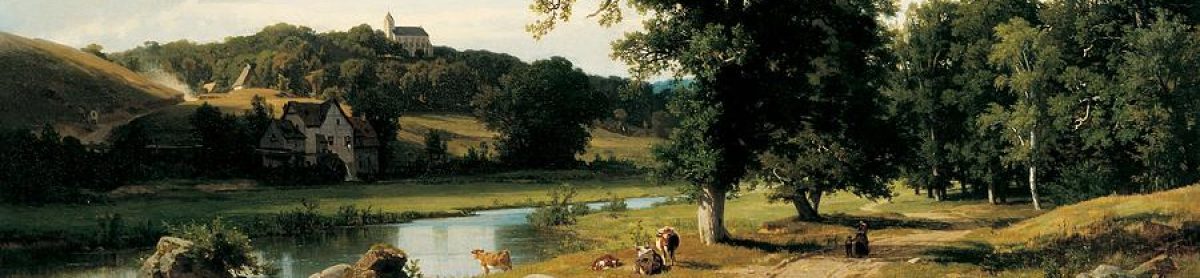
This is Chapter Five of twelve, and we follow the Williams families as they begin their new lives in America. From New York they make their way west to the farm fields of Ohio.
Setting New Horizons
“Beginning in the mid-19th century, waves of new immigrants arrived from Europe, dramatically changing the composition of the city and serving as workers in the expanding industries. Throughout its history, New York has served as a main port of entry for many immigrants, and its cultural and economic influence has made it one of the most important urban areas in the United States and the world.” (Wikipedia)
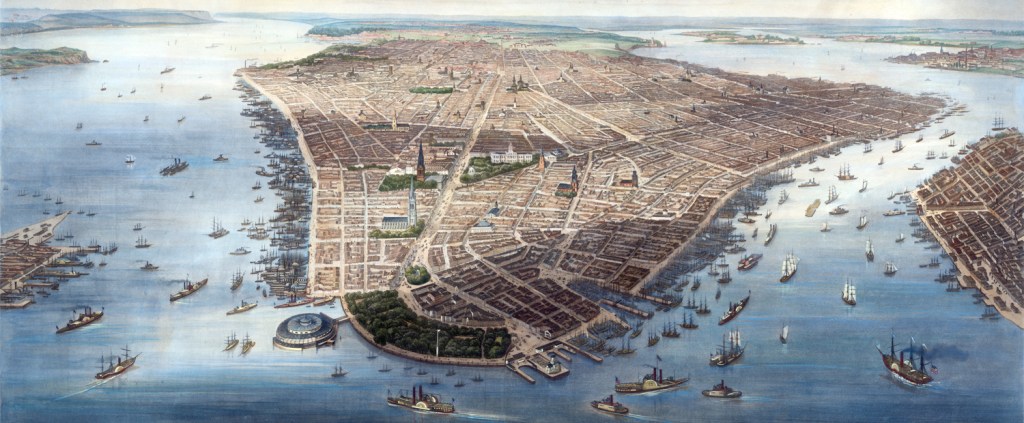
(Image courtesy of Geographic Guide, Old New York, 19th Century).
This aerial view of Manhattan in 1850 is remarkable not only for the number of ships that are shown in the harbor, but also, because there were no large bridges spanning the waterways. The famous immigration processing centers had not opened yet — Castle Garden (1855) and Ellis Island (1892) — so the Henry Williams family arrived at one of these many piers.
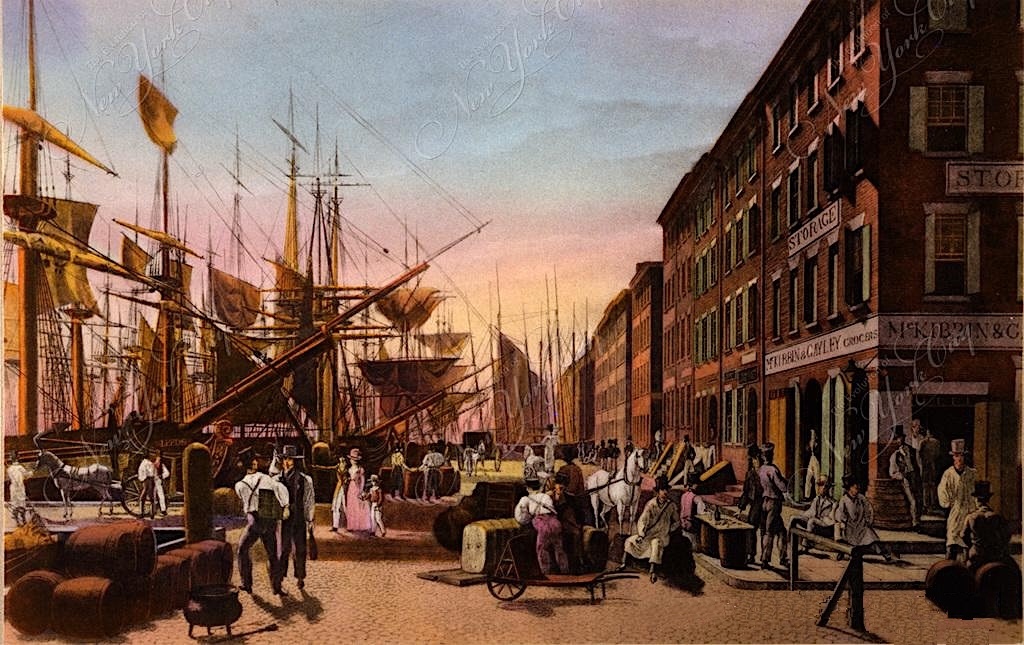
On the actual manifest below, we can see that Daniel Williams is traveling with his brother Henry Williams, and Henry’s wife Mathilda and their children. Note that the son James is only three and the baby Martha is just 11 months old. We comment on that, because we know that the trip must have been challenging for all of them. In that decade, steamships were starting to come to replace sail driven ships, but passage cost much more. Since the Williams family (generally speaking) was not known for having a lot of resources, it is certain that they traveled in steerage, as the manifest shows. The trip would have taken about 4-6 weeks.
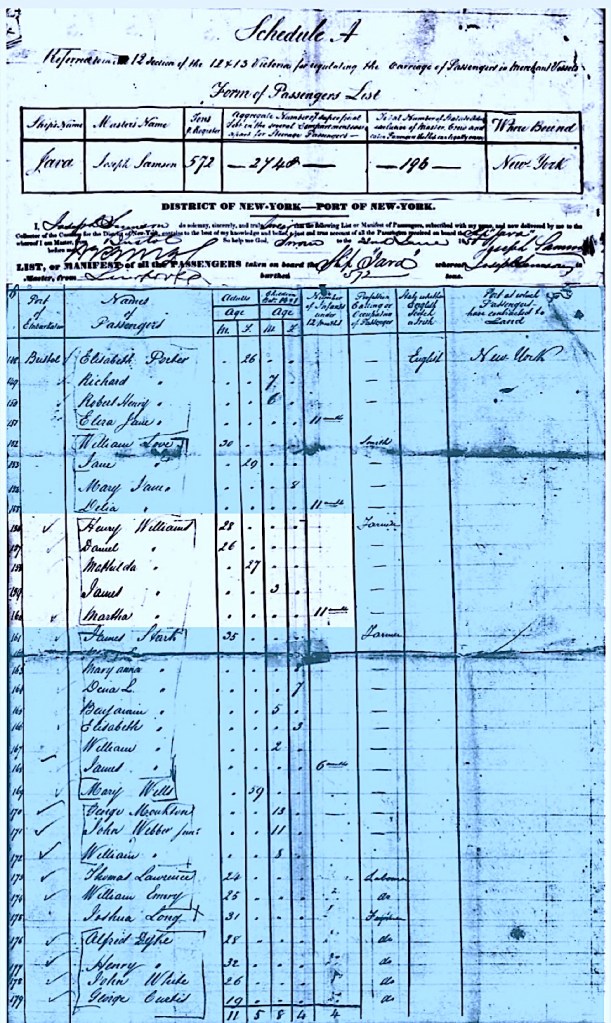
for the ship Java, on June 22, 1850 in New York harbor. (See footnotes).
When the Williams family departed England, they sailed from the nearby city of Bristol, as the ship manifest clearly states, (see Port of Embarkation). Bristol and Liverpool were the primary ports where ships sailed from Great Britain to North America, but eventually Liverpool surpassed Bristol in sheer numbers. This ship, which was named Java, and it was likely registered in Liverpool, as the ship’s master was from there also.
We have spent much time trying to ascertain the exact history of this ship, but have not been able to discover her origins. There were at least four other ships with the same name, but two were lost at sea before 1850, and the other two were exclusively chartered for other uses, (such as prisoner and troop transport to Australia). A key determinant for finding this ship is not the actual name, but its tonnage. In this case, it was 572 tons, which is not a very big ship. It is quite possible that this ship, while named Java, was eventually renamed and the records have simply been absorbed into the shadows of history. (1)
Daniel Willams Marries Jane Marsden
The next place that records appear for Daniel Williams is far away from the ports of Manhattan, and in the southern portion of the Connecticut Western Reserve of Ohio. Specifically, he is found in Cuyahoga Falls, Summit County, Ohio when he marries Jane Marsden.
It was about two years between his arrival as an English immigrant to being a married man in northeast Ohio. He, his brother Henry, and Henry’s family all likely came to Ohio via the railroads, which were being built across the country on a massive scale at that point in time. So, the pace of life was speeding up by mid-century. Certainly, it was faster than it had been in sleepy Somerset.
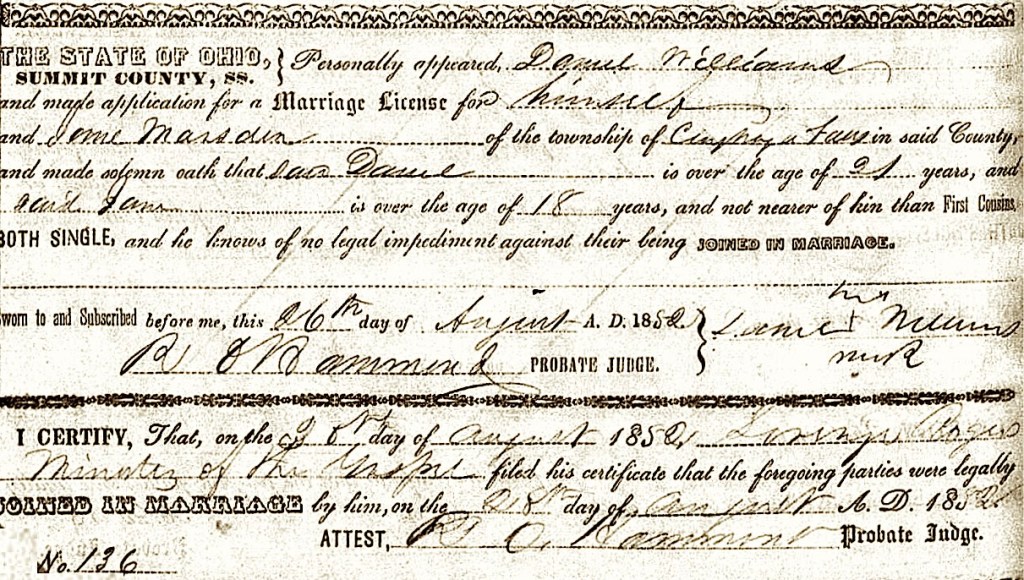
for the wedding of Daniel Williams and Jane Marsden, on August 28, 1852.
We do not know how Daniel and Jane met. In fact, not much information has turned up thus far on her life before they met. All that we know about her background is that she was noted on the 1850 US Census as being born in England. At 19, she is living in the home of David Thomas and his family, who are from Wales. They reside in the town of Chippewa, Wayne County, which is southwest of Summit County.
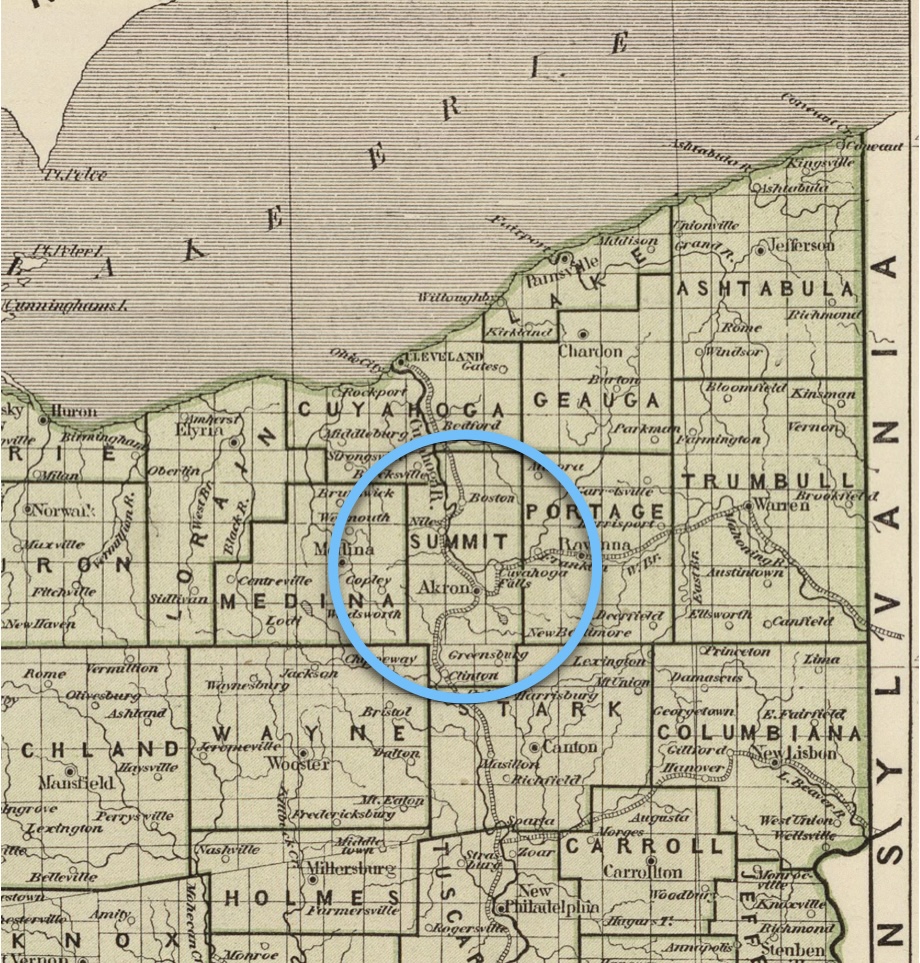
Since we know where Jane Marsden was for the 1850 Census, we have wondered if Daniel was also recorded on an 1850 US Census, but we have not yet located a record for this. That census was conducted in Tallmadge in September 1850. He arrived in the port of New York on June 22, and his immediate family members, with whom he had traveled, were counted in the Tallmadge Census. So somehow he fell through the cracks when it came to being counted in September.
Since we know much about the new country and community they lived within, let’s learn a bit about Tallmadge, Ohio. (2)
Tallmadge Township
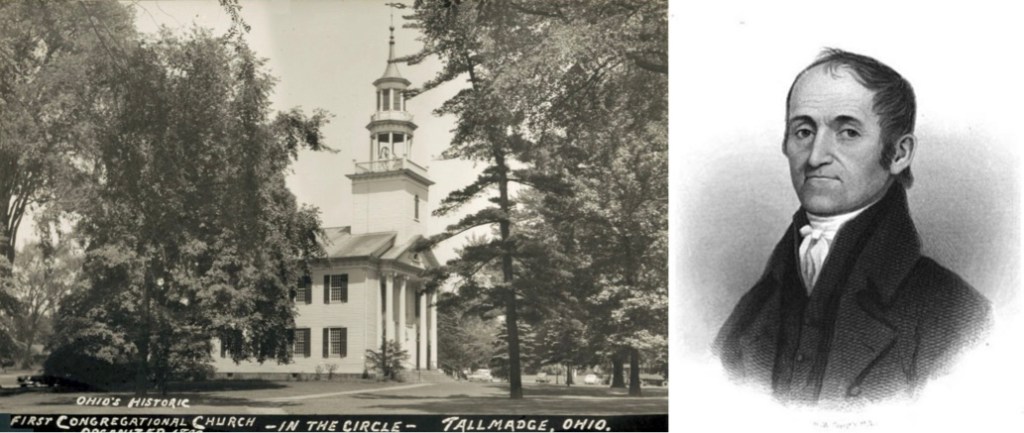
“Tallmadge was founded in 1807 by Reverend David Bacon and is the second-oldest city in Summit County. Before its founding, the town was a part of the Connecticut Western Reserve, a three million acre plot of land in northeast Ohio. The town was named after Benjamin Tallmadge, an American Revolutionary War figure and local landowner. Prior to being named, Tallmadge was a part of Town 2, Range 10 in the Western Reserve.” (The Tallmadge Historical Society)
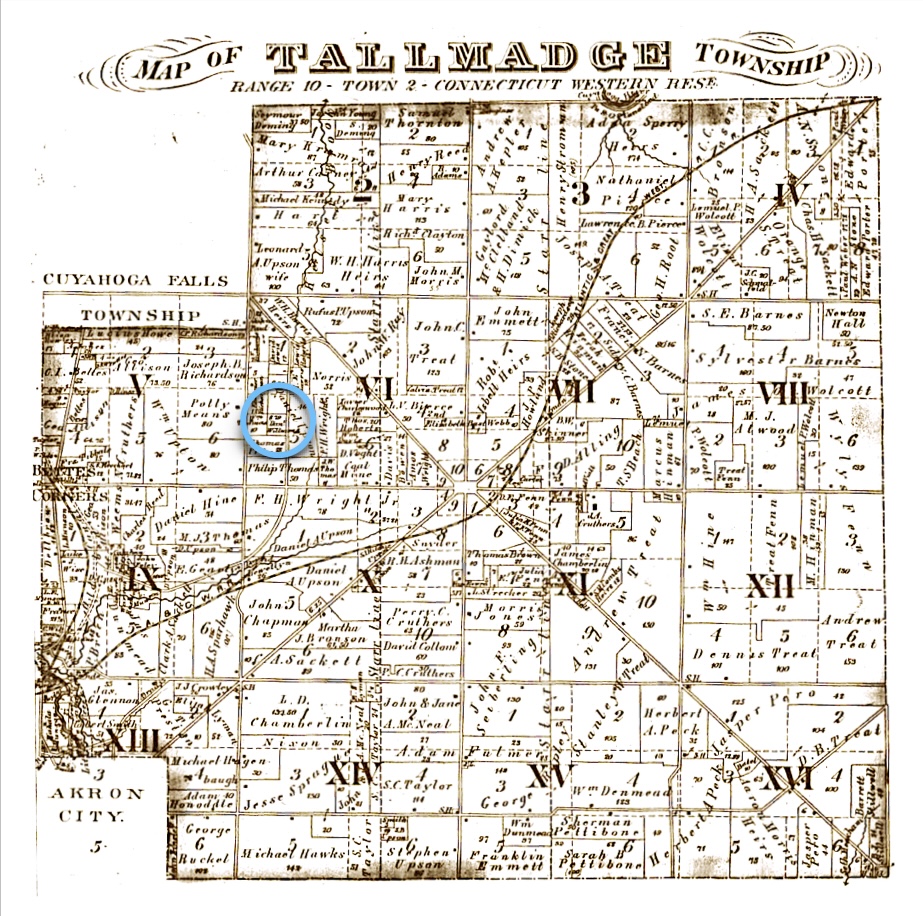
“At the center of the town is the Historic Tallmadge Church (built in 1825), recognized as a historic place by the Ohio Historical Society, and was featured on the cover of the November 20, 1944, edition of Life magazine. An intersection surrounds the church and a small park, the Tallmadge Circle Park, on which the church sits.” (Wikipedia) If you look closely at the township map below, you can observe that before the center of town became a circle, it was a square, similar to many that would have been known to the New England founders of the town. (3)
Daniel Was a Farmer at Heart
After they had settled in Summit County, we have found nearly 40 years of census data which tells us much about the family. We did observe that Daniel was either guessing his age on some future censuses, or whoever answered the door was trying to puzzle things out, (or perhaps both things!)
Daniel spent his life as he had when a young man in England, working on agricultural endeavors. Two censuses list him as a farmer, and one lists him as a teamster. In that period of time, when you were identified as a teamster, this meant that you were a person who drove a team of draft animals, usually a wagon drawn by oxen, horses, or mules.
Together, Daniel and Jane had 10 children. We have discovered those following, but our list may not be complete, (see footnotes).
- Mary (Williams) Gehring, 1853 – 1893
- John H. Williams, 1855 (born & died)
- George Williams, 1856 – 1893, George carries the family line forward.
- Sarah Ann (Williams) Hinman, 1859 – 1935
- Albert Williams, circa 1862 – 1916
- Samuel Williams, 1863 – 1879
- Henry Williams, 1866 – 1868
- Frank Williams, 1868 – 1874
- Emma Jane Williams, 1871 – 1948
- Walter Williams, 1875 – 1941
Even though Daniel was a farmer at heart, many of the people in his community chose to follow another profession, familiar from the old England and Welsh landscapes… (4)
Seeking What They Know
During these decades that they lived in Summit County, we have been thinking a lot about ‘what was it?’ that attracted the Williams family there in the first place. We believe that they must have known other families in the area. If you recall, Jane Marsden initially lived in a nearby county that had many immigrants from Wales already residing there. The Williams family was from Somerset, just across the Severn, or the Bristol Channel from Wales, so it makes much sense that English and Welsh people from the United Kingdom would settle near each other. Even to this day, immigrant communities seek what they know when venturing into a new land.
This period was one of great change across the midwestern United States. Northeast Ohio was a very important part of the (figurative) Underground Railroad during the Civil War. But the literal railroads were also criss-crossing the countryside enabling farm products to reach markets much more quickly, and these railroads needed fuel to run. Thus, they needed coal.
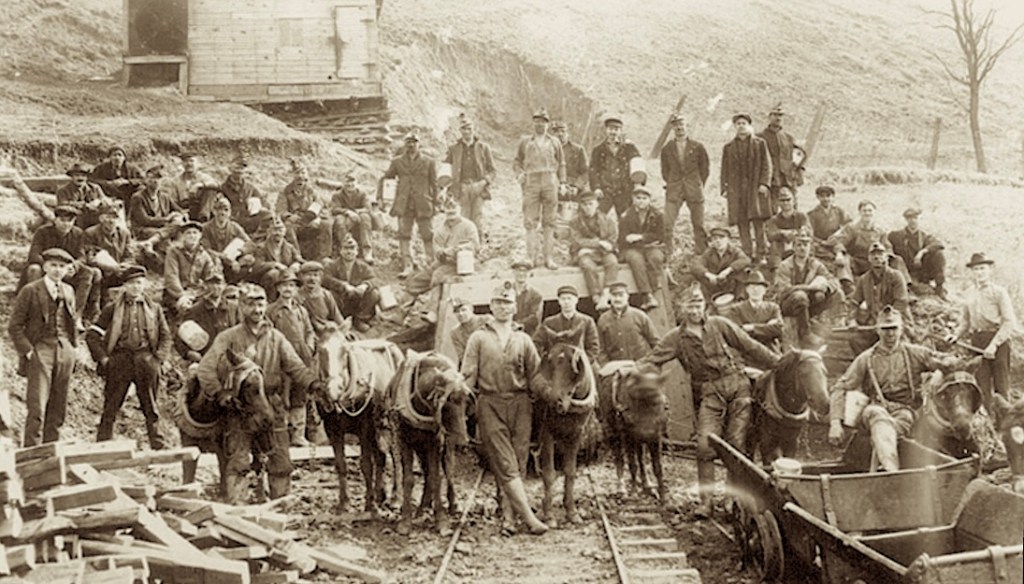
This caught our eye, “Had it not been for the discovery of coal in Tallmadge and the resultant need for men to work those mines, it is unlikely that the Welsh community that became a viable part of the township would have grown to the size that it did. Even though many of the Welshmen who came to Tallmadge were, by most accounts, actually shoemakers, butchers, tailors, farmers, and blacksmiths, they were drawn to mine work because it was the only thing available at the time that would pay them in cash money. Many families came into the area, worked the mines in order to save a nest egg, and then moved on only to be replaced by others seeking to do the same.” (A History of Tallmadge Coal…)
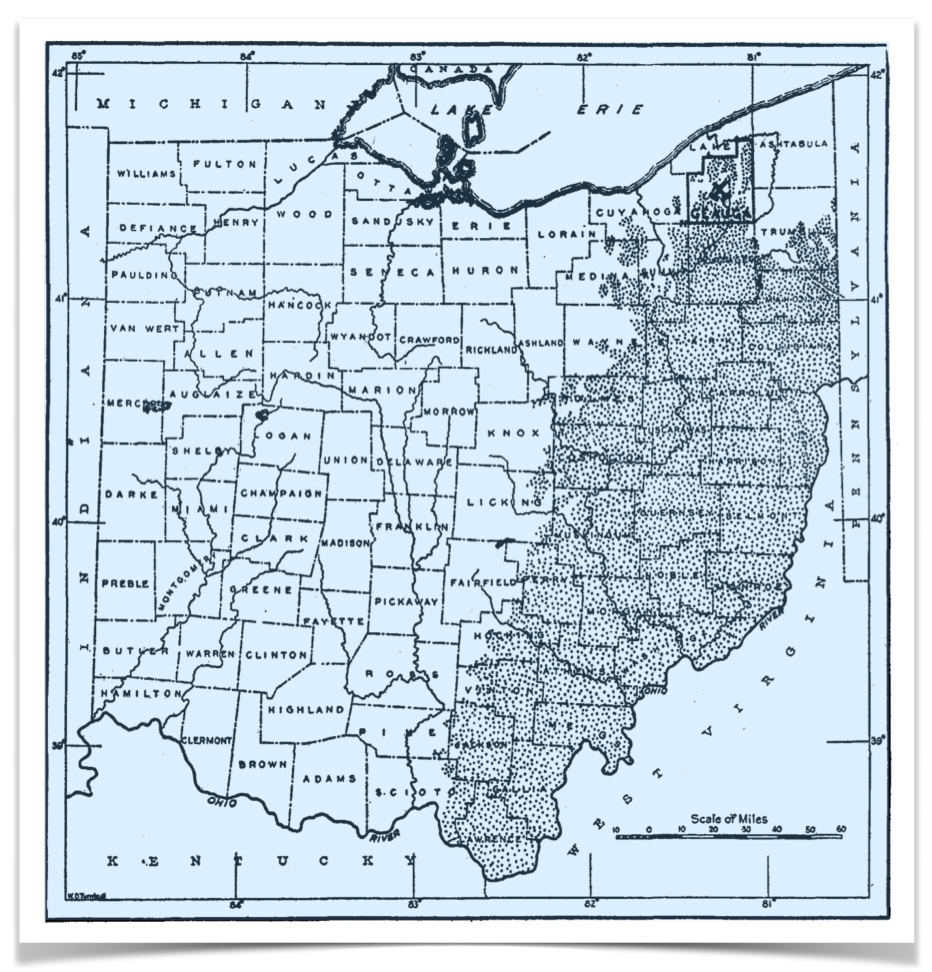
Pennsylvanian and Permian Systems across Ohio counties, i.e. the Coal Measures.
This includes the Zeil Pfouts farm, marked at the top by a small x.
(Image courtesy of The History of Ohio’s Northernmost Coal Mine, by Myron T. Sturgeon, 1944).
In our modern era, we have moved away from using coal to obtain energy, hence it is not top of mind anymore — but previous generations used a lot of it. Interestingly, it came right up to our doorways from where we grew up as children. “The Zeil Pfouts farm, located 2.7 miles northwest of Burton Village in Geauga County, Ohio, is similar in appearance to many of the well kept farms in that vicinity. The Pfouts farm, however, has one distinction that is shared with no other farm in the vicinity for miles around; for between 40 and 60 years ago coal was mined from beneath its acres. This mine was unique in that it was the farthest north of any coal mine ever operated in Ohio.”
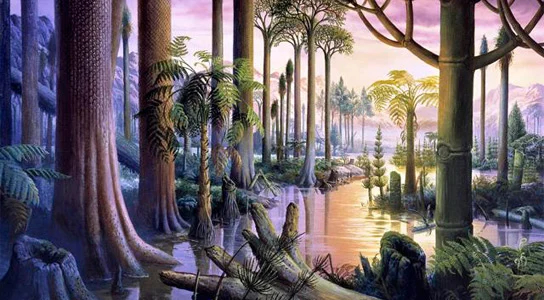
So work in mines, or work in agriculture, and familiarity with English and Welsh families is most likely what brought the Williams family to Northeast Ohio. We just didn’t think that we would need to go back to the Pennsylvanian and Permian Ages to truly understand this. (5)
The second generation in America is the son George Williams. It is at this point that a fundamentally important event happened with their lives, which ultimately affected the Williams / Harris family connection.
Following are the footnotes for the Primary Source Materials,
Notes, and Observations
Setting New Horizons
(1) — five records
History of New York City
https://en.wikipedia.org/wiki/History_of_New_York_City
Note: For the text.
Geographic Guide
Old New York, 19th Century
Illustration of the City of New York — 1851
by Wilhelm Heine
https://www.geographicguide.com/united-states/nyc/antique/19th-century/ny-19th-century.htm
Note: For the panoramic harbor scene.
Immigrant Processing Centers for New York City
https://www.genealogybranches.com/ellisisland/#:~:text=August%203%2C%201855%20%2D%20April%2018,1900%20%2D%20July%201924:%20Ellis%20Island
Note: For the data.
History101.nyc
1850: Busy Scene at The South Street Seaport
by A.R. Waud
https://www.history101.nyc/busy-wharf-scene-at-south-street-seaport-1850
Note: This is a restored image by Fine Print Design Studio, from original artwork which is not available online.
Mathilda Williams
in the New York, U.S., Arriving Passenger and Crew Lists (including Castle Garden and Ellis Island), 1820-1957
Date > 1850 > June > 22 > Java
https://www.ancestry.com/search/collections/7488/records/1023754579
Digital page: 6/8, Entries 156 through 160.
Note 1: Ship manifest for Daniel’s immigration passage from England to the United States on June 22, 1850. He is traveling with the family of his older brother Henry Williams and Henry’s wife Mathilda.
Note 2: The ship’s master is from Liverpool. The actual record details the original embarkation point as Bristol, England, not Liverpool, England as the Ancestry record indicates.
Daniel Willams Marries Jane Marsden
(2) — five records
Daniel Williams
in the Ohio, U.S., County Marriage Records, 1774-1993
Summit > 1849 – 1861
https://www.ancestry.com/search/collections/61378/records/3987653
Book page: 288, Digital; page: 158/577, Left page, bottom.
Notes: Their August 28, 1852, marriage license and certificate. His wife is named Jane Marsden.
Jane Marsden
in the 1850 United States Federal Census
Ohio > Wayne > Chippewa
https://www.ancestry.com/search/collections/8054/records/16019445
Digital page: 48/63, Line 17.
Note: For the data. At 19, she is living in the home of David Thomas and his family, who are from Wales.
David Rumsey Map Collection
Ohio
by Samuel Breese and Sidney E. Morse, 1842
https://www.davidrumsey.com/luna/servlet/detail/RUMSEY~8~1~21740~660104
Note: For the map image, as originally published in Morse’s North American Atlas, 1842.
The National Archives
1850 Census Records
https://www.archives.gov/research/census/1850
Note: For the data.
Henry Williams
in the 1850 United States Federal Census
Ohio > Summit > Tallmadge
https://www.ancestry.com/search/collections/8054/records/19600983?tid=113814444&pid=320147487152&ssrc=pt
Note: For the 1850 Census data.
Tallmadge Township
(3) — four records
Tallmadge, Ohio
https://en.wikipedia.org/wiki/Tallmadge,_Ohio
Tallmadge Historical Society
Records > Photos
https://www.tallmadgehistory.com/tallmadge-historical-society-records
Note: For the images of David Bacon and The First Congregational church.
Daniel Williams
in the U.S., Indexed County Land Ownership Maps, 1860-1918
Ohio > Summit, 1874
https://www.ancestry.com/search/collections/1127/records/3962098
Note: For the township image.
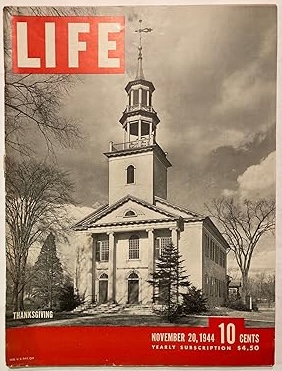
(Image courtesy of Abe Books, at https://www.abebooks.com/magazines-periodicals/LIFE-Magazine-November-20-1944-Time/31081870142/bd).
Daniel Was a Farmer at Heart
(4) — ten records
Daniel Williams
in the U.S., Find A Grave Index, 1600s-Current
https://www.ancestry.com/search/collections/60525/records/130014389
and
Daniel Williams
https://www.findagrave.com/memorial/158271603/daniel-williams
Note: This file has these dates February 15, 1825 — September 3, 1896, for his lifetime.
Jane Williams
in the U.S., Find A Grave Index, 1600s-Current https://www.ancestry.com/search/collections/60525/records/130014767and
and
Jane Marsden Williams
in the U.S., Find A Grave Index, 1600s-Current
https://www.findagrave.com/memorial/158272097/jane-williams
Note 1: This file has these dates February 10, 1831 — February 16, 1890, for her lifetime.
Note 2: The online death certificate for their daughter, Sarah Hinman, indicates both parents were born in England. Burial location and dates for Jane came from Ohio Genealogy Express web site. The O.G.E. information listed her maiden name as Marsden, which agrees with Sarah’s death certificate.
Tallmadge Cemetery, Summit County, Ohio
https://www.findagrave.com/cemetery/269913/tallmadge-cemetery
Note: In this chapter, we compiled and amended our list of their children sourcing from the Find-a-Grave files (just above), others as noted below, and analysis of the Williams family graves found in the Tallmadge Cemetery.
Albert Williams
https://www.findagrave.com/memorial/177297763/albert-williams
Note: For his birth and death dates.
Walter Williams
https://www.findagrave.com/memorial/11900980/walter-williams
Note: For his birth and death dates.
Daniel Williams
in the 1860 United States Federal Census
Ohio > Summit > Tallmadge
https://www.ancestry.com/search/collections/7667/records/42151587
Book page: 82, Digital page: 4/30, Lines 36 through 40.
Note: Parents are Daniel and Jane Williams, working as farmers. All are noted as being born in England.
Note: Daniel 38, Jane 29, Mary 7, George 4, Sarah 1.
Daniel Williams
in the 1870 United States Federal Census
Ohio > Summit > Tallmadge
https://www.ancestry.com/search/collections/7163/records/38420169
Book page: 10, Digital page: 10/32, Lines 1 through 8.
Note: Daniel 46, Jane 38, George 14, Sarah A. 11, Albert 9, Samuel 7, Frank 2.
Note: All of the children are noted as being born in Ohio.
Daniel Williams
in the 1880 United States Federal Census
Ohio > Summit > Tallmadge
https://www.ancestry.com/search/collections/6742/records/18590601
Book page: 18, Digital page: 18/30, Lines 24 through 30.
Note: Daniel 56, Jane 48, George 23, Sarah 21, Albert 18, Emma J. 9, Walter 5.
Seeking What They Know
(5) — five records
Ohio Geology
Geo Facts No. 14
History of Coal Mining in Ohio
https://www.ohiocoal.com/downloads/history-ohio-coal-mining.pdf
Note: For the photograph of the miners.
Akron-Summit County Public Library
A History of Tallmadge Coal:
A Tale of Woodchucks, Welshmen, and a Canal
by Judy Anne Davis, 2006
https://www.akronlibrary.org/images/SpecCol/TallmadgeCoal_.pdf#:~:text=
Note: For the text.
The Ohio State University
The History of Ohio’s Northernmost Coal Mine
by Myron T. Sturgeon
https://kb.osu.edu/server/api/core/bitstreams/cd2dbd16-eb3c-5690-bfeb-b24d0a004c88/content
Book pages: 255-264.
Note 1: For the text and coal measure map. This article appeared in The Ohio Journal of Science, Volume 44, No. 6, pages 255-264, with a publication date of November 1944.
Note 2: This .pdf is credited to the Michigan State Normal College, Ypsilanti, Michigan, and archived with The Ohio State University.
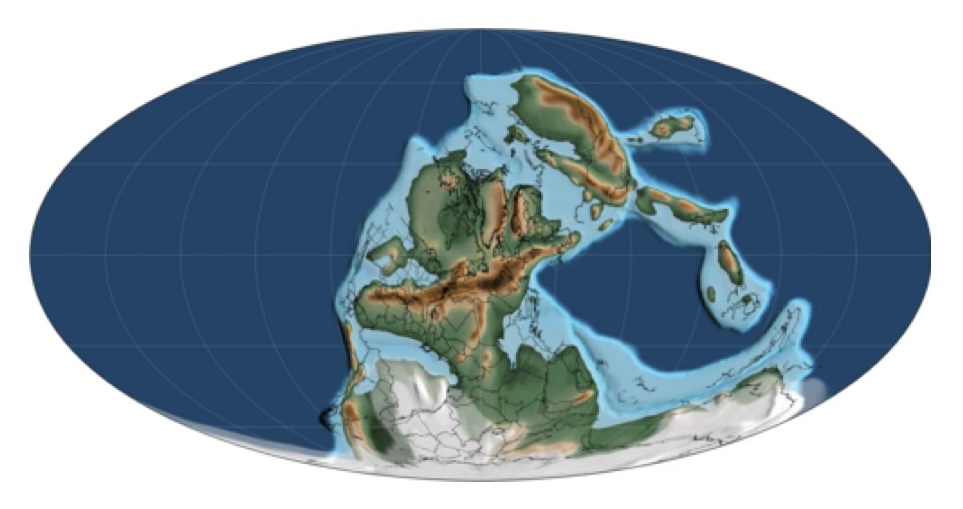
on this map of the Pennsylvanian and Permian Ages?
(Image courtesy of Wikipedia, https://en.wikipedia.org/wiki/Pennsylvanian_%28geology%29).
SciTech Daily
Scientists Reconstruct Ancient Permian Ecosystem from Ash-Covered Plants
https://scitechdaily.com/scientists-reconstruct-ancient-permian-ecosystem-from-ash-covered-plants/
Note: For the illustration of the Permian forest. However, the article is very interesting!


