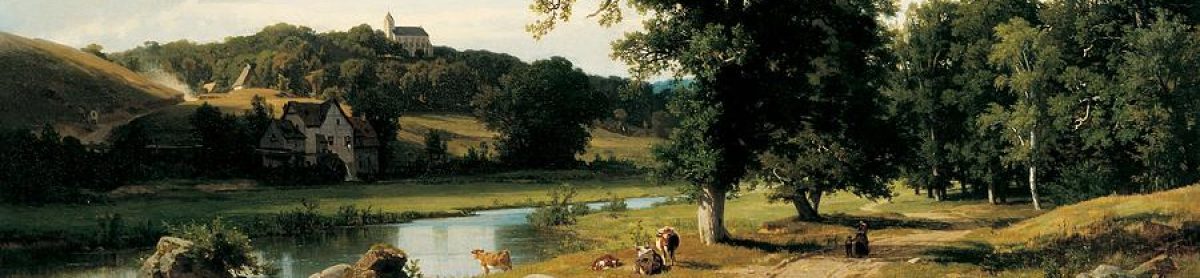
This is Chapter Two of twelve, in which we continue with the Reeves family line in Somersetshire, England. This generation of our family begins with the birth of Robert Cullon Jr. in East Pennard Somerset, England.
Quitting The Parish of East Pennard
As such, it is to this day a small parish known for being the home of the hamlets of Stone, Parbrook, and Huxham. In the present day, only 348 people live there. We write this bit of information, because it appears that it wasn’t very long before our ancestors decided to quit East Pennard and move somewhat north to the bright lights of Shepton Mallet.
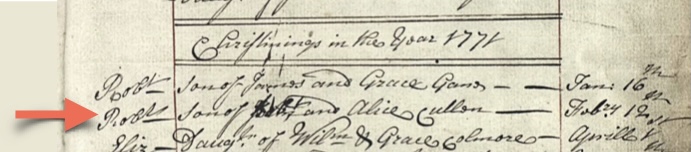
Somerset, for February 12, 1771.
We have observed that these maps look busy with so many little communities identified on them. This tends to make destinations look further apart than they actually are — things are actually much closer. For example… Why did they move about 3-4* miles north? We will never know with certainty, but it doesn’t really matter, because it may have had something to do with having more economic opportunities in the neighboring community. (1)
*This equals about 5.5 to 6.5 kilometers. This distance could be walked in two hours or less with the wind at your back. (This, they probably did).
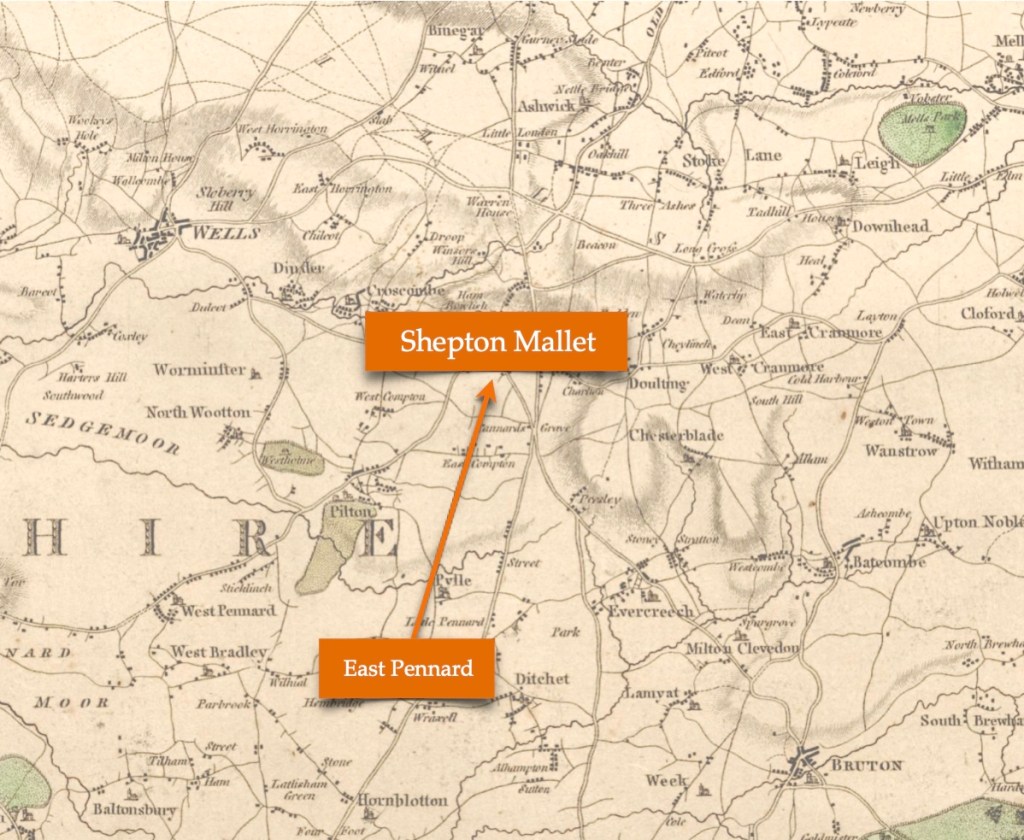
by C. H. Masters, circa 1800. (Image courtesy of The National Library of Scotland).
Shepton Mallet, A Market Town
We do not know what the Robert Cullen Jr. family did to earn their income. We already know that his father was a highly respected Master Butcher. Perhaps Robert Jr. had this profession too? The move to Shepton Mallet was likely due to the fact that it was an ancient and well respected market town. The local economy was driven by the propagation of animal husbandry with sheep. This pursuit supplied the local populace with protein, (hence, local meat products) and more importantly, it supplied wool to the many, many cloth factories that populated the Shepton Mallet area.
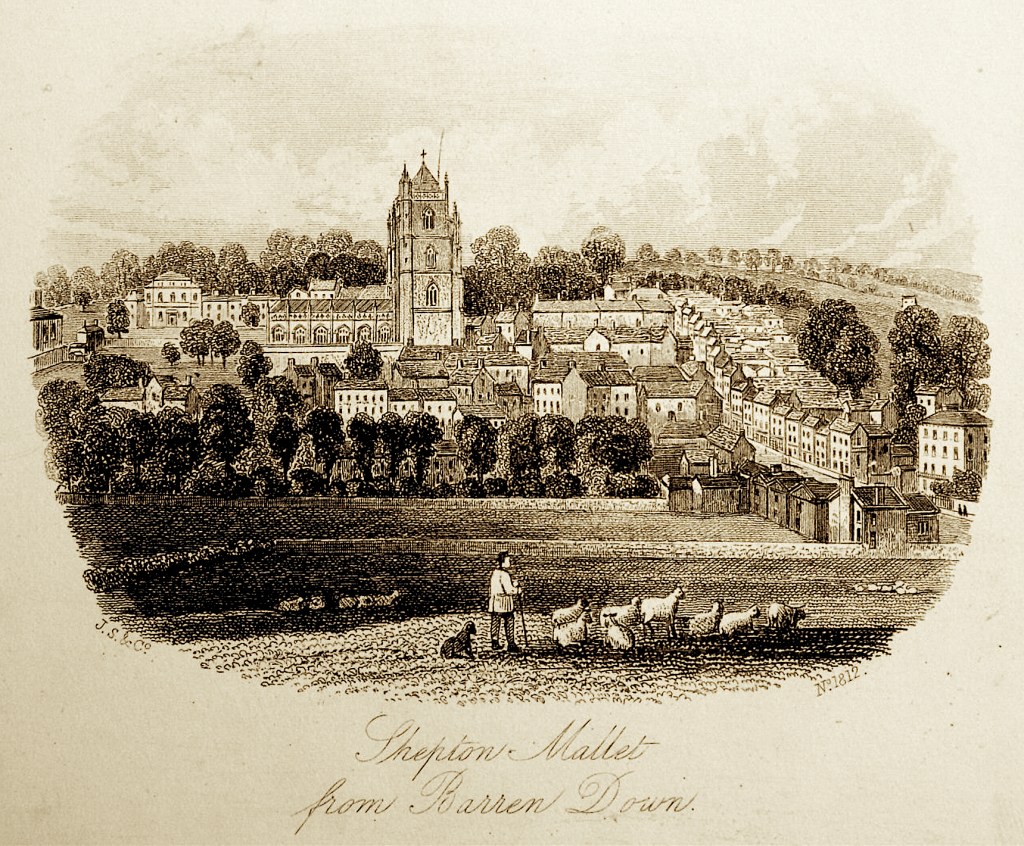
(Image courtesy of rareoldprints.com).
Ancient Times Through the Roman Period
“The name Shepton derives from the Old English scoep and tun, meaning sheep farm; the Domesday Book of 1086 records a settlement known as Sceaptun in the hundred of Whitstone. The current spelling is recorded at least as far back as 1496, in a letter from Henry VII. The second part of the name derives from that of the Norman family of Malet. Gilbert Malet, son of William Malet, Honour of Eye, held a lease from Glastonbury Abbey around 1100.
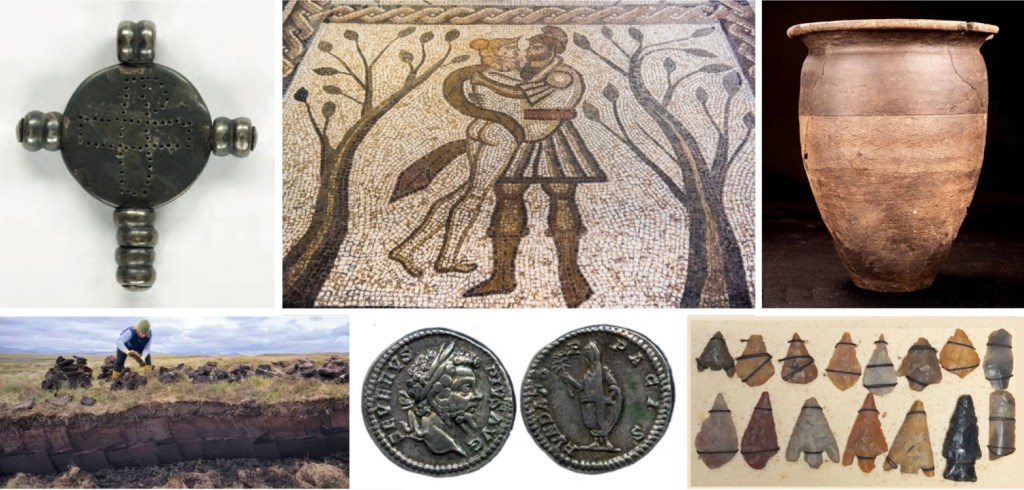
(Various sources, see footnotes).
Archaeological investigations have found evidence of prehistoric activity in the Shepton Mallet area, with large amounts of Neolithic flint and some pottery fragments of the late Neolithic period. Two barrows on Barren Down, to the north of the town centre, contained cremation burials from the Bronze Age; another Bronze Age burial site contained a skeleton and some pottery. Shepton Mallet is about halfway between the Roman towns of Bath and Ilchester on the Fosse Way. Although there are no visible remains apart from the line of the Roman road, there is archaeological evidence for early military and later civilian settlement lasting into the 5th century.
by Artist Unknown. (Image courtesy of Wikimedia Commons).
The Saxon and Norman Periods, and the Early Middle Ages
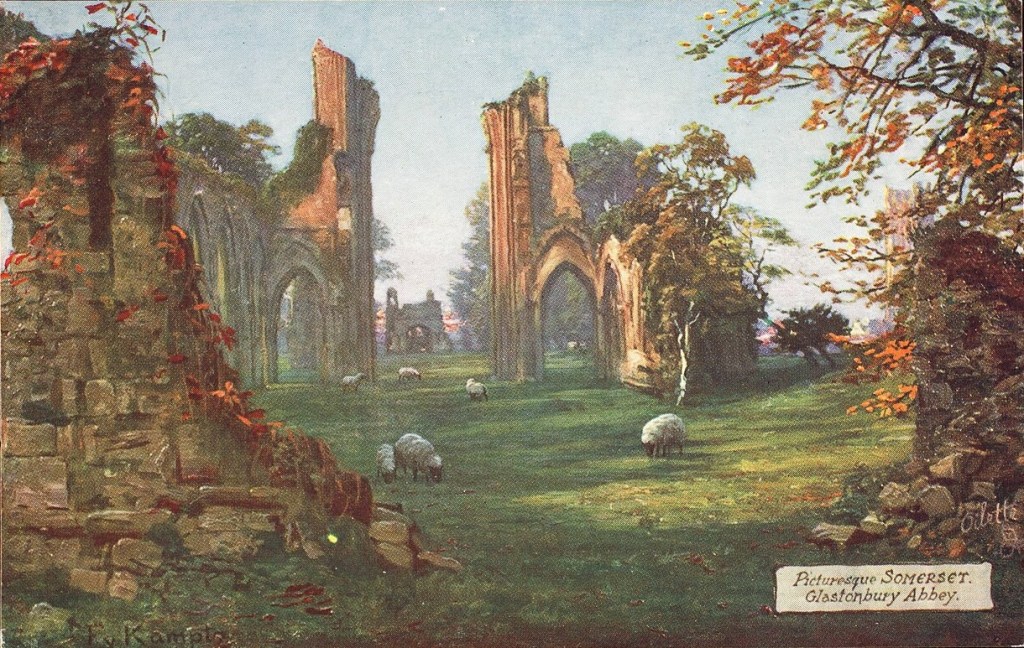
A charter of King Ine of Wessex, from 706, witnessed by nine bishops including the Archbishop of Canterbury, records that the area where Shepton Mallet now stands was passed to Abbot Berwald of Glastonbury Abbey.” (Wikipedia) The Middle Ages were an especially fraught time for the area. The Black Plague would seem like enough to deal with — but like a relentless tide washing in-and-out, the ownership and governance of the area changed with the centuries depending upon who was in power.
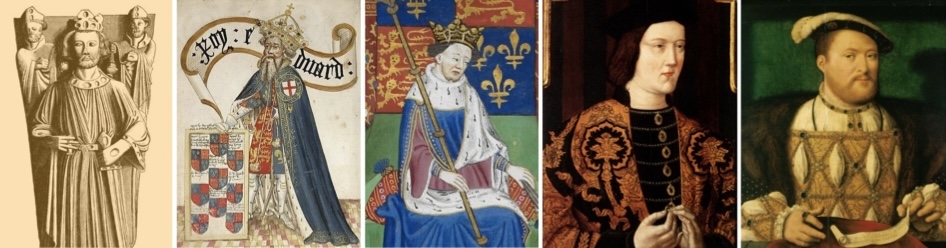
Henry VI, 1422 – 1461 and 1470 – 1471. Henry VI, 1461 – 1470. Edward IV, 1509 – 1547.
(All images courtesy of Wikimedia Commons, see footnotes).
“…around 1100, the land passed to the Malets, a Norman family whose name was added to that of the settlement. The Malets retained the estate until the reign of King John, when on the death of William Malet (fl. 1192–1215) and the payment by his sons-in-law of a fine of 2000 marks for participating in a rebellion against the king, it passed through his daughter Mabel to her husband Hugh de Vivonne. Some generations later, the part of the estate containing Shepton Mallet was sold to a relative, Sir Thomas Gournay. His son, also Thomas, took part in the murder of Edward II. His estates were confiscated by Edward III in 1337, but returned some years later.
When Mathew de Gournay died childless in 1406, the estate reverted to the Crown and [it] was then granted to Sir John de Tiptoft. It was again confiscated from his son by Henry VI during the Wars of the Roses, when the family sided with Edward IV, but [then] restored to Sir John’s grandson, Edward Tiptoft, when Edward IV regained the throne. He died without issue, and there followed a succession of grants and reversions until Glastonbury Abbey was dissolved by Henry VIII, and its lands, including Shepton Mallet, were granted to the Duchy of Cornwall in 1536.” (Wikipedia)
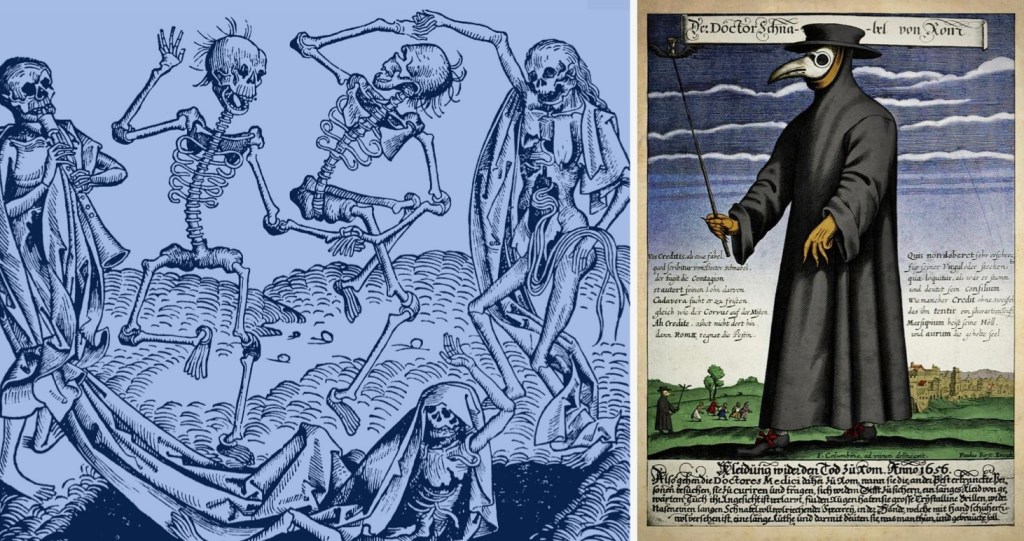
At right: Der Doctor Schnabel von Rom (aka The Plague Doctor), by Paul Fürst.
(Both images courtesy of Wikimedia Commons).
The Black Death and The Late Middle Period
“Charters for markets and fairs were granted in 1235, but revoked in 1260 and 1318 after objections by the Bishop of Wells to the competition it represented to the market in his city. This shows that the town was developing and prospering in the 13th and early 14th centuries. The Black Death struck in 1348, reducing the population to about 300.
In the late 14th and early 15th centuries, the population and economy were boosted by craftsmen and merchants arriving from France and the Low Countries, who were escaping wars and religious persecution. They introduced cloth-making, which together with the local wool trade, became a major industry in Shepton and other Somerset and Wiltshire towns.” (Wikipedia) As a consequence, “… before long, West County cloth was considered the best in the country.” (Shepton Mallett Nub News)
England’s story has been called
The short dark history of Somerset
‘an interwoven pattern of history and legend’, and
the history of Somerset is a good example of this.
by Mike Dean, via The History Press
The 18th and 19th Century Textile Industries
“Many of the workers in the mills were children, some as young as five years old. They had some of the most awful jobs, including cleaning the wool cloth by trampling it in vats of fuller earth and urine… then came the Agricultural and Industrial revolutions — with fewer people needed to do the same amount of work, and once again, it meant more profits for businesses and land-owners, and more local people unemployed and made homeless. The Spinning Jenny was invented by James Hargreaves in 1764. It could spin eight threads at once and there were claims that new machines could do the job of twenty workers.” (Shepton Mallett Nub News)
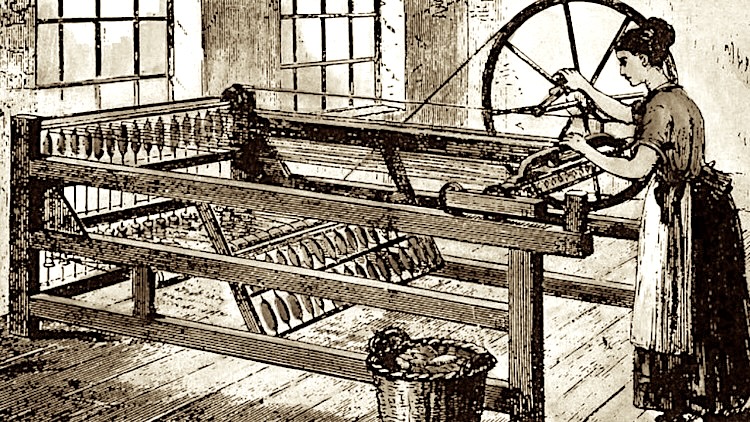
(Image courtesy of Shepton Mallett Nub News).
Fluctuating Fortunes
“In 1790 Shepton Mallet was flourishing once again. Unfortunately, its fortunes were to change once more. Advancements in spinning machinery left many workers feeling insecure and riots [again] broke out. These were violent and on a large scale. Local factory owners subsequently failed to install the new machinery available and Shepton Mallet struggled to compete in the market place. Factories closed and hundreds of families suffered. The subsequent manufacture of silk and velvet employed some, but the market suffered. As a result potential new transportation links were abandoned. The 1851 census lists the population for Shepton Mallet as 3,885 and the number of inhabited houses at 825.” (The Cross at Croscombe)
We believe that it was around this point that our ancestors decided to immigrate to America. However, before we sail across the Atlantic Ocean, we still need to cover what happened with this generation of our family (and the next) here in England. (2)
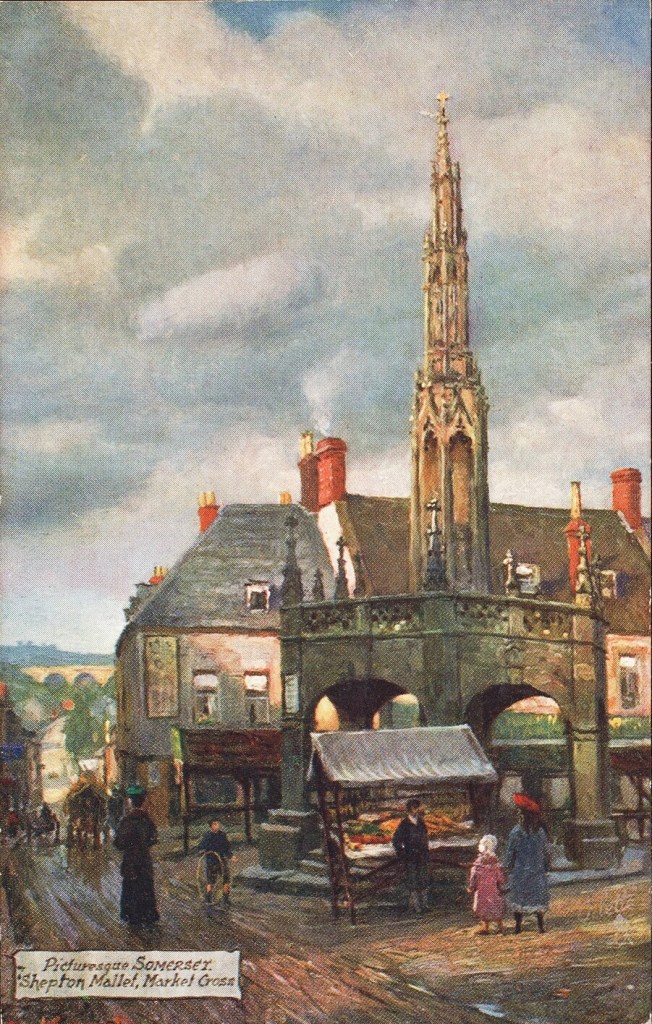
by Artist Unknown. (Image courtesy of Wikimedia Commons).
The Parish of Stoke St. Michael, or Stoke Lane
Robert Cullen Jr. and his family likely lived just north of Shepton Mallet, in the village and parish of Stoke St. Michael. (Which is also known as Stoke Lane). We know this because both his marriage and the baptisms of his children were recorded there. On May 6, 1787, Robert Cullen Jr. married (this is not a typo) Phillis Phillis at Stoke St. Michael Parish in Somerset. The Phillis surname then gave way to the Cullen name.
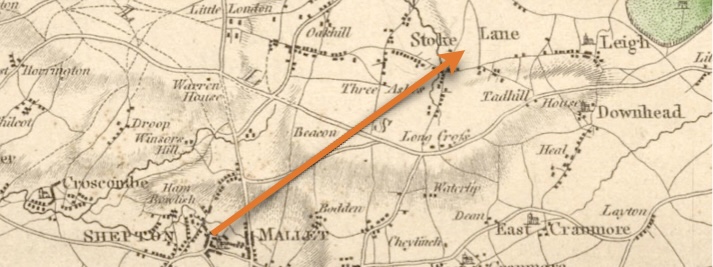
by C. H. Masters, circa 1800. (Image courtesy of The National Library of Scotland).
This “village became a centre for cloth manufacture with fulling mills being established on the River Frome to the north of the village. Henry Fussell established paper mills in 1803, and his family, who came from the village, including James Fussell established their iron works and edge-tool business in Mells.” (Wikipedia)
The reason they chose to live in this area, may have been influenced by where his wife’s family was living. Certainly, their proximity to the market town of Shelton Mallett was also important.
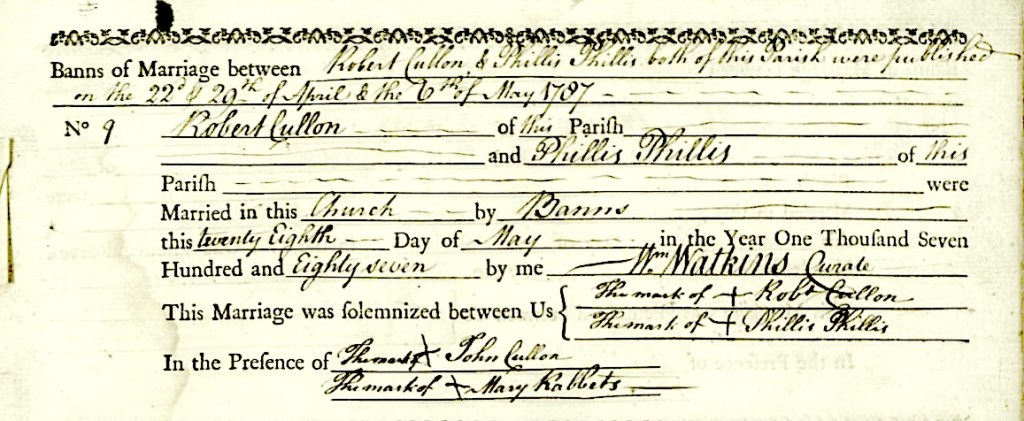
at Stoke St Michael Parish, Somerset, for May 28, 1787.
Less than two years later, Phillis gave birth to a daughter named Sarah Cullen, born on March 25, 1789. They likely had more children, but we can only verify Sarah and her brother Thomas Hobbs Cullen, who was born on August 29, 1810. For us, Sarah’s birth is important, because it is from her that the family line continues.
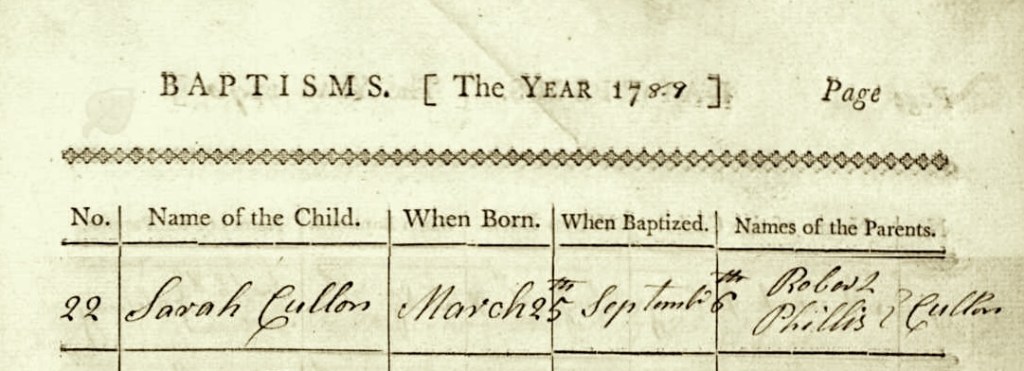
for March 25, 1789, and baptism record for September 6, 1789.
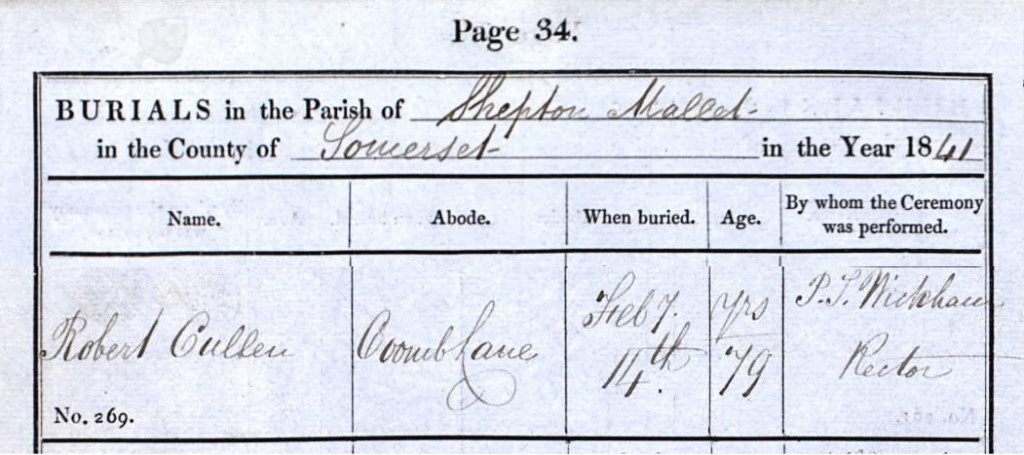
Burial Records for Shepton Mallet, Somerset, in 1841.
We do not know what became of Phillis (Phillis) Cullen, but we have found two records that indicate Robert Cullen Jr. passed away in 1841. One record indicates February 1841, and another, March 1841. (3)
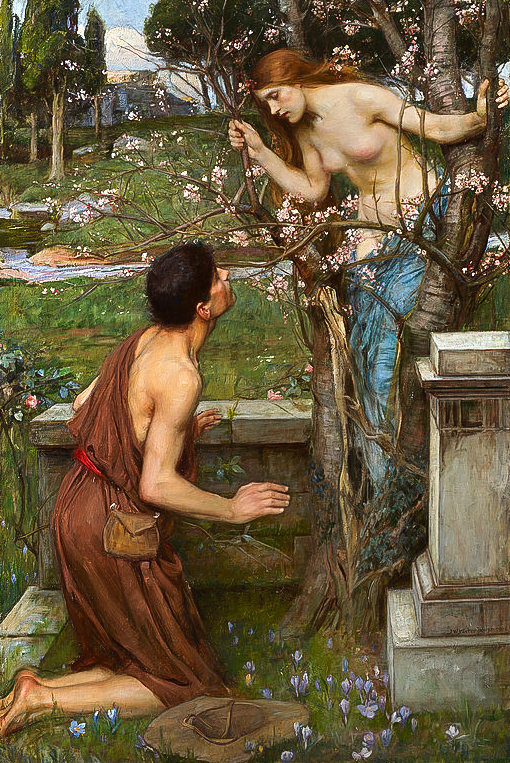
(Image courtesy of Wikimedia Commons).
Phillis Was Transformed Into An Almond Tree, Who Knew?
We’ve never before had an ancestor (that we know of) with the truly fabulous name of Phillis Phillis (!), and one cannot help but think it sounds a bit like a modern day showgirl, which we are sure Phillis was not. So we looked up her name and learned a few things. “Phillis is a feminine given name of Greek origin meaning foliage. Phillis is a minor figure in Greek mythology who killed herself in despair when Demophoön of Athens did not return to her and who was transformed into an almond tree by the gods. The name has been in modern use since the 17th century when it was used by English poets John Wilmot, 2nd Earl of Rochester, and Matthew Prior, probably taken from the supposed mistress of Aristotle, or other classical examples.” (Wikipedia)
A traditional family tree is how many people think of genealogy (family roots, branches, etc.) We guess that not many people have an ancestor who was named after someone who (allegedly) literally grew into a tree. Our history continues with the eventual marriage of Phillis’s daughter Sarah Cullen, to James Williams Jr. (4)
Following are the footnotes for the Primary Source Materials,
Notes, and Observations
Quitting The Parish of East Pennard
(1) — two records
Robt Cullen
in the Somerset, England, Church of England Baptisms, Marriages, and Burials, 1531-1812
East Pennard > 1747-1812
https://www.ancestry.com/search/collections/60856/records/1822099
Digital page: 101/171, Second entry after the heading “Christenings in the year 1771”
Note 1: His christening date is February 12, 1771.
Note 2: His parents names are Robert and Alice (Reeves) Cullen. Observe that the recorder originally wrote the name John, and then tried to correct that by overwriting with (what is likely) the name of Robert.
East Pennard
https://en.wikipedia.org/wiki/East_Pennard
Note: For the text.
Shepton Mallet, A Market Town
(2) — twenty records
The National Library of Scotland
Map of 24 miles round the City of Bath. Most humbly dedicated …
by C. H. Masters, circa 1800
https://maps.nls.uk/counties/rec/13617
Note: Enlarged for detail to show the Somerset villages of East Pennard and Shepton Mallet.
Rare Old Prints.com
Shepton Mallett from Barren Down
from Twenty Four Views of Spepton Mallett & Neighborhood
by Kershaw & Son and J. S. & Co., 1812
http://www.rareoldprints.com/p/7184
Note: For the artwork.
Shepton Mallet
https://en.wikipedia.org/wiki/Shepton_Mallet
Note: For the text.
The Shepton Mallet Silver Amulet
by Stephen Minnitt and Matthew Ponting
https://sanhs.org/wp-content/uploads/2020/11/2-Minnitt-and-Ponting.pdf
Note: For the Shepton Mallett Silver Amulet photograph found on page 2/8.
Britain Express
The Somerset Military Museum
The Low Ham Mosaic
https://www.britainexpress.com/attractions.htm?attraction=2390
Note: For the mosaic image.
“This magnificent mosaic floor is one of the finest Roman artefacts in Britain. The mosaic depicts the tragic love story of Dido and Aeneas, as it was related in the poems by Virgil around 25 BC. The mosaic was discovered in the bath complex of a Roman villa at Low Ham, near Langport, where it formed part of an entry to a cold plunge pool. The mosaic was made of over 120,000 individual coloured tiles, or tesserae, made from local limestone and clay. The mosaic was created around AD 350.”
BBC News
Roman cemetery found at Somerton new school site
https://www.bbc.com/news/uk-england-somerset-51018178
Note: For the image of a Roman burial pot.
BBC News
Hoard of Roman silver coins bought by council
by Inaya Mohmood
https://www.bbc.com/news/uk-england-south-yorkshire-65244111
Note: For the image of the coins. “Septimius Severus was Roman emperor from 193 to 211 AD”
Prehistoric Britain, The Trilogy That Changed History
Minerals found in Prehistoric and Roman Quarries
https://prehistoric-britain.co.uk/minerals-found-in-prehistoric-and-roman-quarries#14_Flint
Note: For the peat excavation and flint arrowhead images.
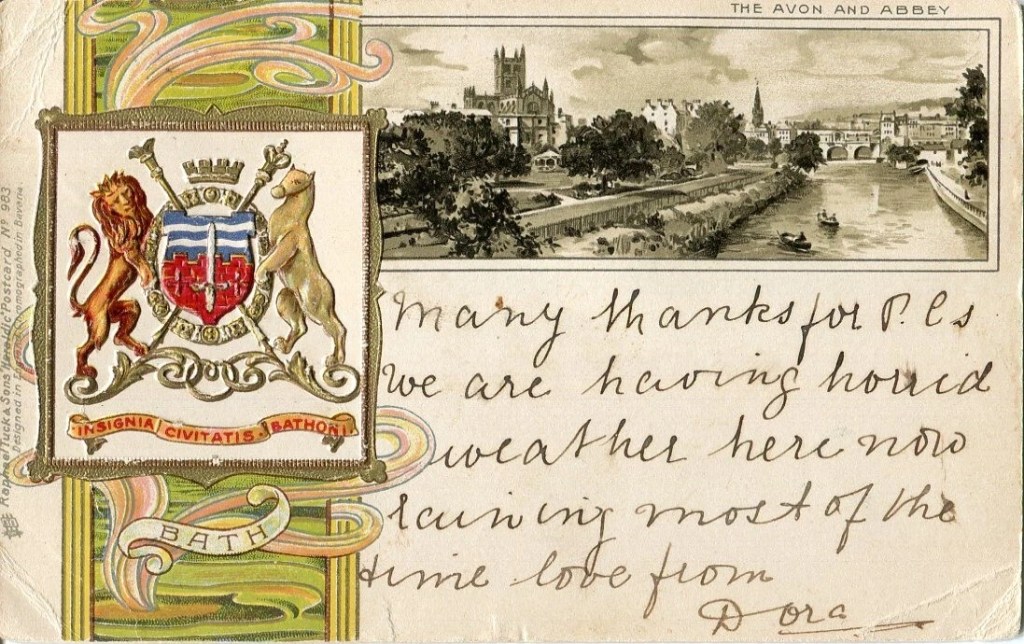
(Found at:https://www.ebay.co.uk/b/bn_3326125).
Tuck & Sons 1903 Postcard
Picturesque Somerset, Glastonbury Abbey
by Artist Unknown
https://commons.wikimedia.org/wiki/File:Picturesque_Somerset._Glastonbury_Abbey_(NBY_439956).jpg
Note: For the image of the Glastonbury Abbey ruins.
John, King of England
Effigy of King John on his monument in Worcester Cathedral
https://en.wikipedia.org/wiki/John,_King_of_England#/media/File:Jan_tomb.jpg
Edward III
File:Edward III of England (Order of the Garter).jpg
An illuminated manuscript miniature, c.1430-1440,
of Edward III of England
https://commons.wikimedia.org/wiki/File:Edward_III_of_England_(Order_of_the_Garter).jpg
Henry VI of England
File:Henry VI of England, Shrewsbury book.jpg
Illuminated miniature of Henry VI of England —
between 1444 and 1445
https://commons.wikimedia.org/wiki/File:Henry_VI_of_England,_Shrewsbury_book.jpg
Edward IV
File:Edward IV Plantagenet.jpg
Edward IV York (1442-1483), circa 1520 –
posthumous portrait from original circa 1470-1475
https://commons.wikimedia.org/wiki/File:Edward_IV_Plantagenet.jpg
Henry VIII
File:1491 Henry VIII.jpg
Portrait by Joos van Cleve —
between circa 1530 and circa 1535
https://commons.wikimedia.org/wiki/File:1491_Henry_VIII.jpg
The Dance of Death
by Michael Wolgemut, c. 1493
https://commons.wikimedia.org/wiki/File:Nuremberg_chronicles_-_Dance_of_Death_(CCLXIIIIv).jpg
Note: For the illustration from the Nuremberg Chronicle of Hartmann Schedel
Paul Fürst
Der Doctor Schnabel von Rom (coloured version).png
https://commons.wikimedia.org/wiki/File:Paul_Fürst,_Der_Doctor_Schnabel_von_Rom_(coloured_version).png
Note: For the colored Black Plague doctor image.
The History Press
The short dark history of Somerset
by Mike Dean
https://thehistorypress.co.uk/article/the-dark-history-of-somerset/
Note: For the pull-quote.
Shepton Mallett Nub News
The Shepton Riots
by Laura Linham
https://sheptonmallet.nub.news/news/local-news/the-shepton-riots-252234
Notes: For various texts, and the Spinning Jenny illustration.
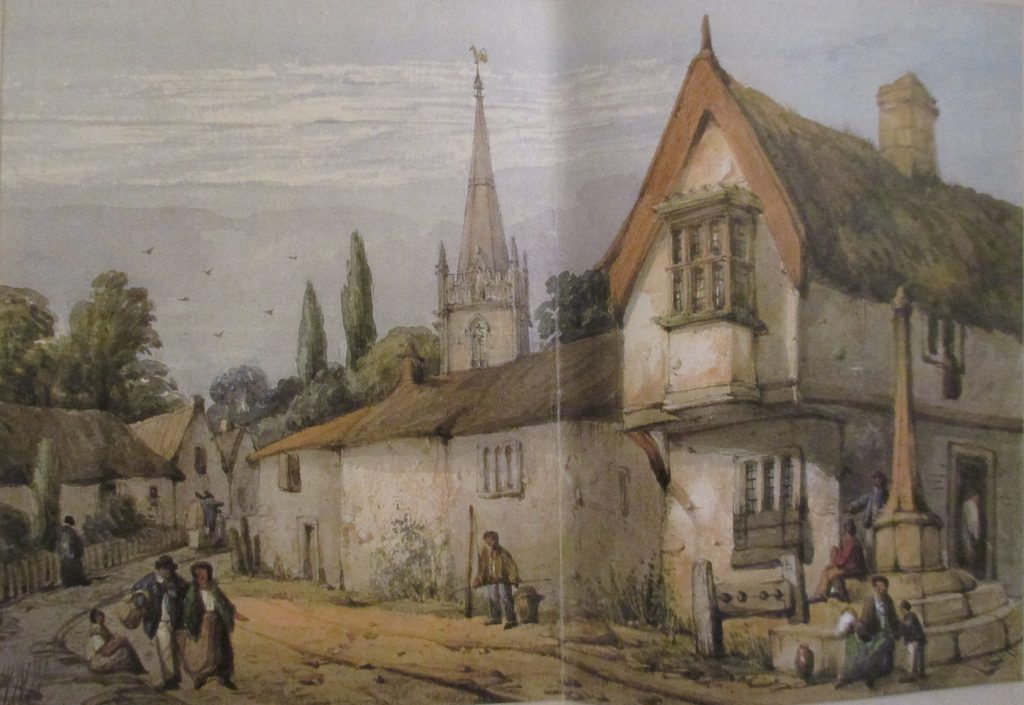
“How Croscombe (and my premises) used to look.”
The Cross at Croscombe
A Potted History of Shepton Mallet
https://www.cross-croscombe.co.uk/blog/potted-history-shepton-mallet/
Note: For the text.
The Parish of Stoke St. Michael, or Stoke Lane
(3) — eight records
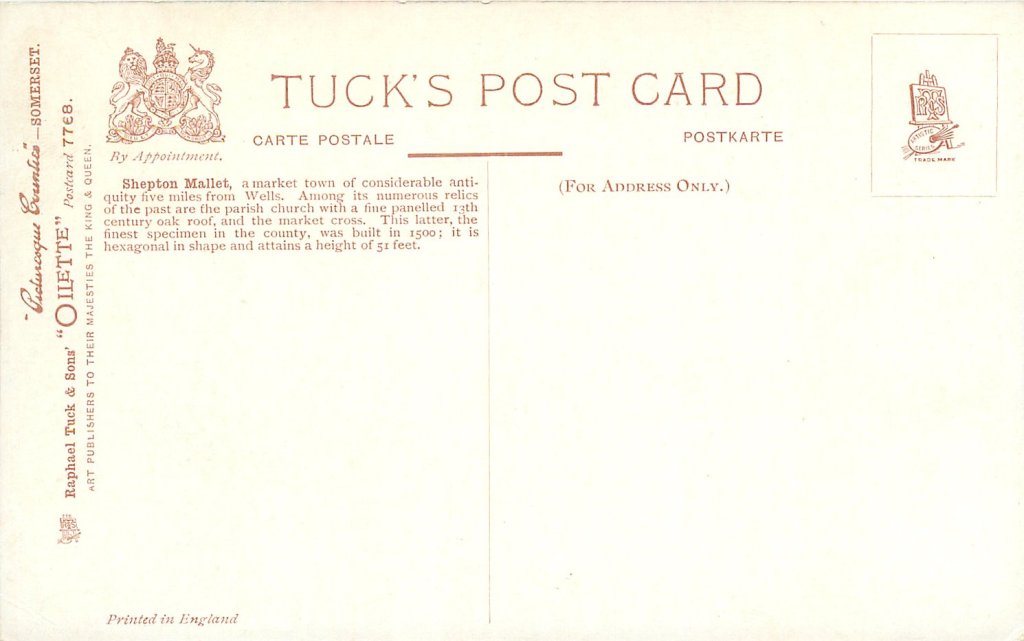
https://www.tuckdbpostcards.org/items/64387-shepton-mallet-market-cross
Tuck & Sons 1903 Postcard
Picturesque Somerset. Shepton Mallet, Market Cross
by Raphael Tuck & Sons
https://commons.wikimedia.org/wiki/File:Picturesque_Somerset._Shepton_Mallet,_Market_Cross_(NBY_440238).jpg
Note: For the illustration of the market.
Stoke St Michael
https://en.wikipedia.org/wiki/Stoke_St_Michael
Note: For the text.
Robert Cullen
in the Somerset, England, Marriage Registers, Bonds and Allegations, 1754-1914 > Marriage Registers > Stoke St Michael > 1754-1808
https://www.ancestry.com/search/collections/60858/records/184825
Digital page: 35/53 , Entry No. 9, right page top.
Note 1: Their marriage date is May 28, 1787.
Note 2: One of the witnesses to his wedding is John Cullen, who is likely a relative.
Sarah Cullen
in the Somerset, England, Church of England Baptisms, Marriages, and Burials, 1531-1812
Stoke St Michael > 1783-1812
https://www.ancestry.com/search/collections/60856/records/181224?tid=&pid=&queryId=a6c8ff92-7620-4472-ab5d-22274c117c74&_phsrc=OwZ3&_phstart=successSource
Digital page: 11/64, Entry 22 on the right page.
Note: Sarah’s birthdate is March 25, 1789, and her baptism was on September 6, 1789.
Robert Cullen
in the Somerset, England, Church of England Baptisms, Marriages, and Burials, 1531-1812
Shepton Mallet > 1791-1812
https://www.ancestry.com/search/collections/60856/records/150264637
Book page: 222 Digital page: 114/213
Note: Thomas Hobbs Cullen’s birth date is August 29, 1810, and his baptism date is nearly a year later, on July 20, 1811.
Robert Culler [Robert Cullen]
in the Somerset, England, Church of England Burials, 1813-1914
Shepton Mallet > 1839-1863
https://www.ancestry.com/search/collections/60859/records/242299
Book page: 34, Digital page: 20/153, Entry No. 269 on the left page.
Note: His estimated birth year is 1762.
Note: His burial record.
Robert Cullen
in the England & Wales, Civil Registration Death Index, 1837-1915
1841 > Q1-Jan-Feb-Mar > C
https://www.ancestry.com/search/collections/8914/records/8179784
Book page: 144, Digital page: 47/60, Right page, second entry at the top.
Note: His civil registration death index.
Phillis Was Transformed Into An Almond Tree, Who Knew?
(4) — two records
Phyllis
https://en.wikipedia.org/wiki/Phyllis
Note: For the text.
Phyllis and Demophoön
by John William Waterhouse, 1905
File:John William Waterhouse – Phyllis and Demophoon.jpg
https://commons.wikimedia.org/wiki/File:John_William_Waterhouse_-_Phyllis_and_Demophoon.jpg
Note: For the painting, via Wikimedia Commons.


.jpg)

.jpg)


.jpg)
.png)
.jpg)
